Walking meditation is meditation with your steps as the anchor instead of your breath. Pick one sensation in your feet, walk at any pace, and return to it when you drift. Skip the slow retreat-hall lane. It's optional, not the practice.
For about six months, my sitting practice was mostly napping. I’d settle in after lunch, close my eyes, and wake up twenty minutes later with my chin on my chest, feeling like I’d failed at something very simple. Walking meditation fixed that, but not the way the articles said it would.
Almost every guide to walking meditation teaches the same thing: find a path about ten to twenty paces long, walk very slowly back and forth, and feel each foot lift, move, and land. That’s a real practice with a long history behind it. It’s also the reason most people try walking meditation exactly once. Pacing a slow twenty-foot lane in a one-bedroom apartment feels ridiculous, and feeling ridiculous is not a state of mind that helps you pay attention.
So this is the version I actually use, plus what the research says it does, including one finding that argues walking meditation is not the lesser cousin of sitting practice.
What Walking Meditation Is
Walking meditation is meditation with movement as the anchor instead of the breath. That’s the entire idea. In seated practice, you rest your attention on the breath, notice when it wanders, and bring it back. In walking meditation you rest it on the sensation of walking, notice when it wanders, and bring it back. Same mechanics, different object.
It is not a nature walk. It is not a thinking walk, where you turn a problem over until it cracks. It is not exercise with a mindfulness label stuck on the front. Those are all fine things to do with an hour. None of them is this.
The difference matters because the posture question trips people up in both directions. Some assume the cross-legged sit is the practice and everything else is a workaround. It isn’t. Attention training doesn’t care whether your legs are folded.
Two Practices, One Name
Here’s the thing nobody separates out: two genuinely different practices are sold under the same name.
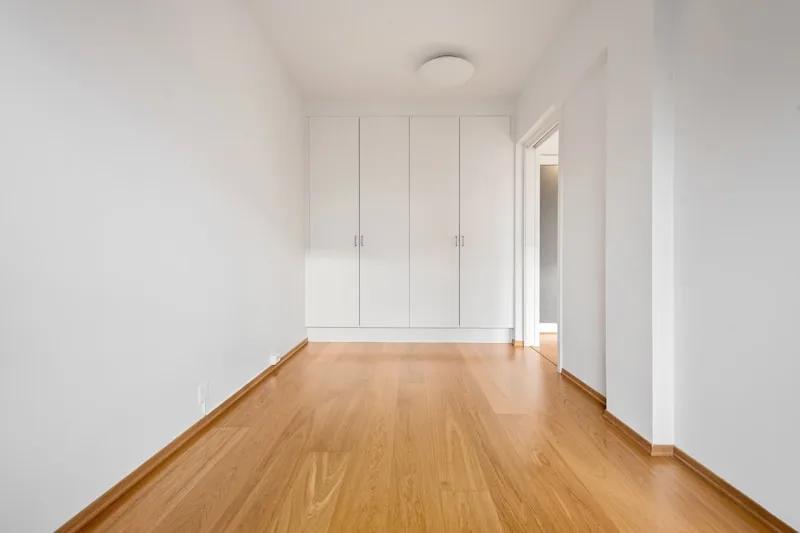
Formal walking meditation is the slow lane. Ten to twenty paces, deliberate pace, feet as the anchor, turning around at each end. It comes out of retreat settings, where it exists to break up long hours of sitting without breaking concentration. It’s a concentration practice. Done properly it’s demanding, and the slowness is the point, because slowness gives you more sensation per second to notice.
Mindful walking is your actual walk. Normal pace, real route, to the train or the shop or around the block after dinner. The anchor is wider: your feet, but also the air temperature, the sound of your own steps, the swing of your arms. It’s attention-in-daily-life training, closer in spirit to mindful commuting than to a retreat hall.
They train different capacities. Formal walking builds concentration. Mindful walking builds the habit of coming back to your senses in the middle of an ordinary day. Most guides blur them together, which leaves you trying retreat-hall pacing on a public sidewalk, wondering why it feels absurd.
Pick based on what you want. If you want concentration and you have a hallway or a yard, do the formal version. If you want a practice that survives contact with a normal week, do mindful walking on a route you already walk.
How to Practice Walking Meditation
Choose one anchor. The soles of your feet meeting the ground. The shift of weight from one leg to the other. The swing of your arms. Or the count of steps against your breath, three or four steps per inhale. Pick one and stay with it for the whole session. Rotating anchors mid-walk feels productive and is actually just a sophisticated form of drifting.
Set a length. Ten minutes is plenty to start. The clinical trials on walking meditation ran thirty-minute sessions three times a week, so thirty is the researched dose, but nobody builds a habit at thirty.
Stand still for thirty seconds first. Feet under your hips, weight even. Feel the floor push back. This is what tells your nervous system that something has started, and it’s the step people skip.
Walk. Eyes open, gaze soft and angled a few feet ahead of you, not focused on anything in particular. Let your pace settle where it wants to settle. If you’re doing the formal version, slow it down until each step has three distinct parts you can feel: lifting, moving, placing.
When you notice you’re gone, come back. You’ll be four minutes into a conversation with your boss before you realize you left. That moment of realizing is not a failure in the practice. That moment is the practice. Some people find it easier to attach a word to it, a quiet “thinking” or “planning,” which is the same move as mental noting in seated practice. Then back to the feet.
Stop by standing still again. Ten seconds. Notice what changed, if anything. Often nothing has, and that’s fine.
If you’d rather be talked through it the first few times than try to remember a list, there’s a guided walking meditation in the library that runs the whole thing for you. After a few rounds you won’t need it, which is how it should work.
Why It Beats an Ordinary Walk
This is the part that surprised me, and it’s oddly absent from most articles on the topic.
Researchers in Thailand ran a trial with twenty-three adults with type 2 diabetes. Both groups walked on a treadmill for thirty minutes, three times a week, for twelve weeks, at the same target heart rate. Identical exercise. The only difference was that one group practiced Buddhist walking meditation while they walked. After twelve weeks, only the meditation group showed reductions in HbA1c, arterial stiffness, and cortisol (Gainey et al., 2016).
Same dose of walking. Different results. Whatever the attention was doing, it wasn’t nothing.
An earlier trial from the same research group randomized forty-five adults aged sixty to ninety with mild-to-moderate depression into three groups: sedentary control, traditional walking exercise, and Buddhist walking meditation, three times a week for twelve weeks. The walking meditation group improved on depression scores, functional fitness, and blood-vessel function, with greater overall improvement than the traditional walking program (Prakhinkit et al., 2014).
On the stress side, a German trial randomized seventy-four adults with high perceived stress to eight mindful-walking sessions over four weeks or to nothing. Perceived stress scores dropped about nine points in the walking group and about one point in the control group (Teut et al., 2013). Worth naming the weakness there: the control group was a waiting list, not an active comparison, so some of that gap is the ordinary benefit of doing something structured with other people.
A 2025 systematic review pulled together ten controlled studies of walking meditation and mindful walking and concluded the practice is safe and promising across stress, anxiety, depression, balance, and some cardiometabolic markers (Psychiatry International, 2025).
Ten controlled studies is a small literature. The two Thai trials are small, from overlapping author groups, and nobody has replicated the HbA1c result at scale. This is a promising signal, not a treatment. But it does undercut the assumption that walking meditation is what you settle for when you can’t sit properly.
The Catch Nobody Mentions
Walking makes your mind more generative, not quieter.
Stanford researchers had people do creative-thinking tasks while seated and while walking. Walking raised divergent thinking scores for 81% of participants, and the boost carried over even after they sat back down. Convergent thinking, the narrow kind where there’s one right answer, barely moved (Oppezzo & Schwartz, 2014).
Translated: walking is an excellent way to have ideas. Which is exactly the problem. Twelve minutes into a walking practice, a genuinely good idea will arrive, and it will feel urgent and important, and you will follow it for six blocks. That isn’t a breakthrough interrupting your meditation. That’s the drift, wearing a better outfit.
Two things help. First, expect it, so you recognize the pull for what it is instead of negotiating with it. Second, if the idea is real, it will still be there in eight minutes. Let it come, note it, return to your feet. Write the one line down when you stop, not mid-stride.
This is also why “just go for a walk and be mindful” doesn’t work as an instruction. Without a specific anchor, walking’s natural pull toward wandering wins every time. It’s a different wandering from rumination, more pleasant and more productive, and just as effective at making sure no practice happened.
What Nature Adds, and What It Doesn’t
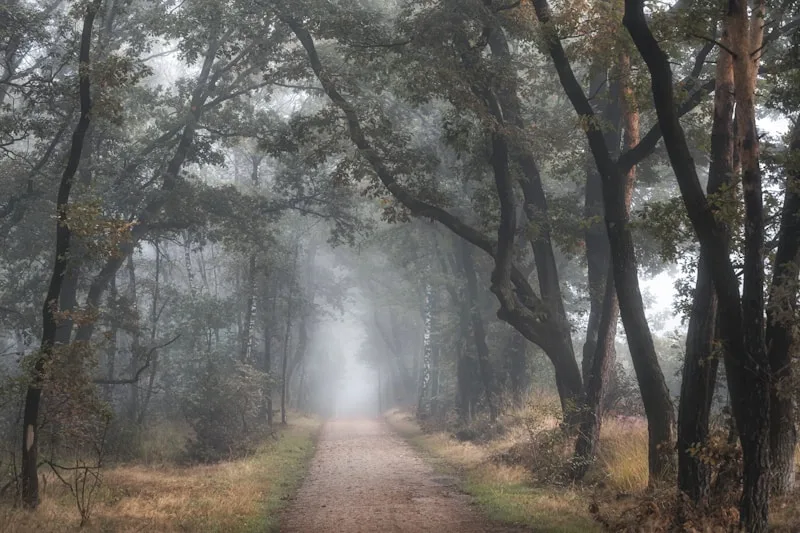
A Stanford team sent participants on a ninety-minute walk in either a natural setting or along a busy road. The nature walkers came back with lower self-reported rumination and reduced activity in the subgenual prefrontal cortex, a region tied to repetitive self-focused thought. The urban walkers showed neither (Bratman et al., 2015).
That’s a real effect, and it’s a separate ingredient from the meditation. Nobody in that study was meditating. So a park route stacks two things that each work on their own, which is a good reason to choose the park when you have the option. There’s a related practice worth knowing if you want to make the environment do more of the work, the awe walk.
But don’t let it become a requirement. A walk around a parking structure with your attention on your feet is still walking meditation. The practice travels; the scenery is a bonus.
Who Walking Meditation Is Best For
Bodies that won’t cooperate with sitting. If you’re restless, if anxiety shows up in your legs, if your back complains after four minutes, if you reliably fall asleep the way I did, walking gives your body a job so your attention can do its own.
It also suits anyone who already walks daily. You have twenty minutes to the station that currently belongs to a podcast. Reclaiming two or three of those walks a week costs you nothing in time, which makes it one of the few practices that doesn’t have to compete for a slot in the day.
The honest counterpoint: if what you want is deep concentration, sitting is still the sharper instrument. There’s less sensory noise and less to manage. The guided versus unguided comparison is worth reading if you’re deciding what your daily practice should actually be. Walking is a real practice, not a downgrade, but it isn’t strictly better either.
Mistakes That Make It Feel Pointless
Walking retreat-slow on a public street. Self-consciousness becomes the whole experience. Use retreat pace where nobody’s watching, ordinary pace everywhere else.
Rotating anchors. Feet, then breath, then sounds, then the light through the trees. That’s sightseeing with good intentions. One anchor.
Phone in hand, podcast in ears. You can enjoy that walk. It isn’t this.
Expecting to feel calm. Calm sometimes happens and is not the objective. The objective is noticing that you left and coming back, over and over. Some sessions are twenty solid minutes of leaving and coming back, and those are the sessions that build the skill.
Trying it once. The first two or three walks are mostly logistics: where do I look, how fast, is this working. Judge it at walk five.
When to Talk to Someone
The trials above involved people with depression and with type 2 diabetes, which is worth stating plainly: walking meditation was studied as an addition to care, not a replacement for it. If low mood has been sitting on you for weeks, if anxiety isn’t lifting, or if you’re managing a health condition, talk to a doctor or a therapist. Practice alongside treatment. And if you’re ever in crisis, in the US you can call or text 988 to reach the Suicide and Crisis Lifeline.
Start with one block
You’re already walking somewhere tomorrow. Pick the walk, pick one anchor, and give it a single block before you go back to the podcast. When you notice you’ve drifted, come back to your feet. That’s the whole assignment, and it’s the same assignment on walk one and walk four hundred.

Amber is the content manager and outreach specialist at Declutter The Mind. She enjoys yoga, MMA, and of course, meditation!