Topic · Beginner
Meditation for beginners.
You don't need a special posture, a quiet room, or thirty minutes. Five minutes counts.
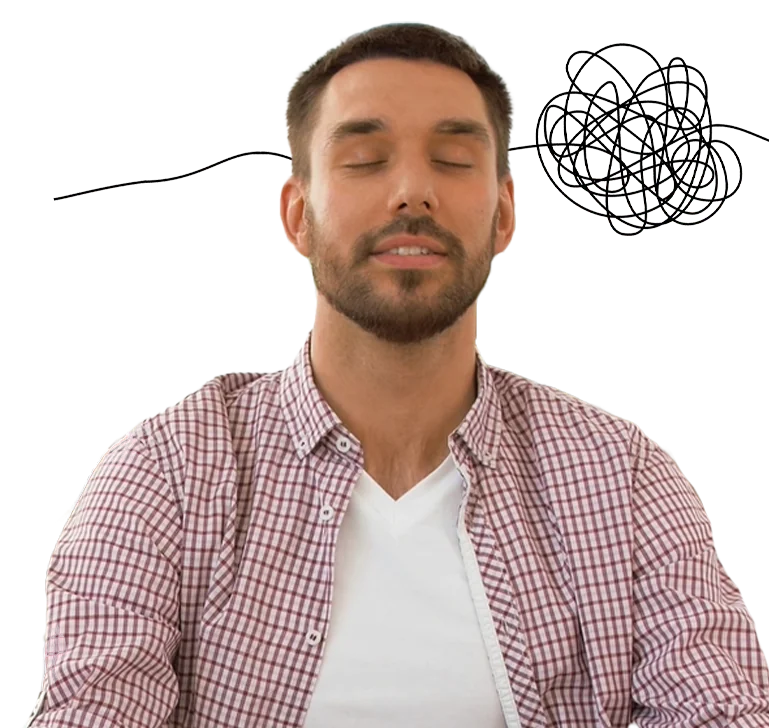
What is meditation, actually (and what isn’t it)?
Meditation is the practice of paying attention to one thing on purpose, noticing when your mind wanders, and gently bringing it back. That’s it. The thing you’re paying attention to is usually the breath, sometimes sensations in the body, sometimes a phrase.
What meditation isn’t: a special spiritual state, a way of emptying your mind, a personality, a religion, or something that requires sitting cross-legged on a cushion. You can do it in a chair. You can do it on a subway. The posture isn’t the point. The attention is the point.
If you’ve bounced off meditation apps before because they felt weird, the most common reason is they leaned hard on a vibe that didn’t match yours. The practice itself is the same one we’ve been doing for centuries. Without the costume.
What are common stumbling blocks for beginners?
“I’m doing it wrong.” You’re not. The mind wandering is the practice. Notice and return.
“I can’t quiet my mind.” Nobody can. That’s not the goal. The goal is to notice the noise without joining it.
“I’m bored.” That’s the practice working. Boring means you’re not generating drama. Sit with it.
“I fell asleep.” If you fell asleep mid-meditation, your body needed it. No shame. Try meditating sitting up tomorrow.
What should you look for in a meditation app for beginners?
A good meditation app for beginners keeps the barrier low: short sessions you can actually finish, plain guidance without the spiritual costume, a free tier you can use before paying, and a few teachers or styles so you can find one that fits. Be wary of anything that locks the basics behind a subscription or leans on a vibe that makes you cringe.
That’s the bar we try to clear. Declutter The Mind’s free tier includes 500+ guided meditations, sessions start at five minutes, the instructions are plain and secular, and you can play one in the browser below before you install anything. If you’d rather compare a few options first, we keep an honest roundup of the best free meditation apps, and a longer how to meditate walkthrough if you want the full beginner’s guide.
Beginner practices in the app
Short, friendly practices to get started. Try one in the browser. The rest are in the app.
Plays in your browser. No account required.
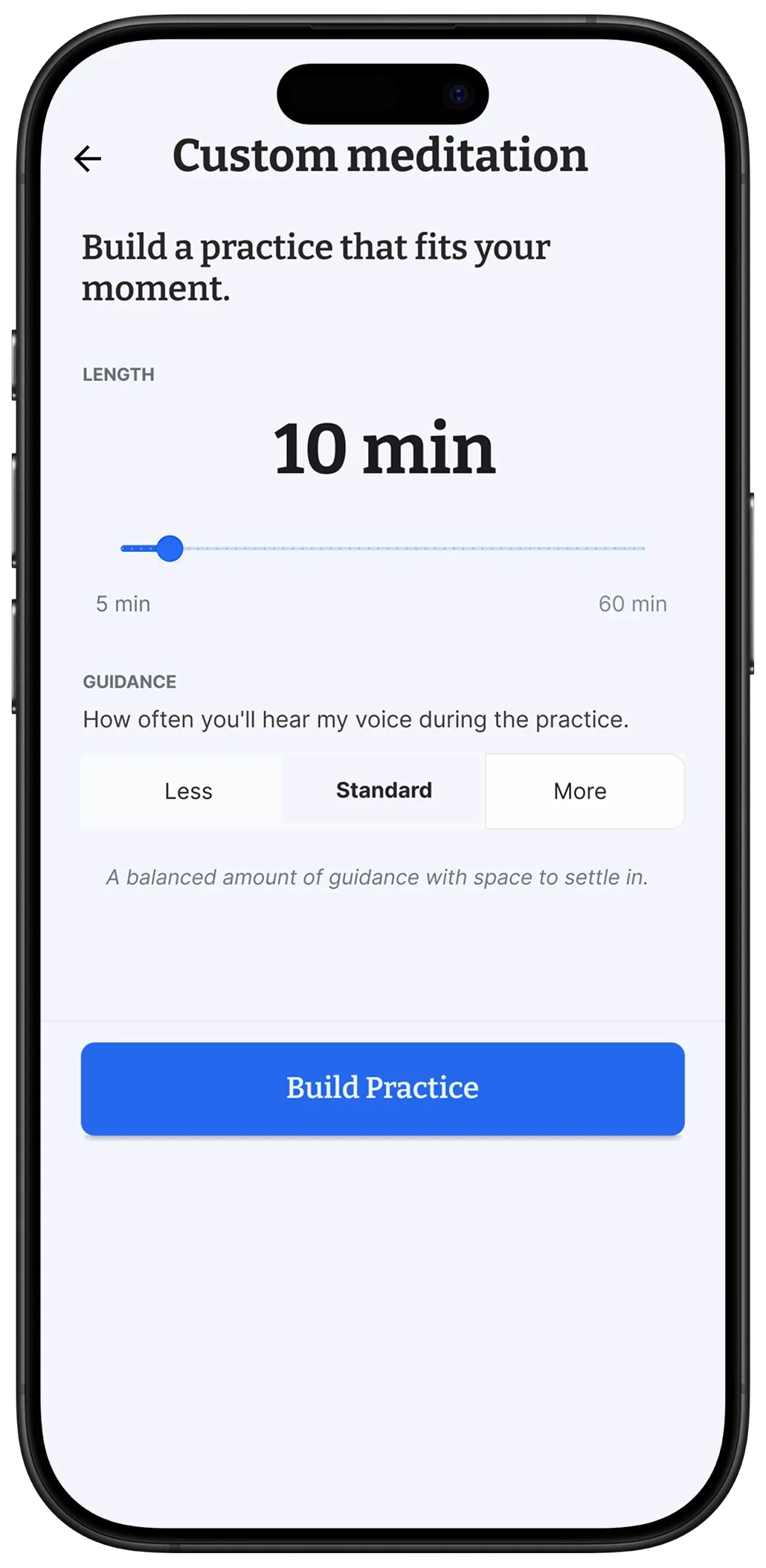
Build your own beginner practice
Once you've done a few sessions, Custom Meditation lets you build a mindfulness session in whatever length you have. As a beginner, pick "more" guidance. That means frequent prompts and shorter silences, which is the right starting calibration. As you get more practice, you can move to "standard" or "less." If you'd rather follow a structured path, the 30 Days of Mindfulness course is the stronger starting point. One lesson a day, about ten minutes each.
Try Custom Meditation →


Common questions
How long should a beginner meditate?
Five minutes a day for the first week. Build to ten by week three. The duration matters less than the consistency.
What time of day is best?
Morning is most common because it's easiest to protect from interruptions. Before bed is fine but you'll fall asleep more often. After lunch is the hardest because of digestion. Pick the one you'll actually do.
Do I have to sit cross-legged?
No. Sit in a chair with your feet on the floor and your back reasonably upright. That's it.
Should I keep my eyes open or closed?
Closed is more common. Open with a soft downward gaze works for some people, especially those who get sleepy. Pick the one that keeps you alert.
How long before I notice a difference?
Most people notice an in-the-moment calm after the first few sessions. The baseline shift (less reactive, more focused, sleeping better) usually takes three to four weeks of regular practice.
Which meditation app is best for beginners?
There's no single best one. The right beginner app is the one whose style you'll actually keep using, so look for short sessions, plain guidance, and a free tier you can try before paying. Declutter The Mind fits if you want secular, no-frills meditation with 500+ free guided sessions and a voice that doesn't make you cringe.