Topic · Anxiety
Meditation for anxiety.
A way to notice anxious thoughts without getting pulled into them.
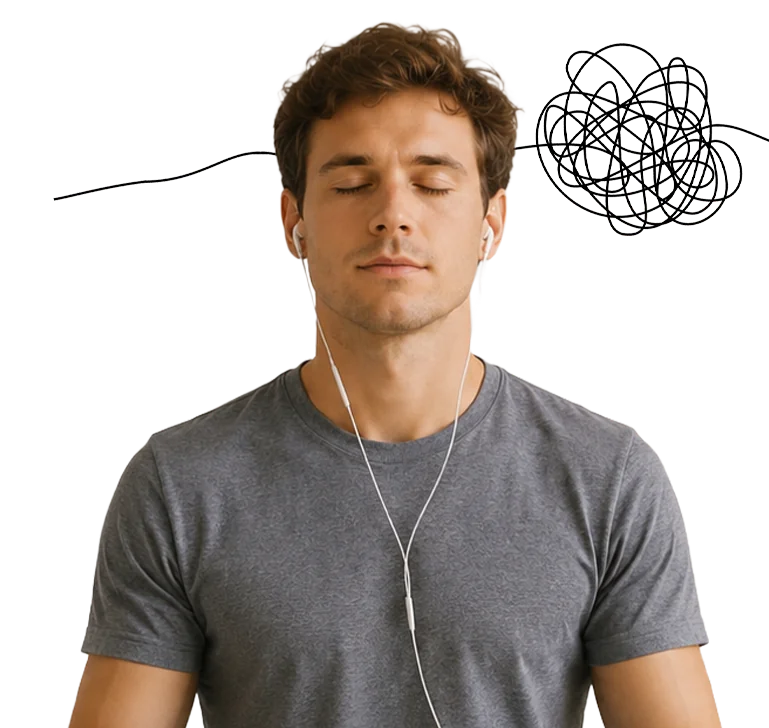
The best meditation app for anxiety is the one you’ll actually open when anxiety hits. Declutter The Mind keeps its anxiety practices free with no card: panic, morning anxiety, intrusive thoughts, and overthinking are all on this page. Below is what actually matters when you pick one, how the main apps compare for anxiety, and a guided practice you can start right here.
What does anxiety meditation actually do?
Anxiety meditation isn’t a cure for anxiety. It’s a way to notice anxious thoughts without getting pulled into them. The mechanism is mundane: you guide your attention to something steady (usually the breath or sensations in the body), and when an anxious thought shows up, you notice it, name it, and return to the anchor without arguing.
Repeated, the practice changes your relationship to anxious thoughts. They still come. You’re less likely to spiral into them. Studies have looked at this directly and the effect is real, though it’s smaller than therapy or medication for people with diagnosed anxiety disorders. A 2014 meta-analysis in JAMA Internal Medicine pooled 47 trials and found moderate evidence that mindfulness meditation programs reduce anxiety, and a separate meta-analysis of mindfulness-based therapy found the gains for anxiety symptoms held up at follow-up. We say that not to minimize the practice. We say it so you know what to expect.
Practices for anxiety in the library fall into three shapes: breath-anchored mindfulness for acute moments, longer mindfulness practices for general anxiety, and loving-kindness directed inward for the self-criticism that often rides shotgun.
When is meditation not the right tool for anxiety?
Meditation helps with anxiety. It is not a substitute for therapy, and for many people with a diagnosed anxiety disorder it is not a substitute for medication. CBT in particular has a strong evidence base for anxiety treatment. If anxiety is running your life, that’s a conversation with a clinician, not another meditation app.
If what’s happening right now is a panic attack, meditation can help in the moment but the right tools are different from regular practice. Focus on long exhales (longer out than in), name five things you can see, get cool air on your face. The breath-anchored practices in the library help once the wave passes.
What should you look for in a meditation app for anxiety?
A good anxiety app gives you something short and breath-anchored for the bad moment, longer mindfulness for the general background hum, and honest limits about what it can and can’t do. Skip anything that promises to cure anxiety. None of them can.
The other thing worth checking is what’s actually free. Most apps put their anxiety library behind a paid subscription. Declutter The Mind’s anxiety practices are free, no card: the panic, morning-anxiety, intrusive-thoughts, and overthinking sessions on this page don’t cost anything. Plus ($60 a year) and Lifetime ($219) open the full library, but you can get a long way without paying. Here’s how the main options stack up for anxiety specifically.
Best meditation apps for anxiety, compared
| App | Best for anxiety | Free anxiety practices | Platforms |
|---|---|---|---|
| Declutter The Mind | Secular, no-woo practice you’ll actually keep up | Yes, 500+ free with no card | iOS, Android, Web |
| Insight Timer | The widest free library to browse | Yes, very large free tier | iOS, Android, Web |
| Calm | Sleep and a polished, produced feel | Limited, mostly subscription | iOS, Android, Web |
| Headspace | A structured, course-style start | Limited, mostly subscription | iOS, Android, Web |
We put Declutter The Mind first because it’s ours and we built it for exactly this: notice an anxious thought, come back to the breath, without mysticism and without a paywall in front of the practices that help most. If you want the largest free library to explore, Insight Timer is hard to beat. Calm is the better pick if sleep is your main problem, and Headspace if you want a guided course to follow. For a fuller side-by-side with more apps, see our roundup of the best free meditation apps, our own included.
Anxiety practices in the app
Breath-anchored mindfulness for acute moments, longer mindfulness for general anxiety, loving-kindness for self-criticism. Try one in the browser. The rest are in the app.
Plays in your browser. No account required.
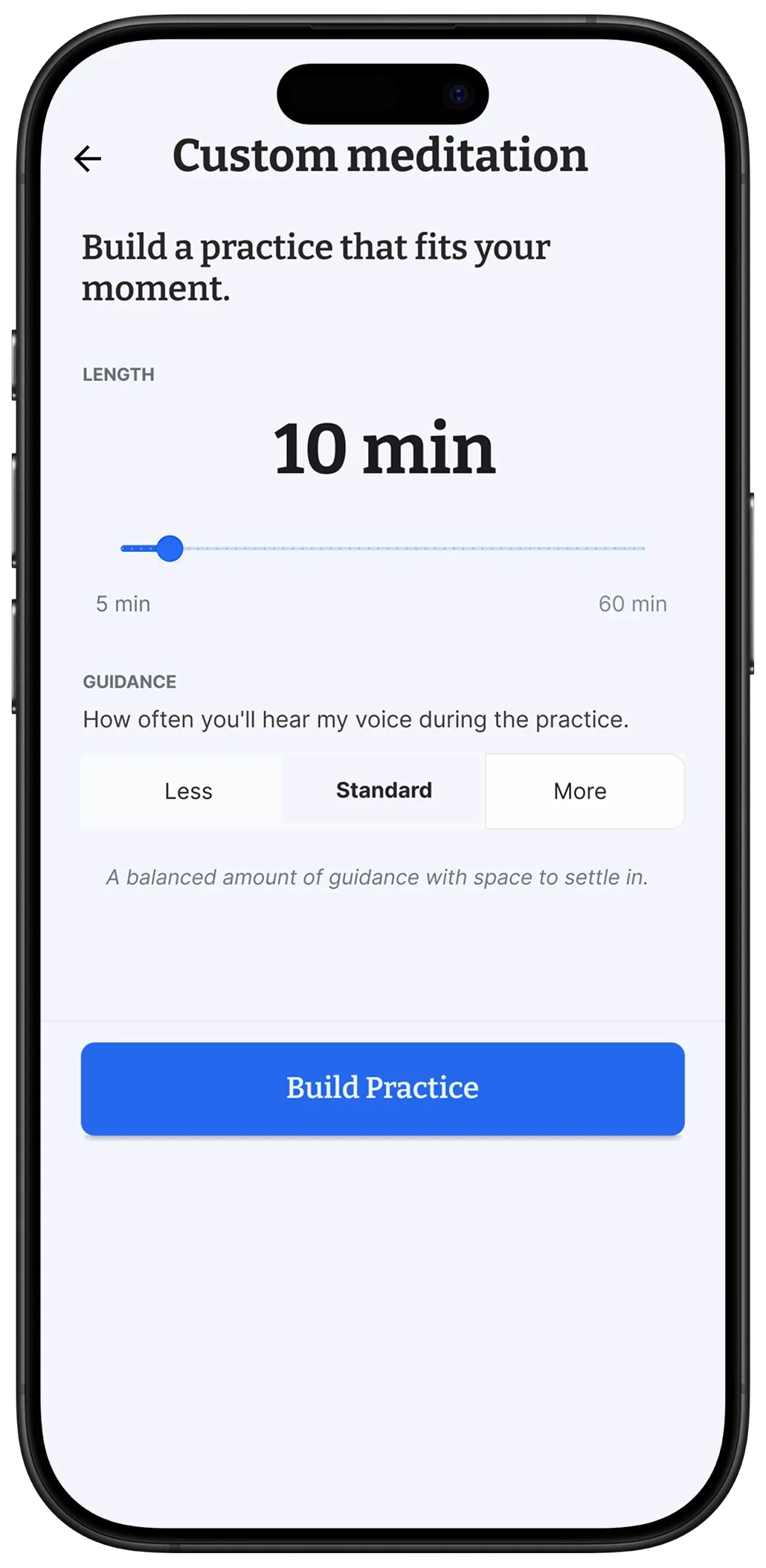
Build your own anxiety practice
When the anxious moment is now and you don't want to scroll a menu, Custom Meditation builds a mindfulness session at whatever length you have. Pick five minutes if you're in a parking lot before something hard. Pick twenty if you're at home. Mindfulness is the canonical practice for most anxiety moments, which is why this section gets a real placement on this page.
Try Custom Meditation →
Common questions
How long should I meditate for anxiety?
Ten to twenty minutes a day, most days, is the band most research uses. If that's too much to commit to, five minutes daily beats twenty minutes once a week.
Should I meditate during a panic attack?
A panic attack isn't the time to start a 20-minute practice. Focus on long exhales and grounding (five things you can see, four you can touch, three you can hear). After the wave passes, a short breath-anchored practice can help your nervous system settle.
Can meditation replace anxiety medication?
No. If you're on medication for anxiety, that's a conversation with the prescribing doctor. Meditation can be a useful daily practice alongside medication, not instead of it.
What if I'm too anxious to meditate?
Pick the shortest practice you'll actually do (five minutes) and pick "more guidance" so the voice carries you. A short, frequent-prompt practice that you actually do beats a long, silent one you bail on.
Does meditation work for generalized anxiety, panic, and social anxiety equally?
Better for generalized anxiety than for panic. For social anxiety, mindfulness helps with the post-event rumination cycle. For panic, CBT-based exposure therapy has stronger evidence. The library has practices for all three but the gains aren't equal.
Is there a free meditation app for anxiety?
Yes. Declutter The Mind's anxiety practices are free with no card required. Most apps put their anxiety library behind a paid subscription; our free tier includes 500+ guided practices, the anxiety ones on this page among them. Plus ($60 a year) and Lifetime ($219) add the full library, but you can get a long way without paying.