Topic · Breathing
Breathing meditation.
The most reliable beginner practice and the most reliable advanced one.
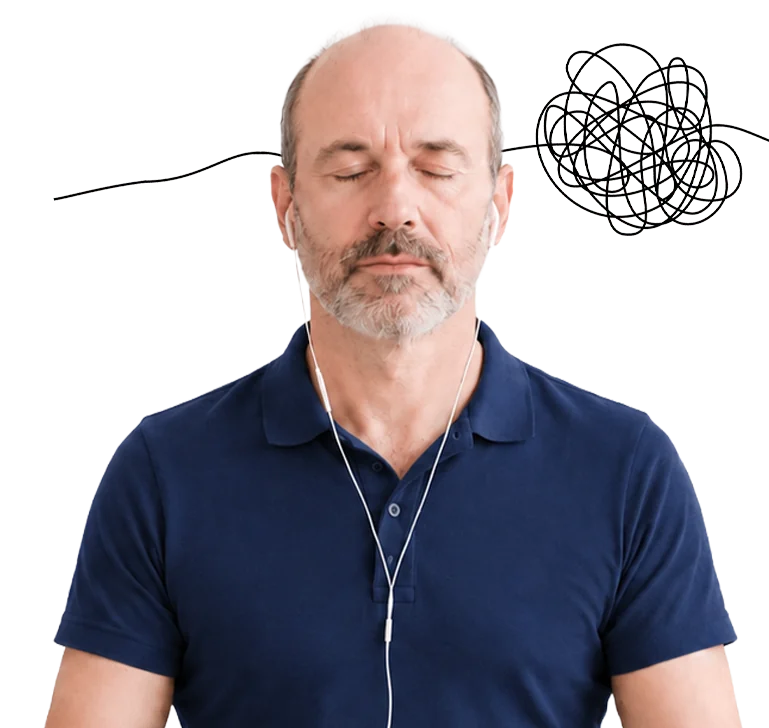
What breath-anchored meditation actually does
Breath-anchored meditation uses the breath as a focus point. You’re not controlling the breath. You’re noticing it. Each inhale, each exhale, the small pause between. When your mind wanders (it will), you notice the wandering and return to the breath.
The reason this is the most reliable practice across skill levels is that the breath is always there. You don’t need a quiet room or a special object. You don’t need an app, technically, though one helps. The breath is the anchor and the anchor is built into your body.
Two shapes of breath practice
Most breath practices fall into one of two shapes. Structured techniques count beats: inhale for four, hold for seven, exhale for eight. Use these for acute moments. Falling asleep, pulling out of an anxious spike. Breath-anchored mindfulness uses the breath as a focus inside a longer meditation: notice, return, notice, return. Use this for daily practice.
Both shapes are in the practice list. For acute moments, look for the 4-7-8 or box breathing rows. For daily practice, pick a breath-anchored mindfulness row at the length you have.
Breathing practices in the app
Breath-anchored mindfulness for daily practice; structured techniques like 4-7-8 and box breathing for acute moments. Try one in the browser. The rest are in the app.
Plays in your browser. No account required.
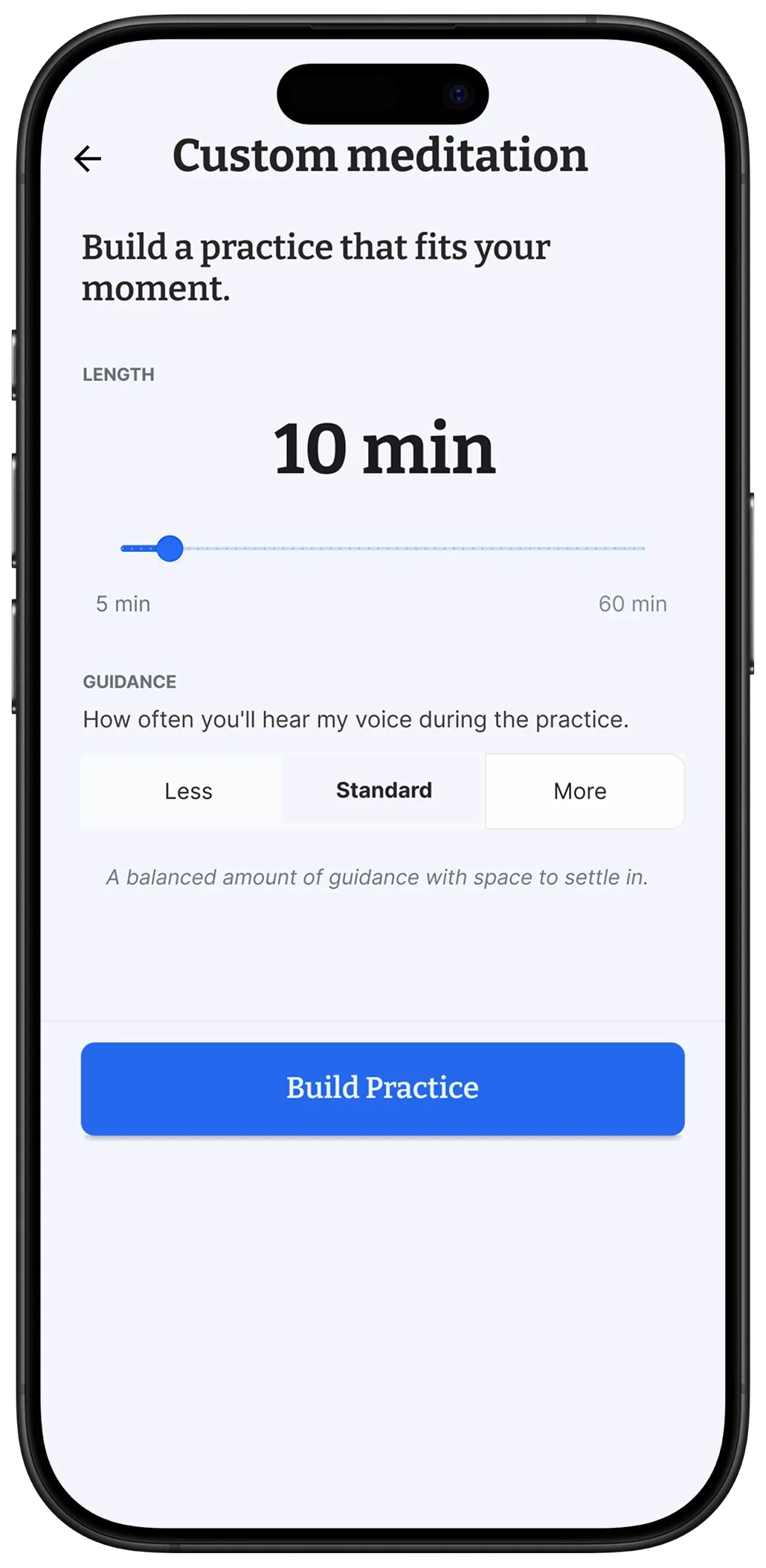
Build your own breath-anchored practice
Custom Meditation builds a mindfulness session at whatever length you pick. For breath-anchored work, pick "less" or "standard" guidance. Long silences are where the breath does its work. Five minutes if you have five, twenty if you have twenty.
Try Custom Meditation →

Common questions
How do I breathe during meditation?
Normally. Through your nose if it's open. Don't try to slow it down on purpose. The point is to notice it, not control it.
Should I count my breaths?
Optional. Counting to ten and starting over is a fine training-wheel technique for beginners. Once you're past the first few weeks, dropping the count makes the practice cleaner.
What if I get lightheaded?
Stop. Lightheadedness in breath meditation usually means you're over-breathing without realizing it. Drop the practice for the day. If it happens consistently, switch to belly breathing where you keep the breath natural.
4-7-8 vs box breathing. Which one?
4-7-8 leans calming (longer out than in). Box breathing leans balancing (equal counts). Use 4-7-8 to wind down. Use box to steady before a meeting or performance.