Topic · Sleep
Meditation for sleep.
For a mind that won't slow down at night.
What does sleep meditation actually do?
Sleep meditation isn’t a sleep story. It isn’t a cure for insomnia. It works on one specific problem: a mind that keeps cycling through tomorrow’s meeting, today’s missed text, and the thing you said in the car eighteen years ago. The technique is to give that mind something else to do, gently, until it gets tired and lets you go.
The mechanism is mundane. You guide attention to the breath or to slow movement through the body. Thoughts come up. You notice them. You return to the anchor without arguing with the thought. Repeated for ten or twenty or forty minutes, the volume on the mental chatter usually drops. Sometimes you fall asleep mid-practice. That’s fine. The practice did its job.
Worth saying clearly: this is not a substitute for sleep hygiene, treatment for chronic insomnia, or a fix for an anxiety disorder that’s affecting sleep. It’s a tool that helps with one specific kind of bedtime problem, the racing-mind kind. If that’s your problem, the rest of this page is for you.
When is meditation not the right tool for sleep?
If you’ve had trouble falling or staying asleep for more than a few weeks, the right next step isn’t another meditation app. Persistent insomnia has known treatments (CBT-I is the first-line one) and a doctor can help you sort out whether something physical is in the way. Don’t outsource that to a meditation.
If anxiety, depression, or trauma are running the show at night, meditation can be a useful piece of the picture but it’s not the whole picture. Therapy, in many cases medication, sometimes both. We don’t say this to push you off the app. We say it because the people who get the most out of meditation are the ones who use it for what it’s good at and find the right tool for everything else.
Sleep practices in the app
Body scan and breathwork-anchored mindfulness are the canonical practices for bedtime. Try one in the browser. The rest are in the app.
Plays in your browser. No account required.
A note about Custom Meditation
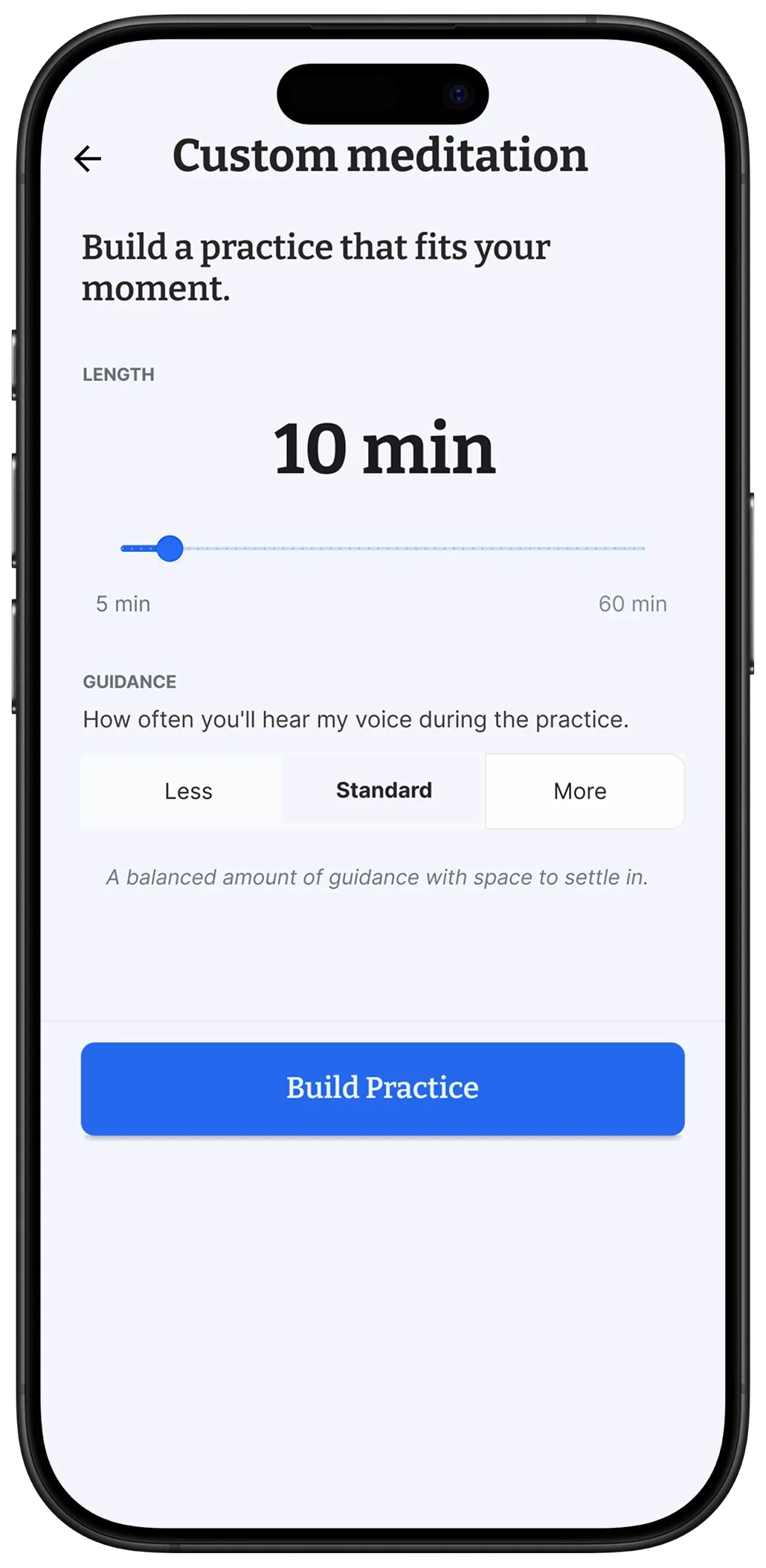
If your sleep problem is specifically a racing mind and you want a practice in the exact length you have before bed, Custom Meditation builds a mindfulness session at whatever length you pick. It's a mindfulness practice, not a sleep-specific build. For body scan or breathwork practices designed for bedtime, use the library above.
Learn more →

Common questions
How long should I meditate to fall asleep?
Long enough that your mind has slowed down, which for most people is between ten and thirty minutes. If you fall asleep before the practice ends, that's not a failure. That's the practice working.
Should I use guided meditation or silent meditation for sleep?
Most people falling asleep benefit from guided. A voice gives the mind something to follow instead of something to fight. Silent meditation works once you've built the habit, but for a racing mind at bedtime, guided is the cleaner tool.
Will I become reliant on meditation to fall asleep?
Unlikely. The skills the practice builds (slowing the mind, releasing physical tension, returning attention to the breath) transfer to the times you're not meditating. Most people use sleep meditation regularly when they need it, less when they don't.
Can meditation replace sleep medication?
No. If you're on prescription sleep medication, that's a conversation with the doctor who prescribed it. Some people find a daily meditation practice changes what they need over time; some don't. Meditation isn't a substitute for medical care, and we're not asking it to be.
What if my mind is too anxious to meditate?
Pick the shortest practice you'll actually do, and pick "more guidance" so the voice carries you. A five-minute meditation with frequent prompts is more useful than a thirty-minute one you bail on after ninety seconds. Build the practice tiny and let it grow.