Topic · Loving-Kindness
Loving-kindness meditation.
A practice for softening chronic self-criticism, anger, and isolation. Older than any wellness app. Still works.

What loving-kindness is
Loving-kindness. Metta in Pali. Is a practice of directing well-wishes to yourself and others. The traditional structure is four phrases, repeated silently: “May I be happy. May I be healthy. May I be safe. May I live with ease.” After holding the phrases for yourself, you direct them outward in a specific order. First someone you love easily, then a neutral person, then someone you have difficulty with, then all beings.
The order matters. Starting with someone easy primes the move; ending with someone difficult is where the practice does its hardest work. Done over weeks, the practice has been shown to reduce self-criticism, soften chronic anger, and increase a sense of connection. The mechanism isn’t magic. You’re literally rehearsing the move of wishing well, until wishing well becomes a default rather than an effort.
The technique
- Get comfortable. Sit, close your eyes, take three slow breaths.
- Start with yourself. “May I be happy. May I be healthy. May I be safe. May I live with ease.” Repeat for one to two minutes.
- Someone you love easily. Bring their face to mind. Same four phrases, directed at them.
- A neutral person. A barista you see weekly, a coworker you barely know. Same phrases.
- A difficult person. Someone you’re in conflict with. Same phrases. This part is hard.
- All beings. “May all beings be happy. May all beings be healthy. May all beings be safe. May all beings live with ease.”
When this feels fake (because it will)
If LK feels fake the first few times you do it, that’s normal. You’re directing well-wishes at people you don’t love, including yourself if you have a complicated relationship with self-compassion. The pretense is part of the practice. Do it anyway. The fake-feeling fades with repetition.
If LK toward a specific person feels intolerable even after weeks. Usually a person who hurt you in a real way. That’s information. The practice isn’t asking you to forgive them or trust them. It’s asking you to wish them basic human well-being. If even that feels wrong, skip them for now. The practice still works without that one name.
Loving-Kindness practices in the app
Loving-kindness practices across the traditional four-phrase shape. Try one in the browser. The rest are in the app.
Plays in your browser. No account required.
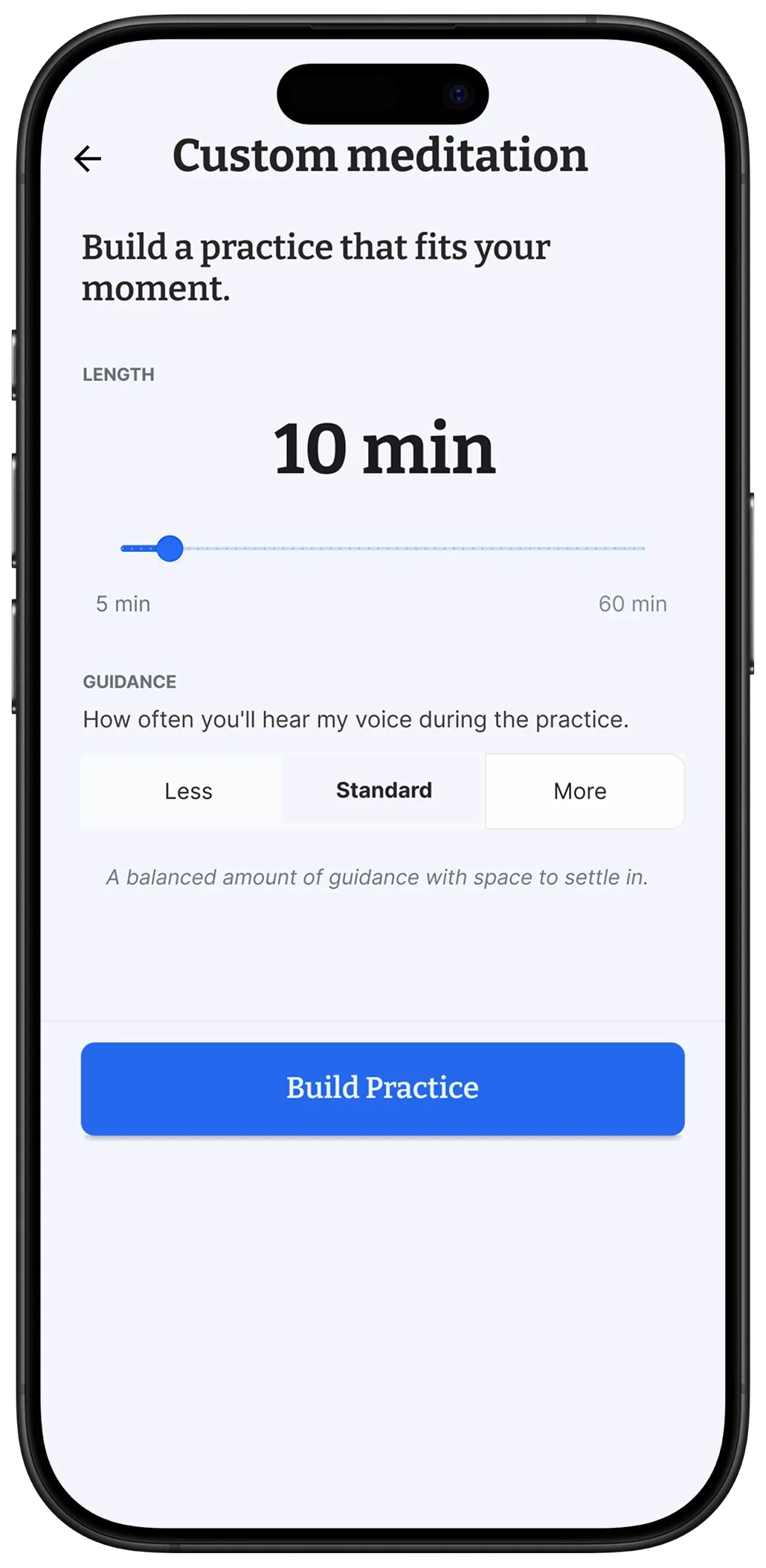
A note about Custom Meditation
Custom Meditation builds mindfulness, not loving-kindness. For LK practice specifically, the library above is the right tool. If a loving-kindness theme ships in Custom Meditation, this page will lead with it.
Learn more →


Common questions
Why these four phrases? Can I use different ones?
The traditional phrases are happy, healthy, safe, at ease. You can use variations ("may I be peaceful," "may I be free from suffering") as long as the shape is well-wishing. Don't substitute requests ("may I get the promotion"). Those break the practice.
How long until I notice a change?
Most studies use 6 to 8 weeks. In-the-moment shifts (a softening toward someone you were resenting) can happen in a single session. The baseline change takes longer.
Should I start with myself or someone else?
Yourself, traditionally. If self-directed LK feels too hard, start with someone you love easily and come back to yourself in a few weeks. The order isn't sacred. The shape is.
Can LK help with depression?
The research shows modest positive effects, especially for depression with strong self-critical themes. It isn't a substitute for therapy or medication, but it can be a useful piece.