Topic · Gratitude
Gratitude meditation.
A structured way to notice what's actually working. Not a substitute for hard circumstances changing.

What gratitude meditation actually does
Human brains have a strong negativity bias. The bad thing that happened today gets more mental airtime than the three good things, even when the math says otherwise. It’s not a moral failing. It’s how the brain evolved. Gratitude meditation is a counterweight. You spend ten minutes deliberately noticing what’s working: people you have, body parts that aren’t hurting, small wins from the week, things you have access to that you didn’t have ten years ago.
The research on gratitude practice shows real but moderate effects on mood, sleep, and life satisfaction over weeks of practice. The mechanism is partly attention training (you start noticing more good in real time) and partly a structural change to memory consolidation (the day’s positives get more weight when you’ve spent time on them).
The “I don’t feel grateful right now” problem
If you’re in the middle of a hard stretch. Grief, illness, financial stress, a relationship ending. Gratitude meditation can feel like being told to put on a happy face. The practice is more useful when it doesn’t ask you to feel a way you don’t.
A useful variant: notice what’s still there. The friend who texts. The fact that you slept. The cup of coffee that’s hot. The list doesn’t have to include “I’m grateful for my life.” It can be specific and small. That’s enough.
Gratitude practices in the app
Gratitude reflection across multiple lengths. Three to five times a week is the band most studies use. Try one in the browser. The rest are in the app.
Plays in your browser. No account required.
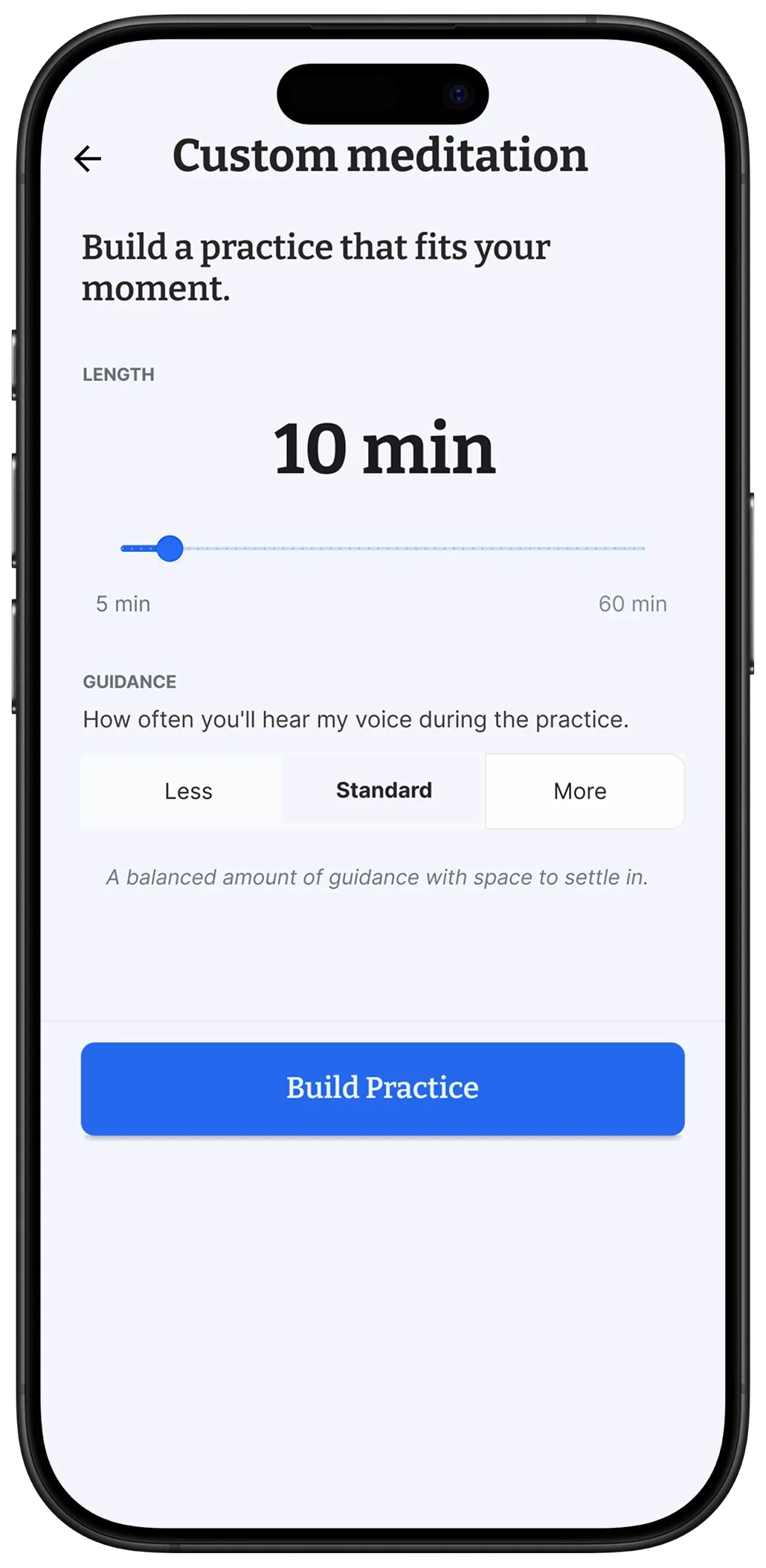
A note about Custom Meditation
Custom Meditation builds mindfulness, not gratitude reflection. For gratitude practice specifically, the library above is the right tool.
Learn more →
Common questions
How is gratitude meditation different from journaling?
Journaling captures gratitude in writing. Meditation rehearses it through attention. Most people who do both find them complementary. Journal in the morning, meditate in the evening, or whatever fits.
Will gratitude meditation make me complacent about real problems?
No. Gratitude practice doesn't require accepting injustice or pretending hard things are fine. The two coexist. You can be grateful for the friend who showed up AND furious about the situation that required them.
How often should I do gratitude meditation?
Three to five times a week is the band most studies use. Daily is fine but isn't necessary.
Why don't I feel grateful even after weeks of practice?
Possibly the practice is asking for more performance than reflection. Try the "what's still there" variant in the section above instead. Also possibly something else is going on (low mood, depression) that benefits from professional help.