Topic · PTSD
Meditation and PTSD.
An adjunct, not a treatment. Read this page before pressing play.
What this page is for
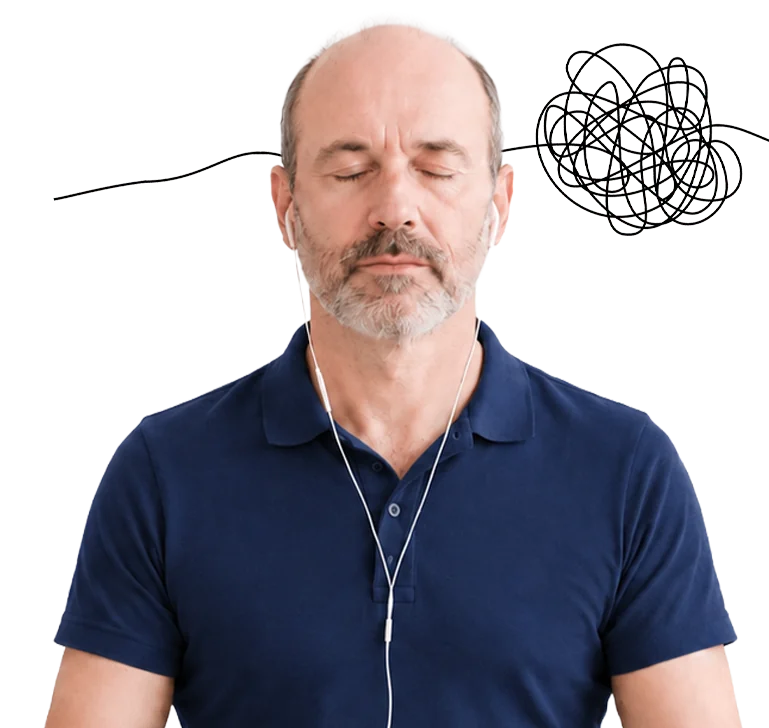
PTSD is a clinical condition with evidence-based treatments. Meditation is not one of those treatments. It can be a useful adjunct alongside therapy, but it is not a substitute for trauma-focused care. If you have PTSD or suspect you do, the most important thing this page can tell you is: see a clinician trained in trauma. The practices on this page can help. They can also, in some cases, make things worse if used wrong. That’s a real risk and we’d rather say it than let you find out the hard way.
What the research actually says
Mindfulness-Based Stress Reduction (MBSR) has been studied as an adjunct to PTSD treatment with modest positive effects. The strongest evidence is for mindfulness reducing PTSD symptom severity when combined with trauma-focused therapy, not on its own.
The first-line treatments for PTSD per the VA, APA, and most clinical guidelines are trauma-focused therapies: Cognitive Processing Therapy (CPT), Prolonged Exposure (PE), and Eye Movement Desensitization and Reprocessing (EMDR). Some people also benefit from medication. Meditation can sit alongside those. It does not replace them.
Trauma-sensitive guidance
- Keep your eyes open if you want. Closed eyes can amplify hypervigilance for some trauma survivors. Open with a soft downward gaze works.
- Start short. Five minutes, not twenty. The right dose is the dose you can tolerate without dissociating.
- Anchor in the present. If the practice surfaces a memory, you can pause, look around the room, name five things you see, and decide whether to continue.
- You can stop any time. That’s not failure. That’s the practice working in the sense that it told you what you needed.
- Work with a clinician on a plan. Especially in the first six months of practice if you have a PTSD diagnosis.
When mindfulness can make things worse
Mindfulness asks you to pay attention to internal experience. For trauma survivors, internal experience can include intrusive memories, somatic flashbacks, dissociation, or panic. A practice that turns the volume up on those experiences without offering grounding skills can be destabilizing.
Specific warning signs that the practice is hurting more than helping: increased intrusive memories, sleep getting worse, dissociation during or after sessions, panic during practice. If any of those is consistent, stop the practice and talk to a clinician before resuming.
The risk isn’t reason to avoid meditation if you have PTSD. It’s reason to choose trauma-aware practices, keep sessions short, and work with someone who can adjust the plan if it’s not working.
Treatments with strong evidence
- Cognitive Processing Therapy (CPT). Manualized 12-session therapy focused on cognitive restructuring around trauma.
- Prolonged Exposure (PE). Graded exposure to trauma memories with a trained therapist.
- EMDR. Eye movement desensitization and reprocessing, also therapist-led.
- Medication. SSRIs for some people, with a prescribing clinician.
The VA’s PTSD treatment decision aid (US) is a good starting point if you’re trying to choose. If you’re outside the US, your country’s psychological association likely has equivalent guidance.
PTSD practices in the app
Trauma-aware practices. Read the trauma-sensitive guidance below before starting. Try one in the browser. The rest are in the app.
Plays in your browser. No account required.
A note about Custom Meditation
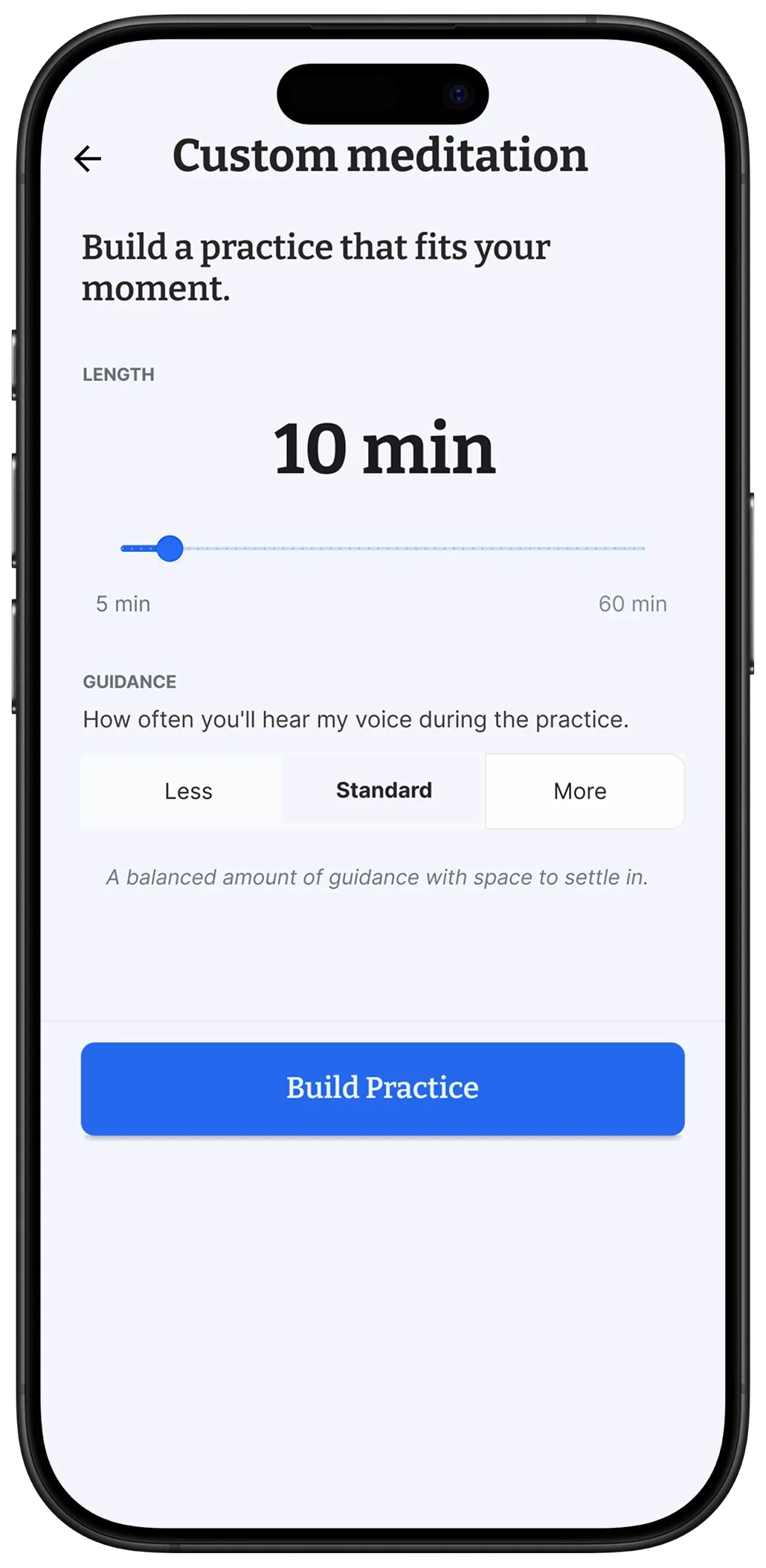
For PTSD-aware practice, we recommend the curated practices in the library above, which are designed with trauma-sensitivity in mind. Custom Meditation builds general mindfulness sessions and isn't specifically designed for trauma-sensitive practice. If you use it, keep sessions short and start with "more" guidance so the voice carries you.
Learn more →

Common questions
I have PTSD. Should I start meditating?
Maybe, with a plan. Talk to your therapist first if you have one. Start short, keep practices grounding-focused, and watch for warning signs (more intrusive memories, worse sleep, dissociation). Stop and reassess if any of those show up.
Can meditation cure PTSD?
No. It can be a useful adjunct. The treatments with the strongest evidence are CPT, PE, EMDR, and in some cases medication.
What if a practice triggers a flashback?
Stop. Open your eyes. Ground yourself in the present (name five things you see, four you can touch). If flashbacks are happening during practice, you're using the wrong intensity of practice or the wrong type. Switch to shorter, more grounded practices and talk to your therapist.
Should I do body scan if my body holds trauma?
Carefully. Body scan can surface somatic memories. Some people find that useful with a therapist's support. Some find it destabilizing. Start with very short body scans (5 minutes), eyes open if needed, and notice how you feel after. Adjust accordingly.