Topic · Happiness
Happiness meditation.
Not a button you press. A practice that removes some of the machinery of unhappiness.
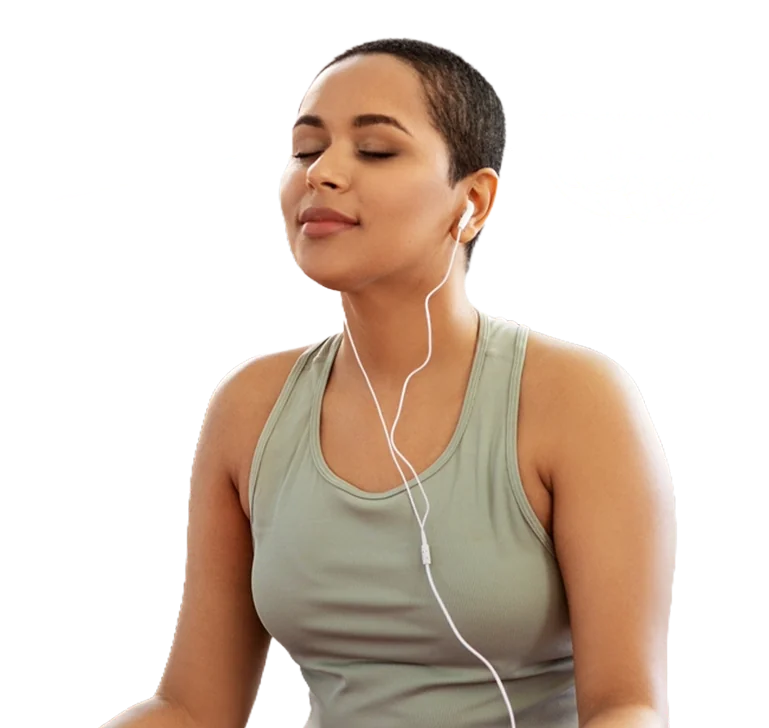
Happiness meditation is a guided practice that trains your attention away from the loops that drag your mood down, like replaying a bad conversation or rehearsing tomorrow’s worries, and toward what’s actually in front of you. The main session here runs 20 minutes, sitting or lying down, and you need no experience. It’s for anyone whose mood feels flat or easily knocked off course, and who wants a small daily habit rather than a quick fix. Start the 20-minute Happiness session below in your browser, free with no card.
One practice has the clearest evidence. A 2015 review of 24 studies with 1,759 people found that loving-kindness meditation gave a medium lift in day-to-day positive emotions. Most of those studies relied on people rating their own mood, so read it as a solid signal rather than proof.
The honest framing
“Meditation for happiness” is a popular search query and most pages that answer it overclaim. We’ll try not to. Meditation doesn’t make you happier on demand. It doesn’t generate a state. It doesn’t bypass actual life circumstances.
What it does, with regular practice over weeks: it reduces rumination (the loops about past slights, future worries, perceived inadequacies), it improves emotional regulation, and it builds a small daily window of “settled” that compounds. Most people who meditate for six months report higher baseline mood. The mechanism is largely subtraction. There’s less negative noise. Rather than addition.
Does happiness meditation work?
The research on long-term meditation and well-being shows moderate effects on baseline mood, life satisfaction, and emotional regulation. The effect is consistent across studies but smaller than therapy or medication for clinical depression. Important to keep that perspective: meditation is useful, it’s not magic.
The practices that show the strongest mood effects are mindfulness, loving-kindness, and gratitude. All three are in the library and all three benefit from regular practice rather than occasional sessions.
When the problem isn’t “not happy enough”
If you’ve been low-mood for more than a couple weeks, can’t enjoy things you used to, or have lost interest in basic self-care, that’s not a happiness shortage. That’s likely depression and it has known treatments. Therapy, medication, sometimes both. Meditation can be a useful piece alongside those. It is not a substitute for evaluation.
Same goes for situational unhappiness from real problems (toxic job, bad relationship, financial pressure). Meditation helps you stay functional inside those situations. It doesn’t solve them.
Happiness practices in the app
The practices most associated with baseline mood. Mindfulness, loving-kindness, gratitude. Try one in the browser. The rest are in the app.
Plays in your browser. No account required.
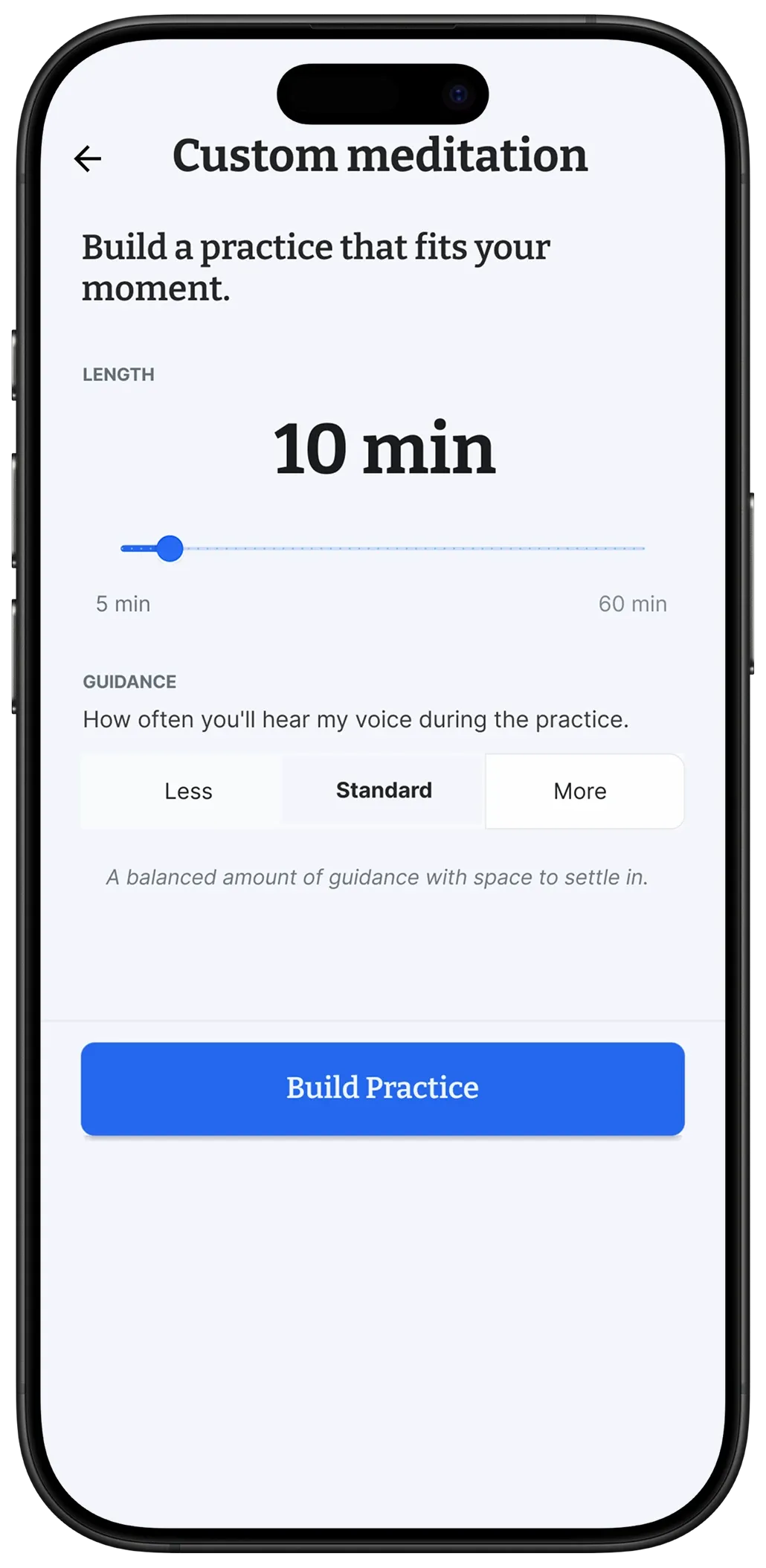
A note about Custom Meditation
Custom Meditation builds mindfulness sessions, which is one of the practices associated with baseline mood improvements. For loving-kindness or gratitude specifically, use the library practices above.
Learn more →


Common questions
Will meditation make me happy?
No, not in the "press a button" sense. Over months of regular practice, most people report higher baseline mood and less reactivity to setbacks. The improvement is real but moderate.
Why don't I feel happy after a session?
Sometimes you do. Sometimes you don't. Meditation doesn't deliver a state on demand. The benefits show up in how you feel across a typical week, not how you feel right after sitting.
Is positive thinking part of this?
No. Meditation isn't positive thinking and most teachers actively warn against forcing positivity. The practice is more honest than that. You notice what's actually there, including the unpleasant stuff. The improvement comes from being less driven by it.
I'm chronically unhappy. Is meditation the right tool?
By itself, probably not. Chronic unhappiness lasting weeks or months often has a treatable cause (depression, untreated anxiety, situational factors). See a clinician. Meditation can sit alongside that work as a useful piece.