The bedtime activities that actually work do one of two things: give your attention something specific to follow, like a body scan, a book, or a gratitude list, or lower body tension first, like a warm bath, progressive muscle relaxation, or slow breathing. Pick two and stack them.
Your mind starts replaying the day the second your head hits the pillow. The meeting you wish you’d handled differently. The email you forgot to send. The thing you read that’s still bothering you. The exact thoughts you need sleep to escape are the ones keeping you awake.
There’s a small set of things that actually help. Some of them work by giving the mind something to anchor to instead of running through the day’s reel. Some of them work by lowering the body’s tension first, which the mind follows. None of them are a magic switch. They work together with the basics (cool room, dark room, screens off an hour before bed, no caffeine past mid-afternoon) and they work less well in isolation. Get the basics first; these refine from there.
Here are 13 relaxing activities to add to your night-time routine. Try one or two a night. Keep the ones that work for you.
1. Listen to ASMR
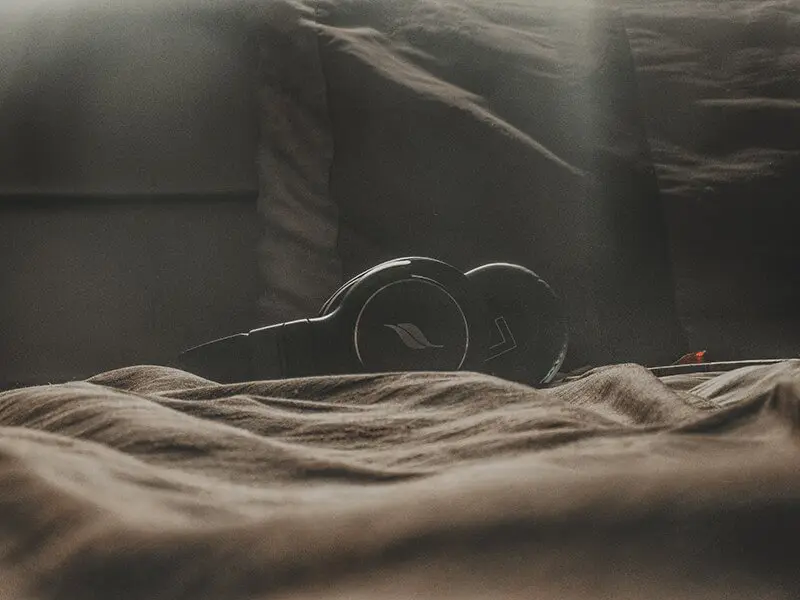
ASMR (Autonomous Sensory Meridian Response) is a genre of video and audio built around quiet sounds: whispers, light tapping, page-turning, soft scratching. For people who respond to it, the result is a tingling, settled feeling that pulls attention down out of the head and into the body.
It isn’t for everyone. Roughly half the population doesn’t get the tingle response at all. If you’ve tried ASMR and it did nothing, skip this one. If you’ve never tried it, run a 10-minute test before bed and see whether your body settles. There are plenty of free ASMR channels on YouTube if you want to start there.
2. Practice meditation
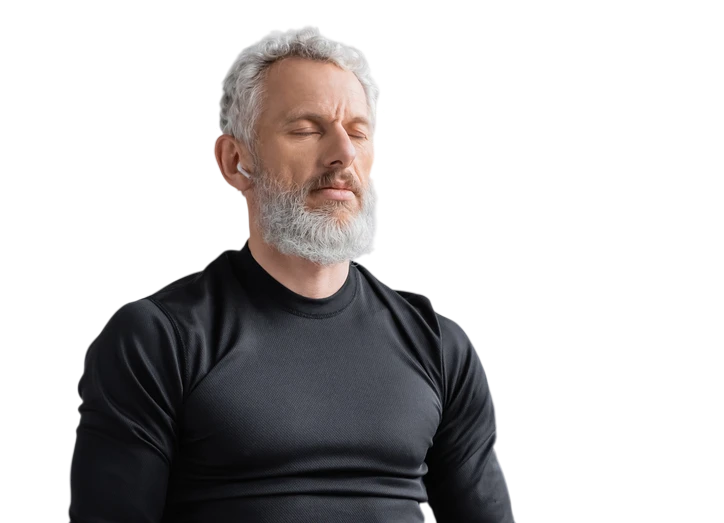
Meditation before bed isn’t about emptying your mind. It’s about giving your attention something specific to follow (usually your breath, a body-scan sequence, or a voice walking you through one) so your mind has a track to ride instead of running through the day’s reel. The mental loop quiets down. Falling asleep gets easier.
A 2019 systematic review and meta-analysis of 18 randomized controlled trials in Annals of the New York Academy of Sciences found mindfulness meditation produced moderate improvements in sleep quality compared to nonspecific active controls (Rusch et al. 2019). The effect was smaller against active treatments like CBT-I, which is the honest scope: meditation is a complement to good sleep hygiene, not a replacement for clinical care if you have an underlying sleep disorder.
If you’ve never tried meditating before bed, start with a guided sleep meditation in the DTM app. The 10-minute body scan in particular pairs well with anything else on this list.
3. Listen to sleep hypnosis audio
Sleep hypnosis sits somewhere between ASMR and guided meditation. A calm voice walks you through suggestion, imagery, and slowed breath, usually with soft music behind it.
The evidence is thinner than for meditation. Some people are highly suggestible and find sleep hypnosis works on them immediately; others get nothing from it. If you’re curious, try a 15-minute recording for a few nights and see whether you fall asleep before it ends. If you do, keep going. If you don’t, move on.
4. Read a book

Reading is a slow-the-mind-down activity in the most literal sense. It pulls attention into a single linear narrative, which is the opposite of the open-loop worrying that keeps people awake.
Read fiction, not work email or long-form journalism that’s going to spool your brain back up. Avoid backlit devices for this. A laptop or tablet emits enough blue light to override the wind-down you’re going for. Paperback, e-ink reader, or a magazine all work. If you want a suggestion in the meditation/mindfulness lane specifically, here are the best meditation books.
5. Listen to soothing music
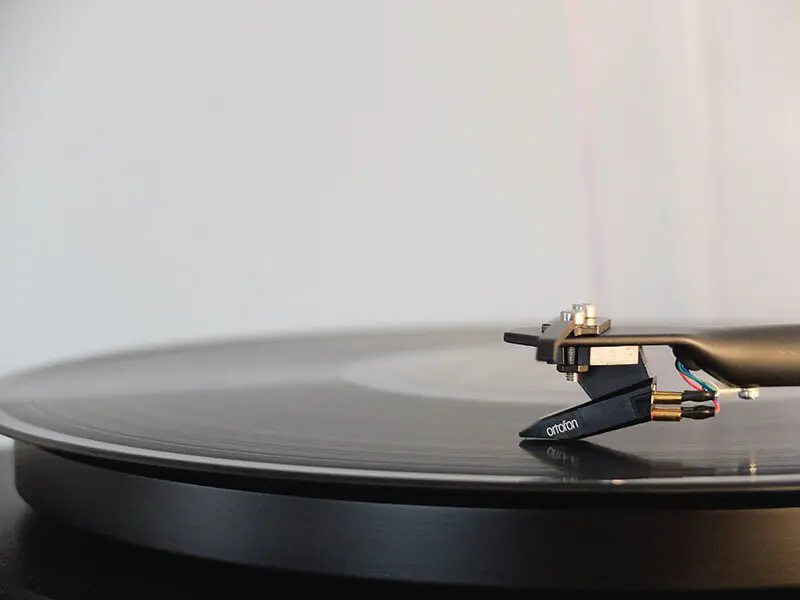
Music is a mood-shifter. Pick something low-tempo, instrumental, and predictable. Lofi hip-hop, jazz, ambient, classical, and chill electronic all work. Most streaming services have curated sleep or relaxation playlists.
A few practical rules. Volume low. No vocals if you can help it (lyrics give your brain something to chase). Set a timer for 30–60 minutes so the music stops once you’re asleep. Continuous overnight audio can fragment REM in some sleepers.
6. Sip something warm and pleasant before bed
A cup of chamomile or herbal tea, a small mug of warm milk, or even just hot water with a slice of lemon does two things at once. The warmth in your hands and chest signals the parasympathetic nervous system, and the act of slowly drinking something becomes a ritual that tells your body the day is over.
Skip caffeine (no black or green tea, no kombucha). Skip alcohol; it knocks you out fast but disrupts the second half of the night. A small amount of sugar is fine. A scented candle or a few drops of lavender essential oil nearby reinforces the sensory wind-down. The point isn’t the chemistry of the tea itself; it’s the steady ten-minute transition between the day and the bedroom.
7. Practice muscle relaxation and slow breathing
If your muscles are still tense when you lie down (jaw clenched, shoulders riding up toward your ears) you’ll feel the tension before you feel the tiredness. Progressive muscle relaxation works on that directly. You tense each muscle group for a few seconds, then release. Start at your feet, work up to your head, slow breath the whole way through.
A 2021 review in Evidence-Based Complementary and Alternative Medicine found progressive muscle relaxation reliably induces both psychological and physiological relaxation states across multiple populations (Toussaint et al. 2021). Paired with slow breathing, it’s one of the better-evidenced calming techniques you can do without a tool.
For the breathing piece specifically, name the technique you’re using. Two reliable ones:
- 4-7-8 breathing: inhale for 4 counts, hold for 7, exhale for 8. Slows your heart rate and lengthens the exhale, which is the parasympathetic signal.
- Box breathing: inhale 4, hold 4, exhale 4, hold 4. Steadier and easier to maintain across many cycles. You can follow the rhythm on our box breathing visualizer.
If you’d rather follow along than do this from memory, the body scan practice in the DTM library walks you through it. There’s also more on the mechanics in our piece on breathing exercises for stress.
8. Write a journal entry about your day
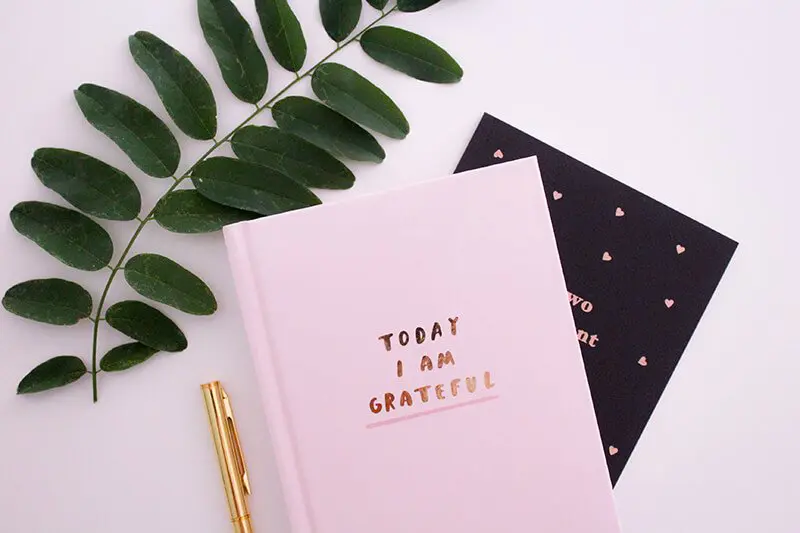
Spend five minutes writing the day down before you sleep. Not a diary. Just the few things that are still rattling around in your head: what happened, what you felt about it, what you wish had been different.
The point isn’t documentation. It’s getting the loop out of working memory and onto paper, so your brain can stop holding it for you. If you want a prompt structure, a mindfulness journal gives you a starting question per night.
9. Write a to-do list for tomorrow
A specific to-do list for the next day works even better than reflective journaling for falling asleep faster, at least according to the research. A 2018 polysomnography study in the Journal of Experimental Psychology: General compared two writing tasks at bedtime: writing a to-do list versus journaling about completed activities. The to-do list group fell asleep meaningfully faster, and the more specific the list (concrete tasks, not vague intentions) the faster the sleep onset (Scullin et al. 2018).
The mechanism is straightforward. If your brain is holding “remember to call the dentist tomorrow, schedule that thing, follow up on that email” all night, it has reason to keep you slightly awake to not forget. Writing it down releases the hold. Get specific: “call the dentist at 9am” beats “deal with the dentist thing.” If you’re prone to night-worrying, this one is probably the highest-impact habit on the list.
For the broader cognitive offload, see our piece on how to worry less.
10. Take a warm bath or shower
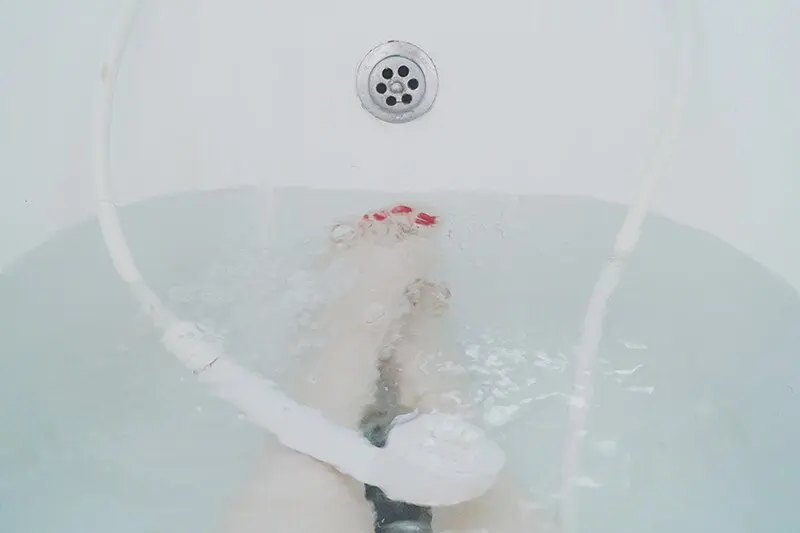
A warm bath or shower 60–90 minutes before bed is one of the better-studied simple interventions for sleep. A 2019 systematic review in Sleep Medicine Reviews pooled data from 5,322 studies and found that water-based passive body heating at 40–42.5°C (104–109°F), scheduled 1–2 hours before bedtime for at least 10 minutes, reduced sleep onset latency by roughly 10 minutes on average (Haghayegh et al. 2019).
The mechanism is thermoregulatory. The warm water raises peripheral blood flow, the body then dumps heat more efficiently afterward, and the resulting drop in core temperature is one of the signals your circadian system reads as “time to sleep.”
A few things matter. The 60–90 minute window before bed is important (a bath right before lying down can actually delay sleep because your body is still warm). Light a candle, play soft music, use a body wash with a scent you like. Aim for at least 10 minutes in the water. If you only have a shower, the same effect applies; warm shower for 10 minutes, then dry off and let the cool-down phase happen naturally.
11. Step outside for a few minutes after dinner
Your circadian rhythm is calibrated by light cues. Bright light in the morning signals “be awake.” Dim light in the evening signals “wind down.” Most modern indoor lighting is much brighter and bluer than the natural evening environment, which means your body doesn’t get the wind-down signal as clearly as it would if you spent the last hour before bed under twilight conditions.
Spending 10–15 minutes outside after dinner (an evening walk, sitting on a porch, watching the light fall) gives your circadian system a clearer “evening” cue than staying in a fluorescent-lit kitchen would. It’s also a low-stakes way to leave the day’s logistics behind for a stretch. If you can’t get outside, dimming the lights in your house for the hour before bed gets some of the same effect.
12. Name three things to be grateful for
Before you sleep, name three specific things from the day worth being grateful for. Not “my family.” The actual moment: the coffee your partner brought you at 9am while you were on a hard call, the message from a friend that made you laugh while you were on the bus, the way the light came through the window after the rain stopped.
Specificity matters. Vague gratitude doesn’t land emotionally, and the point of doing this at night is that the felt sense carries into how you fall asleep. If you want more starter material, our long gratitude list has examples.
13. Play a relaxing game
Some games wind you down rather than up. Slow puzzle games, gentle simulation games, low-stakes word games, or even a deck of cards with a partner. A relaxing game can be a clean wind-down activity in the same lane as reading.
Two cautions. Screens emit blue light, which works against the wind-down; if you’re playing on a phone or tablet, turn brightness all the way down and turn on night-mode. And some “relaxing” games still spike adrenaline (puzzle games with a timer, for example). If you finish a game session feeling more wound up than you started, the game isn’t relaxing for you. Try a paper one instead.
When the List Isn’t Enough
Some nights the racing mind will still beat the list. You can do the bath, the to-do list, the body scan, and still be lying there at 2am with your thoughts looping faster than the ceiling fan. If that’s most nights, and bedtime itself has started to feel like something you brace for, you’re probably dealing with bedtime sleep anxiety rather than a wind-down problem.
On those nights, the move is to give the mind an active anchor instead of just resting and hoping. A guided sleep meditation is exactly that: a voice walking you through a specific sequence, so your attention has a track to follow that competes with the mental loop. There’s a 10-minute guided practice for insomnia in the DTM app library, free, no signup. Pair it with green noise, white noise, or just a quiet room.
For the broader question of falling asleep when nothing’s working, we have more in how to fall asleep. And if your sleep issues persist for several weeks in a row, talk to a doctor; colored noise, baths, and breathing won’t fix an underlying sleep disorder, and the right intervention may be a CBT-I program or a sleep-study referral. For app-based help, here are the best sleep apps for falling asleep faster.
What to Actually Do Tonight
Pick two from this list. Not all thirteen. The two that sound most like something you’d actually do at 10pm on a Tuesday. Stack them with the basics (cool, dark, screens off) and notice what happens.
If your mind is the loudest part of the room, start with the body-scan and the to-do list. If your body is the loudest part of the room, start with the warm bath and the breathing. If both are equally loud, start with a guided sleep practice and let it do the work.
What you’ll find, after a few weeks of this, is that the wind-down becomes its own cue. The pattern of doing two of these things in a row, every night, will start signaling sleep to your body before you even get in bed. That’s the real win. Not any one activity. The repeating shape of an evening that ends with rest.

Amber is the content manager and outreach specialist at Declutter The Mind. She enjoys yoga, MMA, and of course, meditation!