
Technology has created a lot of distractions, but used the right way it can keep us more mindful and present. The best meditation apps put a guided meditation practice in your pocket, ready to go.
Which one should you choose? There are a lot of options, each with its own teachers, lessons, and pricing. I’ve tried and used dozens of guided meditation apps over the years, and I write about meditation full time at Declutter The Mind, where we work with experienced teachers. So this list weighs both how each app feels to use and what actually helps a practice stick.
Everyone has their own preferences, so I went through each of these apps and tried to set my biases and experience aside. I tried each one as if I were brand new to meditation, which is who most of these apps are aimed at.
Even if you’re an experienced practitioner, I think you’ll get a lot from many of these apps, especially if you’ve only ever meditated with a timer and without guidance.
So let’s go through the best meditation apps for 2026.
Meditation apps compared at a glance
| App | Best for | Price in 2026 | Free tier |
|---|---|---|---|
| Declutter The Mind | A full free library with no paywall on the core sessions | Free; Plus $60/year or $219 lifetime | Yes, 500+ sessions free for life |
| Calm | Sleep, bedtime stories, and background sound | $16.99/month, $79.99/year, $499.99 lifetime | Trial only |
| Headspace | Beginners who want one consistent teacher | $12.99/month, $69.99/year | Trial only |
| Balance | A plan that adapts to you | $11.99/month, $69.99/year, $399.99 lifetime | Often a 1-year free trial |
| Insight Timer | Teacher variety and interval timers | Member Plus $9.99/month or $59.99/year | Yes, substantial |
| Smiling Mind | Kids, families, and a zero budget | Free, forever | Yes, everything |
| Happier | Skeptics who want an evidence-leaning tone | $99.99/year, no monthly plan | 7-day trial |
| Waking Up | Experienced meditators and secular philosophy | $14.99/month, $119.99/year | Free year on request |
| Muse | Seeing real biofeedback from a session | Headband $349.99, optional $12.99/month or $94.99/year | No, hardware required |
| Meditopia | Theme-based sessions in 12 languages | $9.99/month or $59.99/year | Yes, limited |
Only want what you can use for free? A few apps here are free for life while others are trial-only, and that difference is easy to miss on the store page. If cost is your main filter, our guide to the best free meditation apps breaks down which ones stay genuinely free and which lock the useful part behind a trial.
How I tested these apps
I installed each app on both iOS and Android and used it the way a beginner would: run the onboarding, take whatever session it recommends first, then come back daily for a week. I judged each one on the quality of the guided instruction, how quickly a beginner can get to a first session, how much you get before hitting a paywall, and whether anything about it would make someone quit in week one.
Prices are the US list prices at the time of writing, taken from each app’s own store listing or website. Prices move often, and Apple and Google sometimes show different numbers for the same plan, so treat the table as a starting point and check the current price before you pay.
One disclosure: Declutter The Mind is our own app, and it is first on this list. Read that entry with the appropriate skepticism, and note that the free library is the part you can check for yourself without paying anything.
10 Best Meditation Apps 2026
Declutter The Mind
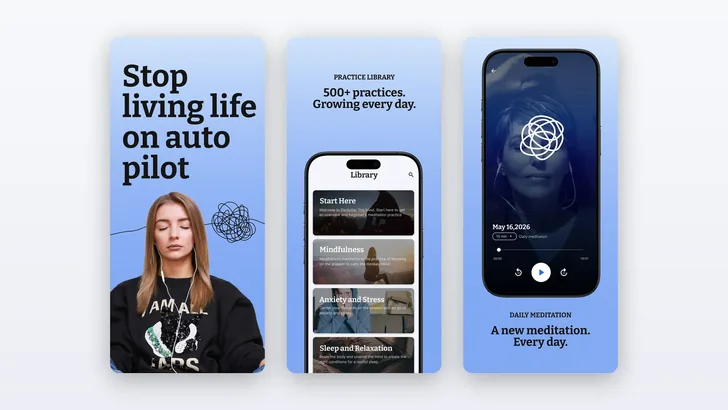
Best for: a full free library with no paywall on the core sessions.
A high-quality, helpful guided meditation doesn’t need to cost you anything. We believe everyone should have access to meditation without worrying about the cost.
That’s why we built Declutter The Mind, an app with a library of guided meditations for beginners and experienced practitioners alike. Sessions cover everything from anxiety and sleep to focus and happiness, plus structured courses to help you understand your mind and build a daily practice.
If you don’t have iOS or Android, our YouTube channel hosts every guided meditation for free.
The library is free for life. We also offer paid meditation courses, including a 30-day mindfulness course that takes you from complete beginner to confident practitioner. The first 5 days of the course are free; the remaining 25 require a subscription. We add new courses every month so you can keep deepening your practice.
Sessions come in 10, 15, 20, and 30-minute lengths. There’s an unguided meditation timer too, useful for restless beginners or anyone who wants silence with interval bells.
A subscription unlocks our daily meditation feature, where members get a new, unique guided session every day. One of the most common criticisms of guided meditation apps is that practices become stale and repetitive. The daily session solves that. The library itself keeps growing too. We add dozens of new free guided meditations every month, covering everything from studying to relationships to morning routines. If there’s a specific kind of practice you’re looking for, reach out and let us know. We read every suggestion.
The app integrates with Apple Health to track your mindful minutes, sends optional daily reminders, and tracks meditation streaks if accountability helps you keep the habit.
Download Declutter The Mind for iOS.
Calm
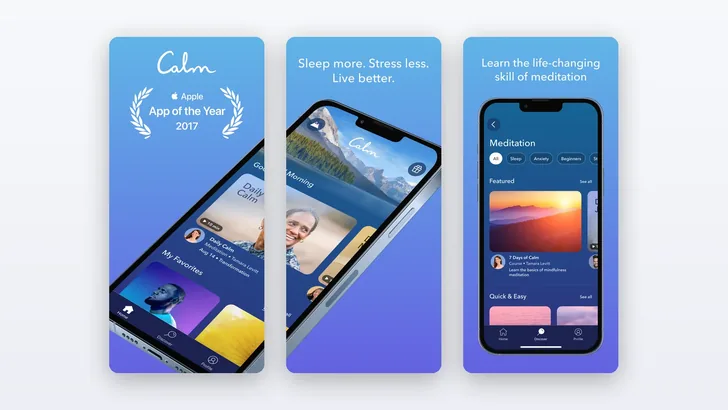
Best for: sleep, bedtime stories, and background sound.
Calm is one of the most beautiful-looking apps in this list. The interface is gorgeous and easy to navigate, and the brand has been around long enough that you’ve probably heard of it. It started as a relaxing-sounds and music app and has grown into a full meditation, sleep, and mental-wellness platform. It’s positioned itself as a Headspace alternative, so let’s start with the meditations.
Calm’s guided meditations span loving-kindness and body scan sessions, plus targeted practices for anxiety, gratitude, and focus. There’s a lot here. Honest take: I don’t think the guided instruction is the strongest of the apps on this list. It’s adequate, but other apps go deeper.
Where Calm really shines is the variety of background sounds and music. If you like to work, sleep, or meditate to nature sounds, white noise, or ambient soundscapes, Calm has the deepest library I’ve seen. There’s also a dedicated sleep section, with over 100 adult bedtime stories that are surprisingly well-produced. If your childhood involved being read to, you’ll probably love this part of the app.
For all that, I think Calm is the best meditation app for sleep and for anyone struggling with insomnia. As a pure meditation app, it’s outclassed by others on this list. If Calm’s sleep focus or price isn’t the right fit for you, we round up the best Calm alternatives separately.
Pricing in 2026: $79.99/year ($6.67/month) on the website, or commonly $69.99/year on iOS, since the iOS price is sometimes lower because of platform pricing differences. The monthly plan is $16.99. There’s also a Family plan at $99.99/year for up to 6 accounts and a one-time $499.99 lifetime option.
Headspace
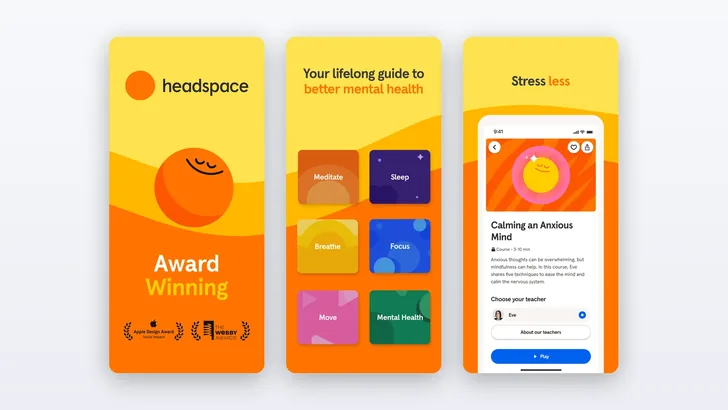
Best for: beginners who want one consistent teacher.
I’ve used Headspace for years, almost since it launched in the early 2010s. I’ve seen it go through many iterations, and it’s now one of the most polished meditation apps available.
That said, it’s also one of the more bloated. The app tries to do a lot (meditation, sleep sounds, exercise content, focus music, mental health support), and that can be overwhelming for beginners who aren’t sure where to start.
The interface is one of the better-designed I’ve used for guided meditation. Don’t let the cartoonish look fool you. Andy Puddicombe (the co-founder and main meditation voice) does an excellent job introducing new concepts gently, and the guided meditations themselves are mature and won’t make you cringe.
Sessions don’t oversell meditation or position it as a magic fix. Headspace has expanded its instructor roster in recent years, but Andy is still the dominant voice. That’s useful if you like a consistent teacher, less so if you want variety.
Each course typically includes short cartoon animations explaining the concepts and techniques. That’s genuinely helpful. Some meditation methods are easier to grasp visually than verbally, especially for beginners.
There’s also a dedicated sleep section with sounds, music, and “sleepcasts” (bedtime stories with ambient backgrounds). And like most modern apps, you can pick session lengths (typically 10, 15, or 20 minutes) depending on your time and experience.
Pricing in 2026: $12.99/month or $69.99/year. Note that the annual plan got cheaper recently. It works out to roughly $5.83/month, which is a meaningful drop from previous years. There’s also a Family plan at $99.99/year for up to 6 members and a heavily discounted Student plan at $9.99/year. A free trial is available.
Balance
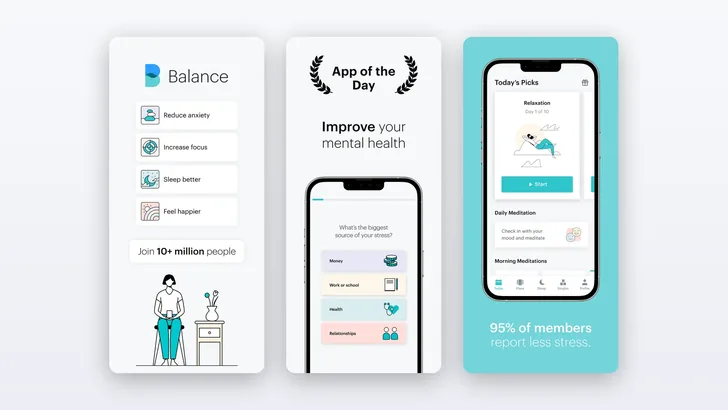
Best for: a plan that adapts to you as you check in.
Balance is the app that’s grown the most in the meditation space over the last few years. It’s earned an Apple App of the Year award and currently sits at 4.9 stars from 95,000+ App Store reviews, the best-rated of the big guided meditation apps. If you’ve been meditating with one of the older apps and feel ready for something with more personalization, this is the one to try.
The pitch is personalized meditation. Balance asks you a series of questions when you start (your goals, your experience level, what you struggle with), and assembles a 10-day plan from there. As you keep using it, daily check-ins about mood and energy adjust the recommendations. It’s the closest any of these apps has come to feeling like a meditation coach.
There’s a vast audio library: guided meditations in different lengths, music, breathing exercises, and “Immersive Meditations” that use vibration and sound effects to deepen the experience. The 10-day Plans are the core of the product, but you can also pull single sessions if you want a one-off.
A few honest caveats. The library is smaller than Headspace or Calm. Balance is younger and the volume reflects that. And the Android app has been less stable than iOS in recent reviews, with some users reporting playback issues. If you’re on iOS, that’s not a concern; if you’re on Android, check current reviews before paying.
Pricing in 2026: $11.99/month, $69.99/year, or $399.99 lifetime. Balance often offers a 1-year free trial to new users. Worth checking when you sign up. That offer alone makes it a low-risk app to try.
Insight Timer
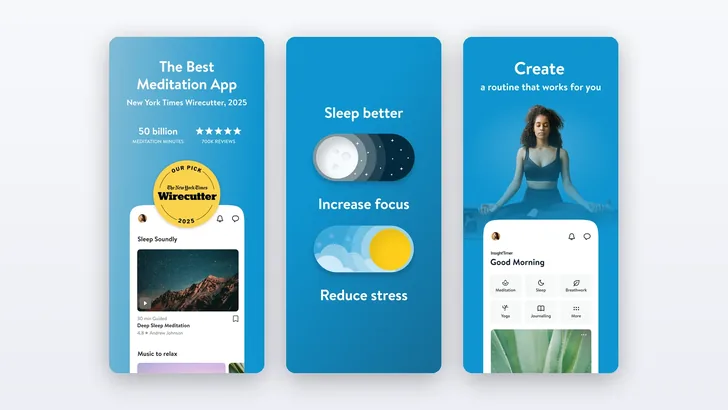
Best for: teacher variety and clean interval timers.
Insight Timer was the first meditation app I ever used. Back before the rush of guided meditation apps, it was one of the few options when you searched “meditation” in the App Store. It started as a simple timer with bell sounds for marking interval, useful for people who already meditated and just wanted a clean tool.
Since then, it’s grown into something much bigger to keep up with the guided-meditation app boom.
The app now features thousands of different meditations from many instructors, organized by topic: sleep, anxiety, loving-kindness, focus, and more. Insight Timer also features well-known meditation teachers like Tara Brach, Sam Harris, Jennifer Piercy, and others. It’s almost a Master Class for meditation, which is impressive for a free app.
If you’re like me, you may prefer a regular instructor with a consistent style. Receiving guidance from many teachers with different approaches and philosophies can feel disjointed. But if variety is what you want, this app delivers it better than anyone.
Insight Timer also added music and ambient sounds, similar to Calm, though Calm’s library is still better.
The thing Insight Timer still does best is the original use case: meditation timers with interval bells. If you want unguided meditation with timing structure, this is the cleanest implementation in any app.
Pricing in 2026: there’s a substantial free tier, plus Member Plus (the renamed premium tier) at $59.99/year (about $5/month equivalent) or $9.99/month if you’d rather pay monthly. Member Plus unlocks exclusive professional content, advanced journaling tools, and offline downloads.
Smiling Mind
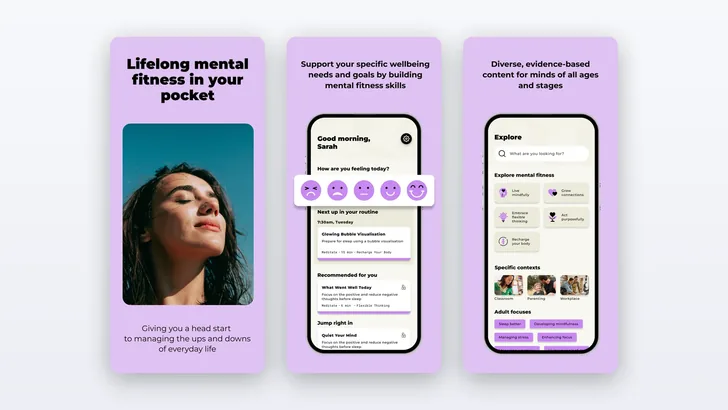
Best for: kids, families, and anyone on a zero budget.
Smiling Mind is the app I recommend most often when someone tells me they want to start meditating but can’t (or won’t) pay for an app. It’s 100% free. Not a freemium tier, not a free trial. Free. Made by an Australian not-for-profit, it’s been free for over 12 years and shows no signs of changing.
The library is more substantial than the “free” framing suggests. 700+ practices and meditations, 50+ curated collections, with content designed by psychologists. You’ll find sessions for stress, sleep, focus, gratitude, and relationships, plus dedicated tracks for kids, teens, families, and professionals.
The kids and family content is the strongest differentiator. Most meditation apps have a token kids section that feels like an afterthought. Smiling Mind built a lot of its content for school programs, so it actually works for younger users, which makes it the easy recommendation for parents who want their family practicing together.
It’s not as polished as Calm or Headspace, and the production values are obviously what a not-for-profit can afford. But the practices are well-designed and the no-paywall, no-ads, offline-access, progress-tracking model removes every reason a beginner could give for not starting.
Pricing in 2026: free. Forever.
Happier (Formerly 10% Happier)
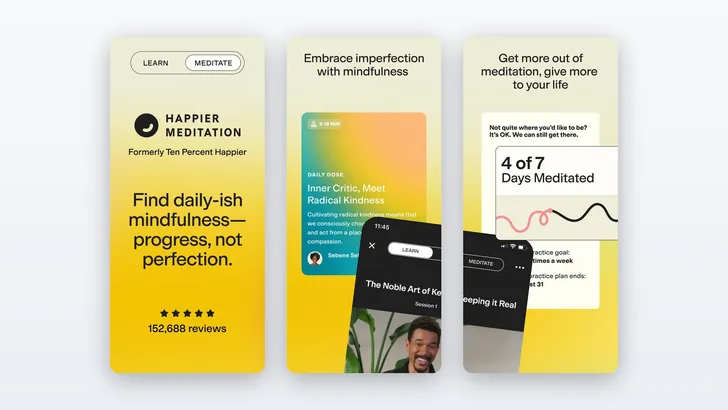
Best for: skeptics who want an evidence-leaning tone.
This app rebranded from “10% Happier” to just “Happier” in September 2024, around the time the company shifted its positioning toward more personalized meditation. If you remember it as Dan Harris’s app, that framing has changed too. Dan Harris stepped away from the company in March 2025 to focus full-time on the 10% Happier podcast (which is now separate from the app). Ben Rubin, the CEO since launch, still leads Happier.
The app itself is built around courses and guided meditations from a roster of instructors, organized by topic: focus, anxiety, relationships, sleep. If you like a variety of voices, that’s the strength here.
What I think Happier still does best is introduce meditation to a skeptical audience without overselling it. The original 10% Happier framing came from Harris’s experience as a journalist who tried meditation despite himself, and a lot of that pragmatic, evidence-leaning tone is still in the app even after the rebrand. There are video lessons that go deeper into concepts than most apps bother with, and the “single-serving” quick meditations are useful for daily practice once you’ve built the habit.
Like other meditation apps, it offers single-session and short-format meditations, plus topic-based courses. With the rebrand, the app has moved toward checking in monthly about your mood, needs, and time constraints, then tailoring recommendations from there. It’s less of a Dan-Harris-fronted brand now and more of a personalization-driven product.
Pricing in 2026: $99.99/year. No monthly option. There’s a 7-day free trial.
Waking Up

Best for: experienced meditators who want a secular, philosophy-led path.
Waking Up is created and taught by Sam Harris, the neuroscientist, author, and host of the Making Sense podcast. The app reflects his rational, secular, and philosophy-leaning approach to meditation.
Unlike most meditation apps, there isn’t much variety here. What you get is dozens of lessons and guided meditations in a sequential order. Instead of cherry-picking which type of meditation suits you, Waking Up puts you on a path.
There are two main sections.
The first is Lessons. These are usually around 10 minutes and cover specific topics. Sometimes practical mindfulness territory, sometimes more philosophical and esoteric (free will, the nature of “self”). I’ve found these extremely useful. Sam’s framing around the self and consciousness gives meditation a level of intentionality that most apps don’t reach for.
This may sound intense if you just want a relaxing meditation app. The Lessons are largely optional. Think of them as electives around the main focus, which is the guided meditations.
The guided meditations section is a series of sessions, starting at around 10 minutes, that explores different mindfulness techniques. What I like about Waking Up is that it’s focused. The app effectively says: “If you want to learn meditation, here’s one path,” and it gradually builds in depth and challenge.
Each guided session also comes packed with Sam’s questions and Koans designed to make you contemplate, not just relax.
I’d also call this the best app for very experienced meditators. The depth of the Lessons and the focused, sequential structure of the guided meditations work better for someone with a real practice than for a casual beginner.
Pricing in 2026: $14.99/month or $119.99/year. Notably, Waking Up has a generous financial assistance program. Anyone who can’t afford the subscription can request a free year of access through their support team. That’s worth flagging if cost is a barrier.
Muse
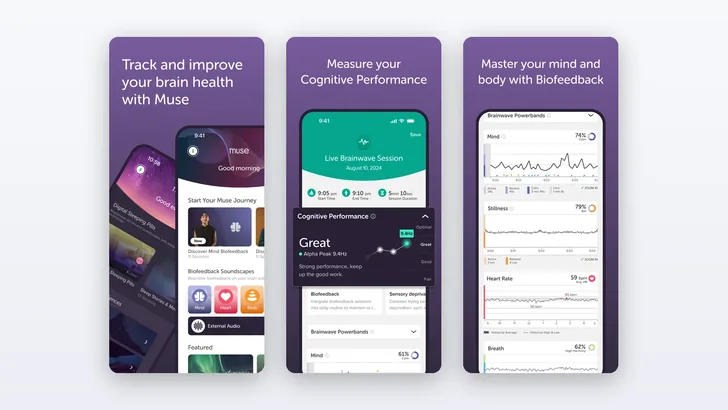
Best for: seeing real biofeedback from a session.
Muse is unlike anything else on this list. It pairs an app with a physical product: an EEG headband that reads your brain activity while you meditate. When your mind is busy, the soundscape becomes stormy. When it’s calm, the soundscape becomes peaceful. After each session, you get a report on what your brain did.
It’s genuinely interesting to see brain data tied to your meditation practice. No other app on this list can do that. The flip side is privacy. The headband collects the most personal data imaginable: your brain activity. People are increasingly cautious about sharing data of any kind, and brain data is a meaningfully different category from your steps or sleep stages. If that’s a concern for you, this isn’t the app to start with.
The current flagship product is the Muse S Athena, which adds overnight sleep tracking on top of meditation. The original Muse 2 is still sold for less. The app has 100+ guided meditations covering sleep, relaxation, and stress reduction. You can also sync your meditation minutes to Apple Health like other apps.
The biggest practical complaint I’ve seen across reviews is app stability. Crashes during sessions are still being reported. That’s frustrating when the whole point is being able to relax.
Pricing in 2026: the Muse S Athena headband is $349.99. The original Muse 2 is around $199.99 if you want the cheaper option. Optional content subscription is around $12.99/month or $94.99/year for guided programs.
Meditopia
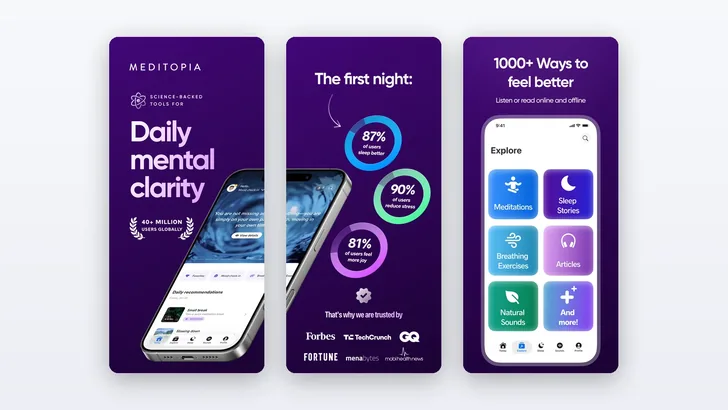
Best for: theme-based sessions in a language other than English.
Meditopia is the app I’d point most people to if English isn’t their first language. It started in Turkey and grew into a genuinely global product, and it now offers its meditations in 12 languages. Almost everything else on this list is English-only, so if you’d rather practice in Spanish, Portuguese, German, or Turkish, this is the one that actually supports it.
What stands out beyond the languages is how the library is organized. Instead of sorting everything by technique, Meditopia builds sessions around the things people actually wrestle with: loneliness, self-worth, relationships, acceptance, and letting go. You check in with how you’re feeling and it points you toward a theme that fits, which is a nice touch most apps skip.
There’s a lot here, over 1,000 sessions, plus sleep meditations, breathing exercises, bedtime stories, and natural sounds. It covers the wind-down-and-sleep side as well as the deeper, more reflective work.
My honest caveat: it leans emotional and introspective. I like that, but if all you want is to calm down for ten minutes and move on, it can feel like a lot. And while there’s a free tier and a trial, most of the library sits behind the subscription, so you’ll reach the paywall fairly quickly.
Pricing in 2026: there’s a limited free tier and a 7-day free trial, then $9.99/month or $59.99/year.
Get meditating
I hope this list helps you pick an app that fits your situation. If you’re on the fence about paying for one, almost every app on this list offers a free trial, and Smiling Mind, the free tier of Insight Timer, and the Declutter The Mind library are all genuinely usable without paying.
If concentration at work is the reason you are here rather than meditation itself, we run the same comparison on blockers, ambient sound, and time trackers in the best apps for focus guide. And if you want something more specific than a general practice, we keep dedicated roundups for the best apps for anxiety, the best sleep apps, and the best mental health apps overall.
If you want to start without thinking about it too hard, I’d suggest starting with the Declutter The Mind library. It’s free for life, the practices cover the situations most people actually face, and you can move on to something else later if it doesn’t click. The hardest part of starting a meditation practice is starting. Pick one and try it for a week.
Frequently Asked Questions
What is the best meditation app?
It depends on what you want from it, so match the app to your main goal rather than chasing the highest rating. For free guided meditation with no paywall on the core library, Declutter The Mind is the pick on this list, with 500+ sessions free for life. For sleep, bedtime stories, and background sound, Calm is the strongest. For a secular, philosophy-led approach, Waking Up goes deepest, and it suits experienced meditators who want a single path rather than a big library. Headspace is the easiest start for beginners who like visual, animated lessons and one consistent teacher. Balance is the most personalized, building a plan from a few questions and adjusting as you check in. Try one free for a week before you decide, because the feel of the guidance matters more than any feature list.
What is the best free meditation app?
Declutter The Mind is the best fully free option here: its library of 500+ guided meditations is free for life, with no ads and no paywall on the core sessions, and every session is also on our YouTube channel if you would rather not install anything. Insight Timer has a large free tier too, with thousands of sessions from many teachers, though the best professional content and offline downloads sit behind Member Plus. Smiling Mind is a nonprofit app that is completely free with no trial and no upsell, and it is the easy pick for families and kids. Waking Up gives a free year to anyone who asks, so cost does not have to be the barrier even for a paid app. If cost is your main filter, start with one of those before you pay for anything, and only upgrade once you know you will use it.
Are paid meditation apps worth it?
For most beginners, not at first. A free library is more than enough to build a daily habit, which is the part most people struggle with, and the habit is what drives the benefits, not the price. A subscription becomes worth it once you want extras like a new guided session each day, structured courses that build in order, offline downloads, or a specific teacher’s style you keep coming back to. Prices in 2026 range from around $60 a year for Declutter The Mind Plus or Insight Timer Member Plus up to about $100 a year for Headspace or Happier, so the gap between apps is real. If money is tight, Waking Up gives a free year to anyone who asks and Smiling Mind is free forever, so cost does not have to be the barrier. Pay only after a free trial proves you will stick with it.
What is the best meditation app for beginners?
Look for short sessions and a bit of structure so you are not left guessing what to do. Declutter The Mind has 10-minute sessions and a 30-day beginner course that takes you from your first sit to a steady practice, and the first five days of the course are free. Headspace is beginner-friendly too, thanks to its animated explainers that make some techniques easier to grasp visually, though the sheer amount of content can feel like a lot at the very start. Balance is worth a look if you want the app to build a plan around your goals rather than handing you a full library on day one. Whichever you choose, pick one and give it a week of daily sits before you judge it, because the first few sessions always feel awkward and that passes. Consistency matters far more than the app you start with.
Do meditation apps actually work?
Yes, mostly by solving the hard part, which is showing up regularly. A guided session in your pocket lowers the barrier to starting, and consistency is what drives the benefits like lower stress, better sleep, and sharper focus. The research on mindfulness is strongest for anxiety, low mood, and stress, and most of that benefit comes from regular practice over weeks, not from any single session or app feature. The app itself is only a tool. What actually matters is that it gets you to practice on the days you do not feel like it, through a reminder, a streak, or a session short enough that you have no excuse. If an app makes you more likely to sit down and meditate, it is working. If it becomes one more thing you feel guilty about ignoring, switch to a simpler one.

Amber is the content manager and outreach specialist at Declutter The Mind. She enjoys yoga, MMA, and of course, meditation!