Topic · Grief
Meditation for grief.
Not a cure. Sometimes a small steady thing.
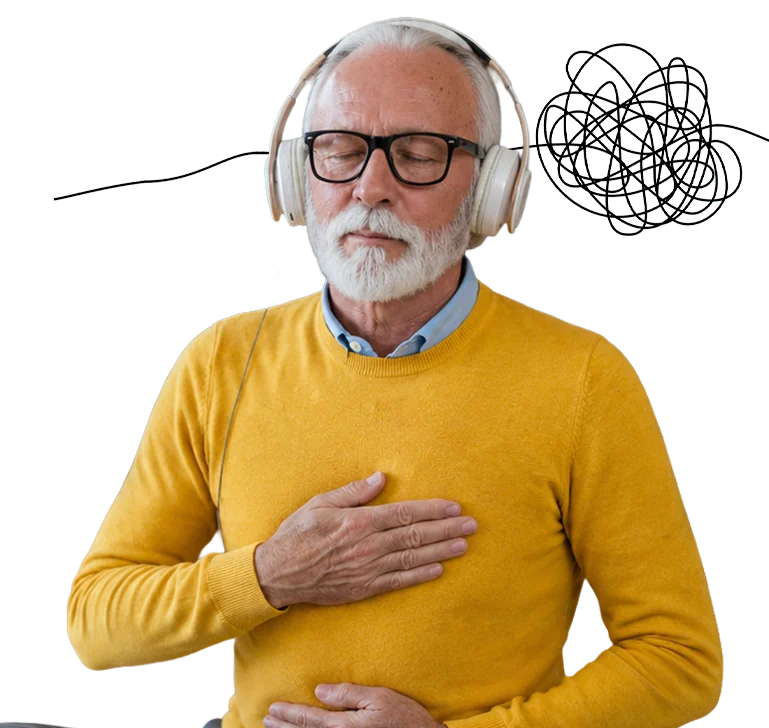
Meditation for grief means setting aside a few minutes to sit with what the loss feels like, instead of pushing it away. Loving-kindness, a body scan or a slow breath practice are the usual shapes. Ten minutes is plenty. It won’t shorten grief. It gives you somewhere steady to put your attention for a while. Start the 10-minute Grief session below in your browser, free with no card.
The research is early. A 2025 systematic review of 13 studies of bereaved adults found that mindfulness programs generally eased depression and related distress after a loss, while results for prolonged grief itself were mixed. Only one of the studies was a randomized trial, so read it as a hopeful sign rather than proof.
How do you meditate when you’re grieving?
- Pick a small window. Five or ten minutes, at the same time each day if you can.
- Start with the body. Notice where the grief sits: chest, throat, shoulders. Breathe toward that spot.
- Let what comes, come. Tears, numbness, anger, a memory out of nowhere. None of it means you’re doing it wrong.
- Try loving-kindness when you can. Wish yourself some ease, then wish the same for the person you lost. Skip this on days it hurts too much.
- Close gently. A few slow breaths, then one small kind thing for yourself, like a glass of water or a short walk.
What meditation does and doesn’t do for grief
Meditation doesn’t make grief shorter or smaller. There’s no practice that makes loss less. Anyone who tells you otherwise is selling something.
What meditation can do during grief is give you a few minutes a day where you’re sitting with what you’re feeling instead of running from it. Loving-kindness practices. Directing well-wishes inward, then to the person you lost, then outward. Are the most reliable shape. Body scan helps with the physical exhaustion that grief carries. Breath-anchored mindfulness gives the spiraling mind a place to land for ten minutes.
The practice doesn’t replace talking to someone. It doesn’t replace a grief counselor if grief is taking longer than you can hold. It’s a small daily thing alongside everything else.
When meditation isn’t the right tool
If grief is interfering with eating, sleeping, working, or basic self-care for more than a few weeks, the right next step is a grief counselor or therapist, not another meditation app. Complicated grief is a recognized condition with treatments that work.
If you’re having thoughts of harming yourself, please call 988 (Suicide and Crisis Lifeline, US) or your country’s equivalent. Meditation is not the right tool for that moment.
Grief practices in the app
Loving-kindness directed inward and outward, body scan for the somatic weight, mindfulness for the spiraling. Try one in the browser. The rest are in the app.
Plays in your browser. No account required.
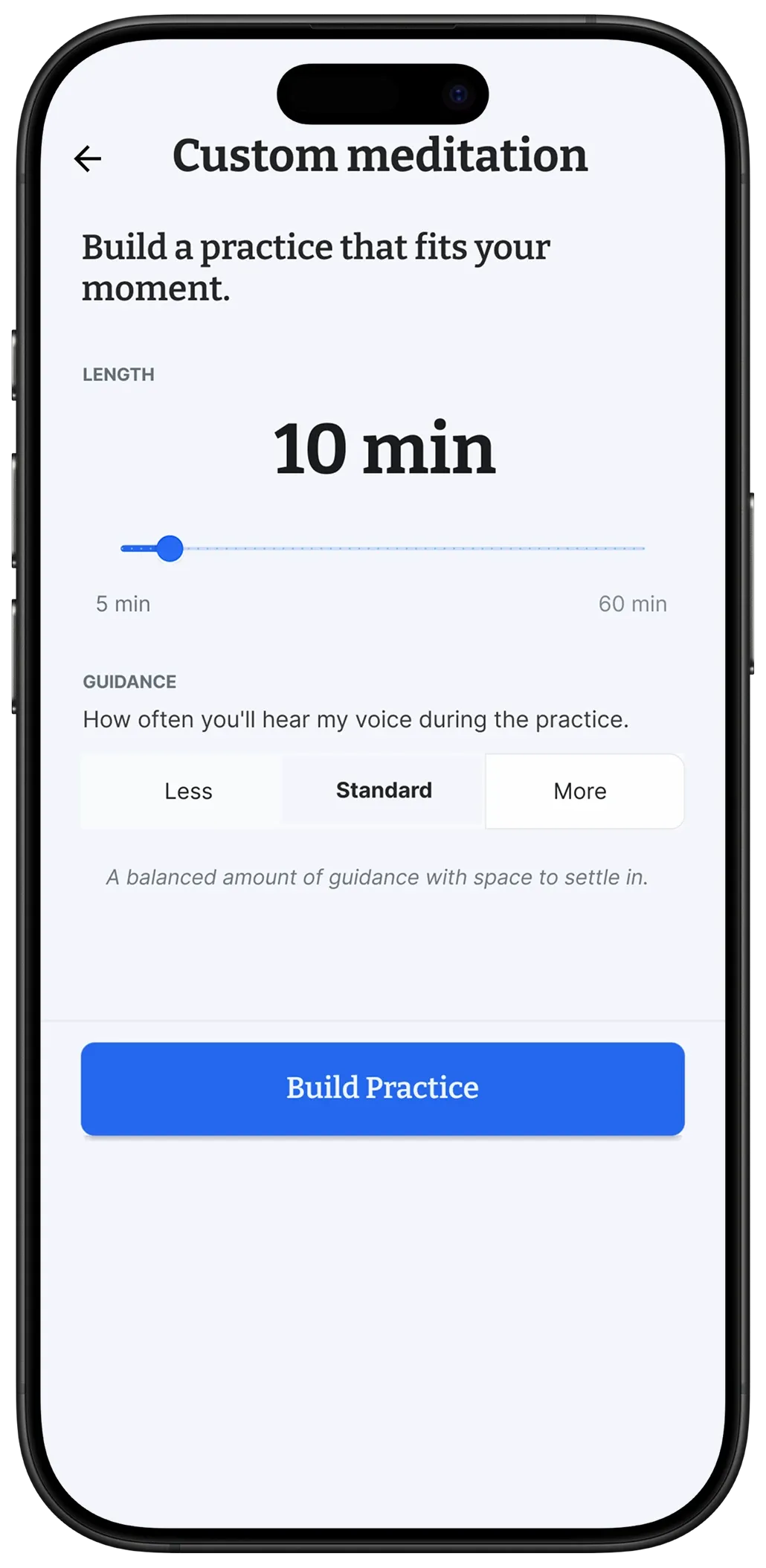
A note about Custom Meditation
For grief, the loving-kindness and body scan practices in the library are the right tools. Custom Meditation today builds mindfulness sessions, which can help with the racing thoughts that often accompany grief but isn't the canonical practice for grief itself.
Learn more →


Common questions
How soon after a loss can I meditate?
Whenever it feels possible. There's no right time. Some people start right away. Some need weeks before they can sit still. Both are fine.
I feel guilty when I feel anything other than sad. Is meditation making that worse?
No, but it can surface that guilt. Grief contains many emotions. Anger, relief, numbness, occasional moments of okay-ness. And feeling them isn't a betrayal of the person you lost. If guilt is loud, a grief counselor can help unpack it.
My grief feels physical. Can meditation help?
Sometimes. Body scan and gentle breath-anchored practices can help with the chest tightness, exhaustion, and somatic weight grief carries. They won't make those go away. They give you a way to be with them.
Should I meditate on the person I lost?
Loving-kindness practices specifically direct well-wishes to the person. Many people find this useful. Others find it too painful. Try it once. If it's not the right shape today, try a body scan or breath-anchored practice instead.