# Declutter The Mind
> Declutter The Mind is a meditation and mindfulness service with 500+ free guided meditations, a Custom Meditation generator that builds a guided session on demand, daily meditations, and multi-day courses. Practical, secular meditation — "meditation without the woo-woo": no guru, no celebrity narrators. Free tier with no ads; optional paid subscription. Available on iOS and Android.
## Features
- [Custom Meditation](https://declutterthemind.com/features/custom-meditation): Generate a guided meditation on demand for any situation
- [Daily Meditation](https://declutterthemind.com/features/daily-meditation): A new guided meditation every day
- [Courses](https://declutterthemind.com/features/courses): Multi-session mindfulness programs
- [Guided Meditation Library](https://declutterthemind.com/features/guided-meditation-library): 500+ free guided practices
- [Reminders](https://declutterthemind.com/features/reminders): Build a consistent meditation habit
## Meditation topics
- [Anxiety](https://declutterthemind.com/meditation/anxiety): Meditations to quiet a racing, anxious mind
- [Sleep](https://declutterthemind.com/meditation/sleep): Wind-down practices for better sleep
- [Stress](https://declutterthemind.com/meditation/stress): Reset under pressure
- [Focus](https://declutterthemind.com/meditation/focus): Cut distraction and train attention
- [Beginner](https://declutterthemind.com/meditation/beginner): Start meditating from zero
- [Breathing](https://declutterthemind.com/meditation/breathing): Breath-led practices
- [All meditation topics](https://declutterthemind.com/meditation)
## Courses
- [30 Day Mindfulness for Beginners](https://declutterthemind.com/courses/30-day-mindfulness-for-beginners): Flagship beginner course (first 5 days free)
- [10 Day Anxiety Relief](https://declutterthemind.com/courses/10-day-anxiety-relief): Mindfulness for an anxious mind
- [10 Day Sleep](https://declutterthemind.com/courses/10-day-sleep): Wind down a racing mind at night
- [10 Day Focus](https://declutterthemind.com/courses/10-day-focus): Train attention one day at a time
- [All courses](https://declutterthemind.com/courses)
## Blog
- [Blog](https://declutterthemind.com/blog): Articles on meditation, mindfulness, mental health, and wellbeing
- [Best Free Meditation Apps](https://declutterthemind.com/blog/best-free-meditation-apps): Roundup of genuinely free meditation apps, including the free tier of Declutter The Mind
- [Best Meditation Apps](https://declutterthemind.com/blog/best-meditation-apps): How the major meditation apps compare
- [How to Meditate](https://declutterthemind.com/blog/how-to-meditate): A plain, secular beginner's guide
- [100+ Inspiring Buddha Quotes](https://declutterthemind.com/blog/buddha-quotes)
- [Self-Love Quotes](https://declutterthemind.com/blog/self-love-quotes)
- [How to Write a Gratitude List](https://declutterthemind.com/blog/gratitude-list)
- [Happiness Quotes](https://declutterthemind.com/blog/happiness-quotes)
- [How to Build Good Habits](https://declutterthemind.com/blog/good-habits)
- [Meditation vs Mindfulness](https://declutterthemind.com/blog/meditation-vs-mindfulness): How meditation and mindfulness differ and overlap, and which to practice
- [Guided vs Unguided Meditation](https://declutterthemind.com/blog/guided-vs-unguided-meditation): Pros and cons of each and how to choose
- [Yoga vs Meditation](https://declutterthemind.com/blog/yoga-vs-meditation): The difference between yoga and meditation and which fits your goals
- [Meditation vs Prayer](https://declutterthemind.com/blog/meditation-vs-prayer): Ten ways meditation and prayer differ
- [Stress vs Anxiety](https://declutterthemind.com/blog/stress-vs-anxiety): How stress and anxiety differ, and meditation techniques for each
- [Empathy vs Sympathy](https://declutterthemind.com/blog/empathy-vs-sympathy): The difference between empathy and sympathy and when to use each
## Compare
- [Declutter The Mind vs Calm](https://declutterthemind.com/compare/vs-calm)
- [Declutter The Mind vs Headspace](https://declutterthemind.com/compare/vs-headspace)
- [Declutter The Mind vs Insight Timer](https://declutterthemind.com/compare/vs-insight-timer)
- [Declutter The Mind vs Waking Up](https://declutterthemind.com/compare/vs-waking-up)
- [Declutter The Mind vs Ten Percent Happier](https://declutterthemind.com/compare/vs-ten-percent-happier)
## Free tools
- [Meditation and breathing tools](https://declutterthemind.com/tools): Free in-browser meditation timers and breathing visualizers
- [Meditation Timer](https://declutterthemind.com/tools/meditation-timer)
- [Coherent Breathing Timer](https://declutterthemind.com/tools/coherent-breathing-timer)
- [Box Breathing Visualizer](https://declutterthemind.com/tools/box-breathing-visualizer)
- [4-7-8 Breathing Timer](https://declutterthemind.com/tools/478-breathing-timer)
## For teams
- [Declutter The Mind for Work](https://declutterthemind.com/for-work): A meditation and mindfulness benefit for teams and employees
## About
- [About Declutter The Mind](https://declutterthemind.com/about)
- [Our Approach](https://declutterthemind.com/about/our-approach)
- [Pricing](https://declutterthemind.com/pricing)
## Apps
- [iOS App (App Store)](https://apps.apple.com/app/id1465713447)
- [Android App (Google Play)](https://play.google.com/store/apps/details?id=com.MindDeclutter)
- [YouTube Channel](https://www.youtube.com/@declutterthemind): Free guided meditations on YouTube
- [Web App](https://app.declutterthemind.com): Meditate in your browser
---
# Full page content
> Full text of Declutter The Mind's published articles, concatenated for LLMs. The concise index above links every key page; the complete article bodies follow, newest first.
---
# Cognitive Shuffling: How to Quiet a Racing Mind at Night
- URL: https://declutterthemind.com/blog/cognitive-shuffling
- Description: Cognitive shuffling is a fall-asleep technique that floods a racing mind with random images so it can drift off. Here's how to do it, why it works, and its limits.
- Published: 2026-09-29
- Updated: 2026-09-29
It's late. You're lying there with your eyes closed, doing everything right, and your brain decides now is the perfect time to replay a conversation from 2019 and draft tomorrow's to-do list at the same time. The harder you try to shut it off, the louder it gets. If that's you most nights, cognitive shuffling is worth a try, and it's the one bedtime trick I've seen go viral that actually has some real thinking behind it.
The idea is almost silly on the surface: instead of fighting your racing thoughts, you flood your mind with a stream of random, boring, unrelated images until it loses the thread and drifts off. It sounds too simple to work. But there's a reason it does something, and it's the same reason the "just clear your mind" advice never has.
I want to be honest with you from the start, because that's the part most of the breathless coverage skips. Cognitive shuffling is a genuinely useful tool for a busy mind at bedtime. It is not a cure for insomnia, and the research behind it is younger and thinner than the headlines suggest. I'll show you exactly how to do it, why it works, what the studies actually found, and when you need something more.
## What Cognitive Shuffling Is
Cognitive shuffling is a mental technique for falling asleep. You deliberately imagine a series of random, unconnected objects, one after another, with no story linking them. A cloud. A shoelace. A pineapple. A doorknob. You picture each one for a few seconds, then let it go and move to the next.
The technique was developed by Dr. Luc Beaudoin, a cognitive scientist at Simon Fraser University, who built it while wrestling with his own trouble sleeping. He called the formal version "serial diverse imagining," which is a precise if unlovely name for it. The point is right there in the phrase: a series of images that are as diverse and disconnected from each other as possible.
That diversity is the active ingredient. Your worried, planning brain runs on narrative. It wants the next thought to connect to the last one, which is how a single worry becomes a two-hour spiral. A random stream of unrelated objects gives it nothing to build on. There's no plot to follow, so there's nothing to keep you awake.
## How to Do Cognitive Shuffling
Here's the version I'd start with. It gives your mind a simple rule to follow so you're not lying there trying to invent randomness, which is its own kind of effort.
1. Pick a random, emotionally neutral word. Something plain works best. "Blanket," "garden," "letter." Avoid anything loaded or exciting.
2. Take the first letter of that word. For "blanket," that's B.
3. Picture, one at a time, several unrelated things that start with that letter. Bicycle. Balloon. Bee. Bridge. Spend a few seconds actually seeing each one, then drop it and move to the next.
4. When you run out of images for that letter, move to the next letter of your word. L: lamp, lion, ladder, lemon.
5. Keep going, letter by letter, image by image, at a slow and unhurried pace.

If you lose track of which letter you were on, forget your starting word, or find your images going strange and dreamlike, you're doing it exactly right. Those are signs your mind is loosening its grip on waking logic. And if you fall asleep partway through, well, that was the whole idea. You're not trying to finish the exercise. You're trying to bore yourself gently across the border into sleep.
A few things that help: keep the images concrete and ordinary, not abstract concepts. Don't judge whether you're "doing it well." And if a real worry muscles its way in, don't wrestle with it, just return to your next random object the way you'd return to the breath in a meditation.
## Why It Works
For years the standard advice for a racing mind was to clear it, which is a bit like being told to not think of a white bear. The cognitive model of insomnia, laid out by psychologist Allison Harvey in 2002, explains why that backfires. Harvey showed that what keeps many people awake isn't a lack of tiredness, it's cognitive arousal: worry, rumination, and monitoring your own failure to sleep, which spins up the nervous system and holds sleep at arm's length ([Harvey, 2002, *Behaviour Research and Therapy*](https://pubmed.ncbi.nlm.nih.gov/12186352/)). The thinking itself is the problem. Trying harder to stop thinking is more thinking.
Cognitive shuffling works by giving that restless mental machinery a harmless job. Instead of a void it can't maintain, you hand it a task that occupies the same channel it would use for worrying, but with content that carries no emotional charge and goes nowhere. This is called cognitive distraction, and it has better evidence behind it than the technique's recent fame would suggest. In a 2002 study, Harvey and Payne took 41 people with insomnia and gave some of them an engaging imagery task to focus on at bedtime. The imagery group fell asleep faster than people given no instructions, and rated their pre-sleep worries as less distressing ([Harvey & Payne, 2002, *Behaviour Research and Therapy*](https://pubmed.ncbi.nlm.nih.gov/11863237/)). Occupying the mind with images beat leaving it to its own devices.
There's a second piece. As you drift toward sleep, your brain naturally produces short, fragmented, nonsensical images, the flickers people call microdreams or hypnagogic imagery. A mind about to fall asleep already thinks in exactly this loose, disconnected way. Cognitive shuffling essentially imitates that state on purpose, feeding your brain the kind of scattered imagery it makes on its own at the edge of sleep. You're not forcing sleep. You're impersonating its early stages until the real thing takes over.
## What the Research Actually Shows
Here's where I'll be straight with you, because the coverage rarely is. The idea that quieting cognitive arousal helps you sleep is well established. The specific evidence that *this technique* delivers is real but early.
The main study people point to came from Nicole Digdon and Luc Beaudoin, first presented in 2015. They randomly assigned 154 college students to a bedtime routine, to the cognitive shuffle, or to both. The students using the shuffle were more likely to report better sleep quality, less difficulty falling asleep, and lower pre-sleep arousal. That's a genuinely encouraging result, and it's the direct test of the technique.

But notice what it is: one study, in mostly young female university students, relying on their own reports of how they slept rather than objective sleep tracking. That's a promising start, not a settled science. There's no large clinical trial in people with diagnosed insomnia showing cognitive shuffling matches established treatments. So the honest summary is this: the mechanism is sound and the early data is favorable, which is a good bet for a technique that costs nothing and carries no risk. Just don't expect it to behave like a prescription. If it doesn't work for you the first few nights, that's normal, and it doesn't mean you've failed at sleep.
## When Cognitive Shuffling Won't Help
Cognitive shuffling is aimed at one specific problem: a mind too busy to let you drift off. When that's what's keeping you up, it can be a small gift. When something else is going on, it's the wrong tool.
If your body is wired and tense rather than your mind chattering, if you feel physically alert and on edge, a technique that occupies your thoughts may not reach the arousal that's the real issue. In that case a body-based approach like [progressive muscle relaxation](/blog/progressive-muscle-relaxation) or slow breathing often does more, because it works on the physical side of the equation. And if your nights are ruled by dread about sleep itself, the anxious loop of watching the clock and fearing another bad night, that's [sleep anxiety](/blog/sleep-anxiety), and it usually needs the sleep-effort paradox addressed directly, not just a distraction.
Most importantly, cognitive shuffling is not a treatment for chronic insomnia. If you've had trouble sleeping most nights for three months or more, or your sleep is wrecking your days, the first-line treatment is cognitive behavioral therapy for insomnia (CBT-I), which is more effective and longer-lasting than any single trick or, for that matter, sleeping pills. A mental exercise you found online is not a substitute for that, and persistent insomnia is worth raising with a doctor, who can also rule out conditions like sleep apnea that no amount of imagery will fix. Use cognitive shuffling for the ordinary busy-brain nights. Get real help for the rest.
## Cognitive Shuffling or a Guided Meditation?
If cognitive shuffling clicks for you, here's something worth knowing: you've basically been doing a form of informal meditation. Redirecting your attention, gently and without judgment, away from a runaway train of thought and back to a neutral anchor is the core move of mindfulness. The shuffle just uses random images as the anchor instead of the breath.
That's why, if the self-directed version feels like too much to manage when you're exhausted, a guided practice can carry the same load with less effort from you. Instead of generating your own stream of images, you follow a voice that does the steering, which is often easier at midnight than running the exercise yourself. It's the same principle behind other structured wind-down techniques, from a [body-based fall-asleep method](/blog/military-sleep-method) to a proper [routine for overthinking at night](/blog/how-to-stop-overthinking-at-night). If you'd rather follow along than run a mental exercise solo, there's a library of guided sleep meditations in the Declutter The Mind app built for exactly this, the restless-mind-at-bedtime problem, with no music, no mysticism, just a calm voice giving your attention somewhere to rest. For more on the groundwork, our guide on [how to fall asleep](/blog/how-to-fall-asleep) covers the habits that make any of these techniques work better.
Whichever route you take, the underlying skill is the same, and it's a learnable one: letting the day's thinking go so sleep has room to arrive.
## Frequently Asked Questions
**What is cognitive shuffling?**
Cognitive shuffling is a mental technique for falling asleep, developed by cognitive scientist Dr. Luc Beaudoin. Instead of fighting a racing mind, you deliberately imagine a stream of random, unrelated, emotionally neutral objects, one after another, which gives your worried brain nothing to build on and lets sleep take over.
**How do you do cognitive shuffling to fall asleep?**
Pick a random neutral word, like "blanket." Take its first letter and picture several unrelated things that start with it, a few seconds each: bicycle, balloon, bee, bridge. When you run out, move to the next letter and keep going slowly. Losing track or drifting off means it's working.
**Does cognitive shuffling actually work?**
The mechanism is well supported: occupying the mind with neutral imagery reduces the cognitive arousal that keeps people awake, and imagery distraction has been shown to shorten how long it takes to fall asleep. The direct evidence for cognitive shuffling itself is promising but early, based mainly on one small study in students.
**Is cognitive shuffling good for insomnia?**
It can help on ordinary nights when a busy mind is the problem, but it is not a treatment for chronic insomnia. If you've slept poorly most nights for three months or more, the first-line treatment is cognitive behavioral therapy for insomnia (CBT-I), and persistent insomnia is worth raising with a doctor.
**What's the difference between cognitive shuffling and counting sheep?**
Counting sheep is repetitive and monotonous, which many people find too dull to hold their attention, so their mind wanders back to worries. Cognitive shuffling uses constantly changing, unrelated images instead, which occupies the mind more fully while still carrying no emotional charge or storyline to keep you awake.
---
# Overstimulation: Why Your Brain Feels Fried and How to Calm It Down
- URL: https://declutterthemind.com/blog/overstimulation
- Description: Overstimulation is your nervous system taking in more than it can process. Here's what it actually is, why the modern world manufactures it, how to calm down, and when it's worth seeing a professional.
- Published: 2026-09-24
- Updated: 2026-09-24
By four in the afternoon, the group chat is going off, a podcast is still playing in one ear, two browser tabs are blinking for your attention, and someone walks in to ask you a "quick question." And something in you quietly snaps. You don't yell. You just desperately want everything to be silent for one minute so you can hear yourself think.
That feeling has a name: overstimulation. And if you've been wondering whether something is wrong with you, I want to lead with this. Probably not. Your bandwidth is maxed out, which is a very different thing.
I'll walk through what overstimulation actually is, why it's a physical event and not a personal weakness, why you likely feel it more than you used to, and what genuinely helps. I'll also be honest about the part most articles skip, which is that simply escaping the room takes the edge off but doesn't fix the pattern. And I'll tell you when this is worth raising with a professional.
## What Overstimulation Actually Is
Overstimulation is what happens when your brain is taking in more input than it can process at once. Sound, light, screens, conversations, decisions, your own racing thoughts. All of it competes for the same limited processing space, and at some point the system runs out of room.
That limit is smaller than most people assume. Your working memory, the mental workspace where you hold what you're actively dealing with, can only juggle around three or four things at a time ([Cowan, 2001](https://doi.org/10.1017/S0140525X01003922)). A modern afternoon throws far more than four things at you every minute. The overflow is the feeling.
It tends to show up as some mix of these:
- Sudden irritability, like everyone around you got more annoying at once
- Background noise, music, a TV, traffic, becoming genuinely hard to tolerate
- Mental fog and trouble making even small decisions
- Feeling touched-out, where you don't want to be spoken to or held
- A racing heart, tension, or restlessness
- One loud thought: I need to get out of here
None of that means you're fragile. It means the input exceeded the container.

## It's Physical, Not a Character Flaw
Here's the part that reframes the whole thing. Your body starts reacting to overstimulation before you've consciously decided anything is wrong.
In one classic study, researchers exposed clerical workers to low-level open-office noise for three hours ([Evans & Johnson, 2000](https://pubmed.ncbi.nlm.nih.gov/11055149/)). The workers didn't report feeling stressed. But their urine told a different story: their epinephrine, a stress hormone, had climbed, and they quietly gave up faster on a difficult task afterward. Their bodies were mounting a full stress response to noise they'd have sworn they'd tuned out.
Sit with that for a second. You don't have to feel overwhelmed for your nervous system to be treating the input as a threat. So when you hit a wall by mid-afternoon, that's not you being dramatic or weak-willed. That's a body that has been running a low-grade alarm for hours finally making itself heard.
Overstimulation is biology bumping against a ceiling. Treating it as a character flaw just adds shame on top of an already-loaded system.
## Why You Feel It More Than You Used To
The ceiling hasn't changed. The environment has. Almost everything about modern life is engineered to grab your attention and hold it, from the notification that's designed to pull you back to the open-plan office that pipes everyone's conversation directly to your desk.
The habit of running several streams at once has a cost, too. People who chronically media-multitask, flipping between texts, video, and tabs, tend to be worse at filtering out distraction and slower to switch cleanly between tasks ([Ophir, Nass & Wagner, 2009](https://pmc.ncbi.nlm.nih.gov/articles/PMC2747164/)). I want to be careful here, because that finding is correlational and later work found the effect smaller and less consistent than the headlines suggested ([Wiradhany & Nieuwenstein, 2017](https://link.springer.com/article/10.3758/s13414-017-1408-4)). Heavy multitasking probably doesn't melt your brain. But it does keep the input firehose open, and an open firehose is exactly the condition overstimulation feeds on.
Add poor sleep, chronic stress, or a day where you were already running on empty, and your threshold drops before you've even started. The same Tuesday that felt manageable last month can flatten you this week for reasons that have nothing to do with willpower.
## Why Escaping Alone Backfires
The most common advice for overstimulation is to remove yourself from the stimuli. Leave the room, put in earplugs, go sit in the car. That advice is correct, and you should absolutely do it in the moment. Cutting the input is the fastest way to bring an overloaded system back down.
But if escaping is your only tool, it slowly becomes a smaller and smaller world. You start avoiding the restaurant, the party, the office, the errand, because each one carries the risk of tipping over. Avoidance shrinks your tolerance instead of building it. And you can't out-hide a world this loud anyway.
So think of leaving the room as first aid, not the treatment. The real goal is a lower baseline of input and a stronger internal filter, so that fewer things reach the tipping point in the first place. That's what the next part is about.
## How to Calm an Overstimulated Brain
Three levers, from most immediate to most durable.
### Lower the Input
Most of us live with far more input running by default than we'd ever choose on purpose. Start by turning off what you didn't actually opt into. Silence non-essential notifications. Do one thing at a time instead of three at once, which sounds obvious and is genuinely hard, so it's worth reading up on how [single-tasking actually works](/blog/monotasking). Close the tabs. Turn down the lights or the music in a space you control. None of this is glamorous, and all of it lowers the water level so you're not living one interruption away from the edge.
### Recover for Real
When your directed attention is drained, it needs to refill, and not all breaks refill it. In one study, people who took a fifty-minute walk in a park showed measurably better attention afterward, while people who walked the same length of time through busy city streets did not ([Berman, Jonides & Kaplan, 2008](https://pubmed.ncbi.nlm.nih.gov/19121124/)). A quiet, gently interesting environment lets the effortful part of your attention rest. A stimulating one keeps it working.
This is why scrolling on a break leaves you more fried, not less. It looks like rest and functions like more input. Trade it for something genuinely low-stimulation: a few minutes outside, a walk without headphones, sitting with your eyes closed. And for the acute moment, a slow exhale helps fast, because [lengthening the out-breath](/blog/physiological-sigh) nudges your nervous system out of high alert. Other [simple breathing techniques](/blog/breathing-exercises-for-stress) do the same.
### Train Your Attention
The most durable lever is the slowest one: getting better at filtering, so less input hijacks you in the first place. This is where a regular meditation practice earns its keep. It isn't about clearing your mind. It's repeatedly noticing that your attention has wandered and bringing it back, which is exactly the mental muscle that overstimulation overwhelms.
The research is encouraging on this. Just five days of short daily meditation training improved people's executive attention and stress control compared with a relaxation control group ([Tang et al., 2007](https://pubmed.ncbi.nlm.nih.gov/17940025/)), and an eight-week mindfulness course measurably sharpened the attention systems that orient and filter ([Jha, Krompinger & Baime, 2007](https://link.springer.com/article/10.3758/CABN.7.2.109)). A [guided meditation](/blog/benefits-of-meditation) won't make the world quieter. It slowly makes you less reactive to the noise, which amounts to the same relief from the inside. If information overload is your particular trigger, this is the practice worth building.

## A 60-Second Reset
For when you're already over the line and need to come down now:
1. **Name it.** Say to yourself, "I'm overstimulated." Labeling an internal state actually lowers your brain's alarm response ([Lieberman et al., 2007](https://pubmed.ncbi.nlm.nih.gov/17576282/)). It also stops you blaming the nearest person.
2. **Cut one input.** Turn off the loudest thing you can, a screen, the music, an overhead light, or step to a quieter spot.
3. **Slow one exhale.** Breathe in normally, then let the out-breath last longer than the in-breath. Do it a few times.
4. **Take a real break.** Sixty seconds with your eyes closed or looking out a window beats sixty seconds on your phone.
It won't erase a hard day, but it interrupts the spiral, which is usually enough to get your feet back under you.
## When to Talk to a Professional
Overstimulation is normal. Constant overstimulation is worth a closer look.
If you feel overloaded by ordinary environments almost every day, if it's severe enough to shape where you'll go and what you'll do, or if it's been part of how you're wired for as long as you can remember, that's a pattern worth raising with a doctor or therapist. Frequent, intense overstimulation can be part of ADHD, autism, a sensory processing difference, or an anxiety condition, and there's real help available for each. Some people also simply run more sensitively by temperament, which is its own thing worth understanding if it fits you, sometimes described as being a [highly sensitive person](/blog/highly-sensitive-person).
Naming that possibility isn't a diagnosis and it isn't a reason to panic. It's just the difference between white-knuckling something alone and getting the right support. If the strategies here help, wonderful. If you're drowning despite them, that's information, not failure.
## The Takeaway
You are not too sensitive for the world. The world is loud, fast, and built to keep pulling on your attention, and your nervous system has a real, finite limit that it will defend whether or not you notice. Overstimulation is that limit talking.
So lower the input you can control, recover on purpose instead of scrolling, and slowly train the filter that decides how much gets through. Escaping the room will always be there as first aid. The quieter life is the one where fewer things ever reach the edge. If the overload runs deeper than that, reach for help, because that's what it's for. And if today has already fried you, [a few minutes of calm](/blog/how-to-calm-mind) is a fine place to start.
---
# Calm Alternatives: 6 Apps Worth Trying (2026)
- URL: https://declutterthemind.com/blog/calm-alternatives
- Description: The best Calm alternatives for 2026, free and paid, sorted by the actual reason you're leaving: price, too much sleep content, or the polished celebrity style.
- Published: 2026-09-22
## Why People Leave Calm
Calm is a genuinely good app. It's polished, the sleep content is the best in the category, and for a lot of people it's the reason they finally started winding down at night. But I hear the same handful of reasons people go looking for something else, and naming them matters, because the right switch depends on which one is yours.
The most common reason is price. Calm is a subscription, usually around $70 a year after a free trial, and plenty of people don't want another recurring charge for something they use a few nights a week. The second is fit: Calm leans toward sleep, soundscapes, and relaxation more than it teaches you to actually meditate, so if you came to build a practice, it can feel like the wrong tool. The third is the style. The celebrity Sleep Stories and the glossy production are exactly what some people want and exactly what others want to get away from.
None of those are knocks on Calm. They're mismatches. So here's where I'd actually send you, starting with the one I'd switch to myself.
## The One I'd Recommend First: Declutter The Mind
I'll be straight with you: this is our app, and I write for it. I'm still putting it first, because it was built for the exact reasons people leave Calm, and I'd point a friend here before anywhere else.
It's free. More than 500 guided meditations, a new one every day, no credit card to start. The voice is calm and plainspoken, there's no music bed, no celebrity narration, and no woo, just a teacher talking you through it. And it's secular, so you get the practice without the packaging.
That answers the two most common reasons people leave Calm in one move. The price problem: the free tier is the actual product, not a teaser before a subscription, and if you want the whole library there's a one-time Lifetime option instead of a forever charge. The fit problem: the focus is on teaching you to meditate, with real courses and a daily practice, not just sounds to fall asleep to.
I won't pretend it's the best at everything, because it isn't, and you'd stop trusting me if I did. If your one priority is celebrity sleep stories or a big brand-name soundscape library, I'll point you to what's better below. But for most people leaving Calm over the price or the fit, this is the switch I'd make. There's a [Declutter The Mind vs Calm](/compare/vs-calm) breakdown if you want the two side by side.
## The Rest of the Field, by What You Want
Declutter The Mind is where I'd start. Here's the rest, depending on what pulled you away from Calm in the first place.
**If you want the largest free library:** Insight Timer. It has more free guided sessions than anyone, tens of thousands, with the trade-off that the volume is overwhelming and the quality varies, because almost anyone can publish to it. If sheer breadth matters more to you than a consistent voice, it's the one.
**If you want the most structured way to learn:** Headspace. It's the strongest guided on-ramp, with courses that build in order and a friendly, animated style. It's a subscription in Calm's range, around $70 a year, so it won't fix a price complaint, but it will fix a "Calm never taught me how" one.
**If you want secular, philosophical depth:** Waking Up, from Sam Harris. It's the most reflective of the group, pairing daily practice with talks on the mind, and it's fully secular. It runs about $100 a year, but they'll give it to you free if you email and say you can't afford it.
**If you want something simple and free:** Smiling Mind. Run by an Australian nonprofit, free, and built with schools and kids in mind, so it's gentler and less busy than most.
**If you liked Calm's personalized feel:** Balance builds a plan that adapts as you go, which is the closest thing to a coached, made-for-you experience. It's around $70 a year after a longer free trial.
If you'd rather see the whole field in one place, we keep a [roundup of the best meditation apps](/blog/best-meditation-apps), and a closer look at [the best free meditation apps](/blog/best-free-meditation-apps) if free is your line in the sand. Newer to the practice? Start with the plain [how to meditate](/blog/how-to-meditate) guide instead of any app.
## A Quick Comparison
| App | Free tier | Price | Switch here if you want |
| --- | --- | --- | --- |
| Declutter The Mind | Full (500+) | Free; $60/yr or $219 lifetime | Free, secular, no subscription |
| Insight Timer | Large, usable | Free; Plus ~$60/yr | The biggest free library |
| Headspace | Trial | ~$70/yr | The most structured way to learn |
| Waking Up | Trial | ~$100/yr (free if you ask) | Secular, philosophical depth |
| Smiling Mind | Full | Free | Something simple and free |
| Balance | Trial | ~$70/yr | A personalized, adaptive plan |
Prices change and free trials come and go, so check the app store before you commit.
## Frequently Asked Questions
### What's the Best Calm Alternative?
For most people leaving Calm over the price or because it's more sleep app than meditation teacher, I'd switch to Declutter The Mind: more than 500 free secular meditations, a plainspoken voice, and no subscription. If you want the largest free library instead, Insight Timer; if you want structured courses, Headspace.
### What Is the Best Free Calm Alternative?
Declutter The Mind gives you 500+ guided meditations free with no card, and the free tier is the real product, not a trial. Insight Timer has the largest free library if you want maximum breadth, and Smiling Mind is a simple, fully free option from a nonprofit.
### Is There a Calm Alternative Without a Subscription?
Yes. Declutter The Mind has a free tier you can stay on indefinitely, plus a one-time Lifetime option instead of a recurring charge. Most meditation apps, Calm included, are subscription-only, so a genuine free tier is usually the cleanest way off the subscription.
### Is There a Better App Than Calm for Actually Learning to Meditate?
Calm leans toward sleep and relaxation more than teaching. If your goal is to learn the practice, Headspace is the most structured on-ramp, Waking Up is the most secular and reflective, and Declutter The Mind gives you free courses and a plain how-to-meditate guide without a subscription.
### Will I Lose My Progress If I Switch From Calm?
Your streak, yes. The habit, no. The thing that actually carries over is the practice itself, not the badge count. Pick the app that removes your reason for leaving, give it two weeks, and the habit comes with you.
---
# The Physiological Sigh: How Two Breaths Calm You Down
- URL: https://declutterthemind.com/blog/physiological-sigh
- Description: The physiological sigh is a two-breath technique that calms anxiety fast. Here's how to do it, why it works, what one good study actually found, and when a breath isn't enough.
- Published: 2026-09-22
- Updated: 2026-09-22
You're mid-spiral. Your chest is tight, your thoughts are moving faster than you can catch them, and someone has cheerfully told you to "just breathe." Useless advice, usually. But there's one breathing pattern that does something different, and it works faster than most of the calm-down tricks you've been handed. It's called the physiological sigh.
You already do it without thinking. It's the double breath a kid takes after crying, the shudder-inhale you do in your sleep, the long exhale that leaks out of you when you finally sit down at the end of a hard day. Your body runs this program on its own to reset your lungs. The trick is doing it on purpose, when you need it.
I want to be straight with you from the top: this is a genuinely useful tool, and it's also not magic. A single sigh can take the edge off a spike. What actually lowers your baseline anxiety is doing it regularly, plus the slower work of training your attention. I'll show you the technique, the real science behind it, and where the hype gets ahead of the evidence.
## What the Physiological Sigh Is
The physiological sigh is two inhales stacked on top of each other, followed by one long, slow exhale. That's the whole thing.
The first inhale is a normal breath in through your nose, filling most of the way. Then, without exhaling, you take a second short sniff on top of it, topping off your lungs. Then you let it all out slowly through your mouth, a long exhale that lasts noticeably longer than the inhales did. That double-inhale-then-sigh is the shape your body already makes when it sighs on its own.

Your body does this roughly every five minutes without any input from you, and more often when you're stressed. In 2016, a team at Stanford and UCLA led by Peng Li and Kevin Yackle found the actual wiring for it: a small cluster of neurons in the brainstem that fires off a sigh to reinflate the tiny air sacs in your lungs that collapse over the course of ordinary shallow breathing ([Li, Yackle et al., 2016, *Nature*](https://www.nature.com/articles/nature16964)). A sigh is a maintenance breath. When you do it deliberately, you're borrowing a reflex your body built for keeping your lungs open and pointing it at your nervous system instead.
## How to Do the Physiological Sigh
Here's the practice. It takes about ten seconds, and nobody around you will notice you're doing it.
1. Breathe in through your nose, filling your lungs about three-quarters of the way.
2. At the top, take a second quick sniff in through your nose to top off the last bit. Your chest will lift a little more.
3. Exhale slowly and completely through your mouth. Make the out-breath longer than the two in-breaths combined. Let it drag.
4. That's one cycle. Do one to three of them.
That's it. You don't need a quiet room, an app, or a cushion. You can do it at a red light, in a meeting, or standing in a bathroom before a conversation you're dreading. If one round doesn't shift anything, do two more and stop. This isn't a breathing marathon. A few sighs is the dose.
If the double inhale feels awkward at first, that's normal. Most of us have never paid attention to the mechanics of a sigh. Give it a handful of tries and it starts to feel automatic, because it basically is.
## Why Two Breaths Calm You Down
Three things are happening, and none of them require you to believe in anything.
First, that second little inhale pops open the collapsed air sacs in your lungs, which improves the exchange of oxygen and carbon dioxide. That's the reinflation job the Stanford team mapped. When shallow, anxious breathing has left parts of your lungs underused, the sigh reopens them in one move.
Second, the long exhale is the part that actually calms you. Slowing your breathing down, and specifically making the out-breath longer than the in-breath, nudges your body toward the parasympathetic side of your nervous system, the "rest" side rather than the "alarm" side. A 2018 review of slow-breathing research in *Frontiers in Human Neuroscience* found that breathing patterns with a longer exhale reliably increase vagal activity and are linked to lower anxiety ([Zaccaro et al., 2018](https://www.frontiersin.org/articles/10.3389/fnhum.2018.00353/full)). Your heart rate ticks down slightly on every exhale. A longer exhale stretches that slowing-down window.
Third, there's the reset. When you're wound up, your breathing gets erratic and shallow in a way that feeds the anxious feeling. Research by Elke Vlemincx and colleagues describes the sigh as a "resetter": a single deep breath that restores a more regular breathing pattern and produces a genuine feeling of relief ([Vlemincx et al., 2013, *Biological Psychology*](https://pubmed.ncbi.nlm.nih.gov/23261937/)). That's why a sigh feels like a small release even when nothing about your situation has changed. Your breathing got tidier, and your body reads that as "the danger passed."
## What the Research Actually Shows
The best evidence for the physiological sigh comes from one well-run study, and it's worth knowing exactly what it found and didn't find.
In 2023, researchers at Stanford ran a randomized controlled trial comparing three breathing techniques against mindfulness meditation ([Balban et al., 2023, *Cell Reports Medicine*](https://pubmed.ncbi.nlm.nih.gov/36630953/)). About 108 people were split into four groups. Each group practiced their assigned technique for five minutes a day for a month. One group did cyclic sighing, which is the physiological sigh repeated for the full five minutes. The others did box breathing, a fast-breathing technique, or app-guided mindfulness meditation.
The cyclic sighing group came out ahead. They reported the biggest daily improvement in mood and the largest drop in breathing rate, and they edged out the meditation group on those measures. That's a real result, and it's why this technique blew up.

Now the caveats, because they matter. This is one study of around a hundred people, the mood measures were self-reported, and the comparison meditation was a phone-app version, not an eight-week clinical mindfulness course. Most importantly, the benefit showed up across a month of daily five-minute practice. It was not a test of whether one sigh rescues you from a panic attack. So the honest read is this: the physiological sigh is a legitimate, low-risk tool with a plausible mechanism and one good trial behind it. That's more evidence than a lot of wellness advice has. It's also not a stack of studies, and anyone selling it as an instant, guaranteed off-switch for your nervous system is getting ahead of the data.
## When to Use It, and When It Won't Be Enough
Use the physiological sigh in the moment. It's built for the spike: the flash of dread before you walk into a room, the jolt when your phone buzzes with bad news, the 3am jolt awake. One to three cycles, and you've bought yourself a few seconds of a slower heart rate and a clearer head. It's the fastest self-soothing tool I know that doesn't require anything but your own lungs. If you want more options for the acute moments, it sits alongside other [breathing exercises for stress](/blog/breathing-exercises-for-stress) like 4-7-8 and box breathing.
But a breath is a moment-to-moment tool, and chronic anxiety isn't a moment. If you're sighing your way through every hour of the day, the breathing alone won't get you there. That much reaching for it is a signal that your baseline load is too high. Lowering that baseline takes the slower work: sleep, movement, less input, and training your attention so you catch a spiral earlier and get pulled around by it less. The sigh handles the flare. It doesn't handle the fire underneath.
And it doesn't replace care. If anxiety is running your days, if you're having panic attacks, or if the dread doesn't lift no matter what you do, that's worth taking to a doctor or therapist. Breathing techniques are a real complement to treatment for anxiety, not a substitute for it. If you're ever in crisis or thinking about harming yourself, call or text 988 in the US to reach the Suicide and Crisis Lifeline. A breathing exercise is not the tool for that moment, and reaching out is not an overreaction.
## The Sigh Is a Doorway
Here's what I'd actually do with this. Keep the physiological sigh in your back pocket for the hard moments, because it works and it's free and it's always with you. Then spend the calmer parts of your day building the thing that makes those hard moments smaller: a steadier, less reactive nervous system.
That's the part a single breath can't do on its own. Regular attention practice, even a few minutes a day, is what lowers how hard you get yanked around by the next spike. The sigh is the emergency handle. The daily reps are what you're actually reaching for. If you'd rather follow a short guided version than white-knuckle it alone, there's a free anxiety practice in the Declutter The Mind app you can do right now, no account and no paywall. Do the sigh when you're activated. Do the sit to lower the floor.
Two breaths won't fix your life. But the next time your chest goes tight and someone tells you to "just breathe," you'll actually know how.
## Frequently Asked Questions
**What is the physiological sigh?**
The physiological sigh is a breathing pattern of two inhales through the nose stacked back to back, followed by one long exhale through the mouth. Your body does it on its own to reinflate your lungs, and you can do it deliberately to calm down.
**How do you do a physiological sigh?**
Breathe in through your nose about three-quarters full, take a second short sniff to top off, then exhale slowly through your mouth so the out-breath lasts longer than both inhales. That's one cycle. Do one to three of them.
**Does the physiological sigh really work for anxiety?**
One well-run 2023 Stanford trial found that five minutes of daily cyclic sighing improved mood and lowered breathing rate, beating mindfulness meditation on those measures. It's a legitimate, low-risk tool, though the benefit came from daily practice, not a single breath in a crisis.
**How many physiological sighs should you do?**
One to three cycles is usually enough to take the edge off a stressful moment. For a lasting effect on baseline anxiety, the research points to a few minutes of daily practice rather than the occasional single sigh.
---
# Analysis Paralysis: Why You Can't Decide and How to Get Unstuck
- URL: https://declutterthemind.com/blog/analysis-paralysis
- Description: Analysis paralysis is overthinking a decision until you can't make it. Here's what really drives the freeze, plus a step-by-step way to get unstuck without more research.
- Published: 2026-09-17
- Updated: 2026-09-17
You've been "deciding" for three weeks. The tabs are still open. You've read the reviews, made the comparison, asked two friends, and somehow you know less than when you started, because now you can also see everything that could go wrong with each option. The decision didn't get harder. You've just stood in front of it long enough to notice all its edges.
That's analysis paralysis. And here's the uncomfortable part: it usually feels like being responsible. Careful. Thorough. Doing your homework before you commit. But past a certain point, all that circling isn't getting you closer to a good choice. It's a way to avoid the one thing you can't research your way out of, which is the risk of being wrong.
I do this too, so this isn't a lecture. It's what I've learned about why the loop holds, and how to actually step out of it.
## What Analysis Paralysis Actually Is
Analysis paralysis is what happens when you overthink a decision so thoroughly that you never make it. The deliberating quietly replaces the deciding. You gather, weigh, compare, reconsider, and the choice stays exactly where it was: open.
It gets confused with two things it isn't. [Procrastination](/blog/how-to-stop-procrastinating) is avoidance. You put the task off because it's unpleasant or dull, and some part of you knows you're dodging it. Analysis paralysis feels productive while it's happening, because you really are working, just on the thinking instead of the doing. It also gets mixed up with [decision fatigue](/blog/decision-fatigue), the worn-down state after making a hundred small choices. That one is about running low. This is about a single choice you can't seem to close, no matter how fresh you feel.
The tell is simple. If more information keeps making the decision feel harder instead of clearer, you've stopped researching. You're stalling with a spreadsheet.
## The "Too Many Options" Story Is Only Half True

The popular explanation is that we freeze because we have too many options. You've probably heard the jam study. In 2000, psychologists Sheena Iyengar and Mark Lepper set up a tasting booth in a grocery store, sometimes with 6 jams on display, sometimes with 24. The big display drew more browsers, but the small one sold far more: about 30 percent of tasters bought from the 6-jam table, versus 3 percent from the 24-jam one ([Iyengar & Lepper, 2000](https://pubmed.ncbi.nlm.nih.gov/11138768/)). More choice, less action. It became one of the most repeated findings in pop psychology.
Here's what usually gets left out. When researchers pooled around 50 studies on choice overload a decade later, the overall effect basically vanished. Across all that data there was no reliable sign that more options paralyze people on average ([Scheibehenne, Greifeneder & Todd, 2010](https://academic.oup.com/jcr/article-abstract/37/3/409/1827647)). So the neat "too many options" story is oversold.
A larger meta-analysis rescued a subtler version. Choice overload is real, but only under certain conditions, and the big one is how sure you are about what you want. When your preferences are clear, twenty options don't faze you. When you don't really know what you're looking for, even a few feel like too much ([Chernev, Böckenholt & Goodman, 2015](https://chernev.com/wp-content/uploads/2017/02/ChoiceOverload_JCP_2015.pdf)). That's worth sitting with. The problem was never the number of jams. It's the uncertainty you bring to the table.
## What's Actually Driving It
Once you see it as an uncertainty problem, analysis paralysis stops looking like a thinking glitch and starts looking like a way of managing anxiety.
Psychologist R. Nicholas Carleton has argued that fear of the unknown may be one of the most basic fears we have, sitting underneath a lot of anxiety ([Carleton, 2016](https://www.sciencedirect.com/science/article/pii/S0887618516300251)). If not-knowing is genuinely uncomfortable for you, then a decision is a small confrontation with the unknown. Every option is a door you can't see behind. Analyzing is what you do to feel like you're shrinking that unknown, even when you aren't.
Two patterns pour fuel on the fire. The first is maximizing, the drive to find the best possible option rather than one that's good enough. Barry Schwartz and colleagues found that maximizers reported more regret and less satisfaction with their choices, and scored higher on perfectionism and even depression, than people willing to settle for good enough ([Schwartz et al., 2002](https://psycnet.apa.org/record/2002-18731-012)). They often make objectively better choices and feel worse about them, because "best" has no finish line.
The second is perfectionism itself. Years ago, researchers Randy Frost and Deborah Shows measured chronic indecisiveness and found it tracked closely with a particular flavor of perfectionism: concern over making mistakes, and doubts about your own actions ([Frost & Shows, 1993](https://pubmed.ncbi.nlm.nih.gov/8216169/)). If a wrong choice feels like evidence that you're careless or not smart enough, of course you keep the decision open. An open decision can't be wrong yet.
## Why More Thinking Makes It Worse
Here's the trap. Thinking about the decision feels like progress, so you keep doing it. But past a point, analysis doesn't reduce uncertainty. It manufactures it.
Every option you examine up close sprouts new sub-questions. Every reassurance you find online has a counterexample two results down. You're trying to think your way to certainty about an outcome that lives in the future, where certainty doesn't exist yet. Your mind reads "I haven't decided" as "I'm not done gathering," so it sends you back for more, and the loop feeds itself.
It's a close cousin of nighttime rumination, that 2 a.m. replay where your brain swears it's solving something. If you know the feeling of [overthinking at night](/blog/how-to-stop-overthinking-at-night), analysis paralysis is the daytime, decision-shaped version. Same engine, different costume. And the longer the choice stays open, the larger it grows in your head, until a fairly ordinary decision starts to feel like it defines you.
## How to Get Unstuck

You don't get out of this by thinking harder or by "trusting your gut" on command. You get out by changing the rules of the decision so it can actually close. Here's the order I'd go in.
**Decide what "good enough" looks like before you start looking.** This is satisficing, and it's the single most useful move here. Set your real criteria in advance ("under this budget, available now, covers these three needs"), then take the first option that clears the bar. Schwartz's work suggests satisficers end up about as happy as maximizers while spending far less of their life agonizing. A good option you'll act on beats a perfect one you won't.
**Sort the decision by whether it's reversible.** Most choices are two-way doors. Pick one, and if it's wrong, you can walk back through. Reversible decisions deserve speed, not a committee. Save the slow, careful deliberation for the genuinely irreversible ones, which are rarer than your anxiety claims. Ask, "if this is wrong, what does it actually cost to change?" The honest answer is usually "less than I think."
**Name the fear underneath.** When you catch yourself circling, stop and put the real worry into words: "I'm scared I'll pick wrong and regret it." That isn't just venting. In brain-imaging work, simply putting feelings into words lowered activity in the amygdala, the brain's threat alarm ([Lieberman et al., 2007](https://pubmed.ncbi.nlm.nih.gov/17576282/)). Say the fear plainly and it loosens its hold on the choice.
**Give it a deadline and make it smaller.** Open-ended decisions expand to fill all available worry. Set a time ("I choose by Friday"), and shrink the scope ("I'm not deciding my whole career, I'm deciding whether to send one email"). A smaller, time-boxed choice is one your mind can finish.
**Clear the fog before you choose, instead of adding more input.** When you're spun up, your judgment runs through a filter of low-grade dread, which is exactly the state that makes every option look risky. A few quiet minutes of present-moment attention change that. In one set of experiments, a short mindfulness meditation reduced people's sunk-cost bias, and it worked by pulling their focus into the present and easing negative feelings ([Hafenbrack, Kinias & Barsade, 2014](https://pubmed.ncbi.nlm.nih.gov/24317419/)). Those two things are what a stuck decider is missing. If you'd rather be walked through it than sit down cold, there's a free guided reset in the [Declutter the Mind](/) app, or you can try a plain [focused-attention practice](/blog/focused-meditation) on your own first.
## A 2-Minute Reset Before You Decide
When you notice the spin, try this before you go back to the options. You can do it at your desk, eyes open or closed.
1. Set a two-minute timer and take three slow breaths, letting each exhale run a little longer than the inhale.
2. Name what's actually happening: "I'm stuck because I'm afraid of choosing wrong." Say it once, silently.
3. Ask the only question that matters right now: "If I had to choose in the next five minutes, which way am I leaning?" Notice the answer without arguing with it.
4. Ask what it would truly cost to be wrong, and whether the choice can be undone. Let the honest size of it land.
5. When the timer ends, take one small step toward whichever way you were leaning. Not the whole decision. The next step.
Most of the time, you already know the answer. The circling was never really about finding it. It was about working up the nerve to say it out loud.
## When It's More Than Overthinking
Sometimes a stuck decision points to something bigger than a bad habit. If you feel frozen over ordinary choices most days, if the indecision comes with real distress, or if it shows up alongside persistent low mood, constant worry, or "what if I got it wrong" loops you can't switch off, that's worth taking to a professional. Chronic indecisiveness can travel with anxiety disorders, depression, and OCD, and none of those get fixed by trying harder to decide.
A good therapist can work on the uncertainty underneath, often with approaches built for exactly this. That's not a willpower failure. It's getting the right tool. If you're in real distress, in the US you can call or text 988 to reach the Suicide and Crisis Lifeline. And if your worry runs well past decisions, it can help to [worry less](/blog/how-to-worry-less) across the board, not just at the crossroads.
## Pick, Then Adjust
Most decisions aren't final, and the ones that feel enormous rarely are. You almost never need the best option. You need a good one you'll actually commit to, plus the willingness to adjust as you learn.
So here's the assignment for the decision you've been carrying around. Set the bar for good enough. Give it a deadline. Take the one small step you can take today. You can course-correct tomorrow. You can't course-correct from the doorway.
---
# Sound Bath Meditation: What It Is and What the Science Says
- URL: https://declutterthemind.com/blog/sound-bath-meditation
- Description: A sound bath is a guided sound meditation where you lie down and rest while singing bowls and gongs play. Here's what it is, whether it works, and how to try one.
- Published: 2026-09-15
- Updated: 2026-09-15
A friend invited me to my first sound bath the way you'd invite someone to brunch. Casual, a little smug, like she knew something I didn't. I went in skeptical. I have spent years teaching secular, no-nonsense meditation, and everything about the phrase "sound bath" set off my hype alarm. Healing frequencies. Cellular retuning. The 432 hertz that supposedly fixes you.
Here is what I want to give you that most of the internet won't: a straight answer. Sound baths are real, they can genuinely relax you, and the reason they work is not the reason you keep getting told. You do not have to believe in any of the mystical stuff to get something out of one. In fact, dropping the mythology makes the whole thing easier to enjoy.
## What a Sound Bath Actually Is
A sound bath is a guided sound meditation. You lie down on a mat, usually with a blanket and a pillow, close your eyes, and a facilitator plays a set of resonant instruments around the room. Singing bowls, gongs, chimes, tuning forks, sometimes a simple drum. The sounds overlap and linger. You are not asked to do anything except listen and rest.
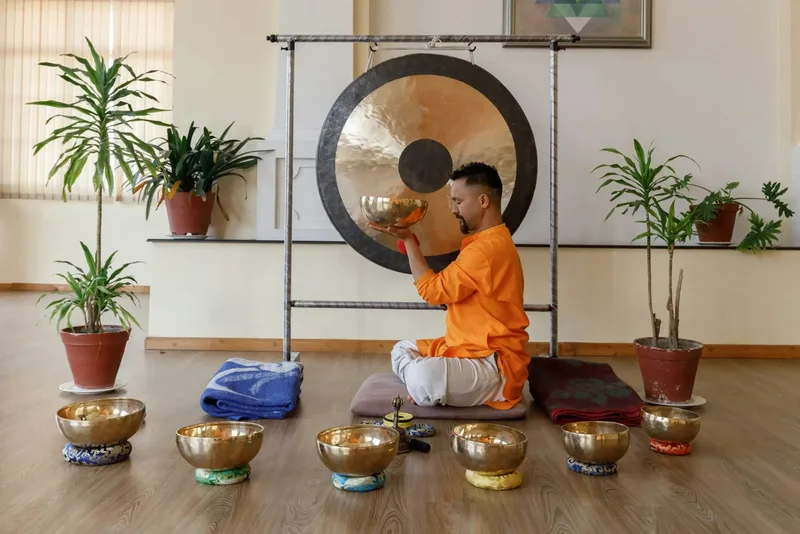
There is no water involved, which trips people up. The "bath" is a metaphor. You are being bathed in sound the way you might sit in warm afternoon light. A typical session runs 30 to 60 minutes, usually in a group at a yoga studio or wellness space, and it tends to end in a long stretch of stillness where nobody wants to move.
That's it. No incense-scented obligation to feel transformed. You show up, you lie down, you listen.
## Why It Can Calm You (the Real Reason)
When you look for an explanation of how sound baths work, you get some version of this: the sound waves entrain your brainwaves, slowing them from alert beta down to dreamy theta, and the resonant frequencies interact with your body's energy centers to release what's stuck. It sounds precise. It sounds scientific. Most of it doesn't hold up.
The "entrainment" idea has been studied directly, mostly through binaural beats, which use sound to try to drive brain rhythms. A [2023 systematic review in PLOS ONE](https://pmc.ncbi.nlm.nih.gov/articles/PMC10198548/) looked at the whole body of that research and found no clear trend either for or against the idea. Some studies showed the effect, more showed nothing, and where people did feel calmer, it looked like the general soothing effect of sound rather than any precise frequency reprogramming your neurons. Nobody has shown that a gong retunes your cells.
So why did I leave my first sound bath feeling like I'd had a nap and a massage at the same time?
The honest answer is the relaxation response. When you lie still in a safe space and rest your attention on a sound that is continuous, predictable, and non-threatening, your nervous system reads the room and stands down. Your breathing slows. Your shoulders drop. This is the same lever every calming meditation pulls, whether the anchor is your breath, a [body scan](/blog/body-scan-meditation-stress-relief), or the low ring of a bowl. Sustained, gentle sound is just an easy thing to pay attention to, which is exactly why it works for people who find silence unbearable.
You do not need the myth for the calm to be real. That is the part I wish someone had told me sooner.
## What the Evidence Actually Shows
I want to be fair here, because "the mechanism is oversold" is not the same as "it does nothing." The research on sound baths is genuinely promising and genuinely thin, and you deserve both halves of that sentence.
The most cited study is from 2017, published in the Journal of Evidence-Based Integrative Medicine. Sixty-two people did a [singing bowl sound meditation](https://pubmed.ncbi.nlm.nih.gov/27694559/), and afterward they reported significantly less tension, anger, fatigue, and low mood. First-timers felt the biggest drop in tension. Encouraging results, with one big catch: it was an observational study with no control group. Everyone lay down and rested, so we can't cleanly separate the sound from the simple act of stopping for an hour.
A [small randomized trial in 2023](https://doi.org/10.3390/ejihpe13020024), published in the European Journal of Investigation in Health, Psychology and Education, tried to close that gap. Fifty anxious adults were split into three groups: a Tibetan singing bowl session, progressive muscle relaxation, or a waitlist that did nothing. The singing bowl group showed measurable physiological calming, higher heart rate variability and lower EEG alpha power, and both the sound and the muscle relaxation beat doing nothing for self-reported anxiety. Real signal. Also a tiny study, one single session, in people without a clinical diagnosis.
Then there's the widest view: a [2020 systematic review in Complementary Therapies in Medicine](https://www.sciencedirect.com/science/article/abs/pii/S096522991931756X) that went looking for every solid study on singing bowls and found only four that met the bar. The researchers saw improvements in mood, anxiety, blood pressure, and heart rate, but concluded they could not recommend singing bowl therapy yet, because there simply wasn't enough high-quality research to stand on.
Put it together and you get a reasonable verdict. Sound baths are relaxing, low-risk, and probably helpful for stress in the moment. They are not a proven treatment for anything, and anyone promising otherwise is selling you the frequency myth.
## What a Session Feels Like
The first few minutes are the awkward part. You are lying on a floor with strangers, wondering if you're doing it right, aware of every itch. Then the first bowl sounds and something shifts.
The tones overlap and stack until you lose track of where one ends and the next begins. Your mind wanders, of course it does, to your inbox and your grocery list and whether you locked the car. You notice, you come back to the sound, you drift again. That wandering is not failure. It is the practice.

Toward the end, when the instruments go quiet, there's often a heavy, warm stillness that feels like the moment after a good cry or a deep sleep. Nothing mystical happens, and that is completely fine. You are not doing it wrong if you don't see colors or feel your chakras open. You are doing it right if you feel more rested than when you walked in.
## How to Try a Sound Bath
You have three real options, and they range from an event you book to something you can do in the next ten minutes.
**In person.** Search for sound baths at local yoga studios, meditation centers, and wellness spaces. Expect to pay for a class, sometimes a fair amount, and to lie on the floor for an hour. It's the most immersive version, and being in a room full of overlapping sound really is different from headphones. Worth doing once if you're curious.
**At home with a recording.** Plenty of sound bath and singing bowl recordings exist online, alongside other [ambient sounds you can rest to](/blog/ambient-sounds). Put on headphones, dim the lights, lie down, and follow the same rules as a studio session: no phone, no multitasking, just rest and listen. If you own a singing bowl, even better, though you absolutely don't need one.
**The free shortcut.** If what you're actually after is the calm, not the ceremony, you can reach the same relaxation response with a plain guided meditation any time you want. A sound bath is usually paid, scheduled, and led by someone else. A guided session is free, on demand, and asks nothing of you but a few quiet minutes. At Declutter The Mind, the whole library is deliberately built without background music or mystical framing, because the benefit was never in the frequencies. If you'd rather try guided practices that lean on gentle sound and awareness, there's a place to [start with sound-based meditations](/guided-meditation/sounds) without any of the woo.
Here's a simple at-home version you can do right now:
1. Lie down somewhere comfortable, blanket optional.
2. Put on a sound bath recording or a soft, continuous sound you like.
3. Close your eyes and let your body get heavy.
4. Rest your attention on the sound. When your mind wanders, gently bring it back.
5. Don't try to feel anything in particular. Just listen.
6. When it ends, stay still for a minute before you get up.
## Who Sound Baths Suit, and Who Should Be Careful
Sound baths tend to click for people who find regular meditation frustrating. If sitting in silence makes your thoughts louder, a continuous sound gives your attention something to hold, which is why "I can't meditate" people often love them. They also suit anyone carrying a lot of physical stress who just needs an excuse to lie down and switch off. If that's you, a few [simple relaxation techniques](/blog/how-to-relax) pair well with a session.
If you're a [highly sensitive person](/blog/highly-sensitive-person), you may find the immersion either wonderful or overwhelming, and both are valid. Trust your own response over anyone's promises.
A few honest cautions. If you have tinnitus or real sound sensitivity, loud sustained gongs might not feel good, so start gentle and quiet. And to be clear, a sound bath is a complement to a healthy life, not a treatment. If you're dealing with persistent anxiety or depression, this is a nice tool to have, but please talk to a professional too. Relaxation is not the same as care.
## Frequently Asked Questions
### Is a sound bath actually meditation?
Yes, in the practical sense. You're resting your attention on a single anchor and returning to it when your mind wanders, which is the core of most meditation. The sound just makes the anchor easier to hold than your breath or silence.
### Do I need singing bowls to try one?
No. You can experience a sound bath with a recording and a pair of headphones. Owning a bowl is nice but completely optional, and buying an expensive one won't make the practice work any better.
### Is the "healing frequency" thing real?
There's no good evidence that specific frequencies retune your cells or fix your energy. The calming effect is real, but it comes from the relaxation response and focused attention, not from magic numbers like 432 hertz. You can enjoy the practice and skip the mythology.
### How often should I do a sound bath?
As often as it helps and no more than that. Some people go to a monthly studio session; others use a recording a few times a week to wind down. There's no dose you're required to hit, so let it be a tool, not another obligation.
### Can I do a sound bath before bed?
It's a good fit for winding down, since the goal is deep rest rather than alertness. Do it lying down, keep the volume low, and don't worry if you fall asleep partway through. That's arguably the point.
You don't have to choose between enjoying a sound bath and keeping your skeptic hat on. I do both. Lie down, let the sound do the easy work of holding your attention, and take the rest for what it plainly is. If that turns out to be your way in, the next step is just showing up for a few quiet minutes on a regular basis, sound optional.
---
# Why Do I Cry So Easily? What It Means and What Helps
- URL: https://declutterthemind.com/blog/why-do-i-cry-so-easily
- Description: Crying easily is usually a low emotional threshold, not a flaw. Why it happens, the myth of the cathartic cry, when it's worth a doctor, and what actually helps.
- Published: 2026-09-11
- Updated: 2026-09-11
If you tear up at a slightly tense work conversation, a phone commercial, or someone raising their voice, and then spend the next ten minutes annoyed at yourself for it, this is for you. I've watched people apologize for crying in meditation sessions more times than I can count. They say "sorry, I don't know why I'm like this" as if the tears were a character flaw that slipped out.
Here's the short version, and I mean it: for most people, crying easily is a threshold thing, not a character flaw. Yours sits a little lower than average, and where that bar sits moves around depending on how loaded your week has been. Sometimes it's worth a closer look. Most of the time it isn't. I'll cover both, and I'll tell you what actually helps, because "just stop crying" has never once worked for anyone I've taught.
## First, the Short Answer
Crying is a threshold behavior. A feeling builds, it hits some internal line, and your eyes spill over. Some people have a high line and almost never reach it. Some people have a low one. Neither is the correct amount.
How much people cry varies wildly. Summarizing decades of work by Ad Vingerhoets, the [APA](https://www.apa.org/monitor/2014/02/cry) puts women at roughly 30 to 64 crying episodes a year and men at around 6 to 17, with big overlap and numbers that shift across cultures and studies. That's a huge range. "I cry easily" only means you're further along one end of a spectrum that has no right answer in the middle.
So the first thing I want to take off your plate is the idea that there's a normal amount and you're failing it. There isn't. There's your baseline, and there's how much life is pressing on you right now. Let's look at both.
## Why Some People Cry More Easily Than Others
Part of it is just how you're built. About one in five people have what researchers call sensory processing sensitivity, a temperament trait where the nervous system takes in and processes input more deeply. In a 2014 fMRI study in *Brain and Behavior*, [Acevedo and colleagues](https://doi.org/10.1002/brb3.242) found that people higher in this trait showed stronger activation in the anterior insula and in brain regions tied to empathy and awareness when they looked at other people's emotional faces, especially the faces of people they loved.
In plain terms: if you're a [highly sensitive person](/blog/highly-sensitive-person), you're not being dramatic when a friend's bad news lands in your body like it's your own. You're processing it more fully than the person next to you who stayed dry. That same wiring that makes you cry at the dog scene in a film is the wiring that makes you good at noticing when someone's quietly not okay.
I'm not saying every easy crier is a textbook highly sensitive person. But if you've felt "too much" your whole life and cried more than your siblings or friends for as long as you can remember, a baseline sensitivity is probably part of the picture, and it's not something that needs fixing.
## Why You Cry "For No Reason"

This is the one that scares people. You're fine, you're standing in the kitchen, and suddenly you're welling up over nothing.
It's almost never nothing. What it usually is: an overloaded nervous system with no spare capacity. When you're running on five hours of sleep, skipped lunch, a week of low-grade stress, and a hormonal shift on top, the threshold I mentioned drops through the floor. You're not crying about the thing in front of you. You're crying because there was already a full cup and the dropped spoon was the last drop.
The other big driver is suppression. A lot of easy criers are also people who spend all day clamping down. You hold it together through the meeting, through the commute, through dinner, and the holding itself takes effort. Then you sit down, your guard drops, and it all arrives at once. If you've trained yourself to push feelings down, they don't disappear. They pool. This is part of why I keep pushing people to [feel their feelings](/blog/feel-your-feelings) in smaller doses as they come up, rather than saving them for an involuntary 9pm flood.
## The Myth That a Good Cry Always Helps
Now the part that surprised me when I first read the research, because I'd repeated the opposite for years.
We're told crying is cathartic, that a good cry resets you. The evidence is a lot more conditional than the saying. In a daily-diary study tracking over a thousand real crying episodes, [Bylsma, Vingerhoets, and Rottenberg](https://www.sciencedirect.com/science/article/abs/pii/S0092656611000778) found that only about a third of them were actually followed by improved mood. Plenty of cries left people feeling the same or worse.
Lab work fills in why it feels confusing. [Gračanin and colleagues (2015)](https://pmc.ncbi.nlm.nih.gov/articles/PMC4608976/) found that right after crying, mood usually dips further, and it only climbs back up, sometimes to slightly better than baseline, over the following stretch of time. So the "I feel better" often comes later, in memory, not in the moment. And in their 2014 review, [Gračanin, Bylsma, and Vingerhoets](https://doi.org/10.3389/fpsyg.2014.00502) argued that a lot of the relief we credit to crying is really social soothing: the comfort, the hug, the "hey, are you okay" from another person. Crying alone in a locked bathroom is a different experience from crying with someone's hand on your back.
What this means for you: crying isn't a magic reset button, and you don't owe yourself a good cry to "let it out." When crying helps, it tends to be because the situation got some support or some resolution, not because tears drained the sadness. That's worth knowing, because it moves the goal from "cry it all out" to "get the thing seen and, where possible, resolved."
## No, You're Not Flushing Out Toxins
You've probably heard that crying flushes stress hormones or toxins out of your body. That one traces back to biochemist William Frey, who found in the 1980s that emotional tears contain trace amounts of stress-related compounds like cortisol and ACTH.
The compounds are really in there. The leap people made is the problem. No study has shown that the tiny volume you cry removes meaningful stress hormone from your body, or clears it any faster than feeling the same distress without crying would. As the researchers themselves [later spelled out](https://theconversation.com/no-crying-doesnt-release-toxins-though-it-might-make-you-feel-better-if-thats-what-you-believe-106860), the toxin-flushing story is a nice idea that the evidence doesn't carry. If crying makes you feel better, it's doing it through your mind and your relationships, not by draining your tear ducts of poison.
## When Crying Easily Is Worth a Doctor's Look
Most easy crying is ordinary. Some of it is a signal, and I'd be doing you a disservice to skip this part. See a professional if:
- **The crying comes with low mood that won't lift.** Frequent tears, crying "for no reason," loss of interest in things you used to like, changes in sleep or appetite: that cluster can point to depression, which is treatable. Don't wait it out alone.
- **It rides on top of anxiety or burnout.** A chronically maxed-out nervous system cries easily. If you're also wrung out, on edge, and not recovering, that's worth addressing at the source.
- **The timing is hormonal and disruptive.** Premenstrual weeks, pregnancy, the postpartum period, and perimenopause can all turn the tap on, and so can thyroid problems. If it's severe or new, a doctor can check.
- **The crying doesn't match how you feel, or you can't stop it.** Brief, uncontrollable bouts of crying (or laughing) that don't fit your actual mood can be pseudobulbar affect, a neurological condition tied to things like stroke, MS, or brain injury. The [Cleveland Clinic](https://my.clevelandclinic.org/health/diseases/17928-pseudobulbar-affect-pba) notes people with it may feel emotionally fine between episodes. That one needs a medical evaluation, not a breathing exercise.
If the tears ever come with hopelessness or thoughts that you don't want to be alive, please treat that as urgent and call or text 988 (the US Suicide and Crisis Lifeline). And if you've been meaning to talk to someone anyway, here's a practical guide to [finding a therapist](/blog/how-to-find-a-therapist). Meditation is a good complement to that kind of support. It isn't a replacement for it.
## What Actually Helps (Besides Waiting It Out)

Assuming it's the ordinary kind, the goal isn't a dry face. It's choice. You want a beat between the feeling and the flood, so you can decide whether to let the tears come now or step somewhere private first. Three things give you that beat.
**Name what's happening.** This is the one I lean on hardest, and there's good science under it. In a 2007 study, [Lieberman and colleagues](https://pubmed.ncbi.nlm.nih.gov/17576282/) found that simply putting a feeling into words reduced activity in the amygdala, the brain's alarm center, and increased activity in a prefrontal region linked to regulation. Silently saying "okay, I'm getting overwhelmed, my chest is tight and my eyes are stinging" does more than it sounds like it should. It turns a wave you're being dragged under into a thing you're observing.
**Lower the baseline load.** If your threshold is on the floor, raise it by taking pressure off the system. Protect sleep. Leave ten minutes between back-to-back calls. Eat before the hard conversation. And let small feelings out in real time instead of stacking them, which is really what learning to [sit with difficult emotions](/blog/how-to-sit-with-difficult-emotions) is about. A half-full cup doesn't overflow at the first bump.
**Stop fighting the tears when you're safe.** Clamping down is its own stressor, and it makes the next spill bigger. In private, or with people you trust, letting yourself cry without the layer of self-criticism on top is often the faster way through. The shame about crying tends to hurt more than the crying.
If you'd rather be walked through meeting a feeling than read about it, there's a short guided practice for [sadness](/guided-meditation/sadness) in the Declutter The Mind app, along with specific practices for overwhelm and difficult emotions. It's free, no account needed. Following a voice is easier than self-directing when you're already close to tears.
## A Short Practice for When You Feel Tears Coming
You can do this in under a minute, standing in a hallway, before anyone notices.
1. **Catch the early cue.** The stinging eyes, the tight throat, the heat in your face. The earlier you notice, the more room you have.
2. **Name it, silently and specifically.** "I'm about to cry. I feel ambushed and a little embarrassed." Label the emotion and the body sensation. Don't argue with it.
3. **Take one slow exhale.** Not a big dramatic breath. Just a long, unhurried exhale, a little longer than the inhale. One is enough to matter.
4. **Decide, on purpose.** Is this a safe place to let it come, or do I want two minutes alone first? You're choosing now instead of reacting.
5. **Come back.** Whether you cried or waited, return your attention to what's in front of you. If more feeling comes later, you already know what to do.
That's it. You're not suppressing anything in step two. You're giving the feeling a name and a breath, which is usually enough to turn a flood into something you can ride.
Crying easily isn't a flaw in your wiring you have to engineer out. For most people it's a sensitivity, sometimes a full cup, occasionally a flag worth checking. You can work with all three. And if you still well up at the dog scene after all this, honestly, so do I.
## Frequently Asked Questions
**Why do I cry so easily?**
For most people it's a low emotional threshold set by temperament and current load like stress, poor sleep, and hormones. High sensitivity, which affects about one in five people, is common. It's usually normal, not a disorder.
**Does crying actually make you feel better?**
Not automatically. In a diary study of 1,004 crying episodes, only about a third were followed by improved mood. Crying tends to help when you get support or the situation that triggered it gets resolved.
**Does crying release toxins or stress hormones?**
No. Emotional tears contain trace stress-related compounds, but no study shows crying flushes cortisol from your body faster than feeling the same distress would. Any relief comes through your mind and relationships, not your tear ducts.
**When should I see a doctor about crying easily?**
If it comes with persistent low mood, rides on top of anxiety or burnout, feels uncontrollable or mismatched to your mood, or is tied to hormonal changes. If crying comes with hopelessness, contact 988 in the US.
---
# Progressive Muscle Relaxation: A Step-by-Step Guide for Anxiety and Stress
- URL: https://declutterthemind.com/blog/progressive-muscle-relaxation
- Description: Anxiety lives in your body. Progressive muscle relaxation works it out one muscle group at a time. Here's the honest science, a step-by-step script, and how to make it stick.
- Published: 2026-09-08
- Updated: 2026-09-08
You notice it before you notice anything else. Your shoulders are up around your ears. Your jaw is set. Your hands are curled tighter than they need to be, and you have no idea how long they've been like that. Anxiety doesn't just live in your head. It shows up in your body, quietly, all day, and most of the time you're too busy to feel it happening.
Progressive muscle relaxation works that problem backward. Instead of trying to think your way calm, which almost never works when you're already wound up, you go straight to the muscles and deal with the tension you can actually feel. It's one of the oldest and most studied relaxation techniques there is, and it's simple enough to do in bed tonight. It's also surrounded by a tidy little myth about how it works, and dropping that myth is what turns it from a party trick into something useful. Let me walk you through what it is, whether it actually helps, the honest version of why, and a script you can follow start to finish.
## What Progressive Muscle Relaxation Is

The whole practice is one move repeated: you tense a group of muscles hard for a few seconds, then let go all at once and pay attention to the difference. You might squeeze your fists tight, hold for a slow count of five, then drop them and feel the release spread through your hands and forearms. Then your shoulders. Then your face. You work through the body one region at a time until you've been everywhere.
That "one region at a time" is the "progressive" part, and it goes back further than most people realize. A physician named Edmund Jacobson laid it out in his 1938 book *Progressive Relaxation*. His original version was enormous, dozens of muscle groups over many sessions, far too long for anyone with a normal life. In 1973, two psychologists, Douglas Bernstein and Thomas Borkovec, trimmed it into the shorter, standardized routine that clinics and apps still use today: sixteen muscle groups, then even shorter seven and four-group versions for people who've got the hang of it. So when you see a ten-minute PMR script, you're looking at the streamlined descendant of a much longer practice, which is good news for your evening.
## Does It Actually Work for Anxiety?
Short answer: yes, and the evidence is better than you'd expect for something this low-tech.
A 2024 systematic review in *Psychology Research and Behavior Management* pulled together [46 studies from 16 countries covering more than 3,400 adults](https://www.tandfonline.com/doi/full/10.2147/PRBM.S437277) and found that progressive muscle relaxation reliably reduced stress, anxiety, and depression, with the effect getting stronger when PMR was paired with other approaches. That's a lot of people across a lot of settings pointing the same direction.
For a sense of size, an older meta-analysis by Michela Manzoni and colleagues in *BMC Psychiatry* looked at relaxation training for anxiety and found a [medium-to-large effect, around a Cohen's d of 0.5 to 0.6](https://pmc.ncbi.nlm.nih.gov/articles/PMC2427027/). In plain terms, that's a real, noticeable improvement, not a rounding error. I want to be straight about the caveats, though, because they matter. That analysis lumped several relaxation methods together, not just PMR, and the benefit was bigger for longer courses of practice and for meditation specifically. So the honest read is: relaxation training helps anxiety, PMR is a solid member of that family, and dose matters. One reluctant round isn't the study condition. A few weeks of regular practice is.
It's also worth knowing PMR isn't uniquely magic. When researchers put it [head to head with deep breathing and guided imagery](https://pmc.ncbi.nlm.nih.gov/articles/PMC8272667/), all three lowered stress and moved people toward a calmer state. PMR just happens to be one of the easiest to learn, because tensing and releasing gives your restless mind something concrete to do.
## How It Really Works, and the Myth Worth Dropping
Here's the story you'll read everywhere: you can't be physically tense and mentally anxious at the same time, so if you squeeze the tension out of your muscles, the anxiety has nowhere to live. It's a clean idea. It's also probably not true, at least not the way it's told.
Two Stanford researchers, Ansgar Conrad and Walton Roth, went looking for that mechanism and published what they found in a 2007 paper with an honest title: [muscle relaxation therapy for anxiety, "it works but how?"](https://pubmed.ncbi.nlm.nih.gov/16949248/) Their conclusion was that the therapy clearly helps people with panic disorder and generalized anxiety, but the evidence does not show that their physical tension actually drops over the course of treatment, even when they report feeling much less anxious. The bodies weren't measurably more relaxed. The people were. Something else is doing the work.
I find that more useful than the myth, not less. If PMR isn't quietly wringing stress out of your muscles like water from a sponge, then what's left is attention. The deliberate tense-and-release does two things that actually explain the calm. First, it trains you to feel tension early, when it's a slightly tight jaw instead of a full-body clench, so you can catch the spiral before it gets going. Second, for ten focused minutes it pulls your attention out of the anxious thought loop and parks it in the body, which is the same reason a [body scan meditation](/blog/body-scan-meditation-stress-relief) settles people. PMR, done well, is body-based mindfulness with training wheels. The tensing is just a hook to keep your restless attention on the one place anxiety can't follow it into: physical sensation, right now. A [sound bath uses continuous, resonant sound](/blog/sound-bath-meditation) as that same kind of hook, which is why it calms people who cannot sit with silence. And if it's your mind racing rather than your body clenched, [cognitive shuffling for a racing mind](/blog/cognitive-shuffling) works the same attention trick from the other direction, using a stream of random images as the hook.
## The Step-by-Step Script

You can do this sitting or lying down, somewhere you won't be interrupted for about ten minutes. Loosen anything tight, let your breathing settle, and then work through the sequence below. For each group: breathe in and tense the muscles firmly, but not to the point of pain, for a slow count of five. Then exhale and release everything at once. Rest for ten to fifteen seconds and actually notice the contrast, the warmth or heaviness that floods in. Then move on.
A full run goes head to toe, but if you're new, start with this short four-group version and add detail later:
- **Hands and arms.** Make fists and pull them up toward your shoulders, tensing your whole arm. Hold. Release.
- **Face and neck.** Scrunch your whole face, brow, eyes, jaw, and gently press your head back. Hold. Release.
- **Chest, shoulders, and stomach.** Pull your shoulders up and back, take a breath in, and tighten your belly. Hold. Release.
- **Legs and feet.** Straighten your legs, point your toes, and tense your thighs and calves. Hold. Release.
Two rules keep it safe and effective. Don't tense anywhere that's injured, cramping, or in pain, just skip it and breathe into the release instead. And keep the tensing deliberate, not violent. The point isn't a workout. It's the difference between tense and loose, felt clearly, over and over. If your mind wanders to your to-do list, that's fine and expected. Just bring it back to the next muscle group. That returning is the practice, the same way it is in any [breathing exercise for stress](/blog/breathing-exercises-for-stress) or [nervous system reset](/blog/how-to-regulate-your-nervous-system).
## Progressive Muscle Relaxation for Sleep
If there's one place PMR earns its keep, it's bedtime. When you can't sleep, it's usually because your body is still in daytime gear and your mind is narrating, and PMR interrupts both at once. It gives your attention a slow, boring job and it walks your body down out of alertness. A 2026 meta-analysis of 31 randomized trials found that [progressive muscle relaxation improved both sleep quality and mental health](https://www.sciencedirect.com/science/article/abs/pii/S0022399926000474), which lines up with why so many people first meet PMR on a sleep app.
The move at night is simple: do the sequence lying in bed, in the dark, and let yourself drift off mid-practice if it happens. You don't have to finish. If your problem is less physical tension and more a mind that won't stop, pair PMR with a couple of the ideas in [how to fall asleep](/blog/how-to-fall-asleep). And if you'd rather be talked through it than run the script from memory, there's a guided [before-sleep body scan in the Declutter The Mind app](/guided-meditation/body-scan) that does the same job with a voice to follow.
## Making It Stick
The most common way PMR fails is that people try the full sixteen-group version once, find it long and a little awkward, and never come back. So here's the thing to remember: adherence beats completeness. Bernstein and Borkovec built those shorter four and seven-group versions, and a "relaxation through recall" version where you skip the tensing entirely and just remember the feeling of release, precisely because the shorter practice you'll actually repeat beats the perfect one you won't.
Anchor it to something you already do. Right after you get in bed. During the first slow minute of your commute train. In the ten minutes between finishing work and starting dinner. And treat it as a gateway rather than the destination. Once you can feel tension leaving on cue, you're most of the way to a plain [body scan](/guided-meditation/body-scan), which drops the tensing and just trains the noticing. That's the same skill PMR was quietly teaching all along, and it's the one that keeps paying off, in the grocery line, in the meeting, in the moment before you'd normally snap. If you want more entry points, [these grounding techniques](/blog/grounding-techniques) and [ways to calm anxiety](/blog/how-to-calm-anxiety) all lean on the same underlying muscle: attention you can put somewhere on purpose.
## When It's Not Enough
Progressive muscle relaxation is a genuinely good coping skill, and it is not a treatment for an anxiety disorder. In the research where it helps people with panic disorder or generalized anxiety, it's used as part of therapy, not instead of it. So use it freely for everyday stress, pre-sleep wind-down, and the physical edge of anxiety. But if your anxiety is persistent, if it's shrinking your life, or if you're having panic attacks, please talk to a doctor or therapist. PMR belongs in that toolkit alongside real treatment, not as a substitute for it.
A couple of practical cautions too. If you have uncontrolled high blood pressure, a recent injury or surgery, or any condition where deliberately tensing muscles could be a problem, check with your clinician before making PMR a habit, and never tense through pain. And if you're ever in crisis or thinking about harming yourself, you can reach the 988 Suicide and Crisis Lifeline by calling or texting 988 in the US, any time.
None of this takes away from what the practice offers. It just puts it in its place: a small, portable, well-supported way to notice your body, drop some tension, and give your attention somewhere to land when your head is loud. Try one round tonight, in bed, in the dark. Notice your shoulders first. You'll probably be surprised how far up they've been hiding.
---
# Revenge Bedtime Procrastination: Why You Stay Up Late
- URL: https://declutterthemind.com/blog/revenge-bedtime-procrastination
- Description: You're exhausted but you keep scrolling past midnight. Here's what revenge bedtime procrastination really is, and the research-backed way to stop.
- Published: 2026-08-27
- Updated: 2026-08-27
It's 11:40pm. Your eyes are stinging. You told yourself you'd be asleep by eleven, and part of you knew even then that you wouldn't be. But here you are, thumb still moving, one more video, one more chapter, one more scroll through nothing in particular. You can feel exactly how much tomorrow is going to hurt. And you keep going anyway.
If that's you a few nights a week, you've probably seen the name for it: revenge bedtime procrastination. It's a good name. It's also pointing you at the wrong fix.
Most advice treats this as a willpower problem. Just go to bed. Have more discipline. Put the phone down. If that worked, you'd have done it by now. What the research actually shows is that staying up late when you're exhausted is less about weak character and more about a specific kind of stuckness, and the things that fix it aren't the things you'd guess. Let's get into what's really happening and what to do instead.
## What Revenge Bedtime Procrastination Actually Is

Here's the plain version: you delay a bedtime you meant to keep, even though nothing is stopping you from sleeping and part of you wants to.
That definition comes from a 2014 paper by Floor Kroese and colleagues at Utrecht University, who coined the term "bedtime procrastination" and defined it as [voluntarily delaying bedtime without an external reason to do so](https://doi.org/10.3389/fpsyg.2014.00611). No newborn crying. No night shift. No emergency. You have the opportunity to sleep and the intention to sleep, and you stay up anyway.
The "revenge" part got added later. It comes from a Chinese social-media phrase, roughly "retaliatory staying up late," that went viral in English around 2020. The idea is that if your whole day belongs to your job, your commute, your kids, and your inbox, then those late hours after everyone's asleep are the only time that feels like yours. So you claim them, even at the cost of the sleep you need.
I think that story is half-right, and I'll come back to why the half that's wrong matters. But first, one distinction that saves people a lot of confusion.
This is not insomnia. Insomnia is when you're in bed, you want to sleep, and [your body won't let you fall asleep](/blog/how-to-fall-asleep). Revenge bedtime procrastination is the opposite problem: your body is ready, and you won't get in bed. They can overlap, and [the racing thoughts that show up once you finally do lie down](/blog/how-to-stop-overthinking-at-night) are their own separate thing. But if the honest answer to "why are you still awake?" is "because I haven't gone to bed yet," this is procrastination, not a sleep disorder. That's actually good news, because it means the lever is behavioral.
## Why It's a Stopping Problem, Not a Willpower Problem
Here's the finding that reframed this whole thing for me.
When researchers actually asked people why they went to bed late, most of them didn't describe a decision to postpone sleep at all. In a 2019 qualitative study, Nauts and colleagues [interviewed frequent bedtime procrastinators](https://doi.org/10.1080/15402002.2018.1491850) and found that the problem usually wasn't choosing to stay up. It was failing to stop what they were already doing. Nobody sits down at 11pm and thinks "I will now rebel against my bedtime." You're mid-episode, mid-thread, mid-scroll, and the transition to stopping just never happens.
That's a completely different problem than a lack of discipline. You're not fighting an urge to stay up. You're failing to generate the small, effortful act of putting the thing down. And that act is hardest at exactly the moment you have to do it.
Because self-control isn't a fixed trait you either have or don't. It runs down over the day. Kroese's larger 2016 study, using a representative sample of [2,431 Dutch adults](https://doi.org/10.1177/1359105314540014), found that people lower in self-regulation slept less and [felt more tired the next day](/blog/why-am-i-always-tired), and that bedtime procrastination was the thing in the middle connecting the two. By late evening, after a full day of deciding and managing and holding it together, the part of you that's good at stopping is the most worn out it will be all day. And that's precisely when your bedtime shows up asking you to make a hard call.
So "just have more willpower at 11pm" is asking the most depleted version of you to rescue the situation. No wonder it keeps losing.
Some of us are more prone to this than others. If you're a night owl by wiring, you're swimming upstream. Evening chronotypes tend to procrastinate bedtime more, and the [pull toward late nights raises the risk of insomnia symptoms partly through this exact procrastination loop](https://doi.org/10.1016/j.paid.2018.02.015). The useful thing to notice there is that chronotype is the part you can't easily change, but the procrastination is the part you can. You don't have to become a morning person to stop bleeding an hour of sleep every night.
## What Actually Works

Once you stop treating this as a character flaw, the fixes get more interesting. They're not "try harder." They're about changing the situation so that stopping doesn't require heroics. Roughly in order of how much they help:
**1. Fix the day, not just the night.** This is the part the "revenge" label actually gets right. If the only time that feels like yours is after midnight, the real problem is upstream, in a day with no breathing room in it. More willpower at bedtime does nothing about that. What helps is claiming a genuine pocket of time earlier, in daylight, that's yours and unscheduled. Twenty minutes after work that isn't chores or a screen you feel obligated to check. A real lunch break away from your desk. It sounds almost too simple, but when the day has some slack in it, the night stops having to carry all of your leisure, and going to bed stops feeling like giving something up.
**2. Make stopping automatic.** Since the hard part is the decision to stop, the move is to make that decision in advance, when you're rested, so the tired version of you doesn't have to. The tool with the best evidence here is an "if-then" plan, sometimes called an implementation intention. You decide the trigger and the response ahead of time: "If it's 10:30 and I'm on my phone, then I plug it in across the room and get in bed." In two randomized trials, people who paired this kind of planning with first picturing the obstacle in their way ended up going to bed [roughly half an hour earlier than they had been, and well ahead of a control group](https://doi.org/10.1080/08870446.2019.1652753). A [2025 pre-registered study](https://doi.org/10.1080/08870446.2025.2491593) tested the same approach with tighter methods. Half an hour a night, from writing one sentence and rehearsing it, is a genuinely good return.
Write yours down. Make the trigger something you'll actually notice (a time, a specific show ending, the moment you reach to open an app again) and make the response one concrete physical action.
**3. Get the phone out of the room.** Not because phones are evil, and not as a purity test. It's about friction. The reason your phone wins at 11:40 is that it offers the most frictionless leisure ever invented, refreshing endlessly, requiring nothing from you. You will not out-discipline an infinite feed on your worst-rested willpower of the day. So don't try. Charge it in another room and buy a cheap alarm clock. When the effort of getting up to grab it is higher than the effort of just closing your eyes, the whole equation flips. If the pull is strong, it's worth looking honestly at [your relationship with the feed itself](/blog/social-media-detox), not just at bedtime.
**4. Replace "go to bed" with an actual wind-down.** "Go to bed" is a destination, not an action, which is part of why it's so easy to defer. Give yourself a specific thing to do instead of the scroll, ideally something that lowers your arousal rather than spikes it. A warm shower. A few pages of a paper book. Building a [consistent pre-sleep routine](/blog/night-time-routine) so the handoff happens on autopilot. A short guided practice you can [follow with your eyes closed at bedtime](/blog/how-to-meditate-before-bed). If you'd rather be walked through it than manage it yourself, there's a before-sleep meditation in the Declutter The Mind library made for exactly this handoff, a way to give your attention somewhere to land that isn't your phone. The point isn't the specific ritual. It's that "stop scrolling" is much easier when there's a defined next thing, and much harder when the only alternative on offer is lying in the dark.
## A 2-Minute Practice for the "Just One More" Moment
Sometimes you're already past all of that. It's late, the phone's in your hand, and you can feel the "just one more" pulling. Here's something short you can do right in that moment. I'd suggest reading it now so it's there later.
1. Stop moving your thumb, but don't put the phone down yet. Just pause on whatever's on the screen.
2. Notice the urge to keep going. Don't fight it and don't obey it. See if you can feel it as a sensation, a kind of forward lean or pull, rather than a command you have to follow.
3. Now drop your attention into your body for three slow breaths. Notice the actual tiredness that's there. The heaviness behind your eyes. It's usually more than you'd realized, because the screen has been covering it.
4. Ask yourself what you're really after right now. Most nights it isn't the next video. It's rest, or a few quiet minutes that feel like yours. Name the real thing.
5. Then choose, from that clearer place. Sometimes you'll still stay up, and that's allowed. But you'll be deciding it, instead of drifting into it. That difference is the whole skill.
If your mind wanders in the middle of this, or you catch yourself scrolling again before you've finished, that's completely normal. Just notice it and come back. The practice is the noticing, not doing it perfectly.
## When It's More Than Procrastination
Most of the time this is an ordinary, fixable habit. Sometimes it's a signal worth taking seriously.
If you're genuinely trying to sleep and can't, and that's happening at least three nights a week for three months or more, that's the clinical line for chronic insomnia, and it's worth talking to a doctor. The best-supported treatment is a structured program called CBT-I, not a pill, and a GP can point you toward it.
And watch the reason underneath the staying-up. If those late hours aren't really about freedom but about avoiding something, a low mood you don't want to lie down with, a dread about tomorrow, a day you're not looking forward to facing, that's worth naming to a therapist. Procrastinating sleep to dodge a feeling is a different problem than procrastinating sleep out of habit, and it responds to different help. If you're ever in real crisis, in the US you can call or text 988 any time.
None of that undoes the ordinary version. For most people, on most nights, this is just a stopping problem wearing a dramatic name. You don't need more discipline. You need the day to have a little room in it, a decision made ahead of time, a phone across the room, and something to do with the last ten minutes besides scroll. Start with one of those tonight. See what the morning feels like.
---
# Loving-Kindness Meditation: How to Actually Practice It
- URL: https://declutterthemind.com/blog/loving-kindness-meditation
- Description: Loving-kindness meditation, explained by a teacher: the real metta practice step by step, what the research honestly shows, and how to handle the parts that feel wrong.
- Published: 2026-08-25
- Updated: 2026-08-25
Loving-kindness meditation has a branding problem. The name makes it sound like you sit down and try to feel a warm wave of love for everyone, and if you're not a naturally gushing person, you assume it isn't for you. That's the wrong idea, and it's the reason a lot of people try it once and quietly decide they're bad at it.
Here's the version that actually holds up. Loving-kindness meditation is a practice of aiming goodwill, on purpose, at yourself and then at other people. You do it by silently repeating a few simple wishes. You are not trying to force an emotion. You're pointing your attention in a direction it doesn't usually go, and letting whatever comes, come. When people tell me it "didn't work," it's almost always because they were grading themselves on how much they felt instead of what they did.
It has another name you'll see: metta, an old Pali word usually translated as friendliness or goodwill. At Declutter the Mind we teach it secularly. No chanting you don't understand, no belief required. Just attention and a few honest sentences.
## What Loving-Kindness Meditation Is
The core move is small. You bring someone to mind and silently offer them a handful of good wishes. The traditional four go something like:
> May you be safe.
> May you be healthy.
> May you be at ease.
> May you live with ease.
Then you widen the circle. Most versions walk through five groups in roughly this order: yourself, someone easy to love, a neutral person you barely know, someone you find difficult, and finally everyone. You spend a minute or two on each before moving out to the next ring.
The phrases are a scaffold, not a spell. The words aren't magic, and there's nothing sacred about that exact set of four. Their whole job is to give your attention something to hold so it keeps pointing at the person and their wellbeing instead of drifting to your inbox. If "may you be happy" or "may you be at peace" lands better for you, use that. Pick words you can say without cringing.
## What It Actually Does
This is where I want to be straight with you, because the internet oversells this practice and then people feel cheated.
The best-known study is Barbara Fredrickson's 2008 field experiment with 139 working adults, published in the *Journal of Personality and Social Psychology*. Half were randomly assigned to learn loving-kindness meditation. Over several weeks, the practice raised their daily positive emotions, and those small daily lifts slowly built into more durable things: more social support, a stronger sense of purpose, even fewer physical symptoms, which in turn predicted higher life satisfaction and fewer depressive symptoms ([Fredrickson et al., 2008](https://pubmed.ncbi.nlm.nih.gov/18954193/)). The mechanism is unglamorous and cumulative. Little bits of warmth, repeated, add up.
It also works faster than you'd expect on the connection piece. In a lab study, a few minutes of loving-kindness practice increased people's sense of connection and their warmth toward complete strangers, on both the feelings they reported and quicker implicit measures they couldn't easily fake ([Hutcherson, Seppala & Gross, 2008](https://pubmed.ncbi.nlm.nih.gov/18837623/)). That's a useful thing to know on a day you feel prickly and closed off. A short session genuinely moves the needle.
Now the honest ceiling. A 2015 meta-analysis of the research found medium-sized effects on positive emotion ([Zeng et al., 2015](https://pubmed.ncbi.nlm.nih.gov/26579061/)). Medium, not enormous. And a broader review of 22 randomized trials found kindness-based meditation reduced depression and raised self-compassion compared with doing nothing, but the effects got smaller and less consistent when it was compared against another active practice, and several of the studies had real limitations ([Galante et al., 2014](https://pubmed.ncbi.nlm.nih.gov/24979314/)). Translation: this is a real effect, worth your ten minutes, and it is not a cure for anything.
One claim I'd steer you away from. You'll see articles promising loving-kindness meditation "tones your vagus nerve." That traces back to a single 2013 study whose analysis was later publicly challenged in the same journal and corrected ([Kok et al., 2013](https://journals.sagepub.com/doi/10.1177/0956797612470827); [Nickerson, 2018](https://journals.sagepub.com/doi/10.1177/0956797616682946)). The connection and positive-emotion findings are solid. The physiological headline is shakier than the confident wellness posts admit, so I don't lean on it.
## How to Do It
Ten minutes is plenty to start. Sit somewhere you won't be interrupted, close your eyes if that's comfortable, and take a few slow breaths to land.
1. **Start with yourself.** Bring an image of yourself to mind, or just feel yourself sitting here. Silently say the phrases, slowly, once through: *May I be safe. May I be healthy. May I be at ease.* Give it about a minute. If it feels flat, that's fine. You're aiming the wish, not performing it.
2. **Move to someone easy to love.** A close friend, a kid, a pet, a grandparent. Someone who makes you smile without effort. Picture them and offer the same wishes: *May you be safe. May you be healthy. May you be at ease.* Another minute or so.
3. **Go to a neutral person.** The barista, a neighbor you nod at, someone from the bus. Not a friend, not an enemy, just a person. Send them the same lines. This one is quietly the most interesting, because it's where you notice how rarely you wish random people well.
4. **Try someone difficult.** Skip this category entirely for the first few weeks. When you do add it, don't start with the person who hurt you most. Pick someone mildly annoying, and if the phrases won't come, drop back to a neutral person. Forcing this is how people bounce off the practice.
5. **Widen to everyone.** Your street, your city, everyone awake right now, everyone struggling: *May all beings be safe. May all beings be at ease.* Sit with that for a moment, then let the phrases go and just breathe before you open your eyes.
If your mind wanders, and it will, that's not a failure. You noticed, so you're back. Return to whichever person you were on and keep going.
If you'd rather be walked through it than keep one eye on a list, there's a [guided loving-kindness practice](/meditation/loving-kindness) in the Declutter the Mind app that runs the same sequence out loud, so you can keep your eyes closed the whole way.
## When It Feels Wrong
Nobody warns you about this part, so it convinces people they're doing it incorrectly.
**"I don't feel anything."** Good news: you don't have to. The teachers Kristin Neff and Christopher Germer put it simply, that this is a practice of goodwill, not good feelings ([self-compassion.org](https://self-compassion.org/)). Some sessions are warm. Plenty are dry and a little mechanical. The repeated intention is doing the work under the surface whether or not it registers as emotion in the moment. Judge it over weeks, not by any single sit.
**The pain that shows up when you turn it inward.** For some people, sending kindness to themselves doesn't feel nice at all. It stirs up grief, or self-criticism, or a lump in the throat. Germer and Neff call this backdraft, after the way a starved fire flares when you crack the door and let air in. Warmth reaches an old sore spot, and the sore spot speaks up. It's common, and it isn't a sign to quit. When it happens, shorten the self section, put a hand on your chest, come back to the breath for a bit, or go back to the easy-to-love person and let yourself borrow that warmth. If the self section is the hardest part, a few [self-compassion exercises](/blog/self-compassion-exercises) can make it less raw before you come back to it. If it's consistently too much, that's worth doing alongside a therapist rather than alone.
**The difficult person is too difficult.** This is the single most common place people crash. They read that loving-kindness includes your enemies, so they aim it at the ex or the parent or the coworker, feel a wall of resistance, and conclude the whole thing is fake. You are not obligated to wish someone well before you're ready, and you're definitely not obligated to on day three. Build the muscle on yourself and the people you already like. The hard cases can wait months, and there's no prize for rushing them. If real forgiveness is the knot underneath, that's its own separate work, and [forgiving someone](/blog/how-to-forgive) rarely arrives from a meditation cushion alone.
## How Often, and When You'll Notice
A few minutes has a measurable effect, so a short daily practice beats a long occasional one. Ten minutes a day is a good target. You can do it as its own sit, or tack two or three minutes of it onto the end of a breath meditation you already do.

Give it a couple of weeks before you decide anything. The Fredrickson research tracked changes that accumulated across weeks of daily practice, not fireworks in a single session. What most people notice first isn't a flood of love. It's smaller: a beat of patience with a stranger, catching yourself wishing a driver well instead of cursing them, a little less armor at the end of the day.
## A Note on the Hard Days
Loving-kindness meditation sits well next to therapy, grief support, or medication. It doesn't replace them. If you're working through fresh loss or trauma and turning kindness toward yourself keeps flooding you, ease off and bring it to a professional who can hold that with you. And if you're in crisis or thinking about harming yourself, skip the practice and reach a person now. In the US you can call or text 988 any time.
None of this is complicated. You're teaching your attention to point at people's wellbeing, yours included, a few minutes at a time. Start with the ones who are easy. The rest gets easier from there.
---
# Monotasking: How to Focus on One Thing at a Time
- URL: https://declutterthemind.com/blog/monotasking
- Description: Monotasking is doing one thing at a time, on purpose. Here's the science of why multitasking fails, and a gentle, trainable way to focus on a single task.
- Published: 2026-08-20
- Updated: 2026-08-20
You know the feeling. Twelve tabs open, a message half-typed, a report you keep meaning to start, and a phone that lights up every ninety seconds. You're technically busy from the moment you sit down until the moment you stop, and somehow the important thing is still not done.
The usual advice is to just focus. I've never found that helpful, because it skips the part that actually matters: why you can't. You're scattered because you've been doing something your brain isn't built to do, and calling it a productivity skill.
Monotasking is the correction. It's a plain idea with an unglamorous name, and once it clicked for me it changed how I work more than any app or planner ever did. Here's what it is, why it works, and how to build it without gritting your teeth.
## What Monotasking Actually Is
Monotasking, sometimes called single-tasking, means giving one task your attention until it's finished or a set block of time runs out, while keeping interruptions as low as you can. That's the whole thing.
It sounds almost too obvious to name. But look at how most of us actually work: writing an email with a podcast playing, glancing at a chat thread, checking a notification, then coming back to the email. That's not one task. That's four, braided together, none of them getting your full attention.
Monotasking is not working slowly, and it's not a vow to never switch tasks again. It's choosing one thing, on purpose, and letting it have you for a while. Less a clever trick than a return to how attention was built to work.
## The Multitasking Myth

Here's the part nobody tells you when they say "learn to multitask." For anything that takes conscious thought, you can't. Your brain doesn't run two thinking tasks side by side. It switches between them, fast, and it pays a small toll every single time.
Psychologists have a name for that toll: switching cost. In a well-known 2001 study, Joshua Rubinstein, David Meyer, and Jeffrey Evans had people alternate between tasks and measured what it cost them. Switching was reliably slower and more error-prone than repeating the same task, and the cost grew as the tasks got more complex. They described the handoff as two steps your mind runs each time: shifting the goal ("do this now instead of that"), then activating the new rules ("turn off those, turn on these").
Each switch is tiny, sometimes a few tenths of a second. The problem is you don't do it once. You do it hundreds of times a day, and it adds up. Meyer has estimated that these mental blocks can eat as much as 40 percent of someone's productive time. Treat that number as a ceiling and an estimate rather than a law, but the direction is not in doubt: switching is expensive, and "multitasking" is just fast, costly switching.
"But I'm good at it," you might think. Statistically, you almost certainly aren't. When researchers Jason Watson and David Strayer put 200 people in a driving simulator and had them drive while doing a demanding memory task, nearly everyone got worse at both. About 2.5 percent showed no drop at all. They named that group supertaskers, and the point of the name is how rare it is. The odds you're one of them round to zero. The rest of us just feel productive while paying the tax.
You may have also read that heavy multitaskers slowly wreck their attention. There's a famous 2009 study from Stanford where heavy media multitaskers did worse on filtering out distractions and switching tasks. It's a striking finding, but I want to be honest about it: it's correlational, so we can't say the multitasking caused the weaker focus rather than the other way around, and a 2017 review pooling later studies found the effect was small. So don't panic that you've broken your brain. The switching cost is real and immediate; the long-term damage story is shakier than the headlines made it sound. If you want the fuller picture, I dug into why [attention feels shorter than it used to](/blog/short-attention-span) separately.
## Why Doing One Thing at a Time Works
If switching is the tax, monotasking is how you stop paying it. When you stay with one task, the work tends to come out better and, counterintuitively, faster, because you're not rebuilding your train of thought every few minutes. Fewer dropped threads, fewer careless mistakes, fewer "wait, where was I" resets. Stay with one absorbing task long enough and you can slip into a [flow state](/blog/flow-state), the kind of deep engagement that's impossible when you're splitting your attention.
There's a quieter benefit too, and for me it's the bigger one. A crowded mental list is a low-grade anxiety machine. Every open loop you're holding, every "I should also," hums in the background whether you're touching it or not. Narrowing to one thing doesn't just help you finish it. It turns the hum down.
And there's the simple matter of being here for your own life. In a large 2010 study, Matthew Killingsworth and Daniel Gilbert pinged thousands of people throughout their days and found they were less happy when their minds had wandered off the task at hand than when they were present with it, even during dull chores. Doing one thing at a time is partly a productivity move. It's also just a nicer way to spend an afternoon.
## The Missing Piece Most Advice Skips
Most monotasking advice stops at "close your tabs and try harder." That's where it loses people, because it treats focus like a switch you flip instead of what it actually is: a skill you build.
This is the part the productivity blogs miss. Attention is trainable. In a 2007 study, Amishi Jha and colleagues tested people before and after mindfulness training and found measurable changes in the attention systems the brain uses to stay on target and tune out noise. Focus isn't a fixed trait you were or weren't born with. It responds to practice, like a muscle.
That reframes the whole project. Every time you notice your mind has drifted to your phone and you bring it back to the task, that's not a failure of willpower. That's a rep. It's the exact same move you'd practice in meditation: attention wanders, you notice, you return, without the self-scolding. A few quiet minutes a day of [focused-attention meditation](/blog/focused-meditation), following your breath and gently coming back each time you drift, is the gym where the monotasking muscle actually gets built. It's why I keep a short daily practice going, and it's the whole reason we made the [Declutter The Mind](/) app free. The skill you train on the cushion is the one you spend at your desk.
## How to Actually Monotask

You don't need more discipline. You need fewer switches and a kinder way to come back when you drift. Here's the practice, in the order I'd actually do it.
**Pick the one thing first.** Decide what you're working on before you sit down, not in the scramble after. "Be productive today" is not a task. "Write the first section of the proposal" is.
**Protect one block.** Give that one thing a defined window and put your phone in another room, or at least face-down and out of arm's reach. Start smaller than you think: ten to twenty-five minutes of unbroken attention beats an hour you were always going to fracture. You can stack more blocks once one feels doable.
**Catch your own interruptions.** This is the one people miss. A lot of switching isn't the world interrupting you, it's you interrupting yourself, the sudden "oh, I should check" that yanks you away. Keep a scrap of paper or a notes file next to you, and when a stray thought pops up, write it down and stay put. It'll be there when you're done.
**Tame the room.** Close the tabs you don't need for this task. One window. Notifications off, not just quiet. You're not trying to have superhuman willpower, you're trying to not need it.
**Expect the wander, then return.** Your mind will drift. That's not the practice failing, that's the practice. Notice, and come back to the task, the same gentle way you would in meditation. The returning is the skill.
**Single-task the small stuff too.** Eat a meal without a screen. Take the walk without the podcast. Have the conversation without the half-glance at your phone. Monotasking isn't only for deep work; the ordinary moments are where the habit gets grooved.
## Where Monotasking Goes Wrong
Monotasking fails in a few predictable ways, and knowing them ahead of time helps.
The first is white-knuckling it. If you turn single-tasking into one more thing to be rigid and hard on yourself about, you'll quit within a week. The goal is to switch less, not to never switch, which is impossible. Aim for better, not perfect.
The second is the phone in the friction moment. The task gets hard or boring for a second, and your hand reaches for the phone before you've even decided to. That half-second reach is where most focus dies. Removing the phone from reach isn't about willpower, it's about not putting yourself in that moment in the first place.
The third is demanding hours of unbroken focus you were never going to get, especially if your work is genuinely interrupt-driven. If your job is answering people all day, you can't monotask your way out of it. But you can usually batch the reactive stuff into windows and protect one real block for the work that needs your whole head. Protect what you can.
## When It's More Than a Focus Habit
Sometimes the problem isn't your habits. If you can't hold your attention no matter how carefully you set up your day, and it comes with real exhaustion, low mood, or a difficulty focusing you've had for as long as you can remember, that's worth taking seriously rather than trying to discipline away.
Poor sleep, anxiety, depression, and adult ADHD all show up as "I can't focus," and none of them are fixed by closing tabs. If that sounds like you, talk to a doctor or a therapist. It's not a character flaw, and getting the right help is its own kind of focus. If you're in real distress, in the US you can call or text 988 to reach the Suicide and Crisis Lifeline.
## One Block Today
Monotasking isn't about doing less, and it isn't about wringing more output from every minute. It's about giving the thing in front of you your whole mind, which happens to be the same thing that gets it done, and the same thing that lets you actually be there while it does.
You don't have to overhaul your whole day. Pick one task, set a timer for fifteen minutes, put your phone in the other room, and stay with it. When your mind wanders, and it will, just come back. That's the whole practice, and it starts today.
---
# Does Meditation Lower Cortisol? What the Research Actually Shows
- URL: https://declutterthemind.com/blog/does-meditation-lower-cortisol
- Description: Does meditation lower cortisol? Yes, but modestly, and mostly in people who are already stressed. Here's what the research shows and the practice that actually helps.
- Published: 2026-08-18
- Updated: 2026-08-18
Yes, meditation can lower cortisol. But the honest version of that answer has three qualifiers, and the wellness internet has quietly dropped all of them. The drop is usually modest. It shows up most in people who are already stressed or unwell. And cortisol, the hormone you've been taught to fear, was never the villain in the first place.
I want to walk you through what the research actually found, because "does meditation lower cortisol" has become one of those questions where the true answer is more useful than the hyped one. If you're meditating to chase a lower number on a cortisol test, you're aiming at the wrong target. If you're meditating to feel less permanently braced against your own life, the evidence is on your side.
## The Short Answer
Meditation produces a real but modest reduction in cortisol, and the effect is largest in people under genuine stress. The strongest single piece of evidence here is a 2021 meta-analysis in *Health Psychology Review* by Koncz and colleagues, which pooled dozens of trials. When they looked at blood-cortisol studies, meditation showed a medium-sized reduction, but that effect was only clearly present in at-risk groups: people with a medical illness or living through a stressful stretch. In the studies measuring cortisol from saliva in healthier people, the effect was small and not statistically significant.
So if you're already stretched thin, meditation has the most room to bring your stress physiology down. If you're basically fine and sleeping well, a lower cortisol reading isn't really what meditation has to offer you. That's just what the evidence shows, not a knock on the practice.
## What Cortisol Actually Does (and Why "Detox" Is Nonsense)
Before we talk about lowering it, it helps to know what cortisol is for. It's not a poison your body accidentally makes. Cortisol regulates your energy, your blood pressure, your immune system, and your sleep-wake cycle. You need it to get out of bed. Without it, you'd be in serious trouble.
Healthy cortisol follows a daily rhythm. It surges in the first 30 to 45 minutes after you wake up (that's the [cortisol awakening response I've written about before](/blog/morning-anxiety)), then tapers down across the day to a low point at night so you can rest. A healthy cortisol pattern is a good rhythm, not a flat line near zero. The goal was never to have as little cortisol as possible.
This is why the "cortisol detox" trend doesn't hold up. You can't detox a hormone your body produces continuously and controls through a tight feedback loop. As one Columbia endocrinologist put it plainly, ["cortisol is not a toxin; it's necessary for many important bodily functions."](https://www.columbiadoctors.org/news/what-science-says-about-cortisol-detox-trend) There's no cleanse, no supplement, no ten-minute practice that flushes it out. What you can influence, slowly, is how reactive your stress system is and whether that daily rhythm stays healthy. Meditation belongs in that second conversation.

## What the Research Really Shows
Let me give you the three studies worth knowing, and I'll be honest about the size of each one.
The Koncz meta-analysis I mentioned is the anchor. Its real contribution isn't "meditation lowers cortisol, hooray." It's the nuance: the benefit concentrates in the people who need it most and fades in people who are already doing okay. [You can read the abstract here.](https://pubmed.ncbi.nlm.nih.gov/32635830/) When a review is that careful about who benefits, I trust it more, not less.
Then there's a 2021 randomized trial in *Psychosomatic Medicine* from the ReSource Project, which did something clever. Instead of a spit test that captures one moment, they measured cortisol in participants' hair, which reflects the load built up over months. After six months of mental training, [hair cortisol dropped by roughly 25 percent.](https://doi.org/10.1097/PSY.0000000000000970) That's a meaningful signal that consistent practice can lower chronic stress load, not just the reading on a nervous Tuesday. The catch worth saying out loud: this was an intensive program, hours a week plus retreats, over half a year. It wasn't ten minutes on an app.
The broadest view comes from a 2017 systematic review in the *Journal of Psychiatric Research* by Pascoe and colleagues, covering 45 studies. Pooled together, meditation reduced cortisol along with several other stress markers: C-reactive protein, blood pressure, and heart rate. [Their analysis](https://doi.org/10.1016/j.jpsychires.2017.08.004) also found that focused-attention styles (the anchor-your-attention-on-the-breath kind) were the ones that moved cortisol specifically. So the type of practice matters a little, which we'll come back to.
Put the three together and the picture is consistent and unglamorous. There's a real effect. It's modest. It's biggest under stress, it grows with consistency, and it's most reliable for focused-attention practice.
## An Acute Dip Isn't the Same as a Lower Baseline
Here's the distinction almost every article on this topic skips, and it changes how you should think about your own practice.
A single meditation session can nudge cortisol down for a little while. That's the acute effect, and it's genuinely nice. But a brief dip during and after one session is a completely different thing from lowering the chronic load your body carries week to week. That chronic load is what the hair-cortisol study was measuring, and it's the number that actually relates to how worn down you feel.
This matters practically. If you meditate once, take an at-home cortisol test the next morning, and see a high reading, that's not proof meditation failed you. One session was never going to reset a baseline built over months. And honestly, I'd skip the home cortisol tests entirely. They're noisy, they swing with the time of day and how you slept, and watching that number tends to make people more anxious, which is the opposite of the point.
## So Why Does It Work at All?
The mechanism is calmer than the marketing. When you sit and rest your attention on the breath or [scan through the body](/blog/body-scan-meditation-stress-relief), you engage the branch of your nervous system that handles rest and recovery. Your breathing slows, the rumination loop quiets down, and your body stops behaving as if there's a threat in the room. Do that regularly and your stress system, the HPA axis, gradually becomes a little less trigger-happy. Over weeks, a less reactive stress response tends to mean a more moderate cortisol pattern.
That's it. No toxins flushed, nothing released. Just a stress response getting slowly retrained through repetition, which is the same way [meditation reduces stress](/blog/how-meditation-reduces-stress) more broadly.

## The Version That Actually Lowers Cortisol
If you take one thing from the research, make it this: consistency beats intensity. The cortisol changes showed up in studies where people practiced regularly over weeks and months, not in one heroic hour.
So the practice that helps is the boring, repeatable one:
1. Pick a short session you'll actually keep. Five to fifteen minutes is plenty. A daily ten minutes will do more for your cortisol than a monthly hour ever will.
2. Favor focused attention. Rest your attention on the breath and, when your mind wanders, bring it back. That's the style the Pascoe review tied most directly to cortisol, and it's the easiest to be consistent with.
3. Anchor it to something you already do, like right after you brush your teeth, so it survives busy days. If sticking with it is your hard part, [a few small habit tricks help](/blog/how-to-practice-meditation-daily).
If you'd rather follow a voice than track the time yourself, that's exactly what a guided practice is for. The [Declutter The Mind](https://declutterthemind.com) library has short breath-awareness and body-scan sessions built for this, and the free 30-day beginner course is a simple way to string enough days together for the effect to show up. The specific app matters far less than the streak.
One more honest note: meditation isn't the only lever on cortisol, and it isn't the strongest. Regular sleep, some daylight in the morning, and physical movement all support a healthy cortisol rhythm too, often more powerfully. Meditation works best as one steady part of that, not as a replacement for the basics.
## When High Cortisol Isn't a Meditation Problem
Sometimes cortisol is genuinely out of range, and that's a medical situation, not a mindfulness one. If you have unexplained weight changes, blood pressure that's very high or very low, deep fatigue that doesn't lift, muscle weakness, or unusual skin changes, see a doctor. Conditions like Cushing's syndrome and Addison's disease affect cortisol directly and need real diagnosis and treatment. No amount of breathing practice fixes an endocrine disorder.
Meditation is a complement to good medical care, never a substitute for it. For everyday stress, it's a reasonable, evidence-backed tool. For a hormone that's actually dysregulated, it's a doctor's visit.
## Frequently Asked Questions
**How long until meditation lowers cortisol?**
Think weeks to months, not days. The studies that showed durable, chronic-load changes involved consistent practice over long stretches. A single session may lower cortisol briefly, but the meaningful shift comes from repetition.
**Does meditation lower cortisol immediately?**
It can produce a short-term dip during and shortly after a session. That acute drop is real but temporary, and it's different from lowering the baseline load your body carries over time.
**What kind of meditation lowers cortisol most?**
A 2017 review in the *Journal of Psychiatric Research* tied focused-attention meditation (resting your attention on the breath and returning to it) most directly to cortisol reductions. It's also one of the easiest styles to practice consistently.
**Can meditation replace medication for high cortisol?**
No. If cortisol is medically abnormal, as in Cushing's or Addison's, that needs a doctor. Meditation can support everyday stress, but it doesn't treat endocrine disease.
**Is a "cortisol detox" real?**
No. You can't detox a hormone your body makes continuously and regulates through a feedback loop. You can support a healthy cortisol rhythm through sleep, movement, daylight, and stress practices like meditation, but there's nothing to flush.
---
# What Is Anticipatory Anxiety? Why Dread Hits Before the Event
- URL: https://declutterthemind.com/blog/anticipatory-anxiety
- Description: Anticipatory anxiety is dread of a specific upcoming event, and it usually feels worse than the event itself. Here's what drives it and how to handle it.
- Published: 2026-08-13
- Updated: 2026-08-13
The flight isn't until Thursday, but it's already ruining Monday. The presentation is two weeks out and you've run it in your head forty times. The test results are "in the mail" and you've checked the mailbox six times today. If you know that feeling, you know that the hard part of a hard thing often isn't the thing. It's the waiting.
That's anticipatory anxiety, and I want to say something up front that took me years of teaching to say plainly: it isn't a character flaw, and you're not doing life wrong. It's a predictable process your brain runs, and once you can see the mechanism, you can stop pouring fuel on it. Not by forcing yourself to relax. By understanding what the dread actually is and refusing to do the things that feed it.
## What Anticipatory Anxiety Actually Is
Anticipatory anxiety is dread pointed at a specific, known event in the future. There's a target and usually a deadline: the flight, the interview, the biopsy result, the first day, the conversation you've been putting off, the Monday after a good vacation.
It's worth separating from two things it gets confused with.
It isn't the same as a [feeling of impending doom](/blog/feeling-of-impending-doom). That one is vague and shows up without a clear cause, like a fire alarm with no fire. Anticipatory anxiety always has an address. You know exactly what you're dreading.
It also isn't the same as [general worry](/blog/how-to-worry-less). Worry sprays across everything at once, hopping from your inbox to your health to a text you sent in 2019. Anticipatory anxiety zeroes in on one upcoming thing and circles it.
And in small doses, it's normal. It's even useful. The brain's ability to simulate the future and prepare for it is a feature, not a bug. Researchers who study the neuroscience of anxiety describe anticipation as an adaptive process that helps us get ready for what's coming (Grupe & Nitschke, 2013, in *Nature Reviews Neuroscience*). The trouble starts when that preparation system won't switch off, and the getting-ready becomes its own source of suffering that dwarfs the event.
## Why the Dread Usually Feels Worse Than the Event

Here's the part almost nobody tells you: your brain is a bad forecaster, and it's biased in one specific direction.
When we predict how we'll feel about a future event, we consistently overestimate how intense the bad feeling will be and how long it will last. Psychologists Timothy Wilson and Daniel Gilbert named this the impact bias, and it's one of the most reliable findings in the study of affective forecasting (Wilson & Gilbert, 2005). We picture the worst moment in high definition and forget how quickly we actually adapt and cope once we're in it. Gilbert's group called that second part immune neglect: we underrate our own psychological resilience, so the imagined future looks bleaker than the real one turns out to be.
The Anxiety and Depression Association of America has a phrase for it that stuck with me: you're bleeding before you're cut.
And the waiting itself has a real cost. In a study published in *Science*, neuroscientist Gregory Berns and colleagues had people wait for a mildly painful electric shock while their brains were scanned. Dread wasn't just an idea in their heads; it lit up the parts of the brain that process pain. Some people dreaded the wait so much that, given the choice, they picked a *stronger* shock sooner over a milder one later, just to stop waiting (Berns et al., 2006). Read that again if you've ever done something reckless to end the suspense. Your brain treats waiting for a bad thing as its own kind of pain. That's not weakness. That's how the machinery works.
So the dread you're feeling right now is very likely larger than whatever Thursday actually holds. That doesn't make it fake. It makes it a forecast, and the forecast runs hot.
## What's Actually Driving It: Uncertainty, Not the Event
If you look closely at what you're dreading, it's usually not the event. It's the not-knowing.
You're not afraid of the presentation. You're afraid you can't be sure it'll go well. You're not afraid of the results. You're afraid of the gap between now and knowing. That same discomfort with not-knowing is what can [freeze you on a decision](/blog/analysis-paralysis), where you keep gathering information because choosing means giving up the hope of being certain. The event is just where your mind parks a much older discomfort: the discomfort of uncertainty.
Researcher R. Nicholas Carleton has argued that intolerance of uncertainty, the difficulty of sitting with not-knowing, may be one of the fundamental fears underneath anxiety, a common engine that shows up across many different anxiety problems (Carleton, 2016). And Grupe and Nitschke's model of anxiety describes exactly how it runs away: the brain inflates its estimate of how likely and how bad the threat is, stays hypervigilant for signs of it, and reacts strongly to the uncertainty itself (Grupe & Nitschke, 2013). The uncertainty isn't a side effect. It's the fuel.
This matters because it changes the target. If you think the problem is the event, you'll try to guarantee a good outcome, which you can't do, so the anxiety wins. If you see that the problem is your relationship with not-knowing, you have something you can actually work on. The goal stops being "make Thursday go perfectly" and becomes "get steadier at not knowing how Thursday goes."
## Why the Usual Moves Backfire
Almost everything that makes anticipatory anxiety feel better in the moment makes it stronger over time. This is the single most important thing to understand, so I'll be blunt about each one.
**Avoidance.** You cancel, postpone, or just don't look. The relief is instant and enormous. It's also a loan at a terrible interest rate. Avoiding the thing teaches your brain that the thing really was dangerous and that escape was the right call, so next time the dread arrives earlier and louder. In the research on how exposure-based treatment works, avoidance is the thing that prevents the corrective learning from ever happening (Craske et al., 2014).
**Reassurance-seeking.** Asking a friend "it'll be fine, right?" for the fifth time. Googling your symptoms. Re-reading the email you already sent. Each check calms you for about ninety seconds and then the doubt regrows, a little more dependent on the next check.
**Over-preparing.** This one is sneaky because it looks responsible. Rehearsing the presentation twice is preparation. Rehearsing it for the thirtieth time is avoidance wearing a productive costume. Past a point, more preparation isn't lowering the risk; it's just a way of doing something with the dread.
**Distraction and numbing.** Scrolling, drinking, working late to not think about it. The event doesn't go away; it just waits for you at 3 a.m.
The pattern under all of them is the same: short-term down, long-term up. Relief now, more dread later. If a coping move gives you fast relief and you have to keep repeating it, it's probably feeding the loop.
## What To Do Instead

You can't argue yourself out of the dread, and you can't wait for it to pass before you act. What you can do is change your relationship to the uncertainty and let the feared prediction get tested by reality instead of by your imagination. Here's the order I actually teach.
**Name it, specifically.** The instant you notice the spin, put it into plain words: "This is anticipatory anxiety about the flight." Naming a feeling isn't a soft ritual; in brain-imaging studies, putting a feeling into words measurably lowers activity in the amygdala, the brain's threat alarm (Lieberman et al., 2007). Vague dread is stickier than a named one. Give it an address.
**Come back to the present.** All of this anxiety lives in an imagined future. Your attention is the one thing that can leave that future and land somewhere real. You don't need an hour. Feel your feet on the floor, take one slow breath, and [name five things you can actually see](/blog/grounding-techniques). It sounds too simple to matter, but present-moment attention is the direct opposite of forecasting, and a review of standalone mindfulness practices found they produce small-to-moderate reductions in anxiety on their own (Blanck et al., 2018). I'm deliberately not overselling that number. It's a real effect, not a cure, and it compounds with practice. If you want a guided version for the moments the dread spikes, there's a short anxiety practice in the Declutter The Mind app you can follow along with instead of reading a script.
**Settle the body first if it's loud.** When the dread is physical, a racing heart and a tight chest, your thinking brain won't come back online until the body drops a gear. The fastest lever is your exhale: breathe in for a count of four, out for a count of six or more, for about a minute. A longer exhale nudges your nervous system toward calm. If you want more options, I've written a whole guide to [breathing exercises for stress](/blog/breathing-exercises-for-stress).
**Test the prediction with one small step.** This is the one that actually breaks the loop. The dread is a prediction that something will be unbearable. The only thing that updates a prediction is evidence, and you get evidence by approaching, not avoiding. So take the smallest real version of the feared action: book the appointment now instead of "when you're ready," send the two-line message, walk into the room. In the science of overcoming fear, the mechanism isn't gritting your teeth until the fear fades; it's letting reality violate your catastrophic expectation so your brain can write a new rule (Craske et al., 2014). Don't wait to feel brave. Brave comes after.
**Shrink the runway.** Anticipatory anxiety leaks across the whole day. Contain it. Pick one ten-minute window to worry on purpose, write down what you're dreading and any actual next action, and when the worry shows up outside that window, tell it you have an appointment scheduled. It feels artificial. It also works better than trying to never worry, which nobody can do.
The thread running through all of this: you're not trying to become certain that it'll go well. You're building the only thing that actually helps, which is the quiet sense that you'll handle it either way.
## When It's More Than Anticipatory Anxiety
Ordinary anticipatory anxiety is proportional to the event and it lets go once the event passes. Sometimes it's doing more than that, and that's worth taking seriously rather than toughing out.
Consider reaching out to a professional if the dread is steering your decisions and your world is quietly shrinking to avoid it, if it shows up most days and attaches to many different things rather than one event (which can point toward generalized anxiety), if you're having panic attacks, if it's tightly tied to social or performance situations, or if it centers on leaving home or being somewhere hard to escape. None of those mean something is wrong with you. They mean the pattern has outgrown self-help and a good clinician can help faster than white-knuckling will.
The good news is that this is one of the most treatable areas in mental health. Cognitive behavioral therapy and exposure-based approaches, including exposure and response prevention, are first-line treatments with strong evidence behind them, and they work by doing a structured, supported version of the "test the prediction" step above. Medication is a conversation worth having with a doctor. And to be clear about what meditation is and isn't: it's a skill that changes how you relate to the dread, and it belongs alongside real care, not in place of it.
If you're ever in crisis or having thoughts of harming yourself, call or text 988 in the US to reach the Suicide and Crisis Lifeline. You don't have to be sure it's "bad enough" to call.
## The Shift Worth Keeping
The reframe I'd leave you with is small but it changes everything downstream: the aim was never a guaranteed outcome. Certainty about the future isn't available to anyone, anxious or not. What's available is a steadier relationship with not-knowing, built one small approach step at a time.
The dread told you the event would be unbearable and that you had to be certain first. It was wrong on both counts. You'll handle it. You always have. And the next time the flight is Thursday, Monday might just get to be Monday.
---
# RAIN Meditation: How to Work With Difficult Emotions
- URL: https://declutterthemind.com/blog/rain-meditation
- Description: RAIN is a four-step meditation for difficult emotions: Recognize, Allow, Investigate, Nurture. Here's how to do each step, a guided practice, and the honest evidence.
- Published: 2026-08-11
- Updated: 2026-08-11
A hard emotion shows up, and there are usually two things I want to do with it. Drown in it, or shove it down. Neither works for long. When I'm angry at someone I love, replaying the argument for an hour doesn't dissolve the anger. Pretending I'm fine doesn't either. It just goes underground and comes back sideways a day later.
RAIN is a third option. It's a four-step way to [be with a difficult emotion](/blog/how-to-sit-with-difficult-emotions) without either drowning in it or pretending it isn't there: Recognize, Allow, Investigate, and Nurture. You can run it in ninety seconds at your desk or stretch it into a ten-minute sitting practice. I'll walk through each step, show you what the research says about why it works, and be honest about the one thing most articles on RAIN skip: the acronym itself has never been tested as a package. Its four parts have. That distinction matters, and it changes how you should use it.

## What RAIN Stands For (and a Bit of History Worth Knowing)
RAIN is an acronym for four steps you move through when a strong feeling hits:
- **Recognize** what's happening.
- **Allow** it to be here.
- **Investigate** how it feels in the body.
- **Nurture:** offer yourself some kindness.
The acronym [came from meditation teacher Michele McDonald](https://tricycle.org/magazine/rain/) in the 1980s. Her original version was slightly different. The N stood for Non-identification, the reminder that you are not the emotion, it's just weather moving through you. Tara Brach later [changed the N to Nurture](https://www.tarabrach.com/blog-two-versions-of-acronym-rain/) and moved non-identification to what she calls "after the RAIN." Small change, but it tells you something. Brach thought most people in the grip of a hard feeling needed self-kindness more than they needed a philosophical reminder. I think she was right, and I'll come back to why.
Say this plainly before we start: RAIN is a memory aid, not a magic word. The value is that it gives you four things to do in an order you can remember when you're upset.
## Step 1: Recognize What's Actually Here
The first move is naming the emotion. Not analyzing it. Naming it. "This is anger." "This is that jittery anxious thing." "I'm hurt."
That sounds too simple to matter. It isn't. In a 2007 fMRI study, Matthew Lieberman and colleagues had people [put their feelings into words](https://journals.sagepub.com/doi/10.1111/j.1467-9280.2007.01916.x) while looking at emotional faces. Labeling the emotion ("angry," "afraid") reduced activity in the amygdala, the region that drives the threat response, and increased activity in a prefrontal area involved in regulation. Putting a word on the feeling turned the volume down a notch. This is the mechanism behind the phrase "name it to tame it."
One caution from that same study: it was a lab task with healthy adults looking at photos, not a treatment trial. Naming a feeling won't erase it. But it does something small and real, and it's the doorway to the other three steps. If you can't find the word, widen the net. Mad, sad, scared, ashamed. Pick the closest one. Precision comes with practice.
## Step 2: Allow It to Be Here
This is the step people resist, because "allow" sounds like "approve of" or "give up." It's neither. Allowing means you stop fighting the fact that the feeling is already here. It's already here. The fight is the extra suffering.
Here's why the fighting backfires. In a classic 1987 experiment, Daniel Wegner asked people to [not think about a white bear](https://psycnet.apa.org/record/1987-25443-001). The harder they suppressed the thought, the more it flooded back once they stopped. Emotions do the same. When Lizabeth Campbell-Sills and colleagues had people with anxiety and mood disorders [suppress their emotions during a distressing film](https://www.sciencedirect.com/science/article/abs/pii/S0005796705002068), suppression didn't lower their distress, and it came with higher heart-rate reactivity than acceptance. In a separate study, patients with panic disorder coached to [accept their feelings during a carbon-dioxide breathing challenge](https://www.sciencedirect.com/science/article/abs/pii/S0005789404800182) reported less anxiety, and were more willing to repeat the challenge, than those told to suppress. (Honest note: their physiological readings barely differed. Acceptance changed the experience more than the biology.)
So Allow asks for something active, not passive. You put down the second arrow. The feeling is the first arrow. Everything you pile on top of it, the "I shouldn't feel this," the scramble to make it stop, is the second one, and that's the part you can actually drop. A short phrase helps. I say "this too," or just "okay," under my breath. Nothing fancier.
## Step 3: Investigate the Body, Not the Story
Investigate is where RAIN gets misused most, so read this part twice. Investigate does not mean "figure out why I feel this way." The moment you start building the case ("this is because he always..."), you're back in the story, and the story is usually what's feeding the emotion.
Investigate means turning your attention to how the emotion feels in your body right now. Where is it? Anger, for me, is heat in the chest and a tight jaw. Anxiety is a hollow, buzzing thing behind the sternum. You're looking for the physical sensation, not the reasons.
This is trainable, and it matters. Attention to internal body signals is called interoception, and [contemplative practice appears to strengthen it](https://www.frontiersin.org/articles/10.3389/fpsyg.2015.00763/full), which researchers link to better emotion regulation. A [2019 review](https://www.frontiersin.org/articles/10.3389/fpsyg.2019.02012/full) traces the same connection between body awareness and emotional wellbeing. These are review papers, not one clean trial, so hold the mechanism loosely. The practical instruction is solid, though: when you drop out of the storyline and into the sensation, the feeling often loosens on its own. A sensation is just a sensation. It rises, peaks, and passes. The story is what keeps regenerating it.
If investigating the body feels like too much, if the sensation floods or you notice you're spiraling, that's your cue to stop and come back to the breath. More on that in the limits below.
## Step 4: Nurture (Offer Yourself What You'd Offer a Friend)
The last step is the one Brach added, and it's the one I fought the longest. Nurture means asking what the hurting part of you needs to hear, then offering it, the way you'd offer it to a friend. A hand on your own chest. A quiet "this is really hard right now, and it makes sense that it is."
I used to think this was soft in the bad way. Then I read the research. A 2019 meta-analysis of [27 randomized controlled trials of self-compassion practices](https://link.springer.com/article/10.1007/s12671-019-01134-6) found meaningful improvements versus control groups across a stack of outcomes, including rumination, stress, depression, self-criticism, and anxiety. Being kind to yourself in a hard moment does real work. Self-compassion is an active ingredient. (Usual caveats: the trials varied in quality and in what they compared against, so read the effect sizes as encouraging rather than final.)
If self-directed kindness feels fake, borrow a face. Picture how you'd talk to a close friend in your exact situation. You would not say "get over it." You'd say something warmer and more specific. Say that to yourself. If the step still feels out of reach, a few [self-compassion exercises](/blog/self-compassion-exercises) can make it more concrete.

## A RAIN Practice You Can Actually Follow
Here's the whole thing as a short guided practice. It takes about five minutes. You don't need a cushion or a silent room, though both help at first.
1. Sit down and take three slow breaths. Let the exhale run a little longer than the inhale.
2. Bring to mind whatever's bothering you. Don't force intensity. Just let it be present.
3. **Recognize.** Silently name the strongest emotion. "This is ___." One word if you can find it.
4. **Allow.** Say "this too," or "okay." You're not fixing anything. You're letting it be here for the length of this practice.
5. **Investigate.** Scan your body. Where do you feel this emotion physically? Rest your attention there for a few breaths. Notice its texture: warmth, tightness, buzzing. If your mind jumps to the story, that's normal, just come back to the sensation.
6. **Offer yourself kindness.** Put a hand on your chest if that feels okay. Ask, "what does this part of me need right now?" Then give it one kind sentence, out loud or silent.
7. Take one more slow breath, then open your eyes.
Afterward, notice that you're still here and the feeling didn't swallow you. That noticing, the sense of being the one who watched the emotion rather than being the emotion, is the "non-identification" McDonald built into the original. It tends to show up on its own once the other four steps are done.
When a feeling is too strong to steer yourself through, a [guided practice for difficult emotions](/guided-meditation/difficult-emotions) can hold the frame for you. It's the reason our library at Declutter The Mind keeps separate practices for specific emotions, anger, anxiety, sadness, and the rest, instead of one all-purpose "calm" track. On a rough day, being told where to put your attention is easier than deciding.
## Does RAIN Meditation Actually Work?
Here's the honest answer I promised. There is no randomized controlled trial of RAIN as a four-step package. Search the literature and you'll find plenty of trials on mindfulness and self-compassion in general, and nothing on RAIN specifically. So anyone telling you "studies prove RAIN works" is overstating it.
What's true is more interesting. Each step rests on its own evidence. Naming lowers the threat response. Acceptance beats suppression. Body awareness supports regulation. Self-compassion improves how you feel. RAIN's contribution is putting four things that work into an order you can recall when you're upset and your thinking brain has half checked out. That's not nothing. A method you'll actually use in the moment beats a better method you forget. So use RAIN for what it is: a reliable scaffold, not a proven cure.
## Three Ways RAIN Quietly Fails
Most people who say RAIN "didn't work" made one of these three moves.
**They turned Investigate into analysis.** If step three becomes a courtroom where you argue why you're right to feel this way, you've left the practice. Investigate the sensation, not the case.
**They rushed the last step to make the feeling leave.** If you're doing the kindness step as a trick to get rid of the emotion, that's suppression wearing a friendlier mask. The feeling can tell. Offer the kindness because the hurting part deserves it, not to evict it.
**They used RAIN on a five-alarm fire.** RAIN is for feelings you can be with, not for a full panic attack or a flashback. In acute distress you need grounding first, not investigation.
## When to Use RAIN, and When to Reach for Something Else
RAIN works best for the ordinary hard stuff: the flash of anger after a text, the anxious spin before bed, the low mood you can't explain, the sting of being left out. Those are feelings you can turn toward safely.
It's the wrong tool mid-panic-attack, when the body's alarm is fully triggered. There, start with the breath or a [grounding technique](/blog/grounding-techniques), and save RAIN for after. It's also the wrong tool for a trauma flashback. Turning your full attention onto the sensation of a trauma response can flood you, and that work belongs with a trauma-informed therapist, not a solo practice off a blog.
## When to Talk to a Professional
RAIN is a self-help skill, not treatment. If a difficult emotion has moved in and won't lift, if you're anxious or low most days for weeks, or if feelings are getting in the way of work, sleep, or the people you care about, talk to a therapist. RAIN can sit alongside that work. It doesn't replace it. And if you're having thoughts of harming yourself, put the practice down and reach out now. In the US you can call or text 988, the Suicide and Crisis Lifeline, any time.
You're not doing RAIN to get good at meditation. You're doing it to change your relationship with a feeling in the ninety seconds you most want to run from it. Four steps, in an order you can remember. Try it on the next hard emotion that shows up. You won't have to wait long.
---
# What Anxious Attachment Really Is (And How to Feel More Secure)
- URL: https://declutterthemind.com/blog/anxious-attachment
- Description: Anxious attachment means craving closeness but fearing abandonment and chasing reassurance that never sticks. The signs, where it comes from, and the evidence it can change.
- Published: 2026-08-06
- Updated: 2026-08-06
You send a text. Nothing comes back. Twenty minutes pass and you already have three stories running: they're mad at you, they're losing interest, you did something wrong. You reread what you sent. You draft a follow-up, delete it, draft another. The reasonable part of you knows they're probably just driving or in a meeting. That part is not the one holding the phone.
If you recognize that, you're not needy and you're not broken. You're describing anxious attachment, and it's one of the most common ways human beings learn to love. About one in five adults relate to relationships this way, according to the foundational work by Cindy Hazan and Phillip Shaver that first mapped these patterns onto adult love ([Hazan & Shaver, 1987](https://doi.org/10.1037/0022-3514.52.3.511)). This is what it is, where it comes from, and the part most articles skip: the research is fairly clear that it can change.
## What Anxious Attachment Actually Is
Anxious attachment is an insecure attachment pattern built around two things: a deep desire for closeness, and a persistent fear of losing it. You want connection badly, and some part of you never fully trusts that it will stay. So you watch for signs. You seek reassurance. And when reassurance comes, the relief is real but short, because the doubt refills on its own.
One thing worth clearing up first. You'll see the phrase "anxious attachment disorder" all over the internet, and it's misleading. Anxious attachment is a pattern, not a diagnosis. It sits on a spectrum that most people fall somewhere on. There are real clinical attachment diagnoses, like reactive attachment disorder, but those apply to young children who experienced severe neglect, and they're a different thing entirely ([StatPearls / NIH overview](https://www.ncbi.nlm.nih.gov/books/NBK537155/)). Calling your attachment style a disorder makes it sound like something wrong with your wiring. It's closer to a habit of prediction your nervous system picked up a long time ago.
It also isn't the same as its cousin, [fearful-avoidant attachment](/blog/fearful-avoidant-attachment), where someone both craves closeness and flinches away from it. Anxious attachment mostly leans in. The fear is of the distance, not the closeness.
## What It Feels Like From the Inside

The textbook signs are easy to list and easy to miss in yourself. Fear of abandonment. Need for reassurance. Low self-worth in relationships. Jealousy. Trouble with boundaries. But the lived version is more specific than a checklist, so let me describe the actual experience.
Reassurance doesn't stick. Your partner tells you they love you, they mean it, and for an hour or an afternoon you feel better. Then the quiet creeps back and you need it again, and you start to feel ashamed of needing it again. You become a reader of tone. A slightly shorter reply, a flatter "fine," a delay before they text back, and your whole system reorganizes around finding out what it means.
Sometimes you don't ask for what you need directly. You go quiet so they'll notice. You bring up something to test them. You pull back a little to see if they come after you. Attachment researchers call this protest behavior, and it's not manipulation, at least not consciously. It's an old strategy for getting a caregiver's attention back, still running in an adult body.
And underneath a lot of it is a quiet habit of abandoning yourself first. You drop your own plans, your own opinion, your own limits, because keeping the other person close feels more urgent than keeping faith with yourself. If that sounds familiar, the work overlaps a lot with [learning to stop being codependent](/blog/how-to-stop-being-codependent) and with [setting boundaries](/blog/setting-boundaries) you can actually hold.
## Where It Comes From
Anxious attachment usually starts early, and not because your parents were monsters. It tends to grow out of inconsistent care. A caregiver who was warm and attuned sometimes, and distracted, overwhelmed, or unavailable other times, in a way the child couldn't predict. Mary Ainsworth's research in the 1970s watched this pattern form in infancy: when a child can't predict whether comfort will come, they stay vigilant and keyed up, because vigilance is the smart move when the signal is unreliable.
That vigilance hardens into what psychologists call an internal working model, a set of expectations about yourself and other people. In anxious attachment it tends to look like a shaky sense of your own worth paired with a hopeful read on everyone else ([Bartholomew & Horowitz, 1991](https://doi.org/10.1037/0022-3514.61.2.226)). Translated: "I have to earn love, and other people hold the verdict." You can see how that model, learned when it genuinely described your world, would make an adult relationship feel like a test you can never stop taking.
## Why the Spiral Happens
Here's the piece that helped me most, and the piece the "signs of anxious attachment" listicles tend to skip. The spiral isn't a character flaw. It's a strategy, and it has a name.
Mario Mikulincer and Phillip Shaver describe what they call hyperactivating strategies ([Mikulincer & Shaver, 2003](https://adultattachment.faculty.ucdavis.edu/wp-content/uploads/sites/66/2015/09/Mikulincer_2003_Attachment-theory-and-affect-regulation.pdf)). When the attachment system senses a threat to a bond, it doesn't quietly stand down. It fires harder. Proximity-seeking intensifies. Attention narrows onto the relationship and scans for danger. The preoccupation stays switched on even when there's evidence the person is fine and available. That unanswered text sets off a system built to keep you alive by keeping a caregiver close, and it's doing its job with the volume turned all the way up.
So the panic makes sense. What doesn't help is what the panic tells you to do next: text again, seek more reassurance, test, protest. Those moves are the hyperactivating strategy in action, and they tend to create the exact distance you're terrified of. That's the trap. The behavior that feels like it will fix the fear is usually the behavior feeding it. Understanding this doesn't switch it off, but it changes what you're dealing with. You're not managing a defect. You're working with an old alarm system that's oversensitive, and alarm systems can be recalibrated.
## The Part the Internet Gets Wrong

A lot of attachment content treats your style like a blood type. You are anxious, they are avoidant, here is your fate. The research doesn't support that.
When Chris Fraley pooled the long-term studies, attachment security showed only moderate stability over time, around a correlation of .39 from infancy to adulthood ([Fraley, 2002](https://doi.org/10.1207/S15327957PSPR0602_03)). Moderate. Not fixed. A meaningful share of people move, and the ones who move from insecure toward secure have a name in the literature: earned security. They weren't born secure. They got there.
From what the research and clinicians describe, it usually takes two ingredients. One is a relationship, romantic or not, that's steady enough to let you practice a different ending. Where you panic, protest, and instead of the abandonment you expected, the person stays. Over many repetitions, the prediction updates. The other is internal: making some coherent sense of your own history, so the old pattern stops running in the dark. Neither happens in a weekend. Both are real. If you take one thing from this article, take that your attachment style is a description of where you've been, not a sentence for where you're going.
## Where Mindfulness Fits
I teach meditation, so I want to be careful here and not oversell it. Mindfulness is not a cure for anxious attachment, and anyone selling it that way is selling something.
What the evidence actually shows is more modest and still useful. A meta-analysis by Stevenson and colleagues found that people higher in trait mindfulness tend to be lower in attachment anxiety, with a small-to-medium correlation around −.36 ([Stevenson et al., 2017](https://pmc.ncbi.nlm.nih.gov/articles/PMC5693974/)). That's a correlation, not proof that meditating rewires your attachment, and the authors say so plainly. But there's a plausible mechanism underneath it. Newer work on couples finds mindfulness linked to more security largely through better emotion regulation ([Ng et al., 2025](https://journals.sagepub.com/doi/10.1177/02654075241292561)). Which lines up with the whole picture: the problem in the moment is a regulation problem, and mindfulness is regulation training.
Think of it as widening the gap. Right now the sequence is: trigger, spike, act. The reassurance-text goes out before you've decided anything. Mindfulness trains the pause in the middle, the few seconds where you notice the spike as a spike instead of as the truth. You can't stop the alarm from going off. You can change what you do in the ninety seconds after.
Here's a practice for the specific moment when they haven't texted back and you feel the pull to do something about it.
1. Name it. Silently: "the attachment system is firing." Not "they're leaving me." Label the state, not the story.
2. Find it in your body. Chest, throat, stomach. Put your attention on the physical sensation for three slow breaths. The feeling is real. Let it be there without arguing with it.
3. Don't act for ten minutes. No text, no reread, no drive-by their social media. Set a timer if you need to. You're not suppressing the urge, you're outlasting the peak of it.
4. Soothe the actual body. Longer exhale than inhale, a hand on your chest, a walk. You're telling your nervous system it's safe, which is the thing it's actually asking for.
If you'd rather be talked through the self-soothing part than run it from memory, there's a guided self-compassion practice in the Declutter The Mind app that walks through exactly this kind of moment. The point of any version is the same. You're rehearsing a new response, and reps are what move the pattern. This work also pairs well with the slower, longer-term project of easing [relationship anxiety](/blog/how-to-deal-with-relationship-anxiety) once you're not white-knuckling every wobble.
## When to Get Help
Self-awareness and practice go a long way, and sometimes they aren't enough, and that's not a failure. If the pattern is genuinely damaging your relationships, if it's bleeding into how you function day to day, or if it traces back to trauma or loss, a good therapist is the right call, not a meditation app. Attachment-based therapy and emotionally focused therapy exist specifically for this. Anxious attachment can also get confused with borderline personality disorder, which shares the fear-of-abandonment feature but is a distinct condition that deserves a real assessment, so if that question is live for you, raise it with a professional rather than a quiz. And if you're ever in crisis or thinking about harming yourself, contact the 988 Suicide and Crisis Lifeline (call or text 988 in the US) before anything else.
The next time the text goes unanswered and the stories start, you don't have to win the argument with them. You just have to not send the follow-up for ten minutes. That's the whole practice. It's smaller than it feels, and you'll get a fresh chance at it sooner than you'd like.
## Frequently Asked Questions
### Is anxious attachment a disorder?
No. It's a common insecure attachment pattern that roughly one in five adults relate to, not a clinical diagnosis. The clinical attachment disorders, like reactive attachment disorder, apply to young children who experienced severe neglect and are a separate thing entirely.
### What causes anxious attachment?
It usually grows out of inconsistent, unpredictable caregiving in childhood, which teaches a child to stay vigilant about whether comfort will come. That vigilance becomes an adult expectation that love has to be earned and can't be relaxed into.
### Can anxious attachment change?
Yes. Research finds attachment security is only moderately stable over the lifespan, not fixed. Many people move from insecure toward what researchers call earned security through steadier relationships and making sense of their own history.
### What's the difference between anxious and avoidant attachment?
Anxious attachment leans in under stress, with more reassurance-seeking, protest, and vigilance. Avoidant attachment does the opposite, pulling away and downplaying the need for closeness.
### How do I calm anxious attachment in the moment?
Name the feeling as your attachment system firing rather than as the truth, feel it in your body for a few breaths, don't act for ten minutes, and soothe your body with a longer exhale before you respond.
---
# The Military Sleep Method: How to Do It and Whether It Works
- URL: https://declutterthemind.com/blog/military-sleep-method
- Description: A four-step relaxation routine that's real, wrapped in a two-minute promise that isn't. How to do the military sleep method, and what actually works.
- Published: 2026-08-04
- Updated: 2026-08-04
You've probably seen the claim: a technique the military uses to fall asleep in two minutes flat, anywhere, even sitting up in a chair with noise all around. It sounds like exactly the thing you want at 1 a.m. when your body is tired and your brain won't quit.
Here's what I'll do in this article. I'll teach you the method properly, step by step, because it's a real relaxation sequence and not a gimmick. And I'll be straight with you about the parts nobody mentions: where that "two minutes" number actually comes from, why it's arguably the wrong goal in the first place, and what genuinely makes the technique work if you stick with it.
The short version: the routine is solid. The famous stopwatch promise is marketing.
## What the Military Sleep Method Actually Is
The military sleep method is a four-part physical relaxation sequence you run through lying down, ending with a short mind-clearing step. You relax your face, then your shoulders and arms, then your breathing and chest, then your legs. Then you spend about ten seconds quieting your thoughts. That's the whole thing. That final mind-clearing step is where a lot of people stall, and it's where [cognitive shuffling](/blog/cognitive-shuffling) fits neatly: instead of straining to hold a blank mind, you feed it a stream of random images.
It didn't come from a sleep lab. It came from a track coach. Lloyd "Bud" Winter coached sprinters at San Jose State, and before the war he'd studied relaxation techniques with a psychologist named Dr. Dorothy Hazeltine Yates. When he enlisted in naval aviation after Pearl Harbor, the Navy had him build a relaxation program for pilots at the Del Monte Naval Pre-Flight School near Monterey. Exhausted pilots were making deadly mistakes, and they needed to sleep on demand, often in bad conditions. Winter wrote the whole approach up decades later in a 1981 book called *Relax and Win: Championship Performance*, [as recounted in this history of the method](https://bigthink.com/neuropsych/military-method-sleep/).
That book is also where the eye-popping numbers come from. Winter reported that after six weeks of practice, 96% of pilots could fall asleep within two minutes, even with gunfire in the background. It's a great story. It's worth knowing that it's a story from one coach's book, not a result from a controlled trial. No study has ever tested this exact protocol and confirmed a two-minute, 96% outcome. Keep that in your back pocket while we go through it.
## How to Do the Military Sleep Method, Step by Step

Lie on your back somewhere comfortable. Let the mattress hold your full weight before you start. Then work down your body:
1. **Relax your face.** Soften your forehead. Let the muscles around your eyes go slack. Unclench your jaw, part your teeth slightly, and let your tongue rest loose in your mouth. Your face holds more tension than you think, and letting it go tends to pull the rest of you along.
2. **Drop your shoulders and arms.** Let your shoulders sink as low as they'll go, away from your ears. Then relax one arm at a time, starting with your dominant side: upper arm, forearm, hand, fingers. Then the other arm. Let them feel heavy, like they're sinking into the bed.
3. **Exhale and relax your chest.** Breathe out slowly and feel your chest loosen as the air leaves. Keep your attention narrow, just on the breath moving out and your ribs settling. Slow, unforced exhales are doing real work here, and I'll come back to why.
4. **Relax your legs.** Let go of your thighs first, then your calves, then your feet and ankles. Same idea as the arms: heavy, sinking, done.
Now the last step, the one people rush: **spend about ten seconds clearing your mind.** Not by ordering yourself to stop thinking. That never works. The trick Winter taught was to give your mind one calm picture to rest on. His originals were oddly specific: imagine you're lying in a canoe on a still lake with a clear blue sky overhead, or picture yourself in a black velvet hammock in a completely dark room. If images won't come, he had people repeat the words "don't think, don't think, don't think" slowly, over and over, which crowds out everything else.
Pick whatever scene you actually find pleasant and a little boring. Boring is good. If your mind wanders off to your inbox, that's normal. Notice it, come back to the picture, and don't grade yourself on it.
## Does the Military Sleep Method Actually Work?
Yes and no, and the honest answer is more useful than either one alone.
The branded, whole-package version with the two-minute promise is unproven. But break it into its parts and every single piece is backed by real sleep research. That's why it can help you, even though the specific "military" wrapper is more legend than data.
That muscle-by-muscle release you just did is essentially **progressive muscle relaxation**, one of the most studied relaxation techniques there is. A 2026 systematic review and meta-analysis in the *Journal of Psychosomatic Research* pooled [31 randomized controlled trials covering 2,277 people](https://pubmed.ncbi.nlm.nih.gov/41633054/) and found progressive muscle relaxation meaningfully improved sleep quality compared to control groups. The effect was large on paper, though the studies varied a lot in quality and size, so I'd hold it as "this genuinely helps most people" rather than "guaranteed."
The slow, exhale-focused breathing matters too. A 2018 review in *Frontiers in Human Neuroscience* on the physiology of slow breathing found that [deliberately slowing your breath shifts you toward the parasympathetic, rest-and-digest side](https://doi.org/10.3389/fnhum.2018.00353) of your nervous system, lowering physical and mental arousal. Long exhales are one of the few voluntary levers you have on a system that's otherwise automatic.
And the imagery step is doing more than filling time. In a 2002 study in *Behaviour Research and Therapy*, researchers gave [41 people with insomnia different instructions at bedtime](https://pubmed.ncbi.nlm.nih.gov/11863237/). The group told to distract themselves with a pleasant, engaging mental image fell asleep faster and rated their pre-sleep thoughts as far less distressing than the group given a plain "just distract yourself" instruction or no instruction at all. A specific picture occupies the mental space that worry would otherwise fill. Telling yourself to think about nothing leaves that space wide open.
So the method works to the extent that relaxation, slow breathing, and imagery work. Which is to say: reliably, gradually, and not in 120 seconds on your first night.
## Why "Fall Asleep in Two Minutes" Is the Wrong Goal
This is the part I most want you to hear, because chasing the two-minute number can actually make your sleep worse.
A healthy amount of time to fall asleep is roughly [10 to 20 minutes](https://www.sleepfoundation.org/how-sleep-works/sleep-latency). That window is normal and good. Falling asleep in under five minutes isn't a gold star. In sleep medicine, dropping off that fast is treated as a [sign of significant sleep deprivation](https://health.clevelandclinic.org/sleep-latency), the kind of thing clinicians look for on daytime sleepiness tests. A brain that goes unconscious the second you lie down is usually a brain that's badly under-rested, not a brain that's mastered a technique.
So aiming to knock yourself out in two minutes is aiming at a symptom. The real goal is quieter: get your body calm enough that sleep can arrive on its own schedule.
There's a second problem with the stopwatch, and it's sneaky. Trying hard to fall asleep backfires. Sleep researcher Colin Espie described this as the [attention, intention, and effort pathway](https://doi.org/10.1016/j.smrv.2006.03.002): the more you consciously monitor and push for sleep, the more you activate the alertness system that keeps you awake. Effort is the opposite of what sleep needs. If you're lying there thinking "okay, two minutes, go," you've just guaranteed the clock will win and you'll lose.
Use the sequence to relax. Then let the timing go completely. You're not racing anyone.
## How to Make It Actually Work for You

A few things make the difference between "cute trick I tried once" and "reliable part of my wind-down."
**Practice it when you're not trying to sleep.** Run the four steps on the couch in the afternoon a few times. You're building a motor habit, and Winter's own claim was that it took his pilots about six weeks of daily reps to get good. Expecting it to work perfectly on night one is setting yourself up to quit.
**Pair it with a consistent wind-down, not a cold start.** The method lands better as the last piece of a calm hour than as a rescue move after two hours of scrolling. A steady [pre-sleep routine](/blog/night-time-routine) does a lot of the heavy lifting before you ever lie down.
**Don't watch the clock.** Turn it away from you. Checking the time is the effort trap in physical form.
**Anchor your mind with an image you like.** The canoe and the velvet hammock are Winter's, and they might do nothing for you. Find your own dull, pleasant scene and reuse it every night so it becomes a cue.
If following written steps in the dark feels like one more thing to manage, this is a spot where a guided track helps. A [guided body scan](/blog/body-scan-meditation-stress-relief) walks you through the same head-to-toe release without you having to remember the order, and there's a version built for bed in the Declutter The Mind app that you can just lie back and follow. For the breathing piece on its own, our free [4-7-8 breathing](/blog/breathing-exercises-for-stress) timer paces the exhale for you.
## When It Won't Be Enough, and What to Do Instead
A relaxation method is the right tool for an ordinary restless night. It's the wrong tool for a real sleep disorder, and it's worth knowing the difference.
If you've had trouble falling or staying asleep most nights for three months or longer, that pattern has a name, insomnia disorder, and the first-line treatment isn't a bedtime trick. It's cognitive behavioral therapy for insomnia (CBT-I), which a doctor or sleep specialist can point you to. If you fall asleep uncontrollably during the day, snore heavily and wake up gasping, or feel unrefreshed no matter how long you sleep, see a doctor. Those can signal conditions a breathing exercise won't fix.
And if the thing keeping you up is a mind that won't stop spinning, the physical steps may not be enough on their own. That's a slightly different problem, and it's worth reading how to handle [a racing mind at night](/blog/how-to-stop-overthinking-at-night) or the particular loop of [sleep anxiety](/blog/sleep-anxiety), where worrying about not sleeping becomes the reason you're not sleeping.
The military sleep method is a good relaxation routine wearing a bad number. Learn the routine. Practice the four steps until they're automatic, breathe your way down, give your mind one quiet place to rest, and then stop timing yourself. That last part might be the most useful instruction in here.
## Frequently Asked Questions
**Does the military sleep method really work in two minutes?**
For most people, no, at least not right away. The "two minutes" figure comes from Bud Winter's 1981 book *Relax and Win*, not a controlled study, and it described pilots after six weeks of daily practice. The relaxation steps genuinely help you wind down, but a healthy amount of time to fall asleep is 10 to 20 minutes, so treat the routine as a way to lower arousal, not a stopwatch challenge.
**Where did the military sleep method come from?**
From Bud Winter, a San Jose State track coach who built a relaxation program for U.S. Navy pilots during World War II and later wrote it up in his 1981 book *Relax and Win: Championship Performance*. The "used by the military" framing is accurate to that history.
**Is it bad to fall asleep too fast?**
Falling asleep in under five minutes isn't a sign of great sleep. In sleep medicine it's treated as a marker of significant sleep deprivation. If you routinely pass out the instant your head hits the pillow, the fix is usually more total sleep, not a faster technique.
**How long does it take to learn the military sleep method?**
Winter had his pilots practice for about six weeks before it worked reliably. Practicing the steps during the day, when you're not trying to sleep, builds the habit faster than only attempting it in bed at night.
---
# Decision Fatigue: What It Really Is and How to Beat It
- URL: https://declutterthemind.com/blog/decision-fatigue
- Description: Decision fatigue is real as a feeling, but the willpower-battery science behind it mostly failed to replicate. Here's what actually wears your decisions down and what helps.
- Published: 2026-07-30
- Updated: 2026-07-30
By the end of a long day, I've watched myself stand in front of an open fridge, genuinely unable to decide what to eat, and just close it and have cereal again. Not because I was out of options. Because I was out of whatever it takes to pick one. That's different from [analysis paralysis](/blog/analysis-paralysis), where the problem isn't a drained battery but a single choice you overthink until you can't commit to it.
That worn-down, "I can't make one more choice" feeling is what most people mean by decision fatigue. And I want to say two things about it that don't usually go together. The feeling is real. The science it's normally explained with is shakier than the advice makes it sound. Once you see which parts hold up and which don't, the things that actually help get a lot clearer, and they're mostly not the ones you've been sold.
## What Decision Fatigue Feels Like
You don't need a definition to recognize it. It shows up as a slide, usually late in the day, into one of a few moves:
- You avoid deciding at all. The email sits. The restaurant gets picked by whoever asks last.
- You default to the easy thing. The usual order, the same outfit, the thing you always buy.
- You go impulsive. You add the thing to the cart because choosing carefully feels like too much.
- Small asks start to irritate you. "What do you want for dinner" lands like a demand.
The label stuck because it names something you can feel happening. After a stretch of choices, deciding gets harder and sloppier. I'm not going to argue you out of that, because I feel it too.
What I am going to do is separate the experience from the story that's been built on top of it. Because the story is where this falls apart.
## The science is shakier than you've been told
Almost every article on this topic leans on the same handful of facts. Here's what happens when you actually check them.
**"You make 35,000 decisions a day."** You've seen this number everywhere. It has no real source. When people have tried to trace it, it leads back to a 2013 book with no original research behind it. The closest thing to a real figure is a study that estimated we make around [227 food decisions a day](https://www.mpg.de/25028482/0707-bild-the-myth-of-200-daily-food-decisions-149835-x), and that came from asking 154 people to guess. The lab behind it later had [around fifteen papers retracted](https://didtheresearch.substack.com/p/do-we-really-make-35000-decisions) over data problems. So the headline stat that opens most of these articles is invented.
**The "hungry judges" study.** This is the famous one. In [a 2011 paper](https://www.pnas.org/doi/10.1073/pnas.1018033108), researchers found that Israeli parole judges granted around 65% of requests right after a food break, and close to zero right before the next one. It's a great story. The problem is that the order of cases [wasn't random](https://www.pnas.org/doi/10.1073/pnas.1110910108). Prisoners without a lawyer, who are less likely to be granted parole anyway, tended to be scheduled later in each session. Later analysts also showed the [effect was implausibly large](https://journal.sjdm.org/16/16823/jdm16823.html) for anything a snack could explain. The pattern is probably about scheduling, not about a judge's willpower draining.
**The mechanism itself.** The whole idea rests on something psychologists call ego depletion, the theory that self-control runs on a limited fuel tank that empties as you use it. It was a huge idea in the 1990s. Then people tried to replicate it carefully. A [preregistered study across 23 labs](https://research.tilburguniversity.edu/en/publications/a-multi-lab-pre-registered-replication-of-the-ego-depletion-effec/) with over 2,000 participants found the effect was essentially zero. A [later multi-site retest](https://www.asc.upenn.edu/sites/default/files/2022-06/Vohs%20et%20al%202021.pdf) found, at best, something far smaller than the original claim. Researchers still argue about whether a tiny effect survives. Nobody serious is defending the fuel-tank version anymore.
**The direct test.** In 2025, researchers looked at [231,076 real triage phone calls](https://pmc.ncbi.nlm.nih.gov/articles/PMC11865449/) handled by 174 nurses, exactly the kind of repeated high-stakes decisions where fatigue should show up. They found no decision fatigue. The statistics came down firmly on the side of no effect, and the authors wrote that the results "cast serious doubt on the empirical relevance of decision fatigue as a domain general effect."
And while we're here: the cousin of this idea, that having too many choices paralyzes you, doesn't hold up cleanly either. A [meta-analysis of 50 studies](https://academic.oup.com/jcr/article-abstract/37/3/409/1827647) found the average effect of "too many options" was close to zero.
None of this means you're imagining your tiredness. It means the model most people use to explain it, a willpower battery that drains one decision at a time, is the wrong model. So what's actually going on?
## What's actually wearing your decisions down

Two things degrade decisions in ways that have held up under scrutiny, and neither one is a mystical energy budget.
The first is **stress**. This one has strong evidence. Even mild, uncontrollable stress [rapidly impairs the prefrontal cortex](https://www.nature.com/articles/nrn2648), the part of your brain that runs deliberate, weigh-the-options thinking. When you're spun up, that machinery goes partly offline and your brain falls back on faster, more automatic responses. That's not willpower running out. That's stress chemistry knocking your best thinking out of the driver's seat, in minutes.
The second is **being tired**, in the ordinary sleep sense. The most reliable cost of not sleeping enough is [lapses in sustained attention](https://pubmed.ncbi.nlm.nih.gov/20438143/), the plain ability to stay focused on a task. And attention is what every decision runs on. You can't compare two options you can't hold in your head. So by evening, after a short night, of course choosing feels like wading through mud. You're low on the attention it takes.
Put those together and the picture changes. The reason your decisions get worse isn't that you've "spent" a fixed number of choices. It's that stress and tiredness accumulate over a day and quietly degrade the attention and control that good decisions depend on. That's a more hopeful diagnosis, because both of those you can actually do something about.
## What Actually Helps (the Levers That Hold Up)
Here's what I'd actually change, in rough order of payoff.
### Turn recurring choices into defaults
This is the one honest version of "save your mental energy." Not because energy is a tank, but because a decision you've turned into a routine [barely uses your effortful thinking at all](https://www.annualreviews.org/content/journals/10.1146/annurev-psych-122414-033417). Habits run on autopilot, which frees up the deliberate part of your mind for the choices that matter.
So decide once, then stop re-deciding. A short list of breakfasts you rotate. A default weekday outfit. A set grocery order you tweak instead of rebuilding. Standing times for the small recurring stuff so it never becomes a fresh question. The goal isn't to make life rigid. It's to stop spending real attention on choices that were never worth it, so the choices that are worth it get your good thinking.
This is also the honest read on the Steve Jobs turtleneck and the Obama "I only wear gray or blue suits" stories. Not proof of a draining battery. Just a sensible person removing a trivial daily choice so it stops taking up room. You can borrow the habit without believing the theory.
### Protect sleep and take real breaks

If tiredness is doing the damage, rest is the repair, and I mean actual rest. Not scrolling, which leaves your attention more frayed, not less. A real break is a walk, a few minutes with your eyes off a screen, or the boring miracle of a full night's sleep. When I feel decisions getting sloppy in the afternoon, the fix is almost never to push harder. It's to stop for ten minutes and come back. If you're stuck in a fog most days, that's worth reading more about on its own, because chronic [brain fog](/blog/brain-fog) and being [tired all the time](/blog/why-am-i-always-tired) usually have a cause you can address.
### Lower the stress around the decision
Since stress is what knocks your best thinking offline, the move before any big choice is to bring your arousal down first. A few slow breaths with a long exhale. A pause before you reply. Refusing to make a consequential decision in the middle of an argument or a panic. This isn't woo, it's working with the fact that a calmer nervous system literally makes better decisions available to you. If your stress runs high a lot of the time, it's worth learning to [regulate your nervous system](/blog/how-to-regulate-your-nervous-system) as a baseline skill, not just an in-the-moment rescue.
### Notice the autopilot
This is the part meditation actually trains, and it's the lever I lean on most. Most bad end-of-day decisions aren't really decisions. They're reactions you didn't notice you were having. The pull to "just pick anything." The "I'll deal with it later" that's really avoidance. The doom-deciding where you scroll instead of choosing.
Mindfulness is the practice of catching that pull in the half-second before you act on it. In one study, [two weeks of mindfulness training](https://pubmed.ncbi.nlm.nih.gov/23538911/) reduced mind-wandering and improved working memory, and the improvement came specifically from the mind wandering less. That's a small study, so I won't oversell it. But it matches what I've watched in years of practice and teaching: the skill isn't forcing better choices, it's noticing when you've gone on autopilot, so you get to choose on purpose instead. One decision at a time, fully, instead of half-making six at once.
If you want a guided way in, there's a short focus practice in the [Declutter The Mind app](https://declutterthemind.com) built for exactly this, catching yourself when your attention scatters and bringing it back. You don't need an app to do it. But if following along is easier than doing it cold, it's there and it's free.
### Make the big decisions in your good window
Put the last two together and you get the most practical rule I know. Your good thinking has a window, usually earlier in the day, before stress and tiredness stack up. So schedule the decisions that matter into that window and out of the frayed end of the evening. Not because you'll be "out of decisions" by nine, but because you'll be more stressed and more tired, and those are the things that actually blunt a choice.
## When it's more than everyday tiredness
Everyday decision wear passes with a night's sleep and a lighter load. Sometimes it doesn't.
If you're constantly mentally exhausted, if making even basic decisions feels impossible for weeks, or if it comes with low mood, loss of interest, or a level of overwhelm that isn't shifting, that's worth taking to a professional. Persistent decision paralysis can be a feature of [depression](/blog/coping-with-depression), anxiety, ADHD, or [burnout](/blog/burnout-recovery), and those are treatable. This isn't a willpower problem, and no amount of habit-stacking fixes it. If you're in crisis or thinking about harming yourself, in the US you can call or text 988 any time.
## Questions People Ask About Decision Fatigue
**Is decision fatigue real?**
The experience is real, the mechanism is doubtful. People genuinely feel worn down by choices, especially when stressed and tired. But the specific theory, that self-control drains like a battery with each decision, has largely failed to replicate. Treat the feeling as real and the "willpower fuel tank" explanation as unreliable.
**How do I know if I have it?**
If your decisions get noticeably worse late in the day, if you avoid or rush choices when you're depleted, and if it eases after rest, that's the everyday pattern. If it's constant and doesn't lift, see the section above on when it's something more.
**Is decision fatigue a myth?**
Not exactly. It's an overstated idea attached to a real feeling. The honest version: stress and tiredness degrade your decisions, and calling that "decision fatigue" is a rough shorthand that got wrapped in shaky science.
**What's the fastest thing I can do about it today?**
Cut one recurring choice by turning it into a default, and move your most important decision earlier in the day. Then, tonight, actually sleep. That's most of the real effect right there.
**Do successful people really wear the same clothes to avoid decision fatigue?**
Some do, and the logic is sound even if the science they cite isn't. Removing a trivial daily choice is a good habit. Just don't expect it to top up a willpower tank, because there probably isn't one.
---
# Somatic Exercises for Anxiety: 7 That Actually Help
- URL: https://declutterthemind.com/blog/somatic-exercises-for-anxiety
- Description: Seven body-based somatic exercises to calm anxiety, ranked honestly by evidence, with the real reason they work and when to see a professional.
- Published: 2026-07-28
- Updated: 2026-07-28
When anxiety hits hard, "just calm down" is useless advice. Your heart is going, your chest is tight, your breath has climbed up into your shoulders. You can't reason your way out of that, because the part of you that's set off the alarm doesn't speak in reasons. It speaks in body sensations.
That's the case for somatic exercises. Somatic just means body-based. Instead of trying to think yourself calm, you work with the body directly and let the calm move upward from there. These exercises help. I want to be honest about *why* they help, though, because a lot of what you'll read about them online is half true, and the half that's made up can send you chasing the wrong thing.
Here are seven that work, why each one works, and where the limits are.
## What "Somatic" Really Means (And What It Doesn't)
The word comes from Somatic Experiencing, a body-oriented therapy developed by Peter Levine in the 1990s, and from a wider family of body-first approaches that have been around for decades. The idea underneath all of them is simple and correct: anxiety and stress show up in the body, so the body is a reasonable place to intervene.
Then there's the part that gets oversold. Scroll through somatic content and you'll hear that anxiety or trauma gets "stored" or "trapped" in your tissues, and that shaking or stretching "releases" or "discharges" it. It's a vivid image. It is not established physiology. The idea leans heavily on polyvagal theory, whose core claims a [2023 review in *Biological Psychology*](https://doi.org/10.1016/j.biopsycho.2023.108589) found are not well supported by the evidence. There's no measured reservoir of stuck energy that a good shake drains.
Here's what I want you to take from that. You don't need the trapped-energy story for these exercises to work, because they work through mechanisms that are ordinary and well studied: they nudge your [nervous system out of fight-or-flight](/blog/how-to-regulate-your-nervous-system), they relax the muscles you've been clenching without noticing, and they change how you read the signals coming from inside your body. Use the exercises. Skip the mythology. You lose nothing.
## Why Working With the Body Beats Thinking Your Way Calm

Anxiety is loud in the body for a reason. The alarm system that fires when you're anxious is old and fast, and it talks to your heart and lungs before it talks to the thinking part of your brain. So when you try to talk yourself down, you're a step behind the signal.
There's a second thing going on, and it's the reason body-first tools have a real edge. Anxiety changes how you sense your own insides, a process researchers call interoception. In a [2010 framework paper](https://pubmed.ncbi.nlm.nih.gov/20490545/), Martin Paulus and Murray Stein argued that anxious brains treat internal signals as noisier and more threatening than they are, so a slightly fast heartbeat gets read as danger, which makes the heart faster, which reads as more danger. A [2024 review in *eClinicalMedicine*](https://www.thelancet.com/journals/eclinm/article/PIIS2589-5370(24)00252-9/fulltext) found the same disrupted signaling across anxiety and depression.
A somatic exercise gets underneath that loop. Instead of arguing with the alarm, you send the body a genuine safety signal it can't argue with: a slower heartbeat, a longer exhale, muscles going soft. The fastest of those levers is your breath, specifically the out-breath, which I'll come back to first.
## 7 Somatic Exercises for Anxiety
Do these seated or standing, wherever you are. None of them need equipment or privacy beyond what you've already got. Start with one. You don't work through all seven.
### 1. The Physiological Sigh
This is the fastest one I know, and it has the best evidence for quick relief.
1. Breathe in through your nose.
2. At the top, before you exhale, take a second short sip of air in through your nose to top off your lungs.
3. Let it all out slowly through your mouth, a long, unhurried exhale.
4. Repeat for one to three minutes.
That double-inhale-then-long-exhale pattern is what a [2023 randomized trial in *Cell Reports Medicine*](https://www.cell.com/cell-reports-medicine/fulltext/S2666-3791(22)00474-8) called cyclic sighing. People who did five minutes a day for a month improved their mood and lowered their anxiety and breathing rate more than a group doing mindfulness meditation. The long exhale is doing the work, and one deliberate sigh already starts to slow you down.
If you'd rather be walked through a body-based practice than count your own breaths, there's a free library of guided anxiety and breath practices in the [Declutter The Mind](https://declutterthemind.com/) app, no paywall and no signup wall. Sometimes a voice to follow is easier when your mind is racing.
### 2. Progressive Muscle Relaxation
If I could only keep one exercise on this list on the strength of the research, it would be this one. Here's [a full guide to progressive muscle relaxation](/blog/progressive-muscle-relaxation) if you want the longer version and the evidence behind it.
1. Start at your feet. Curl your toes and tense the muscles hard for about five seconds.
2. Release all at once and notice the difference for ten seconds.
3. Move up: calves, thighs, belly, hands, arms, shoulders, jaw, face.
4. Tense each for five seconds, release, pause. The whole sequence takes five to ten minutes.
Progressive muscle relaxation has been studied since the 1930s, and a [2008 meta-analysis in *BMC Psychiatry*](https://bmcpsychiatry.biomedcentral.com/articles/10.1186/1471-244X-8-41) pooling relaxation-training trials found medium-to-large reductions in anxiety. One honest detail from that review matters: the benefit grew with how long people kept it up and whether they practiced at home. This is a skill that pays off with repetition, not a one-time trick.
### 3. Slow, Extended-Exhale Breathing
The sigh is for a spike. This is for the slow simmer.
1. Breathe in through your nose for a count of four.
2. Breathe out through your nose or mouth for a count of six to eight.
3. Keep the out-breath longer than the in-breath. Continue for two or three minutes.
Breathing at roughly six breaths a minute or slower shifts your autonomic balance toward the calming, rest-and-digest side, which a [2018 review in *Frontiers in Human Neuroscience*](https://www.frontiersin.org/articles/10.3389/fnhum.2018.00353/full) traced across dozens of studies. You may have seen the [4-7-8 pattern](/blog/breathing-exercises-for-stress). It's fine, and the extra breath-hold is harmless, but there's nothing magic in those exact numbers. A longer exhale than inhale is the whole mechanism.
### 4. Cold Water on the Face
This one is for the worst moments, when you're [tipping toward a panic spike](/blog/how-to-stop-panic-attack) and nothing slower is landing.
1. Fill a bowl with cold water, around 10 to 15°C, or wet a cloth and hold it in the freezer for a minute.
2. Hold your breath and lower your face into the water, or press the cold cloth over your forehead, eyes, and cheeks.
3. Stay for fifteen to thirty seconds.
Cold on the face, especially around the eyes, triggers the mammalian dive reflex: your heart rate drops through a fast burst of vagal activity, [documented in facial-immersion studies](https://www.ncbi.nlm.nih.gov/pmc/articles/PMC10295257/). It's the physiological basis for a distress-tolerance skill used in dialectical behavior therapy, and it's genuinely useful when you're too activated to breathe slowly. One caution: the sharp heart-rate drop means you should skip this if you have a heart condition or a history of an eating disorder, and check with your doctor first if you're unsure.
### 5. Orienting
When you're anxious, your gaze narrows and fixes, as if scanning for the threat. Orienting deliberately reverses that.
1. Let your eyes move slowly around the room, not searching, just looking.
2. Rest your gaze on a few ordinary objects. Name them silently: window, lamp, door.
3. Let your head turn to follow your eyes. Take about a minute.
You're giving your brain the boring, true information that there's no tiger here. The direct evidence for orienting as a standalone exercise is thin, and I won't pretend otherwise, but it's low-risk, it takes seconds, and it borrows from the same logic as well-tested [grounding techniques](/blog/grounding-techniques) that use your senses to pull attention out of the spiral.
### 6. Self-Holding
Simple, a little awkward, and quietly effective.
1. Place one hand on your chest, over your heart, and the other on your belly.
2. Let the weight of your hands rest there with gentle, steady pressure.
3. Feel your belly rise and fall under your lower hand. Stay for a minute or two.
You're combining warm, steady touch with attention turned inward toward your breath. That inward attention is the interoception lever again: you're practicing feeling a calm signal instead of a threatening one. Don't expect fireworks. Expect a small, real settling.
### 7. Gentle Shaking or Movement
This is the exercise you've seen most on social media, and the one I want you to hold most loosely.
1. Stand with your knees soft.
2. Let your hands and arms shake out, then your shoulders, then bounce gently at the knees. Keep it light for thirty to sixty seconds.
3. Then stop completely. Stand still and notice how your body feels in the quiet after.
Animals shake off stress after a fright, and that observation is where the "shake out your trauma" trend comes from. Be clear-eyed about it: there are no good trials showing that shaking "discharges" stored trauma, because that's not a measurable thing. What gentle movement *can* do is loosen clenched muscles and burn off some of the restless energy of a fight-or-flight state, and the stillness afterward often lands as a real drop in arousal. That's worth doing. Just do it for what it is, not for the story attached to it.
## What the Evidence Actually Shows

I've been sorting these by how much I trust the research as we go, but it's worth saying plainly, because most somatic content presents every technique as equally proven.
The strong end is boring and reliable. Progressive muscle relaxation and slow, extended-exhale breathing have decades of trials behind them and clear mechanisms. If you want the most for your time, start there.
The branded therapy in the middle is promising but early. Somatic Experiencing, the Peter Levine method, has exactly one randomized controlled trial for PTSD, [published by Danny Brom and colleagues in 2017](https://onlinelibrary.wiley.com/doi/abs/10.1002/jts.22189), which found large improvements in trauma symptoms. That's encouraging. It was also a single small study measured against a waitlist, which is a weak comparison. A [2021 scoping review in the *European Journal of Psychotraumatology*](https://pubmed.ncbi.nlm.nih.gov/34290845/) looked at the whole evidence base and called it preliminary, with few randomized trials and small samples. So: worth exploring with a trained practitioner, not yet a settled science.
The viral end, the shaking and tremoring "release" work, has almost no controlled evidence for its central claim. The gentle movement is fine and low-risk. The mechanism it's sold on isn't real.
None of this makes the exercises worthless. It means they work the way ordinary calming works, through your breath, your muscles, and your attention, not through draining a hidden tank of stored stress.
## When Somatic Exercises Aren't Enough
These are tools for turning down anxiety in the moment and, with practice, for building a steadier baseline. They are not a replacement for treatment, and there are a few places to be careful.
If your anxiety is rooted in trauma, go gently and don't go alone. Intense body work, especially shaking or anything that brings up big sensations, can tip some people into feeling more dysregulated rather than less. Trauma-focused somatic work belongs with a trained therapist who can keep you steady, not a video and a living-room floor.
If anxiety is a near-daily presence, if it's interfering with your work, sleep, or relationships, or if you're getting frequent panic attacks, please talk to a professional. These exercises sit alongside real treatment, they don't stand in for it. Cognitive behavioral therapy is first-line for most anxiety disorders and works well, and for some people medication is part of the picture. Asking for that help is not a failure of your breathing technique.
And if you ever reach a point where you're thinking about harming yourself, put the exercises down and reach out now. In the US you can call or text 988 for the Suicide and Crisis Lifeline, any time.
For everyone else: pick one exercise from this list. Not all seven, just one that sounded doable. Do it for two minutes before you close this tab, while your anxiety is still fresh enough to feel it working.
---
# 10 Low-Stress Jobs for People Who Hate Work Drama
- URL: https://declutterthemind.com/blog/low-stress-jobs
- Description: The least stressful jobs share autonomy, flexible hours, and low conflict. Here are 10 low-stress jobs with 2024 pay data, plus picks for people who hate the 9-to-5 grind.
- Published: 2026-07-26
- Updated: 2026-08-27
For most people, work is the single biggest source of stress in their life. Worldwide, 41% of employees told Gallup they felt "a lot of stress" the day before, and in the U.S. that number runs even higher ([State of the Global Workplace](https://www.gallup.com/workplace/697904/state-of-the-global-workplace-global-data.aspx)). Spend eight hours a day somewhere and it follows you home, which is why the [stress you pick up at work](/blog/how-to-deal-with-stress-at-work) can be so hard to shake on your evenings and weekends.
Overbearing managers, office politics, pointless meetings, and impossible targets turn a lot of jobs into something you dread on Sunday night. If that [Sunday-night dread](/blog/sunday-scaries) sounds familiar, or you already feel [trapped in a job](/blog/feeling-trapped) that's wearing you down, a lower-stress line of work is worth taking seriously.
The good news: genuinely low-stress jobs exist, and plenty of them pay well. Below are ten of the best, what the work actually feels like day to day, and what each one pays. Further down there's a section for people who don't just want less drama but would rather skip the traditional 9-to-5 altogether, plus a few steps for making the switch without [burning out](/blog/burnout-recovery) on the way there.
## What Makes a Job Low-Stress?
The least stressful jobs have less to do with the title and more to do with the conditions around it. A "dream" job under a toxic manager will wear you down; a modest job with autonomy and clear boundaries can feel easy. When you scan the roles below, these are the traits they share:
- **Control over your work.** You decide how and when the work gets done instead of being micromanaged.
- **Low interpersonal conflict.** Few power struggles, little office politics, not much confrontation baked into the role.
- **Predictable hours and clear boundaries.** The work ends when your shift does, so it doesn't trail you home. (If yours does trail you home, these [work-life balance tools](/blog/best-tools-for-work-life-balance) help.)
- **Room to work independently.** Lots of solo, heads-down time, which is a big reason these roles suit introverts and [people who deal with anxiety](/blog/jobs-for-people-with-anxiety).
- **A sense that the work matters.** Helping someone, or making something real, protects you from the low-grade emptiness a lot of jobs produce.
One caveat before the list: no job is zero-stress, and changing careers is a big lever to pull for a problem a smaller change might fix. If the work itself is fine but the pressure isn't, a short daily reset (even a five-minute [workplace stress meditation](/blog/workplace-stress-meditation) between meetings) often does more than people expect.
## 10 Low-Stress Jobs Worth Considering
Here are ten roles that tend to score low on stress and reasonably high on satisfaction. Pay figures are median annual wages from the U.S. [Bureau of Labor Statistics](https://www.bls.gov/ooh/) (May 2024), which means half the people in each role earn more and half earn less.
### 1. Curator
A curator catalogs, organizes, and manages the artifacts and exhibits in a museum or gallery. If you love history or art, it barely registers as work. The role carries real responsibility, restoring older pieces, planning exhibits, even hiring, but very little of it is the kind of pressure that keeps you up at night.
Most of your time is spent quietly and independently, with a lot of say over how you work. That solo, low-drama environment is exactly why curating suits people with [social anxiety](/blog/social-anxiety). The pay is steady rather than spectacular: curators, archivists, and museum workers earn a median of about $57,100, and the most experienced curators at big institutions clear $98,000.
### 2. Freelance Photographer
The fastest way to lower the stress of almost any job is to stop working for someone else. As a freelance photographer there's no middle manager, no micromanager, no competing for a promotion. You trade that for a different kind of pressure, finding clients and handling your own taxes, but a lot of people find it a fair trade.
The work itself is often a joy: weddings, birthdays, new babies, the moments people most want to hold onto. You set your hours around shoots, which is a big part of the appeal. Pay swings hard based on your niche and hustle. The median sits around $42,520, but wedding and commercial photographers who build a reputation earn well past that.

### 3. Occupational Therapist
As an occupational therapist you spend your days helping people regain independence after an injury, illness, or disability, and adapt daily life around their limitations. There's a plain, uncomplicated satisfaction in it: the people you work with want your help and are grateful for it.
That sense of [making a difference](/blog/make-a-difference) is a big reason occupational therapists report high morale, even though the early stages of a case can be hard to watch. It pays well, too, with a median around $98,340. You go home most days knowing your work mattered, which is a real guard against the quiet burnout that hollow jobs create.
### 4. Dental Hygienist
Dentistry is genuinely stressful: no-shows, anxious patients, and a high burnout rate. The dental hygienist, working in the same office, has a far calmer job. You clean teeth, teach people how to care for their gums, and hand out practical advice.
You also skip the parts that make dentistry hard. You're not the one fielding complaints about the bill or the pain, so most of your interactions are low-stakes and even pleasant. The pay is a standout for the training involved: a median of about $94,260.

### 5. Genetic Counselor
Genetic counselors help people understand their risk of passing on, or inheriting, a genetic condition. A couple planning a family, or a family that just learned a hereditary illness runs on one side, comes to you for clear answers about the odds.
It's absorbing work with strong pay, a median near $98,910, and it's another job where you spend your days [helping people](/blog/helping-others) through a worried moment. Your calm, and the way you frame the statistics, can take a real weight off someone's shoulders. You may also work alongside specialists who help families explore options like [fertility treatments](https://www.webmd.com/infertility-and-reproduction/guide/understanding-infertility-treatment).
### 6. Proofreader
Companies and authors hire proofreaders because they're too close to their own work to catch its mistakes. The job asks for sharp attention to detail and patience, but almost none of the pressure that defines office life. You work at your own pace, often from home, a cafe, or wherever you're comfortable.
The pay is modest, a median around $48,000, precisely because the work is calm and self-directed. If earning enough to live comfortably while waking up without dread sounds like a fair deal, proofreading delivers it. There's quiet satisfaction in it, too: you take someone's rough draft and make it better.

### 7. Massage Therapist
Giving massages isn't quite as relaxing as getting one, but it's close. You work in a calm, quiet room with soft lighting and, usually, exactly the kind of atmosphere designed to lower stress. That environment surrounds you all day, not just the client.
Done well, the work leaves people better than they arrived. You ease stiff muscles, help clients [calm the mind](/blog/how-to-calm-mind), and relax both [mind and body](/blog/mind-and-body) session after session. Median pay is about $57,950, with room to earn more at high-end spas or in private practice. Most therapists end the day feeling useful and unhurried.
### 8. Technical Writer
Technical writing is one of the calmest jobs in tech. Instead of the open-ended, blank-page pressure that wears down other writers, you turn complex products into clear, orderly instructions. The task is well-defined: understand the thing, then explain it simply.
If you're methodical and like a job where the goal is obvious, the days go smoothly compared with the churn of open-plan office life. Freelance technical writers get to pick their projects on top of that. Because the work is structured rather than improvised, it's easy to drop into a [flow state](/blog/flow-state) and lose a couple of hours in a good way. Pay is strong, with a median around $91,670.

### 9. Dietitian
Dietitians report consistently high job satisfaction, and it's easy to see why. The whole job is helping people eat better, feel better, and reach goals that genuinely improve their health, and you get to be the person who guides them there.
Food is emotional, and for some people it's tangled up with their health or their [body image](/blog/body-dysmorphia). A good dietitian helps untangle that by teaching people how to actually nourish themselves. It takes knowledge and warm communication, and it pays a median of about $73,850. You leave most days knowing you helped someone prevent or manage a real problem.
### 10. Bakery Worker
Not every low-stress job needs a degree or years of retraining, and baking is the proof. Most bakery roles ask for little more than a high school diploma and a willingness to learn on the job. The work is steady and hands-on, and being surrounded by the smell of fresh bread all shift doesn't hurt your mood either.
You handle simple machines, turn out things people are happy to buy, and send customers off with their favorite breakfast. It's about as [stress-free](/blog/stress-free) as work gets. Pay is on the lower end, a median near $36,650, and if even the front-of-house chat feels like too much, a back-of-house baking role keeps customer contact to a minimum.

## Low-Stress Jobs for People Who Hate Working
Sometimes it isn't the drama you're trying to escape. It's the whole shape of a job: the fixed hours, the constant people contact, the feeling of being managed. If that's you, "low-stress" means something specific, and a handful of the roles above fit it especially well.
The common thread is **autonomy plus minimal forced interaction**. Freelance photography and freelance technical writing let you choose your projects and set your own schedule. Proofreading and curating are quiet and largely solitary. A back-of-house baking role gives you steady, hands-on work with almost no small talk. None of these ask you to sit in back-to-back meetings or manage a team.
It's also worth being honest with yourself about *why* work feels unbearable. Sometimes the problem really is the job, and the answer is a role like these. Sometimes it's burnout, boredom, or a loss of motivation that would follow you into any job, and the fix is [rebuilding your motivation](/blog/how-to-find-motivation) rather than switching careers. Knowing which one you're dealing with saves you from quitting your way through five jobs in search of a fix that a different job can't give you.
## How to Move Into a Low-Stress Job
Wanting a calmer job and getting one are two different things. A few steps make the switch realistic instead of a someday-fantasy:
1. **Name what's actually stressing you.** Is it the hours, the people, the lack of control, or the work itself? The list above is organized around those triggers, so pinning yours down tells you which roles to aim for.
2. **Look for the traits, not just the title.** A "calm" job at a chaotic company isn't calm. When you interview, ask about workload, autonomy, and how the team handles conflict.
3. **Close the skills gap in the background.** Several of these roles (dental hygienist, technical writer, genetic counselor) need a specific certification or degree. You can often start studying while you're still employed, so you're not leaping without a net.
4. **Protect yourself in the meantime.** If you're fried, don't wait for the new job to start recovering. [Take real breaks](/blog/i-need-a-break), guard your evenings, and treat the stress you have now as a problem worth managing today, not just enduring until you escape.
None of this means blowing up your life overnight. Most people move toward low-stress work in steps, and the first one is simply deciding that dreading Monday isn't the price you have to pay for a paycheck.
## Conclusion
"Find something you love and you'll never work a day in your life" oversells it. Plenty of people love their work and still have hard days. But the gap between dreading every morning and mostly not dreading it is enormous, and it's a gap you can close.
You may need to retrain, change fields, or take a temporary pay cut to get there. The payoff is real: a working life that leaves you with enough energy to actually enjoy the other sixteen hours of your day. That's what a low-stress job really buys you, and it's worth the effort to go find one.
## Frequently asked questions
### What is the least stressful job?
There is no single answer, because what makes a job low-stress is the conditions around it more than the title. The roles that consistently score low are the ones with autonomy, little office conflict, and predictable hours: dental hygienist, technical writer, curator, proofreader, and freelance photographer are all good examples. A modest job with real control and clear boundaries usually beats a prestigious one under a toxic manager.
### What makes a job low-stress?
Five traits show up again and again: control over how and when you work, low interpersonal conflict, predictable hours that end when your shift does, room to work independently, and a sense that the work matters. None of those are the job title. A calm role at a chaotic company will not stay calm, so it is worth looking for the conditions rather than the label.
### What low-stress jobs pay well?
Plenty of them do. The higher-paying options here tend to need a specific certification or degree, such as occupational therapist, dental hygienist, genetic counselor, or dietitian. The pay figures in this guide are median annual wages from the U.S. Bureau of Labor Statistics (May 2024). The trade-off is time spent retraining, which you can often start while you are still employed so you are not leaping without a net.
### What are good low-stress jobs for people who hate the 9-to-5?
The common thread is autonomy plus minimal forced interaction. Freelance photography and freelance technical writing let you choose your projects and set your own schedule. Proofreading and curating are quiet and largely solitary. A back-of-house baking role gives you steady, hands-on work with almost no small talk. None of these ask you to sit in back-to-back meetings or manage a team.
### Should I change jobs, or is it burnout?
Be honest with yourself first. Sometimes the job really is the problem and a calmer role fixes it. Sometimes it is burnout, boredom, or lost motivation that would follow you into any job, and switching careers just resets the clock. Knowing which one you are dealing with saves you from quitting your way through five jobs chasing a fix a different job cannot give. If the work is fine but the pressure is not, a short daily reset like a [workplace stress meditation](/blog/workplace-stress-meditation) often does more than people expect.
---
# Why Is My Attention Span So Short? What the Research Says
- URL: https://declutterthemind.com/blog/short-attention-span
- Description: The eight-second goldfish stat is fabricated. Here's what researchers actually measured about attention, why half your interruptions come from you, and how to train the return.
- Published: 2026-07-23
- Updated: 2026-07-23
You sat down to read something. Four paragraphs in, you noticed your thumb had already opened another app, and you don't remember deciding to do that. So now you're here, asking whether your brain got worse.
Short answer: probably not. The thing that changed is how fast you switch, and a surprising share of those switches come from you rather than from anything buzzing at you. That distinction matters, because one of those is trainable and the other one mostly isn't.
Let me start by killing the statistic you've almost certainly seen.
## The Eight-Second Goldfish Statistic Is Made Up
You know the one. Humans now have an attention span of eight seconds, down from twelve, which is worse than a goldfish at nine.
It's fake. In 2017, BBC journalist Simon Maybin tried to find the study behind it and [couldn't find one](https://www.bbc.com/news/health-38896790). The number came from a Microsoft marketing report, which had taken it from a site called Statistic Brain, which never produced a source when asked. The goldfish half has no research behind it either. Nobody sat down and measured a goldfish.
I'm spending a paragraph on this because that stat is doing real damage. It tells people their attention is broken at a biological level, which is both untrue and weirdly demotivating. Once you believe your brain has degraded, the obvious move is to stop trying.
## What Researchers Actually Measured: 47 Seconds
There is a real number, and it's more interesting than the fake one.
Gloria Mark, an informatics professor at UC Irvine, has been tracking attention on screens since 2004. Early on her team followed people around with stopwatches, timing every activity. Later they used software logging. Across two decades, [she's watched the number fall](https://www.apa.org/news/podcasts/speaking-of-psychology/attention-spans): about two and a half minutes on a single screen in 2004, about 75 seconds by 2012, and roughly 47 seconds in recent years. The median is 40 seconds, meaning half of all measurements were shorter than that.
That's a genuine, objectively measured decline. It's also not measuring what most articles claim it measures.
## Capacity and Habit Are Two Different Things
Forty-seven seconds is how long someone stays on one screen before switching to another. It's a measure of behavior in a specific environment: a laptop, open tabs, a phone within arm's reach, work that arrives in fragments.
It is not a measure of how long your attention can last.
Think about the last film you watched all the way through, or the book you read past midnight, or the conversation with a friend that ran two hours. Your attention held fine. Nobody who binges a whole season in a weekend has a nine-second attention span. The capacity is intact. What's changed is the speed and frequency of switching in the environments where switching is one thumb-flick away and always slightly more appealing than what you're doing.
This is good news, though it's less flattering than the alternative. A damaged brain isn't your fault. A habit is.
## About Half of Your Interruptions Come From You

Here's the finding I wish were on every article about this.
Dabbish, Mark, and González analyzed [889 hours of observed task-switching](https://dl.acm.org/doi/10.1145/1978942.1979405) across 36 workers at three companies. A large share of the switching was self-interruption. No notification fired. No colleague appeared. The person simply stopped what they were doing and went somewhere else.
Their data suggested self-interruption is shaped by environment and by habit, and that it often fires as a prospective-memory event: you remember you meant to check something, and the remembering itself yanks you out. People in open-plan offices interrupted themselves at a higher rate, which is a strange and telling result. External interruption trains internal interruption.
Notice what this does to the standard advice. Turning off notifications addresses the external half. It does nothing about the half you generate. That's why people put their phone in a drawer, feel focused for eleven minutes, and then open a new browser tab to look up something that could have waited.
There's a related finding worth knowing. In a controlled study, Mark, Gudith, and Klocke found that people who were interrupted [actually finished tasks faster](https://dl.acm.org/doi/10.1145/1357054.1357072), with no drop in quality. They compensated by working faster. They also reported more stress, more frustration, more time pressure, and more effort. So the cost of a fragmented day isn't necessarily your output. It's what the day does to you.
## Three Causes Worth Ruling Out Before You Blame Your Phone
Phones are the loud answer. These three are quieter and more fixable.
**Sleep debt.** A meta-analysis by Lim and Dinges covering [70 studies and 147 cognitive tests](https://pubmed.ncbi.nlm.nih.gov/20438143/) found that of everything short-term sleep loss damages, the single largest effect was on lapses in simple sustained attention. Not reasoning. Not complex problem-solving. The plain ability to keep paying attention to a boring thing. If you're sleeping six hours and wondering why you can't focus, you have your answer before you get to screen time. This one is worth fixing first because it's mechanical: [start with sleep](/blog/how-to-fall-asleep), then reassess.
**Anxiety.** Attentional control theory, laid out by Eysenck and colleagues in [*Emotion*](https://pubmed.ncbi.nlm.nih.gov/17516812/), describes what anxiety does to attention: it weakens the goal-directed system (the one that keeps you on the task you chose) and strengthens the stimulus-driven system (the one that snaps toward anything new). Anxious attention isn't absent. It's busy, scanning, and highly capturable. People often read this as a focus problem and try to fix it with productivity systems, which is a bit like fixing a smoke alarm by taking the battery out.
**Heavy media multitasking.** Uncapher and Wagner reviewed a decade of research in [PNAS](https://www.pnas.org/doi/10.1073/pnas.1611612115) and found that people who habitually run several media streams at once tend to perform worse on sustained attention and working memory. I want to be honest about the limit here, because most articles aren't: the authors explicitly say the direction of causation is unresolved. Heavy multitasking might erode attention, or people with more distractible attention might gravitate toward multitasking. The correlation is real. The arrow isn't established. Either way, the practical move is the same: [monotasking](/blog/monotasking), doing one thing at a time on purpose.
## Why "Just Focus Harder" Keeps Failing
Because focus isn't a muscle you clench. Attention wanders on its own, constantly, in everyone, including people who've meditated for thirty years. The wandering isn't the failure.
Someone who reads for an hour has a mind that wanders too. What they do differently is notice quickly and come back without making a thing of it. Most people lose the thread, then spend the next ninety seconds annoyed about losing the thread, which is itself another form of not reading.
So the skill to train is the return. Noticing, without commentary, and going back. That's a trainable action with a specific rep, which is exactly what "focus harder" lacks.
## The Evidence for Training the Return
This is where meditation stops being a vague wellness suggestion and becomes mechanism-matched to the actual problem.
Mrazek and colleagues at UC Santa Barbara ran a randomized trial published in [*Psychological Science*](https://journals.sagepub.com/doi/10.1177/0956797612459659). Undergraduates took a two-week mindfulness course. Afterward, their working memory capacity improved and their GRE reading-comprehension scores went up. The part that matters most: the improvement was **mediated by reduced mind-wandering**, and it was largest in the students who were most prone to distraction to begin with.
Mediated is the key word. The training didn't improve reading by teaching reading. It improved reading by reducing how often attention drifted off mid-passage, which is the exact failure you experience when you reread a paragraph four times.
Honest scope, because it matters: this was a small sample of undergraduates over two weeks, not a decade-long study of the general population. It's one well-designed trial, not a settled literature. But it's the trial whose mechanism lines up with the problem, which is more than can be said for most focus advice.
If you want the longer version of how this works, I've written about [how meditation helps with focus](/blog/how-meditation-helps-with-focus) separately.
## A 10-Minute Practice for Rebuilding Attention

This is focused-attention meditation, the plainest form there is. It's repetitive on purpose. The repetition is the training.
1. Sit somewhere upright, chair or cushion, and put the phone in another room. Not face down. Another room.
2. Close your eyes or drop your gaze a few feet in front of you.
3. Find the breath somewhere specific. The air at your nostrils, or your belly rising. Pick one spot and stay with it.
4. Count breaths, one to ten, then start over at one. Count on the exhale.
5. When you lose count, and you will, notice that you left. Don't rate your performance. Just start again at one.
6. Do that for ten minutes.
Losing count is not a failure of the practice. Losing count and returning **is** the practice. If you get through ten minutes and only reached four twice, you did more reps than someone who sailed through cleanly.
There's a guided version in the [DTM app's focus practices](/guided-meditation/focus) if you'd rather follow a voice than track it yourself, and a fuller write-up of the technique in [focused meditation](/blog/focused-meditation).
## The Drill That Works During Actual Work
Meditation builds the capacity. This spends it.
While you're working, watch for the urge to switch. It has a texture you can learn: a small restlessness, a slight aversion to the sentence in front of you, and then a hand reaching for a phone that hasn't made a sound. The same wear shows up in your choices, which is part of why [your decisions get sloppier late in the day](/blog/decision-fatigue).
When you catch it, do nothing for three seconds. Don't fight it. Don't lecture yourself. Just let the urge sit there unfulfilled for three seconds, then go back to the task.
You'll lose most of these at first. You'll notice the urge after you've already opened the tab. That still counts, because the noticing is the rep. Over a couple of weeks the noticing starts arriving earlier, before your hand moves.
The other half of the work is environmental, and it's boring but effective: close the tabs you're not using, keep the phone out of the room instead of face down, and if your day is one long stream of open-plan interruption, protect a block of it. [Doomscrolling](/blog/doomscrolling) and the [dopamine detox](/blog/dopamine-detox) trend both circle this same territory from different angles, and so does the feeling of [overstimulation](/blog/overstimulation).
## When a Short Attention Span Is Something Else
Some of this isn't a habit problem, and it's worth knowing where the line is.
If your attention difficulties have been there since childhood, show up in every setting rather than just at a screen, and have consistently interfered with school, work, or relationships, that pattern is worth an assessment for adult ADHD. It's common, frequently missed in adults, and treatable. Meditation can help alongside treatment, and there's [research on meditation and ADHD](/blog/how-meditation-helps-adhd), but it isn't a replacement for a diagnosis.
If your focus changed suddenly, over weeks rather than years, see a doctor. Thyroid problems, anemia, medication side effects, concussion, perimenopause, and long-term illness all show up as attention trouble first. That's a medical question, not a discipline question.
And if the concentration problem sits alongside low mood, loss of interest, or persistent anxiety, treat the mood as the primary thing. Depression and anxiety both degrade attention directly, and focus tends to return when they're treated. If you're in crisis or having thoughts of harming yourself, call or text 988 in the US to reach the Suicide and Crisis Lifeline.
## Where to Start This Week
Pick one. Ten minutes of counting breaths, or a week of honest sleep, or the three-second pause before you switch. Doing one of them properly beats doing all three badly, and you'll learn more about your own attention in five days of watching the urge to switch than in any article about goldfish.
---
# Walking Meditation: How to Do It, and Why It Beats a Regular Walk
- URL: https://declutterthemind.com/blog/walking-meditation
- Description: Walking meditation is meditation with your steps as the anchor. Here's how to practice it, what the trials found, and why most guides teach the version that doesn't stick.
- Published: 2026-07-21
- Updated: 2026-07-21
For about six months, my sitting practice was mostly napping. I'd settle in after lunch, close my eyes, and wake up twenty minutes later with my chin on my chest, feeling like I'd failed at something very simple. Walking meditation fixed that, but not the way the articles said it would.
Almost every guide to walking meditation teaches the same thing: find a path about ten to twenty paces long, walk very slowly back and forth, and feel each foot lift, move, and land. That's a real practice with a long history behind it. It's also the reason most people try walking meditation exactly once. Pacing a slow twenty-foot lane in a one-bedroom apartment feels ridiculous, and feeling ridiculous is not a state of mind that helps you pay attention.
So this is the version I actually use, plus what the research says it does, including one finding that argues walking meditation is not the lesser cousin of sitting practice.
## What Walking Meditation Is
Walking meditation is meditation with movement as the anchor instead of the breath. That's the entire idea. In [seated practice](/blog/how-to-meditate), you rest your attention on the breath, notice when it wanders, and bring it back. In walking meditation you rest it on the sensation of walking, notice when it wanders, and bring it back. Same mechanics, different object.
It is not a nature walk. It is not a thinking walk, where you turn a problem over until it cracks. It is not exercise with a mindfulness label stuck on the front. Those are all fine things to do with an hour. None of them is this.
The difference matters because the [posture question](/blog/meditation-posture) trips people up in both directions. Some assume the cross-legged sit is the practice and everything else is a workaround. It isn't. Attention training doesn't care whether your legs are folded.
## Two Practices, One Name
Here's the thing nobody separates out: two genuinely different practices are sold under the same name.

**Formal walking meditation** is the slow lane. Ten to twenty paces, deliberate pace, feet as the anchor, turning around at each end. It comes out of retreat settings, where it exists to break up long hours of sitting without breaking concentration. It's a concentration practice. Done properly it's demanding, and the slowness is the point, because slowness gives you more sensation per second to notice.
**Mindful walking** is your actual walk. Normal pace, real route, to the train or the shop or around the block after dinner. The anchor is wider: your feet, but also the air temperature, the sound of your own steps, the swing of your arms. It's attention-in-daily-life training, closer in spirit to [mindful commuting](/blog/mindful-commuting) than to a retreat hall.
They train different capacities. Formal walking builds concentration. Mindful walking builds the habit of coming back to your senses in the middle of an ordinary day. Most guides blur them together, which leaves you trying retreat-hall pacing on a public sidewalk, wondering why it feels absurd.
Pick based on what you want. If you want concentration and you have a hallway or a yard, do the formal version. If you want a practice that survives contact with a normal week, do mindful walking on a route you already walk.
## How to Practice Walking Meditation
**Choose one anchor.** The soles of your feet meeting the ground. The shift of weight from one leg to the other. The swing of your arms. Or the count of steps against your breath, three or four steps per inhale. Pick one and stay with it for the whole session. Rotating anchors mid-walk feels productive and is actually just a sophisticated form of drifting.
**Set a length.** Ten minutes is plenty to start. The clinical trials on walking meditation ran thirty-minute sessions three times a week, so thirty is the researched dose, but nobody builds a habit at thirty.
**Stand still for thirty seconds first.** Feet under your hips, weight even. Feel the floor push back. This is what tells your nervous system that something has started, and it's the step people skip.
**Walk.** Eyes open, gaze soft and angled a few feet ahead of you, not focused on anything in particular. Let your pace settle where it wants to settle. If you're doing the formal version, slow it down until each step has three distinct parts you can feel: lifting, moving, placing.
**When you notice you're gone, come back.** You'll be four minutes into a conversation with your boss before you realize you left. That moment of realizing is not a failure in the practice. That moment is the practice. Some people find it easier to attach a word to it, a quiet "thinking" or "planning," which is the same move as [mental noting](/blog/mental-noting) in seated practice. Then back to the feet.
**Stop by standing still again.** Ten seconds. Notice what changed, if anything. Often nothing has, and that's fine.
If you'd rather be talked through it the first few times than try to remember a list, there's a [guided walking meditation](/guided-meditation/walking) in the library that runs the whole thing for you. After a few rounds you won't need it, which is how it should work.
## Why It Beats an Ordinary Walk
This is the part that surprised me, and it's oddly absent from most articles on the topic.
Researchers in Thailand ran a trial with twenty-three adults with type 2 diabetes. Both groups walked on a treadmill for thirty minutes, three times a week, for twelve weeks, at the same target heart rate. Identical exercise. The only difference was that one group practiced Buddhist walking meditation while they walked. After twelve weeks, only the meditation group showed reductions in HbA1c, arterial stiffness, and cortisol ([Gainey et al., 2016](https://pubmed.ncbi.nlm.nih.gov/27261988/)).
Same dose of walking. Different results. Whatever the attention was doing, it wasn't nothing.
An earlier trial from the same research group randomized forty-five adults aged sixty to ninety with mild-to-moderate depression into three groups: sedentary control, traditional walking exercise, and Buddhist walking meditation, three times a week for twelve weeks. The walking meditation group improved on depression scores, functional fitness, and blood-vessel function, with greater overall improvement than the traditional walking program ([Prakhinkit et al., 2014](https://pubmed.ncbi.nlm.nih.gov/24372522/)).
On the stress side, a German trial randomized seventy-four adults with high perceived stress to eight mindful-walking sessions over four weeks or to nothing. Perceived stress scores dropped about nine points in the walking group and about one point in the control group ([Teut et al., 2013](https://pmc.ncbi.nlm.nih.gov/articles/PMC3747483/)). Worth naming the weakness there: the control group was a waiting list, not an active comparison, so some of that gap is the ordinary benefit of doing something structured with other people.
A 2025 systematic review pulled together ten controlled studies of walking meditation and mindful walking and concluded the practice is safe and promising across stress, anxiety, depression, balance, and some cardiometabolic markers ([Psychiatry International, 2025](https://www.mdpi.com/2673-5318/6/4/122)).
Ten controlled studies is a small literature. The two Thai trials are small, from overlapping author groups, and nobody has replicated the HbA1c result at scale. This is a promising signal, not a treatment. But it does undercut the assumption that walking meditation is what you settle for when you can't sit properly.
## The Catch Nobody Mentions
Walking makes your mind more generative, not quieter.
Stanford researchers had people do creative-thinking tasks while seated and while walking. Walking raised divergent thinking scores for 81% of participants, and the boost carried over even after they sat back down. Convergent thinking, the narrow kind where there's one right answer, barely moved ([Oppezzo & Schwartz, 2014](https://www.apa.org/pubs/journals/releases/xlm-a0036577.pdf)).
Translated: walking is an excellent way to have ideas. Which is exactly the problem. Twelve minutes into a walking practice, a genuinely good idea will arrive, and it will feel urgent and important, and you will follow it for six blocks. That isn't a breakthrough interrupting your meditation. That's the drift, wearing a better outfit.
Two things help. First, expect it, so you recognize the pull for what it is instead of negotiating with it. Second, if the idea is real, it will still be there in eight minutes. Let it come, note it, return to your feet. Write the one line down when you stop, not mid-stride.
This is also why "just go for a walk and be mindful" doesn't work as an instruction. Without a specific anchor, walking's natural pull toward wandering wins every time. It's a different wandering from [rumination](/blog/ruminating-thoughts), more pleasant and more productive, and just as effective at making sure no practice happened.
## What Nature Adds, and What It Doesn't

A Stanford team sent participants on a ninety-minute walk in either a natural setting or along a busy road. The nature walkers came back with lower self-reported rumination and reduced activity in the subgenual prefrontal cortex, a region tied to repetitive self-focused thought. The urban walkers showed neither ([Bratman et al., 2015](https://www.pnas.org/doi/10.1073/pnas.1510459112)).
That's a real effect, and it's a separate ingredient from the meditation. Nobody in that study was meditating. So a park route stacks two things that each work on their own, which is a good reason to choose the park when you have the option. There's a related practice worth knowing if you want to make the environment do more of the work, the [awe walk](/blog/awe-walk).
But don't let it become a requirement. A walk around a parking structure with your attention on your feet is still walking meditation. The practice travels; the scenery is a bonus.
## Who Walking Meditation Is Best For
Bodies that won't cooperate with sitting. If you're restless, if anxiety shows up in your legs, if your back complains after four minutes, if you reliably fall asleep the way I did, walking gives your body a job so your attention can do its own.
It also suits anyone who already walks daily. You have twenty minutes to the station that currently belongs to a podcast. Reclaiming two or three of those walks a week costs you nothing in time, which makes it one of the few practices that doesn't have to compete for a slot in the day.
The honest counterpoint: if what you want is deep concentration, sitting is still the sharper instrument. There's less sensory noise and less to manage. The [guided versus unguided comparison](/blog/guided-vs-unguided-meditation) is worth reading if you're deciding what your daily practice should actually be. Walking is a real practice, not a downgrade, but it isn't strictly better either.
## Mistakes That Make It Feel Pointless
**Walking retreat-slow on a public street.** Self-consciousness becomes the whole experience. Use retreat pace where nobody's watching, ordinary pace everywhere else.
**Rotating anchors.** Feet, then breath, then sounds, then the light through the trees. That's sightseeing with good intentions. One anchor.
**Phone in hand, podcast in ears.** You can enjoy that walk. It isn't this.
**Expecting to feel calm.** Calm sometimes happens and is not the objective. The objective is noticing that you left and coming back, over and over. Some sessions are twenty solid minutes of leaving and coming back, and those are the sessions that build the skill.
**Trying it once.** The first two or three walks are mostly logistics: where do I look, how fast, is this working. Judge it at walk five.
## When to Talk to Someone
The trials above involved people with depression and with type 2 diabetes, which is worth stating plainly: walking meditation was studied as an addition to care, not a replacement for it. If low mood has been sitting on you for weeks, if anxiety isn't lifting, or if you're managing a health condition, talk to a doctor or a therapist. Practice alongside treatment. And if you're ever in crisis, in the US you can call or text 988 to reach the Suicide and Crisis Lifeline.
## Start with one block
You're already walking somewhere tomorrow. Pick the walk, pick one anchor, and give it a single block before you go back to the podcast. When you notice you've drifted, come back to your feet. That's the whole assignment, and it's the same assignment on walk one and walk four hundred.
---
# Emotional Numbness: Why You Feel Nothing and How to Reconnect
- URL: https://declutterthemind.com/blog/emotional-numbness
- Description: Emotional numbness usually is not a sign something is broken. It is your mind turning feeling down under overwhelm. Here is why it happens and how to reconnect.
- Published: 2026-07-16
- Updated: 2026-07-16
You know the sad thing is sad. You can see that the good news is good news. But nothing lands. It is like watching your own life through a pane of glass, going through the motions while the volume sits at zero. Food tastes like nothing in particular. You cannot cry at the thing that should make you cry, and you cannot quite laugh at the thing that should make you laugh. (The opposite problem, [crying very easily](/blog/why-do-i-cry-so-easily) at everything, is its own thing.) If that is where you are, there is a name for it, and it is more common than you think. It is called emotional numbness.
I have taught meditation for a long time, and I have sat with plenty of people in this exact place. The first thing I tell them is usually the thing that helps most: feeling numb almost never means something is broken in you. More often it means your mind has turned the volume down to get you through something that was too much. That is a very different problem, and it is a workable one.
Here is what emotional numbness actually is, why it happens, and a few small ways to start feeling again, plus how to tell when it is time to get help.
## What Emotional Numbness Actually Is

Emotional numbness is a reduced ability to feel your emotions. Not sadness exactly, and not calm either. More like flat. The clinicians at [Cleveland Clinic](https://health.clevelandclinic.org/why-you-feel-emotionally-numb) describe it as feeling like you are on autopilot, watching life from a distance rather than being in it. That phrase stuck with me, because living on autopilot is the exact thing a meditation practice is meant to interrupt.
The most useful way to understand numbness is this: your feelings are not gone. They are turned down. When your mind gets flooded with more stress, grief, or fear than it can process, it protects you by dimming the emotional signal. In its more extreme form this is a kind of dissociation, a stepping-back that keeps you functional when feeling the full weight would flatten you. It is not weakness. It is the system doing its job.
The catch is that the dial is not selective. You cannot turn down only the painful feelings and keep the good ones. When the volume drops, it drops on everything. Joy goes quiet. Interest goes quiet. The warmth you feel toward the people you love goes quiet too. That is why numbness feels so lonely: the protection that spares you the pain also takes the pleasure with it.
## Why It Happens
Numbness is the endpoint of several different roads, and it helps to know which one you are on.
**Chronic stress, overwhelm, and burnout.** This is the everyday version and the most common one I see. When the demands stay high for long enough, the system caps its own output to keep you upright. You stop feeling much of anything because feeling costs energy you do not have to spare.
**Depression.** A blunted, flattened mood is not a side note to depression. It is one of its core features. If the numbness comes with a loss of interest in things you used to enjoy and a sense that nothing is worth much, depression is worth taking seriously as the cause.
**Trauma and dissociation.** After something overwhelming, numbing is part of the standard response. Researchers describe the emotional numbing that shows up in post-traumatic stress as a cluster: [markedly diminished interest in activities, a feeling of detachment from other people, and a narrowed range of emotional expression](https://pmc.ncbi.nlm.nih.gov/articles/PMC2084052/) (Kashdan and colleagues, 2007). If your numbness traces back to a specific event, this is likely part of what is happening.
**Grief and shock.** In the days after a loss, many people feel strangely nothing at all. That is the built-in shock absorber, and it is normal.
**Medication.** This one gets underplayed, so I will be direct about it. Antidepressants, especially SSRIs, can blunt emotion. In [surveys of people taking them, close to half say the medication dulls their feelings](https://pmc.ncbi.nlm.nih.gov/articles/PMC12923221/) (Goodwin and colleagues found 45 percent; a 2025 study found 46 percent). A [Cambridge study gave healthy volunteers a common SSRI for three weeks and found it reduced their sensitivity to both reward and punishment](https://www.cam.ac.uk/research/news/scientists-explain-emotional-blunting-caused-by-common-antidepressants) (Langley and colleagues, 2023), which is a real mechanism, not a story people tell themselves. This is worth raising with the doctor who prescribed it. It is never a reason to stop taking it on your own.
## Why "Just Feel More" and "Push Through It" Both Fail
When you notice the numbness, two instincts kick in. Both make it worse.
The first is to try to force the feeling. You watch the sad movie on purpose, you tell yourself to care. It does not work, because emotions do not answer to willpower. You cannot command feeling any more than you can command sleep.
The second instinct is the bigger trap, and it is the one that built the numbness in the first place: pushing the discomfort away. Psychologists call the habit of avoiding your own inner experience experiential avoidance, and it backfires reliably. In one well-known [study, this habit of pushing away unwanted thoughts and feelings predicted more distress and a flatter, less spontaneous life, not less](https://pubmed.ncbi.nlm.nih.gov/16321362/) (Kashdan and colleagues, 2006). Numbness is often avoidance that simply got good at its job.
So the goal is not to feel more. It is not to blow the numbness open and let everything flood back at once. The goal is to feel a little, safely, and let the dial come back up one notch at a time.
## How to Start Feeling Again

You rebuild feeling from the body up, in small and low-stakes reps. Not by chasing big emotions, but by reconnecting the channel they travel on.
Here is why the body comes first. Emotions are built on interoception, which is your felt sense of what is happening inside you: the tightness in your chest, the warmth in your face, the flutter of nerves. Mindfulness practice trains exactly that signal. A [review of the research on contemplative practice and interoception](https://pubmed.ncbi.nlm.nih.gov/26106345/) (Farb and colleagues, 2015) and a [later analysis of mindfulness and the body](https://www.frontiersin.org/journals/psychology/articles/10.3389/fpsyg.2019.02012/full) (Gibson, 2019) both make the same point: attention to bodily sensation is how you rebuild the raw material of emotion. This is the mechanism. It is not about relaxing.
A few things that actually help:
**Do a short body scan.** Move your attention slowly through your body and just notice what is there, with no job to fix or change anything. The point is not to relax. The point is to reconnect the channel. If you would rather follow a guided version than read the steps, there is a [body scan practice](/blog/body-scan-meditation-stress-relief) in the Declutter The Mind library, and one built specifically for [feeling emotionally numb](/guided-meditation/emotionally-numb).
**Name it, including the numb.** Putting a feeling into words quiets the brain's alarm response. In a UCLA imaging [study, simply labeling an emotion reduced activity in the amygdala](https://pubmed.ncbi.nlm.nih.gov/17576282/) (Lieberman and colleagues, 2007). You do not have a big feeling to name yet, so start by naming the numbness itself. "This is numb." "This is flat." The specifics come back slowly, and naming is how they start.
**Work one sense at a time.** Feel the actual warmth of the mug in your hands. Taste the first sip like you have never had coffee before. These are tiny sensory reps that rebuild the link between sensation and feeling without demanding an emotion you cannot produce on command.
**Let a small feeling be there.** When something does flicker, a flash of irritation or a thread of sadness, do not grab it and do not shove it away. Just let it exist for ten seconds. Low stakes on purpose. You are teaching your system that feeling is safe again. If pulling emotion back in feels frightening, the gentler on-ramp is to [let yourself feel your feelings](/blog/feel-your-feelings) in doses this small.
When the disconnection tips into feeling unreal or far away, [grounding techniques](/blog/grounding-techniques) that pull you back to the present through your senses can steady you in the moment.
And reset your expectations. Reconnection is gradual and uneven. You will have a warmer day and then a flat week. The flat week is not failure. It is the ordinary shape of coming back.
## When to Get Help
I want to be plain about this, because it is the part the wellness articles tend to bury. Numbness is sometimes a symptom that needs a professional, and knowing that line is part of taking care of yourself.
Talk to someone qualified if the numbness has lasted for weeks, if it comes with hopelessness or a loss of all pleasure, if it followed a trauma, or if it started after you began a new medication. A therapist can help with the first three. For the last one, go back to your prescriber, and do not stop an antidepressant on your own.
If you feel so disconnected that you have stopped caring whether you are safe, please treat that as urgent. In the US you can call or text 988, the Suicide and Crisis Lifeline, any time. If you are managing low mood alongside the numbness, this piece on [coping with depression](/blog/coping-with-depression) is a reasonable next read.
Meditation is a real tool here, and it is a complement to professional care, not a replacement for it.
## The Short Version
Emotional numbness is usually not a sign that something in you is broken. It is your mind protecting you by turning the volume down, and the reason it takes the good feelings with the bad is that the dial is not selective. You do not fix it by forcing feeling or by pushing it away. You fix it by making small, safe contact with what is happening in your body until the signal comes back up on its own. That takes time, and it is worth it. The feeling is not gone. It is just waiting until it is safe to come back.
---
# How to Regulate Your Nervous System (Without the Pseudoscience)
- URL: https://declutterthemind.com/blog/how-to-regulate-your-nervous-system
- Description: Nervous system regulation without the vagus-nerve hype. What actually shifts you toward calm, how much it really does, and two practices to try right now.
- Published: 2026-07-14
- Updated: 2026-07-14
You can't hack your nervous system into permanent calm. I want to say that first, because most of what you'll see under this phrase promises exactly that, usually with a breathing gadget attached.
Here's the honest version. Your nervous system isn't supposed to stay calm. It's supposed to ramp up when something matters and settle back down when the moment passes. "Regulating" it doesn't mean flatlining your stress. It means helping it come back down faster, and you can absolutely get better at that. The most reliable way is simpler and less exciting than the internet wants it to be: you slow your breathing, and you make the exhale long.
I've taught this for years, and I've watched people spend money on cold plunges and vagus-nerve devices when a two-minute breathing pattern would have done more. So let me walk you through what actually shifts your nervous system, how much it really does, and where the popular story gets ahead of the science. For the body-based version of these levers, I've written up a set of [somatic exercises for anxiety](/blog/somatic-exercises-for-anxiety) too.
## What People Mean by "Regulating Your Nervous System"
The part everyone's talking about is your *autonomic* nervous system. It's the automatic branch, the one you don't consciously drive, and it runs your stress response in the background.
It has two modes worth knowing. The sympathetic side is your accelerator: heart rate up, breathing shallow, muscles ready. People call it fight-or-flight. The parasympathetic side is the brake: heart rate down, digestion back online, the system standing down. People call it rest-and-digest. You're not meant to live in either one. You're meant to move between them.
So a "regulated" nervous system isn't one that's always relaxed. It's a flexible one. It escalates when you actually need it and recovers when the threat is gone. When people say they feel *dysregulated*, what they usually mean is that the recovery isn't happening. They're stuck in a low-grade version of high gear, and everything small feels like a lot.
That reframe matters, especially if you're anxious. The goal isn't to feel nothing. It's to shorten the distance between "activated" and "okay again."
## The Honest Part: What's Real and What's Hype
The autonomic physiology above is solid, textbook stuff. The problem is the packaging.
A lot of the popular framing leans on polyvagal theory, the source of most of the "ventral state," "dorsal shutdown," and "hack your vagus nerve" language you'll see online. That theory is now seriously contested. In 2023, Paul Grossman published a review in *Biological Psychology* arguing that none of polyvagal theory's five core premises hold up against current neurophysiology, and a 2025 follow-up in *Clinical Neuropsychiatry* had dozens of researchers co-signing the same conclusion. One specific problem: the theory treats a heart-rate measure called respiratory sinus arrhythmia as a clean readout of "vagal tone," when that measure is muddied by how fast and how deeply you're breathing.
I'm not telling you this to be a killjoy. I'm telling you because you don't need polyvagal theory to be true for a long exhale to calm you down. The useful techniques work through plain, well-established physiology. So we'll use those and quietly skip the parts that are marketing. That also means I'm not going to tell you trauma is "stored in your body" as if it were settled fact, or that a $200 device resets your vagus nerve. The evidence isn't there.
## Your breath is the most direct lever you have

Of everything sold as nervous-system regulation, slow breathing has the best evidence and the fastest effect. It's also free.
A 2018 systematic review in *Frontiers in Human Neuroscience* by Zaccaro and colleagues looked at slow breathing, meaning under about ten breaths a minute, and found it consistently shifts the autonomic balance toward the parasympathetic side through vagal activity. In plainer terms: breathe slowly and you nudge your body toward the brake. You can feel it within a couple of minutes. The quickest version that leans entirely on that long exhale is [the physiological sigh](/blog/physiological-sigh). If you want a menu of specific patterns beyond the one below, I've collected several in the [breathing exercises for stress](https://declutterthemind.com/blog/breathing-exercises-for-stress) post.
The exhale is doing most of the work. A 2023 randomized trial from Stanford, published in *Cell Reports Medicine* by Balban and colleagues, had people do five minutes a day of one of several practices for a month. The standout was "cyclic sighing," a pattern built around a long, slow exhale. It beat mindfulness meditation for day-to-day mood and lowered people's resting breathing rate.
Now the honest caveat, because it's the exact thing the trend gets wrong. That same trial measured heart-rate variability, the number every wearable now sells as your "recovery" score, and found no significant change in any group. So if someone promises to boost your HRV in a week with breathwork, they're outrunning the data. The win here is real but it's *felt*: you're calmer, your mood lifts, your breathing settles. It doesn't necessarily show up on your ring.
Here's the practice. It takes two minutes.
1. Sit or lie down somewhere you won't be interrupted. Let your shoulders drop.
2. Breathe in through your nose for a slow count of about four.
3. Breathe out through your mouth for a slow count of about six to eight. The exhale should be longer than the inhale. That's the whole trick.
4. If you want the "sigh" version, take a second small sip of air in at the top of your inhale before the long exhale. It sounds odd. It works.
5. Keep going for about two minutes, aiming for roughly five or six breaths a minute. If you lose count, you're not doing it wrong. Just make the next out-breath long.
It'll feel a little mechanical at first, and your mind will wander. Fine. Come back to the exhale. If you'd rather follow along than count for yourself, there's a [guided breathing practice](https://declutterthemind.com/guided-meditation/breathing) in the DTM app that keeps the pace for you.
## Body-Based Tools for the Moment It Spikes
When you're already activated, trying to think your way calm rarely works. Your attention has narrowed and your reasoning brain isn't fully in the room. Giving your attention something physical to hold does more.
The one I reach for most is orienting through the senses, sometimes called the 5-4-3-2-1 technique. You name five things you can see, four you can touch, three you can hear, two you can smell, one you can taste. It's not mystical. It pulls your attention out of the spiral in your head and back into the room, which is often enough to let the spike pass. I have a longer walkthrough of these in the [grounding techniques](https://declutterthemind.com/blog/grounding-techniques) post.
A [body scan](https://declutterthemind.com/blog/body-scan-meditation-stress-relief) does something similar from the inside. You move your attention slowly through your body and notice where you're clenched, the jaw, the shoulders, the gut, and let those places soften. Stress and muscle tension feed each other, so interrupting the physical loop takes some pressure off the mental one. For a more structured version, a [tense-and-release practice](/blog/progressive-muscle-relaxation) works those same clenched spots on purpose.
You'll also see cold water on the face, a quick walk, or shaking out your arms recommended for this. They can help, and there's no harm in trying them, but I'd hold the evidence for those more loosely than for slow breathing. Use what works for you and don't overthink it. If it's more than everyday stress and you're in the middle of a panic attack, that's a different situation, and the app has a [specific guided practice](https://declutterthemind.com/guided-meditation/panic-attack) for exactly that moment.
## What Actually Builds a Steadier Baseline

Everything above calms a spike. A nervous system that recovers well most of the time comes from something less dramatic: doing small things consistently over weeks.
This is where regular meditation earns its place, and it's worth separating from the emotional side of things I cover in [how meditation helps with emotional regulation](https://declutterthemind.com/blog/how-meditation-helps-with-emotional-regulation). Here we're talking about the body. A 2017 meta-analysis in the *Journal of Psychiatric Research* by Pascoe and colleagues pooled 45 controlled trials and found that meditation practice lowered real physiological stress markers, including cortisol, blood pressure, and resting heart rate. That's not a single calming session. That's your baseline stress load coming down because you kept showing up. If it's chronic stress you're dealing with specifically, I go deeper on that in [chronic stress meditation](https://declutterthemind.com/blog/chronic-stress-meditation).
The other regulators are the ones nobody wants to hear. Sleep does more for your autonomic recovery than any breathing app. Regular movement helps. So does real connection with people who make you feel safe, which sounds soft but has a physiological basis. And caffeine and alcohol pull in the other direction, so if you're wired and can't settle, that second coffee is worth a look.
The thing I'd underline: consistency beats intensity. Five minutes of slow breathing every day will do more for how your nervous system handles stress than one heroic 60-minute breathwork session once a month. Pick the smallest version you'll actually repeat, and repeat it.
## When It's More Than Everyday Stress
These skills help most people on most days. They are not a treatment for an anxiety disorder, panic disorder, PTSD, or trauma, and I won't pretend otherwise.
If your stress is persistent, gets in the way of work or relationships, or isn't budging no matter how many long exhales you do, that's a sign to talk to a professional, not to breathe harder. Frequent [panic attacks](https://declutterthemind.com/blog/how-to-stop-panic-attack), or symptoms tied to a past trauma, deserve real clinical support. Breathing practices and meditation work well *alongside* therapy or medication. They're not a swap for either. And if you're ever in crisis or thinking about harming yourself, in the US you can call or text 988 right now. That comes first, before any practice.
For the everyday version, though, you have more control than the anxiety makes it feel like you do. Don't wait until you've read three more articles. Take one breath in, and let the out-breath run long.
---
# Sleep Anxiety: Why Worrying About Sleep Keeps You Awake
- URL: https://declutterthemind.com/blog/sleep-anxiety
- Description: Sleep anxiety is the fear of not sleeping that then keeps you awake. Here's the loop behind it, the sleep-effort trap almost nobody names, and how to break it tonight.
- Published: 2026-07-09
- Updated: 2026-07-09
There's a particular kind of tired that has nothing to do with being sleepy. You're exhausted, you want nothing more than to sleep, and the moment your head hits the pillow your whole body goes on alert. The clock says 11:40. Then 12:15. Somewhere in there you start doing the math on how wrecked tomorrow will be, which makes your heart pick up, which makes sleep even less likely. A [physiological sigh](/blog/physiological-sigh), two inhales and a long exhale, is one of the fastest ways to slow that racing heart. That's sleep anxiety, and I've watched it turn perfectly tired people into wide-awake ones for years.
Here's the part almost nobody tells you. You don't break sleep anxiety by trying harder to fall asleep. Trying harder is the problem. The way out runs in the opposite direction, and once you understand why, most of the standard advice starts to make more sense.
## What Sleep Anxiety Actually Is
Sleep anxiety is fear or dread about sleep itself. Not a busy mind in general, but worry pointed straight at the act of sleeping: *Will I fall asleep? How long will it take? What if I'm useless tomorrow?* For a lot of people it starts before they're even in bed. You notice the evening winding down and something in you tightens, because bed has become a place you brace for instead of a place you rest.
That's what separates it from ordinary [nighttime overthinking](https://declutterthemind.com/blog/how-to-stop-overthinking-at-night). Overthinking at night is your mind chewing on your day, your to-do list, that thing you said in a meeting. Sleep anxiety is more specific. The subject of the worry is the sleep. And it feeds on itself, because a night of lying awake makes tomorrow night scarier.
That feedback isn't in your head, or at least not only there. Sleep and anxiety run in both directions. A 2013 systematic review in *Sleep* looked at the relationship between sleep problems and anxiety and found it's [bidirectional](https://pubmed.ncbi.nlm.nih.gov/23814343/): poor sleep raises the risk of anxiety, and anxiety raises the risk of poor sleep. So if you feel trapped in a loop, you're reading the situation correctly. It is a loop.
## Why Your Brain Won't Power Down

The frustrating thing about sleep anxiety is that "just relax" is not advice you can follow. And there's a reason for that.
Insomnia isn't your body running low on sleepiness. It's a state of hyperarousal. A 2023 review in the *Journal of Sleep Research* laid out the [evidence](https://pubmed.ncbi.nlm.nih.gov/37183177/) that people with insomnia show heightened arousal across the board: cognitive, cortical, and physiological. Your thoughts are faster, your brain's more activated, your stress system is running warmer than it should be at midnight. So when someone tells you to relax, they're asking you to flip a switch that's currently jammed in the "on" position.
It gets worse the more attention you pay. Back in 2002, the psychologist Allison Harvey published a [cognitive model of insomnia](https://pubmed.ncbi.nlm.nih.gov/12186352/) that still holds up. In bed, an anxious sleeper monitors for threat. You check the clock. You scan your body: *still awake, heart's a bit fast, why am I not drifting off yet.* That monitoring keeps you aroused, and it also distorts your read on the night, so you tend to overestimate how long you were awake and how badly you slept. You wake up convinced it was a disaster, which sets up the dread for the next night. If the monitoring won't switch off, one low-effort way to [quiet a racing mind at bedtime](/blog/cognitive-shuffling) is to fill it with random, neutral images so it stops scanning for threat.
## The Sleep-Effort Paradox
Here's the trap underneath all of it, and it's the one thing I'd want you to take away.
Sleep is involuntary. You don't *do* it, the way you don't do digestion. It happens when you get out of the way. Charles Espie and his colleagues described this in a 2006 model they called the [attention–intention–effort pathway](https://pubmed.ncbi.nlm.nih.gov/16809056/). Normal sleep is automatic and effortless. What sleep anxiety does is turn it into a task. You start paying close attention to sleep, then form an explicit intention to sleep, then apply effort to make it happen. And effort is arousal. The very act of trying blocks the wind-down you're trying to force.
That's the paradox. The harder you try to fall asleep, the more awake you make yourself. Every "come on, just sleep" is a little shot of pressure, and pressure is the opposite of what a drowsy nervous system needs.
Notice what this does to the usual checklist. Cool room, no screens, same bedtime every night: all reasonable, and worth doing. (And if you're not anxious in bed so much as [not getting into bed on time](/blog/revenge-bedtime-procrastination), that's procrastination, not sleep anxiety.) But none of it touches the effort. You can have a perfect sleep setup and still lie there straining, and the straining wins. So the goal for tonight isn't to fall asleep. It's to stop trying to. That's also the honest caveat on [the four-step military sleep routine](/blog/military-sleep-method): the relaxation genuinely helps, but chasing its two-minute promise just adds the pressure you're trying to drop.
## What to Do Tonight Instead
Drop the effort and change your relationship to being awake. That sounds abstract, so here's what it looks like in practice.
**Stop trying to sleep, on purpose.** This is counterintuitive enough that it's been studied on its own. It's called paradoxical intention: instead of fighting to fall asleep, you gently give yourself permission to stay quietly, comfortably awake. A 2022 meta-analysis in the *Journal of Sleep Research* found paradoxical intention [reduced sleep-onset difficulty](https://pubmed.ncbi.nlm.nih.gov/34535936/) and the performance anxiety around sleeping. When you take the pressure to perform off the table, onset often gets easier. You didn't trick yourself into it. You just stopped manufacturing the arousal that was keeping you up.
**Use the 20-minute rule.** If you've been lying there wide awake and wired for what feels like 20 minutes or so, get up. Don't keep marinating in bed. The idea, borrowed from stimulus control in insomnia treatment, is to keep your bed associated with sleep instead of with the nightly struggle. Go to another room, keep the lights low, and do something calm and boring until you feel sleepy again. If you can't sleep but want the rest, [non-sleep deep rest](https://declutterthemind.com/blog/non-sleep-deep-rest) is a genuinely restorative way to spend that time without the pressure of trying to nod off.
**Work on the body, not the thoughts.** You can't argue your way calm, but you can down-shift your physiology. Slow breathing with a longer exhale than inhale nudges your nervous system toward rest. A few [simple breathing techniques](https://declutterthemind.com/blog/breathing-exercises-for-stress) like 4-7-8 or box breathing give your attention something steady to hold. A body scan does the same by moving your focus out of your racing head and into your feet, your legs, your hands.
**Decenter from the scary thought.** *I won't sleep and tomorrow is ruined* feels like a fact at 1am. It's a thought. You don't have to believe it or fight it. Notice it, label it ("there's the tomorrow-is-ruined thought"), and let it sit there without following it down the [rumination](https://declutterthemind.com/blog/ruminating-thoughts) rabbit hole. This is the same skill that helps with anxiety in daylight, and if you want more of it, [how to calm anxiety](https://declutterthemind.com/blog/how-to-calm-anxiety) goes deeper.
## A 5-Step Reset for an Anxious Night
When the loop has you, here's the sequence I'd actually run. It's built around getting out of the fight, not winning it.
1. **Get out of bed.** If you're wired and it's been a while, don't lie there. Move to a chair or another room. Keep the lights dim and warm.
2. **Slow your breathing for a few minutes.** Breathe in for a count of about four, out for about six. Let the exhale be the long part. Do this for three to five minutes without checking whether it's "working."
3. **Run a short body scan.** Move your attention slowly from your feet to your head, noticing each part without trying to relax it. You're relocating attention out of your thoughts, not forcing calm.
4. **Name the fear, then leave it alone.** Say the worry to yourself plainly: "I'm scared I won't sleep." Don't debate it. Let it be a sentence in the room rather than a command you have to obey.
5. **Go back only when you're sleepy, not just tired of sitting.** Wait for the heavy-eyed pull, then return to bed with no agenda. If it doesn't come and the anxiety spikes again, repeat. That's allowed. There's no failing here.
If following steps in your head feels like one more thing to manage, let a voice carry it instead. There's a free guided practice for [insomnia](https://declutterthemind.com/guided-meditation/insomnia) and a set of [sleep meditations](https://declutterthemind.com/guided-meditation/sleep) in the Declutter The Mind [app](https://declutterthemind.com/download/) that walk you through exactly this kind of wind-down. No paywall, no sign-up wall, which matters when it's midnight and you just want to press play.
## Why This Is Really a Daytime Practice

Here's the honest catch. Bedtime, mid-panic, is the worst possible moment to learn a new skill. You're aroused, you're desperate, and desperation is not a great teacher. The steps above will help in the moment, but the deeper fix gets built when you're not lying awake at all.
That's where a regular practice earns its keep. In a 2015 trial in *JAMA Internal Medicine*, six weeks of mindfulness meditation [beat a structured sleep-hygiene education program](https://pubmed.ncbi.nlm.nih.gov/25686304/) on sleep quality and daytime tiredness. Worth being precise about the scope: this was older adults with moderate sleep problems, not a cure for clinical insomnia, and not an overnight result. What it suggests is that training your attention during the day slowly changes how you meet a racing mind at night. You get better at watching a thought without being yanked around by it, and that skill doesn't clock out at bedtime.
So a short daily sit, ten minutes when you're calm, does more for your nights than any bedtime rescue trick. If you want a place to point that practice, [how to meditate before bed](https://declutterthemind.com/blog/how-to-meditate-before-bed) is a good on-ramp.
## When It's More Than a Rough Patch
A few bad nights around a stressful week is normal. Persistent sleep anxiety is worth taking seriously.
If the dread shows up most nights for three weeks or more, if it's wrecking your days, or if getting into bed reliably tips you into something that feels like panic, talk to a doctor or therapist. There's a well-studied first-line treatment for chronic insomnia called CBT-I (cognitive behavioral therapy for insomnia). A 2015 meta-analysis in *Annals of Internal Medicine* pooling 20 trials found it produces [meaningful, lasting improvements](https://pubmed.ncbi.nlm.nih.gov/26054060/) without the tolerance or side effects that come with sleep medication. It's more effective than white-knuckling on your own, and it's what I'd steer a friend toward before anything else.
Meditation is a complement to that kind of care, not a replacement for it. And if the nights come with a heavier weight, if bedtime dread rides alongside hopelessness or thoughts of hurting yourself, please reach out now rather than waiting it out. In the US you can call or text 988 any time.
The strange thing about sleep anxiety is that the night you stop needing to sleep is often the night you finally do. And on the nights it still doesn't come, you've at least taken away the fear's fuel, which is the part you can actually control.
---
# Meditation for Couples: 6 Simple Practices to Feel Closer
- URL: https://declutterthemind.com/blog/meditation-for-couples
- Description: A practical, research-honest guide to meditating as a couple: six short practices, why they work, and how to start even if your partner isn't into meditation.
- Published: 2026-07-07
- Updated: 2026-07-07
A few years into living with my partner, we had one of those low, grinding arguments that isn't really about the thing it's about. I could feel myself gearing up to relitigate the whole evening. Instead, half out of stubbornness, I suggested we sit and breathe together for five minutes first. It felt ridiculous. We did it anyway. The argument didn't disappear. But we came back to it softer, and we actually finished the conversation instead of circling it for another hour.
That's the honest promise of meditation for couples. Not incense, not matching cushions, not a partner who loves meditation as much as you do. Just a few shared minutes that change how you feel toward each other before you say the next thing. It's enrichment and a buffer against your own reactivity, not couples therapy. And that turns out to be exactly why it's worth doing.
## Does Meditating Together Actually Do Anything?

Yes, but let me be precise about how much, because most articles on this topic oversell it.
The strongest study we have comes from a 2004 trial by James Carson and colleagues, published in Behavior Therapy. They took relatively happy couples and randomly assigned them to an eight-week program called Mindfulness-Based Relationship Enhancement. Compared to a waitlist group, the couples who did the program reported more closeness, more acceptance of each other, higher relationship satisfaction, and less relationship distress. The gains were still there three months later. And the couples who practiced more on a given day reported better relationship happiness over the following days, not just in the moment.
That's a real effect, and I don't want to undersell it. But notice the setup: these were already happy couples. This is enrichment for a [healthy relationship](https://declutterthemind.com/blog/healthy-relationship) that basically works, not a repair kit for one in crisis. A 2020 meta-analysis in the journal Mindfulness looked across many studies and found a small but consistent link between how mindful a person is and how satisfied they are in their relationship. Small but consistent. That's the honest size of it.
Here's the reframe that made me take this seriously, though. The biggest payoff isn't the calm you feel during the practice. It's how you handle the next disagreement. In a 2007 study by Sean Barnes and colleagues, people higher in mindfulness reported more relationship satisfaction, and when they were put through an actual conflict discussion, they responded with less anger and anxiety and communicated better. The candlelit moment is nice. The real value shows up in the fight you were about to have.
## Why It Works: Attention, Warmth, and Two Nervous Systems
Three things are happening under the hood, and each one maps to a practice further down.
The first is attention. Meditation trains you to notice what's happening, including your own rising defensiveness, before it drives you. A 2017 review by Johan Karremans and colleagues laid out the case: mindfulness likely helps relationships by improving how present you are with your partner, how well you regulate your emotions during conflict, and how quickly you drop the ego-defensiveness that turns a small disagreement into a standoff. When you can feel yourself getting reactive and pause, you have options you didn't have before.
The second is warmth, and this is where loving-kindness meditation earns its place. In a 2008 study, Cendri Hutcherson and colleagues found that just a few minutes of guided loving-kindness practice increased people's felt sense of connection and positivity, and they measured it toward complete strangers. If a few minutes can warm you toward a stranger, it's an easy on-ramp toward the person you already love. And it compounds. Barbara Fredrickson's 2008 research showed that a regular loving-kindness practice built up people's daily positive emotions over weeks, which in turn grew real resources like social support and a sense of purpose. Warmth isn't a mood you either have or don't. You can practice it. (There's a [full loving-kindness meditation practice](/blog/loving-kindness-meditation) if you want the step-by-step.)
The third is co-regulation, and it's the least woo thing on this list even though it sounds like the most. In a 2014 study, James Helm and colleagues found that romantic partners' breathing and heart rhythms became linked during a shared task, and the linkage was stronger in couples who were more satisfied. Your nervous systems talk to each other. So breathing together on purpose isn't a metaphor. It's using a channel that's already open.
## 6 Meditation Practices for Couples
Pick one. Keep it to five or ten minutes. Do it a few times a week. You do not need to do all six, and trying to will just make this feel like a chore you're both failing at.
### 1. Shared Loving-Kindness (Start Here)
This is the one I'd hand you first. Sit near each other, side by side or facing, however feels less awkward. Close your eyes and spend a minute settling. Then silently offer a few simple phrases toward your partner: "May you be happy. May you be healthy. May you be at ease." Repeat them slowly for a few minutes. If you're comfortable, open your eyes near the end and say one phrase out loud to each other. If leading it yourself feels like too much, you can follow a guided [loving-kindness meditation](https://declutterthemind.com/guided-meditation/loving-kindness) and let the voice carry it.
That's it. It feels almost too simple to matter, which is what people say right up until they notice they're being kinder to each other for the rest of the night. This is the practice with the most direct research behind it.
### 2. Synchronized breathing
Sit or lie close. Both of you just breathe naturally for a minute, then loosely match the length of your exhales. You don't have to breathe in perfect lockstep, and chasing that will only make you tense. The point is to let your rhythms drift toward each other, which is the co-regulation the Helm study describes. Three to five minutes is plenty. A hand resting on your partner's back or chest makes the shared rhythm easier to feel.
### 3. A Short Body Scan, Together
Lie down next to each other and play a guided body scan out loud so neither of you has to lead it. Follow the attention slowly from your feet to the top of your head. This one lowers each person's individual arousal, so you arrive at each other calmer. It's a good pick for the end of a wound-up day when a conversation would go badly.
### 4. Gratitude exchange
Take two minutes in silence and bring to mind one specific thing your partner did recently. Not "you're a good person," but a real, small, concrete thing. Then say it to each other, one each. Specific gratitude is a small deposit into the positive-emotion account that Fredrickson's work shows tends to compound over time. Vague appreciation doesn't land the same way, so resist the urge to be general.
### 5. Mindful listening
One of you speaks for two minutes about how you're doing. The other only listens. No fixing, no rebuttal, no planning your response. Then swap. This is the practice that most directly trains the presence that pays off later, because the hardest place to stay present is when your partner is saying something you want to argue with. Practicing it when the stakes are low builds the muscle for when they're high.
### 6. The Repair Practice, for After a Fight
This one isn't romantic, it's practical, and it's the most useful of the six. After a disagreement, before you re-approach each other, each of you takes three minutes alone to breathe and let your nervous system settle. You're not avoiding the conversation. You're making sure the version of you that shows up to it isn't still flooded. If you both feel up to it, a minute of silent loving-kindness toward each other before you talk again can take the edge off. This is the reactive-moment application of everything above, and it's where I've personally gotten the most out of any of this.
## How to Start When Your Partner Isn't Into Meditation

This is the most common situation, so let me be direct about it. Start absurdly small, and do not try to recruit your partner into your identity as a meditator.
The good news is that solo practice still helps. Your own lowered reactivity changes the dynamic between you, whether or not your partner ever sits down to breathe. Remember the Barnes study: the mindful partner brought less anger to the conflict. You can be that partner without a convert in the house.
When you do want to try something together, play a guided session out loud so nobody has to lead it and nobody feels tested. A short loving-kindness or [beginner meditation](https://declutterthemind.com/blog/how-to-meditate) from Declutter The Mind works well for this, because the voice does the guiding and you two just follow along. Pick a fixed time, like after dinner or right before sleep, keep it to five minutes, and drop any scoring or lecturing. The fastest way to kill this is to turn it into one more thing your partner is doing wrong.
## What Couples Meditation Is Not
The listicles skip this part, so here it is plainly.
It's not a way to avoid a conversation you need to have. Calm is a better starting point for a hard talk, not a substitute for it. If you find yourselves using shared breathing to keep the peace instead of addressing something real, the practice has become a way to hide.
It's not a tool for managing or fixing your partner. The moment loving-kindness becomes a technique you deploy at them to get them to change, it stops working and they can feel it.
And it's not couples therapy. If there's contempt, chronic conflict, betrayal, or anything that feels like emotional or physical harm, meditation is not the intervention. That's the point to see a licensed couples therapist, and doing so is a sign of care for the relationship, not a failure of it. If the thing driving your conflict is a low, persistent worry about the relationship itself, it's worth learning [how to deal with relationship anxiety](https://declutterthemind.com/blog/how-to-deal-with-relationship-anxiety) directly rather than trying to breathe it away.
Finally, it doesn't have to be graceful. You'll get the giggles. Someone's stomach will growl. If eye-gazing feels forced, skip it. Awkward and imperfect still counts.
## The point
That argument my partner and I had didn't vanish because we breathed for five minutes. Nothing that simple erases a real disagreement. But we met it as two slightly calmer, slightly warmer people, and that was enough to actually finish it.
That's the whole goal here. Not to meditate perfectly together, not to become the couple on the meditation app's homepage. Just to become a little less reactive and a little warmer toward each other, on purpose, a few minutes at a time. Try one practice this week. Make it the loving-kindness one.
---
# Dopamine Detox: What Actually Works (And What the Science Says Is a Myth)
- URL: https://declutterthemind.com/blog/dopamine-detox
- Description: You can't detox dopamine, and a one-day reset is a myth. Here's the real science and the sustainable reduction method that restores your focus.
- Published: 2026-07-02
- Updated: 2026-09-11
You can't detox dopamine. I want to say that first, because the version of the "dopamine detox" that went viral gets the science backwards. There is no toxin to flush, and you can't reset your brain's reward system in a single heroic day of staring at a wall. Dopamine isn't the problem, and starving yourself of it isn't the fix.
But here's the honest part: the instinct behind the trend is right. If you feel scattered, twitchy, unable to read a page without reaching for your phone, that's a real problem with a real cause. It often shows up as [brain fog that won't lift](/blog/brain-fog) no matter how much coffee you throw at it. It just isn't the one the trend names. So let me walk through what a dopamine detox actually claims, why the neuroscience doesn't support it, and the version that does work, which is quieter and more boring and a lot more effective.
## What a "Dopamine Detox" Actually Claims
The popular version goes like this: your brain is flooded with dopamine from phones, junk food, games, and porn, so you take a full day (or a weekend) off all of it to "reset" your baseline. Afterward, the theory goes, a walk or a book will feel rewarding again because you've rebuilt your tolerance.
The term traces back to a psychiatrist named Cameron Sepah, who wrote about "dopamine fasting" as a technique for his clients in Silicon Valley. The idea spread, mutated, and by the time it hit social media it had become a caricature: no talking, no eating, no eye contact, no music, nothing pleasurable at all.
The strange twist is that Sepah himself has said the name is misleading. As he explained to [Harvard Health](https://www.health.harvard.edu/blog/dopamine-fasting-misunderstanding-science-spawns-a-maladaptive-fad-2020022618917), the point was never to lower dopamine. It was to reduce impulsive behaviors by removing their triggers. That's a well-established idea from cognitive behavioral therapy called stimulus control. The chemistry was never the mechanism. The name just stuck because it sounded scientific.
## Why You Can't Detox Dopamine
Dopamine is not a pleasure toxin sitting in your bloodstream. It's a signaling molecule your brain uses constantly, and you'd be in serious trouble without it. People with Parkinson's disease lose dopamine-producing neurons, and the result is difficulty moving, not a lack of fun.
The bigger misunderstanding is what dopamine actually does. We tend to call it the "pleasure chemical," but the neuroscience tells a more interesting story. Work by Wolfram Schultz, summarized in a [2016 review](https://www.tandfonline.com/doi/full/10.31887/DCNS.2016.18.1/wschultz), shows that dopamine neurons mostly signal a *reward prediction error*. They fire when something is better than you expected, stay quiet when a reward is exactly as predicted, and dip when you get less than you hoped for. In other words, dopamine is a learning and motivation signal, not a happiness meter. It's how your brain figures out what's worth doing again. You don't want less of that in general.
So where does "reset your receptors" come from? It borrows, loosely, from addiction research. Studies by Nora Volkow and colleagues, including a widely cited [imaging review](https://pmc.ncbi.nlm.nih.gov/articles/PMC2696819/), found that people with long-term heavy drug use tend to have fewer available D2 dopamine receptors in the brain's reward circuit. That finding is real. But two things get lost in the translation to phones. First, this is the drug-addiction literature, and stretching it to say your Instagram habit has downregulated your receptors the same way cocaine does is a hypothesis, not a proven fact. Second, even if chronic overstimulation does shift your reward sensitivity, a single day off wouldn't rebuild receptor density. That's the work of weeks and months, if it happens at all.
There's a deeper point here too. When researchers Matthew Killingsworth and Daniel Gilbert used a phone app to sample what people were doing and how they felt, they found our minds wander away from the present moment about [47% of the time](https://www.science.org/doi/10.1126/science.1192439), and that wandering predicts feeling worse, more than the activity itself does. The problem most of us are trying to solve isn't a dopamine level. It's a mind that can't rest on what's in front of it.
## What the Trend Gets Right

I don't want to dismiss the whole thing, because the felt experience is real. When you spend hours on inputs engineered to be maximally stimulating, ordinary activities start to feel flat by comparison. Reading a physical book feels slow next to a feed that refreshes with something new every second. That contrast is genuine, and it's worth changing.
The [overstimulation](/blog/overstimulation) is measurable in ways that should get your attention. In a set of experiments published in the [Journal of the Association for Consumer Research](https://www.journals.uchicago.edu/doi/full/10.1086/691462), researchers found that simply having your smartphone visible on the desk reduced people's working memory and problem-solving performance. The phone didn't even need to buzz. It didn't need to be on. Its mere presence pulled at attention, and the effect was strongest for the people most attached to their devices. If you've ever felt like you couldn't think clearly with your phone next to you, that's not in your head. Or rather, it is, but for a real reason.
So the trend is right that constant stimulation costs you something. It's just wrong about what that something is and how to get it back.
## What Actually Works: Reduce, Don't Purge
Here's the good news. The thing that works is easier than a punishing 24-hour fast, and the evidence is on its side.
A 2023 study by Julia Brailovskaia and colleagues, published in the *Journal of Experimental Psychology: Applied*, split 619 people into three groups: one gave up smartphones entirely for a week, one simply cut use by an hour a day, and one changed nothing. Both intervention groups saw [lower anxiety and depression and higher life satisfaction](https://doi.org/10.1037/xap0000430), and the benefits were still there four months later. The headline for me is this: cutting an hour a day worked about as well as total abstinence. You don't need to quit. You need to reduce, and reduce in a way you can actually keep doing.
Smaller caps help too. In a 2018 experiment out of the University of Pennsylvania, students who limited Facebook, Instagram, and Snapchat to about [30 minutes a day for three weeks](https://www.researchgate.net/publication/328838624) reported meaningful drops in loneliness and depression compared to a control group. This was college students, so I won't over-generalize, but the direction is consistent with everything else.
Meanwhile, the extreme versions don't just fail to help. They can hurt. A 2022 review in *Lifestyle Medicine* looked at [dopamine fasting as an intervention](https://onlinelibrary.wiley.com/doi/full/10.1002/lim2.54) and drew a clear line: the moderate, stimulus-control version has a defensible basis, but the sensory-deprivation and starvation interpretations are unsupported and potentially harmful. Sitting in a dark room refusing to eat or talk isn't discipline. It's just a worse day for no benefit.
## How to Do a Dopamine Detox That Lasts

If you strip away the myth, what's left is a genuinely useful practice. Call it a stimulation reset if the word "detox" bothers you, like it slightly bothers me. Here's how I'd actually run it.
1. **Name the two or three loudest inputs.** Not "all pleasure." Be specific. For most people it's short-form video, social feeds, and games. Those are the ones designed to keep you scrolling. A slow-cooked meal or a long conversation was never the problem.
2. **Add friction, not willpower.** This is the real stimulus control, and it's more effective than gritting your teeth. The same principle explains why leaning on willpower fails against [decision fatigue](/blog/decision-fatigue) too: change the environment, don't try to out-muscle it. Put your phone in another room while you work, since the research says its presence alone drains you. Log out of the apps so getting back in takes effort. Delete them off your home screen, or set your phone to grayscale so the feed loses some of its pull.
3. **Protect two windows.** The first hour after you wake up and the last hour before bed. Keep those screen-light. Those two hours set the tone for your focus and your sleep, and they're the easiest to hand over to your phone without noticing.
4. **Swap, don't just subtract.** An empty hour will send you straight back to the feed. Give it somewhere to go. A walk outside is one of the best options, and not just because it's wholesome. When researchers had people walk in nature versus a busy urban setting, the nature walk measurably [restored their attention](https://doi.org/10.1111/j.1467-9280.2008.02225.x) and working memory. Boredom is allowed here too. If you're not sure what to do with the quiet, [there are plenty of low-key options](https://declutterthemind.com/blog/things-to-do-when-bored) that don't involve a screen.
5. **Make it a rule you repeat, not a stunt you survive.** One low-stimulation block a day. One screen-light evening a week. A repeatable rhythm beats a dramatic one-time purge every time, because you'll still be doing it next month.
If you want the fuller version aimed specifically at feeds, I've written a separate guide on [taking a social media detox](https://declutterthemind.com/blog/social-media-detox), and if the pull you're fighting is the endless-bad-news kind, [doomscrolling](https://declutterthemind.com/blog/doomscrolling) has its own playbook. If the scrolling mostly gets you late at night, that's [revenge bedtime procrastination](/blog/revenge-bedtime-procrastination), which has its own fixes. A lot of what gets sold as "dopamine detox for productivity" is really just [learning to stop procrastinating](https://declutterthemind.com/blog/how-to-stop-procrastinating) by removing the escape hatches. If you want app help with that, we tested [the ones that actually curb procrastination](/blog/best-apps-for-procrastination).
## Train your attention, don't just starve it
Cutting inputs gives your attention room to breathe. But room alone doesn't build the ability to stay present when the next notification comes. For that, you have to train the muscle, and this is the part the medical debunks tend to skip.
In a 2013 study, a two-week mindfulness course [reduced participants' mind-wandering and improved their working memory](https://doi.org/10.1177/0956797612459659) and reading-comprehension scores. Ten to fifteen minutes of practicing coming back to your breath, again and again, does something a day off your phone can't: it strengthens the attention you use everywhere else. This is why I always point people from "detox" toward practice. The detox clears the noise. The practice is what makes the quiet stick. It also helps to know what's actually happening underneath a [short attention span](/blog/short-attention-span), because roughly half the interruptions in a working day turn out to be self-generated rather than pushed at you by an app.
If you'd rather follow along than white-knuckle it alone, DTM has guided [focused-attention practices](https://declutterthemind.com/blog/how-meditation-helps-with-focus) built for exactly this, and the 30-day course is a good structure if you're starting from zero. Doing it on the web app also means you can practice at your desk with your phone left in the other room, which is a small trick that stacks nicely with everything above.
## When It's Not a Willpower Problem
One honest caveat. If the pull toward a screen, a game, gambling, porn, or a substance feels genuinely compulsive, if you keep going back despite real consequences you can see and don't want, a detox weekend isn't the answer and it isn't a personal failing either. That's the territory of a therapist or a doctor, and stimulus control on your own often isn't enough. Reaching out for help there is the strong move, not the weak one.
## The Bottom Line
You don't need to fear a molecule, and you don't need to punish yourself for a day to earn your focus back. Dopamine isn't a toxin, your receptors aren't going to reset over a weekend, and the monk-in-a-cave version of the detox mostly just makes for a bad Saturday.
What works is unglamorous. Turn down the two or three loudest inputs. Put more friction between you and them. Give the empty space something restorative to do. And train your attention so being present stops feeling like a fight. That's the real dopamine detox, and the only thing you're actually resetting is a habit.
---
# How Long Does Meditation Take to Work? An Honest, Research-Based Timeline
- URL: https://declutterthemind.com/blog/how-long-does-meditation-take-to-work
- Description: Some effects of meditation show up after one session, but lasting changes in focus and mood take two to eight weeks of near-daily practice. Here is the honest timeline.
- Published: 2026-06-30
- Updated: 2026-06-30
How long until meditation works is usually a quieter question wearing a costume. Underneath it is: should I keep doing this? You've sat for a week or two, you don't feel enlightened, and you're trying to work out whether you're spending ten minutes a day on nothing. I get it. So let me answer the timeline question honestly, because the honest answer is more useful than the motivational one.
Here's what most articles skip. "Working" isn't a single event on a single clock. Some effects show up the very first time you sit. Others take weeks of near-daily practice to settle in. And a few changes happen in your brain on a slower schedule still. Once you see meditation as several timelines stacked together, the question stops being "is it working yet" and becomes "which effect am I waiting for."
## The Honest Short Answer
You can feel something after one session, you'll usually notice real changes in mood and focus within two to eight weeks of regular practice, and measurable changes in brain structure show up around the eight-week mark. None of it is a switch you flip. It builds.
That's the range the research keeps landing on. A single sit can lift your mood and take some edge off your anxiety in the moment. A couple of weeks of daily practice starts changing how well you focus and how often your mind wanders. By roughly two months, the changes are steady enough to show up on brain scans and in anxiety scores. The catch in every line of that is the word "regular," which I'll come back to, because consistency matters more than any single number here.

## What "Working" Actually Means
Researchers split meditation's effects into two kinds, and the split is the whole game. There are state effects: how you feel during and right after a session. And there are trait effects: lasting shifts in how you respond to things even when you're not meditating.
State effects are fast. You can get them on day one. Trait effects are the ones people actually want, like being calmer by default, less reactive, more able to focus, and those are built, not downloaded. They come from repetition, the way strength comes from lifting. When someone says "meditation didn't work after two weeks," they usually mean they got the state effects but not yet the trait ones, and decided the practice was broken. It wasn't. They were watching the wrong clock.
## What You'll Notice After a Single Session
The first time you sit, expect something small but real. In a study of people with no meditation experience, four short sessions were enough to lift mood and reduce anxiety and fatigue compared with a control group ([Zeidan et al., 2010](https://pubmed.ncbi.nlm.nih.gov/20363650/)). Even a single session tends to leave people a little calmer and clearer than they started.
Keep your expectations the right size, though. What you get on day one is state-level: a quieter ten minutes, a slightly looser chest, a small gap between you and your thoughts. You will probably not feel transformed, and your mind will not go silent. If you're grading that first session on whether you stopped thinking, you're using a metric that even decades-long meditators don't hit. That's one of the most stubborn [meditation myths](https://declutterthemind.com/blog/meditation-myths), and it makes people quit something that's actually working.
## What Changes in the First Two Weeks
This is where the practice starts paying off in ways you can notice off the cushion. In one study, people who did just five days of 20-minute sessions showed better attention and a lower stress response than a relaxation control group ([Tang et al., 2007](https://pubmed.ncbi.nlm.nih.gov/17940025/)). In another, two weeks of mindfulness training improved working memory and reading-comprehension scores and cut how often the mind wandered during a test ([Mrazek et al., 2013](https://journals.sagepub.com/doi/10.1177/0956797612459659)).
Two weeks is a fair first checkpoint. By then, with near-daily practice, a lot of people notice they catch a spiral a beat sooner, or that a stressful email yanks them around a little less. If your first week felt like nothing but mental noise and restlessness, that's normal too. [The first week of meditation](https://declutterthemind.com/blog/first-week-meditation) is mostly about meeting your own chatter, not silencing it.
## What Builds Over About Eight Weeks
Eight weeks is the number that shows up again and again, and it's worth knowing why. In a randomized trial, non-experienced meditators who did just 13 minutes a day improved their attention, working memory, and mood and had a smaller anxiety response to stress. But it took the full eight weeks to get the whole set. Four weeks wasn't enough for some of the effects ([Basso et al., 2019](https://www.sciencedirect.com/science/article/abs/pii/S016643281830322X)). Around the same point, the change becomes physical. After an eight-week course, people showed increased gray matter density in the hippocampus, a region tied to learning and emotion ([Hölzel et al., 2011](https://pubmed.ncbi.nlm.nih.gov/21071182/)).
Now the honest part. The effects are real, but they aren't enormous. A large review in JAMA Internal Medicine found that eight-week meditation programs produced a small-to-moderate reduction in anxiety and depression, roughly in the range of other active treatments, not a cure ([Goyal et al., 2014](https://pubmed.ncbi.nlm.nih.gov/24395196/)). That's the right thing to expect by two months: noticeably better, not unrecognizable.
## Why Your Timeline Might Be Slower or Faster
Those numbers are averages, and you're not an average. A few things move your personal timeline:
- **How often you practice.** This is the big one. Daily beats sporadic by a wide margin, because trait changes come from repetition.
- **How long each session is.** You don't need long. Thirteen minutes was enough in the Basso trial. But near-zero days don't count, no matter how long the sessions you do manage to fit in. (If session length is your actual question, [how long you should meditate for](https://declutterthemind.com/blog/how-long-should-you-meditate-for) breaks it down.)
- **What you practice.** A focused, anchored practice tends to give beginners traction faster than open, unstructured sitting.
- **What you're starting from.** If you're highly stressed or anxious, you may feel the early relief more sharply, while the steadier trait changes still take their weeks.
The thing none of these change is the basic shape: fast for state effects, slow and cumulative for the lasting ones.
## The real variable is consistency, not time
If you take one thing from this, take this: the calendar matters less than the streak. Ten minutes most days for a month will do more than an hour once a week for two months.
This is why "how long does it take" is almost the wrong question. The honest version is "how long does it take if I actually do it most days," and the answer to that is the two-to-eight-week window above. Miss four days out of seven and you quietly reset the clock, over and over. Most people who conclude meditation doesn't work for them were never really running the experiment. They were restarting it every Monday.
So make the practice small enough that you'll actually repeat it. If sticking with it is the hard part for you, [building a daily habit](https://declutterthemind.com/blog/how-to-practice-meditation-daily) deserves more of your attention than picking the perfect technique. A structured start helps too. The 30-day course in the [Declutter The Mind app](https://app.declutterthemind.com) gives you one short guided session a day for a month, which lines up almost exactly with the window the research says you need to feel a difference. It's free, with no paywall or sign-up, so the only thing being asked of you is the ten minutes.

## How to Tell It's Actually Working
Because the trait changes are gradual, you can be improving and not feel it day to day. So watch for these instead of waiting for a dramatic before-and-after:
- A slightly longer gap between something annoying happening and you reacting to it.
- Noticing you're anxious or spiraling sooner than you used to, which is the first step to interrupting it.
- Being a little less convinced that every thought you have is a fact.
- Someone close to you mentioning you seem calmer before you've noticed it yourself.
None of those feel like fireworks. They feel like a quiet "huh, that didn't get to me as much." That's what working looks like most of the time. If you want a fuller sense of whether the practice is doing its job, [whether meditation works](https://declutterthemind.com/blog/does-meditation-work) goes deeper into the mechanism.
## A Realistic Timeline to Hold
Sit down expecting a small, real shift today, a difference you can notice in two to eight weeks if you practice most days, and a steadier baseline that keeps building after that. Don't quit at two weeks because you're not a new person yet. Don't grade a session on whether your mind went blank. And don't trade consistency for length, because the streak is the active ingredient. Meditation works on a slower, surer clock than the ads suggest, and that's good news. It means the results are earned, and earned results tend to stay.
---
# Headspace Alternatives: 6 Apps Worth Switching To (2026)
- URL: https://declutterthemind.com/blog/headspace-alternatives
- Description: The best Headspace alternatives for 2026, free and paid, organized by the actual reason you're leaving: price, style, sleep, or structure.
- Published: 2026-06-25
- Updated: 2026-09-24
## Why People Leave Headspace
Headspace is a good app. I recommend it to people all the time. But I also hear the same handful of reasons people go looking for something else, and they're worth naming, because the right switch depends on which one is yours.
The most common reason is price. Headspace is a subscription, usually around $70 a year after a free trial, and a lot of people don't want another recurring charge for something they use a few times a week. The second is the style: the animations, the cheerful voice, the streaks. Some people love that. Others find it sits between them and actually being quiet. The third is content fit. You came for sleep, or for anxiety, or for plain unguided practice, and the app turned out to be strong somewhere else.
None of those are knocks on Headspace. They're mismatches. So here's where I'd actually send you, starting with the one I'd switch to myself.
## The One I'd Recommend First: Declutter The Mind
I'll be straight with you: this is our app, and I write for it. I'm still putting it first, because it was built for the exact reasons people leave Headspace, and I'd point a friend here before anywhere else.
It's free. More than 500 guided meditations, a new one every day, no credit card to start. The voice is calm and plainspoken, there's no music, no animations, and no woo, just a teacher talking you through it. And it's secular, so you get the practice without the packaging.
That fixes the two most common reasons people leave Headspace in one move. The price problem: the free tier is the actual product, not a teaser before a subscription, and if you want the whole library there's a one-time Lifetime option instead of a forever charge. The style problem: no streaks to guilt you, no cartoon, just a voice and a timer.
I won't tell you it's the best at everything, because it isn't, and you'd stop trusting me if I did. If your one priority is sleep stories or a big brand-name course catalog, I'll point you to those below. But for most people leaving Headspace over the price or the feel, this is the switch I'd make. There's a [Declutter The Mind vs Headspace](/compare/vs-headspace) breakdown if you want the two side by side.
## The Rest of the Field, by What You Want
Declutter The Mind is where I'd start. Here's the rest, depending on what pulled you away from Headspace in the first place.
**If you want the largest free library:** Insight Timer. It has more free guided sessions than anyone, tens of thousands, with the trade-off that the volume is overwhelming and the quality varies, because almost anyone can publish to it. If sheer breadth matters more to you than a consistent voice, it's the one.
**If you came to Headspace for sleep:** Calm. Its Sleep Stories are the best in the category, and the app leans toward sleep and wind-down more than teaching you to meditate. It's a subscription in Headspace's range, about $70 a year, so it won't fix a price complaint, but it will fix a sleep one.
**If you want philosophical depth:** Waking Up, from Sam Harris. It's the most secular and the most intellectual of the group, pairing daily practice with talks on the mind. It's around $100 a year, but they'll give it to you free if you email and say you can't afford it.
**If you want something simple and calm:** Smiling Mind. Run by an Australian nonprofit, free, and built with schools and kids in mind, so it's gentler and less busy than most.
**If you'll miss the structured courses:** Balance builds a personalized plan that adapts as you go, which is the closest thing to Headspace's course-driven feel. Declutter The Mind also has structured [courses](/courses) and a plain [how to meditate](/blog/how-to-meditate) guide, if you'd rather keep the on-ramp without the subscription.
If you'd rather see the whole field in one place, we keep a [roundup of the best meditation apps](/blog/best-meditation-apps), and a closer look at [the best free meditation apps](/blog/best-free-meditation-apps) if free is your line in the sand. Weighing Calm instead of Headspace? Our [Calm alternatives](/blog/calm-alternatives) roundup runs the same comparison for it.
## A Quick Comparison
| App | Free tier | Price | Switch here if you want |
| --- | --- | --- | --- |
| Declutter The Mind | Full (500+) | Free; $60/yr or $219 lifetime | Free, secular, no subscription |
| Insight Timer | Large, usable | Free; Plus ~$60/yr | The biggest free library |
| Calm | Limited | ~$70/yr | The best sleep content |
| Waking Up | Trial | ~$100/yr (free if you ask) | Secular, philosophical depth |
| Smiling Mind | Full | Free | Something simple and calm |
| Balance | Trial | ~$70/yr | A personalized, structured plan |
Prices change and free trials come and go, so check the app store before you commit.
## Frequently Asked Questions
### What's the Best Headspace Alternative?
For most people leaving Headspace over the price or the style, I'd switch to Declutter The Mind: more than 500 free secular meditations, a plainspoken voice, and no subscription required. If your one priority is sleep, Calm; if it's sheer free volume, Insight Timer.
### What Is the Best Free Headspace Alternative?
Declutter The Mind gives you 500+ guided meditations free with no card, and the free tier is the real product, not a trial. Insight Timer has the largest free library if you want maximum breadth, and Smiling Mind is a simple, fully-free option.
### Is There a Headspace Alternative Without a Subscription?
Yes. Declutter The Mind has a free tier you can stay on indefinitely, plus a one-time Lifetime option instead of a recurring charge. Most other apps are subscription-only, so a generous free tier is usually the way off the subscription.
### What's the Closest App to Headspace?
Balance is closest in spirit: structured, personalized, course-based. Calm is closest in size and polish but leans toward sleep. If you want Headspace's structure without the recurring bill, start with Declutter The Mind's free courses.
### Will I Lose My Progress If I Switch?
Your streak, yes. The habit, no. The thing that actually carried over for the people I've taught is the practice itself, not the badge count. Pick the app that removes your reason for leaving, give it two weeks, and the habit comes with you.
---
# Morning Anxiety: Why You Wake Up Anxious and How to Calm It
- URL: https://declutterthemind.com/blog/morning-anxiety
- Description: Morning anxiety is partly a normal cortisol surge made worse by what your brain expects and how you slept. Here is why it happens and how to settle it.
- Published: 2026-06-25
- Updated: 2026-09-04
You're awake maybe thirty seconds and it's already there. A tight chest. A knot in your stomach. A low hum of dread about the day, before anything in the day has actually happened. If your mornings start like this, I want to tell you two things right away. You're not broken, and a good part of what you're feeling is a normal surge of a hormone that everyone gets. What tips that surge into anxiety is mostly two things: what your brain expects from the day ahead, and how you slept. Both are more workable than they feel at 6 a.m.
This is one of the most common ways anxiety shows up, and one of the most misunderstood. So let's do the why first, because understanding the mechanism takes some of the threat out of it. Then I'll give you the part most articles skip: what to actually do in the first ten minutes, before the day gets its hands on you.
## What Morning Anxiety Actually Is
Morning anxiety is a wave of worry, dread, or physical tension that hits in the first hour or so after you wake up, often before you've had a single real problem to point at.
People describe it in pretty consistent ways. Racing thoughts that switch on like a light. A chest that feels tight or fluttery. A stomach that's knotted or vaguely sick. And underneath it, a sense that something bad is waiting, even when nothing in particular is. If you've searched [feeling anxious for no reason](https://declutterthemind.com/blog/feeling-anxious-for-no-reason), this is often the same thing wearing a morning timestamp.
There's a difference between an occasional rough morning and a pattern. A bad night's sleep before a big day gives almost anyone a jittery morning. That's not what I'm talking about here. I'm talking about waking up anxious most days, on a loop, whether or not the day in front of you deserves it. That pattern has causes you can actually work with, and I'll also be honest later about when it's a sign to get a professional involved.
## Why You Wake Up Anxious
Three forces stack up in the first hour after you wake, and they explain almost all of it.

**First, there's a hormone surge that's supposed to happen.** In the first thirty to forty-five minutes after you wake up, your body releases a sharp rise in cortisol. For most people it climbs more than 50 percent above where it was when you opened your eyes ([Clow et al., 2025](https://pubmed.ncbi.nlm.nih.gov/39177247/); [Stalder et al., 2016](https://pubmed.ncbi.nlm.nih.gov/26563991/)). This is called the cortisol awakening response, and it happens in nearly everyone, anxious or not. (Over the longer run, you can also [lower your cortisol with meditation](/blog/does-meditation-lower-cortisol), though the effect is smaller than the wellness internet claims.) It's your body's "get up and go" signal, the thing that's meant to push you from sleep into the day. The surge itself is not a malfunction. The problem is what your mind does with it. A rush of physical activation, with no story attached, is easy to read as dread.
**Second, that surge is bigger when your brain expects a hard day.** This is the part I find genuinely useful. In a 2006 study in PNAS, researchers found the morning cortisol rise was larger on days people anticipated as more stressful or demanding, and that it was shaped by what had happened the day before ([Adam et al., 2006](https://www.pnas.org/doi/10.1073/pnas.0605053103)). Your body is pre-loading energy for the day it thinks is coming. That's why Sunday nights and Monday mornings can feel worse, and why a morning before a deadline or a hard conversation lands heavier. Your nervous system is reacting to a forecast, not to anything in the room.
**Third, how you slept changes how anxious you feel the next morning.** Short or broken sleep weakens the prefrontal cortex, the part of the brain that acts as a brake on the amygdala, your fear center. In a 2020 study in Nature Human Behaviour, Eti Ben Simon and Matthew Walker showed that sleep loss impairs that brake and raises next-day anxiety, while deep, slow-wave sleep restores the circuit and brings anxiety back down ([Ben Simon et al., 2020](https://pubmed.ncbi.nlm.nih.gov/31685950/)). They also found that even small, ordinary reductions in sleep predicted measurable bumps in anxiety the following day. Sleep is the single biggest lever here, which is why half of the fix happens the night before. And if the nights themselves have become something you dread, that's [anxiety about sleep itself](/blog/sleep-anxiety), which feeds straight back into the mornings.
One more thing worth naming: caffeine. A 2022 review found that caffeine raises anxiety in a dose-dependent way, and more so in people already prone to it ([Klevebrant & Frick, 2022](https://www.sciencedirect.com/science/article/pii/S0163834321001614)). If you pour a large coffee straight onto the cortisol spike, you're adding fuel to a fire that was already lit. It doesn't mean quit coffee. It means timing matters, which I'll get to. There's more on this in [caffeine and anxiety](https://declutterthemind.com/blog/caffeine-and-anxiety) if it's a big factor for you.
## What to Do in the First Ten Minutes
Here's the reframe that changes everything: you can't switch off the cortisol surge, and you don't need to. What you get to decide is what you stack on top of it. The first ten minutes after waking are the most changeable part of the whole problem, and almost nobody uses them on purpose.
Start with what not to do. Don't reach for your phone first. The second you open it, you hand your anticipating brain a stack of inputs to feel threatened by: emails, the news, a calendar full of the day you were already dreading. You're feeding the exact forecast that makes the surge feel like dread. Give yourself a few minutes before the day floods in.
Then, three things actually help, and they take less time than scrolling does. Name what you're feeling instead of just being inside it. Breathe in a way that tells your body the threat is lower than it thinks. And get a little light and movement, which works with the cortisol rise instead of against it. The coffee can wait thirty to sixty minutes while your own wake-up chemistry does its job first.
That's the shape of it. Now here's the actual practice.
## A Short Morning Practice You Can Do Before You're Out of Bed
This takes about three minutes and you can do it lying down, before your feet even hit the floor. I teach a version of it constantly, because it meets the morning where it actually is.
1. **Notice and name the feeling.** Before you do anything about it, put a word on it. "This is anxiety." "This is dread about the meeting." Be specific if you can. Naming a feeling isn't just description. In a brain-imaging study, labeling an emotion in words lowered activity in the amygdala and brought the more reasoning part of the brain online instead ([Lieberman et al., 2007](https://pubmed.ncbi.nlm.nih.gov/17576282/)). You're not trying to make the feeling leave. You're telling your brain you've seen it.
2. **Breathe with long exhales for about two minutes.** Breathe in through your nose for a count of four, then out slowly for a count of six to eight. The out-breath is the part that matters. Slow breathing at around six breaths a minute shifts your nervous system toward its calming, rest-and-recover side and is linked to lower anxiety ([Zaccaro et al., 2018](https://pmc.ncbi.nlm.nih.gov/articles/PMC6137615/)). If counting feels fussy, just make every exhale longer than the inhale. If your mind wanders to the day ahead, that's normal. Come back to the next out-breath. You can find more options in [breathing exercises for stress](https://declutterthemind.com/blog/breathing-exercises-for-stress).
3. **Pick one concrete first action.** Not the whole day. The next single thing: get up, drink a glass of water, take a shower. Anxiety mornings run on a fog of everything-at-once. Naming one small, doable action breaks the spin and gives your body something to do besides brace.
If you'd rather be talked through this than remember the steps, there's a guided version of a morning anxiety practice in the [Declutter The Mind app](https://app.declutterthemind.com), and the whole library is free with no paywall or sign-up, which matters when you're reaching for help at 6 a.m. and don't want to hit a checkout screen.
I'll be straight with you about what this does and doesn't do. It settles the surge and changes how the morning lands. It does not erase a genuinely hard day or cure an anxiety disorder. The research on mindfulness for anxiety is real but modest: a large 2014 review in JAMA Internal Medicine found meditation programs produced a small-to-moderate reduction in anxiety over about eight weeks ([Goyal et al., 2014](https://pubmed.ncbi.nlm.nih.gov/24395196/)). It's a steady help that compounds, not a switch.
## The night before is half the battle
Because sleep does so much of the work, the most effective thing you can do about a bad morning often happens twelve hours earlier.

Protect your sleep like it's the treatment, because for morning anxiety it partly is. Keep your wake time roughly consistent, even on weekends, so your body clock isn't fighting you. Give yourself a real wind-down instead of working or doom-scrolling up to the second you close your eyes. And if your nights are where the worry lives, deal with that directly rather than carrying it into the dark. Writing tomorrow's worries and the first thing you'll do about each one onto paper before bed gets them out of the loop in your head. I've written a whole piece on [how to stop overthinking at night](https://declutterthemind.com/blog/how-to-stop-overthinking-at-night) if that's the harder half for you.
The goal isn't a perfect night. It's enough good sleep, often enough, that your brain wakes up with its brakes working.
## When Morning Anxiety Is More Than a Rough Start
Most morning anxiety responds to the things above. Some of it needs more help, and it's worth knowing the difference.
Talk to a doctor or a therapist if your morning anxiety shows up most days for several weeks, if it comes with panic attacks or strong physical symptoms like a racing heart or nausea, or if it's stopping you from getting up and doing your life. Those are signs of an anxiety condition that treatment helps with, and meditation is a complement to that care, not a replacement for it. There's no toughness award for white-knuckling this alone. For more day-to-day strategies you can pair with professional support, [how to calm anxiety](https://declutterthemind.com/blog/how-to-calm-anxiety) goes deeper. And if you want a tool to lean on between the rough mornings, our roundup of the [best apps for anxiety](/blog/best-apps-for-anxiety) walks through which ones actually earn a place on your phone.
Reaching out isn't an admission that the practice failed. It's the same move as the practice, just bigger: you noticed the feeling, named it honestly, and chose one concrete next action.
## The morning will still come
The cortisol surge isn't going anywhere. You'll wake up tomorrow and your body will do its get-up-and-go thing whether you like it or not. What changes, with a little practice, is that you stop reading that surge as a verdict on the day and start treating it as what it is: your body turning the engine over. You don't have to win the morning. You just have to meet it a few minutes more on purpose than you did before.
---
# How to Sit With Difficult Emotions (Without Drowning in Them)
- URL: https://declutterthemind.com/blog/how-to-sit-with-difficult-emotions
- Description: A practitioner's guide to sitting with hard feelings: what it actually means, why pushing them away backfires, and a 5-step practice grounded in the research.
- Published: 2026-06-23
- Updated: 2026-06-23
Sitting with a difficult emotion means letting yourself feel it without acting on it and without shoving it away. That second part is where most of us get stuck. When something painful shows up, anger, shame, grief, dread, the instinct is to fix it fast. When that feeling is [dread about something coming up](/blog/anticipatory-anxiety), the same skill applies. We distract ourselves, we numb out, or we replay the story until we've talked ourselves into a worse mood. Sitting with a feeling is the skill of doing none of that, and the research is fairly clear that it's the version that actually helps you recover.
I want to be honest up front: sitting with a hard emotion is uncomfortable. It's supposed to be. The goal isn't to make the feeling pleasant or to make it disappear on command. The goal is to stop fighting it long enough that it can move through you the way it's built to. Here's what that actually involves, why it works, and roughly how long it takes. If your feelings tend to arrive as tears, understanding [why tears come so fast](/blog/why-do-i-cry-so-easily) makes this practice easier to start.
## What "Sitting With" an Emotion Actually Means
To sit with an emotion is to feel it and observe it at the same time, without doing the two things we usually do instead.

The first thing we do is push it down. We suppress it, distract from it, stay busy, scroll, pour a drink, tell ourselves we're fine. The second thing we do is the opposite: we sink into the story. We replay the argument, rehearse what we should have said, build the case for why we have a right to feel this bad. That's rumination, and it feels like processing, but it's really just keeping the fire fed.
Sitting with the emotion is the narrow path between those two. You let the feeling be there, you pay attention to it, and you don't act on it yet. You're not [letting it out](https://declutterthemind.com/blog/feel-your-feelings) by venting, and you're not [reacting](https://declutterthemind.com/blog/stop-being-emotionally-reactive) by firing off the text. You're just feeling it on purpose.
## Why Pushing a Feeling Away Makes It Louder
Suppression feels like control. It isn't.
In a well-known 1993 experiment, James Gross and Robert Levenson had 85 people watch a disgusting film. Some were told to watch normally; others were told to hide any reaction so an observer couldn't tell they felt anything. The suppressors did manage to keep a straight face. But they didn't feel any less disgust, and their bodies actually showed *more* activation in the sympathetic nervous system, the part that drives the stress response ([Gross & Levenson, 1993](https://pubmed.ncbi.nlm.nih.gov/8326473/)). Hiding the feeling cost them physically and changed nothing about the experience.
That pattern holds up at scale. A 2010 meta-analysis pulled together 114 studies on how people handle emotions and found that avoidance and suppression were both linked to higher levels of anxiety and depression, while acceptance had a much weaker association with those problems ([Aldao, Nolen-Hoeksema & Schweizer, 2010](https://pubmed.ncbi.nlm.nih.gov/20015584/)). Avoiding a feeling isn't neutral. It tends to come back with company.
The simplest way I can put it: the effort you spend not feeling something is part of what keeps it stuck. Sitting with it is what lets it finish.
## Why Naming the Feeling Turns the Volume Down
Before you can sit with an emotion, you have to know what it is. And naming it does more than help you describe your day.
A 2007 brain-imaging study from UCLA had people look at emotional faces while in a scanner. When they put the emotion into words, picking the label "angry" or "afraid," activity in the amygdala dropped, and a region of the prefrontal cortex involved in self-control lit up instead ([Lieberman et al., 2007](https://pubmed.ncbi.nlm.nih.gov/17576282/)). Naming the feeling quietly handed it from the alarm part of your brain to the thinking part.
This is why "I feel bad" isn't enough. Get specific. There's a real difference between *I'm anxious*, *I'm disappointed*, and *I'm ashamed*, and your nervous system seems to respond to the precision. You're not trying to [control the emotion](https://declutterthemind.com/blog/how-to-control-your-emotions) here, just to call it by its actual name.
## How to Sit With a Difficult Emotion: A 5-Step Practice
Here's the practice I come back to. It takes a few minutes, and you can do it anywhere, including in a bathroom at work when something has knocked you sideways.
1. **Stop and notice you're having a feeling.** Before you do anything about it, just register that something is happening. Take ten or twenty seconds. You don't need to understand it yet.
2. **Name it, specifically.** Say it to yourself: *this is anger*, *this is grief*, *this is fear*. If the first word doesn't fit, try another until it lands. This is the affect-labeling step, and it's doing real work.
3. **Find it in your body.** Emotions live somewhere physical. A tight throat, a hot chest, a hollow stomach, a clenched jaw. Locate it and get curious about the actual sensation, the way you would in a [body scan](https://declutterthemind.com/blog/body-scan-meditation-stress-relief). Curiosity is the opposite of panic. If anxiety is the emotion you're sitting with, [working with the body through somatic exercises](/blog/somatic-exercises-for-anxiety) gives you a concrete place to start.
4. **Breathe, and let it be there.** This is the hard part. For thirty to sixty seconds, breathe slowly and don't try to fix the feeling, talk yourself out of it, or make it leave. Your mind will want to jump back into the story. When it does, come back to the sensation in your body. That's normal, not a failure.
5. **Watch it move.** Notice whether the sensation shifts, softens, or changes shape. You're not forcing it to go. You're watching what it does when you stop wrestling it.
If you'd rather follow along than read a script, there's a [guided practice for difficult emotions](https://declutterthemind.com/guided-meditation/difficult-emotions) in the Declutter The Mind app that walks you through these same steps. Some feelings are easier to sit with when a voice is keeping you company.
If you want this same idea as a named method you can memorize, the [RAIN meditation technique](/blog/rain-meditation) moves through four steps: recognize the feeling, allow it, investigate how it sits in the body, and then offer yourself some kindness.
One more thing for step four. If a critical voice shows up while you're sitting there ("why am I like this," "I should be over this"), that's worth meeting with a little [self-compassion](https://declutterthemind.com/blog/self-compassion-exercises). Not the syrupy kind. Just the plain recognition that this is hard, and that having a hard feeling doesn't make you weak.
## How Long Does It Take? The 90-Second Myth

You may have heard that an emotion only lasts 90 seconds. It's a comforting idea, and there's a kernel of truth in it. The neuroanatomist Jill Bolte Taylor popularized the figure to describe the initial chemical surge of an emotion through the body, which really is brief. If you've ever noticed a wave of anger crest and start to fall within a couple of minutes when you don't feed it, that's the part she's pointing at.
But it's a metaphor, not a rule, and taken literally it can make you feel broken when a feeling outstays its welcome. When researchers actually measured how long emotions last, they found enormous variation. In a 2015 study tracking 27 different emotions, sadness lasted by far the longest, while shame, fear, and disgust were among the briefest. What kept an emotion going wasn't the feeling itself; it was how important the triggering event was and how much the person ruminated about it ([Verduyn & Lavrijsen, 2015](https://doi.org/10.1007/s11031-014-9445-y)). The surge is short. The story you wrap around it is what stretches it out.
So sitting with a feeling isn't about waiting out a 90-second clock. It's about not adding fuel. And the payoff isn't always in the moment. When Campbell-Sills and colleagues had people with anxiety and mood disorders either suppress or accept their emotions during an upsetting film, both groups felt about the same level of distress *while* the film played. The difference showed up afterward: the acceptance group recovered faster, with lower heart rate, while the suppressors' heart rate climbed ([Campbell-Sills et al., 2006](https://pubmed.ncbi.nlm.nih.gov/16300723/)). Allowing the feeling didn't make the hard moment easier. It made the comedown easier. That's the realistic promise here, and it's the same reason [meditation supports emotional regulation](https://declutterthemind.com/blog/how-meditation-helps-with-emotional-regulation) over time. It trains the allowing.
## What Sitting With a Feeling Is Not
A few things people mistake for this practice, because the mistakes are what keep it from working.
It's not wallowing. Replaying the breakup for the hundredth time, building your case, marinating in it, that's rumination, and it makes emotions last longer rather than shorter. Sitting with a feeling means staying with the *sensation*, not the *story*.
It's not forced positivity. You're not trying to flip the feeling into gratitude or talk yourself into a brighter outlook. That's just suppression wearing a nicer outfit. The whole point is that you let the uncomfortable thing be uncomfortable.
And it's not a substitute for action. If you're angry because a boundary got crossed, sitting with the anger helps you respond clearly instead of exploding, but you may still need to have the conversation. Feeling the [emotional pain](https://declutterthemind.com/blog/emotional-pain) is the first step. It doesn't always replace the next one. Sitting with what you feel is a practice of [mindfulness](https://declutterthemind.com/blog/what-is-mindfulness), and like any mindfulness skill, it clarifies what to do; it doesn't do it for you.
## When to Talk to Someone
Sitting with difficult emotions is a healthy daily skill. It is not a treatment for a mental health condition, and it's worth knowing the line.
If a feeling is overwhelming you, if it's lasted for weeks rather than days, if it's tied to a past trauma, or if you're having any thoughts of harming yourself, please talk to a professional rather than trying to handle it alone. In the US, you can call or text 988 to reach the Suicide and Crisis Lifeline any time. A good therapist won't tell you to stop feeling your feelings; they'll help you do it with support. Meditation and practices like this one work best alongside that kind of care, not instead of it.
## Start with the next hard feeling
You don't get good at this by reading about it. You get good at it by doing it badly a few times, getting distracted, losing the thread, and coming back anyway.
So the next time something difficult shows up, before you reach for your phone or rehearse the argument, try giving it sixty seconds. Notice it, name it, find it in your body, breathe, and watch what it does. You're not trying to win. You're just learning that you can feel a hard thing and stay standing. That turns out to be most of it.
---
# Finding Your Center in a Disconnected Remote World
- URL: https://declutterthemind.com/blog/remote-work-isolation
- Description: Remote work can quietly leave you isolated and stuck in your head. Seven grounded strategies — mindfulness, routine, nature, community, therapy — to find your center.
- Published: 2026-06-19
- Updated: 2026-06-19
While remote work benefits outweigh the negatives, it can also be isolating. When your living room becomes your office, the lines blur, and it can become hard to disconnect from work. This can be an issue for overthinkers.
Since it's difficult to understand tone through text, your mind may spin out over every email and Slack message. Finding your peace becomes incredibly important when you're away from your co-workers, but these strategies can help.
## Understanding the Disconnect
Working from home offers great flexibility, but it brings a different kind of separation. True disconnection can actually change how you experience your day. A recent study reveals that people in remote-friendly jobs [spend more time completely alone](https://www.science.org/doi/10.1126/science.aec7671) compared to those who work on-site.
This setup creates a mental health trap. You chat with your team all day through apps and video calls, but you may still [feel completely alone](https://declutterthemind.com/blog/dealing-with-loneliness). Digital pings and notifications can't replace the quick, casual talks that happen naturally in a physical office.
This lack of real human contact can take a toll on your mind. When you face hours of solitude, your brain creates its own noise. Overthinkers experience a measurable rise in psychological distress, which often [looks like a loss of hope](https://www.cidrap.umn.edu/covid-19/another-pandemic-repercussion-remote-work-tied-isolation-mental-distress) and self-worth, restlessness, and constant worry. Without small daily chats, anxious thoughts could grow and disrupt your focus.
## Strategies for Better Mental Clarity
While speaking to others in person can help with loneliness, you need a strategy to combat the disconnect you may feel from your community and your mental wellness. You can break the cycle of a noisy mind and regain control of your day. Implementing a few specific daily habits can clear your thoughts and restore your focus.
### Mindfulness Practices
[Mindfulness](https://declutterthemind.com/blog/what-is-mindfulness) means paying attention to what's happening in the present. This habit trains your brain to ignore distractions and quiet your thoughts. Daily practice [lowers stress and improves your mood](https://www.mayoclinic.org/tests-procedures/meditation/in-depth/mindfulness-exercises/art-20046356) and energy. Just a few minutes of quiet reflection makes a difference in your focus.
To start, sit quietly and [focus on your breath](https://declutterthemind.com/blog/how-to-meditate). Breathe in through your nose, fill your lungs and breathe out slowly through your mouth. When your mind drifts to work, gently pull your thoughts back to your breath. Regular practice will reinforce this skill, making meditation easier.
### Routine Development
A predictable plan sets a clear line between home life and work tasks. Without these boundaries, your day quickly becomes a messy blur, which can make it harder for your brain to relax after a hard day.
Create a [morning habit](https://declutterthemind.com/blog/morning-routine) with no screen time for the first 20 minutes. Open the blinds for sunlight, stretch and write down three main goals for the day. Pencil in some time to walk around outside or go to a coffee shop, where you can get some social interaction in.
### Digital Detox
Checking alerts all day cuts up your attention span and keeps your stress levels high. Research shows that cutting down your daily screen time [noticeably reduces symptoms of anxiety](https://academic.oup.com/pnasnexus/article/4/2/pgaf017/8016017) and depression. [Stepping away from the screens](https://declutterthemind.com/blog/how-to-disconnect) gives your brain a chance to rest and find its focus.
You can manage your screen habits without giving up technology completely. First, make your workspace a phone-free zone. Next, set time limits for distracting apps in your phone's settings. Then, open your email twice a day instead of keeping your inbox open all the time.
### Nature Connection
Forest bathing — or Shinrin-Yoku — comes from a Japanese practice where you enjoy nature with all your senses. Instead of running or rushing through a hike, you walk slowly and look at the trees, listen to the birds and smell the fresh air. A recent study found that this practice [is linked to a lower heart rate](https://www.frontiersin.org/journals/psychology/articles/10.3389/fpsyg.2026.1707829/full) while easing tension and worry.
A local park or a small green space can work just as well as a large forest. Leave your phone at home when you go outside so you focus only on your surroundings. A [20-minute walk in a park](https://declutterthemind.com/blog/awe-walk) resets your mind and clears away stress.
### Find Purpose in Work
Working on abstract tasks all day can make your job feel meaningless. To stay grounded, connect them to real-world results. Seeing how your work helps people in your community or solves a real problem can help push away feelings of loneliness.
For example, healthcare workers such as pediatricians, nurses, and dentists all play an [essential role in child development](https://dentalassistantschoolsaz.com/blog/pediatric-dental-assistant) by helping children feel safe and comfortable. Consider the impactful work of helping a nervous child overcome their fears and learn to build trust. Now, it is important to take the time to define the impact of your work and use it as your motivation; your "why." This clarity can transform abstract tasks into meaningful contributions, providing a deeper sense of fulfillment and helping you stay grounded in your daily efforts. Even focusing on supporting your colleagues can foster a shared bond and help you find purpose.
### Community Engagement
Meeting regularly with a group shifts your focus away from your own stressful thoughts and ties you back to the real world. Sharing goals with others gives you a sense of belonging you simply can't get while sitting alone at a desk.
You can [find these helpful connections](https://declutterthemind.com/blog/how-to-meet-new-people) in both local and online spaces. Look for neighborhood running clubs, book groups at your local library or volunteer groups that need help on weekends. If you prefer online spaces, join forums focused on your hobbies or work skills. Better yet, show up to weekly video meetups and chat with the members.
### Therapeutic Options
Sometimes, a busy mind needs professional help to find its balance again. Cognitive behavioral therapy, for example, helps people break the cycle of worrying about the future or [looping on past mistakes](https://declutterthemind.com/blog/ruminating-thoughts). It can successfully [reduce repetitive negative thoughts](https://www.ncbi.nlm.nih.gov/books/NBK279297/) for those facing emotional stress.
During therapy, a trained professional helps you spot bad thinking patterns before they take over your day. Many offer [online video sessions](https://declutterthemind.com/blog/how-to-find-a-therapist), so you can get expert care right from home. Regular sessions help build your mental strength and teach you how to quiet a racing mind.
## Stay Connected When Working Remotely
Finding your center when working from home takes daily practice. Start small by trying these basic habits. Clear thoughts and a steady focus don't happen overnight, but a regular routine keeps you grounded and gives you the tools to alleviate loneliness. With patience and daily attention, you quiet the background noise and win back your [peace of mind](https://declutterthemind.com/blog/peace-of-mind).
---
# How to Stop People-Pleasing (Without Becoming Someone You Don't Like)
- URL: https://declutterthemind.com/blog/how-to-stop-people-pleasing
- Description: A practitioner's guide to why your yes is automatic, what the research says about people-pleasing, and the one pause that makes saying no possible.
- Published: 2026-06-18
- Updated: 2026-06-18
You stop people-pleasing by catching the automatic "yes" before it leaves your mouth, and then choosing on purpose. That's the whole thing. Everything else, the boundary scripts, the practiced "no," the permission to disappoint someone, depends on one skill nobody teaches: the pause between the request and your reflex to smooth it over. Without that pause, the best boundary advice in the world slides right off you. With it, saying no gets a lot less dramatic.
I teach a lot of people who already know they over-give. They've read the lists. They can recite "set boundaries" and "learn to say no" back to me word for word. And they still say yes to things they resent two seconds later. So I want to skip the list you've already seen and start with why the yes is so fast, and what you can actually do in the half-second before it.
## What People-Pleasing Actually Is
People-pleasing isn't kindness, and calling it kindness is part of what keeps it stuck. It's a strategy for staying safe by keeping everyone around you happy. Kindness has a choice in it. Pleasing has a fear in it.
Psychologists have a more precise name for the pattern: self-silencing. In 1992, Dana Jack and Diana Dill built a scale to measure it, and the items are uncomfortably familiar. Putting other people's needs ahead of your own. Censoring what you really think or feel to avoid conflict. Judging yourself by what you imagine others expect. Across three different groups of women, higher self-silencing scores tracked with higher depression scores ([Jack & Dill, 1992](https://journals.sagepub.com/doi/10.1111/j.1471-6402.1992.tb00242.x)). The scale was developed in women, so I won't pretend it maps identically onto everyone. But the core move, hiding your real responses to hold a relationship together, is something I've watched in men and women equally.
The point isn't to feel worse about yourself. It's to see the pattern clearly, because you can't change something you keep mislabeling as a virtue.
## Why Your "Yes" Comes Out Before You Can Stop It
Here's the part that actually lets you off the hook: the reflexive yes isn't weakness. It's a fast nervous-system response, and it's doing exactly what it evolved to do.
Most of us learned about stress as "fight or flight." But in 2000, Shelley Taylor and her colleagues described a second pattern they called tend-and-befriend: under stress, humans often reach for connection and smoothing-over instead of fighting or running. Affiliative behavior calms the body down, partly through oxytocin, which dials back the fight-or-flight machinery ([Taylor et al., 2000](https://pubmed.ncbi.nlm.nih.gov/10941275/)). Soothing the person in front of you is a legitimate way a nervous system protects itself.
You may have seen the popular term "fawning" for this. One caveat: "fawn response" is a pop-psychology label, not a recognized clinical category, so I won't lean on it. The validated science is tend-and-befriend. What it tells you is real enough: when you over-please, you're running an old safety habit, fast and below the level of conscious choice. Habits are changeable. That's the good news hiding inside the bad news.
## The real cost is that you disappear

The damage from people-pleasing isn't mainly a packed calendar. It's that you slowly vanish from your own life.
Researchers Vicki Helgeson and Heidi Fritz named this too. They call it unmitigated communion: focusing on others to the exclusion of yourself. It's not the same as being caring. It's caring with the self-protective brakes cut. In their work, unmitigated communion consistently predicted psychological distress and depressive symptoms, largely through self-neglect and getting over-involved in other people's problems ([Helgeson & Fritz, 1998](https://journals.sagepub.com/doi/abs/10.1207/s15327957pspr0203_2)).
The everyday tell is resentment. You agree to something, and within a day there's a low hum of "why am I always the one." That resentment isn't a character flaw either. It's the bill arriving for a yes you didn't mean. If it's been [building up for a while](https://declutterthemind.com/blog/let-go-of-resentment), that's worth taking seriously, not because you're bitter, but because it's data about how often you've overridden yourself.
## Why "Just Set Boundaries" Hasn't Worked
Now the reason the standard advice keeps failing you.
[Setting boundaries](https://declutterthemind.com/blog/setting-boundaries) and learning to say no are real skills, and they work. But they're the visible layer. They assume you have a moment of choice where you can deploy them. If your yes is automatic, that moment never arrives. You're being told to steer a car you can't feel the wheel of yet.
So before any script, you need the thing underneath the scripts: a reliable pause. You need to feel the reflex coming before it fires.
## The pause is the one skill underneath all the others

This is where attention does what willpower can't.
Mindfulness, stripped of any mystical framing, is just paying attention to what's happening as it happens, without instantly reacting to it. The mechanism that matters here has a name: decentering. It's the ability to notice a thought or an urge as a passing mental event rather than a command you have to obey. A 2024 meta-analysis found that decentering is one of the main ways mindfulness practice improves emotion regulation: people learn to observe the impulse instead of being driven by it ([Mindfulness meta-analysis, 2024](https://link.springer.com/article/10.1007/s12671-024-02395-6)).
In plain terms, decentering turns "I have to say yes" into "the urge to say yes just showed up." Those are completely different situations. The first is an order. The second is information you can act on or not.
Here's what it looks like in real time. Someone asks you for something. Before the word "yes" arrives, there's a physical signature: a small tightening in the chest, a quick lean toward smoothing things over, a slight rush. That signature is your cue. If you can catch it even once, you've found the half-second where your real choice lives.
## A Short Practice to Train the Pause
You train this when no one's asking you for anything, so it's available when someone is. Three minutes is plenty.
1. Sit somewhere quiet and let your shoulders drop. Take three slow breaths, making the exhale a little longer than the inhale.
2. Bring to mind a recent moment you said yes and wished you hadn't. Not to relive it. Just to find it.
3. Notice where the "yes" lived in your body. Most people feel it in the chest, throat, or stomach. There's no wrong answer. You're learning your own signal.
4. Now say to yourself, quietly: "There's the urge to please." Name it like you're noticing weather. If your mind jumps to defending or judging yourself, that's normal. Come back to the sensation.
5. Stay with it for about thirty seconds without doing anything about it. You're proving to yourself that the urge can be present and you don't have to act on it.
That's the whole rep. You're not trying to kill the urge. You're building the gap between feeling it and obeying it. If you'd rather follow along than read a script, there's a guided self-compassion practice in the [Declutter The Mind](https://app.declutterthemind.com/?p=mainnav) app that walks you through the same move, and it's free with no paywall.
## Self-compassion is the engine, not self-discipline
Most people try to quit people-pleasing the way they'd quit sugar: with discipline and a list of rules. It rarely holds, and there's a reason.
Underneath chronic pleasing is usually a fear of being judged or rejected. If you white-knuckle your way to a "no" while that fear is still running full blast, you pay for it in anxiety and guilt, and you drift back. The more durable move is to lower the fear itself, and the tool for that is self-compassion, not self-criticism.
This isn't soft. A 2019 study found that people higher in self-compassion reported feeling more authentic, and the reason was specifically that self-compassion reduced their fear of negative evaluation ([Zhang & Chen, 2019](https://journals.sagepub.com/doi/10.1177/0146167218820914)). When you stop treating your own disapproval as a catastrophe, other people's disapproval gets a lot less terrifying too. Then saying no costs less. If you want concrete ways in, these [self-compassion exercises](https://declutterthemind.com/blog/self-compassion-exercises) and a [loving-kindness practice](https://declutterthemind.com/guided-meditation/loving-kindness) are good places to start.
## Saying no is a skill, and it genuinely works
Once you've got the pause and you're a little less afraid of disappointing people, the behavior part gets much easier. And it's worth knowing the behavior part is well studied.
A 2023 randomized controlled trial put 210 people through an eight-week assertiveness program. Compared with a waitlist, their assertiveness rose substantially, and their social anxiety dropped by a moderate-to-large amount, with the gains actually growing a year later. Their general well-being improved too ([assertiveness RCT, 2023](https://pmc.ncbi.nlm.nih.gov/articles/PMC10235435/)). I want to be honest about the limits, though: in that same trial, assertiveness training did not significantly reduce depression. So this is a real skill with real benefits for confidence and anxiety, not a cure-all for low mood.
A few phrases that buy you the pause in real conversations:
- "Let me check and get back to you." This is the single most useful sentence for a recovering people-pleaser. It converts an instant reflex into a decision you make later, calmly.
- "I can't take that on right now." Complete sentence. No essay of justification, which only invites negotiation.
- "That doesn't work for me, but I hope it goes well." Warm and final at the same time.
You don't have to deliver these perfectly. You just have to use the half-second you've been training to reach for one instead of the automatic yes.
## When to Talk to a Professional
For a lot of people, this is a habit you can retrain on your own with attention and practice. But not always.
If your pleasing is rooted in earlier experiences where keeping someone happy genuinely kept you safe, or if saying no to a specific person in your life still feels physically unsafe, that's worth working through with a therapist rather than a blog post. The same goes if the resentment and self-erasure have tipped into persistent anxiety or low mood that doesn't lift. Mindfulness and self-compassion are a strong complement to that work. They aren't a substitute for it.
## The goal isn't to stop caring
Stopping people-pleasing doesn't mean becoming cold, or saying no for sport, or treating every request as an imposition. You get to keep being generous. The difference is that the generosity becomes a choice again instead of a reflex.
It comes down to one small, repeatable thing. The next time someone asks you for something and you feel that familiar rush to say yes, notice it. Name it. Breathe once. Then decide. That pause is you putting yourself back in the room. You build the whole thing one pause at a time.
---
# Best Free Meditation Apps 2026 (That Are Actually Free)
- URL: https://declutterthemind.com/blog/best-free-meditation-apps
- Description: A meditation teacher's honest pick of the best genuinely free meditation apps in 2026. Which are free for life, which only offer a free trial, and how to choose.
- Published: 2026-06-16
- Updated: 2026-07-10
Most "best free meditation app" lists are not really about free apps. They rank Calm and Headspace at the top, then bury the fact that you get a handful of sessions before a paywall drops. I've used these apps for years, and taught meditation for longer, so I wanted to write the version I'd actually hand a friend who said "I don't want to pay for this yet."
So this is a list of apps that are genuinely free. Some are free forever. A couple are run by nonprofits and have no paid tier at all. I'll be honest about where the catch is, including for our own app.
## What "Free" Actually Means in a Meditation App
Before the list, it helps to know the three things "free" can mean, because app stores blur them on purpose.
- **Free for life.** A real library you can use forever without paying. The app may sell extra courses or a premium tier, but the core meditations stay free. This is the kind most people want.
- **Free trial.** You get 7 to 14 days, then it charges your card unless you cancel. Calm and Headspace mostly work this way. Useful, but it isn't a free app. It's a paid app with a runway.
- **Freemium.** A small free section (often one daily session) sits in front of a subscription. You can use it forever, but the free part is thin and designed to make you upgrade.
When you see "free" on a meditation app, the honest question is: what can I do on day 30 without ever entering a card? The apps below answer that well.
## The Best Free Meditation Apps in 2026
I've grouped these by what each one is genuinely best for, rather than ranking them 1 to 10. The "best free app" depends on whether you want the biggest library, the most secular sessions, something for your kids, or a structured course.
Here is how they compare at a glance, including where Calm and Headspace honestly land:
| App | Free for life? | Card to start? | Best for |
| --- | --- | --- | --- |
| Insight Timer | Yes, huge free library | No | The largest free library |
| Declutter The Mind | Yes, free for life | No | Secular sessions with no woo |
| Smiling Mind | Yes, fully free | No | Kids and classrooms |
| Medito | Yes, fully free, no ads | No | No upsell at all |
| Healthy Minds Program | Yes, fully free | No | A science-based course |
| UCLA Mindful | Yes, fully free | No | A university-backed starter |
| Plum Village | Yes, fully free | No | The contemplative tradition |
| Calm | No, thin free tier | Usually | A paid, polished daily app |
| Headspace | No, free trial | Usually | Paid, structured courses |
### Insight Timer: Best for the Largest Free Library
If raw quantity is what you want, nothing comes close. Insight Timer has well over 100,000 free guided meditations and talks, plus a customizable timer for unguided sitting. Most of that library is free with no time limit.
The trade-off is the experience of that much choice. The quality swings a lot from teacher to teacher, and the app nudges you toward live events and a paid Member Plus tier (around $60/year) that adds courses and offline downloads. But you can ignore all of that and use a deep free library for as long as you like. For a curious beginner who wants variety, it's the obvious first download.
### Declutter The Mind: Best for Free-For-Life Secular Sessions
Full disclosure: we make [Declutter The Mind](https://declutterthemind.com/meditation), so read this as the makers describing their own app. Here's what's actually free, stated plainly.
The library of guided meditations is free for life, no credit card, covering anxiety, sleep, focus, stress, and more, in 10, 15, 20, and 30-minute lengths. There's an [unguided timer](/tools/meditation-timer) too. The sessions are secular and plainspoken, with none of the chakra-and-energy language that puts a lot of people off meditation. If you don't want the app, every session is also free on our [YouTube channel](https://www.youtube.com/c/DeclutterTheMind).
The catch, stated honestly: the [structured courses](https://declutterthemind.com/courses) and a daily-meditation feature sit behind an optional subscription (Annual Plus is $60/year, or $219 for lifetime). The first five days of the 30-day beginner course are free. The free library itself stays free.
### Smiling Mind: Best Free App for Kids and Classrooms
Smiling Mind is a not-for-profit out of Australia, and the whole app is free with no paid tier. Its strongest feature is structured programs for children and for classrooms, built with educators, which almost no other app offers for free. Adults are well served too. If you want one free app the whole family can use, this is the one I recommend most often.
### Medito: Best Fully Free App With No Ads or Upsell
Medito is run by a nonprofit foundation and is completely free, open-source, with no ads and no premium tier to dodge. The content is smaller than Insight Timer's but well made, including courses on the basics, sleep, and dealing with difficult emotions. If the constant upsell of commercial apps wears you down, Medito is the calmest option on this list, in the literal sense that nothing is trying to sell you anything.
### Healthy Minds Program: Best Free App Backed by Research
The Healthy Minds Program is free and comes from a nonprofit founded by neuroscientist Richard Davidson, whose lab at the University of Wisconsin-Madison has studied meditation for decades. Instead of a loose library, it teaches a structured framework around awareness, connection, insight, and purpose. If you like understanding why a practice works, not just pressing play, start here.
### UCLA Mindful: Best Free App From a University Health Center
UCLA Mindful is a free app from UCLA Health's Mindful Awareness Research Center. It's small and unflashy, with a core set of basic guided meditations in English and Spanish, plus wellness meditations for things like pain and sleep. There's no upsell because there's nothing to sell. It's a trustworthy free starting point if a slick commercial app feels like too much.
### Plum Village: Best Free App for the Contemplative Tradition
Plum Village is the free app from the tradition of the late Zen teacher Thich Nhat Hanh. It's beautiful and completely free, with guided meditations, talks, and bells. One honest caveat for this list: it's the most explicitly Buddhist and least secular option here, so if you specifically want meditation without the spiritual framing, you'll be happier with one of the apps above.
### What about Calm and Headspace?
Both are excellent apps, and both are mostly paid. [Calm](https://declutterthemind.com/blog/best-meditation-apps) gives you a small free selection and then asks for roughly $70 to $80 a year. Headspace offers a short free trial and a few free basics, then a similar subscription. There's nothing wrong with paying for an app you'll use daily. Just know that if your goal is to meditate for free, these two aren't really free apps. They're paid apps with a sample.
## How to Choose a Free Meditation App
You don't need to overthink this. A few honest filters:
- **Want the most choice?** Insight Timer, then Medito for a calmer experience.
- **Want secular sessions with no woo?** Declutter The Mind or the Healthy Minds Program.
- **Meditating with kids?** Smiling Mind.
- **Want a structured course rather than a library to wander?** Healthy Minds Program or Declutter The Mind's free course days.
- **Worried about the upsell?** Medito, UCLA Mindful, or Smiling Mind have no paywall to dodge.
The best app is the one you'll actually open tomorrow. Download two, try a 10-minute session in each tonight, and keep whichever one you didn't resent halfway through.
Want a second opinion before you pick? Bookshelf Discovery ran several of these apps through a hands-on test in their [tried-and-tested roundup of meditation apps](https://www.bookshelfdiscovery.com/lists/meditation-apps), which is a useful independent read if you like to compare notes first.
## Do Free Meditation Apps Actually Work?
A free app can absolutely give you a real practice. The evidence for meditation itself is solid but specific. A 2014 meta-analysis in *JAMA Internal Medicine* reviewed 47 trials and found that mindfulness meditation programs produced moderate improvements in anxiety, depression, and pain ([Goyal et al., 2014](https://jamanetwork.com/journals/jamainternalmedicine/fullarticle/1809754)). Moderate is the honest word. Meditation helps a meaningful amount for many people, and it isn't a cure.
What matters more than which app you pick is showing up most days for a few weeks. The apps that keep you coming back, free or paid, are the ones that work, because the only practice that helps is the one you keep doing. If anxiety, depression, or sleep problems are seriously affecting your life, treat an app as a complement to professional care, not a replacement for it.
## Frequently Asked Questions
**What is the best completely free meditation app?**
For a library with no paid tier at all, Medito and Smiling Mind are the strongest fully free apps. For the largest free library overall, Insight Timer. For free, secular sessions with no spiritual framing, Declutter The Mind or the Healthy Minds Program.
**Is Calm or Headspace free?**
Not really. Both give you a free trial or a thin free selection and then charge a yearly subscription of roughly $70 to $80. They're good apps, but they're paid apps with a sample, not free ones.
**Are free meditation apps as good as paid ones?**
For most people, yes. The free libraries above cover anxiety, sleep, focus, and beginners thoroughly. Paid tiers mostly add structured courses, offline downloads, and daily-fresh content. The quality of the actual guidance is more about the teacher than the price.
**Do I need to give a credit card to use a free meditation app?**
With the apps on this list, no. Insight Timer, Declutter The Mind, Smiling Mind, Medito, Healthy Minds Program, and UCLA Mindful all let you meditate without entering payment details. Free trials, like Calm's and Headspace's, usually do ask for a card up front.
**What's free in Declutter The Mind, and what's in Plus?**
The full library of guided meditations is free for life with no credit card, covering anxiety, sleep, focus, and stress in 10 to 30-minute lengths, plus an unguided timer and every session on our YouTube channel. Plus is optional and adds the structured courses and a daily-meditation feature, at $60 a year or $219 for lifetime. The first five days of the 30-day beginner course are free, and the free library stays free whether or not you ever upgrade.
## Start tonight, for free
You can have a real meditation practice without paying anything. Pick one app from this list, sit for ten minutes tonight, and see how you feel. If you want secular, free-for-life sessions to start with, you can [try Declutter The Mind](https://declutterthemind.com/meditation) on [iOS](https://apps.apple.com/us/app/declutter-the-mind/id1465713447?ls=1) or [Android](https://play.google.com/store/apps/details?id=com.MindDeclutter&utm_source=blog&utm_medium=link&utm_campaign=site), or read our wider roundup of the [best meditation apps](https://declutterthemind.com/blog/best-meditation-apps) if you're open to paid options too.
---
# Non-Sleep Deep Rest (NSDR): How to Recover When Sleep Won't Come
- URL: https://declutterthemind.com/blog/non-sleep-deep-rest
- Description: A practitioner's guide to non-sleep deep rest (NSDR): what it is, what the research actually shows, and a simple 20-minute script you can do tonight.
- Published: 2026-06-16
- Updated: 2026-06-16
Non-sleep deep rest is a simple thing with an intimidating name. You lie down, close your eyes, and follow a guided body-and-breath script that drops you into a deeply rested state while you stay awake. It will not replace a real night of sleep. But after a short night, before a long evening, or when your mind is too loud to drift off, it gives your nervous system a way to power down on purpose. Ten to twenty minutes is enough.
I teach this practice often, usually to people who are exhausted and a little suspicious. They want to know if it actually does anything or if it is just lying on the floor with extra steps. The honest answer is that the research is real, modest, and worth your time. Here is what it is, what the evidence says, and exactly how to do it tonight.
## What Non-Sleep Deep Rest Actually Is
Non-sleep deep rest, or NSDR, is an umbrella term the neuroscientist Andrew Huberman [popularized around 2022](https://www.hubermanlab.com/nsdr). The practice underneath it is much older. Most NSDR is a form of *yoga nidra*, sometimes called "yogic sleep," which has been taught for centuries. Self-guided hypnosis fits under the same umbrella. The name is new. The thing itself is not.
What you are doing is deliberately walking yourself to the edge of sleep and staying there. Your body goes slack. Your breathing slows. A voice, yours or a recording, narrates a slow tour of your body and breath so your thinking mind has something quiet to follow. You hover in the threshold between awake and asleep, and you try not to cross it.
That last part matters. NSDR is not a nap you are bad at. The point is to stay barely awake while your body rests as if you were asleep. It is a down-shift you choose, not a state you fall into.
## What the Research Actually Shows, and What It Doesn't
The evidence for NSDR is genuine but small. I would rather you know that going in than feel oversold.
The most-quoted study is a 2002 brain-imaging paper. Researchers used PET scans to watch what happened in the brain during yoga nidra and found a roughly 65% increase in dopamine release in the part of the brain tied to reward and calm ([Kjaer et al., 2002, *Cognitive Brain Research*](https://www.sciencedirect.com/science/article/abs/pii/S0926641001001069)). That number gets repeated a lot. What rarely gets repeated is that the study had only eight experienced meditators. It is a real finding and a foundational one, but it is one small early study, not settled fact.
The sleep evidence is more directly useful. In a randomized controlled trial of people with chronic insomnia, yoga nidra improved sleep on both a sleep diary and objective polysomnography, the overnight lab measurement, and it lowered cortisol, a stress hormone ([Datta et al., 2021, *National Medical Journal of India*](https://pubmed.ncbi.nlm.nih.gov/34825538/)). Objective sleep measures are hard to move, so that result carries weight even with a small group.
For ordinary, non-clinical stress and sleep, two larger studies tell a consistent story. A trial of 341 people doing an 11-minute yoga nidra recording for a month found lower stress, better well-being, and improved sleep quality compared to a waitlist group ([Moszeik et al., 2022, *Current Psychology*](https://link.springer.com/article/10.1007/s12144-020-01042-2)). A 2025 randomized trial measured salivary cortisol and found that even the 11-minute version reduced stress hormone levels over two months ([Moszeik et al., 2025, *Stress and Health*](https://www.ncbi.nlm.nih.gov/pmc/articles/PMC12080877/)).
Both of those studies reported small effect sizes. I want to be precise about that. Small does not mean fake. It means NSDR is a reliable little lever, not a switch that resets your whole week. Used regularly, that small lever adds up. Used once, with huge expectations, it will disappoint you.
## How NSDR Is Different From a Nap, Meditation, and Sleep
People mix these up, and the differences change how you use each one.
A nap and NSDR look identical from the outside and are opposites on the inside. In a nap you are trying to fall asleep. In NSDR you are trying not to. If you drift off during NSDR, no harm done, but the practice is the staying-on-the-threshold, not the crossing.
Seated meditation, the kind where you sit upright and follow your breath, asks for effort. You are gently holding your attention in place and bringing it back when it wanders. NSDR asks for the opposite. You are letting go, lying down, following a voice, doing as little as possible. If sitting still and focusing feels like too much on a depleted day, NSDR is the easier door.
And NSDR is not sleep. This is the line I am most careful about. A short night costs you something real, and NSDR can take the edge off that cost, but it does not bank the same restoration that actual sleep does ([here is why sleep itself matters](/blog/benefits-of-sleep)). Think of it as first aid for a tired nervous system, not a replacement for the thing you are tired from missing. It sits alongside the other tools for [calming an activated nervous system](/blog/how-to-regulate-your-nervous-system), and it works best when those basics are already in place.
## When Non-Sleep Deep Rest Actually Helps

A few moments where I reach for it, and recommend it:
After a bad night. You slept four hours and have a full day ahead. A 20-minute NSDR session in the morning or at lunch can steady you in a way that a third coffee cannot.
The afternoon crash. Instead of caffeine at 3pm that wrecks your sleep at 11pm, lie down for 10 minutes. You come back foggy for about a minute, then clearer.
When you cannot fall asleep. If your body is tired but [your mind keeps running](https://declutterthemind.com/blog/how-to-stop-overthinking-at-night), NSDR gives the thinking part of your brain a slow, simple track to follow. Often you cross into real sleep without noticing, which is a fine outcome at bedtime. If you have tried everything, it pairs well with the [other things that actually help you fall asleep](https://declutterthemind.com/blog/how-to-fall-asleep), and with [the military method for falling asleep](/blog/military-sleep-method), which relaxes the body step by step.
As a wind-down before bed. Done in the hour before sleep, NSDR is one of the gentler [ways to meditate before bed](https://declutterthemind.com/blog/how-to-meditate-before-bed) and signals to your body that the day is closing.
## How to Do Non-Sleep Deep Rest: A 20-Minute Script

You can do this on your own. Here is the version I teach.
**Set up first.** Lie on your back somewhere comfortable but not where you sleep, if you are trying to stay awake. A couch, a yoga mat, the floor with a pillow. Make the room dim and a little warm. Set a soft timer for 10 to 20 minutes so you are not checking the clock.
1. **Settle.** Let your whole body be heavy. Arms at your sides, palms up, legs slightly apart. Take three slow breaths and let each exhale be a little longer than the inhale.
2. **Lengthen the exhale.** For about a minute, breathe so the out-breath is longer than the in-breath. A slow exhale is one of the most direct [ways to calm your nervous system](https://declutterthemind.com/blog/breathing-exercises-for-stress). Do not force it. Just let the breath out slowly, like a held tension leaving.
3. **Scan your body.** Slowly move your attention from the top of your head down to your feet. Pause at each area for a few seconds: scalp, face, jaw, neck, shoulders, arms, hands, chest, belly, hips, legs, feet. As you land on each part, let it soften. This [body scan](https://declutterthemind.com/blog/body-scan-meditation-stress-relief) is the heart of the practice.
4. **Let the body go heavy.** After the scan, stop directing anything. Feel the whole weight of your body pressing into the floor. Let it be supported. You have nothing to do for the next several minutes.
5. **Rest in the stillness.** Stay here for the bulk of your time, five minutes or more. The mind will wander. That is normal, not a failure. When you notice you have drifted into thinking, come back to the feeling of your body being heavy. No frustration. Just back.
6. **Come back slowly.** When the timer sounds, do not jump up. Wiggle your fingers and toes. Take a breath. Open your eyes. Sit up gently. Give yourself a minute before you stand.
A few honest notes. You will probably fidget in the first few minutes; let yourself adjust and settle. You might fall asleep, especially lying down, and if that keeps happening when you want to stay awake, [here is how to rest lying down without dropping off](https://declutterthemind.com/blog/meditate-lying-down-without-asleep). And your mind will not go blank. It is not supposed to.
If you would rather follow a voice than guide yourself, there is a guided body-scan and a before-sleep practice in the [Declutter The Mind](https://app.declutterthemind.com) app that walk you through exactly this. The app is free, with no paywall and no sign-up, which matters if you are reading this at midnight and just want something to play.
## How Long and How Often
Ten to thirty minutes is the useful range. You do not need the long version to get something. The studies that found real effects used an 11-minute recording, so a short, consistent session beats an occasional marathon.
Frequency is where the small effects compound. Doing NSDR most days, even briefly, is what moved the numbers in the research. Pick a time that repeats on its own: after lunch, or in the hour before bed. Attached to an existing habit, it sticks.
## When NSDR Won't Fix It, and When to See Someone
NSDR is a tool, not a treatment. It will not undo a week of four-hour nights, and it is not a substitute for the basics of sleep or for medical care when you need it.
If you cannot sleep most nights, if this has gone on for three months or more, or if you are wrecked during the day no matter what you do, that is worth a conversation with a doctor rather than another app. Chronic insomnia has treatments that work, and cognitive behavioral therapy for insomnia is the first-line one. If you snore loudly, wake up gasping, or feel exhausted after a full night in bed, ask about sleep apnea specifically. Those are physical conditions that rest practices do not fix.
Used inside those limits, non-sleep deep rest earns its place. It is a small, repeatable way to give a tired nervous system a break when sleep is not available. Keep the bar low, lie down, and let your body do the rest. Try it tonight and see what it does for you.
---
# Brain Fog: What Causes It and How to Clear It
- URL: https://declutterthemind.com/blog/brain-fog
- Description: What brain fog is, the handful of things that cause it, and how to clear it, in order of what works best, with a 5-minute focus practice and when to see a doctor.
- Published: 2026-06-11
- Updated: 2026-06-11
You sit down to do one specific thing, and your brain just... buffers. The word you want is right there and won't come. You read the same sentence three times. By mid-afternoon, thinking feels like wading through wet sand.
I've taught meditation long enough to hear this described a hundred ways: foggy, fuzzy, slow, like my head's full of cotton. So here's the first thing I tell people. Brain fog is almost always a signal, not a disease. And the signal usually points at something you can actually fix.
Below, I'll walk through what it is, what's usually behind it, and what clears it fastest. Plus the one move that quietly makes it worse.
## What Brain Fog Actually Is (and Isn't)
Brain fog isn't a medical diagnosis. There's no test for it and no box a doctor checks. It's a plain-language word for a cluster of symptoms: slow thinking, forgetfulness, losing your train of thought, reaching for words that won't come, and trouble holding your attention on one thing. If that last one is really your main complaint, and the rest of the fog isn't there, I've written separately about [why your attention span feels so short](/blog/short-attention-span), which is a different problem with different fixes.
It's also common. In a 2025 review in *BMC Public Health*, researchers reported that [about 28% of adults](https://pmc.ncbi.nlm.nih.gov/articles/PMC11959835/) say they experience brain fog. So if your head has felt slow lately, you're not broken, and a foggy week is not proof that something is wrong with your brain.
Here's the more useful way to hold it. Fog is information. The question to ask isn't "what's wrong with me." It's "what is my brain short on right now." Most of the time, the answer is one of a few specific things.
## Why Your Brain Feels Like It's Buffering

**Sleep debt is the usual suspect.** Of everything your brain does, attention is the first thing to wobble when you're short on sleep. Reviews of the research show sleep loss [reliably degrades attention and working memory](https://pmc.ncbi.nlm.nih.gov/articles/PMC2656292/), with vigilance taking the biggest hit. You get lapses, slower reactions, and that stop-and-start quality to thinking. If you've been [tired all the time](https://declutterthemind.com/blog/why-am-i-always-tired) and foggy, start here.
**Chronic stress takes your thinking brain offline.** This one surprises people. Even mild, uncontrollable stress can cause [a rapid loss of prefrontal cognitive abilities](https://www.nature.com/articles/nrn2648), according to Yale neuroscientist Amy Arnsten's work on the prefrontal cortex. Under stress, the part of your brain that runs focus and working memory gets flooded with stress chemicals and essentially steps back. That's why "just focus harder" fails when you're stressed. The harder you push, the more stressed you get, and the more offline that system goes.
**Your head has too many tabs open.** Sometimes fog is plain overload. Too much to track, too many inputs, and a background loop of [the same worried thought](https://declutterthemind.com/blog/ruminating-thoughts) running on repeat. Rumination is expensive. It runs on the same working memory you need for the task in front of you, so everything feels slower. Pile enough small choices on top of that and ordinary tiredness tips into what people call [decision fatigue](/blog/decision-fatigue).
**Sometimes it's physical.** Dehydration, a skipped meal and low blood sugar, being mid-cold, hormonal shifts in pregnancy or perimenopause, an underactive thyroid, and post-viral effects can all cause fog. Long COVID is a clear example. A large 2024 study in the *New England Journal of Medicine* found people who'd had COVID-19 showed [small but measurable deficits](https://www.nejm.org/doi/full/10.1056/NEJMoa2311330) in memory and reasoning, roughly equivalent to a 3-point drop in IQ on average, and larger for those who'd been hospitalized or whose symptoms hadn't resolved. That's not a reason to panic. It's a reason to take fog seriously enough to look at the cause.
## How to Clear Brain Fog

Start with sleep. It's the single biggest lever, and nothing else on this list works well without it.
**Fix sleep first.** Aim for 7 to 9 hours, and protect a consistent wake-up time even more than a consistent bedtime. Get daylight in your eyes within an hour of waking. If falling asleep is the hard part, I wrote a separate guide on [how to fall asleep](https://declutterthemind.com/blog/how-to-fall-asleep) that goes deeper than I can here. One foggy day after one bad night is normal. A foggy month usually means sleep debt that's been building.
**Lower the load before you add anything.** When you're foggy, the instinct is to add: more coffee, more effort, more hours. Subtract instead. Do one thing at a time. Close the tabs you're not using. Cut the number of inputs hitting you for an hour. Stress is what pulled your prefrontal cortex offline in the first place, so the goal is less load, not more grit. If your fog comes with exhaustion and a flat, used-up feeling, read up on [burnout](https://declutterthemind.com/blog/burnout-recovery), because that's a different and bigger lever.
**Train the attention itself.** Here's where I'm biased, and here's the evidence anyway. Attention isn't a fixed trait. It's trainable, like a muscle. In a 2013 study in *Psychological Science*, two weeks of mindfulness training [improved working-memory capacity and cut mind-wandering](https://pubmed.ncbi.nlm.nih.gov/23538911/), with the biggest gains in the people who'd been the most distracted. A 2024 meta-analysis of [111 randomized trials](https://pmc.ncbi.nlm.nih.gov/articles/PMC10902202/) found mindfulness training produces small-to-moderate improvements in attention and memory. I want to be honest about the size of that. It's real, it builds over weeks, and it is not a cure. It's one lever among several.
What it looks like in practice is simpler than people expect:
1. Sit down and set a timer for five minutes.
2. Pick one thing to rest your attention on. Your breath is the classic choice. The feeling of the air at your nose works well.
3. When your mind wanders, and it will, just notice that it went, and bring it back. That noticing-and-returning is the actual rep. You're not failing when you wander. You're practicing the exact skill fog steals.
4. Do it once a day. Five minutes counts.
If you'd rather follow along than read a script, there's a guided [focused-attention practice](https://declutterthemind.com/blog/focused-meditation) in the Declutter The Mind library, and a 10-Day Focus course if you want a structured start. The app is free, and you can do it [in your browser](https://declutterthemind.com/guided-meditation/focus) at your desk without installing anything. If you want the longer version of why this helps concentration, I covered [how meditation helps with focus](https://declutterthemind.com/blog/how-meditation-helps-with-focus) separately.
**Move, drink water, eat real food.** A 10-minute walk does more for an afternoon fog than another coffee. Hydrate, because even mild dehydration makes thinking feel sluggish. And eat something with protein instead of riding a sugar spike and crash. None of these are dramatic. All of them help a little, and a little is often enough.
**Keep a couple of in-the-moment resets.** When the fog rolls in mid-task, [single-task on purpose](/blog/monotasking). Or do a brain dump: write every open loop in your head onto paper so you're not holding them all at once. Or step outside for two minutes of slower breathing. Small interrupts beat waiting for the fog to lift on its own.
## What Not to Do
A few moves feel productive and make fog worse.
Don't pour on more caffeine to muscle through. It masks sleep debt without paying it down, and the crash leaves you foggier. Don't take "breaks" that are really doomscrolling, because that's more input, not less. Don't try to white-knuckle through on willpower, because the stressed brain genuinely can't, and you'll slide toward burnout. And don't make it a character flaw. Fog is a signal, not proof you're lazy or slipping. Treating it that way only adds the exact stress that deepens it.
## When Brain Fog Is Worth a Call to Your Doctor
Most fog clears once you fix sleep, stress, and the basics. Some of it doesn't, and that part is worth taking seriously. Talk to a doctor if your brain fog is:
- **Sudden or severe**, especially with confusion, slurred speech, weakness on one side, or vision changes. That's an urgent-care-now situation, not a meditation one.
- **Persistent for weeks** despite better sleep, lower stress, and decent hydration and food.
- **Paired with low mood, anxiety, or losing interest in things**, since fog is a common feature of [depression and anxiety](https://declutterthemind.com/guided-meditation/anxiety), which are treatable.
- **New after an illness or a medication change**, including after COVID.
- **Alongside other physical signs** like ongoing fatigue, weight or temperature changes, or irregular periods. Thyroid problems, anemia, blood-sugar issues, and perimenopause are all checkable, and all common causes.
Meditation and better sleep complement a medical workup. They don't replace one. If something feels off, get checked. Then the practice has something solid to stand on.
## The Short Version
Brain fog is usually your brain asking for one specific thing: more sleep, fewer inputs, real rest, or trained attention. You don't have to fix all four at once. Look at the list, find the one that's most obviously missing for you right now, and start there tonight. The fog tends to lift in the order you address what caused it.
---
# Benefits of Meditation: What the Research Actually Shows
- URL: https://declutterthemind.com/blog/benefits-of-meditation
- Description: What does meditation actually do, according to the research? An evidence-led look at the real benefits of meditation, what it doesn't do, and how to get them.
- Published: 2026-05-25
- Updated: 2026-05-25
I have been meditating for years and teaching it for almost as long. About half of what people say meditation does, it doesn't. The other half is worth your time. This article is a short tour of what the research has actually shown over the past 30 years, what you'll notice in your own practice, and the things meditation cannot do that the wellness industry keeps selling you anyway.
The studies I cite here are mostly meta-analyses and randomized trials in peer-reviewed journals. Single-study claims get treated lightly. Where I'm describing what a practice feels like, I'm describing what I've noticed in mine and what students have told me about theirs. Those parts aren't science. They're the part the science doesn't measure.
## What Meditation Actually Changes
Most of the research on meditation looks at one of three things: an eight-week mindfulness program (usually a clinical protocol called Mindfulness-Based Stress Reduction, or MBSR), brief interventions of a few minutes a day for a few weeks, or experienced practitioners with thousands of hours of practice. The benefits below come from all three buckets, and the size of the effect depends a lot on which one you're in.
If you sit for 10 minutes a day for six weeks, you will likely notice the cognitive and emotional changes I describe. The structural brain changes are real but harder to claim for any specific person. The big, life-changing reframes most teachers talk about take years. There's no shortcut, and anyone selling you one is selling.
## Mental Health Benefits
### Less anxiety
This is the most consistently replicated finding in the meditation literature. A 2014 review in JAMA Internal Medicine looked at 47 trials covering more than 3,500 participants and found that mindfulness meditation programs produced moderate improvements in anxiety, depression, and pain ([Goyal et al., 2014](https://jamanetwork.com/journals/jamainternalmedicine/fullarticle/1809754)). The effect on anxiety held up at 3 to 6 month follow-ups, which matters. A lot of interventions look great at week 8 and disappear by week 24.
What you'll notice in your own practice: anxious thoughts don't stop. The change is that you catch them earlier, and you stop following them as far. The anterior cingulate cortex, the part of the brain that helps with attention and emotional regulation, gets more active during meditation in even novice practitioners ([Wake Forest, 2013](https://newsroom.wakehealth.edu/News-Releases/2013/06/Anxious-Activate-Your-Anterior-Cingulate-Cortex-With-a-Little-Meditation)). The free [anxiety meditations](/meditation/anxiety) on our site are a good place to start if anxiety is your main reason for being here.
### Help with depression
The same JAMA review found mindfulness meditation produced moderate effects on depression, comparable in size to what antidepressants typically show in short-term trials. That comparison gets misquoted constantly, so let me be precise: it does not mean meditation replaces antidepressants. It means in research populations with mild to moderate depression, an eight-week mindfulness program moved the needle about as much as a typical antidepressant does in a typical trial. For severe depression, meditation is a supplement, not a substitute.
What I've noticed teaching people through depression: the early weeks are hard. Sitting with your own mind when your mind is making your life worse is not relaxing. It gets better. If you're actively depressed, please talk to a clinician first, and consider meditation as one tool among several.
### Lower stress
A 2017 meta-analysis in the Journal of Psychiatric Research pooled 45 studies and found mindfulness meditation reliably reduces physiological markers of stress, including cortisol, C-reactive protein, and blood pressure ([Pascoe et al., 2017](https://www.sciencedirect.com/science/article/abs/pii/S0022395617300754)). The NIH's National Center for Complementary and Integrative Health lists stress reduction as one of the best-supported uses of meditation ([NCCIH](https://www.nccih.nih.gov/health/meditation-and-mindfulness-effectiveness-and-safety)). We look closer at [meditation's effect on cortisol](/blog/does-meditation-lower-cortisol), including who actually benefits, in a separate piece.
In practice you'll notice this two ways. The first is that during a session, your shoulders drop and your jaw unclenches without you trying. The second, which takes longer, is that the gap between something happening and you reacting gets a little wider. The thing still happens. You still react. But you get a quarter-second more to choose. That's most of what mindfulness for stress turns out to be. The [stress meditations](/meditation/stress) library is built around this.
### PTSD support
A 2015 JAMA randomized trial of 116 veterans found mindfulness-based stress reduction was at least as effective as present-centered therapy at reducing PTSD symptoms, with about half the participants showing clinically meaningful improvement ([Polusny et al., 2015](https://jamanetwork.com/journals/jama/fullarticle/2422552)). Meditation does not erase trauma. It changes how often and how violently the trauma comes back into the present.
If you live with PTSD, please don't start meditating without telling a trauma-informed therapist. Sitting in silence with your own mind can surface things you're not ready for. There's a [PTSD-specific guided meditation](/meditation/ptsd) on our site that's slower and more grounded for that reason.
## Cognitive benefits
### Better Focus and Attention
In a 2013 study published in Psychological Science, researchers gave 48 undergraduates a two-week mindfulness training program and found measurable improvements in working memory and GRE reading scores compared to a control group doing nutrition lessons ([Mrazek et al., 2013](https://journals.sagepub.com/doi/10.1177/0956797612459659)). The improvements were mediated by reduced mind-wandering, which is exactly what you'd expect.
What you'll notice: you'll start catching yourself sliding out of the present several times a day. At first this feels worse, not better, because you're noticing how distracted you were the whole time. After a few weeks it becomes useful. You'll be reading a document, realize you've absorbed nothing for two minutes, and return your attention without the usual self-flagellation. If you want to train this specifically, try the [focus meditations](/meditation/focus).
### Memory improvements
A 2010 study found that just four days of brief mindfulness meditation training improved visuo-spatial processing, working memory, and executive functioning ([Zeidan et al., 2010](https://www.sciencedirect.com/science/article/pii/S1053810010000681)). Effects were modest, but four days is a small dose for a real effect. Longer-term practice shows reductions in age-related memory decline, though this is harder to study cleanly. For more on this specifically, see [does meditation improve memory](/blog/does-meditation-improve-memory).
### More Deliberate Decision-Making
A 2011 fMRI study found that meditators playing the Ultimatum Game made more rational decisions and showed less reactive activity in the anterior insula, which processes the emotional sting of being treated unfairly ([Kirk et al., 2011](https://www.frontiersin.org/articles/10.3389/fnins.2011.00049/full)). In plainer terms: meditators are slightly less likely to make decisions out of spite. They aren't smarter. They have a little more room between the feeling and the choice.
## Emotional benefits
### Better Mood Regulation
A 2010 study of patients with social anxiety disorder found that mindfulness training reduced both the intensity of negative emotional reactions and the amount of time it took to recover from them ([Goldin & Gross, 2010](https://www.ncbi.nlm.nih.gov/pmc/articles/PMC2872466/)). The mechanism appears to involve increased activity in brain regions associated with attention control and decreased reactivity in the amygdala.
You'll notice this most clearly in the gap I mentioned earlier. A coworker says something that lands wrong. The old version of you spent the next three hours composing increasingly aggrieved imaginary responses. The newer version does that for fifteen minutes, notices what it's doing, and returns to whatever you were actually doing. The thoughts still happen. They have less life.
### Less Anger Reactivity
A 2009 study found that long-term meditators showed significantly less emotional and physiological reactivity to anger-inducing situations compared to non-meditators ([Wright et al., 2009](https://www.ncbi.nlm.nih.gov/pubmed/26748026)). [AMBER: optional, could add a personal note here about a specific anger experience pre- and post-practice]. The [anger meditations](/meditation/anger) on our site are designed around this: not to eliminate anger, but to give you a beat before you act on it.
### More Empathy and Compassion
Loving-kindness meditation specifically, not mindfulness, is the form that's been shown to reliably increase compassion and social connectedness. A randomized trial of compassion cultivation training at Stanford found increased compassion toward self, others, and willingness to help strangers ([Jazaieri et al., 2013](http://ccare.stanford.edu/article/enhancing-compassion-a-randomized-controlled-trial-of-a-compassion-cultivation-training/)). Even brief loving-kindness practice has been shown to reduce implicit bias and social isolation ([Hutcherson et al., 2008](https://www.researchgate.net/profile/Cendri_Hutcherson/publication/23302107_Loving-Kindness_Meditation_Increases_Social_Connectedness/links/0912f508e975ee28ce000000.pdf)).
If empathy is the benefit you want, you have to practice the kind of meditation that targets it. Sitting with your breath does not automatically make you a kinder person. Try the [loving-kindness practice](/meditation/loving-kindness).
## Physical benefits
### Better sleep
A 2015 JAMA Internal Medicine trial of older adults with sleep difficulties compared mindfulness meditation against a sleep hygiene education program. The meditation group reported significantly less insomnia, fatigue, and depression ([Black et al., 2015](https://jamanetwork.com/journals/jamainternalmedicine/fullarticle/2110998)). The effect size was clinically meaningful, not just statistically significant.
What you'll notice: the racing-thoughts kind of sleeplessness responds to meditation quickly, often within a couple of weeks. The wake-at-3am-with-cortisol kind responds more slowly because it's downstream of stress regulation. The [sleep meditations](/meditation/sleep) are the most-used practices on our app for a reason.
### Lower blood pressure
A 2013 American Heart Association scientific statement reviewed the evidence on meditation and blood pressure and concluded that Transcendental Meditation specifically was associated with modest blood pressure reductions, with weaker evidence for other styles ([Brook et al., 2013](https://www.ahajournals.org/doi/10.1161/HYP.0b013e318293645f)). More recent meta-analyses suggest most styles of meditation produce small but real decreases in systolic and diastolic pressure, particularly in people with elevated baseline pressure.
Meditation is not a substitute for blood-pressure medication. It's a useful supplement, and the effect is real but modest.
### Higher Pain Tolerance
A 2011 fMRI study from Wake Forest found that just four days of mindfulness meditation training reduced subjective pain ratings by 40% and pain-related brain activity by 57%, even when participants weren't actively meditating during the pain test ([Zeidan et al., 2011](https://www.ncbi.nlm.nih.gov/pmc/articles/PMC3090218/)). The mechanism involves the brain regions that construct pain from raw sensory input, not the input itself.
What I tell students: you'll still feel the pain. You'll just be less interested in arguing with it. That sounds like a small change. It is not. If you live with persistent pain, it is worth pairing a practice with the right [apps and tools for chronic pain](/blog/best-tools-for-managing-chronic-pain) so the support is there on the hard days.
### Less inflammation
A 2012 study published in Brain, Behavior, and Immunity found that mindfulness meditation reduced levels of C-reactive protein, a biomarker for systemic inflammation, in stressed adults ([Creswell et al., 2012](https://www.sciencedirect.com/science/article/pii/S0889159112004710)). Inflammation is downstream of chronic stress, so this is most likely a stress-reduction effect rather than meditation doing something special to your immune system. Still, it's a real measurable change in a real biomarker.
## The Benefits Research Can't Measure
Some of what meditation does doesn't show up in a journal. Three things worth naming:
**Self-awareness.** After about three months of consistent practice, you'll start noticing patterns in your own thinking that were invisible before. Not deep secrets. Small things: you tense your shoulders when a specific person walks in, you reach for your phone to avoid a specific feeling, you replay the same conversation every Sunday night. Once a pattern is visible, you can decide what to do with it. While it's invisible it decides for you.
**Equanimity.** A practiced meditator gets less rattled, not because the situation is less rattling but because they recognize the rattled feeling as a thing happening rather than a thing they are. This is the benefit teachers point to most often, and it's also the one that takes longest. You will not be more equanimous in three months. You will be in three years.
**Honest contact with your own mind.** Most people have never spent a quiet hour with the thing that's running their life. Meditation is mostly that hour. Some of what you find will be funny. Some of it will be uncomfortable. None of it will be in a study, because the experience isn't measurable. It's just yours.
## What Meditation Does Not Do
The wellness industry oversells this practice constantly. Here are the things meditation does not do, that you should ignore anyone who promises:
- **It does not "rewire your brain" in two weeks.** Structural changes in brain imaging studies are small, take months, and are not synonymous with personality change. The gray-matter findings from the famous 2011 Hölzel study have had mixed replication results ([Kral et al., 2018](https://www.sciencedirect.com/science/article/pii/S105381191731021X)).
- **It does not cure depression, anxiety, or PTSD.** It helps. It is not a cure. Anyone presenting it as a standalone treatment for a serious mental health condition is wrong, possibly dangerously so.
- **It does not work for everyone.** A 2017 review of adverse effects in meditation found a small but real subset of practitioners experience increased anxiety, depersonalization, or destabilization, particularly during intensive retreats ([Lindahl et al., 2017](https://journals.plos.org/plosone/article?id=10.1371/journal.pone.0176239)). This is more common in people with trauma histories.
- **It does not make you a better person.** You can sit on a cushion for an hour every morning and remain unkind to your spouse. The character work is separate from the practice. Loving-kindness specifically pushes in that direction, but garden-variety mindfulness does not.
- **It does not give you superpowers.** No telepathy, no manifestation, no chakra alignment, no vibrating at a higher frequency. If a teacher is selling those, they are selling.
I would rather you read this and decide meditation isn't worth your time than have you start with inflated expectations and quit at week three when nothing has "rewired."
## How to Actually Get These Benefits
A few practical notes that the research mostly supports:
**Consistency beats duration.** Ten minutes every day produces more change than an hour twice a week. The brain treats repetition as a signal worth adapting to. Most of the studies above used daily practice in the 10 to 30 minute range.
**Eight weeks is the standard floor.** Most of the clinical effects above were measured at the end of an eight-week protocol. Some show up earlier, but if you've done two weeks and don't feel different, that's expected, not a failure. The full answer to [how long does meditation take to work](/blog/how-long-does-meditation-take-to-work) depends on which benefit you're waiting for.
**Pick a style that matches the benefit you want.** Loving-kindness for empathy. Body scan for somatic awareness. Breath-focused mindfulness for attention and stress. Open-monitoring for advanced equanimity work. Not all meditation is one thing.
**Start guided, not silent.** The single most common reason beginners quit is sitting in silence with no map. A [free guided meditation library](https://declutterthemind.com/meditation) solves that problem entirely. For the basics of getting started, see [how to meditate](/blog/how-to-meditate). If you want a longer arc, the [30-day mindfulness course](/courses/30-day-mindfulness-for-beginners) walks through one practice a day with the kind of progression the research uses.
The honest summary: meditation will not change your life in two weeks, and most of what makes it valuable doesn't show up in a brain scan. But the practical, measurable benefits I've covered above are real, replicated, and worth the small time investment. Start with ten minutes a day. Pick a practice. Stick with it for eight weeks. Then decide.
---
# How to Get Out of Your Head: 7 Research-Backed Techniques
- URL: https://declutterthemind.com/blog/how-to-get-out-of-your-head
- Description: Seven research-backed techniques to get out of your head, the two common 'fixes' that backfire, and how to know when to seek professional help.
- Published: 2026-05-23
- Updated: 2026-05-23
You know the feeling. Your body is doing one thing and your head is somewhere else entirely, replaying a conversation, rehearsing a worry, looping the same thought for the fifteenth time. I've taught meditation long enough to recognize that look before someone finishes the sentence.
The clinical name for being stuck in your head is *repetitive negative thinking*, or RNT. It's one of the most well-studied features of anxiety and depression, and the research on what actually pulls you out of it is good. Not "wellness blog" good. Peer-reviewed good.
This article walks through seven techniques the research supports, the two big things that don't work (and why), and how to tell when it's time to stop reading articles and call a professional. If you're caught in [ruminating thoughts](/blog/ruminating-thoughts) right now, start with technique two. It's the fastest.
## Why Your Head Won't Stop
Being "in your head" is the brain doing what brains evolved to do, just stuck in a loop. The system that helps you plan ahead and learn from mistakes is the same system that keeps replaying that thing you said in 2014. It's not broken. It's overengaged.
The loop gets fed by two things. The first is *fusion* with your thoughts: treating "I am a failure" the same way you'd treat "the stove is on," as a fact about reality that needs a response. The second is *avoidance*: trying not to think about the thing, which the research consistently shows makes you think about it more.
Almost everything that works on this pattern works by undoing one of these two habits. Once you see them, you'll spot them everywhere in your own head.
## Seven Techniques the Research Supports
### 1. Cognitive Defusion: Change Your Relationship to the Thought, Not the Thought
The first thing to know is that you don't have to fight your thoughts. You also don't have to believe them. There's a third option, and it's the foundation of Acceptance and Commitment Therapy (ACT): noticing the thought as a thought, not as the truth.
This is called *cognitive defusion*. The meditation research community calls a closely related skill *decentering*, and a 2015 review (Bernstein et al., *Perspectives on Psychological Science*; [DOI](https://doi.org/10.1177/1745691615594577)) found it predicts symptom reduction across anxiety, depression, and stress. The ACT framework Hayes and colleagues laid out in 2006 (*Behaviour Research and Therapy*; [DOI](https://doi.org/10.1016/j.brat.2005.06.006)) treats it as a core process.
How to practice it: take the thought "I'm going to mess this up" and put a phrase in front of it. "I'm having the thought that I'm going to mess this up." Then once more: "I notice I'm having the thought that I'm going to mess this up." The content is the same. Your relationship to it is not.
I've sat ten thousand hours of meditation and my mind still wanders. What changes with practice is the gap between a thought arriving and being inside the thought. Defusion is what that gap is made of.
### 2. Affect labeling: name the feeling
This is the fastest technique on the list. It takes about five seconds and the evidence is robust.
A 2007 fMRI study by Matthew Lieberman and colleagues (*Psychological Science*; [DOI](https://doi.org/10.1111/j.1467-9280.2007.01916.x)) showed that simply putting a name to what you're feeling reduces activity in the amygdala (the brain's threat system) and increases activity in the prefrontal cortex (the part that does executive control). They called it "putting feelings into words." Pop psychology has rebranded it as "name it to tame it."
How to practice it: when you notice you're spiraling, stop and label the emotion underneath. Not "I'm fine." Not "I'm stressed." Specific. "I'm anxious about the meeting." "I'm angry that she didn't text back." "I'm ashamed about what I said." The more accurate the label, the more the technique works.
This is also what's happening when you talk to a friend or write in a journal and feel better afterward. You're labeling.
### 3. Slow Breathing: Down-Regulate the Body First
Sometimes your head won't stop because your body is on. Cortisol is up, breathing is shallow, the nervous system is reading "danger." You can't think your way out of that state. You have to address the body. If that's your baseline rather than an occasional spike, it's worth learning [how to regulate your nervous system](/blog/how-to-regulate-your-nervous-system) on purpose instead of waiting for it to settle.
A 2018 systematic review (Zaccaro et al., *Frontiers in Human Neuroscience*; [DOI](https://doi.org/10.3389/fnhum.2018.00353)) looked at the evidence for slow breathing across dozens of studies. The pattern is consistent: slow breathing shifts heart rate variability, reduces sympathetic-nervous-system activity, and lowers subjective stress. The mechanism is mostly vagal, not magic.
How to practice it: breathe in for four counts, out for six. The longer exhale is what triggers the parasympathetic response. Do ten cycles. If that feels like too much focus when your head is loud, the [breath-awareness practices in the DTM library](https://app.declutterthemind.com/) can talk you through it.
### 4. MBCT-style meditation
When people say "I should meditate," they usually mean a vague sit-down-and-clear-your-mind thing. That's not the protocol that works for being stuck in your head.
The protocol that works is Mindfulness-Based Cognitive Therapy (MBCT), developed by Mark Williams, John Teasdale, and Zindel Segal specifically for preventing depressive relapse. It's eight weeks of structured practice that teaches decentering as a default mode. NICE in the UK recommends it as a first-line treatment for recurrent depression.
You don't need an eight-week course to start. The principle to practice is this: when a thought arrives, notice it, label it as a thought (see technique one), and return to the breath or the body. Repeat for the rest of your life.
If you want a structured way to build the habit, the [30-Day Mindfulness Course](https://app.declutterthemind.com/) is built around exactly this kind of decentering practice. If you'd rather just sit down and try it once, any short body-scan or breath-awareness session in the library works as a starting point. The point isn't to find the perfect session. The point is to [learn how to meditate](/blog/how-to-meditate) and then actually do it.
### 5. Expressive writing: get it out of your head and onto paper
The mechanism behind technique two also explains why journaling helps. When you write a thought down, you're labeling it at higher resolution than your brain does when it's looping internally.
James Pennebaker's expressive writing protocol (originally Pennebaker & Beall, 1986, *Journal of Abnormal Psychology*) is the most-studied version: write for twenty minutes on three or four consecutive days about whatever is bothering you, including how you feel about it. Decades of follow-up studies have found small but consistent effects on rumination, anxiety, and even physical health markers.
You don't need to do the full protocol to get benefit. The thing that matters is putting language to the internal noise. If a blank page is hard, the [journaling prompts page](/blog/journaling-prompts) has starters that get you into the technique faster.
### 6. Acute Aerobic Exercise: Not the Cliché, the Actual Research
"Exercise is good for you" is the wellness-blog version of this. The research is more specific.
A 2017 study by Emily Bernstein and Richard McNally (*Cognition and Emotion*; [DOI](https://doi.org/10.1080/02699931.2016.1168284)) found that a single bout of moderate aerobic exercise specifically *hastens emotional recovery* from a stressor. It's not just mood elevation. It's faster return to baseline after the loop has already started.
How to practice it: thirty minutes of something that gets your heart rate up. Walking briskly counts. The acute effect is the point, not the long-term cardiovascular benefit (though that's also real). When your head won't stop, the prescription is move first, think later.
### 7. Sensory Anchoring: Get Out of Your Head by Getting Into the World
This is the technique I default to when my own head is loud and I'm not in a place where I can meditate or write. It's the closest thing to a portable interrupt button.
Pick a sense and pay close attention to what it's giving you right now. Three things you can see. Two things you can hear. The temperature of the air on your skin. The texture of whatever your fingers are touching. This is also the foundation of grounding techniques used in trauma-informed therapy for dissociation.
Sensory anchoring won't fix the loop on its own. What it does is buy you thirty seconds outside the loop, and from outside the loop you have the option to deploy any of the other techniques. Think of it as a tool for getting unstuck enough to use a tool.
## What Doesn't Work (and Why)
Two things commonly recommended for being stuck in your head actually make it worse. Knowing this is half the work.
**Thought suppression.** Trying not to think about something is the most well-replicated way to think about it more. Daniel Wegner ran the classic experiment in 1987 ("don't think of a white bear") and published the full theory of ironic processes in 1994 (*Psychological Review*; [DOI](https://doi.org/10.1037/0033-295X.101.1.34)). The mechanism is built into the architecture of attention: the part of your brain checking whether you're successfully not thinking about the thing has to think about the thing to check. So you're guaranteed to think about it.
If you've been trying to push a thought away and it keeps coming back stronger, this is why. You're not weak. You're using a strategy that's mathematically guaranteed to fail.
**Forced positivity.** "Just think positive" is the same technique with a different label. You're suppressing the negative thought by trying to replace it with a positive one, and the negative thought gets stronger for the same reason. This is also why a lot of [negative self-talk](/blog/negative-self-talk) advice goes nowhere when the underlying instruction is "stop having the thought."
Defusion (technique one) works. Suppression doesn't. The difference is whether you're trying to change your relationship to the thought or trying to make the thought not exist.
## When to Stop Reading Articles and Call a Professional
Getting stuck in your head is a normal human experience and most of it responds to the techniques above. But some patterns are clinical and need clinical help, not a blog post.
Consider professional support if:
- The thoughts are about harming yourself or someone else. In the US, call or text 988 for the Suicide and Crisis Lifeline. It's free and available 24/7.
- The looping has lasted weeks and is interfering with sleep, work, or relationships.
- The thoughts feel intrusive, alien, or "not yours" (a hallmark of OCD-spectrum experience).
- You're trying the techniques and nothing is moving.
Therapists who specialize in CBT, ACT, or MBCT can give you a tailored protocol, not a general one. If you don't know where to start, [how to find a therapist](/blog/how-to-find-a-therapist) walks through the options. If this is bleeding into anxiety symptoms specifically, [how to calm anxiety](/blog/how-to-calm-anxiety) and [how to stop intrusive thoughts](/blog/how-to-stop-intrusive-thoughts) are starting points.
There's no virtue in white-knuckling this alone.
## The Bottom Line
If you take one thing from this article: stop trying to clear your head. The goal isn't silence. The goal is to change your relationship to the noise so the noise stops running the show.
Pick one technique. Try it for a week. The two easiest entry points are affect labeling (technique two, takes five seconds) and slow breathing (technique three, takes two minutes). If those feel useful, add a meditation practice on top. If you want a structured way to build the habit instead of cobbling it together yourself, the [30-Day Mindfulness Course](https://app.declutterthemind.com/) does the structure for you.
Your head will quiet down. Not because the thoughts stop, but because you stop being inside them. That's the whole work.
---
# Everyone Is Better Than Me: Why It Feels That Way and What to Do About It
- URL: https://declutterthemind.com/blog/everyone-else-is-better-than-me
- Description: Why "everyone is better than me" shows up (social comparison + social media), plus six things that actually help. Backed by research, not wellness clichés.
- Published: 2026-05-19
- Updated: 2026-08-26
Sometimes you scroll Instagram for ten minutes and close the app feeling smaller than you started. A friend posts about their promotion. A cousin moves into a new house. A coworker hits a milestone you've been chasing for two years. The thought lands: everyone is better than me.
That thought is punishing, and it tends to overstay its welcome. If you ever think *everyone is better than me*, you're not making it up. You're running a built-in human program on a feed designed to keep it running.
Here's what I've learned after years of sitting with this feeling and teaching students who sit with it too: it isn't a measurement of your worth. It's a story your brain writes when it compares incomplete data: your inside to everyone else's outside. The mechanism has a name, has been studied for seven decades, and there are specific things you can do about it.
This article covers what that mechanism is, why social media intensifies it, and six things to do when the "everyone is better than me" thought shows up. We'll cover cognitive distortions, imposter syndrome, [self-compassion](/blog/self-compassion-exercises), a [growth mindset](/blog/growth-mindset-quotes), gratitude, and meaningful social connection. None of these are magic. All of them beat the alternative, which is staying stuck in the spiral. If you want one place to start, it's at the bottom of this piece: a short note on [how to stop comparing yourself](/blog/how-to-stop-comparing-yourself) to others, in practice.
## Why This Happens (and Why Social Media Makes It Worse)

The "everyone is better" feeling isn't a personal failing. It's a built-in feature of how human brains compare themselves to others.
Psychologist Leon Festinger described it in 1954 as [social comparison theory](https://journals.sagepub.com/doi/10.1177/001872675400700202): we evaluate our own abilities and traits by comparing them to other people, especially when no objective standard is available. Upward comparisons, where you compare yourself to someone you see as ahead, tend to make you feel worse. Downward comparisons, where you compare yourself to someone you see as struggling, tend to make you feel better. The math is simple. The problem is you don't get to choose which comparison the brain runs.
Social media stacked the deck. A 2014 study by Vogel and colleagues, published in *Psychology of Popular Media Culture*, found that more time on Facebook predicted lower self-esteem, and the entire effect was carried by upward social comparison. It wasn't Facebook itself doing the damage. It was scrolling through curated highlight reels and running an upward comparison each time. Kross and colleagues (2013), writing in *PLOS ONE*, found a similar pattern: more Facebook use predicted declines in well-being over time, even after controlling for direct social interaction. The link between [social media and depression](/blog/social-media-and-depression) is one of the most replicated findings in this corner of psychology.
Three things are worth holding onto:
**You're seeing other people's highlight reels.** Your friend's promotion post doesn't show the year of self-doubt before the application. The new-house photo doesn't show the negotiated debt. Comparing your full interior to someone's edited exterior is comparing apples to apple-flavored marketing.
**The bias isn't your friends. It's the algorithm.** Social platforms surface posts with high engagement, and high-engagement posts are usually the big wins (promotions, weddings, vacations) or the big losses (rants, breakups). The boring middle, where most lives actually happen, doesn't surface. Your feed is biased toward extremes.
**Appearance is where the comparison hits hardest, and the platform knows it.** A lot of the "everyone is better" feeling lands first on body and appearance, because that's the dimension that gets the most photographic attention on social media. The research on this is consistent: people who follow more fitness or "fitspiration" accounts report worse body image, and the effect is mediated, again, by upward comparison. The fix isn't to ignore your body. It's to be honest about whether your feed is helping you live in it.
**The most direct intervention is a [social media detox](/blog/social-media-detox).** Not because social media is bad, but because removing the input loop is the fastest way to see how much of the comparison thought is platform-generated and how much is genuinely yours. Seven days without scrolling tells you more than seven months of trying to think your way out of it.
## 1. Recognize the cognitive distortions

You can think of cognitive distortions as the brain's predictable shortcuts when it's running this comparison program. The "everyone is better" thought almost always shows up in three specific shapes. Once you can name them, you can catch them.
### The Three Distortions That Fuel This Thought
**All-or-nothing thinking.** Categories are black or white. If you're not the best, you're a failure. There's no spectrum, no middle. A single bad performance review becomes "I'm bad at my job." A friend's promotion becomes "I'll never catch up."
**Overgeneralization.** A single piece of evidence becomes a whole story. You bombed one presentation, so you're a bad presenter. One person on LinkedIn has the title you wanted, so everyone in your field is doing better than you. The brain treats a sample of one as a complete dataset.
**Discounting the positive.** Your wins get filed under "doesn't count" while your losses get filed under "real evidence." You finished a marathon, sure, but everyone runs marathons now. You got the raise, but only because nobody else applied. The brain keeps a careful ledger of what doesn't count.
These three together produce a baseline state of "I'm behind." None of them are unique to people who feel inferior. They're standard cognitive equipment. The skill isn't getting rid of them. It's noticing when one is running.
### What to Do When You Catch One
**Ask one question: is this true?** Most distortions can't survive a literal question. "I'm bad at my job" stops short when you ask "is that true?" because the honest answer is usually "I had one bad week" or "I haven't been doing the thing I'm best at lately." The thought relaxes its grip the second you stop accepting it at face value.
**Notice what your mind is doing without arguing with it.** Mindfulness practice trains exactly this: the muscle of [self-awareness](/blog/self-awareness) that lets you watch a thought without becoming it. You don't have to win the argument with the comparison thought. You just have to see it as a thought, not a verdict. This is also a working antidote to [rumination](/blog/ruminating-thoughts), which is what these thought loops become when they go on for hours.
The neuroscience hint here is that rumination engages the default mode network, the same circuit that drives a lot of background self-referential thinking. Killingsworth and Gilbert ran [a 2010 study in *Science*](https://www.science.org/doi/10.1126/science.1192439) using an app to ping people throughout the day and ask what they were thinking about and how they felt. The result was clean and brutal: a wandering, self-focused mind was a less happy mind, regardless of what the person was doing. Brief, structured attention practice (which is what guided meditation is) takes the wheel away from the default mode network for a few minutes at a time. When you do it consistently, the comparison loop has less ambient fuel. If you'd rather follow along than read about it, the [noting practice in the DTM app](https://app.declutterthemind.com) walks you through a 5-minute version you can use the next time the thought shows up.
**Soften, don't silence, the [negative self-talk](/blog/negative-self-talk).** When you notice harsh internal commentary, try saying the same thing the way a thoughtful friend would. "I'm a failure" becomes "I had a bad day and I'm tired." Same situation, different voice. The version a friend would say is usually closer to true. The same applies if you've been running into [perfectionism](/blog/overcoming-perfectionism), which is a frequent partner to "everyone is better than me."
## 2. Imposter Syndrome: The Hidden Version of This Thought

A particularly stubborn version of "everyone is better than me" is [imposter syndrome](/blog/imposter-syndrome), where you doubt your accomplishments and worry someone will figure out you didn't deserve them. Psychologists Pauline Clance and Suzanne Imes [coined the term in 1978](https://www.tci.northwestern.edu/wp-content/uploads/2017/05/Clance_The-Imposter-Phenomenon.pdf) in a paper about high-achieving women who attributed their success to luck or external help instead of to their own ability. The pattern has been documented far beyond that original population.
### What It Looks Like
Imposter syndrome runs a specific script. The successes are luck or timing. The failures are who you really are. New opportunities feel like new chances to be found out, so you avoid them or you over-prepare to the point of exhaustion. The [fear of failure](/blog/fear-of-failure) starts to outweigh the upside of trying.
It feeds the broader inferiority loop. Each success becomes more evidence that you're getting away with something, not that you're capable. The shame leads to [self-sabotaging](/blog/self-sabotaging) behavior: procrastination, perfectionism, harsh self-criticism. Then you end up [feeling trapped](/blog/feeling-trapped) inside a cycle that your own behavior is helping maintain.
### Three Things to Try
**Name the thought as the imposter script.** When you catch yourself attributing a win to luck or to someone else's lower standard, label it: "That's the imposter thought." Naming it as a recurring pattern, not a true assessment, weakens it.
**Write down the actual evidence.** Keep a short, dated list of wins where you did the thing yourself. Not the polite version for a performance review. The real version: "I figured out the bug nobody else could find on March 14." Imposter syndrome thrives on a foggy memory of your past. Concrete evidence is the antidote.
**Tell one person.** Imposter syndrome is sticky in private and starts to lose its grip the second you describe it out loud to someone who knows you. A trusted friend, a mentor, a therapist. If the feeling is acute and stuck, a [guided meditation for imposter syndrome](/meditation/loving-kindness) can give you a structured way to sit with it instead of arguing with it.
## 3. Practice self-compassion (without making it soft)

One of the most useful counterweights to feelings of inferiority is self-compassion. I want to be careful with this one because the word has been bleached out by wellness content. Self-compassion isn't "be kind to yourself" without specifics. It's treating yourself, when you fail or fall short, the way you'd treat a friend in the same situation.
Kristin Neff's research has shown self-compassion buffers against anxiety, depression, and rumination after failure. Her 2003 paper in [*Self and Identity*](https://self-compassion.org/wp-content/uploads/publications/empirical.article.pdf) laid out the construct. The follow-up work with Vonk in 2009 found self-compassion was a better predictor of long-term well-being than self-esteem, because it doesn't depend on continuous evidence of being good or special.
When you think *everyone is better than me*, it often comes from the same place as not [loving yourself](/blog/how-to-love-yourself) enough, or from a stretch of [feeling invisible](/blog/feeling-invisible). The fix isn't to win the argument. It's to change the relationship.
### Three Practices That Build It
**Loving-kindness meditation.** This is a structured practice where you silently repeat phrases of well-wishing, first for yourself and then for others. It feels strange at first, especially if you're new to it. Stick with it for a few sessions before deciding it doesn't work. Over time it tilts the default emotional tone toward warmth instead of judgment. If you want a guided version that walks you through it secularly, [DTM's loving-kindness meditation](/meditation/loving-kindness) covers it without any incense or Pali.
**Re-script the running commentary.** When you catch yourself in the harsh internal voice, ask what you'd say to a friend who said the same thing about themselves. The honest answer is almost never "they're right, they're a failure." Use that gentler version on yourself. The first dozen times it will feel fake. That's because old habits are loud, not because the new voice is wrong.
**Do one specific thing that says you matter.** Self-care isn't a bath. It's any action that proves you're worth caring for. Eight hours of sleep. A real meal. Saying no to the thing you didn't want to do. A standing weekly call with a friend. Treat the action as the practice, not the feeling. Feelings follow actions more reliably than the other way around.
The point of all this isn't to feel good. It's to build the kind of resilience that lets you take a hit, a missed promotion, a bad day, a friend who's outpacing you, without spiraling into "I'm not enough."
## 4. Adopt a growth mindset
The next move is to stop treating your abilities as fixed traits and start treating them as skills you're practicing. Carol Dweck's research, summarized in her 2006 book [*Mindset*](https://www.gse.upenn.edu/system/files/students-mindsets-meet-classroom-environment.pdf), found that students who believed ability is malleable outperformed students who believed it was fixed, even when their starting ability was the same. The difference was how they interpreted failure. The growth-mindset group treated failure as information. The fixed-mindset group treated it as a verdict.
For the "everyone is better than me" thought, the implication is direct. If their ability is fixed and so is yours, the gap is permanent and your job is to manage the despair. If their ability is the result of years of specific practice, and so is yours, the gap is the current snapshot of a moving picture.
### Three Habits That Build It
**Talk about effort, not talent.** When you describe what someone did well, name the work, not the gift. "She put in three years on that craft." "He rewrites his sales pitch every quarter." The same applies to yourself. Saying "I worked on that for six weeks" beats "I have a knack for this," even when both are true. The first sentence is repeatable. The second is a label.
**Set small, specific goals and finish them.** Vague goals ("get better at writing") don't accumulate evidence. Specific goals ("write one short piece every Sunday for a month") do. Each completion is a tiny piece of evidence that your ability is moving. Over a year, the accumulation is the antidote to "I'm behind."
**Treat feedback as data, not as judgment.** Constructive feedback is uncomfortable. Most people learn to either avoid it or to internalize it as proof they were unworthy all along. The growth-mindset version is to receive it as information: "this part isn't landing, here's what to try next." This habit takes a while to build. It pairs well with broader [personal growth](/blog/personal-growth) work.
The shift is simple even when it isn't easy. When you fail, you're not learning that you're worse than everyone else. You're learning what you need to practice next.
## 5. Practice gratitude (the version that actually works)
Gratitude as a practice can sound naive when you're in the middle of feeling inferior. It can also be the most pragmatic counter-move, depending on how you do it. The version that works isn't "list good things." It's "notice specific, recent good things often enough that your attention isn't only on the gap."
Robert Emmons and Michael McCullough ran an early RCT on this in 2003, published in [*Journal of Personality and Social Psychology*](https://greatergood.berkeley.edu/pdfs/GratitudePDFs/6Emmons-BlessingsBurdens.pdf). Participants who kept a weekly gratitude journal reported higher life satisfaction, more optimism, and fewer physical symptoms than the comparison groups. The effect wasn't huge in any single week. It was steady across the ten-week study. Multiple replications since have found similar patterns.
It's easy to spend a whole day comparing yourself to other people and the things they appear to have. Gratitude is a deliberate shift of attention away from the gap and toward what's already in your life. Not because the gap doesn't exist. Because the gap isn't the only data.
### Three Ways to Actually Do It
**Keep a short list.** Three specific things, once a day, in a notebook or a notes app. Specific is the operative word. "My partner brought me coffee in bed" beats "my partner." "The book on the bus ride home" beats "books." The brain skips over generalities and lights up on specifics.
**Try a [guided gratitude meditation](/meditation/gratitude).** Ten minutes of structured attention to what's actually working, with a teacher walking you through it. Useful when journaling feels too dry and you want something more embodied.
**Tell someone you appreciate them, by name and reason.** Once a week, write a short message to someone in your life telling them something specific they did that you noticed. Don't make it a thank-you note. Make it a noticing note. Both effects (yours and theirs) compound.
## 6. Build meaningful social connections

The last move is the most counterintuitive when you're feeling inferior, because the instinct is to withdraw. You assume everyone else has their stuff together and you're the broken one in the room. So you go quieter. The withdrawal then becomes part of the evidence: nobody includes me, nobody calls, I must be the problem.
Meaningful connection works the other direction. Honest conversation with a few people who actually know you is one of the most reliable counters to "everyone is better than me," because it reintroduces real data. You learn that the friend whose promotion you envied is anxious about whether she can do the new job. The cousin with the new house took on stress about the mortgage. The coworker hitting the milestone is exhausted. The highlight reel disappears the second the conversation is real.
### Three Things That Help
**Pick a small number of people and go deep.** Two or three friends you talk to honestly is worth more than thirty acquaintances. The relationships that counter comparison aren't built on quantity. They're built on the kind of conversation where you can say "I've been feeling like everyone is doing better than me" without bracing for the response.
**Be the one who asks the harder question.** "How are you really?" beats "How are you?" by a wide margin. If you're the friend who asks and listens, your friendships shift toward the territory where this article's whole problem doesn't have much purchase.
**Spend some of your time [helping others](/blog/helping-others).** Volunteer, mentor, show up for a friend who's struggling. There's a useful side effect to being needed by someone else: it interrupts the loop of being only focused on yourself.
## When to Consider Professional Support
If the "everyone is better than me" thought has been constant for weeks, if it's affecting sleep or appetite or your ability to function at work, or if it's tipped into [feeling worthless](/blog/feeling-worthless), the article you're reading isn't enough. Therapy, especially cognitive behavioral therapy, is the tool built for exactly this kind of thought pattern. A CBT therapist can help you map the specific distortions running in your head and build the counter-moves with someone in the room.
Meditation pairs well with therapy. It doesn't replace it. If you're in active crisis or thinking about harming yourself, contact a mental health professional or call/text 988 (the US Suicide & Crisis Lifeline). The practices in this article are useful for the everyday inferiority spiral. They're not the right intervention when the situation has moved past everyday.
## Wrapping up
The "everyone is better than me" thought is going to come back. That's not a sign you failed. It's how the mind works on a feed that's optimized for upward comparison. The skill is catching it earlier each time, asking whether it's true, and not believing every story the mind tells about your worth.
To recap, six things that actually help:
- Notice the cognitive distortions (all-or-nothing, overgeneralization, discounting the positive) and stop accepting them at face value.
- Recognize the imposter syndrome script when it shows up, and answer it with concrete evidence of your wins.
- Treat yourself the way you'd treat a friend in the same situation, in actions and in [self-care](/meditation/loving-kindness).
- Adopt a growth mindset: ability is the result of practice, not a fixed trait you got or didn't get.
- Keep a short, specific gratitude practice that shifts attention away from the gap.
- Build a few deep, honest relationships and spend some of your time helping other people.
If you only do one thing after closing this tab, do this: open whichever app makes you feel smallest, and delete it for seven days. Then come back to this list and pick the next move. Most of the work on [improving yourself](/blog/improve-yourself) happens in that order. Take the input out first. Practice the new habit second. The story your brain tells about everyone else will start to thin once the comparison machine has fewer inputs to run on. The work after that is the practice you'd be doing in any case to live well, which is also the work that gets you through [adversity](/blog/overcome-adversity) when it shows up.
## Frequently asked questions
### Why do I feel like everyone is better than me?
It is mostly social comparison, a built-in mental habit the psychologist Leon Festinger described in 1954. When there is no objective yardstick, your brain measures your abilities against other people, and the comparisons that sting are the upward ones, where someone looks further ahead. The catch is that you are comparing your full interior, self-doubt included, to other people's edited exterior. That is not a measure of your worth. It is your brain running old software on incomplete data.
### Is feeling like everyone is better than me normal, or a sign something is wrong?
It is normal. Social comparison has been studied for about seventy years, and everyone runs it. Feeling like everyone is better than you now and then is standard mental equipment, not a personal failing. What is worth watching is duration. If the thought has been constant for weeks, or it is affecting your sleep, appetite, or ability to work, that has moved past the everyday spiral, and therapy, especially cognitive behavioral therapy, is the tool built for it. The practices in this guide are for the ordinary version, not a crisis.
### How do I stop comparing myself to everyone else?
Start by taking the input out. The most direct move is a short [social media detox](/blog/social-media-detox), because removing the feed shows you how much of the comparison was platform-generated rather than genuinely yours. From there, the six moves in this guide help: naming the cognitive distortions, answering the imposter-syndrome script with real evidence, self-compassion, a growth mindset, a specific gratitude practice, and a few honest relationships. For the practical version, see [how to stop comparing yourself](/blog/how-to-stop-comparing-yourself).
### Does social media actually make it worse?
The research says yes, and it is fairly consistent. A 2014 study by Vogel and colleagues found that more Facebook time predicted lower self-esteem, and the whole effect ran through upward comparison. Kross and colleagues (2013) found more use predicting declines in well-being over time. It is not the platform itself so much as scrolling curated highlight reels and running an upward comparison each time. The algorithm also surfaces extremes, the big wins and the big losses, so the ordinary middle where most life happens never shows up.
### What is the difference between this feeling and imposter syndrome?
They overlap, but they are not the same. "Everyone is better than me" is broad social comparison, a general sense of being behind. Imposter syndrome is narrower: you have real wins, but you file them under luck, timing, or fooling people, so they never count as evidence. The counter-move differs too. For comparison, take the input out and shift attention. For imposter syndrome, answer the script with concrete evidence of what you actually did.
---
# Why Do I Wake Up at 3am? The Cortisol Cycle Explained (And How to Reset It)
- URL: https://declutterthemind.com/blog/why-do-i-wake-up-at-3am
- Description: A 3am wake is usually normal physiology, not insomnia. Here's what's happening with cortisol and a 10-minute protocol you can run tonight.
- Published: 2026-05-19
It's the middle of the night. You're awake again. Same ceiling, same hour, same low panic about what time it is and how many hours of sleep are left. If you're reading this on your phone right now, you've already lost the first part of the battle, and that's okay. Here's what's happening in your body, and why "trying to fall back asleep" makes it worse. And a 10-minute protocol you can run before another rumination spiral takes the hour.
The short version, if you stop here: a 3am wake is usually a normal physiological event, not a sign that something is wrong. Most healthy adults wake several times a night and don't remember the times they fell back asleep within a minute. You only notice the ones where your brain switches on. The goal isn't to never wake at 3am. The goal is to spend less time stuck in the cycle when you do.
I'll come back to what to do tonight. First, what's happening.
## What Your Body Is Actually Doing at 3am
Your sleep isn't one continuous state. It cycles in roughly 90-minute intervals through light, deep, and REM stages, and the architecture changes across the night. The first half is heavy on slow-wave deep sleep. The second half tilts toward REM and lighter stages. By 3am, you're already physiologically closer to the wake threshold than you were at 1am, which means a small trigger that wouldn't have woken you four hours ago can wake you now. A noise, a bladder signal, a thought.
Brief overnight wakes are normal. A large [population study of US adults](https://pubmed.ncbi.nlm.nih.gov/18374943/) found 35.5% wake mid-night three or more nights per week, and a [companion European sample](https://pubmed.ncbi.nlm.nih.gov/21109044/) put the rate at 31.2%. Healthy sleepers cycle through quick microawakenings they don't remember at all. "Waking up at 3am" is often "waking up at the moment you started thinking enough to notice."
So the question isn't really *why am I waking up*. It's *why is the wake sticking*. That's the cortisol piece, and it's where the popular story gets a few things wrong.
## The Cortisol Story, and What 2025 Research Is Revising
You'll see this everywhere on the internet: "your cortisol surges at 2 to 3am, and that's what wakes you up." It's half right.
Cortisol does rise overnight. The hormone follows a circadian curve that bottoms out around midnight, starts climbing in the early hours, and peaks shortly after morning waking. This pattern is called the cortisol awakening response, or CAR. It's how your body gets the metabolic engine running before you have to face the day. A 2025 synthesis in [*Endocrine Reviews*](https://academic.oup.com/edrv/article/46/1/43/7739741) walks through the regulation in detail, and the timing is real. That same climb is part of why [morning anxiety](/blog/morning-anxiety) tends to peak in the first hour after you get up.
But the causal direction is different from the popular framing. New 2025 evidence in [*Proceedings B* of the Royal Society](https://royalsocietypublishing.org/rspb/article/292/2038/20241844/104764/Awakening-not-associated-with-an-increased-rate-of) found that the act of waking up isn't associated with an increased rate of cortisol secretion. The rise is circadian-driven, not triggered by the wake. In other words, cortisol isn't lurking in your body waiting to ambush you at 3am. It's already on its scheduled climb, and you happened to wake during the climb.
The same is true for the popular "stress drives your cortisol" framing. A [2017 meta-analysis of 212 studies](https://pmc.ncbi.nlm.nih.gov/articles/PMC5673546/) found that psychosocial predictors like stress and anxiety explain only 1 to 3.6% of the variance in CAR. Most of your cortisol rhythm is locked by circadian biology and genetics, not by whatever happened at work yesterday. Chronic insomnia is a different story. Cohort data from the Whitehall II study shows that chronic insomnia correlates with elevated daytime cortisol, but that's a slow, bidirectional pattern that takes months of disrupted sleep to develop, not a single bad night.
The practical implication is liberating. A 3am wake isn't your body sending you a stress signal tonight. It's mostly just the curve doing its job, and you happened to be near a light stage when it happened. Stop interpreting the wake as a *meaning*. The meaning-making is what costs you the next hour.
## Why "Trying to Fall Back Asleep" Is What's Keeping You Awake
Here's the thing I wish someone had told me earlier. The harder you try to fall asleep, the less likely it is to happen.
The cognitive hyperarousal model of insomnia, developed by Dieter Riemann and colleagues, explains why. Insomnia isn't really a sleep-skill deficit. It's a state of sustained activation across three domains: physiological (elevated heart rate, sympathetic tone), cortical (high-frequency EEG activity), and cognitive-emotional (worrying, planning, monitoring). A [2023 review in the *Journal of Sleep Research*](https://onlinelibrary.wiley.com/doi/10.1111/jsr.13928) lays out the evidence across all three. The hallmark finding: when you check the clock, calculate hours of sleep remaining, and start mentally rehearsing tomorrow's meeting, you're activating exactly the systems that should be quieting down.
This is why "just relax" advice doesn't work. Relaxing is an output, not an input. You can't will yourself into parasympathetic tone the way you can will yourself to flex a bicep. The effort to sleep registers as threat, and threat keeps the system online. If that threat response shows up before you even get into bed, you're dealing with [sleep anxiety](/blog/sleep-anxiety), which has its own set of fixes.
There's a generous corollary worth knowing. Cognitive hyperarousal also explains why people with insomnia often perceive themselves as awake when EEG shows they're actually sleeping. Sleep state misperception is well-documented in [the 2025 review literature](https://pubmed.ncbi.nlm.nih.gov/40327948/), and the upshot is that "I was awake for an hour" is often shorter than it feels. You may have slept more than you remember.
I'll get to the intervention. First, the secondary triggers, because they matter for figuring out which one is yours.

## The Other Reasons, and How to Tell Which One Is Yours
The cortisol cycle and the hyperarousal trap are the baseline. On top of that, five secondary triggers account for most repeated 3am wakes. The diagnostic question isn't which one is "the cause." It's which one matches your pattern.
**Alcohol.** Even a couple of drinks at dinner sedates you initially and then fragments the second half of the night as your body metabolizes it. If your 3am wakes correlate with evenings where you drank, that's almost certainly the driver. Three hours between your last drink and bed is the rough minimum if you want to limit the damage.
**Caffeine.** The half-life is about five hours, which means a 3pm coffee still has around 100mg active at midnight. Most adults underestimate their caffeine load. If your wakes started when you added an afternoon espresso to the routine, try cutting after 12pm for a week.
**Perimenopause and hormonal shifts.** This one is undercovered everywhere on the SERP, and it shouldn't be. A [study of 45 perimenopausal women](https://pmc.ncbi.nlm.nih.gov/articles/PMC9516110/) running eight weeks of sleep diaries paired with weekly hormone assays found that estradiol, progesterone, and follicle-stimulating hormone each independently predicted nightly awakening counts. A [2025 narrative review](https://pmc.ncbi.nlm.nih.gov/articles/PMC11901009/) puts the prevalence of sleep disorders during perimenopause at 16 to 47%. Hot flashes are objectively associated with brief awakenings on polysomnography, not just subjectively. If you're a woman in your 40s or 50s and the wakes started or worsened recently, this is worth raising with your doctor.
**Blood sugar.** An overnight glucose dip, especially after late carbs or alcohol, can trigger cortisol release for metabolic regulation. The evidence here is thinner than for the other four, but the mechanism is plausible and the experiment is easy. Try eating dinner three hours before bed for a week and see whether the wakes pattern shifts.
**Bedroom environment.** Light leak from a streetlight, room too warm, partner snoring, an old mattress. Boring but real. If you've ruled out the other four, walk into your bedroom at 3am with a checklist. What woke you isn't always interesting.
If you're older, the architecture itself shifts. People over 60 have shallower second-half sleep and more spontaneous awakenings, and a frequent 3am wake can simply reflect age-related sleep change rather than pathology.
One last note before the protocol. Some readers arrive at this question expecting a spiritual or "biblical hour" explanation. Google's top results have already filtered that lane out. The article won't engage it because the evidence doesn't support a non-physiological cause. If you came hoping for that frame, this isn't the post for you, and that's fine.
## A 10-Minute Protocol to Run Tonight
Here's the part you actually came for. The intervention with the most evidence given the hyperarousal model is the stimulus-control "leave the bed after 20 minutes" rule combined with paced breathing and a body scan that downregulates the system over weeks of practice. Honest framing matters: this isn't a magic in-the-moment sleep trick. It's a way to stop feeding the [rumination cycle](/blog/ruminating-thoughts) so sleep can return on its own.
The steps:
1. **Don't check your phone.** Light exposure plus the dopamine pull of a scroll defeats the rest of the protocol before it starts. If you've already picked it up, put it face-down on the nightstand now.
2. **Estimate 20 minutes awake.** Don't count exactly. If it feels like you've been lying there a while, you have. Get out of bed and go to another dimly lit room with a chair. This is the stimulus-control component of CBT-I, and it's the single most consistent recommendation across sleep medicine.
3. **Four cycles of 4-7-8 breathing.** Inhale through your nose for 4 seconds. Hold for 7. Exhale slowly through pursed lips for 8. Extended exhale increases vagal tone and shifts the autonomic balance toward parasympathetic. To pace it in the dark without watching a clock, run the cycles on our [guided 4-7-8 timer](/tools/478-breathing-timer). There's more on the mechanism in the post on [breathing exercises for stress](/blog/breathing-exercises-for-stress).
4. **A 5-minute [body scan](/blog/body-scan-meditation-stress-relief).** Eyes closed. Slow attention sweep from feet to crown. You're not trying to relax. You're noticing what's there. If you feel tension in your jaw, you notice it, and you move on. If your mind wanders, you bring it back to wherever you were in the sweep. The point isn't perfect attention. The point is replacing the rumination loop with something else. If you'd rather follow along than read a script, the DTM library has a guided practice for falling back asleep at 3am that walks through this. It's free, with no registration or paywall, which is the thing you actually need at 3am rather than another login screen. If a body scan doesn't fit, [a mental trick called cognitive shuffling](/blog/cognitive-shuffling), running through random unrelated images, does the same job of replacing the rumination loop with something neutral.
5. **When you get sleepy, [go back to bed](/blog/how-to-fall-asleep).** Not before. Don't try to *want* to sleep. Just notice when the pressure returns, and when it does, walk back.
Honest framing on the evidence. A [2019 meta-analysis of 18 randomized controlled trials](https://pmc.ncbi.nlm.nih.gov/articles/PMC6557693/) found mindfulness practice improved sleep quality (PSQI effect size around −0.34) and insomnia severity (ISI around −0.33). Moderate effects, not large. A [2016 meta-analysis](https://pubmed.ncbi.nlm.nih.gov/27663102/) found mindfulness improved total wake time and overall quality but had no significant effect on sleep onset latency, which means meditation doesn't reliably help you fall asleep faster on demand. And a [2023 study on brief body scans](https://pmc.ncbi.nlm.nih.gov/articles/PMC10266197/) found no positive HRV effect from a single short session. The body scan works by interrupting the rumination spiral that's keeping you awake, and over weeks of regular practice it builds parasympathetic capacity. It's not a one-shot trick. The thing it does well, very well, is keep you from making 3am worse.

## When This Isn't Just a 3am Wake
Most of what's described above is normal physiology and normal life stress. But there are four patterns where a 3am wake stops being a 3am wake and starts being something that needs clinical attention.
**Chronic insomnia disorder.** Waking three or more nights per week for three or more months, with daytime impairment like fatigue, concentration problems, or mood symptoms, is the threshold the DSM-5 and ICSD-3 use to diagnose insomnia disorder. If that's you, a primary-care visit and likely a referral for CBT-I is the right move. Cognitive behavioral therapy for insomnia has stronger long-term evidence than meditation alone for chronic cases.
**Sleep apnea red flags.** Loud snoring, witnessed breathing pauses (your partner will know), morning headaches, daytime sleepiness despite getting what should be enough sleep. This needs a sleep study. A meditation app won't help if your airway is closing 30 times an hour.
**Perimenopause severity.** If hot flashes are waking you more than twice a night, or the wake pattern correlates clearly with your cycle, talk to an OB/GYN about hormone therapy or non-hormonal options. The 16-to-47% prevalence cited earlier means clinicians see this constantly. You don't have to white-knuckle through it.
**Mood disorder signals.** Consistent early-morning waking (waking before your alarm and being unable to return to sleep) is a classic depression symptom. If your wakes coincide with persistent low mood, loss of interest, appetite changes, or hopelessness, talk to a mental health professional. If at any point you're having thoughts of self-harm, contact the 988 Suicide & Crisis Lifeline in the US immediately.
The practices in this article are a complement to medical care in chronic or severe cases, not a substitute. A guided body scan won't fix sleep apnea, and meditation isn't a treatment for major depressive disorder. Use the protocol for ordinary nights. Use a doctor for the rest.
## A Last Note Before Tomorrow Night
Most 3am wakes are shorter than they feel. The sleep state misperception literature suggests you're often asleep for stretches you'd swear you were awake. The goal isn't to never wake at 3am. Most adults do. The goal is to spend less time inside the spiral when it happens.
One specific next step. Tonight, [before bed](/blog/how-to-meditate-before-bed), decide which line of the protocol you'd start with at 3am if you woke. The 3am version of you can't make good decisions. The version of you sitting on the couch right now can. Pre-commit, and tomorrow's wake (if it comes) is already most of the way solved.
---
# How to Meditate: The Honest Beginner's Guide
- URL: https://declutterthemind.com/blog/how-to-meditate
- Description: Meditation isn't about silencing your mind. It's about noticing when it drifts and gently returning. Five minutes a day, what the research actually says.
- Published: 2026-05-18
- Updated: 2026-09-03
I'll tell you the most useful thing I learned in my first year of meditating, and then we'll get into the practice. The most useful thing was that the goal isn't to stop thinking. The goal is to notice you're thinking and choose, gently, to come back. That's it. The rest of this article is just how to set up the conditions to do that for five minutes today.
Most beginner guides oversell what meditation does. They promise transformation, peace, and a quiet mind. The honest version is more useful. Meditation won't quiet your mind. It will make you slightly better at noticing when your mind is loud, and slightly better at choosing what to do about it. That sounds smaller than the marketing, but it's the actual benefit. And the research backs it up at exactly that level. Modest, real, worth doing.
## What Meditation Actually Is
Meditation is the practice of paying attention to one thing on purpose, noticing when your attention drifts, and bringing it back. The "thing" can be your breath, sounds in the room, sensations in your body, or a phrase you repeat silently. The drifting is normal. The bringing-back is the practice.
Two distinctions worth getting right early. **Meditation** is the activity: sitting, breathing, noticing. **Mindfulness** is the quality of attention you build through it: present, non-judgmental, awake to what's happening, during meditation or during ordinary life.
You don't need to be calm to start. You don't need to clear your mind. You don't need to believe in anything spiritual. Meditation is a secular skill with secular benefits, and the version of it that has the most research behind it (mindfulness meditation, including the program called MBSR) works fine for skeptics.
A 2014 meta-analysis published in *JAMA Internal Medicine* by Goyal and colleagues looked at [47 trials with about 3,500 participants](https://pmc.ncbi.nlm.nih.gov/articles/PMC4142584/) and concluded that mindfulness meditation programs have moderate evidence for reducing anxiety, depression, and stress, comparable in effect size to what you'd see from antidepressants for some conditions. That's the level of claim worth making. Real, modest, worth doing.
## How to Meditate: The Simplest Possible Version
You can do your first session right now. You don't need anything except five minutes and a place to sit.
1. **Sit somewhere comfortable.** A chair is fine. The couch is fine. The floor with cushions is fine. Sit upright but not stiff. Imagine your spine like a stack of coins, balanced rather than rigid. Hands rest on your thighs.
2. **Close your eyes** (or soften your gaze toward a spot on the floor a few feet ahead, if closed eyes feel like too much).
3. **Take three slow breaths.** Not deep. Slow. In through the nose, out through the nose if you can. The point is just to settle.
4. **Find your breath.** Don't change it. Notice it. Pay attention to the air moving in and out at the nostrils, or the rise and fall of the belly. Pick one and stick with it.
5. **Stay with it for five minutes.** When your mind wanders (it will, in seconds, the first time), name what happened (*thinking*), and bring your attention back to the breath. No drama, no frustration. Just back.
6. **End the session** by taking one more deep breath, opening your eyes, and noticing how the room feels. Don't analyze. Just notice.
That's the whole practice. Everything else in this article is variations and elaborations on that core: pay attention, notice when you stop, come back.
If you'd rather follow along than read a script, the [5-minute meditation guide](/blog/5-minute-meditation) is a guided version of exactly this. The first month of the 30-Day Mindfulness Course in the DTM app does the same thing with daily progression. Useful if you want a structured beginner path rather than figuring it out yourself.
## What It Actually Feels Like
This is the section most beginner guides skip, and skipping it is why most people quit in the first two weeks.
Here's what your first sitting probably won't feel like: peace, calm, clarity, a quiet mind, an enlightening insight, a sense of being centered. If you sit down expecting any of those, you'll quit by day three.
Here's what it will probably feel like:
- Your mind will be loud. Louder than you expected, possibly. That's not a sign you're bad at meditating. That's a sign you're noticing how loud your mind has always been. You just usually have other things to drown it out.
- You'll get bored. Five minutes will feel like ten. This is normal and, oddly, part of what you're training. Sitting with the boredom without immediately reaching for your phone is half the skill.
- Your back or your knee will hurt. Adjust your posture; this isn't a test of stoicism. The point isn't suffering through discomfort.
- You'll wonder if you're doing it right. You probably are. The wondering is the practice.
- Some sessions will feel meaningful. Most won't. That's correct. The benefits show up cumulatively, in the way your reactions to a hard email start to soften over weeks, not in any single session feeling like a breakthrough.
I've been meditating for years. I still have sessions where I sit for ten minutes thinking about what to make for dinner and never once notice my breath. Those sessions still count. Showing up is the practice. The noticing-when-you-drifted is the practice. None of it requires you to be good at it.
## 5 minutes is enough (and the research supports starting small)
Most beginner advice says start with 10–20 minutes. The research says 5 is plenty for the first month, and possibly forever.
A 2024 dose-ranging randomized controlled trial by Rusch and colleagues compared [10-minute and 20-minute mindfulness sessions](https://pmc.ncbi.nlm.nih.gov/articles/PMC10090715/) and found that 10 minutes produced comparable improvements in state mindfulness and well-being. The relationship between session length and benefit is not linear. Past a fairly low minimum, longer sessions don't help proportionally.
A separate 2018 study by Norris and colleagues found that even a [single 10-minute mindfulness session improved attention](https://pmc.ncbi.nlm.nih.gov/articles/PMC6088366/) in novice meditators, measured by event-related potentials in the brain.
The practical implication: don't try to start at 20 minutes. Start at 5. Build the habit first, lengthen sessions later if you want to. A consistent 5-minutes-a-day for a month will teach you more than a sporadic 20-minute session twice a week.
The hardest part of meditation isn't the meditation. It's making it routine. Pick a time of day you're going to be in the same place anyway: first thing after coffee, last thing before bed, the five minutes between lunch and your afternoon work block. Anchor it to a thing you already do, every day, without thinking about it.
## When Your Mind Wanders (and It Will)
The single most common beginner question: "I keep getting distracted. Am I doing it wrong?"
You're not doing it wrong. You're doing the practice. The misconception is that meditation is the part where your mind is on the breath. Actually meditation is the part where you noticed your mind drifted and brought it back. The drifting isn't a failure of the practice. It's the raw material the practice works on.
Here's what helps when distractions are particularly persistent:
- **Name what's happening, briefly.** *Thinking. Planning. Worrying. Remembering.* The naming creates a tiny bit of distance and makes it easier to come back.
- **Don't argue with the thought.** Trying to push thoughts away makes them louder. Just notice they're there, and notice you'd rather be on the breath right now.
- **Come back gently.** Not with frustration. The relationship you build with your own attention is the thing being trained. Being annoyed with yourself for drifting teaches your brain that paying attention is punishing.
- **For the worst sessions, try a guided practice.** Sometimes a voice telling you what to do every 30 seconds is exactly what an overactive mind needs. The [breath meditation in the library](/meditation/breathing) is the most beginner-friendly. The [body scan](/meditation/body-scan) is good when your mind moves faster than your reading and you need something to focus on physically.
If you'd like to dig deeper into specific techniques after the basics feel comfortable, the [types of meditation](/blog/types-of-meditation) overview covers the main practices (body scan, loving-kindness, concentration, walking) in more detail. If sitting still is the part you struggle with, [learning to meditate while walking](/blog/walking-meditation) is the easiest place to go next. And the [common meditation mistakes](/blog/common-meditation-mistakes) article covers what tends to go wrong in the first few months. Useful preventive reading.
## When Meditation Isn't Enough
Meditation is a complement to mental health care, not a substitute. If you're dealing with persistent anxiety, depression, intrusive thoughts that won't quiet, trauma symptoms, or anything that interferes with work, sleep, or relationships consistently, please see a therapist. Meditation can help alongside therapy. It can't replace it.
If you're in crisis or experiencing thoughts of self-harm, please reach out to a crisis line. In the US, that's 988. Articles like this one and apps and guided practices are not the right tool for crisis. People are.
## Frequently Asked Questions
### How Often Should I Meditate as a Beginner?
Daily, if possible. Five minutes a day, every day, will teach you more than 30 minutes once a week. The skill being built is "the muscle of returning to the breath," and that muscle gets stronger with reps, not with marathon sessions. After a month of daily 5-minute sessions, lengthen to 10 if you want.
### What's the Difference Between Meditation and Mindfulness?
Meditation is the activity: sitting and practicing attention. Mindfulness is the quality of attention itself, which you can apply during meditation or during ordinary life (eating, walking, listening). Meditation is the gym; mindfulness is the strength you build there. The full overview is in [meditation vs mindfulness](/blog/meditation-vs-mindfulness).
### Do I Need an App, a Teacher, or a Class?
No. The practice in this article is the whole foundation. Apps and teachers are useful supports. Apps mostly for guidance through specific scenarios (panic, sleep, grief). Teachers for retreats and deepening over years. But they're optional. The basic practice you can do yourself, today, for free. If you do decide you want an app for the guidance, you don't have to pay for one either: our roundup of the [best free meditation apps](/blog/best-free-meditation-apps) covers the ones that are genuinely free rather than a trial in disguise.
### How Long Until I Feel a Difference?
Honest answer: subtle changes show up within a couple of weeks of consistent daily practice. You start noticing when you're caught in a thought spiral a little earlier than you used to. You catch yourself reacting to a small annoyance and choose to not escalate. The bigger changes (the kind people write books about) take months and years of consistent practice. Don't measure success by how a single session feels. Measure it by what you notice between sessions, in the rest of your life. For the longer breakdown of [when meditation actually starts working](/blog/how-long-does-meditation-take-to-work), benefit by benefit, I've written that up separately.
## The One Thing to Take From This
If you take one thing from this article, take this. You don't need to be calm to start meditating. You don't need to be a particular kind of person. You don't need to believe anything. You need five minutes, a place to sit, and a willingness to notice when your mind drifts and bring it back. Do that today. Do it again tomorrow. The rest follows from that.
---
# How to Make Meditation a Daily Habit: 6 Tips for Beating Resistance
- URL: https://declutterthemind.com/blog/how-to-practice-meditation-daily
- Description: Most people don't fail at meditation because they can't do it. They fail because they don't show up. Six habits for beating the resistance.
- Published: 2026-05-18
Most people don't fail at meditation because they can't do it. They fail because they don't show up. The mechanics are simple. The habit is the hard part. If you're brand new and looking for the mechanics of the practice itself, start with [the honest beginner's guide](/blog/how-to-meditate). This article is for after that. It's for when you've sat down a few times and the resistance is starting to win. Here are six tips that work.
## Types of Resistance That Stops People From Making Meditation a Daily Practice
As we mentioned earlier, there’s a lot of resistance that happens when we try to stick to a daily meditation practice.
You know the feeling, you finally make time to sit, and when you sit there’s something else that pulls you away from the practice or even prevents it from starting altogether. Worse still, sometimes we never even make it to the cushion. We run out of time or we can’t find any in the day.
It’s normal, but until we understand why we’re not maintaining a daily meditation practice, we’ll never succeed in knowing how to practice meditation daily.
Here are the more common forms of resistance new practicers of meditation often confront:
- **Not enough time**: Nobody has enough time anymore. We're all busy, full of responsibilities, and have filled schedules. The reality is, however, that there are ways to make time to meditate.
- **Not enough variety**: If your practice becomes stale or boring because you've heard the same guided meditation dozens of times, it can be unexciting and keep you from making time to meditate.
- **Not enough privacy**: Even if we're able to make time, it's sometimes hard to find a private spot where we can have a productive practice.
- **Not enough discipline**: In some ways, this is a catch-22. Meditation can help you build discipline, but it's hard to meditate when you don't have much of it. Part of discipline is motivation. When you're really motivated, you'll find the discipline.
- **Boredom and irritability**: Most new comers experience boredom and irritability. Even when they make time to sit and practice, they'll sometimes get up in the middle of their practice and give up. This is common, but there's ways to use boredom and irritability in your practice.
- **Not enough progress**: One of the things that can crush one's motivation to meditation is when there's no real progress made. If you don't think you're getting anywhere with meditation, there's very little incentive for you to stick with it.
Most of us will be able to relate to one or two of the above forms of resistance to meditation. If you're unlucky enough, you might have all of them. Don't fret! We will address each of these and provide strategies that help chip away at these forms of resistance.
## How to Practice Meditation Daily
Now that we understand the most common types of resistance, we can dive into the practical strategies that help us develop a daily meditation practice.
### 1. Set a schedule and stick to it
The [best time to meditate](/blog/best-time-to-meditate) is the time that works best for you. When it comes to maintaining a daily meditation practice, setting a schedule and sticking to it is the most important step and tip.
I mean really schedule it, too. It's not as simple as telling yourself "I'll meditate tomorrow at 9am." Schedule the day in your calendar and block it off. Whatever app, tool, or physical calendar you use, block off time for meditation. Don't allow other things to creep their way into your meditation schedule.
If you're not able to stick to your scheduled time, reconsider the time you set your daily meditation practice. Ensure you pick a time where you won't feel rushed or guilty to take 10 or 20 minutes to yourself to meditate. Technology is your friend here, have reminders that go off on your phone, set yourself as "do not disturb" on the chat or email apps you have, and create the conditions where you can relax enough to take time out of your day to make meditation a priority.
### 2. Use an app to keep your practice fresh

It's important that if you've been meditating for a while, that you don't just go through the motions when you meditate. It's important to not get complacent with our practice, to constantly challenge ourselves to deepen our practice, and not allow a habit to turn into a dull routine.
Declutter The Mind is a guided meditation app that includes a [Daily Meditation](https://declutterthemind.com/features/daily-meditation). This way, you receive a new guided practice every single day. This helps mix things up, keeps your practice fresh, and it's much less distracting when you don't hear the same repetitive practice over and over again, to the point where you memorized every step.
Many apps give you an overwhelming amount of choices when it comes to guided practices. With Declutter The Mind, the practice of the day is decided for you, making it easier to just sit and practice without becoming paralyzed by options.
Plus, it'll teach you [how to meditate](/blog/how-to-meditate) and it offers [courses](https://declutterthemind.com/courses) to supplement your daily practice. Guided meditation is an excellent way to keep you accountable and make your practice a little more enjoyable. Trying to live a mindful life doesn't need to be a solo journey. Whether it's a renowned meditation teacher, or an online teacher, regular practice is a skill that takes practice.
- [Download Declutter The Mind](https://declutterthemind.com/qr-code)
### 3. Dedicate a space to your practice

Not having enough privacy in your daily practice is a form of resistance that can be difficult to overcome if you rarely have time or space to be alone. You may live in a small home with a big family, you may not have private meeting rooms at the office, or it may be difficult to arrange a space where you can be completely undisturbed for 10 minutes or longer.
So first, if you can't dedicate a space to your practice where you can have privacy and be undisturbed, get creative. Your bathroom, your bathtub, or your parked car are places where you can practice in private. Dedicating a room in your home as a [meditation room](/blog/meditation-room) is a good idea, too. You can decorate it in a way that puts you in the mood to do your mindfulness practice, from a well placed meditation cushion to some photos and art.
Even if those aren't options, don't forget that you can also practice meditation with your eyes open. There's nothing that says [practicing mindfulness](/blog/ways-to-practice-mindfulness) requires your eyes to be closed or for you to sit in a specific post in silence. You can be mindful of anything.
You can have a [mindful walk](/meditation/walking) down the street, you can [mindfully eat](/meditation/mindful-eating), and you can practice mindfulness at your desk at work before you start your first task of the day.
### 4. Combine your practice with another habit or routine

An easy way to form a new habit, such as a daily meditation practice, is to pair it with an already formed daily habit. This way, this formed habit or daily routine that you already have, is a reminder to practice. It also makes it easier to stick to meditation since you're already in "habit mode" when you're doing the other thing.
For example, if you brush your teeth every night, practice meditation 10 minutes before brushing. This way, when night rolls around and the thought of brushing teeth pops into your mind, you'll stop yourself and ensure you meditate before you brush your teeth.
It doesn't need to be paired with brushing your teeth, either. It can be paired with any daily habit that you're so used to, that you don't think much about. You can meditate before having your lunch. Go to the gym? Meditate before your workout. About to turn on your favorite television show that comes on at 9? Meditate before watching.
There may be creative ways for you to pair or combine habits so it feels like your meditation routine is more integrated. For example, if you use the sauna regularly, meditate in the sauna. If you take baths, meditate while you bathe. If you go for walks after dinner, practice mindful walking. Use routines you've already built into your daily life and old habits to practice mindfulness meditation.
### 5. Use the resistance as part of the practice

All the forms of resistance we mentioned earlier all comes with emotions and feelings: Feeling rushed. The feeling of boredom and irritability. The guilt that comes with not feeling disciplined enough. Worrying about privacy or not being disturbed as you practice.
As you sit and practice mindfulness, use the resistance as part of the practice. Turn the resistance as the object of meditation. Become curious and interested in these feelings.
When you're feeling rushed and are looking forward to the end of the practice, see if you can take a step back and just notice that feeling. Watch it.
When you're beginning to feel bored and irritable as you sit, make that the object of the practice instead of the breath. Watch the boredom and become mindful of it. See where you notice it. Notice if it changes. Observe the thoughts and sensations around this feeling.
Meditation isn't about having a "good practice." If you feel as though lately you've been struggling or having low quality sessions, and it's keeping you away from sticking to a daily meditation practice, understand that this is part of the practice. Drop the need for meditation to go a certain way and just be mindful every time you sit, no matter what happens or arises.
#### Bonus Tip
To really improve your daily meditation practice, consider using a [mindfulness journal](/blog/mindfulness-journals) to track and monitor your meditation practice. It'll give you an idea of where you're progressing and where you're struggling.
### 6. “Meditate anyway”

When everything else fails, my favorite 2 words to keep me motivated is "meditate anyway". Stick these words on your wall. Make them the wallpaper to your phone or computer. Get them tattooed on you (kidding, don't do that!). Do what you need to do to remind yourself of this.
Remember that most of the resistance you experience when it comes to your meditation practice goes away once you sit down to meditate. It's kind of like going to the gym. Half the battle is just showing up.
What I love about "meditate anyway" is that it addresses all the forms of resistance we went through earlier. No time? Meditate anyway. Feeling bored? Meditate anyway. Feel embarrassed meditating at your desk at work? Meditate anyway.
Once you start, even if you tell yourself you'll only meditate for 30 seconds, it's hard to quit early once you start meditating. Take one breath, exhale slowly, ground yourself into the present moment, notice the immediate benefits, and see if the resistance is still there. As we mentioned earlier, bring the resistance into the practice. Meditation helps with discipline, procrastination, and the feelings that come around not wanting to meditate.
The great thing about "meditate anyway" is that it can help eliminate many of the excuses of not making it part of your daily routine. You don't need to sit in a lotus position to meditate, stand or sit in anyway, all you need is a comfortable seat. You don't need privacy for special breathing techniques, you can keep your eyes open and meditate anyway. All you need is a few moments to pay attention to your breath to make meditation something you do on a regular basis.
## Start a daily meditation practice
Now that you know how to develop a daily meditation practice, the next step is to just show up. When you start doing that, the rest becomes much easier. Meet the most common objections we listed earlier with practical things you can do to start moving forward and practice regular meditation.
---
# Self-Taught Meditation: How to Start Without an Instructor
- URL: https://declutterthemind.com/blog/learn-meditation-on-your-own-at-home
- Description: Not everyone has a meditation teacher nearby. Here's how to build a real practice on your own at home, with the discipline pieces nobody talks about.
- Published: 2026-05-18
Not everyone has a meditation teacher down the street. Most people don't. The good news: meditation is one of the few skills where you can build serious depth on your own, with no instructor at all. The harder news: no one will notice if you stop. If you want the mechanics of the practice itself, start with [the honest beginner's guide](/blog/how-to-meditate). This article is about everything else: accountability, structure, the parts of self-teaching that fall apart without someone watching.
## Dedicate space and time to your practice at home

When it comes to learning anything on your own, the most important thing to consider to make it work is to become accountable. Without a teacher to keep you accountable, it can be easy to forget to practice or allow yourself to procrastinate.
The first way to mitigate this is to dedicate space and some time to your practice at home.
### Dedicate a space
You don't need to dedicate an entire room of your home to your new meditation practice. However, ideally, you should find a space in your home that you can return to daily to sit and meditate.
This space should allow for some privacy so that you're not distracted or interrupted while you are learning to meditate on your own at home. The reason is that you don't want to give yourself any reason not to stick with the practice. if you don't dedicate a space, you may find yourself telling yourself, "I don't have enough privacy" or "I don't have anywhere where I can meditate in peace."
Instead, take a quiet corner in your home and use that to meditate. It can be your home office, your bedroom, even the bathroom if that's the only place you can find yourself undisturbed for 10 minutes or longer. You don't need any particular [meditation posture](/blog/meditation-posture) either. Do what's comfortable.
You don't need to dress up this space in any fancy way, either. It just needs a comfortable chair or cushion on the floor if that's what you prefer. You also don't need to dedicate this space formally. Return to it daily to help you form the habit.
### Dedicate some time
The second part of this crucial first step is that you need to dedicate some time to the practice and work to stick with it. There's no [best time to meditate](/blog/best-time-to-meditate). The best time is the time that works for you.
What's more important is that you stick to this time. Whether you need to block it out of your calendar or set a reminder on your phone, do it. This time is yours, and it's precious. If you don't treat this time seriously, you'll find yourself caught up in some other distraction or responsibility at home. It's easy to procrastinate at home since there are a million other things you could be doing at that very moment that you dedicated to learning to meditate on your own at home.
Treat your [meditation time](/blog/how-long-should-you-meditate-for) like an appointment you must make. Remember, there's nobody else to keep you accountable except yourself.
## Use an app

You don't need to be in the physical presence of a teacher to learn to meditate from someone who's an expert. Because meditation only requires the mind, a teacher doesn't need to be with you physically to instruct you, or even give you feedback. Some apps can help you meditate on your own at home as well as keep you accountable.
The [best meditation apps](/blog/best-meditation-apps) are the ones that offer guided instruction for any goal you're trying to achieve. We're biased, but we recommend you try and use Declutter The Mind. It's our [free guided meditation](/meditation) app that offers everything you need to learn how to meditate, at your own pace.
[Declutter The Mind](https://declutterthemind.com) offers an ever-growing free library of guided meditation practices for any goal. There are also [meditation courses](https://declutterthemind.com/courses) for beginners and experienced folks.
Unlike learning to meditate with an instructor, the app keeps track of your sessions and your progress, giving you a tactile feel to growth. There are also push notifications you can set to remind you every day, at a time you specify, to meditate.
Regardless of whether you choose to use our app or not, ensure you use something that allows you to ease into it. It should also work to address the more common struggles beginners have so that you don't give up early in the learning curve.
If you don't know where to start with an app, start with its introductory course or practice that will teach you the basics and introduce you to meditation. Declutter The Mind has a 30-day course for beginners that walks you through your very first meditation session ever, all the way to the next steps after your first 30 days.
## Use guided videos on YouTube

Even you're not big on apps, or you haven't had the best experience with [meditation apps](/blog/best-meditation-apps), you may still need some instruction early on if you want to make meditation work and stick.
A lot of the more experienced practicers will say things like "you don't need guided instruction" or "you don't need an app to learn to meditate."
While this is technically true, what you may find is that when you're first learning to meditate without any instruction, your mind will wander—a lot. Not only will this become discouraging after a while, if you're oblivious to it (since there's no guided instruction), you'll never feel like you're progressing or if you're even "doing it right."
So, if you're still resistant to using an app to learn how to meditate on your own at home, look for YouTube videos instead.
We have our own [meditation YouTube channel](https://www.youtube.com/c/declutterthemind) you can start with if you're not sure where to look. You can start your journey on YouTube by searching thing such as "guided meditation for a complete beginner," or you can use our video for beginners:
https://www.youtube.com/watch?v=MBjN8Y9Qthk
## Practice mindfulness outside of meditation

One of the first things you'll learn when you're practicing meditation on your own at home is that meditation is called a practice for a reason. It's practice for real life. With enough time on the cushion, you'll begin to realize that there are moments in your daily life where you can practice mindfulness that doesn't require meditation.
To successfully deepen your practice, learn the different [ways to practice mindfulness](/blog/ways-to-practice-mindfulness) outside of meditation. When you're at home, [practice mindfulness](/blog/ways-to-practice-mindfulness) when you're doing the dishes or other chores. If you're at the dinner table, practice [mindful eating](/meditation/mindful-eating). These are things that you would learn at a [meditation retreat](/blog/meditation-retreat) or with a meditation teacher, that you can teach yourself early on so that you begin to see progress.
#### Practice mindfulness right now
#### Try practicing mindfulness outside of meditation right now. Notice your weight on the chair you're sitting on right now as you read this. Notice where your hands are. Notice your breathing.
## Tell friends and family

The last step to pull this all together is to tell friends and family, especially if you live with them. This is important for two reasons.
The first is that it might afford you some privacy and respect while you attempt to learn meditation on your own at home. When you tell people you're going to learn something new, and you'll need their help, they'll more often than not respect that.
The second reason is the more important one: it creates accountability. Imagine telling your spouse you're going to learn meditation and dedicate 10 minutes to practice every day. A few days later, you've skipped a few practices, and your spouse calls you out on it. Or, in other cases, you avoid skipping any days because you *don't* want to get called out on it.
Either way, telling these friends or family members what you're attempting to do will give you a better chance at sticking to the practice. We're programmed to want to avoid letting down people we care about than avoid letting down ourselves. We also care a lot what other people think.
If this is too embarrassing or you're afraid your friends and family wouldn't' understand (there's a lot of misconceptions around meditation), you can instead use an online forum or community to keep yourself accountable. Maybe there's an active community, forum, or Facebook group you're in that you can share this with. It may help keep you accountable to the practice.
Finally, there may be a friend or family member who you can practice with. Just like a gym buddy helps keep you going to the gym regularly, a meditation buddy can help you stick to your practice. They don't even need to be someone you physically meditate with either. It can be someone you virtually meditate with. Maybe every day at 10 am, you text one another before starting your daily practice in your respective homes. Get creative!
## Your turn
Now's your opportunity to learn meditation on your own at home. Remember the things you're missing out on without a formal teacher and look to fill those gaps when you're learning on your own.
Do you have any tips to help make it easier to learn to meditate on your own at home? Share them in the comments below.
---
# 21 Happy Thoughts to Brighten Your Day
- URL: https://declutterthemind.com/blog/happy-thoughts
- Description: 21 specific happy thoughts to reach for when your brain keeps looping on the bad ones, with the research behind why this works.
- Published: 2026-05-15
- Updated: 2026-07-30
Our thoughts have the power to make us happy or miserable. Replacing [negative thoughts](/blog/how-to-stop-negative-thoughts) with happy thoughts is a healthy way to combat bad days. By choosing to focus on happy thoughts, you can improve your mood, become more optimistic, and live a [happy life](/blog/happy-life). In this article, you'll find 21 specific thoughts to reach for the next time you need to interrupt a spiral, plus a few primary studies on why this works, and how to start [overcoming obstacles](/blog/overcoming-obstacles) and challenges that come your way.
There's a real reason positive emotions help, beyond the wellness-poster version. Barbara Fredrickson's [broaden-and-build theory](https://doi.org/10.1037/0003-066X.56.3.218) shows that positive emotions widen the scope of attention and action and help us build durable psychological resources over time. Happy thoughts aren't a stand-in for therapy or for fixing a hard situation. They are, however, one of the few things you can change about your day in 30 seconds.
## A Start to Thinking Positively
I'll be honest. I don't always think happy thoughts, and I don't believe anyone does. What I've found is that on the days I notice the bad ones first and replace them deliberately, the rest of the day goes differently.
Eating well, sleeping enough, sitting with a friend, listening to a [positive song](/blog/positive-songs), playing with a dog: these all help. So does a 5-minute practice when willpower alone isn't getting the job done. If you'd rather follow along than read a script, there's a [guided happiness meditation](/meditation/happiness) in the library you can start right now.
## What Are Happy Thoughts?
Happy thoughts are joyful experiences in our mind that shape how we view ourselves and the world around us. Positive thinking improves our well being so that we can live a fulfilling life. Happy thoughts can make you feel instantly happier and lower your stress.
When you look on the bright side, you can't help but smile. If you spend time with a best friend, you can have them challenge a negative thought and convert it into positive thinking. You can also do this by [finding a therapist](/blog/how-to-find-a-therapist) who will help you think more positively. They may even encourage you to write your thoughts down so you can challenge the negative ones, one by one.
## Happy thoughts are not toxic positivity
A quick caveat before the list. "Think happy thoughts" can sound like the wellness version of "just cheer up." That's not what this is. Negative emotions are valid information. Grief, anger, anxiety, and disappointment are real and meant to be felt. Ignoring them doesn't make them go away. It just delays them.
What we're doing here is different. We're noticing when our brain is recycling the same bleak thought for the hundredth time today and choosing to reach for a counterweight. There's a reason this is hard. Psychologists call it the [negativity bias](https://doi.org/10.1207/S15327957PSPR0504_2): negative information weighs more in our judgments than equivalent positive information does. Rozin and Royzman documented it across cognition, emotion, and even infant attention. Your brain isn't broken; it's just biased toward threat detection. Happy thoughts give the other side a fighting chance.
To have an instant boost in optimism, here are some ideas for the kinds of happy thoughts you can start practicing and working into your everyday life. If you need more inspiration, take a look at our [happiness quotes](/blog/happiness-quotes) for more positive thoughts.
### 1. You are not your past
Your mistakes and bad decisions in the past are one of the factors that make you feel unhappy. Despite what happened in your past, your identity isn't connected to the things you've done. Every person has a part of their past that they're ashamed to even talk about. You deserve to move forward, just like everyone else.
By holding onto guilt and regret, you're holding yourself back from being happy and from positive thinking. Everyone makes mistakes, and it depends on you if you're going to dwell on it or use it as a stepping stone to become a better version of yourself.

### 2. People are changeable
You're not a fixed person, defined by a personality. No one is actually defined by a set of personality traits. You can alter and make tweaks to your attitude, behavior, and responses at any time. Reading a book can teach you new skills to help you develop better ways of handling tough situations. If you've always been a pessimistic person, you can learn how to be optimistic. You have the power to decide how you will act and react to a situation in all cases.
The happy thought that people are changeable gives you the power to change anything you don't like about yourself at every given moment. That's exactly how you'll get better with time, because you can always learn to [improve yourself](/blog/improve-yourself) and your circumstances.
### 3. You're always growing
No matter what situation you may find yourself in, everything happens for a reason. It may not be a reason that we understand, but it usually makes sense one day. Even if a situation is painful to deal with, we can use it to grow and become better. If pain didn't exist in our lives, then we'd never be forced to go out of our comfort zone and learn things.
You can't become instantly happy without knowing what pain is. Pain can make you feel bad temporarily as you grieve a loss, a change, or a setback. All those experiences will make you feel more gratitude in the future. It's a sign that things are temporary and we need to be positive when things are good and appreciate people while they're around. Those roadblocks end up being the cause of our direct growth in the end.

### 4. You're trying your best
Happy thoughts like "you're trying your best" are about remembering that you're only given so much preparation. Many occasions don't go your way. We can all learn and improve our situations, that's true. But sometimes life throws us curve balls that we don't exactly know how to get ourselves out of. Just know, even small tweaks are proof that you're trying.
[Don't beat yourself up](/blog/stop-beating-yourself-up) for the challenges that come your way, or the blunders you make as you uncover the truths. Context is everything and we don't always have access to it. Forgive yourself for the mistakes you make. You're doing the best you can with the knowledge you have at your disposal.
This is what Kristin Neff calls [self-compassion](https://doi.org/10.1080/15298860390129863), and her research shows that treating yourself the way you'd treat a struggling friend predicts lower anxiety and depression and stronger motivation to keep trying. Not less. If you want to practice the skill rather than just nod along, try a few [self-compassion exercises](/blog/self-compassion-exercises).
### 5. There's so much to be grateful for
Why focus on the bad things that happened, when you can choose to focus on what you're grateful for instead? One of the biggest [benefits of gratitude](/blog/benefits-of-gratitude) is that it creates productively happy thoughts, while [self-pity](/blog/self-pity) is an addictive, self-destructive drug. Focusing on the negative can be addictive too when it's the kind of thoughts you've been accustomed to.
This isn't just a nice idea. In a 2003 randomized trial, Emmons and McCullough had participants write a weekly list of things they were grateful for and compared them to two control groups. The gratitude group reported higher positive affect, more optimism, and even slept slightly better. [The full paper is here](https://doi.org/10.1037/0022-3514.84.2.377) if you want to read it.
It's easier to focus on what you lack rather than what you have. No matter how much you have, you're always wanting more: more money, more attention, more of this and that. If you shift your thoughts to what you're grateful for, this will impact your self esteem for the better. You become naturally more optimistic by focusing on what you're thankful for. Consider adopting an [attitude of gratitude](/blog/attitude-of-gratitude) to feel instantly happier and at peace. If you'd rather follow along than start the list cold, there's a [guided gratitude practice](/meditation/gratitude) in the app that walks you through it.
### 6. You're more than capable of doing anything
More than anything, our own thoughts limit us from reaching our maximum potential. If you plant happy thoughts in your head that you're more than capable of doing anything, you start believing it for yourself.
Even though you may be experiencing unpleasant emotions, it doesn't mean you should listen to your emotions. Emotions may be valid, but they aren't exactly accurate. By giving in to your doubt, you're letting yourself lose. Take power instead and start believing that you are, in fact, capable of doing anything. You wouldn't have been able to come this far if you weren't, after all.
### 7. You're alive
You can make changes and improvements in your world as long as you're alive. And how wonderful is it that you're alive in the first place. The ability to experience everything this world has to offer is rare.
If you have 30 seconds right now, look up from this screen and notice three things you can see, hear, and feel. That's the practice. Right now, you're reading this, breathing, and experiencing the simple fact of being alive. Even when things don't go well, you still have hope, because days have gotten better before and will again.
The happy thought reminding you you're alive is what will encourage you to live your [life to the fullest](/blog/live-your-life) and [make a difference](/blog/make-a-difference) in your world. As long as you're alive, you can still do anything. Use this positive thinking to remind yourself of the good in the world and improve your well being.
### 8. Your anxiety is lying to you
Anxiety is a valid emotion, and it's a real condition for many people. But anxiety isn't accurate. When you're anxious, you're [feeling overwhelmed](/blog/feeling-overwhelmed) with emotions like blame, regret, guilt, and remorse. You are more durable than your anxieties and your fears.
Sometimes you [feel anxious for no reason](/blog/feeling-anxious-for-no-reason). The more you give in to your thoughts, the more they have power over you. Try reversing your thoughts and turning them into positive ones. By believing that your anxiety is lying to you, you gain control over choosing not to accept your anxious thoughts. This is where some [inner peace](/blog/inner-peace) starts to come back.
When the anxiety spike is real-time and reasoning isn't enough, the [anxiety practices in the app](/meditation/anxiety) walk you through grounding the body first. Sometimes that's the only way the thinking part comes back online. For longer-form work, the [anxiety exercises article](/blog/anxiety-exercises) has techniques you can build into a daily routine.

### 9. The story's not over
When something bad happens, we immediately think that there will be a bad ending. But good often comes from bad events and bad often comes from good events. Life is this cyclical event where good and bad ease in and out of each other.
The happy thought to remember when things aren't going well is that the story isn't over yet. Even if you're currently in a frustrating and messy situation, good could still come out of it. You sometimes just need to be a little patient. Let the story unfold before making a judgment of it. Positive thinking is about remembering that as long as you're alive you still have time to make good changes when things go wrong.

### 10. Life will get better
By planting happy thoughts like this in your head, you're letting yourself [be more positive](/blog/how-to-be-more-positive) and optimistic about the outcome of your situation. Despite how fragile and confusing life may be, you deserve to have good things come your way.
In a world full of good and bad, it's productive to be optimistic about the fact that good things are coming your way. In fact, believing this to happen increases the chances of it happening, and the same goes for believing in negative things.
Tell me: would you rather believe that good things are coming your way, or believe that you're going to be miserable? You'd probably feel safer and more prepared if you think negatively. You also know your well being would be much improved if you developed more positive thinking.
### 11. You can still be the hero
When tragedy strikes, we often make ourselves the victim of our circumstances. But keeping the victim status isn't what makes life spectacular. There have been millions of people who've faced real chaos in their lives only to learn that they're the hero of their own story. They pulled themselves out of a tough situation.
We have the option of being the hero in our own life stories at every moment. So, do you want to be the person who calls it quits, or the person who triumphs and gets yourself out of sticky problems? The hero of the story is still you, even on the days when that feels like the most ridiculous thing to say. If you're working through real trauma, this happy-thought isn't a substitute for a therapist. But it can sit alongside the work.

### 12. It may not have worked out, but you gained wisdom
Certain things never turn out the way we want to, even though we want them to. Whether it's a relationship, a career, or something else entirely, certain things are out of our control. Despite the way things turned out, realize that you always gain something out of it, whether it's wisdom, strength, or both.
Experience is the best teacher to implant specific [life lessons](/blog/life-lessons) in our hearts when we're too stubborn to listen to words. When things don't work out, we can focus instead on the fact that we became wiser and better people because of that experience. This type of positive thinking is what will help us reach the next level.
### 13. The best is yet to come
There isn't a day in our lives when this statement isn't true. Even at an older age, there can still be wonderful moments that make you instantly happier. If you're having a bad day, it's especially true that the best is yet to come.
Good things always come around when things aren't going well in life. Those who've hit rock bottom are often surprised to find that things get better from there. When you're [having a bad day](/blog/bad-day), the happy thought that the best is yet to come can give you so much hope to push through. It might not happen overnight, but with time you'll see positive changes in your life.
### 14. You deserve to be happy
It doesn't get simpler than this, but happiness can actually be a choice. You can always choose to be happy and become instantly happier through your positive thinking. Life doesn't always have to be so complicated. Sometimes the only thing making life more complicated than it really is, is us. You can always be instantly happier by doing things that make you happy and having people around that make you happy.
When it comes to figuring out [how to be happy](/blog/how-to-be-happy), you need to give yourself permission first. And happy thoughts make you a happier person, so why choose to focus on thoughts that bring you unhappiness?

### 15. All suffering has an end
Nothing lasts forever, and that can actually be a good thing. That means suffering has an end too. While it can be painful to watch someone you love suffer, or to experience it yourself, the pain will eventually end. Without pain, we'd never appreciate pleasure.
When we have too much pleasure, we don't notice that others are suffering around us because we can't relate. Our suffering reminds us how lucky we are to have pleasure when we have it. It also helps create empathy for when others are struggling. When suffering strikes you, remember this happy thought and you'll feel instantly less alone in it: your suffering will end.
If you'd rather sit with this than just read about it, try a [loving-kindness practice](/meditation/loving-kindness). They're built for exactly this kind of moment. If your suffering is in active crisis territory, like suicidal ideation, severe trauma flashbacks, or a mental health emergency, this article is not the right tool. Please reach out to a mental health professional, or call or text 988 (the Suicide and Crisis Lifeline in the US). A meditation practice can sit alongside real care; it doesn't replace it.
### 16. You can always change your perspective
One of the most important aspects to lead a happier life is to alter your perspective. If you're always choosing to have a negative and pessimistic outlook on life, this will affect your life for the worst. You're still going to be seeing things as something darker than they actually are.
Maybe things aren't so bad in reality. What if things were actually great in your life, and your perspective is the only thing holding you back? By choosing to shift your perspective to a more optimistic angle, you're letting yourself lean towards a happier mindset and lower stress levels.
What this section describes is what psychologists call *cognitive reappraisal*: reframing a situation to change its emotional impact. In [Gross and John's research](https://doi.org/10.1037/0022-3514.85.2.348), people who habitually reappraise show better positive affect, fewer depressive symptoms, and stronger interpersonal functioning than people who rely on suppression. The skill is trainable, and a related practice is [positive self-talk](/blog/positive-self-talk).
### 17. You don't have to become like everyone else
You are both a masterpiece and a snowflake, simultaneously. Be a distinct individual who doesn't have to fit in with everyone else just to prove a point. It's normal to feel pressured to become like everyone else and stop going for your own path, but don't do this. There's no happiness in being like everyone else.
Happy thoughts like this arrange your perspective so that you don't have to feel pressured to be someone you don't want to be. Everyone is entitled to their own opinions, thoughts, and beliefs, and the world shouldn't have to change who you are. Be positive that your uniqueness will be appreciated by someone one day.

### 18. You can be the greatest
Most people think they're average. But average is just a state of mind. If you become the master of something, you can become the greatest in your field. The difference between the successful and the unsuccessful is how much work they put into becoming the best.
Considering that most people don't put in much effort at all, competition is quite thin. That makes it possible for you to achieve greatness in life. There's no one stopping you from doing the impossible. If you've always wanted to achieve great things in life, it's time to get to work to make it a reality. You can achieve anything you set out to.
No matter the setbacks you experience, only you decide when there's a true end to something. There's no sense in getting upset with roadblocks. You have enough talent to jump over them. [Believe in yourself](/blog/how-to-believe-in-yourself) and be positive.
### 19. Focus on what matters, disregard everything else
This is your life, and ultimately, happy thoughts are the only thing that can lead you to happiness. That, among other things. Your passion, your values, your principles, and the people you hold closest to your heart. These are the things that matter the most.
The rest, whether it's people who choose to step down on you, toxic behaviors and habits, or the wrong mindset, should be forgotten if you genuinely want to feel happier.

### 20. Look for the helpers
When Fred Rogers was a child scared of the negative news, his mother told him to look for the helpers. (The original quote and context are archived by [Fred Rogers Productions](https://www.fredrogers.org/parenting-resources/topics/coping-with-difficult-or-tragic-events/).) Those struggling with anxiety can find [peace of mind](/blog/peace-of-mind) by looking at those who [help others](/blog/helping-others) instead of focusing on those causing chaos in the world.
The world is filled with so many wonderful and kind people. When tragedy strikes in the world, don't focus on the tragedy but the people who are working to fix it. There's always a helper around looking to fix and clean up a mess. So the happy thought to keep with you is to look for the helpers.
### 21. Find the window of opportunity
When one door closes, a window of opportunity opens. Whether a relationship just ended, a job rejection took place, or any rejection of any kind really, there's always something better coming your way. This planet has billions of people. And opportunities are plentiful.
There's always someone looking for a person just like you to have in their life or to help them complete a task. And when you can't find an opportunity, remember this happy thought: you can create your own opportunities too. That's the magic of windows of opportunities. They're everywhere.

## How to Actually Install These in Your Day
A list of 21 happy thoughts is useful only if you reach for them when you need them. Here's what I do, in order of effort.
1. **The morning minute.** Right after I get up, before I touch my phone, I pick one of the thoughts above that fits whatever I'm bracing for that day. If I have a hard conversation coming, it's usually #4 (you're trying your best) or #11 (you can still be the hero). I say it out loud, once. That's it.
2. **The 3-good-things check-in.** Before bed, write down three specific things that went well that day. Not abstractions. "My coffee was hot." "My friend texted me first." "The walk home was quieter than usual." This is the closest practical version of the gratitude protocol Emmons and McCullough ran in their RCT.
3. **The interrupt.** When I catch myself looping on a bad thought for the third time, I name it ("I'm doing the looping thing again") and pick one of the 21 above as the replacement. The naming matters. Without it, the swap doesn't stick.
4. **The 5-minute practice.** On the days when none of the above is enough, I sit for a 5-minute guided practice in the [Declutter The Mind app](https://app.declutterthemind.com/). The happiness, gratitude, and loving-kindness libraries are all built for exactly this.
The order matters too. The cheapest tool first, the bigger one only when the cheap one didn't work.
## Start having happier thoughts
This isn't to say that happy thoughts are the key ingredient to having a more joyful life, but they certainly help. We get stuck in our own heads a lot, and with a little positive thinking, we can shift our perspective from darkness to light. Life is already unfortunate enough; negative thoughts on top of that aren't going to make any of it better.
Happy thoughts, on the other hand, lean things toward an optimistic outcome. No matter what life throws at you, you can always come back stronger, and you can still overcome anything if you choose to have happy thoughts as a mindset. I mean, what do you have to lose, right? Since when has happiness ever been something terrible? Feel happier today simply by changing your thoughts.
If you want to make the shift stick rather than just read about it, the [Declutter The Mind app](https://app.declutterthemind.com/) is free, no signup, and has short practices for exactly this: happiness, gratitude, anxiety, the works. And if you like keeping a few lines on hand to reach for, our [happiness quotes](/blog/happiness-quotes) collection pairs well with this list.
---
# How to Start Living for Yourself: 9 Ways to Take Back Control of Your Life
- URL: https://declutterthemind.com/blog/living-for-yourself
- Description: Living for yourself isn't selfish. It's getting clear on what you want and acting on it. Here are 9 specific moves, with the research behind them.
- Published: 2026-05-13
I used to think living for myself meant being selfish. If you're Googling the phrase, you probably do too. That's the whole reason you're Googling it instead of just doing it.
So let me get this out of the way. Living for yourself is not the same as ignoring the people you love. It's noticing that you've been running on someone else's instructions for so long, you don't remember what your own would sound like. Then you do the slow work of figuring that out.
Below are nine specific moves I've watched work. You don't need new ideas. You need to actually start with one. Pick the one you flinched at and start there.
## Signs You've Been Living for Everyone Else
You don't always notice you're doing it. Here's what shows up in students who have lost the thread:
- You can describe what your parents, partner, friends, or boss want from you in a paragraph. You can't do the same for yourself.
- You say yes fast and resent it later.
- When you imagine an afternoon completely alone with no expectations, your first reaction is anxiety, not relief.
- Your big decisions trace back to who you wanted to impress at the time you made them.
- You feel guilty for spending money, time, or attention on yourself, even when you can afford it.
- You score everything by how it looks to other people, including the things nobody else will ever see.
If two or three of those landed, you don't have a character problem. You have a [self-awareness](/blog/self-awareness) gap that got reinforced for years. The rest of this article is about closing it.
## 9 Ways to Start Living for Yourself
### 1. Get clear on what you actually want, not what looks good
Start with a notebook. Not a journal app, not the Notes app on your phone. A notebook, because the friction of handwriting slows you down enough to be honest.
Set a timer for ten minutes. Answer one question: if nobody you love would judge you, what would your life actually look like?
The first three minutes will be bad. You'll write the LinkedIn version of your life. Keep going. The interesting stuff lives in minute eight, after you've burned through the polite answers.
This is values clarification, and it's the work that everything else in this article depends on. You can't say no to the wrong things if you don't know what the right things are. You can't [stop comparing yourself](/blog/how-to-stop-comparing-yourself) to other people's lives if you don't know what your own life is supposed to look like. There's research backing this. People who can name what they want, and act on it, are measurably happier than people who can't ([Ryan and Deci, 2000](https://doi.org/10.1037/0003-066X.55.1.68)).
### 2. Spend real time alone
There's a difference between being alone with a screen on and actually being alone. Most students I work with haven't done the second one in years.
Try this. One evening this week, no phone, no podcast, no show in the background. Just dinner and your own company for ninety minutes. The first hour is uncomfortable. That discomfort is the thing you've been avoiding by always having input running.
If sitting with your own mind feels too raw to do cold, start with a guided practice. There's a [free guided meditation](/meditation) library at [Declutter The Mind](https://declutterthemind.com) with sessions for exactly this. You don't have to do alone-time-with-your-mind work alone the first time.
### 3. Stop performing for the room
The voice in your head asking what they'll think isn't wisdom. It's an [inner critic](/blog/inner-critic) that learned to predict disapproval so you wouldn't get hurt. It served a purpose when you were ten. It's not serving you now.
So wear the outfit. Order the meal you actually want. Say the unpopular thing in the meeting. Most of the time, the response you were dreading doesn't happen. The few times it does, you survive it. And you learn that the room's opinion was cheaper than the cost of pretending all year.
You can practice this small. Pick one thing this week you've been editing for approval. Don't edit it.
### 4. Build a self-compassion habit
When you do something well, notice it. When you mess up, talk to yourself the way you'd talk to a friend who messed up the same way.
This isn't [positive self talk](/blog/positive-self-talk) repeating "I am amazing" in the mirror. It's the practical, evidence-backed practice of [self-compassion](/blog/self-compassion-exercises): warmth toward yourself when you fail, instead of doubling down on the self-criticism.
The research here is well-developed. [Neff (2003)](https://doi.org/10.1080/15298860309032) built the modern self-compassion framework. Her work has shown that people high in self-compassion show lower anxiety and depression than people relying on self-esteem alone. Self-esteem requires you to keep proving you're good. Self-compassion gives you a place to stand when you can't.
Try one thing. Next time you mess up, write down what you'd say to a friend in that exact situation. Then say it to yourself, in the same words.
### 5. Boundaries, Not Just Saying No
People who are good at boundaries don't decide each request from scratch. They already know what they don't do, so each individual "no" is small.
To get there, list three things you said yes to last month that you wish you hadn't. Look at what they have in common. *That's* the pattern you're saying no to next time, not the individual ask.
Maybe the pattern is anything that requires you to fly somewhere. Or anything that requires you to be "on" at night when you're already drained. Or anything from a specific person who is bad at boundaries themselves.
Once you can name the pattern, the no gets easier, because you're not refusing the person. You're refusing a category you've already opted out of.
If saying no still feels like a [coping mechanism](/blog/coping-mechanisms) crisis every time, the work isn't actually about words. It's about figuring out why you believed being agreeable was the price of being loved. That part takes longer, and there's more on [why people-pleasing is so hard to unlearn](/blog/how-to-stop-people-pleasing) if that's the wall you keep hitting.
### 6. Take ownership instead of waiting to be rescued
People who feel stuck often aren't stuck because of what happened. They're stuck because their story about it ends with someone else needing to fix it.
You don't have to like the situation you're in to take ownership of what's next. You only have to admit that no one else is coming. The unfairness can be real and the next move can still be yours.
This is the move that drives most [personal growth](/blog/personal-growth) work. It's not about pretending the hard things weren't hard. It's about noticing that you've been waiting for permission to start. The permission isn't coming.
So pick one small thing you've been blaming on circumstances. Do the smallest version of it this week. Not the whole thing. One step.
### 7. Take care of yourself in non-Instagram ways
The version of "self-care" that sells well online is bath bombs, smoothie bowls, and weekend retreats. The version that actually works is unglamorous. Sleep at the same time most nights. Eat real meals. Move your body in a way you don't dread. See your doctor when something is off.
If you don't know where to start, start with sleep. Almost every other piece of your life gets harder when you're under-slept. Most students I work with who feel like they need a [happy life](/blog/happy-life) overhaul actually need a sleep overhaul first.
The other piece nobody markets: this is also how you [build confidence](/blog/how-to-build-confidence). Doing what you said you'd do for yourself, over and over, teaches your nervous system that you're trustworthy. That's the foundation underneath everything else.
### 8. Stop comparing, especially online
Comparison feels like information. It's not. It's a fast way to confuse yourself about what you actually want by mistaking someone else's highlight reel for a reference standard.
Social media makes this worse on purpose. A 2015 study by [Fardouly and colleagues](https://doi.org/10.1016/j.bodyim.2014.12.002) found that even short Facebook exposures produced measurable drops in mood and rises in body dissatisfaction, compared to non-image-focused browsing. That finding has been replicated across platforms and demographics since. The mechanism is straightforward. Your brain treats curated images as real benchmarks.
Two things help. First, prune. Unfollow the accounts that consistently leave you feeling worse, even the ones you "should" follow. Second, when you catch yourself comparing, ask what specifically about their life you want. Half the time the answer is generic ("their life looks easier"). That's not a goal. The other half it's specific, and now you have something you can actually work on.
### 9. Set small goals you'll actually keep
A big goal you abandon teaches your brain you can't be trusted. A tiny goal you finish teaches the opposite.
So shrink the goal until it feels embarrassing. Two pages of writing, not "write a book this year." A ten-minute walk, not "get back in shape." One uncomfortable conversation, not "fix the relationship."
The point isn't that small goals always get you to big outcomes (sometimes they do, sometimes they don't). The point is that doing what you said you would, repeatedly, is how you start to trust your own promises again. Living for yourself isn't possible if you don't trust the person making the plans.
## What the Research Actually Says
A lot of "live for yourself" content reads as opinion. The literature underneath it is more concrete than that. Three findings worth knowing.
**Autonomy is a basic psychological need, not a luxury.** The most-cited framework in motivation research is Self-Determination Theory ([Ryan and Deci, 2000](https://doi.org/10.1037/0003-066X.55.1.68)). It treats autonomy alongside competence and relatedness as one of three needs every human requires to flourish. Decades of follow-up studies across cultures, age groups, and life domains have found that when autonomy is suppressed, well-being suffers in measurable ways. This isn't a self-help opinion. It's one of the most validated findings in modern psychology.
**Self-compassion outperforms self-esteem.** [Neff (2003)](https://doi.org/10.1080/15298860309032) and the substantial body of work that followed found a pattern. Self-compassion (treating yourself with the warmth you'd offer a friend) produces lower anxiety and depression than chasing self-esteem alone. Self-esteem requires you to win to feel good. Self-compassion gives you ground to stand on when you don't. For anyone prone to harsh self-criticism, this is the more durable target.
**Social media comparison actively reduces well-being.** [Fardouly et al. (2015)](https://doi.org/10.1016/j.bodyim.2014.12.002) found measurable mood and body-image drops from even short Facebook exposures. The effect has replicated across Instagram, TikTok, and across demographics. Comparison isn't a personal weakness. The platforms are designed to elicit it. Naming this matters because it shifts the work from "don't be insecure" to "change your information diet."
If you read this section and only one thing sticks, make it the last one. Most students I work with who can't stop comparing themselves are using apps that are doing it to them on purpose.
## Where to Start This Week
The boring tip is the right one. Pick the section above you flinched at and do its smallest version this week.
You'll resist the boring version because everybody wants the montage. The transformation is just the boring action, done long enough that your old defaults start to feel wrong. You don't need permission and you don't need a perfect plan. You need one small move, this week, that you make for you, not for the room.
When you're ready to [take care of yourself](/blog/take-care-of-yourself) more systematically, the rest of the work is just repetition.
---
# The 5-4-3-2-1 Grounding Technique: How to Do It and When It Helps
- URL: https://declutterthemind.com/blog/54321-grounding-technique
- Description: The 5-4-3-2-1 grounding technique is a 60-second practice for acute anxiety. Here's the script, the research behind it, and when it helps.
- Published: 2026-05-12
You're searching this because anxiety is happening right now, or just happened, or feels like it's about to. The 5-4-3-2-1 grounding technique is a 60-second practice that pulls your attention out of your head and into the room around you. It's used clinically for acute anxiety, panic onset, and dissociation. Read the script once, run it, then come back for why it works and when it doesn't. Start with whatever you can see.
## How to Do the 5-4-3-2-1 Grounding Technique
The technique is simple. Name five things you can see, four you can hear, three you can touch, two you can smell, and one you can taste, in that order. One slow breath at the start, one at the end. The whole thing takes about 60 seconds. Here's the script, written the way I'd say it aloud.
1. **Start with one slow breath.** In through the nose, out through the mouth. Lower your shoulders if they've crept up toward your ears. This is the only step where you do something to your body; everything that follows is attention work.
2. **Name 5 things you can see.** Out loud or in your head. Be specific, not categorical. "The brass clip on the pen" beats "a pen." If you can't easily find five, look at smaller details of what's already in front of you: the grain in the wood, the seam where two walls meet, the dust on the keyboard. You're training your attention to notice.
3. **Name 4 things you can hear.** Include the faint ones. The hum of a refrigerator. Distant traffic. Your own breath. Your fingers moving on a keyboard. The further out your hearing reaches, the more your attention is in this room, in this minute.
4. **Name 3 things you can touch.** Without moving, if possible. The texture of your shirt at your collarbone. The temperature of the desk under your hand. Your feet inside your shoes.
5. **Name 2 things you can smell.** Coffee, soap on your hands, the air, a candle nearby. If you genuinely can't smell anything (sterile office, mid-cold), name two things you'd usually be able to smell here. The imagination uses the same circuitry; you'll still get most of the effect.
6. **Name 1 thing you can taste.** What's in your mouth now, or a recent taste: toothpaste, coffee, the inside of your cheek. It doesn't have to be strong.
7. **End with one more slow breath.** That's it.
A note for edge cases. If you have aphantasia and can't visualize, or you're in a dark room without visual targets, or you can't smell from a head cold, swap a missing sense for an extra of one that's working. Six things you can hear, skip smell. The point is sensory specificity, not strict adherence to the count.
## What This Technique Is Good For
5-4-3-2-1 works best on acute moments. The spike of anxiety in the minutes after a difficult email lands. The pre-presentation nerves you feel waking up at 4am. The onset of a panic attack while you can still feel yourself spinning up. The flashback that pulls you out of the present for a few seconds. The wave of overwhelm when the day's input is more than you can hold.
It works less well on chronic, low-grade anxiety that hums in the background of your day. That's a different problem and a different lane (see the research and clinical sections below). It also works less well on after-the-fact rumination, the "I should have said…" loop that runs an hour after the moment is over. By then the spike has passed; you're not anchoring back to a present moment, you're trying to argue with the past.
A useful frame: this is a circuit breaker, not a regulator. Use it when the wave is happening or about to happen. For everything else (sleep-onset anxiety, low-grade background dread, anxious rumination after the fact) you want longer-game tools like therapy, breath practice, or sleep hygiene. More on that in the last section.
## Why the 5-4-3-2-1 Technique Works

Two real mechanisms. Both are well-documented in the broader grounding and mindfulness literature, and neither requires anything mystical.
The first is **sensory anchoring**. Anxiety runs on the future. "What if this thing happens." "What if they think." "What if I can't." The thoughts are abstract and ahead of the present. Grounding redirects your attention to the sensory input that's actually arriving right now, which the anxiety loop can't run inside. You can't be simultaneously panicking about tomorrow's meeting and accurately describing the texture of the chair you're sitting in. The two attentional tasks compete for the same circuitry.
The second is **parasympathetic activation**. Slow, deliberate sensory attention shifts the autonomic nervous system from sympathetic (fight or flight) toward parasympathetic (rest and digest). Recent work measuring autonomic markers during grounding exercises shows increases in parasympathetic activity and reductions in physiological stress markers. The breath at the start and end of the practice reinforces this; slow exhales lengthen the parasympathetic signal. Grounding is one entry point into [nervous system regulation](/blog/how-to-regulate-your-nervous-system); breath, cold, movement, and sleep are the others.
There's a third reason the count structure helps. The descending numbers (5, 4, 3, 2, 1) give the technique a clear endpoint. That matters more than it sounds like it would. Open-ended exercises ("notice your surroundings") leave anxiety room to spiral about how long you have to keep going. The count tells your brain: this lasts about a minute, then you're done.
What you'll often see described as "activating the rest-and-digest response" is shorthand for these two mechanisms. It's not a metaphysical reset. It's the slowed breath plus the sensory work, both acting on the autonomic system at the same time.
## What the Research Actually Says
5-4-3-2-1 is widely used in clinical practice. It appears in dialectical behavior therapy (DBT) skills training, in trauma-informed care, and in standard CBT toolkits for anxiety. A small but growing body of research supports it for acute anxiety.
The most direct evidence is a 2025 trial in nursing students with test anxiety ([Lim et al. 2025](https://www.sciencedirect.com/science/article/abs/pii/S1557308725002999)). The study tested what's clinically called the Five Senses Technique, which is the same protocol as 5-4-3-2-1. Mean anxiety scores decreased significantly after the intervention, and the rate of high-anxiety students dropped from 23% to 4%. Small sample, single-cohort design, but a real signal in a real population using the technique under realistic stress.
Institutional adoption is the other anchor. The University of Rochester Medical Center's Behavioral Health Partners includes 5-4-3-2-1 in clinician-facing materials as a first-line coping skill ([URMC BHP 2018](https://www.urmc.rochester.edu/behavioral-health-partners/bhp-blog/april-2018/5-4-3-2-1-coping-technique-for-anxiety)). That's not a study. But it tells you the technique has crossed the bar where a major medical center recommends it as standard guidance.
The broader grounding and mindfulness literature is stronger than the literature on this specific protocol. Research on grounding in somatic and body-psychotherapy contexts has shown reductions in anxiety and depression versus control conditions. That literature is smaller and more specialized than the broader mindfulness research. Work on the autonomic effects of grounding has demonstrated increases in parasympathetic activity and reductions in physiological stress markers in measured trials. The breath component of the practice also picks up support from breathwork research. A 2023 meta-analysis in *Scientific Reports* pooled 12 randomized trials with 785 adults and found significant reductions in self-reported stress and anxiety from structured breathwork ([Fincham et al. 2023](https://www.nature.com/articles/s41598-022-27247-y)).
The honest scope: there's no large meta-analysis specifically on 5-4-3-2-1 as a standalone intervention. The technique inherits the broader grounding evidence base. When other articles say "studies show 5-4-3-2-1 works," they usually mean the grounding category has support and clinical adoption is wide. That's true. It's just not a meta-analysis on the specific protocol.
## Variants and Alternatives If 5-4-3-2-1 Isn't Anchoring You
Sometimes the standard script doesn't fit the moment. You're in a dark room and can't find five visible things. You're too dissociated to count. The technique feels like one step too many in the middle of distress. Three close-cousin techniques use the same mechanism with different mechanics.
**The 3-3-3 rule.** Name three things you can see, three things you can hear, then move three parts of your body. Wiggle your toes. Roll your shoulders. Flex your fingers. The simpler structure helps when 5-4-3-2-1 feels too dense. The movement component can also break a freeze response some readers experience when anxiety hits.
**4-7-8 breath.** Inhale for 4 counts, hold for 7, exhale for 8. This anchors attention to breath instead of environment. Useful when sensory input is overwhelming rather than absent (a crowded restaurant, a hospital waiting room). Also useful when there are no visual targets to use (a dark bedroom at 3am). For the full mechanics on 4-7-8 plus box breathing, see DTM's piece on [breathing exercises for stress](/blog/breathing-exercises-for-stress). When you want to pace the breath instead of counting, our [4-7-8 timer](/tools/478-breathing-timer) runs the cycle for you.
**Body-anchored grounding.** Press both feet hard into the floor and notice the pressure for 30 seconds. Hold an ice cube. Splash cold water on your wrists or face. These work when you're too activated for the cognitive task of naming things; the body cue cuts through faster than the attention cue.
You can also combine these. Use 5-4-3-2-1 to get out of the spike, then 4-7-8 breath for a longer reset. Or do 3-3-3 first and 5-4-3-2-1 once you have more attention to work with. The DTM piece on [grounding techniques](/blog/grounding-techniques) covers more variants like cold water, naming an object, and the body tap. The broader [anxiety exercises](/blog/anxiety-exercises) article runs through the wider menu.
## When 5-4-3-2-1 Isn't Enough
This technique is a circuit breaker for acute moments. It does what it does well. It doesn't change the conditions that keep producing those moments.
If your anxiety is persistent and interferes with daily life for more than a couple of weeks, the right move is to talk to a therapist. The same goes for recurring panic attacks, or grounding being used to manage flashbacks from a traumatic experience. The 5-4-3-2-1 technique helps in the moment. It is not a substitute for treatment of clinical anxiety, panic disorder, or PTSD.
For generalized anxiety, cognitive-behavioral therapy (CBT) has the strongest evidence base. For panic disorder, panic-focused CBT (interoceptive exposure plus cognitive restructuring) has decades of randomized-trial support. For PTSD and flashbacks, trauma-informed approaches like cognitive processing therapy (CPT), prolonged exposure, and EMDR are the evidence-supported lanes. Grounding can be part of all of these toolkits. It isn't the treatment.
In the meantime, between the spike and the appointment, you can use the practice itself. If running the script from memory is too much in the moment, the DTM library has a free [guided grounding practice](https://declutterthemind.com/meditation/relaxation). A voice walks you through 5-4-3-2-1 and the closely related techniques. Useful when your attention won't hold the structure on its own.
For a panic attack already in full motion, the piece on [how to stop a panic attack](/blog/how-to-stop-panic-attack) covers ride-it-out strategies that go beyond grounding alone. For a wider menu of in-the-moment options when grounding isn't quite the right tool, see our piece on [emergency stress relief](/blog/emergency-stress-relief).
## Try the practice before you need it
The 5-4-3-2-1 technique works because it does something specific. It pulls your attention from anxious thoughts (which are abstract and in the future) to sensory input (which is concrete and right now). Five senses, sixty seconds, no equipment.
The best time to try it is when you're feeling fine. Run it once today, sitting at your desk or wherever you happen to be. Build the muscle while there's no spike to ride. Then when anxiety actually arrives, the technique is already in your hand. Not a thing you have to remember and learn at the same time.
Five things you can see. Start there.
---
# 10 Best Meditation YouTube Channels for 2026
- URL: https://declutterthemind.com/blog/best-meditation-youtube-channels
- Description: Free guided meditations from 10 channels worth subscribing to in 2026, ranked by what they're actually good for. Tested by a meditation teacher.
- Published: 2026-05-11
- Updated: 2026-08-25
YouTube is the most underrated meditation tool nobody talks about. Every guided meditation app I've ever recommended has a free YouTube channel sitting alongside it, often with the same teachers and the same kinds of practices. No download. No signup. No paywall. You can sit on the couch with your laptop or pull up a video on your phone, and you're meditating in 30 seconds.
I've been a meditation teacher for over a decade and we run a YouTube channel ourselves ([Declutter The Mind](https://www.youtube.com/c/DeclutterTheMind)), so I've spent a lot of time studying what other channels do well. This list is the result. Every channel here is one I'd genuinely recommend to a friend, and every entry is honest about who it's actually best for.
A note on selection criteria. I weighted these channels on a few things, in this order: how useful the meditations actually are, how accessible they are to beginners, whether the channel has a consistent voice or rotates through too many teachers, whether the content has aged well, and whether anything overtly woo (chakras, energy fields, manifestation) sneaks into otherwise solid practices. I did not weight by subscriber count. The biggest channel isn't always the best one for you.
## 1. Declutter The Mind
**Subscribers:** ~172K
**Best for:** secular, scenario-specific guided meditation without paywalls or woo
This is our channel, so I want to be transparent about why it's in the #1 spot. We built Declutter The Mind because the existing options either cost money to access the good stuff, leaned spiritual in ways that put off skeptics, or offered generic "anxiety" sessions when what people actually wanted was a meditation for "panic attack at 3am" or "before a difficult conversation."
Everything is free. No paywall, no signup, no upsell to an app inside every video. The library covers anxiety, sleep, focus, grief, anger, and dozens of other specific situations rather than vague mood categories. The teaching voice is consistent across every video, which matters more than you'd think for building a habit.
Smaller channel than Michael Sealey or The Honest Guys, by a lot. The tradeoff for less polish and a smaller team is that I can be specific in a way the giants can't. That's the genuine case.
Sample to start with: search "meditation for anxiety" or "10-minute meditation" on the channel.
[Subscribe to Declutter The Mind](https://www.youtube.com/c/DeclutterTheMind).
## 2. Tara Brach
**Subscribers:** ~356K
**Host:** Tara Brach, PhD
**Best for:** serious practice; Buddhist-secular framing; weekly livestreams
Tara Brach is the most respected meditation teacher on YouTube, and the channel has been steady for over a decade. She's a clinical psychologist with a PhD, plus a Buddhist meditation teacher in the Insight tradition, and her work pulls from both.
The crown jewel is her Wednesday-night weekly livestream, where she gives a talk and then leads a meditation. The talks alone are worth subscribing for. She also publishes shorter guided meditations and clips from her "Tara Talks" series.
The tone leans Buddhist-influenced (she'll mention concepts like loving-kindness or interdependence), but she's careful to keep it accessible to people who don't share that framework. If you want a real teacher with depth and you're past the "just teach me to breathe" stage, this is the channel.
Sample to start with: any of her loving-kindness or self-compassion meditations.
[Subscribe to Tara Brach](https://www.youtube.com/@TaraBrach).
## 3. The Mindful Movement
**Subscribers:** ~1M
**Hosts:** Sara and Les Raymond
**Best for:** embodied meditation; people who can't sit still
The Mindful Movement is run by Sara and Les Raymond, and the channel's specialty is meditation that bridges into the body. If you've ever tried to sit still for a 20-minute meditation and your legs started screaming after five, this is the channel that solves that.
A lot of their sessions combine gentle movement, breath work, and guided imagery. They have strong sleep and anxiety content, and Sara's voice is one of the more soothing I've come across. The production quality is high without feeling sterile.
Best entry point if you want to try guided meditation but find pure stillness uncomfortable.
[Subscribe to The Mindful Movement](https://www.youtube.com/c/TheMindfulMovement).
## 4. Headspace
**Subscribers:** ~800K
**Host:** Andy Puddicombe (and a growing roster)
**Best for:** sampling Headspace's voice without paying for the app
Headspace's YouTube channel publishes shorter clips, animated explainers, and guided meditations from the same library that powers the paid app. If you've been curious about Headspace but didn't want to commit to $69.99/year, the YouTube channel is a free way to test whether Andy Puddicombe's voice and Headspace's style work for you.
Don't expect the full app library on YouTube. The channel is a marketing surface, so you get a curated selection rather than the full catalog. But the quality is the same and Andy is genuinely good at gently introducing meditation to total beginners.
The animated "How meditation works" explainers are some of the best beginner-friendly content on the platform.
[Subscribe to Headspace](https://www.youtube.com/headspace).

## 5. The Honest Guys
**Subscribers:** 1M+
**Hosts:** Rick, Todd, and David (a UK trio)
**Best for:** sleep meditations and bedtime stories for adults
The Honest Guys built their channel around one specific use case and got really, really good at it: helping you fall asleep. Their sessions tend to be longer (30 minutes is common), with rich ambient soundscapes, slow narration, and visualization sequences designed to walk your brain into rest.
Their guided imagery sessions, where they describe walking through a forest or floating on a lake, are some of the most popular sleep meditations on YouTube for a reason. They're also one of the few channels that does fantasy-themed meditations (think: "guided meditation in a magical castle"). Sounds odd, works surprisingly well for kids and adults alike.
If insomnia is your main reason for trying meditation, start here.
[Subscribe to The Honest Guys](https://www.youtube.com/@TheHonestGuys).
## 6. Michael Sealey
**Subscribers:** ~2M
**Host:** Michael Sealey
**Best for:** sleep and hypnosis crossover
Michael Sealey is the largest meditation channel on YouTube, and the bulk of his catalog is guided sleep meditations, hypnosis-style sessions, and visualizations. His Australian accent is genuinely calming, and his videos tend to run long enough that you can fall asleep before they end (which is the goal).
A note on the hypnosis framing. Michael's content drifts further into hypnotherapy territory than most pure-meditation channels, with sessions for things like confidence, weight loss, and habit change. If you're a meditation purist, that's not for you. If you don't care about the label and you want something to fall asleep to, his channel is the most-tested option on YouTube.
Sample to start with: any of his "Spoken Sleep Meditation" videos.
[Subscribe to Michael Sealey](https://www.youtube.com/@MichaelSealey).
## 7. Great Meditation
**Subscribers:** ~mid-tier (varies)
**Best for:** variety; choosing meditations by length, feeling, or voice
Great Meditation is structured differently from most channels on this list. Instead of one consistent teacher, it's a rotation of voices, and the channel is organized so you can pick a meditation by length (5, 10, 20 minutes), by what you're feeling, or even by male or female voice if that's a preference for you.
The quality is consistent without being uniform. If you don't know what kind of meditation you want today and you want a clean way to find one in 30 seconds, Great Meditation's library structure is the most user-friendly on YouTube.
[Subscribe to Great Meditation](https://www.youtube.com/c/GreatMeditation).

## 8. Sarah Blondin
**Best for:** gentle, story-led meditations with emotional depth
Sarah Blondin has a presence on Insight Timer that some people consider best-in-class, and her YouTube channel is the free version of the same teaching style. Her meditations lean poetic and image-rich, and they tend to land emotionally in a way that more clinical guided meditations don't.
If you've tried other channels and felt nothing, try Sarah. Her style isn't for everyone (some people find it too soft), but for the people it works for, it's the work.
Sample to start with: her "Loving and Listening to Yourself" meditation.
[Subscribe to Sarah Blondin](https://www.youtube.com/@LiveAwakeSarahBlondin).
## 9. Goodful
**Subscribers:** ~large (BuzzFeed Productions)
**Best for:** short, well-produced beginner content
Goodful is BuzzFeed's wellness brand, which sounds suspicious but actually translates to high production value, short-format content (most meditations are under 10 minutes), and beginner-friendly framing. If you're new to meditation and the longer, more-serious channels feel intimidating, Goodful is the easiest landing pad.
Don't expect depth. The meditations are designed for absolute beginners and stay in that lane. Once you've got the habit, you'll outgrow this channel and probably move to Tara Brach or Declutter The Mind. But for the first 30 days, it works.
[Subscribe to Goodful](https://www.youtube.com/@goodful).
## 10. Jason Stephenson
**Subscribers:** ~1M+
**Host:** Jason Stephenson
**Best for:** sleep meditations, music for meditation, and longer relaxation sessions
Jason Stephenson sits in the same neighborhood as Michael Sealey and The Honest Guys: long-form sleep content, soothing music, and guided relaxations designed to put you out before they end. His catalog also includes a lot of meditation music (no narration), which is useful if you want background ambience for your own practice.
The sleep meditations are the strongest content. Some of the more "law of attraction" videos drift toward woo, so cherry-pick.
Sample to start with: "Guided Sleep Meditation" or "Body Scan for Sleep."
[Subscribe to Jason Stephenson](https://www.youtube.com/@JasonStephensonMeditationMusic).
## How to Actually Use These Channels
Subscribing to ten channels does not give you a meditation practice. Picking one and using it consistently does.
Here's a way to start. Pick the channel that matches your single biggest reason for wanting to meditate. If it's sleep, start with The Honest Guys, Michael Sealey, or Jason Stephenson. If it's anxiety or focus, start with [Declutter The Mind](https://www.youtube.com/c/DeclutterTheMind). If you want depth and a real teacher, start with Tara Brach. If you're a total beginner who needs short, easy entries, start with Goodful or Headspace.
Then commit to one video a day for two weeks. Same channel, different videos. After two weeks you'll know if YouTube meditation is working for you, and you'll have a sense of which teacher's voice you can stand listening to. That's the criterion that matters most. The "best" channel for you is the one whose teacher's voice doesn't make you want to skip ahead.
If you decide YouTube isn't enough and you want more structure (a 30-day course, a daily-meditation feature, mindful-minutes tracking), most of these channels have a paid app behind them. Compare the [best meditation apps for 2026](/blog/best-meditation-apps) for a deeper breakdown. And if you want a podcast format instead of video, here are the [best mindfulness podcasts](/blog/mindfulness-podcasts).
If you want to follow specific teachers across formats (YouTube, podcasts, retreats, books), our roundup of the [most respected meditation teachers](/blog/meditation-teachers) covers many of the people behind these channels.
## A Short Note on What to Skip
A few popular meditation channels did not make this list, and it's worth saying why.
Channels heavy on chakra work, energy clearing, manifestation, or "abundance frequencies" did not make the cut. Those framings put off readers who came to meditation for stress, anxiety, or sleep, and the practices themselves are usually weaker than the secular versions. If you find a video helpful, great. But you won't find them on this list.
Channels that drift heavily into hypnotherapy or law-of-attraction territory got partial inclusion only when the meditation content itself stands on its own (Michael Sealey, Jason Stephenson). Cherry-pick within those channels.
Yoga channels with occasional meditations are also not here. Yoga With Adriene is genuinely great if you want yoga, but if you want meditation specifically, the channels above will serve you better.
That's the list. Subscribe to one, watch one video tonight, decide tomorrow whether to keep going. The hardest part of starting a meditation practice is starting. Pick the channel whose voice you can stand and try one for a week.
## Frequently asked questions
### Are meditation YouTube channels as good as a meditation app?
For getting started, yes. YouTube is free, needs no signup, and often has the same teachers you would find inside an app. Where an app pulls ahead is structure: saved progress, offline downloads, a daily habit nudge, and courses that build week over week. A simple way to decide is to start on YouTube, and if you find yourself meditating most days, compare the [best meditation apps](/blog/best-meditation-apps) for the extra structure.
### What is the best free meditation YouTube channel?
It depends on what you are meditating for. For secular, situation-specific practices with a consistent voice, our own channel [Declutter The Mind](https://www.youtube.com/c/DeclutterTheMind) is the pick. For a real teacher and depth, Tara Brach. For sleep, The Honest Guys or Jason Stephenson. There is no single best channel for everyone, so match the channel to your one biggest reason for wanting to meditate.
### Can you actually learn to meditate on YouTube?
You can. Meditation is a skill you build by repetition, and a guided video walks you through it the same way an app or a teacher would. The trick is consistency, not variety. Pick one channel, do one video a day for two weeks, and you will know whether it is working. Subscribing to ten channels and hopping between them is the fastest way to never build the habit.
### Is it safe to meditate to any YouTube video?
Mostly, with a little judgment. A plain guided meditation from a vetted channel is low risk. What is worth skipping is content built around abundance frequencies, manifestation, or heavy hypnotherapy, which tends to be weaker practice dressed up as something more. Stick to the channels on this list, and if a video leaves you more wound up than settled, it is fine to close it and try another.
### Do you need to pay for any of these channels?
No. Every channel here is free to watch on YouTube, with no paywall on the meditations themselves. Some have a paid app behind them if you want courses, offline access, or progress tracking, but you never have to pay to start. If cost is your main concern, our guide to the [best free meditation apps](/blog/best-free-meditation-apps) covers the no-cost options in more detail.
---
# Does Meditation Improve Memory? What Science Says and How to Meditate for Memory
- URL: https://declutterthemind.com/blog/does-meditation-improve-memory
- Description: Does meditation improve memory? Here's what science says and here's how to meditate to improve your memory.
- Published: 2026-05-11
Meditation has many [scientific benefits](/blog/benefits-of-meditation). From improving focus, to lowering anxiety, to helping millions of people sleep better at night. But, does meditation improve memory? Memory and the brain are both very complex and only seldom understood by scientists and neurologists. However, we do know a lot about how memory works and how meditation may tie into that.
## How Memory Works

First, it’s important to understand how memory works to see how meditation can potentially influence or improve memory. Memory in the brain is broken down into 3 processes: encoding, storage, and retrieval.
Encoding is the process of how information is processed and learned. Our memories can be encoded through our senses such as sight, sounds, and smells. Once information from the world around us is encoded, it’s stored. The brain may store information in our short-term memory (such as what we plan to cook for dinner tonight) or in our long-term memory (such as remembering a significant life event).
How and why a piece of information is stored in short-term memory over long-term memory isn’t quite understood but there are many theories, some of which are intuitive such as a traumatic event stored in long-term memory to prevent it from repeating (such as the first time you burned yourself on the stove).
Finally, retrieval is our mind pulling up a memory as needed, either consciously or unconsciously.
## Meditation and Memories
Often while we meditate, images such as thoughts, perceptions, and memories surface. This is often done unconsciously and part of the practice is recognizing this unconscious action and returning the mind’s attention to the object of focus for the practice. For people that sometimes daydream while trying to meditate, long-term memories bubble up, almost as if the mind finally has some time to sift through its large rolodex of memories. This is because this state is the mind’s default setting when it’s not preoccupied with a task that requires immense focus. This is called the default mode network and it's the brain’s (and mind’s) idle state. This is why many people get their best ideas when they’re in the shower or laying in bed at night.
So when you’re not distracting yourself with work or entertainment, the mind often drifts into thoughts, memories, and planning. Replaying these memories over and over reinforces their storage into your long-term memory. So, unintentionally, meditation helps improve and build long-term memories. By sitting in silence, and allowing your mind some time during the day to finally go through its default setting, memories can surface. However, this is not the answer we want or the ideal since while we meditate, we are not looking to have the mind drift as much as possible. We instead, especially in a mindfulness meditation, want to pull the mind out of thoughts whenever it wanders, and back into the object of the practice (such as the breath).
## Does Meditation Improve Memory?

We earlier talked about the 3 processes of memory and how each works. The two most important parts are encoding and storage, and these processes occur more readily and easily when we’re more conscious of them and the information we’re processing. Meditation can help us live more mindful existences and practice mindfulness throughout the day.
This mindfulness and living more presently can also in turn help reinforce memories, thus improving our memory. So yes, practically, meditation does improve memory. But what does science say?
Over a 4-week period, [79 participants of a study](https://pubmed.ncbi.nlm.nih.gov/29549665/) practiced mindfulness meditation regularly. The results were an increase in hippocampal volume which helps negate impairments to working memory and improves memory overall, especially long-term memory. This lines up with what we said earlier when it comes to mindfulness meditation and how it and the default state network, reinforces long-term memories.
What about short-term memory? Does meditation improve short-term memory?
In a [study from 2013](https://pubmed.ncbi.nlm.nih.gov/23538911/), mindfulness meditation showed that it can improve memory capacity by both reducing distracting thoughts (that affect how well the brain encodes and stores information) as well as improve short-term memory recall.
So both intuitively and scientifically, we see that meditation does indeed improve memory. Now that we know this, how can we apply this to improve our memory and what [type of meditation](/blog/types-of-meditation) practice should we do?
## How to Practice Meditation to Improve Memory
The best meditation practice to start with, and do regularly, to help improve your memory is a [mindfulness meditation](https://declutterthemind.com/meditation/beginner) practice.
Mindfulness meditation trains our mind to be more present, more often. This can help you better encode information before it is stored in the brain. For example, if you are better at managing distracting thoughts and being more present thanks to meditation, you can sit in a lecture hall while a professor goes over a lesson, and retain a lot more information. Both because you’re less distracted as you pay attention (helping with encoding) and you’re more present and conscious of the information coming in (helping with storage).
Here’s a simple mindfulness meditation practice you can do at home to train your brain and improve your memory.
https://www.youtube.com/watch?v=lNpuUk55kuI
Time needed: 10 minutes.
Don’t forget you can practice mindfulness anywhere. There are countless [ways to practice mindfulness](/blog/ways-to-practice-mindfulness) and be more present. But you don’t need to be fancy here. You can be mindful while you wait at the doctor’s office, while you sit at a red light, or whenever you get up from your desk at work.
If it helps, you can use a reminder such as a mindfulness coin to help you remember to be present or practice mindfulness. Keep it as a token in your most worn coat’s pocket so that whenever you reach in, it’s a reminder to be present.
## Your turn
Meditation isn’t intended to be a tool to improve your memory, it’s really a way to [improve yourself](/blog/improve-yourself) and live a more examined life. Improving your short-term and long-term memory with meditation is only a byproduct, one of dozens that have been studied and verified by scientists. If you practice meditation to improve your memory, you’ll likely find other benefits. When you go into the practice, go in without any expectations or desire for an outcome. Let the practice do for you what it does, and let it help you start living more intentionally and stop living on autopilot.
---
# Green Noise for Sleep: What It Is, How It Works, and When to Use It
- URL: https://declutterthemind.com/blog/green-noise
- Description: Green noise is a mid-frequency broadband sound used to mask environmental noise and quiet a racing mind. Here's how it works and how to use it.
- Published: 2026-05-11
You searched "green noise" at 11pm because somebody told you it helps you sleep. Here's the short version.
Green noise is a steady, broadband sound with most of its energy in the middle of the audible range. It sounds like a waterfall, ocean waves at a distance, or rain on a roof. People use it to mask environmental noise (traffic, snoring, hallway voices) and to give the wandering mind something steady to track. The evidence for it is real but smaller than the marketing suggests. It also isn't the right tool for every kind of sleep problem.
This article gives you four things: what green noise actually is, how it works (the mechanism, not the hype), which color of noise to pick for which sleeper, and exactly how to use it tonight. No throat-clearing. Just what you need to make a call before you fall asleep.
## What Green Noise Is (and What It Sounds Like)
Green noise is a type of broadband sound with its energy concentrated in the mid-frequency range, roughly around 500 Hz. That's the only specific number anywhere in the technical literature on it ([Wikipedia: Colors of noise](https://en.wikipedia.org/wiki/Colors_of_noise)). The result is a sound that's noticeably warmer than white noise. Less hiss, less rumble, more "nature."
If you've never heard it, picture one of three things: ocean waves heard from a distance, a steady waterfall, or heavy rain on a roof. Wind through tall grass is another close match. The shared quality is steadiness. There's no melody, no rhythm, no surprise. Just a continuous wash of mid-frequency sound.
A short honest note on the term. "Green noise" emerged from sound-design and wellness contexts, not from acoustic physics. It doesn't have the same rigorous definition as white noise (equal energy across all frequencies) or pink noise (equal energy per octave). Useful as a category label, less precise as a measurement. Most "green noise" tracks you'll find online are broadband sound shaped to emphasize the middle of the audible range.
Why people prefer it: the mid-frequency emphasis sounds more like the natural world and less like static. If white noise has ever felt sharp or fatiguing to you, green is usually the answer.
## How Green Noise Helps You Sleep
Green noise helps sleep through two real, well-understood mechanisms. Neither is mysterious. Neither is specific to "green."
The first is **acoustic masking**. A steady broadband sound raises the auditory floor of the room. Brief louder sounds (a car horn, a partner shifting, footsteps in the hallway, the AC compressor kicking on) become less perceptually distinct against that floor. Your brain registers them less. The threshold for arousal goes up. You stay asleep through more.
The second is **attentional anchoring**. A steady sound gives the wandering mind something to follow. Instead of your thoughts running from "did I send that email" to "what if I get sick next year" to "should I check the time," your attention has a continuous, predictable signal to track. The mental loop quiets down. Falling asleep gets easier.
Both mechanisms apply to any broadband noise. Whether the spectral profile is white, pink, brown, or green matters less than the masking + anchoring effect itself. This is the honest version of what wellness aggregators describe as "activating the rest-and-digest response." It isn't magic. It's two well-documented effects: less arousal from environmental sound, and a passive anchor for the mind. The practical question then becomes: which color of noise do you actually want to listen to for an hour?
## What the Research Actually Shows About Colored Noise and Sleep
No randomized controlled trial has been published specifically on green noise for sleep. Every "studies show green noise improves sleep" claim is extrapolating from research on white or pink noise onto a different spectral profile. Worth saying out loud, because no other article ranking for this topic does.
What we do have is strong evidence on white noise. A 2025 systematic review and meta-analysis pooled 12 randomized controlled trials and 1,301 participants ([Ding et al. 2025](https://pubmed.ncbi.nlm.nih.gov/41151421/)). White noise improved sleep quality in adults (PSQI mean difference of -3.70, 95% CI [-4.90, -2.50], p\<0.001) and in older adults (mean difference -2.71, [-4.98, -0.44]). That's a meaningful effect, on par with what some non-pharmacological sleep interventions deliver.
The mechanism evidence is also solid. A 2017 study played broadband sound to healthy adults in a transient-insomnia model ([Messineo et al. 2017](https://pmc.ncbi.nlm.nih.gov/articles/PMC5742584/)). It reduced the time to reach stable Stage 2 sleep by 38%. That's masking and anchoring in action.
The honest scope, though: a 2021 systematic review in *Sleep Medicine Reviews* concluded that across colored-noise interventions, the evidence is "mixed and of very low quality" ([Riedy et al. 2021](https://pubmed.ncbi.nlm.nih.gov/33007706/)). Masking is mechanistically credible. The data on whether playing a noise track every night gives you reliably better sleep is thinner than the marketing suggests.
One more thing to keep straight. You may have read about pink noise enhancing deep sleep and memory in older adults (Papalambros et al. 2017). That research uses noise *phase-locked to your brain's slow oscillations* via lab equipment. It's not the same intervention as playing color noise from a speaker on your bedside table. Don't conflate the two.
## Green Noise vs White, Pink, and Brown: Which Color Is Best for Sleep?
The biggest follow-up question I see on this topic is "which color should I pick?" Here's the clean version.
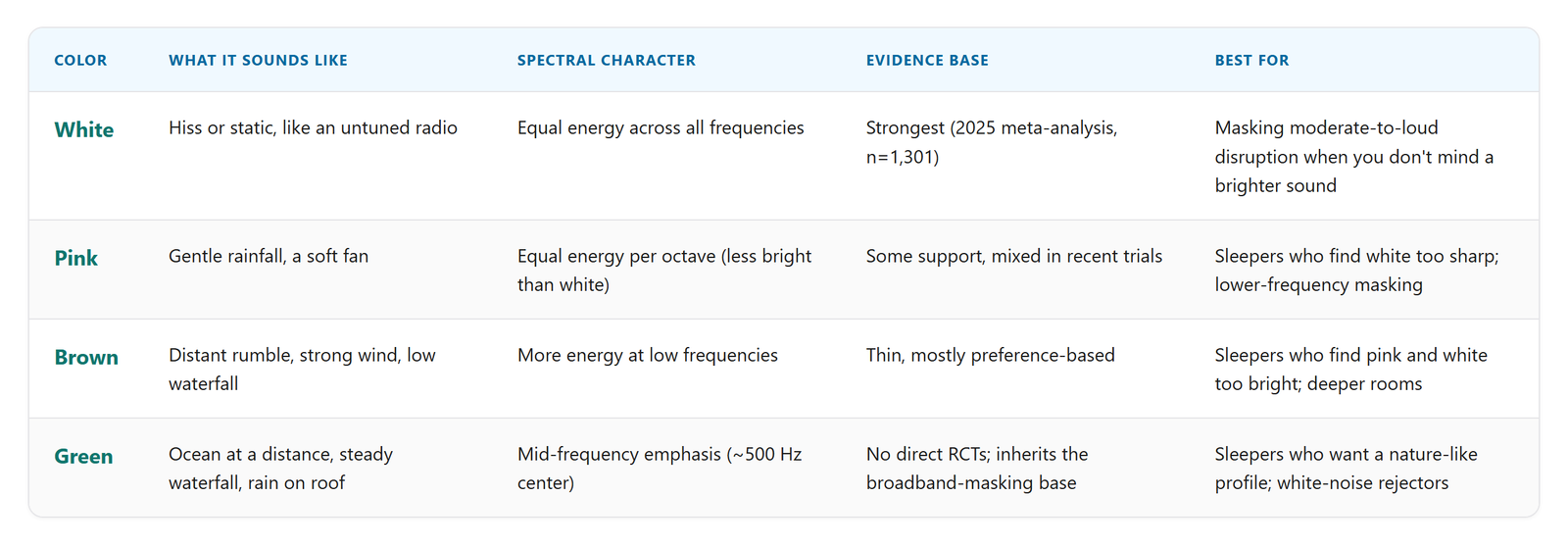
Comparison of white, pink, brown, and green noise for sleep.
There's no clean "best" color. The mechanism (masking + anchoring) is the same across all four. If you can listen to a sound comfortably for an hour, you'll get the benefits, whatever the color.
The honest caveat: most rigorous noise-for-sleep research is on white. None is specifically on green. And continuous overnight noise of any color has shown some downsides in recent work (more on that in the next section). The comparison is real, but the stakes between colors are smaller than the wellness internet implies. Pick the one whose sound you'd genuinely want to listen to.
## When Green Noise Works Best (and When It Doesn't)
Green noise is at its best in a few specific situations:
- You're sleeping in a moderately noisy environment. Urban apartment, light traffic outside, a hotel hallway, a partner who snores softly, an HVAC system that drones.
- You've tried white noise and found it too sharp or fatiguing.
- You want a sound that evokes the natural world rather than a tuned-out radio.
It's less useful when:
- The room is already very quiet. You're adding sound rather than masking it, and some sleepers find the addition more arousing than helpful. Try a single night, see how you sleep.
- The disturbance is intermittent rather than continuous. A 2026 controlled trial in the journal *SLEEP* found that pink noise did *not* protect sleep architecture against intermittent environmental noise. Think traffic spikes, occasional barking, an AC that cycles loudly. It was also associated with reduced REM, and earplugs outperformed in that scenario ([Basner et al. 2026](https://academic.oup.com/sleep/advance-article/doi/10.1093/sleep/zsag001/8452884)). The same logic applies to green: against intermittent disruption, blocking sound is more effective than masking it.
- The actual issue is a racing mind. Color noise can help, but no passive sound is going to outrun [thoughts that keep restarting on their own](/blog/how-to-stop-overthinking-at-night). That's the bridge to the last section.
One more practical note. If your sleep issues persist for several weeks at a stretch, talk to a doctor. Colored noise of any spectrum won't fix an underlying sleep disorder, and you don't want to spend a year layering tracks when the right intervention is a CBT-I program or a sleep-study referral.
## How to Use Green Noise Tonight
Five practical rules. Then you can stop reading and try it.
1. **Set the volume at or below 50 dB.** That's roughly the level of a quiet conversation across a small room. Higher volumes don't help more, and continuous loud noise can damage hearing over time, especially in infant-sleep settings. The American Academy of Pediatrics specifically recommends keeping infant sleep machines under 50 dB. No competitor article on this topic gives a number. Now you have one.
2. **Pick whatever source is already convenient.** A Spotify playlist, a YouTube track, a [free ambient-sound site](/blog/ambient-sounds), a free phone app, a dedicated noise machine. They produce equivalent acoustic output if the recording is clean. You don't need to spend money to test whether green noise works for you.
3. **Loop quality matters more than the brand.** If the track restarts audibly every five minutes (a click, a fade, a noticeable seam), it'll wake light sleepers. Pick something that's at least 30 minutes long or generative (no restart points). Most paid sleep apps and the better free YouTube tracks handle this well.
4. **Run it from sleep onset until you fall asleep, not all night.** A 30 to 60-minute timer is enough for most people. Running noise across the full night gives you the masking benefit at the cost of slightly suppressed REM in some recent studies. The trade-off favors a timer.
5. **Pair it with the basics.** Cool, dark room. A [consistent night-time routine](/blog/night-time-routine). Screens off 30 to 60 minutes before bed. Green noise is one input. Stacked with the basics it works better than any of them alone, and it doesn't substitute for any of them.
That's it for the operational guide.
## When Noise Alone Isn't Enough

A warm bedside lamp glowing on a small nightstand at night.
There will be nights when the racing mind beats any sound. You can play green noise at the perfect volume, in the perfect loop, and still be lying there at 2am with your thoughts looping faster than the waterfall.
On those nights, the move is to give the mind something *active* to follow instead of something passive. Green noise is a passive anchor. [A guided sleep meditation](/meditation/sleep) is an active anchor: a voice walks you through breath, body, or a specific sequence. Your attention has a track to follow that actually competes with the mental loop.
The DTM library has free 10-minute guided sleep practices like a body scan or a breath-awareness session, with no signup and no paywall, at [app.declutterthemind.com](https://app.declutterthemind.com). They work well stacked with green noise. Noise quiets the room. The meditation quiets the mind. For the nights when noise alone hasn't worked, that's the upgrade.
Try one tonight. The body scan in particular pairs well with light background sound. If you've never tried [meditating before bed](/blog/how-to-meditate-before-bed), you'll be surprised how much it slows the head down.
## What to Do Next
Green noise is a real tool with one specific job: mask environmental sound and give the mind something steady to track. It suits some sleepers and not others. The best color of noise is the one you'd actually want to listen to. The right volume is at or below 50 dB. The right duration is from sleep onset until you fall asleep, not all night.
If you take one thing from this article, try a free green noise track tonight at conversation-level volume. If you fall asleep faster, keep using it. If your mind is still racing through it, switch to a 10-minute guided body scan, with or without the noise behind it. That's the call.
---
# 17 Grounding Techniques to Improve Your Mental Health
- URL: https://declutterthemind.com/blog/grounding-techniques
- Description: Learn the grounding techniques that will help improve your mental health and overall wellbeing. Gardening to the 5,4,3,2,1, technique, etc.
- Published: 2026-05-11
The grounding techniques that help relax you when [feeling overwhelmed](/blog/feeling-overwhelmed), stressed, and anxious can be transformative and healing. You can do countless activities that ground you using the world around you. From deep breathing to gardening, we’ll be sharing some of the most effective techniques for grounding yourself. So, let’s… dig in (pun intended).
### 1. Deep Breathing Meditation
Deep [breathing meditation](/meditation/breathing) is a ground technique you can do to deal with [panic attacks](/blog/how-to-stop-panic-attack) and other forms of anxiety. One fast breathing reset worth keeping handy is the [physiological sigh technique](/blog/physiological-sigh), two inhales and one long exhale. When we become overwhelmed with something, our breathing and heart rates increase rapidly. However, by breathing deeply, we naturally breathe slower to regulate our breathing.
A little trick for slowing your breathing is to hug a relaxed person at the moment. For example, if you’re feeling anxious but a family member is calm. Hugging that person tightly for a few minutes will help to regulate your breathing as your breathing will begin to synchronize.
If you’re alone, no worries, though. You can follow along to a [guided meditation for grounding](https://www.youtube.com/watch?v=ozUr-FCXCLg). Following along to the video, you can practice deep breathing with the prompts given by a guide. You’ll be able to [calm the mind](/blog/how-to-calm-mind) and replace [negative thoughts](/blog/how-to-stop-negative-thoughts) or even [ruminating thoughts](/blog/ruminating-thoughts) with [happy thoughts](/blog/happy-thoughts).
https://www.youtube.com/watch?v=ozUr-FCXCLg
### 2. 5, 4, 3, 2, 1 Technique
Another grounding technique popularized in cognitive-behavioral therapy is the 5, 4, 3, 2, 1 technique. Ultimately, it’s a challenge to our senses to look for five things you see, four things you touch, three things you hear, two things you smell, and one thing you taste.
For the things you see, you might notice plants, tissue boxes, wall art, moving clouds, or even cars driving by. As for the things you touch, it could be the keys on your keyboard, a drinking glass, a pile of papers, or even your phone. The three things you hear could include music, the sound of cars driving by, animals such as birds chirping, people talking, or even the air conditioner working. When it comes down to the two things you smell, it could be the soap in the bathroom, a fragrance in the air from a candle, or even the smell of juice or coffee in your cup. Lastly, the thing you taste could include chewing gum or mint, the feeling of a deep breath in, or of a drink you have nearby.
By [challenging yourself](/blog/challenge-yourself) to connect with your senses, you shift back from the past or future and into the present moment. You ground yourself in reality by becoming aware of your surroundings and senses. This technique works well at reducing anxiety and stress to prevent you from thinking about ‘what if’ and [focus your attention](/blog/how-meditation-helps-with-focus) on the world around you.
### 3. Hold a meditation coin in your hand
A meditation coin is an object you can carry with you everywhere you go. Typically, people keep them in their pockets. Whenever they reach into their pocket, they remember to be mindful of their actions.
However, the medallion can also be used [to help people](/blog/helping-others) with anxiety. For example, if you regularly suffer from panic attacks, having the coin in your pocket can be used to help ground you. You can use it as something you “touch” for the 5,4,3,2,1 technique. There are ridges on the coin that you can thoroughly touch to help you [get rid of your anxiety](/blog/how-to-get-rid-of-anxiety).
Keeping the coin in a safe place like your pocket or placed on your work desk can allow you to have easy access to it. You can also use it to fidget with when feeling restless to help ground yourself again.
### 4. Go on a mindful walk
You can follow along to a [guided meditation for mindful walking](/meditation/walking) as a grounding technique. When you don’t have a guide following you along, you often end up alone with your thoughts, making it more likely to experience [ruminating thoughts](/blog/ruminating-thoughts). However, when you’re following along to a [guided meditation](https://declutterthemind.com/meditation), you have prompts that show up before your mind wanders, so you can always be attentive and mindful.
When going on a [mindful walk](/meditation/walking), take note of all your surroundings. Notice the distance between yourself and cars driving by. Stop and look up around the sky. Are there birds flying by? Are there lost items thrown up on electrical lines? Have the street lights turned on yet? Then, shift your attention straight ahead. Is the sidewalk or ground flat or angled? Consider [challenging yourself](/blog/challenge-yourself) to spot a specific animal, tree, or plant.
As you walk by, name all the things you see. Have you ever noticed those things you’ve passed by before, likely multiple times? Become the observer of your surroundings. Use this grounding technique to connect with nature and recognize her beauty.
### 5. Mindfully eat a meal
When you’re feeling anxious about eating alone, a grounding technique is to practice [mindful eating](/meditation/mindful-eating). When eating with others, most people will spend the evening chatting with others. They’ll quickly eat their meal, not realizing what it tasted like.
Mindful eating changes that. The grounding technique of mindful eating requires you to chew your food for at least thirty bites per mouthful. As you thoroughly chew your food, you’ll notice that the taste and texture of the food will drastically change. You might even discover that the foods you eat all the time you don’t enjoy the taste of.

### 6. Do a body scan meditation
[Body scan meditations](/meditation/body-scan) are a great grounding technique to help you bring awareness to your physical body. For example, in a [body scan meditation](/meditation/body-scan), you’ll notice the sensations you feel across your body, either starting at the top or bottom of your body. You’ll slowly work through every body part to notice sensations. As you progress through this meditation, you’ll begin to see that the anxiety you were feeling before doing it started to dissipate. If body-based tools help you most, these [somatic exercises that settle an anxious body](/blog/somatic-exercises-for-anxiety) work along the same lines.
The most common things to experience in a body scan meditation are the rumbling of the stomach, an itch you want to scratch, a ringing in your ears, the temperature on your skin such as heat or cold, pressure or tightness from anxiety, the feeling of butterflies in your stomach, tingles or even buzzing.
https://www.youtube.com/watch?v=pyy3dHW4cSw
### 7. Take a cold shower
When we’re feeling anxious, taking a nice, hot shower sounds like a relaxing thing to do. However, either before or after your hot shower, change the temperature to the coldest setting for a couple of minutes (though you can stay in it for less if it becomes too much).
Experiencing cold showers or even cold baths helps with body inflammation, calms muscles, cools you down quickly if you’ve taken steamy showers, helps [reduce depression](/blog/coping-with-depression), and more.
[One study](https://pubmed.ncbi.nlm.nih.gov/17993252/) found that people who had depressive symptoms (but weren’t formally diagnosed with depression) could alleviate their symptoms by taking a quick cold shower twice a day.
The cold shock helps alert you to the present moment where your coldness captures all your attention, making it a grounding technique if you have depressive or anxiety symptoms.
### 8. Watch nature
Another grounding technique you can try is to do some nature watching. When was the last time you simply sat in your yard and watched squirrels scurrying about, birds flocking to roofs or trees, or dogs trying to sneak into your backyard?
If the weather is too cold, stand outside for five minutes. Feel the cold breeze on your skin. Notice the movement of the wind on your face. Watch people run to their cars or wipe the snow off their windshields. Then, look for animals.
Watching nature can be a beautiful experience for those who don’t do it regularly. But, as the observer, you’ll notice that life goes on beautifully if you take a closer look.

### 9. Make a gratitude list
A [gratitude list](/blog/gratitude-list) is a list of all the things you’re grateful for. Writing this list is a grounding technique that refocuses your attention on what’s good in your life. By reframing negative thoughts into [happy thoughts](/blog/happy-thoughts), you can lower your anxiety, decrease depression, and learn [how to be happy](/blog/how-to-be-happy) again.
### 10. Slide ice up and down your arm
Sliding ice up and down your arm is a grounding technique that brings you back to your senses. Some people recommend holding the ice in your hand. You can do that too.
Notice the cold sensation on your skin as you slide the ice around. Watch the ice melt and transform into liquid. Have a paper towel ready so you can dry off any water.
At what point does the ice go from feeling uncomfortably cold to just cold? Notice the exact moment and focus on it.

### 11. Snap a hairband on your wrist
Keeping a hairband on your wrist is not only convenient in case you need to tie it up, but it’s also helpful for those looking for an affordable and accessible grounding technique.
Whenever your mind begins to ruminate on negativity, snap the hairband on your wrist. You’ll notice a quick, sting of pain that draws your attention back to the present moment.
Doing this regularly will get you into the habit of controlling and [becoming more aware of your thoughts](/blog/self-awareness) as they arise.
### 12. Mindfully clean your home
One of the grounding techniques you can try at home is to clean your house mindfully. While cleaning isn’t usually on the top of anyone’s “want to do” list, it can be a relaxing experience that gets you in the present. If you're interested in exploring more ways to ground yourself, [visit The Grounding Co](https://thegrounding.co/)**.** for resources and tools that can enhance your practice.
You can choose to play [positive songs](/blog/positive-songs) while you clean to change your energy levels. As you wash dishes, fold laundry, or dust your shelves, you can relish in the fact that your house will be clean. You can see the before and after of your home when cleaning.
Allow yourself to enjoy the process of cleaning. Focus on carefully washing each dish at a time. By focusing on the present act of cleaning, you won’t be swayed by negative thinking.

### 13. Play an instrument
There’s nothing that brings you back to the present faster than playing an instrument. A grounding technique that can help relax you is to learn a new song or even a new instrument.
When you don’t know how to play something, you become mentally stimulated, focusing more easily. When we play a new song or instrument, we get into a [flow state](/blog/flow-state) as we immerse ourselves in this task. It’s hard to experience any negative emotion when experiencing this state.
### 14. Do acts of kindness
One of the grounding techniques you can do daily is a [good deed](/blog/good-deeds) every day. Doing [acts of kindness](/blog/acts-of-kindness) can help ground you because it calms the toxic chatter in our heads and gets us to do positive action.
It’s hard to feel anxious, depressed, or any other negative emotional state when doing positive activities daily. Every day, look for opportunities to [be kind](/blog/ways-to-be-kinder), wow people, and make people happy. You can surprise people with a positive message explaining why you’re grateful for them in your life. For example, buying someone coffee or praising someone’s hard work won’t go unnoticed.

### 15. Splash water on your face
When you’re wondering, “[what is wrong with me?](/blog/what-is-wrong-with-me)” it's normal to feel like you need to shake yourself back up. A quick way to [wake yourself up](/blog/how-to-wake-up-early) and recharge your being is to splash water on your face. Cold water works best.
Splashing cold water on your face can help ground you to the moment. It can help wake you up from your thinking… or wake you up when feeling drowsy.
### 16. Take care of your garden
Gardening is a popular grounding technique that brings you into the earth. The act of digging holes in the soil and planting new life is an enriching experience that brings us back to our roots (pun intended).
Humans used the garden to plant their own food. So, the experience of gardening helps us connect with our ancestors. Feeling the soil on our skin makes us feel good. Walking barefoot in our garden connects us with nature on a deep level. Overall, gardening is an excellent activity to ground yourself (pun intended again).

### 17. Play with a pet
The connection between humans and animals has been around for centuries. When you need to ground yourself, playing with a pet can help. Whether you’re playing fetch or cuddling on the couch with them, having a pet can make you feel better when you’re [feeling sad](/blog/feeling-sad).
Pets can reduce symptoms of anxiety and depression. They’re also good for your heart, especially during those long walks outdoors. People with pets are mentally stronger than people without them. So, if you don’t have a pet, consider getting one to help you ground yourself. Playing with a pet is a grounding technique that can bring you so much joy.
## Conclusion
You can try as many grounding techniques as you’d like. Doing a combination of them can be helpful during highly stressful situations to help you ease the mind and body. Whether you’re following along to a body scan meditation, holding a coin in your hand, or doing the 5,4,3,2,1, technique, you’ll be helping yourself through panic attacks, depression, and any other difficult situations. So, what’s the first grounding technique you’ll do first?
---
# 13 Relaxing Activities to Calm Your Mind Before Bed
- URL: https://declutterthemind.com/blog/relaxing-activities-before-bed
- Description: Mind racing at bedtime? Here are 13 evidence-grounded activities that calm a racing mind and lower body tension so you can fall asleep faster.
- Published: 2026-05-11
Your mind starts replaying the day the second your head hits the pillow. The meeting you wish you'd handled differently. The email you forgot to send. The thing you read that's still bothering you. The exact thoughts you need sleep to escape are the ones keeping you awake.
There's a small set of things that actually help. Some of them work by giving the mind something to anchor to instead of running through the day's reel. Some of them work by lowering the body's tension first, which the mind follows. None of them are a magic switch. They work together with the basics (cool room, dark room, screens off an hour before bed, no caffeine past mid-afternoon) and they work less well in isolation. Get the basics first; these refine from there.
Here are 13 relaxing activities to add to your [night-time routine](/blog/night-time-routine). Try one or two a night. Keep the ones that work for you.
## 1. Listen to ASMR

ASMR (Autonomous Sensory Meridian Response) is a genre of video and audio built around quiet sounds: whispers, light tapping, page-turning, soft scratching. For people who respond to it, the result is a tingling, settled feeling that pulls attention down out of the head and into the body.
It isn't for everyone. Roughly half the population doesn't get the tingle response at all. If you've tried ASMR and it did nothing, skip this one. If you've never tried it, run a 10-minute test before bed and see whether your body settles. There are plenty of free [ASMR channels on YouTube](https://www.youtube.com/results?search_query=asmr) if you want to start there.
## 2. Practice meditation
Meditation before bed isn't about emptying your mind. It's about giving your attention something specific to follow (usually your breath, a body-scan sequence, or a voice walking you through one) so your mind has a track to ride instead of running through the day's reel. The mental loop quiets down. Falling asleep gets easier.
A 2019 systematic review and meta-analysis of 18 randomized controlled trials in *Annals of the New York Academy of Sciences* found mindfulness meditation produced moderate improvements in sleep quality compared to nonspecific active controls ([Rusch et al. 2019](https://pubmed.ncbi.nlm.nih.gov/30575050/)). The effect was smaller against active treatments like CBT-I, which is the honest scope: meditation is a complement to good sleep hygiene, not a replacement for clinical care if you have an underlying sleep disorder.
If you've never tried [meditating before bed](/blog/how-to-meditate-before-bed), start with a [guided sleep meditation](/meditation/sleep) in the DTM app. The 10-minute body scan in particular pairs well with anything else on this list.
## 3. Listen to sleep hypnosis audio
Sleep hypnosis sits somewhere between ASMR and guided meditation. A calm voice walks you through suggestion, imagery, and slowed breath, usually with soft music behind it.
The evidence is thinner than for meditation. Some people are highly suggestible and find sleep hypnosis works on them immediately; others get nothing from it. If you're curious, try a 15-minute recording for a few nights and see whether you fall asleep before it ends. If you do, keep going. If you don't, move on.
## 4. Read a book

Reading is a slow-the-mind-down activity in the most literal sense. It pulls attention into a single linear narrative, which is the opposite of the open-loop worrying that keeps people awake.
Read fiction, not work email or long-form journalism that's going to spool your brain back up. Avoid backlit devices for this. A laptop or tablet emits enough blue light to override the wind-down you're going for. Paperback, e-ink reader, or a magazine all work. If you want a suggestion in the meditation/mindfulness lane specifically, here are the [best meditation books](/blog/best-meditation-books).
## 5. Listen to soothing music

Music is a mood-shifter. Pick something low-tempo, instrumental, and predictable. Lofi hip-hop, jazz, [ambient](/blog/ambient-sounds), classical, and chill electronic all work. Most streaming services have curated sleep or relaxation playlists.
A few practical rules. Volume low. No vocals if you can help it (lyrics give your brain something to chase). Set a timer for 30–60 minutes so the music stops once you're asleep. Continuous overnight audio can fragment REM in some sleepers.
## 6. Sip something warm and pleasant before bed
A cup of chamomile or herbal tea, a small mug of warm milk, or even just hot water with a slice of lemon does two things at once. The warmth in your hands and chest signals the parasympathetic nervous system, and the act of slowly drinking something becomes a ritual that tells your body the day is over.
Skip caffeine (no black or green tea, no kombucha). Skip alcohol; it knocks you out fast but disrupts the second half of the night. A small amount of sugar is fine. A scented candle or a few drops of lavender essential oil nearby reinforces the sensory wind-down. The point isn't the chemistry of the tea itself; it's the steady ten-minute transition between the day and the bedroom.
## 7. Practice muscle relaxation and slow breathing
If your muscles are still tense when you lie down (jaw clenched, shoulders riding up toward your ears) you'll feel the tension before you feel the tiredness. Progressive muscle relaxation works on that directly. You tense each muscle group for a few seconds, then release. Start at your feet, work up to your head, slow breath the whole way through.
A 2021 review in *Evidence-Based Complementary and Alternative Medicine* found progressive muscle relaxation reliably induces both psychological and physiological relaxation states across multiple populations ([Toussaint et al. 2021](https://pmc.ncbi.nlm.nih.gov/articles/PMC8272667/)). Paired with slow breathing, it's one of the better-evidenced calming techniques you can do without a tool.
For the breathing piece specifically, name the technique you're using. Two reliable ones:
- **4-7-8 breathing:** inhale for 4 counts, hold for 7, exhale for 8. Slows your heart rate and lengthens the exhale, which is the parasympathetic signal.
- **Box breathing:** inhale 4, hold 4, exhale 4, hold 4. Steadier and easier to maintain across many cycles. You can follow the rhythm on our [box breathing visualizer](/tools/box-breathing-visualizer).
If you'd rather follow along than do this from memory, the [body scan practice](/meditation/body-scan) in the DTM library walks you through it. There's also more on the mechanics in our piece on [breathing exercises for stress](/blog/breathing-exercises-for-stress).
## 8. Write a journal entry about your day
Spend five minutes writing the day down before you sleep. Not a diary. Just the few things that are still rattling around in your head: what happened, what you felt about it, what you wish had been different.
The point isn't documentation. It's getting the loop out of working memory and onto paper, so your brain can stop holding it for you. If you want a prompt structure, a [mindfulness journal](/blog/mindfulness-journals) gives you a starting question per night.
## 9. Write a to-do list for tomorrow
A specific to-do list for the next day works even better than reflective journaling for falling asleep faster, at least according to the research. A 2018 polysomnography study in the *Journal of Experimental Psychology: General* compared two writing tasks at bedtime: writing a to-do list versus journaling about completed activities. The to-do list group fell asleep meaningfully faster, and the more specific the list (concrete tasks, not vague intentions) the faster the sleep onset ([Scullin et al. 2018](https://pmc.ncbi.nlm.nih.gov/articles/PMC5758411/)).
The mechanism is straightforward. If your brain is holding "remember to call the dentist tomorrow, schedule that thing, follow up on that email" all night, it has reason to keep you slightly awake to not forget. Writing it down releases the hold. Get specific: "call the dentist at 9am" beats "deal with the dentist thing." If you're prone to night-worrying, this one is probably the highest-impact habit on the list.
For the broader cognitive offload, see our piece on [how to worry less](/blog/how-to-worry-less).
## 10. Take a warm bath or shower

A warm bath or shower 60–90 minutes before bed is one of the better-studied simple interventions for sleep. A 2019 systematic review in *Sleep Medicine Reviews* pooled data from 5,322 studies and found that water-based passive body heating at 40–42.5°C (104–109°F), scheduled 1–2 hours before bedtime for at least 10 minutes, reduced sleep onset latency by roughly 10 minutes on average ([Haghayegh et al. 2019](https://pubmed.ncbi.nlm.nih.gov/31358390/)).
The mechanism is thermoregulatory. The warm water raises peripheral blood flow, the body then dumps heat more efficiently afterward, and the resulting drop in core temperature is one of the signals your circadian system reads as "time to sleep."
A few things matter. The 60–90 minute window before bed is important (a bath right before lying down can actually delay sleep because your body is still warm). Light a candle, play soft music, use a body wash with a scent you like. Aim for at least 10 minutes in the water. If you only have a shower, the same effect applies; warm shower for 10 minutes, then dry off and let the cool-down phase happen naturally.
## 11. Step outside for a few minutes after dinner
Your circadian rhythm is calibrated by light cues. Bright light in the morning signals "be awake." Dim light in the evening signals "wind down." Most modern indoor lighting is much brighter and bluer than the natural evening environment, which means your body doesn't get the wind-down signal as clearly as it would if you spent the last hour before bed under twilight conditions.
Spending 10–15 minutes outside after dinner (an evening walk, sitting on a porch, watching the light fall) gives your circadian system a clearer "evening" cue than staying in a fluorescent-lit kitchen would. It's also a low-stakes way to leave the day's logistics behind for a stretch. If you can't get outside, dimming the lights in your house for the hour before bed gets some of the same effect.
## 12. Name three things to be grateful for
Before you sleep, name three specific things from the day worth being grateful for. Not "my family." The actual moment: the coffee your partner brought you at 9am while you were on a hard call, the message from a friend that made you laugh while you were on the bus, the way the light came through the window after the rain stopped.
Specificity matters. Vague gratitude doesn't land emotionally, and the point of doing this at night is that the felt sense carries into how you fall asleep. If you want more starter material, our long [gratitude list](/blog/gratitude-list) has examples.
## 13. Play a relaxing game
Some games wind you down rather than up. Slow puzzle games, gentle simulation games, low-stakes word games, or even a deck of cards with a partner. A [relaxing game](/blog/anxiety-relief-games) can be a clean wind-down activity in the same lane as reading.
Two cautions. Screens emit blue light, which works against the wind-down; if you're playing on a phone or tablet, turn brightness all the way down and turn on night-mode. And some "relaxing" games still spike adrenaline (puzzle games with a timer, for example). If you finish a game session feeling more wound up than you started, the game isn't relaxing for you. Try a paper one instead.
## When the List Isn't Enough
Some nights the racing mind will still beat the list. You can do the bath, the to-do list, the body scan, and still be lying there at 2am with your thoughts looping faster than the ceiling fan. If that's most nights, and bedtime itself has started to feel like something you brace for, you're probably dealing with [bedtime sleep anxiety](/blog/sleep-anxiety) rather than a wind-down problem.
On those nights, the move is to give the mind an active anchor instead of just resting and hoping. A guided sleep meditation is exactly that: a voice walking you through a specific sequence, so your attention has a track to follow that competes with the mental loop. There's a [10-minute guided practice for insomnia](https://declutterthemind.com/meditation/sleep) in the DTM app library, free, no signup. Pair it with green noise, white noise, or just a quiet room.
For the broader question of falling asleep when nothing's working, we have more in [how to fall asleep](/blog/how-to-fall-asleep). And if your sleep issues persist for several weeks in a row, talk to a doctor; colored noise, baths, and breathing won't fix an underlying sleep disorder, and the right intervention may be a CBT-I program or a sleep-study referral. For app-based help, here are the [best sleep apps](/blog/best-sleep-apps) for falling asleep faster.
## What to Actually Do Tonight
Pick two from this list. Not all thirteen. The two that sound most like something you'd actually do at 10pm on a Tuesday. Stack them with the basics (cool, dark, screens off) and notice what happens.
If your mind is the loudest part of the room, start with the body-scan and the to-do list. If your body is the loudest part of the room, start with the warm bath and the breathing. If both are equally loud, start with a [guided sleep practice](/meditation/sleep) and let it do the work.
What you'll find, after a few weeks of this, is that the wind-down becomes its own cue. The pattern of doing two of these things in a row, every night, will start signaling sleep to your body before you even get in bed. That's the real win. Not any one activity. The repeating shape of an evening that ends with rest.
---
# 8 Best Apps for Grief and Loss in 2026
- URL: https://declutterthemind.com/blog/best-apps-for-grief-and-loss
- Description: Apps worth using when grief hits hard. From dedicated grief companions to free meditations, with honest notes on what each one actually helps with.
- Published: 2026-05-10
- Updated: 2026-09-09
Grief is the kind of thing where a lot of well-meaning advice ends up being useless. People tell you to "take it one day at a time," and you nod, and then you go home and stare at the ceiling at 2am and think *what the hell am I supposed to actually do right now*.
Apps don't fix grief. Nothing fixes grief. But the right ones can give you something to hold onto in the small hours, give you words for what you're feeling, and connect you to people who get it. I've sat with my own losses and I've sat with people in theirs, and this list reflects what I'd actually recommend, not the apps with the biggest marketing budgets.
A note before the list. If you're in immediate crisis or having thoughts of harming yourself, **please call or text 988 (the Suicide and Crisis Lifeline) before you do anything else**. Apps are companions, not substitutes for crisis care. And for ongoing grief work, a real grief counselor or therapist is the strongest tool we have. There's a way to find one in the closing section of this article. None of the apps below replace that.
## When Apps Actually Help (and When They Don't)
Apps work best for the in-between moments. The 11pm-when-the-house-is-quiet moments. The "I want to journal but I don't know where to start" moments. The "I need someone to remind me that other people have survived this" moments.
Apps work less well for: acute crisis (call a person), complicated grief that hasn't moved in months (talk to a counselor), grief that's tangled up with trauma (a trauma-informed therapist matters more than any app).
With that in context, here are the apps I'd actually recommend.

## 1. Declutter The Mind
**Type:** Free guided meditation library with a dedicated grief practice
**Pricing:** Free for life; no signup required; paid courses optional
**Best for:** Immediate, free, secular meditation during grief, especially the first 30 days
This is our app, so I want to be transparent about why it's #1 on this list. We built Declutter The Mind because most meditation apps either cost money to access the good stuff or impose spiritual framing on grief that not everyone wants. Grief is hard enough without being told you need to "honor your healing journey."
The DTM library has a [meditation for grief](/meditation/grief) you can do within 30 seconds of opening the app or YouTube channel. No download wall. No registration. No subscription. Just press play. For the first month after a loss, when getting through the day takes everything you have, the absence of friction matters more than any feature.
Smaller library than dedicated grief apps like Grief Refuge or the structured course in Grief Works. The honest tradeoff: less grief-specific depth in exchange for free, immediate access and a meditation library that covers the whole emotional aftermath. Sleep, anxiety, anger, loneliness are all common in grief, all addressable by specific practices in the library.
[Try the meditation for grief](/meditation/grief).
[Download Declutter The Mind for iOS](https://apps.apple.com/us/app/declutter-the-mind/id1465713447?ls=1).
[Download for Android](https://play.google.com/store/apps/details?id=com.MindDeclutter&utm_source=blog&utm_medium=link&utm_campaign=site).
## 2. Grief Refuge
**Type:** Dedicated grief companion app with daily reflections
**Pricing:** Freemium (basic content free; full features behind subscription)
**Best for:** Daily grief support and self-reflection, especially in the first 6 months after loss
Grief Refuge is the app I'd recommend if you want something built specifically for grief from the ground up. The format is daily: a short reflection or coping exercise designed for the day you're having, plus tools for tracking how you're feeling and stories from other grieving people who've survived similar losses.
What it does well: daily structure, when "today" is the only timeframe you can think in. The "you're not the only one feeling this" effect of reading other people's grief stories is real. The app is gentle and doesn't push you faster than you can go.
What it doesn't do: replace human connection or therapy. Several reviews note it can feel repetitive after a few months. That's by design, since grief is repetitive, but worth knowing.
Available on iOS and Android.
## 3. Grief Works
**Type:** Structured grief course based on therapist Julia Samuel's methods
**Pricing:** Subscription (typically ~$5–10/month range; verify current pricing)
**Best for:** Someone ready to do structured grief work with therapist-designed material
Grief Works is built around the work of [Julia Samuel](https://en.wikipedia.org/wiki/Julia_Samuel), a UK psychotherapist who's worked with bereaved clients for 30+ years. The app translates her clinical methods into a structured course: 30+ interactive tools, guided audio sessions, journaling prompts, and an "Ask Julia" tool that surfaces answers to common grief questions based on her clinical archive.
This is the most therapy-adjacent app on this list. If you have months to commit to grief work and you want a serious framework, Grief Works gives you one. If you're in the raw first weeks, the structure can feel like too much to face. Come back to it when you have the energy for structured anything.
Best paired with a real therapist; Julia herself has said the app is a complement to grief counseling, not a replacement.
## 4. Actively Moving Forward (HealGrief / AMF)
**Type:** Peer support network and community
**Pricing:** Free
**Best for:** Connecting with others who've experienced similar losses
AMF is run by [HealGrief](https://healgrief.org/), a nonprofit. It's less an app and more a peer community connecting grievers nationally with people who've lost the same kind of relationship (parent, sibling, partner, child, friend). The app provides resources, but the value is in the community.
Especially useful if you're young (the app was originally built for grieving young adults, though it now serves all ages) or if your grief is the kind that nobody around you understands ("nobody at work knows what to say to me," "my friends are all checked out after the first week"). Online peer support is genuinely useful for that gap.
Available on iOS and Android.
## 5. Lifeboat
**Type:** Support-coordination tool that helps your support circle help you
**Pricing:** Free
**Best for:** Letting people know what you actually need without having to ask each one individually
Lifeboat solves a weird-but-real problem: when you're grieving, people want to help, but they don't know how, and you don't have the energy to coordinate them. Lifeboat lets you set up a circle of supporters, send group requests ("can someone bring dinner Thursday?"), and have your people check in on you on a schedule.
It's a logistics tool, not a therapeutic one. But the logistics of grief are real and exhausting, and offloading them is its own kind of relief. iOS only as of late 2025. Verify current platform support.

## 6. Insight Timer
**Type:** Massive meditation app with grief-specific teachers and practices
**Pricing:** Free tier (substantial); Member Plus at $59.99/year or $9.99/month
**Best for:** Sampling many different teachers' approaches to grief meditation
Insight Timer's free tier includes thousands of guided meditations, including hundreds tagged for grief, loss, and bereavement. Notable grief teachers on the platform include Tara Brach, Sarah Blondin, and many others.
The advantage over a single-teacher app like DTM: variety. If one teacher's voice doesn't work for you in grief (and voice tolerance is unusually narrow when you're grieving), you can try another. The disadvantage: the variety can feel overwhelming when you can barely make decisions about what to eat for breakfast.
Strongest play: search "grief" or "loss" in the app, sort by most-played, and start there.
## 7. Calm
**Type:** Major meditation and sleep app
**Pricing:** $79.99/year (or $69.99/year on iOS)
**Best for:** Sleep-deprived grievers who need help getting through the night
Calm isn't a grief app, but it has grief content (a "grief and loss" series with meditations and Sleep Stories on bereavement themes). The strongest case for Calm in grief is the sleep content. Insomnia is one of the most common grief side effects, and Calm's bedtime stories and sleep meditations are genuinely well-produced.
If you can't sleep, Calm is worth the subscription for the sleep library alone. If sleep isn't the problem, the grief-specific content is thinner than dedicated grief apps.
## 8. Headspace
**Type:** Major meditation app with structured grief content
**Pricing:** $12.99/month or $69.99/year
**Best for:** Beginner-friendly structured meditation through the early weeks of grief
Headspace has dedicated grief courses: short, structured, narrated by Andy Puddicombe and the broader Headspace teaching team. The format is gentle and beginner-friendly, which matches the energy you have when you're grieving.
If you've never meditated before and someone told you it might help, Headspace's grief-specific courses are the easiest entry point. If you're already a meditator, the content will feel introductory.
[The 2026 best meditation apps list](/blog/best-meditation-apps) compares Headspace and Calm in more detail if you're trying to choose between the two.
## How to Actually Use These Apps
Pick one. That's the most important thing. Don't try to use four grief apps. Grief already feels like too much, and you don't need to add app-management to it.
A starting frame:
- **First 2 weeks after a loss:** something free, immediate, low-friction. [Declutter The Mind](/meditation/grief), the free tier of Insight Timer, or the AMF community if you want to talk to other grievers right away.
- **Weeks 3–12:** if you want more structure, add **Grief Refuge** (daily companion) or commit to **Grief Works** (structured course) for the next month.
- **Sleep is the wreckage:** **Calm** for sleep meditations, or any of the [best meditation apps for sleep](/blog/best-sleep-apps).
- **You can't get out of bed but you need to ask people for help:** **Lifeboat** to coordinate the support that's already around you.
Whatever you pick, give it two weeks before deciding it's not working. Grief moves slowly. Apps move at the speed of grief.

## When to Skip the Apps and Call a Counselor
A few signs that what you actually need is a person, not an app:
- The grief hasn't shifted at all after 6+ months and you can't function in your job, relationships, or daily life
- You're avoiding everything that reminds you of the person you lost, to the point your world is shrinking
- You're using alcohol, drugs, or food to numb out daily
- You're having thoughts of joining the person who died, or thoughts of self-harm
- The loss involves trauma (suicide, sudden violent death, a death you witnessed) and the trauma symptoms are getting worse, not better
The American Foundation for Suicide Prevention's [Survivor Outreach Program](https://afsp.org/find-support/ive-lost-someone) is the best resource for loss-to-suicide. The [Compassionate Friends](https://www.compassionatefriends.org/) is the gold standard for parents who've lost a child. [GriefShare](https://www.griefshare.org/) runs free grief support groups in churches across the US (Christian-framed, but widely accessible). And again, [Psychology Today's grief therapist directory](https://www.psychologytoday.com/us/therapists/grief) is the cleanest way to find a counselor in your area.
If you're in immediate crisis: **call or text 988** (Suicide and Crisis Lifeline) or **text HOME to 741741** (Crisis Text Line). These services are free, 24/7, and staffed by people trained for exactly this.
## A Short Note on What's Not on This List
Apps that promise to "heal" your grief, "manifest" peace, or get you through grief in some specific number of days didn't make this list. Grief doesn't work on a schedule and any app implying otherwise is selling false hope. The apps above don't promise to heal you. They sit beside you while you do the work yourself.
Apps built around the [stages of grief](/blog/stages-of-grief) (Kübler-Ross's model) are also worth a soft caveat: that model was originally about how dying patients face their own mortality, not how the bereaved process loss. Modern grief research (continuing-bonds theory, the dual-process model) gives a more accurate picture for most grievers. If an app is built rigidly around five sequential stages, it's working from outdated science.
That's the list. If you're using one of these and it's helping, keep going. If you tried one and bounced off, try a different one. There's no wrong way to grieve, and there's no wrong way to find what helps you survive it.
## Frequently asked questions
### What is the best free app for grief and loss?
A few are genuinely free. Declutter The Mind gives you a [guided meditation for grief](/meditation/grief) free for life, with no signup or subscription, which matters most in the raw first weeks. Actively Moving Forward, run by the HealGrief nonprofit, is a free peer community for connecting with others who lost the same kind of relationship. Lifeboat is free for coordinating the practical help friends want to offer. Insight Timer also has a large free tier with hundreds of grief and bereavement meditations. Start with one before paying for anything.
### Can an app really help with grief?
Apps help with the in-between moments: the quiet 2am hours, the times you want to journal but do not know where to start, the need to be reminded other people have survived this. They do not fix grief, and they are not a substitute for crisis care or a grief counselor. If you are in immediate crisis, call or text 988, the Suicide and Crisis Lifeline, before anything else. For ongoing grief a real counselor is the strongest tool there is, and an app sits beside that work rather than replacing it.
### Which grief app is best for sleep?
Insomnia is one of the most common side effects of grief. Calm makes the strongest case here: its sleep library, bedtime stories, and sleep meditations are well produced, and it has a dedicated grief and loss series. If sleep is the main thing grief has wrecked, that library alone can justify the subscription. If you would rather not pay, the free meditations in Declutter The Mind and the options in our [best apps for sleep](/blog/best-sleep-apps) guide can help you wind down at night.
### How long should I use a grief app before deciding it works?
Give it two weeks, and pick one app rather than juggling four. Grief already feels like too much, so adding app-management to it works against you. Grief also moves slowly, and apps move at the speed of grief, so a tool that feels like nothing on day two can still be quietly helping by week two. If after two weeks it genuinely is not helping, try a different one from this list instead of stacking them.
### When should I see a grief counselor instead of using an app?
A few signs mean you need a person, not an app: the grief has not shifted at all after six months and you cannot function in work or daily life; your world is shrinking because you avoid everything that reminds you of the loss; you are numbing daily with alcohol, drugs, or food; or the loss involved trauma and the symptoms are getting worse. [Psychology Today's grief therapist directory](https://www.psychologytoday.com/us/therapists/grief) is a clean way to find a counselor near you. If you are having thoughts of self-harm or of joining the person who died, call or text 988 right now.
Grief touches a lot of things at once. These related guides may help: apps for [living with chronic pain](/blog/best-tools-for-managing-chronic-pain), [a mind stuck in overthinking](/blog/best-apps-for-overthinking), and [finding calm when you're a busy parent](/blog/best-app-for-busy-parents).
---
# The 10 Best Meditation Apps for 2026, Tested on iOS and Android
- URL: https://declutterthemind.com/blog/best-meditation-apps
- Description: I tested dozens of meditation apps for this guide. Here are the 10 best of 2026 for iOS and Android, including a truly free pick with 500+ sessions.
- Published: 2026-05-09
- Updated: 2026-09-24
Technology has created a lot of distractions, but used the right way it can keep us more mindful and present. The best meditation apps put a [guided meditation](https://declutterthemind.com/meditation) practice in your pocket, ready to go.
Which one should you choose? There are a lot of options, each with its own teachers, lessons, and pricing. I've tried and used dozens of guided meditation apps over the years, and I write about meditation full time at Declutter The Mind, where we work with experienced teachers. So this list weighs both how each app feels to use and what actually helps a practice stick.
Everyone has their own preferences, so I went through each of these apps and tried to set my biases and experience aside. I tried each one as if I were brand new to meditation, which is who most of these apps are aimed at.
Even if you're an experienced practitioner, I think you'll get a lot from many of these apps, especially if you've only ever meditated with a timer and without guidance.
So let's go through the best meditation apps for 2026.
## Meditation apps compared at a glance
| App | Best for | Price in 2026 | Free tier |
| --- | --- | --- | --- |
| Declutter The Mind | A full free library with no paywall on the core sessions | Free; Plus $60/year or $219 lifetime | Yes, 500+ sessions free for life |
| Calm | Sleep, bedtime stories, and background sound | $16.99/month, $79.99/year, $499.99 lifetime | Trial only |
| Headspace | Beginners who want one consistent teacher | $12.99/month, $69.99/year | Trial only |
| Balance | A plan that adapts to you | $11.99/month, $69.99/year, $399.99 lifetime | Often a 1-year free trial |
| Insight Timer | Teacher variety and interval timers | Member Plus $9.99/month or $59.99/year | Yes, substantial |
| Smiling Mind | Kids, families, and a zero budget | Free, forever | Yes, everything |
| Happier | Skeptics who want an evidence-leaning tone | $99.99/year, no monthly plan | 7-day trial |
| Waking Up | Experienced meditators and secular philosophy | $14.99/month, $119.99/year | Free year on request |
| Muse | Seeing real biofeedback from a session | Headband $349.99, optional $12.99/month or $94.99/year | No, hardware required |
| Meditopia | Theme-based sessions in 12 languages | $9.99/month or $59.99/year | Yes, limited |
Only want what you can use for free? A few apps here are free for life while others are trial-only, and that difference is easy to miss on the store page. If cost is your main filter, our guide to the [best free meditation apps](/blog/best-free-meditation-apps) breaks down which ones stay genuinely free and which lock the useful part behind a trial.
### How I tested these apps
I installed each app on both iOS and Android and used it the way a beginner would: run the onboarding, take whatever session it recommends first, then come back daily for a week. I judged each one on the quality of the guided instruction, how quickly a beginner can get to a first session, how much you get before hitting a paywall, and whether anything about it would make someone quit in week one.
Prices are the US list prices at the time of writing, taken from each app's own store listing or website. Prices move often, and Apple and Google sometimes show different numbers for the same plan, so treat the table as a starting point and check the current price before you pay.
One disclosure: Declutter The Mind is our own app, and it is first on this list. Read that entry with the appropriate skepticism, and note that the free library is the part you can check for yourself without paying anything.
## 10 Best Meditation Apps 2026
### Declutter The Mind
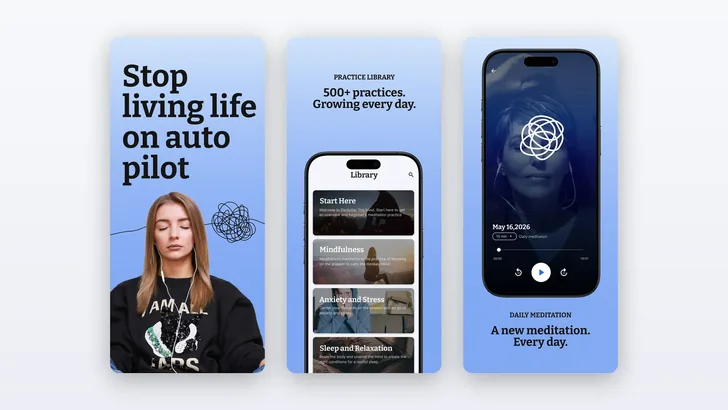 **Best for:** a full free library with no paywall on the core sessions.
A high-quality, helpful guided meditation doesn't need to cost you anything. We believe everyone should have access to meditation without worrying about the cost.
That's why we built Declutter The Mind, an app with a library of guided meditations for beginners and experienced practitioners alike. Sessions cover everything from anxiety and sleep to focus and happiness, plus structured courses to help you understand your mind and build a daily practice.
If you don't have iOS or Android, our [YouTube channel](https://www.youtube.com/c/DeclutterTheMind) hosts every guided meditation for free.
The library is free for life. We also offer paid [meditation courses](https://declutterthemind.com/courses), including a 30-day mindfulness course that takes you from complete beginner to confident practitioner. The first 5 days of the course are free; the remaining 25 require a subscription. We add new courses every month so you can keep deepening your practice.
Sessions come in 10, 15, 20, and 30-minute lengths. There's an [unguided meditation timer](/blog/guided-vs-unguided-meditation) too, useful for restless beginners or anyone who wants silence with interval bells.
A subscription unlocks our daily meditation feature, where members get a new, unique guided session every day. One of the most common criticisms of guided meditation apps is that practices become stale and repetitive. The daily session solves that. The library itself keeps growing too. We add dozens of new free guided meditations every month, covering everything from studying to relationships to morning routines. If there's a specific kind of practice you're looking for, [reach out](https://help.declutterthemind.com/) and let us know. We read every suggestion.
The app integrates with Apple Health to track your mindful minutes, sends optional daily reminders, and tracks meditation streaks if accountability helps you keep the habit.
[Download Declutter The Mind for iOS](https://apps.apple.com/us/app/declutter-the-mind/id1465713447?ls=1).
[Download for Android](https://play.google.com/store/apps/details?id=com.MindDeclutter&utm_source=blog&utm_medium=link&utm_campaign=site).
### Calm
**Best for:** a full free library with no paywall on the core sessions.
A high-quality, helpful guided meditation doesn't need to cost you anything. We believe everyone should have access to meditation without worrying about the cost.
That's why we built Declutter The Mind, an app with a library of guided meditations for beginners and experienced practitioners alike. Sessions cover everything from anxiety and sleep to focus and happiness, plus structured courses to help you understand your mind and build a daily practice.
If you don't have iOS or Android, our [YouTube channel](https://www.youtube.com/c/DeclutterTheMind) hosts every guided meditation for free.
The library is free for life. We also offer paid [meditation courses](https://declutterthemind.com/courses), including a 30-day mindfulness course that takes you from complete beginner to confident practitioner. The first 5 days of the course are free; the remaining 25 require a subscription. We add new courses every month so you can keep deepening your practice.
Sessions come in 10, 15, 20, and 30-minute lengths. There's an [unguided meditation timer](/blog/guided-vs-unguided-meditation) too, useful for restless beginners or anyone who wants silence with interval bells.
A subscription unlocks our daily meditation feature, where members get a new, unique guided session every day. One of the most common criticisms of guided meditation apps is that practices become stale and repetitive. The daily session solves that. The library itself keeps growing too. We add dozens of new free guided meditations every month, covering everything from studying to relationships to morning routines. If there's a specific kind of practice you're looking for, [reach out](https://help.declutterthemind.com/) and let us know. We read every suggestion.
The app integrates with Apple Health to track your mindful minutes, sends optional daily reminders, and tracks meditation streaks if accountability helps you keep the habit.
[Download Declutter The Mind for iOS](https://apps.apple.com/us/app/declutter-the-mind/id1465713447?ls=1).
[Download for Android](https://play.google.com/store/apps/details?id=com.MindDeclutter&utm_source=blog&utm_medium=link&utm_campaign=site).
### Calm
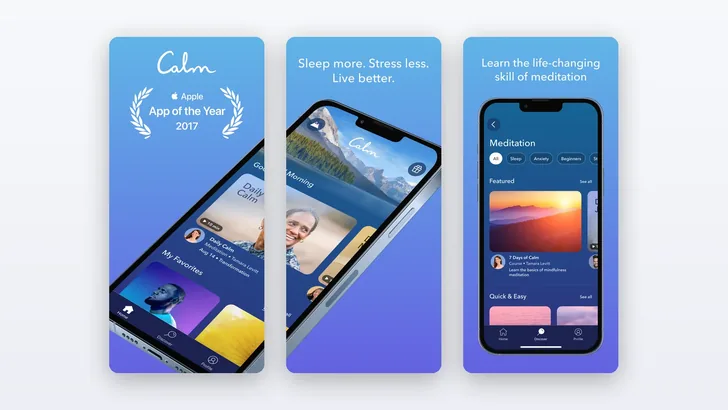 **Best for:** sleep, bedtime stories, and background sound.
Calm is one of the most beautiful-looking apps in this list. The interface is gorgeous and easy to navigate, and the brand has been around long enough that you've probably heard of it. It started as a relaxing-sounds and music app and has grown into a full meditation, sleep, and mental-wellness platform. It's positioned itself as a [Headspace alternative](/blog/headspace-alternatives), so let's start with the meditations.
Calm's guided meditations span loving-kindness and [body scan](/meditation/body-scan) sessions, plus targeted practices for anxiety, gratitude, and focus. There's a lot here. Honest take: I don't think the guided instruction is the strongest of the apps on this list. It's adequate, but other apps go deeper.
Where Calm really shines is the variety of background sounds and music. If you like to work, sleep, or meditate to nature sounds, white noise, or ambient soundscapes, Calm has the deepest library I've seen. There's also a dedicated sleep section, with over 100 adult bedtime stories that are surprisingly well-produced. If your childhood involved being read to, you'll probably love this part of the app.
For all that, I think Calm is the best meditation app for sleep and for anyone struggling with insomnia. As a pure meditation app, it's outclassed by others on this list. If Calm's sleep focus or price isn't the right fit for you, we round up the [best Calm alternatives](/blog/calm-alternatives) separately.
Pricing in 2026: **$79.99/year** ($6.67/month) on the website, or commonly $69.99/year on iOS, since the iOS price is sometimes lower because of platform pricing differences. The monthly plan is **$16.99**. There's also a Family plan at $99.99/year for up to 6 accounts and a one-time **$499.99 lifetime** option.
[Download for Android](https://play.google.com/store/apps/details?id=com.calm.android&hl=en).
[Download for iOS](https://itunes.apple.com/us/app/calm/id571800810).
### Headspace
**Best for:** sleep, bedtime stories, and background sound.
Calm is one of the most beautiful-looking apps in this list. The interface is gorgeous and easy to navigate, and the brand has been around long enough that you've probably heard of it. It started as a relaxing-sounds and music app and has grown into a full meditation, sleep, and mental-wellness platform. It's positioned itself as a [Headspace alternative](/blog/headspace-alternatives), so let's start with the meditations.
Calm's guided meditations span loving-kindness and [body scan](/meditation/body-scan) sessions, plus targeted practices for anxiety, gratitude, and focus. There's a lot here. Honest take: I don't think the guided instruction is the strongest of the apps on this list. It's adequate, but other apps go deeper.
Where Calm really shines is the variety of background sounds and music. If you like to work, sleep, or meditate to nature sounds, white noise, or ambient soundscapes, Calm has the deepest library I've seen. There's also a dedicated sleep section, with over 100 adult bedtime stories that are surprisingly well-produced. If your childhood involved being read to, you'll probably love this part of the app.
For all that, I think Calm is the best meditation app for sleep and for anyone struggling with insomnia. As a pure meditation app, it's outclassed by others on this list. If Calm's sleep focus or price isn't the right fit for you, we round up the [best Calm alternatives](/blog/calm-alternatives) separately.
Pricing in 2026: **$79.99/year** ($6.67/month) on the website, or commonly $69.99/year on iOS, since the iOS price is sometimes lower because of platform pricing differences. The monthly plan is **$16.99**. There's also a Family plan at $99.99/year for up to 6 accounts and a one-time **$499.99 lifetime** option.
[Download for Android](https://play.google.com/store/apps/details?id=com.calm.android&hl=en).
[Download for iOS](https://itunes.apple.com/us/app/calm/id571800810).
### Headspace
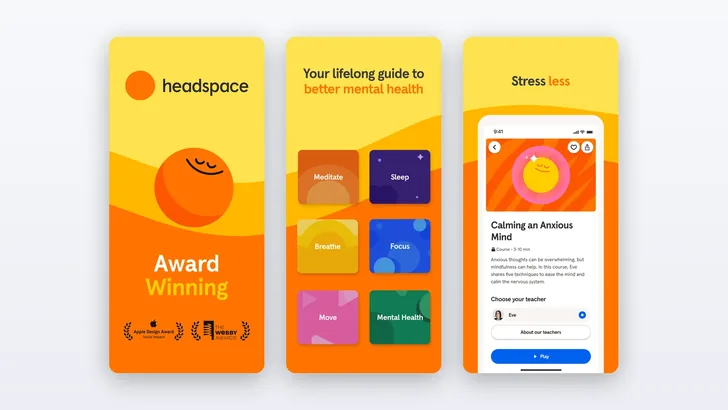 **Best for:** beginners who want one consistent teacher.
I've used Headspace for years, almost since it launched in the early 2010s. I've seen it go through many iterations, and it's now one of the most polished meditation apps available.
That said, it's also one of the more bloated. The app tries to do a lot (meditation, sleep sounds, exercise content, focus music, mental health support), and that can be overwhelming for beginners who aren't sure where to start.
The interface is one of the better-designed I've used for guided meditation. Don't let the cartoonish look fool you. Andy Puddicombe (the co-founder and main meditation voice) does an excellent job introducing new concepts gently, and the guided meditations themselves are mature and won't make you cringe.
Sessions don't oversell meditation or position it as a magic fix. Headspace has expanded its instructor roster in recent years, but Andy is still the dominant voice. That's useful if you like a consistent teacher, less so if you want variety.
Each course typically includes short cartoon animations explaining the concepts and techniques. That's genuinely helpful. Some meditation methods are easier to grasp visually than verbally, especially for beginners.
There's also a dedicated sleep section with sounds, music, and "sleepcasts" (bedtime stories with ambient backgrounds). And like most modern apps, you can pick session lengths (typically 10, 15, or 20 minutes) depending on your time and experience.
Pricing in 2026: **$12.99/month** or **$69.99/year**. Note that the annual plan got cheaper recently. It works out to roughly $5.83/month, which is a meaningful drop from previous years. There's also a **Family plan at $99.99/year** for up to 6 members and a heavily discounted **Student plan at $9.99/year**. A free trial is available.
[Download for Android](https://play.google.com/store/apps/details?id=com.getsomeheadspace.android).
[Download for iOS](https://itunes.apple.com/us/app/headspace-meditation/id493145008?mt=8).
### Balance
**Best for:** beginners who want one consistent teacher.
I've used Headspace for years, almost since it launched in the early 2010s. I've seen it go through many iterations, and it's now one of the most polished meditation apps available.
That said, it's also one of the more bloated. The app tries to do a lot (meditation, sleep sounds, exercise content, focus music, mental health support), and that can be overwhelming for beginners who aren't sure where to start.
The interface is one of the better-designed I've used for guided meditation. Don't let the cartoonish look fool you. Andy Puddicombe (the co-founder and main meditation voice) does an excellent job introducing new concepts gently, and the guided meditations themselves are mature and won't make you cringe.
Sessions don't oversell meditation or position it as a magic fix. Headspace has expanded its instructor roster in recent years, but Andy is still the dominant voice. That's useful if you like a consistent teacher, less so if you want variety.
Each course typically includes short cartoon animations explaining the concepts and techniques. That's genuinely helpful. Some meditation methods are easier to grasp visually than verbally, especially for beginners.
There's also a dedicated sleep section with sounds, music, and "sleepcasts" (bedtime stories with ambient backgrounds). And like most modern apps, you can pick session lengths (typically 10, 15, or 20 minutes) depending on your time and experience.
Pricing in 2026: **$12.99/month** or **$69.99/year**. Note that the annual plan got cheaper recently. It works out to roughly $5.83/month, which is a meaningful drop from previous years. There's also a **Family plan at $99.99/year** for up to 6 members and a heavily discounted **Student plan at $9.99/year**. A free trial is available.
[Download for Android](https://play.google.com/store/apps/details?id=com.getsomeheadspace.android).
[Download for iOS](https://itunes.apple.com/us/app/headspace-meditation/id493145008?mt=8).
### Balance
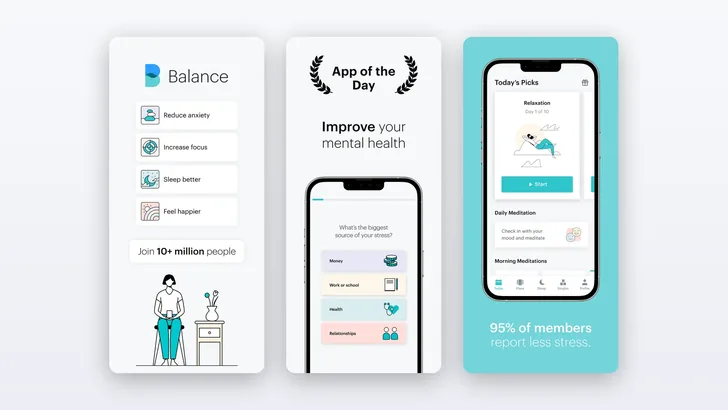 **Best for:** a plan that adapts to you as you check in.
Balance is the app that's grown the most in the meditation space over the last few years. It's earned an Apple App of the Year award and currently sits at 4.9 stars from 95,000+ App Store reviews, the best-rated of the big guided meditation apps. If you've been meditating with one of the older apps and feel ready for something with more personalization, this is the one to try.
The pitch is personalized meditation. Balance asks you a series of questions when you start (your goals, your experience level, what you struggle with), and assembles a 10-day plan from there. As you keep using it, daily check-ins about mood and energy adjust the recommendations. It's the closest any of these apps has come to feeling like a meditation coach.
There's a vast audio library: guided meditations in different lengths, music, breathing exercises, and "Immersive Meditations" that use vibration and sound effects to deepen the experience. The 10-day Plans are the core of the product, but you can also pull single sessions if you want a one-off.
A few honest caveats. The library is smaller than Headspace or Calm. Balance is younger and the volume reflects that. And the Android app has been less stable than iOS in recent reviews, with some users reporting playback issues. If you're on iOS, that's not a concern; if you're on Android, check current reviews before paying.
Pricing in 2026: **$11.99/month**, **$69.99/year**, or **$399.99 lifetime**. Balance often offers a 1-year free trial to new users. Worth checking when you sign up. That offer alone makes it a low-risk app to try.
[Download for Android](https://play.google.com/store/apps/details?id=com.elevatelabs.geonosis).
[Download for iOS](https://apps.apple.com/us/app/balance-meditation-sleep/id1361356590).
### Insight Timer
**Best for:** a plan that adapts to you as you check in.
Balance is the app that's grown the most in the meditation space over the last few years. It's earned an Apple App of the Year award and currently sits at 4.9 stars from 95,000+ App Store reviews, the best-rated of the big guided meditation apps. If you've been meditating with one of the older apps and feel ready for something with more personalization, this is the one to try.
The pitch is personalized meditation. Balance asks you a series of questions when you start (your goals, your experience level, what you struggle with), and assembles a 10-day plan from there. As you keep using it, daily check-ins about mood and energy adjust the recommendations. It's the closest any of these apps has come to feeling like a meditation coach.
There's a vast audio library: guided meditations in different lengths, music, breathing exercises, and "Immersive Meditations" that use vibration and sound effects to deepen the experience. The 10-day Plans are the core of the product, but you can also pull single sessions if you want a one-off.
A few honest caveats. The library is smaller than Headspace or Calm. Balance is younger and the volume reflects that. And the Android app has been less stable than iOS in recent reviews, with some users reporting playback issues. If you're on iOS, that's not a concern; if you're on Android, check current reviews before paying.
Pricing in 2026: **$11.99/month**, **$69.99/year**, or **$399.99 lifetime**. Balance often offers a 1-year free trial to new users. Worth checking when you sign up. That offer alone makes it a low-risk app to try.
[Download for Android](https://play.google.com/store/apps/details?id=com.elevatelabs.geonosis).
[Download for iOS](https://apps.apple.com/us/app/balance-meditation-sleep/id1361356590).
### Insight Timer
 **Best for:** teacher variety and clean interval timers.
Insight Timer was the first meditation app I ever used. Back before the rush of guided meditation apps, it was one of the few options when you searched "meditation" in the App Store. It started as a simple timer with bell sounds for marking interval, useful for people who already meditated and just wanted a clean tool.
Since then, it's grown into something much bigger to keep up with the guided-meditation app boom.
The app now features thousands of [different meditations](/blog/types-of-meditation) from many instructors, organized by topic: sleep, anxiety, loving-kindness, focus, and more. Insight Timer also features well-known meditation teachers like Tara Brach, Sam Harris, Jennifer Piercy, and others. It's almost a Master Class for meditation, which is impressive for a free app.
If you're like me, you may prefer a regular instructor with a consistent style. Receiving guidance from many teachers with different approaches and philosophies can feel disjointed. But if variety is what you want, this app delivers it better than anyone.
Insight Timer also added music and [ambient sounds](/blog/ambient-sounds), similar to Calm, though Calm's library is still better.
The thing Insight Timer still does best is the original use case: [meditation timers](https://declutterthemind.com/tools/meditation-timer) with interval bells. If you want unguided meditation with timing structure, this is the cleanest implementation in any app.
Pricing in 2026: there's a substantial free tier, plus **Member Plus** (the renamed premium tier) at **$59.99/year** (about $5/month equivalent) or **$9.99/month** if you'd rather pay monthly. Member Plus unlocks exclusive professional content, advanced journaling tools, and offline downloads.
[Download for Android](https://play.google.com/store/apps/details?id=com.spotlightsix.zentimerlite2).
[Download for iOS](https://itunes.apple.com/us/app/insight-timer-meditation-app/id337472899).
### Smiling Mind
**Best for:** teacher variety and clean interval timers.
Insight Timer was the first meditation app I ever used. Back before the rush of guided meditation apps, it was one of the few options when you searched "meditation" in the App Store. It started as a simple timer with bell sounds for marking interval, useful for people who already meditated and just wanted a clean tool.
Since then, it's grown into something much bigger to keep up with the guided-meditation app boom.
The app now features thousands of [different meditations](/blog/types-of-meditation) from many instructors, organized by topic: sleep, anxiety, loving-kindness, focus, and more. Insight Timer also features well-known meditation teachers like Tara Brach, Sam Harris, Jennifer Piercy, and others. It's almost a Master Class for meditation, which is impressive for a free app.
If you're like me, you may prefer a regular instructor with a consistent style. Receiving guidance from many teachers with different approaches and philosophies can feel disjointed. But if variety is what you want, this app delivers it better than anyone.
Insight Timer also added music and [ambient sounds](/blog/ambient-sounds), similar to Calm, though Calm's library is still better.
The thing Insight Timer still does best is the original use case: [meditation timers](https://declutterthemind.com/tools/meditation-timer) with interval bells. If you want unguided meditation with timing structure, this is the cleanest implementation in any app.
Pricing in 2026: there's a substantial free tier, plus **Member Plus** (the renamed premium tier) at **$59.99/year** (about $5/month equivalent) or **$9.99/month** if you'd rather pay monthly. Member Plus unlocks exclusive professional content, advanced journaling tools, and offline downloads.
[Download for Android](https://play.google.com/store/apps/details?id=com.spotlightsix.zentimerlite2).
[Download for iOS](https://itunes.apple.com/us/app/insight-timer-meditation-app/id337472899).
### Smiling Mind
 **Best for:** kids, families, and anyone on a zero budget.
Smiling Mind is the app I recommend most often when someone tells me they want to start meditating but can't (or won't) pay for an app. It's 100% free. Not a freemium tier, not a free trial. Free. Made by an Australian not-for-profit, it's been free for over 12 years and shows no signs of changing.
The library is more substantial than the "free" framing suggests. 700+ practices and meditations, 50+ curated collections, with content designed by psychologists. You'll find sessions for stress, sleep, focus, gratitude, and relationships, plus dedicated tracks for kids, teens, families, and professionals.
The kids and family content is the strongest differentiator. Most meditation apps have a token kids section that feels like an afterthought. Smiling Mind built a lot of its content for school programs, so it actually works for younger users, which makes it the easy recommendation for parents who want their family practicing together.
It's not as polished as Calm or Headspace, and the production values are obviously what a not-for-profit can afford. But the practices are well-designed and the no-paywall, no-ads, offline-access, progress-tracking model removes every reason a beginner could give for not starting.
Pricing in 2026: **free.** Forever.
[Download for Android](https://play.google.com/store/apps/details?id=com.smh.smilingmind).
[Download for iOS](https://apps.apple.com/us/app/smiling-mind-mental-wellbeing/id560442518).
### Happier (Formerly 10% Happier)
**Best for:** kids, families, and anyone on a zero budget.
Smiling Mind is the app I recommend most often when someone tells me they want to start meditating but can't (or won't) pay for an app. It's 100% free. Not a freemium tier, not a free trial. Free. Made by an Australian not-for-profit, it's been free for over 12 years and shows no signs of changing.
The library is more substantial than the "free" framing suggests. 700+ practices and meditations, 50+ curated collections, with content designed by psychologists. You'll find sessions for stress, sleep, focus, gratitude, and relationships, plus dedicated tracks for kids, teens, families, and professionals.
The kids and family content is the strongest differentiator. Most meditation apps have a token kids section that feels like an afterthought. Smiling Mind built a lot of its content for school programs, so it actually works for younger users, which makes it the easy recommendation for parents who want their family practicing together.
It's not as polished as Calm or Headspace, and the production values are obviously what a not-for-profit can afford. But the practices are well-designed and the no-paywall, no-ads, offline-access, progress-tracking model removes every reason a beginner could give for not starting.
Pricing in 2026: **free.** Forever.
[Download for Android](https://play.google.com/store/apps/details?id=com.smh.smilingmind).
[Download for iOS](https://apps.apple.com/us/app/smiling-mind-mental-wellbeing/id560442518).
### Happier (Formerly 10% Happier)
 **Best for:** skeptics who want an evidence-leaning tone.
This app rebranded from "10% Happier" to just "Happier" in September 2024, around the time the company shifted its positioning toward more personalized meditation. If you remember it as Dan Harris's app, that framing has changed too. Dan Harris stepped away from the company in March 2025 to focus full-time on the *10% Happier podcast* (which is now separate from the app). Ben Rubin, the CEO since launch, still leads Happier.
The app itself is built around courses and guided meditations from a roster of instructors, organized by topic: focus, anxiety, relationships, sleep. If you like a variety of voices, that's the strength here.
What I think Happier still does best is introduce meditation to a skeptical audience without overselling it. The original 10% Happier framing came from Harris's experience as a journalist who tried meditation despite himself, and a lot of that pragmatic, evidence-leaning tone is still in the app even after the rebrand. There are video lessons that go deeper into concepts than most apps bother with, and the "single-serving" quick meditations are useful for daily practice once you've built the habit.
Like other meditation apps, it offers single-session and short-format meditations, plus topic-based courses. With the rebrand, the app has moved toward checking in monthly about your mood, needs, and time constraints, then tailoring recommendations from there. It's less of a Dan-Harris-fronted brand now and more of a personalization-driven product.
Pricing in 2026: **$99.99/year.** No monthly option. There's a 7-day free trial.
[Download for Android](https://play.google.com/store/apps/details?id=com.changecollective.tenpercenthappier).
[Download for iOS](https://apps.apple.com/us/app/happier-meditation/id992210239).
### Waking Up
**Best for:** skeptics who want an evidence-leaning tone.
This app rebranded from "10% Happier" to just "Happier" in September 2024, around the time the company shifted its positioning toward more personalized meditation. If you remember it as Dan Harris's app, that framing has changed too. Dan Harris stepped away from the company in March 2025 to focus full-time on the *10% Happier podcast* (which is now separate from the app). Ben Rubin, the CEO since launch, still leads Happier.
The app itself is built around courses and guided meditations from a roster of instructors, organized by topic: focus, anxiety, relationships, sleep. If you like a variety of voices, that's the strength here.
What I think Happier still does best is introduce meditation to a skeptical audience without overselling it. The original 10% Happier framing came from Harris's experience as a journalist who tried meditation despite himself, and a lot of that pragmatic, evidence-leaning tone is still in the app even after the rebrand. There are video lessons that go deeper into concepts than most apps bother with, and the "single-serving" quick meditations are useful for daily practice once you've built the habit.
Like other meditation apps, it offers single-session and short-format meditations, plus topic-based courses. With the rebrand, the app has moved toward checking in monthly about your mood, needs, and time constraints, then tailoring recommendations from there. It's less of a Dan-Harris-fronted brand now and more of a personalization-driven product.
Pricing in 2026: **$99.99/year.** No monthly option. There's a 7-day free trial.
[Download for Android](https://play.google.com/store/apps/details?id=com.changecollective.tenpercenthappier).
[Download for iOS](https://apps.apple.com/us/app/happier-meditation/id992210239).
### Waking Up
 **Best for:** experienced meditators who want a secular, philosophy-led path.
Waking Up is created and taught by Sam Harris, the neuroscientist, author, and host of the Making Sense podcast. The app reflects his rational, secular, and philosophy-leaning approach to meditation.
Unlike most meditation apps, there isn't much variety here. What you get is dozens of lessons and guided meditations in a sequential order. Instead of cherry-picking which type of meditation suits you, Waking Up puts you on a path.
There are two main sections.
The first is **Lessons**. These are usually around 10 minutes and cover specific topics. Sometimes practical mindfulness territory, sometimes more philosophical and esoteric (free will, the nature of "self"). I've found these extremely useful. Sam's framing around the self and consciousness gives meditation a level of intentionality that most apps don't reach for.
This may sound intense if you just want a relaxing meditation app. The Lessons are largely optional. Think of them as electives around the main focus, which is the guided meditations.
The **guided meditations** section is a series of sessions, starting at around 10 minutes, that explores different mindfulness techniques. What I like about Waking Up is that it's focused. The app effectively says: "If you want to [learn meditation](/blog/learn-meditation-on-your-own-at-home), here's one path," and it gradually builds in depth and challenge.
Each guided session also comes packed with Sam's questions and Koans designed to make you contemplate, not just relax.
I'd also call this the best app for very experienced meditators. The depth of the Lessons and the focused, sequential structure of the guided meditations work better for someone with a real practice than for a casual beginner.
Pricing in 2026: **$14.99/month** or **$119.99/year**. Notably, Waking Up has a generous financial assistance program. Anyone who can't afford the subscription can request a free year of access through their support team. That's worth flagging if cost is a barrier.
[Download for Android](https://play.google.com/store/apps/details?id=org.wakingup.android).
[Download for iOS](https://itunes.apple.com/us/app/waking-up-guided-meditation/id1307736395?mt=8).
### Muse
**Best for:** experienced meditators who want a secular, philosophy-led path.
Waking Up is created and taught by Sam Harris, the neuroscientist, author, and host of the Making Sense podcast. The app reflects his rational, secular, and philosophy-leaning approach to meditation.
Unlike most meditation apps, there isn't much variety here. What you get is dozens of lessons and guided meditations in a sequential order. Instead of cherry-picking which type of meditation suits you, Waking Up puts you on a path.
There are two main sections.
The first is **Lessons**. These are usually around 10 minutes and cover specific topics. Sometimes practical mindfulness territory, sometimes more philosophical and esoteric (free will, the nature of "self"). I've found these extremely useful. Sam's framing around the self and consciousness gives meditation a level of intentionality that most apps don't reach for.
This may sound intense if you just want a relaxing meditation app. The Lessons are largely optional. Think of them as electives around the main focus, which is the guided meditations.
The **guided meditations** section is a series of sessions, starting at around 10 minutes, that explores different mindfulness techniques. What I like about Waking Up is that it's focused. The app effectively says: "If you want to [learn meditation](/blog/learn-meditation-on-your-own-at-home), here's one path," and it gradually builds in depth and challenge.
Each guided session also comes packed with Sam's questions and Koans designed to make you contemplate, not just relax.
I'd also call this the best app for very experienced meditators. The depth of the Lessons and the focused, sequential structure of the guided meditations work better for someone with a real practice than for a casual beginner.
Pricing in 2026: **$14.99/month** or **$119.99/year**. Notably, Waking Up has a generous financial assistance program. Anyone who can't afford the subscription can request a free year of access through their support team. That's worth flagging if cost is a barrier.
[Download for Android](https://play.google.com/store/apps/details?id=org.wakingup.android).
[Download for iOS](https://itunes.apple.com/us/app/waking-up-guided-meditation/id1307736395?mt=8).
### Muse
 **Best for:** seeing real biofeedback from a session.
Muse is unlike anything else on this list. It pairs an app with a physical product: an EEG headband that reads your brain activity while you meditate. When your mind is busy, the soundscape becomes stormy. When it's calm, the soundscape becomes peaceful. After each session, you get a report on what your brain did.
It's genuinely interesting to see brain data tied to your meditation practice. No other app on this list can do that. The flip side is privacy. The headband collects the most personal data imaginable: your brain activity. People are increasingly cautious about sharing data of any kind, and brain data is a meaningfully different category from your steps or sleep stages. If that's a concern for you, this isn't the app to start with.
The current flagship product is the **Muse S Athena**, which adds overnight sleep tracking on top of meditation. The original Muse 2 is still sold for less. The app has 100+ guided meditations covering sleep, relaxation, and stress reduction. You can also sync your meditation minutes to Apple Health like other apps.
The biggest practical complaint I've seen across reviews is app stability. Crashes during sessions are still being reported. That's frustrating when the whole point is being able to relax.
Pricing in 2026: the **Muse S Athena headband is $349.99**. The original Muse 2 is around $199.99 if you want the cheaper option. Optional content subscription is around **$12.99/month or $94.99/year** for guided programs.
[Download for Android](https://play.google.com/store/apps/details?id=com.interaxon.muse&hl=en_CA).
[Download for iOS](https://apps.apple.com/ca/app/muse-meditation-assistant/id849841170).
### Meditopia
**Best for:** seeing real biofeedback from a session.
Muse is unlike anything else on this list. It pairs an app with a physical product: an EEG headband that reads your brain activity while you meditate. When your mind is busy, the soundscape becomes stormy. When it's calm, the soundscape becomes peaceful. After each session, you get a report on what your brain did.
It's genuinely interesting to see brain data tied to your meditation practice. No other app on this list can do that. The flip side is privacy. The headband collects the most personal data imaginable: your brain activity. People are increasingly cautious about sharing data of any kind, and brain data is a meaningfully different category from your steps or sleep stages. If that's a concern for you, this isn't the app to start with.
The current flagship product is the **Muse S Athena**, which adds overnight sleep tracking on top of meditation. The original Muse 2 is still sold for less. The app has 100+ guided meditations covering sleep, relaxation, and stress reduction. You can also sync your meditation minutes to Apple Health like other apps.
The biggest practical complaint I've seen across reviews is app stability. Crashes during sessions are still being reported. That's frustrating when the whole point is being able to relax.
Pricing in 2026: the **Muse S Athena headband is $349.99**. The original Muse 2 is around $199.99 if you want the cheaper option. Optional content subscription is around **$12.99/month or $94.99/year** for guided programs.
[Download for Android](https://play.google.com/store/apps/details?id=com.interaxon.muse&hl=en_CA).
[Download for iOS](https://apps.apple.com/ca/app/muse-meditation-assistant/id849841170).
### Meditopia
 **Best for:** theme-based sessions in a language other than English.
Meditopia is the app I'd point most people to if English isn't their first language. It started in Turkey and grew into a genuinely global product, and it now offers its meditations in 12 languages. Almost everything else on this list is English-only, so if you'd rather practice in Spanish, Portuguese, German, or Turkish, this is the one that actually supports it.
What stands out beyond the languages is how the library is organized. Instead of sorting everything by technique, Meditopia builds sessions around the things people actually wrestle with: loneliness, self-worth, relationships, acceptance, and letting go. You check in with how you're feeling and it points you toward a theme that fits, which is a nice touch most apps skip.
There's a lot here, over 1,000 sessions, plus sleep meditations, breathing exercises, bedtime stories, and natural sounds. It covers the wind-down-and-sleep side as well as the deeper, more reflective work.
My honest caveat: it leans emotional and introspective. I like that, but if all you want is to calm down for ten minutes and move on, it can feel like a lot. And while there's a free tier and a trial, most of the library sits behind the subscription, so you'll reach the paywall fairly quickly.
Pricing in 2026: there's a limited free tier and a 7-day free trial, then **$9.99/month or $59.99/year**.
[Download for Android](https://play.google.com/store/apps/details?id=app.meditasyon).
[Download for iOS](https://apps.apple.com/us/app/meditopia-sleep-meditation/id1190294015).
## Get meditating
I hope this list helps you pick an app that fits your situation. If you're on the fence about paying for one, almost every app on this list offers a free trial, and Smiling Mind, the free tier of Insight Timer, and the Declutter The Mind library are all genuinely usable without paying.
If concentration at work is the reason you are here rather than meditation itself, we run the same comparison on blockers, ambient sound, and time trackers in the [best apps for focus guide](/blog/best-apps-for-focus). And if you want something more specific than a general practice, we keep dedicated roundups for the [best apps for anxiety](/blog/best-apps-for-anxiety), the [best sleep apps](/blog/best-sleep-apps), and the [best mental health apps](/blog/best-mental-health-apps) overall.
If you want to start without thinking about it too hard, I'd suggest starting with the [Declutter The Mind](https://apps.apple.com/us/app/declutter-the-mind/id1465713447?ls=1) library. It's free for life, the practices cover the situations most people actually face, and you can move on to something else later if it doesn't click. The hardest part of starting a meditation practice is starting. Pick one and try it for a week.
## Frequently Asked Questions
### What is the best meditation app?
It depends on what you want from it, so match the app to your main goal rather than chasing the highest rating. For free guided meditation with no paywall on the core library, Declutter The Mind is the pick on this list, with 500+ sessions free for life. For sleep, bedtime stories, and background sound, Calm is the strongest. For a secular, philosophy-led approach, Waking Up goes deepest, and it suits experienced meditators who want a single path rather than a big library. Headspace is the easiest start for beginners who like visual, animated lessons and one consistent teacher. Balance is the most personalized, building a plan from a few questions and adjusting as you check in. Try one free for a week before you decide, because the feel of the guidance matters more than any feature list.
### What is the best free meditation app?
Declutter The Mind is the best fully free option here: its library of 500+ guided meditations is free for life, with no ads and no paywall on the core sessions, and every session is also on our [YouTube channel](https://www.youtube.com/c/DeclutterTheMind) if you would rather not install anything. Insight Timer has a large free tier too, with thousands of sessions from many teachers, though the best professional content and offline downloads sit behind Member Plus. Smiling Mind is a nonprofit app that is completely free with no trial and no upsell, and it is the easy pick for families and kids. Waking Up gives a free year to anyone who asks, so cost does not have to be the barrier even for a paid app. If cost is your main filter, start with one of those before you pay for anything, and only upgrade once you know you will use it.
### Are paid meditation apps worth it?
For most beginners, not at first. A free library is more than enough to build a daily habit, which is the part most people struggle with, and the habit is what drives the benefits, not the price. A subscription becomes worth it once you want extras like a new guided session each day, structured [courses](/courses) that build in order, offline downloads, or a specific teacher's style you keep coming back to. Prices in 2026 range from around $60 a year for Declutter The Mind Plus or Insight Timer Member Plus up to about $100 a year for Headspace or Happier, so the gap between apps is real. If money is tight, Waking Up gives a free year to anyone who asks and Smiling Mind is free forever, so cost does not have to be the barrier. Pay only after a free trial proves you will stick with it.
### What is the best meditation app for beginners?
Look for short sessions and a bit of structure so you are not left guessing what to do. Declutter The Mind has 10-minute sessions and a 30-day beginner course that takes you from your first sit to a steady practice, and the first five days of the course are free. Headspace is beginner-friendly too, thanks to its animated explainers that make some techniques easier to grasp visually, though the sheer amount of content can feel like a lot at the very start. Balance is worth a look if you want the app to build a plan around your goals rather than handing you a full library on day one. Whichever you choose, pick one and give it a week of daily sits before you judge it, because the first few sessions always feel awkward and that passes. Consistency matters far more than the app you start with.
### Do meditation apps actually work?
Yes, mostly by solving the hard part, which is showing up regularly. A guided session in your pocket lowers the barrier to starting, and consistency is what drives the [benefits](/blog/benefits-of-meditation) like lower stress, better sleep, and sharper focus. The research on mindfulness is strongest for anxiety, low mood, and stress, and most of that benefit comes from regular practice over weeks, not from any single session or app feature. The app itself is only a tool. What actually matters is that it gets you to practice on the days you do not feel like it, through a reminder, a streak, or a session short enough that you have no excuse. If an app makes you more likely to sit down and meditate, it is working. If it becomes one more thing you feel guilty about ignoring, switch to a simpler one.
---
# “Why Is Everyone So Mean to Me?” Why Some People Are Rude and Why It’s Not About You
- URL: https://declutterthemind.com/blog/why-is-everyone-so-mean-to-me
- Description: When everyone feels mean, it's usually one or two people. Plus the harder question: what if depression is changing how you read others?
- Published: 2026-05-09
- Updated: 2026-07-30
If you're searching this question at 11pm with a specific person in mind, I want to be upfront with you. It usually isn't everyone. It's one or two people whose treatment is loud enough that it's coloring how you read everyone else. We'll get to that.
But the question is real, and worth taking seriously. Being treated badly hurts. Not metaphorically. Brain-imaging research shows social rejection activates the same regions of the brain that process physical pain. The anterior cingulate cortex lights up whether you stub your toe or get cut from the group chat ([Eisenberger, Lieberman, & Williams, 2003](https://www.science.org/doi/10.1126/science.1089134)). So if this question feels heavier than it "should," that's not weakness. That's neurology.
In this article I want to do three things with you. First, look honestly at why "why is everyone so mean to me?" usually points to one specific situation, not the world. Second, ask the harder question almost no one asks: what if some of the meanness you're noticing is actually a cognitive symptom, not other people's behavior? And third, give you something specific to do the next time it happens.
## Why "Everyone" Usually Means One or Two People

There are a few sentences I hear over and over from people who feel mistreated. "He treats me badly." "People are mean to me all the time." "My partner won't stop being mean to me." The first thing I notice is that none of these describe a single moment. They describe a pattern. By the time you've reached the conclusion that it's "everyone" or "always," you've usually been hurt this same way many times.
The second thing I notice is the grammar. Each of those sentences is in passive voice. Things are happening *to* you. You're not in the sentence as someone who can do anything about it. That feeling has a name. It's called [learned helplessness](/blog/learned-helplessness), first documented by Seligman and Maier in 1967 ([Seligman & Maier, 1967](https://psycnet.apa.org/doi/10.1037/h0024514)). Their original experiments showed something simple: once you've learned that nothing you do changes the outcome, you stop trying. Even when the situation has changed and you now could escape.
That's the trap of the "why is everyone so mean to me?" framing. It puts you in the passive voice in your own life. The actions of someone who's mean to you are not your fault. But what you do next is something you actually have a say in: whether you let it continue, push back, set a boundary, or leave.
## Why We End Up Accepting Being Treated Badly
I want to turn the question around for a minute. Not to blame you, never to blame you, but because you're the only variable in this you can actually change. Why does someone receiving bad treatment stay in a position to receive more of it? Here are the patterns I see most often.
- **Their attention feels like proof you matter.** It's surprisingly easy to keep someone's attention when you let them treat you any way they want. The intermittent good treatment hits harder than the steady bad treatment hurts.
- **The good moments feel like heaven by contrast.** When they're not being mean, it can feel like the sun came out. That contrast effect makes the bad treatment more endurable than it should be.
- **Fear of being alone.** A bad partner can still be a partner, and for someone with a deep [fear of being alone](/blog/fear-of-being-alone), the math sometimes works out. If this is you, the underlying knot to address is the loneliness itself, not the relationship. There's a 10-minute loneliness practice in the DTM library that gives you a way to sit with the feeling instead of running from it.
- **A shared project keeps you in.** Sometimes it's about a goal you're building together: a life with someone, raising kids, a business. You'd rather tolerate the bad treatment than blow up the project.
- **Feeling strong by association.** If you don't fully trust your own ability to handle life alone, being attached to someone forceful can feel like borrowed strength. The cost is what they get to do to you in exchange.
- **You learned this is what you're worth.** Past treatment teaches us how to expect future treatment. If you grew up around people who criticized or belittled you, an adult relationship that feels the same can register as "normal," even right.
A side note worth adding here: people on the giving end of this aren't always reading you accurately. There's a well-documented pattern called **hostile attribution bias** where some people consistently interpret ambiguous social cues as intentional hostility ([Crick & Dodge, 1994](https://psycnet.apa.org/doi/10.1037/0033-2909.115.1.74)). That's not a defense of their behavior. They're still responsible for it. But it can help you see that being neutral and being read as hostile says more about their lens than about you.
## The Hidden Reasons We Tell Ourselves It's Fine
The bullets above are the surface reasons. Underneath them are usually older stories about who we are.
- "Their attention means I matter" → underneath: I'm afraid I'm [invisible](/blog/feeling-invisible).
- "Their good moments mean I'm special" → underneath: I'm afraid I'm [worthless](/blog/feeling-worthless).
- "A bad partner is better than no partner" → underneath: I can't be alone.
- "Our shared project gives me meaning" → underneath: I don't have meaning of my own.
- "I'm strong because they're strong" → underneath: I don't trust my own [ability to handle things on my own](/blog/how-to-believe-in-yourself).
- "This is what I deserve" → underneath: a [low self-esteem](/blog/how-to-overcome-low-self-esteem) that's older than this relationship.
If any of those underneath sentences cut close, that's the actual work. The relationship is the symptom. The older story is what to look at.
## But what if it's not them?

This is the question almost no one asks, and it's the one that changes the most for people who ask it honestly.
Depression and anxiety both distort how we read other people. A 2017 systematic review found a consistent pattern in people in depressive episodes ([Everaert et al., 2017](https://pubmed.ncbi.nlm.nih.gov/29455234/)). They rate neutral facial expressions as hostile or rejecting. They miss positive cues. They remember interactions more negatively than the interactions actually went. This is called *negative interpretation bias*, and it doesn't feel like a bias from inside it. It feels like accurate perception.
If you're in a depressive episode and asking "why is everyone so mean to me?", some of the meanness you're noticing may not be there in the way you're experiencing it. That's not gaslighting yourself. It's recognizing that depression literally changes the inputs your brain is getting. If [social anxiety](/blog/social-anxiety) is in the mix, the same thing happens with anticipated hostility: you walk into a room already braced for it, and ambiguous expressions get read as confirmation.
A short, honest decision tree that can help:
1. **Is it one specific person, or is it diffuse?** If you can name a specific person, the question is "why is *this person* mean," not "why is everyone." Different problem, different solution.
2. **Has this feeling traveled with you across contexts?** New job, new friend group, new city, and the pattern repeats? That's a signal worth taking seriously. It might be that something about how you show up is reading wrong to people, which is workable once you can see it (our guide to [interpersonal skills](/blog/interpersonal-skills) is a place to start), or it might be that your perception is the constant.
3. **Are people who know you well telling you the same things you're telling yourself?** If you're hearing "I think people might be reacting to X" from someone you trust, sit with that instead of getting defensive.
None of this means the meanness isn't real. Sometimes it absolutely is. But the question is worth asking before you build your whole life around the belief that the world is hostile.
## What to Actually Do in the Moment
When someone is being mean to you, in the moment, here's a sequence that works.
1. **Don't respond yet.** The instinct is to defend, deflect, or shrink. All three teach the other person what works on you. Two seconds of silence is worth more than two minutes of clever comeback.
2. **Do a 60-second reset.** Drop your shoulders. Take three slow breaths through your nose. Notice your feet on the floor. There's a [60-second body-scan reset](https://app.declutterthemind.com) in the app for exactly this. It sounds small, but landing back in your body before you respond changes what comes out of your mouth.
3. **Then choose your response.** From a regulated place, you have three options that work. Name it ("That came out sharp. What's going on?"). Set a limit ("I don't want to keep talking if it's going to stay this tone"). Or leave the conversation. All three are better than what you'd say from the reactive place.
### Boundaries, Said Plainly
Most boundary advice is vague. Here's the specific version: a boundary is a sentence that names a behavior plus a consequence you'll actually follow through on.
Vague: *"I need you to stop being mean to me."*
Specific: *"If you raise your voice at me, I'm going to leave the room. I'll come back when you're calmer."*
The specific version works because the consequence is in your hands, not theirs. You don't need their cooperation to enforce it. You just leave the room. There's a [setting-boundaries guide](/blog/setting-boundaries) and a [guided meditation for setting boundaries](/meditation/stress) in the library if you want to practice the internal part.
For the wider category of [toxic people](/blog/how-to-deal-with-toxic-people) and [chronically negative people](/blog/how-to-deal-with-negative-people), the same rule scales: a boundary is what *you* will do, not what you ask them to do.
## When to Talk to a Professional
A few signs the "why is everyone so mean to me?" question is pointing at something a therapist could help more than an article:
- The feeling has been there for months, regardless of who you're around or what you're doing.
- You're noticing the same pattern repeating across friend groups, jobs, and relationships, and the only constant is you.
- The bad treatment is tipping into abuse: physical, sexual, financial, or sustained psychological.
- You're isolating yourself because every interaction feels hostile.
- You're carrying [emotional pain](/blog/emotional-pain) that doesn't lift even when things are technically fine.
- You're having thoughts of hurting yourself or that you'd be better off not here.
If you're in immediate crisis in the US, you can call or text **988** (the Suicide and Crisis Lifeline). For ongoing patterns, a therapist who works with relational dynamics or cognitive distortions can help you tell the difference between "the world is hostile" and "I've learned to read the world as hostile, and that's something we can change."
The practices in the DTM library can sit alongside therapy. They can't replace it.
## What This Question Is Really Asking
When you ask "why is everyone so mean to me?", most of the time you're really asking "is something wrong with me?" The answer is almost always no. What's usually true: one or two people in your life are being unkind, the pattern is hurting you in ways your brain doesn't fully separate from physical pain, and the way out is some combination of better boundaries, better company, and an honest look at whether your perception is being colored by something treatable.
You're not invisible. You're not too much. The work is small and unglamorous: notice the patterns, name the older stories underneath them, take 60 seconds before you respond, and trust people who treat you well when they show up. That last part is the hardest if you've been mistreated for a long time. Practice it anyway.
## Frequently Asked Questions
**Why does it feel like everyone is being mean to me?**
When it feels like everyone, it is almost always one or two people whose treatment is loud enough to color how you read everyone else. Being treated badly genuinely hurts, and that is not weakness. Brain-imaging research shows social rejection activates the same regions of the brain as physical pain. A useful first step is to name the specific person or situation behind the feeling, instead of the whole world.
**Is it me or is it them?**
Usually it is them, and the bad treatment is not your fault. But it is worth asking one honest question almost no one asks: when you are low or depressed, that can change how you read other people's tone and intentions, so neutral moments start to feel hostile. Both can be true at once. Look at whether the pattern is one or two specific people, or a recent shift in how you have been reading everyone.
**What can I do when someone keeps being mean to me?**
You are the one variable in this you can actually change, so try to move out of the passive voice. Decide whether to let it continue, push back, [set a boundary](/blog/setting-boundaries), or step away, and pick the smallest next step you can take today. Give yourself 60 seconds before you respond so you answer on purpose rather than on reflex.
**When should I talk to a professional about this?**
Reach out to [a therapist](/blog/how-to-find-a-therapist) if the feeling has lasted for months regardless of who you are around, if the same pattern repeats across friend groups and jobs, if the treatment is tipping into abuse, or if low mood is coloring every interaction. Asking for help is a sign of strength, not failure. If you are in immediate crisis in the US, you can call or text 988, the Suicide and Crisis Lifeline.
---
# Negativity Bias: Why Your Brain Weights Bad More Than Good (And What the Research Actually Says)
- URL: https://declutterthemind.com/blog/negativity-bias
- Description: The negativity bias is real but oversold. Here's what the research actually supports, when the bias is useful, and what helps when it isn't.
- Published: 2026-05-03
You can have a good day. A solid one, even. Then a critical email lands at 4:30pm, and that's the email you're still thinking about at 9pm. Not the seven nice things that happened earlier. Not the meeting that went well. The email.
That's negativity bias. It's the cognitive tendency to weight negative information more heavily than equivalent positive information, and it's one of the most replicated findings in psychology. It's also one of the most oversold. Most articles you'll read about it lean on the same metaphor (Velcro for bad, Teflon for good) and promise you can rewire your brain in eight weeks. The actual research is more interesting and more honest. The bias is real. The interventions are modest. And the goal isn't to silence it. It's to stop it driving you when it shouldn't.
This article walks through what the evidence supports. Where the bias shows up in modern life. When it's useful (yes, sometimes). And the one or two things with real research behind them you can actually do.
## What Negativity Bias Actually Is
The clearest formulation came from Roy Baumeister, Ellen Bratslavsky, Catrin Finkenauer, and Kathleen Vohs in a 2001 review titled, fittingly, ["Bad Is Stronger than Good"](https://journals.sagepub.com/doi/abs/10.1037/1089-2680.5.4.323). Their argument, after surveying thousands of studies across psychology, was simple. When equal measures of good and bad are present, the psychological effects of the bad ones outweigh the good. The paper has been cited more than 10,000 times since.
You'll recognize the pattern from your own life. One piece of critical feedback after ten praises and you replay the criticism. One bad meal on a vacation can color the whole trip. You remember the embarrassing moment from last week's meeting, not the seven other things you said well. A year of progress in a relationship can feel undone by a single bad fight, even when you intellectually know it's not.
The "equivalent" part matters. The bias isn't just that bad things feel bad. It's that bad things and good things of equal magnitude don't get equal weight. The negative one wins.
## Why Your Brain Does This
The intuitive story is evolutionary. Pay more attention to threats than opportunities and you live longer. Eat the wrong berry once and the lesson sticks. Miss a chance to nap in the sun and you're fine.
That story holds up fairly well, but the actual evidence is more concrete than the just-so framing suggests. Vaish, Grossmann, and Woodward published a 2008 review in *Psychological Bulletin* showing that [the negativity bias appears in social-emotional development very early](https://pmc.ncbi.nlm.nih.gov/articles/PMC3652533/), often by a child's first year. It's not something you pick up; it's part of how the brain comes online.
At the neural level, the asymmetry shows up in milliseconds. A 1998 study by Ito and colleagues used event-related potentials, which measure electrical activity in the brain. They found that [responses to negative images were larger than responses to positive images of equivalent emotional intensity](https://pubmed.ncbi.nlm.nih.gov/9707022/). The brain treats the two differently before conscious thought has a chance to weigh in.
More recent work has mapped this to specific brain regions. A 2025 neuroimaging study by Norris and colleagues looked at [1,990 patients with anxiety disorders](https://onlinelibrary.wiley.com/doi/10.1155/da/2739947) and found that conscious negativity bias correlated with hyperactivity in the amygdala, midbrain, medial prefrontal cortex, and anterior cingulate cortex. The way to read that finding: when the bias dial gets turned too high, the same circuitry that helps you parse threat starts seeing threat where there isn't any. That's what anxiety often looks like at the neural level.
So the bias is built in. But how strong is it really, and can you do anything about it?
## What the Evidence Supports, and What It Doesn't
This is where most articles lose me.
The literature is real. Thousands of studies confirm the bias under specific conditions: in feedback, in relationship dynamics, in learning, in threat detection. That's not in question.
What is in question, and what almost no one writing about negativity bias acknowledges, is how cleanly we should generalize. In 2018, philosopher Jennifer Corns published a paper called ["Rethinking the Negativity Bias"](https://pmc.ncbi.nlm.nih.gov/articles/PMC6132407/) that gave the literature its first serious philosophical scrutiny. Her critique is sharp. The field has been imprecise about what "stronger" actually means. Studies that find people remember negative events longer get interpreted as evidence of negativity strength. Studies that find people remember negative events shorter (because the brain wants to forget threats) also get interpreted as evidence of negativity strength. When contradictory findings can both be claimed as support, you don't have a clean theory.
The other thing rarely mentioned: individual differences are large. Some people show a strong negativity bias. Some show a positivity bias. Recent neuroimaging suggests the difference tracks with intrinsic brain organization that develops early. The "everyone has Velcro for bad" framing oversells the universality.
And the most popular intervention claim, that mindfulness can [rewire your brain](/blog/neuroplasticity) to overcome the bias, is genuinely overstated. Studies show modest effects on how people interpret ambiguous emotional information. They don't show wholesale neural rewiring on a workshop timeline.
I'll be honest about what changes with practice, because the honest version is more useful than the marketing version. Years into a regular practice, I didn't stop having the same negative loops. I just started noticing them earlier. The critical email still hits. But instead of replaying it for an hour, I notice the replay starting around the second go and choose whether to keep looping. That's the actual benefit. Not less negativity. Less hijacking. Most articles oversell the first promise. The second one is more achievable, and if you're paying attention, it's the one that matters.
## Where the Bias Shows Up in Modern Life
The bias was probably useful when threats were tigers. In 2026 it shapes a lot of things you'd rather it didn't.
In relationships, it shows up as asymmetric weighting of conflict and connection. A single sharp comment can carry more weight than a dozen ordinary kindnesses. The Gottman research on stable couples points to roughly five positive interactions for every negative one as the rough threshold for relationship stability, though the exact ratio varies across contexts. The asymmetry is real even if the specific number is rough.
In news and the modern attention economy, the bias is the engagement signal. A 2019 cross-national study by Soroka, Fournier, and Nir, published in *PNAS*, looked at [psychophysiological reactions to news across 17 countries](https://www.pnas.org/doi/10.1073/pnas.1908369116) and found that humans across cultures show stronger arousal to negative news. Algorithm-driven feeds learn this and feed you what holds your attention. [Doomscrolling](/blog/doomscrolling) isn't a willpower failure. It's the bias getting exploited by a system that optimizes for engagement.
In self-talk, the same asymmetry plays out internally. One harsh sentence from your [inner critic](/blog/inner-critic) can outweigh a day of neutral observations. [Rumination](/blog/ruminating-thoughts) is the bias on a loop, the same negative thought rehearsed at higher resolution every time around.
If negative thoughts feel constant rather than occasional, sticking around all day every day for weeks at a time, that's beyond the everyday negativity bias. It's worth [talking to a therapist](/blog/how-to-find-a-therapist). Mindfulness can complement therapy. It doesn't replace it.
## When the Bias Is Useful (Don't Fix What Isn't Broken)
I want to make this part explicit because most articles skip it.
The goal of this article isn't to argue that you should eliminate the bias. Sometimes the bias is exactly what you need.
When you're walking through an empty parking garage at 2am, the bias is doing its job. When you reread a contract for problems, the bias is doing its job. Doctors, pilots, nurses, parents of toddlers, anyone whose work involves catching what could go wrong before it does, the bias is part of how they're competent.
Learning from mistakes also depends on it. If positive events and negative events got equal weight in memory and decision-making, you'd repeat bad calls as often as good ones. The asymmetric weighting is part of how avoidance learning works.
So nothing in this article is an argument for [forced positivity](/blog/toxic-positivity). We're not arguing the answer is to think happy thoughts harder. We're arguing for accuracy. The goal is to stop the bias driving you in situations where the threat isn't real and the loop isn't useful.
## What Works (Ranked by What the Evidence Actually Shows)
Most articles list ten interventions equally. The evidence ranks them differently.
**Acceptance combined with attention monitoring has the strongest support.** A 2018 paper by Garland, Farb, Goldin, and Fredrickson ran two randomized controlled trials, with about 233 participants in each, dismantling which mindfulness skill drives the positive-affect change. The finding: training in [both monitoring and acceptance increased positive affect more than monitoring alone](https://pmc.ncbi.nlm.nih.gov/articles/PMC6296247/). What they're naming is specific. It's not just paying attention. It's letting what you notice be there without immediately fighting it. The acceptance is the active ingredient. If you'd rather follow along than read a description, there are acceptance practices in the DTM app library that walk through this directly.
**Cognitive reappraisal is well-supported.** Actively reframing the meaning of an event reduces its emotional weight. This is the engine of cognitive behavioral therapy and [mindfulness-based cognitive therapy](/blog/what-is-mbct), and decades of research support it. The skill is concrete. You notice the thought, you ask whether it's the only valid interpretation, you consider an alternative reading.
**Brief mindful breathing helps in the moment.** A 2011 study by Kiken and Shook found that [a short mindful-breathing induction reduced negativity bias and increased positive judgments on a categorization task](https://journals.sagepub.com/doi/10.1177/1948550610396585). The effect was small but reliable. Useful for state-level shifts when you can feel a loop starting.
**Long-term mindfulness practice shifts interpretation slowly.** Kral and colleagues ran a 2022 randomized controlled trial of an 8-week MBSR course. They found that [participants showed a long-term shift toward more positive appraisals of emotionally ambiguous stimuli](https://pmc.ncbi.nlm.nih.gov/articles/PMC9308822/). The shift persisted at follow-up. Real, but slow. Not a one-week reset.
**Savoring positive moments has moderate support.** The deliberate practice of pausing on a positive moment to register it more deeply, instead of immediately moving to the next thing. Smaller-effect than the above and more behavioral than mindful, but worth knowing about.
**Affirmations are the weakest of the popular fixes.** I'll be honest. The evidence base for repeating [self-affirming statements](/blog/positive-affirmations) is the smallest of the commonly recommended interventions. Some studies show modest benefits in low-self-esteem populations. Others show null or even backfire effects, where the statement clashes with self-perception strongly enough that it makes things worse. They're not useless. They're just not the answer.
If meditation is new to you and any of the above sounds worth trying, the structured option is the 30-Day Mindfulness Course in the DTM app. It walks through the foundations of attention, acceptance, and reappraisal in order, with a guided practice each day.
## The One Thing to Take From This
If you take one thing from this article, take this. The goal isn't to silence the bias. It's to notice it five seconds earlier than you would have.
The next time you catch your attention sticking on a negative event from earlier today, name what's happening. *That's the bias. That's the loop starting again.* Then ask one question. Is this earning the airtime it's getting? Often it isn't. That's the moment when a different choice becomes possible.
You don't rewire anything in a week. You just get a little better at catching the loop. That's the actual win. And if catching it manually feels hopeless because the loops are too fast, that's the place where guided practice helps, or where a therapist helps, or where both help. There's no shame in any of those routes.
Bad will keep being slightly stronger than good. That's not changing. What changes is how long you let it run.
---
# Peace of Mind: 7 Practices That Actually Help (And What the Research Says)
- URL: https://declutterthemind.com/blog/peace-of-mind
- Description: Peace of mind isn't the absence of stress. It's the small steady gap between trigger and reaction. Seven practices that build it, with the research.
- Published: 2026-05-03
Peace of mind isn't the absence of stress. I've been meditating for years and I still get bad emails at 4:30pm. The practice didn't make my mind quieter so much as it changed what I do when it gets loud — which, after a while, is most of what peace of mind actually feels like in real life.
This article is the honest version. What peace of mind actually is. What it looks like on a regular Tuesday. And the seven things, ranked roughly by how much research backs them, that I've watched help in my own practice and in students I've taught.
## What Peace of Mind Actually Is
Peace of mind is the felt sense that you can meet what's in front of you without it taking over. Not numbness. Not a permanent calm. Just enough internal steadiness that a hard moment doesn't run your whole afternoon.
A useful distinction: **inner peace** is closer to a worldview — a long-term relationship with your own mind. **Peace of mind** is more granular. It's the state you can reach for when stress hits, and the practice of returning to it more often. You can have peace of mind on a stressful day. You can lose it on a vacation. The point isn't to live there. The point is to know the way back.
## What Peace of Mind Looks Like on a Regular Tuesday
Most articles describe peace of mind as if it's a Sunday-morning state — quiet room, hot tea, nothing on the calendar. That's the easy version. The version worth practicing for is harder and more useful:
- A coworker says something pointed and you notice the urge to escalate, but you don't.
- The 3am thought spiral starts, you watch it for a few minutes, and you go back to sleep.
- Your inbox has 47 unread and you do the next email instead of catastrophizing about all 47.
- Someone asks how you are and you actually check before answering.
That's peace of mind in the wild. Not the absence of stress. The presence of a small steady gap between what happens and what you do about it.
## 7 Practices That Actually Help
These are ranked roughly in order of how much research supports them — and, second to that, by how often I see them make a real difference in my own practice and in students I've taught.
### 1. Practice meditation
Meditation has the strongest evidence base of anything on this list, and it's the practice that most directly trains the small steady gap I described above.
A 2014 meta-analysis published in *JAMA Internal Medicine* by Goyal and colleagues looked at [47 trials with about 3,500 participants](https://pmc.ncbi.nlm.nih.gov/articles/PMC4142584/) and found that mindfulness meditation programs had moderate evidence for reducing anxiety, depression, and stress — comparable to what you'd expect from antidepressants for some conditions, with effects holding at follow-up. That's a meaningful finding from a strict reviewer.
What the research won't tell you is what the practice actually feels like over time. For me, meditation never made anxious thoughts stop happening. It made me notice them earlier. The 4:30pm email still hits. I just catch myself replaying it around the second go and choose whether to keep looping. That's the actual benefit. Less hijacking, not less weather.
If you want to start, you don't need a 30-minute commitment. A consistent five minutes a day will teach you more than a sporadic 30. There's a [5-minute meditation guide](/blog/5-minute-meditation) if you'd like a walkthrough, and the 30-Day Mindfulness Course in the DTM app is the structured option if you want a daily guided practice for the first month.
### 2. Take care of your sleep
Most peace-of-mind problems get worse when you're underslept and better when you're not. The mind that lost peace at 3pm was usually a tired mind by 10am.
The CDC recommends 7+ hours per night for adults, and the American Academy of Sleep Medicine has consistently found that [chronic short sleep is associated with higher rates of anxiety and depression](https://aasm.org/resources/clinicalguidelines/) along with the obvious daytime symptoms. The mechanism isn't mysterious. Sleep is when the brain consolidates emotional memories and clears metabolic waste. Skip enough of it and the whole next day starts at a deficit.
The interventions that actually work for sleep are unsexy and well-evidenced:
- A consistent sleep and wake time, even on weekends.
- A dark, cool bedroom (around 65°F).
- Phone out of the bedroom or at least face-down 30 minutes before bed.
- Caffeine cutoff at noon if you struggle with sleep onset.
If your mind is what wakes you at 3am, the practice that's helped me most is a body scan — a meditation that walks your attention slowly through the body and gives the racing thoughts something else to do. There's a [meditate-before-bed guide](/blog/how-to-meditate-before-bed) and scenario-specific practices in the library for falling back asleep when you wake at 3am.
### 3. Move your body regularly
Exercise is one of the few interventions with research support comparable to therapy and medication for mild-to-moderate anxiety and depression. A 2016 meta-analysis in the *Journal of Psychiatric Research* by Schuch and colleagues found [exercise had a large effect on depressive symptoms across 25 randomized controlled trials](https://pubmed.ncbi.nlm.nih.gov/26978184/), and similar reviews on anxiety find moderate to strong effects.
You don't need a gym membership or a routine you'll abandon by February. You need consistent movement most days — a 30-minute walk counts, and so does a real lunchtime stair climb or a 20-minute strength session at home. The mood effect of cardio shows up reliably within a single session and compounds over weeks.
The honest version: exercise hasn't replaced meditation for me, and it isn't a substitute for therapy when therapy is what's needed. But underneath both of those, regular movement is what makes everything else easier. The mind I bring to a meditation cushion after a walk is a different mind than the one I bring after eight hours at a desk.
### 4. Spend time in nature
This one has more research behind it than people realize. A 2015 study in *PNAS* by Bratman and colleagues found that [a 90-minute walk in a natural setting reduced rumination](https://www.pnas.org/doi/10.1073/pnas.1510459112) and decreased neural activity in the subgenual prefrontal cortex — the region linked to depressive thought patterns — compared to a 90-minute walk in an urban setting. The effect held even when researchers controlled for the cardiovascular benefits of walking.
You don't need wilderness for this to work. A park, a tree-lined street, a quiet body of water. Something living, ideally without traffic noise overpowering it. The mechanism seems to be partly about what nature pulls your attention away from — the loops, the inbox, the running commentary — and partly about what it pulls your attention toward.
The combination of walking and meditation is a particularly effective version. Less sit-still pressure, same attention-training, plus the nature-exposure benefit. There's a [walking meditation in the library](/meditation/walking) if you'd like a guided one.
### 5. Notice and reframe your thoughts
A lot of what steals peace of mind isn't an event. It's the second, third, and fourth pass over an event. The meeting was uncomfortable. The replay of the meeting at 9pm is the part that ruins the evening.
Cognitive reframing is the skill of catching the second pass and asking whether the interpretation you're committed to is the only valid one. It's the engine of cognitive behavioral therapy and [mindfulness-based cognitive therapy](/blog/what-is-mbct), and decades of research support it as one of the most effective skills in the mental-health toolkit.
The skill is concrete. You notice the thought. You name what it is — *that's the spiral starting again*. You ask one honest question. *Is this earning the airtime it's getting?* Often it isn't. That's the moment a different choice becomes possible.
This is also where meditation pays off. Reframing requires you to notice the thought in the first place, and noticing is the muscle meditation builds. If reframing feels impossible, it usually means the thoughts are too fast — and the fix is more practice noticing them, not trying harder to argue with them.
### 6. Accept what's outside your control
This is the practice the Stoics named, the Serenity Prayer summarized, and what mindfulness teachers call **equanimity**. The skill of distinguishing what's yours to influence from what isn't, and putting your effort where it belongs.
Most peace-of-mind problems live in the gap between what we want to control and what we actually can. Other people's opinions. The weather. Whether a job interview goes well. Whether a hard conversation lands the way you hoped. You can prepare. You can show up. You can do the work of being someone you respect. You can't make outcomes guarantee themselves.
I notice this pattern in my own practice most around uncertainty. The waiting between submitting and hearing back. The night before a difficult day. The hours after a hard conversation when I want a verdict on whether it went well. The work isn't to make the discomfort go away. The work is to stop adding mental rehearsal on top of it. The discomfort is the weather. The rehearsal is the suffering.
There's an article on [equanimity](/blog/equanimity) if you'd like to go deeper, and an [acceptance article](/blog/acceptance) that walks through specific things worth accepting.
### 7. Talk to someone — friend or therapist
The thoughts that loop hardest are the ones we keep silent. Saying them out loud to a person who actually listens is one of the most consistent peace-of-mind interventions there is, and it's one most people under-use.
For ordinary stress, a trusted friend or partner is often enough. Tell them what's actually on your mind, not the version polished for social presentation. The relief isn't in the advice. It's in the not-being-alone-with-it.
For thoughts that don't pass — anxiety that follows you for weeks, depression that flattens you, intrusive thoughts that won't quiet, anything that interferes with work or sleep or relationships consistently — see a therapist. Mindfulness can complement therapy. It can't replace it. If you don't know where to start, there's a [guide to finding a therapist](/blog/how-to-find-a-therapist) that covers what to look for and how to make the first call.
If you're in crisis or experiencing thoughts of self-harm, please reach out to a crisis line — in the US, that's 988. Meditation and articles like this one are not the right tool for crisis. People are.
## Frequently Asked Questions
### What's the Difference Between Peace of Mind and Inner Peace?
I'd describe **inner peace** as a long-term relationship with your own mind — closer to a settled worldview than a state. **Peace of mind** is more granular: the moment-to-moment capacity to meet what's in front of you without it taking over. You can have peace of mind on a stressful day. You can lose inner peace temporarily without losing the practice that builds it. Both come from the same set of skills; they just describe different time scales.
### Can Meditation Actually Give Me Peace of Mind?
Eventually, and not in the way most marketing claims. Meditation doesn't make stress go away. It makes you notice the spiral earlier, and gives you a small steady gap between the trigger and your reaction. That gap is what peace of mind feels like in real life. It builds slowly, with consistent practice, over months — not in a weekend retreat.
### Is Peace of Mind Possible If I Have Anxiety?
Yes — but the framing matters. Peace of mind isn't the absence of anxious thoughts. For most people who live with anxiety, it's the capacity to keep functioning, sleeping, and being present in your life *while* the anxious thoughts come and go. If anxiety is severe or persistent, mindfulness practices help most as a complement to therapy, not as a replacement.
### How Long Until I Feel a Difference From These Practices?
Sleep and movement: usually within a week of consistent change. Meditation: small noticeable shifts within a couple of weeks of daily practice; deeper changes over months. Nature exposure: often the same day. The thinking-pattern work (reframing, acceptance) takes longest because it requires you to first notice the patterns, which is a skill that develops slowly. None of these are quick fixes. All of them compound.
## The One Thing to Take From This
If you take one thing from this article, take this. Peace of mind isn't a state you arrive at. It's a small, repeatable skill — noticing what's happening five seconds earlier than you would have, and choosing differently. Some days you'll do it. Some days you won't. Bad will keep being slightly stronger than good, weather will keep being weather, and 4:30pm emails will keep landing. What changes is how long you let any of it run.
If you want to start the meditation piece today, [a 5-minute guided practice](/blog/5-minute-meditation) is enough. That's the actual first step — not the perfect setup, not the right cushion, not the right time of day. Just five minutes, today, and again tomorrow. The rest follows from that.
---
# Best Apps for Anxiety 2026: 12 iOS and Android Apps That Reduce Stress
- URL: https://declutterthemind.com/blog/best-apps-for-anxiety
- Description: Turn your phone from a source of anxiety to a source of anxiety relief with these 12 best apps for anxiety in 2026.
- Published: 2026-04-24
For many people, technology and mobile devices can be yet another source of anxiety. But it doesn’t need to be this way. Technology can be a productive way for people suffering from anxiety disorders to manage their symptoms. The best apps for anxiety turn technology into a tool to help people suffering from anxiety better cope and find some relief.
Here's 12 of the best apps for anxiety that will help you lower your stress, manage anxiety, and lead a more calm and relaxed life.
## 12 Best Apps for Anxiety in 2026

### Declutter The Mind
Studies have begun to show that the [scientific benefits of meditation](/blog/benefits-of-meditation) include lowering of anxiety. Even if you’re not someone who practices often, or even if you don’t know where to start, a guided meditation app can help you get comfortable with meditation.
We’re biased, but we recommend our app, Declutter The Mind, as a starting point for people suffering from anxiety and anxiety disorders. Guided meditation for anxiety is a way to give you both a way to deal with anxiety while you’re suffering from it, as well as maintenance to reduce anxiety in the future.
Declutter The Mind includes many different guided meditation practices, including ones specifically tailored for anxiety sufferers. There’s also a 30 day guided meditation course that will teach you how to meditate from the ground up. Mindfulness meditation is a useful tool to learn and understand for anyone, especially people who suffer from anxiety disorders.
- [Download for iOS](https://apps.apple.com/us/app/declutter-the-mind/id1465713447?ls=1)
- [Download for Android](https://play.google.com/store/apps/details?id=com.MindDeclutter&utm_source=landing&utm_medium=link&utm_campaign=site)
### Anxiety Checklist
If you’re looking for a more structured, practical approach to managing anxiety, [Anxiety Checklist](https://anxietychecklist.com) takes a slightly different angle compared to traditional meditation or journaling apps. Instead of open-ended tools, it focuses on step-by-step frameworks designed to guide you through anxious moments and help you build long-term resilience.
The app combines several evidence-based techniques, including CBT-based thought journaling, grounding exercises, guided affirmations, and exposure tools like fear ladders. One of its standout features is a simple “SOS” mode, which helps you quickly navigate anxiety or panic attacks with clear, calming prompts when you need it most.
Rather than overwhelming you with content, Anxiety Checklist is designed to be straightforward and actionable. It’s particularly useful for people who prefer structure, clarity, and practical tools over more passive approaches like meditation alone.
With additional features like guided hypnosis, mental health masterclasses, and daily exercises, it aims to support both immediate relief and deeper, long-term change in how you respond to anxiety.
- [Download for iOS](https://apps.apple.com/in/app/anxiety-checklist-calm-mind/id6749352305)
- [Download for Android](https://play.google.com/store/apps/details?id=com.anxiety.checklist)
### Colorfy
Adult coloring books have taken off over the past few years as a way for people with anxiety to calm their minds and unwind with a relaxing activity.
But adult colouring books don’t requite you to buy a bunch of books and dozens of coloring pencils. There are apps such as Colorfy that allow you to get all the anxiety relief from colouring in the palm of your hand.
You don’t need to be an artist or talented to enjoy colouring. Colorfy offers tons of unique patterns and drawings for you that are simple to color in. Just launch the app, choose a design you like, and allow yourself to experience this cathartic exercise.
- [Download for iOS](https://apps.apple.com/us/app/colorfy-coloring-art-games/id1009442510)
- [Download for Android](https://play.google.com/store/apps/details?id=com.fungamesforfree.colorfy&hl=en_US)
### Motivation - Daily Quotes
One of the best ways to get through bouts of anxiety is with a little motivation. It’s a way to remind yourself to [stay positive](/blog/how-to-stay-positive). It’s also a way to help you frame the struggles of life in a different way. The attitude you carry through life changes how you react to the things that happen to you.
A simple daily quote app such as Motivation is a way to get you to look forward to looking at your phone. It's a way to turn your phone from a source of anxiety into a source of inspiration and positivity.
There are plenty of motivational quote apps on iOS and Android to choose from. But the best motivation apps and the best apps for anxiety are the ones that give you options to cater it for your specific needs and the things that you're suffering through. Motivation has enough categories and quotes to fulfill that with quotes on fear to [anxiety quotes](/blog/anxiety-quotes).
- [Download for iOS](https://apps.apple.com/us/app/motivation-daily-quotes/id876080126)
### Reflectly
How often do you monitor or track your anxiety? When you suffer from an anxiety disorder, or even just bouts of anxiety, it's a good idea to track your mood. The worst thing you can do to exacerbate your anxiety is to tell yourself that you're an anxious person or that you constantly have anxiety.
When you track your anxiety by writing it down into a journal, it gives you an opportunity to reflect and see patterns in your mood. It allows you to see what might be triggering your anxiety or even making it worse.
An app like Reflectly helps you do this. It allows you to track and monitor your daily mood but also start receiving feedback based on what you input into the app. This helps create a feedback loop that can better inform you in terms of what's actually going on in your mind.
- [Download for iOS](https://apps.apple.com/ca/app/reflectly/id1241229134)
- [Download for Android](https://play.google.com/store/apps/details?id=com.reflectlyApp&hl=en)
### Daylio Journal
Journaling is not only a productive habit, it's also great for your mental health.
Keeping a journal gives you an outlet to express yourself and get things off your chest in a way that's quite harmless. A micro-diary app such as Daylio is an easy way to log your day into your phone when you have some downtime, such as in bed before going to sleep, or when you're commuting to work in the morning.
Open Daylio, log your mood, and start writing about your day or the day you're about to have. It's that simple. There's no right or wrong way to keep a journal or [mindfulness journal](/blog/mindfulness-journals). Use the app in the way that works best for your anxiety.
- [Download for iOS](https://apps.apple.com/us/app/daylio-journal/id1194023242)
- [Download for Android](https://play.google.com/store/apps/details?id=net.daylio&hl=en_US)
### Wysa
Often when your mental health and anxiety reaches a tipping point, it's a good idea to [seek the help of a therapist](/blog/how-to-find-a-therapist) or professional. Still, many people aren't ready for that or aren't sure if their case is bad enough that they need it yet.
However, talking to someone about your anxiety, or just being able to talk to someone at all, can help. If you're struggling to [overcome social anxiety](/blog/social-anxiety), talk to something instead of someone. Wysa is a therapy chatbot that gives you something to talk to.
I was personally skeptical myself about the effectiveness of a chatbot to relieve anxiety but after reading the reviews and trying it myself, I can say I was very surprised.
It's an anonymous and safe space to express yourself, and find comfort. There's no judgement and Wysa will even check in with you every so often based on what you last spoke about.
- [Download for iOS](https://apps.apple.com/us/app/wysa-mental-health-support/id1166585565)
- [Download for Android](https://play.google.com/store/apps/details?id=bot.touchkin&hl=en)
### Wisdo
When you're ready to talk to other people about your anxiety, including other anxiety sufferers, you can try Wisdo.
Wisdo allows you to connect with other people and communities to talk about and receive advice around anxiety and mental health. There are groups within the app to find people to talk to including PTSD, motherhood, OCD, and of course, anxiety.
Once you join a group, you're connected with a person going through the same thing as you, allowing you to have a private conversion, motivate one another, and even make new friends. There's also something about giving advice to a stranger that helps reinforce good ideas and behaviors back into us. You already know [how to calm anxiety](/blog/how-to-calm-anxiety), you've done it enough times. Share that experience with someone who might need to hear it.
- [Download for iOS](https://apps.apple.com/us/app/wisdo/id1273601356)
- [Download for Android](https://play.google.com/store/apps/details?id=com.wisdo.android.wisdo&hl=en_US)
### Cove
You may have heard the belief that art is an expression of human emotion. Some of the best music, paintings, and building designs come from the minds of people who were going through something at that time when they first created their masterpiece.
Cove is an app that allows you to express yourself and your anxiety through music. You don't need to be a recording artist or musician to allow it to help manage your anxiety.
Just open the app, explore, tap around, and start making some music. Like [games for anxiety relief](/blog/anxiety-relief-games), Cove is an entertaining [way to relax](/blog/how-to-relax) yourself when you're feeling a little anxious and have some downtime to occupy yourself and mind.
- [Download for iOS](https://apps.apple.com/gb/app/cove-the-musical-journal/id1020256581)
### Stoic
Stoicism is one of the most interesting [philosophies of life](/blog/philosophy-of-life) I've ever come across. Especially for people with anxiety, Stoicism gives you a toolbox that you can repeatedly come to when life throws you challenges, problems, and issues.
I like Stoic as an app because it combines the philosophy of Stoicism with journaling to create something that allows you to be more thoughtful when it comes to reflecting on your day.
Using Stoic, you can practice some of the practical exercises of Stoicism such as negative visualization to change your relationship to the stressful moments of life and prepare you for the inevitable bad stuff that comes with being a human being.
Where as other apps for anxiety we mentioned here can be a bit more open-ended, these journal entries give you prompts, making it easier to know what you should write about each day.
- [Download for iOS](https://apps.apple.com/app/apple-store/id1312926037?mt=8)

### Sandcastles
Sometimes the best thing for anxiety is something simple, enjoyable, and relaxing.
Sandcastles is a game that's not really like other games, being that there's no objective. You simply make sandcastles in the sand and watch the sandcastles get washed away.
The interface and responsive of the controls make the game oddly satisfying and relaxing. There's also pleasant beach sounds that play as you build sandcastles around the beach.
Want to [stop a panic attack](/blog/how-to-stop-panic-attack)? Whip out the phone and start building some sandcastles. Bored and becoming lost in anxious thoughts? Head to the beach and make some sandcastles.
- [Download for iOS](https://apps.apple.com/ca/app/sandcastles/id1238081986)
### Noisli
There are times when we're feeling a little anxious and all we need is something to distract our mind or bring us down to a calmer state. A little white noise or background sounds can help bring your mind to a serene state. That's why I like Noisli. It's a simple app that allows you to mix and match sounds to create the perfect background noise for sleep, relaxing, or even being productive.
Anxiety doesn't only reach us when we're trying to unwind. It can strike when we're trying to be productive and get work done. It can paralyze us or keep us distracted. Noisli allows you to create your own environment no matter wherever you are. Create an environment of coffee shop noises, turn your bedroom into a calming beach, or suddenly transport yourself to a cabin listening to the rain fall.
- [Download for iOS](https://apps.apple.com/us/app/noisli/id862773459)
- [Download for Android](https://play.google.com/store/apps/details?id=com.noisli.noisli)
## Your turn
Is there an app for anxiety that you use that we didn't mention here? Let us know in the comments below.
---
# How Meditation Helps With Emotional Regulation
- URL: https://declutterthemind.com/blog/how-meditation-helps-with-emotional-regulation
- Description: Meditation can do more than just calm the nerves. Here's a quick guide on how meditation helps emotional regulation.
- Published: 2026-02-06
Modern life can feel overwhelming. Between work, family, errands and social life, it seems like there’s no time to get everything done. Just when you think you’ve got it under control, global crises and unexpected challenges can leave you sad and anxious. While there’s no magic fix for every problem, practicing mindfulness for emotional regulation can help you manage tough circumstances and refocus on what truly matters.
## **What Is Emotional Regulation?**
Emotional regulation is your brain’s way of helping you manage your feelings. It’s the [ability to manage and express emotions](https://www.simplypsychology.org/emotional-regulation.html) in adaptive ways. Think of it as your superpower for handling life’s ups and downs without getting overwhelmed, including why some people [tear up more easily than others](/blog/why-do-i-cry-so-easily). In everyday life, this means:
- Cheering yourself up when you’re sad.
- Calming yourself down when you’re angry or anxious
- Not letting frustration take over your actions.
## **Why Emotional Regulation Matters Now More Than Ever**
Here are five global stressors that may add to your stress plate. Spoiler alert — it’s not just your to-do list.
### **1. Economic Uncertainty and Inflation**
It’s hard not to stress about money, especially when your grocery bill looks like a phone number. With the cost of everything going up, it’s easy to feel overwhelmed. A survey found that about [50% of Americans say that grocery](https://apnews.com/article/poll-cost-living-groceries-expense-stress-worry-cd183c59f034f6e87525675f3ca04864) costs are a major source of stress in their life.
Constant anxiety about rising costs can make you feel overwhelmed and a little hopeless. Emotional regulation helps you deal with these feelings without letting them take over. It’s about recognizing how you feel when you look at gas prices and managing your stress healthily so you can make smart decisions.
### **2. Global Conflicts and Displacement**
Recent news can feel heavy. Right now, [one in four people worldwide](https://www.projecthope.org/news-stories/story/the-global-mental-health-crisis-10-numbers-to-note/) lives in a conflict zone, and over 22% of those affected will face psychological distress. It’s a tough reality that can leave anyone feeling overwhelmed, frustrated or just plain down.
While there’s no overnight fix, emotional regulation can help you process your feelings in a healthy way. It lets you stay compassionate and informed without allowing the weight of bad news to crush your spirit.
### **3. Social Disconnection and Loneliness**
Social media is a double-edged sword. It brings people together, but it can also create a sense of isolation and impact your mental health through comparison and fear of missing out. If you struggled to make close friends as a teen, you might [be likely to feel lonely](https://pmc.ncbi.nlm.nih.gov/articles/PMC9167890/) as an adult.
On the flip side, it’s never too late for strong friendships. Mindfulness for emotional regulation empowers you to put phones down, be present and seek real-life connections.
### **4. Climate Change and Environmental Anxiety**
The constant stream of news about wildfires, rising temperatures and extreme weather events can feel overwhelming. These and [more can cause stress](https://www.sciencedirect.com/science/article/pii/S2667278221000444), sleep disturbances, anxiety and nervousness. In other cases, eco-anxiety can lead to depression, guilt, frustration and anger.
The good news is, emotional regulation helps channel that big, heavy feeling into something positive. It’s how you move from feeling helpless to taking action, whether that’s volunteering in communities or committing to a zero-waste lifestyle.
### **5. Mental Health Stigma and Access to Care**
While the conversation around mental health has normalized, there’s still a real stigma that can make it challenging for people to ask for help. It’s hard to admit you’re struggling, and it’s even harder when professional help feels inaccessible.
Emotional regulation is a fantastic tool that helps you recognize that it’s OK to need more support. By talking about it openly, you can help break down those barriers and build a space where everyone feels safe to seek care.
## **How Meditation Helps With Emotional Regulation**
Meditation is a helpful tool for cultivating mindfulness and kindness. It shifts your focus from negative emotions to a more supportive mindset. Here’s how it helps bring balance.
### **1. Calms the Stress Response**
When stressful news or a big bill hits, your body’s fight-or-flight response kicks in. You may suddenly [feel your heart racing](https://www.verywellmind.com/taming-the-fight-or-flight-response-378676) and your breathing become quicker than usual. This reaction is meant to protect you from danger, but when it’s constantly on, it can leave you feeling anxious and worn out. Meditation helps hit the reset button, guiding your mind and body back to a calmer state.
### **2. Boosts Self-Awareness**
Meditation allows you to step back and watch your thoughts float by instead of getting swept away by them. This helps you spot an emotional trigger, like disheartening news, and gives you space to respond properly instead of just reacting.
### **3. Enhances Resilience in Tough Times**
Life can throw some wild curveballs. Meditation helps you bounce back, even when things get out of control. Many people deal with emotional challenges — around [one in five adults](https://www.naspweb.com/blog/mental-health-is-safety-why-psychological-wellness-belongs-on-every-jobsite/) in the U.S. has a mental health condition. With many people navigating stress and uncertainty, building resilience through meditation can support your well-being when life gets unpredictable.
### **4. Improves Mood**
Worrying about things like economic uncertainty and mental health stigma can quickly drag you down. Meditation is your natural mood booster, quieting negative emotions and [encouraging positive emotional responses](https://pmc.ncbi.nlm.nih.gov/articles/PMC10355843/) within your body. By giving your brain a break from constant overthinking, you create space for calm, contentment and joy. Think of it as decluttering your mind so the good stuff can finally shine through.
## **Simple Meditation Techniques for Beginners**
You no longer have to suppress big emotions. Follow these meditation strategies whenever personal or world problems overwhelm you.****
**1. Sit in Your Feelings**
You’ve probably heard this phrase and don't know what it means. Although “sitting” may sound passive, it’s about embracing your feelings in their entirety without self-judgment. You don’t let thoughts like “too emotional” or “too sensitive” break you down. While it doesn’t require sitting down, doing so can aid your focus.
Start by monitoring your triggers. Did you see, hear or feel something that activated negative emotions? Was it gradual or sudden? What could this feeling be trying to tell you? Reflecting on these questions regularly can help improve self-awareness of your mind and body.
**2. Try Basic Meditation**
In meditation, a person [focuses their attention on an object](https://www.cancer.gov/about-cancer/coping/feelings/relaxation), word or their breathing to relax the mind and body. All you need is a quiet area and a comfortable spot to reap the benefits. Here’s how to practice simple meditation:
**Get comfortable: **Relax your muscles, close your eyes and clear your mind. Do this either sitting up or lying down. Place a pillow under your knees and neck if doing the latter.
**Breathe: **Take slow, deep breaths at a relaxing pace. Raise your belly with each breath.
**Tense and relax: **Squeeze each muscle group for a few seconds before letting go. Start at your face and work your way down to the shoulders, chest, back, core and legs.
**3. Meditate at the Same Time and Place Daily**
Meditating at a certain time daily can help build consistency. It makes meditation more natural over time, like taking a bath. Some people do it in the morning, while transitioning between sleep and wakefulness, while others prefer it at night to help them relax before bed.
While you can meditate anywhere, it’s best to choose an area where you feel comfortable and at peace. Look for one that’s quiet and distraction-free. You can also infuse the space with relaxing elements, such as plants, white noise and essential oils. These simple additions can do wonders for your practice.
**4. Practice Guided Meditation**
Guided meditation involves being led by an expert, whether in person or via video or audio. It’s a great way to start your journey, especially when you’re just starting. By following the instructor’s prompts, you don’t have to wonder if you’re doing it right. You can find guided meditations on YouTube and mobile apps.
As your confidence grows, you might find yourself ready to leave guided lessons behind and meditate on your own. You can also alternate between guided and nonguided meditation — whichever feels best for your mind and body.
**5. Do the 4-7-8 Breathing Meditation Exercise**
This is a simple but effective breathing exercise that acts like a natural tranquilizer for your nervous system. It’s a trick [that helps reduce anxiety](https://www.medicalnewstoday.com/articles/324417) and anger responses. Here’s how to do it:
- Gently exhale through your mouth, making a whoosh sound.
- Close your mouth and inhale deeply through your nose for four seconds.
- Hold your breath for a count of seven.
- Exhale through the mouth again, making a soft whoosh sound for eight seconds.
Repeat the steps until you feel calm and centered. If you'd rather follow a visual cue than track the counts yourself, try our [4-7-8 breathing timer](/tools/478-breathing-timer). Do this daily whenever you feel overwhelmed with negative emotions to feel better instantly.
**6. Try Visualization Meditation**
Visualization is a mindfulness technique for emotional regulation that allows the mind to picture positive thoughts. There are many types, but guided imagery is especially beginner-friendly. This involves picturing positive moments and images to calm your body and feel more at peace. For instance, if you feel lonely, you may visualize yourself surrounded by your long-distance friends and family. Another named option is [the RAIN meditation method](/blog/rain-meditation), a four-step way to work through a difficult emotion instead of being run by it.
To do it, close your eyes and slow your breath. Visualize a place where you feel comfortable and calm. It can be somewhere you’ve been to or a new one you’d like to visit. Observe different sensations as you build this vision. For instance, you may hear calming sounds or feel a hug’s warmth. Continue breathing slowly as you soak in the good feelings. When you feel ready, open your eyes and relax.
## **Is Meditation Supposed to Be Easy?**
Meditation isn’t always easy or even calming, especially at first. In fact, if you’re trying to meditate and your thoughts are wandering all over the place, you’re doing it right. The human mind is like a puppy — it’s inherently distracted. The goal isn’t to force it to stop, but to guide it back to your focus every time it wanders off. So, don’t get discouraged. It’s not about perfecting the practice, but rather about showing up.
## **Everyday Ways to Practice Mindfulness**
If sitting still for meditation still feels challenging after trying it a few times, you’re not alone. The good news is that you can sprinkle mindfulness into your day without ever sitting cross-legged or chanting “om.” Here’s how to practice mindfulness for emotional regulation.
### **Mindful Breathing**
Take a few deep breaths while waiting in line, at a stoplight or after reading disheartening news. Simply notice the air moving in and out of your body — no need to overthink it. Focus on your breathing without judgment.
### **Conscious Eating**
Instead of rushing through meals, savor your sips and bites. Pay attention to the taste, smell and texture of your morning coffee or lunch. Eating slowly and with awareness of your hunger and satisfaction cues can help manage your emotions around food.
### **Focus on One Task at a Time**
Many people multitask, thinking it helps them get more done. Society often glorifies busyness, making multitaskers seem extra productive and important. In reality, juggling too much can quickly drain your energy. Try focusing on just one thing, like typing an email or washing the dishes, to give your mind a break. If your thoughts wander, gently bring your attention back.
### **Practice Gratitude**
Take a moment each day to name something you’re grateful for, whether it’s the sunny weather, a work win or a warm hug from a loved one. Noticing these bright moments helps shift your mindset and keeps you grounded.
## **Harness the Power of Meditation and Mindfulness**
In a world full of challenges, you can pause and take care of yourself rather than be swept up by global stress. Practicing meditation and mindfulness for emotional regulation can boost your well-being and help you find more peace in daily life. Remember, you don’t have to tackle everything at once. Start small, experiment with what feels right and be gentle with yourself along the way.
---
# How to Practice Climate Crisis Mindfulness
- URL: https://declutterthemind.com/blog/how-to-practice-climate-crisis-mindfulness
- Description: The climate crisis can bring a lot of fear and worry into our lives. This is how you can practice more mindfulness around the topic of climate change.
- Published: 2026-02-06
Reading the news about wildfires, melting glaciers and record-breaking heatwaves can feel like getting punched in the chest by Mother Nature herself. Climate change isn’t just about rising seas — it’s about rising stress levels, too. Merging mindfulness and the climate crisis offers a way to sit with them, process them,= and maybe even turn them into fuel for action instead of paralysis.
## **Why the Climate Crisis Hurts More Than Just the Planet **
It’s easy to think climate change only shows up in temperature graphs or sad pictures of polar bears. But the reality is it’s in your head, too. Psychologists have started naming and studying “climate emotions,” and the list isn’t short. Eco-anxiety, eco-grief, guilt, anger, helplessness — all these come from facing a crisis so big it feels everywhere and never-ending.
Research shows that younger generations are especially affected. A 2021 global survey found that nearly [60% of people aged 16-25](https://www.thelancet.com/pdfs/journals/lanplh/PIIS2542-5196(21)00278-3.pdf) reported feeling worried about climate change. Even more telling is that over half said these worries negatively impacted their daily lives. That’s anxiety on a societal scale.
It feels so heavy compared to other kinds of stress because climate change is a triple whammy. First, it’s global — no matter where you live, the impacts find a way to creep into your news feed, grocery bill or backyard. Second, it’s long-term — there’s no neat end date or clear solution on the calendar. And third, it’s personal — whether you realize it or not, every choice you make from what you eat to how you travel ties into the story.
That combo makes the emotions around climate change uniquely hard to shake. So yes, you’re not imagining it. The climate crisis doesn’t just hurt the planet — it hurts your mental health, too.
## **Mindfulness 101: More Than Just Sitting Cross-Legged**
Before diving into how mindfulness helps, you need to clear up the biggest myth. Mindfulness doesn’t mean you have to shave your head, move to a monastery, and eat nothing but lentils. At its core, [it is simply paying attention](https://mindfulness.uams.edu/mindfulness-meditation/what-is-mindfulness/) intentionally and without judgment to what’s happening in the present moment. That could mean noticing the rise and fall of your breath, savoring the taste of your coffee instead of chugging it while answering emails, or even pausing mid-spiral to name what you’re feeling.
In practice, mindfulness is a skill that trains your brain to notice thoughts and emotions without automatically reacting to them. Instead of going from “climate headline” to “panic attack” in five seconds flat, it inserts a pause button. You see the thought without having to let it hijack your whole nervous system.
Science is backing it up. Research has shown that [mindfulness practices can reduce stress](https://www.frontiersin.org/journals/psychology/articles/10.3389/fpsyg.2021.724126/full), lower symptoms of anxiety and depression, and even change brain structure in areas linked to emotional regulation. You feel calmer, and your brain literally rewires itself to handle stress better.
Mindfulness also helps create a little emotional breathing room. Instead of being swallowed whole by eco-guilt or fear, you can acknowledge those emotions, sit with them and decide what to do next. It means being present with the reality of it without falling apart.
So, if you’ve ever thought “mindfulness isn’t for me” because you can’t sit cross-legged on the floor for an hour, good news — you don’t have to. Mindfulness can be practiced standing in line at the grocery store, sitting in traffic or yes, scrolling through climate news — with a little more awareness this time.
## **Mindfulness and the Climate Crisis **
Now here’s where things get interesting. If climate change makes you feel like you’re trapped in a mental washing machine, mindfulness can be like pressing pause on the cycle. It won’t stop the machine from existing, but it lets you step out of it for a moment so you’re not being tossed around.
Psychologists call this “decentering” — the ability to observe your [thoughts and emotions as temporary experiences](https://www.nature.com/articles/s41398-021-01397-5), not facts or definitions of who you are. For example, instead of “I am hopeless,” mindfulness helps you shift to “I notice a feeling of hopelessness right now.” That little word swap can mean the difference between spiraling and staying grounded.
Again, science agrees. Studies have found that [mindfulness practices reduce rumination](https://pmc.ncbi.nlm.nih.gov/articles/PMC3679190/) and catastrophizing, both of which are common when people face climate-related fears. Another study [linked mindfulness training to greater resilience](https://pmc.ncbi.nlm.nih.gov/articles/PMC9811678/), meaning practicers were better able to bounce back from stressful news or setbacks.
Here’s the honest bit — mindfulness isn’t a cure-all. It won’t erase eco-anxiety, nor should it. In some ways, anxiety is a natural response to a very real crisis. The point is to give you tools to face those emotions without being crushed by them.
Think of it this way — mindfulness won’t stop the storm, but it can help you build an umbrella. You’ll still feel the rain, but you won’t be soaked through every time you check the news. That little shift can give you the energy to take meaningful action instead of burning out.
## **The Fight, Flight or Freeze Response, and How Mindfulness Calms It**
When you read a headline about the climate crisis, your body doesn’t just sigh and move on. It reacts, and fast. That tightening in your chest, the shallow breathing, the urge to scroll faster or slam the laptop shut is your body’s stress response in action.
Humans are wired with a fight, flight or freeze system designed to keep them alive when they’re under threat. Trouble is, your brain can’t tell the difference between “I just saw a tiger” and “I just saw the latest IPCC report.” Here’s where mindfulness comes in.
By intentionally slowing down and paying attention to your body and breath, you’re signaling to [your nervous system that you’re safe](https://www.sciencedirect.com/science/article/pii/S0149763423004220) in this moment. Mindfulness interrupts the alert, panic, spiral loop by shifting focus from the overwhelming story in your head to the grounded reality of your body.
When anxiety feels too overwhelming, even tiny practices like grounding your senses or focusing on your tasks can help. According to experts, strategies that help people cope with high stress [often rely on the same principles](https://villagecaregiving.com/blog/cope-with-anxiety/) as mindfulness. The 333 rule of naming three things you can hear, touch, and see and focused deep breathing are key examples. It’s not about ignoring the problem but giving your body a break so your brain can think clearly again.
## **Tools You Can Use: Mindfulness Practices for Climate Emotions**
OK, theory is great, but what do you actually do when your eco-anxiety hits like a wave? The good news is mindfulness isn’t one-size-fits-all. Here are a few simple, research-backed practices you can try without needing a meditation cushion, incense or a monk on speed dial:
**Breath awareness for panic:** When your thoughts are racing, your breath usually is, too. Try inhaling for four counts, holding for two and exhaling for six. A steady breath pattern [can signal safety to your body](https://health.osu.edu/wellness/integrative-healing/how-breathing-exercises-can-calm-anxiety-effectively) and interrupts spirals before they take over.
**Journaling without judgment:** Grab a notebook and write down exactly what you’re feeling with no censoring. Studies show [expressive writing helps people process grief](https://www.apa.org/news/podcasts/speaking-of-psychology/expressive-writing) and anxiety, and doing it mindfully, noticing each thought as it arises, can bring surprising clarity.
**Mindful walking in nature:** Step outside, even if it’s just around the block. Pay attention to your senses. What do you hear? What colors do you notice? Connecting with nature [has been shown to reduce stress](https://www.nature.com/articles/s41598-024-56968-5) and boost mood, and mindfulness amplifies those effects.
**Body scans for overwhelm:** Close your eyes and slowly move your attention through each part of your body, from toes to head. Noticing where you’re tense — hello, jaw and shoulders — helps you release some of it.
**“Name it to tame it”:** When a strong emotion hits, pause and name it out loud — “This is fear,” “This is grief.” Research suggests that [labeling emotions reduces their](https://pmc.ncbi.nlm.nih.gov/articles/PMC9799301/) intensity.
The best part is these practices take anywhere from two minutes to 20. And yes —- you can even practice mindfulness while angrily watering your plants after reading about droughts. It still counts.
## **When Mindfulness Falls Short: The Criticisms & Limitations**
Mindfulness isn’t a magic wand. As helpful as it is, it has limits, and critics are quick to point them out.
One critique is that it can feel like a band-aid on a much bigger wound. You can breathe your way through eco-anxiety, but deep down, you know the planet’s problems require systemic change, not just individual calm. Some worry [mindfulness might encourage passivity](https://www.sciencedirect.com/org/science/article/pii/S2368795925000824) — soothing yourself instead of engaging in activism or solutions.
Another pitfall is spiritual bypassing**, **when people use mindfulness or [meditation to avoid difficult emotions](https://www.verywellmind.com/what-is-spiritual-bypassing-5081640) altogether. “I don’t need to worry about climate change. I just stay present”. While staying grounded is important, ignoring hard truths doesn’t make them go away.
There’s also the accessibility question. Not everyone has the time, resources or cultural background that makes mindfulness practices feel natural. Suggesting “just meditate more” can oversimplify or alienate those who need broader mental health support.
That said, most researchers agree that mindfulness is a tool rather than the toolbox**.** It’s not meant to replace therapy, activism or community change — it helps you show up to those things without burning out. Think of it less like “the solution” and more like the mental stretching you do before running a marathon. It prepares you, steadies you and makes you less likely to collapse halfway.
In short, mindfulness and the climate crisis work together, but it won’t save the world. However, it might save you from emotional overload while you help fight for the world.
## **Turning Mindfulness Into Climate Action**
Mindfulness isn’t just about sitting quietly and watching your breath — it can also help you make more intentional choices in your daily life. When you become [aware of your thoughts and feelings](https://www.verywellmind.com/what-is-self-awareness-2795023), you start noticing patterns, like how doomscrolling late at night leaves you stressed and unmotivated, or how impulsive purchases contribute to your eco-guilt.
This awareness can be a bridge to mindful climate action. For example, pausing before buying fast fashion or single-use plastics is a practice in noticing your impulses and aligning them with your values. Research has shown that people who practice mindfulness are more [likely to engage in pro-environmental behaviors](https://www.sciencedirect.com/science/article/pii/S0959652622015244), from conserving energy to supporting sustainable policies. Mindfulness doesn’t replace activism, but it gives you the clarity and emotional bandwidth to act effectively rather than reactively.
Another way mindfulness fuels action is by helping you manage overwhelm. Eco-anxiety can sometimes become paralyzing, causing thoughts like, “Why bother recycling when the ice caps are melting?” Mindfulness teaches you to acknowledge those feelings without letting them dictate your behavior. You can hold grief or anger for the state of the planet and take small, tangible steps to improve it.
Even small, mindful habits matter. Drinking tap water instead of bottled water, walking instead of driving short distances or joining a local tree-planting initiative — all these choices become more intentional when practiced with awareness.
## **Building Resilience Together: Mindfulness in Communities**
One of the most powerful aspects of mindfulness is that it doesn’t have to be a solo journey. Group practices like meditation circles, eco-anxiety support groups or mindful activism events help reduce feelings of isolation while amplifying emotional resilience. There’s comfort in knowing you’re not the only one feeling devastated by the latest climate report.
Collective mindfulness has its own research backing. Studies have found that [the practice reduces stress](https://www.frontiersin.org/journals/psychology/articles/10.3389/fpsyg.2024.1347336/full), boosts empathy and increases a sense of connectedness that improves relationships. In other words, you don’t just calm your own nervous system — you help stabilize the emotional climate of those around you, too.
Practical examples include:
Guided group meditations focused on gratitude for the natural world.
Mindful volunteer work, such as local clean-ups, where attention to small details makes the experience both grounding and meaningful.
Support circles where participants reflect on climate worries in a safe, judgment-free space.
Even lighthearted approaches work. You can hold “mindful tea sessions” with friends where you share feelings about the climate crisis while slowly sipping tea and noticing its aroma, texture, and warmth. These moments remind you that mindfulness can be fun, connective and restorative.
When anxiety strikes, it’s also easier to respond with action rather than withdrawal if you’re plugged into a supportive network. The combination of mindfulness, community and action can be a powerful antidote to the emotional overload of facing a global crisis.
## **Mindfulness and the Climate Crisis: Leaf Your Worries Behind**
Climate change hits hard, not just on the planet but also in your mind. Mindfulness gives you a way to sit with those feelings without getting crushed, but remember that it’s just one tool in a bigger toolbox. With steady practice, awareness and supportive communities, you can transform panic into presence, despair into action and your daily doomscroll into something a little more Zen.
---
# Best Apps for Managing Travel Anxiety
- URL: https://declutterthemind.com/blog/best-apps-for-managing-travel-anxiety
- Description: Managing travel anxiety becomes easier with the right apps. From meditation tools to flight trackers, these digital solutions provide immediate relief when you need it most.
- Published: 2025-08-26
I'll be honest with you - travel used to make me an anxious mess. The endless what-ifs, the disrupted routines, the feeling like everything was out of my control. Over the years, I've discovered that the right combination of digital tools can be a genuine lifesaver when it comes to managing travel anxiety. While apps aren't magic solutions, they can provide real support when you need grounding techniques, breathing exercises, or just a familiar anchor in unfamiliar places.
## Why Travel Triggers Anxiety (And How Apps Can Help)
Travel anxiety isn't just about fear of flying or being in new places. It's often about losing our sense of control and familiar routines. When we're traveling, everything from our sleep schedule to our meal times gets disrupted. Our usual coping mechanisms might not be available, and we're often dealing with multiple stressors at once - navigation, language barriers, time zone changes, and social situations.
This is where having the right apps becomes invaluable. They travel with you, they're consistent, and they can provide immediate relief when anxiety starts to spike. I've learned that [anxiety exercises](/blog/anxiety-exercises) work best when they're easily accessible, which makes smartphone apps particularly useful for travelers.
## Essential Apps for Managing Travel Anxiety
### Declutter The Mind

When I'm traveling, I need meditation and mindfulness tools that are straightforward and don't require a lot of decision-making when I'm already feeling overwhelmed. Declutter The Mind has become my go-to travel companion because it offers guided meditations specifically designed for anxiety, stress, and sleep issues - all the things that tend to get disrupted when we're on the road.
What I appreciate most is their collection of short meditations. When you're dealing with travel anxiety, sometimes you only have five minutes in an airport bathroom or a hotel room before you need to function again. The app includes breathing exercises and [anxiety-focused sessions](/meditation/anxiety) that are perfect for those moments when you feel your chest tightening or your thoughts spiraling.
The offline functionality is crucial for travel. Nothing's worse than needing to calm down and discovering you don't have a reliable internet connection. Being able to download sessions beforehand means you always have your coping tools available.
### Weather and Flight Tracking Apps
I know this might seem obvious, but hear me out. A huge part of travel anxiety comes from the unknown. Weather apps like Dark Sky or AccuWeather, and flight tracking apps like FlightAware, can significantly reduce that uncertainty. When I can see that my flight is on time, that the weather is cooperating, or that I'll know about delays before I even leave for the airport, it eliminates so many anxious thoughts before they can take root.
The key is using these apps mindfully rather than compulsively. Check once or twice, get the information you need, then put the phone away rather than refreshing constantly.
### Navigation and Transport Apps
Getting lost in an unfamiliar place is anxiety-inducing for most people, but for those of us prone to travel anxiety, it can trigger a full panic response. Google Maps, Citymapper, or local transport apps become essential tools for maintaining that sense of control and competence.
What I've learned is to download offline maps before traveling. Even if you have international data, having backup navigation removes one more potential stressor. These apps also often include real-time information about delays or disruptions, which helps with that need to stay informed and prepared.
### Language Translation Apps
Communication barriers can be a significant source of travel anxiety. Google Translate, with its camera feature for translating text in real-time and its conversation mode, has saved me from countless anxiety-inducing situations. There's something deeply calming about knowing you can communicate basic needs, read important signs, or have simple conversations even when you don't speak the local language.
The offline translation features are particularly valuable. Download the language packs before you travel so you're not dependent on internet connectivity when you need help most.
### Expense Tracking Apps
Financial anxiety is a huge component of travel stress for many people. Apps like Trail Wallet, Trabee Pocket, or even simple spreadsheet apps can help you stay on top of your travel budget in real-time. When you know exactly how much you're spending and that you're staying within your means, it eliminates one major category of travel worry.
I find that logging expenses as they happen, rather than trying to remember everything later, keeps me from that sinking feeling of wondering if I've overspent.
## Breathing and Grounding Apps for Immediate Relief
Sometimes travel anxiety hits suddenly and intensely. Maybe you're boarding a plane, or you've realized you're lost, or you're dealing with a language barrier that's more frustrating than expected. In these moments, you need tools that work immediately.
Breathwrk and similar breathing apps can be lifesavers in these situations. They guide you through specific breathing patterns that activate your parasympathetic nervous system - essentially telling your body it's safe to calm down. The [4-7-8 breathing technique](/tools/478-breathing-timer) is particularly effective for acute anxiety.
What I love about dedicated breathing apps is that they're so simple to use. When anxiety is spiking, you don't want to navigate complex menus or make decisions. You just want something that will walk you through the process of calming down.
## Sleep and Recovery Apps
Travel disrupts sleep, and poor sleep makes anxiety worse. It's a cycle that can quickly spiral out of control when you're away from home. Sleep-focused apps become crucial tools for breaking this cycle.
Apps with sleep stories, nature sounds, or [guided sleep meditations](/meditation/sleep) can help you wind down even in unfamiliar environments. The key is finding sounds and voices that feel comforting and familiar, creating a portable bedtime routine that travels with you.
I've found that consistency matters more than the specific app. If you're used to falling asleep to ocean sounds at home, having those same ocean sounds available in a hotel room can make a huge difference in sleep quality.
### Creating Your Digital Toolkit
The most important thing I've learned about using apps for travel anxiety is that preparation is everything. Download and set up your apps before you travel, when you're calm and thinking clearly. Make sure you understand how they work and that you've downloaded any offline content you might need.
I also recommend creating a simple folder on your phone with all your travel wellness apps. When anxiety is hitting, you don't want to hunt through your phone looking for the right tool. Having everything in one place makes it much more likely you'll actually use these resources when you need them.
Consider your specific anxiety triggers when choosing apps. If crowds are your biggest challenge, focus on apps that help with [social anxiety](/blog/social-anxiety) and grounding techniques. If uncertainty is your main trigger, prioritize information and planning apps that help you feel more prepared and in control.
## Making Technology Work for You, Not Against You
Here's something I learned the hard way: these apps are tools, not crutches. The goal isn't to become dependent on your phone for every moment of discomfort. Instead, think of these apps as training wheels that help you develop your own internal resources for managing anxiety.
Use the meditation apps to learn techniques you can eventually do without guidance. Use the breathing apps to internalize patterns that become automatic responses to stress. Use the planning and information apps to build confidence in your ability to handle unexpected situations.
The most successful approach I've found is to start each trip with the apps as active support, then gradually rely on them less as you build confidence and familiarity with your destination. By the end of most trips, I'm using my apps much less frequently because I've adapted to the new environment and routine.
Travel anxiety is real and challenging, but it doesn't have to control your experiences or limit your adventures. The right combination of apps can provide genuine support and relief, helping you build the skills and confidence to travel with greater ease. Remember that managing anxiety is a practice - be patient with yourself, experiment to find what works, and don't be afraid to lean on these tools when you need them. Your mental health and peace of mind are worth the effort it takes to travel prepared.
If nerves show up beyond the airport, these can help: apps for [social anxiety](/blog/best-apps-for-dealing-with-social-anxiety), [an overthinking mind](/blog/best-apps-for-overthinking), and [pre-wedding stress](/blog/best-apps-for-managing-pre-wedding-stress).
---
# Best Apps for Managing Pre-Wedding Stress
- URL: https://declutterthemind.com/blog/best-apps-for-managing-pre-wedding-stress
- Description: Effective apps for meditation, breathing exercises, planning, and sleep can help reduce wedding stress and anxiety during your engagement period.
- Published: 2025-08-25
Planning a wedding should be one of the most joyful times in your life, but let's be honest - it can feel like you're drowning in a sea of decisions, vendor emails, and family opinions. I've watched friends transform from excited brides-to-be into stressed-out versions of themselves, frantically googling "best apps for managing pre-wedding stress" at 2 AM. If that sounds familiar, you're not alone, and more importantly, there are tools that can genuinely help you reclaim your peace of mind during this whirlwind time.
The good news is that we live in an age where technology can be your ally rather than another source of overwhelm. I've discovered some incredibly effective apps that address different aspects of pre-wedding stress, from the mental chaos to the practical logistics. These aren't just Band-Aid solutions - they're tools that can help you build lasting skills for managing stress, not just during wedding planning but throughout your marriage and beyond.
## Meditation and Mindfulness Apps for Mental Clarity
When your mind feels like it's spinning with vendor calls, guest list drama, and budget concerns, meditation can be your anchor. I used to think meditation was just another thing to add to my already overwhelming to-do list, but I learned it's actually the thing that makes everything else more manageable.
### Declutter The Mind: Your Wedding Planning Companion

Let me start with [Declutter The Mind](/meditation/stress), which has become my go-to recommendation for anyone dealing with wedding planning stress. What sets this app apart is its practical approach to meditation - no mystical language or unrealistic expectations, just straightforward guidance for real-life situations.
The app offers specific meditations for [anxiety](/meditation/anxiety) and [feeling overwhelmed](/meditation/stress), which are practically designed for the wedding planning experience. I particularly love their sessions on [letting go of control](/meditation/stress) - something every bride needs to hear. The meditations range from 5 to 20 minutes, so you can fit them into your schedule whether you have a quick coffee break or a longer evening routine.
What I appreciate most is how the app addresses the specific emotional challenges that come with wedding planning. There are guided sessions for dealing with family conflict, managing perfectionism, and even finding [clarity](/meditation/focus) when you're facing tough decisions. The teachers have warm, understanding voices that make you feel like you're talking to a wise friend rather than being lectured about wellness. And since your partner is almost certainly stressed too, there's a [meditation practice you can do as a couple](/blog/meditation-for-couples) instead of both of you spiraling separately.
## Stress Management and Breathing Apps
Sometimes you need immediate relief - like when you're in the middle of a heated discussion about centerpieces or you've just received a vendor quote that's triple your budget. Breathing apps can be lifesavers in these moments.
### Breathe Apps for Instant Calm
Apps focused on breathing techniques offer quick, effective tools for managing acute stress. Look for ones that offer various breathing patterns - [4-7-8 breathing](/tools/478-breathing-timer) for quick anxiety relief, [box breathing](/tools/box-breathing-visualizer) for general stress management, and coherent breathing for overall relaxation.
The beauty of breathing exercises is their simplicity and immediacy. You can use them anywhere - during a vendor meeting that's getting tense, in your car before walking into a dress fitting, or late at night when your mind won't stop racing about wedding details. I've found that having these techniques readily available on your phone means you're never more than a few taps away from feeling more centered.
## Organization and Planning Apps
Sometimes the best stress relief comes from getting organized. When you feel like you have control over the logistics, the emotional overwhelm often decreases significantly.
### Wedding Planning Platforms
Comprehensive wedding planning apps can be game-changers for keeping track of all the moving pieces. Look for platforms that offer timeline management, budget tracking, vendor coordination, and guest list management all in one place. The key is finding one that matches your planning style - some people love detailed spreadsheet-style organization, while others prefer visual, Pinterest-like approaches.
What makes these apps particularly helpful for stress management is how they break down the enormous task of planning a wedding into manageable, chronological steps. Instead of feeling like you need to think about everything all at once, you can focus on what's actually relevant for your current timeline.
### Budget Management Tools
Money stress is one of the biggest sources of wedding-related anxiety. Budget tracking apps specifically designed for weddings help you see exactly where your money is going and alert you before you go over budget in any category.
I've found that the most effective budget apps are those that sync between partners, allowing both of you to see real-time updates on spending. This transparency can prevent those awful conversations where one person has been secretly stressing about money while the other had no idea they were approaching their limits.
## Sleep and Relaxation Apps
Wedding planning has a sneaky way of invading your sleep. You'll be lying in bed, seemingly ready to drift off, when suddenly your brain decides it's the perfect time to worry about whether you ordered enough flowers or if your future mother-in-law really meant what she said about the venue.
### Sleep-Focused Applications
Quality sleep apps offer a combination of [sleep meditations](/meditation/sleep), calming sounds, and bedtime stories designed to quiet your mind. Look for apps that allow you to create custom sleep routines and offer content specifically for anxious minds.
What I love about the best sleep apps is how they acknowledge that sometimes you need different approaches on different nights. Some evenings you might need a guided meditation to work through specific wedding worries, while other nights you just need gentle rain sounds to mask the noise in your head.
### Relaxation and Self-Care Reminders
Apps that remind you to take care of yourself might seem unnecessary, but when you're deep in wedding planning mode, it's easy to forget basic self-care. The best ones send gentle notifications to drink water, take a walking break, or do a quick [meditation session](/tools/meditation-timer).
I particularly appreciate apps that can adapt to your schedule. During busy wedding planning periods, they might suggest shorter, more frequent check-ins, while during calmer weeks, they can remind you to engage in longer self-care activities.
## Communication and Relationship Apps
Wedding planning puts unique pressure on your relationship. You're making hundreds of decisions together, often under time pressure and with input from well-meaning but sometimes overwhelming family members.
### Couple Communication Tools
Apps designed to improve couple communication can be incredibly valuable during wedding planning. Look for ones that offer daily check-in prompts, conversation starters for difficult topics, and exercises for managing conflict constructively.
The most effective communication apps for wedding planning are those that help you separate the emotional stress of planning from your actual relationship. They provide frameworks for discussing practical wedding decisions without letting them become personal battles.
### Boundary Setting and Family Management
Let's be real - family dynamics often become more complicated during wedding planning. Apps that help with [setting boundaries](/blog/setting-boundaries) and managing difficult conversations can be lifesavers when dealing with strong opinions from parents, in-laws, or other family members.
These tools typically offer scripts for common difficult conversations, strategies for maintaining your vision while still being respectful of family input, and techniques for managing your own emotional reactions when family stress peaks.
## Creating Your Personal Stress Management Toolkit
The key to effectively managing pre-wedding stress isn't finding one perfect app - it's creating a personalized toolkit that addresses your specific stress triggers and fits into your lifestyle. Start by identifying what aspects of wedding planning stress you out the most. Is it the logistics? The budget? Family dynamics? The pressure to make everything perfect?
Once you know your primary stress sources, you can choose apps that specifically address those areas. I recommend starting with just two or three apps rather than overwhelming yourself with too many new tools. Give yourself at least a week to try each one before deciding if it's helpful for you.
Remember that these apps are tools to support you, not additional items on your to-do list. If an app starts feeling like another obligation rather than a helpful resource, it's okay to try something else. The goal is to find tools that genuinely make your life easier and more peaceful during this exciting but potentially stressful time.
Your wedding day will be beautiful, but the journey to get there should be manageable too. With the right combination of digital tools and self-compassion, you can navigate wedding planning while actually enjoying the process and maintaining your sanity. Trust me, your future married self will thank you for taking care of your mental health during this important transition.
Wedding stress often overlaps with other worries. You might also like: apps for [travel anxiety](/blog/best-apps-for-managing-travel-anxiety) before the honeymoon, [social anxiety](/blog/best-apps-for-dealing-with-social-anxiety), and [quieting overthinking](/blog/best-apps-for-overthinking).
---
# Anxiety Relief Games: 14 Games That Will Relax You
- URL: https://declutterthemind.com/blog/anxiety-relief-games
- Description: Games are a great way to escape the stresses of life and relax. Here's 13 anxiety relief games that will give you a relaxing outlet.
- Published: 2025-08-22
Gaming can be a relaxing hobby that you can turn to when you're beginning to feel the stresses of life and responsibilities. While most people play games to be entertained, games are also great for anxiety relief.
While this list won't contain games designed to relieve anxiety, we still think these are the best games to play to find some [anxiety relief](/meditation/anxiety). They don't use anxiety relief as a marketing gimmick. Instead, they're genuinely relaxing and enjoyable games that you can play when you're experiencing an intense bout of anxiety or need a small break from the stresses of real life.
## What Makes a Game Help With Anxiety Relief?
What makes a relaxing game? Relaxing games that help with stress relief, mental health, and reduce anxiety generally have many common themes, game design elements, and are sometimes specifically designed to reduce stress. Here are some characteristics and gameplay features you should look for when trying to find your personal zen in a relaxing game.
### 1. Slow Paced or Turn-Based
Games that are generally slower in pace or even turn-based are better and lowering your heart rate and bringing some [inner peace](/blog/inner-peace). They're great games to play as a [relaxing activity before bed](/blog/relaxing-activities-before-bed) or just to as something not too intense to play.
### 2. Bright colors
Games with a vibrant and colorful palette are generally better and relaxing you than a dark, dreary, game. While there's certainly nothing wrong with a darker game, if you're looking for some anxiety relief games, seek the ones that are brighter and more colorful.
### 3. No Clear Goal or Open-Ended Games
Objectives and goals keep a game interesting, keep us engaged, and keep us fulfilled when there's progression. However, open-ended games, that give the player more control and allow them to play the game in any way they want, are generally more relaxing.
### 4. Easy Difficulty Games or Low Learning Curve
A game like Dark Souls probably won't help anxiety sufferers. A difficult challenge is great when we're seeking some stimulation, but difficult games require more energy, focus, and attention, which isn't very relaxing.
## 14 Anxiety Relief Games To Help You Unwind
### Minesweeper
Minesweeper is a captivating puzzle game that has stood the test of time, offering players a blend of strategy, logic, and a sprinkle of luck. With every click, you're greeted with either a sigh of relief or a sudden jolt of tension, as you carefully navigate the minefield using numerical clues to pinpoint where the hidden mines lie.
Beyond its entertaining gameplay, Minesweeper has been lauded for its potential anxiety-relieving properties. The game demands focus, diverting the mind from external stressors and channeling it towards solving the puzzle on the grid. As you immerse yourself in this classic game, you might just find a sense of calm in the challenges. Ready to embark on this mindful adventure? Dive in and play at [Play-Minesweeper](https://play-minesweeper.org/).
### Numbrix
[Numbrix](https://www.solitaireparadise.com/games_list/numbrix.html) is a captivating number puzzle game that challenges players to fill a grid with consecutive numbers that connect horizontally or vertically. Created by Marilyn vos Savant, the game requires you to place numbers in ascending order, with each number connecting to the next in an adjacent cell. What makes Numbrix particularly soothing for anxiety relief is its methodical, logical nature—there's no time pressure, and each move follows clear rules that create a sense of order and predictability.
### Spider Solitaire
Spider Solitaire is a card game that tasks players with arranging all cards in descending order, from King to Ace, in stacks of the same suit. The objective is to clear the board by creating such stacks, using strategy to ensure that cards are arranged efficiently and in the correct order.
The game is not just a test of skill and strategy, but it's also incredibly fun and absorbing. Engaging in Spider Solitaire makes it easy to lose track of time as you plan your moves. In addition, the game acts as an anxiety-reliever. The combination of focus required, the repetitive action of card movement, and the satisfaction of completing a stack can provide a calming distraction, diverting the mind from stressors and allowing a moment of peaceful escape. Curious to try it out? [Try Spider Solitaire](https://solitaired.com/spider-solitaire).
### Stardew Valley

Stardew Valley is my favorite and most enjoyable game on this list. The game has charm, depth, and a uniqueness to it that makes it a memorable experience.
The game sets you in a town called Stardew Valley, where after quitting your soul-sucking corporate job, you inherit your late grandfather's farm. From there, the choice is yours. How you run, grow, and arrange your farm is entirely up to you. You choose the crops you want to grow, the animals you wish to keep, and the type of products you want to create. The village is also teaming with interactable characters that keep the game interesting, give you things to do, and even people to marry if you wish.
The relaxing part of the game becomes the routine. You wake up, check the weather, water the crops, maybe plant some more, chop some wood, head into town to buy supplies, before heading home to go to bed before starting the routine again.
The game goes at your pace. There's no pressure to build the farm up to this massive empire, which allows you to take your time with the game and truly immerse yourself in the experience of living off the land. This is why it's still my favorite game to [get rid of anxiety](/blog/how-to-get-rid-of-anxiety).
### Bejeweled

Bejeweled is a classic puzzle game that's been around for a long time. You can play it on your phone, computer, and even on most consoles. The game is simple, rotate a cluster of jewels to match colors and score as many combos and points before the time runs out.
It's a simple game that's oddly relaxing. There isn't much to it, but it's almost cathartic watching those jewels explode, and columns drop as you move and match jewels around.
It also has a low learning curve making it easy to get into and even easier to play, allowing you to kick back and destress. It's an unintimidating game that's great for all ages when you're looking for something that will bring a little anxiety relief.
Puzzle games are a reliable genre to explore if you're looking for productive anxiety relief games. Games such as Sudoku and crossword puzzles are ways to stimulate yourself, while also relaxing.
### Euro Truck Simulator

Who would have thought truck driving could be so relaxing? Fire up your most chill playlist on Spotify, or turn on a comedy podcast, and take to the freeways around Europe as you make deliveries in your 18-wheeler from point A to point B.
I couldn't have believed it myself until I finally tried Euro Truck Simulator to see what all the fuss was about. It's a truly relaxing and calming experience that doesn't require any fancy steering wheel peripheral to enjoy. Euro Truck Simulator is a low pressure game that has a gentle, low learning curve, and can be played with half your attention. It's a way to zone out and unwind from the day. It's not an intense game by any means, and you can take it as seriously (or as trivially) as you want.
There's something relaxing about cruising down the highway. It's almost like a [meditation for relaxation](/meditation/relaxation).
If you're looking for a game that can be played while you listen to music or a podcast, or even watch a video in the background, try Euro Truck Simulator, or even American Truck Simulator if you're looking to drive around some American cities.
There are many other simulator games that we could list here that are just as relaxing. Farming Simulator and Goat Simulator are other relaxing anxiety relief games worth checking out if you're into the simulator genre of games.
### Minecraft

Minecraft is the single best-selling video game of all time and for a good reason. It's simple, addictive, relaxing, and an excellent outlet for creativity. The game mixes survival game elements with sandbox game elements to create a game where you build, craft, fight and compete with other players.
The game has different game modes depending on the mood you're in. For times when you're looking for some anxiety relief, the creative mode is the way to go. It gives you access to all resources in the game (so you don't have to worry about finding them) and allows you to freely move around the world at will to enable you to create buildings and projects without interference.
You can also choose to play online with friends or as a relaxing way to [meet new people](/blog/how-to-meet-new-people).
### Abzu

Abzu is a video game for consoles and PC that's closer to art than game. It's a beautiful and immersive experience that puts you in the shoes (or flippers) of a diver exploring the ocean and restoring life.
The open-world game allows you to explore the beauty and sights of the ocean, caves, and ruins. You also encounter ocean life and work to solve puzzles underwater.
While the exploration and sights are relaxing, the art style and music also help set the tone and style of the game. You'll find yourself becoming lost and immersed in this world, giving you an outlet and [way to worry less](/blog/how-to-worry-less).
The game is also simple and easy to play, making it an easy game to hop into when you're just trying to find some relief of your anxiety.
### Flower

Flower is one of those games that when it was first released, wasn't really understood. It isn't really a game, it's more like an experience. The intention, according to its creator, is designed to inspire positive emotions. It's perfect when you're deciding [how to relax](/blog/how-to-relax).
The gameplay is simple: you control the wind that blows a single flower petal through the sky. There's no lose screen, or any real progress to be made. It's just a calming and unique experience to enjoy while it lasts.
If you're going through a severe bout of anxiety, a game like Flower is just the experience you might need.
### Flow Free

Flow Free is one of those mobile games that feels good to play. Something is satisfying about this puzzle game as you're connecting matching colors with a pipe to create a flow.
The game gets slightly more challenging as you progress through the puzzles, and while it can get challenging in the later puzzles, it's still a genuinely relaxing and rewarding little experience on your phone.
What I like about mobile games like Flow Free is that I can access it at any time. When I'm starting to feel anxious or I'm figuring out [how to stop a panic attack](/blog/how-to-stop-panic-attack), a relaxing mobile game can help.
### The Sims

Everyone needs an escape from their real-life every now and then. The Sims is a classic game franchise that not only allows you to escape real life into virtual life as an anxiety relief game, but it will enable you to play house and craft an ideal world in your own image. Choose the cast of characters in your world, the homes they live in, the jobs they have, and even their personalities. The anxiety relief is found in playing out your ideal life.
This addictive life simulator is relaxing because it's a game that relies a lot on routine and moving at your own pace. At any time, you can pause the game and move objects around or interact with the world. There's also no real objective in the game, leaving it open-ended and up to your imagination. The Sims is what you want to get out of it. Maybe you just like building and furnishing homes. Or perhaps you really enjoy creating characters like those in your life and interacting with them. The Sims is a fun sandbox to create your own happy place.
### Burnout: Paradise
Would you believe me if I told you crashing sports cars into each other is anxiety relief? You might think racing games are intense and not an ideal way to unwind, but Burnout: Paradise is one of those games that when you get into it, it has this comfortable and easy-going feel that makes it an incredibly relaxing racing game.
Yes, crashing your car around the city on purpose is oddly satisfying and cathartic. Still, even the pace of the game and racing missions makes it a game that you can relax to while listening to some music or even watching television in the background.
### Animal Crossing
Animal Crossing is a franchise that has remained true to its spirit for many years: you live in a village collecting items, planting crops, and interacting with villagers.
The game is open-ended without any real objective. It's an anxiety relief game that allows you to play it your way and focus on what you find more interested in doing in the village.
You collect items, trade them in for Bells, and use the Bells to purchase tools, items, and objects for your home. It's an easy-going game that doesn't ask much from you besides playing it the way you want.
### Hearthstone
Hearthstone is arguably the most popular online collectible card game that pits you up against AI or a human opponent online, and you each play cards each turn that have their own attacks and spells until one player is defeated.
Even if you've never played a card game like Magic: The Gathering or Hearthstone, Hearthstone is an easy to learn card game that can be quite relaxing depending on how seriously you take it. It's a slower-paced game that doesn't require lightning-quick reflexes since the game is turn-based. This also means it's available on most devices, including iPhones and Androids.
I should mention that the game can be quite addictive, and in some cases, could cause a bit of stress if you take it too seriously or start becoming competitive. At its best, it's an enjoyable game that you can kick back and play when you need something a little slower paced.
## Start finding anxiety relief with gaming
If there's not a game on this list you enjoy, try finding slower-paced games that are relaxed on objectives, and that have a small learning curve.
Are there anxiety relief games that you enjoy that we missed? Let us know in the comments bel
---
# Best Tools for Managing Chronic Pain
- URL: https://declutterthemind.com/blog/best-tools-for-managing-chronic-pain
- Description: Research-backed apps and digital tools for chronic pain management, from meditation and tracking to movement and sleep support that actually work.
- Published: 2025-08-22
Living with chronic pain has taught me that managing it effectively requires more than just medical treatment—it demands a comprehensive toolkit of resources, apps, and strategies. The best tools for managing chronic pain combine evidence-based approaches with practical, everyday usability to help you regain control over your daily life. After years of exploring different options and speaking with others in similar situations, I've discovered that the most effective pain management happens when you have multiple tools working together, each addressing different aspects of the chronic pain experience.
## Declutter The Mind

One of the most powerful tools I've found for chronic pain management is meditation, particularly through dedicated apps that understand the unique challenges of living with persistent pain. [Declutter The Mind](/) stands out as my top recommendation because it offers specific [guided meditations for pain](/meditation/relaxation) that don't just tell you to "breathe through it" but actually provide practical techniques for changing your relationship with discomfort.
What I appreciate most about Declutter The Mind is how it approaches pain management holistically. The app includes sessions focused on [acceptance](/meditation/stress), which has been crucial in my own journey. Rather than fighting against pain, these meditations teach you how to observe sensations without adding the extra layer of emotional suffering that often makes chronic pain worse.
### Key Features That Make a Difference
The [meditation timer](/features/meditation-timer) function allows you to customize sessions based on your energy levels—some days you might only manage five minutes, while others you can commit to longer practices. The guided meditations specifically address the mental health challenges that often accompany chronic pain, including sessions for [depression](/meditation/grief) and [anxiety](/meditation/anxiety).
## Pain Tracking and Symptom Management Tools
Effective chronic pain management requires understanding your patterns, triggers, and what actually helps. Digital pain tracking tools have revolutionized how we can monitor and communicate about our symptoms with healthcare providers.
A good pain tracking app should allow you to log not just pain levels, but also mood, sleep quality, activities, weather, and medications. Look for tools that generate reports you can share with your doctor—this data becomes invaluable during appointments when you're trying to explain how your pain fluctuates over time.
### What to Track Beyond Pain Levels
The most helpful tracking goes beyond the simple 1-10 pain scale. Document your sleep patterns, as poor sleep often intensifies chronic pain. Track your activity levels—both physical movement and mental engagement. Note emotional states, because chronic pain and mental health are deeply interconnected. Weather sensitivity is real for many chronic pain sufferers, so including environmental factors can reveal important patterns.
## Physical Therapy and Movement Apps
Movement might seem counterintuitive when you're in pain, but gentle, appropriate exercise often provides significant relief. Physical therapy apps designed for chronic pain conditions offer guided exercises you can do at home, adapting to your current pain levels and mobility.
The best movement apps for chronic pain understand that some days you can barely get out of bed, while other days you might feel capable of more activity. They should offer modifications for different ability levels and never push you beyond what feels safe for your body.
### Building a Sustainable Movement Practice
Start incredibly small—even five minutes of gentle stretching can make a difference. Focus on consistency over intensity. Many people with chronic pain make the mistake of overdoing it on good days, which can lead to flares. A good app will help you pace yourself and build sustainable habits rather than encouraging boom-bust cycles.
## Sleep and Relaxation Tools
Sleep disturbances and chronic pain create a vicious cycle—pain makes it hard to sleep, and poor sleep makes pain worse. Sleep-focused tools become essential parts of your pain management toolkit.
Look for apps that offer [sleep meditations](/meditation/sleep), progressive muscle relaxation, and ambient sounds designed to mask the hypervigilance that often comes with chronic pain. Some people find that [body scan meditations](/meditation/body-scan) help them relax into sleep by systematically releasing tension.
### Creating a Pain-Friendly Sleep Environment
Beyond apps, consider tools that help optimize your sleep environment. White noise machines can mask sounds that might trigger pain-related anxiety. Sleep tracking can help you identify patterns between sleep quality and pain levels. Some apps offer gentle wake-up features that work with your natural sleep cycles rather than jarring you awake during deep sleep.
## Community and Support Platforms
Chronic pain can be incredibly isolating, especially when others don't understand what you're experiencing. Online communities and support platforms provide connection with people who truly get it.
The most valuable support platforms offer both peer connection and access to professional resources. Look for communities that maintain positive, solution-focused environments while still acknowledging the real challenges of chronic pain.
### Finding the Right Community Balance
Be selective about which communities you engage with regularly. Some online spaces can become echo chambers of suffering that actually increase your pain focus. The healthiest communities balance validation of struggles with sharing of coping strategies and success stories. They should feel supportive rather than competitive about who has it worse.
## Integration and Building Your Personal Toolkit
The most effective approach to chronic pain management combines multiple tools rather than relying on any single solution. Your toolkit might include a meditation app like Declutter The Mind for daily mindfulness practice, a pain tracking app for monitoring patterns, a movement app for gentle exercise, and a sleep app for better rest.
Start with one tool and give it at least a few weeks before adding another. This allows you to properly evaluate each tool's effectiveness and avoid overwhelming yourself with too many new approaches at once. Remember that what works best for you might be different from what works for others—chronic pain is highly individual.
The goal isn't to eliminate pain entirely, but to develop a comprehensive approach that helps you live more fully despite chronic pain. With the right combination of tools, many people find they can reduce their pain levels, improve their quality of life, and regain a sense of control over their daily experience. The key is patience, consistency, and willingness to adapt your approach as you learn what serves you best.
Pain rarely stays in its lane. These related guides may help: apps for [grief and loss](/blog/best-apps-for-grief-and-loss), [falling asleep faster](/blog/best-apps-to-fall-asleep-faster) despite discomfort, and [finding calm as a busy parent](/blog/best-app-for-busy-parents).
---
# Best Apps for Dealing With Social Anxiety
- URL: https://declutterthemind.com/blog/best-apps-for-dealing-with-social-anxiety
- Description: Apps for managing social anxiety combine mindfulness, CBT techniques, and breathing exercises to provide immediate support during overwhelming social interactions and situations.
- Published: 2025-08-21
When social anxiety makes everyday interactions feel overwhelming, finding the right digital tools can be a game-changer for managing those difficult moments. I've spent years exploring various apps that help with social anxiety, and I've discovered that the best approach combines mindfulness practices, breathing techniques, and practical coping strategies. Whether you're dealing with pre-meeting nerves or post-social exhaustion, having a toolkit of reliable apps can provide immediate support when you need it most.
## Meditation and Mindfulness Apps for Social Anxiety
### Declutter The Mind

Let me start with the app I turn to most often: [Declutter The Mind](/meditation/anxiety). What sets this app apart for social anxiety is its specific guided meditations designed for social situations. I particularly appreciate the "Social Anxiety" meditation series, which helps you work through the physical sensations and racing thoughts that come with social fear. The app also offers [confidence](/meditation/loving-kindness) meditations that I use before challenging social situations.
The breathing exercises are incredibly practical – I've used the [4-7-8 breathing timer](/tools/478-breathing-timer) right before walking into networking events or difficult conversations. What I love most is that you can practice these techniques anywhere, and the sessions range from just a few minutes to longer, deeper practices when you have more time.
### Insight Timer
This free meditation app has an enormous library of guided meditations specifically for anxiety and social situations. The community aspect can be both helpful and overwhelming – you can see how many people are meditating at the same time as you, which sometimes feels comforting when dealing with isolation that often accompanies social anxiety.
## Cognitive Behavioral Therapy (CBT) Apps
### MindShift
Developed by Anxiety Canada, MindShift is specifically designed for anxiety disorders, including social anxiety. The app uses CBT principles to help you identify thought patterns and develop coping strategies. I find the "Quick Relief" section particularly useful during acute anxiety moments – it offers immediate techniques like grounding exercises and reality checks.
The app includes a thought tracker where you can record anxious thoughts and work through them systematically. This feature has helped me recognize patterns in my social anxiety triggers and develop more balanced perspectives on social situations.
### Sanvello
Formerly known as Pacifica, Sanvello combines mood tracking with CBT tools and guided meditations. The social anxiety module includes exposure therapy exercises that gradually help you build comfort with social situations. The app's strength lies in its comprehensive approach – you can track your mood, practice [anxiety exercises](/blog/anxiety-exercises), and access coping tools all in one place.
## Breathing and Relaxation Apps
### Breathe2Relax
This app focuses specifically on diaphragmatic breathing, which is crucial for managing the physical symptoms of social anxiety. The visual breathing guide helps you maintain proper rhythm, and I've found it particularly helpful for [calming panic responses](/blog/how-to-stop-panic-attack) before or after social interactions.
### Calm
While Calm is known primarily as a meditation app, its "Daily Calm" sessions often address anxiety and social situations. The sleep stories can be especially helpful if social anxiety keeps you awake replaying conversations or worrying about upcoming events. The app also includes masterclasses on managing anxiety and building confidence.
## Habit Tracking and Mood Apps
### Daylio
This micro mood tracker lets you log your emotional state multiple times per day with just a few taps. For social anxiety, tracking patterns can reveal triggers you might not have noticed. I use it to note how I feel before and after social situations, which helps me see that my anxiety often decreases after the actual event, even when the anticipation was intense.
### Habitica
This gamified habit tracker turns building healthy routines into a role-playing game. For social anxiety, you can set up habits like "practice [grounding techniques](/blog/grounding-techniques) daily" or "have one social interaction today." The reward system makes it easier to stick with anxiety management practices, and the social aspect (you can join parties with friends) provides gentle exposure to social interaction in a low-pressure environment.
## Crisis Support and Emergency Apps
### PTSD Coach
While designed for PTSD, this app includes excellent tools for managing intense anxiety and panic. The "Manage Symptoms" section offers immediate coping strategies, including grounding techniques and breathing exercises. I keep this app handy for moments when social anxiety feels overwhelming and I need quick, reliable support.
### Crisis Text Line (Text HOME to 741741)
Though not an app in the traditional sense, having the Crisis Text Line number saved in your phone provides 24/7 support when [feeling overwhelmed](/blog/feeling-overwhelmed). Sometimes social anxiety can trigger deeper feelings of isolation or despair, and knowing professional support is just a text away can be incredibly reassuring.
## Building Your Digital Toolkit
The key to using apps effectively for social anxiety is finding the right combination for your specific needs. I recommend starting with one or two apps rather than overwhelming yourself with too many options. [Declutter The Mind](/meditation/beginner) provides an excellent foundation with its targeted meditations and breathing tools, while a CBT app like MindShift can help you work on thought patterns over time.
Remember that apps are tools to supplement, not replace, professional treatment when needed. They work best when combined with other strategies like [self-compassion exercises](/blog/self-compassion-exercises), gradual exposure to social situations, and building a support network of understanding friends or family members.
The most important thing is consistency. Even five minutes of daily practice with [anxiety management techniques](/blog/how-to-calm-anxiety) can make a significant difference in how you handle social situations over time. These apps make it possible to practice anxiety management skills anywhere, turning your smartphone into a portable source of calm and confidence.
If anxiety crops up elsewhere, these companion guides can help: tools for [quieting an overthinking mind](/blog/best-apps-for-overthinking), [easing travel anxiety](/blog/best-apps-for-managing-travel-anxiety), and [handling pre-wedding stress](/blog/best-apps-for-managing-pre-wedding-stress).
---
# Best Tools for Managing ADHD Symptoms
- URL: https://declutterthemind.com/blog/best-apps-for-adhd
- Description: Research-backed apps that work with your ADHD brain - meditation tools, task managers, focus aids, and habit builders that actually stick.
- Published: 2025-08-20
When I first learned about my ADHD diagnosis, I felt overwhelmed by the sheer number of management strategies out there. While therapy and medication play crucial roles, I discovered that the best apps for ADHD can be game-changers in creating structure, maintaining focus, and building sustainable habits. These digital tools don't replace professional treatment, but they've become invaluable companions in my daily routine, helping me navigate the unique challenges that come with an ADHD brain.
The right combination of apps can address different aspects of ADHD – from the scattered thoughts that make [focus](/meditation/focus) feel impossible to the emotional regulation challenges that leave you feeling overwhelmed. I've tested dozens of apps over the years, and I've learned that the most effective ones don't try to "fix" ADHD but rather work with your brain's natural patterns.
## Meditation and Mindfulness Apps
One of the most surprising discoveries in my ADHD management journey was how much [how meditation helps adhd](/blog/how-meditation-helps-adhd) symptoms. The key is finding apps that understand the ADHD brain doesn't always respond well to lengthy, complex instructions.
### Declutter The Mind

Declutter The Mind has become my go-to meditation app because it offers something many others don't: [guided meditations specifically designed for ADHD](/meditation/focus). The sessions are structured with clear, simple instructions that don't overwhelm an already busy mind. What I love most is that the app includes shorter meditation options – sometimes 5 minutes is all my ADHD brain can handle, and that's perfectly okay.
The app also features [focus-specific meditations](/meditation/focus) that help train your attention without judgment. Instead of fighting against your wandering mind, these sessions teach you to notice when your thoughts drift and gently guide your attention back. This skill translates directly into daily life, helping with everything from work tasks to conversations.
The variety keeps things interesting – crucial for maintaining an ADHD brain's engagement. Whether I need help with [feeling overwhelmed](https://declutterthemind.com/meditation/stress), want to work on [concentration](/meditation/focus), or need support with [anxiety](/meditation/anxiety) that often accompanies ADHD, there's usually a relevant session available.
## Task and Project Management Apps
Traditional to-do lists often fail people with ADHD because they don't account for how our brains prioritize and process information. The most effective task management apps for ADHD go beyond simple lists.
### Todoist
Todoist works well for ADHD because it allows you to break large projects into smaller, manageable tasks. The natural language processing means you can quickly capture thoughts like "call dentist next Tuesday" without getting bogged down in complex categorization systems. The karma system provides the kind of immediate feedback that ADHD brains crave, turning productivity into a game.
### Any.do
The voice input feature in Any.do is a lifesaver when you're in the middle of something and suddenly remember an important task. Instead of losing that thought (as often happens with ADHD), you can quickly speak it into the app. The daily planning feature helps create structure without being overwhelming.
## Focus and Attention Apps
Apps that specifically target attention and focus challenges can be particularly helpful for the ADHD brain, especially when they're designed with neurodivergent users in mind.
### Forest
Forest gamifies focus in a way that appeals to ADHD brains. You plant a virtual tree and watch it grow during focus sessions – if you leave the app, the tree dies. This visual representation of focus time, combined with the satisfying reward of growing a forest, provides the external motivation that many people with ADHD need. The app also blocks distracting websites and apps during focus sessions.
### Brain.fm
This app provides scientifically-backed audio designed to enhance focus, relaxation, or sleep. For people with ADHD who struggle with auditory distractions or need background stimulation to concentrate, Brain.fm can create an optimal acoustic environment. The music is specifically composed to influence brainwave activity rather than simply providing background noise.
## Time Management and Scheduling Tools
Time blindness is a common ADHD challenge – we often underestimate how long tasks will take or lose track of time entirely. Effective scheduling apps account for these difficulties.
### Clockify
Time tracking might seem tedious, but Clockify helps build awareness of how you actually spend your time versus how you think you spend it. This insight is crucial for people with ADHD who often struggle with realistic time estimation. The app makes tracking simple with one-click timers and automatic categorization.
### TimeTune
TimeTune allows you to create color-coded schedules that provide visual structure to your day. Unlike rigid calendar apps, it's flexible enough to accommodate the reality of ADHD life – sometimes tasks take longer than expected, and that's okay. The visual timeline helps with [morning routine](/blog/morning-routine) consistency and transitioning between activities.
## Note-Taking and Information Capture
ADHD brains are often full of brilliant ideas, important reminders, and random thoughts that need capturing before they disappear. The right note-taking apps make this process seamless.
### Notion
While Notion can become complex, its flexibility makes it excellent for ADHD brains that think in non-linear ways. You can create databases for projects, embed calendars, and link related information in ways that mirror how ADHD minds naturally make connections. The key is starting simple and adding complexity gradually.
### Google Keep
Sometimes the best app is the simplest one. Google Keep excels at quick capture – you can jot down notes, take photos, or record voice memos instantly. The ability to set location-based reminders is particularly useful for ADHD memory challenges. The visual, card-based interface works well for brains that think in pictures rather than lists.
## Habit Building and Routine Apps
Building consistent habits can be challenging with ADHD, but the right apps provide structure and positive reinforcement without being overwhelming.
### Habitica
Habitica turns your life into a role-playing game, which appeals to the ADHD need for stimulation and immediate rewards. You create an avatar that gains experience points and rewards for completing real-life tasks and habits. The gamification provides external motivation while building genuine behavioral changes. You can join parties with friends for additional accountability.
### Streaks
This iOS app focuses on building habits through visual chains – each day you complete a habit, you add a link to the chain. The visual representation of progress is satisfying for ADHD brains, and the fear of breaking a long streak can provide motivation on difficult days. The app is intentionally simple, avoiding the complexity that can derail ADHD users.
## Making Apps Work for Your ADHD Brain
The most important lesson I've learned about using apps for ADHD management is that the tool is only as good as how consistently you use it. Here are strategies that have helped me maintain app usage over time:
**Start with one app at a time** – The temptation is to download everything at once, but this often leads to app overwhelm. Choose one area (like meditation or task management) and stick with one app until it becomes habitual.
**Customize notifications carefully** – While reminders can be helpful, too many notifications can become overwhelming and lead to [feeling overwhelmed](/blog/feeling-overwhelmed). Start with minimal notifications and adjust based on what actually helps.
**Accept imperfection** – There will be days when you forget to use your apps or fall off your routines. This is normal, especially with ADHD. The goal isn't perfection but building systems that work most of the time.
**Regular app audits** – Every few months, review which apps you're actually using versus which are just taking up phone space. ADHD brains can benefit from [simple living](/blog/simple-living) principles, including digital minimalism.
## Beyond Apps: Creating a Supportive Environment
While apps are valuable tools, they work best as part of a comprehensive ADHD management strategy. Combining app usage with other supportive practices amplifies their effectiveness.
Regular meditation practice, whether through apps like Declutter The Mind or in-person sessions, builds the foundational skills of attention and emotional regulation that make all other ADHD management strategies more effective. [Ways to practice mindfulness](/blog/ways-to-practice-mindfulness) extend beyond formal meditation into daily activities.
Physical exercise complements digital tools beautifully – [meditation after exercise](/blog/meditation-after-exercise) can be particularly effective for ADHD brains that benefit from movement before stillness. Many people find that apps work better when used in conjunction with regular physical activity.
Creating environmental supports, like organized physical spaces and consistent routines, provides the foundation that allows apps to be most effective. Sometimes the best tool for managing ADHD symptoms is ensuring your basic needs are met – adequate sleep, regular meals, and manageable stress levels.
## Finding Your Personal App Ecosystem
The best apps for ADHD are ultimately the ones you'll actually use consistently. This might mean choosing the "good enough" app that you enjoy using over the "perfect" app that feels like work. Your app ecosystem should evolve with your needs and life circumstances.
Some people thrive with comprehensive apps that handle multiple aspects of life, while others prefer specialized tools that do one thing exceptionally well. Both approaches can work – the key is honest self-assessment about your preferences and habits.
Remember that apps are tools to support your goals, not goals in themselves. The measure of a successful ADHD management app isn't how sophisticated it is, but how much it improves your daily life experience. Whether that's through better [how to calm mind](/blog/how-to-calm-mind) techniques, improved focus, or simply remembering to take your medication, the right apps can make a meaningful difference in living well with ADHD.
Managing ADHD is a journey, not a destination, and the right digital tools can make that journey significantly more manageable and enjoyable. Start with one app that addresses your biggest current challenge, give it time to become part of your routine, and gradually build your supportive app ecosystem from there.
If you're building out your toolkit, these companion guides go deeper: apps for [staying focused and on task](/blog/best-apps-for-focus), tools for [getting past procrastination](/blog/best-apps-for-procrastination), and ones for [breaking the habits that aren't serving you](/blog/best-tools-to-break-bad-habits).
---
# Best Apps for Dealing With Procrastination
- URL: https://declutterthemind.com/blog/best-apps-for-procrastination
- Description: Top-tested apps that tackle procrastination at its source by addressing mental barriers, breaking down overwhelming tasks, and eliminating digital distractions.
- Published: 2025-08-19
If you're reading this, chances are you've found yourself caught in that familiar cycle of putting things off until tomorrow, then the next day, and somehow weeks have passed. Finding the best apps for procrastination isn't just about downloading another tool—it's about understanding why we delay important tasks and choosing digital support that actually addresses the root causes. After years of struggling with my own procrastination patterns and testing countless productivity solutions, I've discovered that the right combination of apps can genuinely transform how we approach our to-do lists.
The key is finding tools that don't just remind you what to do, but help you understand why you're avoiding it in the first place. Some apps excel at breaking down overwhelming projects, others focus on creating the right mental state for focused work, and a few tackle the emotional barriers that keep us scrolling social media instead of tackling our goals.
## Understanding Why We Procrastinate
Before diving into specific apps, I've learned that procrastination rarely stems from laziness. More often, it's our brain's way of protecting us from discomfort—whether that's fear of failure, perfectionism, or simply feeling overwhelmed by the scope of a task. The most effective apps for dealing with procrastination acknowledge this psychological component rather than just throwing more reminders at you.
When I first started examining my own delays, I noticed patterns. I'd procrastinate most on tasks that felt undefined, emotionally charged, or too big to tackle in one sitting. Understanding this helped me choose apps that address these specific triggers rather than generic productivity boosters.
### The Mental State Factor
What surprised me most was discovering how much my mental state influenced my ability to start tasks. When I'm anxious or scattered, even simple items on my to-do list feel impossible. This realization led me to appreciate apps that help create the right headspace for productivity, not just organize tasks better.
## Top Apps for Overcoming Procrastination
### Declutter The Mind

Starting with mental preparation, [Declutter The Mind](/meditation/focus) addresses procrastination from a unique angle—by helping you develop the mental clarity and emotional regulation needed to approach tasks without avoidance. I've found that when my mind is calm and focused, the resistance to starting difficult tasks naturally decreases.
The app offers specific [guided meditations for productivity](/meditation/focus) that help you work through the emotional barriers that fuel procrastination. There's something powerful about taking ten minutes to acknowledge why you're avoiding a task, then gently shifting your mindset toward action. The [focus-enhancing sessions](/meditation/focus) are particularly helpful when you need to tackle complex projects that feel overwhelming.
What sets this approach apart is that it doesn't just push you to be more productive—it helps you understand and work with your natural resistance patterns. I've noticed that after consistent use, I procrastinate less because I'm more aware of when avoidance patterns start and can address them before they derail my day.
### Forest
Forest gamifies focus time by growing virtual trees when you stay off your phone. You plant a seed, set a timer, and if you successfully avoid using distracting apps, your tree grows. Leave the app to check social media, and your tree dies. It's surprisingly motivating to see your forest grow over time.
What I appreciate about Forest is how it makes the abstract concept of "staying focused" concrete and visual. Instead of fighting an internal battle against distraction, you're nurturing something. The app also partners with real tree-planting organizations, so your digital focus sessions contribute to actual reforestation efforts.
### Todoist
For task organization, Todoist excels at breaking down overwhelming projects into manageable steps. The key feature for procrastination is the ability to create sub-tasks and set realistic due dates. When a project feels too big to start, I can break it into smaller pieces that feel achievable.
The natural language processing is particularly helpful—you can type "Call dentist next Tuesday at 2pm" and it automatically schedules the task. This removes the friction of trying to organize tasks properly, which can itself become a form of procrastination.
### Freedom
Freedom blocks distracting websites and apps across all your devices simultaneously. Unlike simple website blockers, it creates comprehensive "blocked sessions" where you can't access any of your usual digital distractions. I use it when I need to [stop procrastinating](/blog/how-to-stop-procrastinating) on important writing or deep work.
The app recognizes that willpower alone isn't enough when you're dealing with ingrained habits. By removing the option to procrastinate digitally, it forces you to confront the task at hand or find more productive alternatives.
### RescueTime
RescueTime runs in the background on your devices, tracking how you spend your time automatically. The insights can be eye-opening—you might think you're procrastinating for "just a few minutes," but the data often reveals hours spent on distracting activities.
I found the detailed reports particularly valuable for understanding my procrastination patterns. For example, I discovered I was most likely to avoid important tasks right after lunch, which helped me adjust my schedule to tackle challenging work in the morning when my resistance was lower.
### Cold Turkey
Cold Turkey offers more aggressive blocking than most apps, with options to prevent yourself from disabling the blocks once they're active. You can block specific websites, applications, or even your entire computer for set periods. It's particularly useful when you need to eliminate the possibility of digital procrastination entirely.
The "frozen turkey" mode prevents you from ending sessions early, making it impossible to give in to momentary weakness. While this might sound extreme, I've found it incredibly effective for those times when I absolutely need to focus on something important.
## Combining Apps for Maximum Effectiveness
The best apps for procrastination work even better when used together strategically. My typical approach involves starting with a brief session using [Declutter The Mind](/meditation/focus) to address any underlying resistance or anxiety about the task ahead. This mental preparation makes everything else more effective.
Next, I'll use Todoist to break down the work into specific, manageable steps. If it's a particularly distracting day, I'll activate Freedom to eliminate digital temptations, then use Forest to gamify the focus session itself. This multi-layered approach addresses procrastination from several angles simultaneously.
### Creating Your Anti-Procrastination Routine
The key is developing a consistent routine that these apps support. I've learned that procrastination often thrives in ambiguity—when we're not sure what to do or how to start. Having a clear sequence of steps, supported by the right apps, eliminates that uncertainty.
For example, my routine might look like: 5-minute [clarity meditation](/meditation/focus), review today's priority tasks in Todoist, activate a 90-minute Freedom session, then start a Forest timer. This predictable structure reduces the mental energy needed to get started, which is often where procrastination takes hold.
## Addressing Different Types of Procrastination
Not all procrastination is the same, and different apps work better for different underlying causes. If you're avoiding tasks due to [feeling overwhelmed](/blog/feeling-overwhelmed), task-breaking apps like Todoist are essential. If distraction is your main issue, blocking apps like Freedom or Cold Turkey are more valuable.
For emotional procrastination—when you're avoiding tasks because they trigger anxiety or self-doubt—starting with mindfulness apps makes the biggest difference. I've noticed that when I address the emotional component first through [guided meditation for anxiety](/meditation/anxiety), the practical tools work much more effectively.
### Perfectionism-Based Procrastination
When procrastination stems from perfectionism, apps that emphasize progress over perfection are most helpful. Forest's focus on growing something imperfect but alive, or RescueTime's emphasis on understanding patterns rather than achieving perfect productivity, can help shift this mindset.
The goal isn't to eliminate all procrastination—it's to develop a healthier relationship with starting tasks even when conditions aren't perfect.
## Building Long-Term Anti-Procrastination Habits
While apps are powerful tools, the ultimate goal is developing internal systems that reduce procrastination naturally. The best apps for procrastination teach you patterns and skills you can eventually apply without technological support.
I've found that consistent use of mindfulness apps like Declutter The Mind gradually improves my ability to notice procrastination patterns before they take hold. Similarly, task-organization apps teach you to break down overwhelming projects instinctively. The apps become training wheels that eventually you may need less frequently.
The most sustainable approach treats these tools as part of a broader [personal growth](/blog/personal-growth) practice rather than quick fixes. When you understand why you procrastinate and have multiple strategies for addressing different causes, you develop genuine resilience against avoidance patterns.
Remember, the best app for procrastination is ultimately the one you'll actually use consistently. Start with one that addresses your primary procrastination trigger, whether that's mental clarity, task organization, or distraction management. As you build momentum, you can add complementary tools to create a comprehensive system that supports both immediate productivity and long-term habit change.
Related reading if you're tackling productivity from a few angles: [better focus and concentration](/blog/best-apps-for-focus), [managing ADHD symptoms](/blog/best-apps-for-adhd), and [breaking bad habits for good](/blog/best-tools-to-break-bad-habits).
---
# Best Stress Management Tools for Students
- URL: https://declutterthemind.com/blog/best-stress-tools-students
- Description: Practical stress management tools for students including apps, breathing techniques, physical tools, and organization systems that actually work during exams and study sessions.
- Published: 2025-08-18
When I was struggling through my final exams in graduate school, I remember sitting in the library at 2 AM, surrounded by empty coffee cups and feeling like my chest was going to explode from stress. That's when I realized I needed to find the best stress tools students could actually use – not just generic advice, but practical resources that work in the chaos of student life. After years of testing different approaches and talking with countless stressed-out students, I've discovered that the right combination of tools can transform how you handle academic pressure without requiring you to overhaul your entire routine.
## Digital Apps That Actually Make a Difference
Let me start with what I consider the most accessible category of stress management tools: smartphone apps. Since you're already carrying your phone everywhere, these tools are always within reach when stress hits during study sessions or before big presentations.
### Declutter The Mind

I have to put this meditation app first because it genuinely changed how I approach stress as a student. Unlike other meditation apps that can feel overwhelming with too many options, Declutter The Mind focuses on practical, short sessions that fit perfectly into a student's unpredictable schedule. The [anxiety](/meditation/anxiety) meditations are particularly effective when you're feeling overwhelmed before exams, and the [focus](/meditation/focus) sessions help tremendously when your mind is scattered across multiple assignments.
What I love most is that you can do a meaningful session in just 5-10 minutes between classes. The app includes specific content for [studying](/meditation/studying) stress and [sleep](/meditation/sleep) issues, which are two of the biggest challenges students face. The guided meditations feel conversational rather than overly spiritual, making them approachable even if you've never meditated before.
### Forest (Focus and Productivity)
This app gamifies focus time by letting you plant virtual trees that grow while you stay away from your phone. It's surprisingly effective for managing the stress that comes from constant distractions and social media scrolling. When you successfully focus for your set time period, you earn coins to plant real trees through their partnership with environmental organizations.
I've found Forest particularly helpful during intensive study sessions when the temptation to check social media becomes a source of stress itself. The visual progress of your growing forest provides a satisfying sense of accomplishment that reduces the anxiety of wondering whether you're being productive enough.
### Insight Timer (Free Meditation Library)
While this app has thousands of meditations, I recommend starting with their "Student Life" collection. The free version offers more than enough content, including sleep stories specifically designed for racing minds and quick breathing exercises you can do in bathroom stalls before presentations (yes, I've been there).
## Physical Tools for Immediate Stress Relief
Sometimes you need something tangible when digital solutions aren't cutting it or when you can't use your phone in certain situations like exams or lectures.
### Stress Balls and Fidget Tools
I used to think stress balls were just office gimmicks until I tried using one during a particularly difficult statistics class. The repetitive motion genuinely helps release physical tension, and having something to do with your hands can prevent that restless energy that builds up during long study sessions.
Fidget cubes, spinner rings, and even simple worry stones serve a similar purpose. They're small enough to carry in your pocket and silent enough to use during lectures without disturbing others. The key is finding something with a texture or motion that feels satisfying to you personally.
### Essential Oil Rollers
These are incredibly practical for students because they're portable, affordable, and provide immediate aromatherapy benefits. Lavender for calming before sleep, peppermint for alertness during study sessions, and eucalyptus for when you're feeling overwhelmed and need to clear your head.
I keep a lavender roller in my backpack and apply it to my wrists before stressful situations like presentations or difficult conversations with professors. The ritual itself becomes calming, and the scent provides a consistent anchor you can rely on.
### Blue Light Blocking Glasses
While these might seem like just another tech accessory, they're actually powerful stress management tools for students who spend hours staring at screens. Poor sleep from blue light exposure creates a cascade of stress the next day, making everything feel more overwhelming than it actually is.
I noticed a significant improvement in both my sleep quality and next-day stress levels when I started wearing these during evening study sessions. Better sleep directly translates to better stress resilience during challenging academic days.
## Breathing and Mindfulness Tools
Learning to manage your breath is like having a reset button for your nervous system. These tools help you develop that skill without requiring extensive training or perfect conditions.
### Breathing Exercise Apps and Timers
The [4-7-8 breathing timer](/tools/478-breathing-timer) and [box breathing visualizer](/tools/box-breathing-visualizer) are particularly effective for students because they provide structure when your mind is too scattered to remember breathing patterns on your own. I use the 4-7-8 technique before exams because it activates your parasympathetic nervous system, literally telling your body to calm down.
The box breathing visualizer is perfect for moments when you need to center yourself quickly between classes or before entering a stressful situation. Having a visual guide prevents your mind from wandering and makes the practice more effective in shorter time periods.
### Guided Imagery Resources
When traditional breathing exercises feel too simple for your level of stress, [guided imagery](/blog/guided-imagery) provides a more immersive way to reset your mental state. This technique involves following detailed mental scenes that guide your imagination away from stressful thoughts and toward calming environments.
I've found guided imagery particularly helpful for processing the emotional stress of academic challenges, not just the immediate physical tension. It's like giving your mind a mini-vacation when you can't actually take time off from your responsibilities.
## Organization and Planning Tools
Much of student stress comes from feeling overwhelmed by competing deadlines and responsibilities. The right organizational tools don't just help you manage tasks – they provide psychological relief by creating a sense of control over your academic chaos.
### Digital Planning Apps
Google Calendar combined with a task management app like Todoist or Any.do creates a comprehensive system for managing academic stress. The key is setting up your system to show you what you need to do today without overwhelming you with everything due this semester.
I recommend color-coding different types of commitments (classes, assignments, personal time, etc.) and setting up automated reminders that give you enough time to prepare without creating last-minute panic. The visual representation of your schedule helps reduce the mental energy spent trying to remember everything.
### Physical Planners and Bullet Journals
Despite living in a digital world, many students find that writing things down by hand provides better stress relief than digital planning. The physical act of writing engages different parts of your brain and can feel more satisfying than typing on a screen.
Bullet journaling, in particular, combines planning with mindfulness. The ritualistic aspects of setting up pages and checking off completed tasks provide small moments of calm throughout stressful days. You don't need an elaborate system – even a simple daily task list with space for reflection can significantly impact your stress levels.
## Social and Environmental Support Tools
Sometimes the best stress management tools aren't apps or gadgets – they're changes to your environment and social connections that reduce stress at its source.
### Study Group Apps and Platforms
Discord servers dedicated to your field of study, StudyBlr communities on Tumblr, or even simple GroupMe chats with classmates can transform academic stress from an isolating experience into a shared challenge. When you realize other students are struggling with the same concepts or feeling the same pressure, your individual stress often decreases dramatically.
The key is finding communities that maintain a balance between venting about stress and actually working toward solutions. Look for groups that share resources, offer encouragement, and maintain reasonable boundaries around negative conversations.
### Noise-Canceling Headphones and Sound Apps
Environmental stressors like noisy dorms, construction sounds, or even the general chaos of campus life contribute significantly to overall stress levels. Quality noise-canceling headphones paired with focus-enhancing sounds can create a portable sanctuary wherever you need to study or decompress.
[Ambient sounds](/blog/ambient-sounds) like rain, ocean waves, or coffee shop chatter can mask distracting noises while creating a consistent auditory environment that signals to your brain it's time to focus. Many students find that having the same background sounds for studying creates a Pavlovian response that makes it easier to enter a focused, less stressed state of mind.
### Campus Resources and Apps
Most universities offer counseling services, stress management workshops, and wellness programs, but students often don't know how to access them efficiently. Many schools now have apps that consolidate these resources, making it easier to book counseling appointments, find study spaces, or join stress management groups.
Don't overlook practical campus resources like quiet study floors in the library, meditation rooms in student centers, or even just knowing where to find the most comfortable seating areas. Sometimes stress management is as simple as having a go-to space where you know you can decompress between classes.
## Building Your Personal Stress Management Toolkit
The most effective approach to student stress management isn't using every tool available – it's finding the specific combination that works for your lifestyle, personality, and types of stressors. I recommend starting with one tool from each category and gradually building your toolkit based on what you actually use consistently.
Begin with [meditation](/blog/how-to-meditate) or breathing exercises since these cost nothing and can be used anywhere. Add one physical tool that appeals to you, whether that's a stress ball, essential oils, or blue light blocking glasses. Then incorporate organizational tools that address your specific sources of academic stress.
Remember that different tools work better for different types of stress. Quick breathing exercises are perfect for immediate anxiety relief, while longer [relaxation](/meditation/relaxation) sessions help with the chronic tension that builds up over weeks of academic pressure. Physical tools work well when you need something tangible to focus on, while digital apps provide consistency and guidance when your stress feels too overwhelming to manage alone.
The goal isn't to eliminate stress entirely – that's impossible and probably not even desirable since some stress motivates performance. Instead, these tools help you manage stress at levels that enhance rather than hinder your academic success. When you have reliable methods for returning to a calm, focused state, academic challenges become more manageable, and you can approach your education from a place of confidence rather than constant anxiety.
Most importantly, be patient with yourself as you experiment with different approaches. What works for your roommate might not work for you, and what works during midterms might need adjustment during finals week. The best stress tools students can use are the ones they'll actually reach for when they need them most, so focus on building habits around tools that feel sustainable for your specific situation and academic goals.
---
# Best Tools for Better Work-Life Boundaries
- URL: https://declutterthemind.com/blog/best-tools-for-work-life-balance
- Description: Working late and mentally stuck in work mode? These practical apps, timers, and boundary-setting tools help create clear transitions between work and personal time.
- Published: 2025-08-15
Finding the best tools for work-life balance has become essential as the boundaries between our professional and personal lives continue to blur. I've spent years wrestling with emails that follow me home, work thoughts that creep into family dinners, and the constant feeling that I'm always "on." Through trial and error, I've discovered that the right combination of apps, techniques, and mindset shifts can genuinely help create clearer boundaries between work and life.
The key isn't just having tools—it's choosing ones that actually fit your lifestyle and help you establish genuine separation between work time and personal time. Some tools help you mentally transition from work mode, others physically block distractions, and a few help you build the mindfulness needed to stay present in whichever space you're in.
## Meditation and Mindfulness Apps for Mental Transitions
The most powerful tools I've found for work-life boundaries aren't productivity apps—they're the ones that help me mentally shift between roles. Meditation has been game-changing for creating clear transitions between work mode and home mode.
### Declutter The Mind

I start with Declutter The Mind because it offers specific meditations designed for work transitions. Their [after intense meeting](/meditation/stress) sessions have become my go-to for mentally leaving work stress at the office. The app includes guided meditations for [burnout](/meditation/stress) prevention and [feeling overwhelmed](/meditation/stress), which directly address the challenges of maintaining work-life boundaries.
What sets this app apart is its practical approach to workplace stress. Instead of generic relaxation sessions, you'll find meditations specifically for [work conflict resolution](/meditation/stress) and [productivity](/meditation/focus) without burnout. The [meditation timer](/tools/meditation-timer) feature is perfect for quick five-minute transitions between work and personal time.
### Building Transition Rituals
I've learned that [how to meditate at work](/blog/how-to-meditate-at-work) during breaks, but the real magic happens in using meditation as a bridge between work and home. A simple five-minute breathing session when I get home signals to my brain that work is over. This practice of [mindful living](/blog/mindful-living) helps me stay present with my family instead of mentally reviewing the day's meetings.
## Digital Boundary Tools
Technology created many of our work-life balance problems, but it can also solve them when used intentionally.
### Focus and Website Blockers
Cold Turkey Blocker has been essential for creating hard stops on work-related browsing after hours. I set it to block work websites and email clients after 6 PM, removing the temptation to "just check one thing." The physical barrier helps reinforce the mental boundary.
Forest is another favorite—it gamifies focus time by growing virtual trees during work blocks and killing them if you access distracting apps. I use it to create dedicated work periods, knowing that when the tree grows, work time is officially over.
### Email and Communication Management
Boomerang for Gmail lets me schedule emails to send during business hours, even if I write them at night. This prevents me from training colleagues to expect immediate responses and helps maintain professional boundaries.
I've also set up automatic out-of-office replies that activate after work hours, clearly stating when I'll respond to non-urgent messages. It's amazing how this simple boundary-setting tool reduces both others' expectations and my own [feeling overwhelmed](/blog/feeling-overwhelmed) by constant connectivity.
## Time Management and Productivity Tools
The right productivity tools don't just help you work faster—they help you work within clear time boundaries so personal time stays protected.
### Time Tracking Apps
RescueTime runs in the background and shows me exactly how I spend my time across devices. The insights were eye-opening—I discovered I was spending two hours each evening on "quick work tasks" that were stealing family time. Seeing the data made the invisible visible and motivated real change.
Toggl helps me track project time during work hours, ensuring I'm not constantly wondering if I did "enough" work today. When I know I've put in focused hours on important tasks, it's easier to truly disconnect in the evening.
### Task and Project Management
Todoist has become my external brain for work tasks. By capturing everything in one system, I don't carry mental lists home with me. The weekly review feature helps me plan realistic workloads instead of constantly feeling behind.
Asana works well for team projects, keeping work communication organized in one place rather than scattered across emails that follow me home. When work discussions stay in work tools, it's easier to leave them there mentally too.
## Physical Environment Tools
Creating physical separation between work and personal spaces—even in small living situations—makes a significant difference in maintaining boundaries.
### Workspace Organization
A simple laptop stand that I set up and put away each day creates a ritual around work time. When the laptop goes up on the stand, work begins. When it comes down and closes, work ends. This physical action reinforces the mental transition.
Blue light blocking glasses have helped my sleep quality, which in turn helps me feel more refreshed and able to maintain boundaries. When I'm well-rested, I'm less likely to blur work and personal time.
### Lighting and Ambiance
Philips Hue lights let me change the lighting when transitioning from work to personal time. Cooler, brighter light during work hours shifts to warmer, dimmer light for evening. This environmental change signals the transition as clearly as changing clothes.
A small essential oil diffuser with energizing scents during work and relaxing ones after helps create distinct atmospheres for different parts of the day. These [grounding techniques](/blog/grounding-techniques) help anchor me in the present moment and current role.
## Stress Management and Recovery Tools
The best work-life balance tools help you actively recover from work stress rather than just stopping work activities.
### Breathing and Relaxation Apps
The [4-7-8 breathing timer](/tools/478-breathing-timer) on Declutter The Mind has become my go-to for quick stress relief during work transitions. Just three rounds of this breathing pattern helps activate my parasympathetic nervous system and shift from work stress to relaxation mode.
Box Breathing techniques, available through the [box breathing visualizer](/tools/box-breathing-visualizer), help me reset between challenging work situations and personal time. These tools address the physiological aspects of stress that meditation alone sometimes can't reach.
### Sleep and Recovery Support
A good sleep tracking app helps me see how work stress affects my rest quality. When I notice patterns—like poor sleep after late work sessions—it motivates better boundary-setting. The [best position to sleep](/blog/best-position-to-sleep) and good sleep hygiene become part of maintaining work-life balance.
Insight Timer offers sleep stories and bedtime meditations that help me process the day and transition into rest. When work thoughts keep cycling, these guided sessions provide a gentle redirect toward recovery.
## Communication and Boundary-Setting Tools
Sometimes the most important tools for work-life balance are the ones that help you communicate your boundaries clearly to others.
### Calendar Management
Google Calendar's "working hours" feature shows colleagues when I'm available and automatically declines meetings outside those times. Setting these digital boundaries reduces the need for awkward conversations about availability.
I block "transition time" on my calendar—30 minutes at the end of each workday for wrapping up tasks and mentally shifting modes. This prevents back-to-back meetings from running into personal time and gives me space to process the day.
### Professional Communication
Slack's "Do Not Disturb" scheduling ensures I'm not getting work notifications during family time or [relaxing activities before bed](/blog/relaxing-activities-before-bed). The key is actually using these features consistently rather than leaving them turned off "just in case."
Creating email templates for common boundary-setting situations saves time and mental energy. Having pre-written responses for declining after-hours requests or rescheduling meetings makes it easier to maintain limits without stress.
## Making These Tools Work Together
The magic happens when these tools work together as a system rather than individual solutions. I've learned that [setting boundaries](/blog/setting-boundaries) requires both inner work—like meditation and stress management—and outer tools like apps and environmental changes.
My typical transition from work to personal time now involves: closing work applications, doing a five-minute breathing exercise using the [coherent breathing timer](/tools/coherent-breathing-timer), changing my lighting setup, and spending a few minutes with a transition meditation. This routine signals to my brain and body that work is complete.
The tools that work best are the ones you'll actually use consistently. Start with one or two that address your biggest challenges—whether that's work thoughts following you home, constant email checking, or difficulty winding down after stressful days. Build the habit with these tools before adding others.
Remember that the goal isn't perfect separation between work and life, but conscious choice about when and how they intersect. The best tools for work-life balance are the ones that give you control over these transitions, helping you be fully present in whatever role you're playing at the moment. When you can truly leave work at work and be present for your personal life, both areas of your life tend to improve.
Boundaries are easier with the right support. See also: apps for [sharper focus](/blog/best-apps-for-focus), [calm when you're a busy parent](/blog/best-app-for-busy-parents), and [breaking the habits that blur work and life](/blog/best-tools-to-break-bad-habits).
---
# Best Apps for Busy Parents to Find Calm
- URL: https://declutterthemind.com/blog/best-app-for-busy-parents
- Description: Find peace in parenting chaos with apps that actually fit your reality - from 3-minute meditations to focus tools that work during naptime.
- Published: 2025-08-14
As a parent, I know firsthand how challenging it can be to find even five minutes of peace in a day filled with school pickups, meal prep, work deadlines, and bedtime battles. The best app for busy parents isn't just about meditation—it's about finding tools that actually fit into the chaos of real family life. After years of trying to squeeze mindfulness into my packed schedule, I've discovered that the right combination of apps can genuinely help create pockets of calm, even when your toddler is having a meltdown in the grocery store.
## Declutter The Mind: Your Gateway to Practical Mindfulness

When I first started looking for meditation resources that would work with my unpredictable parenting schedule, [Declutter The Mind](/features/daily-meditation) became my go-to solution. What sets it apart for busy parents is its realistic approach to meditation—you're not expected to sit in perfect silence for 30 minutes. Instead, you'll find [short guided sessions](/meditation/beginner) that acknowledge the reality of parenting life.
The app offers meditations specifically designed for [new parents](/meditation/stress), dealing with [feeling overwhelmed](/meditation/stress), and finding calm during chaotic moments. I particularly appreciate the variety of [meditation timers](/tools/meditation-timer) and breathing exercises like the [4-7-8 breathing technique](/tools/478-breathing-timer) that you can do while your kids are playing nearby or even during those precious few minutes in the car before school pickup.
The [30-day meditation challenge](/courses/30-day-mindfulness-for-beginners) helped me build a sustainable practice by starting with just three minutes a day. As someone who used to think I needed an hour of uninterrupted time to meditate "properly," this was a game-changer.
## Forest: Gamifying Focus Time
Forest takes a completely different approach to helping busy parents find calm by gamifying the process of staying focused and present. The concept is simple: you plant a virtual tree and set a timer for however long you want to focus—whether that's 10 minutes of [mindful eating](/blog/mindful-eating) during lunch or 25 minutes of uninterrupted work time while the kids nap.
What makes Forest particularly brilliant for parents is that it acknowledges our phone addiction while helping us break free from it. If you try to use your phone during your focus session, your tree dies. Over time, you build a beautiful forest that represents all the moments you've chosen presence over distraction.
I've found Forest especially helpful during those moments when I want to be fully present with my children but keep getting pulled toward my phone. Setting a 30-minute timer while we're doing [mindfulness activities](/blog/mindfulness-activities-for-kids) or just playing together has helped me be more engaged and less scattered.
## Insight Timer: Community and Variety
Sometimes what busy parents need most is the reminder that we're not alone in this journey. Insight Timer offers a vast library of free meditations, but what I love most is the community aspect. You can see who else around the world is meditating at the same time, creating a sense of connection even when you're sitting alone in your bedroom at 5:30 AM—the only quiet time available.
The app includes specific content for parents, including meditations for [postpartum anxiety](/blog/postpartum-anxiety), dealing with tantrums, and finding patience during difficult parenting moments. The timer feature is also excellent, offering various bell sounds and background music options that won't startle you (or wake sleeping children) when your session ends.
### Building Consistency with Community Support
One feature that's particularly motivating is the ability to follow friends and see their meditation streaks. As parents, we often feel isolated in our struggles, so knowing that other parents in your network are also prioritizing their mental health can provide the encouragement needed to maintain consistency.
## Calm: Sleep and Relaxation Focus
Let's be honest—as parents, sleep issues are often our biggest challenge. Calm has built much of its reputation around helping people sleep better, which is why it deserves a spot on any busy parent's phone. The app offers excellent bedtime stories for adults (yes, you read that right), sleep meditations, and nature sounds that can help you wind down after particularly challenging parenting days.
The daily calm sessions are typically 10 minutes or less, making them manageable even on the busiest days. I've found their content around managing stress particularly relevant, as parenting often feels like the most demanding job with the least amount of training.
What sets Calm apart is its production quality—the narrator voices are soothing, and the background music is carefully designed to promote relaxation. This attention to detail makes a real difference when you're already overstimulated from a day of children's voices, TV shows, and general household chaos.
## Habitica: Turning Self-Care into a Game
Here's where we get creative with defining apps that help busy parents find calm. Habitica is a habit-tracking app that turns your daily routines into a role-playing game. You create an avatar, and as you complete tasks and build positive habits, your character levels up and earns rewards.
Why is this relevant for finding calm? Because often, our lack of peace comes from feeling overwhelmed by all the things we're not getting done. Habitica helps you break down self-care and household management into manageable pieces while making the process actually enjoyable.
I use Habitica to track everything from drinking enough water and taking my vitamins to completing a five-minute [morning meditation](/blog/morning-routine) and doing a brief [gratitude practice](/blog/gratitude-list) before bed. The gamification aspect provides the motivation that willpower alone often can't sustain during exhausting parenting phases.
### Creating Sustainable Self-Care Routines
The key insight here is that calm often comes not from single moments of peace, but from the cumulative effect of small, consistent self-care practices. Habitica helps you build these practices into your routine without adding more pressure or guilt to your parenting experience.
## Headspace: Structured Learning Approach
Headspace takes a more educational approach to mindfulness, offering courses and series that help you understand not just how to meditate, but why certain techniques work. For parents who like to understand the science behind what they're doing, this can be particularly appealing.
The app includes specific content for parents, including sessions on patience, dealing with difficult emotions, and maintaining perspective during challenging phases of child-rearing. The courses are well-structured, building from basic concepts to more advanced practices over time.
What I appreciate about Headspace is that it doesn't just tell you to "breathe and relax." Instead, it provides context about why your mind might be racing and offers specific techniques for different situations. This educational component can be especially valuable for parents who are dealing with [feelings of overwhelm](/blog/feeling-overwhelmed) and want to understand what's happening in their minds and bodies.
## Ten Percent Happier: Practical Skepticism Welcome
If you're a parent who's naturally skeptical about meditation and mindfulness practices, Ten Percent Happier might be your perfect entry point. Created by news anchor Dan Harris, the app takes a no-nonsense approach to meditation that strips away much of the mysticism while focusing on practical benefits.
The app includes interviews with meditation teachers, practical courses, and guided meditations that feel grounded and realistic. For busy parents who don't have time for philosophical discussions about enlightenment but do want concrete tools for managing stress and improving focus, this approach can be refreshing.
The content around [managing anxiety](/blog/anxiety-exercises) and building [resilience](/blog/resilience-quotes) is particularly relevant for parents navigating the constant low-level stress that comes with being responsible for other human beings' wellbeing.
## Combining Apps for Maximum Impact
Here's what I've learned after years of trying different approaches: the best strategy for busy parents isn't necessarily finding one perfect app, but rather creating a toolkit that serves different needs throughout your day.
I might start my morning with a quick session from Declutter The Mind, use Forest during focused work time, turn to Calm for bedtime relaxation, and rely on Habitica to track my consistency with these practices. This multi-app approach acknowledges that parenting requires flexibility—some days you need a 3-minute breathing exercise, other days you have 15 minutes for a longer [mindfulness practice](/meditation/beginner).
The key is removing the pressure to be perfect and instead focusing on building sustainable practices that actually fit into your real life. Whether you're hiding in the bathroom for two minutes of [box breathing](/tools/box-breathing-visualizer) or doing a [walking meditation](/meditation/walking) while pushing the stroller, the goal is progress, not perfection.
### Making It Work Long-Term
The most successful approach I've found is starting incredibly small—even 30 seconds of intentional breathing counts as mindfulness practice. These apps provide the structure and guidance to gradually expand your practice as it becomes more natural and as you find more opportunities throughout your day.
Remember, finding calm as a busy parent isn't about achieving some zen-like state of perpetual peace. It's about developing tools that help you navigate the inevitable challenges with more patience, perspective, and presence. The right combination of apps can provide exactly that support, meeting you wherever you are in your parenting journey and helping you build the resilience that both you and your children need.
More guides for the seasons parenting throws at you: setting [better work-life boundaries](/blog/best-tools-for-work-life-balance), [falling asleep faster](/blog/best-apps-to-fall-asleep-faster) when the day finally ends, and [working through grief and loss](/blog/best-apps-for-grief-and-loss).
---
# Best Tools to Break Bad Habits
- URL: https://declutterthemind.com/blog/best-tools-to-break-bad-habits
- Description: The most effective apps, digital tools, and resources for breaking unwanted habits - from mindfulness apps to blockers that actually work in 2024.
- Published: 2025-08-13
Finding the best tools to break bad habits can feel overwhelming when you're stuck in patterns that no longer serve you. I've been there – scrolling through my phone for hours, reaching for unhealthy snacks out of boredom, or procrastinating on important tasks. The good news is that with the right combination of digital tools, apps, and resources, breaking free from these cycles becomes much more manageable than trying to rely on willpower alone.
Over the years, I've tested countless habit-tracking apps, mindfulness tools, and behavior change resources. Some promised the world but delivered little, while others became genuine game-changers in my daily routine. The key isn't finding one perfect solution, but rather building a toolkit that addresses different aspects of habit change – awareness, mindfulness, accountability, and practical support.
## Mindfulness and Meditation Apps for Habit Awareness
The foundation of breaking any bad habit starts with awareness. You can't change what you don't notice, and this is where mindfulness becomes invaluable.
### Declutter The Mind

This has become my go-to meditation app for developing the self-awareness needed to catch habits before they take hold. What sets Declutter The Mind apart is its practical approach to mindfulness – no mystical language or overwhelming options, just straightforward [guided meditation](/meditation) sessions that help you observe your thoughts and impulses without judgment.
The app offers specific meditations for [cravings and addictions](/meditation/cravings) that I've found particularly helpful when dealing with habitual behaviors. The [meditation timer](/features/meditation-timer) feature also allows for unguided practice once you're comfortable sitting with the discomfort that often accompanies habit change. I appreciate that it doesn't try to be everything to everyone – it simply provides quality meditation content that supports genuine behavioral change.
### Simple Habit Tracker Apps
While meditation builds awareness, habit tracking provides the data you need to understand your patterns. I've found that simple, visual trackers work better than complex systems that require extensive logging.
Streaks for iOS and Loop Habit Tracker for Android both offer clean interfaces that make it easy to mark when you've successfully avoided a bad habit or completed a replacement behavior. The visual feedback of seeing your streak grow can be surprisingly motivating, especially during those first crucial weeks when new patterns are still fragile.
## Environmental Design and Digital Wellness Tools
Sometimes the best tool for breaking a bad habit is removing the opportunity for it to occur in the first place. This is where environmental design becomes crucial.
### Website and App Blockers
For digital habits like excessive social media use or mindless browsing, I've found Freedom to be incredibly effective. It allows you to block distracting websites and apps across all your devices simultaneously. The key is setting up "blocklists" during your most vulnerable times – for me, that's first thing in the morning and late at night.
Cold Turkey is another robust option that's particularly good if you need something more hardcore. It can be nearly impossible to bypass once activated, which is exactly what you want when your willpower is low.
### Phone Management Tools
Your smartphone is probably involved in several of your bad habits, so managing your relationship with it is crucial. I use the built-in Screen Time (iOS) or Digital Wellbeing (Android) to set app limits and create phone-free periods.
The "Do Not Disturb" scheduling feature has been transformative for my [night time routine](/blog/night-time-routine). By automatically silencing notifications after 9 PM, I've eliminated the habit of checking my phone right before bed – a behavior that was seriously impacting my sleep quality.
## Behavioral Psychology and Support Systems
Breaking habits isn't just about individual willpower – it's about understanding the psychology behind why we do what we do and creating systems that support change.
### Habit Stacking Tools and Resources
The concept of habit stacking – attaching a new behavior to an existing routine – has been one of the most effective strategies in my toolkit. While you don't need an app for this, having a system to plan and track these connections helps.
I use a simple notes app to map out my habit stacks. For example: "After I brush my teeth in the morning, I will do five minutes of [4-7-8 breathing](/tools/478-breathing-timer) before checking my phone." This creates a natural buffer between waking up and diving into digital stimulation.
### Community and Accountability Platforms
Social support can make or break your habit change efforts. Reddit communities like r/getmotivated and r/decidingtobebetter provide encouragement and practical advice from people facing similar challenges.
For more structured accountability, Habitica gamifies the habit-change process by turning your goals into a role-playing game. You earn rewards for good behaviors and lose health points for bad ones. While it might seem silly, the gamification aspect can provide just enough external motivation to carry you through difficult moments.
## Stress Management and Emotional Regulation Tools
Most bad habits serve as coping mechanisms for stress, boredom, or difficult emotions. Without addressing these underlying triggers, you're likely to replace one bad habit with another.
### Breathing and Relaxation Apps
When I feel the urge to engage in a habitual behavior, having quick access to stress-relief tools makes all the difference. The [box breathing visualizer](/tools/box-breathing-visualizer) and other breathing tools on Declutter The Mind provide immediate relief when cravings hit.
Breathe is another excellent option that sends gentle reminders throughout the day to pause and take conscious breaths. These micro-moments of mindfulness can interrupt the automatic nature of habitual behaviors.
### Journaling and Reflection Tools
Understanding the emotional landscape around your habits is crucial for lasting change. I've found that simple journaling apps like Day One or even the built-in notes app can be powerful for this purpose.
The key is asking the right questions: What was I feeling right before I engaged in this habit? What need was I trying to meet? What else could I do to meet that need? This kind of [self-awareness](/blog/self-awareness) work takes time, but it's often the missing piece in failed habit-change attempts.
## Creating Your Personal Habit-Breaking Toolkit
The most effective approach combines several of these tools rather than relying on any single solution. Here's how I recommend building your personal toolkit:
### Start with Awareness
Begin with a meditation app like Declutter The Mind to develop the mindfulness needed to catch habits in action. Spend at least a week simply observing when and why your unwanted behaviors occur without trying to change them.
### Address the Environment
Remove or modify environmental triggers wherever possible. This might mean using app blockers, removing tempting foods from your kitchen, or changing your routes to avoid certain locations.
### Build Support Systems
Identify at least one form of accountability, whether it's a habit-tracking app, an online community, or a friend who shares similar goals. The key is having someone or something to check in with regularly.
### Develop Healthy Alternatives
For every bad habit you're trying to break, have a specific, healthy alternative ready. If you typically reach for your phone when bored, maybe you'll do [triangle breathing](/tools/triangle-breathing-timer) instead. The replacement behavior should be easier than the unwanted habit and still meet the underlying need.
Remember that breaking bad habits is rarely about having perfect self-control. It's about creating conditions where making better choices becomes easier and more automatic. The best tools to break bad habits are the ones you'll actually use consistently, so start small and build your toolkit gradually. Focus on progress, not perfection, and celebrate the small wins along the way. With the right combination of awareness, environmental design, and support systems, even the most stubborn habits can be changed.
If you're reworking your routines, these guides pair well: tools for [managing ADHD symptoms](/blog/best-apps-for-adhd), [beating procrastination](/blog/best-apps-for-procrastination), and [building better focus](/blog/best-apps-for-focus).
---
# Best Evening Routine Apps for Better Sleep
- URL: https://declutterthemind.com/blog/best-evening-routine-apps
- Description: Transform chaotic nights into peaceful wind-downs with meditation, sleep tracking, blue light filters, and habit-building apps that actually help you sleep better.
- Published: 2025-08-12
Finding the best evening routine apps can transform your nighttime hours from chaotic to calm, setting you up for deeper, more restorative sleep. After years of struggling with my own bedtime routine—scrolling through my phone until well past midnight, mind racing with tomorrow's tasks—I've discovered that the right digital tools can actually help us disconnect and wind down effectively.
The irony isn't lost on me that we're using technology to help us step away from technology. But when chosen thoughtfully, evening routine apps can guide us through calming activities, track our progress, and create the structure many of us need to consistently prioritize sleep. The key is finding apps that complement rather than complicate your wind-down process.
## Why Evening Routines Matter for Sleep Quality
Before diving into specific apps, it's worth understanding why evening routines are so crucial for [better sleep](/blog/benefits-of-sleep). Our bodies thrive on predictable patterns, and a consistent pre-sleep routine signals to our nervous system that it's time to shift from the day's alertness into rest mode.
I used to think I could just collapse into bed whenever exhaustion hit, but this approach left me lying awake with an overactive mind. Creating intentional transition time between day and night has been game-changing. The apps I'm about to share can help you build and maintain these crucial evening rituals.
## Declutter The Mind

When I first started looking for the best evening routine apps, Declutter The Mind quickly became my go-to choice for winding down. What sets it apart is its focus on practical, accessible meditation without the overwhelming spiritual terminology that can sometimes feel intimidating.
The app offers a robust collection of [sleep meditations](/meditation/sleep) and [guided sessions](/meditation/sleep) specifically designed for bedtime. I particularly appreciate the variety—some nights I need a [body scan meditation](/meditation/body-scan) to release physical tension, while other evenings call for [letting go](/meditation/beginner) practices to clear mental clutter.
The [meditation timer](/features/meditation-timer) feature is perfect for those who prefer unguided practice, and the sleep stories provide a gentle alternative to traditional meditation. What I find most valuable is how the content addresses real sleep challenges—racing thoughts, physical restlessness, and the day's emotional residue that often keeps us awake.
## Sleep Tracking and Analysis Apps
Understanding your sleep patterns is crucial for improving your evening routine's effectiveness. Sleep tracking apps use your phone's sensors or wearable devices to monitor sleep stages, duration, and quality.
### Sleep Cycle
Sleep Cycle analyzes your sleep patterns and wakes you during lighter sleep phases, which can help you feel more refreshed. The app also provides detailed insights into your sleep quality trends, helping you identify which evening routine elements are most effective.
What I appreciate about Sleep Cycle is its gentle wake-up feature. Instead of jarring alarms that can trigger [morning anxiety](/blog/feeling-anxious-for-no-reason), it gradually increases volume during your lightest sleep phase within a 30-minute window.
### AutoSleep (for Apple Watch users)
If you wear an Apple Watch, AutoSleep automatically tracks your sleep without any interaction needed. It provides comprehensive data about your sleep duration, quality, and heart rate patterns throughout the night.
The app excels at showing correlations between your evening activities and sleep quality. You might discover that your [nighttime routine](/blog/night-time-routine) on certain days leads to consistently better rest, helping you refine your approach.
## Blue Light Management and Screen Time Apps
One of the biggest sleep disruptors in our modern world is blue light exposure from screens, especially in the hours before bed. These apps help manage your device usage and reduce blue light impact.
### f.lux
f.lux automatically adjusts your computer screen's color temperature based on your location and time of day. As evening approaches, it gradually shifts your display toward warmer, reddish tones that are less likely to interfere with your natural melatonin production.
I've been using f.lux for years, and the difference is noticeable. My eyes feel less strained during evening computer use, and I find it easier to transition to sleep after working late.
### Moment
Moment tracks your phone and app usage, helping you become more aware of screen time patterns. The app can send notifications when you've been using your device for extended periods, encouraging you to take breaks.
For evening routines, Moment's family features allow you to set device-free dinner times or create phone-free zones in bedrooms. Sometimes awareness alone is enough to motivate healthier evening tech habits.
## Habit Building and Routine Tracking Apps
Consistency is everything when it comes to evening routines. These apps help you build and maintain healthy pre-sleep habits through tracking and gentle accountability.
### Streaks
Streaks allows you to track multiple daily habits in a simple, visual interface. You can set up evening routine components like "no screens after 9 PM," "read for 20 minutes," or "complete [relaxing activities before bed](/blog/relaxing-activities-before-bed)."
The app's strength lies in its simplicity. You don't need elaborate setups or complex features—just tap to mark habits complete and watch your streaks grow. This visual progress can be surprisingly motivating for maintaining consistency.
### Way of Life
Way of Life takes a broader approach to habit tracking by letting you categorize time blocks throughout your day. You can mark evening activities as productive (reading, meditation), neutral (TV watching), or counter-productive (late-night social media scrolling).
This color-coded approach gives you a clear visual representation of how you're spending your evening hours and where improvements might be needed. It's particularly helpful for identifying patterns you might not otherwise notice.
## Ambient Sound and White Noise Apps
Creating the right auditory environment can significantly improve your evening routine and sleep quality. These apps provide various soundscapes to mask disruptive noises and promote relaxation.
### Rain Rain Sleep Sounds
Rain Rain offers an extensive library of high-quality nature sounds, from gentle rainfall to ocean waves to forest ambience. You can mix different sounds to create personalized soundscapes that work best for your space and preferences.
What I love about this app is the ability to set timers, so sounds can fade out after you've fallen asleep. The variety is impressive—when city traffic or neighbor noise threatens to disrupt my evening wind-down, I can find the perfect mask to create a peaceful environment.
### Noisli
Noisli combines background noise generation with productivity features. While it's great for focus during the day, the evening color themes and gentle sounds make it excellent for creating a calming pre-sleep atmosphere.
The app's color therapy feature gradually shifts background colors in sync with your chosen sounds, creating a visual element that can enhance relaxation. You can save favorite combinations and easily return to what works best for your evening routine.
## Putting It All Together: Creating Your App-Supported Evening Routine
The best evening routine apps work together to support your overall wind-down process rather than competing for your attention. I've found that using 2-3 apps consistently is more effective than downloading every option and overwhelming yourself with choices.
Consider starting with one core app like Declutter The Mind for [meditation before bed](/blog/how-to-meditate-before-bed), then adding a habit tracker to build consistency. As your routine becomes more established, you might incorporate ambient sounds or blue light management tools.
Remember that these apps are tools to support your evening routine, not replace the fundamental elements of good sleep hygiene. They work best when combined with consistent bedtimes, comfortable sleep environments, and [relaxation practices](/blog/how-to-relax) that help you transition from day to night.
## Making Technology Work for Better Sleep
The goal of using the best evening routine apps isn't to add more screen time to your night, but to create structure and support for healthier sleep habits. Most of these apps are designed to be used briefly—setting up sounds, starting a meditation, or quickly logging habits—before you put devices away for the night.
I've learned that the most effective approach is to use apps early in your evening routine, then gradually reduce screen exposure as bedtime approaches. This might mean using [grounding techniques](/blog/grounding-techniques) apps right after dinner, switching to ambient sounds during your reading time, and avoiding all screens for the final hour before sleep.
Your evening routine is deeply personal, and what works for others might not work for you. The best approach is to experiment with different apps and combinations, paying attention to how they affect your sleep quality and overall well-being. With the right tools and consistent practice, you can transform your evenings from chaotic transitions into peaceful preparations for restorative sleep.
---
# Best Apps to Help You Fall Asleep Faster
- URL: https://declutterthemind.com/blog/best-apps-to-fall-asleep-faster
- Description: Research-backed sleep apps that actually work to quiet racing thoughts and train your brain for faster sleep onset, tested by someone who struggled with bedtime routines.
- Published: 2025-08-11
Finding the best apps to fall asleep faster has become essential in our always-connected world, where racing thoughts and screen time often sabotage our natural sleep rhythms. After years of struggling with my own bedtime routine and testing countless solutions, I've discovered that the right combination of digital tools can actually help counteract the very technology that keeps us awake. The key is choosing apps that work with your mind's natural tendency to wind down, rather than adding more stimulation to an already overstimulated system.
## Why Your Brain Needs Help Transitioning to Sleep
I used to think sleep should come naturally—that if I was tired enough, I'd simply drift off. But our modern brains are wired differently than our ancestors'. We're constantly processing information, solving problems, and anticipating tomorrow's challenges. Even when we're physically exhausted, our minds often remain in high gear.
This is where sleep apps prove invaluable. They provide structured guidance for the transition from wakefulness to sleep, offering everything from [grounding techniques](/blog/grounding-techniques) to ambient soundscapes. The best sleep apps don't just mask the problem—they actively train your mind to shift into a more restful state.
## The Best Apps to Fall Asleep Faster
### Declutter The Mind

This meditation app has become my go-to resource for nighttime wind-down routines. What sets Declutter The Mind apart is its extensive collection of [sleep meditations](/meditation/sleep) and guided sessions specifically designed for bedtime. The app includes everything from body scan meditations to breathing exercises that naturally slow your heart rate and calm racing thoughts.
The [sleep meditation](/meditation/sleep) library covers various scenarios—whether you're dealing with stress from the day, physical tension, or just general restlessness. I particularly appreciate the [insomnia](/meditation/sleep) meditations when my mind won't quiet down. The app also features a meditation timer for those who prefer unguided practice before bed.
### Rain Rain Sleep Sounds
Sometimes the simplest solutions are the most effective. This app offers high-quality nature sounds, white noise, and ambient audio that mask disruptive environmental noise. I've found that consistent background sound helps maintain sleep throughout the night, not just at the onset.
The variety is impressive—from gentle rainfall to ocean waves to forest sounds. You can mix different sounds to create your perfect sleep environment. The timer function ensures the sounds fade out gradually once you're asleep, preventing battery drain while maintaining the calming atmosphere you need to drift off.
### Sleep Cycle
This app takes a different approach by analyzing your sleep patterns and waking you during lighter sleep phases. While it's primarily a sleep tracking app, the insights it provides can help you optimize your bedtime routine for faster sleep onset.
The app monitors your movement and sounds throughout the night, providing detailed reports about your sleep quality. Understanding when you naturally fall into deep sleep versus when you're restless can help you identify what pre-sleep activities and apps work best for your unique patterns.
### Sleepio
Based on cognitive behavioral therapy for insomnia (CBT-I), Sleepio offers a more clinical approach to sleep improvement. The app provides personalized sleep programs that address the underlying thoughts and behaviors that interfere with sleep.
What I find valuable about this approach is that it doesn't just help you fall asleep tonight—it builds long-term sleep habits that reduce your reliance on external aids. The program includes sleep restriction techniques, stimulus control methods, and [strategies for managing negative thoughts](/blog/how-to-stop-negative-thoughts) that often keep us awake.
## Creating the Optimal Sleep Environment
The best apps to fall asleep faster work most effectively when combined with proper sleep hygiene. Your physical environment plays a crucial role in how quickly these digital tools can help you transition to sleep.
I've learned that room temperature, lighting, and even the position of your phone matter significantly. Using sleep apps with your phone in airplane mode eliminates the anxiety-inducing possibility of notifications interrupting your wind-down routine. The blue light from screens can interfere with melatonin production, so many effective sleep apps include dark mode interfaces or recommend specific timing for their use.
Consider your bedtime routine as a ritual that signals to your brain that sleep time is approaching. Whether you're using [relaxation meditations](/meditation/relaxation) or ambient sounds, consistency helps train your mind to recognize these audio cues as sleep triggers.
### Timing Your App Usage
The most effective approach I've discovered is starting your chosen sleep app 30-60 minutes before you actually want to fall asleep. This gives your nervous system time to gradually downshift from the day's activities. [Meditating before bed](/blog/how-to-meditate-before-bed) or listening to calming sounds isn't just about the immediate relaxation—it's about creating space between your active day and sleep.
Some people find that guided meditations keep them too mentally engaged, while others need the structure to prevent their minds from wandering to stressful topics. Experiment with different types of content within your chosen apps to find what works best for your particular mind.
## Beyond Apps: Supporting Your Natural Sleep Rhythms
While technology can be incredibly helpful for falling asleep faster, the most sustainable approach combines digital tools with lifestyle practices that support natural sleep patterns. [A consistent nighttime routine](/blog/night-time-routine) creates the foundation that makes sleep apps more effective.
I've noticed that my meditation apps work much better when I've also paid attention to factors like caffeine timing, exercise schedule, and stress management throughout the day. The [benefits of quality sleep](/blog/benefits-of-sleep) extend far beyond feeling rested—they impact every aspect of mental and physical health.
Consider apps as one tool in a comprehensive approach to better sleep. They're particularly valuable during periods of high stress, travel, or major life changes when your usual sleep patterns are disrupted. During these times, having reliable digital resources can prevent temporary sleep issues from becoming chronic problems.
### Addressing Underlying Sleep Issues
Sometimes difficulty falling asleep stems from deeper issues that apps alone can't resolve. Persistent anxiety, unprocessed stress, or underlying health conditions may require additional support beyond digital tools.
If you find yourself consistently needing apps to fall asleep, it might be worth exploring [anxiety management techniques](/blog/anxiety-exercises) or speaking with a healthcare provider about your sleep patterns. Apps work best as part of a holistic approach to wellness, not as a substitute for addressing root causes of sleep difficulties.
## Making Sleep Apps Work for You
The key to success with sleep apps is finding the right match for your personality and sleep challenges. Some people respond better to guided meditation and structured breathing exercises, while others prefer ambient sounds or nature recordings.
I recommend trying different approaches for at least a week each to give your brain time to adapt to new bedtime routines. What doesn't work immediately might become effective once your nervous system learns to associate certain sounds or practices with sleep time.
Remember that the goal isn't to become dependent on these tools forever, but to train your mind and body to transition more easily into sleep. Many people find that after using sleep apps consistently for several months, they can fall asleep more quickly even without them—the apps have essentially retrained their natural sleep responses.
The best apps to fall asleep faster are ultimately the ones you'll actually use consistently. Whether that's a comprehensive meditation platform like Declutter The Mind with its variety of [sleep-focused content](/blog/how-to-fall-asleep), or a simple white noise generator, the most important factor is finding tools that genuinely help you create the mental state conducive to rest. Quality sleep is fundamental to everything else we want to accomplish in life, making the investment in good sleep apps one of the most practical decisions you can make for your overall well-being.
Trouble sleeping rarely travels alone. You might also find these useful: apps for [a mind that overthinks at night](/blog/best-apps-for-overthinking), [calm when you're a busy parent](/blog/best-app-for-busy-parents), and [living with chronic pain](/blog/best-tools-for-managing-chronic-pain).
---
# Emergency Stress Relief: Meditation for Crisis Moments
- URL: https://declutterthemind.com/blog/emergency-stress-relief
- Description: Proven techniques for immediate stress relief during crisis moments - breathing methods, micro-meditations, and body-based interventions that work in seconds.
- Published: 2025-08-08
When life hits you with unexpected stress—whether it's a work crisis, family emergency, or sudden overwhelming situation—you need emergency stress relief techniques that work immediately. I've found myself in countless situations where my usual 20-minute meditation routine simply wasn't an option, but I desperately needed to regain my composure and think clearly. These moments taught me that having a toolkit of quick, accessible practices can be the difference between spiraling into panic and finding your center again.
## Understanding Crisis-Mode Stress
Crisis stress feels different from everyday tension. Your heart races, thoughts scatter, and your body shifts into fight-or-flight mode faster than you can process what's happening. During a particularly stressful period at work last year, I noticed how my usual [how to meditate](/blog/how-to-meditate) approach felt impossible when I was already in crisis mode—my mind was too activated for traditional seated meditation.
This is when I realized that emergency stress relief requires a different approach entirely. Instead of trying to achieve deep meditative states, we need techniques that work with our activated nervous system, not against it. The goal isn't perfect calm—it's functional stability.
### The Physiology of Emergency Stress
When stress hits suddenly, your sympathetic nervous system floods your body with cortisol and adrenaline. Your breathing becomes shallow, muscles tense, and your prefrontal cortex—responsible for clear thinking—goes offline. Understanding this helped me stop fighting my body's natural response and instead work with it using targeted techniques.
## Rapid Response Breathing Techniques
Breath is your most accessible tool for immediate stress relief because it's the one aspect of your autonomic nervous system you can consciously control. I've tested numerous breathing methods during actual crisis moments, and these three consistently provide the fastest relief.
### The 4-7-8 Emergency Reset
This technique works by activating your parasympathetic nervous system almost immediately. Inhale through your nose for 4 counts, hold for 7, then exhale through your mouth for 8 counts. The extended exhale is key—it signals safety to your nervous system. You can practice this using our [4-7-8 breathing timer](/tools/478-breathing-timer) when you have a moment to familiarize yourself with the rhythm.
I remember using this during a particularly intense meeting where I felt my [feeling overwhelmed](/blog/feeling-overwhelmed) response kicking in. Three rounds of 4-7-8 breathing brought me back to functional awareness without anyone noticing.
### Box Breathing for Mental Clarity
When you need to think clearly under pressure, [box breathing](/tools/box-breathing-visualizer) creates immediate cognitive space. Inhale for 4, hold for 4, exhale for 4, hold for 4. The equal counts create a rhythm that your mind can follow when thoughts are racing.
## Micro-Meditations for Crisis Moments
Traditional meditation might seem impossible during a crisis, but micro-meditations—practices lasting 30 seconds to 3 minutes—can provide immediate relief without requiring ideal conditions.
### The STOP Technique
This [STOP technique](/blog/stop-technique) gives you an immediate pause when stress overwhelms your system:
- **S: Stop:** Stop. Take a brief pause.****
- **T: Take a Breath:** Take a deliberate and mindful breath, placing your awareness on inhalation and exhalation.****
- **O: Observe:** Acknowledge your thoughts, feelings, and the environment without judgment.****
- **P: Proceed Mindfully:** Proceed with intentional awareness, choosing a response consciously.
The entire process takes less than a minute but creates enough space for your prefrontal cortex to come back online. I've used this technique in hospital waiting rooms, during difficult conversations, and in moments when [panic attacks](/blog/how-to-stop-panic-attack) threatened to take over.
### 5-4-3-2-1 Grounding
When anxiety makes everything feel surreal, this [grounding technique](/blog/grounding-techniques) brings you back to the present moment:
Notice 5 things you can see, 4 things you can touch, 3 things you can hear, 2 things you can smell, and 1 thing you can taste. This systematic approach engages your senses and interrupts the anxiety spiral by anchoring you in immediate physical reality.
## Body-Based Emergency Interventions
Sometimes the fastest way to calm your mind is through your body. These physical techniques can provide immediate relief when mental approaches feel impossible.
### Progressive Muscle Release
Instead of traditional progressive muscle relaxation, which takes too long during a crisis, try rapid muscle release. Tense every muscle in your body for 5 seconds, then release completely. The contrast helps your nervous system recognize the difference between tension and relaxation.
This technique mimics what happens naturally when stress leaves your system—that full-body exhale and release. By doing it intentionally, you can trigger the relaxation response more quickly.
### Cold Water Reset
Cold water on your wrists, face, or the back of your neck activates the dive response, immediately slowing your heart rate. I keep a small water bottle in my desk specifically for this purpose. The physiological shift happens within seconds and provides a concrete anchor when everything feels chaotic.
## Cognitive Tools for Crisis Clarity
When your mind is racing, you need techniques that work with anxious thoughts rather than trying to eliminate them. These cognitive approaches help create mental space during high-stress situations.
### The 3-Question Framework
During crisis moments, ask yourself: What do I know for certain right now? What do I need to do in the next 10 minutes? What can I let go of until later? This framework prevents your mind from spiraling into worst-case scenarios and focuses your attention on actionable next steps.
I developed this approach after recognizing how [overthinking](/meditation/anxiety) made every crisis feel larger than it actually was. By limiting the scope of my concern to immediate, concrete realities, I could maintain functionality even under extreme pressure.
### Mental Noting for Racing Thoughts
When thoughts won't stop spinning, [mental noting](/blog/mental-noting) provides structure without requiring them to disappear. Simply label what's happening: "worrying," "planning," "remembering." The act of naming creates distance between you and the thought content.
This technique acknowledges that trying to stop anxious thoughts often makes them stronger. Instead, you develop a different relationship with the mental activity—observing rather than being consumed by it.
## Building Your Emergency Toolkit
The key to effective emergency stress relief is having practiced these techniques when you're calm, so they're available when you need them most. I learned this the hard way—trying to remember breathing patterns during a crisis doesn't work if you've never practiced them.
### Daily Preparation Practices
Spend 5 minutes each day practicing one emergency technique. Use our [short meditations](/meditation/beginner) to build familiarity with different approaches. The goal isn't perfection—it's muscle memory for when your mind can't think clearly.
Consider your specific stress triggers and practice techniques that address them. If you tend toward [anxiety](/blog/feeling-anxious-for-no-reason), focus on grounding techniques. If you face [work stress](/blog/how-to-deal-with-stress-at-work), practice methods you can use discretely in professional settings.
### Environmental Preparation
Keep visual reminders of your emergency techniques where you'll see them during stressful moments. I have a small card in my wallet with "4-7-8" and "STOP" written on it—simple reminders that have proven invaluable during unexpected difficulties.
Having emergency stress relief techniques isn't about avoiding life's challenges—it's about maintaining your capacity to respond thoughtfully rather than reactively. These practices have helped me navigate everything from medical emergencies to work crises while staying connected to my own center. The goal isn't to eliminate stress but to remain functional and present even when life feels overwhelming. With consistent practice, these tools become as natural as reaching for your phone, available whenever you need to find solid ground in the middle of chaos.
---
# Body Scan Meditation for Physical Stress Relief
- URL: https://declutterthemind.com/blog/body-scan-meditation-stress-relief
- Description: Body scan meditation interrupts the stress cycle by releasing physical tension stored in muscles, jaw, and shoulders while rewiring your nervous system response.
- Published: 2025-08-07
When I first discovered body scan meditation stress relief, I was carrying tension in places I didn't even know existed. My shoulders were permanently hunched, my jaw was clenched tight, and I had this persistent knot in my stomach that seemed to be my body's default setting. Like many people dealing with chronic stress, I'd become so disconnected from my physical self that I barely noticed how much my body was holding onto until I learned to actually pay attention to it.
## Understanding the Mind-Body Connection in Stress
Here's what I've learned through years of practice: stress doesn't just live in your head. It takes up residence in your muscles, your breathing patterns, your posture, and even your digestive system. When we're stressed, our bodies respond as if we're facing a physical threat, tensing up and preparing for action that never comes. This creates a cycle where mental stress creates physical tension, which then sends signals back to the brain that something is wrong, perpetuating more stress. Breaking that cycle can start with the body: here are [somatic exercises for anxiety you can do in a couple of minutes](/blog/somatic-exercises-for-anxiety).
Body scan meditation works by interrupting this cycle. Instead of trying to think your way out of stress, you're learning to notice and release it from your physical body. This approach can be particularly effective because it addresses the somatic component of stress that other techniques might miss. When I practice [how to meditate](/blog/how-to-meditate) using body scanning, I'm essentially having a conversation with my nervous system, teaching it that it's safe to let go.
### Why Physical Stress Manifests the Way It Does
Your body is incredibly smart about storing stress in specific areas. The shoulders and neck often hold the weight of responsibility and overwhelm. The jaw clenches when we're holding back words or emotions. The stomach tightens when we feel uncertain or threatened. Understanding these patterns helps you approach [deal with stress](/blog/deal-with-stress) more effectively because you're working with your body's natural responses rather than against them. A more active cousin of the body scan, [progressive muscle relaxation](/blog/progressive-muscle-relaxation), deliberately tenses and releases those same spots so the tension is easier to feel and let go.
## The Science Behind Body Scan Meditation for Stress Relief
Research consistently shows that body scan meditation activates the parasympathetic nervous system – your body's "rest and digest" mode. When you systematically focus attention on different parts of your body, you're literally rewiring your brain's relationship to physical sensations and stress responses. This isn't just relaxation; it's neuroplasticity in action. Resting your attention on a steady, continuous sound does something similar, which is what happens during [sound bath meditation](/blog/sound-bath-meditation).
Studies have found that regular body scan practice can reduce cortisol levels, lower blood pressure, and improve pain tolerance. If that surprises you, it's worth reading what the evidence really says about [meditation and the stress hormone cortisol](/blog/does-meditation-lower-cortisol). What I find particularly compelling is research showing that body scanning increases interoceptive awareness – your ability to sense what's happening inside your body. This enhanced body awareness becomes a early warning system for stress, allowing you to catch tension before it becomes chronic.
The beauty of this practice is that it works even when your mind is busy. Unlike [focused meditation](/blog/focused-meditation) where racing thoughts can feel like failure, body scanning gives your mind something concrete to do. You're not trying to empty your thoughts; you're redirecting attention to physical sensations, which can be much more accessible when you're feeling scattered or overwhelmed.
## Step-by-Step Body Scan Technique for Physical Stress Relief
Let me walk you through the technique that has become my go-to for releasing physical tension. You can do this lying down or sitting comfortably – whatever feels most sustainable for you right now.
### Getting Started
Begin by finding a position where your body can be supported. Close your eyes or soften your gaze downward. Take three deep breaths, not trying to change anything, just noticing how your body naturally wants to breathe. This isn't about forcing relaxation; it's about creating space for awareness.
Start at the top of your head. Notice any sensations there – warmth, coolness, tingling, tension, or maybe nothing at all. There's no right or wrong thing to feel. The key is approaching each area with curiosity rather than judgment. If you notice tension, you don't need to force it to release. Simply acknowledging it begins the process of letting go.
### Moving Through Your Body
Gradually move your attention down through your forehead, around your eyes, through your jaw and neck. This is where I often find the most stored stress. When you encounter areas of tightness, try breathing into that space. Imagine your breath flowing directly to that area, bringing oxygen and space.
Continue through your shoulders, arms, and hands. Notice if one side feels different from the other. Move through your chest, feeling your ribcage expand and contract with each breath. This attention to [breathing](/meditation/breathing) naturally helps activate your body's relaxation response.
As you scan through your torso, back, and down through your legs, you might notice areas that feel numb or disconnected. This is completely normal – stress often causes us to disconnect from parts of our body as a protective mechanism. Simply noticing this disconnection with kindness is part of the healing process.
### Completing the Scan
Once you've moved through your entire body, take a moment to sense yourself as a whole. Notice how your body feels now compared to when you started. Even subtle shifts are significant. Some days you'll experience dramatic releases of tension; other days the benefits are more subtle but equally valuable.
## Adapting Body Scan Practice for Different Stress Situations
One of the things I love about body scan meditation stress relief is how adaptable it is to different situations and time constraints. You don't always need a full 20-30 minute session to get benefits.
### Quick Stress Relief Scans
When I'm feeling overwhelmed at work, I do what I call a "tension check-in." I quickly scan from head to toe, noticing where I'm holding stress, then consciously soften those areas. This takes maybe two minutes but can prevent stress from building up throughout the day. It's particularly effective during transitions – before meetings, after difficult conversations, or when switching between tasks.
For [anxiety exercises](/blog/anxiety-exercises), I might focus specifically on areas where I tend to hold anxious tension: my chest, stomach, and shoulders. Rather than scanning my whole body, I spend time breathing into these key areas, which can quickly shift my nervous system state.
### Using Body Scans for Sleep
Body scanning is incredibly effective for [how to fall asleep](/blog/how-to-fall-asleep) when stress is keeping you awake. When your mind is racing at bedtime, systematically relaxing your body can help quiet mental chatter. I start at my toes and work up, imagining each body part becoming heavy and sinking into the mattress. Often, I fall asleep before completing the scan.
The key for bedtime body scans is going slowly and not trying to stay alert. Let your attention be soft and drowsy. If your mind wanders to tomorrow's worries, gently guide it back to physical sensations. This practice of [how to meditate before bed](/blog/how-to-meditate-before-bed) creates a bridge between the active day and restorative sleep.
## Common Challenges and How to Work With Them
Like any meditation practice, body scanning comes with its own set of challenges. The most common issue I hear about is feeling frustrated when tension doesn't immediately release. Here's the thing: the goal isn't to force your body to relax. It's to develop a different relationship with whatever sensations are present.
### When You Can't Feel Anything
Sometimes areas of your body might feel numb or disconnected. This often happens in places where we chronically hold tension – our body's way of protecting us from overwhelming sensations. Rather than seeing this as a problem, treat it as information. Simply placing gentle attention on these areas, without expecting them to change, is therapeutic.
If you're struggling with [feeling overwhelmed](/blog/feeling-overwhelmed) during the practice, try shortening your sessions or focusing on just one body part at a time. There's no rule that says you have to scan your entire body in one sitting.
### Working With Emotional Releases
Sometimes body scanning can bring up unexpected emotions. Stress and trauma are stored in the body, and as you bring awareness to these areas, feelings might surface. This is actually a sign that the practice is working, but it can feel intense.
If emotions arise, try to meet them with the same gentle curiosity you bring to physical sensations. You don't need to analyze or fix anything – just allow whatever is present to be there. If it feels overwhelming, you can always open your eyes, move your body, or stop the practice. This work of [feel your feelings](/blog/feel-your-feelings) through body awareness is part of comprehensive stress relief.
## Integrating Body Scan Practice Into Daily Life
The real magic of body scan meditation stress relief happens when it becomes woven into your daily routine rather than something you only do during formal meditation sessions. I've found that the awareness I develop during dedicated practice naturally extends into my everyday activities.
Now when I'm sitting at my computer, I periodically notice if my shoulders are creeping up toward my ears. When I'm stuck in traffic, I check in with my jaw and breathing. During conversations, I might notice if I'm holding tension in my stomach and consciously soften that area. This ongoing body awareness has become one of my most valuable tools for [stress free](/blog/stress-free) living.
You can also combine body scanning with other activities. Try it during your [morning routine](/blog/morning-routine) as you're waking up, or incorporate it into [mindful eating](/blog/mindful-eating) by noticing how different foods affect sensations in your body. The key is finding ways to make body awareness a natural part of your day rather than another item on your to-do list.
Remember, developing a relationship with your body through meditation is a practice, not a performance. Some days your body will feel relaxed and open; other days it might feel tight and resistant. Both experiences are valuable data about your stress levels and what you need for self-care. The goal isn't to achieve a particular state but to develop the capacity to be present with whatever is true for you in each moment, meeting your body with compassion rather than judgment.
Over time, this practice of body scan meditation stress relief becomes more than just a relaxation technique – it becomes a way of living with greater awareness, self-compassion, and resilience in the face of life's inevitable stressors.
---
# Stress Relief Meditation for Parents: Finding Calm in Chaos
- URL: https://declutterthemind.com/blog/stress-relief-for-parents
- Description: Practical meditation techniques and mindfulness strategies that fit into busy parenting schedules to reduce overwhelm and build emotional resilience.
- Published: 2025-08-06
When I first became a parent, I quickly discovered that finding effective stress relief for parents isn't just a luxury—it's a survival skill. Between sleepless nights, endless responsibilities, and the constant worry that comes with caring for little humans, the stress can feel overwhelming. I remember sitting in my car after a particularly challenging day, realizing I needed something practical and accessible to help me find calm amid the beautiful chaos of parenting.
## Why Parents Need Specialized Stress Relief Approaches
Parenting stress is different from other types of stress because it's relentless and comes with an extra layer of emotional complexity. We're not just managing our own needs—we're responsible for the wellbeing of our children while often neglecting our own mental health. The traditional advice to "just take a bath" or "go for a spa day" feels laughable when you can barely find five minutes to use the bathroom alone.
What I've learned through my own journey and working with other parents is that we need [strategies to deal with stress](/blog/deal-with-stress) that work within the constraints of our daily lives. We need techniques that can be done while kids are playing nearby, during naptime, or even in those precious few minutes before everyone else wakes up.
### The Unique Challenges Parents Face
The stress relief for parents needs to account for several unique factors. First, there's the unpredictability—just when you think you have a routine down, something changes. Second, there's the emotional load of constantly making decisions that affect your children's wellbeing. Third, there's often guilt associated with taking time for yourself, even though self-care is essential for being the parent you want to be.
Research shows that parental stress not only affects our own health but can also impact our children's emotional development. When we're constantly in fight-or-flight mode, we're less available emotionally and more likely to react rather than respond to challenging situations.
## Meditation as a Practical Tool for Busy Parents
I used to think meditation required sitting in perfect silence for long periods—something that seemed impossible with kids around. But I discovered that [learning how to meditate](/blog/how-to-meditate) as a parent means adapting the practice to fit your reality, not the other way around.
The beauty of meditation for stress relief is that it actually rewires our brain's response to stress. When we practice regularly, even for short periods, we're training our nervous system to move more quickly from stress response back to a state of calm. This is incredibly valuable when you're dealing with tantrums, homework battles, or teenage drama.
### Starting Small: Micro-Meditations for Parents
One of the most effective approaches I've found is what I call "micro-meditations"—brief moments of mindfulness that can be woven throughout your day. These might include taking three conscious breaths while your coffee brews, doing a quick [body scan meditation](/meditation/body-scan) while your child naps, or practicing [grounding techniques](/blog/grounding-techniques) during your commute.
Even two minutes of focused breathing can create a significant shift in your stress levels. I often recommend parents start with just [breathing meditation](/meditation/breathing) because it's something you can do anywhere, anytime, without anyone even knowing you're doing it.
## Practical Meditation Techniques That Work for Parents
Over the years, I've discovered several meditation approaches that are particularly effective for parental stress relief. These techniques are designed to be flexible, accessible, and realistic for the parenting lifestyle.
### The Morning Anchor Practice
I've found that starting the day with even five minutes of meditation can create a sense of grounding that carries through whatever chaos the day brings. This doesn't mean you need to wake up at 5 AM (though some parents find this works). It might mean sitting quietly with your coffee before the kids wake up, or even doing a brief [morning meditation](/blog/morning-routine) while your children eat breakfast.
The key is consistency rather than duration. I'd rather see a parent meditate for three minutes every day than attempt twenty minutes once a week and then give up because it feels unsustainable.
### Bedtime Wind-Down Meditation
After the kids are finally asleep, many parents collapse on the couch, too exhausted to do anything but scroll their phones. But this is actually an perfect time for stress relief meditation. [Meditating before bed](/blog/how-to-meditate-before-bed) can help process the day's stress and improve sleep quality, which is crucial for managing parental stress.
Try a simple [relaxation meditation](/meditation/relaxation) or [letting go practice](/meditation/beginner) to release the day's tensions. Even ten minutes can make a significant difference in how you sleep and how you feel the next morning.
### The Bathroom Sanctuary
This might sound silly, but the bathroom often becomes the only private space parents have. I know parents who do breathing exercises while their kids play outside the door, or use those few minutes to practice [mindfulness](/blog/mindfulness-activities-for-kids). It's not ideal, but it's real-world practical.
## Managing Parental Overwhelm Through Mindful Awareness
One of the most powerful aspects of meditation for stress relief for parents is developing awareness of our stress patterns. When we're constantly in reactive mode, we often don't notice stress building until we're already overwhelmed or snapping at our kids.
Mindfulness practice helps us recognize the early warning signs of stress—the tight shoulders, the shallow breathing, the racing thoughts. With this awareness, we can intervene earlier with calming techniques rather than waiting until we're at our breaking point.
### The STOP Technique for Parenting Moments
I teach parents a simple [STOP technique](/blog/stop-technique) that can be used in challenging moments. When you feel stress rising—maybe your toddler is having a meltdown in the grocery store or your teenager is being particularly difficult—you can:
- **S: Stop:** Stop. Take a brief pause.****
- **T: Take a Breath:** Take a deliberate and mindful breath, bring attention to each inhalation and exhalation.****
- **O: Observe:** Acknowledge your thoughts, feelings, and the environment without judgment.****
- **P: Proceed Mindfully:** Proceed with intentional attention, choosing a response consciously.
This technique helps create space between the stressful stimulus and your response, allowing you to parent from a calmer, more centered place.
### Dealing with Mom Guilt and Dad Guilt
Many parents struggle with guilt about taking time for themselves, even for stress relief. We tell ourselves we should be spending every free moment with our children or being productive. But this mindset actually undermines our effectiveness as parents.
When we're chronically stressed, we're not present with our children anyway. We're physically there but mentally we're worried, overwhelmed, or irritated. Taking time for meditation and stress relief actually makes us more available and emotionally present when we are with our kids.
## Creating a Sustainable Practice as a Parent
The key to successful stress relief for parents through meditation is making it sustainable and realistic. This means letting go of perfectionist ideas about what meditation "should" look like and instead focusing on what actually works in your life.
### Involving Your Children
While solo meditation time is valuable, there are also opportunities to involve your children in mindfulness practices. This serves double duty—you get some stress relief while also [teaching your children valuable emotional regulation skills](/blog/teach-meditation-to-children).
Simple activities like doing [belly breathing exercises](/tools/belly-breathing-timer) together, taking mindful walks, or doing gratitude practices at dinner can be calming for the whole family. Even young children can learn basic breathing techniques that help them manage their own big emotions.
### Using Technology Wisely
While it's easy to get caught up in screen time guilt, meditation apps and online resources can be incredibly helpful for busy parents. Having guided meditations readily available on your phone means you can access stress relief support whenever you need it, whether that's during your lunch break or while waiting in the school pickup line.
Look for apps that offer short sessions and practices specifically designed for parents. The [guided meditations for new parents](/meditation/stress) can be particularly helpful during those intense early parenting years.
## Building Long-Term Resilience
Meditation for stress relief isn't just about managing immediate overwhelming moments—it's about building long-term resilience for the marathon of parenting. Regular practice helps develop what I think of as emotional shock absorbers, allowing you to bounce back more quickly from parenting challenges.
Over time, you'll likely notice that situations that used to completely derail you become more manageable. You might find yourself [staying calm under pressure](/blog/how-to-stay-calm-under-pressure) more often, or recovering more quickly when you do get triggered.
### Modeling Emotional Regulation for Your Children
One of the most valuable gifts we can give our children is modeling healthy ways to manage stress and emotions. When our kids see us taking time for self-care and using calming techniques, they learn that these are normal, healthy behaviors.
This doesn't mean pretending we never get stressed or upset—it means showing them healthy ways to cope when we do. You might say something like, "I'm feeling really frustrated right now, so I'm going to take some deep breaths to help myself calm down."
Remember that parenting is one of the most challenging and rewarding experiences we can have. It's completely normal to feel overwhelmed sometimes, and seeking stress relief through meditation isn't a sign of weakness—it's a sign of wisdom. By taking care of your own mental health, you're better equipped to show up as the parent you want to be.
Start small, be consistent, and remember that even tiny moments of mindfulness can create significant shifts in your stress levels and overall wellbeing. Your future self—and your children—will thank you for making this investment in your mental health. And if you want a place to begin, here are the [best apps for busy parents](/blog/best-app-for-busy-parents).
---
# Chronic Stress and Meditation: Long-Term Solutions
- URL: https://declutterthemind.com/blog/chronic-stress-meditation
- Description: Chronic stress meditation helps retrain your nervous system and activate rest-and-digest mode through mindfulness, breathing techniques, and consistent practice.
- Published: 2025-08-05
I remember the first time my doctor mentioned that my body was essentially stuck in fight-or-flight mode. After months of headaches, muscle tension, and sleepless nights, I learned I was dealing with chronic stress—and that chronic stress meditation might be one of my best tools for long-term healing. Unlike the temporary stress we all experience, chronic stress lingers in our system, creating a cascade of physical and mental health issues that require sustained, intentional intervention.
Chronic stress isn't just about having a few bad weeks at work or dealing with temporary life challenges. It's when your body's stress response system gets stuck in the "on" position, flooding your system with cortisol and adrenaline day after day. That relationship runs both ways, and it's worth understanding [how meditation affects cortisol](/blog/does-meditation-lower-cortisol) before you expect it to fix everything. This prolonged activation can lead to everything from digestive issues and weakened immunity to anxiety, depression, and cardiovascular problems.
## Understanding the Chronic Stress Cycle
When I first started exploring [how meditation reduces stress](/blog/how-meditation-reduces-stress), I didn't fully grasp how different chronic stress was from acute stress. Acute stress—like slamming on your brakes to avoid an accident—actually serves us well. Your body mobilizes resources, handles the threat, then returns to baseline. But chronic stress is like having your foot stuck on the gas pedal of your nervous system.
The tricky thing about chronic stress is that it often becomes our new normal. We adapt to the constant tension, the racing thoughts, the shallow breathing. I spent years thinking that feeling wired and exhausted simultaneously was just part of adult life. It wasn't until I began a consistent meditation practice that I realized how much chronic stress had been running the show.
### The Physical Toll of Chronic Stress
Chronic stress doesn't just live in your mind—it takes up residence in your entire body. Your shoulders might permanently live somewhere near your ears. Your jaw might be clenched even in sleep. Your digestive system might be in constant revolt. These aren't character flaws or signs of weakness; they're symptoms of a nervous system that needs support to find its way back to balance.
Research shows that chronic stress meditation can help regulate the hypothalamic-pituitary-adrenal (HPA) axis—the complex system that controls your stress response. When this system is dysregulated, everything from your sleep cycles to your immune function suffers. Meditation provides a way to gently train this system back toward healthier patterns.
## Why Meditation Works for Chronic Stress
After trying countless approaches to manage my stress—from intense workouts to strict schedules to endless self-help books—I discovered that meditation offered something different. Rather than trying to eliminate stressors or power through them, meditation taught me how to change my relationship with stress itself.
The beauty of chronic stress meditation lies in its ability to activate your parasympathetic nervous system—your body's rest-and-digest mode. Unlike quick fixes that might temporarily mask symptoms, meditation helps retrain your nervous system at a fundamental level. It's like teaching your body to remember how to truly relax. If you want the broader, honest picture of what does and doesn't work here, I lay it out in [how to regulate your nervous system](/blog/how-to-regulate-your-nervous-system).
One of the most profound shifts I experienced was learning to recognize stress in my body before it reached crisis levels. Through practices like [body scan](/meditation/body-scan) meditation, I became aware of subtle tension patterns and could address them before they escalated into full-blown stress responses.
### The Neuroplasticity Factor
What makes meditation particularly effective for chronic stress is its impact on [neuroplasticity](/blog/neuroplasticity)—your brain's ability to form new neural pathways. Chronic stress literally changes your brain structure, strengthening pathways associated with threat detection and weakening areas responsible for executive function and emotional regulation.
Regular meditation practice begins to reverse these changes. Studies show that consistent meditators have increased gray matter in areas associated with learning, memory, and emotional regulation, while showing decreased activity in the amygdala—the brain's alarm system. This isn't just about feeling better in the moment; it's about creating lasting structural changes that support long-term resilience.
## Practical Meditation Approaches for Chronic Stress
When you're dealing with chronic stress, the idea of sitting still and "clearing your mind" can feel impossible—and frankly, unhelpful. The meditation practices that work best for chronic stress are those that meet you where you are, not where you think you should be.
I found that starting with [breathing](/meditation/breathing) techniques was essential. When your nervous system is chronically activated, your breath is often shallow and restricted. Simple practices like coherent breathing—inhaling for four counts and exhaling for four counts—can begin to shift your physiology immediately.
Movement-based practices were also crucial in my healing journey. [walking](/meditation/walking) meditation allowed me to channel some of that restless energy while still cultivating mindfulness. When sitting still felt agitating, walking meditation provided a bridge between my activated state and a calmer one.
### Building a Sustainable Practice
One mistake I made early on was trying to meditate for long periods when I could barely sit still for two minutes. For chronic stress meditation, consistency matters more than duration. I started with just five minutes of [mindfulness](/meditation/beginner) practice each morning, using the [meditation timer](/tools/meditation-timer) to keep me on track without constantly checking the clock.
The key was making meditation feel supportive rather than demanding. Some days, my practice was simply noticing five deep breaths while sitting in my car before work. Other days, I had the capacity for longer sessions. Meeting myself with compassion rather than rigid expectations made all the difference in building a sustainable practice.
## Integrating Mindfulness into Daily Life
While formal meditation practice was essential, the real transformation happened when I began weaving mindfulness throughout my daily life. Chronic stress often stems from our habitual ways of thinking and reacting, so changing these patterns requires consistent, gentle attention.
[Mindful eating](/blog/mindful-eating) became one of my most powerful tools. Chronic stress had turned meals into rushed affairs, often eaten while multitasking or worrying about the next item on my to-do list. Learning to eat with attention and presence helped me reconnect with my body's signals and create pockets of calm throughout my day.
I also discovered the power of [ways to practice mindfulness](/blog/ways-to-practice-mindfulness) during routine activities. Washing dishes mindfully, taking three conscious breaths before answering emails, or noticing the sensation of my feet on the ground while walking—these micro-practices began to interrupt the chronic stress cycle in real-time.
### Working with Difficult Emotions
Chronic stress often comes packaged with difficult emotions that we've learned to avoid or suppress. [Dealing with disappointment](/blog/dealing-with-disappointment), processing anger, or sitting with sadness can feel overwhelming when your nervous system is already maxed out.
Meditation taught me that I didn't need to fix or eliminate these emotions—I needed to learn how to be present with them without being overwhelmed. Practices focused on [self-compassion exercises](/blog/self-compassion-exercises) were particularly healing, helping me treat myself with the same kindness I'd offer a good friend going through a difficult time.
## Creating a Supportive Environment
Your environment plays a crucial role in supporting chronic stress meditation. I learned this the hard way after trying to maintain a practice in a cluttered, chaotic space that only added to my stress levels. Creating a simple [meditation room](/blog/meditation-room) or even just a designated corner with a cushion made a significant difference in my ability to settle into practice.
Technology can be both helpful and hindering when dealing with chronic stress. While apps and guided meditations can provide valuable support, the constant notifications and digital overwhelm that often accompany them can exacerbate stress. I found that using tools like the [4-7-8 breathing timer](/tools/478-breathing-timer) for specific techniques, then putting devices in airplane mode during practice, created the best of both worlds.
The people in your life also form part of your supportive environment. Chronic stress can make us irritable and withdrawn, which can strain relationships and create additional stress. Learning [how to deal with relationship anxiety](/blog/how-to-deal-with-relationship-anxiety) and communicate about your healing process can help ensure your relationships support rather than hinder your recovery.
### Professional Support and Meditation
While meditation can be incredibly powerful for chronic stress, it's important to recognize when professional support is needed. Chronic stress can sometimes be a symptom of underlying conditions like anxiety disorders, depression, or trauma. Meditation works beautifully alongside therapy, medical treatment, and other healing modalities.
I found that combining meditation with therapy accelerated my healing in ways that neither approach could achieve alone. Therapy helped me understand the root causes of my chronic stress patterns, while meditation gave me practical tools for managing symptoms and creating new neural pathways. This integrated approach addressed both the psychological and physiological aspects of chronic stress.
## Long-term Recovery and Maintenance
Recovery from chronic stress isn't a linear process, and it's not a destination you arrive at once and stay forever. There were times when I thought I had "figured it out," only to find myself back in familiar stress patterns during particularly challenging life circumstances. This isn't failure—it's being human.
What chronic stress meditation taught me was resilience rather than perfection. When stress levels spike now, I have tools to work with them. I can recognize the early warning signs in my body and mind, and I have practices that help me return to balance more quickly. The goal isn't to never experience stress again, but to develop a healthier relationship with it.
Maintenance of this new relationship requires ongoing attention. I think of my meditation practice like physical exercise—consistency matters more than intensity, and there's always more depth to explore. Some weeks my practice is robust and varied; other weeks it might be just a few minutes of conscious breathing. The key is showing up with compassion and curiosity rather than judgment.
Chronic stress meditation isn't about adding another item to your already overwhelming to-do list. It's about learning to be present with what's actually happening in your life—including the stress—with greater awareness and compassion. This shift in perspective, more than any specific technique, has been the foundation of my long-term healing from chronic stress.
The journey from chronic stress to greater balance isn't always easy, but it's absolutely possible. With patience, consistency, and the right tools, you can train your nervous system to remember its natural capacity for calm. Your future self—the one who sleeps peacefully, breathes deeply, and meets life's challenges with greater equanimity—is waiting for you on the other side of this healing journey.
---
# Breathing Exercises for Stress Relief: Instant Calm Techniques
- URL: https://declutterthemind.com/blog/breathing-exercises-for-stress
- Description: Simple, science-backed breathing techniques that calm your nervous system in minutes. Master 4-7-8, box breathing, and belly breathing to manage overwhelming stress anywhere.
- Published: 2025-08-04
When stress hits hard and your mind feels like it's racing at a hundred miles per hour, breathing exercises for stress can be your immediate lifeline to calm. I've found that the breath is perhaps our most accessible tool for managing overwhelming moments – it's always with us, requires no equipment, and can shift our nervous system from panic to peace in just a few minutes. After years of practicing and teaching various techniques, I've discovered that the most effective stress-relief breathing methods are often the simplest ones that you can use anywhere, anytime. When you want to hand off the effort entirely, [trying a sound bath](/blog/sound-bath-meditation) lets a steady wash of sound do the calming for you.
## Why Breathing Exercises Work for Stress Relief
Before diving into specific techniques, it's worth understanding why these simple practices are so powerful. When we're stressed, our sympathetic nervous system kicks into high gear, triggering rapid, shallow breathing that keeps us locked in fight-or-flight mode. Intentional breathing exercises activate the parasympathetic nervous system – our body's natural relaxation response. Breathwork is one lever among several; here's [a fuller set of somatic exercises for anxiety](/blog/somatic-exercises-for-anxiety) that use the body the same way.
I remember the first time I truly understood this connection. I was stuck in traffic, running late for an important meeting, and could feel my heart pounding and palms sweating. Instead of spiraling further into anxiety, I tried a simple [technique to calm my anxiety](/blog/how-to-calm-anxiety) through breath work. Within three minutes, my shoulders had dropped, my jaw unclenched, and I felt mentally clear again. The external situation hadn't changed, but my internal response had completely shifted. If your stress lands in a clenched body more than a racing mind, [tensing and releasing each muscle group](/blog/progressive-muscle-relaxation) targets that knot directly.
The science behind this is fascinating. Deep, controlled breathing sends a direct message to your brain that it's safe to relax. It slows your heart rate, lowers blood pressure, and reduces cortisol levels. If you're wondering [whether meditation lowers cortisol](/blog/does-meditation-lower-cortisol) in the same way, the research is more nuanced than most articles admit. These aren't just temporary feel-good effects – regular practice of breathing exercises for stress can actually rewire your nervous system to be more resilient over time.
## The 4-7-8 Technique: Your Emergency Stress Reset
If I had to choose just one breathing technique to share with someone in crisis, it would be the 4-7-8 method. I call it the emergency stress reset because it works so quickly and effectively. Here's how to do it:
Exhale completely through your mouth, making a whoosh sound. Close your mouth and inhale quietly through your nose for 4 counts. Hold your breath for 7 counts. Exhale completely through your mouth for 8 counts, making that whoosh sound again. That's one cycle – repeat for 3-4 cycles total.
What makes this technique so powerful is the extended exhalation. When you breathe out longer than you breathe in, you're literally switching your nervous system from stressed to relaxed. It's the single most reliable lever you have, which is why it anchors my guide to [how to regulate your nervous system](/blog/how-to-regulate-your-nervous-system). If you want the fastest exhale-based reset of all, learn the [physiological sigh](/blog/physiological-sigh). The counting aspect also gives your anxious mind something to focus on instead of whatever was causing the stress. The same long-exhale principle shows up in [a relaxation sequence the military uses to fall asleep](/blog/military-sleep-method).
I've used this technique in some pretty intense situations – before difficult conversations, during [moments of disappointment](/blog/dealing-with-disappointment), and even in the middle of panic attacks. The beauty is that you can do it anywhere without anyone noticing. You can even practice this with our [4-7-8 breathing timer](/tools/478-breathing-timer) to help maintain the rhythm.
### When to Use 4-7-8 Breathing
This technique is particularly effective when you need immediate relief from acute stress. Use it before stressful events, when you notice your mind racing, or anytime you need to shift from anxious to calm quickly. However, if you're new to breath work, start with just one or two cycles – the breath retention can feel intense at first.
## Box Breathing: The Foundation of Calm
Box breathing, also known as square breathing, is like the steady, reliable friend of stress-relief techniques. It's the method I recommend to beginners because it's so straightforward, yet incredibly effective for both immediate stress relief and building long-term resilience.
The technique is beautifully simple: breathe in for 4 counts, hold for 4 counts, exhale for 4 counts, hold empty for 4 counts. Imagine tracing the sides of a square as you breathe – up on the inhale, across on the hold, down on the exhale, across on the empty hold.
What I love about box breathing is its versatility. You can adjust the count based on your lung capacity and comfort level. Some people prefer 3 counts, others can comfortably do 6 or even 8. The key is maintaining equal counts for all four phases, creating a balanced, rhythmic pattern that naturally calms the nervous system.
I often practice box breathing during my [morning routine](/blog/morning-routine) to set a calm tone for the day. It's also incredibly helpful for [stopping overthinking at night](/blog/how-to-stop-overthinking-at-night) – the rhythmic counting gives busy minds something neutral to focus on instead of tomorrow's worries.
Try our [box breathing visualizer](/tools/box-breathing-visualizer) to help you maintain the rhythm and really visualize the square pattern as you breathe.
### Making Box Breathing a Daily Practice
While box breathing works wonderfully for acute stress, its real power comes from consistent practice. Even just 5 minutes of box breathing daily can significantly improve your baseline stress levels and emotional regulation. I like to think of it as strength training for your nervous system.
## Belly Breathing: Returning to Natural Calm
Most of us have forgotten how to breathe properly. Watch a baby sleep, and you'll see their little belly rising and falling with each breath – that's natural, diaphragmatic breathing. Stress and modern life have trained many of us to breathe shallowly into our chests, which actually maintains a state of low-level anxiety.
Belly breathing, or diaphragmatic breathing, helps us return to this natural pattern. Place one hand on your chest and one on your belly. As you breathe in slowly through your nose, focus on expanding your belly rather than your chest. The hand on your chest should barely move, while the hand on your belly rises and falls.
This was actually one of the hardest techniques for me to master initially. After years of shallow, stressed breathing, my diaphragm felt weak and uncoordinated. But with practice, belly breathing became second nature and transformed my relationship with stress. Instead of stress hitting me like a wave, it felt more like gentle ripples that I could easily navigate.
The physical benefits are remarkable too. Diaphragmatic breathing massages your internal organs, improves digestion, and increases oxygen efficiency. It's like giving your entire system a gentle, healing massage from the inside. Our [belly breathing timer](/tools/belly-breathing-timer) can help you maintain a steady rhythm as you develop this foundational skill.
### Integrating Belly Breathing Throughout Your Day
Unlike some techniques that are best used in specific situations, belly breathing can become your default way of breathing. I encourage people to check in with their breath periodically throughout the day – are you breathing into your chest or your belly? This simple awareness can prevent stress from building up in the first place.
## The Power of Coherent Breathing
Coherent breathing is beautifully simple yet profoundly effective: breathe in for 5 counts, breathe out for 5 counts, creating a rhythm of 6 breaths per minute. This specific rhythm has been shown to optimize heart rate variability, which is a key indicator of nervous system health and stress resilience.
What makes coherent breathing special is its ability to create what researchers call "physiological coherence" – a state where your heart, mind, and emotions are in energetic alignment and cooperation. It's not just about calming down; it's about optimizing your entire system for clarity, emotional balance, and peak performance.
I've found coherent breathing particularly helpful during [stressful work situations](/blog/how-to-deal-with-stress-at-work). Unlike more noticeable techniques, you can practice coherent breathing during meetings, phone calls, or while working at your computer. It's subtle but incredibly effective for maintaining calm focus throughout challenging days.
The rhythm feels natural once you find it – like settling into a gentle, internal metronome. Our [coherent breathing timer](/tools/coherent-breathing-timer) can help you establish this optimal rhythm and make it a regular practice.
### Building Long-term Resilience with Coherent Breathing
While coherent breathing provides immediate stress relief, its real magic happens with consistent practice. Research shows that regular coherent breathing practice can improve emotional regulation, enhance mental clarity, and increase overall stress resilience. It's like upgrading your nervous system's operating system.
## Advanced Techniques: Triangle and Ujjayi Breathing
Once you've mastered the foundational techniques, you might want to explore more advanced methods. Triangle breathing involves inhaling for a count, holding for the same count, then exhaling for the same count – but without the fourth "hold empty" phase of box breathing. This creates a more flowing, dynamic rhythm that some people find more natural.
Try our [triangle breathing timer](/tools/triangle-breathing-timer) to experience this three-phase rhythm. I find triangle breathing particularly helpful when I need energizing calm rather than deep relaxation – it's perfect for pre-presentation nerves or when I need focused clarity.
Ujjayi breathing, sometimes called "ocean breath," involves breathing through the nose while slightly constricting the throat to create a soft, audible sound. This ancient yogic technique is incredibly grounding and helps maintain focus during longer [meditation sessions](/blog/how-to-meditate). The sound itself becomes an anchor for attention, making it easier to stay present when stress tries to pull your mind into the future or past.
Practice ujjayi with our [ujjayi breathing timer](/tools/ujjayi-breathing-timer) to develop this powerful technique. The gentle sound creates a feedback loop that helps you maintain consistent, deep breathing even when your mind wants to wander into stressful thoughts.
## Creating Your Personal Stress-Relief Breathing Toolkit
The key to making breathing exercises truly effective for stress relief is having the right technique for the right situation. I like to think of it as building a personal toolkit where each technique serves a specific purpose.
For acute anxiety or panic, I reach for 4-7-8 breathing because of its immediate calming effect. When I need steady, sustained calm throughout a challenging day, box breathing is my go-to. For ongoing stress management and building resilience, I rely on daily belly breathing and coherent breathing practices.
The most important thing is to practice these techniques when you're calm, not just when you're stressed. It's like learning to swim – you don't want your first lesson to be when you're drowning. Regular practice during peaceful moments builds the neural pathways that make these techniques accessible when you really need them.
Consider starting with just one technique and practicing it daily for a week before adding others. This isn't about collecting as many methods as possible; it's about developing real skill with the ones that work best for you. You can explore various options in our [breathing tools](/tools) section to find what resonates.
Remember, breathing exercises for stress aren't a cure-all, but they're an incredibly powerful first line of defense. They give you back some control when everything feels chaotic, and they can be the foundation for developing greater overall [stress resilience](/blog/how-meditation-reduces-stress). Start where you are, be patient with yourself, and trust that even a few minutes of intentional breathing can create significant shifts in how you experience and navigate stress.
---
# Anxiety Exercises: 15 Things You Can Do to Lower Anxiety
- URL: https://declutterthemind.com/blog/anxiety-exercises
- Description: Looking for ways to lower anxiety? Here's 15 anxiety exercises that will help you reduce and manage anxiety when you need to most.
- Published: 2025-08-01
When you [feel anxious](/blog/feeling-anxious-for-no-reason) about a situation or face a trigger unexpectedly, how do you react? Do you feel yourself spiraling out of control, or can you take appropriate action? There are anxiety exercises that we can add to our arsenal against the disorder. Some will help us in the moment of an attack. Others will help us take a calm break from a situation. Then there are those that we can turn into regular habits for long-term relief.
## Anxiety Exercises When You Need Immediate Relief
It is easy to suddenly find yourself in the middle of an anxious situation, either at work or out in public. Other times, it can feel so overwhelming that it can become a panic attack. If you don't know [how to stop a panic attack](/blog/how-to-stop-panic-attack) or you feel completely [overwhelmed](/blog/feeling-overwhelmed), there are some tricks you can try for immediate relief.
### 1. Breathe

You might get frustrated when people tell you to "just breathe." You are trying your best, but your breaths and heart rate are too high. But, if you concentrate on the right breathing rate, you can see improvements.
One of the best anxiety exercises is to inhale deeply through your nose for 4 seconds, hold the breath for 7, and then exhale for 8. This rhythm helps to get your breathing under control and steadies your heart rate. There is also a benefit in counting out the seconds. When your mind is concentrated on getting that rhythm right, it can't focus on the cause of the anxiety.
Once you have your [breathing](/meditation/breathing) under control and a clearer mind, you can look at your situation from a more rational perspective. Is the trigger as bad as you first thought, and what can you do to improve your situation. Do you carry on or walk away?
### 2. Grounding exercises
Another of these helpful anxiety exercises for immediate anxiety relief is to ground yourself in the present moment. Anxiety can creep up on us when we feel disconnected from our current situation or that everything is beyond our control. You can choose to stop what you are doing, find a quiet place to sit, and then ground yourself. Grounding yourself, even for a minute, can help you [find peace of mind](/blog/peace-of-mind).
Take a moment to consider the following:
- 1 thing that you can taste
- 2 things that you can smell
- 3 things that you can hear
- 4 things that you can feel
- 5 things that you can see
Taste might not be so simple if you haven't anything to eat. But it could be the lingering taste of the coffee you have been drinking or the fresh mint of gum. Smells can come from the stores nearby, flowers, or even your own perfume or the scent of your clothes. Connect to the pleasant sounds around to connect to the world beyond any stressful triggers. Feel the ground beneath your feet or the breeze on your skin. Then look at the beautiful details in front of you.
Again, this is all about providing a new perspective and a sense of calm in a difficult situation. You might see that there is no reason to remain anxious if there is no immediate danger. You can enjoy what is in front of you for a moment. Then you can decide whether to continue with what you were doing or to leave and try other anxiety exercises.
#### Guided breathing practice
#### Give yourself a breather with our [guided breathing meditation](/meditation/breathing) that will help you relax.
## Anxiety Exercises When You Need to Walk Away

Walking away from a stressful situation and an anxiety trigger is perfectly fine. It is helpful to go and [clear your head](/blog/how-to-calm-mind) for a little while and focus on something else. This is where you can practice a little self-care and use calming tools to help you feel better.
The tools that you use are entirely up to you. There is no wrong answer if you find something that works for you. Common [ways to get rid of anxiety](/blog/how-to-get-rid-of-anxiety) include the following anxiety exercises.
### 3. Taking a Walk
A walk is a great way to physically remove yourself from a situation and focus on something else. You don't have to go far. 10 minutes around the neighborhood or local park can help. To change things up, try some [mindful walking](/meditation/walking).
### 4. Spending Time in Nature
Green spaces have a calming effect on us so we should make the most of them. Sit beneath a tree or on the lawn in your garden. Enjoy the flowers and watch the birds. You don't need to go far to spend time in nature. Even if you live in the city, a local park is good enough. Just get some fresh air to get our of your head.
### 5. Heading to a Cozy Corner With a Good Book

If you're not an outdoors person, maybe you have a safe corner of your home to retreat to. Take a book and lose yourself in another world for a little while. If you need some reading suggestions, try a [meditation book](/blog/best-meditation-books).
### 6. Spending Time With Pets
Your pet cat or dog can be a brilliant aid. Stroking their fur can be enough to calm us and make us happier again. If you don't have one of your own, visit a friend to play with theirs.
### 7. Chatting With Friends
You can also go to a friend's house for their company and support. If you don't feel like leaving the house, call them, or use Skype.
### 8. Doing Something Creative

Those that are artistic can relieve their anxiety by focusing on some art or craft anxiety exercises. Even those with limited imagination can find anxiety relief in coloring books. Creating something is another way to be creative. Whether it's starting a business or a DIY project, give your anxiety a creative outlet.
### 9. Drinking Herbal Tea
There are so many different flavors and styles of herbal tea that you are sure to find one that is soothing. Add this to any of the exercises here for additional relief.
### 10. Playing Video Games
If you are an avid gamer, you may find relief in the missions and worlds of the game you are playing. Take a break here and let the anxiety fade. If you're unsure what to play, look at [anxiety relief games](/blog/anxiety-relief-games) that can help you unwind instead of an intense shoot em up.
### 11. Sinking Into a Warm Bath

Baths can be both physically and mentally cleansing. You can spend as long as you want in there in the scented bubbles away from your triggers. Maybe take a book and tea with you to double up on these anxiety exercises.
### 12. Write it out
If you want to express your anxiety but don't want to share it with anyone, you can write it out. Put it all on paper to process how you are feeling. Writing can be a cathartic activity. Don't overthink it, just let the word flow out. Nobody needs to see what you write so allow yourself to be honest.
## Anxiety Exercises to Help in the Long Run
Dealing with anxiety doesn't just mean handling the feelings and any anxiety attacks as they happen. Where possible, it helps to try and reduce the risks of attacks, your exposure to triggers, and the way you respond. There are tools you can use for long-term improvements.
### 13. Keep a journal

If you are one of those people like likes to write out their problems and thoughts, this should come easy. You can keep track of everything that you are struggling with and your experiences with anxiety. This means some honesty about the triggers and the way they made you feel. Look for the patterns and reasons behind your reactions. Is it a rational response or an overblown reaction to something that is actually manageable? If you can accept the irrational nature of the anxiety, this might help when faced with those triggers again.
Your journal can also be a way of tracking all the positive actions you take to deal with the triggers and to minimize their impact in the future. Write down what you did for self-care and how it felt. Did you do something different that made it more effective? Did you take preventative action through anxiety exercises in some way to help change your habits?
You can also keep a [mindfulness journal](/blog/mindfulness-journals) to help you live more mindfully and less in your head, the source of most stress.
The other benefit of a physical journal is that it is more than just an outlet for emotion and thoughts. You can go back and look at what you have achieved and the positive factors in your life. You can prove to yourself that you can get your anxiety under control. You did it before and can retake those same steps.
### 14. Build better habits in your mental and physical health care
The impact of anxiety on your day-to-day life can decrease if we take better care of ourselves. This includes the following anxiety exercises:
- Exercising more
- Improving our diet
- Limiting exposure to substances like caffeine and alcohol
- Improving our sleep schedule
- [Practicing mindfulness](/blog/ways-to-practice-mindfulness) during the day
This isn't easy if you're starting from scratch. Take your time with small steps in the right direction. Switching to decaf coffee in the evening could be a good start for improved sleep. A regular bedtime can get you in a more comfortable rhythm each day and refresh you for the challenges ahead.
### 15. Meditation

Meditation is a way to maintain good mental health but also provide people a tool to relieve anxiety when they need it most.
Download a [guided meditation app for anxiety](https://declutterthemind.com/meditation/anxiety) such as Declutter The Mind or try one of our [guided meditations for anxiety](/meditation/anxiety). Just 10 minutes of meditation is enough to provide some calm and grounding before it becomes necessary.
## Be proactive and take control with a range of anxiety exercises
One of the worst feelings when suffering from anxiety is the idea that you have no control over what happens. But, there are lots of ways that you can take control and limit the effects of the disorder. Any of these anxiety exercises can help, and for a body-first set you can also try these [somatic exercises for anxiety](/blog/somatic-exercises-for-anxiety). Take the time to control [your thoughts](/blog/you-are-not-your-thoughts) and breathing when anxiety creeps up on you to ground yourself and stay calm. Then take a break away from the situation with a self-care activity of your design. Finally, gain greater control with changes to your health care plan and daily habits.
It may take some time and practice to see the results from these anxiety exercises. Yet, regular effort and a determination to beat anxiety will help you win this.
---
# 100+ Anxiety Quotes to Help You Feel Calmer
- URL: https://declutterthemind.com/blog/anxiety-quotes
- Description: 100+ anxiety quotes to help you relate and help you feel like someone out there understands you and what you’re going through.
- Published: 2025-08-01
- Updated: 2026-07-29
When you’re feeling anxious, worried, or scared about the future, anxiety quotes can help you feel like someone out there understands you and what you’re going through. As a long-time anxious person, I’ve compiled some of the best anxiety quotes to help you [feel calmer](/meditation/anxiety) on tough days but also to feel heard and understood. Here are 100+ anxiety quotes to read now:
https://www.youtube.com/watch?v=nx1bW26b80s
### Anxiety Quotes
1. “Please [forgive](/blog/how-to-forgive) me if I don’t talk much at times. It sometimes gets loud in my head.” – Unknown
2. “It’s perfectly okay to admit you’re not okay.” – Unknown
3. “Breathe darling. This is just a chapter. It’s not your whole story.” – S.C. Lourie
4. “Mantra for Anxiety: This is not you. This is something moving through you. It can leave out of the same door it came in.” – James Clear
5. “If you [feel like you’re losing everything](/blog/my-life-is-falling-apart), remember trees lose their leaves every year and they stand tall and wait for better days to come.” – Unknown
6. “She has been through hell. So believe me when I say, fear her when she looks into a fire and smiles.” – E. Corona
7. “Let your mind and heart rest for a while. You will catch up, the world will not stop spinning for you, but you will catch up. Take a rest.” – Cynthia Go
8. “[Stop beating yourself up](/blog/stop-beating-yourself-up) for not being perfect. You were never designed to be anyway.” – Unknown
9. Sometimes the sun hides behind the clouds, but the sun will come out shining again
10. “Worrying is like [walking](/meditation/walking) around with an umbrella waiting for the rain.” – Unknown
### Quotes About Anxiety
1. “I don’t think people understand how stressful it is to explain what’s going on in your head when you don’t even understand it yourself.” – Unknown
2. “Sometimes the best thing you can do is not think, not wonder, not imagine, not obsess. Just breathe and have faith that everything will work out for the best.” – Unknown
3. “Stop letting people who do so little for you, control so much of your mind, feelings, and emotions.” – Unknown
4. “The best use of creativity is imagination. The worst use of creativity is anxiety.” – Deepak Chopra
5. “[Stress](/blog/stress-free) is self-created, I decided to stop manufacturing it. We can choose an internal calm and joy even amid the chaos.” – Brendon Burchard
6. “Our anxiety does not come from thinking about the future, but from wanting to control it.” – Kahlil Gibran
7. “You are bigger than what it making you anxious.” – Unknown
8. “Until I am ready, let me be. I have to heal myself.” – Unknown
9. “Your mountain may be harder to climb, but oh the view is divine.” – Jennae Cecelia
10. “It’s okay to not be okay. Just don’t give up.” – Unknown
### Anxiety Quotes About Love
1. “Maybe the reason why you’re so scared about your relationship is because you finally have something you love but fear losing. [Be as kind to people as you can be](/blog/acts-of-kindness) and you will always be loved.” – Declutter The Mind
2. “Anxiety is love's greatest killer. It makes others feel as you might when a drowning man holds on to you. You want to save him, but you know he will strangle you with his panic.” – Anais Nin
3. “Sometimes you have to forget what you feel and remember what you deserve.” – Unknown
4. “After all, [what is happiness](/blog/how-to-be-happy)? Love, they tell me. But love doesn't bring and never has brought happiness. On the contrary, it's a constant state of anxiety, a battlefield; it's sleepless nights, asking ourselves all the time if we're doing the right thing. Real love is composed of ecstasy and agony.” – Paulo Coelho
5. “I’m tired of fighting. For once, I want to be fought for.” – Unknown
6. “You’ve tried enough. Maybe it’s [time to let go](/blog/letting-go).” – Unknown
7. “Whatever you do, never run back to what broke you.” – Frank Ocean
8. “You can spend minutes, hours, days, weeks, or even months over-analysing a situation; trying to put the pieces together, justifying what could’ve, would’ve happened… or you could just leave the pieces on the floor and move on.” – Tupac
9. “It’s funny how sometimes the people you’d take a bullet for are the ones behind the trigger.” – Unknown
10. “Change is hard at first, messy in the middle, and gorgeous at the end.” – Robin Sharma
### Depression and Anxiety Quotes
1. “I like my music so loud I can’t hear my thoughts.” – Unknown
2. “She was brave and strong and broken all at once.” – Anna Funder
3. “She’s hurt mentally and emotionally. But everyday, she walks with a smile. ‘Cause that’s who she is: the girl who never stopped smiling.” – Unknown
4. “Feeling the need to be busy all the time is a trauma based response and fear-based distraction you’d be forced to acknowledge and feel if you slowed down.” – Tutu Mora
5. “I’m not lazy. I’m just exhausted from fighting my way through every single day.” – Mimi Love
6. “Stop telling people no one will love them until they [love themselves](/meditation/loving-kindness). Stop planting the idea in people’s brains that they are unworthy of love because of their own struggle.” – @jackalltimelow
7. “At the end of the day, tell yourself gently: ‘I love you, you did the best you could today, and even if you didn’t accomplish all you planned. I love you anyway.” – Unknown
8. “Somewhere, there is a past you overflowing with so much pride looking at how far you’ve come.” – Unknown
9. “Go easy on yourself. Whatever you do today, let it be enough.” – Buddhist Proverb
10. “All I want is a clear mind and a happy heart.” – Dipti Bhoyar
### Social Anxiety Quotes
1. "I used to feel so alone in the city. All those gazillions of people and then me, on the outside. Because how do you meet a new person? I was very stunned by this for many years. And then I realized, you just say, "Hi." They may ignore you. Or you may marry them. And that possibility is worth that one word."— Augusten Burroughs
2. "I wondered how many people there were in the world who suffered, and continued to suffer, because they could not break out from their own web of shyness and reserve, and in their blindness and folly built up a great distorted wall in front of them that hid the truth."— Daphne du Maurier
3. "I've spent most of my life and most of my friendships holding my breath and hoping that when people get close enough they won't leave, and fearing that it's a matter of time before they figure me out and go."— Shauna Niequist
4. “[Social anxiety](/blog/social-anxiety) results from being around people who are resolutely opposed to who you are.” – Stefan Molyneux
5. “The fear of being laughed at makes cowards of us all.” – Mignon McLaughlin
6. “Be who you are and say what you feel because those who mind don't matter and those who matter don't mind.” –Dr. Seuss
7. “I have social anxiety. It's easier up on stage because there's security in being there. When I'm off stage I'm trying not to be a manic freak. I'm quite shy.” – Sia Furler
8. “Today is the tomorrow we worried about yesterday. ” – Ann Brashares
9. “A man will be imprisoned in a room with a door that's unlocked and opens inwards; as long as it does not occur to him to pull rather than push.” – Lugwig Wittgenstein
10. “You are not weak. People like us, we're brave. We're the ones who get up and face our worst fears every day. We keep fighting.” – Jen Wilde
### Anxiety Quotes About Life
1. “No one can pray and worry at the same time.” – Max Lucado
2. “It is mental slavery to cling to things that have stopped serving its purpose in your life.” – Chinoye J. Chidolue
3. “Enlightenment is when a wave realizes it is an ocean.” – Thich Nhat Hanh
4. “Anxiety happens when you think you have to figure it all at once. Breathe. You’re strong. You got this. Take it day by day.” – Karen Salmansohn
5. “A beautiful day begins with a beautiful mindset.” – Unknown
6. “The life in front of you is far more important than the life behind you.” – Joel Osteen
7. “I won’t let my pain turn my heart into something ugly. I will show you that surviving can be beautiful.” – Christy Ann Martine
8. “I couldn’t heal because I kept pretending I wasn’t hurt.” – Unknown
9. “[Inner peace](/blog/inner-peace) begins the moment you choose not to allow another person or event to [control your emotions](/blog/how-to-control-your-emotions).” – Unknown
10. “If you feel anxious about an event before it happens, you’ll put yourself through the same mental state twice instead of just once.” – Unknown

### Overcoming Anxiety Quotes
1. “If it’s not going to matter in five years, don’t spend five minutes being upset about it.” – Unknown
2. “You can’t calm the storm. So stop trying. What you can do is calm yourself. The storm will pass.” – Timber Hawkeye
3. “Breathe. You’re going to be okay. You’ve gotten through so many things in your life. You’ve got this.” – Karen Salmansohn
4. “Flowers grow back even after the harshest winters. You will too.” – Jennae Cecilia
5. “Fear thrives in a place of inaction. Overcome your anxiety by taking one small step forward.” – Sarah Boyd
6. “You don’t have to control your thoughts, you just have to let them stop controlling you.” – Dan Millman
7. “I know you’re sad, so I won’t tell you to have a good day. Instead, I advise you to have a day. Stay alive, feed yourself well, wear comfortable clothes, and don’t give up on yourself just yet. It’ll get better. Until then, have a day.” – Unknown
8. “Anxiety I will transform you into something useful and productive. I will not bow down to you.” – Jaeda Dewalt
9. “You may not control all the events that happen to you, but you can decide not to be reduced by them.” – Maya Angelou
10. “Remember how far you’ve come, not just how far you have to go. You are not where you want to be, but neither are you where you used to be.” – Rick Warren
### Anxiety Quotes for Friends
1. “Don’t assume I’m weak because I have panic attacks. You’ll never know the amount of strength it takes to face the world every day.” – Unknown
2. “There are these moments you think you won’t survive. And then you survive.” – David Levithan
3. “Anxiety is when the butterflies in your stomach turn into bees.” – Bridgett Devoue
4. “It is both a blessing and a curse to feel everything so very deeply.” – Unknown
5. “Too often, the only escape is sleep.” – Charles Bukowski
6. “If it’s out of your hands, it deserves freedom from your mind too.” – Unknown
7. “Don’t allows yourself to wake up with yesterday’s issues troubling your mind. Refuse to live backwards, see every day is a new chapter.” – Unknown
8. “Just because I can’t explain the feelings causing my anxiety doesn’t make them less valid.” – Lauren Elizabeth
9. “The quality of your life is where you live emotionally.” – Tony Robbins
10. “Nothing about [depression](/blog/depression-quotes) and anxiety is easy.” – Keisha Defliger

### Quotes for Anxiety
1. “Smile, breathe, go slowly.” – Thich Nhat Hanh
2. “Trust yourself. You’ve survived a lot, and you’ll survive whatever is coming.” – Robert Tew
3. “It’s so empowering to say “this isn’t serving me’ and walk away in peace.” – Unknown
4. “Anything that costs you your peace is too expensive.” – Tenzin Gyatso
5. “Not everything that weighs you down is yours to carry.” – Unknown
6. You are going to overcome what you’re currently struggling with. Be patient. You’re going to be okay.
7. “Learning to ignore things is one of the great paths to [inner peace](/blog/inner-peace).” – Robert J. Sawyer
8. “For me, a calm house, equals a calm heart, equals a calm life.” – Erica Layne
9. “Whatever happens around you, don’t take it personally...Nothing other people do is because of you. It is because of themselves.” – Don Miguel Ruiz
10. “The secret to living well is: eat half, walk double, laugh triple, and love without measure.” – Tibetan Proverb

### Positive Anxiety Quotes
1. “You don’t always need a plan. Sometimes you just need to [breathe](/meditation/breathing), trust, let go, and see what happens.” – Mandy Hale
2. “Your anxiety is lying to you. You are loved and are going to be okay.” – Unknown
3. “You’re a fighter. Look at everything you’ve overcome. Don’t give up now.” – Olivia Benson
4. “Choose to be optimistic. It feels better.” – [Dalai Lama](/blog/dalai-lama-quotes)
5. “Close your eyes and imagine the best version of you possible, that’s who you really are. Let go of any part of you that doesn’t believe it.” – C. Assaad
6. “Today I will not stress over the things I can’t control.” – Unknown
7. “You wake up every morning to fight the same demons that left you so tired the night before, and that, my love, is bravery.” – Unknown
8. “Feel the feeling but don’t become the emotion. Witness it. Allow it. Release it.” – Crystal Andrus
9. “You can’t go back and change the beginning, but you can start where you are and change the ending.” – C.S. Lewis
10. “What you think, you become. What you feel, you attract. What you imagine, you create.” – Buddha
### Deep Anxiety Quotes
1. “A victory against my old friend anxiety.” – Lisa Wilson
2. “Be brave enough to heal yourself even when it hurts.” – Bianca Sparacino
3. “Too numb to feel anything.” – Unknown
4. “She was always fighting a battle, but her smile would never tell you so.” – Nikki Rowe
5. “They told me all of my cages were mental, so I got wasted like all my potential” – Taylor Swift
6. “Just because I carry it well doesn’t mean it’s not heavy.” – Unknown
7. “Worrying is like sitting in a rocking chair. It gives you something to do but doesn’t get you anywhere.” – English Proverb
8. “We suffer more in imagination than in reality.” – Seneca
9. “Sometimes, all you can do is lie in bed, and hope to [fall asleep](/blog/how-to-fall-asleep) before you fall apart.” – William C. Hannan
10. “The minute you let anxiety flow freely is the minute you stop fearing it.” – Unknown

### Anxiety Attack Quotes
1. “Don’t assume I’m weak because I have [panic attacks](/blog/how-to-stop-panic-attack). You’ll never know the amount of strength it takes to face the world each day.” – Unknown
2. “Living with anxiety, turning up and doing stuff with anxiety takes a strength most will never know.” – Unknown
3. This is only temporary. You’ll get through this too.
4. “The truth is some days I don’t give it my best. I don’t even give it my all. I can only manage to give it my some, and it’s not even that great. But I’m still here and I’m still trying.” – Nanea Hoffman
5. You are so much stronger than your anxiety.
6. You’re not going to die. I know that heart of yours is pounding hard and fast. You’ll get through this. Now take a deep breath in… hold it…. Release.
7. “You were given this life because you are strong enough to live it.” – Unknown
8. “Remember: There is nothing wrong with having an anxiety attack. It doesn’t mean you’re weak or broken or flawed.” – Unknown
9. “The life in front of you is far more important than the life behind you.” – Joel Osteen
10. “It’s disrepectful, in my opinion, when people talk about anxiety attacks as if they’re just a slight hiccup.” – Unknown

### Quotes About Stress and Anxiety
1. “It’s not stress that kills us. It’s our reaction to it.” – Hans Seyle
2. “Stress is the alarm clock that lets you know you’ve attached to something not true for you.” – Byron Katie
3. “Stop thinking about everything so much, you’re breaking your own heart.” – Unknown
4. “A year from now everything your stressing about won’t mean a thing.” – Nitya Prakash
5. “Some day everything will make sense. So for now, laugh at the confusion, smile through the tears, and keep reminding yourself that everything happens for a reason.” – Unknown
6. “You cannot heal in the same environment where you got sick.” – Unknown
7. “[I will breathe](/meditation/breathing). I will think of solutions. I will not let my worry control me. I will not let my stress level break me. And it will be okay because I won’t quit.” – Shayne Mcclendon
8. “I lied and said I was busy. I was busy but not in a way most people understand. I was busy taking deeper breaths. I was busy silencing irrational thoughts. I was busy calming a racing heart. I was busy telling myself I am okay. Sometimes this is my busy and I will not apologize for it.” – B. Oakman
9. “Worrying doesn’t take away tomorrow’s troubles. It takes away today’s peace.” – Unknown
10. “Spend time with people who bring out the best in you, not the stress in you.” – Unknown
### Funny Anxiety Quotes
1. “I have two moods: constant panic and worry about every little detail and YOLO” - Unknown
2. “Life would be a million times better if there were pinatas strategically placed throughout the day.” – Unknown
3. “Me: What could possibly go wrong? Anxiety: I’m glad you asked.” –Unknown
4. “If anxiety burned calories, I’d be a supermodel.” – Unknown
5. “I stress about stress before there’s even stress to stress about. Then I stress about stressing over stress that doesn’t need to be stressed about. It’s stressful.” – Unknown
6. “The chill pill I took this morning seems to be a placebo.”
7. “Everyone thinks I’m overdramatic when I’m stressed. When an octopus is stressed, it eats itself. Now that’s overdramatic.” – Unknown
8. “Let’s just say my anxieties, have anxieties.” – Unknown
9. “I came. I saw. I had anxiety… so I left.” – Unknown
10. “I’m somewhere between giving up and seeing how much more I can take.” – Unknown
### Inspirational Quotes for Anxiety
1. “When thinking about the future, remember this: no amount of guilt can change the past and no amount of anxiety can change the future.” – Unknown
2. I deserve a break from my own thoughts.
3. “People cry not because they’re weak. It’s because they’ve been strong too long.” – Johnny Depp
4. “Don’t be pushed around by the fears in your mind. Be led by the dreams in your heart.” – Roy T. Bennet
5. “Don’t forget that you’re human. It’s okay if you have a meltdown. Just don’t unpack and live there. Cry it out. Then refocus on where your headed.” – Unknown
6. “If you’re always trying to be normal, you will never know how amazing you can be.” – Maya Angelou
7. The most dangerous place in the world is often within your own mind. So don’t be afraid to step outside of it to find your peace.
8. “I don’t think people realize how much strength it takes to pull your own self out of a dark place mentally. If you did that today or any other day, I’m proud of you.” - Horacio Jones
9. “What if... everything you are going through is preparing you for what you asked for?”
10. “Don’t believe every worried thought you have. Worried thoughts are notoriously inaccurate.” – Renee Jain

### Bible Verses About Anxiety
1. “Cast all your anxiety on Him because he cares for you.” – 1 Peter 5:7
2. “Fear not, for I am with you. Be not dismayed, for I am your God. I will strengthen you, Yes, I will help you, I will uphold you with my righteous right hand.” – Isaiah 41:10
3. “Do not let your hearts be troubled, and do not let them be afraid.” – John 14:27
4. “Trust in the Lord with all your heart, and lean not on your own understanding. In all your ways acknowledge him and he shall direct your paths.” – Proverbs 3:5-6
5. “For God has not given us the spirit of fear, but of power and of love and of a sound mind.” – 2 Timothy 1:7
6. “When my heart is overwhelmed, lead me to the rock that is higher than I.” – Psalm 61:2
7. “But even if you should suffer for what is right, you are blessed. “Do not fear their threats; do not be frightened.” – 1 Peter 3:4
8. “Do not be anxious about tomorrow.” – Matthew 6:34
9. “I have told you these things so that you may have peace. In this world, you will have trouble. But take heart. I have overcome the world.” – John 16:33
10. “I can do all this through Him who gives me strength.” – Philippians 4:13

## Turn anxious thoughts into a daily practice
Quotes can steady you for a few minutes. A short practice helps you work with the anxiety itself. A lot of the lines above come back to the same idea: you do not have to believe every worried thought, and you can learn to let one pass without a fight. That is a skill, and it builds the same way any habit does. Try a free [anxiety meditation](https://declutterthemind.com/meditation/anxiety) from Declutter The Mind. A calm voice walks you through settling your body and letting anxious thoughts come and go, free to start with no ads and no trial, on iOS and Android.
---
# Benefits of Sleep: How Better Sleep Can Improve Your Health
- URL: https://declutterthemind.com/blog/benefits-of-sleep
- Description: Don't take your sleep for granted. Here's 7 scientific benefits of sleep and why it plays a huge role in your physical and mental health.
- Published: 2025-08-01
Sleep is crucial to health, not something you can safely cut back on. If you sleep less to get more work done, you will work slower and accomplish less.
While you can stay up late occasionally, don't make a habit out of it. You will ruin your health and happiness if you sleep too little for too long. Don't underestimate the benefits of sleep.
Sleep clears toxins out of your brain. This makes not sleeping unhealthy - and there is no way out of the health problems it causes. Besides brain health, there are plenty of other ways in which sleep is good for you.
## 7 Benefits of Sleep
### 1. Sleep can help you lose weight

Lack of sleep can make you hungrier. Poor sleep messes with your hormones - including ghrelin and leptin, which affect hunger. This is not a small effect - [studies prove](https://www.ncbi.nlm.nih.gov/pmc/articles/PMC3632337/) that poor sleep leads to obesity.
Getting less than seven hours of sleep is terrible for your weight. Different people need different amounts of sleep, and the quality of the sleep matters just as much as the number of hours. However, seven hours is a good general rule.
Not only can poor sleep lead to weight gain, but obesity can worsen your sleep quality. This creates a vicious circle that it is hard to get out of. Get enough sleep now to avoid chronic health problems in the future.
Sleeping less can even reduce your self-control. Activity in the frontal lobe of the brain decreases, making you more impulsive. With less self-control, you are more likely to eat fattening, calorie-dense foods.
People who sleep less eat more calories. If you are awake for longer each day and in a bad mood because you are tired, you will eat more. Lack of sleep also hurts your metabolism, causing you to burn fewer calories each day.
If you are limiting calories and sleeping too little, you may lose more muscle and less fat. Muscle loss while dieting is terrible for your health and should always be avoided. Sleep enough when you are on a diet so that you lose fat without muscle loss.
Tiredness can also lead to weight gain by making you less active. If you are tired, you might skip exercise or take it too easy when exercising.
Athletes perform better if they sleep correctly. Better sleep gives them better reaction time and more endurance.
### 2. Lack of sleep raises cortisol
The stress hormone cortisol increases if you don't sleep much. Cortisol is associated with weight gain as well as other problems.
The more cortisol you have, the more your body wants to put on fat. One of the most significant benefits of sleep is lower stress.
Lack of sleep can give you high cortisol at the end of the day and not only in the morning. If your cortisol is high at the end of the day, this can keep you up or hurt your sleep quality.
Cortisol makes you ready to fight. If your cortisol is high, your body expects to have to fight, run away, yell and argue, or otherwise deal with a conflict.
Your body produces cortisol when it thinks you are in danger and will have to do something intense and risky soon. Cortisol sharpens your senses and may help you win an argument, but it takes its toll on you. Chronically high cortisol keeps your body in fight-or-flight mode too often and will ruin your health.
Since cortisol can make you more alert, your body might produce it after a bad night's sleep to sharpen your senses. This can lead to a bad night's sleep the next night, so keep sleep and cortisol under control.
Thankfully, you can break a vicious circle. The ticket is to prioritize sleep. Make sure you spend some time winding down (not using screens or alcohol) in the evening before sleeping and spend enough time in bed. After prioritizing sleep for a while, your cortisol should go down, and better sleep should come easily.
### 3. Poor sleep causes insulin resistance

Insulin resistance makes your cells unable to process sugar properly. Unhealthy people usually have high insulin resistance, and healthy people usually have high insulin sensitivity. Insulin resistance not only leads to diabetes but many other diseases.
Insulin resistance is associated with many forms of chronic disease. In the long run, insulin resistance can shorten your life by increasing the chances of a stroke or heart attack. A person's overall health is usually similar to their insulin sensitivity.
While the most obvious way to keep your insulin sensitivity high is to limit sugar, sleep also matters. Insufficient sleep for only six nights in a row makes your cells unable to deal with insulin properly.
### 4. Sleep detoxifies the brain
Until recently, scientists had trouble understanding why we need to sleep. Some of it is that the brain cannot easily detoxify itself when you are awake.
When you fall asleep, brain cells shrink. This allows cerebrospinal fluid to flow through your brain and remove toxins. The cerebrospinal fluid cannot pass through your brain easily while awake, as there is not enough room between the cells.
This brain-cleaning system is known as the glymphatic system, which scientists did not know about until recently. The glymphatic system may explain why sleep exists even if it poses an evolutionary disadvantage.
The need to sleep must have killed many of our ancestors over the millennia. However, we could not evolve to need much less sleep because it is not easy to clean the brain while it is conscious. One of the toxic proteins the glymphatic system removes is associated with Alzheimer's disease.
### 5. More sleep prevents cardiovascular disease
Sleeping too little, and maybe even sleeping too much, can cause diseases that eventually kill you. Many of these deaths are from cardiovascular disease. The benefits of sleep include a longer life.
Chronic lack of sleep is terrible for you and does not merely lead to tiredness that caffeine can cure. Sleeping less than 5 or 6 hours per night leads to a 48% higher chance of developing cardiovascular disease. The quality of your sleep may also affect heart disease risk.
For those who already have heart disease, poor sleep increases the death rate. Researchers are not yet sure how lack of sleep harms the heart. Possibly, lack of sleep leads to increased inflammation, which leads to heart disease.
The idea that sleeping too much can make you sick is controversial and considered far-fetched by many researchers. However, unusually long sleep duration is associated with worse health.
Possibly, poor health can cause long sleep duration, but long sleep duration doesn't cause health problems. Researchers are skeptical that sleeping too much can hurt you, but it's a sign of poor health.
### 6. REM sleep
REM sleep, or rapid eye movement sleep, is the part of sleep where you dream. Dreaming is vital to mental health. If you sleep a lot but don't dream, your mental health will suffer.
REM sleep seems to be how the brain makes sense of the day's experiences. Your brain takes everything that happened that day and connects it to other memories.
This keeps you sane - if this process does not occur, your mental health suffers. [Studies on rats](https://www.ncbi.nlm.nih.gov/pmc/articles/PMC4117056/) show that less REM sleep lowers life expectancy. When it comes to the benefits of sleep, healthy brain function is a big one.
[Studies specifically on REM sleep](https://www.mayoclinic.org/diseases-conditions/rem-sleep-behavior-disorder/diagnosis-treatment/drc-20352925) and not on all sleep show that poor sleep leads to weight gain. REM sleep is also linked to your ability to learn. If you are trying to learn a new skill during the day, insufficient sleep may prevent you from making progress.
Some people who get enough sleep don't get enough REM sleep. Alcohol is something that interferes with dreaming.
Don't use alcohol to help you sleep. It might help you fall asleep faster, but it ruins sleep quality.
Go to sleep at the same time and get up at the same time on most days. If you go to bed late some nights and early other nights, you get less deep sleep and less REM sleep.
### 7. Better sleep raises your testosterone
If you don't sleep enough, your hormone production can shut down. Your body produces most of its testosterone while you are asleep, so your T levels are the highest in the morning and decline towards the night.
Testosterone is vital for both sexes. Women can also have deficient testosterone.
Testosterone improves energy levels, helps you recover after exercise, and gives you more confidence and sexual energy.
Testosterone also lowers cortisol and helps you sleep better, so there is another vicious circle where you can get trapped in a state of low testosterone and poor sleep.
As always, you can get out of this by prioritizing good sleep. The benefits of sleep include getting better results when you exercise.
## How Do You Get Better Sleep?
Understanding [how to fall asleep](/blog/how-to-fall-asleep) is the first step. Usually, the most obvious things are the most effective. Simply going to bed earlier can help. You won't fall asleep right away every night, nor will you always stay asleep the whole night, so spending seven or eight hours in bed each night might not be enough.
Try to [practice meditation daily](/blog/how-to-practice-meditation-daily). One of the [scientific benefits of meditation](/blog/benefits-of-meditation) is how it helps with sleep.
Screens make more of a difference than you might think. The blue light that screens emit tricks your brain into thinking it is still daytime and keeps you up. Stop using screens an hour or two before bed, or better yet, try a [social media detox](/blog/social-media-detox).
You can also fool around with supplements that help you sleep. Melatonin, glycine, and magnesium are some of the best sleep aids. Sleep in a completely dark room and wear earplugs to help you sleep at night.
Anything that can reduce stress and anxiety can reduce insomnia problems. Do whatever you can to de-stress - don't underestimate the benefits of sleep. Spend time outside, meditate, exercise, and swim to keep your stress levels low.
---
# Best Position to Sleep in for Health
- URL: https://declutterthemind.com/blog/best-position-to-sleep
- Description: Looking to find the best position to sleep in for better health? Whether you're pregnant, ill, or healthy, there's a sleep position for you.
- Published: 2025-08-01
Did you know your sleeping position affects health? Yup, that's right, choosing a good and proper sleeping position can improve sleep quality so you can get the maximum [benefits of sleep](/blog/benefits-of-sleep). However, if you [fall asleep](/blog/how-to-fall-asleep) in the wrong sleeping position, the risk of experiencing fatigue, sleep disturbances, headaches, heartburn, and back pain will increase. So, how do you choose a good sleeping position? In this article, we're going to explore which is the best position to sleep in.
## Is There a Best Position to Sleep?
Yes and no. While not all positions are a good fit for everyone, some sleep positions are better than others, depending on the circumstances, such as pregnancy. In addition, each person has different health conditions that may require a different position to sleep. Therefore, a slumber posture that is good for you isn't necessarily good for someone else. You'll need to understand the benefits and risks of various sleeping positions before determining which one is the best for you.
## The Best Sleep Positions
It's possible to increase the quality of your rest straightforwardly: improve your posture and use the right pillow. Sleeping well is not easy. You have to know how to do it. So let's analyze in detail what is the best position to sleep at night.
### 1. Supine Sleep Position
The supine sleeping position is one where both your hands are straight at your side as you sleep on your back.
Resting on your back is the best posture for a good night's sleep. This position is ideal for avoiding back problems, as it leans with the spine straight (without forcing it) and distributes all the body's weight equally.
When you choose to sleep on your back, consider using a thin pillow, which does not lift and arch the head too much and helps to keep the spine straight in the cervical area.
Also, if you're one of those people who care about your appearance, you should know that sleeping on your back is a good ally that will help you fight premature aging. It fights premature aging because by sleeping in a supine position, you'll not rest your face on the pillow and thus avoid the formation of wrinkles.
However, this position isn't best suited for everyone, despite being the best sleep position. For example, when it comes to people who snore or suffer from sleep apnea, the tongue moves towards the pharynx, and the supine sleep position impedes air passage. Also, this position isn't suited for pregnant women and could cause a risk of miscarriage.
If you're about to have a baby or have just given birth to one, be aware that lying on your back is the only position recommended for babies. Pediatric associations recommend that the best position for babies to nap is on their back because this ensures maximum safety for them, minimizing the risk of sudden infant death syndrome ([SIDS](https://www.mayoclinic.org/diseases-conditions/sudden-infant-death-syndrome/symptoms-causes/syc-20352800)). SIDS is the leading cause of death in children under the age of one. Doctors recommend that babies sleep on their back for their first year of life.

### 2. Sleeping on Your Side
The next healthy sleeping position is to sleep on your side. This position is most often encouraged and considered a good sleeping position. In fact, according to sleep experts, there are several health benefits that you might feel if you sleep on your side.
For example, sleeping on your left side can improve blood circulation to the heart while reducing the risk of heartburn. Meanwhile, sleeping on your right side provides other health benefits. If you sleep on your right side, you can protect your heart from being crushed or stressed by other organs.
In addition, sleeping on your side can prevent neck pain, back pain, reduce snoring, and is beneficial for those of you who have obstructive sleep apnea or sleep disorders when your breathing temporarily stops while snoozing.
Pregnant women should sleep in this side position, particularly the left side. For pregnant women, sleeping on the left side is the best because it helps blood circulation. It's also known to be the safest position for babies with the lowest risk of miscarriage.
Even so, this does not mean that this is the best sleeping position for everybody. The reason is, this sleep position can affect some people with specific health problems. For example, it turns out that sleeping on the right side for gastric disorders can worsen their condition.
When you doze off on your right side, the esophageal sphincter (the tube between the stomach and esophagus) is weaker. As a result, stomach acid can rise into the esophagus and cause a burning feeling in your stomach. This burning feeling can cause symptoms such as heartburn, coughing, and a sour mouth.

### 3. Fetal Position
The next sleeping position to consider is the fetal position. Sleeping curled up is the position most preferred by adults while dozing off. Curled sleeping position means resting on your side with your stomach and knees bent similarly to a baby.
If you curl up facing the left, this position is beneficial for pregnant women because it helps improve blood circulation to the baby. In addition, this position is also a good choice for people who have a habit of snoring.
However, sleeping curled up is not recommended for people who have arthritis (especially for people with arthritis in the back area). Those with arthritis shouldn't rest in this sleeping position because the curled posture adds pressure to the back area and aggravates arthritis pain.
If you frequently change sleeping positions at night, try supporting your back with a bolster or pillow. That way, it will make it more difficult for you to switch to the tilted position on the right side.

### 4. On Your Stomach Sleep Position
Sleeping on your stomach tends to give you more health problems than you can get. In fact, experts consider that this position the worst sleeping position. Yikes!
When sleeping on your stomach, you no longer rely on your spine to support your body. You'll be pulling the muscles in your neck until it feels uncomfortable and limiting your breathing, so doctors rarely suggest this sleep position. However, your doctor might recommend this sleeping position if you constantly snore loudly every time you enjoy your slumber. So, if you or your partner snores, you might want to try sleeping on your stomach to aggravate the non-snorer a little bit less.
However, there are also quite a lot of health problems that may arise from sleeping on your stomach. Starting from a faster heartbeat, difficulty [breathing](/meditation/breathing) to sudden death that may occur in babies if they sleep in these conditions. If you sleep face down into a pillow and stop breathing, an adult might have a dream telling them to wake up because they aren't breathing and will wake up gasping for air. However, babies don't know language yet and don't have the muscle strength to lift their heads.
Only a handful of people feel comfortable sleeping on their stomachs. Most of them experience some style changes while sleeping. So, you might toss and turn in multiple positions throughout the night. The sleep position when you wake up may have been different than the one you fell asleep in. However, you can't control these changes during sleep.
If you still want to sleep on your stomach due to comfort or necessity, you need to know what risks might occur. At least use a thin pillow on the lower part of the stomach to support the spine. Placing a thin pillow under the stomach while sleeping can help improve the alignment of the spine. It might even strengthen it. This sleeping position is also helpful for people with hernias or degenerative diseases.

### 5. Starfish Position to Sleep In
The last best position to sleep in is the starfish position. The starfish pose means that you sleep on your back, with your arms and legs spread wide like a star. The first obvious benefit of this position is that the spine gets the support it needs throughout the night. Because your face doesn't keep rubbing against the pillow, you can minimize the chance of unwanted pimples and prevent wrinkles from forming.
This sleep position is supportive for people with GERD or dyspepsia (which is just a fancy way of saying indigestion). However, the starfish sleep posture is not without drawbacks. This sleep position increases the likelihood of snoring, sleep apnea, and acid reflux. Therefore, doctors don't recommend the starfish posture for sufferers of obstructive sleep apnea (OSA), similarly to the traditional supine posture.

## Best Position to Sleep In During Pregnancy
Like we hinted at throughout this article, pregnancy has its own set of rules for sleep positions. If you're currently pregnant, you need to be mindful of how you sleep. It can also be challenging to choose a good sleeping position - especially if you're in your third trimester with a noticeable baby bump.
During pregnancy, it's best to rest on your side. If you sleep on your back, it can cause back pain, digestive problems, low blood pressure, and shortness of breath because your abdomen is pressing against your intestines.
Sleeping on your back also limits the number of nutrients and blood your baby gets in those crucial final months. If you sleep on your side, you avoid these problems. In addition, sleeping on your side during pregnancy can also reduce stomach acid and promote the blood circulation of both you and your baby, particularly your heart side. Some women like to sleep with a pillow between the knees during pregnancy. You can also buy a pregnancy pillow to help you find the best position to sleep while on your side. Although, you might also want to try a good mattress, king-sized. You can even try [sleep apps](/blog/best-sleep-apps) like Declutter The Mind's [guided meditation for sleep](/meditation/sleep).
## Conclusion
Poor sleep can be bad for your health. So don't take neck pain and back problems lightly when you [wake up early](/blog/how-to-wake-up) in the morning. As you have just learned, all it takes is a simple change: improving your sleep position. Using the lessons above, choose your best position to sleep in based on your current situation, so you can wake up refreshed and free from pain. If you feel that you're experiencing poor rest quality with your current sleeping position, you can change it up easily. Feel free to reach out to a sleep specialist or medical professional to choose the best position to sleep in for you.
---
# Best Sleep Apps for iOS and Android to Help You Sleep Faster
- URL: https://declutterthemind.com/blog/best-sleep-apps
- Description: Technology can ruin our sleep if we're not careful. However, it can also help us fall asleep. Here's the best sleep apps for iOS and Android.
- Published: 2025-08-01
Getting a good night's sleep is crucial in today's exhausted society. Sadly, it can be challenging to do when you have stressors in your life or a hectic schedule that doesn't allow for much time to wind down before sleep. Luckily, some apps can help with this burning problem. Although there are many apps out there, we'll cover the best sleep apps and provide links to their iOS and Android versions so you can download them too. So, are you ready to get a good night's rest? Well then, let's dive into this epic list of sleep apps.
## 20+ Best Sleep Apps to Help You Sleep Faster and Longer
### 1. Declutter The Mind

While Declutter The Mind isn't a traditional sleep app, it provides guided meditations that help you unwind, relax, and ultimately fall asleep. The guided meditations for sleep are free, and you can listen to them an unlimited number of times without needing to pay for a subscription. You'll be able to find sleep meditations for as short as ten minutes or as long as an hour, depending on how much time you want to devote to your bedtime routine. Like the other sleep apps on this list, you'll be able to find [Declutter The Mind](https://declutterthemind.com/qr-code) on both iOS and Android versions. The paid version of this app includes courses, daily meditations, and more. The free version has no ads making it one of the best sleep apps on this list.
### 2. Sleep Cycle
This sleep app monitors your sleep progress throughout the night and wakes you up at the optimal point in your sleep cycle. It also gives you an audible sound that helps you stay asleep longer if you're having difficulties. It's available on [iOS](https://apps.apple.com/us/app/sleep-cycle-sleep-tracker/id320606217) and [Android](https://play.google.com/store/apps/details?id=com.northcube.sleepcycle&hl=en). Sleep Cycle's Pro version provides a 5-hour boost to your average sleep duration if you use it for around three months (this is available on the free version as well). It uses your sleep activities and tracks them throughout the night. You can determine how well you slept each morning to help you better understand your sleep patterns.
### 3. Relax Melodies
Relax Melodies is a calming music app that plays various types of music to help you ease into sleep and block out external noise that may be keeping you awake. It's also great for falling asleep if you're having difficulty sleeping because of anxiety or stress. Available on [iOS](https://apps.apple.com/us/app/relax-melodies-sleep-sounds/id314498713) and [Android](https://play.google.com/store/apps/details?id=ipnossoft.rma.free&hl=en_CA&gl=US).
### 4. Sleep Time
Sleep Time is an alarm clock/alarm app that analyzes your sleep patterns and wakes you up during the lightest phase of sleep so that it's easier for you to wake up. It uses your device's accelerometer and microphone to determine when you are in deep sleep, light sleep, or awake. Sleep Time is available on [iOS](https://apps.apple.com/us/app/sleep-time-sleep-cycle-smart/id498360026) and [Android](https://play.google.com/store/apps/details?id=com.azumio.android.sleeptime&hl=en_CA&gl=US).
### 5. Night Shift

Night Shift has a timer function that gradually changes your display's color from blue (which keeps you awake) to orange (which helps you fall asleep). It also includes a bedtime reminder feature. Available on iOS.
### 6. Pillow
Pillow is a sleep app that offers a sleep tracker, alarm clock, reminder, and fitness tracker. It also features seven sounds to help you fall asleep and includes an "alarm-plus" function that wakes you up which you could set for 0-30 minutes. Sleep Timer also has an alarm clock feature on it to help wake you up in the morning. Pillow is available on [iOS](https://apps.apple.com/us/app/pillow-sleep-cycle-tracker/id878691772).
### 7. Sleep Number
Sleep Number analyzes your sleep and recommends the optimal mattress for you to help improve deep sleep and overall quality of sleep so that you wake up feeling refreshed and energized. This app is available on [iOS](https://apps.apple.com/us/app/sleepiq/id811684463) and [Android](https://play.google.com/store/apps/details?id=com.selectcomfort.SleepIQ&hl=en_CA&gl=US).
### 8. SnoreLab
This sleep app monitors your snoring patterns and helps you stop snoring. It also allows you to record what's going on when you're not sleeping, including any conversations or noises made, so that you can better understand why you're snoring. Available on [iOS](https://apps.apple.com/ca/app/snorelab-record-your-snoring/id529443604) and [Android](https://play.google.com/store/apps/details?id=com.snorelab.app&hl=en_CA&gl=US).
### 9. Sound Sleeper Free
The Sound Sleeper Free sleep app includes a sleep timer that fades out sounds for up to 90 minutes, after which it can play music or an audiobook so that it continues to help you fall asleep. It's available on [iOS](https://apps.apple.com/ca/app/sound-sleeper-white-noise/id507967709).
### 10. SleepClock

SleepClock includes a time machine that transports you into the future to wake you up at a specific time, a clock for your bedside table, and an alarm clock with various alarms so that you don't have to worry about missing work or important meetings. It's available on [iOS](https://apps.apple.com/us/app/sun-to-moon-sleep-clock/id1052898458).
### 11. Nature Sounds Relax and Sleep
All of the noises in this app are natural and soothing, so they can help you fall asleep. It also includes a timer that you can use to set a specific time to stop listening to the noise and enjoy some quiet. So, you can fall asleep without having to turn off your app. Available on [iOS](https://apps.apple.com/us/app/nature-sounds-relax-and-sleep/id1487350031) and [Android](https://play.google.com/store/apps/details?id=com.zodinplex.naturesound&hl=en&gl=US).
### 12. Sleep as Android
This sleep app monitors your only sleep and wakes you up during the lightest phase of sleep so that it's easier for you to wake up. It also includes an alarm clock so that you're never late to work. Sleep as Android is one of the best sleep apps that are exclusive to [Android](https://play.google.com/store/apps/details?id=com.urbandroid.sleep&hl=en_CA&gl=US).
### 13. Sleepa
Sleepa plays [ambient sounds](/blog/ambient-sounds) to help you fall asleep so that you can wake up feeling refreshed and energized. It's available on [iOS](https://apps.apple.com/us/app/sleepa-relaxing-sleep-sounds/id1534940052) and [Android](https://play.google.com/store/apps/details?id=net.relaxio.sleepo&hl=en_CA&gl=US).
### 14. Slumber: Fall Asleep, Insomnia
Slumber offers a comprehensive collection of natural sounds that you can use to help relieve stress and relax. It also allows you to listen to Nature Sounds or your favorite music and set a timer so that you can fall asleep anywhere. Available on [iOS](https://apps.apple.com/us/app/slumber-fall-asleep-insomnia/id1109543953) and [Android](https://play.google.com/store/apps/details?id=fm.slumber.sleep.meditation.stories&hl=en_CA&gl=US).
### 15. SleepBot
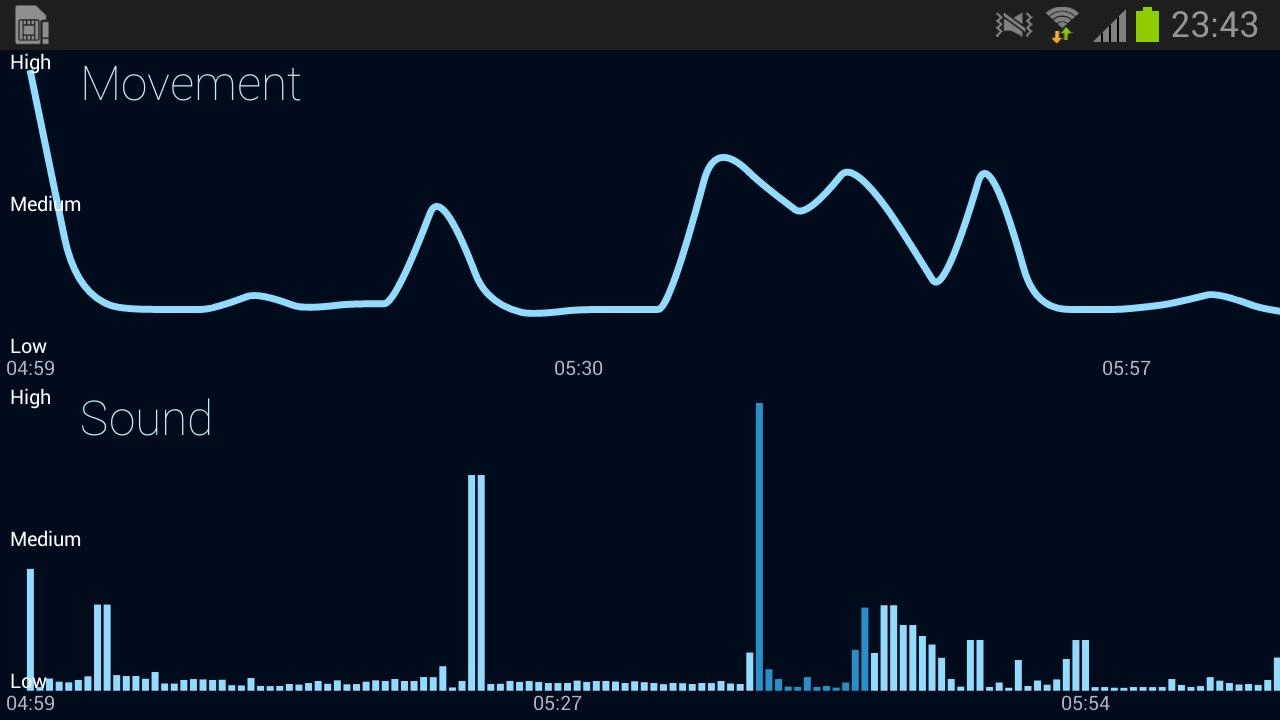
This sleep app is perfect for people with insomnia because it provides several calming sounds to help you fall asleep, play nature sounds, or your favorite music so that it continues to help you sleep as you move into deeper sleep stages, and is available on iOS only.
### 16. White Noise Lite
White Noise Lite plays white noise to help you fall asleep at a particular time and then creates a "loop" so that the sound continues. It also includes a timer function to help you fall asleep quickly and is available on [iOS](https://apps.apple.com/us/app/white-noise-lite/id292987597) only. Not only is it one of the best sleep apps, but it's highly ranked among all white noise apps.
### 17. Relaxation Sounds by Sleep 20+
Relaxation Sounds features ten different sounds combined with relaxing music to help you relax and fall asleep easier. The sounds include ocean waves crashing, gently falling rain, birds chirping, and more. It's available on iOS and Android.
### 18. Sleep Tracker++
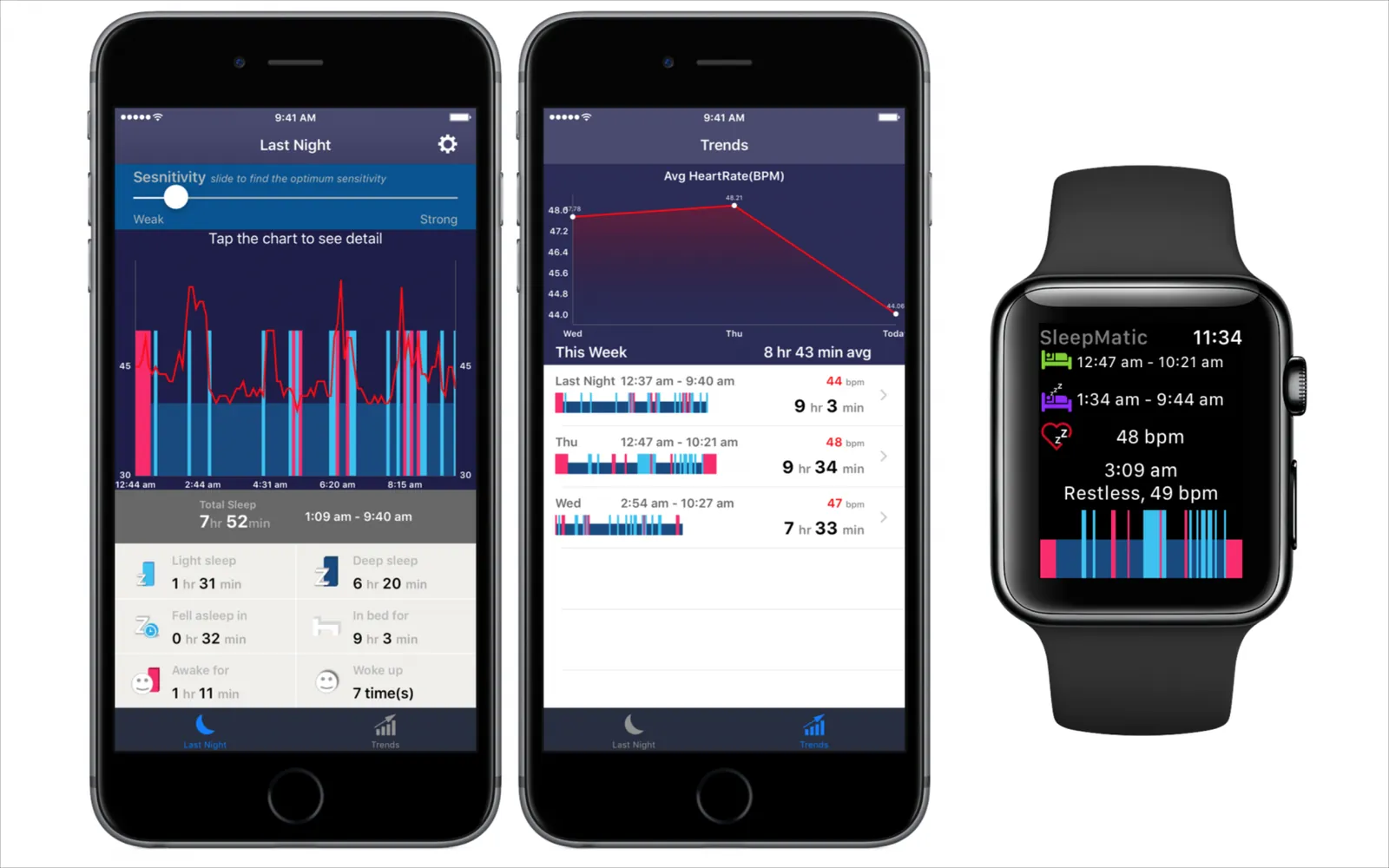
This Sleep Tracker app records what you do while you're not sleeping so that you can better understand your night-time habits and how they may be interfering with your ability to fall asleep. It is available on [iOS](https://apps.apple.com/us/app/sleep-tracker/id1179236591) only.
### 19. Music Sleep
This app uses music therapy for insomnia so that it's easier for you to relax and fall asleep. It also includes a timer so that music continues to play after you've fallen asleep and allows you to adjust the volume of the music so that it doesn't disturb your partner. Available on [iOS](https://apps.apple.com/us/app/music-sleep-timer/id320583424) only.
### 20. SleepMatic
SleepMatic uses a breathing exercise in which you inhale deeply for four seconds, hold your breath for seven seconds and then exhale for eight seconds. The app design helps you to relax and improve your breathing at night. It's available on [iOS and Android](https://sleepmatic.en.aptoide.com/app).
### 21. Pzizz
This sleep app plays a guided audio visualization of a place that you've been to before so that you can use your imagination and fall asleep. It's available on [iOS](https://apps.apple.com/us/app/pzizz-sleep-nap-focus/id915664862) and [Android](https://play.google.com/store/apps/details?id=com.pzizz.android&hl=en_CA&gl=US). The premium version features over 100 billion sequences of different sounds to fall asleep to and wake up to. It also uses an intelligent algorithm that personalizes your sleep experience when you use it more frequently.
### 22. Sleep Score
If you want to wake up with a clear mind and have no residual effects of sleep, this sleep app is for you. It uses brainwave pattern recognition to help you determine the benefits of your sleep and when it's best to wake up. It's available on [iOS](https://apps.apple.com/us/app/sleepscore-go-beyond-tracking/id1364781299) and [Android](https://play.google.com/store/apps/details?id=com.sleepscore.drive&hl=en_CA&gl=US).
### 23. Noisli
Noisli is an ambient sound generator that allows you to mix different sounds such as a rainstorm, a waterfall, wind chimes, or a crackling fireplace. It's available on [iOS](https://apps.apple.com/us/app/noisli/id862773459), [Android](https://play.google.com/store/apps/details?id=com.noisli.noisli), and the web.
### 24. Sleep Genius - Brainwave Entrainment Audio Sleep Music Therapy
Sleep Genius uses advanced audio technology to increase your mental performance while helping you sleep simultaneously. It features several relaxing audio tracks to help you sleep better and concentrate better when you wake up in the morning. This sleep app is available on [iOS](https://apps.apple.com/us/app/sleep-genius-baby/id669390302).
### 25. SleepTown
SleepTown is an application that helps you maintain your sleep schedule. It's a combination of a sleep tracker and a wake-up light. The sleep app lets you specify the time when you want to go to bed and when you want to wake up naturally in the morning. It also helps you manage your sleep environment with its light and sound settings. You can find SleepTown on both [iOS](https://apps.apple.com/us/app/sleeptown/id1210251567) and [Android](https://play.google.com/store/apps/details?id=seekrtech.sleep&hl=en_CA&gl=US).
### 26. Twilight
Twilight is a light simulation app that helps you fall asleep by playing a relaxing combination of lights and music. It also serves as an alarm clock so that you don't have to worry about missing work or important meetings. It uses proprietary algorithms to determine which combination of lights and sounds will help you relax in seconds. You can download Twilight from either iOS or Android.
### 27. Rise
Rise is an alarm clock app that monitors your sleep patterns and wakes you up at the optimal point within your sleep pattern. It uses your location and movement to wake you and includes a timer so you can go back to sleep if you need additional time for rest. You can find the Rise app on both [Android](https://play.google.com/store/apps/details?id=com.risesci.nyx&hl=en&gl=US) and [iOS](https://apps.apple.com/ca/app/rise-alarm-clock/id577221529).
### 28. Deep Sleep
Deep Sleep monitors your sleep throughout the night and wakes you up at the optimal point in your sleep cycle. This app also gives you an audible sound that helps you stay asleep longer if you're having difficulties. This sleep app is available on iOS and Android.
### 29. FitBit
With a wearable on your wrist, you can track your sleep patterns, breathing rate, and even heart rate on FitBit. The benefit of FitBit is that it goes beyond sleep to overall health to determine how everything works together. Do you sleep better when you exercise? You can use the data in FitBit to help you determine how an active or sedentary lifestyle works for you. You can also compare other nights of sleep to help you choose the best time to sleep at night to wake up feeling well-rested. The wearable vibrates at your wake-up time to help ease you into wakefulness. You can find the Fitbit sleep app on either [Android](https://play.google.com/store/apps/details?id=com.fitbit.FitbitMobile&hl=en_CA&gl=US) or [iOS](https://apps.apple.com/us/app/fitbit-health-fitness/id462638897).
## Final Thoughts
The best sleep apps listed above provide lots of great resources that can help you establish and maintain healthy sleeping habits. If you're unable to sleep or have difficulty sleeping, try one of these apps and see if they help improve your sleep quality. Trying out some [relaxing activities before bed](/blog/relaxing-activities-before-bed) can help you unwind in the evening to help you fall asleep faster and stay asleep longer.
---
# Best Time to Meditate During a Busy Day
- URL: https://declutterthemind.com/blog/best-time-to-meditate
- Description: When is the best time to meditate? Here are the 7 different good times to meditate when you have a busy day ahead of you.
- Published: 2025-08-01
Inevitably when you [start meditating](/blog/what-kind-of-meditation-start-with), you’ll think about how and when you can incorporate it into your daily routine. When is the best time to meditate? Does it matter when you meditate? What time leads to the greatest [meditation benefits](/blog/benefits-of-meditation)?
These are all questions we’ll be covering in this article. We’ll dive into the most optimal times of the day to meditate, why they’re effective times, and what that means for you and incorporating a regular practice into your daily routine.
## The Best Time to Meditate in 2023

### 1. Before 10 a.m.
If you’re struggling to find time to meditate during the day, one of the easiest ways to make time to meditate is first thing in the morning. Set your alarm clock 10 minutes earlier than your usual wake up time and start the day on the right foot with a productive [morning routine](/blog/morning-routine). If you’re not a morning person, you can continue lying in bed while following along to a breathing exercise on your phone to ease you into your day using the [Declutter The Mind app](https://declutterthemind.com/).
When you’re starting with meditation first thing in the morning, you may notice some grogginess and [morning brain fog](/blog/brain-fog), especially if you’re used to having caffeine first thing in the morning. You can use these feelings as part of your practice. Practice mindfulness to bring attention to how you feel every morning. Notice the first thoughts and feelings that come up. Notice where your mind wanders or goes to first thing in the morning.
A “morning glory” meditation, usually between 6am to 10am, helps set the tone for the rest of your day. It can help you [create some clarity in your mind](https://declutterthemind.com/meditation/focus) before you begin to plan the day ahead. It gives you time to organize your thoughts and feelings before you go off to work or start your day.
A meditation practice first thing in the morning can also help ease any tension or anxiety you might be feeling as you prepare to tackle your day or deal with what life will bring.
If you find the best time to meditate is in the morning, you can consider doing a 10-minute [guided meditation for morning](https://declutterthemind.com/meditation/beginner) to help you start your day off right.

### 2. 12 p.m.
Sometimes our work days are so busy that the only time we take a break is during formal break times, like a lunch break where the rest of the office takes an hour to congregate and eat.
You may find that you don’t need the full hour or even half an hour during a lunch break to eat your meal. This could be a perfect time to enjoy a [short meditation](/meditation/beginner) practice. Take 10 minutes to eat your lunch and another 10 or 20 to practice meditation. Or you can combine the two by doing a [mindful eating meditation](/meditation/mindful-eating). Maybe the office clearing out to the lunch room or going out to lunch gives you a private space within the office to sit in silence and meditate.
Even if you’re struggling to find a secluded place in the office, worst case you can meditate in your parked car during lunch, or even a bathroom stall. You can also practice [meditation with your eyes open](https://www.youtube.com/watch?v=uSv2ufXRQjQ) at your desk.
Meditation in the middle of the day is the perfect opportunity to reflect on your morning and set a positive intention for the rest of the day. If you’ve had a rough start in the morning, lunch could be the best time to meditate and practice[loving-kindness meditation](/meditation/loving-kindness) to help you [build empathy](/blog/how-to-be-more-empathetic) and positive emotions before continuing your day. It might even be time to simply continue in your momentum if you’ve had a good start to your day.

### 3. 2 p.m.
It’s impossible to maintain constant focus on one thing for an extended period of time. We all need breaks. For some of us, it’s standing up and stretching. For others, it’s a snack or their bathroom break. However, you take a break to refresh your mind, you know the value of taking time for yourself during the day has to your work. The best time to meditate might simply be when you need to most. For some people, that’s particularly important during their afternoon post-lunch crash.
This is why taking a “pit stop” meditation is very common among people that practice meditation. This can be taken anytime during the day, such as 10 minutes in the afternoon before finishing your work for the day. However, most people take this “pit stop” meditation during the hours of 11am to 4pm.
Find a regular time when you can afford to take 10 minutes to step away from your work and stick to it. Make it part of your daily work schedule, maybe even block it out [in your calendar](https://calendar.google.com/calendar/r) so meetings and other things don’t interfere with your routine.
Pit stop meditations help us refresh our mind and give us a second wind during the day. It’s also a way to break out of any momentum you might be caught in. It’s a way to take a step back from your work, bring your attention to your moods and how you feel, and adjust after your practice.
This time might require you to be able to find some privacy at your place of work, and for a lot of people this isn’t possible. A quick tip is going to your parked car and meditating for 10 minutes before going back to work.

### 4. 10 p.m.
After a long day of putting in your best effort at work, solving problems, and sitting in traffic, all most people want to do is collapse on their couches and turn on some Netflix.
There’s nothing wrong with indulging a little, especially after working all day or having a rough day. But meditating in the evening hours or before going to sleep helps you reflect on everything that happened in the day and release some of the tension with a [stress meditation](/meditation/stress) to counteract stress built up from earlier in the day.
For the evening hours meditation, the best time to meditate is between 5pm to 10pm. If you feel more comfortable meditating in the privacy of your own home, or meditation first thing in the morning is difficult for you, this is likely the time that will work best for you. However, many people find this time the most difficult to stick with because it’s so tempting to just relax at home or take care of obligations and chores before going to bed.
If this is the best time for you, keep yourself accountable. Set a timer or reminder on your phone to ensure you sit every day during the evening to reflect on your day and bring your attention to your thoughts and how you’re feeling.
You can also meditate right before you go to bed to help you fall asleep at night. Many people who struggle to fall asleep practice a meditation right before bed to help their bodies relax more efficiently.

### 5. Before or After Working Out
The best time to meditate may simply be the time you’re most able to stick with and stay accountable to. If you have a regular workout routine, it means you habituated it. Part of practicing meditation is turning it to a routine so that you practice it regularly. Combining it with another [good habit](/blog/good-habits) is a way to stick to it.
Meditation is the perfect compliment to physical exercise. Either right before working out or right after working out, take 10 to 20 minutes to [practice mindfulness](/blog/ways-to-practice-mindfulness). Sit and watch what arises while you meditate. If it’s right before working out, you may find yourself contemplating your upcoming workout. If it’s right after, you can use a meditation practice to slow down and bring your heart rate down.
The gym is also a good place to meditate. You can use the sauna or locker room for some privacy, or even the gym itself. Most people are too preoccupied with their workouts (and themselves!) to notice or care what you’re doing, if it’s something you’re concerned about.

### 6. When Emotions Are Arising
Aside from specific habits and times, the best time to meditate is when you notice that emotions are arising. If someone suddenly angers you or you feel [frustration](/blog/deal-with-frustration) increasing in your body, this is likely a good time to meditate and step back. Often, when we feel a surge of emotion, we want to express it. Expressing negative emotions in the heat of the moment can result in job loss, failed relationships, or hurting someone you care about.
Instead, sometimes it’s best to step away from the conversation, take a few deep breaths for as little as 10 minutes up to an hour to help you cool down. After you’ve had some time to [calm your mind](/blog/how-to-calm-mind), you can approach the difficult situation with a [sense of clarity](/blog/moment-of-clarity) to ensure you don’t react in a way that negatively affects you while ensuring you express your feelings well.

### 7. During Downtime
Throughout our busy days, we have many opportunities during periods of downtime. This might include while you’re commuting somewhere, waiting at a doctor’s office, waiting in an elevator, while rocking your newborn to sleep, or even times when you feel compelled to check your phone. These can all be great opportunities to insert a quick meditation practice into your day.
If you find yourself doing some [doomscrolling](/blog/doomscrolling) on Instagram, this could be a time to catch yourself being mindless and instead transition into [mindful living](/blog/mindful-living) by using this time to meditate. We have many moments in our lives where we’re waiting for something, inserting some meditation can be a healthy way to declutter the mind and pass the time
### 8. The best time to meditate is the time that works for you
Ultimately, while these are great suggestions to guide you, the best time to meditate is the time that works best for you. This may seem like a trite answer but it’s true. What works for one person may not work for you. And what you find works for you may not work for most people.
If you’re just [learning how to meditate](https://declutterthemind.com/blog/how-to-meditate), experiment with these above 5 different common meditation times. See what works for you.
More importantly, **the best time to meditate is the time you’re able to stick with**. Even if you find meditating in the morning feels better, if you’re finding it easier to stick to a lunchtime meditation session, do that instead. It’s much more important that you’re able to form the habit and practice regularly than how it may feel in the moment when you’re doing it.
Meditation isn’t really about how you feel or trying to create a feeling while you practice. It’s about noticing how you feel. We’re not placing any judgement on the feelings we may have while meditating. Meditation also isn’t about when you meditate. Simply making the time to do it is the most important thing.
## Conclusion
We can all find the best time to meditate for ourselves. Maybe you’re an early riser and decide to meditate in the mornings. Or you have a busy day at work and at home, so you decide to [practice mindful eating](/blog/mindful-eating) during your [lunch breaks](/blog/things-to-do-on-your-lunch-break) along with a guided meditation. You might find yourself experiencing tension after a tough meeting or difficult conversation, and might use that time to step away to regain some clarity and mindfulness. There are 24 hours of times to meditate throughout the day, ultimately, you can choose the time that works best for you, your mental health, and your schedule.
When’s your favorite time to practice meditation? Leave a comment below and let us know.
---
# Burnout Recovery: Signs, Symptoms, and the Strategies to Overcome Burnout
- URL: https://declutterthemind.com/blog/burnout-recovery
- Description: Are you feeling worn out from your work or life? You may be experiencing burnout. Here's the strategies for burnout recovery and symptoms.
- Published: 2025-08-01
Every single individual on the planet goes through struggles in life, and some more than others. These struggles may occur through an extremely physically and emotionally demanding lifestyle, mental health issues and the other stresses life throws our way. School, work, and family can all drain us to the point where we reach burnout. Thus, understanding burnout recovery and how to prevent reaching this breaking point is extremely important.
Regardless of how often an individual goes through these sorts of struggles, it's how they handle those struggles that counts. This is because how issues are handled typically determines whether they pass or continue to put physical and emotional stress onto an individual. Without proper recovery, burnout will persist being an issue.
## What Is Burnout?
Burnout is used to describe the state of a person who is physically and emotionally exhausted. When [making even simple decisions feels impossible](/blog/decision-fatigue), that exhaustion has usually been building for a while. This state often occurs when one overexerts themselves mentally and physically with their work or responsibilities. This very detrimental bodily state can occur for a wide array of reasons and can lead to numerous health conditions if left untreated. In some cases, it can even [feel like your life is falling apart](/blog/my-life-is-falling-apart).
Some of the common symptoms or signs of burnout are:
- Fatigue
- Loss of interest in work or school
- High level of [school stress](/blog/how-to-deal-with-stress-at-school) or work stress
- Cynicism or detachment from work or school
- Confusion or questioning purpose of work or achievements
- Irritability
To help you overcome burnout, we’ll be focusing primarily on burnout recovery and the strategies you can implement into your life to further help eliminate this condition and prevent it from occurring again or altogether.

## What Causes Burnout?
As stated earlier, burnout is used to describe the state of someone who is overly exhausted, physically and mentally. Narrowing down the root cause can be tricky as there are many reasons as to why this happens to people
We do know that burnout typically occurs when an individual pushes their body past its physical and emotional boundaries. Whether intentional or accidental, everyone's body and brain has a limit, and consistent stresses placed on the mind and body can cause conditions like this to arise.
Some examples that might lead to burnout might include working seriously long hours at work, whilst enduring chronic mental health issues. It can also be caused by a lack of nutrition and sleep combined with consistent physical activity daily.
Other examples might include taking care of kids. A rather large majority of inexperienced parents end up going through burnout during the children's first few years of birth. The constant attention required to take care of their newborn combined with a lack of sleep and nutrition can often have the parents feeling burnt out.
In some cases, burnout isn’t caused by overworking but rather a loss of interest in the work. Feeling uninspired or uninterested in your work can lead to feelings of burnout when they’re not addressed and you work despite these feelings. With cases like this, burnout recovery can be a bit more complex since it's not an entirely an issue of exhaustion.
Burnout can be caused by a variety of reasons that pinpointing the source can be difficult. However, factors that lead to increased and consistent stress levels both physically and mentally can usually be blamed for the development of this condition.
Type A personality people are usually more prone to burnout. People working in high pressure environments or that manage tremendous responsibilities are also more susceptible to burnout.
## How to Recover From Burnout
Let’s start this section by declaring that anyone can recover from this condition, although it may take time. There are numerous strategies you can implement in your life to further help reduce or eliminate burnout.
Due to the wide array of potential reasons for this possibly occurring, this section will be covering the main factors that could be indirectly affecting your chances of developing this condition, which you should therefore prioritize. The strategies we suggest in this section should be applied daily and though it may take time, signs of improvement should follow.
Always seek the help of a professional first if your condition is severe or it’s significantly affecting your life. Treat everything else below as a supplement to getting professional treatment and help.

### Rest and take breaks more often and for longer periods of time
Without a doubt the most important strategy on this list is rest. Ultimately, this is why most people burnout: they either don’t get enough rest or they don’t rest long enough. When a full night isn’t available, a 10 to 20 minute [non-sleep deep rest session](/blog/non-sleep-deep-rest) is the closest thing to banking rest during the day. A chronic lack of sleep combined with everyday life is alone enough to cause this condition to arise in some people.
You'd be surprised by the number of tasks performed by the brain during sleep. The brain is just as busy during sleep as it is during the day, the only difference is the different areas of the brain being utilized. This is primarily because the brain performs duties during sleep that simply cannot be done awake, hence the importance of sleep.
During sleep, the brain works on the repair and growth of every organ and tissue that's broken down during the day. This damage that occurs throughout the day will continue to build up in the absence of sleep.
Not only will the body fail to keep up with its functions, but the build-up of adenosine in the brain will continue to cause fatigue which will only get worse until enough sleep is achieved.
Adenosine is the chemical responsible for feelings of tiredness. As the day goes by, adenosine builds up. The more of this chemical present, the more fatigued you will feel. When your body is asleep, the brain breaks down and eliminates adenosine causing an increase in energy and alertness when you wake up from sleep.
At this point you might be thinking, what does any of this have to do with being burnt out? As stated earlier, the condition burnout is typically caused by chronic mental and physical stress. As we now know, a chronic lack of sleep can contribute to both of these aspects, hence the importance of sleep.
Ensure you’re getting those 6 to 8 hours of sleep every night. [Put together a night time routine](/blog/night-time-routine) that creates the proper conditions for a restful night’s sleep.
#### Don’t forget vacations
Burnout recovery is about more than just sleep. Don’t forget to take those lunch breaks. Don’t forget to use up all your vacation days.
And when you’re taking a break or on vacation, actually take that break or go on vacation. Leave the work phone behind. Stop checking email. Sink into this time you set for yourself to forget about the stresses and responsibilities of life.

### Ensure a balanced diet is maintained
Like sleep, a lack of nutrients consumed through food and drinks can cause the body to suffer in ways you probably didn't know. Vitamins and minerals found in nutrient-dense food sources not only keep our energy levels optimized and our skin looking great, but our mental health will continue to stay on top through a perfect diet.
Poor nutrition can lead to a wide array of issues such as lowered energy levels, poor sleep quality and lowered mood. You have to perceive your body as a very complex car that needs numerous different fuel sources to run.
Every single involuntary and voluntary action is fueled by the calories we intake through food and optimizing every nutrient requirement assists the body in maintaining its composure.
Going back to the list of negative health effects relating to poor nutrition, it's easy to understand why poor nutrition could alone lead to the development of burnout but keep in mind, poor nutrition affects the body much greater and in more ways than listed above.
To further help combat burnout and assist with burnout recovery, try to ensure a balanced diet is consumed daily. This means consuming a very broad spectrum of nutrients to further help assist the body with growth and repair.

### Take time for yourself and practice self care
Rest and relaxation is important but it’s also important what you do during your down time and time away from work or responsibilities. That’s why [practicing a little self care](/blog/self-care-ideas) now and then is so important.
Whether it’s a warm bath, a [guided meditation practice](https://declutterthemind.com/meditation), or a massage, do the things that give yourself a little pleasure. Indulge a little.
https://www.youtube.com/watch?v=RYK2wORc8b4
The reason you go to the point of burnout is likely because you’re taking your work and responsibilities *too seriously*. Sometimes it's good to just [let go](/blog/letting-go).
We get it, the weight of the world is on your shoulders and if you don’t do it, nobody else will and it’ll be the end of the world. And who will handle this if you don’t, right? Well, how well will you be able to handle this responsibility if you’re burnt out? How well will you handle this weight if you’re miserable and never take care or even pamper yourself?
Put the oxygen mask on yourself first before assisting others with theirs.
### Tackle the root cause for your burnout
Easier said than done as locating the root cause itself may take some time, especially if there are more than one. Regardless, try to pinpoint precisely what you believe to be the main source/sources of your burnout. The best burnout recovery is to never reach burnout.
By doing this, you not only allow yourself to be able to eliminate this issue but you can ensure that this never occurs again by avoiding the very factors that caused this.
Let's assume you've located the root cause and this appears to be due to being overworked and malnourished. You can effectively tackle this by taking some time off work to recuperate. This is usually a recommended option, this can also be combined with a consistently utilized meal plan.
Let's imagine the root cause is chronic mental stress and a lack of sleep. In this case, you should opt to work on eliminating the factors that are causing your stress in the first place. By doing this you half the equation that is causing your burnout which will, in turn, lower your feelings of burnout entirely.
As stated numerous times, there could be millions of reasons why this is occurring. If this is the case, locating and eliminating the root cause should be your priority alongside maintaining a healthy diet and optimizing your sleep.
To further help you figure out the cause for your burnout, try to closely observe all aspects of your life. This might include your diet, sleep, everyday mood, work-life and home life. Do any of these seem off to you? Do you believe one of these aspects could be an underlying factor? The sooner you figure out the reasoning behind your condition, the sooner you can eliminate your issue.
## The Bottom Line
You'd be surprised how common this condition is and it's hardly surprising, as the years go by, the world around us is becoming increasingly more physically and emotionally demanding, this in turn only heightens our very chances of becoming burnt out.
Regardless of how common this issue might be, it's still very serious and if left untreated can lead to numerous other physical and mental health conditions to arise. The combination of being burnt out combined with other issues can lead to failures in relationships, marriages, relationships with our families and can even greatly affect work life.
Try to keep in mind that everyone is different and what burns you out, might not burn someone else out. Listen to your body and if you begin to feel burnt out, do not resist the urge to seek help as worsening of this condition will only make things worse. Burnout recovery is also important if it gets to that point.
With that being said, the tactics listed above are a great and reliable way to further help reduce and or eliminate any feelings of burnout and I'm confident that if you approach all three strategies and implement them daily, you will notice results shortly after. For ongoing support, here are a few [tools for protecting your work-life balance](/blog/best-tools-for-work-life-balance).
---
# Caffeine and Anxiety: How Caffeine Affects Your Anxiety
- URL: https://declutterthemind.com/blog/caffeine-and-anxiety
- Description: Your caffeine habit might be a significant source of anxiety. Here's 12 ways that caffeine and anxiety are linked.
- Published: 2025-08-01
Whether you're aware of this or not, there's a correlation between caffeine and anxiety. Studies have shown that individuals who regularly consume caffeine have a high tendency to [feel anxious](/blog/feeling-anxious-for-no-reason). For this same reason, people with anxiety do their best to avoid caffeine consumption if their anxiety becomes triggered. Individuals with anxiety tend to switch to a more mild caffeine option such as tea or no caffeine at all. In this article, we'll be talking about specific ways in how caffeine and anxiety are linked to one another.
## 12 Ways Caffeine and Anxiety Are Linked
### 1. Caffeine raises your stress hormones

Even with the common notion that caffeine makes you feel good and reduces stress because of the energy it gives, caffeine adds more stress due to effects like an increase in blood pressure, palpitations, and raising stress hormones. When you consume caffeine, especially when it becomes something you can't function without, it enters your brain, affecting your stress hormones. It's easy to think that caffeine makes everything better because you're more alert and energized, but it acts as a temporary fix and boost of energy. When consumed in large amounts, such as having more than the recommended caffeine intake, your cortisol levels will be negatively affected.
### 2. Caffeine impacts neurotransmitter balance
The science behind why caffeine can make you feel alert and focused is that it blocks adenosine, which is the neurotransmitter that triggers drowsiness and exhaustion. This is why caffeine can act as that magic fix in making you feel motivated and productive for whatever tasks you need to accomplish for the day. While caffeine makes you feel all these positive things, there's a downfall for anxious individuals. If you haven't heard of serotonin, it's the neurotransmitter that makes you feel happy. While caffeine can contribute to those feelings of happiness at first, studies have shown that caffeine can lead to serotonin depletion in the long run. When an individual has low serotonin levels, there's a risk of mental health problems, one of them being anxiety.
### 3. Caffeine causes insomnia

It's not news that caffeine is one of the primary sources of insomnia, especially when consumed before bedtime. The link between caffeine and anxiety can be found when anxious thoughts keep you up at night, caused by insomnia - or rather, caffeine. Instead of getting high-quality sleep at night, you're stuck with insomnia, which can cause a negative spiral in your thoughts if you're someone prone to overthinking and anxiety. When consumed in the late afternoon to evening hours, caffeine can effectively disrupt your sleep, preventing you from having an adequate sleep to restore your [mind and body](/blog/mind-and-body) to proper health.
### 4. Caffeine causes sensitivity
While there are individuals capable of sleeping after caffeine intake, people with anxiety feel the opposite. If you have anxiety and consume caffeine, you become caffeine sensitive, which is why you feel palpitations, jitters, and restlessness, among several other things. There are several reasons why you can be caffeine sensitive, whether it's your genes, metabolism, age, lifestyle, or even medications that don't specifically go well with caffeine.
### 5. Caffeine can lead to mental disorders
If you're someone who goes beyond their average caffeine intake, you're more at risk with mental health problems like anxiety and depression. In fact, even if you're mentally healthy, you can still possess symptoms that are similar to those diagnosed with anxiety. In assessments, psychiatrists consistently recommend taking caffeine out of their diet to be more effective than prescribing anxiety medications. The anxiety symptoms like palpitations and restlessness are the same symptoms you feel when caffeine enters your system, which is why there's a proven link between caffeine and anxiety. Studies have shown that those diagnosed with mental disorders who took caffeine off their diet had a considerable improvement in their mood and anxiety levels.
### 6. Caffeine is even more accessible

There are several caffeine sources available at your convenience, and it's no longer coffee and tea. In our world today, you can consume caffeine by soda, coffee, tea, energy drinks, prescription drugs, painkillers, vitamins, and supplements. You never know when you're unintentionally taking caffeine, especially with medication that has caffeine in them. You should also be aware that labels aren't always accurate, and caffeine effects are consistently underestimated. Even a 1/4 tablespoon of caffeine can cause acute anxiety, so if you're someone sensitive to caffeine, it's likely to affect you. It's easier than ever to have overconsumption of caffeine, no matter what source it is. Most importantly, 1 tablespoon of caffeine is adequate to kill an adult, making it more deadly than ever.
### 7. Caffeine deprives you of brain nutrients
Certain foods and beverages are beneficial to your brain health, but unfortunately, this isn't the case for caffeine. It isn't just that caffeine doesn't contribute any beneficial nutrients, but it actually deprives your brain of significant nutrients that impact your mood and brain functions. Magnesium is one of the significant deprived nutrients, mainly caused by caffeine, and without magnesium, this plays a role in anxiety, depression, and other mental issues. Caffeine also deprives you of Vitamin B, which is otherwise known as the anti-stress vitamins. When someone has anxiety, it can be linked to a lack of vitamin B in their system. This is why professionals recommend taking vitamin B in whatever form you can find to benefit your mental health accordingly.
### 8. Caffeine disregards your brain supplements
When you take caffeine along with your brain supplements, the harm outweighs the benefits. Anxiety causes your blood flow to your brain to be reduced, and caffeine reduces this further. If you think blood flow is irrelevant, this is responsible for getting all the necessary nutrients to your brain, such as oxygen and water. Several people take brain supplements to get the nutrients required for healthy brain functions and mental health, but the purpose is defeated when combined with caffeine. This is a deadly combination as caffeine neutralizes the positive effects that brain supplements can provide.
### 9. Caffeine can trigger hormone-related sensitivity for women

We've mentioned above that caffeine's effects on you vary on how sensitive you are and how you process it. It's more challenging for pregnant women or taking birth control pills to process caffeine in their system. In fact, it takes twice as long for your body to process caffeine. As a result, you also get double the adverse effects that caffeine can give. Women who are also going through menopause can have negative symptoms when taking caffeine, whether it's anxiety or mood swings. Lastly, caffeine can make the symptoms of PMS worse for women during that time of the month.
### 10. Caffeine triggers panic attacks
Studies have shown that caffeine consumption has caused panic attacks or made them even worse than they originally were for those diagnosed with anxiety. Caffeine can cause jitters and palpitations, which is what can cause panic attacks more than usual. The particular side effects of caffeine are said to contribute to a full-blown [panic attack](/blog/how-to-stop-panic-attack), even if there's nothing explicitly triggering their anxiety.
### 11. Caffeine withdrawal triggers anxiety
With all of these adverse effects mentioned above, caffeine withdrawal can also cause anxiety when deciding to quit. Anxiety is a constant side effect for those who choose to go cold turkey or even gradually quit their caffeine cravings. This is especially true for those who are purely dependent on caffeine to function, such as that morning cup of coffee in the morning. Feeling these withdrawal symptoms can last for as long as a week or two, depending on caffeine's role in that individual's life.
### 12. Added caffeine is dangerous

In case you aren't aware of this, not all caffeine is considered natural caffeine, and an example of this is the caffeine found in sodas and energy drinks. Added caffeine is manufactured synthetically, which makes it dangerous for your health. These are hallowed calories and are known to damage your health much worse than natural caffeine. Synthetic or added caffeine is also what you can find in medications such as painkillers and prescription drugs. We've mentioned this above, and this is why caffeine is easier to overdose on than ever. Not all medications are transparent about having caffeine on their labels, which makes it a huge risk to go beyond your regular caffeine consumption, especially when you're taking medications.
## Your turn
In conclusion, I hope this article sheds insight into the significant links between caffeine and anxiety. Several studies have been proving this repeatedly, so if you have anxiety, caffeine is the worst thing you can incorporate into your diet. There are several other ways to get that boost of energy you're looking for that just isn't found in caffeine. If you're someone who has their anxiety triggered every now and then, cutting off caffeine from your diet is recommended.
---
# 14 Ways to Deal With Stress in 2025
- URL: https://declutterthemind.com/blog/deal-with-stress
- Description: Stress can leave you feeling worn down. Learn how to deal with stress using 14 proven strategies that'll improve your situation.
- Published: 2025-08-01
Imagine a world where you were finally [stress free](/blog/stress-free). You could enjoy the little things, [help others](/blog/helping-others), and were a pro at stress management to prevent a relapse. Fortunately, it doesn't need to be a distant dream or fantasy. Anyone can learn to manage stress– even chronic stress. And your mental and physical health depends on you being able to deal with stress effectively. After all, you deserve to enjoy life. In this article, you'll learn how to deal with stress by improving your mental health and investing in areas that'll make you handle life's stressors more easily.
## How to Deal with Stress: 14 Ways
### 1. Focus on the present moment
When we want to deal with stress, we tend to focus on it and devise a plan for how to fix it.
Focusing on solving stress seems like the right thing to do – but actually, it’s creating more concepts, ideas and thoughts around the stress itself – like mental scar tissue forming over a cut.
With [guided meditation](https://declutterthemind.com/meditation), we want to focus on the [present moment](/blog/live-in-the-moment). Not on our story or ideas of what is stressing us out or even solutions for it. With our awareness focused on the present, our subconscious mind can slowly soften, relax and unwind from the stress naturally and in its own time. Don’t force anything – that creates more stress – not less! You can try out this [guided meditation for stress to live in the present moment](https://www.youtube.com/watch?v=v4o77EK9LBM).
https://www.youtube.com/watch?v=AzJw683XMN4
### 2. Use your body to affect your mind
We generally suffer most from mental stress. We worry about work, our relationships, even the environment. This constant mental worry will invariably create tension in your body – and you won’t even notice it happening.
Often, the tension in your body acts as an anchor for mental stress. Let go of the physical tension, and the mental stress dissolves by itself.
When feeling particularly stressed, take extra time to relax your body. You can make use of Declutter The Mind’s [guided relaxation session](/meditation/relaxation) any time you need.
Pay particular attention to letting go. When you scan your mind through your body, any time you find even the tiniest bit of tension or holding, just let it go. What you will find is that when you’ve managed to let go on one ‘layer’ of the body, your awareness can penetrate deeper – and you’ll discover new layers of tension to let go.
This can seem a little disconcerting at first – because it feels like the tension is endless. You let go of one tense area, only for another one to appear. But rest assured that it’s like peeling layers of an onion. As you deal with stress at ever deeper layers, you will find that you can begin to function at a much more efficient level than before.
You see, holding tension requires effort and energy. When you let go of stress in this way – layer by layer in your body – you free up all this energy and vitality that you can now use in all other parts of your life.
### 3. Meditate on the breath
As well as being the most common way to get into a meditative state, [meditation on the breath](/meditation/breathing) also has a particularly beneficial effect on mental stress.
You will notice that when you’re stressed, worried or scared – that your breath will be quite different to when you’re calm and centred. It will feel more choppy, shallower and faster.
You can’t force your breath to be smooth, calm and relaxed – but if you give it your mindful attention, it will naturally become that way by itself. Not only that, but it will also help to [calm the mind](/blog/how-to-calm-mind) too.
https://www.youtube.com/watch?v=xIWauKS6OIQ
### 4. Meditate regularly
By meditating regularly – letting go of layers of physical tension, being in the present moment and allowing your breath to become full and smooth, you create a deep-seated resilience in your being.
This means that not only can you [let go](/blog/letting-go) of stress more easily when it does come up, but you’ll find that things that used to make you stressed simply don’t seem to matter so much anymore. Stress just can’t get a foothold anymore.
When it comes to understanding how to deal with stress, it’s sometimes more important to maintain regular habits that keep you in a good mental place so that when stress comes, you’re better prepared to deal with it.
The easiest way to make meditation a regular habit is to [use an app like Declutter The Mind](https://declutterthemind.com/blog/how-to-meditate). Just follow the simple instructions, and in no time you’ll begin to see the benefits of this amazing practice.
### 5. Invest in your physical health
One of the things you can do to manage stress is to invest in your physical health. There are numerous physical health benefits that arise from exercise, such as getting endorphins flowing through you, making stress more manageable, it can be a [form of meditation](/blog/types-of-meditation) with movement, and it helps boost your mood. So, if you go for that run around the block, you'll be able to become centered and mentally prepared to deal with the things that stress you, so you can get them off your plate faster. Plus, while you exercise you'll be doing some deep breathing, which helps deliver more oxygen to the brain. Exercising during a flight response is what your body wants you to do. So exercise regularly to let the blood flow and help you deal with a stressful event more easily as they come up.

### 6. See a mental health professional
You can [find a therapist](/blog/how-to-find-a-therapist) or any mental health professional who will help you deal with stress. You can choose to have someone to talk your problems out with and use therapy as a sounding board to help you resolve your challenges independently. Alternatively, depending on the severity of the stress you're dealing with, you might do formalized therapy, such as cognitive-behavioral therapy to help reduce stress. If you're unable to relieve stress on your own, having a therapist can help you not [feel stuck](/blog/feel-stuck) in your thoughts or ruminate the same thoughts repeatedly. It's much easier to cope with stress when you have someone who will help you manage the thoughts in your head effectively to wrangle yourself out of your mind.
### 7. Try progressive muscle relaxation
During moments of high stress and mental health problems, our bodies begin to tense up. We might notice our fists are clenched, tightness in our stomachs, maybe our jaw is locked tight, and even our breathing patterns might become unnatural. You can reduce your blood pressure and relieve stress by mindfully trying progressive muscle relaxation. Alternatively, you can check out the Declutter The Mind app and look for a "[body scan meditation](/meditation/body-scan)." You'll be able to notice more mindfully where tightness is in your body and work to loosen those muscles up while breathing more naturally from the stomach. Those with a hyperactive stress response will find that relaxing the muscles will naturally help calm them during severe stress.
https://www.youtube.com/watch?v=pyy3dHW4cSw
### 8. Live a healthy lifestyle
Your mental health and living a healthy lifestyle are connected. Of course, you can be a healthy person and still experience stress. But stress management becomes easier when your coping skills are healthy. For example, if you find you get [stressed at work](/blog/how-to-deal-with-stress-at-work) once a week, going for a run before and after work can be a great way to reduce stress. Often, when stress builds up we want to "fight or flight." You can't fight your boss, so running is the next best thing. Eating a balanced diet of fibrous vegetables, healthy fats, and protein are also going to help you manage stress effectively. After all, certain diets like keto can [improve your sleep](/blog/benefits-of-sleep), mood, and more.

### 9. Write in a stress journal
When your blood pressure and stress levels start to rise, it's time to let it out. While venting to someone can make us feel good, it might also leave us feeling vulnerable. Sometimes, we need to get things off our chest but not vocally. You can reduce stress by writing in a journal to let out issues with your mental health. Your journal doesn't need to be just rants either. You could write songs about how you feel. Or poems. Or any other creative writing style to get your thoughts out. You might use your thoughts to write a future memoir on how you view your life. So not only will it help you cope with stress, but it could also be a great way to channel your creativity.
### 10. Strive to have a positive attitude
Chronic stress can eat away at your well being. If your perceived stress has increased lately, you need to stay balanced. Too much stress will make things so much worse. So try to laugh off difficult situations. Make lifestyle changes for physical health problems. And try to keep your spirits high, even when multiple things set you back. For instance, if you do an [act of kindness](/blog/acts-of-kindness) daily, you'll feel better about yourself. When you [feel good about yourself](/blog/how-to-feel-better-about-yourself), you'll feel more mentally capable of dealing with psychological stress. So, put out good even when life throws chaos at you. In the end, you'll become better at stress management and deal with fewer headaches.
### 11. Improve your sleep
Physical exercise, a good diet, and a deep breath or a few could help improve your sleep. When you [fall asleep early](/blog/how-to-wake-up-early), you'll [wake up naturally](/blog/how-to-wake-up) and well rested. When we don't sleep well, the annoying alarm clock disrupts the sleep we need. Bad sleep will affect your stress hormones. It'll also make you crave unhealthy food, which can cause serious illness if it lasts a long time. So get some physical activity to combat stress and sleep well. A relaxed nervous system at night will allow you to get the rest you need to tackle challenges that come up the next day.
### 12. Nip negative thoughts in the bud
You can't control what thoughts pop into your head all the time. But you can transform the quality over time. If every time a [negative thought](/blog/how-to-stop-negative-thoughts) comes into your mind, you think of a positive thought instead, you'll naturally start thinking more [happy thoughts](/blog/happy-thoughts) over time. Plus, if you stop a negative thought early on, you'll be able to stop [ruminating thoughts](/blog/ruminating-thoughts) that take you down negative rabbit holes of thinking. Stress levels start in the mind. So, if your goal is to relax the nervous system and work on managing stress, work on improving your thoughts with a therapist or on your own. Remember, doing [good deeds](/blog/good-deeds) helps your actions become positive, which also helps you think more positive too.
### 13. Stop drinking alcohol and avoid caffeine
When you're feeling stressed, it's normal to experience irritable bowel syndrome. Drinking caffeine will often make that much worse for you. To manage anxiety, reduce your intake of alcohol and caffeine. If your stress levels are high, such as Post-Traumatic Stress Disorder (PTSD), you might need to cut out caffeine from your everyday life. Caffeine is known to make anxiety worse. And trying to cope with stress by drinking alcohol doesn't make your problems go away. Stressful situations need to be dealt with head-on. So do the inner work with a medical professional to heal and cut out drinks that contain caffeine and alcohol.
### 14. Listen to relaxing music
Relaxation techniques like listening to music can help you when you feel stressed. A stressful situation can become more bearable when you belt out the words to your favorite song. Stress affects your mood and music can improve your mood. So when someone experiences stress, listen to music with them or recommend a few of your favorite tunes. You can listen to [songs about anxiety,](/blog/songs-about-anxiety) depression, or just any [positive songs](/blog/positive-songs) you like.

### Conclusion
Stressful situations needs to be resolved. Whether it's through therapy, exercise, talking to family members, or even journalling, there are effective ways to deal with stress. So, if you have trouble sleeping or feel muscle tension, focus on healthy ways to combat stress. The relaxation techniques you use could improve your life and stressful situation for the better. But cut out bad habits like drinking alcohol or caffeine and face your challenges head on. The key to remember is that stress is temporary, there's always a healthy and effective way out. And when the stress is tied to one big event rather than daily life, it can help to lean on something built for that moment, like these [tools for pre-wedding stress](/blog/best-apps-for-managing-pre-wedding-stress).
---
# Desk Meditation: How to Meditate in the Office
- URL: https://declutterthemind.com/blog/desk-meditation
- Description: Need to meditate at work during a stressful day? Check out this desk meditation or follow along to a guided meditation in this quick read.
- Published: 2025-08-01
One of the best things about meditation is that you can get into the present moment anytime and any place. You can meditate at work, in your office, at school, or even your kitchen table. If you need a quiet moment to yourself to do do a simple focused [breathing meditation](/meditation/breathing), your desk can be a great place to get a quick [meditation practice](/blog/how-to-practice-meditation-daily) in. So, if it's the middle of the afternoon and you feel like you're losing a bit of focus, you can try a quick desk meditation as you sit comfortably. Even a [short meditation](/meditation/beginner) session can clear out your stress and allow you to concentrate on working. In this article, we'll share everything you need to know about how you can meditate at your desk and take those deep breaths you need for your [mindfulness meditation](https://declutterthemind.com/meditation/beginner) session.
## Can Meditating at Work Help You?
Yes, meditating at work can help you recharge your batteries and [calm the mind](/blog/how-to-calm-mind) during a challenging work day. Everyone has the power to avoid stress through exercise, [good habits](/blog/good-habits), and meditation. Meditation at work can help [reduce anxiety](/blog/how-to-get-rid-of-anxiety), improve your relationships with your coworkers, and boost your work performance.
Studies show that meditation has benefits even if the sessions are short, so don't worry if you're short on time. Instead, just five minutes of deep breathing, clearing your mind, positive thinking, and letting your tension go can make you [feel better about yourself](/blog/how-to-feel-better-about-yourself).

### Desk meditation improves your brain
A recent Harvard University study found that meditation can change your brain. Parts of the brain responsible for working memory improve if you begin practicing meditation. Working memory is what you need to thrive in a fast-paced office environment.
According to Harvard, the amount of grey matter in the part of the brain associated with working memory improves if you meditate, specifically by practicing mindfulness-based stress reduction. The brain can change - you aren't stuck with the brain you were born with; there are many ways to make yourself calmer and more intelligent. It will grow if you use a specific part of your brain more often.
### Desk meditation makes you more creative
While some argue that your intelligence is mostly fixed as an adult, it's possible to increase it in many ways. You can even increase your creativity. Meditation can make you better at coming up with creative solutions to problems.
According to a [recent study](https://pubmed.ncbi.nlm.nih.gov/22483682/) from a university in the Netherlands, people who practiced meditation and mindfulness performed better on problem-solving tasks. This may be because mindfulness gets you out of habitual, learned thinking and helps you think out of problems you haven't encountered before.
### Desk meditation boosts your mood
As well as making you more energetic and productive, meditation can make you happier. Anyone who has tried meditation seriously knows it can boost your mood, so studies back this up.
A Boston University review of the evidence proves that meditation reduces anxiety and depression. After reviewing 39 studies, researchers concluded that meditation has significant benefits. People who try meditation report significantly less severe depression and anxiety symptoms.
So, sit quietly and spend a few moments in a meditation practice if you're looking to boost your mood from a mindfulness meditation.
### Desk meditation reduces stress
The first thing people try meditation to treat is stress. If you're often worried, you can feel better for the rest of the day after shutting down your [intrusive thoughts](/blog/how-to-stop-intrusive-thoughts) for only a few minutes of breathing deeply. If you briefly [stop worrying](/blog/how-to-worry-less) about your problems by bringing your attention to your breath, you'll realize you can overcome [feeling overwhelmed](/blog/feeling-overwhelmed) and enter a calming place in your mind.
Stress is a serious issue because it worsens a person's physical and mental health. If you're chronically stressed, you may develop addictions, hypertension, or even heart disease. Your quality of life largely depends on your ability to get your stress levels down in a healthy way.
Meditation is proven to reduce your stress levels. People who meditate are in a more positive state of mind, and meditation can even treat pain.
You don't have to be in private to meditate, and you don't even have to close your eyes if you don't want to. You may be able to meditate without anyone noticing what you're doing or without anyone minding.
### Desk meditation can improve your relationships with others
Stress makes many people less social. If someone is stressed out, they might be mean to others or avoid talking to others. If you can reduce your stress levels, you can better get along with your coworkers.
Meditation helps you get in touch with your emotions. If you meditate, you can find insights into what you are feeling. This way, you will stop feeling angry at your coworkers because you will understand what they're doing.

## How to Meditate at Your Desk
Desk meditation is easy. It doesn't have to be very different from meditating anywhere else. It is the same practice of taking a few deep breaths and has the same benefits regardless of where you do your meditation practice to get into the present moment.
First, concentrate on your breathing. You can breathe deeply or gently depending on which is more comfortable for you as you release stress. Controlling and focusing on your breath clears your thoughts, slows down your heart, and begins the meditation process.
You need to be present in your body rather than your mind for the whole time you meditate. It's normal if some [negative thoughts](/blog/how-to-stop-negative-thoughts) come into your head during this time, practice [mental noting](/blog/mental-noting) if this happens, which is where you say "thinking" and re-focus on your breathing.
Focus on different parts of your body, one part at a time, and relax each one. For example, you might start at the floor and work your way up to your head.
Start with your feet and focus on nothing other than your breath and whatever sensations your feet are feeling. You may notice that there is more pressure on some parts of your feet than other parts.
Work your way up to your lower legs, knees, upper legs, and other parts of your head. This, on its own, should be enough to calm you down and lower your heart rate. It doesn't take much to switch off moderate stress - merely controlling your breathing, not thinking in words, not allowing yourself to worry, and focusing on specific body parts is enough.
Another trick is to calm down is focusing on my heart rate. Stress may cause your heart rate to increase as much as a fast heartbeat causes you to feel stress. The physical symptoms might cause mental symptoms instead of the other way around.
If you focus on your heart rate, breathing can help it slow down. As your heart rate falls, your stress and worries typically go away. Suddenly, your problems are not so threatening; they're things you can deal with.
You can follow the voice of a guide to help you maintain focus throughout the entire practice. Or you can play ocean waves or music to help you as you focus on your breath. Whatever helps you feel fully present is key and it makes a big difference. You can also practice visualization, such as your favorite beach. The goal is to help bring awareness to your breath at you sit in your desk chair in your office.

## Reduce stress in many different ways
[Caffeine and anxiety](/blog/caffeine-and-anxiety) don't mix. Drinking less coffee can help reduce stress as coffee is a stimulant. While caffeine is far less bad for you than sugar, and the polyphenols found in coffee have health benefits, coffee doesn't calm you down and has the opposite effect. So even if coffee does more good than harm for many people, it's not a good drink for people trying to lower their stress levels.
Alternatively, [meditation works](/blog/does-meditation-work) best in combination with other practices. Get some sun, or take vitamin D if that isn't easy in your area in the winter. You can try a [walking meditation](/meditation/walking) outdoors by simply moving and focusing on your breath for five minutes or up to an hour as you control your mind's attention and experience pure relaxation in the great outdoors.
Exercise and eat a healthy diet. Avoid habits that increase your stress. Meditation is effective enough to work independently, but you can become a low-stress person if you combine it with different health practices, like a [mindful eating meditation](/meditation/mindful-eating).

## Many companies encourage meditation/mindfulness
When you begin practicing desk meditation, other people might not even notice. For example, if you have your own cubicle, people might not notice what you're doing for a long time. If someone sees you sitting with your eyes closed, tell the truth - your company will approve, and they won't see it as a waste of time.
Many companies train their employees to meditate for twenty minutes at the start of every day. It's easy to be stressed out in the morning - you might have woken up with an alarm clock and hurried to work. If you meditate a bit before you start working, the day will not seem long and difficult.
Companies also train their employees in meditation because stress is contagious. If some employees are acting stressed out, this affects how everyone feels. Calmness can also be contagious.
You can speak with your workplace about [Declutter The Mind At Work](https://declutterthemind.com/work/), which will allow your workplace to pay for your meditation practice, so you can be more productive at work and breathe in moments of high-stress. Alternatively, you can [download the Declutter The Mind app](https://declutterthemind.com/qr-code) for personal use, so you can be more mindful with a regular practice, after all practice makes perfect.

## Stress leads to more stress; calm leads to more calm
Frequent stress can worsen your physical and mental health, making you stressed out more quickly. This can lead to a vicious circle of stress leading to more stress. You can break this circle even if you can't take much time off from work and other responsibilities. Use desk meditation to keep your stress levels low at work. If you do this for long enough, you will get used to not being stressed all the time, and the stress won't easily return. Trying the technique in this article or following along to a [guided meditation](https://declutterthemind.com/meditation) on the Declutter The Mind app can be a great way to take a moment to rest when life or work gets kinda heavy.
---
# Does Meditation Work? Why It's Not Working for You
- URL: https://declutterthemind.com/blog/does-meditation-work
- Description: Does meditation work? And if you're struggling, why might it not be working for you? Here's why and how meditation works.
- Published: 2025-08-01
Meditation and mindfulness - these are two words you've probably encountered a lot over the years. For at least the past decade, meditation and the idea of "being mindful" have become much more mainstream. But, does meditation work?
These exercises, which ultimately have their roots in Eastern religions, have been steadily making their way into the Western consciousness. Meditation and mindfulness are concepts that have found themselves promoted not only by pop self-help authors but, increasingly, clinicians as well. They're claimed to reduce stress, improve quality of life, and, in some cases, even improve physical health.
In the post below, we'll take a look at some of the scientifically-backed evidence for meditation and the [scientific benefits of meditation](/blog/benefits-of-meditation). We'll also look at some reasons [why meditation](/blog/why-meditate) might not be "working" for you if you've tried it before and not had any luck with some [meditation tips](/blog/meditation-tips-beginners).
## Meditation does work

It's easy to think that meditation is just another fad - after all, the word "mindfulness" is thrown around quite a bit these days. However, there's actually a lot of evidence - both anecdotal and peer-reviewed - that it can be useful. So, in answer to the question posed earlier - does meditation work? - the answer is yes, yes, and again yes. Meditation does work!
What does it work for, though? The most discussed benefit of meditation is stress reduction - God knows many of us could use that! It can also improve a person's outlook on life and relationships with others and our ability to focus.
### Meditation can reduce stress and anxiety
There are at least a few prominent studies that support the idea meditation can alleviate stress. One [study from Johns Hopkins University](https://pubmed.ncbi.nlm.nih.gov/24395196/#affiliation-1) evaluated over 3,500 meditation practitioners. It showed that, after 8 weeks of regular practice, levels of anxiety and depression were positively affected. Another showed that meditation combined with consistent, clinical treatment for anxiety was [more effective than the clinical treatment on its own](https://pubmed.ncbi.nlm.nih.gov/24107199/).
The stress reduction provided through meditation is a benefit in itself, but also opens the door to a slew of other benefits.
One is increasing the duration and improving the quality of sleep. We're sure you've had a night where you were incredibly stressed out, tossing and turning in bed. Maybe you were worried about an upcoming presentation or some other future or past issue. You weren't able to get quality sleep - if any - and, as a result, had a horrible time the next day. Meditation works by helping you be more peaceful overall, and fall and stay asleep. Sleep doesn't just help you get through the day - it's also essential for overall bodily health. Many studies have shown that people who get inadequate sleep are at higher risk of disease.
Chronic stress is also related to inflammation, so meditation can indirectly reduce this. Of course, many physical health conditions can be exacerbated by stress - irritable bowel syndrome or IBS comes to mind. A peaceful mind, can, in a lot of cases, lead to a tranquil body.
### Meditation can improve your outlook on life

It's all-too-common for us to beat ourselves up, but this is rarely productive. [Loving-kindness meditation](/meditation/loving-kindness) is a specific [type of meditation](/blog/types-of-meditation) that emphasizes - you guessed it - loving and kindness. [One large study](https://pubmed.ncbi.nlm.nih.gov/24979314/) evaluated its effects and determined that it improved the compassion individuals had for themselves and others.
Maybe you're in a situation in which you'd otherwise get angry but, since you're less tense than you'd typically be - thanks to meditation - the situation de-escalates. For example, one study showed that loving-kindness meditation reduces marital conflict - think about how much pain, time and money (if it helps prevent things escalating to divorce) could be saved!
In all these ways, meditation can help people maintain strong personal relationships and improve their overall quality of life.
### Meditation can increase focus and productivity
The idea that meditation allows for better concentration has also been backed up by research; one study from Columbia University is especially relevant. Researchers at Columbia University Medical Center showed that it can increase focus and concentration while learning.
[Another study showed](https://journals.plos.org/plosone/article?id=10.1371/journal.pone.0036206) that meditation reduced "cognitive rigidity" and increased the ability to solve problems.
Since you'll be better able to concentrate, it follows that you'll be able to get more done. How often have you been working on something only to be distracted by browsing the Internet or checking your phone?
### Meditation can help memory loss
[One study](https://pubmed.ncbi.nlm.nih.gov/26445019/) looked at the effects of meditation on those with memory issues, including those prone to conditions like Alzheimer's and dementia. Surprisingly, it was found to help recall!
It probably does this by increasing cerebral blood flow and, overall, giving the brain a "work-out" of sorts.
## Why Won't Meditation Work for Me?
Maybe you've been reading the information above with a sense of disbelief. "I've tried meditation before," you're thinking, "and I never got any of these benefits!" Perhaps you Googled "does meditation work" because it hasn't worked for you!
While it's impossible to say that everyone will benefit from meditation, it is probably safe to say that, especially with our hectic lives, most people will find some benefit. Let's look into some possible reasons why it hasn't worked for you in the past.
### You didn't stick with it
This is probably the number one reason people try meditation and then give up. It's effortless to start a meditation practice, stick with it for one or two days, and then forget about it - life just takes over again.
It takes time to see results from meditation, just as it takes time to see results from physical exercise. You're rewiring your brain to be more calm and collected. Still, meditation may be acting against years and years of anxious habits. Of course, it will take time! If you want a realistic schedule, here's [how long meditation actually takes to work](/blog/how-long-does-meditation-take-to-work), from the first session to the eight-week mark.
If you're starting up a meditation practice again, make it a goal to meditate every day for at least 5 minutes. You can put up post-it notes on your bathroom mirror (or any other place you'll see them) or set a reminder on your phone, so you don't forget.
A good [meditation teacher](/blog/meditation-teachers) or [guided meditation app](https://declutterthemind.com/qr-code) can help keep you accountable and help you stick with your practice.
### You try meditating for too long
When first starting out with meditation, the most important thing is consistent practice. If all you can do is meditate for 5 minutes each day, that's a lot better than meditating 15 minutes one day, stopping for two days, then meditating 15 minutes again.
If you look up meditation videos on YouTube, a lot of them are longer: 20 minutes, 30 minutes, even an hour-long! While it can be tempting to try [meditating for 30-minutes](https://declutterthemind.com/meditation/beginner), you probably won't succeed. When first practicing meditation, it's easy to become restless. Like how time seems to pass slowly if you're watching the clock, 30 minutes feels much longer than usual when meditating.
We advise beginning with either 5 or 10 minutes and sticking with it daily. Eventually, you can gradually increase the amount of time you spend meditating; however, don't even think of that until after at least one month of consistent practice.
### You find it difficult to concentrate
Everyone finds it difficult to concentrate at first - learning to calm and control your mind is the whole point of meditation. Does meditation work for concentration?
If you find your mind jumping around from subject to subject while meditating, be self-compassionate. Observe it; notice it. Try to remain dispassionate, as if you're observing someone else's thoughts. Then, gently bring your attention back to your breath or whatever your focal point is.
If you're having difficulty concentrating because of distractions, find a time where you can avoid distractions. The [best time to meditate](/blog/best-time-to-meditate) is when you can have some peace and privacy to focus on your practice.
The goal of meditation isn't to stop thinking. It's to become somewhat detached from those thoughts and see them for what they really are: just thoughts. You've probably seen analogies such as "watching thoughts pass by like leaves on a stream," and that's what, when meditating, we're trying to go for.
### You're trying too hard
Meditation, in a sense, is all about not trying - Jon-Kabat Zinn describes the concept of "masterly inactivity." Especially if you're adopting [meditation for stress](/meditation/stress) reduction, you need to understand the concept of "non-striving."
Meditation is a bit of a paradox. Although it has many benefits, you won't really find them if you're trying to find them. Think about it: if you're sitting there, attempting to meditate but continually monitoring yourself for signs of reduced anxiety, you're putting pressure on yourself. As a result, you'll feel stressed, and you'll be artificially holding back the positive effects of meditation.
It can be hard to cultivate an attitude of "non-striving," especially if you just want relief from anxiety as soon as possible. However, it's a fundamental aspect of meditation and something you'll learn the more you practice.
## Conclusion
Overall, meditation can be hugely beneficial - meditation does work and is not just a fad! Sometimes people oversell its benefits - it will not cure your disease - but in this post, we've only made scientifically-backed claims. Hopefully, you have been encouraged to give it a try. If you find yourself thinking you don't have 5 or 10 minutes to sit down and practice every day, well, you may be precisely the kind of person most likely to benefit. Cultivating a meditation practice offers a lot, and there's nothing to lose by giving it a shot. Good luck!
---
# How to Enhance Your Emotional Intelligence With Mindfulness
- URL: https://declutterthemind.com/blog/enhance-emotional-intelligence
- Description: Discover how mindfulness enhances emotional intelligence (EQ) and equips you to handle life’s challenges with self-awareness, empathy, and emotional resilience.
- Published: 2025-08-01
Today is the third time the same colleague has taken credit for your idea, leaving you with nothing to say during the weekly department brief. Having noticed your nonparticipation three times in a row, your supervisor sternly reprimands you and issues a warning. Back at your desk, you rage-type an email. Just as you’re about to hit “send” on that passive-aggressive masterpiece, a tiny voice whispers, “Sleep on it.” You take a deep breath and pause. That’s emotional intelligence in action.
But if that voice gets drowned out by the emotions in your head and you hit “send” anyway, your EI probably needs a tuneup. How? Mindfulness is about to become the latest addition to your emotional wellness arsenal.
## **Emotional Intelligence — The Superpower They Forgot to Teach in School**
While your teachers were busy nurturing your IQ, they probably forgot to mention how to handle that awkward moment when you laugh at the wrong time during a solemn conversation. Here’s your saving grace.
You may hear people use EQ — the abbreviation for emotional quotient — in place of EI. These terms are synonyms you can use interchangeably.
EQ is about mastering emotions. It cultivates social skills that enable you to connect with others and handle life’s curveballs. However, there’s much more to EQ than being polite, smiling and controlling your temper.
Thanks to world-renowned psychologist Daniel Goleman, there’s a [scientifically recognized model that explains EI](https://www.hccc.edu/abouthccc/resources/documents/dei-eq-guide.pdf) and how it comes to be. The five core building blocks are:
1. **[Self-awareness](/blog/self-awareness) **involves recognizing your emotions and understanding how they influence your thoughts, behaviors and decisions. Self-awareness empowers you to address the root cause of your feelings rather than misdirecting [frustration](/blog/deal-with-frustration).
2. **Self-regulation** is about staying in control, even in challenging situations. Instead of lashing out during an argument, it helps you pause, breathe and respond thoughtfully.
3. **Empathy** is the ability to step into someone else’s shoes and understand their feelings. It makes interactions smoother, whether comforting a grieving friend, supporting a struggling co-worker or sensitively smoothing cultural differences. Empathy fosters trust, builds stronger connections and is crucial in personal and professional relationships.
4. **Motivation** is that internal voice that drives you to pursue goals, overcome challenges and maintain a positive attitude even in the face of obstacles. EQ-driven motivation goes beyond external rewards like paychecks or accolades. It’s a force that keeps you pushing forward, even when the going gets tough.
5. **Social skills **determine how well you build and maintain relationships. From effective communication and conflict resolution to collaboration and networking, strong social skills equip you to thrive in any setting.
### **Why EQ Matters**
In a world obsessed with IQ scores and resume achievements, EQ is the MVP. Unlike IQ — which tells how good you are at logical reasoning, memory, verbal and math skills — EQ equips you to navigate the real-world equation of “your needs + others’ needs = peaceful coexistence.”
Studies have found [90% of top-performing workers](https://www.weforum.org/stories/2020/02/emotional-intelligence-career-life-personal-development/) have high EQ. These folks crush it in relationship-building, ace job interviews and diffuse tense moments better than the UN. They also have higher salaries, averaging $29,000 more annually.
It’s no wonder experts project the demand for top talent with finely tuned social and emotional skills [will grow 26% by 2030](https://www.mckinsey.com/featured-insights/future-of-work/skill-shift-automation-and-the-future-of-the-workforce) across all industries in the U.S. Hiring trends show being emotionally aware gives job candidates an advantage over cognitive skills like mental arithmetic.
Think of it in these terms — your IQ enables you to program a computer, while your EQ stops you from tossing it out the window when it crashes. Conversely, a low EQ means you lack sufficient tools to manage emotions with finesse. In social interactions, it may manifest through impulsive reactions, broken communications and unnecessary drama that strains relationships.
## **Mindfulness 101 — Not Just for Zen**
You've probably heard about mindfulness from your yoga-obsessed friend or one of those TikTok doctors who constantly post meditation selfies in serene destinations. While these activities promote mindfulness, they’re only a fraction of the whole.
Simply put, mindfulness is being present in the moment. The aim is to condition your mind and body to relish the “now.” It’s like switching your phone to airplane mode to avoid distractions — accepting your thoughts without trying to change them.
### **Why Mindfulness Works**
Mindfulness is one of the best nonpharmacological stress relievers. Continuing studies show mindfulness-based interventions [discourage the production of cortisol](https://www.verywellmind.com/meditation-4157199), effectively lowering your stress. It trains your brain to handle life’s chaos with grace instead of grumbling, leaving you more grounded.
Mindfulness also boosts creativity and problem-solving skills. Calming your mind eliminates brain noise, creating space for innovative ideas to flow. Imagine tackling a work challenge with fresh perspectives rather than rehashing the same tired solutions.
A recent study found only [10 minutes of meditative mindfulness daily](https://declutterthemind.com/meditation/beginner) is enough to regulate your emotions and improve cognitive functions like focus and reasoning. However, your mileage may vary. Most experts recommend aligning the length of your session to your needs and comfort level. Anecdotal evidence suggests micro-practices like deep breathing [for two to five minutes](https://www.stress.org/news/5-mindfulness-exercises-you-can-do-in-under-5-minutes/) can lower [emotional reactivity](/blog/stop-being-emotionally-reactive) and slow down the traffic rushing through your brain, which helps regulate behavior and — to a more dramatic extent — your mindset.
Unlike that detoxifying juice cleanse your favorite influencers rave about online, valid scientific research continues substantiating the benefits of mindfulness. The best part is you don’t need a special outfit or gear to get started. Mindfulness can happen anywhere.
Stuck in traffic? It’s the perfect time for controlled breathing rather than racking your brain for creative curses. Standing in an unmoving line at Starbucks? Focus on the present moment — relish the aromas from the different coffee blends or take a minute to appreciate the ever-smiling barista working to process everyone’s order.
### **Persistent Myths About Mindfulness**
**Myth #1: Mindfulness is another fad that will fade once the internet moves onto the next big craze.**
**Fact:** Though mindfulness is a trending topic, the practice has ancient roots. The health care sector incorporates it for its holistic benefits. Its presence in integrative medicine could explain the growing interest among consumers of all ages and walks of life.
**Myth #2: You must clear your mind of all thoughts to succeed with meditation.**
**Fact:** Good luck with that. Your mind is a thinking machine, so it’s only natural when thoughts arise. After all, the adult human brain processes an average of [6.5 thought transitions a minute](https://www.healthline.com/health/how-many-thoughts-per-day), or upward of 6,000 thoughts daily. Even seasoned meditation gurus deal with intrusive thoughts.
The goal isn’t to blank out. It’s about not letting your thoughts drive you around like a caffeinated teenager behind the wheel.
**Myth #3: It takes weeks, months and probably years of practice because you must reach Shaolin monk level to harness the benefits.**
**Fact:** Daily mindfulness breaks of 10 minutes or less bring its advantages within reach. Consistency matters more than duration.
## **The Mindfulness-Emotional Quotient Bond — A Match Written in Neural Code**
Chocolate and potato chips, sharp cheddar and apples, peanut sauce and noodles — so many pairings sound like odd combos until you try them. Mindfulness and EQ are the same way — solo components that synergize when you put them together.
It’s possible to gain skills that make you emotionally intelligent without purposely practicing mindfulness. But the voyage might be significantly shorter if the latter takes the lead, tugging the EQ trawler across the lobster-filled waters of emotional awareness. EQ knows what it needs as it travels through the canal, but the smaller mindfulness tugboat has the route memorized and knows the exact spots to find huge populations of massive American lobsters.
Here’s how mindfulness contributes to designing and polishing your EQ.
- **Self-awareness: **It all starts here — the cornerstone that builds EQ. Mindfulness teaches you how to tune into your emotions. You learn to manage your emotional patterns and recognize negative stimuli before they trigger you.
- **Self-regulation:** Mindfulness gives you the cheat codes for effectively dealing with irritants, especially in challenging situations. You develop the ability to [take time before reacting](https://www.sciencedirect.com/science/article/pii/S1746809423007474) to assess and plan how to respond. That pause could be the difference between a thoughtful reaction and a regret-filled outburst.
- **Empathy:** The more you [practice mindfulness](/blog/ways-to-practice-mindfulness), the sharper your emotional intelligence becomes. Before you know it, you’ve become the Sherlock Holmes of social interactions — extremely adept at reading the room. This skill empowers you to understand and relate to others’ sentiments and opinions. You can connect genuinely and offer thoughtful support, which builds trust and deepens connections — personal, professional or otherwise.
Taking care of your mental health puts you in the headspace to manage feelings effectively, which [helps keep stress levels low](https://www.tranquilshores.org/blog/2022/april/why-addressing-mental-health-is-important-for-re/) and promotes sound decision-making. Over time, this rewiring results in emotional growth. EQ-driven mindful practices serve as a regulator and release for pent-up emotions. You become less reactive and more adaptable, making you less likely to look for a release outlet in maladaptive [coping mechanisms](/blog/coping-mechanisms) like alcohol and drug use.
## **The Brain Connection — What’s Going on up There?**
Your think tank has a couple of jobs. One is as the landlord of an all-inclusive gym with lifetime free access to all the workout equipment it needs to build and tone up. The only assistance the brain needs is choosing which training regimen to grow stronger and more adaptable.
There’s a plot twist — EQ’s trainer, mindfulness, also enjoys VIP privileges in this neural gymnasium, courtesy of the simpatico relationship between the owner and their mutual friend. As the trainer, mindfulness can use or manipulate any machines in the gym that put EQ a step closer to achieving its workout goals.
Mindfulness practices influence mind mapping through a process known as neuroplasticity. Also referred to as brain plasticity, this fascinating trait enables the third largest organ in the body to adapt to structural and functional changes triggered by stimuli like trauma. Though your brain continues to change and adapt throughout life, neuroplasticity decreases with age.
Fortunately, you can slow the process by keeping your thinker on its toes with cognitive-boosting activities. Mindfulness employs a two-way strategy to fine-tune EQ skills. The brain benefits from both parties as the gym owner. Here’s how it works.
### **1. The Amygdala-Cortex Link**
Long-term meditation increases activity in your anterior cingulate cortex and prefrontal cortex — brain regions that govern rationality. The perks [include better conflict monitoring](https://www.nature.com/articles/s41598-022-17325-6), leading to fewer “foot-in-mouth” moments.
The opposite occurs in the amygdala — the neural queen of emotional overreactions. In this area, the effects of mindfulness interventions lower reactivity to emotional stimuli. Translation? You’ll experience fewer meltdowns and more “I’ve got this” moments.
### **2. Neural Connections**
Mindfulness training improves communication between different regions of the brain, hastening the reshaping process. In the long term, the effects condition your mind’s neural maps to nurture empathy, emotional regulation, self-understanding and social awareness — the core components of EQ.
## **Is There a Dark Side to Zen?**
Mindfulness delivers impressive outcomes, but it’s not a magic wand. Here are some pitfalls to avoid.
- **The [toxic positivity](/blog/toxic-positivity) charade:** Using mindfulness to force yourself into constant cheerfulness isn’t healthy. It’s OK to feel sad, frustrated or angry. Hacking how to handle these feelings without slipping into a depressive stupor is one of the lessons in EI class.
- **The Band-Aid effect:** Using mindfulness to slap a spiritual Band-Aid on underlying issues is like trying to fix a broken leg with positive thinking. Consider professional help if you don’t notice an improvement after meditating or strolling outdoors.
- **The “Mindfulness Will Fix Everything” trap:** Mindfulness is one of many holistic wellness tools, not a cure-all. “Practice more mindfulness” shouldn’t be the answer to every challenge or obstacle you encounter.
- **Over-introspection:** Sometimes, self-awareness can turn into self-obsession faster than you can say “namaste.” If someone with an undiagnosed mental health issue develops too much self-focused attention, they risk exacerbating underlying psychiatric symptoms, which [may intensify negative feelings](https://www.psychologytoday.com/intl/blog/lifespan-perspectives/202108/the-limits-mindfulness) that provoke the stress response.
To avoid these pitfalls, imagine mindfulness as one of the wheels on the emotional health bus. Like a jigsaw puzzle, you cannot complete the picture without all the interlocking pieces. So, pair it with other practices that contribute to a higher EQ, like nurturing physical health and social connections.
## **How to Start Mindful-ing for EQ Mastery**
Are you ready to give mindfulness a shot? No worries, you won’t have to quit your job, move to a mountaintop and start wearing hemp clothing — unless that’s your jam. You don’t even need months of planning and saving. Here are simple, free ways to get started.
- **Baby steps:** Begin with a five-minute daily practice, gradually increasing the duration and intensity as you acclimate to the lifestyle and behavioral changes.
- **Make mornings mindful:** Consider starting every day with a quick gratitude exercise. Reflect on one thing you’re thankful for or chant your mantra to set a positive tone for the day.
- **Breath:** Take a minute to focus on your breathing whenever you can. Inhale, exhale — repeat. Mindful breathing anchors you in the present moment, enabling you to deal with the matter at hand.
- **Body scanning:** Lie flat on your back. Beginning at your toes and moving upward, flex and consciously relax each area, taking note of tense spots to work on later.
- **Mindful munchies:** Try eating one meal without watching TV, reading a book or scrolling through social media. Go slowly, savoring and appreciating each bite.
- **Simplify mindfulness:** In stressful or emotionally uncomfortable moments, try the “STOP” method — stop, take a breath, observe, then proceed.
- **Make it stick:** Use environmental stimuli to remind you to practice mindfulness, such as placing a Post-it note listing your top five gratitude affirmations on your bathroom mirror, where you’ll see it at least once daily.
- **Monitor progress:** Keep notes that detail how you handled the emotional situations you experienced. This journal provides a record that reveals whether you’re on the right trajectory or need to return to the drawing board.
Don’t overthink it. There are numerous ways to incorporate EQ-driven mindfulness into your daily routine. Stretching outdoors, meditating while holding a yoga pose or journaling for only five minutes a day will deliver the same benefits as hiring a costly wellness coach or booking an overseas luxury [meditation retreat](/blog/meditation-retreat).
## **Level up Your Emotional Radar**
Mindfulness isn’t only excellent for calming your mind. It’s the ultimate EQ booster. Find practical ways to weave meditative practices into your daily routine. Maintain consistency to cultivate practices that equip you to surf through life’s emotions, relationships and challenges with more grace and emotional resilience. Unlike those rarely used high-school algebra formulas you spent months cramming into your brain and immediately forgot, it’s almost impossible to go a day without applying even one of these skills.
---
# Feeling Anxious for No Reason (And What to Do About It)
- URL: https://declutterthemind.com/blog/feeling-anxious-for-no-reason
- Description: Feeling anxious for no reason? Here's some of the more common short term and long term underlying causes, and what you can do about it.
- Published: 2025-08-01
Anxiety is one of the most common problems we have to face as a society- in fact, it is the most common of all mental illnesses recorded in US adults. And it can be caused by any number of diverse factors. These factors might be personal (i.e., an ongoing mental health issue), or they might be external (i.e., caused by influences in your surroundings or environment), or even a combination of the two. But knowing what causes you to feel anxious for no reason will make a big difference to your approach to handling it. And if that anxious feeling reliably shows up first thing in the day, there's a specific version of this worth reading on [why you wake up with anxiety](/blog/morning-anxiety). So firstly, let's take a look at some of the common causes of feeling anxious for no reason.
## Everyday Anxiety Triggers

### Stress or Trauma
This could be anything from rapidly-approaching work deadlines to financial problems to bereavement. Stress can affect us in all kinds of ways, and its impact is not always immediate. Sometimes it's not until the pressure has lifted that the anxiety kicks in. Occasional anxiety is quite normal and every human being will at some point or another in their day to day life have an anxious response or anxious energy from the stressors of life.
### Relationship issues
If you're married or in a long-term relationship, perhaps you are going through struggles. Or even if you are single, the pressures of the dating scene can be a common cause when you are apparently feeling anxious for no reason.
You may have thoughts of [feeling trapped](/blog/feeling-trapped) in your relationship. And if the worry spikes hardest whenever a partner feels distant, [an anxious attachment pattern](/blog/anxious-attachment) may be part of what's driving it. At this point, it's very important to communicate before things deteriorate any further and express yourself to your partner, even if it's difficult to articulate your feelings.
If your anxiety surfaces when you're around people, you could be experiencing [social anxiety.](/blog/social-anxiety)
### Medical Side Effects
Some medications list anxiety as one of their side effects, so this is something look out for if you have had any recent changes to the medications you are taking. Likewise, medication withdrawal can also be a cause of anxiety, so make sure to consult your doctor if you think this may be the case. They will be able to provide you with guidance on how best to manage your side effects.
These are all prevalent scenarios, and ones which we are all likely to experience in one way or another. But what if you are simply feeling anxious for no reason? This is particularly frustrating and distressing. But the vital thing to remember is that anxiety always has a trigger of some kind, even if the trigger is not immediately apparent.
## More Long-Term Causes
Anxiety disorders exist that take more time and a mental health professional to treat. These are generally more severe and leaving them untreated can make anxiety worse. Many of these have extreme physical symptoms and are treated as mental health disorders. Seek treatment and avoid self-diagnosing. Use these as a guide to help you decide if you need professional medical advice.
These solutions are designed for long-term problems. You can also try looking through our list of [best apps for anxiety](/blog/best-apps-for-anxiety) and use technology to supplement the things you do to find relief and a cure to your anxious feelings.

### Generalized Anxiety Disorder
Generalized Anxiety Disorder, or GAD, is the name given by medical professionals to pervasive feelings of anxiety that won't go away. If your underlying anxiety has been with you for six months or more, GAD may be the cause. If this is the case, it's recommended that you seek medical guidance. Your doctor may be able to prescribe anti anxiety medications to help you control your symptoms, including feeling anxious for no reason.
### Depression
In many ways, depression and anxiety are inextricably linked. After all, they can both be majorly affected by chemical balances within the brain, but they are both also highly susceptible to external factors. As such, they can respond to similar kinds of treatment. Your general lifestyle can have an effect on both of these conditions, with factors like diet, levels of exercise, and the amount of sleep you get each night impacting significantly on your symptoms. While depression isn't technically one of many anxiety disorders, it can have anxiety triggers.
### Post-Traumatic Stress Disorder
This ties into the previously mentioned traumas, which can cause anxiety. However, PTSD is a much more deep-seated condition. In fact, it can take a long time before it fully presents itself, and therefore it can sometimes seem as though its symptoms are without any recognizable cause. PTSD is the kind of mental illness which almost always requires support from a trained medical professional, so don't be afraid to speak out and ask for help if you need it.
If you're looking for some ways to cope and relate with your trauma, we have a list of [PTSD quote](/blog/ptsd-quotes)s and [PTSD songs](/blog/ptsd-songs).
While it's useful to understand the underlying causes of your anxiety, that isn't always helpful as a means of tackling those intense feelings of panic. You need an action plan. So firstly, let's look at a few short-term tips for dealing with your anxiety when it's at its height. Then we can take a look at more long term solutions to feeling anxious for no reason.
### Social Anxiety Disorder
Social anxiety disorder is an anxiety disorder that causes sufferers to have fear and anxiety in social situations. Anxiety occurs when someone with this disorder begins to feel self-conscious and ruminate from social interactions. Even a normal reaction to embarrassing social interactions triggers anxiety. A mental health professional may help someone treat anxiety by learning coping skills, [building confidence](/blog/how-to-build-confidence), improve one's ability to interact with other people.
## Short Term Tips

These short term tips are to provide you a quick solution to moments when you feel anxiety for no reason. Also try out our list of [anxiety exercises](/blog/anxiety-exercises) that can help you.
### Breathe
Take a few deep, deep breaths. In for ten seconds, then out for eleven. This is an excellent way to regulate your pulse and heart rate, too, and to get you out of the panic zone. Do this for around five minutes, and the sensation of feeling anxious for no reason should pass.
### Do something different
Go outside and get some air, turn on the TV, turn on some music. Take a look at a funny cat video online. Anything to take the edge off your anxiety and to distract your attention. This is a tremendous quick-fix approach, and an excellent way to offset the distress that comes of feeling anxious for no reason.
### Talk to someone
Friend or family, it doesn't really matter. Just give them a call and talk through what's happening. Give them a quick rundown of exactly what it is you're experiencing. Vocalizing the problem can go a long way toward reducing its psychological impact. If you feel like there's nobody you can talk to, try [seeking the help of a therapist](/blog/how-to-find-a-therapist).
### Tackle negative thoughts head-on
Challenge those negative, destructive thoughts. Consider your specific thought patterns- why are they headed in this panic-inducing direction? Are they real, or are they merely imaginary? If they are authentic, what can you do about them? Can you [start letting go](/blog/letting-go)? Are they thoughts of [feeling overwhelmed](/blog/feeling-overwhelmed)?
### Take a walk
Exercise is a perfect way to get your endorphins flowing and to reduce sensations of anxiety. So why not go and stretch your legs? Just wait and see how much better it makes you feel! Taking a brisk walk is a sure-fire way to alleviate stress and to diminish your overall anxiety levels.
### Fix your sleep
If you're not getting at least 6-8 hours of sleep a night, you may want to start here when you find yourself worrying excessively. Frequent anxiety can bring negative thoughts which can affect your sleep, creating a self-perpetual loop of anxiety creating bad sleep, creating more anxiety. Watch your caffeine intake and notice if anxious thoughts are keeping you from getting a good night's rest.
### Write
Pouring your anxieties out onto paper is one practical way of ridding yourself of them. When you read them back, you will notice how out of proportion your knee-jerk panic reaction was. Any writing you produce while you are feeling anxious for no reason can also be a useful basis for any therapeutic sessions. If you are planning to take up seeing a therapist to combat your anxiety, then make sure you keep any writing you have done while in a state of high anxiety. This will be valuable evidence in identifying your vital emotional triggers.
## Long Term Solutions

### Cognitive Behavioral Therapy
Cognitive Behavioral Therapy, or CBT, is a way of altering your negative thought patterns for good. It's mostly a process whereby your prevailing negative thoughts are broken down into small parts, to help you identify individual triggers for certain feelings and emotions and work out how to deal with them. In a series of sessions with a qualified therapist, you will identify and analyze your negative thoughts and behaviors, You will then work to make positive changes on a day to day basis and create [positive thoughts](/blog/how-to-be-more-positive). CBT is there, so show you that whenever you are feeling anxious for no reason, there really is a reason, but one which is typically emotionally suppressed or otherwise hidden from view.
### Mindfulness and Meditation
It's highly recommended that you practice mindfulness and [meditation daily](/blog/how-to-practice-meditation-daily) to combat pervasive anxiety. This doesn't have to be too drastic- all it takes is setting aside a few minutes each day to sit in peace and quiet, to sit in a comfortable upright position, to focus on your breathing, and then to hone in on the thoughts and feelings that are concerning you.
You'll be amazed at what a difference this can make. It will enable you to keep your stress levels in proportion by giving you a more realistic, philosophical overview of your sense of self and your place in the world. As such, it's a sure-fire weapon in the battle against feeling anxious for no reason.
If you're unsure where to start, check out our meditation app, [Declutter The Mind](https://declutterthemind.com/qr-code). We have guided meditation practices designed specifically for emergency moment or long-term anxiety remedies, including a [guided meditation for anxiety](/meditation/anxiety).
### Change your diet
Diet is one of the significant contributory factors to your general well being, so it's essential to make sure you are eating the right foods that are going to benefit your mental health. Avoid sugary snacks like the plague; instead, increase your intake of leafy vegetables, nuts- particularly walnuts- and fatty fish such as salmon, mackerel, or tuna. Protein and Omega 3 have proven benefits for symptoms of anxiety, but if you can consult a dietician for further advice, it's recommended that you do so. They will be able to devise a bespoke diet plan based on your needs.
### Medication
There is always the medical option, too. Speak to your doctor if you feel you would benefit from medical support with your anxiety, and it may be that they can prescribe you a course of SSRIs (Selective Serotonin Reuptake Inhibitors). These are a variety of antidepressants with a proven impact on anxiety and panic attacks. SSRIs are a popular choice among antidepressants because they have the least amount of side effects. They work to increase serotonin levels in the brain, which has a proven causal link with depressive and anxiety symptoms.
## Start feeling less anxious
We all have problems with feeling anxious for no reason from time to time. The critical thing to remember is that it doesn't have to be that way, and there is always something you can do to relieve unpleasant panic sensations. Hopefully, this article has provided you with a handy run-down of all the fundamental causes and practical solutions to your anxiety problems. If you need more, check out our [anxiety quotes](/blog/anxiety-quotes) that can help you feel a little calmer.
---
# Focused Meditation: What Is It, Benefits, and Tips
- URL: https://declutterthemind.com/blog/focused-meditation
- Description: A focused meditation can help you improve your overall ability to focus and concentrate. Practice focused attention meditation today.
- Published: 2025-08-01
In a meditation practice, having a focal point can help you stay present. After all, sitting quietly and focusing on the present can sometimes lead to a wandering mind, especially when there's no a focal point. That's why experienced and novice meditators often focus on something during their practice. Most meditators focus on their breath, others on body sensations, and some on a specific physical object in the room. The goal should be to find the thing that allows you to have an effective [daily meditation practice](/blog/how-to-practice-meditation-daily). In this article, you'll learn how to practice focused meditation, as well as some tips for your focused meditation practice and the key benefits of doing this daily. If you came here because you can't sit with anything for long, start with [the research on shrinking attention spans](/blog/short-attention-span) and then come back to the technique. Focused meditation is really just [doing one thing at a time](/blog/monotasking), trained on purpose.
## What Is Focused Meditation?
A focused meditation, also known as a focused attention meditation, is a meditation practice you do while focusing on something to help you stay in the present moment. The focus can be a focal point in your [meditation room](/blog/meditation-room), your breath, or various sensations in your body throughout your practice, such as that common meditation itch. If your breath feels too faint to hold onto when you're anxious, a bigger, more physical pattern like [two inhales and a long exhale](/blog/physiological-sigh) gives your attention something firmer to land on.

## How to Practice a Focused Meditation
### 1. Choose something to anchor your focus on
To practice a focused attention meditation, you'll need to anchor your focus on something. Whether it's your breath or an object in the room, you can choose anything to anchor your focus on. Aim to choose something that's easy to focus on but that won't distract you. After all, if you get distracted and lost in thought, it defeats the purpose of any [mindfulness meditation](https://declutterthemind.com/meditation/beginner). When practicing meditation, you need to remain alert, mindful, and focused. So, pick something that's easy for you to focus on.
### 2. Sit in a comfortable position
While practicing meditation, it's normal to experience discomfort if seated cross-legged on the floor. So, while in a seated position, find a way of sitting upright that feels comfortable to you so that you don't become distracted with bodily sensations, such as aches, itches, or soreness. You'll want to find a position you'd feel comfortable in for a minimum of five minutes but possibly as long as an hour. Alternatively, you can choose to lie down if sitting upright is difficult for you. However, sleepiness is a common side effect of doing a mindfulness meditation or [loving-kindness meditation](/meditation/loving-kindness) on your back.
### 3. Open Declutter The Mind
Now, you're ready to open up the [Declutter The Mind app](https://declutterthemind.com/qr-code) to practice your guided focused meditation. You can choose any meditation under focus, such as mindfulness meditation for focus, focused attention and concentration, or focus for studying. You can find a mindfulness meditation for as short as [five minutes](https://declutterthemind.com/tools/meditation-timer) or as long as 20 in the focus category. After all, the goal is to quickly get you to focus on what you want to actually do. So, you won't need to spend too much time to quickly increase your focus.
https://www.youtube.com/watch?v=vBO8QEjANjs
### 4. Breathe from your stomach
When [feeling anxious](/blog/feeling-anxious-for-no-reason), it's normal for you to breathe quickly and from the chest. [Shallow breathing](/blog/shallow-breathing) isn't ideal for a focused attention meditation. Instead, breathe from your stomach and take deeper breaths. If it feels uncomfortable, breathe in a bit more softly, as it should feel natural to breathe this way. Babies naturally breathe from the stomach, but as they age, [shallow breathing](/blog/shallow-breathing) becomes more common, though it isn't the best way to breathe.
### 5. Focus your attention
Whether it's on your breath or something in your room, focus your attention on it. Be mindful of thoughts that wander in and out but keep your attention focused on the object of focus for as long as you can. If you're staring too intently at an object, relax your eyes without straining on the focal point.
### 6. Block the mind's chatter
One of the key meditation techniques, especially during a focused meditation is to block your mind's chatter. Your mind often goes off on tangents on it's own. However, you can say "stop" to stop a thought from ruminating to help block it. Alternatively, you can practice [mental noting](/blog/mental-noting) like "thinking" when your mind starts thinking. Or if you've become distracted by an itch, you can label it "itch." Whatever it is that distracts you from your focus, can be labeled quickly so that you can return to your meditation and continue practicing focused meditation.
### 7. Re-focus your attention
Continue re-focusing your attention back on your breath or focal point. A concentrative meditation will require you to continue refocusing your attention every time you lose focus. [Don't beat yourself](/blog/stop-beating-yourself-up) up for slipping it, it's quite common. Just remind your thoughts to stop and go back to your meditation. You don't [need to start over](/blog/how-to-start-over) from the beginning of a meditation audio but could restart if you'd like. You'll continue to get better with more practice.

## Tips for Focused Meditation
### 1. Build up to it
A focused meditation is a good practice for a novice meditator. If you're looking to improve your meditation training to help you [live in the present moment](/blog/live-in-the-moment), it's key to start small. You can start your focused attention meditation by starting with a five minute practice. Keep in mind, five minutes may not seem like a lot, but your mind can still begin to wander in that short period. As you master five minutes, you can expand it to [10 minutes](https://declutterthemind.com/tools/meditation-timer), 15, 20, 30, and even 60 minutes. And once you've mastered your ability to do a focused meditation, you might even go to a [meditation retreat](/blog/meditation-retreat) for a week where you'll need to focus your attention on your breath for a longer period. Don't be afraid of starting small and building up to the length of time that works best for you.
### 2. Remember that losing focus is normal
As we hinted at in the earlier section, it's normal for a mind to wander during a focused attention meditation. When this happens, tell your mind "stop." This will block the [ruminating thought](/blog/ruminating-thoughts) in its tracks because you've now become aware of the thinking that's happening. Our minds often wander when we let it go freely. When we're focusing on our breath or an object of focus, it becomes easier to stop a wandering mind. But sometimes, the mind still goes off on tangents to distract you and get you to pay attention to it.
### 3. Pick a particular object or focus that helps you best
Every person who does a focused attention meditation will have a different focal point that they use to help them meditate. If you choose to close your eyes during your practice, you might use your breath as your focal point. However, if you choose to keep your eyes open during a meditation practice, you should choose something in your room to focus on. Keep in mind, that it may feel harder to focus on a physical object with your eyes open if you have multiple distractions in your room. For instance, looking out a window can distract you from your practice. Sometimes, keeping your eyes closed is ideal to help you deepen your practice. Yet, choose your focal point based on what works best for you.
### 4. Notice bodily sensations
During a meditation practice, you can use your bodily sensations to help you stay present. You might notice a throbbing in your head, an itch you want to scratch, a rumbling in your stomach, or discomfort depending on your seating position. Experienced meditators will likely notice that bodily sensations often arise during their practice causing them to be distracted. Noticing bodily sensations for your focal point will cause your focus to change throughout your practice. Bringing your attention back to your breath will be a good exercise to pair this practice with when doing a focused meditation.

### 5. Remember why you started a focused meditation
Often, people will do a focused attention meditation to help them strengthen their ability to focus, relax their mind, or improve their mental health. In moments of frustration or when challenges arise during your practice, it's important to remember why you started meditating in the first place to help you keep going. Your mind wandering around due to [negative thoughts](/blog/how-to-stop-negative-thoughts) about home, [work stress](/blog/how-to-deal-with-stress-at-work), or any other challenge you're facing can be dealt with in a meditation practice. But sometimes challenges arise during your practice too. Your child might be screaming in another room, your pet could start walking all over you while you're seated, or maybe your thoughts are just too loud. Don't give up just yet. Remember that it takes time; and a bad day is always temporary.
### 6. There's no right or wrong way to do it, just try your best
Everyone's different. And each meditation session is different too. You can follow a [guided meditation](https://declutterthemind.com/meditation) to help you practice in a specific way as you start or you can meditate on your own in your own way that works best for you. Ultimately, the goal of your focused meditation is to help you live in the present moment. And if you do that, that's all that matters. So don't overthink, "Am I doing this right?" If you're unsure of how to do it, you can always follow a guided practice on Declutter The Mind.
### 7. Try another type of meditation if it isn't for you
Maybe after trying a focused attention meditation, you realize this isn't the meditation practice for you. Fortunately, there are many other [types of meditation](/blog/types-of-meditation) styles you can follow along to. You can try an intensive [vipassana meditation](/blog/what-is-vipassana-meditation), a [loving kindness meditation](/meditation/loving-kindness), mindfulness meditation, [body scan meditation](/meditation/body-scan), or any other of the common meditation practices available online. Realizing and finding your favorite types of meditation can be a fun discovery during your meditation training. So, don't beat yourself up if you realize this style isn't for you. It's not the only one.
## Benefits of Focused Meditation
### 1. Focused meditation Improves attention
In the [scientific benefits of meditation](/blog/benefits-of-meditation), a study shared that [meditation helps](/blog/how-meditation-helps-with-focus) with the overall cognition and focus in individuals who meditate over a long-term period. Fortunately, the results of being able to focus begin to show in as little as four days of practicing focused meditation.
### 2. Reduces stress
It doesn't matter what meditation style you choose, overall [meditation can reduce stress](/blog/how-meditation-reduces-stress) in individuals. Individuals who meditate often reduce their [ruminating thoughts](/blog/ruminating-thoughts) according to a [study](https://www.ncbi.nlm.nih.gov/pmc/articles/PMC3057175/). Rumination is often the cause of stress, especially mental health stress. Another [eight week study](https://psycnet.apa.org/record/2005-05099-004) found that mindfulness meditation training program is effective at managing and reducing stress, especially for short periods. However, [another study found](http://health21magazine.com/wp-content/uploads/2017/08/2012-Behavior-Modification-Meditation-as-an-Intervention-for-PTSD.pdf) that even those with severe stress, such as Post-Traumatic Stress Disorder (PTSD) were helped with the treatment of meditation without interfering with medication or psychotherapy treatments.
### 3. Brings you to present moment
Meditation helps individuals remain in the present moment. Often, when people feel anxious they fear the future, and when they feel depressed they're reliving the past. However, in the present moment, there's often a sense of [inner peace](/blog/inner-peace). While the present moment may be difficult or challenging depending on what people are currently facing in life, it's often much easier to manage the present moment with a sense of focus, alertness, and [self-awareness](/blog/self-awareness). Many meditation styles can help you live more presently, but a focused meditation is helpful if your goal is to focus on the present moment instead of time-travelling to the past or future.
### 4. Prevents cognitive decline
Experienced meditators can also prevent cognitive decline through the regular practice of focused attention meditation or any other meditation styles. Those who meditate regularly can reap benefits, such as more uptake of information, more depth for processing information, and being better able to sequence the information you receive, which is what [one study](https://www.ncbi.nlm.nih.gov/pmc/articles/PMC3351800/) showed. Young adults who meditate have noticed an [improvement in their memory](https://www.jahonline.org/article/S1054-139X(15)00380-8/fulltext). And many have found that meditation has also [helped with their creativity](https://www.frontiersin.org/articles/10.3389/fpsyg.2013.01020/full). Another study found that a [12-week](https://content.iospress.com/articles/journal-of-alzheimers-disease/jad180164) meditation program reduced the risk of Alzheimers.
### 5. Boosts overall mental health
A regular meditation practice can help you manage depression, regulate your mood, reduce stress, manage anxiety, help reduce addictions and cravings, while also strengthening your mental stamina. Various illnesses, such as ADHD, social anxiety, PTSD, and more can also have improved symptoms with a regular meditation practice. It doesn't need to be a focused attention meditation, as any popular style can be effective.
## Focused Meditation Next Steps
A focused meditation can help you improve your overall focus with a daily meditation. There are numerous benefits to practicing meditation, especially when it comes to improving your memory, boosting your mental health, and focusing on the present moment instead of your fears or your past. As a beginner, you may be concerned about whether you're practicing meditation right. Luckily, you can follow a guide with the [Declutter The Mind app](https://declutterthemind.com/qr-code) to help you feel more comfortable as you start out. And as you become an experienced meditator, you can start using [meditation timers](https://declutterthemind.com/tools/meditation-timer) to [challenge yourself](/blog/challenge-yourself) to focus without the help of a guide.
---
# What Is Gamma Meditation?
- URL: https://declutterthemind.com/blog/gamma-meditation
- Description: Wondering what gamma meditation is all about? This post does a deep dive into all the benefits gamma meditation offers, what it feels like, and more importantly what it actually is.
- Published: 2025-08-01
It’s time to open your mind to gamma meditation. Maybe you’ve been dabbling in mindfulness, trying to silence your overactive brain or hoping to unlock some hidden superpowers — no judgment.
There’s a way to train your brain to boost gamma waves through meditation, and it comes with some pretty wild benefits. Sharper thinking, deeper focus, better memory, less stress — basically, it’s like giving your mind a software upgrade. Plus, it’s a lot simpler than you might think.
## **What Are Gamma Waves?**
It’s best to start with the basics. Gamma waves are the fast, high-energy VIPs of your brain’s electrical activity. Your mind is constantly buzzing with brainwaves, each operating at various speeds. Gamma waves help different areas of your brain communicate efficiently, [leading to faster thinking](https://www.webmd.com/brain/what-to-know-about-gamma-brain-waves), better problem-solving, improved memory and recall, enhanced creativity and insight, heightened awareness, and even spiritual experiences. When gamma waves are firing, your brain is running like a high-performance sports car instead of a run-down jalopy.
## **What Is Gamma Meditation? **
Gamma meditation is a technique designed to increase gamma wave activity in your brain. It usually involves a mix of deep focus, visualization and breathwork. You can pair the meditation with binaural beats or specific sound frequencies.
The goal is to train your brain to spend more time in a gamma state so you can enjoy sharper thinking, reduced stress and maybe even a few mind-blowing insights along the way. Luckily, you don’t need years of meditation experience to get started. With the right techniques, you can quickly begin tapping into gamma waves and unlocking that brainpower boost.
Check out the benefits of gamma meditation and why it might just become your new favorite habit.
## **What Are the Benefits of Gamma Meditation?**
Boosting gamma waves sounds fancy, but what does it actually do? If your brain had a wishlist, gamma meditation would check off a bunch of boxes.
### **1. Sharper Focus and Mental Clarity**
Ever walk into a room and forget why or stare at your to-do list like it’s written in hieroglyphs? Gamma meditation can help with that. Since gamma waves are linked to high-level cognitive function, increasing them can [improve your ability to focus](https://www.medicalnewstoday.com/articles/gamma-brain-waves), process information quickly and think more clearly.
### **2. Supercharged Memory **
Remembering names, important dates and where you left your car keys just got a whole lot easier. People with higher gamma wave activity [tend to have better memory recall](https://news.mit.edu/2024/evidence-gamma-rhythm-stimulation-can-treat-neurological-disorders-emerging-0118) and learning ability. Gamma meditation can give your brain’s filing system an upgrade, decreasing your “Where did I put that?” moments.
### **3. Less Stress, More Chill**
We all have days when life feels chaotic. Gamma meditation can actually help you [train your mind to feel positive](https://www.bournewood.com/resources/blog/the-transformative-power-of-gratitude-for-good-mental-health/), keeping you calmer even when things get hectic. Practicing gamma meditation can lead to feeling more positive, less anxious and better at handling challenges. It won’t stop your Wi-Fi from cutting out mid-Zoom call, but it will help you not lose your mind over it.
### **4. Better Sleep and Recovery **
Good news for anyone who struggles to turn off their brain at night — [gamma meditation can help improve sleep](https://www.frontiersin.org/journals/systems-neuroscience/articles/10.3389/fnsys.2021.746859/full) overall. Gamma waves themselves are associated with wakefulness, but regularly practicing gamma meditation can balance your brain activity, allowing you to fall asleep more easily and wake up feeling refreshed.
## **How Do You Practice Gamma Meditation?**
Now, it’s time to learn how to actually do gamma meditation. You don’t need to sit in a cave for 10 years — unless you want to. Here are some simple techniques that can help your brain shift into gamma mode.
### **1. Focused Attention**
Gamma waves are [most active when you’re deeply focused](https://www.healthline.com/health/gamma-brain-waves), so laser-sharp attention is key. Unlike some meditation styles that encourage a soft, relaxed awareness, gamma meditation thrives on intense concentration.
Pick something to focus on, like a candle flame, a sound, a mental image or even your breath. Lock your attention on it, and if your mind drifts, gently bring it back to your focal point without frustration. There's no need to fight your brain — just nudge it back on track. The goal is to train your mind to hold focus for longer periods, which naturally strengthens gamma wave activity.
### **2. Visualization **
Your brain loves images, and visualization is like a cheat code for boosting gamma waves. Many advanced meditators use this technique to tap into higher states of consciousness.
Close your eyes and imagine a bright light expanding in your brain, radiating warmth and energy. Picture the light growing stronger, filling your whole body with clarity and awareness. Feel a sense of intense mental sharpness, like you’re unlocking a new level of brainpower. Visualization can activate gamma waves by creating deep mental engagement, kind of like when you get lost in an intense daydream or creative project.
### **3. Breathwork **
Your brain needs oxygen to function at its peak. Specific breathing techniques can help stimulate gamma activity.
Inhale deeply for four counts, imagining energy flowing into your brain. Hold your breath for four counts, letting that energy build. Exhale slowly for eight counts, releasing any mental clutter. Repeat this for a few minutes to put your brain into an alert but relaxed state, creating the perfect environment for gamma waves to flourish.
### **4. Sound Frequencies**
You can actually train your brain to produce gamma waves using sound. The trick is binaural beats. These special audio tracks use [two different frequencies in each ear](https://www.webmd.com/balance/what-are-binaural-beats) to encourage specific brainwave activity.
Grab a pair of headphones and search for gamma binaural beats on YouTube or a [meditation app](https://app.declutterthemind.com/?p=mainnav). Close your eyes, relax and let the sound do its thing. It might feel weird at first, but over time, your brain starts syncing to the frequency, making it easier to enter a gamma state.
### **5. Mindfulness**
Regular meditation already boosts mindfulness, but you can take it up a notch by fully engaging your senses with gamma meditation. For example, when you eat, really taste the food. When you walk, feel every step. When you listen to music, hear every layer of sound. The more present and engaged you are, the more gamma waves fire up. Train yourself to fully experience life instead of running on autopilot.
Just 10 to 15 minutes a day of focused gamma meditation can start [rewiring your brain](/blog/neuroplasticity) for better performance. Start with whatever amount of time you have. Consistency is most important.
## **What Does Gamma Meditation Feel Like? **
What exactly are you supposed to feel during gamma meditation? Will you start levitating? Unlock the secrets of the universe? Develop superpowers? Probably not. Here’s what actually happens.
### **1. A Mental Zoom-In Effect**
One of the first signs that you’re tapping into gamma waves is an intense sense of focus and clarity. It’s like someone turned up the sharpness on your mental camera. Thoughts feel crisp, connected and clear, as if your brain is running on premium fuel.
### **2. A Subtle Energy Surge **
Gamma waves [are fast and high-frequency](https://www.cell.com/neuron/fulltext/S0896-6273(23)00130-7), so they naturally come with a boost of [mental clarity](https://declutterthemind.com/meditation/focus). It’s not the jittery, caffeine-induced kind of energy, though. Instead, it’s more like an alert, awake feeling. Some people describe it as a light buzzing sensation in their head, almost like their brain is humming at a higher level.
### **3. A Feeling of Effortless Awareness**
When gamma waves are flowing, you might feel hyper-present — fully aware of your surroundings but not distracted by them. It’s the kind of state where ideas click effortlessly, and everything just makes sense.
### **4. The Brain Upgrade Feeling**
One of the coolest things about gamma meditation is that the effects linger. After a session, you might notice that your thoughts flow more easily, you’re quicker at solving problems, and you feel more creative and inspired. It’s like your brain did a software update while you sat there breathing. The more you practice, the more this upgraded state becomes your default.
If you’re new to gamma meditation, you might wonder if you’re doing it right. Here’s the thing — you don’t need flashing lights or out-of-body experiences to know it’s working. Just pay attention to how you feel after your sessions. If you notice even small shifts in clarity, focus or awareness, your brain is already adapting to higher gamma wave activity.
## **Common Mistakes and How to Fix Them **
You’re diving into a gamma meditation, feeling enlightened. Just be aware that there are a few pitfalls that can trip you up along the way. Don’t worry, though. They can be fixed, and you’re not alone in making them.
Here’s what to watch out for and how to course-correct like the meditation pro you’re becoming.
### **1. Trying Too Hard to “Feel” Something**
You sit down to meditate and expect an instant brain blast of colors and vibrations or some kind of cosmic download. Instead, you just sit there, wondering if you left the stove on.
Let go of expectations. Some people feel immediate effects from gamma meditation, but others notice changes more gradually. Instead of chasing sensations, focus on the practice itself. If you’re meditating regularly, the benefits will come, whether you feel them right away or not.
### **2. Letting Your Mind Wander Too Much**
One second, you’re focusing on your breath. The next, you’re mentally replaying an argument from three years ago. Then, suddenly, you’re planning what to have for dinner.
Gently bring your attention back. Mental wandering is totally normal. The trick is to notice when it happens and return your focus without [beating yourself up](/blog/stop-beating-yourself-up). Meditation isn’t about having zero thoughts. It’s about training yourself to refocus when distractions pop up.
### **3. Meditating Inconsistently**
You do one great session, feel like a Zen master, and then forget about it for two weeks. Then you remember, try again and the cycle repeats.
Make meditation a daily habit — even if you do one short session at a time. You’re better off doing a five-minute session every day than one long one once in a while. Meditate after a daily routine — like waking up — so your practice becomes second nature.
### **4. Getting Frustrated and Quitting Too Soon **
You don’t notice any big changes after a few sessions, so you assume it’s not working and give up.
Be patient. Think of gamma meditation as going to the gym for your brain. You wouldn’t expect rock-hard abs after two situps, and the same goes for your mind. Consistency is key, and the effects are built over time.
### **5. Meditating in the Wrong Environment**
You’re trying to meditate while your phone is buzzing, your neighbor’s dog is barking and someone’s mowing the lawn right outside your window.
Set yourself up for success. Find a quiet, distraction-free spot where you won’t be disturbed. If silence isn’t an option, use noise-canceling headphones or play some calming background music to drown out the chaos.
### **6. Holding Your Breath Instead of Breathing Naturally **
You get so focused on meditating that you accidentally stop breathing properly, hold your breath or take shallow, stiff inhales.
Breathe naturally. Your breath is supposed to be relaxed and fluid, not forced. If you notice yourself getting tense, shift your focus to deep, slow inhales and exhales to bring yourself back to a comfortable state.
### **7. Overcomplicating the Process**
You think you need special techniques, expensive courses or a Tibetan monk certification before you can properly practice gamma meditation.
Keep it simple. At its core, gamma meditation is about awareness. Whether you use visualization, breathwork, binaural beats or just pure concentration, all that matters is that you’re engaging your mind in a meaningful way — no fancy tricks required.
## **Keep the Gamma Flow Going**
There you have it. Gamma meditation is like giving your brain a much-needed power-up. Whether you’re looking for [better focus](/blog/how-meditation-helps-with-focus), creativity or a deeper sense of calm, gamma waves are your go-to guide to unlocking mental potential. It’s not some mystical experience. It’s just you, your brain and a little focused attention that adds up over time. Remember, meditation isn’t about perfection. It’s about showing up, even on the days when your mind would rather be binge-watching Netflix. Keep practicing, stay consistent and enjoy the ride as you level up your brainpower. To start meditating today, check out the [Declutter The Mind meditation app](https://app.declutterthemind.com/?p=mainnav).
---
# Guided Imagery: How to Practice It and More
- URL: https://declutterthemind.com/blog/guided-imagery
- Description: In this article, you'll learn the advantages of guided imagery, how it combats stress, and how to practice guided imagery meditation.
- Published: 2025-08-01
Guided imagery is a tool you can use to help you manage stress. After all, life can be stressful sometimes. Relationships can leave you feeling like you're walking on eggshells. Unexpected events such as job loss can increase tension in our lives. A family member can fall ill, and you might need to be the person to care for them. Health challenges can leave you feeling weak. However, despite what comes our way, we can use guided imagery to help us visualize a way out of our misery. In this article, you'll learn all about how you can use guided imagery to help you cope with complex challenges.
## Using Guided Imagery to Combat Stress
One of the most effective ways of managing one's stress is what they call guided imagery. This relaxation technique allows you to visualize peaceful and joyous settings like the green, peaceful meadows and serene, beautiful beaches. Through [guided meditation](https://declutterthemind.com/meditation) and visualization, you clear your mind from destructive, [negative thoughts](/blog/how-to-stop-negative-thoughts). Numerous research studies reveal that guided imagery could help reduce anxiety, manage stress, promote relaxation, and lessen stress-related symptoms.
When you see calming imagery in your mind or even in front of you, your heart begins to beat a bit slower. Studies also show that showing violent images can increase heart rate and stress levels. So, if you're looking to combat stress, you might want to avoid violent horror films for a while.

## How Does Guided Imagery Work?
In guided imagery, a meditation instructor will guide you to focus on a particular experience, sound, or object to help calm your thoughts. You'll be thinking intentionally about a peaceful scenario or place because the goal of the whole process is to reach a relaxed state with the help of mindfulness and relaxation. During this session, you'll learn how to allow your body to react naturally to your thoughts. So instead of reacting to thoughts, you'll be present with them and watch them flow in and out, without any effort needed on your part.
If you keep thinking of a stressful experience or situation, your [mind and body](/blog/mind-and-body) will also feel tense. Consequently, your blood pressure and heart rate might also increase, causing you to be unfocused and feel jittery.
However, if you shift your attention and focus on pleasant things, your body and mind could relax. Slowly, you'll feel the tension and tightness around your chest and muscles loosen, with your mind also feeling at ease and calmer. If your body and mind are more relaxed, you can better cope with life experiences and improve your physical, emotional, and mental state.

## Advantages of Guided Imagery
Many researchers argue that guided imagery could improve your mental health and overall well-being. Here are more thorough discussions on these specific benefits.
### 1. Lessen stress and anxiety
More than a handful of studies will back the claim that guided imagery can lessen feelings of stress and anxiety. For example, a 2014 study conducted by a group of researchers led by Victoria Menziesand revealed that women who underwent guided imagery showed a significant decline in their depression, pain, fatigue, and stress.
In this study, the women respondents went into two different groups. All of them had fibromyalgia, but one of the groups went through guided imagery daily for ten weeks. The other group only got the usual care regimen.
In the end, the group receiving the usual care didn't show improvement in their feelings of depression, pain, fatigue, and stress, while the guided imagery group saw an improvement.
Aside from this, a 2017 study published in the American Association of Critical-Care Nurses (AACN) journal also compared the benefits of clinical massage and guided imagery. The study revealed that patients who underwent 30 minutes of guided imagery showed the same positive results as patients who experienced a 15-minute clinical massage. And even though the patients who practiced guided imagery did not get a massage, they still reaped the rewards that a massage can bring on emotionally. Practicing a free guided imagery meditation can be a more affordable option for relaxation than a massage from a registered masseuse.
In 2018, another study by Marcia Marques dos Santos Felix used guided imagery. It revealed that guided imagery could significantly lessen the anxiety experienced by patients before surgery. In the same year, Trusted Source released a study that showed how guided imagery significantly reduced the pressure felt by students taking tests.
So, multiple studies show how following along to guided imagery can help lessen your anxiety and decrease your stress levels. In any context where a person feels anxious, you can recommend guided imagery to help them relax and feel at ease. It doesn't matter if the anxious person is a student or an adult about to have necessary surgery.
### 2. Improve one's sleep
Stress and anxiety are both notorious for making people sleepless. They make you worry until you could no longer rest at all. It doesn't matter if it's work-related or personal life-related stress; you'll still suffer just the same. In the same 2017 study mentioned in the preceding paragraph, researchers learn that respondents who underwent guided imagery could sleep better at night. So, if you've been struggling with sleeplessness, you could try a guided imagery meditation.
Aside from this, a 2015 Mindfulness Meditation study published by the National Center for Biotechnology Information (NCBI) showed that older adults who practiced mindfulness with guided imagery also showed promising results in sleep quality and duration. According to the researchers, mindfulness [meditation helps](/blog/how-meditation-helps-with-focus) your body respond better to sleep, allowing you to fall asleep easier. Following along to a visualization meditation via an app like Declutter The Mind before bed can help you unwind in the evening so you could fall asleep.

### 3. Lessens physical pain
According to Asma Hayati Ahmad in her study published by the NCBI, stress could worsen one's pain perception. Justin Carpenter's group study showed how guided imagery could help one manage post orthopedic surgery pain. This study result was even backed by a 2019 study performed by Laura Vagnoli's group of researchers. In the latter, they showed how guided imagery lessened the pain experienced by kids who underwent surgery.
These are not the only studies that support the fact that guided imagery could indeed help manage pain. The 2014 study mentioned above also showed how respondents could lessen their pain while also experiencing other benefits like decreased fatigue and stress. The randomized controlled study of Giulia De Paolis further bolstered these claims by adding that guided imagery complimented progressive relaxation techniques in alleviating the pain felt by cancer patients.
Ultimately, guided imagery helps shift our focus from pain into something pleasant and relaxing, which is how we better cope with pain when practicing a [visualization meditation](https://www.youtube.com/watch?v=zvJ8jVru5b0).
### 4. Manage symptoms of depression
Different studies showed that depression often results in negative thoughts and mental images. Depression is often known to be a thought disorder. Given this, we couldn't deny the strong possibility that positive images might reverse these.
The group of researchers headed by Mohammad J Mahdizadeh conducted a recent study. They showed how a week of guided imagery was able to lessen the depressive symptoms manifested by people who have cancer. Aside from these astonishing results, the said cancer patients also exhibit lessened anxiety and pain.
Practicing a guided imagery meditation with heavy positive visualization can help you decrease depression, negative thinking, and negative mental images. It does so by reducing the number of negative thoughts by replacing them with positive ones. Replacing negative thoughts with positive ones is a common practice in cognitive behavioral therapy. It's known as cognitive restructuring or cognitive reframing.
## How to Practice Guided Imagery
The good thing with guided imagery is you can do it anywhere. Plus, you can also do it by yourself with the help of audio recordings, YouTube videos, or tips from a professional. To start, here are the things that you'll need:
- A peaceful spot where you can meditate with no interruptions
- A comfortable yoga mat, cushion, chair, bed, or couch
- Audio recordings to help you go through guided imagery practices on the free [Declutter The Mind app](https://declutterthemind.com/qr-code) or [Declutter The Mind YouTube channel](https://www.youtube.com/c/DeclutterTheMind/videos)
- Headphones or earphones
You can find various guided imagery meditations to follow along to online that are as short as ten minutes or as long as 20 minutes. To follow along to guided imagery meditations, you won't need to consult with a medical professional and get started immediately. If you're looking to solve a mental health issue, such as depression or anxiety, you'll want to seek a medical professional for treatment. However, you can still add a guided imagery meditation to your routine.
## Guided Imagery Meditations
### 1. [Guided Meditation for Positivity](https://www.youtube.com/watch?v=gvRMhqx3r8Q)
You'll start this guided imagery practice by breathing in through the nose and out of the mouth. As the guided imagery part begins, you'll look for the positive moments in your day so you can practice optimism. When you notice something that makes you happy, like calling an old friend, you'll be asked to think about the feeling without clinging to it.
https://www.youtube.com/watch?v=gvRMhqx3r8Q
### 2. [Guided Meditation for Insomnia](https://www.youtube.com/watch?v=FQWGdcs6Exg)
In this guided imagery meditation, you'll use a simple visualization to help you relax and fall asleep. You'll start by thinking about the most comfortable position you last fell asleep in and try to emulate it. You'll then bring your attention to your body in a body scan to help you relax your whole body.
https://www.youtube.com/watch?v=FQWGdcs6Exg
### 3. [Guided Meditation for Confidence](https://www.youtube.com/watch?v=ohaTSIjsKr4)
You'll begin this guided imagery session by breathing in through the nose and out through the mouth. Afterward, you'll close your eyes and visualize yourself in a challenging situation such as one that is worrying you right now. You'll then need to notice which emotions surface as you think about this. However, you'll then transition into thinking about how the best version of yourself would handle this. And you'll imagine the strongest version of yourself handling the situation with kindness, wisdom, and mindfulness. Learn [how to improve confidence with meditation](/blog/how-to-improve-confidence-with-meditation).
https://www.youtube.com/watch?v=ohaTSIjsKr4
## How to Practice Guided Imagery
In addition to trying out some of the content above, you can also follow some of the following tips to help you practice guided imagery on your own as you become more confident in your ability.
1. Find a solemn and distraction-free spot in your room.
2. Choose a comfortable sitting, lying, or squatting position.
3. Close your eyes and start with a breathing exercise. Imagine inhaling all the positive energy while exhaling all the negative ones. Continue until you can feel all the negativity escaping your body and being replaced by positivity.
4. Imagine yourself walking barefoot on the white, sandy beach. You could also think about any landscape that would make you feel relaxed. It could be a tropical beach, excellent mountain range, or lush, green forest -- it doesn't matter. If you tend to relax more in a specific environment, you can think about that place instead.
5. Imagine these scenes as if painting a vivid picture -- memorize its tiny details. Imagine the scent, sensation, and sound of this calming, peaceful place.
6. Enjoy the calmness and serenity of the site while also creating a path for you to move forward. Notice the emotions and feelings throughout your body. Do a body scan from your feet to your head, noticing the sensations throughout your body as you enjoy the calm of the visual scene in your mind.
7. Stay in this vision for a few minutes. Continue with your breathing exercise. Inhale all the positivity you can get from this calming environment and exhale all the negativity. Relax your mind.
8. Stay in that for at least 10 minutes. After which, you slowly open your eyes.
Remember to be in a relaxed state before doing this exercise. A relaxed body could easily focus and envision an equally peaceful mental picture.
## Conclusion
If you're looking to help stop negative thoughts, minimize sleeplessness, or improve your mental health, guided imagery can be a great supplement to try alongside therapy or medication. You can try the guided imagery videos above or subscribe to the free Declutter The Mind app to watch your feelings, physical health, and mental wellness improve by shifting your focus towards something more positive.
---
# Guided vs Unguided Meditation: Pros, Cons, and Which Is Better?
- URL: https://declutterthemind.com/blog/guided-vs-unguided-meditation
- Description: What are the pros and cons of guided meditation? How about unguided? Which is better? Compare guided vs unguided meditation with ease.
- Published: 2025-08-01
When comparing guided vs unguided meditation, you might not know which is best for you depending on your stage of meditation. If you’re currently healing from a traumatic event, is it better to work solo or follow a guide? Maybe you’ve just started meditating to help you [improve your focus](/blog/how-meditation-helps-with-focus), would a guided or unguided meditation work best? Or perhaps you’ve been meditating for years, and you finally need a bigger challenge; what’s in the cards for you? In this article, we’ll examine both the pros and cons of guided meditation vs un[guided meditation](/meditation) to help you find the best fit for your current situation and experience level.
## Guided Meditation Pros
### 1. Easy to Follow Along To
Guided meditation is easier to follow along to. When you’re first starting out and need help knowing where to guide your thoughts, a guide can show you the way. A guide will provide prompts that’ll help your thought process direct in a healthy way. For example, in [loving-kindness meditation](/meditation/loving-kindness), you’ll be asked to show compassion for yourself, a stranger, and someone who may have hurt you. Unguided, most people wouldn’t dare to show compassion for someone who has caused [emotional pain](/blog/emotional-pain). However, with a guide, that prompt helps you go beyond yourself to be kind to them too. It’s an important but difficult step. The guide will also help ease tension during difficult moments with a soothing voice or by saying a kind thought to make the moment easier.
### 2. Easier to Keep Attention
Beginners often turn to guided meditations because it’s easier to keep attention. Usually, our mind begins to wander during meditation practice after a few moments. We forget that we’re meditating. Some people’s breathing relaxes them to sleep, even. However, with a voice popping up every few moments just before the mind wanders, you refocus your attention to the meditation practice. Without a guide or just music, it’s easy to go down rabbit holes that dig deeper into depression or anxious states, disrupting our [peace of mind](/blog/peace-of-mind). A guided meditation will help you focus with ease, without you needing to worry about disruptions.

### 3. Voices Can Help You Relax
If you’re having a [panic attack](/blog/how-to-stop-panic-attack) or going through a stressful situation, hearing a calming voice can help ease your anxiety. Music alone can often feel cheesy or distracting. But when you hear the soothing voice of a guide, your nerves start to ease up. Feeling pent up, we often rely on others socially to calm us down. Hearing someone’s voice guide us through our thoughts can help us ease our worries. Otherwise, left unguided, we may turn to our own [negative thoughts](/blog/how-to-stop-negative-thoughts), which loudly scream. Our [inner critic](/blog/inner-critic) has never been kind to us. So, tuning in to a voice can help us relax easier.
### 4. Music Can Be Distracting
When comparing guided vs [unguided meditation](https://declutterthemind.com/tools/meditation-timer), music is often said to be distracting for a meditation practice. Some songs sound mystical and woo-woo. Finding a [meditation app](/blog/best-meditation-apps) with music that relaxes you without distraction is extremely hard to find. Most brands play the same type of [meditation music](/blog/meditation-music), and it’s often not enjoyed by people. Listening to a guide without any music can sometimes become a more enlightening experience. The sound of silence can allow you to focus on your breath with a sense of [inner peace](/blog/inner-peace) and serenity.
### 5. Good for Beginners
Guided meditation is typically the preferred choice for beginners. Those starting a meditation practice for the first time often want to know they’re doing it right. Knowing whether or not to scratch the itch or notice it, how to approach thoughts, and where to guide your mind all get highlighted in guided meditations. Those looking to dabble in meditation for the first time are typically at a crossroads. You may have been recommended meditation by a therapist or a friend due to a difficult situation you’ve encountered. If you’re new to meditation, having someone guide you through the process will help you reap the [benefits of meditation](/blog/benefits-of-meditation).
### 6. Can Provide Reflection
When looking at guided meditation vs unguided meditation, guided meditation can guide you through states of reflection. In [loving-kindness meditation](/meditation/loving-kindness), you’ll notice more prompts to guide your thinking and heart in a specific direction. You’ll be able to reflect on situations that may be difficult for you. However, with a guide, you’ll be able to reflect on things with some emotional support. You won’t be left alone with your mind and stray in the wrong direction. A guide helps move you along the river of thoughts to get to your destination safely.
### 7. Better for Difficult Situations
When comparing guided vs unguided meditation, guided meditations are better for difficult situations. For example, a person with PTSD likely wouldn’t enjoy being alone with their thoughts. Often, after a traumatic event, our brain replays memories, thoughts, and activities on repeat, trying to scan for new patterns to determine if there’s an exit. Then, with a guide, you’ll have prompts helping you navigate those challenging thoughts, so you don’t [feel stuck](/blog/feel-stuck) in your head. Those feeling anxious can use guided meditation to relax them and ease the tension in their body. They can do [body scan meditations](/meditation/body-scan) to find the source of tension in their bodies to help eliminate it.
### 8. There are plenty to choose from
You can find various guided meditations online. For example, you can listen to guided meditations on the [Declutter The Mind app](https://declutterthemind.com/qr-code). You’ll find meditations for different emotions such as anger, activities such as [mindful eating](/meditation/mindful-eating) and [mindful walking](/meditation/walking), and popular [types of meditation](/blog/types-of-meditation) such as [mindfulness meditation](https://declutterthemind.com/meditation/beginner).
### 9. They tend to be short and sweet
The key difference between guided vs unguided meditations tends to be the length of time. A guided meditation is typically less than an hour. You’ll find meditations as short as five minutes up to 10 minutes, then 20, 30, and then an hour long. However, unguided meditations can be much longer, sometimes even lasting days. If you’re looking to fit meditation into your [morning routine](/blog/morning-routine), a quick ten-minute meditation can be all you need to start your day off right. Or, if you need help to [fall asleep faster](/blog/how-to-fall-asleep), a short [sleep meditation](/meditation/sleep) can help you doze off quickly.
### 10. Easier to stick to
Guided meditations are easier to stick to because of how short they are, how easy they are to follow, and how accessible they are for beginners. Sitting alone with your thoughts unguided can be a challenge for people. Some people may experience an aversion to unguided meditations because their thoughts wander too much. However, with a guide, you can calm the mind to help you manage [ruminating thoughts](/blog/ruminating-thoughts). You’ll be more likely to stick to something when you see that it works for you and helps you manage your thoughts better.
## Guided Meditation Cons
### 1. Listening to only one gets boring
A guided meditation con is that if you listen to the same one every day, you’ll likely eventually get bored of it. Mixing up your guided meditations will help keep your meditation practice fresh. You can find a new daily meditation on the Declutter The Mind app to help you experience meditation from a new lens every day.
### 2. Can take time to find the right voice
Finding a soothing and relaxing voice can be a challenge. Often, meditation apps have too many voices making it even harder to find the one that helps you the most. Some guides try too hard to sound meditative that it distracts you. Others enunciate words in a way that shifts your focus. Sometimes people speak too loudly suddenly and you get startled in the middle of practice. Finding the right person to ease your anxiety, [increase your compassion](/blog/self-compassion-exercises), and help you focus is no easy feat. So you’ll likely want to test multiple guides before picking one to stick to.
### 3. Voice cues may not sync with your breathing
When comparing guided vs unguided meditation, an unguided meditation is done at your own pace with your own breathing. Sometimes, the voice cues don’t line up with the your breathing rate. Novice meditators are more likely to breathe deeply, whereas more experienced meditators use [shallow breathing](/blog/shallow-breathing). Ultimately, finding a guide whose cues align with your breathing pattern is helpful.

## Unguided Meditation Pros
### 1. Allows you to deepen your practice
The deepest meditation practice you can have is an unguided one. Often, people will attend [meditation retreats](/blog/meditation-retreat) for a weekend or sometimes as long as a week. During this time, you’re left alone with your thoughts, unguided. This is one of the most difficult types of meditation. It challenges you to deepen your practice. Often people will have a [moment of clarity](/blog/moment-of-clarity) or epiphany during this practice. However, they’re unable to write about it or talk about the experience. Thus, making it even more difficult. Yet, an unguided meditation pro is that you’ll likely enjoy the ecstasy of finding your epiphany.
### 2. You can take as much time as you need
When [comparing](/blog/how-to-stop-comparing-yourself) guided vs unguided meditation, unguided meditations have no time caps. You can use a timer to help prompt you to keep your attention if you lose it. Or you can meditate for as long as you feel the need to. You might naturally know when it’s time to end your meditation practice and do so accordingly. Following someone else’s timeline might not be the best fit for your current situation, making an unguided meditation a good fit for you.
### 3. You steer the direction
Experienced meditators know how to guide their thoughts. They have a deep understanding that [you are not your thoughts](/blog/you-are-not-your-thoughts). They don’t become attached to their thinking. Thus, having control in the direction of their meditation practice allows them to reap the [scientific benefits of meditation](/blog/benefits-of-meditation).

## Unguided Meditation Cons
### 1. You might fall asleep to music
An unguided meditation that uses music or only silence may cause you to fall asleep. When a person is practicing [breathing meditation](/meditation/breathing) their body naturally relaxes. Without a guide snapping their attention or even a beep alerting them to refocus, they may calm themselves to sleep. Often, people who meditate lying down will fall asleep during their practice. The combination of breathing and lying down makes you more susceptible to falling asleep. If your goal is to help you fall asleep at night, this may be helpful. However, if the goal is to [calm the mind](/blog/how-to-calm-mind) and focus, it may not be what you need.
### 2. You might take longer to snap to awareness
When your thoughts begin to wander, as they naturally do, you may take longer to come back to the [present moment](/blog/live-in-the-moment). It’s easy to get lost in your thoughts when meditating unguided. When comparing guided vs unguided meditation, those who find it difficult to manage their thoughts and control their emotions may have a harder time with unguided meditations. Ultimately, having the self-control to bring your [awareness](/blog/self-awareness) to the present moment will be critical when practicing unguided meditation.
### 3. Weak Feedback Loop
A guide can offer feedback to you quite easily. Being able to talk to a [meditation teacher](/blog/meditation-teachers) after class, ask a question on a [meditation video](https://www.youtube.com/c/DeclutterTheMind/videos), or use a guide’s prompts as a source of feedback can all be helpful when following a guided meditation. When you’re unguided, it’s more challenging for someone to tell you, “hey, your mind is wandering, come back to the present,” or “if you feel an itch, it’s okay to scratch it.” Getting feedback, particularly as a beginner, can help set you up to enjoy meditation down the road.

## Guided vs Unguided Meditation: Which is Better for You?
When comparing guided vs unguided meditation, the best practice will vary depending on your situation. A beginner, therapy patient, or someone who struggles with mental health may prefer guided meditations to prompt them, help them focus, and ease their anxiety. An experienced, long-time meditator may prefer unguided meditations, silent retreats, and other challenges to deepen their meditation practice. If you’re interested in trying both guided and unguided meditations, you can check out the [Declutter The Mind app](https://declutterthemind.com/qr-code).
---
# What Is Health Anxiety?
- URL: https://declutterthemind.com/blog/health-anxiety
- Description: Health anxiety can be crippling. In this article, you'll learn how it affects people and how to overcome health anxiety for good.
- Published: 2025-08-01
Health anxiety can be hard to deal with because of how scary bad health can be. From cancer to any other terminal illness, it's normal to feel frightened about the possibility of getting seriously sick. Do you listen to your body and spend all your free time on medical websites, reading about the symptoms of terrible diseases? Then you might be suffering from health anxiety. Health anxiety is often called a disease of the 21st century. With the advent of the internet and medical materials freely distributed on the network, there are a growing number of cases of health anxiety. But what is it, and how do you deal with this condition? In this article, we will tell you everything you need to know about health anxiety.
Hypochondria is an anxiety disorder that manifests itself as a constant concern about one's health. Hypochondriacs are convinced that they are sick when they're in tiptop shape causing them to [feel anxious](/blog/feeling-anxious-for-no-reason). They perceive any unusual sensations in the body as signals of mortal danger, even though a medical examination does not show signs of illness.
Sometimes, reading the symptoms of an illness online is the worst-case scenario. As a result, when we experience the combination of those symptoms, we fear the worst. Or we hear a story about how someone died suddenly after experiencing the same symptoms we have. That's when the anxiety creeps in.
Compared to the physical symptoms themselves, this extreme health anxiety causes stress that can be very disturbing. This disorder is a chronic disease that can vary in intensity of symptoms, possibly worsening over time. However, psychological counseling (psychotherapy) and some medications can help relieve your anxiety.

## How Health Anxiety Affects People
### 1. Fear of Illness
The fear of illness determines the life of those affected. To protect themselves from possible diseases, they constantly check their pulse, measure their blood pressure, and examine the appearance of individual parts of the body. It goes from a mild check to an obsessive check. You might start buying devices that calculate your heart rate, use urine strips, and more even when there's been no official diagnosis that anything is wrong.
Even a slight headache leads to uncertainty, and they suspect that there could be something bad behind it. Research on the internet often confirms these [negative thoughts](/blog/how-to-stop-negative-thoughts). It's challenging to convince those affected with health anxiety otherwise, even after a doctor tells them that they are physically fit and healthy.
Therefore, if you continue to think you're having health problems and are not in the best of health, you may become moody. What's more, you may always feel that you are experiencing some major annoyance and may not recover from the problem that doesn't even exist in the first place.

### 2. Increased Body Awareness
People suffering from health anxiety always keep a close eye on their bodies and notice when something changes. They also perceive normal and completely natural developments as abnormal. This distorted perception is a strong psychological burden.
Mostly, these people pay particular attention to a single part of the body or organ. They observe this very closely and imagine that it changes again and again. Usually, they often don't accept medical opinions that prove otherwise.
For instance, a person may become obsessed with lowering their heart rate while wearing a fitness device on their wrist. However, if you're a woman, your heart rate decreases around ovulation and increases back up drastically around the time of your period. Without knowing that this happens every month, you might think there's a problem when it's a regular cyclical event.

### 3. Anxiety attacks
[Panic attacks](/blog/how-to-stop-panic-attack) are common in life; many people experience them. People with health anxiety are constantly afraid that something fatal, like a life-threatening disease, will happen to them. This [feeling of impending doom](/blog/feeling-of-impending-doom) makes it difficult for them to concentrate at work or engage in other activities because of their fear of ill health.
You will notice that you're suffering from health anxiety if your health problems start to interfere with your way of life, relationships, and work. If your fear of health issues becomes an obsession, you end up hurting yourself more in the process because that's when you're no longer caring for yourself. Stress affects the body more than anything else. Obsessing and stressing about illness could be what ends up causing something to happen rather than the other way around.
### 4. Frequent Visits to the Doctor
There are health anxiety sufferers who avoid going to the doctor to not infect other sick people. But there are also those affected who behave oppositely. They visit a doctor far too often. It's not uncommon for them to keep changing their doctor whenever the diagnosis is that they're healthy and well. This change in doctors is due to a lack of trust in the doctor's diagnosis.
Such people prefer to rely on their perception and want to have this confirmed by a doctor. If this is not the case, they look for another doctor and hope for confirmation there. In the end, you spend tons of money on medical tests that consistently show that you don't have an illness and are in a healthy condition.
### 5. Obsessed with medical tests and their results
Health anxiety sufferers are usually obsessed with conducting medical tests for one or more diseases and health problems. People with health anxiety want to get as much information as possible from all of their sources to confirm whether or not they are accurate. People with health anxiety often have medical tests, including simple ones like blood pressure, and progress towards complex ones like an MRI.
People with health anxiety are also likely to take DNA tests to determine potential illnesses they could develop over time to be proactive about their health - even if the potential of the disease isn't grounded in hard facts.

### 6. Stress All the Time
Health anxiety sufferers always show stress-related health problems, which are usually part of their imagination. Even things as simple as a cough, indigestion, or headache put them under extreme stress. Even doctor's guarantees and medical reports don't provide relief for their stress.
## How to Overcome Health Anxiety in 2023
Depending on how severely you are suffering, you can use a few methods to beat your fear of illness. However, the following tips are no substitute for a visit to the doctor. If you notice that you're suffering from health anxiety, you must seek additional professional help and [find a therapist](/blog/how-to-find-a-therapist). Here's what you can do to overcome your fear of illness.
### 1. Focus on symptoms you don't have
Even the most minor complaints often unsettle people with health anxiety. If you do enough research about an illness that you fear, you will quickly find that you are likely to be missing many other symptoms.
This exclusion method will help you realize whether you really are suffering from a particular disease or if you just imagine the discomfort. So focus on the symptoms that you don't have and use them as evidence of your health. In this way, you'll learn over time not to let small changes in your body unsettle you.
Looking for evidence that counters your beliefs is a scientifically proven method for treating health anxiety. If you've done all the medical tests, lack various symptoms, and are considered in good health, that's a lot of evidence that you're healthy and doing well right now. It's a sign that you should continue on the healthy path you're on.
### 2. Do relaxation techniques for your health anxiety
With health anxiety, you get deeper and deeper into your fearful thoughts and cannot get away from them. In the long run, this creates a lot of stress and puts you under pressure. [Relaxation techniques](/meditation/relaxation) could help you [calm the mind](/blog/how-to-calm-mind), ease the tension in your body, and help encourage your good health.
There are many exercises that you can do on your own when fear torments you. Find a method and use it whenever the health anxiety is troubling you. In this way, you alleviate acute fears and do something about your anxiety disorder in the long term. Below are some relaxation techniques that are simple but effective.
a. Meditation
[Guided meditation](https://declutterthemind.com/meditation) has a calming effect. With regular practice, you relax well. You are in the "here and now" with [mind and body](/blog/mind-and-body) during meditation. There is no room for negative thoughts. By focusing on the present, you free yourself from all other thoughts, including your fears. You can download the [Declutter The Mind app](https://declutterthemind.com/qr-code) to help you when your health anxiety unsettles you. Or you could check out this [anxiety video](https://www.youtube.com/watch?v=nx1bW26b80s) to help relax you.
https://www.youtube.com/watch?v=nx1bW26b80s
b. Autogenic training
One of the most popular and effective relaxation techniques is autogenic training. You put yourself into a kind of self-hypnosis and try to create a deep state of rest with auto-suggestive formulations. Once you have reached this state, you're completely relaxed. Negative thoughts then have no more space in your head.
c. Progressive muscle relaxation
This relaxation technique is based on the alternating tension and relaxation of individual parts of the body. The entire body is relaxed one after the other. You can teach yourself the technique very easily and use it in everyday situations. Consider also trying a [guided meditation for body scans](/meditation/body-scan).
d. Breathing exercises
With breathing exercises, you calm down very quickly in an acute attack of anxiety. The practices have a positive effect on your breathing. With proper implementation, you generate a deep, quiet breathing rhythm that your body brings to rest.
### 4. Find the causes of your health anxiety
To overcome your health anxiety, you first need to know how it comes about. Many people affected by health anxiety can't understand their fear themselves. From a medical point of view, there is no clear explanation. Therefore, you must think about your past. In many cases, the causes are rooted there. If you had experiences of illness and traumatic death in your childhood, you're more prone to health anxiety than other people. If you find it challenging to research the cause yourself, you can get advice from a doctor or therapist.
### 5. Get professional advice
Make an appointment with your family doctor or a therapist. In a personal conversation, you'll report on your symptoms and receive professional advice. A therapist is sure to offer you some therapy options that will help you learn to overcome your health fears. Your doctor will also give you comprehensive advice on all symptoms and tips on improving your health and wellbeing.

### 6. Therapy for Health Anxiety
A psychotherapist will help you overcome your fear. He or she looks after you individually and caters to your personal needs. In the case of health anxiety, behavioral therapy that focuses on dealing with stressful behavior is recommended. Together with the therapist, you break down harmful habits. You'll also learn to deal with expectations and to lower the demands on yourself.
Exposure therapy is another way to overcome your health anxiety and health fears. The best thing to do is to seek advice from a psychotherapist. In this form of therapy, you face your fears and become aware of the health triggers. Be confident and reassure yourself that you can overcome your fears. It's not that easy at first because confronting it will scare you. Therefore, it's important that you know exactly how to best act.
In exposure therapy, you learn to make yourself aware that the situation is harmless in itself and that the danger is your imagination and your thoughts. Breathe deeply, in and out, until you have calmed down. Don't resolve the situation sooner, or your fear will worsen, and you will have another traumatic experience. Professional advice is crucial.
## Conclusion
Anything in excess isn't good, even when the intention is good, namely to maintain good health. Hypochondria can reduce a person's quality of life, especially when the severity is high and leaves him or her unable to think of anything other than the disease they believe is present. Health anxiety is scary. If you feel like your mind is overshadowed by a severe illness that scares you, this could be an early symptom of hypochondria or health anxiety. When these feelings interfere with your life or work, don't hesitate to visit a psychiatrist or psychotherapist for safe testing and treatment.
---
# High Functioning Anxiety: What It Is and 15 Ways to Manage It
- URL: https://declutterthemind.com/blog/high-functioning-anxiety
- Description: Even those who hide it well can struggle with anxiety. Learn what is high functioning anxiety and 15 ways to help you manage it.
- Published: 2025-08-01
- Updated: 2026-09-04
While over 40 million adults are dealing with some kind of anxiety disorder at any time, [close to 20% of those adults are dealing with it silently](https://www.sacap.edu.za/blog/psychology/high-functioning-anxiety/). High Functioning Anxiety is the term used to describe a person who suffers from an anxiety disorder but may not appear to.
These are sometimes very successful people, who unknowingly to their friends and family, are driven by their anxiety to get things done. However, this is usually the exception. For most High Functioning Anxiety sufferers, they may appear as normal people who are struggling and have more bad days than good.
## What is High Functioning Anxiety?
High Functioning Anxiety is a state of mind with internal and uncontrolled worry. It is not a visible mental disorder as it remains hidden in a person and is not known unless you see its symptoms in these persons. Persons with High Functioning Anxiety may do all the essential tasks required of their daily life, maintain a good relationship, be successful at their jobs but always have this inner state of anxiety.
Most mental disorders are [invisible](/blog/feeling-invisible), but with high functioning sufferers, it’s even more so. This makes it much more difficult to offer help and support sufferers.
## Symptoms of High Functioning Anxiety
A person with High Functioning Anxiety has both positive and negative symptoms. They generally are successful in work and life on the surface but with a hidden struggle in the background.
### Positive Symptoms
They generally appear outgoing, act happy, laugh and crack jokes, are very punctual, proactively plan well ahead, remain organized, detail-oriented, achieve high success, are orderly and tidy, lend helping hands, appear calm on the outside and are very loyal on relationships.
Sometimes this anxiety is capable of driving the sufferer to get more things done and sometimes create and maintain successful careers for themselves.
### Negative Symptoms
On the other hand, they have nervous habits like cracking knuckles, biting lips, like to do repetitive activities, [overthink](https://declutterthemind.com/meditation/anxiety), check with others frequently for assistance, assurances, avoid eye contact and have struggle to say no. They have a fear of rejection from others and tend to please others in sacrifice of their own happiness.
They are worried about the future and have a tendency to compare with others only to find themselves falling short of their own expectations.
## How to deal with High Functioning Anxiety?
People with High Functioning Anxiety have a stressed brain and can use little tricks to make themselves feel better. They have a chronic state of anxiety that can leave them exhausted, burned out, and cause sleep disorders and health issues.
It is a great challenge for these people to ask for help as they want to handle everything on their own. Hence, taking the first step to resolving this issue is a very big deal for people with this issue. The following section provides some tips to handle high functioning anxiety.
### 1. Get enough rest

You need to take enough rest as per your body’s requirements. Sleep is very vital and you cannot negotiate on your sleep. You need to protect your sleep hours and not compromise it for your over-scheduled work.
Aside from sleep, you should take breaks during the day, or even just close your eyes for a while and lay in bed comfortably for a short nap. Rest is crucial to maintaining good physical and mental health
### 2. Meditate
A regular meditation practice can go a long way in improving your mental state as well as regulating emotions. An inability to regulate your emotions can lead to a disruptive cognitive state and cause anxiety.
[Meditation](/meditation/anxiety) allows you to familiarize yourself with your thoughts and become better at understanding your anxiety. High Functioning Anxiety sometimes leads us to live in momentum and never actually observe our thoughts and anxiety.
Meditation is a way to break away from this momentum and manage anxiety.
### 3. Practice better breathing techniques
Proper [breathing](/meditation/breathing) techniques are proven to relieve anxiety. It’s easy and you can do it from any place where you are seated. You should also avoid [shallow breathing](/blog/shallow-breathing) as much as possible.
Proper breathing involves taking a deep breath with a focus on the airflow, holding it for a few seconds and slowly exhaling out. Repeat these steps until you feel relaxed. Deep breathing calms your mind, reduce blood pressure and helps regulate sleep. You can do this once in the morning and once in the evening to help reduce your anxiety.
### 4. Learn to challenge your thoughts
Carefully examine your thoughts and words that come to your mind. If you notice a lot of negative thoughts or words, you need to challenge its validity or importance to you. You need to learn to reject such thoughts and divert your focus on something you like.
Awareness is the first step, and again this something meditation can help you with. Once you have an awareness of the thoughts that often surface when you’re [feeling anxious](/blog/feeling-anxious-for-no-reason), you can begin to push back against your thoughts.
### 5. Practice gratitude
The human brain is hard-wired to feel to worry by default. It’s what has kept us a surviving and thriving species for millions of years.
You can overcome this yourself by practicing gratitude. You can have a gratitude diary to list all the good things of the day for which you want to thank. You need to push yourself to live in the present than worrying about the future.
You can also [practice loving kindness meditation for gratitude](/meditation/gratitude) as a way to increase your capacity for empathy and feel more thankful.
### 6. Recognize and admit anxiety
When you recognize and admit anxiety as illogical and unreasonable behavior, your anxiety will be reduced. High functioning anxiety sufferers live on momentum and often haven’t taken a step back to recognize and admit their anxiety.
This could help you to overcome anxiety in its first occurrence rather than when you resist or deny the anxiety. Your suffering and anxious thoughts reduce significantly when you accept its occurrence rather than resisting it.
### 7. Lead a healthy lifestyle

If you deal with a lot of anxiety, you should try to switch over to a healthier life consisting of a good diet, regular exercise and healthy practices like yoga, meditation, and nature walks if don’t already.
Physical health helps calm your state of mind and improves your self-esteem. Take in as much as natural foods and avoid processed and junk foods in your diets. You can limit or avoid alcohol, caffeine and drink plenty of water. Physical exercise such as lifting weights and running has also been shown to improve mental health.
### 8. Talking in Third-Person
Studies show that when you talk to yourself in the third person, there’s a significant decrease in stress in the part of the brain involved in emotions. Talking in the third person is like talking to your [good friend](/blog/how-to-be-a-good-friend), guiding and providing advice and suggestions. It makes you feel better as if someone is on your side to always help you out.
There’s a lot of stigma around talking to yourself but if it’s something you already do to talk yourself through stressful times, keep doing it.
### 9. Have an honest conversation with others

Having an open discussion about your anxiety helps you to get a major breakthrough to cope with the anxiety. When you are in the company of supportive people who provide positive thoughts, they play a vital role in you being happy and healthy.
Try to be in the company of these positive people instead of withdrawing yourself away from them. Try to keep a constant connection in an honest way to boost your overall happiness.
Maintaining good relationships gives you people to rely on in times of need. Plus, being supportive of your friends and family can help you feel good.
You should also seek the [help of a professional](/blog/how-to-find-a-therapist) if you're unable to have an honest conversation with friends and family.
### 10. Feel your five senses
One of the ways to snap away from a stress and anxiety situation is to focus on your body and its five senses. Starting with the touch of your body, glance at a nearby garden, the smell of a flower, hear soothing music or eat a tasty snack.
These bring you to the present by making yourself aware of things around you and diverts your attention from stress. When you’re lost in thought and worried about the future, you’re not in the present moment. Bringing your attention to your five senses makes you more present.
### 11. Do light exercises

When you have high functioning anxiety, you build up and store a lot of energy and adrenaline in your body. You need to let them out some way. With light exercise, such as a casual walk or a few stretches of your body, you can relieve this stored energy and make your body and mind feel relaxed. It can also improve your sleep quality.
Take some time to clear your mind with some scheduled light physical activity. Even if you feel like you don’t have time, try walking meetings or take a quick walking break during lunch.
### 12. Set smaller goals
You need to reduce your obsession with perfectionism and ambitious goals. Though it seems to help you track your tasks in the short term, it is incredibly harmful to your larger goals. When you set small achievable goals, you experience a feeling of achievement after accomplishing the goal and this gives you powerful control of your long term goals.
Long term goals, if set to ambitiously and unrealistically, can stir up feelings of anxiety, especially when it feels so far away. Break your big goals down into smaller, more realistic, and attainable goals.
### 13. Take regular breaks
Try to schedule regular breaks of 20 to 30 minutes and add moments of calm and relaxation to your daily routine. Remember you deserve the much-needed downtime to relieve your anxiety.
Don’t feel guilty about your breaks either. Consider them as investments of your time. Your breaks pay off later when you’re doing focused, productive work. [Relaxation](/blog/how-to-relax) is important!
### 14. Always consider yourself first

As a person with high functioning anxiety, you will always have a lot of priorities, go out of your way to help others and have a number of goals. You need to put your wellbeing on the top of the list, which is the first step to reducing your anxiety. Always ensure to take care of your body, health, and mind.
Think of it like a lifeguard or swimmer. You need to [take care of yourself](/blog/take-care-of-yourself) first and know how to swim, before you can save others or else you’ll both drown.
### 15. Learn to say no
You might find it difficult to say “no” as we have the stubborn idea that we can’t say “no”. Be protective of your time, attention, and energy. Don’t allow everyone to dictate your time and attention, or else you will become overwhelmed with other people’s problems and obligations.
Don’t be afraid of offending other people. Simply be honest with other people. If it doesn’t feel right, don’t get tied up in another obligation or responsibility you never felt right about doing in the first place.
Again, anxiety sufferers need to be a little more selfish in order to better help themselves.
## Your turn
High functioning anxiety doesn’t fate you to a life of silent suffering. You can manage your anxiety and even allow friends and family to help you. If building a steady meditation habit is one of the tools you want, our roundup of the [best apps for anxiety](/blog/best-apps-for-anxiety) compares the ones that actually help you keep it up.
---
# History of Meditation: The Origin Story of Meditating
- URL: https://declutterthemind.com/blog/history-of-meditation
- Description: Meditation is one of the most ancient and effective ways to improve one's own self and wellbeing. Learn the history of meditation.
- Published: 2025-08-01
Stress, depression, and anxiety are the diseases that have resonated the most in 2020; however, the solution to this problem has existed for centuries. Meditation is one of the most ancient and most used techniques to find greater mental and emotional stability. Thanks to this cognitive training, anxiety, and stress are managed to achieve greater tranquility in the day to day. The history of meditation is rooted in religion and spirituality but as cultures and societies have changed, so has the practice.
People can experiment with various meditation techniques and determine which one works best for them; however, regardless of age, this activity is intended to [calm the mind](/blog/how-to-calm-mind) to lead a more peaceful and happy life.
## When Did People Start to Meditate?
Etymologically speaking, meditation comes from the Latin "meditari" and means reflect, think, and contemplate. This practice is part of one of the branches that emerge from the Yoga Sutras, and many define it as the way to exercise the mind to achieve greater spiritual awareness and focus the thoughts on itself. While there's no accurate way to date back the beginning of people practicing meditation, [some archeologists believe](https://books.google.ca/books/about/The_Origin_of_Buddhist_Meditation.html?id=2LZ9AgAAQBAJ&redir_esc=y) meditation goes as far back as 5,000 B.C.
## First References to Meditation

The history of meditation is very long. According to the texts written in 1500 BC by the Hindus of Vedantism, meditation was developed centuries before they practiced it; however, there is no exact date when it began to work.
According to historians, meditation dates back to 500 BC, which was when Taoism was developed in China and the Buddhist religion in India. Hundreds of years later, Bhagavad Gita devoted himself to writing a philosophical text dealing with meditation and yoga. He explained how one could live a life with a higher spiritual level using both practices.
Already around 400 BC, the texts of The Yoga Sutras were written by the Hindu scholar Patanjali, and it was at this time that meditation was considered step number 8 of the 9 that exist in yoga.
In the year 20 BC, meditation became known in the West, thanks to the philosopher Philo from the Egyptian city, Alexandria, writing about various spiritual exercises that included the mind's concentration.
The philosopher Plato also developed various meditation techniques in the 3rd century. However, they were not followed by many people. There is evidence in the Hebrew Bible that people who belonged to the Jewish religion actively practiced meditation.
### How Did Meditation Spread in the East?
Meditation was growing in the East when Buddhism was also at its peak, especially in Japan. So much was the love for this practice that, in the 8th century, Dosho, a Japanese monk, inaugurated the first room to meditate in the country. In the year 1227, the instructions for the meditation practiced in Zen Buddhism were written.
In the middle ages, Jews performed meditation by adding Kabbalistic practices and various prayer and Torah studies approaches. In the 12th century, this practice became a vital aspect of Islamic mysticism. It was performed by repeating sacred words and breathing heavily. Meditation came to Christianity in the Byzantine period, and in Greece, it was introduced between the 10th and 14th centuries.
### How Did Meditation Spread in the West?
The history of meditation in the West starts with Buddhism. Buddhism's study was significant for meditation to reach the West; this happened in the 18th century. In 1922, a book called Siddhartha was written, which dealt with the history of man's self-discovery and spiritual journey. Later in the English-speaking countries, the Tibetan Book of the Dead was published in their native language, which influenced people to take more interest in meditation and practice it.
At this point, meditation focused more on reducing stress, self-improvement, and relaxation than on religion. In the twentieth century, meditation had already spread throughout the West. Research began on all the benefits that this practice had physically and mentally.
The first to take this initiative was Dr. Herbert Benson at Harvard, and he was also one of the leading physicians in the West who combined medicine with spirituality. As a result, Herbert became the professor in charge of mind and body medicine at the same university's medical school.
Then, the medical school professor at the University of Massachusetts named Jon Kabat-Zinn created the Clinic for Stress Reduction, where meditation techniques were applied. In 1996, the American of Hindu descent called Deepak Chopra created a specialized center in well-being whose popularity grew to such an extent that today, Chopra is considered one of the most respected teachers in the West Oriental philosophy.
## Religion and Meditation

Meditation has a rich and steep history in religion. In modern Christianity, it is possible to associate the prayer that they perform to meditate. In this sense, people focus all their energy on God, on his work and word. In general, these prayers are guided by the bible or internal thoughts where God is thanked for everything he has done. He is asked through prayers for wisdom, peace, forgiveness, and requests are made to have a more tranquil life.
There are also several pagan religions such as Druidism or Wiccans. They consider meditation as a fundamental practice to achieve a more intense and direct connection with divinity.
As a pioneer religion in practicing meditation, Buddhism is currently divided into multiple schools where each of them uses different objectives and specific techniques to practice it. For many people, meditating is the way to open the mind and understand the world from a different perspective.
In Zen Buddhism, they use meditation to make the consciousness understand the meaning of its existence; therefore, it is a less sensorial and more spiritual practice. It is common in the Theravada school to use ancient Hindu meditation techniques to develop a broader state of consciousness. These techniques usually include the use of chants and various prayers.
## Science and Meditation Today
Despite religion using meditation, the myth that meditation is a religion is entirely false. There's plenty of [scientific benefits of meditation](/blog/benefits-of-meditation) backed by plenty of studies and research. Although it is true that in the history of meditation, it is recorded that various religions have practiced it over the years, today it is considered around the world to grow personally and spiritually.
## The Arrival of Meditation in the 21st Century
At the beginning of 2000, the first results that led to the human brain investigation were presented. This happened thanks to a team from the London College Institute of Neurology.
At that time, they focused on [studying London taxi drivers' brains](https://pubmed.ncbi.nlm.nih.gov/17024677/) to know what would happen if, for years, different routes were memorized. The main objective was to understand if all the information that was going to be collected could improve people's health.
By obtaining the experiment results, the scientists completely changed their way of looking at the brain. Thus, the concept of brain plasticity was born. Many neuroscience professionals wanted to experiment with [meditation teachers](/blog/meditation-teachers) such as Buddhist monks and martial arts teachers, etc.
While between the years 2004 - 2006, there were approximately 11 trials focused on [mindfulness](/blog/what-is-mindfulness), by 2015, they had already increased to 216. One of the trials was focused on the research conducted on a Buddhist monk from France named Matthieu Ricard, who eventually get the title of "the happiest man in the world."
### The Amazing Results
While throughout history it was difficult to prove the positive effects of meditation scientifically, we now have the tools to measure what meditation does to the brain. It was shown in them that Marrhieu's brain developed in the left pre-frontal cortex of the brain, an activity superior to that of any other person. This was achieved thanks to the meditation that he practiced daily.
In this way, science confirmed that the practice of meditation had achieved impressive well-being in this monk's life and that it predisposed him to manage stress intelligently and manage negative emotions to enjoy positive ones.
Their motive behind this study was that, if those taxi drivers had achieved impressive results in their brains due to their daily routine, what will happen to those who trained them daily, with the conscious intention to improve their skills?
## Meditation will improve your life
The history of meditation doesn't only entail religion but also improving one's own self and wellbeing. One of the philosophies of meditation is that people manage to [take responsibility](/blog/take-responsibility) for their health and mental state. In this way, they can healthily live their present and take those negative things that have passed through their lives as learning.
By being aware of each of the things that torment the mind and deciding to improve certain aspects of life in the best way, people manage to cope with anxiety, fears, and confusion; they tend to change how they react to adversity more smartly and healthily.
Remember that we all meditate in different ways, but you must do it in a place where you have a lot of tranquility. You can incorporate relaxing music to the moments of the day that you decide to meditate and begin to have a healthier life full of good energy.
---
# How Long Should You Meditate For?
- URL: https://declutterthemind.com/blog/how-long-should-you-meditate-for
- Description: How long should you meditate for? Well, it depends on multiple factors but we'll break it down for you in this quick read.
- Published: 2025-08-01
Meditation has only recently become a helpful habit that helps people live presently. Still, the reality is that it has been around for centuries, and its benefits have been enjoyed, especially in the Eastern world. Meditation helps to reduce stress, improve mental health, and stop a wandering mind. With the stressful lifestyles many of us are leading, some time off the world can only do good. But the reality is that we are living in a world where stress and work seem to go hand in hand and where life seems to run at a pace that doesn’t allow us to access our [inner peace](/blog/inner-peace). All the responsibilities on top of you and your daily preoccupations might not leave space to meditation nor yoga. But do you have to set apart the right amount of time to meditate effectively? In this essential guide, we will answer the fundamental question many ask themselves: “how long should you meditate for to see results?”
## Why Do People Give Up on Meditation?
Many don’t even consider starting meditation with the excuse that they don’t have the time to dedicate to it. Others simply think that only yogis or hippies meditate. Well, as you might guess, such claims are wrong. Meditation is something that everyone can benefit from, you only have to do it in the right way to see the benefits. But fortunately, it's easy to learn the right way to meditate by following [guided meditations](https://declutterthemind.com/meditation).
In reality, the most practical reason why many feel they cannot meditate is that after a while, they get bored or tired of practicing. Indeed, it can be extremely challenging to start meditating, especially when practicing for longer periods. You're trying to deal with your mind and thoughts, which you would surprise to learn is not something we are very used to do. But will progress in meditation only come if you should meditate for longer periods to see some progress?
The [meditation teachers](/blog/meditation-teachers) you choose can also play a role in how long you meditate and whether or not you give up on a meditation practice. Mindfulness meditation can be a relaxing experience with the right guide. If you learn to incorporate meditation into your daily life when feeling anxious during the work day, it may become easier for you to meditate for longer periods of time. A [meditation app like Declutter The Mind](https://declutterthemind.com/qr-code) can allow you to [meditate at home](/blog/learn-meditation-on-your-own-at-home) where you feel most comfortable, such as a bed, on a couch, or in a bean bag chair. When you feel comfortable in your space, you're more likely to try a mindfulness practice for a long period and less likely to give up on it.
You will find out that meditation can be more accessible than you thought. Keep reading to discover everything you should know about the meditation practice and its duration as well as how to measure your progress without getting things wrong.

How long should you meditate for is arguably one of the most asked questions for everyone interested in [starting meditation](/blog/what-kind-of-meditation-start-with). With much-praising meditation, from millionaires to celebrities, it is common to be curious about it for its several benefits. As said before, many are concerned not to have enough time to spend in “clearing up your mind.” The reality is that no matter how much time you spend meditating, everything can be helpful if done correctly. After all, something is better than nothing, right?
For those looking to a straight-up answer to the question “how long should you meditate for?”the answer is that it depends on multiple factors. You might need a twenty minute [loving-kindness meditation](/meditation/loving-kindness) after an argument with a friend to cool off and try to repair the friendship. You might only need to meditate for five minutes during a [morning meditation](/meditation/beginner) to help you set the right tone for the day. And if you're going through some highly difficult period in your life a one-hour meditation practice might be what you need. Or maybe you'd consider a [meditation retreat](/blog/meditation-retreat) for a week where all you do is silently meditate for seven days straight. How long should you meditate for will depend on the urgency in your suffering and how much time you need to get back to the present and feel at [peace of mind](/blog/peace-of-mind).
There have been several studies on meditation. Different institutes have come up with different ideas about the standard (or ideal) duration of a meditation session. But let’s summarize the most exciting findings.
Some claim that when you have enough experience, the optimal length of time to meditate is 40 to 45 minutes every day, broken into two daily sessions of about 20 minutes each. Others suggest that shorter sessions of 10 to 15 minutes during the day can be more productive. But the real answer regarding how long you should meditate for of course dependent on your personal situation. Meditation’s success and benefit do not rely on numbers. Instead, it depends on the person’s intention. This is why it is best to meditate for as long as you can and how long it makes you comfortable. Finally, it also depends on the [types of meditation](/blog/types-of-meditation) you are practicing. A [vipassana meditation](/blog/what-is-vipassana-meditation) practice might be longer than a [loving-kindness meditation](/meditation/loving-kindness) practice.
Of course, if you are just starting, start with baby steps. Even 5 minutes might seem very long when trying to meditate.
So, How long should you meditate for? If you’re just starting out and learning, start with 5-10 minutes a day. As you gain more experience and comfort with the practice, increase to 20 minutes a day. And when really want to set the bar to [challenge yourself](/blog/challenge-yourself), consider a week-long retreat or an hour-long mindfulness meditation session at home.
## How Long You Should Meditate for Depends on Your Experience
Even if it sounds easy, sitting quietly for prolonged periods is not as simple, especially considering you need to be present when it's happening instead of lost in your mind.
Try to set some time for yourself to dedicate to daily meditation, but keep in mind that initially, your mind might not be ready to work for longer sessions. To start with, spending 5 minutes per day will be more than enough. When you feel ready, you can gradually increase the duration to [practice mindfulness](/blog/ways-to-practice-mindfulness) for longer. Concentrating can be hard, and as a beginner, you can try practicing several times per day for a few minutes to gain some familiarity with the meditation experience.
After gaining reasonable control over your thoughts during meditation, you can try to practice for up to 20minutes per session. You’ll notice that you are ready to progress to a deep breath when you can concentrate after a few minutes of warm-up.
Those who are more experienced with meditation can do it for even longer than 30 minutes and start concentrating after a few seconds. Of course, if you are just beginning, imposing yourself to meditate for so long can only be counterproductive, so do shorter sessions. Remember that those who can sit still for long have trained little by little for years to get to where they are now. Don't feel discouraged, look forward to what'll be possible with practice.
Don’t worry about how much time you spend meditating. Your commitment to the practice will lead to great results and will make you continue progressing. What’s more important when you’re [learning to meditate](https://declutterthemind.com/blog/how-to-meditate) and just starting out is frequency. The more consistent you are, and the longer you stick with the practice, the more success you’ll have.
Finally, if you go on a [meditation retreat](/blog/meditation-retreat), you’ll find yourself meditating for hour long chunks, several times a say. So the optimal length also depends on your goal and commitment. But of course, you can always start with a free [meditation app](/blog/best-meditation-apps) like Declutter The Mind.
## Minimum Meditation Length to See Benefits

As mentioned, no matter the amount of time you have at disposal, meditation can be useful if you do it with the right mindset and intentionally. To get the most out of it, you should try to [practice meditation daily](/blog/how-to-practice-meditation-daily) if you can. Instead of focusing on how much time you are meditating for, you should assess the quality of your sessions, to have an opinion on their effectiveness. Long periods of a meditation playing while you're daydreaming about some fantasy isn't actually meditation.
You might want to clarify to yourself the results you are looking for from meditation to have a better view of your progress. Do you want to meditate to find your [inner peace](/blog/inner-peace) or to reduce anxiety or stress? Or are you meditating to find deeper meaning? With clear goals in mind, you will have an easier time to achieve the results you are looking for.
The [scientific benefits of meditation](/blog/benefits-of-meditation), and studies around it, show that as little as 20 minutes per day of meditation can result in considerable benefits, including the enhancement of brain function and the improvement of your overall mental health. Start with little time, and gradually increase the duration of your session when you feel more comfortable. Indeed, you’ll be able to enjoy the [benefits of meditation](/blog/benefits-of-meditation) no matter your sessions’ duration.
Some of the benefits of meditation when practiced in your daily routine include self care, enhanced attention, better focus, reduced anxiety, and more mindfulness.
All you need to do is to sit in a comfortable position or [meditation posture](/blog/meditation-posture), somewhere rather quiet and close your eyes. Remember that there is not one single way deemed right when it comes to meditation. People are different and need different times to get familiar with meditating. To start with, aim to gain awareness about your mind and thoughts and don’t push yourself too far. A few minutes a day are more than enough. Also, to keep focus and to reach results. Don’t forget to have it very clear what is that you want to achieve with meditation.
## A daily practice helps lengthen the time
A regular practice of meditation each day will help you get better at focusing on the present. So, when you meditate daily, it's only natural that eventually you'll start meditating for longer durations.
To reap the maximum benefit of meditation, it's less about the length of time you practice but fostering a habit of it instead. If you struggle to fall asleep at night, a 10-minute meditation might help you doze off. It doesn't need to be an hour long session before bed.
A regular practice of meditation will help you stay present on a busy day and improve your overall well being. So, consider making this a consistent habit if your goal is to improve the length of time you meditate. After all, while it's great to stay present alongside an app, life can be much more beautiful when you stay present in the moment when with family and friends. So when the mind wanders during practice, keep at it, because it'll just mean that you'll become better at being present at the right moment and that's the most important thing.
## The Bottom Line
People who decide to meditate do so for different reasons. Meditation teaches patience and acceptance, but most of all, it brings out the best version of yourself: more relaxed, gentler, and kinder. But also more connected with yourself, therefore more aware of your actions and thoughts.
It might be worth stressing that you will not see results immediately: patience is key with meditation. For those asking themselves how long enough it is for meditation sessions, the answer is not as simple as you might have wished for. If your real question is the timeline rather than the session length, here's [how long it takes for meditation to work](/blog/how-long-does-meditation-take-to-work) based on the research.
As you might have learned by now, there is no standard time to guarantee a productive meditation session. Effectiveness lays behind the quality, not quantity. If you can, meditate when you are sure you won’t have to deal with interruptions or outside noise. Many prefer meditating in the morning or before going to bed, but if you can, try to incorporate short sessions throughout your day to clear up your mind and release some of the stress.
Remember that everyone is different, with unique strengths and weaknesses, and a personality that might require different session durations. Thus, it is hard to give you clear guidelines on the ideal meditation session, as it all comes down to your own needs and patience.
Try not to be too tough on yourself and be aware that meditating can be a challenge, especially for beginners. If you feel you don’t have enough time for meditation, do it for 2-5 minutes a day, whenever you can, and with consistency, you’ll start seeing results.
---
# How Meditation Can Help With OCD
- URL: https://declutterthemind.com/blog/how-meditation-can-help-with-ocd
- Description: Suffering from Obsessive-Compulsive Disorder? Here's how meditation can help with OCD and supplement any treatment you're receiving.
- Published: 2025-08-01
Not being able to focus on tasks at hand and continually losing your train of thought due to different urges, anxiety, and intrusive thoughts can be detrimental to a person's daily life. This situation of having compulsive urges and meaningless thoughts is known as Obsessive-Compulsive Disorder. A considerable proportion of people around the world suffer from OCD knowingly or unknowingly. In this article, we'll talk about how meditation can help with OCD and how it can be more effective than other forms of treatment, be it medication or psychotherapy.
## Do You Have OCD?
The first step is to diagnose yourself. This will inform you if you need to seek professional treatment. Do you really even have OCD? This is the question that you need to ask yourself. How does one know if they have OCD? This is something that might pop up in your mind.
### Obsessions
When you wake up in the morning about to start your [morning routine](/blog/morning-routine), do you start immediately thinking about something entirely unrelated for long periods? Something that makes you [feel anxious for no reason](/blog/feeling-anxious-for-no-reason) or unhappy. Perhaps something that causes stress? Does it often become uncontrollable? These thoughts are called obsessions.
### Compulsions
Maybe you feel the urge to clean the house all the time or wash your hands vigorously, and every stress-inducing activity leads you to do one of these. Such an action is called compulsion.
### Both lead to OCD
In both cases, you have OCD. However, instead of telling yourself that you've another problem at your doorstep, try telling your mind that it's ok. There could be a problem with you, but nobody but you can solve that problem.
## Choosing the Right Treatment

It's now time to address your disorder. OCD can be chronic and long-lasting, and therefore, the best treatment needs to be chosen. You can make different choices for treatment.
- **Medication **- Using anti-depressants and other prescription medications for dealing with the disorder. It has a better temporary relief than complete permanent relief. This is often the best option for most people. Seek professional treatment to understand your best option for treatment.
- **Psychotherapy **- Interaction with a [therapist](/blog/how-to-find-a-therapist) who is a professional in psychology, and understanding of human behavior can sometimes lead to positive results.
- **Meditation **- Choosing meditation has been proven to be one of the best methods of avoiding and treating OCD. We'll go over how meditation can help with OCD later.
## Is Meditation Good for Mental Disorders?
Meditation is used all around the world for different purposes. Some use [meditation to reduce stress](/blog/how-meditation-reduces-stress). Some use meditation to feel healthy. Some people find peace in meditation. Our goal is to use meditation to reduce the effectiveness of OCD so that we can stop it from controlling our minds and allow us to deal with our mental suffering head-on.
Generally speaking, meditation deals with focusing on the breath. This focus can break your attention off the intrusive and unnecessary thoughts that any stress-inducing activities or problems might put you through. Therefore, it is suitable for treating mental disorders. From personal experience, I'd like to say that meditation is one of the best exercises for dealing with mental illnesses, and you should definitely adopt it.
## How Meditation Is Excellent for People With OCD
If you're suffering from OCD, you won't be able to focus on anything properly. You're going to be put through a series of uncomforting thoughts and compulsions to avoid confrontation and facing tough situations. Therefore, the art of meditation will obviously be great for you. Meditation leads to [mindfulness](/blog/what-is-mindfulness). Mindfulness is when a person becomes aware of their thoughts without any judgment for them.
### How Is Mindfulness Helpful?
This mindfulness helps people with OCD feel more in tune with their true feelings instead of losing mental control. When a person with OCD meditates, the compulsions and obsessions are understood. They are adequately considered, but after these compulsions and obsessions, the patient knows that they've to return to their normal state of breathing.
Breathing simply refers to focus on your breath. The most effective [type of meditation](/blog/types-of-meditation) is bringing attention to your breath. When you focus on your breath, take time to inhale and exhale, you'll be in a state of freedom. You won't be surrounded by right or wrong, and there will be no self-judgments.
In this mindful state, you'll indeed be exposed to your OCD, and this is where you deal with your stress and anxiety. Therefore, dealing with OCD is most efficiently done with the help of meditation.
## Treating OCD With Meditation
Treating obsessive-compulsive disorder with meditation is the right way to go if you're using it to supplement other treatments. It involves a series of steps that must be followed accordingly. To deal with OCD most effectively, follow this step by step guide for meditating with OCD. You can also [learn meditation on your own at home](/blog/learn-meditation-on-your-own-at-home) using a [meditation app](/blog/best-meditation-apps). We recommend our app, [Declutter The Mind](https://declutterthemind.com/qr-code).
### Step 1: Seclude yourself
The first and foremost step is to be in solitude. Find a perfectly calm and comfortable spot for yourself, which isn't very noisy and distracting, and sit there before you start your meditation process.
### Step 2: Breath
Now we need to start the process of meditation. Sit in a comfortable stance. You don't have to cross your legs necessarily. It is more about the mind than physical postures. Close your eyes. Start focusing on your breath.
Inhale. Hold your breath for 3 to 4 seconds. Exhale. Continue the process. In case of any outside distractions, you can start from the beginning again, with no pressure.
### Step 3: Understand your obsessions and compulsions
Your OCD will now try to divert your mind from your breath to activities and thoughts that might make you uncomfortable. In the state of meditation, you're going to let your mind free and allow it to explore the obsessions and compulsions. Understand that they're just thoughts. And that you'll overcome them.
### Step 4: Return your focus to the breath
Once you've completely understood the compulsions and obsessions and realized that they hold no real meaning, you can return your focus to your breath. This can happen several times throughout the meditation process. Especially with OCD sufferers. This is how meditation helps with OCD. So, stay firm and keep your focus intact.
### Step 5: Become self-aware
With constant focus and attention, you will achieve a state of mindfulness where you'll be able to focus on your breath entirely without any distracting thoughts that might cause you to overthink or divert your attention. This mindfulness will bring a sense of self-awareness, which will give you insight into who you indeed are and what you stand for.
### Step 6: Begin your everyday activities
After your meditation session is complete, gently open your eyes and sit for a few minutes. Feel good about yourself. You've accomplished something. And with this new and positive attitude, begin your daily activities. You're definitely going to [feel better about yourself](/blog/how-to-feel-better-about-yourself) and be able to perform better in a [stress-free](/blog/stress-free) environment.
## Is Meditation Difficult for People With OCD?
Meditation is a challenging and repetitive process in general. However, when it comes to people with obsessive-compulsive disorder, the process of meditating definitely becomes harder. This is because OCD causes a person to stray from the meditation process even more than anxiety and stress themselves. Because anxiety and stress are both factors of OCD, meditation becomes much harder for OCD sufferers.
That doesn't mean that OCD sufferers can't [meditate](/blog/how-to-meditate). There are several notable cases of people treating severe OCD with meditation, and you can do it too. All you have to do is stay calm and positive.
## Benefits of Meditation for People With OCD
Along with obvious benefits like better mental health and relief from constant anxiety and stress, here are some of the great [benefits of meditation](/blog/benefits-of-meditation) for people suffering from OCD.
- **Promotes positivity** - How meditation helps with OCD brings in you a sense of appreciation. By understanding your problem and anxiety, you're able to value things more, which increases the positivity a person's mind has. Therefore, meditation promotes positivity.
- **Better problem handling** - A person who meditates has experience in dealing with intrusive thoughts and problems within their minds. Therefore, when a situation presents it to them, they don't rush to think too hard or too fast and have a better chance of handling the problem independently.
- **Self-awareness** - As we talked about mindfulness before, meditation requires a person to understand their problems and obsessions without judgment. This makes a person self-aware. This [self-awareness](/blog/self-awareness) completely opens a spectrum of possibilities for a person looking to grow emotionally and mentally.
## Your turn
If you're suffering from OCD, meditation is your best chance at dealing with your mental state. Meditation is considered one of the best ways of mental treatment for centuries now. With our guide on how meditation helps with OCD, you can simply follow the guidelines and steps and start your own treatment journey.
We assure you that you'll not only be able to block intrusive thoughts and restrain yourself from compulsive activities, but you'll also be feeling much better mentally and emotionally as compared to your previous self. Making you happier and healthier.
---
# How Meditation Helps ADHD: Treatment and Managing ADHD With Mindfulness
- URL: https://declutterthemind.com/blog/how-meditation-helps-adhd
- Description: If you're looking to manage ADHD, a meditation practice may be an option. Here's how meditation helps with ADHD.
- Published: 2025-08-01
Undergoing therapy and taking the right medications are proven ways to manage ADHD symptoms. But how about mindfulness meditation? Can it help [calm the mind](/blog/how-to-calm-mind) and improve the focus of persons with ADHD?
Studies are stating that meditation helps in the active observation of moment-to-moment feelings and thoughts. While other treatments need a medication prescription or involve paying the therapist, meditation is a more natural alternative you can do at home.
## What is ADHD?
ADHD or Attention-Deficit/Hyperactivity Disorder is a neurodevelopmental disorder that may last until adulthood. Children with ADHD have difficulty paying attention, control impulsive behaviors, and become hyperactive.
For adults who have ADHD, symptoms include mood swings, inability to concentrate, impaired social skills, restlessness, etc. With the signs and symptoms of ADHD for both children and adults, meditation is beneficial short-term and long-term. A short walk, Yoga, or even just sitting and doing nothing are helpful mediations to calm the mind.
Meditation does not cure ADHD, so as medication and cognitive therapy. But meditation will help control the symptoms. Experts suggest making this a daily habit for the rest of your life to manage your daily activities. The great thing is that you can [learn to meditate on your own at home](/blog/learn-meditation-on-your-own-at-home). No [meditation teacher](/blog/meditation-teachers) required.
## How Meditation Helps ADHD: What Happens in the Mind and Body?

Medications can help control the symptoms of ADHD, but the side effects are unpleasant. That is why parents and loved ones of persons with ADHD are looking for alternative treatment methods to manage the symptoms, and the most popular way is meditation. Here are the reasons how medication helps ADHD:
**Release of Happy Hormones**: During meditation, the body releases the happy hormones serotonin and endorphins. These happy hormones will fight the effects of excess adrenalin in the body. This extra adrenalin in the body causes ADHD symptoms, and these happy hormones help the mind become calm and focused.
Practice Discipline: During meditation, the person sits quietly, deep breathing, focuses on one's thoughts, improves focus, and, most importantly, practice discipline. Kids and adults with ADHD have a short attention span, ergo "attention deficit," and easily get distracted. The long-term practice of meditation controls their inability to focus and practice discipline overtime.
Meditation is an alternative treatment that is built over time and has beneficial effects last long-term. You can train the mind to sit still and calm down; discipline will come naturally.
**Balances the Brain Chemistry**: As mentioned earlier, the meditation releases happy hormones that help manage ADHD symptoms. Studies prove that meditation positively affects brain chemistry by balancing neurotransmitters. Any imbalance in the neurotransmitter levels in the brain may alleviate the symptoms of ADHD. With ADHD, the brain's dopamine levels are in short supply, and meditation can increase their production. [Medical studies concluded](https://www.ncbi.nlm.nih.gov/pmc/articles/PMC4769029/#:~:text=By%20increasing%20GABA%20levels%2C%20meditation,major%20role%20in%20mood%20regulation.) that meditation has more benefits and no risks and side effects than relying alone on prescription drugs.
### How It Works
If a muscle in the body is weak, you can make it healthier by putting it to work or exercising. If you want to build your upper body strength, you do bench presses in the gym. If you're going to have a stable core, then you do planks. If you wish to exercise your brain, you meditate. Meditation helps with ADHD the same way [how meditation helps with focus](/blog/how-meditation-helps-with-focus).
The prefrontal cortex part of the brain is responsible for impulse control, focus, and planning. Individuals with ADHD have a thinner prefrontal cortex, so they manifest difficulty in focusing, planning, and impulse control. Studies show that meditation helps in thickening the prefrontal cortex of the brain.
The research conducted by UCLA on how meditation helps ADHD concluded that meditation relieves the symptoms of ADHD. People with ADHD who underwent mindful meditation classes for 2-3 hours once a week, and 5 to 15 minutes daily meditation at home for eight weeks, can stay focused on any given task. [Researchers also observed](https://www.uclahealth.org/marc/research) they were less anxious and depressed.
[Mindfulness meditation](https://declutterthemind.com/meditation/beginner) will give you the control over your brain even you have ADHD. You can teach yourself to focus on a task, avoid getting distracted, be aware of your emotions, and avoid acting impulsively. One of the most popular meditation practices for kids and adults is Yoga. It is suggested to practice Yoga for at least 20 minutes, twice a week for eight weeks to see significant results. Not only will Yoga control the symptoms of ADHD, but it will help you lose weight too.
### Benefits of Meditation for ADHD

Meditation improves the quality of life of kids and adults with ADHD. Other than its benefit in controlling the symptoms, other benefits positively affect both mind and body.
**Benefits of Meditation in Children**: If you are a parent or teacher of kids with ADHD, here are the signs you should look for to confirm meditation effectiveness. The child starts to pay attention, listens when spoken to, pay attention to details, plays quietly, talks lesser, lesser temper tantrums, or interacts better in school. These improvements may not appear altogether, but baby steps on their progress is a good sign.
**Benefits of Meditation in Adults**: For adults, there are improvements like time management, lesser mood swings, better social skills, ability to focus, lesser daydreaming, etc. Adults with ADHD who practice meditation overtime are more functional at work, at home, and in the community.
**Other Benefits**: Meditation can also lower blood pressure, decrease pain, improve sleep, reduce anxiety, boost self-esteem, lessens stress, and helps in losing weight (especially Yoga).
Persons with ADHD have difficulty in getting stuff done and become forgetful. When they feel they fail at something, they get frustrated and get critical of themselves. Meditation will help them to take control of their emotions and burst into anger. Over time, meditation lowers the stress hormones so the person won't get out of control and feel helpless when placed in vulnerable situations.
Maybe you're wondering how meditation can help lose weight, but it's all about the discipline. Meditation trains the mind and practices self-discipline when it comes to exercising and eating healthily to lose weight.
## Tips for Meditating With ADHD
First, plan the schedule, time of the day, how many times a week, how long, and what method. Choose a program, and commit to it every day, set the alarm if needed. There are different methods to meditate, and if one way doesn't work, you may try another one until you figure out what works best for you. How meditation helps with your ADHD will depend on the practice you choose.
https://www.youtube.com/watch?v=gdcUcCbnoko
**Sitting meditation**: If a person with ADHD can sit still for 20 minutes a day, it is best to meditate in a quiet spot in the house. A person with ADHD usually has a lot of things running through their mind. In sitting meditation, the awareness, thoughts redirect your focus to yourself.
You can sit still, close your eyes, breathe deeply, and turn on relaxing background music if needed. Some people listen to [guided imagery](/blog/guided-imagery) audio recordings while meditating. Picture out on your mind the sky to represent your awareness. The clouds are your thoughts, and space between the clouds are redirected to yourself. Others use this time for prayer, reflection, and to organize their thoughts. Within the day, or during lunch breaks, a 5-minute meditation will go a long way.
https://www.youtube.com/watch?v=qn5Oax5cld8
**Walking meditation**: If sitting meditation does not work for you, and you have trouble staying still, you can try [walking meditation](/meditation/walking). You can briskly walk, concentrating your thoughts on the sole of your feet, and avoid daydreaming. If you feel like your mind is wandering, bring back your concentration on the soles of your feet.
You can do this for 20 minutes a day as a start, and work your way up for one hour a day. This is not only good for meditation but is an excellent physical activity to keep your mind and body in great shape.
**Yoga**: Another [form of meditation](/blog/types-of-meditation) incorporated with exercise is Yoga. Yoga is combined with meditation and breathing to help calm the mind and body. With Yoga, you can focus on your body posture, breathing, and balance. You can start by enrolling yourself in a yoga class at least twice a week, or watch yoga videos you can follow. Over time, you can appreciate Yoga's results, and you may notice that you lost weight too.
## Final thoughts
The bottom line of meditation is to practice your mind's ability to concentrate on one thing and have the patience to finish the whole meditation successfully. Even healthcare providers are amazed on how meditation helps ADHD. You can use music, guided imagery, audiobooks, or find a yoga buddy, whichever works best for you.
Start small and make it a habit to include meditation on your daily routine. Start with 20 minutes, twice a week. Then work your way up to 1 hour a day, every day, whichever is comfortable for you. Try different [types of meditation](/blog/types-of-meditation) until you find out which best works for you. If needed, keep a journal and track down the progress of your symptoms. Remember that there are no shortcuts in this; do not expect instant results. The journey to control yourself is essential to become the best version of you.
We also have an app that contains a ton of free guided practices to help you manage your ADHD and symptoms. [Download Declutter The Mind](https://declutterthemind.com/qr-code) for free on iOS and Android and start a regular meditation practice. If you want to compare your options, here are the [apps we recommend for staying on track with ADHD](/blog/best-apps-for-adhd).
---
# How Meditation Helps With Focus
- URL: https://declutterthemind.com/blog/how-meditation-helps-with-focus
- Description: Wondering how meditation helps with focus? This article will go through how a meditative practice can help you become more focused.
- Published: 2025-08-01
The modern human is a distracted creature. We can't help it. There is a whole market of gadgets or apps designed to drain every last free second out of us. The people who create those apps or devices are brilliant people, who know how to take advantage of our weaknesses, subconscious ticks, and mannerisms. Looking at that situation from the outside, one would think that there is nothing we can do to counter-attack, that we are at the mercy of those who farm out attention daily for their capital. But that is not true. It also helps to understand [why your attention span is so short](/blog/short-attention-span) in the first place, because the honest answer is less about a damaged brain than most headlines suggest. Meditation is a proven tool that can help you recover a little bit of your freedom and focus. With mediation, you can start to realize where the pulls by those outside forces are. With meditation, you can finally evolve into a person with supreme focus. All you need to do is practice a couple of minutes per day. There are different meditation schools, but no matter which one you choose, it will help you improve your focus.
## It helps you recognize when your mind wanders off

As we have stated earlier, the mind will indeed wander off somewhere. It all depends if you have to will power or skill to reign it in and continue where you stopped. When you start to meditate, you will begin to notice how your mind works and operates. You might think that it is not that bad at paying attention. But, as many others have witnesses, meditation has a profound effect on how they see the world and their minds.
Gradually, you will be able to spot your mind wandering off. But, not only that, you will be able to realize just why that happened. You will be able to finally [live in the moment](/blog/live-in-the-moment), the moment where your mind wanders. You will notice what it is like to watch yourself from the outside. For the first time, you will see the barrage of words, sounds, or ideas that pop in your mind every so often. Gently, you will become able to reshift your focus back onto the initial interest of your focus.
Part of improving focus is noticing distraction. This is how meditation helps with focus.
## It helps you deal with stress
It is mighty hard to focus on some tasks at work or at home when you have problems looming around your mind. Just imagine, you are [having a great day](/blog/how-to-have-a-good-day), everything is going your way, but then, something unexpected happens, and you can't find your way back to the earlier groove. No matter what you try, that thing, that incident that occurred earlier, is still on your mind, and its eating at you. You try to shake it off, but it starts to accumulate stress on your mind. You stop everything and keep worrying about that situation and how it will resolve. Meditators have a different reaction to stress-related events. They will also stop, and they will realize what happened, helping them [deal with stress](/blog/deal-with-stress).
In most cases, they will ask themselves, "is it as bad as it seems?". One frequent question that meditators ask themselves when something starts to fight for their mind and attention is, "Is that really under my control." They will look at the event, see if it is their top priority. If this new condition is not a priority, they will shift their focus back on their initial target and let the thoughts about everything else fade away into nothingness.
## It helps you deal with anxiety
Everyone who has at least experienced a severe case of anxiety knows just how bad it can be. It will happen to the best of us, so we need to figure out ways to deal with it. Anxiety will make it impossible to focus on your task at hand. Your heart will go crazy; you might struggle for breath and feel pain. That is where meditation comes in. All you need to do is sit down, close your eyes, and start paying attention to your breath. At first, take long, deep breaths until your breathing starts to normalize once again. As your breath goes back on autopilot, you will begin to notice changes in the rest of your body as well. Meditation is not the end-all cure when it comes to anxiety, but for a couple of minutes, it can restore your focus and attention.
https://www.youtube.com/watch?v=ausxoXBrmWs
## Different Types of Meditation and How They Help Restore Your Focus
Meditation has been around for multiple millennia. There have been many innovations and schisms between schools. But what all [types of meditation](/blog/types-of-meditation) have in common is that they possess the potential to help you [calm your mind](/blog/how-to-calm-mind) and improve your focus significantly. So in this part of our article on How meditation helps with focus, we will take a deeper dive into some of the most famous meditation schools.
### Mindfulness Meditation and Focus
If you are a person who struggles with their focus, [mindfulness](/blog/what-is-mindfulness) meditation would be a perfect place to start. As we have stated earlier, no life task can be really done without our full focus. People usually think that if they combine their attention to two different things, the brain will do both of them with 50% effort, but that is not true. The numbers are usually closer to 40 or 35 percent.
[Mindfulness meditation](https://declutterthemind.com/meditation/beginner) teaches you to pay attention to some object or your breath for a certain period. The most important thing is to isolate oneself. It would help if you were in a sitting position, either on a chair and bed. Now, all you need to do is to pay attention to your breath. Try to figure out the total duration of one breath. Soon you will start to realize every single detail of your breathing process. The meditation will also help you notice distractions—no need to force yourself. With mindfulness meditation, you will have to see every thought you have or every sensation you experience, and then, once you have grasped it, slowly and gently return your attention to your breath. Just ten minutes a day can have quite a transformative effect on your life.
### Zen Meditation and Focus
One of the most popular branches of meditation in the west is Zen meditation. It is a descendant of the Mahayana school of Buddhism and has come to the west from Japan. The central tenant of Zen Buddhism is an exceptional type of sitting meditation. You start in what it is called the lotus position. You will focus your mind on one object. The object can be real, or it could be your imagination. How Zen meditation helps with focus is by narrowing your attention on an object for an extended period of time.
In most cases, Zen Buddhists use candles. The more experienced Zen meditators claim that they can imagine a candle slowly burning down. But for beginners, it is enough that they can imagine a simple, small candle with its light gently swaying to and fro. With the help of Zen meditation, you will be able to control your mind better. You will be able to make it do things that you never could before. Once you practice enough Zen meditation, you will stop on a dime and redirect your mind and its complete attention to your desired end.
### Yoga and Focus
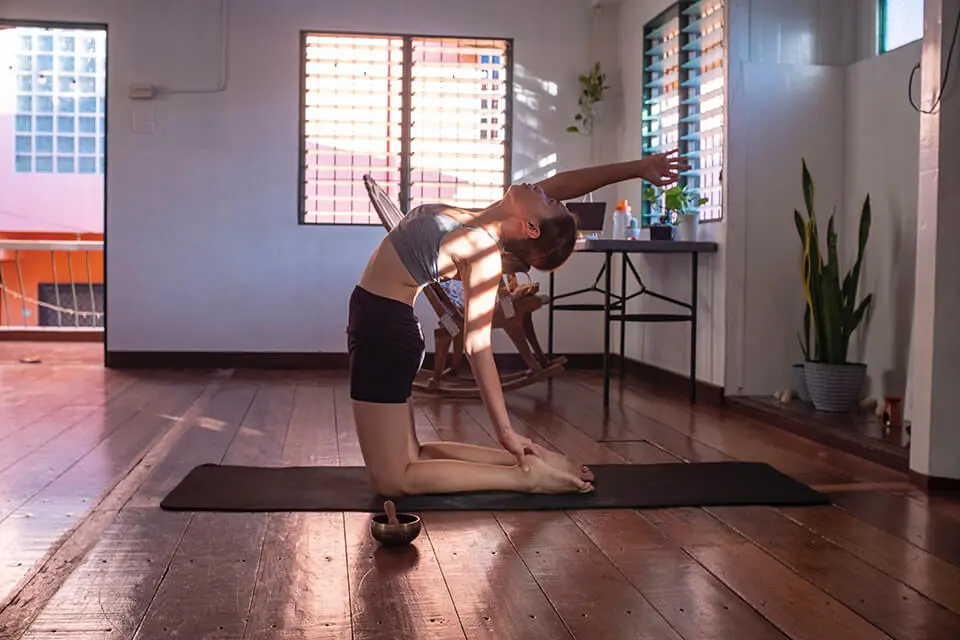
There is fierce debate in the meditative community if yoga truly is a reflective practice or something entirely different. However, when it comes down to how meditation helps improve focus, yoga is an option. There is one difference between yoga and other meditative practices. Yoga can be done in a group, together with likeminded people. But since there is a global pandemic and crowds full of strangers are not the best place to be around, here are some tips on how to start your yoga journey at home
- Create a spot in your home just for yoga
- Buy comfortable clothes and a yoga mat
- Select a yoga routine from the millions of free yoga lessons on Youtube
- Remember to enjoy it.
- Practice regularly. Only regular practice will help you improve your focus.
In addition to reclaiming your mind, yoga is a great way to regain all that lost body strength and flexibility that we use to have in our younger days. If you'd like an app to keep that practice going, here are the [best apps for sharpening focus](/blog/best-apps-for-focus).
## Meditation-Like Practices for Religious People
For some religious people, meditation or yoga can be seen as something that they should avoid or even a grave sin. If you fall into that category, do not get desperate. There are ways even the most religious and orthodox people can enjoy the [benefits of meditation](/blog/benefits-of-meditation), but without doing a traditional form of meditation. One such method is deep prayer. Deep prayer can be compared to [mantra meditation](/blog/what-is-mantra-meditation). So next time that you are stress, entirely focus on the words of your favorite prayer. Let yourself be lost in them, let the words of your favorite prayer full take hold over your mind.
---
# How Meditation Reduces Stress: 6 Ways Mindfulness Lowers Life's Stresses
- URL: https://declutterthemind.com/blog/how-meditation-reduces-stress
- Description: Looking to use meditation as a tool to reduce stress? Here's 6 different ways that show how meditation reduces stress.
- Published: 2025-08-01
One of the most common reasons people practice meditation or begin learning how to meditate is because they're looking to reduce stress. This isn't the [purpose of meditation](/blog/what-is-the-purpose-of-meditation), but it certainly is a byproduct. The good news is that there are more and more studies every year that show the scientific [benefits of meditation](/blog/benefits-of-meditation), including how it helps people manage and reduce stress. One question that comes up a lot is [does meditation lower cortisol](/blog/does-meditation-lower-cortisol), and the honest answer is more nuanced than the headlines suggest. Understanding how meditation reduces stress is essential when starting to use meditation as a way to deal with the stresses of life.
When we know why and how meditation reduces stress, we're better equipped to understand what kind of practices we should be implementing into our daily routine. We also know what parts of a meditation practice we should be focusing on to help us manage and reduce stress.
## 6 Ways Meditation Reduces Stress
Remember that stress reduction is ultimately a byproduct of a [daily meditation practice](/blog/how-to-practice-meditation-daily). The goal of meditation is mindfulness. Mindfulness is also the means to that end. When we [practice mindfulness](/blog/ways-to-practice-mindfulness) during meditation, we can be more mindful outside of the practice. This unlocks so much to us, including a healthier mind and reduced stress. Here's 6 different ways meditation reduces stress.
### 1. Helps us focus on the present
How often have you caught yourself dwelling on the past or worrying about the future? I'd imagine more often than you'd realize. Meditation helps us become more grounded and focused on the present moment.
When you're more focused on the present, you're not as stressed. Most stress is imagined. Even when the stress is real, we make it worse by stressing about the stress. It happens in the mind when it's ruminating on something that occurred in the past, or it's worrying about the future.
With meditation, you're not living in this waking-dream state. You're [living in the moment](/blog/live-in-the-moment) and not constantly lost in thought. While there are many [ways to be stress free](/blog/stress-free), [getting out of your head](/blog/how-to-get-out-of-your-head) is the quickest and easiest way.
### 2. Helps us breathe

Many [types of meditation](/blog/types-of-meditation) practices have you place your attention on your breath. Mindfulness uses breath as the anchor for attention, while specific [breathing meditation](/meditation/breathing) practices have you focus on your breath. Either way, you become aware of your breathing, and it becomes a point where you can focus and clear your head.
The practice is simple. Get into a good [meditation posture](/blog/meditation-posture), close your eyes, and start with a few deep breaths. Watch the breath all the way from the inhale to the exhale. Notice where you notice the sensations of breathing most. You might notice it in your chest, stomach, nose, or lips. Pay attention to the breath and allow it to return to a normal pace. The breath is something that's always there but we often don't pay much attention to it until we're stressed. Become familiar with the breath in a relaxed state so you know where to always return to.
When you're under a lot of stress, you may notice that your breath is shallow and fast-paced. Meditation reduces stress by teaching you to come back to the breath when you're feeling stressed.
### 3. Teaches acceptance
A useful concept to integrate into your life is the idea of your circle of concern and your circle of control. The circle of concern is all the things in life you worry about or are worried about. The circle of control is everything in life; you have control over or can influence.
The problem comes when we worry or have concerns over the things we can't control. This is where a lot of stress is created. When we worry about things we can't control, we can fall into traps. The real path to peace is acceptance. Not a complacent acceptance but a realistic acceptance. There are some things in life that you have no control over, and that's okay. When you can deeply understand this you can learn [how to relax](/blog/how-to-relax) your urge to control everything.
Meditation can teach us acceptance by using our awareness to notice the things that enter our consciousness (such as thoughts and feelings) and not judge or resist them. This is the primary thing you do during a mindfulness practice. When you're out and about in the real world, you can apply this to things that happen to you or the world. No longer will you get annoyed when someone cuts you off. You won't complain about the weather. You'll find fewer things to worry about and thus lead a less stressful life.
### 4. Separates the story from the feeling

When we feel certain emotions, such as sadness and [anger](/meditation/anger), we tend to attach a story to them. Instead of just feeling this raw emotion, we connect ideas, thoughts, and perceptions to them. When we do this, we tend to exaggerate, exacerbate, and even catastrophize. This adds more unneeded and unwarranted stress. Instead, we should see our emotions for what they are and use our reasoning to deal with situations that life throws at us.
With meditation, we can practice this every time we sit. When we notice a feeling or thought arise, note it as "feeling" or "thinking." Catch yourself following any feelings or thoughts that arise with more thinking. Meditation reduces stress by allowing you to get used to separating the story from the feeling of stress and letting yourself watch stress come and go without adding more to the feeling.
### 5. See stress without judgment
Meditation teaches us to see objects that pass through our consciousness through a nurturing and non-judgemental lens. Thoughts and feelings that enter our consciousness are neither good or bad. They're only good or bad because we make that judgment.
Stress can be looked at this way as well. When we sit and meditate, notice the feeling of stress enter consciousness and see if you immediately place a judgment on it. You can begin to become aware of just how often you add judgment to everything. With that comes the realization of how unproductive that is.
Understanding this we can go beyond stress. It can help us learn [how to stop complaining](/blog/how-to-stop-complaining) and even [manage anger](/blog/how-to-manage-anger).
Take that with you when you're in the real world. When something happens and begin feeling stressed, ask yourself how useful it is to feel this way right now. Ask yourself if feeling stressed helps you solve the problem, if the problem can even be solved by you in the first place. How meditation reduces stress is by giving you a new framework to see stress.
### 6. Changes the brain

Finally, a regular meditation practice can change the brain. There's a lot of evidence that supports the [scientific benefits of meditation](/blog/benefits-of-meditation), including increases in gray matter, changes in the amygdala, and an increase in the thickness of the corpus callosum.
These physical changes not only improve cognition, but they can make us happier human beings overall. And a happier human is one that doesn't stress quickly or very often.
When you practice meditation often enough, you'll find that you have better mood regulation, mental strength, and an overall better sense of wellbeing. Mindfulness changes the brain physically and also the mind itself.
## Conclusion
Now that you know how meditation reduces stress, why not start your first practice? Declutter The Mind is a [daily meditation app](https://declutterthemind.com/features/daily-meditation) that offers free [guided meditation practices for stress](/meditation/stress) and anxiety.
If you're already a regular meditation practicer, how does meditation reduce stress for you? Let us know in the comments below.
---
# How Often Should You Meditate?
- URL: https://declutterthemind.com/blog/how-often-should-you-meditate
- Description: How often should you meditate? Is there an ideal amount? Does it matter? We'll cover meditation frequency and what works best.
- Published: 2025-08-01
Meditation has become a popular activity in the Western world, however many people still attach an incorrect stigma. Meditation can be incorporated into your daily life from as little as five minutes a day. While a single mindfulness meditation practice doesn’t require much, frequency is important. When you’re deciding how often should you meditate, more is better but it’s also not that simple. In this article, we’ll explore the question “how often should you meditate?” and we’ll also take a closer look at what you can expect to gain from frequent meditation and how it can bring benefits to your mental and physical health.
## Why Meditate Often?

For many people, meditation allows them to spend a few moments alone, away from the stresses and strains of the world. In this modern-day and age, it’s so easy to get caught up in the rat race and forget about our personal needs. Meditation is an excellent way to counter this, and just a few minutes can make all the difference.
Did you know that you can practice meditation anywhere? Sitting at your desk at work? Not a problem. In your garden? Of course. On the train? Absolutely. If it is that simple, it’s undoubtedly something that we can bring into our lives without much disruption. All you need is good [meditation posture](/blog/meditation-posture) and a place where you can be undisturbed for a few minutes.
If the idea of meditating often sounds difficult to you, it's important to know you can fit it into your routine for as little as five minutes each day. Often, finding the right [meditation teachers](/blog/meditation-teachers) can also influence how often you meditate. If someone's voice is off-putting or something feels right, you likely won't enjoy meditating. Fortunately, there are many meditation teachers out there, you just need to find the meditation style that feels right for you to allow you to enjoy your meditation session regularly.
### What Do You Want to Gain From Meditating?
It’s super important to be aware of your expectations when beginning your journey with meditation. Before we find out how often you should meditate, we need to look at what you want to gain from it. The [purpose of meditation](/blog/what-is-the-purpose-of-meditation) all comes down to want you’re looking to get from it.
For example, you are looking to [relieve stress](/blog/how-meditation-reduces-stress), and in this instance, you may decide to practice when you find yourself in a stressful situation. And this can work well. Taking a few minutes to close the eyes, gather your thoughts, and perform some deep breathing can physically reduce your stress levels. However, if you are looking for something more along the lines of a spiritual awakening, more frequent and intense practice is needed.
Once you have established your personal goals and requirements, you will be easily able to come up with a meditation schedule. That being said, even just a few minutes a day will help you build a solid practice.
### Enjoy yourself
Often, people will begin a meditation practice because they think it’s the ‘in’ thing to do or because their friends are doing it, and this can lead to sporadic and ineffective practice.
Meditation is something that should be a very personal and unique experience. How you meditate will not be the same way that I meditate, and we will both gain different things from it. Just because Tina, the yoga guru, suggested a particular technique, that doesn’t mean it will work for everyone. It is vital that when meditating, you engage in a practice that suits you and that you enjoy. It’s meant to be fun! Explore different techniques and try out some guided meditations to find out what lights a fire in you.
Meditation can help you overcome a negative mood, improve your physical well being, and help you live in the present moment. So you can really just enjoy yourself while meditating. By incorporating it into your daily routine, you can improve your overall well being.

There aren’t any rules surrounding how often you should meditate, but as with anything – the more you do it, the better you will become. It may come as a surprise to learn that meditation is a skill, and you need time to cultivate it. This means that if you want to reap the benefits, you should be taking a daily practice.
Of course, there are times when our lives don’t allow for a lengthy practice, and that’s OK. When starting, it is essential not to overwhelm yourself, and this could put you off meditation for good. Try to aim for around 5 or 10 minutes each day, and using a guided meditation practice can ease you into the concept of meditation.
After some time, you can begin to expand your practice, perhaps through lengthening your sessions or more than one meditation each day. For those who are more advanced in the practice, it is not uncommon to spend much more extended periods in a deep meditative state. For example, some people may meditate for hours at a time. If this is something that you aspire to, knowing [how to practice meditation daily](/blog/how-to-practice-meditation-daily) is even more critical.
### Daily practice
Now that we have established that a daily practice will work best, we need to discover why this is. Imagine an athlete training to be in the Olympics, and he’d need to work out every day. If he doesn’t, he will lose strength and stamina and, in short, won’t stand a chance at winning the gold. The same can be said for meditation; doing a little each day will ensure that you stay secure in your abilities. This will allow you to attempt more extended and more complex sessions, but it will also bring about some visible benefits in your day to day life.
A daily meditation practice will allow you to reap the full benefits of meditation. It'll help give you enhanced attention for longer periods. However, if you do shorter sessions more frequently, the most imporant thing to remember is to just be consistent with your practice. It doesn't really matter how many minutes of meditation you do. But the habit of meditating daily can allow you to benefit from your practice, overcome stress and anxiety, and help you focus.
## How to Fit a Daily Practice Into Your Life
Research has shown that the [benefits of meditation](/blog/benefits-of-meditation) when you meditate daily are abundant, and we look into these in a little more detail later on. But with our busy lives, how are we expected to fit in a daily meditation on top of everything else? It may not be as difficult as you might think. The [best time to meditate](/blog/best-time-to-meditate) is the time that best works for you.
First things first, you’ve got to want to meditate every day, if you don’t, you won’t. Dedication is an essential part of setting your daily practice. But there are practical things you can do to feel confident that you can meet this commitment.
If you practice [yoga and meditation](/blog/yoga-vs-meditation), combining the two activities can make it much easier to fit your practice. Add on your meditation time at the end of your yoga session and begin to notice the benefits.
There are many smartphone apps available that can make daily meditation a cinch with a [daily meditation app](https://declutterthemind.com/features/daily-meditation). These apps present users with a vast range of guided meditations, soundscapes, and timers so that they not only give you easy access to meditating and provide you with the essential tools to get started. Try our app, [Declutter The Mind](https://declutterthemind.com/qr-code)!
For those who are especially busy, including meditation at either end of the day can make it a lot more simple to follow a routine. It is entirely possible to practice meditation from the comfort of your bed, so why not try slotting in a session before you’ve slipped from under the covers or before drifting off at night?
We all have to eat, and one great way of making sure that your daily practice doesn’t slip is to meditate at mealtimes. It’s your choice whether you do it before or after eating, but this is a sure-fire way of remembering to do it. Even practicing while eating is possible with [mindful eating](/blog/mindful-eating).
Above all, don’t chastise yourself too harshly if you miss a day. Meditation should be an enjoyable activity and not a chore. Everyone is different, and it may take some experimentation before you figure out how it best fits into your daily schedule.
## What Are the Benefits of Meditating More Often?
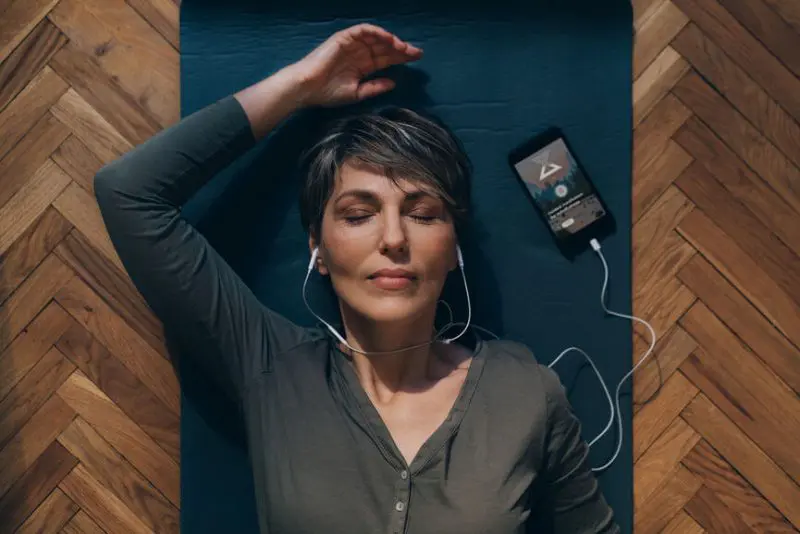
Meditation is becoming more widely understood and, as a result, is even being suggested by doctors for patients who suffer from mental health conditions such as depression and anxiety. Many studies have proven it can be of use for these issues, plus many other [scientific benefits of meditation](/blog/benefits-of-meditation).
Developing a daily meditation practice can bring many benefits to your life, and whether you manage 5 minutes or 5 hours a day, it is sure to be a productive activity.
### Helps control behavior
You may also notice increased feelings of happiness and kindness towards others. This mindful practice can invoke general positivity, which is reflected in your actions.
Some suggestions for performing meditation daily can help in the prevention of memory loss as we age.
You can also evoke feelings of calm, even as a beginner. When you [practice mindfulness](/blog/ways-to-practice-mindfulness), you can create a sense of peace in your life because you live in the present instead of recycling the past or fearing the future.
### Improves your ability to focus and increase your attention span
You will become much more self-aware by practicing meditation each day, allowing you to know yourself better. By improving your awareness of people, spoken words, or life happening around you, you can make better decisions to help others, improve your life, or even learn new skills.
### Helps regulate emotional health
Meditation will improve your sleep quality, leaving you feeling more rested.
One of the significant advantages of meditation is that you need no previous experience to get started, nor do you need any equipment. You can practice anywhere and at any time of the day, making meditation accessible to everyone.
### Improves self care
A person who meditates daily will be investing in his or her own self care. The most important thing is to spend time each day focusing on your breath, live in the present, and not get caught up in other things going on in your life. Mindfulness practices can be helpful at bringing out the best in you without making you feel like you're trying to be the best. So, if you feel stress, meditate. It could be just what you needed.
## Start meditating more often
To get the most out of your meditation practice, you should be aiming to meditate at least once a day. [Start meditating](/blog/what-kind-of-meditation-start-with). This doesn’t need to be a lengthy or detailed practice, studies have shown that as little as five minutes each day can be beneficial. Before thinking about how often you should meditate, it is also essential to understand what you wish to take from your practice. This will enable you to build a more tailored meditation schedule that is unique to you. Above all – enjoy!
---
# How to Calm Anxiety in 2025: 15 Tips to Manage Anxiety
- URL: https://declutterthemind.com/blog/how-to-calm-anxiety
- Description: Knowing how to calm anxiety can help you navigate the stresses of life a lot easier. These 15 tips will show you how to calm anxiety in 2025.
- Published: 2025-08-01
An anxiety disorder can bring out the worst of us. No one performs or acts their best when they have a heart palpitations, high stress levels, anxious energy, high blood pressure, negative thoughts, and high cortisol levels. It's easy to say get some fresh air, take a few deep breaths, and watch your panic attack float away. However, to feel calmer, it's often a multiple step system to get us to feel the calming effect of breathing exercises. In this article, we're going to share all the ways you can calm anxiety.
## How to Calm Anxiety: 15 Tips to Manage Anxiety
### 1. Practice Deep Breathing
So, you know when you’re in the middle of a panic attack and you’re hyperventilating. Your heart is beating so fast, you start freaking out even more. Am I about to die? Well, I have two pieces of good news for you. First, people don’t die from anxiety attacks. So let’s cross that worry off the list. And second, when your body is breathing really, really fast during a panic attack, a little trick to make it stop is to force yourself to breathe in slowly and deeply. You can [try the 4-7-8 breathing exercise](/meditation/breathing) where you breathe in for four counts, hold for seven and release for eight. There's also [a faster way to calm down in the moment](/blog/physiological-sigh): the physiological sigh, two inhales and a long exhale. When you're [feeling anxious](/blog/feeling-anxious-for-no-reason) you experience [shallow breathing](/blog/shallow-breathing) as you breathe faster. When you do deep breathing, you're doing the opposite of that which helps you regulate how you feel using your own body.
### 2. Rewrite Your Story
Our brain is so damn powerful at collecting and sharing information with us. Unfortunately, sometimes that means our brains can be bullies. Telling us we’re not as good as we think we are, making us second guess ourselves, and scaring us with our worst fears. When you find your brain “filling in the gaps” for you, just take a moment to rewrite the scenario. For example, say you texted your partner three hours ago and they didn’t respond. Your brain will cue in the “well, you probably shouldn’t have said that.” Take a deep breath and stop catastrophizing. Don't assume the worst, think about realistic situations that could cause delays in texts. For example, stuck in meetings, running errands, driving somewhere, misplaced phone, they didn’t know you were expecting a response, spending time with family, etc. By thinking of realistic alternatives you can help calm anxiety.
### 3. Look for Evidence

One of the most important steps when learning how to calm anxiety is to find evidence for your beliefs that negatively impact your overall mental health. For example, if you feel like you’re in danger, what evidence is there that you’re actually safe and what evidence is there that you’re actually in danger. For example, if you live in a building with security, that’s some good evidence for being safe. When it comes to evidence for how you’re in danger, being suspicious of someone isn’t enough evidence. Did they contact you? Or did someone harass you? Did someone threaten to harm you? If you have a factual piece of evidence then you can add that to your list. But often times, our anxiety does get the best of us and there’s a lot more evidence showing that we’re safe than that we’re in danger. However, if you have evidence that you're in danger and it's giving you chronic stress, seek medical, professional, and police help. Anxiety and stress that warn you of danger helps you survive, but if it's always triggered it'll be harder to protect yourself when the threat is real.
### 4. Change Your Environment
Now, before you become a permanent drifter, you can’t spend your whole life running away from your problems and fears. But the truth is, sometimes making small changes to your environment can make you feel a whole lot better. Other times, changing your environment altogether, especially if it's a triggering one improves your daily life. If you’re having anxiety at work, you might want to spend some time looking for new jobs after hours or freelancing so you can work from home instead. So if you’re looking to calm anxiety, changing your environment can help you lower anxiety and feel safer. Sometimes, anxious thoughts are just there to tell you what to get rid of.
### 5. Shower
Your daily shower can be a mental health cure. Seriously. During periods where you feel like crying in private, you can just hop in the shower to cry and you’ll come out looking fresh. And no one will know a damn thing. Of course, we don’t want you to hide your sadness or [frustrations](/blog/deal-with-frustration), but sometimes it feels great to have a good cry to let out all the pain. Showers can also help you calm your anxiety. Hello lavender shampoo, conditioner, and soap. If you have a [panic attack](/blog/how-to-stop-panic-attack), inhale some lavender essential oils or products. Seriously, that lavender scent is actually proven to reduce stress and it’s super calming. For soap, Ivory has a lavender scent and for that shampoo and conditioner combo try OGX products. They cost more than bulk bottles, but what you get back in relaxation pays for itself ten-fold. It really is your mental health in a bottle. Not every generalized anxiety disorder treatment is found at a pharmacy.
### 6. Sleep

Anxiety disorders can destroy your sleep. Sleep is the most important thing you need, to calm anxiety and improve your mental and physical health. And for those of you who suffer from nocturnal panic attacks or nighttime anxiety, I imagine you know that already. But sometimes when your anxiety creeps up, you’re too afraid to fall asleep but also afraid of staying away. It can be really stressful to experience that. That loop, where the fear of a bad night makes the night worse, has a name, and it helps to understand [what sleep anxiety actually is](/blog/sleep-anxiety) before you start throwing fixes at it. You can try melatonin to help you fall asleep. Cutting out carbs also makes it easier to [fall asleep](/blog/how-to-fall-asleep) at night. Alternatively, remembering that nightmares are just the brain processing information can help desensitize yourself to the fear of them. When you wake up from a bad dream, say out loud "processing information." Meditating before bed can also help you ease into sleep. Alternatively, you can read positive (not scary or exciting) books before bed to help you feel drowsy.
### 7. Switch to Decaf
If you want to increase anxiety drink coffee, if you want to calm anxiety drink decaf. Your caffeine intake plays a role in your anxiety levels. Especially, if you’re suffering from hallucinations from sleep deprivation caused by your anxiety. Quitting coffee doesn’t make the anxiety go away overnight. But it really does help reduce the magnifying of your anxiety. Like coffee, alcohol can also increase anxiety so cutting out could also do you some good. That doesn’t mean you need to give it up for life. But maybe focus on your health first before pulling out the cabernet sauvignon. The hardest part of coffee and alcohol withdrawal comes in those first couple of weeks. But once you’ve made the switch to decaf or tasty virgin drinks, you likely won’t notice the difference anymore. You can always drink green tea which has some caffeine but nowhere near as much as coffee to see some significant improvements.
### 8. Exercise
When you experience regular anxiety, you’re often in fight or flight mode. And if you take a look at those two words carefully, they both involve… well, exercise. If you’re fighting you’re doing cardio and if you’re running away you’re also doing cardio. So even though you might not want to put on your workout gear in the middle of an anxiety attack, you’d be doing what your body is telling you to do. Plus, you get those awesome endorphins flowing through your veins to make you feel good… or at least a bit better. If you live in an apartment or condo, climb your building’s stairs. The pain of stair climbing up 30 flights of stairs usually makes you forget you were scared. Plus, it makes you stronger.
### 9. Talk to a Friend

When you want to calm anxiety, sometimes the best option is to talk it out with a friend instead of a healthcare professional. A friend can offer you support, share their coping strategies, listen to your needs, or make you laugh. If you invite a friend over to bake cookies and chat, it usually helps distract you a bit because you’re doing something fun together which can help calm anxiety. But then when you’re ready to chat together (and enjoying some delicious cookies) you can have a productive conversation about your struggles and get the help you need for support. If you discuss your needs in statements like “When I experience (activity), I feel (emotion). I really need (fill in the blank) to get myself on track again.” Your friend will have a better understanding of your stresses, your feelings, and your needs. This will make it easier for you to get the support you need. You might even be able to [help someone with anxiety](/blog/how-to-help-someone-with-anxiety) from sharing your struggles.
### 10. Do Good Deeds
During periods of extreme anxiety, it’s always a good idea to [do an act of kindness](/blog/acts-of-kindness). The kind act doesn’t need to be drastic or expensive. You can leave a kind message in a Facebook group about something someone said in a post. Or you can make sure that every day you check your the daily birthday of your Facebook friends. You can also write gratitude cards for your coworkers to let them know what you appreciate about them. And by doing all these [good deeds](/blog/good-deeds) for others, you’ll start to get out of that head of yours and into the… present moment. You’re [helping others](/blog/helping-others). You’re doing good work. And eventually people will do kind things for you too. By making others feel good, you’ll start to [feel better about yourself](/blog/how-to-feel-better-about-yourself) too.
### 11. Be Mindful of Triggers
Anxious people always have triggers. And unfortunately, sometimes you can’t avoid them. You have to accept that triggers will be all around you and find a way to live life normally without being tormented by them. You can take small actions to help minimize a trigger's impact, such as staying over at a friend’s house to feel safe, scheduling a meeting with a psychotherapist to learn coping strategies, or joining Facebook groups for people who suffer from similar triggers to get specific advice from others. But you can't make lifestyle changes to avoid all triggers. Life is meant to be lived, you can't hide in your safe space and avoid the human experience forever.
### 12. Decorate Your Home

A fun way to calm anxiety is to decorate your home. This usually works well in the colder and darker months when you start decorating for Christmas. But you can also decorate for Valentine’s Day or Easter too. In homes that have cold designs or feel a bit dark and dingy, decorating your home can help you create a safe, positive environment where you can feel cozy, warm, and protected. If you’ve left to work in the dark only to return home from work in the dark, it’s a good idea to get those decorations up to feel festive. Who says you can’t celebrate holidays year round? It’s also a good way to take your mind off of stresses and invest them into positive moments. It's a simple way to improve your environment to alleviate anxiety symptoms at home.
### 13. Practice Exposure Therapy
Our anxious thoughts increase the more we avoid our fears. Sometimes, we have to expose ourselves to our greatest fear to help us overcome or at least better manage them. Of course, you don’t want to put yourself in dangerous situations if your greatest fears are dangerous. But taking small baby steps can help you calm anxiety and face your fears. If you have a fear that something will happen to your children if you leave the room, you can practice leaving the room while another person is in there supervising them. And with time remove the supervision and allow them to play in an unsupervised room. More often than not, you’ll see that they’re safe and doing okay. The more you practice exposure to your fears, the better you become at managing your anxiety. Feeling anxious doesn't mean that you're fears are right or logical. That's why exposure therapy helps you reduce anxiety over time to improve your well being. It also helps to [sit with anxious feelings using RAIN meditation](/blog/rain-meditation), a four-step method for turning toward a feeling instead of fighting it.
### 14. Try A Meditation App
One of the best ways to calm anxiety is to [meditate for anxiety](/meditation/anxiety). Meditation is all about living in the present. And anxiety is about living in the future. By meditating, you help bring your mind to the present and change your relationship to the feelings of anxiety. [Declutter The Mind](https://declutterthemind.com/qr-code) is a free guided [meditation app](/blog/best-meditation-apps) that you can use to calm anxiety anytime. You can practice a [loving kindness meditation](/meditation/loving-kindness) which helps you build empathy and compassion towards people you are positive to, negative to, and neutral to. Or you can focus on a mindfulness [meditation for anxiety](/meditation/anxiety) where you place your attention on your breath instead of your fears. Or you can try a [body scan meditation](/meditation/body-scan) where you scan your attention down the body to find where your anxiety lives. And if the anxiety is showing up as a clenched body, [progressive muscle relaxation for anxiety](/blog/progressive-muscle-relaxation) walks you through tensing and releasing each muscle group in turn.
### 15. Talk Medication
If your stress hormones are too high, a medical professional may recommend a medication for you. Medically reviewed prescription drugs can help you get the support you need immediately as you need it. Sometimes, people don't like medication because it takes time finding which medication works best to treat your symptoms without causing other issues. Be vocal with your doctor and medical professionals to ensure you receive the best treatment possible for the sake of your well being. You can relieve anxiety with medication, especially if you suffer from a diagnosed panic disorder. Work with your doctor to find the best treatment for your mental and physical symptoms to reduce anxiety for good.
## Conclusion
So you’ve now learned how to calm anxiety. You may still feel anxious from time to time, but you can try some of the coping strategies we’ve outlined above to help you manage anxiety. Always remember that humans from the dawn of time have always felt anxiety. It’s what’s helped us survive for so many generations. So whenever you feel anxious, don’t forget to tell yourself that you come from a long line of survivors. And that feeling anxiety is normal, healthy, and the reason you’re alive today. Some days managing your anxiety can be tough, [check out these videos](https://www.youtube.com/c/DeclutterTheMind/videos) to help manage anxiety.
---
# How to Deal With Relationship Anxiety
- URL: https://declutterthemind.com/blog/how-to-deal-with-relationship-anxiety
- Description: Learn how to deal with relationship anxiety and 8 proven ways to overcome this destructive feeling that can ruin relationships.
- Published: 2025-08-01
Everyone deals with relationship anxiety at some point in their lives. If you've ever experienced it first hand, you know how hard it can be to cope. Relationship anxiety involves constantly worrying about certain aspects of the relationship. You might fear that the relationship won't work out, or it will slowly begin falling apart somehow. You have this pestering fear of abandonment, trust, and intimacy. A past relationship trauma can cause you to feel unsteady in your current relationship. No matter how hard you try to overcome this, it seems like an impossible struggle leaving you feeling like you're walking on eggshells. This article will highlight everything you need to know to help you overcome relationship anxiety.
## What Is Relationship Anxiety?

Relationship anxiety involves the insecurities and doubts you experience in a relationship, even when you're in a healthy and stable partnership.
Relationship anxiety can cause you to start questioning yourself and your partner from time to time about their intentions and plans. You constantly worry that something is wrong or fear that they're going to leave and break up with you, even when there's no evidence suggesting that. You may even [feel stuck](/blog/feel-stuck).
You might begin to stress yourself by asking several questions or doubting if the relationship will work or not. Fortunately, relationship anxiety is completely normal. It can arise from fears or pain, such as fear of abandonment, a trauma in relationships, or even not being ready for a relationship. For a lot of people it traces back to [an anxious attachment style](/blog/anxious-attachment) that makes closeness feel unsafe. If you haven't had it easy in romantic relationships in the past, there's a tendency to feel anxiety in your subsequent relationships to come.
As you start to question the relationship, your anxiety rises. As a result, [shallow breathing](/blog/shallow-breathing) becomes the norm as you start hyperventilating. The only thing that can bring your breathing back to normal is a guided meditation practice.
## Eight Ways to Overcome Relationship Anxiety
### 1. Maintain your identity

It's incredibly easy to get lost in who you are and compromise your morals and values for someone else, especially when you're trying to [find love with the right person](/blog/how-to-find-love). However, this tendency is precisely what can cause relationship anxiety and leads you to worry about several factors, even before a relationship begins. Deal with relationship anxiety before it worsens. You need to stay grounded in who you are and never let the core of who you are fade away. No matter how much you like them or how attached you are, the relationship won't work if you lose yourself in your relationship. As you're constantly compromising parts of who you are, this causes relationship anxiety, which contributes to the worry that your partner no longer wants you.
Long-term and even married couples will notice that their partners change over time. And that's not a bad thing. The person you are at 20 will be completely different than the person you become at 30. The goal is to change together in your relationship in better ways. Maybe your hobbies or interests go in polar opposite ways. But as long as the core values of what you need from a relationship get better with time and you continue meeting one another's needs, this growth and change will be positive.
### 2. Question your thoughts
If you tend to [feel anxious](/blog/feeling-anxious-for-no-reason) towards the relationship, you need to learn to question your thoughts, especially when nothing is particularly wrong. The brain will develop hurtful beliefs and ideas, especially when your thought pattern is naturally inclined to lean towards anxious and insecure thoughts. While this is normal, you shouldn't let yourself believe every thought because, most often than not, your thoughts aren't always valid. You don't even come up with them. They arise on their own from nothing.
Our brains evolved to be more pessimistic because that's how our ancestors survived all these generations. Yet, in today's world, pessimism doesn't keep us alive; it stresses us out. Naturally, our thoughts are inclined to cause us to fear and doubt, so avoid believing every idea your brain throws your way. Instead, make it a habit to question your negative thoughts. If your mind convinces you that your partner no longer loves you and will break up with you, find the evidence that supports those thoughts. If you find none, realize that it's just a thought without any merit.
Remember, practicing meditation or mindfulness will help you recognize thoughts as they happen. Consider using a guided meditation on the Declutter The Mind app to recognize which thoughts keep surfacing. Realizing that [you are not your thoughts](/blog/you-are-not-your-thoughts) can be particularly helpful at curbing relationship anxiety. If your partner is open to it, a [couples meditation](/blog/meditation-for-couples) gives you both a shared way to settle before a hard conversation.
### 3. Write down your fearful thoughts
If reversing your [negative thoughts](/blog/how-to-stop-negative-thoughts) doesn't work because of how convincing your anxiety can feel, you can also try writing your beliefs and fears down in a journal or on a piece of paper. The idea behind this is that the more you write down your thoughts, the better you can distinguish between what's real and what isn't. As you write down your anxious thoughts, include writing down the reasons behind why you think that way.
By observing your thought pattern, you can realize that your anxiety often comes from something that happened in the past or a particular fear or trauma, helping you better deal with relationship anxiety. The mind is a mighty thing, and when you dwell on your thoughts, you'll never overcome your relationship anxiety, no matter how hard you try.
By writing your thoughts down, you might begin to realize how your conversations have been affected by your pessimistic musing. Becoming aware of your thinking is the first step to changing your life. As you begin to realize the thoughts that arise, you can start to change your behavior to [become more positive](/blog/how-to-be-more-positive). And thus, improve the quality of your relationship to prevent relationship anxiety.
### 4. Communicate with your partner

Individuals prone to relationship anxiety need a partner who communicates well on their behalf, especially when they're [feeling overwhelmed](/blog/feeling-overwhelmed) with everything they're thinking and feeling. To overcome anxiety in relationships, sometimes it's as easy as communicating your needs with your partner and saying everything you fear happening. Most likely, when you communicate effectively, your partner will assure you that these fears of yours aren't going to happen and they're not going to leave you. Your partner can't help you if they don't know what you're thinking and feeling, so being transparent with them in the relationship is the best way to put those fears aside. These fears may resurface, but your fears will be set aside through proper communication in the meantime.
Being explicit about your needs and [relationship goals](/blog/relationship-goals) will help your partner realize how to best communicate with you. Be sure to outline what walking on eggshells feels like to you when your partner says certain statements or shows certain behaviors. By having a relaxed discussion about your relationship anxiety, your partner can help calm your worries.
### 5. Use distractions
Relationship anxiety can get overwhelming to deal with, making it easy to act on your feelings and take impulsive actions, but you must resist this. Otherwise, you could potentially do things you regret because of your insecurities, fears, and rash behavior. Don't hesitate to use distractions to take your mind off the things you fear in your relationship. Whether it's video games, meditation, watching movies, or even hanging out with friends. Do whatever you can to avoid dwelling on your thoughts. As intense as your thoughts may get, you only give power to your fears when you dwell on them further. Spending time on the things you love will help you realize that anxiety in relationships only lasts as long as you focus on that feeling. However, when you do everything you can to take yourself out of that feeling and stay grounded in the idea that your thoughts aren't real, then the anxiety will fade eventually.
The goal of a successful relationship is to live presently with them. By spending your time enjoying yourselves and one another's company, there won't be any fears. Can you try [mindful dating](/blog/mindful-dating) with them to be in the moment with your significant other? Rather than obsessing with [how to deal with a breakup](/blog/how-to-deal-with-a-breakup), focus on being a supportive, affectionate, praising partner.
### 6. Let go of your need to control
It gives you unnecessary relationship anxiety when you do everything to control or change your partner, which usually is what pushes them away. This behavior is prevalent when you're someone with a strong personality or tend to control specific areas of your life. You need to realize that your partner isn't someone you can overpower or change because you can't love someone into their potential. If you're not happy with who they are, then maybe dating them wasn't the right decision for you. You can lift the burden caused by your relationship anxiety by accepting things the way they flow and stop trying to micromanage everything, even your relationship. The easiest way to deal with relationship anxiety is to [let go someone you love](/blog/let-go-of-someone-you-love) and of your need to control.
Life doesn't always have to go the way you want it to, which isn't a reflection of the relationship's failure. It doesn't mean you'll be loved less, or someone will break up with you. It just simply means there are things beyond your control - and that's perfectly okay.
There's a famous quote, "Sometimes things fall apart, to make way for better things." Think of all the times that things haven't gone well in your life and how they worked out for the best. Remember, while relationship anxiety is scary, a failed relationship could be the best thing to happen to you. Maybe staying together in some cases would be more destructive to you. The goal isn't to make you more worried about what will happen, but to accept what does.
### 7. Stop comparing or measuring your relationship
It would help if you avoided your tendency to compare your relationship with others because this is one of the primary causes of relationship anxiety. Every relationship is different, and you need to come to terms with that realization before trying to deal with relationship anxiety. Just because your relationship looks different doesn't mean that you're automatically settling for less or that someone doesn't love you as much as you thought. [Stop comparing yourself to other](/blog/how-to-stop-comparing-yourself) relationships. Especially those you see on social media, it will rob you of happiness and contentment faster than anything. You need to realize that social media is a facade you can't rely on, and none of it is an objective basis of what relationships are supposed to be. For instance, just because your partner doesn't post photos of you doesn't automatically mean he no longer loves you. Thinking this way, consider your partner's other behaviors, like how much effort he puts in or how he spends time with you. Realize that measurements and comparison aren't good ways to prove someone loves you.
People show love in different ways: touch, words, service, spending time with you, or through gifts. Not everyone expresses their passion in the same way. Someone might not even realize how they express love, but it's likely one of those five ways. You can start to notice if one of those behaviors is given by your partner to determine that's how they express their affection towards you.
### 8. Realize love will always be a risk

No matter what angle you see things from, there's always a risk that comes with falling in love. However, the more you focus on your fears and insecurities, the more likely it's going to happen eventually in your relationship. By focusing on the very thing you fear, you're increasing the possibility of your worst fears happening - which is the opposite of what you want. Realize that love will always come with a risk, and only by taking the leap of faith can you counter the constant relationship anxiety you most fear. The worst that can happen is a relationship not working, and it's not always as devastating as it sounds. No matter which angle you look at it from, relationships are risky, and you're not resolving anything by focusing on your anxiety. The best thing you can do at this point is to trust your partner and see where life takes the both of you.
## Conclusion
This article aimed to able to shed insight into everything you needed to know when trying to deal with relationship anxiety. While it's normal to feel this way, you need to understand that your anxiety is far from valid and your fears aren't real. With the methods mentioned above, you can effectively manage your anxiety in relationships better.
---
# 12 Ways to Deal With School Stress
- URL: https://declutterthemind.com/blog/how-to-deal-with-stress-at-school
- Description: School stress can be overwhelming. In this article, you'll learn 12 effective ways to deal with stress at school to help you in 2022.
- Published: 2025-08-01
From social pressures to too much homework, you're bound to experience school stress at some point in your life. It doesn't matter if you're in elementary school, middle school, or even high school, being a student requires you to learn a lot of information in a short time. It can [feel overwhelming](/blog/feeling-overwhelmed). But there are ways to deal with chronic stress and to relieve stress in general. In this article we'll discuss all the ways you can deal with school stress.
## How to Deal With School Stress
### 1. Sleep

Yes, you have to sleep. Some students, especially as they go into college, think they can cram and pull an all-nighter. Sure, maybe it’ll work once, or even the first few times. You can even do that project last minute or stay up all night to write that paper, and pull off a passing grade. But, how about next week’s paper? And the one after that? Then you have studying, time for family, going out with friends, and so on.
Make it a top priority to get enough sleep, as in 6-8 hours a night to prevent [burnout](/blog/burnout-recovery). And, make sure you maintain a similar sleep pattern on the weekends (i.e., don’t sleep 20 hours on the weekend to compensate for all nighters during the week). Your body needs rest. It’ll not only help keep you feeling refreshed, it’ll also help your mind stay fresh to prevent school related stress.
Plus, there are many [benefits of sleep](/blog/benefits-of-sleep), for example, sleep helps regulate your mood, which helps you manage stress better. Don’t neglect it. Think of it as an investment for your energy. Putting in 8 hours of sleep tonight could mean 12 solid hours of high energy tomorrow. If you need help, there are [apps that can help you sleep](https://declutterthemind.com/meditation/sleep).
### 2. Ask for extensions
To manage school stress, sometimes it's a good idea to ask for extensions. Depending on your school structure, you might even talk to a guidance counsellor about lessening your course load. You might trade in a course for Saturday school or summer school, so that you can better manage your course load during the the school year.
Young people don't need to be ashamed about asking for extensions or alterations to their school schedules, it can be a very helpful thing. This tends to be more common for high school students or university students, who have challenging projects and timelines. If writing assignments [feel overwhelming](/blog/feeling-overwhelmed), you could seek help from a [paper writer](https://speedypaper.com/) to manage your workload effectively. Alternatively, if you find you absorb content better outside the classroom, you might try an online school instead of an in-person one. Everyone learns differently, so find what helps *you* manage stress best.
### 3. Positive affirmations matter
You don't need to be an Ivy League graduate to do well in life. High school students don't need to overburden themselves with a brand name school. It's key to your emotional health to aim to do your best but to still enjoy your life. [Positive self talk](/blog/positive-self-talk) will be helpful in helping you reduce stress at school.
It might sound like an oversimplification or even corny advice, but the lens you look at the world through can affect everything. From the choices you make to the attitude and mood you’re in. If you’re more negative than positive, it’ll make your life a lot more difficult than it needs to be.
If you tell yourself you can’t do something, you’re going to believe it. Focus your energy instead on telling yourself what you *can* achieve. If you work hard, you’re going to do well on the test, ace your project, or give a great presentation.
Sometimes the best students are the ones who care enough, and put in the additional effort. Remember, half of success is just showing up. Those who are optimists and tend to [be more positive](/blog/how-to-be-more-positive), tend to do better in their coursework. Give it a try, rather than telling yourself you’re going to fail at something before even trying it.
### 4. Listen to music
From upbeat music to classical music, finding the songs that help you relax are key to managing student stress. It doesn't matter if you're in middle school or university, music can be helpful when it comes to getting you to focus or even to [calm the mind](/blog/how-to-calm-mind) when you're feeling anxious. Young people should take time to listen to music every day during stressful periods. Don't be afraid to dance to it either. Your physical education could be helpful here too. Plus, music can be therapeutic for your mental health. So, whether you're struggling with stress management or mood swings or just having busy schedules, consider listening to your favorite [positive songs](/blog/positive-songs) to help you manage stress.
### 5. Eat well and exercise

Your [mind and body](/blog/mind-and-body) need to work together well for you to function well as a student. You don’t have to run a 5K in 20 minutes or become a state champion athlete to get into the top schools. Nor do you have to follow the strictest diet and avoid having fun.
But you do have to make time to exercise as this will help increase endorphins, which will help put you in a better mood, in turn, helping you do better in your courses and [deal with stress](/blog/deal-with-stress) better at school.
Don’t forget about maintaining a great diet, too. If your school cafeteria is like most, it probably is filled with a lot of food that isn’t the healthiest option. Still, it’s important to do your best to eat a clean diet during the week while you’re at school. It will not only nourish your body, it will feed your mind as well. A well fed mind will be able to tackle any school stressors.
### 6. Ask for advice from older students

You can manage school stress by asking for advice from students a few years older than you. People who've recently been through the problems your facing will be able to help you know what a normal stress response is while providing solutions that will better your mental health. Besides, young adults tend to prefer advice from people around their age rather than their parents, counsellors, or trusted adults.
As long as you get the emotional support you need to deal with peer pressure, bullying, or just stress in school, you'll be okay. So find a support system who will lift you up instead of knock you down while you're low.
### 7. Visualize yourself doing well
This suggestion works hand in hand with the [positive affirmation](/blog/positive-affirmations) one. If you visualize positive energies, see yourself getting good grades, doing well on a paper, and excelling in your courses, you are in a better position to do so.
I’m *not* suggesting that visualization is magic and that just picturing yourself do something will allow you to get it. In actuality, visualization is a way to prepare yourself. It’s a way to see yourself reaching the goal so that when you practice in reality, you’ll have a clearer path. This helps you [stay calm under pressure](/blog/how-to-stay-calm-under-pressure).
So whether it is preparing for the SAT or ACT, preparing for a big presentation in your college speech class, or preparing for the final exam in one of your toughest classes, visualize yourself doing well and getting a good grade on the work you’re turning in.
[Guided imagery](/blog/guided-imagery) is a great way to reduce stress at school. If you’re visualizing bad things and bad energies, this is immediately going to put a great burden on your body and mind. With positive visualizations, you’ll instantly turn off self doubt, help yourself calm down, and you’re going to feel at ease when the time comes for you to sit in for that exam, or to give that presentation that you have to give in front of a classroom of 50 students.
You’re going to feel a calming energy around you, and this is going to go a long way in helping you reduce overall levels of stress, and improve the manner in which you’re going to approach whatever challenge you are facing in one of your courses.
### 8. Take a temporary leave
Many parents become concerned when their kids decide to leave school. While an education is important and you should strive to graduate, it's also okay to know when it's time for a bit of a break. Taking a semester off from high school or university to manage your mental health is sometimes a necessity, especially when you're feeling like the stress in school is unmanageable.
However, you shouldn't leave school and then do nothing. You should aim to be productive in the period, such as learning your coursework at your own pace, getting a part-time job, or investing in your mental health, such as therapy appointments and stress management. Having the support of your parents and doctor will be key, though. Without it, the tension will just move from school to home.
### 9. Disconnect from social

No, this doesn’t mean you can’t have social media accounts. Nor does it mean you should stop using these accounts during a set period of time. But a [social media detox](/blog/social-media-detox) could be good for you. Today, everyone’s on some kind of social platform, it’s impossible to avoid it. But you can focus on looking at the positive versus the negative. You can avoid looking at accounts or people’s pages that have negative things to say.
Instead, focus on being friends with people who do well in school. Focus on looking for accounts that spread positive energies and vibes. Try to find a brand to follow that helps deal with school stress.
You can use the power of social media in a positive manner, so do so in your attempt to reduce overall stress levels at school. Don't keep up with the masses, which is going to cause a spike in cortisol levels, and increase stress levels. And spread love back to people you follow, writing kind messages to them.
### 10. Make new friends

Those looking to reduce stress will benefit from making new friends. Having a good group of friends is key to good mental health. [Meeting new people](/blog/how-to-meet-new-people) can be hard, especially if you just joined a new school. So start with people who sit next to you, if you see someone hanging out alone, you can ask them to hang out, or join your local school clubs or extracurriculars.
Stress in school can be overcome by having a [good friend](/blog/how-to-be-a-good-friend) you can vent to. However, if all you do is vent you might push people away. So aim to do kind gestures for your friends.
Find ways to lift people up and make them feel good. Young adults who do this will notice that there's less drama from always praising people rather than putting people down or gossiping about someone for the sake of fitting in.
### 11. Regularly practice meditation
[Guided meditation](https://declutterthemind.com/meditation) can be a tool for students when they’re [feeling overwhelmed](/blog/feeling-overwhelmed) by their studies, or when they just want to maintain a more positive and mindful attitude while in school.
You don’t need to do anything fancy, either. A [20-minute meditation for students](https://www.youtube.com/watch?v=kfIK3LY7OYA) will help you untangle the clutter that gathers in your mind from all the responsibilities and things you’re accountable for at school.
You know, the dozens of assignments you need to complete, the handful of quizzes you need to ace, and the bunch of tests you need to prepare for. Meditation grounds you, to the moment, and teaches you to approach all of these tasks mindfully and [get out of your head](/blog/how-to-get-out-of-your-head).
### 12. Get organized with an agenda

Ultimately, if you’re not using an agenda or some kind of method of organizing the assignments you have due (and when they’re due) and the various notes from different classes, it can be hard to be organized.
Instead of keeping these things filed away in your brain hoping you can access them when you need them later, write things down. The date of the upcoming test? The 3 things you need to add to the assignment you’re working on? Need to remember to edit that paper before turning it in? Write it all down.
We’re human. Our brains, even when we’re young, aren’t perfect. They can become cluttered and we have a tendency to forget things or mix things up.
Get organized and use something like an agenda or calendar on your phone to plan and keep track of all your classes, all of your assignments, and all the notes you take in each class. Deal with the stress at school by simply becoming more organized.
## Conclusion
Stress management is key to dealing with school stress. Since stress impacts all areas of your life, you'll want to schedule time to calm the mind. You can do this through long talks with your parents, getting a pep talk from a friend, or [downloading the Declutter The Mind app](https://declutterthemind.com/qr-code) on your phone. But know, everything you're facing is temporary. You'll eventually graduate and things will change. Your school life isn't your whole life. Still, learn how to [take care of yourself](/blog/take-care-of-yourself), it'll make things going forward a lot easier.
---
# 17 Easy Ways to Deal With Stress at Work
- URL: https://declutterthemind.com/blog/how-to-deal-with-stress-at-work
- Description: Learn the 17 ways to deal with stress at work. Say goodbye to toxic environments and move past your work stress for good in 2023.
- Published: 2025-08-01
You’re not alone if your job or career is stressing you out. Learning [how to deal with stress](/blog/deal-with-stress) at work is more important than you may realize. Among the workers in the United States, [more than 60% feel stress 3 days a week or more](https://www.cnbc.com/2017/03/29/most-american-workers-are-stressed-most-of-the-time.html), on average. The good news is that there are simple ways you can eliminate or at least deal with the work stress you might be feeling. This article, we'll share 17 different techniques for managing job stress in 2023.
## How to Deal with Work Stress in 2023
### 1. Get enough sleep

The simplest (but not always the easiest) way to [deal with stress](/blog/deal-with-stress) in the workplace is done outside of the workplace.
Sleep is arguably one of the most important factors when it comes to your mood and mental health. [Ensuring you’re getting enough sleep every night](/meditation/sleep) (around 8 hours) helps give you the mental fortitude and cognitive energy to deal with the stresses of the 9 to 5.
Sometimes, what stresses us out at work begins with how we react to what’s happening at work. If you find yourself more sensitive to things happening at work, or [feeling overwhelmed](/blog/feeling-overwhelmed) with stress from seemingly small things, take a step back and look at your mental health.
There are other factors but most people who work hard [don’t receive enough sleep](https://health.clevelandclinic.org/happens-body-dont-get-enough-sleep/). Take some time to ensure you’re in the proper headspace at work before determining that it’s actually your work that’s stressing you out.
At the end of the day, be sure to follow a [night time routine](/blog/night-time-routine) to help you get the proper sleep you need to have less stress at work.
### 2. Meditate at work
https://www.youtube.com/watch?v=svuwU0Cy1Wk
If you notice your workplace stress is causing you to have high blood pressure, excessive stress, cardiovascular disease, or even muscle tension, relaxation exercises like [guided meditation](https://declutterthemind.com/meditation) can help if the problem is temporary. If the problem has been lasting years, you might just be the unlucky person in a toxic environment.
However, if the work stress is temporary, such as preparing for a once a year upcoming conference or seasonal work like tax season or holiday shopping, a meditation practice can help manage your emotional health and any mental health problems that arise from your job.
Meditation is all about focusing on your breath. The more oxygen the brain gets the calmer you become and the more aware you become too. You might even have a [moment of clarity](/blog/moment-of-clarity) to help you problem solve at work more efficiently.
To deal with job stress, find time before your shift and during breaks to practice a quick five or [ten minute meditation](https://declutterthemind.com/tools/meditation-timer) to calm yourself during this stressful period. By managing your workplace stress at work, it prevents it from affecting your personal life.
### 3. Resist trying to be perfect at everything

It’s not uncommon for the highest performers and hardest workers to be the ones that deal with the most stress.
There’s nothing wrong with giving a career you care about your all, however, be careful that you’re not trying to be perfect at every aspect of your work.
Some [self-awareness](/blog/self-awareness) is really important here. Whether it’s realizing that there’s simply some things you’ll never be perfect at or realizing there’s people at your work that can do a better job than you can, learn to let go at your obsession with perfection.
It’s not about becoming complacent or lazy. It’s realizing when something is good enough for most people, or when the law of diminishing returns starts getting into play where working on something more becomes [worth less](/blog/feeling-worthless) and less of your time and energy. Especially your mental health.
### 4. Take advantage of the employee assistance program
Depending on which place you work, you might have access to an employee assistance program to help you manage work stress. You can speak to counsellors for your personal life or work life, whichever needs the most support. By talking to someone you'll be able to manage your physical and mental health. You might get advice about exercising more or trying cognitive behavioral therapy.
If a personal issue is seeping into your workplace, it may add workplace stress. Sometimes when we're going through the [stages of grief](/blog/stages-of-grief) or dealing with a medical issue, our attitude at work begins to change. It can have negative effects on work related activities. Telling co-workers you're dealing with some personal issues without going into detail can help relieve some tension.
### 5. Don’t sweat the small stuff
There comes a point at work, where you realize that the best approach not only to your own sanity, but for the sake of your coworkers, is to better pick your battles.
It’s tempting, especially when you’re new and eager to make your mark, to tackle every issue, conversation, project, and idea that comes your way.
It’s tempting to try to give your attention and energy to as many things happening around the organization as possible.
However, you’ll find that this quickly begins to drain you.
The better approach is to focus on what you can have the most impact on but what also has the most impact on you, when it comes to dealing with stress at work.
Don’t sweat the small stuff. Most things that happen, most issues, most conflict, and most challenges are ultimately not that big of a deal.
Unless your line of work is life or [death](/blog/death-anxiety), don’t take it too seriously.
### 6. Take note of the warning signs

There's a slight difference between chronic stress and when you [feel overwhelmed](/blog/feeling-overwhelmed). Be aware of things you're doing, which could be a sign of unhappiness in the workplace. If you're binge eating from stress, focus on good nutrition, to prevent yourself from ending up with a diabetes diagnosis.
If you feel like you're on the verge of a [panic attack](/blog/how-to-stop-panic-attack), try [deep breathing](/meditation/breathing).
If your job is highly stressful, consider doing a check-up at the doctor's office to do some disease control, check your blood pressure, and even a weigh-in to ensure you've been doing physical activity.
If you have a smartwatch, note your sleep quality. If you're waking up from nightmares often, that's a sign that your work environment is causing a lot of chronic stress. Aim to do some progressive muscle relaxation before you sleep to prevent sleep disturbances.
Remember your well being is more important than your job. No job is worth risking illness over. Prioritize your mental and physical health over your job duties.
### 7. Avoid the coworkers that gossip and are negative

This can be a challenging philosophy to follow at work, since you can’t really choose who you work with, but try to avoid people who gossip, and have a cynical or [negative attitude](/blog/how-to-stop-negative-thoughts).
Even if you can’t physically avoid these people, try not to engage them when they bring up gossip or act cynically.
Instead, your best approach here is to be more optimistic and positive at work, and focus on productive and constructive conversations.
It’s very easy (and sometimes entertaining) to listen or become involved in office gossip and politics. But you’ll start to find it can become exhausting. Worse yet, get too involved and it begins to stress you out.
Even if what’s being said or gossiped about is true, be the shining light that works on improving the culture and making the place you work at, a better place to work at. Be the person who lifts people up, does [acts of kindness](/blog/acts-of-kindness) for their peers, and celebrates team member's milestones.
### 8. Take mental health days

One way to manage job stress is to take advantage of mental health days. If you struggle with mental health outside of your job, consider looking for roles with four day work weeks or Fridays off in the summer.
Keep in mind that a day off or two won't solve the problem of work [burnout](/blog/burnout-recovery). They simply give you a much needed break to recover from it. You'll still need to work on a solution for managing difficult coworkers, a heavy workload, and tight deadlines.
But taking time to recharge your batteries (and turn off Slack for longer than a weekend) can be beneficial to your wellbeing. No one can stay switched on all the time.
### 9. Prioritize the most important tasks first thing in the day and week
If it’s your actual work that’s causing you stress, or you’re dreading the things you have to do at work, ensure you’re prioritizing the most important tasks first every day, and early in the week.
“Eat the frog” as Brian Tracy says. This will help you better deal with stress at work. The more you put things off, the longer the stress about doing the thing lingers. Plus, just imagine the relief you’ll feel after you finish this task. Imagine how much energy it will leave you for the rest of the things you’ll need to work on.
### 10. Avoid politics and controversy
Most work stress comes from the topic of politics. Whether it's talking about political issues at work and getting into arguments about it or trying to navigate office politics for a promotion.
People who constantly become combative on political issues are more likely to feel stress or even experience high blood pressure. You will never change someone's mind on a topic. It's not your responsibility to either.
Instead, focus on your work-related tasks. If you do the work, and do it well, you're more likely to get that coveted promotion, pay raise, or bonus.
### 11. Take regular breaks

This doesn’t just mean your lunch break. This can be as simple as taking a minute to have a mental break where you close your eyes, take a few deep breaths, and disconnect from worrying about the future and [relax yourself](/meditation/relaxation).
Of course, if your work allows it, take more breaks, even if it’s just a few minutes to walk around the office. Even if it’s just a few minutes to talk to a coworker about their weekend. Even if it’s a few minutes to use the bathroom and wash your face.
Don’t underestimate the effect of not breaking up your work with a few breathers. It won’t just help you deal with stress, but it can make you much more productive.
### 12. Set work boundaries
A key way to manage workplace stress is to start [setting boundaries.](/blog/setting-boundaries) No, you don't have to stay online after hours. Catching up on work on the weekend? Why would you do that, you're not on the clock.
Your well being depends on your ability to set the right boundaries. It's important to spend time with family members, friends, and simply relax. Work demands don't matter on your off hours. It's not your problem anymore.
If you have a physical workspace, leave it at lunch and after hours. If it's in a home office, don't walk into it to check your email on the weekend or in the late evening. Create boundaries that separate your work and home life.
### 13. Leave your work at work

In this connected world, it’s becoming more and more difficult to unplug.
This holds even more true in the work world.
Whether it’s messaging apps, emails, text messages, or simply being able to get work done through your phone, it’s tempting to allow work to follow us home, even when we’re off the clock.
It’s important to work towards leaving your work at work and encouraging yourself to develop [good habits](/blog/good-habits). Deal with stress at work, not at home.
Some extreme tips are to leave work phones and work computers at work, so you’re not tempted to check these devices at home. This might mean always getting your work done in the office, even if this means staying a few extra hours to ensure that happens.
If that’s not possible or doesn’t apply to you, practice scheduling your personal time at home, just like you might schedule meetings or tasks at work. If you find yourself always reaching for the work phone or checking the work email or Slack.
In addition, leaving your work at work means mentally as well, not just physically.
This can be much more challenging but allowing your work to follow you home and dwelling and worrying about work things at home isn’t worth your energy. Leave it for when you get back to the office. You’ll handle it when you’re at work. You’re at home now.
### 14. Go for a lunch-time walk
For the sake of your physical health and to help you deal with workplace stress, go for a lunch-time [mindful walk](/meditation/walking) every day at noon.
You can go eat a quick lunch, then go for a walk around your office's neighbourhood for twenty to thirty minutes. Not only does it give you a much needed dose of fresh air, but it also helps you disconnect from your work and any work related stress.
Your physical health matters. So finding time to get more steps in and move around will help you manage a lot of that job stress. Bring a coworker you get along with if you need someone to chat with or listen to some music and [enjoy your lunch break](/blog/things-to-do-on-your-lunch-break)– whatever helps you de-stress best.
### 15. Practice mindfulness at the office
All your stress comes from your thoughts.
Your thinking might place you in the past, dwelling on something you did at work or that happened, or place you in the future, worrying about an upcoming presentation or task.
The best way to deal with job stress is to [get out of your head](/blog/how-to-get-out-of-your-head) and into the moment.
When you’re stressed, you’re lost in thought.
To get out of your thoughts, and eliminate stress, practice mindfulness.
An easy way to do this is to [practice mindfulness meditation](/blog/ways-to-practice-mindfulness).
Try the practice above. Find a quiet spot in the office and take at least 5 minutes to be mindful.
### 16. Listen to music while you work
One way of managing job stress is to listen to music while you work. Having background music can help you enjoy work a little bit more– especially if you have a heavy workload causing your work related stress.
Listening to your favorite new songs when they come out every Friday can help the workday fly by. You can reduce stress by listening to [positive songs](/blog/positive-songs) that just make you so happy.
Not only is music good for your well being but it's also good for your productivity.
### 17. Consider switching teams or jobs
To deal with workplace stress, particularly job stress caused by coworkers or bad bosses, consider switching teams or companies if you begin to develop chronic stress.
Prioritize your well being. Know that know job is worth [Sunday scaries](/blog/sunday-scaries), late night panic attacks, or knots in your stomach to get through the day.
Not all jobs suck. Work related stress does vary job to job. So, if you find yourself in a toxic environment, the job stress will only get worse with time. You can relieve stress by asking for a team change, role change, or depart from your company altogether.
## Conclusion
Experiencing stress at work isn't a requirement. Sometimes the best stress management is working in a good environment, with happy coworkers who lift each other up. You can manage stress by taking breaks or sick days when your workload is heavy and you [need a break](/blog/i-need-a-break). Or changing workplaces when you realize it's not you. Work stress doesn't need to take over your life. Practice daily meditation, exercise, and self care in general for the tough days. But don't let the tough days turn into tough years. Your workplace shouldn't be an uphill battle.
---
# How to Fall Asleep: 13 Tips to Get to Sleep Fast
- URL: https://declutterthemind.com/blog/how-to-fall-asleep
- Description: Struggling to get some much needed Z's at night? Here's how to fall asleep fast with our simple but effective 13 tips.
- Published: 2025-08-01
- Updated: 2026-09-29
**The fastest way to fall asleep is to lower your arousal, not to try harder.** Slow your breathing, keep a consistent sleep and wake time, cool and darken the room, and get off screens about an hour before bed. If you are still awake after 20 minutes, get up, do something calm in low light, and come back when you feel sleepy. The 13 tips below break that down.
Plenty of people find it hard to fall asleep, whether the cause is stress, an irregular body clock, caffeine, or plain screen time late at night. The good news is that most of what actually helps is simple and within your control. Here is how to fall asleep faster, and what the sleep research supports.
## 13 Tips to Fall Asleep Fast
### 1. 4-7-8 breathing exercise

Often, you can't sleep because there's a lack of calmness and relaxation in your body. This is a breathing method developed by Dr. Andrew Weil to give you the relaxation to fall asleep. It should help you unwind and become drowsy to fall asleep at night. To do this, inhale for 4 seconds, hold your breath for 7 seconds, and exhale for 8 seconds. It's as simple and easy as that, and you can do this repeatedly until you feel calmer. If counting in your head keeps you alert, our free [4-7-8 breathing timer](/tools/478-breathing-timer) paces each round for you so you can keep your eyes closed. Sometimes, the answer on how to fall asleep relies on breathing exercises. The same relaxation logic drives [the military sleep method](/blog/military-sleep-method), a four-step routine that relaxes you head to toe before bed. And if it's your mind rather than your body keeping you up, [the cognitive shuffling technique](/blog/cognitive-shuffling) crowds out racing thoughts with a stream of random images until you drift off.
### 2. Don't break your body clock
Your body clock is so important when it comes to sleep. When you sleep at varying times, your body gets confused, which makes it harder to fall asleep. Your [circadian rhythm](https://www.sleepfoundation.org/how-sleep-works/circadian-rhythm), the internal clock that times sleep and wakefulness, keeps time best on a steady schedule. By sticking to a schedule or a [night time routine](/blog/night-time-routine) every night, you'll find it much easier to sleep at night. For instance, if you sleep at 10 pm every night, try to stick to this schedule. This also means preparing for bed at least an hour before your desired sleep time. You'll find that you'll naturally get drowsy when it's almost time for bed, and in the same sense, even without an alarm, you naturally wake up in the morning after 7 to 9 hours of sleep.
### 3. Lower the temperature

There's a reason it's much easier to fall asleep in a cool room than in a warm one. Your core temperature naturally dips as you fall asleep and rises again as you wake, so a [cool room, around 65 degrees Fahrenheit or 18 degrees Celsius for many people](https://www.sleepfoundation.org/bedroom-environment/best-temperature-for-sleep), works with that rhythm. Set your thermostat to whatever cool setting feels comfortable to you. A warm bath an hour or two before bed can help too, because your body cools down afterward and that drop signals sleep.
### 4. Avoid using your gadgets
Using your phone, tablet, laptop, or any electronics around you is the fastest way to lose sleep. Not only do you lose track of time and become distracted, but your devices suppress the melatonin in your body, which is the sleep hormone. If you find that you're easily distracted by using your gadgets at night, put it away so you won't be tempted to grab it when you can't fall asleep. It's also recommendable that you stop using your gadgets an hour before bedtime. And if the real issue isn't that you can't sleep but that you [keep staying up on your phone when you're exhausted](/blog/revenge-bedtime-procrastination), that's a separate habit worth breaking. If it turns out that you need to use your devices at night, make sure to use blue light glasses to protect your eyes and your sleep. Avoid using devices as much as possible if you want to know how to fall asleep at night.
### 5. Do physical activity
You need to be exhausted at night to fall asleep and physical activity during the day helps with this. Not only does working out improve your sleep pattern, but it reduces the stress hormone in your body. However, you shouldn't overdo your exercises as it can lead to poor sleep. By working out in the morning, you'll find that you're more exhausted when it's time for bed at night. Exercise also releases endorphins and dopamine in your body, which are both hormones responsible for making you feel good and happy. When you're happy, you generally fall asleep better at night.
### 6. Meditation
As another breathing practice, meditation is useful in helping you sleep better through mindfulness and relaxation. When you're stressed, tensed, and thinking about many things, it's almost impossible to fall asleep. And if the worry is specifically about whether you'll sleep at all, that's [sleep anxiety](/blog/sleep-anxiety), which feeds on the effort to force sleep and needs a slightly different approach. Through meditation, you can [calm your mind](/blog/how-to-calm-mind), body, and soul. You'll have more peace and relaxation in your body, helping you sleep better as meditation is known for releasing the tension in your body. Meditation improves your melatonin levels to help you achieve the state of sleep that you desire while letting you [worry less](/blog/how-to-worry-less) about things you're stressed about. Not only does it benefit your sleep pattern, but it makes you feel energized when you get up in the morning. If your body stays tense the moment your head hits the pillow, [progressive muscle relaxation for sleep](/blog/progressive-muscle-relaxation) walks you down out of that alertness one muscle group at a time.
There are plenty of [guided meditation apps for sleep](https://declutterthemind.com/meditation/sleep). We recommend ours, [Declutter The Mind](https://declutterthemind.com/qr-code).
https://www.youtube.com/watch?v=XD_CQKsRbog
### 7. Avoid naps
If you've had a poor night's sleep throughout the night, the tendency is to have short naps within the day, generally in the afternoon. While these can recharge your energy and mood effectively, naps harm your overall sleep at night. In fact, they're the reason that you might be sleep deprived at night. To take care of your sleep pattern at night, it's still ideal to have a complete sleep to avoid the need for naps within the day. If you do need a midday reset without the groggy nap hangover, try [non-sleep deep rest](/blog/non-sleep-deep-rest), a short lie-down practice that rests your nervous system while you stay awake.
### 8. Watch your diet
What and when you eat affects how easily you fall asleep. Large, heavy, or spicy meals close to bedtime can leave you too full or too warm to settle, so try to finish a big dinner about three hours before bed. If you get hungry later, a light snack is fine; a heavy one is not. Meals loaded with sugar and refined carbs late at night are linked to lighter, more broken sleep for some people, so lean on a balanced plate rather than a sugary one before bed.
### 9. Read a book

Reading a few pages in bed is a calm, low-stimulation way to wind down and shift your mind off the day. The catch is light, not the book itself. A paper book or an e-ink reader with no backlight is ideal; a phone or a bright backlit tablet gives off the kind of light that suppresses melatonin and keeps you alert. Keep the lamp dim and the story undramatic. For some genuinely low-key reading, try a [meditation book](/blog/best-meditation-books).
### 10. Avoid caffeine
If you're the type of person who drinks coffee, tea, or any caffeinated beverage before bedtime, this could be the reason why you're not falling asleep at night. Caffeine is a significant factor in making you alert and awake, making it almost impossible to fall asleep with caffeine in your system. Caffeine isn't just found in your favorite beverages, it's also in chocolate, some teas, and a few soft drinks. [Caffeine can linger in your system for several hours](https://www.sleepfoundation.org/nutrition/caffeine-and-sleep), so if you are sensitive to it, keep your last cup to the morning or early afternoon and cut it off at least six hours before bed.
### 11. Listen to relaxing music
Music plays a significant factor in a long-lasting sleep, whether you realize it or not. In fact, studies show that music plays a part in improving chronic sleep disorders such as insomnia. There are various kinds of relaxing music to listen to for deep sleep, whether classical music, jazz, or even music used in meditation. Music helps you fall asleep faster because if you're surrounded by noise, music helps block out the noise. It's almost impossible to fall asleep when you live in a noisy environment, and music seems to be the factor that helps fix your sleeping pattern. In the same spirit, [a sound bath before bed](/blog/sound-bath-meditation) uses gentle, sustained tones to help you wind down.
### 12. Limit the light in your bedroom

As you're falling asleep, a dark environment benefits the melatonin in your body. When it's bright, your body assumes that it's time to wake up, and when it's dark, this signals your body that it's time to sleep. It could help you fall asleep better when you have pitch black curtains or make sure that there is no light in your room when you're ready to fall asleep. If you don't want your room to be completely dark, you could opt for an eye mask instead of numb to the light around you. Eye masks are also known to give comfort during sleep.
### 13. Find the right sleeping position
Your sleeping position says a lot about your comfort and relaxation. By finding the right position, you'll find it much easier to fall asleep faster. Studies have shown that those who sleep on their sides have a much higher sleep quality than those who sleep in any other position. Even if traditionally, sleeping on your back was believed to be best, those who sleep on their sides are most comfortable. Ultimately, you can choose to sleep on your back, stomach, or side, and choose the one most comfortable for you.
You will not need all 13 of these at once. Pick two or three that fit your evening, a steady bedtime, a cool dark room, and a few slow breaths, and give them a couple of weeks before you judge them. Most sleep trouble responds to small, repeatable habits rather than one dramatic fix. If you want a little help winding down, these [apps that help you fall asleep faster](/blog/best-apps-to-fall-asleep-faster) are a good place to start.
## When to talk to a doctor
These tips support healthy sleep, but they are not a treatment for a sleep disorder. If you have trouble falling or staying asleep most nights for three months or longer, or you feel exhausted during the day no matter what you try, talk to a doctor. Ongoing sleeplessness can be [insomnia](https://www.nhlbi.nih.gov/health/insomnia) or another treatable condition, and you do not have to just live with it.
## Frequently asked questions
### How long should it take to fall asleep?
For most people, drifting off takes somewhere between 10 and 20 minutes. Falling asleep the moment your head hits the pillow, or in under five minutes, can be a sign you are sleep deprived. Regularly lying awake for 30 minutes or more is worth paying attention to.
### What should I do if I cannot sleep after 20 minutes?
Get out of bed and do something calm and boring in low light, like reading a few pages of a paper book, until you feel sleepy again, then go back to bed. Staying in bed frustrated teaches your brain to associate the bed with being awake, so a short reset often works better than lying there trying harder.
### Does the 4-7-8 breathing method actually work?
It is a relaxation technique, not a cure for insomnia. Slowing your exhale calms the nervous system and eases the wound-up feeling that keeps many people awake, which can make it easier to drift off. It helps some people a lot and others very little, so treat it as one tool rather than a guarantee.
### What is the best bedroom temperature for sleep?
A cool room, around 65 degrees Fahrenheit or 18 degrees Celsius for many people, supports the natural drop in core body temperature that happens as you fall asleep. The exact number is personal, so adjust to what feels comfortable to you.
### When should I see a doctor about not being able to sleep?
If trouble falling or staying asleep happens most nights for three months or more, or you feel wiped out during the day no matter what you try, it is worth talking to a doctor. Ongoing sleeplessness can be insomnia or another treatable sleep condition.
---
# How to Find Motivation When You Don't Feel Like Doing Anything
- URL: https://declutterthemind.com/blog/how-to-find-motivation
- Description: In this article, you'll learn how to find motivation from little moments and strategies that'll help you reignite the spark.
- Published: 2025-08-01
It's normal for everyone to lose motivation sometimes, even the people who always seem so motivated. Sometimes we experience burnout, a [feeling of impending doom](/blog/feeling-of-impending-doom), or depression, which causes us to lose the enthusiasm we once had. Fortunately, it's possible to find motivation, even if you've temporarily lost it. Right now, as you deal with lost enthusiasm, you might think it's unlikely or impossible because you don't feel like doing anything. We've all been there. So you're not alone in the sentiment. In this article, we'll explore what motivation is and how to find motivation when you'd rather do nothing.
## What Is Motivation?
Motivation is the drive to fulfill your goals and needs.
The goals and needs don't need to be elaborate, like winning a Nobel Prize or becoming a millionaire. A goal can be as simple as wanting to feed your family, move out, or create a new habit.
Various factors influence our motivation. For instance, many people are motivated by rewards and punishment. If you know you'll get praised or recognized; you might take action that leads to the pleasure of being rewarded. Or you might take an action that prevents you from experiencing a punishment as that would cause pain.
## Importance of Motivation
Motivation plays a vital role in our lives. The following are some reasons why it's crucial we need to stay motivated:
### 1. To Prioritize Your Life
When you're motivated, you're able to set priorities in life. After realizing what goals you want to achieve, you're able to take action to build your life your way. Motivation enables you to set timelines to achieve what you want out of life. It helps you stay committed to seeing your goals accomplished as it's what drives you into building out the life you dream about.
### 2. Helps You Overcome Fear
Motivation helps you fight against your fears. Many of us fear failure, which can stop us from taking a step in the right direction. Motivation reduces fright as you see beyond what could hold you back. It's what pushes you towards being able to see the bigger picture.
### 3. Allows You to Overcome Adversity
Motivation helps you push through setbacks and enables you to [overcome adversity](/blog/overcome-adversity). Before you achieve success, you'll go through challenges and face obstacles. The setbacks can make you doubt your abilities to achieve your dream. However, when you're motivated, you're able to get up and have the courage to try again even after failing. That's because you're so focused on the result that you forget to notice the things trying to block your path towards it.
### 4. It Inspires Others
You inspire others with your motivation. When you're motivated, you'll be surprised by how many people become encouraged to pursue their dreams too. It's a positive trait that makes others want to get things done in their own lives. Your positivity, enthusiasm, and hard work rub off on others to elevate their morale and spirit.
### 5. It Boosts Self-Confidence
Motivation increases [self-confidence](/blog/how-to-improve-confidence-with-meditation). Once you learn how to find motivation to achieve all your goals, you develop a sense of confidence, [overcoming low self-esteem](/blog/how-to-overcome-low-self-esteem). Success comes from the steps you take every day while working towards your goals. You achieve a feeling of accomplishment after you push through your struggles and fears. As you [build confidence](/blog/how-to-build-confidence), starting new projects doesn't become a struggle anymore.
### 6. Inch Closer to Your Goals
Motivation helps you aim towards your goal. When you know how to find motivation, you'll always have the desire to grow in your life. Since it brings you closer to achieving your goal, you have the will to make any change that gets you the life you dream of. Sometimes, just having a plan and some energy to execute it is enough to lead you towards the path of success and happiness
### 7. Meet Like-Minded People
Like-minded people tend to stick closer together. It'll help you attract your tribe. Motivated people tend to hang out with others just as gung-ho as them. Even if your motivation is low right now by staying around someone highly motivated, you'll likely begin redeveloping that lost spark. Hence, you're able to find motivation to achieve your own goals.

## How to Find Motivation
When it comes to finding motivation, an essential step is to figure out what's been demotivating you in the first place. By asking [what's wrong with me](/blog/what-is-wrong-with-me), you will learn what it is that's keeping you from moving forward. Hence, you'll be able to know the precise tools and strategies to keep you driven for years to come. Here are some tips on how to find motivation.
### 1. Get excited about your goals
You might think this is obvious, but most people don't consider pumping themselves up. If you want to get out of that dark place where you lack motivation, then you should try to be more excited about the goals you've set. You could even set new goals that are more aligned with who you want to be.
You might be wondering how to get excited about something when your morale and energy levels are low. The first step is to get inspiration from other people, surround yourself with people who have achieved their goals or are committed to working towards them. Watch shows like Star Trek, which are based on an optimistic future to inspire creativity. Listen to [positive songs](/blog/positive-songs) about how things in life could be to renew your sense of purpose.
Share your goals with someone who has always supported your ambition. Ask them for advice on how to find motivation to achieve this big lofty goal you have to send you in the right direction.
When you're excited about doing something, it's easy to accomplish it even faster than you anticipated. Therefore, you'll be able to carry that energy towards working on your goals to keep pushing on.
A quick way to get excited about your goals is to daydream about it. Imagine yourself five years from now after you've done all that upfront work and are now in a period where success is yours. Use that imagination to excite you into taking that first big step towards a wonderful journey.
### 2. Write down your goals
If you write down your goals on a piece of paper and keep that paper in your wallet or jacket pocket, slowly but surely, you'll take action towards it since it's a constant reminder.
Sometimes you need a reminder of what's driving you to get out of bed every day. Your goals are what gives your life purpose. So, if your goal is superficial, like 'get super rich' with no positive outcome for what you'll do with all that money anyway, you won't actually take action on it.
Most people who find motivation daily have big goals that inspire them. It can be as simple as do a [good deed](/blog/good-deeds) a day every day for the rest of my life or help eliminate poverty in the world. But it has to be personal to you, not just what sounds like a nice concept but doesn't motivate you at all.
World peace is a nice goal, but if that isn't driving you out of bed in the morning, it's not the right goal for you. What's been your biggest life challenge? Aim to make that a problem you aim to solve for yourself and others. At least, it could be your starting point to help you learn how to find motivation.
### 3. Works towards one goal at a time
We've all made the bad mistake of doing too many things at once to achieve a goal, only to move further away from doing so. If you do too much, you'll find yourself not having the motivation to go on because all your energy drains quickly. You won't maintain focus and energy when working on your goals if you're trying to work on more than one or two goals at once.
Focus and energy are vital aspects when you're trying to accomplish the prize your eyes zero in on. If you ask successful people, they'll tell you that it's laser focus that brings you closer to success. You have to be patient, pick out one goal, and then work towards it until you accomplish it. Once you achieve one of your goals, you can transition to the next one.
By sticking with one goal, you don't overwhelm yourself, which allows you to ease into your motivation. It prevents you from getting distracted from your primary focus.
### 4. Create anticipation
Build up some anticipation in your mind before starting the hard work for your dream. You can watch videos that inspire you, chat with an expert who shares advice or read blog posts to help you learn the foundation. If you have a goal to achieve, excite yourself before getting started. By hyping yourself up before starting, you'll have more energy to bring into it when you take that first step.
Create a timeline and set a date for when you'll start working towards your big dream. Whether you make the move today or set it out for a month from now, pick a date that you'll take action. Set a reminder or mark the date on your calendar.
Now you can start building anticipation for that date. You can consider it to be the most important day in your life. After all, this is the day your life changed in a positive direction. This is the day you put yourself first. Having a set date gives you time to work on a good plan that'll increase the possibility of you achieving your goal. By not starting immediately, you build anticipation, and it increases the amount of focus you put into achieving your goal.
### 5. Don't be afraid to get support
Just like the saying goes, if you walk alone, you go fast, but if you want to go far, you'll need to walk with someone else. This saying shows how hard it is to accomplish things without collaborating with others. It's essential to get the help of your close friends and family when you're trying to find the motivation to achieve a goal. Your friends and family provide you with the moral and emotional support to keep you encouraged during the highs and lows of your journey. For example, if your goal is to quit smoking, you join a support group with people dealing with the same problem and with a person guiding you through to the end goal. Getting to hear of how others with similar challenges have struggled and how they're coping with it will help you tremendously. Support is vital for everyone who's trying to achieve something, be it big or small.
You can also try getting support by following along to this [guided meditation for motivation](https://www.youtube.com/watch?v=hGpgDfeDl8Q).
https://www.youtube.com/watch?v=hGpgDfeDl8Q
## How to Find Motivation When You Start Losing It
At some point, you might feel like you're losing motivation. You can do a couple of things to solve this.
First, take a break and then get back to working towards your goals.
Check and see if the timeline you have set to achieve your goals is realistic.
Remember why you started and continue moving forward.
Find inspiration from sources that have achieved the goal you're working towards.
Ask for a pep talk from a friend, family member, or coach to help you re-spark the motivation you've lost.
## Conclusion
In your journey to find motivation, know that it won't all come at once in an epiphany-like moment. Instead, it's like a muscle that needs to be worked on constantly. It's essential to stay motivated when you're trying to accomplish something you value. However, sometimes it can be a challenge to find motivation, and we find ourselves in a slump. Nevertheless, using what you learned in this article, you can relearn how to find motivation depending on your goal.
---
# How to Get Rid of Anxiety: 12 Ways to Be Less Anxious
- URL: https://declutterthemind.com/blog/how-to-get-rid-of-anxiety
- Description: Struggling to shake of anxious feelings? Here's 12 of the best ways to help you learn how to get rid of anxiety completely.
- Published: 2025-08-01
Dealing with an anxiety disorder can be overwhelming especially when you regularly suffer from [panic attacks](/blog/how-to-stop-panic-attack). While the symptoms of anxiety are unpleasant, it's important to remember that they're not permanent. You can learn how to get reduce anxiety for good. Whether you practice deep breathing or check out some mental health services as a coping strategy for your panic disorder is up to you, though. In this article, you'll learn how to get rid anxiety, using proven examples to manage anxiety symptoms.
## **12 Ways to Get Rid of Anxiety**
### **1. Seek professional help**
Above anything else, and before we recommend anything else, it’s very important that you consider [finding a therapist](/blog/how-to-find-a-therapist) first, especially if it has come to the point where your anxiety is interfering with the rest of your daily life.
If your anxiety is affecting your work, relationships, and daily happiness, seek professional help.
A therapist will likely do some cognitive behavioral therapy with you to help you replace negative thoughts with positive thoughts, label your thoughts, and more. For example, if you tend to think in terms of worst case scenarios, a therapist might note that you're catastrophizing. They'll work with you to help find evidence against the thought you have, so you become less afraid when those thoughts surface.
Anxiety disorders tend to be thought disorders. So, working on rethinking a thought, or examining it closely can actually help you cope with your anxiety symptoms.
### **2. Do something relaxing**

For those of you with a generalized anxiety disorder, what relaxes you? Even if it’s something you feel like is an indulgence, don’t feel guilty turning to it if helps with your anxiety. Of course, it’s never worth sacrificing your health when there’s [healthier ways to relax](/meditation/relaxation).
For some people it’s listening to music, for others it’s playing video games, and for others it’s doing something artistic such as painting, or maybe you like dancing around your house.
What are the things you do, that when you are doing them, you’re in the zone or you feel completely calm? For a lot of people, it’s a hobby or past-time. And if it gets you into a [flow state](/blog/flow-state), you'll get rid of anxiety quickly.
Of course, there’s other [ways to relax](/blog/how-to-relax) such as taking a vacation or getting a massage. Consider trying a [sensory deprivation tank](/blog/sensory-deprivation-tanks) as well. It’s a good way to get away from your thoughts and to a serene and relaxing place.
Whatever you decide, find your relaxing place and visit it often.
### **3. Go for a walk or exercise**
If you're having a panic attack, go for a walk or exercise. When fight or flight is triggered, doing those behaviors of either fighting (like punching a heavy bag, not a person) or running (or walking, or dancing) is actually going to make you feel better.
This is easier said than done. If your anxiety is caused by leaving the home, being alone, or being in public, going for a walk or the gym to get rid of anxiety isn’t the answer.
But getting your blood flowing is. Even if you can’t go for a walk or to the gym, see if you can do a few jumping jacks or pushups in your home. Anything to get you moving and doing something physically active that’s not only good for your body but good for your brain.
If you need a little help (or company) try a guided mindful [walking meditation](/meditation/walking). Not only will it get you some exercise, it’ll ensure you’re not allowing your mind to stray too far to worries and anxieties. Instead, mindfulness grounds you in the moment and allows you to truly enjoy your walk and gain some [peace of mind](/blog/peace-of-mind).
### **4. Learn from the Stoics**

The ancient Greek and Romain Stoics understood the concept of the dichotomy of control very well.
Something is either in your control or not in your control.
Things you can control are how you feel or how you respond to things that happen to you. You can’t control what happens to you or what happens around you.
Understanding this is important because it allows you to [focus your energy](/meditation/focus) and thoughts on what you can control, and relieve yourself of the anxiety that comes with worrying about things that you can’t control.
### **5. Spend more time with friends and family**
Spend more time with your friends and family to help you reduce anxiety and improve your mental health.
This isn’t about venting to them or sharing your feelings of anxiety with them. While you can certainly do that, this isn’t the point.
Being around people that you care about and trust, and that care about you, is just good for the brain. It can help improve your mood, make you happier, and let go of your anxiety more.
There’s comfort in spending time with people who make you laugh, make you feel good, and appreciate what you have and who you know.
Find the people that make you feel this way and try to spend more time with them. We’re social animals that evolved to work in tribes. Find your tribe and spend more time with them, it’s good for your mental health.
### **6. Create a routine**
Incorporating these tips on how to reduce anxiety and stop even a panic attack to your daily routine is a must. And having a [morning routine](/blog/morning-routine) will also help minimize severe symptoms.
The easiest way to do this is to literally schedule the time into your calendar to work on getting rid of your anxiety and panic attacks.
Become this militant and disciplined about it.
If it’s affecting you enough, you should put more energy into working to get rid of it and reduce stress.
Schedule in your daily relaxation time. Add time in your calendar for your mental health. Plan time for your friends and family. Set reminders to go for walks or exercise.
Keep yourself accountable by setting reminders on your phone. Block out time to focus on the present moment and breathe deeply. Do what you need to do to actually follow-through with the advice you’ve been consuming on getting rid of your anxiety.
Start by looking at key times in your day that you can structure. Look at establishing a [morning routine](/blog/morning-routine) and [night time routine](/blog/night-time-routine). Anxiety is a force that can take over your life and leave you [feeling helpless](/blog/learned-helplessness). However, adding structure to your life gives you back a semblance of control, giving you confidence.
### **7. Make lifestyle changes**
When anxiety starts growing strong, it's time to look at your life and consider making some serious lifestyle changes to counter anxious thoughts. Whether it's regular exercise, using lavender oil for relaxation, cutting out processed foods, watching a funny video every day, adding [good deeds](/blog/good-deeds) to your to do list, or any other activities for managing your stress.
You need to do things that have a calming effect in your life. Research shows breathing from your stomach instead of your upper body can actually be really good for you. Studies also show that people who do [acts of kindness](/blog/acts-of-kindness) tend to feel happier. Maybe it's because we're not worried about the worst case scenario because we see how much good we put out into the world. It's simply a change in perspective. So, splash some cold water on your face and work towards treating your medical condition with everything you have. If you want to alter feelings of stress and stop anxious feelings, you need to make multiple changes in your life.
### **8. Practice deep breathing**

An anxiety disorder can be slowly reversed using some breathing techniques. Not only will it lower your blood pressure, help you get restful sleep, reduce negative emotions, and calm the nervous system, it'll also lower anxiety.
During intense worrying, breathing can help bring more oxygen to your brain, which helps promote calmness. Instead of breathing fast, take long deep breaths. Belly breathing is better than chest breathing too. It's the natural way people breathe as babies, but somewhere along the way, we start breathing with our chests. Stress and anxiety can be combatted with breathing exercises. So, whether you need a good night's sleep, to stay calm during a medical emergency, or you're simply feeling stressed, take a deep breath in and out several times until you feel your anxiety become calmer.
This exercise is good for your well being. Plus, you don't need to do it with a family member or team of medical professionals. Whenever you're alone and struggling with anxiety disorders, just breathe through the stomach and exhale slowly. That's how you can practice self care and deal with anxious thoughts. Plus, you can do this before your next therapy session.
Get rid of anxiety by trying this [deep breathing](https://www.youtube.com/watch?v=xIWauKS6OIQ) for anxiety exercise from YouTube.
### **9. Let things go**
If you can’t actually do something about the thing you’re worried about, or it’s not in your control, learn [how to let things go](/blog/how-to-let-things-go) or accept them as they are.
Sometimes the most liberating feelings come from simply accepting them.
The thing about anxiety disorders is that we suffer much more in our heads than in reality.
Are things actually as bad as you perceive them? Could things be worse? How would someone else respond in your situation and in your shoes? How would someone you admire or respect respond in your situation?
Work to come to terms and peace with your anxiety for the sake of your mental health.
Try this [meditation for letting go](https://www.youtube.com/watch?v=EdHIR3qvfbk) on YouTube.
### **10. Practice mindfulness**
Mindfulness is a fantastic tool for people who suffer from anxiety. Not only can mindfulness help to get rid of anxiety, it can make you a happier and less reactive person.
The easiest and perhaps the best way to [practice mindfulness](/blog/ways-to-practice-mindfulness) is through meditation. [Learning to meditate](https://declutterthemind.com/blog/how-to-meditate) isn’t difficult if you’ve never tried before.
We offer many different types of mindfulness meditation. Here’s one we recommend trying, [specifically designed for anxiety](/meditation/anxiety).
### **11. Read more books**

Books are a way to find mentors and get into the minds of great thinkers. When it feels like our minds are our worst enemies, and are only feeding us [negative thoughts](/blog/how-to-stop-negative-thoughts), reading someone else’s thoughts can help put as at ease and get rid of anxiety completely.
To start, pick up a few books in philosophy, self-help, self-improvement, and biographies. If you need specific suggestions, check out our list of [meditation books](/blog/best-meditation-books).
You should consider having a good ambiance when you read. Maybe have some essential oils like lavender oil burning in a diffuser. That will also help you ease anxiety as you have heart palpitations while feeling anxious.
Whatever you choose, add it to your routine and ensure you keep yourself accountable, especially if you’re not a big reader.
### **12. Get off the internet for a while**
When we said “read more books” in the last suggestion, we specifically called out books because just saying “read more” could be interpreted as “read more news” or “read more social media posts”. Most people spend far too much time online consuming headline after headline of what always seems like the end of the world.
Media companies have fine tuned their business in a way that it’s now optimized to get an emotional reaction from people. This emotional reaction, whether it be outrage or fear, creates more anxiety. The truth is, this is junk information. It’s not healthy and it’s filled with empty calories. You may feel like you’re being informed, because you’re actually just being served a slice of reality that wins the most attention. Take a [social media detox](/blog/social-media-detox) and reclaim your sanity.
## **Conclusion**
Now it’s up to you. The most difficult thing about anxiety is that it can wear you out and prevent you from even taking a small step in the right direction. That’s where your focus needs to be right now, to push yourself in the right direction and begin to overcome and defeat this anxiety.
---
# How to Help Someone With Anxiety When You Don’t Have It
- URL: https://declutterthemind.com/blog/how-to-help-someone-with-anxiety
- Description: In this article, you'll learn how to help someone with anxiety, know comforting words for someone with anxiety, and know the signs of it too.
- Published: 2025-08-01
Helping someone with anxiety when you don’t have it can be a hard task. You can’t provide empathy because you can’t feel how they feel, so all you can do is try your best as you hope that what you say and do lets them know you love them, you’re here for them, and will do everything in your power to help them feel safe. In this article, we’ll look at what is anxiety, signs of anxiety, comforting words for someone with anxiety, and how to help someone with anxiety.
## What Is Anxiety?
Anxiety is a normal reaction to a stressful event or situation. It can come about when something triggers fear within ourselves. For example, anxiety is a common response to experiencing a trauma, such as a sexual assault.
Anxiety can also come about when our fight, flight, or freeze response is triggered. Unfortunately, daily stresses can trigger this anxiety response, such as an increased workload, an argument with a coworker, spouse, or friend, or even a string of words that replay in our minds.

## Signs of Anxiety
- [Excessive worry](/blog/how-to-worry-less)
- Irritability
- Difficulty sleeping
- [Overthinking](/blog/how-to-stop-overthinking-at-night)
- Tenseness
- Rapid heart rate
- [Panic attacks](/blog/how-to-stop-panic-attack)
- Dizziness
- Sweating or chills
- [Feeling of impending doom](/blog/feeling-of-impending-doom)
- Hypervigilance
- Shortness of breath
- Fear
- And many more
## Comforting Words for Someone With Anxiety
1. “I’ll be here to keep you safe and out of harm’s way.”
2. “How’s your day today?”
3. “I’m sorry that you’re going through this. Let me know how I can help?”
4. “I just downloaded a [meditation app](https://declutterthemind.com/qr-code) that I found really helpful. Here’s the one that helped me when I was feeling anxious about work today.”
5. “Can I just say what you’re going through sucks. You don’t deserve this. I’m standing with you until the end.”
6. “Did you want me to come over to help keep you company?”
7. “Do you need me to contact the police to help you through this if you’re afraid of being tracked?”
8. “Let’s jump on a call to chat through this.”
9. “What do you need right now to feel safer?”
10. “I know it doesn’t seem like it to you right now, but you’ve been handling this situation really well. I know it’s super tough to deal with; you’re doing the right things.”

## How to Help Someone With Anxiety
### 1. Listen to them
When someone is experiencing anxiety, we often try to say the opposite of what they say, hoping that’ll help them “snap out of it.” However, it isn’t helpful. Instead, mirror the words they say and listen to them. Sometimes, the fears people are experiencing seem irrational to someone else. However, the fears are very real to the person experiencing anxiety.
For example, if a person says, “I’m afraid because I’m in danger.” You might say, “Feeling like you’re in danger does make people feel afraid. What danger are you in?” The focus shouldn’t be on providing solutions unless they ask for solutions. Instead, focus on listening to their pain and creating an environment that doesn’t add to their anxiety. Being misunderstood could be incredibly frustrating when having a panic attack or feeling anxious.

### 2. Help them work out their fears
There are [anxiety exercises](/blog/anxiety-exercises) you can do when someone you know is anxious. For example, there’s something called [ABC’s of Anxiety](https://www.cci.health.wa.gov.au/~/media/CCI/Consumer-Modules/Panic-Stations/Panic-Stations---04---The-ABCs-of-Thinking-and-Feeling.pdf). It can be a helpful exercise to help people understand their anxiety.
First, start with A, which is activating event. The activating event is the event that triggers anxiety. For example, “I’m walking down the street and notice someone is following me.”
Next up is B, which is the belief or stuck point. The belief that comes into your head is the thought that leads to anxiety or gets you stuck in an anxious cycle. For example, “I tell myself that I’m in danger again because the last time someone followed me, I was raped.”
Finally is C, which is the consequence of the thought or what you’re feeling. For example, “I am anxious.” Use phrasing such as “[I am sad](/blog/feeling-sad)” or “I am angry at [person’s name or myself]” instead of saying “I [feel sad](/blog/feeling-sad)” or “I feel angry.”
Then, examine if the beliefs or stuck points are helpful or realistic. And work with them to find ways to reframe their anxiety for future occasions.
### 3. Avoid asking them to face their fears
While it’s easy to be courageous when you’re not scared, full-blown panic can arise from facing your fears before you’re ready. If you want to help someone with anxiety, don’t suggest facing their fears. If they’re prepared to face their fears, they might ask you to help them themselves. However, it needs to be done on their terms rather than yours.
You might be wondering, “how do I help someone with anxiety who’s afraid to leave their house?” You can’t force them out the door – especially if there’s trauma involved. In their mind, danger awaits them outside that door, so the thought of stepping outside can terrify them. What you can do is offer to join them when they are ready to face their fears. That way, they have a shield protecting them when it’s time to meet their anxiety.

### 4. Breathe with them
Using a [guided meditation](https://declutterthemind.com/meditation) app like [Declutter The Mind](https://declutterthemind.com/), you can play a guided meditation and practice [breathing exercises](https://www.youtube.com/watch?v=J-WXMOdfXuE) with an anxious person. Many workplaces offer group meditations during the workday to help [calm anxiety](/blog/how-to-calm-anxiety). While it’s not always easy to find a workplace that offers it, you can play a [guided meditation for breathing](/meditation/breathing) or a [guided meditation for anxiety](/meditation/anxiety) audio. Sitting together to practice meditation will allow you both to relax during this stressful time.
The key to breathing your anxiety away is not getting lost in your thoughts or being moved by them. Instead, focus on noticing the thoughts that come in and out of your mind outside of your control. [You are not your thoughts](/blog/you-are-not-your-thoughts). Anxiety comes from believing the thoughts that enter our minds are real, and as a result, we fear the future. However, the more you detach yourself from your thoughts, the easier it will be to overcome anxiety and help someone with anxiety.
https://www.youtube.com/watch?v=xIWauKS6OIQ
### 5. Create a safe environment
To help someone with anxiety, you need to create an environment they feel safe in. If you’re not taking their stress seriously, they won’t feel safe near you. If an anxious person has experienced a trauma, you’ll want to be delicate around making them feel safe. You might add extra security protections in your home, such as home security, additional locks on doors, wooden bars on windows so they can’t be tampered with, and more. It’s all about making them feel like they’re in control. A loss of control is a common fear in the aftermath of a trauma, particularly when they lose control during a car accident, sexual assault, or military experience.
### 6. Share your own anxieties
Sharing your own anxieties isn’t about minimizing or overshadowing the other person’s anxieties. When sharing your own anxieties, make them relevant to their situation. For example, you might say, “After I got into a car accident, I was terrified to get back into a car again. Here are a few things that worked for me that you can try when you’re ready.”
Having an honest conversation about your biggest fears can help anxious people realize that it’s normal to experience fear, anxiety, and panic. Most of the time, when we experience severe anxiety, we feel like we’re the only ones who could ever feel this way. However, the more you speak with others, the more common ground you find, which can help others feel like they’re not alone in their suffering.

### 7. Meet their needs
One of the first questions to ask when you want to help someone with anxiety is, “how can I help?” Determine what their needs are. You might ask specific questions, such as “What is your need for safety?” or “What do you need to [calm your mind](/blog/how-to-calm-mind)?” Don’t allow someone to shrug off solutions. Create a safe environment where you can learn what would help patch their anxiety.
You might frame it from your perspective. “When you feel anxious, I feel helpless because I want you to feel safe here. What can I do to help you meet your need for safety?” If you don’t get a direct answer, you can start suggesting ideas that make sense for their situation. A simple yes or no may suffice so you can better understand the direction to take things.
### 8. Help them find support
Unless you’re trained to deal with anxiety, you might have to bring a psychotherapist to help someone with anxiety if you don’t have it. You need to remind the anxious person that you’re here for them through every step of the way. Ask them about their insurance policy and help them [find a therapist](/blog/how-to-find-a-therapist) in their area.
One thing to let them know that many anxious people might not be aware of is that you can stop and change therapists at any time if they’re not happy with the direction or tone of their therapy sessions. If you don’t think therapy isn’t helping, it could just be a therapist who isn’t the right fit for that person. Every therapist has a specialty. Finding therapists who are accepting new patients is a good way to avoid long waiting lists.
### 9. Assess their threats
To help someone with anxiety, you’ll need to assess their threats. If they’ve been sexually assaulted by someone they know or have just come out of a dangerous relationship, the danger in the immediate term could be high risk. Don’t minimize their threat of the situation, even if you *think* it’s exaggerated.
Is the individual showing signs of suicide? Are they threatening to harm anyone? On a scale of one to ten, how much danger are they in? If the threats seem entirely legitimate, it’s time to call the police, 9-1-1, a trained mental health expert, or someone trained at handling sensitive situations. Don’t aim to be a hero but don’t overlook danger either.

### 10. Do a fun or relaxing activity together
When spending time with someone who has anxiety, consider doing a relaxing or fun activity with them. Recently, my cousin came over feeling anxious about a breakup and the instability it caused. We spent the afternoon with Halloween candy across the table while filling loot bags while talking about her concerns, frustrations, and fears. After a couple of hours of packing bags, she felt relaxed and said she ended up having a lot of fun.
The lesson in this story is that doing an [act of kindness](/blog/acts-of-kindness) for someone else can help someone with anxiety. The impact of [helping others](/blog/helping-others) is positive, so it allows them to put out good into the world. However, it’s also a way to break the ice and give them permission to be more honest. Without the honesty that comes from a place of calm, you can never inch closer to helping them solve their problems.
### 11. Validate their feelings
When someone we love suffers from anxiety, we typically aren’t supportive. This may be due because we end up hearing the same fears for years on end that we become detached emotionally from their concerns. However, if the same anxious fears keep creeping up, there’s an unresolved problem or trauma there.
It’s key to validate a person’s feelings when they’re dealing with anxiety. No matter how long you’ve known them or how many times you’ve heard their story. Their biggest fears come from a source of pain. Relate to their pain and suffering on a human level. Make sure they know you hear them loud and clear.
### 12. Recharge your batteries
Helping someone with anxiety when you don’t have it can drain you. You may end up developing some form of caregiver burnout. Compassion fatigue is real. You’d think that being kind to someone would uplift us, but for many, it can be a draining experience to pull someone out when they’ve hit rock bottom.
Find someone you can express your stress to, such as a therapist. Take time out away from the anxious person now and then to recharge your batteries. Be sure to continue [good habits](/blog/good-habits), such as exercise, [mindful eating](/blog/mindful-eating), and [practicing mindfulness](/blog/ways-to-practice-mindfulness).

## Conclusion
You can help someone with anxiety even if you don’t know how severe their fears are at the moment. When with someone with anxiety, listen intently, meditate with them, create a safe environment for them, and pay close attention to the comforting words you share with them. It’s not an easy task, but you’re strong enough to help someone with anxiety out of the rock bottom state they're in. Show your love, keep them safe, and [take care of yourself](/blog/take-care-of-yourself) so you can be the strong support system an anxious person needs.
---
# How to Improve Confidence With Meditation
- URL: https://declutterthemind.com/blog/how-to-improve-confidence-with-meditation
- Description: Confidence is the backbone to living a more fulfilled and accomplished life. Here's how to improve confidence with meditation.
- Published: 2025-08-01
Confidence is a healthy belief in one's self and one's capabilities. It enables us to tackle challenges head-on and maintain a healthy self-image of ourselves. Meditation is a way for us not only to live more examined lives and reap one of the dozens of [scientific benefits of meditation](/blog/benefits-of-meditation) but also become more confident. In this article, we'll explore how meditation improves confidence and how to improve confidence with meditation.
## How Meditation Improves Confidence
Confidence is not a fixed human characteristic. It can change with time, experience, and some self-development. Meditation is a practice you can implement into your daily life to help you build more confidence. But how exactly does meditation improve confidence?
Confidence in one's self and abilities often relies on one's mental strength. Your ability to respond to self-critical and [negative thinking](/blog/how-to-stop-negative-thoughts) can determine how confident you are in your everyday life. Meditation can give you the tools and teach you how to manage these kinds of thoughts.
## 5 Ways to Improve Confidence With Meditation
It's important to remember that what one wants to build is healthy confidence. It can go wrong in one of two ways. The first is that if the confidence is toxic, it can become arrogance or narcissism. The other way is to [build confidence](/blog/how-to-build-confidence) that leads to naivety or disillusionment. If we're mindful of this as we work to make our confidence through meditation, we can develop a healthy self-belief.
Here are five healthy ways to improve confidence with meditation as well as [what kind of meditation to start with](/blog/what-kind-of-meditation-start-with) depending on your situation.
### 1. Ground yourself in reality

Often, a lack of confidence comes from the swirl of thoughts in our heads that makes us not believe in our ability or ourselves. These thoughts are often dwelling on the past and mistakes we made, or worrying about the future and us failing at a particular endeavor.
Meditation is a way to ground us in reality and into the present moment. Staying in the present moment allows us to stay focused on the task at hand and not let feelings and thoughts of doubt to distract us.
You can practice this with a simple [mindfulness meditation](https://declutterthemind.com/meditation/beginner) session. Start seated with your eyes closed. Bring your attention to your breath in its natural state. Don't change the breath here; simply watch the stages of a complete breath, from the inhale to the exhale. Sit and observe the breath for a few minutes.
As you do this, thoughts will intrude and attempt to distract you, or more often than not, distract you. The key here is to gently bring your attention back to the breath when you notice this, without any judgment. This is an excellent [way to practice mindfulness and be more present](/blog/ways-to-practice-mindfulness).
### 2. Become aware of negative thoughts and emotions

Confidence is understanding that you can tackle any emotional outcome you may face. You can start by recognizing all negative thoughts and emotions as they arise instead of resisting them or allowing yourself to become caught up in them.
"I'm [not good enough](/blog/why-am-i-not-good-enough)."
"I can't do it."
"I don't deserve anything good that may come from this."
Becoming aware of these kinds of negative thoughts is the first step to improve confidence with meditation. From there, you can turn this awareness into positive intentions and then eventually, decisive actions. You'll start speaking up for yourself more often, you'll block out self-criticism, and you'll have more confidence in yourself giving you thicker skin.
Try a [Vipassana meditation](/blog/what-is-vipassana-meditation) the next time you see negative thoughts and feelings swirl around in your mind when you're about to do something that requires your confidence. Sit with your eyes closed and watch your breath. Don't change it, watch each inhale, and each exhales with an open awareness. Then, notice the thoughts and feelings that come and go through the mind as you watch the breath.
Notice the self-criticisms and doubt. Try to become curious about these thoughts and watch them without adding a story to them or getting lost in them. Remember, you didn't author these thoughts. You can't predict or know the next thought you will have.
See where you physically feel these thoughts or emotions, too. Become curious about the sensations and watch them. This will help you build some resilience to these thoughts and not allow yourself to get caught up in them. When you find the mind has wandered or you become lost in these thoughts, simply bring your attention back to the breath.
### 3. Elevate your mood

To improve confidence with meditation, try a practice that elevates your spirit into a positive one. How you frame things and the intentions you bring in to a task can influence the outcome.
If you're about to tackle a project that you're cynical about, you can't expect high-quality work. If you're about to spar with an opponent, but you're caught up in an argument you had the night before, it will distract you from performing at your highest potential.
To change and improve your mental state, try a [loving-kindness meditation](/meditation/loving-kindness) practice. Loving-kindness is a simple practice of invoking feelings of love and compassion by visualizing and wishing good on others and yourself. It may sound esoteric but it's actually a simple way to generate good mood hormones through positive thinking.
Start with simple wishes for friends and loved ones such as "may they be happy" and progress to wishes for confidence on yourself such as "may I be confident."
### 4. Visualize yourself succeeding

Visualization is a [form of meditation](/blog/types-of-meditation) that many professionals, such as athletes and actors, use to increase their confidence before a stressful performance. It's also [how to teach meditation to children, if you'](/blog/teach-meditation-to-children)re looking for a good practice to start with.
There's nothing magical or mystical about it. All you're doing is rehearsing in your mind the best possible outcome. Too often, when we have low confidence, we're repeating and thinking about the worst possible outcome. Visualization meditation is a much more productive and useful approach.
To start, sit on a cushion or chair with your eyes closed. Take a comfortable posture and begin with a few deep breaths before relaxing your breathing.
Next, visualize yourself doing and accomplishing the task that you may not feel confident about at this very moment. It could be a presentation or public speaking. It could be performing in front of an audience. It could be an awkward conversation you're about to have. Imagine yourself now doing this thing with complete confidence. Picture your face and how you would look doing this thing confidently. Imagine how it might feel as you are accomplishing this task with ease. Think of the best-case scenario for yourself and play it out in your mind.
### 5. Confront your fears

There are times where facing your fears is the best option when it comes to building confidence. We sometimes lack the confidence because we fear the worst outcome. However, when we think through the worst outcome, it's often not as bad as we first imagined, or it's at least something that we could recover and learn from.
A straightforward way to confront your fears that will improve confidence with meditation is negative visualization. This entails imagining the worst-case scenario and allowing it to play out in your mind to help build some resistance to it.
We should note that this visualization will not work well if you're about to do something dangerous or life-threatening, such as skydiving or life-saving surgery. We recommend the earlier visualization practice for those kinds of scenarios. This visualization is best suited for situations where there's a fear of rejection, embarrassment, or failure.
To start, sit on a comfortable chair or cushion with your back upright, maintaining good [meditation posture](/blog/meditation-posture). Next, close your eyes.
From here, begin to imagine the worst outcome possible for what you're looking to build some confidence for. Allow yourself to observe this play out without any attachment. Act as if you're watching a movie. Don't allow yourself to step into the screen.
From here, begin to exaggerate the events of this worst-case scenario. See how bad you can make it. Notice how you feel or the thoughts that build up. Be gentle with yourself here, and don't allow yourself to judge these thoughts and feelings. Simply notice what you notice. Notice if it's as bad or worse than you initially thought. Continue to sit with these feelings and see if you can accept them.
Finally, once the worst-case scenario plays out, imagine how you would deal with it, cope with it, and react to it. How would your life change? Could you recover? How would you become better from it? How can you [feel better about yourself](/blog/how-to-feel-better-about-yourself)?
## Start improving your confidence
Meditation offers plenty of options when it comes to improving confidence. Choose the one that best suits your needs and situation. Above all, use meditation to supplement the things you do to improve your self-confidence. There are plenty of [ways to build confidence](/blog/how-to-build-confidence) outside of meditation.
Is there a meditation practice you use to become a more confident person? Let us know in the comments below.
---
# How to Meditate at Work: Tips to Launch an Office Meditation Practice
- URL: https://declutterthemind.com/blog/how-to-meditate-at-work
- Description: Looking to learn how to meditate at work? Here's a few tips to set up your office or workplace for a productive meditation practice.
- Published: 2025-08-01
Meditation can help anyone find a moment of calm and balance during a hectic day. The ongoing uncertainty and turmoil of 2020 mean that regular meditation is essential. It is more important than ever for anyone trying to get back to a routine. That is where we need to emphasize the word normal. This isn't about creating some extraordinary meditation garden at home or booking a place at a retreat. Instead, it is about finding a moment in our day to stop, rest, enjoy some [meditation practice](/blog/how-to-practice-meditation-daily), and then continue our day renewed. Learning how to meditate at work is one of the best ways to [deal with stress at work](/blog/how-to-deal-with-stress-at-work) and put yourself into a productive headspace.
## How to Meditate at Work
This may sound easier said than done. How can you possibly find a calm space in your work environment, especially when you have so much to do? How can you switch off from your world with so many distractions? How do you even tell your boss that you need time to do this?
The good news is that meditation at work is a lot more simplistic and manageable than you might think. You can look for a calm space to use if one is available. But, there are also methods where you can meditate at your desk. You don't have to completely break away from the world in front of you if it's too busy. Instead, you can work on your focus and breathing for other benefits. You don't have to tell anyone what you are doing, depending on where, when, and how you meditate at work. However, it might be a good idea to discuss the concept with superiors.
In this guide, you will learn a little more about these ideas. From there, hopefully, you will find inspiration to start your meditation practice at work. You may need to start small, but you could end up developing some ideas. Let's begin with finding the perfect space.
### Do You Have an Appropriate Outdoor Space at Work in Which to Meditate?

An outdoor space is a perfect place to spend a little time meditating, even for 10 minutes. The dramatic change in the scene helps you to disconnect from the constricting feelings of the office. You have physically removed yourself to see in the fresh air. Breathe that air into your lungs deeply for 7 seconds, hold it for 4, exhale for 8. Repeat this and start to concentrate on your senses. What can you smell? Are there flowers nearby? Taste the tea or water you brought with you. Feel your weight on the seat. Listen to any sounds of nature.
### Can You Meditate in Your Break Room or Other Spare Room?
If an outdoor space isn't practical, consider heading to a break room or an unused conference room for those 10 minutes. It might not be the same change of scene, but it is a chance to step away from the desk and all the messages and deadlines. You can try the same breathing and mindfulness exercises here as you sit in one of the chairs. You might even want to bring a cushion to work with you so you can sit on the floor and improve your posture.
Another creative and quiet space is in your car. If you drive to work and park close enough to the office, you can take a short break or go to your car at lunch to meditate in a quiet and private space.
The key to successful mediation here isn't to actively try and clear your mind. This only leads to frustration when you can't do it. Instead, find something to focus on. It could be the rhythmic ticking of a clock, the hum of an AC unit, or your breath. Concentrate on that and let yourself drift back to it if you end up caught up in other thoughts. Don't [beat yourself up](/blog/stop-beating-yourself-up) if you get distracted. You can't fail at mediation. You can only have the session that is right for you in your current headspace.
### Can You Meditate Effectively at Your Desk?

If you struggle to find anywhere suitable to be alone to meditate at work, you might need to find a way to do this at your desk. This might not be too hard if you are in a more traditional cubicle without other people staring at you. Take a moment to minimize all of the applications on your screen. Sit up straight in your chair, let your muscles loosen, and begin that breathing pattern. If you can close your eyes, then that's great. But, it might not be practical. Try and find what works for you and commit to doing this every afternoon. Practice makes perfect when learning how to meditate at work.
### How Can You Maintain Focus and Breathing When You Can't Close Your Eyes?
https://www.youtube.com/watch?v=uSv2ufXRQjQ
If you don't feel comfortable closing your eyes at your desk for 10 minutes, then that is perfectly understandable. You don't want colleagues interrupting to ask what you are doing. You also don't want supervisors thinking you are asleep. Keeping your eyes open doesn't give the game away hat you are meditating. So, put the emails and documents away for a moment. Instead, focus on your screensaver, or the "black mirror" of your monitor. This is a nice blank space that may help you get into the right mindset. Other screensavers might help, too, like a flickering candle or watching a ball bouncing from side to side.
### Do You Have a Preferred App or Audio Guide to Help You?
One of the most significant issues with meditating at a desk is distractions from other people. You might have one colleague to the left of you continually chatting on the phone. To your right, someone that plays too many viral videos on social media breaks. Then there are the printers, copiers, and general office buzz. The solution could be choosing from the [best meditation apps](/blog/best-meditation-apps), and putting in some earbuds. [Guided meditations](https://declutterthemind.com/meditation) are an excellent tool for those new to meditation that struggle to find their rhythm. You may also like to listen to [positive affirmations](/blog/positive-affirmations) during these sessions, especially during difficult days.
We recommend trying our app, Declutter The Mind. It contains everything from a [guided meditation for focus](/meditation/focus) to [guided meditation for anxiety](/meditation/anxiety). Whatever you need to help you be more productive at work, our app has it.
### Is It Possible to Meditate at Work in Secret?
As you can see, meditating in secret in the office is possible, but not always easy. You could set up an excellent little system with your earbuds at the desk where nobody knows what you are doing. It might be a little bit harder to sneak off to the break room or outdoor space each day. There is a bigger question here. Why do you want to keep this a secret? Are you worried that other people will make fun, deliberately make things difficult, and then ruin your experience? Or, are you concerned that they will insist on joining in when you are adamant about doing this alone?
### Could You Form a Meditation Club With Other Colleagues?
Don't be afraid to talk to your co-workers about meditation breaks if you are happy to have the company. You might be surprised at how many carry out the practice at home or are interested to learn more. Be aware that some may agree purely as a way to stop working. But, other like-minded individuals could help you create a more beneficial ritual in the office. You may also be able to start talking about why you feel the need to meditate at work. This could help raise awareness of mental health issues or problems in your workspace.
### Should You Tell Your Boss About Your Need for Meditation Breaks?

This idea about being open and honest about mental health and meditation at work could extend to your boss as well. It is a good idea to tell them precisely what you are doing and why. This creates some transparency where you can then go and meditate without worrying about getting caught. It also starts a conversation about mental health that may be overdue. Your superiors may not be aware of some of the stresses and strains of your role. This conversation could then spark an acceptance of your practice and some commitment to help make things easier. They may want to learn how to meditate at work too.
### Could Your Boss Help You Set Up a Dedicated Meditation Space in the Workplace?
That commitment to making things easier for colleagues might also mean the creation of a dedicated [meditation room](/blog/meditation-room). If your boss understands and is willing to make adaptations, you could end up with a great place to unwind. It might just be a secluded corner of the office, but it is better than sitting in a stairwell to get some peace. With time, meditation and self-care breaks could become common and essential as coffee breaks in your workplace.
Some companies even offer their employees access to [meditation apps](/blog/best-meditation-apps) and content as a benefit. Declutter The Mind offers [corporate meditation subscriptions](https://declutterthemind.com/) to companies to provide their employees and teams with access to Declutter The Mind for free.
## Find the right office meditation method that works for you.
Find the right [desk meditation](/blog/desk-meditation). Learning how to meditate at work doesn't have to be complicated. While the ideal approach to mediation at work would be to find a quiet room somewhere and complete disconnect for 20 minutes, this isn't always practical. That is why it is essential to have different ideas to take time out in various ways as needed. If you want to make this your thing, then that's fine. But, there is no harm in talking to colleagues and bosses about this, especially from a mental health standpoint. You never know, you may kickstart a motion that gives your workplace somewhere beautiful and peaceful for daily practice.
---
# How to Meditate Before Bed: 5 Proven Techniques to Meditate in Bed
- URL: https://declutterthemind.com/blog/how-to-meditate-before-bed
- Description: If you're struggling to fall asleep at night, here's 5 proven techniques to help you learn how to meditate before bed.
- Published: 2025-08-01
Meditation is a practice that has been around for a very long time and has been scientifically proven to improve mood disorders such as anxiety or depression. Learning to meditate is an easy and inexpensive solution to reduce stress. Furthermore, for sleep, learning [how to meditate](/blog/how-to-meditate) before bed can change your life.
There are already many people in the Western world who have decided to incorporate meditation techniques into their daily lives. Scientific studies have been evident in this regard and offer very encouraging results, so who will resist practicing meditation with so many proven benefits?
Brain activity studies after meditation have proven that indeed there are changes at the chemical level. These changes are related to chemicals that help us balance, relax and experience more positive and hopeful feelings. The strengthening of health is involved in the changes that meditation generates in our brain chemistry.
So it is not surprising that there is a direct relationship between wellness and meditation. It has been found to benefit the immune system, the heart, and the potential for emotion management. And, before going to sleep, what are the benefits? We anticipate that the quality of your rest will improve considerably.
If you have trouble sleeping, meditation is a great idea, being the [best time to meditate](/blog/best-time-to-meditate) at a time when nothing can disturb you. You can turn off the light and breathe deeply for about 10 to 15 minutes, knowing that you are doing something good for yourself and that it is a time just for you. Read on to learn how to meditate before bed.
## Before Meditation For Sleep: Preparation

Before meditating, you must be prepared, that is, with the right clothes, the place chosen for meditation, and, above all, never do it on a full stomach, especially if after meditating you plan to go to sleep because it will be difficult to fall asleep, even though you have meditated. Consider some [relaxing activities before bed](/blog/relaxing-activities-before-bed) to help you and learn how [coffee and anxiety](/blog/caffeine-and-anxiety) interact. You can also pair meditation with [a military relaxation technique for sleep](/blog/military-sleep-method) that relaxes your body from your face down to your legs.
Make sure that the place where you are going to meditate is not going to produce any noise. It is advisable to lower the blinds, close the door, turn off the cell phone to be in complete silence, and meditate properly.
It is essential to know that, if you are starting, 10 or 15 minutes will be enough. It is not necessary to stay 4 hours as if you were a Hindu yogi. Little by little, you will be able to extend the time for meditation. Another tip is to check the posture to be taken when meditating. First, and if you do not have too much flexibility, you should not cross your legs one on top of the other. It will be enough to adopt a comfortable posture that does not prevent us from concentrating when meditating.
### Set a Meditation Routine
There is no excuse not to meditate. It brings many benefits to our health and will only take a few minutes a day. The first step is to try to introduce meditation in our daily life. The idea is to try to set aside time each day to meditate and try to fulfill it. Don't worry if one day you skip meditation, but try to be consistent to make meditation a routine.
Suppose we put too much pressure on ourselves and "force" ourselves to meditate without feeling like it. In that case, the meditation exercise will most likely not go well, especially if we are beginners. Since we will be more concerned about meditating, we are not trained because we have forced ourselves to do it rather than doing the meditation exercise itself. So, set yourself a goal, but without pressure.
### Choose The Right Place to Meditate
Luckily, it does not require significant requirements. We can meditate anywhere that is quiet and where there are no disturbing noises.
Avoid all distractions, turn off the TV, turn off the cell phone, and ask them not to disturb you during the meditation exercise if there are other people in the house. When you start meditating, you can spend 10 minutes a day, and as you gain experience, you can increase the time you spend meditating.
It is unnecessary to acquire the lotus position. We can sit with our knees crossed, sit on a chair, on a special bench for meditation, or even lie down. It is necessary to choose a comfortable position that allows us to relax. On the other hand, we can play special [music for meditation](/blog/meditation-music) or [ambient sounds](/blog/ambient-sounds) that simulate that we are on a beach or in the middle of nature.
### Wear Comfortable Clothes
We should choose comfortable clothes that allow us to relax our whole body, for example, sports clothes, as long as they are not too tight. You can also do it with the comfortable clothes you have at home.
It can be baggy style pants or even sweatpants, as long as our clothing allows us to be comfortable in any posture we take when meditating. Nothing should disturb our concentration when meditating, not even something as simple as clothing.
## How to Meditate Before Bed: 5 Meditation in Bed Techniques

Whether you're new to meditation or not, the forms of meditation that are best to practice in bed or an hour before bed are a plenty. Here are just some the ideal [types of meditation](/blog/types-of-meditation) practice you can try to help you unwind and get some restorative sleep.
### Mindful Breathing
[Mindful breathing exercises](/meditation/breathing) focus attention on our breathing. By doing so, all the worries you may have in mind are gradually lost. Concentrate all your attention on the breath, on the inhalation, and exhalation. You can mentally say to yourself, "breathe in, breathe out." Breathe deeply. You should try to keep your mind blank, and if at any time you notice that thoughts interrupt your meditation, return your focus to the breath.
At first, you may find it a challenging exercise, as it is easy to get distracted. Meditation takes a lot of practice, but over time it will become easier and more manageable.
### Glossolalia
This meditation exercise consists of repeating several times a word you do not know. Before going to bed, sit comfortably and for 10 minutes repeat some syllables like le-le-le or mu-mu-mu in a monotonous way until your mind leads you to new sounds. The only important thing is that it does not belong to a language. [Practice meditation daily](/blog/how-to-practice-meditation-daily) before going to sleep, and you will see that you reach a deeper sleep.
### Body Awareness / Body Scan
This technique, when you are lying down before going to sleep, think about your body. Breathe slowly and focus your attention on each part of your body, starting with your head and slowly moving down to your feet. Feel the full weight of your body on top of the bed and let it sink into the bed. Do this until you fall asleep.
### Identifying Blockages
Before going to sleep, breathe calmly and try to let your mind go blank. You probably have specific thoughts that come back again and again to your mind. Identify what they are, observe them, and without going deeper into them, let them pass. You can imagine that you take that idea in your hands and push it away from you. The important thing is to learn to identify the worries that do not let you rest and let them go.
### Guided Meditation
Guided mindfulness meditation is common in wellness centers and yoga classes; however, since we're meditating before bedtime, the [best meditation apps](/blog/best-meditation-apps) are our best ally. We recommend our own, [Declutter The Mind](https://declutterthemind.com/qr-code), a [free guided meditation](/meditation) app that will help you fall asleep at night. Any [guided meditation for sleep](/meditation/sleep) practice should help! Whether you meditate while lying in bed or use guided sleep meditations before bed, meditation can help with sleep hygiene and calm your mind for sleep.
## Benefits of Meditating in Bed

### Improve Sleep Latency and Fall Asleep Faster
Struggling to fall asleep quickly after you close your eyes at night? [Sleep meditation](/meditation/sleep) techniques such as a simple [body scan meditation](/meditation/body-scan) can reduce the time you fall asleep by helping calm the mind and bring your wandering mind back to the present and allowing you to drift off to sleep. For a more structured version of this, [non-sleep deep rest (NSDR)](/blog/non-sleep-deep-rest) guides you through a full body scan designed to rest you deeply while you stay on the edge of sleep.
### More Restful High Quality Sleep
The practice of meditation helps us calm our minds and silence the turmoil often produced by our thoughts. It induces a state of relaxation that promotes restful sleep. Thanks to the fact that with breathing and concentration, we alleviate the mental turmoil. We will also reduce the occurrence of nightmares, insomnia, and waking up in the middle of the night with anxiety.
Having a more restful sleep means a good night's rest where we wake up energized and focused to take on the day. Significantly improved sleep quality means you're not sleep walking through your day, and you're able to be your full awake self.
### Avoiding Cardiovascular Complications
Statistics show that most heart attacks occur mainly in the morning. A study conducted by the Medical College of Wisconsin found that people who meditated before going to sleep reduced their risk of suffering a heart attack by up to 50%. It was concluded that meditation helped lower blood pressure and prevented hypertension. This is certainly something to take very seriously.
### Start the Morning with Energy and a Good Mood
Meditation activates brain areas that are reward areas, and this is how we generate more positive responses. This chemical change at the brain level leads us to wake up in a better mood and see things from a much more positive perspective, bringing a more excellent value to our experiences. These happiness hormones, such as dopamine, serotonin, and endorphins, are activated by the relaxation, and calm meditation generates. So it is not surprising that when we wake up, we see life more optimistically.
### Stimulates Concentration
We take to bed with us the problems and worries of the whole day. This generates thoughts that keep us from being able to rest. Thus, it is impossible to concentrate on what we need at that moment, which is to sleep. By meditating before going to bed, we exercise our concentration to focus on the things we have to do the next day. We give ourselves a break to continue with the day for the next day, managing to focus our attention on what we have left to do, without extra stress, which our mind gives us.
## Get Better Sleep with Meditation for Sleep
As we have said, we take to bed everything that has arisen during the day to think about everything we have to do, focusing on the future. By meditating at this time, we can observe everything that worries us and see it with less anxiety to be able to give it a solution when it corresponds. In this state in which we manage to calm our mind, it appears a state of peace that makes us better manage our emotions and be more aware of them. This is a significant step to start sleeping with a pleasant feeling of profound well-being.
In conclusion, learning how to meditate before bed offers benefits that bring us to adopt the attitude we need before going to bed. A state of calm, well-being, and commitment to our recovery and our rest. Because a good rest influences us in all aspects of our life, so it is necessary to take care of it.
[](#top)
---
# How to Stay Calm Under Pressure: 7 Strategies to Deal With Distress
- URL: https://declutterthemind.com/blog/how-to-stay-calm-under-pressure
- Description: With high stress situations or environments, you'll need to know how to stay calm under pressure. This quick read will tell you how.
- Published: 2025-08-01
Knowing how to stay calm under pressure can mean the difference between getting through a tough situation successfully or crumbling when you can’t afford to.
Sometimes we find ourselves in times of distress, where we seem to lose our mind and allow emotion and adrenaline to take over. The key is knowing how to [remain cool](/meditation/anger) during tense moments and coming out the other side in one piece.
Let’s look at 7 different strategies to help you remain calm under pressure.
## 1. Breathe

The simplest and probably the most important tip is to pay attention to your breath.
When adrenaline hits or we get caught up in a pressure situation, our breath changes. Sometimes, people begin to hold their breath without realizing it, or their breath becomes fast and shallow.
This is an evolved response that isn’t very useful anymore. Unless you find yourself running away from a tiger, not paying attention to your breath can exacerbate a pressure situation.
Before reacting or responding, pause for a moment, pay attention to your breath, and take 1 or 2 deep and slow breaths.
It can help ground you to the situation and slow down your processing just a little bit, enough to come up with a rational solution to the situation you’re in. Panicking will rarely help you.
## 2. Remove yourself from the situation
How often have you become lost in thought and up in your head when the pressure begins to hit?
Take a step back, and remove yourself from the situation. Take a look at what’s happening without you there. Try to get a more rational look at the situation.
This can help separate your emotional response to the situation and help you come up with a more practical and useful solution.
## 3. Use empowering language and reframe the situation

Feeling the pressure can cause us to go down a negativity rabbit hole.
“I can’t do this”
“I’m never going to get through this”
“I don’t know what to do!”
Reframe the situation. Start the process of finding a solution with empowering language.
Instead of saying “I should…” say “I will…”. Instead of saying “but…” say “and…”. Instead of saying “it’s a problem” say “it’s an opportunity”.
Remove limiting language from your vocabulary and you’ll begin to frame pressure situations a lot differently and set yourself up for a better chance to succeed. Drop the words “just”, “but”, and “maybe” from your lexicon.
## 4. Avoid unhelpful thinking habits
There are [many unhelpful thinking styles](https://www.cci.health.wa.gov.au/~/media/CCI/Consumer%20Modules/Panic%20Stations/Panic%20Stations%20-%2005%20-%20Unhelpful%20Thinking%20Styles.pdf) that can trap you if you’re not helpful. When you’re under pressure, it can be easy to fall into this thinking, which won’t help you when you’re trying to remain calm.
Here are some of the more common ones that you might relate to when you’re under pressure:
**Jumping to conclusions**: Assuming we know something about the situation we’re in or the pressure we’re feeling doesn’t help us remain calm.
**Catastrophizing**: When things get bad, we tend to make things a lot worse in our heads. Don’t allow yourself to overblow the pressure you’re feeling. Take everything at face value.
## 5. Focus on one thing at a time

Sometimes when the pressure mounts, it feels as bad as it does because it’s so overwhelming.
There’s so many things and steps that need to be done to get through the situation!
Instead, break down the problem into smaller chunks. [Focus on one small thing at a time](/meditation/focus). Instead of looking at the task or problem as a whole, and [feeling overwhelmed](/blog/feeling-overwhelmed) by it, lay out the small steps and tasks that need to be handled and focus on each one at a time.
## 6. Watch caffeine intake
If you know you’re heading into a pressure situation, be sure to watch or limit your caffeine intake.
Caffeine has a tendency to exaggerate our response to pressure and make it a lot harder for us to remain calm.
Go into pressure situations relaxed. This will ensure you maintain a cool head. It’s a simple tip but one that’s often overlooked or not seriously considered.
Anything that amps you up, you probably don’t want to do or consume before going into a pressure situation. Do things that relax you. Whether it’s a warm bath or calming music, set yourself up to have a relaxed mind state.
## 7. Get out of your head with meditation

Meditation can help you [practice mindfulness](/blog/ways-to-practice-mindfulness) and prepare you to better handle and remain cool in future pressure situations. To remain calm under pressure, mindfulness helps us [get out of our heads](/blog/how-to-get-out-of-your-head), and be more present, to better handle the pressure.
In times of pressure, we’re caught up in the next thing we need to do, or our minds are paying attention to the wrong things out of fear and anxiety.
Mindfulness can help train you to notice this more frequently and become better at catching your mind doing this, allowing you to bring your attention to what matters: dealing with the pressure and the situation at hand.
Mindfulness meditation is also a useful tool that you can use during times when you’re under pressure. Close your eyes for 1 minute, focus on and count the breaths, and return to the task at hand. It’s an easy and great way to ground yourself and remain cool.
We have a few different mindfulness [meditation practices](/blog/types-of-meditation) you can use to help you remain cool under pressure.
The first is a simple mindfulness meditation practice:
[arve url="https://www.youtube.com/watch?v=lNpuUk55kuI"]
The other is a mindfulness meditation practice specifically designed for anxiety. This will help you notice those feelings of anxiety and stress that appear during times of pressure.
[arve url="https://www.youtube.com/watch?v=nx1bW26b80s"]
Use these guided sessions as a way to train your mental muscle and response to pressure situations. Or, use these in times of need, when you're feeling the pressure and need to calm down a bit.
---
# How to Stop Overthinking at Night: 7 Ways to Quell Nighttime Mental Chatter
- URL: https://declutterthemind.com/blog/how-to-stop-overthinking-at-night
- Description: Learn how to stop overthinking at night and clear the mind to create the perfect conditions for a relaxed and restful evening.
- Published: 2025-08-01
Our brains love to kick themselves into overdrive at the most inopportune of moments. For you, it may be when you crawl into your toasty bed, exhausted from a long and hard day. But, try as you might, you simply can't shut your brain off. All manner of thoughts are darting around it, and you simply can't shake them. The end result is sleeping far later than you wanted to, and this means you wake up feeling tired and groggy. Thankfully, learning how to stop overthinking at night isn't that difficult. I am going to share with you a few tried and tested techniques which will help you to shut your brain off at night. Put these into action, and you will be sleeping well before you know it.
## Why Do We Overthink at Night?
Before we talk about how we can tackle all that overthinking, I think it is worth taking a little bit of time to talk about why it is happening in the first place. I think this will help you to [realize that overthinking is actually fairly normal](https://www.ncbi.nlm.nih.gov/pubmed/23713497). It is something that everybody will deal with at some point or another. It happens in daylight too. Settle that same overthinking on one choice and it becomes [analysis paralysis](/blog/analysis-paralysis), where you research a decision endlessly and still never make it.
The brain is an information processing machine. Each and every day, a load of information is being thrown at you. Information that your brain needs to process at some point. The problem is that our lifestyles are busier than ever before. There is very little downtime, which means that your brain never really gets a rest from that constant barrage of information. The only time it can 'take a break' is when you are laying in bed of an evening. So, when you are overthinking, you will find that your brain is (mostly) processing information. Storing it. Making decisions etc.
Honestly, you will find that having a little bit of quiet time to yourself each day will do wonders when it comes to overthinking. Give yourself a rest every few hours, and the amount that you overthink of an evening will shoot all the way down. Which leads us neatly onto our first method for how to stop overthinking at night.
## 7 Ways to Stop Overthinking at Night
### 1. Meditate before bed

Perhaps the best way to decompress is to [try a bit of meditation](https://declutterthemind.com/blog/how-to-meditate). If you have never meditated before, don't worry, it is actually pretty easy. All you need is a quiet room and a [soft chair to sit on](/blog/meditation-posture). You may want to light a candle or two for some atmosphere. Then just follow these steps:
1. Close your eyes and relax them. Take a few deep breaths to get started.
2. If you have never meditated before, it can be difficult to breathe deeply. You will start warming up to it, though. Breathe in through your nose and out through your mouth. Focus on making your breaths as deep as you can. You will get the hang of it after a while.
3. The key to meditation is to [focus on your breathing](/meditation/breathing). Focus on nothing else. Just focus on the air going in and then coming back out. This will eliminate any thoughts lingering in your mind.
That really is it. If you [meditate](/blog/how-to-meditate) for just five minutes, you will feel so much more [relaxed](/blog/how-to-relax). However, the feeling is so fantastic, that I reckon you will be doing it for at least 10-20 minutes, even at the start. Try our [guided meditation for overthinking](https://declutterthemind.com/meditation/anxiety) if you're looking for a place to start.
If you are struggling to relax, you may want to listen to some music designed specifically for meditation. It will help to get you in the mood.
### 2. Have a wind down routine

About an hour before you head to bed, give yourself time to 'decompress'. If your body is ready but your head won't quiet, a physical relaxation sequence like [the military sleep method](/blog/military-sleep-method) gives your mind something concrete to do instead of spinning. Don't watch television, it is going to stimulate your brain further. Disconnect from your phone and tablets, avoid blue light that keeps you up, and give yourself a few hours before bed to prepare for sleep. You can probably [read a book](/blog/best-meditation-books), but make sure that the subject matter isn't too heavy. The last thing you want is to be thinking about that awesome plot line when you are trying to drift into the land of dreams.
To stop overthinking at night, we need to avoid stimulating ourselves around bedtime. And if it's one specific thing tomorrow you keep circling, that's [the dread of a specific upcoming event](/blog/anticipatory-anxiety) more than ordinary overthinking. Sleep experts agree that about an hour or two before you plan to [fall asleep](/blog/how-to-fall-asleep), is best. A good night's sleep is all about preparing your body and mind for it. Often our racing mind and staying awake from thoughts comes from trying to fall asleep right after doing something stimulating such as watching tv or reading an intense book. And when the thoughts still won't quit once your head hits the pillow, [cognitive shuffling](/blog/cognitive-shuffling), picturing a stream of random, unrelated images, gives your mind something harmless to chew on instead of tomorrow's worries.
This will also help encourage you to go to bed early. Often, we find ourselves getting into something late at night, and it disrupts our sleep schedule and we go to bed later than usual. When that late-night delay becomes a pattern, it has a name, [revenge bedtime procrastination](/blog/revenge-bedtime-procrastination), and it comes with its own set of fixes. This pattern only serves to disrupt restful sleep and keep us awake.
### 3. Invoke more positive thoughts and thinking
Another good thing to consider and help quiet the overthinking mind at night is to move yourself to more [positive thoughts](/blog/positive-quotes) and thinking. One suggestion is to have a [gratitude list](/blog/gratitude-list). This is a list of things you're grateful for that you go through before bed to start moving towards more positing thinking and focus on the more positive things in life instead of unwanted thoughts.
Now, when you go to bed thinking, you won't be filled with thinking about the busy day tomorrow or spend all night in your own personal worry time. Now, you'll move from racing thoughts to a happier, more relaxed mind at night.
### 4. Talk about your feelings

If the worry is aimed at sleep itself, at whether you'll drift off and how bad tomorrow will be, that's [sleep anxiety](/blog/sleep-anxiety), and the fix is to stop fighting to fall asleep rather than trying harder. If you have a lot of anxiety or burning thoughts on your mind, then talk about them to a friend or loved one. Talk about your day, and any issues that you had with it. Make them feel as if they can talk to you if you want. In most cases, an open and honest discussion like this is more than enough to ensure that you get a good night of rest.
Sometimes laying in bed at night or the only time our mind has a chance to "vent" or process the day because it's the only time you find some peace and quiet. So instead, give yourself room during the day to talk about your worries, and find a friend or loved one interested in listening.
If you don't have anybody to talk about your feelings too, then you may want to buy a notebook and jot a few of your inner thoughts down into it.
### 5. Distract your brain

There will be some evenings where you won't be able to shake your thoughts at all. If you want to stop overthinking at night and you follow the techniques mentioned before, these evenings will be minimal, but they will still happen. Sometimes, the best you can hope for is to distract your brain with something a bit more positive.
When I get anxiety-laden thoughts of an evening, there is one method that works really well for me. This is making up a story. When you feel those negative thoughts start to creep into your brain, come up with a story, When I was a kid, I used to love making up stories about my 'dreams'. For example; I wanted to be a professional football player, so I would imagine myself doing that. Although, you may want to do something different. Just think about something 'fun'.
If you can't do that, then some people find that making lists up in their mind about what needs to be accomplished the next day is a good distraction. Although, you may find that doing this will cause you to overthink more, so proceed with caution! If you don't want to make a 'to do' list, then try and make a random 'fun' list up. For example; make a list of your favorite movies or songs. Just something to focus your mind elsewhere. You could also use the 'tried and tested' method of counting sheep. You will be asleep before you know it.
### 6. Be more physically active

The final technique will require you to have a few hours free throughout your day, particularly in the run up to sleeping. If you exercise and tire yourself out, your body simply will not have the energy to 'overthink'. You are going to be drifting into that slumber before you know it. That being said, this is a technique which is probably best used in combination with one of the others on this page. While it is a tremendous method for how to stop overthinking at night, there are some thoughts that will be so powerful and so overwhelming that being dead tired is not enough. Your brain will still somehow manage to muster up the energy to think about your problems.
### 7. Seek professional medical advice
When it seems like nothing else is working, it may be time to seek professional medical advice in case you're suffering from something more serious such as insomnia. Treatment will vary from sleep medicine, to improving sleep hygiene, to sleeping pills.
The treatment isn't always a pill either. Treatments such as cognitive behavioural therapy can go a long way into treating sleep problems and getting you to a place where you're falling asleep quickly on most nights.
## Sleep Easier Tonight
If you follow these techniques, you will lower the amount of overthinking you do, if not eliminating it completely. You will be surprised at how many daily issues a spot of meditation in the evening can help you to deal with. And if the worry follows you into the next day and you wake up already on edge, that's [morning anxiety](/blog/morning-anxiety), which often starts the night before. However, do remember that if you have a ton of anxious thoughts at night that you can't shake no matter what you try, you may want to talk to your doctor or psychologist. They will be able to provide you with further advice. For more ways to settle a busy mind, take a look at the [apps that help quiet an overthinking mind](/blog/best-apps-for-overthinking).
---
# How to Stop a Panic Attack: 16 Things to Do and Stop Panic Attacks
- URL: https://declutterthemind.com/blog/how-to-stop-panic-attack
- Description: Discover all the ways to stop a panic attack, so that you can relax and tackle stress and anxiety with ease.
- Published: 2025-08-01
Racing heart, hyperventilation, feeling like you’re going to die. Having a panic attack can be a scary feeling. And to put it bluntly… it sucks. As a long-time sufferer of an anxiety disorder, it’s pretty safe to say that I have more than enough experience having panic attacks. But I also know how to stop a panic attack. Whether you’re having a panic attack at work or got awaken from your sleep with a nocturnal panic attack, this article will dive into some of the best practices for making your panic attack stop. I’ll share some of the tricks I do to stop panic attacks.
## How to Stop a Panic Attack
### 1. Meditation
If you’re looking at how to stop panic attacks fast, [meditation should be where you start](/meditation/anxiety). I’ll be honest, meditation used to scare me. I don’t want to be alone with my thoughts. But that’s actually not what meditation is about. It’s about [clearing your mind](/blog/how-to-calm-mind) to live in the present. We spend so much time in our own heads [feeling anxious](/blog/feeling-anxious-for-no-reason), depressed, or just straight up scared, it’s so important to take that deep breath in and find clarity.
With the [Declutter The Mind app](https://declutterthemind.com/meditation/anxiety), you’ll hear a soothing voice guide you out of your own thoughts to place you into the present moment. So you’ll finally stop fearing for the future and stop living in the past. In the present, you’re safe. You can [find joy](/blog/how-to-find-joy). And most importantly peace. And that’s how meditation stops panic attacks.
https://www.youtube.com/watch?v=VVCf9JABRLk
### 2. Exercise

Exercise can help you stop panic attacks. If you’re in fight or flight, going for that run is a healthy and natural response that humans were evolved to do. Of course, we were running away from scary animals back then. But the sentiment holds the same.
If you hate running, not a problem. A great workout that helps you stop panic attacks is climbing stairs. If you climb a lot of them, you’ll be doing a lot of deep breathing. Because climbing up stairs is freaking hard. But it’ll help put the focus on climbing the stairs instead of stressing about your fears.
### 3. Play relaxing music
If you’re wondering how to stop panic attacks when you’re by yourself, you’ll find the answer in music. Sometimes you’re off on a solo business trip or you’re currently living alone and that panic attack just creeps right up on you. Terrifying. Your mind starts to race at miles a minute, you feel like you’re in danger, and all you want is for someone to help you. But with no one around, you’ve got to be brave enough to help yourself.
We’ve all been there. And as long as you have a Spotify account, you can make your panic attack stop all by yourself. There’s this magical playlist on Spotify that’s helped me on several solo business trips when my anxiety shoots up and I’m all alone. It’s called “Pregnancy Music for Pregnants and Babies.” Sure it wasn’t made for anxiety sufferers but it’s so relaxing it works. The music is soft and calming which will help you fall back asleep or calm down while listening to it. Have a quick listen:
### 4. Close your eyes and breathe
Whenever you find yourself having a panic attack, take a moment to lie down, close your eyes, and take a deep breath in. Then out. In. Then Out. In. Out. [Breathing deep](/meditation/breathing) naturally helps slow your heart rate to help you calm your anxiety. A few other [body-based somatic exercises](/blog/somatic-exercises-for-anxiety), like cold water on the face, slow a racing heart the same way. So does [a physiological sigh](/blog/physiological-sigh), two quick inhales followed by one long exhale. Taking the time to focus on your breath helps move your mind into the present inside of the past or future. Find time each day to get that quiet moment to yourself just to breathe. The more you practice mindful breathing, the fewer panic attacks you’ll have.
### 5. Cuddle your partner

If you’ve never had one before, a nocturnal panic attack can feel like you’ve awoken in the middle of your sleep with a heart attack. Fortunately, your heart is just fine. But that doesn’t make the panic attack less dreadful. On a recent Washington DC trip, I had a massive panic attack while I was sleeping. I didn’t know how to calm down and my partner asked me to cuddle him. Within a few minutes of doing this, my heart rate and breathing slowed down to match his. If you can find a person to hug or cuddle when having a panic attack, it may help you slow your heart rate back down.
### 6. Repeat positive affirmations
The problem with panic attacks is that they’re often caused by negative thoughts or fears. To stop panic attacks, it’s so important to replace all that negativity hanging out in your head with [positive affirmations](/blog/positive-affirmations). You can search for positive affirmations online. Repeat them each morning. Repeat them when you’re anxious. Repeat them at night.
Glue those positive phrases to your mind to help you stop panic attacks and reduce anxiety. People tend to fixate on negativity when having panic attacks. But to stop panic attacks, you need to constantly practice [being more positive](/blog/how-to-be-more-positive).
### 7. Get out of your head
One of the ways to stop panic attacks is to [get out of your head](/blog/how-to-get-out-of-your-head). When I start getting panic attacks, I shift my activity to something tangible. For example, pinning home decor pictures on Pinterest. Or drawing a picture. Or coloring. I find the right-brained activities tend to reduce panic attacks and overall anxiety.
Whenever I’m most anxious, I’m doing activities that use my left or both sides of my brain like writing. Your mind is one of the most dangerous places you’ve ever been to. Avoid staying in there too long or getting sucked down the spiral of the vortex. Try doing activities that are more creative than logical and you might find it helps to stop panic attacks for you too.
### 8. Tell yourself you’re just processing information
When you’re suffering from [PTSD](/meditation/ptsd), panic attacks are so often you can’t tell when you’re actually having one. You’re in a constant state of fight or flight for months on end. You’re too scared to [fall asleep](/blog/how-to-fall-asleep) and terrified while being awake. Eventually, when you do finally fall asleep, you wake up from nightmares that scare you awake. Sometimes they come as often as every ten minutes.
A social worker once told me that “nightmares are the brain’s way of processing information. The best way to combat them is to say ‘processing information’ every time you wake up from one.” This little trick has helped desensitize nightmares over the long-term so you feel less panicked after waking up from one.
### 9. Try to find evidence for your fear
When trying to stop a panic attack, you need to get to the root cause of it: your fear. Many times are fears are exaggerated in our mind. Our imagination can play some terrifying tricks on us. A simple way to stop panic attacks is to first label what the situation or trigger is. For example, an upcoming wedding. Then, list your feelings such as anxious, paranoid, scared, etc. Next, name the unhelpful thoughts that you’re having. For example, feeling like you’re in danger, feeling like you’re about to die. Then, list the facts that support your unhelpful thought.
Keep in mind they need to be facts not beliefs. You might have some weird coincidences that you can list but that won’t be considered actual evidence. Then, list facts that provide evidence against the unhelpful thought. For example, maybe you’re still young and healthy so you likely aren’t about to die. Next, provide an alternative and more realistic. Next, focus on reevaluate you how currently feel. This is the [Thought Record](https://www.getselfhelp.co.uk/docs/ThoughtRecordSheet7.pdf) you can fill out to help you.
### 10. Acknowledge the panic attack
People spend most of their time in the two wrong places: the past or the future. For a lot of people the hardest part isn't the attack itself but the [anticipatory anxiety about the next one](/blog/anticipatory-anxiety) that fills the space between them. In the past, you drown yourself in depression. In the future, you’re scared for your life. But in the present, that’s where you can find the most joy. While having a panic attack can be wildly unpleasant, it’s important to sit with yourself in the present moment and acknowledge it.
Tell yourself, “Right now, I’m having a panic attack. I feel scared, anxious, and worried that something will go wrong. However, right now nothing bad is happening right now. I am safe. I feel myself taking a deep breath in. I feel the oxygen entering my lungs. I feel my toes grounded on the floor. I’m shaking my arms back and forth. This moment isn’t perfect but it will pass. Good moments are up ahead. All I need to do is feel this present moment.”
### 11. Give yourself a simple massage

In order to stop panic attacks, you’ll need to help yourself relax. Unfortunately, going to the spa regularly can be out of some people’s price range. So you’ll have to practice pampering yourself. There are a few spots that do the trick.
When having a panic attack, massage the top part of your nose between the eyes. Just move your finger up and down gently to help you relax. You can also massage your wrists or feet. Sometimes rubbing your chest above the heart can help you unwind. Some people rub ice on themselves in a massaging motion to help stop panic attacks. So you can try that too!
### 12. Cut out caffeine
Let’s face it – if you have some sort of anxiety disorder, you probably can’t drink coffee. I know, I know, mornings are hard and it’s next to impossible to work without that morning rush. But the biggest panic attack inducer is often that morning cup of joe. Coffee elevates your heart rate. And so do panic attacks. The two combined can spiral your panic attack at a higher rate.
During periods where anxiety starts to take over, replace your coffee with a decaffeinated tea. Or better yet… water. I learned this trick from a social worker I started seeing after being diagnosed with PTSD. It didn’t magically make the symptoms go away but slowly the nighttime panic attacks stopped.
### 13. Avoid your triggers
Only you know what triggers your panic attacks. So you need to stop doing things that spike it. For example, if you’re always anxious about being followed, avoid going places alone. Grab a friend to come along with you. If watching a psychological thriller causes you to go into panic mode for weeks, stick with watching light-hearted comedies instead. Ultimately, you know what starts your panic attack. And by minimizing your triggers the best you can, you can learn how to stop a panic attack.
### 14. Use lavender soap
For those of you suffering from PTSD or night-time anxiety, it’s important to create a relaxing bedtime routine. You can stop panic attacks by using lavender soap, shampoo, and conditioner each evening as you shower. I’ve personally tested out different scents and found that when lavender soap and shampoo is used in the evening, I tend to be less high strung.
Ivory has a lavender body wash you can purchase at your local grocery store. And OGX has a lavender shampoo and conditioner you can buy as well. If your local grocery store doesn’t have it, you might have some luck finding it on Amazon. Scents can play a huge role to make panic attacks stop. Lavender is a great scent for those suffering from panic attacks or an anxiety disorder.
### 15. Buy scented rollers

When trying to figure out how to stop a panic attack, it’s important to be prepared. A simple way to prepare is to head to your local maternity store and ask for a scented roller to help with anxiety. The scented roller is similar to a roll-on perfume that you put on your wrist.
The week leading up to my wedding I was so scared that I was going to die that I bought one to help with nerves. Throughout my wedding day I would roll it on my wrist and sniff it. Anytime my bridesmaids or groom say me sniff my wrist they immediately knew I was freaking out which allowed me to get the support I needed.
### 16. Take medication/seek help
If you regularly have panic attacks, it might be time to get [professional help](/blog/how-to-find-a-therapist). A psychiatrist can prescribe you medication that’ll help lower your anxiety. Often times, all you need to do is slip the pill under your tongue. And within a few moments, your heart rate will slow down drastically. You might even fall asleep. If you’re scared of getting addicted to medication, only take it when you really need it. You don’t have to take it every time you get anxious. This may help you become less dependent on it. You can always work through your panic attacks with the other ideas on this list.
## Your turn
Panic attacks can be a scary occurence. And if you suffer from anxiety, you might have to deal with them sometimes. But don’t you worry. You’re safe. The suffering isn’t permanent. You’re going to be okay. And we’re here to help.
**What gives you panic attacks? Let us know and we’ll respond with a personalized tip for you. **
---
# How to Stop Procrastinating Once and for All in 2025
- URL: https://declutterthemind.com/blog/how-to-stop-procrastinating
- Description: It can be hard to start a project or study for an exam. In this article, you'll learn how to stop procrastinating for good in 2025.
- Published: 2025-08-01
The past few years have been all about hustle culture. And it was fun at first, but after a while, we all kinda got burnt out. Now, instead of being excited to work, we’re exhausted from it. Who wants to be connected to their boss 24/7? Not me. And probably not you either. And so procrastination is on the rise. It doesn't clock out at the end of the workday either: plenty of us [put off going to bed the same way](/blog/revenge-bedtime-procrastination) we put off tasks. After all, when you’re not excited to work, what else do you do? Delay it. Maybe you need a bit of a break, or maybe you realize the career or education path you’re on isn’t really for you. No worries. In this article, you’ll learn how to stop procrastinating (while making sure you’re living a balanced life).
## How to Stop Procrastinating
### 1. Do things you enjoy
Typically, when you procrastinate it’s because you’re doing something you don’t enjoy. It’s like the red flag of life. Ding ding ding. You’re not happy doing this activity, so let’s put it off until later. It’s true that you can’t always do the things you enjoy. However, you have a ton of control over choosing what to focus on. And [the daily pile of small decisions](/blog/decision-fatigue) is part of what makes starting feel so heavy in the first place. For example, you can choose a career path that feels fun for you. Or you can make your work more fun by working with people you like or listening to some music while you do it. If you’re studying for an exam at school, you have choice in the electives you choose for the next semester. So, you can learn more about topics you have a genuine interest in. At home, if you don’t feel like cleaning up a mess, you can pour yourself a drink and listen to upbeat music to make the process of cleaning more laid back.

### 2. Make boring things more fun
Blending things you don’t like with things you like can help make boring things more fun. For example, if you’re studying for an exam but you’re struggling to [focus](/meditation/focus) or [concentrate](https://declutterthemind.com/meditation/focus) because the topic bores you, you can write songs about the topic at hand. You could change the lyrics of a song to make them about what you’re learning. I mean, who doesn’t like music? But that’s not the only thing you can do. You can study with people who are passionate about the topic and ask them to teach you to help them study. Sometimes, hearing another person explain something helps things resonate better. And with more people around, it might allow for more natural mental breaks. Another way to stop procrastinating, is by watching [YouTube videos](https://www.youtube.com/c/DeclutterTheMind/videos) about the topic you’re learning about. Seeing an enthusiastic person with a lot of views sharing their expertise on a topic can be more enjoyable than reading.
### 3. Start with the easy aspects first
If you keep procrastinating on your workload, consider starting with the easy aspects first. There are two types of people, though: those who start with the hardest task and those who start with the easiest. If you’re procrastinating, starting with something hard isn’t going to push you along. So, start with the easiest. What’s a small step you can take to stop procrastinating. What’s step one of your to do list that still has big rewards? If there’s something on your list that’ll give you a quick win, do it. That way, you get to cross it off and make some good progress on it.
### 4. Acknowledge that you’re procrastinating
Often, those who procrastinate are called lazy or that’s how they describe themselves. Laziness and procrastination are not the same thing. Procrastination is a mental block people put on themselves because they’re [afraid of failing](/blog/fear-of-failure) or appearing stupid. It’s also a block people put on themselves when something just feels like a straight up drag. Having piles of work or exams to study for isn’t fun. You know what is fun? Turning off the brain and watching Netflix. When your brain is on 24/7, sometimes you just need to shut it off. It’s hard to be on all the time. So, acknowledge what this procrastination is really about. Is it burn out? Boring? Or is there just too much pressure to succeed? Then, focus on solving that problem. With [burnout](/blog/burnout-recovery), add more time for fun and breaks. If it’s boring, add elements that allow you to make it more enjoyable like music. If you’re [feeling overwhelmed](/blog/feeling-overwhelmed) and pressure to succeed, take a different route, such as YouTube videos to learn instead of text books.

### 5. Eat, exercise, and pour yourself a coffee
Whenever you feel like procrastinating, do the things that are causing the procrastination. For example, if you feel restless and want to exercise before working, then do that. Instead we end up working while feeling restless, so we end up accomplishing less. If you need some food for the stomach to fuel your brain before a study session, then eat. You don’t need to reward yourself with food. Otherwise, you’ll just be distracted thinking about it instead of prioritizing your studying. Also, don’t be afraid to pour yourself a cup of coffee before you start studying or working, it’ll help you concentrate better. Many workers need coffee by their side while they work to become productive. So, you can stop procrastinating, just by listening to your body to eliminate distractions for when it’s time to focus.
### 6. Doing something is better than nothing
One thing to remind yourself to help you figure out how to stop procrastinating is to do something, anything. It’s better to do something than nothing. If you’re juggling multiple tasks, pick one to work on first, then [focus on one thing at a time](/blog/monotasking). You don’t have to sit down and examine which task should be prioritized. Sometimes, it’s better to work on the thing you want to work on first than the thing you’re dreading first. You’ll finish more things by finishing tasks on your to-do list. Eventually, you get around to the tasks that are more difficult or tedious to do. The [anticipatory anxiety](/blog/anticipatory-anxiety) that builds around a task you keep dodging usually shrinks the moment you start it. So, don’t overthink it. Just make progress on whatever is on your list. You can use [Google Keep](https://keep.google.com/) to create to do lists, so you can see how much progress you make as you cross things off.
### 7. Set a timer
As you work to figure out how to stop procrastinating, consider using a [timer](https://www.youtube.com/watch?v=mKK0y3JqK54). Having blocks where you can have fun will make work and study more bearable. You can even set a start timer. You might say to yourself, “Okay, for the next hour, I’m going to play video games. Then when the timer goes off, I’ll start my first task.” Sometimes, people need to mentally prepare for work. It’s not as easy, as waking up and feeling gung-ho about working. So, a timer or a schedule that allows you to ease into your day a bit might work best for you. You could even set a timer for relaxation time. For example, you might say, “Okay I’ll study for an hour, then relax for thirty minutes.”
https://www.youtube.com/watch?v=G4WKpdv6ZNk
### 8. Take breaks
So, as we’ve casually hinted at a few times in this article about how to stop procrastinating, taking breaks is a key part of beating procrastination. Often, when we think of work or studying, our minds think about all the time we’ll miss out on fun and leisure. I mean, eight hours a day to spend on work, five days a week is a bit much, especially when you’re self-employed. But finding the motivation to work will require you to take a more balanced approach. If all you do is work for long periods of time, when you finally get a break, you won’t want it to end. Life is all about balance. There’s no need for an overwork or a hustle culture. You can be successful without working hard seven days a week. Life is meant to be spent living, not working. So, take breaks to enjoy life. Go for [mindful walks](/meditation/walking), cook a delicious meal, spend time with friends, or play board games with family. There’s always time to disconnect with work and school and reconnect with people.
### 9. Use an anti-distraction tool
Anti-distraction tools and software can help you stop procrastinating. For example, the [Freedom app](https://freedom.to/) blocks social media sites, apps, and sites you’re obsessed with like sports websites. You can even block the whole internet if it’s too distracting for you. If there’s a task that you need to focus on without any distractions at all, there’s a tool out there to block the distractions. While you might not want to block every website, especially if your work requires some research or internet use, you can choose to block the sites that you tend to check. Often, people check the same few websites multiple times sometimes mindlessly. So, block the sites that distract you, so you can stop procrastinating and get to work. If your phone is the real culprit, a [dopamine detox](/blog/dopamine-detox) done the sustainable way is a better fix than relying on willpower alone. Blockers only handle the interruptions that come at you from outside, though, and about half of a working day's switches are ones you start yourself, which is [why a short attention span](/blog/short-attention-span) survives every app you install.
### 10. Find a good environment to work in
It can be hard to find the best place to focus or work. Everyone has a different preference on which environment works best for them. However, it’s not just about the best environment, it’s also about not overusing that environment. It’s easy to get restless in the same spot. Switching up your work environment to get a small boost of energy can help tremendously. For example, maybe your home office will be a good place to work, most of the time. But every now and then, try working on the couch or on the kitchen table or even in another room with a desk. That way, you don’t start dreading your workspace. You can mix up environments, so you can stay motivated and stop procrastinating.

### 11. Divide your tasks into chunks
As you learn how to stop procrastinating, try dividing your tasks into chunks or different groups. For example, in Google Keep, you can create multiple to do lists. If you’re a freelancer with multiple clients, you can create a to do list for every client. After you’ve seen all your tasks visually, you can start working on a task at a time. You might group tasks by ease of effort, or by client, or by pay rate. Whatever it is that motivates you, divide your to do list into groups that’ll make you excited to work on them.
### 12. Work during your peak hours
No one feels motivated to work or study at the same time as everyone else. While 9 to 5 tends to be the structure we’ve been allotted, that doesn’t mean that’s the best time for you to work. Some people might be less likely to procrastinate at night whereas others prefer the morning. Many people like easing into their days, whereas others like finishing everything early so they can have more free time in the evening. How you structure your day is up to you. Often, the people who procrastinate the most, are those without a solid routine, such as students and freelancers. So, instead of trying to live by someone else’s structure, set the hours that work best for you if this is something you can do.
### 13. Listen to focus music
Whenever you need to put your head down and concentrate on the task at hand, consider playing some focus music. You can listen to a [24/7 Deep Focus Music](https://www.youtube.com/watch?v=E7QNrlDCYgg) playlist on YouTube. Or play Hans Zimmer’s Time on repeat on Spotify. You can also listen to [soft piano music](https://www.youtube.com/watch?v=q7ubZKjAB54) if you’re looking for something that won’t snap you out of focus. This type of music blends into the background so you can study or work for a longer period of time. If you’re looking for something a bit more zen, [meditation music](https://www.youtube.com/watch?v=T6svF7urABk) may help you concentrate better so you can stop procrastinating. Avoid listening to music that makes you drowsy or is too upbeat so it doesn’t distract you. Good music can help you get into a [flow state](/blog/flow-state) so you can concentrate for longer periods.
https://www.youtube.com/watch?v=E7QNrlDCYgg
## Conclusion
You can learn how to stop procrastinating once and for all. By listening to focus music, using anti-distraction tools, creating to-do lists and working on easy tasks first, or using a different combination of suggestions from this article, you can focus better so you can stick to the task you want while also building up your energy level to want to work in the first place. Life is all about balance. Do the things you enjoy, but mix it up every now and then by taking breaks or switching up your location. Live to play, laugh, and enjoy people’s companies. Work is part of life but shouldn’t take up the whole thing. By living a balanced life, you can stop procrastinating for good.
---
# I'm So Stressed Out: 13 Ways to Stop Stress
- URL: https://declutterthemind.com/blog/im-so-stressed-out
- Description: I'm so stressed out! You think to yourself. Fortunately, you can stop high levels of stress in numerous ways, here are some to get started.
- Published: 2025-08-01
Have you ever thought to yourself, "I'm so stressed out!" Maybe you even feel that way right now. Stress is a warning sign that something isn't right. And while it can be unpleasant to experience, it's helped us survive through generations of dangers. Still, if you notice there are no active threats in your environment, stress isn't helpful and may cause more problems than necessary. In this article, we're going to share how to stop stress in it's tracks when you feel stressed out.
### 1. Practice meditation
[Guided meditation](https://declutterthemind.com/meditation) is a great way to manage feeling stressed out. There are numerous [types of meditations](/blog/types-of-meditation) you can practice that'll help you stop feeling so stressed out. You can practice a [meditation for anxiety](/meditation/anxiety) if you struggle with feelings of anxiousness. You can do a [body scan meditation](/meditation/body-scan) if you're trying to find the exact location of the tension in your body. Or a [loving kindness meditation](/meditation/loving-kindness) if you want to put out more positive energy out there. A [meditation for anger](/meditation/anger) can help if your anxiety is causing feelings of rage or frustration. Meditation can help [calm the mind](/blog/how-to-calm-mind) and quiet the [mental chatter](/blog/how-to-stop-overthinking-at-night) so you can manage your anxiety with a clear mind. That way, you could actually stop stress in its tracks.
### 2. Practice deep breathing
[Shallow breathing](/blog/shallow-breathing) is a common reaction to being so stressed out. However, [shallow breathing](/blog/shallow-breathing) isn't healthy. It's a common reaction to feeling anxious, though. When you're having a [panic attack](/blog/how-to-stop-panic-attack), slowing and deepening your breathing will help you overcome the feeling of anxiety flowing through you. When you're anxious, you breathe through your chest. However, the normal and healthy way to breathe is from your stomach. So, whenever you feel stressed out, change your breathing by doing deep breathing from the stomach to slow your heart rate down and relax.
### 3. Exercise more
When feeling stressed out, sometimes it causes us to feel amped up. You might feel like anxiety is coursing through your veins. When this happens, and you notice your fight or flight is activated, it's best to exercise. After all, your body literally wants you to move by fighting or running away. You could do an online boxing class or go for a run in your neighbourhood to let the stress out. Be mindful of your thoughts during workouts. It's common for [ruminating thoughts](/blog/ruminating-thoughts) to occur, and sometimes people can get stuck in thought loops. If possible, use your time to focus on your movements as you exercise instead of being stuck in your head. Chat with others if that helps you focus on your workout better.
https://www.youtube.com/watch?v=aCwEwz1xU2M
### 4. Do some self care
There are numerous [self care ideas](/blog/self-care-ideas) you can try when stressed out. From relaxing in a hot tub to running out your rage, you can find activities to suit your mood and energy levels. There are plenty of relaxing activities, such as meditation, reading, gratitude, or prayer you can do when feeling tired or mentally drained. However, sometimes our stress makes us more amped up, and so doing activities like dancing, running, weight lifting, or social activities helps us feel more relaxed. Think about what kind of energy you have and considering self care activities for that energy level. It's not a one size fits all approach. Choose the self care activities that make you feel revived and nourished after a bad day.
### 5. Delegate tasks
When feeling stressed out, consider delegating some of your tasks. Having someone who can share your workload can help give you more time to invest in your mental health. If you have [work stress](/blog/how-to-deal-with-stress-at-work), delegating some tasks to a coworker can help alleviate some stress. If you're stressed at home while raising young children, asking for help from family members can help you take a break as needed. There's always someone out there who's willing to help you if they know you need support. Find an ally you trust to help you with some of your responsibilities, especially if you feel so stressed out. If you feel like you have too much to do and not enough time to do it all yourself, prioritizing your tasks and delegating some of them will help you complete your to do list without [feeling overwhelmed](/blog/feeling-overwhelmed).

### 6. Turn off your brain
Turning off your brain for a bit can be helpful for those who are stressed out. Often, when feeling stressed out, our minds become very active. It's common to experience ruminating thoughts that spiral you out of control. Turning off your brain in the evening by scrolling on social media, watching tv, or reading a book can help you unwind. However, this mindlessness can become a bad habit if done too frequently. Some people take a [social media detox](/blog/social-media-detox) when they realize how mindless they become on social media. So it's a balance between finding things that turn off your brain without turning it to mush. You can also turn off your brain by resting when you feel mentally drained.
### 7. Vent to friends
Being stressed out can make you feel a range of emotions. Sometimes, you just need to let it all out. You can vent to your friends about things that are stressing you out. Remember that your friends aren't a therapist. When going to them, ask them for comfort instead of solutions. You don't necessarily want to follow your friend's advice as some people don't know the best solution for you, even if well intentioned. Instead, go to your friends for [moral support](/blog/moral-support). Tell them you just want a listening ear with no advice. They can be your sounding board to prevent you from ruminating thoughts. But that's all you should be using your friends for when you're feeling stressed out. If they offer to help you with some tasks to ease your burden, be grateful and accept it. It'll make them feel like they're helping out and you'd do the same for them.

### 8. Speak with a therapist
[Finding a therapist](/blog/how-to-find-a-therapist) you can trust is helpful for those who are feeling stressed out. Having a professional you can discuss your stress levels with can be a great way to get things off your chest with someone who is impartial. Friends and family might sway your decision. However, typically, a therapist will ask you questions to help you come to your own conclusion about what you should do. It's not about your therapist giving you the solution to your problem. It's about helping you frame your situation from a different perspective to help you see the next steps more clearly. Sometimes, even with the best intentions, family and friends don't provide the support you need to make the best decision for you. A therapist typically won't cloud your judgment. It's about making sure you do what's best for you.
### 9. Remember stress is temporary
When feeling stressed out, remember that stress is temporary and fixable. Avoid making permanent decisions to temporary problems. You can change many aspects of your life when feeling stressed, such as your job, where you live, your partner, and so on. There's no need to [feel trapped](/blog/feeling-trapped) in the life you're in. It can be hard making big life decisions, especially if you have [low self-esteem](/blog/how-to-overcome-low-self-esteem) or struggle with confidence. However, you know deep down how to fix your problems, even if you're scared of taking that first step. You can fix anything that causes you stress. Whether you take a [leave of absence from school](/blog/how-to-deal-with-stress-at-school) or work or switch schools or workplaces is entirely up to you. You'll know when it's time for a break and when it's time to leave. Just don't question yourself. You're worthy of good things.
### 10. Find a new job
It's easy to tell when your job is causing you to stress out. However, we often punish ourselves by staying longer than we should, especially in toxic environments. We might feel like the pay is good and it'll be hard to find another job that pays well. However, there are many high-paying jobs with less stress out there. You just need to apply. Making the switch can be just what you need. If you feel like you're about to have a [nervous breakdown](/blog/nervous-breakdown) or feel depressed, there's no point in staying in a miserable work environment. Your mental health and well being should be prioritized over any and every job. Jobs can be replaced, you can't be. Not all work environments are toxic, find a company culture that you easily fit into. You'll need to ask some tough questions in interviews to examine the culture, read online company reviews, and get insights from people currently working there to determine if it's a good place for you.

### 11. Hire a babysitter
If your home life is causing you to feel so stressed out, it may be time to call in some reinforcements. Having a babysitter, a grandparent, or a friend's parent take care of your kids for a couple hours each week, might be just what you need to get some much needed time for yourself to relax. Raising young children can be stressful, especially if most of the parenting falls on your shoulders. The stress can put a strain on your work relationships, marriage, and mental health. Having a couple of hours each week to unwind, clean, or run errands can be a huge relief for yourself. It can be hard to find someone you trust to take care of your kids. So choose someone responsible and that your children like. You can take turns with other parents of children to help one another find time to themselves as needed.
### 12. Get some time alone
When feeling stressed out, it's time to carve out some alone time. Sometimes, you just need to recharge those batteries and get some time to yourself. You might use your spare time to play video games, watch movies or shows, scroll through social media, or read a book. Whatever helps you improve your mental health, take a break, and relax is what you should consider doing when alone. Do activities you enjoy. Whether it's taking some time to paint, workout, or sleep. There are countless activities you can do when stressed out that'll help you de-stress. Sometimes being alone to heal is just what you need to feel ready to tackle your problems again. Not being influenced by the opinions of others will allow you to make the best decision for yourself.

### 13. Practice self-compassion
When feeling stressed out, it's time to practice some self-compassion. Often, when stressed out, we treat ourselves poorly. We beat ourselves up, fill up our mind with negative thoughts, and spiral. Be kind to yourself. You can try some [self compassion exercises](/blog/self-compassion-exercises), such as loving kindness meditation, [positive affirmations](/blog/positive-affirmations), or practicing gratitude. Replacing negative thoughts with positive thoughts can also be helpful at transforming your attitude when stressed out. The world can be harsh and cold. There's no need to treat yourself that way too. Fill yourself with kindness and [find joy](/blog/how-to-find-joy) in yourself when there's chaos around you. You can't change what happens to you, but you can control how you react to it.
## Conclusion
Feeling stressed out every now and then is normal. However, if your stress levels rise for a long period of time, it's time to stop them in their tracks. Meditation, self-compassion, and making tweaks to your environment can help you reduce stress to make this temporary chaos go away. Remember that reducing stress is possible and it's a fixable problem. Looking for solutions that'll help eliminate your stress will be crucial so you can live comfortably and as [stress-free](/blog/stress-free) as possible.
---
# Live in the Moment: 10 Ways to Live in the Present
- URL: https://declutterthemind.com/blog/live-in-the-moment
- Description: Want to live in the moment? It's time to stop getting stuck in the past or worrying about the future, learn to live in the present now.
- Published: 2025-08-01
Live in the moment where being present allows you to enjoy life. Life isn’t meant to be lived in the deep corners of your mind. You can find so much joy, purpose, and meaning in life by focusing on the present moment. Living in the present allows you to notice the little moments and things that bring you joy. In this article, we’ll look at what it means to live in the moment and how to live in the present moment if you find yourself [feeling lost](/blog/feeling-lost) or [feeling stuck](/blog/feel-stuck) in the wrong time period.
## What Does It Mean to Live in the Moment?
To live in the moment means to be attentive to the present moment. When living in the moment, you’re experiencing the world around you. People who live in the moment aren’t distracted by thoughts, televisions, or phones.
For example, if you were walking in nature, you might notice leaves falling, spiders walking around your feet, the coolness of the breeze, or the difficulty of climbing uphill. It’s all about the lived experience.

### Is Living in the Moment Good?
Yes, living in the moment is good. Some think that living in the moment is all about spontaneity and living life to the fullest. That’s only one perception. Living in the moment is about experiencing the world around you as it happens without injecting thought into it. The benefit of living in the moment is that there’s no stress. Stress comes from thinking. However, when we live in the present, we are free of the judgment of thoughts, allowing us to experience [inner peace](/blog/inner-peace). There’s a sense of calm in living in the moment making life exciting, beautiful, and free.
### Why Do We Worry About the Future?
We worry about the future for survival purposes. We’ve been programmed to fear danger, threats, and things that prevent us from living long enough to procreate. Since it’s genetically wired into our brains to fear danger, it’s normal to worry about the future. That doesn’t mean that it doesn’t harm us, though. Anxiety triggers our fight and flight response.
However, the world today doesn’t have the same dangers our ancestors had thousands of years ago. We’re no longer hunting or gathering for our food. Many of us don’t need to run away from wild animals. In today’s world, it’s important to live in the present so that we aren’t anxious about things that won't lead to our demise.
### Why Do We Get Stuck in the Past?
Our thoughts sometimes punish us by replaying words, images, or emotions that bring us back into the past. Living in the past prevents us from living in the moment. We get stuck in the past because we’re trying to solve an unsolvable problem. So, we repeat negative thoughts to help us find new patterns. As a result, we get stuck in the same cycles repeatedly. It’s crucial to speak with a therapist to break out of the thought cycle so you can move forward from trauma, insecurities, or past pain.

## Is It Possible to Live in the Moment?
Yes, it’s possible to live in the moment. You can do this by not allowing yourself to be controlled by thoughts. In meditation, you practice watching your thoughts pass by. You can choose not to attach to the thoughts in your head so you can live in the moment. Getting into a [flow state](/blog/flow-state) allows you to experience something to the point of losing track of time. You become immersed in something you’re passionate about. Doing things you enjoy, meditating, and having fun are all ways to live in the moment naturally.
## How to Live in the Moment
### 1. Practice meditation
It’s much easier to live in the moment when you practice meditation. Following a quick 10-minute [guided meditation](https://declutterthemind.com/meditation), every day helps remind you that [you are not your thoughts](/blog/you-are-not-your-thoughts). Your [negative thoughts](/blog/how-to-stop-negative-thoughts) merely come to you, beyond your control. And realizing that you don’t have to identify with them is a huge help in living in the present moment. You can install a popular [app like Declutter The Mind](https://declutterthemind.com/qr-code) or check out [meditation videos](https://www.youtube.com/c/DeclutterTheMind/videos) on YouTube to find free meditations you can follow. For instance, you can try this meditation on being present to help you practice mindfulness.
https://www.youtube.com/watch?v=JrNq6g31PCE
### 2. Improve your physical health
Many sedentary people don’t like hearing they need to exercise more. And while being reminded to exercise can be draining to hear when you don’t have time, exercise plays a huge role in your mental health. If you find yourself stuck in the past or fearing the future, you aren’t living in the moment because you’re in the wrong time frame. Exercise helps reduce the fight and flight response from triggering too often. That way, it’ll be much easier to live in the moment instead of worrying about the future. Exercise also helps prevent and delay brain illnesses like dementia. So overall, if you’re looking to keep your mind sharp and healthy so you can just enjoy the moment, consider going for a daily walk outdoors or on the treadmill.
### 3. Calm the mind
The easiest way to [calm the mind](/blog/how-to-calm-mind) is to do right-brain activities. That includes [practicing mindfulness](/blog/ways-to-practice-mindfulness), painting, drawing, making crafts, woodworking, dancing, creating origami pieces, and so much more. When you activate the right brain, the left brain silences itself a bit. Instead of the left brain, which controls language and, therefore, thoughts, taking you down a rabbit hole of negative thinking, it simply quiets down. Keep in mind that both your left and right brain are always working. So activating the right brain doesn’t completely turn off the left brain as it’s not possible. However, having a stronger right brain can help reduce thinking. Also, many of the activities listed in this section can help you get into a flow state, where toxic thinking usually doesn’t come about.

### 4. Be kind
One of the easiest ways to live in the moment is to be kind. When being kind, our right brain is activated as compassion is a right-brain activity. Going out of your way to do [acts of kindness](/blog/acts-of-kindness) is a healthy way to [live your life to the fullest](/blog/live-your-life) while having [peace of mind](/blog/peace-of-mind). You can live presently when being kind. Also, people who fear the future typically don’t when they’re doing [good deeds](/blog/good-deeds) because they’re shaping the way their future looks. While bad things can still happen to good people, it’s a lot harder for things to go wrong when you’re constantly [helping others](/blog/helping-others) and doing [acts of generosity](/blog/acts-of-generosity). Plus, you can have so much fun planning kindness, especially if you convince others to join along with you. For example, reading a response to an epic birthday message you sent can give you goosebumps. Or seeing the reaction of a kind gesture you did.
### 5. Breathe
When we have a [panic attack](/blog/how-to-stop-panic-attack) or are hyperventilating, we often fear the future. To live in the present or to live in the moment, we can control our breathing to ease our minds back to reality. In the present moment, we are safe. When we take time to breathe, it helps calm the rest of our bodies. Breathing helps regulate our blood pressure and heart rate. When our heart is beating rapidly due to anxiety, we can breathe to change that. We often have our minds wandering, making it hard to live in the moment. So, the next time you’re breathing to help you live in the moment, consider doing a [breathing meditation](/meditation/breathing), which helps reduce the movement between two thoughts by getting you to focus on the gap between those two unhelpful thoughts.

### 6. Seek therapy
Everyone should start therapy at a young age. Imagine how much better life would be if you were taught the coping tools to manage difficult emotions as a child. If you knew [how to control your emotions](/blog/how-to-control-your-emotions), you could live in the moment all the time because you can experience life without being brought down by changes in mood. If you [find a therapist](/blog/how-to-find-a-therapist) who can help you deal with unresolved trauma, educate you on [how to get out of your head](/blog/how-to-get-out-of-your-head), and learn [how to calm anxiety](/blog/how-to-calm-anxiety), you’ll be better off than most people. Depending on where you're located, those who can’t afford therapy may be able to qualify for free depending on the severity of their symptoms. Insurance policies sometimes allow therapy up to a specific price range. You can also find tools by looking up different types of therapy, such as cognitive-behavioral therapy, exposure therapy, and more. You can find all the sheets that people fill out in therapy practice online so you can practice a do it yourself approach if paid therapy can’t help.
### 7. Do things you’re passionate about
When you’re dreaming about living in the moment, consider doing things that get you into a flow state. A flow state is when you do something so intently that you lose track of time. Maybe you feel free when running outdoors with upbeat music keeping you going. Or perhaps you’re obsessed with fixing cars, solving automotive problems gets your engines running. It doesn’t matter if the things you’re passionate about are work-related, fitness-related, or hobby-related. All that matters is that you take the time to do those things that just make you feel happy. Life without your greatest pleasures isn’t worthwhile. Don’t let other people discourage you from doing the things that excite you out of bed in the morning. As long as it doesn’t hurt you or anyone else, live in the moment by doing something you love doing.

### 8. Go for a nature walk
Nature helps us live in the moment. We can often get lost in our thoughts during a long [mindfulness walk](/meditation/walking) or have an inspiring idea strike when we step outside. However, that doesn’t mean you don’t come to life when out in nature. Walking in nature can reduce stress, improve your mood, increase brain function, and allow for better concentration. If we can concentrate better in nature, we may also be more mindful and attentive to our surroundings. Thus, we’re better equipped to live in the moment and focus on the present instead of time surfing.
Aim to go for a nature walk at least two to three times per week without music. Music can be distracting when trying to live presently as it creates tunnel vision. While out in nature, you want to be able to experience all the beauty around you. Whether you go for a walk in a forest, trail, or a quick hike around a mountainous area, nature will still have a positive effect on your wellbeing.
### 9. Eat mindfully
When was the last time you carefully noticed the taste of your food? Many people eat so quickly that they miss out on the flavors swirling in their mouths as they eat. The next meal you have, eat at a table with no distractions. No television screen, laptop, or phone nearby. Mindfully chew each piece of food for at least thirty bites. You’ll quickly notice that the flavor changes as you eat. [Mindful eating](/blog/mindful-eating) is all about living in the moment during a meal. When we have a screen in front of us while eating, we miss out on the experience of eating. This can cause us to overeat as we’re not aware of our sensation of fullness. Allow yourself an opportunity to experience food differently. Eating mindfully is a simple way to live in the moment without needing to change anything drastic in your life, other than eating a bit slower. You can also practice this [mindful eating meditation](/meditation/mindful-eating).

### 10. Add music to your life
While music can serve as a distraction during meals or long walks in nature, it can also enhance an experience if you don’t want to do it. You can experience great attentiveness without music. However, there are times when adding a soundtrack helps liven the room. Playing soft jazz in the background while having a quiet dinner with your partner can add a hint of romanticism to another common activity. Playing music while cleaning the kitchen can help elevate your mood and enjoy the basic life chores that drain you. Dancing and rapping to your favorite song can be a fun experience. You can play a concert while walking on the treadmill to make it feel like you’re experiencing a live performance while you sing and walk at a fast pace. Sometimes all you need is a tune to whistle or sing to get you excited about the present moment and live in the moment.
## Conclusion
Living in the moment can be what makes your life worth living. When you find yourself [feeling sad](/blog/feeling-sad) or anxious, consider moving towards the present moment. [You are not your thoughts](/blog/you-are-not-your-thoughts), so don’t get carried away or lost by them. Life is meant to be lived outside of your head, so don’t spend too much time in your mind. You don’t belong there. Practice meditation, get into a [flow state](/blog/flow-state), and do things that make you happy; that’s what living in the present is all about.
---
# How to Meditate Lying Down Without Falling Asleep
- URL: https://declutterthemind.com/blog/meditate-lying-down-without-asleep
- Description: We get it. Meditation can make you feel sleepy. Learn how to meditate lying down without falling asleep during your next practice.
- Published: 2025-08-01
Many newcomers to meditation come looking for a relaxing and calming outlet for the stresses of the day. Meditation is the body's way of being relaxed, clear of thought, and at peace. [Meditation is a great way to relieve stress](https://www.mayoclinic.org/tests-procedures/meditation/in-depth/meditation/art-20045858), keep yourself calm, and forget about the adversity life throws at you. But when you’re starting out, you may have tried to meditate lying down and struggled to not [fall asleep](/blog/how-to-fall-asleep).
## Why Is Meditation While Lying Down So Difficult?
When we’re closing our eyes and getting into a relaxed state, it’s easy to see how we can become sleepy and begin to drift off while we’re trying to meditate. This exacerbates when we try to meditate lying down.
### Who Knew It Could Be So Difficult to Meditate Lying Down?
If you've ever tried to meditate you know the routine. You find the [best time to meditate](/blog/best-time-to-meditate), launch the [best meditation app](/blog/best-meditation-apps), listening to your favorite guided practice, while you lay down motionless with your eyes fastened shut searching for that inner "zen". The hard part is not getting into a state of relaxation, but actually staying awake while you're in it. Can you meditate lying down? If you struggle with meditation lying down, you're not alone.
### Using meditation to fall asleep isn’t the goal but it’s okay if that’s how you use it
Meditation is a practice developed over thousands of years as a way to live a more examined life. It’s a way to gain clarity on how your mind works, and become better at responding to things and emotions in your life.
However, if you [use meditation to fall asleep](/meditation/sleep), and you don’t mind it, you should continue to use it that way. Sleep disorders are very common and unless you want to go the less than ideal route of seeking medication or drugs, meditation is a healthy sleep aid.
We even recommend our [meditation app to help you sleep](https://declutterthemind.com/meditation/sleep). But if falling asleep while meditating lying down is not your goal, we'll tackle why this happens and what you can do before and during your practice to ensure you have a focused, productive session.
### How to Not Sleep While Lying Down Meditating?
If you've ever asked yourself this question, or have ended up passing out yourself, it's common among newcomers. Consider it a part of the learning curve when it comes to developing a regular and [daily meditation practice](/blog/how-to-practice-meditation-daily). Meditation is hard to master, and can actually require quite a bit of mental training on your end (it's not like the movies).
So let's get right down to it, and take a look at how you can properly enter a state of meditation without falling asleep before you get there.
## Avoid your bed at all costs

While it might sound like being cozy in the safety of your bed will help you relax, it might actually end up making you a bit too relaxed. If you want to meditate lying down without falling asleep, avoid the comfiest place in your home.
### That sounds odd right?
If you're lying in your bed, your brain might actually be working against you. Instead of entering a state of meditation, your brain might just decide to clock out instead. That is a surefire way to cut your meditation short. While sleeping may be great for your body, you can do that anytime. Try to avoid it during [meditation time](/blog/best-time-to-meditate), because meditation has plenty of benefits you'll end up loving.
The last thing you want to do is associate your bed with meditation. It can affect both your sleep and your practice. There's plenty of people who might read this trying to understand how to mediate in bed, but we're going to recommend avoiding that unless you're trying to use meditation to fall asleep.
### So If I Avoid My Bed, Where Else Can I Meditate?
If you're going to be avoiding your bed like the plague, you'll want to find another safe space to meditate, such as dedicated [meditation room](/blog/meditation-room). Making sure you're comfortable is absolutely key with meditation, so if lying down is your thing, try a couch or comfortable rug. Ensure you're maintaining a good [meditation posture](/blog/meditation-posture) as well. This can provide with just the right amount of discomfort to keep you awake.* If that fails, try keeping your head elevated.* If you must meditate while lying down, (such as if you have back pain or are confined to your bed) **elevate your head** to keep you more alert and awake during the practice.
## Water, Lots of Water

If you keep falling asleep and waking up in the middle of your practice, no matter how you're trying it, water might be the quick fix you need. Believe it or not, water actually gets the body going. Your body needs water to be hydrated, but water can also keep your mind more alert. Whether you're someone who drinks their 8 glasses a day regularly or not, this can be the solution you're looking for.
### What on Earth Do I Do With Lots of Water?
The first thing you should try, and this may sound obvious, *is drinking a glass of ice cold water before you meditate*. Not only will this help you avoid that nasty dry mouth that comes with meditation, but it can actually help keep your mind from drifting a little bit too far into sleepy town.
*In meditation water is your best friend.* It can give you the energy to keep you from falling asleep when you're meditating lying down.
If this trick does not work, and you've chugged as much water as you could to no avail, try splashing some cold water on your face. This will shock your body into being more alert before you even begin, which can help you maintain meditation. So before you give up on meditation, give water a shot.
**Try caffeine:** You can use caffeine from coffee or tea to help give you a more alert and unique meditation experience. Ensure you're doing this only if you're practicing meditation in the first half of the day, it's not a great idea to take caffeine late in the day where it may interfere with your sleep.
## Make sure you get enough sleep

### If You're Tired, What Do You Think Your Brain Is Going to Want to Do When You Close Your Eyes?
Obviously your brain is going to want to catch up on some much needed rest. So if jump into your [meditation feeling](/blog/what-does-meditation-feel-like) drowsy, chances are you'll end up unconscious in a matter of minutes. So before you even attempt meditation, make sure you're getting your daily dose of sleep in.
### Try not to meditate during naptime
This rule also applies to those of you who like getting a good nap here and there. If you tend to take a nap after lunch, or a giant meal at your favorite restaurant, try to avoid mediation during this window. If you need a nap take one, but don't try and meditate if you can barely keep your eyes open after that hero you just ate.
To meditate lying down without falling asleep, schedule your seated practice times around optimal energy levels in your day.
Here are some other sleep cycle tricks you should follow:
- See if you can avoid meditating right after you wake up in the morning, because your brain will just want to go back to dreamland
- Try to avoid meditating before bed, because your brain will treat meditation as a soothing sleeping aid
- Avoid meditating at odd hours of the night when you should be sleeping instead, because you don't want to have to fight for meditation.
## Try being outdoors

Another trick to help you stay awake is to expose yourself to the elements. If it is the dead of winter you should obviously steer clear of this option, but lying down outside might just be one of the best tricks in the book. Believe it or not, your body responds very well to fresh air. The next time you try meditation, try lying down in the grass, or on a yoga mat outdoors. The sounds of being outdoors may be exactly what you need to stay awake, and can also provide a deeper meditation. *If you despise the outdoors, or don't have space outside to meditate, you can also try opening up your windows to let the breeze in.*
### What If I Don't Have Access to a Backyard?
If don't have access to a peaceful backyard, or happen to live in a busy city, you still have plenty of options. If you have a favorite park that you go to, try heading there during the day next time you want to meditate. While it may not be your own space, you'll still be able to find your own little slice of nature to help you drift into meditation. For this particular method, you should definitely bring some type of meditation aid to help drown out the sounds of other people.
## Try a focused practice
If you're still struggling to stay awake during a meditative practice while lying down, you might need to try a different [type of meditation](/blog/types-of-meditation). I recommend a practice that has you focus deeply on your breath or physical points of contact.
https://www.youtube.com/watch?v=ausxoXBrmWs
A [guided meditation](/meditation) practice that emphasizes focus can help you be more attentive. If you're used to practices that attempt to relax you, try a mindfulness practice like this when meditating while lying down. And if what you actually want is deep rest rather than alertness, [non-sleep deep rest](/blog/non-sleep-deep-rest) is the practice built for lying down on purpose.
## Try to sit up

Ultimately, the best piece of advice here and the thing you should be ultimately doing to enhance your meditation practice is to sit up straight. Not only will this help keep you awake but it will make you more attentive during the practice, especially if you maintain an upright but comfortable posture.
It’s probably not what you want to hear, and you might enjoy meditation when you’re lying down, but the ideal position to practice it in is seated.
## Recap
Meditation can be great for your body, mind, and overall well being. It can be a great outlet for you to escape the troubles of modern life, but you definitely don't want to fall asleep instead. While you might end up feeling relaxed, you won't be getting those great [meditation benefits](/blog/benefits-of-meditation) that come along with sticking it out. *So the next time you try to meditate, try following some of these tips to help you meditate lying down without falling asleep.*
---
# Can Meditation Improve Logical Reasoning?
- URL: https://declutterthemind.com/blog/meditation-logical-reasoning
- Description: Can Meditation Improve Logical Reasoning?
- Published: 2025-08-01
The practice of sitting down and quieting the mind has been portrayed as the solution for all mental woes. Media reports of its incredible mind benefits are extensive, but the question is, can meditation improve logical reasoning? Dive into the neuroscience of this mental stillness practice, including what studies say about its benefits and drawbacks.
## **What Constitutes Logical Reasoning?**
Logical reasoning is the analytical approach to decision-making. For instance, deciding to go to the grocery store now or later depends on whether you have the time and budget. You finalize the decision after confirming you have both money and enough time to do the chore. This chain of thought succinctly describes how you use logical thinking.
When faced with options, the standard cognitive response is [to consider and weigh the facts](https://www.indeed.com/career-advice/career-development/improve-your-logical-reasoning) before reaching a sensible conclusion. Logical thinking is the systematic approach people apply to make informed decisions in their lives, careers and relationships.
The frontal lobe is the part of the brain responsible for this and other functions like emotions, personality, self-control, judgment and movements. It's involved in tasks that entail problem-solving, rationalization and attention span. Regarding location, it's right behind the forehead and [makes up between 25% and 40%](https://my.clevelandclinic.org/health/body/24501-frontal-lobe) of your brain’s cerebral cortex.
## **How Meditation Impacts Cognitive Health?**

Meditation is ancient, but scientific studies related to it are still in their infancy. Here's what researchers have found while researching its cognitive effects.
### **Increased Reaction Times**
A [10-minute breathing meditation](https://www.ncbi.nlm.nih.gov/pmc/articles/PMC10016675/) and a 10-minute active listening activity may enhance reaction times. Researchers wanted to find out whether mindfulness meditation affected participants' thinking skills compared to other activities. Twenty-two meditators and 20 beginners participated in the study. Both did a 10-minute breathing mindfulness meditation and 10-minute active listening task, with a 10-minute break between each one.
The results showed practitioners and beginners had faster reaction times after doing both activities compared to their initial performance. However, the positive change was more significant in those who did mindfulness meditation than active listening, especially on tasks requiring attention, inhibition and flexible thinking. A single session of mindfulness meditation can level up cognitive performance.
### **Improved Cognitive Functioning and Symptoms**
A [12-minute daily meditation for eight weeks](https://www.sciencedirect.com/science/article/abs/pii/S1744388120311038?casa_token=IzksBYQ3zVMAAAAA:F6Tg-_3YdBJ66lL2dWkNC2_QkHf-72WqqwRqeqoj8hh_NetDx4sH3tfiWwcBtkDpgnNzzTW8) may boost memory, perceived cognitive functioning, verbal fluency and quality of life. Breast cancer survivors experienced unceasing cognitive and psychological distress associated with their treatment. Experts wanted to research whether Kirtan Kriya meditation — a practice involving breath work, chanting, finger movements and visualization — and listening to classical music could improve these troublesome symptoms.
All 27 people who joined the study — regardless of whether they did the meditation or listened to music — enhanced their perceived cognitive impairments, verbal memory, fluency and quality of life. Those who listened to music had lower stress, too.
Meditation could be a cost-effective method for minimizing cognitive symptoms among breast cancer survivors. If you know someone with the condition, they may find this drug-free approach helpful in managing mental stress.
### **Enlarged Volume and Thickness in Multiple Brain Structures**
Long-term meditation may [increase the volume of gray matter](https://www.frontiersin.org/journals/human-neuroscience/articles/10.3389/fnhum.2021.728993/full) and thickness of the cortex region in the brain. Researchers looked at the effect of long-term daily meditation on the brain structures of people with mild Alzheimer's disease and mild cognitive impairment. They recruited 48 individuals with zero meditation knowledge to join the study and divided them into meditation and control groups.
Before the study started, the meditation group completed training on the four types of inner reflection for over two weeks. Then, they were instructed to do [guided meditations](/meditation) for 30 minutes for six months. Meanwhile, the control group was given coloring books to work on for 30 minutes daily for the same period.
Although 15 of 48 participants dropped out before the six months were up, the researchers captured enough evidence using magnetic resonance images to weave a conclusion. The meditation group [showed higher gray matter volume](https://www.frontiersin.org/journals/human-neuroscience/articles/10.3389/fnhum.2021.728993/full) in the frontal regions than the control. They also observed increased volume in the right thalamus and hippocampus.
These positive changes in multiple brain structures may result in upgraded cognitive efficiency. Exercises for quieting the mind may improve your logical reasoning.
## **Can Meditation Improve Logical Reasoning?**

How can mental stillness make you great at winning arguments? Given that it can impressively alter some neural networks, the practice may also influence the region affiliated with rational thinking. Here are pieces of evidence that focus on this specific merit.
### **Boosts Critical Thinking**
Meditation encourages one to focus on inward thoughts, which experts believe is associated with critical thinking. Forty-nine college students took the California Critical Thinking Skills Test and answered survey questions to measure their critical thinking skills. Researchers found a [positive link between critical thinking](https://tojdel.net/journals/tojdel/articles/v10i01/v10i01-11.pdf) and the frequency and type of meditation, specifically a focused attention practice.
One feature of critical thinking is the ability to identify and evaluate one's own thinking — a shared component of meditation. Based on this, your critical thinking can bump up with these zen sessions.
### **Better Logical Thinking and Cognitive Functions**
Meditation [may boost logical thinking](https://www.researchgate.net/profile/Ashish-Kakkad/publication/355780257_A_Study_to_Find_Out_Relationship_Between_Q-Angle_Tibial_Torsion_and_Leg-Heel_Alignment_amongst_Osteoarthritis_Knee_Patients_-_A_Cross_Sectional_Observational_Study/links/617d79bc0be8ec17a94d6c91/A-Study-to-Find-Out-Relationship-Between-Q-Angle-Tibial-Torsion-and-Leg-Heel-Alignment-amongst-Osteoarthritis-Knee-Patients-A-Cross-Sectional-Observational-Study.pdf), mind regulation and cognitive level. Scientists evaluated the impact of meditation on cognition using an electroencephalogram and functional MRI. The former measures the electrical activity in the brain, while the latter detects changes associated with blood flow. The meditation techniques included the following:
- [Mindfulness](/blog/what-is-mindfulness)
- Full attention
- Jhana
- Yoga asanas
- Mind body intervention
- Open meditation
- Heartfulness
They found it [led to better functional connectivity](https://www.researchgate.net/profile/Ashish-Kakkad/publication/355780257_A_Study_to_Find_Out_Relationship_Between_Q-Angle_Tibial_Torsion_and_Leg-Heel_Alignment_amongst_Osteoarthritis_Knee_Patients_-_A_Cross_Sectional_Observational_Study/links/617d79bc0be8ec17a94d6c91/A-Study-to-Find-Out-Relationship-Between-Q-Angle-Tibial-Torsion-and-Leg-Heel-Alignment-amongst-Osteoarthritis-Knee-Patients-A-Cross-Sectional-Observational-Study.pdf) — or the ability of brain regions to interact with each other. The practice also positively affected neural plasticity — neurons' ability to grow or reorganize. Together, they boosted mind regulation, cognitive level and functions, including logical thinking. Heartfulness meditation was particularly useful in fixing sleep patterns, reducing stress and controlling disease in the short term.
### **Increased Sustained Attention**
A [loving kindness meditation](/meditation/loving-kindness) session [positively affects beginners' behaviors](https://www.mdpi.com/2076-3425/10/9/608), cognition and physiological responses. Researchers used advanced tools to gauge the effects of mindfulness on the brain, behavior and physiology of first-time practitioners. They found participants had developed better attention post-meditation through a shorter response time on a task. Pulse pressure also decreased while blood flow to the brain improved.
Loving kindness meditation may enhance logical reasoning through longer sustained attention — a valuable cognitive skill. It helps you process information more efficiently and facilitates effective decision-making. Based on these studies, mental exercise to quiet the mind can positively influence logical reasoning.
## **What About the Adverse Effects of Meditation?**
The global meditation market [was worth $7.41 billion in 2023](https://www.databridgemarketresearch.com/reports/global-meditation-market) and is projected to grow to $28.8 billion by 2031 at a CAGR of 18.5% from 2024 to 2031. Its rapid launch to the West has made others skeptical about whether the growth is due to its effectiveness or because it can be capitalized on.
You've probably heard people claim you can rewire your brain through it to get rich or achieve the life of your dreams. If it was that easy, everyone would be wealthy. You seldom hear studies delving into the dark side of meditation. Here’s a bit of research citing its drawbacks.
### **No Effects on Creativity**
Scientists initially proposed that open-monitoring meditation can improve creativity by enhancing cognitive flexibility. Cognitive flexibility is the brain's ability to adjust thinking to meet the demands of a changing environment.
All 62 participants were put into three groups. The first two groups engaged in an audio-guided task — either an open monitoring meditation or a narrative about house plants. The third group had no task.
After two weeks, [researchers found no significant changes](https://www.frontiersin.org/journals/psychology/articles/10.3389/fpsyg.2021.663881/full) suggesting meditation enhanced creativity. No associations were found on cognitive flexibility. One reason they suspect is the complexity of the meditation and how its effects on individuals can greatly vary.
### **Induced Adverse Effects**
Most studies on meditation focus on its benefits. Few discussions of its disadvantages exist, so some researchers reviewed its potential harm. Of the 6,742 citations, 83 — [or about 1%](https://onlinelibrary.wiley.com/doi/full/10.1111/acps.13225) — reported detriments.
Of those 83 studies, 55 reported participants experiencing at least one type of adverse event:
- 33% experienced anxiety
- 27% experienced depression
- 25% had cognitive anomalies
- 11% had gastrointestinal problems and suicidal behaviors
Experts found these unwanted events were common during and after meditation practice and could happen in people with zero history of mental health problems. This analysis provides a balanced perspective on both the positive and negative consequences of this mind stillness practice.
## **How Can Meditation Improve Logical Thinking?**

Meditation lower stress, which promotes better logical reasoning. The body’s natural response to pressure is [to slip into fight-or-flight mode](https://nida.nih.gov/sites/default/files/NIDA_YR19_INS3_DownloadAll.pdf) and inform the brain of an external threat. As a result, you get anxious and tense and stop thinking objectively. Your critical and logical thinking freezes, which sometimes leads to impulsive decisions.
Meditating [can help reduce stress](https://www.mayoclinic.org/tests-procedures/meditation/in-depth/meditation/art-20045858) levels. Focusing on your breathing means uncoupling from erratic thoughts, driving pressure and haywire emotions. It reverts your stress response to normal. Your reasoning restores, allowing you to view things from an unbiased standpoint and make a more informed decision.
## **What Meditation Techniques Boost Logical Reasoning?**
Meditation [affects each person differently](https://www.healthline.com/health/mental-health/types-of-meditation), and not all styles suit everyone. What works for others may be ineffective for you. The benefits of leveraging it to enhance cognition can vary based on the frequency and length of practice, meditation type and familiarity with the techniques.
Here are nine common [types of meditation](/blog/types-of-meditation). Try practicing one and see if it works for you:
- **Movement:** Tai chi and qi gong are the best examples of gentle movements combined with mindfulness. The outdoors is the perfect setting for these centering sessions since [integrating nature into the practice](https://www.mvpsych.com/blog/how-does-going-outside-reduce-stress/) can reduce stress. Sun exposure boosts vitamin D production, puts you in a good mood and strengthens your immune system. It’s a two-in-one form of self-care.
- **Mindfulness:** You allow thoughts to pass through your brain without any judgment. The practice is about detaching one's self from the mind.
- **Spiritual: **It’s an inner peace cultivation through contemplative prayer or anything with religious meaning.
- **Focused: **You control the mind by focusing on one point, either the breath or external influences like a candle flame.
- **Transcendental: **You settle the body and mind by repeating a mantra in your head.
- [Mantra](/blog/what-is-mantra-meditation)**: **Similar to transcendental, but you can voice out the words.
- [Loving-kindness](/meditation/loving-kindness)**: **It involves using positive scripts that promote self-love.
- **Visualization:** The practice entails creating visual scenes that involve the five senses.
- **Progressive: **The best example is a body scan, which promotes relaxation and relieves muscle tension.
Based on the above studies, mindfulness, focused and loving-kindness are the styles associated with enhanced cognitive functions.
## **What Are the Challenges of Using Meditation to Improve Logical Reasoning?**
Meditation is comparable to a drug that has two sides — one is the cure and the other is the side effect. Practitioners may face challenges during their practice, inhibiting their progress. Some of them include the following.
### **Lack of Consistency**
Because it's been depicted as the cure-all for mental worries, people expect instant results when they dive into these zen sessions. However, benefits may not be evident unless you consistently practice.
### **Difficulty With the Technique**
All forms of meditation follow a specific strategy or pattern. Beginners may learn the theory but find it challenging to apply the correct techniques during practice sessions.
## **Identifying the Adverse Effects**
Although not widespread, some may encounter detriments while practicing. One study revealed [22% of over 700 practitioners](https://www.ncbi.nlm.nih.gov/pmc/articles/PMC8693904/) reported unpleasant meditation-related experiences. Shockingly, 3.1% encountered severe effects requiring countermeasures, 0.9% had very severe effects with lasting consequences and 0.2% had an extreme impact demanding hospital admission.
Like pain relievers, meditation may be generally safe. However, a tiny fraction may experience disadvantages.
## **How to Incorporate Meditation Into Your Daily Routine**
If you want to engage in this [inner peace](/blog/inner-peace) cultivation practice, the best advice is to start small. Get proper training on the techniques from an experienced teacher. Their guidance can help you [overcome obstacles](/blog/overcoming-obstacles) or sidestep negative consequences during practice. Here are other tips to integrate meditation into your daily life:
- Start slowly by focusing on the breath for one minute. It may seem easy, but sitting down with nothing but your thoughts is sometimes the most challenging thing to do.
- Try chore meditation. For example, focus on the in-breath and out-breath while washing the dishes.
- Download a free app. You’ll find plenty of [meditation apps](/blog/best-meditation-apps) online. Try using one to cultivate the habit of sitting down daily for awareness.
- Find the [best time to meditate](/blog/best-time-to-meditate). Some do it right after getting out of bed, while others do it before they turn in at night.
- Strive to be consistent. Some meditation apps have a habit tracker to monitor practice frequency. Otherwise, you can manually record your progress.
## **Meditation May Improve Logical Reasoning**
Studies have proved meditation may enhance logical thinking. However, it depends on the frequency of practice, length and familiarity with the technique. Some people may experience harmful effects, so if you want to practice safely, learn from someone experienced.
*Beth is the mental health editor at *[Body+Mind](https://bodymind.com/)*. She has 5+ years of experience writing about behavioral health, specifically mindfulness-based cognitive therapy. Beth also writes about the power of human design to reveal our potential. You can find her on Twitter @bodymindmag. Subscribe to Body+Mind for more posts by Beth Rush.*
---
# Meditation Poses: 4 Different Positions for Your Practice
- URL: https://declutterthemind.com/blog/meditation-poses
- Description: Looking to try different meditation poses? Here's 4 comfortable and common meditation poses for your next practice.
- Published: 2025-08-01
Meditation is a practice where someone employs a set of techniques, such as focusing one's mind on a particular activity, thought, object, or mindfulness, to train awareness and attention and achieve an emotionally calm and stable state and mental clearness. When it comes to meditation, there are many meditation poses that we can use. You may even opt to meditate while walking, standing up, or lying down.
Successful meditation is brought about by calm, relaxation, and comfort, so it is essential to find a pose that gives you all this. This article will look at the relationship between pose and meditation and some of the best meditation poses and how you can do them.
## The Relationship Between Pose and Meditation
For meditation to be effective, posture is very vital. Nonetheless, it doesn't mean that you can't be flexible. It is advisable to start mediation in a naturally comfortable position. Ensure that you are in a comfortable place suitable for meditation and that allows you to gently shift your body into the correct positions necessary for meditating.
You may realize a particular [meditation posture](/blog/meditation-posture) that allows you to resolve for a specific practice or set and maintain a positive intention. When you resume the position or posture, use this to remind you why you are practicing - to feel relaxed, present, or whatever else you might need.
## 4 Meditation Poses
### 1. Sitting Pose

A very common position in the sitting pose is where one sits with the legs crossed. If this is how you opt to meditate, ensure you use a comfortable cushion and brace yourself up so that your knees will achieve a slightly higher position than your knees. It minimizes the chances of slumping over and prevents your legs from sleeping.
If you find this position uncomfortable, consider sitting in a chair. Ensure that you sit towards the chair's edge, straighten your back, and with the hands on top of the legs.
#### Seven Points for Your Meditation Pose
Regardless of your sitting pose, there're seven meditation points that you should achieve to have a comfortable posture. They are:
**Best for:** theme-based sessions in a language other than English.
Meditopia is the app I'd point most people to if English isn't their first language. It started in Turkey and grew into a genuinely global product, and it now offers its meditations in 12 languages. Almost everything else on this list is English-only, so if you'd rather practice in Spanish, Portuguese, German, or Turkish, this is the one that actually supports it.
What stands out beyond the languages is how the library is organized. Instead of sorting everything by technique, Meditopia builds sessions around the things people actually wrestle with: loneliness, self-worth, relationships, acceptance, and letting go. You check in with how you're feeling and it points you toward a theme that fits, which is a nice touch most apps skip.
There's a lot here, over 1,000 sessions, plus sleep meditations, breathing exercises, bedtime stories, and natural sounds. It covers the wind-down-and-sleep side as well as the deeper, more reflective work.
My honest caveat: it leans emotional and introspective. I like that, but if all you want is to calm down for ten minutes and move on, it can feel like a lot. And while there's a free tier and a trial, most of the library sits behind the subscription, so you'll reach the paywall fairly quickly.
Pricing in 2026: there's a limited free tier and a 7-day free trial, then **$9.99/month or $59.99/year**.
[Download for Android](https://play.google.com/store/apps/details?id=app.meditasyon).
[Download for iOS](https://apps.apple.com/us/app/meditopia-sleep-meditation/id1190294015).
## Get meditating
I hope this list helps you pick an app that fits your situation. If you're on the fence about paying for one, almost every app on this list offers a free trial, and Smiling Mind, the free tier of Insight Timer, and the Declutter The Mind library are all genuinely usable without paying.
If concentration at work is the reason you are here rather than meditation itself, we run the same comparison on blockers, ambient sound, and time trackers in the [best apps for focus guide](/blog/best-apps-for-focus). And if you want something more specific than a general practice, we keep dedicated roundups for the [best apps for anxiety](/blog/best-apps-for-anxiety), the [best sleep apps](/blog/best-sleep-apps), and the [best mental health apps](/blog/best-mental-health-apps) overall.
If you want to start without thinking about it too hard, I'd suggest starting with the [Declutter The Mind](https://apps.apple.com/us/app/declutter-the-mind/id1465713447?ls=1) library. It's free for life, the practices cover the situations most people actually face, and you can move on to something else later if it doesn't click. The hardest part of starting a meditation practice is starting. Pick one and try it for a week.
## Frequently Asked Questions
### What is the best meditation app?
It depends on what you want from it, so match the app to your main goal rather than chasing the highest rating. For free guided meditation with no paywall on the core library, Declutter The Mind is the pick on this list, with 500+ sessions free for life. For sleep, bedtime stories, and background sound, Calm is the strongest. For a secular, philosophy-led approach, Waking Up goes deepest, and it suits experienced meditators who want a single path rather than a big library. Headspace is the easiest start for beginners who like visual, animated lessons and one consistent teacher. Balance is the most personalized, building a plan from a few questions and adjusting as you check in. Try one free for a week before you decide, because the feel of the guidance matters more than any feature list.
### What is the best free meditation app?
Declutter The Mind is the best fully free option here: its library of 500+ guided meditations is free for life, with no ads and no paywall on the core sessions, and every session is also on our [YouTube channel](https://www.youtube.com/c/DeclutterTheMind) if you would rather not install anything. Insight Timer has a large free tier too, with thousands of sessions from many teachers, though the best professional content and offline downloads sit behind Member Plus. Smiling Mind is a nonprofit app that is completely free with no trial and no upsell, and it is the easy pick for families and kids. Waking Up gives a free year to anyone who asks, so cost does not have to be the barrier even for a paid app. If cost is your main filter, start with one of those before you pay for anything, and only upgrade once you know you will use it.
### Are paid meditation apps worth it?
For most beginners, not at first. A free library is more than enough to build a daily habit, which is the part most people struggle with, and the habit is what drives the benefits, not the price. A subscription becomes worth it once you want extras like a new guided session each day, structured [courses](/courses) that build in order, offline downloads, or a specific teacher's style you keep coming back to. Prices in 2026 range from around $60 a year for Declutter The Mind Plus or Insight Timer Member Plus up to about $100 a year for Headspace or Happier, so the gap between apps is real. If money is tight, Waking Up gives a free year to anyone who asks and Smiling Mind is free forever, so cost does not have to be the barrier. Pay only after a free trial proves you will stick with it.
### What is the best meditation app for beginners?
Look for short sessions and a bit of structure so you are not left guessing what to do. Declutter The Mind has 10-minute sessions and a 30-day beginner course that takes you from your first sit to a steady practice, and the first five days of the course are free. Headspace is beginner-friendly too, thanks to its animated explainers that make some techniques easier to grasp visually, though the sheer amount of content can feel like a lot at the very start. Balance is worth a look if you want the app to build a plan around your goals rather than handing you a full library on day one. Whichever you choose, pick one and give it a week of daily sits before you judge it, because the first few sessions always feel awkward and that passes. Consistency matters far more than the app you start with.
### Do meditation apps actually work?
Yes, mostly by solving the hard part, which is showing up regularly. A guided session in your pocket lowers the barrier to starting, and consistency is what drives the [benefits](/blog/benefits-of-meditation) like lower stress, better sleep, and sharper focus. The research on mindfulness is strongest for anxiety, low mood, and stress, and most of that benefit comes from regular practice over weeks, not from any single session or app feature. The app itself is only a tool. What actually matters is that it gets you to practice on the days you do not feel like it, through a reminder, a streak, or a session short enough that you have no excuse. If an app makes you more likely to sit down and meditate, it is working. If it becomes one more thing you feel guilty about ignoring, switch to a simpler one.
---
# “Why Is Everyone So Mean to Me?” Why Some People Are Rude and Why It’s Not About You
- URL: https://declutterthemind.com/blog/why-is-everyone-so-mean-to-me
- Description: When everyone feels mean, it's usually one or two people. Plus the harder question: what if depression is changing how you read others?
- Published: 2026-05-09
- Updated: 2026-07-30
If you're searching this question at 11pm with a specific person in mind, I want to be upfront with you. It usually isn't everyone. It's one or two people whose treatment is loud enough that it's coloring how you read everyone else. We'll get to that.
But the question is real, and worth taking seriously. Being treated badly hurts. Not metaphorically. Brain-imaging research shows social rejection activates the same regions of the brain that process physical pain. The anterior cingulate cortex lights up whether you stub your toe or get cut from the group chat ([Eisenberger, Lieberman, & Williams, 2003](https://www.science.org/doi/10.1126/science.1089134)). So if this question feels heavier than it "should," that's not weakness. That's neurology.
In this article I want to do three things with you. First, look honestly at why "why is everyone so mean to me?" usually points to one specific situation, not the world. Second, ask the harder question almost no one asks: what if some of the meanness you're noticing is actually a cognitive symptom, not other people's behavior? And third, give you something specific to do the next time it happens.
## Why "Everyone" Usually Means One or Two People

There are a few sentences I hear over and over from people who feel mistreated. "He treats me badly." "People are mean to me all the time." "My partner won't stop being mean to me." The first thing I notice is that none of these describe a single moment. They describe a pattern. By the time you've reached the conclusion that it's "everyone" or "always," you've usually been hurt this same way many times.
The second thing I notice is the grammar. Each of those sentences is in passive voice. Things are happening *to* you. You're not in the sentence as someone who can do anything about it. That feeling has a name. It's called [learned helplessness](/blog/learned-helplessness), first documented by Seligman and Maier in 1967 ([Seligman & Maier, 1967](https://psycnet.apa.org/doi/10.1037/h0024514)). Their original experiments showed something simple: once you've learned that nothing you do changes the outcome, you stop trying. Even when the situation has changed and you now could escape.
That's the trap of the "why is everyone so mean to me?" framing. It puts you in the passive voice in your own life. The actions of someone who's mean to you are not your fault. But what you do next is something you actually have a say in: whether you let it continue, push back, set a boundary, or leave.
## Why We End Up Accepting Being Treated Badly
I want to turn the question around for a minute. Not to blame you, never to blame you, but because you're the only variable in this you can actually change. Why does someone receiving bad treatment stay in a position to receive more of it? Here are the patterns I see most often.
- **Their attention feels like proof you matter.** It's surprisingly easy to keep someone's attention when you let them treat you any way they want. The intermittent good treatment hits harder than the steady bad treatment hurts.
- **The good moments feel like heaven by contrast.** When they're not being mean, it can feel like the sun came out. That contrast effect makes the bad treatment more endurable than it should be.
- **Fear of being alone.** A bad partner can still be a partner, and for someone with a deep [fear of being alone](/blog/fear-of-being-alone), the math sometimes works out. If this is you, the underlying knot to address is the loneliness itself, not the relationship. There's a 10-minute loneliness practice in the DTM library that gives you a way to sit with the feeling instead of running from it.
- **A shared project keeps you in.** Sometimes it's about a goal you're building together: a life with someone, raising kids, a business. You'd rather tolerate the bad treatment than blow up the project.
- **Feeling strong by association.** If you don't fully trust your own ability to handle life alone, being attached to someone forceful can feel like borrowed strength. The cost is what they get to do to you in exchange.
- **You learned this is what you're worth.** Past treatment teaches us how to expect future treatment. If you grew up around people who criticized or belittled you, an adult relationship that feels the same can register as "normal," even right.
A side note worth adding here: people on the giving end of this aren't always reading you accurately. There's a well-documented pattern called **hostile attribution bias** where some people consistently interpret ambiguous social cues as intentional hostility ([Crick & Dodge, 1994](https://psycnet.apa.org/doi/10.1037/0033-2909.115.1.74)). That's not a defense of their behavior. They're still responsible for it. But it can help you see that being neutral and being read as hostile says more about their lens than about you.
## The Hidden Reasons We Tell Ourselves It's Fine
The bullets above are the surface reasons. Underneath them are usually older stories about who we are.
- "Their attention means I matter" → underneath: I'm afraid I'm [invisible](/blog/feeling-invisible).
- "Their good moments mean I'm special" → underneath: I'm afraid I'm [worthless](/blog/feeling-worthless).
- "A bad partner is better than no partner" → underneath: I can't be alone.
- "Our shared project gives me meaning" → underneath: I don't have meaning of my own.
- "I'm strong because they're strong" → underneath: I don't trust my own [ability to handle things on my own](/blog/how-to-believe-in-yourself).
- "This is what I deserve" → underneath: a [low self-esteem](/blog/how-to-overcome-low-self-esteem) that's older than this relationship.
If any of those underneath sentences cut close, that's the actual work. The relationship is the symptom. The older story is what to look at.
## But what if it's not them?

This is the question almost no one asks, and it's the one that changes the most for people who ask it honestly.
Depression and anxiety both distort how we read other people. A 2017 systematic review found a consistent pattern in people in depressive episodes ([Everaert et al., 2017](https://pubmed.ncbi.nlm.nih.gov/29455234/)). They rate neutral facial expressions as hostile or rejecting. They miss positive cues. They remember interactions more negatively than the interactions actually went. This is called *negative interpretation bias*, and it doesn't feel like a bias from inside it. It feels like accurate perception.
If you're in a depressive episode and asking "why is everyone so mean to me?", some of the meanness you're noticing may not be there in the way you're experiencing it. That's not gaslighting yourself. It's recognizing that depression literally changes the inputs your brain is getting. If [social anxiety](/blog/social-anxiety) is in the mix, the same thing happens with anticipated hostility: you walk into a room already braced for it, and ambiguous expressions get read as confirmation.
A short, honest decision tree that can help:
1. **Is it one specific person, or is it diffuse?** If you can name a specific person, the question is "why is *this person* mean," not "why is everyone." Different problem, different solution.
2. **Has this feeling traveled with you across contexts?** New job, new friend group, new city, and the pattern repeats? That's a signal worth taking seriously. It might be that something about how you show up is reading wrong to people, which is workable once you can see it (our guide to [interpersonal skills](/blog/interpersonal-skills) is a place to start), or it might be that your perception is the constant.
3. **Are people who know you well telling you the same things you're telling yourself?** If you're hearing "I think people might be reacting to X" from someone you trust, sit with that instead of getting defensive.
None of this means the meanness isn't real. Sometimes it absolutely is. But the question is worth asking before you build your whole life around the belief that the world is hostile.
## What to Actually Do in the Moment
When someone is being mean to you, in the moment, here's a sequence that works.
1. **Don't respond yet.** The instinct is to defend, deflect, or shrink. All three teach the other person what works on you. Two seconds of silence is worth more than two minutes of clever comeback.
2. **Do a 60-second reset.** Drop your shoulders. Take three slow breaths through your nose. Notice your feet on the floor. There's a [60-second body-scan reset](https://app.declutterthemind.com) in the app for exactly this. It sounds small, but landing back in your body before you respond changes what comes out of your mouth.
3. **Then choose your response.** From a regulated place, you have three options that work. Name it ("That came out sharp. What's going on?"). Set a limit ("I don't want to keep talking if it's going to stay this tone"). Or leave the conversation. All three are better than what you'd say from the reactive place.
### Boundaries, Said Plainly
Most boundary advice is vague. Here's the specific version: a boundary is a sentence that names a behavior plus a consequence you'll actually follow through on.
Vague: *"I need you to stop being mean to me."*
Specific: *"If you raise your voice at me, I'm going to leave the room. I'll come back when you're calmer."*
The specific version works because the consequence is in your hands, not theirs. You don't need their cooperation to enforce it. You just leave the room. There's a [setting-boundaries guide](/blog/setting-boundaries) and a [guided meditation for setting boundaries](/meditation/stress) in the library if you want to practice the internal part.
For the wider category of [toxic people](/blog/how-to-deal-with-toxic-people) and [chronically negative people](/blog/how-to-deal-with-negative-people), the same rule scales: a boundary is what *you* will do, not what you ask them to do.
## When to Talk to a Professional
A few signs the "why is everyone so mean to me?" question is pointing at something a therapist could help more than an article:
- The feeling has been there for months, regardless of who you're around or what you're doing.
- You're noticing the same pattern repeating across friend groups, jobs, and relationships, and the only constant is you.
- The bad treatment is tipping into abuse: physical, sexual, financial, or sustained psychological.
- You're isolating yourself because every interaction feels hostile.
- You're carrying [emotional pain](/blog/emotional-pain) that doesn't lift even when things are technically fine.
- You're having thoughts of hurting yourself or that you'd be better off not here.
If you're in immediate crisis in the US, you can call or text **988** (the Suicide and Crisis Lifeline). For ongoing patterns, a therapist who works with relational dynamics or cognitive distortions can help you tell the difference between "the world is hostile" and "I've learned to read the world as hostile, and that's something we can change."
The practices in the DTM library can sit alongside therapy. They can't replace it.
## What This Question Is Really Asking
When you ask "why is everyone so mean to me?", most of the time you're really asking "is something wrong with me?" The answer is almost always no. What's usually true: one or two people in your life are being unkind, the pattern is hurting you in ways your brain doesn't fully separate from physical pain, and the way out is some combination of better boundaries, better company, and an honest look at whether your perception is being colored by something treatable.
You're not invisible. You're not too much. The work is small and unglamorous: notice the patterns, name the older stories underneath them, take 60 seconds before you respond, and trust people who treat you well when they show up. That last part is the hardest if you've been mistreated for a long time. Practice it anyway.
## Frequently Asked Questions
**Why does it feel like everyone is being mean to me?**
When it feels like everyone, it is almost always one or two people whose treatment is loud enough to color how you read everyone else. Being treated badly genuinely hurts, and that is not weakness. Brain-imaging research shows social rejection activates the same regions of the brain as physical pain. A useful first step is to name the specific person or situation behind the feeling, instead of the whole world.
**Is it me or is it them?**
Usually it is them, and the bad treatment is not your fault. But it is worth asking one honest question almost no one asks: when you are low or depressed, that can change how you read other people's tone and intentions, so neutral moments start to feel hostile. Both can be true at once. Look at whether the pattern is one or two specific people, or a recent shift in how you have been reading everyone.
**What can I do when someone keeps being mean to me?**
You are the one variable in this you can actually change, so try to move out of the passive voice. Decide whether to let it continue, push back, [set a boundary](/blog/setting-boundaries), or step away, and pick the smallest next step you can take today. Give yourself 60 seconds before you respond so you answer on purpose rather than on reflex.
**When should I talk to a professional about this?**
Reach out to [a therapist](/blog/how-to-find-a-therapist) if the feeling has lasted for months regardless of who you are around, if the same pattern repeats across friend groups and jobs, if the treatment is tipping into abuse, or if low mood is coloring every interaction. Asking for help is a sign of strength, not failure. If you are in immediate crisis in the US, you can call or text 988, the Suicide and Crisis Lifeline.
---
# Negativity Bias: Why Your Brain Weights Bad More Than Good (And What the Research Actually Says)
- URL: https://declutterthemind.com/blog/negativity-bias
- Description: The negativity bias is real but oversold. Here's what the research actually supports, when the bias is useful, and what helps when it isn't.
- Published: 2026-05-03
You can have a good day. A solid one, even. Then a critical email lands at 4:30pm, and that's the email you're still thinking about at 9pm. Not the seven nice things that happened earlier. Not the meeting that went well. The email.
That's negativity bias. It's the cognitive tendency to weight negative information more heavily than equivalent positive information, and it's one of the most replicated findings in psychology. It's also one of the most oversold. Most articles you'll read about it lean on the same metaphor (Velcro for bad, Teflon for good) and promise you can rewire your brain in eight weeks. The actual research is more interesting and more honest. The bias is real. The interventions are modest. And the goal isn't to silence it. It's to stop it driving you when it shouldn't.
This article walks through what the evidence supports. Where the bias shows up in modern life. When it's useful (yes, sometimes). And the one or two things with real research behind them you can actually do.
## What Negativity Bias Actually Is
The clearest formulation came from Roy Baumeister, Ellen Bratslavsky, Catrin Finkenauer, and Kathleen Vohs in a 2001 review titled, fittingly, ["Bad Is Stronger than Good"](https://journals.sagepub.com/doi/abs/10.1037/1089-2680.5.4.323). Their argument, after surveying thousands of studies across psychology, was simple. When equal measures of good and bad are present, the psychological effects of the bad ones outweigh the good. The paper has been cited more than 10,000 times since.
You'll recognize the pattern from your own life. One piece of critical feedback after ten praises and you replay the criticism. One bad meal on a vacation can color the whole trip. You remember the embarrassing moment from last week's meeting, not the seven other things you said well. A year of progress in a relationship can feel undone by a single bad fight, even when you intellectually know it's not.
The "equivalent" part matters. The bias isn't just that bad things feel bad. It's that bad things and good things of equal magnitude don't get equal weight. The negative one wins.
## Why Your Brain Does This
The intuitive story is evolutionary. Pay more attention to threats than opportunities and you live longer. Eat the wrong berry once and the lesson sticks. Miss a chance to nap in the sun and you're fine.
That story holds up fairly well, but the actual evidence is more concrete than the just-so framing suggests. Vaish, Grossmann, and Woodward published a 2008 review in *Psychological Bulletin* showing that [the negativity bias appears in social-emotional development very early](https://pmc.ncbi.nlm.nih.gov/articles/PMC3652533/), often by a child's first year. It's not something you pick up; it's part of how the brain comes online.
At the neural level, the asymmetry shows up in milliseconds. A 1998 study by Ito and colleagues used event-related potentials, which measure electrical activity in the brain. They found that [responses to negative images were larger than responses to positive images of equivalent emotional intensity](https://pubmed.ncbi.nlm.nih.gov/9707022/). The brain treats the two differently before conscious thought has a chance to weigh in.
More recent work has mapped this to specific brain regions. A 2025 neuroimaging study by Norris and colleagues looked at [1,990 patients with anxiety disorders](https://onlinelibrary.wiley.com/doi/10.1155/da/2739947) and found that conscious negativity bias correlated with hyperactivity in the amygdala, midbrain, medial prefrontal cortex, and anterior cingulate cortex. The way to read that finding: when the bias dial gets turned too high, the same circuitry that helps you parse threat starts seeing threat where there isn't any. That's what anxiety often looks like at the neural level.
So the bias is built in. But how strong is it really, and can you do anything about it?
## What the Evidence Supports, and What It Doesn't
This is where most articles lose me.
The literature is real. Thousands of studies confirm the bias under specific conditions: in feedback, in relationship dynamics, in learning, in threat detection. That's not in question.
What is in question, and what almost no one writing about negativity bias acknowledges, is how cleanly we should generalize. In 2018, philosopher Jennifer Corns published a paper called ["Rethinking the Negativity Bias"](https://pmc.ncbi.nlm.nih.gov/articles/PMC6132407/) that gave the literature its first serious philosophical scrutiny. Her critique is sharp. The field has been imprecise about what "stronger" actually means. Studies that find people remember negative events longer get interpreted as evidence of negativity strength. Studies that find people remember negative events shorter (because the brain wants to forget threats) also get interpreted as evidence of negativity strength. When contradictory findings can both be claimed as support, you don't have a clean theory.
The other thing rarely mentioned: individual differences are large. Some people show a strong negativity bias. Some show a positivity bias. Recent neuroimaging suggests the difference tracks with intrinsic brain organization that develops early. The "everyone has Velcro for bad" framing oversells the universality.
And the most popular intervention claim, that mindfulness can [rewire your brain](/blog/neuroplasticity) to overcome the bias, is genuinely overstated. Studies show modest effects on how people interpret ambiguous emotional information. They don't show wholesale neural rewiring on a workshop timeline.
I'll be honest about what changes with practice, because the honest version is more useful than the marketing version. Years into a regular practice, I didn't stop having the same negative loops. I just started noticing them earlier. The critical email still hits. But instead of replaying it for an hour, I notice the replay starting around the second go and choose whether to keep looping. That's the actual benefit. Not less negativity. Less hijacking. Most articles oversell the first promise. The second one is more achievable, and if you're paying attention, it's the one that matters.
## Where the Bias Shows Up in Modern Life
The bias was probably useful when threats were tigers. In 2026 it shapes a lot of things you'd rather it didn't.
In relationships, it shows up as asymmetric weighting of conflict and connection. A single sharp comment can carry more weight than a dozen ordinary kindnesses. The Gottman research on stable couples points to roughly five positive interactions for every negative one as the rough threshold for relationship stability, though the exact ratio varies across contexts. The asymmetry is real even if the specific number is rough.
In news and the modern attention economy, the bias is the engagement signal. A 2019 cross-national study by Soroka, Fournier, and Nir, published in *PNAS*, looked at [psychophysiological reactions to news across 17 countries](https://www.pnas.org/doi/10.1073/pnas.1908369116) and found that humans across cultures show stronger arousal to negative news. Algorithm-driven feeds learn this and feed you what holds your attention. [Doomscrolling](/blog/doomscrolling) isn't a willpower failure. It's the bias getting exploited by a system that optimizes for engagement.
In self-talk, the same asymmetry plays out internally. One harsh sentence from your [inner critic](/blog/inner-critic) can outweigh a day of neutral observations. [Rumination](/blog/ruminating-thoughts) is the bias on a loop, the same negative thought rehearsed at higher resolution every time around.
If negative thoughts feel constant rather than occasional, sticking around all day every day for weeks at a time, that's beyond the everyday negativity bias. It's worth [talking to a therapist](/blog/how-to-find-a-therapist). Mindfulness can complement therapy. It doesn't replace it.
## When the Bias Is Useful (Don't Fix What Isn't Broken)
I want to make this part explicit because most articles skip it.
The goal of this article isn't to argue that you should eliminate the bias. Sometimes the bias is exactly what you need.
When you're walking through an empty parking garage at 2am, the bias is doing its job. When you reread a contract for problems, the bias is doing its job. Doctors, pilots, nurses, parents of toddlers, anyone whose work involves catching what could go wrong before it does, the bias is part of how they're competent.
Learning from mistakes also depends on it. If positive events and negative events got equal weight in memory and decision-making, you'd repeat bad calls as often as good ones. The asymmetric weighting is part of how avoidance learning works.
So nothing in this article is an argument for [forced positivity](/blog/toxic-positivity). We're not arguing the answer is to think happy thoughts harder. We're arguing for accuracy. The goal is to stop the bias driving you in situations where the threat isn't real and the loop isn't useful.
## What Works (Ranked by What the Evidence Actually Shows)
Most articles list ten interventions equally. The evidence ranks them differently.
**Acceptance combined with attention monitoring has the strongest support.** A 2018 paper by Garland, Farb, Goldin, and Fredrickson ran two randomized controlled trials, with about 233 participants in each, dismantling which mindfulness skill drives the positive-affect change. The finding: training in [both monitoring and acceptance increased positive affect more than monitoring alone](https://pmc.ncbi.nlm.nih.gov/articles/PMC6296247/). What they're naming is specific. It's not just paying attention. It's letting what you notice be there without immediately fighting it. The acceptance is the active ingredient. If you'd rather follow along than read a description, there are acceptance practices in the DTM app library that walk through this directly.
**Cognitive reappraisal is well-supported.** Actively reframing the meaning of an event reduces its emotional weight. This is the engine of cognitive behavioral therapy and [mindfulness-based cognitive therapy](/blog/what-is-mbct), and decades of research support it. The skill is concrete. You notice the thought, you ask whether it's the only valid interpretation, you consider an alternative reading.
**Brief mindful breathing helps in the moment.** A 2011 study by Kiken and Shook found that [a short mindful-breathing induction reduced negativity bias and increased positive judgments on a categorization task](https://journals.sagepub.com/doi/10.1177/1948550610396585). The effect was small but reliable. Useful for state-level shifts when you can feel a loop starting.
**Long-term mindfulness practice shifts interpretation slowly.** Kral and colleagues ran a 2022 randomized controlled trial of an 8-week MBSR course. They found that [participants showed a long-term shift toward more positive appraisals of emotionally ambiguous stimuli](https://pmc.ncbi.nlm.nih.gov/articles/PMC9308822/). The shift persisted at follow-up. Real, but slow. Not a one-week reset.
**Savoring positive moments has moderate support.** The deliberate practice of pausing on a positive moment to register it more deeply, instead of immediately moving to the next thing. Smaller-effect than the above and more behavioral than mindful, but worth knowing about.
**Affirmations are the weakest of the popular fixes.** I'll be honest. The evidence base for repeating [self-affirming statements](/blog/positive-affirmations) is the smallest of the commonly recommended interventions. Some studies show modest benefits in low-self-esteem populations. Others show null or even backfire effects, where the statement clashes with self-perception strongly enough that it makes things worse. They're not useless. They're just not the answer.
If meditation is new to you and any of the above sounds worth trying, the structured option is the 30-Day Mindfulness Course in the DTM app. It walks through the foundations of attention, acceptance, and reappraisal in order, with a guided practice each day.
## The One Thing to Take From This
If you take one thing from this article, take this. The goal isn't to silence the bias. It's to notice it five seconds earlier than you would have.
The next time you catch your attention sticking on a negative event from earlier today, name what's happening. *That's the bias. That's the loop starting again.* Then ask one question. Is this earning the airtime it's getting? Often it isn't. That's the moment when a different choice becomes possible.
You don't rewire anything in a week. You just get a little better at catching the loop. That's the actual win. And if catching it manually feels hopeless because the loops are too fast, that's the place where guided practice helps, or where a therapist helps, or where both help. There's no shame in any of those routes.
Bad will keep being slightly stronger than good. That's not changing. What changes is how long you let it run.
---
# Peace of Mind: 7 Practices That Actually Help (And What the Research Says)
- URL: https://declutterthemind.com/blog/peace-of-mind
- Description: Peace of mind isn't the absence of stress. It's the small steady gap between trigger and reaction. Seven practices that build it, with the research.
- Published: 2026-05-03
Peace of mind isn't the absence of stress. I've been meditating for years and I still get bad emails at 4:30pm. The practice didn't make my mind quieter so much as it changed what I do when it gets loud — which, after a while, is most of what peace of mind actually feels like in real life.
This article is the honest version. What peace of mind actually is. What it looks like on a regular Tuesday. And the seven things, ranked roughly by how much research backs them, that I've watched help in my own practice and in students I've taught.
## What Peace of Mind Actually Is
Peace of mind is the felt sense that you can meet what's in front of you without it taking over. Not numbness. Not a permanent calm. Just enough internal steadiness that a hard moment doesn't run your whole afternoon.
A useful distinction: **inner peace** is closer to a worldview — a long-term relationship with your own mind. **Peace of mind** is more granular. It's the state you can reach for when stress hits, and the practice of returning to it more often. You can have peace of mind on a stressful day. You can lose it on a vacation. The point isn't to live there. The point is to know the way back.
## What Peace of Mind Looks Like on a Regular Tuesday
Most articles describe peace of mind as if it's a Sunday-morning state — quiet room, hot tea, nothing on the calendar. That's the easy version. The version worth practicing for is harder and more useful:
- A coworker says something pointed and you notice the urge to escalate, but you don't.
- The 3am thought spiral starts, you watch it for a few minutes, and you go back to sleep.
- Your inbox has 47 unread and you do the next email instead of catastrophizing about all 47.
- Someone asks how you are and you actually check before answering.
That's peace of mind in the wild. Not the absence of stress. The presence of a small steady gap between what happens and what you do about it.
## 7 Practices That Actually Help
These are ranked roughly in order of how much research supports them — and, second to that, by how often I see them make a real difference in my own practice and in students I've taught.
### 1. Practice meditation
Meditation has the strongest evidence base of anything on this list, and it's the practice that most directly trains the small steady gap I described above.
A 2014 meta-analysis published in *JAMA Internal Medicine* by Goyal and colleagues looked at [47 trials with about 3,500 participants](https://pmc.ncbi.nlm.nih.gov/articles/PMC4142584/) and found that mindfulness meditation programs had moderate evidence for reducing anxiety, depression, and stress — comparable to what you'd expect from antidepressants for some conditions, with effects holding at follow-up. That's a meaningful finding from a strict reviewer.
What the research won't tell you is what the practice actually feels like over time. For me, meditation never made anxious thoughts stop happening. It made me notice them earlier. The 4:30pm email still hits. I just catch myself replaying it around the second go and choose whether to keep looping. That's the actual benefit. Less hijacking, not less weather.
If you want to start, you don't need a 30-minute commitment. A consistent five minutes a day will teach you more than a sporadic 30. There's a [5-minute meditation guide](/blog/5-minute-meditation) if you'd like a walkthrough, and the 30-Day Mindfulness Course in the DTM app is the structured option if you want a daily guided practice for the first month.
### 2. Take care of your sleep
Most peace-of-mind problems get worse when you're underslept and better when you're not. The mind that lost peace at 3pm was usually a tired mind by 10am.
The CDC recommends 7+ hours per night for adults, and the American Academy of Sleep Medicine has consistently found that [chronic short sleep is associated with higher rates of anxiety and depression](https://aasm.org/resources/clinicalguidelines/) along with the obvious daytime symptoms. The mechanism isn't mysterious. Sleep is when the brain consolidates emotional memories and clears metabolic waste. Skip enough of it and the whole next day starts at a deficit.
The interventions that actually work for sleep are unsexy and well-evidenced:
- A consistent sleep and wake time, even on weekends.
- A dark, cool bedroom (around 65°F).
- Phone out of the bedroom or at least face-down 30 minutes before bed.
- Caffeine cutoff at noon if you struggle with sleep onset.
If your mind is what wakes you at 3am, the practice that's helped me most is a body scan — a meditation that walks your attention slowly through the body and gives the racing thoughts something else to do. There's a [meditate-before-bed guide](/blog/how-to-meditate-before-bed) and scenario-specific practices in the library for falling back asleep when you wake at 3am.
### 3. Move your body regularly
Exercise is one of the few interventions with research support comparable to therapy and medication for mild-to-moderate anxiety and depression. A 2016 meta-analysis in the *Journal of Psychiatric Research* by Schuch and colleagues found [exercise had a large effect on depressive symptoms across 25 randomized controlled trials](https://pubmed.ncbi.nlm.nih.gov/26978184/), and similar reviews on anxiety find moderate to strong effects.
You don't need a gym membership or a routine you'll abandon by February. You need consistent movement most days — a 30-minute walk counts, and so does a real lunchtime stair climb or a 20-minute strength session at home. The mood effect of cardio shows up reliably within a single session and compounds over weeks.
The honest version: exercise hasn't replaced meditation for me, and it isn't a substitute for therapy when therapy is what's needed. But underneath both of those, regular movement is what makes everything else easier. The mind I bring to a meditation cushion after a walk is a different mind than the one I bring after eight hours at a desk.
### 4. Spend time in nature
This one has more research behind it than people realize. A 2015 study in *PNAS* by Bratman and colleagues found that [a 90-minute walk in a natural setting reduced rumination](https://www.pnas.org/doi/10.1073/pnas.1510459112) and decreased neural activity in the subgenual prefrontal cortex — the region linked to depressive thought patterns — compared to a 90-minute walk in an urban setting. The effect held even when researchers controlled for the cardiovascular benefits of walking.
You don't need wilderness for this to work. A park, a tree-lined street, a quiet body of water. Something living, ideally without traffic noise overpowering it. The mechanism seems to be partly about what nature pulls your attention away from — the loops, the inbox, the running commentary — and partly about what it pulls your attention toward.
The combination of walking and meditation is a particularly effective version. Less sit-still pressure, same attention-training, plus the nature-exposure benefit. There's a [walking meditation in the library](/meditation/walking) if you'd like a guided one.
### 5. Notice and reframe your thoughts
A lot of what steals peace of mind isn't an event. It's the second, third, and fourth pass over an event. The meeting was uncomfortable. The replay of the meeting at 9pm is the part that ruins the evening.
Cognitive reframing is the skill of catching the second pass and asking whether the interpretation you're committed to is the only valid one. It's the engine of cognitive behavioral therapy and [mindfulness-based cognitive therapy](/blog/what-is-mbct), and decades of research support it as one of the most effective skills in the mental-health toolkit.
The skill is concrete. You notice the thought. You name what it is — *that's the spiral starting again*. You ask one honest question. *Is this earning the airtime it's getting?* Often it isn't. That's the moment a different choice becomes possible.
This is also where meditation pays off. Reframing requires you to notice the thought in the first place, and noticing is the muscle meditation builds. If reframing feels impossible, it usually means the thoughts are too fast — and the fix is more practice noticing them, not trying harder to argue with them.
### 6. Accept what's outside your control
This is the practice the Stoics named, the Serenity Prayer summarized, and what mindfulness teachers call **equanimity**. The skill of distinguishing what's yours to influence from what isn't, and putting your effort where it belongs.
Most peace-of-mind problems live in the gap between what we want to control and what we actually can. Other people's opinions. The weather. Whether a job interview goes well. Whether a hard conversation lands the way you hoped. You can prepare. You can show up. You can do the work of being someone you respect. You can't make outcomes guarantee themselves.
I notice this pattern in my own practice most around uncertainty. The waiting between submitting and hearing back. The night before a difficult day. The hours after a hard conversation when I want a verdict on whether it went well. The work isn't to make the discomfort go away. The work is to stop adding mental rehearsal on top of it. The discomfort is the weather. The rehearsal is the suffering.
There's an article on [equanimity](/blog/equanimity) if you'd like to go deeper, and an [acceptance article](/blog/acceptance) that walks through specific things worth accepting.
### 7. Talk to someone — friend or therapist
The thoughts that loop hardest are the ones we keep silent. Saying them out loud to a person who actually listens is one of the most consistent peace-of-mind interventions there is, and it's one most people under-use.
For ordinary stress, a trusted friend or partner is often enough. Tell them what's actually on your mind, not the version polished for social presentation. The relief isn't in the advice. It's in the not-being-alone-with-it.
For thoughts that don't pass — anxiety that follows you for weeks, depression that flattens you, intrusive thoughts that won't quiet, anything that interferes with work or sleep or relationships consistently — see a therapist. Mindfulness can complement therapy. It can't replace it. If you don't know where to start, there's a [guide to finding a therapist](/blog/how-to-find-a-therapist) that covers what to look for and how to make the first call.
If you're in crisis or experiencing thoughts of self-harm, please reach out to a crisis line — in the US, that's 988. Meditation and articles like this one are not the right tool for crisis. People are.
## Frequently Asked Questions
### What's the Difference Between Peace of Mind and Inner Peace?
I'd describe **inner peace** as a long-term relationship with your own mind — closer to a settled worldview than a state. **Peace of mind** is more granular: the moment-to-moment capacity to meet what's in front of you without it taking over. You can have peace of mind on a stressful day. You can lose inner peace temporarily without losing the practice that builds it. Both come from the same set of skills; they just describe different time scales.
### Can Meditation Actually Give Me Peace of Mind?
Eventually, and not in the way most marketing claims. Meditation doesn't make stress go away. It makes you notice the spiral earlier, and gives you a small steady gap between the trigger and your reaction. That gap is what peace of mind feels like in real life. It builds slowly, with consistent practice, over months — not in a weekend retreat.
### Is Peace of Mind Possible If I Have Anxiety?
Yes — but the framing matters. Peace of mind isn't the absence of anxious thoughts. For most people who live with anxiety, it's the capacity to keep functioning, sleeping, and being present in your life *while* the anxious thoughts come and go. If anxiety is severe or persistent, mindfulness practices help most as a complement to therapy, not as a replacement.
### How Long Until I Feel a Difference From These Practices?
Sleep and movement: usually within a week of consistent change. Meditation: small noticeable shifts within a couple of weeks of daily practice; deeper changes over months. Nature exposure: often the same day. The thinking-pattern work (reframing, acceptance) takes longest because it requires you to first notice the patterns, which is a skill that develops slowly. None of these are quick fixes. All of them compound.
## The One Thing to Take From This
If you take one thing from this article, take this. Peace of mind isn't a state you arrive at. It's a small, repeatable skill — noticing what's happening five seconds earlier than you would have, and choosing differently. Some days you'll do it. Some days you won't. Bad will keep being slightly stronger than good, weather will keep being weather, and 4:30pm emails will keep landing. What changes is how long you let any of it run.
If you want to start the meditation piece today, [a 5-minute guided practice](/blog/5-minute-meditation) is enough. That's the actual first step — not the perfect setup, not the right cushion, not the right time of day. Just five minutes, today, and again tomorrow. The rest follows from that.
---
# Best Apps for Anxiety 2026: 12 iOS and Android Apps That Reduce Stress
- URL: https://declutterthemind.com/blog/best-apps-for-anxiety
- Description: Turn your phone from a source of anxiety to a source of anxiety relief with these 12 best apps for anxiety in 2026.
- Published: 2026-04-24
For many people, technology and mobile devices can be yet another source of anxiety. But it doesn’t need to be this way. Technology can be a productive way for people suffering from anxiety disorders to manage their symptoms. The best apps for anxiety turn technology into a tool to help people suffering from anxiety better cope and find some relief.
Here's 12 of the best apps for anxiety that will help you lower your stress, manage anxiety, and lead a more calm and relaxed life.
## 12 Best Apps for Anxiety in 2026

### Declutter The Mind
Studies have begun to show that the [scientific benefits of meditation](/blog/benefits-of-meditation) include lowering of anxiety. Even if you’re not someone who practices often, or even if you don’t know where to start, a guided meditation app can help you get comfortable with meditation.
We’re biased, but we recommend our app, Declutter The Mind, as a starting point for people suffering from anxiety and anxiety disorders. Guided meditation for anxiety is a way to give you both a way to deal with anxiety while you’re suffering from it, as well as maintenance to reduce anxiety in the future.
Declutter The Mind includes many different guided meditation practices, including ones specifically tailored for anxiety sufferers. There’s also a 30 day guided meditation course that will teach you how to meditate from the ground up. Mindfulness meditation is a useful tool to learn and understand for anyone, especially people who suffer from anxiety disorders.
- [Download for iOS](https://apps.apple.com/us/app/declutter-the-mind/id1465713447?ls=1)
- [Download for Android](https://play.google.com/store/apps/details?id=com.MindDeclutter&utm_source=landing&utm_medium=link&utm_campaign=site)

### Anxiety Checklist
If you’re looking for a more structured, practical approach to managing anxiety, [Anxiety Checklist](https://anxietychecklist.com) takes a slightly different angle compared to traditional meditation or journaling apps. Instead of open-ended tools, it focuses on step-by-step frameworks designed to guide you through anxious moments and help you build long-term resilience.
The app combines several evidence-based techniques, including CBT-based thought journaling, grounding exercises, guided affirmations, and exposure tools like fear ladders. One of its standout features is a simple “SOS” mode, which helps you quickly navigate anxiety or panic attacks with clear, calming prompts when you need it most.
Rather than overwhelming you with content, Anxiety Checklist is designed to be straightforward and actionable. It’s particularly useful for people who prefer structure, clarity, and practical tools over more passive approaches like meditation alone.
With additional features like guided hypnosis, mental health masterclasses, and daily exercises, it aims to support both immediate relief and deeper, long-term change in how you respond to anxiety.
- [Download for iOS](https://apps.apple.com/in/app/anxiety-checklist-calm-mind/id6749352305)
- [Download for Android](https://play.google.com/store/apps/details?id=com.anxiety.checklist)

### Colorfy
Adult coloring books have taken off over the past few years as a way for people with anxiety to calm their minds and unwind with a relaxing activity.
But adult colouring books don’t requite you to buy a bunch of books and dozens of coloring pencils. There are apps such as Colorfy that allow you to get all the anxiety relief from colouring in the palm of your hand.
You don’t need to be an artist or talented to enjoy colouring. Colorfy offers tons of unique patterns and drawings for you that are simple to color in. Just launch the app, choose a design you like, and allow yourself to experience this cathartic exercise.
- [Download for iOS](https://apps.apple.com/us/app/colorfy-coloring-art-games/id1009442510)
- [Download for Android](https://play.google.com/store/apps/details?id=com.fungamesforfree.colorfy&hl=en_US)
### Motivation - Daily Quotes
One of the best ways to get through bouts of anxiety is with a little motivation. It’s a way to remind yourself to [stay positive](/blog/how-to-stay-positive). It’s also a way to help you frame the struggles of life in a different way. The attitude you carry through life changes how you react to the things that happen to you.
A simple daily quote app such as Motivation is a way to get you to look forward to looking at your phone. It's a way to turn your phone from a source of anxiety into a source of inspiration and positivity.
There are plenty of motivational quote apps on iOS and Android to choose from. But the best motivation apps and the best apps for anxiety are the ones that give you options to cater it for your specific needs and the things that you're suffering through. Motivation has enough categories and quotes to fulfill that with quotes on fear to [anxiety quotes](/blog/anxiety-quotes).
- [Download for iOS](https://apps.apple.com/us/app/motivation-daily-quotes/id876080126)

### Reflectly
How often do you monitor or track your anxiety? When you suffer from an anxiety disorder, or even just bouts of anxiety, it's a good idea to track your mood. The worst thing you can do to exacerbate your anxiety is to tell yourself that you're an anxious person or that you constantly have anxiety.
When you track your anxiety by writing it down into a journal, it gives you an opportunity to reflect and see patterns in your mood. It allows you to see what might be triggering your anxiety or even making it worse.
An app like Reflectly helps you do this. It allows you to track and monitor your daily mood but also start receiving feedback based on what you input into the app. This helps create a feedback loop that can better inform you in terms of what's actually going on in your mind.
- [Download for iOS](https://apps.apple.com/ca/app/reflectly/id1241229134)
- [Download for Android](https://play.google.com/store/apps/details?id=com.reflectlyApp&hl=en)

### Daylio Journal
Journaling is not only a productive habit, it's also great for your mental health.
Keeping a journal gives you an outlet to express yourself and get things off your chest in a way that's quite harmless. A micro-diary app such as Daylio is an easy way to log your day into your phone when you have some downtime, such as in bed before going to sleep, or when you're commuting to work in the morning.
Open Daylio, log your mood, and start writing about your day or the day you're about to have. It's that simple. There's no right or wrong way to keep a journal or [mindfulness journal](/blog/mindfulness-journals). Use the app in the way that works best for your anxiety.
- [Download for iOS](https://apps.apple.com/us/app/daylio-journal/id1194023242)
- [Download for Android](https://play.google.com/store/apps/details?id=net.daylio&hl=en_US)

### Wysa
Often when your mental health and anxiety reaches a tipping point, it's a good idea to [seek the help of a therapist](/blog/how-to-find-a-therapist) or professional. Still, many people aren't ready for that or aren't sure if their case is bad enough that they need it yet.
However, talking to someone about your anxiety, or just being able to talk to someone at all, can help. If you're struggling to [overcome social anxiety](/blog/social-anxiety), talk to something instead of someone. Wysa is a therapy chatbot that gives you something to talk to.
I was personally skeptical myself about the effectiveness of a chatbot to relieve anxiety but after reading the reviews and trying it myself, I can say I was very surprised.
It's an anonymous and safe space to express yourself, and find comfort. There's no judgement and Wysa will even check in with you every so often based on what you last spoke about.
- [Download for iOS](https://apps.apple.com/us/app/wysa-mental-health-support/id1166585565)
- [Download for Android](https://play.google.com/store/apps/details?id=bot.touchkin&hl=en)

### Wisdo
When you're ready to talk to other people about your anxiety, including other anxiety sufferers, you can try Wisdo.
Wisdo allows you to connect with other people and communities to talk about and receive advice around anxiety and mental health. There are groups within the app to find people to talk to including PTSD, motherhood, OCD, and of course, anxiety.
Once you join a group, you're connected with a person going through the same thing as you, allowing you to have a private conversion, motivate one another, and even make new friends. There's also something about giving advice to a stranger that helps reinforce good ideas and behaviors back into us. You already know [how to calm anxiety](/blog/how-to-calm-anxiety), you've done it enough times. Share that experience with someone who might need to hear it.
- [Download for iOS](https://apps.apple.com/us/app/wisdo/id1273601356)
- [Download for Android](https://play.google.com/store/apps/details?id=com.wisdo.android.wisdo&hl=en_US)

### Cove
You may have heard the belief that art is an expression of human emotion. Some of the best music, paintings, and building designs come from the minds of people who were going through something at that time when they first created their masterpiece.
Cove is an app that allows you to express yourself and your anxiety through music. You don't need to be a recording artist or musician to allow it to help manage your anxiety.
Just open the app, explore, tap around, and start making some music. Like [games for anxiety relief](/blog/anxiety-relief-games), Cove is an entertaining [way to relax](/blog/how-to-relax) yourself when you're feeling a little anxious and have some downtime to occupy yourself and mind.
- [Download for iOS](https://apps.apple.com/gb/app/cove-the-musical-journal/id1020256581)

### Stoic
Stoicism is one of the most interesting [philosophies of life](/blog/philosophy-of-life) I've ever come across. Especially for people with anxiety, Stoicism gives you a toolbox that you can repeatedly come to when life throws you challenges, problems, and issues.
I like Stoic as an app because it combines the philosophy of Stoicism with journaling to create something that allows you to be more thoughtful when it comes to reflecting on your day.
Using Stoic, you can practice some of the practical exercises of Stoicism such as negative visualization to change your relationship to the stressful moments of life and prepare you for the inevitable bad stuff that comes with being a human being.
Where as other apps for anxiety we mentioned here can be a bit more open-ended, these journal entries give you prompts, making it easier to know what you should write about each day.
- [Download for iOS](https://apps.apple.com/app/apple-store/id1312926037?mt=8)

### Sandcastles
Sometimes the best thing for anxiety is something simple, enjoyable, and relaxing.
Sandcastles is a game that's not really like other games, being that there's no objective. You simply make sandcastles in the sand and watch the sandcastles get washed away.
The interface and responsive of the controls make the game oddly satisfying and relaxing. There's also pleasant beach sounds that play as you build sandcastles around the beach.
Want to [stop a panic attack](/blog/how-to-stop-panic-attack)? Whip out the phone and start building some sandcastles. Bored and becoming lost in anxious thoughts? Head to the beach and make some sandcastles.
- [Download for iOS](https://apps.apple.com/ca/app/sandcastles/id1238081986)

### Noisli
There are times when we're feeling a little anxious and all we need is something to distract our mind or bring us down to a calmer state. A little white noise or background sounds can help bring your mind to a serene state. That's why I like Noisli. It's a simple app that allows you to mix and match sounds to create the perfect background noise for sleep, relaxing, or even being productive.
Anxiety doesn't only reach us when we're trying to unwind. It can strike when we're trying to be productive and get work done. It can paralyze us or keep us distracted. Noisli allows you to create your own environment no matter wherever you are. Create an environment of coffee shop noises, turn your bedroom into a calming beach, or suddenly transport yourself to a cabin listening to the rain fall.
- [Download for iOS](https://apps.apple.com/us/app/noisli/id862773459)
- [Download for Android](https://play.google.com/store/apps/details?id=com.noisli.noisli)
## Your turn
Is there an app for anxiety that you use that we didn't mention here? Let us know in the comments below.
---
# How Meditation Helps With Emotional Regulation
- URL: https://declutterthemind.com/blog/how-meditation-helps-with-emotional-regulation
- Description: Meditation can do more than just calm the nerves. Here's a quick guide on how meditation helps emotional regulation.
- Published: 2026-02-06
Modern life can feel overwhelming. Between work, family, errands and social life, it seems like there’s no time to get everything done. Just when you think you’ve got it under control, global crises and unexpected challenges can leave you sad and anxious. While there’s no magic fix for every problem, practicing mindfulness for emotional regulation can help you manage tough circumstances and refocus on what truly matters.
## **What Is Emotional Regulation?**
Emotional regulation is your brain’s way of helping you manage your feelings. It’s the [ability to manage and express emotions](https://www.simplypsychology.org/emotional-regulation.html) in adaptive ways. Think of it as your superpower for handling life’s ups and downs without getting overwhelmed, including why some people [tear up more easily than others](/blog/why-do-i-cry-so-easily). In everyday life, this means:
- Cheering yourself up when you’re sad.
- Calming yourself down when you’re angry or anxious
- Not letting frustration take over your actions.
## **Why Emotional Regulation Matters Now More Than Ever**
Here are five global stressors that may add to your stress plate. Spoiler alert — it’s not just your to-do list.
### **1. Economic Uncertainty and Inflation**
It’s hard not to stress about money, especially when your grocery bill looks like a phone number. With the cost of everything going up, it’s easy to feel overwhelmed. A survey found that about [50% of Americans say that grocery](https://apnews.com/article/poll-cost-living-groceries-expense-stress-worry-cd183c59f034f6e87525675f3ca04864) costs are a major source of stress in their life.
Constant anxiety about rising costs can make you feel overwhelmed and a little hopeless. Emotional regulation helps you deal with these feelings without letting them take over. It’s about recognizing how you feel when you look at gas prices and managing your stress healthily so you can make smart decisions.
### **2. Global Conflicts and Displacement**
Recent news can feel heavy. Right now, [one in four people worldwide](https://www.projecthope.org/news-stories/story/the-global-mental-health-crisis-10-numbers-to-note/) lives in a conflict zone, and over 22% of those affected will face psychological distress. It’s a tough reality that can leave anyone feeling overwhelmed, frustrated or just plain down.
While there’s no overnight fix, emotional regulation can help you process your feelings in a healthy way. It lets you stay compassionate and informed without allowing the weight of bad news to crush your spirit.
### **3. Social Disconnection and Loneliness**
Social media is a double-edged sword. It brings people together, but it can also create a sense of isolation and impact your mental health through comparison and fear of missing out. If you struggled to make close friends as a teen, you might [be likely to feel lonely](https://pmc.ncbi.nlm.nih.gov/articles/PMC9167890/) as an adult.
On the flip side, it’s never too late for strong friendships. Mindfulness for emotional regulation empowers you to put phones down, be present and seek real-life connections.
### **4. Climate Change and Environmental Anxiety**
The constant stream of news about wildfires, rising temperatures and extreme weather events can feel overwhelming. These and [more can cause stress](https://www.sciencedirect.com/science/article/pii/S2667278221000444), sleep disturbances, anxiety and nervousness. In other cases, eco-anxiety can lead to depression, guilt, frustration and anger.
The good news is, emotional regulation helps channel that big, heavy feeling into something positive. It’s how you move from feeling helpless to taking action, whether that’s volunteering in communities or committing to a zero-waste lifestyle.
### **5. Mental Health Stigma and Access to Care**
While the conversation around mental health has normalized, there’s still a real stigma that can make it challenging for people to ask for help. It’s hard to admit you’re struggling, and it’s even harder when professional help feels inaccessible.
Emotional regulation is a fantastic tool that helps you recognize that it’s OK to need more support. By talking about it openly, you can help break down those barriers and build a space where everyone feels safe to seek care.
## **How Meditation Helps With Emotional Regulation**
Meditation is a helpful tool for cultivating mindfulness and kindness. It shifts your focus from negative emotions to a more supportive mindset. Here’s how it helps bring balance.
### **1. Calms the Stress Response**
When stressful news or a big bill hits, your body’s fight-or-flight response kicks in. You may suddenly [feel your heart racing](https://www.verywellmind.com/taming-the-fight-or-flight-response-378676) and your breathing become quicker than usual. This reaction is meant to protect you from danger, but when it’s constantly on, it can leave you feeling anxious and worn out. Meditation helps hit the reset button, guiding your mind and body back to a calmer state.
### **2. Boosts Self-Awareness**
Meditation allows you to step back and watch your thoughts float by instead of getting swept away by them. This helps you spot an emotional trigger, like disheartening news, and gives you space to respond properly instead of just reacting.
### **3. Enhances Resilience in Tough Times**
Life can throw some wild curveballs. Meditation helps you bounce back, even when things get out of control. Many people deal with emotional challenges — around [one in five adults](https://www.naspweb.com/blog/mental-health-is-safety-why-psychological-wellness-belongs-on-every-jobsite/) in the U.S. has a mental health condition. With many people navigating stress and uncertainty, building resilience through meditation can support your well-being when life gets unpredictable.
### **4. Improves Mood**
Worrying about things like economic uncertainty and mental health stigma can quickly drag you down. Meditation is your natural mood booster, quieting negative emotions and [encouraging positive emotional responses](https://pmc.ncbi.nlm.nih.gov/articles/PMC10355843/) within your body. By giving your brain a break from constant overthinking, you create space for calm, contentment and joy. Think of it as decluttering your mind so the good stuff can finally shine through.
## **Simple Meditation Techniques for Beginners**
You no longer have to suppress big emotions. Follow these meditation strategies whenever personal or world problems overwhelm you.****
**1. Sit in Your Feelings**
You’ve probably heard this phrase and don't know what it means. Although “sitting” may sound passive, it’s about embracing your feelings in their entirety without self-judgment. You don’t let thoughts like “too emotional” or “too sensitive” break you down. While it doesn’t require sitting down, doing so can aid your focus.
Start by monitoring your triggers. Did you see, hear or feel something that activated negative emotions? Was it gradual or sudden? What could this feeling be trying to tell you? Reflecting on these questions regularly can help improve self-awareness of your mind and body.
**2. Try Basic Meditation**
In meditation, a person [focuses their attention on an object](https://www.cancer.gov/about-cancer/coping/feelings/relaxation), word or their breathing to relax the mind and body. All you need is a quiet area and a comfortable spot to reap the benefits. Here’s how to practice simple meditation:
**Get comfortable: **Relax your muscles, close your eyes and clear your mind. Do this either sitting up or lying down. Place a pillow under your knees and neck if doing the latter.
**Breathe: **Take slow, deep breaths at a relaxing pace. Raise your belly with each breath.
**Tense and relax: **Squeeze each muscle group for a few seconds before letting go. Start at your face and work your way down to the shoulders, chest, back, core and legs.
**3. Meditate at the Same Time and Place Daily**
Meditating at a certain time daily can help build consistency. It makes meditation more natural over time, like taking a bath. Some people do it in the morning, while transitioning between sleep and wakefulness, while others prefer it at night to help them relax before bed.
While you can meditate anywhere, it’s best to choose an area where you feel comfortable and at peace. Look for one that’s quiet and distraction-free. You can also infuse the space with relaxing elements, such as plants, white noise and essential oils. These simple additions can do wonders for your practice.
**4. Practice Guided Meditation**
Guided meditation involves being led by an expert, whether in person or via video or audio. It’s a great way to start your journey, especially when you’re just starting. By following the instructor’s prompts, you don’t have to wonder if you’re doing it right. You can find guided meditations on YouTube and mobile apps.
As your confidence grows, you might find yourself ready to leave guided lessons behind and meditate on your own. You can also alternate between guided and nonguided meditation — whichever feels best for your mind and body.
**5. Do the 4-7-8 Breathing Meditation Exercise**
This is a simple but effective breathing exercise that acts like a natural tranquilizer for your nervous system. It’s a trick [that helps reduce anxiety](https://www.medicalnewstoday.com/articles/324417) and anger responses. Here’s how to do it:
- Gently exhale through your mouth, making a whoosh sound.
- Close your mouth and inhale deeply through your nose for four seconds.
- Hold your breath for a count of seven.
- Exhale through the mouth again, making a soft whoosh sound for eight seconds.
Repeat the steps until you feel calm and centered. If you'd rather follow a visual cue than track the counts yourself, try our [4-7-8 breathing timer](/tools/478-breathing-timer). Do this daily whenever you feel overwhelmed with negative emotions to feel better instantly.
**6. Try Visualization Meditation**
Visualization is a mindfulness technique for emotional regulation that allows the mind to picture positive thoughts. There are many types, but guided imagery is especially beginner-friendly. This involves picturing positive moments and images to calm your body and feel more at peace. For instance, if you feel lonely, you may visualize yourself surrounded by your long-distance friends and family. Another named option is [the RAIN meditation method](/blog/rain-meditation), a four-step way to work through a difficult emotion instead of being run by it.
To do it, close your eyes and slow your breath. Visualize a place where you feel comfortable and calm. It can be somewhere you’ve been to or a new one you’d like to visit. Observe different sensations as you build this vision. For instance, you may hear calming sounds or feel a hug’s warmth. Continue breathing slowly as you soak in the good feelings. When you feel ready, open your eyes and relax.
## **Is Meditation Supposed to Be Easy?**
Meditation isn’t always easy or even calming, especially at first. In fact, if you’re trying to meditate and your thoughts are wandering all over the place, you’re doing it right. The human mind is like a puppy — it’s inherently distracted. The goal isn’t to force it to stop, but to guide it back to your focus every time it wanders off. So, don’t get discouraged. It’s not about perfecting the practice, but rather about showing up.
## **Everyday Ways to Practice Mindfulness**
If sitting still for meditation still feels challenging after trying it a few times, you’re not alone. The good news is that you can sprinkle mindfulness into your day without ever sitting cross-legged or chanting “om.” Here’s how to practice mindfulness for emotional regulation.
### **Mindful Breathing**
Take a few deep breaths while waiting in line, at a stoplight or after reading disheartening news. Simply notice the air moving in and out of your body — no need to overthink it. Focus on your breathing without judgment.
### **Conscious Eating**
Instead of rushing through meals, savor your sips and bites. Pay attention to the taste, smell and texture of your morning coffee or lunch. Eating slowly and with awareness of your hunger and satisfaction cues can help manage your emotions around food.
### **Focus on One Task at a Time**
Many people multitask, thinking it helps them get more done. Society often glorifies busyness, making multitaskers seem extra productive and important. In reality, juggling too much can quickly drain your energy. Try focusing on just one thing, like typing an email or washing the dishes, to give your mind a break. If your thoughts wander, gently bring your attention back.
### **Practice Gratitude**
Take a moment each day to name something you’re grateful for, whether it’s the sunny weather, a work win or a warm hug from a loved one. Noticing these bright moments helps shift your mindset and keeps you grounded.
## **Harness the Power of Meditation and Mindfulness**
In a world full of challenges, you can pause and take care of yourself rather than be swept up by global stress. Practicing meditation and mindfulness for emotional regulation can boost your well-being and help you find more peace in daily life. Remember, you don’t have to tackle everything at once. Start small, experiment with what feels right and be gentle with yourself along the way.
---
# How to Practice Climate Crisis Mindfulness
- URL: https://declutterthemind.com/blog/how-to-practice-climate-crisis-mindfulness
- Description: The climate crisis can bring a lot of fear and worry into our lives. This is how you can practice more mindfulness around the topic of climate change.
- Published: 2026-02-06
Reading the news about wildfires, melting glaciers and record-breaking heatwaves can feel like getting punched in the chest by Mother Nature herself. Climate change isn’t just about rising seas — it’s about rising stress levels, too. Merging mindfulness and the climate crisis offers a way to sit with them, process them,= and maybe even turn them into fuel for action instead of paralysis.
## **Why the Climate Crisis Hurts More Than Just the Planet **
It’s easy to think climate change only shows up in temperature graphs or sad pictures of polar bears. But the reality is it’s in your head, too. Psychologists have started naming and studying “climate emotions,” and the list isn’t short. Eco-anxiety, eco-grief, guilt, anger, helplessness — all these come from facing a crisis so big it feels everywhere and never-ending.
Research shows that younger generations are especially affected. A 2021 global survey found that nearly [60% of people aged 16-25](https://www.thelancet.com/pdfs/journals/lanplh/PIIS2542-5196(21)00278-3.pdf) reported feeling worried about climate change. Even more telling is that over half said these worries negatively impacted their daily lives. That’s anxiety on a societal scale.
It feels so heavy compared to other kinds of stress because climate change is a triple whammy. First, it’s global — no matter where you live, the impacts find a way to creep into your news feed, grocery bill or backyard. Second, it’s long-term — there’s no neat end date or clear solution on the calendar. And third, it’s personal — whether you realize it or not, every choice you make from what you eat to how you travel ties into the story.
That combo makes the emotions around climate change uniquely hard to shake. So yes, you’re not imagining it. The climate crisis doesn’t just hurt the planet — it hurts your mental health, too.
## **Mindfulness 101: More Than Just Sitting Cross-Legged**
Before diving into how mindfulness helps, you need to clear up the biggest myth. Mindfulness doesn’t mean you have to shave your head, move to a monastery, and eat nothing but lentils. At its core, [it is simply paying attention](https://mindfulness.uams.edu/mindfulness-meditation/what-is-mindfulness/) intentionally and without judgment to what’s happening in the present moment. That could mean noticing the rise and fall of your breath, savoring the taste of your coffee instead of chugging it while answering emails, or even pausing mid-spiral to name what you’re feeling.
In practice, mindfulness is a skill that trains your brain to notice thoughts and emotions without automatically reacting to them. Instead of going from “climate headline” to “panic attack” in five seconds flat, it inserts a pause button. You see the thought without having to let it hijack your whole nervous system.
Science is backing it up. Research has shown that [mindfulness practices can reduce stress](https://www.frontiersin.org/journals/psychology/articles/10.3389/fpsyg.2021.724126/full), lower symptoms of anxiety and depression, and even change brain structure in areas linked to emotional regulation. You feel calmer, and your brain literally rewires itself to handle stress better.
Mindfulness also helps create a little emotional breathing room. Instead of being swallowed whole by eco-guilt or fear, you can acknowledge those emotions, sit with them and decide what to do next. It means being present with the reality of it without falling apart.
So, if you’ve ever thought “mindfulness isn’t for me” because you can’t sit cross-legged on the floor for an hour, good news — you don’t have to. Mindfulness can be practiced standing in line at the grocery store, sitting in traffic or yes, scrolling through climate news — with a little more awareness this time.
## **Mindfulness and the Climate Crisis **
Now here’s where things get interesting. If climate change makes you feel like you’re trapped in a mental washing machine, mindfulness can be like pressing pause on the cycle. It won’t stop the machine from existing, but it lets you step out of it for a moment so you’re not being tossed around.
Psychologists call this “decentering” — the ability to observe your [thoughts and emotions as temporary experiences](https://www.nature.com/articles/s41398-021-01397-5), not facts or definitions of who you are. For example, instead of “I am hopeless,” mindfulness helps you shift to “I notice a feeling of hopelessness right now.” That little word swap can mean the difference between spiraling and staying grounded.
Again, science agrees. Studies have found that [mindfulness practices reduce rumination](https://pmc.ncbi.nlm.nih.gov/articles/PMC3679190/) and catastrophizing, both of which are common when people face climate-related fears. Another study [linked mindfulness training to greater resilience](https://pmc.ncbi.nlm.nih.gov/articles/PMC9811678/), meaning practicers were better able to bounce back from stressful news or setbacks.
Here’s the honest bit — mindfulness isn’t a cure-all. It won’t erase eco-anxiety, nor should it. In some ways, anxiety is a natural response to a very real crisis. The point is to give you tools to face those emotions without being crushed by them.
Think of it this way — mindfulness won’t stop the storm, but it can help you build an umbrella. You’ll still feel the rain, but you won’t be soaked through every time you check the news. That little shift can give you the energy to take meaningful action instead of burning out.
## **The Fight, Flight or Freeze Response, and How Mindfulness Calms It**
When you read a headline about the climate crisis, your body doesn’t just sigh and move on. It reacts, and fast. That tightening in your chest, the shallow breathing, the urge to scroll faster or slam the laptop shut is your body’s stress response in action.
Humans are wired with a fight, flight or freeze system designed to keep them alive when they’re under threat. Trouble is, your brain can’t tell the difference between “I just saw a tiger” and “I just saw the latest IPCC report.” Here’s where mindfulness comes in.
By intentionally slowing down and paying attention to your body and breath, you’re signaling to [your nervous system that you’re safe](https://www.sciencedirect.com/science/article/pii/S0149763423004220) in this moment. Mindfulness interrupts the alert, panic, spiral loop by shifting focus from the overwhelming story in your head to the grounded reality of your body.
When anxiety feels too overwhelming, even tiny practices like grounding your senses or focusing on your tasks can help. According to experts, strategies that help people cope with high stress [often rely on the same principles](https://villagecaregiving.com/blog/cope-with-anxiety/) as mindfulness. The 333 rule of naming three things you can hear, touch, and see and focused deep breathing are key examples. It’s not about ignoring the problem but giving your body a break so your brain can think clearly again.
## **Tools You Can Use: Mindfulness Practices for Climate Emotions**
OK, theory is great, but what do you actually do when your eco-anxiety hits like a wave? The good news is mindfulness isn’t one-size-fits-all. Here are a few simple, research-backed practices you can try without needing a meditation cushion, incense or a monk on speed dial:
**Breath awareness for panic:** When your thoughts are racing, your breath usually is, too. Try inhaling for four counts, holding for two and exhaling for six. A steady breath pattern [can signal safety to your body](https://health.osu.edu/wellness/integrative-healing/how-breathing-exercises-can-calm-anxiety-effectively) and interrupts spirals before they take over.
**Journaling without judgment:** Grab a notebook and write down exactly what you’re feeling with no censoring. Studies show [expressive writing helps people process grief](https://www.apa.org/news/podcasts/speaking-of-psychology/expressive-writing) and anxiety, and doing it mindfully, noticing each thought as it arises, can bring surprising clarity.
**Mindful walking in nature:** Step outside, even if it’s just around the block. Pay attention to your senses. What do you hear? What colors do you notice? Connecting with nature [has been shown to reduce stress](https://www.nature.com/articles/s41598-024-56968-5) and boost mood, and mindfulness amplifies those effects.
**Body scans for overwhelm:** Close your eyes and slowly move your attention through each part of your body, from toes to head. Noticing where you’re tense — hello, jaw and shoulders — helps you release some of it.
**“Name it to tame it”:** When a strong emotion hits, pause and name it out loud — “This is fear,” “This is grief.” Research suggests that [labeling emotions reduces their](https://pmc.ncbi.nlm.nih.gov/articles/PMC9799301/) intensity.
The best part is these practices take anywhere from two minutes to 20. And yes —- you can even practice mindfulness while angrily watering your plants after reading about droughts. It still counts.
## **When Mindfulness Falls Short: The Criticisms & Limitations**
Mindfulness isn’t a magic wand. As helpful as it is, it has limits, and critics are quick to point them out.
One critique is that it can feel like a band-aid on a much bigger wound. You can breathe your way through eco-anxiety, but deep down, you know the planet’s problems require systemic change, not just individual calm. Some worry [mindfulness might encourage passivity](https://www.sciencedirect.com/org/science/article/pii/S2368795925000824) — soothing yourself instead of engaging in activism or solutions.
Another pitfall is spiritual bypassing**, **when people use mindfulness or [meditation to avoid difficult emotions](https://www.verywellmind.com/what-is-spiritual-bypassing-5081640) altogether. “I don’t need to worry about climate change. I just stay present”. While staying grounded is important, ignoring hard truths doesn’t make them go away.
There’s also the accessibility question. Not everyone has the time, resources or cultural background that makes mindfulness practices feel natural. Suggesting “just meditate more” can oversimplify or alienate those who need broader mental health support.
That said, most researchers agree that mindfulness is a tool rather than the toolbox**.** It’s not meant to replace therapy, activism or community change — it helps you show up to those things without burning out. Think of it less like “the solution” and more like the mental stretching you do before running a marathon. It prepares you, steadies you and makes you less likely to collapse halfway.
In short, mindfulness and the climate crisis work together, but it won’t save the world. However, it might save you from emotional overload while you help fight for the world.
## **Turning Mindfulness Into Climate Action**
Mindfulness isn’t just about sitting quietly and watching your breath — it can also help you make more intentional choices in your daily life. When you become [aware of your thoughts and feelings](https://www.verywellmind.com/what-is-self-awareness-2795023), you start noticing patterns, like how doomscrolling late at night leaves you stressed and unmotivated, or how impulsive purchases contribute to your eco-guilt.
This awareness can be a bridge to mindful climate action. For example, pausing before buying fast fashion or single-use plastics is a practice in noticing your impulses and aligning them with your values. Research has shown that people who practice mindfulness are more [likely to engage in pro-environmental behaviors](https://www.sciencedirect.com/science/article/pii/S0959652622015244), from conserving energy to supporting sustainable policies. Mindfulness doesn’t replace activism, but it gives you the clarity and emotional bandwidth to act effectively rather than reactively.
Another way mindfulness fuels action is by helping you manage overwhelm. Eco-anxiety can sometimes become paralyzing, causing thoughts like, “Why bother recycling when the ice caps are melting?” Mindfulness teaches you to acknowledge those feelings without letting them dictate your behavior. You can hold grief or anger for the state of the planet and take small, tangible steps to improve it.
Even small, mindful habits matter. Drinking tap water instead of bottled water, walking instead of driving short distances or joining a local tree-planting initiative — all these choices become more intentional when practiced with awareness.
## **Building Resilience Together: Mindfulness in Communities**
One of the most powerful aspects of mindfulness is that it doesn’t have to be a solo journey. Group practices like meditation circles, eco-anxiety support groups or mindful activism events help reduce feelings of isolation while amplifying emotional resilience. There’s comfort in knowing you’re not the only one feeling devastated by the latest climate report.
Collective mindfulness has its own research backing. Studies have found that [the practice reduces stress](https://www.frontiersin.org/journals/psychology/articles/10.3389/fpsyg.2024.1347336/full), boosts empathy and increases a sense of connectedness that improves relationships. In other words, you don’t just calm your own nervous system — you help stabilize the emotional climate of those around you, too.
Practical examples include:
Guided group meditations focused on gratitude for the natural world.
Mindful volunteer work, such as local clean-ups, where attention to small details makes the experience both grounding and meaningful.
Support circles where participants reflect on climate worries in a safe, judgment-free space.
Even lighthearted approaches work. You can hold “mindful tea sessions” with friends where you share feelings about the climate crisis while slowly sipping tea and noticing its aroma, texture, and warmth. These moments remind you that mindfulness can be fun, connective and restorative.
When anxiety strikes, it’s also easier to respond with action rather than withdrawal if you’re plugged into a supportive network. The combination of mindfulness, community and action can be a powerful antidote to the emotional overload of facing a global crisis.
## **Mindfulness and the Climate Crisis: Leaf Your Worries Behind**
Climate change hits hard, not just on the planet but also in your mind. Mindfulness gives you a way to sit with those feelings without getting crushed, but remember that it’s just one tool in a bigger toolbox. With steady practice, awareness and supportive communities, you can transform panic into presence, despair into action and your daily doomscroll into something a little more Zen.
---
# Best Apps for Managing Travel Anxiety
- URL: https://declutterthemind.com/blog/best-apps-for-managing-travel-anxiety
- Description: Managing travel anxiety becomes easier with the right apps. From meditation tools to flight trackers, these digital solutions provide immediate relief when you need it most.
- Published: 2025-08-26
I'll be honest with you - travel used to make me an anxious mess. The endless what-ifs, the disrupted routines, the feeling like everything was out of my control. Over the years, I've discovered that the right combination of digital tools can be a genuine lifesaver when it comes to managing travel anxiety. While apps aren't magic solutions, they can provide real support when you need grounding techniques, breathing exercises, or just a familiar anchor in unfamiliar places.
## Why Travel Triggers Anxiety (And How Apps Can Help)
Travel anxiety isn't just about fear of flying or being in new places. It's often about losing our sense of control and familiar routines. When we're traveling, everything from our sleep schedule to our meal times gets disrupted. Our usual coping mechanisms might not be available, and we're often dealing with multiple stressors at once - navigation, language barriers, time zone changes, and social situations.
This is where having the right apps becomes invaluable. They travel with you, they're consistent, and they can provide immediate relief when anxiety starts to spike. I've learned that [anxiety exercises](/blog/anxiety-exercises) work best when they're easily accessible, which makes smartphone apps particularly useful for travelers.
## Essential Apps for Managing Travel Anxiety
### Declutter The Mind

When I'm traveling, I need meditation and mindfulness tools that are straightforward and don't require a lot of decision-making when I'm already feeling overwhelmed. Declutter The Mind has become my go-to travel companion because it offers guided meditations specifically designed for anxiety, stress, and sleep issues - all the things that tend to get disrupted when we're on the road.
What I appreciate most is their collection of short meditations. When you're dealing with travel anxiety, sometimes you only have five minutes in an airport bathroom or a hotel room before you need to function again. The app includes breathing exercises and [anxiety-focused sessions](/meditation/anxiety) that are perfect for those moments when you feel your chest tightening or your thoughts spiraling.
The offline functionality is crucial for travel. Nothing's worse than needing to calm down and discovering you don't have a reliable internet connection. Being able to download sessions beforehand means you always have your coping tools available.
### Weather and Flight Tracking Apps
I know this might seem obvious, but hear me out. A huge part of travel anxiety comes from the unknown. Weather apps like Dark Sky or AccuWeather, and flight tracking apps like FlightAware, can significantly reduce that uncertainty. When I can see that my flight is on time, that the weather is cooperating, or that I'll know about delays before I even leave for the airport, it eliminates so many anxious thoughts before they can take root.
The key is using these apps mindfully rather than compulsively. Check once or twice, get the information you need, then put the phone away rather than refreshing constantly.
### Navigation and Transport Apps
Getting lost in an unfamiliar place is anxiety-inducing for most people, but for those of us prone to travel anxiety, it can trigger a full panic response. Google Maps, Citymapper, or local transport apps become essential tools for maintaining that sense of control and competence.
What I've learned is to download offline maps before traveling. Even if you have international data, having backup navigation removes one more potential stressor. These apps also often include real-time information about delays or disruptions, which helps with that need to stay informed and prepared.
### Language Translation Apps
Communication barriers can be a significant source of travel anxiety. Google Translate, with its camera feature for translating text in real-time and its conversation mode, has saved me from countless anxiety-inducing situations. There's something deeply calming about knowing you can communicate basic needs, read important signs, or have simple conversations even when you don't speak the local language.
The offline translation features are particularly valuable. Download the language packs before you travel so you're not dependent on internet connectivity when you need help most.
### Expense Tracking Apps
Financial anxiety is a huge component of travel stress for many people. Apps like Trail Wallet, Trabee Pocket, or even simple spreadsheet apps can help you stay on top of your travel budget in real-time. When you know exactly how much you're spending and that you're staying within your means, it eliminates one major category of travel worry.
I find that logging expenses as they happen, rather than trying to remember everything later, keeps me from that sinking feeling of wondering if I've overspent.
## Breathing and Grounding Apps for Immediate Relief
Sometimes travel anxiety hits suddenly and intensely. Maybe you're boarding a plane, or you've realized you're lost, or you're dealing with a language barrier that's more frustrating than expected. In these moments, you need tools that work immediately.
Breathwrk and similar breathing apps can be lifesavers in these situations. They guide you through specific breathing patterns that activate your parasympathetic nervous system - essentially telling your body it's safe to calm down. The [4-7-8 breathing technique](/tools/478-breathing-timer) is particularly effective for acute anxiety.
What I love about dedicated breathing apps is that they're so simple to use. When anxiety is spiking, you don't want to navigate complex menus or make decisions. You just want something that will walk you through the process of calming down.
## Sleep and Recovery Apps
Travel disrupts sleep, and poor sleep makes anxiety worse. It's a cycle that can quickly spiral out of control when you're away from home. Sleep-focused apps become crucial tools for breaking this cycle.
Apps with sleep stories, nature sounds, or [guided sleep meditations](/meditation/sleep) can help you wind down even in unfamiliar environments. The key is finding sounds and voices that feel comforting and familiar, creating a portable bedtime routine that travels with you.
I've found that consistency matters more than the specific app. If you're used to falling asleep to ocean sounds at home, having those same ocean sounds available in a hotel room can make a huge difference in sleep quality.
### Creating Your Digital Toolkit
The most important thing I've learned about using apps for travel anxiety is that preparation is everything. Download and set up your apps before you travel, when you're calm and thinking clearly. Make sure you understand how they work and that you've downloaded any offline content you might need.
I also recommend creating a simple folder on your phone with all your travel wellness apps. When anxiety is hitting, you don't want to hunt through your phone looking for the right tool. Having everything in one place makes it much more likely you'll actually use these resources when you need them.
Consider your specific anxiety triggers when choosing apps. If crowds are your biggest challenge, focus on apps that help with [social anxiety](/blog/social-anxiety) and grounding techniques. If uncertainty is your main trigger, prioritize information and planning apps that help you feel more prepared and in control.
## Making Technology Work for You, Not Against You
Here's something I learned the hard way: these apps are tools, not crutches. The goal isn't to become dependent on your phone for every moment of discomfort. Instead, think of these apps as training wheels that help you develop your own internal resources for managing anxiety.
Use the meditation apps to learn techniques you can eventually do without guidance. Use the breathing apps to internalize patterns that become automatic responses to stress. Use the planning and information apps to build confidence in your ability to handle unexpected situations.
The most successful approach I've found is to start each trip with the apps as active support, then gradually rely on them less as you build confidence and familiarity with your destination. By the end of most trips, I'm using my apps much less frequently because I've adapted to the new environment and routine.
Travel anxiety is real and challenging, but it doesn't have to control your experiences or limit your adventures. The right combination of apps can provide genuine support and relief, helping you build the skills and confidence to travel with greater ease. Remember that managing anxiety is a practice - be patient with yourself, experiment to find what works, and don't be afraid to lean on these tools when you need them. Your mental health and peace of mind are worth the effort it takes to travel prepared.
If nerves show up beyond the airport, these can help: apps for [social anxiety](/blog/best-apps-for-dealing-with-social-anxiety), [an overthinking mind](/blog/best-apps-for-overthinking), and [pre-wedding stress](/blog/best-apps-for-managing-pre-wedding-stress).
---
# Best Apps for Managing Pre-Wedding Stress
- URL: https://declutterthemind.com/blog/best-apps-for-managing-pre-wedding-stress
- Description: Effective apps for meditation, breathing exercises, planning, and sleep can help reduce wedding stress and anxiety during your engagement period.
- Published: 2025-08-25
Planning a wedding should be one of the most joyful times in your life, but let's be honest - it can feel like you're drowning in a sea of decisions, vendor emails, and family opinions. I've watched friends transform from excited brides-to-be into stressed-out versions of themselves, frantically googling "best apps for managing pre-wedding stress" at 2 AM. If that sounds familiar, you're not alone, and more importantly, there are tools that can genuinely help you reclaim your peace of mind during this whirlwind time.
The good news is that we live in an age where technology can be your ally rather than another source of overwhelm. I've discovered some incredibly effective apps that address different aspects of pre-wedding stress, from the mental chaos to the practical logistics. These aren't just Band-Aid solutions - they're tools that can help you build lasting skills for managing stress, not just during wedding planning but throughout your marriage and beyond.
## Meditation and Mindfulness Apps for Mental Clarity
When your mind feels like it's spinning with vendor calls, guest list drama, and budget concerns, meditation can be your anchor. I used to think meditation was just another thing to add to my already overwhelming to-do list, but I learned it's actually the thing that makes everything else more manageable.
### Declutter The Mind: Your Wedding Planning Companion

Let me start with [Declutter The Mind](/meditation/stress), which has become my go-to recommendation for anyone dealing with wedding planning stress. What sets this app apart is its practical approach to meditation - no mystical language or unrealistic expectations, just straightforward guidance for real-life situations.
The app offers specific meditations for [anxiety](/meditation/anxiety) and [feeling overwhelmed](/meditation/stress), which are practically designed for the wedding planning experience. I particularly love their sessions on [letting go of control](/meditation/stress) - something every bride needs to hear. The meditations range from 5 to 20 minutes, so you can fit them into your schedule whether you have a quick coffee break or a longer evening routine.
What I appreciate most is how the app addresses the specific emotional challenges that come with wedding planning. There are guided sessions for dealing with family conflict, managing perfectionism, and even finding [clarity](/meditation/focus) when you're facing tough decisions. The teachers have warm, understanding voices that make you feel like you're talking to a wise friend rather than being lectured about wellness. And since your partner is almost certainly stressed too, there's a [meditation practice you can do as a couple](/blog/meditation-for-couples) instead of both of you spiraling separately.
## Stress Management and Breathing Apps
Sometimes you need immediate relief - like when you're in the middle of a heated discussion about centerpieces or you've just received a vendor quote that's triple your budget. Breathing apps can be lifesavers in these moments.
### Breathe Apps for Instant Calm
Apps focused on breathing techniques offer quick, effective tools for managing acute stress. Look for ones that offer various breathing patterns - [4-7-8 breathing](/tools/478-breathing-timer) for quick anxiety relief, [box breathing](/tools/box-breathing-visualizer) for general stress management, and coherent breathing for overall relaxation.
The beauty of breathing exercises is their simplicity and immediacy. You can use them anywhere - during a vendor meeting that's getting tense, in your car before walking into a dress fitting, or late at night when your mind won't stop racing about wedding details. I've found that having these techniques readily available on your phone means you're never more than a few taps away from feeling more centered.
## Organization and Planning Apps
Sometimes the best stress relief comes from getting organized. When you feel like you have control over the logistics, the emotional overwhelm often decreases significantly.
### Wedding Planning Platforms
Comprehensive wedding planning apps can be game-changers for keeping track of all the moving pieces. Look for platforms that offer timeline management, budget tracking, vendor coordination, and guest list management all in one place. The key is finding one that matches your planning style - some people love detailed spreadsheet-style organization, while others prefer visual, Pinterest-like approaches.
What makes these apps particularly helpful for stress management is how they break down the enormous task of planning a wedding into manageable, chronological steps. Instead of feeling like you need to think about everything all at once, you can focus on what's actually relevant for your current timeline.
### Budget Management Tools
Money stress is one of the biggest sources of wedding-related anxiety. Budget tracking apps specifically designed for weddings help you see exactly where your money is going and alert you before you go over budget in any category.
I've found that the most effective budget apps are those that sync between partners, allowing both of you to see real-time updates on spending. This transparency can prevent those awful conversations where one person has been secretly stressing about money while the other had no idea they were approaching their limits.
## Sleep and Relaxation Apps
Wedding planning has a sneaky way of invading your sleep. You'll be lying in bed, seemingly ready to drift off, when suddenly your brain decides it's the perfect time to worry about whether you ordered enough flowers or if your future mother-in-law really meant what she said about the venue.
### Sleep-Focused Applications
Quality sleep apps offer a combination of [sleep meditations](/meditation/sleep), calming sounds, and bedtime stories designed to quiet your mind. Look for apps that allow you to create custom sleep routines and offer content specifically for anxious minds.
What I love about the best sleep apps is how they acknowledge that sometimes you need different approaches on different nights. Some evenings you might need a guided meditation to work through specific wedding worries, while other nights you just need gentle rain sounds to mask the noise in your head.
### Relaxation and Self-Care Reminders
Apps that remind you to take care of yourself might seem unnecessary, but when you're deep in wedding planning mode, it's easy to forget basic self-care. The best ones send gentle notifications to drink water, take a walking break, or do a quick [meditation session](/tools/meditation-timer).
I particularly appreciate apps that can adapt to your schedule. During busy wedding planning periods, they might suggest shorter, more frequent check-ins, while during calmer weeks, they can remind you to engage in longer self-care activities.
## Communication and Relationship Apps
Wedding planning puts unique pressure on your relationship. You're making hundreds of decisions together, often under time pressure and with input from well-meaning but sometimes overwhelming family members.
### Couple Communication Tools
Apps designed to improve couple communication can be incredibly valuable during wedding planning. Look for ones that offer daily check-in prompts, conversation starters for difficult topics, and exercises for managing conflict constructively.
The most effective communication apps for wedding planning are those that help you separate the emotional stress of planning from your actual relationship. They provide frameworks for discussing practical wedding decisions without letting them become personal battles.
### Boundary Setting and Family Management
Let's be real - family dynamics often become more complicated during wedding planning. Apps that help with [setting boundaries](/blog/setting-boundaries) and managing difficult conversations can be lifesavers when dealing with strong opinions from parents, in-laws, or other family members.
These tools typically offer scripts for common difficult conversations, strategies for maintaining your vision while still being respectful of family input, and techniques for managing your own emotional reactions when family stress peaks.
## Creating Your Personal Stress Management Toolkit
The key to effectively managing pre-wedding stress isn't finding one perfect app - it's creating a personalized toolkit that addresses your specific stress triggers and fits into your lifestyle. Start by identifying what aspects of wedding planning stress you out the most. Is it the logistics? The budget? Family dynamics? The pressure to make everything perfect?
Once you know your primary stress sources, you can choose apps that specifically address those areas. I recommend starting with just two or three apps rather than overwhelming yourself with too many new tools. Give yourself at least a week to try each one before deciding if it's helpful for you.
Remember that these apps are tools to support you, not additional items on your to-do list. If an app starts feeling like another obligation rather than a helpful resource, it's okay to try something else. The goal is to find tools that genuinely make your life easier and more peaceful during this exciting but potentially stressful time.
Your wedding day will be beautiful, but the journey to get there should be manageable too. With the right combination of digital tools and self-compassion, you can navigate wedding planning while actually enjoying the process and maintaining your sanity. Trust me, your future married self will thank you for taking care of your mental health during this important transition.
Wedding stress often overlaps with other worries. You might also like: apps for [travel anxiety](/blog/best-apps-for-managing-travel-anxiety) before the honeymoon, [social anxiety](/blog/best-apps-for-dealing-with-social-anxiety), and [quieting overthinking](/blog/best-apps-for-overthinking).
---
# Anxiety Relief Games: 14 Games That Will Relax You
- URL: https://declutterthemind.com/blog/anxiety-relief-games
- Description: Games are a great way to escape the stresses of life and relax. Here's 13 anxiety relief games that will give you a relaxing outlet.
- Published: 2025-08-22
Gaming can be a relaxing hobby that you can turn to when you're beginning to feel the stresses of life and responsibilities. While most people play games to be entertained, games are also great for anxiety relief.
While this list won't contain games designed to relieve anxiety, we still think these are the best games to play to find some [anxiety relief](/meditation/anxiety). They don't use anxiety relief as a marketing gimmick. Instead, they're genuinely relaxing and enjoyable games that you can play when you're experiencing an intense bout of anxiety or need a small break from the stresses of real life.
## What Makes a Game Help With Anxiety Relief?
What makes a relaxing game? Relaxing games that help with stress relief, mental health, and reduce anxiety generally have many common themes, game design elements, and are sometimes specifically designed to reduce stress. Here are some characteristics and gameplay features you should look for when trying to find your personal zen in a relaxing game.
### 1. Slow Paced or Turn-Based
Games that are generally slower in pace or even turn-based are better and lowering your heart rate and bringing some [inner peace](/blog/inner-peace). They're great games to play as a [relaxing activity before bed](/blog/relaxing-activities-before-bed) or just to as something not too intense to play.
### 2. Bright colors
Games with a vibrant and colorful palette are generally better and relaxing you than a dark, dreary, game. While there's certainly nothing wrong with a darker game, if you're looking for some anxiety relief games, seek the ones that are brighter and more colorful.
### 3. No Clear Goal or Open-Ended Games
Objectives and goals keep a game interesting, keep us engaged, and keep us fulfilled when there's progression. However, open-ended games, that give the player more control and allow them to play the game in any way they want, are generally more relaxing.
### 4. Easy Difficulty Games or Low Learning Curve
A game like Dark Souls probably won't help anxiety sufferers. A difficult challenge is great when we're seeking some stimulation, but difficult games require more energy, focus, and attention, which isn't very relaxing.
## 14 Anxiety Relief Games To Help You Unwind
### Minesweeper
Minesweeper is a captivating puzzle game that has stood the test of time, offering players a blend of strategy, logic, and a sprinkle of luck. With every click, you're greeted with either a sigh of relief or a sudden jolt of tension, as you carefully navigate the minefield using numerical clues to pinpoint where the hidden mines lie.
Beyond its entertaining gameplay, Minesweeper has been lauded for its potential anxiety-relieving properties. The game demands focus, diverting the mind from external stressors and channeling it towards solving the puzzle on the grid. As you immerse yourself in this classic game, you might just find a sense of calm in the challenges. Ready to embark on this mindful adventure? Dive in and play at [Play-Minesweeper](https://play-minesweeper.org/).
### Numbrix
[Numbrix](https://www.solitaireparadise.com/games_list/numbrix.html) is a captivating number puzzle game that challenges players to fill a grid with consecutive numbers that connect horizontally or vertically. Created by Marilyn vos Savant, the game requires you to place numbers in ascending order, with each number connecting to the next in an adjacent cell. What makes Numbrix particularly soothing for anxiety relief is its methodical, logical nature—there's no time pressure, and each move follows clear rules that create a sense of order and predictability.
### Spider Solitaire
Spider Solitaire is a card game that tasks players with arranging all cards in descending order, from King to Ace, in stacks of the same suit. The objective is to clear the board by creating such stacks, using strategy to ensure that cards are arranged efficiently and in the correct order.
The game is not just a test of skill and strategy, but it's also incredibly fun and absorbing. Engaging in Spider Solitaire makes it easy to lose track of time as you plan your moves. In addition, the game acts as an anxiety-reliever. The combination of focus required, the repetitive action of card movement, and the satisfaction of completing a stack can provide a calming distraction, diverting the mind from stressors and allowing a moment of peaceful escape. Curious to try it out? [Try Spider Solitaire](https://solitaired.com/spider-solitaire).
### Stardew Valley

Stardew Valley is my favorite and most enjoyable game on this list. The game has charm, depth, and a uniqueness to it that makes it a memorable experience.
The game sets you in a town called Stardew Valley, where after quitting your soul-sucking corporate job, you inherit your late grandfather's farm. From there, the choice is yours. How you run, grow, and arrange your farm is entirely up to you. You choose the crops you want to grow, the animals you wish to keep, and the type of products you want to create. The village is also teaming with interactable characters that keep the game interesting, give you things to do, and even people to marry if you wish.
The relaxing part of the game becomes the routine. You wake up, check the weather, water the crops, maybe plant some more, chop some wood, head into town to buy supplies, before heading home to go to bed before starting the routine again.
The game goes at your pace. There's no pressure to build the farm up to this massive empire, which allows you to take your time with the game and truly immerse yourself in the experience of living off the land. This is why it's still my favorite game to [get rid of anxiety](/blog/how-to-get-rid-of-anxiety).
### Bejeweled

Bejeweled is a classic puzzle game that's been around for a long time. You can play it on your phone, computer, and even on most consoles. The game is simple, rotate a cluster of jewels to match colors and score as many combos and points before the time runs out.
It's a simple game that's oddly relaxing. There isn't much to it, but it's almost cathartic watching those jewels explode, and columns drop as you move and match jewels around.
It also has a low learning curve making it easy to get into and even easier to play, allowing you to kick back and destress. It's an unintimidating game that's great for all ages when you're looking for something that will bring a little anxiety relief.
Puzzle games are a reliable genre to explore if you're looking for productive anxiety relief games. Games such as Sudoku and crossword puzzles are ways to stimulate yourself, while also relaxing.
### Euro Truck Simulator

Who would have thought truck driving could be so relaxing? Fire up your most chill playlist on Spotify, or turn on a comedy podcast, and take to the freeways around Europe as you make deliveries in your 18-wheeler from point A to point B.
I couldn't have believed it myself until I finally tried Euro Truck Simulator to see what all the fuss was about. It's a truly relaxing and calming experience that doesn't require any fancy steering wheel peripheral to enjoy. Euro Truck Simulator is a low pressure game that has a gentle, low learning curve, and can be played with half your attention. It's a way to zone out and unwind from the day. It's not an intense game by any means, and you can take it as seriously (or as trivially) as you want.
There's something relaxing about cruising down the highway. It's almost like a [meditation for relaxation](/meditation/relaxation).
If you're looking for a game that can be played while you listen to music or a podcast, or even watch a video in the background, try Euro Truck Simulator, or even American Truck Simulator if you're looking to drive around some American cities.
There are many other simulator games that we could list here that are just as relaxing. Farming Simulator and Goat Simulator are other relaxing anxiety relief games worth checking out if you're into the simulator genre of games.
### Minecraft

Minecraft is the single best-selling video game of all time and for a good reason. It's simple, addictive, relaxing, and an excellent outlet for creativity. The game mixes survival game elements with sandbox game elements to create a game where you build, craft, fight and compete with other players.
The game has different game modes depending on the mood you're in. For times when you're looking for some anxiety relief, the creative mode is the way to go. It gives you access to all resources in the game (so you don't have to worry about finding them) and allows you to freely move around the world at will to enable you to create buildings and projects without interference.
You can also choose to play online with friends or as a relaxing way to [meet new people](/blog/how-to-meet-new-people).
### Abzu

Abzu is a video game for consoles and PC that's closer to art than game. It's a beautiful and immersive experience that puts you in the shoes (or flippers) of a diver exploring the ocean and restoring life.
The open-world game allows you to explore the beauty and sights of the ocean, caves, and ruins. You also encounter ocean life and work to solve puzzles underwater.
While the exploration and sights are relaxing, the art style and music also help set the tone and style of the game. You'll find yourself becoming lost and immersed in this world, giving you an outlet and [way to worry less](/blog/how-to-worry-less).
The game is also simple and easy to play, making it an easy game to hop into when you're just trying to find some relief of your anxiety.
### Flower

Flower is one of those games that when it was first released, wasn't really understood. It isn't really a game, it's more like an experience. The intention, according to its creator, is designed to inspire positive emotions. It's perfect when you're deciding [how to relax](/blog/how-to-relax).
The gameplay is simple: you control the wind that blows a single flower petal through the sky. There's no lose screen, or any real progress to be made. It's just a calming and unique experience to enjoy while it lasts.
If you're going through a severe bout of anxiety, a game like Flower is just the experience you might need.
### Flow Free

Flow Free is one of those mobile games that feels good to play. Something is satisfying about this puzzle game as you're connecting matching colors with a pipe to create a flow.
The game gets slightly more challenging as you progress through the puzzles, and while it can get challenging in the later puzzles, it's still a genuinely relaxing and rewarding little experience on your phone.
What I like about mobile games like Flow Free is that I can access it at any time. When I'm starting to feel anxious or I'm figuring out [how to stop a panic attack](/blog/how-to-stop-panic-attack), a relaxing mobile game can help.
### The Sims

Everyone needs an escape from their real-life every now and then. The Sims is a classic game franchise that not only allows you to escape real life into virtual life as an anxiety relief game, but it will enable you to play house and craft an ideal world in your own image. Choose the cast of characters in your world, the homes they live in, the jobs they have, and even their personalities. The anxiety relief is found in playing out your ideal life.
This addictive life simulator is relaxing because it's a game that relies a lot on routine and moving at your own pace. At any time, you can pause the game and move objects around or interact with the world. There's also no real objective in the game, leaving it open-ended and up to your imagination. The Sims is what you want to get out of it. Maybe you just like building and furnishing homes. Or perhaps you really enjoy creating characters like those in your life and interacting with them. The Sims is a fun sandbox to create your own happy place.
### Burnout: Paradise
Would you believe me if I told you crashing sports cars into each other is anxiety relief? You might think racing games are intense and not an ideal way to unwind, but Burnout: Paradise is one of those games that when you get into it, it has this comfortable and easy-going feel that makes it an incredibly relaxing racing game.
Yes, crashing your car around the city on purpose is oddly satisfying and cathartic. Still, even the pace of the game and racing missions makes it a game that you can relax to while listening to some music or even watching television in the background.
### Animal Crossing

Animal Crossing is a franchise that has remained true to its spirit for many years: you live in a village collecting items, planting crops, and interacting with villagers.
The game is open-ended without any real objective. It's an anxiety relief game that allows you to play it your way and focus on what you find more interested in doing in the village.
You collect items, trade them in for Bells, and use the Bells to purchase tools, items, and objects for your home. It's an easy-going game that doesn't ask much from you besides playing it the way you want.
### Hearthstone

Hearthstone is arguably the most popular online collectible card game that pits you up against AI or a human opponent online, and you each play cards each turn that have their own attacks and spells until one player is defeated.
Even if you've never played a card game like Magic: The Gathering or Hearthstone, Hearthstone is an easy to learn card game that can be quite relaxing depending on how seriously you take it. It's a slower-paced game that doesn't require lightning-quick reflexes since the game is turn-based. This also means it's available on most devices, including iPhones and Androids.
I should mention that the game can be quite addictive, and in some cases, could cause a bit of stress if you take it too seriously or start becoming competitive. At its best, it's an enjoyable game that you can kick back and play when you need something a little slower paced.
## Start finding anxiety relief with gaming
If there's not a game on this list you enjoy, try finding slower-paced games that are relaxed on objectives, and that have a small learning curve.
Are there anxiety relief games that you enjoy that we missed? Let us know in the comments bel
---
# Best Tools for Managing Chronic Pain
- URL: https://declutterthemind.com/blog/best-tools-for-managing-chronic-pain
- Description: Research-backed apps and digital tools for chronic pain management, from meditation and tracking to movement and sleep support that actually work.
- Published: 2025-08-22
Living with chronic pain has taught me that managing it effectively requires more than just medical treatment—it demands a comprehensive toolkit of resources, apps, and strategies. The best tools for managing chronic pain combine evidence-based approaches with practical, everyday usability to help you regain control over your daily life. After years of exploring different options and speaking with others in similar situations, I've discovered that the most effective pain management happens when you have multiple tools working together, each addressing different aspects of the chronic pain experience.
## Declutter The Mind

One of the most powerful tools I've found for chronic pain management is meditation, particularly through dedicated apps that understand the unique challenges of living with persistent pain. [Declutter The Mind](/) stands out as my top recommendation because it offers specific [guided meditations for pain](/meditation/relaxation) that don't just tell you to "breathe through it" but actually provide practical techniques for changing your relationship with discomfort.
What I appreciate most about Declutter The Mind is how it approaches pain management holistically. The app includes sessions focused on [acceptance](/meditation/stress), which has been crucial in my own journey. Rather than fighting against pain, these meditations teach you how to observe sensations without adding the extra layer of emotional suffering that often makes chronic pain worse.
### Key Features That Make a Difference
The [meditation timer](/features/meditation-timer) function allows you to customize sessions based on your energy levels—some days you might only manage five minutes, while others you can commit to longer practices. The guided meditations specifically address the mental health challenges that often accompany chronic pain, including sessions for [depression](/meditation/grief) and [anxiety](/meditation/anxiety).
## Pain Tracking and Symptom Management Tools
Effective chronic pain management requires understanding your patterns, triggers, and what actually helps. Digital pain tracking tools have revolutionized how we can monitor and communicate about our symptoms with healthcare providers.
A good pain tracking app should allow you to log not just pain levels, but also mood, sleep quality, activities, weather, and medications. Look for tools that generate reports you can share with your doctor—this data becomes invaluable during appointments when you're trying to explain how your pain fluctuates over time.
### What to Track Beyond Pain Levels
The most helpful tracking goes beyond the simple 1-10 pain scale. Document your sleep patterns, as poor sleep often intensifies chronic pain. Track your activity levels—both physical movement and mental engagement. Note emotional states, because chronic pain and mental health are deeply interconnected. Weather sensitivity is real for many chronic pain sufferers, so including environmental factors can reveal important patterns.
## Physical Therapy and Movement Apps
Movement might seem counterintuitive when you're in pain, but gentle, appropriate exercise often provides significant relief. Physical therapy apps designed for chronic pain conditions offer guided exercises you can do at home, adapting to your current pain levels and mobility.
The best movement apps for chronic pain understand that some days you can barely get out of bed, while other days you might feel capable of more activity. They should offer modifications for different ability levels and never push you beyond what feels safe for your body.
### Building a Sustainable Movement Practice
Start incredibly small—even five minutes of gentle stretching can make a difference. Focus on consistency over intensity. Many people with chronic pain make the mistake of overdoing it on good days, which can lead to flares. A good app will help you pace yourself and build sustainable habits rather than encouraging boom-bust cycles.
## Sleep and Relaxation Tools
Sleep disturbances and chronic pain create a vicious cycle—pain makes it hard to sleep, and poor sleep makes pain worse. Sleep-focused tools become essential parts of your pain management toolkit.
Look for apps that offer [sleep meditations](/meditation/sleep), progressive muscle relaxation, and ambient sounds designed to mask the hypervigilance that often comes with chronic pain. Some people find that [body scan meditations](/meditation/body-scan) help them relax into sleep by systematically releasing tension.
### Creating a Pain-Friendly Sleep Environment
Beyond apps, consider tools that help optimize your sleep environment. White noise machines can mask sounds that might trigger pain-related anxiety. Sleep tracking can help you identify patterns between sleep quality and pain levels. Some apps offer gentle wake-up features that work with your natural sleep cycles rather than jarring you awake during deep sleep.
## Community and Support Platforms
Chronic pain can be incredibly isolating, especially when others don't understand what you're experiencing. Online communities and support platforms provide connection with people who truly get it.
The most valuable support platforms offer both peer connection and access to professional resources. Look for communities that maintain positive, solution-focused environments while still acknowledging the real challenges of chronic pain.
### Finding the Right Community Balance
Be selective about which communities you engage with regularly. Some online spaces can become echo chambers of suffering that actually increase your pain focus. The healthiest communities balance validation of struggles with sharing of coping strategies and success stories. They should feel supportive rather than competitive about who has it worse.
## Integration and Building Your Personal Toolkit
The most effective approach to chronic pain management combines multiple tools rather than relying on any single solution. Your toolkit might include a meditation app like Declutter The Mind for daily mindfulness practice, a pain tracking app for monitoring patterns, a movement app for gentle exercise, and a sleep app for better rest.
Start with one tool and give it at least a few weeks before adding another. This allows you to properly evaluate each tool's effectiveness and avoid overwhelming yourself with too many new approaches at once. Remember that what works best for you might be different from what works for others—chronic pain is highly individual.
The goal isn't to eliminate pain entirely, but to develop a comprehensive approach that helps you live more fully despite chronic pain. With the right combination of tools, many people find they can reduce their pain levels, improve their quality of life, and regain a sense of control over their daily experience. The key is patience, consistency, and willingness to adapt your approach as you learn what serves you best.
Pain rarely stays in its lane. These related guides may help: apps for [grief and loss](/blog/best-apps-for-grief-and-loss), [falling asleep faster](/blog/best-apps-to-fall-asleep-faster) despite discomfort, and [finding calm as a busy parent](/blog/best-app-for-busy-parents).
---
# Best Apps for Dealing With Social Anxiety
- URL: https://declutterthemind.com/blog/best-apps-for-dealing-with-social-anxiety
- Description: Apps for managing social anxiety combine mindfulness, CBT techniques, and breathing exercises to provide immediate support during overwhelming social interactions and situations.
- Published: 2025-08-21
When social anxiety makes everyday interactions feel overwhelming, finding the right digital tools can be a game-changer for managing those difficult moments. I've spent years exploring various apps that help with social anxiety, and I've discovered that the best approach combines mindfulness practices, breathing techniques, and practical coping strategies. Whether you're dealing with pre-meeting nerves or post-social exhaustion, having a toolkit of reliable apps can provide immediate support when you need it most.
## Meditation and Mindfulness Apps for Social Anxiety
### Declutter The Mind

Let me start with the app I turn to most often: [Declutter The Mind](/meditation/anxiety). What sets this app apart for social anxiety is its specific guided meditations designed for social situations. I particularly appreciate the "Social Anxiety" meditation series, which helps you work through the physical sensations and racing thoughts that come with social fear. The app also offers [confidence](/meditation/loving-kindness) meditations that I use before challenging social situations.
The breathing exercises are incredibly practical – I've used the [4-7-8 breathing timer](/tools/478-breathing-timer) right before walking into networking events or difficult conversations. What I love most is that you can practice these techniques anywhere, and the sessions range from just a few minutes to longer, deeper practices when you have more time.
### Insight Timer
This free meditation app has an enormous library of guided meditations specifically for anxiety and social situations. The community aspect can be both helpful and overwhelming – you can see how many people are meditating at the same time as you, which sometimes feels comforting when dealing with isolation that often accompanies social anxiety.
## Cognitive Behavioral Therapy (CBT) Apps
### MindShift
Developed by Anxiety Canada, MindShift is specifically designed for anxiety disorders, including social anxiety. The app uses CBT principles to help you identify thought patterns and develop coping strategies. I find the "Quick Relief" section particularly useful during acute anxiety moments – it offers immediate techniques like grounding exercises and reality checks.
The app includes a thought tracker where you can record anxious thoughts and work through them systematically. This feature has helped me recognize patterns in my social anxiety triggers and develop more balanced perspectives on social situations.
### Sanvello
Formerly known as Pacifica, Sanvello combines mood tracking with CBT tools and guided meditations. The social anxiety module includes exposure therapy exercises that gradually help you build comfort with social situations. The app's strength lies in its comprehensive approach – you can track your mood, practice [anxiety exercises](/blog/anxiety-exercises), and access coping tools all in one place.
## Breathing and Relaxation Apps
### Breathe2Relax
This app focuses specifically on diaphragmatic breathing, which is crucial for managing the physical symptoms of social anxiety. The visual breathing guide helps you maintain proper rhythm, and I've found it particularly helpful for [calming panic responses](/blog/how-to-stop-panic-attack) before or after social interactions.
### Calm
While Calm is known primarily as a meditation app, its "Daily Calm" sessions often address anxiety and social situations. The sleep stories can be especially helpful if social anxiety keeps you awake replaying conversations or worrying about upcoming events. The app also includes masterclasses on managing anxiety and building confidence.
## Habit Tracking and Mood Apps
### Daylio
This micro mood tracker lets you log your emotional state multiple times per day with just a few taps. For social anxiety, tracking patterns can reveal triggers you might not have noticed. I use it to note how I feel before and after social situations, which helps me see that my anxiety often decreases after the actual event, even when the anticipation was intense.
### Habitica
This gamified habit tracker turns building healthy routines into a role-playing game. For social anxiety, you can set up habits like "practice [grounding techniques](/blog/grounding-techniques) daily" or "have one social interaction today." The reward system makes it easier to stick with anxiety management practices, and the social aspect (you can join parties with friends) provides gentle exposure to social interaction in a low-pressure environment.
## Crisis Support and Emergency Apps
### PTSD Coach
While designed for PTSD, this app includes excellent tools for managing intense anxiety and panic. The "Manage Symptoms" section offers immediate coping strategies, including grounding techniques and breathing exercises. I keep this app handy for moments when social anxiety feels overwhelming and I need quick, reliable support.
### Crisis Text Line (Text HOME to 741741)
Though not an app in the traditional sense, having the Crisis Text Line number saved in your phone provides 24/7 support when [feeling overwhelmed](/blog/feeling-overwhelmed). Sometimes social anxiety can trigger deeper feelings of isolation or despair, and knowing professional support is just a text away can be incredibly reassuring.
## Building Your Digital Toolkit
The key to using apps effectively for social anxiety is finding the right combination for your specific needs. I recommend starting with one or two apps rather than overwhelming yourself with too many options. [Declutter The Mind](/meditation/beginner) provides an excellent foundation with its targeted meditations and breathing tools, while a CBT app like MindShift can help you work on thought patterns over time.
Remember that apps are tools to supplement, not replace, professional treatment when needed. They work best when combined with other strategies like [self-compassion exercises](/blog/self-compassion-exercises), gradual exposure to social situations, and building a support network of understanding friends or family members.
The most important thing is consistency. Even five minutes of daily practice with [anxiety management techniques](/blog/how-to-calm-anxiety) can make a significant difference in how you handle social situations over time. These apps make it possible to practice anxiety management skills anywhere, turning your smartphone into a portable source of calm and confidence.
If anxiety crops up elsewhere, these companion guides can help: tools for [quieting an overthinking mind](/blog/best-apps-for-overthinking), [easing travel anxiety](/blog/best-apps-for-managing-travel-anxiety), and [handling pre-wedding stress](/blog/best-apps-for-managing-pre-wedding-stress).
---
# Best Tools for Managing ADHD Symptoms
- URL: https://declutterthemind.com/blog/best-apps-for-adhd
- Description: Research-backed apps that work with your ADHD brain - meditation tools, task managers, focus aids, and habit builders that actually stick.
- Published: 2025-08-20
When I first learned about my ADHD diagnosis, I felt overwhelmed by the sheer number of management strategies out there. While therapy and medication play crucial roles, I discovered that the best apps for ADHD can be game-changers in creating structure, maintaining focus, and building sustainable habits. These digital tools don't replace professional treatment, but they've become invaluable companions in my daily routine, helping me navigate the unique challenges that come with an ADHD brain.
The right combination of apps can address different aspects of ADHD – from the scattered thoughts that make [focus](/meditation/focus) feel impossible to the emotional regulation challenges that leave you feeling overwhelmed. I've tested dozens of apps over the years, and I've learned that the most effective ones don't try to "fix" ADHD but rather work with your brain's natural patterns.
## Meditation and Mindfulness Apps
One of the most surprising discoveries in my ADHD management journey was how much [how meditation helps adhd](/blog/how-meditation-helps-adhd) symptoms. The key is finding apps that understand the ADHD brain doesn't always respond well to lengthy, complex instructions.
### Declutter The Mind

Declutter The Mind has become my go-to meditation app because it offers something many others don't: [guided meditations specifically designed for ADHD](/meditation/focus). The sessions are structured with clear, simple instructions that don't overwhelm an already busy mind. What I love most is that the app includes shorter meditation options – sometimes 5 minutes is all my ADHD brain can handle, and that's perfectly okay.
The app also features [focus-specific meditations](/meditation/focus) that help train your attention without judgment. Instead of fighting against your wandering mind, these sessions teach you to notice when your thoughts drift and gently guide your attention back. This skill translates directly into daily life, helping with everything from work tasks to conversations.
The variety keeps things interesting – crucial for maintaining an ADHD brain's engagement. Whether I need help with [feeling overwhelmed](https://declutterthemind.com/meditation/stress), want to work on [concentration](/meditation/focus), or need support with [anxiety](/meditation/anxiety) that often accompanies ADHD, there's usually a relevant session available.
## Task and Project Management Apps
Traditional to-do lists often fail people with ADHD because they don't account for how our brains prioritize and process information. The most effective task management apps for ADHD go beyond simple lists.
### Todoist
Todoist works well for ADHD because it allows you to break large projects into smaller, manageable tasks. The natural language processing means you can quickly capture thoughts like "call dentist next Tuesday" without getting bogged down in complex categorization systems. The karma system provides the kind of immediate feedback that ADHD brains crave, turning productivity into a game.
### Any.do
The voice input feature in Any.do is a lifesaver when you're in the middle of something and suddenly remember an important task. Instead of losing that thought (as often happens with ADHD), you can quickly speak it into the app. The daily planning feature helps create structure without being overwhelming.
## Focus and Attention Apps
Apps that specifically target attention and focus challenges can be particularly helpful for the ADHD brain, especially when they're designed with neurodivergent users in mind.
### Forest
Forest gamifies focus in a way that appeals to ADHD brains. You plant a virtual tree and watch it grow during focus sessions – if you leave the app, the tree dies. This visual representation of focus time, combined with the satisfying reward of growing a forest, provides the external motivation that many people with ADHD need. The app also blocks distracting websites and apps during focus sessions.
### Brain.fm
This app provides scientifically-backed audio designed to enhance focus, relaxation, or sleep. For people with ADHD who struggle with auditory distractions or need background stimulation to concentrate, Brain.fm can create an optimal acoustic environment. The music is specifically composed to influence brainwave activity rather than simply providing background noise.
## Time Management and Scheduling Tools
Time blindness is a common ADHD challenge – we often underestimate how long tasks will take or lose track of time entirely. Effective scheduling apps account for these difficulties.
### Clockify
Time tracking might seem tedious, but Clockify helps build awareness of how you actually spend your time versus how you think you spend it. This insight is crucial for people with ADHD who often struggle with realistic time estimation. The app makes tracking simple with one-click timers and automatic categorization.
### TimeTune
TimeTune allows you to create color-coded schedules that provide visual structure to your day. Unlike rigid calendar apps, it's flexible enough to accommodate the reality of ADHD life – sometimes tasks take longer than expected, and that's okay. The visual timeline helps with [morning routine](/blog/morning-routine) consistency and transitioning between activities.
## Note-Taking and Information Capture
ADHD brains are often full of brilliant ideas, important reminders, and random thoughts that need capturing before they disappear. The right note-taking apps make this process seamless.
### Notion
While Notion can become complex, its flexibility makes it excellent for ADHD brains that think in non-linear ways. You can create databases for projects, embed calendars, and link related information in ways that mirror how ADHD minds naturally make connections. The key is starting simple and adding complexity gradually.
### Google Keep
Sometimes the best app is the simplest one. Google Keep excels at quick capture – you can jot down notes, take photos, or record voice memos instantly. The ability to set location-based reminders is particularly useful for ADHD memory challenges. The visual, card-based interface works well for brains that think in pictures rather than lists.
## Habit Building and Routine Apps
Building consistent habits can be challenging with ADHD, but the right apps provide structure and positive reinforcement without being overwhelming.
### Habitica
Habitica turns your life into a role-playing game, which appeals to the ADHD need for stimulation and immediate rewards. You create an avatar that gains experience points and rewards for completing real-life tasks and habits. The gamification provides external motivation while building genuine behavioral changes. You can join parties with friends for additional accountability.
### Streaks
This iOS app focuses on building habits through visual chains – each day you complete a habit, you add a link to the chain. The visual representation of progress is satisfying for ADHD brains, and the fear of breaking a long streak can provide motivation on difficult days. The app is intentionally simple, avoiding the complexity that can derail ADHD users.
## Making Apps Work for Your ADHD Brain
The most important lesson I've learned about using apps for ADHD management is that the tool is only as good as how consistently you use it. Here are strategies that have helped me maintain app usage over time:
**Start with one app at a time** – The temptation is to download everything at once, but this often leads to app overwhelm. Choose one area (like meditation or task management) and stick with one app until it becomes habitual.
**Customize notifications carefully** – While reminders can be helpful, too many notifications can become overwhelming and lead to [feeling overwhelmed](/blog/feeling-overwhelmed). Start with minimal notifications and adjust based on what actually helps.
**Accept imperfection** – There will be days when you forget to use your apps or fall off your routines. This is normal, especially with ADHD. The goal isn't perfection but building systems that work most of the time.
**Regular app audits** – Every few months, review which apps you're actually using versus which are just taking up phone space. ADHD brains can benefit from [simple living](/blog/simple-living) principles, including digital minimalism.
## Beyond Apps: Creating a Supportive Environment
While apps are valuable tools, they work best as part of a comprehensive ADHD management strategy. Combining app usage with other supportive practices amplifies their effectiveness.
Regular meditation practice, whether through apps like Declutter The Mind or in-person sessions, builds the foundational skills of attention and emotional regulation that make all other ADHD management strategies more effective. [Ways to practice mindfulness](/blog/ways-to-practice-mindfulness) extend beyond formal meditation into daily activities.
Physical exercise complements digital tools beautifully – [meditation after exercise](/blog/meditation-after-exercise) can be particularly effective for ADHD brains that benefit from movement before stillness. Many people find that apps work better when used in conjunction with regular physical activity.
Creating environmental supports, like organized physical spaces and consistent routines, provides the foundation that allows apps to be most effective. Sometimes the best tool for managing ADHD symptoms is ensuring your basic needs are met – adequate sleep, regular meals, and manageable stress levels.
## Finding Your Personal App Ecosystem
The best apps for ADHD are ultimately the ones you'll actually use consistently. This might mean choosing the "good enough" app that you enjoy using over the "perfect" app that feels like work. Your app ecosystem should evolve with your needs and life circumstances.
Some people thrive with comprehensive apps that handle multiple aspects of life, while others prefer specialized tools that do one thing exceptionally well. Both approaches can work – the key is honest self-assessment about your preferences and habits.
Remember that apps are tools to support your goals, not goals in themselves. The measure of a successful ADHD management app isn't how sophisticated it is, but how much it improves your daily life experience. Whether that's through better [how to calm mind](/blog/how-to-calm-mind) techniques, improved focus, or simply remembering to take your medication, the right apps can make a meaningful difference in living well with ADHD.
Managing ADHD is a journey, not a destination, and the right digital tools can make that journey significantly more manageable and enjoyable. Start with one app that addresses your biggest current challenge, give it time to become part of your routine, and gradually build your supportive app ecosystem from there.
If you're building out your toolkit, these companion guides go deeper: apps for [staying focused and on task](/blog/best-apps-for-focus), tools for [getting past procrastination](/blog/best-apps-for-procrastination), and ones for [breaking the habits that aren't serving you](/blog/best-tools-to-break-bad-habits).
---
# Best Apps for Dealing With Procrastination
- URL: https://declutterthemind.com/blog/best-apps-for-procrastination
- Description: Top-tested apps that tackle procrastination at its source by addressing mental barriers, breaking down overwhelming tasks, and eliminating digital distractions.
- Published: 2025-08-19
If you're reading this, chances are you've found yourself caught in that familiar cycle of putting things off until tomorrow, then the next day, and somehow weeks have passed. Finding the best apps for procrastination isn't just about downloading another tool—it's about understanding why we delay important tasks and choosing digital support that actually addresses the root causes. After years of struggling with my own procrastination patterns and testing countless productivity solutions, I've discovered that the right combination of apps can genuinely transform how we approach our to-do lists.
The key is finding tools that don't just remind you what to do, but help you understand why you're avoiding it in the first place. Some apps excel at breaking down overwhelming projects, others focus on creating the right mental state for focused work, and a few tackle the emotional barriers that keep us scrolling social media instead of tackling our goals.
## Understanding Why We Procrastinate
Before diving into specific apps, I've learned that procrastination rarely stems from laziness. More often, it's our brain's way of protecting us from discomfort—whether that's fear of failure, perfectionism, or simply feeling overwhelmed by the scope of a task. The most effective apps for dealing with procrastination acknowledge this psychological component rather than just throwing more reminders at you.
When I first started examining my own delays, I noticed patterns. I'd procrastinate most on tasks that felt undefined, emotionally charged, or too big to tackle in one sitting. Understanding this helped me choose apps that address these specific triggers rather than generic productivity boosters.
### The Mental State Factor
What surprised me most was discovering how much my mental state influenced my ability to start tasks. When I'm anxious or scattered, even simple items on my to-do list feel impossible. This realization led me to appreciate apps that help create the right headspace for productivity, not just organize tasks better.
## Top Apps for Overcoming Procrastination
### Declutter The Mind

Starting with mental preparation, [Declutter The Mind](/meditation/focus) addresses procrastination from a unique angle—by helping you develop the mental clarity and emotional regulation needed to approach tasks without avoidance. I've found that when my mind is calm and focused, the resistance to starting difficult tasks naturally decreases.
The app offers specific [guided meditations for productivity](/meditation/focus) that help you work through the emotional barriers that fuel procrastination. There's something powerful about taking ten minutes to acknowledge why you're avoiding a task, then gently shifting your mindset toward action. The [focus-enhancing sessions](/meditation/focus) are particularly helpful when you need to tackle complex projects that feel overwhelming.
What sets this approach apart is that it doesn't just push you to be more productive—it helps you understand and work with your natural resistance patterns. I've noticed that after consistent use, I procrastinate less because I'm more aware of when avoidance patterns start and can address them before they derail my day.
### Forest
Forest gamifies focus time by growing virtual trees when you stay off your phone. You plant a seed, set a timer, and if you successfully avoid using distracting apps, your tree grows. Leave the app to check social media, and your tree dies. It's surprisingly motivating to see your forest grow over time.
What I appreciate about Forest is how it makes the abstract concept of "staying focused" concrete and visual. Instead of fighting an internal battle against distraction, you're nurturing something. The app also partners with real tree-planting organizations, so your digital focus sessions contribute to actual reforestation efforts.
### Todoist
For task organization, Todoist excels at breaking down overwhelming projects into manageable steps. The key feature for procrastination is the ability to create sub-tasks and set realistic due dates. When a project feels too big to start, I can break it into smaller pieces that feel achievable.
The natural language processing is particularly helpful—you can type "Call dentist next Tuesday at 2pm" and it automatically schedules the task. This removes the friction of trying to organize tasks properly, which can itself become a form of procrastination.
### Freedom
Freedom blocks distracting websites and apps across all your devices simultaneously. Unlike simple website blockers, it creates comprehensive "blocked sessions" where you can't access any of your usual digital distractions. I use it when I need to [stop procrastinating](/blog/how-to-stop-procrastinating) on important writing or deep work.
The app recognizes that willpower alone isn't enough when you're dealing with ingrained habits. By removing the option to procrastinate digitally, it forces you to confront the task at hand or find more productive alternatives.
### RescueTime
RescueTime runs in the background on your devices, tracking how you spend your time automatically. The insights can be eye-opening—you might think you're procrastinating for "just a few minutes," but the data often reveals hours spent on distracting activities.
I found the detailed reports particularly valuable for understanding my procrastination patterns. For example, I discovered I was most likely to avoid important tasks right after lunch, which helped me adjust my schedule to tackle challenging work in the morning when my resistance was lower.
### Cold Turkey
Cold Turkey offers more aggressive blocking than most apps, with options to prevent yourself from disabling the blocks once they're active. You can block specific websites, applications, or even your entire computer for set periods. It's particularly useful when you need to eliminate the possibility of digital procrastination entirely.
The "frozen turkey" mode prevents you from ending sessions early, making it impossible to give in to momentary weakness. While this might sound extreme, I've found it incredibly effective for those times when I absolutely need to focus on something important.
## Combining Apps for Maximum Effectiveness
The best apps for procrastination work even better when used together strategically. My typical approach involves starting with a brief session using [Declutter The Mind](/meditation/focus) to address any underlying resistance or anxiety about the task ahead. This mental preparation makes everything else more effective.
Next, I'll use Todoist to break down the work into specific, manageable steps. If it's a particularly distracting day, I'll activate Freedom to eliminate digital temptations, then use Forest to gamify the focus session itself. This multi-layered approach addresses procrastination from several angles simultaneously.
### Creating Your Anti-Procrastination Routine
The key is developing a consistent routine that these apps support. I've learned that procrastination often thrives in ambiguity—when we're not sure what to do or how to start. Having a clear sequence of steps, supported by the right apps, eliminates that uncertainty.
For example, my routine might look like: 5-minute [clarity meditation](/meditation/focus), review today's priority tasks in Todoist, activate a 90-minute Freedom session, then start a Forest timer. This predictable structure reduces the mental energy needed to get started, which is often where procrastination takes hold.
## Addressing Different Types of Procrastination
Not all procrastination is the same, and different apps work better for different underlying causes. If you're avoiding tasks due to [feeling overwhelmed](/blog/feeling-overwhelmed), task-breaking apps like Todoist are essential. If distraction is your main issue, blocking apps like Freedom or Cold Turkey are more valuable.
For emotional procrastination—when you're avoiding tasks because they trigger anxiety or self-doubt—starting with mindfulness apps makes the biggest difference. I've noticed that when I address the emotional component first through [guided meditation for anxiety](/meditation/anxiety), the practical tools work much more effectively.
### Perfectionism-Based Procrastination
When procrastination stems from perfectionism, apps that emphasize progress over perfection are most helpful. Forest's focus on growing something imperfect but alive, or RescueTime's emphasis on understanding patterns rather than achieving perfect productivity, can help shift this mindset.
The goal isn't to eliminate all procrastination—it's to develop a healthier relationship with starting tasks even when conditions aren't perfect.
## Building Long-Term Anti-Procrastination Habits
While apps are powerful tools, the ultimate goal is developing internal systems that reduce procrastination naturally. The best apps for procrastination teach you patterns and skills you can eventually apply without technological support.
I've found that consistent use of mindfulness apps like Declutter The Mind gradually improves my ability to notice procrastination patterns before they take hold. Similarly, task-organization apps teach you to break down overwhelming projects instinctively. The apps become training wheels that eventually you may need less frequently.
The most sustainable approach treats these tools as part of a broader [personal growth](/blog/personal-growth) practice rather than quick fixes. When you understand why you procrastinate and have multiple strategies for addressing different causes, you develop genuine resilience against avoidance patterns.
Remember, the best app for procrastination is ultimately the one you'll actually use consistently. Start with one that addresses your primary procrastination trigger, whether that's mental clarity, task organization, or distraction management. As you build momentum, you can add complementary tools to create a comprehensive system that supports both immediate productivity and long-term habit change.
Related reading if you're tackling productivity from a few angles: [better focus and concentration](/blog/best-apps-for-focus), [managing ADHD symptoms](/blog/best-apps-for-adhd), and [breaking bad habits for good](/blog/best-tools-to-break-bad-habits).
---
# Best Stress Management Tools for Students
- URL: https://declutterthemind.com/blog/best-stress-tools-students
- Description: Practical stress management tools for students including apps, breathing techniques, physical tools, and organization systems that actually work during exams and study sessions.
- Published: 2025-08-18
When I was struggling through my final exams in graduate school, I remember sitting in the library at 2 AM, surrounded by empty coffee cups and feeling like my chest was going to explode from stress. That's when I realized I needed to find the best stress tools students could actually use – not just generic advice, but practical resources that work in the chaos of student life. After years of testing different approaches and talking with countless stressed-out students, I've discovered that the right combination of tools can transform how you handle academic pressure without requiring you to overhaul your entire routine.
## Digital Apps That Actually Make a Difference
Let me start with what I consider the most accessible category of stress management tools: smartphone apps. Since you're already carrying your phone everywhere, these tools are always within reach when stress hits during study sessions or before big presentations.
### Declutter The Mind

I have to put this meditation app first because it genuinely changed how I approach stress as a student. Unlike other meditation apps that can feel overwhelming with too many options, Declutter The Mind focuses on practical, short sessions that fit perfectly into a student's unpredictable schedule. The [anxiety](/meditation/anxiety) meditations are particularly effective when you're feeling overwhelmed before exams, and the [focus](/meditation/focus) sessions help tremendously when your mind is scattered across multiple assignments.
What I love most is that you can do a meaningful session in just 5-10 minutes between classes. The app includes specific content for [studying](/meditation/studying) stress and [sleep](/meditation/sleep) issues, which are two of the biggest challenges students face. The guided meditations feel conversational rather than overly spiritual, making them approachable even if you've never meditated before.
### Forest (Focus and Productivity)
This app gamifies focus time by letting you plant virtual trees that grow while you stay away from your phone. It's surprisingly effective for managing the stress that comes from constant distractions and social media scrolling. When you successfully focus for your set time period, you earn coins to plant real trees through their partnership with environmental organizations.
I've found Forest particularly helpful during intensive study sessions when the temptation to check social media becomes a source of stress itself. The visual progress of your growing forest provides a satisfying sense of accomplishment that reduces the anxiety of wondering whether you're being productive enough.
### Insight Timer (Free Meditation Library)
While this app has thousands of meditations, I recommend starting with their "Student Life" collection. The free version offers more than enough content, including sleep stories specifically designed for racing minds and quick breathing exercises you can do in bathroom stalls before presentations (yes, I've been there).
## Physical Tools for Immediate Stress Relief
Sometimes you need something tangible when digital solutions aren't cutting it or when you can't use your phone in certain situations like exams or lectures.
### Stress Balls and Fidget Tools
I used to think stress balls were just office gimmicks until I tried using one during a particularly difficult statistics class. The repetitive motion genuinely helps release physical tension, and having something to do with your hands can prevent that restless energy that builds up during long study sessions.
Fidget cubes, spinner rings, and even simple worry stones serve a similar purpose. They're small enough to carry in your pocket and silent enough to use during lectures without disturbing others. The key is finding something with a texture or motion that feels satisfying to you personally.
### Essential Oil Rollers
These are incredibly practical for students because they're portable, affordable, and provide immediate aromatherapy benefits. Lavender for calming before sleep, peppermint for alertness during study sessions, and eucalyptus for when you're feeling overwhelmed and need to clear your head.
I keep a lavender roller in my backpack and apply it to my wrists before stressful situations like presentations or difficult conversations with professors. The ritual itself becomes calming, and the scent provides a consistent anchor you can rely on.
### Blue Light Blocking Glasses
While these might seem like just another tech accessory, they're actually powerful stress management tools for students who spend hours staring at screens. Poor sleep from blue light exposure creates a cascade of stress the next day, making everything feel more overwhelming than it actually is.
I noticed a significant improvement in both my sleep quality and next-day stress levels when I started wearing these during evening study sessions. Better sleep directly translates to better stress resilience during challenging academic days.
## Breathing and Mindfulness Tools
Learning to manage your breath is like having a reset button for your nervous system. These tools help you develop that skill without requiring extensive training or perfect conditions.
### Breathing Exercise Apps and Timers
The [4-7-8 breathing timer](/tools/478-breathing-timer) and [box breathing visualizer](/tools/box-breathing-visualizer) are particularly effective for students because they provide structure when your mind is too scattered to remember breathing patterns on your own. I use the 4-7-8 technique before exams because it activates your parasympathetic nervous system, literally telling your body to calm down.
The box breathing visualizer is perfect for moments when you need to center yourself quickly between classes or before entering a stressful situation. Having a visual guide prevents your mind from wandering and makes the practice more effective in shorter time periods.
### Guided Imagery Resources
When traditional breathing exercises feel too simple for your level of stress, [guided imagery](/blog/guided-imagery) provides a more immersive way to reset your mental state. This technique involves following detailed mental scenes that guide your imagination away from stressful thoughts and toward calming environments.
I've found guided imagery particularly helpful for processing the emotional stress of academic challenges, not just the immediate physical tension. It's like giving your mind a mini-vacation when you can't actually take time off from your responsibilities.
## Organization and Planning Tools
Much of student stress comes from feeling overwhelmed by competing deadlines and responsibilities. The right organizational tools don't just help you manage tasks – they provide psychological relief by creating a sense of control over your academic chaos.
### Digital Planning Apps
Google Calendar combined with a task management app like Todoist or Any.do creates a comprehensive system for managing academic stress. The key is setting up your system to show you what you need to do today without overwhelming you with everything due this semester.
I recommend color-coding different types of commitments (classes, assignments, personal time, etc.) and setting up automated reminders that give you enough time to prepare without creating last-minute panic. The visual representation of your schedule helps reduce the mental energy spent trying to remember everything.
### Physical Planners and Bullet Journals
Despite living in a digital world, many students find that writing things down by hand provides better stress relief than digital planning. The physical act of writing engages different parts of your brain and can feel more satisfying than typing on a screen.
Bullet journaling, in particular, combines planning with mindfulness. The ritualistic aspects of setting up pages and checking off completed tasks provide small moments of calm throughout stressful days. You don't need an elaborate system – even a simple daily task list with space for reflection can significantly impact your stress levels.
## Social and Environmental Support Tools
Sometimes the best stress management tools aren't apps or gadgets – they're changes to your environment and social connections that reduce stress at its source.
### Study Group Apps and Platforms
Discord servers dedicated to your field of study, StudyBlr communities on Tumblr, or even simple GroupMe chats with classmates can transform academic stress from an isolating experience into a shared challenge. When you realize other students are struggling with the same concepts or feeling the same pressure, your individual stress often decreases dramatically.
The key is finding communities that maintain a balance between venting about stress and actually working toward solutions. Look for groups that share resources, offer encouragement, and maintain reasonable boundaries around negative conversations.
### Noise-Canceling Headphones and Sound Apps
Environmental stressors like noisy dorms, construction sounds, or even the general chaos of campus life contribute significantly to overall stress levels. Quality noise-canceling headphones paired with focus-enhancing sounds can create a portable sanctuary wherever you need to study or decompress.
[Ambient sounds](/blog/ambient-sounds) like rain, ocean waves, or coffee shop chatter can mask distracting noises while creating a consistent auditory environment that signals to your brain it's time to focus. Many students find that having the same background sounds for studying creates a Pavlovian response that makes it easier to enter a focused, less stressed state of mind.
### Campus Resources and Apps
Most universities offer counseling services, stress management workshops, and wellness programs, but students often don't know how to access them efficiently. Many schools now have apps that consolidate these resources, making it easier to book counseling appointments, find study spaces, or join stress management groups.
Don't overlook practical campus resources like quiet study floors in the library, meditation rooms in student centers, or even just knowing where to find the most comfortable seating areas. Sometimes stress management is as simple as having a go-to space where you know you can decompress between classes.
## Building Your Personal Stress Management Toolkit
The most effective approach to student stress management isn't using every tool available – it's finding the specific combination that works for your lifestyle, personality, and types of stressors. I recommend starting with one tool from each category and gradually building your toolkit based on what you actually use consistently.
Begin with [meditation](/blog/how-to-meditate) or breathing exercises since these cost nothing and can be used anywhere. Add one physical tool that appeals to you, whether that's a stress ball, essential oils, or blue light blocking glasses. Then incorporate organizational tools that address your specific sources of academic stress.
Remember that different tools work better for different types of stress. Quick breathing exercises are perfect for immediate anxiety relief, while longer [relaxation](/meditation/relaxation) sessions help with the chronic tension that builds up over weeks of academic pressure. Physical tools work well when you need something tangible to focus on, while digital apps provide consistency and guidance when your stress feels too overwhelming to manage alone.
The goal isn't to eliminate stress entirely – that's impossible and probably not even desirable since some stress motivates performance. Instead, these tools help you manage stress at levels that enhance rather than hinder your academic success. When you have reliable methods for returning to a calm, focused state, academic challenges become more manageable, and you can approach your education from a place of confidence rather than constant anxiety.
Most importantly, be patient with yourself as you experiment with different approaches. What works for your roommate might not work for you, and what works during midterms might need adjustment during finals week. The best stress tools students can use are the ones they'll actually reach for when they need them most, so focus on building habits around tools that feel sustainable for your specific situation and academic goals.
---
# Best Tools for Better Work-Life Boundaries
- URL: https://declutterthemind.com/blog/best-tools-for-work-life-balance
- Description: Working late and mentally stuck in work mode? These practical apps, timers, and boundary-setting tools help create clear transitions between work and personal time.
- Published: 2025-08-15
Finding the best tools for work-life balance has become essential as the boundaries between our professional and personal lives continue to blur. I've spent years wrestling with emails that follow me home, work thoughts that creep into family dinners, and the constant feeling that I'm always "on." Through trial and error, I've discovered that the right combination of apps, techniques, and mindset shifts can genuinely help create clearer boundaries between work and life.
The key isn't just having tools—it's choosing ones that actually fit your lifestyle and help you establish genuine separation between work time and personal time. Some tools help you mentally transition from work mode, others physically block distractions, and a few help you build the mindfulness needed to stay present in whichever space you're in.
## Meditation and Mindfulness Apps for Mental Transitions
The most powerful tools I've found for work-life boundaries aren't productivity apps—they're the ones that help me mentally shift between roles. Meditation has been game-changing for creating clear transitions between work mode and home mode.
### Declutter The Mind

I start with Declutter The Mind because it offers specific meditations designed for work transitions. Their [after intense meeting](/meditation/stress) sessions have become my go-to for mentally leaving work stress at the office. The app includes guided meditations for [burnout](/meditation/stress) prevention and [feeling overwhelmed](/meditation/stress), which directly address the challenges of maintaining work-life boundaries.
What sets this app apart is its practical approach to workplace stress. Instead of generic relaxation sessions, you'll find meditations specifically for [work conflict resolution](/meditation/stress) and [productivity](/meditation/focus) without burnout. The [meditation timer](/tools/meditation-timer) feature is perfect for quick five-minute transitions between work and personal time.
### Building Transition Rituals
I've learned that [how to meditate at work](/blog/how-to-meditate-at-work) during breaks, but the real magic happens in using meditation as a bridge between work and home. A simple five-minute breathing session when I get home signals to my brain that work is over. This practice of [mindful living](/blog/mindful-living) helps me stay present with my family instead of mentally reviewing the day's meetings.
## Digital Boundary Tools
Technology created many of our work-life balance problems, but it can also solve them when used intentionally.
### Focus and Website Blockers
Cold Turkey Blocker has been essential for creating hard stops on work-related browsing after hours. I set it to block work websites and email clients after 6 PM, removing the temptation to "just check one thing." The physical barrier helps reinforce the mental boundary.
Forest is another favorite—it gamifies focus time by growing virtual trees during work blocks and killing them if you access distracting apps. I use it to create dedicated work periods, knowing that when the tree grows, work time is officially over.
### Email and Communication Management
Boomerang for Gmail lets me schedule emails to send during business hours, even if I write them at night. This prevents me from training colleagues to expect immediate responses and helps maintain professional boundaries.
I've also set up automatic out-of-office replies that activate after work hours, clearly stating when I'll respond to non-urgent messages. It's amazing how this simple boundary-setting tool reduces both others' expectations and my own [feeling overwhelmed](/blog/feeling-overwhelmed) by constant connectivity.
## Time Management and Productivity Tools
The right productivity tools don't just help you work faster—they help you work within clear time boundaries so personal time stays protected.
### Time Tracking Apps
RescueTime runs in the background and shows me exactly how I spend my time across devices. The insights were eye-opening—I discovered I was spending two hours each evening on "quick work tasks" that were stealing family time. Seeing the data made the invisible visible and motivated real change.
Toggl helps me track project time during work hours, ensuring I'm not constantly wondering if I did "enough" work today. When I know I've put in focused hours on important tasks, it's easier to truly disconnect in the evening.
### Task and Project Management
Todoist has become my external brain for work tasks. By capturing everything in one system, I don't carry mental lists home with me. The weekly review feature helps me plan realistic workloads instead of constantly feeling behind.
Asana works well for team projects, keeping work communication organized in one place rather than scattered across emails that follow me home. When work discussions stay in work tools, it's easier to leave them there mentally too.
## Physical Environment Tools
Creating physical separation between work and personal spaces—even in small living situations—makes a significant difference in maintaining boundaries.
### Workspace Organization
A simple laptop stand that I set up and put away each day creates a ritual around work time. When the laptop goes up on the stand, work begins. When it comes down and closes, work ends. This physical action reinforces the mental transition.
Blue light blocking glasses have helped my sleep quality, which in turn helps me feel more refreshed and able to maintain boundaries. When I'm well-rested, I'm less likely to blur work and personal time.
### Lighting and Ambiance
Philips Hue lights let me change the lighting when transitioning from work to personal time. Cooler, brighter light during work hours shifts to warmer, dimmer light for evening. This environmental change signals the transition as clearly as changing clothes.
A small essential oil diffuser with energizing scents during work and relaxing ones after helps create distinct atmospheres for different parts of the day. These [grounding techniques](/blog/grounding-techniques) help anchor me in the present moment and current role.
## Stress Management and Recovery Tools
The best work-life balance tools help you actively recover from work stress rather than just stopping work activities.
### Breathing and Relaxation Apps
The [4-7-8 breathing timer](/tools/478-breathing-timer) on Declutter The Mind has become my go-to for quick stress relief during work transitions. Just three rounds of this breathing pattern helps activate my parasympathetic nervous system and shift from work stress to relaxation mode.
Box Breathing techniques, available through the [box breathing visualizer](/tools/box-breathing-visualizer), help me reset between challenging work situations and personal time. These tools address the physiological aspects of stress that meditation alone sometimes can't reach.
### Sleep and Recovery Support
A good sleep tracking app helps me see how work stress affects my rest quality. When I notice patterns—like poor sleep after late work sessions—it motivates better boundary-setting. The [best position to sleep](/blog/best-position-to-sleep) and good sleep hygiene become part of maintaining work-life balance.
Insight Timer offers sleep stories and bedtime meditations that help me process the day and transition into rest. When work thoughts keep cycling, these guided sessions provide a gentle redirect toward recovery.
## Communication and Boundary-Setting Tools
Sometimes the most important tools for work-life balance are the ones that help you communicate your boundaries clearly to others.
### Calendar Management
Google Calendar's "working hours" feature shows colleagues when I'm available and automatically declines meetings outside those times. Setting these digital boundaries reduces the need for awkward conversations about availability.
I block "transition time" on my calendar—30 minutes at the end of each workday for wrapping up tasks and mentally shifting modes. This prevents back-to-back meetings from running into personal time and gives me space to process the day.
### Professional Communication
Slack's "Do Not Disturb" scheduling ensures I'm not getting work notifications during family time or [relaxing activities before bed](/blog/relaxing-activities-before-bed). The key is actually using these features consistently rather than leaving them turned off "just in case."
Creating email templates for common boundary-setting situations saves time and mental energy. Having pre-written responses for declining after-hours requests or rescheduling meetings makes it easier to maintain limits without stress.
## Making These Tools Work Together
The magic happens when these tools work together as a system rather than individual solutions. I've learned that [setting boundaries](/blog/setting-boundaries) requires both inner work—like meditation and stress management—and outer tools like apps and environmental changes.
My typical transition from work to personal time now involves: closing work applications, doing a five-minute breathing exercise using the [coherent breathing timer](/tools/coherent-breathing-timer), changing my lighting setup, and spending a few minutes with a transition meditation. This routine signals to my brain and body that work is complete.
The tools that work best are the ones you'll actually use consistently. Start with one or two that address your biggest challenges—whether that's work thoughts following you home, constant email checking, or difficulty winding down after stressful days. Build the habit with these tools before adding others.
Remember that the goal isn't perfect separation between work and life, but conscious choice about when and how they intersect. The best tools for work-life balance are the ones that give you control over these transitions, helping you be fully present in whatever role you're playing at the moment. When you can truly leave work at work and be present for your personal life, both areas of your life tend to improve.
Boundaries are easier with the right support. See also: apps for [sharper focus](/blog/best-apps-for-focus), [calm when you're a busy parent](/blog/best-app-for-busy-parents), and [breaking the habits that blur work and life](/blog/best-tools-to-break-bad-habits).
---
# Best Apps for Busy Parents to Find Calm
- URL: https://declutterthemind.com/blog/best-app-for-busy-parents
- Description: Find peace in parenting chaos with apps that actually fit your reality - from 3-minute meditations to focus tools that work during naptime.
- Published: 2025-08-14
As a parent, I know firsthand how challenging it can be to find even five minutes of peace in a day filled with school pickups, meal prep, work deadlines, and bedtime battles. The best app for busy parents isn't just about meditation—it's about finding tools that actually fit into the chaos of real family life. After years of trying to squeeze mindfulness into my packed schedule, I've discovered that the right combination of apps can genuinely help create pockets of calm, even when your toddler is having a meltdown in the grocery store.
## Declutter The Mind: Your Gateway to Practical Mindfulness

When I first started looking for meditation resources that would work with my unpredictable parenting schedule, [Declutter The Mind](/features/daily-meditation) became my go-to solution. What sets it apart for busy parents is its realistic approach to meditation—you're not expected to sit in perfect silence for 30 minutes. Instead, you'll find [short guided sessions](/meditation/beginner) that acknowledge the reality of parenting life.
The app offers meditations specifically designed for [new parents](/meditation/stress), dealing with [feeling overwhelmed](/meditation/stress), and finding calm during chaotic moments. I particularly appreciate the variety of [meditation timers](/tools/meditation-timer) and breathing exercises like the [4-7-8 breathing technique](/tools/478-breathing-timer) that you can do while your kids are playing nearby or even during those precious few minutes in the car before school pickup.
The [30-day meditation challenge](/courses/30-day-mindfulness-for-beginners) helped me build a sustainable practice by starting with just three minutes a day. As someone who used to think I needed an hour of uninterrupted time to meditate "properly," this was a game-changer.
## Forest: Gamifying Focus Time
Forest takes a completely different approach to helping busy parents find calm by gamifying the process of staying focused and present. The concept is simple: you plant a virtual tree and set a timer for however long you want to focus—whether that's 10 minutes of [mindful eating](/blog/mindful-eating) during lunch or 25 minutes of uninterrupted work time while the kids nap.
What makes Forest particularly brilliant for parents is that it acknowledges our phone addiction while helping us break free from it. If you try to use your phone during your focus session, your tree dies. Over time, you build a beautiful forest that represents all the moments you've chosen presence over distraction.
I've found Forest especially helpful during those moments when I want to be fully present with my children but keep getting pulled toward my phone. Setting a 30-minute timer while we're doing [mindfulness activities](/blog/mindfulness-activities-for-kids) or just playing together has helped me be more engaged and less scattered.
## Insight Timer: Community and Variety
Sometimes what busy parents need most is the reminder that we're not alone in this journey. Insight Timer offers a vast library of free meditations, but what I love most is the community aspect. You can see who else around the world is meditating at the same time, creating a sense of connection even when you're sitting alone in your bedroom at 5:30 AM—the only quiet time available.
The app includes specific content for parents, including meditations for [postpartum anxiety](/blog/postpartum-anxiety), dealing with tantrums, and finding patience during difficult parenting moments. The timer feature is also excellent, offering various bell sounds and background music options that won't startle you (or wake sleeping children) when your session ends.
### Building Consistency with Community Support
One feature that's particularly motivating is the ability to follow friends and see their meditation streaks. As parents, we often feel isolated in our struggles, so knowing that other parents in your network are also prioritizing their mental health can provide the encouragement needed to maintain consistency.
## Calm: Sleep and Relaxation Focus
Let's be honest—as parents, sleep issues are often our biggest challenge. Calm has built much of its reputation around helping people sleep better, which is why it deserves a spot on any busy parent's phone. The app offers excellent bedtime stories for adults (yes, you read that right), sleep meditations, and nature sounds that can help you wind down after particularly challenging parenting days.
The daily calm sessions are typically 10 minutes or less, making them manageable even on the busiest days. I've found their content around managing stress particularly relevant, as parenting often feels like the most demanding job with the least amount of training.
What sets Calm apart is its production quality—the narrator voices are soothing, and the background music is carefully designed to promote relaxation. This attention to detail makes a real difference when you're already overstimulated from a day of children's voices, TV shows, and general household chaos.
## Habitica: Turning Self-Care into a Game
Here's where we get creative with defining apps that help busy parents find calm. Habitica is a habit-tracking app that turns your daily routines into a role-playing game. You create an avatar, and as you complete tasks and build positive habits, your character levels up and earns rewards.
Why is this relevant for finding calm? Because often, our lack of peace comes from feeling overwhelmed by all the things we're not getting done. Habitica helps you break down self-care and household management into manageable pieces while making the process actually enjoyable.
I use Habitica to track everything from drinking enough water and taking my vitamins to completing a five-minute [morning meditation](/blog/morning-routine) and doing a brief [gratitude practice](/blog/gratitude-list) before bed. The gamification aspect provides the motivation that willpower alone often can't sustain during exhausting parenting phases.
### Creating Sustainable Self-Care Routines
The key insight here is that calm often comes not from single moments of peace, but from the cumulative effect of small, consistent self-care practices. Habitica helps you build these practices into your routine without adding more pressure or guilt to your parenting experience.
## Headspace: Structured Learning Approach
Headspace takes a more educational approach to mindfulness, offering courses and series that help you understand not just how to meditate, but why certain techniques work. For parents who like to understand the science behind what they're doing, this can be particularly appealing.
The app includes specific content for parents, including sessions on patience, dealing with difficult emotions, and maintaining perspective during challenging phases of child-rearing. The courses are well-structured, building from basic concepts to more advanced practices over time.
What I appreciate about Headspace is that it doesn't just tell you to "breathe and relax." Instead, it provides context about why your mind might be racing and offers specific techniques for different situations. This educational component can be especially valuable for parents who are dealing with [feelings of overwhelm](/blog/feeling-overwhelmed) and want to understand what's happening in their minds and bodies.
## Ten Percent Happier: Practical Skepticism Welcome
If you're a parent who's naturally skeptical about meditation and mindfulness practices, Ten Percent Happier might be your perfect entry point. Created by news anchor Dan Harris, the app takes a no-nonsense approach to meditation that strips away much of the mysticism while focusing on practical benefits.
The app includes interviews with meditation teachers, practical courses, and guided meditations that feel grounded and realistic. For busy parents who don't have time for philosophical discussions about enlightenment but do want concrete tools for managing stress and improving focus, this approach can be refreshing.
The content around [managing anxiety](/blog/anxiety-exercises) and building [resilience](/blog/resilience-quotes) is particularly relevant for parents navigating the constant low-level stress that comes with being responsible for other human beings' wellbeing.
## Combining Apps for Maximum Impact
Here's what I've learned after years of trying different approaches: the best strategy for busy parents isn't necessarily finding one perfect app, but rather creating a toolkit that serves different needs throughout your day.
I might start my morning with a quick session from Declutter The Mind, use Forest during focused work time, turn to Calm for bedtime relaxation, and rely on Habitica to track my consistency with these practices. This multi-app approach acknowledges that parenting requires flexibility—some days you need a 3-minute breathing exercise, other days you have 15 minutes for a longer [mindfulness practice](/meditation/beginner).
The key is removing the pressure to be perfect and instead focusing on building sustainable practices that actually fit into your real life. Whether you're hiding in the bathroom for two minutes of [box breathing](/tools/box-breathing-visualizer) or doing a [walking meditation](/meditation/walking) while pushing the stroller, the goal is progress, not perfection.
### Making It Work Long-Term
The most successful approach I've found is starting incredibly small—even 30 seconds of intentional breathing counts as mindfulness practice. These apps provide the structure and guidance to gradually expand your practice as it becomes more natural and as you find more opportunities throughout your day.
Remember, finding calm as a busy parent isn't about achieving some zen-like state of perpetual peace. It's about developing tools that help you navigate the inevitable challenges with more patience, perspective, and presence. The right combination of apps can provide exactly that support, meeting you wherever you are in your parenting journey and helping you build the resilience that both you and your children need.
More guides for the seasons parenting throws at you: setting [better work-life boundaries](/blog/best-tools-for-work-life-balance), [falling asleep faster](/blog/best-apps-to-fall-asleep-faster) when the day finally ends, and [working through grief and loss](/blog/best-apps-for-grief-and-loss).
---
# Best Tools to Break Bad Habits
- URL: https://declutterthemind.com/blog/best-tools-to-break-bad-habits
- Description: The most effective apps, digital tools, and resources for breaking unwanted habits - from mindfulness apps to blockers that actually work in 2024.
- Published: 2025-08-13
Finding the best tools to break bad habits can feel overwhelming when you're stuck in patterns that no longer serve you. I've been there – scrolling through my phone for hours, reaching for unhealthy snacks out of boredom, or procrastinating on important tasks. The good news is that with the right combination of digital tools, apps, and resources, breaking free from these cycles becomes much more manageable than trying to rely on willpower alone.
Over the years, I've tested countless habit-tracking apps, mindfulness tools, and behavior change resources. Some promised the world but delivered little, while others became genuine game-changers in my daily routine. The key isn't finding one perfect solution, but rather building a toolkit that addresses different aspects of habit change – awareness, mindfulness, accountability, and practical support.
## Mindfulness and Meditation Apps for Habit Awareness
The foundation of breaking any bad habit starts with awareness. You can't change what you don't notice, and this is where mindfulness becomes invaluable.
### Declutter The Mind

This has become my go-to meditation app for developing the self-awareness needed to catch habits before they take hold. What sets Declutter The Mind apart is its practical approach to mindfulness – no mystical language or overwhelming options, just straightforward [guided meditation](/meditation) sessions that help you observe your thoughts and impulses without judgment.
The app offers specific meditations for [cravings and addictions](/meditation/cravings) that I've found particularly helpful when dealing with habitual behaviors. The [meditation timer](/features/meditation-timer) feature also allows for unguided practice once you're comfortable sitting with the discomfort that often accompanies habit change. I appreciate that it doesn't try to be everything to everyone – it simply provides quality meditation content that supports genuine behavioral change.
### Simple Habit Tracker Apps
While meditation builds awareness, habit tracking provides the data you need to understand your patterns. I've found that simple, visual trackers work better than complex systems that require extensive logging.
Streaks for iOS and Loop Habit Tracker for Android both offer clean interfaces that make it easy to mark when you've successfully avoided a bad habit or completed a replacement behavior. The visual feedback of seeing your streak grow can be surprisingly motivating, especially during those first crucial weeks when new patterns are still fragile.
## Environmental Design and Digital Wellness Tools
Sometimes the best tool for breaking a bad habit is removing the opportunity for it to occur in the first place. This is where environmental design becomes crucial.
### Website and App Blockers
For digital habits like excessive social media use or mindless browsing, I've found Freedom to be incredibly effective. It allows you to block distracting websites and apps across all your devices simultaneously. The key is setting up "blocklists" during your most vulnerable times – for me, that's first thing in the morning and late at night.
Cold Turkey is another robust option that's particularly good if you need something more hardcore. It can be nearly impossible to bypass once activated, which is exactly what you want when your willpower is low.
### Phone Management Tools
Your smartphone is probably involved in several of your bad habits, so managing your relationship with it is crucial. I use the built-in Screen Time (iOS) or Digital Wellbeing (Android) to set app limits and create phone-free periods.
The "Do Not Disturb" scheduling feature has been transformative for my [night time routine](/blog/night-time-routine). By automatically silencing notifications after 9 PM, I've eliminated the habit of checking my phone right before bed – a behavior that was seriously impacting my sleep quality.
## Behavioral Psychology and Support Systems
Breaking habits isn't just about individual willpower – it's about understanding the psychology behind why we do what we do and creating systems that support change.
### Habit Stacking Tools and Resources
The concept of habit stacking – attaching a new behavior to an existing routine – has been one of the most effective strategies in my toolkit. While you don't need an app for this, having a system to plan and track these connections helps.
I use a simple notes app to map out my habit stacks. For example: "After I brush my teeth in the morning, I will do five minutes of [4-7-8 breathing](/tools/478-breathing-timer) before checking my phone." This creates a natural buffer between waking up and diving into digital stimulation.
### Community and Accountability Platforms
Social support can make or break your habit change efforts. Reddit communities like r/getmotivated and r/decidingtobebetter provide encouragement and practical advice from people facing similar challenges.
For more structured accountability, Habitica gamifies the habit-change process by turning your goals into a role-playing game. You earn rewards for good behaviors and lose health points for bad ones. While it might seem silly, the gamification aspect can provide just enough external motivation to carry you through difficult moments.
## Stress Management and Emotional Regulation Tools
Most bad habits serve as coping mechanisms for stress, boredom, or difficult emotions. Without addressing these underlying triggers, you're likely to replace one bad habit with another.
### Breathing and Relaxation Apps
When I feel the urge to engage in a habitual behavior, having quick access to stress-relief tools makes all the difference. The [box breathing visualizer](/tools/box-breathing-visualizer) and other breathing tools on Declutter The Mind provide immediate relief when cravings hit.
Breathe is another excellent option that sends gentle reminders throughout the day to pause and take conscious breaths. These micro-moments of mindfulness can interrupt the automatic nature of habitual behaviors.
### Journaling and Reflection Tools
Understanding the emotional landscape around your habits is crucial for lasting change. I've found that simple journaling apps like Day One or even the built-in notes app can be powerful for this purpose.
The key is asking the right questions: What was I feeling right before I engaged in this habit? What need was I trying to meet? What else could I do to meet that need? This kind of [self-awareness](/blog/self-awareness) work takes time, but it's often the missing piece in failed habit-change attempts.
## Creating Your Personal Habit-Breaking Toolkit
The most effective approach combines several of these tools rather than relying on any single solution. Here's how I recommend building your personal toolkit:
### Start with Awareness
Begin with a meditation app like Declutter The Mind to develop the mindfulness needed to catch habits in action. Spend at least a week simply observing when and why your unwanted behaviors occur without trying to change them.
### Address the Environment
Remove or modify environmental triggers wherever possible. This might mean using app blockers, removing tempting foods from your kitchen, or changing your routes to avoid certain locations.
### Build Support Systems
Identify at least one form of accountability, whether it's a habit-tracking app, an online community, or a friend who shares similar goals. The key is having someone or something to check in with regularly.
### Develop Healthy Alternatives
For every bad habit you're trying to break, have a specific, healthy alternative ready. If you typically reach for your phone when bored, maybe you'll do [triangle breathing](/tools/triangle-breathing-timer) instead. The replacement behavior should be easier than the unwanted habit and still meet the underlying need.
Remember that breaking bad habits is rarely about having perfect self-control. It's about creating conditions where making better choices becomes easier and more automatic. The best tools to break bad habits are the ones you'll actually use consistently, so start small and build your toolkit gradually. Focus on progress, not perfection, and celebrate the small wins along the way. With the right combination of awareness, environmental design, and support systems, even the most stubborn habits can be changed.
If you're reworking your routines, these guides pair well: tools for [managing ADHD symptoms](/blog/best-apps-for-adhd), [beating procrastination](/blog/best-apps-for-procrastination), and [building better focus](/blog/best-apps-for-focus).
---
# Best Evening Routine Apps for Better Sleep
- URL: https://declutterthemind.com/blog/best-evening-routine-apps
- Description: Transform chaotic nights into peaceful wind-downs with meditation, sleep tracking, blue light filters, and habit-building apps that actually help you sleep better.
- Published: 2025-08-12
Finding the best evening routine apps can transform your nighttime hours from chaotic to calm, setting you up for deeper, more restorative sleep. After years of struggling with my own bedtime routine—scrolling through my phone until well past midnight, mind racing with tomorrow's tasks—I've discovered that the right digital tools can actually help us disconnect and wind down effectively.
The irony isn't lost on me that we're using technology to help us step away from technology. But when chosen thoughtfully, evening routine apps can guide us through calming activities, track our progress, and create the structure many of us need to consistently prioritize sleep. The key is finding apps that complement rather than complicate your wind-down process.
## Why Evening Routines Matter for Sleep Quality
Before diving into specific apps, it's worth understanding why evening routines are so crucial for [better sleep](/blog/benefits-of-sleep). Our bodies thrive on predictable patterns, and a consistent pre-sleep routine signals to our nervous system that it's time to shift from the day's alertness into rest mode.
I used to think I could just collapse into bed whenever exhaustion hit, but this approach left me lying awake with an overactive mind. Creating intentional transition time between day and night has been game-changing. The apps I'm about to share can help you build and maintain these crucial evening rituals.
## Declutter The Mind

When I first started looking for the best evening routine apps, Declutter The Mind quickly became my go-to choice for winding down. What sets it apart is its focus on practical, accessible meditation without the overwhelming spiritual terminology that can sometimes feel intimidating.
The app offers a robust collection of [sleep meditations](/meditation/sleep) and [guided sessions](/meditation/sleep) specifically designed for bedtime. I particularly appreciate the variety—some nights I need a [body scan meditation](/meditation/body-scan) to release physical tension, while other evenings call for [letting go](/meditation/beginner) practices to clear mental clutter.
The [meditation timer](/features/meditation-timer) feature is perfect for those who prefer unguided practice, and the sleep stories provide a gentle alternative to traditional meditation. What I find most valuable is how the content addresses real sleep challenges—racing thoughts, physical restlessness, and the day's emotional residue that often keeps us awake.
## Sleep Tracking and Analysis Apps
Understanding your sleep patterns is crucial for improving your evening routine's effectiveness. Sleep tracking apps use your phone's sensors or wearable devices to monitor sleep stages, duration, and quality.
### Sleep Cycle
Sleep Cycle analyzes your sleep patterns and wakes you during lighter sleep phases, which can help you feel more refreshed. The app also provides detailed insights into your sleep quality trends, helping you identify which evening routine elements are most effective.
What I appreciate about Sleep Cycle is its gentle wake-up feature. Instead of jarring alarms that can trigger [morning anxiety](/blog/feeling-anxious-for-no-reason), it gradually increases volume during your lightest sleep phase within a 30-minute window.
### AutoSleep (for Apple Watch users)
If you wear an Apple Watch, AutoSleep automatically tracks your sleep without any interaction needed. It provides comprehensive data about your sleep duration, quality, and heart rate patterns throughout the night.
The app excels at showing correlations between your evening activities and sleep quality. You might discover that your [nighttime routine](/blog/night-time-routine) on certain days leads to consistently better rest, helping you refine your approach.
## Blue Light Management and Screen Time Apps
One of the biggest sleep disruptors in our modern world is blue light exposure from screens, especially in the hours before bed. These apps help manage your device usage and reduce blue light impact.
### f.lux
f.lux automatically adjusts your computer screen's color temperature based on your location and time of day. As evening approaches, it gradually shifts your display toward warmer, reddish tones that are less likely to interfere with your natural melatonin production.
I've been using f.lux for years, and the difference is noticeable. My eyes feel less strained during evening computer use, and I find it easier to transition to sleep after working late.
### Moment
Moment tracks your phone and app usage, helping you become more aware of screen time patterns. The app can send notifications when you've been using your device for extended periods, encouraging you to take breaks.
For evening routines, Moment's family features allow you to set device-free dinner times or create phone-free zones in bedrooms. Sometimes awareness alone is enough to motivate healthier evening tech habits.
## Habit Building and Routine Tracking Apps
Consistency is everything when it comes to evening routines. These apps help you build and maintain healthy pre-sleep habits through tracking and gentle accountability.
### Streaks
Streaks allows you to track multiple daily habits in a simple, visual interface. You can set up evening routine components like "no screens after 9 PM," "read for 20 minutes," or "complete [relaxing activities before bed](/blog/relaxing-activities-before-bed)."
The app's strength lies in its simplicity. You don't need elaborate setups or complex features—just tap to mark habits complete and watch your streaks grow. This visual progress can be surprisingly motivating for maintaining consistency.
### Way of Life
Way of Life takes a broader approach to habit tracking by letting you categorize time blocks throughout your day. You can mark evening activities as productive (reading, meditation), neutral (TV watching), or counter-productive (late-night social media scrolling).
This color-coded approach gives you a clear visual representation of how you're spending your evening hours and where improvements might be needed. It's particularly helpful for identifying patterns you might not otherwise notice.
## Ambient Sound and White Noise Apps
Creating the right auditory environment can significantly improve your evening routine and sleep quality. These apps provide various soundscapes to mask disruptive noises and promote relaxation.
### Rain Rain Sleep Sounds
Rain Rain offers an extensive library of high-quality nature sounds, from gentle rainfall to ocean waves to forest ambience. You can mix different sounds to create personalized soundscapes that work best for your space and preferences.
What I love about this app is the ability to set timers, so sounds can fade out after you've fallen asleep. The variety is impressive—when city traffic or neighbor noise threatens to disrupt my evening wind-down, I can find the perfect mask to create a peaceful environment.
### Noisli
Noisli combines background noise generation with productivity features. While it's great for focus during the day, the evening color themes and gentle sounds make it excellent for creating a calming pre-sleep atmosphere.
The app's color therapy feature gradually shifts background colors in sync with your chosen sounds, creating a visual element that can enhance relaxation. You can save favorite combinations and easily return to what works best for your evening routine.
## Putting It All Together: Creating Your App-Supported Evening Routine
The best evening routine apps work together to support your overall wind-down process rather than competing for your attention. I've found that using 2-3 apps consistently is more effective than downloading every option and overwhelming yourself with choices.
Consider starting with one core app like Declutter The Mind for [meditation before bed](/blog/how-to-meditate-before-bed), then adding a habit tracker to build consistency. As your routine becomes more established, you might incorporate ambient sounds or blue light management tools.
Remember that these apps are tools to support your evening routine, not replace the fundamental elements of good sleep hygiene. They work best when combined with consistent bedtimes, comfortable sleep environments, and [relaxation practices](/blog/how-to-relax) that help you transition from day to night.
## Making Technology Work for Better Sleep
The goal of using the best evening routine apps isn't to add more screen time to your night, but to create structure and support for healthier sleep habits. Most of these apps are designed to be used briefly—setting up sounds, starting a meditation, or quickly logging habits—before you put devices away for the night.
I've learned that the most effective approach is to use apps early in your evening routine, then gradually reduce screen exposure as bedtime approaches. This might mean using [grounding techniques](/blog/grounding-techniques) apps right after dinner, switching to ambient sounds during your reading time, and avoiding all screens for the final hour before sleep.
Your evening routine is deeply personal, and what works for others might not work for you. The best approach is to experiment with different apps and combinations, paying attention to how they affect your sleep quality and overall well-being. With the right tools and consistent practice, you can transform your evenings from chaotic transitions into peaceful preparations for restorative sleep.
---
# Best Apps to Help You Fall Asleep Faster
- URL: https://declutterthemind.com/blog/best-apps-to-fall-asleep-faster
- Description: Research-backed sleep apps that actually work to quiet racing thoughts and train your brain for faster sleep onset, tested by someone who struggled with bedtime routines.
- Published: 2025-08-11
Finding the best apps to fall asleep faster has become essential in our always-connected world, where racing thoughts and screen time often sabotage our natural sleep rhythms. After years of struggling with my own bedtime routine and testing countless solutions, I've discovered that the right combination of digital tools can actually help counteract the very technology that keeps us awake. The key is choosing apps that work with your mind's natural tendency to wind down, rather than adding more stimulation to an already overstimulated system.
## Why Your Brain Needs Help Transitioning to Sleep
I used to think sleep should come naturally—that if I was tired enough, I'd simply drift off. But our modern brains are wired differently than our ancestors'. We're constantly processing information, solving problems, and anticipating tomorrow's challenges. Even when we're physically exhausted, our minds often remain in high gear.
This is where sleep apps prove invaluable. They provide structured guidance for the transition from wakefulness to sleep, offering everything from [grounding techniques](/blog/grounding-techniques) to ambient soundscapes. The best sleep apps don't just mask the problem—they actively train your mind to shift into a more restful state.
## The Best Apps to Fall Asleep Faster
### Declutter The Mind

This meditation app has become my go-to resource for nighttime wind-down routines. What sets Declutter The Mind apart is its extensive collection of [sleep meditations](/meditation/sleep) and guided sessions specifically designed for bedtime. The app includes everything from body scan meditations to breathing exercises that naturally slow your heart rate and calm racing thoughts.
The [sleep meditation](/meditation/sleep) library covers various scenarios—whether you're dealing with stress from the day, physical tension, or just general restlessness. I particularly appreciate the [insomnia](/meditation/sleep) meditations when my mind won't quiet down. The app also features a meditation timer for those who prefer unguided practice before bed.
### Rain Rain Sleep Sounds
Sometimes the simplest solutions are the most effective. This app offers high-quality nature sounds, white noise, and ambient audio that mask disruptive environmental noise. I've found that consistent background sound helps maintain sleep throughout the night, not just at the onset.
The variety is impressive—from gentle rainfall to ocean waves to forest sounds. You can mix different sounds to create your perfect sleep environment. The timer function ensures the sounds fade out gradually once you're asleep, preventing battery drain while maintaining the calming atmosphere you need to drift off.
### Sleep Cycle
This app takes a different approach by analyzing your sleep patterns and waking you during lighter sleep phases. While it's primarily a sleep tracking app, the insights it provides can help you optimize your bedtime routine for faster sleep onset.
The app monitors your movement and sounds throughout the night, providing detailed reports about your sleep quality. Understanding when you naturally fall into deep sleep versus when you're restless can help you identify what pre-sleep activities and apps work best for your unique patterns.
### Sleepio
Based on cognitive behavioral therapy for insomnia (CBT-I), Sleepio offers a more clinical approach to sleep improvement. The app provides personalized sleep programs that address the underlying thoughts and behaviors that interfere with sleep.
What I find valuable about this approach is that it doesn't just help you fall asleep tonight—it builds long-term sleep habits that reduce your reliance on external aids. The program includes sleep restriction techniques, stimulus control methods, and [strategies for managing negative thoughts](/blog/how-to-stop-negative-thoughts) that often keep us awake.
## Creating the Optimal Sleep Environment
The best apps to fall asleep faster work most effectively when combined with proper sleep hygiene. Your physical environment plays a crucial role in how quickly these digital tools can help you transition to sleep.
I've learned that room temperature, lighting, and even the position of your phone matter significantly. Using sleep apps with your phone in airplane mode eliminates the anxiety-inducing possibility of notifications interrupting your wind-down routine. The blue light from screens can interfere with melatonin production, so many effective sleep apps include dark mode interfaces or recommend specific timing for their use.
Consider your bedtime routine as a ritual that signals to your brain that sleep time is approaching. Whether you're using [relaxation meditations](/meditation/relaxation) or ambient sounds, consistency helps train your mind to recognize these audio cues as sleep triggers.
### Timing Your App Usage
The most effective approach I've discovered is starting your chosen sleep app 30-60 minutes before you actually want to fall asleep. This gives your nervous system time to gradually downshift from the day's activities. [Meditating before bed](/blog/how-to-meditate-before-bed) or listening to calming sounds isn't just about the immediate relaxation—it's about creating space between your active day and sleep.
Some people find that guided meditations keep them too mentally engaged, while others need the structure to prevent their minds from wandering to stressful topics. Experiment with different types of content within your chosen apps to find what works best for your particular mind.
## Beyond Apps: Supporting Your Natural Sleep Rhythms
While technology can be incredibly helpful for falling asleep faster, the most sustainable approach combines digital tools with lifestyle practices that support natural sleep patterns. [A consistent nighttime routine](/blog/night-time-routine) creates the foundation that makes sleep apps more effective.
I've noticed that my meditation apps work much better when I've also paid attention to factors like caffeine timing, exercise schedule, and stress management throughout the day. The [benefits of quality sleep](/blog/benefits-of-sleep) extend far beyond feeling rested—they impact every aspect of mental and physical health.
Consider apps as one tool in a comprehensive approach to better sleep. They're particularly valuable during periods of high stress, travel, or major life changes when your usual sleep patterns are disrupted. During these times, having reliable digital resources can prevent temporary sleep issues from becoming chronic problems.
### Addressing Underlying Sleep Issues
Sometimes difficulty falling asleep stems from deeper issues that apps alone can't resolve. Persistent anxiety, unprocessed stress, or underlying health conditions may require additional support beyond digital tools.
If you find yourself consistently needing apps to fall asleep, it might be worth exploring [anxiety management techniques](/blog/anxiety-exercises) or speaking with a healthcare provider about your sleep patterns. Apps work best as part of a holistic approach to wellness, not as a substitute for addressing root causes of sleep difficulties.
## Making Sleep Apps Work for You
The key to success with sleep apps is finding the right match for your personality and sleep challenges. Some people respond better to guided meditation and structured breathing exercises, while others prefer ambient sounds or nature recordings.
I recommend trying different approaches for at least a week each to give your brain time to adapt to new bedtime routines. What doesn't work immediately might become effective once your nervous system learns to associate certain sounds or practices with sleep time.
Remember that the goal isn't to become dependent on these tools forever, but to train your mind and body to transition more easily into sleep. Many people find that after using sleep apps consistently for several months, they can fall asleep more quickly even without them—the apps have essentially retrained their natural sleep responses.
The best apps to fall asleep faster are ultimately the ones you'll actually use consistently. Whether that's a comprehensive meditation platform like Declutter The Mind with its variety of [sleep-focused content](/blog/how-to-fall-asleep), or a simple white noise generator, the most important factor is finding tools that genuinely help you create the mental state conducive to rest. Quality sleep is fundamental to everything else we want to accomplish in life, making the investment in good sleep apps one of the most practical decisions you can make for your overall well-being.
Trouble sleeping rarely travels alone. You might also find these useful: apps for [a mind that overthinks at night](/blog/best-apps-for-overthinking), [calm when you're a busy parent](/blog/best-app-for-busy-parents), and [living with chronic pain](/blog/best-tools-for-managing-chronic-pain).
---
# Emergency Stress Relief: Meditation for Crisis Moments
- URL: https://declutterthemind.com/blog/emergency-stress-relief
- Description: Proven techniques for immediate stress relief during crisis moments - breathing methods, micro-meditations, and body-based interventions that work in seconds.
- Published: 2025-08-08
When life hits you with unexpected stress—whether it's a work crisis, family emergency, or sudden overwhelming situation—you need emergency stress relief techniques that work immediately. I've found myself in countless situations where my usual 20-minute meditation routine simply wasn't an option, but I desperately needed to regain my composure and think clearly. These moments taught me that having a toolkit of quick, accessible practices can be the difference between spiraling into panic and finding your center again.
## Understanding Crisis-Mode Stress
Crisis stress feels different from everyday tension. Your heart races, thoughts scatter, and your body shifts into fight-or-flight mode faster than you can process what's happening. During a particularly stressful period at work last year, I noticed how my usual [how to meditate](/blog/how-to-meditate) approach felt impossible when I was already in crisis mode—my mind was too activated for traditional seated meditation.
This is when I realized that emergency stress relief requires a different approach entirely. Instead of trying to achieve deep meditative states, we need techniques that work with our activated nervous system, not against it. The goal isn't perfect calm—it's functional stability.
### The Physiology of Emergency Stress
When stress hits suddenly, your sympathetic nervous system floods your body with cortisol and adrenaline. Your breathing becomes shallow, muscles tense, and your prefrontal cortex—responsible for clear thinking—goes offline. Understanding this helped me stop fighting my body's natural response and instead work with it using targeted techniques.
## Rapid Response Breathing Techniques
Breath is your most accessible tool for immediate stress relief because it's the one aspect of your autonomic nervous system you can consciously control. I've tested numerous breathing methods during actual crisis moments, and these three consistently provide the fastest relief.
### The 4-7-8 Emergency Reset
This technique works by activating your parasympathetic nervous system almost immediately. Inhale through your nose for 4 counts, hold for 7, then exhale through your mouth for 8 counts. The extended exhale is key—it signals safety to your nervous system. You can practice this using our [4-7-8 breathing timer](/tools/478-breathing-timer) when you have a moment to familiarize yourself with the rhythm.
I remember using this during a particularly intense meeting where I felt my [feeling overwhelmed](/blog/feeling-overwhelmed) response kicking in. Three rounds of 4-7-8 breathing brought me back to functional awareness without anyone noticing.
### Box Breathing for Mental Clarity
When you need to think clearly under pressure, [box breathing](/tools/box-breathing-visualizer) creates immediate cognitive space. Inhale for 4, hold for 4, exhale for 4, hold for 4. The equal counts create a rhythm that your mind can follow when thoughts are racing.
## Micro-Meditations for Crisis Moments
Traditional meditation might seem impossible during a crisis, but micro-meditations—practices lasting 30 seconds to 3 minutes—can provide immediate relief without requiring ideal conditions.
### The STOP Technique
This [STOP technique](/blog/stop-technique) gives you an immediate pause when stress overwhelms your system:
- **S: Stop:** Stop. Take a brief pause.****
- **T: Take a Breath:** Take a deliberate and mindful breath, placing your awareness on inhalation and exhalation.****
- **O: Observe:** Acknowledge your thoughts, feelings, and the environment without judgment.****
- **P: Proceed Mindfully:** Proceed with intentional awareness, choosing a response consciously.
The entire process takes less than a minute but creates enough space for your prefrontal cortex to come back online. I've used this technique in hospital waiting rooms, during difficult conversations, and in moments when [panic attacks](/blog/how-to-stop-panic-attack) threatened to take over.
### 5-4-3-2-1 Grounding
When anxiety makes everything feel surreal, this [grounding technique](/blog/grounding-techniques) brings you back to the present moment:
Notice 5 things you can see, 4 things you can touch, 3 things you can hear, 2 things you can smell, and 1 thing you can taste. This systematic approach engages your senses and interrupts the anxiety spiral by anchoring you in immediate physical reality.
## Body-Based Emergency Interventions
Sometimes the fastest way to calm your mind is through your body. These physical techniques can provide immediate relief when mental approaches feel impossible.
### Progressive Muscle Release
Instead of traditional progressive muscle relaxation, which takes too long during a crisis, try rapid muscle release. Tense every muscle in your body for 5 seconds, then release completely. The contrast helps your nervous system recognize the difference between tension and relaxation.
This technique mimics what happens naturally when stress leaves your system—that full-body exhale and release. By doing it intentionally, you can trigger the relaxation response more quickly.
### Cold Water Reset
Cold water on your wrists, face, or the back of your neck activates the dive response, immediately slowing your heart rate. I keep a small water bottle in my desk specifically for this purpose. The physiological shift happens within seconds and provides a concrete anchor when everything feels chaotic.
## Cognitive Tools for Crisis Clarity
When your mind is racing, you need techniques that work with anxious thoughts rather than trying to eliminate them. These cognitive approaches help create mental space during high-stress situations.
### The 3-Question Framework
During crisis moments, ask yourself: What do I know for certain right now? What do I need to do in the next 10 minutes? What can I let go of until later? This framework prevents your mind from spiraling into worst-case scenarios and focuses your attention on actionable next steps.
I developed this approach after recognizing how [overthinking](/meditation/anxiety) made every crisis feel larger than it actually was. By limiting the scope of my concern to immediate, concrete realities, I could maintain functionality even under extreme pressure.
### Mental Noting for Racing Thoughts
When thoughts won't stop spinning, [mental noting](/blog/mental-noting) provides structure without requiring them to disappear. Simply label what's happening: "worrying," "planning," "remembering." The act of naming creates distance between you and the thought content.
This technique acknowledges that trying to stop anxious thoughts often makes them stronger. Instead, you develop a different relationship with the mental activity—observing rather than being consumed by it.
## Building Your Emergency Toolkit
The key to effective emergency stress relief is having practiced these techniques when you're calm, so they're available when you need them most. I learned this the hard way—trying to remember breathing patterns during a crisis doesn't work if you've never practiced them.
### Daily Preparation Practices
Spend 5 minutes each day practicing one emergency technique. Use our [short meditations](/meditation/beginner) to build familiarity with different approaches. The goal isn't perfection—it's muscle memory for when your mind can't think clearly.
Consider your specific stress triggers and practice techniques that address them. If you tend toward [anxiety](/blog/feeling-anxious-for-no-reason), focus on grounding techniques. If you face [work stress](/blog/how-to-deal-with-stress-at-work), practice methods you can use discretely in professional settings.
### Environmental Preparation
Keep visual reminders of your emergency techniques where you'll see them during stressful moments. I have a small card in my wallet with "4-7-8" and "STOP" written on it—simple reminders that have proven invaluable during unexpected difficulties.
Having emergency stress relief techniques isn't about avoiding life's challenges—it's about maintaining your capacity to respond thoughtfully rather than reactively. These practices have helped me navigate everything from medical emergencies to work crises while staying connected to my own center. The goal isn't to eliminate stress but to remain functional and present even when life feels overwhelming. With consistent practice, these tools become as natural as reaching for your phone, available whenever you need to find solid ground in the middle of chaos.
---
# Body Scan Meditation for Physical Stress Relief
- URL: https://declutterthemind.com/blog/body-scan-meditation-stress-relief
- Description: Body scan meditation interrupts the stress cycle by releasing physical tension stored in muscles, jaw, and shoulders while rewiring your nervous system response.
- Published: 2025-08-07
When I first discovered body scan meditation stress relief, I was carrying tension in places I didn't even know existed. My shoulders were permanently hunched, my jaw was clenched tight, and I had this persistent knot in my stomach that seemed to be my body's default setting. Like many people dealing with chronic stress, I'd become so disconnected from my physical self that I barely noticed how much my body was holding onto until I learned to actually pay attention to it.
## Understanding the Mind-Body Connection in Stress
Here's what I've learned through years of practice: stress doesn't just live in your head. It takes up residence in your muscles, your breathing patterns, your posture, and even your digestive system. When we're stressed, our bodies respond as if we're facing a physical threat, tensing up and preparing for action that never comes. This creates a cycle where mental stress creates physical tension, which then sends signals back to the brain that something is wrong, perpetuating more stress. Breaking that cycle can start with the body: here are [somatic exercises for anxiety you can do in a couple of minutes](/blog/somatic-exercises-for-anxiety).
Body scan meditation works by interrupting this cycle. Instead of trying to think your way out of stress, you're learning to notice and release it from your physical body. This approach can be particularly effective because it addresses the somatic component of stress that other techniques might miss. When I practice [how to meditate](/blog/how-to-meditate) using body scanning, I'm essentially having a conversation with my nervous system, teaching it that it's safe to let go.
### Why Physical Stress Manifests the Way It Does
Your body is incredibly smart about storing stress in specific areas. The shoulders and neck often hold the weight of responsibility and overwhelm. The jaw clenches when we're holding back words or emotions. The stomach tightens when we feel uncertain or threatened. Understanding these patterns helps you approach [deal with stress](/blog/deal-with-stress) more effectively because you're working with your body's natural responses rather than against them. A more active cousin of the body scan, [progressive muscle relaxation](/blog/progressive-muscle-relaxation), deliberately tenses and releases those same spots so the tension is easier to feel and let go.
## The Science Behind Body Scan Meditation for Stress Relief
Research consistently shows that body scan meditation activates the parasympathetic nervous system – your body's "rest and digest" mode. When you systematically focus attention on different parts of your body, you're literally rewiring your brain's relationship to physical sensations and stress responses. This isn't just relaxation; it's neuroplasticity in action. Resting your attention on a steady, continuous sound does something similar, which is what happens during [sound bath meditation](/blog/sound-bath-meditation).
Studies have found that regular body scan practice can reduce cortisol levels, lower blood pressure, and improve pain tolerance. If that surprises you, it's worth reading what the evidence really says about [meditation and the stress hormone cortisol](/blog/does-meditation-lower-cortisol). What I find particularly compelling is research showing that body scanning increases interoceptive awareness – your ability to sense what's happening inside your body. This enhanced body awareness becomes a early warning system for stress, allowing you to catch tension before it becomes chronic.
The beauty of this practice is that it works even when your mind is busy. Unlike [focused meditation](/blog/focused-meditation) where racing thoughts can feel like failure, body scanning gives your mind something concrete to do. You're not trying to empty your thoughts; you're redirecting attention to physical sensations, which can be much more accessible when you're feeling scattered or overwhelmed.
## Step-by-Step Body Scan Technique for Physical Stress Relief
Let me walk you through the technique that has become my go-to for releasing physical tension. You can do this lying down or sitting comfortably – whatever feels most sustainable for you right now.
### Getting Started
Begin by finding a position where your body can be supported. Close your eyes or soften your gaze downward. Take three deep breaths, not trying to change anything, just noticing how your body naturally wants to breathe. This isn't about forcing relaxation; it's about creating space for awareness.
Start at the top of your head. Notice any sensations there – warmth, coolness, tingling, tension, or maybe nothing at all. There's no right or wrong thing to feel. The key is approaching each area with curiosity rather than judgment. If you notice tension, you don't need to force it to release. Simply acknowledging it begins the process of letting go.
### Moving Through Your Body
Gradually move your attention down through your forehead, around your eyes, through your jaw and neck. This is where I often find the most stored stress. When you encounter areas of tightness, try breathing into that space. Imagine your breath flowing directly to that area, bringing oxygen and space.
Continue through your shoulders, arms, and hands. Notice if one side feels different from the other. Move through your chest, feeling your ribcage expand and contract with each breath. This attention to [breathing](/meditation/breathing) naturally helps activate your body's relaxation response.
As you scan through your torso, back, and down through your legs, you might notice areas that feel numb or disconnected. This is completely normal – stress often causes us to disconnect from parts of our body as a protective mechanism. Simply noticing this disconnection with kindness is part of the healing process.
### Completing the Scan
Once you've moved through your entire body, take a moment to sense yourself as a whole. Notice how your body feels now compared to when you started. Even subtle shifts are significant. Some days you'll experience dramatic releases of tension; other days the benefits are more subtle but equally valuable.
## Adapting Body Scan Practice for Different Stress Situations
One of the things I love about body scan meditation stress relief is how adaptable it is to different situations and time constraints. You don't always need a full 20-30 minute session to get benefits.
### Quick Stress Relief Scans
When I'm feeling overwhelmed at work, I do what I call a "tension check-in." I quickly scan from head to toe, noticing where I'm holding stress, then consciously soften those areas. This takes maybe two minutes but can prevent stress from building up throughout the day. It's particularly effective during transitions – before meetings, after difficult conversations, or when switching between tasks.
For [anxiety exercises](/blog/anxiety-exercises), I might focus specifically on areas where I tend to hold anxious tension: my chest, stomach, and shoulders. Rather than scanning my whole body, I spend time breathing into these key areas, which can quickly shift my nervous system state.
### Using Body Scans for Sleep
Body scanning is incredibly effective for [how to fall asleep](/blog/how-to-fall-asleep) when stress is keeping you awake. When your mind is racing at bedtime, systematically relaxing your body can help quiet mental chatter. I start at my toes and work up, imagining each body part becoming heavy and sinking into the mattress. Often, I fall asleep before completing the scan.
The key for bedtime body scans is going slowly and not trying to stay alert. Let your attention be soft and drowsy. If your mind wanders to tomorrow's worries, gently guide it back to physical sensations. This practice of [how to meditate before bed](/blog/how-to-meditate-before-bed) creates a bridge between the active day and restorative sleep.
## Common Challenges and How to Work With Them
Like any meditation practice, body scanning comes with its own set of challenges. The most common issue I hear about is feeling frustrated when tension doesn't immediately release. Here's the thing: the goal isn't to force your body to relax. It's to develop a different relationship with whatever sensations are present.
### When You Can't Feel Anything
Sometimes areas of your body might feel numb or disconnected. This often happens in places where we chronically hold tension – our body's way of protecting us from overwhelming sensations. Rather than seeing this as a problem, treat it as information. Simply placing gentle attention on these areas, without expecting them to change, is therapeutic.
If you're struggling with [feeling overwhelmed](/blog/feeling-overwhelmed) during the practice, try shortening your sessions or focusing on just one body part at a time. There's no rule that says you have to scan your entire body in one sitting.
### Working With Emotional Releases
Sometimes body scanning can bring up unexpected emotions. Stress and trauma are stored in the body, and as you bring awareness to these areas, feelings might surface. This is actually a sign that the practice is working, but it can feel intense.
If emotions arise, try to meet them with the same gentle curiosity you bring to physical sensations. You don't need to analyze or fix anything – just allow whatever is present to be there. If it feels overwhelming, you can always open your eyes, move your body, or stop the practice. This work of [feel your feelings](/blog/feel-your-feelings) through body awareness is part of comprehensive stress relief.
## Integrating Body Scan Practice Into Daily Life
The real magic of body scan meditation stress relief happens when it becomes woven into your daily routine rather than something you only do during formal meditation sessions. I've found that the awareness I develop during dedicated practice naturally extends into my everyday activities.
Now when I'm sitting at my computer, I periodically notice if my shoulders are creeping up toward my ears. When I'm stuck in traffic, I check in with my jaw and breathing. During conversations, I might notice if I'm holding tension in my stomach and consciously soften that area. This ongoing body awareness has become one of my most valuable tools for [stress free](/blog/stress-free) living.
You can also combine body scanning with other activities. Try it during your [morning routine](/blog/morning-routine) as you're waking up, or incorporate it into [mindful eating](/blog/mindful-eating) by noticing how different foods affect sensations in your body. The key is finding ways to make body awareness a natural part of your day rather than another item on your to-do list.
Remember, developing a relationship with your body through meditation is a practice, not a performance. Some days your body will feel relaxed and open; other days it might feel tight and resistant. Both experiences are valuable data about your stress levels and what you need for self-care. The goal isn't to achieve a particular state but to develop the capacity to be present with whatever is true for you in each moment, meeting your body with compassion rather than judgment.
Over time, this practice of body scan meditation stress relief becomes more than just a relaxation technique – it becomes a way of living with greater awareness, self-compassion, and resilience in the face of life's inevitable stressors.
---
# Stress Relief Meditation for Parents: Finding Calm in Chaos
- URL: https://declutterthemind.com/blog/stress-relief-for-parents
- Description: Practical meditation techniques and mindfulness strategies that fit into busy parenting schedules to reduce overwhelm and build emotional resilience.
- Published: 2025-08-06
When I first became a parent, I quickly discovered that finding effective stress relief for parents isn't just a luxury—it's a survival skill. Between sleepless nights, endless responsibilities, and the constant worry that comes with caring for little humans, the stress can feel overwhelming. I remember sitting in my car after a particularly challenging day, realizing I needed something practical and accessible to help me find calm amid the beautiful chaos of parenting.
## Why Parents Need Specialized Stress Relief Approaches
Parenting stress is different from other types of stress because it's relentless and comes with an extra layer of emotional complexity. We're not just managing our own needs—we're responsible for the wellbeing of our children while often neglecting our own mental health. The traditional advice to "just take a bath" or "go for a spa day" feels laughable when you can barely find five minutes to use the bathroom alone.
What I've learned through my own journey and working with other parents is that we need [strategies to deal with stress](/blog/deal-with-stress) that work within the constraints of our daily lives. We need techniques that can be done while kids are playing nearby, during naptime, or even in those precious few minutes before everyone else wakes up.
### The Unique Challenges Parents Face
The stress relief for parents needs to account for several unique factors. First, there's the unpredictability—just when you think you have a routine down, something changes. Second, there's the emotional load of constantly making decisions that affect your children's wellbeing. Third, there's often guilt associated with taking time for yourself, even though self-care is essential for being the parent you want to be.
Research shows that parental stress not only affects our own health but can also impact our children's emotional development. When we're constantly in fight-or-flight mode, we're less available emotionally and more likely to react rather than respond to challenging situations.
## Meditation as a Practical Tool for Busy Parents
I used to think meditation required sitting in perfect silence for long periods—something that seemed impossible with kids around. But I discovered that [learning how to meditate](/blog/how-to-meditate) as a parent means adapting the practice to fit your reality, not the other way around.
The beauty of meditation for stress relief is that it actually rewires our brain's response to stress. When we practice regularly, even for short periods, we're training our nervous system to move more quickly from stress response back to a state of calm. This is incredibly valuable when you're dealing with tantrums, homework battles, or teenage drama.
### Starting Small: Micro-Meditations for Parents
One of the most effective approaches I've found is what I call "micro-meditations"—brief moments of mindfulness that can be woven throughout your day. These might include taking three conscious breaths while your coffee brews, doing a quick [body scan meditation](/meditation/body-scan) while your child naps, or practicing [grounding techniques](/blog/grounding-techniques) during your commute.
Even two minutes of focused breathing can create a significant shift in your stress levels. I often recommend parents start with just [breathing meditation](/meditation/breathing) because it's something you can do anywhere, anytime, without anyone even knowing you're doing it.
## Practical Meditation Techniques That Work for Parents
Over the years, I've discovered several meditation approaches that are particularly effective for parental stress relief. These techniques are designed to be flexible, accessible, and realistic for the parenting lifestyle.
### The Morning Anchor Practice
I've found that starting the day with even five minutes of meditation can create a sense of grounding that carries through whatever chaos the day brings. This doesn't mean you need to wake up at 5 AM (though some parents find this works). It might mean sitting quietly with your coffee before the kids wake up, or even doing a brief [morning meditation](/blog/morning-routine) while your children eat breakfast.
The key is consistency rather than duration. I'd rather see a parent meditate for three minutes every day than attempt twenty minutes once a week and then give up because it feels unsustainable.
### Bedtime Wind-Down Meditation
After the kids are finally asleep, many parents collapse on the couch, too exhausted to do anything but scroll their phones. But this is actually an perfect time for stress relief meditation. [Meditating before bed](/blog/how-to-meditate-before-bed) can help process the day's stress and improve sleep quality, which is crucial for managing parental stress.
Try a simple [relaxation meditation](/meditation/relaxation) or [letting go practice](/meditation/beginner) to release the day's tensions. Even ten minutes can make a significant difference in how you sleep and how you feel the next morning.
### The Bathroom Sanctuary
This might sound silly, but the bathroom often becomes the only private space parents have. I know parents who do breathing exercises while their kids play outside the door, or use those few minutes to practice [mindfulness](/blog/mindfulness-activities-for-kids). It's not ideal, but it's real-world practical.
## Managing Parental Overwhelm Through Mindful Awareness
One of the most powerful aspects of meditation for stress relief for parents is developing awareness of our stress patterns. When we're constantly in reactive mode, we often don't notice stress building until we're already overwhelmed or snapping at our kids.
Mindfulness practice helps us recognize the early warning signs of stress—the tight shoulders, the shallow breathing, the racing thoughts. With this awareness, we can intervene earlier with calming techniques rather than waiting until we're at our breaking point.
### The STOP Technique for Parenting Moments
I teach parents a simple [STOP technique](/blog/stop-technique) that can be used in challenging moments. When you feel stress rising—maybe your toddler is having a meltdown in the grocery store or your teenager is being particularly difficult—you can:
- **S: Stop:** Stop. Take a brief pause.****
- **T: Take a Breath:** Take a deliberate and mindful breath, bring attention to each inhalation and exhalation.****
- **O: Observe:** Acknowledge your thoughts, feelings, and the environment without judgment.****
- **P: Proceed Mindfully:** Proceed with intentional attention, choosing a response consciously.
This technique helps create space between the stressful stimulus and your response, allowing you to parent from a calmer, more centered place.
### Dealing with Mom Guilt and Dad Guilt
Many parents struggle with guilt about taking time for themselves, even for stress relief. We tell ourselves we should be spending every free moment with our children or being productive. But this mindset actually undermines our effectiveness as parents.
When we're chronically stressed, we're not present with our children anyway. We're physically there but mentally we're worried, overwhelmed, or irritated. Taking time for meditation and stress relief actually makes us more available and emotionally present when we are with our kids.
## Creating a Sustainable Practice as a Parent
The key to successful stress relief for parents through meditation is making it sustainable and realistic. This means letting go of perfectionist ideas about what meditation "should" look like and instead focusing on what actually works in your life.
### Involving Your Children
While solo meditation time is valuable, there are also opportunities to involve your children in mindfulness practices. This serves double duty—you get some stress relief while also [teaching your children valuable emotional regulation skills](/blog/teach-meditation-to-children).
Simple activities like doing [belly breathing exercises](/tools/belly-breathing-timer) together, taking mindful walks, or doing gratitude practices at dinner can be calming for the whole family. Even young children can learn basic breathing techniques that help them manage their own big emotions.
### Using Technology Wisely
While it's easy to get caught up in screen time guilt, meditation apps and online resources can be incredibly helpful for busy parents. Having guided meditations readily available on your phone means you can access stress relief support whenever you need it, whether that's during your lunch break or while waiting in the school pickup line.
Look for apps that offer short sessions and practices specifically designed for parents. The [guided meditations for new parents](/meditation/stress) can be particularly helpful during those intense early parenting years.
## Building Long-Term Resilience
Meditation for stress relief isn't just about managing immediate overwhelming moments—it's about building long-term resilience for the marathon of parenting. Regular practice helps develop what I think of as emotional shock absorbers, allowing you to bounce back more quickly from parenting challenges.
Over time, you'll likely notice that situations that used to completely derail you become more manageable. You might find yourself [staying calm under pressure](/blog/how-to-stay-calm-under-pressure) more often, or recovering more quickly when you do get triggered.
### Modeling Emotional Regulation for Your Children
One of the most valuable gifts we can give our children is modeling healthy ways to manage stress and emotions. When our kids see us taking time for self-care and using calming techniques, they learn that these are normal, healthy behaviors.
This doesn't mean pretending we never get stressed or upset—it means showing them healthy ways to cope when we do. You might say something like, "I'm feeling really frustrated right now, so I'm going to take some deep breaths to help myself calm down."
Remember that parenting is one of the most challenging and rewarding experiences we can have. It's completely normal to feel overwhelmed sometimes, and seeking stress relief through meditation isn't a sign of weakness—it's a sign of wisdom. By taking care of your own mental health, you're better equipped to show up as the parent you want to be.
Start small, be consistent, and remember that even tiny moments of mindfulness can create significant shifts in your stress levels and overall wellbeing. Your future self—and your children—will thank you for making this investment in your mental health. And if you want a place to begin, here are the [best apps for busy parents](/blog/best-app-for-busy-parents).
---
# Chronic Stress and Meditation: Long-Term Solutions
- URL: https://declutterthemind.com/blog/chronic-stress-meditation
- Description: Chronic stress meditation helps retrain your nervous system and activate rest-and-digest mode through mindfulness, breathing techniques, and consistent practice.
- Published: 2025-08-05
I remember the first time my doctor mentioned that my body was essentially stuck in fight-or-flight mode. After months of headaches, muscle tension, and sleepless nights, I learned I was dealing with chronic stress—and that chronic stress meditation might be one of my best tools for long-term healing. Unlike the temporary stress we all experience, chronic stress lingers in our system, creating a cascade of physical and mental health issues that require sustained, intentional intervention.
Chronic stress isn't just about having a few bad weeks at work or dealing with temporary life challenges. It's when your body's stress response system gets stuck in the "on" position, flooding your system with cortisol and adrenaline day after day. That relationship runs both ways, and it's worth understanding [how meditation affects cortisol](/blog/does-meditation-lower-cortisol) before you expect it to fix everything. This prolonged activation can lead to everything from digestive issues and weakened immunity to anxiety, depression, and cardiovascular problems.
## Understanding the Chronic Stress Cycle
When I first started exploring [how meditation reduces stress](/blog/how-meditation-reduces-stress), I didn't fully grasp how different chronic stress was from acute stress. Acute stress—like slamming on your brakes to avoid an accident—actually serves us well. Your body mobilizes resources, handles the threat, then returns to baseline. But chronic stress is like having your foot stuck on the gas pedal of your nervous system.
The tricky thing about chronic stress is that it often becomes our new normal. We adapt to the constant tension, the racing thoughts, the shallow breathing. I spent years thinking that feeling wired and exhausted simultaneously was just part of adult life. It wasn't until I began a consistent meditation practice that I realized how much chronic stress had been running the show.
### The Physical Toll of Chronic Stress
Chronic stress doesn't just live in your mind—it takes up residence in your entire body. Your shoulders might permanently live somewhere near your ears. Your jaw might be clenched even in sleep. Your digestive system might be in constant revolt. These aren't character flaws or signs of weakness; they're symptoms of a nervous system that needs support to find its way back to balance.
Research shows that chronic stress meditation can help regulate the hypothalamic-pituitary-adrenal (HPA) axis—the complex system that controls your stress response. When this system is dysregulated, everything from your sleep cycles to your immune function suffers. Meditation provides a way to gently train this system back toward healthier patterns.
## Why Meditation Works for Chronic Stress
After trying countless approaches to manage my stress—from intense workouts to strict schedules to endless self-help books—I discovered that meditation offered something different. Rather than trying to eliminate stressors or power through them, meditation taught me how to change my relationship with stress itself.
The beauty of chronic stress meditation lies in its ability to activate your parasympathetic nervous system—your body's rest-and-digest mode. Unlike quick fixes that might temporarily mask symptoms, meditation helps retrain your nervous system at a fundamental level. It's like teaching your body to remember how to truly relax. If you want the broader, honest picture of what does and doesn't work here, I lay it out in [how to regulate your nervous system](/blog/how-to-regulate-your-nervous-system).
One of the most profound shifts I experienced was learning to recognize stress in my body before it reached crisis levels. Through practices like [body scan](/meditation/body-scan) meditation, I became aware of subtle tension patterns and could address them before they escalated into full-blown stress responses.
### The Neuroplasticity Factor
What makes meditation particularly effective for chronic stress is its impact on [neuroplasticity](/blog/neuroplasticity)—your brain's ability to form new neural pathways. Chronic stress literally changes your brain structure, strengthening pathways associated with threat detection and weakening areas responsible for executive function and emotional regulation.
Regular meditation practice begins to reverse these changes. Studies show that consistent meditators have increased gray matter in areas associated with learning, memory, and emotional regulation, while showing decreased activity in the amygdala—the brain's alarm system. This isn't just about feeling better in the moment; it's about creating lasting structural changes that support long-term resilience.
## Practical Meditation Approaches for Chronic Stress
When you're dealing with chronic stress, the idea of sitting still and "clearing your mind" can feel impossible—and frankly, unhelpful. The meditation practices that work best for chronic stress are those that meet you where you are, not where you think you should be.
I found that starting with [breathing](/meditation/breathing) techniques was essential. When your nervous system is chronically activated, your breath is often shallow and restricted. Simple practices like coherent breathing—inhaling for four counts and exhaling for four counts—can begin to shift your physiology immediately.
Movement-based practices were also crucial in my healing journey. [walking](/meditation/walking) meditation allowed me to channel some of that restless energy while still cultivating mindfulness. When sitting still felt agitating, walking meditation provided a bridge between my activated state and a calmer one.
### Building a Sustainable Practice
One mistake I made early on was trying to meditate for long periods when I could barely sit still for two minutes. For chronic stress meditation, consistency matters more than duration. I started with just five minutes of [mindfulness](/meditation/beginner) practice each morning, using the [meditation timer](/tools/meditation-timer) to keep me on track without constantly checking the clock.
The key was making meditation feel supportive rather than demanding. Some days, my practice was simply noticing five deep breaths while sitting in my car before work. Other days, I had the capacity for longer sessions. Meeting myself with compassion rather than rigid expectations made all the difference in building a sustainable practice.
## Integrating Mindfulness into Daily Life
While formal meditation practice was essential, the real transformation happened when I began weaving mindfulness throughout my daily life. Chronic stress often stems from our habitual ways of thinking and reacting, so changing these patterns requires consistent, gentle attention.
[Mindful eating](/blog/mindful-eating) became one of my most powerful tools. Chronic stress had turned meals into rushed affairs, often eaten while multitasking or worrying about the next item on my to-do list. Learning to eat with attention and presence helped me reconnect with my body's signals and create pockets of calm throughout my day.
I also discovered the power of [ways to practice mindfulness](/blog/ways-to-practice-mindfulness) during routine activities. Washing dishes mindfully, taking three conscious breaths before answering emails, or noticing the sensation of my feet on the ground while walking—these micro-practices began to interrupt the chronic stress cycle in real-time.
### Working with Difficult Emotions
Chronic stress often comes packaged with difficult emotions that we've learned to avoid or suppress. [Dealing with disappointment](/blog/dealing-with-disappointment), processing anger, or sitting with sadness can feel overwhelming when your nervous system is already maxed out.
Meditation taught me that I didn't need to fix or eliminate these emotions—I needed to learn how to be present with them without being overwhelmed. Practices focused on [self-compassion exercises](/blog/self-compassion-exercises) were particularly healing, helping me treat myself with the same kindness I'd offer a good friend going through a difficult time.
## Creating a Supportive Environment
Your environment plays a crucial role in supporting chronic stress meditation. I learned this the hard way after trying to maintain a practice in a cluttered, chaotic space that only added to my stress levels. Creating a simple [meditation room](/blog/meditation-room) or even just a designated corner with a cushion made a significant difference in my ability to settle into practice.
Technology can be both helpful and hindering when dealing with chronic stress. While apps and guided meditations can provide valuable support, the constant notifications and digital overwhelm that often accompany them can exacerbate stress. I found that using tools like the [4-7-8 breathing timer](/tools/478-breathing-timer) for specific techniques, then putting devices in airplane mode during practice, created the best of both worlds.
The people in your life also form part of your supportive environment. Chronic stress can make us irritable and withdrawn, which can strain relationships and create additional stress. Learning [how to deal with relationship anxiety](/blog/how-to-deal-with-relationship-anxiety) and communicate about your healing process can help ensure your relationships support rather than hinder your recovery.
### Professional Support and Meditation
While meditation can be incredibly powerful for chronic stress, it's important to recognize when professional support is needed. Chronic stress can sometimes be a symptom of underlying conditions like anxiety disorders, depression, or trauma. Meditation works beautifully alongside therapy, medical treatment, and other healing modalities.
I found that combining meditation with therapy accelerated my healing in ways that neither approach could achieve alone. Therapy helped me understand the root causes of my chronic stress patterns, while meditation gave me practical tools for managing symptoms and creating new neural pathways. This integrated approach addressed both the psychological and physiological aspects of chronic stress.
## Long-term Recovery and Maintenance
Recovery from chronic stress isn't a linear process, and it's not a destination you arrive at once and stay forever. There were times when I thought I had "figured it out," only to find myself back in familiar stress patterns during particularly challenging life circumstances. This isn't failure—it's being human.
What chronic stress meditation taught me was resilience rather than perfection. When stress levels spike now, I have tools to work with them. I can recognize the early warning signs in my body and mind, and I have practices that help me return to balance more quickly. The goal isn't to never experience stress again, but to develop a healthier relationship with it.
Maintenance of this new relationship requires ongoing attention. I think of my meditation practice like physical exercise—consistency matters more than intensity, and there's always more depth to explore. Some weeks my practice is robust and varied; other weeks it might be just a few minutes of conscious breathing. The key is showing up with compassion and curiosity rather than judgment.
Chronic stress meditation isn't about adding another item to your already overwhelming to-do list. It's about learning to be present with what's actually happening in your life—including the stress—with greater awareness and compassion. This shift in perspective, more than any specific technique, has been the foundation of my long-term healing from chronic stress.
The journey from chronic stress to greater balance isn't always easy, but it's absolutely possible. With patience, consistency, and the right tools, you can train your nervous system to remember its natural capacity for calm. Your future self—the one who sleeps peacefully, breathes deeply, and meets life's challenges with greater equanimity—is waiting for you on the other side of this healing journey.
---
# Breathing Exercises for Stress Relief: Instant Calm Techniques
- URL: https://declutterthemind.com/blog/breathing-exercises-for-stress
- Description: Simple, science-backed breathing techniques that calm your nervous system in minutes. Master 4-7-8, box breathing, and belly breathing to manage overwhelming stress anywhere.
- Published: 2025-08-04
When stress hits hard and your mind feels like it's racing at a hundred miles per hour, breathing exercises for stress can be your immediate lifeline to calm. I've found that the breath is perhaps our most accessible tool for managing overwhelming moments – it's always with us, requires no equipment, and can shift our nervous system from panic to peace in just a few minutes. After years of practicing and teaching various techniques, I've discovered that the most effective stress-relief breathing methods are often the simplest ones that you can use anywhere, anytime. When you want to hand off the effort entirely, [trying a sound bath](/blog/sound-bath-meditation) lets a steady wash of sound do the calming for you.
## Why Breathing Exercises Work for Stress Relief
Before diving into specific techniques, it's worth understanding why these simple practices are so powerful. When we're stressed, our sympathetic nervous system kicks into high gear, triggering rapid, shallow breathing that keeps us locked in fight-or-flight mode. Intentional breathing exercises activate the parasympathetic nervous system – our body's natural relaxation response. Breathwork is one lever among several; here's [a fuller set of somatic exercises for anxiety](/blog/somatic-exercises-for-anxiety) that use the body the same way.
I remember the first time I truly understood this connection. I was stuck in traffic, running late for an important meeting, and could feel my heart pounding and palms sweating. Instead of spiraling further into anxiety, I tried a simple [technique to calm my anxiety](/blog/how-to-calm-anxiety) through breath work. Within three minutes, my shoulders had dropped, my jaw unclenched, and I felt mentally clear again. The external situation hadn't changed, but my internal response had completely shifted. If your stress lands in a clenched body more than a racing mind, [tensing and releasing each muscle group](/blog/progressive-muscle-relaxation) targets that knot directly.
The science behind this is fascinating. Deep, controlled breathing sends a direct message to your brain that it's safe to relax. It slows your heart rate, lowers blood pressure, and reduces cortisol levels. If you're wondering [whether meditation lowers cortisol](/blog/does-meditation-lower-cortisol) in the same way, the research is more nuanced than most articles admit. These aren't just temporary feel-good effects – regular practice of breathing exercises for stress can actually rewire your nervous system to be more resilient over time.
## The 4-7-8 Technique: Your Emergency Stress Reset
If I had to choose just one breathing technique to share with someone in crisis, it would be the 4-7-8 method. I call it the emergency stress reset because it works so quickly and effectively. Here's how to do it:
Exhale completely through your mouth, making a whoosh sound. Close your mouth and inhale quietly through your nose for 4 counts. Hold your breath for 7 counts. Exhale completely through your mouth for 8 counts, making that whoosh sound again. That's one cycle – repeat for 3-4 cycles total.
What makes this technique so powerful is the extended exhalation. When you breathe out longer than you breathe in, you're literally switching your nervous system from stressed to relaxed. It's the single most reliable lever you have, which is why it anchors my guide to [how to regulate your nervous system](/blog/how-to-regulate-your-nervous-system). If you want the fastest exhale-based reset of all, learn the [physiological sigh](/blog/physiological-sigh). The counting aspect also gives your anxious mind something to focus on instead of whatever was causing the stress. The same long-exhale principle shows up in [a relaxation sequence the military uses to fall asleep](/blog/military-sleep-method).
I've used this technique in some pretty intense situations – before difficult conversations, during [moments of disappointment](/blog/dealing-with-disappointment), and even in the middle of panic attacks. The beauty is that you can do it anywhere without anyone noticing. You can even practice this with our [4-7-8 breathing timer](/tools/478-breathing-timer) to help maintain the rhythm.
### When to Use 4-7-8 Breathing
This technique is particularly effective when you need immediate relief from acute stress. Use it before stressful events, when you notice your mind racing, or anytime you need to shift from anxious to calm quickly. However, if you're new to breath work, start with just one or two cycles – the breath retention can feel intense at first.
## Box Breathing: The Foundation of Calm
Box breathing, also known as square breathing, is like the steady, reliable friend of stress-relief techniques. It's the method I recommend to beginners because it's so straightforward, yet incredibly effective for both immediate stress relief and building long-term resilience.
The technique is beautifully simple: breathe in for 4 counts, hold for 4 counts, exhale for 4 counts, hold empty for 4 counts. Imagine tracing the sides of a square as you breathe – up on the inhale, across on the hold, down on the exhale, across on the empty hold.
What I love about box breathing is its versatility. You can adjust the count based on your lung capacity and comfort level. Some people prefer 3 counts, others can comfortably do 6 or even 8. The key is maintaining equal counts for all four phases, creating a balanced, rhythmic pattern that naturally calms the nervous system.
I often practice box breathing during my [morning routine](/blog/morning-routine) to set a calm tone for the day. It's also incredibly helpful for [stopping overthinking at night](/blog/how-to-stop-overthinking-at-night) – the rhythmic counting gives busy minds something neutral to focus on instead of tomorrow's worries.
Try our [box breathing visualizer](/tools/box-breathing-visualizer) to help you maintain the rhythm and really visualize the square pattern as you breathe.
### Making Box Breathing a Daily Practice
While box breathing works wonderfully for acute stress, its real power comes from consistent practice. Even just 5 minutes of box breathing daily can significantly improve your baseline stress levels and emotional regulation. I like to think of it as strength training for your nervous system.
## Belly Breathing: Returning to Natural Calm
Most of us have forgotten how to breathe properly. Watch a baby sleep, and you'll see their little belly rising and falling with each breath – that's natural, diaphragmatic breathing. Stress and modern life have trained many of us to breathe shallowly into our chests, which actually maintains a state of low-level anxiety.
Belly breathing, or diaphragmatic breathing, helps us return to this natural pattern. Place one hand on your chest and one on your belly. As you breathe in slowly through your nose, focus on expanding your belly rather than your chest. The hand on your chest should barely move, while the hand on your belly rises and falls.
This was actually one of the hardest techniques for me to master initially. After years of shallow, stressed breathing, my diaphragm felt weak and uncoordinated. But with practice, belly breathing became second nature and transformed my relationship with stress. Instead of stress hitting me like a wave, it felt more like gentle ripples that I could easily navigate.
The physical benefits are remarkable too. Diaphragmatic breathing massages your internal organs, improves digestion, and increases oxygen efficiency. It's like giving your entire system a gentle, healing massage from the inside. Our [belly breathing timer](/tools/belly-breathing-timer) can help you maintain a steady rhythm as you develop this foundational skill.
### Integrating Belly Breathing Throughout Your Day
Unlike some techniques that are best used in specific situations, belly breathing can become your default way of breathing. I encourage people to check in with their breath periodically throughout the day – are you breathing into your chest or your belly? This simple awareness can prevent stress from building up in the first place.
## The Power of Coherent Breathing
Coherent breathing is beautifully simple yet profoundly effective: breathe in for 5 counts, breathe out for 5 counts, creating a rhythm of 6 breaths per minute. This specific rhythm has been shown to optimize heart rate variability, which is a key indicator of nervous system health and stress resilience.
What makes coherent breathing special is its ability to create what researchers call "physiological coherence" – a state where your heart, mind, and emotions are in energetic alignment and cooperation. It's not just about calming down; it's about optimizing your entire system for clarity, emotional balance, and peak performance.
I've found coherent breathing particularly helpful during [stressful work situations](/blog/how-to-deal-with-stress-at-work). Unlike more noticeable techniques, you can practice coherent breathing during meetings, phone calls, or while working at your computer. It's subtle but incredibly effective for maintaining calm focus throughout challenging days.
The rhythm feels natural once you find it – like settling into a gentle, internal metronome. Our [coherent breathing timer](/tools/coherent-breathing-timer) can help you establish this optimal rhythm and make it a regular practice.
### Building Long-term Resilience with Coherent Breathing
While coherent breathing provides immediate stress relief, its real magic happens with consistent practice. Research shows that regular coherent breathing practice can improve emotional regulation, enhance mental clarity, and increase overall stress resilience. It's like upgrading your nervous system's operating system.
## Advanced Techniques: Triangle and Ujjayi Breathing
Once you've mastered the foundational techniques, you might want to explore more advanced methods. Triangle breathing involves inhaling for a count, holding for the same count, then exhaling for the same count – but without the fourth "hold empty" phase of box breathing. This creates a more flowing, dynamic rhythm that some people find more natural.
Try our [triangle breathing timer](/tools/triangle-breathing-timer) to experience this three-phase rhythm. I find triangle breathing particularly helpful when I need energizing calm rather than deep relaxation – it's perfect for pre-presentation nerves or when I need focused clarity.
Ujjayi breathing, sometimes called "ocean breath," involves breathing through the nose while slightly constricting the throat to create a soft, audible sound. This ancient yogic technique is incredibly grounding and helps maintain focus during longer [meditation sessions](/blog/how-to-meditate). The sound itself becomes an anchor for attention, making it easier to stay present when stress tries to pull your mind into the future or past.
Practice ujjayi with our [ujjayi breathing timer](/tools/ujjayi-breathing-timer) to develop this powerful technique. The gentle sound creates a feedback loop that helps you maintain consistent, deep breathing even when your mind wants to wander into stressful thoughts.
## Creating Your Personal Stress-Relief Breathing Toolkit
The key to making breathing exercises truly effective for stress relief is having the right technique for the right situation. I like to think of it as building a personal toolkit where each technique serves a specific purpose.
For acute anxiety or panic, I reach for 4-7-8 breathing because of its immediate calming effect. When I need steady, sustained calm throughout a challenging day, box breathing is my go-to. For ongoing stress management and building resilience, I rely on daily belly breathing and coherent breathing practices.
The most important thing is to practice these techniques when you're calm, not just when you're stressed. It's like learning to swim – you don't want your first lesson to be when you're drowning. Regular practice during peaceful moments builds the neural pathways that make these techniques accessible when you really need them.
Consider starting with just one technique and practicing it daily for a week before adding others. This isn't about collecting as many methods as possible; it's about developing real skill with the ones that work best for you. You can explore various options in our [breathing tools](/tools) section to find what resonates.
Remember, breathing exercises for stress aren't a cure-all, but they're an incredibly powerful first line of defense. They give you back some control when everything feels chaotic, and they can be the foundation for developing greater overall [stress resilience](/blog/how-meditation-reduces-stress). Start where you are, be patient with yourself, and trust that even a few minutes of intentional breathing can create significant shifts in how you experience and navigate stress.
---
# Anxiety Exercises: 15 Things You Can Do to Lower Anxiety
- URL: https://declutterthemind.com/blog/anxiety-exercises
- Description: Looking for ways to lower anxiety? Here's 15 anxiety exercises that will help you reduce and manage anxiety when you need to most.
- Published: 2025-08-01
When you [feel anxious](/blog/feeling-anxious-for-no-reason) about a situation or face a trigger unexpectedly, how do you react? Do you feel yourself spiraling out of control, or can you take appropriate action? There are anxiety exercises that we can add to our arsenal against the disorder. Some will help us in the moment of an attack. Others will help us take a calm break from a situation. Then there are those that we can turn into regular habits for long-term relief.
## Anxiety Exercises When You Need Immediate Relief
It is easy to suddenly find yourself in the middle of an anxious situation, either at work or out in public. Other times, it can feel so overwhelming that it can become a panic attack. If you don't know [how to stop a panic attack](/blog/how-to-stop-panic-attack) or you feel completely [overwhelmed](/blog/feeling-overwhelmed), there are some tricks you can try for immediate relief.
### 1. Breathe

You might get frustrated when people tell you to "just breathe." You are trying your best, but your breaths and heart rate are too high. But, if you concentrate on the right breathing rate, you can see improvements.
One of the best anxiety exercises is to inhale deeply through your nose for 4 seconds, hold the breath for 7, and then exhale for 8. This rhythm helps to get your breathing under control and steadies your heart rate. There is also a benefit in counting out the seconds. When your mind is concentrated on getting that rhythm right, it can't focus on the cause of the anxiety.
Once you have your [breathing](/meditation/breathing) under control and a clearer mind, you can look at your situation from a more rational perspective. Is the trigger as bad as you first thought, and what can you do to improve your situation. Do you carry on or walk away?
### 2. Grounding exercises
Another of these helpful anxiety exercises for immediate anxiety relief is to ground yourself in the present moment. Anxiety can creep up on us when we feel disconnected from our current situation or that everything is beyond our control. You can choose to stop what you are doing, find a quiet place to sit, and then ground yourself. Grounding yourself, even for a minute, can help you [find peace of mind](/blog/peace-of-mind).
Take a moment to consider the following:
- 1 thing that you can taste
- 2 things that you can smell
- 3 things that you can hear
- 4 things that you can feel
- 5 things that you can see
Taste might not be so simple if you haven't anything to eat. But it could be the lingering taste of the coffee you have been drinking or the fresh mint of gum. Smells can come from the stores nearby, flowers, or even your own perfume or the scent of your clothes. Connect to the pleasant sounds around to connect to the world beyond any stressful triggers. Feel the ground beneath your feet or the breeze on your skin. Then look at the beautiful details in front of you.
Again, this is all about providing a new perspective and a sense of calm in a difficult situation. You might see that there is no reason to remain anxious if there is no immediate danger. You can enjoy what is in front of you for a moment. Then you can decide whether to continue with what you were doing or to leave and try other anxiety exercises.
#### Guided breathing practice
#### Give yourself a breather with our [guided breathing meditation](/meditation/breathing) that will help you relax.
## Anxiety Exercises When You Need to Walk Away

Walking away from a stressful situation and an anxiety trigger is perfectly fine. It is helpful to go and [clear your head](/blog/how-to-calm-mind) for a little while and focus on something else. This is where you can practice a little self-care and use calming tools to help you feel better.
The tools that you use are entirely up to you. There is no wrong answer if you find something that works for you. Common [ways to get rid of anxiety](/blog/how-to-get-rid-of-anxiety) include the following anxiety exercises.
### 3. Taking a Walk
A walk is a great way to physically remove yourself from a situation and focus on something else. You don't have to go far. 10 minutes around the neighborhood or local park can help. To change things up, try some [mindful walking](/meditation/walking).
### 4. Spending Time in Nature
Green spaces have a calming effect on us so we should make the most of them. Sit beneath a tree or on the lawn in your garden. Enjoy the flowers and watch the birds. You don't need to go far to spend time in nature. Even if you live in the city, a local park is good enough. Just get some fresh air to get our of your head.
### 5. Heading to a Cozy Corner With a Good Book

If you're not an outdoors person, maybe you have a safe corner of your home to retreat to. Take a book and lose yourself in another world for a little while. If you need some reading suggestions, try a [meditation book](/blog/best-meditation-books).
### 6. Spending Time With Pets
Your pet cat or dog can be a brilliant aid. Stroking their fur can be enough to calm us and make us happier again. If you don't have one of your own, visit a friend to play with theirs.
### 7. Chatting With Friends
You can also go to a friend's house for their company and support. If you don't feel like leaving the house, call them, or use Skype.
### 8. Doing Something Creative

Those that are artistic can relieve their anxiety by focusing on some art or craft anxiety exercises. Even those with limited imagination can find anxiety relief in coloring books. Creating something is another way to be creative. Whether it's starting a business or a DIY project, give your anxiety a creative outlet.
### 9. Drinking Herbal Tea
There are so many different flavors and styles of herbal tea that you are sure to find one that is soothing. Add this to any of the exercises here for additional relief.
### 10. Playing Video Games
If you are an avid gamer, you may find relief in the missions and worlds of the game you are playing. Take a break here and let the anxiety fade. If you're unsure what to play, look at [anxiety relief games](/blog/anxiety-relief-games) that can help you unwind instead of an intense shoot em up.
### 11. Sinking Into a Warm Bath

Baths can be both physically and mentally cleansing. You can spend as long as you want in there in the scented bubbles away from your triggers. Maybe take a book and tea with you to double up on these anxiety exercises.
### 12. Write it out
If you want to express your anxiety but don't want to share it with anyone, you can write it out. Put it all on paper to process how you are feeling. Writing can be a cathartic activity. Don't overthink it, just let the word flow out. Nobody needs to see what you write so allow yourself to be honest.
## Anxiety Exercises to Help in the Long Run
Dealing with anxiety doesn't just mean handling the feelings and any anxiety attacks as they happen. Where possible, it helps to try and reduce the risks of attacks, your exposure to triggers, and the way you respond. There are tools you can use for long-term improvements.
### 13. Keep a journal

If you are one of those people like likes to write out their problems and thoughts, this should come easy. You can keep track of everything that you are struggling with and your experiences with anxiety. This means some honesty about the triggers and the way they made you feel. Look for the patterns and reasons behind your reactions. Is it a rational response or an overblown reaction to something that is actually manageable? If you can accept the irrational nature of the anxiety, this might help when faced with those triggers again.
Your journal can also be a way of tracking all the positive actions you take to deal with the triggers and to minimize their impact in the future. Write down what you did for self-care and how it felt. Did you do something different that made it more effective? Did you take preventative action through anxiety exercises in some way to help change your habits?
You can also keep a [mindfulness journal](/blog/mindfulness-journals) to help you live more mindfully and less in your head, the source of most stress.
The other benefit of a physical journal is that it is more than just an outlet for emotion and thoughts. You can go back and look at what you have achieved and the positive factors in your life. You can prove to yourself that you can get your anxiety under control. You did it before and can retake those same steps.
### 14. Build better habits in your mental and physical health care
The impact of anxiety on your day-to-day life can decrease if we take better care of ourselves. This includes the following anxiety exercises:
- Exercising more
- Improving our diet
- Limiting exposure to substances like caffeine and alcohol
- Improving our sleep schedule
- [Practicing mindfulness](/blog/ways-to-practice-mindfulness) during the day
This isn't easy if you're starting from scratch. Take your time with small steps in the right direction. Switching to decaf coffee in the evening could be a good start for improved sleep. A regular bedtime can get you in a more comfortable rhythm each day and refresh you for the challenges ahead.
### 15. Meditation

Meditation is a way to maintain good mental health but also provide people a tool to relieve anxiety when they need it most.
Download a [guided meditation app for anxiety](https://declutterthemind.com/meditation/anxiety) such as Declutter The Mind or try one of our [guided meditations for anxiety](/meditation/anxiety). Just 10 minutes of meditation is enough to provide some calm and grounding before it becomes necessary.
## Be proactive and take control with a range of anxiety exercises
One of the worst feelings when suffering from anxiety is the idea that you have no control over what happens. But, there are lots of ways that you can take control and limit the effects of the disorder. Any of these anxiety exercises can help, and for a body-first set you can also try these [somatic exercises for anxiety](/blog/somatic-exercises-for-anxiety). Take the time to control [your thoughts](/blog/you-are-not-your-thoughts) and breathing when anxiety creeps up on you to ground yourself and stay calm. Then take a break away from the situation with a self-care activity of your design. Finally, gain greater control with changes to your health care plan and daily habits.
It may take some time and practice to see the results from these anxiety exercises. Yet, regular effort and a determination to beat anxiety will help you win this.
---
# 100+ Anxiety Quotes to Help You Feel Calmer
- URL: https://declutterthemind.com/blog/anxiety-quotes
- Description: 100+ anxiety quotes to help you relate and help you feel like someone out there understands you and what you’re going through.
- Published: 2025-08-01
- Updated: 2026-07-29
When you’re feeling anxious, worried, or scared about the future, anxiety quotes can help you feel like someone out there understands you and what you’re going through. As a long-time anxious person, I’ve compiled some of the best anxiety quotes to help you [feel calmer](/meditation/anxiety) on tough days but also to feel heard and understood. Here are 100+ anxiety quotes to read now:
https://www.youtube.com/watch?v=nx1bW26b80s
### Anxiety Quotes
1. “Please [forgive](/blog/how-to-forgive) me if I don’t talk much at times. It sometimes gets loud in my head.” – Unknown
2. “It’s perfectly okay to admit you’re not okay.” – Unknown
3. “Breathe darling. This is just a chapter. It’s not your whole story.” – S.C. Lourie
4. “Mantra for Anxiety: This is not you. This is something moving through you. It can leave out of the same door it came in.” – James Clear
5. “If you [feel like you’re losing everything](/blog/my-life-is-falling-apart), remember trees lose their leaves every year and they stand tall and wait for better days to come.” – Unknown
6. “She has been through hell. So believe me when I say, fear her when she looks into a fire and smiles.” – E. Corona
7. “Let your mind and heart rest for a while. You will catch up, the world will not stop spinning for you, but you will catch up. Take a rest.” – Cynthia Go
8. “[Stop beating yourself up](/blog/stop-beating-yourself-up) for not being perfect. You were never designed to be anyway.” – Unknown
9. Sometimes the sun hides behind the clouds, but the sun will come out shining again
10. “Worrying is like [walking](/meditation/walking) around with an umbrella waiting for the rain.” – Unknown

### Quotes About Anxiety
1. “I don’t think people understand how stressful it is to explain what’s going on in your head when you don’t even understand it yourself.” – Unknown
2. “Sometimes the best thing you can do is not think, not wonder, not imagine, not obsess. Just breathe and have faith that everything will work out for the best.” – Unknown
3. “Stop letting people who do so little for you, control so much of your mind, feelings, and emotions.” – Unknown
4. “The best use of creativity is imagination. The worst use of creativity is anxiety.” – Deepak Chopra
5. “[Stress](/blog/stress-free) is self-created, I decided to stop manufacturing it. We can choose an internal calm and joy even amid the chaos.” – Brendon Burchard
6. “Our anxiety does not come from thinking about the future, but from wanting to control it.” – Kahlil Gibran
7. “You are bigger than what it making you anxious.” – Unknown
8. “Until I am ready, let me be. I have to heal myself.” – Unknown
9. “Your mountain may be harder to climb, but oh the view is divine.” – Jennae Cecelia
10. “It’s okay to not be okay. Just don’t give up.” – Unknown

### Anxiety Quotes About Love
1. “Maybe the reason why you’re so scared about your relationship is because you finally have something you love but fear losing. [Be as kind to people as you can be](/blog/acts-of-kindness) and you will always be loved.” – Declutter The Mind
2. “Anxiety is love's greatest killer. It makes others feel as you might when a drowning man holds on to you. You want to save him, but you know he will strangle you with his panic.” – Anais Nin
3. “Sometimes you have to forget what you feel and remember what you deserve.” – Unknown
4. “After all, [what is happiness](/blog/how-to-be-happy)? Love, they tell me. But love doesn't bring and never has brought happiness. On the contrary, it's a constant state of anxiety, a battlefield; it's sleepless nights, asking ourselves all the time if we're doing the right thing. Real love is composed of ecstasy and agony.” – Paulo Coelho
5. “I’m tired of fighting. For once, I want to be fought for.” – Unknown
6. “You’ve tried enough. Maybe it’s [time to let go](/blog/letting-go).” – Unknown
7. “Whatever you do, never run back to what broke you.” – Frank Ocean
8. “You can spend minutes, hours, days, weeks, or even months over-analysing a situation; trying to put the pieces together, justifying what could’ve, would’ve happened… or you could just leave the pieces on the floor and move on.” – Tupac
9. “It’s funny how sometimes the people you’d take a bullet for are the ones behind the trigger.” – Unknown
10. “Change is hard at first, messy in the middle, and gorgeous at the end.” – Robin Sharma

### Depression and Anxiety Quotes
1. “I like my music so loud I can’t hear my thoughts.” – Unknown
2. “She was brave and strong and broken all at once.” – Anna Funder
3. “She’s hurt mentally and emotionally. But everyday, she walks with a smile. ‘Cause that’s who she is: the girl who never stopped smiling.” – Unknown
4. “Feeling the need to be busy all the time is a trauma based response and fear-based distraction you’d be forced to acknowledge and feel if you slowed down.” – Tutu Mora
5. “I’m not lazy. I’m just exhausted from fighting my way through every single day.” – Mimi Love
6. “Stop telling people no one will love them until they [love themselves](/meditation/loving-kindness). Stop planting the idea in people’s brains that they are unworthy of love because of their own struggle.” – @jackalltimelow
7. “At the end of the day, tell yourself gently: ‘I love you, you did the best you could today, and even if you didn’t accomplish all you planned. I love you anyway.” – Unknown
8. “Somewhere, there is a past you overflowing with so much pride looking at how far you’ve come.” – Unknown
9. “Go easy on yourself. Whatever you do today, let it be enough.” – Buddhist Proverb
10. “All I want is a clear mind and a happy heart.” – Dipti Bhoyar

### Social Anxiety Quotes
1. "I used to feel so alone in the city. All those gazillions of people and then me, on the outside. Because how do you meet a new person? I was very stunned by this for many years. And then I realized, you just say, "Hi." They may ignore you. Or you may marry them. And that possibility is worth that one word."— Augusten Burroughs
2. "I wondered how many people there were in the world who suffered, and continued to suffer, because they could not break out from their own web of shyness and reserve, and in their blindness and folly built up a great distorted wall in front of them that hid the truth."— Daphne du Maurier
3. "I've spent most of my life and most of my friendships holding my breath and hoping that when people get close enough they won't leave, and fearing that it's a matter of time before they figure me out and go."— Shauna Niequist
4. “[Social anxiety](/blog/social-anxiety) results from being around people who are resolutely opposed to who you are.” – Stefan Molyneux
5. “The fear of being laughed at makes cowards of us all.” – Mignon McLaughlin
6. “Be who you are and say what you feel because those who mind don't matter and those who matter don't mind.” –Dr. Seuss
7. “I have social anxiety. It's easier up on stage because there's security in being there. When I'm off stage I'm trying not to be a manic freak. I'm quite shy.” – Sia Furler
8. “Today is the tomorrow we worried about yesterday. ” – Ann Brashares
9. “A man will be imprisoned in a room with a door that's unlocked and opens inwards; as long as it does not occur to him to pull rather than push.” – Lugwig Wittgenstein
10. “You are not weak. People like us, we're brave. We're the ones who get up and face our worst fears every day. We keep fighting.” – Jen Wilde

### Anxiety Quotes About Life
1. “No one can pray and worry at the same time.” – Max Lucado
2. “It is mental slavery to cling to things that have stopped serving its purpose in your life.” – Chinoye J. Chidolue
3. “Enlightenment is when a wave realizes it is an ocean.” – Thich Nhat Hanh
4. “Anxiety happens when you think you have to figure it all at once. Breathe. You’re strong. You got this. Take it day by day.” – Karen Salmansohn
5. “A beautiful day begins with a beautiful mindset.” – Unknown
6. “The life in front of you is far more important than the life behind you.” – Joel Osteen
7. “I won’t let my pain turn my heart into something ugly. I will show you that surviving can be beautiful.” – Christy Ann Martine
8. “I couldn’t heal because I kept pretending I wasn’t hurt.” – Unknown
9. “[Inner peace](/blog/inner-peace) begins the moment you choose not to allow another person or event to [control your emotions](/blog/how-to-control-your-emotions).” – Unknown
10. “If you feel anxious about an event before it happens, you’ll put yourself through the same mental state twice instead of just once.” – Unknown

### Overcoming Anxiety Quotes
1. “If it’s not going to matter in five years, don’t spend five minutes being upset about it.” – Unknown
2. “You can’t calm the storm. So stop trying. What you can do is calm yourself. The storm will pass.” – Timber Hawkeye
3. “Breathe. You’re going to be okay. You’ve gotten through so many things in your life. You’ve got this.” – Karen Salmansohn
4. “Flowers grow back even after the harshest winters. You will too.” – Jennae Cecilia
5. “Fear thrives in a place of inaction. Overcome your anxiety by taking one small step forward.” – Sarah Boyd
6. “You don’t have to control your thoughts, you just have to let them stop controlling you.” – Dan Millman
7. “I know you’re sad, so I won’t tell you to have a good day. Instead, I advise you to have a day. Stay alive, feed yourself well, wear comfortable clothes, and don’t give up on yourself just yet. It’ll get better. Until then, have a day.” – Unknown
8. “Anxiety I will transform you into something useful and productive. I will not bow down to you.” – Jaeda Dewalt
9. “You may not control all the events that happen to you, but you can decide not to be reduced by them.” – Maya Angelou
10. “Remember how far you’ve come, not just how far you have to go. You are not where you want to be, but neither are you where you used to be.” – Rick Warren

### Anxiety Quotes for Friends
1. “Don’t assume I’m weak because I have panic attacks. You’ll never know the amount of strength it takes to face the world every day.” – Unknown
2. “There are these moments you think you won’t survive. And then you survive.” – David Levithan
3. “Anxiety is when the butterflies in your stomach turn into bees.” – Bridgett Devoue
4. “It is both a blessing and a curse to feel everything so very deeply.” – Unknown
5. “Too often, the only escape is sleep.” – Charles Bukowski
6. “If it’s out of your hands, it deserves freedom from your mind too.” – Unknown
7. “Don’t allows yourself to wake up with yesterday’s issues troubling your mind. Refuse to live backwards, see every day is a new chapter.” – Unknown
8. “Just because I can’t explain the feelings causing my anxiety doesn’t make them less valid.” – Lauren Elizabeth
9. “The quality of your life is where you live emotionally.” – Tony Robbins
10. “Nothing about [depression](/blog/depression-quotes) and anxiety is easy.” – Keisha Defliger

### Quotes for Anxiety
1. “Smile, breathe, go slowly.” – Thich Nhat Hanh
2. “Trust yourself. You’ve survived a lot, and you’ll survive whatever is coming.” – Robert Tew
3. “It’s so empowering to say “this isn’t serving me’ and walk away in peace.” – Unknown
4. “Anything that costs you your peace is too expensive.” – Tenzin Gyatso
5. “Not everything that weighs you down is yours to carry.” – Unknown
6. You are going to overcome what you’re currently struggling with. Be patient. You’re going to be okay.
7. “Learning to ignore things is one of the great paths to [inner peace](/blog/inner-peace).” – Robert J. Sawyer
8. “For me, a calm house, equals a calm heart, equals a calm life.” – Erica Layne
9. “Whatever happens around you, don’t take it personally...Nothing other people do is because of you. It is because of themselves.” – Don Miguel Ruiz
10. “The secret to living well is: eat half, walk double, laugh triple, and love without measure.” – Tibetan Proverb

### Positive Anxiety Quotes
1. “You don’t always need a plan. Sometimes you just need to [breathe](/meditation/breathing), trust, let go, and see what happens.” – Mandy Hale
2. “Your anxiety is lying to you. You are loved and are going to be okay.” – Unknown
3. “You’re a fighter. Look at everything you’ve overcome. Don’t give up now.” – Olivia Benson
4. “Choose to be optimistic. It feels better.” – [Dalai Lama](/blog/dalai-lama-quotes)
5. “Close your eyes and imagine the best version of you possible, that’s who you really are. Let go of any part of you that doesn’t believe it.” – C. Assaad
6. “Today I will not stress over the things I can’t control.” – Unknown
7. “You wake up every morning to fight the same demons that left you so tired the night before, and that, my love, is bravery.” – Unknown
8. “Feel the feeling but don’t become the emotion. Witness it. Allow it. Release it.” – Crystal Andrus
9. “You can’t go back and change the beginning, but you can start where you are and change the ending.” – C.S. Lewis
10. “What you think, you become. What you feel, you attract. What you imagine, you create.” – Buddha

### Deep Anxiety Quotes
1. “A victory against my old friend anxiety.” – Lisa Wilson
2. “Be brave enough to heal yourself even when it hurts.” – Bianca Sparacino
3. “Too numb to feel anything.” – Unknown
4. “She was always fighting a battle, but her smile would never tell you so.” – Nikki Rowe
5. “They told me all of my cages were mental, so I got wasted like all my potential” – Taylor Swift
6. “Just because I carry it well doesn’t mean it’s not heavy.” – Unknown
7. “Worrying is like sitting in a rocking chair. It gives you something to do but doesn’t get you anywhere.” – English Proverb
8. “We suffer more in imagination than in reality.” – Seneca
9. “Sometimes, all you can do is lie in bed, and hope to [fall asleep](/blog/how-to-fall-asleep) before you fall apart.” – William C. Hannan
10. “The minute you let anxiety flow freely is the minute you stop fearing it.” – Unknown

### Anxiety Attack Quotes
1. “Don’t assume I’m weak because I have [panic attacks](/blog/how-to-stop-panic-attack). You’ll never know the amount of strength it takes to face the world each day.” – Unknown
2. “Living with anxiety, turning up and doing stuff with anxiety takes a strength most will never know.” – Unknown
3. This is only temporary. You’ll get through this too.
4. “The truth is some days I don’t give it my best. I don’t even give it my all. I can only manage to give it my some, and it’s not even that great. But I’m still here and I’m still trying.” – Nanea Hoffman
5. You are so much stronger than your anxiety.
6. You’re not going to die. I know that heart of yours is pounding hard and fast. You’ll get through this. Now take a deep breath in… hold it…. Release.
7. “You were given this life because you are strong enough to live it.” – Unknown
8. “Remember: There is nothing wrong with having an anxiety attack. It doesn’t mean you’re weak or broken or flawed.” – Unknown
9. “The life in front of you is far more important than the life behind you.” – Joel Osteen
10. “It’s disrepectful, in my opinion, when people talk about anxiety attacks as if they’re just a slight hiccup.” – Unknown

### Quotes About Stress and Anxiety
1. “It’s not stress that kills us. It’s our reaction to it.” – Hans Seyle
2. “Stress is the alarm clock that lets you know you’ve attached to something not true for you.” – Byron Katie
3. “Stop thinking about everything so much, you’re breaking your own heart.” – Unknown
4. “A year from now everything your stressing about won’t mean a thing.” – Nitya Prakash
5. “Some day everything will make sense. So for now, laugh at the confusion, smile through the tears, and keep reminding yourself that everything happens for a reason.” – Unknown
6. “You cannot heal in the same environment where you got sick.” – Unknown
7. “[I will breathe](/meditation/breathing). I will think of solutions. I will not let my worry control me. I will not let my stress level break me. And it will be okay because I won’t quit.” – Shayne Mcclendon
8. “I lied and said I was busy. I was busy but not in a way most people understand. I was busy taking deeper breaths. I was busy silencing irrational thoughts. I was busy calming a racing heart. I was busy telling myself I am okay. Sometimes this is my busy and I will not apologize for it.” – B. Oakman
9. “Worrying doesn’t take away tomorrow’s troubles. It takes away today’s peace.” – Unknown
10. “Spend time with people who bring out the best in you, not the stress in you.” – Unknown

### Funny Anxiety Quotes
1. “I have two moods: constant panic and worry about every little detail and YOLO” - Unknown
2. “Life would be a million times better if there were pinatas strategically placed throughout the day.” – Unknown
3. “Me: What could possibly go wrong? Anxiety: I’m glad you asked.” –Unknown
4. “If anxiety burned calories, I’d be a supermodel.” – Unknown
5. “I stress about stress before there’s even stress to stress about. Then I stress about stressing over stress that doesn’t need to be stressed about. It’s stressful.” – Unknown
6. “The chill pill I took this morning seems to be a placebo.”
7. “Everyone thinks I’m overdramatic when I’m stressed. When an octopus is stressed, it eats itself. Now that’s overdramatic.” – Unknown
8. “Let’s just say my anxieties, have anxieties.” – Unknown
9. “I came. I saw. I had anxiety… so I left.” – Unknown
10. “I’m somewhere between giving up and seeing how much more I can take.” – Unknown

### Inspirational Quotes for Anxiety
1. “When thinking about the future, remember this: no amount of guilt can change the past and no amount of anxiety can change the future.” – Unknown
2. I deserve a break from my own thoughts.
3. “People cry not because they’re weak. It’s because they’ve been strong too long.” – Johnny Depp
4. “Don’t be pushed around by the fears in your mind. Be led by the dreams in your heart.” – Roy T. Bennet
5. “Don’t forget that you’re human. It’s okay if you have a meltdown. Just don’t unpack and live there. Cry it out. Then refocus on where your headed.” – Unknown
6. “If you’re always trying to be normal, you will never know how amazing you can be.” – Maya Angelou
7. The most dangerous place in the world is often within your own mind. So don’t be afraid to step outside of it to find your peace.
8. “I don’t think people realize how much strength it takes to pull your own self out of a dark place mentally. If you did that today or any other day, I’m proud of you.” - Horacio Jones
9. “What if... everything you are going through is preparing you for what you asked for?”
10. “Don’t believe every worried thought you have. Worried thoughts are notoriously inaccurate.” – Renee Jain

### Bible Verses About Anxiety
1. “Cast all your anxiety on Him because he cares for you.” – 1 Peter 5:7
2. “Fear not, for I am with you. Be not dismayed, for I am your God. I will strengthen you, Yes, I will help you, I will uphold you with my righteous right hand.” – Isaiah 41:10
3. “Do not let your hearts be troubled, and do not let them be afraid.” – John 14:27
4. “Trust in the Lord with all your heart, and lean not on your own understanding. In all your ways acknowledge him and he shall direct your paths.” – Proverbs 3:5-6
5. “For God has not given us the spirit of fear, but of power and of love and of a sound mind.” – 2 Timothy 1:7
6. “When my heart is overwhelmed, lead me to the rock that is higher than I.” – Psalm 61:2
7. “But even if you should suffer for what is right, you are blessed. “Do not fear their threats; do not be frightened.” – 1 Peter 3:4
8. “Do not be anxious about tomorrow.” – Matthew 6:34
9. “I have told you these things so that you may have peace. In this world, you will have trouble. But take heart. I have overcome the world.” – John 16:33
10. “I can do all this through Him who gives me strength.” – Philippians 4:13

## Turn anxious thoughts into a daily practice
Quotes can steady you for a few minutes. A short practice helps you work with the anxiety itself. A lot of the lines above come back to the same idea: you do not have to believe every worried thought, and you can learn to let one pass without a fight. That is a skill, and it builds the same way any habit does. Try a free [anxiety meditation](https://declutterthemind.com/meditation/anxiety) from Declutter The Mind. A calm voice walks you through settling your body and letting anxious thoughts come and go, free to start with no ads and no trial, on iOS and Android.
---
# Benefits of Sleep: How Better Sleep Can Improve Your Health
- URL: https://declutterthemind.com/blog/benefits-of-sleep
- Description: Don't take your sleep for granted. Here's 7 scientific benefits of sleep and why it plays a huge role in your physical and mental health.
- Published: 2025-08-01
Sleep is crucial to health, not something you can safely cut back on. If you sleep less to get more work done, you will work slower and accomplish less.
While you can stay up late occasionally, don't make a habit out of it. You will ruin your health and happiness if you sleep too little for too long. Don't underestimate the benefits of sleep.
Sleep clears toxins out of your brain. This makes not sleeping unhealthy - and there is no way out of the health problems it causes. Besides brain health, there are plenty of other ways in which sleep is good for you.
## 7 Benefits of Sleep
### 1. Sleep can help you lose weight

Lack of sleep can make you hungrier. Poor sleep messes with your hormones - including ghrelin and leptin, which affect hunger. This is not a small effect - [studies prove](https://www.ncbi.nlm.nih.gov/pmc/articles/PMC3632337/) that poor sleep leads to obesity.
Getting less than seven hours of sleep is terrible for your weight. Different people need different amounts of sleep, and the quality of the sleep matters just as much as the number of hours. However, seven hours is a good general rule.
Not only can poor sleep lead to weight gain, but obesity can worsen your sleep quality. This creates a vicious circle that it is hard to get out of. Get enough sleep now to avoid chronic health problems in the future.
Sleeping less can even reduce your self-control. Activity in the frontal lobe of the brain decreases, making you more impulsive. With less self-control, you are more likely to eat fattening, calorie-dense foods.
People who sleep less eat more calories. If you are awake for longer each day and in a bad mood because you are tired, you will eat more. Lack of sleep also hurts your metabolism, causing you to burn fewer calories each day.
If you are limiting calories and sleeping too little, you may lose more muscle and less fat. Muscle loss while dieting is terrible for your health and should always be avoided. Sleep enough when you are on a diet so that you lose fat without muscle loss.
Tiredness can also lead to weight gain by making you less active. If you are tired, you might skip exercise or take it too easy when exercising.
Athletes perform better if they sleep correctly. Better sleep gives them better reaction time and more endurance.
### 2. Lack of sleep raises cortisol
The stress hormone cortisol increases if you don't sleep much. Cortisol is associated with weight gain as well as other problems.
The more cortisol you have, the more your body wants to put on fat. One of the most significant benefits of sleep is lower stress.
Lack of sleep can give you high cortisol at the end of the day and not only in the morning. If your cortisol is high at the end of the day, this can keep you up or hurt your sleep quality.
Cortisol makes you ready to fight. If your cortisol is high, your body expects to have to fight, run away, yell and argue, or otherwise deal with a conflict.
Your body produces cortisol when it thinks you are in danger and will have to do something intense and risky soon. Cortisol sharpens your senses and may help you win an argument, but it takes its toll on you. Chronically high cortisol keeps your body in fight-or-flight mode too often and will ruin your health.
Since cortisol can make you more alert, your body might produce it after a bad night's sleep to sharpen your senses. This can lead to a bad night's sleep the next night, so keep sleep and cortisol under control.
Thankfully, you can break a vicious circle. The ticket is to prioritize sleep. Make sure you spend some time winding down (not using screens or alcohol) in the evening before sleeping and spend enough time in bed. After prioritizing sleep for a while, your cortisol should go down, and better sleep should come easily.
### 3. Poor sleep causes insulin resistance

Insulin resistance makes your cells unable to process sugar properly. Unhealthy people usually have high insulin resistance, and healthy people usually have high insulin sensitivity. Insulin resistance not only leads to diabetes but many other diseases.
Insulin resistance is associated with many forms of chronic disease. In the long run, insulin resistance can shorten your life by increasing the chances of a stroke or heart attack. A person's overall health is usually similar to their insulin sensitivity.
While the most obvious way to keep your insulin sensitivity high is to limit sugar, sleep also matters. Insufficient sleep for only six nights in a row makes your cells unable to deal with insulin properly.
### 4. Sleep detoxifies the brain
Until recently, scientists had trouble understanding why we need to sleep. Some of it is that the brain cannot easily detoxify itself when you are awake.
When you fall asleep, brain cells shrink. This allows cerebrospinal fluid to flow through your brain and remove toxins. The cerebrospinal fluid cannot pass through your brain easily while awake, as there is not enough room between the cells.
This brain-cleaning system is known as the glymphatic system, which scientists did not know about until recently. The glymphatic system may explain why sleep exists even if it poses an evolutionary disadvantage.
The need to sleep must have killed many of our ancestors over the millennia. However, we could not evolve to need much less sleep because it is not easy to clean the brain while it is conscious. One of the toxic proteins the glymphatic system removes is associated with Alzheimer's disease.
### 5. More sleep prevents cardiovascular disease
Sleeping too little, and maybe even sleeping too much, can cause diseases that eventually kill you. Many of these deaths are from cardiovascular disease. The benefits of sleep include a longer life.
Chronic lack of sleep is terrible for you and does not merely lead to tiredness that caffeine can cure. Sleeping less than 5 or 6 hours per night leads to a 48% higher chance of developing cardiovascular disease. The quality of your sleep may also affect heart disease risk.
For those who already have heart disease, poor sleep increases the death rate. Researchers are not yet sure how lack of sleep harms the heart. Possibly, lack of sleep leads to increased inflammation, which leads to heart disease.
The idea that sleeping too much can make you sick is controversial and considered far-fetched by many researchers. However, unusually long sleep duration is associated with worse health.
Possibly, poor health can cause long sleep duration, but long sleep duration doesn't cause health problems. Researchers are skeptical that sleeping too much can hurt you, but it's a sign of poor health.
### 6. REM sleep

REM sleep, or rapid eye movement sleep, is the part of sleep where you dream. Dreaming is vital to mental health. If you sleep a lot but don't dream, your mental health will suffer.
REM sleep seems to be how the brain makes sense of the day's experiences. Your brain takes everything that happened that day and connects it to other memories.
This keeps you sane - if this process does not occur, your mental health suffers. [Studies on rats](https://www.ncbi.nlm.nih.gov/pmc/articles/PMC4117056/) show that less REM sleep lowers life expectancy. When it comes to the benefits of sleep, healthy brain function is a big one.
[Studies specifically on REM sleep](https://www.mayoclinic.org/diseases-conditions/rem-sleep-behavior-disorder/diagnosis-treatment/drc-20352925) and not on all sleep show that poor sleep leads to weight gain. REM sleep is also linked to your ability to learn. If you are trying to learn a new skill during the day, insufficient sleep may prevent you from making progress.
Some people who get enough sleep don't get enough REM sleep. Alcohol is something that interferes with dreaming.
Don't use alcohol to help you sleep. It might help you fall asleep faster, but it ruins sleep quality.
Go to sleep at the same time and get up at the same time on most days. If you go to bed late some nights and early other nights, you get less deep sleep and less REM sleep.
### 7. Better sleep raises your testosterone
If you don't sleep enough, your hormone production can shut down. Your body produces most of its testosterone while you are asleep, so your T levels are the highest in the morning and decline towards the night.
Testosterone is vital for both sexes. Women can also have deficient testosterone.
Testosterone improves energy levels, helps you recover after exercise, and gives you more confidence and sexual energy.
Testosterone also lowers cortisol and helps you sleep better, so there is another vicious circle where you can get trapped in a state of low testosterone and poor sleep.
As always, you can get out of this by prioritizing good sleep. The benefits of sleep include getting better results when you exercise.
## How Do You Get Better Sleep?
Understanding [how to fall asleep](/blog/how-to-fall-asleep) is the first step. Usually, the most obvious things are the most effective. Simply going to bed earlier can help. You won't fall asleep right away every night, nor will you always stay asleep the whole night, so spending seven or eight hours in bed each night might not be enough.
Try to [practice meditation daily](/blog/how-to-practice-meditation-daily). One of the [scientific benefits of meditation](/blog/benefits-of-meditation) is how it helps with sleep.
Screens make more of a difference than you might think. The blue light that screens emit tricks your brain into thinking it is still daytime and keeps you up. Stop using screens an hour or two before bed, or better yet, try a [social media detox](/blog/social-media-detox).
You can also fool around with supplements that help you sleep. Melatonin, glycine, and magnesium are some of the best sleep aids. Sleep in a completely dark room and wear earplugs to help you sleep at night.
Anything that can reduce stress and anxiety can reduce insomnia problems. Do whatever you can to de-stress - don't underestimate the benefits of sleep. Spend time outside, meditate, exercise, and swim to keep your stress levels low.
---
# Best Position to Sleep in for Health
- URL: https://declutterthemind.com/blog/best-position-to-sleep
- Description: Looking to find the best position to sleep in for better health? Whether you're pregnant, ill, or healthy, there's a sleep position for you.
- Published: 2025-08-01
Did you know your sleeping position affects health? Yup, that's right, choosing a good and proper sleeping position can improve sleep quality so you can get the maximum [benefits of sleep](/blog/benefits-of-sleep). However, if you [fall asleep](/blog/how-to-fall-asleep) in the wrong sleeping position, the risk of experiencing fatigue, sleep disturbances, headaches, heartburn, and back pain will increase. So, how do you choose a good sleeping position? In this article, we're going to explore which is the best position to sleep in.
## Is There a Best Position to Sleep?
Yes and no. While not all positions are a good fit for everyone, some sleep positions are better than others, depending on the circumstances, such as pregnancy. In addition, each person has different health conditions that may require a different position to sleep. Therefore, a slumber posture that is good for you isn't necessarily good for someone else. You'll need to understand the benefits and risks of various sleeping positions before determining which one is the best for you.
## The Best Sleep Positions
It's possible to increase the quality of your rest straightforwardly: improve your posture and use the right pillow. Sleeping well is not easy. You have to know how to do it. So let's analyze in detail what is the best position to sleep at night.
### 1. Supine Sleep Position
The supine sleeping position is one where both your hands are straight at your side as you sleep on your back.
Resting on your back is the best posture for a good night's sleep. This position is ideal for avoiding back problems, as it leans with the spine straight (without forcing it) and distributes all the body's weight equally.
When you choose to sleep on your back, consider using a thin pillow, which does not lift and arch the head too much and helps to keep the spine straight in the cervical area.
Also, if you're one of those people who care about your appearance, you should know that sleeping on your back is a good ally that will help you fight premature aging. It fights premature aging because by sleeping in a supine position, you'll not rest your face on the pillow and thus avoid the formation of wrinkles.
However, this position isn't best suited for everyone, despite being the best sleep position. For example, when it comes to people who snore or suffer from sleep apnea, the tongue moves towards the pharynx, and the supine sleep position impedes air passage. Also, this position isn't suited for pregnant women and could cause a risk of miscarriage.
If you're about to have a baby or have just given birth to one, be aware that lying on your back is the only position recommended for babies. Pediatric associations recommend that the best position for babies to nap is on their back because this ensures maximum safety for them, minimizing the risk of sudden infant death syndrome ([SIDS](https://www.mayoclinic.org/diseases-conditions/sudden-infant-death-syndrome/symptoms-causes/syc-20352800)). SIDS is the leading cause of death in children under the age of one. Doctors recommend that babies sleep on their back for their first year of life.

### 2. Sleeping on Your Side
The next healthy sleeping position is to sleep on your side. This position is most often encouraged and considered a good sleeping position. In fact, according to sleep experts, there are several health benefits that you might feel if you sleep on your side.
For example, sleeping on your left side can improve blood circulation to the heart while reducing the risk of heartburn. Meanwhile, sleeping on your right side provides other health benefits. If you sleep on your right side, you can protect your heart from being crushed or stressed by other organs.
In addition, sleeping on your side can prevent neck pain, back pain, reduce snoring, and is beneficial for those of you who have obstructive sleep apnea or sleep disorders when your breathing temporarily stops while snoozing.
Pregnant women should sleep in this side position, particularly the left side. For pregnant women, sleeping on the left side is the best because it helps blood circulation. It's also known to be the safest position for babies with the lowest risk of miscarriage.
Even so, this does not mean that this is the best sleeping position for everybody. The reason is, this sleep position can affect some people with specific health problems. For example, it turns out that sleeping on the right side for gastric disorders can worsen their condition.
When you doze off on your right side, the esophageal sphincter (the tube between the stomach and esophagus) is weaker. As a result, stomach acid can rise into the esophagus and cause a burning feeling in your stomach. This burning feeling can cause symptoms such as heartburn, coughing, and a sour mouth.

### 3. Fetal Position
The next sleeping position to consider is the fetal position. Sleeping curled up is the position most preferred by adults while dozing off. Curled sleeping position means resting on your side with your stomach and knees bent similarly to a baby.
If you curl up facing the left, this position is beneficial for pregnant women because it helps improve blood circulation to the baby. In addition, this position is also a good choice for people who have a habit of snoring.
However, sleeping curled up is not recommended for people who have arthritis (especially for people with arthritis in the back area). Those with arthritis shouldn't rest in this sleeping position because the curled posture adds pressure to the back area and aggravates arthritis pain.
If you frequently change sleeping positions at night, try supporting your back with a bolster or pillow. That way, it will make it more difficult for you to switch to the tilted position on the right side.

### 4. On Your Stomach Sleep Position
Sleeping on your stomach tends to give you more health problems than you can get. In fact, experts consider that this position the worst sleeping position. Yikes!
When sleeping on your stomach, you no longer rely on your spine to support your body. You'll be pulling the muscles in your neck until it feels uncomfortable and limiting your breathing, so doctors rarely suggest this sleep position. However, your doctor might recommend this sleeping position if you constantly snore loudly every time you enjoy your slumber. So, if you or your partner snores, you might want to try sleeping on your stomach to aggravate the non-snorer a little bit less.
However, there are also quite a lot of health problems that may arise from sleeping on your stomach. Starting from a faster heartbeat, difficulty [breathing](/meditation/breathing) to sudden death that may occur in babies if they sleep in these conditions. If you sleep face down into a pillow and stop breathing, an adult might have a dream telling them to wake up because they aren't breathing and will wake up gasping for air. However, babies don't know language yet and don't have the muscle strength to lift their heads.
Only a handful of people feel comfortable sleeping on their stomachs. Most of them experience some style changes while sleeping. So, you might toss and turn in multiple positions throughout the night. The sleep position when you wake up may have been different than the one you fell asleep in. However, you can't control these changes during sleep.
If you still want to sleep on your stomach due to comfort or necessity, you need to know what risks might occur. At least use a thin pillow on the lower part of the stomach to support the spine. Placing a thin pillow under the stomach while sleeping can help improve the alignment of the spine. It might even strengthen it. This sleeping position is also helpful for people with hernias or degenerative diseases.

### 5. Starfish Position to Sleep In
The last best position to sleep in is the starfish position. The starfish pose means that you sleep on your back, with your arms and legs spread wide like a star. The first obvious benefit of this position is that the spine gets the support it needs throughout the night. Because your face doesn't keep rubbing against the pillow, you can minimize the chance of unwanted pimples and prevent wrinkles from forming.
This sleep position is supportive for people with GERD or dyspepsia (which is just a fancy way of saying indigestion). However, the starfish sleep posture is not without drawbacks. This sleep position increases the likelihood of snoring, sleep apnea, and acid reflux. Therefore, doctors don't recommend the starfish posture for sufferers of obstructive sleep apnea (OSA), similarly to the traditional supine posture.

## Best Position to Sleep In During Pregnancy
Like we hinted at throughout this article, pregnancy has its own set of rules for sleep positions. If you're currently pregnant, you need to be mindful of how you sleep. It can also be challenging to choose a good sleeping position - especially if you're in your third trimester with a noticeable baby bump.
During pregnancy, it's best to rest on your side. If you sleep on your back, it can cause back pain, digestive problems, low blood pressure, and shortness of breath because your abdomen is pressing against your intestines.
Sleeping on your back also limits the number of nutrients and blood your baby gets in those crucial final months. If you sleep on your side, you avoid these problems. In addition, sleeping on your side during pregnancy can also reduce stomach acid and promote the blood circulation of both you and your baby, particularly your heart side. Some women like to sleep with a pillow between the knees during pregnancy. You can also buy a pregnancy pillow to help you find the best position to sleep while on your side. Although, you might also want to try a good mattress, king-sized. You can even try [sleep apps](/blog/best-sleep-apps) like Declutter The Mind's [guided meditation for sleep](/meditation/sleep).
## Conclusion
Poor sleep can be bad for your health. So don't take neck pain and back problems lightly when you [wake up early](/blog/how-to-wake-up) in the morning. As you have just learned, all it takes is a simple change: improving your sleep position. Using the lessons above, choose your best position to sleep in based on your current situation, so you can wake up refreshed and free from pain. If you feel that you're experiencing poor rest quality with your current sleeping position, you can change it up easily. Feel free to reach out to a sleep specialist or medical professional to choose the best position to sleep in for you.
---
# Best Sleep Apps for iOS and Android to Help You Sleep Faster
- URL: https://declutterthemind.com/blog/best-sleep-apps
- Description: Technology can ruin our sleep if we're not careful. However, it can also help us fall asleep. Here's the best sleep apps for iOS and Android.
- Published: 2025-08-01
Getting a good night's sleep is crucial in today's exhausted society. Sadly, it can be challenging to do when you have stressors in your life or a hectic schedule that doesn't allow for much time to wind down before sleep. Luckily, some apps can help with this burning problem. Although there are many apps out there, we'll cover the best sleep apps and provide links to their iOS and Android versions so you can download them too. So, are you ready to get a good night's rest? Well then, let's dive into this epic list of sleep apps.
## 20+ Best Sleep Apps to Help You Sleep Faster and Longer
### 1. Declutter The Mind

While Declutter The Mind isn't a traditional sleep app, it provides guided meditations that help you unwind, relax, and ultimately fall asleep. The guided meditations for sleep are free, and you can listen to them an unlimited number of times without needing to pay for a subscription. You'll be able to find sleep meditations for as short as ten minutes or as long as an hour, depending on how much time you want to devote to your bedtime routine. Like the other sleep apps on this list, you'll be able to find [Declutter The Mind](https://declutterthemind.com/qr-code) on both iOS and Android versions. The paid version of this app includes courses, daily meditations, and more. The free version has no ads making it one of the best sleep apps on this list.
### 2. Sleep Cycle
This sleep app monitors your sleep progress throughout the night and wakes you up at the optimal point in your sleep cycle. It also gives you an audible sound that helps you stay asleep longer if you're having difficulties. It's available on [iOS](https://apps.apple.com/us/app/sleep-cycle-sleep-tracker/id320606217) and [Android](https://play.google.com/store/apps/details?id=com.northcube.sleepcycle&hl=en). Sleep Cycle's Pro version provides a 5-hour boost to your average sleep duration if you use it for around three months (this is available on the free version as well). It uses your sleep activities and tracks them throughout the night. You can determine how well you slept each morning to help you better understand your sleep patterns.
### 3. Relax Melodies
Relax Melodies is a calming music app that plays various types of music to help you ease into sleep and block out external noise that may be keeping you awake. It's also great for falling asleep if you're having difficulty sleeping because of anxiety or stress. Available on [iOS](https://apps.apple.com/us/app/relax-melodies-sleep-sounds/id314498713) and [Android](https://play.google.com/store/apps/details?id=ipnossoft.rma.free&hl=en_CA&gl=US).
### 4. Sleep Time
Sleep Time is an alarm clock/alarm app that analyzes your sleep patterns and wakes you up during the lightest phase of sleep so that it's easier for you to wake up. It uses your device's accelerometer and microphone to determine when you are in deep sleep, light sleep, or awake. Sleep Time is available on [iOS](https://apps.apple.com/us/app/sleep-time-sleep-cycle-smart/id498360026) and [Android](https://play.google.com/store/apps/details?id=com.azumio.android.sleeptime&hl=en_CA&gl=US).
### 5. Night Shift

Night Shift has a timer function that gradually changes your display's color from blue (which keeps you awake) to orange (which helps you fall asleep). It also includes a bedtime reminder feature. Available on iOS.
### 6. Pillow
Pillow is a sleep app that offers a sleep tracker, alarm clock, reminder, and fitness tracker. It also features seven sounds to help you fall asleep and includes an "alarm-plus" function that wakes you up which you could set for 0-30 minutes. Sleep Timer also has an alarm clock feature on it to help wake you up in the morning. Pillow is available on [iOS](https://apps.apple.com/us/app/pillow-sleep-cycle-tracker/id878691772).
### 7. Sleep Number
Sleep Number analyzes your sleep and recommends the optimal mattress for you to help improve deep sleep and overall quality of sleep so that you wake up feeling refreshed and energized. This app is available on [iOS](https://apps.apple.com/us/app/sleepiq/id811684463) and [Android](https://play.google.com/store/apps/details?id=com.selectcomfort.SleepIQ&hl=en_CA&gl=US).
### 8. SnoreLab
This sleep app monitors your snoring patterns and helps you stop snoring. It also allows you to record what's going on when you're not sleeping, including any conversations or noises made, so that you can better understand why you're snoring. Available on [iOS](https://apps.apple.com/ca/app/snorelab-record-your-snoring/id529443604) and [Android](https://play.google.com/store/apps/details?id=com.snorelab.app&hl=en_CA&gl=US).
### 9. Sound Sleeper Free
The Sound Sleeper Free sleep app includes a sleep timer that fades out sounds for up to 90 minutes, after which it can play music or an audiobook so that it continues to help you fall asleep. It's available on [iOS](https://apps.apple.com/ca/app/sound-sleeper-white-noise/id507967709).
### 10. SleepClock

SleepClock includes a time machine that transports you into the future to wake you up at a specific time, a clock for your bedside table, and an alarm clock with various alarms so that you don't have to worry about missing work or important meetings. It's available on [iOS](https://apps.apple.com/us/app/sun-to-moon-sleep-clock/id1052898458).
### 11. Nature Sounds Relax and Sleep
All of the noises in this app are natural and soothing, so they can help you fall asleep. It also includes a timer that you can use to set a specific time to stop listening to the noise and enjoy some quiet. So, you can fall asleep without having to turn off your app. Available on [iOS](https://apps.apple.com/us/app/nature-sounds-relax-and-sleep/id1487350031) and [Android](https://play.google.com/store/apps/details?id=com.zodinplex.naturesound&hl=en&gl=US).
### 12. Sleep as Android
This sleep app monitors your only sleep and wakes you up during the lightest phase of sleep so that it's easier for you to wake up. It also includes an alarm clock so that you're never late to work. Sleep as Android is one of the best sleep apps that are exclusive to [Android](https://play.google.com/store/apps/details?id=com.urbandroid.sleep&hl=en_CA&gl=US).
### 13. Sleepa
Sleepa plays [ambient sounds](/blog/ambient-sounds) to help you fall asleep so that you can wake up feeling refreshed and energized. It's available on [iOS](https://apps.apple.com/us/app/sleepa-relaxing-sleep-sounds/id1534940052) and [Android](https://play.google.com/store/apps/details?id=net.relaxio.sleepo&hl=en_CA&gl=US).
### 14. Slumber: Fall Asleep, Insomnia
Slumber offers a comprehensive collection of natural sounds that you can use to help relieve stress and relax. It also allows you to listen to Nature Sounds or your favorite music and set a timer so that you can fall asleep anywhere. Available on [iOS](https://apps.apple.com/us/app/slumber-fall-asleep-insomnia/id1109543953) and [Android](https://play.google.com/store/apps/details?id=fm.slumber.sleep.meditation.stories&hl=en_CA&gl=US).
### 15. SleepBot

This sleep app is perfect for people with insomnia because it provides several calming sounds to help you fall asleep, play nature sounds, or your favorite music so that it continues to help you sleep as you move into deeper sleep stages, and is available on iOS only.
### 16. White Noise Lite
White Noise Lite plays white noise to help you fall asleep at a particular time and then creates a "loop" so that the sound continues. It also includes a timer function to help you fall asleep quickly and is available on [iOS](https://apps.apple.com/us/app/white-noise-lite/id292987597) only. Not only is it one of the best sleep apps, but it's highly ranked among all white noise apps.
### 17. Relaxation Sounds by Sleep 20+
Relaxation Sounds features ten different sounds combined with relaxing music to help you relax and fall asleep easier. The sounds include ocean waves crashing, gently falling rain, birds chirping, and more. It's available on iOS and Android.
### 18. Sleep Tracker++

This Sleep Tracker app records what you do while you're not sleeping so that you can better understand your night-time habits and how they may be interfering with your ability to fall asleep. It is available on [iOS](https://apps.apple.com/us/app/sleep-tracker/id1179236591) only.
### 19. Music Sleep
This app uses music therapy for insomnia so that it's easier for you to relax and fall asleep. It also includes a timer so that music continues to play after you've fallen asleep and allows you to adjust the volume of the music so that it doesn't disturb your partner. Available on [iOS](https://apps.apple.com/us/app/music-sleep-timer/id320583424) only.
### 20. SleepMatic
SleepMatic uses a breathing exercise in which you inhale deeply for four seconds, hold your breath for seven seconds and then exhale for eight seconds. The app design helps you to relax and improve your breathing at night. It's available on [iOS and Android](https://sleepmatic.en.aptoide.com/app).
### 21. Pzizz
This sleep app plays a guided audio visualization of a place that you've been to before so that you can use your imagination and fall asleep. It's available on [iOS](https://apps.apple.com/us/app/pzizz-sleep-nap-focus/id915664862) and [Android](https://play.google.com/store/apps/details?id=com.pzizz.android&hl=en_CA&gl=US). The premium version features over 100 billion sequences of different sounds to fall asleep to and wake up to. It also uses an intelligent algorithm that personalizes your sleep experience when you use it more frequently.
### 22. Sleep Score
If you want to wake up with a clear mind and have no residual effects of sleep, this sleep app is for you. It uses brainwave pattern recognition to help you determine the benefits of your sleep and when it's best to wake up. It's available on [iOS](https://apps.apple.com/us/app/sleepscore-go-beyond-tracking/id1364781299) and [Android](https://play.google.com/store/apps/details?id=com.sleepscore.drive&hl=en_CA&gl=US).
### 23. Noisli
Noisli is an ambient sound generator that allows you to mix different sounds such as a rainstorm, a waterfall, wind chimes, or a crackling fireplace. It's available on [iOS](https://apps.apple.com/us/app/noisli/id862773459), [Android](https://play.google.com/store/apps/details?id=com.noisli.noisli), and the web.
### 24. Sleep Genius - Brainwave Entrainment Audio Sleep Music Therapy
Sleep Genius uses advanced audio technology to increase your mental performance while helping you sleep simultaneously. It features several relaxing audio tracks to help you sleep better and concentrate better when you wake up in the morning. This sleep app is available on [iOS](https://apps.apple.com/us/app/sleep-genius-baby/id669390302).
### 25. SleepTown

SleepTown is an application that helps you maintain your sleep schedule. It's a combination of a sleep tracker and a wake-up light. The sleep app lets you specify the time when you want to go to bed and when you want to wake up naturally in the morning. It also helps you manage your sleep environment with its light and sound settings. You can find SleepTown on both [iOS](https://apps.apple.com/us/app/sleeptown/id1210251567) and [Android](https://play.google.com/store/apps/details?id=seekrtech.sleep&hl=en_CA&gl=US).
### 26. Twilight
Twilight is a light simulation app that helps you fall asleep by playing a relaxing combination of lights and music. It also serves as an alarm clock so that you don't have to worry about missing work or important meetings. It uses proprietary algorithms to determine which combination of lights and sounds will help you relax in seconds. You can download Twilight from either iOS or Android.
### 27. Rise
Rise is an alarm clock app that monitors your sleep patterns and wakes you up at the optimal point within your sleep pattern. It uses your location and movement to wake you and includes a timer so you can go back to sleep if you need additional time for rest. You can find the Rise app on both [Android](https://play.google.com/store/apps/details?id=com.risesci.nyx&hl=en&gl=US) and [iOS](https://apps.apple.com/ca/app/rise-alarm-clock/id577221529).
### 28. Deep Sleep
Deep Sleep monitors your sleep throughout the night and wakes you up at the optimal point in your sleep cycle. This app also gives you an audible sound that helps you stay asleep longer if you're having difficulties. This sleep app is available on iOS and Android.
### 29. FitBit
With a wearable on your wrist, you can track your sleep patterns, breathing rate, and even heart rate on FitBit. The benefit of FitBit is that it goes beyond sleep to overall health to determine how everything works together. Do you sleep better when you exercise? You can use the data in FitBit to help you determine how an active or sedentary lifestyle works for you. You can also compare other nights of sleep to help you choose the best time to sleep at night to wake up feeling well-rested. The wearable vibrates at your wake-up time to help ease you into wakefulness. You can find the Fitbit sleep app on either [Android](https://play.google.com/store/apps/details?id=com.fitbit.FitbitMobile&hl=en_CA&gl=US) or [iOS](https://apps.apple.com/us/app/fitbit-health-fitness/id462638897).
## Final Thoughts
The best sleep apps listed above provide lots of great resources that can help you establish and maintain healthy sleeping habits. If you're unable to sleep or have difficulty sleeping, try one of these apps and see if they help improve your sleep quality. Trying out some [relaxing activities before bed](/blog/relaxing-activities-before-bed) can help you unwind in the evening to help you fall asleep faster and stay asleep longer.
---
# Best Time to Meditate During a Busy Day
- URL: https://declutterthemind.com/blog/best-time-to-meditate
- Description: When is the best time to meditate? Here are the 7 different good times to meditate when you have a busy day ahead of you.
- Published: 2025-08-01
Inevitably when you [start meditating](/blog/what-kind-of-meditation-start-with), you’ll think about how and when you can incorporate it into your daily routine. When is the best time to meditate? Does it matter when you meditate? What time leads to the greatest [meditation benefits](/blog/benefits-of-meditation)?
These are all questions we’ll be covering in this article. We’ll dive into the most optimal times of the day to meditate, why they’re effective times, and what that means for you and incorporating a regular practice into your daily routine.
## The Best Time to Meditate in 2023

### 1. Before 10 a.m.
If you’re struggling to find time to meditate during the day, one of the easiest ways to make time to meditate is first thing in the morning. Set your alarm clock 10 minutes earlier than your usual wake up time and start the day on the right foot with a productive [morning routine](/blog/morning-routine). If you’re not a morning person, you can continue lying in bed while following along to a breathing exercise on your phone to ease you into your day using the [Declutter The Mind app](https://declutterthemind.com/).
When you’re starting with meditation first thing in the morning, you may notice some grogginess and [morning brain fog](/blog/brain-fog), especially if you’re used to having caffeine first thing in the morning. You can use these feelings as part of your practice. Practice mindfulness to bring attention to how you feel every morning. Notice the first thoughts and feelings that come up. Notice where your mind wanders or goes to first thing in the morning.
A “morning glory” meditation, usually between 6am to 10am, helps set the tone for the rest of your day. It can help you [create some clarity in your mind](https://declutterthemind.com/meditation/focus) before you begin to plan the day ahead. It gives you time to organize your thoughts and feelings before you go off to work or start your day.
A meditation practice first thing in the morning can also help ease any tension or anxiety you might be feeling as you prepare to tackle your day or deal with what life will bring.
If you find the best time to meditate is in the morning, you can consider doing a 10-minute [guided meditation for morning](https://declutterthemind.com/meditation/beginner) to help you start your day off right.

### 2. 12 p.m.
Sometimes our work days are so busy that the only time we take a break is during formal break times, like a lunch break where the rest of the office takes an hour to congregate and eat.
You may find that you don’t need the full hour or even half an hour during a lunch break to eat your meal. This could be a perfect time to enjoy a [short meditation](/meditation/beginner) practice. Take 10 minutes to eat your lunch and another 10 or 20 to practice meditation. Or you can combine the two by doing a [mindful eating meditation](/meditation/mindful-eating). Maybe the office clearing out to the lunch room or going out to lunch gives you a private space within the office to sit in silence and meditate.
Even if you’re struggling to find a secluded place in the office, worst case you can meditate in your parked car during lunch, or even a bathroom stall. You can also practice [meditation with your eyes open](https://www.youtube.com/watch?v=uSv2ufXRQjQ) at your desk.
Meditation in the middle of the day is the perfect opportunity to reflect on your morning and set a positive intention for the rest of the day. If you’ve had a rough start in the morning, lunch could be the best time to meditate and practice[loving-kindness meditation](/meditation/loving-kindness) to help you [build empathy](/blog/how-to-be-more-empathetic) and positive emotions before continuing your day. It might even be time to simply continue in your momentum if you’ve had a good start to your day.

### 3. 2 p.m.
It’s impossible to maintain constant focus on one thing for an extended period of time. We all need breaks. For some of us, it’s standing up and stretching. For others, it’s a snack or their bathroom break. However, you take a break to refresh your mind, you know the value of taking time for yourself during the day has to your work. The best time to meditate might simply be when you need to most. For some people, that’s particularly important during their afternoon post-lunch crash.
This is why taking a “pit stop” meditation is very common among people that practice meditation. This can be taken anytime during the day, such as 10 minutes in the afternoon before finishing your work for the day. However, most people take this “pit stop” meditation during the hours of 11am to 4pm.
Find a regular time when you can afford to take 10 minutes to step away from your work and stick to it. Make it part of your daily work schedule, maybe even block it out [in your calendar](https://calendar.google.com/calendar/r) so meetings and other things don’t interfere with your routine.
Pit stop meditations help us refresh our mind and give us a second wind during the day. It’s also a way to break out of any momentum you might be caught in. It’s a way to take a step back from your work, bring your attention to your moods and how you feel, and adjust after your practice.
This time might require you to be able to find some privacy at your place of work, and for a lot of people this isn’t possible. A quick tip is going to your parked car and meditating for 10 minutes before going back to work.

### 4. 10 p.m.
After a long day of putting in your best effort at work, solving problems, and sitting in traffic, all most people want to do is collapse on their couches and turn on some Netflix.
There’s nothing wrong with indulging a little, especially after working all day or having a rough day. But meditating in the evening hours or before going to sleep helps you reflect on everything that happened in the day and release some of the tension with a [stress meditation](/meditation/stress) to counteract stress built up from earlier in the day.
For the evening hours meditation, the best time to meditate is between 5pm to 10pm. If you feel more comfortable meditating in the privacy of your own home, or meditation first thing in the morning is difficult for you, this is likely the time that will work best for you. However, many people find this time the most difficult to stick with because it’s so tempting to just relax at home or take care of obligations and chores before going to bed.
If this is the best time for you, keep yourself accountable. Set a timer or reminder on your phone to ensure you sit every day during the evening to reflect on your day and bring your attention to your thoughts and how you’re feeling.
You can also meditate right before you go to bed to help you fall asleep at night. Many people who struggle to fall asleep practice a meditation right before bed to help their bodies relax more efficiently.

### 5. Before or After Working Out
The best time to meditate may simply be the time you’re most able to stick with and stay accountable to. If you have a regular workout routine, it means you habituated it. Part of practicing meditation is turning it to a routine so that you practice it regularly. Combining it with another [good habit](/blog/good-habits) is a way to stick to it.
Meditation is the perfect compliment to physical exercise. Either right before working out or right after working out, take 10 to 20 minutes to [practice mindfulness](/blog/ways-to-practice-mindfulness). Sit and watch what arises while you meditate. If it’s right before working out, you may find yourself contemplating your upcoming workout. If it’s right after, you can use a meditation practice to slow down and bring your heart rate down.
The gym is also a good place to meditate. You can use the sauna or locker room for some privacy, or even the gym itself. Most people are too preoccupied with their workouts (and themselves!) to notice or care what you’re doing, if it’s something you’re concerned about.

### 6. When Emotions Are Arising
Aside from specific habits and times, the best time to meditate is when you notice that emotions are arising. If someone suddenly angers you or you feel [frustration](/blog/deal-with-frustration) increasing in your body, this is likely a good time to meditate and step back. Often, when we feel a surge of emotion, we want to express it. Expressing negative emotions in the heat of the moment can result in job loss, failed relationships, or hurting someone you care about.
Instead, sometimes it’s best to step away from the conversation, take a few deep breaths for as little as 10 minutes up to an hour to help you cool down. After you’ve had some time to [calm your mind](/blog/how-to-calm-mind), you can approach the difficult situation with a [sense of clarity](/blog/moment-of-clarity) to ensure you don’t react in a way that negatively affects you while ensuring you express your feelings well.

### 7. During Downtime
Throughout our busy days, we have many opportunities during periods of downtime. This might include while you’re commuting somewhere, waiting at a doctor’s office, waiting in an elevator, while rocking your newborn to sleep, or even times when you feel compelled to check your phone. These can all be great opportunities to insert a quick meditation practice into your day.
If you find yourself doing some [doomscrolling](/blog/doomscrolling) on Instagram, this could be a time to catch yourself being mindless and instead transition into [mindful living](/blog/mindful-living) by using this time to meditate. We have many moments in our lives where we’re waiting for something, inserting some meditation can be a healthy way to declutter the mind and pass the time
### 8. The best time to meditate is the time that works for you
Ultimately, while these are great suggestions to guide you, the best time to meditate is the time that works best for you. This may seem like a trite answer but it’s true. What works for one person may not work for you. And what you find works for you may not work for most people.
If you’re just [learning how to meditate](https://declutterthemind.com/blog/how-to-meditate), experiment with these above 5 different common meditation times. See what works for you.
More importantly, **the best time to meditate is the time you’re able to stick with**. Even if you find meditating in the morning feels better, if you’re finding it easier to stick to a lunchtime meditation session, do that instead. It’s much more important that you’re able to form the habit and practice regularly than how it may feel in the moment when you’re doing it.
Meditation isn’t really about how you feel or trying to create a feeling while you practice. It’s about noticing how you feel. We’re not placing any judgement on the feelings we may have while meditating. Meditation also isn’t about when you meditate. Simply making the time to do it is the most important thing.
## Conclusion
We can all find the best time to meditate for ourselves. Maybe you’re an early riser and decide to meditate in the mornings. Or you have a busy day at work and at home, so you decide to [practice mindful eating](/blog/mindful-eating) during your [lunch breaks](/blog/things-to-do-on-your-lunch-break) along with a guided meditation. You might find yourself experiencing tension after a tough meeting or difficult conversation, and might use that time to step away to regain some clarity and mindfulness. There are 24 hours of times to meditate throughout the day, ultimately, you can choose the time that works best for you, your mental health, and your schedule.
When’s your favorite time to practice meditation? Leave a comment below and let us know.
---
# Burnout Recovery: Signs, Symptoms, and the Strategies to Overcome Burnout
- URL: https://declutterthemind.com/blog/burnout-recovery
- Description: Are you feeling worn out from your work or life? You may be experiencing burnout. Here's the strategies for burnout recovery and symptoms.
- Published: 2025-08-01
Every single individual on the planet goes through struggles in life, and some more than others. These struggles may occur through an extremely physically and emotionally demanding lifestyle, mental health issues and the other stresses life throws our way. School, work, and family can all drain us to the point where we reach burnout. Thus, understanding burnout recovery and how to prevent reaching this breaking point is extremely important.
Regardless of how often an individual goes through these sorts of struggles, it's how they handle those struggles that counts. This is because how issues are handled typically determines whether they pass or continue to put physical and emotional stress onto an individual. Without proper recovery, burnout will persist being an issue.
## What Is Burnout?
Burnout is used to describe the state of a person who is physically and emotionally exhausted. When [making even simple decisions feels impossible](/blog/decision-fatigue), that exhaustion has usually been building for a while. This state often occurs when one overexerts themselves mentally and physically with their work or responsibilities. This very detrimental bodily state can occur for a wide array of reasons and can lead to numerous health conditions if left untreated. In some cases, it can even [feel like your life is falling apart](/blog/my-life-is-falling-apart).
Some of the common symptoms or signs of burnout are:
- Fatigue
- Loss of interest in work or school
- High level of [school stress](/blog/how-to-deal-with-stress-at-school) or work stress
- Cynicism or detachment from work or school
- Confusion or questioning purpose of work or achievements
- Irritability
To help you overcome burnout, we’ll be focusing primarily on burnout recovery and the strategies you can implement into your life to further help eliminate this condition and prevent it from occurring again or altogether.

## What Causes Burnout?
As stated earlier, burnout is used to describe the state of someone who is overly exhausted, physically and mentally. Narrowing down the root cause can be tricky as there are many reasons as to why this happens to people
We do know that burnout typically occurs when an individual pushes their body past its physical and emotional boundaries. Whether intentional or accidental, everyone's body and brain has a limit, and consistent stresses placed on the mind and body can cause conditions like this to arise.
Some examples that might lead to burnout might include working seriously long hours at work, whilst enduring chronic mental health issues. It can also be caused by a lack of nutrition and sleep combined with consistent physical activity daily.
Other examples might include taking care of kids. A rather large majority of inexperienced parents end up going through burnout during the children's first few years of birth. The constant attention required to take care of their newborn combined with a lack of sleep and nutrition can often have the parents feeling burnt out.
In some cases, burnout isn’t caused by overworking but rather a loss of interest in the work. Feeling uninspired or uninterested in your work can lead to feelings of burnout when they’re not addressed and you work despite these feelings. With cases like this, burnout recovery can be a bit more complex since it's not an entirely an issue of exhaustion.
Burnout can be caused by a variety of reasons that pinpointing the source can be difficult. However, factors that lead to increased and consistent stress levels both physically and mentally can usually be blamed for the development of this condition.
Type A personality people are usually more prone to burnout. People working in high pressure environments or that manage tremendous responsibilities are also more susceptible to burnout.
## How to Recover From Burnout
Let’s start this section by declaring that anyone can recover from this condition, although it may take time. There are numerous strategies you can implement in your life to further help reduce or eliminate burnout.
Due to the wide array of potential reasons for this possibly occurring, this section will be covering the main factors that could be indirectly affecting your chances of developing this condition, which you should therefore prioritize. The strategies we suggest in this section should be applied daily and though it may take time, signs of improvement should follow.
Always seek the help of a professional first if your condition is severe or it’s significantly affecting your life. Treat everything else below as a supplement to getting professional treatment and help.

### Rest and take breaks more often and for longer periods of time
Without a doubt the most important strategy on this list is rest. Ultimately, this is why most people burnout: they either don’t get enough rest or they don’t rest long enough. When a full night isn’t available, a 10 to 20 minute [non-sleep deep rest session](/blog/non-sleep-deep-rest) is the closest thing to banking rest during the day. A chronic lack of sleep combined with everyday life is alone enough to cause this condition to arise in some people.
You'd be surprised by the number of tasks performed by the brain during sleep. The brain is just as busy during sleep as it is during the day, the only difference is the different areas of the brain being utilized. This is primarily because the brain performs duties during sleep that simply cannot be done awake, hence the importance of sleep.
During sleep, the brain works on the repair and growth of every organ and tissue that's broken down during the day. This damage that occurs throughout the day will continue to build up in the absence of sleep.
Not only will the body fail to keep up with its functions, but the build-up of adenosine in the brain will continue to cause fatigue which will only get worse until enough sleep is achieved.
Adenosine is the chemical responsible for feelings of tiredness. As the day goes by, adenosine builds up. The more of this chemical present, the more fatigued you will feel. When your body is asleep, the brain breaks down and eliminates adenosine causing an increase in energy and alertness when you wake up from sleep.
At this point you might be thinking, what does any of this have to do with being burnt out? As stated earlier, the condition burnout is typically caused by chronic mental and physical stress. As we now know, a chronic lack of sleep can contribute to both of these aspects, hence the importance of sleep.
Ensure you’re getting those 6 to 8 hours of sleep every night. [Put together a night time routine](/blog/night-time-routine) that creates the proper conditions for a restful night’s sleep.
#### Don’t forget vacations
Burnout recovery is about more than just sleep. Don’t forget to take those lunch breaks. Don’t forget to use up all your vacation days.
And when you’re taking a break or on vacation, actually take that break or go on vacation. Leave the work phone behind. Stop checking email. Sink into this time you set for yourself to forget about the stresses and responsibilities of life.

### Ensure a balanced diet is maintained
Like sleep, a lack of nutrients consumed through food and drinks can cause the body to suffer in ways you probably didn't know. Vitamins and minerals found in nutrient-dense food sources not only keep our energy levels optimized and our skin looking great, but our mental health will continue to stay on top through a perfect diet.
Poor nutrition can lead to a wide array of issues such as lowered energy levels, poor sleep quality and lowered mood. You have to perceive your body as a very complex car that needs numerous different fuel sources to run.
Every single involuntary and voluntary action is fueled by the calories we intake through food and optimizing every nutrient requirement assists the body in maintaining its composure.
Going back to the list of negative health effects relating to poor nutrition, it's easy to understand why poor nutrition could alone lead to the development of burnout but keep in mind, poor nutrition affects the body much greater and in more ways than listed above.
To further help combat burnout and assist with burnout recovery, try to ensure a balanced diet is consumed daily. This means consuming a very broad spectrum of nutrients to further help assist the body with growth and repair.

### Take time for yourself and practice self care
Rest and relaxation is important but it’s also important what you do during your down time and time away from work or responsibilities. That’s why [practicing a little self care](/blog/self-care-ideas) now and then is so important.
Whether it’s a warm bath, a [guided meditation practice](https://declutterthemind.com/meditation), or a massage, do the things that give yourself a little pleasure. Indulge a little.
https://www.youtube.com/watch?v=RYK2wORc8b4
The reason you go to the point of burnout is likely because you’re taking your work and responsibilities *too seriously*. Sometimes it's good to just [let go](/blog/letting-go).
We get it, the weight of the world is on your shoulders and if you don’t do it, nobody else will and it’ll be the end of the world. And who will handle this if you don’t, right? Well, how well will you be able to handle this responsibility if you’re burnt out? How well will you handle this weight if you’re miserable and never take care or even pamper yourself?
Put the oxygen mask on yourself first before assisting others with theirs.
### Tackle the root cause for your burnout
Easier said than done as locating the root cause itself may take some time, especially if there are more than one. Regardless, try to pinpoint precisely what you believe to be the main source/sources of your burnout. The best burnout recovery is to never reach burnout.
By doing this, you not only allow yourself to be able to eliminate this issue but you can ensure that this never occurs again by avoiding the very factors that caused this.
Let's assume you've located the root cause and this appears to be due to being overworked and malnourished. You can effectively tackle this by taking some time off work to recuperate. This is usually a recommended option, this can also be combined with a consistently utilized meal plan.
Let's imagine the root cause is chronic mental stress and a lack of sleep. In this case, you should opt to work on eliminating the factors that are causing your stress in the first place. By doing this you half the equation that is causing your burnout which will, in turn, lower your feelings of burnout entirely.
As stated numerous times, there could be millions of reasons why this is occurring. If this is the case, locating and eliminating the root cause should be your priority alongside maintaining a healthy diet and optimizing your sleep.
To further help you figure out the cause for your burnout, try to closely observe all aspects of your life. This might include your diet, sleep, everyday mood, work-life and home life. Do any of these seem off to you? Do you believe one of these aspects could be an underlying factor? The sooner you figure out the reasoning behind your condition, the sooner you can eliminate your issue.
## The Bottom Line
You'd be surprised how common this condition is and it's hardly surprising, as the years go by, the world around us is becoming increasingly more physically and emotionally demanding, this in turn only heightens our very chances of becoming burnt out.
Regardless of how common this issue might be, it's still very serious and if left untreated can lead to numerous other physical and mental health conditions to arise. The combination of being burnt out combined with other issues can lead to failures in relationships, marriages, relationships with our families and can even greatly affect work life.
Try to keep in mind that everyone is different and what burns you out, might not burn someone else out. Listen to your body and if you begin to feel burnt out, do not resist the urge to seek help as worsening of this condition will only make things worse. Burnout recovery is also important if it gets to that point.
With that being said, the tactics listed above are a great and reliable way to further help reduce and or eliminate any feelings of burnout and I'm confident that if you approach all three strategies and implement them daily, you will notice results shortly after. For ongoing support, here are a few [tools for protecting your work-life balance](/blog/best-tools-for-work-life-balance).
---
# Caffeine and Anxiety: How Caffeine Affects Your Anxiety
- URL: https://declutterthemind.com/blog/caffeine-and-anxiety
- Description: Your caffeine habit might be a significant source of anxiety. Here's 12 ways that caffeine and anxiety are linked.
- Published: 2025-08-01
Whether you're aware of this or not, there's a correlation between caffeine and anxiety. Studies have shown that individuals who regularly consume caffeine have a high tendency to [feel anxious](/blog/feeling-anxious-for-no-reason). For this same reason, people with anxiety do their best to avoid caffeine consumption if their anxiety becomes triggered. Individuals with anxiety tend to switch to a more mild caffeine option such as tea or no caffeine at all. In this article, we'll be talking about specific ways in how caffeine and anxiety are linked to one another.
## 12 Ways Caffeine and Anxiety Are Linked
### 1. Caffeine raises your stress hormones

Even with the common notion that caffeine makes you feel good and reduces stress because of the energy it gives, caffeine adds more stress due to effects like an increase in blood pressure, palpitations, and raising stress hormones. When you consume caffeine, especially when it becomes something you can't function without, it enters your brain, affecting your stress hormones. It's easy to think that caffeine makes everything better because you're more alert and energized, but it acts as a temporary fix and boost of energy. When consumed in large amounts, such as having more than the recommended caffeine intake, your cortisol levels will be negatively affected.
### 2. Caffeine impacts neurotransmitter balance
The science behind why caffeine can make you feel alert and focused is that it blocks adenosine, which is the neurotransmitter that triggers drowsiness and exhaustion. This is why caffeine can act as that magic fix in making you feel motivated and productive for whatever tasks you need to accomplish for the day. While caffeine makes you feel all these positive things, there's a downfall for anxious individuals. If you haven't heard of serotonin, it's the neurotransmitter that makes you feel happy. While caffeine can contribute to those feelings of happiness at first, studies have shown that caffeine can lead to serotonin depletion in the long run. When an individual has low serotonin levels, there's a risk of mental health problems, one of them being anxiety.
### 3. Caffeine causes insomnia

It's not news that caffeine is one of the primary sources of insomnia, especially when consumed before bedtime. The link between caffeine and anxiety can be found when anxious thoughts keep you up at night, caused by insomnia - or rather, caffeine. Instead of getting high-quality sleep at night, you're stuck with insomnia, which can cause a negative spiral in your thoughts if you're someone prone to overthinking and anxiety. When consumed in the late afternoon to evening hours, caffeine can effectively disrupt your sleep, preventing you from having an adequate sleep to restore your [mind and body](/blog/mind-and-body) to proper health.
### 4. Caffeine causes sensitivity
While there are individuals capable of sleeping after caffeine intake, people with anxiety feel the opposite. If you have anxiety and consume caffeine, you become caffeine sensitive, which is why you feel palpitations, jitters, and restlessness, among several other things. There are several reasons why you can be caffeine sensitive, whether it's your genes, metabolism, age, lifestyle, or even medications that don't specifically go well with caffeine.
### 5. Caffeine can lead to mental disorders
If you're someone who goes beyond their average caffeine intake, you're more at risk with mental health problems like anxiety and depression. In fact, even if you're mentally healthy, you can still possess symptoms that are similar to those diagnosed with anxiety. In assessments, psychiatrists consistently recommend taking caffeine out of their diet to be more effective than prescribing anxiety medications. The anxiety symptoms like palpitations and restlessness are the same symptoms you feel when caffeine enters your system, which is why there's a proven link between caffeine and anxiety. Studies have shown that those diagnosed with mental disorders who took caffeine off their diet had a considerable improvement in their mood and anxiety levels.
### 6. Caffeine is even more accessible

There are several caffeine sources available at your convenience, and it's no longer coffee and tea. In our world today, you can consume caffeine by soda, coffee, tea, energy drinks, prescription drugs, painkillers, vitamins, and supplements. You never know when you're unintentionally taking caffeine, especially with medication that has caffeine in them. You should also be aware that labels aren't always accurate, and caffeine effects are consistently underestimated. Even a 1/4 tablespoon of caffeine can cause acute anxiety, so if you're someone sensitive to caffeine, it's likely to affect you. It's easier than ever to have overconsumption of caffeine, no matter what source it is. Most importantly, 1 tablespoon of caffeine is adequate to kill an adult, making it more deadly than ever.
### 7. Caffeine deprives you of brain nutrients
Certain foods and beverages are beneficial to your brain health, but unfortunately, this isn't the case for caffeine. It isn't just that caffeine doesn't contribute any beneficial nutrients, but it actually deprives your brain of significant nutrients that impact your mood and brain functions. Magnesium is one of the significant deprived nutrients, mainly caused by caffeine, and without magnesium, this plays a role in anxiety, depression, and other mental issues. Caffeine also deprives you of Vitamin B, which is otherwise known as the anti-stress vitamins. When someone has anxiety, it can be linked to a lack of vitamin B in their system. This is why professionals recommend taking vitamin B in whatever form you can find to benefit your mental health accordingly.
### 8. Caffeine disregards your brain supplements
When you take caffeine along with your brain supplements, the harm outweighs the benefits. Anxiety causes your blood flow to your brain to be reduced, and caffeine reduces this further. If you think blood flow is irrelevant, this is responsible for getting all the necessary nutrients to your brain, such as oxygen and water. Several people take brain supplements to get the nutrients required for healthy brain functions and mental health, but the purpose is defeated when combined with caffeine. This is a deadly combination as caffeine neutralizes the positive effects that brain supplements can provide.
### 9. Caffeine can trigger hormone-related sensitivity for women

We've mentioned above that caffeine's effects on you vary on how sensitive you are and how you process it. It's more challenging for pregnant women or taking birth control pills to process caffeine in their system. In fact, it takes twice as long for your body to process caffeine. As a result, you also get double the adverse effects that caffeine can give. Women who are also going through menopause can have negative symptoms when taking caffeine, whether it's anxiety or mood swings. Lastly, caffeine can make the symptoms of PMS worse for women during that time of the month.
### 10. Caffeine triggers panic attacks
Studies have shown that caffeine consumption has caused panic attacks or made them even worse than they originally were for those diagnosed with anxiety. Caffeine can cause jitters and palpitations, which is what can cause panic attacks more than usual. The particular side effects of caffeine are said to contribute to a full-blown [panic attack](/blog/how-to-stop-panic-attack), even if there's nothing explicitly triggering their anxiety.
### 11. Caffeine withdrawal triggers anxiety
With all of these adverse effects mentioned above, caffeine withdrawal can also cause anxiety when deciding to quit. Anxiety is a constant side effect for those who choose to go cold turkey or even gradually quit their caffeine cravings. This is especially true for those who are purely dependent on caffeine to function, such as that morning cup of coffee in the morning. Feeling these withdrawal symptoms can last for as long as a week or two, depending on caffeine's role in that individual's life.
### 12. Added caffeine is dangerous

In case you aren't aware of this, not all caffeine is considered natural caffeine, and an example of this is the caffeine found in sodas and energy drinks. Added caffeine is manufactured synthetically, which makes it dangerous for your health. These are hallowed calories and are known to damage your health much worse than natural caffeine. Synthetic or added caffeine is also what you can find in medications such as painkillers and prescription drugs. We've mentioned this above, and this is why caffeine is easier to overdose on than ever. Not all medications are transparent about having caffeine on their labels, which makes it a huge risk to go beyond your regular caffeine consumption, especially when you're taking medications.
## Your turn
In conclusion, I hope this article sheds insight into the significant links between caffeine and anxiety. Several studies have been proving this repeatedly, so if you have anxiety, caffeine is the worst thing you can incorporate into your diet. There are several other ways to get that boost of energy you're looking for that just isn't found in caffeine. If you're someone who has their anxiety triggered every now and then, cutting off caffeine from your diet is recommended.
---
# 14 Ways to Deal With Stress in 2025
- URL: https://declutterthemind.com/blog/deal-with-stress
- Description: Stress can leave you feeling worn down. Learn how to deal with stress using 14 proven strategies that'll improve your situation.
- Published: 2025-08-01
Imagine a world where you were finally [stress free](/blog/stress-free). You could enjoy the little things, [help others](/blog/helping-others), and were a pro at stress management to prevent a relapse. Fortunately, it doesn't need to be a distant dream or fantasy. Anyone can learn to manage stress– even chronic stress. And your mental and physical health depends on you being able to deal with stress effectively. After all, you deserve to enjoy life. In this article, you'll learn how to deal with stress by improving your mental health and investing in areas that'll make you handle life's stressors more easily.
## How to Deal with Stress: 14 Ways
### 1. Focus on the present moment
When we want to deal with stress, we tend to focus on it and devise a plan for how to fix it.
Focusing on solving stress seems like the right thing to do – but actually, it’s creating more concepts, ideas and thoughts around the stress itself – like mental scar tissue forming over a cut.
With [guided meditation](https://declutterthemind.com/meditation), we want to focus on the [present moment](/blog/live-in-the-moment). Not on our story or ideas of what is stressing us out or even solutions for it. With our awareness focused on the present, our subconscious mind can slowly soften, relax and unwind from the stress naturally and in its own time. Don’t force anything – that creates more stress – not less! You can try out this [guided meditation for stress to live in the present moment](https://www.youtube.com/watch?v=v4o77EK9LBM).
https://www.youtube.com/watch?v=AzJw683XMN4
### 2. Use your body to affect your mind
We generally suffer most from mental stress. We worry about work, our relationships, even the environment. This constant mental worry will invariably create tension in your body – and you won’t even notice it happening.
Often, the tension in your body acts as an anchor for mental stress. Let go of the physical tension, and the mental stress dissolves by itself.
When feeling particularly stressed, take extra time to relax your body. You can make use of Declutter The Mind’s [guided relaxation session](/meditation/relaxation) any time you need.
Pay particular attention to letting go. When you scan your mind through your body, any time you find even the tiniest bit of tension or holding, just let it go. What you will find is that when you’ve managed to let go on one ‘layer’ of the body, your awareness can penetrate deeper – and you’ll discover new layers of tension to let go.
This can seem a little disconcerting at first – because it feels like the tension is endless. You let go of one tense area, only for another one to appear. But rest assured that it’s like peeling layers of an onion. As you deal with stress at ever deeper layers, you will find that you can begin to function at a much more efficient level than before.
You see, holding tension requires effort and energy. When you let go of stress in this way – layer by layer in your body – you free up all this energy and vitality that you can now use in all other parts of your life.
### 3. Meditate on the breath
As well as being the most common way to get into a meditative state, [meditation on the breath](/meditation/breathing) also has a particularly beneficial effect on mental stress.
You will notice that when you’re stressed, worried or scared – that your breath will be quite different to when you’re calm and centred. It will feel more choppy, shallower and faster.
You can’t force your breath to be smooth, calm and relaxed – but if you give it your mindful attention, it will naturally become that way by itself. Not only that, but it will also help to [calm the mind](/blog/how-to-calm-mind) too.
https://www.youtube.com/watch?v=xIWauKS6OIQ
### 4. Meditate regularly
By meditating regularly – letting go of layers of physical tension, being in the present moment and allowing your breath to become full and smooth, you create a deep-seated resilience in your being.
This means that not only can you [let go](/blog/letting-go) of stress more easily when it does come up, but you’ll find that things that used to make you stressed simply don’t seem to matter so much anymore. Stress just can’t get a foothold anymore.
When it comes to understanding how to deal with stress, it’s sometimes more important to maintain regular habits that keep you in a good mental place so that when stress comes, you’re better prepared to deal with it.
The easiest way to make meditation a regular habit is to [use an app like Declutter The Mind](https://declutterthemind.com/blog/how-to-meditate). Just follow the simple instructions, and in no time you’ll begin to see the benefits of this amazing practice.
### 5. Invest in your physical health
One of the things you can do to manage stress is to invest in your physical health. There are numerous physical health benefits that arise from exercise, such as getting endorphins flowing through you, making stress more manageable, it can be a [form of meditation](/blog/types-of-meditation) with movement, and it helps boost your mood. So, if you go for that run around the block, you'll be able to become centered and mentally prepared to deal with the things that stress you, so you can get them off your plate faster. Plus, while you exercise you'll be doing some deep breathing, which helps deliver more oxygen to the brain. Exercising during a flight response is what your body wants you to do. So exercise regularly to let the blood flow and help you deal with a stressful event more easily as they come up.

### 6. See a mental health professional
You can [find a therapist](/blog/how-to-find-a-therapist) or any mental health professional who will help you deal with stress. You can choose to have someone to talk your problems out with and use therapy as a sounding board to help you resolve your challenges independently. Alternatively, depending on the severity of the stress you're dealing with, you might do formalized therapy, such as cognitive-behavioral therapy to help reduce stress. If you're unable to relieve stress on your own, having a therapist can help you not [feel stuck](/blog/feel-stuck) in your thoughts or ruminate the same thoughts repeatedly. It's much easier to cope with stress when you have someone who will help you manage the thoughts in your head effectively to wrangle yourself out of your mind.
### 7. Try progressive muscle relaxation
During moments of high stress and mental health problems, our bodies begin to tense up. We might notice our fists are clenched, tightness in our stomachs, maybe our jaw is locked tight, and even our breathing patterns might become unnatural. You can reduce your blood pressure and relieve stress by mindfully trying progressive muscle relaxation. Alternatively, you can check out the Declutter The Mind app and look for a "[body scan meditation](/meditation/body-scan)." You'll be able to notice more mindfully where tightness is in your body and work to loosen those muscles up while breathing more naturally from the stomach. Those with a hyperactive stress response will find that relaxing the muscles will naturally help calm them during severe stress.
https://www.youtube.com/watch?v=pyy3dHW4cSw
### 8. Live a healthy lifestyle
Your mental health and living a healthy lifestyle are connected. Of course, you can be a healthy person and still experience stress. But stress management becomes easier when your coping skills are healthy. For example, if you find you get [stressed at work](/blog/how-to-deal-with-stress-at-work) once a week, going for a run before and after work can be a great way to reduce stress. Often, when stress builds up we want to "fight or flight." You can't fight your boss, so running is the next best thing. Eating a balanced diet of fibrous vegetables, healthy fats, and protein are also going to help you manage stress effectively. After all, certain diets like keto can [improve your sleep](/blog/benefits-of-sleep), mood, and more.

### 9. Write in a stress journal
When your blood pressure and stress levels start to rise, it's time to let it out. While venting to someone can make us feel good, it might also leave us feeling vulnerable. Sometimes, we need to get things off our chest but not vocally. You can reduce stress by writing in a journal to let out issues with your mental health. Your journal doesn't need to be just rants either. You could write songs about how you feel. Or poems. Or any other creative writing style to get your thoughts out. You might use your thoughts to write a future memoir on how you view your life. So not only will it help you cope with stress, but it could also be a great way to channel your creativity.
### 10. Strive to have a positive attitude
Chronic stress can eat away at your well being. If your perceived stress has increased lately, you need to stay balanced. Too much stress will make things so much worse. So try to laugh off difficult situations. Make lifestyle changes for physical health problems. And try to keep your spirits high, even when multiple things set you back. For instance, if you do an [act of kindness](/blog/acts-of-kindness) daily, you'll feel better about yourself. When you [feel good about yourself](/blog/how-to-feel-better-about-yourself), you'll feel more mentally capable of dealing with psychological stress. So, put out good even when life throws chaos at you. In the end, you'll become better at stress management and deal with fewer headaches.

### 11. Improve your sleep
Physical exercise, a good diet, and a deep breath or a few could help improve your sleep. When you [fall asleep early](/blog/how-to-wake-up-early), you'll [wake up naturally](/blog/how-to-wake-up) and well rested. When we don't sleep well, the annoying alarm clock disrupts the sleep we need. Bad sleep will affect your stress hormones. It'll also make you crave unhealthy food, which can cause serious illness if it lasts a long time. So get some physical activity to combat stress and sleep well. A relaxed nervous system at night will allow you to get the rest you need to tackle challenges that come up the next day.
### 12. Nip negative thoughts in the bud
You can't control what thoughts pop into your head all the time. But you can transform the quality over time. If every time a [negative thought](/blog/how-to-stop-negative-thoughts) comes into your mind, you think of a positive thought instead, you'll naturally start thinking more [happy thoughts](/blog/happy-thoughts) over time. Plus, if you stop a negative thought early on, you'll be able to stop [ruminating thoughts](/blog/ruminating-thoughts) that take you down negative rabbit holes of thinking. Stress levels start in the mind. So, if your goal is to relax the nervous system and work on managing stress, work on improving your thoughts with a therapist or on your own. Remember, doing [good deeds](/blog/good-deeds) helps your actions become positive, which also helps you think more positive too.

### 13. Stop drinking alcohol and avoid caffeine
When you're feeling stressed, it's normal to experience irritable bowel syndrome. Drinking caffeine will often make that much worse for you. To manage anxiety, reduce your intake of alcohol and caffeine. If your stress levels are high, such as Post-Traumatic Stress Disorder (PTSD), you might need to cut out caffeine from your everyday life. Caffeine is known to make anxiety worse. And trying to cope with stress by drinking alcohol doesn't make your problems go away. Stressful situations need to be dealt with head-on. So do the inner work with a medical professional to heal and cut out drinks that contain caffeine and alcohol.
### 14. Listen to relaxing music
Relaxation techniques like listening to music can help you when you feel stressed. A stressful situation can become more bearable when you belt out the words to your favorite song. Stress affects your mood and music can improve your mood. So when someone experiences stress, listen to music with them or recommend a few of your favorite tunes. You can listen to [songs about anxiety,](/blog/songs-about-anxiety) depression, or just any [positive songs](/blog/positive-songs) you like.

### Conclusion
Stressful situations needs to be resolved. Whether it's through therapy, exercise, talking to family members, or even journalling, there are effective ways to deal with stress. So, if you have trouble sleeping or feel muscle tension, focus on healthy ways to combat stress. The relaxation techniques you use could improve your life and stressful situation for the better. But cut out bad habits like drinking alcohol or caffeine and face your challenges head on. The key to remember is that stress is temporary, there's always a healthy and effective way out. And when the stress is tied to one big event rather than daily life, it can help to lean on something built for that moment, like these [tools for pre-wedding stress](/blog/best-apps-for-managing-pre-wedding-stress).
---
# Desk Meditation: How to Meditate in the Office
- URL: https://declutterthemind.com/blog/desk-meditation
- Description: Need to meditate at work during a stressful day? Check out this desk meditation or follow along to a guided meditation in this quick read.
- Published: 2025-08-01
One of the best things about meditation is that you can get into the present moment anytime and any place. You can meditate at work, in your office, at school, or even your kitchen table. If you need a quiet moment to yourself to do do a simple focused [breathing meditation](/meditation/breathing), your desk can be a great place to get a quick [meditation practice](/blog/how-to-practice-meditation-daily) in. So, if it's the middle of the afternoon and you feel like you're losing a bit of focus, you can try a quick desk meditation as you sit comfortably. Even a [short meditation](/meditation/beginner) session can clear out your stress and allow you to concentrate on working. In this article, we'll share everything you need to know about how you can meditate at your desk and take those deep breaths you need for your [mindfulness meditation](https://declutterthemind.com/meditation/beginner) session.
## Can Meditating at Work Help You?
Yes, meditating at work can help you recharge your batteries and [calm the mind](/blog/how-to-calm-mind) during a challenging work day. Everyone has the power to avoid stress through exercise, [good habits](/blog/good-habits), and meditation. Meditation at work can help [reduce anxiety](/blog/how-to-get-rid-of-anxiety), improve your relationships with your coworkers, and boost your work performance.
Studies show that meditation has benefits even if the sessions are short, so don't worry if you're short on time. Instead, just five minutes of deep breathing, clearing your mind, positive thinking, and letting your tension go can make you [feel better about yourself](/blog/how-to-feel-better-about-yourself).

### Desk meditation improves your brain
A recent Harvard University study found that meditation can change your brain. Parts of the brain responsible for working memory improve if you begin practicing meditation. Working memory is what you need to thrive in a fast-paced office environment.
According to Harvard, the amount of grey matter in the part of the brain associated with working memory improves if you meditate, specifically by practicing mindfulness-based stress reduction. The brain can change - you aren't stuck with the brain you were born with; there are many ways to make yourself calmer and more intelligent. It will grow if you use a specific part of your brain more often.
### Desk meditation makes you more creative
While some argue that your intelligence is mostly fixed as an adult, it's possible to increase it in many ways. You can even increase your creativity. Meditation can make you better at coming up with creative solutions to problems.
According to a [recent study](https://pubmed.ncbi.nlm.nih.gov/22483682/) from a university in the Netherlands, people who practiced meditation and mindfulness performed better on problem-solving tasks. This may be because mindfulness gets you out of habitual, learned thinking and helps you think out of problems you haven't encountered before.
### Desk meditation boosts your mood
As well as making you more energetic and productive, meditation can make you happier. Anyone who has tried meditation seriously knows it can boost your mood, so studies back this up.
A Boston University review of the evidence proves that meditation reduces anxiety and depression. After reviewing 39 studies, researchers concluded that meditation has significant benefits. People who try meditation report significantly less severe depression and anxiety symptoms.
So, sit quietly and spend a few moments in a meditation practice if you're looking to boost your mood from a mindfulness meditation.
### Desk meditation reduces stress
The first thing people try meditation to treat is stress. If you're often worried, you can feel better for the rest of the day after shutting down your [intrusive thoughts](/blog/how-to-stop-intrusive-thoughts) for only a few minutes of breathing deeply. If you briefly [stop worrying](/blog/how-to-worry-less) about your problems by bringing your attention to your breath, you'll realize you can overcome [feeling overwhelmed](/blog/feeling-overwhelmed) and enter a calming place in your mind.
Stress is a serious issue because it worsens a person's physical and mental health. If you're chronically stressed, you may develop addictions, hypertension, or even heart disease. Your quality of life largely depends on your ability to get your stress levels down in a healthy way.
Meditation is proven to reduce your stress levels. People who meditate are in a more positive state of mind, and meditation can even treat pain.
You don't have to be in private to meditate, and you don't even have to close your eyes if you don't want to. You may be able to meditate without anyone noticing what you're doing or without anyone minding.
### Desk meditation can improve your relationships with others
Stress makes many people less social. If someone is stressed out, they might be mean to others or avoid talking to others. If you can reduce your stress levels, you can better get along with your coworkers.
Meditation helps you get in touch with your emotions. If you meditate, you can find insights into what you are feeling. This way, you will stop feeling angry at your coworkers because you will understand what they're doing.

## How to Meditate at Your Desk
Desk meditation is easy. It doesn't have to be very different from meditating anywhere else. It is the same practice of taking a few deep breaths and has the same benefits regardless of where you do your meditation practice to get into the present moment.
First, concentrate on your breathing. You can breathe deeply or gently depending on which is more comfortable for you as you release stress. Controlling and focusing on your breath clears your thoughts, slows down your heart, and begins the meditation process.
You need to be present in your body rather than your mind for the whole time you meditate. It's normal if some [negative thoughts](/blog/how-to-stop-negative-thoughts) come into your head during this time, practice [mental noting](/blog/mental-noting) if this happens, which is where you say "thinking" and re-focus on your breathing.
Focus on different parts of your body, one part at a time, and relax each one. For example, you might start at the floor and work your way up to your head.
Start with your feet and focus on nothing other than your breath and whatever sensations your feet are feeling. You may notice that there is more pressure on some parts of your feet than other parts.
Work your way up to your lower legs, knees, upper legs, and other parts of your head. This, on its own, should be enough to calm you down and lower your heart rate. It doesn't take much to switch off moderate stress - merely controlling your breathing, not thinking in words, not allowing yourself to worry, and focusing on specific body parts is enough.
Another trick is to calm down is focusing on my heart rate. Stress may cause your heart rate to increase as much as a fast heartbeat causes you to feel stress. The physical symptoms might cause mental symptoms instead of the other way around.
If you focus on your heart rate, breathing can help it slow down. As your heart rate falls, your stress and worries typically go away. Suddenly, your problems are not so threatening; they're things you can deal with.
You can follow the voice of a guide to help you maintain focus throughout the entire practice. Or you can play ocean waves or music to help you as you focus on your breath. Whatever helps you feel fully present is key and it makes a big difference. You can also practice visualization, such as your favorite beach. The goal is to help bring awareness to your breath at you sit in your desk chair in your office.

## Reduce stress in many different ways
[Caffeine and anxiety](/blog/caffeine-and-anxiety) don't mix. Drinking less coffee can help reduce stress as coffee is a stimulant. While caffeine is far less bad for you than sugar, and the polyphenols found in coffee have health benefits, coffee doesn't calm you down and has the opposite effect. So even if coffee does more good than harm for many people, it's not a good drink for people trying to lower their stress levels.
Alternatively, [meditation works](/blog/does-meditation-work) best in combination with other practices. Get some sun, or take vitamin D if that isn't easy in your area in the winter. You can try a [walking meditation](/meditation/walking) outdoors by simply moving and focusing on your breath for five minutes or up to an hour as you control your mind's attention and experience pure relaxation in the great outdoors.
Exercise and eat a healthy diet. Avoid habits that increase your stress. Meditation is effective enough to work independently, but you can become a low-stress person if you combine it with different health practices, like a [mindful eating meditation](/meditation/mindful-eating).

## Many companies encourage meditation/mindfulness
When you begin practicing desk meditation, other people might not even notice. For example, if you have your own cubicle, people might not notice what you're doing for a long time. If someone sees you sitting with your eyes closed, tell the truth - your company will approve, and they won't see it as a waste of time.
Many companies train their employees to meditate for twenty minutes at the start of every day. It's easy to be stressed out in the morning - you might have woken up with an alarm clock and hurried to work. If you meditate a bit before you start working, the day will not seem long and difficult.
Companies also train their employees in meditation because stress is contagious. If some employees are acting stressed out, this affects how everyone feels. Calmness can also be contagious.
You can speak with your workplace about [Declutter The Mind At Work](https://declutterthemind.com/work/), which will allow your workplace to pay for your meditation practice, so you can be more productive at work and breathe in moments of high-stress. Alternatively, you can [download the Declutter The Mind app](https://declutterthemind.com/qr-code) for personal use, so you can be more mindful with a regular practice, after all practice makes perfect.

## Stress leads to more stress; calm leads to more calm
Frequent stress can worsen your physical and mental health, making you stressed out more quickly. This can lead to a vicious circle of stress leading to more stress. You can break this circle even if you can't take much time off from work and other responsibilities. Use desk meditation to keep your stress levels low at work. If you do this for long enough, you will get used to not being stressed all the time, and the stress won't easily return. Trying the technique in this article or following along to a [guided meditation](https://declutterthemind.com/meditation) on the Declutter The Mind app can be a great way to take a moment to rest when life or work gets kinda heavy.
---
# Does Meditation Work? Why It's Not Working for You
- URL: https://declutterthemind.com/blog/does-meditation-work
- Description: Does meditation work? And if you're struggling, why might it not be working for you? Here's why and how meditation works.
- Published: 2025-08-01
Meditation and mindfulness - these are two words you've probably encountered a lot over the years. For at least the past decade, meditation and the idea of "being mindful" have become much more mainstream. But, does meditation work?
These exercises, which ultimately have their roots in Eastern religions, have been steadily making their way into the Western consciousness. Meditation and mindfulness are concepts that have found themselves promoted not only by pop self-help authors but, increasingly, clinicians as well. They're claimed to reduce stress, improve quality of life, and, in some cases, even improve physical health.
In the post below, we'll take a look at some of the scientifically-backed evidence for meditation and the [scientific benefits of meditation](/blog/benefits-of-meditation). We'll also look at some reasons [why meditation](/blog/why-meditate) might not be "working" for you if you've tried it before and not had any luck with some [meditation tips](/blog/meditation-tips-beginners).
## Meditation does work

It's easy to think that meditation is just another fad - after all, the word "mindfulness" is thrown around quite a bit these days. However, there's actually a lot of evidence - both anecdotal and peer-reviewed - that it can be useful. So, in answer to the question posed earlier - does meditation work? - the answer is yes, yes, and again yes. Meditation does work!
What does it work for, though? The most discussed benefit of meditation is stress reduction - God knows many of us could use that! It can also improve a person's outlook on life and relationships with others and our ability to focus.
### Meditation can reduce stress and anxiety
There are at least a few prominent studies that support the idea meditation can alleviate stress. One [study from Johns Hopkins University](https://pubmed.ncbi.nlm.nih.gov/24395196/#affiliation-1) evaluated over 3,500 meditation practitioners. It showed that, after 8 weeks of regular practice, levels of anxiety and depression were positively affected. Another showed that meditation combined with consistent, clinical treatment for anxiety was [more effective than the clinical treatment on its own](https://pubmed.ncbi.nlm.nih.gov/24107199/).
The stress reduction provided through meditation is a benefit in itself, but also opens the door to a slew of other benefits.
One is increasing the duration and improving the quality of sleep. We're sure you've had a night where you were incredibly stressed out, tossing and turning in bed. Maybe you were worried about an upcoming presentation or some other future or past issue. You weren't able to get quality sleep - if any - and, as a result, had a horrible time the next day. Meditation works by helping you be more peaceful overall, and fall and stay asleep. Sleep doesn't just help you get through the day - it's also essential for overall bodily health. Many studies have shown that people who get inadequate sleep are at higher risk of disease.
Chronic stress is also related to inflammation, so meditation can indirectly reduce this. Of course, many physical health conditions can be exacerbated by stress - irritable bowel syndrome or IBS comes to mind. A peaceful mind, can, in a lot of cases, lead to a tranquil body.
### Meditation can improve your outlook on life

It's all-too-common for us to beat ourselves up, but this is rarely productive. [Loving-kindness meditation](/meditation/loving-kindness) is a specific [type of meditation](/blog/types-of-meditation) that emphasizes - you guessed it - loving and kindness. [One large study](https://pubmed.ncbi.nlm.nih.gov/24979314/) evaluated its effects and determined that it improved the compassion individuals had for themselves and others.
Maybe you're in a situation in which you'd otherwise get angry but, since you're less tense than you'd typically be - thanks to meditation - the situation de-escalates. For example, one study showed that loving-kindness meditation reduces marital conflict - think about how much pain, time and money (if it helps prevent things escalating to divorce) could be saved!
In all these ways, meditation can help people maintain strong personal relationships and improve their overall quality of life.
### Meditation can increase focus and productivity
The idea that meditation allows for better concentration has also been backed up by research; one study from Columbia University is especially relevant. Researchers at Columbia University Medical Center showed that it can increase focus and concentration while learning.
[Another study showed](https://journals.plos.org/plosone/article?id=10.1371/journal.pone.0036206) that meditation reduced "cognitive rigidity" and increased the ability to solve problems.
Since you'll be better able to concentrate, it follows that you'll be able to get more done. How often have you been working on something only to be distracted by browsing the Internet or checking your phone?
### Meditation can help memory loss
[One study](https://pubmed.ncbi.nlm.nih.gov/26445019/) looked at the effects of meditation on those with memory issues, including those prone to conditions like Alzheimer's and dementia. Surprisingly, it was found to help recall!
It probably does this by increasing cerebral blood flow and, overall, giving the brain a "work-out" of sorts.
## Why Won't Meditation Work for Me?

Maybe you've been reading the information above with a sense of disbelief. "I've tried meditation before," you're thinking, "and I never got any of these benefits!" Perhaps you Googled "does meditation work" because it hasn't worked for you!
While it's impossible to say that everyone will benefit from meditation, it is probably safe to say that, especially with our hectic lives, most people will find some benefit. Let's look into some possible reasons why it hasn't worked for you in the past.
### You didn't stick with it
This is probably the number one reason people try meditation and then give up. It's effortless to start a meditation practice, stick with it for one or two days, and then forget about it - life just takes over again.
It takes time to see results from meditation, just as it takes time to see results from physical exercise. You're rewiring your brain to be more calm and collected. Still, meditation may be acting against years and years of anxious habits. Of course, it will take time! If you want a realistic schedule, here's [how long meditation actually takes to work](/blog/how-long-does-meditation-take-to-work), from the first session to the eight-week mark.
If you're starting up a meditation practice again, make it a goal to meditate every day for at least 5 minutes. You can put up post-it notes on your bathroom mirror (or any other place you'll see them) or set a reminder on your phone, so you don't forget.
A good [meditation teacher](/blog/meditation-teachers) or [guided meditation app](https://declutterthemind.com/qr-code) can help keep you accountable and help you stick with your practice.
### You try meditating for too long
When first starting out with meditation, the most important thing is consistent practice. If all you can do is meditate for 5 minutes each day, that's a lot better than meditating 15 minutes one day, stopping for two days, then meditating 15 minutes again.
If you look up meditation videos on YouTube, a lot of them are longer: 20 minutes, 30 minutes, even an hour-long! While it can be tempting to try [meditating for 30-minutes](https://declutterthemind.com/meditation/beginner), you probably won't succeed. When first practicing meditation, it's easy to become restless. Like how time seems to pass slowly if you're watching the clock, 30 minutes feels much longer than usual when meditating.
We advise beginning with either 5 or 10 minutes and sticking with it daily. Eventually, you can gradually increase the amount of time you spend meditating; however, don't even think of that until after at least one month of consistent practice.
### You find it difficult to concentrate
Everyone finds it difficult to concentrate at first - learning to calm and control your mind is the whole point of meditation. Does meditation work for concentration?
If you find your mind jumping around from subject to subject while meditating, be self-compassionate. Observe it; notice it. Try to remain dispassionate, as if you're observing someone else's thoughts. Then, gently bring your attention back to your breath or whatever your focal point is.
If you're having difficulty concentrating because of distractions, find a time where you can avoid distractions. The [best time to meditate](/blog/best-time-to-meditate) is when you can have some peace and privacy to focus on your practice.
The goal of meditation isn't to stop thinking. It's to become somewhat detached from those thoughts and see them for what they really are: just thoughts. You've probably seen analogies such as "watching thoughts pass by like leaves on a stream," and that's what, when meditating, we're trying to go for.
### You're trying too hard
Meditation, in a sense, is all about not trying - Jon-Kabat Zinn describes the concept of "masterly inactivity." Especially if you're adopting [meditation for stress](/meditation/stress) reduction, you need to understand the concept of "non-striving."
Meditation is a bit of a paradox. Although it has many benefits, you won't really find them if you're trying to find them. Think about it: if you're sitting there, attempting to meditate but continually monitoring yourself for signs of reduced anxiety, you're putting pressure on yourself. As a result, you'll feel stressed, and you'll be artificially holding back the positive effects of meditation.
It can be hard to cultivate an attitude of "non-striving," especially if you just want relief from anxiety as soon as possible. However, it's a fundamental aspect of meditation and something you'll learn the more you practice.
## Conclusion
Overall, meditation can be hugely beneficial - meditation does work and is not just a fad! Sometimes people oversell its benefits - it will not cure your disease - but in this post, we've only made scientifically-backed claims. Hopefully, you have been encouraged to give it a try. If you find yourself thinking you don't have 5 or 10 minutes to sit down and practice every day, well, you may be precisely the kind of person most likely to benefit. Cultivating a meditation practice offers a lot, and there's nothing to lose by giving it a shot. Good luck!
---
# How to Enhance Your Emotional Intelligence With Mindfulness
- URL: https://declutterthemind.com/blog/enhance-emotional-intelligence
- Description: Discover how mindfulness enhances emotional intelligence (EQ) and equips you to handle life’s challenges with self-awareness, empathy, and emotional resilience.
- Published: 2025-08-01
Today is the third time the same colleague has taken credit for your idea, leaving you with nothing to say during the weekly department brief. Having noticed your nonparticipation three times in a row, your supervisor sternly reprimands you and issues a warning. Back at your desk, you rage-type an email. Just as you’re about to hit “send” on that passive-aggressive masterpiece, a tiny voice whispers, “Sleep on it.” You take a deep breath and pause. That’s emotional intelligence in action.
But if that voice gets drowned out by the emotions in your head and you hit “send” anyway, your EI probably needs a tuneup. How? Mindfulness is about to become the latest addition to your emotional wellness arsenal.
## **Emotional Intelligence — The Superpower They Forgot to Teach in School**
While your teachers were busy nurturing your IQ, they probably forgot to mention how to handle that awkward moment when you laugh at the wrong time during a solemn conversation. Here’s your saving grace.
You may hear people use EQ — the abbreviation for emotional quotient — in place of EI. These terms are synonyms you can use interchangeably.
EQ is about mastering emotions. It cultivates social skills that enable you to connect with others and handle life’s curveballs. However, there’s much more to EQ than being polite, smiling and controlling your temper.
Thanks to world-renowned psychologist Daniel Goleman, there’s a [scientifically recognized model that explains EI](https://www.hccc.edu/abouthccc/resources/documents/dei-eq-guide.pdf) and how it comes to be. The five core building blocks are:
1. **[Self-awareness](/blog/self-awareness) **involves recognizing your emotions and understanding how they influence your thoughts, behaviors and decisions. Self-awareness empowers you to address the root cause of your feelings rather than misdirecting [frustration](/blog/deal-with-frustration).
2. **Self-regulation** is about staying in control, even in challenging situations. Instead of lashing out during an argument, it helps you pause, breathe and respond thoughtfully.
3. **Empathy** is the ability to step into someone else’s shoes and understand their feelings. It makes interactions smoother, whether comforting a grieving friend, supporting a struggling co-worker or sensitively smoothing cultural differences. Empathy fosters trust, builds stronger connections and is crucial in personal and professional relationships.
4. **Motivation** is that internal voice that drives you to pursue goals, overcome challenges and maintain a positive attitude even in the face of obstacles. EQ-driven motivation goes beyond external rewards like paychecks or accolades. It’s a force that keeps you pushing forward, even when the going gets tough.
5. **Social skills **determine how well you build and maintain relationships. From effective communication and conflict resolution to collaboration and networking, strong social skills equip you to thrive in any setting.
### **Why EQ Matters**
In a world obsessed with IQ scores and resume achievements, EQ is the MVP. Unlike IQ — which tells how good you are at logical reasoning, memory, verbal and math skills — EQ equips you to navigate the real-world equation of “your needs + others’ needs = peaceful coexistence.”
Studies have found [90% of top-performing workers](https://www.weforum.org/stories/2020/02/emotional-intelligence-career-life-personal-development/) have high EQ. These folks crush it in relationship-building, ace job interviews and diffuse tense moments better than the UN. They also have higher salaries, averaging $29,000 more annually.
It’s no wonder experts project the demand for top talent with finely tuned social and emotional skills [will grow 26% by 2030](https://www.mckinsey.com/featured-insights/future-of-work/skill-shift-automation-and-the-future-of-the-workforce) across all industries in the U.S. Hiring trends show being emotionally aware gives job candidates an advantage over cognitive skills like mental arithmetic.
Think of it in these terms — your IQ enables you to program a computer, while your EQ stops you from tossing it out the window when it crashes. Conversely, a low EQ means you lack sufficient tools to manage emotions with finesse. In social interactions, it may manifest through impulsive reactions, broken communications and unnecessary drama that strains relationships.
## **Mindfulness 101 — Not Just for Zen**
You've probably heard about mindfulness from your yoga-obsessed friend or one of those TikTok doctors who constantly post meditation selfies in serene destinations. While these activities promote mindfulness, they’re only a fraction of the whole.
Simply put, mindfulness is being present in the moment. The aim is to condition your mind and body to relish the “now.” It’s like switching your phone to airplane mode to avoid distractions — accepting your thoughts without trying to change them.
### **Why Mindfulness Works**
Mindfulness is one of the best nonpharmacological stress relievers. Continuing studies show mindfulness-based interventions [discourage the production of cortisol](https://www.verywellmind.com/meditation-4157199), effectively lowering your stress. It trains your brain to handle life’s chaos with grace instead of grumbling, leaving you more grounded.
Mindfulness also boosts creativity and problem-solving skills. Calming your mind eliminates brain noise, creating space for innovative ideas to flow. Imagine tackling a work challenge with fresh perspectives rather than rehashing the same tired solutions.
A recent study found only [10 minutes of meditative mindfulness daily](https://declutterthemind.com/meditation/beginner) is enough to regulate your emotions and improve cognitive functions like focus and reasoning. However, your mileage may vary. Most experts recommend aligning the length of your session to your needs and comfort level. Anecdotal evidence suggests micro-practices like deep breathing [for two to five minutes](https://www.stress.org/news/5-mindfulness-exercises-you-can-do-in-under-5-minutes/) can lower [emotional reactivity](/blog/stop-being-emotionally-reactive) and slow down the traffic rushing through your brain, which helps regulate behavior and — to a more dramatic extent — your mindset.
Unlike that detoxifying juice cleanse your favorite influencers rave about online, valid scientific research continues substantiating the benefits of mindfulness. The best part is you don’t need a special outfit or gear to get started. Mindfulness can happen anywhere.
Stuck in traffic? It’s the perfect time for controlled breathing rather than racking your brain for creative curses. Standing in an unmoving line at Starbucks? Focus on the present moment — relish the aromas from the different coffee blends or take a minute to appreciate the ever-smiling barista working to process everyone’s order.
### **Persistent Myths About Mindfulness**
**Myth #1: Mindfulness is another fad that will fade once the internet moves onto the next big craze.**
**Fact:** Though mindfulness is a trending topic, the practice has ancient roots. The health care sector incorporates it for its holistic benefits. Its presence in integrative medicine could explain the growing interest among consumers of all ages and walks of life.
**Myth #2: You must clear your mind of all thoughts to succeed with meditation.**
**Fact:** Good luck with that. Your mind is a thinking machine, so it’s only natural when thoughts arise. After all, the adult human brain processes an average of [6.5 thought transitions a minute](https://www.healthline.com/health/how-many-thoughts-per-day), or upward of 6,000 thoughts daily. Even seasoned meditation gurus deal with intrusive thoughts.
The goal isn’t to blank out. It’s about not letting your thoughts drive you around like a caffeinated teenager behind the wheel.
**Myth #3: It takes weeks, months and probably years of practice because you must reach Shaolin monk level to harness the benefits.**
**Fact:** Daily mindfulness breaks of 10 minutes or less bring its advantages within reach. Consistency matters more than duration.
## **The Mindfulness-Emotional Quotient Bond — A Match Written in Neural Code**
Chocolate and potato chips, sharp cheddar and apples, peanut sauce and noodles — so many pairings sound like odd combos until you try them. Mindfulness and EQ are the same way — solo components that synergize when you put them together.
It’s possible to gain skills that make you emotionally intelligent without purposely practicing mindfulness. But the voyage might be significantly shorter if the latter takes the lead, tugging the EQ trawler across the lobster-filled waters of emotional awareness. EQ knows what it needs as it travels through the canal, but the smaller mindfulness tugboat has the route memorized and knows the exact spots to find huge populations of massive American lobsters.
Here’s how mindfulness contributes to designing and polishing your EQ.
- **Self-awareness: **It all starts here — the cornerstone that builds EQ. Mindfulness teaches you how to tune into your emotions. You learn to manage your emotional patterns and recognize negative stimuli before they trigger you.
- **Self-regulation:** Mindfulness gives you the cheat codes for effectively dealing with irritants, especially in challenging situations. You develop the ability to [take time before reacting](https://www.sciencedirect.com/science/article/pii/S1746809423007474) to assess and plan how to respond. That pause could be the difference between a thoughtful reaction and a regret-filled outburst.
- **Empathy:** The more you [practice mindfulness](/blog/ways-to-practice-mindfulness), the sharper your emotional intelligence becomes. Before you know it, you’ve become the Sherlock Holmes of social interactions — extremely adept at reading the room. This skill empowers you to understand and relate to others’ sentiments and opinions. You can connect genuinely and offer thoughtful support, which builds trust and deepens connections — personal, professional or otherwise.
Taking care of your mental health puts you in the headspace to manage feelings effectively, which [helps keep stress levels low](https://www.tranquilshores.org/blog/2022/april/why-addressing-mental-health-is-important-for-re/) and promotes sound decision-making. Over time, this rewiring results in emotional growth. EQ-driven mindful practices serve as a regulator and release for pent-up emotions. You become less reactive and more adaptable, making you less likely to look for a release outlet in maladaptive [coping mechanisms](/blog/coping-mechanisms) like alcohol and drug use.
## **The Brain Connection — What’s Going on up There?**
Your think tank has a couple of jobs. One is as the landlord of an all-inclusive gym with lifetime free access to all the workout equipment it needs to build and tone up. The only assistance the brain needs is choosing which training regimen to grow stronger and more adaptable.
There’s a plot twist — EQ’s trainer, mindfulness, also enjoys VIP privileges in this neural gymnasium, courtesy of the simpatico relationship between the owner and their mutual friend. As the trainer, mindfulness can use or manipulate any machines in the gym that put EQ a step closer to achieving its workout goals.
Mindfulness practices influence mind mapping through a process known as neuroplasticity. Also referred to as brain plasticity, this fascinating trait enables the third largest organ in the body to adapt to structural and functional changes triggered by stimuli like trauma. Though your brain continues to change and adapt throughout life, neuroplasticity decreases with age.
Fortunately, you can slow the process by keeping your thinker on its toes with cognitive-boosting activities. Mindfulness employs a two-way strategy to fine-tune EQ skills. The brain benefits from both parties as the gym owner. Here’s how it works.
### **1. The Amygdala-Cortex Link**
Long-term meditation increases activity in your anterior cingulate cortex and prefrontal cortex — brain regions that govern rationality. The perks [include better conflict monitoring](https://www.nature.com/articles/s41598-022-17325-6), leading to fewer “foot-in-mouth” moments.
The opposite occurs in the amygdala — the neural queen of emotional overreactions. In this area, the effects of mindfulness interventions lower reactivity to emotional stimuli. Translation? You’ll experience fewer meltdowns and more “I’ve got this” moments.
### **2. Neural Connections**
Mindfulness training improves communication between different regions of the brain, hastening the reshaping process. In the long term, the effects condition your mind’s neural maps to nurture empathy, emotional regulation, self-understanding and social awareness — the core components of EQ.
## **Is There a Dark Side to Zen?**
Mindfulness delivers impressive outcomes, but it’s not a magic wand. Here are some pitfalls to avoid.
- **The [toxic positivity](/blog/toxic-positivity) charade:** Using mindfulness to force yourself into constant cheerfulness isn’t healthy. It’s OK to feel sad, frustrated or angry. Hacking how to handle these feelings without slipping into a depressive stupor is one of the lessons in EI class.
- **The Band-Aid effect:** Using mindfulness to slap a spiritual Band-Aid on underlying issues is like trying to fix a broken leg with positive thinking. Consider professional help if you don’t notice an improvement after meditating or strolling outdoors.
- **The “Mindfulness Will Fix Everything” trap:** Mindfulness is one of many holistic wellness tools, not a cure-all. “Practice more mindfulness” shouldn’t be the answer to every challenge or obstacle you encounter.
- **Over-introspection:** Sometimes, self-awareness can turn into self-obsession faster than you can say “namaste.” If someone with an undiagnosed mental health issue develops too much self-focused attention, they risk exacerbating underlying psychiatric symptoms, which [may intensify negative feelings](https://www.psychologytoday.com/intl/blog/lifespan-perspectives/202108/the-limits-mindfulness) that provoke the stress response.
To avoid these pitfalls, imagine mindfulness as one of the wheels on the emotional health bus. Like a jigsaw puzzle, you cannot complete the picture without all the interlocking pieces. So, pair it with other practices that contribute to a higher EQ, like nurturing physical health and social connections.
## **How to Start Mindful-ing for EQ Mastery**
Are you ready to give mindfulness a shot? No worries, you won’t have to quit your job, move to a mountaintop and start wearing hemp clothing — unless that’s your jam. You don’t even need months of planning and saving. Here are simple, free ways to get started.
- **Baby steps:** Begin with a five-minute daily practice, gradually increasing the duration and intensity as you acclimate to the lifestyle and behavioral changes.
- **Make mornings mindful:** Consider starting every day with a quick gratitude exercise. Reflect on one thing you’re thankful for or chant your mantra to set a positive tone for the day.
- **Breath:** Take a minute to focus on your breathing whenever you can. Inhale, exhale — repeat. Mindful breathing anchors you in the present moment, enabling you to deal with the matter at hand.
- **Body scanning:** Lie flat on your back. Beginning at your toes and moving upward, flex and consciously relax each area, taking note of tense spots to work on later.
- **Mindful munchies:** Try eating one meal without watching TV, reading a book or scrolling through social media. Go slowly, savoring and appreciating each bite.
- **Simplify mindfulness:** In stressful or emotionally uncomfortable moments, try the “STOP” method — stop, take a breath, observe, then proceed.
- **Make it stick:** Use environmental stimuli to remind you to practice mindfulness, such as placing a Post-it note listing your top five gratitude affirmations on your bathroom mirror, where you’ll see it at least once daily.
- **Monitor progress:** Keep notes that detail how you handled the emotional situations you experienced. This journal provides a record that reveals whether you’re on the right trajectory or need to return to the drawing board.
Don’t overthink it. There are numerous ways to incorporate EQ-driven mindfulness into your daily routine. Stretching outdoors, meditating while holding a yoga pose or journaling for only five minutes a day will deliver the same benefits as hiring a costly wellness coach or booking an overseas luxury [meditation retreat](/blog/meditation-retreat).
## **Level up Your Emotional Radar**
Mindfulness isn’t only excellent for calming your mind. It’s the ultimate EQ booster. Find practical ways to weave meditative practices into your daily routine. Maintain consistency to cultivate practices that equip you to surf through life’s emotions, relationships and challenges with more grace and emotional resilience. Unlike those rarely used high-school algebra formulas you spent months cramming into your brain and immediately forgot, it’s almost impossible to go a day without applying even one of these skills.
---
# Feeling Anxious for No Reason (And What to Do About It)
- URL: https://declutterthemind.com/blog/feeling-anxious-for-no-reason
- Description: Feeling anxious for no reason? Here's some of the more common short term and long term underlying causes, and what you can do about it.
- Published: 2025-08-01
Anxiety is one of the most common problems we have to face as a society- in fact, it is the most common of all mental illnesses recorded in US adults. And it can be caused by any number of diverse factors. These factors might be personal (i.e., an ongoing mental health issue), or they might be external (i.e., caused by influences in your surroundings or environment), or even a combination of the two. But knowing what causes you to feel anxious for no reason will make a big difference to your approach to handling it. And if that anxious feeling reliably shows up first thing in the day, there's a specific version of this worth reading on [why you wake up with anxiety](/blog/morning-anxiety). So firstly, let's take a look at some of the common causes of feeling anxious for no reason.
## Everyday Anxiety Triggers

### Stress or Trauma
This could be anything from rapidly-approaching work deadlines to financial problems to bereavement. Stress can affect us in all kinds of ways, and its impact is not always immediate. Sometimes it's not until the pressure has lifted that the anxiety kicks in. Occasional anxiety is quite normal and every human being will at some point or another in their day to day life have an anxious response or anxious energy from the stressors of life.
### Relationship issues
If you're married or in a long-term relationship, perhaps you are going through struggles. Or even if you are single, the pressures of the dating scene can be a common cause when you are apparently feeling anxious for no reason.
You may have thoughts of [feeling trapped](/blog/feeling-trapped) in your relationship. And if the worry spikes hardest whenever a partner feels distant, [an anxious attachment pattern](/blog/anxious-attachment) may be part of what's driving it. At this point, it's very important to communicate before things deteriorate any further and express yourself to your partner, even if it's difficult to articulate your feelings.
If your anxiety surfaces when you're around people, you could be experiencing [social anxiety.](/blog/social-anxiety)
### Medical Side Effects
Some medications list anxiety as one of their side effects, so this is something look out for if you have had any recent changes to the medications you are taking. Likewise, medication withdrawal can also be a cause of anxiety, so make sure to consult your doctor if you think this may be the case. They will be able to provide you with guidance on how best to manage your side effects.
These are all prevalent scenarios, and ones which we are all likely to experience in one way or another. But what if you are simply feeling anxious for no reason? This is particularly frustrating and distressing. But the vital thing to remember is that anxiety always has a trigger of some kind, even if the trigger is not immediately apparent.
## More Long-Term Causes
Anxiety disorders exist that take more time and a mental health professional to treat. These are generally more severe and leaving them untreated can make anxiety worse. Many of these have extreme physical symptoms and are treated as mental health disorders. Seek treatment and avoid self-diagnosing. Use these as a guide to help you decide if you need professional medical advice.
These solutions are designed for long-term problems. You can also try looking through our list of [best apps for anxiety](/blog/best-apps-for-anxiety) and use technology to supplement the things you do to find relief and a cure to your anxious feelings.

### Generalized Anxiety Disorder
Generalized Anxiety Disorder, or GAD, is the name given by medical professionals to pervasive feelings of anxiety that won't go away. If your underlying anxiety has been with you for six months or more, GAD may be the cause. If this is the case, it's recommended that you seek medical guidance. Your doctor may be able to prescribe anti anxiety medications to help you control your symptoms, including feeling anxious for no reason.
### Depression
In many ways, depression and anxiety are inextricably linked. After all, they can both be majorly affected by chemical balances within the brain, but they are both also highly susceptible to external factors. As such, they can respond to similar kinds of treatment. Your general lifestyle can have an effect on both of these conditions, with factors like diet, levels of exercise, and the amount of sleep you get each night impacting significantly on your symptoms. While depression isn't technically one of many anxiety disorders, it can have anxiety triggers.
### Post-Traumatic Stress Disorder
This ties into the previously mentioned traumas, which can cause anxiety. However, PTSD is a much more deep-seated condition. In fact, it can take a long time before it fully presents itself, and therefore it can sometimes seem as though its symptoms are without any recognizable cause. PTSD is the kind of mental illness which almost always requires support from a trained medical professional, so don't be afraid to speak out and ask for help if you need it.
If you're looking for some ways to cope and relate with your trauma, we have a list of [PTSD quote](/blog/ptsd-quotes)s and [PTSD songs](/blog/ptsd-songs).
While it's useful to understand the underlying causes of your anxiety, that isn't always helpful as a means of tackling those intense feelings of panic. You need an action plan. So firstly, let's look at a few short-term tips for dealing with your anxiety when it's at its height. Then we can take a look at more long term solutions to feeling anxious for no reason.
### Social Anxiety Disorder
Social anxiety disorder is an anxiety disorder that causes sufferers to have fear and anxiety in social situations. Anxiety occurs when someone with this disorder begins to feel self-conscious and ruminate from social interactions. Even a normal reaction to embarrassing social interactions triggers anxiety. A mental health professional may help someone treat anxiety by learning coping skills, [building confidence](/blog/how-to-build-confidence), improve one's ability to interact with other people.
## Short Term Tips

These short term tips are to provide you a quick solution to moments when you feel anxiety for no reason. Also try out our list of [anxiety exercises](/blog/anxiety-exercises) that can help you.
### Breathe
Take a few deep, deep breaths. In for ten seconds, then out for eleven. This is an excellent way to regulate your pulse and heart rate, too, and to get you out of the panic zone. Do this for around five minutes, and the sensation of feeling anxious for no reason should pass.
### Do something different
Go outside and get some air, turn on the TV, turn on some music. Take a look at a funny cat video online. Anything to take the edge off your anxiety and to distract your attention. This is a tremendous quick-fix approach, and an excellent way to offset the distress that comes of feeling anxious for no reason.
### Talk to someone
Friend or family, it doesn't really matter. Just give them a call and talk through what's happening. Give them a quick rundown of exactly what it is you're experiencing. Vocalizing the problem can go a long way toward reducing its psychological impact. If you feel like there's nobody you can talk to, try [seeking the help of a therapist](/blog/how-to-find-a-therapist).
### Tackle negative thoughts head-on
Challenge those negative, destructive thoughts. Consider your specific thought patterns- why are they headed in this panic-inducing direction? Are they real, or are they merely imaginary? If they are authentic, what can you do about them? Can you [start letting go](/blog/letting-go)? Are they thoughts of [feeling overwhelmed](/blog/feeling-overwhelmed)?
### Take a walk
Exercise is a perfect way to get your endorphins flowing and to reduce sensations of anxiety. So why not go and stretch your legs? Just wait and see how much better it makes you feel! Taking a brisk walk is a sure-fire way to alleviate stress and to diminish your overall anxiety levels.
### Fix your sleep
If you're not getting at least 6-8 hours of sleep a night, you may want to start here when you find yourself worrying excessively. Frequent anxiety can bring negative thoughts which can affect your sleep, creating a self-perpetual loop of anxiety creating bad sleep, creating more anxiety. Watch your caffeine intake and notice if anxious thoughts are keeping you from getting a good night's rest.
### Write
Pouring your anxieties out onto paper is one practical way of ridding yourself of them. When you read them back, you will notice how out of proportion your knee-jerk panic reaction was. Any writing you produce while you are feeling anxious for no reason can also be a useful basis for any therapeutic sessions. If you are planning to take up seeing a therapist to combat your anxiety, then make sure you keep any writing you have done while in a state of high anxiety. This will be valuable evidence in identifying your vital emotional triggers.
## Long Term Solutions

### Cognitive Behavioral Therapy
Cognitive Behavioral Therapy, or CBT, is a way of altering your negative thought patterns for good. It's mostly a process whereby your prevailing negative thoughts are broken down into small parts, to help you identify individual triggers for certain feelings and emotions and work out how to deal with them. In a series of sessions with a qualified therapist, you will identify and analyze your negative thoughts and behaviors, You will then work to make positive changes on a day to day basis and create [positive thoughts](/blog/how-to-be-more-positive). CBT is there, so show you that whenever you are feeling anxious for no reason, there really is a reason, but one which is typically emotionally suppressed or otherwise hidden from view.
### Mindfulness and Meditation
It's highly recommended that you practice mindfulness and [meditation daily](/blog/how-to-practice-meditation-daily) to combat pervasive anxiety. This doesn't have to be too drastic- all it takes is setting aside a few minutes each day to sit in peace and quiet, to sit in a comfortable upright position, to focus on your breathing, and then to hone in on the thoughts and feelings that are concerning you.
You'll be amazed at what a difference this can make. It will enable you to keep your stress levels in proportion by giving you a more realistic, philosophical overview of your sense of self and your place in the world. As such, it's a sure-fire weapon in the battle against feeling anxious for no reason.
If you're unsure where to start, check out our meditation app, [Declutter The Mind](https://declutterthemind.com/qr-code). We have guided meditation practices designed specifically for emergency moment or long-term anxiety remedies, including a [guided meditation for anxiety](/meditation/anxiety).
### Change your diet
Diet is one of the significant contributory factors to your general well being, so it's essential to make sure you are eating the right foods that are going to benefit your mental health. Avoid sugary snacks like the plague; instead, increase your intake of leafy vegetables, nuts- particularly walnuts- and fatty fish such as salmon, mackerel, or tuna. Protein and Omega 3 have proven benefits for symptoms of anxiety, but if you can consult a dietician for further advice, it's recommended that you do so. They will be able to devise a bespoke diet plan based on your needs.
### Medication
There is always the medical option, too. Speak to your doctor if you feel you would benefit from medical support with your anxiety, and it may be that they can prescribe you a course of SSRIs (Selective Serotonin Reuptake Inhibitors). These are a variety of antidepressants with a proven impact on anxiety and panic attacks. SSRIs are a popular choice among antidepressants because they have the least amount of side effects. They work to increase serotonin levels in the brain, which has a proven causal link with depressive and anxiety symptoms.
## Start feeling less anxious
We all have problems with feeling anxious for no reason from time to time. The critical thing to remember is that it doesn't have to be that way, and there is always something you can do to relieve unpleasant panic sensations. Hopefully, this article has provided you with a handy run-down of all the fundamental causes and practical solutions to your anxiety problems. If you need more, check out our [anxiety quotes](/blog/anxiety-quotes) that can help you feel a little calmer.
---
# Focused Meditation: What Is It, Benefits, and Tips
- URL: https://declutterthemind.com/blog/focused-meditation
- Description: A focused meditation can help you improve your overall ability to focus and concentrate. Practice focused attention meditation today.
- Published: 2025-08-01
In a meditation practice, having a focal point can help you stay present. After all, sitting quietly and focusing on the present can sometimes lead to a wandering mind, especially when there's no a focal point. That's why experienced and novice meditators often focus on something during their practice. Most meditators focus on their breath, others on body sensations, and some on a specific physical object in the room. The goal should be to find the thing that allows you to have an effective [daily meditation practice](/blog/how-to-practice-meditation-daily). In this article, you'll learn how to practice focused meditation, as well as some tips for your focused meditation practice and the key benefits of doing this daily. If you came here because you can't sit with anything for long, start with [the research on shrinking attention spans](/blog/short-attention-span) and then come back to the technique. Focused meditation is really just [doing one thing at a time](/blog/monotasking), trained on purpose.
## What Is Focused Meditation?
A focused meditation, also known as a focused attention meditation, is a meditation practice you do while focusing on something to help you stay in the present moment. The focus can be a focal point in your [meditation room](/blog/meditation-room), your breath, or various sensations in your body throughout your practice, such as that common meditation itch. If your breath feels too faint to hold onto when you're anxious, a bigger, more physical pattern like [two inhales and a long exhale](/blog/physiological-sigh) gives your attention something firmer to land on.

## How to Practice a Focused Meditation
### 1. Choose something to anchor your focus on
To practice a focused attention meditation, you'll need to anchor your focus on something. Whether it's your breath or an object in the room, you can choose anything to anchor your focus on. Aim to choose something that's easy to focus on but that won't distract you. After all, if you get distracted and lost in thought, it defeats the purpose of any [mindfulness meditation](https://declutterthemind.com/meditation/beginner). When practicing meditation, you need to remain alert, mindful, and focused. So, pick something that's easy for you to focus on.
### 2. Sit in a comfortable position
While practicing meditation, it's normal to experience discomfort if seated cross-legged on the floor. So, while in a seated position, find a way of sitting upright that feels comfortable to you so that you don't become distracted with bodily sensations, such as aches, itches, or soreness. You'll want to find a position you'd feel comfortable in for a minimum of five minutes but possibly as long as an hour. Alternatively, you can choose to lie down if sitting upright is difficult for you. However, sleepiness is a common side effect of doing a mindfulness meditation or [loving-kindness meditation](/meditation/loving-kindness) on your back.
### 3. Open Declutter The Mind
Now, you're ready to open up the [Declutter The Mind app](https://declutterthemind.com/qr-code) to practice your guided focused meditation. You can choose any meditation under focus, such as mindfulness meditation for focus, focused attention and concentration, or focus for studying. You can find a mindfulness meditation for as short as [five minutes](https://declutterthemind.com/tools/meditation-timer) or as long as 20 in the focus category. After all, the goal is to quickly get you to focus on what you want to actually do. So, you won't need to spend too much time to quickly increase your focus.
https://www.youtube.com/watch?v=vBO8QEjANjs
### 4. Breathe from your stomach
When [feeling anxious](/blog/feeling-anxious-for-no-reason), it's normal for you to breathe quickly and from the chest. [Shallow breathing](/blog/shallow-breathing) isn't ideal for a focused attention meditation. Instead, breathe from your stomach and take deeper breaths. If it feels uncomfortable, breathe in a bit more softly, as it should feel natural to breathe this way. Babies naturally breathe from the stomach, but as they age, [shallow breathing](/blog/shallow-breathing) becomes more common, though it isn't the best way to breathe.
### 5. Focus your attention
Whether it's on your breath or something in your room, focus your attention on it. Be mindful of thoughts that wander in and out but keep your attention focused on the object of focus for as long as you can. If you're staring too intently at an object, relax your eyes without straining on the focal point.
### 6. Block the mind's chatter
One of the key meditation techniques, especially during a focused meditation is to block your mind's chatter. Your mind often goes off on tangents on it's own. However, you can say "stop" to stop a thought from ruminating to help block it. Alternatively, you can practice [mental noting](/blog/mental-noting) like "thinking" when your mind starts thinking. Or if you've become distracted by an itch, you can label it "itch." Whatever it is that distracts you from your focus, can be labeled quickly so that you can return to your meditation and continue practicing focused meditation.
### 7. Re-focus your attention
Continue re-focusing your attention back on your breath or focal point. A concentrative meditation will require you to continue refocusing your attention every time you lose focus. [Don't beat yourself](/blog/stop-beating-yourself-up) up for slipping it, it's quite common. Just remind your thoughts to stop and go back to your meditation. You don't [need to start over](/blog/how-to-start-over) from the beginning of a meditation audio but could restart if you'd like. You'll continue to get better with more practice.

## Tips for Focused Meditation
### 1. Build up to it
A focused meditation is a good practice for a novice meditator. If you're looking to improve your meditation training to help you [live in the present moment](/blog/live-in-the-moment), it's key to start small. You can start your focused attention meditation by starting with a five minute practice. Keep in mind, five minutes may not seem like a lot, but your mind can still begin to wander in that short period. As you master five minutes, you can expand it to [10 minutes](https://declutterthemind.com/tools/meditation-timer), 15, 20, 30, and even 60 minutes. And once you've mastered your ability to do a focused meditation, you might even go to a [meditation retreat](/blog/meditation-retreat) for a week where you'll need to focus your attention on your breath for a longer period. Don't be afraid of starting small and building up to the length of time that works best for you.
### 2. Remember that losing focus is normal
As we hinted at in the earlier section, it's normal for a mind to wander during a focused attention meditation. When this happens, tell your mind "stop." This will block the [ruminating thought](/blog/ruminating-thoughts) in its tracks because you've now become aware of the thinking that's happening. Our minds often wander when we let it go freely. When we're focusing on our breath or an object of focus, it becomes easier to stop a wandering mind. But sometimes, the mind still goes off on tangents to distract you and get you to pay attention to it.
### 3. Pick a particular object or focus that helps you best
Every person who does a focused attention meditation will have a different focal point that they use to help them meditate. If you choose to close your eyes during your practice, you might use your breath as your focal point. However, if you choose to keep your eyes open during a meditation practice, you should choose something in your room to focus on. Keep in mind, that it may feel harder to focus on a physical object with your eyes open if you have multiple distractions in your room. For instance, looking out a window can distract you from your practice. Sometimes, keeping your eyes closed is ideal to help you deepen your practice. Yet, choose your focal point based on what works best for you.
### 4. Notice bodily sensations
During a meditation practice, you can use your bodily sensations to help you stay present. You might notice a throbbing in your head, an itch you want to scratch, a rumbling in your stomach, or discomfort depending on your seating position. Experienced meditators will likely notice that bodily sensations often arise during their practice causing them to be distracted. Noticing bodily sensations for your focal point will cause your focus to change throughout your practice. Bringing your attention back to your breath will be a good exercise to pair this practice with when doing a focused meditation.

### 5. Remember why you started a focused meditation
Often, people will do a focused attention meditation to help them strengthen their ability to focus, relax their mind, or improve their mental health. In moments of frustration or when challenges arise during your practice, it's important to remember why you started meditating in the first place to help you keep going. Your mind wandering around due to [negative thoughts](/blog/how-to-stop-negative-thoughts) about home, [work stress](/blog/how-to-deal-with-stress-at-work), or any other challenge you're facing can be dealt with in a meditation practice. But sometimes challenges arise during your practice too. Your child might be screaming in another room, your pet could start walking all over you while you're seated, or maybe your thoughts are just too loud. Don't give up just yet. Remember that it takes time; and a bad day is always temporary.
### 6. There's no right or wrong way to do it, just try your best
Everyone's different. And each meditation session is different too. You can follow a [guided meditation](https://declutterthemind.com/meditation) to help you practice in a specific way as you start or you can meditate on your own in your own way that works best for you. Ultimately, the goal of your focused meditation is to help you live in the present moment. And if you do that, that's all that matters. So don't overthink, "Am I doing this right?" If you're unsure of how to do it, you can always follow a guided practice on Declutter The Mind.
### 7. Try another type of meditation if it isn't for you
Maybe after trying a focused attention meditation, you realize this isn't the meditation practice for you. Fortunately, there are many other [types of meditation](/blog/types-of-meditation) styles you can follow along to. You can try an intensive [vipassana meditation](/blog/what-is-vipassana-meditation), a [loving kindness meditation](/meditation/loving-kindness), mindfulness meditation, [body scan meditation](/meditation/body-scan), or any other of the common meditation practices available online. Realizing and finding your favorite types of meditation can be a fun discovery during your meditation training. So, don't beat yourself up if you realize this style isn't for you. It's not the only one.
## Benefits of Focused Meditation
### 1. Focused meditation Improves attention
In the [scientific benefits of meditation](/blog/benefits-of-meditation), a study shared that [meditation helps](/blog/how-meditation-helps-with-focus) with the overall cognition and focus in individuals who meditate over a long-term period. Fortunately, the results of being able to focus begin to show in as little as four days of practicing focused meditation.
### 2. Reduces stress
It doesn't matter what meditation style you choose, overall [meditation can reduce stress](/blog/how-meditation-reduces-stress) in individuals. Individuals who meditate often reduce their [ruminating thoughts](/blog/ruminating-thoughts) according to a [study](https://www.ncbi.nlm.nih.gov/pmc/articles/PMC3057175/). Rumination is often the cause of stress, especially mental health stress. Another [eight week study](https://psycnet.apa.org/record/2005-05099-004) found that mindfulness meditation training program is effective at managing and reducing stress, especially for short periods. However, [another study found](http://health21magazine.com/wp-content/uploads/2017/08/2012-Behavior-Modification-Meditation-as-an-Intervention-for-PTSD.pdf) that even those with severe stress, such as Post-Traumatic Stress Disorder (PTSD) were helped with the treatment of meditation without interfering with medication or psychotherapy treatments.
### 3. Brings you to present moment
Meditation helps individuals remain in the present moment. Often, when people feel anxious they fear the future, and when they feel depressed they're reliving the past. However, in the present moment, there's often a sense of [inner peace](/blog/inner-peace). While the present moment may be difficult or challenging depending on what people are currently facing in life, it's often much easier to manage the present moment with a sense of focus, alertness, and [self-awareness](/blog/self-awareness). Many meditation styles can help you live more presently, but a focused meditation is helpful if your goal is to focus on the present moment instead of time-travelling to the past or future.
### 4. Prevents cognitive decline
Experienced meditators can also prevent cognitive decline through the regular practice of focused attention meditation or any other meditation styles. Those who meditate regularly can reap benefits, such as more uptake of information, more depth for processing information, and being better able to sequence the information you receive, which is what [one study](https://www.ncbi.nlm.nih.gov/pmc/articles/PMC3351800/) showed. Young adults who meditate have noticed an [improvement in their memory](https://www.jahonline.org/article/S1054-139X(15)00380-8/fulltext). And many have found that meditation has also [helped with their creativity](https://www.frontiersin.org/articles/10.3389/fpsyg.2013.01020/full). Another study found that a [12-week](https://content.iospress.com/articles/journal-of-alzheimers-disease/jad180164) meditation program reduced the risk of Alzheimers.
### 5. Boosts overall mental health
A regular meditation practice can help you manage depression, regulate your mood, reduce stress, manage anxiety, help reduce addictions and cravings, while also strengthening your mental stamina. Various illnesses, such as ADHD, social anxiety, PTSD, and more can also have improved symptoms with a regular meditation practice. It doesn't need to be a focused attention meditation, as any popular style can be effective.

## Focused Meditation Next Steps
A focused meditation can help you improve your overall focus with a daily meditation. There are numerous benefits to practicing meditation, especially when it comes to improving your memory, boosting your mental health, and focusing on the present moment instead of your fears or your past. As a beginner, you may be concerned about whether you're practicing meditation right. Luckily, you can follow a guide with the [Declutter The Mind app](https://declutterthemind.com/qr-code) to help you feel more comfortable as you start out. And as you become an experienced meditator, you can start using [meditation timers](https://declutterthemind.com/tools/meditation-timer) to [challenge yourself](/blog/challenge-yourself) to focus without the help of a guide.
---
# What Is Gamma Meditation?
- URL: https://declutterthemind.com/blog/gamma-meditation
- Description: Wondering what gamma meditation is all about? This post does a deep dive into all the benefits gamma meditation offers, what it feels like, and more importantly what it actually is.
- Published: 2025-08-01
It’s time to open your mind to gamma meditation. Maybe you’ve been dabbling in mindfulness, trying to silence your overactive brain or hoping to unlock some hidden superpowers — no judgment.
There’s a way to train your brain to boost gamma waves through meditation, and it comes with some pretty wild benefits. Sharper thinking, deeper focus, better memory, less stress — basically, it’s like giving your mind a software upgrade. Plus, it’s a lot simpler than you might think.
## **What Are Gamma Waves?**
It’s best to start with the basics. Gamma waves are the fast, high-energy VIPs of your brain’s electrical activity. Your mind is constantly buzzing with brainwaves, each operating at various speeds. Gamma waves help different areas of your brain communicate efficiently, [leading to faster thinking](https://www.webmd.com/brain/what-to-know-about-gamma-brain-waves), better problem-solving, improved memory and recall, enhanced creativity and insight, heightened awareness, and even spiritual experiences. When gamma waves are firing, your brain is running like a high-performance sports car instead of a run-down jalopy.
## **What Is Gamma Meditation? **
Gamma meditation is a technique designed to increase gamma wave activity in your brain. It usually involves a mix of deep focus, visualization and breathwork. You can pair the meditation with binaural beats or specific sound frequencies.
The goal is to train your brain to spend more time in a gamma state so you can enjoy sharper thinking, reduced stress and maybe even a few mind-blowing insights along the way. Luckily, you don’t need years of meditation experience to get started. With the right techniques, you can quickly begin tapping into gamma waves and unlocking that brainpower boost.
Check out the benefits of gamma meditation and why it might just become your new favorite habit.
## **What Are the Benefits of Gamma Meditation?**
Boosting gamma waves sounds fancy, but what does it actually do? If your brain had a wishlist, gamma meditation would check off a bunch of boxes.
### **1. Sharper Focus and Mental Clarity**
Ever walk into a room and forget why or stare at your to-do list like it’s written in hieroglyphs? Gamma meditation can help with that. Since gamma waves are linked to high-level cognitive function, increasing them can [improve your ability to focus](https://www.medicalnewstoday.com/articles/gamma-brain-waves), process information quickly and think more clearly.
### **2. Supercharged Memory **
Remembering names, important dates and where you left your car keys just got a whole lot easier. People with higher gamma wave activity [tend to have better memory recall](https://news.mit.edu/2024/evidence-gamma-rhythm-stimulation-can-treat-neurological-disorders-emerging-0118) and learning ability. Gamma meditation can give your brain’s filing system an upgrade, decreasing your “Where did I put that?” moments.
### **3. Less Stress, More Chill**
We all have days when life feels chaotic. Gamma meditation can actually help you [train your mind to feel positive](https://www.bournewood.com/resources/blog/the-transformative-power-of-gratitude-for-good-mental-health/), keeping you calmer even when things get hectic. Practicing gamma meditation can lead to feeling more positive, less anxious and better at handling challenges. It won’t stop your Wi-Fi from cutting out mid-Zoom call, but it will help you not lose your mind over it.
### **4. Better Sleep and Recovery **
Good news for anyone who struggles to turn off their brain at night — [gamma meditation can help improve sleep](https://www.frontiersin.org/journals/systems-neuroscience/articles/10.3389/fnsys.2021.746859/full) overall. Gamma waves themselves are associated with wakefulness, but regularly practicing gamma meditation can balance your brain activity, allowing you to fall asleep more easily and wake up feeling refreshed.
## **How Do You Practice Gamma Meditation?**
Now, it’s time to learn how to actually do gamma meditation. You don’t need to sit in a cave for 10 years — unless you want to. Here are some simple techniques that can help your brain shift into gamma mode.
### **1. Focused Attention**
Gamma waves are [most active when you’re deeply focused](https://www.healthline.com/health/gamma-brain-waves), so laser-sharp attention is key. Unlike some meditation styles that encourage a soft, relaxed awareness, gamma meditation thrives on intense concentration.
Pick something to focus on, like a candle flame, a sound, a mental image or even your breath. Lock your attention on it, and if your mind drifts, gently bring it back to your focal point without frustration. There's no need to fight your brain — just nudge it back on track. The goal is to train your mind to hold focus for longer periods, which naturally strengthens gamma wave activity.
### **2. Visualization **
Your brain loves images, and visualization is like a cheat code for boosting gamma waves. Many advanced meditators use this technique to tap into higher states of consciousness.
Close your eyes and imagine a bright light expanding in your brain, radiating warmth and energy. Picture the light growing stronger, filling your whole body with clarity and awareness. Feel a sense of intense mental sharpness, like you’re unlocking a new level of brainpower. Visualization can activate gamma waves by creating deep mental engagement, kind of like when you get lost in an intense daydream or creative project.
### **3. Breathwork **
Your brain needs oxygen to function at its peak. Specific breathing techniques can help stimulate gamma activity.
Inhale deeply for four counts, imagining energy flowing into your brain. Hold your breath for four counts, letting that energy build. Exhale slowly for eight counts, releasing any mental clutter. Repeat this for a few minutes to put your brain into an alert but relaxed state, creating the perfect environment for gamma waves to flourish.
### **4. Sound Frequencies**
You can actually train your brain to produce gamma waves using sound. The trick is binaural beats. These special audio tracks use [two different frequencies in each ear](https://www.webmd.com/balance/what-are-binaural-beats) to encourage specific brainwave activity.
Grab a pair of headphones and search for gamma binaural beats on YouTube or a [meditation app](https://app.declutterthemind.com/?p=mainnav). Close your eyes, relax and let the sound do its thing. It might feel weird at first, but over time, your brain starts syncing to the frequency, making it easier to enter a gamma state.
### **5. Mindfulness**
Regular meditation already boosts mindfulness, but you can take it up a notch by fully engaging your senses with gamma meditation. For example, when you eat, really taste the food. When you walk, feel every step. When you listen to music, hear every layer of sound. The more present and engaged you are, the more gamma waves fire up. Train yourself to fully experience life instead of running on autopilot.
Just 10 to 15 minutes a day of focused gamma meditation can start [rewiring your brain](/blog/neuroplasticity) for better performance. Start with whatever amount of time you have. Consistency is most important.
## **What Does Gamma Meditation Feel Like? **
What exactly are you supposed to feel during gamma meditation? Will you start levitating? Unlock the secrets of the universe? Develop superpowers? Probably not. Here’s what actually happens.
### **1. A Mental Zoom-In Effect**
One of the first signs that you’re tapping into gamma waves is an intense sense of focus and clarity. It’s like someone turned up the sharpness on your mental camera. Thoughts feel crisp, connected and clear, as if your brain is running on premium fuel.
### **2. A Subtle Energy Surge **
Gamma waves [are fast and high-frequency](https://www.cell.com/neuron/fulltext/S0896-6273(23)00130-7), so they naturally come with a boost of [mental clarity](https://declutterthemind.com/meditation/focus). It’s not the jittery, caffeine-induced kind of energy, though. Instead, it’s more like an alert, awake feeling. Some people describe it as a light buzzing sensation in their head, almost like their brain is humming at a higher level.
### **3. A Feeling of Effortless Awareness**
When gamma waves are flowing, you might feel hyper-present — fully aware of your surroundings but not distracted by them. It’s the kind of state where ideas click effortlessly, and everything just makes sense.
### **4. The Brain Upgrade Feeling**
One of the coolest things about gamma meditation is that the effects linger. After a session, you might notice that your thoughts flow more easily, you’re quicker at solving problems, and you feel more creative and inspired. It’s like your brain did a software update while you sat there breathing. The more you practice, the more this upgraded state becomes your default.
If you’re new to gamma meditation, you might wonder if you’re doing it right. Here’s the thing — you don’t need flashing lights or out-of-body experiences to know it’s working. Just pay attention to how you feel after your sessions. If you notice even small shifts in clarity, focus or awareness, your brain is already adapting to higher gamma wave activity.
## **Common Mistakes and How to Fix Them **
You’re diving into a gamma meditation, feeling enlightened. Just be aware that there are a few pitfalls that can trip you up along the way. Don’t worry, though. They can be fixed, and you’re not alone in making them.
Here’s what to watch out for and how to course-correct like the meditation pro you’re becoming.
### **1. Trying Too Hard to “Feel” Something**
You sit down to meditate and expect an instant brain blast of colors and vibrations or some kind of cosmic download. Instead, you just sit there, wondering if you left the stove on.
Let go of expectations. Some people feel immediate effects from gamma meditation, but others notice changes more gradually. Instead of chasing sensations, focus on the practice itself. If you’re meditating regularly, the benefits will come, whether you feel them right away or not.
### **2. Letting Your Mind Wander Too Much**
One second, you’re focusing on your breath. The next, you’re mentally replaying an argument from three years ago. Then, suddenly, you’re planning what to have for dinner.
Gently bring your attention back. Mental wandering is totally normal. The trick is to notice when it happens and return your focus without [beating yourself up](/blog/stop-beating-yourself-up). Meditation isn’t about having zero thoughts. It’s about training yourself to refocus when distractions pop up.
### **3. Meditating Inconsistently**
You do one great session, feel like a Zen master, and then forget about it for two weeks. Then you remember, try again and the cycle repeats.
Make meditation a daily habit — even if you do one short session at a time. You’re better off doing a five-minute session every day than one long one once in a while. Meditate after a daily routine — like waking up — so your practice becomes second nature.
### **4. Getting Frustrated and Quitting Too Soon **
You don’t notice any big changes after a few sessions, so you assume it’s not working and give up.
Be patient. Think of gamma meditation as going to the gym for your brain. You wouldn’t expect rock-hard abs after two situps, and the same goes for your mind. Consistency is key, and the effects are built over time.
### **5. Meditating in the Wrong Environment**
You’re trying to meditate while your phone is buzzing, your neighbor’s dog is barking and someone’s mowing the lawn right outside your window.
Set yourself up for success. Find a quiet, distraction-free spot where you won’t be disturbed. If silence isn’t an option, use noise-canceling headphones or play some calming background music to drown out the chaos.
### **6. Holding Your Breath Instead of Breathing Naturally **
You get so focused on meditating that you accidentally stop breathing properly, hold your breath or take shallow, stiff inhales.
Breathe naturally. Your breath is supposed to be relaxed and fluid, not forced. If you notice yourself getting tense, shift your focus to deep, slow inhales and exhales to bring yourself back to a comfortable state.
### **7. Overcomplicating the Process**
You think you need special techniques, expensive courses or a Tibetan monk certification before you can properly practice gamma meditation.
Keep it simple. At its core, gamma meditation is about awareness. Whether you use visualization, breathwork, binaural beats or just pure concentration, all that matters is that you’re engaging your mind in a meaningful way — no fancy tricks required.
## **Keep the Gamma Flow Going**
There you have it. Gamma meditation is like giving your brain a much-needed power-up. Whether you’re looking for [better focus](/blog/how-meditation-helps-with-focus), creativity or a deeper sense of calm, gamma waves are your go-to guide to unlocking mental potential. It’s not some mystical experience. It’s just you, your brain and a little focused attention that adds up over time. Remember, meditation isn’t about perfection. It’s about showing up, even on the days when your mind would rather be binge-watching Netflix. Keep practicing, stay consistent and enjoy the ride as you level up your brainpower. To start meditating today, check out the [Declutter The Mind meditation app](https://app.declutterthemind.com/?p=mainnav).
---
# Guided Imagery: How to Practice It and More
- URL: https://declutterthemind.com/blog/guided-imagery
- Description: In this article, you'll learn the advantages of guided imagery, how it combats stress, and how to practice guided imagery meditation.
- Published: 2025-08-01
Guided imagery is a tool you can use to help you manage stress. After all, life can be stressful sometimes. Relationships can leave you feeling like you're walking on eggshells. Unexpected events such as job loss can increase tension in our lives. A family member can fall ill, and you might need to be the person to care for them. Health challenges can leave you feeling weak. However, despite what comes our way, we can use guided imagery to help us visualize a way out of our misery. In this article, you'll learn all about how you can use guided imagery to help you cope with complex challenges.
## Using Guided Imagery to Combat Stress
One of the most effective ways of managing one's stress is what they call guided imagery. This relaxation technique allows you to visualize peaceful and joyous settings like the green, peaceful meadows and serene, beautiful beaches. Through [guided meditation](https://declutterthemind.com/meditation) and visualization, you clear your mind from destructive, [negative thoughts](/blog/how-to-stop-negative-thoughts). Numerous research studies reveal that guided imagery could help reduce anxiety, manage stress, promote relaxation, and lessen stress-related symptoms.
When you see calming imagery in your mind or even in front of you, your heart begins to beat a bit slower. Studies also show that showing violent images can increase heart rate and stress levels. So, if you're looking to combat stress, you might want to avoid violent horror films for a while.

## How Does Guided Imagery Work?
In guided imagery, a meditation instructor will guide you to focus on a particular experience, sound, or object to help calm your thoughts. You'll be thinking intentionally about a peaceful scenario or place because the goal of the whole process is to reach a relaxed state with the help of mindfulness and relaxation. During this session, you'll learn how to allow your body to react naturally to your thoughts. So instead of reacting to thoughts, you'll be present with them and watch them flow in and out, without any effort needed on your part.
If you keep thinking of a stressful experience or situation, your [mind and body](/blog/mind-and-body) will also feel tense. Consequently, your blood pressure and heart rate might also increase, causing you to be unfocused and feel jittery.
However, if you shift your attention and focus on pleasant things, your body and mind could relax. Slowly, you'll feel the tension and tightness around your chest and muscles loosen, with your mind also feeling at ease and calmer. If your body and mind are more relaxed, you can better cope with life experiences and improve your physical, emotional, and mental state.

## Advantages of Guided Imagery
Many researchers argue that guided imagery could improve your mental health and overall well-being. Here are more thorough discussions on these specific benefits.
### 1. Lessen stress and anxiety
More than a handful of studies will back the claim that guided imagery can lessen feelings of stress and anxiety. For example, a 2014 study conducted by a group of researchers led by Victoria Menziesand revealed that women who underwent guided imagery showed a significant decline in their depression, pain, fatigue, and stress.
In this study, the women respondents went into two different groups. All of them had fibromyalgia, but one of the groups went through guided imagery daily for ten weeks. The other group only got the usual care regimen.
In the end, the group receiving the usual care didn't show improvement in their feelings of depression, pain, fatigue, and stress, while the guided imagery group saw an improvement.
Aside from this, a 2017 study published in the American Association of Critical-Care Nurses (AACN) journal also compared the benefits of clinical massage and guided imagery. The study revealed that patients who underwent 30 minutes of guided imagery showed the same positive results as patients who experienced a 15-minute clinical massage. And even though the patients who practiced guided imagery did not get a massage, they still reaped the rewards that a massage can bring on emotionally. Practicing a free guided imagery meditation can be a more affordable option for relaxation than a massage from a registered masseuse.
In 2018, another study by Marcia Marques dos Santos Felix used guided imagery. It revealed that guided imagery could significantly lessen the anxiety experienced by patients before surgery. In the same year, Trusted Source released a study that showed how guided imagery significantly reduced the pressure felt by students taking tests.
So, multiple studies show how following along to guided imagery can help lessen your anxiety and decrease your stress levels. In any context where a person feels anxious, you can recommend guided imagery to help them relax and feel at ease. It doesn't matter if the anxious person is a student or an adult about to have necessary surgery.
### 2. Improve one's sleep
Stress and anxiety are both notorious for making people sleepless. They make you worry until you could no longer rest at all. It doesn't matter if it's work-related or personal life-related stress; you'll still suffer just the same. In the same 2017 study mentioned in the preceding paragraph, researchers learn that respondents who underwent guided imagery could sleep better at night. So, if you've been struggling with sleeplessness, you could try a guided imagery meditation.
Aside from this, a 2015 Mindfulness Meditation study published by the National Center for Biotechnology Information (NCBI) showed that older adults who practiced mindfulness with guided imagery also showed promising results in sleep quality and duration. According to the researchers, mindfulness [meditation helps](/blog/how-meditation-helps-with-focus) your body respond better to sleep, allowing you to fall asleep easier. Following along to a visualization meditation via an app like Declutter The Mind before bed can help you unwind in the evening so you could fall asleep.

### 3. Lessens physical pain
According to Asma Hayati Ahmad in her study published by the NCBI, stress could worsen one's pain perception. Justin Carpenter's group study showed how guided imagery could help one manage post orthopedic surgery pain. This study result was even backed by a 2019 study performed by Laura Vagnoli's group of researchers. In the latter, they showed how guided imagery lessened the pain experienced by kids who underwent surgery.
These are not the only studies that support the fact that guided imagery could indeed help manage pain. The 2014 study mentioned above also showed how respondents could lessen their pain while also experiencing other benefits like decreased fatigue and stress. The randomized controlled study of Giulia De Paolis further bolstered these claims by adding that guided imagery complimented progressive relaxation techniques in alleviating the pain felt by cancer patients.
Ultimately, guided imagery helps shift our focus from pain into something pleasant and relaxing, which is how we better cope with pain when practicing a [visualization meditation](https://www.youtube.com/watch?v=zvJ8jVru5b0).
### 4. Manage symptoms of depression
Different studies showed that depression often results in negative thoughts and mental images. Depression is often known to be a thought disorder. Given this, we couldn't deny the strong possibility that positive images might reverse these.
The group of researchers headed by Mohammad J Mahdizadeh conducted a recent study. They showed how a week of guided imagery was able to lessen the depressive symptoms manifested by people who have cancer. Aside from these astonishing results, the said cancer patients also exhibit lessened anxiety and pain.
Practicing a guided imagery meditation with heavy positive visualization can help you decrease depression, negative thinking, and negative mental images. It does so by reducing the number of negative thoughts by replacing them with positive ones. Replacing negative thoughts with positive ones is a common practice in cognitive behavioral therapy. It's known as cognitive restructuring or cognitive reframing.
## How to Practice Guided Imagery
The good thing with guided imagery is you can do it anywhere. Plus, you can also do it by yourself with the help of audio recordings, YouTube videos, or tips from a professional. To start, here are the things that you'll need:
- A peaceful spot where you can meditate with no interruptions
- A comfortable yoga mat, cushion, chair, bed, or couch
- Audio recordings to help you go through guided imagery practices on the free [Declutter The Mind app](https://declutterthemind.com/qr-code) or [Declutter The Mind YouTube channel](https://www.youtube.com/c/DeclutterTheMind/videos)
- Headphones or earphones

You can find various guided imagery meditations to follow along to online that are as short as ten minutes or as long as 20 minutes. To follow along to guided imagery meditations, you won't need to consult with a medical professional and get started immediately. If you're looking to solve a mental health issue, such as depression or anxiety, you'll want to seek a medical professional for treatment. However, you can still add a guided imagery meditation to your routine.
## Guided Imagery Meditations
### 1. [Guided Meditation for Positivity](https://www.youtube.com/watch?v=gvRMhqx3r8Q)
You'll start this guided imagery practice by breathing in through the nose and out of the mouth. As the guided imagery part begins, you'll look for the positive moments in your day so you can practice optimism. When you notice something that makes you happy, like calling an old friend, you'll be asked to think about the feeling without clinging to it.
https://www.youtube.com/watch?v=gvRMhqx3r8Q
### 2. [Guided Meditation for Insomnia](https://www.youtube.com/watch?v=FQWGdcs6Exg)
In this guided imagery meditation, you'll use a simple visualization to help you relax and fall asleep. You'll start by thinking about the most comfortable position you last fell asleep in and try to emulate it. You'll then bring your attention to your body in a body scan to help you relax your whole body.
https://www.youtube.com/watch?v=FQWGdcs6Exg
### 3. [Guided Meditation for Confidence](https://www.youtube.com/watch?v=ohaTSIjsKr4)
You'll begin this guided imagery session by breathing in through the nose and out through the mouth. Afterward, you'll close your eyes and visualize yourself in a challenging situation such as one that is worrying you right now. You'll then need to notice which emotions surface as you think about this. However, you'll then transition into thinking about how the best version of yourself would handle this. And you'll imagine the strongest version of yourself handling the situation with kindness, wisdom, and mindfulness. Learn [how to improve confidence with meditation](/blog/how-to-improve-confidence-with-meditation).
https://www.youtube.com/watch?v=ohaTSIjsKr4
## How to Practice Guided Imagery
In addition to trying out some of the content above, you can also follow some of the following tips to help you practice guided imagery on your own as you become more confident in your ability.
1. Find a solemn and distraction-free spot in your room.
2. Choose a comfortable sitting, lying, or squatting position.
3. Close your eyes and start with a breathing exercise. Imagine inhaling all the positive energy while exhaling all the negative ones. Continue until you can feel all the negativity escaping your body and being replaced by positivity.
4. Imagine yourself walking barefoot on the white, sandy beach. You could also think about any landscape that would make you feel relaxed. It could be a tropical beach, excellent mountain range, or lush, green forest -- it doesn't matter. If you tend to relax more in a specific environment, you can think about that place instead.
5. Imagine these scenes as if painting a vivid picture -- memorize its tiny details. Imagine the scent, sensation, and sound of this calming, peaceful place.
6. Enjoy the calmness and serenity of the site while also creating a path for you to move forward. Notice the emotions and feelings throughout your body. Do a body scan from your feet to your head, noticing the sensations throughout your body as you enjoy the calm of the visual scene in your mind.
7. Stay in this vision for a few minutes. Continue with your breathing exercise. Inhale all the positivity you can get from this calming environment and exhale all the negativity. Relax your mind.
8. Stay in that for at least 10 minutes. After which, you slowly open your eyes.
Remember to be in a relaxed state before doing this exercise. A relaxed body could easily focus and envision an equally peaceful mental picture.
## Conclusion
If you're looking to help stop negative thoughts, minimize sleeplessness, or improve your mental health, guided imagery can be a great supplement to try alongside therapy or medication. You can try the guided imagery videos above or subscribe to the free Declutter The Mind app to watch your feelings, physical health, and mental wellness improve by shifting your focus towards something more positive.
---
# Guided vs Unguided Meditation: Pros, Cons, and Which Is Better?
- URL: https://declutterthemind.com/blog/guided-vs-unguided-meditation
- Description: What are the pros and cons of guided meditation? How about unguided? Which is better? Compare guided vs unguided meditation with ease.
- Published: 2025-08-01
When comparing guided vs unguided meditation, you might not know which is best for you depending on your stage of meditation. If you’re currently healing from a traumatic event, is it better to work solo or follow a guide? Maybe you’ve just started meditating to help you [improve your focus](/blog/how-meditation-helps-with-focus), would a guided or unguided meditation work best? Or perhaps you’ve been meditating for years, and you finally need a bigger challenge; what’s in the cards for you? In this article, we’ll examine both the pros and cons of guided meditation vs un[guided meditation](/meditation) to help you find the best fit for your current situation and experience level.
## Guided Meditation Pros
### 1. Easy to Follow Along To
Guided meditation is easier to follow along to. When you’re first starting out and need help knowing where to guide your thoughts, a guide can show you the way. A guide will provide prompts that’ll help your thought process direct in a healthy way. For example, in [loving-kindness meditation](/meditation/loving-kindness), you’ll be asked to show compassion for yourself, a stranger, and someone who may have hurt you. Unguided, most people wouldn’t dare to show compassion for someone who has caused [emotional pain](/blog/emotional-pain). However, with a guide, that prompt helps you go beyond yourself to be kind to them too. It’s an important but difficult step. The guide will also help ease tension during difficult moments with a soothing voice or by saying a kind thought to make the moment easier.
### 2. Easier to Keep Attention
Beginners often turn to guided meditations because it’s easier to keep attention. Usually, our mind begins to wander during meditation practice after a few moments. We forget that we’re meditating. Some people’s breathing relaxes them to sleep, even. However, with a voice popping up every few moments just before the mind wanders, you refocus your attention to the meditation practice. Without a guide or just music, it’s easy to go down rabbit holes that dig deeper into depression or anxious states, disrupting our [peace of mind](/blog/peace-of-mind). A guided meditation will help you focus with ease, without you needing to worry about disruptions.

### 3. Voices Can Help You Relax
If you’re having a [panic attack](/blog/how-to-stop-panic-attack) or going through a stressful situation, hearing a calming voice can help ease your anxiety. Music alone can often feel cheesy or distracting. But when you hear the soothing voice of a guide, your nerves start to ease up. Feeling pent up, we often rely on others socially to calm us down. Hearing someone’s voice guide us through our thoughts can help us ease our worries. Otherwise, left unguided, we may turn to our own [negative thoughts](/blog/how-to-stop-negative-thoughts), which loudly scream. Our [inner critic](/blog/inner-critic) has never been kind to us. So, tuning in to a voice can help us relax easier.
### 4. Music Can Be Distracting
When comparing guided vs [unguided meditation](https://declutterthemind.com/tools/meditation-timer), music is often said to be distracting for a meditation practice. Some songs sound mystical and woo-woo. Finding a [meditation app](/blog/best-meditation-apps) with music that relaxes you without distraction is extremely hard to find. Most brands play the same type of [meditation music](/blog/meditation-music), and it’s often not enjoyed by people. Listening to a guide without any music can sometimes become a more enlightening experience. The sound of silence can allow you to focus on your breath with a sense of [inner peace](/blog/inner-peace) and serenity.
### 5. Good for Beginners
Guided meditation is typically the preferred choice for beginners. Those starting a meditation practice for the first time often want to know they’re doing it right. Knowing whether or not to scratch the itch or notice it, how to approach thoughts, and where to guide your mind all get highlighted in guided meditations. Those looking to dabble in meditation for the first time are typically at a crossroads. You may have been recommended meditation by a therapist or a friend due to a difficult situation you’ve encountered. If you’re new to meditation, having someone guide you through the process will help you reap the [benefits of meditation](/blog/benefits-of-meditation).
### 6. Can Provide Reflection
When looking at guided meditation vs unguided meditation, guided meditation can guide you through states of reflection. In [loving-kindness meditation](/meditation/loving-kindness), you’ll notice more prompts to guide your thinking and heart in a specific direction. You’ll be able to reflect on situations that may be difficult for you. However, with a guide, you’ll be able to reflect on things with some emotional support. You won’t be left alone with your mind and stray in the wrong direction. A guide helps move you along the river of thoughts to get to your destination safely.

### 7. Better for Difficult Situations
When comparing guided vs unguided meditation, guided meditations are better for difficult situations. For example, a person with PTSD likely wouldn’t enjoy being alone with their thoughts. Often, after a traumatic event, our brain replays memories, thoughts, and activities on repeat, trying to scan for new patterns to determine if there’s an exit. Then, with a guide, you’ll have prompts helping you navigate those challenging thoughts, so you don’t [feel stuck](/blog/feel-stuck) in your head. Those feeling anxious can use guided meditation to relax them and ease the tension in their body. They can do [body scan meditations](/meditation/body-scan) to find the source of tension in their bodies to help eliminate it.
### 8. There are plenty to choose from
You can find various guided meditations online. For example, you can listen to guided meditations on the [Declutter The Mind app](https://declutterthemind.com/qr-code). You’ll find meditations for different emotions such as anger, activities such as [mindful eating](/meditation/mindful-eating) and [mindful walking](/meditation/walking), and popular [types of meditation](/blog/types-of-meditation) such as [mindfulness meditation](https://declutterthemind.com/meditation/beginner).
### 9. They tend to be short and sweet
The key difference between guided vs unguided meditations tends to be the length of time. A guided meditation is typically less than an hour. You’ll find meditations as short as five minutes up to 10 minutes, then 20, 30, and then an hour long. However, unguided meditations can be much longer, sometimes even lasting days. If you’re looking to fit meditation into your [morning routine](/blog/morning-routine), a quick ten-minute meditation can be all you need to start your day off right. Or, if you need help to [fall asleep faster](/blog/how-to-fall-asleep), a short [sleep meditation](/meditation/sleep) can help you doze off quickly.

### 10. Easier to stick to
Guided meditations are easier to stick to because of how short they are, how easy they are to follow, and how accessible they are for beginners. Sitting alone with your thoughts unguided can be a challenge for people. Some people may experience an aversion to unguided meditations because their thoughts wander too much. However, with a guide, you can calm the mind to help you manage [ruminating thoughts](/blog/ruminating-thoughts). You’ll be more likely to stick to something when you see that it works for you and helps you manage your thoughts better.
## Guided Meditation Cons
### 1. Listening to only one gets boring
A guided meditation con is that if you listen to the same one every day, you’ll likely eventually get bored of it. Mixing up your guided meditations will help keep your meditation practice fresh. You can find a new daily meditation on the Declutter The Mind app to help you experience meditation from a new lens every day.
### 2. Can take time to find the right voice
Finding a soothing and relaxing voice can be a challenge. Often, meditation apps have too many voices making it even harder to find the one that helps you the most. Some guides try too hard to sound meditative that it distracts you. Others enunciate words in a way that shifts your focus. Sometimes people speak too loudly suddenly and you get startled in the middle of practice. Finding the right person to ease your anxiety, [increase your compassion](/blog/self-compassion-exercises), and help you focus is no easy feat. So you’ll likely want to test multiple guides before picking one to stick to.
### 3. Voice cues may not sync with your breathing
When comparing guided vs unguided meditation, an unguided meditation is done at your own pace with your own breathing. Sometimes, the voice cues don’t line up with the your breathing rate. Novice meditators are more likely to breathe deeply, whereas more experienced meditators use [shallow breathing](/blog/shallow-breathing). Ultimately, finding a guide whose cues align with your breathing pattern is helpful.

## Unguided Meditation Pros
### 1. Allows you to deepen your practice
The deepest meditation practice you can have is an unguided one. Often, people will attend [meditation retreats](/blog/meditation-retreat) for a weekend or sometimes as long as a week. During this time, you’re left alone with your thoughts, unguided. This is one of the most difficult types of meditation. It challenges you to deepen your practice. Often people will have a [moment of clarity](/blog/moment-of-clarity) or epiphany during this practice. However, they’re unable to write about it or talk about the experience. Thus, making it even more difficult. Yet, an unguided meditation pro is that you’ll likely enjoy the ecstasy of finding your epiphany.
### 2. You can take as much time as you need
When [comparing](/blog/how-to-stop-comparing-yourself) guided vs unguided meditation, unguided meditations have no time caps. You can use a timer to help prompt you to keep your attention if you lose it. Or you can meditate for as long as you feel the need to. You might naturally know when it’s time to end your meditation practice and do so accordingly. Following someone else’s timeline might not be the best fit for your current situation, making an unguided meditation a good fit for you.
### 3. You steer the direction
Experienced meditators know how to guide their thoughts. They have a deep understanding that [you are not your thoughts](/blog/you-are-not-your-thoughts). They don’t become attached to their thinking. Thus, having control in the direction of their meditation practice allows them to reap the [scientific benefits of meditation](/blog/benefits-of-meditation).

## Unguided Meditation Cons
### 1. You might fall asleep to music
An unguided meditation that uses music or only silence may cause you to fall asleep. When a person is practicing [breathing meditation](/meditation/breathing) their body naturally relaxes. Without a guide snapping their attention or even a beep alerting them to refocus, they may calm themselves to sleep. Often, people who meditate lying down will fall asleep during their practice. The combination of breathing and lying down makes you more susceptible to falling asleep. If your goal is to help you fall asleep at night, this may be helpful. However, if the goal is to [calm the mind](/blog/how-to-calm-mind) and focus, it may not be what you need.
### 2. You might take longer to snap to awareness
When your thoughts begin to wander, as they naturally do, you may take longer to come back to the [present moment](/blog/live-in-the-moment). It’s easy to get lost in your thoughts when meditating unguided. When comparing guided vs unguided meditation, those who find it difficult to manage their thoughts and control their emotions may have a harder time with unguided meditations. Ultimately, having the self-control to bring your [awareness](/blog/self-awareness) to the present moment will be critical when practicing unguided meditation.
### 3. Weak Feedback Loop
A guide can offer feedback to you quite easily. Being able to talk to a [meditation teacher](/blog/meditation-teachers) after class, ask a question on a [meditation video](https://www.youtube.com/c/DeclutterTheMind/videos), or use a guide’s prompts as a source of feedback can all be helpful when following a guided meditation. When you’re unguided, it’s more challenging for someone to tell you, “hey, your mind is wandering, come back to the present,” or “if you feel an itch, it’s okay to scratch it.” Getting feedback, particularly as a beginner, can help set you up to enjoy meditation down the road.

## Guided vs Unguided Meditation: Which is Better for You?
When comparing guided vs unguided meditation, the best practice will vary depending on your situation. A beginner, therapy patient, or someone who struggles with mental health may prefer guided meditations to prompt them, help them focus, and ease their anxiety. An experienced, long-time meditator may prefer unguided meditations, silent retreats, and other challenges to deepen their meditation practice. If you’re interested in trying both guided and unguided meditations, you can check out the [Declutter The Mind app](https://declutterthemind.com/qr-code).
---
# What Is Health Anxiety?
- URL: https://declutterthemind.com/blog/health-anxiety
- Description: Health anxiety can be crippling. In this article, you'll learn how it affects people and how to overcome health anxiety for good.
- Published: 2025-08-01
Health anxiety can be hard to deal with because of how scary bad health can be. From cancer to any other terminal illness, it's normal to feel frightened about the possibility of getting seriously sick. Do you listen to your body and spend all your free time on medical websites, reading about the symptoms of terrible diseases? Then you might be suffering from health anxiety. Health anxiety is often called a disease of the 21st century. With the advent of the internet and medical materials freely distributed on the network, there are a growing number of cases of health anxiety. But what is it, and how do you deal with this condition? In this article, we will tell you everything you need to know about health anxiety.
Hypochondria is an anxiety disorder that manifests itself as a constant concern about one's health. Hypochondriacs are convinced that they are sick when they're in tiptop shape causing them to [feel anxious](/blog/feeling-anxious-for-no-reason). They perceive any unusual sensations in the body as signals of mortal danger, even though a medical examination does not show signs of illness.
Sometimes, reading the symptoms of an illness online is the worst-case scenario. As a result, when we experience the combination of those symptoms, we fear the worst. Or we hear a story about how someone died suddenly after experiencing the same symptoms we have. That's when the anxiety creeps in.
Compared to the physical symptoms themselves, this extreme health anxiety causes stress that can be very disturbing. This disorder is a chronic disease that can vary in intensity of symptoms, possibly worsening over time. However, psychological counseling (psychotherapy) and some medications can help relieve your anxiety.

## How Health Anxiety Affects People
### 1. Fear of Illness
The fear of illness determines the life of those affected. To protect themselves from possible diseases, they constantly check their pulse, measure their blood pressure, and examine the appearance of individual parts of the body. It goes from a mild check to an obsessive check. You might start buying devices that calculate your heart rate, use urine strips, and more even when there's been no official diagnosis that anything is wrong.
Even a slight headache leads to uncertainty, and they suspect that there could be something bad behind it. Research on the internet often confirms these [negative thoughts](/blog/how-to-stop-negative-thoughts). It's challenging to convince those affected with health anxiety otherwise, even after a doctor tells them that they are physically fit and healthy.
Therefore, if you continue to think you're having health problems and are not in the best of health, you may become moody. What's more, you may always feel that you are experiencing some major annoyance and may not recover from the problem that doesn't even exist in the first place.

### 2. Increased Body Awareness
People suffering from health anxiety always keep a close eye on their bodies and notice when something changes. They also perceive normal and completely natural developments as abnormal. This distorted perception is a strong psychological burden.
Mostly, these people pay particular attention to a single part of the body or organ. They observe this very closely and imagine that it changes again and again. Usually, they often don't accept medical opinions that prove otherwise.
For instance, a person may become obsessed with lowering their heart rate while wearing a fitness device on their wrist. However, if you're a woman, your heart rate decreases around ovulation and increases back up drastically around the time of your period. Without knowing that this happens every month, you might think there's a problem when it's a regular cyclical event.

### 3. Anxiety attacks
[Panic attacks](/blog/how-to-stop-panic-attack) are common in life; many people experience them. People with health anxiety are constantly afraid that something fatal, like a life-threatening disease, will happen to them. This [feeling of impending doom](/blog/feeling-of-impending-doom) makes it difficult for them to concentrate at work or engage in other activities because of their fear of ill health.
You will notice that you're suffering from health anxiety if your health problems start to interfere with your way of life, relationships, and work. If your fear of health issues becomes an obsession, you end up hurting yourself more in the process because that's when you're no longer caring for yourself. Stress affects the body more than anything else. Obsessing and stressing about illness could be what ends up causing something to happen rather than the other way around.

### 4. Frequent Visits to the Doctor
There are health anxiety sufferers who avoid going to the doctor to not infect other sick people. But there are also those affected who behave oppositely. They visit a doctor far too often. It's not uncommon for them to keep changing their doctor whenever the diagnosis is that they're healthy and well. This change in doctors is due to a lack of trust in the doctor's diagnosis.
Such people prefer to rely on their perception and want to have this confirmed by a doctor. If this is not the case, they look for another doctor and hope for confirmation there. In the end, you spend tons of money on medical tests that consistently show that you don't have an illness and are in a healthy condition.
### 5. Obsessed with medical tests and their results
Health anxiety sufferers are usually obsessed with conducting medical tests for one or more diseases and health problems. People with health anxiety want to get as much information as possible from all of their sources to confirm whether or not they are accurate. People with health anxiety often have medical tests, including simple ones like blood pressure, and progress towards complex ones like an MRI.
People with health anxiety are also likely to take DNA tests to determine potential illnesses they could develop over time to be proactive about their health - even if the potential of the disease isn't grounded in hard facts.

### 6. Stress All the Time
Health anxiety sufferers always show stress-related health problems, which are usually part of their imagination. Even things as simple as a cough, indigestion, or headache put them under extreme stress. Even doctor's guarantees and medical reports don't provide relief for their stress.
## How to Overcome Health Anxiety in 2023
Depending on how severely you are suffering, you can use a few methods to beat your fear of illness. However, the following tips are no substitute for a visit to the doctor. If you notice that you're suffering from health anxiety, you must seek additional professional help and [find a therapist](/blog/how-to-find-a-therapist). Here's what you can do to overcome your fear of illness.
### 1. Focus on symptoms you don't have
Even the most minor complaints often unsettle people with health anxiety. If you do enough research about an illness that you fear, you will quickly find that you are likely to be missing many other symptoms.
This exclusion method will help you realize whether you really are suffering from a particular disease or if you just imagine the discomfort. So focus on the symptoms that you don't have and use them as evidence of your health. In this way, you'll learn over time not to let small changes in your body unsettle you.
Looking for evidence that counters your beliefs is a scientifically proven method for treating health anxiety. If you've done all the medical tests, lack various symptoms, and are considered in good health, that's a lot of evidence that you're healthy and doing well right now. It's a sign that you should continue on the healthy path you're on.
### 2. Do relaxation techniques for your health anxiety
With health anxiety, you get deeper and deeper into your fearful thoughts and cannot get away from them. In the long run, this creates a lot of stress and puts you under pressure. [Relaxation techniques](/meditation/relaxation) could help you [calm the mind](/blog/how-to-calm-mind), ease the tension in your body, and help encourage your good health.
There are many exercises that you can do on your own when fear torments you. Find a method and use it whenever the health anxiety is troubling you. In this way, you alleviate acute fears and do something about your anxiety disorder in the long term. Below are some relaxation techniques that are simple but effective.
a. Meditation
[Guided meditation](https://declutterthemind.com/meditation) has a calming effect. With regular practice, you relax well. You are in the "here and now" with [mind and body](/blog/mind-and-body) during meditation. There is no room for negative thoughts. By focusing on the present, you free yourself from all other thoughts, including your fears. You can download the [Declutter The Mind app](https://declutterthemind.com/qr-code) to help you when your health anxiety unsettles you. Or you could check out this [anxiety video](https://www.youtube.com/watch?v=nx1bW26b80s) to help relax you.
https://www.youtube.com/watch?v=nx1bW26b80s
b. Autogenic training
One of the most popular and effective relaxation techniques is autogenic training. You put yourself into a kind of self-hypnosis and try to create a deep state of rest with auto-suggestive formulations. Once you have reached this state, you're completely relaxed. Negative thoughts then have no more space in your head.
c. Progressive muscle relaxation
This relaxation technique is based on the alternating tension and relaxation of individual parts of the body. The entire body is relaxed one after the other. You can teach yourself the technique very easily and use it in everyday situations. Consider also trying a [guided meditation for body scans](/meditation/body-scan).
d. Breathing exercises
With breathing exercises, you calm down very quickly in an acute attack of anxiety. The practices have a positive effect on your breathing. With proper implementation, you generate a deep, quiet breathing rhythm that your body brings to rest.
### 4. Find the causes of your health anxiety
To overcome your health anxiety, you first need to know how it comes about. Many people affected by health anxiety can't understand their fear themselves. From a medical point of view, there is no clear explanation. Therefore, you must think about your past. In many cases, the causes are rooted there. If you had experiences of illness and traumatic death in your childhood, you're more prone to health anxiety than other people. If you find it challenging to research the cause yourself, you can get advice from a doctor or therapist.
### 5. Get professional advice
Make an appointment with your family doctor or a therapist. In a personal conversation, you'll report on your symptoms and receive professional advice. A therapist is sure to offer you some therapy options that will help you learn to overcome your health fears. Your doctor will also give you comprehensive advice on all symptoms and tips on improving your health and wellbeing.

### 6. Therapy for Health Anxiety
A psychotherapist will help you overcome your fear. He or she looks after you individually and caters to your personal needs. In the case of health anxiety, behavioral therapy that focuses on dealing with stressful behavior is recommended. Together with the therapist, you break down harmful habits. You'll also learn to deal with expectations and to lower the demands on yourself.
Exposure therapy is another way to overcome your health anxiety and health fears. The best thing to do is to seek advice from a psychotherapist. In this form of therapy, you face your fears and become aware of the health triggers. Be confident and reassure yourself that you can overcome your fears. It's not that easy at first because confronting it will scare you. Therefore, it's important that you know exactly how to best act.
In exposure therapy, you learn to make yourself aware that the situation is harmless in itself and that the danger is your imagination and your thoughts. Breathe deeply, in and out, until you have calmed down. Don't resolve the situation sooner, or your fear will worsen, and you will have another traumatic experience. Professional advice is crucial.
## Conclusion
Anything in excess isn't good, even when the intention is good, namely to maintain good health. Hypochondria can reduce a person's quality of life, especially when the severity is high and leaves him or her unable to think of anything other than the disease they believe is present. Health anxiety is scary. If you feel like your mind is overshadowed by a severe illness that scares you, this could be an early symptom of hypochondria or health anxiety. When these feelings interfere with your life or work, don't hesitate to visit a psychiatrist or psychotherapist for safe testing and treatment.
---
# High Functioning Anxiety: What It Is and 15 Ways to Manage It
- URL: https://declutterthemind.com/blog/high-functioning-anxiety
- Description: Even those who hide it well can struggle with anxiety. Learn what is high functioning anxiety and 15 ways to help you manage it.
- Published: 2025-08-01
- Updated: 2026-09-04
While over 40 million adults are dealing with some kind of anxiety disorder at any time, [close to 20% of those adults are dealing with it silently](https://www.sacap.edu.za/blog/psychology/high-functioning-anxiety/). High Functioning Anxiety is the term used to describe a person who suffers from an anxiety disorder but may not appear to.
These are sometimes very successful people, who unknowingly to their friends and family, are driven by their anxiety to get things done. However, this is usually the exception. For most High Functioning Anxiety sufferers, they may appear as normal people who are struggling and have more bad days than good.
## What is High Functioning Anxiety?
High Functioning Anxiety is a state of mind with internal and uncontrolled worry. It is not a visible mental disorder as it remains hidden in a person and is not known unless you see its symptoms in these persons. Persons with High Functioning Anxiety may do all the essential tasks required of their daily life, maintain a good relationship, be successful at their jobs but always have this inner state of anxiety.
Most mental disorders are [invisible](/blog/feeling-invisible), but with high functioning sufferers, it’s even more so. This makes it much more difficult to offer help and support sufferers.
## Symptoms of High Functioning Anxiety
A person with High Functioning Anxiety has both positive and negative symptoms. They generally are successful in work and life on the surface but with a hidden struggle in the background.
### Positive Symptoms
They generally appear outgoing, act happy, laugh and crack jokes, are very punctual, proactively plan well ahead, remain organized, detail-oriented, achieve high success, are orderly and tidy, lend helping hands, appear calm on the outside and are very loyal on relationships.
Sometimes this anxiety is capable of driving the sufferer to get more things done and sometimes create and maintain successful careers for themselves.
### Negative Symptoms
On the other hand, they have nervous habits like cracking knuckles, biting lips, like to do repetitive activities, [overthink](https://declutterthemind.com/meditation/anxiety), check with others frequently for assistance, assurances, avoid eye contact and have struggle to say no. They have a fear of rejection from others and tend to please others in sacrifice of their own happiness.
They are worried about the future and have a tendency to compare with others only to find themselves falling short of their own expectations.
## How to deal with High Functioning Anxiety?
People with High Functioning Anxiety have a stressed brain and can use little tricks to make themselves feel better. They have a chronic state of anxiety that can leave them exhausted, burned out, and cause sleep disorders and health issues.
It is a great challenge for these people to ask for help as they want to handle everything on their own. Hence, taking the first step to resolving this issue is a very big deal for people with this issue. The following section provides some tips to handle high functioning anxiety.
### 1. Get enough rest

You need to take enough rest as per your body’s requirements. Sleep is very vital and you cannot negotiate on your sleep. You need to protect your sleep hours and not compromise it for your over-scheduled work.
Aside from sleep, you should take breaks during the day, or even just close your eyes for a while and lay in bed comfortably for a short nap. Rest is crucial to maintaining good physical and mental health
### 2. Meditate
A regular meditation practice can go a long way in improving your mental state as well as regulating emotions. An inability to regulate your emotions can lead to a disruptive cognitive state and cause anxiety.
[Meditation](/meditation/anxiety) allows you to familiarize yourself with your thoughts and become better at understanding your anxiety. High Functioning Anxiety sometimes leads us to live in momentum and never actually observe our thoughts and anxiety.
Meditation is a way to break away from this momentum and manage anxiety.
### 3. Practice better breathing techniques
Proper [breathing](/meditation/breathing) techniques are proven to relieve anxiety. It’s easy and you can do it from any place where you are seated. You should also avoid [shallow breathing](/blog/shallow-breathing) as much as possible.
Proper breathing involves taking a deep breath with a focus on the airflow, holding it for a few seconds and slowly exhaling out. Repeat these steps until you feel relaxed. Deep breathing calms your mind, reduce blood pressure and helps regulate sleep. You can do this once in the morning and once in the evening to help reduce your anxiety.
### 4. Learn to challenge your thoughts
Carefully examine your thoughts and words that come to your mind. If you notice a lot of negative thoughts or words, you need to challenge its validity or importance to you. You need to learn to reject such thoughts and divert your focus on something you like.
Awareness is the first step, and again this something meditation can help you with. Once you have an awareness of the thoughts that often surface when you’re [feeling anxious](/blog/feeling-anxious-for-no-reason), you can begin to push back against your thoughts.
### 5. Practice gratitude
The human brain is hard-wired to feel to worry by default. It’s what has kept us a surviving and thriving species for millions of years.
You can overcome this yourself by practicing gratitude. You can have a gratitude diary to list all the good things of the day for which you want to thank. You need to push yourself to live in the present than worrying about the future.
You can also [practice loving kindness meditation for gratitude](/meditation/gratitude) as a way to increase your capacity for empathy and feel more thankful.
### 6. Recognize and admit anxiety
When you recognize and admit anxiety as illogical and unreasonable behavior, your anxiety will be reduced. High functioning anxiety sufferers live on momentum and often haven’t taken a step back to recognize and admit their anxiety.
This could help you to overcome anxiety in its first occurrence rather than when you resist or deny the anxiety. Your suffering and anxious thoughts reduce significantly when you accept its occurrence rather than resisting it.
### 7. Lead a healthy lifestyle

If you deal with a lot of anxiety, you should try to switch over to a healthier life consisting of a good diet, regular exercise and healthy practices like yoga, meditation, and nature walks if don’t already.
Physical health helps calm your state of mind and improves your self-esteem. Take in as much as natural foods and avoid processed and junk foods in your diets. You can limit or avoid alcohol, caffeine and drink plenty of water. Physical exercise such as lifting weights and running has also been shown to improve mental health.
### 8. Talking in Third-Person
Studies show that when you talk to yourself in the third person, there’s a significant decrease in stress in the part of the brain involved in emotions. Talking in the third person is like talking to your [good friend](/blog/how-to-be-a-good-friend), guiding and providing advice and suggestions. It makes you feel better as if someone is on your side to always help you out.
There’s a lot of stigma around talking to yourself but if it’s something you already do to talk yourself through stressful times, keep doing it.
### 9. Have an honest conversation with others

Having an open discussion about your anxiety helps you to get a major breakthrough to cope with the anxiety. When you are in the company of supportive people who provide positive thoughts, they play a vital role in you being happy and healthy.
Try to be in the company of these positive people instead of withdrawing yourself away from them. Try to keep a constant connection in an honest way to boost your overall happiness.
Maintaining good relationships gives you people to rely on in times of need. Plus, being supportive of your friends and family can help you feel good.
You should also seek the [help of a professional](/blog/how-to-find-a-therapist) if you're unable to have an honest conversation with friends and family.
### 10. Feel your five senses
One of the ways to snap away from a stress and anxiety situation is to focus on your body and its five senses. Starting with the touch of your body, glance at a nearby garden, the smell of a flower, hear soothing music or eat a tasty snack.
These bring you to the present by making yourself aware of things around you and diverts your attention from stress. When you’re lost in thought and worried about the future, you’re not in the present moment. Bringing your attention to your five senses makes you more present.
### 11. Do light exercises

When you have high functioning anxiety, you build up and store a lot of energy and adrenaline in your body. You need to let them out some way. With light exercise, such as a casual walk or a few stretches of your body, you can relieve this stored energy and make your body and mind feel relaxed. It can also improve your sleep quality.
Take some time to clear your mind with some scheduled light physical activity. Even if you feel like you don’t have time, try walking meetings or take a quick walking break during lunch.
### 12. Set smaller goals
You need to reduce your obsession with perfectionism and ambitious goals. Though it seems to help you track your tasks in the short term, it is incredibly harmful to your larger goals. When you set small achievable goals, you experience a feeling of achievement after accomplishing the goal and this gives you powerful control of your long term goals.
Long term goals, if set to ambitiously and unrealistically, can stir up feelings of anxiety, especially when it feels so far away. Break your big goals down into smaller, more realistic, and attainable goals.
### 13. Take regular breaks
Try to schedule regular breaks of 20 to 30 minutes and add moments of calm and relaxation to your daily routine. Remember you deserve the much-needed downtime to relieve your anxiety.
Don’t feel guilty about your breaks either. Consider them as investments of your time. Your breaks pay off later when you’re doing focused, productive work. [Relaxation](/blog/how-to-relax) is important!
### 14. Always consider yourself first

As a person with high functioning anxiety, you will always have a lot of priorities, go out of your way to help others and have a number of goals. You need to put your wellbeing on the top of the list, which is the first step to reducing your anxiety. Always ensure to take care of your body, health, and mind.
Think of it like a lifeguard or swimmer. You need to [take care of yourself](/blog/take-care-of-yourself) first and know how to swim, before you can save others or else you’ll both drown.
### 15. Learn to say no
You might find it difficult to say “no” as we have the stubborn idea that we can’t say “no”. Be protective of your time, attention, and energy. Don’t allow everyone to dictate your time and attention, or else you will become overwhelmed with other people’s problems and obligations.
Don’t be afraid of offending other people. Simply be honest with other people. If it doesn’t feel right, don’t get tied up in another obligation or responsibility you never felt right about doing in the first place.
Again, anxiety sufferers need to be a little more selfish in order to better help themselves.
## Your turn
High functioning anxiety doesn’t fate you to a life of silent suffering. You can manage your anxiety and even allow friends and family to help you. If building a steady meditation habit is one of the tools you want, our roundup of the [best apps for anxiety](/blog/best-apps-for-anxiety) compares the ones that actually help you keep it up.
---
# History of Meditation: The Origin Story of Meditating
- URL: https://declutterthemind.com/blog/history-of-meditation
- Description: Meditation is one of the most ancient and effective ways to improve one's own self and wellbeing. Learn the history of meditation.
- Published: 2025-08-01
Stress, depression, and anxiety are the diseases that have resonated the most in 2020; however, the solution to this problem has existed for centuries. Meditation is one of the most ancient and most used techniques to find greater mental and emotional stability. Thanks to this cognitive training, anxiety, and stress are managed to achieve greater tranquility in the day to day. The history of meditation is rooted in religion and spirituality but as cultures and societies have changed, so has the practice.
People can experiment with various meditation techniques and determine which one works best for them; however, regardless of age, this activity is intended to [calm the mind](/blog/how-to-calm-mind) to lead a more peaceful and happy life.
## When Did People Start to Meditate?
Etymologically speaking, meditation comes from the Latin "meditari" and means reflect, think, and contemplate. This practice is part of one of the branches that emerge from the Yoga Sutras, and many define it as the way to exercise the mind to achieve greater spiritual awareness and focus the thoughts on itself. While there's no accurate way to date back the beginning of people practicing meditation, [some archeologists believe](https://books.google.ca/books/about/The_Origin_of_Buddhist_Meditation.html?id=2LZ9AgAAQBAJ&redir_esc=y) meditation goes as far back as 5,000 B.C.
## First References to Meditation

The history of meditation is very long. According to the texts written in 1500 BC by the Hindus of Vedantism, meditation was developed centuries before they practiced it; however, there is no exact date when it began to work.
According to historians, meditation dates back to 500 BC, which was when Taoism was developed in China and the Buddhist religion in India. Hundreds of years later, Bhagavad Gita devoted himself to writing a philosophical text dealing with meditation and yoga. He explained how one could live a life with a higher spiritual level using both practices.
Already around 400 BC, the texts of The Yoga Sutras were written by the Hindu scholar Patanjali, and it was at this time that meditation was considered step number 8 of the 9 that exist in yoga.
In the year 20 BC, meditation became known in the West, thanks to the philosopher Philo from the Egyptian city, Alexandria, writing about various spiritual exercises that included the mind's concentration.
The philosopher Plato also developed various meditation techniques in the 3rd century. However, they were not followed by many people. There is evidence in the Hebrew Bible that people who belonged to the Jewish religion actively practiced meditation.
### How Did Meditation Spread in the East?
Meditation was growing in the East when Buddhism was also at its peak, especially in Japan. So much was the love for this practice that, in the 8th century, Dosho, a Japanese monk, inaugurated the first room to meditate in the country. In the year 1227, the instructions for the meditation practiced in Zen Buddhism were written.
In the middle ages, Jews performed meditation by adding Kabbalistic practices and various prayer and Torah studies approaches. In the 12th century, this practice became a vital aspect of Islamic mysticism. It was performed by repeating sacred words and breathing heavily. Meditation came to Christianity in the Byzantine period, and in Greece, it was introduced between the 10th and 14th centuries.
### How Did Meditation Spread in the West?
The history of meditation in the West starts with Buddhism. Buddhism's study was significant for meditation to reach the West; this happened in the 18th century. In 1922, a book called Siddhartha was written, which dealt with the history of man's self-discovery and spiritual journey. Later in the English-speaking countries, the Tibetan Book of the Dead was published in their native language, which influenced people to take more interest in meditation and practice it.
At this point, meditation focused more on reducing stress, self-improvement, and relaxation than on religion. In the twentieth century, meditation had already spread throughout the West. Research began on all the benefits that this practice had physically and mentally.
The first to take this initiative was Dr. Herbert Benson at Harvard, and he was also one of the leading physicians in the West who combined medicine with spirituality. As a result, Herbert became the professor in charge of mind and body medicine at the same university's medical school.
Then, the medical school professor at the University of Massachusetts named Jon Kabat-Zinn created the Clinic for Stress Reduction, where meditation techniques were applied. In 1996, the American of Hindu descent called Deepak Chopra created a specialized center in well-being whose popularity grew to such an extent that today, Chopra is considered one of the most respected teachers in the West Oriental philosophy.
## Religion and Meditation

Meditation has a rich and steep history in religion. In modern Christianity, it is possible to associate the prayer that they perform to meditate. In this sense, people focus all their energy on God, on his work and word. In general, these prayers are guided by the bible or internal thoughts where God is thanked for everything he has done. He is asked through prayers for wisdom, peace, forgiveness, and requests are made to have a more tranquil life.
There are also several pagan religions such as Druidism or Wiccans. They consider meditation as a fundamental practice to achieve a more intense and direct connection with divinity.
As a pioneer religion in practicing meditation, Buddhism is currently divided into multiple schools where each of them uses different objectives and specific techniques to practice it. For many people, meditating is the way to open the mind and understand the world from a different perspective.
In Zen Buddhism, they use meditation to make the consciousness understand the meaning of its existence; therefore, it is a less sensorial and more spiritual practice. It is common in the Theravada school to use ancient Hindu meditation techniques to develop a broader state of consciousness. These techniques usually include the use of chants and various prayers.
## Science and Meditation Today
Despite religion using meditation, the myth that meditation is a religion is entirely false. There's plenty of [scientific benefits of meditation](/blog/benefits-of-meditation) backed by plenty of studies and research. Although it is true that in the history of meditation, it is recorded that various religions have practiced it over the years, today it is considered around the world to grow personally and spiritually.
## The Arrival of Meditation in the 21st Century

At the beginning of 2000, the first results that led to the human brain investigation were presented. This happened thanks to a team from the London College Institute of Neurology.
At that time, they focused on [studying London taxi drivers' brains](https://pubmed.ncbi.nlm.nih.gov/17024677/) to know what would happen if, for years, different routes were memorized. The main objective was to understand if all the information that was going to be collected could improve people's health.
By obtaining the experiment results, the scientists completely changed their way of looking at the brain. Thus, the concept of brain plasticity was born. Many neuroscience professionals wanted to experiment with [meditation teachers](/blog/meditation-teachers) such as Buddhist monks and martial arts teachers, etc.
While between the years 2004 - 2006, there were approximately 11 trials focused on [mindfulness](/blog/what-is-mindfulness), by 2015, they had already increased to 216. One of the trials was focused on the research conducted on a Buddhist monk from France named Matthieu Ricard, who eventually get the title of "the happiest man in the world."
### The Amazing Results
While throughout history it was difficult to prove the positive effects of meditation scientifically, we now have the tools to measure what meditation does to the brain. It was shown in them that Marrhieu's brain developed in the left pre-frontal cortex of the brain, an activity superior to that of any other person. This was achieved thanks to the meditation that he practiced daily.
In this way, science confirmed that the practice of meditation had achieved impressive well-being in this monk's life and that it predisposed him to manage stress intelligently and manage negative emotions to enjoy positive ones.
Their motive behind this study was that, if those taxi drivers had achieved impressive results in their brains due to their daily routine, what will happen to those who trained them daily, with the conscious intention to improve their skills?
## Meditation will improve your life
The history of meditation doesn't only entail religion but also improving one's own self and wellbeing. One of the philosophies of meditation is that people manage to [take responsibility](/blog/take-responsibility) for their health and mental state. In this way, they can healthily live their present and take those negative things that have passed through their lives as learning.
By being aware of each of the things that torment the mind and deciding to improve certain aspects of life in the best way, people manage to cope with anxiety, fears, and confusion; they tend to change how they react to adversity more smartly and healthily.
Remember that we all meditate in different ways, but you must do it in a place where you have a lot of tranquility. You can incorporate relaxing music to the moments of the day that you decide to meditate and begin to have a healthier life full of good energy.
---
# How Long Should You Meditate For?
- URL: https://declutterthemind.com/blog/how-long-should-you-meditate-for
- Description: How long should you meditate for? Well, it depends on multiple factors but we'll break it down for you in this quick read.
- Published: 2025-08-01
Meditation has only recently become a helpful habit that helps people live presently. Still, the reality is that it has been around for centuries, and its benefits have been enjoyed, especially in the Eastern world. Meditation helps to reduce stress, improve mental health, and stop a wandering mind. With the stressful lifestyles many of us are leading, some time off the world can only do good. But the reality is that we are living in a world where stress and work seem to go hand in hand and where life seems to run at a pace that doesn’t allow us to access our [inner peace](/blog/inner-peace). All the responsibilities on top of you and your daily preoccupations might not leave space to meditation nor yoga. But do you have to set apart the right amount of time to meditate effectively? In this essential guide, we will answer the fundamental question many ask themselves: “how long should you meditate for to see results?”
## Why Do People Give Up on Meditation?
Many don’t even consider starting meditation with the excuse that they don’t have the time to dedicate to it. Others simply think that only yogis or hippies meditate. Well, as you might guess, such claims are wrong. Meditation is something that everyone can benefit from, you only have to do it in the right way to see the benefits. But fortunately, it's easy to learn the right way to meditate by following [guided meditations](https://declutterthemind.com/meditation).
In reality, the most practical reason why many feel they cannot meditate is that after a while, they get bored or tired of practicing. Indeed, it can be extremely challenging to start meditating, especially when practicing for longer periods. You're trying to deal with your mind and thoughts, which you would surprise to learn is not something we are very used to do. But will progress in meditation only come if you should meditate for longer periods to see some progress?
The [meditation teachers](/blog/meditation-teachers) you choose can also play a role in how long you meditate and whether or not you give up on a meditation practice. Mindfulness meditation can be a relaxing experience with the right guide. If you learn to incorporate meditation into your daily life when feeling anxious during the work day, it may become easier for you to meditate for longer periods of time. A [meditation app like Declutter The Mind](https://declutterthemind.com/qr-code) can allow you to [meditate at home](/blog/learn-meditation-on-your-own-at-home) where you feel most comfortable, such as a bed, on a couch, or in a bean bag chair. When you feel comfortable in your space, you're more likely to try a mindfulness practice for a long period and less likely to give up on it.
You will find out that meditation can be more accessible than you thought. Keep reading to discover everything you should know about the meditation practice and its duration as well as how to measure your progress without getting things wrong.

How long should you meditate for is arguably one of the most asked questions for everyone interested in [starting meditation](/blog/what-kind-of-meditation-start-with). With much-praising meditation, from millionaires to celebrities, it is common to be curious about it for its several benefits. As said before, many are concerned not to have enough time to spend in “clearing up your mind.” The reality is that no matter how much time you spend meditating, everything can be helpful if done correctly. After all, something is better than nothing, right?
For those looking to a straight-up answer to the question “how long should you meditate for?”the answer is that it depends on multiple factors. You might need a twenty minute [loving-kindness meditation](/meditation/loving-kindness) after an argument with a friend to cool off and try to repair the friendship. You might only need to meditate for five minutes during a [morning meditation](/meditation/beginner) to help you set the right tone for the day. And if you're going through some highly difficult period in your life a one-hour meditation practice might be what you need. Or maybe you'd consider a [meditation retreat](/blog/meditation-retreat) for a week where all you do is silently meditate for seven days straight. How long should you meditate for will depend on the urgency in your suffering and how much time you need to get back to the present and feel at [peace of mind](/blog/peace-of-mind).
There have been several studies on meditation. Different institutes have come up with different ideas about the standard (or ideal) duration of a meditation session. But let’s summarize the most exciting findings.
Some claim that when you have enough experience, the optimal length of time to meditate is 40 to 45 minutes every day, broken into two daily sessions of about 20 minutes each. Others suggest that shorter sessions of 10 to 15 minutes during the day can be more productive. But the real answer regarding how long you should meditate for of course dependent on your personal situation. Meditation’s success and benefit do not rely on numbers. Instead, it depends on the person’s intention. This is why it is best to meditate for as long as you can and how long it makes you comfortable. Finally, it also depends on the [types of meditation](/blog/types-of-meditation) you are practicing. A [vipassana meditation](/blog/what-is-vipassana-meditation) practice might be longer than a [loving-kindness meditation](/meditation/loving-kindness) practice.
Of course, if you are just starting, start with baby steps. Even 5 minutes might seem very long when trying to meditate.
So, How long should you meditate for? If you’re just starting out and learning, start with 5-10 minutes a day. As you gain more experience and comfort with the practice, increase to 20 minutes a day. And when really want to set the bar to [challenge yourself](/blog/challenge-yourself), consider a week-long retreat or an hour-long mindfulness meditation session at home.
## How Long You Should Meditate for Depends on Your Experience
Even if it sounds easy, sitting quietly for prolonged periods is not as simple, especially considering you need to be present when it's happening instead of lost in your mind.
Try to set some time for yourself to dedicate to daily meditation, but keep in mind that initially, your mind might not be ready to work for longer sessions. To start with, spending 5 minutes per day will be more than enough. When you feel ready, you can gradually increase the duration to [practice mindfulness](/blog/ways-to-practice-mindfulness) for longer. Concentrating can be hard, and as a beginner, you can try practicing several times per day for a few minutes to gain some familiarity with the meditation experience.
After gaining reasonable control over your thoughts during meditation, you can try to practice for up to 20minutes per session. You’ll notice that you are ready to progress to a deep breath when you can concentrate after a few minutes of warm-up.
Those who are more experienced with meditation can do it for even longer than 30 minutes and start concentrating after a few seconds. Of course, if you are just beginning, imposing yourself to meditate for so long can only be counterproductive, so do shorter sessions. Remember that those who can sit still for long have trained little by little for years to get to where they are now. Don't feel discouraged, look forward to what'll be possible with practice.
Don’t worry about how much time you spend meditating. Your commitment to the practice will lead to great results and will make you continue progressing. What’s more important when you’re [learning to meditate](https://declutterthemind.com/blog/how-to-meditate) and just starting out is frequency. The more consistent you are, and the longer you stick with the practice, the more success you’ll have.
Finally, if you go on a [meditation retreat](/blog/meditation-retreat), you’ll find yourself meditating for hour long chunks, several times a say. So the optimal length also depends on your goal and commitment. But of course, you can always start with a free [meditation app](/blog/best-meditation-apps) like Declutter The Mind.
## Minimum Meditation Length to See Benefits

As mentioned, no matter the amount of time you have at disposal, meditation can be useful if you do it with the right mindset and intentionally. To get the most out of it, you should try to [practice meditation daily](/blog/how-to-practice-meditation-daily) if you can. Instead of focusing on how much time you are meditating for, you should assess the quality of your sessions, to have an opinion on their effectiveness. Long periods of a meditation playing while you're daydreaming about some fantasy isn't actually meditation.
You might want to clarify to yourself the results you are looking for from meditation to have a better view of your progress. Do you want to meditate to find your [inner peace](/blog/inner-peace) or to reduce anxiety or stress? Or are you meditating to find deeper meaning? With clear goals in mind, you will have an easier time to achieve the results you are looking for.
The [scientific benefits of meditation](/blog/benefits-of-meditation), and studies around it, show that as little as 20 minutes per day of meditation can result in considerable benefits, including the enhancement of brain function and the improvement of your overall mental health. Start with little time, and gradually increase the duration of your session when you feel more comfortable. Indeed, you’ll be able to enjoy the [benefits of meditation](/blog/benefits-of-meditation) no matter your sessions’ duration.
Some of the benefits of meditation when practiced in your daily routine include self care, enhanced attention, better focus, reduced anxiety, and more mindfulness.
All you need to do is to sit in a comfortable position or [meditation posture](/blog/meditation-posture), somewhere rather quiet and close your eyes. Remember that there is not one single way deemed right when it comes to meditation. People are different and need different times to get familiar with meditating. To start with, aim to gain awareness about your mind and thoughts and don’t push yourself too far. A few minutes a day are more than enough. Also, to keep focus and to reach results. Don’t forget to have it very clear what is that you want to achieve with meditation.
## A daily practice helps lengthen the time
A regular practice of meditation each day will help you get better at focusing on the present. So, when you meditate daily, it's only natural that eventually you'll start meditating for longer durations.
To reap the maximum benefit of meditation, it's less about the length of time you practice but fostering a habit of it instead. If you struggle to fall asleep at night, a 10-minute meditation might help you doze off. It doesn't need to be an hour long session before bed.
A regular practice of meditation will help you stay present on a busy day and improve your overall well being. So, consider making this a consistent habit if your goal is to improve the length of time you meditate. After all, while it's great to stay present alongside an app, life can be much more beautiful when you stay present in the moment when with family and friends. So when the mind wanders during practice, keep at it, because it'll just mean that you'll become better at being present at the right moment and that's the most important thing.
## The Bottom Line
People who decide to meditate do so for different reasons. Meditation teaches patience and acceptance, but most of all, it brings out the best version of yourself: more relaxed, gentler, and kinder. But also more connected with yourself, therefore more aware of your actions and thoughts.
It might be worth stressing that you will not see results immediately: patience is key with meditation. For those asking themselves how long enough it is for meditation sessions, the answer is not as simple as you might have wished for. If your real question is the timeline rather than the session length, here's [how long it takes for meditation to work](/blog/how-long-does-meditation-take-to-work) based on the research.
As you might have learned by now, there is no standard time to guarantee a productive meditation session. Effectiveness lays behind the quality, not quantity. If you can, meditate when you are sure you won’t have to deal with interruptions or outside noise. Many prefer meditating in the morning or before going to bed, but if you can, try to incorporate short sessions throughout your day to clear up your mind and release some of the stress.
Remember that everyone is different, with unique strengths and weaknesses, and a personality that might require different session durations. Thus, it is hard to give you clear guidelines on the ideal meditation session, as it all comes down to your own needs and patience.
Try not to be too tough on yourself and be aware that meditating can be a challenge, especially for beginners. If you feel you don’t have enough time for meditation, do it for 2-5 minutes a day, whenever you can, and with consistency, you’ll start seeing results.
---
# How Meditation Can Help With OCD
- URL: https://declutterthemind.com/blog/how-meditation-can-help-with-ocd
- Description: Suffering from Obsessive-Compulsive Disorder? Here's how meditation can help with OCD and supplement any treatment you're receiving.
- Published: 2025-08-01
Not being able to focus on tasks at hand and continually losing your train of thought due to different urges, anxiety, and intrusive thoughts can be detrimental to a person's daily life. This situation of having compulsive urges and meaningless thoughts is known as Obsessive-Compulsive Disorder. A considerable proportion of people around the world suffer from OCD knowingly or unknowingly. In this article, we'll talk about how meditation can help with OCD and how it can be more effective than other forms of treatment, be it medication or psychotherapy.
## Do You Have OCD?
The first step is to diagnose yourself. This will inform you if you need to seek professional treatment. Do you really even have OCD? This is the question that you need to ask yourself. How does one know if they have OCD? This is something that might pop up in your mind.
### Obsessions
When you wake up in the morning about to start your [morning routine](/blog/morning-routine), do you start immediately thinking about something entirely unrelated for long periods? Something that makes you [feel anxious for no reason](/blog/feeling-anxious-for-no-reason) or unhappy. Perhaps something that causes stress? Does it often become uncontrollable? These thoughts are called obsessions.
### Compulsions
Maybe you feel the urge to clean the house all the time or wash your hands vigorously, and every stress-inducing activity leads you to do one of these. Such an action is called compulsion.
### Both lead to OCD
In both cases, you have OCD. However, instead of telling yourself that you've another problem at your doorstep, try telling your mind that it's ok. There could be a problem with you, but nobody but you can solve that problem.
## Choosing the Right Treatment

It's now time to address your disorder. OCD can be chronic and long-lasting, and therefore, the best treatment needs to be chosen. You can make different choices for treatment.
- **Medication **- Using anti-depressants and other prescription medications for dealing with the disorder. It has a better temporary relief than complete permanent relief. This is often the best option for most people. Seek professional treatment to understand your best option for treatment.
- **Psychotherapy **- Interaction with a [therapist](/blog/how-to-find-a-therapist) who is a professional in psychology, and understanding of human behavior can sometimes lead to positive results.
- **Meditation **- Choosing meditation has been proven to be one of the best methods of avoiding and treating OCD. We'll go over how meditation can help with OCD later.
## Is Meditation Good for Mental Disorders?
Meditation is used all around the world for different purposes. Some use [meditation to reduce stress](/blog/how-meditation-reduces-stress). Some use meditation to feel healthy. Some people find peace in meditation. Our goal is to use meditation to reduce the effectiveness of OCD so that we can stop it from controlling our minds and allow us to deal with our mental suffering head-on.
Generally speaking, meditation deals with focusing on the breath. This focus can break your attention off the intrusive and unnecessary thoughts that any stress-inducing activities or problems might put you through. Therefore, it is suitable for treating mental disorders. From personal experience, I'd like to say that meditation is one of the best exercises for dealing with mental illnesses, and you should definitely adopt it.
## How Meditation Is Excellent for People With OCD
If you're suffering from OCD, you won't be able to focus on anything properly. You're going to be put through a series of uncomforting thoughts and compulsions to avoid confrontation and facing tough situations. Therefore, the art of meditation will obviously be great for you. Meditation leads to [mindfulness](/blog/what-is-mindfulness). Mindfulness is when a person becomes aware of their thoughts without any judgment for them.
### How Is Mindfulness Helpful?
This mindfulness helps people with OCD feel more in tune with their true feelings instead of losing mental control. When a person with OCD meditates, the compulsions and obsessions are understood. They are adequately considered, but after these compulsions and obsessions, the patient knows that they've to return to their normal state of breathing.
Breathing simply refers to focus on your breath. The most effective [type of meditation](/blog/types-of-meditation) is bringing attention to your breath. When you focus on your breath, take time to inhale and exhale, you'll be in a state of freedom. You won't be surrounded by right or wrong, and there will be no self-judgments.
In this mindful state, you'll indeed be exposed to your OCD, and this is where you deal with your stress and anxiety. Therefore, dealing with OCD is most efficiently done with the help of meditation.
## Treating OCD With Meditation

Treating obsessive-compulsive disorder with meditation is the right way to go if you're using it to supplement other treatments. It involves a series of steps that must be followed accordingly. To deal with OCD most effectively, follow this step by step guide for meditating with OCD. You can also [learn meditation on your own at home](/blog/learn-meditation-on-your-own-at-home) using a [meditation app](/blog/best-meditation-apps). We recommend our app, [Declutter The Mind](https://declutterthemind.com/qr-code).
### Step 1: Seclude yourself
The first and foremost step is to be in solitude. Find a perfectly calm and comfortable spot for yourself, which isn't very noisy and distracting, and sit there before you start your meditation process.
### Step 2: Breath
Now we need to start the process of meditation. Sit in a comfortable stance. You don't have to cross your legs necessarily. It is more about the mind than physical postures. Close your eyes. Start focusing on your breath.
Inhale. Hold your breath for 3 to 4 seconds. Exhale. Continue the process. In case of any outside distractions, you can start from the beginning again, with no pressure.
### Step 3: Understand your obsessions and compulsions
Your OCD will now try to divert your mind from your breath to activities and thoughts that might make you uncomfortable. In the state of meditation, you're going to let your mind free and allow it to explore the obsessions and compulsions. Understand that they're just thoughts. And that you'll overcome them.
### Step 4: Return your focus to the breath
Once you've completely understood the compulsions and obsessions and realized that they hold no real meaning, you can return your focus to your breath. This can happen several times throughout the meditation process. Especially with OCD sufferers. This is how meditation helps with OCD. So, stay firm and keep your focus intact.
### Step 5: Become self-aware
With constant focus and attention, you will achieve a state of mindfulness where you'll be able to focus on your breath entirely without any distracting thoughts that might cause you to overthink or divert your attention. This mindfulness will bring a sense of self-awareness, which will give you insight into who you indeed are and what you stand for.
### Step 6: Begin your everyday activities
After your meditation session is complete, gently open your eyes and sit for a few minutes. Feel good about yourself. You've accomplished something. And with this new and positive attitude, begin your daily activities. You're definitely going to [feel better about yourself](/blog/how-to-feel-better-about-yourself) and be able to perform better in a [stress-free](/blog/stress-free) environment.
## Is Meditation Difficult for People With OCD?
Meditation is a challenging and repetitive process in general. However, when it comes to people with obsessive-compulsive disorder, the process of meditating definitely becomes harder. This is because OCD causes a person to stray from the meditation process even more than anxiety and stress themselves. Because anxiety and stress are both factors of OCD, meditation becomes much harder for OCD sufferers.
That doesn't mean that OCD sufferers can't [meditate](/blog/how-to-meditate). There are several notable cases of people treating severe OCD with meditation, and you can do it too. All you have to do is stay calm and positive.
## Benefits of Meditation for People With OCD

Along with obvious benefits like better mental health and relief from constant anxiety and stress, here are some of the great [benefits of meditation](/blog/benefits-of-meditation) for people suffering from OCD.
- **Promotes positivity** - How meditation helps with OCD brings in you a sense of appreciation. By understanding your problem and anxiety, you're able to value things more, which increases the positivity a person's mind has. Therefore, meditation promotes positivity.
- **Better problem handling** - A person who meditates has experience in dealing with intrusive thoughts and problems within their minds. Therefore, when a situation presents it to them, they don't rush to think too hard or too fast and have a better chance of handling the problem independently.
- **Self-awareness** - As we talked about mindfulness before, meditation requires a person to understand their problems and obsessions without judgment. This makes a person self-aware. This [self-awareness](/blog/self-awareness) completely opens a spectrum of possibilities for a person looking to grow emotionally and mentally.
## Your turn
If you're suffering from OCD, meditation is your best chance at dealing with your mental state. Meditation is considered one of the best ways of mental treatment for centuries now. With our guide on how meditation helps with OCD, you can simply follow the guidelines and steps and start your own treatment journey.
We assure you that you'll not only be able to block intrusive thoughts and restrain yourself from compulsive activities, but you'll also be feeling much better mentally and emotionally as compared to your previous self. Making you happier and healthier.
---
# How Meditation Helps ADHD: Treatment and Managing ADHD With Mindfulness
- URL: https://declutterthemind.com/blog/how-meditation-helps-adhd
- Description: If you're looking to manage ADHD, a meditation practice may be an option. Here's how meditation helps with ADHD.
- Published: 2025-08-01
Undergoing therapy and taking the right medications are proven ways to manage ADHD symptoms. But how about mindfulness meditation? Can it help [calm the mind](/blog/how-to-calm-mind) and improve the focus of persons with ADHD?
Studies are stating that meditation helps in the active observation of moment-to-moment feelings and thoughts. While other treatments need a medication prescription or involve paying the therapist, meditation is a more natural alternative you can do at home.
## What is ADHD?
ADHD or Attention-Deficit/Hyperactivity Disorder is a neurodevelopmental disorder that may last until adulthood. Children with ADHD have difficulty paying attention, control impulsive behaviors, and become hyperactive.
For adults who have ADHD, symptoms include mood swings, inability to concentrate, impaired social skills, restlessness, etc. With the signs and symptoms of ADHD for both children and adults, meditation is beneficial short-term and long-term. A short walk, Yoga, or even just sitting and doing nothing are helpful mediations to calm the mind.
Meditation does not cure ADHD, so as medication and cognitive therapy. But meditation will help control the symptoms. Experts suggest making this a daily habit for the rest of your life to manage your daily activities. The great thing is that you can [learn to meditate on your own at home](/blog/learn-meditation-on-your-own-at-home). No [meditation teacher](/blog/meditation-teachers) required.
## How Meditation Helps ADHD: What Happens in the Mind and Body?

Medications can help control the symptoms of ADHD, but the side effects are unpleasant. That is why parents and loved ones of persons with ADHD are looking for alternative treatment methods to manage the symptoms, and the most popular way is meditation. Here are the reasons how medication helps ADHD:
**Release of Happy Hormones**: During meditation, the body releases the happy hormones serotonin and endorphins. These happy hormones will fight the effects of excess adrenalin in the body. This extra adrenalin in the body causes ADHD symptoms, and these happy hormones help the mind become calm and focused.
Practice Discipline: During meditation, the person sits quietly, deep breathing, focuses on one's thoughts, improves focus, and, most importantly, practice discipline. Kids and adults with ADHD have a short attention span, ergo "attention deficit," and easily get distracted. The long-term practice of meditation controls their inability to focus and practice discipline overtime.
Meditation is an alternative treatment that is built over time and has beneficial effects last long-term. You can train the mind to sit still and calm down; discipline will come naturally.
**Balances the Brain Chemistry**: As mentioned earlier, the meditation releases happy hormones that help manage ADHD symptoms. Studies prove that meditation positively affects brain chemistry by balancing neurotransmitters. Any imbalance in the neurotransmitter levels in the brain may alleviate the symptoms of ADHD. With ADHD, the brain's dopamine levels are in short supply, and meditation can increase their production. [Medical studies concluded](https://www.ncbi.nlm.nih.gov/pmc/articles/PMC4769029/#:~:text=By%20increasing%20GABA%20levels%2C%20meditation,major%20role%20in%20mood%20regulation.) that meditation has more benefits and no risks and side effects than relying alone on prescription drugs.
### How It Works
If a muscle in the body is weak, you can make it healthier by putting it to work or exercising. If you want to build your upper body strength, you do bench presses in the gym. If you're going to have a stable core, then you do planks. If you wish to exercise your brain, you meditate. Meditation helps with ADHD the same way [how meditation helps with focus](/blog/how-meditation-helps-with-focus).
The prefrontal cortex part of the brain is responsible for impulse control, focus, and planning. Individuals with ADHD have a thinner prefrontal cortex, so they manifest difficulty in focusing, planning, and impulse control. Studies show that meditation helps in thickening the prefrontal cortex of the brain.
The research conducted by UCLA on how meditation helps ADHD concluded that meditation relieves the symptoms of ADHD. People with ADHD who underwent mindful meditation classes for 2-3 hours once a week, and 5 to 15 minutes daily meditation at home for eight weeks, can stay focused on any given task. [Researchers also observed](https://www.uclahealth.org/marc/research) they were less anxious and depressed.
[Mindfulness meditation](https://declutterthemind.com/meditation/beginner) will give you the control over your brain even you have ADHD. You can teach yourself to focus on a task, avoid getting distracted, be aware of your emotions, and avoid acting impulsively. One of the most popular meditation practices for kids and adults is Yoga. It is suggested to practice Yoga for at least 20 minutes, twice a week for eight weeks to see significant results. Not only will Yoga control the symptoms of ADHD, but it will help you lose weight too.
### Benefits of Meditation for ADHD

Meditation improves the quality of life of kids and adults with ADHD. Other than its benefit in controlling the symptoms, other benefits positively affect both mind and body.
**Benefits of Meditation in Children**: If you are a parent or teacher of kids with ADHD, here are the signs you should look for to confirm meditation effectiveness. The child starts to pay attention, listens when spoken to, pay attention to details, plays quietly, talks lesser, lesser temper tantrums, or interacts better in school. These improvements may not appear altogether, but baby steps on their progress is a good sign.
**Benefits of Meditation in Adults**: For adults, there are improvements like time management, lesser mood swings, better social skills, ability to focus, lesser daydreaming, etc. Adults with ADHD who practice meditation overtime are more functional at work, at home, and in the community.
**Other Benefits**: Meditation can also lower blood pressure, decrease pain, improve sleep, reduce anxiety, boost self-esteem, lessens stress, and helps in losing weight (especially Yoga).
Persons with ADHD have difficulty in getting stuff done and become forgetful. When they feel they fail at something, they get frustrated and get critical of themselves. Meditation will help them to take control of their emotions and burst into anger. Over time, meditation lowers the stress hormones so the person won't get out of control and feel helpless when placed in vulnerable situations.
Maybe you're wondering how meditation can help lose weight, but it's all about the discipline. Meditation trains the mind and practices self-discipline when it comes to exercising and eating healthily to lose weight.
## Tips for Meditating With ADHD
First, plan the schedule, time of the day, how many times a week, how long, and what method. Choose a program, and commit to it every day, set the alarm if needed. There are different methods to meditate, and if one way doesn't work, you may try another one until you figure out what works best for you. How meditation helps with your ADHD will depend on the practice you choose.
https://www.youtube.com/watch?v=gdcUcCbnoko
**Sitting meditation**: If a person with ADHD can sit still for 20 minutes a day, it is best to meditate in a quiet spot in the house. A person with ADHD usually has a lot of things running through their mind. In sitting meditation, the awareness, thoughts redirect your focus to yourself.
You can sit still, close your eyes, breathe deeply, and turn on relaxing background music if needed. Some people listen to [guided imagery](/blog/guided-imagery) audio recordings while meditating. Picture out on your mind the sky to represent your awareness. The clouds are your thoughts, and space between the clouds are redirected to yourself. Others use this time for prayer, reflection, and to organize their thoughts. Within the day, or during lunch breaks, a 5-minute meditation will go a long way.
https://www.youtube.com/watch?v=qn5Oax5cld8
**Walking meditation**: If sitting meditation does not work for you, and you have trouble staying still, you can try [walking meditation](/meditation/walking). You can briskly walk, concentrating your thoughts on the sole of your feet, and avoid daydreaming. If you feel like your mind is wandering, bring back your concentration on the soles of your feet.
You can do this for 20 minutes a day as a start, and work your way up for one hour a day. This is not only good for meditation but is an excellent physical activity to keep your mind and body in great shape.
**Yoga**: Another [form of meditation](/blog/types-of-meditation) incorporated with exercise is Yoga. Yoga is combined with meditation and breathing to help calm the mind and body. With Yoga, you can focus on your body posture, breathing, and balance. You can start by enrolling yourself in a yoga class at least twice a week, or watch yoga videos you can follow. Over time, you can appreciate Yoga's results, and you may notice that you lost weight too.
## Final thoughts
The bottom line of meditation is to practice your mind's ability to concentrate on one thing and have the patience to finish the whole meditation successfully. Even healthcare providers are amazed on how meditation helps ADHD. You can use music, guided imagery, audiobooks, or find a yoga buddy, whichever works best for you.
Start small and make it a habit to include meditation on your daily routine. Start with 20 minutes, twice a week. Then work your way up to 1 hour a day, every day, whichever is comfortable for you. Try different [types of meditation](/blog/types-of-meditation) until you find out which best works for you. If needed, keep a journal and track down the progress of your symptoms. Remember that there are no shortcuts in this; do not expect instant results. The journey to control yourself is essential to become the best version of you.
We also have an app that contains a ton of free guided practices to help you manage your ADHD and symptoms. [Download Declutter The Mind](https://declutterthemind.com/qr-code) for free on iOS and Android and start a regular meditation practice. If you want to compare your options, here are the [apps we recommend for staying on track with ADHD](/blog/best-apps-for-adhd).
---
# How Meditation Helps With Focus
- URL: https://declutterthemind.com/blog/how-meditation-helps-with-focus
- Description: Wondering how meditation helps with focus? This article will go through how a meditative practice can help you become more focused.
- Published: 2025-08-01
The modern human is a distracted creature. We can't help it. There is a whole market of gadgets or apps designed to drain every last free second out of us. The people who create those apps or devices are brilliant people, who know how to take advantage of our weaknesses, subconscious ticks, and mannerisms. Looking at that situation from the outside, one would think that there is nothing we can do to counter-attack, that we are at the mercy of those who farm out attention daily for their capital. But that is not true. It also helps to understand [why your attention span is so short](/blog/short-attention-span) in the first place, because the honest answer is less about a damaged brain than most headlines suggest. Meditation is a proven tool that can help you recover a little bit of your freedom and focus. With mediation, you can start to realize where the pulls by those outside forces are. With meditation, you can finally evolve into a person with supreme focus. All you need to do is practice a couple of minutes per day. There are different meditation schools, but no matter which one you choose, it will help you improve your focus.
## It helps you recognize when your mind wanders off

As we have stated earlier, the mind will indeed wander off somewhere. It all depends if you have to will power or skill to reign it in and continue where you stopped. When you start to meditate, you will begin to notice how your mind works and operates. You might think that it is not that bad at paying attention. But, as many others have witnesses, meditation has a profound effect on how they see the world and their minds.
Gradually, you will be able to spot your mind wandering off. But, not only that, you will be able to realize just why that happened. You will be able to finally [live in the moment](/blog/live-in-the-moment), the moment where your mind wanders. You will notice what it is like to watch yourself from the outside. For the first time, you will see the barrage of words, sounds, or ideas that pop in your mind every so often. Gently, you will become able to reshift your focus back onto the initial interest of your focus.
Part of improving focus is noticing distraction. This is how meditation helps with focus.
## It helps you deal with stress
It is mighty hard to focus on some tasks at work or at home when you have problems looming around your mind. Just imagine, you are [having a great day](/blog/how-to-have-a-good-day), everything is going your way, but then, something unexpected happens, and you can't find your way back to the earlier groove. No matter what you try, that thing, that incident that occurred earlier, is still on your mind, and its eating at you. You try to shake it off, but it starts to accumulate stress on your mind. You stop everything and keep worrying about that situation and how it will resolve. Meditators have a different reaction to stress-related events. They will also stop, and they will realize what happened, helping them [deal with stress](/blog/deal-with-stress).
In most cases, they will ask themselves, "is it as bad as it seems?". One frequent question that meditators ask themselves when something starts to fight for their mind and attention is, "Is that really under my control." They will look at the event, see if it is their top priority. If this new condition is not a priority, they will shift their focus back on their initial target and let the thoughts about everything else fade away into nothingness.
## It helps you deal with anxiety
Everyone who has at least experienced a severe case of anxiety knows just how bad it can be. It will happen to the best of us, so we need to figure out ways to deal with it. Anxiety will make it impossible to focus on your task at hand. Your heart will go crazy; you might struggle for breath and feel pain. That is where meditation comes in. All you need to do is sit down, close your eyes, and start paying attention to your breath. At first, take long, deep breaths until your breathing starts to normalize once again. As your breath goes back on autopilot, you will begin to notice changes in the rest of your body as well. Meditation is not the end-all cure when it comes to anxiety, but for a couple of minutes, it can restore your focus and attention.
https://www.youtube.com/watch?v=ausxoXBrmWs
## Different Types of Meditation and How They Help Restore Your Focus
Meditation has been around for multiple millennia. There have been many innovations and schisms between schools. But what all [types of meditation](/blog/types-of-meditation) have in common is that they possess the potential to help you [calm your mind](/blog/how-to-calm-mind) and improve your focus significantly. So in this part of our article on How meditation helps with focus, we will take a deeper dive into some of the most famous meditation schools.
### Mindfulness Meditation and Focus
If you are a person who struggles with their focus, [mindfulness](/blog/what-is-mindfulness) meditation would be a perfect place to start. As we have stated earlier, no life task can be really done without our full focus. People usually think that if they combine their attention to two different things, the brain will do both of them with 50% effort, but that is not true. The numbers are usually closer to 40 or 35 percent.
[Mindfulness meditation](https://declutterthemind.com/meditation/beginner) teaches you to pay attention to some object or your breath for a certain period. The most important thing is to isolate oneself. It would help if you were in a sitting position, either on a chair and bed. Now, all you need to do is to pay attention to your breath. Try to figure out the total duration of one breath. Soon you will start to realize every single detail of your breathing process. The meditation will also help you notice distractions—no need to force yourself. With mindfulness meditation, you will have to see every thought you have or every sensation you experience, and then, once you have grasped it, slowly and gently return your attention to your breath. Just ten minutes a day can have quite a transformative effect on your life.
### Zen Meditation and Focus
One of the most popular branches of meditation in the west is Zen meditation. It is a descendant of the Mahayana school of Buddhism and has come to the west from Japan. The central tenant of Zen Buddhism is an exceptional type of sitting meditation. You start in what it is called the lotus position. You will focus your mind on one object. The object can be real, or it could be your imagination. How Zen meditation helps with focus is by narrowing your attention on an object for an extended period of time.
In most cases, Zen Buddhists use candles. The more experienced Zen meditators claim that they can imagine a candle slowly burning down. But for beginners, it is enough that they can imagine a simple, small candle with its light gently swaying to and fro. With the help of Zen meditation, you will be able to control your mind better. You will be able to make it do things that you never could before. Once you practice enough Zen meditation, you will stop on a dime and redirect your mind and its complete attention to your desired end.
### Yoga and Focus

There is fierce debate in the meditative community if yoga truly is a reflective practice or something entirely different. However, when it comes down to how meditation helps improve focus, yoga is an option. There is one difference between yoga and other meditative practices. Yoga can be done in a group, together with likeminded people. But since there is a global pandemic and crowds full of strangers are not the best place to be around, here are some tips on how to start your yoga journey at home
- Create a spot in your home just for yoga
- Buy comfortable clothes and a yoga mat
- Select a yoga routine from the millions of free yoga lessons on Youtube
- Remember to enjoy it.
- Practice regularly. Only regular practice will help you improve your focus.
In addition to reclaiming your mind, yoga is a great way to regain all that lost body strength and flexibility that we use to have in our younger days. If you'd like an app to keep that practice going, here are the [best apps for sharpening focus](/blog/best-apps-for-focus).
## Meditation-Like Practices for Religious People
For some religious people, meditation or yoga can be seen as something that they should avoid or even a grave sin. If you fall into that category, do not get desperate. There are ways even the most religious and orthodox people can enjoy the [benefits of meditation](/blog/benefits-of-meditation), but without doing a traditional form of meditation. One such method is deep prayer. Deep prayer can be compared to [mantra meditation](/blog/what-is-mantra-meditation). So next time that you are stress, entirely focus on the words of your favorite prayer. Let yourself be lost in them, let the words of your favorite prayer full take hold over your mind.
---
# How Meditation Reduces Stress: 6 Ways Mindfulness Lowers Life's Stresses
- URL: https://declutterthemind.com/blog/how-meditation-reduces-stress
- Description: Looking to use meditation as a tool to reduce stress? Here's 6 different ways that show how meditation reduces stress.
- Published: 2025-08-01
One of the most common reasons people practice meditation or begin learning how to meditate is because they're looking to reduce stress. This isn't the [purpose of meditation](/blog/what-is-the-purpose-of-meditation), but it certainly is a byproduct. The good news is that there are more and more studies every year that show the scientific [benefits of meditation](/blog/benefits-of-meditation), including how it helps people manage and reduce stress. One question that comes up a lot is [does meditation lower cortisol](/blog/does-meditation-lower-cortisol), and the honest answer is more nuanced than the headlines suggest. Understanding how meditation reduces stress is essential when starting to use meditation as a way to deal with the stresses of life.
When we know why and how meditation reduces stress, we're better equipped to understand what kind of practices we should be implementing into our daily routine. We also know what parts of a meditation practice we should be focusing on to help us manage and reduce stress.
## 6 Ways Meditation Reduces Stress
Remember that stress reduction is ultimately a byproduct of a [daily meditation practice](/blog/how-to-practice-meditation-daily). The goal of meditation is mindfulness. Mindfulness is also the means to that end. When we [practice mindfulness](/blog/ways-to-practice-mindfulness) during meditation, we can be more mindful outside of the practice. This unlocks so much to us, including a healthier mind and reduced stress. Here's 6 different ways meditation reduces stress.
### 1. Helps us focus on the present
How often have you caught yourself dwelling on the past or worrying about the future? I'd imagine more often than you'd realize. Meditation helps us become more grounded and focused on the present moment.
When you're more focused on the present, you're not as stressed. Most stress is imagined. Even when the stress is real, we make it worse by stressing about the stress. It happens in the mind when it's ruminating on something that occurred in the past, or it's worrying about the future.
With meditation, you're not living in this waking-dream state. You're [living in the moment](/blog/live-in-the-moment) and not constantly lost in thought. While there are many [ways to be stress free](/blog/stress-free), [getting out of your head](/blog/how-to-get-out-of-your-head) is the quickest and easiest way.
### 2. Helps us breathe

Many [types of meditation](/blog/types-of-meditation) practices have you place your attention on your breath. Mindfulness uses breath as the anchor for attention, while specific [breathing meditation](/meditation/breathing) practices have you focus on your breath. Either way, you become aware of your breathing, and it becomes a point where you can focus and clear your head.
The practice is simple. Get into a good [meditation posture](/blog/meditation-posture), close your eyes, and start with a few deep breaths. Watch the breath all the way from the inhale to the exhale. Notice where you notice the sensations of breathing most. You might notice it in your chest, stomach, nose, or lips. Pay attention to the breath and allow it to return to a normal pace. The breath is something that's always there but we often don't pay much attention to it until we're stressed. Become familiar with the breath in a relaxed state so you know where to always return to.
When you're under a lot of stress, you may notice that your breath is shallow and fast-paced. Meditation reduces stress by teaching you to come back to the breath when you're feeling stressed.
### 3. Teaches acceptance
A useful concept to integrate into your life is the idea of your circle of concern and your circle of control. The circle of concern is all the things in life you worry about or are worried about. The circle of control is everything in life; you have control over or can influence.
The problem comes when we worry or have concerns over the things we can't control. This is where a lot of stress is created. When we worry about things we can't control, we can fall into traps. The real path to peace is acceptance. Not a complacent acceptance but a realistic acceptance. There are some things in life that you have no control over, and that's okay. When you can deeply understand this you can learn [how to relax](/blog/how-to-relax) your urge to control everything.
Meditation can teach us acceptance by using our awareness to notice the things that enter our consciousness (such as thoughts and feelings) and not judge or resist them. This is the primary thing you do during a mindfulness practice. When you're out and about in the real world, you can apply this to things that happen to you or the world. No longer will you get annoyed when someone cuts you off. You won't complain about the weather. You'll find fewer things to worry about and thus lead a less stressful life.
### 4. Separates the story from the feeling

When we feel certain emotions, such as sadness and [anger](/meditation/anger), we tend to attach a story to them. Instead of just feeling this raw emotion, we connect ideas, thoughts, and perceptions to them. When we do this, we tend to exaggerate, exacerbate, and even catastrophize. This adds more unneeded and unwarranted stress. Instead, we should see our emotions for what they are and use our reasoning to deal with situations that life throws at us.
With meditation, we can practice this every time we sit. When we notice a feeling or thought arise, note it as "feeling" or "thinking." Catch yourself following any feelings or thoughts that arise with more thinking. Meditation reduces stress by allowing you to get used to separating the story from the feeling of stress and letting yourself watch stress come and go without adding more to the feeling.
### 5. See stress without judgment
Meditation teaches us to see objects that pass through our consciousness through a nurturing and non-judgemental lens. Thoughts and feelings that enter our consciousness are neither good or bad. They're only good or bad because we make that judgment.
Stress can be looked at this way as well. When we sit and meditate, notice the feeling of stress enter consciousness and see if you immediately place a judgment on it. You can begin to become aware of just how often you add judgment to everything. With that comes the realization of how unproductive that is.
Understanding this we can go beyond stress. It can help us learn [how to stop complaining](/blog/how-to-stop-complaining) and even [manage anger](/blog/how-to-manage-anger).
Take that with you when you're in the real world. When something happens and begin feeling stressed, ask yourself how useful it is to feel this way right now. Ask yourself if feeling stressed helps you solve the problem, if the problem can even be solved by you in the first place. How meditation reduces stress is by giving you a new framework to see stress.
### 6. Changes the brain

Finally, a regular meditation practice can change the brain. There's a lot of evidence that supports the [scientific benefits of meditation](/blog/benefits-of-meditation), including increases in gray matter, changes in the amygdala, and an increase in the thickness of the corpus callosum.
These physical changes not only improve cognition, but they can make us happier human beings overall. And a happier human is one that doesn't stress quickly or very often.
When you practice meditation often enough, you'll find that you have better mood regulation, mental strength, and an overall better sense of wellbeing. Mindfulness changes the brain physically and also the mind itself.
## Conclusion
Now that you know how meditation reduces stress, why not start your first practice? Declutter The Mind is a [daily meditation app](https://declutterthemind.com/features/daily-meditation) that offers free [guided meditation practices for stress](/meditation/stress) and anxiety.
If you're already a regular meditation practicer, how does meditation reduce stress for you? Let us know in the comments below.
---
# How Often Should You Meditate?
- URL: https://declutterthemind.com/blog/how-often-should-you-meditate
- Description: How often should you meditate? Is there an ideal amount? Does it matter? We'll cover meditation frequency and what works best.
- Published: 2025-08-01
Meditation has become a popular activity in the Western world, however many people still attach an incorrect stigma. Meditation can be incorporated into your daily life from as little as five minutes a day. While a single mindfulness meditation practice doesn’t require much, frequency is important. When you’re deciding how often should you meditate, more is better but it’s also not that simple. In this article, we’ll explore the question “how often should you meditate?” and we’ll also take a closer look at what you can expect to gain from frequent meditation and how it can bring benefits to your mental and physical health.
## Why Meditate Often?

For many people, meditation allows them to spend a few moments alone, away from the stresses and strains of the world. In this modern-day and age, it’s so easy to get caught up in the rat race and forget about our personal needs. Meditation is an excellent way to counter this, and just a few minutes can make all the difference.
Did you know that you can practice meditation anywhere? Sitting at your desk at work? Not a problem. In your garden? Of course. On the train? Absolutely. If it is that simple, it’s undoubtedly something that we can bring into our lives without much disruption. All you need is good [meditation posture](/blog/meditation-posture) and a place where you can be undisturbed for a few minutes.
If the idea of meditating often sounds difficult to you, it's important to know you can fit it into your routine for as little as five minutes each day. Often, finding the right [meditation teachers](/blog/meditation-teachers) can also influence how often you meditate. If someone's voice is off-putting or something feels right, you likely won't enjoy meditating. Fortunately, there are many meditation teachers out there, you just need to find the meditation style that feels right for you to allow you to enjoy your meditation session regularly.
### What Do You Want to Gain From Meditating?
It’s super important to be aware of your expectations when beginning your journey with meditation. Before we find out how often you should meditate, we need to look at what you want to gain from it. The [purpose of meditation](/blog/what-is-the-purpose-of-meditation) all comes down to want you’re looking to get from it.
For example, you are looking to [relieve stress](/blog/how-meditation-reduces-stress), and in this instance, you may decide to practice when you find yourself in a stressful situation. And this can work well. Taking a few minutes to close the eyes, gather your thoughts, and perform some deep breathing can physically reduce your stress levels. However, if you are looking for something more along the lines of a spiritual awakening, more frequent and intense practice is needed.
Once you have established your personal goals and requirements, you will be easily able to come up with a meditation schedule. That being said, even just a few minutes a day will help you build a solid practice.
### Enjoy yourself
Often, people will begin a meditation practice because they think it’s the ‘in’ thing to do or because their friends are doing it, and this can lead to sporadic and ineffective practice.
Meditation is something that should be a very personal and unique experience. How you meditate will not be the same way that I meditate, and we will both gain different things from it. Just because Tina, the yoga guru, suggested a particular technique, that doesn’t mean it will work for everyone. It is vital that when meditating, you engage in a practice that suits you and that you enjoy. It’s meant to be fun! Explore different techniques and try out some guided meditations to find out what lights a fire in you.
Meditation can help you overcome a negative mood, improve your physical well being, and help you live in the present moment. So you can really just enjoy yourself while meditating. By incorporating it into your daily routine, you can improve your overall well being.

There aren’t any rules surrounding how often you should meditate, but as with anything – the more you do it, the better you will become. It may come as a surprise to learn that meditation is a skill, and you need time to cultivate it. This means that if you want to reap the benefits, you should be taking a daily practice.
Of course, there are times when our lives don’t allow for a lengthy practice, and that’s OK. When starting, it is essential not to overwhelm yourself, and this could put you off meditation for good. Try to aim for around 5 or 10 minutes each day, and using a guided meditation practice can ease you into the concept of meditation.
After some time, you can begin to expand your practice, perhaps through lengthening your sessions or more than one meditation each day. For those who are more advanced in the practice, it is not uncommon to spend much more extended periods in a deep meditative state. For example, some people may meditate for hours at a time. If this is something that you aspire to, knowing [how to practice meditation daily](/blog/how-to-practice-meditation-daily) is even more critical.
### Daily practice
Now that we have established that a daily practice will work best, we need to discover why this is. Imagine an athlete training to be in the Olympics, and he’d need to work out every day. If he doesn’t, he will lose strength and stamina and, in short, won’t stand a chance at winning the gold. The same can be said for meditation; doing a little each day will ensure that you stay secure in your abilities. This will allow you to attempt more extended and more complex sessions, but it will also bring about some visible benefits in your day to day life.
A daily meditation practice will allow you to reap the full benefits of meditation. It'll help give you enhanced attention for longer periods. However, if you do shorter sessions more frequently, the most imporant thing to remember is to just be consistent with your practice. It doesn't really matter how many minutes of meditation you do. But the habit of meditating daily can allow you to benefit from your practice, overcome stress and anxiety, and help you focus.
## How to Fit a Daily Practice Into Your Life
Research has shown that the [benefits of meditation](/blog/benefits-of-meditation) when you meditate daily are abundant, and we look into these in a little more detail later on. But with our busy lives, how are we expected to fit in a daily meditation on top of everything else? It may not be as difficult as you might think. The [best time to meditate](/blog/best-time-to-meditate) is the time that best works for you.
First things first, you’ve got to want to meditate every day, if you don’t, you won’t. Dedication is an essential part of setting your daily practice. But there are practical things you can do to feel confident that you can meet this commitment.
If you practice [yoga and meditation](/blog/yoga-vs-meditation), combining the two activities can make it much easier to fit your practice. Add on your meditation time at the end of your yoga session and begin to notice the benefits.
There are many smartphone apps available that can make daily meditation a cinch with a [daily meditation app](https://declutterthemind.com/features/daily-meditation). These apps present users with a vast range of guided meditations, soundscapes, and timers so that they not only give you easy access to meditating and provide you with the essential tools to get started. Try our app, [Declutter The Mind](https://declutterthemind.com/qr-code)!
For those who are especially busy, including meditation at either end of the day can make it a lot more simple to follow a routine. It is entirely possible to practice meditation from the comfort of your bed, so why not try slotting in a session before you’ve slipped from under the covers or before drifting off at night?
We all have to eat, and one great way of making sure that your daily practice doesn’t slip is to meditate at mealtimes. It’s your choice whether you do it before or after eating, but this is a sure-fire way of remembering to do it. Even practicing while eating is possible with [mindful eating](/blog/mindful-eating).
Above all, don’t chastise yourself too harshly if you miss a day. Meditation should be an enjoyable activity and not a chore. Everyone is different, and it may take some experimentation before you figure out how it best fits into your daily schedule.
## What Are the Benefits of Meditating More Often?

Meditation is becoming more widely understood and, as a result, is even being suggested by doctors for patients who suffer from mental health conditions such as depression and anxiety. Many studies have proven it can be of use for these issues, plus many other [scientific benefits of meditation](/blog/benefits-of-meditation).
Developing a daily meditation practice can bring many benefits to your life, and whether you manage 5 minutes or 5 hours a day, it is sure to be a productive activity.
### Helps control behavior
You may also notice increased feelings of happiness and kindness towards others. This mindful practice can invoke general positivity, which is reflected in your actions.
Some suggestions for performing meditation daily can help in the prevention of memory loss as we age.
You can also evoke feelings of calm, even as a beginner. When you [practice mindfulness](/blog/ways-to-practice-mindfulness), you can create a sense of peace in your life because you live in the present instead of recycling the past or fearing the future.
### Improves your ability to focus and increase your attention span
You will become much more self-aware by practicing meditation each day, allowing you to know yourself better. By improving your awareness of people, spoken words, or life happening around you, you can make better decisions to help others, improve your life, or even learn new skills.
### Helps regulate emotional health
Meditation will improve your sleep quality, leaving you feeling more rested.
One of the significant advantages of meditation is that you need no previous experience to get started, nor do you need any equipment. You can practice anywhere and at any time of the day, making meditation accessible to everyone.
### Improves self care
A person who meditates daily will be investing in his or her own self care. The most important thing is to spend time each day focusing on your breath, live in the present, and not get caught up in other things going on in your life. Mindfulness practices can be helpful at bringing out the best in you without making you feel like you're trying to be the best. So, if you feel stress, meditate. It could be just what you needed.
## Start meditating more often
To get the most out of your meditation practice, you should be aiming to meditate at least once a day. [Start meditating](/blog/what-kind-of-meditation-start-with). This doesn’t need to be a lengthy or detailed practice, studies have shown that as little as five minutes each day can be beneficial. Before thinking about how often you should meditate, it is also essential to understand what you wish to take from your practice. This will enable you to build a more tailored meditation schedule that is unique to you. Above all – enjoy!
---
# How to Calm Anxiety in 2025: 15 Tips to Manage Anxiety
- URL: https://declutterthemind.com/blog/how-to-calm-anxiety
- Description: Knowing how to calm anxiety can help you navigate the stresses of life a lot easier. These 15 tips will show you how to calm anxiety in 2025.
- Published: 2025-08-01
An anxiety disorder can bring out the worst of us. No one performs or acts their best when they have a heart palpitations, high stress levels, anxious energy, high blood pressure, negative thoughts, and high cortisol levels. It's easy to say get some fresh air, take a few deep breaths, and watch your panic attack float away. However, to feel calmer, it's often a multiple step system to get us to feel the calming effect of breathing exercises. In this article, we're going to share all the ways you can calm anxiety.
## How to Calm Anxiety: 15 Tips to Manage Anxiety
### 1. Practice Deep Breathing
So, you know when you’re in the middle of a panic attack and you’re hyperventilating. Your heart is beating so fast, you start freaking out even more. Am I about to die? Well, I have two pieces of good news for you. First, people don’t die from anxiety attacks. So let’s cross that worry off the list. And second, when your body is breathing really, really fast during a panic attack, a little trick to make it stop is to force yourself to breathe in slowly and deeply. You can [try the 4-7-8 breathing exercise](/meditation/breathing) where you breathe in for four counts, hold for seven and release for eight. There's also [a faster way to calm down in the moment](/blog/physiological-sigh): the physiological sigh, two inhales and a long exhale. When you're [feeling anxious](/blog/feeling-anxious-for-no-reason) you experience [shallow breathing](/blog/shallow-breathing) as you breathe faster. When you do deep breathing, you're doing the opposite of that which helps you regulate how you feel using your own body.
### 2. Rewrite Your Story
Our brain is so damn powerful at collecting and sharing information with us. Unfortunately, sometimes that means our brains can be bullies. Telling us we’re not as good as we think we are, making us second guess ourselves, and scaring us with our worst fears. When you find your brain “filling in the gaps” for you, just take a moment to rewrite the scenario. For example, say you texted your partner three hours ago and they didn’t respond. Your brain will cue in the “well, you probably shouldn’t have said that.” Take a deep breath and stop catastrophizing. Don't assume the worst, think about realistic situations that could cause delays in texts. For example, stuck in meetings, running errands, driving somewhere, misplaced phone, they didn’t know you were expecting a response, spending time with family, etc. By thinking of realistic alternatives you can help calm anxiety.
### 3. Look for Evidence

One of the most important steps when learning how to calm anxiety is to find evidence for your beliefs that negatively impact your overall mental health. For example, if you feel like you’re in danger, what evidence is there that you’re actually safe and what evidence is there that you’re actually in danger. For example, if you live in a building with security, that’s some good evidence for being safe. When it comes to evidence for how you’re in danger, being suspicious of someone isn’t enough evidence. Did they contact you? Or did someone harass you? Did someone threaten to harm you? If you have a factual piece of evidence then you can add that to your list. But often times, our anxiety does get the best of us and there’s a lot more evidence showing that we’re safe than that we’re in danger. However, if you have evidence that you're in danger and it's giving you chronic stress, seek medical, professional, and police help. Anxiety and stress that warn you of danger helps you survive, but if it's always triggered it'll be harder to protect yourself when the threat is real.
### 4. Change Your Environment
Now, before you become a permanent drifter, you can’t spend your whole life running away from your problems and fears. But the truth is, sometimes making small changes to your environment can make you feel a whole lot better. Other times, changing your environment altogether, especially if it's a triggering one improves your daily life. If you’re having anxiety at work, you might want to spend some time looking for new jobs after hours or freelancing so you can work from home instead. So if you’re looking to calm anxiety, changing your environment can help you lower anxiety and feel safer. Sometimes, anxious thoughts are just there to tell you what to get rid of.
### 5. Shower
Your daily shower can be a mental health cure. Seriously. During periods where you feel like crying in private, you can just hop in the shower to cry and you’ll come out looking fresh. And no one will know a damn thing. Of course, we don’t want you to hide your sadness or [frustrations](/blog/deal-with-frustration), but sometimes it feels great to have a good cry to let out all the pain. Showers can also help you calm your anxiety. Hello lavender shampoo, conditioner, and soap. If you have a [panic attack](/blog/how-to-stop-panic-attack), inhale some lavender essential oils or products. Seriously, that lavender scent is actually proven to reduce stress and it’s super calming. For soap, Ivory has a lavender scent and for that shampoo and conditioner combo try OGX products. They cost more than bulk bottles, but what you get back in relaxation pays for itself ten-fold. It really is your mental health in a bottle. Not every generalized anxiety disorder treatment is found at a pharmacy.
### 6. Sleep

Anxiety disorders can destroy your sleep. Sleep is the most important thing you need, to calm anxiety and improve your mental and physical health. And for those of you who suffer from nocturnal panic attacks or nighttime anxiety, I imagine you know that already. But sometimes when your anxiety creeps up, you’re too afraid to fall asleep but also afraid of staying away. It can be really stressful to experience that. That loop, where the fear of a bad night makes the night worse, has a name, and it helps to understand [what sleep anxiety actually is](/blog/sleep-anxiety) before you start throwing fixes at it. You can try melatonin to help you fall asleep. Cutting out carbs also makes it easier to [fall asleep](/blog/how-to-fall-asleep) at night. Alternatively, remembering that nightmares are just the brain processing information can help desensitize yourself to the fear of them. When you wake up from a bad dream, say out loud "processing information." Meditating before bed can also help you ease into sleep. Alternatively, you can read positive (not scary or exciting) books before bed to help you feel drowsy.
### 7. Switch to Decaf
If you want to increase anxiety drink coffee, if you want to calm anxiety drink decaf. Your caffeine intake plays a role in your anxiety levels. Especially, if you’re suffering from hallucinations from sleep deprivation caused by your anxiety. Quitting coffee doesn’t make the anxiety go away overnight. But it really does help reduce the magnifying of your anxiety. Like coffee, alcohol can also increase anxiety so cutting out could also do you some good. That doesn’t mean you need to give it up for life. But maybe focus on your health first before pulling out the cabernet sauvignon. The hardest part of coffee and alcohol withdrawal comes in those first couple of weeks. But once you’ve made the switch to decaf or tasty virgin drinks, you likely won’t notice the difference anymore. You can always drink green tea which has some caffeine but nowhere near as much as coffee to see some significant improvements.
### 8. Exercise
When you experience regular anxiety, you’re often in fight or flight mode. And if you take a look at those two words carefully, they both involve… well, exercise. If you’re fighting you’re doing cardio and if you’re running away you’re also doing cardio. So even though you might not want to put on your workout gear in the middle of an anxiety attack, you’d be doing what your body is telling you to do. Plus, you get those awesome endorphins flowing through your veins to make you feel good… or at least a bit better. If you live in an apartment or condo, climb your building’s stairs. The pain of stair climbing up 30 flights of stairs usually makes you forget you were scared. Plus, it makes you stronger.
### 9. Talk to a Friend

When you want to calm anxiety, sometimes the best option is to talk it out with a friend instead of a healthcare professional. A friend can offer you support, share their coping strategies, listen to your needs, or make you laugh. If you invite a friend over to bake cookies and chat, it usually helps distract you a bit because you’re doing something fun together which can help calm anxiety. But then when you’re ready to chat together (and enjoying some delicious cookies) you can have a productive conversation about your struggles and get the help you need for support. If you discuss your needs in statements like “When I experience (activity), I feel (emotion). I really need (fill in the blank) to get myself on track again.” Your friend will have a better understanding of your stresses, your feelings, and your needs. This will make it easier for you to get the support you need. You might even be able to [help someone with anxiety](/blog/how-to-help-someone-with-anxiety) from sharing your struggles.
### 10. Do Good Deeds
During periods of extreme anxiety, it’s always a good idea to [do an act of kindness](/blog/acts-of-kindness). The kind act doesn’t need to be drastic or expensive. You can leave a kind message in a Facebook group about something someone said in a post. Or you can make sure that every day you check your the daily birthday of your Facebook friends. You can also write gratitude cards for your coworkers to let them know what you appreciate about them. And by doing all these [good deeds](/blog/good-deeds) for others, you’ll start to get out of that head of yours and into the… present moment. You’re [helping others](/blog/helping-others). You’re doing good work. And eventually people will do kind things for you too. By making others feel good, you’ll start to [feel better about yourself](/blog/how-to-feel-better-about-yourself) too.
### 11. Be Mindful of Triggers
Anxious people always have triggers. And unfortunately, sometimes you can’t avoid them. You have to accept that triggers will be all around you and find a way to live life normally without being tormented by them. You can take small actions to help minimize a trigger's impact, such as staying over at a friend’s house to feel safe, scheduling a meeting with a psychotherapist to learn coping strategies, or joining Facebook groups for people who suffer from similar triggers to get specific advice from others. But you can't make lifestyle changes to avoid all triggers. Life is meant to be lived, you can't hide in your safe space and avoid the human experience forever.
### 12. Decorate Your Home

A fun way to calm anxiety is to decorate your home. This usually works well in the colder and darker months when you start decorating for Christmas. But you can also decorate for Valentine’s Day or Easter too. In homes that have cold designs or feel a bit dark and dingy, decorating your home can help you create a safe, positive environment where you can feel cozy, warm, and protected. If you’ve left to work in the dark only to return home from work in the dark, it’s a good idea to get those decorations up to feel festive. Who says you can’t celebrate holidays year round? It’s also a good way to take your mind off of stresses and invest them into positive moments. It's a simple way to improve your environment to alleviate anxiety symptoms at home.
### 13. Practice Exposure Therapy
Our anxious thoughts increase the more we avoid our fears. Sometimes, we have to expose ourselves to our greatest fear to help us overcome or at least better manage them. Of course, you don’t want to put yourself in dangerous situations if your greatest fears are dangerous. But taking small baby steps can help you calm anxiety and face your fears. If you have a fear that something will happen to your children if you leave the room, you can practice leaving the room while another person is in there supervising them. And with time remove the supervision and allow them to play in an unsupervised room. More often than not, you’ll see that they’re safe and doing okay. The more you practice exposure to your fears, the better you become at managing your anxiety. Feeling anxious doesn't mean that you're fears are right or logical. That's why exposure therapy helps you reduce anxiety over time to improve your well being. It also helps to [sit with anxious feelings using RAIN meditation](/blog/rain-meditation), a four-step method for turning toward a feeling instead of fighting it.
### 14. Try A Meditation App
One of the best ways to calm anxiety is to [meditate for anxiety](/meditation/anxiety). Meditation is all about living in the present. And anxiety is about living in the future. By meditating, you help bring your mind to the present and change your relationship to the feelings of anxiety. [Declutter The Mind](https://declutterthemind.com/qr-code) is a free guided [meditation app](/blog/best-meditation-apps) that you can use to calm anxiety anytime. You can practice a [loving kindness meditation](/meditation/loving-kindness) which helps you build empathy and compassion towards people you are positive to, negative to, and neutral to. Or you can focus on a mindfulness [meditation for anxiety](/meditation/anxiety) where you place your attention on your breath instead of your fears. Or you can try a [body scan meditation](/meditation/body-scan) where you scan your attention down the body to find where your anxiety lives. And if the anxiety is showing up as a clenched body, [progressive muscle relaxation for anxiety](/blog/progressive-muscle-relaxation) walks you through tensing and releasing each muscle group in turn.
### 15. Talk Medication

If your stress hormones are too high, a medical professional may recommend a medication for you. Medically reviewed prescription drugs can help you get the support you need immediately as you need it. Sometimes, people don't like medication because it takes time finding which medication works best to treat your symptoms without causing other issues. Be vocal with your doctor and medical professionals to ensure you receive the best treatment possible for the sake of your well being. You can relieve anxiety with medication, especially if you suffer from a diagnosed panic disorder. Work with your doctor to find the best treatment for your mental and physical symptoms to reduce anxiety for good.
## Conclusion
So you’ve now learned how to calm anxiety. You may still feel anxious from time to time, but you can try some of the coping strategies we’ve outlined above to help you manage anxiety. Always remember that humans from the dawn of time have always felt anxiety. It’s what’s helped us survive for so many generations. So whenever you feel anxious, don’t forget to tell yourself that you come from a long line of survivors. And that feeling anxiety is normal, healthy, and the reason you’re alive today. Some days managing your anxiety can be tough, [check out these videos](https://www.youtube.com/c/DeclutterTheMind/videos) to help manage anxiety.
---
# How to Deal With Relationship Anxiety
- URL: https://declutterthemind.com/blog/how-to-deal-with-relationship-anxiety
- Description: Learn how to deal with relationship anxiety and 8 proven ways to overcome this destructive feeling that can ruin relationships.
- Published: 2025-08-01
Everyone deals with relationship anxiety at some point in their lives. If you've ever experienced it first hand, you know how hard it can be to cope. Relationship anxiety involves constantly worrying about certain aspects of the relationship. You might fear that the relationship won't work out, or it will slowly begin falling apart somehow. You have this pestering fear of abandonment, trust, and intimacy. A past relationship trauma can cause you to feel unsteady in your current relationship. No matter how hard you try to overcome this, it seems like an impossible struggle leaving you feeling like you're walking on eggshells. This article will highlight everything you need to know to help you overcome relationship anxiety.
## What Is Relationship Anxiety?

Relationship anxiety involves the insecurities and doubts you experience in a relationship, even when you're in a healthy and stable partnership.
Relationship anxiety can cause you to start questioning yourself and your partner from time to time about their intentions and plans. You constantly worry that something is wrong or fear that they're going to leave and break up with you, even when there's no evidence suggesting that. You may even [feel stuck](/blog/feel-stuck).
You might begin to stress yourself by asking several questions or doubting if the relationship will work or not. Fortunately, relationship anxiety is completely normal. It can arise from fears or pain, such as fear of abandonment, a trauma in relationships, or even not being ready for a relationship. For a lot of people it traces back to [an anxious attachment style](/blog/anxious-attachment) that makes closeness feel unsafe. If you haven't had it easy in romantic relationships in the past, there's a tendency to feel anxiety in your subsequent relationships to come.
As you start to question the relationship, your anxiety rises. As a result, [shallow breathing](/blog/shallow-breathing) becomes the norm as you start hyperventilating. The only thing that can bring your breathing back to normal is a guided meditation practice.
## Eight Ways to Overcome Relationship Anxiety
### 1. Maintain your identity

It's incredibly easy to get lost in who you are and compromise your morals and values for someone else, especially when you're trying to [find love with the right person](/blog/how-to-find-love). However, this tendency is precisely what can cause relationship anxiety and leads you to worry about several factors, even before a relationship begins. Deal with relationship anxiety before it worsens. You need to stay grounded in who you are and never let the core of who you are fade away. No matter how much you like them or how attached you are, the relationship won't work if you lose yourself in your relationship. As you're constantly compromising parts of who you are, this causes relationship anxiety, which contributes to the worry that your partner no longer wants you.
Long-term and even married couples will notice that their partners change over time. And that's not a bad thing. The person you are at 20 will be completely different than the person you become at 30. The goal is to change together in your relationship in better ways. Maybe your hobbies or interests go in polar opposite ways. But as long as the core values of what you need from a relationship get better with time and you continue meeting one another's needs, this growth and change will be positive.
### 2. Question your thoughts
If you tend to [feel anxious](/blog/feeling-anxious-for-no-reason) towards the relationship, you need to learn to question your thoughts, especially when nothing is particularly wrong. The brain will develop hurtful beliefs and ideas, especially when your thought pattern is naturally inclined to lean towards anxious and insecure thoughts. While this is normal, you shouldn't let yourself believe every thought because, most often than not, your thoughts aren't always valid. You don't even come up with them. They arise on their own from nothing.
Our brains evolved to be more pessimistic because that's how our ancestors survived all these generations. Yet, in today's world, pessimism doesn't keep us alive; it stresses us out. Naturally, our thoughts are inclined to cause us to fear and doubt, so avoid believing every idea your brain throws your way. Instead, make it a habit to question your negative thoughts. If your mind convinces you that your partner no longer loves you and will break up with you, find the evidence that supports those thoughts. If you find none, realize that it's just a thought without any merit.
Remember, practicing meditation or mindfulness will help you recognize thoughts as they happen. Consider using a guided meditation on the Declutter The Mind app to recognize which thoughts keep surfacing. Realizing that [you are not your thoughts](/blog/you-are-not-your-thoughts) can be particularly helpful at curbing relationship anxiety. If your partner is open to it, a [couples meditation](/blog/meditation-for-couples) gives you both a shared way to settle before a hard conversation.
### 3. Write down your fearful thoughts
If reversing your [negative thoughts](/blog/how-to-stop-negative-thoughts) doesn't work because of how convincing your anxiety can feel, you can also try writing your beliefs and fears down in a journal or on a piece of paper. The idea behind this is that the more you write down your thoughts, the better you can distinguish between what's real and what isn't. As you write down your anxious thoughts, include writing down the reasons behind why you think that way.
By observing your thought pattern, you can realize that your anxiety often comes from something that happened in the past or a particular fear or trauma, helping you better deal with relationship anxiety. The mind is a mighty thing, and when you dwell on your thoughts, you'll never overcome your relationship anxiety, no matter how hard you try.
By writing your thoughts down, you might begin to realize how your conversations have been affected by your pessimistic musing. Becoming aware of your thinking is the first step to changing your life. As you begin to realize the thoughts that arise, you can start to change your behavior to [become more positive](/blog/how-to-be-more-positive). And thus, improve the quality of your relationship to prevent relationship anxiety.
### 4. Communicate with your partner

Individuals prone to relationship anxiety need a partner who communicates well on their behalf, especially when they're [feeling overwhelmed](/blog/feeling-overwhelmed) with everything they're thinking and feeling. To overcome anxiety in relationships, sometimes it's as easy as communicating your needs with your partner and saying everything you fear happening. Most likely, when you communicate effectively, your partner will assure you that these fears of yours aren't going to happen and they're not going to leave you. Your partner can't help you if they don't know what you're thinking and feeling, so being transparent with them in the relationship is the best way to put those fears aside. These fears may resurface, but your fears will be set aside through proper communication in the meantime.
Being explicit about your needs and [relationship goals](/blog/relationship-goals) will help your partner realize how to best communicate with you. Be sure to outline what walking on eggshells feels like to you when your partner says certain statements or shows certain behaviors. By having a relaxed discussion about your relationship anxiety, your partner can help calm your worries.
### 5. Use distractions
Relationship anxiety can get overwhelming to deal with, making it easy to act on your feelings and take impulsive actions, but you must resist this. Otherwise, you could potentially do things you regret because of your insecurities, fears, and rash behavior. Don't hesitate to use distractions to take your mind off the things you fear in your relationship. Whether it's video games, meditation, watching movies, or even hanging out with friends. Do whatever you can to avoid dwelling on your thoughts. As intense as your thoughts may get, you only give power to your fears when you dwell on them further. Spending time on the things you love will help you realize that anxiety in relationships only lasts as long as you focus on that feeling. However, when you do everything you can to take yourself out of that feeling and stay grounded in the idea that your thoughts aren't real, then the anxiety will fade eventually.
The goal of a successful relationship is to live presently with them. By spending your time enjoying yourselves and one another's company, there won't be any fears. Can you try [mindful dating](/blog/mindful-dating) with them to be in the moment with your significant other? Rather than obsessing with [how to deal with a breakup](/blog/how-to-deal-with-a-breakup), focus on being a supportive, affectionate, praising partner.
### 6. Let go of your need to control
It gives you unnecessary relationship anxiety when you do everything to control or change your partner, which usually is what pushes them away. This behavior is prevalent when you're someone with a strong personality or tend to control specific areas of your life. You need to realize that your partner isn't someone you can overpower or change because you can't love someone into their potential. If you're not happy with who they are, then maybe dating them wasn't the right decision for you. You can lift the burden caused by your relationship anxiety by accepting things the way they flow and stop trying to micromanage everything, even your relationship. The easiest way to deal with relationship anxiety is to [let go someone you love](/blog/let-go-of-someone-you-love) and of your need to control.
Life doesn't always have to go the way you want it to, which isn't a reflection of the relationship's failure. It doesn't mean you'll be loved less, or someone will break up with you. It just simply means there are things beyond your control - and that's perfectly okay.
There's a famous quote, "Sometimes things fall apart, to make way for better things." Think of all the times that things haven't gone well in your life and how they worked out for the best. Remember, while relationship anxiety is scary, a failed relationship could be the best thing to happen to you. Maybe staying together in some cases would be more destructive to you. The goal isn't to make you more worried about what will happen, but to accept what does.
### 7. Stop comparing or measuring your relationship
It would help if you avoided your tendency to compare your relationship with others because this is one of the primary causes of relationship anxiety. Every relationship is different, and you need to come to terms with that realization before trying to deal with relationship anxiety. Just because your relationship looks different doesn't mean that you're automatically settling for less or that someone doesn't love you as much as you thought. [Stop comparing yourself to other](/blog/how-to-stop-comparing-yourself) relationships. Especially those you see on social media, it will rob you of happiness and contentment faster than anything. You need to realize that social media is a facade you can't rely on, and none of it is an objective basis of what relationships are supposed to be. For instance, just because your partner doesn't post photos of you doesn't automatically mean he no longer loves you. Thinking this way, consider your partner's other behaviors, like how much effort he puts in or how he spends time with you. Realize that measurements and comparison aren't good ways to prove someone loves you.
People show love in different ways: touch, words, service, spending time with you, or through gifts. Not everyone expresses their passion in the same way. Someone might not even realize how they express love, but it's likely one of those five ways. You can start to notice if one of those behaviors is given by your partner to determine that's how they express their affection towards you.
### 8. Realize love will always be a risk

No matter what angle you see things from, there's always a risk that comes with falling in love. However, the more you focus on your fears and insecurities, the more likely it's going to happen eventually in your relationship. By focusing on the very thing you fear, you're increasing the possibility of your worst fears happening - which is the opposite of what you want. Realize that love will always come with a risk, and only by taking the leap of faith can you counter the constant relationship anxiety you most fear. The worst that can happen is a relationship not working, and it's not always as devastating as it sounds. No matter which angle you look at it from, relationships are risky, and you're not resolving anything by focusing on your anxiety. The best thing you can do at this point is to trust your partner and see where life takes the both of you.
## Conclusion
This article aimed to able to shed insight into everything you needed to know when trying to deal with relationship anxiety. While it's normal to feel this way, you need to understand that your anxiety is far from valid and your fears aren't real. With the methods mentioned above, you can effectively manage your anxiety in relationships better.
---
# 12 Ways to Deal With School Stress
- URL: https://declutterthemind.com/blog/how-to-deal-with-stress-at-school
- Description: School stress can be overwhelming. In this article, you'll learn 12 effective ways to deal with stress at school to help you in 2022.
- Published: 2025-08-01
From social pressures to too much homework, you're bound to experience school stress at some point in your life. It doesn't matter if you're in elementary school, middle school, or even high school, being a student requires you to learn a lot of information in a short time. It can [feel overwhelming](/blog/feeling-overwhelmed). But there are ways to deal with chronic stress and to relieve stress in general. In this article we'll discuss all the ways you can deal with school stress.
## How to Deal With School Stress
### 1. Sleep

Yes, you have to sleep. Some students, especially as they go into college, think they can cram and pull an all-nighter. Sure, maybe it’ll work once, or even the first few times. You can even do that project last minute or stay up all night to write that paper, and pull off a passing grade. But, how about next week’s paper? And the one after that? Then you have studying, time for family, going out with friends, and so on.
Make it a top priority to get enough sleep, as in 6-8 hours a night to prevent [burnout](/blog/burnout-recovery). And, make sure you maintain a similar sleep pattern on the weekends (i.e., don’t sleep 20 hours on the weekend to compensate for all nighters during the week). Your body needs rest. It’ll not only help keep you feeling refreshed, it’ll also help your mind stay fresh to prevent school related stress.
Plus, there are many [benefits of sleep](/blog/benefits-of-sleep), for example, sleep helps regulate your mood, which helps you manage stress better. Don’t neglect it. Think of it as an investment for your energy. Putting in 8 hours of sleep tonight could mean 12 solid hours of high energy tomorrow. If you need help, there are [apps that can help you sleep](https://declutterthemind.com/meditation/sleep).
### 2. Ask for extensions
To manage school stress, sometimes it's a good idea to ask for extensions. Depending on your school structure, you might even talk to a guidance counsellor about lessening your course load. You might trade in a course for Saturday school or summer school, so that you can better manage your course load during the the school year.
Young people don't need to be ashamed about asking for extensions or alterations to their school schedules, it can be a very helpful thing. This tends to be more common for high school students or university students, who have challenging projects and timelines. If writing assignments [feel overwhelming](/blog/feeling-overwhelmed), you could seek help from a [paper writer](https://speedypaper.com/) to manage your workload effectively. Alternatively, if you find you absorb content better outside the classroom, you might try an online school instead of an in-person one. Everyone learns differently, so find what helps *you* manage stress best.
### 3. Positive affirmations matter
You don't need to be an Ivy League graduate to do well in life. High school students don't need to overburden themselves with a brand name school. It's key to your emotional health to aim to do your best but to still enjoy your life. [Positive self talk](/blog/positive-self-talk) will be helpful in helping you reduce stress at school.
It might sound like an oversimplification or even corny advice, but the lens you look at the world through can affect everything. From the choices you make to the attitude and mood you’re in. If you’re more negative than positive, it’ll make your life a lot more difficult than it needs to be.
If you tell yourself you can’t do something, you’re going to believe it. Focus your energy instead on telling yourself what you *can* achieve. If you work hard, you’re going to do well on the test, ace your project, or give a great presentation.
Sometimes the best students are the ones who care enough, and put in the additional effort. Remember, half of success is just showing up. Those who are optimists and tend to [be more positive](/blog/how-to-be-more-positive), tend to do better in their coursework. Give it a try, rather than telling yourself you’re going to fail at something before even trying it.
### 4. Listen to music
From upbeat music to classical music, finding the songs that help you relax are key to managing student stress. It doesn't matter if you're in middle school or university, music can be helpful when it comes to getting you to focus or even to [calm the mind](/blog/how-to-calm-mind) when you're feeling anxious. Young people should take time to listen to music every day during stressful periods. Don't be afraid to dance to it either. Your physical education could be helpful here too. Plus, music can be therapeutic for your mental health. So, whether you're struggling with stress management or mood swings or just having busy schedules, consider listening to your favorite [positive songs](/blog/positive-songs) to help you manage stress.
### 5. Eat well and exercise

Your [mind and body](/blog/mind-and-body) need to work together well for you to function well as a student. You don’t have to run a 5K in 20 minutes or become a state champion athlete to get into the top schools. Nor do you have to follow the strictest diet and avoid having fun.
But you do have to make time to exercise as this will help increase endorphins, which will help put you in a better mood, in turn, helping you do better in your courses and [deal with stress](/blog/deal-with-stress) better at school.
Don’t forget about maintaining a great diet, too. If your school cafeteria is like most, it probably is filled with a lot of food that isn’t the healthiest option. Still, it’s important to do your best to eat a clean diet during the week while you’re at school. It will not only nourish your body, it will feed your mind as well. A well fed mind will be able to tackle any school stressors.
### 6. Ask for advice from older students

You can manage school stress by asking for advice from students a few years older than you. People who've recently been through the problems your facing will be able to help you know what a normal stress response is while providing solutions that will better your mental health. Besides, young adults tend to prefer advice from people around their age rather than their parents, counsellors, or trusted adults.
As long as you get the emotional support you need to deal with peer pressure, bullying, or just stress in school, you'll be okay. So find a support system who will lift you up instead of knock you down while you're low.
### 7. Visualize yourself doing well
This suggestion works hand in hand with the [positive affirmation](/blog/positive-affirmations) one. If you visualize positive energies, see yourself getting good grades, doing well on a paper, and excelling in your courses, you are in a better position to do so.
I’m *not* suggesting that visualization is magic and that just picturing yourself do something will allow you to get it. In actuality, visualization is a way to prepare yourself. It’s a way to see yourself reaching the goal so that when you practice in reality, you’ll have a clearer path. This helps you [stay calm under pressure](/blog/how-to-stay-calm-under-pressure).
So whether it is preparing for the SAT or ACT, preparing for a big presentation in your college speech class, or preparing for the final exam in one of your toughest classes, visualize yourself doing well and getting a good grade on the work you’re turning in.
[Guided imagery](/blog/guided-imagery) is a great way to reduce stress at school. If you’re visualizing bad things and bad energies, this is immediately going to put a great burden on your body and mind. With positive visualizations, you’ll instantly turn off self doubt, help yourself calm down, and you’re going to feel at ease when the time comes for you to sit in for that exam, or to give that presentation that you have to give in front of a classroom of 50 students.
You’re going to feel a calming energy around you, and this is going to go a long way in helping you reduce overall levels of stress, and improve the manner in which you’re going to approach whatever challenge you are facing in one of your courses.
### 8. Take a temporary leave
Many parents become concerned when their kids decide to leave school. While an education is important and you should strive to graduate, it's also okay to know when it's time for a bit of a break. Taking a semester off from high school or university to manage your mental health is sometimes a necessity, especially when you're feeling like the stress in school is unmanageable.
However, you shouldn't leave school and then do nothing. You should aim to be productive in the period, such as learning your coursework at your own pace, getting a part-time job, or investing in your mental health, such as therapy appointments and stress management. Having the support of your parents and doctor will be key, though. Without it, the tension will just move from school to home.
### 9. Disconnect from social

No, this doesn’t mean you can’t have social media accounts. Nor does it mean you should stop using these accounts during a set period of time. But a [social media detox](/blog/social-media-detox) could be good for you. Today, everyone’s on some kind of social platform, it’s impossible to avoid it. But you can focus on looking at the positive versus the negative. You can avoid looking at accounts or people’s pages that have negative things to say.
Instead, focus on being friends with people who do well in school. Focus on looking for accounts that spread positive energies and vibes. Try to find a brand to follow that helps deal with school stress.
You can use the power of social media in a positive manner, so do so in your attempt to reduce overall stress levels at school. Don't keep up with the masses, which is going to cause a spike in cortisol levels, and increase stress levels. And spread love back to people you follow, writing kind messages to them.
### 10. Make new friends

Those looking to reduce stress will benefit from making new friends. Having a good group of friends is key to good mental health. [Meeting new people](/blog/how-to-meet-new-people) can be hard, especially if you just joined a new school. So start with people who sit next to you, if you see someone hanging out alone, you can ask them to hang out, or join your local school clubs or extracurriculars.
Stress in school can be overcome by having a [good friend](/blog/how-to-be-a-good-friend) you can vent to. However, if all you do is vent you might push people away. So aim to do kind gestures for your friends.
Find ways to lift people up and make them feel good. Young adults who do this will notice that there's less drama from always praising people rather than putting people down or gossiping about someone for the sake of fitting in.
### 11. Regularly practice meditation
[Guided meditation](https://declutterthemind.com/meditation) can be a tool for students when they’re [feeling overwhelmed](/blog/feeling-overwhelmed) by their studies, or when they just want to maintain a more positive and mindful attitude while in school.
You don’t need to do anything fancy, either. A [20-minute meditation for students](https://www.youtube.com/watch?v=kfIK3LY7OYA) will help you untangle the clutter that gathers in your mind from all the responsibilities and things you’re accountable for at school.
You know, the dozens of assignments you need to complete, the handful of quizzes you need to ace, and the bunch of tests you need to prepare for. Meditation grounds you, to the moment, and teaches you to approach all of these tasks mindfully and [get out of your head](/blog/how-to-get-out-of-your-head).
### 12. Get organized with an agenda

Ultimately, if you’re not using an agenda or some kind of method of organizing the assignments you have due (and when they’re due) and the various notes from different classes, it can be hard to be organized.
Instead of keeping these things filed away in your brain hoping you can access them when you need them later, write things down. The date of the upcoming test? The 3 things you need to add to the assignment you’re working on? Need to remember to edit that paper before turning it in? Write it all down.
We’re human. Our brains, even when we’re young, aren’t perfect. They can become cluttered and we have a tendency to forget things or mix things up.
Get organized and use something like an agenda or calendar on your phone to plan and keep track of all your classes, all of your assignments, and all the notes you take in each class. Deal with the stress at school by simply becoming more organized.
## Conclusion
Stress management is key to dealing with school stress. Since stress impacts all areas of your life, you'll want to schedule time to calm the mind. You can do this through long talks with your parents, getting a pep talk from a friend, or [downloading the Declutter The Mind app](https://declutterthemind.com/qr-code) on your phone. But know, everything you're facing is temporary. You'll eventually graduate and things will change. Your school life isn't your whole life. Still, learn how to [take care of yourself](/blog/take-care-of-yourself), it'll make things going forward a lot easier.
---
# 17 Easy Ways to Deal With Stress at Work
- URL: https://declutterthemind.com/blog/how-to-deal-with-stress-at-work
- Description: Learn the 17 ways to deal with stress at work. Say goodbye to toxic environments and move past your work stress for good in 2023.
- Published: 2025-08-01
You’re not alone if your job or career is stressing you out. Learning [how to deal with stress](/blog/deal-with-stress) at work is more important than you may realize. Among the workers in the United States, [more than 60% feel stress 3 days a week or more](https://www.cnbc.com/2017/03/29/most-american-workers-are-stressed-most-of-the-time.html), on average. The good news is that there are simple ways you can eliminate or at least deal with the work stress you might be feeling. This article, we'll share 17 different techniques for managing job stress in 2023.
## How to Deal with Work Stress in 2023
### 1. Get enough sleep

The simplest (but not always the easiest) way to [deal with stress](/blog/deal-with-stress) in the workplace is done outside of the workplace.
Sleep is arguably one of the most important factors when it comes to your mood and mental health. [Ensuring you’re getting enough sleep every night](/meditation/sleep) (around 8 hours) helps give you the mental fortitude and cognitive energy to deal with the stresses of the 9 to 5.
Sometimes, what stresses us out at work begins with how we react to what’s happening at work. If you find yourself more sensitive to things happening at work, or [feeling overwhelmed](/blog/feeling-overwhelmed) with stress from seemingly small things, take a step back and look at your mental health.
There are other factors but most people who work hard [don’t receive enough sleep](https://health.clevelandclinic.org/happens-body-dont-get-enough-sleep/). Take some time to ensure you’re in the proper headspace at work before determining that it’s actually your work that’s stressing you out.
At the end of the day, be sure to follow a [night time routine](/blog/night-time-routine) to help you get the proper sleep you need to have less stress at work.
### 2. Meditate at work
https://www.youtube.com/watch?v=svuwU0Cy1Wk
If you notice your workplace stress is causing you to have high blood pressure, excessive stress, cardiovascular disease, or even muscle tension, relaxation exercises like [guided meditation](https://declutterthemind.com/meditation) can help if the problem is temporary. If the problem has been lasting years, you might just be the unlucky person in a toxic environment.
However, if the work stress is temporary, such as preparing for a once a year upcoming conference or seasonal work like tax season or holiday shopping, a meditation practice can help manage your emotional health and any mental health problems that arise from your job.
Meditation is all about focusing on your breath. The more oxygen the brain gets the calmer you become and the more aware you become too. You might even have a [moment of clarity](/blog/moment-of-clarity) to help you problem solve at work more efficiently.
To deal with job stress, find time before your shift and during breaks to practice a quick five or [ten minute meditation](https://declutterthemind.com/tools/meditation-timer) to calm yourself during this stressful period. By managing your workplace stress at work, it prevents it from affecting your personal life.
### 3. Resist trying to be perfect at everything

It’s not uncommon for the highest performers and hardest workers to be the ones that deal with the most stress.
There’s nothing wrong with giving a career you care about your all, however, be careful that you’re not trying to be perfect at every aspect of your work.
Some [self-awareness](/blog/self-awareness) is really important here. Whether it’s realizing that there’s simply some things you’ll never be perfect at or realizing there’s people at your work that can do a better job than you can, learn to let go at your obsession with perfection.
It’s not about becoming complacent or lazy. It’s realizing when something is good enough for most people, or when the law of diminishing returns starts getting into play where working on something more becomes [worth less](/blog/feeling-worthless) and less of your time and energy. Especially your mental health.
### 4. Take advantage of the employee assistance program
Depending on which place you work, you might have access to an employee assistance program to help you manage work stress. You can speak to counsellors for your personal life or work life, whichever needs the most support. By talking to someone you'll be able to manage your physical and mental health. You might get advice about exercising more or trying cognitive behavioral therapy.
If a personal issue is seeping into your workplace, it may add workplace stress. Sometimes when we're going through the [stages of grief](/blog/stages-of-grief) or dealing with a medical issue, our attitude at work begins to change. It can have negative effects on work related activities. Telling co-workers you're dealing with some personal issues without going into detail can help relieve some tension.
### 5. Don’t sweat the small stuff
There comes a point at work, where you realize that the best approach not only to your own sanity, but for the sake of your coworkers, is to better pick your battles.
It’s tempting, especially when you’re new and eager to make your mark, to tackle every issue, conversation, project, and idea that comes your way.
It’s tempting to try to give your attention and energy to as many things happening around the organization as possible.
However, you’ll find that this quickly begins to drain you.
The better approach is to focus on what you can have the most impact on but what also has the most impact on you, when it comes to dealing with stress at work.
Don’t sweat the small stuff. Most things that happen, most issues, most conflict, and most challenges are ultimately not that big of a deal.
Unless your line of work is life or [death](/blog/death-anxiety), don’t take it too seriously.
### 6. Take note of the warning signs

There's a slight difference between chronic stress and when you [feel overwhelmed](/blog/feeling-overwhelmed). Be aware of things you're doing, which could be a sign of unhappiness in the workplace. If you're binge eating from stress, focus on good nutrition, to prevent yourself from ending up with a diabetes diagnosis.
If you feel like you're on the verge of a [panic attack](/blog/how-to-stop-panic-attack), try [deep breathing](/meditation/breathing).
If your job is highly stressful, consider doing a check-up at the doctor's office to do some disease control, check your blood pressure, and even a weigh-in to ensure you've been doing physical activity.
If you have a smartwatch, note your sleep quality. If you're waking up from nightmares often, that's a sign that your work environment is causing a lot of chronic stress. Aim to do some progressive muscle relaxation before you sleep to prevent sleep disturbances.
Remember your well being is more important than your job. No job is worth risking illness over. Prioritize your mental and physical health over your job duties.
### 7. Avoid the coworkers that gossip and are negative

This can be a challenging philosophy to follow at work, since you can’t really choose who you work with, but try to avoid people who gossip, and have a cynical or [negative attitude](/blog/how-to-stop-negative-thoughts).
Even if you can’t physically avoid these people, try not to engage them when they bring up gossip or act cynically.
Instead, your best approach here is to be more optimistic and positive at work, and focus on productive and constructive conversations.
It’s very easy (and sometimes entertaining) to listen or become involved in office gossip and politics. But you’ll start to find it can become exhausting. Worse yet, get too involved and it begins to stress you out.
Even if what’s being said or gossiped about is true, be the shining light that works on improving the culture and making the place you work at, a better place to work at. Be the person who lifts people up, does [acts of kindness](/blog/acts-of-kindness) for their peers, and celebrates team member's milestones.
### 8. Take mental health days

One way to manage job stress is to take advantage of mental health days. If you struggle with mental health outside of your job, consider looking for roles with four day work weeks or Fridays off in the summer.
Keep in mind that a day off or two won't solve the problem of work [burnout](/blog/burnout-recovery). They simply give you a much needed break to recover from it. You'll still need to work on a solution for managing difficult coworkers, a heavy workload, and tight deadlines.
But taking time to recharge your batteries (and turn off Slack for longer than a weekend) can be beneficial to your wellbeing. No one can stay switched on all the time.
### 9. Prioritize the most important tasks first thing in the day and week
If it’s your actual work that’s causing you stress, or you’re dreading the things you have to do at work, ensure you’re prioritizing the most important tasks first every day, and early in the week.
“Eat the frog” as Brian Tracy says. This will help you better deal with stress at work. The more you put things off, the longer the stress about doing the thing lingers. Plus, just imagine the relief you’ll feel after you finish this task. Imagine how much energy it will leave you for the rest of the things you’ll need to work on.
### 10. Avoid politics and controversy
Most work stress comes from the topic of politics. Whether it's talking about political issues at work and getting into arguments about it or trying to navigate office politics for a promotion.
People who constantly become combative on political issues are more likely to feel stress or even experience high blood pressure. You will never change someone's mind on a topic. It's not your responsibility to either.
Instead, focus on your work-related tasks. If you do the work, and do it well, you're more likely to get that coveted promotion, pay raise, or bonus.
### 11. Take regular breaks

This doesn’t just mean your lunch break. This can be as simple as taking a minute to have a mental break where you close your eyes, take a few deep breaths, and disconnect from worrying about the future and [relax yourself](/meditation/relaxation).
Of course, if your work allows it, take more breaks, even if it’s just a few minutes to walk around the office. Even if it’s just a few minutes to talk to a coworker about their weekend. Even if it’s a few minutes to use the bathroom and wash your face.
Don’t underestimate the effect of not breaking up your work with a few breathers. It won’t just help you deal with stress, but it can make you much more productive.
### 12. Set work boundaries
A key way to manage workplace stress is to start [setting boundaries.](/blog/setting-boundaries) No, you don't have to stay online after hours. Catching up on work on the weekend? Why would you do that, you're not on the clock.
Your well being depends on your ability to set the right boundaries. It's important to spend time with family members, friends, and simply relax. Work demands don't matter on your off hours. It's not your problem anymore.
If you have a physical workspace, leave it at lunch and after hours. If it's in a home office, don't walk into it to check your email on the weekend or in the late evening. Create boundaries that separate your work and home life.
### 13. Leave your work at work

In this connected world, it’s becoming more and more difficult to unplug.
This holds even more true in the work world.
Whether it’s messaging apps, emails, text messages, or simply being able to get work done through your phone, it’s tempting to allow work to follow us home, even when we’re off the clock.
It’s important to work towards leaving your work at work and encouraging yourself to develop [good habits](/blog/good-habits). Deal with stress at work, not at home.
Some extreme tips are to leave work phones and work computers at work, so you’re not tempted to check these devices at home. This might mean always getting your work done in the office, even if this means staying a few extra hours to ensure that happens.
If that’s not possible or doesn’t apply to you, practice scheduling your personal time at home, just like you might schedule meetings or tasks at work. If you find yourself always reaching for the work phone or checking the work email or Slack.
In addition, leaving your work at work means mentally as well, not just physically.
This can be much more challenging but allowing your work to follow you home and dwelling and worrying about work things at home isn’t worth your energy. Leave it for when you get back to the office. You’ll handle it when you’re at work. You’re at home now.
### 14. Go for a lunch-time walk
For the sake of your physical health and to help you deal with workplace stress, go for a lunch-time [mindful walk](/meditation/walking) every day at noon.
You can go eat a quick lunch, then go for a walk around your office's neighbourhood for twenty to thirty minutes. Not only does it give you a much needed dose of fresh air, but it also helps you disconnect from your work and any work related stress.
Your physical health matters. So finding time to get more steps in and move around will help you manage a lot of that job stress. Bring a coworker you get along with if you need someone to chat with or listen to some music and [enjoy your lunch break](/blog/things-to-do-on-your-lunch-break)– whatever helps you de-stress best.
### 15. Practice mindfulness at the office

All your stress comes from your thoughts.
Your thinking might place you in the past, dwelling on something you did at work or that happened, or place you in the future, worrying about an upcoming presentation or task.
The best way to deal with job stress is to [get out of your head](/blog/how-to-get-out-of-your-head) and into the moment.
When you’re stressed, you’re lost in thought.
To get out of your thoughts, and eliminate stress, practice mindfulness.
An easy way to do this is to [practice mindfulness meditation](/blog/ways-to-practice-mindfulness).
Try the practice above. Find a quiet spot in the office and take at least 5 minutes to be mindful.
### 16. Listen to music while you work
One way of managing job stress is to listen to music while you work. Having background music can help you enjoy work a little bit more– especially if you have a heavy workload causing your work related stress.
Listening to your favorite new songs when they come out every Friday can help the workday fly by. You can reduce stress by listening to [positive songs](/blog/positive-songs) that just make you so happy.
Not only is music good for your well being but it's also good for your productivity.
### 17. Consider switching teams or jobs
To deal with workplace stress, particularly job stress caused by coworkers or bad bosses, consider switching teams or companies if you begin to develop chronic stress.
Prioritize your well being. Know that know job is worth [Sunday scaries](/blog/sunday-scaries), late night panic attacks, or knots in your stomach to get through the day.
Not all jobs suck. Work related stress does vary job to job. So, if you find yourself in a toxic environment, the job stress will only get worse with time. You can relieve stress by asking for a team change, role change, or depart from your company altogether.
## Conclusion
Experiencing stress at work isn't a requirement. Sometimes the best stress management is working in a good environment, with happy coworkers who lift each other up. You can manage stress by taking breaks or sick days when your workload is heavy and you [need a break](/blog/i-need-a-break). Or changing workplaces when you realize it's not you. Work stress doesn't need to take over your life. Practice daily meditation, exercise, and self care in general for the tough days. But don't let the tough days turn into tough years. Your workplace shouldn't be an uphill battle.
---
# How to Fall Asleep: 13 Tips to Get to Sleep Fast
- URL: https://declutterthemind.com/blog/how-to-fall-asleep
- Description: Struggling to get some much needed Z's at night? Here's how to fall asleep fast with our simple but effective 13 tips.
- Published: 2025-08-01
- Updated: 2026-09-29
**The fastest way to fall asleep is to lower your arousal, not to try harder.** Slow your breathing, keep a consistent sleep and wake time, cool and darken the room, and get off screens about an hour before bed. If you are still awake after 20 minutes, get up, do something calm in low light, and come back when you feel sleepy. The 13 tips below break that down.
Plenty of people find it hard to fall asleep, whether the cause is stress, an irregular body clock, caffeine, or plain screen time late at night. The good news is that most of what actually helps is simple and within your control. Here is how to fall asleep faster, and what the sleep research supports.
## 13 Tips to Fall Asleep Fast
### 1. 4-7-8 breathing exercise

Often, you can't sleep because there's a lack of calmness and relaxation in your body. This is a breathing method developed by Dr. Andrew Weil to give you the relaxation to fall asleep. It should help you unwind and become drowsy to fall asleep at night. To do this, inhale for 4 seconds, hold your breath for 7 seconds, and exhale for 8 seconds. It's as simple and easy as that, and you can do this repeatedly until you feel calmer. If counting in your head keeps you alert, our free [4-7-8 breathing timer](/tools/478-breathing-timer) paces each round for you so you can keep your eyes closed. Sometimes, the answer on how to fall asleep relies on breathing exercises. The same relaxation logic drives [the military sleep method](/blog/military-sleep-method), a four-step routine that relaxes you head to toe before bed. And if it's your mind rather than your body keeping you up, [the cognitive shuffling technique](/blog/cognitive-shuffling) crowds out racing thoughts with a stream of random images until you drift off.
### 2. Don't break your body clock
Your body clock is so important when it comes to sleep. When you sleep at varying times, your body gets confused, which makes it harder to fall asleep. Your [circadian rhythm](https://www.sleepfoundation.org/how-sleep-works/circadian-rhythm), the internal clock that times sleep and wakefulness, keeps time best on a steady schedule. By sticking to a schedule or a [night time routine](/blog/night-time-routine) every night, you'll find it much easier to sleep at night. For instance, if you sleep at 10 pm every night, try to stick to this schedule. This also means preparing for bed at least an hour before your desired sleep time. You'll find that you'll naturally get drowsy when it's almost time for bed, and in the same sense, even without an alarm, you naturally wake up in the morning after 7 to 9 hours of sleep.
### 3. Lower the temperature

There's a reason it's much easier to fall asleep in a cool room than in a warm one. Your core temperature naturally dips as you fall asleep and rises again as you wake, so a [cool room, around 65 degrees Fahrenheit or 18 degrees Celsius for many people](https://www.sleepfoundation.org/bedroom-environment/best-temperature-for-sleep), works with that rhythm. Set your thermostat to whatever cool setting feels comfortable to you. A warm bath an hour or two before bed can help too, because your body cools down afterward and that drop signals sleep.
### 4. Avoid using your gadgets
Using your phone, tablet, laptop, or any electronics around you is the fastest way to lose sleep. Not only do you lose track of time and become distracted, but your devices suppress the melatonin in your body, which is the sleep hormone. If you find that you're easily distracted by using your gadgets at night, put it away so you won't be tempted to grab it when you can't fall asleep. It's also recommendable that you stop using your gadgets an hour before bedtime. And if the real issue isn't that you can't sleep but that you [keep staying up on your phone when you're exhausted](/blog/revenge-bedtime-procrastination), that's a separate habit worth breaking. If it turns out that you need to use your devices at night, make sure to use blue light glasses to protect your eyes and your sleep. Avoid using devices as much as possible if you want to know how to fall asleep at night.
### 5. Do physical activity
You need to be exhausted at night to fall asleep and physical activity during the day helps with this. Not only does working out improve your sleep pattern, but it reduces the stress hormone in your body. However, you shouldn't overdo your exercises as it can lead to poor sleep. By working out in the morning, you'll find that you're more exhausted when it's time for bed at night. Exercise also releases endorphins and dopamine in your body, which are both hormones responsible for making you feel good and happy. When you're happy, you generally fall asleep better at night.
### 6. Meditation

As another breathing practice, meditation is useful in helping you sleep better through mindfulness and relaxation. When you're stressed, tensed, and thinking about many things, it's almost impossible to fall asleep. And if the worry is specifically about whether you'll sleep at all, that's [sleep anxiety](/blog/sleep-anxiety), which feeds on the effort to force sleep and needs a slightly different approach. Through meditation, you can [calm your mind](/blog/how-to-calm-mind), body, and soul. You'll have more peace and relaxation in your body, helping you sleep better as meditation is known for releasing the tension in your body. Meditation improves your melatonin levels to help you achieve the state of sleep that you desire while letting you [worry less](/blog/how-to-worry-less) about things you're stressed about. Not only does it benefit your sleep pattern, but it makes you feel energized when you get up in the morning. If your body stays tense the moment your head hits the pillow, [progressive muscle relaxation for sleep](/blog/progressive-muscle-relaxation) walks you down out of that alertness one muscle group at a time.
There are plenty of [guided meditation apps for sleep](https://declutterthemind.com/meditation/sleep). We recommend ours, [Declutter The Mind](https://declutterthemind.com/qr-code).
https://www.youtube.com/watch?v=XD_CQKsRbog
### 7. Avoid naps
If you've had a poor night's sleep throughout the night, the tendency is to have short naps within the day, generally in the afternoon. While these can recharge your energy and mood effectively, naps harm your overall sleep at night. In fact, they're the reason that you might be sleep deprived at night. To take care of your sleep pattern at night, it's still ideal to have a complete sleep to avoid the need for naps within the day. If you do need a midday reset without the groggy nap hangover, try [non-sleep deep rest](/blog/non-sleep-deep-rest), a short lie-down practice that rests your nervous system while you stay awake.
### 8. Watch your diet
What and when you eat affects how easily you fall asleep. Large, heavy, or spicy meals close to bedtime can leave you too full or too warm to settle, so try to finish a big dinner about three hours before bed. If you get hungry later, a light snack is fine; a heavy one is not. Meals loaded with sugar and refined carbs late at night are linked to lighter, more broken sleep for some people, so lean on a balanced plate rather than a sugary one before bed.
### 9. Read a book

Reading a few pages in bed is a calm, low-stimulation way to wind down and shift your mind off the day. The catch is light, not the book itself. A paper book or an e-ink reader with no backlight is ideal; a phone or a bright backlit tablet gives off the kind of light that suppresses melatonin and keeps you alert. Keep the lamp dim and the story undramatic. For some genuinely low-key reading, try a [meditation book](/blog/best-meditation-books).
### 10. Avoid caffeine
If you're the type of person who drinks coffee, tea, or any caffeinated beverage before bedtime, this could be the reason why you're not falling asleep at night. Caffeine is a significant factor in making you alert and awake, making it almost impossible to fall asleep with caffeine in your system. Caffeine isn't just found in your favorite beverages, it's also in chocolate, some teas, and a few soft drinks. [Caffeine can linger in your system for several hours](https://www.sleepfoundation.org/nutrition/caffeine-and-sleep), so if you are sensitive to it, keep your last cup to the morning or early afternoon and cut it off at least six hours before bed.
### 11. Listen to relaxing music
Music plays a significant factor in a long-lasting sleep, whether you realize it or not. In fact, studies show that music plays a part in improving chronic sleep disorders such as insomnia. There are various kinds of relaxing music to listen to for deep sleep, whether classical music, jazz, or even music used in meditation. Music helps you fall asleep faster because if you're surrounded by noise, music helps block out the noise. It's almost impossible to fall asleep when you live in a noisy environment, and music seems to be the factor that helps fix your sleeping pattern. In the same spirit, [a sound bath before bed](/blog/sound-bath-meditation) uses gentle, sustained tones to help you wind down.
### 12. Limit the light in your bedroom

As you're falling asleep, a dark environment benefits the melatonin in your body. When it's bright, your body assumes that it's time to wake up, and when it's dark, this signals your body that it's time to sleep. It could help you fall asleep better when you have pitch black curtains or make sure that there is no light in your room when you're ready to fall asleep. If you don't want your room to be completely dark, you could opt for an eye mask instead of numb to the light around you. Eye masks are also known to give comfort during sleep.
### 13. Find the right sleeping position
Your sleeping position says a lot about your comfort and relaxation. By finding the right position, you'll find it much easier to fall asleep faster. Studies have shown that those who sleep on their sides have a much higher sleep quality than those who sleep in any other position. Even if traditionally, sleeping on your back was believed to be best, those who sleep on their sides are most comfortable. Ultimately, you can choose to sleep on your back, stomach, or side, and choose the one most comfortable for you.
You will not need all 13 of these at once. Pick two or three that fit your evening, a steady bedtime, a cool dark room, and a few slow breaths, and give them a couple of weeks before you judge them. Most sleep trouble responds to small, repeatable habits rather than one dramatic fix. If you want a little help winding down, these [apps that help you fall asleep faster](/blog/best-apps-to-fall-asleep-faster) are a good place to start.
## When to talk to a doctor
These tips support healthy sleep, but they are not a treatment for a sleep disorder. If you have trouble falling or staying asleep most nights for three months or longer, or you feel exhausted during the day no matter what you try, talk to a doctor. Ongoing sleeplessness can be [insomnia](https://www.nhlbi.nih.gov/health/insomnia) or another treatable condition, and you do not have to just live with it.
## Frequently asked questions
### How long should it take to fall asleep?
For most people, drifting off takes somewhere between 10 and 20 minutes. Falling asleep the moment your head hits the pillow, or in under five minutes, can be a sign you are sleep deprived. Regularly lying awake for 30 minutes or more is worth paying attention to.
### What should I do if I cannot sleep after 20 minutes?
Get out of bed and do something calm and boring in low light, like reading a few pages of a paper book, until you feel sleepy again, then go back to bed. Staying in bed frustrated teaches your brain to associate the bed with being awake, so a short reset often works better than lying there trying harder.
### Does the 4-7-8 breathing method actually work?
It is a relaxation technique, not a cure for insomnia. Slowing your exhale calms the nervous system and eases the wound-up feeling that keeps many people awake, which can make it easier to drift off. It helps some people a lot and others very little, so treat it as one tool rather than a guarantee.
### What is the best bedroom temperature for sleep?
A cool room, around 65 degrees Fahrenheit or 18 degrees Celsius for many people, supports the natural drop in core body temperature that happens as you fall asleep. The exact number is personal, so adjust to what feels comfortable to you.
### When should I see a doctor about not being able to sleep?
If trouble falling or staying asleep happens most nights for three months or more, or you feel wiped out during the day no matter what you try, it is worth talking to a doctor. Ongoing sleeplessness can be insomnia or another treatable sleep condition.
---
# How to Find Motivation When You Don't Feel Like Doing Anything
- URL: https://declutterthemind.com/blog/how-to-find-motivation
- Description: In this article, you'll learn how to find motivation from little moments and strategies that'll help you reignite the spark.
- Published: 2025-08-01
It's normal for everyone to lose motivation sometimes, even the people who always seem so motivated. Sometimes we experience burnout, a [feeling of impending doom](/blog/feeling-of-impending-doom), or depression, which causes us to lose the enthusiasm we once had. Fortunately, it's possible to find motivation, even if you've temporarily lost it. Right now, as you deal with lost enthusiasm, you might think it's unlikely or impossible because you don't feel like doing anything. We've all been there. So you're not alone in the sentiment. In this article, we'll explore what motivation is and how to find motivation when you'd rather do nothing.
## What Is Motivation?
Motivation is the drive to fulfill your goals and needs.
The goals and needs don't need to be elaborate, like winning a Nobel Prize or becoming a millionaire. A goal can be as simple as wanting to feed your family, move out, or create a new habit.
Various factors influence our motivation. For instance, many people are motivated by rewards and punishment. If you know you'll get praised or recognized; you might take action that leads to the pleasure of being rewarded. Or you might take an action that prevents you from experiencing a punishment as that would cause pain.

## Importance of Motivation
Motivation plays a vital role in our lives. The following are some reasons why it's crucial we need to stay motivated:
### 1. To Prioritize Your Life
When you're motivated, you're able to set priorities in life. After realizing what goals you want to achieve, you're able to take action to build your life your way. Motivation enables you to set timelines to achieve what you want out of life. It helps you stay committed to seeing your goals accomplished as it's what drives you into building out the life you dream about.
### 2. Helps You Overcome Fear
Motivation helps you fight against your fears. Many of us fear failure, which can stop us from taking a step in the right direction. Motivation reduces fright as you see beyond what could hold you back. It's what pushes you towards being able to see the bigger picture.
### 3. Allows You to Overcome Adversity
Motivation helps you push through setbacks and enables you to [overcome adversity](/blog/overcome-adversity). Before you achieve success, you'll go through challenges and face obstacles. The setbacks can make you doubt your abilities to achieve your dream. However, when you're motivated, you're able to get up and have the courage to try again even after failing. That's because you're so focused on the result that you forget to notice the things trying to block your path towards it.
### 4. It Inspires Others
You inspire others with your motivation. When you're motivated, you'll be surprised by how many people become encouraged to pursue their dreams too. It's a positive trait that makes others want to get things done in their own lives. Your positivity, enthusiasm, and hard work rub off on others to elevate their morale and spirit.
### 5. It Boosts Self-Confidence
Motivation increases [self-confidence](/blog/how-to-improve-confidence-with-meditation). Once you learn how to find motivation to achieve all your goals, you develop a sense of confidence, [overcoming low self-esteem](/blog/how-to-overcome-low-self-esteem). Success comes from the steps you take every day while working towards your goals. You achieve a feeling of accomplishment after you push through your struggles and fears. As you [build confidence](/blog/how-to-build-confidence), starting new projects doesn't become a struggle anymore.
### 6. Inch Closer to Your Goals
Motivation helps you aim towards your goal. When you know how to find motivation, you'll always have the desire to grow in your life. Since it brings you closer to achieving your goal, you have the will to make any change that gets you the life you dream of. Sometimes, just having a plan and some energy to execute it is enough to lead you towards the path of success and happiness
### 7. Meet Like-Minded People
Like-minded people tend to stick closer together. It'll help you attract your tribe. Motivated people tend to hang out with others just as gung-ho as them. Even if your motivation is low right now by staying around someone highly motivated, you'll likely begin redeveloping that lost spark. Hence, you're able to find motivation to achieve your own goals.

## How to Find Motivation
When it comes to finding motivation, an essential step is to figure out what's been demotivating you in the first place. By asking [what's wrong with me](/blog/what-is-wrong-with-me), you will learn what it is that's keeping you from moving forward. Hence, you'll be able to know the precise tools and strategies to keep you driven for years to come. Here are some tips on how to find motivation.
### 1. Get excited about your goals
You might think this is obvious, but most people don't consider pumping themselves up. If you want to get out of that dark place where you lack motivation, then you should try to be more excited about the goals you've set. You could even set new goals that are more aligned with who you want to be.
You might be wondering how to get excited about something when your morale and energy levels are low. The first step is to get inspiration from other people, surround yourself with people who have achieved their goals or are committed to working towards them. Watch shows like Star Trek, which are based on an optimistic future to inspire creativity. Listen to [positive songs](/blog/positive-songs) about how things in life could be to renew your sense of purpose.
Share your goals with someone who has always supported your ambition. Ask them for advice on how to find motivation to achieve this big lofty goal you have to send you in the right direction.
When you're excited about doing something, it's easy to accomplish it even faster than you anticipated. Therefore, you'll be able to carry that energy towards working on your goals to keep pushing on.
A quick way to get excited about your goals is to daydream about it. Imagine yourself five years from now after you've done all that upfront work and are now in a period where success is yours. Use that imagination to excite you into taking that first big step towards a wonderful journey.
### 2. Write down your goals
If you write down your goals on a piece of paper and keep that paper in your wallet or jacket pocket, slowly but surely, you'll take action towards it since it's a constant reminder.
Sometimes you need a reminder of what's driving you to get out of bed every day. Your goals are what gives your life purpose. So, if your goal is superficial, like 'get super rich' with no positive outcome for what you'll do with all that money anyway, you won't actually take action on it.
Most people who find motivation daily have big goals that inspire them. It can be as simple as do a [good deed](/blog/good-deeds) a day every day for the rest of my life or help eliminate poverty in the world. But it has to be personal to you, not just what sounds like a nice concept but doesn't motivate you at all.
World peace is a nice goal, but if that isn't driving you out of bed in the morning, it's not the right goal for you. What's been your biggest life challenge? Aim to make that a problem you aim to solve for yourself and others. At least, it could be your starting point to help you learn how to find motivation.
### 3. Works towards one goal at a time
We've all made the bad mistake of doing too many things at once to achieve a goal, only to move further away from doing so. If you do too much, you'll find yourself not having the motivation to go on because all your energy drains quickly. You won't maintain focus and energy when working on your goals if you're trying to work on more than one or two goals at once.
Focus and energy are vital aspects when you're trying to accomplish the prize your eyes zero in on. If you ask successful people, they'll tell you that it's laser focus that brings you closer to success. You have to be patient, pick out one goal, and then work towards it until you accomplish it. Once you achieve one of your goals, you can transition to the next one.
By sticking with one goal, you don't overwhelm yourself, which allows you to ease into your motivation. It prevents you from getting distracted from your primary focus.
### 4. Create anticipation
Build up some anticipation in your mind before starting the hard work for your dream. You can watch videos that inspire you, chat with an expert who shares advice or read blog posts to help you learn the foundation. If you have a goal to achieve, excite yourself before getting started. By hyping yourself up before starting, you'll have more energy to bring into it when you take that first step.
Create a timeline and set a date for when you'll start working towards your big dream. Whether you make the move today or set it out for a month from now, pick a date that you'll take action. Set a reminder or mark the date on your calendar.
Now you can start building anticipation for that date. You can consider it to be the most important day in your life. After all, this is the day your life changed in a positive direction. This is the day you put yourself first. Having a set date gives you time to work on a good plan that'll increase the possibility of you achieving your goal. By not starting immediately, you build anticipation, and it increases the amount of focus you put into achieving your goal.
### 5. Don't be afraid to get support
Just like the saying goes, if you walk alone, you go fast, but if you want to go far, you'll need to walk with someone else. This saying shows how hard it is to accomplish things without collaborating with others. It's essential to get the help of your close friends and family when you're trying to find the motivation to achieve a goal. Your friends and family provide you with the moral and emotional support to keep you encouraged during the highs and lows of your journey. For example, if your goal is to quit smoking, you join a support group with people dealing with the same problem and with a person guiding you through to the end goal. Getting to hear of how others with similar challenges have struggled and how they're coping with it will help you tremendously. Support is vital for everyone who's trying to achieve something, be it big or small.
You can also try getting support by following along to this [guided meditation for motivation](https://www.youtube.com/watch?v=hGpgDfeDl8Q).
https://www.youtube.com/watch?v=hGpgDfeDl8Q
## How to Find Motivation When You Start Losing It
At some point, you might feel like you're losing motivation. You can do a couple of things to solve this.
First, take a break and then get back to working towards your goals.
Check and see if the timeline you have set to achieve your goals is realistic.
Remember why you started and continue moving forward.
Find inspiration from sources that have achieved the goal you're working towards.
Ask for a pep talk from a friend, family member, or coach to help you re-spark the motivation you've lost.
## Conclusion
In your journey to find motivation, know that it won't all come at once in an epiphany-like moment. Instead, it's like a muscle that needs to be worked on constantly. It's essential to stay motivated when you're trying to accomplish something you value. However, sometimes it can be a challenge to find motivation, and we find ourselves in a slump. Nevertheless, using what you learned in this article, you can relearn how to find motivation depending on your goal.
---
# How to Get Rid of Anxiety: 12 Ways to Be Less Anxious
- URL: https://declutterthemind.com/blog/how-to-get-rid-of-anxiety
- Description: Struggling to shake of anxious feelings? Here's 12 of the best ways to help you learn how to get rid of anxiety completely.
- Published: 2025-08-01
Dealing with an anxiety disorder can be overwhelming especially when you regularly suffer from [panic attacks](/blog/how-to-stop-panic-attack). While the symptoms of anxiety are unpleasant, it's important to remember that they're not permanent. You can learn how to get reduce anxiety for good. Whether you practice deep breathing or check out some mental health services as a coping strategy for your panic disorder is up to you, though. In this article, you'll learn how to get rid anxiety, using proven examples to manage anxiety symptoms.
## **12 Ways to Get Rid of Anxiety**
### **1. Seek professional help**
Above anything else, and before we recommend anything else, it’s very important that you consider [finding a therapist](/blog/how-to-find-a-therapist) first, especially if it has come to the point where your anxiety is interfering with the rest of your daily life.
If your anxiety is affecting your work, relationships, and daily happiness, seek professional help.
A therapist will likely do some cognitive behavioral therapy with you to help you replace negative thoughts with positive thoughts, label your thoughts, and more. For example, if you tend to think in terms of worst case scenarios, a therapist might note that you're catastrophizing. They'll work with you to help find evidence against the thought you have, so you become less afraid when those thoughts surface.
Anxiety disorders tend to be thought disorders. So, working on rethinking a thought, or examining it closely can actually help you cope with your anxiety symptoms.
### **2. Do something relaxing**

For those of you with a generalized anxiety disorder, what relaxes you? Even if it’s something you feel like is an indulgence, don’t feel guilty turning to it if helps with your anxiety. Of course, it’s never worth sacrificing your health when there’s [healthier ways to relax](/meditation/relaxation).
For some people it’s listening to music, for others it’s playing video games, and for others it’s doing something artistic such as painting, or maybe you like dancing around your house.
What are the things you do, that when you are doing them, you’re in the zone or you feel completely calm? For a lot of people, it’s a hobby or past-time. And if it gets you into a [flow state](/blog/flow-state), you'll get rid of anxiety quickly.
Of course, there’s other [ways to relax](/blog/how-to-relax) such as taking a vacation or getting a massage. Consider trying a [sensory deprivation tank](/blog/sensory-deprivation-tanks) as well. It’s a good way to get away from your thoughts and to a serene and relaxing place.
Whatever you decide, find your relaxing place and visit it often.
### **3. Go for a walk or exercise**
If you're having a panic attack, go for a walk or exercise. When fight or flight is triggered, doing those behaviors of either fighting (like punching a heavy bag, not a person) or running (or walking, or dancing) is actually going to make you feel better.
This is easier said than done. If your anxiety is caused by leaving the home, being alone, or being in public, going for a walk or the gym to get rid of anxiety isn’t the answer.
But getting your blood flowing is. Even if you can’t go for a walk or to the gym, see if you can do a few jumping jacks or pushups in your home. Anything to get you moving and doing something physically active that’s not only good for your body but good for your brain.
If you need a little help (or company) try a guided mindful [walking meditation](/meditation/walking). Not only will it get you some exercise, it’ll ensure you’re not allowing your mind to stray too far to worries and anxieties. Instead, mindfulness grounds you in the moment and allows you to truly enjoy your walk and gain some [peace of mind](/blog/peace-of-mind).
### **4. Learn from the Stoics**

The ancient Greek and Romain Stoics understood the concept of the dichotomy of control very well.
Something is either in your control or not in your control.
Things you can control are how you feel or how you respond to things that happen to you. You can’t control what happens to you or what happens around you.
Understanding this is important because it allows you to [focus your energy](/meditation/focus) and thoughts on what you can control, and relieve yourself of the anxiety that comes with worrying about things that you can’t control.
### **5. Spend more time with friends and family**
Spend more time with your friends and family to help you reduce anxiety and improve your mental health.
This isn’t about venting to them or sharing your feelings of anxiety with them. While you can certainly do that, this isn’t the point.
Being around people that you care about and trust, and that care about you, is just good for the brain. It can help improve your mood, make you happier, and let go of your anxiety more.
There’s comfort in spending time with people who make you laugh, make you feel good, and appreciate what you have and who you know.
Find the people that make you feel this way and try to spend more time with them. We’re social animals that evolved to work in tribes. Find your tribe and spend more time with them, it’s good for your mental health.
### **6. Create a routine**

Incorporating these tips on how to reduce anxiety and stop even a panic attack to your daily routine is a must. And having a [morning routine](/blog/morning-routine) will also help minimize severe symptoms.
The easiest way to do this is to literally schedule the time into your calendar to work on getting rid of your anxiety and panic attacks.
Become this militant and disciplined about it.
If it’s affecting you enough, you should put more energy into working to get rid of it and reduce stress.
Schedule in your daily relaxation time. Add time in your calendar for your mental health. Plan time for your friends and family. Set reminders to go for walks or exercise.
Keep yourself accountable by setting reminders on your phone. Block out time to focus on the present moment and breathe deeply. Do what you need to do to actually follow-through with the advice you’ve been consuming on getting rid of your anxiety.
Start by looking at key times in your day that you can structure. Look at establishing a [morning routine](/blog/morning-routine) and [night time routine](/blog/night-time-routine). Anxiety is a force that can take over your life and leave you [feeling helpless](/blog/learned-helplessness). However, adding structure to your life gives you back a semblance of control, giving you confidence.
### **7. Make lifestyle changes**
When anxiety starts growing strong, it's time to look at your life and consider making some serious lifestyle changes to counter anxious thoughts. Whether it's regular exercise, using lavender oil for relaxation, cutting out processed foods, watching a funny video every day, adding [good deeds](/blog/good-deeds) to your to do list, or any other activities for managing your stress.
You need to do things that have a calming effect in your life. Research shows breathing from your stomach instead of your upper body can actually be really good for you. Studies also show that people who do [acts of kindness](/blog/acts-of-kindness) tend to feel happier. Maybe it's because we're not worried about the worst case scenario because we see how much good we put out into the world. It's simply a change in perspective. So, splash some cold water on your face and work towards treating your medical condition with everything you have. If you want to alter feelings of stress and stop anxious feelings, you need to make multiple changes in your life.
### **8. Practice deep breathing**

An anxiety disorder can be slowly reversed using some breathing techniques. Not only will it lower your blood pressure, help you get restful sleep, reduce negative emotions, and calm the nervous system, it'll also lower anxiety.
During intense worrying, breathing can help bring more oxygen to your brain, which helps promote calmness. Instead of breathing fast, take long deep breaths. Belly breathing is better than chest breathing too. It's the natural way people breathe as babies, but somewhere along the way, we start breathing with our chests. Stress and anxiety can be combatted with breathing exercises. So, whether you need a good night's sleep, to stay calm during a medical emergency, or you're simply feeling stressed, take a deep breath in and out several times until you feel your anxiety become calmer.
This exercise is good for your well being. Plus, you don't need to do it with a family member or team of medical professionals. Whenever you're alone and struggling with anxiety disorders, just breathe through the stomach and exhale slowly. That's how you can practice self care and deal with anxious thoughts. Plus, you can do this before your next therapy session.
Get rid of anxiety by trying this [deep breathing](https://www.youtube.com/watch?v=xIWauKS6OIQ) for anxiety exercise from YouTube.
### **9. Let things go**
If you can’t actually do something about the thing you’re worried about, or it’s not in your control, learn [how to let things go](/blog/how-to-let-things-go) or accept them as they are.
Sometimes the most liberating feelings come from simply accepting them.
The thing about anxiety disorders is that we suffer much more in our heads than in reality.
Are things actually as bad as you perceive them? Could things be worse? How would someone else respond in your situation and in your shoes? How would someone you admire or respect respond in your situation?
Work to come to terms and peace with your anxiety for the sake of your mental health.
Try this [meditation for letting go](https://www.youtube.com/watch?v=EdHIR3qvfbk) on YouTube.
### **10. Practice mindfulness**
Mindfulness is a fantastic tool for people who suffer from anxiety. Not only can mindfulness help to get rid of anxiety, it can make you a happier and less reactive person.
The easiest and perhaps the best way to [practice mindfulness](/blog/ways-to-practice-mindfulness) is through meditation. [Learning to meditate](https://declutterthemind.com/blog/how-to-meditate) isn’t difficult if you’ve never tried before.
We offer many different types of mindfulness meditation. Here’s one we recommend trying, [specifically designed for anxiety](/meditation/anxiety).
### **11. Read more books**

Books are a way to find mentors and get into the minds of great thinkers. When it feels like our minds are our worst enemies, and are only feeding us [negative thoughts](/blog/how-to-stop-negative-thoughts), reading someone else’s thoughts can help put as at ease and get rid of anxiety completely.
To start, pick up a few books in philosophy, self-help, self-improvement, and biographies. If you need specific suggestions, check out our list of [meditation books](/blog/best-meditation-books).
You should consider having a good ambiance when you read. Maybe have some essential oils like lavender oil burning in a diffuser. That will also help you ease anxiety as you have heart palpitations while feeling anxious.
Whatever you choose, add it to your routine and ensure you keep yourself accountable, especially if you’re not a big reader.
### **12. Get off the internet for a while**
When we said “read more books” in the last suggestion, we specifically called out books because just saying “read more” could be interpreted as “read more news” or “read more social media posts”. Most people spend far too much time online consuming headline after headline of what always seems like the end of the world.
Media companies have fine tuned their business in a way that it’s now optimized to get an emotional reaction from people. This emotional reaction, whether it be outrage or fear, creates more anxiety. The truth is, this is junk information. It’s not healthy and it’s filled with empty calories. You may feel like you’re being informed, because you’re actually just being served a slice of reality that wins the most attention. Take a [social media detox](/blog/social-media-detox) and reclaim your sanity.
## **Conclusion**
Now it’s up to you. The most difficult thing about anxiety is that it can wear you out and prevent you from even taking a small step in the right direction. That’s where your focus needs to be right now, to push yourself in the right direction and begin to overcome and defeat this anxiety.
---
# How to Help Someone With Anxiety When You Don’t Have It
- URL: https://declutterthemind.com/blog/how-to-help-someone-with-anxiety
- Description: In this article, you'll learn how to help someone with anxiety, know comforting words for someone with anxiety, and know the signs of it too.
- Published: 2025-08-01
Helping someone with anxiety when you don’t have it can be a hard task. You can’t provide empathy because you can’t feel how they feel, so all you can do is try your best as you hope that what you say and do lets them know you love them, you’re here for them, and will do everything in your power to help them feel safe. In this article, we’ll look at what is anxiety, signs of anxiety, comforting words for someone with anxiety, and how to help someone with anxiety.
## What Is Anxiety?
Anxiety is a normal reaction to a stressful event or situation. It can come about when something triggers fear within ourselves. For example, anxiety is a common response to experiencing a trauma, such as a sexual assault.
Anxiety can also come about when our fight, flight, or freeze response is triggered. Unfortunately, daily stresses can trigger this anxiety response, such as an increased workload, an argument with a coworker, spouse, or friend, or even a string of words that replay in our minds.

## Signs of Anxiety
- [Excessive worry](/blog/how-to-worry-less)
- Irritability
- Difficulty sleeping
- [Overthinking](/blog/how-to-stop-overthinking-at-night)
- Tenseness
- Rapid heart rate
- [Panic attacks](/blog/how-to-stop-panic-attack)
- Dizziness
- Sweating or chills
- [Feeling of impending doom](/blog/feeling-of-impending-doom)
- Hypervigilance
- Shortness of breath
- Fear
- And many more
## Comforting Words for Someone With Anxiety
1. “I’ll be here to keep you safe and out of harm’s way.”
2. “How’s your day today?”
3. “I’m sorry that you’re going through this. Let me know how I can help?”
4. “I just downloaded a [meditation app](https://declutterthemind.com/qr-code) that I found really helpful. Here’s the one that helped me when I was feeling anxious about work today.”
5. “Can I just say what you’re going through sucks. You don’t deserve this. I’m standing with you until the end.”
6. “Did you want me to come over to help keep you company?”
7. “Do you need me to contact the police to help you through this if you’re afraid of being tracked?”
8. “Let’s jump on a call to chat through this.”
9. “What do you need right now to feel safer?”
10. “I know it doesn’t seem like it to you right now, but you’ve been handling this situation really well. I know it’s super tough to deal with; you’re doing the right things.”

## How to Help Someone With Anxiety
### 1. Listen to them
When someone is experiencing anxiety, we often try to say the opposite of what they say, hoping that’ll help them “snap out of it.” However, it isn’t helpful. Instead, mirror the words they say and listen to them. Sometimes, the fears people are experiencing seem irrational to someone else. However, the fears are very real to the person experiencing anxiety.
For example, if a person says, “I’m afraid because I’m in danger.” You might say, “Feeling like you’re in danger does make people feel afraid. What danger are you in?” The focus shouldn’t be on providing solutions unless they ask for solutions. Instead, focus on listening to their pain and creating an environment that doesn’t add to their anxiety. Being misunderstood could be incredibly frustrating when having a panic attack or feeling anxious.

### 2. Help them work out their fears
There are [anxiety exercises](/blog/anxiety-exercises) you can do when someone you know is anxious. For example, there’s something called [ABC’s of Anxiety](https://www.cci.health.wa.gov.au/~/media/CCI/Consumer-Modules/Panic-Stations/Panic-Stations---04---The-ABCs-of-Thinking-and-Feeling.pdf). It can be a helpful exercise to help people understand their anxiety.
First, start with A, which is activating event. The activating event is the event that triggers anxiety. For example, “I’m walking down the street and notice someone is following me.”
Next up is B, which is the belief or stuck point. The belief that comes into your head is the thought that leads to anxiety or gets you stuck in an anxious cycle. For example, “I tell myself that I’m in danger again because the last time someone followed me, I was raped.”
Finally is C, which is the consequence of the thought or what you’re feeling. For example, “I am anxious.” Use phrasing such as “[I am sad](/blog/feeling-sad)” or “I am angry at [person’s name or myself]” instead of saying “I [feel sad](/blog/feeling-sad)” or “I feel angry.”
Then, examine if the beliefs or stuck points are helpful or realistic. And work with them to find ways to reframe their anxiety for future occasions.
### 3. Avoid asking them to face their fears
While it’s easy to be courageous when you’re not scared, full-blown panic can arise from facing your fears before you’re ready. If you want to help someone with anxiety, don’t suggest facing their fears. If they’re prepared to face their fears, they might ask you to help them themselves. However, it needs to be done on their terms rather than yours.
You might be wondering, “how do I help someone with anxiety who’s afraid to leave their house?” You can’t force them out the door – especially if there’s trauma involved. In their mind, danger awaits them outside that door, so the thought of stepping outside can terrify them. What you can do is offer to join them when they are ready to face their fears. That way, they have a shield protecting them when it’s time to meet their anxiety.

### 4. Breathe with them
Using a [guided meditation](https://declutterthemind.com/meditation) app like [Declutter The Mind](https://declutterthemind.com/), you can play a guided meditation and practice [breathing exercises](https://www.youtube.com/watch?v=J-WXMOdfXuE) with an anxious person. Many workplaces offer group meditations during the workday to help [calm anxiety](/blog/how-to-calm-anxiety). While it’s not always easy to find a workplace that offers it, you can play a [guided meditation for breathing](/meditation/breathing) or a [guided meditation for anxiety](/meditation/anxiety) audio. Sitting together to practice meditation will allow you both to relax during this stressful time.
The key to breathing your anxiety away is not getting lost in your thoughts or being moved by them. Instead, focus on noticing the thoughts that come in and out of your mind outside of your control. [You are not your thoughts](/blog/you-are-not-your-thoughts). Anxiety comes from believing the thoughts that enter our minds are real, and as a result, we fear the future. However, the more you detach yourself from your thoughts, the easier it will be to overcome anxiety and help someone with anxiety.
https://www.youtube.com/watch?v=xIWauKS6OIQ
### 5. Create a safe environment
To help someone with anxiety, you need to create an environment they feel safe in. If you’re not taking their stress seriously, they won’t feel safe near you. If an anxious person has experienced a trauma, you’ll want to be delicate around making them feel safe. You might add extra security protections in your home, such as home security, additional locks on doors, wooden bars on windows so they can’t be tampered with, and more. It’s all about making them feel like they’re in control. A loss of control is a common fear in the aftermath of a trauma, particularly when they lose control during a car accident, sexual assault, or military experience.
### 6. Share your own anxieties
Sharing your own anxieties isn’t about minimizing or overshadowing the other person’s anxieties. When sharing your own anxieties, make them relevant to their situation. For example, you might say, “After I got into a car accident, I was terrified to get back into a car again. Here are a few things that worked for me that you can try when you’re ready.”
Having an honest conversation about your biggest fears can help anxious people realize that it’s normal to experience fear, anxiety, and panic. Most of the time, when we experience severe anxiety, we feel like we’re the only ones who could ever feel this way. However, the more you speak with others, the more common ground you find, which can help others feel like they’re not alone in their suffering.

### 7. Meet their needs
One of the first questions to ask when you want to help someone with anxiety is, “how can I help?” Determine what their needs are. You might ask specific questions, such as “What is your need for safety?” or “What do you need to [calm your mind](/blog/how-to-calm-mind)?” Don’t allow someone to shrug off solutions. Create a safe environment where you can learn what would help patch their anxiety.
You might frame it from your perspective. “When you feel anxious, I feel helpless because I want you to feel safe here. What can I do to help you meet your need for safety?” If you don’t get a direct answer, you can start suggesting ideas that make sense for their situation. A simple yes or no may suffice so you can better understand the direction to take things.
### 8. Help them find support
Unless you’re trained to deal with anxiety, you might have to bring a psychotherapist to help someone with anxiety if you don’t have it. You need to remind the anxious person that you’re here for them through every step of the way. Ask them about their insurance policy and help them [find a therapist](/blog/how-to-find-a-therapist) in their area.
One thing to let them know that many anxious people might not be aware of is that you can stop and change therapists at any time if they’re not happy with the direction or tone of their therapy sessions. If you don’t think therapy isn’t helping, it could just be a therapist who isn’t the right fit for that person. Every therapist has a specialty. Finding therapists who are accepting new patients is a good way to avoid long waiting lists.
### 9. Assess their threats
To help someone with anxiety, you’ll need to assess their threats. If they’ve been sexually assaulted by someone they know or have just come out of a dangerous relationship, the danger in the immediate term could be high risk. Don’t minimize their threat of the situation, even if you *think* it’s exaggerated.
Is the individual showing signs of suicide? Are they threatening to harm anyone? On a scale of one to ten, how much danger are they in? If the threats seem entirely legitimate, it’s time to call the police, 9-1-1, a trained mental health expert, or someone trained at handling sensitive situations. Don’t aim to be a hero but don’t overlook danger either.

### 10. Do a fun or relaxing activity together
When spending time with someone who has anxiety, consider doing a relaxing or fun activity with them. Recently, my cousin came over feeling anxious about a breakup and the instability it caused. We spent the afternoon with Halloween candy across the table while filling loot bags while talking about her concerns, frustrations, and fears. After a couple of hours of packing bags, she felt relaxed and said she ended up having a lot of fun.
The lesson in this story is that doing an [act of kindness](/blog/acts-of-kindness) for someone else can help someone with anxiety. The impact of [helping others](/blog/helping-others) is positive, so it allows them to put out good into the world. However, it’s also a way to break the ice and give them permission to be more honest. Without the honesty that comes from a place of calm, you can never inch closer to helping them solve their problems.
### 11. Validate their feelings
When someone we love suffers from anxiety, we typically aren’t supportive. This may be due because we end up hearing the same fears for years on end that we become detached emotionally from their concerns. However, if the same anxious fears keep creeping up, there’s an unresolved problem or trauma there.
It’s key to validate a person’s feelings when they’re dealing with anxiety. No matter how long you’ve known them or how many times you’ve heard their story. Their biggest fears come from a source of pain. Relate to their pain and suffering on a human level. Make sure they know you hear them loud and clear.
### 12. Recharge your batteries
Helping someone with anxiety when you don’t have it can drain you. You may end up developing some form of caregiver burnout. Compassion fatigue is real. You’d think that being kind to someone would uplift us, but for many, it can be a draining experience to pull someone out when they’ve hit rock bottom.
Find someone you can express your stress to, such as a therapist. Take time out away from the anxious person now and then to recharge your batteries. Be sure to continue [good habits](/blog/good-habits), such as exercise, [mindful eating](/blog/mindful-eating), and [practicing mindfulness](/blog/ways-to-practice-mindfulness).

## Conclusion
You can help someone with anxiety even if you don’t know how severe their fears are at the moment. When with someone with anxiety, listen intently, meditate with them, create a safe environment for them, and pay close attention to the comforting words you share with them. It’s not an easy task, but you’re strong enough to help someone with anxiety out of the rock bottom state they're in. Show your love, keep them safe, and [take care of yourself](/blog/take-care-of-yourself) so you can be the strong support system an anxious person needs.
---
# How to Improve Confidence With Meditation
- URL: https://declutterthemind.com/blog/how-to-improve-confidence-with-meditation
- Description: Confidence is the backbone to living a more fulfilled and accomplished life. Here's how to improve confidence with meditation.
- Published: 2025-08-01
Confidence is a healthy belief in one's self and one's capabilities. It enables us to tackle challenges head-on and maintain a healthy self-image of ourselves. Meditation is a way for us not only to live more examined lives and reap one of the dozens of [scientific benefits of meditation](/blog/benefits-of-meditation) but also become more confident. In this article, we'll explore how meditation improves confidence and how to improve confidence with meditation.
## How Meditation Improves Confidence
Confidence is not a fixed human characteristic. It can change with time, experience, and some self-development. Meditation is a practice you can implement into your daily life to help you build more confidence. But how exactly does meditation improve confidence?
Confidence in one's self and abilities often relies on one's mental strength. Your ability to respond to self-critical and [negative thinking](/blog/how-to-stop-negative-thoughts) can determine how confident you are in your everyday life. Meditation can give you the tools and teach you how to manage these kinds of thoughts.
## 5 Ways to Improve Confidence With Meditation
It's important to remember that what one wants to build is healthy confidence. It can go wrong in one of two ways. The first is that if the confidence is toxic, it can become arrogance or narcissism. The other way is to [build confidence](/blog/how-to-build-confidence) that leads to naivety or disillusionment. If we're mindful of this as we work to make our confidence through meditation, we can develop a healthy self-belief.
Here are five healthy ways to improve confidence with meditation as well as [what kind of meditation to start with](/blog/what-kind-of-meditation-start-with) depending on your situation.
### 1. Ground yourself in reality

Often, a lack of confidence comes from the swirl of thoughts in our heads that makes us not believe in our ability or ourselves. These thoughts are often dwelling on the past and mistakes we made, or worrying about the future and us failing at a particular endeavor.
Meditation is a way to ground us in reality and into the present moment. Staying in the present moment allows us to stay focused on the task at hand and not let feelings and thoughts of doubt to distract us.
You can practice this with a simple [mindfulness meditation](https://declutterthemind.com/meditation/beginner) session. Start seated with your eyes closed. Bring your attention to your breath in its natural state. Don't change the breath here; simply watch the stages of a complete breath, from the inhale to the exhale. Sit and observe the breath for a few minutes.
As you do this, thoughts will intrude and attempt to distract you, or more often than not, distract you. The key here is to gently bring your attention back to the breath when you notice this, without any judgment. This is an excellent [way to practice mindfulness and be more present](/blog/ways-to-practice-mindfulness).
### 2. Become aware of negative thoughts and emotions

Confidence is understanding that you can tackle any emotional outcome you may face. You can start by recognizing all negative thoughts and emotions as they arise instead of resisting them or allowing yourself to become caught up in them.
"I'm [not good enough](/blog/why-am-i-not-good-enough)."
"I can't do it."
"I don't deserve anything good that may come from this."
Becoming aware of these kinds of negative thoughts is the first step to improve confidence with meditation. From there, you can turn this awareness into positive intentions and then eventually, decisive actions. You'll start speaking up for yourself more often, you'll block out self-criticism, and you'll have more confidence in yourself giving you thicker skin.
Try a [Vipassana meditation](/blog/what-is-vipassana-meditation) the next time you see negative thoughts and feelings swirl around in your mind when you're about to do something that requires your confidence. Sit with your eyes closed and watch your breath. Don't change it, watch each inhale, and each exhales with an open awareness. Then, notice the thoughts and feelings that come and go through the mind as you watch the breath.
Notice the self-criticisms and doubt. Try to become curious about these thoughts and watch them without adding a story to them or getting lost in them. Remember, you didn't author these thoughts. You can't predict or know the next thought you will have.
See where you physically feel these thoughts or emotions, too. Become curious about the sensations and watch them. This will help you build some resilience to these thoughts and not allow yourself to get caught up in them. When you find the mind has wandered or you become lost in these thoughts, simply bring your attention back to the breath.
### 3. Elevate your mood

To improve confidence with meditation, try a practice that elevates your spirit into a positive one. How you frame things and the intentions you bring in to a task can influence the outcome.
If you're about to tackle a project that you're cynical about, you can't expect high-quality work. If you're about to spar with an opponent, but you're caught up in an argument you had the night before, it will distract you from performing at your highest potential.
To change and improve your mental state, try a [loving-kindness meditation](/meditation/loving-kindness) practice. Loving-kindness is a simple practice of invoking feelings of love and compassion by visualizing and wishing good on others and yourself. It may sound esoteric but it's actually a simple way to generate good mood hormones through positive thinking.
Start with simple wishes for friends and loved ones such as "may they be happy" and progress to wishes for confidence on yourself such as "may I be confident."
### 4. Visualize yourself succeeding

Visualization is a [form of meditation](/blog/types-of-meditation) that many professionals, such as athletes and actors, use to increase their confidence before a stressful performance. It's also [how to teach meditation to children, if you'](/blog/teach-meditation-to-children)re looking for a good practice to start with.
There's nothing magical or mystical about it. All you're doing is rehearsing in your mind the best possible outcome. Too often, when we have low confidence, we're repeating and thinking about the worst possible outcome. Visualization meditation is a much more productive and useful approach.
To start, sit on a cushion or chair with your eyes closed. Take a comfortable posture and begin with a few deep breaths before relaxing your breathing.
Next, visualize yourself doing and accomplishing the task that you may not feel confident about at this very moment. It could be a presentation or public speaking. It could be performing in front of an audience. It could be an awkward conversation you're about to have. Imagine yourself now doing this thing with complete confidence. Picture your face and how you would look doing this thing confidently. Imagine how it might feel as you are accomplishing this task with ease. Think of the best-case scenario for yourself and play it out in your mind.
### 5. Confront your fears

There are times where facing your fears is the best option when it comes to building confidence. We sometimes lack the confidence because we fear the worst outcome. However, when we think through the worst outcome, it's often not as bad as we first imagined, or it's at least something that we could recover and learn from.
A straightforward way to confront your fears that will improve confidence with meditation is negative visualization. This entails imagining the worst-case scenario and allowing it to play out in your mind to help build some resistance to it.
We should note that this visualization will not work well if you're about to do something dangerous or life-threatening, such as skydiving or life-saving surgery. We recommend the earlier visualization practice for those kinds of scenarios. This visualization is best suited for situations where there's a fear of rejection, embarrassment, or failure.
To start, sit on a comfortable chair or cushion with your back upright, maintaining good [meditation posture](/blog/meditation-posture). Next, close your eyes.
From here, begin to imagine the worst outcome possible for what you're looking to build some confidence for. Allow yourself to observe this play out without any attachment. Act as if you're watching a movie. Don't allow yourself to step into the screen.
From here, begin to exaggerate the events of this worst-case scenario. See how bad you can make it. Notice how you feel or the thoughts that build up. Be gentle with yourself here, and don't allow yourself to judge these thoughts and feelings. Simply notice what you notice. Notice if it's as bad or worse than you initially thought. Continue to sit with these feelings and see if you can accept them.
Finally, once the worst-case scenario plays out, imagine how you would deal with it, cope with it, and react to it. How would your life change? Could you recover? How would you become better from it? How can you [feel better about yourself](/blog/how-to-feel-better-about-yourself)?
## Start improving your confidence
Meditation offers plenty of options when it comes to improving confidence. Choose the one that best suits your needs and situation. Above all, use meditation to supplement the things you do to improve your self-confidence. There are plenty of [ways to build confidence](/blog/how-to-build-confidence) outside of meditation.
Is there a meditation practice you use to become a more confident person? Let us know in the comments below.
---
# How to Meditate at Work: Tips to Launch an Office Meditation Practice
- URL: https://declutterthemind.com/blog/how-to-meditate-at-work
- Description: Looking to learn how to meditate at work? Here's a few tips to set up your office or workplace for a productive meditation practice.
- Published: 2025-08-01
Meditation can help anyone find a moment of calm and balance during a hectic day. The ongoing uncertainty and turmoil of 2020 mean that regular meditation is essential. It is more important than ever for anyone trying to get back to a routine. That is where we need to emphasize the word normal. This isn't about creating some extraordinary meditation garden at home or booking a place at a retreat. Instead, it is about finding a moment in our day to stop, rest, enjoy some [meditation practice](/blog/how-to-practice-meditation-daily), and then continue our day renewed. Learning how to meditate at work is one of the best ways to [deal with stress at work](/blog/how-to-deal-with-stress-at-work) and put yourself into a productive headspace.
## How to Meditate at Work
This may sound easier said than done. How can you possibly find a calm space in your work environment, especially when you have so much to do? How can you switch off from your world with so many distractions? How do you even tell your boss that you need time to do this?
The good news is that meditation at work is a lot more simplistic and manageable than you might think. You can look for a calm space to use if one is available. But, there are also methods where you can meditate at your desk. You don't have to completely break away from the world in front of you if it's too busy. Instead, you can work on your focus and breathing for other benefits. You don't have to tell anyone what you are doing, depending on where, when, and how you meditate at work. However, it might be a good idea to discuss the concept with superiors.
In this guide, you will learn a little more about these ideas. From there, hopefully, you will find inspiration to start your meditation practice at work. You may need to start small, but you could end up developing some ideas. Let's begin with finding the perfect space.
### Do You Have an Appropriate Outdoor Space at Work in Which to Meditate?

An outdoor space is a perfect place to spend a little time meditating, even for 10 minutes. The dramatic change in the scene helps you to disconnect from the constricting feelings of the office. You have physically removed yourself to see in the fresh air. Breathe that air into your lungs deeply for 7 seconds, hold it for 4, exhale for 8. Repeat this and start to concentrate on your senses. What can you smell? Are there flowers nearby? Taste the tea or water you brought with you. Feel your weight on the seat. Listen to any sounds of nature.
### Can You Meditate in Your Break Room or Other Spare Room?
If an outdoor space isn't practical, consider heading to a break room or an unused conference room for those 10 minutes. It might not be the same change of scene, but it is a chance to step away from the desk and all the messages and deadlines. You can try the same breathing and mindfulness exercises here as you sit in one of the chairs. You might even want to bring a cushion to work with you so you can sit on the floor and improve your posture.
Another creative and quiet space is in your car. If you drive to work and park close enough to the office, you can take a short break or go to your car at lunch to meditate in a quiet and private space.
The key to successful mediation here isn't to actively try and clear your mind. This only leads to frustration when you can't do it. Instead, find something to focus on. It could be the rhythmic ticking of a clock, the hum of an AC unit, or your breath. Concentrate on that and let yourself drift back to it if you end up caught up in other thoughts. Don't [beat yourself up](/blog/stop-beating-yourself-up) if you get distracted. You can't fail at mediation. You can only have the session that is right for you in your current headspace.
### Can You Meditate Effectively at Your Desk?

If you struggle to find anywhere suitable to be alone to meditate at work, you might need to find a way to do this at your desk. This might not be too hard if you are in a more traditional cubicle without other people staring at you. Take a moment to minimize all of the applications on your screen. Sit up straight in your chair, let your muscles loosen, and begin that breathing pattern. If you can close your eyes, then that's great. But, it might not be practical. Try and find what works for you and commit to doing this every afternoon. Practice makes perfect when learning how to meditate at work.
### How Can You Maintain Focus and Breathing When You Can't Close Your Eyes?
https://www.youtube.com/watch?v=uSv2ufXRQjQ
If you don't feel comfortable closing your eyes at your desk for 10 minutes, then that is perfectly understandable. You don't want colleagues interrupting to ask what you are doing. You also don't want supervisors thinking you are asleep. Keeping your eyes open doesn't give the game away hat you are meditating. So, put the emails and documents away for a moment. Instead, focus on your screensaver, or the "black mirror" of your monitor. This is a nice blank space that may help you get into the right mindset. Other screensavers might help, too, like a flickering candle or watching a ball bouncing from side to side.
### Do You Have a Preferred App or Audio Guide to Help You?
One of the most significant issues with meditating at a desk is distractions from other people. You might have one colleague to the left of you continually chatting on the phone. To your right, someone that plays too many viral videos on social media breaks. Then there are the printers, copiers, and general office buzz. The solution could be choosing from the [best meditation apps](/blog/best-meditation-apps), and putting in some earbuds. [Guided meditations](https://declutterthemind.com/meditation) are an excellent tool for those new to meditation that struggle to find their rhythm. You may also like to listen to [positive affirmations](/blog/positive-affirmations) during these sessions, especially during difficult days.
We recommend trying our app, Declutter The Mind. It contains everything from a [guided meditation for focus](/meditation/focus) to [guided meditation for anxiety](/meditation/anxiety). Whatever you need to help you be more productive at work, our app has it.
### Is It Possible to Meditate at Work in Secret?
As you can see, meditating in secret in the office is possible, but not always easy. You could set up an excellent little system with your earbuds at the desk where nobody knows what you are doing. It might be a little bit harder to sneak off to the break room or outdoor space each day. There is a bigger question here. Why do you want to keep this a secret? Are you worried that other people will make fun, deliberately make things difficult, and then ruin your experience? Or, are you concerned that they will insist on joining in when you are adamant about doing this alone?
### Could You Form a Meditation Club With Other Colleagues?
Don't be afraid to talk to your co-workers about meditation breaks if you are happy to have the company. You might be surprised at how many carry out the practice at home or are interested to learn more. Be aware that some may agree purely as a way to stop working. But, other like-minded individuals could help you create a more beneficial ritual in the office. You may also be able to start talking about why you feel the need to meditate at work. This could help raise awareness of mental health issues or problems in your workspace.
### Should You Tell Your Boss About Your Need for Meditation Breaks?

This idea about being open and honest about mental health and meditation at work could extend to your boss as well. It is a good idea to tell them precisely what you are doing and why. This creates some transparency where you can then go and meditate without worrying about getting caught. It also starts a conversation about mental health that may be overdue. Your superiors may not be aware of some of the stresses and strains of your role. This conversation could then spark an acceptance of your practice and some commitment to help make things easier. They may want to learn how to meditate at work too.
### Could Your Boss Help You Set Up a Dedicated Meditation Space in the Workplace?
That commitment to making things easier for colleagues might also mean the creation of a dedicated [meditation room](/blog/meditation-room). If your boss understands and is willing to make adaptations, you could end up with a great place to unwind. It might just be a secluded corner of the office, but it is better than sitting in a stairwell to get some peace. With time, meditation and self-care breaks could become common and essential as coffee breaks in your workplace.
Some companies even offer their employees access to [meditation apps](/blog/best-meditation-apps) and content as a benefit. Declutter The Mind offers [corporate meditation subscriptions](https://declutterthemind.com/) to companies to provide their employees and teams with access to Declutter The Mind for free.
## Find the right office meditation method that works for you.
Find the right [desk meditation](/blog/desk-meditation). Learning how to meditate at work doesn't have to be complicated. While the ideal approach to mediation at work would be to find a quiet room somewhere and complete disconnect for 20 minutes, this isn't always practical. That is why it is essential to have different ideas to take time out in various ways as needed. If you want to make this your thing, then that's fine. But, there is no harm in talking to colleagues and bosses about this, especially from a mental health standpoint. You never know, you may kickstart a motion that gives your workplace somewhere beautiful and peaceful for daily practice.
---
# How to Meditate Before Bed: 5 Proven Techniques to Meditate in Bed
- URL: https://declutterthemind.com/blog/how-to-meditate-before-bed
- Description: If you're struggling to fall asleep at night, here's 5 proven techniques to help you learn how to meditate before bed.
- Published: 2025-08-01
Meditation is a practice that has been around for a very long time and has been scientifically proven to improve mood disorders such as anxiety or depression. Learning to meditate is an easy and inexpensive solution to reduce stress. Furthermore, for sleep, learning [how to meditate](/blog/how-to-meditate) before bed can change your life.
There are already many people in the Western world who have decided to incorporate meditation techniques into their daily lives. Scientific studies have been evident in this regard and offer very encouraging results, so who will resist practicing meditation with so many proven benefits?
Brain activity studies after meditation have proven that indeed there are changes at the chemical level. These changes are related to chemicals that help us balance, relax and experience more positive and hopeful feelings. The strengthening of health is involved in the changes that meditation generates in our brain chemistry.
So it is not surprising that there is a direct relationship between wellness and meditation. It has been found to benefit the immune system, the heart, and the potential for emotion management. And, before going to sleep, what are the benefits? We anticipate that the quality of your rest will improve considerably.
If you have trouble sleeping, meditation is a great idea, being the [best time to meditate](/blog/best-time-to-meditate) at a time when nothing can disturb you. You can turn off the light and breathe deeply for about 10 to 15 minutes, knowing that you are doing something good for yourself and that it is a time just for you. Read on to learn how to meditate before bed.
## Before Meditation For Sleep: Preparation

Before meditating, you must be prepared, that is, with the right clothes, the place chosen for meditation, and, above all, never do it on a full stomach, especially if after meditating you plan to go to sleep because it will be difficult to fall asleep, even though you have meditated. Consider some [relaxing activities before bed](/blog/relaxing-activities-before-bed) to help you and learn how [coffee and anxiety](/blog/caffeine-and-anxiety) interact. You can also pair meditation with [a military relaxation technique for sleep](/blog/military-sleep-method) that relaxes your body from your face down to your legs.
Make sure that the place where you are going to meditate is not going to produce any noise. It is advisable to lower the blinds, close the door, turn off the cell phone to be in complete silence, and meditate properly.
It is essential to know that, if you are starting, 10 or 15 minutes will be enough. It is not necessary to stay 4 hours as if you were a Hindu yogi. Little by little, you will be able to extend the time for meditation. Another tip is to check the posture to be taken when meditating. First, and if you do not have too much flexibility, you should not cross your legs one on top of the other. It will be enough to adopt a comfortable posture that does not prevent us from concentrating when meditating.
### Set a Meditation Routine
There is no excuse not to meditate. It brings many benefits to our health and will only take a few minutes a day. The first step is to try to introduce meditation in our daily life. The idea is to try to set aside time each day to meditate and try to fulfill it. Don't worry if one day you skip meditation, but try to be consistent to make meditation a routine.
Suppose we put too much pressure on ourselves and "force" ourselves to meditate without feeling like it. In that case, the meditation exercise will most likely not go well, especially if we are beginners. Since we will be more concerned about meditating, we are not trained because we have forced ourselves to do it rather than doing the meditation exercise itself. So, set yourself a goal, but without pressure.
### Choose The Right Place to Meditate
Luckily, it does not require significant requirements. We can meditate anywhere that is quiet and where there are no disturbing noises.
Avoid all distractions, turn off the TV, turn off the cell phone, and ask them not to disturb you during the meditation exercise if there are other people in the house. When you start meditating, you can spend 10 minutes a day, and as you gain experience, you can increase the time you spend meditating.
It is unnecessary to acquire the lotus position. We can sit with our knees crossed, sit on a chair, on a special bench for meditation, or even lie down. It is necessary to choose a comfortable position that allows us to relax. On the other hand, we can play special [music for meditation](/blog/meditation-music) or [ambient sounds](/blog/ambient-sounds) that simulate that we are on a beach or in the middle of nature.
### Wear Comfortable Clothes
We should choose comfortable clothes that allow us to relax our whole body, for example, sports clothes, as long as they are not too tight. You can also do it with the comfortable clothes you have at home.
It can be baggy style pants or even sweatpants, as long as our clothing allows us to be comfortable in any posture we take when meditating. Nothing should disturb our concentration when meditating, not even something as simple as clothing.
## How to Meditate Before Bed: 5 Meditation in Bed Techniques

Whether you're new to meditation or not, the forms of meditation that are best to practice in bed or an hour before bed are a plenty. Here are just some the ideal [types of meditation](/blog/types-of-meditation) practice you can try to help you unwind and get some restorative sleep.
### Mindful Breathing
[Mindful breathing exercises](/meditation/breathing) focus attention on our breathing. By doing so, all the worries you may have in mind are gradually lost. Concentrate all your attention on the breath, on the inhalation, and exhalation. You can mentally say to yourself, "breathe in, breathe out." Breathe deeply. You should try to keep your mind blank, and if at any time you notice that thoughts interrupt your meditation, return your focus to the breath.
At first, you may find it a challenging exercise, as it is easy to get distracted. Meditation takes a lot of practice, but over time it will become easier and more manageable.
### Glossolalia
This meditation exercise consists of repeating several times a word you do not know. Before going to bed, sit comfortably and for 10 minutes repeat some syllables like le-le-le or mu-mu-mu in a monotonous way until your mind leads you to new sounds. The only important thing is that it does not belong to a language. [Practice meditation daily](/blog/how-to-practice-meditation-daily) before going to sleep, and you will see that you reach a deeper sleep.
### Body Awareness / Body Scan
This technique, when you are lying down before going to sleep, think about your body. Breathe slowly and focus your attention on each part of your body, starting with your head and slowly moving down to your feet. Feel the full weight of your body on top of the bed and let it sink into the bed. Do this until you fall asleep.
### Identifying Blockages
Before going to sleep, breathe calmly and try to let your mind go blank. You probably have specific thoughts that come back again and again to your mind. Identify what they are, observe them, and without going deeper into them, let them pass. You can imagine that you take that idea in your hands and push it away from you. The important thing is to learn to identify the worries that do not let you rest and let them go.
### Guided Meditation
Guided mindfulness meditation is common in wellness centers and yoga classes; however, since we're meditating before bedtime, the [best meditation apps](/blog/best-meditation-apps) are our best ally. We recommend our own, [Declutter The Mind](https://declutterthemind.com/qr-code), a [free guided meditation](/meditation) app that will help you fall asleep at night. Any [guided meditation for sleep](/meditation/sleep) practice should help! Whether you meditate while lying in bed or use guided sleep meditations before bed, meditation can help with sleep hygiene and calm your mind for sleep.
## Benefits of Meditating in Bed

### Improve Sleep Latency and Fall Asleep Faster
Struggling to fall asleep quickly after you close your eyes at night? [Sleep meditation](/meditation/sleep) techniques such as a simple [body scan meditation](/meditation/body-scan) can reduce the time you fall asleep by helping calm the mind and bring your wandering mind back to the present and allowing you to drift off to sleep. For a more structured version of this, [non-sleep deep rest (NSDR)](/blog/non-sleep-deep-rest) guides you through a full body scan designed to rest you deeply while you stay on the edge of sleep.
### More Restful High Quality Sleep
The practice of meditation helps us calm our minds and silence the turmoil often produced by our thoughts. It induces a state of relaxation that promotes restful sleep. Thanks to the fact that with breathing and concentration, we alleviate the mental turmoil. We will also reduce the occurrence of nightmares, insomnia, and waking up in the middle of the night with anxiety.
Having a more restful sleep means a good night's rest where we wake up energized and focused to take on the day. Significantly improved sleep quality means you're not sleep walking through your day, and you're able to be your full awake self.
### Avoiding Cardiovascular Complications
Statistics show that most heart attacks occur mainly in the morning. A study conducted by the Medical College of Wisconsin found that people who meditated before going to sleep reduced their risk of suffering a heart attack by up to 50%. It was concluded that meditation helped lower blood pressure and prevented hypertension. This is certainly something to take very seriously.
### Start the Morning with Energy and a Good Mood
Meditation activates brain areas that are reward areas, and this is how we generate more positive responses. This chemical change at the brain level leads us to wake up in a better mood and see things from a much more positive perspective, bringing a more excellent value to our experiences. These happiness hormones, such as dopamine, serotonin, and endorphins, are activated by the relaxation, and calm meditation generates. So it is not surprising that when we wake up, we see life more optimistically.
### Stimulates Concentration
We take to bed with us the problems and worries of the whole day. This generates thoughts that keep us from being able to rest. Thus, it is impossible to concentrate on what we need at that moment, which is to sleep. By meditating before going to bed, we exercise our concentration to focus on the things we have to do the next day. We give ourselves a break to continue with the day for the next day, managing to focus our attention on what we have left to do, without extra stress, which our mind gives us.
## Get Better Sleep with Meditation for Sleep
As we have said, we take to bed everything that has arisen during the day to think about everything we have to do, focusing on the future. By meditating at this time, we can observe everything that worries us and see it with less anxiety to be able to give it a solution when it corresponds. In this state in which we manage to calm our mind, it appears a state of peace that makes us better manage our emotions and be more aware of them. This is a significant step to start sleeping with a pleasant feeling of profound well-being.
In conclusion, learning how to meditate before bed offers benefits that bring us to adopt the attitude we need before going to bed. A state of calm, well-being, and commitment to our recovery and our rest. Because a good rest influences us in all aspects of our life, so it is necessary to take care of it.
[](#top)
---
# How to Stay Calm Under Pressure: 7 Strategies to Deal With Distress
- URL: https://declutterthemind.com/blog/how-to-stay-calm-under-pressure
- Description: With high stress situations or environments, you'll need to know how to stay calm under pressure. This quick read will tell you how.
- Published: 2025-08-01
Knowing how to stay calm under pressure can mean the difference between getting through a tough situation successfully or crumbling when you can’t afford to.
Sometimes we find ourselves in times of distress, where we seem to lose our mind and allow emotion and adrenaline to take over. The key is knowing how to [remain cool](/meditation/anger) during tense moments and coming out the other side in one piece.
Let’s look at 7 different strategies to help you remain calm under pressure.
## 1. Breathe

The simplest and probably the most important tip is to pay attention to your breath.
When adrenaline hits or we get caught up in a pressure situation, our breath changes. Sometimes, people begin to hold their breath without realizing it, or their breath becomes fast and shallow.
This is an evolved response that isn’t very useful anymore. Unless you find yourself running away from a tiger, not paying attention to your breath can exacerbate a pressure situation.
Before reacting or responding, pause for a moment, pay attention to your breath, and take 1 or 2 deep and slow breaths.
It can help ground you to the situation and slow down your processing just a little bit, enough to come up with a rational solution to the situation you’re in. Panicking will rarely help you.
## 2. Remove yourself from the situation
How often have you become lost in thought and up in your head when the pressure begins to hit?
Take a step back, and remove yourself from the situation. Take a look at what’s happening without you there. Try to get a more rational look at the situation.
This can help separate your emotional response to the situation and help you come up with a more practical and useful solution.
## 3. Use empowering language and reframe the situation

Feeling the pressure can cause us to go down a negativity rabbit hole.
“I can’t do this”
“I’m never going to get through this”
“I don’t know what to do!”
Reframe the situation. Start the process of finding a solution with empowering language.
Instead of saying “I should…” say “I will…”. Instead of saying “but…” say “and…”. Instead of saying “it’s a problem” say “it’s an opportunity”.
Remove limiting language from your vocabulary and you’ll begin to frame pressure situations a lot differently and set yourself up for a better chance to succeed. Drop the words “just”, “but”, and “maybe” from your lexicon.
## 4. Avoid unhelpful thinking habits
There are [many unhelpful thinking styles](https://www.cci.health.wa.gov.au/~/media/CCI/Consumer%20Modules/Panic%20Stations/Panic%20Stations%20-%2005%20-%20Unhelpful%20Thinking%20Styles.pdf) that can trap you if you’re not helpful. When you’re under pressure, it can be easy to fall into this thinking, which won’t help you when you’re trying to remain calm.
Here are some of the more common ones that you might relate to when you’re under pressure:
**Jumping to conclusions**: Assuming we know something about the situation we’re in or the pressure we’re feeling doesn’t help us remain calm.
**Catastrophizing**: When things get bad, we tend to make things a lot worse in our heads. Don’t allow yourself to overblow the pressure you’re feeling. Take everything at face value.
## 5. Focus on one thing at a time

Sometimes when the pressure mounts, it feels as bad as it does because it’s so overwhelming.
There’s so many things and steps that need to be done to get through the situation!
Instead, break down the problem into smaller chunks. [Focus on one small thing at a time](/meditation/focus). Instead of looking at the task or problem as a whole, and [feeling overwhelmed](/blog/feeling-overwhelmed) by it, lay out the small steps and tasks that need to be handled and focus on each one at a time.
## 6. Watch caffeine intake
If you know you’re heading into a pressure situation, be sure to watch or limit your caffeine intake.
Caffeine has a tendency to exaggerate our response to pressure and make it a lot harder for us to remain calm.
Go into pressure situations relaxed. This will ensure you maintain a cool head. It’s a simple tip but one that’s often overlooked or not seriously considered.
Anything that amps you up, you probably don’t want to do or consume before going into a pressure situation. Do things that relax you. Whether it’s a warm bath or calming music, set yourself up to have a relaxed mind state.
## 7. Get out of your head with meditation

Meditation can help you [practice mindfulness](/blog/ways-to-practice-mindfulness) and prepare you to better handle and remain cool in future pressure situations. To remain calm under pressure, mindfulness helps us [get out of our heads](/blog/how-to-get-out-of-your-head), and be more present, to better handle the pressure.
In times of pressure, we’re caught up in the next thing we need to do, or our minds are paying attention to the wrong things out of fear and anxiety.
Mindfulness can help train you to notice this more frequently and become better at catching your mind doing this, allowing you to bring your attention to what matters: dealing with the pressure and the situation at hand.
Mindfulness meditation is also a useful tool that you can use during times when you’re under pressure. Close your eyes for 1 minute, focus on and count the breaths, and return to the task at hand. It’s an easy and great way to ground yourself and remain cool.
We have a few different mindfulness [meditation practices](/blog/types-of-meditation) you can use to help you remain cool under pressure.
The first is a simple mindfulness meditation practice:
[arve url="https://www.youtube.com/watch?v=lNpuUk55kuI"]
The other is a mindfulness meditation practice specifically designed for anxiety. This will help you notice those feelings of anxiety and stress that appear during times of pressure.
[arve url="https://www.youtube.com/watch?v=nx1bW26b80s"]
Use these guided sessions as a way to train your mental muscle and response to pressure situations. Or, use these in times of need, when you're feeling the pressure and need to calm down a bit.
---
# How to Stop Overthinking at Night: 7 Ways to Quell Nighttime Mental Chatter
- URL: https://declutterthemind.com/blog/how-to-stop-overthinking-at-night
- Description: Learn how to stop overthinking at night and clear the mind to create the perfect conditions for a relaxed and restful evening.
- Published: 2025-08-01
Our brains love to kick themselves into overdrive at the most inopportune of moments. For you, it may be when you crawl into your toasty bed, exhausted from a long and hard day. But, try as you might, you simply can't shut your brain off. All manner of thoughts are darting around it, and you simply can't shake them. The end result is sleeping far later than you wanted to, and this means you wake up feeling tired and groggy. Thankfully, learning how to stop overthinking at night isn't that difficult. I am going to share with you a few tried and tested techniques which will help you to shut your brain off at night. Put these into action, and you will be sleeping well before you know it.
## Why Do We Overthink at Night?
Before we talk about how we can tackle all that overthinking, I think it is worth taking a little bit of time to talk about why it is happening in the first place. I think this will help you to [realize that overthinking is actually fairly normal](https://www.ncbi.nlm.nih.gov/pubmed/23713497). It is something that everybody will deal with at some point or another. It happens in daylight too. Settle that same overthinking on one choice and it becomes [analysis paralysis](/blog/analysis-paralysis), where you research a decision endlessly and still never make it.
The brain is an information processing machine. Each and every day, a load of information is being thrown at you. Information that your brain needs to process at some point. The problem is that our lifestyles are busier than ever before. There is very little downtime, which means that your brain never really gets a rest from that constant barrage of information. The only time it can 'take a break' is when you are laying in bed of an evening. So, when you are overthinking, you will find that your brain is (mostly) processing information. Storing it. Making decisions etc.
Honestly, you will find that having a little bit of quiet time to yourself each day will do wonders when it comes to overthinking. Give yourself a rest every few hours, and the amount that you overthink of an evening will shoot all the way down. Which leads us neatly onto our first method for how to stop overthinking at night.
## 7 Ways to Stop Overthinking at Night
### 1. Meditate before bed

Perhaps the best way to decompress is to [try a bit of meditation](https://declutterthemind.com/blog/how-to-meditate). If you have never meditated before, don't worry, it is actually pretty easy. All you need is a quiet room and a [soft chair to sit on](/blog/meditation-posture). You may want to light a candle or two for some atmosphere. Then just follow these steps:
1. Close your eyes and relax them. Take a few deep breaths to get started.
2. If you have never meditated before, it can be difficult to breathe deeply. You will start warming up to it, though. Breathe in through your nose and out through your mouth. Focus on making your breaths as deep as you can. You will get the hang of it after a while.
3. The key to meditation is to [focus on your breathing](/meditation/breathing). Focus on nothing else. Just focus on the air going in and then coming back out. This will eliminate any thoughts lingering in your mind.
That really is it. If you [meditate](/blog/how-to-meditate) for just five minutes, you will feel so much more [relaxed](/blog/how-to-relax). However, the feeling is so fantastic, that I reckon you will be doing it for at least 10-20 minutes, even at the start. Try our [guided meditation for overthinking](https://declutterthemind.com/meditation/anxiety) if you're looking for a place to start.
If you are struggling to relax, you may want to listen to some music designed specifically for meditation. It will help to get you in the mood.
### 2. Have a wind down routine

About an hour before you head to bed, give yourself time to 'decompress'. If your body is ready but your head won't quiet, a physical relaxation sequence like [the military sleep method](/blog/military-sleep-method) gives your mind something concrete to do instead of spinning. Don't watch television, it is going to stimulate your brain further. Disconnect from your phone and tablets, avoid blue light that keeps you up, and give yourself a few hours before bed to prepare for sleep. You can probably [read a book](/blog/best-meditation-books), but make sure that the subject matter isn't too heavy. The last thing you want is to be thinking about that awesome plot line when you are trying to drift into the land of dreams.
To stop overthinking at night, we need to avoid stimulating ourselves around bedtime. And if it's one specific thing tomorrow you keep circling, that's [the dread of a specific upcoming event](/blog/anticipatory-anxiety) more than ordinary overthinking. Sleep experts agree that about an hour or two before you plan to [fall asleep](/blog/how-to-fall-asleep), is best. A good night's sleep is all about preparing your body and mind for it. Often our racing mind and staying awake from thoughts comes from trying to fall asleep right after doing something stimulating such as watching tv or reading an intense book. And when the thoughts still won't quit once your head hits the pillow, [cognitive shuffling](/blog/cognitive-shuffling), picturing a stream of random, unrelated images, gives your mind something harmless to chew on instead of tomorrow's worries.
This will also help encourage you to go to bed early. Often, we find ourselves getting into something late at night, and it disrupts our sleep schedule and we go to bed later than usual. When that late-night delay becomes a pattern, it has a name, [revenge bedtime procrastination](/blog/revenge-bedtime-procrastination), and it comes with its own set of fixes. This pattern only serves to disrupt restful sleep and keep us awake.
### 3. Invoke more positive thoughts and thinking
Another good thing to consider and help quiet the overthinking mind at night is to move yourself to more [positive thoughts](/blog/positive-quotes) and thinking. One suggestion is to have a [gratitude list](/blog/gratitude-list). This is a list of things you're grateful for that you go through before bed to start moving towards more positing thinking and focus on the more positive things in life instead of unwanted thoughts.
Now, when you go to bed thinking, you won't be filled with thinking about the busy day tomorrow or spend all night in your own personal worry time. Now, you'll move from racing thoughts to a happier, more relaxed mind at night.
### 4. Talk about your feelings

If the worry is aimed at sleep itself, at whether you'll drift off and how bad tomorrow will be, that's [sleep anxiety](/blog/sleep-anxiety), and the fix is to stop fighting to fall asleep rather than trying harder. If you have a lot of anxiety or burning thoughts on your mind, then talk about them to a friend or loved one. Talk about your day, and any issues that you had with it. Make them feel as if they can talk to you if you want. In most cases, an open and honest discussion like this is more than enough to ensure that you get a good night of rest.
Sometimes laying in bed at night or the only time our mind has a chance to "vent" or process the day because it's the only time you find some peace and quiet. So instead, give yourself room during the day to talk about your worries, and find a friend or loved one interested in listening.
If you don't have anybody to talk about your feelings too, then you may want to buy a notebook and jot a few of your inner thoughts down into it.
### 5. Distract your brain

There will be some evenings where you won't be able to shake your thoughts at all. If you want to stop overthinking at night and you follow the techniques mentioned before, these evenings will be minimal, but they will still happen. Sometimes, the best you can hope for is to distract your brain with something a bit more positive.
When I get anxiety-laden thoughts of an evening, there is one method that works really well for me. This is making up a story. When you feel those negative thoughts start to creep into your brain, come up with a story, When I was a kid, I used to love making up stories about my 'dreams'. For example; I wanted to be a professional football player, so I would imagine myself doing that. Although, you may want to do something different. Just think about something 'fun'.
If you can't do that, then some people find that making lists up in their mind about what needs to be accomplished the next day is a good distraction. Although, you may find that doing this will cause you to overthink more, so proceed with caution! If you don't want to make a 'to do' list, then try and make a random 'fun' list up. For example; make a list of your favorite movies or songs. Just something to focus your mind elsewhere. You could also use the 'tried and tested' method of counting sheep. You will be asleep before you know it.
### 6. Be more physically active

The final technique will require you to have a few hours free throughout your day, particularly in the run up to sleeping. If you exercise and tire yourself out, your body simply will not have the energy to 'overthink'. You are going to be drifting into that slumber before you know it. That being said, this is a technique which is probably best used in combination with one of the others on this page. While it is a tremendous method for how to stop overthinking at night, there are some thoughts that will be so powerful and so overwhelming that being dead tired is not enough. Your brain will still somehow manage to muster up the energy to think about your problems.
### 7. Seek professional medical advice
When it seems like nothing else is working, it may be time to seek professional medical advice in case you're suffering from something more serious such as insomnia. Treatment will vary from sleep medicine, to improving sleep hygiene, to sleeping pills.
The treatment isn't always a pill either. Treatments such as cognitive behavioural therapy can go a long way into treating sleep problems and getting you to a place where you're falling asleep quickly on most nights.
## Sleep Easier Tonight
If you follow these techniques, you will lower the amount of overthinking you do, if not eliminating it completely. You will be surprised at how many daily issues a spot of meditation in the evening can help you to deal with. And if the worry follows you into the next day and you wake up already on edge, that's [morning anxiety](/blog/morning-anxiety), which often starts the night before. However, do remember that if you have a ton of anxious thoughts at night that you can't shake no matter what you try, you may want to talk to your doctor or psychologist. They will be able to provide you with further advice. For more ways to settle a busy mind, take a look at the [apps that help quiet an overthinking mind](/blog/best-apps-for-overthinking).
---
# How to Stop a Panic Attack: 16 Things to Do and Stop Panic Attacks
- URL: https://declutterthemind.com/blog/how-to-stop-panic-attack
- Description: Discover all the ways to stop a panic attack, so that you can relax and tackle stress and anxiety with ease.
- Published: 2025-08-01
Racing heart, hyperventilation, feeling like you’re going to die. Having a panic attack can be a scary feeling. And to put it bluntly… it sucks. As a long-time sufferer of an anxiety disorder, it’s pretty safe to say that I have more than enough experience having panic attacks. But I also know how to stop a panic attack. Whether you’re having a panic attack at work or got awaken from your sleep with a nocturnal panic attack, this article will dive into some of the best practices for making your panic attack stop. I’ll share some of the tricks I do to stop panic attacks.
## How to Stop a Panic Attack
### 1. Meditation
If you’re looking at how to stop panic attacks fast, [meditation should be where you start](/meditation/anxiety). I’ll be honest, meditation used to scare me. I don’t want to be alone with my thoughts. But that’s actually not what meditation is about. It’s about [clearing your mind](/blog/how-to-calm-mind) to live in the present. We spend so much time in our own heads [feeling anxious](/blog/feeling-anxious-for-no-reason), depressed, or just straight up scared, it’s so important to take that deep breath in and find clarity.
With the [Declutter The Mind app](https://declutterthemind.com/meditation/anxiety), you’ll hear a soothing voice guide you out of your own thoughts to place you into the present moment. So you’ll finally stop fearing for the future and stop living in the past. In the present, you’re safe. You can [find joy](/blog/how-to-find-joy). And most importantly peace. And that’s how meditation stops panic attacks.
https://www.youtube.com/watch?v=VVCf9JABRLk
### 2. Exercise

Exercise can help you stop panic attacks. If you’re in fight or flight, going for that run is a healthy and natural response that humans were evolved to do. Of course, we were running away from scary animals back then. But the sentiment holds the same.
If you hate running, not a problem. A great workout that helps you stop panic attacks is climbing stairs. If you climb a lot of them, you’ll be doing a lot of deep breathing. Because climbing up stairs is freaking hard. But it’ll help put the focus on climbing the stairs instead of stressing about your fears.
### 3. Play relaxing music
If you’re wondering how to stop panic attacks when you’re by yourself, you’ll find the answer in music. Sometimes you’re off on a solo business trip or you’re currently living alone and that panic attack just creeps right up on you. Terrifying. Your mind starts to race at miles a minute, you feel like you’re in danger, and all you want is for someone to help you. But with no one around, you’ve got to be brave enough to help yourself.
We’ve all been there. And as long as you have a Spotify account, you can make your panic attack stop all by yourself. There’s this magical playlist on Spotify that’s helped me on several solo business trips when my anxiety shoots up and I’m all alone. It’s called “Pregnancy Music for Pregnants and Babies.” Sure it wasn’t made for anxiety sufferers but it’s so relaxing it works. The music is soft and calming which will help you fall back asleep or calm down while listening to it. Have a quick listen:
### 4. Close your eyes and breathe
Whenever you find yourself having a panic attack, take a moment to lie down, close your eyes, and take a deep breath in. Then out. In. Then Out. In. Out. [Breathing deep](/meditation/breathing) naturally helps slow your heart rate to help you calm your anxiety. A few other [body-based somatic exercises](/blog/somatic-exercises-for-anxiety), like cold water on the face, slow a racing heart the same way. So does [a physiological sigh](/blog/physiological-sigh), two quick inhales followed by one long exhale. Taking the time to focus on your breath helps move your mind into the present inside of the past or future. Find time each day to get that quiet moment to yourself just to breathe. The more you practice mindful breathing, the fewer panic attacks you’ll have.
### 5. Cuddle your partner

If you’ve never had one before, a nocturnal panic attack can feel like you’ve awoken in the middle of your sleep with a heart attack. Fortunately, your heart is just fine. But that doesn’t make the panic attack less dreadful. On a recent Washington DC trip, I had a massive panic attack while I was sleeping. I didn’t know how to calm down and my partner asked me to cuddle him. Within a few minutes of doing this, my heart rate and breathing slowed down to match his. If you can find a person to hug or cuddle when having a panic attack, it may help you slow your heart rate back down.
### 6. Repeat positive affirmations
The problem with panic attacks is that they’re often caused by negative thoughts or fears. To stop panic attacks, it’s so important to replace all that negativity hanging out in your head with [positive affirmations](/blog/positive-affirmations). You can search for positive affirmations online. Repeat them each morning. Repeat them when you’re anxious. Repeat them at night.
Glue those positive phrases to your mind to help you stop panic attacks and reduce anxiety. People tend to fixate on negativity when having panic attacks. But to stop panic attacks, you need to constantly practice [being more positive](/blog/how-to-be-more-positive).
### 7. Get out of your head
One of the ways to stop panic attacks is to [get out of your head](/blog/how-to-get-out-of-your-head). When I start getting panic attacks, I shift my activity to something tangible. For example, pinning home decor pictures on Pinterest. Or drawing a picture. Or coloring. I find the right-brained activities tend to reduce panic attacks and overall anxiety.
Whenever I’m most anxious, I’m doing activities that use my left or both sides of my brain like writing. Your mind is one of the most dangerous places you’ve ever been to. Avoid staying in there too long or getting sucked down the spiral of the vortex. Try doing activities that are more creative than logical and you might find it helps to stop panic attacks for you too.
### 8. Tell yourself you’re just processing information
When you’re suffering from [PTSD](/meditation/ptsd), panic attacks are so often you can’t tell when you’re actually having one. You’re in a constant state of fight or flight for months on end. You’re too scared to [fall asleep](/blog/how-to-fall-asleep) and terrified while being awake. Eventually, when you do finally fall asleep, you wake up from nightmares that scare you awake. Sometimes they come as often as every ten minutes.
A social worker once told me that “nightmares are the brain’s way of processing information. The best way to combat them is to say ‘processing information’ every time you wake up from one.” This little trick has helped desensitize nightmares over the long-term so you feel less panicked after waking up from one.
### 9. Try to find evidence for your fear
When trying to stop a panic attack, you need to get to the root cause of it: your fear. Many times are fears are exaggerated in our mind. Our imagination can play some terrifying tricks on us. A simple way to stop panic attacks is to first label what the situation or trigger is. For example, an upcoming wedding. Then, list your feelings such as anxious, paranoid, scared, etc. Next, name the unhelpful thoughts that you’re having. For example, feeling like you’re in danger, feeling like you’re about to die. Then, list the facts that support your unhelpful thought.
Keep in mind they need to be facts not beliefs. You might have some weird coincidences that you can list but that won’t be considered actual evidence. Then, list facts that provide evidence against the unhelpful thought. For example, maybe you’re still young and healthy so you likely aren’t about to die. Next, provide an alternative and more realistic. Next, focus on reevaluate you how currently feel. This is the [Thought Record](https://www.getselfhelp.co.uk/docs/ThoughtRecordSheet7.pdf) you can fill out to help you.
### 10. Acknowledge the panic attack
People spend most of their time in the two wrong places: the past or the future. For a lot of people the hardest part isn't the attack itself but the [anticipatory anxiety about the next one](/blog/anticipatory-anxiety) that fills the space between them. In the past, you drown yourself in depression. In the future, you’re scared for your life. But in the present, that’s where you can find the most joy. While having a panic attack can be wildly unpleasant, it’s important to sit with yourself in the present moment and acknowledge it.
Tell yourself, “Right now, I’m having a panic attack. I feel scared, anxious, and worried that something will go wrong. However, right now nothing bad is happening right now. I am safe. I feel myself taking a deep breath in. I feel the oxygen entering my lungs. I feel my toes grounded on the floor. I’m shaking my arms back and forth. This moment isn’t perfect but it will pass. Good moments are up ahead. All I need to do is feel this present moment.”
### 11. Give yourself a simple massage

In order to stop panic attacks, you’ll need to help yourself relax. Unfortunately, going to the spa regularly can be out of some people’s price range. So you’ll have to practice pampering yourself. There are a few spots that do the trick.
When having a panic attack, massage the top part of your nose between the eyes. Just move your finger up and down gently to help you relax. You can also massage your wrists or feet. Sometimes rubbing your chest above the heart can help you unwind. Some people rub ice on themselves in a massaging motion to help stop panic attacks. So you can try that too!
### 12. Cut out caffeine
Let’s face it – if you have some sort of anxiety disorder, you probably can’t drink coffee. I know, I know, mornings are hard and it’s next to impossible to work without that morning rush. But the biggest panic attack inducer is often that morning cup of joe. Coffee elevates your heart rate. And so do panic attacks. The two combined can spiral your panic attack at a higher rate.
During periods where anxiety starts to take over, replace your coffee with a decaffeinated tea. Or better yet… water. I learned this trick from a social worker I started seeing after being diagnosed with PTSD. It didn’t magically make the symptoms go away but slowly the nighttime panic attacks stopped.
### 13. Avoid your triggers
Only you know what triggers your panic attacks. So you need to stop doing things that spike it. For example, if you’re always anxious about being followed, avoid going places alone. Grab a friend to come along with you. If watching a psychological thriller causes you to go into panic mode for weeks, stick with watching light-hearted comedies instead. Ultimately, you know what starts your panic attack. And by minimizing your triggers the best you can, you can learn how to stop a panic attack.
### 14. Use lavender soap
For those of you suffering from PTSD or night-time anxiety, it’s important to create a relaxing bedtime routine. You can stop panic attacks by using lavender soap, shampoo, and conditioner each evening as you shower. I’ve personally tested out different scents and found that when lavender soap and shampoo is used in the evening, I tend to be less high strung.
Ivory has a lavender body wash you can purchase at your local grocery store. And OGX has a lavender shampoo and conditioner you can buy as well. If your local grocery store doesn’t have it, you might have some luck finding it on Amazon. Scents can play a huge role to make panic attacks stop. Lavender is a great scent for those suffering from panic attacks or an anxiety disorder.
### 15. Buy scented rollers

When trying to figure out how to stop a panic attack, it’s important to be prepared. A simple way to prepare is to head to your local maternity store and ask for a scented roller to help with anxiety. The scented roller is similar to a roll-on perfume that you put on your wrist.
The week leading up to my wedding I was so scared that I was going to die that I bought one to help with nerves. Throughout my wedding day I would roll it on my wrist and sniff it. Anytime my bridesmaids or groom say me sniff my wrist they immediately knew I was freaking out which allowed me to get the support I needed.
### 16. Take medication/seek help
If you regularly have panic attacks, it might be time to get [professional help](/blog/how-to-find-a-therapist). A psychiatrist can prescribe you medication that’ll help lower your anxiety. Often times, all you need to do is slip the pill under your tongue. And within a few moments, your heart rate will slow down drastically. You might even fall asleep. If you’re scared of getting addicted to medication, only take it when you really need it. You don’t have to take it every time you get anxious. This may help you become less dependent on it. You can always work through your panic attacks with the other ideas on this list.
## Your turn
Panic attacks can be a scary occurence. And if you suffer from anxiety, you might have to deal with them sometimes. But don’t you worry. You’re safe. The suffering isn’t permanent. You’re going to be okay. And we’re here to help.
**What gives you panic attacks? Let us know and we’ll respond with a personalized tip for you. **
---
# How to Stop Procrastinating Once and for All in 2025
- URL: https://declutterthemind.com/blog/how-to-stop-procrastinating
- Description: It can be hard to start a project or study for an exam. In this article, you'll learn how to stop procrastinating for good in 2025.
- Published: 2025-08-01
The past few years have been all about hustle culture. And it was fun at first, but after a while, we all kinda got burnt out. Now, instead of being excited to work, we’re exhausted from it. Who wants to be connected to their boss 24/7? Not me. And probably not you either. And so procrastination is on the rise. It doesn't clock out at the end of the workday either: plenty of us [put off going to bed the same way](/blog/revenge-bedtime-procrastination) we put off tasks. After all, when you’re not excited to work, what else do you do? Delay it. Maybe you need a bit of a break, or maybe you realize the career or education path you’re on isn’t really for you. No worries. In this article, you’ll learn how to stop procrastinating (while making sure you’re living a balanced life).
## How to Stop Procrastinating
### 1. Do things you enjoy
Typically, when you procrastinate it’s because you’re doing something you don’t enjoy. It’s like the red flag of life. Ding ding ding. You’re not happy doing this activity, so let’s put it off until later. It’s true that you can’t always do the things you enjoy. However, you have a ton of control over choosing what to focus on. And [the daily pile of small decisions](/blog/decision-fatigue) is part of what makes starting feel so heavy in the first place. For example, you can choose a career path that feels fun for you. Or you can make your work more fun by working with people you like or listening to some music while you do it. If you’re studying for an exam at school, you have choice in the electives you choose for the next semester. So, you can learn more about topics you have a genuine interest in. At home, if you don’t feel like cleaning up a mess, you can pour yourself a drink and listen to upbeat music to make the process of cleaning more laid back.

### 2. Make boring things more fun
Blending things you don’t like with things you like can help make boring things more fun. For example, if you’re studying for an exam but you’re struggling to [focus](/meditation/focus) or [concentrate](https://declutterthemind.com/meditation/focus) because the topic bores you, you can write songs about the topic at hand. You could change the lyrics of a song to make them about what you’re learning. I mean, who doesn’t like music? But that’s not the only thing you can do. You can study with people who are passionate about the topic and ask them to teach you to help them study. Sometimes, hearing another person explain something helps things resonate better. And with more people around, it might allow for more natural mental breaks. Another way to stop procrastinating, is by watching [YouTube videos](https://www.youtube.com/c/DeclutterTheMind/videos) about the topic you’re learning about. Seeing an enthusiastic person with a lot of views sharing their expertise on a topic can be more enjoyable than reading.
### 3. Start with the easy aspects first
If you keep procrastinating on your workload, consider starting with the easy aspects first. There are two types of people, though: those who start with the hardest task and those who start with the easiest. If you’re procrastinating, starting with something hard isn’t going to push you along. So, start with the easiest. What’s a small step you can take to stop procrastinating. What’s step one of your to do list that still has big rewards? If there’s something on your list that’ll give you a quick win, do it. That way, you get to cross it off and make some good progress on it.
### 4. Acknowledge that you’re procrastinating
Often, those who procrastinate are called lazy or that’s how they describe themselves. Laziness and procrastination are not the same thing. Procrastination is a mental block people put on themselves because they’re [afraid of failing](/blog/fear-of-failure) or appearing stupid. It’s also a block people put on themselves when something just feels like a straight up drag. Having piles of work or exams to study for isn’t fun. You know what is fun? Turning off the brain and watching Netflix. When your brain is on 24/7, sometimes you just need to shut it off. It’s hard to be on all the time. So, acknowledge what this procrastination is really about. Is it burn out? Boring? Or is there just too much pressure to succeed? Then, focus on solving that problem. With [burnout](/blog/burnout-recovery), add more time for fun and breaks. If it’s boring, add elements that allow you to make it more enjoyable like music. If you’re [feeling overwhelmed](/blog/feeling-overwhelmed) and pressure to succeed, take a different route, such as YouTube videos to learn instead of text books.

### 5. Eat, exercise, and pour yourself a coffee
Whenever you feel like procrastinating, do the things that are causing the procrastination. For example, if you feel restless and want to exercise before working, then do that. Instead we end up working while feeling restless, so we end up accomplishing less. If you need some food for the stomach to fuel your brain before a study session, then eat. You don’t need to reward yourself with food. Otherwise, you’ll just be distracted thinking about it instead of prioritizing your studying. Also, don’t be afraid to pour yourself a cup of coffee before you start studying or working, it’ll help you concentrate better. Many workers need coffee by their side while they work to become productive. So, you can stop procrastinating, just by listening to your body to eliminate distractions for when it’s time to focus.
### 6. Doing something is better than nothing
One thing to remind yourself to help you figure out how to stop procrastinating is to do something, anything. It’s better to do something than nothing. If you’re juggling multiple tasks, pick one to work on first, then [focus on one thing at a time](/blog/monotasking). You don’t have to sit down and examine which task should be prioritized. Sometimes, it’s better to work on the thing you want to work on first than the thing you’re dreading first. You’ll finish more things by finishing tasks on your to-do list. Eventually, you get around to the tasks that are more difficult or tedious to do. The [anticipatory anxiety](/blog/anticipatory-anxiety) that builds around a task you keep dodging usually shrinks the moment you start it. So, don’t overthink it. Just make progress on whatever is on your list. You can use [Google Keep](https://keep.google.com/) to create to do lists, so you can see how much progress you make as you cross things off.
### 7. Set a timer
As you work to figure out how to stop procrastinating, consider using a [timer](https://www.youtube.com/watch?v=mKK0y3JqK54). Having blocks where you can have fun will make work and study more bearable. You can even set a start timer. You might say to yourself, “Okay, for the next hour, I’m going to play video games. Then when the timer goes off, I’ll start my first task.” Sometimes, people need to mentally prepare for work. It’s not as easy, as waking up and feeling gung-ho about working. So, a timer or a schedule that allows you to ease into your day a bit might work best for you. You could even set a timer for relaxation time. For example, you might say, “Okay I’ll study for an hour, then relax for thirty minutes.”
https://www.youtube.com/watch?v=G4WKpdv6ZNk
### 8. Take breaks
So, as we’ve casually hinted at a few times in this article about how to stop procrastinating, taking breaks is a key part of beating procrastination. Often, when we think of work or studying, our minds think about all the time we’ll miss out on fun and leisure. I mean, eight hours a day to spend on work, five days a week is a bit much, especially when you’re self-employed. But finding the motivation to work will require you to take a more balanced approach. If all you do is work for long periods of time, when you finally get a break, you won’t want it to end. Life is all about balance. There’s no need for an overwork or a hustle culture. You can be successful without working hard seven days a week. Life is meant to be spent living, not working. So, take breaks to enjoy life. Go for [mindful walks](/meditation/walking), cook a delicious meal, spend time with friends, or play board games with family. There’s always time to disconnect with work and school and reconnect with people.
### 9. Use an anti-distraction tool
Anti-distraction tools and software can help you stop procrastinating. For example, the [Freedom app](https://freedom.to/) blocks social media sites, apps, and sites you’re obsessed with like sports websites. You can even block the whole internet if it’s too distracting for you. If there’s a task that you need to focus on without any distractions at all, there’s a tool out there to block the distractions. While you might not want to block every website, especially if your work requires some research or internet use, you can choose to block the sites that you tend to check. Often, people check the same few websites multiple times sometimes mindlessly. So, block the sites that distract you, so you can stop procrastinating and get to work. If your phone is the real culprit, a [dopamine detox](/blog/dopamine-detox) done the sustainable way is a better fix than relying on willpower alone. Blockers only handle the interruptions that come at you from outside, though, and about half of a working day's switches are ones you start yourself, which is [why a short attention span](/blog/short-attention-span) survives every app you install.
### 10. Find a good environment to work in
It can be hard to find the best place to focus or work. Everyone has a different preference on which environment works best for them. However, it’s not just about the best environment, it’s also about not overusing that environment. It’s easy to get restless in the same spot. Switching up your work environment to get a small boost of energy can help tremendously. For example, maybe your home office will be a good place to work, most of the time. But every now and then, try working on the couch or on the kitchen table or even in another room with a desk. That way, you don’t start dreading your workspace. You can mix up environments, so you can stay motivated and stop procrastinating.

### 11. Divide your tasks into chunks
As you learn how to stop procrastinating, try dividing your tasks into chunks or different groups. For example, in Google Keep, you can create multiple to do lists. If you’re a freelancer with multiple clients, you can create a to do list for every client. After you’ve seen all your tasks visually, you can start working on a task at a time. You might group tasks by ease of effort, or by client, or by pay rate. Whatever it is that motivates you, divide your to do list into groups that’ll make you excited to work on them.
### 12. Work during your peak hours
No one feels motivated to work or study at the same time as everyone else. While 9 to 5 tends to be the structure we’ve been allotted, that doesn’t mean that’s the best time for you to work. Some people might be less likely to procrastinate at night whereas others prefer the morning. Many people like easing into their days, whereas others like finishing everything early so they can have more free time in the evening. How you structure your day is up to you. Often, the people who procrastinate the most, are those without a solid routine, such as students and freelancers. So, instead of trying to live by someone else’s structure, set the hours that work best for you if this is something you can do.
### 13. Listen to focus music
Whenever you need to put your head down and concentrate on the task at hand, consider playing some focus music. You can listen to a [24/7 Deep Focus Music](https://www.youtube.com/watch?v=E7QNrlDCYgg) playlist on YouTube. Or play Hans Zimmer’s Time on repeat on Spotify. You can also listen to [soft piano music](https://www.youtube.com/watch?v=q7ubZKjAB54) if you’re looking for something that won’t snap you out of focus. This type of music blends into the background so you can study or work for a longer period of time. If you’re looking for something a bit more zen, [meditation music](https://www.youtube.com/watch?v=T6svF7urABk) may help you concentrate better so you can stop procrastinating. Avoid listening to music that makes you drowsy or is too upbeat so it doesn’t distract you. Good music can help you get into a [flow state](/blog/flow-state) so you can concentrate for longer periods.
https://www.youtube.com/watch?v=E7QNrlDCYgg
## Conclusion
You can learn how to stop procrastinating once and for all. By listening to focus music, using anti-distraction tools, creating to-do lists and working on easy tasks first, or using a different combination of suggestions from this article, you can focus better so you can stick to the task you want while also building up your energy level to want to work in the first place. Life is all about balance. Do the things you enjoy, but mix it up every now and then by taking breaks or switching up your location. Live to play, laugh, and enjoy people’s companies. Work is part of life but shouldn’t take up the whole thing. By living a balanced life, you can stop procrastinating for good.
---
# I'm So Stressed Out: 13 Ways to Stop Stress
- URL: https://declutterthemind.com/blog/im-so-stressed-out
- Description: I'm so stressed out! You think to yourself. Fortunately, you can stop high levels of stress in numerous ways, here are some to get started.
- Published: 2025-08-01
Have you ever thought to yourself, "I'm so stressed out!" Maybe you even feel that way right now. Stress is a warning sign that something isn't right. And while it can be unpleasant to experience, it's helped us survive through generations of dangers. Still, if you notice there are no active threats in your environment, stress isn't helpful and may cause more problems than necessary. In this article, we're going to share how to stop stress in it's tracks when you feel stressed out.
### 1. Practice meditation
[Guided meditation](https://declutterthemind.com/meditation) is a great way to manage feeling stressed out. There are numerous [types of meditations](/blog/types-of-meditation) you can practice that'll help you stop feeling so stressed out. You can practice a [meditation for anxiety](/meditation/anxiety) if you struggle with feelings of anxiousness. You can do a [body scan meditation](/meditation/body-scan) if you're trying to find the exact location of the tension in your body. Or a [loving kindness meditation](/meditation/loving-kindness) if you want to put out more positive energy out there. A [meditation for anger](/meditation/anger) can help if your anxiety is causing feelings of rage or frustration. Meditation can help [calm the mind](/blog/how-to-calm-mind) and quiet the [mental chatter](/blog/how-to-stop-overthinking-at-night) so you can manage your anxiety with a clear mind. That way, you could actually stop stress in its tracks.
### 2. Practice deep breathing
[Shallow breathing](/blog/shallow-breathing) is a common reaction to being so stressed out. However, [shallow breathing](/blog/shallow-breathing) isn't healthy. It's a common reaction to feeling anxious, though. When you're having a [panic attack](/blog/how-to-stop-panic-attack), slowing and deepening your breathing will help you overcome the feeling of anxiety flowing through you. When you're anxious, you breathe through your chest. However, the normal and healthy way to breathe is from your stomach. So, whenever you feel stressed out, change your breathing by doing deep breathing from the stomach to slow your heart rate down and relax.
### 3. Exercise more
When feeling stressed out, sometimes it causes us to feel amped up. You might feel like anxiety is coursing through your veins. When this happens, and you notice your fight or flight is activated, it's best to exercise. After all, your body literally wants you to move by fighting or running away. You could do an online boxing class or go for a run in your neighbourhood to let the stress out. Be mindful of your thoughts during workouts. It's common for [ruminating thoughts](/blog/ruminating-thoughts) to occur, and sometimes people can get stuck in thought loops. If possible, use your time to focus on your movements as you exercise instead of being stuck in your head. Chat with others if that helps you focus on your workout better.
https://www.youtube.com/watch?v=aCwEwz1xU2M
### 4. Do some self care
There are numerous [self care ideas](/blog/self-care-ideas) you can try when stressed out. From relaxing in a hot tub to running out your rage, you can find activities to suit your mood and energy levels. There are plenty of relaxing activities, such as meditation, reading, gratitude, or prayer you can do when feeling tired or mentally drained. However, sometimes our stress makes us more amped up, and so doing activities like dancing, running, weight lifting, or social activities helps us feel more relaxed. Think about what kind of energy you have and considering self care activities for that energy level. It's not a one size fits all approach. Choose the self care activities that make you feel revived and nourished after a bad day.
### 5. Delegate tasks
When feeling stressed out, consider delegating some of your tasks. Having someone who can share your workload can help give you more time to invest in your mental health. If you have [work stress](/blog/how-to-deal-with-stress-at-work), delegating some tasks to a coworker can help alleviate some stress. If you're stressed at home while raising young children, asking for help from family members can help you take a break as needed. There's always someone out there who's willing to help you if they know you need support. Find an ally you trust to help you with some of your responsibilities, especially if you feel so stressed out. If you feel like you have too much to do and not enough time to do it all yourself, prioritizing your tasks and delegating some of them will help you complete your to do list without [feeling overwhelmed](/blog/feeling-overwhelmed).

### 6. Turn off your brain
Turning off your brain for a bit can be helpful for those who are stressed out. Often, when feeling stressed out, our minds become very active. It's common to experience ruminating thoughts that spiral you out of control. Turning off your brain in the evening by scrolling on social media, watching tv, or reading a book can help you unwind. However, this mindlessness can become a bad habit if done too frequently. Some people take a [social media detox](/blog/social-media-detox) when they realize how mindless they become on social media. So it's a balance between finding things that turn off your brain without turning it to mush. You can also turn off your brain by resting when you feel mentally drained.
### 7. Vent to friends
Being stressed out can make you feel a range of emotions. Sometimes, you just need to let it all out. You can vent to your friends about things that are stressing you out. Remember that your friends aren't a therapist. When going to them, ask them for comfort instead of solutions. You don't necessarily want to follow your friend's advice as some people don't know the best solution for you, even if well intentioned. Instead, go to your friends for [moral support](/blog/moral-support). Tell them you just want a listening ear with no advice. They can be your sounding board to prevent you from ruminating thoughts. But that's all you should be using your friends for when you're feeling stressed out. If they offer to help you with some tasks to ease your burden, be grateful and accept it. It'll make them feel like they're helping out and you'd do the same for them.

### 8. Speak with a therapist
[Finding a therapist](/blog/how-to-find-a-therapist) you can trust is helpful for those who are feeling stressed out. Having a professional you can discuss your stress levels with can be a great way to get things off your chest with someone who is impartial. Friends and family might sway your decision. However, typically, a therapist will ask you questions to help you come to your own conclusion about what you should do. It's not about your therapist giving you the solution to your problem. It's about helping you frame your situation from a different perspective to help you see the next steps more clearly. Sometimes, even with the best intentions, family and friends don't provide the support you need to make the best decision for you. A therapist typically won't cloud your judgment. It's about making sure you do what's best for you.
### 9. Remember stress is temporary
When feeling stressed out, remember that stress is temporary and fixable. Avoid making permanent decisions to temporary problems. You can change many aspects of your life when feeling stressed, such as your job, where you live, your partner, and so on. There's no need to [feel trapped](/blog/feeling-trapped) in the life you're in. It can be hard making big life decisions, especially if you have [low self-esteem](/blog/how-to-overcome-low-self-esteem) or struggle with confidence. However, you know deep down how to fix your problems, even if you're scared of taking that first step. You can fix anything that causes you stress. Whether you take a [leave of absence from school](/blog/how-to-deal-with-stress-at-school) or work or switch schools or workplaces is entirely up to you. You'll know when it's time for a break and when it's time to leave. Just don't question yourself. You're worthy of good things.
### 10. Find a new job
It's easy to tell when your job is causing you to stress out. However, we often punish ourselves by staying longer than we should, especially in toxic environments. We might feel like the pay is good and it'll be hard to find another job that pays well. However, there are many high-paying jobs with less stress out there. You just need to apply. Making the switch can be just what you need. If you feel like you're about to have a [nervous breakdown](/blog/nervous-breakdown) or feel depressed, there's no point in staying in a miserable work environment. Your mental health and well being should be prioritized over any and every job. Jobs can be replaced, you can't be. Not all work environments are toxic, find a company culture that you easily fit into. You'll need to ask some tough questions in interviews to examine the culture, read online company reviews, and get insights from people currently working there to determine if it's a good place for you.

### 11. Hire a babysitter
If your home life is causing you to feel so stressed out, it may be time to call in some reinforcements. Having a babysitter, a grandparent, or a friend's parent take care of your kids for a couple hours each week, might be just what you need to get some much needed time for yourself to relax. Raising young children can be stressful, especially if most of the parenting falls on your shoulders. The stress can put a strain on your work relationships, marriage, and mental health. Having a couple of hours each week to unwind, clean, or run errands can be a huge relief for yourself. It can be hard to find someone you trust to take care of your kids. So choose someone responsible and that your children like. You can take turns with other parents of children to help one another find time to themselves as needed.
### 12. Get some time alone
When feeling stressed out, it's time to carve out some alone time. Sometimes, you just need to recharge those batteries and get some time to yourself. You might use your spare time to play video games, watch movies or shows, scroll through social media, or read a book. Whatever helps you improve your mental health, take a break, and relax is what you should consider doing when alone. Do activities you enjoy. Whether it's taking some time to paint, workout, or sleep. There are countless activities you can do when stressed out that'll help you de-stress. Sometimes being alone to heal is just what you need to feel ready to tackle your problems again. Not being influenced by the opinions of others will allow you to make the best decision for yourself.

### 13. Practice self-compassion
When feeling stressed out, it's time to practice some self-compassion. Often, when stressed out, we treat ourselves poorly. We beat ourselves up, fill up our mind with negative thoughts, and spiral. Be kind to yourself. You can try some [self compassion exercises](/blog/self-compassion-exercises), such as loving kindness meditation, [positive affirmations](/blog/positive-affirmations), or practicing gratitude. Replacing negative thoughts with positive thoughts can also be helpful at transforming your attitude when stressed out. The world can be harsh and cold. There's no need to treat yourself that way too. Fill yourself with kindness and [find joy](/blog/how-to-find-joy) in yourself when there's chaos around you. You can't change what happens to you, but you can control how you react to it.
## Conclusion
Feeling stressed out every now and then is normal. However, if your stress levels rise for a long period of time, it's time to stop them in their tracks. Meditation, self-compassion, and making tweaks to your environment can help you reduce stress to make this temporary chaos go away. Remember that reducing stress is possible and it's a fixable problem. Looking for solutions that'll help eliminate your stress will be crucial so you can live comfortably and as [stress-free](/blog/stress-free) as possible.
---
# Live in the Moment: 10 Ways to Live in the Present
- URL: https://declutterthemind.com/blog/live-in-the-moment
- Description: Want to live in the moment? It's time to stop getting stuck in the past or worrying about the future, learn to live in the present now.
- Published: 2025-08-01
Live in the moment where being present allows you to enjoy life. Life isn’t meant to be lived in the deep corners of your mind. You can find so much joy, purpose, and meaning in life by focusing on the present moment. Living in the present allows you to notice the little moments and things that bring you joy. In this article, we’ll look at what it means to live in the moment and how to live in the present moment if you find yourself [feeling lost](/blog/feeling-lost) or [feeling stuck](/blog/feel-stuck) in the wrong time period.
## What Does It Mean to Live in the Moment?
To live in the moment means to be attentive to the present moment. When living in the moment, you’re experiencing the world around you. People who live in the moment aren’t distracted by thoughts, televisions, or phones.
For example, if you were walking in nature, you might notice leaves falling, spiders walking around your feet, the coolness of the breeze, or the difficulty of climbing uphill. It’s all about the lived experience.

### Is Living in the Moment Good?
Yes, living in the moment is good. Some think that living in the moment is all about spontaneity and living life to the fullest. That’s only one perception. Living in the moment is about experiencing the world around you as it happens without injecting thought into it. The benefit of living in the moment is that there’s no stress. Stress comes from thinking. However, when we live in the present, we are free of the judgment of thoughts, allowing us to experience [inner peace](/blog/inner-peace). There’s a sense of calm in living in the moment making life exciting, beautiful, and free.
### Why Do We Worry About the Future?
We worry about the future for survival purposes. We’ve been programmed to fear danger, threats, and things that prevent us from living long enough to procreate. Since it’s genetically wired into our brains to fear danger, it’s normal to worry about the future. That doesn’t mean that it doesn’t harm us, though. Anxiety triggers our fight and flight response.
However, the world today doesn’t have the same dangers our ancestors had thousands of years ago. We’re no longer hunting or gathering for our food. Many of us don’t need to run away from wild animals. In today’s world, it’s important to live in the present so that we aren’t anxious about things that won't lead to our demise.
### Why Do We Get Stuck in the Past?
Our thoughts sometimes punish us by replaying words, images, or emotions that bring us back into the past. Living in the past prevents us from living in the moment. We get stuck in the past because we’re trying to solve an unsolvable problem. So, we repeat negative thoughts to help us find new patterns. As a result, we get stuck in the same cycles repeatedly. It’s crucial to speak with a therapist to break out of the thought cycle so you can move forward from trauma, insecurities, or past pain.

## Is It Possible to Live in the Moment?
Yes, it’s possible to live in the moment. You can do this by not allowing yourself to be controlled by thoughts. In meditation, you practice watching your thoughts pass by. You can choose not to attach to the thoughts in your head so you can live in the moment. Getting into a [flow state](/blog/flow-state) allows you to experience something to the point of losing track of time. You become immersed in something you’re passionate about. Doing things you enjoy, meditating, and having fun are all ways to live in the moment naturally.
## How to Live in the Moment
### 1. Practice meditation
It’s much easier to live in the moment when you practice meditation. Following a quick 10-minute [guided meditation](https://declutterthemind.com/meditation), every day helps remind you that [you are not your thoughts](/blog/you-are-not-your-thoughts). Your [negative thoughts](/blog/how-to-stop-negative-thoughts) merely come to you, beyond your control. And realizing that you don’t have to identify with them is a huge help in living in the present moment. You can install a popular [app like Declutter The Mind](https://declutterthemind.com/qr-code) or check out [meditation videos](https://www.youtube.com/c/DeclutterTheMind/videos) on YouTube to find free meditations you can follow. For instance, you can try this meditation on being present to help you practice mindfulness.
https://www.youtube.com/watch?v=JrNq6g31PCE
### 2. Improve your physical health
Many sedentary people don’t like hearing they need to exercise more. And while being reminded to exercise can be draining to hear when you don’t have time, exercise plays a huge role in your mental health. If you find yourself stuck in the past or fearing the future, you aren’t living in the moment because you’re in the wrong time frame. Exercise helps reduce the fight and flight response from triggering too often. That way, it’ll be much easier to live in the moment instead of worrying about the future. Exercise also helps prevent and delay brain illnesses like dementia. So overall, if you’re looking to keep your mind sharp and healthy so you can just enjoy the moment, consider going for a daily walk outdoors or on the treadmill.
### 3. Calm the mind
The easiest way to [calm the mind](/blog/how-to-calm-mind) is to do right-brain activities. That includes [practicing mindfulness](/blog/ways-to-practice-mindfulness), painting, drawing, making crafts, woodworking, dancing, creating origami pieces, and so much more. When you activate the right brain, the left brain silences itself a bit. Instead of the left brain, which controls language and, therefore, thoughts, taking you down a rabbit hole of negative thinking, it simply quiets down. Keep in mind that both your left and right brain are always working. So activating the right brain doesn’t completely turn off the left brain as it’s not possible. However, having a stronger right brain can help reduce thinking. Also, many of the activities listed in this section can help you get into a flow state, where toxic thinking usually doesn’t come about.

### 4. Be kind
One of the easiest ways to live in the moment is to be kind. When being kind, our right brain is activated as compassion is a right-brain activity. Going out of your way to do [acts of kindness](/blog/acts-of-kindness) is a healthy way to [live your life to the fullest](/blog/live-your-life) while having [peace of mind](/blog/peace-of-mind). You can live presently when being kind. Also, people who fear the future typically don’t when they’re doing [good deeds](/blog/good-deeds) because they’re shaping the way their future looks. While bad things can still happen to good people, it’s a lot harder for things to go wrong when you’re constantly [helping others](/blog/helping-others) and doing [acts of generosity](/blog/acts-of-generosity). Plus, you can have so much fun planning kindness, especially if you convince others to join along with you. For example, reading a response to an epic birthday message you sent can give you goosebumps. Or seeing the reaction of a kind gesture you did.
### 5. Breathe
When we have a [panic attack](/blog/how-to-stop-panic-attack) or are hyperventilating, we often fear the future. To live in the present or to live in the moment, we can control our breathing to ease our minds back to reality. In the present moment, we are safe. When we take time to breathe, it helps calm the rest of our bodies. Breathing helps regulate our blood pressure and heart rate. When our heart is beating rapidly due to anxiety, we can breathe to change that. We often have our minds wandering, making it hard to live in the moment. So, the next time you’re breathing to help you live in the moment, consider doing a [breathing meditation](/meditation/breathing), which helps reduce the movement between two thoughts by getting you to focus on the gap between those two unhelpful thoughts.

### 6. Seek therapy
Everyone should start therapy at a young age. Imagine how much better life would be if you were taught the coping tools to manage difficult emotions as a child. If you knew [how to control your emotions](/blog/how-to-control-your-emotions), you could live in the moment all the time because you can experience life without being brought down by changes in mood. If you [find a therapist](/blog/how-to-find-a-therapist) who can help you deal with unresolved trauma, educate you on [how to get out of your head](/blog/how-to-get-out-of-your-head), and learn [how to calm anxiety](/blog/how-to-calm-anxiety), you’ll be better off than most people. Depending on where you're located, those who can’t afford therapy may be able to qualify for free depending on the severity of their symptoms. Insurance policies sometimes allow therapy up to a specific price range. You can also find tools by looking up different types of therapy, such as cognitive-behavioral therapy, exposure therapy, and more. You can find all the sheets that people fill out in therapy practice online so you can practice a do it yourself approach if paid therapy can’t help.
### 7. Do things you’re passionate about
When you’re dreaming about living in the moment, consider doing things that get you into a flow state. A flow state is when you do something so intently that you lose track of time. Maybe you feel free when running outdoors with upbeat music keeping you going. Or perhaps you’re obsessed with fixing cars, solving automotive problems gets your engines running. It doesn’t matter if the things you’re passionate about are work-related, fitness-related, or hobby-related. All that matters is that you take the time to do those things that just make you feel happy. Life without your greatest pleasures isn’t worthwhile. Don’t let other people discourage you from doing the things that excite you out of bed in the morning. As long as it doesn’t hurt you or anyone else, live in the moment by doing something you love doing.

### 8. Go for a nature walk
Nature helps us live in the moment. We can often get lost in our thoughts during a long [mindfulness walk](/meditation/walking) or have an inspiring idea strike when we step outside. However, that doesn’t mean you don’t come to life when out in nature. Walking in nature can reduce stress, improve your mood, increase brain function, and allow for better concentration. If we can concentrate better in nature, we may also be more mindful and attentive to our surroundings. Thus, we’re better equipped to live in the moment and focus on the present instead of time surfing.
Aim to go for a nature walk at least two to three times per week without music. Music can be distracting when trying to live presently as it creates tunnel vision. While out in nature, you want to be able to experience all the beauty around you. Whether you go for a walk in a forest, trail, or a quick hike around a mountainous area, nature will still have a positive effect on your wellbeing.
### 9. Eat mindfully
When was the last time you carefully noticed the taste of your food? Many people eat so quickly that they miss out on the flavors swirling in their mouths as they eat. The next meal you have, eat at a table with no distractions. No television screen, laptop, or phone nearby. Mindfully chew each piece of food for at least thirty bites. You’ll quickly notice that the flavor changes as you eat. [Mindful eating](/blog/mindful-eating) is all about living in the moment during a meal. When we have a screen in front of us while eating, we miss out on the experience of eating. This can cause us to overeat as we’re not aware of our sensation of fullness. Allow yourself an opportunity to experience food differently. Eating mindfully is a simple way to live in the moment without needing to change anything drastic in your life, other than eating a bit slower. You can also practice this [mindful eating meditation](/meditation/mindful-eating).

### 10. Add music to your life
While music can serve as a distraction during meals or long walks in nature, it can also enhance an experience if you don’t want to do it. You can experience great attentiveness without music. However, there are times when adding a soundtrack helps liven the room. Playing soft jazz in the background while having a quiet dinner with your partner can add a hint of romanticism to another common activity. Playing music while cleaning the kitchen can help elevate your mood and enjoy the basic life chores that drain you. Dancing and rapping to your favorite song can be a fun experience. You can play a concert while walking on the treadmill to make it feel like you’re experiencing a live performance while you sing and walk at a fast pace. Sometimes all you need is a tune to whistle or sing to get you excited about the present moment and live in the moment.
## Conclusion
Living in the moment can be what makes your life worth living. When you find yourself [feeling sad](/blog/feeling-sad) or anxious, consider moving towards the present moment. [You are not your thoughts](/blog/you-are-not-your-thoughts), so don’t get carried away or lost by them. Life is meant to be lived outside of your head, so don’t spend too much time in your mind. You don’t belong there. Practice meditation, get into a [flow state](/blog/flow-state), and do things that make you happy; that’s what living in the present is all about.
---
# How to Meditate Lying Down Without Falling Asleep
- URL: https://declutterthemind.com/blog/meditate-lying-down-without-asleep
- Description: We get it. Meditation can make you feel sleepy. Learn how to meditate lying down without falling asleep during your next practice.
- Published: 2025-08-01
Many newcomers to meditation come looking for a relaxing and calming outlet for the stresses of the day. Meditation is the body's way of being relaxed, clear of thought, and at peace. [Meditation is a great way to relieve stress](https://www.mayoclinic.org/tests-procedures/meditation/in-depth/meditation/art-20045858), keep yourself calm, and forget about the adversity life throws at you. But when you’re starting out, you may have tried to meditate lying down and struggled to not [fall asleep](/blog/how-to-fall-asleep).
## Why Is Meditation While Lying Down So Difficult?
When we’re closing our eyes and getting into a relaxed state, it’s easy to see how we can become sleepy and begin to drift off while we’re trying to meditate. This exacerbates when we try to meditate lying down.
### Who Knew It Could Be So Difficult to Meditate Lying Down?
If you've ever tried to meditate you know the routine. You find the [best time to meditate](/blog/best-time-to-meditate), launch the [best meditation app](/blog/best-meditation-apps), listening to your favorite guided practice, while you lay down motionless with your eyes fastened shut searching for that inner "zen". The hard part is not getting into a state of relaxation, but actually staying awake while you're in it. Can you meditate lying down? If you struggle with meditation lying down, you're not alone.
### Using meditation to fall asleep isn’t the goal but it’s okay if that’s how you use it
Meditation is a practice developed over thousands of years as a way to live a more examined life. It’s a way to gain clarity on how your mind works, and become better at responding to things and emotions in your life.
However, if you [use meditation to fall asleep](/meditation/sleep), and you don’t mind it, you should continue to use it that way. Sleep disorders are very common and unless you want to go the less than ideal route of seeking medication or drugs, meditation is a healthy sleep aid.
We even recommend our [meditation app to help you sleep](https://declutterthemind.com/meditation/sleep). But if falling asleep while meditating lying down is not your goal, we'll tackle why this happens and what you can do before and during your practice to ensure you have a focused, productive session.
### How to Not Sleep While Lying Down Meditating?
If you've ever asked yourself this question, or have ended up passing out yourself, it's common among newcomers. Consider it a part of the learning curve when it comes to developing a regular and [daily meditation practice](/blog/how-to-practice-meditation-daily). Meditation is hard to master, and can actually require quite a bit of mental training on your end (it's not like the movies).
So let's get right down to it, and take a look at how you can properly enter a state of meditation without falling asleep before you get there.
## Avoid your bed at all costs

While it might sound like being cozy in the safety of your bed will help you relax, it might actually end up making you a bit too relaxed. If you want to meditate lying down without falling asleep, avoid the comfiest place in your home.
### That sounds odd right?
If you're lying in your bed, your brain might actually be working against you. Instead of entering a state of meditation, your brain might just decide to clock out instead. That is a surefire way to cut your meditation short. While sleeping may be great for your body, you can do that anytime. Try to avoid it during [meditation time](/blog/best-time-to-meditate), because meditation has plenty of benefits you'll end up loving.
The last thing you want to do is associate your bed with meditation. It can affect both your sleep and your practice. There's plenty of people who might read this trying to understand how to mediate in bed, but we're going to recommend avoiding that unless you're trying to use meditation to fall asleep.
### So If I Avoid My Bed, Where Else Can I Meditate?
If you're going to be avoiding your bed like the plague, you'll want to find another safe space to meditate, such as dedicated [meditation room](/blog/meditation-room). Making sure you're comfortable is absolutely key with meditation, so if lying down is your thing, try a couch or comfortable rug. Ensure you're maintaining a good [meditation posture](/blog/meditation-posture) as well. This can provide with just the right amount of discomfort to keep you awake.* If that fails, try keeping your head elevated.* If you must meditate while lying down, (such as if you have back pain or are confined to your bed) **elevate your head** to keep you more alert and awake during the practice.
## Water, Lots of Water

If you keep falling asleep and waking up in the middle of your practice, no matter how you're trying it, water might be the quick fix you need. Believe it or not, water actually gets the body going. Your body needs water to be hydrated, but water can also keep your mind more alert. Whether you're someone who drinks their 8 glasses a day regularly or not, this can be the solution you're looking for.
### What on Earth Do I Do With Lots of Water?
The first thing you should try, and this may sound obvious, *is drinking a glass of ice cold water before you meditate*. Not only will this help you avoid that nasty dry mouth that comes with meditation, but it can actually help keep your mind from drifting a little bit too far into sleepy town.
*In meditation water is your best friend.* It can give you the energy to keep you from falling asleep when you're meditating lying down.
If this trick does not work, and you've chugged as much water as you could to no avail, try splashing some cold water on your face. This will shock your body into being more alert before you even begin, which can help you maintain meditation. So before you give up on meditation, give water a shot.
**Try caffeine:** You can use caffeine from coffee or tea to help give you a more alert and unique meditation experience. Ensure you're doing this only if you're practicing meditation in the first half of the day, it's not a great idea to take caffeine late in the day where it may interfere with your sleep.
## Make sure you get enough sleep

### If You're Tired, What Do You Think Your Brain Is Going to Want to Do When You Close Your Eyes?
Obviously your brain is going to want to catch up on some much needed rest. So if jump into your [meditation feeling](/blog/what-does-meditation-feel-like) drowsy, chances are you'll end up unconscious in a matter of minutes. So before you even attempt meditation, make sure you're getting your daily dose of sleep in.
### Try not to meditate during naptime
This rule also applies to those of you who like getting a good nap here and there. If you tend to take a nap after lunch, or a giant meal at your favorite restaurant, try to avoid mediation during this window. If you need a nap take one, but don't try and meditate if you can barely keep your eyes open after that hero you just ate.
To meditate lying down without falling asleep, schedule your seated practice times around optimal energy levels in your day.
Here are some other sleep cycle tricks you should follow:
- See if you can avoid meditating right after you wake up in the morning, because your brain will just want to go back to dreamland
- Try to avoid meditating before bed, because your brain will treat meditation as a soothing sleeping aid
- Avoid meditating at odd hours of the night when you should be sleeping instead, because you don't want to have to fight for meditation.
## Try being outdoors

Another trick to help you stay awake is to expose yourself to the elements. If it is the dead of winter you should obviously steer clear of this option, but lying down outside might just be one of the best tricks in the book. Believe it or not, your body responds very well to fresh air. The next time you try meditation, try lying down in the grass, or on a yoga mat outdoors. The sounds of being outdoors may be exactly what you need to stay awake, and can also provide a deeper meditation. *If you despise the outdoors, or don't have space outside to meditate, you can also try opening up your windows to let the breeze in.*
### What If I Don't Have Access to a Backyard?
If don't have access to a peaceful backyard, or happen to live in a busy city, you still have plenty of options. If you have a favorite park that you go to, try heading there during the day next time you want to meditate. While it may not be your own space, you'll still be able to find your own little slice of nature to help you drift into meditation. For this particular method, you should definitely bring some type of meditation aid to help drown out the sounds of other people.
## Try a focused practice
If you're still struggling to stay awake during a meditative practice while lying down, you might need to try a different [type of meditation](/blog/types-of-meditation). I recommend a practice that has you focus deeply on your breath or physical points of contact.
https://www.youtube.com/watch?v=ausxoXBrmWs
A [guided meditation](/meditation) practice that emphasizes focus can help you be more attentive. If you're used to practices that attempt to relax you, try a mindfulness practice like this when meditating while lying down. And if what you actually want is deep rest rather than alertness, [non-sleep deep rest](/blog/non-sleep-deep-rest) is the practice built for lying down on purpose.
## Try to sit up

Ultimately, the best piece of advice here and the thing you should be ultimately doing to enhance your meditation practice is to sit up straight. Not only will this help keep you awake but it will make you more attentive during the practice, especially if you maintain an upright but comfortable posture.
It’s probably not what you want to hear, and you might enjoy meditation when you’re lying down, but the ideal position to practice it in is seated.
## Recap
Meditation can be great for your body, mind, and overall well being. It can be a great outlet for you to escape the troubles of modern life, but you definitely don't want to fall asleep instead. While you might end up feeling relaxed, you won't be getting those great [meditation benefits](/blog/benefits-of-meditation) that come along with sticking it out. *So the next time you try to meditate, try following some of these tips to help you meditate lying down without falling asleep.*
---
# Can Meditation Improve Logical Reasoning?
- URL: https://declutterthemind.com/blog/meditation-logical-reasoning
- Description: Can Meditation Improve Logical Reasoning?
- Published: 2025-08-01
The practice of sitting down and quieting the mind has been portrayed as the solution for all mental woes. Media reports of its incredible mind benefits are extensive, but the question is, can meditation improve logical reasoning? Dive into the neuroscience of this mental stillness practice, including what studies say about its benefits and drawbacks.
## **What Constitutes Logical Reasoning?**
Logical reasoning is the analytical approach to decision-making. For instance, deciding to go to the grocery store now or later depends on whether you have the time and budget. You finalize the decision after confirming you have both money and enough time to do the chore. This chain of thought succinctly describes how you use logical thinking.
When faced with options, the standard cognitive response is [to consider and weigh the facts](https://www.indeed.com/career-advice/career-development/improve-your-logical-reasoning) before reaching a sensible conclusion. Logical thinking is the systematic approach people apply to make informed decisions in their lives, careers and relationships.
The frontal lobe is the part of the brain responsible for this and other functions like emotions, personality, self-control, judgment and movements. It's involved in tasks that entail problem-solving, rationalization and attention span. Regarding location, it's right behind the forehead and [makes up between 25% and 40%](https://my.clevelandclinic.org/health/body/24501-frontal-lobe) of your brain’s cerebral cortex.
## **How Meditation Impacts Cognitive Health?**

Meditation is ancient, but scientific studies related to it are still in their infancy. Here's what researchers have found while researching its cognitive effects.
### **Increased Reaction Times**
A [10-minute breathing meditation](https://www.ncbi.nlm.nih.gov/pmc/articles/PMC10016675/) and a 10-minute active listening activity may enhance reaction times. Researchers wanted to find out whether mindfulness meditation affected participants' thinking skills compared to other activities. Twenty-two meditators and 20 beginners participated in the study. Both did a 10-minute breathing mindfulness meditation and 10-minute active listening task, with a 10-minute break between each one.
The results showed practitioners and beginners had faster reaction times after doing both activities compared to their initial performance. However, the positive change was more significant in those who did mindfulness meditation than active listening, especially on tasks requiring attention, inhibition and flexible thinking. A single session of mindfulness meditation can level up cognitive performance.
### **Improved Cognitive Functioning and Symptoms**
A [12-minute daily meditation for eight weeks](https://www.sciencedirect.com/science/article/abs/pii/S1744388120311038?casa_token=IzksBYQ3zVMAAAAA:F6Tg-_3YdBJ66lL2dWkNC2_QkHf-72WqqwRqeqoj8hh_NetDx4sH3tfiWwcBtkDpgnNzzTW8) may boost memory, perceived cognitive functioning, verbal fluency and quality of life. Breast cancer survivors experienced unceasing cognitive and psychological distress associated with their treatment. Experts wanted to research whether Kirtan Kriya meditation — a practice involving breath work, chanting, finger movements and visualization — and listening to classical music could improve these troublesome symptoms.
All 27 people who joined the study — regardless of whether they did the meditation or listened to music — enhanced their perceived cognitive impairments, verbal memory, fluency and quality of life. Those who listened to music had lower stress, too.
Meditation could be a cost-effective method for minimizing cognitive symptoms among breast cancer survivors. If you know someone with the condition, they may find this drug-free approach helpful in managing mental stress.
### **Enlarged Volume and Thickness in Multiple Brain Structures**
Long-term meditation may [increase the volume of gray matter](https://www.frontiersin.org/journals/human-neuroscience/articles/10.3389/fnhum.2021.728993/full) and thickness of the cortex region in the brain. Researchers looked at the effect of long-term daily meditation on the brain structures of people with mild Alzheimer's disease and mild cognitive impairment. They recruited 48 individuals with zero meditation knowledge to join the study and divided them into meditation and control groups.
Before the study started, the meditation group completed training on the four types of inner reflection for over two weeks. Then, they were instructed to do [guided meditations](/meditation) for 30 minutes for six months. Meanwhile, the control group was given coloring books to work on for 30 minutes daily for the same period.
Although 15 of 48 participants dropped out before the six months were up, the researchers captured enough evidence using magnetic resonance images to weave a conclusion. The meditation group [showed higher gray matter volume](https://www.frontiersin.org/journals/human-neuroscience/articles/10.3389/fnhum.2021.728993/full) in the frontal regions than the control. They also observed increased volume in the right thalamus and hippocampus.
These positive changes in multiple brain structures may result in upgraded cognitive efficiency. Exercises for quieting the mind may improve your logical reasoning.
## **Can Meditation Improve Logical Reasoning?**

How can mental stillness make you great at winning arguments? Given that it can impressively alter some neural networks, the practice may also influence the region affiliated with rational thinking. Here are pieces of evidence that focus on this specific merit.
### **Boosts Critical Thinking**
Meditation encourages one to focus on inward thoughts, which experts believe is associated with critical thinking. Forty-nine college students took the California Critical Thinking Skills Test and answered survey questions to measure their critical thinking skills. Researchers found a [positive link between critical thinking](https://tojdel.net/journals/tojdel/articles/v10i01/v10i01-11.pdf) and the frequency and type of meditation, specifically a focused attention practice.
One feature of critical thinking is the ability to identify and evaluate one's own thinking — a shared component of meditation. Based on this, your critical thinking can bump up with these zen sessions.
### **Better Logical Thinking and Cognitive Functions**
Meditation [may boost logical thinking](https://www.researchgate.net/profile/Ashish-Kakkad/publication/355780257_A_Study_to_Find_Out_Relationship_Between_Q-Angle_Tibial_Torsion_and_Leg-Heel_Alignment_amongst_Osteoarthritis_Knee_Patients_-_A_Cross_Sectional_Observational_Study/links/617d79bc0be8ec17a94d6c91/A-Study-to-Find-Out-Relationship-Between-Q-Angle-Tibial-Torsion-and-Leg-Heel-Alignment-amongst-Osteoarthritis-Knee-Patients-A-Cross-Sectional-Observational-Study.pdf), mind regulation and cognitive level. Scientists evaluated the impact of meditation on cognition using an electroencephalogram and functional MRI. The former measures the electrical activity in the brain, while the latter detects changes associated with blood flow. The meditation techniques included the following:
- [Mindfulness](/blog/what-is-mindfulness)
- Full attention
- Jhana
- Yoga asanas
- Mind body intervention
- Open meditation
- Heartfulness
They found it [led to better functional connectivity](https://www.researchgate.net/profile/Ashish-Kakkad/publication/355780257_A_Study_to_Find_Out_Relationship_Between_Q-Angle_Tibial_Torsion_and_Leg-Heel_Alignment_amongst_Osteoarthritis_Knee_Patients_-_A_Cross_Sectional_Observational_Study/links/617d79bc0be8ec17a94d6c91/A-Study-to-Find-Out-Relationship-Between-Q-Angle-Tibial-Torsion-and-Leg-Heel-Alignment-amongst-Osteoarthritis-Knee-Patients-A-Cross-Sectional-Observational-Study.pdf) — or the ability of brain regions to interact with each other. The practice also positively affected neural plasticity — neurons' ability to grow or reorganize. Together, they boosted mind regulation, cognitive level and functions, including logical thinking. Heartfulness meditation was particularly useful in fixing sleep patterns, reducing stress and controlling disease in the short term.
### **Increased Sustained Attention**
A [loving kindness meditation](/meditation/loving-kindness) session [positively affects beginners' behaviors](https://www.mdpi.com/2076-3425/10/9/608), cognition and physiological responses. Researchers used advanced tools to gauge the effects of mindfulness on the brain, behavior and physiology of first-time practitioners. They found participants had developed better attention post-meditation through a shorter response time on a task. Pulse pressure also decreased while blood flow to the brain improved.
Loving kindness meditation may enhance logical reasoning through longer sustained attention — a valuable cognitive skill. It helps you process information more efficiently and facilitates effective decision-making. Based on these studies, mental exercise to quiet the mind can positively influence logical reasoning.
## **What About the Adverse Effects of Meditation?**
The global meditation market [was worth $7.41 billion in 2023](https://www.databridgemarketresearch.com/reports/global-meditation-market) and is projected to grow to $28.8 billion by 2031 at a CAGR of 18.5% from 2024 to 2031. Its rapid launch to the West has made others skeptical about whether the growth is due to its effectiveness or because it can be capitalized on.
You've probably heard people claim you can rewire your brain through it to get rich or achieve the life of your dreams. If it was that easy, everyone would be wealthy. You seldom hear studies delving into the dark side of meditation. Here’s a bit of research citing its drawbacks.
### **No Effects on Creativity**
Scientists initially proposed that open-monitoring meditation can improve creativity by enhancing cognitive flexibility. Cognitive flexibility is the brain's ability to adjust thinking to meet the demands of a changing environment.
All 62 participants were put into three groups. The first two groups engaged in an audio-guided task — either an open monitoring meditation or a narrative about house plants. The third group had no task.
After two weeks, [researchers found no significant changes](https://www.frontiersin.org/journals/psychology/articles/10.3389/fpsyg.2021.663881/full) suggesting meditation enhanced creativity. No associations were found on cognitive flexibility. One reason they suspect is the complexity of the meditation and how its effects on individuals can greatly vary.
### **Induced Adverse Effects**
Most studies on meditation focus on its benefits. Few discussions of its disadvantages exist, so some researchers reviewed its potential harm. Of the 6,742 citations, 83 — [or about 1%](https://onlinelibrary.wiley.com/doi/full/10.1111/acps.13225) — reported detriments.
Of those 83 studies, 55 reported participants experiencing at least one type of adverse event:
- 33% experienced anxiety
- 27% experienced depression
- 25% had cognitive anomalies
- 11% had gastrointestinal problems and suicidal behaviors
Experts found these unwanted events were common during and after meditation practice and could happen in people with zero history of mental health problems. This analysis provides a balanced perspective on both the positive and negative consequences of this mind stillness practice.
## **How Can Meditation Improve Logical Thinking?**

Meditation lower stress, which promotes better logical reasoning. The body’s natural response to pressure is [to slip into fight-or-flight mode](https://nida.nih.gov/sites/default/files/NIDA_YR19_INS3_DownloadAll.pdf) and inform the brain of an external threat. As a result, you get anxious and tense and stop thinking objectively. Your critical and logical thinking freezes, which sometimes leads to impulsive decisions.
Meditating [can help reduce stress](https://www.mayoclinic.org/tests-procedures/meditation/in-depth/meditation/art-20045858) levels. Focusing on your breathing means uncoupling from erratic thoughts, driving pressure and haywire emotions. It reverts your stress response to normal. Your reasoning restores, allowing you to view things from an unbiased standpoint and make a more informed decision.
## **What Meditation Techniques Boost Logical Reasoning?**
Meditation [affects each person differently](https://www.healthline.com/health/mental-health/types-of-meditation), and not all styles suit everyone. What works for others may be ineffective for you. The benefits of leveraging it to enhance cognition can vary based on the frequency and length of practice, meditation type and familiarity with the techniques.
Here are nine common [types of meditation](/blog/types-of-meditation). Try practicing one and see if it works for you:
- **Movement:** Tai chi and qi gong are the best examples of gentle movements combined with mindfulness. The outdoors is the perfect setting for these centering sessions since [integrating nature into the practice](https://www.mvpsych.com/blog/how-does-going-outside-reduce-stress/) can reduce stress. Sun exposure boosts vitamin D production, puts you in a good mood and strengthens your immune system. It’s a two-in-one form of self-care.
- **Mindfulness:** You allow thoughts to pass through your brain without any judgment. The practice is about detaching one's self from the mind.
- **Spiritual: **It’s an inner peace cultivation through contemplative prayer or anything with religious meaning.
- **Focused: **You control the mind by focusing on one point, either the breath or external influences like a candle flame.
- **Transcendental: **You settle the body and mind by repeating a mantra in your head.
- [Mantra](/blog/what-is-mantra-meditation)**: **Similar to transcendental, but you can voice out the words.
- [Loving-kindness](/meditation/loving-kindness)**: **It involves using positive scripts that promote self-love.
- **Visualization:** The practice entails creating visual scenes that involve the five senses.
- **Progressive: **The best example is a body scan, which promotes relaxation and relieves muscle tension.
Based on the above studies, mindfulness, focused and loving-kindness are the styles associated with enhanced cognitive functions.
## **What Are the Challenges of Using Meditation to Improve Logical Reasoning?**
Meditation is comparable to a drug that has two sides — one is the cure and the other is the side effect. Practitioners may face challenges during their practice, inhibiting their progress. Some of them include the following.
### **Lack of Consistency**
Because it's been depicted as the cure-all for mental worries, people expect instant results when they dive into these zen sessions. However, benefits may not be evident unless you consistently practice.
### **Difficulty With the Technique**
All forms of meditation follow a specific strategy or pattern. Beginners may learn the theory but find it challenging to apply the correct techniques during practice sessions.
## **Identifying the Adverse Effects**
Although not widespread, some may encounter detriments while practicing. One study revealed [22% of over 700 practitioners](https://www.ncbi.nlm.nih.gov/pmc/articles/PMC8693904/) reported unpleasant meditation-related experiences. Shockingly, 3.1% encountered severe effects requiring countermeasures, 0.9% had very severe effects with lasting consequences and 0.2% had an extreme impact demanding hospital admission.
Like pain relievers, meditation may be generally safe. However, a tiny fraction may experience disadvantages.
## **How to Incorporate Meditation Into Your Daily Routine**
If you want to engage in this [inner peace](/blog/inner-peace) cultivation practice, the best advice is to start small. Get proper training on the techniques from an experienced teacher. Their guidance can help you [overcome obstacles](/blog/overcoming-obstacles) or sidestep negative consequences during practice. Here are other tips to integrate meditation into your daily life:
- Start slowly by focusing on the breath for one minute. It may seem easy, but sitting down with nothing but your thoughts is sometimes the most challenging thing to do.
- Try chore meditation. For example, focus on the in-breath and out-breath while washing the dishes.
- Download a free app. You’ll find plenty of [meditation apps](/blog/best-meditation-apps) online. Try using one to cultivate the habit of sitting down daily for awareness.
- Find the [best time to meditate](/blog/best-time-to-meditate). Some do it right after getting out of bed, while others do it before they turn in at night.
- Strive to be consistent. Some meditation apps have a habit tracker to monitor practice frequency. Otherwise, you can manually record your progress.
## **Meditation May Improve Logical Reasoning**
Studies have proved meditation may enhance logical thinking. However, it depends on the frequency of practice, length and familiarity with the technique. Some people may experience harmful effects, so if you want to practice safely, learn from someone experienced.
*Beth is the mental health editor at *[Body+Mind](https://bodymind.com/)*. She has 5+ years of experience writing about behavioral health, specifically mindfulness-based cognitive therapy. Beth also writes about the power of human design to reveal our potential. You can find her on Twitter @bodymindmag. Subscribe to Body+Mind for more posts by Beth Rush.*
---
# Meditation Poses: 4 Different Positions for Your Practice
- URL: https://declutterthemind.com/blog/meditation-poses
- Description: Looking to try different meditation poses? Here's 4 comfortable and common meditation poses for your next practice.
- Published: 2025-08-01
Meditation is a practice where someone employs a set of techniques, such as focusing one's mind on a particular activity, thought, object, or mindfulness, to train awareness and attention and achieve an emotionally calm and stable state and mental clearness. When it comes to meditation, there are many meditation poses that we can use. You may even opt to meditate while walking, standing up, or lying down.
Successful meditation is brought about by calm, relaxation, and comfort, so it is essential to find a pose that gives you all this. This article will look at the relationship between pose and meditation and some of the best meditation poses and how you can do them.
## The Relationship Between Pose and Meditation
For meditation to be effective, posture is very vital. Nonetheless, it doesn't mean that you can't be flexible. It is advisable to start mediation in a naturally comfortable position. Ensure that you are in a comfortable place suitable for meditation and that allows you to gently shift your body into the correct positions necessary for meditating.
You may realize a particular [meditation posture](/blog/meditation-posture) that allows you to resolve for a specific practice or set and maintain a positive intention. When you resume the position or posture, use this to remind you why you are practicing - to feel relaxed, present, or whatever else you might need.
## 4 Meditation Poses
### 1. Sitting Pose

A very common position in the sitting pose is where one sits with the legs crossed. If this is how you opt to meditate, ensure you use a comfortable cushion and brace yourself up so that your knees will achieve a slightly higher position than your knees. It minimizes the chances of slumping over and prevents your legs from sleeping.
If you find this position uncomfortable, consider sitting in a chair. Ensure that you sit towards the chair's edge, straighten your back, and with the hands on top of the legs.
#### Seven Points for Your Meditation Pose
Regardless of your sitting pose, there're seven meditation points that you should achieve to have a comfortable posture. They are:
1. Sit
Here, ensure that you achieve a comfortable seating position. If you opt to meditate while seated in a chair, have your feet placed against the ground. Cross your legs if you are meditating on the floor.
2. Spine
Ensure that you achieve an upright, comfortable posture where your spine can hold you up. Ensure you don't slouch while not overextending your spine.
3. Hands
Have your hands placed on your knees, fold them in your lap, or by your sides. Experiment till you figure out what is best for you. Once you have decided where to put your hands during meditation, avoid moving them when meditating.
4. Shoulders
Loosen your shoulders by relaxing them. Keep in mind that you should try not to hunch or slouch over as you are sitting upright with this meditation pose.
5. Chin
Move your chin downwards by approximately 20 degrees to tuck it, keeping your head straight slightly. It is necessary for allowing your neck to be relaxed and shouldn't feel tense.
6. Jaw
Start by making gentle side-to-side movements of your jaw, by closing and opening your mouth wide, or by slightly moving your jaw. Once you do this, ensure that before meditating, you keep your jaw relaxed. It helps prevent tension build-up in your jaw as it often builds up when you're stressed.
7. Gaze
For most people, meditating while your eyes are closed is much more comfortable. However, avoid squeezing them shut. Instead, close them softly to help keep your eyes, eyelids, and the face in general relaxed.
Some people prefer to meditate with their eyes open. If this is your preferred method, keep an unfocused gaze on the floor that is several feet away from you. Avoid squinting and keep your face relaxed.
It is essential to decide on your meditation way before the actual meditation to avoid switching from open to closed eyes from time to time. Opening and closing your eyes can disorient you and interfere with the flow of your meditation.
### 2. Kneeling Position

The kneeling pose is another excellent meditation method while sitting on your floor if you wish not to cross your legs. This is a common position for a [vipassana meditation](/blog/what-is-vipassana-meditation) practice. If you opt to go with this method, below are some tips that can help you get comfortable and achieve an effective meditation.
1. Ensure you place one or two cushions below your bottom, then put a mat under your knees to avoid getting any knee pain while or after meditating. The pillows are essential as they help take away the pressure from the knees and support your spine.
2. While in this kneeling position, ensure you keep your arms relaxed and put your hands on your knees or thighs.
3. It is also an ideal posture for individuals sitting while keeping their spine straightened in a cross-legged position uncomfortable. To be comfortable in this position, gently lengthen your spine. However, make sure that you don't overextend or overstretch your back. Doing this is necessary to allow the spine's natural curve to remain without slouching or perking up too much.
4. It is imperative to keep your neck relaxed. It is comfortable and less likely to be painful as your spine is strong enough and can support it. Maintain your head in a level position, look forward, and have your chin gently tucked. Chin tucking is very important as it helps relieve any pressure that the neck may experience.
For those suffering from knee pain, or if you experience one after meditating in this meditation pose, don't force it. Instead, try meditating while sitting in a chair.
### 3. Lying Down Pose
Some individuals prefer to meditate while in a lying down pose. However, it is crucial to be completely honest with yourself if you are one of these individuals. If you tend to get sleepy during meditation in a lying down position, you can meditate in a standing or sitting position.
Meditation is all about strengthening your mind and exercising your brain, and you might experience difficulties achieving this if you fall asleep. Nonetheless, if you intend to use meditation as a practice that can help you feel relaxed and sleep, meditating while in a lying down position might be best for you.
Below is a guide on [how to meditate lying down without falling asleep](/blog/meditate-lying-down-without-asleep):
1. Find a surface that you feel is clean and completely comfortable and lay on your back.
2. If you find using a pillow to prop your head up or placing one or two cushions below your knees to help relieve the pressure that may build up on your spine ideal, feel free to do so.
3. Ensure that you keep your spine long during the meditation process and your legs stretched fully.
4. Depending on what you feel is comfortable for your body, you can opt to place your hands over your chest, on your stomach, or by your side.
From here, practice keeping your breath-focused, as you would when you are meditating in a kneeling or sitting pose. You can also attempt some meditations of active muscle relaxation, such as body scans.
If you happen to drift off while meditating in this position, that is perfectly normal. More often than not, your body will associate your sleep with lying down, so don't be too hard on yourself for dozing off. Instead, next time try a different meditation pose until you figure out what works best for you.
### 4. Standing Meditation Pose

Standing meditation can be very beneficial to the body and can help strengthen your body. By standing still and upright and maintain this position for some time, your core and legs start to apply mild efforts to keep your body in this position. It ultimately serves as a form of body workout, especially when done as a [walking meditation](/meditation/walking).
It is also an excellent option for individuals that may find it uncomfortable to meditate in the sitting pose. For example, for those suffering from chronic pain or those that may have an injury that may make it difficult for you to sit in one position for a long time and sitting meditation seems quite impossible for them, you should consider trying standing meditation.
Below is a guide that can help you meditate in a standing position:
1. Place your feet firmly on the ground and notice where they [make a connection](/blog/how-to-make-a-connection) with the surface. Now, create a foundation for your entire body from here.
2. Sway your arms or hips from side to side or bounce your ankles and knees slightly to help relax your body.
3. Keep your shoulders, back, and legs relaxed. It's great to relieve tension in these body parts while keeping the body upright and strong.
4. Please keep your eyes open or gently close them. If you prefer to keep your eyes open, find a suitable spot on the ground to focus your gaze on.
In the standing meditation pose, keep your hand and arms clasped behind or in front of you. It helps prevent distractions that can arise from the swaying movements of your hands or arms.
The meditation pose you keep is essential as it sets your meditation's practice intentions. By adhering to a specific body pose, your body gradually learns and adapts to these contextual cues. They also notify your body that it's time to meditate, allowing you to form a meditating habit and easing your body's transition to meditating.
---
# Meditation Posture: How to Sit Comfortably Upright
- URL: https://declutterthemind.com/blog/meditation-posture
- Description: Want to know what's the ideal meditation posture? This easy to follow guide will show you how to sit when you meditate.
- Published: 2025-08-01
We are told all kinds of stuff about meditation posture. Things such as it will align your chakras or increase the flow of kundalini energy through your spine or connect you to some cosmic energy source.
But actually, it's a lot simpler than that.
Good meditation posture requires you to sit in a relaxed but upright manner. This allows your muscles to relax in the correct way, your lungs to decompress, and your mind to be sharp and [wide awake](https://declutterthemind.com/meditation/beginner).
The hard part is sitting upright without slumping when you relax your body. So here is a simple guide to help you adjust your meditation posture and get the most out of your practice.
## What Is Meditation Posture
Firstly, when we think posture, we tend to over exaggerate or overdo our posture. We don't want to strain when we're sitting upright for meditation, as this can become uncomfortable after an amount of time.
Meditation posture is taking a relaxed but upright seated position with the body. This can be done on a chair, cushion, or floor with the legs crossed. The hands rest in the lap, and the head is tilted straight-forward.
## Why Good Posture in Meditation Is Important
We touched upon this earlier, but there are several reasons why understanding and maintaining a good posture in meditation is essential.
- **Avoids pain**: If you sit in a posture that is too strained, you can start to feel pain. New comers often over do it, which can create unnecessary pain.
- **Limits distraction**: Don't allow your posture to become a distraction to your practice. Knowing good posture allows you to focus on the practice itself.
- **Keeps you alert**: When your body and posture is too relaxed, it can also relax your mind. While this isn't necessarily a bad thing, if you struggling to stay alert or even awake during meditation, it's likely that your meditation posture is the problem.
- **Allows for long meditation sessions**: When you have good posture while meditating, you're able to remain in that position for extended periods, allowing you to meditate longer.
## Proper Meditation Posture in a Chair
When we think of meditators, we always imagine someone sitting cross-legged on the floor. This is the classical meditation posture. The primary reason that this has historically been the meditation posture of choice is simply that few people ever had access to chairs back in the day.
In actual fact, using a chair is no less beneficial – as long as you remain upright! It also puts less strain on your hips and your knees and doesn't require great flexibility either.
### How to Meditate in a Chair
Here are a few tips for using a chair that will improve your sitting to a considerable extent.
1. Pick a chair that places your hips slightly higher than your knees when you sit on the edge. In fact, most chairs are designed this way anyway – so avoid unusually low chairs for your practice.
2. Sit towards the edge of the chair, and don't use the back. I know that at first, this seems uncomfortable, but once you line up your body correctly – holding yourself up this way will become quite comfortable.
3. [Use a cushion](https://shophalfmoon.ca/collections/meditation-cushions) (or a blanket) folded into a wedge shape under your bum. This makes the most significant difference in your meditation posture. It would help if you used your support in such a way as to create a slight tilt in your pelvis, as shown in the figure below. This will go a long way to effortlessly hold your spine upright and keep you from slumping.
4. Place your feet directly under the knees and shoulder-width apart.
5. Place your hands comfortably on your lap. You can also place your hands on the arms of the chair you're sitting in if you find it to be more comfortable for you.
6. Use a slight anterior pelvic tilt. Imagine you have a tail (go with me on this one). Imagine that when you go to sit down, you tuck your tail between your legs (like a frightened dog) and sit down on it. This curves your back into a slumped position. Now to try the opposite. When you go to sit down, imagine you pull your tail out behind you and only then sit down – this is what we want. Your bum will stick out behind you slightly. Once sat in this way, relax your lower back and allow that tilt to straighten out a little. This should make sitting upright much easier.
7. Settle your shoulders in the correct position. Raise your shoulders up to your ears, pull them back, and then relax them down. Your shoulders shouldn't be collapsing forward – but you also don't want to be pulling them back with effort – so relax the muscles holding them and sense how the scapula can slide a little down your back.
8. Pull up your spine in this meditation posture. Your spine joins your skull towards the back of your neck. So imagine that the top of your spine is connected to a rope with a helium balloon attached to it. Allow it to gently raise your spine by the back of your neck. This should pleasantly stretch your back – from your sacrum to the top of your head.
9. Relax the chest. Put your mind at the top of your chest – around the clavicles. Now take a deep breath in, and with a sigh, allowing the chest to sink down a little. It should not move down any more than a few millimeters, and your spine should still remain stretched up.
Now your posture is all set up. It might feel a little awkward at first. That's ok – no one really sits this way usually. This way of sitting will be working against your habitual posture at first. But if you set up your meditation posture in this way every time you begin meditating, your body will adjust. You'll start to carry this upright and elegant posture with you in your daily life.
You shouldn't really be "holding" this posture with any great effort. Only your spine should be pulled up gently from the back of your neck. The rest of your body should hang off that upwards stretch and relax – without falling into a habitual slump.
Feel free to make adjustments in this posture that suit your needs. Everyone's body type is different, and some have various injuries or aches that prevent them from sitting one way or another. Make the necessary adjustments without compromising on the reasons why a good meditation posture is essential. If the modification doesn't keep you alert or able to meditate for an extended period, it may not be worth making that adjustment.
## Sit comfortably upright
Try it out next time you listen to a [guided meditation](/meditation) session on [Declutter The Mind](https://declutterthemind.com/blog/how-to-meditate) and see what a big difference it makes to your level of concentration, as well as relaxation.
Have some tips regarding posture you'd like to share? Feel free to comment below.
---
# 8 Meditation Tips for Beginners
- URL: https://declutterthemind.com/blog/meditation-tips-beginners
- Description: New to meditation? Struggling to establish a regular and effective practice? Here are 8 meditation tips that will help.
- Published: 2025-08-01
We are all familiar with the effectiveness of meditation. Despite that, many beginners find it difficult to practice meditation regularly. You get restless, you feel like you can't focus, or you never get around to practicing in the first place. Just like learning any other skill, there's bits of advice you can pull from to help you meditate effectively and regularly. That's why we put together this list of meditation tips.
These 8 tips aim to eliminate the obstacles that hamper your meditation sessions. Using this guide, you can create a meditation routine and increase the level of focus of every session. Some of these you may have heard already but haven't internalized yet. Others may be new to you. The important thing is you don't need to implement all of these tips at once. Choose the ones that resonate with you and start there.
## 8 Meditation Tips to Help You Develop and Stick to a Regular Practice
### 1. Stick to morning meditation

The first question most beginners have is "when's the [best time to meditate](/blog/best-time-to-meditate)?"
While there's no real "best time" to meditate, the morning is usually a good time for most people.
The numerous advantages of sticking to a [morning meditation](/meditation/beginner) schedule include:
#### Fresh mind
The hustle and bustle of your morning schedule can distract you easily. However, right after waking up, the mind is comparatively calmer. Such a mental state makes it easy to stick to the entire meditation session and have a focused practice.
#### Get it done with
Whether it's the gym, yoga, or meditation, we often tend to procrastinate. According to author Brian Tracy, you need to complete the tasks that you procrastinate first in the morning. He calls this technique, "[Eat That Frog](https://www.briantracy.com/blog/time-management/the-truth-about-frogs/)." Frog refers to the unpleasant task that you procrastinate often. Eating that frog in the morning allows you to complete the task without procrastination. This isn't just a meditation tip, it's a [life tip](/blog/life-tips)!
#### Improve your day ahead
Meditation can help you think better. Your organizational skills and energy levels can improve. Also, a [morning meditation](https://declutterthemind.com/meditation/beginner) session can provide you with benefits throughout the day.
To top it all off, sticking to a morning meditation session ensures that you get it done daily. You're not wrestling to make time later or convincing yourself you need to meditate. You just meditate and get it out of the way. This is one of the best ways to ensure you [practice meditation daily](/blog/how-to-practice-meditation-daily).
### 2. Take it 2 minutes at a time
Imagine someone asks you to meditate for 2 minutes. Would you do it?
In all likelihood, you would.
Now, imagine another scenario where you have to meditate for 40 minutes. We are talking about the entire session.
You would find that difficult. You might do it once in a while, but sticking to a 40-minute session regularly is tough.
Many beginners suffer from this problem. The solution is to start with shorter sessions. Even sessions of 2 minutes would do. However, you should try to increase the duration by 2 minutes every day. On the first day, you have to meditate for 2 minutes, the second day for 4 minutes and so on. This helps you build up to longer sessions.
A session of 2 minutes is the path of least resistance. Once you get the hang of it, even a session of 4 minutes or 6 minutes will not seem difficult. Progressing along the way, using these short increments, will help you meditate regularly.
Within a few weeks, you would reach that 40-minute mark. Don't overwhelm yourself with long meditation practices if you're inexperienced. It's much better to have a focused 5-minute practice than a 40-minute practice where you're just sitting there thinking the entire time.
### 3. Stick to your natural breathing pattern

The central idea of mindfulness meditation is to place your attention on your breath. The problem is, once you do so, you become more conscious of your breathing pattern. In turn, individuals try to correct their breathing patterns. The feeling of having a wrong breathing pattern is too familiar.
Correcting your breathing pattern rather than focusing on it will make you anxious and uncomfortable. The outcome is precisely the opposite of what you intend to achieve. Let go of any attempts to change the breath. We're just watching the breath.
Breathe naturally and focus on your natural breathing pattern and relax. There is no need for any correction or modification.
Executing this single meditation tip alone will reduce anxiety and stress that floats up during meditation. In some cases, this might be easier than it sounds. If you find you can't help but adjust your breath, hit the reset button. Re-adjust your seating positions, take a few deep breaths, let the breath return to normal, and watch the breath.
### 4. Count your breaths
Do you find it difficult to focus and concentrate throughout the meditation session?
Wandering thoughts is a widespread phenomenon while meditating. You're not alone experiencing this problem. Thankfully, there's a simple solution to ensure you're able to maintain your attention on the breath for longer periods of time.
We do this by counting breaths.
Breath counting makes it easier to leave your attention on your breath. The process is simple. When you watch the in-breath, count 1. When you watch the out-breath, count 2. Continue to count until you reach 10, and start over.
If your mind wanders or you lose count, simply start the count over. This will help you anchor your attention and it's a great technique for new-comers.
### 5. Don't be hard on yourself

It's ok to get distracted; it takes time. You are aiming to relax, not to be upset with yourself.
Not all of your meditation sessions will be perfect. Instead of being hard on yourself, you have to take it in your stride. Understand that this is normal and part of the process. The mind wandering and getting lost in thought is part of the practice.
Meditation tip: the goal should be to improve with each session. If you're hard on yourself, every meditation session would seem like a failure in hindsight. Soon enough, there would be no motivation left. Amidst all this negativity, you wouldn't derive the positive [benefits of meditation](/blog/benefits-of-meditation) either. You would end up stressing yourself rather than relaxing yourself.
If you suffer from this problem or want to avoid it, improving every session would help.
The goals for each session shouldn't be things like "don't get distracted." The goal instead, should be:
- Get distracted less number of times
- Attempt to count breaths more consistently
Sticking to goals such as these creates a feeling of positivity and progress. Extracting positive benefits from each session is possible. Even short sessions will fill you up with positivity and relax you. These continuous improvements will help you experience the actual [benefits of meditation](/blog/benefits-of-meditation).
### 6. Keep your stomach empty
Do you struggle to [not fall asleep while meditating](/blog/meditate-lying-down-without-asleep)?
If yes, the answer is to meditate on an empty stomach. Doing so eliminates the chance of dozing off.
If you're searching for an alternative, you should try to meditate only after 2 hours of having a meal.
The tip helps to avoid feelings of fatigue or exhaustion during the session.
Meditating on an empty stomach or 2 hours after meals also ensures that you are in the alert state during meditation. It'll help you achieve mindfulness. Working with your thoughts also becomes more manageable. Choosing the right time for meditation with respect to meals can provide multi-pronged benefits.
### 7. Create the right environment
Meditation can become uphill if the environment around you is not right. Moreover, while starting, most individuals don't even know how the environment around them should be. Consequently, they ignore the ambiance and surroundings. Doing so can hamper the process of meditation. A simple meditation tip is that the wrong environment can distract you. Even if you somehow manage to complete your session, it would be one plagued by distractions. That's why it's important to consider a "[meditation room](/blog/meditation-room)" or space dedicated to your practice.
To create the right environment, you need to find the answers to some pertinent questions like:
- Where should I meditate?
- Is it necessary to meditate at the same place always?
- What are things to stay away from during meditation?
The meditation environment should be quiet and comfortable. Gadgets and other sources of interruptions should be away from you. As for the [meditation posture](/blog/meditation-posture), you have to ensure that your spine is erect. Other than that, you can be in a relaxed position. Preferably, you should meditate at the same place daily. Familiarity with the surrounding relaxes oneself.
The question which then arises is, where would I get such an environment?
You have to create it!
The night before the morning session, you have to keep your gadgets in another room. You have to eliminate any sources of sound or disturbance. Also, instruct and inform your family members not to disturb you during your morning session. Once you follow this template a few times, it becomes a habit. You will not have to design such an environment again and again.
So, sticking to the right environment for meditation is not a difficult task. The right environment also makes the process more enjoyable.
### 8. Use a guided meditation app

Still [feeling lost](/blog/feeling-lost)?
If so, choose from one of the [best meditation apps](/blog/best-meditation-apps) available to help you out. These can walk you through the process of many [types of meditation](/blog/types-of-meditation) practices. Sticking to such a program can make it easy for you to meditate. It can help you through the difficult starting phase. Developing the right techniques and sticking to them becomes more natural with a guide.
Moreover, you get a [meditation teacher](/blog/meditation-teachers) to answer all your queries and questions. Knowing the science and answers behind your questions can make you more confident about meditation. You don't need to go on a [meditation retreat](/blog/meditation-retreat), either. A [meditation app](/blog/best-meditation-apps) like [Declutter The Mind](https://declutterthemind.com/qr-code) educates you, guides you, and keeps you accountable.
## Implement these tips and start meditating
Whether you are finding it challenging to stick to regular meditation sessions or unable to focus during the same, our 8 meditation tips can help you [start meditating](/blog/what-kind-of-meditation-start-with). The carefully curated meditation tips above can help you experience the real benefits of meditation. It is time to use this excellent technique to your advantage rather than get overwhelmed by the entire process.
---
# Meditation vs Mindfulness: Which Is Better in 2025?
- URL: https://declutterthemind.com/blog/meditation-vs-mindfulness
- Description: Which is better: meditation vs mindfulness? What are the differences of meditation and mindfulness and how are they similar. Learn more.
- Published: 2025-08-01
Many people use the words meditation and mindfulness interchangeably. While the words have many similarities, ultimately, they’re both different things. You can meditate mindfully and [practice mindfulness](/blog/ways-to-practice-mindfulness) through meditation. However, if you take a quick look at the definitions below, you’ll find that they’re both different things. In this article, we’ll examine the difference and similarities between meditation vs mindfulness, to help you better understand which type of meditation or mindfulness you’re actually practicing. But first, let’s dig into some definitions.
## What Is Meditation?
Meditation is a practice in which people focus on their breath. As people focus on their breath, it’s normal for their mind to wander. Meditation reminds you to refocus your wandering mind back on the breathing exercise.
Meditation is a type of mindfulness. You might practice various [types of meditation](/blog/types-of-meditation), such as [loving-kindness meditation](/meditation/loving-kindness), [body scan meditation](/meditation/body-scan), and more.
https://www.youtube.com/watch?v=pyy3dHW4cSw
## What Is Mindfulness?
Mindfulness is being aware of your thoughts and actions in the real world. While a meditator might practice a [guided meditation for mindfulness](https://declutterthemind.com/meditation/beginner) in a studio or at home or work, a [mindful person](/blog/mindful-people) practices mindfulness in all areas of their lives.
Mindfulness can be practiced throughout the day. For example, while you’re practicing [mindful eating](/meditation/mindful-eating) at lunch, you might notice the texture of the food, the unique flavors, and crunchiness levels just by chewing slowly and becoming aware of the tastes. Most people gulf food down so quickly they don’t realize how much they like or don’t like the meal. Practicing [mindful walking](/meditation/walking), or practicing mindfulness in conversations with others is all about [emotional control](/blog/how-to-control-your-emotions)within the mind and our actions.
https://www.youtube.com/watch?v=MKDvoxMIQQE
## What’s the Difference Between Meditation and Mindfulness?
### 1. Meditation is one type of mindfulness
When looking at the difference between meditation vs mindfulness, meditation is one of many types of mindfulness. Mindfulness includes activities, such as journaling, breathing exercises, meditation, body scans, mindful eating and walking, and more. There are so many ways to practice [mindful living](/blog/mindful-living). While you can practice meditation mindfully, the two are not the same thing. However, they are connected. The overlap is that you can practice meditation with a sense of mindfulness. In both cases, you become aware of your thoughts and behavior. Meditation is more about the control of thoughts within your mind, whereas mindfulness is living those values in the outside world. Our thoughts affect our emotions which in turn affect our actions. When you meditate, you become aware of the thoughts before they start affecting other areas of your life. However, with mindfulness, [living mindfully](/blog/mindful-living) requires you to be compassionate with others in the real-world outside your head.

### 2. Meditation is a practice whereas mindfulness is a way of life
There’s a big difference to notice when analyzing meditation vs mindfulness. Meditation is a practice that helps you live more mindfully because it helps you notice your thoughts, sensations in your body, and more. However, mindfulness is a way to live your life. Meditation is kind of like a practice before the real event. In your practice, it’s easy to notice your thoughts because that’s all you’re paying attention to. However, when a friend says something hurtful to you, it’s easy to explode in a fit of a rage when you’re not regularly practicing meditation. Living mindfully is all about being aware of how we act and behave in all situations, including difficult situations. You can do [mindful group activities](/blog/mindful-group-activities) to get in the habit of practicing mindfulness in your everyday life while also practicing [guided meditations](https://declutterthemind.com/meditation).
### 3. Mindfulness is more casual than meditation
Meditation is often done in a sitting position. We’ll sit on a meditation cushion, alone or in a group, and practice watching our thoughts float in and around our mind. We may focus on our breath with a high level of concentration. Or we may shift our attention to different areas of our body to find the pain or a sensation. There’s a lot of concentration and focus that goes into meditation. Since mindfulness is a way of living, training yourself to become more mindful eventually becomes how you live. You’ll be present in conversations and experiences because your thoughts aren’t your area of focus.
### 4. Mindfulness is only one component of meditation
Comparing meditation vs mindfulness, the difference is that just as meditation is a type of mindfulness, mindfulness is one of the components of meditation. Other elements of meditation include, a focused attention that comes with concentrating on your breath or thoughts, the effort that goes into breathing mindfully, the thought process which may entail thinking about giving love to someone in your life in a [loving-kindness meditation](/meditation/loving-kindness), and a dedication to practicing meditation regularly. There are elements of awareness, non-judgment, and [inner peace](/blog/inner-peace) that go into your meditation practice.
### 5. Mindfulness affects all areas of your life
When comparing meditation vs mindfulness, meditation is a short ten to sixty minutes spent per day whereas mindfulness affects all areas of your life. While you might go to a [meditation retreat](/blog/meditation-retreat) for a week to practice meditation, the reality is it typically isn’t that time consuming. Mindfulness plays a role in your daily life. You can [practice mindfulness](/blog/ways-to-practice-mindfulness) while eating lunch, when in bed hurt with [emotional pain](/blog/emotional-pain), during walks in nature, and while chatting with friends, family members, or coworkers about difficult situations. Mindfulness is all about being compassionate, kind, and present in all those situations. Being aware of how you’re thinking and feeling will play a major role in your life. When you have [negative thoughts](/blog/how-to-stop-negative-thoughts), it’s likely that you’ll act poorly and possibly even hatefully. Having [happy thoughts](/blog/happy-thoughts), you’ll be considerate of how the other person may feel. If you have [ruminating thoughts](/blog/ruminating-thoughts), you may make the situation worse. If you’re unaware of the type of thoughts you have, it’ll still show through whether the action you took was loving or hateful.
### 6. You could live mindfully without being able to meditate
When examining meditation vs mindfulness, it’s possible to be mindful without meditating though it’s unlikely that you can meditate without being mindful. For example, those who do a [good deed](/blog/good-deeds) every day will likely live more mindfully. By thinking about [ways to be kinder](/blog/ways-to-be-kinder), and putting your energy on [acts of kindness](/blog/acts-of-kindness), or even looking for opportunities to be helpful and compassionate to another person, you can live mindfully. Thinking about positive actions will typically help you act in a positive manner as well. You don’t need to meditate to live mindfully. However, meditation can still be helpful for [mindful living](/blog/mindful-living) as it’s also about noticing your thoughts and becoming more aware of your actions. So, it’s still one of the many paths towards mindfulness.
### 7. Differences in Practice
There are different ways to practice meditation vs mindfulness. For example, a person who meditates can choose from numerous [types of meditation](/blog/types-of-meditation), such as body scan, loving-kindness, visualization meditation, and mindfulness meditation. However, in terms of mindfulness you might practice it by becoming present in conversations, listening attentively to others, being kind to people who are struggling, and becoming aware of things happening in your life. While the practices of meditation vs mindfulness are different, there is overlap in the need for being present. In both meditation and mindfulness, [living in the moment](/blog/live-in-the-moment) is a crucial component.
### 8. Mindfulness is about thought watching but meditation is about letting go of thoughts
Another big difference to look at when comparing meditation vs mindfulness is their connection to thoughts. Mindfulness is all about watching your thoughts float in and out of your mind without your effort. You eventually realize [you are not your thoughts](/blog/you-are-not-your-thoughts). You don’t need to identify or relate to your thoughts. Just noticing the quality of the thoughts entering and exiting your mind is enough. When you become aware of the fact that your thoughts enter without you doing anything, it becomes clear that the thoughts don’t come from you. Meditation is all about letting go of thoughts. Don’t attach yourself to the thoughts that enter your mind. Instead, letting go of your thoughts so that there is no self is the way of meditation.

### 9. Mindfulness is self-guided, whereas meditation can be guided
Both meditation vs mindfulness can be self-guided. However, mindfulness is always self-guided as it’s your awareness of your thoughts, emotions, and behaviors. However, meditation can be guided. You can learn a lot by following a guide during a meditation practice. Declutter The Mind has countless guided meditations where a practitioner guides you along the journey of noticing your thoughts and letting them go. If you attend a silent retreat, you might notice a guide helping you with meditations. Alternatively, if you visit a meditation center, it’s often a guide, whether they use speech, singing bowls, or chants. If you plan to self-guide yourself during a meditation practice, you can use a [meditation timer](https://declutterthemind.com/tools/meditation-timer) to guide you.
### 10. Meditation is for the mind and mindfulness is for our outer expression
The comparison of meditation vs mindfulness takes place in different areas. For example, meditation is all about the mind but mindfulness is more about your behavior. While meditation helps clean up the clutter in your mind, living mindfully is about acting with good intentions and trying to be a [good person](/blog/good-person). When you live mindfully, your thoughts are positive, your emotions are under control, and your actions are positive too. Meditation can help make sure you have a [calm mind](/blog/how-to-calm-mind), so that you can live more mindfully in the world. The two are interconnected in a lot of ways and complement each other to create a lifestyle worth living.
## What Are the Similarities Between Meditation vs Mindfulness?
### 1. Both improve mental health
Both meditation and mindfulness improve mental health. Meditation focuses on improving your mind. It’s your thoughts that control your mental state. For example, depression is considered a thought disorder by many medical professions. When our thoughts are negative, our emotions will be negative as well. Rewriting negative thoughts to [become positive](/blog/how-to-be-more-positive), isn’t always simple. It can take a lot of therapy and inner work to make that happen. But it is possible. Mindfulness also improves mental health. For example, if your mind is looking for opportunities to be kind to other people, you’re more likely to [help others](/blog/helping-others) and [make a difference](/blog/make-a-difference) with your kindness. As a result, you [feel better about yourself](/blog/how-to-feel-better-about-yourself) and your mind doesn’t get lost in a negative vortex because you’re happy with who you are.
### 2. Both involve kindness and compassion
Meditation and mindfulness both involve kindness and compassion at their core. For example, in meditation a loving-kindness meditation helps people practice compassion for themselves, a stranger, and someone they have difficulties with. Meditation is also about calming the mind, which helps you [get out of your head](/blog/how-to-get-out-of-your-head) so you can [help people in need](/blog/helping-others). Mindfulness is also rooted in compassion and kindness. When you live in the present, you’re away from your thoughts, so it’s normal to be kinder with others because you are in the moment. It’s hard to be a jerk, when you have a [moment of clarity](/blog/moment-of-clarity) through being mindful.
### 3. Both involve being present
When comparing meditation vs mindfulness, both involve some present living. In meditation, you’ve got [focused attention](https://www.youtube.com/watch?v=vBO8QEjANjs), so your awareness of the now is very in tune with the moment. You might notice an itch or a sensation as you practice, but ultimately, you’re aware of what’s happening at this very moment. In mindfulness, you’re living in the present instead of the past and future which both take place in your mind. Your actions when living mindfully tend to be positive because there are no thoughts attached to them. So, it’s easier to live in the now.
## Meditation vs Mindfulness: Which Is Better?
Meditation and mindfulness both have their place. Neither is better than the other. They’re simply different components that overlap in many ways with some subtle differences. You can practice meditation, to help you live mindfully in the world. Living a mindful lifestyle, will allow you to reap benefits of good mental health and create a drama-free life from being kinder and more compassionate. Meditation is simply a practice that helps you live with mindfulness at its core. So, when considering the two, why not practice both? You can meditate for as little as ten-minutes a day while looking for opportunities throughout your day to bring your attention to the present moment. If you’re looking for a meditation practice, you can [download the Declutter The Mind app](https://declutterthemind.com/qr-code) for free.
---
# Meditation vs Prayer: What's the Difference?
- URL: https://declutterthemind.com/blog/meditation-vs-prayer
- Description: What's the difference between meditation vs prayer? We break down 10 ways meditation and prayer differ from each other in this quick read.
- Published: 2025-08-01
Both meditation and prayer inspire us to dig deeper into the present moment and reflect on what really matters. After a meditation session or a primary religious practice, you'll likely feel a positive attitude, such as an [attitude of gratitude](/blog/attitude-of-gratitude), which renews your perspective on life. However, meditation and prayer are still distinct practices that differ. In this article, we'll compare meditation vs prayer to help you see the difference between the two to help you decide which is the best fit for your situation, well-being, and life.
## What Is Meditation?
Meditation is a practice that encourages you to take a deep breath repeatedly and focus on the present. Meditation requires you to spend time [living in the moment](/blog/live-in-the-moment) and focusing on your breathing. [Mindfulness meditation](https://declutterthemind.com/meditation/beginner) allows you to become more mindful during practice. However, the goal is to help encourage more [mindful living](/blog/mindful-living) during moments outside of your practice. The more you meditate, the better equipped you become to be mindful during difficult conversations, stressful moments, and hard times. You'll likely experience a sense of peace the more you practice meditation, and you'll also reduce stress overall.

## What Is Prayer?
Prayer is a religious act you do that connects you with a higher power: God. Every religion has its own prayer and its own higher power that they worship. In Islam, it's Allah; for Christians, it's God. The role of faith and hope come into play in our prayers. For instance, prayer often seeks a desire for something in the future. You might hope that someone recovers from illness, that you survive a difficult moment, or that someone out there is listening to your needs, so that they could be met.
## Meditation vs Prayer: What's the Difference
### 1. Who You Connect With
There's a crucial difference between meditation vs prayer and that's who you connect with during your practice. Prayer involves you connecting with a higher divine power, such as God, Allah, or a god. However, meditation requires you to connect with yourself. In religion, you may seek the support of the universe to help you solve your problems. In a mindfulness meditation practice, you'll be clearing your mind so that you can solve your problems yourself. It's almost a way to seek an epiphany or a [moment of clarity](/blog/moment-of-clarity) to help you resolve your situation. Ultimately, in prayer, the person you hope to receive guidance and healing from is outside of yourself and is spiritual in nature. And in meditation, it's you who will get yourself through it all.

### 2. Mental Health Benefits
Christian prayer and meditation both help you reduce stress, find [inner peace](/blog/inner-peace), and seek wisdom. However, the biggest difference in mental health benefits comes from prayer. Often, people turn to prayer in moments of chaos and turmoil. For Christians, hope plays a big role in [overcoming obstacles](/blog/overcoming-obstacles) and life challenges. Meditation doesn't give you hope in the same way that a prayer can. In prayer, we may believe in someone who will listen to us and help someone overcome illness. In meditation, you're more likely to accept someone's illness and the state of death as a natural part of life, so you can let go and allow nature to run its course. Meditation is more about [acceptance](/blog/acceptance), while prayer is more about hope. They both play a role in our minds being able to process difficult moments in life; they only do it differently. Neither one is better than the other; they're just one of the differences.
### 3. A Unique Intention
When comparing prayer vs meditation, their intentions are unique from one another. Prayer and the Bible or Quran help guide you through life's journey. The spiritual intention is about being able to praise your divine god and thank Him for the life you've been given, the wisdom you've received, the past leading up to your moment in history, and an understanding of your role in society to better the world. Meditating is more about a stillness of the mind where you bring awareness of your actions and behaviors. It's about [getting out of your head](/blog/how-to-get-out-of-your-head) and into the world, living with [kindness](/blog/acts-of-kindness) and empathy. Meditating is about making people more mindful of their actions, whereas prayer is about being grateful to the universe's Creator.
### 4. How It's Vocalized
A prayer is typically vocalized by talking out loud to a spiritual source. You speak out loud because you're speaking directly to someone listening to your words. Your prayers are the part of your day where you communicate with a higher power. For some religions, you'll pray once or twice a day, such as in the morning or evening. However, for other religions like Islam, you'll pray five times each day. Meditation is typically practiced quietly. No words will be spoken aloud during a practice. Instead, you quietly focus on the present moment as your meditate. You'll notice where tightness is in your body during a [body scan meditation](/meditation/body-scan). However, you'll never speak out loud during a practice. Yet, you might follow along to a [meditation app](/blog/best-meditation-apps) like [Declutter The Mind](https://declutterthemind.com/qr-code), where a guide speaks during your practice to help you maintain your focus as your meditate.
https://www.youtube.com/watch?v=pyy3dHW4cSw
### 5. How You Reflect
Prayer and meditation both cause you to reflect on your lives, but there's a difference in how they do so. In prayer, you reflect on your actions, so you can earn a good eternal life in heaven and avoid the abyss of hell. In meditation, you focus on the present moment, where you have the most control over your actions. You might pray to [seek forgiveness](/blog/how-to-forgive) on wrongdoings. And you might meditate to keep focusing on being mindful in the present moment instead of getting caught up in your mind. You're more likely to accept wrongdoings and make better decisions in the present moment when you meditate, instead of repeatedly punishing yourself for the past without any new action.
### 6. Who It's Done With
Both prayer and meditation can be done with others and as a solo activity. However, more often than not, prayer is done with others in a Church, synagogue, or other place of worship. And meditation is often done alone in a quiet place within your home. You might still meditate in a group setting with your coworkers or at a yoga studio, but it's far less common to do. And a prayer can often be done at home alone as well. In general, praying with others allows you to form a connection with your community and do good together. In meditation, it's the solitude that causes you to reflect on your self, gain a moment of silence to yourself, and spark some new ideas that'll [improve yourself](/blog/improve-yourself).

### 7. Where Your Mind Is
Prayer and meditation both help [calm the mind](/blog/how-to-calm-mind). However, when comparing prayer vs meditation, where your mind is differs. In prayer, you might choose to reflect on your past by asking for forgiveness for your past mistakes. Or you might be seeking hope for a better future. However, rarely does prayer reflect on the present moment. That's where meditation comes in. Meditation is all about being present in this moment right now. For example, a friend who is having a conversation with you in this moment, will get all of your attention. Whereas, in a prayer, you might reflect on things you shouldn't have said in the conversation and seek forgiveness for it. Meditation would be more likely to encourage you to ask for forgiveness during the conversation and try to make it up to your friend before one of you leaves. Its benefits are all about doing what you can mindfully in the right now. Whereas in prayer, you look towards a divine entity to help you out.
### 8. Length of Practice
A prayer and meditation vary in the length of time they take. Prayers are typically spoken for a minute or two. A meditation practice typically lasts somewhere between [five minutes](https://declutterthemind.com/tools/meditation-timer) to about an hour, but most people tend to meditate somewhere around [20 minutes](https://declutterthemind.com/tools/meditation-timer).
You can pray and follow along to a meditation every day. Both are easy to fit into a [morning routine](/blog/morning-routine). Prayer and meditation when combined can be a powerful force to help you connect with a god or yourself. If you're more faith-based, a quick prayer might be just what you need. However, you can also find a quick meditation when you [feel anxious](/blog/feeling-anxious-for-no-reason) or worried about something.
https://www.youtube.com/watch?v=MKDvoxMIQQE
### 9. Level of Difficulty
The hardest part of a prayer is memorizing all the words. However, if you're in a Christian school, you'll likely recite prayers daily, which will make remembering them easy. You can also create your own prayer that helps you during difficult times, when you're in need of a god or Jesus.
However, when comparing meditation vs prayer, meditation tends to have a higher level of difficulty. It's essential to know how to focus. However, when following a [guided meditation](https://declutterthemind.com/meditation), you'll quickly realize how hard it is to focus on your breath without getting lost in thoughts. A five-minute meditation can be challenging for beginners. However, the longer you meditate for, the harder it becomes to keep that focus going.
You can also amp up the difficulty of meditation by going on a [meditation retreat](/blog/meditation-retreat) or a silent retreat, where you meditate for most of the day for an entire weekend or even full week. Many people will build a connection with themselves, but it can also break your mind to maintain that stillness for so long without talking to anyone.
### 10. Their Relation to Religion
What's the difference between prayer vs meditation? Their relation to religion, of course. Those who actively pray might read stories about Jesus in the Bible or of other prophets or gods in other religious texts. When they speak the words of their prayer, they believe someone is listening to them, which no one can see. They believe in a spirit who will help them through life and all of its rollercoaster of a journey.
And when comparing to meditation, meditation and prayer are different in this respect. Meditation is more secular in nature. You don't need to be Christian, Muslim, Jewish, Hindu, Atheist, or any other religion to practice it. It's kind of like yoga in the sense that anyone can practice it. You might seek understanding when meditating or [practice gratitude](/meditation/gratitude), however, you'll only be doing it for yourself. Unlike prayer, meditation isn't for a higher god, a best friend, or someone in need; it's for your own mental [clarity](https://declutterthemind.com/meditation/focus).

## Conclusion
Prayer and meditation have a lot in common, which can make it seem like they're similar in nature. However, they are many differences. If you're a religious person, praying may be more aligned with how you communicate your needs. However, meditation can be a good fit for anyone whether they're religious or not. You could easily fit both of them into your daily routine if you needed to. You could [try out any meditation for free](https://www.youtube.com/c/DeclutterTheMind/videos) on the Declutter The Mind app.
---
# What Is a Mental Noting Practice?
- URL: https://declutterthemind.com/blog/mental-noting
- Description: Too many distractions disrupting your meditation session? Learn an easy mental noting practice to solve that, so you can live mindfully.
- Published: 2025-08-01
You're following along to a [guided meditation](https://declutterthemind.com/meditation) when suddenly your dog bursts into your room and starts climbing all over you. Immediately, you find yourself feeling distracted. You have the physical sensations of your dog climbing on top of you, licking your face, and maybe even knocking you over. Suddenly, you end up obsessive thinking about how you can never get a moment of [inner peace](/blog/inner-peace) in your home, and feel tension arise in your body. During moments like these, a mental noting practice can be helpful for your thinking mind. In this article, we're going to share what mental noting is, it's benefits, and a simple method you can practice anytime.
## What is Mental Noting?
In moments where you find yourself getting lost in thought or distracted during a meditation practice, mental noting is when you label the thought, so you can go back to focusing on your breathing.
For example, let's say you're meditating in a quiet room when suddenly your phone starts ringing. You're about seven minutes in your ten minute practice. When the phone starts ringing, say "hearing" and go back to meditating despite the ringing occuring. What a mental noting practice during meditation does is call out the activity instead of ruminating on the [intrusive thought](/blog/how-to-stop-intrusive-thoughts) or worrying about who's calling. Instead, when you label it, it allows you to re-focus your attention back to your meditation so you can reestablish mindfulness.

## Benefits of the Mental Noting Technique
### 1. It offers no judgment
A mental note during a meditation practice doesn't allow your thoughts to get their own life. It stops the thought in its tracks and offers no judgment. With a mental noting technique, you label the thought as "thinking," "feeling," "hearing," "pain," or some other descriptive word that acknowledges that you've shifted your attention, without trying to relate to it. If you suddenly feel a cold shiver, you might say "feeling" instead of thinking about whether or not you need to put on a sweater or grab a blanket. It allows you to disconnect from your thoughts, without judgment. Often, when we have a moment of distraction in a meditation practice, we judge ourselves for losing focus. But when you mentally note what happens, it gives you a moment to acknowledge it in your inner voice without losing your place in your practice. Distractions during a meditation session can happen. Mental noting allows you to acknowledge them, without judging yourself or your practice without any emotional reactions.
### 2. It prevents rumination
[Ruminating thoughts](/blog/ruminating-thoughts) can be highly disruptive during a meditation session. A relaxed noting practice can allow you to prevent that from happening. Left to its own devices, your brain will want to think about an endless number of things when it has a moment of silence. After all, a busy mind means that your brain is alive and active. It's completely normal for a steady stream of thoughts to come to the forefront of your mind during a guided meditation. But the point of your practice isn't to connect with them, it's to focus on the present. This may sound harsh, but [meditating daily](/blog/how-to-practice-meditation-daily) is essential for those of you with [ruminating thoughts](/blog/ruminating-thoughts). If you find yourself feeling emotional about thoughts that randomly surface in your mind, you'll want to practice meditation more frequently. Mental noting gives just a few possibilities about how you can [calm the mind](/blog/how-to-calm-mind), reduce anxiety, and become more self-aware. But when you become lost in thought, none of those [benefits of meditation](/blog/benefits-of-meditation) come into play.

### 3. It allows you to stay present
Mindfulness is often the main goal of a [meditation practice](/blog/how-to-practice-meditation-daily). Persistent worriers are often afraid of the future, whereas many who struggle with sadness are stuck in the past. Living in the present is the best option for being aware and making the best decisions possible right now. There are many functions of meditation, but being present and focusing on your breath is the best way to [control your emotions](/blog/how-to-control-your-emotions). It's in a state of heightened awareness where you have the most control of yourself. A noting practice allows you to quickly note what's happening while allowing you to focus on what really matters: this moment right now. Those who want to live a mindful life will benefit from practicing a [mindfulness meditation](https://declutterthemind.com/meditation/beginner) to stay present.
### 4. It acknowledges the distraction
It's second nature to become distracted during a meditation practice. Mental noting helps you give it a moment's attention, without losing your focus for more than that. It's kind of like when you have an itch during a quick [ten-minute meditation](https://declutterthemind.com/tools/meditation-timer). It distracts your focus completely. And you wonder, "Should I scratch it? This feels so uncomfortable. I should scratch it." Instead, when you mentally note "itch." It allows you to notice the distraction, without going down the rabbit hole. You might still scratch your itch, especially if it's distracting your attention away from breathing, but when you label it, it's unlikely you'll experience a strong emotion to it.
### 5. It allows you to see patterns
Frequently repeated note reveals that something in your mind is being pushed up for you to face. During a meditation practice, recognize patterns that repeat. However, don't concern yourself with them until your practice is complete. Overly identified mental notes might illuminate what is actually happening. For example, if you keep thinking about a sick family member and start to cry, it's showing you that you're overcome with anxiety, fear, and worry. After your practice, you might call the sick family member to check-in on them. You could also [find a therapist](/blog/how-to-find-a-therapist) who will help you with your anxious feelings to help you cope with whatever outcome is likely, especially if the individual is terminally ill. However, these are things to do after you practice. Not during. A frequently recurring experience of distraction needs to be dealt with after your session. You still need to come back to your breathing during your session, no matter how intense the feelings may be. Instead, simply notice and label what you feel and re-focus on your breathing.

## Mental Noting Exercise
### 1. Body Scan Meditation
A [body scan meditation](/meditation/body-scan) is one of the best meditations you can practice mental noting with. During a [body scan meditation](/meditation/body-scan), you'll work through the limbs and parts of your body bringing awareness to them. During this practice, you might notice tightness in your stomach if you've been worrying about something. You might notice an itch or soreness. You can begin working through all the body parts to find where all these experiences are. However, instead of focusing on them for the entire meditation, you'll only notice it for a few moments, label it, and move on to the next body part. You can find body scan meditations on the [Declutter The Mind app](https://declutterthemind.com/qr-code) to practice mental noting.
https://www.youtube.com/watch?v=pyy3dHW4cSw
### 2. Post-Meditation Exercise
It might be helpful to practice a quick post-meditation exercise after a mental noting practice. During your meditation, you may have had thoughts enter your mind that you mentally noted. After your practice, grab a piece of paper and write the thoughts that entered your mind. Then, find evidence for and against the thought. If the thought leans negative or isn't a fact, consider writing down what the truth really is. Often, we'll have a negative thought that we believe despite there being tons of evidence proving the contrary is actually true. Not everything we think it true. So taking time to debunk our [negative thoughts](/blog/how-to-stop-negative-thoughts) can allow us to get better at preventing rumination during a meditation practice.
## Conclusion
Remaining free from thinking during a [meditation practice](https://www.youtube.com/watch?v=-qXldjnrf4A) is essential for our well-being. A mental noting technique can help you become more aware of the number of times you become distracted during a session. Don't get too caught up in it as it happens. Just note it. After your ten-minute meditation, you can try to look at the thoughts that arose to find patterns that may be disruptive to your life, so you can be more proactive about solving an issue that causes you pain. With more mindfulness meditations or [body scan meditations](/meditation/body-scan), you'll realize that [you are not your thoughts](/blog/you-are-not-your-thoughts) and will become more comfortable noting them instead of identifying with them.
---
# What Is Merkaba Meditation?
- URL: https://declutterthemind.com/blog/merkaba-meditation
- Description: Explore what merkaba meditation truly is and deep dive into a world of meditation that'll enrich your soul.
- Published: 2025-08-01
When people turn to meditation, they encounter a world of terms they may have never encountered before. Merkaba meditation has been around for a good amount of time, but there may still be a variety of questions surrounding what it actually means.
## **What is Merkaba Meditation - The Definition of Merkaba**
Merkaba — also spelled “Merkabah” or “Merkahbah” — is the [Hebrew word for “chariot”](https://www.newworldencyclopedia.org/entry/Merkabah) in the book of Ezekiel. It usually refers to the throne of God, describing a vehicle in which many angels escort him to appear in front of others. This is the best description of the word itself, but its application in meditation is slightly different.
In meditation, Merkaba holds three meanings — “Mer” stands for light, “Kah” stands for spirit and “Bah” means body. While it is unclear what language this is directly translated from, those who practice meditation connect this term to Egyptian symbolism.
In Egypt, Mer means pyramid. It’s believed that the Great Pyramid is a monument [ascending to the sun](https://www.msingiafrikamagazine.com/2019/10/the-spiritual-significance-of-the-egyptian-pyramids/) in the sky, toward light. It’s also a nod to the intricate pattern of the ancient Merkaba star. Apart from being a three-dimensional star tetrahedron, it appears to have two pyramids entwined with one another.
Meanwhile, Kah refers to a state of life that [sets apart the living](https://www.globalegyptianmuseum.org/glossary.aspx?id=204) from the dead. It is a part of you that has a creative life force or — quite simply — a spirit. It is often confused with Bah, the soul and strength that a person possesses.
## **Understanding Merkaba Meditation**
Merkaba meditation has extremely rich origins and showcases this meditation practice's complexity. Everyone tends to have their own interpretation. Essentially, it’s a spiritual vehicle that’s used to navigate your own personal energy field.
In essence, each person has their own Merkaba. While it is not physical, meditating with the thought of the revered tetrahedron shape gives you a sense of direction. It can lead you to [connect with the universe and nature](https://web.mit.edu/4.299/Students/diop/relevant.html), dubbed “sacred geometry.” This is because its interconnected lines mimic the spiritual state of what’s actually in your environment.
Under sacred geometry, humans already have an existing relationship with all things in this plane. However, different variables enter a person’s energy field daily. They may feel stressed physically, mentally and spiritually.
As a result, it can be difficult to be attuned to this form of the environment. Tapping into the Merkaba meditation techniques can refresh your energy field and enrich your view of the universe in nature. It’s possible to gain a deeper understanding of yourself and the sacred geometry that surrounds you.
## **Questions Raised on Merkaba Meditation**
Those who have tried out Merkaba meditation may share tales of astral travel, time travel, psychic abilities and more. However, there’s little scientific evidence of this, which is more than understandable. It can be difficult to document such experiences.
Another thing to highlight is that people who practice meditation have had negative experiences. Accounts may describe that they’ve reached a place of darkness or absolute emptiness after such reflection. Some may feel comforted by such discoveries, but others find themselves troubled.
A study finds that [30.6% of people who had no religious belief](https://www.medicalnewstoday.com/articles/325167) had a higher chance of going through such an encounter. There’s also the matter of how long they’ve been meditating and whether they’ve been to a [meditation retreat](/blog/meditation-retreat) before.
Merkaba meditation can work, but the end results can differ from person to person. If you are looking to try it out, preparation is extremely crucial. It’s also recommended to look into meditation practices [as a preventative measure](https://greatergood.berkeley.edu/article/item/can_meditation_cause_you_harm) rather than a treatment solution.
## **Seeing the Positives of Merkaba Meditation**
Those who want to try out Merkaba meditation may still experience many advantages. Everyone’s background and experience differ. Thus, how you approach and benefit from this meditation practice can also vary.
### **Ease Depression Symptoms**
About [20% of older adults](https://www.health.harvard.edu/mind-and-mood/how-meditation-helps-with-depression) deal with depression. This condition can affect one’s physical and mental health, specifically their heart and cognitive function. They have a higher risk for cardiovascular diseases and episodic memory.
Experiencing high stress and [low self-esteem](/blog/how-to-overcome-low-self-esteem) is a by-product of depression. Those who suffer from this disorder may also struggle with anxiety from time to time. Merkaba meditation can help you with managing your emotions and ease your mind.
Meditation helps you process information better. Slow yourself and your energy field down to improve your overall perception. Using your Merkaba can enhance your future response to the stressors that make you sad and restless.
### **Impact Weight Loss**
The Centers for Disease Control and Prevention reveals that [43% of people with depression](https://advancedpsychiatryassociates.com/resources/blog/the-link-between-obesity-and-weight-loss/) suffer from obesity. While the Merkaba meditation primarily influences your mental and spiritual health, it can help with the physical aspect, too.
Essentially, people are either extrinsically or intrinsically motivated when losing weight.
Extrinsic motivation relates to superficial reasons for losing weight. They are what your environment influences you to want. For instance, society and the people around you dictate that being thinner will entail popularity and desirability.
Intrinsic motivation sees losing weight as a way of being more attuned to yourself. It’s knowing what your mind and body need. Undergoing meditation can help you have more intrinsic goals that will fuel your weight loss journey in the long run.
### **Balance Your Energy**
Have you ever felt that things around you seem a little off? Do you tend to peer over your shoulder quite a bit? An imbalance in your own energy field, whether it’s from yourself or other factors around you, can increase your stress levels and paranoia.
About [92%](https://www.nccih.nih.gov/health/meditation-and-mindfulness-what-you-need-to-know) of Americans utilize [meditation as a way of reducing stress](/blog/how-meditation-reduces-stress). By trying out Merkaba meditation, you can clear yourself of negativity and center yourself. This also trickles into better sleep quality and [calming your mind](/blog/how-to-calm-mind).
### **Attain Spiritual Growth**
Merkaba is incredibly tied to one’s spiritual state. Undergoing meditation can offer immense [personal growth](/blog/personal-growth). To some extent, people also liken Merkabah meditation to ascension, confronting the ultimate answer to life.
If you’re new to meditation practices, Merkaba can be overwhelming. There may even be a chance that you won’t encounter a portion of what other people have undergone. However, it still gives you experience on how to confront yourself and the universe around you.
### **Implore Healing**
Meditation has helped with certain disorders, imploring people to collect themselves and focus. For example, practices have made their way to the likes of substance use disorder and post-traumatic stress disorder.
Dr. Ariel Lang, the director of the Center of Excellence for Stress and Mental Health at the VA San Diego Healthcare System, shares how [veterans seek forms of meditation](https://www.research.va.gov/currents/0821-VA-researcher-exploring-meditation-as-a-therapy-for-PTSD.cfm) for their wellness program. She is transparent in [noting](/blog/mental-noting) that it may not work for some veterans but stresses having a variety of solutions.
### **Improve Cognition**
Merkaba meditation involves deep mindfulness and openness. It’s different from our natural state, where our mind tends to wander and have spontaneous thoughts. It can be a breath of fresh air in terms of self-regulation.
Exercising [sensory perception and meta-awareness](https://journals.sagepub.com/doi/full/10.1177/1745691620917340) as you meditate clears distractions in your mind. Zoning into your Merkaba can influence control over your cognitive function and well-being. If you want to better grasp your thought process and constant rumination, this form of meditation is worth a try.
## **Engaging in Merkaba Meditation**
If you’ve come to terms with trying Merkaba meditation, the next question is where and how you’re going to approach this practice. Merkaba meditation can be more demanding as you really need to tap into your energy. There are some [guided meditations](https://declutterthemind.com/meditation) online, or you can take on the practice yourself, but it’s best to research ahead of the experience.
### **Preparation**
Having the right expectations about Merkaba meditation is important before proceeding. The first is to understand that the techniques are for everyone. While it has had many ties to Greek and Egyptian mythology along with Judaism or Christianity, it goes beyond culture and religion. Everyone can undergo and benefit from Merkaba meditation.
That being said, it can take some time. Certain meditation techniques may only require a minute or two from you, but Merkaba is not as instantaneous. It is a process that involves an abundance of time and patience. It can also be trial and error to experience the spiritual transformation of this practice as it requires so much focus.
Lastly, how a person experiences Merkaba can differ. Aside from how negative or experienced your dive into the universe and nature may be, your journey to getting there is different. Every person’s energy field is incredibly diverse. Even your own Merkaba is different. Thus, the outcome can be quite unique to you.
### **Breathing**
Do you know how most meditation requires you to take one deep breath? Well, the Merkaba has 18 distinct breaths that you need to inhale and exhale. It’s important to take your time with each breath, inhaling for about seven or so seconds before you release.
Here’s an overview of what to visualize throughout the process:
- **First breath: **The first breath is to open up your heart and experience love for everything. Breathe from both nostrils and store your breath in your stomach, diaphragm and chest for a little bit. When you exhale, take it slow. Repeat this until you feel that you’ve experienced compassion for all.
- **Second-fifth breath: **Keep the same breathing style as the first breath.
- **Sixth breath: **For the sixth breath, you can still keep the same breathing style. However, 12 breaths are recommended for this. The first six prop your polarities, while the second set is meant to clear your electromagnetic system.
- **Seventh breath: **The seventh breath focuses more on inhaling, and storing the love you’ve been harnessing into your heart. While you may keep your breathing rhythm, you can let go of holding your breath.
- **Eighth breath: **The eighth breath encourages exhaling by releasing all the air in your lungs. This helps with releasing your energy.
- **Ninth breath: **Previous breaths focus on breathing from the diaphragm, but the ninth breath requires you to shift to the navel region.
- **10th breath: **The 10th breath requires more control over your breathing, encouraging you to exhale through your lips.
- **11th breath: **Combine both principles of the ninth and 10th breath, inhaling and exhaling with your navel as you form a hole with your lips.
- **12th-13th breath: **Keep the same breathing style as the eleventh breath.
- **14th breath: **The 14th breath calls you to breathe from your navel to the sternum, the center of your chest. Take in breaths that rhythmically make you expand.
- **15th breath: **The 15th breath should be your entrance to the Merkaba experience. Breathe with your lips and relax.
- **16th-17th breath: **Keep the same breathing style as the 15th breath, stabilizing your Merkaba.
- **18th breath: **Your higher self takes the 18th breath as you traverse sacred geometry.
### **Hand Gestures**
It’s important to practice mudras or hand gestures [to direct the flow](https://www.keralatourism.org/yoga/modern/chakras-mudras) of our chakra energy. While they are used in some yoga practices, they are also quite essential to the Merkaba meditation. Throughout the first four breaths, your thumb swaps through your index, middle, ring and little finger as you control your chakra.
By the fifth and sixth breath, your thumb should be on your first finger. When you move to the seventh breath, have your thumb touch both your thumb and second finger together while keeping your palms upward. This position stays until the 13th breath.
By the 14th breath, meditators are encouraged to place their palms on top of one another for the rest of the practice. Men have their left palm over their right, while women do the opposite.
### **Visualization**
Visualization plays a big part throughout the Merkaba meditation. For the first part of the practice, you’re encouraged to visualize a white light beaming around your body. This light moves throughout your meditation process.
As you reach the 15th breath, where you enter your Merkaba, you should be aware of a tetrahedral shape in your spirit. Each tetrahedron appears to rotate on its own terms and speeds at this stage. As you continue the practice, you should focus on stabilizing and increasing the speed of those tetrahedrons.
### **Soul Intention**
One last factor to remember for Merkaba meditation is knowing your soul intention. Being aware of what your higher self would respond to is paramount. That information can make the difference between connecting with your Merkaba and being unable to.
## **Step Closer to Enlightenment**
Merkaba meditation is a spiritual practice with a variety of layers. While there may be doubts surrounding its overall effectiveness, people can find solace in this practice. Just venture with an open mind.
Beth is the mental health editor at [Body+Mind](https://bodymind.com/). She has 5+ years of experience writing about behavioral health, specifically mindfulness-based cognitive therapy. Beth also writes about the power of human design to reveal our potential. You can find her on Twitter @bodymindmag. Subscribe to Body+Mind for more posts by Beth Rush.
---
# Mindful Commuting: How to Transform Your Daily Travel Into a Meditation Practice
- URL: https://declutterthemind.com/blog/mindful-commuting
- Description: Transform your daily commute into a moment of calm and clarity. Discover practical tips to practice mindfulness and meditation while driving, walking, or using public transit. Make your travel time meaningful with these simple strategies for mindful commuting.
- Published: 2025-08-01
If you’ve ever felt the [frustration](/blog/deal-with-frustration) of sitting in bumper-to-bumper traffic, squeezed into a packed subway car, or waiting endlessly for a delayed bus, you’re not alone. Commuting has a way of bringing out the worst in us—stress, impatience, and even exhaustion before the day has truly begun. For years, my daily commute felt like a necessary evil, something to endure rather than enjoy.
But what if I told you it doesn’t have to be that way? What if your commute could be transformed from a time of stress into a moment of calm and clarity? That’s where mindful commuting comes in. By infusing your daily travel with mindfulness and meditation, you can shift your mindset and make those minutes—or even hours—feel meaningful and restorative.
In this post, I’m going to share how you can turn your commute into a meditation practice, no matter how you get from point A to point B. Whether you’re driving, taking public transit, or walking to work, these simple techniques will help you find peace and presence amidst the chaos. Let’s reclaim your commute together.
## The Benefits of Commuting with Meditation and Mindfulness
Commuting is often one of the most stressful parts of the day. Whether it’s rush hour traffic, crowded buses, or long stretches of sitting still, it’s easy to feel like your time is being wasted. This daily grind doesn’t just eat away at your energy; it can also contribute to mental clutter, leaving you irritable and [overwhelmed](/blog/feeling-overwhelmed) before the day even begins.
But what if your commute could serve a higher purpose? By learning to make your commute more mindful, an often-overlooked part of your routine, you can experience profound benefits, including:
- **Stress Reduction**: Instead of getting caught up in the rush or frustrations of travel, mindfulness helps you anchor yourself in the present moment. This simple shift can lower stress levels and create a sense of calm.
- **A Positive Start or End to Your Day**: A mindful morning commute can help you set an intention for the day ahead, while an evening practice can help you decompress and transition out of “work mode.” Use this time for personal development and emotional regulation.
- **Reclaiming Your Time**: Mindfulness transforms what might feel like wasted minutes into an opportunity for self-care and mental clarity.
- **Increased Patience and Awareness**: By practicing mindfulness during your commute, you’re training your brain to stay calm and present—even in challenging situations.
Mindful commuting is also a perfect entry point into meditation. It doesn’t require you to carve out extra time in your schedule—you’re simply using the time you already spend traveling in a more intentional way. Guided meditations, like the ones available on [Declutter The Mind](https://declutterthemind.com), can make this transition even easier, offering step-by-step practices designed specifically for busy lifestyles.
By shifting your perspective, your commute can become more than just a means of getting from one place to another—it can become a valuable practice for cultivating peace and presence in your daily life.
## Preparing for a Mindful Commute

Before diving into mindful commuting, it’s helpful to set yourself up for success. A little preparation can make a big difference in creating an environment that supports your mindfulness practice. Here are some practical tips to get started:
### 1. Plan Ahead
- Rushed mornings or tight schedules often amplify stress. To avoid this, try giving yourself a bit of extra time. Leave earlier if possible, pack your essentials (like your lunch or work bag) the night before, and check for traffic updates or transit delays in advance.
- When you’re not battling against the clock, it’s easier to focus on being present rather than worrying about being late.
### 2. Create Your “Calm Zone”
- Use headphones or earbuds to block out external noise and create a bubble of calm, especially if you’re on public transportation. You can listen to a guided meditation, calming music, or even the natural sounds of your commute.
- If you’re driving, set your car up to feel more peaceful—adjust the seat to a comfortable position, declutter the space, and consider playing soothing background music.
### 3. Decide on a Focus
Having a mindfulness focus helps anchor you during your commute. Here are a few options:
- **Your Breath**: Pay attention to the rhythm of your breathing, noticing the sensation of each inhale and exhale.
- **Sensory Awareness**: Tune into the sights, sounds, and sensations around you. For example, notice the feeling of your feet on the ground if you’re walking or the vibration of the bus or car under you.
- **Guided Meditation**: Apps like Declutter The Mind offer meditations specifically designed for on-the-go moments. They’re a great way to stay grounded and guide your focus, even in a busy environment.
### 4. Set an Intention
Start each commute by mentally setting an intention. This could be as simple as “I will remain present” or “I will use this time to cultivate calm.” Having this purpose helps you stay mindful, even when distractions arise.
By taking a few small steps to prepare, you’ll find it much easier to approach your commute with mindfulness. The effort you put in now will help transform your travel time into something peaceful and restorative.
## Mindfulness Techniques for Different Types of Commutes
No matter how you get from point A to point B, your commute can become a mindfulness practice. The key is tailoring your approach to your mode of transportation. Here are some simple techniques for different types of commutes and ways to make your commute mindful:
### Driving
Driving often feels like a high-stress activity, but it’s also a great opportunity to practice mindfulness and clear your headspace.
- **Focus on Physical Sensations**: Notice the feel of your hands on the steering wheel, the vibration of the car, or the pressure of your foot on the pedal. These sensations can anchor you in the present through a mindfulness meditation.
- **Breath Awareness at Stoplights**: Instead of growing impatient at a red light, use the pause as a cue to take a deep breath and reset your focus.
- **Engage in Mindful Listening**: Choose a calming playlist or a guided meditation from Declutter The Mind designed for drivers. These meditations encourage awareness without distracting you from the road.
- **Let Go of Judgment**: If you encounter traffic or aggressive drivers, practice observing your emotions without attaching to them. Simply notice and let them pass.
### Public Transportation
Crowded buses, trains, or subways may seem like chaotic spaces, but they can be perfect for practicing mindfulness. Add awareness of the present moment to your daily routine.
- **Body Awareness**: If you’re seated, notice how your body feels against the seat, your feet on the floor, or the gentle sway of the vehicle. If you’re standing, focus on your balance and the way your body shifts with movement.
- **Anchor to Sounds**: Instead of getting frustrated by the noise around you, use it as a mindfulness anchor. Listen to the hum of the train, the chatter of passengers, or the announcements, observing them without judgment.
- **Guided Meditation**: Plug into a guided session tailored for transit. The Declutter The Mind app offers meditations you can follow with headphones, helping you create a calm mental space amidst the hustle. Try a [loving-kindness practice](/meditation/loving-kindness) or bring mindfulness to your commute with a [meditation for stress](/meditation/stress) and anxiety.
- **Practice Gratitude**: Reflect on how this mode of transportation supports your day, whether it’s getting you to work or back home. Gratitude can shift your mindset and reduce stress.
### Walking or Cycling
Active commutes like walking or cycling offer a natural rhythm that pairs beautifully with mindfulness.
- **Mindful Walking**: Pay attention to the sensation of your feet hitting the ground, the movement of your legs, or the swing of your arms with a body scan.
- **Tune Into Your Surroundings**: Observe the sights, sounds, and smells around you—the crunch of leaves underfoot, the breeze on your face, or the warmth of the sun.
- **Breathe With Your Movement**: Match your breath to your steps or pedaling for mindful breathing. For example, inhale for four steps and exhale for four. This creates a meditative flow.
- **Guided Walking Meditations**: Use a [guided walking meditation](/meditation/walking) from Declutter The Mind to help you stay focused and present during your journey.
If your commute is mostly on foot, it's worth learning the practice properly rather than improvising. Here's [how walking meditation works](/blog/walking-meditation), including the difference between the slow retreat-style version and the one you can do on an ordinary walk.
Every commute offers a chance to engage with mindfulness in a way that suits your circumstances. Instead of zoning out or stressing over delays, these practices help you tune in and make your travel time a meaningful part of your day.
## Overcoming Common Challenges with Mindfulness

Mindful commuting sounds wonderful in theory, but let’s be honest—it’s not always easy to stay present during a busy or chaotic commute. Distractions, noise, and the rush of other commuters can make mindfulness feel like an uphill battle. The good news? With a little preparation and a few strategies, you can overcome these common challenges and stay grounded.
### Challenge: Noise and Crowded Spaces
Whether it’s honking horns, crying children, or packed subway cars, external noise can make it hard to focus.
- **Solution**: Treat the noise as part of your practice. Instead of resisting it, try observing the sounds as they come and go. You might even silently label them (“horn,” “chatter,” “train”) to keep from getting overwhelmed.
- **Bonus Tip**: Use noise-canceling headphones to create a more serene environment or listen to a guided meditation that helps you tune out distractions.
### Challenge: Wandering Mind
It’s normal for your mind to drift while commuting—whether it’s worrying about work, planning your evening, or replaying a conversation from yesterday.
- **Solution**: Practice “compassionate noticing.” When you realize your mind has wandered, gently bring it back to your chosen anchor (your breath, sensations, or the sounds around you). Avoid judging yourself—it’s all part of the practice!
- **Bonus Tip**: Try repeating a calming mantra, such as “I am here now,” to redirect your focus when your mind starts to race.
### Challenge: Frustration With Delays
Traffic jams, train delays, and unexpected detours can quickly spark irritation.
- **Solution**: Reframe these moments as opportunities. A delay gives you extra time to practice mindfulness. Instead of focusing on what you can’t control, turn your attention inward—breathe deeply, relax your body, and embrace the pause.
- **Bonus Tip**: Use guided meditations on patience, like those available on Declutter The Mind, to help you shift your perspective in frustrating situations.
### Challenge: Feeling Self-Conscious
If you’re meditating or practicing mindfulness in a public setting, you might worry about how others perceive you.
- **Solution**: Remember, mindfulness doesn’t need to look a certain way. You don’t have to close your eyes or make obvious gestures—just sitting quietly and focusing on your breath is enough. Most people are too preoccupied with their own commute to notice.
- **Bonus Tip**: If self-consciousness persists, start with smaller mindfulness practices like focusing on sensory details until you feel more comfortable.
### Challenge: Maintaining Consistency
It’s easy to slip out of the habit of mindful commuting, especially on busy or overwhelming days.
- **Solution**: Set a small, realistic goal. For example, commit to practicing mindfulness during your commute just once or twice a week at first. Over time, it will feel more natural to make it a daily habit.
- **Bonus Tip**: Use reminders, such as an app notification or a sticky note in your car, to prompt you to stay mindful.
Mindful commuting isn’t about achieving perfection—it’s about showing up for yourself, even in small ways, during your daily travel. By acknowledging and overcoming these challenges, you’ll find that your commute becomes a powerful opportunity for growth and peace.
## How to Stay Consistent with a Mindful Commuting Practice Daily Routine

Building any new habit takes time and commitment, and mindful commuting is no exception. The good news is that even small, consistent efforts can create lasting change. Here are some practical tips to help you stay consistent and make mindfulness a natural part of your daily travel:
### 1. Start Small and Set Realistic Goals
You don’t need to transform every commute into a perfect meditation session. Start with small, achievable goals, like practicing mindfulness on just one leg of your journey each day. For example:
- Focus on your breath for five minutes during your morning drive.
- Tune into the sounds of your subway ride on your way home.
As you [build confidence](/blog/how-to-build-confidence), you can gradually extend your practice.
### 2. Create a Routine
Consistency thrives on routine. Tie your mindful commuting practice to a specific part of your journey. For instance:
- Use the first few minutes after starting your car or boarding the bus to settle into mindfulness.
- Practice during red lights or at specific points along your route.
When mindfulness becomes a predictable part of your commute, it’s easier to stick with it.
### 3. Use Tools for Guidance and Motivation
Sometimes it’s hard to know where to start or how to stay focused. That’s where tools like guided meditations come in handy. Apps like Declutter The Mind offer a variety of commute-friendly meditations, whether you’re driving, walking, or using public transit. Having guidance can make your practice feel easier and more enjoyable.
### 4. Reflect on the Benefits
Pay attention to how mindful commuting affects your mood, focus, and stress levels. Do you feel calmer after a mindful drive? More centered after a meditative walk? Reflecting on these positive changes will motivate you to keep going. Consider jotting down a quick note in a journal or app to track how mindfulness is improving your commute and overall well-being.
### 5. Prepare for Off-Days
Life happens, and some commutes will be messier than others. You might get caught in traffic or feel too distracted to focus. That’s okay! Mindfulness is about showing up, not being perfect.
- On challenging days, remind yourself that every small effort counts. Even one deep breath or moment of awareness is a win.
- Treat each day as a fresh opportunity to practice.
### 6. Make It Enjoyable
Mindful commuting shouldn’t feel like a chore. Find ways to make it something you look forward to:
- Listen to a calming playlist or guided meditation.
- Use the time to set a positive intention for the day or reflect on something you’re grateful for.
When your practice feels rewarding, you’ll naturally want to keep it up.
By staying consistent with these simple practices, mindful commuting can become a meaningful part of your routine. Over time, you’ll notice how this small habit transforms not just your travel, but your mindset and overall well-being. All it takes is a little intention and the willingness to start.
## Conclusion
Your daily commute doesn’t have to be a source of stress or wasted time—it can be a hidden opportunity for mindfulness, growth, and calm. By transforming your travel into a meditation practice, you’re reclaiming those minutes and using them to cultivate clarity and presence.
Mindful commuting isn’t about perfection; it’s about progress. Whether you’re taking a few deep breaths at a red light, focusing on the rhythm of your steps as you walk, or listening to a guided meditation during your train ride, each small effort adds up to meaningful change.
Personally, I’ve found that practicing mindfulness during my commute has turned what used to be one of the most frustrating parts of my day into something I genuinely look forward to. I arrive at my destination feeling more grounded, less frazzled, and better equipped to handle whatever comes my way.
If you’re ready to start your mindful commuting journey, I highly recommend trying a [meditation app](/blog/best-meditation-apps) like Declutter The Mind. With guided practices designed specifically for busy lifestyles, it’s the perfect companion to help you stay focused and intentional, even during the busiest commutes.
Remember, the journey matters just as much as the destination. So why not make it a mindful one? Take a deep breath, and let your commute become a time of peace and presence. You’ve got this.
---
# Mindful Dating: 12 Tips for Dating Mindfully in 2025
- URL: https://declutterthemind.com/blog/mindful-dating
- Description: Mindfulness can be applied to all aspects of our lives, including dating. Learn about mindful dating and 12 tips to try in 2025.
- Published: 2025-08-01
Mindful dating is a great way to approach the dating scene if you’ve been on many dates over the years and noticed that things aren’t working out. This dating approach can help you become more aware of how you approach the dating process to gain a better grasp of your emotions and behaviors. In this article, we’re going to break down what is mindful dating and share ten tips to help you date mindfully.
## What is Mindful Dating?
Mindful dating is the process of being aware on dates. It’s about recognizing your emotions, values, and behaviors to select a partner who is truly the right fit for you. It’s also about handling rejection neutrally. Finally, it's about being more present when trying to [find love with the right person](/blog/how-to-find-love).
### 1. Don’t Give In To Emotions
When we feel lonely, we often feel higher levels of emotion. Maybe there’s a hint of desperation– a craving of being loved. However, mindful dating is all about recognizing when your emotions are growing stronger. Sometimes, our emotions make us crave relationships with people who aren’t the best fit for us. We crave the [intimacy](/blog/meditation-for-intimacy), companionship, and love so we cling onto the first person who gives us attention. That clinginess is a hallmark of [anxious attachment patterns](/blog/anxious-attachment). However, the most successful relationships often don’t start with passion. The best relationships often start neutrally. When you look at a person objectively rather than a ‘he/she is the one’ mindset, you push yourself to actually get to know the person.
You might be surprised in a couple of months when you realize that the love of your life was someone you weren’t sure about in the beginning. Mindful dating isn’t about being passionate about someone. It’s about truly getting to know the other person really well. So, if you feel neutral about a person you’re on a date with, that’s a healthy sign that you’re dating mindfully.
### 2. Analyze His or Her Actions
When you’re on a date, body language is important to help you read the other person. Rather than always listening for words, you always want to listen for actions. What is this person’s behavior towards other people you interact with such as restaurant staff. Are they respectful or disrespectful towards you? For example, did they speak for you when you wanted to order your meal? Be attentive to how they treat you. Notice any behavior changes from the first date to the tenth date. Does a person’s behavior change after the first date? A change isn’t [always negative](/blog/why-am-i-so-negative). For example, you may find a person is more closed off on a first date and they may begin feeling more comfortable around you on the third or fourth date. A first date isn’t always a good predictor for long-term success. A lot can change in the coming dates. Sometimes the change is positive and sometimes it’s negative. In mindful dating, you want to notice all of these changes.
### 3. Notice How You Feel Throughout the Date

A date with a stranger can be a nerve-wracking experience. You may notice different sensations arise throughout your first few dates. You may feel a sensation in your stomach as you feel nervous just before your first date. Notice this sensation. Still, remember that it’s not a sign or a bad omen. I once ran into an ex-boyfriend a mere five minutes before meeting my current husband for our first date. That ramped up the stress level. Now, it’s sort of a funny story I tell. Things worked out with that date even though I had an awkward run in mere moments before meeting my current husband for the first time. You may feel different sensations throughout your date. Maybe excitement, happiness, empathy, [frustration](/blog/deal-with-frustration), disappointment, or [anger](/meditation/anger). Rather than choosing to react simply notice the feelings that arise throughout the date.
### 4. Listen More Than Talk
To practice mindful dating, you want to be mindful of the words you use. You also want to ensure that you’re actively listening. Avoid listening to respond. That isn’t the best way to get to know somebody. Throughout the date, you may notice that he or she says something you don’t agree with or believe in. Notice this. However, keep in mind that people come from all walks of life. There may be more to the story that leads them to believe one thing over another. Ask questions that help you dig into their back story to truly learn who they are. Gain as much context about this person as possible. Keep in mind that first dates always scratch the surface and little more. As more dates come up, you’ll begin to uncover more about this person by listening to their needs, thoughts, and words.
By practicing this kind of mindfulness, you can more quickly find common interests, meaningful relationships, and maybe even a potential partner. There are many [mindfulness practices](/blog/ways-to-practice-mindfulness) you can try to help you improve your listening and ability to be more present, if you're finding it difficult to do so during a date. Spend time doing a [guided meditation for concentration](https://declutterthemind.com/meditation/focus) to help you.
### 5. Know What You Want In a Life Partner

It’s impossible to date mindfully if you’re unsure of what you want in a life partner. It’s only fair and respectful to the other person if you decide what you’re looking for in a marriage before you set out on your first few dates. Another aspect of mindful dating is ensuring that what you think you want in a life partner is actually what you mean. For example, wanting to marry someone who is college educated is a superficial value. What is it about someone who’s college educated that you like? For example, maybe you prefer people who are ambitious. Thus, rather than looking for people who are college educated, you look for the value of ambition in people you date. To date mindfully, you need to know which traits you actually value to help you find the right person.
Everyone wants to [lead a happy life](/blog/happy-life), but what every person values in their ideal happy life is different. Figure out what you want in a life partner and stick to seeking that.
### 6. Date Many People
While you do want to give careful attention to each person you date, dating multiple people can help you understand what you need in a partner. By exposing yourself to different personality traits, quirks, habits, and so forth, you begin to see patterns in what you need out of a person and what you can live with. You should aim to date only one person at a time so you can ensure that you’re able to focus on getting to know people thoroughly. However, you still want to get to know many people so you can better understand yourself and others. You’ll see traits you value emerge and you may discover pet peeves that you didn’t notice before. Meeting many people can help you get a crash course on a wide-range of personality types to help you find your most compatible mate.
If you're struggling to find many people to meet, look through your friends and mutual friends to help you find new meaningful connections. Even if they might be people you think are not a good fit for you, it's always good to [meet new people](/blog/how-to-meet-new-people) as you never know what opportunities or new experiences that opens up. It's also a great way to practice socializing and dating so that you're more intentional and mindful in your experiences.
### 7. Look for Like-Minded People

A study by mathematician Gunter Sachs showed that, on average, people of the same zodiac sign are more likely to marry someone from the same sign– with a few notable exceptions. This study showed that people tend to marry people like themselves. Finding someone who is similar to you can help create a stable relationship.
Dating someone who is similar to you can be a healthy sign that you love yourself as you may choose a partner who mirrors your best and worst traits. You don’t need to be identical in every respect. However, having a few similar, key traits with someone can help you better understand one another. Sometimes, people try to force compatibility with people they’re attracted to but that’s not how love typically unfolds. True love comes from full acceptance of one another. The love needs to be mutual for it to last.
### 8. Ask Questions Based On Compatibility
An important practice of mindful dating boils down to the questions you ask on your dates. As you begin to get to know someone, you should aim to ask questions surrounding the topic of compatibility. On most dates, many ask superficial questions about people’s interests, hobbies, and day to day life. And while it can be comfortable getting to know someone that way, it doesn’t dive deep into who that person really is.
While your first date may be about getting to understand the general gist of who a person is, you should use later dates to ask more personal questions. You might dive into questions about people’s upbringings to help put the pieces together of important life events that helped form their personality. Asking questions about their relationship with their family or values that you cherish are also important to ask. Early meaningful connections lead to better dates later on.
### 9. Limit Complaining

It’s impossible to practice mindful dating if you find yourself complaining on the date. Often, we complain when we’re unhappy. Maybe we’re unhappy that we’re single. Maybe we’re unhappy our previous partner broke our heart. Or life is currently kicking us while we’re down so we’re feeling hurt. Complaining on a date is a sign that you’re not quite yet ready to date yet. It’s a sign that you’re still in pain and struggling.
Mindful dating is also about being aware of your readiness to be dating in the first place. Getting to know another person is a fun experience. And it’s true, we all have baggage. However, you need to resolve emotional baggage on your own. Bringing that baggage into a new relationship puts strain on it. It’s also unfair to burden a stranger with this emotional baggage. We are responsible for healing our own hearts. If you find yourself complaining on a date, notice it, and change the behavior. Practice conscious communication. After the date, honestly ask yourself if you’re in the right mindset to be dating. If you are, [practice mindfulness](/blog/ways-to-practice-mindfulness) on future dates and [avoid complaining](/blog/how-to-stop-complaining). If you aren’t, take a breather for a couple months to regain your happiness on your own. It’ll only make your next relationship that much stronger.
### 10. Avoid Revealing Too Much of Yourself
Mindful dating is free of ego. Often, when we reveal much about ourselves we do so to put ourselves up on a pedestal. We share intimate details with others because we want them to like us. Answer questions that your date asks honestly. However, don’t overshare information that they didn’t ask about. If the other person hasn’t asked about past relationships, don’t talk about them. Share the information the other person wants to know. You may notice a pattern of the types of questions they ask, this may help you understand what type of person they’re looking for. Aim to be humble as you discuss who you are. Instead of bragging about accomplishments or achievements, share who you are at your core.
You also don't need to [reinvent yourself](/blog/how-to-reinvent-yourself) or change who you are for the other person. Be mindful if you feel the urge to put on a personality for the other person. Be yourself because the person you want to find should get to know the real you.
### 11. Reject and Be Rejected Mindfully

Ultimately, only one relationship will end in marriage. That means that all but one person you date will end up as a life partner. In the event that you are rejecting a person, be mindful of who that person is. If the person made you feel uncomfortable, aim to remember that they’re still a human being who may still be figuring life out. Be accepting that some people have different values and life experiences that shape them. Avoid ending a relationship via text, email, or some other impersonal method. Be honest about the incompatibility you’ve noticed and wish them well on their dating endeavors.
Likewise, if someone rejects you, don’t take it personally. Remember that not all match-ups will work out. Ultimately, you’re now one step closer to finding someone who is compatible with you. Relationships need to be mutual for it to last. If one person made the difficult decision to be honest with you, knowing that it would hurt you, remember that the decision was made in your best interest as well. You will find someone you’re compatible with one day, but that means not all dates will progress.
### 12. Use Dating Apps Mindfully
Technology has both made dating easier and more complicated. While the ability to find and reach people through dating sites and dating apps has been good, it does introduce a new element around dating that can introduce [self pity](/blog/self-pity), self esteem issues, and mindless usage.
Using a dating app mindfully may mean not using it compulsively. Set boundaries with the dating app of your choice much like you would with social media. When needed, take a break some dating sites like you would with a [social media detox](/blog/social-media-detox) so that there isn't tunnel vision. Online dating isn't the only, or even best, way to [meet people](/blog/how-to-meet-new-people). It's easy to fall into mindless swipe culture but dating isn't a game. Creating serious relationships and having a healthy dating life where meeting someone new feels good is about mindful usage of these tools.
Try to disable notifications of these dating apps. It's easy to allow a dating app to consume a lot of our time and for us to feel pressured to be active and respond quickly.
Carve out time during the week to check and use dating sites and apps. Much like you wouldn't sit around a bar everyday 24/7, you shouldn't use an app this way either. The people you're meeting are real life people with careers, school, and other commitments. Leave space for your real life, too.
## Conclusion
Mindful dating can help you become aware of your dating habits. It can also help you ensure that you’re dating a person you’re compatible with to ensure the long-term success of a relationship. By dating mindfully, you’ll notice how you feel on a date, how you approach dating, and how to prevent making the mistakes you’ve made in past relationships. You’ll be more likely to approach dating in terms of getting to know someone to allow both of you to mutually fall in love. May you find great love with this practice of mindful dating and [let go of someone you love](/blog/let-go-of-someone-you-love) so you can start anew.
---
# 10 Ways to Practice Mindful Eating: Tips for Eating Mindfully
- URL: https://declutterthemind.com/blog/mindful-eating
- Description: Slow down and enjoy your food by practicing mindful eating. Learn the benefits of mindful eating as well as how to practice it.
- Published: 2025-08-01
Mindful eating isn’t something that’s hard to practice. So, why do so few people eat mindfully? Maybe we’re distracted by our Netflix show. Or we’re rushing to gulp our food down to get back to working. By practicing mindful eating exercises, you can bring the attention back to your body to prevent overeating and to simply enjoy the process of eating. In this article, we’ll be sharing some mindful eating tips so you can pay better attention to what you eat.
https://www.youtube.com/watch?v=qh26nYk0Ygw
## What Is Mindful Eating?
Mindful eating is the practice of paying attention to your body and the process of eating. When eating mindfully, you feel the sensation of chewing. You also taste a mix of flavors in your mouth. A person also notices a sense of fullness after they’ve eaten the right quantity of food.
A person who practices mindful eating becomes aware of their hunger, their food, and their digestion. With the average person eating three meals a day, there are potentially three moments each day to practice [mindful eating meditation](/meditation/mindful-eating).
It’s not a fad diet but a form of meditation.
## Benefits of Mindful Eating
There are numerous benefits of mindful eating. Here are a few:
### 1. Better Digestion
One of the benefits of mindful eating is that you’ll see an improvement in digestion. Oftentimes, when people do not eat mindfully, they fail to fully chew their food which puts a greater strain on our bodies to digest them. Food should be chewed about 30 times per bite. And most people don’t chew for anywhere near that amount of time. By eating mindfully, you’ll put more effort into chewing your food thoroughly to help aid digestion.
### 2. Weight Loss
Another one of the amazing benefits of mindful eating is that you’ll very likely experience weight loss. Let’s first make it clear that mindful eating isn’t a diet but simply a meditation-based lifestyle change. When you become aware of the food you put into your body, you begin to make better decisions. By being more mindful of the food you cook and put into your body, you’ll begin to make healthier choices. And slowly the weight gained from eating unhealthy food will come off.
### 3. Enjoy Meals
So many times we eat quickly while watching our favorite show or to get back to work. However, with mindful eating, you pay more attention to the process of eating. You’ll chew more slowly. And notice all the flavors of food in your mouth. Then, you suddenly notice how great your food is. You begin to enjoy your meals more savoring every bite.
Mindful eating is just one of the many [ways to practice mindfulness](/blog/ways-to-practice-mindfulness). Here's a few different practices you can try to be more mindful while you eat.
### 1. Listen to Yourself Chew

Turn off the blaring loud Netflix. Lower your music as you eat at your desk. If you want to eat mindfully, you need to hear yourself chew. Not only does it prevent you from overeating, but it also helps you focus on the entire process of eating. When you practice eating mindfully, you want to feel the movement of your jaw. Pay close attention to the sound of your chewing. The sound of your saliva filling your mouth. The sound of chewing soft food and hard food. Do you hear the difference? Have you ever noticed the difference before? With a meditation for eating, focus on all the senses you feel as you chew. Do you notice the exact moment that the sensation of hunger starts disappearing? Do you notice your eyes being drawn to your next bite? Do you notice how fast you chew? These are all the little things you’ll need to practice when eating mindfully. Become an observer of your eating process.
### 2. Try a New Restaurant
Are you one of those people who often go to the same restaurant and eat the same meal? Same here. We’re all guilty of going to the same place to eat our favorite food. However, sometimes, the decision is made so mindlessly that we never really explore beyond our comfort zones. If you’ve ever tried something for the first time, you likely noticed that you paid more attention to it. A fun mindful eating challenge you can try is to step outside your comfort zone. Head out to a new restaurant you’ve never been to before and eat something off their menu that you’ve never tried before. The process will help you become more mindful because you don’t have any expectations of what the food will look or taste like. You might choose to try something in a neighborhood you’ve never even been to before. Be mindful of your entire experience. Take a careful look at the decor of the restaurant, do you notice anything unusual? Stare at your dish carefully, was it placed onto your plate in a sloppy mess or does it make the meal more appetizing? Avoid taking pictures of your food as it prevents you from being mindful
### 3. Chew Your Food 30 times
Are you a fast chewer or a slow one? Some of us want to get right back to work after our lunch break so we gulp our food down in under 10 minutes. Did you know that for improved digestion you need to chew your food about 30 times? For some of us, this may seem unnatural. It’s a lot of chewing. You might feel the sensation of wanting to swallow. Notice this sensation of wanting to swallow before your food is fully chewed. Count all of your chews per bite. At what number do you feel you want to swallow? Notice it. And continue chewing. Become aware of your chewing. As you become more practiced at chewing thoroughly, eventually you’ll stop counting to bring the attention to your chewing. You’ll become more aware of what a fully chewed bite feels like.
### 4. Feel the Sensation of Fullness

With distractions such as a television show or music playing as we eat, we often fail to recognize the sensation of fullness. However, by practicing mindful eating, we become more attuned to our bodies to help us better understand when hunger arises and when fullness begins. Rather than eating everything off our filled plates, we’ll instead eat until our bodies tell us that we’ve nourished ourselves enough. When you chew mindfully, you mind even find yourself feeling full after only part of your plate. By being mindful about the food you put onto your plate, you might find yourself feeling full quickly from that as well. Practicing mindful eating allows you to eat just enough without eating more.
### 5. Don’t Eat Around the Clock
Have you ever noticed that you likely eat around a schedule set up by society. Breakfast should be eaten before work. Lunch is at noon. And dinner is after work. Most people don’t eat food when they’re hungry. Instead, they eat around their workday. While we don’t want to encourage eating too much or too little, we do want you to be more mindful of when you’re hungry. If you find that you aren’t hungry at breakfast, don’t eat as soon as you wake up. If you find you’re starving at 11:30 in the morning, eat a little bit earlier. If you find that hunger arises once again at 4 p.m. then eat again at that time. Ultimately, eat at the schedule your body wants food. If your stomach starts growling, it’s likely a sign that you’re hungry. Mindful eating is also about eating at the right times for you personally.
#### Try our guided mindful eating practice
#### The next time you sit down to have a snack or meal, try our [guided mindful eating practice](/meditation/mindful-eating).
### 6. Eat Nutrient Dense Foods

Now we’ll never completely discourage you from indulging in a sweet treat on occasion. However, the bulk of your meals should be nutrient dense. That’s what mindful eating is all about. Being aware of the food you’re putting into the body. If you nourish your body with all the vitamins your body needs, you’ll be practicing some good ol’ fashioned [self-care](/blog/self-care-ideas). And let’s be honest the most nutrient-dense foods are likely fruits and vegetables. If you’re transitioning from eating unhealthy foods into healthy foods, you might want to start small. Maybe you reduce one of your sweets. Or you include a little bit of salad to your plate to help you acquire the taste. Slowly, you add more vegetables to your meals. Eventually, eating healthy becomes part of your routine. The practice of mindful eating becomes easier.
### 7. Cook Your Own Food
Mindful eating can start with cooking. Knowing the ingredients you put into a meal can be a mindful experience. Often, when we order take out we fail to see the ingredients that are put into our food. Maybe there’s an excess of sugar to make food taste more delicious. Or unhealthy oils such as canola or vegetable are used to cut costs for food businesses. Ultimately, you fail to recognize the unhealthy ingredients that may be in your food. The process of cooking can also be mindful. You can become aware of how well cooked your food is. Maybe there’s smells that fill your home, which cause you to salivate. Notice all of these sensations that happen as you cook. Does your mouth water as you get closer to finishing the process of making your meal. Mindful cooking can help you create more nutritious meals and make the cooking process more enjoyable as well.
### 8. Notice What You Eat
As you begin mindful eating, it’s important to carefully notice what you are eating. For example, if you’re eating chicken and broccoli, it’s important to notice where your food once came from. Recognize that both the animal and vegetable were once living. You don’t need to get carried away from a political perspective. Every single person on the planet eats food that was once alive. Otherwise, we’d all be eating rocks. Plants, grains, fruits, and vegetables were once living too. Take a moment to appreciate their life as you eat mindfully. Recognize the sacrifice they made so that you too can thrive alive. And one day, you too will go back to the earth and give those plants life.
### 9. Avoid Grabbing Handfuls
To practice mindful eating, you need to be attentive to the behaviors and actions you take for consumption. Too often, we’ll dive our hand into a bag of chips or M&M’s and grab a handful of those delicious bites. However, that handful we grab is often done on autopilot. We are often unaware of the impulse behaviors we take when eating snacks. By grabbing a single chip, chocolate, or pretzel and taking the time to eat it slowly, we inch closer to mindful eating. You may notice a sensation or urge in your body to want to eat more than just one at a time. Notice this sensation. Where does this sensation come from? Try to resist the sensation. How do you feel? Does the urge continue to rise or calm down?
### 10. Portion Control Your Meals

When we haven’t eaten for a few hours and the hunger pangs grow stronger, it’s easy to portion control with our eyes instead of our stomachs. We may overfill our plates because our eyes have made the decision that we need more of this food. However, with mindful eating, you need to put the amount of food onto your plate that your body actually needs. As mentioned earlier, we need to eat until we feel the sensation of fullness. As we portion control our plates, we need to start small and add more as needed. By adding less food to our plate, we’re more likely to save leftovers instead of throwing out uneaten food as well.
## Conclusion
Mindful eating allows you to be in a meditative state as you eat your meals. While you may practice meditation regularly, taking the steps to eat thoughtfully is a great way to put your practice into action each day. Mindful eating can improve digestion, assist with weight loss, and allow you to enjoy your meals. You can practice eating mindfully by portion controlling, cooking your own meals, listening to yourself chew, and more.
Try it with kids, too! Mindful eating is also a great [mindfulness activity for kids](/blog/mindfulness-activities-for-kids) that's fun and teaches mindfulness.
---
# 8 Mindful Group Activities to Practice With Friends and Family
- URL: https://declutterthemind.com/blog/mindful-group-activities
- Description: How can we be more present with our friends and family? Here's 8 mindful group activities to try and practice with others.
- Published: 2025-08-01
Mindfulness is a way of life that lets you practice self-awareness for your thoughts, feelings, and behavior. Mindfulness and meditation pair well together, and while both have similar concepts, they're both still entirely different topics. When you incorporate mindfulness into your everyday life, you find it easier to deal with negative emotions like stress and anxiety. There are several activities of mindfulness you can do, even when you're with a group. In this article, we'll share mindful group activities you can engage in with others to help you [live mindfully](/blog/mindful-living).
## 8 Mindful Group Activities to Practice with Others
### 1. Mindful Eating Exercise

We don't always watch what we're eating, which is why it's so easy to fall into unhealthy eating habits. When you practice [mindful eating](/blog/mindful-eating) exercises as a group, this can help you become aware of what you're putting inside your body. Being aware of your eating habits takes practice, as it's not always easy to become self-aware with your diet and lifestyle. The most important question to ask yourself with this activity is whether you're hungry or eating to cope with your emotions - boredom, anxiety, stress, depression, or even joy. Compared to doing this alone, mindful eating is more fun when practiced as a group since you share your overall experiences. You also hold yourself and others accountable for being self-aware of your eating habits. When you learn mindful eating, this changes how well you can focus in the present moment.
To start with this mindful group activity, choose the food you all enjoy and pretend you've never seen or tasted it before. And to be honest, you probably haven't noticed the flavors as intensely as you will when you try this. Then, slowly put the food in your mouth and look at how it makes you feel, and notice the swirling flavors in your mouth. Like any other mindful group activities, your focus should be on that food alone and nothing else, so erase everything else from your mind. You can experiment with this by combining other food items on your plate to notice how the flavors change.
When practicing mindful group activities like mindful eating, aim to be quiet while eating so you can absorb and appreciate the flavors. After the meal is complete, discuss what the flavors tasted like, whether you enjoyed them, and what you felt after eating with a concentrated focus on chewing and tasting.
### 2. Mindful Communication
It's not always easy to pay attention to how we communicate and get our point across in a fast-paced, digital world. Balancing both listening and speaking is hard. It's difficult to listen with the right intentions and respond to what the other person is saying. Most people are thinking about their response before the other person even makes their point.
By practicing mindful communication, you can build healthy communication skills to improve the relationships and friendships you have in your life, and practice [mindful living](/blog/mindful-living). This activity requires you to release every thought you have and focus solely on the person to whom you're speaking. This mindful group activity is a great group exercise since you can practice attentive communication with that group's members. Don't be frustrated when you have trouble releasing your thoughts when communicating, as that is a common tendency. However, the more you practice this mindful group activity, the more aware you become of listening and speaking to the person to whom you're communicating.
When practicing mindful communication in a group setting, focus on listening. Let everyone communicate their points. Afterward, take a few moments to think about how you want to respond after everyone else has spoken. You don't need a quick response when practicing this activity. Give yourself time to think.
### 3. Six Sense-Doors Activity
The Six Sense Doors Activity is a mindful group activity that involves being aware of all your six senses from the name itself. The six senses in this context are hearing, seeing, smelling, touching, tasting, and thinking. This activity's origins come from Buddhist teachings to experience an enlightened world by being mindful of our six senses and what they can provide. For this exercise, all group members should be sitting down in a circle. Each participant has to say what they're hearing, thinking, seeing, and so forth in the present moment. It might be overwhelming at first, but it teaches you to become aware of your surroundings and your internal emotions and thoughts through your six senses. After the designated person says what they're thinking, hearing, seeing, and feeling, they must name one of the six senses for the next person to talk about first. Doing this helps prevent any member of the group plan what they have to say in advance. After all, this defeats the entire concept and purpose of mindfulness to focus on the present moment. If you're planning in your head, you aren't paying attention and listening to the people around you. By engaging in this mindful group activity, it allows you to focus on your current state. It also helps you notice something you usually wouldn't have been aware of because of the lack of mindfulness and focus.
### 4. Mindfulness Full-Body Scan

While most people practice a body scan alone (feel free to check out our free guided [body scan meditation](/meditation/body-scan) on our app), you can also practice this in a group setting. Like other mindful group activities on this list, you must first empty your thoughts before starting. Afterward, focus on one body part at a time and reflect on the sensations you feel in every section of your body. Do this gradually for each body part, from top to bottom. Once you've practiced the body scan with others, discuss how you felt and if you struggled with any reoccurring thoughts during the exercise. Share your reflections and realizations with the group and exchange what kind of impact it did on your overall ability to be self-aware and mindful of the present moment.
One benefit of practicing a body scan with others or even with a guided [meditation teacher](/blog/meditation-teachers) is that you learn how to notice how your body feels when you're alone with enough practice. By getting in the habit of doing body scans, you'll learn how to manage fleeting pain, tingling, itches, warmth, pressure, and so forth.
### 5. Mindful Music
Music is often used as a distraction or background music when we use it to work on our mindfulness abilities. As a group, choose one song you all enjoy and play the song for its entirety two to three times. As the song is playing, focus on one element of that song, whether it's the melody, lyrics, a particular instrument, or how it makes you feel. When you listen to it a second time, aim to listen to a different part of the song and re-evaluate your feelings. You may even notice a difference in sounds you hear when listening with earphones or speakers.
Hold on tightly what you feel during this mindful group activity. Avoid letting your thoughts distract you at some point during the exercise. After the song ends, discuss with other group members how being aware of that song made you feel and discuss things like what emotions arose, what thoughts came up during the exercise, which sensations and feelings arise in your body, and what kind of instruments you've heard. Reflect on whether there were new elements of the song you became aware of with every version of the song you hear. Each person in the group should share their unique experience of mindfully listening to a track they love.
### 6. Mindful walking
Moving your body is one of the best mindful group activities because you can practice this from anywhere. Mindful walking is also an excellent opportunity to step outside into nature and enjoy the fresh air while being incredibly aware of your intentions. Start mindful walking by [letting go of everything](/blog/how-to-let-things-go) that's currently bothering or worrying you. Afterward, start walking and notice all of your surroundings, such as the pace of your breathing, the sound of the leaves rustling, the way you're walking, and how this entire activity makes you feel. Also, take a moment to look in different directions. How uncommon it is to stop for a moment to look up. What do you notice when you move your eyes upwards? It's these intricate details that make for a mindful group mindfulness exercise. [Mindful walking](/meditation/walking) is a great way to determine how your body reacts, moves, and feels while being in the great outdoors. You can do this for approximately 15 to 20 minutes a day, both in a group setting and alone. After you've done the necessary mindful walking, discuss with the group how that activity made you feel afterward.
When practicing mindful walking with a group, minimize the chatter to help you live more presently in your surroundings. While it may be uncomfortable for some, avoid bringing your phone or music as it may distract you from enjoying the splendid sounds of nature.
### 7. Mindful yoga
Unlike the popular notion that yoga is just an exercise to move your body, it's also counted as a mindfulness activity that helps you let go of your thoughts and focus better on the present moment. When you combine yoga and mindfulness into one exercise, you appreciate your body more and feel more relaxed. Even with simple yoga poses like the tree pose, this allows you to breathe and pause on everything. Life is always so fast-paced that you fail to pause and appreciate everything as it is. With mindful yoga, you can move your body with a group, and the instructor will tell you the correct posture, breathing technique, and emotions to incorporate as you're doing it. Mindful yoga is one of the most underrated yet effective mindfulness activities you can do that help you cope with any negative thoughts and emotions you're currently dealing with. You'll likely practice yoga with a room full of people making this a mindful group activity to enjoy with others.
### 8. Mindful meditation

Next, we have mindful meditation as a mindful group exercise you can do, which we've mentioned earlier. Meditation is a breathing exercise that lets you focus on simply one thing: your breath. It focuses on inhaling and exhaling while allowing your thoughts to come and go through the process. The goal isn't to eliminate thoughts as it's something you don't have control over. However, you'll watch your thoughts from an almost outsider perspective. The purpose of [self-awareness](/blog/self-awareness) is that you're able to reflect on your thoughts and emotions, even when it's not always easy to do. With mindful meditation, you regain control back in your life, and only in accepting your thoughts and emotions for what they are can you fully let them go. Mindful meditation can be done in a group setting, especially when you're doing a guided meditation. Guided meditation is where a person leads the meditation practice to help train you into staying focused during the exercise. The more you practice meditation, the better you become mindful of your daily interactions with others. Most people [start meditation](/blog/what-kind-of-meditation-start-with) practices with a guide. If you can't practice with a guide in person, you can try out the Declutter The Mind app as it has guided meditations for focus, anxiety, depression, mindfulness, and many more.
## Conclusion
In this article, we shed insight into everything you needed to know on mindful group activities to develop self-awareness and mindfulness. With these mindful group activities, you can focus better on the present moment while also letting go of your worries, fears, and doubts that come to you through your thoughts. Mindfulness isn't just a practice but a way of life. By engaging in these group activities for mindfulness, you can better incorporate mindful activities into your everyday life.
---
# Mindful Leadership: How Mindful Leaders Act Differently
- URL: https://declutterthemind.com/blog/mindful-leadership
- Description: Mindful leadership is growing in popularity. In this article, you’ll learn what is mindful leadership and how to be a mindful leader.
- Published: 2025-08-01
Mindful leadership is growing in popularity. As companies seek to grow larger teams (and many of them shifting to remote work) it’s becoming increasingly imperative for leaders to bring a level of mindfulness into their roles. A mindful leader needs to be compassionate, praiser, curious, diplomatic, optimistic, and an active listener in order to bring top performance out of their teams. In this article, you’ll learn what is mindful leadership and how to be a mindful leader.
## What Is Mindful Leadership?
Mindful leadership is being aware of your actions, words, and responsibilities in your role as a leader. It’s about responding to difficult situations instead of reacting to them. And it also involves playing an active role in the wellbeing of your team.
## How to Be a Mindful Leader
### 1. Be Compassionate With Others

Compassion is an important part of mindful leadership. As a company becomes more corporate, it faces a higher level of detachment from employees. Instead of looking at employees as people, it looks at people as numbers. Do these being hit their numbers? Are they worth their cost? This can be a cold way to look at your employees. As a mindful leader, you’ll want to remember that your team has a life outside of work. Some may be experiencing divorces. Others may experience breakups, deaths, or other forms of loss. And many will have families that they need to care for. When someone on your team isn’t measuring up, use this time to be compassionate. Try to get to the root of what may be causing them frustration or a lack of focus.
### 2. Praise Publicly
Many leaders fail to praise employees. And employees crave it desperately. Recognition plays a big role in mindful leadership. You need to recognize that while you may want to look at your team as equals, you can’t. Being in a leadership role automatically creates a hierarchical relationship. Your team depends on you for guidance. Most of the team leaders focus on what’s been done wrong instead of what’s been done right. This creates an imbalance in the workplace. If criticized too much, employee morale decreases. With regular praise, team members rise to the challenge. However, remember to spread praise to all team members instead of only star performers. Studies have shown that those we shower our praise on grow the most. Aim for a well-rounded team and praise all publicly and regularly.
### 3. Avoid Getting Involved in Gossip
Mindful leaders don’t listen to or engage in gossip. Bad leaders do. If an employee is gossiping or speaking poorly of another team member, you need to nip that in the bud. Use that time to try to educate the individual on the assets the employee has. Remind them that there are other ways to look at people. It’s important to let people know that just as they wouldn’t want people to go to you to gossip about them, they shouldn’t do it to you. If their needs with the employee in question are getting in the way, you can recommend them books on communication to help guide them in communicating better with people who have different personality types or communication styles. Gossip breaks teams up instead of bringing them together.
### 4. Celebrate Your Employees

There are so many milestones in a person’s life that mean so much to people. For example, if an employee is getting married, having a baby, becoming a grandparent, or retiring, you should celebrate that milestone with them. People want to feel like they matter. They want to know that they’re valued and appreciated. So when it comes to birthdays or other special moments in your employee’s life be sure to publicly call it out and celebrate with them. Maybe you send a virtual card if you’re a remote company. Or you decorate their desk with balloons if you work with them in an office. It’s about making that person feel special for their big life moment. Mindful leadership is about noticing the little details in someone’s life and experiencing genuine happiness for their life successes.
### 5. Study Positive Leaders
A mindful leader always focuses on self improvement. If you want to know how to become a good leader, you’ll need to learn from the best. Who are the positive leaders you’ve watched in your life? Maybe it was a teacher who handled a difficult student with ease. Or a former boss who encouraged you to learn and grow. Maybe it was a parent or elder you looked up to for guidance. It could’ve been a mentor or a role model you’ve never met but listened to on podcasts, videos, or blogs. To master mindful leadership, you’ll want to learn from the positive aspects that a good leader had and minimize the bad characteristics of a bad leader.
### 6. Become Curious By Others
The trait of curiosity often leads to great growth in a person’s life. Mindful leaders who possess curiosity when interacting with others end up learning from every person they interact with: on their team, in the grocery store, in their families, and through all paths in life. When you notice a trait in another that seems polar opposite to how you behave, take an opportunity to learn more about that trait. Read books about it. Ask the individual questions about how they developed that aspect of themselves. Become passionate about learning different aspects that you see in other people. Emulate the positive traits and become aware of what causes the negative ones. There’s so much to learn in both the good and bad elements you see in other people. Dig in by asking questions to learn more.
### 7. Practice Diplomacy
On shows like Star Trek, the main character Jean-Luc Picard practices diplomacy in every episode. In many episodes, he’s interacting with different races and cultures who have a different way of handling situations. For survival, he needs to be cautious and tactful in his approach with them. He often looks for the middle ground in heated moments to ensure both parties end up with a resolution that is fair and serves them both well. Rarely, he’ll try to inject his personal beliefs or wants into another situation. Mindful leadership is about ensuring that everyone benefits from decisions made. It’s also about making sure that difficult situations are handled with tact and the sensitivity they may sometimes need.
### 8. Strive to Be Optimistic

Pessimism has helped so many of our ancestors survive dangerous threats. And in most cases, those threats cease to exist in today’s world. Since so many of us are alive today because of the pessimistic nature of our ancestor’s, this natural tendency seems to be in a lot of people. The benefit to pessimism is that it helps us view the world realistically. However, other than that optimism wins out more often than not. Optimistic leaders tend to experience greater success. They build the most successful teams. They make a greater impact in their roles. Leaders who wish to be more mindful should consider training their brains to view the world more optimistically. Look for the silver lining in difficult situations. Help pessimistic thinkers on your team look at difficult situations more positively. Encourage more positivity in your teams to boost morale and productivity.
### 9. Listen Attentively
Listening attentively is a crucial part of mindful leadership. Yet, so few people in leadership roles listen to what employees try to tell them. Some people will speak to you directly, which may make you feel uncomfortable. Yet, this type of honesty will help you navigate the situation better. The challenge will be when people speak indirectly to you. In these cases, you’ll need to listen for the undertones of the situation. It’s also a good idea to ask direct questions to help understand how other team members feel and what their needs are. By listening for sub-speak, you’ll be able to handle difficult people with ease instead of taking part in the conflict they create to have their needs met.
### 10. Reflect on Personality Types
Many companies ask employees to take personality type tests to help better understand who they are. While personality tests aren’t perfectly accurate as we’re all unique in our own ways, you’d be surprised at how well you can understand your team members just by reading their personality type. For instance, if you notice that one employee is an ENTJ and they regularly ask for advancement in their career, you’ll likely realize that it’s part of their personality type. Rather than fighting with them about their growth, you’ll recognize that self-growth is part of their personality and will seek to give them opportunities to develop those aspects in themselves. If you notice someone is an introvert who regularly asks to be out of the spotlight, you’ll likely listen to them instead of projecting your own wants and goals onto this person since you’ll have a clearer understanding of that aspect of their personality.
### 11. Lead Positive Change
Mindful leadership involves creating and most importantly leading positive change. It’s important to remember that as the leader you set the tone of the team. If your team is excited, passionate, and motivated, you played a role in that. However, if your team is disgruntled, demoralized, or causing problems, you might’ve played a role in that too. A mindful leader will often bring a level of positivity to the team which will magnify throughout the team. The positivity should bounce off of all members of your team to create a positive atmosphere.
### 12. Inspire Good Behavior

A mindful leader will inspire good behavior. Provided that you always see the best in your team, you’ll likely be able to pull out the good qualities in them regularly. For instance, if you have an employee who is difficult, focus on praising and acknowledging their work. You’d be surprised at how often bad behavior is the result from a lack of recognition. Look for the good in every member of your team, even the most difficult, and you will start seeing positive behavior come out of every single person.
### 13. Solve Problems
When in leadership roles, you’ll often have people coming to you with their problems. In some cases, you can ask people how they think a problem should be solved. This will give autonomy to your direct reports. However, in other situations, problems can’t be solved by those in roles reporting below you or above you. Focus on solving the problems that are within your control such as managing priorities and resources. You might also be required to solve interpersonal relationships. In interpersonal conflicts, focus on giving team members the tools, book recommendations, or strategies for them to solve the conflict on their own. Otherwise, they’ll never learn how to solve their challenges with communication and teamwork without you. And those aren’t the conflicts that are within your control.
### 14. Practice Humility
Mindful leadership requires leaders to practice humility. There will be many difficult and trying moments throughout your career as a leader. When you achieve success, it’s important to remember that it can all be taken away at any time. Leaders are often the first people fired during periods of financial hardship in a company. Remember this every time you experience success to keep your ego in check.
### 15. Manage Your Emotions
Many people in middle management leadership roles often feel the most pressure. They have executives who are constantly putting pressure on them to perform at higher levels. This causes them to work overtime to work to meet difficult demands. There’s also a pressure from employees below them who may want to advance, struggle to meet company demands, or feel burnt out from the high expectations set. It puts a lot of emotional pressure on a leader. Learning how to manage your emotions is an essential part of being a mindful leader. Inside you may feel like screaming on tough days, but that won’t help make your job easier. Aim to spend at least ten minutes during your work day to spend some time breathing especially during crisis situations. In the evening, unwind with a book to help take your mind off of the day’s stresses.
### 16. Practice Meditation
Mindful leadership requires a regular practice of meditation to help you develop into a mindful leader. Meditation is simply a practice to help you develop your ability to become more mindful. The more you meditate, the more mindful you become. Leaders might try meditation for [focus](/meditation/focus), [concentration](https://declutterthemind.com/meditation/focus), [stress](/meditation/stress), [clarity](https://declutterthemind.com/meditation/focus), or [gratitude](/meditation/gratitude). Regardless of what meditation you practice, you’ll learn how to focus on the present moment instead of swaying from the past to the future. This will ultimately help you make better decisions based on reason instead of emotion.
https://www.youtube.com/embed/ausxoXBrmWs
## Conclusion
Mindful leadership involves a mix of meditation, solving problems that are within your control, active listening, compassion, and recognition of all team members. Don’t worry if you aren’t a mindful leader today, using the examples mentioned in this article, you can learn what areas might need some more work. If you recognize a weakness in humility, you can read books about losing your ego. If you struggle with being optimistic, there’s books you can read to learn to develop that trait too. Mindfulness isn’t something you learn overnight but something you develop over time. And if you’re looking to practice living more presently, you can check out the Declutter The Mind app in your [Google Play](https://play.google.com/store/apps/details?id=com.MindDeclutter&utm_source=landing&utm_medium=link&utm_campaign=site) or [App Store](https://apps.apple.com/us/app/declutter-the-mind/id1465713447?ls=1).
---
# Mindful Living: 16 Ways to Live Mindfully in 2025
- URL: https://declutterthemind.com/blog/mindful-living
- Description: Many of us live lives where we're constantly in our heads. Take back control of your life and attention with these 16 mindful living tips.
- Published: 2025-08-01
We should all strive to live mindfully. Mindful living helps us focus on the present moment instead of hanging out in the past which no longer exists or the future which often causes us to hide away in our heads. In the present moment, you have full control over your thoughts, feelings, and actions. It’ll help you shape your future for better or worse. With the mindful living tips featured in this article, you can take some every day actions to live more presently. So, let’s dive into this.
## What is Mindful Living?
Mindful living is about living with awareness in the present moment. The mindful living meaning involves taking care of your actions, words, and feelings to ensure that you live a good and present life. It’s about not letting life pass you by while living in reactions and in your head. It’s about stepping outside into the world to be a good human who practices virtue and who lives in accordance to his or her nature.
## 16 Ways to Practice Mindful Living
### 1. Cook Your Meals

If you eat breakfast, lunch, and dinner, each day you’re gifted with three wonderful opportunities to practice mindful living. Most people throw a meal in the microwave or head out to the local McDonald’s to grab something quick. Nourishing our bodies isn’t easy. With full-time jobs and families to feed, it can be exhausting to cook healthy meals every time. Especially, if you’re one of those people blessed with picky eaters in the family. Many meals can be made in under thirty minutes though. And if you really don’t feel like cooking, a salad takes less than 10 minutes to make. It’s okay to notice the resistance in your body to cooking meals when you’re tired. Allow yourself to feel the resistance and cook a healthy meal anyway. To live mindfully, you need to be aware of the food you’re putting into your body. And that means you’ll have to invest in cooking homemade meals on a regular basis.
### 2. Eat Slowly
While cooking is an important part of mindful living so is eating your meal. How often have you gulped your food down in under five minutes while watching a show on Netflix? Did you notice how your food tasted? Probably not. When it comes to mindful living, you’ll want to taste your food thoroughly. What does that entail exactly? About 30 chews for a single bite. At first, your mouth will be swirling with various flavors. But as you inch closer to that 30th bite, your body will be begging you to swallow already. Notice that sensation. Notice how it feels. Become aware of the resistance to keep chewing. Does the food taste different than how it usually does when you practice [mindful eating](/blog/mindful-eating)?
https://www.youtube.com/embed/qh26nYk0Ygw
### 3. Look Up When You Walk
As you hurry to your next destination, where do your eyes gaze as you walk? For most of us, we’re staring down at our feet. This is a solid practice to ensure you don’t trip or fall. Safety first. But wow, you miss a lot of what happens in the world around you if your eyes are always staring at concrete and shoes. To experience mindful living, you’ll need to change the direction of your gaze. It’s okay to stop for a moment and look up to the sky. Notice any street signs? Maybe a bird flying by? Maybe there’s a plane soaring above you? Watch life happening all around you simply by shifting the focus of your gaze.
### 4. Listen to Others
One of the mindful living tips to follow is to listen to others. Of course, you’ve likely heard this sentiment before. And you likely (as I do too) proclaim that “I am listening.” Only it’s much likelier that you are not. Most people are often thinking about their thoughts and coming up with the best thing to say when the person finishes speaking. And it’s true, our thoughts race so fast and do often that they’re hard to ignore. But part of mindful living is to focus on the present moment. And if someone is speaking to you, rather than coming up with the right words to respond with, focus on just hearing their words and listening for any subtle cues.
### 5. Notice Content You Consume
After a long day of work, it’s a normal tendency to just turn on the tv and watch the news or a familiar show or movie. However, have you ever noticed that the content you consume ends up shaping how you view the world. Maybe you constantly watch drama on tv and inject some of that drama into your relationship constantly picking fights with loved ones. Or maybe you watch the news every night, and you find yourself constantly judging people for their bad behavior. One of the biggest changes in my life happened when I started consuming positive content each night before bed. After about eight months, I found that I became more compassionate, kind, and mindful of my words and actions. To practice mindful living, switch up the negative content you consume and trade it in for some books about compassion, kindness, communication, and so forth. You might also choose to take a [social media detox](/blog/social-media-detox) to help you stay focused on your mindfulness practice.
### 6. Watch Life Outside Your Window

One of the wonderful things about mindful living is how much beauty you’ll notice in your world. In particular, take a moment to look outside your window. If you want to take it a step further, step outside for a moment. Watch neighbours walk outside. Notice the birds flying around. Maybe there are squirrels or rabbits chasing one another. For a moment, recognize life going on with you watching it. You’ll probably see many little moments of other people’s lives. Without judgment, simply appreciate all that is happening around you. Feel the gratitude that comes with animals enjoying life around you. Experience joy for being able to witness this exact moment. You know, there are trillions of living things that have lived before us that will never witness what you are witnessing. Be amazed by how epic life is and how lucky you are to be a part of it.
### 7. Practice Meditation
To practice mindful living, you might want to take up a regular meditation practice. You can choose to watch [meditation videos](https://declutterthemind.com/meditation) based on your interest such as anxiety, mindfulness, or even focus. You can also install the [Declutter The Mind app](https://declutterthemind.com/) to practice with a 30-day [meditation course](https://declutterthemind.com/courses) to learn how to stick with a regular meditation practice. You’ll also find countless meditations that you can quickly play to help you [practice mindfulness](/blog/ways-to-practice-mindfulness) so you’ll be more aware of your behaviors and actions even when you aren’t meditating.
https://www.youtube.com/embed/ausxoXBrmWs
### 8. Track Your Habits
Are you aware of what your habits are? Are they [good habits](/blog/good-habits) or bad habits? Take some time to get some impartial feedback from friends, family members, and coworkers. Ask them what your worst habits are. Then, decide whether or not these habits are worth keeping or not. Do they make you a better or worse person when they’re in place? Mindful living is all about being aware of how your actions might affect other people. And being honest enough with yourself to know when you need to take a bit of action to make some changes in your life to reach the 2.0 version of yourself. Aim to spend some time fine tuning aspects of yourself to make you a version of yourself that you enjoy being.
### 9. Experience Movement
In previous decades, many people worked with their hands and often worked in physical labor jobs. These days sedentary work is becoming more commonplace. We just aren’t moving enough. And the less we move, the less we want to move. It feels uncomfortable for some. Painful for others. Our bodies just aren’t getting enough use of movement. But bodies weren’t created for typing away at a computer all day or for hiding under a blanket marathoning a tv show or movie. We have arms that would be perfect for dancing and legs that feel the need to go for a run. If you have a body that can move, then take some time each day to experience different movements. Follow along to a [guided walking meditation](/meditation/walking) to get started.
https://www.youtube.com/embed/KO69v1OiWzc
### 10. Recognize How You Communicate
In periods of stress or heightened emotions, we tend to communicate poorly. Think back to a time when someone made you feel angry. How did you react? When we choose to react instead of pause, we stray away from mindful living. However, to live mindfully, we need to become aware of how we communicate in tense situations. And life is filled with those moments. We may give a sharp response when we’re tired from work. Or we might be in a state of panic which causes us to communicate brutally. Communication isn’t simply about saying what needs to be said. It’s also about being aware of how those words come across to others.
### 11. Live a Life of Non-Attachment
Mindful living is about being aware of our lives in an honest way. And in the spirit of honesty, we need to be aware that one day we will cease to exist. Those who have come before us have already passed and those who come after us will pass too. And yet, we tend to live in a consumption world. We buy, buy, buy. But there’s nothing in this world that we’ll keep. Not one thing. We won’t keep our bodies. We won’t keep our spouse. Not even our children. That phone you’ve glued yourself to. One day it’ll cease to be yours too. Everything in this world that you have and own today isn’t really yours at all. It’s given to you loaned. You’ll lose it one day. It’s important to remember this and focus on the things that really matter such as caring for family and friends. Or spending time to help a person in need. Material possessions aren’t what life is about. So use them to [help others](/blog/helping-others) when you can.
### 12. Show Appreciation of Others Daily

Mindful living involves noticing how wonderful everything is. Especially the people in your life. We often [compare ourselves to others](/blog/how-to-stop-comparing-yourself). How dreadful we often feel after that behavior. Life isn’t a competition. Our goal isn’t to be better than those around us. We need to be better than who were were ten years ago, a year ago, or even yesterday. Everyday spend at least ten minutes praising someone. Maybe you mail a postcard to a friend telling them 5 reasons why they’re amazing. Or you send a message to a coworker to praise their talent. You could even leave little notes in the lunchbags of your spouse and children telling them what makes them one of your favorite people to be around. By showing appreciation to others, you’ll notice that your life will become more positive. You’ll be naturally bringing in more good into your own life by sharing the goodness you see in others. That’s what mindful living is all about.
### 13. Wake Up Early
One of the mindful living tips worth trying is to wake up early. The practice of waking up early isn’t merely about time management and fitting more stuff into your day. It’s actually about gratitude. Waking up early because you’re alive. Some people didn’t have the chance to wake up this morning. By being an early riser, you can watch the sun rise. You can notice the stillness of the morning. You can find a moment of [solitude](/blog/why-do-i-like-being-alone) to practice meditation or reflect on your being. You can enjoy the taste of that morning tea or coffee. It’s a moment to smile at the fact that you woke up this morning and have been given another chance to live another day of life. How marvelous! How will you spend your day today?
### 14. Accept Things As They Are
Mindful living is about knowing your place in the world. There are some things like your reactions and actions that you have control over. However, some things are completely outside your area of control. You can’t control what happens to you, only how you react to it. You can try your best to improve the odds of what happens to you. But sometimes, it’ll rain. Other times, it’ll pour. And some days, the sun will shine brightly even if everything is going wrong. When things are going well, put out as much good into the world as you can. Make life easier and better for those who are struggling. And when things aren’t going well for you, allow them to happen with minimal resistance. Sometimes bad things lead to the construction of a better and stronger you. Change can be painful and scary. But it can also be exactly what you need to become who you are destined to be.
### 15. Be Kind

Doing an [act of kindness](/blog/acts-of-kindness) every single day can help you live a mindful life. For example, if you think about doing a kind act each day, you’re thinking ahead of your actions. Thus, you’re able to reflect on what good you want to put out into the world each day. Keep a private journal where you include the [good deeds](/blog/good-deeds) you do each day to help you keep track. Mindful living is about being aware of your actions and by thinking about what [good deeds](/blog/good-deeds) you’ll do today you become aware of how you act in this world.
### 16. Pause and Reflect
The last of these mindful living tips is to pause and reflect. Throughout your day, schedule some time to pause on how you’re spending it. If you find that you say something hurtful or negative, aim to apologize for it within a couple of minutes. You can say something like, “I don’t know why I said something so hurtful to you, I’m sorry.” You can take a moment to pause in the morning to strive to take good actions. And in the evening you can reflect on how mindful you were that day. Mindful living doesn’t happen overnight. It’ll take months of practice and even still, you’ll still find that you’re a human who makes mistakes. Just like the rest of us. Aim to try your best as much as you can. And when you fail, learn from it. Study it. Reflect on it. Change your present actions because of it.
## Conclusion
Now it’s time to step into the world a bit more mindfully. Using the mindful living tips in this article, you can now live a more present life while working towards becoming more aware of how you act in this world. Today’s a great day where you can do a lot. You can do [acts of kindness](/blog/acts-of-kindness), you can let go of pain, you can show appreciation to others, or meditate. How you act is all up to you. And it’s when it comes to your reactions, that’s all in your power. Now step away from your laptop or phone and go practice living mindfully. This magnificent world is a sight to see.
---
# 16 Things Mindful People Do Differently
- URL: https://declutterthemind.com/blog/mindful-people
- Description: Looking to be a person who lives more mindfully? Here's a list of 16 things mindful people do differently every day of their lives.
- Published: 2025-08-01
Mindful people approach the world differently from those who live less presently. The mindful person likely wasn’t born that way but took the time to develop the traits and habits of mindfulness as they grow wiser. [Mindful living](/blog/mindful-living) can be a great way to soak in the world around you to become more aware of your actions, behaviors, and thoughts. By trying out some of these behaviors, you might realize how enjoyable it is to [live in the moment](/blog/live-in-the-moment). So, let’s get down to it. Here are 16 things mindful people do differently.
### 1. They Look Up

In the morning, as you walk to work, where do your eyes gaze? If you’re like most people, you likely stare down at your feet and the sidewalk to avoid tripping. That definitely has some safety benefits. And while this section is about looking up, we don’t want you to stare at the sky as you walk because if you’ve got clumsy feet as I do, you’ll likely trip. Mindful people do look up, though. They take time out of their day to observe areas they don’t regularly notice.
For example, if you’re walking, you’ll need to stop to look up. And most people are usually in a rush to get to the office because they feel like they can’t afford to take an extra 20 seconds to change their gaze. When you walk the same path to work every day, do you notice all of the shops, flowers, and signs along the way? Have you ever looked at the buildings' roofs? Do you ever look up long enough to make eye contact and smile at a person walking by? Shifting your gaze from your feet to eye level or above is an excellent practice for [mindful living](/blog/mindful-living). And it’s something that mindful people practice regularly.
### 2. They Taste Their Food
Mindful people don’t gulp their food down in front of the TV marathoning their favorite show. They’ll sit at the kitchen table, with their family, and notice the taste of the food in their mouth. They’ll eat one thing at a time to taste the specific flavors of their food. Then, they’ll pair different items together to notice the flavors of two combined items to study the taste of that. They’ll mindfully chew their food for about 30 bites to ensure that it’ll be digested well. Doing this might make the meal a bit longer than not eating mindfully. However, you’ll notice that you’ll enjoy your meal more. Sometimes at lunch, you might experience that you don’t have anyone to eat lunch with. When that happens, use it as an opportunity to practice [mindful eating](/blog/mindful-eating) with full concentration. And it instantly makes the fear of eating alone go away since your focus is on your meal instead of my insecurities.
### 3. They Meditate

Mindful people practice meditation. The [mindfulness meditation](https://declutterthemind.com/meditation/beginner) practice is mainly just a dress rehearsal for the real-world event. For example, you might find that sometimes you explode in a rage when someone does something that annoys or frustrates you. What a meditation practice does for a mindful person is simply helping the person recognize that the anger is arising before the explosion so that they can better [control their emotions](/blog/how-to-control-your-emotions). Meditation isn’t just a one-time cure to try when you feel angry. The [meditation practice should be daily](/blog/how-to-practice-meditation-daily) so that during the day [when things go wrong](/blog/what-is-wrong-with-me), you’re better equipped to handle the situation with a [calm mind](/blog/how-to-calm-mind). Mindful people understand [how meditation reduces stress](/blog/how-meditation-reduces-stress) and are aware of their thoughts, feelings, and troubles before they grow bigger, which helps them stay calm.
### 4. They're Always Paying Attention
Being mindful is all about paying attention to the present moment. A mindfulness practice could range from mindfulness meditation to just noticing things happening around you. Living outside of your thoughts and in the real world is a key activity for mindfulness. In your everyday life, you'll need to be aware of how you and others feel, what is happening, and simply enjoy the wonder of life. It's so easy to lose track of time when we spend hours overthinking [negative thoughts](/blog/how-to-stop-negative-thoughts) in our head. But in your own life, paying attention will help you find happiness, [inner peace](/blog/inner-peace), and comfort.
### 5. They Listen
Mindful people are great listeners. Most of the time, the average person listens to respond. So you might find that you’re thinking what you’re going to say before the person even finishes speaking. However, a mindful person isn’t listening just so that they can respond. Mindful people listen to hear what is being said. And sometimes what’s being said isn’t only spoken in words. You also need to know how to read between the lines. If someone says [they’re okay](/blog/youre-going-to-be-okay), you might study their body language and listen to their tone to know that they’re not okay. Mindful people also realize that not everything that is said needs a response or advice to be communicated. A simple communication practice that a mindful person might do is mirror what is spoken to help ensure that they’ve fully heard what’s been discussed.

### 6. They Notice Physical Sensations
Sit quietly for a few moments. Lie down if you need to. In this present moment, do you notice any physical sensations. Look for feelings throughout your body. Did you have a small headache you didn't notice? Is there tension in your stomach? Are you breathing through your chest or stomach (stomach is the correct way). When someone practices mindfulness regularly, they'll notice all of these sensations all the time. A [quick meditation session](https://www.youtube.com/watch?v=WUASVHlfXeI) can help you become more aware of how you feel physically (particularly a [body scan meditation](/meditation/body-scan)). People who center themselves will notice these feelings arise. It'll help indicate when they feel uncomfortable about a situation, almost like a red flag to alert you that something's off. So pay attention to the [mind and body](/blog/mind-and-body) connection, as it helps you in the present moment.
### 7. They Practice Compassion
Mindful people practice compassion. Since they’re more aware of their thoughts and feelings, they can minimize the amount of damage done from their words. They’ll likely speak more kindly with others. And mindful people are also aware that others may be struggling if they’re listening more intently. Thus, they may [show empathy](/blog/how-to-show-empathy), kindness, and compassion towards others because they can tap into the emotions of others. They are also less likely to be judgmental. For example, if someone is going through a tough time and takes it out on you, a mindful person will realize that the person would’ve snapped at anybody. And so they can detach from hurtful words said as they understand that there may be various reasons why someone becomes upset.
### 8. They're Always Noticing Suffering
Embracing vulnerability isn't easy for everyone. That's why [self compassion](/blog/self-compassion-exercises) is key. However, we're not just talking about your own suffering here. One of the things mindful people do differently is they also notice the suffering around them. When was the last time you helped someone who was suffering? Maybe you spent some time with a homeless person and bought their lunch. Or you volunteered at a charity that helps solve a huge problem in your community. You might've spent some time visiting a loved one in the hospital or helped around the home while someone was sick. It's not just about noticing someone's suffering but alleviating it too. Your precious life should be focused on doing [acts of kindness](/blog/acts-of-kindness) or [good deeds](/blog/good-deeds) for others when they need it. It's normal human tendency to run away from suffering, but instead, try leaning into it. You'll [make a difference](/blog/make-a-difference) that way.
### 9. They Get Outdoors

Mindful people go outside regularly. The world isn’t locked up inside your house. It’s out there and beyond. A mindful person loves being out in nature. They might go for long walks to observe animals running around, watching the ocean’s waves crash, breathe in the fresh air, feel a cool breeze on their skin, and become one with the universe. You likely won’t have earphones in your ears listening to music. Instead, you’ll be listening to all of nature’s sounds. Listening intently. What do you see as you’re out in nature? Are people smiling? Are animals playing? What color is the sky? What do you hear in nature? Do you hear airplanes flying by? Are people talking? Is the wind blowing? What do you smell in nature? Is the air fresh? Do you smell the grass? What can you touch? Is there sand nearby, what does the texture feel like? Are your palms sweaty during a run? What do you taste? Does the rain fall into your mouth?
### 10. They Focus on Their Breath
Mindful people focus on their breath. Last night, I was reading a book before bed. The night before, I woke up four times from nightmares. So naturally, last night before bed, I was feeling more anxious than usual. As I read one of the calmest books I could find, I spent the entire time reading doing deep breaths. Every time I read a paragraph, I would focus on my breath for a few moments to help me unwind in the evening. And I didn’t have nightmares yesterday. Mindful people may experience anxiety, just like everyone else. However, a mindful person will use mindfulness to help them [cope with their anxiety.](/blog/how-to-get-rid-of-anxiety) You can focus on your breath at any time of day. We all need to breathe to stay alive anyway. If you notice emotions arising within you, you can stop to inhale deeply and exhale strongly to help you naturally relax. It’s essential to focus on [mindful breathing](/meditation/breathing) as it helps keep you connected to the experience of being alive in this wonderful world.
### 11. They have a beginner's mind
You don't need regular practice to have a beginner's mind. It can be super helpful for new neural connections to live life like a beginner. Open to new experiences and [overcoming obstacles](/blog/overcoming-obstacles), striving to develop a [growth mindset](/blog/growth-mindset-quotes). Beginners like mindful people need to pay attention when learning something new. Whether you're learning the essential attitudes to do a job or how to manage difficult emotions, looking at life through the lens of a beginner can help you focus and pay attention. Stay curious about the happenings of things around you. Being curious is one of the most powerful ways to keep that beginner mindset to help you grow in unexpected ways.

### 12. They Do One Task At a Time
Doing one thing at a time is the trademark of mindful people. A mindful person isn’t obsessed with multi-tasking by doing twenty things at once. Even though a mindful person may have as many responsibilities as the next person, the way they approach those things is done mindfully. If they need to clean their home, they do each chore while living in the present moment. They may be looking at the floor; they’re sweeping with great attention to ensure they clean all crumbs and dirt. If they’re folding laundry, they use the time to practice meditation and fold the laundry while being present in the moment. When they speak to someone, they’re not in their thoughts; they’re there with another person being attentive to the conversation. So you won’t find mindful people folding clothes while talking to a family member. They’ll likely stop folding clothes and begin immersing in the conversation with their loved one. [Practicing mindfulness](/blog/ways-to-practice-mindfulness) in everything you do can be difficult. However, by focusing on one thing at a time, you ensure that you’re doing something well and attentively.
### 13. They Practice Self Care
Good moments come to those who practice mindfulness, but they also come to those who practice self care. When a negative thought arises in your mind, how do you handle it? Do you treat yourself with self compassion? Or do you ruminate on the thought? Self care covers everything from being kind to yourself to treating yourself well. Are you eating foods that nourish you or make you feel sick? Do you exercise, even when you don't feel like it, to stay in shape? One of the things mindful people understand is that their responsibility is to keep themselves alive, happy, and safe. So doing activities that protect your mental and physical health is key.
### 14. They Know When To Disconnect

Mindful people know when to disconnect. They can tell when negative emotions begin to arise. For instance, maybe you’ve read the news. And of course, the stories are rarely about all the good things happening in the world. And so it can drain your energy, make you anxious or upset – or worse outraged. The world we live in today has a significant outrage problem. And it usually comes from the type of content created by media outlets. They’re trying to elicit emotional responses out of you. However, mindful people might choose to avoid the news, disconnect from the internet, or carefully select what they connect to in the first place. They avoid impulse checking updates about things like negative news, celebrity gossip, and other harmful content. Mindful people might also have a set time that they close their laptop or phone for the evening. They may turn to exercise, reading, or talking to family members before they go to sleep.
### 15. They Know When to Be Optimistic
Mindful people know when it’s the best time to be optimistic and when pessimism is needed. According to the book [Learned Optimism](https://www.amazon.ca/Learned-Optimism-Change-Your-Mind/dp/1400078393/), pessimism is best when the long-term outcome is unknown. It’s also good to be pessimistic when it comes to how realistic you want to be. Studies show that pessimistic people are sometimes more accurate about things than optimistic people. However, optimism is better suited for almost every other situation. A mindful person is likely mostly optimistic though carefully becomes more pessimistic during specific situations. For instance, a social worker might tell a person with PTSD, “tomorrow won’t be better” when asked, “What can I do to make tomorrow better?” And that doesn’t mean you’ll never have a good day again. It simply means that there isn’t an overnight therapy cure to something as serious as PTSD.
### 16. They Avoid Social Media
Mindful people also avoid social media. The problem with social media isn’t that you can [connect with people](/blog/how-to-make-a-connection) you love or check in to see how people are doing. That’s the upside to social media. However, there are a couple of problems with social media that can cause mindlessness. For one thing, the ability to endlessly scroll is often done mindlessly. A mindful person could easily fall into that trap as well as those endless scrolls also known as [doomscrolling](/blog/doomscrolling) were designed by psychologists. So it’s best to avoid them altogether. Another problem with social media is that most don’t just check once a day. No, instead, they check their social accounts multiple times a day to see if there are any new updates. Mindful people likely practice a [social media detox](/blog/social-media-detox) to limit the amount of social media content they consume. It’s important to live in the world outside of your phone, as that’s where life takes place.
## Conclusion
Mindful people live in the present world attentively. They limit distractions like social media and the news. They pay close attention to things that others do on autopilot, such as chores or eating. They step out into nature, unplugged from their phones, to notice the beauty of the world around them. Mindful people listen attentively and communicate mindfully too. Do you identify with these traits of mindful people? Or are you just starting your journey of practicing mindfulness and looking to see what mindful people do differently? Let us know in the comments below!
---
# 16 Mindfulness Activities for Kids That Are Fun and Teach Mindfulness
- URL: https://declutterthemind.com/blog/mindfulness-activities-for-kids
- Description: Here's 16 mindfulness activities that kids will love doing and help them learn and see the benefits of mindfulness...
- Published: 2025-08-01
- Updated: 2026-09-30
**The best mindfulness activities for kids are short, playful, and sensory** rather than long stretches of sitting still. Think blowing bubbles, a five senses check-in, mindful drawing, and simple stretching or yoga. Keep each one brief, do it together, and treat it like a game. The 16 ideas below work at home or in a classroom, and most take only a few minutes.
Kids don’t have to face the daily stressors of adult life, but sometimes they get anxious just like the rest of us. Parents are left wondering what to do to help their kids calm down in these situations. Anxious adults often benefit from the practice of mindfulness, defined as the mentality achieved by focusing on the present and accepting one’s thoughts and feelings in the moment. It isn’t just meditation either, there are mindfulness activities that kids will love doing.
Do mindfulness activities help kids? Experts say yes. Studies on the impact of mindfulness in classrooms have [shown that the practice boosts academic performance](https://www.mindfulschools.org/about-mindfulness/research-on-mindfulness/), increases optimism, and calms anxiety. Learning mindfulness early in life will help kids grow up to be healthy adults with a strong grasp on stress management.
While it may be difficult to get an anxious child to sit still and [meditate](/blog/how-to-meditate) for half an hour, there’s a variety of other activities you can try. If you’re looking for mindfulness activities for kids, here are 16 ideas.
## 16 Mindfulness Activities for Kids to Try Out
### 1. Blow some bubbles
Kids love bubbles! Have your kids breathe in slowly and then relax as they exhale into the bubble wand. Tell them to visualize their anxious thoughts inside the bubble and watch as the bubble floats away into the air and pops. After the bubble is gone, so are the kids’ worries. This exercise is a good way to teach your kids about mindful breathing, which can help them [calm down quickly](/blog/how-to-calm-mind) in stressful situations.
Blowing bubbles is also a mindful activity. It gets kid out of their heads and focus on blowing bubbles. Want to challenge them and get them to focus more? Challenge them to blow the biggest bubble they can! Watch as they light up with attempt after attempt.
### 2. Focus on the 5 senses

Teach your kids how to be present in the moment by using their senses. This classic mindfulness exercise distracts them from their worries by forcing them to engage with their immediate surroundings. Taking a minute to focus on each sense can slow down racing, anxious thoughts.
To perform the 5 senses exercise, kids will need to look around and ask themselves the following questions:
1. What can I see?
2. What can I hear?
3. What can I smell?
4. What can I feel?
5. What can I taste?
Introduce props and even things they may have never smelled, heard, seen, or felt before. Showing them pictures of unique animals foreign to your country, for example. Give them the prop, ask them to use their senses to describe the object in detail. Is the object rough or soft? Is it heavy or light? Does it smell good or bad?
### 3. Draw it out

Drawing is one of the most fun mindfulness activities for kids. Tell your kids to close their eyes and think of something that makes them happy. Once they have decided on something, give them a notebook and some crayons and ask them to draw it.
While they are drawing, ask them to think about how it feels to hold the crayon. Next, tell them to focus on the texture of the paper. Ask them to describe the colors they are using in the picture. This will calm the kids’ anxious thoughts by pointing their full focus towards the act of drawing.
Encourage your child to describe what they’re drawing as they’re drawing out loud. You’ll also notice that they might become distracted and talk about other things as they draw. When this happens, gently ask them to describe what they’re doing. “What are you doing now?” “Which part are you drawing now?” Have them describe the process of their drawing with you.
### 4. Enjoy a mindful snack

Teach your kids the practice of [mindful eating](/meditation/mindful-eating) by giving them a healthy snack, such as an apple or a granola bar. Before they eat the tasty treat, ask them to take a moment to look it over, focusing on its shape and color. Have them describe how the snack feels in their hands. After they take a bite, tell them to think about the flavor and texture of the treat.
Mindful eating has several benefits. In addition to calming down anxiety, [studies show that this practice can help prevent poor eating behaviors](https://www.hsph.harvard.edu/nutritionsource/mindful-eating/), such as binge eating, by allowing the body to more easily recognize fullness. Focusing on the experience can also make a snack seem more enjoyable.
You can even make a game out of trying new foods. Ask them to be a judge on a game show describing the flavor in great deal and giving it a score out of 10.
### 5. Go out for a stroll

Physical activity can reduce stress levels, so take your kids for a walk around the neighborhood to burn some energy. Kids don’t need to know it’s a [walking meditation](/meditation/walking) for it to be a mindful experience. This is one of the easiest mindfulness activities for kids as well as an excellent opportunity to teach them how to enjoy nature and appreciate their surroundings. Plus, kids already have a ton of energy, so it can be challenging to keep them still for longer than a few minutes while you try to go through mindfulness exercises with them!
While you are out, have them describe some of the things they see. Ask them to notice and point out any noises or sounds. Get them to point out any smells. Ask them to call the colors they see. To make it more like a game and more fun (while sneaking in some mindfulness training) call out the colors of the rainbow and have them point out or identify the objects that are the color you call out. Red, orange, yellow, green, blue, purple.
### 6. Practice buddy breathing

The concept of [mindful breathing](/meditation/breathing) exercises might be difficult for young kids to grasp, so enlist the help of a favorite teddy bear. Have your kids lie down on their backs. Place a stuffed animal on each kid’s belly and ask them to gently place their hands over it. Count to 3 and instruct them to breathe in through their noses. As they inhale, tell them to focus on the feeling of the air inflating their bellies. Count to 4 and have them breathe out through their mouths. The stuffed animals will rise up as they breathe in and fall as they breathe out, providing a good visual representation of what is going on inside of their bodies.
Deep breathing is a fantastic mindfulness exercise. A [recent study from the University of Waterloo](https://uwaterloo.ca/news/news/yoga-and-meditation-improve-brain-function-and-energy-levels) found that mindful breathing boosts brain function and energy levels. It also relaxes the mind and body, so teaching this exercise allows anxious kids to calm themselves down quickly.
### 7. Make your own stress balls
This fun craft has the added benefit of giving your kids an excellent mindfulness tool. Take colorful balloons and insert a funnel in the neck. Help your kids carefully pour in the filling of your choice. Try flour, sand, or cornstarch for squishy stress balls. You can also use dry rice or birdseed for a firmer texture and a less messy experience.
Once the balloons are filled, tie them up and let the kids decorate the outside with paint or stickers. Stress balls allow kids to physically relieve any negative feelings with just a squeeze. They are also great as an object to focus on while meditating.
### 8. Feel the beat

Encourage your kids to let out some energy by doing jumping jacks or running in place for 30 seconds. After they are done, have them sit down, close their eyes, and place a hand over their hearts. Tell them to focus their full attention on how their heartbeats feel. Ask them if they can feel their heartbeats slowing down as they rest. Next, have them focus on their breathing. Ask them to notice a deep breath versus the body breathing on its own. End the exercise by encouraging them to share any other physical sensations they are feeling. This is a great exercise for teaching mindfulness to elementary school students since it combines something physical with something that encourages mindful awareness.
### 9. Journaling With Prompts
Teach mindfulness through a simple writing activity for kids. Bring out their favorite color construction paper and crayon and leave them a simple prompt to write and draw from: "Today I feel..." Ensure you let them know there's no right or wrong answer here. Even drawing a sun is a way for a child to mindfully express how they feel.
Leave them a different color paper for each today of the week, with the prompt already written out for them. They can do this in the morning, or after they come back from school. Once the activity becomes a routine for them, this is something they can do privately and for fun. Instead of just sensing or perceiving these feelings, they start putting them to paper and giving them a name. It will teach kids to become more familiar with the various feelings they have throughout the day while practicing mindfulness.
### 10. Simple and Fun Body Scan

While a formal meditation practice can be challenging for kids, a simple [body scan](/meditation/body-scan) that you guide a child through can be one of many fun mindfulness activities you teach children. Have your child sit and close their eyes and start the "body scan game". Next, have your child use their hand to make contact with different points of the body that you prompt them to touch. It's probably easier that the first time you have them do this, they do this mindfulness practice with their eyes open watching you do it.
"Hand to top of head. What does the top of the head feel like? Is it warm? It is hairy? Is it soft? Is it round?"
"Hand to belly. What does the belly feel like? Are the clothes soft? Is the belly itchy?"
And continue to guide them through fun prompts and silly names and descriptions for body parts. All while asking them what does the part feel like in the present moment.
### 11. Mindful listening
This mindfulness practice for kids takes a bit of preparation but it's one of the closest things to a formal mindfulness practice and meditation that a child of any young age can do. It can even be a way to introduce mindfulness to younger students.
There are two ways to setup a fun mindful listening activity. The first is to simply have the kids sit either with their eyes opened or closed, and listen to different common animal sounds and have them write out or say the animals they heard. Paying attention with just one sense is a great way to be more mindful and have students learn about mindfulness.
The other mindful listening exercise you can try requires more setup and turns this activity into a fun game. You play two identical sound clips, except add a subtle sound effect to one of them and ask the kids to write down or call out the difference in both clips. For example, you could play a short 10-second audio clip of people playing basketball. But the second time you play it, you add a windchime sound effect in the middle of it. Mindfulness activities for kids can be games. If you find some age groups just aren't as engaged in practicing mindfulness as others, try introducing some games.
### 12. Gratitude exercise

Practicing mindfulness isn't just about the present moment and the senses. Mindfulness activities for kids can be grown up activities, too. Reminding your kids to think of the things they're grateful for will not only teach mindfulness, but also invoke more positive emotions. Plus, it might even surprise the adults with the responses they get! You'd be surprised how bright and creative some of the answers are. It may even give you as an adult new things to be thankful for, and some perspective.
Make it a part of your daily routine with them. Either while having breakfast, picking them up from school, or putting them to bed at night. Simply ask "What are you thankful for today?" If they repeat a previous answer, ask "what else?" You can even follow-up with them "Why are you thankful for that?" or "How does being thankful for that make you feel?". If your child is struggling for an answer, share with them who or what you're thankful for first. You can also build a habit such as having your child create a drawing of their favorite moment of the day as part of a daily habit they do in the evening.
### 13. Mindfulness Meditation for Kids
Finally, formal [meditation practices](/blog/types-of-meditation) for kids do exist and can help with both getting kids to [practice mindfulness](/blog/ways-to-practice-mindfulness) and teaching mindfulness. However, I'd recommend exploring the other activities for kids listed earlier first before thinking about [how to teach meditation to children](/blog/teach-meditation-to-children). Meditation is an option when the child has practiced being present and mindfulness through the activities we mentioned earlier. There's plenty of tools and resources to help you with this, but you could also try a simple 5 minute guided meditation practice from our app [Declutter The Mind](https://declutterthemind.com), and repurpose that for your child.
https://www.youtube.com/watch?v=WUASVHlfXeI
Here's an easy and simple mindfulness meditation that incorporates deep breaths while still keeping it a fun mindfulness activity for kids.
1. Lie down on your back and rest your hands on your belly.
2. Take deep breaths and notice the rise and fall of the belly. Notice the hands riding the belly like a sailboat riding a wave.
3. "What are you thinking about?" If it's something other than the practice, or sailboats and waves, bring it back to watching the hands ride the wave of the belly slowly. The hands like a sailboat on the belly.
4. Count the breaths as they pass. Each deep breath, 1. Each exhale, 2.
5. Finally, bring someone to mind that makes you happy. It can be real or fictional.
6. As you come to an end of the practice, wiggle your toes, arms, legs, and fingers.
7. Get up and smile.
### 14. Cloud watching
As part of trying to do some mindfulness activities for kids you can do exercises, such as cloud watching. Kids have wonderful imaginations, so you can ask them to describe what the clouds look like. Is it a dinosaur? A goblin? A silly face? Let them guide you through what they see when looking at the clouds.
Afterwards, you can introduce cloud watching to introduce meditation to them. You can explain that just as clouds float on by, thoughts in their head do the same thing. They come in and out of your head and are easy to change.

### 15. Yoga or Stretching
To introduce mindfulness activities to kids, you can do this by having a yoga class for your students or doing a classroom stretching practice. Remind them that they can go as far as they can. If they can't go all the way during a stretch it's okay.
While they stretch ask them to tell you where in their body they feel the stretch to help them get in touch with their bodies to recognize where they feel the burn.

### 16. Feelings Check-in
As parents, it can be hard to recognize that when children are having emotional outbursts that they're struggling to process their feelings. Having a feelings check-in when they're suddenly upset, crying, or angry can help you recognize where the thought process is going astray in their heads.
As a parent, you'll be able to help them look at problems in other ways to help them learn new alternative ways of thinking. But first, you need to understand where the frustration really stems from. You don't want to assume what the problem is. For example, if you promised to buy ice cream later and then they get frustrated that you don't. The outburst may be from a broken promise rather than the lack of ice cream. So, it's about getting clarity about where frustration is coming from.

## Your turn
Teaching your kids meditation is easiest when introducing them to fun mindfulness activities. It doesn’t need to be a chore or super high level for kids to start seeing the [benefits and learning the usefulness of mindfulness](/blog/benefits-of-meditation) early on.
It isn’t important that your kids understand the philosophy of mindfulness, how it works, or even why it’s important to learn. Instead, make it fun. Help them build the skill so that when they grow older, they will be better equipped to [learn mindfulness meditation](https://declutterthemind.com/courses) and manage their emotions and happiness better.
Have a recommended activity that teaches mindfulness to kids? Share it in the comments below.
## Frequently asked questions
### At what age can kids start mindfulness?
Children can start simple mindfulness around age 3 or 4, as long as the activities are short, playful, and hands-on. Younger kids do best with sensory games like blowing bubbles or listening for sounds, while older children can handle short breathing exercises or a feelings check-in. Match the activity to their attention span rather than a fixed script.
### How long should a mindfulness activity for kids last?
Keep it short. A rough guide is about one minute of focused activity per year of age, so a five year old might manage five minutes and a ten year old a little longer. It is better to stop while your child is still enjoying it than to stretch it until they lose interest. A few calm minutes a day adds up.
### Do mindfulness activities help kids with anxiety or focus?
Research on mindfulness in classrooms has linked regular practice to lower anxiety, better focus, and stronger emotional regulation. It is a helpful skill for many children, not a cure, and it works best as a daily habit rather than a one-off. If a child's anxiety is severe or getting in the way of daily life, talk to a pediatrician or a mental health professional.
### How do I get a restless child to try mindfulness?
Make it a game and do it with them. Movement-based options like yoga, stretching, or a slow bubble breath give a restless body something to do, and joining in yourself takes the pressure off. Keep sessions short, skip any lecture about why it matters, and let them pick the activity when you can. Fun and consistency beat forcing stillness.
---
# What Is Mindfulness-Based Stress Reduction?
- URL: https://declutterthemind.com/blog/mindfulness-based-stress-reduction
- Description: In this article, you'll learn how to use mindfulness-based stress reduction to help you manage tough situations and its benefits.
- Published: 2025-08-01
We live in a fast-paced world that often raises our anxiety and stress levels. Once this happens, it isn't easy to be productive. Have you ever felt burnt out and [lost motivation to do anything](/blog/how-to-find-motivation) meaningful with your day? The chances are that you were under immense mental pressure, and you needed to relieve yourself from it. Thankfully, mindfulness-based stress reduction is an incredible and proven way of maintaining mental stability. It's an approach that you can use to reduce stress levels and remain mentally productive. In this article, we'll share all you need to know about the mindfulness-based stress reduction approach.
Mindfulness-based stress reduction is an approach to combat stress using meditation and yoga techniques. It's about bringing your focus back to the present moment.
A person practicing mindfulness-based stress reduction might try [breathing exercises](/blog/anxiety-exercises) when their stress levels start increasing their heart rate to help slow the heart back down.
When people experience stress, it's often due to their minds being in the wrong timeframe. For example, a person might have a [panic attack](/blog/how-to-stop-panic-attack) while studying for an exam that hasn't begun yet. The fear of what the result will be in the future is what increases the stress level.
Or for example, a person who has experienced a traumatic experience shifts their mind between the trauma of the past and future fears. Yet, in most cases, in the present moment, they are safe from harm. But their mind doesn't allow them to feel that sense of security.
That's the most significant benefit of mindfulness-based stress reduction; it encourages you to [live your life](/blog/live-your-life) in the moment you're in right now to help you overcome the stress you regularly experience.
The one thing to note with this approach is that you escape your mind by living in the present. Adding judgment or thought to your present moment is what shifts you back to the past or ahead to the future. Being hyper-aware of the present moment is where to find your [inner peace](/blog/inner-peace) and calm.

## Who Needs Mindfulness-Based Stress Reduction?
Mindfulness-based stress reduction is for people experiencing the following: stress, anxiety, depression, sleeping problems, and any other condition that affects one's psychological health.
Mental health affects so many aspects of our daily lives and can increase our stress levels tenfold.
While mindfulness-based stress reduction is highly effective for those who are currently struggling to maintain their mental health, it can also be an effective tool for preventing severe symptoms and keep your symptoms in check.
For instance, if you notice that you're having difficulty sleeping through the night, you might choose to practice a [guided meditation for sleep](/meditation/sleep) before you go to bed along with a [nighttime routine](/blog/night-time-routine). After doing this for a few weeks, you might notice you're able to fall asleep faster or sleep deeper through the night despite trauma, nightmares, or health issues affecting your sleep.
A person experiencing [work stress](/blog/how-to-deal-with-stress-at-work) might also try mindfulness-based stress reduction to help calm the mind during the workday. If you're regularly having conflicts with coworkers, trying a [loving-kindness meditation](/meditation/loving-kindness) could be helpful. [Loving-kindness meditations](https://declutterthemind.com/courses/10-day-loving-kindness) are all about viewing people in a new light.
You can also try [acts of kindness](/blog/acts-of-kindness) towards the most challenging people to kill them with kindness. Doing a [good deed](/blog/good-deeds) a day towards coworkers can help ease tensions in the office. By shifting your focus from your mind towards being present in your behavior towards others, you'll be able to be kind, live presently, and change your difficult situation.

## How Mindfulness-Based Stress Reduction Helps
To understand how mindfulness-based stress reduction helps reduce stress, you have to understand what mindfulness is and the practices involved in the process.
Mindfulness is the ability to be aware of the present moment. It's allowing yourself to feel and sense your present moment without judging or interpreting it. Mindfulness involves the following: breathing techniques and other calming movement practices. The purpose of the above is to enable your mind and body to relax to ease stress. [Yoga and meditation](/blog/yoga-vs-meditation) are practices that help you to be in a state of mindfulness or living in the present. Mindfulness-based stress reduction helps you live in the present, where it's much more calming.
Have you ever tried to get rid of [negative thoughts](/blog/how-to-stop-negative-thoughts) and found them to be challenging? Am sure the answer is an emphatic yes! You're not alone. Typically, it's not an easy task to deal with negative emotions. That's why stress and other mental obstacles are negatively affecting people's quality of life. Dealing with stress isn't a walk in the park. Thankfully, this mindfulness-based stress reduction technique makes it possible.
Once you learn the art of practicing mindfulness, you're able to turn your focus from negative emotions and allow positive feelings to take the lead. You're able to concentrate on your present moment and the world surrounding you while moving away from whatever is stressing you. Meditation and yoga are powerful mindfulness-based stress reduction exercises that help give your brain the power to overcome stress.
The more a person meditates, the less stressed they become. Every time you feel stressed, doing mindfulness-based stress reduction exercises will help you to reduce stress significantly. Remember, stress results from your psychological faculty [feeling overwhelmed](/blog/feeling-overwhelmed). So, if you can ease the pressure on your mental functioning, you'll be reducing stress levels. Try out the mindfulness-based stress reduction approach to improve your mental wellbeing and more.

## Are These Exercises Easy?
Yes, mindfulness-based stress reduction exercises are easy, but they do pose challenges.
Breathing in and out is something we already do without using our brains. As long as we're alive, the act of breathing in and out is relatively easy.
The challenge with a breathing exercise comes when we bring our mind into it. In other words, when our focus is on our breath. For those first few seconds, you'll be attentive to your breath with no challenges. But can someone do that for ten minutes without a wandering mind? Not if they're new to the exercise or have difficulties with concentration.
But there's some good news to share: anyone can practice mindfulness-based stress reduction and become better at it. If you're learning to focus on breathing for up to an hour, you can build up to that with a meditation practice. You can find meditation breathing exercises in five minutes, ten minutes, 15 minutes, 20 minutes, 30 minutes, and 60-minute chunks on the [Declutter The Mind app](https://declutterthemind.com/qr-code) and [YouTube channel](https://www.youtube.com/c/DeclutterTheMind/videos).
## The Benefits of Mindfulness-Based Stress Reduction
Some benefits come as a result of using the mindfulness-based stress reduction technique. It qualifies to be a healing technique because it helps to reduce stress in a manner that other exercises don't. You might've heard of people who recommend that you should try doing something that you like whenever you're stressed. In as much as that can help, it doesn't produce better results than practicing mindfulness.
What if you don't have the energy to do that thing that you love doing? Will you still go ahead and do it to reduce stress? Contrary to other methods of stress reduction, mindfulness-based stress reduction allows you to get your mind away from that which brings mental stress. With mindfulness-based stress reduction, you focus entirely on your immediate environment and the present moment. Through this, you're able to silence any noise and distraction that brings chaos to your mind. Here are some of the major benefits of the mindfulness-based stress reduction technique.
### 1. Stress management
Once you practice mindfulness-based stress reduction, you're allowing your brain to overcome any higher stress levels you might be reaching. The ability of your brain to cool down after going through immense pressure goes a long way to ease the stress from your system.
Focusing all your energy on the present allows your mental faculty to move away from any event or situation that adds stress to you. The good thing about this exercise is that it focuses on the part of the body primarily affected by stress. Your brain is the part of your body that is most affected by stress. So, when you focus on turning off your mind and concentrate on your breathing or present-living, you [calm the mind](/blog/how-to-calm-mind) and brain.
### 2. Better sleep
If you've ever had sleeping problems, the chances are high that you were going through a stressful period. In most cases, sleeping problems are a result of an unsettled mind. Most people can't sleep when they're stressed. That is why mindfulness-based stress reduction comes in handy. You'll be able to sleep better if you first relieve your body from the anxiety it's going through.
If you go to sleep with a lot on your mind, your problems will keep you up at night. If you develop the [good habit](/blog/good-habits) of meditation and yoga, you'll find out that you'll be able to improve your sleep quality significantly. You'll be able to get rid of worry and keep stress levels down. Since those things tend to teach you how to quiet thoughts, your thoughts won't disturb you as much as you sleep.

### 3. Improved Mental Functioning
Part of what causes stress is when your mental functioning capacity isn't at its best. People who don't have quality cognitive functioning are regularly in bad moods. Lacking cognitive functioning often causes one to feel higher stress levels because of not having the ability to deal with demanding situations.
If you constantly practice mindfulness-based stress reduction, you'll be able to build your mental capacity to overcome stress. Simply put, you'll develop the much-needed stamina to shield your mind from stressful environments and situations.
### 4. Improve physical symptoms
According to multiple studies, mindfulness-based stress reduction can reduce physical pain, symptoms of heart disease, type two diabetes, rheumatoid arthritis, and more. Ultimately, by practicing mindfulness-based stress reduction, those with certain conditions or symptoms can experience a better quality of life through the practice. While it doesn't cure the ailments, it helps you better cope with them.
For example, a person with type two diabetes might try [mindful eating meditations](/meditation/mindful-eating) to remind them to practice better-eating habits when feeling anxious. It's the food they consume that could improve their situation, not the mindfulness-based stress reduction itself. However, [meditation helps](/blog/how-meditation-helps-with-focus) calm the mind, allows you to experience the taste of your food, and notice what you're putting into your body.
### 5. Become more self-compassionate
A lot of our stress comes from our relationships with others. We might feel anger, resentment, or pain from poorly spoken words, neglect, or any argument with friends or family. Loving-kindness meditation can help you view people with compassion (and view yourself with it too).
By practicing mindfulness-based stress reduction, we slowly start to do things that help us become more compassionate towards ourselves. For example, you might start doing a good deed a day towards others. By being kind to others, you'll get a lot more positive feedback towards yourself. As a result, you end up gaining self-confidence, improving your happiness and reducing your stress levels. However, it would help if you had a [calm mind](/blog/how-to-calm-mind) to be kind to others, and that's where meditation rolls in.
People who practice mindfulness-based stress reduction also view their physical bodies differently and combat [body dysmorphia](/blog/body-dysmorphia) to view their bodies positively.
## Conclusion
Without a doubt, mindfulness-based stress reduction is an effective practice that can help you to live a quality life and pursue your goals to the fullest. Many people face more complicated challenges in life because they don't have enough mental strength to deal with their more minor problems first. Luckily, there is a way out of the constant stress many people face in their everyday lives. You don't have to quit what you do because of the fear of unending stress. All you need to do is engage your mind and body through mindfulness-based techniques and live a quality life. Whether it's meditation or yoga, focusing on the breath or mindfully moving the body, you'll be able to change the way you view yourself and the world around you to lower your stress.
---
# What Is Mindfulness Movement Meditation
- URL: https://declutterthemind.com/blog/mindfulness-movement
- Description: Discover mindfulness movement meditation: a journey to enhance well-being through mindful exercises. Learn to incorporate this practice into your daily life.
- Published: 2025-08-01
Have you ever felt like you’re on autopilot as you go through the day? You may feel like you aren’t even present while walking to the nearest bus station or stretching before an important task. Some people find ignorance is bliss, but it can be unhealthy to view life from such a lens. What is mindfulness movement meditation and how can it improve your daily experience?
## **What Is Mindfulness Movement Meditation Exactly?**
Mindfulness movement meditation is performing different activities with an awareness of your [body and mind](/blog/mind-and-body). This practice centers on being present and paying attention to sensations as they happen. At the same time, mindfulness operates on having strong [mental clarity](https://declutterthemind.com/meditation/focus).
Some people feel like they’re alone in a [mental fog](/blog/brain-fog) and physical slump, but that isn’t true at all. About [90% of Americans believe](https://www.pewtrusts.org/en/trend/archive/fall-2023/americas-mental-health-crisis) they live in a mental health crisis. Physical inactivity [affected about 23.8% of the population](https://www.ncbi.nlm.nih.gov/pmc/articles/PMC10431925/) in 2020 as well. Recognizing these areas of improvement is critical to gain motivation and achieve mindfulness movement meditation.
### **The Roots of Mindfulness Movement Meditation**
Mindfulness movement meditation has existed for a while and has many forms. Most programs [have been adapted from Buddhist teachings](https://www.frontiersin.org/journals/psychology/articles/10.3389/fpsyg.2022.908503/full) to fit a Western audience, explaining the overlap between the two.
For example, secular mindfulness refers to an awareness and acceptance of your innermost thoughts. It intersects with Samma Sati — an element of the Noble Eightfold Path that believes in having a pure and comprehensive understanding of what’s happening.
Former mindfulness ideologies were attached to religion, but they operate more towards the enlightenment of the self. Even the spiritual master Buddha didn’t have a specific god to attribute his wisdom to — the credit goes to his strength and will to refine himself.
Mindfulness movement meditation maintains the same core idea of helping oneself achieve enlightenment. The essence of the practice is vital in today’s society. Many look towards different elements to get a hold of themselves, but your mind and body are the most integral to understanding and growth.
## **Understanding the Impact of Complete Mindfulness **
What is mindfulness movement meditation useful for? Can it create a lasting effect on a person? The truth is there are a variety of benefits to complete mindfulness, such as:
- **Focus: **Movement mindfulness can improve one’s focus. Rather than going through life in a haze, you get to see and feel everything from a better perspective. There’s also a newfound desire to pay attention.
- **Moods: **Many people [associate mindfulness with less depression](https://www.gatewayfoundation.org/addiction-blog/improve-mood-living-with-depression/) and panic. Using your body to exercise and channel negative energy can also be a great way to keep your well-being intact.
- **Movement: **People also experience an improvement in their everyday movement with mindfulness. Imagine having a spring in your step as you go through each day instead of slouching and dragging your feet.
- **Improved fitness: **Develop a positive sense of vigor during workouts. Mindfulness movement meditation can also help you achieve specific fitness goals and set new ones. Acknowledge work plateaus and correct them to keep progressing.
- **Pain management:** Mindfulness movement meditation can make you aware of any pain you feel. So many are used to pushing aside such sensations, but desensitizing yourself can do more harm than good. Be aware of the pain and act.
## **Carrying Out Mindfulness Movement Meditation**
Mindfulness movement meditation takes several steps. Knowing and enacting them are essential to achieve the best results for your body and mind.
### **1. Breathing Exercises**

Breathing exercises are the foundation for almost any mindfulness-based program. Start by observing your breathwork while at rest, then take a deep breath and count to five before exhaling. Do a few repetitions of this to center yourself.
Next is to notice your breathing when you’re finally moving. Some people find themselves short of breath because they forget about composing themselves, so remember to inhale and exhale while you’re in motion. It’s also imperative to practice this when cooling down.
### **2. Mental Concentration**
Once you have your breathing in check, the next step is to work on your mental [concentration](https://declutterthemind.com/meditation/focus). There are advantages to letting your mind wander — such as sparking creativity and imagination — but you should also be able to reel yourself into contemplating a topic.
As you move, direct your attention towards something. You can focus on a particular object, like counting the benches you pass by. Some may also benefit from having a specific thought or mantra they repeat throughout their meditative movement.
### **3. Calming Mind**

Mindfulness movement meditation should be a calming experience. If you notice your mind going through some turmoil, clear your head. It’s recommended to practice [relaxation techniques](/blog/how-to-relax) for about 10 to 20 minutes every day.
Start by acknowledging the problem occupying your head before allowing yourself to release it. Some people find visualization to be helpful, so try forming your [negative thoughts](/blog/how-to-stop-negative-thoughts) into a ball in your hands. Imagine [letting it go](/blog/letting-go) and how good you feel when it floats away.
### **4. Introspection**
A [calm mind](/blog/how-to-calm-mind) can open up a world of introspection. Why are your thoughts the way they are? How do you cope with the mental load of each day? Is there anything you want to change about your emotion-management strategies?
Some people resist observing themselves because [self-awareness](/blog/self-awareness) means confronting everything about yourself — the good and the bad. A step in this direction can allow you to be more at peace with yourself while exploring mindfulness movement meditation.
### **5. Body Awareness**
So many people have a disconnect with their physique, so extend mindfulness to your body and analyze your capabilities. Learn about what your body can and can’t do regarding exercises, and pay attention when you experience an intense stretch or pain.
Accommodating your body can create a stronger connection between your mind and figure. This imbalance can be unhealthy since you have to cope with your thoughts by themselves and hinder yourself from taking up space. Accept that shortcoming and start a shift.
### **6. Tension Release**

Once you’ve recalibrated your body and mind, the next step is to release tension. Mindfulness movement meditation revolves around various everyday actions, but picking out a single activity can help remove mental and physical stress in the long run.
Pressure tends to build up over time, so get it out of the way with exercises like:
- **Walking: **[Walking meditation](/meditation/walking) is great for practicing mindful movement because you do it daily — you’ll find yourself walking from one room to another or when running errands. In those moments, channel your attention to your steps. You can also focus on the change of scenery.
- **Stretching: **Stretching is a low-effort way of practicing mindful movement. Stretch your arms to the sky and release your shoulders and back stiffness. You can also do a few lunges to stretch the legs or move your neck from side to side. Stretching your whole body to remove tension mindfully can bring relief.
- **Yoga: **Yoga is inherently mindful since you’re moving from stance to stance while taking deep breaths and keeping your motion in check. Grab a mat and try out different poses — if you’re a beginner, simple ones like the downward-facing dog and mountain should work.
- **Tai Chi: **Tai chi is a gentle series of martial art movements. You’ll slowly build muscle strength and mental fortitude while meditating, and work on your posture as you practice different poses and hand gestures.
- **Qigong: **Qigong is similar to tai chi since it gently works out the body. However, it [focuses on preventing energy depletion](https://www.nqa.org/what-is-qigong) and refining one’s vital energy. Improve your breathwork as you flow through a routine.
### **7. Lifestyle Habits**
One final stage in mindfulness movement meditation is building a lifestyle of these different habits. Having some days where you falter from the practice is understandable since life gets busy, but remember to pick up where you left off afterward.
Practicing consistency can truly enlighten your mind and body. Once you’re accustomed to these meditative practices and movements, you can keep your progress going and stay fulfilled.
## **Tips to Help Achieve Mindfulness**
Mindfulness movement meditation can allow you to become more present throughout each day of your life. Plus, some techniques can make the process smoother.
### **1. Know What Motivates You**
Many fall short of mindfulness and meditative movement because they don’t have a direct goal to work towards. It isn’t necessary to set an objective, but understanding what motivates you can fuel you to progress further.
Here are some examples:
- **Strengthen the body: **Some people feel like their movement is stiff or they can find better balance. Strengthening the body through mindful movement can help you work out while keeping your eyes on the prize. Focus on building your endurance and adding power to each step and action.
- **Getting comfortable in one’s skin: **Others loathe moving because they dislike their body image. About [50% of Americans feel pressured](https://today.yougov.com/society/articles/36099-yougov-body-image-study-2021) to attain a certain body type. Mindfulness movement meditation won’t completely transform your figure, but it can help you feel more happy and comfortable in your skin.
- **Fortify the mind: **Meditative movement means being present throughout the whole day. It can be easy to retreat into your head when you feel discouraged by multiple factors throughout life. However, creating mental fortitude and taking care of your mental health can empower you to pick yourself back up and keep moving.
- **Grow as a person: **Sometimes, the only motivation you need is [self-improvement](/blog/improve-yourself). A disconnect between your body and mind can be personally frustrating, so learn to challenge that zone and [find joy](/blog/how-to-find-joy) in change.
- **Improve sleep quality: **Getting your body around and being conscious throughout the day can take up more energy than you think. Allow your mindfulness movement meditation to help you rest and recuperate.
### **2. Disconnect from Distractions**
It can be hard to hone your mind and body awareness if you’re staring at your phone or focused on a different task. Take a screen break and focus on yourself, putting your devices in a separate room or leaving them indoors when going outside.
If you’ve improved your self-control and prioritized mindfulness, you can leave the distractions in the same room. Take note of how you mentally and physically react towards the object, breathe, and shift that focus towards yourself.
### **3. Use Mindfulness Tools**

Mindfulness doesn’t come quickly to everyone, but there are tools you can use to move your progress along. Some can even elevate the experience of going through your meditative movements.
The following tools might do the trick for you:
- **Aromatherapy: **Use some essential oils next time you’re doing an exercise routine. Aromatherapy [can be therapeutic for anxiety](https://dergipark.org.tr/tr/download/article-file/2973690), aiding a person's mindfulness meditation. Remember to regulate how much you’re putting on to avoid breathing in perfume.
- **Music: **What you listen to can truly set the tone for your meditative movement, especially when you’re a musically inclined person. Seek a playlist to boost your mood — classical music or uplifting beats can be great to focus on.
- **Nature: **Being in nature can improve your mindfulness movement meditation. There are so many sensations and scenery that can help recenter your thoughts. Plus, the outdoor air can be calm and refreshing.
- **Mindfulness apps: **[Meditation apps](/blog/best-meditation-apps) on your phone can provide routines to improve mindful workouts. The affirmations and notifications can be your biggest cheerleaders on low-energy days.
- **Journals: **Want to record or share your meditative movement musings or progress? Keep a journal to document your journey, writing down the exercises you do and thoughts that came up during the process. You can also track your mood.
### **4. Talk Yourself Into Intervals**
Some days, you don’t feel like moving or meditating. It’s natural to take a break when you’re too tired, but if it’s out of boredom, talk yourself into doing at least 10 minutes. A short period of mindfulness movement meditation is better than nothing, so pat yourself on the back afterward for trying your best.
Certain people may berate themselves for not immediately getting into the groove of mindful movement. If that sounds like you, hit pause and provide yourself with some kindness instead.
## **Invest in Mindfulness Movement Meditation**
Mindfulness movement meditation is a worthwhile endeavor to channel your energy into. You get to recenter your body and mind to experience moments in life as they happen. When you work on yourself, you could watch your zest for life return
—
Beth is the mental health editor at [Body+Mind](https://bodymind.com/). She has 5+ years of experience writing about behavioral health, specifically mindfulness-based cognitive therapy. Beth also writes about the power of human design to reveal our potential. You can find her on Twitter @bodymindmag. Subscribe to Body+Mind for more posts by Beth Rush.
---
# 150+ Mindfulness Quotes to Help You Live More Mindfully
- URL: https://declutterthemind.com/blog/mindfulness-quotes
- Description: Over 150 mindfulness quotes to help you live a more mindful life through the inspiration of leaders, teachers, and meditators.
- Published: 2025-08-01
Mindfulness quotes can help remind you of how to be more mindful in your everyday life. Each day, your mind will try to wander on its own controlling how you think, feel, and act. But by being mindful we can train ourselves to live in the present moment to handle obstacles with a clear mind to help us live our best lives. In this article, we’ll be sharing some quotes about mindfulness that’ll inspire you to live more mindfully.
## 150+ Mindfulness Quotes to Help You Live Mindfully
### Mindfulness Quotes
1. “If it’s out of your hands, it deserves freedom from your mind too.” – Ivan Nuru
2. “The way you speak to yourself matters.” – Unknown
3. “Visualize your highest self and start showing up as him/her.” – Ali Owens
4. “To fall in love with yourself is the first secret to happiness.” – Robert Morely
5. “The first and best victory is to conquer self.” – Plato
6. “For what it’s worth, it’s never too late to be whoever you want to be. I hope you live a life you’re proud of, and if you find you’re not, I hope you have the strength to start over.” – F. Scott Fitzgerald
7. “We cannot become what we want by remaining what we are.” – Max Depree
8. “Wherever you are, be there totally.” – Eckhart Tolle
9. “Mindfulness gives you time. Time gives you choices. Choices, skillfully made, lead to freedom.” – Bhante Henepola Gunaratana
10. “Nothing is worth more than this day. You cannot relive yesterday. Tomorrow is still beyond your reach.” – Johann Wolfgang von Goethe
### Quotes About Mindfulness
1. “You are the sky. Everything else is just the weather.” – Pema Chodron
2. “Mindfulness isn’t difficult. We just need to remember to do it.” – Sharon Salzberg
3. “Everything is created twice. First in the mind and then in reality.” – Robin Sharma
4. “Almost everything will work again if you unplug it for a few minutes. Including you.” – Anne Lamott
5. “The only way to live is by accepting each minute as an unrepeatable miracle.” – Tara Brach
6. “Nature does not hurry, yet everything is accomplished.” – Lao Tzu
7. “Life is a dance. Mindfulness is witnessing that dance.” – Amit Ray
8. “The two most powerful warriors are patience and time.” – Leo Tolstoy
9. “How we pay attention to the present moment largely determines the character of our experience, and therefore, the quality of our lives.” – Sam Harris
10. “Training your mind to be the present moment is the number one key to making healthier choices.” – Susan Albers
### Quotes On Mindfulness
1. “Within you, there is a stillness and a sanctuary to which you can retreat at any time and be yourself.” – Hermann Hesse
2. “Mindfulness is deliberately paying full attention to what is happening around you– in your body, heart, and mind. Mindfulness is awareness without criticism or judgment.” – Jan Chozen Bays
3. “Cultivating a generous spirit starts with mindfulness. Mindfulness, simply stated, means paying attention to what is happening; it’s about what is really going on.” – Nell Newman
4. “Realize deeply that the present moment is all you have.” – Eckhart Tolle
5. “Meditation goes in. Prayer goes out. But both aim for the same place of union between you and the Divine.” – Lisa Jones
6. “Mindfulness is a quality that’s always there. It’s an illusion that there’s a meditation and post-meditation period, which I always find amusing, because you’re either mindful or you’re not.” – Richard Gere
7. “Be where you are, not where you think you should be.” – Unknown
8. “Sometimes the bad things that happen in our lives put us directly on the path to the best things that will ever happen to us.” – Nicole Reed
9. “These mountains that you are carrying, you were only supposed to climb.” – Najwa Zebian
10. “Mindfulness meditation should be more than just watching what you are doing. What you really need to watch is your motivation.” – Thubten Zopa Rinpoche
### Daily Mindfulness Quotes
1. “Worrying is stupid, it’s like walking around with an umbrella waiting for it to rain.” – Unknown
2. “No matter how difficult the past, you can always begin again today.” – Jack Kornfield
3. “Feelings come and go like cloudys in a windy sky. Conscious breathing is my anchor.” – Thich Nhat Hanh
4. “Be happy in the moment. That is enough.” – Mother Teresa
5. “Mindfulness is a pause – the space between stimulus and response: that’s where choice lies.” – Tara Brach
6. “Each morning we are born again. What we do today is what matters most.” – [Buddha](/blog/buddha-quotes)
7. “People have a hard time letting go of their suffering. Out of a fear of the unknown, they prefer suffering that is familiar.” – Thich Nhat Hanh
8. “Mindul eating emphasizes a spirit of exploration, experimenting and flexibility in finding ways to make use of nutritional information.” – Jean L. Kristeller
9. “Mindfulness meditation doesn’t change life. Life remains as fragile and unpredictable as ever. Meditation changes the heart’s capacity to accept life as it is.” – Sylvia Boorstein
10. “Happiness, not in another place but this place… not for another hour, but this hour.” – Walt Whitman
### Mindfulness Quotes Buddha
1. “Be where you are; otherwise you will miss your life.”
2. “Our life is shaped by our mind, for we become what we think.”
3. “If you can’t do anything about it, then let it go. Don’t be a prisoner to things you can’t change.”
4. “Quiet the mind, and the soul will speak.”
5. “Before you speak, let your words pass through three gates: Is it true? Is it necessary? Is it kind?”
6. “You must not hate those who do wrong or harmful things, but with compassion, you must do what you can to stop them – for they are harming themselves, as well as those who suffer from their actions.”
7. “Rule your mind or it will rule you.”
8. “Three things cannot be long hidden: the sun, the moon, and the truth.”
9. “Just as a snake sheds its skin, we must shed our past over and over again.”
10. “When you move your focus from competition to contribution life becomes a celebration. Never try to defeat people, just win their hearts.”
### Mindfulness Quotes Rumi
1. “The desire to know your own soul will end all other desires.”
2. “Your heart knows the way. Run in that direction.”
3. “As you start to walk on the way, the way appears.”
4. “This universe is not outside of you. Look inside yourself: everything you want, you already are.”
5. “Just as water reflects the stars and the moon, the body reflects the mind and soul.”
6. “The wound is the place where the light enters you.”
7. “Listen to silence. It has so much to say.”
8. “Live life as if everything is rigged in your favor.”
9. “Only the soul knows what love is.”
10. “You have to keep breaking your heart until it opens.”
11. “Becoming awake involves seeing our confusion more clearly.”
### Mindfulness Quotes for Teachers
1. “The body benefits from movement, and the mind benefits from stillness.” – Sakyong Mipham
2. “Educating the mind without educating the heart is no education at all.” – Aristotle
3. “When you focus on the good, the good gets better.” – Abraham Hicks
4. “In a world full of doing, doing, doing, it’s important to take a moment to just breathe, to just be.” – Unknown
5. “Your [calm mind](/blog/how-to-calm-mind) is the ultimate weapon against your challenges. So relax.” – Bryant McGill
6. “In today’s rush, we all think too much, seek too much, want too much– and forget the joy of just being.” – Eckhart Tolle
7. “The mind is like water. When it’s turbulent, it’s difficult to see. When it’s calm, everything becomes clear.” – Prasad Mahes
8. “The mind is just like a muscle– the more you exercise it, the stronger it gets, and the more it can expand.” – Idowu Koyenikan
9. “Let go of the battle. Breathe quietly and let it be. Let your body relax and your heart soften.” – Jack Kornfield
10. “Mindfulness means being awake. It means knowing what you’re doing.” – Jon Kabat Zinn

### Mindfulness Quotes for Students
1. “The still waters of a lake reflect the beauty around it. When the mind is still, the beauty of the self is reflected.” – Vanda Scaravelli
2. “Just when you feel you have no time to relax, know this is the moment you most need to relax.” – Matt Haig
3. “When you want to succeed, as much as you want to breathe, then you’ll be successful.” – Eric Thomas
4. “The mind that opens to a new idea never returns to its original size.” – Albert Einstein
5. “She was unstoppable, not because she did not have failures and doubts, but because she continued on despite them.” – Beau Taplin
6. “Believe you can, and you’re halfway there.” – Theodore Roosevelt
7. “If you get tired, learn to rest not to quit.” – Banksy
8. “It always seems impossible until it’s done.” – Nelson Mandela
9. “Strong minds discuss ideas. Average minds discuss events. Weak minds discuss people.” – Socrates
10. “When you replace ‘why is this happening to me?’ to ‘what is this trying to teach me?’ everything shifts.” – Unknown

### Mindfulness Quotes Dalai Lama
1. “He said, ‘There are only two days in the year that nothing can be done. One is called *yesterday* and the other is called *tomorrow*, so today is the right day to love, believe, do, and mostly live.”
2. “The ultimate source of my mental happiness is my [peace of mind](/blog/peace-of-mind). Nothing can destroy this except my own anger.”
3. “The true hero is one who conquers his own anger and hatred.”
4. “If you think you’re too small to make a difference… try sleeping with a mosquito in the room.”
5. “Do not let the behavior of others destroy your [inner peace](/blog/inner-peace).”
6. “When you talk, you are repeating what you already know. But if you listen, you may learn something new.”
7. “What is love? Love is the absence of judgement.”
8. “In the practice of tolerance, one’s enemy is the best teacher.”
9. “Our prime purpose in this life is to help others. And if you can’t help them, at least don’t hurt them.”
10. “Remember that not getting what you want is sometimes a wonderful stroke of luck.”
### Thich Nhat Hanh Quotes Mindfulness
1. “The best way to take care of the future is to take care of the present moment.”
2. “Take my hand. We will walk. We will only walk. We will enjoy our walk without thinking of arriving anywhere.”
3. “Your ability to love another person, depends on your ability to love yourself.”
4. “Most people are afraid of suffering. But suffering is a kind of mud to help the lotus flower of happiness grow.”
5. “There is no way to happiness. Happiness is the way.”
6. “For things to reveal themselves to us, we need to be ready to abandon our views about them.”
7. “As long as we’re rejecting ourselves and causing harm to our bodies and minds, there’s no point in talking about loving and accepting others.”
8. “Because you are alive, everything is possible.”
9. “What we believe can significantly affect what we can achieve.”
10. “When another person makes you suffer, it is because he suffers deeply within himself, and his suffering is spilling over. He does not need punishment; he needs help.”
### Mindfulness Quotes Jon Kabat Zinn
1. “The little things? The little moments? They aren’t little.”
2. “Mindfulness means paying attention in a particular way, on purpose, in the present moment, and non-judgmentally.”
3. “The perfect moment is this one.”
4. “You can’t stop the waves, but you can learn to surf.”
5. “The best way to capture moments is to pay attention. This is how we cultivate mindfulness. Mindfulness means being awake.”
6. “Breathe and let be.”
7. “Non-doing has nothing to do with being indolent or passive. Quite the contrary. It takes great courage and energy to cultivate non-doing both in stillness and in activity.”
8. “Mindfulness is a way of befriending ourselves and our experience.”
9. “All the suffering, stress, and addiction comes from not realizing you already are what you are looking for.”
10. “Compassion and kindness towards oneself are intrinsically woven into mindfulness.”
### Yoga Mindfulness Quotes
1. “Yoga is the dance of every cell with the music of every breath that creates inner serenity and harmony.” – Debashis Mridha
2. “Deep breaths are like little love notes to your body.” –Unknown
3. “Yoga is a metaphor for life. You have to take it really slowly, you can’t rush. You can’t skip to the next position. You just have to breathe and let go.” – Madonna
4. “When you practice yoga once a week, you change your mind. When you practice yoga twice a week, you change your body. When you practice yoga everyday, you change your life.” – Unknown
5. “A small action done repeatedly can make an enormous difference.” – Dr. Timothy McCall
6. “Every emotion is connected with the breath. If you change the breath, change the rhythm, you can change the emotion.” – Sri Sri Ravi Shankar
7. “When the chest is opening, the mind is opening, and we feel emotionally shiny and stability comes.” – Vanda Scaravelli
8. “You cannot breathe deeply and worry at the same time.” – Sonia Choquette
9. “The body and mind are interdependent. They are inseparable in the art of introspection.” – Geeta Iyengar
10. “Yoga does not change the way we see things. It transforms the person who sees.” – B.K.S. Iyengar
### Funny Mindfulness Quotes
1. “Today I will [live in the moment](/blog/live-in-the-moment). Unless the moment is unpleasant in which case I will eat a cookie.” – Unknown
2. “Breathe in the good shit. Breathe out the bull shit.” – Karen Salmansohn
3. “If a cluttered desk is a sign of a cluttered mind, of what, then is an empty desk a sign?” – Albert Einstein
4. “A mind is like a parachute. It doesn’t work if it isn’t open.” – Frank Zappa
5. “It may look like I’m doing nothing, but in my head, I’m quite busy.” – Unknown
6. “Let that shit go.” – Unknown
7. “In meditation, I attempt to empty my–– oh that reminds me.” – Unknown
8. “Even if you’re on the right track, you’ll get run over if you just sit there.” – Will Rogers
9. “If you’re too open-minded, your brain will fall out.” – Unknown
10. “To be old and wise, you must first be young and stupid.” – Unknown
### Quotes Mindfulness
1. “Begin doing what you want to do now. We are not living in eternity. We have only this moment, sparkling like a star in our hand melting like a snowflake.” – Francis Bacon Sr.
2. “Sweetheart, you are in pain. Relax. Take a breath. Let’s pay attention to what is happening; then we’ll figure out what to do.” – Sylvia Boorstein
3. “Mindful and creative, a child who has neither a past, nor examples to follow, nor value judgments, simply lives, speaks, and plays in freedom.” – Arnaud Desjardins
4. “What you are is what you have been. What you’ll be is what you do now.” – Buddha
5. “Mindfulness helps us to live in harmony with our thoughts, words, and actions.” – Amit Ray
6. “This is the real secret of life — to be completely engaged with what you are doing in the here and now. And instead of calling it work, realize it is play.” – Alan Watts
7. “We are sitting under the tree of our thinking minds, wondering why we’re not getting any sunshine.” – Ram Dass
8. “Every time we become aware of a thought, as opposed to being lost in a thought, we experience that opening of the mind.” – Joseph Goldstein
9. “If you're determined to think of yourself as limited, fearful, vulnerable, or scarred by past experience, know only that you have chosen to do so. The opportunity to experience yourself differently is always available.” – Yongey Mingyur Rinpoche
10. “I went to the woods because I wished to live deliberately, to front only the essential facts of life, and see if I could not learn what it had to teach, and not, when I came to die, discover that I had not lived.” – Henry David Thoreau
### Mindfulness Quotes for Work
1. “Work hard in silence. Let your success be your noise.” – Frank Ocean
2. “When you focus on what works for you and what doesn’t, you step out of that comparison cycle and spiral into your real, beautiful life.” – Robyn Conley Downs
3. “In a world deluged by irrelevant information, clarity is power.” – Yuval Noah Harari
4. “The secret of change is to focus not on fighting the old, but on building the new.” – Socrates
5. “Pause practice creates an open doorway to the sacredness of the place in which you find yourself.” – Pema Chodron
6. “Never be in a hurry; do everything quietly and in a calm spirit.” – St. Francis
7. “With awareness, we can make concious choices, instead of letting our habitual thoughts and patterns run the show.” – Tamara Levitt
8. “It takes courage to say yes to rest and play, in a culture where exhaustion is seen as a symbol status.” – Brene Brown
9. “I will breathe. I will think of solutions. I will not let my worry control me. I will not let my stress level break me.” – Shayne McClendon
10. “To produce at peak level, you need to work for extended periods with full concentration on a single task free from distraction.” – Cal Newport
## Conclusion
The mindfulness quotes in this article highlighted the way to train yourself to live more mindfully and deliberately. If we spend most of our lives hiding out in our minds, we miss out on all the wonderful things life has to offer. [You are not your thoughts](/blog/you-are-not-your-thoughts). It’s important to step [out of your mind](/blog/how-to-get-out-of-your-head) regretting the past and fearing the future to live in the present moment. We hope these quotes about mindfulness helped you gain some mental clarity so you can live a more [mindful life](/blog/mindful-living).
---
# Neuroplasticity: Rewiring the Brain in 2025
- URL: https://declutterthemind.com/blog/neuroplasticity
- Description: Brain plasticity means you can rewire your brain. This article will highlight the history, factors and more for neuroplasticity.
- Published: 2025-08-01
Scientists once believed that the brain couldn't change over time. We now know that neuroplasticity is possible. You can change your brain multiple times throughout your life. Both internal and external events can affect your brain. For example, after a trauma, you might notice that your brain reacts differently due to triggers. With therapy, you'll be able to change your brain to a new state post-trauma that was even better than your pre-trauma brain. Neuroplasticity allows you to [improve yourself](/blog/improve-yourself) and so much more. In this article, we'll talk about what neuroplasticity is and how to rewire your brain for the better. So, let's dive in!
## What is Neuroplasticity?
Neuroplasticity or brain plasticity is the inherent ability of the brain to adapt and change in reaction to internal and external stimuli. Your brain can change its functions and even its physical structure to react to inputs coming in from events, experiences, thoughts, and even human emotions. Previously, scientists assumed the brain itself was finite and that we were born with a set number of a few billion neurons that don't regenerate. Scientists also believed that these brain cells slowly die over time, and since they don't regenerate, we die too. Lucky for us, we now know that this isn't true.
A few decades later, recent studies refuted these notions, and people learned that the brain was malleable and changeable.
Today, we now know that the brain can reorganize neural pathways, make new connections, and even regenerate neurons. Neurons are the nerve cells that serve as the building blocks of the brain and the whole nervous system. All these are naturally occurring, and it depends on what we do with the gray matter that we have as evolving beings. Neuroplasticity is quite remarkable when you think of all the possibilities and changes it can bring to your body and your life in general.

## What is Neurogenesis?
The discovery of neurogenesis says that the brain can replace dead or damaged brain cells due to reasons like old age, trauma, and so forth. This concept excites the scientific community due to all the possibilities for rewiring the brain. It opens up the possibility of treatment and the prevention of previously thought of incurable conditions like dementia and other brain injuries.
Not only that, but the brain can actually heal itself.
If neurogenesis regenerates, neuroplasticity rearranges and recreates. As the owners of our brains, the good news is that we can influence how we recreate our neural pathways.
## The History of Neuroplasticity
The name neuroplasticity was first coined in 1948 by [Jerzy Konorski](https://en.wikipedia.org/wiki/Jerzy_Konorski). He was a neuroscientist who lived in Poland. He used the name neuroplasticity to describe physical changes he observed in the neuronal structure within the brain itself.
Many decades later, additional research on the subject indicated that stress on the brain could change the processes and functions of the brain and change its physical structure.
## Two Types of Neuroplasticity
### 1. Functional Plasticity
The brain can move its processes and other functions from a damaged area to other undamaged areas.
### 2. Structural Plasticity
Structural plasticity is the brain's capacity to change and reshape its actual physical structure following a learning event. For example, if you learn new information or experience a trauma.
This ability to change and morph establishes the fact that the brain is adaptable and resilient. On the other hand, this also renders this magnificent organ susceptible to unconscious external and internal influences. Neuroplasticity is a process that can lean into pathways of either bad or [good habits](/blog/good-habits).

## Neuroplasticity Factors
### 1. Age and Environment
Changes occur primarily in the early stages of life, where the brain is still developing and even growing. Younger brains tend to be more impressionable from outside inputs, mostly from their environment. However, this doesn't mean older brains are no longer able to adapt. Neuroplasticity means that you can rewire your brain at any point in your life. So while you may have experienced many brain changes when you were a child, you can continue to experience some rewiring throughout your life.
### 2. Genetic Predisposition
The outcome of an individual's neuroplasticity may also depend on genetic heredity. As genetic traits appear while the brain is growing, it also interacts with its environment as it changes accordingly with the genes as the starting premise. However, there's an enormous amount you can do beyond your genetic makeup. So don't falsely believe that your DNA is your most significant limit. People can go beyond their DNA to shape their brains and rewire new pathways.
## Why is Neuroplasticity Important?
Neuroplasticity allows for healing and recovery in brain injury cases caused by direct physical trauma or possibly a brain disease. It does so by rearranging its neural function and pathways as well as the physical structure. It can mend and rewire itself.
Concussions are one of the biggest causes of brain injury. It's essential to keep your brain physically safe to avoid negatively affecting your brain's health and well-being.
However, remember that you can still [take care of yourself](/blog/take-care-of-yourself) – or your brain to reshape it to a new and better condition despite physical trauma, injury, or age. With the right concussion or brain specialist, you can learn [how to improve](/blog/improve-yourself) your brain's state post-trauma.
## Habits and Its Relation to Neuroplasticity
By nature, your brain form neuronal connections basing on what you habitually do in your life. These connections form as you form habits and are constantly happening as you grow older. Examples of these habits are being a worrywart, choosing optimism over pessimism in most cases, meditation, or habitually scratching your head even if it doesn't itch. As they eventually become actions and are being repeated over time, they become neural traits permanently etched in your brain.
Any change that you want to do with these habits, whether good or bad, you'll have to learn how to harness these neuroplastic processes of your brain.
That's why some habits are so hard to break. If you've been taking specific action for a long time, your brain has made it easy for that habit to form. It'll be easy to develop good habits if you have good habits since your brain's pathways form to make doing them easy. Yet, it's hard to break if you start bad habits since the brain develops those pathways. But any habit, good or bad, is easy to construct and break.
## How Your Habits Become Wired into Your Brain
1. First, you do an action accompanied by feelings of physical or emotional pleasure (for example, smoking). Your brain releases dopamine. This feel-good neurotransmitter is released into your system.
2. Dopamine gives you that reward of feelings of elation and pleasure associated with the action you just performed.
1. As you continue to repeat the action to get the reward, dopamine gets released earlier and earlier until such time that even just by thinking about it, you get that high without having to act. This event is called anticipatory dopamine surge. You may notice this arises when you experience cravings for food, drugs, or other addictive substances. Deliberately starving that surge for a stretch is the whole idea behind a [dopamine detox](/blog/dopamine-detox).
2. This premature dopamine surge causes you to repeat the behavior.
3. As you keep on repeating the same action, your brain forms specific neural patterns that can stimulate and solidify these pathways. This solidifying happens regardless of whether it's a good or bad habit. Your nervous system doesn't know the difference. All it knows is that it's pleasurable.
4. In the case of bad habits, whenever situations occur where a reaction is required, these fortified neural patterns of bad habits in the brain become paths of least resistance that get repeated over and over regardless of consequences. This negative repetition is how addiction forms.

## Using Neuroplasticity to Overcome Bad Habits
To change habits, you'll have to change your brain. Changing outward behavior begins in the neural pathway of a person's brain. You might've even heard the expression rewire the brain. Some call it "rewiring."
Apart from the natural physical reaction of your brain to heal itself, there are specific steps that you can take to rewire or reinvent neural pathways. By rewiring and creating new neural pathways, you can experience better health, success, and overall feelings of well-being.
The science of neuroplasticity and our ability to redirect changes that are happening in our brain is currently being studied and are now applied in practical ways.
## How to Create New Behavior Patterns Using Neuroplasticity
### 1. Identify your Triggers
Certain things and events can cause you to repeat the same unwanted behaviors you want to change. Know what they are, and reduce them. If you can, eliminate them. Once you remove a trigger, you prevent the anticipatory dopamine. And you no longer have the urge to repeat the same unwanted behavior. Although, please note that there are many other branches of science and procedures about dealing with addiction. In severe cases, please consult a professional.
### 2. Foster a Healthy Learning Environment
Learning environments may provide you with avenues to exercise focus and positive challenges that can stimulate good changes in the brain.
### 3. E-Learning a New Language
According to research, acquiring another language improves vocabulary, enhances creativity, and strengthens problem-solving skills, increasing the brain's gray matter. Plus, it helps you build social relationships with people that speak that language.
### 4. Learn to Play a Musical Instrument
Playing music creates a better mood, boosts memory, improves concentration, as it may also slow down cognitive decline in older individuals. You can also go ahead and listen to [positive songs](/blog/positive-songs) regularly. That is, if you aren't inclined to play an instrument. Music can help you rewire your brain.

### 5. Travel
Travel gives you a new perspective about things at home and in your own life. If traveling far is not possible at the moment, taking long walks in your neighborhood may help. Seeing new cultures, norms, sites, and more can help inspire you in new ways allowing for neuroplasticity to occur. New places can create experiences that broaden the mind and create new neural pathways in the brain.
### 6. Get Adequate Rest
Typically, sleep plays an essential role in the development of the physical body. There have been studies of the actual correlation between neuronal growth and sufficient deep sleep. Get enough quality sleep to give your brain a chance to reset itself. Seven to eight hours of sleep is recommended, though you may need more or less.
### 7. Exercise
Regular physical activity has been known to prevent neuron losses in the brain. It also helps increase serotonin levels that can boost your mood. In addition, getting sunlight in the morning while exercising, walking is a good combination of daily physical activity to increase your brain's neuroplasticity.
### 8. Reduce stress
Find ways to [reduce stress through meditation](/blog/how-meditation-reduces-stress), yoga, and healthy social interaction with other people.
### 9. Find Purpose
Finding a purpose may be too broad of a subject to cover in this article, but being purposeful in general motivates a person to expand his way of thinking and later will be more willing to change neural pathways to achieve a perceived purpose.
### 10. Celebrate Small Wins
Try to reward small achievements of goals by celebrating them to encourage dopamine production to realize your desired results. Celebrating small wins will likely create new neural patterns that will make you repeat that good habit which helped you achieve your goal, whether it be big or small.
### 11. Be with the Right People
As you start winning and improving, look for and socialize with people of the same level or higher than you are. This social group will encourage you to keep working and building new neural pathways in your brain that will later turn into [good habits](/blog/good-habits).
## Final Thoughts
The science of [self-improvement](/blog/improve-yourself) and neuroplasticity contains a lot more than we can discuss in this article. Still, it's good to know that we can start doing things independently to improve our lives on a basic level. As you progress, however, consulting a professional and enlisting the support of your loved ones is highly recommend. This way, you can set yourself up for success.
---
# How to Craft the Perfect Night Time Routine for Better Sleep and Productivity
- URL: https://declutterthemind.com/blog/night-time-routine
- Description: Here's how to create the right conditions at night for productivity and restful sleep with a perfectly crafted night time routine.
- Published: 2025-08-01
The night is time for yourself. Personal and professional development depends on whether you spend it lying on the couch or doing something useful. But to make the most of the time, you can create a night time routine that can increase your productivity. We often read about how to start the day and what should be done in the morning to start the day right. However, successful people are active and productive all day. Even in the evening, when the only thing you want to do is watch TV.
The night is the beginning of the next day and the quality of sleep depends on what we do in the evening. The night time is often greatly underestimated in terms of transforming our lives and starting healthy habits. We collected a few evening rituals that will give you energy, productivity, and a good mood in a new day.
## What to Add to Your Night Time Routine
The first part of creating a night time routine is deciding the habits you won't to add to your routine. Just like [putting together a solid morning routine](/blog/morning-routine), habits are everything. Here's a few [good habits](/blog/good-habits) you should consider adding to your nightly routine.

### Walk
Doctors advise taking ten thousand steps a day. But often we don't have enough time to do this. The evening is a great time for a simple yet relaxing activity.
Go for a short walk before bed. It'll help step over the worries and problems of the day. You can enjoy the peace and ponder the ideas that excite you. Besides, regular walking improves your health.
Use [walking as a way to clear your head](/meditation/walking) in the evenings. The last thing you want to do before putting your head on the pillow at night is have thoughts that keep you awake
### Analyze your day
Benjamin Franklin considered time to be the most valuable resource and was careful about spending it. Every evening he asked "What have I done today?" and then analyzed his day. It allowed Franklin to understand what successes he achieved and what he still has to do.
You can try this method, too. Five to ten minutes of self-analysis as part of a night time routine will help to track progress and adjust your plans.
Use your nights as a time to reflect.

### Reading
Many of the great thinkers and successful people in history would read before going to bed.
Reading inspires and helps generate new ideas. In addition to being a way to stimulate you, if you're struggling with insomnia, reading is also a way to wind down and prepare for sleep.
What you should read depends on your taste. I recommend some light fiction if you're using reading to help you fall asleep at night. And if reading alone isn't enough to settle you, you can [fall asleep faster with the military method](/blog/military-sleep-method), a short body-relaxation routine you run through once you're lying down. If you're using it to be more productive at nights, read something in self-improvement or biographical.
Finally, don't read in low lighting. If you use electronic readers, reduce the screen brightness to a minimum, and keep the reader at a distance, at least several inches from your face.

### Meditation
[Morning meditation](https://declutterthemind.com/meditation/beginner) helps to get into a productive mode. But it's even better to meditate twice a day. Do a [simple mindfulness meditation practice](https://declutterthemind.com/meditation/beginner) in the evenings.
Take a comfortable pose. Let thoughts flow naturally and don't try to focus on something or ignore anything that arises. Everything that filled you during the day should remain in the past. An evening meditation will help [clear the mind](/blog/how-to-calm-mind) and bring the coming day with an openness to a new experience.
### Curfew
Our brains associate light with the production of melatonin and cortisol. When it gets dark, the level of melatonin rises. It allows us to relax. In the evening, the level of cortisol increases, and the body is ready for rest. At least that's what nature intended.
But in the 21st century, people use laptops, tablets, and smartphones before going to bed. If those screens are [why you keep pushing your bedtime later](/blog/revenge-bedtime-procrastination) than you meant to, a curfew matters even more. It's one of the reasons why you should arrange a curfew before bedtime. Cut off stimulating device usage at least a few hours before sleeping. Using these devices right before bed can negatively affect your sleep quality.
Use airplane mode on your devices at night. Allow yourself some [peace of mind](/blog/peace-of-mind) and your sleep will not be disturbed by a notification of comments on a photo, or by email newsletter, or random text messages.
### Affirmations
Before going to bed, the mind is as sensitive to information as in the morning. Therefore, the evening is an excellent time for setting intentions and using affirmations to lift your spirits and mood.
Use positive affirmations:
- to stimulate self-confidence;
- to set yourself up for success;
- to separate yourself from the opinions of others;
- to focus on your goals;
- to motivate yourself to work hard.
It's essential to create an affirmation correctly, as well as pronounce it out loud (preferably in front of a mirror). Think of it as a slow self-programming practice where maintaining this regular routine can completely change your mindset.
### Keep a diary or journal
Keeping a personal diary or [mindfulness journal](/blog/mindfulness-journals) is not a whim of graphomania. Psychologists say that by expressing feelings and thoughts on paper or electronically, we live a more conscious life. Sometimes a diary record allows you to open and solve problems lurking deep in the subconscious. Other times, it's a way to develop [self-awareness](/blog/self-awareness) and express yourself.
The evening is the perfect time to spend writing. Don't know what to write? Write about the events of the outgoing day, about what saddened or pleased you today, about the people with whom you spoke, about yourself and your behavior.

### Planning
Planning the day the night before is an essential part of your night time routine. It will:
- Save you time (no need to spend it in the morning);
- Prepare you for action (waking up, you already know what to do).
Planning techniques are individual. You can create your own planning method or use one of the dozens available on the internet. However, the general rule is as follows: write down all the tasks you want to tackle, and then sort them by importance and urgency.
### Priorities
The correct planning allows establishing your priorities. When you finished creating the to-do list, you need to prioritize the tasks. Choose the three most important of them. You should prioritize them in terms of what helps you get closer to achieving your goal and contribute to progress.
After that, split these three tasks into smaller subtasks. Number them: No.1 — to do before 11 AM, No.2 — to do after No.1, No.3 — to do during lunch, and so on. In this case, you will get a detailed plan for the next day. And this, in turn, motivates. After all, when you sorted everything out, it's easier to work.
### Be grateful
We recommend doing this routine after you are already in bed. Close your eyes and think about those who made you happy. Say thank you to your friend for picking you up at your job, or the waitress for serving you, or a spouse for supporting you in any situation. There are [countless things to be grateful for](/blog/gratitude-list).
[Gratitude](/meditation/gratitude) is a positive emotion that not only strengthens interpersonal relationships but also motivates you. Falling asleep with pleasant thoughts, you set yourself up on doing good things tomorrow.
## What to Avoid Doing at Night
When creating a night time routine, there’s a few things you should avoid. A great routine isn’t only about what you add to your routine, but what you also avoid.

### Stay away from social networks
Social media can contribute to stress hormones production. It seems that there's nothing wrong with checking messages before going to bed, but this can interfere with healthy sleep.
When we use social networks, hormonal changes occur in the brain. It sends a signal to the adrenal glands, which begin to produce cortisol and adrenaline intensively. These stress hormones produce a wave of energy not needed before bedtime. In the long run, increased production of these hormones harms thinking and contributes to the development of anxiety and depression.
[Avoid surfing social networks](/blog/social-media-detox) at night to maintain a calm and peaceful state before sleep.
### No alcohol
Alcohol has a damaging effect on sleep quality. If you drink, you can feel drowsy, but your sleep will be weak. Alcohol affects the phase change of sleep, so you often wake up and spend less time in deep dream sleep (REM sleep). If you want to relax, drink a glass of herbal tea or warm milk before going to sleep.
### Keep physical activity to a minimum
It's usually better to work out in the first half of the day. Exercising right before bed can elevate your heart rate and get your blood pumping, making it more difficult to fall asleep.
If you're one of those people who regularly exercise, don't quit. Just remember that evening workouts may not have the best effect on sleep quality. Try experimenting with your workout times.
Physical activity is beneficial for your health, but you need to find the right time for it. Late workouts can disrupt sleep by knocking down the body’s circadian rhythms. Doing physical activity in the evenings, we send a signal that we'll need a lot of energy shortly. So it can be hard to fall asleep.
Exercise in the morning, so you can increase your mood and productivity. If you want some physical activity in the evenings, try a light walk.

### No Phone in Bed
The screens of smartphones and other electronic devices emit blue light that interrupts sleep and contributes restlessness at night. Another reason to keep your phone out of bed is that it will improve your ability to stick to a regular sleep schedule at night. Instead of becoming distracted by your phone for hours at night, go to bed without your phone.
A bed is a place for sleep. If you write work emails while lying under a blanket, your brain associates the bed with work. Even if you use your phone to read at night, try a physical book or reading device like a Kindle instead.
### Avoid food at night
Eating right before bed can disrupt your ability to fall asleep at night. If you're craving a snack in the evenings, try drinking water or decaf tea to stave off late night cravings.
## Conclusion
Creating a night time routine allows you to improve your life. Habits and routines can help you achieve goals that seemed to be unachievable. But you should do it correctly. Avoid bad habits like drinking alcohol or eating at night. Don't use your smartphone and other devices at least a few hours before sleep.
Instead of this, add to your life something new like keeping a diary, meditation, and regularly planning the next day. Don't forget about regular walking. These night time routine rules will clear your mind and create more productive evenings and restful nights.
---
# Postpartum Anxiety: Coping With Anxiety After Giving Birth
- URL: https://declutterthemind.com/blog/postpartum-anxiety
- Description: Postpartum anxiety is common for new and experienced mothers. Using the tips in this article, you can work to overcome it in weeks.
- Published: 2025-08-01
You've likely heard of postpartum depression and the baby blues, but postpartum anxiety is a bit different from other mental health challenges new moms face. Even under the best of circumstances, becoming a mother, whether for the first time or for the third time, can be overwhelming. Some women become excessively concerned with the challenges of being a mom and are then diagnosed with postpartum anxiety. Unlike postpartum depression, which has been in the headlines for many years, postpartum anxiety is another condition that affects a mother's behavior after the pregnancy is over. Stress can quickly build up in a mother, especially if she's been short on sleep, impacting her ability to love and care for both her baby and herself.
## What is Postpartum Anxiety?
Postpartum anxiety is a mood disorder that arises in women after giving birth. After giving birth, a woman may start experiencing irritability, difficulty sleeping, and overwhelming panic.
It's completely normal for a new mother to be concerned about her infant's wellbeing, but it can become a mental health problem when the concern becomes excessive.
Many people are unaware that postpartum anxiety is, in fact, more common than postpartum depression. However, it's not always recognized because either the mother does not want to talk about it or is unaware she has it.
While anxiety about your new role as a mom is normal and expected, getting the support you need to manage your stress is essential.

## Who Suffers From Postnatal Anxiety?
Postpartum anxiety can affect any pregnant woman who has had a full-term pregnancy, miscarried, or recently weaned a child from breastfeeding. Any woman who has adopted a child could experience postpartum anxiety as well.
Postpartum anxiety doesn't consider whether a woman is giving birth for the first time or has given birth multiple times before. Still, any woman may have to deal with postpartum anxiety. A woman may suffer postnatal anxiety regardless of her age, social status, or the number of children she has cared for.
Every experience of taking care of a baby is unique. Since the experiences vary, there may be unexpected challenges or difficulties, which a new mom is unprepared for.
Women who have previously been diagnosed with a mental health condition may be more likely to experience postpartum anxiety. Connecting with your psychiatrist, midwife, or trusted medical professional can help you learn coping skills to adapt to your new role and manage your mental health. Learn [how to find a therapist](/blog/how-to-find-a-therapist) to help you cope.

## What Factors Contribute to Postpartum Anxiety?
Being a first-time mom, experiencing a traumatic delivery, hormonal changes, suffering from miscarriages or child loss, and a history of mental illness are some factors that can contribute to postpartum anxiety.
There is an overwhelming number of unwritten rules of being a mom, which can increase stress. As soon as you become a mom, other moms will share experiences, advice, and suggestions that may be unwanted.
Hormonal changes may also contribute to postpartum anxiety. Your hormone levels will return to normal about six months after pregnancy, particularly once you stop breastfeeding. In the first six months, though, your estrogen, progesterone, and prolactin levels will be higher than usual.
Giving birth can be a traumatic experience for some women. You may have felt like you weren't given the dignity you deserved during delivery. Or you may have suffered from an unexpected complication, which caused you to have a [panic attack](/blog/how-to-stop-panic-attack). Some women remember their childbirth as a traumatic and stressful period that can manifest as postpartum anxiety days, weeks, or even months later.
Anxiety may affect women, especially those who have had multiple miscarriages or even child loss. Severe distress may also be triggered by other causes, such as a history of mood disorders, past trauma, or eating disorder.
## How Common Is Postpartum Anxiety?
According to the American Pregnancy Association, about 10% of new moms experience postpartum anxiety.
Postnatal anxiety affects mothers consciously or unknowingly after completing their pregnancy. Many new moms experience postpartum anxiety but can dismiss the thoughts as negative thinking. Those who reach a diagnosis may require some additional coping strategies to help minimize the catastrophizing of their [negative thoughts](/blog/how-to-stop-negative-thoughts).

## Postpartum Anxiety Symptoms
### 1. Ruminating Thoughts
One of the postpartum anxiety symptoms is [ruminating thoughts](/blog/ruminating-thoughts). Rumination happens when your brain starts cycling the same thoughts repeatedly, expanding on them and making them larger than life. You might've typically been able to shut down negative thoughts in the past. However, when you throw in sleepless nights, elevated hormone levels, and the stress of a new role, it can be hard to ignore pessimistic thinking.
### 2. Overworking
A new mom with postpartum anxiety is going to keep herself busy. You might constantly be working to keep your newborn safe, clean, fed, and washed. You might become [overwhelmed](/blog/feeling-overwhelmed) by all the new responsibilities of being a new mom who works 24/7 without any breaks. Your self-care is just as important as your baby's needs. If you can't [take care of yourself](/blog/take-care-of-yourself), you won't be in the best shape to care for your baby. Call in a parent, friend, or your significant other to step in when you need some time to take a long bath, go for a walk, or do anything that strengthens your mental health.
### 3. New Baby Obsession
First-time moms often become obsessed with every detail or change their baby experiences. Of course, this is normal. Your role as a mom is to protect your baby and look out for your bundle of joy.
Unfortunately, this can lead to postpartum anxiety. It starts with a harmless midwife phone call, but eventually, thoughts begin to catastrophize into other areas. You begin to worry about whether or not your baby is getting enough sleep, eating enough, or developing at the same rate as other babies.
You might use apps or articles to determine if your baby is progressing well. If your baby doesn't start crawling, laughing, speaking, or walking at a certain age, you begin to panic. The reality is all babies progress differently in various ways.
### 4. Disrupted Thinking
Many women with postpartum anxiety see an increase in disrupted thinking. You might notice an uptick in terrifying thoughts that cause you to doubt yourself as a mom and struggle with this new transition you're going through. Remember, [you are not your thoughts](/blog/you-are-not-your-thoughts). The thoughts you think don't reflect on you. The mind is out of your control. Your actions are in your control, though. You can choose to ignore any negative thoughts that surface.
### 5. Fear of Being Alone
When struggling with postpartum anxiety, you may experience a [fear of being alone](/blog/fear-of-being-alone) with your baby. Many new moms get anxious when midwives stop visiting because they fear they'll make a harmful mistake. Experiencing this fear is completely normal. So while you might start compulsively locking doors that have already been locked, checking the oven, and listening to make sure your baby is breathing while it sleeps, remember that this paranoia is temporary. Your hormones make you feel this way so that your baby is safe as you're its mom and protector. Ultimately, though, your baby is safe in your care.
### 6. Physical Symptoms
You can also suffer physical symptoms that make the process of raising your child difficult. These symptoms include heart palpitations, exhaustion, hyperventilation, sweating, nausea, vomiting, shakiness, appetite loss, and more.
### 7. Sleep Deprivation
Some people believe that since you may have to feed your baby several times in the night, waking up repeatedly through the night is a natural response. But what if you can't sleep but keep checking on your baby? That might be postpartum anxiety. Plus, sleep deprivation will also negatively impact your anxiety levels. You can try this [guided meditation for sleep](/meditation/sleep) to help you fall asleep.
### 8. Obsessive-Compulsive Disorder
Postpartum anxiety can often manifest as obsessive-compulsive disorder. Obsessions become recurrent. If your focus is on the baby, you might overfeed her, wake it up too frequently while she's sleeping, or overdo her care. This compulsion can make you feel like you have to act on your obsession or something bad will happen.
## How Long Does Postpartum Anxiety Last?
If a medical professional or you notice symptoms early on, it might only last a couple of weeks as you transition into motherhood. If untreated, it might last months as you feel more comfortable in your new role.

## How to Overcome Postpartum Anxiety
Overcoming postpartum anxiety doesn't need to be challenging. If you've got the right support system in place, you can overcome the fears that fill you with self-doubt.
The biggest challenge with postnatal anxiety is that some women go through it long before realizing they have it. There are several postpartum anxiety strategies available to help people conquer their parenting stress, so why not start with [self care ideas](/blog/self-care-ideas)? If you have some of the symptoms of postpartum anxiety, it might be time to start [taking care of yourself](/blog/take-care-of-yourself), for you, and your babies.
You might start by trying to get in some more sleep. Could you begin [good habits](/blog/good-habits) such as consuming nutritious foods while still exercising by starting with the shortest workouts first? Trying to take as much time for yourself as possible and still [meditating daily](/blog/how-to-practice-meditation-daily) helps reduce postpartum anxiety.
### 1. Attend therapy sessions
If self-care doesn't help minimize your symptoms in a couple of weeks, you might schedule some therapy sessions with your midwife or counselor.
Interpersonal psychotherapy, cognitive-behavioral therapy, or dialectical behavioral therapy is often used in the sessions. You'll progress effectively over time, and treatment succeeds with patients with other disorders when taken seriously.
Consider investing in some therapy sessions for your partner as they may need some support for their new role too.
Attending therapy together can be helpful, so you both know how you're feeling. It also helps to learn the same lessons together to lift each other when you're struggling with a specific aspect. For instance, if you or your partner catastrophize, you can name it to them and help them back on track.
### 2. Make contact with others
Try attending a mothers' club or organization to meet other moms with children around your age. Meetings don't always have to be in person, especially with the advent of technology, and people may opt to hold them virtually. Video chats, in particular, can helpful to chat with others without having to go out. When one meets a party of other moms dealing with the same problems, it becomes even easier to help one another resolve the anxiety. You can also join forums for moms with children who were born in the same month as yours, as you may encounter the same challenges at the same time.
### 3. Consider seeking medical treatment.
If postpartum anxiety has progressed to a higher degree, it might be time to seek medical treatment. Medication is an excellent choice for patients who can't get the support they need from therapy or self-care alone. Your doctor or psychiatrist will prescribe the medication that would best treat your postpartum anxiety based on the symptoms you experience. It's also important to remember that changing your prescription without your prescriber's knowledge may exacerbate your situation in most cases. So don't take less or more than what your doctor prescribes. When the doctor sees a positive difference in your wellbeing, you should taper off the medications.
## Conclusion
The bad news is that nearly any mother will suffer a level of postpartum anxiety. However, some may spend more time treating the stress, while some may see the condition go away in a matter of days. By having the right coping strategies and support during pregnancy, you can minimize the symptoms post-childbirth. You're going to be a great mom. It's normal to experience postnatal anxiety, especially if this pregnancy, childbirth, or newborn experience is different than the rest or your first one. Get the support you need early on; it'll make all the difference. Try this [anxiety meditation](https://www.youtube.com/watch?v=nx1bW26b80s) to help you cope with your postpartum anxiety.
---
# How to Stop PTSD Nightmares: From Real Life Experience
- URL: https://declutterthemind.com/blog/ptsd-nightmares
- Description: If you're struggling with PTSD nightmares, there's hope for you: there are ways to help manage and stop these nightmares.
- Published: 2025-08-01
When I was 23 years old, I was diagnosed with PTSD after a sexual assault. The advice I’m going to share is from a psychotherapist I saw who basically cured my PTSD nightmares.
I experienced a severe case of PTSD. To be completely transparent, prior to the assault, I was formally diagnosed with schizophrenia and bipolar disorder. So, the PTSD was magnified unlike anything doctors had ever seen before.
Going to sleep was the scariest part of my day. It was incredibly difficult to feel safe enough to let go and close my eyes. My greatest fear was that something would happen to me while I was asleep. I also knew that falling asleep would lead to multiple nightmares throughout the night.
At its worst, I was waking up from PTSD nightmares every ten minutes. Literally. I would look at the clock every time I woke up. And only ten minutes would’ve passed each time I awoke. It was horrible.
For months, I was in a state of lucid dreaming. I was so sleep deprived that months blurred together. I slept enough to have nightmares but my sleep was interrupted throughout the night.
The advice my psychotherapist shared with me took time to work. But it eventually helped me desensitize the horror from the nightmares. And to be honest, I still practice what she told me to this day and it still works like a charm nine years later.
## The Best Advice I Ever Got To Make PTSD Nightmares Stop
My psychotherapist shared, “nightmares are just the brain’s way of processing information.” The trauma arises because you’re being forced to deal with it. Your brain is telling you that it’s time to address the trauma. However, the feelings you’re experiencing in the nightmare such as loss of control or fear are just symbols for how you feel in your waking life.
She said, “every time you wake up from a nightmare, say out loud to yourself, “I’m just processing information.” That’s the big secret to my PTSD nightmare cure. It’s literally the simplest thing to practice. But by expliciting stating why the nightmare is happening, you slowly stop fearing the nightmare. Instead, you begin to logically understand why it’s happening.

PTSD nightmares are very emotional experiences. But repeating the statement every time you wake up from a nightmare helps balance out the emotion with logic.
I’ve literally repeated this mantra after every nightmare for years. Eventually, years later when your PTSD resurfaces again, you’ll be able to [take care of yourself](/blog/take-care-of-yourself) on your own without the help of a psychotherapist. And when you wake up from a nightmare, you’ll realize you’re simply processing information and you won’t be scared when you wake up. And so you fall back asleep.
## Other Methods to Make PTSD Nightmares Stop
### 1. Find a Safe Place to Sleep
Some people with PTSD are afraid of sleeping in their homes. If you feel safer sleeping in different places so you aren’t trackable, then do that. A psychotherapist will likely advise against that. But you know what helps make you feel safe. Getting a good night’s sleep while you have PTSD is more important than anything else. It’s not a permanent solution. You can’t sleep in different places your whole life. But it can help bring you back to a stable point of your mental health in the short-term.
At the height of my PTSD, I went to the hospital a few times and slept there because I figured I’d be safe with so many people around. I didn’t tell them that I was there to sleep, I simply went in the middle of the night because I was having severe panic attacks, hypervigilance, and other related PTSD symptoms. And most psychiatric doctors aren’t at the hospital at 2 in the morning.
I also slept at the houses of different friends. I would constantly change my location because I was scared of being found. It was my way of protecting myself. But it’s important to know that you really don’t need to change your location. You aren’t actually in danger anymore. You feel like you’re in danger. I know it’s hard to believe. I forget too sometimes so no judgment from me here.
By finding a safe place to sleep, you might slowly find yourself waking up from PTSD nightmares less frequently through the night. It also helps because being sleep deprived may make you hallucinate more which may trigger the nightmares as well. So it’s important that you sleep where you feel safe.

### 2. Change Your Bedtime Routine
A [self-care](/blog/self-care-ideas) bedtime routine is so important to stop PTSD nightmares. [Before bed, try to do relaxing activities](/blog/relaxing-activities-before-bed). The greatest savior at relaxation for me has been lavender scented products. When I shower I always use lavender scented shampoo, conditioner, and soap. Lavender is known to be a relaxing scent. You can also buy candles, essential oils, and air freshener in the scent.
Avoid watching stimulating shows at all. Say goodbye to any horror, gory, or triggering television shows. You might find shows and movies that you once loved now trigger you. Instead, focus on reading books before bed. I like reading [books about meditation](/blog/best-meditation-books), astronomy, and business. The topics are not triggering but they help you learn something new. There are likely topics that you can learn more about that can help distract you from thinking about the trauma. Try not to get lost in thought while you read. That happens to me sometimes. I have to keep reminding myself to bring my attention back to the text. So if it happens to you, that’s normal. PTSD is a bit distracting.
### 3. Add Security Features to Your Home
The worst thing about PTSD is that you lose your sense of security. Not feeling safe in your waking world ends up taking over in your sleep world. If you’re constantly being triggered during the day from sudden sounds, your dreams will be reminders and will resurface subconscious thoughts into your nightmares.
Some good ideas might be to live in a building with a security guard and security cameras. They’re often available to rent at standard rent prices for cities. Knowing that you’re building has someone keeping everyone safe may help you feel safer.
You can install locks on your bedroom door. That was my number one request when I had PTSD. It makes a huge difference. You can also install a security system in your home so you can feel safe in your home. Sleeping with your phone by your bedside may also make you feel safer.
You might also start considering the safest routes to get from one place to another. Maybe you work at a company that allows you to work remotely so you can limit potential dangers. But remember, these are simply bandaid solutions for the short-term. You can’t hide from the world forever.
If you struggle with severe sounds, you might choose to avoid going to certain events to feel safe. For example, some veterans suffer from the sound of fireworks. So maybe you avoid going to new year’s celebrations or long weekend firework shows. Hypervigilance from sounds can be really scary. It’s okay to avoid that for a while.
By focusing on limiting triggers and creating a safer environment, it helps you slowly settle back down. The nightmares from PTSD eventually decrease over the period of months. These simple changes simply help minimize the fear you feel. And by limiting the fear, you can slowly stop having PTSD nightmares.
### 4. Do What Your Body Tells You To Do
People who’ve never had PTSD will often tell you not to do certain things because “you’ll make it worse.” “It’s all in your head,” they say. And of course, that’s not reassuring because it all feels so real.
There will be times you’ll go through ridiculous lengths to reduce stress, feel safe, and minimize your emotions. A trained professional may tell you that you’ll make things worse by doing those things. But as a person who has been through it, doing those weird things like giving up sex and alcohol for a year, cutting out certain people from my life, or sleeping in a place I felt safe was really important for the healing process. And in a year and a half, I was able to go back to having a normal life. It simply became just one chapter of my life story.
Remember that things little things you do to feel safe or sane help you cope with the trauma. It may seem strange to another person. But you know why you’re doing it. You likely won’t regret the decisions you make. Of course, don’t hurt yourself or anyone. But if you need to make slight modifications about who you hang out with or where you sleep, it’s okay.
Eventually, by taking care of your mental health and wellbeing, the nightmares do decrease. So take the steps that you feel you need to do even if others don’t understand. But don’t do anything illegal or dangerous. Trust me on that one!

### 5. Call a Friend
If you’re struggling with PTSD nightmares and aren’t in a relationship, you might be feeling scared at night. One of the most effective things you can do in that situation is head over to Facebook in the middle of the night and check who’s online. Keep in mind some people are night owls or are awake in a different time zone. You can reach out to them and ask if you can have a quick chat or phone call with them as you try to calm yourself down.
The person who helped me was a former coworker named Derek. I hadn’t spoken to him in years when I had sent the message. However, he saw the desperation in my message and became my greatest ally as I coped with horrific PTSD nightmares and a fear of sleep. He’d stay on the phone with me until 6 in the morning until I finally got tired enough to [fall asleep](/blog/how-to-fall-asleep). Thus, minimizing the fear of sleep.
### 6. Practice Meditation
There are [guided meditations for PTSD](/meditation/ptsd) that you can follow along to for free. Meditation isn’t about being alone with your thoughts. It’s about seeing the thoughts and your mind and watching them pass. You’ll learn breathing techniques to help you relax.
There are also [guided meditations for sleep](/meditation/sleep) to help you relax at the end of the night. If you find that your anxiety rises to an impossible to manage level at night, these meditations can help lower your stress level. You’ll follow along to a soothing voice walking you through your breathing which will help ease you into sleep.

### 7. Speak with a Psychotherapist
Getting [help from a trained professional](/blog/how-to-find-a-therapist) can be a game-changer. But finding the right psychotherapist can be difficult. I had to fire the first psychotherapist I saw. After one appointment I left the office feeling more scared than before I had entered. Avoid going to free services because they often don’t attract the best psychotherapists.
I found the best person to help me by getting admitted to the hospital and being referred to the hospital’s sexual assault unit. The psychotherapist in that division was hired by the hospital. Her role involved going to court with survivors, helping survivors through their trauma, using CBT therapy and various other techniques to help survivors deal with their trauma.
At the time, I couldn’t afford a psychotherapist, I was a student and I had just gotten fired from my job. So I was able to fill out a form that allowed me to see her for free. But she did have a fee for other patients. Keep in mind that Canada does have free healthcare. However, they may be affordable services if you don’t have the budget to get professional help for your PTSD nightmares.
## Conclusion
PTSD nightmares do eventually go away. But the real secret isn’t to make nightmares stop but to minimize the fear of them. Using the trick mentioned in this article, you’ll eventually see a rapid decrease of nightmares from PTSD. And years later when symptoms get triggered, you’ll be able to ease yourself back to sleep easily. If you’re currently struggling with PTSD nightmares, let us know in the comments if you try out any of these tricks.
---
# 10 Reasons Why You Should Meditate
- URL: https://declutterthemind.com/blog/reasons-why-you-should-meditate
- Description: If you've been thinking about starting a meditation practice, you may be looking for convincing. Here's 10 reasons why you should meditate.
- Published: 2025-08-01
Meditation is a powerful tool that is beneficial to everyone. It offers physical, mental, and psychological benefits. It has shown to ease anxiety, depression, stress, among other psychological disorders. Insomnia is another disorder that can be cured through regular meditation. The [scientific benefits of meditation](/blog/benefits-of-meditation) are just some of the reasons why you should meditate.
Meditation at first may seem baffling and a little annoying, but as you keep on practicing, you'll come to realize it isn't dull at all. It's captivating, and its upsides are incredible. Here are the reasons why you should meditate.
## Reasons Why You Should Meditate
### 1. Eases anxiety

Although there is scientific backing that anxiety results from chemical imbalances in the brain, many psychologists have found that it's often provoked by thinking about events that are yet to occur. In most instances, such events are worrying, leading to chemical imbalance.
Meditation is meant to help you concentrate on the present while giving you peace of mind. Studies have revealed [how meditation reduces stress](/blog/how-meditation-reduces-stress). But you don't need studies, you can see for yourself and look into your own direct experience when you meditate and see how you feel.
People who have incorporated meditation in their workday routine are more likely to experience reduced levels of stress, depression, and anxiety. Meditation helps individuals to know their physical, emotional, and mental state. It also makes individuals less reactive but more responsive to things. This ensures you've peace of mind in your day to day endeavors.
Mindfulness via meditation has shown to reduce anxiety and maintain that level with constant practice significantly.
### 2. It enhances your self-awareness
Do you know that 60,000 thoughts are running through your head daily? Are you aware of what you're thinking about all the time? Are there times when you can't tell what you're thinking about or your desires?
Meditation makes it clear what you're thinking about, your inner wants, and increases self-awareness. The thoughts comprise what you often think of, and those you're not aware of but are always present. An ordinary unmeditated mind typically picks up a small percentage of thought strands that float through the mind on an hourly basis. On the other hand, a meditated mind picks substantially more.
Meditation increases [self-awareness](/blog/self-awareness), and that's why people who meditate often are more aware of their thoughts. This helps you to become aware of [your thoughts](/blog/you-are-not-your-thoughts), the way you think, your feelings, and your desires. It can also help you have more [happy thoughts](/blog/happy-thoughts). This awareness is very critical when it comes to decision making now and in the future. Lack of consciousness is one reason people end up making wrong decisions because they get swayed by external factors.
Meditation makes you aware of what you want. So, you'll find it easy to make decisions on your own without influence from external factors. Since meditation boosts your connection with your inner intuition, decision making becomes faster.
### 3. Makes you grounded and calmer

In the meditation course, you cease to get attached to the physical world and become a third-party observer to the issues affecting you. Here you become an observant of thoughts and feelings that run on your mind. You cease from being influenced by your ego but get more aligned to your thoughts.
By getting detached from the physical world, you'll become grounded, more level headed, and [learn how to find peace of mind](/blog/peace-of-mind). This helps you to become proactive other than reactive. Meditation helps you to remain calm despite the challenges you're exposed to. Meditation gives you [peace of mind](/blog/peace-of-mind) to observe, internalize, and evaluate a situation in your mind without getting anxious, even though everything is happening in real-time. This is more interesting.
Most people who don't practice meditation tend to react to various events out of their usual persona. Through meditation, you get to address such issues effectively without having to lower your consciousness. You get to treat them per their priority and in a detached way free from your ego interference.
### 4. Source of Inspiration
Most of the world's great leaders have tapped into their subconscious mind, and that's why they have been able to make well-informed decisions for their people's interests. That's the reason behind their success. People who work in fields that demand more creativity have to learn to harness their sub-consciousness or have already learned to do so.
Meditation is like a secret passage toward immediate new ideas and remedies which we could not have discovered with our conscious mind. If you have something that you have been trying to work on, but you lack ideas, try to mediate them, and evaluate them. Meditating often will fortify your connection with your subconscious mind. At no time, you will find the solutions emanating from your subconscious mind more intuitively than those resulting from your conscious mind.
It also allows you to maintain or create a much more clear state of mine. Clear thoughts can lead to clear creative thinking.
### 5. Helps with insomnia
One of the causes of insomnia is bombarding your mind with many thoughts that lead to stress, anxiety, and depression. Meditation declutters your mind leaving you to concentrate on important issues only. Stress, anxiety, and depression are some of the reasons why people lack sleep leading to insomnia. Anyone ailing from insomnia should opt for meditation to ease its effects. The meditation will not only help you to fall asleep but also improve the quality of your sleep. It is during the sleep that the mind sorts out your mental clutter. Meditating [before sleep](/blog/relaxing-activities-before-bed) is recommended because it declutters your mind giving you a peaceful rest.
The time it will take to cure insomnia will depend on the extent of thoughts cluttered in your mind. Some people take a few meditation sessions to have insomnia cured. In contrast, others take more meditation sessions to have insomnia cured. The best approach is to keep up with regular meditation until when the disorder is no more.
**Looking to manage your insomnia with meditate?** Try our [guided meditation for insomnia](https://declutterthemind.com/meditation/sleep) practice.
### 6. Boosts your spiritual connection
The increased consciousness from meditation naturally enhances your spiritual connection as well as intuition. A powerful connection with your intuition is of utmost importance in your day to day life. Your intuition renders you the most intelligent and vital solutions over your ego and logical mind.
Meditation is an essential workout for anyone intending to venture into psychic phenomena such as lucid dreaming. Meditation serves as a foundation workout to practice those skills. If you aren't interested, there is no need to get upset since the possibility of a voluntary display of psychic skills is almost zero.
### 7. Enhance your fulfillment of life
The various benefits of meditation have a common goal that is to increase your fulfillment of life. You get to understand yourself better, think positively about yourself, and become empowered. Meditation helps you to get the most out of your daily activities.
### 8. It can be done anywhere
You only need to locate a place that is comfortable for yourself. Some people prefer a quiet place in their homes or the office. Places of worship are the best place to meditate because there are no disturbances, and most of the time, these places are empty.
It is also possible to meditate in an open environment. Look for a [meditation room](/blog/meditation-room) that is appealing, noise-free, and make it your meditation spot.
But the reality is, you can practice meditation even with your eyes open while you're walking to the park, taking the bus to school or work, or even doing chores at home. It's also available wherever you are, when you find yourself in a moment of anxiety or panic. It's a tool you can always have in your back pocket when you need it most.
### 9. No Costs Involved
This is perhaps one of the reasons why people get allured to meditation. It doesn't cost you anything and can be done from the comfort of your home. This means you can do it at any time of the day.
You can of course invest some money into learning and developing your practice, if you need more help, you can [learn meditation on your own at home](/blog/learn-meditation-on-your-own-at-home) with a [guided meditation app](https://declutterthemind.com/qr-code).
### 10. Helps you to experience more well-being

Everyone desires to have a happy life. Meditating regularly is the best way to achieve this as it helps you to understand your life and get the best out of your life.
It helps you to appreciate your life and feel more connected to the physical world.
## Try it for yourself and find your own reason
There is no doubt that [meditation works](/blog/does-meditation-work), and that's why people are implored to adopt it. The various [benefits of meditation](/blog/benefits-of-meditation) are backed by scientific evidence, so this is something that has been researched to establish the facts. Studies have shown that people who practice meditation for long are more proficient in handling the ebbs and flows of life.
The interval between thoughts slowly heightens as you continue with meditation, which allows you to evaluate your thoughts with care and, perhaps, rationally. Besides mental and psychological benefits, meditation offers physical benefits, including an exclusive healthier immune system, low levels of anxiety, reduced blood pressure, and many more.
Apart from the mental benefits, meditation is capable of broadening your consciousness, which improves your capacity to understand your desires and thoughts. Meditation helps you become more conscious and aid you in having more control over your emotions, resulting in a [happy life](/blog/happy-life).
As we said earlier, see for yourself. Start your practice, read up on some [meditation tips](/blog/meditation-tips-beginners), and see what you get out of meditation.
---
# Social Anxiety: 6 Ways to Overcome It and Gain Confidence
- URL: https://declutterthemind.com/blog/social-anxiety
- Description: Social anxiety can be overcome. Here are 6 tips and methods to start managing the anxiety you might feel during social interactions.
- Published: 2025-08-01
People with social anxiety are sometimes perceived as being merely shy or unfriendly. The reality is that it's an anxiety disorder that's not always obvious to people interacting with someone with social anxiety. People with social anxiety want to make friends who want to interact with people and be included in groups. They just struggle to overcome their social anxiety.
If you're reading this and think or know that you're struggling with social anxiety, you might relate. It's not like you don't know your anxiety is irrational or uncontrollable. It's just that these feelings that come up during social interactions are chronic.
Medication is an option but only an option that temporarily changes the brain's chemistry to reduce anxiety. It doesn't necessarily provide a permanent fix. Some treatments take more work but provide a permanent solution.
## What Is Social Anxiety
Social anxiety is a condition in which sufferers fear social settings, and feel self-conscious during social interactions. The fear of these situations brings feelings of anxiety around lacking confidence, feeling judged, being embarrassed. Around [7% of people in the United States](https://socialanxietyinstitute.org/what-is-social-anxiety) suffer from social anxiety.
For some, after a day of social interactions, it can feel like they've been drained of all their mental and physical energy. It can be exhausting and cause people who suffer from social anxiety to just want to go home and be alone for a while, while they recharge their batteries.
For others, it can feel like they're always on stage. Do you remember how it feels while you're doing public speaking? Just imagine that as a constant for someone with social anxiety. If left unchecked, it can begin to feel as though one's [life is falling apart](/blog/my-life-is-falling-apart).
## How to Overcome Shyness and Social Anxiety
The good news about social anxiety is that it can be treated and overcome. Unlike other forms of stress that can only be managed, with enough treatment and time, many sufferers can reduce the levels of anxiety they feel during social settings.
Here are 6 effective ways to help treat and overcome your shyness and social anxiety.
### 1. Seek professional help

Above everything else, it's always a good idea to seek professional advice if it's available to you, and before exploring any self-directed options.
The first reason is that while you can get a lot of helpful information online, the best solution is the solution that has the most context in your unique situation. The advice you find online or in a book will be generalized in the hopes that it serves the most people. But the reality is your situation, and social anxiety is unique.
A professional will be able to personally evaluate your situation, your struggle, and the intensity of your social anxiety.
However, the irony of this is someone who struggles with social anxiety might have a lot of trouble leaving the house or speaking to someone in person. Fortunately, there are online alternatives that can serve as the start of receiving some professional help.
Always seek this option first if your condition is debilitating or extreme. Forget the stigma around [finding a therapist](/blog/how-to-find-a-therapist) and do it if you feel you need it.
### 2. Exposure
Exposure or exposure therapy is the idea of practicing and habituating yourself to get used to the source of anxiety, in this case, social settings and socializing.
The easiest and safest way is in tiny doses.
Of course, your instinct might be to avoid social situations and social interactions. Still, with exposure, you can begin to become more comfortable in these situations, or at the very least, not experience as much anxiety as you might usually.
To start, choose a situation that gives you a little anxiety, but you still usually try to avoid it. Next time you're in this situation, try to stay in this situation a little longer than you typically do. See how long it takes until your anxiety subsides or decreases.
If it doesn't, or you become overwhelmed by the situation, stop, and try again next time.
Ideally, you should start by targeting things you're comfortable that you will succeed in. However, don't allow yourself to become [trapped](/blog/feeling-trapped) by your comfort zone. A little discomfort means you're doing the right thing. Exposure is about confronting your anxiety, and that can only happen if you allow yourself to feel it and work with the exposure.
### 3. Start small and work your way up

Overcoming your social anxiety doesn't happen by going to a large party and socializing with every person there.
Take small steps and work your way up to the biggest challenge you face that brings you the most social anxiety.
To start, think about all the social situations and interactions you've had or will have and list them out. From here, rank them from the ones that give you the least amount of anxiety to the ones that are the most challenging for you.
Start with the tasks on the top of the list and work your way down. This doesn't need to be done all in one day or even in one month. Set a goal for the year to go through each of these this year.
If you need some ideas for icebreakers, start with a task such as "ask the next cashier how their day is going" or "have a quick phone call with a close friend or family member."
### 4. Don't take yourself so seriously
Part of the anxiety that comes with being in a social setting is worrying about things such as what people think of you, trying not to embarrass yourself, and hoping you come across a certain way in conversations and interactions with other people.
This all stems from how seriously we take ourselves.
When you embarrass yourself, there are two ways you can respond to and interpret it.
The first is by feeling guilty or ashamed by it, ruminating on it, and carrying that embarrassment around for the rest of the day or even longer. The other way is to simply brush it off, laugh at it, and downplay it.
Having a sense of humor about yourself and being self-deprecating is a form of confidence that many people will appreciate it, as well as make it easier to deal with the anxiety.
It's a great way to defuse awkward feelings but also not take the anxiety you feel too seriously, so it doesn't exacerbate into something worse. Plus, it will open people up to you. People are more receptive to someone humble than someone arrogant.
However, there's a balance. You don't want to come across as meek or weak. Show a confident humbleness, and you'll be capable of taking your anxiety less seriously.
### 5. Visualization
Visualization is a practice that allows you to imagine social situations before they happen, in their ideal state. For example, some athletes use this to visualize themselves nailing the game-winning shot before heading onto the court.
For you, you don't need to visualize yourself hitting the game-winning shot. Instead, before walking into a party, visualize yourself at this party in your happiest state, confidently interacting with different people.
Imagine yourself making people smile. Picture people engaged with you as you speak. See people talking to you passionately. Imagine yourself without any nerves, confidently enjoying yourself.
These kinds of visualizations can help you [build up some confidence](/blog/how-to-build-confidence).
Visualization is also helpful when you try to imagine the worst-case scenario. What's the absolute worst thing that can happen if you go out to that party tonight? What's the worst that can happen if you go to that gathering? Through this exercise, what you'll often find is a few, improbable, embarrassing moments that can occur. And guess what? You'll survive.
This visualization will also help you prepare to respond to these imagined scenarios if they were to happen. A prepared person is a confident person.
### 6. Meditate

Meditation is a way to help deal with the symptoms of your social anxiety (such as the anxiety itself) or as a way to help prepare yourself to deal with social situations and interactions with other people.
A [Vipassana](/blog/what-is-vipassana-meditation) practice that teaches you to focus on the breath can help you better manage your anxiety when it comes. When you [meditate](/blog/how-to-meditate), it allows you to focus your attention on the present moment and the moment around you, instead of letting your mind wander to thoughts and feelings around anxiety, feeling judged, and self-consciousness.
If you've never practiced meditation before, you can try our [free guided meditation](/meditation) app, [Declutter The Mind](https://declutterthemind.com). It includes a 30-day course that will introduce you to meditation, as well as daily meditation practices to keep things fresh. If you'd like to weigh a few options, here are the [apps that can help with social anxiety](/blog/best-apps-for-dealing-with-social-anxiety).
## Have patience
Remember that it's also reasonable to [feel a little anxious](/blog/feeling-anxious-for-no-reason) in strange or uncommon social situations. Even the most confident people experience some social anxiety here and there. The goal is not to completely eliminate it. The goal should be to make social situations at least much more bearable, if not, very enjoyable.
Do you suffer from social anxiety and have your way of dealing with it? Are there tips and suggestions we missed? Let us know in the comments below.
---
# 21 Ways to Be Stress Free in 2025
- URL: https://declutterthemind.com/blog/stress-free
- Description: Who wants to be stress free? Everybody. We deserve to be happy and at peace in our lives. Here's 21 ways to be stress free in 2025.
- Published: 2025-08-01
Who wants to be stress free? Everybody. No one wants to have [panic attacks](/blog/how-to-stop-panic-attack) Monday morning before work. No one wants to go on social media and feel like they’re amazing lives aren’t as magical as someone else’s. Everybody wants to be debt free and not have to worry about money. But no matter how hard we try, stress keeps coming back to bring us to the dark side. But that’s not where we belong. We deserve to [be happy](/blog/how-to-be-happy), stress free, and at peace in our lives. So, in this article, we’re going to share how ways to be stress free in 2025.
## How to be Stress Free in 2025
### 1. Take Care of Yourself

You are the most important person in your life. And even if it’s a little sad to admit, no one else is going to care for you as much as you need to [take care of yourself](/blog/take-care-of-yourself). You can be happily married, with a gigantic family of a support system. And still, the person who needs to care for you the most is you. If you don’t take care of your health, you’ll get sick. If you don’t take care of your mental health, you’ll feel bad. You need to [practice self-care](/blog/self-care-ideas). Go for an evening stroll with a friend. Say no to dessert if you find yourself binging more than usual, especially if you’re doctor told you to watch your diet. Add some play to your day. Life’s about [finding joy](/blog/how-to-find-joy) in little moments. And the best moments are those where you love yourself. And mean it!
### 2. Work on Your Relationships
Relationships can be so stressful. Sometimes they start falling apart leaving us feeling scared, lonely, or depressed. But there is a way to work on a relationship, even if it’s not doing so well (provided that you both want to save it). You can focus on improving your communication with each other. Often times, relationships fall apart because people fail to articulate their needs in a way that is heard by the other person. Instead, when we communicate our needs, it often feels like an attack and so the other person becomes defensive instead of working to solve the problem. I’ve written about this book a few times (but only because it’s helped me so much). But if you’re struggling with a relationship you might want to check out [Nonviolent Communication](https://www.amazon.com/Nonviolent-Communication-Language-Life-Changing-Relationships/dp/189200528X) by Marshall B. Rosenberg.
### 3. Meditate

One of the fastest ways to be stress free is by [meditating daily](/blog/how-to-practice-meditation-daily). You can meditate for as little as ten minutes a day to start, to up to thirty minutes a day with the [Declutter The Mind meditation app](https://declutterthemind.com/qr-code). Instead of experiencing a million racing thoughts and diving off the deep end with them, you can learn to watch your thoughts and let them go. Practicing meditation has so many benefits for mental health such as reducing stress, improving your brain, decreasing brain diseases, and so much more. It’s a simple solution to reduce stress so you can be stress free, but you need to commit to it each day to reap the rewards.
A regular practice helps with managing stress and any stressful situation that comes up in daily life. It's one of the few ways that doesn't require any special equipment or a major time commitment. Meditation has been shown to lower levels of stress hormones, release oxytocin, and help you stay calm in day to day life.
### 4. Focus on Paying Down Debts
Ugh, money. Yeah, if you surveyed people asking what their biggest stresses are, money would be at the top of so many lists. Not having enough of it can prevent you from being stress free. Having too much debt can also stop you from reducing stress. The best decision I ever made was to pay off my student loans as fast as I could. It took three painful years at a $40,000 salary but I paid off tens of thousands in debt in that time. My strategy? I put as much of my money into my debts. I took up side hustles, freelanced, and did a few little gigs to make my dream of being debt free come true but it happened. From that day forward, my life became more stress free.
### 5. Go to Bed Early

Most people will tell you that waking up early can reduce stress because you have so many extra hours added to your day. But if you go to bed late, waking up early isn’t necessarily fun. So instead, we recommend going to bed early so you can wake up naturally. Sleep is an important aspect of living a healthy life. The best feeling in the world is waking up before that annoying sound of the alarm comes on. You’re ready to start your day and you weren’t forced out of bed by a pestering sound reminding you that you can’t stay in your big, warm bed. With a solid eight hours of sleep under your belt, you’ll be able to manage stresses so much better. Plus, you’ll be able to get more stuff done during the day with the earlier wake time.
### 6. Do Meal Prep
After work, some of you may have families you need to feed. While it can be tempting to order take out on nights where you don’t feel like cooking, there is a simpler and healthier solution that could serve you well. By doing meal prep every Sunday and Wednesday, you only need to cook twice a week while freezing the rest to simplify your after work schedule. This can reduce stress by allowing you to not worry about what you’ll be cooking for several nights of the week. You’ll be able to unwind and relax after work so you can be more stress free while ensuring everyone eats nutritious meals each night.
### 7. Avoid Social Media

One of the easiest ways to be stress free is to avoid social media. On social media, you’ll catch yourself comparing yourself to others, you hear more negative news, and you’ll waste a lot of time. You might want to try a [social media detox](/blog/social-media-detox) so that you can reduce stress. If you have to stay on social media, make sure to only follow people and brands that post positive content. The worst thing is when you try to follow a friend and they post negative news that gives you anxiety. They don’t realize the harm they cause, but still they’ve caused it.
### 8. Choose kindness
One of the most enlightening ways to be stress free is to choose kindness in all your interactions. When someone says something hurtful, ask yourself how can I respond lovingly. When someone makes you feel frustrated, remove yourself from the room to cool down and respond with kindness when you return. Aim to do one [act of kindness](/blog/acts-of-kindness) each day so you can put your energy into making other people happy instead of focusing on things that stress you out. The kind act doesn’t need to be elaborate. A simple birthday wish to an old friend doesn’t cost a thing, for instance.
### 9. Spend time with friends
Think back to the days when you had your favorite memories. Almost always some of your favorite memories were with your friends. Sure, a wedding day or a birth of a child was a big deal. But those simpler memories of you laughing until you fell out of your chair or you did something brave and courageous, you were almost always with your closest friends. But as we grow older, our friendships change, people get replaced with new people, and we lose touch with people who’ve had a big imprint on our lives. But it’s so important to make time for those old friends if you want to be stress free.
### 10. Visualize Happy Moments
Visualization is such a powerful tool for living the life you want. If you constantly imagine the worst case scenario, you don’t open your eyes to the possibility of the good that can take place. So when something good happens, you brush it off as a fluke instead. However, when you visualize happy moments or outcomes or write down the positive things you want in your life, your brain will begin to let you see all the good you have going for you. And that’s how the transformation begins. By doing this along with some meditation practice, you can help rewire the brain from it’s stressful or negative thinking patterns into a more positive and stress free outcome instead.
### 11. Practice Relaxation

One of the best ways to be stress free is to practice relaxation. If you regularly [practice relaxation](/meditation/relaxation), you’ll be better able to handle stressful situations. High blood pressure is often related to stress. Not only does relaxation help relieve stress, it can lower blood pressure.
You can practice relaxation by playing relaxing music on a Bluetooth speaker as you bathe or shower in the evening. A true moment to yourself. You can practice relaxation by lighting candles in the evening while curled up reading a book on your Kindle after the kids have gone to bed. You can learn how to use deep breathing to relax your nervous system. If you need to practice relaxation while playing with your young children, you could get out some coloring books while you all color at the table together listening to some fun music as a family.
### 12. Invest in Lavender Soaps
The best investment you’ll ever make in your journey to being stress free is in lavender-scented products. Once you start showering to lavender soap, shampoo, and conditioner, you’ll notice that any switch to any other scent will increase stress. Lavender has a relaxing scent. It’s the perfect scent to use at the end of the day as you shower before bed. You can also invest in lavender essential oils for diffusers. You can also buy lavender scented candles. The scent of lavender will help you reduce stress naturally. With its daily use, you’ll find that you unwind over time. I do this every day and it works wonders at helping me become stress free.
### 13. Adopt a Pet

While it’s true that pets can sometimes cause a bit of havoc. Goodbye socks! It’s equally true that you’ll soon see your pet as a family member. When you’re [having a bad day](/blog/bad-day), you can grab your pet and cuddle on the couch and you’ll feel their love shine through. [When someone hurts you](/blog/what-to-do-when-someone-hurts-you) and you want to get things off your chest, you can talk to your dog about your frustrations and you’ll never have to worry about your dog or cat spreading rumors about you to that person. Your pet can reduce your stress, be your confidant, and help you feel loved during difficult times.
### 14. Switch to Decaf
Caffeine can trigger stress and anxiety. Those suffering from [PTSD](/meditation/ptsd) will often have symptoms magnified if they drink a cup of coffee each day. And so if you’re experiencing more stress than usual, a simple way to destress is to switch from caffeinated to decaf. Instead of drinking Coca Cola you can drink flavored sparkling water. Instead of drinking coffee, you can switch to decaf. Instead of drinking caffeinated tea, you can choose decaffeinated flavors such as peppermint, green tea, or other decaffeinated teas.
### 15. Practice Journaling

One of the most insightful books of all time is Meditations by Marcus Aurelius. Today several public figures read it as a guide on [how to live a good life](/blog/how-to-live-a-good-life). However, the book was never intended to be read by anyone. It was actually just Marcus Aurelius’ journal. When he was mad, he’d write notes to himself to help him change his behavior or improve himself.
Whether you want to write a journal to remember random days of your life, improve your behavior, or let it all out, [journaling](/blog/mindfulness-journals) can be a great way to reduce stress. It can also help improve your emotional well being since it can act as a way to vent, think through your emotions, and see the progression of your life.
### 16. Say No to Things You Don’t Want to Do
The most stressed people are those who say yes to everything. Sure, I’ll pick up the kids. Of course, your kids can come over for a play date. Yes, I can take on that work project too. Absolutely, we can hang out after work on Tuesday. And before you know it, you’re so swamped with a million things that you’re actually dreading. If you want to be stress free, you need to say yes to things you want to do. Say yes to things that’ll make you happy. Say yes to things you want to do. Say yes to things that meet your values. Say yes to things that reduce stress.
### 17. Do More Cardio

One of the best highs you’ll ever get is from a high intensity cardio workout. Running can give you a high that makes you feel on top of the world. If you don’t like running, you can do a high intensity martial arts class where you let out all of your stress by beating up a punching bag or taking down a classmate. If you don’t want to do that, you can also dance around your living room following along to dance workouts on YouTube. Not only does this help make you stress free but it’s so damn good for your mental health, not to mention your physical health and reducing risk of heart disease. You’ll feel so energized from doing these activities that nothing can bring you down. Now that’s how you reduce stress!
### 18. Cuddle
People are meant to be held, touched, and cuddled. If you’re single or widowed, you can still gain the stress free benefits cuddles bring by cuddling a furry friend like a cat or a dog instead of a person. However, if you’re in a relationship or married, asking for cuddles can do wonders. If you and your partner don’t normally cuddle during the day, you can cuddle them in the morning as you wake up in the early hours to get your stress reduction from physical affection.
### 19. Live in the Present

The most powerful way to be stress free is to live in the present. Most of us live in the past or the future. We become depressed recycled the same negative thoughts in our mind beating ourselves up for past mistakes. Or we get stressed fearing for our futures, scared and terrified of the unknown. But if we want to reduce stress, we can find peace in the present moment. In this moment, you’re simply reading an article. You aren’t in danger. Nothing bad is happening. You’re simply reading. Shifting your focus to live in the present is the most effective way to live a stress free life.
### 20. Stop Caring What People Think
Want to reduce stress in your life today? Stop caring what people think. Someone doesn’t like a goal you set for yourself? Who cares, the goal was made for you anyways. Someone thinks you look curvier than usual? If you don’t mind, they can mind their own business. If someone says something negative about you? No problem. Always remember that you’ve lived every second of your life and you have full context as to why you behaved a certain way or made a certain decision. Their ignorance is your bliss. Focus on living life your own way. Let people live life their way too.
### 21. Stop Comparing Yourself to Others

The biggest evil in the world is what happens when you [compare yourself to others](/blog/how-to-stop-comparing-yourself). If you want to be stress free, compare yourself to who you were yesterday. Don’t get swayed by posed Instagram photos. Don’t compete with siblings or coworkers or classmates. Beat the person you were a year ago. Become the person you said you’d be when you were sixteen. Become the role model you wish you had when you were young. That’s how you win. Not by take downs or beating someone else. Beat the old you up and build up the new, stronger you. That’s how you become stress free.
## Conclusion
The journey to becoming stress free can be a long one. Some of you may be at peak stress levels. But becoming stress free is possible. It’s simply a matter of changing your decisions, making better choices, and shifting your focus. You can take action to reduce stress once and for all. From being a kinder person to letting it all out in a journal to releasing your stress through exercise, attaining a stress free life is possible. May peace be with you in your next chapter of life.
---
# Stress vs Anxiety: Understanding the Difference and Meditation Solutions
- URL: https://declutterthemind.com/blog/stress-vs-anxiety
- Description: Stress responds to external triggers while anxiety creates persistent worry without clear cause. Master tailored meditation techniques to address each effectively.
- Published: 2025-08-01
When I first started experiencing what I thought was "just stress," I spent months trying to push through with willpower alone. It wasn't until I learned about the key differences in stress vs anxiety that I realized I was dealing with something more complex. Understanding these distinctions completely changed how I approached my mental wellness—and more importantly, how meditation became my most reliable tool for managing both.
The confusion between stress and anxiety is incredibly common, and for good reason. They share many symptoms and often occur together, creating a tangled web that's difficult to unravel. But here's what I've learned through my own experience and practice: while they may feel similar, stress and anxiety require different approaches, and meditation can be tailored to address each one specifically.
## The Fundamental Differences Between Stress and Anxiety
Stress is your body's natural response to external pressures or demands. It's typically tied to specific situations—a work deadline, financial concerns, or relationship conflicts. When I'm stressed, I can usually point to the exact cause. My body gears up to handle the challenge, and once the situation resolves, the stress naturally begins to fade.
Anxiety, on the other hand, is more like having a smoke alarm that goes off even when there's no fire. It's characterized by persistent worry about future events, often involving scenarios that may never happen. Unlike stress, which has clear triggers, anxiety can feel completely irrational. I might find myself lying awake at 2 AM worrying about a conversation I need to have next month, or feeling panicked about problems that exist only in my imagination.
The physical symptoms can overlap—both can cause racing heart, tight chest, and restlessness. But anxiety tends to be more persistent and can occur without any obvious external trigger. When you're [feeling anxious for no reason](/blog/feeling-anxious-for-no-reason), that's often a key indicator that you're dealing with anxiety rather than stress.
### How They Show Up in Daily Life
Stress might look like feeling overwhelmed the week before a big presentation, snapping at loved ones during a busy period, or having trouble sleeping when dealing with a family crisis. It's reactive and proportional to the situation at hand.
Anxiety often presents as chronic worry, avoiding certain situations or activities, physical symptoms like headaches or stomach issues with no clear medical cause, or that constant feeling that something bad is about to happen. It can make you feel [feeling overwhelmed](/blog/feeling-overwhelmed) even when your actual responsibilities are manageable.
## Why Traditional Stress Management Falls Short for Anxiety
For years, I tried to manage my anxiety the same way I handled stress—by tackling to-do lists more efficiently, exercising more, or simply "relaxing" harder. While these approaches helped with genuine stress, they barely made a dent in my anxiety levels.
That's because anxiety isn't just about external circumstances. It's about how our minds create and sustain worry patterns, often completely disconnected from reality. Traditional stress management focuses on changing external conditions or improving our capacity to handle them. But anxiety requires us to change our relationship with our thoughts themselves.
This is where meditation becomes invaluable. Rather than just helping us cope with external pressures, meditation teaches us to observe our mental patterns without getting caught up in them. It's the difference between rearranging the furniture in your house and learning to see your house from the outside.
Understanding [types of stress](/blog/types-of-stress) can also help you identify whether you're dealing with situational stress that will pass, or chronic patterns that might benefit from meditation techniques specifically designed for anxiety.
## Meditation Approaches for Stress Relief
When dealing with stress, I've found that meditation works best as a way to activate the body's natural relaxation response and create mental space around challenging situations. The key is choosing techniques that help discharge the physical tension stress creates while bringing clarity to problem-solving.
### Body-Based Techniques for Stress
Stress lives in the body as much as the mind, so somatic approaches are incredibly effective. I often start with [body scan](/meditation/body-scan) meditations when I'm feeling stressed because they help me locate and release physical tension I didn't even realize I was carrying.
Progressive muscle relaxation is another powerful tool. By systematically tensing and releasing different muscle groups, you're essentially teaching your body what relaxation feels like. It's particularly helpful when stress has left you feeling physically wound up.
Breathing exercises like the [4-7-8 breathing timer](/tools/478-breathing-timer) can quickly shift your nervous system out of fight-or-flight mode. When I'm stressed, my breathing becomes shallow and rapid without me realizing it. Conscious breathing techniques give me an immediate way to signal safety to my body.
### Mindfulness for Perspective
Stress often makes problems seem bigger and more urgent than they actually are. [Mindfulness](/meditation/beginner) meditation helps create mental space around stressful situations, allowing you to respond rather than react.
I practice a simple technique where I imagine my stressful thoughts as clouds passing through the sky of my mind. Some are dark storm clouds, others are just wispy worries, but they're all temporary. This perspective doesn't make the stressful situation disappear, but it helps me see it more clearly and respond more skillfully.
## Meditation Strategies Specifically for Anxiety
Anxiety requires a different approach because it's not really about external circumstances—it's about thought patterns that have become habitual. The goal isn't just relaxation, but learning to recognize anxious thoughts without believing them or being controlled by them.
### Observing Without Engaging
The most transformative meditation practice for my anxiety has been learning to observe anxious thoughts without trying to solve, suppress, or argue with them. It's like being a scientist studying your own mind, noting "anxiety is present" without judgment.
I use a technique called [mental noting](/blog/mental-noting) where I simply label what's happening: "worrying," "planning," "catastrophizing." This creates just enough distance between me and the anxious thought to remember that I am not my thoughts. The anxiety might still be there, but I'm not completely identified with it.
When dealing with [intrusive thoughts](/meditation/anxiety), this observational stance is crucial. Instead of getting caught up in the content of anxious thoughts, meditation teaches you to notice the process of thinking itself.
### Grounding and Present-Moment Awareness
Anxiety pulls us into imaginary futures filled with potential disasters. [Grounding techniques](/blog/grounding-techniques) help anchor awareness in present-moment reality, where anxiety has much less power.
I practice a simple grounding meditation using the five senses: What can I see, hear, smell, taste, and feel right now? This immediately pulls my attention back from anxious projections into what's actually happening in this moment.
Another powerful approach is using [anxiety](/meditation/anxiety) specific guided meditations that help you work directly with anxious energy rather than trying to eliminate it.
## Building a Sustainable Practice for Both
The reality is that most of us deal with both stress and anxiety, sometimes simultaneously. The key is developing a meditation toolkit that can address different situations as they arise, while building the foundational skills that help with both.
### Daily Foundation Practice
I maintain a basic daily practice that serves as preventive medicine for both stress and anxiety. This usually involves 10-15 minutes of simple breath awareness or [mindfulness](/meditation/beginner) meditation each morning. This isn't about solving any particular problem, but about strengthening my capacity to stay present and centered regardless of what comes up.
Think of it like physical fitness—you don't just exercise when you're injured, you maintain baseline fitness so you're better equipped to handle physical challenges. Mental fitness works the same way.
### Responsive Techniques
Beyond the daily foundation, I keep shorter techniques ready for specific situations. When I notice stress building up, I might take five minutes for some [breathing](/meditation/breathing) exercises or do a quick body scan. When anxiety spikes, I turn to observational techniques or grounding practices.
The [meditation timer app](/features/meditation-timer) has been invaluable for this—I can easily access different guided sessions based on what I'm experiencing in the moment.
### Integration with Other Approaches
Meditation isn't a magic cure-all, and I've found it works best when combined with other healthy practices. Regular exercise helps discharge the physical energy that both stress and anxiety create. Good sleep hygiene supports the nervous system regulation that meditation cultivates, and it helps to have the fuller picture of [regulating your nervous system](/blog/how-to-regulate-your-nervous-system) rather than leaning on breathing alone. Sometimes professional therapy is needed to address underlying patterns that meditation alone can't resolve.
The key is viewing meditation as one powerful tool in a broader approach to mental wellness, rather than expecting it to single-handedly solve complex psychological patterns.
## When to Seek Additional Support
While meditation has been transformative for managing both my stress and anxiety, I've learned to recognize when additional support is needed. If anxiety is significantly impacting your daily life, relationships, or ability to function, it's worth consulting with a mental health professional.
Similarly, if stress levels remain chronically high despite regular meditation practice, there might be lifestyle changes or professional support that could help. Meditation enhances your capacity to deal with life's challenges, but sometimes those challenges themselves need to be addressed directly.
Some people find that [best apps for anxiety](/blog/best-apps-for-anxiety) or [best mental health apps](/blog/best-mental-health-apps) provide additional resources and support alongside their meditation practice.
Understanding the difference between stress vs anxiety has been crucial for my mental wellness journey. While they often feel similar in the moment, they arise from different sources and respond to different approaches. Stress meditation focuses on relaxation, discharge, and problem-solving clarity. Anxiety meditation emphasizes present-moment awareness, thought observation, and breaking the cycle of worry.
Both benefit from consistent practice, but the specific techniques that help most will depend on what you're actually experiencing. The beautiful thing about meditation is that it strengthens your ability to recognize these differences in real-time, allowing you to respond to each situation with greater skill and less suffering. Whether you're dealing with the concrete pressures of daily life or the more elusive patterns of anxious thinking, meditation offers a path toward greater peace and resilience.
---
# Types of Meditation: 7 Different Practices to Try and Learn
- URL: https://declutterthemind.com/blog/types-of-meditation
- Description: Unsure what type of meditation practice to learn? Here's 7 different forms of meditation you can learn and try, and find the best one for you
- Published: 2025-08-01
All meditation is created equal, right? You sit, with your eyes closed, and concentrate on deep breathing. Not necessarily. Some types of meditation can help [calm your mind](/blog/how-to-calm-mind), while others focus on improving mental clarity, while others help improve deep breathing and wellness.
Regardless of your ultimate goal with meditation, it will help improve overall well-being and have a calming effect on you. It's the place where you can sit for just 10 minutes, and gain more insight into your mind and how it works.
But what types of meditation are best for you, and which ones will deliver the goals/outcomes you want to see? Consider a few of these different types of meditation if you're new to meditation and want to improve your mind, body, and spirit.
## Types of Meditation
When it comes to [what kind of meditation to start with](/blog/what-kind-of-meditation-start-with), always consider your needs, goals, and personal preferences. It also doesn't hurt to give all of the following types of meditation practices a try. Instead of letting someone else tell you what kind of meditation to practice, see for yourself.
The type of meditation practice you choose may also depend on your learning style. If you want to learn with a teacher or at a [meditation retreat](/blog/meditation-retreat), certain forms of meditation will be better suited for you than others. If you're interested in [learning meditation on your own at home](/blog/learn-meditation-on-your-own-at-home), start with a simple practice that allows you to use a guided [meditation app](/blog/best-meditation-apps).
### Open Monitoring

This form of meditation focuses on keeping your attention on an object, without judgment surrounding it. You'll focus on clearing preconceived notions, ideas, perceptions, and attachments to that object. Therefore, you don't focus on the ways you believe it smells, looks, and feels; instead, you focus on the object, with a clear frame of mind and no conceptual bias before seeing it.
The sole purpose is for non-reactive monitoring. This helps you learn how to be less judgmental outside yourself as well. At work, [meeting new people](/blog/how-to-meet-new-people), in new friendship groups, or even when you're going to a local event you're invited to, you'll learn to arrive at these places, and just enjoy the environment and the people there. You don't take any preconceived ideas or notions with you, and only let them form after the fact.
### Loving Kindness
https://www.youtube.com/watch?v=yCt6AYI3kHU
This form of meditation, [loving-kindness meditation](/meditation/loving-kindness), is also known as Metta meditation; your focus is to cultivate loving feelings and kindness towards the things, people, and society around you. You don't have enemies or external stresses. Instead, you focus on loving thoughts, [thoughts of kindness](/blog/kindness-quotes), and making peace with everything and everyone around you. For a step-by-step version, here's [loving-kindness meditation](/blog/loving-kindness-meditation) on its own.
Practitioners of this type of meditation are open to external loving and kindness and accept it from others. Towards your loved ones, strangers, or even your boss/coworkers. You want to build a better world around you and focus on loving, kindness, and cultivating an environment of peace that surrounds you. Focuses on reducing anger, frustration, stress, resentment, and interpersonal conflicts, are top priorities when practicing this type of meditation.
### Mindfulness
https://www.youtube.com/watch?v=lNpuUk55kuI
[Mindfulness meditation](https://declutterthemind.com/meditation/beginner) is another one of the primary types of meditation that will help [improve yourself](/blog/improve-yourself) from within. This form of meditation helps you to remain aware of the here and now, rather than focusing on what's to come, or what has already happened.
You're focusing on remaining mindful of the thing you are doing, or the location you are at right now. You are not thinking about what will come next, where you have to be after work, or what time you have to pick up the kids. Your primary focus is on what you are doing, regardless of the level of importance, and learning to let go of things that are not right in front of you.
It's also a great type of [meditation for beginners](/blog/how-to-meditate).
You can do this almost anywhere. If you are stuck at the doctor's office, don't think of it as being stuck. Instead, focus on clearing your mind. Focus on your health and wellness. Think about improving yourself with the visit you're going to have with the doctor. If you're at a long line at the grocery store, you'll focus on waiting and patience. You aren't focused on the drive home, or unloading the groceries. Just focus on being present, and being where you are, when you are there.
### Vipassana (Insight)
[Vipassana](/blog/what-is-vipassana-meditation) is a type of meditation that is very similar to mindfulness. It's a tradition from Tibetan Buddhism that translates to "insight" in English. The goal of insight meditation is to delve into the body and mind's connection through contemplative practice. During this meditative practice, you practice being "the watcher." The watcher is a non-judgemental open awareness of thoughts, sensations, and feelings that come and go through consciousness.
Often, placing this awareness on the breath is the vehicle to reach this meditative state. With enough practice, it's possible to get a glimpse of "the watcher." You can begin to see your open-awareness as just another experience in consciousness.
### Body Scan
https://www.youtube.com/watch?v=pyy3dHW4cSw
This is one of the best types of meditation for scanning oneself, your body, and encourages practitioners to find areas of tension from within. [Body scan meditation](/meditation/body-scan) is also often referred to as progression meditation. Its primary goal is to help you alleviate tension, improve the muscular system, and focus on relaxation sessions.
You'll typically start at one end of your body and work your way through the body. Throughout the practice, find areas of tension, and focus on targeting relaxation and relaxing thoughts to those areas.
This form of meditation can help improve chronic pain, help alleviate tension and stress, and improve muscular and skeletal system pain over time. It's also a more accessible practice to learn for beginners as it engages your attention more than other types of meditation.
### Kundalini Yoga
This form of physical activity or meditation, focuses on the mantras alongside deep breathing techniques. You concentrate on deep breathing, to help "eliminate toxins." This is what is claimed, but we prefer the more scientific benefits around Kundalini, such as removing harmful thoughts from within.
You'll breathe slowly and deeply when you're engaged in this physical meditation. You're here to focus on breathing in and breathing out, and you're trying to eliminate the clutter and any other thoughts that come into the mind while you're partaking in this form of [yoga and meditation](/blog/yoga-vs-meditation).
This type of meditation helps reduce levels of anxiety, helps with relaxation, and improves emotional flexibility to block out the external negativities around you. Plus, you're getting in some physical activity as well, so it's beneficial for the mind, body, and overall well-being.
### Transcendental

With this type of meditation, you're focused on the spiritual aspects of improving yourself. You'll remain seated and focus on deep breathing techniques when performing transcendental meditation. Focus is on a specific mantra or a focused-word intended to help improve oneself and positive perceptions about yourself.
You're focused on transcending and rising above your current state when engaging in this meditation. You want to take yourself to a higher level, and improve your self-value and worth with the positive mantra you're repeating. The more you say it, the more you will believe it, and transcend into a deeper, better state over time.
With [Transcendental Meditation](/blog/types-of-meditation), you are given a mantra from a licensed teacher. The mantra acts as a vehicle to help you get to a meditative state. One of the downsides of this type of meditation is that it costs a lot of money to learn.
## Your turn
These aren't the only types of meditation to help improve your overall well-being, mind, body, and spirit. They are just some of the most popular types of meditation that practitioners engage in.
Regardless of your level, what you want to improve, or where you are in life, these are some of the best meditative practices, to help you improve your mind, way of thinking, and way of perceiving the world around you, while improving the inner thoughts you have about yourself along the way.
If you're new to meditation and don't know where to start, [try Declutter The Mind](https://declutterthemind.com/features/daily-meditation). It offers a new guided meditation practice every day and offers a 30-day meditation course for beginners, which will introduce you to mindfulness meditation.
Is there a meditation type you prefer or like? Let us know in the comments below.
---
# 4 Types of Stress and How to Overcome It
- URL: https://declutterthemind.com/blog/types-of-stress
- Description: Learn the types of stress you could experience when feeling anxious, overwhelmed, or frustrated. You'll also learn how to overcome it.
- Published: 2025-08-01
It's normal to deal with different types of stress in our everyday lives, and it's not always something we can control. Whether it's because of work or another factor entirely, stress is something that we experience now and then. There are four types of stress: chronic stress, acute stress, episodic acute stress, and emotional stress. It's helpful to know which kind of stress you're personally dealing with so you know which relaxation techniques can help you reduce your stress levels. In this article, we'll be talking about the different types of stress.
## Four Types of Stress
### 1. Acute Stress
Acute stress is the type of stress that comes as quickly as it goes. It can throw you off balance to lose your focus momentarily. Examples of situations that trigger acute stress are intense arguments with a loved one or feeling inadequate after a challenging exam.
Acute stress is the type of stress that we deal with occasionally in our daily lives. It's very common. It's the type of stress that happens to everyone. Acute stress can also come in overwhelmingly good situations - a mixture of both fear and adrenaline. Of all the types of stress, this is the least you should worry about as the feeling passes eventually.
If there's one thing you should be wary of with acute stress, it's Severe Acute Stress, wherein it's caused when you encounter a life-threatening circumstance and can also lead to Post-Traumatic Stress Disorder (PTSD).
Every time you experience acute stress, effective relaxation techniques include breathing exercises, meditation, cognitive reframing, and progressive muscle relaxation.
When doing a breathing exercise for this type of stress, make sure that your count for your exhale is longer than the inhale, as exhaling is what minimizes stress.
You can try a [guided meditation for stress](/meditation/stress) or follow along to a [stress-relief video](https://www.youtube.com/watch?v=hWQilBOf1FI) on YouTube to help you ease the anxiety that comes from acute stress. [Practicing meditation daily](/blog/how-to-practice-meditation-daily) can help you better manage stress over the long term to minimize the effects of this type of stress.

### 2. Episodic Acute Stress
Another type of stress is Episodic Acute Stress. Feelings of anxiety and worry about things you assume will happen to you cause this type of stress. You have this underlying feeling that something terrible is about to happen in your life.
Individuals who tend to be anxious, depressed, or temperamental tend to experience this type of stress. They tend to have a negative and pessimistic outlook on life and people, and this includes themselves.
As a result, they always assume the worst in most situations, even before anything terrible even happens. Like chronic stress (which we'll dive into next), this type of stress can develop into physical symptoms and diseases if not managed carefully.
You can effectively manage this type of stress by making specific lifestyle changes like exercise and diet. Finding a therapist who could work with you to shift your mindset and perspective into a more positive light could also be helpful for episodic acute stress.
Often, people who experience episodic acute stress tend to catastrophize. Those with [negative thoughts](/blog/how-to-stop-negative-thoughts) will continue thinking about their thoughts and blow them up, leading them to worst-case scenario thinking. When a negative thought arises in your mind, think of an objection to it by introducing evidence against it. Doing so will help rewire the brain into positive thinking so you can experience [happy thoughts](/blog/happy-thoughts).

### 3. Chronic Stress
The third type of stress is chronic stress. Chronic stress is something we all experience and can result in mental fatigue and burnout if not managed carefully.
Chronic stress can trigger a lot of physical and mental health problems if it's not resolved quickly. Unlike acute stress, chronic stress is far more challenging to deal with, and it can feel inescapable. It can also be triggered by feelings of traumatic experiences in the past and applying them in the present situation. If not resolved, chronic stress can lead to diseases like gastrointestinal and cardiovascular diseases.
The way to minimize the pain of chronic stress is similar to that of acute stress. Still, it would help if you incorporated [good habits](/blog/good-habits) like exercise, a healthy diet, and maintaining healthy relationships for more intense episodes. It takes patience to deal with chronic stress because, unlike acute stress, it won't go away quickly.
It may also be helpful to [find a therapist](/blog/how-to-find-a-therapist) to minimize the side effects of chronic stress. Having a counselor, you can confide in will help an expert see where your thinking goes astray. Then, as a professional begins to know where the problem is rooted, you'll start to learn coping skills through cognitive behavioral therapy or other therapeutic methods to help you combat the negative thinking that causes the chronic stress in your life.

### 4. Emotional Stress
Emotional stress can be challenging to cope with, just like the other types of stress, as this stress type affects the entirety of your emotions.
It causes a [breakup](/blog/how-to-deal-with-a-breakup) or any other loss to affect all areas of our lives. If not dealt with properly, can hinder you from living your best life.
Resilience is the best approach when dealing with emotional stress. The more capable you are at handling difficult situations, the healthier you'll be coping with this type of stress.
Other examples of emotional stress are when you [feel overwhelmed](/blog/feeling-overwhelmed) by fear, worry, anxiety, guilt, resentment, or even anger, and it's getting in the way of your daily tasks. For instance, emotional stress could include a problem in your marriage or losing a job.
Effective [coping mechanisms](/blog/coping-mechanisms) for emotional stress include writing your thoughts in a journal, [guided meditation](https://declutterthemind.com/meditation), talking to a friend, finding a therapist, or listening to [positive songs](/blog/positive-songs).
By learning how to deal with emotions, you can become better at minimizing emotional stress. Feelings are fleeting, so you'll experience a range of them throughout the day. As your [happy thoughts](/blog/happy-thoughts) transition into negative thoughts, you'll notice your emotions change along with them. Realizing how much power your thinking has over your emotions is a good starting point at figuring how to deal with emotions in the first place.

## Five Ways To Overcome All Types of Stress
### 1. Physical Activity
Moving your body is one of the best ways you can deal with the types of stress effectively. Every time you move your body, whether through high-intensity exercise or even stretching such as yoga, both endorphins and dopamine release into your brain. Endorphins and dopamine are both hormones that make you feel good.
Making lifestyle changes is an effective relaxation technique that doctors, mental health experts, and friends recommend, no matter what type of stress you have.
Physical activity doesn't always have to mean intense and long exercise, but even a 10-minute walk in the sunshine can do so much for reducing your stress levels.
Physical activity also helps you [get out of your head](/blog/how-to-get-out-of-your-head) and distract you just enough to reduce the overwhelming emotions and thoughts you're having, especially for episodic acute stress and chronic stress. When you're moving your body in nature, your thoughts tend to quiet down because you're living in the present moment instead of your head.
Walking barefoot in your backyard can help you experience grounding, which is therapeutic and helps combat stress. Breathing in the air while walking in a forest is a great way to connect with nature and relax after a stressful day. In general, doing outdoor exercise is a great way to [calm the mind](/blog/how-to-calm-mind) when feeling stressed.
### 2. Talk to someone
It's so easy to talk to someone when you're stressed, but it's not always the first option that comes to our minds. Talking to someone relieves some of the stress and pressure you're feeling, and it assures you that you're not going out of your mind.
If you're talking to someone you trust a lot, it helps you calm the [mind and body](/blog/mind-and-body) when you speak to them about the type of stress you're going through. They may even give you the advice that you need for the moment that helps you cope.
Not everyone is fond of talking to someone because, in this entire list, this is the one coping mechanism that takes a lot of bravery and courage to do. After all, opening yourself up to a stranger can make you feel vulnerable.
Especially for episodic acute stress, talking to someone helps others see things from your perspective and determine whether your mind is taking things too far or not. You can also choose to speak to a professional like a counselor when your stress becomes too overwhelming to bear, and you don't know how to manage your feelings accordingly. A counselor will teach you the skills and coping strategies you'll need so you won't have to deal with the [self-sabotaging](/blog/self-sabotaging) you do when stress presents itself in your life.
### 2. Meditation
Meditation is a breathing exercise that allows you to focus on the present moment while helping you let go of your negative thoughts and emotions.
This breathing exercise allows you to build up the [self-awareness](/blog/self-awareness) you need to accept your thoughts for what they are. It's the reminder that [you are not your thoughts](/blog/you-are-not-your-thoughts).
It's also a practice where you incorporate mindfulness to better deal with the types of stress and anxiety you usually feel. Meditation allows you to focus on things within your control and let go of those you can't.
For instance, meditation during chronic stress gives you the perspective to be calmer even amidst a problematic situation. Even if the circumstance doesn't change, your way of handling the problem can be altered. And this could lead to happiness.
Those new to meditation might try following along to guided meditations using an app like [Declutter The Mind](https://declutterthemind.com/qr-code), which is available on Android and iOS. You'll find meditations to help you cope with various types of stress ranging from anxiety, sleep, and even PTSD.

### 4. Eat healthily
[Mindful eating](/blog/mindful-eating) is the practice of nourishing your body, tasting your food by thoroughly chewing, and being present. Although this isn't a known [coping mechanism](/blog/coping-mechanisms), making lifestyle changes such as your diet can help you manage your stress. Your mind and body are interconnected. When you pay attention to what you eat and choose to eat healthy foods, your mood and stress levels are also affected.
Individuals who have poor eating habits are more prone to stress and anxiety. It's also why destructive choices like alcohol won't help you. Your body needs nourishment from the foods you eat. So be sure to drink water regularly and eat foods with vitamins and minerals. Eating healthily also doesn't mean restricting yourself. It's also incorporating a well-balanced diet into your meals.
### 5. Sleep better
As another lifestyle change, being sleep deprived will leave you to be more prone to stressful circumstances and situations. There's also a tendency to choose more inadequate [coping mechanisms](/blog/coping-mechanisms) when you lack sleep and energy.
To [deal with stress](/blog/deal-with-stress) better in your life, you need to maintain a healthy sleeping pattern. You could be make the essential lifestyle changes like exercise and diet. However, that's not enough. If you don't do something to support your sleep pattern, you won't cope with stress properly.
Most people need between 8-10 hours of sleep to rest their mind. By going to bed early, you'll learn [how to wake up](/blog/how-to-wake-up-early) naturally. Thus, waking up at a time where you feel rested instead of forced out of bed. A good night's sleep supports all types of stress.

## Conclusion
This article shed insight into everything you needed to know about the types of stress you may experience. The more you're aware of the stress types you're currently dealing with, the better you can manage them effectively. Stress isn't something you should automatically panic about. More often than not, you can reduce your stress levels with specific relaxation techniques and lifestyle changes. However, you start [feeling overwhelmed](/blog/feeling-overwhelmed), you can also opt to talk to a counselor about your thoughts and feelings.
---
# 10 Ways to Practice Mindfulness and Be More Present
- URL: https://declutterthemind.com/blog/ways-to-practice-mindfulness
- Description: You can practice mindfulness and be more present in so many ways. In this easy read, you'll discover 10 ways to make it happen.
- Published: 2025-08-01
Finding time and ways to practice mindfulness and be more present in our day to day lives doesn’t need to be complicated. It’s actually possible to be mindful nearly anywhere and at any time. This list will give you different ways to practice mindfulness - many of which you can do almost immediately, whether you’re on a bus reading this on your phone, or you’re on your computer at work.
## 10 Ways to Practice Mindfulness
Practicing mindfulness doesn’t require you to sit and meditate. It simply requires that you have an open awareness of the present moment, with acceptance and without judgement. If you can practice this enough in your day to day life, you can break out of the constant chaos of your mind. You can liberate yourself from being constantly lost in thought, and constantly dwelling on the past or worrying about the future. Mindfulness is a way to bring peace and tranquility to yourself, and there are plenty of moments throughout your day where you can find this. Here’s 10 ways we recommend:
### 1. Wait for things patiently
How often do we find ourselves waiting for something in our everyday life? We wait in line at the grocery store. We wait to be seen by the dentist. We wait in traffic or at a red light.
Use this seemingly annoying or inconvenient time to practice patience.
What does it mean to practice patience mindfully? Sit and observe and notice your feelings of impatience, restlessness, or annoyance.
Become curious of these feelings. See what happens when you try to sit with them as you wait for something. You can make your feelings of impatience or irritability when you are waiting for something, the object of your mindfulness. Interestingly enough, it’s also a healthy way to pass the time. If you have to wait for something anyway, why not wait productively?
### 2. Mindful Device Usage

Technology has added convenience, security, entertainment, and efficiency to many people’s lives.
While technology such as mobile phones, computers, and the internet might be a net positive on society, usage of these devices has become, for lack of a better term, mindless. In fact, [there are studies that show](https://www.cnn.com/2017/11/30/health/smartphone-addiction-study/index.html) how our device usage is becoming an addiction that changes our brains.
We wake up and immediately check our phones.
We surf and browse websites without any intention or purpose in mind.
We check email and respond to alerts and notifications almost immediately, despite what we’re doing and in the middle of.
Instead of checking your phone every few minutes, practice mindfulness each time you pick up your phone. Why did you just pick up your phone? What are you about to do? Do you really need to check that now or are you bored? Avoiding something awkward? Using your phone to [avoid anxious feelings](/meditation/anxiety)?
Try to set an intention every time you use are about to browse the internet. What information are you seeking? What are you looking for? Once you accomplish your intention mindfully in this way, you’ll be much less likely to browse mindlessly.
Mindful device usage can also mean being better at controlling technology and not allowing technology to control us or our attention.
Try turning off alerts, disabling notifications, and scheduling your device usage time so that it’s more intentional. Try to leave the devices out of the bedroom at night, or away from the dinner table. [Don’t allow devices to pull your attention away](/meditation/focus) from what you’re presently doing.
### 3. Mindful eating

Today, most people either use eating as a way to distract themselves from emotions or eat while distracted.
Very rarely will we sit down and enjoy a meal in the moment.
Part of this is because eating in most cultures has become social. This is great, but whenever you find yourself alone with a meal, don’t reach for the TV remote or try to get some work done.
Instead, sit and actually taste the food. Practice mindfulness by actually smelling the food. Sit and actually feel the texture of the food in your mouth and hands. The weight of the food on the end of the fork.
Try to chew just a little more slowly. Actually think about the chewing.
It might even feel weird to you to be this present while you eat, since it’s something that many of us are not really used to.
It doesn’t need to be an entire meal either. It can be the next bite you take from a snack.
Try to take a few moments in your next meal or snack to [be more present while eating](/meditation/mindful-eating).
### 4. Mindful Walking and Commuting

Going for a long walk is a great way to [clear your head](https://declutterthemind.com/meditation/focus) when you’re feeling cloudy or upset.
However, walking is a great way to practice mindfulness as well. Done deliberately, that's [walking meditation](/blog/walking-meditation), and the instructions below are the heart of it.
Use times when you’re going for a walk or even commuting (whether it’s in your car or on foot) to practice mindfulness.
Notice the soles of your feet on the floor. Notice the people and nature around you in your peripheral vision. Notice the noises and sounds around you as you walk.
Notice the rhythm and pattern of each step you make. The swaying of the arms and hips. The lift of one foot as another reaches the ground.
Notice features about your walk as well. Whether you’re in a rush or taking your time. The quality and type of thoughts that enter your mind during your walk.
Don’t force or change anything about your walk. Just notice it. Part of mindfulness is acceptance. If you feel yourself attempting to change or add anything to your walk, notice that too.
### 5. Mindful chores

Chores can be boring, repetitive, and seemingly monotonous. But have you ever tried to be present as you do the dishes or mop the floor?
You might notice that whenever you’re running an errand or doing chores, it doesn’t require a lot of cognitive effort. This is the perfect opportunity for our minds to start wandering. To become lost in thought. To start dwelling and inventing worries.
How often have you been in the middle of doing a chore and caught yourself daydreaming?
The next time you are doing the dishes or sweeping the floor, become present to practice mindfulness.
Notice the thoughts that enter your mind. Non-judgmentally return your mind to the task at hand whenever you notice it wandering.
Actually pay attention to the dish you’re washing and the sensations that come along with it. The smell of the soap. The feeling of the soles of your feet on the ground. Your hands under the warm running water.
With mindfulness, you can turn the things in life that feel like chores into something very pleasurable.
### 6. Journal

Journaling is seemingly becoming a lost art. Not many more people are putting their pens and pencils to paper and writing down their thoughts and feelings from the day that just passed.
You might feel that thinking about the day that just happened is not very mindful since we’re processing the past. But sitting down and processing the day, how we feel about it, and articulating these thoughts and feelings onto paper is not only cathartic, it’s a way to break out of the momentum of everyday life.
Part of why mindfulness is so important is that it slows down life, just a tiny bit.
Most people are living on momentum. Never slowing down to “smell the roses” so to speak. Never slowing down to actually process what’s happening.
Instead, the days fly by, events fly by, and very little conscious effort is put into examining their own lives.
[Journaling is one way to slow life down a little bit](/blog/mindfulness-journals). It’s one way to examine our lives and be more mindful of our short time here on this planet.
### 7. Mindfulness meditation
Of course, [meditation](https://declutterthemind.com/meditation/beginner) is an excellent way to practice mindfulness. It forces you to sit down and actually spend the time to do it, even if you were caught up in thoughts and thinking the rest of the day.
A meditation practice helps break this up.
But it also helps train us to be more mindful outside of the practice.
Developing this muscle and this response to things happening around us and to our thoughts, will help us be just a little more present in our day to day life.
Declutter The Mind is an app that allows you to practice mindfulness meditation for free. [Be sure to check it out](https://declutterthemind.com/meditation/beginner).
This is why meditation is called a practice in the first place. It’s what we do when we meditate: practice mindfulness. This way, it becomes much easier to organically have moments of mindfulness in our daily lives. You might find yourself more mindful than you usually are thanks to your regular meditation practice.
### 8. Mindful shower
You’re likely already taking a shower every day. Some people take their shower first thing in the morning, others take it in the evening. Whenever you take yours, use it as a way to practice mindfulness.
Everything from stepping into the shower, to noticing the temperature, to feeling the pressure of the water is your opportunity to be more present.
If you’re like most people, showers are when a lot of thoughts surface, sometimes creative thoughts, other times things that don’t feel as good. Use this time to notice what types of thoughts tend to surface during your showers.
### 9. Mindful Music Listening

Many of the ways to practice mindfulness in this article ask that you have an open-awareness on physical sensations, emotions, thoughts, even smells and tastes. But there’s another thing to notice: sounds.
The next time you sit down and fire up your favorite Spotify playlist, listen. I mean *really* listen. How often while you listen to music are you doing something else or “multi-tasking”?
Put on a pair of high quality noise cancelling headphones, sit in your most comfortable chair, and close your eyes and listen.
While you do this, notice everything else that arises while you have an open awareness on your music. Notice the emotions and thoughts whether it’s nostalgia, pleasure, longing, or sadness. Music is something that can alter our mood or state of mine, mindful listening is another way to notice that and get more enjoyment out of music.
### 10. Look at art

An underappreciated sense when it comes to practicing mindfulness is your visual field. There’s a lot you can notice about your vision if you pay enough attention.
To do this, you can take something as simple as looking at art either online or at a museum, and do it with your full awareness.
What can you notice about the artwork? The colors, the contrast, the depth, and the things your eyes focus on or are drawn to. See if you can notice as well the feelings and thoughts that arise as you look at this art.
Being mindful when looking at art can not only help you appreciate art more, but also be more present.
Experiment with different forms of art as well. Notice your visual field when looking at paintings. Notice your visual field when looking at sculptures, and see if anything changes.
## Start being more mindful
The first time to living more mindfully is to simply recognize how “not mindful” you are. It’s recognizing how much of your time is spent lost in thought. Recognizing this is in itself, being mindful. From here, we can begin to practice getting out of our heads and getting back to the real world.
Do you have any favorite ways to practice mindfulness? Leave a comment below and let us know.
---
# What Does Meditation Feel Like?
- URL: https://declutterthemind.com/blog/what-does-meditation-feel-like
- Description: What does meditation feel like? This is often the question new comers ask to gauge their progress and have a feeling to aim towards.
- Published: 2025-08-01
Why would someone sit still for minutes or even hours, doing nothing but watching the mind? The truth is, it's not just because meditation feels great. In fact, a lot of the time, meditating feels a lot less than great. Nevertheless, meditation's constant appeal over countless generations has a lot to do with the way that it makes you feel. In this article, we delve deeper into what meditation feels like, in the body and in the mind. Read on to find out exactly what a meditator experiences, and why it keeps them coming back to sit, day after day.
## The Many States of Meditation
The first thing to note about meditation is that it does not just describe one feeling. People sometimes refer to the "meditative state". However, as any meditator will tell you, that state is by far not what the majority of meditation sessions look like. When you see people meditating, they are sitting still, sometimes expressionlessly.
Inside however, there might well be a whirlwind of feelings happening. In one meditation session, you could experience [calm](/blog/how-to-calm-mind), frustration, happiness, excitement, restlessness, desire, wistfulness and [rage](/meditation/anger), all in the space of a few minutes or hours. As such, I would be reluctant to say that there is just one thing that qualifies as "the meditating feeling". What you'll feel or experience, or meditative states you achieve, will all depend on the [type of meditation](/blog/types-of-meditation) you practice. Meditation is complex and manyfold. It is an activity that provokes a range of different feelings. Here are a few of them:
### Frustration

Frustration is a common feeling among beginner meditators. In fact, it might keep occurring even in more advanced meditators. Frustration is the feeling that tells you "this is pointless", "this is not going well", "this meditation session is unproductive", "you are failing at this". Although frustration leads many people to stop practicing, it is a perfectly normal and healthy part of meditation. Like any feeling, it is simply something which you must observe, without reacting, and learn to let go of.
With frustration, there also come feelings of tiredness, boredom, and restlessness. Again, use these feelings and incorporate them into the practice. Notice where you notice these feelings most. Become curious of these feelings and notice them without placing any judgement on them or following them with thinking.
### Calm

Then, there is calm. Although not every meditator will experience calm during their sessions, it is one of the most well-known meditation feelings, and a favorite among many (yes, it's okay to have favorites). In fact, many claim that the feeling of calm which they experience while meditating is what keeps them coming back to their practice (even when frustration becomes prevalent). The calm that comes from meditating is a deep and peaceful sort of calm. It is a feeling of time slowing down.
For a minute, or even for a few hours, thoughts slow down, the mind stops racing, and you experience a deep sense of calm. Inside that calm, there is bliss. A profound feeling of satisfaction in being here, now. The best thing about the feeling of calm that is experienced during meditation is that it tends to linger after the practice has indeed. People who go on week-long [meditation retreats](/blog/meditation-retreat) often report feeling consistently calmer for the months following. This is the power of the calm feeling that meditation can give you.
### Vastness

Experienced meditators, but also novices, sometimes access a very peculiar sort of feeling, in which the mind seems to have expanded. This feeling also comes after long periods of calm, during which the mind is at rest. Suddenly, something switches. The mind is not just at rest, the mind is empty, vast and beautiful like a clear blue sky. Imagine your brain was a small crowded attic.
During meditation, it might begin to declutter, lose a few cobwebs. And then suddenly the attic is empty, not only that, it is also clean. And it's not an attic anymore, it's an open field, as wide as the ocean or the sky above. This is what the so-called "meditative state" feels like. That's right, it's pretty awesome.
Another way to describe this feeling is "clarity". When one achieves a deep meditative state, there's just consciousness. There's the vastness of consciousness which feels like clarity. Thoughts, ideas, judgements, and perceptions cloud the mind. They're useful until they're not. When you constantly live in your head, you might not know what it's like to truly experience clarity.
### The Body Feel of Meditation

Now that we've covered three stages of feelings experienced when meditating (frustration, calm, and vastness), let's focus on the body for a minute. Meditation is a practice that does sometimes blur the boundaries between mind and body. In a meditation state, the mind races, but the body races too. At the beginning of a session, practitioners often experience tingling, scratching, or random aches appearing in the body.
What frustration is for the mind, those feelings are for the body. They are the types of feelings that make you want to quit, stand up, and give up on the practice. Other feelings can arise like tiredness. All of a sudden, you may feel that your body has become heavy, sluggish, sleepiness seems hard to overcome. This is a difficult part of a meditation session, but a useful one nonetheless. Like thoughts of frustrations, these feelings are only feelings, nothing more, nothing less. And very often, they lead to more positive bodily sensations.
During the calm moments of a meditation session, the body will often feel light and airy, supple and flexible. There is a mellow warmth that spreads from the toes to the crown of the head, bathing the whole body in a calming, peaceful feeling. At the peak of the "meditation state", the body is completely relaxed, free from any tension, but also free from sleepiness.
### Something Indescribable

Ultimately though, the feeling of meditation can't be simplified as a combination of mental and physical feelings. There is something in meditation that goes further, and that is not necessarily describable. Many meditation practitioners, especially those who practice for spiritual ends, describe meditation as experiencing a feeling of the divine. They often come to this conclusion after several deep meditation experiences.
When meditating, they are transforming into something more than human, they feel they are closer to another world, which is not the material one which we inhabit. All of this is to say, the full extent of the feelings that come when meditating can't be described in words. Different contemplative traditions have different words for it, and religions around the world give that feeling different names. Simply put, something about meditation escapes the barriers of our language. And this is part of the appeal too.
## The goal isn't to feel anything specific
Ultimately, what you will experience during your practice will be vary different than someone else's practice. It may even vary for you day to day. The point is to drop this notion or need to feel something specific. Just allow yourself to have truly deep meditation experiences.
Meditation should be effortless. You just need to be with whatever is present and notice it without any judgements. Even your desire to feel something during meditation is an object of consciousness your can observe during your practice.
We don't need to fabricate anything. If we bring feelings that are positive or negative into the practice, notice them. If you notice the breath, watch it. If you feel the sensations of the body, be with it. Whatever you feel, it isn't incorrect or isn't what you shouldn't be feeling.
## Your turn
We hope that this article has helped you gain insight into some of the feelings that can be experienced when meditating. Meditation is a practice that is much deeper and much more complex than simply using breathing techniques to enter a "meditative state". There is no singular meditative feeling, and every session is different. Remember that meditation is a practice that involves many feelings—and those deep meditation experiences you've heard about is only one of them.
---
# What Is Mantra Meditation: A How-To Guide
- URL: https://declutterthemind.com/blog/what-is-mantra-meditation
- Description: Start a practice with mantra meditation in this easy to follow guide. We'll go through the benefits and provide you a few mantras to use.
- Published: 2025-08-01
Meditation is a practice that has long been present in human civilization. From the ancient Hindus to Buddhists to many Asian cultures, meditation has always been a practice that connects to the divine, spiritual awakening, and increased awareness levels. In modern times, meditation is being used for many different reasons, such as stress reduction and overall health and well-being. One of the most popular forms of meditation is Mantra Meditation. But what is mantra meditation?
## What is Mantra Meditation?
Mantra Meditation is a [form of meditation](/blog/types-of-meditation) that involves the repetition of words, phrases, or syllables. Mantra comes from two Sanskrit words, which are "Man" and "Tra." "Man" stands for "mind," while "Tra" stands for "Release." Mantra, therefore, is a release of thoughts, manifested through speaking, whispering, or silently repeated.
According to practitioners, mantras offer two purposes: one is used to help [calm the mind](/blog/how-to-calm-mind), which is useful for those who have difficulty concentrating or those whose thoughts are always wandering. The other purpose of a mantra is to better connect with the divine. In Hindu and Chinese meditation practices, mantras are used to connect the mind, the body, and the spirit and use it to reach out to divine powers.
For modern practitioners, mantras are believed to boost awareness, improve concentration, prevent wandering thoughts, and improve their meditation practice.
## What are the Benefits of Mantra Meditation?

Any form of meditation can bring about improved self-awareness, reduced stress, a greater sense of calm, and a [more positive](/blog/how-to-be-more-positive) outlook in life. However, Mantra Meditation is said to provide even more benefits to the mind and body.
Let's take a look at these benefits:
### Improved Focus
As mentioned, a mantra can help you focus. It can act as an anchor as you close your eyes and focus on your breathing. When your mind starts to wander, you can go back to the mantra, start repeating it and visualize that mantra's manifestations. A phrase, word, or syllable can occupy your mind and awareness and help prevent your mind from drifting off in different directions.
### Better Breath Control
Breathing is highly essential in meditation as it sets your body up for relaxation and proper posture. It relaxes you and puts you at ease. A mantra can help you regulate your breathing better, and once you get into the zone, the mantra and your breathing can create a natural rhythm wherein both flow naturally together.
### Positive Changes in the Brain
Researchers and scientists have long studied the effects of meditation on the body. One such [study was conducted in 2017](https://www.sciencedirect.com/science/article/pii/S1876382018304591), and it involves the study of chanting. Scientists discovered that chanting or the repetition of mantras stimulates changes in the brain. This is partly due to chanting's ability to synchronize the left and right sides of the cerebral hemispheres, thus promoting alpha brain waves, which bring the body into relaxation. When the brain is in a prolonged alpha stage, it helps improve brain function and potentially slow cognitive decline.
### Manifesting Meditation Goals
A mantra is more than just a word or phrase that helps you relax. A mantra can also be used to help you visualize and therefore manifest your intentions. You may be practicing meditation regularly, but a mantra can take your meditation to another level by helping you internalize the intentions you set out for yourself.
For example, you are going through a very intense time at work, and you want to calm down and take the pressure off your shoulders. You can use mantra meditation to achieve this. By creating a mantra to achieve your intentions, you can integrate your visualizations into your meditation practice, reinforcing your manifestation goals.
A mantra can guide your awareness of your intentions, making mantra meditation a double-edged sword advantage to your overall mental and holistic health and well-being.
## How to Practice Mantra Meditation

Here are the steps to getting started with Mantra Meditation:
### Step 1: Choose a Mantra
When you choose your mantra, you have to determine what you want it to do for your mediation practice. Do you want to use a mantra to improve your concentration? Do you want to use it to set an intention? Or do you want to use it to create a deeper spiritual connection?
Always make sure that the mantra you choose is aligned with your intentions for that specific meditation practice. There are many universal mantras in Sanskrit, but you can also make one on your own. Making a mantra for yourself means you are creating something that you need right at that moment, and that can be incredibly fulfilling and energizing.
### Step 2: Create Space
If you don't have a designated [meditation room](/blog/meditation-room) or spot in your home, it's time you create one. It doesn't have to be elaborate with decorations or symbols or pillows. It merely has to be a clean space with no clutter or any objects that might distract you. It must be clear of loud noises from external elements such as cars on the highway, people talking, dogs barking, or any sound that can disturb.
You can also use certain sounds or music, such as running water, soft instrumental music, or the sound of a singing bowl. Some practitioners also use scented candles, a diffuser for essential oils for aromatherapy, or incense sticks. Create a relaxing, welcoming, and harmonious space for you.
### Step 3: Start Breathing Slowly and Bring Your Body Into a Relaxed Posture
Sit on the floor, on a chair, or lie down. Choose the best posture that relaxes you. Start breathing slowly and relax.
### Step 4: Start Chanting Your Mantra
You can start chanting your mantra loudly, in a whisper, or your thoughts. Repeat the mantra until you are fully relaxed. Some practitioners repeat their mantras at least 20 times before they get into the state of awareness they want to achieve. Some only say the mantra when they realize their thoughts have wandered, while some repeat their mantra entirely for the whole duration of their meditation practice.
When you speak your mantra, imagine the words flowing around you. Visualize your cells connecting with the terms through an invisible field of energy, and let the words flow through your body. When you realize your thoughts have wandered, speak the mantra again and repeat energy fields' visualization flowing throughout your body.
There is no time limit to your meditation practice. You can meditate for 10 minutes, 20 minutes, or two hours. The duration of your mantra meditation is always up to you.
## Mantras that You Can Use

There are many mantras that you can use for your meditation. You can use universal mantras in Sanskrit, or you can also make one of your own. Here are some mantras that you can use to get started on your mantra mediation journey:
### Sanskrit Mantras
#### Aum or Ohm
Ohm is one of the most popular mantras in the world. It is the Sanskrit word for "It is," or "To Become," or "Will be." It is the most universal of all mantras as it is believed to be the sound of the universe, The primal cry, Ohm, is said to be the original vibration of the cycle of life: birth and death and reincarnation.
It is believed that Ohm is thought to match the natural frequency of the universe, which is at 432 Hertz. When you chant "Ohm," it is said that you are blending yourself harmoniously with the cosmos of the universe.
As compared to modern music of today, with is at 444 Hertz, Ohm is in the lower frequency of sound, and therefore, calms you down.
#### So Hum
So Hum means "I am" in Sanskrit, and it is a powerful universal mantra. It is linked to breathing, and you can use the two words to regulate your inhalation and exhalation. You can say "SO" as you inhale and "HUM" as you exhale as part of your mantra meditation.
#### Aham-Prema
Pronounced as "Aah-ham-preemah," this mantra means "I am Divine Love" in Sanskrit. When you use this mantra, you align yourself with the Divine, creating a deeper spiritual connection and bringing together your mind, body, and soul. It also keeps you connected to concepts of acceptance, purity, compliance, adoration, gratitude, affection, forgiveness, and positive attributes related to divine love.
### Personal Mantras or Bija
Bija is considered to be your very personal mantra that resonates with your soul. To find this, you must talk to yourself, ask [what is the most important thing](/blog/what-are-the-most-important-things-in-life) to you right now, and use that as the basis to create your very own mantra.
Some examples would be:
- I am light.
- I am peaceful.
- I am healthy.
- Abundance and Prosperity.
- Love and Peace.
Your mantra could be anything, as long as it's stated positively. Do not use any negative words in your mantra, such as "I am not worried" or "I am not angry." Make sure you only use positive words and concepts.
## Conclusion
Meditation has long been used to reduce anxiety, improve mood, reduce stress, and bring the mind and body into a higher awareness. It's also an essential element of spirituality and practiced for overall health and well-being.
On the other hand, Mantra Meditation is a form of mediation that uses mantras, which are words, phrases, or syllables to help you concentrate and focus, as well as help to manifest your intentions.
Mantras are amazing to integrate into your meditation practice, and there are no limits to what you can chant. Let your inner self guide you, and let the universe manifest your heart's deepest desires with Mantra Meditation.
---
# What Is Mindfulness-Based Cognitive Therapy (MBCT)?
- URL: https://declutterthemind.com/blog/what-is-mbct
- Description: Learn everything you need to know about mindfulness-based cognitive therapy or MBCT in this quick and easy read.
- Published: 2025-08-01
Mindfulness-based cognitive therapy (MBCT) has made waves in therapeutic circles for its ability to heal people. Even those who don’t have a mental illness benefit from practicing its principles. You can think of it as a not-so-secret hack for living a [better life](/blog/how-to-live-a-good-life).
What is MBCT and how can it improve your life? It combines elements of cognitive therapy with mindfulness training. It’s a fusion of Western and Eastern practices representing the most effective methods for helping people make better decisions, relate well with others, solve problems, and create a beautiful future for themselves and all they love.
All this sounds pretty great, doesn’t it? What else do you need to know before choosing a therapist or getting started with these methods independently? Here’s your crash course in what mindfulness-based cognitive therapy is and how you can use it to find happiness, purpose and [inner peace](/blog/inner-peace).
## Cognitive Therapy Principles
Cognitive therapy recognizes that many of the problems humans face originate in their minds as much as, if not more than, their external circumstances. Much of the suffering people endure daily comes from cognitive distortions.
### 1. What Are Cognitive Distortions?
Cognitive distortions are [internal biases or established thought patterns](https://www.health.harvard.edu/blog/how-to-recognize-and-tame-your-cognitive-distortions-202205042738) that increase your misery and fuel anxiety. The human brain constantly filters an onslaught of information from all the senses, but the perceptions aren’t always accurate. Experiences color reality, and it takes a conscious effort to see clearly and practice what the Buddhists call “right thought.”
Being unable to see reality as it is adds fuel to the fire of people’s problems. Cognitive distortions can make an already challenging situation worse. It’s often easier to learn from examples than explanations. Here are some of the most common cognitive distortions and [intrusive thoughts](/blog/how-to-stop-intrusive-thoughts) people use:
- **Black and white thinking: **I am a failure in every way.
- **Catastrophizing/jumping to conclusions: **I’m going to get fired and become homeless.
- **Personalization: **It’s all my fault.
- **Negative mental filter: **I am terrible at healthy living.
- **Magnification and minimization: **It’s the end of the world, or it doesn’t matter at all.
- **Comparison: **Everyone is happier or more successful than me.
- **Labeling: **This situation is impossible. I’m a bad person.
- **Disqualifying the positive: **My hard work meant nothing. I just got lucky.
Problems arise when you cling to these cognitive distortions and treat them as gospel truth. They can fuel depression and anxiety by preventing you from taking the very steps you need to feel better. About [16.2](https://advancedpsychiatryassociates.com/resources/blog/healthy-ways-to-cope-with-depression/) million American adults experience at least one major depressive episode each year, and it’s vital to learn how to cope.
For example, you know exercise boosts mood, but your cognitive distortion believes you simply aren’t athletic. In reality, you tried one or two workouts, had some bad experiences and decided that no exercise plan would ever suit you. You accept this reality as true, give up and never go back to the gym. However, you continue feeling depressed about your low energy levels and decreasing physical abilities.
The truth is, getting mindful and exploring your preferences could reveal a fitness routine that brings incredible joy, be it solo hiking or a crowded Zumba class. Your likes may even change from day to day. You might even discover you love an activity you previously thought you didn’t enjoy. For example, you might have accidentally stumbled into the wrong Ashtanga class when seeking gentle yoga but find solace [when you discover the Yin](https://bodymind.com/yin-yoga-finding-stillness-within/) style.

### 2. How Cognitive Therapy Addresses Cognitive Distortions
One thing science knows is that your thoughts influence physical health. Therefore, clinging to cognitive distortions can do more than cause mental suffering. Addressing them and changing these negative ideas is the goal of cognitive therapy.
Once again, an example illustrates this principle best. Here’s how cognitive therapy would address some of the distortions seen above:
- **Black and white thinking: **In response to your statement, “I am a failure in every way,” a cognitive therapist may ask, “Is that true? Can you tell me a time when you succeeded at something?” You might recall doing well on a work project or protecting your child from danger.
- **Catastrophizing: **In response to, “I’m going to lose my job and become homeless,” a cognitive therapist might say, “That is one possibility but far from the only one.” From there, you might examine ways you can keep your job or find one that’s even better, improving your economic situation and ability to house yourself.
- **Negative mental filter: **In response to, “I’m terrible at fitness,” your cognitive therapist may ask you to describe what makes you believe that. From there, you can explore other exercise forms that may suit your unique and beautiful body better.
## The Beauty of Mindfulness
One issue with addressing cognitive distortions is that people believe these maladaptive thoughts and ideas are gospel truths and an integral part of who they are. Think back to the last time you lectured someone that something they deeply believed was wrong. Human instinct is to perceive and repel threats, and shaking a person’s faith causes discomfort that compels them to reject what you have to say regardless of how right or true it is.
How can you change deeply held beliefs without encountering this resistance? That’s where mindfulness comes in.
Before you can begin addressing cognitive distortions, you must understand one vital truth. [Your thoughts and emotions are not you](/blog/you-are-not-your-thoughts). Your emotions are a type of perception, and your thoughts are how you interpret those feelings and the other stimuli bombarding you through sight, smell and sound, making sense of all the data. Neither one is you — and only by recognizing that your thoughts are not you can you change them.
Mindfulness allows the truth of what you learn to bubble up from deep within. It’s the opposite of an external figure telling you “You should think that” or “You should think this.” It allows you to explore your perceptions on a deeper level, experience clarity, and arrive at a conclusion that compels genuine change far more than any lecture or advice.
## MBCT: Combining Cognitive Therapy and Mindfulness Training
Now that you have a thorough understanding of what MBCT is and how it works, you can begin exploring how combining the two can be an effective therapeutic modality for many people.
### 1. The Benefits of MBCT
Science has confirmed several benefits of MBCT. Before you begin your journey, it’s helpful to know what the research says and what you can hope to achieve by embracing this modality.
#### Reducing Depression and Anxiety
According to recent research, MBCT can significantly reduce symptoms of anxiety and depression. This modality may not have come too soon, as rates of both disorders have spiked since the pandemic. One study showed it could prevent a [relapse of major depressive disorder](https://www.ncbi.nlm.nih.gov/pmc/articles/PMC9862388/#:~:text=MBCT%20has%20not%20only%20been,treatment%20as%20usual%20%5B14%5D.) for up to 60 weeks — more than a year — when combined with medication and continued treatment.
Anxiety and depression often go hand in hand. When you feel as if there is nothing you can do in the face of an unpredictable and unkind fate, fear can morph into despair. You might be able to stop the decline by using MBCT techniques.
#### Improved Psychological Resilience
Psychological resilience refers to your ability to withstand stress. Researchers are currently investigating the effect of MBCT in populations that experience an inordinate stress load in modern society. This modality may offer a realistic treatment approach for disadvantaged people who struggle to maintain consistent mental health care because of external pressures.
MBCT has demonstrated effectiveness [in improving psychological resilience](https://www.ncbi.nlm.nih.gov/pmc/articles/PMC10118851/) among children with physical health disorders. Researchers conjecture that including parents in future studies could reduce stress on the family unit.
#### Increased Emotional Regulation
Psychologists define emotional regulation as the ability to use healthy strategies to diffuse negative emotions without harming the self or others. That’s a mouthful — you might also describe it as the ability to deal with your feelings without making a bad situation worse or spreading the misery you feel.
[Studies](https://link.springer.com/article/10.1007/s10826-023-02544-w) demonstrate the effectiveness of MBCT in improving [emotional regulation](/blog/how-to-control-your-emotions) in children. These skills stick with kids for life, giving them a head start on dealing with their feelings. Those who can do so most effectively often experience the greatest success and happiness.
#### Building Compassion for Self
A lack of self-compassion can lead to [negative thoughts](/blog/how-to-stop-negative-thoughts), such as, “I’m a horrible person.” Self-compassion doesn’t mean ignoring your mistakes and becoming self-indulgent. It entails taking a clear, honest look at yourself and your behaviors, acknowledging your flaws while also accepting that you’re human.
Those who cannot [exercise self-compassion](/blog/self-compassion-exercises) are prone to black-and-white thinking, which they may spread to others. For example, they may label people as all bad, dehumanizing them instead of recognizing their shared humanity. Conversely, those who have ample self-compassion [enjoy improved mental health](https://www.ncbi.nlm.nih.gov/pmc/articles/PMC10239723/) and fewer bouts of anxiety and depression. They’re also [less lonely](/blog/dealing-with-loneliness), as they can find commonalities with those around them.
#### Improved Cognitive Performance
Those who don’t think cognitive performance affects overall mental health and well-being have never seen the dismay on the face of someone with dementia as they struggle to remember a once-familiar name. Fortunately, MBCT and mindfulness techniques can improve cognition and may prevent decline.
The effects are so profound that even [one session](https://www.ncbi.nlm.nih.gov/pmc/articles/PMC10016675/) of [mindfulness meditation](https://declutterthemind.com/meditation/beginner) improved scores on a common cognitive performance test. The results occurred regardless of whether the individual was an experienced meditator or a novice — all saw improvements.
### 2. Getting Started With MBCT
You’re convinced of the MBCT benefits and are ready to start your journey. Here are some resources that may guide you as you expand your knowledge:
- “The Mindful Way Workbook: An 8-Week Program to Free Yourself From Depression and Emotional Distress” by John D. Teasdale
- “Wherever You Go, There You Are: Mindfulness Meditation in Everyday Life” by Jon Kabat-Zinn
- “The Mindful Way Through Depression: Freeing Yourself From Chronic Unhappiness” by J. Mark G. Williams
### 3. Finding an MBCT-Trained Treatment Team
Although mindfulness-based cognitive therapy has shown impressive benefits, not all therapists are trained in this modality. Therefore, part of your search for care entails asking questions. When inquiring about an initial appointment, ask if the professional underwent additional training in [mindfulness techniques](/blog/mindfulness-activities-for-kids). It’s also helpful if they’ve managed [similar concerns](https://www.psychologytoday.com/us/therapists/mindfulness-based-mbct) akin to the issues you face.
## Incorporating MBCT Techniques Into Daily Life
Even if you don’t seek professional therapy, you can improve your life by incorporating MBCT techniques. Here are several that you can try as you begin your exploration.
### 1. Mindfulness Meditation
Think of your thoughts as a flowing river. The purpose of mindfulness meditation is to learn to observe them without engaging with them — or, metaphorically speaking, to sit on the bank of the river watching them go by instead of diving in, trying to swim and drowning. This exercise begins to separate you from your thoughts so you can see how they affect you.
You can use the river visualization to facilitate mindfulness or another mental organizer, such as imagining yourself as an impartial scientist, writing down each thought in a notebook as it comes and then turning to a fresh page.
First, begin by simply observing your thoughts and separating yourself from them. From there, you can expand your [self-awareness](/blog/self-awareness). How do certain ideas make you feel? How does the combination of thought and feeling create your present reality, and is it what you want? If not, how can you change your mood?
### 2. Mindful Walking
[Mindful walking](/meditation/walking) is sometimes a gentler introduction to meditation than sitting quietly. You may feel too restless if you have anxiety, and sitting still may lead to [rumination](/blog/ruminating-thoughts) — diving right into that thought river and getting carried away.
To perform [mindful walking](/meditation/walking), direct your awareness to the feel of your feet as they stride. How does the impact of your body meeting earth reverberate? What do you feel? Tune into sensations. Is your heart rate slightly increased? Do you feel the air on your skin?
### 3. Mindful Eating
[Mindful eating](/meditation/mindful-eating) is a powerful exercise to inform you how various foods affect you, [mind and body](/blog/mind-and-body). It may also help some people with eating disorders as they gain awareness of the physical sensations they experience during a meal instead of using food to numb painful emotions.
Everything from prepping your meal to eating it is part of mindful eating. You can begin with the mindful [chocolate exercise](https://www.jmu.edu/counselingctr/files/Mindful%20eating.pdf) and expand your practice, even sharing it with your kids. How does blending various ingredients affect the flavor and color of a dish? How do the aromas affect your anticipation? Can you feel your mouth water?
Put down your fork between bites and savor each one, letting food dissolve on your tongue or exploring their texture. Observe your thoughts and feelings — what can you do if the energy of guilt arises in you, for example? Can you comfort and ensure yourself you need the right nutrition, like a mother caring for an ailing child?
## Challenges of MBCT and How to Overcome Them
One of the biggest challenges of MBCT is confusing meditation with rumination. Doing so can throw you back into negative patterns, such as black-and-white thinking, without you noticing it. Therefore, while it’s fine to try these techniques for yourself, those with severe mental health concerns should seek professional care. Find free or low-cost alternatives, such as support groups or a mental health app, if you can’t afford traditional treatment.
## MBCT: Change Yourself, Improve the World
As you gain mindfulness and correct your cognitive distortions through MBCT, you might experience a funny side effect. You start to recognize synchronicities and the truth behind the saying, “change comes from within.” You’ll see that when you feel better on the inside, the world seems far less threatening and scary.
You also recognize the interdependence among living things and systems. When you feel better inside, you treat people better on the outside. Doing so improves their mental health, and your example may inspire others to take similar steps to control their emotions. A society filled with happy, well-adjusted people has fewer of the stressors that trigger cognitive distortions in the first place. By healing yourself, you also heal the collective.
## Use MBCT to Improve Your Life
Mindfulness-based cognitive therapy has the scientifically demonstrated power to ease mental health symptoms and improve your outlook and mood. It facilitates the behavioral changes that lead to a better life, and it does so without force. Although you may have to discipline yourself to begin your practice and need outside help to guide you, the revelations you receive arise from within.
Learning MBCT techniques can improve your existence, even if you don’t have mental health woes. Embrace these methods and experience greater [joy in life](/blog/how-to-find-joy) by tuning into the present moment.
--
Beth is the mental health editor at [Body+Mind](https://bodymind.com/). She has 5+ years of experience writing about behavioral health, specifically mindfulness-based cognitive therapy. Beth also writes about the power of human design to reveal our potential. You can find her on Twitter @bodymindmag. Subscribe to Body+Mind for more posts by Beth Rush.
---
# What Is Mindfulness? A Guide to Understanding Mindfulness
- URL: https://declutterthemind.com/blog/what-is-mindfulness
- Description: What is mindfulness? Learn what it is, the history of mindfulness, and some tips to integrate it more into your life.
- Published: 2025-08-01
Mindfulness has powerful, well-demonstrated and beneficial effects on a person's mental health and wellbeing. But while it is a very straightforward concept, it nonetheless can be quite a challenge for many of us to grasp. And while it is a direct term, the true meaning of mindfulness is quite profound and can occasionally be rather complicated. So what is mindfulness? In as few words as possible, it means that the mind is fully attuned to and accepting of the present moment.
Sounds easy, right? But with modern technology and the omnipresence of screens and other stimuli, our minds are often conditioned to be anything but a mindful state. That's why actively striving to be mindful is so important. To help you further that goal, we'll break down what mindfulness is, discuss it's longstanding historical origins, and give you some tips, mindfulness exercises, and pointers to reconnect with your mind and re-focus on the present.
## What Is Mindfulness?
Mindfulness is simultaneously a singular and quite multifaceted concept. But at its core, it has two central tenets: it involves focusing only on the present moment, and doing so without judgment. Each of these components incorporate mindfulness and is significant, so we'll take a look at them one by one. There are also many [ways to practice mindfulness](/blog/ways-to-practice-mindfulness), these aspects apply to all forms of mindfulness.
### Awareness of the Present Moment

Focusing your awareness on the present moment seems like it should be easy, but for many of us, it's anything but. How often do you obsess over past mistakes, or anxiously look ahead to an anticipated future event? Or, perhaps even more commonly, [finding yourself](/blog/how-to-find-yourself) distracted by your phone or TV, and not focusing on anything at all?
Advocates for mindfulness certainly don't say that you must never do any of these things. Bu never focusing on the moment can be quite taxing on one's mental and physical health. And conversely, mindfulness has tremendous, scientifically demonstrated benefits to one's body and mental state.
But again, what is mindfulness? What does it mean to focus your attention on the present? Take a moment, step back, and simply take note of how you feel. Are you feeling anxious, energized, frustrated, happy? Keep in mind, as well, that mindfulness isn't just about being aware of your emotions or mental state. Scan your body, noticing how you feel. Maybe your foot is itchy, or your shoulder is sore. Perhaps you feel particularly physically relaxed. Good or bad, simply notice it.
And most importantly, whatever activity you're engaging in at a given time, give that all of your attention. This can be big things, like focusing all your energy towards your goal when you're working on a big project at work, or something small like watching your favorite TV show without scrolling through your phone at the same time. Either way, whatever you're doing is what you're focusing on.
### Absence of Judgment
Focusing your attention isn't the only component of a mindfulness practice. It's about the way you do so. Mindfulness is about observing how you feel, and accepting what you find without judgment. That means that whatever you find yourself feeling, don't fight it. If you notice that you're feeling anxious, for example, your instinct might be to try to change that.
But the fact is, resisting a negative feeling is only going to make it worse. You convince yourself that you shouldn't be feeling this way. That only exacerbates the feeling when you can't will it into going away.
Almost ironically, the best way to get past a negative feeling is through the various non-judgmental aspect of mindfulness. Acknowledge your feeling, accept it, even welcome it. Resisting your feelings is akin to clinging on to that negative feeling. Accepting it, on the other hand, allows it to move on of its own accord.
You begin to realize that [you are not your thoughts](/blog/you-are-not-your-thoughts). An important realization to live a more pleasant and happier life.
## What Is Mindfulness?
So, simply put:
**What is mindfulness?** Focusing your attention on the present moment, and doing so with compassion and without judgment.
A crucial aspect of mindfulness is the ability to observe thoughts and feelings, emotions, and sensations without labeling them as good or bad, right or wrong. Instead, mindfulness helps and encourages us to accept and embrace our experiences as they are, without getting caught up in judgments or reactions.
However, that can be easier said than done. Let's move on and discuss the long-held value.
## A Brief History of Mindfulness

It's important to keep in mind that mindfulness is not some lost, ancient, esoteric practice. it's something that anyone can do at any time. While formal meditation itself, for example, can be a great way to cultivate mindfulness (which we'll briefly touch on later), mindfulness isn't a ritualized practice, it simply requires a moderate amount of focus and effort.
That said, research on the importance of mindfulness has long been known and emphasized by various cultures and movements. People have asked "what is mindfulness?" for centuries, and even millennia. Buddhism, for example, since its earliest days, has focused heavily on the importance of mindfulness. Mindfulness is commonly the first listed of the seven factors of enlightenment. While there are many versions of mindfulness within Buddhism (of varying complexity), the simple one we've described is heavily incorporated.
Emphasis on mindfulness became common in the West with the rise of nature-focused writers and academics in the early 19th-century, such as Henry David Thoreau, Ralph Waldo Emerson, and Walt Whitman. These writers believed that humanity was inherently good, but was liable to be corrupted by materialism. Mindfulness was one of the main strategies they developed and advocated to help reconnect with nature and the self.
While these movements tended to focus on a more formalized version of mindfulness, by the late-20th century, mindfulness had become increasingly common as something to incorporate in one's day-to-day life. Some of you may be seeking enlightenment, but most of you are simply looking for a strategy to reduce stress and anxiety. Simple mindfulness is an excellent path to the latter.
## Tips to Practice Mindfulness

Now you know what mindfulness is, as well as mindfulness practices such mindfulness meditation, as the long-held importance of the practice throughout history. But if this is all new to you, you're probably wondering how to get started. Fortunately, we've included a few tips and pointers to help you become more comfortable practicing mindfulness. We'll start off with something simple:
### Breathe
Breathing is the one thing that every living person is doing at all times; how much different could being aware of it make? Well, if it sounds basic, it is. But that doesn't mean it's not incredibly powerful. Observing and controlling your breathing can be one of the most significant ways to manage stress and develop mindfulness.
In fact, while mindfulness helps, the very thing that makes it seem so necessary is precisely why it can be such a useful mindfulness tool: you're always breathing automatically. That means, at any moment, you can check in on your breathing. And use that moment to connect with yourself. Begin by simply observing your breathing: are your breaths short and labored, or are they deeper and slower? From there, focus on a few deep breaths to calm yourself down, and use it to relax and center yourself.
### Keep a journal
How often have you tried to think back and realized you had no idea what you did two days before? That is one of the most significant signs that you could use more mindfulness practices in your life. You may write that off to simple memory issues, and some of that may be true. But it is also a sign that you likely aren't really present or paying attention to what you're doing.
One of the best ways to combat this is to keep a journal. It's up to you to what, specifically, you want to journal about. Still, our recommendations would be to keep a log of accomplishments, challenges, and things you are grateful for. But regardless of the subject matter, the most important thing is that you take the time each night to reflect upon your day. That has value in and of itself, and in time, it will help you reflect in the moment as well.
### Exercise
Exercise might be the most remarkable example on this list for many. But it has a significant connection with mindfulness. When you find an exercise routine that works for you, whether it's running, swimming, playing a sport, or anything else, you leave the rest of your life behind. To perform your well being and at your best, you need to focus wholly on what you're doing. And guess what, that's mindfulness! Whether you spend 20 minutes or two hours exercising, during that time, you're being mindful.
### Meditate
Meditation is often viewed by many as an esoteric, almost mystical practice that is useless to an "average" person. But that isn't true at all. While there are myriad [types of meditation](/blog/types-of-meditation) of varying complexity, at its core, basic, meditation practice is the practice of sitting down and being mindful. You're not trying to transcend reality or move to a different plane, you're simply striving to still your mind and focus on the here and now.
Start small: it's better to do just a few minutes a day than set big goals and give up when you fail to reach them. Try sitting down, focusing on your breathing, or repeating a phrase you enjoy and focusing on that. Close your eyes, allow yourself to relax, breathe slowly and deeply, and just be present. Pay attention to your body, starting with your toes and working your way up. Spending five minutes a day like this will allow you to become accustomed to a quieter mind and simple, calm focus.
When you're ready, you can start our [30 day mindfulness meditation course](https://declutterthemind.com/courses/30-day-mindfulness-for-beginners). You'll learn [how to practice mindfulness](/blog/ways-to-practice-mindfulness) meditation and live a more mindful existence.
## Common Mindfulness Misconceptions
As mindfulness continues to gain popularity, several misconceptions have arisen that may deter individuals from exploring its true potential. In this section, we will address some of these common misunderstandings and provide clarification to help foster a more accurate and comprehensive understanding of mindfulness.
### "I need to clear my mind completely"
#### Addressing the misconception
Many people believe that the goal of mindfulness is to completely empty the mind of all thoughts, and negative emotions, leading to a state of total mental silence. This misconception can lead to [frustration](/blog/deal-with-frustration) when beginners find it difficult to achieve this unrealistic expectation.
#### The true goal of mindfulness
The actual aim of mindfulness and meditation practice is not to eliminate negative thoughts itself, but rather to develop a non-judgmental and accepting awareness of them. By observing our thoughts as they arise without getting entangled in them, we can cultivate a greater sense of [inner peace](/blog/inner-peace) and clarity.
### "I don't have time for mindfulness"
#### Addressing the misconception
Some individuals may feel that mindfulness requires dedicating large amounts of time to meditation or other formal meditation practices, making it challenging to fit regular practice into their busy schedules.
#### Incorporating mindfulness into a busy lifestyle
While formal mindfulness practices can be beneficial, mindfulness can also be integrated into everyday activities, such as walking, eating, or simply taking a few deep breaths. By incorporating mindfulness exercises into daily life, we can cultivate greater presence and self-awareness, even in the midst of stress or a hectic routine.
### "Mindfulness is just for relaxation"
#### Addressing the misconception
Some people may view mindfulness as a relaxation technique or a means to escape from daily stressors. While it can undoubtedly promote relaxation, this perception undervalues the full scope of mindfulness.
#### The broader scope of mindfulness benefits
Mindfulness not only helps us relax but also fosters self-awareness, emotional regulation, improved focus, and better communication. By cultivating mindfulness, research shows, we can enhance our overall well-being, equipping ourselves with the tools to navigate life's challenges more effectively and with greater resilience.
### "Mindfulness is a religious practice"
#### Addressing the misconception
Some people may associate mindfulness exclusively with Buddhism or other Eastern spiritual traditions, leading them to believe that practicing mindfulness requires adherence to a specific religious belief system. This misconception can discourage those who do not identify with these traditions or prefer a secular approach to personal growth from exploring the benefits of mindfulness.
#### Secular and inclusive nature of modern mindfulness
While secular practice of mindfulness does have roots in Buddhist teachings, its modern applications and practices have been adapted to be secular and inclusive. Mindfulness, as practiced today, does not require any religious affiliation or belief system. Instead, it focuses on cultivating present-moment awareness, acceptance, and non-judgmental observation of one's thoughts, emotions, and physical sensations alone. By emphasizing universal principles that can benefit individuals from all walks of life, mindfulness has become a widely accessible and adaptable tool for enhancing well-being and personal growth, regardless of one's religious or cultural background.
### "Mindfulness requires perfect concentration"
#### Addressing the misconception
A common misconception about mindfulness is that it demands unwavering, laser-sharp concentration in order to be effective. This belief can lead to frustration and self-criticism, as individuals may feel that they are "failing" at mindfulness if their mind inevitably wanders during practice.
#### The role of gentle focus and non-judgmental awareness
In reality, mindfulness does not require perfect concentration. Instead, it encourages a gentle, non-judgmental awareness of one's thoughts, emotions, and sensations. When practicing mindfulness, it is natural for the mind to wander; the key is to gently bring your attention back to the present moment without self-judgment or criticism. This process of noticing and returning focused attention to the present helps to develop [self-awareness](/blog/self-awareness), patience, and acceptance. Over time, with consistent practice, you may notice improvements in your ability to focus, but it is important to remember that the true essence of mindfulness lies in cultivating a kind and compassionate relationship with your own mind.
## Conclusion
Throughout this comprehensive guide, we have explored the depths of what is mindfulness, shedding light on its origins, benefits, and practical applications in everyday life. By addressing common misconceptions incorporate mindfulness and providing a clear understanding of what mindfulness truly is, we hope to have inspired you to embark on your own journey towards [mindful living](/blog/mindful-living).
Incorporating mindfulness into other practices of your daily life can lead to profound improvements in your mental, physical, and interpersonal well-being. As you cultivate a greater sense of presence, self-awareness, compassion and acceptance, you'll find that you're better equipped to navigate life's challenges with resilience and poise. So, take the first step towards embracing mindfulness and experience the transformative power it holds for yourself.
For further exploration and guidance on mindfulness practices, consider checking out resources such as books, online courses, or mindfulness apps. As you deepen your understanding and practice of mindfulness, you'll discover a world of [inner peace](/blog/inner-peace), clarity, and fulfillment waiting for you.
---
# What Is the Purpose of Meditation?
- URL: https://declutterthemind.com/blog/what-is-the-purpose-of-meditation
- Description: What is the purpose of meditation? Meditation has several functions in our day to day lives. It isn't just about sitting in silence.
- Published: 2025-08-01
Whether you're interested in [starting meditation](/blog/what-kind-of-meditation-start-with) or doing it for quite some time now, meditation has various benefits in your mental, emotional, and physical health. Meditation encourages you to have a more relaxed and peaceful lifestyle, and it's more than just a routine. People [meditate](/blog/how-to-meditate) for different reasons, but most of them have to do with mental and emotional strength. Meditation allows you to sit down with your emotions while learning to let them go accordingly. With the distractions of our everyday lives, distractions are everywhere, so you continuously have a form of escape from your emotions. Meditation does the opposite of this while letting you gain more profound clarity and understanding of how your mind works. So, what is the purpose of meditation, anyway? In this article, we'll be diving into what the purposes of meditation are.
## The Purpose of Meditation: 6 Functions of Meditation
### Inner peace

There's no denying that meditation causes inner peace in your life and helps you deal with overwhelming negative emotions such as anxiety or stress. By integrating meditation in your everyday life, you gain more elegance and grace in dealing with the sources of stress in your life. Without meditation, you feel the pressure and worry piling on top of each other as each day passes. There may be a time when all these repressed emotions will burst out of you- which is not a good look. Meditation as a routine and a lifestyle lets you have [inner peace](/blog/inner-peace) and calmness in your life, while gracefully letting your negative emotions go. Meditation teaches you things you can never control, and the only choice you have after feeling them is letting them go. Meditation enables you to have a certain sense of peace as not letting such insignificant and irrational things frustrate you, especially when you're not something you can control.
### Living in the Moment
We tend to dwell on the things that have happened in the past or obsess on what our future holds- and a lot of our problems are because of these mindsets. Meditation teaches you to live in the present, instead of on the past or the future. It's one of the best [ways to practice mindfulness](/blog/ways-to-practice-mindfulness).
Living in the present makes you actually live your life even more, instead of always fearing that you're going to repeat the same mistakes as you did, or fearing that you don't make the right decisions for your future. Meditation teaches you to let go of all these worries, and actually live in the present. By appreciating what the present has in store for you, you become a happier and calmer version. The past holds so much unnecessary fear and the future holds so much anxiety, it ruins how you truly live your life every day.
With meditation, you're living what's happening right now. Meditation makes it also possible for you to have these thoughts on the past and the future, without responding to them. This is a crucial purpose of meditation. You may not always control which views you have, but you have a say in how you react, and that's a skill that you get with meditation. In other words, this is also a skill known as mental strength. Meditation completely rewires your brain and mind into having healthier and more positive thoughts. Did you know that our minds are wired to focus on the negative rather than the positive? This is why negative thoughts are much easier to have. Meditation rewires your brain to encourage you to go for positive thinking rather than negative ones.
### Unlocking creativity

Due to the fast-paced world that we live in, it can be frustrating to be creative. For some, having little creativity is not a problem. However, what if your career is highly dependent on being creative such as being a writer, an artist, a photographer? This is where meditation becomes useful, even in jobs or in your personal life. Creativity is what makes life fulfilling and full of life. Without creativity, there are no ideas and no concepts of what makes businesses successful and no creative outlets such as movies and music.
Meditation unlocks the creativity and inspiration within your subconscious mind. It trains your brain not to be caught up with daily distractions as much. Instead, meditation helps you become more creative and generate new ideas and concepts. Your mind could be having trouble coming up with new innovative concepts because your mind is too full. As we've mentioned, meditation restarts and rewires your brain so that it processes and functions in a much healthier manner.
### Happiness and Fulfillment
One of the answers to the purpose of meditation has something to do with living a happy and fulfilling life. Life isn't exactly known for comprised of moments that are perfect and happy. Life also consists of pain and suffering. However, meditation allows you to find happiness and fulfillment amidst those circumstances. Even when things are far from convenient, meditation changes your perspective and helps you deal with your problems better. Since meditation gives you peace and understanding of how your mind works, this gives you a change of attitude and point of view.
Sometimes, the way things are isn't the way they actually are and meditation shifts your perspective towards a more positive and optimistic light, meditation also gives you a higher sense of purpose bigger than yourself. As life gets by, it can be hard to find things fulfilling when everything seems like a routine. By practicing meditation in your life, you gain a more significant purpose, which gives you more motivation and happiness. Furthermore, we tend to dwell on external validation and distractions for our joy, whether it be relationships, career, or [anxiety relief games](/blog/anxiety-relief-games). Once you integrate meditation in your life, you no longer need seeking external validation. Still, you'd be content finding happiness within yourself. It helps you find peace within your own chaos and [find joy](/blog/how-to-find-joy) in yourself, rather than from somewhere else.
### Goodwill

Specific religious practices believe that meditation enhances your mind, body, and soul- and they couldn't be any more right. It's been proven that meditation lifts your spirit up and enlightens your soul. The same religious practices have also believed that meditation is interconnected with compassion and that meditation helps you to become a genuinely right person entirely. Meditation has been said to improve your empathy towards others, encouraging you to feel compassionate and selfless towards those who are suffering or in need. Of course, who doesn't want to become a good person? This doesn't mean you're a bad person before meditation, but it makes your soul even purer than it once was.
Meditation was also said to increase your spiritual health and have a soul that feels more calm, peaceful, and fulfilled overall. Since meditation clears out the unnecessary chaos in your mind and in your heart, you have more room to care for others and become more empathetic. In gaining empathy, this doesn't mean you carry out the burden of others as your own. Instead, you learn to be compassionate towards them while still keeping your own serenity and peace.
### Dealing With Problems
The purpose of meditation is not an escape to your problems and suffering, but it helps you understand them better. We have a variety of thoughts daily, and it's so frustrating to keep up with these thoughts while interpreting them. Meditation lets you sit still for even just a few minutes of your day to capture these thoughts and understand how your mind works. In understanding your mind, you deal with your problems with less anger and hostility. When something in life doesn't go the way you want them to, you learn to accept and adjust to the situation rather than getting frustrated in something you can never change. It's the simple things that meditation has an impact on, but these simple things are life changers.
When meditation changes the way you view and deal with problems, there's a certain elegance and grace in how you hold yourself to the rest of the world. You become confident that you can surpass everything. You have knowledge that life is comprised of the perfect balance between good days and bad days. In other words, you gain both the mental and emotional strength to deal with certain situations without making it into an even worse situation. Learn to [how to practice meditation daily](/blog/how-to-practice-meditation-daily) to deal with life's daily challenges.
## Start meditating
In conclusion, I hope this article gave you a better understanding of the purpose of meditation. If you give it a chance, meditation will completely turn your life around. Even amidst chaos and struggle, meditation makes you capable of dealing with things you can never control. Instead of letting your emotions and thoughts control you like they always do, meditation enables you to turn this around and gain control of them. Integrating meditation as a way of life and not just a routine could be the key to having that [inner peace](/blog/inner-peace) you've always aspired for. At the end of the day, all we want is genuine peace and happiness in our lives- and meditation is just the way to do that.
---
# What Is Vipassana Meditation? A Guide to Learning the Practice
- URL: https://declutterthemind.com/blog/what-is-vipassana-meditation
- Description: Whether you're learning to meditate or want a deeper practice, understanding what is vipassana meditation helps you develop a great practice.
- Published: 2025-08-01
When it comes to meditation, the traditions and [types of meditation](/blog/types-of-meditation) are numerous. Recently, however, there's been an increased interest in meditation. Most of the forms of meditation being practiced and taught in the west are based on or a form of what is known as Vipassana meditation.
## What Is Vipassana Meditation?
Vipassana meditation. also known as insight meditation, is a [traditional Buddhist practice](https://thebuddhistcentre.com/buddhism) to gain insight or clear awareness of what is happening as it happens. This meditation uses concentration as a vehicle to remove the illusionary wall and enable you to see reality clearly. It is a gradual process that increases your awareness of the inner workings of reality, and after years of practice, you will go into a permanent state of liberation. This liberation is the liberation of desires and suffering, which is the goal of all Buddhist systems.
The word "Vipassana" itself translates literally to "insight." The origins of this practice date back to over 2,500 years when it was practiced in India. Buddha is said to have rediscovered this ancient meditative practice. After he became enlightened, he spent the remainder of his life teaching many of the principles and wisdom of Vipassana, including cultivating a deep understanding of desire and suffering, making it the oldest Buddhist meditation practice.
Centuries later, Vipassana, and how commonly it was practiced, vanished in India. Only through generations of teachers in Burma, passing this knowledge down, did it survive. Today, Vipassana has seen a resurgence in interest and practice all over the world, including in India. It's also practiced in a variety of ways through different interpretations.
Vipassana meditation will allow you to see the true nature of the mind, and the fundamental reality of your experiences from physical sensations to mental phenomena.
## How to Learn Vipassana Meditation
The following sections give you a brief overview of nine Vipassana meditations and methods to practice them. You can learn with a teacher, at a [meditation retreat](/blog/meditation-retreat), or [learn meditation on your own at home](/blog/learn-meditation-on-your-own-at-home). They're not sorted in any order, and you can do one or some or all of them.
Practicing one or two meditations is enough if it is practiced consistently. Beginners can practice one or two necessary steps daily before they take on other advanced [meditation practices](/blog/types-of-meditation). Though the concrete steps are straightforward to do in these meditations, the actual power lies in bringing your concentration as described in each of the practices.
While meditating, your mind may wander, or you may feel some strong emotions such as [anger](/meditation/anger), which are all valid. You need to acknowledge it and watch your mind without resisting or reacting to it. Vipassana meditation involves paying attention to objects of consciousness such as the breath, thoughts, and emotions. This leads to understanding the true nature of the mind through watching your own experiences.
[Declutter The Mind](https://declutterthemind.com) is a guided [meditation app](/blog/best-meditation-apps) that includes various practices from mindfulness meditation to vipassana meditation, as well as courses that will teach you what is vipassana meditation. This app is especially useful if you're not interested in the Buddhist teachings and are looking for a secular approach to learning vipassana meditation.
### Suitable Place for Meditation
First, you need to find a place where you can sit comfortably without distractions like music or your phone. There can be any background noises, and these shouldn't be considered as things preventing you from meditating. A quiet place is not required. You shouldn't use earplugs to block noise, as sounds should be and can be incorporated into the practice. It's always better to sit on the floor or on the ground without your back leaning on to any wall or a chair.
### Clothing
You should wear loose clothes without tight belts, jackets or footwear. You should be able to sit comfortably and able to freely move your body for meditation, irrespective of what you wear. If your clothing is a distraction, change it!
### Sitting Position
Sit in the half lotus pose on the ground with legs crossed and right foot on the left thigh. Experienced meditators can sit in full lotus pose where the right foot is placed on your left thigh, and the left foot is placed on your right thigh. You can also sit in Burmese posture where you sit with knees bent but both your legs lying on the ground without touching each other.
Alternatively, you can simply sit in a chair with your back upright but comfortable.
There are many [meditation postures](/blog/meditation-posture), find and use the one that's most comfortable for you when starting a Vipassana meditation practice.
Place your palms of hands facing up on your lap on one another so that the back of your right palm rests on the top of the left palm. You can keep your eyes either open or closed. Beginners are advised to keep their eyes closed, which allows them to concentrate easily. When you feel that your concentration is high, you can open your eyes for a moment and close it back. This allows your balance between concentration and mindfulness. At this position, you're ready to do the meditation.
### Resolution
You may make a wish or resolution before practicing each meditation, which helps you to strengthen your determination. In your own words, you can make any good wish for your health, free from suffering, attain peace, happiness, or any other goals of goodwill. You need to [heavily focus](/meditation/focus) on these resolutions before starting your meditation for a moment or two to attain them.
## Forms and Variations of Vipassana Meditation
Let's dig into the variations of a Vipassana practice as well as the various forms of meditation that can be practiced.
### 1. Rising and Falling
[Concentrate](https://declutterthemind.com/meditation/focus) on your abdomen an inch above navel point, which is clear to you feel it. You don't have to look at this spot but focus your mind on it. Slowly breathe in, pause for a moment, and breathe out slowly. Observe and concentrate on the expansion and contraction of the abdomen from the start until the end of the process. Allow this to be your single object of focus. This is called rising and falling. Restrict your concentration to the rise and fall of your stomach and not on any other object of distraction for an extended period.
### 2. Walking meditation
[Walking meditation](/meditation/walking) is a basic exercise that is the same as regular walking, with the difference being it's done mindfully. To start, you need to walk slowly by the first lifting your heel, then your entire foot, and slowly put your front portion of the foot and lower the heel down.
You need to deliberately focus your attention on all the minute actions during this slow walking. You need to concentrate on the movements and their actions, even on your foot muscles or any pains.
### 3. Hand movement

In a sitting position, place your hands on your knees with palms facing down without any gaps between the fingers. Rotate your wrist until the palm is perpendicular to the knee. Raise your right hand up to eight inches above, and lower it back one inch above the knee. Turn your palm to face it down and lower it on the knees. Pause for a moment between these steps while focusing your attention on the movement of your hands.
Repeat the same for the left hand. During each of these exercises, concentrate on each of the movements without focusing or looking at the hands, or its muscles.
### 4. Sitting meditation
In this Vipassana meditation, start sitting in a comfortable position and concentrate on the sitting posture. Feel the moment while [noting in your mind](/blog/mental-noting) as sitting. You can do this meditation a few minutes before the rising and falling meditation. You should visualize your entire sitting posture rather than examining individual parts of your body or sensations. This is an awareness practice where you notice the thoughts and feelings that surface during the practice.
Look into your direct experience and notice the thoughts and emotions that surface without attaching a story to them. Notice the objects of consciousness without following them with more thoughts. Notice the various sensations such as the breath.
### 5. Sitting and Touching
In this meditation style, focus your attention alternatively on two objects, sitting and touching. You need to sit on the ground and focus your attention on the sitting posture and the point on your left or right buttock that touches the ground. You can focus your concentration on one side for touch for one session and the other side in the next practice.
### 6. Rising-Falling and Sitting
Once you are comfortable with rising and falling and sitting exercises individually, you can combine them into one single meditation practice for a more complete insight meditation.
Sit in a comfortable position and start with the rising and falling exercise. Before you begin the rising and falling exercise, focus on your sitting posture for a moment, then proceed to start the rising and falling position. All three steps should have an equal duration of time. Repeat the three steps and make a mental note of rising, falling, and sitting in a sequence.
### 7. Rising-Falling, Sitting and Touching
In this meditation, you add the touching as the fourth object to concentrate apart from the three objects mentioned in the rising-falling and sitting exercise.
Sitting in a comfortable position, concentrate on sitting, start the rising and falling and concentrate on the movement, then focus on your sitting posture and then focus your attention on the touching point of your left or right buttock. Finally, repeat the sequence with equal duration for each of the four steps, and ensure you make a mental note of the steps.
### 8. Lying Down Meditation
In this exercise, you need to lie on the floor on either your right or left side with your head supported on a pillow. The arm near the floor should be placed under your head or near your chest and the other arm placed on your body. Concentrate on the entire body within this lying posture and make a mental note as "lying down."
When you practice Vipassana the entire day, you also should practice [lying down meditation](/blog/meditate-lying-down-without-asleep) along with sitting, walking, and standing exercises. You should practice the sitting and walking meditations between 30-60 minutes in duration while standing and lying down meditations are to be done in 5-15 minutes.
### 9. Standing meditation
In the standing meditation, the object of focus is the standing posture itself. You can do this standing meditation before starting the [walking meditation](/meditation/walking). You should stand straight with arms held in front or clasped at the back.
Pay attention to the aesthetic feel of the posture and focus on the entire body. You need to take a mental snapshot of the posture and make a mental note as "standing."
## Benefits of Vipassana Meditation
Vipassana meditation, like mindfulness meditation, has plenty of benefits. It's no longer as common for the lay person to ask "[does meditation work?](/blog/does-meditation-work)" The [scientific benefits of meditation](/blog/benefits-of-meditation) are well understood by now, but here's some high-level benefits of a regular vipassana meditation practice.
### Reduce stress and anxiety relief
The human mind wanders often to worrying about the future or ruminating on the past. Vipassana meditation helps you develop insight into how your mind wanders, allowing you to become more aware of the patterns in your thinking. This allows for a more gradual cultivation of [positive thoughts](/blog/positive-quotes) and emotions.
### Improve overall wellness
While this isn't exclusive to vipassana meditation, since other types of meditation such as Transcendental meditation or mindfulness meditation can help you improve your overall wellness. When you incorporate meditation into your daily life, you'll notice an increase in your baseline mood and happiness. It's not magic, it's simply a result of observing your thoughts regularly in meditation, and being able to not identify with your thoughts as soon as they appear.
### Supplemental Treatment of Mental Health Conditions
Meditation is not a substitute to medication or professional treatment of mental health conditions. It can however be used to supplement treatment as a regular practice leads to improving overall wellbeing and mood. Insight meditation is something to consider with a medical professional.
## Practice Vipassana meditation

Practicing Vipassana for a long time may enable you to experience a strong feeling of bliss or peace. In this state of bliss, you shouldn't get excited nor avoid it but rather allow the feeling to pass on and go away.
It's the nature of all good things to pass away, and trying to hold them to last longer will not only disturb you, as well as prevent you from reaching high levels of insight. This insight is the path leading to overall improved wellbeing.
The pleasant feeling of bliss during Vipassana meditation does not mean that you have been practicing it correctly. These feelings are not the guides of insight meditation. Your success in Vipassana comes from your ability to be aware of the reality, the [equanimity](/blog/equanimity), the current happenings, which are all the yardstick to measure your practice.
The point here is not to make you practice every meditation mentioned here but to make you honest with yourself and be your guide of your decisions based on intelligence rather than your desires and mood. That is the power of Vipassana.
---
# What Kind of Meditation to Start With: How to Choose the Right Practice for You
- URL: https://declutterthemind.com/blog/what-kind-of-meditation-start-with
- Description: What kind of meditation should you start with? Does it matter? Here's a quick rundown of the best meditation practice for beginners.
- Published: 2025-08-01
As meditation has gained in popularity, it seems everyone has jumped onto the bandwagon. Some systems will sell you a personalized secret word that you repeat over and over. Others will have you picturing Hindu deities dancing in your lap. Some will even have you breathe at a pace that will make you hyperventilate. There are so many choices and confusion. So what kind of meditation should I *actually* start with?
In reality, meditation has been taught for thousands of years. And it has always been introduced to a beginner in the same way. Thankfully it's effortless and straightforward. No need to adopt any spiritual beliefs or affectations or pay thousands for secret techniques.
What kind of meditation one should start with depends on the person's goals. But most people are unsure of that as well. They've heard of the [scientific benefits of meditation](/blog/benefits-of-meditation), and it's piqued their interest. Or maybe they simply want to try it but don't know where to start.
The truth is that meditation begins with the breath. Nothing extreme, nothing complex. So what we're going to recommend first, and dive into, is starting with a basic [breathing meditation practice](/meditation/breathing). From there, we'll use what we've learned to move to a [mindfulness practice](https://declutterthemind.com/meditation/beginner).
## Breathing meditation

To begin, the best kind of meditation you should start with is just a simple breathing practice. The breath is what most [types of meditation](/blog/types-of-meditation) practices use to anchor your attention and serve as a vehicle to get you to a meditative state. So to start, the breath is good practice before we graduate to a mindfulness practice.
### 1. Breathing is a process
The human mind always seeks novelty. Our mind continually looks for entertainment and distraction. So if you begin your practice by merely concentrating on a spot on the wall, you would not last long. Within seconds your mind will be daydreaming or thinking of something different.
Breathing, on the other hand, is not just "a thing" out there – but a process that is continuously unfolding in time. For the mind, this is a much easier starting point, and a great kind of [meditation practice](/blog/how-to-practice-meditation-daily) to start with. There is movement, there is change, and there's a rhythm to it.
### 2. The quality of your breathing affects the quality of your mind
This is quite apparent when you're nervous. You'll notice that when you're worried, your breath will be shallow and uneven.
For example – when you're watching a scary movie, and you know that it's building up to a frightening moment – if you turned your attention to your breath, you'd probably discover that you're holding it in anticipation.
That's why we're often reminded to 'take a deep breath' to calm ourselves down.
### 3. As your breath relaxes, your mind will relax too
This is very much related to the point above. When we begin to meditate on the breath – just the very act of paying attention to it will start to transform it.
After a while, as your breath begins to become smooth, deep, and relaxed, you'll start to experience a deep sense of relaxation. A sense of letting go of all mental and emotional tension.
This in itself improves your ability to focus more fully onto the breath, which in turn relaxes and de-stresses you further.
## Mindfulness meditation

You may have heard of the term "mindfulness." Simply put, mindfulness is a way of paying attention that focuses on what's happening right now in the present. It's a way of perceiving something *directly* rather than thinking about it or reflecting upon it. It's also another great kind of meditation to start with. This is all done without placing judgments or trying to change what's happening right now. It's open awareness and [acceptance of](/blog/acceptance) the present moment.
When I used to study art, I inadvertently learned mindfulness in my drawing class. When you usually look at an object, your mind immediately names it and begins to spin a narrative about it. So you see a chair in front of you – and you immediately know that it's a chair, it's used for sitting – this one doesn't look that comfortable – in fact, you should probably buy a new chair. We tend to add a story to what we're perceiving, experiencing, feeling, and thinking.
When you're drawing a chair, you begin to look at it very differently. For a start, *what* it is doesn't matter. You focus more on the raw form, the textures, and the colors. You begin to notice the space around the chair. In this way, you're perceiving the chair directly – rather than your thoughts *about* the chair.
Mindfulness on the breath is using this form of awareness, directed on your breathing. While you do this, you may also notice the thoughts and feelings that surface in the peripheral of your attention. The key is to not allow your attention to follow these thoughts. Instead, use the breath as an anchor to steady your mind and awareness. Inevitably, your mind will wander, and you will become lost in thought. When that happens, gently bring your attention back to the breath.
We'll describe the process of a simple mindfulness practice below. However, we recommend getting some guidance to make it easier to learn. You can of course look at something like a [meditation retreat](/blog/meditation-retreat), or you can try to [learn meditation on your own at home](/blog/learn-meditation-on-your-own-at-home), it's up to you.
### 1. Sit comfortably upright
It doesn't matter whether you sit cross-legged on a meditation cushion, or on a chair, or what kind of pillow to start with. The key is to sit with your back upright and without using the backrest of your chair. Here is a short guide on [how to sit comfortably upright for meditation](/blog/meditation-posture).
### 2. Relax
Before you begin the actual practice, just take a few slow, deep breaths. [Relax](/meditation/relaxation) your body – notice if you're holding tension in your shoulders or in your face. Let everything go. A good tip is to relax your tongue – it helps to calm mental chatter.
Notice your weight pressing against the chair or floor. Notice physical points of contact, such as the legs against the floor or back against the chair. Steady your mind and thoughts here.
Also, notice the thoughts, mood, and intention you're bringing into the practice.
### 3. Place your awareness on your breath
Just begin noticing your breath. The most important thing is to stop any attempt to "control" your breath. All you need to do is use a gentle, soft focus – and notice your breathing. It doesn't matter if it feels restricted or shallow. Just give it some attention.
Start at your nostrils. Notice how the air moves in and out. Listen to the sound your breathing makes. Feel the sensation of your nostrils. You can shift your awareness from your nostrils to your sinuses, and bit by bit, all the way through your lungs down to your diaphragm. Feel the sensations of the shifting air currents, the expanding and collapsing of your lungs, the movement of your diaphragm.
### 4. When you become distracted, bring your awareness back to the breath
This is the first workout in the beginning. This is where you build your "mindfulness muscle." Very quickly, you'll notice that your mind is full of thoughts – continually moving from thought to thought.
Don't get disheartened – this is normal and expected. When you notice that you've gone off-course, just redirect your awareness back to your breath. It's this catching yourself, and refocusing that is of prime importance in your meditation training.
This is why it's called a practice. When you're deciding what kind of meditation to start with, remember that ultimately what you're doing is finding a practice. A way to work your mindfulness muscle. A way to set time aside every day to work on yourself and improve yourself.
## Start meditating
As you can see, a meditation practice is quite simple. But as you will discover – it is also quite challenging.
Now that you have an idea of what kind of meditation to start with make your practice a little easier and use [our Declutter The Mind app](https://declutterthemind.com/qr-code). The guided meditation lessons will stop you from getting lost and help to bring your attention back to your breath.
With a little practice, [the benefits of meditation](/blog/benefits-of-meditation) are incredible. It won't be long before you begin to enjoy more significant focus, more energy, and less stress and anxiety. Make it a daily habit, and the benefits will subtly transform every aspect of your life.
---
# Why Meditate? Why You Should Start a Practice
- URL: https://declutterthemind.com/blog/why-meditate
- Description: Why meditate? There's plenty of reasons and benefits. Here we'll break it down in a way that makes the most sense.
- Published: 2025-08-01
Why meditate? Why occupy the time of your life in sitting down to go deep inside of you? You've heard it a million times before: "[Start meditating](/blog/what-kind-of-meditation-start-with). It'll change your life." I know it does sound convincing coming from so many people at the same time. Moreover, the internet is flooded by videos showing how much people's lives improved after taking on the habit. If you are still in doubt, then read on and let this post be the little push you need to start today.
## Why Meditate? Listen to the Internal Monologue
The first reason in our answer attempt on why meditate is that the impasse provided by meditation allows you to listen to your internal monologue. By internal monologue, we mean the words that your inner voice uses to talk to you, ultimately shaping your thoughts. Usually, we are so caught up in our daily events that we lose objectivity and end up believing every word that our brain dictates. Objectively listening to repetitive thoughts and contrasting them with reality is paramount to live a better, quieter life.
https://www.youtube.com/watch?v=UvjVajkNFSM
### Fight against the monkey mind
Our mind's internal monologue is closely related to what Buddhists call "the monkey mind." This term compares our minds' ability and speed to go from one thought to the next to that of monkeys going from branch to branch. The negative effect of the monkey mind is very notorious. It manifests as the impossibility to fully concentrate on one task for some time. To fight the monkey mind, we must practice stillness and silence. As we fight back against the monkey mind, we also make our minds sharper and more powerful.
### Find inner peace

As a side effect from the struggle mentioned above, we can reach deeper and find what we call "[inner peace](/blog/inner-peace)." This type of peace is non-dependent on outside events but is rooted within our minds. To achieve that blissful state, we need to get to a quiet, silent spot inside our minds. How do we do that? The answer is straightforward: just making our minds concentrate on one thing at a time. The best of it all is that once you discover it, you'll take that inner peace with you wherever you go.
As Buddhists say, happiness is within; and inner peace is one giant step in that direction.
### Why Meditate? No More Cortisol
Cortisol is commonly known as "the stress hormone." It is an ancient response from our bodies to danger and allows us to overwork our minds, stay awake, and live in a constant state of battle. If you translate that response to our daily life and add adrenaline to the combo, you have a cocktail that harms your body and mind.
When you stop the exaggerated flow of negative thoughts from the monkey mind, you can control external worries from ending your [inner peace](/blog/inner-peace). Saying goodbye to stress, and therefore cortisol is the first step towards a much healthier version of you.
### A Shortcut to Happiness
Happiness, as we know it, it is not about just one thing in life. Neither is it an overnight event. Happiness is the accumulation of good decisions and also, a force that pours from within. Once meditation allows you to silence the inner monologue repeating to you everything you lack; you might realize that you already have everything you need to be happy. Meditation is the answer to a mind with never-ending desires for more. Yes, you got it right; meditation is a way of learning that we already are enough.
### Why Meditate? Because Silence Is Bliss
When was the last time that you heard absolutely nothing? Every time we commute to work, go for a walk, or even visit friends, we hear music, news, noise, and more. Having an instance of silence is a way of achieving a state of bliss. Yes, it is overwhelming, uncomfortable, and awkward initially, but it is a great way to fight back against a noisy world. In the 21st century, silence is bliss, and meditation can take you there time and again.
### Learn how to breathe

Breathing properly is the basis of ancient techniques like [Vipassana](/blog/what-is-vipassana-meditation). It is a Buddhist belief that through breathing, a practice that is half physical, half mental, we can control the flow of our thoughts; thus, our minds. The biological part of learning how to breathe offers fantastic benefits for our bodies, like lowering blood pressure and hypertension and fighting back against stress.
### Why Meditate? Fight Insomnia
As much as cortisol is the stress hormone, serotonin is the relaxation one. The frequent practice of meditation can lead to favorable outcomes for those who have insomnia.
- No more overthinking: One of the most common scenarios for those who have insomnia is the mind racing full-speed over bad memories, [negative thoughts](/blog/how-to-stop-negative-thoughts), and more. Being able to stop our inner monologue helps prevent our minds from wandering and going over future possible negative scenarios when we have our heads on the pillow.
- Endorphins instead of cortisol: While cortisol comes from ancient structures that helped humankind stay safe from predators even at night, it cripples our capacity to sleep. Meditating before going to bed can be a great way to release endorphins when you need them the most and have a nice night of sleep.
### Say goodbye to anxiety, depression & stress
No drug known by humankind can release the three more essential neurotransmitters we need to live a [happy life](/blog/happy-life) (dopamine, serotonin, and oxytocin). According to studies done with meditators, entering the deeper stratus of the mind releases them simultaneously. This condition helps alleviate the symptoms of disorders such as anxiety, depression, and stress. Also, meditation achieves these results with no side effects.
### Enhance concentration
The ability to stop our monkey mind and slow the world allows us to be present at the moment and make the most out of our capabilities. According to Buddhist wisdom, not worrying about the what-ifs and letting go of our desired future is the path to being more present at the moment. Also, breathing techniques sharpen the focus of our minds. Pursuing a single, simple task rewires our brains to be more present at the moment, thus enhancing concentration outside meditation moments.
### Why Meditate? To Boost Creativity

There are countless examples of highly-creative artists who rely on meditation to unlock their talent's full capacity. A good example is David Lynch, a cult movie director from the United States who published a book about transcendental meditation called [Catching the Big Fish: Meditation, Consciousness, and Creativity](https://www.goodreads.com/book/show/58169.Catching_the_Big_Fish). According to Lynch, he's had the best ideas of his life while practicing transcendental meditation. He claims that the deeper you go in the stream of consciousness, the better the ideas (the bigger the fish).
### Lengthen your attention span
Another outcome of focusing the mind on a straightforward task such as your breathing is that you can lengthen your attention span. In times like these frantic pace and multimedia bombarding, our brains suffer from a drastic shortening in their attention span. We are used to multitasking and having several screens with bright colors fighting for our attention. Indeed, our attention became a currency in the 21st century. Meditating can be a great way to fight back against this phenomenon and reclaim our mind's attention and sharpness. You have no idea what you can when you put all your awareness into the present task.
### Why Meditate? Slow Down Your Life
Most meditators find in the silence and slow pace of the meditating mind an endless source of happiness. The way that our minds live partially in the future and somewhat in the past makes us worry about events we can't change or haven't happened yet. Putting an end to the monkey mind's endless chatter and the frantic pace of the world is the gateway for lasting happiness. We can also improve our relationships with those around us because our inner peace comes out as patience, understanding, empathy, and help. Besides helping you live a happier life, meditation enables you to cope with conflict, extending happiness.
### Fosters equanimity

Finally, the cornerstone of Buddhist wisdom is [equanimity](/blog/equanimity). Observing the world with objectivity, not judging if people, actions, or events are good or bad, is one of the secrets of long-term happiness. Indeed, much of our unhappiness comes from external judgment, or, worse, our fantasy about what superficial judgment will be. Once our minds start embracing [equanimity](/blog/equanimity) and limit our responsibility to change, a considerable load comes off from our shoulders. Fostering equanimity in ourselves, and the rest could potentially erase hatred from our society.
## Conclusion
Meditation is indeed a practice that grows stronger with time. If you sit down to meditate every once in a while and never really learn formally how to do it, chances are you are not going to unleash its full transformational potential.
On the other hand, a consistent meditator can and will change his or her mind and the approach to life. For example, understanding the concept of happiness as flowing from within is a giant step towards [self-awareness](/blog/self-awareness) and self-love. It can transform the world around you and allow you to see it with different eyes. You've probably heard the old tale of the glass half-full and half-empty; meditating is a great way to approach life as a glass-half-full.
Why meditate? We hope the list above (although it could go on forever) can answer and that you are finally convinced you should start meditating today. Happiness is closer than you think. Just don't give up and start your path today.
Happy meditating!
---
# Will Meditation Lower Blood Pressure?
- URL: https://declutterthemind.com/blog/will-meditation-lower-blood-pressure
- Description: Can meditation lower blood pressure? The evidence points to a small, real drop when you use it alongside diet, exercise, and any prescribed medication, not as a replacement.
- Published: 2025-08-01
- Updated: 2026-09-08
High blood pressure is common, and it rarely announces itself, which is why so many people look for extra ways to keep it in check. Meditation keeps coming up in that search. So will meditation lower blood pressure?
The short answer is a qualified yes. Reviews of the research, including a [2017 scientific statement from the American Heart Association](https://www.ahajournals.org/doi/10.1161/JAHA.117.002218), find that a regular meditation habit can produce a small but real drop in blood pressure for some people. The effect is modest and varies between studies, so it belongs alongside diet, exercise, and any prescribed medication, not in place of them. Here's what the evidence actually shows, and how to use it.
## How meditation affects blood pressure

Blood pressure is the force your blood puts on your artery walls, and it rises with a mix of factors: family history, age, diet, poor sleep, and stress. Meditation works on the one you have the most day-to-day control over. By [calming the mind](/blog/how-to-calm-mind) and slowing your breathing, a practice can shift your body out of a stressed, fight-or-flight state and into a calmer one, which tends to lower heart rate and ease the pressure on your vessels.
That calming effect is the mechanism most researchers point to. The American Heart Association reviewed the evidence and concluded that meditation may be a reasonable addition to standard care, while also noting that reported reductions in blood pressure vary widely and the research is not strong enough to treat meditation as a proven treatment on its own. [Harvard Health](https://www.health.harvard.edu/heart-health/meditation-and-a-relaxation-technique-to-lower-blood-pressure) reaches a similar, cautious conclusion.
There's also a knock-on benefit worth naming. People who meditate regularly often find it easier to stick with the other habits that lower blood pressure, like eating well, sleeping enough, and drinking less. Part of meditation's value here may be the steadier, less reactive frame of mind it builds, which makes those changes more sustainable.
## Types of meditation studied for blood pressure
There are many ways to meditate, and several have been tested against blood pressure. None has clearly beaten the others, so the honest takeaway is to pick a style you'll practice consistently. Here are the three that show up most in the research.
### Mindfulness meditation
A simple [mindfulness meditation](/meditation/beginner) practice anchors your attention on the breath and slows it down, which helps settle the nervous system. It's the most accessible [type of meditation](/blog/types-of-meditation) to start with, needs no equipment, and fits into a busy day.
Try this practice from our [guided meditation app](https://declutterthemind.com) to calm the body and still the mind.
https://www.youtube.com/watch?v=8nBieS8dN1M
### Transcendental meditation
Transcendental meditation (TM) uses silent repetition of a mantra for about 15 to 20 minutes, twice a day, to reach a state of settled awareness. It has been studied more than most styles, and some trials report modest reductions in blood pressure. The evidence is uneven, though, and the American Heart Association was careful not to single it out as clearly superior to other approaches. TM is also taught one-on-one by certified instructors, which makes it a bigger commitment than a free app.
### Mindfulness-based stress reduction
Mindfulness-based stress reduction (MBSR) is a structured, eight-week course that combines sitting meditation, body-scan practice, gentle movement, and daily home practice of around 45 minutes. It was designed to help people manage stress and chronic conditions, and it has been tested as a complement to standard care for hypertension. Like the others, the blood pressure results are modest and mixed, but the program is a well-studied way to build a steady practice.
## Is meditation an alternative to blood pressure medication?

No. Meditation is not proven to replace blood pressure medication, and you should not stop or change a prescription on your own. Even the studies that show a benefit describe meditation as an add-on to standard care, not a substitute for it. Guideline-directed treatment, which means the diet, exercise, and medication your doctor recommends, stays the foundation.
If your blood pressure is high, the safest plan is to keep following your doctor's advice and add meditation as one more supportive habit. If you're hoping to reduce your medication over time, that's a conversation to have with your doctor, not a decision to make because you started meditating. This article is general information, not medical advice.
## How long should you meditate to lower blood pressure?
There's no exact dose, and [how long you should meditate](/blog/how-long-should-you-meditate-for) is partly personal. Many studies use daily sessions of roughly 10 to 20 minutes. If you're new to the practice, start at 5 minutes and build up as it gets easier. What matters most is doing it regularly over weeks and months rather than doing a long session once and stopping.
## When is the best time to meditate for blood pressure?
Any time you'll actually do it is the best time. Some people like the morning, before the day's stressors pile up, when the mind is still quiet from sleep. Others prefer a session in the evening to unwind. Experts don't agree on a single ideal window, so pick the slot that fits your routine and that you can keep.
## How to meditate to lower blood pressure
A few simple habits make a practice easier to start and stick with. Here's where to begin.
### 1. Find a quiet spot
Stress raises blood pressure, so give yourself a calm place to practice, especially early on when focus is harder. Step away from your laptop and silence the notifications on your phone so you're not pulled out of it.
### 2. Sit comfortably and breathe slowly
Good posture helps. Sit upright but relaxed, wherever you are, and let your breathing slow down. Slow, steady breathing is the part of the practice most directly tied to a calmer nervous system, so don't rush it.
### 3. Use a guide when you're starting out
Meditation can feel awkward at first, and a guided session takes the guesswork out of it. We built our [guided meditation](/meditation) app, Declutter The Mind, for exactly this. You can [download the app](https://declutterthemind.com/qr-code) on iOS and Android and practice wherever you are, with a free library and no credit card required.
## Frequently asked questions
**Can meditation lower blood pressure?**
Yes, modestly. Reviews of the research, including a 2017 scientific statement from the American Heart Association, find that regular meditation can produce a small drop in blood pressure for some people. The size of the effect varies a lot between studies, so it's best treated as a helpful habit alongside diet, exercise, and any prescribed medication, not as a stand-in for them.
**How much can meditation lower blood pressure?**
It depends on the person and the study. Some trials report reductions of only a few points, while others show a bit more, and a few show no clear change. The American Heart Association notes that results vary widely and the overall evidence is modest, so nobody can promise you a specific number.
**Can I stop taking my blood pressure medication if I meditate?**
No. Meditation is not proven to replace blood pressure medication, and stopping a prescription on your own can be dangerous. If you want to reduce or change your medication, talk to your doctor first. Meditation works best as an addition to your treatment, not a substitute.
**How long should I meditate to help my blood pressure?**
There's no exact dose. Many studies use sessions of about 10 to 20 minutes a day. If you're new, start at 5 minutes and build up. Consistency over weeks and months matters more than any single long session.
**What type of meditation is best for blood pressure?**
No single style is proven best. Mindfulness meditation, transcendental meditation, and mindfulness-based stress reduction have all been studied with modest results. A simple, slow-breathing mindfulness practice you'll actually keep up is usually the most practical place to start.
---
# Yoga vs Meditation: Which Is Better for Me?
- URL: https://declutterthemind.com/blog/yoga-vs-meditation
- Description: What's the difference between yoga and meditation? And which one is better for you: yoga vs meditation? Discover the answer now.
- Published: 2025-08-01
Both yoga and a meditation practice can benefit us. Whether you need some mental stability or to improve your physical health, these two practices can help improve your overall health. You might think there's a lot of overlap between yoga and meditation, and it's true these two activities have a lot in common, but there are some key differences, which may make one better for you. At the end of this article, you'll have a better idea of whether you should do yoga vs meditation or do both yoga and meditation together as part of your [morning routine](/blog/morning-routine).
## What Is Meditation?
[Guided meditation](https://declutterthemind.com/meditation) focuses your attention on your breath so you can experience mindfulness in the present moment. Meditation practices give you mental clarity over time. You can try hundreds of different meditations for different states of mind, lengths of time, and more. For example, you can do a [guided meditation for anxiety](/meditation/anxiety), a [mindfulness meditation](https://declutterthemind.com/meditation/beginner), a [body scan meditation](/meditation/body-scan), or even a [loving-kindness meditation](/meditation/loving-kindness). Each meditation serves its own purpose to help uplift you in this present moment.
## What Is Yoga?
Yoga is a physical practice that combines stretching and breathing. It's almost like a physical meditation practice, where you'll develop mental training through yoga poses. There are different styles of yoga, such as Ashtanga yoga or classical yoga and Antaranga yoga. It's based on the system of eight limbs. Yoga uses various poses, such as sun salutations and other physical postures that help stretch your body.

## Benefits of Yoga and Meditation
### 1. Improved Mental Health
The physical practices of yoga and the mental practices of meditation when combined can greatly benefit mental health. Both meditation and yoga have elements of mindfulness incorporated into their practices, which helps you live in the present moment via breathing exercises where you focus on your breath instead of that busy, wandering mind. When comparing yoga vs meditation, the benefits of mental health are one where they overlap. Doing the two on a regular basis can strengthen your mind by getting you to focus your attention on something. In a yoga meditation, your focus is on your breathing and movement, whereas in meditation it's solely on your breath.
### 2. Improves cardiovascular health
Yoga and meditation have numerous physical benefits. Yoga helps the sympathetic nervous system. Meditation helps lower blood pressure, especially if it's high from stress. Those who practice yoga and meditation are more likely to experience an activated parasympathetic nervous system as it helps slow the heart rate down. A high heart rate is often considered unhealthy. Those who meditate daily often have lower heart rates than the average population. If you experience chronic pain in your chest, meditation may help reduce the daily stress you feel. Of course, it could be a symptom of something more serious, so always consult a doctor or medical professional before starting a yoga or meditation practice.
### 3. Changes in Brain
Yoga and meditation change the brain drastically in the best way possible. Yoga helps improve your ability to learn and plays a role in memory. Meditation's breathing exercises help fuel your brain with more oxygen. So, you'll get similar benefits to yoga and also see a strengthened awareness and ability to focus.
## What's the Difference: Yoga vs Meditation?
### 1. Group Setting vs Individual
When you practice yoga, more often than not it'll take place in a yoga class. Of course, like any type of physical practice, you can practice it individually at home. However, for the most part yoga takes place in a room full of other people who together do yoga practices with the help of an instructor. However, a meditation practice, is mostly done alone. While you can do group meditation or attend a [meditation retreat](/blog/meditation-retreat), it tends to be more of an isolated activity. After all, the exercise of gaining emotional and mental stability is often an inner project to work on. Yoga sessions done with others motivate you to complete the class, which often runs for over an hour. A meditation practice is typically a quick 10-20 minute practice, so doing it alone with the help of a [meditation app](/blog/best-meditation-apps) is all you need to complete your practice.

### 2. Where Your Focus Is
When comparing yoga vs meditation, there's a slight difference in your focus. Both yoga and meditation strive to keep you in the present moment. However, in yoga focuses on your physical health and body. On the other hand, meditation focuses on your breath. Yoga has a holistic approach of combining the benefits of your mental and physical wellbeing, whereas [meditation focuses](/blog/focused-meditation) more on your mind. After all, most of the time, it's our minds that need to be improved upon to help elevate our mood, energy levels, and well-being. But that doesn't mean a yoga practice isn't important. Yoga connects us to a divine spirit through physical movements. However, consider doing the one that you need the most in the moment. If you need to work on your mind, try a quick [ten-minute meditation](https://declutterthemind.com/tools/meditation-timer). If you need to work on your body, try an asana practice.
### 3. Energy Usage
There's a key difference between yoga vs meditation in terms of energy usage. Physical exercises during a yoga session tend to use up more energy than a meditation practice. During a yoga practice, you'll be moving your body in various yoga poses to strengthen your body and improve your overall flexibility. Whether you do asana yoga or hot yoga, it's possible to burn many calories during your workout and feel a burn. In a meditation practice, you'll either be seated or lying down, focusing on your breath. A guided meditation practice can be so relaxing that people sometimes [fall asleep](/blog/how-to-fall-asleep) during their session. If you're looking to burn some energy, you might consider doing a yoga practice. However, if you're looking to [calm the mind](/blog/how-to-calm-mind), you might consider meditating instead.
### 4. One is part of the other
Yoga is about the unification of the mind and body. While yoga has a physical aspect to it, it also incorporates meditation into its practice in a positive way. The physical poses you would do in a yoga practice are only one component of the overall practice. During yoga, you'll be focusing your awareness on your body, which is also a form of mindfulness. In meditation, you might focus on your breath instead. However, combining yoga and meditation is key to healthy living. The two practices are part of a balanced, daily life. It gets all the body systems working together as one.
### 5. Our senses
There's a slight difference in our sensory experience when comparing yoga vs meditation. During a meditation practice, typically our eyes are closed, so we can focus our attention on our breathing rather than the distractions around us in our environment. Yoga incorporates all our senses, as we keep our eyes open and move our bodies in different asanas. Meditation and yoga differ in this regard. It's much easier to have [self awareness](/blog/self-awareness) when you sit quietly with closed eyes for a few minutes during meditation. And if physical issues arise during a yoga practice, it'll be easier to see them as they happen during a yoga practice. However, in meditation, you would feel the discomfort of it. Ultimately, it only differs your experience of it, whether noticing it through sight or through feeling.
### 6. Different poses
During meditation, you'll likely be in a seated position or lying down flat on your back. Due to the limited movement of the practice, you'll maintain your position for the entire session. In yoga, you'll be moving your body around in various poses that can be strenuous or challenging, but only when first starting out. If mobility issues arise, you can try a meditation instead where mobility isn't needed. However, if sitting still is difficult for you, the variety of poses in yoga may be just what you need.

Yoga and meditation are both valuable to incorporate into your daily life. If you're looking to achieve weight loss, you might try yoga. If you're looking for the positive effects of being in a meditative state, such as improving your breath work or if you want to reduce stress, meditation might be what you seek instead. Either way, there are many benefits to both practices. Plus, you can also combine the two by doing a yoga meditation.
## How to Add Meditation to Your Routine
To repeat the positive effects of mental clarity, you need to start meditating. A meditation practice is easy to do on your own for the first time, all you need to do is follow along to a guide via an [app like Declutter The Mind](https://declutterthemind.com/qr-code) or via [YouTube](https://www.youtube.com/c/DeclutterTheMind/videos).
You'll find countless [meditation practices](/blog/types-of-meditation), such as [loving-kindness meditation](/meditation/loving-kindness), [meditation for anxiety](/meditation/anxiety), or even a [body scan meditation](/meditation/body-scan) to help you remove those unwanted thoughts so you can start living as your true self.
Even if your mental state isn't where you want it to be, the good news is that meditation doesn't leave you alone with your thoughts. It helps give you another anchor to focus on, so you can live in the present moment and experience the [inner peace](/blog/inner-peace) you need and deserve.
## Conclusion
When comparing yoga vs meditation, it's common to think one is better than the other. But both offer great benefits that can help you calm the mind and refresh your body. If you have some time to spare, you might do a 90-minute yoga class, if you've only got about 5 minutes, a [5-minute meditation](https://declutterthemind.com/tools/meditation-timer) may be more up your alley. If you prefer being around others, you might prefer a group yoga session, but if you feel like you need to do some inner work alone, try meditation. Both have their place and benefits to help you along life's journey. By fitting both practices into your life, you'll gain numerous life-changing benefits to experience [peace of mind](/blog/peace-of-mind) for once and for all.
---
# Workplace Stress Meditation: Quick Techniques for Busy Professionals
- URL: https://declutterthemind.com/blog/workplace-stress-meditation
- Description: Practical workplace stress meditation techniques you can do in 30 seconds to 5 minutes. Science-backed methods to reduce cortisol and boost focus at work.
- Published: 2025-07-31
When my phone buzzed with yet another urgent email at 9 PM on a Tuesday, I realized workplace stress meditation wasn't just something I needed—it was becoming essential for my survival in the corporate world. Like many busy professionals, I'd fallen into the trap of thinking I was too swamped to meditate, not realizing that those few minutes of mindfulness could actually make me more productive and less frazzled throughout my workday.
The reality is that workplace stress has reached epidemic levels. According to recent studies, 76% of employees report that workplace stress affects their personal relationships, and 66% say it impacts their sleep. But here's what I've discovered through years of integrating meditation into my work routine: you don't need an hour-long session or a silent retreat to reap the benefits. Even three-minute practices can shift your entire day.
## Why Workplace Stress Meditation Actually Works
I used to be skeptical about workplace stress meditation until I understood the science behind it. When we're stressed, our bodies flood with cortisol and adrenaline—great for escaping tigers, not so great for sitting through budget meetings. These stress hormones literally hijack our prefrontal cortex, the part of our brain responsible for decision-making, creativity, and emotional regulation.
Meditation acts like a reset button for your nervous system. Even brief sessions activate your parasympathetic nervous system—your body's "rest and digest" mode. This isn't just feel-good fluff; it's measurable biology. Studies show that regular meditation can reduce cortisol levels by up to 23% and improve focus by increasing gray matter density in areas of the brain associated with attention. It's worth knowing that [what the research says about meditation and cortisol](/blog/does-meditation-lower-cortisol) is more nuanced than any single number suggests.
What makes workplace meditation particularly powerful is its accessibility. Unlike other [deal with stress](/blog/deal-with-stress) strategies that require significant time or resources, you can practice meditation anywhere—at your desk, in a conference room, or even during your commute.
### The Stress-Performance Connection
I learned this lesson the hard way during a particularly brutal quarter when deadlines were stacking up like dominoes. Instead of powering through with more coffee and longer hours, I started incorporating five-minute meditation breaks. Counter-intuitively, taking time to "do nothing" made me significantly more productive. My ability to prioritize improved, I made fewer mistakes, and I stopped getting derailed by every ping and notification.
This happens because meditation strengthens what psychologists call "cognitive flexibility"—your ability to switch between different tasks and adapt to changing circumstances. In a workplace where priorities shift constantly, this skill is invaluable.
## Quick Techniques That Actually Fit Into Your Schedule
The biggest barrier I hear from colleagues about workplace stress meditation is time. "I barely have time to eat lunch," they say. I get it. That's why I've developed a toolkit of techniques that take anywhere from 30 seconds to 5 minutes. These aren't watered-down versions of "real" meditation—they're specifically designed for the unique stressors of professional environments.
### The Desk Reset (2 minutes)
This is my go-to between meetings or when I feel my stress levels climbing. Sit back in your chair, close your eyes (or soften your gaze if you're in an open office), and take three deep breaths. Then scan your body from head to toe, noticing where you're holding tension. Usually, I find my shoulders hunched up around my ears or my jaw clenched tight. Simply acknowledging these areas and consciously relaxing them can provide immediate relief.
Follow this with one minute of focused breathing. Count your breaths from one to ten, then start over. When your mind wanders to that presentation or difficult client, gently guide it back to the count. This technique works because it gives your overactive mind something concrete to focus on while activating your relaxation response.
### The Email Pause (30 seconds)
Before opening your inbox—especially first thing in the morning—take three conscious breaths. This tiny practice can prevent you from immediately getting sucked into reactive mode. I started doing this after realizing I was checking email with the same stress response I'd have if someone were chasing me with a baseball bat. Those three breaths create a buffer between you and whatever chaos awaits in your messages.
This technique is particularly effective for those moments when you receive a frustrating email. Instead of firing off an immediate response you might regret, use the pause to [how to calm mind](/blog/how-to-calm-mind) and respond from a place of clarity rather than reactivity.
### Walking Meditation Between Meetings
Instead of rushing from conference room to conference room while mentally rehearsing your next presentation, try [walking](/meditation/walking) meditation. Pay attention to the sensation of your feet touching the ground, the rhythm of your steps, or the feeling of air moving in and out of your lungs. This transforms dead time into recovery time.
I've found this particularly useful when transitioning between very different types of tasks—say, from a creative brainstorming session to a detailed budget review. The walking meditation helps clear my mental palate and arrive at the next meeting fully present. If you want the mechanics rather than the hallway version, our [full walking meditation guide](/blog/walking-meditation) covers what to put your attention on and how slowly to actually walk.
## Handling Specific Workplace Stressors
Different workplace situations call for different approaches to meditation. Over the years, I've developed specific strategies for the most common stress triggers professionals face.
### Pre-Meeting Nerves
Five minutes before any important meeting, I do what I call "confident breathing." Sit up straight, place one hand on your chest and one on your belly. Breathe so that only the hand on your belly moves—this activates your diaphragm and sends a signal to your brain that you're safe and calm. With each exhale, mentally repeat a simple phrase like "I am prepared" or "I belong here."
This technique is especially helpful for high-stakes situations like performance reviews or client presentations. It's not about eliminating nerves entirely—some nervous energy can actually improve performance. It's about preventing anxiety from hijacking your ability to think clearly and communicate effectively.
### Dealing with Difficult Colleagues
We all have that one coworker who seems to specialize in pushing our buttons. When I feel my blood pressure rising during interactions with challenging people, I practice what I call "loving-kindness lite." It sounds cheesy, but hear me out. Instead of mentally listing all the ways this person annoys you, try silently wishing them well: "May you be happy, may you be at peace."
This isn't about becoming a doormat or excusing poor behavior. It's about protecting your own mental state and preventing other people's negativity from contaminating your day. When we're constantly fighting internal battles about interpersonal dynamics, we drain energy that could be better used for actual work. For deeper practice with this approach, try our [loving-kindness](/meditation/loving-kindness) meditation.
### Overwhelm and Priority Paralysis
When your to-do list feels impossible and you don't know where to start, try the "clarity meditation." Close your eyes and visualize your tasks as physical objects floating in space around you. Without judgment, simply observe them. Notice which ones feel heavy or light, urgent or flexible. Often, just taking this observer's perspective for two or three minutes helps priorities naturally emerge.
This works because it engages your brain's visual processing centers, which can sometimes see patterns that pure analytical thinking misses. I've had breakthrough moments of clarity about project priorities during these brief visualization sessions that I never would have reached through traditional list-making.
## Building Sustainable Habits
The most effective workplace stress meditation practice is the one you'll actually do consistently. I've seen too many well-intentioned people download meditation apps, attend workshops, and then abandon their practice within weeks because they set unrealistic expectations.
### Start Stupidly Small
My first workplace meditation habit was taking three conscious breaths before checking email in the morning. That's it. No apps, no timers, no special postures. Just three breaths. After two weeks, this felt automatic, so I added three breaths before lunch. Gradually, I built up to longer practices, but only after the tiny habits were rock solid.
This approach works because it bypasses the resistance our brains have to big changes. Your brain doesn't see three breaths as a threat to your busy schedule, so it doesn't create the internal pushback that kills most new habits.
### Anchor to Existing Routines
The most successful workplace meditation habits I've developed are tied to things I already do every day. Before opening my laptop in the morning, I take five mindful breaths. After hanging up from conference calls, I pause for ten seconds of silence. These anchors make meditation feel less like another item on my to-do list and more like a natural part of my workflow.
Think about your current work rhythms. Do you always grab coffee at 10 AM? That could be your meditation cue. Do you review your calendar first thing? Perfect anchor point. The key is consistency, not perfection. Even if you only remember to do your practice 60% of the time initially, you're still building the neural pathways that will make it more automatic.
### Make It Invisible
One barrier many professionals face is feeling self-conscious about meditating at work. The good news is that effective workplace stress meditation doesn't require closing your eyes, sitting in lotus position, or chanting. Some of my most powerful practices look like nothing more than thoughtful pauses.
You can practice [mindful eating](/blog/mindful-eating) during lunch, do breathing exercises that look like regular breathing, or practice awareness meditation while reviewing documents. The goal isn't to announce to the world that you're meditating—it's to integrate moments of mindfulness seamlessly into your existing workflow.
## Beyond Personal Practice: Creating a Mindful Work Environment
While individual workplace stress meditation practice is powerful, the most transformative changes happen when entire teams or organizations embrace mindfulness. I've been part of workplaces that actively supported employee wellbeing, and the difference in overall stress levels and productivity was remarkable.
### Mindful Meeting Culture
One of the simplest shifts is starting meetings with 30 seconds of silence. This helps everyone transition from whatever they were doing before and arrive mentally present. I've found that meetings that begin this way are more focused, creative, and efficient. People listen better because they're not still mentally finishing their previous tasks.
Similarly, building in brief breaks during long meetings allows people to reset their attention spans. Instead of the zombie-like state that often develops during marathon sessions, these micro-breaks help maintain engagement and prevent the [feeling overwhelmed](/blog/feeling-overwhelmed) that comes from information overload.
### Redefining Productivity
Perhaps the most important shift is recognizing that constant activity isn't the same as productivity. I used to pride myself on never having an empty moment in my schedule, mistaking busy-ness for importance. But I've learned that strategic pauses—moments of reflection, planning, and mental reset—often lead to breakthrough insights and more effective decision-making.
Organizations that understand this create space for contemplation in their culture. They recognize that [productivity](/meditation/focus) isn't just about output—it's about sustainable performance that doesn't burn people out or lead to costly mistakes born from mental fatigue.
Workplace stress meditation isn't a luxury for people with too much time on their hands—it's a practical skill for anyone who wants to perform better while feeling better. The techniques I've shared aren't theoretical; they're battle-tested strategies that have helped me and countless colleagues navigate the inevitable pressures of modern work life. Start small, be consistent, and remember that even tiny moments of mindfulness can create significant shifts in how you experience your workday. Your future, less-stressed self will thank you for beginning this practice today.
---
# 5-Minute Stress Relief Meditation You Can Do Anywhere
- URL: https://declutterthemind.com/blog/stress-relief-meditation
- Description: Master a 5-minute stress relief meditation technique you can use anywhere - from airplane seats to office bathrooms - with this proven 4-3-2-1 reset method.
- Published: 2025-07-30
I used to think I needed at least 20 minutes for stress relief meditation to actually work. But last Tuesday, stuck in a cramped airplane seat with my heart racing about a delayed presentation, I discovered something that changed everything. In just five minutes, using a simple technique I could do right there in seat 14C, I went from feeling like my chest might explode to actually arriving at my meeting clear-headed and calm. That's when I realized the real power isn't in finding the perfect meditation studio or carving out huge chunks of time—it's in having a reliable stress relief practice you can use anywhere, anytime.
## Why 5 Minutes Is Actually Perfect for Stress Relief
Here's what I've learned from years of practice: when stress hits, you don't need a marathon meditation session. You need something that works fast and fits into your actual life. Five minutes is long enough for your nervous system to shift from fight-or-flight mode into something more manageable, but short enough that you won't talk yourself out of doing it because you "don't have time."
The beauty of a quick [how meditation reduces stress](/blog/how-meditation-reduces-stress) practice is that it meets you where you are. Whether you're in a bathroom stall before a big meeting, sitting in your car in the grocery store parking lot, or lying in bed at 3 AM with racing thoughts, this technique adapts to your circumstances. I've used this method in airport gates, office break rooms, and even during my lunch break when I just needed to reset.
## The Anywhere Stress Relief Meditation Technique
This isn't about achieving some mystical state—it's about giving your nervous system a chance to recalibrate. I call it the "4-3-2-1 Reset," and it works because it engages multiple senses to pull you out of stress spiral and back into the present moment.
### Setting Up (30 Seconds)
Find any position where you can be relatively still. Sitting is ideal, but standing or even lying down works. Close your eyes if it feels safe and comfortable, or soften your gaze downward if you're in public. Place one hand on your chest and one on your belly—this isn't just for show, it's giving your nervous system a signal that you're taking care of yourself.
### The 4-3-2-1 Sequence (4 Minutes)
Start with four slow, deep breaths. Breathe in for a count of four, hold for two, exhale for six. Don't worry about perfection—if your count is off or you lose track, just gently start again. This immediately begins shifting your body out of stress mode.
Next, notice three things you can hear right now. Maybe it's traffic outside, the hum of air conditioning, or your own heartbeat. Don't judge the sounds as good or bad—just acknowledge them. This pulls your attention away from anxious thoughts and into your environment.
Then, identify two things you can feel physically. The temperature of the air on your skin, the weight of your feet on the ground, the texture of your clothing. This grounds you in your body rather than your worried mind.
Finally, bring to mind one thing you're grateful for right now. It doesn't have to be profound—maybe it's that you remembered to try this technique, or that you have a few minutes to yourself. Gratitude naturally counteracts stress hormones.
### The Final Minute (1 minute)
Spend the last minute just breathing normally and noticing how you feel compared to when you started. Don't expect to feel completely transformed—just notice any shift, however small. Maybe your shoulders have dropped slightly, or your jaw has unclenched. These small changes are actually significant wins.
## Making It Work in Real-World Situations
The truth is, stress doesn't wait for convenient moments. That's why I've adapted this basic framework for different scenarios you'll actually encounter.
### At Work
In an office setting, you can do this with your eyes open, looking at your computer screen. Instead of focusing on sounds, focus on what you can see—the texture of your desk, the color of your pen, the way light hits your screen. Colleagues will just think you're concentrating on work. I often combine this with [desk meditation](/blog/desk-meditation) techniques when I need something even more discreet.
### In Public Spaces
When you're surrounded by people, use the sounds around you as part of the practice. The chatter of voices, footsteps, even annoying noises become part of your grounding experience rather than distractions. Keep your eyes softly focused on a spot about three feet in front of you.
### Before Sleep
Lying in bed, this technique transforms slightly. Focus on the weight of your body sinking into the mattress, the temperature under your covers, the softness of your pillow. This version naturally leads into better sleep rather than keeping you alert. For more comprehensive nighttime practices, [how to meditate before bed](/blog/how-to-meditate-before-bed) offers additional techniques.
## What Actually Happens in Your Body
I used to be skeptical about whether five minutes could really make a difference. But understanding what's happening physiologically helped me trust the process. When you're stressed, your sympathetic nervous system is running the show—heart rate up, breathing shallow, muscles tense, mind racing.
This short practice activates your parasympathetic nervous system, which is essentially your body's built-in chill-out mechanism. The deep breathing sends a direct signal to your vagus nerve that it's safe to relax. The sensory grounding interrupts the stress thought loop by redirecting your attention. The gratitude component releases chemicals that naturally counteract stress hormones.
You're not just "thinking positive"—you're literally changing your brain chemistry. Even five minutes of this kind of intentional practice can lower cortisol levels and reduce blood pressure. That's not woo-woo; that's measurable biology.
What I find especially powerful is that this technique works cumulatively. The more you use it, the faster your nervous system responds. After practicing this for a few weeks, I noticed I could drop into a calmer state within the first minute rather than needing the full sequence.
## Troubleshooting Common Challenges
Let me address the stuff that actually happens when you try this in real life, because it's not always smooth sailing.
### When Your Mind Won't Quiet
If your thoughts keep racing during the practice, that's completely normal, not a sign you're doing it wrong. The goal isn't to stop thinking—it's to change your relationship with your thoughts. When you notice your mind wandering to your stressors, just gently return to whatever step you're on. Think of it like training a puppy; you wouldn't get angry at the puppy for getting distracted, you'd just patiently guide it back.
Sometimes I actually acknowledge the stressed thoughts directly: "I notice I'm worrying about that deadline" or "I see my mind is spinning about that conversation." Then I return to my breathing or sensory awareness. This prevents the secondary stress of being stressed about being stressed.
### When You Can't Find a Quiet Space
Noise doesn't have to derail your practice—it can become part of it. I've done this technique on busy subway platforms, in crowded coffee shops, and during construction outside my window. The key is shifting from trying to block out sounds to including them in your awareness. That jackhammer becomes part of your grounding experience rather than an obstacle.
### When Five Minutes Feels Too Long
Some days, even five minutes feels impossible when you're in crisis mode. Start with just the breathing portion—four deep breaths takes about a minute and can still make a difference. As you get more comfortable, you can expand back to the full practice. Remember, something is always better than nothing.
## Building This Into Your Daily Life
The real magic happens when this stops being something you do occasionally and becomes a reliable tool you can access anytime. I keep this practice in my mental toolkit alongside other techniques like [grounding techniques](/blog/grounding-techniques) and [how to calm anxiety](/blog/how-to-calm-anxiety) strategies.
Try linking it to something you already do regularly. Maybe it's your transition from work to home—five minutes in your car before you go inside. Or your morning coffee routine—instead of scrolling your phone, you do your stress relief meditation. I do mine most days right after I brush my teeth at night, which helps me sleep better and process the day.
You can also use it preventively, not just in crisis moments. Before difficult conversations, challenging tasks, or situations you know tend to stress you out. It's like putting on emotional armor—you're better equipped to handle whatever comes your way.
What I love about this approach is that it builds confidence. Each time you successfully use it to shift out of stress, you're proving to yourself that you have more control over your emotional state than you might have believed. That knowledge itself becomes a source of calm.
## When to Expand Beyond Five Minutes
While five minutes can be surprisingly powerful, there are times when you might want to go deeper. If you're dealing with chronic stress, anxiety, or just want to develop a more comprehensive practice, consider exploring longer [types of meditation](/blog/types-of-meditation) or structured approaches like [mindfulness-based stress reduction](/blog/mindfulness-based-stress-reduction). And if flying or travel is the thing that reliably sets you off, it helps to have a few [apps that calm travel nerves](/blog/best-apps-for-managing-travel-anxiety) saved on your phone before the trip.
But here's what I want you to remember: this five-minute practice isn't a stepping stone to something "better." It's a complete tool in itself. Some days you'll have time and energy for longer practices, other days this quick reset will be exactly what you need. Both are valuable.
The goal isn't to become someone who never experiences stress—that's not realistic or even healthy. The goal is to become someone who has reliable ways to work with stress when it arises, who doesn't get completely derailed by difficult emotions, and who can find moments of calm even in chaotic circumstances.
That five-minute practice on the airplane didn't eliminate my stress about the presentation, but it gave me enough space to think clearly and respond rather than react. That's the real power of stress relief meditation—not perfection, but resilience. And you can access that resilience anywhere, anytime, in just five minutes.
---
# Meditation Myths Debunked: Separating Fact From Fiction
- URL: https://declutterthemind.com/blog/meditation-myths
- Description: Common meditation myths like needing an empty mind or perfect posture prevent people from starting a practice that can benefit anyone, anywhere, for just minutes daily.
- Published: 2025-07-29
I've heard more meditation myths in the past decade than I care to count. From friends insisting you need to sit cross-legged for hours to coworkers claiming meditation is just fancy daydreaming, these misconceptions keep people from experiencing the genuine benefits of practice. Let me share what I've learned through years of meditation and help separate the facts from fiction around these persistent myths.
## The "Empty Mind" Myth
Perhaps the most damaging of all meditation myths is the belief that successful meditation means achieving a completely empty mind. I spent my first months of practice getting frustrated every time a thought appeared, thinking I was "doing it wrong." The truth is, thoughts arising during meditation isn't a bug—it's a feature.
Your mind naturally produces thoughts, just like your heart naturally beats. The goal isn't to stop thinking but to develop a different relationship with your thoughts. When you notice your mind wandering during [mindfulness](/meditation/beginner) practice, that moment of awareness is actually the meditation working. You're training your attention, not eliminating thoughts entirely.
I've found that understanding this distinction transforms the entire practice. Instead of fighting thoughts, you learn to observe them with curiosity and gently return attention to your chosen focus, whether that's your breath, a mantra, or body sensations.
## Position and Posture Misconceptions
Another stubborn myth suggests that meditation only "counts" if you're sitting in lotus position on a cushion. This rigid thinking has prevented countless people from starting a practice, especially those with physical limitations or discomfort sitting on the floor.
Effective meditation can happen in a chair, lying down, or even while walking. The key is finding a position that allows you to remain alert while being comfortable enough to sustain your practice. I've meditated in airplane seats, park benches, and yes, sometimes lying in bed when that's what my body needed.
What matters more than your physical position is your mental posture—approaching the practice with openness, patience, and gentle attention. Whether you're exploring [meditation posture](/blog/meditation-posture) options or wondering about [meditate lying down without asleep](/blog/meditate-lying-down-without-asleep) techniques, remember that accessibility should never be a barrier to practice.
### Creating Your Own Meditation Space
Similarly, you don't need an elaborate [meditation room](/blog/meditation-room) or perfect silence to practice effectively. I've had meaningful sessions in noisy coffee shops and busy airports. While a dedicated space can be helpful, it's not essential for building a consistent practice.
## Time Requirements and Duration Myths
The belief that meditation requires hours of daily practice keeps many people from starting altogether. I've encountered beginners who think they need to meditate for 30-60 minutes daily to see any benefits, which feels overwhelming when you're just beginning.
Research consistently shows that even brief sessions can produce measurable benefits. Starting with just 5-10 minutes daily is not only acceptable—it's often more sustainable than ambitious goals that lead to burnout. The question of [how long should you meditate for](/blog/how-long-should-you-meditate-for) depends entirely on your current capacity and lifestyle.
I've seen people transform their stress levels and emotional regulation with consistent 10-minute sessions far more effectively than others who meditate sporadically for longer periods. Consistency beats duration every time.
When exploring [how often should you meditate](/blog/how-often-should-you-meditate), focus on what you can realistically maintain rather than what sounds impressive. A daily 5-minute practice builds more momentum than an hour-long session you can only manage once a week.
## The Instant Results Expectation
Modern culture's obsession with quick fixes has spawned the myth that meditation should produce immediate, dramatic results. People expect to feel completely zen after their first session, then abandon the practice when they don't experience instant transformation.
Meditation is more like physical exercise than taking medication. You wouldn't expect to run a marathon after one jog, and similarly, meditation's benefits unfold gradually through consistent practice. Some effects, like temporary stress relief, might appear quickly, while deeper changes in emotional regulation and mental clarity develop over weeks and months. If you want a realistic timeline instead of a promise, I've mapped out [how long meditation takes to work](/blog/how-long-does-meditation-take-to-work) benefit by benefit.
I remember feeling discouraged after my first week of practice, wondering if meditation was "working" for me. It wasn't until I looked back after several months that I noticed significant changes in how I responded to stress and difficult emotions. The [benefits of meditation](/blog/benefits-of-meditation) often reveal themselves subtly at first.
### Understanding Different Types of Progress
Progress in meditation isn't always linear or obvious. Some days your mind feels calm and focused, others it seems particularly chaotic. Both experiences are normal and valuable parts of the journey. Learning to work with [difficult emotions](/meditation/stress) and restless thoughts is just as important as enjoying peaceful sessions.
## Religious and Spiritual Prerequisites
Many people avoid meditation because they believe it requires adopting specific spiritual beliefs or religious practices. This myth particularly affects those from different faith traditions or secular backgrounds who worry about conflicts with their existing beliefs.
While meditation has roots in various spiritual traditions, the techniques themselves are secular tools for training attention and awareness. You can practice mindfulness meditation while maintaining your current religious beliefs, or lack thereof, without any conflict.
The scientific study of meditation has clearly separated the techniques from their traditional contexts, showing that the cognitive and emotional benefits arise from the mental training itself, not from any particular belief system. Understanding [what is mindfulness](/blog/what-is-mindfulness) helps clarify this distinction between technique and tradition.
I've worked with practitioners from diverse backgrounds—Christians, Muslims, Jews, atheists, and agnostics—who all find value in meditation without compromising their existing worldviews. The practice enhances rather than replaces your current approach to life and meaning.
## The Personality Type Myth
Perhaps one of the most limiting meditation myths is the belief that only certain personality types can meditate successfully. I've heard variations like "I'm too Type A," "My mind is too busy," or "I'm not spiritual enough" countless times.
The reality is that meditation benefits everyone, regardless of personality type or natural temperament. In fact, people who feel they're "too busy" or "too stressed" often experience the most dramatic improvements from regular practice. The skills meditation develops—attention, emotional regulation, stress resilience—are universally helpful.
Anxious people don't need to become naturally calm before meditating; they can use meditation to develop greater calm. Busy, achievement-oriented individuals don't need to change their fundamental nature; they can use meditation to become more effective and less reactive in their pursuits.
The practice adapts to you, not the other way around. Whether you're dealing with [high-functioning anxiety](/blog/high-functioning-anxiety) or simply looking to enhance your [focus](/meditation/focus), meditation offers tools that work with your existing personality rather than requiring you to become someone else.
### Meditation for Different Challenges
Different approaches work better for different people and situations. Someone dealing with [overthinking](/meditation/anxiety) might benefit from focused attention practices, while those working with [trauma](/meditation/ptsd) might find body-based approaches more suitable. The key is finding what works for your unique circumstances.
## Debunking the "Selfish Practice" Myth
Some people avoid meditation because they view it as self-indulgent or selfish, especially when facing external pressures and responsibilities. This myth suggests that taking time for inner development is somehow neglecting others or avoiding important work.
In my experience, the opposite is true. Regular meditation practice makes me more present and patient with family, more creative and focused at work, and better able to contribute meaningfully to my community. The skills you develop—emotional regulation, clear thinking, compassion—benefit everyone around you.
Think of meditation like the airplane safety instruction to put on your own oxygen mask first. You can't effectively help others if you're overwhelmed, reactive, or burned out. Taking time to develop mental clarity and emotional stability isn't selfish; it's responsible.
Many meditation practices, like [loving-kindness](/meditation/loving-kindness) meditation, specifically cultivate compassion and connection with others. The inner work often leads to more effective outer action, not less engagement with the world.
## Moving Beyond the Myths
Understanding these meditation myths helps clear the path for authentic practice. Meditation isn't about achieving some perfect state of consciousness or conforming to specific images of what a "meditator" should look like. It's a practical training in awareness that meets you exactly where you are.
Whether you're interested in [learn meditation on your own at home](/blog/learn-meditation-on-your-own-at-home) or exploring different [types of meditation](/blog/types-of-meditation), remember that your practice is uniquely yours. The techniques are tools, not rules, and they work best when adapted to your life, schedule, and temperament.
The most important step is simply beginning, regardless of how imperfect your initial attempts might feel. Every moment of awareness, every gentle return of attention, every session where you show up despite not feeling like it—these are all victories worth celebrating. The myths dissolve naturally as you develop your own direct experience with practice, and that experience becomes your most reliable guide.
---
# First Week of Meditation: What to Expect Day by Day
- URL: https://declutterthemind.com/blog/first-week-meditation
- Description: Your first week of meditation brings surprising awareness of mental chatter, gentle resistance, and small moments of stillness that build into lasting mindfulness habits.
- Published: 2025-07-28
Starting your first week of meditation can feel like stepping into uncharted territory. I remember sitting down for my very first session, wondering if I was doing it "right" and questioning whether my racing thoughts meant I was failing somehow. The truth is, your first week of meditation is less about achieving perfect zen and more about showing up consistently while your mind and body adjust to this new practice.
What I wish someone had told me before I began is that meditation isn't about emptying your mind or reaching some blissful state immediately. It's about building awareness of what's actually happening in your mental landscape, moment by moment. Some days will feel easier than others, and that's completely normal.
## Day 1: The Curious Beginning
Your first meditation session might surprise you. Many people expect immediate calm, but often the opposite happens – you become acutely aware of how busy your mind actually is. This isn't a problem; it's the first sign that meditation is working. You're developing what I call "mental peripheral vision" – the ability to notice your thoughts rather than being completely absorbed by them.
On day one, aim for just 5-10 minutes. Choose a simple technique like [breathing](/meditation/breathing) meditation or try one of our [essentials](/meditation/beginner) sessions. Don't worry about your posture being perfect or your mind being still. The goal is simply to begin.
You might notice physical restlessness, an urge to check your phone, or thoughts about your to-do list. This is your baseline – where your mind naturally goes when given space. There's nothing wrong with any of this; you're just gathering information about your current mental habits.
## Days 2-3: The Reality Check
By the second and third days, the novelty has worn off, and you might encounter what I call "meditation resistance." Your mind may throw up every excuse in the book: "This isn't working," "I don't have time," or "I'm too stressed to meditate." This resistance is actually a good sign – it means you're disrupting old patterns.
These days often bring increased awareness of your emotional states. You might notice anxiety you weren't conscious of before, or realize how much mental chatter usually runs in the background. This can feel overwhelming, but remember that meditation isn't creating these feelings – it's revealing what was already there.
If you're feeling particularly scattered, try a [grounding](/meditation/relaxation) meditation or focus on techniques that help you [calm the mind](/blog/how-to-calm-mind). The key is consistency, not perfection.
### Common Day 2-3 Experiences
You might find yourself fidgeting more than on day one, or feeling frustrated when thoughts keep arising. Some people experience physical sensations like tingling or warmth – this is normal as your nervous system begins to relax in new ways. Others feel emotional without knowing why, as meditation can sometimes release stored tension.
If you're dealing with specific challenges like [feeling overwhelmed](/blog/feeling-overwhelmed) or [anxiety](/meditation/anxiety), don't hesitate to use targeted meditations designed for these states.
## Days 4-5: The Settling Phase
Around the middle of your first week, something interesting usually happens. Your mind begins to anticipate the meditation session, and you might notice brief moments of genuine stillness. These moments are precious – they're your first taste of what meditation can offer.
This is when many people start to understand the difference between [meditation and mindfulness](/blog/meditation-vs-mindfulness). You might catch yourself being more present during daily activities, or pausing before reacting to stressful situations. These small shifts are the real fruits of practice.
Days 4 and 5 are also when physical comfort becomes important. You might want to experiment with different [meditation poses](/blog/meditation-poses) or adjust your environment. Some people discover they prefer [meditating before bed](/blog/how-to-meditate-before-bed), while others find [morning](/meditation/beginner) sessions work better.
If you haven't already, consider establishing a simple routine. I've found that linking meditation to an existing habit – like having your morning coffee or before brushing your teeth – helps it stick. The [best time to meditate](/blog/best-time-to-meditate) is whatever time you can do consistently.
## Days 6-7: Building Momentum
By the end of your first week, you'll likely notice subtle but significant changes. Maybe you sleep slightly better, or find yourself less reactive to daily irritations. You might discover that you actually look forward to your meditation time, or feel something's missing when you skip a session. If week one feels underwhelming, that's normal, and it helps to know [how long it takes meditation to work](/blog/how-long-does-meditation-take-to-work) for the benefits you actually care about.
This is when the practice starts to feel more natural. Your body learns to settle more quickly, and you develop preferences for certain techniques or guidance styles. Some people gravitate toward [focused meditation](/blog/focused-meditation), while others prefer open awareness practices.
Week one is also when you might start questioning how long you should meditate. While there's no magic number, I've found that starting with shorter, consistent sessions works better than occasional longer ones. You can always explore [how long you should meditate](/blog/how-long-should-you-meditate-for) as your practice develops.
### Celebrating Small Wins
By day seven, take a moment to acknowledge what you've accomplished. You've shown up for yourself seven days in a row, which is no small feat in our busy world. You've begun to develop a new relationship with your mind – one based on observation rather than judgment.
You might notice that you're more aware of your breath throughout the day, or that you pause before responding to emails. These micro-moments of mindfulness are the real gold of meditation practice.
## What to Expect Moving Forward
Your first week of meditation is just the beginning of a longer journey. Some people wonder [does meditation work](/blog/does-meditation-work) after just a few sessions, but the benefits compound over time. What starts as a few minutes of daily practice can gradually transform how you relate to stress, emotions, and life's inevitable challenges.
After week one, you might want to explore different [types of meditation](/blog/types-of-meditation) to find what resonates most with you. Some people love the structure of guided sessions, while others prefer the freedom of unguided practice using a simple [meditation timer](/tools/meditation-timer).
Remember that meditation isn't about achieving a particular state – it's about developing a quality of attention that serves you in all areas of life. Your first week is about establishing this foundation, not reaching some predetermined destination.
## Common First-Week Challenges and Solutions
Almost everyone encounters obstacles during their first week. If you're struggling with [overthinking at night](/blog/how-to-stop-overthinking-at-night), evening meditation might help. If morning sessions feel rushed, try waking up just 10 minutes earlier or practicing [desk meditation](/blog/desk-meditation) during your lunch break.
Physical discomfort is common too. You don't need to sit in perfect lotus position – a chair works fine, and you can even [meditate lying down](/blog/meditate-lying-down-without-asleep) if needed. The important thing is finding a position you can maintain comfortably for your chosen duration.
Some days you'll feel like you're "bad at meditation" because your mind seems particularly active. This is actually a sign of growing awareness, not failure. Your mind hasn't become busier – you're just noticing what was always there.
Your first week of meditation is a gentle introduction to a practice that can profoundly impact your well-being. Be patient with yourself, stay curious about the process, and remember that every moment of awareness – however brief – is valuable. The seeds you plant this week will continue growing long after your initial seven days are complete.
---
# Common Meditation Mistakes Beginners Make (And How to Avoid Them)
- URL: https://declutterthemind.com/blog/common-meditation-mistakes
- Description: Avoid these six common meditation mistakes that frustrate beginners: unrealistic expectations, forced postures, inconsistent practice, and more.
- Published: 2025-07-27
Looking back on my meditation journey, I've realized that most of the common meditation mistakes beginners make aren't actually about doing anything wrong – they're about having unrealistic expectations and being too hard on ourselves. After years of practice and teaching others, I've noticed the same patterns emerging again and again. These mistakes can make meditation feel frustrating or ineffective, but the good news is they're all completely fixable once you know what to look for.
## Expecting Instant Calm and Empty Minds
Perhaps the biggest misconception I had when starting out was thinking meditation meant achieving some blissful state of mental emptiness within my first few sessions. I'd sit down, close my eyes, and when my mind inevitably wandered to my grocery list or work deadlines, I'd get frustrated and assume I was "bad at meditation."
The reality is that meditation isn't about stopping thoughts – it's about changing your relationship with them. Your mind will wander. That's not a bug, it's a feature. The practice lies in noticing when your attention has drifted and gently bringing it back to your chosen focus, whether that's your breath, a mantra, or body sensations.
I tell new practitioners that catching your wandering mind and returning to your breath is like doing a bicep curl for your attention. Each time you notice and redirect, you're actually succeeding at meditation, not failing. This shift in perspective transforms what feels like constant distraction into evidence of growing [self-awareness](/blog/self-awareness).
## Forcing the "Perfect" Posture
Another trap I fell into early on was obsessing over having the perfect meditation posture. I'd force myself into an uncomfortable cross-legged position, back ramrod straight, because that's what I thought "real" meditators did. Twenty minutes later, I'd be so focused on my aching back and numb legs that I couldn't concentrate on anything else.
Comfort trumps tradition when you're building a sustainable practice. While good posture does help with alertness and breathing, the most important thing is finding a position you can maintain without constant adjustment. This might mean sitting in a chair, using cushions for support, or even practicing [meditate lying down without asleep](/blog/meditate-lying-down-without-asleep) techniques if sitting isn't accessible for you.
### Finding Your Comfortable Setup
The key is maintaining a balance between relaxation and alertness. Your spine should be naturally upright – think of it as stacking your vertebrae like blocks rather than forcing military-style rigidity. Your shoulders can be relaxed, hands resting comfortably in your lap or on your knees. If you're using a chair, both feet can rest flat on the floor.
I've found that spending a few minutes at the beginning of each session adjusting your position is time well invested. Once you're settled, try to minimize fidgeting, but don't turn minor adjustments into another source of self-criticism if they're needed.
## Inconsistent Practice Schedules
When I first discovered meditation, I went through phases of practicing intensively for a week or two, then abandoning it entirely when life got busy. This all-or-nothing approach meant I never built real momentum or experienced the cumulative benefits that come with regular practice.
Consistency matters more than duration. A [how to practice meditation daily](/blog/how-to-practice-meditation-daily) approach with just five minutes each morning will serve you better than hour-long sessions you do sporadically. The brain responds to repetition, and meditation is essentially training your attention and awareness muscles.
I started treating meditation like brushing my teeth – a non-negotiable daily habit rather than something I'd fit in when I had extra time. Linking it to an existing routine, like having my morning coffee or right before bed, helped cement the practice. The [30-day meditation challenge](/courses/30-day-mindfulness-for-beginners) can be an excellent way to establish this consistency.
### Building Sustainable Habits
Start small and be realistic about what you can maintain. If you're genuinely pressed for time, even three minutes of focused breathing counts. The goal is to create a positive association with meditation, not to add another item to your stress list. Once the habit is established, you can gradually extend your sessions if desired.
## Judging Every Session as Good or Bad
One of the most counterproductive common meditation mistakes is rating each session's quality and getting discouraged by the "bad" ones. I used to finish a meditation feeling frustrated if my mind had been particularly busy or if I'd felt restless throughout. This judgment was missing the entire point.
Every meditation session is beneficial, regardless of how it feels in the moment. Those sessions where your mind feels like a pinball machine are often the ones where you're getting the most mental training. You're learning to observe mental chaos without being swept away by it – an incredibly valuable life skill.
The benefits of meditation often show up outside the practice itself. You might notice you're less reactive to stress, more patient in difficult conversations, or better able to fall asleep. These improvements can be subtle and gradual, which is why keeping a simple journal noting your general mood and stress levels can be helpful for tracking progress.
### Embracing the Full Spectrum of Experience
Some days you'll feel centered and peaceful during meditation. Other days, you'll be restless and distracted. Both experiences are part of the practice. Learning to accept whatever arises without trying to change it is meditation in action. This acceptance often naturally leads to the very calm you were initially forcing.
## Trying Too Many Techniques at Once
With so many [types of meditation](/blog/types-of-meditation) available, it's tempting to sample everything – breath awareness on Monday, loving-kindness on Tuesday, body scanning on Wednesday. While exploration has its place, constantly switching techniques prevents you from developing depth in any single approach.
I recommend choosing one technique and sticking with it for at least a month before experimenting with others. This gives you enough time to move past the initial awkwardness and start experiencing the deeper benefits. [What is mindfulness](/blog/what-is-mindfulness) based breathing meditation is often a good starting point because breath is always available as an anchor.
Once you have a solid foundation in one technique, you can explore others with better discernment. You'll have developed enough sensitivity to notice which approaches resonate with your temperament and current life circumstances.
### Quality Over Variety
Think of meditation techniques like musical instruments. You could spend your life picking up a different instrument each week, but you'd never develop the skill to play beautiful music. Mastery comes from dedicated practice with one instrument until it becomes second nature, then perhaps branching out to related instruments.
## Using Meditation as Emotional Avoidance
This might be the most subtle of the common meditation mistakes, but it's one I see frequently. Some people use meditation as a way to escape difficult emotions rather than learning to be present with them. While meditation can certainly be calming and provide relief from stress, using it exclusively to avoid uncomfortable feelings limits its transformative potential.
True meditation involves meeting whatever arises – pleasant, unpleasant, or neutral – with equal acceptance. If you're going through a difficult period, your meditation might involve sitting with sadness, anxiety, or anger rather than trying to transcend these feelings. This isn't comfortable, but it builds genuine emotional resilience.
I've found that the sessions where I've allowed myself to feel difficult emotions fully, without trying to fix or change them, have been some of the most healing. This doesn't mean wallowing in negativity, but rather developing the capacity to be present with the full spectrum of human experience.
When working with challenging emotions during meditation, techniques for [difficult emotions](/meditation/stress) can be particularly helpful. The goal isn't to make the emotions disappear, but to change your relationship with them so they don't overwhelm you.
## Creating Sustainable Progress
The path of meditation is deeply personal, and what works for one person might not work for another. However, avoiding these common meditation mistakes can help you build a practice that actually serves your life rather than becoming another source of self-criticism.
Remember that meditation is called a "practice" for a reason – it's an ongoing process of development, not a destination you arrive at. Be patient with yourself, maintain consistency over intensity, and trust that the benefits will unfold naturally over time. The skills you develop on the cushion – attention, acceptance, and awareness – will gradually permeate every aspect of your daily life.
Whether you're just starting out or looking to refine an existing practice, focusing on these fundamentals will give you a solid foundation for years of beneficial meditation. The [meditation tips beginners](/blog/meditation-tips-beginners) can provide additional guidance as you develop your practice, but ultimately, the best meditation is the one you actually do consistently with patience and kindness toward yourself.
---
# 5-Minute Meditation for Beginners: Quick Start Guide
- URL: https://declutterthemind.com/blog/5-minute-meditation
- Description: A simple 5 minute meditation practice offers immediate stress relief and builds lasting mindfulness habits without overwhelming your busy schedule.
- Published: 2025-07-26
Starting a meditation practice doesn't require hours of commitment or years of training. In fact, a simple 5 minute meditation can be the perfect gateway into mindfulness, offering immediate benefits while fitting seamlessly into even the busiest schedules. I remember when I first began meditating, the thought of sitting still for 20 or 30 minutes felt overwhelming. But those first five-minute sessions? They were manageable, enlightening, and surprisingly transformative.
Many people think meditation requires perfect silence, complete stillness, and an empty mind. The truth is far more accessible. Five minutes is enough time to reset your nervous system, gain clarity, and develop the foundational skills that make meditation a sustainable practice. Whether you're dealing with stress, seeking better focus, or simply curious about mindfulness, this quick start guide will show you exactly how to begin.
## Why 5 Minutes Is the Perfect Starting Point
When I started my meditation journey, I made the classic mistake of trying to meditate for 20 minutes right away. I'd sit there, fidgeting and checking the clock every few minutes, feeling like a failure when my mind wandered constantly. It wasn't until I scaled back to just five minutes that everything clicked.
Five minutes is long enough to experience the benefits of meditation but short enough to avoid the mental resistance that longer sessions can create. Research shows that even brief meditation sessions can reduce cortisol levels, improve attention, and activate the parasympathetic nervous system. More importantly, a 5 minute meditation builds the habit without creating the overwhelm that causes most people to quit.
This duration also fits naturally into existing routines. You can practice [morning meditation](/blog/morning-routine) before your day begins, take a midday reset, or use it as a transition between work and home life. The key is consistency over duration – five minutes daily beats an hour once a week every time.
### Building Confidence Through Success
Short sessions create a positive feedback loop. When you successfully complete a 5 minute meditation, your brain registers it as an accomplishment. This success builds confidence and motivation to continue, rather than the frustration that comes from struggling through longer sessions before you're ready.
## Setting Up Your 5-Minute Practice
The beauty of brief meditation lies in its simplicity. You don't need special equipment, apps, or even complete silence. I've had profound 5 minute meditation sessions on park benches, in my car, and even in bathroom stalls during busy workdays. The external environment matters less than your internal commitment.
Choose a consistent time that works with your schedule. Many people find success with [evening meditation](/blog/how-to-meditate-before-bed) or incorporating it into their morning routine. The timing matters less than the consistency – your brain will begin to anticipate and prepare for this daily reset.
### Essential Setup Elements
Find a position where you can remain alert but comfortable. This might be sitting in a chair with your feet on the floor, cross-legged on a cushion, or even lying down if you're using meditation for relaxation. The goal is stability without strain.
If you're concerned about timing, set a gentle alarm or use a [meditation timer](/tools/meditation-timer) with soft chimes. This removes the need to check the clock and allows you to fully immerse in the experience.
Consider your environment thoughtfully but don't let imperfection stop you. While a quiet space is ideal, learning to meditate with background noise actually builds stronger concentration skills. Some of my most memorable sessions happened in less-than-perfect conditions.
## Step-by-Step 5-Minute Meditation Guide
This basic framework has served me well for years and forms the foundation for most meditation styles. The beauty of starting with [fundamental techniques](/blog/how-to-meditate) is that they're universally applicable and immediately accessible.
### Minutes 1-2: Settling and Awareness
Begin by taking three conscious breaths. Not special breathing, just noticing that you're breathing. Let your body settle into whatever position feels sustainable for the next few minutes. This isn't about perfect posture – it's about finding your personal balance between alertness and comfort.
Notice what's present right now. What sounds do you hear? What physical sensations are most obvious? This isn't about judging or changing anything, just acknowledging what's here. Think of yourself as a curious observer of your current experience.
### Minutes 2-4: Breath Focus
Shift your attention to your breath without trying to control it. You might notice the air moving through your nostrils, your chest rising and falling, or your belly expanding and contracting. Choose whatever feels most natural and use it as your anchor.
When your mind wanders – and it will – simply notice where it went and gently return to the breath. This isn't a failure; it's the practice. Each time you notice distraction and return your attention, you're strengthening your mindfulness muscles.
### Minute 5: Integration and Closing
In the final minute, expand your awareness beyond the breath. Notice your whole body, the sounds around you, and the general sense of having taken this time for yourself. Before opening your eyes, set a brief intention for carrying this sense of presence into your day.
Take a moment to appreciate that you've just completed a meditation session. This positive acknowledgment reinforces the habit and builds motivation for tomorrow's practice.
## Common Beginner Challenges and Solutions
Every meditator faces obstacles, and recognizing them as normal parts of the journey removes much of their power. In five minutes, you'll encounter many of the same challenges that arise in longer sessions, making this an excellent training ground.
### The Busy Mind
The most common concern I hear is "I can't stop thinking." This misunderstands meditation's purpose – we're not trying to empty the mind but to change our relationship with thoughts. In a 5 minute meditation, you might notice dozens of thoughts. Each time you recognize thinking and return to your breath, you're succeeding.
Some days your mind will feel like a snow globe that's been shaken. Other days, it might feel calmer. Both experiences are valuable and teach different aspects of awareness. Consistency matters more than any particular state of mind.
### Physical Discomfort
Five minutes isn't long enough for serious physical discomfort, but you might notice restlessness or the urge to move. This is normal and actually provides excellent material for practice. Notice the sensation, breathe with it, and decide consciously whether to adjust your position or stay put.
Remember that meditation isn't about becoming a statue. If you need to scratch an itch or shift position, do so mindfully rather than automatically. This awareness transforms necessary movements into part of the practice rather than distractions from it.
### Expecting Immediate Results
While some benefits of meditation appear immediately, others develop over time. After a single 5 minute meditation, you might feel calmer, more centered, or simply proud of completing the session. These subtle shifts are significant and worth acknowledging.
The cumulative effects emerge through consistent practice. You might notice after a week that you're sleeping better or responding to stress differently. After a month, friends might comment that you seem more patient. Trust the process and let the practice unfold naturally.
## Expanding Your Practice Over Time
Once 5 minute meditation becomes comfortable – usually after a few weeks of consistent practice – you can explore variations and extensions. But there's no rush. Some of the most experienced meditators I know still regularly use five-minute sessions for specific situations or busy days.
You might experiment with different [types of meditation](/blog/types-of-meditation) within your five-minute framework. Try [loving kindness meditation](/meditation/loving-kindness) one day, [body scan meditation](/meditation/body-scan) another. This variety keeps the practice fresh while building different aspects of awareness.
As your concentration strengthens, you might naturally find yourself wanting to sit longer. When this happens organically, you can extend to 7, 10, or 15 minutes. But always remember that a consistent five-minute practice trumps an inconsistent longer one.
### Making It a Habit
The goal is integration, not perfection. Link your 5 minute meditation to an existing habit – after your morning coffee, before checking emails, or as part of your bedtime routine. This habit stacking makes the practice feel natural rather than forced.
Track your progress simply. A checkmark on a calendar or a note in your phone creates positive reinforcement. Celebrate small wins – a week of consistency deserves recognition.
Starting with just five minutes removes the barriers that prevent most people from beginning a meditation practice. It's accessible, immediately beneficial, and builds the foundation for a lifetime of mindfulness. The magic isn't in the duration – it's in the daily commitment to pause, breathe, and reconnect with the present moment. Your future self will thank you for taking these first five minutes.
---
# Meditation for Skeptics: Evidence-Based Benefits Without the Mysticism
- URL: https://declutterthemind.com/blog/meditation-for-skeptics
- Description: Science-backed meditation techniques that work without mystical beliefs or spiritual practices. Practical brain training for stress, focus, and emotional regulation.
- Published: 2025-07-25
I used to be one of those people who rolled their eyes whenever someone mentioned meditation. The whole thing seemed wrapped up in mystical jargon and promises that sounded too good to be true. But as someone who's spent years working with meditation for skeptics like myself, I've learned that beneath all the spiritual wrapping lies something much more practical and scientifically grounded than I ever expected.
The truth is, you don't need to believe in chakras, buy into ancient philosophies, or sit cross-legged chanting to get real benefits from meditation. Modern neuroscience has given us a clear picture of what's actually happening in your brain when you meditate – and it's pretty remarkable, even without any mystical explanations.
## What Actually Happens in Your Brain When You Meditate
When I first started looking into the science behind meditation, I was surprised by just how much research exists. We're not talking about a few small studies here and there – there are thousands of peer-reviewed papers examining meditation's effects on the brain and body.
During meditation, your brain shows measurable changes in activity. The default mode network – the part of your brain that's active when you're mind-wandering or ruminating – becomes less active. Meanwhile, areas associated with attention and emotional regulation show increased activity. It's like giving your brain a targeted workout.
Brain imaging studies show that even short-term meditation practice can increase gray matter density in areas related to learning, memory, and emotional processing. These aren't subjective feelings we're talking about – these are structural changes you can literally see on an MRI scan.
### The Stress Response System
One of the most well-documented effects is how meditation impacts your stress response. When you're stressed, your body releases cortisol and activates your sympathetic nervous system – the "fight or flight" response. Regular meditation practice has been shown to reduce baseline cortisol levels and strengthen your parasympathetic nervous system, which handles the "rest and digest" functions.
This isn't about achieving some mystical state of permanent bliss. It's about training your nervous system to be more resilient and less reactive to everyday stressors. Think of it as building your stress tolerance, similar to how [how meditation reduces stress](/blog/how-meditation-reduces-stress) through measurable physiological changes.
## Evidence-Based Benefits You Can Actually Measure
Let me share some of the concrete benefits that research has consistently shown, without any need for spiritual beliefs or life-changing revelations. These are practical improvements that most people notice within a few weeks of regular practice.
### Attention and Focus
Multiple studies have found that meditation improves sustained attention and reduces mind-wandering. In one study, participants who completed an eight-week mindfulness program showed significant improvements in attention span and working memory compared to a control group.
This makes sense when you understand what meditation actually is – it's attention training. You're literally practicing the skill of noticing when your mind wanders and bringing it back to a chosen focus. Like any skill, it gets stronger with practice.
### Emotional Regulation
Research consistently shows that meditation helps people respond to emotions more skillfully rather than being overwhelmed by them. Brain scans reveal increased activity in the prefrontal cortex (associated with executive function) and decreased reactivity in the amygdala (the brain's alarm system).
This doesn't mean you'll stop feeling difficult emotions – that would be neither realistic nor healthy. Instead, you develop a better relationship with your emotions, seeing them as temporary experiences rather than absolute truths about your situation.
### Sleep Quality
If you're someone who struggles with racing thoughts at bedtime, meditation can be particularly helpful. Studies show that mindfulness meditation improves sleep quality and reduces the time it takes to fall asleep. The practice of observing thoughts without getting caught up in them translates directly to those moments when your mind won't quiet down at night.
Many people find that techniques they learn in [how to meditate before bed](/blog/how-to-meditate-before-bed) become valuable tools for managing insomnia and improving overall sleep quality.
## Getting Started Without the Mysticism
The beauty of approaching meditation from a scientific perspective is that you can start simple and practical. You don't need special equipment, expensive courses, or any particular beliefs. Here's how to begin with a completely secular approach.
### Start With Breath Awareness
Choose a comfortable position – sitting in a chair is fine, you don't need to contort yourself into a lotus position. Simply pay attention to your breathing without trying to change it. When you notice your mind has wandered (and it will), gently bring your attention back to the breath.
That's it. You're not trying to empty your mind or achieve any special state. You're just practicing the skill of noticing where your attention goes and redirecting it when necessary. It's like doing bicep curls for your attention muscle.
### Use a Timer and Start Small
Begin with just 5-10 minutes. Seriously. I've seen too many people try to start with 30-minute sessions and give up after a few days. Your attention span is like physical fitness – you need to build it gradually.
Our [meditation timer](/tools/meditation-timer) can help you start with manageable sessions and gradually increase the duration as your concentration improves. There's no need to rush the process.
### Track Observable Changes
As a skeptic, you'll probably want to see evidence that this is actually working. Keep a simple log of things like sleep quality, stress levels, or how often you find yourself getting caught up in worry spirals. Many people notice changes within 2-3 weeks of consistent practice.
## Common Misconceptions That Keep Skeptics Away
I want to address some of the barriers that might be keeping you from trying meditation, because most of them are based on misunderstandings about what meditation actually involves.
### You Don't Need to Stop Thinking
This is probably the biggest misconception. Meditation isn't about achieving a blank mind – that's neither possible nor the goal. Thoughts will continue to arise during meditation, and that's completely normal. The practice is about changing your relationship with thoughts, not eliminating them.
When I first started, I thought I was "bad" at meditation because my mind kept wandering. But mind-wandering followed by returning attention to the breath is actually the exercise. It's like doing a rep at the gym – the wandering is the weight, and redirecting attention is the lift.
### It's Not About Relaxation
While many people do feel more relaxed after meditation, relaxation isn't the primary goal. Sometimes meditation sessions can feel uncomfortable as you become more aware of tension, worries, or restlessness you've been avoiding. This increased awareness is actually a sign that the practice is working.
The goal is developing a clearer understanding of how your mind works, not necessarily feeling good all the time. Though as a side effect, most people do report feeling calmer and more centered with regular practice.
### You Don't Need Special Beliefs
Meditation techniques have been studied and adapted by secular researchers for decades. Mindfulness-Based Stress Reduction (MBSR), developed by Jon Kabat-Zinn at the University of Massachusetts Medical Center, deliberately strips away religious and cultural elements while maintaining the effective techniques.
You can approach [what is mindfulness](/blog/what-is-mindfulness) purely as a mental training technique, similar to how you might approach physical exercise or learning a new skill.
## Making It Sustainable
The key to getting benefits from meditation is consistency, not intensity. It's better to meditate for 10 minutes daily than to do hour-long sessions once a week. Here's how to build a sustainable practice that fits into a busy, practical life.
### Anchor It to Existing Habits
Link your meditation practice to something you already do consistently. Maybe it's right after your morning coffee, during your lunch break, or before you check email. Using existing habits as anchors makes it much more likely you'll stick with the practice.
### Focus on the Process, Not Results
Some days your mind will feel calm and focused, other days it will feel like a tornado of thoughts and distractions. Both are normal and valuable for training your attention. The benefits come from showing up consistently, not from having perfect sessions.
Think of it like going to the gym – some workouts feel great and some feel difficult, but both contribute to your overall fitness. The same principle applies to meditation practice.
## The Bottom Line for Skeptics
Meditation for skeptics comes down to this: it's a practical skill backed by solid research that can help you handle stress, improve focus, and develop better emotional regulation. You don't need to buy into any philosophy or achieve mystical experiences to get real benefits.
Like any skill worth developing, it takes practice and patience. But unlike many self-improvement approaches, meditation has decades of scientific research supporting its effectiveness. You can try it for a few weeks, track the results, and decide for yourself whether it's worth continuing.
The most honest thing I can tell you is that meditation won't solve all your problems or transform you into a perpetually blissful person. What it will do is give you practical tools for working with your mind more skillfully. For most people, including former skeptics like myself, that's more than enough reason to give it a serious try.
---
# What Is Meditation? Definition and Science Explained Simply
- URL: https://declutterthemind.com/blog/what-is-meditation
- Description: Meditation is the practice of training your attention and awareness, creating measurable brain changes that reduce stress and improve focus.
- Published: 2025-07-25
When someone asks "what is meditation," I often think about how I would have answered that question before I started practicing versus how I'd answer it now. Back then, I might have given you some vague response about sitting quietly and clearing your mind. Now, after years of practice and diving into the research, I understand that meditation is both simpler and more profound than most people realize. It's a practice of training your attention and awareness, backed by thousands of years of tradition and an impressive body of scientific research that shows real, measurable changes in both brain and body.
## The Simple Definition of Meditation
At its core, meditation is the practice of focusing your attention in a deliberate way. Unlike what many people think, it's not about emptying your mind or achieving some blissful state of nothingness. Instead, it's about developing a different relationship with your thoughts, emotions, and experiences.
Think of it like going to the gym for your mind. Just as physical exercise strengthens your muscles, meditation strengthens your ability to pay attention, stay present, and respond rather than react to life's challenges. The goal isn't to stop thinking - that's impossible and not even desirable. The goal is to notice when your mind wanders and gently bring your attention back to whatever you've chosen to focus on.
Most meditation practices involve focusing on something specific: your breath, bodily sensations, sounds, or even thoughts themselves. When you notice your mind has wandered (and it will, constantly), you simply acknowledge where it went and return your attention to your chosen focus point. This noticing and returning is actually the meditation - it's not a sign you're doing it wrong.
## The Science Behind How Meditation Changes Your Brain
What fascinates me most about meditation is how much we now understand about what's actually happening in your brain when you practice. Modern neuroscience has revealed that meditation literally changes the structure and function of your brain - a phenomenon called neuroplasticity.
### Structural Brain Changes
Research using MRI scans shows that regular meditation increases gray matter density in areas associated with learning, memory, and emotional regulation. Specifically, the hippocampus (crucial for memory) tends to grow larger, while the amygdala (your brain's alarm system) often becomes less reactive. I find it remarkable that something as simple as [focused meditation](/blog/focused-meditation) can create measurable physical changes in just eight weeks of practice.
### Functional Changes
Beyond structural changes, meditation also alters how different brain networks communicate. The default mode network - active when your mind is wandering and often associated with rumination and self-referential thinking - becomes less dominant. Meanwhile, networks associated with present-moment awareness and cognitive control become stronger.
Studies have also shown that meditation can reduce cortisol levels (your primary stress hormone), lower blood pressure, and even influence gene expression related to inflammation and immune function. The [scientific benefits of meditation](/blog/benefits-of-meditation) extend far beyond just feeling more relaxed.
## Different Types of Meditation Practices
One thing that initially confused me about meditation was discovering there are so many different approaches. Rather than seeing this as overwhelming, I've learned to view it as helpful - different practices serve different purposes and appeal to different personalities.
### Mindfulness Meditation
This is probably what most people think of when they hear "meditation." [Mindfulness](/blog/what-is-mindfulness) involves paying attention to the present moment without judgment. You might focus on your breath, bodily sensations, or whatever is happening right now. The key is observing your experience without trying to change it.
### Concentration Practices
These involve focusing intensely on a single object, such as your breath, a mantra, or a visual image. [Mantra meditation](/blog/what-is-mantra-meditation) falls into this category, where you repeat a word or phrase to anchor your attention.
### Movement-Based Meditation
Not all meditation happens sitting still. [Walking meditation](/blog/walking-meditation), tai chi, and even [mindful eating](/blog/mindful-eating) can be meditative practices when done with full attention and awareness.
### Loving-Kindness and Compassion Practices
These involve cultivating positive emotions and goodwill toward yourself and others. You might start by directing kind thoughts toward yourself, then extending them to loved ones, neutral people, difficult people, and eventually all beings.
## Common Misconceptions About Meditation
I wish someone had cleared up these misconceptions for me when I started. Understanding what meditation isn't can be just as important as understanding what it is.
**Myth: You need to clear your mind completely.** This is impossible and not the goal. Thoughts will arise - that's what minds do. The practice is noticing when you've been caught up in thought and returning to your focus point.
**Myth: You need special equipment or settings.** While a quiet space can be helpful, you can meditate anywhere. I've had meaningful sessions on airplanes, in waiting rooms, and even during brief moments at work using [desk meditation](/blog/desk-meditation) techniques.
**Myth: It's religious or spiritual.** While meditation has roots in various spiritual traditions, secular approaches focus purely on the mental training aspects. You don't need to adopt any beliefs to benefit from the practice.
**Myth: You need to sit in lotus position.** Comfort is key. You can meditate sitting in a chair, lying down, or even standing. The important thing is finding a position where you're alert but relaxed.
## Getting Started: Practical Steps for Beginners
When people ask me how to begin, I always emphasize starting small and being consistent rather than ambitious. Here's what I wish I'd known when starting:
Begin with just 5-10 minutes daily. It's better to meditate for five minutes every day than for an hour once a week. I started with guided meditations because having someone talk me through the process felt less intimidating than sitting in silence.
Choose a consistent time and place if possible. Many people find [morning meditation](/blog/morning-routine) helpful because their minds are typically calmer and there are fewer distractions. However, the [best time to meditate](/blog/best-time-to-meditate) is whenever you can do it consistently.
Be patient with yourself. Your mind will wander constantly at first - this is normal and expected. Each time you notice and return your attention, you're strengthening your mindfulness muscle. There's no such thing as a "bad" meditation session.
Consider using tools to help establish your practice. A [meditation timer](/tools/meditation-timer) can be helpful for unguided sessions, while apps can provide structure and variety as you explore different approaches.
## The Long-Term Journey of Meditation
What I love most about meditation is that it's a practice that grows with you. The basics remain the same - paying attention, noticing when your mind wanders, returning to your focus - but the depth and subtlety of your understanding continues to evolve.
After years of practice, I've noticed that the benefits extend far beyond the time spent sitting in formal meditation. The awareness and equanimity I cultivate during practice naturally spill over into daily life. I'm less reactive to stress, more present in conversations, and better able to navigate difficult emotions when they arise.
The research supports this too. Studies show that the [benefits of meditation](/blog/benefits-of-meditation) compound over time. While some positive effects can be noticed within weeks, the most profound changes often emerge after months or years of consistent practice.
Remember, meditation isn't about achieving some perfect state of mind or becoming a different person. It's about developing a healthier relationship with your own thoughts and emotions, building resilience, and cultivating the capacity to be fully present for your life as it unfolds. In our increasingly busy and distracted world, these skills are more valuable than ever.
Whether you're dealing with stress, seeking better focus, or simply curious about what meditation can offer, the most important step is simply beginning. Start small, be consistent, and trust the process. Your future self will thank you for taking that first step into this ancient practice that modern science continues to validate as one of the most beneficial things you can do for your mental and physical well-being.
---
# Best Apps to Help With Overthinking
- URL: https://declutterthemind.com/blog/best-apps-for-overthinking
- Description: Stop racing thoughts with proven apps that break overthinking cycles. From targeted meditations to CBT tools, find the right solution for your mind.
- Published: 2025-07-24
- Updated: 2026-08-13
When your mind feels like it's spinning with endless thoughts and scenarios, finding the best apps for overthinking can be a game-changer for your mental wellness. I've been there – lying awake at 2 AM replaying conversations from three weeks ago or catastrophizing about tomorrow's meeting. The good news is that technology can actually help us break free from these exhausting thought loops, offering practical tools right in our pocket.
## Why Apps Can Help Break the Overthinking Cycle
Before diving into specific recommendations, it's worth understanding why digital tools can be so effective for [getting out of your head](/blog/how-to-get-out-of-your-head). Overthinking often happens when we're stuck in repetitive mental patterns, and apps provide structured interruptions to these cycles. They offer immediate accessibility – when your brain starts spiraling at midnight, you don't need to wait for a therapy appointment or meditation class.
The key is finding apps that don't just distract you temporarily but actually teach you skills to recognize and redirect overthinking when it happens. The best apps for overthinking combine evidence-based techniques like mindfulness, cognitive behavioral therapy principles, and breathing exercises in formats that feel accessible rather than overwhelming.
## Declutter The Mind

**Best for:** teaching your mind a calmer relationship with racing thoughts, not just distracting you from them. **Price in 2026:** free; Plus $60/year or $219 lifetime. **Free tier:** yes, 500+ guided sessions free for life.
As someone who's tried countless meditation and wellness apps, [Declutter The Mind](https://www.declutterthemind.com) stands out as the most comprehensive solution for overthinking minds. What sets it apart isn't just the extensive library of [overthinking meditations](/meditation/anxiety) – though those are incredibly effective – but the way it addresses overthinking from multiple angles.
### Targeted Meditations for Racing Thoughts
The app offers specific guided sessions designed for different overthinking scenarios. Whether you're dealing with [anxiety-driven thought loops](/meditation/anxiety), [intrusive thoughts](/meditation/anxiety), or general mental chatter, there are meditations that speak directly to your experience. I particularly appreciate the sessions that don't try to stop your thoughts entirely – because let's be honest, that's impossible – but instead teach you how to change your relationship with them.
### Breathing Tools That Actually Work
The breathing timers in Declutter The Mind are genuinely helpful for interrupting overthinking episodes. The [4-7-8 breathing timer](/tools/478-breathing-timer) has become my go-to when I catch myself spiraling. It's simple enough to use when you're already overwhelmed, but effective enough to create real physiological changes that calm your nervous system.
### Progressive Skill Building
What I love most about this app is how it grows with you. The [mindfulness courses](/courses/30-day-mindfulness-for-beginners) start with basic concepts and gradually build more sophisticated awareness skills. You're not just getting temporary relief from overthinking – you're developing long-term resilience against it.
## Journaling Apps for Thought Processing
While meditation apps address overthinking through mindfulness, journaling apps tackle it through structured thought processing. These tools help you get swirling thoughts out of your head and onto a page where you can examine them more objectively.
### Day One
**Best for:** unstructured 2am brain-dumps where you write everything out without editing. **Price in 2026:** Silver $49.99/year; Gold (adds AI features) $74.99/year. **Free tier:** yes, one journal and one photo per entry.
Day One excels at creating a private space for stream-of-consciousness writing. When you're overthinking, sometimes the best approach is to dump everything onto the page without editing or organizing. The app's clean interface and security features make it feel safe to explore even your most anxious thoughts. The ability to add photos, locations, and weather data helps create context around your mental state, which can reveal patterns in your overthinking triggers.
### Journey Journal
**Best for:** overthinkers who want prompts and structure instead of a blank page. **Price in 2026:** Premium about $6.99/month or $49.99/year. **Free tier:** yes, core journaling with basic cloud sync.
Journey offers more structured approaches to journaling that can be particularly helpful for chronic overthinkers. The app provides prompts and templates that guide you toward productive reflection rather than rumination. Features like mood tracking help you notice correlations between your emotional state and overthinking episodes.
## Cognitive Behavioral Therapy (CBT) Apps
CBT-based apps are particularly effective for overthinking because they directly address the thought patterns that fuel mental spirals. These apps teach you to identify cognitive distortions and replace them with more balanced thinking.
### MindShift
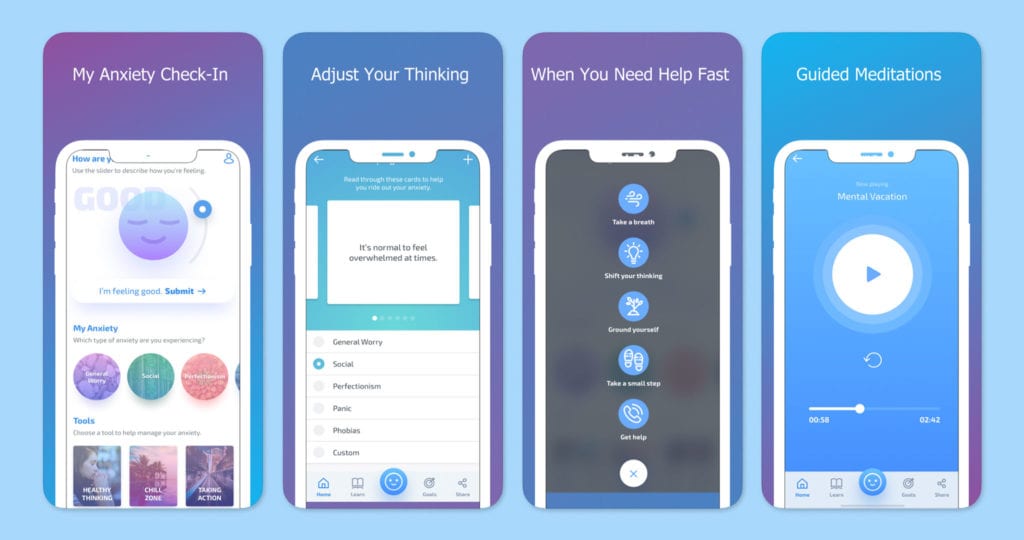
**Best for:** challenging catastrophic, anxiety-driven thoughts with guided CBT tools. **Price in 2026:** free, with no subscriptions (built by the nonprofit Anxiety Canada). **Free tier:** the whole app is free.
Developed by Anxiety Canada, MindShift focuses specifically on anxiety-driven overthinking. The app helps you identify worry patterns and provides tools for challenging catastrophic thoughts. What makes it particularly useful is its emphasis on action – rather than just thinking differently about your fears, it encourages small behavioral experiments that prove your anxious predictions wrong.
### Sanvello
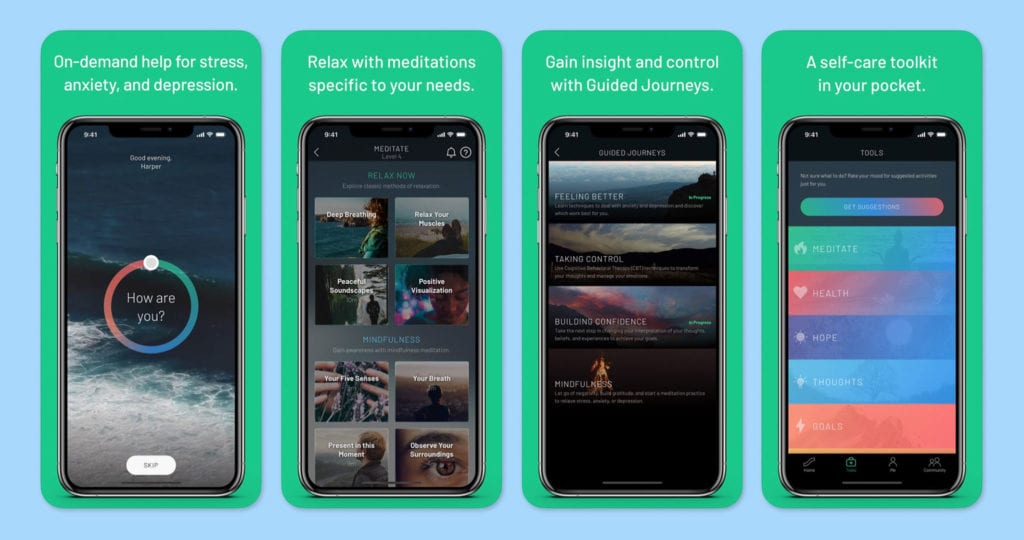
**Best for:** pairing mood tracking with CBT exercises to see how thought patterns drive your mood. **Price in 2026:** Premium $8.99/month or $53.99/year, and often free through health insurance. **Free tier:** yes, self-care tools and peer support.
Sanvello combines mood tracking with CBT exercises, making it easier to see how your thinking patterns affect your emotional well-being. The app includes specific modules for racing thoughts and worry, with interactive exercises that feel more engaging than traditional CBT worksheets.
## Focus and Productivity Apps
Sometimes overthinking stems from feeling overwhelmed by everything you need to do. Productivity apps can help by giving your mind clear, manageable tasks to focus on instead of spinning in worry loops.
### Forest
**Best for:** interrupting a spiral by committing to one short, gamified block of focus. **Price in 2026:** $3.99 one-time on iOS; free on Android, $1.99 to remove ads. **Free tier:** yes on Android, with ads.
Forest uses gamification to help you stay present and focused. When you're prone to overthinking, the simple act of committing to 25 minutes of focused attention – whether on work, reading, or just breathing – can interrupt mental spirals. The visual metaphor of growing trees makes the practice feel rewarding rather than restrictive.
### Todoist
**Best for:** getting worries and to-dos out of your head and into a system you trust. **Price in 2026:** free Beginner plan; Pro $5/month billed yearly or $7/month monthly. **Free tier:** yes, up to 5 active projects.
A good task management system can significantly reduce overthinking by getting worries and to-dos out of your mental RAM and into a trusted external system. Todoist's natural language processing and intelligent scheduling help you capture concerns quickly without getting bogged down in organizational complexity.
## Sleep and Relaxation Apps
Nighttime is prime overthinking territory, making sleep-focused apps essential tools for many people. These apps address the specific challenge of [quieting your mind when you're trying to rest](/blog/how-to-stop-overthinking-at-night).
### Noisli
**Best for:** giving a busy mind a neutral wall of ambient sound to settle against. **Price in 2026:** Pro about $10/month billed yearly. **Free tier:** yes, 16 sounds and 1.5 hours a day.
Background noise can be incredibly effective for overthinking minds because it gives your brain something neutral to focus on. Noisli offers a variety of ambient sounds that you can mix and match to create the perfect mental backdrop. The app works well both for sleep and for focused work sessions when you need to minimize mental distractions.
### Sleepio
**Best for:** nighttime overthinking and insomnia, through a structured CBT-I program. **Price in 2026:** mostly provided free through employers, insurers, or the NHS; direct consumer access is limited (a short free trial, then around $4.99/month where available). **Free tier:** trial only; check sleepio.com for your access.
Based on cognitive behavioral therapy for insomnia (CBT-I), Sleepio addresses the specific thought patterns that keep overthinkers awake. The app teaches sleep hygiene techniques alongside mental strategies for quieting racing thoughts at bedtime.
## Making Apps Work for Your Overthinking Pattern
The most important thing to remember about using apps for overthinking is that different approaches work for different people and situations. I've found that having a toolkit of 2-3 apps works better than trying to use just one. You might use [Declutter The Mind's calming meditations](/meditation/relaxation) for general mental chatter, a journaling app when you need to process specific worries, and a focus app when overwhelm is driving your overthinking.
Pay attention to when your overthinking typically happens. If it's mainly at night, prioritize apps with good sleep features. If it happens during work, focus on apps that offer quick, discreet interventions. The key is matching the tool to the moment when you're actually likely to use it.
## Building Long-term Mental Resilience
While apps can provide immediate relief from overthinking episodes, the real goal is developing internal skills that make you less susceptible to mental spirals overall. This is where consistent practice with tools like Declutter The Mind becomes invaluable. The [regular meditation practice](/blog/benefits-of-meditation) you build through the app creates baseline mental stability that makes overthinking less likely to derail your day.
Remember that overcoming overthinking isn't about achieving perfect mental silence – it's about changing how you relate to your thoughts. The best apps for overthinking help you develop this new relationship through consistent, gentle practice rather than forcing dramatic changes.
Your overthinking mind isn't broken; it's just learned some unhelpful patterns. With the right tools and consistent practice, you can teach it new, more peaceful ways of operating. Start with one app that feels most relevant to your situation, give it a genuine try for at least a week, and notice what shifts. The goal isn't to eliminate all mental activity, but to find the calm confidence that comes from knowing you can handle whatever thoughts arise.
## Frequently asked questions
### What is the best free app for overthinking?
Several apps here are genuinely free. MindShift, built by the nonprofit Anxiety Canada, is completely free with no subscription and is designed for anxious, catastrophic thinking. Declutter The Mind gives you [guided meditations for racing thoughts](/meditation/anxiety) free for life, with no signup. Most of the others (Day One, Journey, Sanvello, Todoist, Noisli) have usable free tiers you can start with before paying for anything. Pick one and give it a real try before you upgrade.
### Can an app actually stop overthinking?
No app stops overthinking, and any that promises to is overselling. What the good ones do is interrupt the spiral and slowly teach you a different relationship with your thoughts. A meditation or breathing tool gives you something to do at 2am instead of replaying a conversation. A CBT app helps you catch a catastrophic thought and question it. A journaling app gets the loop out of your head and onto a page. The skill builds with practice, not from one session.
### Which app is best for overthinking at night?
Nighttime is prime overthinking territory. For racing thoughts at bedtime, an ambient-sound app like Noisli or a CBT-for-insomnia program like Sleepio targets the exact problem, and a short guided meditation or breathing session from Declutter The Mind can help you wind down. What helps most is a consistent pre-sleep routine rather than reaching for your phone only once you are already spiraling. Our guide on [how to stop overthinking at night](/blog/how-to-stop-overthinking-at-night) goes deeper.
### Should I use a meditation app or a CBT app for overthinking?
They work on different parts of the problem, and many people use both. Meditation apps like Declutter The Mind train you to notice thoughts without getting pulled into them, which helps with general mental chatter. CBT apps like MindShift or Sanvello target the specific distorted thoughts that fuel worry and give you structured exercises to challenge them. If your overthinking is mostly anxious what-ifs, start with CBT. If it is constant background noise, start with meditation.
### How long before an app helps with overthinking?
Give it about two weeks of near-daily use, and stick to one or two apps rather than juggling five. Overthinkers tend to over-research the tools instead of using them, which becomes its own loop. A short daily meditation, one CBT check-in, or a nightly brain-dump adds up faster than an occasional long session. If nothing has shifted after two weeks, switch to a different app on this list rather than stacking more.
If overthinking shows up in other corners of your life, these guides help too: apps for [social anxiety](/blog/best-apps-for-dealing-with-social-anxiety), [calming travel nerves](/blog/best-apps-for-managing-travel-anxiety), and [falling asleep faster](/blog/best-apps-to-fall-asleep-faster) when your mind won't switch off.
---
# Best Morning Routine Apps to Start Your Day Right
- URL: https://declutterthemind.com/blog/best-morning-routine-apps
- Description: Transform your early hours with apps that genuinely help you create mindful mornings. From gentle wake-ups to meditation and habit tracking tools.
- Published: 2025-07-23
Looking for the best morning routine apps to transform your early hours into a foundation for success? I've spent years experimenting with different approaches to morning wellness, and I can tell you that finding the right digital tools can make all the difference between hitting snooze and actually wanting to get out of bed. The key is finding apps that don't just wake you up, but genuinely help you create a mindful, intentional start to your day.
A thoughtful morning routine sets the tone for everything that follows. When I first started exploring [morning routine](/blog/morning-routine) practices, I quickly realized that having the right support system – whether that's gentle guidance, habit tracking, or mindful breathing exercises – could turn those groggy first moments into something I actually looked forward to.
## Why Morning Routine Apps Actually Work
There's something powerful about having a structured approach to your mornings that goes beyond willpower alone. Apps provide consistency, gentle accountability, and most importantly, they remove the mental load of deciding what to do first when your brain is still waking up.
I've found that the most effective morning routine apps share certain qualities: they're not overwhelming, they offer flexibility for different schedules, and they focus on building sustainable habits rather than demanding perfection. The [best time to meditate](/blog/best-time-to-meditate) is often first thing in the morning, and having an app that makes this accessible can be transformative.
### The Psychology Behind Morning Success
Research consistently shows that our willpower and decision-making capacity are highest in the morning. This is why starting your day with intentional practices – whether that's meditation, gratitude, or gentle movement – tends to create a positive ripple effect throughout the rest of your day.
Morning routine apps work because they capitalize on this natural psychological advantage while providing the structure many of us need to maintain consistency.
## Declutter The Mind

As someone who has tried countless meditation and wellness apps, Declutter The Mind stands out as the most comprehensive tool for creating a mindful morning routine. What I love most about this app is how it seamlessly integrates different aspects of mental wellness without feeling overwhelming or prescriptive.
The app offers an extensive library of [morning](/meditation/beginner) meditations specifically designed to help you transition from sleep to wakefulness with intention. Whether you have 5 minutes or 30, there are options that meet you exactly where you are.
### Morning-Specific Features
Declutter The Mind includes guided meditations for common morning challenges – dealing with anxiety about the day ahead, cultivating energy and motivation, or simply finding a moment of peace before diving into responsibilities. The [anxiety](/meditation/anxiety) and [motivation](/meditation/focus) sessions have been particularly helpful during those mornings when getting started feels especially difficult.
The app also features breathing exercises and mindfulness practices that can be done while still in bed or during your morning coffee. This flexibility is crucial because not every morning looks the same, and your routine needs to adapt to real life.
### Building Sustainable Habits
One of the most valuable aspects of Declutter The Mind is how it supports habit formation without creating pressure. The app tracks your meditation streak and progress, but in a way that feels encouraging rather than demanding. This gentle approach to accountability has helped me maintain a consistent [daily meditation practice](/blog/how-to-practice-meditation-daily) when other apps felt too rigid or guilt-inducing.
## Essential Categories of Morning Routine Apps
Beyond meditation apps, there are several categories of tools that can enhance your morning routine. The best approach is often combining 2-3 apps that serve different purposes rather than trying to find one app that does everything.
### Gentle Wake-Up Apps
Sleep Cycle and similar apps use your phone's sensors to wake you during lighter sleep phases, making the transition from sleep to wakefulness feel more natural. These apps can be particularly helpful if you struggle with grogginess or find traditional alarms jarring.
What I appreciate about these tools is how they work with your body's natural rhythms rather than against them. When you're woken up during a lighter sleep phase, you're more likely to feel refreshed and ready to engage with your morning routine.
### Habit Tracking and Routine Management
Apps like Streaks or Productive excel at helping you track multiple morning habits without overwhelming complexity. These tools are particularly useful if your ideal morning routine includes several components – meditation, journaling, exercise, or healthy breakfast preparation.
The key is starting small. Rather than trying to track ten different habits, begin with 2-3 core practices that feel manageable and build from there.
### Weather and Planning Integration
Carrot Weather or Dark Sky can be surprisingly helpful for morning routine planning. Knowing what to expect from the day ahead – weather-wise and schedule-wise – helps you make informed decisions about timing and activities.
For instance, if you know it's going to rain, you might choose an indoor movement practice instead of that planned morning walk, or if you have an early meeting, you might opt for a shorter meditation session.
## Building Your Perfect Morning Tech Stack
The goal isn't to use every available app, but to thoughtfully choose tools that support your specific goals and challenges. Here's how I think about creating an effective morning app combination:
### Start with Your Core Practice
Begin with one primary app that supports your most important morning intention. For most people seeking greater calm and intentionality, this means starting with a meditation app like Declutter The Mind. This becomes your anchor – the non-negotiable part of your routine that everything else builds around.
I've found that [ways to practice mindfulness](/blog/ways-to-practice-mindfulness) in the morning set a completely different tone for the day compared to immediately jumping into email or social media.
### Add Complementary Tools Gradually
Once your core practice feels established, consider what other areas might benefit from digital support. This might be habit tracking, gentle wake-up support, or planning tools.
The key is adding new elements slowly and paying attention to whether they actually enhance your experience or create additional complexity. Sometimes simpler is better.
### Customize for Your Lifestyle
Your morning routine apps need to work with your real life, not some idealized version of it. If you're not a morning person, you need different tools than someone who naturally bounces out of bed. If you have young children, your routine will look different than someone living alone.
Consider factors like available time, space constraints, noise considerations, and energy levels. The best morning routine is one you can actually maintain consistently, not one that looks perfect on paper.
## Common Pitfalls and How to Avoid Them
I've made plenty of mistakes in my own journey with morning routine apps, and I see others struggling with similar challenges. Here are the most common pitfalls and how to navigate them:
### App Overload
It's tempting to download every promising morning routine app, but this usually creates more chaos than calm. Having too many notifications, tracking systems, and interfaces can make your morning feel like work rather than a peaceful start to the day.
Instead, choose 1-3 apps maximum and give them time to become part of your natural rhythm before considering additions.
### All-or-Nothing Thinking
Many people abandon their morning routine entirely after missing a few days or not living up to their initial ambitious plans. Apps can sometimes reinforce this perfectionism with streak counters and achievement systems.
Remember that consistency matters more than perfection. A simple 5-minute meditation done regularly is infinitely more valuable than a complex routine you only manage occasionally. This is why I appreciate Declutter The Mind's approach to [getting your mind off something](/blog/how-to-get-your-mind-off-something) – it's about progress, not perfection.
### Ignoring Your Natural Rhythms
Not everyone is designed to wake up at 5 AM for an hour-long routine. Pay attention to your natural energy patterns and work with them rather than against them. Some people do better with gentle, gradual mornings, while others prefer to jump into activity quickly.
The best morning routine apps offer flexibility in timing and intensity, allowing you to customize your experience based on how you actually function best.
## Making It Stick: Long-Term Success Strategies
The real measure of a good morning routine app isn't how it feels during the first enthusiastic week, but whether it supports sustainable change over months and years. Here's what I've learned about building lasting morning habits with digital support:
### Focus on How You Feel, Not What You Do
Rather than getting caught up in checking boxes or maintaining streaks, regularly check in with how your morning routine actually affects your well-being. Are you feeling more centered? Less reactive? More present throughout the day?
These qualitative improvements are often more motivating than quantitative metrics and help you stay connected to why you started this practice in the first place.
### Allow for Evolution
Your needs will change with seasons, life circumstances, and personal growth. The apps and practices that serve you well now might need adjustment in six months, and that's completely normal.
Stay curious and open to modification rather than rigidly sticking to something that no longer feels supportive. This might mean adjusting meditation lengths, trying different types of practices, or incorporating new elements like [gratitude practices](/blog/gratitude-list).
### Remember the Bigger Picture
Morning routine apps are tools in service of a larger goal – usually feeling more peaceful, intentional, and present in your daily life. When you keep this bigger picture in mind, it's easier to make decisions about which apps truly serve you and which might be creating unnecessary complexity.
The most successful people I know who use these tools treat them as supportive companions rather than demanding taskmasters. They use technology to enhance their natural capacity for wellness rather than letting it become another source of pressure.
Creating a meaningful morning routine doesn't require perfection or complexity – it just requires showing up consistently for yourself in whatever way feels sustainable and nourishing. Whether that's five minutes of guided meditation through Declutter The Mind or a more elaborate routine supported by multiple apps, the key is finding what actually works for your real life and committing to it gently, day after day.
---
# Best Apps for Better Focus and Concentration
- URL: https://declutterthemind.com/blog/best-apps-for-focus
- Description: The best apps for focus in 2026, compared on price, free tier, and what each one is actually good at, from attention training to blockers and ambient sound.
- Published: 2025-07-22
- Updated: 2026-08-17
In our increasingly distracted world, finding the best apps for focus has become essential for maintaining productivity and mental clarity. I've spent years exploring different digital tools to enhance concentration, and I've found that the right apps can genuinely change your ability to stay present and get meaningful work done. While there are countless options available, some applications stand out for their unique approach to building sustained attention and reducing the mental scatter that plagues so many of us.
These apps fall into four groups that do very different jobs: attention training, distraction blocking, ambient sound, and time tracking. Here is how the eight in this guide compare.
## Focus apps compared at a glance
| App | Best for | Price in 2026 | Free tier |
| --- | --- | --- | --- |
| Declutter The Mind | Training the attention itself rather than blocking distractions | Free; Plus $60/year or $219 lifetime | Yes, 500+ sessions free for life |
| Forest | Making a focus session feel like a game | $3.99 one-time on iOS; free on Android, $1.99 to remove ads | Yes on Android, with ads |
| Freedom | Blocking sites and apps across every device at once | $8.99/month, $3.33/month billed yearly, or $99.50 lifetime | Yes, limited sessions |
| Cold Turkey Blocker | A block you cannot talk yourself out of | Pro $39 one-time, Windows and macOS only | Yes, basic website blocking |
| Brain.fm | Background audio built for sustained attention | $14.99/month or $99.99/year | Trial only |
| Noisli | Mixing your own ambient soundscape | Pro $10/month billed yearly | Yes, 16 sounds and 1.5 hours a day |
| RescueTime | Finding out where your hours actually go | Focus Solo $9/month or $84/year | Lite plan, plus a 14-day trial |
| Toggl Track | Timing focused work blocks and spotting patterns | Free; Starter $9 per user/month | Yes, full time tracking |
### How I picked and checked these
I use these tools in my own work rather than reviewing them from a spec sheet, and I judged each on one question: does it help you concentrate for longer, or does it only hide the distraction for a while? That is why the list mixes categories. A blocker buys you an afternoon. Attention training is what changes how long you can hold focus once the blocker is off.
Prices are the US list prices taken from each company's own pricing page in July 2026. Prices move often, and mobile app stores sometimes show a different number than the website for the same plan, so treat the table as a starting point and check the current price before you pay. Note that Cold Turkey is desktop only, so it is not an option if you mainly get distracted on your phone.
One disclosure: Declutter The Mind is our own app and it is first on this list. Read that entry with the appropriate skepticism. The free library is the part you can check for yourself without paying anything.
If you want meditation apps specifically rather than focus tools in general, we compare ten of those in the [best meditation apps guide](/blog/best-meditation-apps).
## Why Focus Apps Actually Work
Before diving into specific recommendations, it's worth understanding why digital tools can be surprisingly effective for improving concentration. The irony isn't lost on me – using technology to combat technology-induced distraction – but the science supports this approach. Our brains are incredibly adaptable, and when we consistently practice [focused meditation](/blog/focused-meditation) or use structured attention-training exercises, we literally rewire our neural pathways for better concentration.
The key is choosing apps that don't just block distractions but actively train your mind's ability to sustain attention. The best apps for focus combine evidence-based techniques like mindfulness training, cognitive behavioral strategies, and environmental design to create comprehensive solutions for scattered attention.
## Declutter The Mind

**Best for:** training the attention itself rather than blocking distractions. **Price in 2026:** free; Plus $60/year or $219 lifetime. **Free tier:** yes, 500+ sessions free for life.
When I recommend focus apps, I always start with [Declutter The Mind](https://www.declutterthemind.com) because it addresses the root cause of attention problems – our untrained, reactive minds. This isn't just another meditation app; it's specifically designed to build the mental skills that underlie all forms of concentration and focus.
What sets Declutter The Mind apart is its practical approach to [concentration](/meditation/focus) training. The app offers guided meditations specifically designed to strengthen your attention span, manage distracting thoughts, and develop what I call "mental stamina" – the ability to stay focused even when tasks become challenging or boring.
### Focus-Building Features
The app includes specialized sessions for workplace concentration, study focus, and general attention training. I particularly appreciate the [focus](/meditation/focus) meditations that teach you how to notice when your mind wanders and gently bring it back to the task at hand. This skill translates directly to better performance in work, school, and daily activities.
The [meditation timer](/tools/meditation-timer) feature is invaluable for building consistent practice, which research shows is crucial for lasting improvements in attention span. Even five minutes of daily focus training can yield significant results over time.
## Time Management and Productivity Apps
While meditation apps build your foundational focus skills, productivity apps help you structure your environment and workflow for optimal concentration. These tools work best when combined with the mental training you get from regular meditation practice.
### Forest
**Best for:** making a focus session feel like a game. **Price in 2026:** $3.99 one-time on iOS; free on Android, $1.99 to remove ads. **Free tier:** yes on Android, with ads.
Forest gamifies the process of staying focused by growing virtual trees while you work. The concept is simple: plant a seed when you start a focus session, and if you leave the app to check social media or other distracting apps, your tree dies. Over time, you build a forest that represents your focus achievements. This visual representation of your progress can be surprisingly motivating, especially for people who respond well to gamification.
### RescueTime
**Best for:** finding out where your hours actually go. **Price in 2026:** Focus Solo $9/month or $84/year. **Free tier:** Lite plan, plus a 14-day trial.
Sometimes we think we're focused when we're actually jumping between tasks constantly. RescueTime runs in the background on your devices, tracking exactly how you spend your time. The insights can be eye-opening – and sometimes uncomfortable. You might discover you're spending three hours a day on social media when you thought it was only 30 minutes. This awareness is the first step toward making meaningful changes to your digital habits.
### Freedom
**Best for:** blocking sites and apps across every device at once. **Price in 2026:** $8.99/month, $3.33/month billed yearly, or $99.50 lifetime. **Free tier:** yes, limited sessions.
Freedom blocks distracting websites and apps across all your devices. What I like about this app is its flexibility – you can create different blocklists for different types of work, schedule blocks in advance, and even block your entire internet connection if needed. It's particularly useful during deep work sessions when you need complete digital silence.
## Environmental and Ambient Sound Apps
Our environment plays a huge role in our ability to concentrate. The right background sounds can dramatically improve focus, while the wrong ones can completely derail our attention. I've experimented with various [ambient sounds](/blog/ambient-sounds) and found that different types work better for different people and tasks.
### Brain.fm
**Best for:** background audio built for sustained attention. **Price in 2026:** $14.99/month or $99.99/year. **Free tier:** trial only.
Brain.fm uses neuroscience-based audio to influence brainwave patterns associated with focus, relaxation, or sleep. Their focus tracks are designed to enhance sustained attention without being distracting. The science behind it is solid, and I've found their "deep work" sessions particularly effective for tasks requiring intense concentration.
### Noisli
**Best for:** mixing your own ambient soundscape. **Price in 2026:** Pro $10/month billed yearly. **Free tier:** yes, 16 sounds and 1.5 hours a day.
Noisli offers a variety of background sounds that you can mix and match to create your perfect focus environment. Some people concentrate best with white noise, others prefer the sound of rain or a coffee shop. The app lets you experiment with different combinations and save your favorites. It's also great for masking distracting environmental sounds in open offices or noisy homes.
## Study and Learning Apps
For students or anyone engaged in learning new skills, specialized study apps can significantly improve both focus and retention. These apps often incorporate techniques like spaced repetition and active recall, which naturally require sustained attention.
### Cold Turkey Blocker

**Best for:** a block you cannot talk yourself out of. **Price in 2026:** Pro $39 one-time, Windows and macOS only. **Free tier:** yes, basic website blocking.
Cold Turkey is one of the most robust website and application blockers available. Unlike some alternatives, it's very difficult to bypass once you've started a blocking session, which is exactly what you want when willpower is low. You can schedule blocks, create different block lists for different scenarios, and even block your entire computer if necessary.
### Toggl Track
**Best for:** timing focused work blocks and spotting patterns. **Price in 2026:** free; Starter $9 per user/month. **Free tier:** yes, full time tracking.
Time tracking might seem unrelated to focus, but there's a powerful connection. When you track how long tasks actually take, you become more aware of how your attention fluctuates throughout the day. Toggl Track makes it easy to monitor your focused work time and identify patterns in your productivity. This self-awareness can help you optimize your schedule for better concentration.
## Building Your Personal Focus System
The best apps for focus work synergistically rather than in isolation. I recommend starting with Declutter The Mind to build your foundational attention skills through regular [meditation practice](/blog/how-meditation-helps-with-focus). This creates the mental foundation that makes all other focus techniques more effective.
Next, add environmental tools like Noisli or Brain.fm to optimize your work environment. Finally, incorporate productivity apps like Forest or RescueTime to structure your workflow and maintain awareness of your digital habits.
### Creating Sustainable Habits
Remember that apps are tools, not magic solutions. The key to lasting improvement in focus and concentration lies in consistent practice and gradual habit formation. Start with just one or two apps rather than overwhelming yourself with a complex system. [Daily meditation practice](/blog/how-to-practice-meditation-daily) through Declutter The Mind, combined with one productivity tool, is often more effective than trying to use five different apps simultaneously.
I've learned that the most powerful focus improvements come from understanding your own attention patterns and gradually training your mind to work with them rather than against them. The right apps can accelerate this process, but they work best when combined with patience, consistency, and realistic expectations about the time it takes to develop stronger concentration skills.
## Making Focus Training Stick
The real test of any focus app isn't how it works in the first week, but whether it helps you build lasting skills and habits. I've found that the most effective approach combines short-term tools (like website blockers during a crucial project) with long-term practices (like daily meditation to strengthen overall attention span).
Apps like Declutter The Mind are particularly valuable because they teach transferable skills. The concentration abilities you develop through regular meditation practice don't just help during meditation – they improve your focus during conversations, while reading, during [stressful work situations](/blog/how-to-deal-with-stress-at-work), and in countless other daily scenarios.
Consider starting with a simple 5-10 minute daily focus meditation using Declutter The Mind, combined with one environmental tool like background sounds during work sessions. As these become natural parts of your routine, you can experiment with additional apps to further optimize your focus and productivity. The goal is building sustainable practices that enhance your natural ability to concentrate, rather than creating dependency on external tools.
## Frequently asked questions
### What is the best free app for focus?
Three stand out for a genuinely free option. Declutter The Mind gives you 500+ guided focus and attention sessions free for life, with no ads. Toggl Track is fully free for time tracking. Noisli's free tier covers 16 ambient sounds and about 90 minutes a day, and Forest is free on Android with ads. Start with one of these before paying for anything, and upgrade only once you know you will use it.
### Do focus apps actually work, or are they a gimmick?
They work when you match the tool to the job. Blockers like Freedom and Cold Turkey remove the distraction for one session, which buys you an afternoon of quiet. Attention training, like the guided [focus meditations](/meditation/focus) in Declutter The Mind, builds the skill of noticing when your mind wanders and bringing it back, so you lean on the blocker less over time. The app is only a tool; the habit is what changes your focus.
### What is the difference between a focus app and a website blocker?
A website blocker such as Freedom or Cold Turkey stops you from opening distracting sites and apps for a set period. It is a short-term fix that works while it is switched on. A focus app in the attention-training sense, like Declutter The Mind, trains your mind to sustain attention on its own. Most people benefit from both: a blocker for a crucial project, and daily [attention training](/meditation/focus) for the underlying skill.
### Which focus app is best for studying?
For blocking distractions during study sessions, Cold Turkey is the hardest to bypass, though it is desktop only, so it will not help if your phone is the problem. Freedom blocks across every device at once. Pair a blocker with a [meditation timer](/tools/meditation-timer) for timed study blocks, and use short daily focus sessions to slowly lengthen how long you can concentrate before you need a break.
### Are paid focus apps worth it over the free ones?
Not at first. A free tier is usually enough to build the habit, which is the hard part. Paying makes sense once you hit a specific limit, like wanting distraction blocking across every device (Freedom) or neuroscience-based audio (Brain.fm). Start free with Declutter The Mind, Toggl Track, or Noisli, and upgrade only when a free tool stops doing what you need. Check the current price first, since app-store and website prices sometimes differ.
Want to keep going? These related picks pair well: apps for [managing ADHD symptoms](/blog/best-apps-for-adhd), [dealing with procrastination](/blog/best-apps-for-procrastination), and [setting better work-life boundaries](/blog/best-tools-for-work-life-balance). Since anxiety and poor sleep are two of the biggest drains on concentration, it is also worth a look at the [best apps for anxiety](/blog/best-apps-for-anxiety), the [best sleep apps](/blog/best-sleep-apps), and our wider roundup of the [best mental health apps](/blog/best-mental-health-apps).
---
# Acceptance of What Is: 17 Things to Accept in Life
- URL: https://declutterthemind.com/blog/acceptance
- Description: Acceptance of what is a key component to happiness in life. Here are 17 things to accept in 2023 for the rest of your life.
- Published: 2025-06-25
In life, we need to have an acceptance of what is. It can be hard to [let go of the past](/blog/letting-go-of-the-past), and accept whatever event happens to us. The more we fight instead of having an acceptance of what is, the more likely we are to suffer and experience pain. Life will always throw curve balls that we can’t prepare for or anticipate. So, in this article, we’re going to share 17 things to accept in life so you can mentally train yourself to be more resilient and present.
## Acceptance: 17 Things to Accept In Life
### 1. Yourself
Having an acceptance of yourself is important for your happiness. We often [beat ourselves up](/blog/stop-beating-yourself-up) based on hurtful exchanges we have with others. Our [inner critic](/blog/inner-critic) takes negative feedback and spirals it out of control, making us feel worse about ourselves. However, you’re the only you to ever exist. You bring something to the universe no one else can bring. The experiences that shaped you, the personality you have, and the insights you share with others in this time frame all play a role in the universe.
We could tweak and change ourselves in infinite ways. However, when you look at who you are at its core, there’s no one quite like you. And that’s exactly what the world needs. Accept yourself as you are and play a role in shaping the world. Follow along to this [acceptance meditation](https://www.youtube.com/watch?v=_LTMv7NMMnQ) to help you accept yourself and your life.
https://www.youtube.com/watch?v=_LTMv7NMMnQ
### 2. Things always change
The acceptance of what is boils down to the fact that things always change. Life is all about impermanence. If we compare the world today to the world twenty years ago, we’ll see that so much has changed. Today, people go on a [social media detox](/blog/social-media-detox) to take mental breaks from social media. However, twenty years ago social media was still quite new and small. In our lifetimes, we’ve been through the [stages of grief](/blog/stages-of-grief) as we lose loved ones, experience traumas, and go through never-ending changes. If there’s one thing you need to accept in life is that nothing stays the same.
### 3. You’ll always get older
While movies like The Curious Case of Benjamin Button give us the opportunity to imagine a world where we age backwards, the reality is that today we don’t. We only get older. Your 30s aren’t the new 20s. You can’t relive an experience just because it wasn’t positive. Acceptance of what is is all about acknowledging that you only live once and time is always running out. Instead of living in the past or the future, you need to live in the present. Do the things you want to do while you can do them. Be more accepting of the aging process instead of trying to look, act, and live like a younger version of yourself who didn’t realize what they had when they had it.

### 4. You’ll lose people
Acceptance is all about the realization that in life you’re going to lose people. You’ll lose romantic partners, friends, and even family members. While people will always leave you at one point or another, it’s still important to notice that people will come into your life unexpectedly as well. You can’t hang onto the memory of people your whole life. Instead, while people are alive, let them know how you [appreciate them](/blog/feeling-unappreciated). Be vocal in why you love them and what you value about them. Praise your friends and family when they’re around. Hug people. Kiss people. High-five them too! You never know when your last day with somebody will be. It can be a very unexpected experience.
### 5. There’s no order
One of the biggest challenges of acceptance of what is, is to realize that there’s no such thing as order. Life is chaotic, disorganized, and random. You can’t plan the order of how things will work out in life. You could be planning to quit your job and get laid off unexpectedly the next day. Some parents bury their young children who die suddenly from cancer or other terminal illnesses. No matter how badly we want there to be an order for how things roll out in life, it just doesn’t work out that way. Accept that there’s no order and you’ll be on track to finding [inner peace](/blog/inner-peace) in the chaos.

### 6. You aren’t your thoughts
[You are not your thoughts](/blog/you-are-not-your-thoughts). Thoughts surface into your mind without your control and no effort. Unfortunately, when a thought arises that is unpleasant, we often believe it and identify with it. However, we shouldn’t. That’s not us. Our brain has a mind of its own. The main goal of the brain is to keep you alive for as long as possible. So, you might have thoughts that are intended to keep you socially part of the group, to keep you physically alive, and to promote self-improvement. However, you can pick and choose which thoughts you listen to, so choose wisely.
### 7. You can’t control people
A [life lesson](/blog/life-lessons) to accept is that you can’t control people. While we try to influence our children and romantic partners, the reality is that we should just let them be. Trying to make someone else more like us defeats their uniqueness and will create a rebellion. While it can be frustrating to watch people do the polar opposite of what we would do, we need to understand that everyone has a different path in life. The goal of your path isn’t to make people like you, your life is much bigger than that. Accept that people will sometimes do things differently than you. People will like things you hate. That’s okay. That’s diversity.

### 8. Your family
You can choose your friends but you can’t choose your bloodline. Your family is given to you when you’re born into this world, for better or worse. You can’t change your parents, siblings, or any other relatives. While you might not like certain family members, you can’t change your relationship to them. You’ll always be related. While it can be hard for us to admit, you can’t choose your family. Sometimes, certain family members are [toxic people](/blog/how-to-deal-with-toxic-people) and we want them out of our lives. But at the end of the day, they’re still family.
### 9. The weather
One of the things to be more accepting of is the weather. Women all over the world pray that it doesn’t rain on their wedding day, and it does anyways. People hope that climate change won’t happen, but the climate has always changed. Natural disasters strike at the worst times and cause the utmost chaos in our lives. Snow storms knock out power lines on the day of an important meeting. Ultimately, acceptance of the weather is crucial in life. The change of the seasons is a constant and a reminder that we don’t control this planet. Mother Nature does.

### 10. Tomorrow isn’t guaranteed
We all set goals and plans for the future. We hold off on setting goals until a new year presents itself. Always putting everything off until tomorrow. Unfortunately, even though we’ve survived every yesterday so far, tomorrow still isn’t guaranteed. Just as there’s no order in life, there’s no guarantee of how much time you have. Not even the rest of the day is guaranteed. Now, we don’t mean to frighten you, because you probably will still be alive tomorrow. However, do the things that are important to you right now. Plan for now – this [present moment](/blog/live-in-the-moment).
### 11. The past is over
The past only comes to life in our thoughts. However, if we stop thinking about a specific event, it immediately dies. The past is behind you. It’s unchangeable. All you can do is have an acceptance of it. Accepting the past is the only way to live in the present. When you realize that this present moment is all you have, you realize how much you can do right now. You can apologize for hurtful exchanges of words or try to [beg for forgiveness](/blog/how-to-forgive) for past wrongdoings. But most importantly, you can take what you’ve learned and bring it with you to the present to set the tone for the behavior you want to have moving forward.
### 12. You’re only the star of your life
Acceptance is acknowledging that the world doesn’t revolve around you in other people’s lives. In your life, you’re the star of the show, the one all storylines come out of. However, in other people’s lives, you play a minor role. Recognizing that will allow you to understand other people’s behavior better. Most people act like their needs are the only ones that matter. As you begin to recognize that people over-inflate their self-importance, you become accepting of your role in their life. That doesn’t mean you make yourself smaller for other people or become passive to toxic behavior. It more so means that you recognize the interconnectedness of the grander scheme of things.

### 13. People are both good and bad
We often label people as a good person or a bad one. If only it were that easy. In life you have to accept that things are actually more neutral than extreme. There are no true saints and there are no devils either. People are a mix of good and bad. People you view as good will do bad things and people you view as bad will do [good deeds](/blog/good-deeds). As people learn, grow, experience hardships, loss, mental agony, and other emotional rollercoaster events, their behavior will change. People who make mistakes will learn from them. People who seem to not make any, will make them too.
### 14. Everyone has some haters
You could be the nicest, kindest, and coolest person in the world and still have haters. No one escapes having some people dislike them. That doesn’t mean that there’s anything wrong with you either. Some people just don’t vibe with everyone. Don’t be afraid to [live your life](/blog/live-your-life) knowing that you’ll have haters on the sidelines. Keep being your awesome self. Take the risks you’ve always dreamed of taking. Live life on your terms. Don’t allow your inner critic to match the voice of your haters. You should be your number one fan, not your enemy.
### 15. You won’t experience everything
The acceptance of what is is the realization that you won’t be able to do all the things you had hoped to do and see in your life. While you can live an eventful life, you won’t be able to travel to every country, eat every meal, cross off every bucket list item, and everything you had planned. You’ll always be short one of these three things: money, time, or your health. You can still live a great life doing some of the things you’d like to do. Accepting that you won't experience everything your heart desires can be challenging. However, no one accomplishes everything they’d like to do before they die.

### 16. Sometimes you shouldn’t get what you want
People always think about how they deserve everything they want. However, without the context of what the reality of the situation is, we sometimes don’t realize that not getting something we wanted is actually a blessing. There are times when we really want something that isn’t possible for us. This resistance to the acceptance of what is causes us so much suffering as a result. However, you can still live a [happy life](/blog/happy-life) and a [good life](/blog/how-to-live-a-good-life) at that despite not getting what you want. Sometimes, not getting what you want worked out well for you.
### 17. Good and bad events flow in and out of each other
Let the story unfold. Sometimes a bad event happens and good things come out of it as a result. Other times, good things happen and bad things happen as a result. The reality is good and bad events flow in and out of each other. Until the story continues, do you see that sometimes a bad event could have a positive outcome whether it’s a [life lesson](/blog/life-lessons), good deed, or acceptance of it. Before having a reaction to an event, let it first unfold. You might soon discover that the opposite of what you expected happened.
## Conclusion
The acceptance of what is a key component to accepting things in life. Whether you’re accepting yourself, your family, or anyone on the planet really, it all boils down to knowing that we’re all interconnected. Nothing is quite what it seems on the surface. Accept that all you have in life is this present moment and you’ll be operating within the realm of reality. Accept what you have and let go of what you don’t. Resistance instead of acceptance of what is, is what leads to our misery. Being accepting of things sets us free.
---
# 10 Acts of Generosity: Ideas to Help You Become a More Generous Human
- URL: https://declutterthemind.com/blog/acts-of-generosity
- Description: Trying to live a more generous life? Here's 10 ideas of simple acts of generosity that you can try today and practice in your life.
- Published: 2025-06-25
Sometimes, truth be told, the world can be a little unkind and even unfair. Walk around in any major city in the United States, for example, and you'll see hundreds of homeless people living on the street. Every day they're there, living desperate and degrading lives while hanging onto their meager possessions. And all the while, people who have money, and food, and a home to live in, pass them by without giving them even a glance. There's no consideration for any acts of generosity.
It's not just the homeless either who are in desperate straits. Millions of families across the country, and the world, are barely scraping by. Restaurant workers, Uber drivers, gas station attendants, cashiers and so many more, scores of whom have families to feed, are living paycheck-to-paycheck. Immigrants who barely speak English, senior citizens living alone, men and women suffering from deadly or life-threatening diseases.
If you think about it long enough, it's a situation that might just make you want to cry. But then, as if out of the blue, someone comes along with acts of generosity and [kindness](/blog/kindness-quotes) that restore your faith in humanity.
## What Are Acts of Generosity?
If you're not sure what acts of generosity are, you haven't been paying close enough attention to the news. It seems like, almost every week, there are new reports that a restaurant worker somewhere in America was given a massive tip on a tiny bill. Examples are everywhere you look. Danielle Franzoni of Alpena, Michigan received a $2020.00 tip on a $23.00 check in December of 2019. A very generous man in 2013 went coast-to-coast giving anonymous, and massive, tips at bars and restaurants everywhere he went, including one for $2500.00
Maybe the best was an incredibly generous tip that was given just recently, right before the COVID-19 virus forced the shutdown of a popular Houston restaurant. Knowing that the staff would be laid off and in dire straights, a couple (who wished to remain anonymous) left the entire staff a tip of $9400.00!
That, ladies and gentlemen, is an act of generosity and abject kindness those restaurant employees will likely never forget, and an example that all of us should take during this time of crisis around the world.
## Do Acts of Generosity Need to Be Monetary?
The answer to this question is a resounding 'no.' While it is true that the term 'generosity' is usually reserved for when one person gives another, usually a stranger, money to help them get by, purchase groceries, pay rent, and so forth, that isn't the only generous act a person can make. Real generosity comes in many different forms.
The person who volunteers at a soup kitchen serving the homeless is being generous with their time. Someone who donates their car or boat is being generous too, as is the person who goes to their local retirement home and spends time reading and talking to senior citizens.
The fact is, anything that one person does for another out of the goodness of their heart can be considered acts of generosity, from mowing their neighbor's lawn for free to giving a stranger a ticket to see a movie because they purchased too many. All of these, and more, are acts of generosity, even though no actual money has changed hands.
## What Are Some Acts of Generosity That Anyone Can Do?
The truth is, the world needs more generous people and more acts of generosity. If you're reading this article and you agree with that statement, bravo, you're likely already a generous person. With that in mind, below we've collected a wide range of acts f generosity that you can do any day, at any time, for any person or people you choose. Remember, an act of generosity doesn't need to involve money but can be a gift of time, energy, even your devoted listening, so don't think that you need to give away money to be generous.
### 1. Helping the Elderly or the Vulnerable

Whether there's a crisis like COVID-19 or not, there are many people who need help daily. Older folks who can't leave their home and have no family often need someone to help them with things like grocery shopping, keeping their home tidy, or getting to a doctor's appointment. Then there are those who are suffering from illnesses that, for whatever reason, keep them confined to their home and need some of the same things.
Giving these people your time and energy by taking them to an appointment, helping them with their groceries, or even just sitting with them every few days and giving them a bit of company is an act of generosity that they will cherish and enjoy. It also might be a literal lifesaver, as many people who are stuck inside their home can become suicidal from the isolation and depression.
A beautiful example of this is happening in New York City right now during the coronavirus pandemic. Called Invisible Hands Deliver, it's a group of nearly 3000 volunteers across the Big Apple who are braving the virus and the cold to deliver medicine, food, and even flowers to those who, for whatever reason, simply can't leave their home. As [acts of kindness](/blog/acts-of-kindness) go, this one is right up there at the top.
### 2. Donating a Cash Prize to a School
This act of generosity will blow you away. It involves a 3rd-grade teacher names Nicole Bollerman from Dorchester, Massachusetts, and the school she worked for in the same town. It seems that Ms. Bollerman entered a contest called "Wish For Others" that was sponsored by a national bank, with a grand prize of $150,000.00. Wouldn't you know it, hers was the winning entry, and as promised, the bank gave her a check for $150,000.00, an amount that we think you'll agree would change just about anyone's life.
Ms. Bollerman had other plans for the money, however, and donated the entire amount back to her school. Amazed and impressed with her act of generosity, the mayor of Dorchester honored this incredibly generous teacher at their City Hall (and we can only assume her students now think she's genuinely remarkable).
### 3. Pay for someone else's groceries

While we don't have a specific story to relate here, all you need to do is Google "pay for strangers groceries," and thousands of examples of acts of generosity will fill your computer's screen. As we talked about earlier, many families in the United States struggle to pay their bills and, many times, that includes the grocery bill. Luckily there are many people out there who know this and, even better, do something about it by paying for a complete stranger's groceries! Not just generous, this is possibly the kindest thing we can think of that one person can do for another: putting food on their table to feed their family.
[Help people in need](/blog/helping-others) [build confidence](/blog/how-to-build-confidence) in their fellow human being by surprising them with a simple act as this. It doesn't need to be an expensive grocery run. It can even be someone's [morning routine](/blog/morning-routine) coffee.
### 4. Volunteering at a Soup Kitchen

This generous act has been around for a long time, which is kind of sad when you stop to think about it. Yes, volunteering to help feed the homeless by working and serving them in a soup kitchen is one of the best acts of generosity, no doubt. What's sad is that there are so many people who are homeless and need soup kitchens to get at least one good meal a day. As acts of generosity go, this is one that we hope will, someday, no longer be needed.
### 5. Paying the Toll Fee for Other Drivers
In many states across the US, there are toll roads with tolls every few miles, especially in the northeast. Little reminders that some states maybe aren't as generous as others (we're looking at you, New Jersey), there have been many instances over the years where drivers were the ones who had the generosity. That's when, out of the goodness of their hearts, they not only paid for their own toll but also for the toll expense of several other cars behind them. We think you'll agree that if acts of generosity like this happened more often, maybe there wouldn't be so much 'road rage' on the highways.
### 6. Donating Your Things to Charity

Our final 'acts of generosity' example is one that everyone should follow because it's easy, it makes you feel good, and it can make a lot of other people feel even better. It's giving your gently used things to a charity like Goodwill so that others can get them for free (or at an extremely reduced price). Like we said, donating your items is easy. It costs nothing, and it will help many others who are less fortunate. To engage in this acct of generosity, all you need to do is give to any of the places on the list (below).
- Goodwill
- Your Local Library
- Dress for Success
- Habitat for Humanity
- Baby2Baby
- Local Food Banks
- eBay Giving Works
- The Salvation Army
## Other Ideas for Acts of Generosity
If you need more examples, here's some other simple ideas you can try.

**7. Offering your experience or knowledge to a charity board**
Charities and charity boards often seek talented and experienced people to volunteer their time on their boards. You can offer your wisdom as an advisor or member, and have a real impact on the growth of charities you wish to support.
**8. Mentoring a young person in your industry**
New graduates and apprentices could use some mentoring and guidance. When you're asked for advice, give it. If you have the opportunity to mentor someone in your industry, do it. Help young people self-actualize and [lead a happy life](/blog/happy-life) through generosity of your time.
**9. Offer to carpool or drive friends and family**
Generosity isn't just about giving your time and money, it's also about saving other people's time and money. If you share a common commute route with colleagues, offer to carpool with them.
**10. Give blood**
There's always a need from foundations and hospital for more blood, especially if you have a rare blood type. Find a local blood drive and give some blood. It can save someone's life.
## Conclusion
Acts of generosity can be found in cities and towns across America. You don't need to be wealthy to give generously and, in fact, you don't need to give money at all but instead, time, caring, or things you already own but give away to do some good for your fellow human. So get out there and set an excellent example by getting involved in some acts of charity of your own. Trust us, the reward you get will be much more valuable than anything you could possibly give away.
---
# How to Develop an Attitude of Gratitude
- URL: https://declutterthemind.com/blog/attitude-of-gratitude
- Description: Start living your life more positively by learning how to develop an attitude of gratitude. Eliminate your cynicism with this easy guide.
- Published: 2025-06-25
Life on earth can be tragic or joyful, depending on whether you view the world from a lens of pessimism or optimism. Many factors contribute to people having a good life the same way as those who have a disastrous and struggling one. No matter what kind of life you're living right now, one thing is for sure; we should develop an attitude of gratitude for whatever we have and what we do not have. We know how challenging life can be when we're missing something or someone we need and love, though.
Life isn't always about having everything, but it's also about being grateful for the things you have yet to achieve, making you look forward to each day that comes. Having the attitude of gratitude is something that not everybody develops naturally. Some people get stuck in the past, longing for something that's no longer possible to have once again.
Being thankful and contented is hard, especially during the trying times in our lives. Problems, difficulties, and [sadness](/meditation/grief) often cause us to be less grateful. You may be asking how to develop an attitude of gratitude in all the negativity surrounding our world today. In this article, we're going to share exactly that.
## What Is An Attitude of Gratitude?

An attitude of gratitude allows you to be thankful for all the blessings you receive each day, despite having challenges or setbacks in life. It means that you can always express your appreciation for all the opportunities you get in your life. A person who feels grateful knows that sometimes good comes out of bad events, even if the situation seems hopeless.
When you're grateful, you'll never ask for anything more than what you have because you're appreciative of having something in the first place. The first step to developing an attitude of gratitude is to shift your mindset. By becoming grateful for the relationships, job, health, etc., in your life, you begin to see the more important things more clearly. Once you have the mindset, you can begin to cultivate [good habits](/blog/good-habits).
## Benefits of Developing the Attitude of Gratitude

Instead of worrying about the things you don't have, this kind of attitude will teach you how to let your appreciation for what you have grow more than your desire for wanting. Later on, it can even make you more confident and joyful in your life. Why? Because when we want something, we feel like we're missing out, but it makes us feel satisfied when we recognize what we have.
As Marcus Tullius Cicero once said, "gratitude is not only the greatest of virtues but the parent of all others." If you start feeling grateful today, all other aspects of your life will be positive and enjoyable. Some of the benefits of acquiring an attitude of gratitude and the [benefits of gratitude](/blog/benefits-of-gratitude) include the following:
### 1. More Self-Confidence and Self-Esteem
Those who experience the desire of wanting something feel like they're missing out. Instead, if you feel an attitude of gratitude, you'll feel a sense of abundance, resulting in greater self-confidence and higher self-esteem.
### 2. More happiness
By taking some time to feel grateful for having what you do in your life, you'll feel happier because, at this moment, you'll know you still have a lot going on for you. If you're disgruntled because you feel like you don't have as much as you should, your negative thoughts will prevent the happiness you could feel.
### 3. Less Stress and Worry
When we want something, we tend to work harder to get it. More success and more money often require more work. But is life about work, or is it about living? People often forget what their true goal is and get stressed by the climb instead of taking the time to enjoy life.
### 4. Increased Feeling of Abundance
An attitude of gratitude can help you feel abundance. Feeling like you have a lot or a little often comes down to your mindset. Are you a pessimist or an optimist? Your life is ever-changing. Over the years, you'll gain more and lose more, and while some of it is within your control, not all of it is. So, if you have something important in your life, remember that not everyone has what you have.
### 5. Better relationships
Those who've developed an attitude of gratitude are more likely to have better relationships. When you're grateful for the people in your life, you tend to experience more positive relationships with them. You'll praise their accomplishments, recognize all the [good deeds](/blog/good-deeds) they do for you, and enjoy spending time with them.
### 6. Less Comparing Yourself to Others
Comparison can create a ton of envy. And envious people don't feel an attitude of gratitude. When we constantly look at what our neighbors have, we feel a sense of lack, which creates a desire for more. And it's this desire, which prevents our happiness. Gratitude helps you [stop comparing yourself to other people](/blog/how-to-stop-comparing-yourself).

There's no sure way of achieving it overnight, but there can be ways to slowly but surely feel more grateful. If you try one of the tips on the list below, you may be able to see some improvement in your attitude sooner.
Start by constantly saying "thanks" to what others give to you and the good things they do to you. It should not cause you a lot of effort to say the word for something great that they did for you. It's simple, but it means so much to the person. When in a restaurant, remember to thank the people who serve you great food, such as the waiters and the cook.
Keep in mind that the generosity and kindness that others give you must be reciprocated with the same. Let people know that you appreciate what they did by doing the same thing to others so that the goodness will spread to others. You have to realize that every favor done for you costs other people their time and effort, which deserves to be appreciated.
Always remember that more than all the struggles and difficulties, there are things to celebrate about. A person with an attitude of gratitude looks at the better things in life, even the worst ones, and sees the positive side of them. This could make you feel more inspired instead of worried. It also helps you develop a [positive mental attitude](/blog/positive-mental-attitude).
Always look for a chance to give back. Whenever you can, do the same thing to anyone who would need your help. This way, you can show your gratitude to the goodness done to you through [helping others](/blog/helping-others), too.
Understand that your opportunities and gifts are not given to everyone. We're all made unique with specific traits and destinies that will dictate the gifts we shall receive in our lifetime. So, if you are questioning why you are experiencing such a difficult situation or problem, always know that we all go through those things in different ways and extent. What you have may not be given to others simply because they live a different life than you.
Empathize with those who helped others and did not receive gratitude or a simple "thanks" in return. Imagine yourself being in the same situation of a person lending a hand to somebody who does not show gratitude or say "thank you." By doing so, you would be able to feel how they feel, too.
Take good care of the blessings you get and make sure they'll never be wasted. One good way of making others know you appreciate their gift to you is by being a good steward of what you have received. Likewise, if you just let your gifts be taken for granted or neglected is like saying you're not happy and grateful for them.
Always pay the favor you had forward. Let other people experience the positivity and benefits you acquired through other's help. If the people who helped you do not need help now, make sure to [help others](/blog/helping-others) in your way because it was what has been done to you before.
Send a gift or token of appreciation and gratitude. This does not mean you have to give away expensive or material gifts. Your time for listening and giving advice is sometimes more than enough, too. Money isn't also always what matters. Instead, it should be made of sincerity and genuine gratefulness.
Talk to people even when you do not need anything from them to show sincerity and care. Being there when they need you is excellent. But, to be there even when they don't need your help is even more heartfelt and caring. Show them consistently that you care for them whenever you can by visiting them or calling them.
Pray for the welfare and good fortune of the people who helped you. If you cannot be a blessing to them physically or mentally, at least keep them in your prayers more potent than anything in this world. Ask for God to always guide and bless with longer life, so they help more people like you, too. It's undoubtedly not going to be a waste of your time.
Know that God is giving you things that are more than what you asked for. Sometimes, He gives us something that we do not deserve, which could remind us to be more thankful. From the very beginning, we were saved by his only begotten son in exchange for all our sins here on earth.
If you need more ideas and ways to practice gratitude in your life, see our [gratitude list](/blog/gratitude-list) that will give you a list of [things to be grateful for](/blog/gratitude-list).
## Your Life with an Attitude of Gratitude
Life is not always smiles and laughter. There will be times when we'll have to cry and get hurt but what's important is for us never to give up. We have to keep moving forward. With [happy thoughts](/blog/happy-thoughts) of gratefulness and contentment, life will be easier. Even the world's strongest person has to fall to realize what he is missing and what he already has.
Your life will have a different meaning once you develop the attitude of gratitude. No problem will ever be so hard to solve again. You won't ever let any chance pass your way without you trying because you know that you'll have a lesson to take with you at the end of the day.
To be able to wake up each morning is a blessing, they say. It is one thing many of us forget to thank God for. If you are still alive today, it means you are given another chance to enjoy your life and to show others how nice it is to live. Open your eyes today and see how blessed you are for having people who are always there to support you no matter what.
Be more at peace with yourself and your life. Develop gratitude's attitude using the tips we have listed for you above, or simply be grateful in your unique way. There is so much more that life has to offer you.
---
# How to Avoid Having a Bad Day
- URL: https://declutterthemind.com/blog/bad-day
- Description: Today doesn't need to be a bad day. Learn how to turn your day around or at least prevent bad days from happening in the first place.
- Published: 2025-06-25
Sometimes, we meticulously plan ahead and yet no matter how hard we try, nothing goes well and we end up having a bad day. A bad day here and there is nothing to fret about. They serve as a reminder to appreciate the good moments as they come. In this article, we’re going to share how to avoid having a bad day as much as possible by creating a better life plan for yourself. It’s not a fail-proof plan, but you’ll still be better off than most people who create their own bad days by doing the opposite of what we’ll be sharing. So, let’s figure out how to reduce the number of bad days.
### 1. Be kind to everyone you interact with
When it comes to human interaction, you can eliminate nearly every bad day just by being kind to people. Think of a time when you wrote a nasty comment online, and someone started an online fight with you. You probably became angrier or more upset. That’s an example of how some people cause their own bad days. Maybe you think people are stupider than you or you’re morally more upright than they are, but typically if you spend your time constantly uplifting people instead of putting people down, you’ll find you’re actually way happier. You can be the person everyone goes to to hear a kind word. Those people are hard to find and usually they can avoid having a bad day with their actions.

### 2. Go to sleep early
Now this advice is going to sound generic because you’ve heard it a million times before. But it’s true, when you get enough sleep at night and [wake up naturally](/blog/how-to-wake-up-early), you end up performing better. Your brain health will determine whether or not today is a good or bad day for you. If you regularly wake up to an alarm blaring you awake, you’re probably not getting enough sleep. Going to bed early so you can wake up naturally will allow you to ensure that you can have more positive interactions because you’re able to think clearly. Sometimes, you can’t get as much sleep as you’d like because you’ve got kids or a sleep disorder. But your mood will depend on how well rested you are for the most part.
### 3. Meditate
You can avoid a bad day most days if you do a [daily meditation practice](/blog/how-to-practice-meditation-daily). A [guided meditation](https://declutterthemind.com/meditation) can be a great way to help you manage [negative thoughts](/blog/how-to-stop-negative-thoughts). You’ll watch those thoughts surface and float away. On most bad days, we tend to ruminate on bad thoughts going down rabbit holes with them. And that ends up making us cry or feel more tension in our bodies. It doesn’t make us feel good. When you [meditate](/blog/how-to-meditate) often, instead of only whenever something goes wrong, you get better at managing your thoughts. You’ll find going into a [flow state](/blog/flow-state) where thinking isn’t as common is easier. You’ll get better at [living in the moment](/blog/live-in-the-moment) instead of time traveling between the past and future.
### 4. Exercise when feeling tense
On bad days, exercise could do your body some good. Fight or flight is a response to danger. However, since there’s no wild animals chasing us down anymore, we’ve still got this system even when dangers don’t lurk. When you feel [stressed from work](/blog/how-to-deal-with-stress-at-work) or a personal problem, fighting and running are good exercises as that’s what your nature has programmed for you. So, sign up for that martial arts class or go for a run around your neighborhood if possible. Sure, you could also lift weights or do a dance class if that’s what you prefer. Find the exercises that allow you to get the tension and stress from your bad day out of your system.
### 5. Repeat positive affirmations
[Positive affirmations](/blog/positive-affirmations) can be transformative when you’re having a bad day. Reciting them isn’t about magically making your problems go away or pretending they aren’t happening. It’s about [rewiring your brain](/blog/neuroplasticity) to look at things with a more glass half full perspective. Bad days happen to everyone. When you recite positive affirmations often, you’ll slowly begin to shift your thinking to [be more positive](/blog/how-to-be-more-positive). As a result, you’ll recover from bad days much more easily. And you won’t get sucked into the negativity vortex of thoughts. This isn’t about being woo woo or mystical. It’s about really trying to look at the world more positively instead of the woe is me attitude.
### 6. Spend time with positive people
When you’re having a bad day, avoid the negative people so you don’t become just like them. Spend time with people who are positive, but don’t drain them with your negativity. Aim to think and live like them. It’s not about finding a positive person you can vent to, but finding someone who can reframe your thinking so you aren’t destroyed by your own thoughts. Knowing who can help you think differently when having a bad day can be helpful. When we’re having a bad day, we tend to get stuck in our thoughts. Positive people or people [having good days](/blog/how-to-have-a-good-day) most days, will often think very differently than someone going through hardship. It’s a balance of feeling grateful, having a [growth mindset](/blog/growth-mindset-quotes), and thinking positive thoughts.
### 7. Take breaks as needed
If you want to avoid having a bad day, take breaks. When we push too hard or try to take on too much, we eventually [feel burned out](/blog/burnout-recovery). That burnout will not only last a long time but it’ll cause us to deteriorate fast. So, take breaks often throughout your day. That means breaks at work, and breaks at home too. You don’t want to spend your whole time at home working on side hustles, doing a million errands, and managing all your other household tasks. Resting is an important part of life. It’s not all go, go, go, you know. If you want to avoid having a bad day (or a series of them), don’t forget to take breaks. You don’t deserve it or earn it, it’s simply an important part of being a balanced person.
### 8. Spend some time in the sun
Those Vitamin D sun rays can really do a positive number on your mood. To prevent a bad day, you can get some sunshine on nice days. Whether that means going for a [mindful walk](/meditation/walking) on a nice day or going to the beach for some hydrotherapy is up to you. When we feel groggier than usual, it’s often due to circadian rhythm issues, especially in those winter months. Planning a Caribbean vacation in the middle of the winter season can help combat those bad days by giving you the dose of Vitamin D that you need to last you the rest of the cold and dreary season. The sun can also improve your sleep, allowing you to get adequate rest so you feel recharged upon waking. And with better sleep, bad days become more manageable instead of dragging you down into oblivion.

### 9. Do a personal development activity
To avoid having a bad day, you can do activities that boost your personal development. That might mean reading books, taking [online courses](https://app.declutterthemind.com/?category=Courses), [meditating](https://app.declutterthemind.com/?category=Meditate), playing games or instruments, or channeling your creativity into a project. To prevent a bad day, you can do activities to strengthen your brain function, [rewire your brain](/blog/neuroplasticity), and improve your mood. Doing things that challenge you without draining you can help you create new neural pathways that allow you to better manage your mood. Investing in yourself to [become a good person](/blog/good-person) can also be an enlightening experience. If you genuinely improve aspects of yourself, you’ll be better able to manage relationships, your mood, and your life.
### 10. Play
If you want to know how to avoid a bad day, consider adding more time for play. Play can involve playing guitar, board games, or dancing around the house. You can inject playfulness into your day every day by dancing, making silly jokes, and trying to keep the mood light and airy. When you’re naturally trying to uplift people and yourself, it’s next to impossible to have a bad day even when things go wrong. There are hobbies that are naturally playful too, like jiu jitsu where you’ll fall or make people fall laughing all the way to the mat in practice. So, if you’re looking to inject more play into your day, try hobbies like parachuting, chess, archery, or swimming. You could also do water balloon fights in the summer or build snowmen in the winter to goof around with your friends or children.

### 11. Do your hobbies
To avoid having a bad day, you can do more hobbies. Often, when we don’t have hobbies, we fill our day [doomscrolling](/blog/doomscrolling) on social media. And with social media being the ultimate tool of social comparison it’s no wonder why those active on it tend to [feel more sad](/blog/feeling-sad) or depressed. Hobbies can enrich you by challenging you, developing you, and being more playful. Your hobbies could include photography, video games, woodworking, hiking, jewelry making, and more. Your hobbies can help you make money too if a lack of money is what causes you to have a bad day. Those with hobbies can benefit from improved mental health, lower stress levels, and better overall health.
### 12. Express gratitude
To avoid having a bad day, you’ll want to create a [gratitude list](/blog/gratitude-list). When you have an [attitude of gratitude](/blog/attitude-of-gratitude), you’ll tend to be happier than most people. Knowing what you’re grateful for or thinking about things you’re grateful for each day will allow you to think more glass half full. It’s true that sometimes we don’t get the things we want in life, but by seeing all the wonderful things we do have, we [feel appreciative](/blog/feeling-unappreciated). It’s hard to have a bad day when you see all the good things life has given you. Don’t get caught up looking at what others have as comparison is the thief of joy. Look at everything you have, every clothing item, food you’ve eaten, material possessions, traits you were born with, friends, and family members. Look at everything you’ve been given or have had access to and feel grateful for those things.
### 13. Journal what went well
To avoid having a bad day, you can journal all the good things that happen in your life. And when bad things happen, as they sometimes do, you can journal how you’ll work to solve it and process the emotions of it. How you frame things will define how easy it is for you to get over a bad day. A [mindfulness journal](/blog/mindfulness-journals) is all about being mindful about sharing your thoughts. You can use [journal prompts](/blog/journaling-prompts) to help guide you into positive thinking or reframing to help you better manage life challenges to [overcome obstacles](/blog/overcoming-obstacles).

### 14. Rely on gut feelings to guide you
There are two “brains” in our body: one in our head and one in our gut. The brain in our head often leads us to unhappiness due to thinking. The gut brain is more involved in your survival, ability to feel energies, and psychic senses. When you think with your gut, more often than not, you’ll make better decisions than when you think with your head. Your thoughts can supply you with some rogue ideas now and then. Your thoughts sometimes catastrophize and exaggerate things too. So, when you learn to turn off thinking and focus on gut feeling your way through things, you’ll end up preventing most bad days.
## Conclusion
Now you know how to avoid a bad day. It’s all about minimizing getting lost in thoughts that spiral you into negative thinking. Keeping your brain active with [meditation](/blog/how-to-meditate), hobbies, personal development, and play can all be helpful at ensuring you enjoy your time instead of ruminating on thoughts that have a destructive impact on you. If you’d like to try meditating to help you avoid having bad days, you can try out the [Declutter The Mind meditation app](https://app.declutterthemind.com/?p=headerbutton) for free.
---
# Benefits of Gratitude: 6 Reasons It’s Important to Be Grateful
- URL: https://declutterthemind.com/blog/benefits-of-gratitude
- Description: Being grateful is something everyone should practice. Here's 6 reasons why it's important and the benefits of gratitude.
- Published: 2025-06-25
In this very chaotic modern life, we don't really invest valuable time for ourselves and the people around us. The race for materialistic gains has turned so intense, that we've forgotten the actual meaning of being productive. When I take a pause from my busy modern life and ponder, my soul urges me to go back in time. The experience that our ancestors lived (excluding the stories of kings and kingdoms) had some meaning. The slow and steady life, simple needs, a soulful connection with nature, and more time for love and gratitude. What else ought there to be in a perfect life?
There's a beautiful saying which goes, "gratitude turns what we have into enough." This simple quote has more profound things left unsaid. If you'd like to imbibe one incredible skill that can quickly repair things, it's the feeling of gratitude. So, even if you feel like your [life is falling apart](/blog/my-life-is-falling-apart), learn the simple technique of [gratitude](/meditation/gratitude), and you'll reap the benefits.
## Benefits of Gratitude
Before you understand the benefits of gratitude, it's important to know what to be grateful for. We have our own [gratitude list](/blog/gratitude-list) that can help give you some ideas. This will put you in a headspace where you can look around and truly appreciate the small things in your life. Once you start there, you can begin to unlock the following benefits.
### 1. Improves mental well being

Let's start with our brain. When you genuinely thank someone or express a feeling of gratitude, this attitude triggers the release of dopamine. Also, popular as a happy hormone, it makes you feel satisfied and contented. While this we are talking on a scientific level, you can literally feel the change within.
From the perspective of mental health, most of us face some kind of illness. Lack of sleep, anxiety, stress, and depression are some of the common problems. Can you believe that gratefulness could help you get rid of all this? It's true. [Several scientific studies](https://www.health.harvard.edu/mind-and-mood/in-praise-of-gratitude) show that gratitude improves the quality of your sleep. This means that you can fall asleep as soon as you go to bed and have a lengthier good night's sleep.
Now, as you've conquered sound sleep, your anxiety levels come down. At this stage, count the number of blessings you have in your life. Research reveals that when people learn to appreciate, it reduces the stress levels. So, the ultimate benefit of gratitude is that you are on your way to improving your mental well being!
### 2. Alleviates physical pain
Have you ever thought why a mom-to-be can endure the labor pain until the birth of her child? It's because of her inner feeling of happiness. She can survive this harrowing journey as she is waiting for her blessing to arrive. It may be not apparent, though, but she is grateful during that very moment. Ask your mother, she'll tell you.
Yes, but on the flip side, it is hard to believe that feeling grateful can alleviate other types of physical pain. However, a study, in 2003, called [Counting Blessings](/blog/count-your-blessings) vs. [Burdens](https://greatergood.berkeley.edu/images/application_uploads/Emmons-CountingBlessings.pdf), proved this to be true. A group of patients suffering from physical pain was asked to have their diary of gratitude. Out of all, 16% showed reduced symptoms, while 10% reported a decrease in pain. Moreover, these patients showed a willingness to exercise and felt more motivated in their recovery. Hence, it concluded that grateful people are more willing to take care of their health. A different study, in 2012, published in Personality and Individual Differences talked about the same benefit of gratitude.
### 3. Heals your spiritual self

With the daily changes, events, and incidents occurring in our life, we often lose the connection with our spiritual being. Our inner spirit is more powerful than our physical and mental existence. So, if you are thankful - to anyone, anything, or God - your inner self gets flooded with happiness and satisfaction. It strengthens your faith in God, or if you've lost it completely - it'll get restored. With this, you establish a deeper connection with yourself, which eventually motivates you to become a kind human being.
Another benefit of gratitude is the door that leads to humility. As your connection to yourself reaches a new level, you start realizing the good things around you. Here it's interesting to note that ancient religions all have different ways of expressing appreciation, respect, and gratitude. Take, for example, the gesture of Namaste in yoga as well as the Hindu religion. When you join your hands and say Namaste to someone, it stimulates your spiritual self. It works as a fuel for your inner soul that has long been trying to give you signals to follow kindness.
If you want to form a deeper connection to yourself and live a more examined life, try to [learn meditation on your own at home](/blog/learn-meditation-on-your-own-at-home). It's a great way to understand your mind but also practice gratitude.
### 4. Brings you closer to your loved ones
Perhaps, you can see the instant benefit of gratitude in your relationships. It can improve relationships to the extent that the passion stays between you and your partner - forever. Try taking your partner's hands in your hands. And just say that you are really grateful to her/him being a part of your life. See what happens next? You'd be delighted! If you continue doing this every day without being boring - or formal - the spark between you two will remain alive. But here's the point - you need to feel the same within.
Numerous studies in this matter have proved to be right. [One such study](https://dx.doi.org/10.1037/fam0000533) of couples found that partners who took time in expressing gratitude for their partner felt positive towards the other. They were able to show their concerns about their relationships more comfortably. You are actually preparing yourself to say thank you to your partner. So, you're being very thoughtful towards your relationship.
Many other types of research show gratitude helps us initiate, maintain, and spice up our relationships. Not just in romantic relationships, but even in the family. Be it your parents, your children, your sibling, or your relatives. Saying thank you from the bottom of your heart means that you will have them by your side, especially in bad times.
### 5. Makes you more productive in your career

The benefit of gratitude is visible even as you are climbing up the ladder of your career. Today, the workplace has become more competitive than ever. I mean, even your boss hardly recognizes your work. I don't mean that a manager should not criticize his workers. But sometimes, we overdo it as human beings. Being grateful to your employees could encourage them to do more. For example, researchers at the [Wharton School at the University of Pennsylvania divided university fund-raisers](https://www.ncbi.nlm.nih.gov/pubmed/20515249) into two groups. One group made phone calls to request donations as usual. But when the second group made phone calls, they received pep talks from a personage. This person told the fund-raisers that she was grateful for their efforts. Just after a week, the fund-raisers who received the gratitude were able to hit 50% more calls. So, it's evident that thanking is a way of motivating others to do better. Moreover, your staff will look after their duties with less stress and more confidence.
And, for you as the manager, it will help you boost your confidence. As a result, you will be able to make better decisions while achieving your goals effectively.
For employees, showing gratitude helps increase your network. You will understand a bit of this in the next benefit of gratitude explained ahead.
### 6. Opens doors to new opportunities
If you are expressing your gratitude to a stranger, that person might never forget that. This may also pave the way for a future acquaintance. You never know. As per [a study published in 2014, showing appreciation can help you make new friends](https://www.sciencedaily.com/releases/2014/08/140828110810.htm). It also found that showing gratitude to your acquaintances or friends is equal to sowing the seeds of long-term relationships. You can take the relationship to the next level. Or, perhaps, it is also one of the best ways to start a conversation. So, whether you are thanking a stranger, a friend, or a colleague, it could be the doorway to new opportunities.
And going further into the topic, your habit of saying thank you could get contagious. As the saying goes that sharing good news multiplies your happiness, your expression of gratitude will have the same effect. Positive feelings won't go in vain. They will stay with the person and create a chain of kindness in society. So, this benefit of gratitude turns out to be for the whole society.
## The Benefit Beyond
We, as human beings, might not realize this every time. But appreciating mother nature who nurtures us is as essential as thanking God. However, the way we have been exploiting natural resources doesn't seem to send the right signals. In the want of creating a human-dominating world, we have forgotten our roots of existence. And suddenly, the outbreak of coronavirus and [self-isolation](/blog/dealing-with-loneliness) made us all - the world as a whole - realize that we are - just human beings. And that we are only as valuable as every other single living thing on this planet. At the same time, it is also likely, that you may feel less thankful for what's happening right now.
But, with the feeling of gratefulness, this is our chance to bounce back in these dark times. Because appreciating every blessing around us strengthens our inner self to deal with [adversity](/blog/overcome-adversity). To become more resilient. And, perhaps, this is the most significant benefit of gratitude for humanity.
---
# 17 Best Meditation Books in 2025
- URL: https://declutterthemind.com/blog/best-meditation-books
- Description: What are the best meditation books? We list 17 of our favorites that will teach you meditation and deepen your practice.
- Published: 2025-06-25
When meditation beginners attempt to learn how to meditate and deepen their practice, they often turn to research. One of the first things I see newcomers do is try to find the best meditation books they can get their hands on.
The problem (or good problem depending on your perspective) is that there’s a lot of information out there on meditation, especially when it comes to books written on the topic. So where does one start?
Should one start with books on Buddhism? Start with books on Zen? Start with books specifically about how to meditate?
I’ve read a lot of books around meditation, the science around meditation, the philosophy, mindfulness, Buddhism, and more. I’ve put together this list of the 17 best meditation books for beginners learning how to meditate and novices looking to deepen their practice. I’ve tried to diversify the selection by choosing a book that will attempt to cover a niche within meditation and philosophy, so that each book can serve different needs for any stage of your journey.
## Best Books on Meditation in 2025
### 1. The Miracle of Mindfulness
By Thich Nhat Hanh
Average rating: 4.25/5 [on Goodreads](https://www.goodreads.com/book/show/95747.The_Miracle_of_Mindfulness)
Thich Nhat Hanh is one of my favorite thinkers around mindfulness and is one of the most followed and loved figures in Zen.
The book focuses on and talks about mindfulness outside of sitting down and meditating. Hanh’s focus is on [living in the moment](/blog/live-in-the-moment) and [giving your full attention outside of your practice](/blog/ways-to-practice-mindfulness), even during seemingly meaningless tasks such as chores.
This is an easy, straightforward, and short read for those looking to [introduce themselves into mindfulness](https://declutterthemind.com/meditation/beginner). If you’re looking for a book that introduces you to the idea of mindfulness in a plain and easy to understand way, this is a great place to start.
**Quote from the book:**
To think in terms of either pessimism or optimism oversimplifies the truth. The problem is to see reality as it is.
> Thich Nhat Hanh
### 2. What the Buddha Taught

By Walpola Rahula
Average rating: 4.20/5 [on Goodreads](https://www.goodreads.com/book/show/390562.What_the_Buddha_Taught)
If you’ve been interested in Buddhism or learning more about the teachings in Buddhism, Walpola Rahula dives into what the Buddha teaches and the noble truths. Along with information, beautiful illustrations are included in the book to visually describe concepts.
The book’s approach is accessible to newcomers to Buddhism but highlighting the foundations of Buddhism in a way that’s not preachy or woo-woo.
If you’re looking for a book that will introduce you to some of the most useful philosophies taught in Buddhism, that’s grounded in reality and practicality, this book achieves that.
**Quote from the book:**
Real life is the present moment—not the memories of the past which is dead and gone, nor the dreams of the future which is not yet born. One who lives in the present moment lives the real life, and he is happiest.
> Walpola Rahula
### 3. The Art of Happiness
By Dalai Lama XIV
Average rating: 4.16/5 [on Goodreads](https://www.goodreads.com/book/show/38210.The_Art_of_Happiness)
Who better to learn [how to be happy](/blog/how-to-be-happy) than from the Dalai Lama himself? As the exiled leader of Tibet living as a refugee in India, the Dalai Lama remains a positive light despite the circumstances and his situation with China.
Happiness isn’t just about trying to be happy. It’s about managing the negative emotions that don’t allow us to be happy. Anger, fear, frustration, and stress are emotions that rob us of our happiness.
This book includes extensive interviews with the [Dalai Lama](/blog/dalai-lama-quotes) and his philosophy on how to be a happier human being. Even if you’re not interested in Buddhism and its teachings, there are some practical and useful insights to be taken away in this book.
**Quote from the book:**
Love and compassion are necessities, not luxuries. Without them, humanity cannot survive.
> Dalai Lama XIV
### 4. Freedom from the Known
By Jiddu Krishnamurti
Average rating: 4.34/5 [on Goodreads](https://www.goodreads.com/book/show/143877.Freedom_from_the_Known)
Jiddu Krishnamurti is a big influence on me. He’s not the most famous or well known philosopher but certainly one of the most underappreciated.
While Freedom from the Known is not specifically a book about meditation, it’s a book that will expand your mind. It will help make you more open-minded, more mindful, and just a little more humble.
If you’re [learning to meditate](/blog/how-to-meditate) it’s likely you’re looking to [improve yourself](/blog/improve-yourself). It may be your mental health, it may be something else. What Krishnamurti offers here is an invitation to anyone interested to reclaim a sense of ownership of their own life. It’s an empowering and thought provoking book that I recommend everyone take some time to read.
**Quote from the book:**
If you start by saying, 'I know myself', you have already stopped learning about yourself
> Jiddu Krishnamurti
### 5. Tao Te Ching

By Lao Tzu
Average rating: 4.31/5 [on Goodreads](https://www.goodreads.com/book/show/67896.Tao_Te_Ching)
I included the Tao Te Ching on this list because even if you’re not interested in Taoism, this is a classic book that has withstood the test of time since the 6th century. There are so many nuggets of wisdom and timeless advice in here that anyone interested in meditation can apply to their life.
It’s a quick read of short, seemingly poetic, thoughts. It’s also a book that has influenced so many other books and thinkers.
Unlike other books on this list, it doesn’t offer answers or solutions. It differentiates itself by offering aphorisms and riddles.
**Quote from the book:**
Knowing others is intelligence; knowing yourself is true wisdom.Mastering others is strength; mastering yourself is true power.
> Lao Tzu
### 6. Awakening the Buddha Within: Eight Steps to Enlightenment
By Lama Surya Das
Average rating: 4.20/5 [on Goodreads](https://www.goodreads.com/book/show/7579.Awakening_the_Buddha_Within)
Most books that talk about Buddhism are teaching the version most people would expect, the version from Asia, the origin of Buddhism. Lama Surya Das, an American-born lama teaches Western Buddhism in Awakening the Buddha Within.
The book puts forward a more spiritual lens than other books for meditation that we have recommended in this list but it still does a good job at not sounding condescending or preachy.
If you’re looking for a Western take on Buddhism, this is the best book to start with.
**Quote from the book:**
Before speaking, notice what motivates your words.
> Lama Surya Das
### 7. Wherever You Go, There You Are: Mindfulness Meditation in Everyday Life
By Jon Kabat-Zinn
Average rating: 4.12/5 [on Goodreads](https://www.goodreads.com/book/show/14096.Wherever_You_Go_There_You_Are)
This book offers a roadmap for [how to practice meditation daily](/blog/how-to-practice-meditation-daily). It serves both newcomers to mindfulness, as well as people who have a lot of experience with meditation and mindfulness.
I think what this book does a good job in doing is breaking down any preconceived notions around mindfulness. It lays out an easy to follow path along with practical applications you can begin to implement immediately.
If you’re looking at improving your mental health with mindfulness, this book offers a great guide.
**Quote from the book:**
Perhaps the most "spiritual" thing any of us can do is simply to look through our own eyes, see with eyes of wholeness, and act with integrity and kindness.
> Jon Kabat-Zinn
### 8. The Power of Now: A Guide to Spiritual Enlightenment
By Eckhart Tolle
Average rating: 4.13/5 [on Goodreads](https://www.goodreads.com/book/show/6708.The_Power_of_Now)
It’s likely out of all of the books we recommend on this list, this will be the most popular and most recognized.
Despite Eckhart Tolle being a bit of a controversial person (controversial in the sense that people disagree on how authentic or useful what he says is), this is the book that catapulted him into the mainstream and the idea of “living in the present moment”.
I think the reason this book became as popular and mainstream as it did is because of how well it captures people in the beginning. It says things that just feel instinctively true and I think a lot of people at the time of this book’s release really resonated with the messages.
At times, as some of the critics may point out, this book can be hard to read or understand. But it’s still worth giving a shot if you’re curious or haven’t read it yet. There may be a really profound line in it waiting for you.
**Quote from the book:**
Realize deeply that the present moment is all you have. Make the NOW the primary focus of your life.
> Eckhart Tolle
### 9. The Way of Zen
By Alan W. Watts
Average rating: 4.18/5 [on Goodreads](https://www.goodreads.com/book/show/514210.The_Way_of_Zen)
Alan Watts is another one of my favorite thinkers and philosophers that brings his wit and humor into his musings on life, Zen Buddhism, and philosophy.
It offers a secular look at Zen Buddhism with some really meaningful passages about the self, life, and the mind.
While this isn’t a pure book on Zen Buddhism as it includes some of Watts’ original interpretations and ideas, it’s still worth a read if you’re looking to deepen your meditation practice.
**Quote from the book:**
When we attempt to exercise power or control over someone else, we cannot avoid giving that person the very same power or control over us.
> Alan W. Watts
### 10. Everyday Zen: Love and Work

By Charlotte Joko Beck
Average rating: 4.20/5 [on Goodreads](https://www.goodreads.com/book/show/551592.Everyday_Zen)
What I love about Joko Beck’s book is that it takes Zen and its ideas and applies them to the average everyday life. The average problems people face, the average things people do, and the average problems people need to solve.
The book presents Joko Beck’s lectures in one book that essentially share the same theme: the ego is in control of much of what we do and think in our everyday lives.
Not only does the book call this out, it also provides some solutions and ideas.
**Quote from the book:**
If we can accept things just the way they are, we’re not going to be greatly upset by anything.
> Charlotte Joko Beck
### 11. Buddha's Brain: The Practical Neuroscience of Happiness, Love, and Wisdom
By Rick Hanson
Average rating: 4.06/5 [on Goodreads](https://www.goodreads.com/book/show/6796675-buddha-s-brain)
What if we took the wisdom of Buddha and combined it with the research in neuroscience? We’d get Buddha’s Brain by Rick Hanson.
Many of the best meditation books in this list are a little guilty of not backing up their claims with science. This book helps bridge the gap between the teachings in Buddhism and [what scientists are actually discovering](/blog/benefits-of-meditation).
The good news is that these ancient teachings were on the money when it comes to what actually makes human beings happier.
Fortunately, this book presents the science in a non-technical way that’s easy to digest and understand. It shows you the science of meditation, how it works, and why it works. It gives you a deeper understanding of what’s actually going on when you sit and meditate, as well as giving you some confidence that you’re not sitting and wasting 10 minutes of your day. There are real world benefits.
**Quote from the book:**
Nurturing your own development isn’t selfish. It’s actually a great gift to other people.
> Rick Hanson
### 12. Why Buddhism is True: The Science and Philosophy of Meditation and Enlightenment
By Robert Wright
Average rating: 4.04/5 [on Goodreads](https://www.goodreads.com/book/show/32895535-why-buddhism-is-true)
In this book, Wright offers his own interpretation of some Buddhist teachings mixed in with scientific understands within psychology.
Using evolutionary psychology and behavioral psychology, Wright shows us what actually is unhappiness and how and [why meditation](/blog/why-meditate) has the positive effect on people that it does.
While this book will not fulfill someone’s interest in the philosophies and ideas taught in Buddhism, it takes the most practical parts of the religion and shows how it helps make people happier despite years of human evolution that has baked in mechanisms that makes it harder for us to be happy.
**Quote from the book:**
Natural selection didn’t design your mind to see the world clearly; it designed your mind to have perceptions and beliefs that would help take care of your genes.
> Robert Wright
### 13. An Introduction to Zen Buddhism

By D.T. Suzuki
Average rating: 4.01/5 [on Goodreads](https://www.goodreads.com/book/show/129377.An_Introduction_to_Zen_Buddhism)
Daisetsu Suzuki was one of the earliest pioneers of teaching Japanese Zen in the West and an influencer to many thinkers and philosophers including Alan Watts. In An Introduction to Zen Buddhism, Suzuki offers a short primer on the insights shared in Buddhism and Zen.
While this is one of the shorter books on this list it’s likely one of the densest and most difficult to read. It requires a lot of patience and rereading but there are certainly some gems to be picked up in this book.
This is due to the nature of trying to teach Zen, it’s a very difficult concept since teaching Zen as a way or philosophy kind of goes against the idea of Zen.
Either way, it’s a good short read if you’re looking for something a little older and rooted in religion and the abstract.
**Quote from the book:**
The basic idea of Zen is to come in touch with the inner workings of our being, and to do so in the most direct way possible, without resorting to anything external or superadded.
> D.T. Suzuki
### 14. Zen Mind, Beginner's Mind: Informal Talks on Zen Meditation and Practice
By Shunryu Suzuki
Average rating: 4.23/5 [on Goodreads](https://www.goodreads.com/book/show/402843.Zen_Mind_Beginner_s_Mind)
Shunryu Suzuki was a Zen monk who is known for founding the first Buddhist monastery outside of Asia.
Of the best meditation books on this list, this is one of the books that focuses a lot of meditation, the practice of meditation, and some thoughts around meditation that can help you deepen your practice or give you more insight into what you’re trying to do.
One interesting this is that the book even includes a guide on how to read and consume the book so that you actually take away the learnings it offers.
While the book may be a bit repetitive at times, it’s trying to drill the core concepts into the reader so that they aren’t just remembered, they’re understood.
**Quote from the book:**
In the beginner’s mind there are many possibilities, but in the expert’s there are few
> Shunryu Suzuki
### 15. The Mindful Way through Depression: Freeing Yourself from Chronic Unhappiness
By J. Mark G. Williams
Average rating: 4.06/5 [on Goodreads](https://www.goodreads.com/book/show/112588.The_Mindful_Way_through_Depression)
Of the meditation books we touched upon in this list, this book is more niche than the others. It touches upon [mindfulness as a remedy for anxiety](/meditation/anxiety) and depression.
I know many people turn to meditation as a way to support their management of their depression, and this book is a great guide on how to actually apply what you’re doing.
This book offers an easy set of instructions and exercises to begin using to help improve your mental health. It even offers insight into how depression works and what’s actually happening when you’re suffering from it.
**Quote from the book:**
Get out of our heads and learn to experience the world directly, experientially, without the relentless commentary of our thoughts. We might just open ourselves up to the limitless possibilities for happiness that life has to offer us.
> J. Mark G. Williams
### 16. The Issue at Hand

By Gil Fronsdal
Average rating: 4.37/5 [on Goodreads](https://www.goodreads.com/book/show/6358427-issue-at-hand)
The last book on this list is one of my favorites and what I consider to be a true hidden gem when it comes to the best meditation books.
When it comes to explaining meditation and its benefits, as well as the practice itself, in beautiful plain English, this is the book that does it. The way it wonderfully describes the practice and your potential when you practice often, is simply motivating. Even as someone who has meditated for years, this book offered new ideas that I haven't considered before.
The wisdom packed in this short read is one that you will find yourself coming back to many times. There's also practical advice such as [meditation posture](/blog/meditation-posture).
**Quote from the book:**
The intentions to be kind, compassionate, helpful, happy, and liberated are among the most beautiful qualities we have as humans.
> Gil Fronsdal
### 17. No Self, No Problem: How Neuropsychology Is Catching Up to Buddhism
by Chris Niebauer
Average rating: 4.25/5 [on Goodreads](https://www.goodreads.com/book/show/44442944-no-self-no-problem)
This book attempts to use science and neuropsychology to show that the Buddhist idea of "no self" or Anatta, is true. This book explores the science of the right brain and left brain, and how it makes up our lived experience and conscious experience.
This book isn't just filled with studies and data, either. There's practices and resources that allow you to explore the idea of "no self" on your own and see for yourself if what's described is true. If you're interested in learning how the brain interprets reality, and how that changes and controls our lived experience, this book is short and informative.
**Quote from the book:**
Why are you unhappy? Because 99.9 percent of everything you think, and of everything you do, is for yourself—and there isn't one.
> Chris Niebauer
## Your turn
Your journey into deepening your mindfulness and meditation practice doesn't need to include every book on this list. Find the few that resonate with you and help you, and absorb the information.
Have a personal favorite meditation book that we missed? Any recommendations or questions? Let us know in the comments below.
---
# The Best Mental Health Apps of 2026
- URL: https://declutterthemind.com/blog/best-mental-health-apps
- Description: What are the best mental health apps in 2026? We set out to find the best apps the cover all of the more common mental health issues.
- Published: 2025-06-25
- Updated: 2026-09-18
Currently, looking for professional mental health services is intimidating, particularly in this technology-driven world. Most individuals opt for adequate sleep, a balanced diet, and exercise to improve their physical health. But, they ignore their mental well-being. Like your physical health, mental health plays a significant role in boosting your overall health and well-being. Based on science, there's an array of mental health problems: psychosis, anxiety disorder, depression, bipolar affective disorder, OCD, schizophrenia, paranoia, dissociative disorder, and PTSD. Therefore, there's an array of strategies that can help you boost your mental well-being. These strategies include seeing a therapist, practicing mindfulness, talking to a friend, journaling, reading a book, and utilizing mental health apps. The key benefits of using mental health apps include accessibility, convenience, improved mood, free or cost-friendly, and better coping skills. Mental health apps can give you support, tools, and activities to help you manage your mental illness. Below are the best mental health apps of 2026.
## Best Mental Health Apps of 2026
### Declutter The Mind
The [scientific benefits of meditation](/blog/benefits-of-meditation) are well understood and have been studied by countless organizations and researchers. As meditation becomes a more mainstream way to manage and handle mental health issues such as anxiety and depression, the [meditation apps](/blog/best-meditation-apps) available has grown. [Declutter The Mind](https://declutterthemind.com) is a free guided meditation app with a growing library of free practices for everything from anxiety to sleep, to focus and positivity. The app also contains a new guided practice every single day with the [daily meditations](https://declutterthemind.com/features/daily-meditation) as well as [meditation courses](https://declutterthemind.com/courses) to either teach you how to meditate, to deepening your practice if you're more advanced.
### Sanvello
The main objective of the [Sanvello](https://www.sanvello.com/) app is to help you treat mild to moderate depression, stress, and anxiety. This app contains essential cognitive behavioral therapy tools to help you attain your mental health goals and [cope with depression](/blog/coping-with-depression). In addition, its tools will help you build life skills that suit your tastes and preferences. In a particular study, Sanvello tools improved the mental health of 500 people with mild and moderate depression and anxiety. After installing the Sanvello app, you'll be required to track down your mood daily, identify mood patterns, and label your emotions. The cognitive-behavioral therapy tools will help you nurture your mindfulness skills. This will boost not only your mental health but also your physical health. In addition, the Sanvello app will help you build lifelong skills that'll improve your confidence and make you feel better. Some features of this app will help you cope with issues, such as morning dread, test-taking, and public speaking. While using the Sanvello app, it's important to set smart and attainable goals. Also, consider sharing your feelings with anonymous people.
Pros
- Provides a wide range of options based on your needs
- It's effective
- Allows you to connect with anonymous people who understand your mental health struggles
- Cost-friendly (Premium version: $8.99; Basic version: Free)
- Ability to access a trustworthy, licensed, and reputable therapist
Cons
- Requires a monthly subscription, especially if you require advanced features
- Isn't appropriate for chronic mental health issues
- Premium features, such as psychotherapy and coaching, are pretty expensive
- Therapy option isn't available in all options
### Happify
[Happify](https://www.happify.com/) uses games to boost an individual's mood. These games were developed with positive CBT interventions and psychological techniques. This is one of the best mental health apps that will help you with the following:
- Building confidence
- coping with stress
- Help you conquer negative thoughts
- Boosts your career success
Pros
- Achievable goals
- Easy to use
Cons
- Paid version is expensive
### Moodfit
[Moodfit](https://www.getmoodfit.com/) is a free app that can help you track your moods. Also, it incorporates exercises that'll help you address negative emotions. For example, you can find the Moodfit app on the Apple Store or Google play store. This app contains insights and tools that'll improve mood. For instance, Moodfit can help you understand feelings of depression, high levels of stress, and anxiety. Analyze and evaluate the questionnaire to determine the severity of the mental health symptoms. You can use audio files and articles to learn about your current emotions. Good fit allows you to track down your daily moods. This approach will help you identify the root cause of certain feelings and their solutions. Some of the factors that might affect your emotions include exercise and sleep. For example, the cognitive-behavioral therapy section of the Moodfit app plays a vital role in helping individuals cope with negative thoughts. In addition, you'll develop new skills, such as mindfulness and gratitude, that'll help you think differently. You can use the app to identify the most suitable treatment options to improve your symptoms.
Pros
- Visual insights and actionable exercise
- Customizable based on your goals and needs
- Adaptability
- Tracks down your progress
- It has daily reminders
Cons
- May cause self-diagnose
- Inability to access professional help
- Lack of progress may lead to frustrations
- Tracking moods can be tedious and daunting
### Better Stop Suicide

This app helps people with suicidal thoughts to reason and calm down. [Better Stop Suicide](https://www.thebetterappcompany.com/better_stop_suicide) incorporates psychological techniques to help you make sound decisions. You can record your audio messages and listen to professional audio files in this app. In addition, you'll connect with professionals who'll help you if you're in need. Out of the best mental health apps, this one deals with one of the most extreme issues in a delicate and professional way.
Pros
- Incorporates exercises that boost your mood
- Recorded audio files to help relieve stress
- It's free of charge
Cons
- Limited range of activities
### Depression CBT Self-Help Guide
This app will help you obtain more information about depression and how to manage its symptoms. [Depression CBT Self-Help Guide](https://www.excelatlife.com/) encourages you to engage in healthy relationships to boost your mood and overall well-being. When you download and install this app, you'll be required to fill in a questionnaire to determine the severity of your symptoms. The app contains vital information that'll help you cope with depression. In addition, it will help you understand the common symptoms of depression, such as lack of enough sleep and low energy. Based on research, the Depression CBT Self-Help Guide contains the following:
- Emotion training audio: helps you learn how to calm your emotions
- A screening test: determines the severity of depression
- Fifty suggestions with a tracking feature
- Thought dairy
- Articles about cognitive behavioral therapy and clinical depression
- Relaxation audio
Depression CBT Self-Help Guide is a free app. Therefore, consider downloading this app if you're struggling with depression and on a budget.
Pros
- Promotes calm with audio elements and activities
- Free access
- Contains in-depth mental health information
- Offer feedback, especially on symptoms severity
Cons
- There's no access to professional help
- May cause self-diagnose
- Inadequate information about the key components of CBT
- It's only available on Android devices
- You may struggle to identify negative emotions and thoughts
### Talkspace

[Talkspace](https://www.talkspace.com/) is a unique mental health app that gives you access to professional therapists. It connects you to mental health experts via digital devices, such as smartphones, tablets, or computers. All the therapists at the Talkspace app have at least 3000 hours of clinical experience. Note that therapists undergo vigorous training in psychodynamic, dialectical behavioral therapy, cognitive behavioral therapy, mindfulness, and existential-humanistic approaches. In this app, you'll have the ability to send your therapist a video, audio, or text. In some instances, you can schedule a video chat or call.
Pros
- [Find a therapist](/blog/how-to-find-a-therapist) that can diagnose and manage various mental health problems
- Ability to interact with licensed therapists
- Conversations are confidential and secure
- Various ways to communicate with a reputable and licensed therapist
- A wide range of price options
Cons
- Therapist's communication option may not suit your tastes and preferences
- Most expensive ( ranges from $65 to $260, depending on your needs)
- Therapist evaluations surveys are time-consuming and aggravating
- Limited range of therapeutic techniques
- Isn't suitable for chronic mental health conditions
### MindShift CBT
The main objective of the [MindShift CBT App](https://apps.apple.com/ca/app/mindshift-cbt-anxiety-relief/id634684825) is to relieve anxiety. The CBT tools play a vital role in adjusting your thinking and behaviors. In addition, MindShift CBT may help you tackle [social anxiety](/blog/social-anxiety), worry, perfectionism, panic, and phobia. Some of the features that you'll find in this app include coping cards, thought journals, and activities to change a life, face fears, and develop healthy habits.
Pros
- Uses psychotherapy techniques
- It's free of charge
- Designed for anxiety
Cons
- You may experience technical issues
- Limited number of entries
### MoodMission

It's scientifically proven that the [MoodMission](https://moodmission.com/) app helps improve your mood and other mental health skills. The MoodMission app is designed to help individuals struggling with depression, anxiety, and stress. The app incorporates survey questions that focus on your emotions and general well-being. Some of the critical missions that you'll find in this app include the following:
- Physical activities, including push-ups
- Emotion-based activities, such as breathing exercises
- Thought-based activities
- Behavior-based activities, such as learning how to sew, crochet, or knit
All you need to do is select your current emotions and identify how distressing they're. You'll find a list of options to help you identify the mental health problem. Based on your response, the MoodMission app will suggest specific missions that'll help you boost your mental well-being. Note that each task has a unique objective that'll positively promote your mental health. Choose an assignment that matches your mental health issues.
Pros
- Cost-effective ($5.99 on Android and $4.99 on iOS)
- In-app rewards that boost your motivation
- Developed by mental health specialists
- Contains mood-boosting activities
- Scientifically proven CBT activities for anxiety and depression
- Supported by randomized-controlled trials
Cons
- Inability to access professional help
- Initial questionnaire is overwhelming
- Options are limited (There are pre-selected missions)
- Some activities are daunting and time-consuming
## Conclusion
It's essential to take care of your mental health. Above-listed are essential mental health apps that'll help you boost your mental health and physical health.
---
# 14 Ways to Challenge Yourself Every Day in 2025
- URL: https://declutterthemind.com/blog/challenge-yourself
- Description: Are you up for the challenge? If so, check out this list of 14 ways to challenge yourself every day in 2025 and rise up!
- Published: 2025-06-25
Challenge yourself to do something different every day. You can push yourself to reach a better path by taking risks others are too afraid to take. Life is all about exploration, experimentation, and becoming who you are meant to be. You have complete control over the direction of your life, no matter what obstacles come your way. In this article, we’ll share what it means to challenge yourself, why you should challenge yourself, and 14 ways to challenge yourself every day in 2025.
## What Does It Mean to Challenge Ourselves?
To challenge ourselves means to grow in new ways. People tend to stick to things they’re good at and find easy, without taking things to the next level. You never know what you’re capable of unless you push yourself to a greater height. Doing something you usually wouldn’t do can allow you to find new interests and hobbies that you enjoy.
## Why Should You Challenge Yourself?
### 1. Reach your potential
Challenging yourself allows you to reach your potential. No one wants to be average. We all want to believe we’re the best at something or that our lives matter. However, you can’t become the best unless you experiment, challenge yourself, and push yourself to do something new, faster, or harder. Exploring experimentation allows you to find new growth opportunities. Ultimately, we want to live a life where we’ve accomplished something. And when you challenge yourself, you can say, “I’ve become the master of my craft,” and that’s when you’ve reached your potential.
### 2. Live life to the fullest
[Living life to the fullest](/blog/live-your-life) allows you to feel a sense of accomplishment at the end of your life. Life isn’t all about work. It’s about family, friends, passion, and exploring new opportunities. When you challenge yourself, it means that you’re actually living life. You’re not hiding away from danger or failure. You’re putting yourself out there and taking risks. When you push yourself, you can see what you’re made of and see things about yourself you didn’t know. People who challenge themselves see life from a new perspective. You have this wonderful opportunity to be the person you want to be. So why not just take advantage of it?
### 3. Strengthen your mind and body
Challenging yourself allows you to strengthen your mind and body. When you go bungee jumping, your brain stops you from making that move right before you jump. A survival instinct that kicks in and says, “this is dangerous; don’t do it.” But then, you have to ignore the screaming brain and do it. And you feel exhilaration. You learn that you’re more powerful than your mind and body. There are so many opportunities in life we don’t take because our brain stops us. And learning how to challenge yourself helps teach you how to ignore it and shut it off.

## How to Challenge Yourself Every Day in 2025
### 1. Practice meditation
Following a [guided meditation](https://declutterthemind.com/meditation) on an [app like Declutter The Mind](https://declutterthemind.com/qr-code) is a surefire way to challenge your thoughts. Meditation helps [calm the mind](/blog/how-to-calm-mind) by becoming more aware of the thoughts surfacing in your head. If you’d like to challenge yourself further, you can use an [unguided meditation timer](https://declutterthemind.com/tools/meditation-timer) and take on your thoughts independently. By starting with a guide, you can increase your challenges over time. We began with meditation first because once you’ve been able to take on the mind, every other challenge you face will become more manageable. You can also watch [meditation videos](https://www.youtube.com/c/DeclutterTheMind/videos) on YouTube, like this one-hour meditation below:
https://www.youtube.com/watch?v=bg2OkGPLC1o
### 2. Read books nightly
With busy days, it can be hard to fit in some reading. Typically, reading in bed can help you fall asleep faster, mainly if you use a backlit e-reader or read a physical book with the light on. With books, you’ll find something on absolutely every topic. So to challenge yourself with reading, read books on topics you know nothing about. Then, read books at higher levels, such as those authored by a Ph.D. You’ll learn so much about topics that interest you but didn’t know much about. Keep in mind that if you have no interest in the topic, you shouldn’t force yourself to read about it. The goal isn’t to make yourself miserable; it’s to encourage you to learn new stuff. There are millions of topics you haven’t explored, but would enjoy learning about, so stick with those first.
### 3. Take an online course
Never stop learning after you finish school. To keep your mind sharp, you’ll need to challenge yourself by furthering your education with online or in-person courses. You can learn new languages, how to style your hair, cook meals like a Michelin-star chef, and so much more. The course you take doesn’t need to be educational, such as a history lesson or learning how to start a business. Think about everyday things you do that can polish yourself up a bit. For example, if you’re currently dating, you might take a fashion or makeup course to learn how to present yourself in a positive light. Or, if you’re regularly maintaining your garden, but it’s filled with dead flowers and plants, a gardening course may be helpful. The more you can apply what you learn, the more likely it’ll stick in your mind.

### 4. Start a profitable hobby
One of the ways you can challenge yourself is by starting a hobby that allows you to boost your income. Working a 9 to 5 leaves us feeling like we’re just getting by. However, by investing in a profitable hobby, we can earn more money to do what we love while getting paid. Any hobby can be profitable today, though that wasn’t true historically. Whether you love playing video games, making viral videos, giving people advice, traveling, or decorating, there are limitless hobbies that you can do. Market those skills publicly, and you’ll be able to find an audience who will pay you for it? Is it easy? No, it can take a few years to build it up to the point that you can quit your job. But if you never start, you’ll never get that chance.
### 5. Play brain games
Another great way to challenge yourself daily is by playing **brain games** that test your memory, logic, and problem-solving skills. Casual games like [FreeCell](https://www.solitairebliss.com/freecell) offer a fun way to push yourself to improve your score or beat your best time. Aiming for your personal best score in FreeCell requires focus and patience, making it a great mental exercise to incorporate into your routine.
### 6. Declutter your home
Decluttering your home is a great way to challenge yourself. Can you survive with less stuff? Will you be able to learn how to sell your stuff online? You can challenge yourself in so many ways simply by reducing the number of possessions in your home. Often, we fill our homes with so much stuff that we rarely use. Challenge yourself to [let go](/blog/letting-go-of-the-past) of possessions and maybe learn some online sales skills in the process.

### 7. Go to bed earlier
You’ll often hear recommendations to [wake up earlier](/blog/how-to-wake-up-early) in the morning. However, you need eight hours of sleep to have a fully-functioning brain. So, rather than challenging yourself to wake up earlier, challenge yourself to go to bed earlier. If you sleep earlier, you’ll likely wake up earlier and well-rested. Often, we stay up late to feel like we have downtime during the workweek. Then, we end up feeling exhausted the next day. Getting ready to wind down at 9 p.m. is a good way to fall asleep earlier. You can read a book for an hour in bed to allow your body to rest. Falling asleep by 11 p.m. makes it easier for you to wake up on time for work the next day while still feeling rested.
### 8. Aim for 10,000 steps a day
Walking less than 4,200 steps a day is considered sedentary. It’s the number of steps people often take if they work from home and don’t exercise. However, active people take at least 7,000 steps a day. To challenge yourself, try taking 10,000 steps every day. Doing it occasionally can be an easy feat, particularly on weekends. However, if you’re able to walk 10,000 steps a day, you’ll have to move around all day long, such as before work, during your lunch break, and after work. Putting the focus on your physical activity benefits you in so many ways. All it takes is that first step.
### 9. Climb 30 floors a day
The average person climbs four to five flights of stairs a day, which is not a lot. Challenge yourself to climb at least 30 floors a day. You don’t need to do that all at once. However, in your home, condo, or apartment building, choose to use the stairs regularly. You can challenge yourself by forcing yourself to climb stairs to use the bathroom instead of using the bathroom on the same floor. That will help you increase the number of flights you do a day. You can also run up and down stairs during lunch breaks to get some intensive movement going. If 30 seems like an easy feat for you, challenge yourself to climb 100 or 200– but remember that’s per day.
### 10. Improve your marriage
It’s so easy to neglect your marriage or file for divorce when things get stale. As long as you’re not in an abusive relationship, working on your marriage is something worthwhile. People can get into unhealthy routines. The next time you interact with your partner, ask them what their needs are. And if they say something like, “I need some help cleaning this place.” You can immediately get up and start cleaning the home. Or if you’ve noticed you two haven’t had any romanticism in your relationship for a while, surprise them with a gift, such as flowers, a vacation, even a candlelit dinner at home.

### 11. Get out of debt
Managing your finances is an important way to challenge yourself. Being stuck living paycheck to paycheck not only adds financial strain but emotional stress as well. Paying off credit cards, mortgages, and student loans can allow you to live financially free or even retire earlier to live life on your own terms. To get out of debt, often you’ll need to work more than one job. Having a full-time job and a part-time job can allow you to add more money to pay down debts while still covering your main expenses. You can also spend less money on nice-to-haves if you tend to overshop. Creating a budget will also help you manage your finances better.
### 12. Ask for feedback
No one likes hearing negative comments or feedback about themselves. However, it’s hard to grow when you don’t realize what it is that’s holding you back. So, challenge yourself to ask for feedback from friends, family, coworkers, and even your mortal enemies. By learning everything you can about your weaknesses, you can push yourself forward in a better direction. You can learn so much from loved ones about your mistakes and bad habits. You can develop [good habits](/blog/good-habits) that make you a kinder, stronger, and better person with the feedback you get.

### 13. Do a task in a different style
People are creatures of habit who tend to choose the same meal at the same restaurant. People tend to avoid going outside their comfort zone. However, to challenge yourself, you need to pick it up a notch. If you do something in the same style, try to break that habit by doing it differently. For example, if you were a writer, you might write in a different style or invent a new format for your content or write in a different category. Take a look at someone like Taylor Swift, who constantly changed her sound from country to pop to indie. These changes allow her to grow while still doing what she loves. Consider a challenge like that for yourself.
### 14. Meet new people
It can be easy to [meet new people](/blog/how-to-meet-new-people) in school, particularly in universities and colleges with so many people. However, in adulthood, after school is over, the number of people we meet reduces to our workplace. Challenge yourself to meet someone new every week. You might strike up a conversation at a grocery store, talk to a stranger during a walk, join a club, or volunteer for an organization. The opportunities to meet people are endless. Allow yourself to [meet people](/blog/how-to-meet-new-people) to learn new perspectives, strengthen your social networks, and develop social skills. There are so many benefits from having an extensive social network that you engage with regularly. So challenge yourself to [meet new people](/blog/how-to-meet-new-people)

## Conclusion
The number of ways you can challenge yourself is infinite. You can use this list as a starting point or even create your own list of ways to push yourself to become better. The goal is to bring yourself up to a new version update. Our phones are updated with the latest technology and features all the time; you should also be constantly growing with new habits, attitudes, and personality traits. So, what’s the upgraded version of yourself going to look like?
---
# 14 Coping Mechanisms You Can Use for Different Situations
- URL: https://declutterthemind.com/blog/coping-mechanisms
- Description: When dealing with chaotic or stressful moments, we can turn to strategies that'll help us cope. Turn to these 14 coping mechanisms.
- Published: 2025-06-25
You can’t control what happens to you in life, but you can control how you react to it. Understanding this fully will free you from a lifetime of misery. Sure, some obstacles are hard to overcome and will impact you. But there is a silver lining that you can work towards managing your suffering well, so that the initial trauma doesn’t become a lifetime of it. In this article, we’re going to share 14 coping mechanisms you can use in different situations that will help you heal your pain and move forward from tough moments.
### 1. Meditation
[Guided meditation](https://declutterthemind.com/meditation) is a coping mechanism you can use to help you deal with your [negative thoughts](/blog/how-to-stop-negative-thoughts). Often, after a seriously traumatizing event, we find ourselves stuck in thought loops. The same thoughts will replay and we won’t be able to find a way out of our minds. As a result, we start to [ruminate](/blog/ruminating-thoughts) more and have more negative thoughts than usual. With meditation, you learn how to regain control of your mind again. So, when your mind feels like it’s spiraling, take ten minutes to meditate daily and master your mind. Knowing how to [calm the mind](/blog/how-to-calm-mind) when things start to [feel overwhelming](/blog/feeling-overwhelmed) is crucial to your long-term happiness. With meditation, you can start with only ten minutes and build up to an hour of meditation to truly become a mastermind.
### 2. Problem solving
When something doesn’t go as planned, going into problem solving mode is a coping mechanism that’s practical. Be careful to use this technique to avoid feeling the emotions that come with the problem, though. However, problem solving as a coping mechanism can help you out a ton. Thinking about all the possible solutions and the consequences or outcomes that come with all of them can be a helpful exercise in helping you move forward from trauma or [hardship](/blog/hardships). You can also seek the input of others when it comes to problem solving as people often do like sharing their opinions. But the ultimate path forward needs to be chosen by you so you [don’t have any regrets](/blog/stop-feeling-regret).
### 3. Deep breathing
There are countless deep breathing exercises you can do to help you cope with difficulties. You might do box breathing where you inhale for four counts, hold for four counts, and exhale for four counts. You could also do [alternate nostril breathing](/tools/nostril-breathing-timer-nadi-shodhana) exercises where you close one nostril, breathe in deep, exhale, then close the other nostril. Breathing from your diaphragm can be an effective way to get some deep breathing exercises in to help slow your heart rate when feeling anxious or stressed to help you better cope with difficult situations, such as workplace conflicts, tension at home, or [school stress](/blog/how-to-deal-with-stress-at-school).

### 4. Journaling
One of the coping mechanisms you can try for different situations is journaling. When you use [journal prompts](/blog/journaling-prompts) to guide you or if you just jot down all the wild thoughts running through your mind, you’ll be able to take things out of your mind and put them on paper. A paper you can crumple up and throw out in a therapeutic way. A paper you can completely destroy. You can also use journaling as an exercise to reframe your thoughts. You might write down some examples of thoughts floating around in your head then write down an alternate thought to replace that original thought with.
Work on [rewiring that brain](/blog/neuroplasticity) of yours. Alternatively, you can also use journaling to write out your feelings towards a person who hurt you, left you, loved you, or died. It could be a way to express what you need to, so you can finally [let go of the pain](/blog/letting-go) and move on with your life.
### 5. Exercise
A coping mechanism you can use when feeling tense or pent up is exercise. You might go for a run to jog out the anxiety when [feeling anxious](/blog/feeling-anxious-for-no-reason). Or you might lift weights to manage the adrenaline pumping through your veins when angry. You could dance to help you feel good. Or you can do martial arts to teach you how to defend yourself from a physical attack. With so many different exercises you can do, you’ll be able to find one you enjoy that can help you [manage stress](/blog/deal-with-stress), a [bad day](/blog/bad-day), or help you [overcome obstacles](/blog/overcoming-obstacles). You don’t need to be a fitness buff to do this either. Even going for a walk outdoors to get some sunshine can be therapeutic in helping you better tackle a problem.

### 6. Distraction
Distraction is one of the most common coping strategies you can use. However, sometimes it can be negative to do this. When going through a difficult time, distraction can serve to help you move past a problem. Men are more likely than women to use distraction as a coping mechanism. For example, you might see them playing video games after a hard day at work. Doing a hobby can be a healthy way to distract yourself when going through a tough time. However, be mindful of the people around you. If you’re distracting yourself when someone in your family needs you, you shouldn’t let your distraction coping mechanism take you away from the people who matter.
### 7. Denial
In the [stages of grief](/blog/stages-of-grief), denial is the first coping mechanism people do. Sometimes, when something bad happens, we deny that it’s real. “He can’t be dead, I just got off the phone with him three hours ago.” Denial is a common reaction to bad news. You usually don’t skip this step in the process of grief. Yet, once you’re over the denial, you get to move onto the next stage. Denial isn’t really helpful from a logical perspective, but emotionally it might be crucial to help us deal with unpleasant emotions or news. Sometimes, we need to see it to believe it. And if we don’t see it, we can pretend like it’s not happening.
### 8. Talk therapy
Going to therapy can be a helpful coping mechanism you do to help you manage difficulties in life. Whether you do cognitive behavioral therapy or just bounce problems and solutions back and forth with your therapist. The key to success in therapy is to do the work. You shouldn’t be staying in therapy for years just cycling the same problems repeatedly. If your therapist recommends [meditation books](/blog/best-meditation-books), hobbies, activities, or exercises for you to do, you should do them. Not only will you surprise your therapist for actually putting in the work, but you’ll move towards healing at a much faster rate than you expected. Going to therapy isn’t the cure or treatment, it’s the homework you get from it that solves the problem.

### 9. Reframing
One of the healthier coping mechanisms you can do is reframing. Reframing is when you express something slightly differently. We can spend our whole lives looking at ourselves as victims while everyone around us is the villain, or we could zoom out a bit and realize that we actually play both roles in our lives with different people. Having this understanding will make it easier to empathize with others, better support and uplift the people in our lives (whether we’re fans of them or not), and help us enjoy life more. For example, instead of thinking, “How could I forgive them if they hurt me” you think to yourself “They probably hurt me because they were also hurt. I’ve done that to others before too.”
### 10. Visualization
Visualization can be a helpful coping tool to use when you want to imagine a better future for yourself. If you’re going through a [breakup](/blog/how-to-deal-with-a-breakup), you can visualize a boyfriend or girlfriend who treats you with respect, helps you out, is kind, and so on. If you lose your job, you can visualize finding a better paying job that you enjoy. When you’re starting a new business or project, you can visualize yourself achieving success to help guide you towards that goal. Writing down your goals can also be a helpful way to visualize. It’s not necessarily about manifesting your destiny, it’s about believing in yourself that you can accomplish a goal, desire, want, or need in your life. Half the battle of success is knowing you can achieve it. Visualization helps with that.
### 11. Relaxation
Think about the last time you felt burnt out at work, what did you end up doing? For most people, we take vacations. [Relaxation](/meditation/relaxation) can be a helpful and very necessary way to cope with the stresses of work or our lives. Whether you’re going to a resort in the Dominican Republic or heading to a local thermal spa for a full day of pampering, whatever helps you unwind and relax can help you manage the stresses of your life. Finding time for relaxation is crucial to help you deal with challenges. Think about all the times [you got frustrated](/blog/deal-with-frustration) or mad at something simply because you were overworked. If you create more time to relax in the evenings, weekends, holidays, or planned vacations you can better manage your emotions, which will ensure you act well too.

### 12. Mindful eating
[Mindful eating](/meditation/mindful-eating) is a great coping mechanism to help you deal with stress at school or [work stress](/blog/how-to-deal-with-stress-at-work). With obesity on the rise, it’s clear that more people are turning to food for comfort and convenience. When we have a bad day, we know we can eat a delicious meal to make us feel good again. But sometimes the meals that make us [feel better](/blog/how-to-feel-better-about-yourself) don’t actually help us. Having a daily dessert or take out meal will cause long-term issues even if they solve short-term problems. Being mindful of what you eat will help you [sleep better](/blog/how-to-fall-asleep), improve your health, keep your cognitive functions sharp, and more. Having a balanced diet that’s low in processed sugars and refined carbohydrates will help ensure you can manage your day’s problems with ease.
### 13. Hobbies
Like mentioned above, having hobbies can be a helpful strategy. Video games can help people manage their stress while giving them an outlet to experience a new world. You can also build things like furniture, computers, robots, telescopes, decor pieces, jewelry, and more. If creating things doesn’t seem like a good fit for you, consider hobbies that allow you to learn a new skill, such as learning a language, drawing, website design, and more. You can also develop an active hobby, such as running, archery, backpacking, gymnastics. Or [challenge yourself](/blog/challenge-yourself) with a game of chess or learn to crochet.
You can also play instruments or learn to sing. When you [improve yourself](/blog/improve-yourself) by learning new skills, you’ll feel a sense of fulfillment that allows you to grow. As you grow and evolve, you become more confident in yourself. So, hobbies as a coping mechanism can help you become better and help you manage stress.

### 14. Regression
Regression is sometimes used as a coping mechanism for handling difficult situations. It's is when we act like an earlier version of ourselves. For example, you might act like a child as an adult. We do this because it helps us relax and manage stress. We often wish we could go back to an earlier point in our lives when things were much simpler for us. A very easy way to see regression happening is when we run into old friends. If you’re in your thirties and run into a friend from high school, you both might start acting and talking the same way you did back then. Even though regression does make you move backwards, it can happen to anyone at any age.
## Conclusion
Relying on coping mechanisms can make or break us. We all need to turn to something during our time of need. Whether you dive into hobbies, meditation, or journaling you’ll find your way through your rough patch. It’s normal to sometimes regress or deny something that’s happened. Sooner or later, you’ll have to deal with that which causes you grief though. [Finding a therapist](/blog/how-to-find-a-therapist) or the right support person can help you deal with life’s challenges. If you’re looking to start meditating to help you cope with stress, you can [sign-up for the Declutter The Mind meditation app for free](https://app.declutterthemind.com/?p=headerbutton).
---
# Coping With Depression
- URL: https://declutterthemind.com/blog/coping-with-depression
- Description: Coping with depression can feel like it's snowing every day and the shoveling never ends. Here's 15 tips to help you manage depression.
- Published: 2025-06-25
Depression isn't something a person can just snap out of. Due to various underlying reasons, it may be something you have to learn to cope with. You can still have a good quality of life despite depression. Taking care of your daily needs and staying involved with activities you enjoy are the right places to start when coping with depression.
Don't try to hide depression; it isn't something to be embarrassed or ashamed about. Find people you can trust to talk to about your feelings. This can be friends, family members, support groups, and professionals. Understand your triggers to do what you can to reduce symptoms of depression. For many individuals, taking daily medication can help.
## 15 Ways to Cope With Depression
### 1. Take care of your daily needs

Try to stick with a schedule to help you cope with depression. Try to go to bed at the same time each night and get up at the same time each morning. You may be tempted to sleep all day to help avoid feeling anything at all. Get out of bed, take a shower, and eat something good for yourself. Don't skip meals and don't emotionally eat. Try to consume foods offering the right balance of vitamins and nutrients.
Don't skip your hygiene habits when you suffer from depression. You will feel better getting dressed and combing your hair. For women, styling your hair and putting on some makeup can help to boost your mood. Never feel guilty about taking some time for yourself! You may [need a break](/blog/i-need-a-break) from a busy schedule. Soak in the bathtub, get a sitter for a few hours, or say no when you are already overextended and asked to do more.
### 2. Indulge a bit
There is nothing wrong with pampering yourself when you need it the most! Do your nails at home or enjoy your favorite dessert. Watch movies you have seen before but enjoy. Curl up on the porch with a good book and become wholly absorbed in it. Coping with depression doesn't mean you need to wallow or suffer in it. Seek the indulgences. You can even indulge your emotions by listening to [songs about depression](/blog/songs-about-depression).
### 3. Enjoy the sunlight

Being inside more in the colder months can increase depression. Staying home due to COVID-19 can do this too. Try to enjoy the sunlight more as it will help lift your mood and reduce symptoms of depression. Open curtains at home and let the sun come in. Bundle up and go for a brisk walk around the neighborhood. Go for a drive and listen to your favorite music. Find places close by where you can hike and get back to nature. Being outdoors and getting more sunlight will be refreshing.
### 4. Reduce stress
Everyone has to [deal with stress](/blog/deal-with-stress) now and then. If it is all the time due to work or other issues, it is time to nip that in the bud. Reduce stress where you can, even if you must make difficult decisions to do so. Ongoing stress takes a toll on the mind and body. It makes it hard to focus and hard to find pleasure in anything. When that loss of pleasure tips into feeling nothing at all, that is [emotional numbness](/blog/emotional-numbness), and it is worth understanding on its own terms.
Practice relaxation techniques to help you manage stress. [Meditation](https://declutterthemind.com/qr-code) and yoga can be good options, and they can be done at home. [Deep breathing](/meditation/breathing) can help you keep your cool in a stressful situation. Focusing on specific muscle groups and relaxing them one by one can help you unwind and sleep better.
### 5. Exercise regularly
Exercise can help with coping with depression because it boosts the levels of various chemicals in the brain. These chemicals are responsible for mood, so increasing them can lower the symptoms of depression. Exercise can be anything you enjoy doing. You can go for walks, play sports outside with the kids, or go to the gym.
Strive to get at least 30 minutes per day of exercise. Mixing up the activities will prevent you from getting bored. It shouldn't be seen as a punishment or something you dread. Instead, it should be something you look forward to doing for your physical and mental well-being. Depression can cause fatigue, and regular exercise will help you keep your energy levels up.
### 6. Positive mindset

Negative thoughts and feelings can spread through your mind and body fast. They can be toxic to your well-being and make you second guess decisions. Strive to change that around with a positive mindset. When you get up in the morning, think of good things to look forward to that day. Before you go to sleep, think of all the good things in your life and why you appreciate them.
Be aware of negative thoughts, and immediately change them around. Replace that thought with a positive one. It takes some time to train your brain to do this. Over time, you will encounter negative thoughts less frequently, and it is natural for you to have a positive mindset.
### 7. Talk with someone you trust
Don't hide your depression from others; it is harder if you're coping with depression. Society is getting better about reducing the stigma associated with depression. Talk to someone you trust about how you feel. Let your partner and family know you have depression so they can understand you better. Share your thoughts and feelings with a friend you can count on.
### 8. Take care of tasks
You may not feel like paying the bills or taking out the trash but stay on top of such tasks. Take care of your home and your responsibilities. If you slack with them, your depression is bound to get worse. Your home doesn't have to be spotless, but make sure you pick up regularly and take care of routine cleaning needs. Make a list of items to complete for the day. It feels good to get them marked off!
### 9. Stay connected

You may not feel comfortable telling everyone you have depression, and you don't have to. Take the time to stay connected to friends and family, though. Isolating yourself because of depression is common. It is harder to be connected right now due to COVID-19, but try to do what you can. Talk on the phone or send emails. Use Zoom or other platforms to have virtual interactions.
Volunteer your time to help stay connected to others and help your community. A few hours per week can help you feel better. Many food banks and shelters need all the assistance they can get. Check with local animal shelters, too, about coming in to assist with caring for pets. Schools and libraries often need volunteers, also because they have low budgets to work with.
### 10. Stay involved with activities you love
Find activities and hobbies you are passionate about and take part in them regularly. When you have depression, you may feel like you go through the motions sometimes. Continue to stay involved with the activities you love. Don't be tempted to push them aside. When you feel like that, consider trying something new. This can spark a new passion for you to spend time with.
### 11. Limit the use of alcohol
Consuming alcohol regularly or in large amounts can make depression worse. Some individuals use this to cope with the problem, but they don't realize they are compounding it. Limit the use of alcohol if you have depression. This will help you to feel your best. If you drink daily, seek help from professionals. It is likely making your depression worse and more challenging for you to cope with it.
### 12. Identify your triggers

Pay attention to triggers which influence your depression. This can be people around you, places you visit, or even your job. When you can identify triggers, you are in control of your depression. Make changes to help you reduce the opportunity for such triggers to affect you. This may mean ending relationships with [toxic people](/blog/how-to-deal-with-toxic-people), improving your communication skills, and changing jobs.
### 13. Journal
Get your thoughts and feelings on paper. Create a [mindfulness journal](/blog/mindfulness-journals) and try to write in it every day. Document how you feel, triggers you experienced, and positive events too. This can be therapeutic and help your mindset.
### 14. Consider medications and counseling
Professional help is an excellent option to cope with depression. Consider [finding a therapist](/blog/how-to-find-a-therapist) to help. The counselor can complete an assessment to determine your level of depression. The sessions can be individual or in a group setting. They can help you reach out for support, evaluate options, and make positive changes. Medication can help with changing the chemicals in the brain.
It takes time to find the right medication, be patient and work closely with professionals. They will start you on a low dose to take each day. Don't change the dose, and don't skip taking it, even when you feel great! The dose may need to be increased, or the medicine changed depending on the results from it. Share information with the professionals to assist you with the best medication to help you cope with depression.
### 15. Use methods that work for you

A variety of the above methods may work for you to help control depression. Your own needs and other variables will influence the value they offer to you. Pay attention to your needs and how you feel. If you believe the depression is getting out of control or you have thoughts of hurting yourself, reach out for immediate help. It is possible to live a good quality of life despite depression. Developing coping skills, you can count on to help you through it will make a difference!
---
# 10 Ways to Count Your Blessings in 2025
- URL: https://declutterthemind.com/blog/count-your-blessings
- Description: Take the time to appreciation many blessings in life. Here are 10 ways to count your blessings in 2025 and beyond.
- Published: 2025-06-25
Life can be filled with many chaotic and stressful moments. Our setbacks can make us feel like we're losing everything we have. No matter what hardship you're facing, looking at the many blessings we have can change our perspective on our lives. When you count your blessings, you don't need to ignore what's bothering you or not going well. But it gives you an aim of appreciation regardless of the life challenges you face and the obstacles you'll need to overcome. In this article, we're going to share 10 ways to count your blessings.
## 10 Ways to Count Your Blessings
### 1. Family
In the area of family life, you can count your blessings for all the joyful moments you've created with your family. From family gatherings during holidays to birthday party celebrations, your family has been there for you through it all. You might have bonded with some family members more than others, cherish those moments. You can continue to count your blessings every time you spend time with family members, chat with them, invite them over for coffee and tea, and be grateful that they're in your life today. Here are a few examples of how you can count your blessings when it comes to matters of family:
- The unique bond you have with various family members
- The memories you've made during family gatherings, special occasions, and events
- The highs and lows you've lived together
- The delicious recipes and meals you've had together at family potlucks
- The people who shaped who you are today
- The community you're surrounded by due to the network of your family
- New family members like children, spouses, and even pets you've had an opportunity to meet
- The protection you've had
- The support you've gotten from loved ones over the years
- Being understood by people who have similar life experiences to you
- Family who've helped you out during times of need
- Holiday and birthday cards and gifts you've received over the years
- Memories of laughter over a kitchen table

### 2. Health
One of the many blessings you should count are those related to your health. When you're young, you feel invincible, like you could never get hurt or sick. However, accidents happen all the time. And failing to [take care of yourself](/blog/take-care-of-yourself) when you're young could cause illness as you get older. Investing in your mental and physical health is always a good idea. People will trade anything for their health back when they get sick, especially money. So, prioritizing your health is more important than prioritizing your wealth. Here are a few health blessings you can count:
- Being able to move freely
- Being cancer-free
- Having the energy to do activities you love
- Having all of your mental faculties in tip-top shape
- Access to medication and medical care as needed
- Access to food and water to nourish our bodies
- Clean blood tests with no issues
- Fixable health challenges
- Family members to care for you when you're sick
- Signs of aging which show you've lived a long life
- A working body
- Fresh air that fuels our body
- Living in a sanitary location
- Sunshine that loads us up with vitamin D
### 3. Money
We say money makes the world go round, and it's true that while it's not the most important part of our lives, it does play an active role in it. Knowing where your next dollar is coming from is one way to count your blessings. However, even during periods of high inflation, a recession, a job layoff, there are plenty of ways to make money to support yourself financially. Striving to earn more money to pay bills, put food on the table, and cater to your family's wants and needs is part of life. Here are a few ways to count your blessings in terms of money:
- You have a part-time or full-time job to help you pay bills
- You own a side hustle that earns some money online
- You earn active income from freelancing
- You've been given money from friends and family during hardships
- People have gifted you money on holidays or birthdays
- You have money in your bank account
- You have no credit card debt
- You've saved enough to buy a property
- You live in a country where there are many job opportunities
- You've invested money into your retirement
- You have an emergency fund
- You've paid off a huge chunk of your home
- You've earned money from high interest
- Your property and assets have increased in value

### 4. Friendship
Those with many friends will have many blessings in their life. The friends you have throughout your life will be there with you during life's highs and lows. They'll surprise you with kind gestures, shower you with love, celebrate your favorite moments, and help you when you need it. Being a [good friend](/blog/how-to-be-a-good-friend) to them is also an honor in itself too. Learning how to love your friends when you're young will teach you how to love your spouse as you grow older. The [life lessons](/blog/life-lessons) you gain from friendship are one of the many blessings that you have. Here are a few ways to count your blessings through friendship:
- You have a good group of friends
- You can trust your friends with your secrets
- Your friends showed up to your special events
- Your friends have made you [feel good about yourself](/blog/how-to-feel-better-about-yourself)
- Your enemies turned into friends
- You have someone you call a best friend
- You've made new friends in the past year
- You cherish memories, road trips, and life milestones with people you care about
- You've had heart to hearts with friends
- You've laughed til it hurt with a friend
- Your friends have supported you during dark times
- You've had the same friend for over ten years
### 5. Life
In life, you'll experience many blessings. Some come in the shape of your career or personal development, but others don't fit into any other box than the box of life. If you're looking to count your blessings in your life, here are a few to look at:
- You live in safe community
- You can trust that the justice system works
- Technology has changed your life for the better
- You've overcome poverty
- You have a comfortable bed to sleep in every night
- You've been given opportunities
- You've taken the scenic route
- You have close access to amenities in your area
- You've experienced entertainment
- You've had people tell you the truth, even when difficult
- People have believed in you
- You've had many great teachers, even outside the classroom
- You have a warm shower every night
- You have access to a library
- You know how to read and write
- You've been moved by a great song
- You have internet access
- You've enjoyed a good vacation
- You have time to relax

### 6. Personal development
As time passes, you should get better with time. Improving over time comes from concentrated effort through reading educational books, spending time with good people, and learning from past mistakes. The goal is to get better as you gain more life experience and interact with more types of people. You can count your blessings in the many ways you've developed personally over the years:
- You've read countless books that shaped who you've become
- You've invested in your education beyond school
- You've watched educational videos or podcasts
- You've completed an online course
- You know how to communicate in more than one language
- You're not the same person you were five years ago
- You spend your time with quality people
- You've hired a coach to improve your mind, career, or finances
- You've considered someone else's perspective even if it differs from yours
- You learned valuable lessons at your rock bottom
### 7. Mental/Emotion
In your life, you'll go on an emotional journey. There will be highs and lows that shape you become. Learning during the lows will help shape better highs in your future as you'll make better decisions moving forward. The mental aspect of life can be challenging, especially when connected directly to your brain. Most of your life experience will depend on the quality of your thoughts. Here are a few ways to count your blessings in terms of mental or emotional aspects:
- Your mental health is good
- You've evolved emotionally over time
- [You've been forgiven](/blog/how-to-forgive) by people you've hurt
- You've cut out [toxic people](/blog/how-to-deal-with-toxic-people) from your life
- You didn't give up during [life lessons](/blog/life-lessons)
- You've [overcome obstacles](/blog/overcoming-obstacles) and stressful life events
- You've taken up a meditation practice with [Declutter The Mind](https://declutterthemind.com/qr-code)
- You've healed from traumas
- You've worked through difficulties in therapy
- You've resolved difficult relationships with family members
- You've experienced happiness in your life
- You know how to calm yourself down
- You have a good support system
- The way you think and view the world has improved with time
- You've learned from past mistakes
- You've invested in your mental health and wellbeing
- You have access to medication or supplements to support your wellbeing
- You practice [self care ideas](/blog/self-care-ideas)
- You've formed [good habits](/blog/good-habits) to improve yourself
- You eat a high (healthy) fat diet to fuel your brain

### 8. Career
Your career is a life-long journey that will fulfill your emotionally, personally, and financially. While making money is likely the number one reason why we accept job opportunities, you can count your blessings for many other things that a career offers you in life. Here are a few of the many blessings a career offers:
- You've gained an education or learned new things from your job
- You have a paying job
- You've built a business
- You have a 401k or retirement plan
- Your coworkers have helped you grow
- You've had fun at work
- You do work you love
- You're proud of the positive impact your job has had for others
- You've saved time working from home
- You work at a company with good benefits and perks
- You've received multiple pay raises
- You have many great clients that you work with
- You've had someone cover your shift when sick
- You've had good job security
- You've grown in your career
- You've advanced in your career
### 9. Relationships
The romantic relationships in your life guide you towards the path of meeting the right person. Those who count their blessings will appreciate all past relationships that lead them to the one they spend their life with. In romantic relationships, you'll experience many blessings, such as love, growth, and a new family. Here are a few ways to count your blessings when reflecting on relationships:
- Your failed relationships have taught you something
- You're happy in your current relationship
- You learned [how to find love](/blog/how-to-find-love)
- You've built a family with your spouse
- You have someone by your side through life's challenges
- You complete your partner's sentences
- You have someone who helps around the home
- You have someone who is excited to see you every day
- You have someone to share your life with
- You've had a beautiful wedding
- You've had fun on dates

### 10. Material
While material possessions are at the bottom of the priority list, they're also an indicator that our needs for wants and desires are met. The ability to buy nice-to-haves rather than just necessities is an indicator that we're doing well in life. So, if you've been wondering about material possessions that bring many blessings, here are a few ways to count your blessings for material goods:
- You live in a home
- You have furniture
- You own the latest fashion
- You own a car or mode of transportation
- You're connected to others via your phone
- You own a heater and air conditioner
- You have an endless collection of books
- You own a laptop or computer
- You have comfortable shoes
- You have glasses to see
- You own a musical instrument
- You have art on your walls
- You have access to sporting equipment
- Ability to eat at restaurants
- Freedom to travel the world
## Conclusion
Not every aspect on this list will apply to you. But hopefully, you've found many blessings in this article that you've personally experienced or hope to experience one day. Shift your perspective to count your blessings as often as you can. People who view the world from an optimistic lens, tend to have more good things happen to them only because they realize it when it's happening. By counting your blessings, you can realize how fortunate you are, have been, and will be in your life.
---
# 90+ Inspiring Dalai Lama Quotes to Change Your Outlook on Life
- URL: https://declutterthemind.com/blog/dalai-lama-quotes
- Description: The Dalai Lama is one of the most inspirational speakers of our time. Here's over 90 Dalai Lama quotes to inspire you to live better.
- Published: 2025-06-25
The Dalai Lama is one of the world’s wisest people. Over the years, his words of wisdom have become notable Dalai Lama quotes that’ll inspire you to look at the world from a different perspective. Since he meditates, he is able to offer a fresh perspective on life with his clear and thoughtful mind. In this article, we’ve compiled some of the most beautiful Dalai Lama quotes on life, love, health, compassion, happiness, and more.
### Dalai Lama Quotes
1. “Remember that not getting what you want is sometimes a wonderful stroke of luck.”
2. “If you think you’re too small to make a difference… try sleeping with a mosquito in the room.”
3. “There are always problems to face, but it makes a difference if our minds are calm.”
4. “Silence is sometimes the best answer.”
5. “Optimism doesn’t mean that you are blind to the reality of the situation. It means that you remain motivated to seek a solution to whatever problems arise.”
6. “Our prime purpose in this life is to help others. And if you can’t help them, at least don’t hurt them.”
7. “As you breathe in, cherish yourself. As you breathe out, cherish all beings.”
8. “If you feel ‘burn out’ setting in, if you feel demoralized and exhausted, it is best, for the sake of everyone, to withdraw and restore yourself.”
9. “Choose to be optimistic, it feels better.”
10. “Through violence, you may ‘solve’ one problem, but you sow the seeds for another.”
### 14th Dalai Lama Quotes
1. “People were created to be loved. Things were created to be used. The reason why the world is in chaos is because things are being loved and people are being used.”
2. “Hard times build determination and inner strength. Through them we can also come to appreciate the uselessness of anger. Instead of getting angry, nurture a deep caring and respect for troublemakers because by creating such trying circumstances they provide us with invaluable opportunities to practice tolerance and patience.”
3. “The time of greatest gain in wisdom and inner strength is often the time of greatest difficulty.”
4. “There are only two days in the year that nothing can be done. One is called yesterday and the other is called tomorrow, so today is the right day to love, believe, do and mostly live.”
5. “Our visit to this planet is short, so we should use our time meaningfully, which we can do by helping others wherever possible.”
6. “We have to make a sustained effort, again and again, to cultivate the positive aspects within us.”
7. “Judge your success by what you had to give up in order to get it.”
8. “When you realize you’ve made a mistake, take immediate steps to correct it.”
9. “I find hope in the darkest of days, and focus in the brightest. I do not judge the universe.”
10. “If you shift your focus from yourself to others, extend your concern to others, and cultivate the thought of caring for the well being of others, then this will have the immediate effect of opening up your life and helping you to reach out.”

### Dalai Lama Quotes on Life
1. “Once a year, go someplace you’ve never been before.”
2. “Nothing is permanent.”
3. “Just one mall positive thought in the morning can change your whole day.”
4. “Open your arms to change but don’t let go of your values.”
5. “Someone else’s actions should not determine your response.”
6. “When you think everything is someone else’s fault, you will suffer a lot. When you realize that everything springs only from yourself, you will learn both peace and joy.”
7. “Know the rules well, so you can break them effectively.”
8. “It is our collective and individual responsibility…. To preserve and tend to the world in which we all live.”
9. “Remember that the best relationship is one in which your love for each other exceeds your need for each other.”
10. “Every day, think as you wake up, ‘I am fortunate to be alive. I have a precious human life. I am not going to waste it.”
### Dalai Lama Quotes Health
1. “There is no benefit in worrying whatsoever.”
2. “Happiness is the highest form of health.”
3. “Compassion suits our physical condition, whereas anger, fear and distrust are harmful to our well-being. Therefore, just as we learn the importance of physical hygiene to physical health, to ensure healthy minds, we need to learn some kind of emotional hygiene.”
4. “Material development only gives us sensory pleasure, but to be lastingly happy we need to develop our minds. We need calm minds.”
5. “[Calm mind](/blog/how-to-calm-mind) brings inner strength and self-confidence, so that’s very important for good health.”
6. “The Dalai Lama, when asked what surprised him most about humanity, answered, ‘Man. Because he sacrifices his health in order to make money. Then he sacrifices money to recuperate his health. And then he is so anxious about the future that he does not enjoy the present; the result being that he does not live in the present or the future; he lives as if he is never going to die, and then dies having never really lived.”
### Dalai Lama Quotes on Love
1. “Give the ones you love wings to fly, roots to come back, and reasons to stay.”
2. “The more you are motivated by love, the more fearless and free your action will be.”
3. “If you don’t love yourself. You cannot love others.”
4. “The planet does not need more successful people. The planet desperately needs more peacemakers, healers, restorers, story tellers, and lovers of all kind.”
5. “What is love? Love is the absence of judgment.”
6. “Take into account that great love and great achievements involve great risk.”
7. “Real change in the world will only come from a change of heart.”
8. “Having a smart brain is not enough, we also need a warm heart.”
9. “When you practice gratefulness, there is a sense of respect towards others.”
10. “To be aware of a single shortcoming within oneself is more useful than to be aware of a thousand in someone else.”
### Dalai Lama Quotes Compassion
1. “Anger and hatred are signs of weakness, while compassion is a sure sign of strength.”
2. “A [good friend](/blog/how-to-be-a-good-friend) who points out mistakes and imperfections and rebukes evil is to be respected as if he reveals the secret of some hidden treasure.”
3. “In the practice of tolerance, one’s enemy is the best teacher.”
4. “Suffering should make us angry. This type of anger moves us towards a wrathful compassion to take action to end suffering.”
5. “Love and compassion are necessities, not luxuries. Without them, humanity cannot survive.”
6. “True change is within; leave the outside as it is.”
7. “If you want others to be happy, practice compassion. If you want to be happy, practice compassion.”
8. “We can reject everything else: religion, ideology, all received wisdom. But we cannot escape the necessity of love and compassion. This, then, is my true religion, my simple faith. In this sense, there is no need for temple or church, for mosque or synagogue, no need for complicated philosophy, doctrine, or dogma. Our own heart, our own mind, is the temple. The doctrine is compassion. Love for others and respect for their rights and dignity, no matter who or what they are: ultimately these are all we need.”
9. “Hatred expressed as anger will lead to destructive action, compassion expressed as anger leads to positive change.”
10. “Compassion is the radicalism of our time.”

### Dalai Lama Happiness Quotes
1. “[Happy people](/blog/happy-person) build their inner world, unhappy people blame their outer world.”
2. “If you make others happy, you’ll be happy. If you make others unhappy, you’ll be miserable.”
3. “I believe compassion to be one of the few things we can practice that will bring immediate and long-term happiness to our lives. I’m not talking about the short-term gratification of pleasures like sex, drugs or gambling (though I’m not knocking them), but something that will bring true and lasting happiness. The kind that sticks.”
4. “The purpose of our lives is to be happy.”
5. “Happiness is not something ready made. It comes from your own actions.”
6. “Human happiness and human satisfaction most ultimately come from within oneself.”
7. “People take different roads seeking fulfillment and happiness. Just because they’re not on your road doesn’t mean they’ve gotten lost.”
8. “The ultimate source of my mental happiness is my [peace of mind](/blog/peace-of-mind). Nothing can destroy this except my own anger.”
9. “Everything you do has some effect, some impact.”
10. “When we feel love and kindness toward others, it not only makes others feel loved and cared for, but it helps us also to develop inner happiness and peace.”
Find other [happiness quotes](/blog/happiness-quotes) by other authors.
### Dalai Lama Quotes on Kindness
1. “My religion is very simple. My religion is kindness.”
2. “Be kind whenever possible. It is always possible.”
3. “If you have to choose between being kind and being right, choose being kind and you will always be right.”
4. “One of the basic points is kindness. With kindness, with love and compassion, with his feeling that is the essence of brotherhood, sisterhood, one will have [inner peace](/blog/inner-peace). This compassionate feeling is the basis of [inner peace](/blog/inner-peace).”
5. “There is no need for temples; no need for complicated philosophy. Our own brain, our own heart is our temple; the philosophy is kindness.”
6. “When we feel love and kindness toward others, it not only makes others feel loved and cared for, but it helps us also to develop inner happiness and peace.”
7. “Foolish, selfish people are always thinking of themselves and the result is [always negative](/blog/why-am-i-so-negative). Wise persons think of others, helping them as much as they can, and the result is happiness. Love and compassion are beneficial both for you and others. Through your kindness to others, your mind and heart will open to peace.”
8. “Whether or not we follow any particular spiritual tradition, the benefits of love and kindness are obvious to anyone.”
9. “The true essence of humankind is kindness. There are other qualities which come from education or knowledge, but it is essential, if one wishes to be a genuine human being and impart satisfying meaning to one's existence, to have a good heart.”
10. “The more you nurture a feeling of loving kindness, the happier and calmer you will be.”
### Dalai Lama Quotes on Peace
1. “Every morning when I wake up, I dedicate myself to [helping others](/blog/helping-others) to [find peace of mind](/blog/peace-of-mind). Then, when I [meet people](/blog/how-to-meet-new-people), I think of them as long term friends; I don't regard others as strangers.”
2. “Do not let the behavior of others destroy your inner peace.”
3. “If you wish to experience peace, provide peace for another.”
4. “Where ignorance is our master, there is no possibility of real peace.”
5. “We can never obtain peace in the outer world until we make peace with ourselves.”
6. “The true hero is one who conquers his own anger and hatred.”
7. “If every eight-year old in the world is taught meditation, we will eliminate violence from the world within one generation.”
8. “The question of world peace, the question of family peace, the question of peace between wife and husband, or peace between parents and children, everything is dependent on that feeling of love and warmheartedness.”
9. “World peace must develop from inner peace. Peace is not just mere absence of violence. Peace is, I think, the manifestation of human compassion.”
10. “When we have inner peace, we can be at peace with those around us. When our community is in a state of peace, it can share that peace with neighboring communities.”

### Dalai Lama Quotes Never Give Up
1. “There is a saying in Tibetan, ‘tragedy should be utilized as a source of strength.’”
2. “To remain indifferent to the challenges we face is indefensible. If the goal is noble, whether or not it is realized within our lifetime is largely irrelevant. What we must do therefore is to strive and persevere and never give up.”
3. “When we meet real tragedy in life, we can react in two ways – either by losing hope and falling into self-destructive habits, or by using the challenge to find our inner strength.”
4. “This generation has a responsibility to reshape the world. Start the task even if it will not be fulfilled in your lifetime. Even if it seems hopeless now, never give up. Offer a positive vision, with enthusiasm and joy, and an optimistic outlook.”
5. “Sometimes things go wrong, that’s normal, but we have a saying in Tibetan, ‘Nine times fail, nine times try again.”
6. “If we are demoralized, sad and only complain, we’ll not solve our problems. If we only pray for a solution, we’ll not solve our problems. We need to face them, to deal with them without violence, but with confidence - and never give up. If you adopt a non-violent approach, but are also hesitant within, you’ll not succeed. You have to have confidence and keep up your efforts - in other words, never give up.”
7. “Never give up. No matter what is happening, no matter what is going on around you, never give up.”
## Conclusion
We hope that these inspiring Dalai Lama quotes offered you a new perspective on life. In this article, you discovered some of the best Dalai Lama quotes on kindness, never giving up, life, peace, happiness, and much more. We hope that you take some time to reflect on these quotes to help you live a more mindful and peaceful life.
---
# Dealing With Disappointment in Life: 10 Tips for Disappointing Moments
- URL: https://declutterthemind.com/blog/dealing-with-disappointment
- Description: Life doesn't always go our way. Things happen, we get let down, and the unexpected happens. Here's 10 tips for dealing with disappointment.
- Published: 2025-06-25
No one wants to deal with disappointment. But when you’re living on a planet of seven billion people, odds are that sometimes things just aren’t going to go your way. While you may be dealing with disappointment today, it’s important to remember that this won’t be the last time something like this happens. Life is a rollercoaster filled with some incredible moments and some less than spectacular ones. In this article, we’re going to share how to deal with disappointment so it doesn’t turn a bad situation into a worse one. We hope that the points in this article allow you to see that a frustrating situation doesn’t need to be a catastrophic one. So, let’s dive into some things to help you cope with disappointment.
## 10 Tips For When Dealing With Disappointment
### 1. Remember That Things Are Understood In Hindsight
Sometimes we deal with disappointment when we really don’t need to. In the moment, it feels like a mix of emotions. Throw in some sadness, frustration, and maybe a bit of anger or rage. But then time passes, and we finally see that things actually worked out quite positively despite that disappointing moment. The problem with dealing with disappointment is that we’re trying to solve a problem before life finishes playing out. Since we’re horrible future predictors (all humans are, I mean even the Mayans got the end of the world wrong), we never know how to plot our next move. Should we get revenge? Should we tell someone off? Should we stand up for ourselves and get what’s ours? So many decisions to make and most of the time, they’re pretty toxic. No one ever thinks to themselves, how can I be grateful for this experience? What can I learn from this moment? Who can I thank for pushing me in a new direction that brings me closer to happiness? You will never get the hindsight lens in the present moment, so you need to make the best of a bad situation and try to focus on your growth or your betterment when dealing with disappointment.
### 2. Acknowledge Your Feelings

And while you do want to focus on making the best of a bad situation, it’s important to remember that you’re still human. And as a human, you’re [trapped](/blog/feeling-trapped) in a body that feels a million different things at any given moment. Try to listen to what your body is telling you. If you feel rage enter your body, it may be a good idea to go for a run to let that rage flow through you instead of destroying all the happiness inside of you. If you feel like crying, then cry away. The body releases a ton of toxic chemicals in tears so you’ll actually feel a lot better but releasing the sadness naturally.
When dealing with disappointment, you might feel jealous of someone else’s success, accomplishment, or possessions. In this case, try to think of a time when you’ve accomplished something at the expense of someone else. Try to remember the joy you felt. Then, remember how all humans deserve to feel that joy as well. Try to think of something you’re grateful for in your life and wish that person all the happiness in the world. There’s always a healthy way to deal with negative situations, try to think of a positive way to handle your negative emotions that still acknowledges how you feel. And remember, it’s okay to listen to sad songs for an hour to let out all the negativity but eventually you’re going to have to turn it off or you’ll make yourself feel much worse.
### 3. Find a New Way to Communicate Your Needs
When dealing with disappointment, sometimes the disappointment has less to do with us and more to do with other people. In this case, you may need to learn how to communicate your needs in a new way. Often, we communicate the same frustration over a million times only for a situation to never resolve itself. Unfortunately, if you keep communicating the same thing with limited results, you should probably try to find a new way of communicating as you aren’t being heard.
Some people don’t understand what the actual problem is because often we mask our real frustration under another layer. We say “you never clean up after yourself” when we really mean “I’m tired of being treated like your parent instead of your equal and cleaning up after you is burning me out.” The more we can pull out what we really want to say or how something makes us feel, the easier it is to fix a situation. And that can make dealing with disappointment easier, because now people know what the problem actually is and how to solve it.
Drop the wall you put up as well when communicating. Learn [how to stop arguing](/blog/how-to-stop-arguing) and be more patient with people.
### 4. Avoid Catastrophizing

In that moment where your whole world feels like it’s collapsing, the pain takes over creating a sense of panic. “Did that really just happen?” And in that moment, we’re like “okay, so this is awful, it can’t get any worse, right?” And then sometimes it does get worse. But usually if the situation gets worse, it’s often because our minds went off on a tangent and led us down the wrong path. We turn a bad situation and we make it worse with our thoughts alone. Have you ever started crying when nothing was happening only to realize you were crying because your thoughts were that toxic. Yeah, we’ve all been there. That’s how powerful our brains are. What we don’t want is for you to have your thoughts spiral you out of control because you’ve experienced a bit of disappointment.
Life has a funny way of working things out, so sometimes you just need to let the story unfold and see what happens next. One of the most powerful things to do when you deal with disappointment is to consume a bunch of really positive books. Don’t have conversations with people who will encourage you to get revenge. Don’t go on social media and consume a bunch of negative and hateful content. That kind of stuff will make you really sick and it’ll only make you hate yourself. Try to find ways to be super positive in this moment. How can this experience make you an even better person? Get your thoughts to come up with ideas for that and you’ll be on a healthy track.
### 5. Look for the Lesson
When dealing with disappointment, take a moment to look for the hidden lesson. Is your mind immediately filling you up with mixed emotions? Try to find mental clarity in the situation. Maybe this is a sign that you need to work on improving your mindset. Maybe you learned not to handle a situation in a similar way. Our actions sometimes lead us down paths we don’t want to be. Is there a way to change our behavior to prevent future hiccups like this happening? Maybe we can’t undo the disappointing event but we can learn from it to better ourselves for future events (and more complicated events at that). You might not learn what the lesson is on day one. It might be ten years before your brain is ready to share that lesson with you. Believe me on that. But even the most horrible events can teach you a positive lesson that helps you [improve yourself](/blog/improve-yourself) and life.
### 6. Find Gratitude in What You Have

Sometimes when we experience disappointment, we realize we didn’t get what we want. Oh, what a blessing that can be sometimes. Life has a funny way of giving you something even better. And maybe today in this moment, you feel like sulking so you throw your little pity party to feel sad in the moment. But it’s so important to experience gratitude when disappointment strikes. Did your disappointment make someone else happier? Thank the universe for allowing someone to smile today. Did you have someone you could talk to about your disappointment. Wow! What an amazing thing to be grateful for. Did you take action to help you cope with disappointment? *cough cough* Maybe by reading this article. What a wonderful personality trait you have to take initiative to solve your own problems. That initiative will work quite well for you in future situations. Take some time to compile all the things in your life you’re grateful for. Or check out this [gratitude list](/blog/gratitude-list).
### 7. Talk To An Objective Person About It
When dealing with disappointment, it’s important to talk it out with an objective person. Otherwise, you’ll try to deal with it yourself in your mind and usually that leads people astray quite fast. However, finding that objective person isn’t as simple as choosing someone you love. You might have to talk to a few different people before you find that one person who listens and provides objective advice. Of course, those closest to you will tell you you’re amazing when things go wrong. However, words of encouragement don’t solve problems.
If you experienced disappointment from a mistake you made, you need to learn how to correct that mistake so that you can turn a disappointing experience into a learning lesson. Everyone has that one friend who will tell them the truth when no one wants to hear them. It might be a good time to call that person up and get their opinion. If the disappointing situation is more severe or causing mental duress, it might be a good time to check in with a psychotherapist.
### 8. Don’t Forget That You’re Still On The Right Track

Sometimes things don’t go our way, but the story’s not over yet. As the story unfolds, we begin to see how disappointing moments lead us down better or new paths. Maybe we experience disappointment in a relationship that leads us closer to a more compatible relationship. Or we experience a setback at work to get an even better promotion a year later. Sometimes, the disappointment makes us realize what we actually want. Other times, dealing with disappointment makes you realize you’re on the wrong path. However, that decision is up to you. Did you still have fun despite a disappointing result? Or were you unhappy prior to the big setback? Be honest with yourself about it. And then make your next move.
### 9. Avoid Going Down A Negative Thought Spiral
The worst thing you can do when dealing with disappointment is allow your thoughts to take over your life. But let’s be honest, we’ve all done this before. So if you find yourself doing this, know that you’re human but also that it’s an unhealthy thing to do. When you experience disappointment, you’ll often [beat yourself up](/blog/stop-beating-yourself-up) in your head. And the crazy thing is that those thoughts will create your reality. So if you tell yourself you’re worthless, you’ll stop valuing yourself to make yourself become [worthless](/blog/feeling-worthless). Our thoughts dictate our actions. If we have [positive thoughts](/blog/positive-quotes), we’ll take positive actions. If we have [negative thoughts](/blog/how-to-stop-negative-thoughts), we’ll take negative actions. Ultimately, you need to remind yourself that the person in charge is you, not those thoughts that run through your head all day long. When an unhelpful or toxic thought enters your mind, you need to say ‘nope, try again, new thought please’ and think of [a more helpful or supportive thought](/blog/happy-thoughts).
### 10. Practice Meditation

When dealing with disappointment, it’s important to practice meditation. Often times, in the heat of the moment, we say or do things that help no one, not even ourselves. Sometimes disappointing moments lead to acts of revenge that you’ll later regret. Instead, a meditation practice can help you achieve mental clarity, pull yourself together, and direct some [loving-kindness](/meditation/loving-kindness) towards someone who may be better off than you in this moment of disappointment. You can use the [Declutter The Mind app](https://app.declutterthemind.com/?p=headerbutton) to follow along to a meditation practice on difficult days. On days where you feel like throwing in the towel or calling it quits, you can follow along to a [guided meditation](https://declutterthemind.com/meditation) for anxiety, anger, or whatever emotion you’re feeling.
## Conclusion
Dealing with disappointment doesn’t need to be an end of a chapter or the collapse of who you are. We all deal with disappointment in our lives. And that’s the beauty of life. Sometimes, things go in the opposite direction than we’ve planned and we actually end up better off. We might kick and scream about things not going our way in the moment, only to realize several years later that things actually did go our way. The pain and frustration of a disappointing moment are only temporary. So, when you experience one, remember that it won’t last. Talk it out with an objective friend, [meditate](/blog/how-to-meditate) to gain some mental clarity, minimize recycling toxic thoughts in your head, and remember that you might still be on the right track.
---
# Dealing With Loneliness: 12 Ways to Stop Feeling Lonely
- URL: https://declutterthemind.com/blog/dealing-with-loneliness
- Description: Dealing with loneliness can be hard after a breakup or a death of a loved one. Learn 12 ways to combat loneliness in 2022.
- Published: 2025-06-25
When you feel lonely, it's hard to imagine that you'll ever feel surrounded by people you love again. But you can and will. It's true that sometimes we lose people we love for good. And that pain and suffering can be devastating. You might not be able to replace certain people. But there are still millions of people out there who will love us as we are, who will make us laugh, and make us feel like we belong. So for the sake of your mental health, it's time to invest in overcoming feeling lonely and to combat loneliness for good. After all, our suffering doesn't need to be permanent. In this article, you'll learn how to start dealing with loneliness by reading through 12 ways to stop feeling lonely.
## What Is Loneliness?
First, to understand the problem, we need to understand loneliness. Loneliness is an [emotional pain](/blog/emotional-pain) caused by a lack of gratifying relationships, or at least the perception of a lack of relationships. This means you don’t need to necessarily be alone to feel lonely. Feelings of loneliness can arise even when you’re surrounded by people. For some people, that ache in a relationship is tied to [anxious attachment](/blog/anxious-attachment), where you never quite feel secure even when someone is right there. However, physically being alone or separated from loved ones can create these feelings or even exacerbate them.
## How to Deal With Loneliness in 12 Ways
### 1. Get a pet

I'm sure this is one that you have heard or thought of before but it really can help you deal with loneliness, especially if you’re physically alone.
Animals are great for people who are going through a hard time because they offer something that you may be craving: [unconditional love](/blog/unconditional-love) and affection.
When you come home every day and are greeted by this little ball of fluff who loves you and wants nothing more than you to spend all of your time playing with them, loving them, cuddling with them, it’s going to make you feel like you have a [best friend](/blog/how-to-be-a-good-friend) with you all the time.
Someone that you can go to when you feel like the rest of the world is against you. Getting a pet is a great way to deal with the things that you are going through that help you overcome the [fear of being alone](/blog/fear-of-being-alone).
When you have a pet running around, keeping you busy, and requiring your attention, you’ll never feel alone again. They give you a sense of [inner peace](/blog/inner-peace) knowing that you have someone who cares about whether you are there or not, even if it is just a dog or a cat, it could mean the entire world to you.
### 2. Practice meditation
[Guided meditation](https://declutterthemind.com/meditation) is a great way to get us living in the present and make us feel [peace of mind](/blog/peace-of-mind). When our minds are filled with [social anxiety](/blog/social-anxiety), feelings of loneliness, or just feel worse, it's hard to attract good people in our lives. That's what makes meditation so important in your journey to overcome these experiences of loneliness. If we want to attract the right people into our world, then we need to focus on becoming the best version of ourselves to attract those people.
To feel connected to others, we need to have the coping skills to deal with feelings of loneliness. [Meditation is a great practice](https://www.youtube.com/c/DeclutterTheMind/videos) to do when we feel lonely and there's no one around. It'll improve your mental health tremendously. And then, when we [practice mindfulness](/blog/ways-to-practice-mindfulness) and managing difficult feelings, we can start putting ourselves out there. Our kindness and compassion will shine through, so we can be a better friend to strangers and more loving towards any family member. When we begin to shine, we attract more [good people](/blog/good-person), which will help you overcome your mental health problems and feelings of loneliness.
https://www.youtube.com/watch?v=Zxnn4PzWCJ0
### 3. Go to a place with people
If you are [feeling down](/blog/feeling-down) or lonely, go take a bike ride to the park and go sit in the coffee shop down the street that you know is going to be filled with people on Sunday morning.
Go and sit, you don’t have to make an attempt to talk to anyone or anything like that. If you have social anxiety, you don’t need to interact with anyone.
Just go down to the area that you know is going to be crowded, a place that you feel comfortable in. Sometimes, just reconnecting with your fellow human beings, even strangers, is a great way to feel apart of this massive spinning planet.
Plus, you never know who is going to come up to you and start up a conversation. Who knows, you could end up walking in and meeting the person who changes your life forever! Putting yourself out there is part of not feeling so lonely.
Sometimes just the simple act of being around other people, hearing them talk, seeing them walk around, interacting without interacting can be enough to help you feel like you are not as alone as you think you are. Sometimes sitting in the house all day can make you feel like you are the only person in the world. You aren’t and it’s important to remind yourself of that.
So go out there and do [small gestures](/blog/small-gestures) to reconnect with people. Hold the door open for the next person walking behind you. Smile at the next stranger. Give up your seat on the bus or train. Even just small acknowledgements and gestures can completely change how you’re feeling.
### 4. Volunteer to deal with loneliness
One of the ways to help you from feeling lonely is to find an activity that thrives with people. Volunteering is a great social activity where you not only get to be around others, but you can [help others](/blog/helping-others) too. If you're looking to avoid alone time, you can apply for volunteer roles in your neighbourhood, such as at food banks, women's shelters, hospitals, nursing homes, support group, or any registered charity. Your social circles will expand by helping people in your community.
Be the [happy person](/blog/happy-person) people need in their lives. You can develop close friends through volunteer work, whether it's the people you're helping or the volunteering team. However, know that volunteering can be emotionally exhausting, so don't forget to invest in your self care. The social interaction will help you when feeling lonely, however, it can be difficult to see people who are struggling depending on the type of volunteer opportunity you sign up for.

### 5. Be kind to people online
If you've ever felt lonely, know you're not alone. If social anxiety leaves you feeling isolated or anxious about leaving your house, you can turn on your laptop or phone for some human connection. There are countless forums, chat groups, and social networks where you can connect to people.
The internet can be filled with mean-spirited trolls, so if you counter that with your own positivity and kindness, you can build social relationships online while improving your quality of life. People who feel disconnected often try to connect with people online. While the social contact online isn't necessarily the same as in-person, you can still have a positive influence. If you're averse to [meet people](/blog/how-to-meet-new-people) in-person, an online community could be a good fit for you.
### 6. Self love

When you feel lonely, the key here is to practice [self love](/blog/self-love-quotes). It won't be other people who make us feel complete, we're not out there looking for our other half. A person can be whole on their own. You need to [find love](/blog/how-to-find-love) with yourself before looking for it from another person.
You can also try and practice [loving-kindness meditation](/meditation/loving-kindness). It’s a [type of meditation](/blog/types-of-meditation) that allows you to practice empathy but also self love. Here's [how loving-kindness meditation works](/blog/loving-kindness-meditation) if you want to try it.
### 7. Join a club to deal with loneliness
If you're feeling lonely, joining a club in your community can help improve your mental and physical health. You can join a running, public speaking, gaming, sewing, book, or other niche club. You can search for local clubs in search engines or Facebook groups in your area. For example, if you're looking for a book club, you might reach out to your local library. However, if you're looking for a running club you might turn to a local organization like Running Room. These clubs can help you gain access to more social situations, allowing you the opportunity to be spending time with [new friends](/blog/how-to-meet-new-people).
### 8. Spend time outdoors
If you experience loneliness often, consider spending more time outdoors. You don't need to travel far either. Spending some time knitting on your porch, managing the garden in the front yard, or walking your dog in your neighbourhood, can help you become more familiar with your local neighbours. At first you can smile and wave. However, after a few months of doing this you might start chatting up strangers, who've become accustomed to seeing you out and about on a regular basis. Feeling like you belong in your community can help with feelings of loneliness.

### 9. Talk to a therapist to start dealing with loneliness
If you feel like none of these things are going to help you or that you’ve tried everything, you should consider [finding a therapist](/blog/how-to-find-a-therapist).
It will give you someone to talk to and get things out on the table as to why you might be having such a low point in your life. A professional is often the best person to help you deal with loneliness. They can take your experience, break it down for you, give you a clearer understanding of why and what is happening, and offer a solution.
Also, it’s okay to go seek out professional help, it doesn’t mean that something is wrong with you or that you’ve failed. Some problems are larger than what we know how to handle on our own and that’s okay, too.
We are all human and all we can do is the best that we can do every day and sometimes, when we feel like giving our all is not enough, we should seek out guidance from someone else. Lost is the person who doesn’t ask for directions.
### 10. Spend time with family members
When you feel lonely, try spending time with a family member or two. Whether it's your children, sibling, parents, or even a cousin, find time to be with those you love. If you have a big family, you can take turns calling on people to check in on them to see how everyone is doing. You can also do activities to show loved ones you care, such as writing holiday cards each November or December, sending birthday cards on their special day, showing up for family events or even planning them. During summer months, you could host a barbecue at your home. And in the winter months, you could host holiday celebrations, such as a New Year's party. Seeing people you care about regularly can be quite good for your mental health.

### 11. Build social connections
If you need to boost your [self esteem](/blog/how-to-overcome-low-self-esteem) and well being, consider working to build social connections so you can start dealing with loneliness. Whether you've lost a spouse or are newly broken up, it's key to build up your social connections. Spend more time with friends and coworkers, or working in your community to help build people up. The more people you can lift up, the more people will enjoy spending time with you, so you'll feel less lonely. Plus, being around people is just plain old good for your mental health (but let's make sure you're spending time with positive people if you can).
### 12. Find a new hobby
When someone experiences loneliness, it's often because they spend too much time in their heads instead of out in the world living life. Hobbies are a great source of fun, plus it's also good for your mental health. You don't need to connect with health care providers to know how beneficial it is to have fun doing things you love. Your hobby might be dancing in your living room to salsa YouTube videos, practice sitting mindfully in your dining room while meditating, joining meetup groups for local hikes, going on social media to do random [acts of kindness](/blog/acts-of-kindness), such as leaving kind messages for people, or getting your group of friends together to exercise at the gym. There's always a hobby that gets you out of your house and connects you with others.

## Conclusion
Even when you’re surrounded by a lot of people that seem to care about you, it’s normal to still feel lonely every once in a while. This is often a symptom of something deeper than you may understand. If the simpler solutions offered above don’t help, again, find someone you can talk to about your feelings. How have you dealt with or managed feelings of loneliness in the past? Any stories you’d like to share about your loneliness?
---
# 60 Depression Quotes to Explain How Depressed People Feel
- URL: https://declutterthemind.com/blog/depression-quotes
- Description: Depression quotes can remind you that you aren't alone in your suffering. They can also give hope from people who've survived too.
- Published: 2025-06-25
Depression quotes can make you [feel sad](/blog/feeling-sad), numb, or hopeful about overcoming this terrible thought disorder. In this article, we how you find some relatable quotes about depression to know you’re not alone. However, more importantly, we hope you find inspirational quotes about depression that help inspire you to work towards building a better day. So, let’s dive into some of these depression quotes.
If you’re struggling with depression right now, you can try this [guided meditation for suffering](https://declutterthemind.com/meditation/grief) to help you overcome being depressed. By working with a therapist, psychiatrist, and using a [meditation app](/blog/best-meditation-apps) like Declutter The mind, you can work towards overcoming depression.
https://www.youtube.com/watch?v=Zd-P69AAQOI
### Depression Quotes
1. “If you’ve been up all night and cried till you have no more tears left in you – you will know that there comes in the end a sort of quietness. You feel as if nothing is ever going to happen again.” – C.S. Lewis
2. “You are allowed to feel messed up and inside out. It doesn’t mean you’re defective – it just means you’re human.” – David Mitchell
3. “I wish people could understand that the brain is the most important organ of our body. Just because you can’t see mental illness like you could see a broken bone, doesn’t mean it’s not as detrimental or devastating to a family or an individual.” – Demi Lovato
4. “She’s battling things her smile will never tell you about.” – Jonny Ox
5. “People cry, not because they’re weak. It’s because they’ve been strong too long.” – Johnny Depp
6. “I think the saddest people always try their hardest to make people happy. Because they know what it’s like to [feel absolutely worthless](/blog/feeling-worthless) and they don’t want anybody else to feel like that.” – Robin Williams
7. “What we don’t need in the midst of struggle is shame for being human.” – Brene Brown
8. “Sometimes, all you can do is lie in bed, and hope to fall asleep before you fall apart.” – William C. Hannan
9. “People in therapy are often in therapy to deal with the people in their lives who won’t go to therapy.” – Unknown
10. “Never give up on someone with a mental illness. When “I’ is replaced by “we,” illness becomes wellness.” – Shannon L. Alder
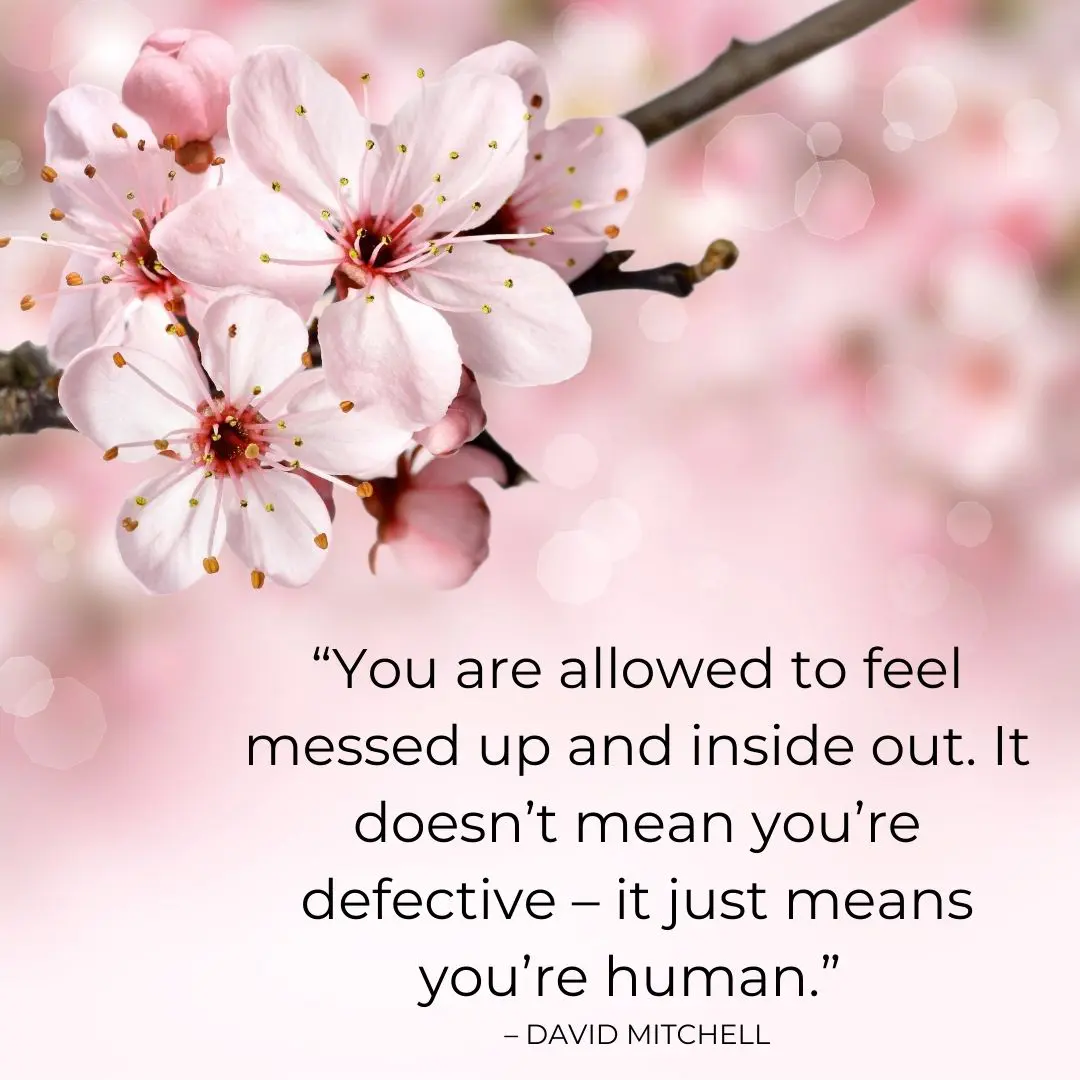
### Quotes About Depression
1. “I don’t hate people. I just feel better when they aren’t around.” – Charles Bukowski
2. “She wasn’t sad anymore, she was numb, and she knew somehow numb was worse.” – Atticus
3. “We cannot selectively numb emotions, when we numb the painful emotions, we also numb the positive ones.” – Brene Brown
4. “It’s such a fine line between feeling everything and nothing at all.” – k. Tolnoe
5. “Do not be numb. If you wish to heal your wounds; first learn to feel where they are.” – A. Daniel
6. “The world breaks everyone, and afterward many are strong at the broken places.” – Ernest Hemingway
7. “Tell your heart that the fear of suffering is worse than the suffering itself.” – Paulo Coelho
8. “I withdraw from people and places from time to time, a world that is filled with millions of mouths that talks too much but never have anything to say.” – Kaitlin Foster
9. “They say “follow your heart” but if your heart is in a millon pieces which piece do you follow? – Unknown
10. “My darling, you hold so much sadness in your eyes, I can almost touch the scars of your soul and cry.” – Alexandra Vasiliu
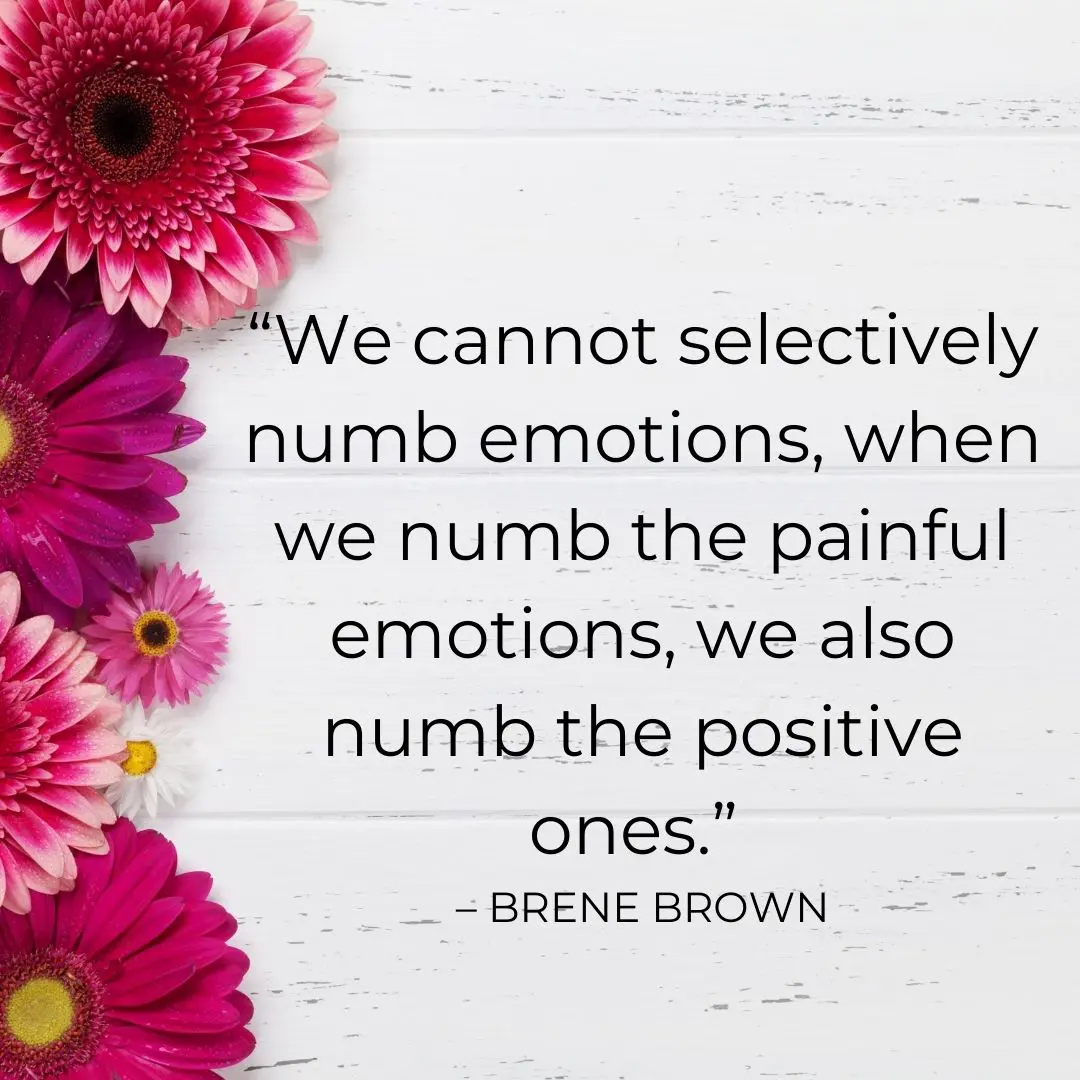
### Short Depression Quotes
1. “Angry is just sad’s bodyguard.” – Liza Palmer
2. “Make peace with your broken pieces.” – r.h. Sin
3. “You have to die a few times before you can really live.” – Charles Bukowski
4. “She has [love](/blog/how-to-find-love) in her words, pain in her silence.” – Laura Jane
5. “My heart hides so many wounds that never bleed.” – Alexandra Vasiliu
6. “Turn your wounds into wisdom.” – Oprah Winfrey
7. “I am lonely in places I didn’t even know existed inside me.” – Nikita Gill
8. “When it is darkest, we can see the stars.” – Ralph Waldo Emerson
9. “No matter how tall the mountain is, it cannot block the sun.” – Chinese Proverb
10. “Every emotion has a story to tell.” – k. tolnoe
### Anxiety and Depression Quotes
1. “I don’t want to look back in five years' time and think, ‘We could have been magnificent, but I was afraid.’ In five years I want to tell of how fear tried to cheat me out of the best thing in life, and I didn’t let it.” – Unknown
2. “If you haven’t healed it, every time you think about a negative event from your past, your body produces the exact same chemicals in the body as when it happened. That means you relive the experience hundreds of times simply because you haven’t let it go.” – Unknown
3. “You can make the decision now to have pain. Clean pain, that leads to a clean break, that allows you to heal. Or you can choose to hurt yourself over and over again until that big pain comes. Or you do it now.” – Unknown
4. “You don’t have to control your thoughts. You just have to stop letting them control you.” – Dan Millman
5. “Just because you carry it well, doesn’t mean it’s not heavy.” – Unknown
6. “The more we forgive, forget and let go, the less defined by our past we are.” – Unknown
7. “Life is way too short to spend it at war with yourself.” – Unknown
8. “Why worry? If you’ve done the very best you can, worrying won’t make it any better.” – Walt Disney
9. “I’ve had a lot of worries in my life, most of which never happened.” – Mark Twain
10. “Don’t believe every worried thought you have. Worried thoughts are notoriously inaccurate.” – Renee Jain
### Suicidal Depression Quotes
1. “The bravest thing I ever did was continuing my life when I wanted to die.” – Juliette Lewis
2. “You are a child of the universe, no less than the trees and the stars; you have the right to be here.” – Max Ehrmann
3. “Remember the times you could have pressed quit– but you hit continue.” – Shane Koyczan
4. “You are strong enough to face it all, even if it doesn’t feel like it right now” – Unknown
5. “Keep searching for the colors when everything turns grey.” – Christy Ann Martine
6. “Although the world is full of suffering, it is also full of the overcoming of it.” – Helen Keller
7. “You aren’t the things that haunt you. You aren’t the pain you feel. You aren’t defective or broken. You’re human, you’re doing the best you can, and you have so much to offer the world than the demons you’re fighting.” – Daniell Koepke
8. “The real reasons for not committing suicide is because you always know how swell life gets again after the hell is over.” – Ernest Hemingway
9. “There is hope, even when your brain tells you there isn’t.” – John Green
10. “You give the world such a great gift by being alive. Your time to leave this world will one day come, don’t cut life short.” – Unknown

### Inspirational Quotes For Depression
1. “Keep searching for the colors when everything turns grey.” – Christy Ann Martine
2. “In the midst of winter, I finally learned that there was in me an invincible summer.” – Albert Camus
3. “Although the world is full of suffering, it is also full of the overcoming of it.” – Helen Keller
4. “Your pain is an opportunity for you to learn about yourself.” – Gary Zukav
5. “I won’t let my pain turn my heart into something ugly. I will show you that surviving can be beautiful.” – Christy Ann Martine
6. “Somewhere there is a past you overflowing with so much pride looking at how far you’ve come.” – Unknown
7. “Whenever anything negative happens to you, there is a deep lesson concealed within it, although you may not see it at the time.” – Eckhart Tolle
8. “It takes half your life before you discover life is a do-it-yourself project.” – Napoleon Hill
9. “Not everything that is faced can be changed, but nothing can be changed, until it is faced” – James Baldwin
10. “What a plot twist you were.” – faraway

## Conclusion
These sixty depression quotes are pretty relatable. The pain and suffering you feel as you go through depression is challenging to go through. We hope that some of the quotes about depression helped inspire you to hold on a bit longer and to work towards overcoming this illness. This suffering is temporary and I’m so sorry that you’re going through this right now. You can learn [how to cope with depression](/blog/coping-with-depression) by reading our article about this.
---
# Do I Have PTSD?
- URL: https://declutterthemind.com/blog/do-i-have-ptsd
- Description: Wondering do I have PTSD? In this article, you'll learn all about PTSD so you can go to the doctor for a full diagnosis if you have symptoms.
- Published: 2025-06-25
In life, we encounter traumatic events that can have a devastating effect on our health– especially on our minds. Some situations can be more or less stressful, but they also bring different types of risks. What happens when our psyche can't cope with the amount of stress we experienced? Often, it results in a diagnosis of PTSD. If you've recently suffered a trauma, such as a sexual assault, car accident, death of a loved one, or recently left the military, you might have PTSD. In this article, we'll specifically address the concept of PTSD, its causes, symptoms, and treatment. At the end of this article, you'll be closer to answering the question: do I have PTSD? which can only be fully diagnosed by a licensed medical or mental health professional.
## What Is Trauma?
Trauma is a challenging life event that you can experience one or more times when people are exposed to great dangers, such as death, grievous bodily harm, or sexual abuse, either directly, as survivors, or through the testimony of others. Any person can experience trauma. Unfortunately, almost every person experiences at least one trauma during their lifetime.
However, experiencing trauma doesn't always result in a diagnosis of PTSD. It would help if you got mental health support immediately following a traumatic event. By speaking with a mental health professional, you might be able to avoid experiencing PTSD because you learn the coping tools you'll need to deal with it.
## What is PTSD?
Post-traumatic stress disorder (better known as PTSD) is an anxiety disorder that occurs in some people as a response to trauma. People who have post-traumatic stress disorder feel anxiety and fear even when they are no longer in danger.
## Early PTSD Signs
A person who asking 'do I have PTSD?' should look for signs or difficulties that they experience to help them determine the diagnosis. For example, here are some of the early PTSD signs you may experience.
### 1. Constant Preoccupation With the Traumatic Event and Its Re-Experiencing
People who have PTSD often get stuck in their trauma. As a result, you might cycle the same stories in your head multiple times, trying to find patterns so you can break the story. Unfortunately, this doesn't help and often causes you to relive the pain numerous times without getting better. Working with a trauma counselor or psychotherapist can help you stop [feeling stuck](/blog/feel-stuck) and stop reliving the story.
### 2. Feelings of Insecurity
After developing PTSD, your sense of security vanishes. The question, "Am I safe?" will pop into your mind often as you constantly look to avoid danger. Your brain will scan for danger more than usual, which will cause you to feel scared or threatened. That's why most people with PTSD are in survival mode or have an automatic fight and flight response. A trauma pops the bubble that the world is a safe place, making you feel vulnerable. Learning to feel safe again is possible in therapy. However, remember that your brain scans for danger to protect you, so rather than being afraid, tell yourself, "My brain is only trying to protect myself from harm. I can keep myself safe and protect myself."
### 3. Withdrawal
If you've been wondering, 'do I have PTSD?' ask yourself if you've been withdrawing from things. Do you do any activities less than before? Have you cut out certain people from your life? Did you recently make a sweeping declaration? For example, after a trauma, someone might say, "I'm giving up alcohol for a year" or "I'm giving up sex for a year." Often, with PTSD, people don't realize that the thing they're giving up is the thing that caused them to experience the trauma in the first place.

### 4. Avoiding Reminders of the Traumatic Event
After a traumatic event, people with PTSD will usually avoid things that remind them of the traumatic event. They might throw out the clothes they were wearing, cut the people associated with the trauma out of their life or even notice specific natural cycles. For example, if it was a full moon the night of your trauma, you might develop selenophobia and avoid leaving your home whenever there's a full moon out.
However, a person doesn't have to survive a dangerous event to suffer from post-traumatic stress disorder. Some people get this disorder after a friend or family member faces danger or is injured. Any person can suffer PTSD at any time of life. People who belong to the risk group in terms of post-traumatic stress disorder include persons who have survived a physical or sexual assault, abuse, accidents, natural disasters, dangerous or scary jobs, and many other challenging events.
## What Are the Possible Reactions to Exposure to Psychological Trauma?
An immediate post-traumatic reaction is a normal reaction to an abnormal situation. A shaken sense of security and confidence, inner anxiety, fear, lack of emotional experience, difficulty sleeping, and/or an inability to stop thinking about the event are experienced by almost everyone after exposure to a traumatic event. Most people manage to return to balance in a relatively short time, the reactions subside after a few days.
If these symptoms appear in the short term, caused by a recent traumatic event, there is no need to worry as this isn't PTSD. PTSD often happens for a much longer time and doesn't usually occur immediately following a trauma.
## Symptoms of PTSD
If you're wondering, do I have PTSD, take a look at the symptoms of PTSD. Symptoms that indicate PTSD appear shortly after the trauma, but a prolonged period is possible if you don't get the support you need. However, unlike a short-term reaction to a stressful situation, the duration of symptoms is long and can last far beyond a decade. Post-traumatic stress disorder can cause several symptoms that are grouped into three main categories:
### 1. Symptoms of Re-Survival of Trauma
- Reciprocal, intrusive, and unpleasant memories of the event, including performances, thoughts, and perceptions
- Repeated disturbing dreams of an event and waking up from [PTSD nightmares](/blog/ptsd-nightmares) constantly through the night
- Behaviors or experiences as if the traumatic event is happening again (through the feeling of re-surviving trauma, illusions, hallucinations, images from the past)
- Intense discomfort when exposed to internal or external stimuli that symbolize or resemble a traumatic event,
- Physiological reactivity when exposed to internal or external stimuli resembling a traumatic event.
### 2. Symptoms of Avoiding Traumatic Situations
- Efforts to avoid thoughts, feelings, or conversations about trauma
- Efforts to avoid activities, places, or persons reminiscent of the trauma
- Difficulty remembering a dangerous event
- Loss of interest in activities that were previously the subject of interest
- The experience of separation or alienation from other people
- Narrowed range of feelings
- An experience without perspective
### 3. Symptoms of Excessive Arousal
- Difficulty sleeping
- Irritability or outbursts of anger
- Difficulty concentrating
- The focus is on possible sources of danger
- Excessively pronounced twitching reaction
[Panic attacks](/blog/how-to-stop-panic-attack) can often occur in all of these groups of symptoms. The symptoms of PTSD can include an overall decline in psychophysical condition. There may be a greater preoccupation with the patient's physical problems and consequences regarding social and work functioning.
## Why Do Traumatic Memories Appear?
When you reawake these traumatic memories, without you voluntarily thinking about them, that is a sign that the traumatic experiences continue to burden the psyche. At the same time, it's a call to a person who has experienced trauma to face memories and seek help to resolve the pain.
Unfortunately, the memories will continue to come back until you face them, regardless of the time that passes from the onset of the first symptoms.
Once in therapy with a sound support system, you'll be able to stop the traumatic memories from reappearing after a few months of CBT or other types of therapy programs. However, the traumatic memories may reoccur years later if a new trigger resurfaces.

## Can Psychological Trauma Cause Physical Pain?
If you're wondering do I have PTSD, take a moment to see if you have any physical symptoms. In addition to mental symptoms, as a result of some post-traumatic stress disorder, many traumatized people also suffer from persistent and constant pain. People who have survived trauma very often later suffer from body aches such as:
- Pain in the back, legs, and feet
- Joint pain or headache
- Pain in the abdomen and stomach, pain in the lower abdomen
- Pain when urinating
- Racing heart
In most cases, the physical pain you feel is related to the trauma you have experienced because it's the body's reaction to the trauma you face.
## So, Do I Have PTSD?
There's no universal formula you can use by yourself to determine if you have PTSD. Each condition is a separate story in itself. The diagnosis of post-traumatic stress disorder is made by a doctor, psychiatrist, or psychotherapist who has experience helping people with traumatic events. There are basic rules they follow that can give you an idea of whether you are suffering from this disorder.
If you notice any of these symptoms months or even years after a trauma, there's a chance that you have PTSD:
- At least one symptom of re-survival
- At least three avoidance symptoms
- At least two symptoms of excessive arousal
- Symptoms that make life difficult for a person, going to school or work, hanging out with friends, or performing tasks
You should never make a self-diagnosis and take therapy without the supervision of a professional. If you find yourself in a situation where you ask yourself: do I have PTSD, you need to [find a therapist](/blog/how-to-find-a-therapist) for a diagnosis. [Self-awareness](/blog/self-awareness) and knowing that there's a possible problem are excellent bases for further control of your condition. If you find yourself in most of these symptoms, we advise you to make an appointment with a mental health professional immediately, so you get the support you need.

## When to Seek Help for PTSD
If you're asking do I have PTSD, it might be time to seek help. A person who has some of these problems should seek professional help as soon as possible for several reasons. One is proper assessment: exposure to psychological trauma, risk and protective factors, a person's danger to themselves and others, symptom severity and diagnostic assessment, medical and functional status, and comorbidity. PTSD is a disorder that affects the psyche, so it's important to seek professional support to prevent further disruptions or suffering.
## How to Overcome Post-Traumatic Stress Disorder
[PTSD treatment](/blog/ptsd-treatment) focuses on helping the person cope with the trauma they have experienced. The patient works to encourage themselves to recall a traumatic event and to re-experience it rather than avoiding it all. They pay particular attention to feelings of guilt and mistrust. Then they learn how to overcome and control the memories of trauma. Therapy indicates the problems that post-traumatic stress disorder causes to the quality of life of a person and their environment.
Depending on the pace of progress, treatment can last from a few months to several years. Regardless of the treatment interval, it's essential that the patient moves at their own pace and that they don't feel insecure or uncomfortable at any point in the treatment.
Along with therapy, you can follow a [guided meditation for PTSD](/meditation/ptsd) or watch [PTSD videos](https://www.youtube.com/watch?v=hKS1SG_PZD0).
https://www.youtube.com/watch?v=8sjhuzALbhM
## Why Do Some People Get Sick and Some Don't Get PTSD?
It's important to remember that not every person who survives a traumatic event will develop PTSD. Most people won't get PTSD, especially if they get the support they need early on.
Many factors play a role in whether a person will develop PTSD. Some of these are risk factors that can make a person more susceptible to PTSD. Other factors, called resistance factors, can help reduce the risk of disorder. Depending on your perception, previous trauma experiences, PTSD may bypass you. But sometimes, even these factors are not enough, PTSD will occur nonetheless.
## Conclusion
Asking yourself: do I have PTSD? is the first step towards dealing with the trauma that keeps you up at night. Education is of great importance in this situation because the sooner you understand your condition, the sooner you'll start recovering from it. Getting the support you need early on, can help prevent the onset of PTSD and prevent years of therapy, triggers, and flashbacks.
---
# Emotionally Unavailable: What It Means, Signs to Look For
- URL: https://declutterthemind.com/blog/emotionally-unavailable
- Description: Struggling with someone who appears to be emotionally unavailable? Here's what it means and the signs to look for.
- Published: 2025-06-25
Do you feel that people find it complicated to know you? Maybe you want people in your life, but something is preventing you from getting deeper. How many times have you left someone on read? Indeed, something prevents you from getting the emotional closeness that you desire. Being emotionally unavailable.
You may have heard the term emotionally unavailable a few times. But what does that mean? Being emotionally unavailable is a problematic pattern when coming close to others or having a committed relationship. Also, it involves emotional vulnerability when connecting with a person on an intimate level.
These people will keep their loved ones or partners at arm's length. They would rarely open up or share their emotional experience. As such, they often leave relationships even before getting serious. So here's what you need to know about being emotionally unavailable and how to spot a person.
## What Does Emotional Unavailability Mean?

Typically, being emotionally unavailable means someone is unwilling to share or discuss their feelings. They can be hard to read, evasive, or flaky. Besides, they stay away from intimacy of any kind. It involves difficulty in handling and expressing emotions. Also, they find it hard to get close to others.
Moreover, they are in constant fear of intimacy or commitment. A person who is emotionally unavailable tends to share their desires, hopes, wishes, regrets, or goals. They label themselves as being private. Often, the term refers to romantic contexts. But people can exhibit these qualities with other people in their lives.
No wonder emotional availability is crucial in sustaining and [building healthy relationships](/blog/healthy-relationship). Whereas emotionally unavailable refers to unhealthy and toxic relationships. When developing and nurturing meaningful relationships, taking risks with emotions becomes necessary.
Besides, the degree of being emotionally unavailable varies. Some people may only open up to specific people. But may hold back their own emotions even from people who are close to them. Some people may be aware of their condition, while others do not even recognize their state.
An emotionally unavailable person will find receiving love or other deep emotions challenging. The person doesn't understand others' feelings because they don't understand their own own feelings. Hence, they won't make attempts to develop intimacy. Instead, they struggle to communicate and are unaware of their emotional boundaries.
There's also a big difference between someone who's fiercely independent and someone who's emotionally unavailable. Fiercely independent people won't have all the signs that we'll cover later in this post. They have their own space but they're always willing to share it with their partners and leave the other person feeling connected at an emotional level.
## Emotional Unavailability Signs to Look For

Several signs indicate an emotionally unavailable person. They will generally avoid commitment, struggle to interact about their needs, and stay away from emotional intimacy. Additionally, they are hard to spot sometimes. Below listed are some signs that indicate a person might be emotionally unavailable.
### 1. They avoid deep conversations
If the person you are seeing doesn't like getting deep into conversations, that's a sign they're an emotionally unavailable person. To make a relationship last long and healthy, deep conversations are necessary. They will refrain from getting into discussions or communication surrounding commitment, creating [relationship anxiety](/blog/how-to-deal-with-relationship-anxiety).
Also, they won't speak anything to make the relationship closer. These are the signs you should be aware of. For example, if a person wants to avoid sharing something that can have an impact, it means they aren't ready for a serious relationship.
### 2. They communicate less
Not everyone is always present to address your queries, which is normal. However, if that happens constantly, you may have a situation. This is when you should evaluate certain aspects of the person responsible for the act.
You need to know when your partner will talk with you to be emotionally available to connect. Or they make you feel unheard. If someone is there for you, they will speak to you when you need them. In short, they will make every effort to keep things balanced. Open communication is about sharing deeper feelings and providing emotional support when it's needed.
### 3. They will avoid labels or commitment
For an emotionally unavailable person, labels and commitment lead to fear and anxiety. For example, it is not a good sign if a person pretends not to be in a relationship but is in a relationship right now.
If you date someone who doesn't want to label the relationship, things aren't developing the organic way. But, of course, it won't lead to a healthy relationship in the future as well.
There is no denying that relationships will take several forms. It won't progress if someone doesn't talk about or even recognize the relationship. When a person doesn't discuss the benefits they can have with their partner, they aren't ready yet. Instead, they need much time to prepare for their available partner.
### 4. They seek perfection from everyone
No person is always attractive, sexy, chill, and perfect. Especially when they are with their partners. So, if you feel that you must always remain vibrant around your partner, you are not having issues. Instead, it is your partner who is ab emotionally unavailable partner.
Emotionally unavailable people are hard to appease because they always look for something negative to hold onto it. All they need is to justify their terrible behavior that causes [emotional pain](/blog/emotional-pain). They seek perfection from people who may have flaws. And they will highlight the shortcomings of ending a relationship with their partner.
### 5. They feel overwhelmed
Most of the time, a person who is emotionally unavailable or someone who is emotionally alone will consider themselves self-sufficient and independent. It is normal to have a little bit of space in a relationship. But when there is a need for excessive alone time, it reflects a discomfort in intimacy.
These people will try to be independent while fearing engulfment in a relationship. They fear losing themselves to the other person. They need solitude and space to regulate their anxiety levels. This becomes evident during conflicts, but certain types of healing can reduce these insecurities.
### 6. They won't compromise their time
An emotionally unavailable person's behavior is unaware of the feelings of people around them. They have a similar attitude toward their partner, physical and mental health as well. Unfortunately, these people won't compromise and tend to control situations.
If a person you see wants you to become flexible around their schedule, they are emotionally unavailable. They expect that the relationship should revolve around them. Also, they fail to understand the depth of a healthy relationship, which is a two-way street.
### 7. They don't know what they want from the relationship
Have you noticed that your partner doesn't give you clear answers about what they need from the relationship? Besides, how they talk indicates that they are constantly second-guessing. In both cases, they are undoubtedly an emotionally unavailable partner.
More badly, you tend to constantly fear worrying about when the person will stop calling you. As such, it doesn't make for a productive relationship. People who are emotionally available will tell their partner what they want. So even if the topic is complicated, they won't hesitate to discuss it with their partner.
### 8. Their behavior is inconsistent
People who are emotionally unavailable will confuse their partners with inconsistent behavior. They will show that they are in the relationship with efforts only to disappear for some time afterward. Now, that's scary and uncomfortable.
If someone makes you feel comfortable and safe one day but disappear for another week, the person isn't available to you emotionally. You may feel great when someone comes out of the rough after some time. But it could damage you in your self esteem in the long run. It isn't a good feeling that someone treated you like trash.
### 9. They didn't have serious relationships earlier
A person who is emotionally unavailable won't have a history of severe relationships in the past. Although relationship history could become handy in some instances, not having any history of a long-term relationship is a red flag.
It means the person is emotionally unavailable and leaves the relationship before it gets serious. No doubt, every relationship will have ups and downs. But leaving them without resolving issues indicates that a person is emotionally unavailable.
### 10. They won't introduce you to other people
An emotionally unavailable person won't introduce you to their family or friends even after dating for some time. It is a sure sign that you are in the wrong relationship. A person who keeps you from building intimacy won't allow you to meet their loved ones.
Getting to know someone's family members is only the first sign of someone who's emotionally distant or emotionally unavailable. It usually starts with them not introducing you to their friends, as well. One of the most common signs of someone who's emotionally unavailable is their reluctance to introduce you to their friends since that's often the first step of getting to know someone better.
## What Can You Do for Your Partner Who Is Emotionally Unavailable?

If your partner's behavior concerns you, seeing a therapist or support group might positively impact your relationship. However, your partner should be willing to support your cause. The purpose is to bring your partner out of the shell developed over time.
Identifying the potential cause of the behavior and finding ways to deal with it will set your partner free. Apart from that, it will take time before the healing brings positivity to your relationship. So, [have patience](/blog/having-patience) and work things out through constructive procedures.
## Conclusion
A healthy relationship isn't possible if your partner is emotionally unavailable. But with compassion and little hard work, you can overcome the tricky situation for you and your partner. That way, you can explore emotions and build a satisfying relationship.
Real relationships require real commitment, being open about true feelings, sharing your own needs, and seeing the same effort for connection from both people.
---
# Empathy vs Sympathy: What's the Difference?
- URL: https://declutterthemind.com/blog/empathy-vs-sympathy
- Description: What's the difference between empathy vs sympathy? In this article, we share the best times to use empathy or sympathy to offer support.
- Published: 2025-06-25
We all have heard or used the words empathy and sympathy at some point. And while some of us use the terms interchangeably, there's a distinct difference when comparing empathy vs sympathy. We all wondered how it feels to "empathize" or "sympathize" with someone's feelings. How do these words differ from each other? And how can our actions in empathizing or sympathizing create different reactions in how someone perceives the tone of the conversation? In this article, we'll example the difference between empathy and sympathy and when the correct times are to use each. Let's dive in to look a little bit more about empathy and sympathy.
## The Origin Of Empathy and Sympathy
Both empathy and sympathy derive from a Greek word, and its usage is to describe how you feel about the person's emotion and how you would react to it. In the word sympathy, "Sym" means "together" and "pathos" refers to feelings or emotions. So, putting it together, sympathy roughly translates to be together with our feelings. On the other hand, the word empathy derives from the Greek word "empatheia," which means physical affection and passion, and "pathos" means the same thing as mentioned above. So empathy is about being affectionate and passionate in our feelings.

## Empathy vs. Sympathy: What's The Difference?
Sympathy and empathy sound like similar words, but they couldn't be more different from each other. They are often confused when people use the terms and define them. These words are also not synonymous with one another and are not interchangeable.
### What is Empathy?
Empathy is understanding another person's feelings because you've been through the same experience, and you know how it feels.
For example, you might've experienced similar trauma as another person, such as a car accident. As a result, you know how hard it is to deal with a brain injury and the fear of getting back into a car after an accident has taken place. So when you meet someone who's also been in a car accident, and they tell you about how hard it is to concentrate or how scary it is to drive a car after a serious accident. You can provide a lot of empathy through shared experiences.
You can define empathy as putting yourself in the other person's shoes. It has a deeper meaning and conveys a lot of emotion because you know how it feels and what it's like to be in someone else's situation. We rarely see "empathy cards," and it sounds a little bit awkward because the meaning of empathy is more profound than the physical thing, and it can be felt more wholeheartedly than it seems.
### What is Sympathy?
Sympathy is acknowledging the feeling of the person because you want to support and comfort them.
Most people offer sympathy when someone they know loses a loved one to illness. For instance, if you attend a viewing for a friend who lost their dad, but you have never lost either of your parents, you can only offer sympathy, not empathy. That person will go through the [stages of grief](/blog/stages-of-grief) as they deal with a death of a parent, and it'll be unlike something you've ever experienced.
Sympathy is typically used to show [pity](/blog/self-pity), sorrow, and feel sorry for what the person feels. That's why we often see "sympathy cards" because we want to show support physically. We may feel bad for someone in pain, but we don't feel that much, or we can't relate to them because we have never been in their position. You know they're sad, or you know how bad it is, but there is a limit to how you can feel for them.
## Which is Better: Empathy vs Sympathy?
Both empathy and sympathy are good responses to feelings or emotions. They convey a positive reinforcement with a heartfelt response, especially when people are struggling. It assures us of care and support in both physical and emotional aspects.
It's a good feeling to know that somebody cares for you, especially if you're going through many things, including your specific struggles in mental health, life events, or trauma. It's not something we force or require; it's an automatic response that somebody empathizes or sympathizes with what you feel.

## When to Use Empathy Vs. Sympathy
Now that we know the meaning and the physical connection between those two words. Let's take a look at how we properly use them.
Both empathy and sympathy are good words to express your physical or emotional connection to the person's feelings. When you express sympathy, you know that a person is sad, but you feel the same way about what the person feels when it comes to empathy.
A person can receive both empathy and sympathy, but these feelings don't go together. You can indeed feel one of them and not changing to another. Using those words in a sentence makes them identifiable and gives the actual response to the feeling.
Here are a few cases where you'd use empathy in a sentence or [show empathy](/blog/how-to-show-empathy) to another person.
The father has empathy for his son, who was bullied in class today.
The woman had a deep empathy for dogs and their owners, as she also owned a dog.
I definitely know how hard it is to go through a divorce.
I must have hurt your feelings when I made that rude comment.
I understand how you feel because I, too, was diagnosed with cancer.
I understand how it feels to feel like an outcast.
We can overcome this obstacle together.
I hear what you're saying when you say, "I'm at the end of my rope."
I felt terrible to know about all of this.
I've gone through all this, too, and I'm sorry that this event is causing so much pain.
We are on the same page on how to handle this problem.
I would have been disappointed too.
Here are a few cases where you'd use sympathy in a sentence or show sympathy to another person.
Show some sympathy for the victims.
He expressed sympathy and condolences to the bereaved family.
I'm sorry for your loss.
It's sad to hear about this.
I'm here for you.
I wish you my deepest sympathy during this difficult time.
Wishing you well as my heart goes out to you.
Please accept my deepest condolences.
I share in your [sadness](/meditation/grief).
You and your family are in my prayers.
I have no idea, but I'm sorry.
Please accept my sympathy.
You'll get over it soon.
I'm wishing you peace and comfort.
I don't know what to say; I just want you to know I'm here for you.

## Empathy vs Sympathy: Which Is Better to Use?
Both empathy and sympathy express good emotional connections. One is not really better than the other; it's just that sympathy sets a limit of connection or affection while empathy digs deeper than that, maybe because of the closeness or the experience of being in the same situation as the person.
However, you can't fake empathy when you can't relate to the experience at all. So you don't have to pretend to [be empathetic](/blog/how-to-be-more-empathetic) when all you can be is sympathetic. There will be times in your life where you really don't know how someone else feels or what to say to [cheer someone up](/blog/how-to-cheer-someone-up). All you can do is offer a listening ear, love, and kindness to help people through their rough patches.
The response for both emotions (empathy and sympathy) are automatic, but the usage in the sentence will depend on how much you want to express yourself in written words based on the level of what you feel.
Sympathy is not necessarily lacking in emotion; it's just that the limit of what it feels like doesn't correspond to how the person feels. It's hard to pretend how deeply you feel in a situation when you currently don't feel how it feels like "personally." Some things are just hard to relate to. So when comparing empathy vs sympathy, they're both equally important.
## The Science Behind Empathy And Sympathy
Let's use a little bit of science to examine empathy and sympathy a little bit deeper. Empathy is a cognitive response of a person who experienced certain emotions as their own. It's the increase in the probability of [helping others](/blog/helping-others) so that a person understands how it feels like to be in a situation. It builds morality, compassion, and willingness to help.
Empathy encompasses "The Golden Rule" as we want to do what is morally good. Do something good and feel better because what you did is right, benefiting the other person.
Experts in neuroscience propose that it is possible to experience empathy because when we see a person experiencing an emotion, we imagine or "simulate" the same in ourselves that we feel like having a firsthand experience of the same emotion. Our minds are powerful sources and can replicate the emotional state of others so we can better bond with people.

## What Are The Three Types of Empathy?
The three types of empathy are cognitive empathy, emotional empathy, and compassionate empathy. Cognitive empathy is the ability to understand someone's feelings and try to work out what they think. Emotional empathy is the ability to share or connect to another person's feelings or emotions. Compassionate empathy is the emotions that are transformed into actions when a person is triggered to do something. Empathy is essential in all aspects of life; it allows us to practice compassion for others, even with strangers.
On the other hand, sympathy is the physical action in response to a willingness to[help others](/blog/helping-others). For example, we feel greater sympathy for a terminally ill person than a sick person with a slight cold. Both of them are sick, but there is a greater response to the person with the highest degree of pain of emotional struggle. That's because we've all experienced the inconvenience of a cold and know that it's not that big of a deal, only a minor inconvenience.
Sympathy is being affected by feelings, emotions, or negative responses but not necessarily as much depth as empathy. We feel sorry in a certain way, and as much as we are willing to help, we feel a certain limit because that is the emotional limit it can provide.
Empathy is about understanding a person's feelings by imagining yourself in that situation or knowing the other person as if you experience it yourself. On the other hand, sympathy is the feeling of being emotionally moved by or responding to another person's feelings.
When comparing empathy vs sympathy, they are good feelings of helping and caring for another person. Empathy and sympathy help people cope up with what they are dealing with. Being able to respond to a person based on how he or she feels, triggers an emotional connection.
It would be so sad to imagine a world where no one can understand anybody else's feelings. That's the critical significance of these two emotional states of empathy vs sympathy.
So, it is beneficial for us to understand both empathy and sympathy because we are here to understand and help one another as humans. The world will become a better place if we know how to build connections and be sensitive enough to what others would feel or at least imagine ourselves in their shoes to understand better how they would feel.
## Conclusion
Both empathy vs sympathy are equally important when trying to have difficult conversations with people. When we can relate to another person because we've been through a similar experience, we should use empathy to help them better cope with their challenges. However, if we can't relate to their situation, we should employ sympathy and offer a listening ear, compassion, and kindness to help them through.
---
# 50+ Encouraging Words to Uplift You and Your Day
- URL: https://declutterthemind.com/blog/encouraging-words
- Description: Need a bit of encouragement? Here's over 50 encouraging words to uplight you and get you through your tough times and day.
- Published: 2025-06-25
Feeling discouraged or [depressed](/blog/depression-quotes) because of everything that's happening around you? Do you [feel overwhelmed](/blog/feeling-overwhelmed) with the constant streams of trials that come your way? The world may condemn you, but no one can pull you down without your permission. Everywhere, you are constantly judged, and competition is fierce, the conversation will make a difference. You are the greatest friend or enemy. In many situations, here are some encouraging words that'll help you pull yourself back together.
## Self-Validation Encouraging Words
Trusting your capability and creativity often doesn't come easily to many. In each undertaking, you usually have to face a formidable character, the damage ten times the outside force. As you rise, you'll face attacks from self-doubt. Whether the attacks are internal or external, the best defense is encouraging words.
The power to break through from the chains that bounds you down start from within. It begins with self-acceptance before you can demand others to accept you. When kind words are scarce, start doing it to yourself. Pat yourself on the back and say these encouraging words.
You are enough.
You are beautiful. - Psalm 139:14
The truth is: belonging starts with acceptance. Your level of belonging can never be greater than your level of self-acceptance because believing that you're enough is what gives you the courage to be authentic, vulnerable, and imperfect. - Brene Brown
You become a better version of yourself every day.
Love yourself right now because you are exactly what God created you to be.
Speak only with love because there is power in the tongue.
Don't compare yourself to others. There's no comparison between the sun and the moon; they shine when it's their time.
Talk to yourself like someone you love. - Brene Brown
## Chasing Your Dreams

They say that the richest place on earth is the cemetery, for they are filled with dreams buried in the grave. If you can't sleep because of a dream that's pounding in your heart or afraid to start chasing after the life you wanted, repeat these encouraging words to yourself.
Three life rules:
If you don't go after what you want, you'll never get it.
If you don't ask, the answer will always be no.
If you don't step forward, you will always be in the same place.
"Trust the wait.
Embrace the uncertainty.
Enjoy the beauty of coming."
"It's not about being the best. It's about being better than you were yesterday."
Don't be pushed away by the fears in your mind. Be led by the dreams in your heart.
Don't downgrade your dream just to fit your reality. Upgrade your conviction to match your destiny.
Your time is limited. So don't waste your time chasing someone else's life. - Steve Jobs
Just start. Don't worry if you don't have all the answers yet. - Alli Webb
Never give up on a dream just because of the time it takes you to accomplish it. The time will pass anyway. - Earl Nightingale
The distance between your dreams and reality is called ACTION.
People assume that having a passion, dream, and even talent is something to be envied. They believe it's something that'll make life easier when, in reality, it can make your life difficult. Chasing a passion of one's heart is like chasing the admiration of an unrequited lover. It requires a painful vulnerability. It's a road that's littered with character challenges, offering easy exits after each of its frequent discouragements. It's always mysterious and mystical, still out of reach, causing bursts of excitement with any response while never failing to retreat from the impending danger of rejection.
The fear of such places put the pursuer in a constant state of worry, while the pursuit itself remains futile without complete devotion and transparency towards the pursuer's passion.
We achieve more by chasing after our dreams instead of our competition. - Simon Sinek
If you want to do something, stay low key about it and hustle. Let go of the thought that you need validation or permission from anyone in order to get your show on the road. - Kylie Francis
You must not let others define your limits because of where you came from. Your only limit is your soul. - Gusteau, Ratatouille
Success is 80% psychology and 20% skills. - Tony Robbins
Play the game quietly. Shout when it's time to say CHECKMATE.
## When Things Around You Get Out of Control

Often you are faced with challenges left and right, people doubting your skills, and things don't go as planned. When you're lost and [trapped](/blog/feeling-trapped) in a maze, repeat these encouraging words to help you gain perspective and be encouraged to keep moving forward.
"As I look back on my life, I realized that I was rejected not because I wasn't good but because there's something else waiting for me. I was being redirected to something better."
"The struggle you're in today is developing the strength you need for tomorrow."
"Remember, growing might feel like breaking at first."
"Breathe, darling. This is just a chapter, not your whole story." - S.C. Lowrie
"Remember: Difficult does not mean impossible."
"When you can't control what's happening, [challenge yourself](/blog/challenge-yourself) to control the way you respond. That's where the power is."
Failure is success in progress. - Albert Einstein
I never lose. I either win or learn. - Nelson Mandela
If people are doubting how far you can go, go so far that you can't hear them anymore. - Michele Ruiz
The same boiling water that softens the potato hardens the egg. It's about what you're made of, not the circumstances.
One day you will tell your story of how you overcame what you went through and it will be someone else's survival guide. - Bene Brown
My grace is sufficient for you, for my power is made perfect in weakness. - 2 Corinthians 12:9
Maybe life isn't about avoiding the bruises. Maybe it's about collecting the scars to prove we showed up for it.
"Be happy with what you have while working for what you want." - Helen Keller
It's a slow process but quitting will never speed it up.
## Encouraging Words for When You've Reached Rock Bottom

Life doesn't always come your way. Often, it throws a curveball at the least expected moment. When life knocks you down to the pit of the ocean, here are some encouraging words to move back to the game of life.
Hold On Pain Ends. (H.O.P.E.)
The comeback will always be stronger than the setback.
If you feel like you're losing everything. Remember that trees lose their leaves every year and still they stand tall and wait for better days to come.
Failure should be our teacher, not our undertaker. Failure is a delay, not defeat. It is a temporary detour, not a dead end. - Denis Waitley
Perhaps this is the moment in which you have been created. - Esther 4:14
And every shooting star is proof. Falling is beautiful when you give it all you've got. - Alicia Green
Failure is simply an opportunity to begin again, this time more intelligently. - Henry Ford
You have to be able to accept failure to get better. - Lebron James
Your hardest time often leads you to the greatest moment of your life. Keep going. Tough situations create stronger people in the end. - Roy T. Bennett
If you're going through hell. Keep going. - Winston Churchill
Pain makes you stronger.
Fear makes you braver.
Heartbreak makes you wiser.
So thank the past for a better future. - Buddha
A comeback is a setback that did its homework, learned the lesson, then moved forward. - Eleanor Brown
Life is like photography, you need the negatives to develop.
Life is not about how fast you run or how high you climb but how well you bounce. - Vivian Komori
If you really look closely, most overnight successes took a long time. - Steve Jobs
Stars are born from chaos. They are born after the first collapse. So, my beautiful friend, if you find yourself collapsing, when you find yourself lost in the midst of chaos and confusion, know that it's because a [new beginning](/blog/new-beginnings) is coming. Know that everything is spinning and turning inside of you in order to form new worlds that you can't even imagine yet. Everything is quietly working under the surface to bring a new light -- and it will shine brighter than ever. - Nikki Bannas
Sometimes you just have to jump off the window and grow wings the way down. - Ray Bradbury
There are some things that you can learn in a storm. - Joel Osteen
Getting over a bad experience is like crossing the monkey bars. You have to let go at some point to move forward. - C.S. Lewis
The truth is life always gets in our way. But as long as you're still breathing and you're alive, there's always the opportunity to get back on your feet and move forward. Words can be swords or building blocks to get you closer to the life you wanted. Choose the words you use wisely. Repeat these encouraging words daily. These encouraging words will help you pivot.
---
# How to Cultivate Equanimity and Become Emotionally Strong
- URL: https://declutterthemind.com/blog/equanimity
- Description: Inner peace and balance is what equanimity is all about. Here's how to cultivate more equanimity in your life and become stronger.
- Published: 2025-06-25
Have you ever felt that feeling of being on an emotional rollercoaster? Moreover, do you have any control over that rollercoaster? The subject we will address today is equanimity, which will help us cope with life's ups and downs.
Keep reading, learn how to cultivate equanimity, and change your life forever.
## What Is Equanimity?
Looking for a definition in a dictionary, you find it regards keeping one's "calmness and composure" and adds, "especially in a difficult situation." In other words, this is to say that being equanimous is being emotionally strong while enduring all of life's tests.
### The Buddhist Approach
For Buddhism, equanimity means something far more transcendental. It is one of Buddha's four virtues one should cultivate to live an enlightened life. They are the following:
- Compassion
- [Loving kindness](/meditation/loving-kindness) or benevolence
- Equanimity
- Empathetic joy
By cultivating these four virtues, we can become enlightened and start living a better life impacting others positively. For example, through [empathetic](/blog/how-to-be-more-empathetic) joy, we can be happy enjoying others' happiness.
Wouldn't this be a giant leap forward as a society? Equanimity is just as important as empathy to enhance our social values.
### Mind Games and Mindfulness
So, why don't we just all do it and get it over with? Well, there are several mundane challenges to overcome before we can say that we attained equanimity. The first colossal challenge to pass is that of our own mind. Buddhists refer to an untrained mind as a "monkey mind." It gets its name from jumping from thought to thought as a monkey jumps from branch to branch. Yes, your mind plays tricks on you. It keeps you in a lower state of consciousness, worrying about mundane, trivial things, thus causing the emotional rollercoaster you find yourself riding most of the time.
Mindful meditation or [Vipassana](/blog/what-is-vipassana-meditation) is a technique to help tame the monkey mind and train it to work for us instead of against us. Abandoning the mundane emotional rollercoaster means not being emotionally attached to it; it doesn't mean that life's events will stop happening. In fact, being emotionally strong isn't having an easy life, but coping with it healthily. In other words, it is not the outside that changes (although it will eventually), but the way we perceive it.
### Neither Good nor Bad
The perception of things being good or bad is a cultural construction. For a balanced mind that has cultivated equanimity, things just are. Accepting reality as it comes is the first step for fostering equanimity in oneself. This, for Buddhism, this means to stop craving, become detached from the wild desires of the ego, and remain calm in loss and win.
Buddhists state that a disciplined mind brings [happiness](/meditation/happiness), while an undisciplined one makes a person miserable. This is because the archetype of desire in our western culture builds upon the notion of happiness as an obtainable good that one can have and lose. Simultaneously, a trained mind knows that joy emanates from within and not the other way around.
If we could illustrate this with a metaphor, we could say that an untrained mind is a boat sailing a stormy sea while the trained mind is a submarine that knows nothing about storm or sunshine and sails towards the objective at a steady pace, undisturbed. To Buddhism, equanimity is to cultivate this state of mind as a way of life. Here's a great video of Dr. Chönyi Taylor explaining it in one minute.
https://www.youtube.com/watch?v=PX8CY-1eOM0
## How to Cultivate Equanimity
It all sounds like bliss, but how do we cultivate equanimity in the 21st century? Everybody seems to be in a hurry in this day and age, and social media acts as a huge window to measure happiness through pictures. How can Buddha's 2500-year-old teachings help us being emotionally stronger? Let's take a look at some great strategies and the formal path.
### Meditation for Equanimity
To Buddhism, there is no path better than that of self-care and [self-awareness](/blog/self-awareness). Through an ancient technique called Vipassana, Buddha taught the world how to tame the "monkey mind" and live a life of equanimity. You can practice [Vipassana](/blog/what-is-vipassana-meditation) anywhere in the world because of the Dharma.org foundation. All courses are free of charge in exchange for a donation at will.
https://www.youtube.com/watch?v=lNpuUk55kuI
If you want to take the formal path and become a meditator, there is no better place to start. In case you are wondering just how much meditation impacts your life, here's Ph.D. Richard Davidson speaking about meditation and neuroplasticity in a documentary clip and a TED talk.
https://www.youtube.com/watch?v=7CBfCW67xT8
### Eating habits
One eating habit creates a roller coaster in your emotions, which is eating processed sugar. Food with high amounts of processed sugar establishes a sense of euphoria and excess of energy only to let your mood plummet afterward.
Avoid eating highly-processed food that develops cravings and will bring your efforts for equanimity to an uneven fight. Try [practicing mindful eating](/blog/mindful-eating) as well. It's a good way to bring some mindfulness into a necessary and regular habit.
https://www.youtube.com/watch?v=qh26nYk0Ygw
### Say no to multitasking
Cultivating a disciplined mind is all about focusing. When we multitask, we are not focusing on one thing but rather doing the opposite. Try saying no to multitasking as much as you can and devote your full attention to every task. Indeed by focusing your full attention on one task, you'll be cultivating your equanimity through your mind's focus.
Focus on one thing at a time to avoid falling into the "monkey mind" scenario. If you need help centering your attention on the task at hand, try a [meditation for focus](/meditation/focus) practice.
https://www.youtube.com/watch?v=vBO8QEjANjs
### Surrender to feelings
To Buddhism, there is nothing more real than the sensations in the body. Those who practice Buddha's teachings through Vipassana know that to take power away from the monkey mind, we must focus on what is happening in the body. The mind can make things happen and forget them, but the body never lies or forgets.
The proposal is to surrender to the feelings as an observer. Instead of attaching an emotional response to it, just watch it happen. Once we can develop that healthy distance from our emotions, we can start having more rational responses to emotional situations and thus acquire a higher balance level. Having an equanimous, balanced mind is crucial to surviving life's unpredictability. We can't always control what happens, but we can indeed [control our emotions](/blog/how-to-control-your-emotions).
https://www.youtube.com/watch?v=5DdhH0Udz5I
Surrender to feelings; watch them happen instead of reacting immediately. For this endeavor, most people count to ten before they speak or act. Those mere ten seconds can be of great help to cultivate your equanimity.
### Creativity and Mindfulness
[Mindfulness](/blog/what-is-mindfulness) is the power of now. This is also one of Buddhism's pillars: being present at the moment. Our expectations make us miserable because we are demanding from the future. Trying to change the past is futile; hence all we have left is the present.
Few things can help you be more present than creativity. Have you ever been into that fantastic [state of flow](/blog/flow-state) where time flies, and all you worry about is your current task? Some people call it "being in the zone," others refer to it as inspiration; whichever name you want to give to it, creativity is a golden gate to mindfulness and equanimity.
Do something you love doing just because of that reason and focus on the moment, not the outcome. Creating is a [form of meditation](/blog/types-of-meditation), the path to equanimity.
### Sports can be a great way too
Perhaps you are not big on brushes and letters but love a good afternoon out playing your favorite sport. That is also a great way of being present at the moment, clearing your mind of all that clutters it. Forgetting about the future and the past concentrating on kicking the ball, for example, is another way of meditation that can be a great path to cultivating an equanimous mind. Plus, your body will thank you for that dose of Vitamin D we all need so much.
### Baby steps
Finally, before we reach a conclusion, it is essential to look at equanimity as a goal at the end of a path. Steadily taking baby steps is the best way to reach any destination, and this is no exception. Don't expect to come out of bed in the morning one day and finding out you are suddenly equanimous. Also, don't expect equanimity to be a permanent phenomenon in your life; it will come and go.
The more you concentrate your energy on those baby steps towards equanimity, the more you'll change your life for the better.
## Conclusion

One of Buddha's highest truths is the rule of impermanency that reins the universe. According to Buddha's teachings, nothing is forever, and hence everything is continuously changing. This is partially why cultivating equanimity is a must, to endure and embrace the impermanency phenomenon and live a happy, fulfilling life.
In a sea of troubled water, staying calm is crucial to living a happier life. Embrace the impermanence of life while cultivating emotional strength through equanimity. You'll never look back after that, I promise.
---
# Existential Crisis: Symptoms, Meaning, and How to Cope
- URL: https://declutterthemind.com/blog/existential-crisis
- Description: Learn about the symptoms of an existential crisis, what it means, and practical ways to cope. Discover strategies to find clarity, purpose, and renewed meaning in life.
- Published: 2025-06-25
Have you ever caught yourself lying awake at night, wondering, “What’s the purpose of all this?” That unsettling feeling, where life feels like a puzzle missing a piece, is at the heart of what many describe as an existential crisis. At its core, an existential crisis is a period of intense questioning about life’s meaning, your identity, and your purpose. It’s a deeply personal experience that can feel overwhelming, yet it’s also a natural part of the human journey.
An existential crisis doesn’t come with a neat checklist of symptoms, but there are some common signs to look out for:
**Emotional Symptoms**
You might feel trapped in a cloud of hopelessness or despair. Guilt, loneliness, and an aching sense of isolation can creep in, making even everyday activities feel heavy.
**Cognitive Symptoms**
Your mind may race with difficult questions: “What’s my purpose? Do my values still resonate with me? What’s the point if life is finite?” Contemplating mortality or losing faith in long-held beliefs can deepen the sense of confusion.
**Behavioral Symptoms**
For some, an existential crisis might lead to withdrawal from relationships or changes in routines. It can also manifest as unhealthy coping mechanisms, like addictive behaviors or compulsions.
If you’ve been experiencing any of these feelings, know that you’re not alone. This type of inner turmoil is often misunderstood but can be an important turning point for growth. Sometimes, negative thought patterns during an existential crisis can mirror the self-criticism that arises in moments of doubt. If that resonates with you, you might find our blog post on[I hate myself](/blog/i-hate-myself) helpful for unpacking and addressing such thoughts.
Ultimately, an existential crisis is not just a period of questioning—it’s an opportunity. While it might feel overwhelming, this phase of deep introspection can guide you to a richer understanding of yourself and your values. With the right tools and support, it’s possible to emerge on the other side with clarity and renewed purpose.

## Common Triggers of an Existential Crisis
An existential crisis doesn’t usually appear out of nowhere. It’s often sparked by significant life transitions or moments when we’re faced with questions we can’t easily answer. These triggers can happen at any age but tend to arise during periods of change or uncertainty.
### Life Transitions as Triggers
Certain stages in life are especially prone to provoking existential questions:
- **Teenage Years:** As teenagers begin to separate from their caretakers and develop their own identities, questions about independence, belonging, and purpose often arise.
- **Early Adulthood:** Deciding on careers, building relationships, and creating a life path can leave young adults questioning if they’re making the “right” choices.
- **Midlife:** Often referred to as a “midlife crisis,” this stage can bring reflections on aging, unfulfilled goals, and changing roles.
- **Later Life:** Concerns about legacy, physical decline, and the awareness of mortality can make this a particularly introspective time.
### The Impact of Societal Pressures
In today’s world, societal factors can also amplify existential anxiety. The abundance of choices, for example, can create the “paradox of choice”—where more options lead to greater dissatisfaction and a fear of making the wrong decision. Similarly, the decline of shared cultural and spiritual value systems has left many feeling unmoored, without a clear framework to guide their sense of purpose.
### Recognizing Triggers in Your Life
Sometimes, an existential crisis might emerge subtly. Perhaps you’ve noticed yourself feeling more disconnected or uncertain, even when things seem “fine” on the surface. At other times, it may be prompted by a major life event, such as a career change, a breakup, or the loss of a loved one.
If you’re experiencing this, it’s important to remind yourself that it’s okay to feel unsure. These moments are an invitation to pause and reflect. And if you’ve been feeling consistently low or out of sorts, our guide on[feeling blue](/blog/feeling-blue) can help you unpack those emotions and find ways to navigate them.
Triggers may feel overwhelming, but understanding them is the first step toward reclaiming your sense of purpose and direction. Recognizing the role these moments play in your journey can help you respond with self-compassion and curiosity.

## Challenges of an Existential Crisis
Navigating an existential crisis can feel like walking through a dense fog. The challenges it presents are deeply personal and often difficult to articulate. Yet, understanding these obstacles can help you find clarity and take steps toward resolution.
### 1. Loss of Meaning
One of the most defining aspects of an existential crisis is the feeling that life lacks meaning. This can drain your motivation and rob you of joy in activities that once brought fulfillment. You might catch yourself thinking, “What’s the point?” as even small, everyday tasks feel devoid of purpose.
### 2. Identity Confusion
The question “Who am I?” can feel like a mountain to climb during an existential crisis. Struggling to reconcile your roles, beliefs, and values can lead to a fractured sense of self. This identity confusion often triggers a period of intense self-analysis, which, while uncomfortable, is a crucial part of the journey.
### 3. Confronting Mortality
The realization of life’s finite nature is another common hurdle. For many, the awareness of mortality brings fear and anxiety, especially if they feel unprepared to face these thoughts. While contemplating mortality can feel overwhelming, it’s also an opportunity to reflect on how you want to live.
### 4. The Burden of Freedom
With freedom comes responsibility—a realization that can be both liberating and paralyzing. The idea that we alone are responsible for shaping our lives can feel like a heavy burden, especially when paired with doubts about making the “right” choices.
### 5. Societal Factors
Modern society can complicate an existential crisis. The overwhelming number of choices we face daily can create decision paralysis, while the decline of shared cultural or spiritual values leaves many feeling ungrounded. These external pressures often exacerbate the internal struggle.
**Overcoming These Challenges**
Facing these challenges can feel isolating, but they’re a universal part of the human condition. If you find yourself emotionally drained from supporting others or overwhelmed by the weight of these struggles, take a moment to explore our guide on[compassion fatigue](/blog/compassion-fatigue). It provides insights into preserving your emotional energy while navigating difficult periods.
Remember, while the challenges of an existential crisis may feel insurmountable, they also represent an opportunity to rebuild your sense of purpose and identity. With patience and the right tools, you can find meaning in life’s uncertainties.
## How to Manage and Overcome an Existential Crisis
While an existential crisis can feel like an endless loop of doubt and despair, it’s also an opportunity for growth and self-discovery. The path forward often involves self-reflection, intentional action, and support from others. Below are practical steps to help you navigate this challenging period.
### 1. Acknowledge the Crisis
The first step in overcoming an existential crisis is recognizing that you’re experiencing one. Accepting these feelings as a natural part of life allows you to approach them with curiosity rather than fear. Journaling can be an effective way to name and explore your emotions, giving them space to be heard.
### 2. Practice Mindfulness and Meditation
Mindfulness exercises can help you ground yourself in the present moment, making the uncertainty of an existential crisis feel less overwhelming. Meditation, in particular, allows you to observe your thoughts without judgment, giving you clarity and calm during periods of intense introspection.
For guided meditations and mindfulness tools, consider trying a[wellness app](/blog/wellness-apps) like Declutter The Mind. It’s a great resource for building a consistent meditation practice.
### 3. Reconnect with Your Values
When life feels meaningless, revisiting your core values can help you rebuild a sense of purpose. Reflect on what truly matters to you—whether it’s family, creativity, community, or learning—and take small steps to realign your daily actions with those priorities.
### 4. Seek Support from Others
Talking about your feelings with trusted loved ones or joining a support group can provide comfort and validation. Sometimes, simply knowing you’re not alone can make the journey feel less daunting.
### 5. Engage in Meaningful Activities
Taking part in activities that align with your interests or values can reintroduce a sense of fulfillment into your life. Volunteering, picking up a hobby, or helping others can provide purpose and help shift your focus from existential worries.
### 6. Cultivate Gratitude
Gratitude practices, such as keeping a journal or reflecting on positive moments each day, can help balance the negative thoughts that often accompany an existential crisis. Focusing on the good in your life—even if it feels small—can shift your perspective over time.
### 7. Focus on What You Can Control
An existential crisis often stems from feeling lost in life’s big, unanswerable questions. While you may not have all the answers, focusing on small, actionable goals can restore a sense of agency. Start by identifying areas where you have control—whether it’s your daily routine, relationships, or self-care habits—and build from there.
**Moving Forward**
The process of managing an existential crisis isn’t about finding all the answers right away—it’s about taking small, deliberate steps toward understanding yourself and your values. By acknowledging the crisis, grounding yourself through mindfulness, and reconnecting with what truly matters, you can transform this difficult period into a profound opportunity for growth.

## When to Seek Professional Help
While an existential crisis is a natural part of life’s journey, it can sometimes become overwhelming, interfering with daily functioning or leading to feelings of hopelessness. If you find yourself in this situation, seeking professional help can provide much-needed guidance and support.
### Signs It’s Time to Seek Help
- **Severe Emotional Distress:** If feelings of despair, anxiety, or confusion become so intense that they impact your ability to function in daily life.
- **Persistent Hopelessness:** A constant sense of emptiness or lack of motivation that doesn’t improve with self-care practices.
- **Suicidal Thoughts:** If you’re experiencing thoughts of self-harm, it’s critical to seek immediate assistance from a crisis helpline or mental health professional. For example, the National Suicide Prevention Lifeline can be reached at 800-273-TALK (8255).
### Therapy Options for Existential Crises
Professional therapy offers a safe space to explore your thoughts and emotions with guidance from an expert. Some effective approaches include:
- **Existential Therapy:** This therapy directly addresses the struggles with meaning, freedom, and mortality that are central to existential crises.
- **Logotherapy:** Created by Viktor Frankl, this approach focuses on helping individuals find meaning in life, even during difficult times.
- **Mindfulness-Based Stress Reduction (MBSR):** A structured program that integrates mindfulness techniques to help reduce anxiety and improve focus on the present moment.
- **Philosophical Counseling:** Engaging with a trained counselor to explore existential questions through philosophical frameworks.
### How to Start
- **Speak with a Mental Health Professional:** Look for therapists specializing in existential therapy or related approaches. Many also offer virtual sessions, making it easier to access help.
- **Explore Online Resources:** Platforms like Declutter The Mind provide mindfulness tools that complement therapy, guiding you through meditation and self-reflection.
- **Reach Out for Immediate Support:** If your crisis feels unmanageable, don’t hesitate to contact a crisis center or hotline in your area for immediate assistance.
### It’s Okay to Ask for Help
Seeking professional help during an existential crisis is not a sign of weakness—it’s a step toward healing and understanding yourself more deeply. Much like a guide who helps you navigate unfamiliar terrain, a therapist can provide insights, tools, and encouragement to help you overcome this challenging time.
If you’re also supporting someone going through an existential crisis, our guide on[how to help someone with anxiety](/blog/how-to-help-someone-with-anxiety) offers practical advice for lending support with compassion and understanding.
## Tools and Resources for Support
Navigating an existential crisis requires patience, self-reflection, and the right tools to guide you. Thankfully, there are various methods and resources to help you explore your thoughts, manage your emotions, and regain a sense of meaning and purpose.
### 1. Meditation and Mindfulness Practices
Mindfulness helps ground you in the present moment, reducing the overwhelming nature of existential thoughts.
- Try guided meditations to explore your inner world without judgment. Apps like[Declutter The Mind](/blog/wellness-apps) offer structured meditation sessions specifically designed to help with self-reflection and anxiety management.
- Incorporate daily mindfulness exercises, such as mindful breathing or gratitude practices, to shift focus away from existential concerns and toward the positives in your life.
### 2. Expressive Arts Therapy
Creative expression can be a powerful way to process emotions and explore existential questions.
- Engage in activities like journaling, painting, or music to externalize complex thoughts and feelings.
- Use these outlets to reflect on your journey, identifying themes and values that resonate with you.
### 3. Philosophical Exploration
Sometimes, existential crises stem from unanswered philosophical questions. Exploring these questions can provide new insights and clarity.
- Read works by existential philosophers like Viktor Frankl, Søren Kierkegaard, or Jean-Paul Sartre. Their perspectives on meaning, freedom, and responsibility can offer valuable guidance.
- Consider working with a philosophical counselor who can help frame your thoughts within structured frameworks.
### 4. Community Support
Connecting with others who share similar experiences can be incredibly healing.
- Join support groups or online forums where people openly discuss their struggles and coping strategies.
- Participate in community activities or volunteer work to create a sense of belonging and purpose. Giving back to others can help you rediscover meaning in your life.
### 5. Professional Guidance
For more structured help, therapy remains one of the most effective resources.
- Therapies like existential psychotherapy or logotherapy focus on addressing the core questions of meaning, identity, and purpose.
- Cognitive-Behavioral Therapy (CBT) and Mindfulness-Based Stress Reduction (MBSR) are also excellent options for managing the stress and anxiety tied to existential crises.
### 6. Explore Gratitude Practices
A simple yet transformative practice is cultivating gratitude.
- Keep a gratitude journal, listing three things you’re thankful for every day. This practice can help shift your focus away from existential despair to the positive aspects of your life.
- Daily gratitude exercises are easy to integrate into your routine and can foster a greater sense of appreciation for life’s small joys.
## Find the Tools That Work for You
There’s no one-size-fits-all solution to an existential crisis, but having the right tools at your disposal makes the journey more manageable. Whether you find solace in meditation, creative expression, or connecting with others, the key is to take small, consistent steps toward understanding and resolution.
If you’re feeling emotionally exhausted from navigating this journey or supporting someone else through it, our guide on[compassion fatigue](/blog/compassion-fatigue) can help you care for yourself while being there for others. With time, patience, and the right resources, it’s possible to turn an existential crisis into a powerful opportunity for growth and transformation.

## Conclusion
Experiencing an existential crisis can feel like being adrift in a stormy sea, uncertain of where to anchor. But it’s important to remember that these moments of profound questioning, while challenging, are also opportunities for growth and self-discovery. They’re a chance to reassess what truly matters to you and to build a life that feels more authentic and aligned with your values.
Through understanding what an existential crisis is, recognizing its triggers, and tackling its challenges head-on, you’ve already begun the process of reclaiming your sense of purpose. Whether it’s through mindfulness, reconnecting with your values, or seeking professional guidance, there are tools and resources available to help you navigate this journey.
Take the first step—no matter how small. It could be as simple as setting aside five minutes to journal your thoughts, meditating to quiet your mind, or reaching out to someone you trust for support. Remember, meaningful change often begins with a single, intentional action.
If you’re looking for a way to stay grounded and find clarity, meditation is an excellent tool to incorporate into your daily life. Try one of the guided sessions available through[Declutter The Mind](/blog/wellness-apps) to gently guide you back to the present moment and help you explore your thoughts without judgment.
Finally, know that you’re not alone. Others have faced these questions before you, and many will face them after. If you’re struggling to find hope or feel overwhelmed, resources like our guide on[feeling blue](/blog/feeling-blue) can offer support to get you through tough days.
An existential crisis, as daunting as it may seem, is not the end of your story—it’s a chapter, and one that holds the potential for transformation. Be patient with yourself, trust in the process, and embrace the journey ahead.
---
# Fear of Failure: How to Keep Going When You’re Afraid of Failing
- URL: https://declutterthemind.com/blog/fear-of-failure
- Description: You don't deserve to hold yourself back from want you want out of life. This is how to overcome your fear of failure for good.
- Published: 2025-06-25
Fear of failure holds people back in life. We all want to become successful and enjoy enriching lives. Maybe we’ve always wanted to learn a new skill, such as playing the violin, but we fear we’re too old and it would be embarrassing if we were terrible at it. However, the whole point of life and being on this wondrous planet is to experience it. So, it’s time to take calculated risks, push our boundaries out, and explore the world. In this article, we’ll explain why people fear failure and how to overcome a fear of failure.
## What is Atychiphobia?
Atychiphobia is a fear of failure. You may experience it regularly every time you embark on something new or prevent yourself from trying something different due to the extremity of your anxiety.

## Why Do People Fear Failure?
### 1. They’re Perfectionists
People fear failure when they strive to be perfect in all that they do. However, perfectionism is a mask people wear rather than what they really are. No one’s perfect, and everyone’s going to fail many times.
### 2. Their Support System Isn’t Supportive
We often fear failure when those closest to us are constantly chirping that we aren’t good enough, we’re poor people, or that successful people are evil. Ultimately, these types of scenarios hold us back from accomplishing things that would help us break those stereotypes and finally succeed.
### 3. Their Previous Failures Scared Them
Fear of failure often comes from previous failures. After all, if you’ve never failed before, what would you be so afraid of? In the end, when you realize that failures are part of the story to get to your end goal, you become less scared of the big failures you were so ashamed of.
### 4. They Don’t Realize Everyone Fails
We only know what happens in our minds in our lives. The reality is that every single person fails at some point or another—literally, everyone. So, instead of thinking you’re the only person who can mess up, remember that everyone who succeeds had to fail to get where they are today.
### 5. You’re Afraid of Negative Feelings
One of the most powerful negative emotions is shame. We often experience it when we experience something embarrassing– even if it wasn’t our fault. However, it’s important to acknowledge that we’ll realize that all negative feelings eventually pass if we practice [guided meditation](https://declutterthemind.com/meditation).
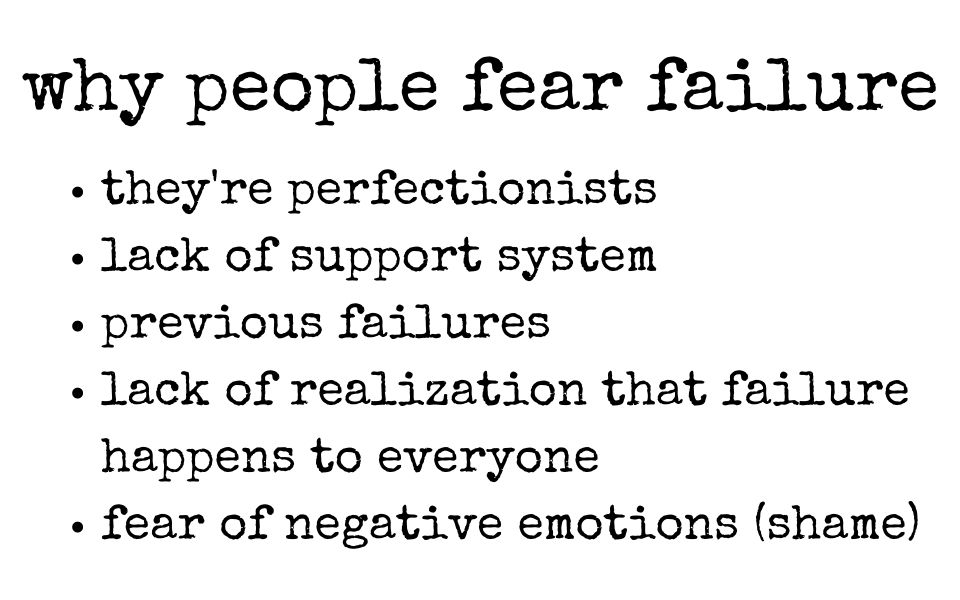
## How to Overcome Fear of Failure
### 1. Accept That Failure Is Part of the Process
You can overcome the fear of failure when you finally accept that failure is part of the process. It’s impossible to succeed without failing along the way. The more you fail, the more you understand people, products, businesses, and life. Life’s best-kept secrets are found in our failures. Our successes merely give us this temporary joy that reminds us we’re on track. Rather than fearing failure, integrate it into your big plan. You know, that business or life plan you’ve created. Throw in some failure timelines in there, too, because it’s bound to happen to get you on track.

### 2. Aim for Growth, Not Targets
So many people will tell you to create smart goals. You know, goals that are Specific, Measurable, Actionable, Realistic, and Timely. Those are really great at helping you create a clear vision of what you want. But what happens when you don’t hit your target goal by your timeline? Do you give up or keep pushing? That’s why sometimes it’s better to aim for growth instead of specific targets. [Self-improvement](https://declutterthemind.com/?s=Self+Improvement) is all about growing, not immediate results. As long as you’re getting better, increasing your numbers, or improving your game, then you’re on the right path.
### 3. Practice Positive Visualization
When you’re experiencing a fear of failure, it’s key to practice positive visualization. Imagine yourself at your best. How do you feel? How are you dressing? What’s your posture like? What’s on your face: is it a smile, a frown, makeup? Where do you live? Who is by your side: family, friends, a new significant other, children? How successful are you? How well are you [taking care of yourself](/blog/take-care-of-yourself)? Ultimately, your visualization should include all the things that bring you up a few levels from where you are now. Are you even able to imagine yourself that happy, successful, and with [inner peace](/blog/inner-peace)? You can try a [guided meditation](/meditation) for visualization or this visualization for [confidence video](https://www.youtube.com/watch?v=ohaTSIjsKr4).
https://www.youtube.com/watch?v=ohaTSIjsKr4
### 4. Replace Negative Thinking
To replace negative thinking so you can overcome your fear of failure, you’ll have to come up with evidence that the [negative thoughts](/blog/how-to-stop-negative-thoughts) are untrue so you can believe the new [happy thoughts](/blog/happy-thoughts).
What is the evidence for and against your current thought? For instance, if you constantly think, “I’m going to embarrass myself if I publish a book about my life,” what is the evidence against that? Some examples could include: a book editor will help you omit things that might make you look bad, you can control what you write, if it fails no one will have heard of it so it won’t be too bad, many popular books were rejected hundreds of times before developing a fanbase, and so on.
When it comes to replacing the negative thoughts with positive ones, you might tell yourself, “If I never publish this book, I’ll never know what level of success I’m capable of” or “This story of my life could put me in the history books.”
### 5. Show Self-Compassion
When you experience a fear of failure, it’s important to be self-compassionate with yourself. Here’s a quick [self-compassion video](https://www.youtube.com/watch?v=DmsDBC036z8) you can follow along to. You might try some [positive self-talk](/blog/positive-self-talk) to show yourself this compassion. You might tell yourself, “This is a moment of anxiety and fear. Experiencing fear when trying something new is normal. May I treat myself with kindness right now. May I show myself compassion as I face my fear of failure.” This quote has been slightly altered from the [Self Compassion](https://www.amazon.com/Self-Compassion-Kristin-Neff-audiobook/dp/B005SA69UM/) book by Kristin Neff, Ph.D. You can show yourself compassion but acknowledging your fears, and speaking to yourself with kindness as you would support a friend experiencing the same fear.
https://www.youtube.com/watch?v=DmsDBC036z8
### 6. Remember That Failure Is Not The End
Most people think of their failure as the end. But as long as you’re still breathing, the end isn't here. Failure is merely one milestone in your journey. Yes, a milestone. When you have your first failure, that’s not the time to think, “okay, we tried our best, time to pack it in, folks.” You aren’t a quitter; why are you thinking like that? Instead, think to yourself, “Alright, awesome, one failure down until we finally figure this thing out. Only 99 more to go!” And believe it or not, you probably won’t have to fail 99 more times because you’ll figure it out a bit sooner. Think of failure as experiments. Ask yourself, “what can I learn from this” not “how can I make this stop?” You’ve still got a long journey ahead of you. Keep pace.
### 7. Who Instilled This Fear In You?
Who instilled a fear of failure in you? It likely wasn’t you. Have you ever realized you’ve been repeating the same thoughts in your head for years at a time, not remembering that you weren’t the source of the thought. Always ask yourself if the source of the thought is credible. Do parents always know best? No. Do therapists, doctors, teachers, or other people in respected positions sometimes say things they later regret? You bet. Do you sometimes repeat the same thought out of habit, even if you’ve grown and changed a lot over the years? You know, people do get better with practice and time. So maybe all those “I suck” thoughts need to be replaced with new thoughts you’ve come with. Stop replaying someone else’s words in your head.
### 8. Use Setbacks As Life Lessons
When you’ve experienced a fear of failure, remember to think of setbacks as [life lessons](/blog/life-lessons). For instance, Thomas Edison failed to create the lightbulb 1,000 times. And each time he failed, he would go back at it again with the knowledge from those previous failures. The failures you experience can be your building blocks to bring you closer to figuring out what works. Many popular writers write hundreds of articles or books only to go viral for the first time after three to four years. You don’t win without context. Let experience guide your context so you can get better at your craft or skill set.

### 9. Be Inspired By People’s Comeback Stories
Whose story do you prefer hearing: the person who never struggled on the way to the top or the person who failed, had tons of setbacks, experienced trauma, some more setbacks, and then finally succeeded. The best life stories contain chaos, madness, emotions, and pain. But what makes them remarkable is that through all of that messiness, they somehow pull it all together and make it through. The comeback story is one of the most popular stories. We all cheered on Britney Spears when she survived 2007 and 2008. People are cheering her on now as she fights her conservatorship. People love seeing people [overcome obstacles](/blog/overcoming-obstacles); it reminds them that they can do it too.
### 10. Find A Mentor, Therapist, or Coach
Finding someone to support you as you experience a fear of failure is crucial. You can [find a therapist](/blog/how-to-find-a-therapist) who can help call out when your thinking structure leans critical or negative and help [rewire the brain](/blog/neuroplasticity). A mentor or a coach can help give suggestions on taking the next steps to fix your current situation. They may give you actionable advice that you can implement to learn from past failures and set you up for success moving forward.
### 11. Do A Little Everyday
Fear of failure can prevent you from starting something. However, a big beginning isn’t necessary for moving forward. You can set up these micro-steps for yourself to take action. For instance, if you wanted to launch a blog for the first time, you would start with a domain name and then buy it. Next, you would sign-up for a hosting account. Then, you would find a content management system. You could break all these things up, so you do one small five-minute task every day. And eventually, you start designing your blog and publishing your first post. Divide any goals you have into microtasks to help ease you into it. You don’t have to launch an award-winning blog or project on day one.

### 12. Think Back to Positive Outcomes of Failure
Have you ever failed, and something good came out of it? For instance, failing a class and then changing programs and realizing your real passion. As you grow older, you start realizing that sometimes positive outcomes come from failure. Failure pushes you in a new direction to explore, whether it’s learning something new or finding an exciting new path. And that can be filled with excitement.
### 13. Your Success Can’t Happen If You Never Start
You’ll never succeed if you never stick with something long enough. Every successful person trains, practices, studies, and experiments for years before they finally make it. The longer you take to start, the harder it becomes to master something. But even if you start late, you can still achieve success. But starting is the key point. If you never build anything, no one will find it.

### 14. Play Behind the Scenes First
When we have an intense fear of failure, we often think it’ll be embarrassing if people find out. But what if they never know? You can use pseudonyms or an alias for your website; you can practice or study something private or in your home. Ultimately, there are ways around not letting people find out you’ve started or explored something new. You can hide behind a fake name or a closed-door until you’re ready to show off your success.
### 15. Don’t Tell Anyone Your Aspirations
The big success secret no one talks about is that you shouldn’t tell anyone your goals or aspirations. The second you tell someone, “I dream of being a famous YouTuber,” “I want to be the biggest Twitch streamer,” or “I want to be a billionaire,” people will either laugh at you or tell you to quit dreaming. The world has changed a ton in the past couple of decades, so today, anything is possible. Dream big, but don’t brag about your dreams. Keep quiet until you’ve built something up. People need proof of concept before they’ll invest in you.

## Conclusion
Yes, you can overcome your fear of failure. You can achieve big things in life, [challenge yourself](/blog/challenge-yourself) to grow, and become the person you aspire to be. You can succeed in life. Don’t let your fears hold you back. Don’t think about worst-case scenarios because they don’t usually play out, and you can generally handle things better than you think. Challenge your negative thoughts, haters, and [inner critic](/blog/inner-critic). Ultimately, [you are good enough](/blog/why-am-i-not-good-enough). We need you to share your talents with the world. Make us laugh, teach us, or be our role model; these are all things you can give back to the world.
---
# How to Overcome the Fear of Going Crazy
- URL: https://declutterthemind.com/blog/fear-of-going-crazy
- Description: A fear of going crazy is all too common in people who've lost their minds during difficult periods. Learn to overcome and prevent it.
- Published: 2025-06-25
Sometimes when sleep deprivation and the stress of life have gotten to the point where you feel like you're losing your mind, it feels a lot like going crazy. From a panic attack to suffering a serious mental illness like post traumatic stress disorder, losing control when suffering anxiety symptoms can [feel overwhelming](/blog/feeling-overwhelmed). If you've ever suffered a fear of going crazy, otherwise known as phrenophobia, we'll explore some ways to help you overcome your fear, manage physical symptoms, and help [stop panic attacks](/blog/how-to-stop-panic-attack).
## What is the Fear of Going Crazy?
The fear of going crazy, also known as phrenophobia, is a psychological condition that causes persistent anxiety or panic attacks. It's a form of hypochondria in which you worry about your mental health and believe you are suffering from an illness or disease. However, people who are at risk of developing mental illness or have been diagnosed by it previously experienced mental illness may experience a fear of going crazy.
This type of paranoia is common among people who suffer from mental health problems, but it can also affect those without a diagnosis.
Phrenophobia can affect anyone, but it is more likely to affect people experiencing stress or anxiety when they experience their symptoms. Phrenophobia can also be caused by an underlying mental illness such as schizophrenia, bipolar disorder, and depression.

## Why Do People Experience This Fear?
Phrenophobia is a fear of the mind. It can be caused by a traumatic event, such as a near-death experience, or by an intensely emotional situation that threatens one's life, such as being in physical danger. In some cases, phrenophobia might be brought on by watching someone else experience trauma and not knowing how to help them.
People can also develop phrenophobia after experiencing physical trauma affecting their brain or being around people who have experienced brain damage or stroke. This might sometimes mean avoiding certain activities or situations because they don't want to risk [feeling anxious](/blog/feeling-anxious-for-no-reason) or scared again.
## How To Help Yourself Overcome The Fear Of Going Crazy
### 1. Exercise
Exercise is essential for keeping your mind and body in tip-top shape. It promotes a healthy heart, helps you sleep better at night, and relieves stress. If you're not already exercising regularly, try to fit something into your schedule-even if it's only 15 minutes a day!
There are many ways to exercise accessible to everyone, such as yoga (at home or in class), jogging on the treadmill at the gym, and playing sports with friends. Anything that gets your heart rate up can count as exercise.
The key here is consistency-make sure you do some form of physical activity every day so that it becomes part of your daily routine. Don't forget to [take care of yourself](/blog/take-care-of-yourself) by eating well and getting adequate sleep.
You can combat a fear of going crazy and significant distress by exercising every day for an hour or so. So, if you feel anxious, go for a quick run and shake off the negative energy or dance off the physical sensations.
You can listen to a quick [10 minute meditation](https://www.youtube.com/watch?v=uLFN3cJ9Nyw) before or after your workout to help relax your mind.
### 2. Eat a balanced diet
A balanced diet contains a variety of fruits, vegetables, whole grains, and low-fat or fat-free dairy products. It also includes carbohydrates (like bread and vegetables), fats (like butter or avocado), and proteins (like lean meat). In addition, a balanced diet provides your body with enough vitamins, minerals, and water to keep you healthy.
A balanced diet is essential for people who have depression and anxiety because it can help improve mood and energy levels. Eating a high fat diet can also be helpful for those who are experiencing symptoms such as delusions or hallucinations because it helps to prevent nutrient deficiencies that could cause these types of mental health issues.
If you feel like you're losing your own mind, a keto diet might be helpful for reducing psychosis. Often, people with illnesses, such as schizophrenia do better mentally on keto diets than traditional high carbohydrate diets. A healthy person can typically consume more carbohydrates than a person who struggles with mental illness.
### 3. Incorporate more gratitude into your life
Gratitude is not just a nice thing to do, it's good for you. An [attitude of gratitude](/blog/attitude-of-gratitude) has been shown to improve your physical health and mental fitness. When you think of all the things you have that could go wrong or be taken away from you at any time (for example, if something terrible were to happen), it's easy to get caught up in fear and anxiety about how things might turn out.
But when you start being grateful for what's already good in your life, such as having friends who care about you or having enough food on the table every night, suddenly those fears don't seem so scary anymore. Incorporating more gratitude into your life will help reduce some of that self-doubt that comes with overthinking about everything going wrong.
And while this exercise won't make it go away entirely, after all, no one can stop problems from occurring-thankfulness can make them easier to bear when they happen by helping us focus on what matters most: our happiness.
Such feelings of gratitude can help bring peace into our lives. It's one of the best self help tactics there is. The more kindness we put out into the world, the more we get back, the easier it is to experience gratitude. So, if you tend to worry, [challenge yourself](/blog/challenge-yourself) to do one [good deed](/blog/good-deeds) a day. You'll find that those [acts of kindness](/blog/acts-of-kindness) work just as well as therapy.
### 4. Have an anxiety journal
It would help if you also tried to keep a journal of your thoughts and feelings. It's a great place to record your mood and note any patterns you notice in your behavior. For example, you might want to write down how you feel every day and what caused those feelings.
After some time, you'll be able to see how certain situations or events affect your anxiety levels, which can help you manage them better. This is just one small step to helping yourself overcome the fear of going crazy.
Most people who suffered from post traumatic stress or illnesses like it know what crazy feels like. It's possible that seasonal trends like changes in temperature, moon cycles, or other triggers cause anxiety to rise, intrusive thoughts to take over, and [feeling overwhelmed](/blog/feeling-overwhelmed) that the chaos you once experienced will happen again.
Learning how to recognize your triggers in therapy will allow you to be proactive about preventing panic from occuring again. So writing down a list of thoughts that pop into your mind during this period will be key for your future treatment and recovery plan.
### 5. Spend time with your loved ones
The most important thing to do if you struggle with an anxiety disorder or have a fear of going crazy is to spend time with your loved ones. When you're feeling vulnerable and alone, they're there to help you through it. They won't judge; they will listen and encourage you to get help when necessary.
These people are your support system to prevent you from losing control. So make sure to seek them out if something is bothering you or if there are signs that something may be wrong in your life. The last thing anyone should want is for someone they care about not to get the proper care because they were afraid of being "over-diagnosed" or having the stigma associated with mental illness attached to them by others at work or [school](/blog/how-to-deal-with-stress-at-school).
Mental health symptoms can be improved by having a positive and loving support system. If you surrround yourself with people who make you feel safe, you'll spend less time worrying about checking door locks, especially if you have obsessive compulsive disorder. The people you surround yourself with truly do have an impact on your anxiety disorder but also on your anxiety symptoms too. So, if you feel like you're losing control, check out support groups if your friends and family aren't as supportive as you need them to be.

### 6. Talk about what's bothering you
When [feeling down](/blog/feeling-down), talking about what's bothering you is essential. Talk to someone else who will listen and be supportive. Don't blame yourself for having these [intrusive thoughts](/blog/how-to-stop-intrusive-thoughts) or feelings.
Express your emotions without being afraid of what others may think. This will help keep your mind from focusing too much on the negativity in your life that makes you feel upset, which can make the fear even worse!
If none of this works, some therapists specialize in helping people overcome their fears by facing them head-on through therapy sessions or medication that can balance out chemicals in the brain that contribute to anxiety disorders like panic attacks or [nervous breakdowns](/blog/nervous-breakdown).
### 7. Get a complete sleep
Getting enough sleep is crucial for your mental health, and being more aware of how you feel physically will help you know when something isn't right. When we're tired, our bodies release stress hormones that can make us more vulnerable to anxiety. Sleep deprivation also prevents the brain from processing information correctly - which may mean that you can't learn or remember things as easily.
Interestingly enough, sleep is an opportunity for your mind to recover from all those daily stresses. Without proper recovery periods between days filled with activities or stressful situations, our brains can't heal themselves properly - leading many people down a path toward depression or other mental illnesses over time because they've built up too many negative thoughts about themselves during their waking hours.
So, if you have a fear of going crazy, try your best to get a good night's sleep to prevent a panic disorder from developing. You can take melatonin to help you sleep if you've been having difficulty with it lately. Also, there's evidence to show that people who eat fewer carbs and cut out alcohol can get a deeper sleep.
If a fear of a real danger if preventing you from getting a good night's sleep, consider sleeping at a friend's house, setting up a security system, or adding a few extra locks on your door to help you reduce your fear. This will be particularly helpful if you have severe PTSD or worry you could lose control due to panic attacks.

### 8. Have a routine
One way to help yourself overcome the fear of going crazy is by creating a routine. A routine can help you feel more in control and make you feel safer and more secure. You need to know what's coming next, so you don't have time to worry about your feelings or thoughts.
Routines also help us feel positive because we're used to them. They give us something concrete to hold onto when we're feeling anxious or stressed out, which is helpful when trying not to be afraid of going crazy because they are familiar things that provide comfort and security in times of distress.
### 9. See a counselor or therapist
Seek professional help if you need it. The sooner you do so, the greater your chances of overcoming your fears.
You may not want to talk about these fears with family or friends as they might not understand why this trouble scares you so much. Seeing a counselor or therapist can be a good alternative in such cases as they will listen carefully and support you with words and actions while helping push away the fear of going crazy forever.
People who experience trauma should consider seeing someone as soon as possible to prevent anxiety attacks or PTSD from becoming overblown.

### 10. Manage unwanted thoughts
Intrusive thoughts are very common for people who experience stress, fear, and losing touch with reality.
A therapist can teach you how to challenge thoughts by looking for factual evidence for it. The more you challenge unwanted thoughts, the easier it becomes to do it in your head instead of writing it out. Over time, you'll start to have more [positive thoughts](/blog/positive-quotes), it just takes some practice.
## Conclusion
If you worry about having a mental illness, you aren't alone. It's estimated that one in every four people will experience some mental health issue in their lifetime. The fear of going crazy can be highly debilitating, but there are many things you can do to help yourself overcome this fear, such as the tips mentioned above. The best solution for overcoming the fear of going crazy is to understand and accept your negative feelings and use them to overcome your anxiety. You can't overcome and manage your symptoms if you constantly run away from this fear. So the faster you face it, the better your mental health.
---
# Fearful Avoidant Attachment: What This Means in Relationships
- URL: https://declutterthemind.com/blog/fearful-avoidant-attachment
- Description: If you're struggling to maintain healthy relationships there may be more to it than you see. Fearful avoidant attachment may be your issue.
- Published: 2025-06-25
In psychology, the subject of "attachment theory" presupposes that the way we relate to people in relationships in adulthood began with our parents. They are our caregivers who do their best to integrate us into society to become well-adjusted, happy adults. It then largely determines the quality of emotional relationships that we will form later on in life.
One of these attachment styles is the fearful avoidant attachment style described in the 2019 issue of the [Journal of Sex and Marital Therapy](https://www.tandfonline.com/loi/usmt20) as a reluctance to engage in a close relationship but is also desperate for affection from others. It's a contradiction that can be defined as wanting to be intimate with someone, but then you'd have "to keep your distance" because of the fear of being rejected or left behind.
People who have fearful avoidant attachment traits want and need closeness, so they try to seek intimacy from their partners. Still, due to a complex range of emotions that stems from insecurity and fear, they are at a loss. They're unable to achieve that deep connection of which only an intimate relationship can produce.
## Fearful Avoidant and Childhood

Babies and young children who had parents who managed to meet their emotional needs (at least most of them) will tend to become adults with stable and secure emotional dispositions. Conversely, babies who have not had their needs met may grow up to become adults who are anxious, afraid, even avoidant of any intimacy.
In most cases, the fearful avoidant personality form strained and troubled relationships that lead to conflict, which leads to emotional depression for one or both partners. The relationship itself can be short and even less fulfilling than what a "normal" relationship could afford. This is because they, as young children, experienced rejection from family members that they perceived as figures with whom they should have been intimate. To some, these emotional scars are so deep-seated that they tend to reject close emotional bonds that could otherwise satisfy their longing for closeness.
Nevertheless, when they eventually get into a relationship, it turns out to be a rollercoaster of highs and lows. And for most people, it is seen as intense and uncomfortable. For others, out of control.
## Other Attachment Styles

Attachment styles that come before the fearful avoidant are considered less problematic but are either related or one other component of the fearful style. Either way, these are basic styles that need to be described to show the difference between the three.
### Secure Attachment Style
Individuals who had parents who consistently provided acts of love and emotional security to their children tend to have happy and secure relationships as adults.
### Anxious Attachment Style
Persons who have experienced some form of neglect and some who have had absentee parents tend to be fearful and "needy" in their relationships. If that leaning-in, reassurance-seeking pattern sounds more like you than the push-pull described here, we cover [anxious attachment](/blog/anxious-attachment) in its own guide.
Indicators of a Fearful Avoidant Attachment Style and some by Favez and Tissot
- Self-view is negative
- They have trouble controlling their emotions in relationships
- Poor response to stressful and negative situations
- Borderline non-committal in relationships
- Has a negative view of others
- Has multiple sexual partners
- Have the tendency to be violent in relationships
- Has a penchant for sexual encounters, less likely to say "no"
- Often is [feeling anxious for no reason](/blog/feeling-anxious-for-no-reason)
- Has a general fear of and avoids intimacy or intimate relationships
## What Makes Up a Fearful Avoidant Attachment Personality?
Studies suggest this behavior stems from childhood with the primary caregiver that the child may have experienced inconsistencies that graduated into traumatic events. This kept the child in a constant state of fearing and needing his or her caregiver. They are constantly "being caught" in-between feelings of wanting to escape and being triggered with attachment needs which creates a dissonance that lasts into adulthood.
Later, the adult is [trapped](/blog/feeling-trapped) between wanting and needing comfort but at the same time cannot give trust to anyone or anybody. This may have something to do with his or her caregiver, who may have been not trustworthy. This feeling of being suspicious is involuntarily mixed up with the triggering of attachment needs caused by the much more prominent imposing figure of the caregiver. Hence, being in a state of being constantly caught between wanting to avoid and being simultaneously stuck with feelings of neediness.
Although it has been studied and suffice to say that the possible and sole cause of fearful avoidant personality is somehow only rooted in childhood, recent studies point out that some subjects don't necessarily have the same negative experiences compared to most cases. So, it has been concluded that some other events other than childhood experiences may have come into play as a factor in the formation of the fearful avoidant style.
## How does this Attachment Style Affect Relationships?
Some studies conclude that fearful avoidant personalities tend to have more sex than your average sexually active individual. This is because of the sexually compliant behavior that makes them more likely to say "yes" when the opportunity presents itself. Having an active sex life is categorically normal. Still, while other people seek out sex as a means to experience intimacy and physical satisfaction, it seems that the fearful avoidant personality takes to sex for no reason at all. At least from an observer's point of view.
In theory, as Favez and Tissot put it, fearful avoidant people engage in out-of-control behavior because of those deep-seated feelings of confusion. These are mainly composed of the need to have that intimate connection, and at the same time being revolted by it. They further say that the fearful avoidance feelings cause the individual to seek sexual relations to experience heightened closeness. Simultaneously, the same emotions drive them to break the bond and seek a new partner. This is how the out-of-control sexual behaviors form, an eternal alternation of approach and avoidance.
The result doesn't usually end well for the fearful avoidant since this pattern spirals down to emotional depression and feelings of being drained more often than not. It eventually becomes destructive and not to mention the emotional stress of going from one heartache to another. This all gets in the way of productive [relationship goals](/blog/relationship-goals) that will only serve to deteriorate the progress you may be making in a relationship.
## What is the Possible Relief from Fearful Avoidant Attachment?

On your own, the diagnosis of fearful avoidant behaviors can be a complex case to detect and confirm. But with the help of professionals, you can settle down from wondering whether you are one or not. If you are, what then can you do about it? Not to worry, these traits are not "solid-state," and with the right tools and strategy, there is the hope of changing it or eliminating it.
Here are some of the things you can do if you think you have fearful avoidant attachment traits:
### 1. Consider Therapy
Assuming that your fearful avoidant attachment style has come about due to childhood trauma, the wisest thing to do is seek professional help. A past traumatic event can be a massive blowback to your present, especially when it was buried deep in the attempt to ease painful memories. A specialist will help the person keep himself in a controlled environment as solutions and relief are being explored and applied.
### 2. Be Upfront with Your Partner
Despite the perception that a fearful avoidant is disorganized and confused, they still consciously seek a partner that they would want to feel safe with. Whether it's you or your partner that may be fearful, you must sit down and talk about your past and your intentions for the future. This is also a good measurement of how sincere your partner is in building that relationship with you long-term. If he or she leaves or maybe doesn't take you seriously, there is a good chance that he or she is not in it for the long haul. They would have much less patience to help you out. Communication is key. Listen to the response.
### 3. Listen to How You are Reacting to Your Partner and other Potentially Stressful Situations
Keep a journal. Record your experience when you feel yourself unravel for whatever reason. Are you reacting out of instinct which is relatively unrelated to the situation at hand? Or is the danger real? A [mindfulness journal](/blog/mindfulness-journals) allows you to become more aware of your thoughts.
One way of achieving a mindful state is to meditate. Through meditation, you can calm yourself down enough for you to hear above the noise of your past experiences. Meditating can help calm you down and not be reactive but by being responsive. We have a [free guided meditation](/meditation) app, [Declutter The Mind](https://declutterthemind.com/qr-code), that you can check out and use to help you manage these feelings of fearful avoidant attachment.
Find your triggers and work out practical solutions to avoid and overcome old fears and uncontrolled irrational emotions. Although it may be easier said than done, meditation practice might just become a necessary lifelong habit for lasting change.
### 4. Find a Secure Attachment Style Person
Being around someone secured and calm can likely rub off on someone who is not. If the fearful avoidant is always around a secure attachment style, they become more comfortable and less fearful. This could potentially open him or her up for personal improvement. One thing to look out for is, don't forget to let your partner know. This is for the sake of preserving your integrity as opposed to springing a surprise and coming off as desperate and needy. This way, you can start on a foundation of trust.
---
# What to Do When You Feel Stuck
- URL: https://declutterthemind.com/blog/feel-stuck
- Description: Wondering what to do if you feel stuck? Feeling stuck is more common than you may realize. Let's get unstuck in this article!
- Published: 2025-06-25
In our time, it's prevalent to hear a person feel "stuck" in their life, an expression that has its variations (some consider themselves "stuck," "sunk," "in a rut," etc.) but that, in all cases, it gives an account of that feeling of frustration, of a certain unwanted paralysis and, in the end, of the impression of remaining in the same existential place, from which there seems to be no way out and in respect of which no change is on the horizon. Sometimes that stuckness is very concrete: you're [overthinking a decision until you can't move](/blog/analysis-paralysis), turning one choice over so many times it never actually gets made.
Each person, on the other hand, can refer to this "stagnation" in different areas. There will be those who relate it more to their work, for example, which perhaps no longer satisfies them; others to their professional life, in a broad sense; some to the relationship they have with their partner, or perhaps with their family, and so on.
In a certain sense, the feeling is not foreign to the human being, and it could even be said that it is part of its condition. Beyond the historical, sociological, or philosophical explanations that can be offered, it's also possible to argue an element of human nature: the subject's difficulty in manifesting its life impulse.
## How to Get Out of the Feeling of Being Stuck
As human beings, we spend a good part of our formation in the care of others. Without realizing it, we "learn" to repress our impulses, desire, spontaneity, desire to do something, etc. And although this mechanism is necessary for life in common with others, when it is allowed to operate without control, it can become precisely the phenomenon we are talking about. Life, which is made to run freely, to flourish, to give rise to more life, but sometimes this flow is indeed frustrated, its course is interrupted, it has nowhere else to go.
Here are some points that may be useful in this regard. This is not a definitive or infallible guide. Still, it seems that it can motivate the personal reflection necessary to resolve such a situation.
### Realize it's a feeling, not a fact

It's critical to learn to identify whether our emotions are trying to keep us down or something serious. At the very moment, you do feel you are stuck in life, so your conclusion is that you can't move forward. Still, your emotions may not be telling (the whole) truth. The inability to move on in your life might feel real and inescapable to you, but in the end, it is just a feeling. And this feeling molds our point of view.
Because of the impact our feelings have, it is vital to remember that they are not facts. Picture your current situation from an objective standpoint. Emotional responses can alter your perception of reality. Feeling stuck, what's more, feeling desperate from not knowing what to do when you feel stuck could be a reaction to unnecessarily high expectations, or even worse, to fantasies.
Maybe your situation is not quite as bad as you feel it. It's merely unnecessary influences making you think you are not moving forward or progressing in what you want to achieve.
### Accept your circumstances
As a matter of principle, accept the moment you find yourself. Sometimes, because of a somewhat "natural" or understandable inclination, we avoid the feelings and thoughts of [frustration](/blog/deal-with-frustration) we have, for various reasons.
However, if you want to get out of it, you must first accept the reality in which you live and, above all, the uneasiness in your life. Try to look at it head-on, without fear but also without judgment. Consider your job, your partner, your financial situation, the addiction that is disrupting your life, your professional situation, etc. Look at what specifically is causing you to feel stuck and see if you can look at it without judgement.
What do you find there? What bothers you? Do you often think that it seems unsatisfactory? Is it a source of unhappiness for you? Do you not like it but "put up with it"? Do you not like it but think "it's what it is"? Is it fair to you to settle for that?
### Practice gratitude
The feeling of being stuck sometimes comes with thoughts and feelings of guilt, shame, dissatisfaction, and frustration. Try to counteract those feelings with thoughts and feelings of gratitude. If you need some inspiration, check out our [gratitude list](/blog/gratitude-list).
### Be prepared to decide

"Crazy is doing the same thing all the time and expecting different results every time." Beyond the author of this sentence, which some attribute to Albert Einstein, the message is precise. If you want a change in your life, you need to take the necessary actions to generate it.
We know, in fact, that it is not always easy to make a decision. When your income depends on a job, it doesn't seem easy to give it up overnight. Suppose you have a profound (and perhaps still unknown) [fear of loneliness](/blog/fear-of-being-alone). In that case, it may not be easy for you to end a relationship, no matter how bad you feel. You want to move but don't have enough money to pay for it, etc.
However, it is now possible to get in the way of this change. In other words: make other preparatory or parallel decisions that, in time, will have served to make the most significant leap.
Examine your circumstances and reflect on what you can do now to get out of the [frustration](/blog/deal-with-frustration) you feel. Make an emergency savings plan? Ask your friends if anyone knows about a job for you? Talk frankly with your partner? Say no when you don't mean yes entirely?
Except in very extreme situations, there is always something you can do, a decision you can make. To live is to make choices day by day, and if you feel unsure about what to do when you feel stuck, perhaps it's because of a lack of awareness of your decision power.
### Be aware of your fear
Fear is an emotion inscribed in our most profound nature. In a way, it is inherent in life, since it is mostly the response to that threatens it. However, in human beings, fear also has an existential dimension, because in addition to the fear we may feel in situations of real danger (a potential fall, a physical attack, etc.), sometimes we also develop a fear of others that, although in that sense they are harmless, they frighten us.
[Fear of failure](/blog/fear-of-failure), for example, of uncertainty, of rejection, perhaps even of triumph, etc.
In any case, make an effort to consciously experience your fear. We are not telling you to avoid it, but just the opposite. Live it as it comes. These questions can help you to make this emotion conscious:
**What happens to your body? Do you sweat? Do you tremble? Does your head start to hurt?**
#### What thoughts come to your mind?
What do you feel like doing when you are afraid? Running away? Eating? Smoking? Drinking alcohol?
#### What do you feel when you are afraid?
As you become more precise about your own experience of fear, you can take a moment to examine your personal history and ask yourself why you feel this way, why in some situations you experience fear and in others, you don't, what might explain the thoughts that cross your mind when you are afraid, and so on.
### Get to know yourself and value what you have

Sometimes, frustration in life arises when a person has let others lead their life for a long time, which results, on the one hand, in one reaching places where one did not really want to be and, on the other hand, in the subject being defined by the outside and not by a conscious inner process of definition. Thus, you feel stuck.
In other words, the person thinks what they are according to what others think of them, in such a way that they become a stranger to themselves, someone who doesn't know what they have, who does not know their value as a person, the value of their skills, knowledge, and resources.
If you feel this is the case, try to look at yourself from another perspective. Here are some questions to start that reflection:
**What can you do? So far, what do you do that pays off? How well do you think you do at your job? What about your colleagues (current or former)? What about other professional colleagues? Do you have other skills? Who values what you do? Who do you expect to appreciate what you do? What forms of recognition are you used to seeking? Do you receive other recognitions that you don't realize?**
### Be spontaneous

In Fear of Freedom, Erich Fromm devotes several paragraphs to defining and praising the spontaneity of human beings as a reflection of their life impulse, that force that many of us experience in childhood, in which intention and action are fused: we think about doing something and we do it, without hesitation or delay. However, with time this spontaneity becomes less and less spontaneous, so to speak, as rules, social codes, education, and other factors interrupt its free course.
However, it doesn't disappear. In fact, we are all capable of recognizing it. When we "feel like" doing something, when an ingenious commentary is born from within us, when we feel like singing or dancing, smiling, writing, in short, when an authentic desire is presented, it's the fruit of that impulse of life. As much as possible, listen to that desire and realize it, with no other purpose than to satisfy it.
In this way, you will gradually realize that life always seeks to manifest itself. If you can break out of your shell and learn to be spontaneous again, you can free yourself when you feel stuck.
---
# How to Feel Your Feelings: 12 Ways to Fully Allow Yourself to Feel
- URL: https://declutterthemind.com/blog/feel-your-feelings
- Description: Struggling to let go of inhibitions and express emotion? Here's 10 effective ways to help you feel your feelings.
- Published: 2025-06-25
It's easy to sweep difficult feelings under the rug and pretend they don't exist, but this will cause more problems than it solves. Some emotions are meant to be felt, and when you feel them consciously and express them effectively, you can often solve issues that seem unsolvable with traditional problem-solving techniques. If you want to feel your feelings on purpose to move through them and get past them, these twelve ways to feel your feelings can help you get there.
## 12 Ways to Feel Your Feelings
In today's fast-paced world, it's essential to understand how to feel your feelings and embrace the full spectrum of emotions. Learning to acknowledge and process your emotions can lead to [personal growth](/blog/personal-growth) and a healthier state of mind. To support you on this journey, we've compiled 12 strategies that will help you tune into your feelings, from staying present and using affirmations to express emotions, to engaging in creative expression and practicing mindfulness. By incorporating these techniques into your daily life, you'll foster emotional awareness and develop a stronger connection with your inner self.
### 1. Stay present to feel your feelings

When you focus on feelings, it's easy to be distracted and drift into thinking about how you want a situation to play out or what you wish would happen next. For example, if someone is shouting at you, it's natural for your thoughts to wander and wonder what they're feeling or why they are upset. When that happens, take a step back from your interpretation of their words or actions and stay in contact with your immediate physical sensations. What do you hear? Do you feel tightness in your chest? Are there butterflies in your stomach? Stay present by breathing slowly and deeply as you listen to what they have to say. If possible, try saying something like, "I'm sorry I don't understand. Can you explain more?" This will help keep things focused on them rather than getting lost in interpreting their tone or body language.
Meditation can also help you be more present, [live in the moment](/blog/live-in-the-moment), and notice the positive emotions that are surfaced. A more structured option is [the RAIN meditation practice](/blog/rain-meditation), which walks you from naming a feeling to meeting it with a bit of kindness. We recommend a simple [guided mindfulness meditation](/meditation/beginner) practice from our [meditation app](/blog/best-meditation-apps), [Declutter The Mind](https://declutterthemind.com).
### 2. Use affirmations
For example, when you're sad, remind yourself: I am a person who feels [sadness](/meditation/grief) and does not let that feeling control me. [Positive affirmations](/blog/positive-affirmations) and [motivation affirmations](/blog/motivation-affirmations) give you power over your feelings instead of your feelings controlling you. Just knowing you have choices about how to react to uncomfortable feelings can help calm some of those negative emotions and lead to positive thoughts and actions. While affirmations aren't going to fix everything overnight, they can be accommodating in changing your mood for better or worse.
If you've been stuck in a rut, try using an affirmation to help change your attitude for the better. If you find yourself saying things like I'm always so angry, try using an affirmation like I choose to feel happy. It's hard at first, but with practice, it will become easier and easier until it becomes second nature. The more you use them, the more effective they become. Also, make sure to notice what happens when you use them. Do you start feeling happier? Or are there other factors at play? Take note of these observations as well. Maybe you don't believe your affirmation is true, or you're [having a bad day](/blog/bad-day) and need to wait until tomorrow before trying again.
### 3. Take the time to think about it

When you're going through a difficult experience, emotions can be overwhelming and incredibly raw. It's okay, good even, to feel these emotions deeply and passionately. But you need to take some time to [sit with your thoughts and feelings](/blog/how-to-sit-with-difficult-emotions) so that they have a chance to sink in fully. Take some time alone if possible, think about what happened or why you feel how you do, then process through those feelings in whatever way works best for you: write in a journal, take a long walk outside, talk it out with someone close (or at least listen). Whatever helps your mind process what happened. Taking some time after an emotional event is just as important as taking time while it is still happening. You don't want to miss anything. You want all of those emotions to settle down and make sense. Then you'll be able to see things more clearly and deal with them effectively. And, who knows? Maybe by thinking things through, you'll find something positive from your experiences. Maybe there will be something to learn from what happened. Or perhaps you'll realize that there isn't anything worth worrying about.
### 4. Practice letting go
Letting go is a big part of being able to feel our feelings, and for some people, it can be one of their biggest challenges. We're hardwired by years of social conditioning not to show vulnerability or anger, especially in public places-and that can make it hard for us not only to feel our feelings but even identify them in ourselves. If you want to learn how to feel your feelings, you first have to start by learning how and why we bottle them up. Identifying and [controlling your emotions](/blog/how-to-control-your-emotions) isn't always easy; they don't always come with an obvious physical cue. Since our feelings are tied so closely with judgment, we often have a hard time letting ourselves feel what we truly are experiencing. And when that shutdown goes far enough that you stop feeling much of anything at all, that is [emotional numbness](/blog/emotional-numbness), which asks for an even gentler approach than the one here.
### 5. Get out of your head
For many of us, feelings can be difficult to identify and even harder to talk about. However, feelings are essential for understanding ourselves and others, and they're super important when it comes to decision-making. So the next time you feel confused or frustrated by a situation, try [getting out of your head](/blog/how-to-get-out-of-your-head) and into your body. Think about how you feel physically, your stomach might be tight, or your heart might be racing, and then figure out what that physical feeling means in terms of what's going on emotionally. You might realize that you're angry at someone or scared about something that hasn't happened yet. Whatever emotion you're feeling is valid, so don't worry if it's not one you'd expect. Just get curious. Once you figure out your physical symptoms of what's going on inside yourself, it'll become easier to deal with whatever's happening around you.
### 6. Ask for help

[When you're feeling down](/blog/feeling-down), it can be easy to withdraw and isolate yourself. But sometimes, when we try to feel better on our own, it only makes us feel worse. It's important to talk with someone who cares about you and who can help support you. If you feel uncomfortable and don't have anyone in your life that fits that description, [reach out to a professional counselor or therapist](/blog/how-to-find-a-therapist). They'll listen and care for you while also helping guide you through your feelings. You might even find that you start feeling better just by talking things out. The very act of sharing what you're going through can take some of its power away. So ask for help.
### 7. Don't judge yourself for feeling your feelings
Rather than judging yourself for feeling negative emotions, treat these feelings to indicate that you are human. You don't have to do anything with these feelings other than simply acknowledge their existence. If you think about it, it's pretty amazing how human beings can experience so many emotions in such a short amount of time. The ability to feel and process such a wide range of emotions is what makes us so incredible. The next time you have an intense feeling or [negative thoughts](/blog/how-to-stop-negative-thoughts), try not to judge yourself or telling yourself that you should feel differently. Notice your [inner critic](/blog/inner-critic). Simply acknowledge what's happening inside your body and mind at that moment and recognize that it is okay for humans to feel whatever they're feeling at any given moment in time.
### 8. Allow yourself to be surprised
Surprises are pleasant and exciting, but they're also a way for us to glimpse ourselves from a different perspective. We can discover what truly matters when we're suddenly given new information about our environment or when circumstances force us out of our normal routines. It might be surprising, but you can allow yourself to feel surprised every once in a while without feeling like your whole life is crumbling apart. Find [ideas to keep yourself surprised](https://twinderelmo.co.uk/how-to-surprise-yourself-in-life/). You just have to get used to it first. The best thing about surprises is that you don't need to look for them; they come looking for you. So if you find yourself craving something spontaneous, try not to overthink it. Just let it happen.
### 9. Focus more on others than yourself

Studies have shown that our levels of empathy can fluctuate according to what we're feeling and thinking. For example, people who are [feeling anxious](/blog/feeling-anxious-for-no-reason) or depressed often don't pick up on other people's cues as well as they should. If you find that emotions like anxiety or depression are affecting your level of empathy, it may be helpful to reach out for help. But whether you need it or not, taking some time every day to reflect on others will keep your empathetic abilities strong and healthy. If you're interested in better understanding others' feelings but don't know where to start, a good way is simply by asking questions like How do you feel about? You might be surprised by how freely people open up when asked that question. Another great tip is to just listen more than you talk. Listening helps us empathize with others because it allows us to hear their own human experience and experiences firsthand and see things from their perspective.
### 10. Trust what you already know
No one can ever truly understand how you feel; they have only their personal experience with that particular emotion to which to relate. They are trying to help, but not everyone is able or willing to do so. In those situations, it's important to recognize that fact and then trust what you already know: "This situation sucks, and I want it to stop. I want that person or circumstance out of my life. I don't deserve these feelings, experiences, thoughts, or emotions. All of these things are making me miserable and/or angry." Even if you can't make them go away and sometimes there isn't a logical reason why they should. You have a right to feel as you do and act accordingly.
### 11. Engage in Creative Expression
Feeling your feelings can sometimes seem like a challenge, especially when life gets busy or overwhelming. One way to tap into your emotions and give them a healthy outlet is by engaging in creative expression. Creativity isn't limited to just painting or writing; it can be anything that allows you to express yourself, whether it's dancing, playing music, or even cooking a delicious meal.
When you engage in creative activities, you give your mind the space to explore and process emotions. You might find that as you create, you begin to understand your feelings on a deeper level. This can help you feel more connected to yourself and bring about a sense of calm and balance.
To incorporate creative expression into your life, try setting aside some time each week for an activity that brings you joy and allows you to express yourself. Remember that the goal is not to create a perfect masterpiece, but to simply enjoy the process and let your emotions flow. By regularly practicing creative expression, you'll find it becomes easier to tune into your emotions and embrace the full range of positive feelings life has to offer.
### 12. Practice Mindfulness and Meditation

Learning to feel your feelings is an essential part of living a balanced and emotionally healthy life. Mindfulness and meditation are powerful tools to help you tune into your emotions and cultivate a deeper understanding of yourself. By practicing mindfulness, you become more aware of your thoughts and feelings, allowing you to experience them fully without judgment, shame or resistance.
Meditation can help you develop a greater sense of emotional awareness as well. By setting aside time to sit quietly and focus on your breath, you create a space to observe your emotions as they arise. This non-judgmental observation of emotional state enables you to better understand the nature of your feelings and develop a healthier relationship with them.
To begin incorporating mindfulness and meditation into your daily routine, try dedicating just a few minutes each day to quiet reflection. You can start with simple breathing exercises or guided meditations available through apps like [Declutter The Mind](https://declutterthemind.com). As you become more comfortable with the practice, you may find yourself naturally exploring different meditation techniques to further enhance your mental health emotional well-being.
By integrating mindfulness and meditation into your life, you'll be better equipped to navigate your emotions and experience a deeper connection to yourself and the world around you.
## Start feeling your feelings
The hardest part about dealing with our feelings is that we're so afraid of them. For a lot of people that fear shows up as [crying easily](/blog/why-do-i-cry-so-easily) the moment their guard drops. That fear's what makes feeling our feelings so scary. But being scared isn't enough reason not to feel something, even if it feels bad, especially if it feels bad. Emotions can be tricky, they can zigzag, and they can come and go without warning, but that doesn't mean they aren't real. The next time you get [overwhelmed](/blog/feeling-overwhelmed) by something, whether it's negative or positive, take a moment and ask yourself: do I want to feel my feelings right now?
---
# Feeling Blue? 15 Things to Do to Fight the Blues
- URL: https://declutterthemind.com/blog/feeling-blue
- Description: Feeling blue? Here's 15 things you can start doing to lift your spirits, change your mood, and start fighting the blues.
- Published: 2025-06-25
Feeling blue is something we all go through. But rather than cycling downwards into a negativity spiral, let’s correct your course of action to help you fight the blues for good. In this article, we’ll share 15 things to do when you’re feeling blue. The suggestions in this list have been tested by someone who has experienced the blues a lot in life and you’ll likely find that trying one or even all of the suggestions in this list ends up changing your mood pretty quickly. So, let’s fight those blues on tactic at a time.
## 15 Things To Do When You’re Feeling Blue
### 1. Take A Shower
Believe it or not, taking a shower can be the most therapeutic and healthy way to combat feeling blue. Often, when we’re experiencing a bit of a depression, our self care routine goes out the window. However, cleansing your body and washing your hair can refresh you. Many people in history have talked about the healing powers of water. Being in it can help wash away the sadness in your day. If you’ve been feeling a bit groggier than usual, try washing yourself with some lavender soap and shampoo which is known for helping people out of depressive or even anxiety driven states. Check out our article on [feeling anxious](/blog/feeling-anxious-for-no-reason).
### 2. Practice Meditation
The number one cause of feeling blue are our thoughts. Your thoughts can be powerful enough to make you cry, even when nothing bad is happening to you at all. The best way to overcome feeling blue is by learning to overpower your mind through a regular meditation practice. If your thoughts are out of control, that means your left brain is overactive. To minimize this, you can practice meditation to build up your right brain to greatly reduce toxic thoughts. You can install the free [Declutter The Mind](https://declutterthemind.com/) [meditation app](/blog/best-meditation-apps) to practice daily or follow along to the YouTube video below.
### 3. Watch A Nostalgic Show
Re-watching your favorite old shows and movies can help you overcome feeling blue. By putting on a funny show you used to watch growing up, you’ll remember some of the happy memories that came along with watching it the first time. In the winter, whenever I’m feeling blue or sad, I tend to watch Disney+ to rewatch some childhood holiday themed movies. And it always gives me the pick-me-up I need. The great thing about Disney is that while there can be some villains or sad moments in their movies, most of the action tends to be uplifting. And you’ll probably start singing to some of your favorite songs even if you’ve been feeling blue for weeks.
### 4. Read A Positive Book

For over a year now, every night before I go to bed I read a positive book. And this has helped me stop feeling blue for the same amount of time. If you don’t know where to start you can check out Learned Optimism, Nonviolent Communication, No Self No Problem, Personality Isn’t Permanent, The Compassion Code, or The Power of Kindness. All of these books talk about how to overcome bad moments or difficult situations in an uplifting way. You’ll likely go to sleep feeling relaxed. And by reading positive books each night, you won’t spend your time [comparing yourself to others](/blog/how-to-stop-comparing-yourself) on social media or doing something you’ll regret. It’s one of the [good habits](/blog/good-habits) you can develop that’ll help change your feeling blue state.
### 5. Hang Out With A Friend
Who’s your most positive and optimistic friend? Maybe it’s time to catch up with them and spend some time with them. However, rather than telling them a million things that are going wrong in your life, use your time with them to figure out how they [stay positive](/blog/how-to-stay-positive). What can you learn from them so that you can change your own situation. By studying their optimism and trying to mimic it, you’ll slowly transform yourself from feeling blue to being happy. Use your time with them to ask them questions about what their daily habits are, how they deal with tough situations, and how they keep their mind at peace. Plus, people love talking about themselves. By putting the emphasis on them instead of yourself, you’ll see them become more energized which will help you too. And you’ll end up learning [how to be a good friend](/blog/how-to-be-a-good-friend) even when you’re not feeling at your best.
### 6. Do An Act of Kindness
A [happy person](/blog/happy-person) overcomes feeling blue by spending their time helping other people instead of themselves. It sounds counterintuitive but it’s true. By putting an emphasis on caring and [helping others](/blog/helping-others), you end up indirectly helping yourself too. The one thing that tends to happen is that since your focus is on helping someone else, your thoughts are no longer keeping you down because they’re distracted with the work you’re doing for others. Also, when you see how happy you’ve made other people, you start to [feel good about yourself](/blog/how-to-feel-better-about-yourself). If you were to do one [act of kindness](/blog/acts-of-kindness) per day, you’d end up having far fewer feeling blue days than ever before. Try it and see for yourself.
### 7. Try A Creative Activity

As we hinted at earlier, your left brain often makes you feel blue. But by developing your right brain, you can stop feeling blue. Meditation is one example of a right brain activity. But there are actually tons of creative activities that are right brained too: like graphic design, painting, drawing, sewing, photography, crafts, creating or listening to music, dancing, upcycling furniture, visiting a museum or art gallery, creating a time capsule, changing your hairstyle, creative writing, and so much more. By spending as much time as possible focusing on right brain activities, you’ll not only increase your creativity abilities, you’ll also silence the left brain which screams [my life is falling apart](/blog/my-life-is-falling-apart) at you non-stop.
### 8. Plan A Vacation
With the pandemic and job loss, most people either physically can’t travel or can’t afford to. Planning a vacation isn’t about going on one, it’s about planning for one. The planning of a vacation often brings about much more happiness than being on one. And being on a vacation can be pretty sweet too. You can spend some of your time planning how you’ll relax on a vacation and where to travel to. Consider changing your computer background to a place you’d love to travel to that looks calming, peaceful, and a good time. You can watch videos on YouTube about the places you want to travel to and check it out. If you own a treadmill that uses iFit, you can even run or walk along trails of those vacation destinations from your home. Bringing the vacation life into your world, even if travel isn’t a possibility right now.
### 9. Go For A Walk
Speaking of treadmills, have you thought about going for a walk to help beat the blues? Head outdoors for a stroll around your neighbourhood listening to your favorite songs. A little bit of sunshine everyday (especially in the cold, winter months) can do you a lot of good. Traditionally, people lived outdoors. These days, people are staying inside more than ever before. No wonder so many are feeling blue! By being out in nature for a long walk once a day, you’ll be able to see and experience the wonders of the world. Squirrels playing with leaves, a cold windy breeze touching your skin, or waves crashing against a boulder can help make you feel a sense of happiness.
### 10. Spend Time With A Pet

When feeling blue, you can always turn to a pet as a healthy solution to your sadness. When you’re [having a bad day](/blog/bad-day), your pet senses that something is wrong and immediately wants to cuddle. And sometimes that’s exactly what you need to feel better. How wonderful is it to be able to rant about something that’s bothering you with zero judgement? Try this with a dog and you’ll see why people who own pets tend to [be happier](/blog/how-to-be-happy). And if you don’t have a furry friend, maybe it’s time to get one. They’ll even encourage you to go on daily walks (which we just talked about).
### 11. Create A Gratitude List
While our brains like to wallow a bit while we’re feeling blue, it’s much healthier for you to focus on what’s going right in life. I know this can be especially tough if you’re going through something tragic like a job loss, breakup, or sudden tragedy. But especially in these darker times, you need to think about what things you’re grateful for. If coming up with a [gratitude list](/blog/gratitude-list) is especially difficult, you can check out ours for inspiration. Studies show that people who practice gratitude daily tend to experience happiness more.
### 12. Decorate Your Home
Sometimes when things aren’t going well in life and we’re feeling blue, we simply need an environment change. But we can’t always change our environment exactly when we want to. If changing your environment is out of the question, consider giving your home a facelift. As we’ve mentioned a few times in this article, right brain activities help combat feeling blue. Decorating your home, home office, or room uses a ton of creativity. Maybe you can splurge on some new decor, inspirational art, or plants. You don’t need to spend a ton of cash to make a noticeable difference in the environment. But the change up can help uplift your mood. Plus, the act of reworking your environment can help you feel like a substantial change.
### 13. Sleep It Off

If you’re feeling blue but noticed that it’s just a today thing rather than something happening for a while now, sleeping could help you feel better. If you’ve been feeling blue for a few days or weeks, we don’t really recommend this tip for you. Some researchers say that sleep is the most important thing we do. It allows our bodies to rest and refuel. Plus, dreams are your brain's way of processing information of what’s been happening to you lately. If you’re in a bit of a rut, your brain can help you pinpoint the exact problem if you’re unsure of it. After all, not all blues can be pinpointed to a bad moment. Sometimes, we feel blue with no explanation. Still, sleep can be a therapeutic way to cope with the blues.
### 14. Track Your Mood
So, how long have you been feeling blue anyways? Has it been a week, a month, or only a day? You can use a mood tracker or journal to track your mood multiple times throughout your day. Events will likely happen throughout the day which will bring about different emotions. By practicing meditation, you can learn to [control your emotions](/blog/how-to-control-your-emotions) which will help you experience more positive moods regularly. If you notice that you’ve been feeling blue during a certain time of year, after a specific type of event, or that there is no cause of blues, it might be a good idea to check with a doctor. You might need to take supplements or vitamins as there may be a lack of iron or other imbalance which needs to be corrected. But it’s important to remember that we all feel the blues sometimes. So, if you’re asking yourself [what is wrong with me](/blog/what-is-wrong-with-me), just know that [you’re going to be okay](/blog/youre-going-to-be-okay).
### 15. Set New Habits

Feeling blue can be a cause of having bad habits. To transform your mood from a blue to a vibrant yellow, you’ll need to create a new habit. The good news is that to have a big transformation in life, you don’t actually need a list of things to change about yourself. You’re already pretty awesome as you are. Just making one small tweak can uplift your mood drastically. Your new habit can be one of the things we’ve mentioned on this list already such as going for daily walks, reading a positive book before bed, or doing a daily act of kindness. By focusing on right brained activities, you’ll silence those loud, [negative thoughts](/blog/how-to-stop-negative-thoughts) that are bringing you down.
## Conclusion
Using just one or even a mix of the suggestions above, you can stop feeling blue for good. Negative feelings are only temporary and bad times don’t last. If your blues are coming from a specific hardship, you can reach out to a professional for some guidance on [how to improve](/blog/improve-yourself) your situation. We hope we’ve encouraged you to fight the blues in a healthy and positive way. We genuinely want you to feel better soon, we’re cheering you on from the sidelines and wishing you all the best as you overcome this momentary struggle.
---
# Feeling Defeated? 15 Things to Help You Overcome Defeat
- URL: https://declutterthemind.com/blog/feeling-defeated
- Description: Feeling defeated? Learn why you're feeling defeated and how to overcome defeat using proven methods that'll help build you back up.
- Published: 2025-06-25
Feeling defeated? It’s normal to feel defeated when we lose something we went after hard. Life has a funny way of teaching you lessons in the most dramatic way possible. And unfortunately, that means sometimes you’re just going to fall flat on your face. Serious epic failures. By shifting your mindset to overcome feeling defeated and to celebrate what you’ve learned so far, you can take steps to become victorious. In this article, we’ll help you understand why you’re feeling defeated and share actionable strategies to help you overcome defeat.
## What Is Feeling Defeated?
Feeling defeated is when you have been beaten in something. Feeling defeated could be metaphorical, such as feeling defeated mentally or being mentally drained. It could also be literal, such as losing first place in a competition, getting rejected by every company you apply to, or standing up for something and falling short.
## Why Am I Feeling Defeated?
### 1. You’re overwhelmed
It’s normal to feel defeated when you’re overwhelmed by something. A feeling of defeat is a highly emotional experience. If you’re on the edge of burnout from training, studying, or working hard, it’s normal to feel like you’re at the end of the rope. We’ll discuss this a little more throughout the article, but ultimately, you might need to take breaks, smaller steps, or make a tiny pivot to help you cope with [feeling overwhelmed](/blog/feeling-overwhelmed) when defeated.
### 2. You didn’t try hard enough
There are two types of people: people who try too hard and people who don’t try at all. But both people are pretty similar. People who try too hard really want to win. And people who don’t try at all don’t want to feel bad if they try too hard and lose. The person who doesn’t try is usually just scared to death. They’re afraid of not winning or succeeding. They’re fearful of falling short. But ultimately, you can’t spend your whole life not working hard enough to achieve nothing. Whether you like it or not, life’s going to happen to you whether you put the effort in or not. At least when you put in some work, the ball is somewhat in your court.
### 3. The story isn’t over yet, but you think it is
When we feel defeated, we often think, “this is it, it’s over.” I’m sorry, did I miss the obituary you’re in? You’re still alive and breathing. The story isn’t over until you drop dead. You can rest temporarily to recover as we all need to from time to time. But as long as you’re still breathing, you can still have a chance to [live your life to the fullest](/blog/live-your-life). You’ve got so much potential, don’t let the setbacks define your story.

## How to Overcome Feeling Defeated
### 1. Practice Meditation
When you’re feeling defeated, it’s vital to regain control of your thoughts. Practicing a [guided meditation](https://declutterthemind.com/meditation) can help you do that. Most people will go down a rabbit hole of [negative thoughts](/blog/how-to-stop-negative-thoughts) when they feel like they have just lost a battle. But [you are not your thoughts](/blog/you-are-not-your-thoughts). Your thoughts are powerful. They can make you feel bad or euphoric. Most people, especially people who suffer from thought disorders like depression, should [practice meditation](/blog/why-meditate) to help [calm the mind](/blog/how-to-calm-mind). The reality is most are afraid to be left alone with their minds. But meditation merely brings awareness to your thoughts rather than magnifying them. So don’t be frightened about practicing in your [meditation room](/blog/meditation-room). It’ll help you overcome feeling defeated.
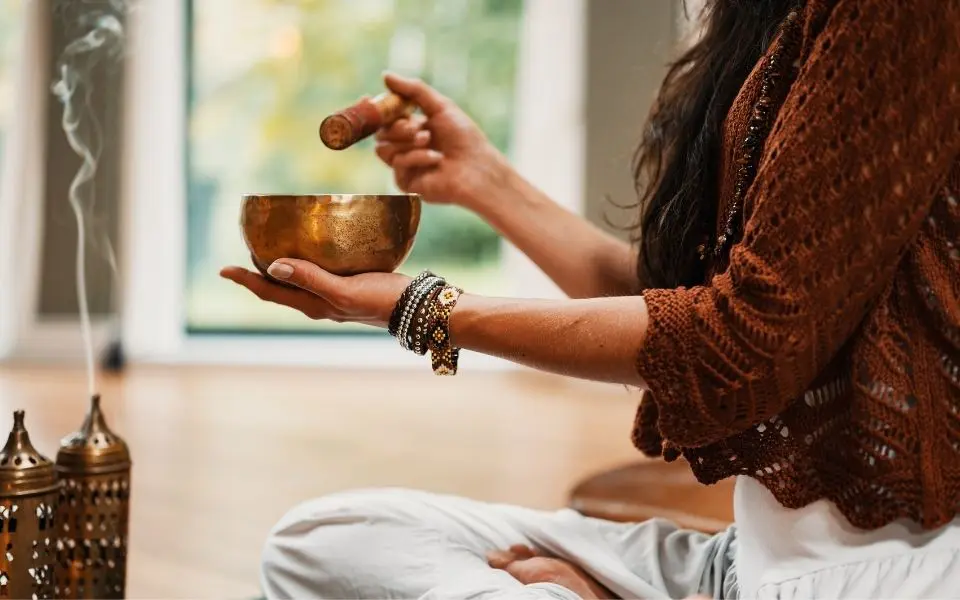
### 2. Practice Gratitude
Creating a [gratitude list](/blog/gratitude-list) of all the things you’re grateful for can help you when you’re feeling defeated. It’s important to remember that one setback or defeat doesn’t mean you’re hopeless or a lost cause. You still have so much good in you. You have so much going on in your life; it’s normal to feel discouraged when you’ve met your match. Gratitude helps bring things back into a more realistic perspective. It reminds you that no matter what goes wrong in your life, you still have a core of good things too. Whether you write in a gratitude journal using [journal prompts](/blog/journaling-prompts) or practicing a [loving-kindness meditation](/meditation/loving-kindness) focused on gratitude each day, it’s crucial to reflect on things you’re grateful for when you feel defeated.
https://www.youtube.com/watch?v=DmsDBC036z8
### 3. Reframe Your Thinking
Your [inner critic](/blog/inner-critic) can set you back when you feel defeated. It’s more likely to create a negative vortex that you get sucked into rather than a positive outlet for you to grow into. That’s why it’s so key to reframe your thinking when you’re beginning to feel defeated. For example, if you’re thinking, “I just failed my exam. I’m so stupid at math, I’m never going to get this,” you could reframe it into, “I just failed my exam. I still have a lot to learn in math. Fortunately, the whole point of doing homework is to learn so I can still get better. Maybe I could get a tutor to help me better grasp these concepts.”
### 4. Hire a Coach
When you’re feeling defeated, it might be time to invest in a coach– or a better coach. We often feel defeated when we fail at something. Maybe you’ve been training hard in sports, or you aim to win an award in your area of expertise. Ultimately, hiring a coach can help you level up your skills to continue to get better. It’s important to remember that if you’re new to something, it takes years, sometimes as much as ten years, before you start getting good at it. And that varies based on what you’re actually doing. Experimenting with your skillset will help you grow in new ways. So take risks, explore new opportunities, and find someone who can help improve your overall performance.

### 5. Invest In Hobbies
When you’re feeling defeated, it’s time to invest in hobbies. Investing in hobbies doesn’t mean giving up the area of expertise you’re trying to master. It simply means giving you an outlet to relax, so you don’t obsess over something to the point of burnout. When we feel defeated, we go to one of two extremes: we either [give up](/blog/i-give-up) or obsess. Neither is good. Right now, you just need to chill a bit. Playing an instrument can help focus the mind while being a relaxing activity. You can also learn similar areas to your craft. So if you’re a swimmer, you might start running to strengthen your legs. Or, if you’re a writer, you might learn marketing.
### 7. Further Your Education
When you’re feeling defeated, consider furthering your education. If you’re struggling to land a job when you’ve just graduated, this doesn’t mean signing up for another degree. However, you might take an online course to learn some additional skills for your field. Or you might do a one-year post-graduate program to learn some more practical skills based on what you took in school. So, if you’ve developed writing skills in your English program, you might do a post-graduate program in public relations where you can put your writing skills to use. Or, if you took a social work program, you might do a one-year addiction counseling program to specialize in a specific area. That way, when you reapply to jobs, your skillset is a bit broader, to land your first role.
### 8. Don’t Ruminate
When we have [ruminating thoughts](/blog/ruminating-thoughts), the same thoughts keep repeating in our minds, our feeling of defeat will increase. If we just lost a competition, the thought “[I’m not good enough](/blog/why-am-i-not-good-enough)” could easily ruminate in your head. But you are good enough. Don’t let a [fear of failure](/blog/fear-of-failure), a setback, or any other obstacle allow you to get lost in a negative train of thought. You’re capable of so much in life. One event doesn’t define you. Don’t [beat yourself up](/blog/stop-beating-yourself-up); you’re still absolutely wonderful.
### 9. Exercise Your Body
Under extreme stress, our bodies often want to fight or flight. When you feel defeated, you might be amped up with anger, frustration, anxiety, or sadness. It’s so crucial to release these emotions physically. When you feel like fighting someone, punch a punching bag. If you feel rage consuming you, go for a run on a treadmill or outdoors if the weather’s nice. Exercise helps the brain deal with anxiety as there are changes in brain chemistry. Suppose you’re going through a period where your brain [feels a bit foggier, anxious](/blog/feeling-anxious-for-no-reason), or harder to manage overall. In that case, the solution could be as simple as going for a walk outside or doing a quick thirty-minute workout every day.
### 10. Accept Failure
When we feel defeated, we need to accept failure. A [fear of failure](/blog/fear-of-failure) would only hold us back from moving forward. However, when we get that failure is part of learning and growing, it’s easier to manage it instead of feeling defeated. It’s okay to fail. It’s actually a sign that you’re trying to outgrow the position you’re in right now. Your time in the spotlight will come. Don’t worry about the mistakes you’ve made in the past. If you aren’t failing, you aren’t trying. So pat yourself on the back, dust your shoulders off, and get back to trying. Failure is not defeat. It’s simply a sign that there’s still some more work to do.
### 11. Plan Out Baby Steps
When you’ve been defeated in a competition or are entirely drained from trying your best for so long, you may realize it’s time to scale back. This doesn’t mean doing less; it simply means you need to take smaller steps. Rather than hoping for a home run out of the park level accomplishment, aim for micro wins. The fascinating thing about baby steps is that you can take more of them to learn more in a smaller time frame. As a result, when you learn a lot of little lessons along the way, you get better at your craft or sport. So take the time to learn skills on a smaller level so you can move quicker long-term. Celebrating the small wins along the way can be highly motivating. And eventually, it leads to that runaway success.

### 12. Consider A Pivot
Let’s be clear, a pivot and giving up are not the same thing. When feeling defeated, you can change directions using the experience you’ve built upon to level up your skills. The pivot should be a slightly different approach to what you tried historically. For example, if you’re a figure skater, you might try a completely different routine instead of switching to hockey. The pivot should challenge you a little bit more so you can grow in your craft and become better.
### 13. Take A Break
Sometimes when we’re feeling defeated, we’re seriously overwhelmed. We might be on the brink of mental collapse, and really what we should do instead of push forward is take some time to rest. That means getting your eight hours of sleep at night, working on your craft a little bit less, and injecting some fun into your life. No one ever accomplished anything big without taking breaks. There are no overnight successes. And the people who succeed usually take time to sleep, have a [lunch break](/blog/things-to-do-on-your-lunch-break), and even reflect on what they’ve done so far. If there’s no time to think, you can’t succeed. So go for a long walk with your significant other and give your brain a break.
### 14. Rant to A Friend
If you’re feeling defeated, it might be time to turn to that coveted friend who always gives good advice. Or maybe you don’t need advice, maybe you just need someone who will listen to you complain, objection-free for thirty minutes straight. That’s okay too. Getting things off your chest is crucial to helping you overcome defeat. Sometimes, you just need someone to look at you in the eyes and say, “You can’t quit now. Look at how far you’ve come. You’re literally my most successful friend. Who am I supposed to brag about if it’s not you?”

### 15. Avoid catastrophizing
Catastrophizing is when you make all-or-nothing statements about an event. For example, “This is the worst thing that could have ever happened to me,” when it is not, in fact, the worst thing that could’ve happened to you. Defeat, failure, pain, suffering, terminal illness diagnoses, these are all things that happen to everyone. Not just you. Try to remember for a moment that no one escapes life scot-free. You’re going to have rockiness in your life at various times throughout your life. It happens to everyone. So don’t [beat yourself up](/blog/stop-beating-yourself-up) with defeat. Understand that this is the human experience.
## Conclusion
If you’re still feeling defeated, just know it’s still going to take some time to come to terms with your experience. Practicing meditation will help you silence your inner critic while ranting to a friend will help release the stress and give you an excellent sounding board. Take some time to rest, exercise, and heal from this moment of suffering. You’ve got a lot of life in you still, don’t waste a moment doubting that. The story isn’t over yet. Grieve this moment but remember this is just a temporary setback. You can overcome this and any other obstacle you face.
---
# What to Do When You're Feeling Down: 10 Ways to Raise Your Spirits
- URL: https://declutterthemind.com/blog/feeling-down
- Description: Feeling down? Life tends to throw a lot at us but there' still hope. Here's 10 actionable ways to help you raise your spirits.
- Published: 2025-06-25
On the broad spectrum of emotions, almost everyone can relate to feeling down at least once in their lives. Gloomy feelings don't always equate to depression. One may just have low moods due to hearing bad news, feeling alone, or feeling a bit hopeless. And, we all have moments like these, moments where our hope dwindles.
You aren't a weak person for feeling down from time to time. We have the human experience, after all. However, becoming complacent within those rather "dark" times becomes a habit for some people. This can lead to deeper psychological issues, worries, anxieties, and even depression. The longer you stay feeling down, the deeper you feel you're in that hole. Fortunately, one very crucial thing to remember is that we all have a choice. We all can [control our emotions](/blog/how-to-control-your-emotions) and thoughts.
Yes, this sounds easier said than done to some. However, each feeling that we experience is one that we allow ourselves to feel. When we become conscientious of this fact, we begin to respond to life's circumstances instead of reactive. Sometimes, our reactions themselves exacerbate the problem, leaving us feeling even angrier, more saddened, more bitter, and more resentful. If you don't like feeling down and seek to lift your spirits, you have the power to make a conscious effort to change how you feel. The following methods are just a few ways to redirect that negative energy and even prevent yourself from feeling down.
## 10 Things to Do When You're Feeling Down
### Journal your feelings

People feel heavy and weighed down when their emotions are bottled up. Not being expressive can create tension, animosity, and resentment within your relationships. Journaling is simply the mindful practice of writing down all your thoughts and feelings. This will help you to understand them better and gain control of your emotions. Journaling is a great exercise to destress from the day. If you have no idea where to begin writing, some journals offer prompts for self-discovery, self-reflection, self-love, and even [mindfulness journals](/blog/mindfulness-journals).
### Take inventory
Not every thought or emotion is yours, but feelings projected towards you. When these projections are internalized, we begin to perceive ourselves in that way. Thus, if those around you continuously speak negatively, you will start feeling down. Our subconscious mind acts like a sponge, absorbing all that it hears and sees. Listening to sad music or watching sad movies also contribute to a gloomy mood. So, you must be mindful of what you are giving your attention to.
### Put plants in your home
Spruce up your home with vibrant plants. Plants add life to your living space and offer you its sentient company. Not only do indoor plants improve air quality, but plants like lavender and peppermint can provide a soothing aromatherapeutic effect. This increase of oxygen within your home has positive effects such as prolonging attention span, improving mood, relieving stress, and reducing anxiety. Cacti are also good plants to keep and are relatively low maintenance.
### Read something inspirational

Our minds are potent mechanisms that can free us or keep us [trapped](/blog/feeling-trapped) in self-limiting beliefs. Make a conscious effort to read something inspirational. Books that speak on self-improvement, self-love, upliftment, spirituality, and faith are a few good examples of subjects to search for. We even have a [meditation book](/blog/best-meditation-books) list if you're unsure where to start. Inspiration doesn't just come from music or movies. The following are a few good reads to help give you an optimistic perspective on life:
- The Alchemist by Paulo Coelho
- The Four Agreements by Don Miguel Ruiz
- The Secret by Rhonda Byrne
- The Power of Now by Eckhart Tolle
- As a Man Thinketh by James Allen
### Mindfulness meditation
The average person has approximately 60,000 to 70,000 thoughts a day. Most of these thoughts are reoccurring stressors, such as daily responsibilities and family obligations. Stress is a common cause of feeling down and gloomy. When our minds aren't at peace, we feel this dissonance internally. However, mindfulness restores our inner awareness back to what we feel and think. To be mindful of one's thoughts and feelings is to know what one is feeling/thinking and why. When mindfulness is established, we view our emotions objectively. Understand that feelings and thoughts are temporary. Treat [your thought](/blog/you-are-not-your-thoughts) and feelings as visitors that come and go, reserving no judgment towards them. The following is a quick and simple [step-by-step guide to mindfulness meditation](/blog/how-to-meditate).
- Find a quiet area to sit or lay down. This will be a place where you won't be disturbed during your meditation.
- Close your eyes gently, focusing on the blackness underneath your eyelids.
- Begin by taking slow, deep breaths.
- Focus your awareness on each inhalation and exhale.
- Thoughts will naturally surface within your mind. This is normal. Do not judge your thoughts. Simply observe your thoughts objectively and let them go.
- Return your attention back to your breathing.
- Try to do a scan of your body, fixating your awareness on each body part.
- Return your attention back to your breathing.
- Thoughts will continue to surface. However, return your awareness back towards your breathing.
https://www.youtube.com/watch?v=MKDvoxMIQQE
Do this mindfulness meditation exercise for about 15 to 30 minutes or as long as you like.
### Dance the gloom away
Sweat it out! Release the stress of the day by dancing it away to your favorite songs. Dancing is an activity anyone can get lost in. Our brains release endorphins, hormones that make us feel happier and more euphoric. You can dance freely on your own or with friends and family. Or, feel free to attend Zumba lessons or check out thousands of dance classes available online. Dancing offers an escape from the hectic hustle of everyday life and helps improve one's self-confidence.
### Socialize with others

When feeling down, the natural inclination may seem to isolate yourself as a defense mechanism. However, this will only amplify the negative feelings and emotions you're already experiencing. Amazing chemistry has the power to create laughter within very dark, gloomy times. Have you ever walked away from a conversation feeling light as a feather? You said what you needed to say, let out a few tears, laughed a bit, and found resolve. Surround yourself with nonjudgmental friends who allow you to express yourself fully.
### Volunteer
Volunteering gives us greater empathy for those around us or even complete strangers. When we volunteer, we can see an aspect of someone else's life who may not have the same advantages as we do. This makes us more grateful for the things we do have in life. What once was a dread becomes an appreciation. Volunteering takes a person outside of themselves for a moment. People often fixate on the negatives when they are in their heads a lot. This makes their circumstance seem disproportionately worse than it likely is. Make sure you participate in volunteer activities where you feel you can make an impact. By doing this, you won't continue feeling down but encouraged to keep helping! Here are a few ways [you can make a difference](/blog/make-a-difference) in the world:
- Volunteer at the soup kitchen.
- Write handwritten letters to people needing upliftment.
- Volunteer at a local animal shelter, playing with, monitoring, and feeding animals.
- Build a house with Habitat for Humanity.
- Lend your company and conversation to hospice patients.
- Tutor young children.
### Get some work done

People sometimes begin feeling down as a result of being unproductive. Therefore, it's in a person's best interest to make sure they aren't procrastinating. Procrastinating leads to missing important deadlines, rushing to finish projects, and feelings of unpreparedness. When you are being productive, there is a feeling of accomplishment that also accompanies. This directly correlates to one's self-efficacy and self-esteem. As you feel more and more confident in your abilities to achieve your set goals, you feel encouraged to do more!
### Take it easy on yourself
No one is perfect. So, take it easy on yourself. Each person is in a league of their own when it comes to their progress. If you aren't making the progress you'd like, don't internalize this as a failure. Instead, seek out the problem so that an appropriate solution can be made. We are not our experiences but the understanding we have afterward. Once a person understands their own autonomy, they also understand they can create the life they desire. If there is anything in your life you'd like to improve, you are more than capable of doing it.
Feeling down is something that happens to the best of us. However, it's not about how many times you've fallen but your willingness to recover. Not each fall is a failure. Through practicing self-love and setting healthy boundaries, you will feel in control of how you feel. Therefore, instead of [being reactive](/blog/stop-being-emotionally-reactive), you'll notice you take the time to respond mindfully. While we can't control everything happening around us, we can gain control over how we feel and perceive. This sudden shift in perspective significantly brightens our mood and allows us to cope with matters healthily.
---
# Feeling Empty: 7 Ways to Heal the Void You Feel
- URL: https://declutterthemind.com/blog/feeling-empty
- Description: Have you been feeling empty? Here's 7 ways to help you heal that inner void you feel lately and what it means to feel it.
- Published: 2025-06-25
The feeling of empty is difficult to explain, but once it appears, you can come to feel that it clings to your soul very strongly. No matter what you have, this feeling makes you feel that nothing you do has any purpose, one way to describe it is like a hole inside you that no matter what you do, nothing and no one can fill. So feeling empty makes us think that our existence has no meaning, even though our surroundings show the opposite.
A void is an emotion that can affect your emotional architecture and cause wounds that, if not healed in time, can become complicated in the short, medium, and long term. Trying to fill that void with love, food, alcohol, and even loading your social schedule will not be enough. That sensation of the void will stay with you regularly, and prolonging it without working on healing it at the root will only extend the damage it can cause.
Feeling empty can be unbearable precisely because it is an incomprehensible feeling, at least from the outside. But it doesn't have to become a permanent feeling, and if you can identify it within yourself, you can begin to work on healing and moving forward. Here are seven ways to heal the void you feel.
## 7 Ways to Heal an Empty Feeling
### 1. Recognize feeling empty

The first step to overcoming any difficulty is acceptance, and the first step to leaving behind that feeling of the inner void is acknowledging it. You mustn't seek refuge in behaviors that may threaten your integrity or overload your schedule with activities so as not to give you time to experience the feeling. Don't outright reject or try to hide that feeling when it arises. The best thing to do is to face it and admit that you feel empty.
You should not feel ashamed or angry with yourself. Sometimes, accepting that not all things can be under our control is the first part of our growth. Identifying that feeling of emptiness just means that you will need to figure out a new meaning for it, and from there, you can work on it directly.
It may not be very easy to detect at times, but you can study your behavior patterns and evaluate if you are experiencing symptoms that you did not experience before.
Since this feeling of emptiness has its origin in the neglect and invalidation of feelings, it will be necessary at first to begin to explore one's feelings. For example, you can start by stopping at a given moment and asking yourself, "what am I feeling now?" thus, putting a verbal, emotional label on what we feel. If this is complicated, it can be done simply with some part of the body, asking ourselves what we feel in it, temperature, movement, tension. Doing this with some regularity can help us increase the time and depth of this exploration of ourselves.
#### What are the symptoms of an existential or emotional void?
The symptoms of existential emptiness manifest themselves on three levels: physiological, behavioral, and cognitive:
- On the physiological level, you may experience a feeling of intense pressure in your chest.
- On the behavioral level, you may have begun to engage in self-destructive and aggressive behaviors against yourself, such as binge eating or alcohol and drug use.
- On the cognitive front, be alert, especially if you have been experiencing anxiety, sadness, insecurity, inability to feel pleasure, boredom, listlessness, and apathy.
You may have one symptom or all at once, and the important thing is that you recognize it, and from there, you can begin to work on it.
### 2. Assume the void as an opportunity
A [study conducted by Canadian and Croatian researchers](https://pubmed.ncbi.nlm.nih.gov/12770526/) showed that feeling empty and lonely is experienced differently depending on the culture and country where the person who suffers from it is located. In fact, in Taoist and Buddhist philosophy, the void is considered something positive as it implies that we are not clinging to anything.
Therefore, although a negative halo surrounds an existential void in Western culture, you can change the perspective and assume it as another stage in your life, which allows you to change, exit that comfort zone,, and explore new horizons. Although feeling that emptiness may not be very pleasant, it is a sign that you need to change and go beyond, so it is not necessarily something negative.
### 3. Strengthen self-esteem
Strengthening self-esteem is essential to forgiving yourself, and this is a necessary step to listening to your desires, concerns, and needs. When you manage to do all this, you get the necessary tools to redirect the course of your life.
A void cannot be filled with anything literal. It cannot be filled with things, and it can only be filled with symbols that have a special meaning for you. That means that what fills a person and gives meaning to their life may not work for you. Strengthening your self-esteem does not come from outside but from within you. It is a personal journey, so it is essential to look inside yourself and find your meanings, what makes you vibrate, motivates, and excites you.
In most cases, that feeling of empty will come accompanied by long periods of dissociation since the "self" becomes a burden. Therefore, it will be essential to work on your self-concept, and the strengthening of your self-esteem will be essential for your growth and leave behind the void you feel.
### 4. Facing fear

When a person tries to leave behind the emotional void, he/she will have to face multiple fears and anxieties that can make it difficult to live a full life. However, after facing them and starting to live to overcome the fear, the [anguish](/blog/how-to-worry-less)and fear lose their meaning, eventually disappearing.
Facing fear is closely linked to the previous point because if you do not strengthen your self-esteem, facing your fears will become an uphill task. Still, if you work on your self-concept and the way you see yourself, you will be able to gather the necessary strength to face your fears and insecurities. Everything that makes you believe that you cannot overcome them.
### 5. Spend time with yourself
Remember that existential void is, in a way, a disconnection from yourself. You have likely neglected yourself for a long time, so you must begin to explore your desires, fears, hopes, and dreams, which will help you create new meanings in your life. You may feel uncomfortable at first, but as you take more care of yourself and learn to know yourself better, the emotional void will disappear.
Keeping a regular meditation practice is a great way to spend time with yourself and explore these feelings of emptiness. [Declutter The Mind](https://declutterthemind.com) is a [free guided meditation](/meditation) app with plenty of practices to help you manage these feelings you're experiencing.
### 6. Reconfigure yourself
If you have spent a lot of time putting the needs of others before your own, your "I" has likely been weakened. To remedy this, you must begin to pamper and comfort the "inner child" in you, pat it on the shoulder every time it does something well.
This new way of relating to yourself will help you [strengthen your self-esteem](/blog/how-to-overcome-low-self-esteem) and [increase your self-confidence](/blog/how-to-improve-confidence-with-meditation), making you aware of the good things you do, no matter how small they may seem, so that feeling empty will soon fade away.
### 7. Seek help

Finally, it is worth [noting](/blog/mental-noting) that specialized therapy with a professional is the most effective method to solve any emotional discomfort. A qualified psychologist can guide you to the most appropriate therapy to deal with your feeling of void and [sadness](/meditation/grief).
You can't always cope with everything, and that's okay. Seeking help or [finding a therapist](/blog/how-to-find-a-therapist) does not invalidate your efforts. On the contrary, by seeking help, you admit that what is happening is something you can not handle alone. The specialist knows methods and strategies you might not have tried, so overcoming the emptiness will come after working hand in hand.
## One Day at a Time
No matter what could cause you to feel a void, this feeling of the emotional void often turns people into emotionally numb, breathless, lonely and prone to anxiety. If the flatness is the part you notice most, [emotional numbness](/blog/emotional-numbness) is worth understanding on its own terms. A common strategy to deal with this emptiness is keeping ourselves busy. This can be done through several ongoing activities that keep us from overthinking. Other people find solace in binging food or abusing harmful substances, such as drugs. Others seek refuge in compulsive shopping, promiscuity, gambling, etc. However, none of the options stated above are healthy nor final solutions, and they only provide temporary relief that, in the end, only aggravates that void in the heart.
You must focus on thinking positive and believing that you can overcome it, and although it sounds repetitive, live one day at a time. You won't always feel good, which doesn't mean that your work or efforts are not valid. Even if there is a bad day, that doesn't eliminate the good days. Healing your empty feeling is daily work and sometimes slow, but that doesn't mean it's not effective.
Work on yourself, seek help and don't forget how valuable and important you are, believe it and hold on to it.
---
# 12 Ways to Stop Feeling Hopeless and Find Hope in Tough Times
- URL: https://declutterthemind.com/blog/feeling-hopeless
- Description: Feeling hopeless? Here's 12 ways to shake this feeling and start to find hope in tough times. Start to see the light and get through.
- Published: 2025-06-25
Feeling hopeless in a situation doesn’t help you get out of a mess. It usually spirals you further into it. I can’t imagine how difficult your situation is. You could be a cancer patient being told that you only have a few months left to live, a person battling a severe case of depression or anxiety, or someone who’s dated a ton for years never finding the right person. The good news is that feeling hopeless is an emotional state, and all emotional states can be changed. In this article, we’re going to help you find hope in tough times to help you stop feeling hopeless and turn your situation around no matter how bad your situation is.
## 12 Ways to Stop Feeling Hopeless
### 1. Change Your Environment
When we reach a point of hopelessness, it’s often due to a toxic or negative environment we’re in. If we’re surrounded by positive people who constantly challenge our negative thoughts, it’s impossible to spiral into hopelessness. Who have you been hanging around lately? Are you able to find [happy people](/blog/happy-person) to spend more time with? Or are you spending way too much time in your head, following all your thoughts down a never-ending rabbit hole until you make yourself sick with despair? In that case, you might just need to spend more time *with* people. Are there ways you can make your current environment better? Can you bring a pet into your life? Decorate your home with plants and positive posters? Maybe try creating a list of [positive songs](/blog/positive-songs) to uplift your mental state a bit. The good news is you don’t need to run off to a foreign country to make a change in your environment. A few tweaks here and there can make a big difference to combat hopeless feelings.
### 2. Make Today Your Best Day
Sometimes, you get a prognosis that doesn’t look good. You find out someone you love dearly is dying or maybe that someone is you. Unfortunately, we don’t have superpowers that can heal the dying. But while you’re still alive focus on making today your best day. When my husband’s father was dying of cancer, I told him to take time off work and spend his last weeks with his dad asking him questions to get to know everything about him before he lost those untold stories for good. It helped him cherish those final moments with him while giving him his last few opportunities to bond with his dad. Maybe making today your best day won’t be you jumping out of a plane and feeling a sense of exhilaration. Maybe it’s simply spending as much time with people you love as you can while everyone’s still here. Because life is about being with other people and carrying all those special moments in our hearts. Some of the best days of my life have just been me hanging out with people I love talking about funny memories. So, if you’ve been feeling hopeless about an unchangeable situation, try to make the most of your time with people you love.
### 3. Become a Positivity Machine

The science of neuroplasticity is proof that our brains are completely changeable. There are countless books about how your personality isn’t permanent. And we all know that everything in life is temporary. That’s what makes life wonderful after all. So, if you’ve been feeling hopeless lately, take small steps towards positivity to bring back hope into your life. Read books about psychology to help you learn how to rewire your brain to be more hopeful. Change some of your habits to improve your odds with the challenges you’re facing. The definition of insanity is doing the same thing over and over again while expecting different results. So, if what you’ve been doing isn’t working, maybe it’s time to try something new. Repeat [positive affirmations](/blog/positive-affirmations) to yourself each day to help maintain a positive mindset even in the face of [adversity](/blog/overcome-adversity).
### 4. Practice Gratitude
People who practice gratitude everyday [overcome obstacles](/blog/overcoming-obstacles) easier and quicker than those who don’t. Practicing gratitude is about taking a bit of the focus on what’s wrong to focus on what’s right. Even in the harshest winters of our lives, we can find warmth and positivity in our lives. Do we have the support of at least one person? Do we have someone to talk to? Are we able to move our bodies? If you’re unsure of what [things to be grateful for](/blog/gratitude-list), you can check out this [gratitude list](/blog/gratitude-list) for ideas. So, if you’re feeling hopeless in life, take some time to write down a list of what you’re grateful for every single day for the next eight weeks. And note changes in your mood and your outlook on the situation to determine if it helps you slowly improve.
### 5. Practice Kindness
If you’re feeling hopeless, you can completely change your situation by practicing kindness. Doing one [good deed](/blog/good-deeds) a day can help you see what truly matters in life. Maybe you’re in a situation where there’s no cure or treatment for what you’re going through. By doing an [act of kindness](/blog/acts-of-kindness) everyday, you allow yourself to continue to have a meaningful and purposeful life while you can. Maybe you share stories of what you’ve always appreciated about others who take you to chemotherapy. Or maybe you start a blog sharing your story with others to give them a feeling of hope.
Here’s the wonderful thing about practicing kindness when feeling hopeless. It shifts your brain from spiraling down a negative vortex into a compassionate and positive mindset. And by doing that, you’ll likely be able to live a bit longer than odds stacked against you because your immune system is strong. It takes some training to be able to practice kindness when you’re in pain, depressed, or suffering. And so this is one of those big life challenges to see what you’re made of. And by doing this, you’ll notice that you’ll start to feel and be a lot happier and hopeful. By taking the emphasis off your situation, you realize you stop feeling hopeless without even thinking about it.
### 6. Reflect On The Good Times

If you’re going through a big life event that isn’t working in your favor: terminal illness, divorce, jail time, or other difficult moment, focus on some of the good times you’ve had in your life. Rather than looking at the situation as resentment or us vs them, focus on how many good moments you’ve had in your life. Maybe you have kids that you’ll be separated from more often, which is extremely hard to go through. But this could be the exact moment in your life that shapes you into becoming the person you’re destined to be.
So, often we look at a tough moment and think “I can’t believe someone would do that to me.” And the bitterness makes us angrier and vengeful. And those emotions don’t make our lives better but so much worse. It’s important to look at the people who’ve challenged you in life with a sense of gratitude. Think about the time when your ex made you laugh so hard you couldn’t breathe. Or how you now have a wonderful child who inspires you everyday. Use those happy moments to remind you that you can and will have those moments again (even if they’re with different people) if you focus on what’s good about a situation. You will be happy again. You will be hopeful again. Use happy memories to help you make smart decisions to be at peace with the cards you’ve been dealt and to slowly rebuild your life anew.
### 7. Remember That Everything Is Temporary
A feeling of hopelessness can seem permanent. Fortunately, it isn’t. There isn’t anything in life that doesn’t change, evolve, or end. So, if you’re in a dark pit fearing a sense of permanence, there’s no need to worry. Your experience, no matter how painful, will change. Your emotional state to the situation will also change. There may be moments where you cry for weeks on end and one day you feel a sense of peace and calm over the situation. There’ll be a moment where you finally give yourself permission to [accept things as they are](/blog/acceptance). And when that day comes, you’ll smile a quiet smile to yourself.
When feeling hopeless, it’s important to accept that which is out of your control. Everything that is in your control, feel free to change or modify in anyway you’d like. But if it’s not in your control, don’t start looking for miracle cures on the internet because that’s not what’s going to bring a sense of hope back into your life. It’s simply just going to make the process of acceptance take longer. Sometimes, life will force us to lose people or things we never wanted to lose. And we need to learn to [let go](/blog/how-to-let-things-go), because they were never ours to keep in the first place.
### 8. Remind Yourself Of How Far You’ve Come
When you’re feeling hopeless about your situation, it’s important to take a step back and look at how far you’ve come. You’ve changed and evolved so much over the years. You’ve improved so many aspects of your life. And while you might not want to play with the cards you’ve been dealt, it’s important to realize you were dealt those cards because you’re strong enough to rise to the challenge.
Think about some of those crushing moments you’ve faced in your life. Those times you felt like you were buried under 6 feet of dirt, where you thought you weren’t going to make it. Those moments you felt your whole world collapsed. And then, after a bit of time and effort, you got through that rough patch. You came out stronger and better than ever. You’re built to withstand tough times. If anyone can face this difficult moment you’re up against, it’s you. And you’re going to crush it and make the most of all this horrible, painful experience. And when you finally get through it, you’re going to help people who are at the start of what you just finished. Use that as your motivation when you’re starting to feel hopeless again.
### 9. Your Mind Tends to Lean Negative

The right brain is your creative brain, it’s nonverbal, and your subconscious. It’s the most well networked part of your brain. Your left brain, on the other hand, is kind of a loner. It doesn’t have as many connections. As a result, to get your attention, it constantly sends you [negative thoughts](/blog/how-to-stop-negative-thoughts) to get you to notice it. Since your left brain is the verbal and conscious part of your brain, you’re more likely to stay hooked on what’s going on in your head. However, by developing your right brain more through meditation, creative hobbies, or right brain activities, you can learn to shut down your left brain and ultimately the thoughts that led you to feeling hopeless in the first place. After all, it’s not you who feels hopeless, but your thoughts telling you that’s how you should be feeling in this situation. But there’s always another perspective (your right brain’s perspective) which you can lean into to make peace with your current situation.
### 10. Focus On Solutions
If you’re battling mental health challenges like PTSD, you might feel like you’ll never recover from it. It’s possible that what you’re facing can become the new viewpoint at how you look at the world. Maybe you’ll always see life through the lens of this trauma. But as someone who has been through trauma as well, I can happily tell you that you’ll still have happy, positive, and uplifting moments even after facing hopeless situations. The one question I always ask myself when I can’t find the light at the end of the tunnel is, “how can I make tomorrow a little bit better than today?” Tomorrow likely won’t be better than today, things don’t change that fast. However, you can learn to take the small baby step that moves you into a positive direction. You can focus on doing right brained activities like mentioned earlier to shift your mindset in a more positive direction so you can clearly think about solutions out of a hopeless situation.
### 11. Spend Time With People Who Uplift You
When feeling hopeless, it’s important to look around at our circle of friends and family and ask ourselves honestly, “Am I hanging around positive people?” It’s possible that those you love most aren’t actually keeping your outlook positive. You might even have people in your immediate circle who are making things worse. Maybe the people around you are trying to convince you to get revenge on the person who hurt you or they’re crying in hysterics and acting like the hopeless situation is happening to them instead of you. Sometimes, you just need to step out of your environment and find a friend or relative who knows the right thing to say or the best way to support you. We all know that one person who makes us laugh or helps calm our [panic attacks](/blog/how-to-stop-panic-attack) in stressful situations. This is the time to reach out to that person, even if it’s been a while. People love [helping others](/blog/helping-others) because it makes them feel needed and valued.
### 12. Practice Meditation
Feeling hopeless is a mental state. Fortunately, with a regular meditation practice, we can learn to stop feeling hopeless. Meditation is about learning to watch your thoughts instead of reacting or acting upon them. We’ve all experienced thoughts that made us cry or hurt us. And sadly, that hurt and pain is our own doing. But there is a way to catch yourself in a train of thought to stop yourself from making yourself suffer more than you need to. Most of our suffering takes place in our mind rather than in reality. With meditation, you can work to eliminate or drastically reduce the suffering your mind makes you go through. You can try our [guided meditation for peace](https://declutterthemind.com/meditation/relaxation) to help you feel a sense of calm when feeling hopeless.
## Conclusion
Feeling hopeless is a temporary emotional state. We all go through challenging moments in life that push us to our limits. Unfortunately, sometimes the situations we’re forced to deal with make us sad or are difficult to process. Some things in life are completely out of our control. If it’s within our control, we can change our environment, spend time with uplifting people, practice meditation, work on improving our mind, reflect on the good times, and practice gratitude and kindness to help us accept the cards we’ve been dealt. May you feel a sense of acceptance in your current situation which helps you overcome feeling hopeless.
---
# Feeling Lost: 9 Ways to Cope When You Feel Lost
- URL: https://declutterthemind.com/blog/feeling-lost
- Description: Are you feeling lost in life or struggling to find your place? Learn nine different ways to cope when you feel lost.
- Published: 2025-06-25
Feeling lost in life is one of the worst feelings in the world. It's something that a person will likely experience at some point in their lives. Feeling lost can be caused by several factors, such as a lack of purpose, fulfillment, or direction. Right now, it may seem like life has no meaning. When this happens, though, remember that you need to go easy on yourself instead of blaming yourself for feeling lost. Fortunately, there are still ways you can cope with this challenging situation. In this article, we'll be sharing some techniques to help you cope with feeling lost.
## What Does It Mean To Feel Lost?

When you feel lost, you don't know what to do, [how to feel](/blog/feel-your-feelings), and which direction to lead yourself. When feeling lost, we tend to question every aspect of our lives, spiraling us out of control. People who feel lost often take one small setback or problem and extend it to other areas. This process is known as catastrophizing. That's why what starts as a minor problem grows big quickly.
You might begin to lack provision, direction, and purpose. You may even start second-guessing yourself and the things in which you've believed. This feeling eventually trickles down to countless areas, such as friendships, relationships, career paths, and [personal growth](/blog/personal-growth).
[Feeling overwhelmed](/blog/feeling-overwhelmed) with difficult situations can sometimes cause a sense of feeling lost. One of the most dangerous aspects of feeling lost is when you no longer recognize who you are, which affects your self-image and confidence. This feeling often creates a sense of detachment since you no longer identify with yourself. However, feeling lost is also sometimes necessary since we tend to run away from our painful emotions, complicated relationships, past trauma, and other challenging events. When you feel lost, it can raise an alarm bell that it's time to pay attention to the truth you're running away from and make necessary changes in your life.
## How to Cope With Feeling Lost
### 1. Accept that it's okay to feel lost

No matter how difficult the feeling of being lost might seem, realize that it's not a feeling that will last forever. All suffering in life is temporary. There's no exception. The more you try to avoid this feeling, the more you likely won't be able to cope with it. An inability to cope happens because we often tend to extrapolate it, understand it, and, thus, magnify it as a result. People who try to figure out what's causing the issue instead of letting the feeling be often make the situation worse themselves. Overanalyzing a fleeting feeling often makes the feeling last longer. It's essential to recognize that sometimes you're going to feel negative emotions. Instead of dwelling on them, allow yourself to experience the sentiment since it isn't lasting anyways.
There's nothing wrong with feeling lost, no matter how difficult it is to sit with your feelings. It would help if you also realized that sometimes feeling lost is the key to making necessary changes in your life to becoming better. You can always use this feeling to your advantage and reflect on your life. Everyone feels lost at some point in their lives, but it's up to you how you're going to cope with that feeling.
### 2. Realize you have more control than you think
You have [control over your emotions](/blog/how-to-control-your-emotions) and thoughts - not the other way around. You create your current reality, and you shape your life. Nobody else but you is in charge of how your life turns out, which means you will always have the upper hand. If there's something in your life you aren't happy about, the realization that you can turn your life around anytime should be enough to counter the feeling of being lost.
You need to ensure that you're not developing a victim mindset. While trauma, loss, or a significant setback can make you feel unsteady and drastically change your life. The change can still turn out to be positive. People have lost spouses, children, and even a sense of safety. And many have learned to take their loss and create a beautiful life from it. If a child or spouse dies suddenly and traumatically, you might consider starting an organization to help others in a similar situation cope or prevent it from happening again. If you've experienced a trauma, you can use the experience to rebuild yourself up in a new way. Some people choose to do [good deeds](/blog/good-deeds) every day to help put their life on a better path. Allow yourself to [get out of your own way](/blog/get-out-of-your-own-way).
### 3. Focus on your strengths and capabilities
Avoid focusing on your imperfections and weaknesses. Everyone has flaws, and there's absolutely nothing you can gain from obsessing about them. When you feel lost in life, the best thing you can do is focus on your best strengths. By shifting your perspective to the things you're good at, you can gradually move forward. It's far better to build up your strengths than worrying about weaknesses. Your best traits reflect the best parts of you. If you're having negative thoughts, it will only bring you down. No matter what, your flaws are not a reflection of your capabilities.
And remember, your personality isn't permanent. Think of how much you've changed since you were a child. You can swap out negative traits and replace them with positive characteristics anytime. Your brain is changeable. You can learn new skills. Pushing yourself in different ways is always possible. If feeling lost has made you reevaluate some aspects of the person you are today, remember you can decide who you want to be tomorrow.
### 4. Choose healthy habits

This point might sound a little cliche, but your habits determine the outcome of your life. If you're having unhealthy habits, such as constantly browsing mindlessly through social media posts, then you need to reevaluate your habits. Your habits can contribute to feeling lost in life, especially when the majority of your habits are unhealthy ones. With habits like social media consumption, it's not entirely bad, but when it's causing you to compare your life with everyone else's, that's when it becomes unhealthy. Like anything, moderation is key.
You can develop [good habits](/blog/good-habits) at any time. Starting today, you can begin to do that [social media detox](/blog/social-media-detox), practice [good deeds](/blog/good-deeds) in every interaction, choose a different way to respond to a partner or child or anything else. When we're feeling lost, it's normal for there to be an increase in negative behavior. Still, by swapping that with a positive, compassionate, and kind attitude, we can begin to find the meaning that guides us back on track.
### 5. Read on personal development
We often get stuck in our heads with an [inner critic](/blog/inner-critic) that makes us feel lost. While it's normal to feel that way sometimes, you don't want to become stuck in that mindset. When you read regularly, you learn new perspectives, skills, and solutions. The self-help genre is one of the biggest for a reason. Personal development books and articles can help you more than you realize, mainly when authors specialize in a specific topic. If you're finding it difficult to cope with this feeling and not knowing what to do and where to go, now is the perfect time to read on personal development.
For instance, if you're struggling to rewire your brain or with trauma, you might read books about how the brain works. Someone who is grieving a loss of a loved one might choose to read books about coping with grief or [coping with depression](/blog/coping-with-depression). A person struggling with finding meaning in life might decide to read books about compassion, kindness, or philosophy. There's a book for every need in life to help you transition from feeling lost to getting back on track.
### 6. Have a change of environment
Whether you realize this or not, it's easy to dwell on negative emotions when you stay in one place for long periods. Emotions are fleeting. Still, by staying in one place, there's a possibility to dwell in negativity and let your feelings consume you. Even when feeling lost, you might gain the inspiration you're looking for by going outside and moving your body. Fresh air can do wonders for someone. Even something as simple as getting out of bed and taking a shower can create a slight improvement in your management of emotions.
If possible, consider going on a mini-vacation. You don't need to jet-set on a plane to see a mental boost. Even going for a weekend getaway to cottage country, a popular tourist attraction, or a nice long hike in a forest can help you recharge your batteries. Life is meant to be lived out there in the world. So when you find you're too in your head, get out into nature and explore. Take in all the sights, sounds, and smells that surround you.
### 7. Acknowledge who you are
Even when you feel lost, confused, and scared out of your mind, acknowledging who you are is the best thing you can do. Acknowledge this phase of your life, no matter how difficult it seems. When you affirm what you feel and everything that comes with it, it will be easier for you to move forward despite feeling lost. As long as you avoid dwelling in that loneliness, then you'll be fine. Knowing who you are may also require you to look inward, which isn't easy as it takes a certain level of [self-awareness](/blog/self-awareness). You're not a quitter or someone who gives up quickly. You're able to learn new skills to help yourself out of this moment. Life hasn't always been easy for you, but you've always managed to help yourself out of a tough time. This moment is no exception. You're going to come out of this moment stronger than you went into it. It's you. Of course, you can do it.
### 8. Feeling lost can help you learn

When you're feeling lost, you can learn about the feeling more than you realize. We spend so much time with other people that we rarely take time for ourselves. When you're feeling lost, it can show you that you need to pay more attention to what's happening to spark a change in your life. As difficult as the feeling of being lost may seem, you need to learn from it and stop avoiding it. When you're alone, you have no other choice but to face the truth and take the necessary action to make changes.
### 9. Take action
It's time to take action. While feeling lost is something to come to terms with for this moment, you also need to set yourself up to move forward. You can't deal with the feeling of being lost when you don't do anything but dwell on it further. You will feel lost one way or another in your life, but what matters is what you choose to do about that feeling. If you feel lost because you're not sure if you've taken the career path, ask yourself the question of whether you're actively doing something that brings you closer to the career you want? Stop making excuses and think about the fact that it's time to face the truth behind why you're feeling the way you do.
One way to take action for your next step is to practice meditation. By practicing meditation, you'll learn how to focus on something other than the wandering thoughts that sometimes lead you astray. Meditation is the first step towards [mindful living](/blog/mindful-living). And once you start living mindful, you'll begin to notice some of the negative experiences slip away. You'll start to live more presently instead of reliving the past a million times or fearing the future. In the present moment, people don't feel lost, scared, or confused. They're too busy living, loving, and helping.
## Conclusion
In this article, we highlighted ways to help you cope with feeling lost. This emotion is hard to deal with, but sometimes it's the push we need to pivot in a new direction in life. Using the tips above, you can start taking action to help you transition away from feeling lost. It's crucial not to catastrophize your feelings as that will only make them worse. Remember, like everything in life, feeling lost is temporary. You won't feel this way forever. You can practice meditation, compassion, and kindness to help you find meaning in your life and build the confidence to move a step forward.
---
# A Feeling of Impending Doom: What Does It Mean?
- URL: https://declutterthemind.com/blog/feeling-of-impending-doom
- Description: Do you have the feeling of impending doom? Here's what it means, how to manage it, and how to overcome this feeling.
- Published: 2025-06-25
You're at the movies or watching late-night television when you hear music that serves as an immediate warning that something dreadful is about to take place. When you hear the movie score, you get a strange feeling in your stomach. It has been over a century since cinema musicians and sound designers began using the same type of sound to build anxiety in films. A prolonged tone (or cluster of tones) is creepy and continuous, known informally as "the drone of dread" or "feeling of impending doom."
Even though we do not hear the music, there are instances in real life when we get the impression that something terrible is about to happen - the feeling of approaching doom.
It is possible to overcome an overwhelming sense of impending doom and feel the desire to run to avoid something horrible happening to you or your loved ones. This sensation of impending doom can come on suddenly and without apparent cause. That is different from [dread aimed at a specific upcoming event](/blog/anticipatory-anxiety), which always has a clear target. It can strike at any time and from any place. When you feel impending doom, it may happen regularly or occasionally.
## What Exactly Is a Feeling of Approaching Doom?

When a person experiences a persistent sensation of impending doom, they may suffer from impending doom anxiety, a medical disorder. It is common for those suffering from this illness to fear that something terrible will happen or that the world is about to end.
Chronic feelings of impending doom are frequently associated with anxiety. Other typical signs and symptoms of anxiety include:
- Is your body making you feel restless, uneasy, or tense?
- Having a higher than average heart rate
- fear or panic caused by a perception of impending peril
- Hyperventilating
- Excessive Sweating
- Uncontrolled Trembling
- Feeling exhausted and weak.
- Unable to concentrate on anything else except the fear
- Sleeping problems are a common occurrence.
- Problems with the gastrointestinal tract
- Strong emotion and the desire to avoid things (such as places or people) that cause anxiety.
- Controlling one's concerns is difficult.
People dealing with an underlying anxiety illness are more likely to experience panic attacks. For example, the duration of an attack might range from a few minutes to many hours. Anxiety episodes can cause palpitations, chest discomfort, and the sensation of being about to pass out. It can also result in dyspnea (labored breathing), the fear of dying, and a sense of impending doom. In addition, people who have panic disorder are impacted regularly. This frequently leads to feelings of depression and anxiety and concern about when the next [panic attack](/blog/how-to-stop-panic-attack) may occur.
In some instances, when someone has a heart attack, they may have sensations of impending doom or death. Additional signs and symptoms of a heart attack include feeling unwell and pale, sweating heavily, having trouble breathing, vomiting, and feeling ill. The signs and symptoms of a heart attack might appear differently in various persons, and the traditional signs and symptoms of a heart attack are typically more pertinent to males. As a result, heart attacks in women are frequently underestimated and undertreated. In addition, women with a heart attack are more likely than males to experience symptoms such as difficulty breathing, vomiting, and nausea.
## What Does the Sense of Impending Doom Feel Like?

When you have a feeling of impending doom, you are filled with dread, terror, and worry that something terrible will happen, for example, that the world is going to end or that you will die.
People frequently experience potent sensations of dread and impending doom when dealing with fear and anxiety. It is challenging to deal with these emotions when they come for no apparent cause. Because these sensations appear to be based on no rational explanation or threat, some individuals react to them with panic, which only exacerbates the anxiety. The fear of approaching doom is frequently articulated in phrases such as the ones listed below:
- A sense that something potentially harmful is about to happen
- Some sort of sensation that something terrible is about to happen
- Some people experience overwhelming confidence that you're about to die.
- There is a strong sense that something terrible will happen and that you will not prevent it.
- A powerful sensation is a profound sense of death and devastation that suddenly rushes over you.
- Fear of impending catastrophe, sorrow, devastation, and darkness that is exceptionally intense
- It is characterized by an overpowering sense of impending doom that begins or happens during the panic episode.
- A dreadful sense of impending doom and gloom that suddenly descends upon you
- The feeling of imminent doom is so strong that you need to flee quickly to avoid anything dreadful.
- This sense of impending doom can strike quickly and without apparent cause, and it can strike at any time and from any location.
- This sense of approaching catastrophe might occur regularly or infrequently. It might appear and disappear only once in a while, occur frequently, or be a recurring event regularly.
All of these manifestations of the sense of approaching doom are relatively widespread. The reaction can be very intense when the emotion occurs during a calm, undistracted period. For example, when a person is trying to sleep, when the feeling wakes them, or when they first get up in the morning.
## Explanations Based on Physiological Principles
There has been little research on this occurrence, and much of the extant material is decades old. When a symptom is consistent across numerous disorders, it can be challenging to determine the common thread between them. However, there are some hints to look for.
According to a new study from 2019, the [mind-body link](/blog/mind-and-body) under stress is one possible cause. Experiencing such extreme dread may indicate that something isn't right with your body. This dread may be because of a perceived threat in your mind (such as anxiety) or a genuine threat in your body (like a seizure).
We're physiologically programmed to maintain homeostasis or a feeling of internal equilibrium between systems. When anything deviates from the ordinary, it causes a wire in your brain to trip and send a signal.
Following an alarm from your brain (also known as the limbic system), your body shifts into either fighting mode or freezing mode. This prepares you to deal with a threat that has been detected. During this time, your adrenal glands release a surge of chemicals known as catecholamines throughout your body, including adrenaline, resulting in unpleasant side effects such as shaking and [shallow breathing](/blog/shallow-breathing).
Recent research suggests that people who suffer from anxiety-related mental health conditions, such as post-traumatic stress disorder (PTSD), may have an elevated stress response. According to the findings, this high level means that their brain generates a feeling of impending doom even when their circumstances are not dire and are only mildly or moderately stressful.
It's difficult to say why dread occurs on a biological level until experts look more into the issue, but it's undoubtedly a wake-up call.
## Impending Doom Triggers

### Recognizing the Feeling of Impending Doom
Feeling of impending doom may appear to be intuition. Or, considering that you're amid a pandemic, it may result from persistent stress. However, a sense of impending doom can also precede potentially fatal medical occurrences such as a heart attack. For example, it might signify a psychiatric disorder such as anxiety or [sadness](/meditation/grief).
Here's what you should know about the factors that might cause a sense of approaching doom.
### Psychological factors
Impending doom might be a problematic symptom to identify. You have the impression that something is seriously wrong, but what precisely is it? There are a few elements to consider while determining if this sensation is caused by worry or a medical problem. For example, suppose there is no immediate threat. In that case, no physiological symptoms accompany the experience, and the concern is there, it is most likely the outcome of a mental health problem or trauma. So it is quite improbable that someone experiencing a sense of approaching doom would not also be suffering bodily symptoms. These are a few examples of probable psychological possibilities.
### Depression
When you're depressed, you see the world in a different light.
Depressive thoughts are like wearing dark glasses: everything appears bleak and uncertain. Feeling gloomy or pessimistic, thoughts of suicide or self-harm, and decreased energy and exhaustion are symptoms of a depressed episode.
### Anxiety
Several sorts of anxiety disorders might cause a sense of approaching doom.
- Panic attacks and panic disorder
- Anxiety disorder in general (GAD)
- Post-traumatic stress disorder (PTSD)
- Obsessive-compulsive disorder (OCD)
Why? Take, for example, panic disorder, which is a sort of anxiety condition. People experiencing a panic attack may experience an overpowering impression that tension and terror are building up and ready to burst. According to the National Institute of Mental Health, this can be associated with a sense of approaching doom. Physical symptoms may include a beating heart, sweating, chills, disorientation, and nausea. Many of these symptoms might be confused with those of a heart attack.
### Manic-depressive illness
Impending doom may also be a hallmark of bipolar disease. People with bipolar illness frequently suffer dramatic variations in mood, energy, and activity levels. Manic highs and depressing lows characterize this. During a depressed episode, you may believe that disaster is near. You may also feel sluggish, useless, and hopeless, have difficulty sleeping, and have little desire to accomplish anything.
### Physical Conditions That Can Cause the Feeling of Impending Doom
Impending doom feelings may be a psychological indication of an impending emergency. For example, physical signs, such as a dramatic decrease in blood pressure, may alert the brain that things are not right. During times of stress, it may also be the deposit of hormones released from adrenal glands into the bloodstream. It might be a neurological system response.
A medical incident will most likely be accompanied by additional symptoms such as hot flashes, feeling of nausea, perspiration, difficulty with breathing, tremors, or palpitations of the heart.
Impending doom may be a sign of one or more of the following emergency medical conditions:
- A heart attack
- Aneurysm
- Stroke
- Anaphylactic shock
- Certain species of Stinging jellyfish
- Embolism of the lung
- Anesthesia awareness (coming to while undergoing surgery)
### Treatment Strategies for Dealing with Feeling of impending doom
More than just treating the symptom, medical professionals will look for and address the underlying cause of the problem. For example, if the patient suffers from anxiety, panic disorder, or depression, it may be feasible to treat them with psychotherapy or medicine to alleviate their symptoms. Call 911 immediately if the cause is physical, such as a heart attack, followed by other symptoms such as chest pain, shortness of breath, nausea, or breaking out in a cold sweat.
## Conclusion
While a feeling of impending doom may be paralyzing and painful, there is a light at the end of the tunnel. Given enough time, or actively pushing back against this feeling by seeking treatment or help, we can overcome [feeling anxious](/blog/feeling-anxious-for-no-reason) and start to live a more peaceful, optimistic life.
---
# Feeling Overwhelmed? Here’s 10 Ways to Change That
- URL: https://declutterthemind.com/blog/feeling-overwhelmed
- Description: Feeling overwhelmed from the stresses and challenges of life? Here's how to change that feeling with these 10 easy to follow tips.
- Published: 2025-06-25
Feeling overwhelmed? What a frustrating feeling. You might be panicking right now desperate to find a solution. Maybe your workload is too high and you don’t know where to start. Or you’ve read the news recently and feel scared about the future. Sometimes, life throws a lot your way, and sometimes it is simply [too much input at once](/blog/overstimulation). And rather than diving into action, you become paralyzed. Frozen in time. That freeze often shows up when you're [overwhelmed by too many decisions](/blog/decision-fatigue) at once. The good news is that we’ve all been there. So, that means, there is a solution to feeling overwhelmed. And today, we’re going to help you do just that. Sometimes that overload spills over as [crying for no reason](/blog/why-do-i-cry-so-easily), which is worth understanding too.
## How to Manage Feeling Overwhelmed
### 1. Meditate

So, let’s say you’ve just gotten bombarded with projects all at once. There’s a mountain of it. And you don’t know which to tackle first. And instead of taking action, you’re in panic mode. Maybe you’re experiencing a [panic attack](/blog/how-to-stop-panic-attack) right now, even. You’re procrastinating because you can’t focus. You can’t pick just one thing, and learning to [focus on a single task](/blog/monotasking) is a skill worth building. In this case, you should meditate. Don’t worry, this isn’t going to take an hour of your time. You can meditate using the [Declutter The Mind app](https://declutterthemind.com/qr-code) in as little as little as five minutes with our Emergency meditation. It gives you just enough time to take that deep breath in to help you gain some mental clarity.
And if you find that you need to do that one more time, you can replay it again or try a [ten minute anxiety meditation](https://declutterthemind.com/meditation/anxiety). I sometimes double up my [short meditations](/meditation/beginner) when my panic attacks are really strong. So, don’t worry if you need to do the same thing. Panic attacks from feeling overwhelmed can be pretty intense. But the more you practice meditation, when you’re not feeling anxious, the more equipped you become to handle that anxiety when panic begins to arise within you during overwhelming periods.
### 2. Start Anywhere
Maybe today is a busy day at work for you. You still have your job while others in the company have been laid off due to COVID-19 or budget cuts or any other circumstance. The work is piling up higher and higher on your desk. The list would be impossible to accomplish even if you worked seven days a week on it. It’s just not doable. You’re scared of telling your boss that you can’t handle the workload because the time is sensitive right now. But you find yourself procrastinating and working on non-essential tasks because you don’t know where to dive in to start. You’re feeling overwhelmed and are afraid that the problem is getting worse.
In this case, I would speak to your boss about priorities. Be honest. Tell him or her that you’re currently feeling overwhelmed and don’t know where to start. Ask for feedback on what he or she thinks is the most critical thing to work on first to help you get started. That way, your boss is the decision maker that you continue to make happy. And you can finally get that clear focus started. It’s your first baby step.
### 3. Change Your Thoughts

The most dangerous place you’ve ever been is located in your mind. If you’re feeling overwhelmed, the problem likely started in that little place where all your negative thoughts buzz about. The cool thing to note is that those negative thoughts, they came from you. So you have the power to stop them. Maybe you’ll need to shout stop when they try to take you down that rabbit hole. Or maybe you’re a bit gentler singing the song, “Stop, in the name of love before you break my hea--d.” Kidding aside, when you find that the vicious thought cycle is spinning out of control, focus on replacing negative thoughts with positive thoughts. For example, “I have so much work to do, I’ll never finish this” becomes “I have so much work to do, who can I work with to finish this” or “I have so much work to do, maybe I need to ask for an extension to meet this deadline, most people are quite understanding and flexible.” There’s always an alternate thought to a negative thought that can help stop you from feeling overwhelmed and [find peace of mind](/blog/peace-of-mind).
### 4. Live in the Present
When you notice that you’re feeling overwhelmed, ask yourself, which time frame am I living in? Are you fearing the future? Are you overburdened by the past? Or are you in the present moment? By shifting your focus away from the past and future and [practicing mindfulness](/blog/ways-to-practice-mindfulness), you can sit comfortably in the present. You may notice that in the present moment, you’re feeling a sense of panic. Acknowledge that panic. Hi, panic. Welcome back. How can I help you today? Take a deep breath. You are able to tackle everything you set out to do. No, stop it. Yes, you are.
This moment right now, you’ve got two options: react and act. If you’ve been feeling overwhelmed to the point of panicking, you’ve already tried reacting and that didn’t work out very well. Now is the time for action. If you have a to-do list that’s miles long, start with number 5. There, we narrowed down your starting point. Chip away at it. And when that one’s done, head over to 3. And then 2, 4, and 1. If one were easy, you probably would’ve started it so save it for last.
### 5. Accept Good Enough

There are so many perfectionists in the world who feel overwhelmed because they’re trying to achieve something that isn’t attainable. Maybe I’m a bit lucky. Growing up, I was always told I was bad. “Be more like so and so,” the adults would say. And so instead of trying to be perfect, I aimed to be good enough to stop being called bad. Good enough is achievable. And there’s less stress in this zone. The moment you realize that you don’t need to be perfect to be appreciated, loved, promoted, or high-fived, you regain control. And instead of feeling overwhelmed, you feel empowered knowing that you are good enough.
### 6. Take a News Detox
Sometimes we start feeling overwhelmed when the world around us gets a little bit chaotic. Believe it or not, there is such a thing as being too informed. The information you take in can take a toll on your mental health. If you find reading the news or being on social media makes you feel overwhelmed, stressed, or anxious, it may be time to do a bit of a detox or [social media detox](/blog/social-media-detox). With all this COVID-19 talk going around right now, I’ve actually spent less time reading news than ever before. Instead of looking at trending articles, looking up daily statistics, or looking at the top hashtags, I’ve been reading books the last 2 to 3 hours before bedtime. And it’s made all the difference. If you constantly read about bad news, you’ll likely dream about bad news, and you’ll wake up with a bad mood. That’s a lesson from lived experience so take it in folks.
### 7. Distract Yourself

As we mentioned earlier in this article, changing your thoughts or at least replacing them with positive thoughts can stop you from feeling overwhelmed. Another quick solution is to distract yourself. And you’re going to need to come up with a distraction that stops the mind from wandering. Maybe that’s reading a book, watching a show, listening to music, doing a quick ten-minute workout, video chatting with a friend, playing an [anxiety relief game](/blog/anxiety-relief-games), or focusing on the breath. You’ll want to make sure that the distraction doesn’t escalate your overwhelming feelings. So, listen to happy music which is scientifically proven to make you happier in about nine minutes or three songs– instead of songs that make you feel worse.
### 8. Release the Stress
When you begin feeling overwhelmed, you may notice a feeling in the pit of your stomach or a burning in the chest. Your body becomes consumed with adrenaline. It’s telling you something you know. You’ve gotta take some physical action. One of the most powerful things to do when feeling overwhelmed is climbing a set of stairs. If you live in an apartment building or a condo, take the elevator down to the first floor. Then, run up the stairs. You’ll likely notice that the adrenaline pumping through your veins allows you to scale the building fast. Maybe at the halfway point, you notice that you’re huffing and puffing desperate for air. Good. That means your breathing has distracted you.
Right now, you’re not thinking about how overwhelmed you are because you’re number one priority is getting enough oxygen to stay alive. Maybe you need to take a minute or so to catch your breath. But now you’ve released some of that nervousness and panic from your body. Plus, you just made a huge feat. You climbed a ton of stairs in record time. When you go back to your home, drink a glass of water. And maybe continue to catch your breath if you need to. But you’ll find that you now have a clearer focus so that you can tackle the problem that’s causing you so much stress.
### 9. Talk it Out

There is one tiny risk to talking it out when feeling overwhelmed. The risk is that you might communicate your negative thoughts to others further spiraling yourself on a downward path. When you talk about your anxiety to other people, make sure to tell the person that all you want from them are objections to your point of view. What you don’t want is someone who will make you feel worse or telling you that their negative thoughts are true.
Instead, you’ll want to find the most level-headed person you know. If you don’t know who that might be, you might choose to [turn to a psychotherapist](/blog/how-to-find-a-therapist) who’s trained at calming those overwhelming feelings. You should communicate the belief you have and the other person should ask you for evidence pointing to the truth of that belief. And they’ll likely point out that your evidence isn’t based on fact but on another belief. Eventually, the two of you should work out a plan of action that’ll help make the feeling of being overwhelmed more manageable. However, it all boils down on finding the [right person](/blog/how-to-find-love) to talk to so choose wisely.
### 10. Be Patient
Like every feeling you’ll ever experience in life, this feeling will pass. Avoid being a time traveler moving from the present to the past or future. Stay grounded in this moment. If you notice the physical sensations in your body which is causing you to feel overwhelmed, take a moment to sit with it. Sit still and feel the sensations course through your body as you breathe in and out. This pain and suffering is temporary. It will go away. I promise. But here in the present moment, you are safe. You will overcome this burden. You’re strong enough to handle this. There’s nothing you can’t tackle. Maybe you’ll need to pull in a friend to help out. Or you’ll need to lock yourself in a room to meditate for ten minutes. But ultimately, you’re going to process everything you need to, to regain the control you need to find peace.
## Conclusion
Whether the world around you is in chaos or you feel like you’ve lost a sense of control, it’s normal to feel overwhelmed sometimes. You can choose to practice meditation, avoid toxic information like the news, accept yourself as a flawed human, or focus on distracting yourself back to calm. Ground yourself in the present moment instead of time traveling to the past or future your mind creates. If you find challenging to stop feeling overwhelmed, despite trying several suggestions on this list, make an appointment with a psychotherapist to try some cognitive behavioral therapy to help you discover a sense of calm and truly declutter the mind.
---
# Am I Feeling Sad or Experiencing Depression?
- URL: https://declutterthemind.com/blog/feeling-sad
- Description: Are you feeling sad or depressed? In this article, we compare the two and ultimately help you stop feeling sad with proven tips.
- Published: 2025-06-25
Feeling sad but can’t tell if it’s sadness or something bigger like depression? You’re not alone. Sadness is a common emotion and one that we’ll experience throughout our lives. If it extends to a longer period, it may be depression instead of just an occasional sad feeling that comes up. In this article, we’ll discuss the difference between sadness and depression and share some ways to help you stop feeling sad. Let’s help you get the support you need to manage your sadness or depression.
## What Is Sadness?
Sadness is an emotional state that’s the polar opposite of happiness. It’s a low energy, possibly tearful, and unhappy state of mind. Often, we begin feeling sad when we have [negative thoughts](/blog/how-to-stop-negative-thoughts). If our thoughts hurt us emotionally, we may feel sad.
## What Is Depression?
Depression is a low-energy mood disorder that’s classified as a medical illness. People who feel depressed often feel that way for the entire day for weeks, months, or even years at a time. As it is an illness, treatment usually involves medication, known as antidepressants.

## What’s the Difference Between Sadness and Depression?
Sadness is a fleeting emotional state. It often has a trigger too. For instance, you might’ve lost a loved one, and as a result, you feel sad that you now have to live in a world without them. Or, maybe you’ve recently gone through an unexpected breakup. The shock of the news might lead you to feel sad. It doesn’t need to be too complicated either. Sometimes, you lose control of your thoughts, and your mind sends you a sad thought that makes you have [low self-esteem](/blog/how-to-overcome-low-self-esteem). You end up feeling sad or insecure about yourself.
Depression doesn’t always have a trigger. It could be a mental state you’re in all the time that you’re unable to get yourself out of. You may experience feeling sad, bad sleep, irritability, numbness, low energy, and changes in eating habits.
While you can take steps to snap out of sadness, depression is a whole other ball game. Depression is a more prolonged and more symptomatic version of sadness.

## Causes of Feeling Sad
### 1. Negative thoughts
The source of emotions is our thoughts. Thinking of something negative, sad, or hurtful can lead to feelings of sadness. If we manually change the thoughts in our heads, we can [rewire our brains](/blog/neuroplasticity). If you find you have [ruminating thoughts](/blog/ruminating-thoughts) that are out of your control, consider doing some right-brain activities, such as drawing, meditating, or painting. When you activate the right brain more than the left brain, you silence the thoughts. Being in a [flow state](/blog/flow-state), doing something you’re passionate about mindfully, can also help silence your negative thoughts.
### 2. Unfortunate events
Tragic or other unfortunate events can cause you to start feeling sad. If you studied hard for an exam and ended up failing it, your frustration may cause you to feel sad about the result. Or, if your spouse filed for divorce, the instability of your love life and loss of a relationship can cause you to feel sad. Unfortunate events happen to everyone, and they can happen surprisingly often. If something terrible happens, know that it’s normal to feel sad due to what happened. Allow yourself time to grieve. Going through the [five stages of grief](/blog/stages-of-grief) is a common process for those who feel sad about difficult life events.
### 3. Exhaustion
As we hinted at in an earlier section, depression can cause sleep issues, such as insomnia. However, sometimes when you’ve had inadequate sleep for one night or more in a row, it can also cause you to feel sad. If your fitness band app tells you that you need to rest up, you might find going to bed earlier one night helps eliminate your feelings of sadness.
### 4. Medical illness
Feeling sad can be caused by a medical illness, such as depression, or a terminal illness diagnosis, such as cancer. Ultimately, if we’re frightened of death, we might feel sad if we think in worst-case scenarios when diagnosed with a potentially fatal illness, even if the odds are actually in our favor. Sadness can also arise from low iron or other vitamin deficiencies.

## How to Stop Feeling Sad
### 1. Work through your thoughts
Write down all the thoughts that come up that make you feel sad. Spend an entire day recording all your sad thoughts as they arise. Write a believable opposite thought for that thought at the end of the day or even the next day. For instance, “I’m not worthy of love” is a common thought that arises after a breakup. The opposite thought might be, “The person I was with didn’t love me in the way I needed them to. I can spend time dating to find someone who will love me as I am and as I want to be loved.” Reframing your thoughts is a common exercise done in therapy when people are feeling sad. You can practice this exercise anytime you notice your thoughts become negative.
### 2. Practice a guided meditation
[Guided meditation](https://declutterthemind.com/meditation) is a breathing exercise that can [calm the mind](/blog/how-to-calm-mind) when you feel sad. Some people think meditation makes the thoughts louder. However, when following a [guided meditation](/meditation) practice, you’ll have prompts helping you along, so your thoughts don’t get too out of control and become manageable. [Practicing meditation](/blog/ways-to-practice-mindfulness) daily is a [good habit](/blog/good-habits) that can help stabilize how you perceive the world by managing your thoughts differently. When you realize that thoughts don’t come from you but float into your mind, it gives you the ability to overpower them. You can also try following along to this [meditation for sadness](https://declutterthemind.com/meditation/grief). This [sadness video](https://www.youtube.com/watch?v=6wl4j4gd2WI) can also be helpful.
https://www.youtube.com/watch?v=6wl4j4gd2WI
### 3. Help someone in need
[Helping others](/blog/helping-others) through [acts of kindness](/blog/acts-of-kindness) or even [good deeds](/blog/good-deeds) is a great way to help you learn [how to be happy](/blog/how-to-be-happy). If you’ve been feeling sad lately, make a pact with yourself to do [acts of generosity](/blog/acts-of-generosity) every day for the year. Every day, take some time to look for opportunities to be kind to others, even when it’s particularly a rough day for you. When you go out of your way to be kind to others, you’ll see others being kind to you. It’ll drastically reduce the likelihood of bad events happening to you or people saying hurtful things to you. When you go out of your way to be kind as much as you can, you’ll be too busy taking action instead of thinking. And thinking is the root of your sadness in the first place.
### 4. Do something you enjoy
When feeling sad, take some time to do something you enjoy. Since you’re likely feeling lower in energy, you might do something a bit more lowkey than usual. And that’s perfectly fine. You might pack up some loot bags for children on Halloween, write handwritten Christmas cards, decorate your house for the season, or sit on the couch and watch an uplifting movie you haven’t seen before. Don’t do things you think will make you stop feeling sad, but something you know will boost your mood. For example, maybe texting your ex would make you feel better in the short term, but you’d be prolonging your pain even longer. Think of being around people you like and who likes you back, and who you can do simple activities with to [cheer up](/blog/how-to-cheer-someone-up).

### 5. Talk to a psychotherapist
When you [find a therapist](/blog/how-to-find-a-therapist) who specializes in the situation you’re presently in, you’ll get the support you need when feeling sad. If you’ve lost a loved one, you might spend time with a grief counselor. If you’re going through a divorce, you might choose to talk to a family therapist. Experiencing a trauma would require the help of a trauma therapist. So when you look for the right mental health counselor, aim to find someone who will support your needs. Along the way, you’ll create a personalized therapy plan. You’ll begin doing [self-compassion exercises](/blog/self-compassion-exercises), rewiring the brain by challenging your thinking, and so much more. After a twelve-week program, you’ll likely notice your symptoms have improved. Therapy is a way to get all those frustrations, emotions, and suffering out on the table so you can resolve your pain in a healthy way.
### 6. Spend time with friends and family
When feeling sad, we typically isolate ourselves from others. However, the people who live the longest tend to be the [happiest people](/blog/happy-person). And one of the things they do differently is live active social lives. While that might seem like the polar opposite of what you want right now —especially when you’re in your warm bed, socializing can help you get out of your rut. Whether you spend a couple of hours getting things off your chest or do a social activity to help uplift your mood, being social has been scientifically proven to help improve your mood. So zip up that hoodie and call up a friend to go out to dinner or go for a long walk in the neighborhood for a chat; it might be what helps you stop feeling sad.
### 7. Eat a balanced diet
Have you ever noticed that all you want to do is eat junk food when you're sad? Same. Bad news, though. Eating junk food like candy, processed foods, pastries, or even ice cream is scientifically proven to make you feel more lethargic and depressed. So they’re not helping you one bit. While it gives you some mouth pleasure for a few moments, you ultimately end up feeling sadder. Now, we know that you’re feeling sad, so we’re not going to tell you to snack on broccoli; we’re not that cruel. However, if you feel like eating snacks, balance it with a meal with vegetables so you get some nutrients. Maybe broccoli with some fish. Fish oils are really good for your brain, so they can help with a tiny boost. It’s all about [mindful eating](/blog/mindful-eating).

### 8. Get some sleep
Whenever you’re feeling sad, you might notice you feel tired—especially after a big, long cry. So, rest up. If you need to get to bed early, do that. Getting enough sleep will help recharge your batteries so you can stabilize your mood. People with depression sometimes have difficulty sleeping because they either over or under sleep. Sleep until you [wake up](/blog/how-to-wake-up). And once you wake up, no matter how comfortable that bed is, leave it. You can’t hide away from your life problems. If you feel groggy, jump into a nice, warm shower. Showering will help relax you while washing away all that negative energy.
### 9. Spend time outside
Most people with depression tend to prefer comfort, staying indoors and possibly in bed. While it can be hard to head outside after being locked inside for so long, it’s incredibly healthy and mood-stabilizing to spend some time outside. If you’re feeling sad, consider going for a walk with a neighbor, friend, or family member. If you’re feeling depressed, consider sitting in your backyard, front porch, or balcony. Consider it your baby step into the outside world. If it’s too cold, stay outside for five minutes. It’ll give you some energy and bring some energy back into you. If it’s warm out, enjoy the sunshine if you can for at least fifteen minutes. If you do go for a walk, consider trying this [walking meditation](/meditation/walking).
https://www.youtube.com/watch?v=aCwEwz1xU2M
### 10. Get in a flow state
We often feel sad when we’re living in the past or future. We cling to memories of how things used to be and refuse to [live in the moment](/blog/live-in-the-moment). You can be more present in the present moment. The easiest way to live in the now is to get in a flow state. Doing the activities that help you click out of your head helps the most. If you play an instrument, playing music can help you get into a [flow state](/blog/flow-state) quickly. Or if you don’t know how to play, sign up for lessons as learning something new requires enough focus and attention that it results in a flow state experience too. If you ever get lost in your work, art, or any other hobby, you might be experiencing a flow state. And when you get into this state, it’s hard to feel sad because you’re too busy living.
## Conclusion
Whether you’re feeling sad or experiencing depression, getting the support you need is important. Find someone you trust or seek professional help to uplift your mood. Depression is often considered a thought disorder, so practicing meditation in the meantime can help you learn to accept your wandering thoughts as just thoughts instead of giving them a deeper meaning. Getting into a flow state helps you live in the present moment where emotions like sadness don’t exist. Getting lost in a hobby, spending time with loved ones, and [helping others](/blog/helping-others) are all great ways to help you stop feeling sad and find the [inner peace](/blog/inner-peace) you’ve been looking for.
---
# Feeling Trapped? 15 Ways to Escape the Life You Have
- URL: https://declutterthemind.com/blog/feeling-trapped
- Description: Feeling trapped is one of the worst situations to be in. But there are solutions. Here's 13 different ways to escape this feeling.
- Published: 2025-06-25
Feeling trapped is one of the worst situations to be in. You might feel trapped in your marriage. Or maybe you feel trapped at your job. Or maybe you feel trapped in life. But there is a way to escape this feeling without losing yourself. We all feel this way sometimes, so don’t fret. What you’re experiencing is completely normal. And there is a solution that’ll help you escape when you feel trapped. So, let’s dive into these solutions now.
## What Does Feeling Trapped Feel Like?
A trapped feeling can feel like we're being indecisive, paralyzed by fear, and filled with negative thoughts. It can feel like we don't have control over our lives and that something, whether it's money, job, people, or a situation, is holding us back and limiting our options. You might even develop a [fear of going crazy](/blog/fear-of-going-crazy) when feeling trapped in life.
## 15 Ways to Escape When You’re Feeling Trapped
### 1. Make the Decision You’re Scared to
Let’s be real for a moment, you know what decision you want to take. If you’re in an unhappy work environment, you’re probably itching to quit so bad. So make a plan, find a new role or earn money on the side, so that you can take the plunge and quit. Don’t let that negative self-talk take over too much. You are talented enough to find a new position. You do deserve to be happy. And just because you feel trapped doesn’t really mean you are trapped. Don’t put barriers in your mind for no reason.
If you’re unhappy in your marriage, you might be holding on for the kids. Or maybe you’re afraid of being put in harm’s way if you’re in an abusive relationship. If you need to get help from the police or a professional expert, then by all means do that. You deserve to be in a happy and loving marriage. If you aren’t in a loving environment and you’ve tried to improve it but it isn’t getting better, then it might be time to make that hard decision and leave.
### 2. Seek Psychological Help

Sometimes you’re feeling trapped is due to a mental illness or mental health issues like depression which causes you to feel helpless. If you’re feeling suicidal, you should seek professional help. You can call the suicide hotline at 1-800-273-TALK. It's also important that you [find a therapist](/blog/how-to-find-a-therapist), as well. Seek professional advice if you've been feeling this way for a while and nothing seems to help.
When people get to the point where they feel trapped in life, things often began to get bigger. You might find yourself catastrophizing automatically which only makes you feel more panicked and desperate to escape. However, with a professional expert by your side to talk through your feelings, you’ll be better equipped to know how to solve your exact problem and how to prevent your brain from making things so much worse for yourself.
### 3. Build a Support System
When you feel trapped, it’s so important to build a support system. You need to surround yourself with positive people who will help you through and help you embrace fear. Maybe you need to find a coworker in your office that makes work a bit more fun while you look for a new role. Something that will help you push forward even when you feel like everything is [falling apart](/blog/my-life-is-falling-apart).
Maybe you hang out with your friends regularly so you can reduce stress. Maybe you turn to a family member who’s been in a similar situation as you who can help give you a different perspective on how they would approach it based on their own experiences. But ultimately, you want to make sure that your support system is positive and uplifting. But you always want to be able to take in their honest feedback as well so if there are areas where you can improve as well, you can make adjustments. That way, you might be able to find a light at the end of the tunnel a bit sooner.
### 4. Make Small Adjustments
When big changes happen, people go into hysterics. It adds so much stress in their lives. But if instead, you make small adjustments, it’ll be easier to help you cope with feeling trapped as you’ll see yourself moving in a positive direction. The small adjustments can be minor changes to your environment.
Maybe instead of working at the office every day, you work from home one day a week. Or you move your desk to a different area in the building. In a relationship, you might try marriage counseling so you can try to improve your communication with your partner. Or maybe you become separated temporarily. If you feel trapped in life, you might develop a new hobby so you can respark your joy in other areas in your life. If you’re feeling trapped in an illness, you might spend more time with your friends and family to make each moment more precious.
### 5. Look for the Positive
Sometimes we begin feeling trapped because we no longer [see the positive in our situation](/blog/how-to-be-more-positive). Maybe you're [feeling anxious](/blog/feeling-anxious-for-no-reason) or depression and it's getting the best of you so you aren’t seeing things with complete clarity. Make a list of pros about your situation. Maybe if you feel trapped in your job, you’re grateful for the regular paycheck, the ability to put food on the table, or a chance to learn new skills. In your relationship, you might think back to some of the positive moments you’ve shared with this person. Maybe you’re grateful for children you’ve had with them, a sweet gift they’ve given, or a kind gesture they’ve done for you during a tough time. In life, you might want to create a [gratitude list](/blog/gratitude-list) or take a peek at ours to remember there’s so much to be grateful for.
### 6. Be Patient

When feeling trapped, we often panic and want to change our situation immediately. Take a deep breath in. It’s so important to be patient during this time. Things always change. Always. You don’t have a choice. Life will change whether you want it to or not. Some things are completely out of our control. But rather than trying to hang onto the good like it’s all we have, we need to let things run their course.
Like we mentioned earlier, you can make small adjustments to prepare for the changes you want to control like a new job. But if you add an element of panic or stress to the situation, you’ll subconsciously prevent yourself from getting the things you actually want. And it’ll make it more difficult to attain.
### 7. Focus on Self Improvement
When feeling trapped, sometimes it’s because we’re trying to evolve or grow but feel like we’re unable to do so. That’s when focusing on improving yourself becomes so important. You can begin practicing [guided meditations](https://declutterthemind.com/meditation) to help you gain clarity and reduce anxiety. You can read self-help books about people who’ve been through your exact situation. And you might be able to learn a few lessons from someone who has felt trapped but overcome their situation. You can also develop new skills so that you can avoid feeling trapped again in the future in your next chapter. That might be new job skills or communication skills for relationships.
### 8. Live a Simple Life

Sometimes we feel trapped because we don’t have enough money to live the life we want. In this situation, it’s so important to live within our means. Instead of trying to spend money we don’t have pretending to live a life to impress our friends on Instagram, we need to build up to that. Maybe you pick up a side hustle, so you can earn some additional income so you can finally avoid to take a family vacation. Or you earn enough so you can live an independent life. This world is ruled by money. We can’t change that.
Instead, we must find a way to earn more of it to live the life we desire. And with the internet, you now have the same access to become wealthy as some of the richest people in the world. The possibilities are endless for those who are committed to their goals and patient when it comes to achieving them.
### 9. Learn to Stand Up for Yourself
It’s so important to stand up for yourself so you don’t feel trapped. Sometimes, we feel trapped because of barriers put on us by other people. In those situations, it’s so important to learn to defend ourselves so that we can escape. However, keep in mind that communication is a lot tougher than you may think. If you attack someone with your words, they’ll feel defensive.
They won’t be willing to help you. Instead, you need to learn to articulate your needs in a way that the other person hears you and wants to help you. By shifting your method of communication, you’ll inch closer to escaping the trapped life you’re in. Books like How to Win Friends and Influence People by Dale Carnegie or Nonviolent Communication by Marshall Rosenberg might be good starting points to learning this.
### 10. Be More Proactive

So, while we recently shared that you must be patient. That doesn’t mean waiting around for something good to happen. You must actively be making changes to make that good karma come back around so you can untangle yourself free from your prison. This might mean looking for a new job, moving out of your home, moving to a new city, going on a solo trip to gain clarity, or doing something that’ll ultimately get you on the right track to living a life where you don’t feel trapped.
It takes work, effort, will, and a little pain to get over the hump when you [feel stuck](/blog/feel-stuck). Sometimes, only you can change your situation and we can't always wait for something to "happen" or for someone else to help us feel unstuck when we [feel stuck](/blog/feel-stuck).
### 11. Be Yourself
Sometimes we feel trapped because we hide behind a mask of who we feel others think we are rather than just being who we really are. Many people hide their sexuality because they’re afraid of the judgment they’ll receive. Others present an image of themselves which is nowhere similar to who they really are, which leaves them feeling exhausted at the end of the day. It’s okay to be different from anyone around you. It’s actually incredible to be different from everyone around you.
There’s so much pressure in our world today to conform. So, if you stick out, you’re truly incredible. Some of the most successful people became famous because of what made them different. It’s true that some people will judge you for who you really are. But sometimes that’s because they feel like they can’t measure up to you. Those people are special too. They just haven’t had anyone tell them that before. Be compassionate with [haters](/blog/i-hate-people). But more importantly, love yourself enough to be yourself.
### 12. Build Something

When you feel trapped and you’re trying to escape, you need somewhere to escape to. It’s so important to build something. Ideally, you want to build an asset that’ll make you money so you can quit your job or discover a new sense of independence for yourself. You can build a blog, an online business, or an online store so you can make enough money to get yourself out of a bad situation. You’ll be able to [take care of yourself](/blog/take-care-of-yourself). So focus on building your way to freedom.
### 13. Do Things That Make You Happy
Feeling trapped can make you unhappy. So it’s so important to do things that’ll make you happier. If you’re currently stuck living at your parents house and you’re frustrated living by someone else’s rules, you’ll need to take action to do little things that’ll make you happier. Maybe you feel a sense of freedom when you go for a run. Or maybe you feel happier when you invite friends over. Or maybe you start a new relationship. Or you [make new friends](/blog/how-to-meet-new-people). There are so many things you can do to find happiness again. Check out our article on [how to be happy](/blog/how-to-be-happy).
### 14. Take Some Time For Yourself
A little self care and self love can go a long way in bringing some comfort and relief to the way you're feeling. It may not stop the feeling, but it can help. Do the things that bring you happiness such as spending time with friends and family, enjoying your favorite movie, or indulging in your favorite meal. It isn't just about doing things that make you happy like mentioned earlier, it's about actually carving out time from your day to spend it on you. Not work, not responsibilities, not spending energy trying to not feel trapped. Feeling trapped can make you feel like you're out of options or have no control. However, you can control how you spend your time.
### 15. Be Introspective
Thinking is what got us into this mess and feeling this way, but sometimes thinking is what gets us out and helps us break free for feeling trapped in life. When we can sit for a long time in solitude and in quiet, we can sometimes find answers to what's holding us back or making us feel this way. Sometimes it's just a little motivation like trying to live a [meaningful life](/blog/meaningful-life). Other times it's figuring out how to make more money when we're in a situation where money holds us back. Either way, some creative thinking can help us stop feeling trapped.
## Conclusion
This moment where you’re feeling trapped can be an unpleasant one. But remember, that like everything in this world, it’s only a temporary state. You can take action to help you find freedom and escape your current situation. You can build something, do things that make you happy, meditate, make small adjustments, get professional help, and build a support system among other things which were mentioned in this article.
You deserve to feel a sense of freedom and you will attain it. Be patient during this time and just keep taking action to bring yourself closer to making that big change. Be compassionate with those who leave you feeling trapped. And don’t give up. Your freedom is coming soon, be patient.
---
# Feeling Unappreciated? 20 Ways to Get Appreciation From Everyone
- URL: https://declutterthemind.com/blog/feeling-unappreciated
- Description: Tired of feeling unappreciated? In this article, we share 20 ways you can experience appreciation more often (they're easy and they work).
- Published: 2025-06-25
Feeling unappreciated? Unfortunately, that’s an all too common feeling people have these days. Whether we’re busting our butts at work or slaving away with responsibilities at home, it seems that sometimes that people we want praise, recognition, and love from just aren’t sending us that thank you note. Is there a way to combat the lack of appreciation we get from people? Yup! In this article, we’ll highlight the solutions for feeling unappreciated by sharing ways to get appreciation from everyone around you. So, let’s dive in.
### 1. Just Say No to Feeling Unappreciated
[Setting boundaries](/blog/setting-boundaries) around yourself is a healthy way to minimize being taken advantage of when you’re feeling unappreciated. For instance, do certain people always ask for favors but never say thank you? For example, your children who you drive to their friend’s house. Sometimes kids want to be driven to school, but they don’t want anyone seeing that their parents are driving them because it embarrasses them. Ultimately, that can make you feel unappreciated and unloved. You’ll have to set boundaries with them to let them know that treating you like a driver isn’t acceptable. Consider not helping them every once in a while to learn how to be independent and to develop an [attitude of gratitude](/blog/attitude-of-gratitude) when you do help out.
### 2. Change How You Communicate
While no one wants to admit this, often when people don’t feel appreciated, it’s because of how they communicate. Be honest, do you sometimes demand that people compliment you when you’re just doing the job you were hired for? Have you been more frustrated with the people around you and shown that frustration? Or worse - have you wagged your finger in someone’s face and asked them to treat you with a bit of respect? Don’t hide away in shame; we’ve all done that. But that doesn’t work. When you want to start feeling appreciated, communicate positively and lead by example. Give others recognition for their work; it circles back. Trust me, positive attitudes will always get more appreciation than people whose negativity is burning them out.
### 3. Compliment-Bomb People
A compliment-bomb is when you give specific praise using many specific examples for a long time, like more than a couple minutes to the point where someone laughs at how much you’re complimenting them. The people who get the regular thank yous are the people who are descriptive with their thanks. If you go out of your way to write your favorite messages of praise to people in their birthday cards, in a team meeting, or an employee anniversary card, people will feel appreciated. When you make others feel appreciated, they pass on their appreciation to other people, including you.

### 4. Show Gratitude to Everyone
We were all raised differently, have a whole different lens through which we look at the world, and behave based on what we think will bring us happiness. It’s important to accept that some people are just entirely different from you. However, you can still feel immense gratitude for every person you interact with. Some people are struggling in life and can’t appreciate you because they’re in the darkness. They need your light. Other people don’t have the social tools to share their appreciation. And some folks feel uncomfortable when praising people because seeing others’ facial expressions makes them feel bad due to past trauma. Consider doing a [loving-kindness meditation](/meditation/loving-kindness) or a [gratitude meditation](/meditation/gratitude) to help you cope with feeling unappreciated by people who might not be equipped for it.
### 5. Shift Your Thinking From Feeling Unappreciated to Appreciation
Our negative thoughts are our own worst enemy. Just because we think something doesn’t mean it’s true. People show their appreciation in different ways. For some people, showing up is a way to show you that they value and respect you. For others, they use words to communicate their appreciation. Some folks might show their appreciation for you through touch or by buying you a gift. Take a step back to see if people share their gratitude with you, but maybe they communicate it in a way different from how you showcase your appreciation.

### 6. Help People In Need
Sometimes we begin feeling unappreciated because we’re helping people who don’t need or want our help. Instead of saying thank you, they genuinely don’t care because they never asked you to do the things you’re doing for them. Instead, consider helping people who specifically ask for your help. That way, you’re supporting the people who need you and will be more likely to appreciate the help they get since they need it. If you take a few minutes to talk to people personally, you’ll find everyone is struggling with something. And that’s where you can come in to fill the gaps. Who wouldn’t appreciate someone that helped them when they needed it? No one.
### 7. Take A Look At Your Impact
If you’re feeling unappreciated, take a look at your impact instead of what people say or don’t say to you. How have you made someone’s life better today? Did you play a role in the company’s growth at work? Has someone blossomed after following your advice? Take a moment to look at how much you’ve done for others. If you’re constantly sprinkling [good deeds](/blog/good-deeds) around, not only do you feel good, but it always comes back to you in unexpected ways. If you do an [act of kindness](/blog/acts-of-kindness) every single day, you’ll regularly notice that people appreciate what you’ve done for them.

### 8. Stand Up For Yourself When Feeling Unappreciated
When feeling unappreciated, don’t be afraid to stand up for yourself by speaking up. However, this is a bit of a grey zone suggestion. Why? Well, most people aren’t good at communicating when standing up for themselves. Having a condescending tone about how you need to be treated with respect isn’t going to make anyone say, “you’re right, I do appreciate you” it’s going to create resentment. So, when standing up for yourself, do it in the form of a question. You might say something like, “Hey, I’ve been feeling unappreciated lately despite all the work I’ve been doing. Could you clarify if I’m supporting you in the way you need me to?” That turns the frustration into a conversation. The person knows you feel unappreciated but is also willing to learn if you’re giving the support that gets appreciated for that individual.
### 9. Show Them How It’s Done
When feeling unappreciated, it’s essential to lead by example and show those around us what appreciation looks like. For instance, if your partner went grocery shopping alone, you might say, “Wow, thank you so much for picking up groceries today. It means so much to me that you took the time out of your busy day to help with that. I really appreciate it.” Now, if you express appreciation like that constantly in every interaction you do, people will quickly pick up on that and start doing it back. Without even telling them to, people will emulate you and do it to one another (and you too).

### 10. Meet People’s Needs When Feeling Unappreciated
To feel appreciated, you’ll need to meet people’s needs. For example, an exhausted mother who just spent the whole day cleaning usually lacks energy for hanging out with the kids. She might tell her kids, “I spent the whole day cleaning; you need to learn how to clean up after yourselves because I’m not your slave.” However, the kids don’t help out because it’s always a lecture, so they tune it out.
Instead, ask what your children’s needs are. For instance, maybe your kids need help with homework and are falling behind in school. Take some time to help them with homework first. Then, say, “After dinner can you load the dirty dishes in the dishwasher for five minutes, I know you’re busy with school, so that’s the only thing I need your help with today. I have to do the laundry before it gets too late.” The tone change will get your results.
### 11. Look for evidence (of people appreciating you)
There’s a bit of confirmation bias when we think, “I feel unappreciated lately.” We look for clues that no one appreciates us. As a result, all the thoughts and examples of being unappreciated stack up. However, instead, consider looking for evidence of people appreciating you. For the next few weeks, screenshot examples of messages where people thank you or compliment you. Read over cards you’ve gotten from coworkers or friends. Make a list of all the times people show appreciation or vocalize it. And you’ll quickly realize that people do appreciate you.

### 12. Spend Time With People Who Value You
If you’re selling an antique car, you’ll get the best price from fans of that car model. However, if you try selling your antique car to a car dealership that only wants to profit off the car, you won’t get a good deal. Or, if you try selling the car to a buy-and-sell retailer, they’ll also undercut you. But if you spend some time posting in a vintage vehicle Facebook group or fan group for the specific model you have, you’ll likely sell it for a higher price.
The same goes for people. Some people only want to use you. Other people can’t recognize your value. But there’s always going to be a group of people who are like, “Whoa, all those amazing qualities in one person, I just found my new best friend.” If people don’t appreciate what you offer, you’re hanging out, working with, or dating the wrong person.
### 13. Give with Love, Not With Ego
When feeling unappreciated, ask yourself if you’re giving with love or with ego? What that means is, are you helping people because you love them or because you want them to love you? You can’t control other people’s reactions to things. However, you can control yourself. And that’s a huge power. When [helping others](/blog/helping-others), doing [acts of kindness](/blog/acts-of-kindness), or trying to [make a difference](/blog/make-a-difference) in people’s lives, do it for their sake rather than your own. Do it for others instead of yourself, you’ll never have expectations. When they show appreciation, you’ll be surprised and delighted. Doing things for rewards, praise, or love, will lead to a result that's usually not what you expect.

### 14. Be Optimistic
When we’re feeling unappreciated, our energy levels are usually lower. We might be more negative or even a bit of a downer around people. Most people avoid [negative people](/blog/how-to-deal-with-negative-people) like the plague.People’s minds are filled with negativity all day, so being around [negative people](/blog/how-to-deal-with-negative-people) drains their energy levels even faster. So, I challenge you to be optimistic, friendly, and delightful when you feel unappreciated, burnt out, and exhausted. No, it’s not easy. But people always appreciate an upbeat attitude and a [happy person](/blog/happy-person).
### 15. Practice Self Care When Feeling Unappreciated
Trying a few [self-care ideas](/blog/self-care-ideas) is a great way to cope with feeling unappreciated. When we don’t have our need for appreciation met, we might cause mental or physical harm. Taking some time to do right-brain activities, such as drawing or [guided meditation](https://declutterthemind.com/meditation), can help silence [negative thoughts](/blog/how-to-stop-negative-thoughts) and make us live more presently.
### 16. Consider Therapy
If feeling unappreciated for a long time affects your mental health, it may be time to find a therapist to learn coping skills and work to rewire the brain. You might also consider doing family counseling if the lack of appreciation starts at home. Learning to communicate your needs to others can be an excellent first step in therapy to reverse negative thoughts into happy ones.
### 17. Practice Meditation for Feeling Unappreciated
A [guided meditation for appreciativeness](https://www.youtube.com/watch?v=I-eWDzRdq_I) can help you learn how to appreciate others and yourself better too. You can practice the guided meditation below in only fifteen minutes whenever you start feeling unappreciated. You can also try meditations for confidence, mental health, negative thinking, and more. [Downloading an app like Declutter The Mind](https://declutterthemind.com/qr-code), which boasts free meditations for your phone or tablet, can help you manage the anxiety and frustration you experience when you feel unappreciated.
https://www.youtube.com/watch?v=I-eWDzRdq_I
### 18. Determine Your Self-Worth
When you feel unappreciated, ask yourself if you appreciate the people you want to be appreciated by. We’re desperate to have our [self-worth](/blog/feeling-worthless) validated by getting praise from people who don’t even impress us most of the time. Is your self-worth determined by you or someone else? Take back that control and value yourself as a person. Instead of suffering from [low self-esteem](/blog/how-to-overcome-low-self-esteem), take some time to appreciate yourself, your impact on the world, and your personality traits. You can judge your true worth better than anyone else on the planet.
### 19. Share responsibilities
Often, when we feel unappreciated, it’s because people don’t realize how much work you do. So, give them the challenge of learning the hard way how impactful your responsibilities are. At home, divide the household chores amongst all family members. Mix it up, so everyone has a chance to see how much work each task is. At the office, challenge other team members to do your work for a week while taking a vacation. People are pretty quick to say, “Thank you so much for being back. It was chaotic without you,” when they realize the hole you leave in your absence.
### 20. Accept Feeling Unappreciated
And if everything so far isn’t enough, maybe it’s time to accept the feeling that comes when you feel a lack of appreciation. Notice how it feels within you when you don’t feel appreciated. Where in your body does the lack of appreciation hurt? Is there tension in your stomach, throat, or mind? Look for the sensation that comes. And what’s your response emotionally? Do you cry? Or get mad? Watch the feelings arise and leave you when you feel unappreciated and accept that sometimes these feelings come, but they also go.
## Conclusion
Feeling unappreciated is a negative experience. However, accepting that this feeling is natural and looking for coping skills, evidence, or even just [calming the mind](/blog/how-to-calm-mind) by practicing meditation is beneficial for helping you deal with these feelings. Dig deep and determine if the people you feel unappreciated by are showing appreciation in different ways or if they’re just not meant to be in your inner circle. You have so much to offer and provide so much value to the world, so don’t sell yourself short, instead find your people, praise people regularly, and share responsibilities so that you can get the feeling of appreciation you deserve.
---
# Feeling Worthless? 10 Ways to Improve Your Self Worth
- URL: https://declutterthemind.com/blog/feeling-worthless
- Description: Feeling worthless? Here's 10 ways to start improving your self worth and bring yourself back to a healthier, confident, headspace.
- Published: 2025-06-25
Feeling worthless might make you seem inferior to others. Not because that’s how they see you, but because that’s how you see yourself. When you feel worthless, the actions you begin to take end up showcasing those negative feelings to others. And slowly but surely, you’ll start to become even more mistreated, neglected, and left out. Fortunately, you can and will overcome feeling worthless by following the steps in this article outlined to help you improve your self worth.
## Why Am I Feeling Worthless?
### 1. Childhood Trauma
Childhood trauma is often a huge cause of [feeling invisible](/blog/feeling-invisible) or worthless. The people who raised us played a huge role in shaping who we are today. If we grew up in a negative environment, we’re more likely to be negative. If our parents or even teachers put us down, shamed us, or made us feel worthless, we might still have vivid memories of those hurtful words they hurled at us thirty years later. Learning to sort through childhood trauma will likely require some professional help to learn how to break through that suffering and finally move forward in life.
### 2. Recent Failure
A recent failure in your life can cause you to feel worthless. So much of our self worth comes from validation, praise, and even the like button. When someone tells us that they don’t like us, it often deflates us instantly. If a post doesn’t get any likes, we become disappointed. However, failures are packed with so many [life lessons](/blog/life-lessons) that allow us to move forward in life. And to truly reach our potential. Instead of looking at a failure and feeling worthless, ask yourself, “what can I learn from this? What’s my next step?”
### 3. Negative Feedback
Sometimes, we begin to feel worthless because of negative feedback we hear from others. We value others' opinions more than we value our own. If a co-worker is promoted, we instantly feel like we’re not growing even though their promotion has nothing to do with us and everything to do with them. Why is that? Does it really need to be so hard to be happy for the successes of other people? Even if someone gave you negative feedback about how you were worthless, why would you choose to listen to that opinion in the first place? Have you considered how happy they are? Because [happy people](/blog/happy-person) lift people up, depressed people put people down. Maybe this person is struggling in life and puts you down because they have a poor mindset. Do we really want to put all our validation in someone who isn’t at their best?
## 10 Ways to Improve Your Self Worth
### 1. Practice Meditation
When feeling worthless, it’s important to notice those feelings surfacing in your mind. What are the exact thoughts in your mind right now? Take a moment to find a positive thought in your mind. You couldn’t find one could you? Don’t evaluate your self worth when your mind isn’t clear. If your mind feels cluttered with negativity, your mental health is likely suffering right now. This isn’t the time to determine your value. Instead, use this time to work on regaining control of your thoughts. A meditation practice is all about giving yourself a focus point outside of your mind so that your screaming loud and toxic mind silences itself. You can try a [guided meditation](https://declutterthemind.com/meditation) to help you work through this, like the one below.
### 2. Express Gratitude
A quick way to undo feeling worthless is to express gratitude. Right now, stop for a moment to reflect on all the wonderful things going on in your life. Can you wave your hands in the air like you just don’t care? Are you able to speak to other people? Do you have access to shelter and food? There are so many little things we take for granted of each day. Another thing that we often fail to realize is that when we treat others poorly, they’ll treat us poorly too. Thus, creating a toxic environment. If you’re feeling worthless due to others, it’s important to elevate a sense of gratitude within yourself for that person. What does that negative person do that’s absolutely wonderful? By shifting your focus on the good things your loved ones, friends, and colleagues do, you’ll naturally start bringing out the best in them. And thus, also bring out the best in you too. And it all starts with gratitude. If you’re finding this exercise hard to do, try this [loving kindness meditation](/meditation/loving-kindness) down below.
### 3. Remember The Story’s Not Over Yet
We often begin feeling worthless before the story is complete. Maybe you’ve just experienced a defeat in a competition or someone was promoted over you even though you have seniority. Ultimately, you’re still alive. And as long as you’re alive your story isn’t over yet. You can look at moments of defeat or hardship as the destruction of your worth, or you can use those moments to push you to work harder to bring out the best in yourself. You’re the author of your life’s biopic, if you want to be the hero in the story, you can still build yourself into that. But remember, the hero always faces a rival, obstacles, and skeptics. The reason why the hero’s journey is so interesting in the first place is because at first they didn’t have a chance but then they did something miraculous and achieved what others thought was impossible. So, look at setbacks that cause you to feel worthless as you being in the middle of your story. You haven’t had your big win yet but you still can.
### 4. Do Good Deeds

Whenever you find yourself feeling worthless, climb out of your negative and toxic mind and live a little. The easiest way to add value and achieve self worth is by [helping others](/blog/helping-others). What can you do to make someone smile today? How can you improve someone’s life? Is there an opportunity for kindness when you’re on social media, at the grocery store, or in a drive thru? Making other people feel good makes you [feel good about yourself](/blog/how-to-feel-better-about-yourself). And so, by going out of your way to make others happy, you instantly stop feeling worthless. It’s an easy way to add value to your own life while uplifting yourself to feel good about who you really are. Don’t underestimate the power of a good deed. Often, when we’re at our lowest points, we become obsessed about ourselves: our pain, our unhappiness, and even our worth. But the transition from me to we is what gets you out of your head so effectively you’ll wish you tried this sooner.
### 5. Train Harder
If you’re feeling worthless because you failed at something or are struggling to reach high goals, consider training harder and longer. For example, if you feel worthless because you didn’t get promoted, start studying what traits the people who get promoted have. Or if you’re self worth is tied to your success in school, spend more time reading books and watching YouTube videos about the topic of your class. Instead of obsessing over the memorizing of facts, focus on the element of truly learning and understanding the material you learn. Sometimes a simple change in approach is what will help you turn things around to achieve success again. If something isn’t working for you and causing you to feel worthless, ask yourself who are the people I should learn from. Become curious about those people and emulate their best traits. Then, you’ll start to build yourself back up.
### 6. Kill Your Ego

The ego can be a destructive part of who you are. If you’re feeling worthless because your ego is bruised, consider killing your ego instead. We often want to win, be better than those around us, and dominate the world *muah-ha-ha* but then you start succeeding and you instantly realize you’re actually miserable. You’re miserable when you fail and when you succeed. That’s because life isn’t about you, you’re just one tiny, tiny part of it. You have this wonderful experience of living it with billions of people and animals. So, why are you obsessing about being the best? You can still be a person with life goals without it being tied to an ego. A desperation to be the best only proves that you’re way off the mark. Because it’s actually those who don’t care about being the best who end up flourishing. And you’ll catch them smiling throughout all of the highs and lows of their lives. Your ego is making you miserable and feel worthless, maybe it’s time to look at the bigger picture instead.
### 7. Look for the Lesson
When you’re at your lowest point, feeling worthless, it’s time to look for the hidden lesson. Sitting at rock bottom is a wonderful yet painful experience. You already know the painful part of it. Yet, the wonderful part of this difficult journey is that you have the big opportunity of building yourself up in a new, stronger, healthier, and happier way. In this low point, you might choose to invest in some books about mindset, such as Learned Optimism by Martin Seligman, Personality Isn’t Permanent by Benjamin Hardy, or Nonviolent Communication by Marshall Rosenberg. Learning what causes negative feelings like feeling worthless can help you learn how to rewire your brain and set you off in a more positive direction.
### 8. Reflect on Your Accomplishments

When feeling worthless, take a look back through your life and think about all of your accomplishments. Believe it or not, you’ve accomplished so many positive things that you likely forgot all about. For some reason, our brains are wired to remember negative events much stronger than positive ones but that doesn’t mean the positive ones never happened. Maybe you planned a birthday party, and everyone you invited showed up. Or you aced a test that you studied really hard for. Maybe you found out that a [good deed](/blog/good-deeds) you did rippled out and helped more people than you thought it would. Or you spent years volunteering [to help people](/blog/helping-others) who needed some extra support. You might’ve even done the scariest thing in the world, proving to yourself that you can face your fears head on. Write down all of the positive things you’ve accomplished in your life. Think long and hard about it. If you’re unsure, ask around to the people you love the most and ask for some suggestions on how you’ve helped them.
### 9. Replace Toxic Thoughts
Feeling worthless is a negative feeling that can and needs to be replaced. What are the thoughts cycling through your mind right now? Write them down on a piece of paper. For every negative thought, write the exact opposite positive thought. Also, don’t forget to look for evidence for your [negative thoughts](/blog/how-to-stop-negative-thoughts). Many times, when we have a negative thought, we make up stories or “facts” about it but the truth is there isn’t any evidence proving that you’re what your toxic thoughts are saying about you. Focus on repeating some of the positive thoughts you’ve replaced with. By repeating them each day, several times a day to start, you’ll slowly find your life transforming. It’s impossible to feel worthless if your mind is constantly thinking [positive thoughts](/blog/positive-quotes).
### 10. Seek Professional Help

A professional counsellor, social worker, or psychologist can help you work through any trauma, relationship abuse, or familial problems, which cause you to feel worthless. By [getting the professional help](/blog/how-to-find-a-therapist), you’ll learn [how to let go](/blog/how-to-let-things-go) of difficult relationships and experiences. You’ll also learn how to stop feeling worthless because you’ll have someone in front of you disagreeing with the thoughts about yourself. For example, if you tell a counsellor that you’re worthless, they might flat out tell you that the thought is not true or they’ll ask you for evidence that you’re worthless and show you how it’s untrue.
## Conclusion
Transitioning from feeling worthless to improving your self worth isn’t challenging. You can definitely do this and master it in only a few months. However, your first step is to regain control of your mind instead of letting negative thoughts wander through your brain. Your thoughts can make you cry or laugh. They can also make you feel worthless or make you feel like you have a huge impact in your life. Ultimately, with the help of meditation, a gratitude practice, some professional help, and some different approaches to look at the world, a new you can emerge and finally know your worth.
---
# Flow State: What Is It, Benefits, and More
- URL: https://declutterthemind.com/blog/flow-state
- Description: Learn all about the flow state that helps top performers get in the zone to reach peak performance in sports, business, and more.
- Published: 2025-06-25
A human experience is said to boost happiness and productivity while providing the meaning of life. From athletes to artists, writers, performers, and surgeons, this one particular experience is common among high-performing individuals. And the best thing about this experience is that every human being can achieve its state regardless of their gender, nationality, age, or religion. What is it? It's called the flow state.
Colloquially termed being "in the zone," it's a human experience of total immersion in something where you lose yourself. In the moment, you are truly happy, content, and time seems to be a non-existent concept. That's because those who experience a flow state are [living in the present](/blog/live-in-the-moment). They're no longer in their heads, swaying between past and future times. You're [living in the moment](/blog/live-in-the-moment).
In this article, we'll explore what flow state is, who discovered it, and how it benefits the human experience.
## What is Flow State?
Flow State is a state of being fully immersed in whatever you are doing that you achieve a "sense of ecstasy, a [sense of clarity](/blog/moment-of-clarity), and you know exactly what you want to do from one moment to another."
Hungarian-American positive psychologist Mihaly Csikszentmihalyi coined the term flow state. Together with Jeanne Nakamura, both psychologists popularized the term.
You can observe the flow state in musicians losing themselves in a performance, painters painting on a canvas for hours or days without eating or sleeping, surgeons operating for 18 hours without stopping, and mountain climbers reaching summits without resting.
Flow state is the complete and utter loss of the sense of time and one's physical needs, and the only important thing is finishing the task at hand. And it's not just about completing something, but a person in this state is enjoying what he is doing at this moment so much that he doesn't think about anything else. In this state, there are feelings of pleasure, ecstasy, excitement, and pure bliss. You get lost in the moment. It's a genuinely meditative state of [mindfulness](/blog/ways-to-practice-mindfulness).
Csikszentmihalyi began his research on the topic in the '60s when he observed painters and creatives who immersed themselves in their work with deep concentration and focus. These painters would work all day without feeling fatigued, without eating or resting, and once they completed the painting, they showed no interest in their finished project. It's an egoless state.
This observation led Csikszentmihalyi to further his research and included interviews with surgeons, mountain climbers, ballet dancers, and chess players. He discovered these creatives and athletes experienced the same state, and thus, the term flow state was born. He also wrote a book, entitled: [Flow: The Psychology of Optimal Experience](https://www.amazon.com/Flow-Psychology-Experience-Perennial-Classics/dp/0061339202/), a bestseller for the past 30 years.

## When Does a Flow State Occur?
Csikszentmihalyi discovered in his research that there are certain conditions for the state to occur. He noted that the flow state doesn't happen when we are relaxed. It occurs when we are faced with a challenging and engaging task that requires intensive focus.
This focus explains why the flow state isn't associated with passive activities, such as watching TV or [doomscrolling](/blog/doomscrolling) through social media. You can achieve a flow state when you engage in a pleasurable activity with a finished task. If the project, job, or work is one you are good at, it'll be easy to immerse yourself in it.
## How to Achieve a Flow State
There are also two critical things needed to achieve the flow state: Goals and Feedback.
### 1. Goals
We must engage in an activity where we have to complete something. And this activity must be something that isn't too easy to do and not so challenging that it becomes unattainable.
This goal must align with our skill sets and not something you don't have mastery of yet. For example, you achieve the Flow State when you run for one hour, which you're currently viewing. If you were to run for three hours, you wouldn't reach the flow state since it's beyond your current capacity. There's a sweet spot of being able to do it now without being challenged by it that helps you achieve a flow state.
The goal mustn't be too easy that you find it boring, and it shouldn't be too challenging that you can't attain it. It needs to pique your interest enough that you become free in it. If you don't enjoy doing it, it'll become clear to you as you won't be present in the flow state while doing it.
### 2. Feedback
As you are doing the task, you get immediate feedback or progress with something finished. For example, say you're building a table from the ground up. Once you finish creating the table, you have completed an actual working table. At the end of the activity, you'll have a physical manifestation of the task at hand. This finished table is an example of feedback or progress. You can physically see the results of your work or the challenge that you tackled, and you succeeded in doing the task.
According to Csikszentmihalyi, the state can also be called an Autotelic experience, which is an activity "that's pleasant, enjoyable, and intrinsically motivating." Not only are you enjoying what you're doing, but you succeed in completing the challenge. You become even more motivated to work on another task once the first activity is complete.
You get a sense of satisfaction for a complete project that encourages you to work on the next one. Since being in a flow state is a positive experience, you're more likely to want to experience it again with the next project you work on.

## The Universal Factors of A Flow State
There are universal factors that make up the characteristics of the flow state experience. Let's take a look at these factors:
### 1. Challenge-Skill Balance
As mentioned earlier, the task at hand must be in line with your current skill set. It must not be too easy that you find it boring and not too challenging that you find it unattainable. It's that sweet spot that allows you to enter the flow state quickly.
### 2. Action-Awareness Merging
You must be completely aware of what you're doing, but you're not doing it with too much effort. It's like running on autopilot - you're doing the task, but you don't have to exert too much thought or action into it. It's similar to how athletes perform, and when someone asks how they did it, they don't know because doing it is automatic for them. The flow state was the zone they were in, allowing them to accomplish the task with ease.
### 3. Clear Goals
A specific goal must be stated, such as scoring a goal in a soccer game, finishing a chapter in a book you're writing, or completing a painting. There should only be one goal because multitasking can make it impossible to achieve a flow state, while [single-tasking](/blog/monotasking) is what makes that kind of absorption possible. The singular task that you're talented at is what will help you experience a state of flow. Unambiguous Feedback
As mentioned earlier, there should be immediate feedback on the task. And the feedback must be positive or that you're successful in tackling the challenge. Unambiguous feedback means information that you are succeeding. A sense of completion of a task or project helps you reach this point.
### 4. A Sense of Control
The sense of control means you know what you're doing, what you're about to do next, and how you're going to do it. You have a sense of confidence in the challenge. Those who are at the mastery level for their craft may be more likely to experience a flow state. Their ability to control the result of their work helps them achieve a sense of control.
### 5. Concentration
You have complete focus and concentration on the task and nothing else. You don't stop and cook dinner, you don't pause and watch TV, and you don't stop today and finish it tomorrow. Complete focus, immersion, and engagement are needed to achieve flow. You're able to focus on the task without taking breaks to work on other things.
### 6. Loss of Self-Consciousness
The feelings you would usually have under normal circumstances are temporarily gone. These circumstances include any inhibitions, worries, hunger, fatigue, and even aches or pains. You completely lose yourself in the challenge, and any physical or emotional feelings you may have are temporarily hindered as you focus on the task. You become so absorbed at the moment that nothing distracts you.
### 7. Transformation of Time
There's a lost sense of time as if time does not exist. Painters can work on their canvas for days without sleeping, musicians can play at a studio for hours and not realize it's already midnight, writers can work on their novel the whole day, and athletes train for hours, not realizing they've been running for 5 hours straight. Since people are living in the moment, they overlook time. Their focus is on the task at hand, not on the clock.
### 8. Autotelic Experience
As mentioned earlier, the activity must be an autotelic experience, meaning it should provide you with pleasure, enjoyment, and you feel happy afterward. It should also motivate you to engage in the activity again as it brings positive emotions. The goal is not the result of the activity but the experience of doing the challenge.
All of these factors must be present for any activity to bring a person into a state of flow.

## Benefits of a Flow State
Proponents of positive psychology believe that you can explain and apply the flow state to the meaning of life. People seek fame, money, fortune, and achievements, but these are all external factors. These can all be taken away from us at any given time. So when external factors are that easy to be removed from our lives, what is there left? Are these things the true meaning of life? Are these external factors the very things that bring happiness?
Positive psychology experts also believe the experience of enjoyment is the true meaning of life because you can never take it away from people. Engaging in a pleasurable activity, doing something that brings joy, can never be taken away from you. The experience of engaging in something you enjoy is the true meaning of life.
The state brings about happiness because it provides us with the following benefits:
### 1. Positive Emotions
As you engage in the task that you enjoy and are good at, you'll have feelings of satisfaction, optimism, hope, enjoyment, pleasure, cheerfulness, creativity, and satisfaction. These emotions can help you cope better with traumatic life events, feelings of sadness, and even failures in life.
### 2. A Flow State Reduces Stress
Every adult in the world experiences various [types of stress](/blog/types-of-stress), with some even feeling stressed all their adult lives. Being in the state of flow is the ultimate eustress experience. Eustress is a positive cognitive response to stress and helps us feel a sense of meaning, hope, and fulfillment.
### 3. Improve Performance
Studies have shown that those who work in the flow state experience five times more productivity. It helps get things done faster, more efficiently while stretching your skillset.
### 4. A Flow State Improves Creativity
Being in the state trains you to be more open at exploration, play, and innovation. With the release of dopamine, it provides you with pleasurable sensations but also a feeling of excitement. It also allows you to be more open and attuned to seeing patterns and heightens your attention span.
### 5. Greater Motivation
As the activity brings about positive emotions and experiences, you are more motivated to take on new challenges, improve and learn along the way, to become a master at the task at hand.
### 6. Greater Happiness
Feelings of enjoyment, fulfillment, satisfaction, and excitement bring about greater happiness. You can achieve a general sense of well-being that comes with being in the moment.

## Conclusion
What makes the flow state so incredible is that every single human being can achieve this present-living experience. The ultimate goal of this state of flow is to enrich our lives. By applying this concept to our day-to-day experiences, you can better identify and tap into opportunities that provide you with pleasure, enjoyment, and a sense of meaning in life.
---
# How to Be a Good Person in 2025
- URL: https://declutterthemind.com/blog/good-person
- Description: Good people have the qualities that are on this list. If you want to know how to be a good person in 2025, check out these traits.
- Published: 2025-06-25
When we’re going through a difficult time, it’s easy to show more negative emotions. If you’re looking to [start over](/blog/how-to-start-over) at the beginning of a new year or even a new day, know that it’s still possible to be a good person in 2025. Being a person who does good doesn’t need to be hard. However, there are some actions that people who are kind, thoughtful, and overall well-intentioned do that make them good. So let’s dive into a list of what makes someone good.
### 1. Always be kind
What makes a good person is the fact that they’re always kind. Kindness doesn’t need to be insincere. If you have nothing nice to say to someone, you don’t need to speak. Only speak when you have something to say that’s positive and thoughtful. You can be kind to people in so many ways. Holding the door open for someone is a small way to be kind that takes little effort. Wishing someone a happy birthday when you know it’s their special day is another way to be kind. Praising a coworker’s idea when they share something that will help is always a kind thing to do. Active listening is a really great way to [be kind](/blog/ways-to-be-kinder) to someone when they speak to you. You can try this [loving-kindness meditation](/meditation/loving-kindness) to show love and kindness to the people in your life.
### 2. Have a calm mind
The difference between a good person and a difficult person comes down to differences in thought processes. It’s so much easier to be a good person when your mind is stable. However, when your thoughts are toxic, we become toxic. Distorted thinking often polarizes people internally. This inner conflict comes out visibly in their words and behavior. If you notice this in someone around you, [have patience](/blog/having-patience). There could still be many good qualities in a person who is conflicted.
Doing [acts of kindness](/blog/acts-of-kindness) daily can help [calm the mind](/blog/how-to-calm-mind) if you find you’re currently polarized, this is a proven method for helping people battling inner demons. Another way to silence the [inner critic](/blog/inner-critic) is to get into a [flow state](/blog/flow-state) or do right-brain activities, such as [guided meditations](https://declutterthemind.com/meditation). The more you calm the mind, the easier it will be to be a good person. Anyone with a clear mind can be kind and good. It’s when our mind is muddied that it brings out the worst in us.
https://www.youtube.com/watch?v=PfM-iugc2a4
### 3. Do regular check-ins
Good people do regular check-ins with their friends and family. Sending daily messages or calling your parents on a daily basis is a great way to stay in the loop with them. Good people stay in touch with people because they care. You don’t need to call everyone on a daily basis. However, calling up parents, siblings, grandparents, aunts and uncles, cousins, and friends every now and then to see how they’re feeling is always a good idea. If you prefer face to face communication you could meet up with them for a meal or go for a walk together. You could also do video chats for people who live far away so you can see facial expressions.
### 4. Spread positive gossip
One of the good characteristics of a person is in how they gossip. If a person gossips by saying negative things about a person, it shows the inner conflict we just talked about. However, if a person is spreading positive gossip about a person it usually shows that they’re good people. Saying positive things about a person isn’t hard. Reframing your thoughts to say positive statements about people comes by doing a bit more mental digging. Speaking poorly of someone always brings more drama to the table than speaking positively of the same person. You don’t need to lie about what you say, however, you can be selective about what you say about them instead.

### 5. Do good deeds
As we hinted at earlier, doing daily good deeds helps calm the mind. Those who plan [acts of generosity](/blog/acts-of-generosity) on a daily basis, not only improve their mind but also how they view the world. If their brain is constantly scanning for opportunities to do good, it keeps them away from doing bad. It’s hard to be an evil person when you’re always planning your next big kindness gesture. You can read through [kindness quotes](/blog/kindness-quotes) to inspire you to take more kinder actions. Planning ahead and doing [good deeds](/blog/good-deeds) daily allows you to do more good than bad. If you’re always looking for your next opportunity to help someone, you wouldn’t go out of your way to do something vindictive or vengeful. A person who enacts revenge on someone doesn’t do daily good deeds, that’s guaranteed.
### 6. Be honest
Honesty is a virtue but it’s one people don’t value. People don’t want to be told the truth, they want to be told compliments. However, a good person will continue to tell the truth even when no one wants to hear it. Honesty doesn’t need to rip someone to shreds. It could be what opens their eyes to new opportunities, people, or ways of looking at things.
The truth isn’t always something people want to hear, but it’s better to be spoken aloud, and resolved. If you’ve done something you’re not proud of, being honest with the people you’ve hurt will allow you all to heal. However, if the truth is never spoken, it’s buried inside you, and you continue to hurt people without realizing it.

### 7. Always help others
[Helping others](/blog/helping-others) is what a good person does constantly. If you ask the right questions, you’ll always know how you can help people. New moms might need help paying for groceries or baby food as their income is reduced on maternity leave. Gifting someone baby formula, a grocery gift card, or diaper set when they have a baby is a great way to support and help new parents. You can also buy food for the homeless person outside of a coffee shop you frequent. Randomly helping friends by babysitting, going for walks so they can vent, or helping them clean up after an event at their home are all ways you can help others. You can also do [good deeds](/blog/good-deeds) and acts of kindness towards strangers. Helping people when you can give is an important part of being a good person.
### 8. Lift people up
When was the last time you gave someone praise? If you’re a good person, your answer would probably be earlier today or yesterday. Good people always lift people up. Most people are critical of others. We often think we’re better than everyone around us. Employees think they’re smarter than their boss. Children think they’re cooler than their parents. Friends compete with each other to be the smartest, funniest, or most successful in their inner circle. Don’t be like those people. Lift the people around you up.
Be the person who always speaks highly of others. [Challenge yourself](/blog/challenge-yourself) to compliment someone in every meeting you’re in. Be vocal with your praise and support when people have good ideas. Don’t allow your ego to take over and make you feel insecure about yourself. There’s a place for your great ideas too. Don’t let the ego trick you into thinking that only one of you can succeed – there’s enough room for everyone’s growth.

### 9. Be generous
A good person is generous. You could be generous with your time, your love, your money, or anything else you can give. Some say “there are two types of people in the world: givers and takers.” They falsely believe that the people who take the most are the ones who reap the benefits. However, that’s not true. It’s the people who give who receive the most. Knowing how much you give to others makes you [feel good about yourself](/blog/how-to-feel-better-about-yourself). It reminds you that you help people when they’re down. You’re there for people when they need you. Knowing that you’re a good person who gives more than takes, makes you feel good about your [self-worth](/blog/feeling-worthless). So, if you’re a good person or aspire to learn how to be a good person, be generous with what you give to others.
### 10. Connect people
A good person is well connected. Good people attract others very easily. Most people can see how well-intentioned you are when you have a big heart. You might connect people to other people in their time of need. For example, if a friend loses a job, you might promote an opportunity to them that another friend is hiring for. Good people also help connect people to other resources that can support or help them through tough times. You might even help the less fortunate on a regular basis.

### 11. Show up
Good people are those that always show up. As you get older, friends become less committed to their friendships and more committed to their families. However, a good person will still show up for everyone. From birthday celebrations to milestone accomplishments, you’ll be there for your friends and family in their big moments. If your friend asks you to join them for their kid’s soccer game, you arrive with two coffees in hand to support them. When your friend gets promoted at work, you’re there at the celebration dinner. No matter what milestone is achieved, you’re always on the sidelines cheering everyone on. And you don’t expect them or need people to show up for you, but they usually do anyway.
### 12. Provide empathy
When comparing [empathy vs sympathy](/blog/empathy-vs-sympathy), good people provide empathy more often than sympathy. Being a good person doesn’t mean that life has spared you of hardships. Actually, you’ve probably had quite a number of difficult life events that strengthened you mentally. You’re able to offer people more support for their [emotional pain](/blog/emotional-pain). When someone loses a loved one, you can provide empathy from the experience. If someone is going through a tough time, you’re an active listener who can offer emotional support. You don’t offer thoughtless statements or false positivity to try to get people through. A good person can relate to the suffering of others to help them overcome it.

### 13. Forgive people
A good person forgives people who have hurt them. They might still choose to cut contact with that individual or minimize contact with them. However, they won’t repeatedly remind other people of their shortcomings to spite them. They’ll make peace with the fact that nobody is perfect. Sometimes, people make bad decisions that negatively impact someone else’s life. However, the pain caused by other people often has to do with their mental state. That doesn’t excuse them of wrongdoing, but it simply highlights that there’s more than meets the eye. So, forgive people as you’ve been forgiven throughout your life and you’ll be on track to being a good person.
### 14. Encourage others
A good person encourages others to be the best version of themselves while aiming that for themselves too. Good people encourage others to succeed. They aren’t afraid of their friends and family doing better than them in their area of expertise. They’re more likely to encourage others to go after their dreams and passions in life. Good people believe in others. They see the good in other people, the raw talent and big heart. They encourage others to be the star of their lives while being a proud supporter.

### 15. Have a big heart
The people with the biggest hearts are good people. A good person will love you like no one else does. They’ll listen when you speak, support you when you’re alone, and show affection when you need it most. They’re your very own proud supporters. They do charity work, help people whenever someone needs it, and listen to people’s rants and frustrations. Find a good person and you’ll meet someone with a heart of gold, that shines on the darkest days.
## Conclusion
If you’re looking to learn how to be a good person in 2025, all you need to do is build people up, love them, listen attentively, and spread kindness. This article listed fifteen ways to be good people but there are many different paths a good person can take. See the best in people even if others see the worst in them. A good person understands that your heart must be bigger than your thoughts. How will you be taking the actions of a good person in 2025?
---
# 120+ Happiness Quotes That’ll Brighten Your Day in an Instant
- URL: https://declutterthemind.com/blog/happiness-quotes
- Description: Need some joyful inspiration? We hope these 120+ happiness quotes help brighten up your day, from celebrities to the unknown.
- Published: 2025-06-25
A happiness quote a day can help you live a life with more play. On days where you need some more joy, reading about happiness can uplift you. We’re all trying to find happy moments in our life. But happiness is always there when you live presently. When we stop drowning our thoughts in the past and fearing the future, we can find peace in the present. We hope these happy quotes brighten up your day. And if you ever need someone to listen, leave a comment on this post.
## What is Happiness?
Happiness is a [positive](/blog/how-to-be-more-positive) emotional state. It’s a state that people strive to experience to achieve well-being, [peace](/blog/peace-of-mind) and contentment in their life.
If you're looking to experience more happiness, check out this ebook on [Daily Affirmations For Women](https://www.amazon.com/365-Daily-Affirmations-Women-Positive-ebook/dp/B0D9DNC3T9) by one of Declutter The Mind's founders.

### Happiness Quotes
1. “The most important thing is to enjoy your life – to be happy. It’s all that matters.” – Audrey Hepburn
2. “Nothing can bring you happiness but yourself.” – Ralph Waldo Emerson
3. “Never regret anything that made you smile.” – Mark Twain
4. Today I will focus on stressing less and feeling blessed
5. “Happiness is the best makeup.” – Drew Barrymore
6. “Happiness is a state of mind. It’s just according to the way you look at things.” – Walt Disney
7. “If you want to be happy, be.” – Leo Tolstoy
8. “Independence is happiness.” – Susan B. Anthony
9. “Think of all the beauty still left around you and be happy.” – Anne Frank
10. “Simplicity makes me happy.” – Alicia Keys
11. Happiness is seeing life for what it is in all the little moments.
### Happy Quotes
1. “Life is too short to spend it at war with yourself.” – Unknown
2. The happiness you’re looking for is all around you, don’t forget to notice it
3. “Happiness is when what you think, what you say, and what you do are in harmony.” – Mahatma Gandhi
4. “Happiness is the secret to all beauty. There is no beauty without happiness.” – Christian Dior
5. “Happiness isn’t a goal… it’s a by-product of a life well lived.” – Eleanor Roosevelt
6. “There is no path to happiness. Happiness is the path.” – [Buddha](/blog/buddha-quotes)
7. “Happiness comes in waves. It’ll always come back.” – Unknown
8. Be happy it’ll drive your enemies crazy
9. The secret to being happy is to find peace where you are even if you’re not yet where you want to be
10. “The only thing that will make you happy is being happy with who you are.” – Goldie Hawn
11. The happiest people make the best of what they have instead of crave what they don’t

### True Happiness Quotes
1. True happiness is found by living in the present moment
2. “Real happiness is cheap enough, yet how dearly we pay for it is counterfeit.” – Hosea Ballou
3. “There is only one happiness in life, to love and be loved.” – George Sand
4. “Keep your face always toward the sunshine and the shadow will fall behind you.” – Walt Whitman
5. “True happiness is found inside the heart.” – Anurag Prakash Ray
6. “True happiness… is not attained through self-gratification, but through fidelity to a worthy purpose.” – Helen Keller
7. Being grateful for all that you have leads you towards true happiness
8. You’ll instantly discover true happiness when you stop looking for reasons to be unhappy
9. “Happiness is the spiritual experience of living every minute with love, grace, and gratitude.” – Denis Waitley
10. “True happiness arises, in the first place, from the enjoyment of one’s self, and in the next, from the friendship and conversation of a few select companions.” – Joseph Addison
### Funny Happiness Quotes
1. “Always keep your chin up, otherwise you’re just staring at your boobs all day.” – Unknown
2. “Some people call me crazy. I prefer the term happy with a twist.” – Unknown
3. “Breathe in the good shit, breathe out the bullshit.” – Karen Salmansohn
4. “They say money doesn’t bring happiness, but everyone still goes out there to see it for themselves.” – Unknown
5. “Life is short. Smile while you still have teeth.” – Mallory Hopkins
6. “Whenever I have a problem, I sing. Then I realize that my voice is worse than my problem.” – Unknown
7. “Never let anyone treat you like you’re regular glue. You’re glitter glue.” – Unknown
8. “It’s okay if you don’t like me. Not everyone has good taste.” – Unknown
9. “The older you get the better you get… unless you’re a banana.” – Betty White
10. “My dream job would be the Karma Delivery Service.” – Bill Murray

### Laughter Quotes
1. “Life is better when you cry a little, laugh a lot, and are thankful for everything you’ve got.” – Unknown
2. “The most wasted of all days is one without laughter.” – E.E. Cummings
3. “Trouble knocked at the door, but hearing laughter, hurried away.” – Benjamin Franklin
4. “Laughter is timeless, imagination has no age, and dreams are forever.” – Walt Disney
5. “Laughter is an instant vacation.” – Milton Berle
6. “Laughter is the sound of the soul dancing.” – Jarod Kintz
7. “Laughter is the best medicine. But if you’re laughing without any reason, you need medicine.” – Unknown
8. “You don’t stop laughing because you grow older. You grow older because you stop laughing.” – Maurice Chevalier
9. “And finally, in all of living have much of fun and laughter. Life is to be enjoyed, not just endured.” – Gordon B. Hinchley
10. “Life is better when you’re laughing.” – Unknown
### Happiness Status
1. “For every minute you are angry you lose sixty seconds of happiness.” – Ralph Waldo Emerson
2. “Hardships often prepare ordinary people for an extraordinary destiny.” – C.S. Lewis
3. “The secret to having it all… is knowing you already do.” – Unknown
4. Whenever you’re [feeling sad](/blog/feeling-sad), just remember that some of the best days of your life have yet to come
5. I’m going to find happiness in my life no matter what it takes
6. “Happiness is a direction, not a place.” – Sydney J. Harris
7. “But if you’re broken, you don’t have to stay broken.” – Selena Gomez
8. “Comparison is an act of violence against the self.” – Iyanla Vanzant
9. “You’ve survived 100% of your worst days.” – Unknown
10. Amazing things happen. You’ll have good days again. You will be better soon.
### Short Happy Quotes
1. “She wore a smile like a loaded gun.” – Atticus
2. “I just want to spend the rest of my life laughing.” – Unknown
3. “Happiness is an inside job.” – Unknown
4. “Exist to be happy, not to impress.” – Unknown
5. “No rain, no flowers.” – Unknown
6. “Being happy never goes out of style.” – Lilly Pulitzer
7. “In a world full of hate, be love.” – Unknown
8. “A woman who cuts her hair is about to change her life.” – Coco Chanel
9. “We grow through what we go through.” – Tyrese Gibson
10. “See the good” – Unknown
### Cute Happiness Quotes
1. “Trust the next chapter because you are the author.” – Unknown
2. “When you focus on the good, the good gets better.” – Abraham Hicks
3. “Be somebody who makes everyone feel like a somebody.” – Courtney Shields
4. “Some days you just have to create your own sunshine.” – Sam Sundquist
5. “It’s not how much we have but how much we enjoy that makes happiness.” – Charles Spurgeon
6. “Bad vibes don’t go with my outfit.” – Unknown
7. “It’s better to be annoyingly positive and optimistic than destructively negative and hateful.” – Unknown
8. “Don’t cry because it’s over, smile because it happened.” – Dr. Seuss
9. “When it rains look for rainbows, when it’s dark look for stars.” – Unknown
10. Sometimes life’s worst moments lead you directly to your happiest moments

### Quotes About Happiness and Smiling
1. “If you see someone without a smile, give them one of yours.” – Dolly Parton
2. “Don’t be sad because sad backwards is das and das not good.” – Unknown
3. “Smile at strangers and you just might change a life.” – Masashi Kishimoto
4. “Peace begins with a smile.” – Mother Teresa
5. “A smile is a curve that sets everything straight.” – Phyllis Diller
6. “A simple smile. That’s the start of opening your heart and being compassionate to others.” – Dalai Lama
7. “Because of your smile, you make life more beautiful.” – Thich Nhat Hanh
8. “She was trouble, chaos really, but her smile, her smile dared me to fall in love with her.” – Atticus
9. “We shall never know all the good that a simple smile can do.” – Mother Teresa
10. “I have witnessed the softening of the hardest of hearts by a simple smile.” – Goldie Hawn
### Quotes About Being Happy With Yourself
1. “To fall in love with yourself is the first secret to happiness.” – Robert Morley
2. “So many people love you. Don’t focus on the people that don’t.” – Soyen
3. “Forgive yourself for not having the foresight to know what seems so obvious in hindsight.” – Judy Belmont
4. “Wouldn't it be powerful if you fell in love with yourself so deeply that you would do just about anything if you knew it would make you happy? This is precisely how much life loves you and wants you to nurture yourself. The deeper you [love yourself](/blog/how-to-love-yourself), the more the universe will affirm your worth. Then you can enjoy a lifelong love affair that brings you the richest fulfillment from inside out.” – Alan Cohen
5. ”The best revenge is to have enough self worth not to seek it.” – Courtney Jarvis
6. Create yourself to be the kind of person that you’ll be happy to be for the rest of your life
7. “Happiness is not something ready made. It comes from your own actions.” – Dalai Lama
8. “The key to being happy is knowing you have the power to choose what to accept and what to let go.” – Dodinsky
9. “If you ever have to decide between winning a fight or being happy, choose happiness. Being happy automatically makes you a winner.” – Karen Salmansohn
10. “Never feel guilty for doing what’s best for you.” – Dushant Isankar
### Live Life Happy Quotes
1. “Happiness is the highest form of health.” – [Dalai Lama](/blog/dalai-lama-quotes)
2. “People who wonder whether the glass is half empty or full miss the point. The glass is refillable.” – Unknown
3. “Your life isn’t yours if you always care what others think of you.” – Unknown
4. “Turn your wounds into wisdom” – Oprah
5. “Try to be a rainbow in someone else’s cloud.” – Maya Angelou
6. “Be happy for this moment. This moment is your life.” – Omar Khayyam
7. “We all have two lives. The second one starts when we realize we only have one.” – Tom Hiddleston
8. “It’s okay. You just forgot who you are for a moment. Welcome back.” – Unknown
9. “You owe to yourself the love that you give so freely to others.” – Unknown
10. “If it comes, let it come. If it stays, let it stay. If it goes, let it go.” – Nicholas Sparks
### I Am Happy Quotes
1. I’m not perfect. Sometimes I break and fall. But even on tough days, I am happy.
2. “Whoever is happy will make others happy.” – Anne Frank
3. “I am happy. I have something to accomplish, create, and achieve. I am happy.” – Vera Nazarian
4. “I’m lucky enough to be with someone, I am happy.” – Johnny Knoxville
5. I am happy… for me.
6. “I have only two kinds of days: happy and hysterically happy.” – Allen J. Lefferdink
7. “As long as he’s happy, I am happy.” – Joseph Jackson
8. “I am a happy soul.” – Lailah Gifty Akita
9. “I feel I could fly, I am so happy.” – Abu Ahmed
10. “I have what I have. And I am happy. I have lost what I’ve lost. And I am still happy.” – Rupi Kaur
### Famous Happiness Quotes
1. “You don’t need too many people to be happy, just a few real ones who appreciate you for who you are.” – Wiz Khalifa
2. “Being happy isn’t having everything in your life be perfect. Maybe it’s about stringing together all the little things.” – Ann Brashares
3. “Joy is what happens to us when we allow ourselves to recognize how good things really are.” – Marianne Williamson
4. “Do things that make you happy within the confines of the legal system.” – Ellen Degeneres
5. “A sure way to lose happiness, I found, is to want it at the expense of everything else.” – Bette Davis
6. “If you want to [live a happy life](/blog/happy-life), tie it to a goal, not to people or things.” – Albert Einstein
7. “Happiness is a place between too much and too little.” – Finnish Proverb
8. “The pleasure which we most rarely experience gives us greatest delight.” – Epictetus
9. “Count your age by friends, not years. Count your life by smiles, not tears.” – John Lennon
10. “No matter how hard the past, you can always begin again.” – Buddha
## Practice happiness, not just read about it
Quotes can lift your mood for a minute. A short practice helps it last. If these lines struck a chord, try a free [happiness meditation](https://declutterthemind.com/meditation/happiness) from Declutter The Mind. A voice guides you through settling your mind and noticing what is already good, free to start with no ads, on iOS and Android.
## Frequently Asked Questions
**Do happiness quotes actually make you happier?**
A good quote can lift your mood for a few minutes, which is real but short-lived. Lasting happiness comes from what you do repeatedly, your habits, your relationships, and where you put your attention, not from the words on their own. Use a quote as a small cue: reread it on a hard day, or let it point you toward one action that usually helps, like a short walk or a few quiet minutes. The line is the reminder, the practice is what changes how you feel.
**What is the most famous happiness quote?**
A few come up again and again. Audrey Hepburn's "The most important thing is to enjoy your life, to be happy, it's all that matters" is one, and Walt Disney's "Happiness is a state of mind" is another. Ralph Waldo Emerson's "Nothing can bring you happiness but yourself" stays popular because it puts the focus back on you. Pick the line that actually lands for you rather than the most quoted one.
**What is a good short quote about happiness?**
Leo Tolstoy's "If you want to be happy, be" is about as short as it gets, and it works because it treats happiness as a choice you can make right now. Susan B. Anthony's "Independence is happiness" is another brief one. Short quotes are easy to remember, which makes them good phone lock screens or sticky notes for the moments you need a nudge.
**How do you use happiness quotes in daily life?**
Pick one line that resonates and keep it somewhere you will see it, like a lock screen or a note on your desk. When you notice your mood dipping, read it and let it nudge you toward one small thing that usually lifts you. Quotes set the intention, and a short daily practice, like a free [happiness meditation](https://declutterthemind.com/meditation/happiness), is where the shift actually settles in.
**Can you be happy all the time?**
No, and trying to be usually backfires. Happiness is one of many normal emotions, and expecting to feel it constantly just adds pressure on the days you don't. A steadier goal is contentment, feeling okay with things as they are, which many of these quotes point to. Sadness and stress will still show up, and letting them pass without a fight is part of a happy life, not a failure at it.
---
# How to Lead a Happy Life: 21 Tips to Live Happier
- URL: https://declutterthemind.com/blog/happy-life
- Description: Life is what you make it. You can work to lead a happy life. Here's 21 tips and ways to start living a happier and fulfilled life.
- Published: 2025-06-25
Most, if not all people, hold the common goal of leading happy lives. There are general conceptions about what a happy life actually is. For a lot of individuals, a happy life depends upon how much money one has. But for others, happiness takes a different form and might relate to what a person feels their purpose is. For example, if you believe that your purpose in life is to help mankind, then you may receive happiness through volunteering or philanthropy.
By understanding what makes you happy, you'll be one step closer to leading a happy life. Happiness is not just a distant emotion felt during a person's younger years. It's an emotion that is always accessible and obtainable to all. However, how it is to be obtained will differ from person to person. There are ways to improve your daily happiness by incorporating new habits, removing bad habits, and also reprogramming how you perceive your life. Simply understanding [how to be happy](/blog/how-to-be-happy) is helpful as well.
## How to Lead a Happy Life
Many of us still hold onto perceptions and ways of thinking we've had since our childhood. The way we process situations, our morality, and character are all elements primarily influenced by our childhoods. This can be a beautiful thing as it helps us to navigate our way through life and make responsible decisions.
However, this can have an adverse effect if you've experienced a childhood of negativity and toxicity. Environments like that can foster a negative self-image and low self-esteem that some people happen to carry into their adulthood. For example, if you were raised in a competitive academic household and nothing you did seemed to be good enough to your parents, you might find that you are still comparing yourself to others and judging yourself harshly. There are practical approaches to leading a happy life despite the kind of life you might've had prior. Here are just a few ways to reclaim your happiness and lead a happy life:
### 1. Do not compare

You might be [comparing yourself to others](/blog/how-to-stop-comparing-yourself) without even realizing it. Comparisons don't have to be verbally addressed. You can compare subtly by looking at another person and measuring yourself to their standard. By comparing yourself to another person's standard of being, you may find yourself always trying to live up to that person's standard. This is an endless and empty pursuit of happiness where a person tries to fulfill themselves with what they think will bring them a happy life. However, nothing could be farthest from the truth. In fact, many people who try to live for others find themselves miserable or even more insecure.
To lead a happy life, you shouldn't compare your success or progress to other people. Understand that you are in your own league, and the only competition you should hold is competing to improve upon your personal best. Let's say you own a business, you shouldn't compare your sales with the number of sales of another company. Instead, seek to do better than your last record of sales. This will save you from any potential disappointment and future discouragement. Also, you must let go of the standard you think you should uphold, especially if you know you won't get any fulfillment from that goal. Perhaps those goals are not yours but someone else's.
### 2. Know thyself
To obtain a happy life, you must know yourself. In the movie "The Matrix," Neo went to an oracle. Above the doorway leading to the oracle were the words "Know Thyself." Some of us let our pasts define us, and others of us look to the future to tell us who we really are. The truth is only in the power of now and knowing that you can create the life you want to live. The oracle told him of the possibilities as one should understand that nothing is written in stone and that one's capabilities are endless.
How can you get to know yourself? One way is to isolate yourself from the most influential variables in your life. This could be friends, family, culture, religion, or even society. All of these entities tell us what we should be and what we should seek to obtain our happiness. We then feel guilt or shame when we haven't received it because we think we didn't do enough. Living a happy life shouldn't ever feel like a strain, something to resist, nor something you must conform to. Isolation can be achieved by going on a short retreat or merely choosing to not allow others to have such a bearing on your perceptions. By doing this, you allow yourself to see what you truly want out of life and not what others want for your life. This is one reason why monks practice detachment and solitude. By obtaining solitude, you can live better among society and loved ones without feeling pressured to be a certain way. You will have discovered what fulfills you and what does not.
### 3. Be selfless

"Anything you can not relinquish when it has outlived it's usefulness possesses you, and in this materialistic age a great many of us are possessed by our possessions."
> Peace Pilgrim
Materialistic things don't equate to happiness as we've seen many rich people still exhibit things like depression. The complexity of the human mind also relies on other factors when it comes to happiness. Sometimes more money can breed more problems. For instance, with more money, you may have people approaching you to use you for their own monetary gain. Thus, you might not know who to trust or who's truly authentically in your life for you and not your money.
"Materialism is the philosophy of the subject who forgets to take account of himself."
> Arthur Schopenhauer
Selflessness could help you live a happy life as it takes the emphasis away from collecting things that you don't necessarily need. Instead, your attention deviates from helping others, and this can help you to appreciate what you do have. Sometimes people don't realize how great their lives are because they are focusing on things that don't truly matter to them. You can think about the people you have in your life, the support system, and all of the basic necessities you have. By taking inventory of what you have, you'll have a clearer perspective of what you may need to become happier.
### 4. Be selfish
"It's not selfish to love yourself, [take care of yourself](/blog/take-care-of-yourself), and make your happiness a priority. It's a necessity."
> Mandy Hale
On the other hand, being selfish could help those who are accustomed to being too selfless. Giving is good, but it can become detrimental when people are giving away the things they need. For example, you may want to help loved ones with an errand; however, you realize that you have something else to do at that time. If you find yourself putting other peoples' needs before your own, this can be what's preventing you from leading a happy life. As much as we want to help, we must help ourselves first. In situations like these, you shouldn't feel guilty for being a bit selfish. In fact, a little selfishness is a requirement for living a happy life. You must be willing to prioritize yourself before anyone else. This is to ensure you are never left without. Even giving has its limits.
"It's not your job to be everything to everyone."
> Linda Frame
#### Put the oxygen mask on yourself, first
To live a happy life, you can't expect yourself to be available for everyone whenever they need something. Your happy life should come before trying to pour into anyone else's cup. This creates exhaustion and hinders a happy life. A happy life is not a person trying to balance the world on their shoulders. A happy life consists of self-set boundaries and an understanding that it isn't your responsibility to help everyone. This can be difficult for some people to accept. However, it's still fundamental to maintain a happy life.
"Self respect, self worth and self love, all start with self. Stop looking outside of yourself for value."
> Rob Liano
Self-love improves one's self worth and builds a happy life. You can practice self-love by treating yourself to a spa day, going on a shopping trip, or taking up a hobby that you're passionate about. You have to lead a happy life by removing toxic habits and people from your life. [Toxic people](/blog/how-to-deal-with-toxic-people) can be friends, romantic partners, business associates, or even family. Toxic habits that prohibit a happy life might include stressing, overworking, self-compromise, etc. Instead, to live a happy life, you should surround yourself with people who add value to your life instead of those who drain your energy. That's also a way to practice self-love and build a happy life by practicing self-respect.
"Of this is true: You do not find the happy life. You make it."
> Thomas S. Monson
A happy life is built. As stated, nothing is written in stone. So, you can shape the happy life you want to live. Don't allow others to define what a happy life means or look like for you. You create your own vision based on the things you believe will bring you happiness. A happy life isn't contingent on what society thinks is cool or what your elders have told you they want you to become. A happy life is based solely on what brings you the most joy and [peace of mind](/blog/peace-of-mind).
## Tips for Leading a Happy Life

- Do not conform to other people's standards of happiness.
- Create a gratitude [journal](/blog/mindfulness-journals), and list some of the things you are grateful for.
- [Practice self-love](/blog/how-to-love-yourself), and put your well-being first.
- Take time and explore different hobbies to find what you're truly passionate about.
- Work to [achieve inner peace](/blog/inner-peace).
- Redefine what happiness is to you.
- Inspire yourself. Check out these [happiness quotes](/blog/happiness-quotes).
- Remove the previous programming by practicing mindfulness.
- Relearn your likes and dislikes.
- Adopt the [habit of meditating daily](/blog/how-to-practice-meditation-daily) to clear the mind of stressors.
- Change your perception of success and failure.
- Use aromatherapy for [self-care](/blog/self-care-ideas).
- Recite [positive affirmations](/blog/positive-affirmations) to combat negative emotions.
- Eat more chocolate, and boost your serotonin levels.
- Set boundaries.
- Work a job you enjoy and look forward to.
- Incorporate nature into your home decor.
## Start leading a happy life
There is no preset way to obtain or maintain a happy life. A happy life is unique and personal to your own likes and dislikes. Understand that there are no predetermined blueprints for a happy life and that everyone's "happy life" will look a little or very differently. Relinquish any doubts or fears you may still harbor and accept the possibilities of living the happy life you envision. You can achieve a happy life by first detaching your expectations of what a happy life should be. Instead, focus only on what makes you happy and take action to do those things you [find joy](/blog/how-to-find-joy) in. Then, you'll be able to lead your ideal happy life.
---
# How to Have a Happy Marriage That Lasts a Lifetime
- URL: https://declutterthemind.com/blog/happy-marriage
- Description: Tired of fighting your spouse? Learn how to have a happy marriage that lasts a lifetime. Live your happilu ever after.
- Published: 2025-06-25
Happy marriages aren’t impossible. You don’t need to settle for a marriage that’s filled with fighting, abusive behavior, or even physical abuse. Finding the right person to marry isn’t an easy feat, but with some guidance from lived experience, you can [find the right person](/blog/how-to-find-love) and build a happy marriage with that person. In this article, we’re going to share how to have a happy marriage that lasts a lifetime that you can start working to improve today.
## Are All Marriages Worth Fighting For?
No. If you’re in a marriage that’s filled with emotional, sexual, verbal, or physical abuse, you shouldn't be staying in it. If your marriage has ups and downs or occasional periods of tension that lead to the odd hurtful exchange, you’ll be able to make changes to that marriage through the tactics below.

## How to Pick the Right Person
While you’re dating, the key to picking the right person to marry boils down to looking at all your failed relationships. What did previous relationships lack that caused its breakdown. For example, a victim of sexual assault might look for a partner who is respectful and affectionate as their previous partner lacked those qualities. If you didn’t like that your ex didn’t have goals, you might add ambition to your list of what your next partner needs to have. Ultimately, no matter what list you make based on the opposite qualities of the failed relationship, respect must always be at the top of your list. Avoid naming superficial qualities like body type or hair color, those things change as people get older anyways.
## How to Have A Happy Marriage in 2023
### 1. Do Acts of Kindness for Your Partner
Doing [good deeds](/blog/good-deeds) or [acts of kindness](/blog/acts-of-kindness) for your partner can help maintain a happy marriage. Whether you're helping around the home, giving daily foot rubs, going grocery shopping when they're sick, or spending time together as a couple, a good marriage is all about kindness. The reality is when you're kind to your spouse, it makes them more likely to be kind back to you. It's unusual to need couples therapy when you're both acting with kindness and good intentions to one another. Another benefit that kindness has in marriage is that it creates more positive emotions. For example, if you notice that your spouse just did something kind for you, you can say "wow, how kind of you. You just did your good deed of the day." By regularly acknowledging the kind activities your partner does for you, the more likely it is that they'll [feel appreciated](/blog/feeling-unappreciated). If you're looking for acts of kindness you can do, you can check out the book [365 Daily Acts of Kindness for Your Spouse](https://www.amazon.com/Daily-Acts-Kindness-Your-Spouse-ebook/dp/B0CXN2GTNN).

### 2. Say “Thank you” Regularly
On the topic of appreciation, thank you can go a long way in a marriage. When your partner or spouse does things without being asked, such as taking the garbage out, shoveling snow while you sleep in, taking care of the baby at 3 am, saying thank you can go a long way. Successful marriages are grounded in appreciation. It doesn't take a licensed marriage counselor to know that saying thank you for love, support, and a helping hand can go a long way. Whether they're showing regular affection, cheering you on when you step on stage, or just being a team player in your marriage, saying thank you will [make a difference](/blog/make-a-difference). And it's not unusual for happy marriages to include thank you in their daily vocabulary. There are plenty of moments in your [day to day routine](/blog/morning-routine) from cooking to cleaning that could use those two-friendly words.
### 3. Help Out At Home
Happy marriages spend time supporting one another. While both people are likely exhausted from their jobs and possibly parenting, it's crucial to find the middle ground when it comes to house chores. Setting responsibilities for each person can allow people to get into a routine about what they need to do at home. For example, one person might be responsible for collecting the garbage around the house, while the other takes it out in the morning. One partner may cook, while the other does dishes. Set realistic expectations and responsibilities for one another to create an equal home environment. When there isn't a power struggle in the relationship, it's easier to give love when conflicts arise.

### 4. Stop Trying to Change Them to Your Ideals
When one partner changes in a specific way while the other person doesn't change in the exact same way at the same time, there's often going to be all the problems you'd expect from someone trying to change another person. This often occurs in terms of health and fitness. One person suddenly decides to take on a fitness routine and gets angry at how the other person doesn't. Bad things like abusive communication often arise from someone trying to force their partner towards their own ideals. People have different interests and hobbies. But people should have the freedom to decide on their own how they want to invest their spare time. Acting like this one thing you want to change is the be all and end isn't accurate. It's often a slippery slope that causes resentment when the other person is the only person constantly expected to change for you. Accept people as they are. Give people the freedom of choice.
### 5. Don’t Stonewall Them
One of the quickest ways to stay happy in your marriage is to be a good listener and not stonewall your partner when you're mad. Relationships are a two-way street where happiness comes from respecting your partner. Happy marriages don't include stonewalling. However, a quick way to resolve this if this happens to you is to watch his or her favorite movie. Make some popcorn. Sit on the couch and unwind. When they walk into the room to see you watching their favorite film, you'll get a response from them. They'll likely sit down with you and want some popcorn. Then, just enjoy the movie together. Make small talk about the movie during it. And after the movie is over, you can have a level headed conversation where you think about [how to live happily](/blog/happy-life) and resolve your marriage problems.

### 6. Communicate Your Needs
What leads to divorce is often a lack of communication. And also a lack of understanding what your spouse is trying to get at when they do communicate. Support isn't possible if you don't really dig at what's going wrong. Your spouse isn't a mind-reader, and neither are you. Trying to coax it out of someone isn't always easy. Sometimes, people don't know what's wrong either. But in a happy marriage, you get better at figuring out how to communicate with this one person. A marriage is basically a lifetime course in studying and understanding another person's needs. It doesn't need to be complicated necessarily. Partners can communicate by saying "When you say [this], I feel [emotion]" or "I noticed we haven't been doing [activity] lately, just wanted to check in to see how you're doing. Is there anything I can do to better support you?” A successful marriage boils down to communication. Are most of your conversations positive or negative? If they're negative, is it possible for you to change your tone to make them more positive? You can be honest best friends without being negative or hurtful. Aim to uplift your spouse as much as possible.
### 7. Go on Regular Dates
When you find that special person that you love at first sight, and who becomes your best friend, it's important to prioritize time for them. A happy marriage isn't about the wedding day but every day after it. Your life together should be fun. If you're going to stick it out for the long haul, consider this the best friendship you can have. Have dates without the kids every now and then. Going to the movies or for a coffee, [mindful walking](/meditation/walking) on a trail could be good for you too. Ten quiet minutes at home counts as a date as well, and [meditating together as a couple](/blog/meditation-for-couples) is easier to start than it sounds. If you've been fighting about money, consider free dates like gazing at the stars in the yard, hiking, walking around the neighborhood to look at houses, playing online games like Wordle together, or having a dance party at home listening to music. Your lives together should be enjoyable. Turn the bad times into happy days of playfulness instead of fighting. If you have kids and don't have a sitter, consider spending time as a family. Ask yourself, "How can I make today fun for all of us?"

### 8. Give Enough Space
Having your own space to do the things you enjoy, and spend some alone time is what healthy marriage is all about. There's nothing worse than being stuck in the same space as your spouse or partner all the time. You're not one person glued together. It's okay to have your own interests and hobbies. Don't worry if you need time to recharge your batteries. Married couples should also have independent lives. In the event of divorce, couples whose whole lives were wrapped around their partners will feel as if they've lost who they are. Allow yourself to develop unique interests separate from your spouse. And give each other space to focus on yourselves, your [peace of mind](/blog/peace-of-mind), and just enjoy a moment alone.
### 9. Talk Things Out
A husband and wife should talk things out. There's always a way to talk about your problems so that you can resolve it. A family therapist can help if you find conversations always get heated. A happy marriage should be founded in good intentions. Try to give your partner the benefit of the doubt that they're looking for both your best interests. Married couples are a team that love each other. You should enjoy each other's company to want to work things out with words. A relationship should prioritize talking problems out before using other methods or threatening with divorce.

### 10. Don’t Hold Grudges
Happily married people don't hold grudges. You shouldn't be holding a mistake from years ago over their head to this day. If you'll never forgive another person for their wrongdoings, you're the problem. You might be the problem because you won't [let go of mistakes](/blog/letting-go) or because you didn't walk away when you should have. Resentment hurts you more than the other person. Marriage isn't about trying to overpower your husband or wife. If they've made a mistake that hurt you, talk about it. Try to move on. And if you can't, it's time to end the relationship. If an action is unforgivable no matter how many ways you look at it, it's time to walk. Life shouldn't cause you to stay in an unhappy relationship as punishment. You're free to find happiness in any way you can. You can still foster a friendship with your spouse if they still mean a lot to you.
### 11. Remember You Chose Them
It takes two people to make a relationship work. And happy marriages are all about realizing that you two people chose each other. You can't expect someone who went out of their way to date and then marry you, not to care. Sometimes our [emotional pain](/blog/emotional-pain) is too strong. It causes us to exchange hurtful words with each other. Here's some expert advice: Love the person you're with, with as much of your heart as possible. A married couple can be happy for life. When you realize, this is a person you've chosen to spend your whole life with, through the ups and downs, by [overcoming obstacles](/blog/overcoming-obstacles), and by remembering you were once great friends, but now you're family.

### 12. Grow Together
A happy marriage is one in which the two of you grow together. Divorced couples always talk about how they realized their partner changed in the marriage. It doesn't take a family therapist for you to realize that people have been changing their whole lives. You don't stop growing or evolving just because you've now placed a ring on that person's finger. Nope. You're both going to continue to change throughout your lives. However, the key in a happy marriage is to realize that your husband or wife needs to decide how and when they'll change. A person suffering from addiction will stop at their pace, not yours. Love is the foundation of marriage. It's not always easy to see someone we love suffer. It's important to allow people to make the decisions at their own pace, while we support their emotional needs and love with wide-open hearts. Starting conflict to have someone change at our pace doesn't help people heal faster. Life isn't under your control. Being married is about showing up in the bad times too. To make your relationship work, focus on [being patient](/blog/having-patience), kind, and support as you both change, even during the bad changes.
### 13. Be Affectionate
A happy marriage includes affection. However, this comes with a caveat. All marriages start out affectionate but eventually it fades with time. A relationship should include affection for your entire life to make it work. Hugging each other when you walk past each other at home could be something you do. Kissing each other good night. Cuddling each other in bed. A married couple can hold hands when walking. Gently pat each other's bums when they walk up the stairs. Spouses can give each other small gifts, such as flowers or even candy. The secret to a happy marriage is to continue to show affection for the whole duration of the marriage. Having sex each week should also help you grow your family while also showing affection for each other. Your feelings for each other should be made known to the other person.

## Conclusion
A happy marriage isn't a well-kept secret only a select few know about. Showing your feelings to one another on a regular basis is a great way to keep relationships like yours burning bright for years to come. You don't need to sign up for a marriage course to make things work. Accept each other as you are. Instead of turning to conflict for small things, focus on your love for one another. Hear the other person out if it makes sense. If it doesn't, know when it's time to leave the relationship. A happy marriage is possible for everyone, lead with your heart, and you'll never be disappointed.
---
# 17 Happy Person Traits and Habits to Help You Model Happiness
- URL: https://declutterthemind.com/blog/happy-person
- Description: The best way to learn to be happier is to model yourself after people who are already in that state. Here's 17 habits of a happy person.
- Published: 2025-06-25
The life of a happy person is quite different from that of an unhappy person. A happy person has a set of habits, thought processes, and actions that help them lead happier lives. Fortunately, these habits of a happy person aren’t locked away in a top-secret box with multiple locks on it. If you’re currently feeling unhappy, all of these habits are doable. You can transform your life to become happier. If you’re a happy person and curious about which habits are making the difference in your life, read on. So, let’s investigate what the habits of a happy person genuinely are.
## 17 Traits of a Happy Person
### 1. They’re Optimistic
A happy person is generally an optimistic person. That doesn’t mean that things always go well for them. Sometimes, unfortunate events happen to them too. However, in most situations, they’re glass-half-full kinds of people. The optimistic person looks at negative events as temporary, fixable, and external. For instance, if a happy person lost a race, they’d think to themselves, “Sarah ran very fast today” instead of “I suck at running no wonder I never win.”
Happy people will praise other people for doing a good job. However, they also know that they too can get better with time. They aren’t defeated by defeat. The optimist knows that they can handle all of life’s challenges and hurdles. Since they don’t beat themselves up for their mistakes and they know that bad days don’t last forever, they tend to persevere longer than a pessimist. With an optimistic attitude, happy people often achieve more than pessimistic people. This achievement happens, likely because they don’t give up when things get tough. Plus, since they blame losses on external events, they tend to have higher self-esteem.
### 2. They Help People

A happy person goes out of their way [to help people](/blog/helping-others). Some [studies show](https://www.mentalfloss.com/article/71964/7-scientific-benefits-helping-others) that those who volunteer at least 5.8 hours a month tend to rate themselves as very happy. There are numerous benefits to helping others. For instance, when you focus on helping those in need, you spend less time going over negative events in your head. You might also experience feel-good hormones from a neurological perspective for [helping others](/blog/helping-others). It’s called Helper’s High.
Helping people is also a social activity. And people are meant to be social, so there’s usually a happiness boost from being around others too. Helping people also creates a sense of altruism from doing a [good deed](/blog/good-deeds) that can ripple off to generate more good deeds. And that enables you to feel even happier. If you want to be a happier person, your [act of kindness](/blog/acts-of-kindness) can be big or small, and it’ll still have an impact.
### 3. They Don’t Chase Happiness
Chasing happiness isn’t on the to do list of a happy person. Often, people will chase bigger goals, new possessions, and more life experiences in order to feel happy. However, they always find that they go back to the plateau. That’s because happiness isn’t permanent. It comes and goes like a cyclical pattern.
Many people make big life decisions during those dips that don’t equal out to happier lives. Think of the person who divorces their spouse due to an unhappy marriage only to end up in multiple unhappy marriages throughout their life. Or the person who buys a sports car during their midlife crisis, only to wind up with more debt. Happiness isn’t the addition of a new toy, the replacement of a person, or an experience your credit card pays for. It’s a state of mind, hanging out within you, when you shut off your left brain and live.
### 4. They Avoid Ruminating
A happy person avoids going down that deep and dark rabbit hole in their mind. The one that makes them depressed. Studies show that men and women experience depression at the same rate. However, the alarming difference between the two sexes is their actions in managing their thoughts. After all, some say depression is a thought disorder. So, how do the two sexes act on their thoughts? Well, men tend to distract themselves. When an unpleasant thought arises in a man, he distracts himself – he might play video games, grab a beer, or watch sports. And by doing these distracting behaviors, he reduces the long-term effect of depression.
However, women don’t take action by distracting themselves. Instead, they ruminate on [negative thoughts](/blog/how-to-stop-negative-thoughts), which means that they take their thoughts to the next level. Say a bad event happens, a ruminator would ask ‘why do I feel this way? What’s causing this? Why did this happen to me?’ and try to dissect why the event happened in the first place. Thus, taking a bad event and making it worse with their thoughts alone. A happy person tends to distract themselves, comes up with alternative [happy thoughts](/blog/happy-thoughts), and looks replaces toxic thoughts with evidence-based thoughts. The important thing to remember is that [you are not your thoughts](/blog/you-are-not-your-thoughts).
### 5. They Live in The Present

A happy person lives in the [present moment](/blog/ways-to-practice-mindfulness). An unhappy person has a flashback to the past or a flashforward to the future. In the past, they recycle happy and sad memories wishing things were better right now. In the future, they’re fearing everything that could go wrong. However, a happy person knows that the past is behind them and the future can’t be predicted. So no, that bad dream you had last night was not a prophecy. If life worked like that we’d all be billionaires– or at least lottery winners.
You can tackle everything that comes your way in the present moment. You simply need to make sure that you’re in the present moment to begin with. To be happy, you need to live outside of the thoughts in your head and in the world around you. That’s what it means to live in the present. Your mind shouldn’t become your hideaway spot.
### **6. They Spend Time With Others**
The people who live the longest tend to be the most optimistic but also the most social people. Happiness comes from being with others. That’s what life is all about. So if you find yourself hiding out behind a screen, consider making plans to spend with other people. Introverted people who get drained by spending time with others, should consider spending time with people who don’t drain their energy. Maybe you have some friends or family members who are enjoyable to hang out with. They might even make time fly for you. Make it a plan to spend time with those people.
Happy people rarely experience loneliness. They keep their circle of friends and families large by devoting time to people each week. Even going for walks with friends in the evening can be a low key way to spend time with others without having to devote too much time with others. If you tend to be quite social, consider hosting dinner parties, surprise birthday parties, or weekend barbeques with friends and family every now and then. If you’re more shy than outgoing, you can learn [how to be a good friend](/blog/how-to-be-a-good-friend).
### 7. They Feel Grateful
It’s true, not every day is perfect. Sometimes things go wrong. However, a happy person always feels grateful for everything that goes well. They might appreciate that their vision is sharp. And you can feel grateful for the ability to walk with their legs. They express gratitude for all the loved ones in their life, all the amazing experiences they’ve had with loved ones they missed, and all the great things happening in their life right now.
Expressing gratitude is a great way to focus your thoughts and energy on positive aspects of your life. You can do this with a [guided meditation for gratitude](/meditation/gratitude). When we focus on things that aren’t going well or things we miss, we fail to appreciate all the moments and beauties we still get to experience. Sometimes, things don’t go well because it’s leading us to something much better. At the moment the bad event happens, it’s impossible to see this. However, as time passes, you eventually see how the bad event led to something positive. If you want to be a happy person, compile a [gratitude list](/blog/gratitude-list) of ten things you’re grateful for right now.
### 8. They Have No Desire

A happy person typically doesn’t have desire. Ultimately, one of the ways to become unhappy is to desire something you don’t have. And the realization that you don’t have something can motivate you to want something better but also leaves you feeling unfulfilled. A happy person doesn’t desire money, tight abs, or a big promotion.
However, don’t worry too much if you still have desires. The reality is people were evolved to desire things and win. It’s what has helped us survive as a species. You can still attain the things you need to survive like food and good health. However, it’s important not to desire it. If you’re always looking for the next thing, you rarely appreciate or feel grateful for what you have. Plus, when you don’t get what you desire, it’s a total bummer. So limit your desires as much as you can if you… desire to be a happy person. Damn...
### 9. They Don’t Have an Ego
The easiest way to experience life as a happy person is to kill your ego. Your ego is what makes you jealous of your coworker who was promoted over you. It’s what creates those toxic thoughts in your head that cause you to feel superior to others, even when you’re equal to them. You can destroy your ego by remembering that there’s so much you don’t know, by ignoring toxic thoughts, and focusing on doing good work instead of the outcome of that work.
Life isn’t a competition. If you believe you’re the best, you’ll never have a high impact in life. That’s because you’ll spend your life serving yourself instead of others. And that’s the exact cause of unhappiness. Like mentioned earlier, a happy person helps others and an unhappy person helps themselves. When you kill the ego, life becomes about others instead of you. And that’s what makes life wonderful, meaningful, and happy.
### 10. They Surround Themselves With Positive People
A happy person surrounds him or herself with positive people. They avoid spending time with people who bring them down or look at the negative aspects of a situation. They typically keep the environment around them positive. But funny enough, since they’re happy, they might find themselves seeing the best in people who lean negative. A happy person might find [negative people](/blog/how-to-deal-with-negative-people) amusing since it’s the polar opposite of their personality. Yet, still, they typically spend most of their time with other happy people attracting positive people towards them with their sunny personalities. Some say, you’re the cumulation of the five people closest to you. Are the people around you happy or unhappy? When it comes to understanding [how to be happy](/blog/how-to-be-happy), this can be a huge predictor.
### 11. They Tell Jokes

If you like being around people who are funny, you’ll likely notice that they’re happy people. Some say that clowns are typically sad but that’s actually only a small group of people. On average, happy people love lifting up those around them, telling jokes to make people laugh. They have a sense of humor and are often light-hearted. A happy person might be funny not because of the joke being told but because of how it’s told.
Since happy people tend to be charismatic, they may tell a story in an engaging way that lights people up. And as they make those around them laugh, their story-telling experience grows. Thus, making them even more enjoyable around others. So, if you don’t know any good jokes, don’t worry, focus on your delivery of telling stories. You’ll lift yourself up by being more playful, you’ll boost the moods of those around you, and [lead a happy life](/blog/happy-life).
### 12. They See the Best In Everyone
You know those judgmental people who gossip to everyone they know about others. Have you ever asked them if they’re happy? More likely than not, they’re superficially happy. Meaning they’ll tell you they’re happy to look good to you but really feel empty or miserable inside. A happy person sees the best in everyone.
Happy people see the best in everyone. They know very well that people make mistakes but are defined by their mistakes. Mistakes are just things people did. They aren’t a reflection of who the person is. They see people for who they truly are. When someone behaves poorly, a happy person recognizes that the person is suffering instead of a bad person.
### 13. They’re Confident
Happy people are confident people. They aren’t [feeling worthless](/blog/feeling-worthless), because they know their self-worth. Also, since they feel happier, they notice that positive events happen to them more regularly. For example, as we mentioned earlier optimistic people tend to achieve more than pessimistic people. A happy salesperson will likely sell more products than an unhappy salesperson because they’re confident in their ability to sell. They’re also confident in knowing that if they do something long enough eventually the sales will roll in. When a customer hangs up the phone on them, they think to themselves, “one down, one step closer to the next customer.” This helps them persevere despite rejection. Since they know that time and patience are required to succeed, they tend to achieve more, which only makes them even more confident, optimistic, and happy.
### 14. They Meditate

A happy person meditates daily. This helps them manage their thoughts, clear their mind, [lower anxiety](/blog/anxiety-exercises), and improve their mental health and cognitive functions. By practicing a [guided meditation](https://declutterthemind.com/meditation) each day, they become better equipped at handling negative events as they happen. Meditation can help an unhappy person become a happy person by helping them notice when negative emotions are arising.
For instance, if someone upsets them, a person may notice anger arising in them. Thus, giving them time to help manage the feeling of anger instead of releasing a roaring rage. Since the anger is dealt with before magnification happens, it’s easier to resolve. That way you aren’t bottling up your anger but you’re also not exploding on someone for a hurtful exchange of words. Aside from that, there are many [benefits of meditation](/blog/benefits-of-meditation) that help contribute to a happy person’s wellbeing as well. Thus, making a happy person an even happier one. You can even try a [guided meditation for happiness](/meditation/happiness) to help you attain happiness.
### 15. They Do Right-Brain Activities
While most happy people don’t realize this, the main reason for their happiness is due to the regular habit of doing right-brain activities. The left brain is responsible for language. It’s also the side of the brain that’s the least connected to other parts of the brain. Your thoughts are a left brain phenomenon. Since it’s not as connected to other parts of the brain, you’ll find your thoughts will sometimes scream at you to get you to pay attention to it.
However, happy people focus on developing their right brain to minimize toxic thoughts. Meditation is an example of a right brain activity. So is painting, drawing, scrapbooking, fashion design, crafts, woodworking, gardening, or making things. While writing or journaling can sometimes be called “creative,” keep in mind that it uses the left brain responsible for language. So, minimize your journaling if you’re struggling. Those who do right brain activities tend to get lost in their creativity allowing them to [calm the mind](/blog/how-to-calm-mind).
### 16. They Don’t Compare Themselves
A happy person compares themselves to the person they were yesterday instead of to another person. The reality is, happy people know that they have a whole set of skills, life events, and experiences that led them to their current situation. Another person’s life story is wildly unknowable. Instead of expecting their life to mirror the best of someone else’s life, they focus on [self-improvement](/blog/improve-yourself). How can a happy person become a better, smarter, or kinder person? They focus on the elements in their life that they have control of. As long as they’re practicing kindness, patience, and love, they remain happy.
Happy people still focus on self-growth. However, they don’t compete with others. The grass is green enough under themselves. Like we mentioned earlier, happy people are grateful for everything they have. They don’t concern themselves with what others have. They know how to make the best with all they’ve got. If something was destined for them, they know it’ll come back to them. You can check out [how to stop comparing yourself to others](/blog/how-to-stop-comparing-yourself) to learn more about this.
### 17. They Have Purpose
One of the traits of a happy person is that they have a purpose. Their purpose gives their life meaning. A lot of people spend their whole lives looking for their purpose. They think it’ll just come to them in an aha moment. When it doesn’t magically arrive, they feel like their life has no meaning and become depressed. Your life purpose can be anything. For instance, mine is to do a good deed every day. It brings me so much happiness and is quite simple.
Your purpose can be tied to your job. For instance, teachers find purpose in helping educate children, teens, or even adults. A money blogger’s purpose can be to help eliminate poverty in the world. A construction worker’s life purpose can be to help create shelters for people in need by volunteering for Habitat for Humanity in his or her spare time. A healthy person’s purpose can be to donate blood every 56 days to people in need. Your purpose can even be just to [cheer people up](/blog/how-to-cheer-someone-up) by joking around with them, listening to them, or having a positive spirit around others. With a clear purpose driving you in life, you can become a happy person.
## Conclusion
So now you know all the traits of a happy person. Remember, if you’re feeling unhappy, you can take some of the actions listed in this article to become a happy person. It’s not always easy to transform a pessimistic attitude and turn it into an optimistic one – especially with genetics at play. However, by stopping your mind from ruminating, not comparing yourself to others, expressing gratitude, and practicing meditation alongside the other suggestions in this list, you’ll inch one step closer to becoming a happy person. May you find happiness in everything you set out to do and remember that unhappiness is temporary too. If you want to see the habits of a [good person](/blog/good-person), read on.
---
# What Having Hardships Teaches Us About Life
- URL: https://declutterthemind.com/blog/hardships
- Description: Having hardships and challenges in life is necessary for living a fulfilling life. Here's some things experiencing hardships teaches.
- Published: 2025-06-25
We all say we want a [stress-free](/blog/stress-free) life. However, a life without stress would be meaningless. Living in a utopian world would eventually cause people to realize that maybe things are a little *too* perfect. In the Barbie movie, Barbie realizes she can’t live in paradise forever. In the Bible, Eve has to bite into the Forbidden Fruit to know the truth of the world. While hardships can be wildly unpleasant at times, they’re part of the human experience. The lows of life allow us to appreciate the highs of life. In this article, we’re going to share some of the lessons that having hardships teaches us about life. So, if you’re going through a tough time, these are the lessons you can use to frame how you pick yourself back up.
### 1. You can overcome anything
Remember the last time you hit rock bottom? You didn’t think you had it in you to survive that but you did. And no matter how chaotic and stressful this moment is for you, you’ll claw and climb your way out of this too. Every problem is solvable and every obstacle is climbable. Your grit and perseverance will get you through anything in life. Think about your situation from a different lens, and ask yourself, “What can I do today to make tomorrow a bit better?” It’s not about hoping tomorrow will be a great day. It probably won’t be if you’re going through something terrible. It’s about slowly chipping away and working towards a different storyline in your life journey. You’re not a quitter, you know. You want to be one, but it’s not in your nature. You’ll overcome this monstrosity of a situation.
### 2. How to Build a Better Life
In every stressful situation as the tension builds up, there’s always a [moment of clarity](/blog/moment-of-clarity). It’s the epiphany that you realize that helps you bust out of having hardships in life. When the light at the end of the tunnel guides you with that amazing thought, you’ll now know how to build a better [life for yourself](/blog/living-for-yourself). The mistakes you made in the past weren’t good calls. But let’s be honest, lessons are only learned in hindsight. You need to rethink your life so you don’t end up here again. How can you build a [better life](/blog/how-to-live-a-good-life) for yourself with all the lessons you’ve learned up to now. Focus on developing new habits like daily kindness, respectful interactions, [guided meditation](https://declutterthemind.com/meditation), and surrounding yourself with better people. Doing those things will help you ensure you stay on the right path.
### 3. You never know what people are facing
Having hardships is a blunt force way to push you to [be more empathetic](/blog/how-to-be-more-empathetic) with people. How many times have you given someone a hard time not realizing what they were going through? Maybe you made their lives harder because you didn’t scratch beyond the surface of their situation. When you have a downfall or moment of suffering, it’s easier for you to remember how important it is to be empathetic with people’s situations. Just as people don’t know what you’re going through right now, it’s important to realize you don’t know what they’re going through either. Having hardships keeps you humble and kind because it’s the reality check that we all have to [overcome obstacles](/blog/overcoming-obstacles) at one point or another.
### 4. You need to know who to turn to
The older you get the better you become at realizing who is good to go to for what type of problem. Maybe you realize venting to your mom about your spouse only creates a bigger wedge between you and them. So, you turn to your spouse for conflict resolution instead of a third-party who will always blindly take your side even when you’re wrong. Not everyone can provide you with emotional support. Sometimes, the people we want support from don’t show it to us in the way we want or aren’t honest enough to assess the situation for you to actually resolve the problem. Understanding who to go to is an important lesson that having hardships teaches us about problem-solving effectively. The people with the best intentions sometimes lead you to the worst outcome.

### 5. Kindness goes a long way
If you’re currently hanging out at rock bottom, [challenge yourself](/blog/challenge-yourself) to do one [good deed](/blog/good-deeds) every day from now… until you die. Everyday, scan your day to look for opportunities where you can uplift someone, [cheer someone up](/blog/how-to-cheer-someone-up), or [make a difference](/blog/make-a-difference) in someone’s life for the better. Be kind to others, even when they aren’t kind to you. Why? Because you teach them what kindness looks like because if they aren’t kind, it’s likely not many people have truly shown it to them before. Be so kind when you’re [having a bad day](/blog/bad-day) that you spend the whole day doing [small gestures](/blog/small-gestures) that make people feel good all day long. Before you know it, you’ll realize you have much fewer hardships because you focused your attention on the positive aspects of life rather than all the problems that are happening around you. Plus, kindness solves most problems.
### 6. Rock bottom is a quiet place to plan
Hitting rock bottom can be a painful experience. But if you use that time to be introspective, reflect on how you can improve your behavior and actions, and focus on how to make life better for yourself and everyone around you, you’ll make good use of your time at rock bottom. Pull out a piece of paper to draw yourself a better version of your life going forward. Or take some time to play with lego to build a dream for yourself and channel some creativity. When you’re at your lowest low, finding a spark that helps guide you out can be tough but it’s not impossible. And if you whisper “hello” at rock bottom when you think you’re alone, you’ll hear someone say hi back because people really do struggle more than you realize until it happens to you. Use each other for support as you build anew.

### 7. You can solve any problem
Experiencing hardships allows you to realize you can solve any problem. You might not like the solution to certain problems. However, the secret to happiness in life is to go with the flow. The more you try to resist your cards, the more likely that trauma symptoms will appear more drastically. Sometimes, you have to surrender to the idea that you don’t always have full control over an outcome. Still, all problems are fixable. And happiness can be found no matter how dismal a solution may seem. [Letting go](/blog/letting-go) of everything you’ve had or known is hard but that doesn’t mean that you’re not opening yourself up to a brighter future.
### 8. Gratitude is underrated
When everything is going wrong and life is chaotic and someone says you need to be grateful for what you’ve got, you’re probably going to be annoyed. But that doesn’t mean a [gratitude list](/blog/gratitude-list) or practice isn’t worth pursuing. Looking at all the things we’re still able to do, experience, and have access to on a daily basis will help us [rewire our brain](/blog/neuroplasticity) to think more positively. And that shift to positive thinking will help you mentally improve when everything is going wrong. It’s hard to have a bad time in life when our thoughts are focused on all the good we’ve had and that we currently have. So the next time you’re having hardships, make a list of all the things you have right now that you’re grateful for.

### 9. It’s important to self-reflect
In those life moments where you’re having hardships, it’s important to self-reflect. The ability to reflect on your actions and behavior that’s making life harder for you is crucial to your personal development. Learning what behaviors lead to negative consequences is a hard lesson to learn in life but it also prevents you from making the same types of mistakes you’ve been making. Asking yourself, “What should I have done differently in this situation? Why was my behavior so inappropriate and why did I choose to act that way? Or Why did I think being unkind was a good thing to do in this situation?” You’ll start to uncover habits and behaviors you’ve learned as [coping mechanisms](/blog/coping-mechanisms) that are toxic or actually causing more chaos in your life.
### 10. Killing your ego is essential
We’re all encouraged to be ambitious and go after what we want. However, when our ego guides our goals we tend to put people down, step on others, and do some drastically bad behavior. And then, we reached the summit, burned out with burned bridges looking around wondering “[why am I not good enough](/blog/why-am-i-not-good-enough) to be happy right now?” And it’s because you’re alone. It’s like going on a road trip by yourself, the fun is the adventure in a car filled with family or friends. When you live an ego-based life you end up feeling utterly alone and angry at the world. However, if you chose to just focus on enjoying the journey with a spirit of wanting to [improve yourself](/blog/improve-yourself) or your business or your career a little bit every day, when you reach the top, you’ll be celebrating with others in a triumphant fashion.

### 11. Going with the flow is part of life
In the movie Forrest Gump, the people who’ve experienced trauma all struggle to go with the flow. They resist everything that happened to them and go down an awful path until they learn to accept the cards they’ve been dealt. Forrest Gump experiences hardships as well, however, he accepts things as it happens. As a result, some pretty amazing moments happen in his life. There’s a belief that we need to go after what we want at all costs, bust down locked doors, and do whatever it takes to reach our goals. But life’s kinda funny. Sometimes, when you surrender and just walk into open doors and opportunities, you end up way better off than you originally planned. [Acceptance](/blog/acceptance) is a hard [life lesson](/blog/life-lessons) to learn, but those who master [going with the flow](/blog/how-to-go-with-the-flow) every now and then can end up having a wonderful life.
### 12. Rainy days don’t last
Sometimes, when it’s pouring rain on us we think it’s gonna last forever. The suffering and turmoil of having hardships overburdens us so drastically that we think we’ll never overcome what we’re facing. But rain clouds always float along in another direction with time. They go where the wind blows. Plus, a little lesson to realize is it’s just water. You don’t need to dance in the rain when having a hard time, sometimes sad moments are just for a moment to allow us to grieve what we’ve lost. But you really need to remember that better days can still come your way, no matter how much you’re struggling today. You just need to work a plan in a different direction and learn this lesson before moving forward.

### 13. You need to lose people to improve
In some cases, losing people you care about is necessary for you to end up a better version of yourself. Breakups can be a positive experience though they feel bad to us at the time. We might look at a divorce as the worst thing to happen to us, but as time passes, we learn to better love ourselves so much that we attract a higher quality love for us as well. Beyond romantic relationships, in life, we all die at one point or another. Losing a loved one is one of the most painful things we can experience. Yet, it serves as a reminder that our time is limited too and we should strive to live full and enriched lives.
## Conclusion
While no one wants to experience hardships in life, they’re necessary no matter how unpleasant they may seem. Looking at the difficulties and challenges you face from another perspective that’ll help us in the future or better shape us into becoming the people we’re destined to become. Having hardships isn’t the end of the story for us, it’s just a chapter in a much bigger story that’ll play a role in our character development. What will we learn next? Luckily, there’s many [life lessons](/blog/life-lessons) you’ll learn along the way.
---
# Having Patience: A Guide to Being More Patient
- URL: https://declutterthemind.com/blog/having-patience
- Description: Having patience is not only a virtue, it's a skill that helps you be a happier and more calm person. Here's 7 ways to be more patient.
- Published: 2025-06-25
In a more accelerated and stress-laden world, having patience is considered one of the most necessary and valued qualities in a person. Knowing how to manage emotions well and make good use of patience can significantly differ from those who do not know how to be patient. In this article, you will find everything you need to know about patience and how to apply it in your daily routine to begin to notice an improvement in your quality of life. But for this, the first thing is to delve a little more into this concept of patience.
## What Is Patience?
The most successful concept of patience is "the ability to endure something without altering." It is a quality that helps us not alter our state of mind in case of [adversity](/blog/overcome-adversity) or waiting for something for a long time.
Another simple and more positive concept of patience is the "ability to know how to wait when you want something."
## How to Be a Patient Person

We can all learn to act calmly and be guided by patience. Some people find it more accessible, and others find it a bit more difficult not to lose their nerves in a situation. But all of them can improve your patience with a few simple methods.
### 1. Be positive
We can see from many perspectives all the situations that we will face in life. Choosing the most positive one instead of focusing on the bad will improve patience and help you act calmly. Develop a [positive mental attitude](/blog/positive-mental-attitude) and you'll find yourself becoming a more patient person.
### 2. Know our limits
Even the most patient, every person has a point where the situation overtakes us and leads us to lose our nerves. It's essential to know yourself and the particularities of your way of being in such a way that we know where that limit is. Once we know how far we can go without losing patience, we can act accordingly and gradually move that limit more and more.
### 3. Gain confidence
Self-confidence is vital to many aspects of our life. Feeling capable of doing something is essential to achieve it. Something similar happens with having patience. Facing any situation with the security of overcoming it helps us act calmly and not lose our nerves. For example, in a job interview that is running late, having confidence in yourself will help you not lose your temper and wait patiently for your moment to act.
## Things That Make You Lose Your Patience
Every day we are faced with hundreds of situations that we must face. How we meet all of them and overcome them dictates our personality traits. Of course, one of these essential traits is patience, making a big difference to the bottom line. But it is not easy to maintain patience at times when pushing this quality to the limit. Suffering from stress, anxiety, or being carried away by negativity are some of the most common triggers that can lead us to act impatiently.
### 1. Stress
It's one of the significant problems of society in recent times. Within stress itself, work stands as the main generator of stress in the population, making them more prone to lack of patience in all aspects of their lives.
### 2. Anxiety
It is considered one of the great silent epidemics of the 21st century. A pathology that affects millions of people and that completely changes the way we face everyday life. A person with anxiety has more difficulty coping with certain situations, hasty in making a decision, and loses patience.
### 3. Negativity
Being positive is one of the crucial requirements when it comes to having patience. The way we approach situations and our attitude to them is essential to achieve the objectives. [A negative person](/blog/how-to-deal-with-negative-people) will always tend to look for inconveniences and problems in everything, and therefore it will be easier for them to lose patience.
## Having Patience as an Adult

Adults are one of the age groups most in need of mature and robust patience. Adults are one of the groups with more responsibilities, and therefore one of the most exposed to the problems of stress and anxiety.
Work and family are two significant responsibilities for these people, who must work patience to cope with everything. Sometimes, and even more so in adulthood, having patience is confused with a lack of character and a submissive personality.
However, those who manage to control their nerves in stressful situations are much stronger than those who act vehemently in the face of problems. Working on patience in adulthood is expensive since behavior patterns and personality traits are already established in each person.
However, with the force of will, we can achieve good results, and we can become more patient. It is never too late to cultivate patience. Although there is always time to increase patience, the most appropriate time to start working on it is childhood.
## How to Develop Patience in Children

Having patience begins to work from the earliest childhood. Children must learn from an early age to tolerate frustration and know how to overcome it through patience.
If they don't, they could have serious problems coping with the conflicts and setbacks that may arise in the future. It is not easy to work patience in childhood since it is usually marked by impulsiveness and lack of reflection in actions.
Children seek to fulfill their wishes and meet their expectations at all times, so it is difficult for them to understand the concept of having patience and its usefulness. However, it is possible to instill these values little by little in children through certain daily habits. Therefore, leading by example and acting patiently and without losing your temper is essential when working on patience with children.
For example, in a frustrating situation for both of you, such as missing a bus, it's crucial not to lose your patience in front of the child and calmly seek a solution. An excellent way to combat impatience is to mark some very defined steps so that the child can understand the processes and learn to wait patiently for her objectives. For example, instead of telling a child that he can go out to play "in a while," it is more effective to structure the action and say: "When we finish this, we can go out to play."
Learning [how to teach meditation to children](/blog/teach-meditation-to-children) can also help develop patience in children. It's not as difficult as you may think and it can be a fun activity for kids.
## Having Patience as a Couple

Reaching a stable relationship with a person can be a great support to face the day-to-day. However, life as a couple also involves a series of conflicts and situations in which having patience is necessary. To improve patience in the couple, the most important thing is to know the other person and their feelings, put yourself in their shoes, and understand their vision.
If we can do it, we will achieve a much more patient and respectful relationship and strengthen our partner's bonds. To work patiently in love and relationships, positivism again plays a fundamental role. All people have flaws, but having a negative attitude and focusing only on our partner's failures will lead us to lose patience.
Keeping a positive outlook and valuing our [partner's good things](/blog/good-person) over their flaws will help us improve patience in our relationship. Be proactive and encourage the other person to do the same. Focusing on [overcoming obstacles](/blog/overcoming-obstacles) is a guideline that will strengthen your relationship.
In relationships and love is not the only element to take into account when training our patience. Work is another risk factor that seriously jeopardizes this ability.
## Having More Patience at Work

Work is one of the crucial obligations an adult faces throughout his life. We have already explained that work stress affects millions of people and has become a significant problem worldwide. Therefore, it is essential to work patience in the work environment to prevent stress from affecting our performance.
An effective way to do this is by planning tasks and focusing our attention on each of them. If we structure the work to focus on a single task instead of attending to several simultaneously, we will achieve a much more favorable result. Disorder at work can bring us closer to the limit of our patience, and therefore we must try to get away from it. Something similar happens with students, who also face great stress throughout their academic lives and need the patience to cope with their routines.
## Having Patience When Studying

The training stage is one of the fundamental parts of people's lives, beginning in childhood to completing higher studies before entering the labor market.
In such an important and lengthy phase of our life, it's necessary to maintain patience and learn to work our abilities to achieve success in our goals. One of the essential things in improving our school patience is learning to tolerate frustration and failure.
In many phases of learning, our brains cannot assimilate all the new concepts that are emerging. In this situation, it is normal for frustration to appear at the inability to understand something. Therefore, an excellent way to cultivate patience is to learn to tolerate this [frustration](/blog/deal-with-frustration) without controlling our emotions.
On many occasions, students' workload is similar to that of workers, causing them the same stress and anxiety problem. Again, organizing and structuring tasks can be the most effective way to work on patience and deal with it.
## Your turn
We already know everything. We need to be patient and act to improve it, but here we offer you a summary of this article. Having patience is one of the essential skills a person can have today. In a society full of stress and anxiety, it is essential to know how to control our emotions and let ourselves be guided by patience when acting.
To start working on having patience, it is essential to maintain a positive attitude and know yourself. As mature people and with established behavior patterns, adults may find it more challenging to work patience and modify their habits. In childhood, patience is a difficult skill to work with. Children are impulsive people who do not understand the meaning of patience, but it can be taught little by little.
Work stress is one of today's significant problems and a severe risk factor for patience. Improving patience is essential to face work-life successfully and that it does not affect our personal life. Something similar to work occurs in studies due to stress and the high demands that students face.
You already know everything you need to improve your patience. It is time to take action and start practicing the tips that we have explained above.
---
# 13 Ways to Begin Healing From Trauma
- URL: https://declutterthemind.com/blog/healing-from-trauma
- Description: Trauma doesn't need to disrupt your life forever. In this article, a trauma survivor shares 13 ways to begin healing from trauma for good.
- Published: 2025-06-25
Healing from trauma is an essential step in the aftermath of an unfortunate experience. While trauma shapes how we view the world, our emotional scars are only one part of our lives and not the whole thing. In this article, a trauma survivor will share the 13 ways to begin healing from trauma based on their personal experiences.
### 1. Acknowledge that you need support
Trauma can be a messy thing to deal with. Similar to the [stages of grief](/blog/stages-of-grief), trauma survivors go through a similar process. They first try to deny that the trauma happened or that they’re affected by it. Eventually, they act like they’re strong and can handle anything. However, slowly, you sink into a depression, state of anxiety, or into survival mode. Eventually, you’ll get to a place of [acceptance](/blog/acceptance), but that’s impossible to do when you don’t realize you need help yet. Admitting to yourself that the trauma happened and is affecting you is a hard thing to do. But without this step, you’ll never inch closer to [overcoming obstacles](/blog/overcoming-obstacles) like repeated nightmares, bad sleep, hyper-vigilance, and more.

### 2. Seek professional help
Only after you ask “[do I have PTSD?](/blog/do-i-have-ptsd)” and acknowledge that you may need some help can you begin healing from trauma. Often, we try to solve our problems on our own. But being so close to trauma, it’s hard to see what’s our fault and what isn’t. As a result, we end up getting tangled in a mess of emotions unable to get ourselves out. Soon, the symptoms of trauma start occuring, such as nightmares, [panic attacks](/blog/how-to-stop-panic-attack), being in survival mode, lucid dreaming, hypervigilance, and other horrible symptoms. As these symptoms become more common, we begin to realize we’re unable to solve trauma on our own. That’s a good time to connect with a therapist who specializes in your trauma. For example, you might meet with a veteran PTSD therapist, a sexual assault PTSD counsellor, or one who specializes in family trauma. You’ll then go through a form of therapy specialized to your specific needs to help you overcome your trauma.
### 3. Join a support group
A support group can be helpful for healing from trauma. Talking to other people who’ve shared similar experiences gives you a place to relate to them. You can learn the coping strategies and [grounding techniques](/blog/grounding-techniques) people use to [calm the mind](/blog/how-to-calm-mind) when things get heavy. Many people who go through trauma tend to follow the same stages and patterns. [Meeting people](/blog/how-to-meet-new-people) who’ve started the process before you will give you an idea of what you can expect. You might also meet people who take wrong turns into addiction, making you aware of the damage those vices can have on your life as you heal from trauma, convincing you to look for healthier solutions to your problems. Just as therapists can be the best or worst thing in your healing process, so can your support group. Find a support group that lifts you up and helps you deal with your [emotional pain](/blog/emotional-pain) in a constructive way.

### 4. Exercise
After experiencing trauma, it’s normal to begin exercising, possibly even excessively. Our bodies feel pent up with rage and other strong emotions that naturally we want to release the stress. Running feels like therapy for trauma survivors. You head outdoors, think through your situation in your mind trying to resolve the situation, while doing exactly what fight or flight wants you to do. You can’t always fight your trauma on your own emotionally, but running or martial arts gives you an opportunity to practice fight or flight nevertheless. Exercise offers numerous benefits for the brain. And most of our problem with trauma is happening in that big brain of ours. From overthinking to [PTSD nightmares](/blog/ptsd-nightmares), our exhausted brains after a traumatic situation are working on overdrive. To balance out the negative aspects of trauma, exercise can help repair many of the issues in between therapy sessions.
### 5. Meditate
A [guided meditation for PTSD](/meditation/ptsd) can help you work through [complex PTSD](/blog/complex-ptsd). Trauma will give you [ruminating thoughts](/blog/ruminating-thoughts). It’s true that trying to process trauma on your own will leave you [feeling stuck](/blog/feel-stuck). However, the goal of meditation isn’t to be alone with our thoughts nor is it to process our trauma independently like a brave hero. The messiness of trauma makes it hard for us to untangle, but with meditation you can become aware of which thoughts keep surfacing. Then, write them down. When you meet with a therapist, you’ll likely work together to find patterns within [your thought](/blog/you-are-not-your-thoughts) process to help you figure out what needs to be worked on. Often, thoughts and dreams about a loss of control are a common theme in a PTSD survivor. If that’s the case for you, working towards regaining control of your thoughts will be greatly beneficial to your healing from trauma.
https://www.youtube.com/watch?v=8sjhuzALbhM
### 6. Do a cleanse
After a trauma, many survivors tend to do a cleanse of some sort. You may hear stories of survivors spending hours in the shower trying to scrub themselves clean. But we don’t mean literally cleanses only. There’s also the sweeping declaration. Often, after a trauma, a person will announce to the world that they’re giving up alcohol, sex, or some other activity related to their trauma. People who suffered from alcohol addiction post-trauma will one day quit it cold turkey. The cleanse is an important and significant part of trauma recovery. However, it’s important to remember that while it’s common to go through this, the journey doesn’t end here. After the cleanse, that’s when things start to get tough. It’s your time to start doing the hard mental work of going through the trauma. There will be times when going back to the vice feels like a better solution. However, keep your commitment to your healing. Eventually, you’ll have enough self-control to drink alcohol or have sex in moderation. Don’t turn the vices into your coping strategy. Yes, dealing with trauma is challenging but the vices only make it more complicated. To begin healing from trauma, the elimination of vice is a crucial step.
### 7. Avoid triggers
Eleven years post-trauma I’m still not immune to triggers. I know this isn’t the news you want to hear, but triggers never go away. Learning how to cope with PTSD triggers is an important part of your journey. You can do everything in your power to avoid triggers, but know that you can’t escape them permanently. For example, if you’ve been in an abusive relationship, cutting out toxic people in your life will help prevent triggers. However, if you’ve been in a war, avoiding all firework shows, isn’t always possible. You might choose to stay home on the 4th of July or any other big celebration, but sometimes fireworks happen unexpectedly. Avoiding triggers will help you feel a sense of control. However, don’t falsely believe that you’re in control about everything. Triggers will still happen when you least expect them. Minimize them to a point but also build the coping strategies that’ll help you work through the unplanned ones.
### 8. Understand nightmares
Nightmares are the brain’s way of processing information. In the midst of trauma, your brain is working hard to make sense of trauma. Your dreams will give you much insight into how you perceive things. From a loss of control to emotion management, your nightmares will indicate how you feel about a situation. You may [feel anxiety](/blog/feeling-anxious-for-no-reason), fear, panic, or anger in your dreams. You might dream about fears unravelling as well. Your brain might take different components of your trauma and rework them in different ways to help you find patterns to allow you to experience closure. If you wake up from nightmares many times throughout the night, tell yourself “processing information” every time you wake up from it. Stating what your brain is doing will help desensitize you to being afraid of your nightmares. Your brain will still work to make sense of it, but you’ll be able to [fall asleep faster](/blog/how-to-fall-asleep) after a nightmare. You won’t be too afraid to stay awake and too afraid to fall asleep, which is a common experience for people with trauma-based nightmares.
### 9. Challenge your thoughts
To begin healing from trauma, it’s important to challenge [negative thoughts](/blog/how-to-stop-negative-thoughts). You can challenge negative thoughts by replacing them with positive or constructive thinking. You can also search for evidence against the thought. For example, those with PTSD tend to overblow their fears because they’ve just been through a dangerous situation. It’s the brains way of protecting you from further harm. However, the evidence shows that you’re likely safe. If you have a thought, such as “I am in danger.” You can list all the ways you’re keeping yourself safe. For instance, you might add a security system in your home, you might add more locks on your doors, you could tell friends your whereabouts more regularly, and so on.

### 10. Add new safety features
Healing from trauma is all about keeping yourself safe from danger. After a trauma, hypervigilance is what causes us to feel like we’re under attack long after the danger has passed. It’s true that this is a brain’s first line of defense. Learning how to feel safe again after losing your sense of security in your trauma, isn’t easy, but necessary. Consider adding elements of safety into your daily life. Getting eight hours of sleep so you can protect yourself will be part of it. You can also find a buddy who will join you on outings to protect you from harm. Adding security features to your home is helpful too. Changing your phone number can also protect you from harm.
### 11. Invest in your self-care
[Self care ideas](/blog/self-care-ideas) like showing [self-compassion](/blog/self-compassion-exercises), [taking care of yourself](/blog/take-care-of-yourself), and more can help you begin healing from trauma. As you go through the stages of trauma, caring for yourself becomes a priority. This isn’t the time to become the best person for someone else. During this time, you need to [take care of yourself](/blog/take-care-of-yourself) so you can move forward. Investing in your treatment of trauma, attending therapy, challenging your [inner critic](/blog/inner-critic), and helping yourself regain mental stability. It isn’t selfish to invest in your self-care when you experience a trauma, it’s a necessity to begin healing from trauma. Your brain needs care, love, and patience to find [inner peace](/blog/inner-peace) in the world again. So, focus on yourself and your healing for now. It’ll all work out better in the long-term if you do the inner work for yourself.

### 12. Do what feels right for you
As you begin healing from trauma, you might start to take actions that feel good for you but other people don’t understand. Cutting out people who make you feel worse about yourself is a good move. Unfortunately, it’s also one that not everyone understands. You might eventually become ashamed of who you were during your period of trauma. This means that you might remove all people from that period of your life out of your life. You need to do what’s best for you. If quitting a job, breaking off a relationship, or moving to a new city is what helps you begin healing from trauma, then that’s what you need to do.
### 13. Journal your experience
Today, the emotions and challenges of trauma seem heavy and [overwhelming](/blog/feeling-overwhelmed). However, with the passing of time, you’ll be proud of how far you’ve come. Journaling your [emotional pain](/blog/emotional-pain) and experiences as you go through them can be helpful for you in the future. Writing down a lesson you learned in therapy or a red flag of the time, can be helpful for you ten years down the road. You might even eventually decide to publish your own memoir some day, so that others can learn from your experiences.

## Conclusion
You can only begin healing from trauma after you’ve invested in your self-care, mental health, and overall wellbeing to protect yourself from danger. Trauma may always be a small part of your life, however, you’ll still find happiness, love, and safety despite your past experience of it. [Finding a therapist](/blog/how-to-find-a-therapist) who can help you put the pieces together, meditating, and daily exercise can be beneficial to your healing process.
---
# 15 Tips for Building a Healthy Relationship That Lasts
- URL: https://declutterthemind.com/blog/healthy-relationship
- Description: Learn what it takes to build a healthy relationship that lasts using values, respect, and appreciation in the foundation.
- Published: 2025-06-25
The difference between a healthy relationship and an unhealthy one boils down to the values. The values you look for in a life partner will indicate how the relationship works out. If you value respect, you'll leave the relationship when it's no longer around. However, we often choose life partners based on superficial qualities that don't hold any merit when it comes to compatibility, such as education level, height, eye color, or physical appearance. In this article, we're going to share tips on what makes a good relationship that lasts.
### 1. Choose the right values
If you want to build a good relationship, you'll need to choose the values you believe in most. For example, instead of wanting someone with a university or college degree, choose the value you're actually looking for, such as ambition, intelligence, growth, self-reliance, curiosity, and so on. The reality is there could be someone who dropped out of high school but has built a successful brand who models curiosity and ambition, which might actually be aligned with what you're looking for in a partner. So, choose a partner based on the values they live by, instead of what they've done or haven't done or other superficial characteristics.
When deciding on values, look at past relationships as an indicator of what you actually want. For example, if you were cheated on previously, trust and respect might be values you want to add to your list of what you expect from your partner. If you in an abusive relationship, affection, reflection, security, and empathy might be qualities you look for in a partner. Alternatively, if you end up feeling like a parent in a relationship taking on most of the household tasks, responsibility might be a value you look for. Seeing relationships through the lens of values can help ensure you pick the right partner. Make a list of 3-5 values.
### 2. Align on the same page
After knowing the values you and your partner prioritize in your relationship, it's time to ensure you align on the same page. If you and your partner aren't a good match, it's best to end things so that you can both find the right person. In a healthy relationship, there will be times you'll need to compromise. You shouldn't have to change who you are to make the relationship work. Helping around the house isn't changing who you are. However, if you feel uncomfortable being touched and your partner loves cuddling, affection is a value for your partner. It might indicate that they aren't the right person for you. Ensure you find someone you're compatible with. There's a study by Gunter Sachs and a similar study by Castille that found most people are [statistically most likely](https://www.datingadvice.com/studies/healthy-relationship-statistics) to marry their own zodiac sign, with a few exceptions. People tend to prefer people who are similar to them, opposites don't actually attract, despite how the saying goes.

### 3. Support each other during life challenges
In a healthy relationship, support should always be prioritized. You'll have many life challenges throughout your relationship, especially if it lasts a long time. Layoffs, mental and physical sickness, [work stress](/blog/how-to-deal-with-stress-at-work), family or friend conflict, loss, failure, setbacks, debt, and more can add tension to a relationship, even a good relationship. Despite the challenges the two of you face, you'll want to help by offering encouragement, support, and love despite it all. It can be hard to know what kind of support to offer during specific situations, so ask directly. Losing a job and losing a parent will trigger different reactions in people and will require different types of care and support. There's no one size fits all solution to the struggles you'll face. Try to keep the home environment as positive and loving as you can despite the struggles you or your partner face. That doesn't mean hiding your emotions, though. If you're sad, it's okay to express sadness. Where possible, ask if the person would prefer comfort or solutions when asking about their needs. Most people tend to offer solutions when someone really just wants to be heard.
### 4. Express physical intimacy
When it comes to sex or any type of physical intimacy, trust needs to be at the foundation. Even if you've been with someone for years, asking for consent should still be prioritized. It might not seem like a sexy thing to do, but a romantic relationship still needs respect at its core. Having sex regularly is a sign of a healthy relationship. But don't worry too much is your sex life goes through ruts or challenges. Performance anxiety from baby-making is a common stressor in even a strong relationship. So, even if you've been together a long time, there will be periods where your sex life is less active than usual. Instead of assigning blame during a rut, try to communicate with your partner to determine what's causing the changes in physical intimacy, so that you can have a lasting relationship that works for both of you.
### 5. Showcase love in all five languages
Healthy relationships don't only express love in the one language their partner prefers, but in all of them. The five love languages are words of affirmation, acts of service, gifts, quality time, and physical touch. It's a combination of these that create a lasting relationship. After all, if your partner never said, "I love you" but showered you with gifts, you might think they're bribing you after the excitement wears off. Or if your partner always says, "I love you" but doesn't help with the dishes you might think their words are louder than their actions. That's why you might double down on the love language they prefer, but you still need to show it across multiple ways. Tell your partner you love them every night when you go to sleep. Spend quality time together at least once a week. Cuddle in bed with them every night. Help them around the home several times throughout the week. And surprise them with gifts once every month or two.

### 6. Go on a date night once a month
Romantic relationships can lose their spark with time. Investing in the health of your relationships is crucial for long-term success. Going on a date night once a month can be a great way to maintain a good relationship. You don't need to spend money on a fancy dinner, there are plenty of free date activities. Plus, if you have kids at home, you can host a date night in after they've gone to sleep. Whether it's watching a movie at home, playing a board game, dinner with wine, couple's massage, or any other bonding activity, there are plenty of things you can do to enjoy quality time together and become the definition of [relationship goals](/blog/relationship-goals).
### 7. Have open communication
One of the warning signs that a relationship is going south is a lack of communication. If you feel uneasy in your relationship, it's often because there's a lack of communication and something big isn't being addressed. It's not just a matter of asking the right questions, you also need to create the right environment to calmly answer the questions. Most of us don't want to hurt the people we love, so we bottle up our emotions instead of expressing them. However, if we create a positive and loving environment where we can be honest and frank about difficult topics, it can make a big difference in whether or not the message lands to avoid conflict. A resolution can only be made if both people are willing to be honest and supportive of each other. Good communication depends on it.

### 8. Showcase kindness in all interactions
In healthy relationships, kindness is shown daily. How much better would your relationship be if you both looked for opportunities throughout the day to be kind to each other. If you spent the day looking for ways to praise your partner, help them at home, make the other person feel valued, thought about them before making their own decisions, looked to surprise each other with a nice gesture, and spent your time together laughing and talking. There are so many [acts of kindness](/blog/acts-of-kindness) and [good deeds](/blog/good-deeds) you can do for your spouse to make them feel special. Different people will value different [acts of kindness](/blog/acts-of-kindness). But something like making a cup of coffee for them in the morning or massaging their feet at night can be a simple way to show you care.
### 9. Spend time together alone
Every relationship is different. However, a healthy relationship will typically have a high amount of time spent together and alone. Of course, if you have children that doesn't mean ditching them at grandma's house all the time. But making time for each other will be helpful to your relationship's success. It's easier to go through tough times together when you're always communicating your feelings, supporting each other, and have a strong relationship. The relationship fizzles when less time is spent with each other. You should prioritize your partner over everyone, including your children. Having a strong relationship showcases to your children what a loving relationship looks like, so that when it's their turn to be in a relationship once they're in their 20s, they know what a good relationship should be like. The second your partner gets put on the back-burner, the more challenging it becomes to fix problems that would normally be resolved quickly. Communication, respect, and time together are the ingredients of a healthy relationship. If you want that shared time to actually leave you both calmer and more connected, a short [meditation for couples](/blog/meditation-for-couples) is a simple way to spend a few minutes together with your full attention.

### 10. Avoid oversharing details of your relationship
Now more than ever before, people share screenshots of private messages with others. While it's common to ask for advice when you're going through challenges in your relationship, it's disrespectful to share private messages with others. In a committed relationship, there should only be two people. However, when you send private messages with friends and family, suddenly everyone has an opinion of the relationship and it's one-sided. The fastest way to destroy a relationship is to share your hardships with others. There's a difference between my husband is threatening to harm me and my husband is mad that I didn't tell him we got our property taxes in the mail and missed a payment. The second you tell anyone about any conflict, even a small one, they'll drive a wedge in your relationship. Even long after the fight has been resolved. It's hard to look at someone the same way once you've seen them in an angry state. So, unless you're in an abusive relationship and need to get out, you shouldn't give people an inside look at your marriage.
### 11. Learn how your partner lives life
Most people would call this section accept your partner as they are. However, you should also carefully examine how they operate so that you can maintain peace and love in your relationship. For example, if you notice your partner is an introvert, how you treat them in the relationship will make a difference beyond just the words they tell you. For example, if after work, they rarely speak to you, this is a sign that they need time to recharge their batteries. Once they've had an hour or two alone, they'll be ready to find out how your day was, enjoy a nice evening with you, and talk things out. However, if you always try to force communication after work, you'll notice resistance, frustration, and conflict arise. It's not just about accepting your partner as they are, it's also about understanding how to interact with them due to their personality differences. A relationship based in understanding your partner, almost the way a biographer would understand every detail of someone's lives, is crucial in healthy relationships.

### 12. Resolve conflict
Yelling is often considered a relationship red-flag. It's a sign that someone doesn't have their emotions under control. It's normal to become upset when things are bothering you. However, even the most painful events can be resolved peacefully and calmly. Reacting with rage often fails to drive the point home and causes the other person to think "you're crazy" even when you're not. When you want to get your point across and you're feeling angry, speak slowly. It will ensure you make an impact with the words you say so they land.
### 13. Show appreciation
In healthy relationships, it's common to [show appreciation](/blog/feeling-unappreciated) regularly. It's not a nice-to-have sort of thing, it's a necessity. When your partner takes out the trash in the morning, thank them. When you discover dinner has just been made and it's your favorite, tell them how grateful you are to have them in your life. Being vocal with praise helps maintain so much positivity in your romantic relationship. After all, it takes five positive interactions for every one negative interaction to keep a relationship healthy. And those who have far more positive interactions will only be better able to keep things running smoothly at home.

### 14. Make an effort to show affection
Those who've grown up in environments where affection isn't shown often struggle with this aspect of a healthy relationship. It may even make them feel uncomfortable to express affection at first. However, with the right safety nets, person, and some practice, they'll eventually love having affection shown. Affection can include things like holding hands, kissing on the forehead, cuddling, hugging, massaging someone's back, patting someone's back, active listening, and offering empathy for support. They're typically non-sexual acts but still maintain a level of intimacy, which makes the relationship healthy.
### 15. Try couples counseling
Most people only consider couples counseling if something is wrong in the relationship. However, romantic relationships sometimes need some tweaks or third-party unbiased opinions to strengthen the relationship. If someone only communicates frustration in digital communication instead of in-person, the tone might not come across well which can lead to tension at home due to a lack of in-person confrontation. Alternatively, if one partner stone walls when angry, it can be hard to break through. Even good relationships can benefit from couples therapy. You need to talk out your hopes, dreams, and challenges to ensure that you have a lasting love. Without expressing your feelings, you'll never open yourself up to realizing that maybe your partner really does understand you better than you think.

## Conclusion
A healthy relationship can be built. But remember, both people need to contribute to the health of the relationship. You can't provide respect, affection, and love while the other person talks down to you and makes you feel insecure. And if you're the one who tends to end up [feeling anxiously attached](/blog/anxious-attachment), understanding that pattern in yourself helps too. Healthy relationships are two-sided, not one. You can drastically improve your relationship by expressing love in all five languages, being vocal with praise, showing kindness and affection, and many of the other things we talked about in this article. So, if you're looking to build a great relationship that lasts, truly consider what you value and bring the best out of yourself and your partner.
---
# Helping Others: How You Can Help Others in 2025
- URL: https://declutterthemind.com/blog/helping-others
- Description: Learn the benefits of helping others and how you can help others in 2025. Your love can make everyone happier and loved. So try these today.
- Published: 2025-06-25
Helping others is something everyone should do daily. If you asked around, you would quickly realize that many people suffer from [emotional pain](/blog/emotional-pain), mental illness, loss, or other life challenges. Many people don’t know how to ask for help or are ignored when they ask for help with their problems. So, if you’re looking to do a [good deed](/blog/good-deeds) of the day or practice regular [acts of kindness](/blog/acts-of-kindness), you’ll find that there are plenty of opportunities to help others. In this article, we’ll highlight some of the benefits of helping others and share ways to help people in need.
## Benefits of Helping Others
### 1. Connect with others
Helping others can also help you connect to people. Humans are social beings. As a result, when people support one another, it’s not only good for the group, but you built a positive reputation for yourself amongst that group. It’s kind of like you scratch my back, and I’ll scratch yours. Helping others can help you form relationships with people, which strengthens your social group. The more people you help, the bigger your support network becomes. Thus, the biggest benefit of helping others is that the size of your network grows exponentially as you build new relationships.

### 2. Experience happiness by helping others
One of the benefits of helping others is that you experience happiness. People who do [acts of kindness](/blog/acts-of-kindness) regularly are more likely to be happy. People who get into arguments, exhibit negative behavior, or are viewed negatively in social settings have more stress and drama in their lives, which makes them unhappy. However, if you’re constantly helping others, people are more grateful and appreciative of you, which causes your happiness to increase. Doing [good deeds](/blog/good-deeds) is a great way to experience joy, and helping others is a great way to get started on those positive actions.
### 3. Gain a sense of purpose
Many people wander through life looking for meaning or purpose. Believe it or not, but helping others can become your life’s purpose. Look for opportunities where you can make someone’s life better in any way. By focusing on enriching the lives of others, you end up improving your own. You don’t need to complicate your life mission. If you’re helping others, that’s a big enough purpose for one person to take on, and it can make a world of difference. You can devote your whole life to helping others and feel fulfilled lifelong. There’s no shortage of people who need your love, kindness, and help.
### 4. Helping others makes the world a better place
Another benefit of helping others is that it makes the world a better place. Most people are in pain, suffering emotionally or physically. People who are in pain often project pain towards others. However, if those sufferers were shown constant kindness and support from the people around them, they would project more positivity and kindness towards others. So, if you go around helping others to make them happier, loved, and supported, you can ripple out countless more good into the world with your simple action. And so, you play a direct role in making the world a better place.

## 10 Ways to Help Others in 2025
### 1. Be kind to negative people
People in need aren’t always positive or easy to be around. When people are suffering, they often project their suffering outwardly, trying to cope with it. As the expression goes, hurt people hurt people. If you’re looking to reap the benefits of helping others, consider being kind to people who are hard to talk to, negative, or suffering. These are the people who need your kindness, love, and affection the most. It’s easy to be nice to people who are nice to us. So, take your kindness a step further by helping others who mentally drain you or only see the world negatively. With your persistence in helping others, you can change how someone views the world. You could be their light in the darkness.
### 2. Tell people how you appreciate them
If you asked most people why they hate their job, they’d likely say something about how their boss doesn’t appreciate them. If you look at most people, almost everyone feels underappreciated. Parents slave away to raise their kids, cook for them, clean up after them, do their laundry, and for what? Not even a thank you. So, take some time to give people positive feedback on what you appreciate about them. You might tell someone, “You know, I’ve always loved your positive attitude. Whenever I have a bad day, I know that you’ll always tell me something that snaps me out of it. That’s the trait I love most about you, just thought you should know.'' Giving people positive feedback regularly is a great way of helping others see the best in themselves.

### 3. Volunteer in your community
If you’re looking to help others, volunteering is your best bet. You can volunteer for numerous charities, organizations, or fundraisers to help people in need. Browse through volunteer roles in your local community to help others. Also, you might consider volunteering in something you’re naturally good at. For example, if you’re an outstanding sales representative in your day job, you might help a charity raise funds. Or, if you’re always reading books, you might volunteer at a library to help excite people about reading. Try to tie in your skillset to your volunteer opportunity so you can help others towards a higher level. You could also consider volunteering for roles that are unpopular or that people don’t want to do. Those are the kinds of things that genuinely help others.
### 4. Raise money for a cause that helps others
Helping others by raising money for a cause is a great way to add value to an organization. Whether it’s a cancer charity or a Go Fund Me page for a family whose house burned down in a tragic fire, you can help people by raising money for them. The world as we know it today revolves around money. And if you ask around, you’ll find people who need it. You can donate your own if you have some to spare, or you can help with fundraisers in the community. Doing one big fundraiser for a cause you’re passionate about per year is a great way to help support people in need. You can ask local businesses for donations or products to help people in need.

### 5. Donate unused items
Everybody owns something that they either don’t use or even forgot that they ever bought. Give someone in need something that you take for granted. You can give them clothing, electronics, toys, or any other products that you never used so that someone else can appreciate them. If you’re wealthy, you can buy new items, such as back-to-school supplies for students of low-income families, or buy brand new socks in the winter for your local homeless shelter. Doing one big haul a year to give back to the community and help others can make you feel good and make a difference in someone’s life.
### 6. Share your experience
Helping others isn’t just giving material possessions, money, or anything physical. You can also help others by sharing your experience to help them move forward when they [feel stuck](/blog/feel-stuck) or [feel lost](/blog/feeling-lost) in a situation. You might play a bit of a mentor role to help guide someone on their journey to financial freedom, overcoming trauma, or any other big problem that you’ve solved on your own in life.
You can also help businesses by sharing your experience through online reviews to make changes to their products, food, or service. Telling someone the truth about a situation can sometimes relieve people of stress because they aren’t fooled into a fake reality of how things are. So while you want to be honest, don’t be brutal because the goal is to provide value to someone else, not hurt them. Whether you speak at a conference, send someone a heartfelt message, or leave an online review, there are many ways you can share your experience with others to help them grow and overcome their situation.

### 7. Meditation can help you help others
Sometimes helping others isn’t about making an impact in their lives, but your own. How you feel mentally and physically can be projected onto someone else. [Practicing meditation](/blog/how-to-practice-meditation-daily) is a way to [calm the mind](/blog/how-to-calm-mind) through breathing exercises and mindfulness. You can try a [guided meditation](https://declutterthemind.com/meditation) for as little as five minutes each day. Most people practice meditation in the morning so that they [start the day off on the right foot](/blog/morning-routine). By quieting the [inner critic](/blog/inner-critic), you can share more love, kindness, and hope with the world. However, when your mind isn’t calm, people around you will feel stressed or anxious, adding more problems to their lives. So, if you’re looking to help others, don’t be afraid to help yourself first. It’s not selfish; it’s self care. You can download the free [Declutter The Mind app](https://declutterthemind.com/qr-code), which boasts countless meditations for every emotion, time of day, or situation you need. You can also check out the [Declutter The Mind YouTube channel](https://www.youtube.com/c/DeclutterTheMind/videos).
https://www.youtube.com/watch?v=KXkZi9LJZEY
### 8. Comfort someone who’s struggling
Comforting someone who’s struggling can be a difficult task. It’s never easy to hear someone is in pain or having a tough time. If you want to help [cheer someone up](/blog/how-to-cheer-someone-up), the best thing to do is acknowledge their feelings. By saying, “You seem sad” or “You seem to be carrying a lot of pain from this loss,” you help validate their feelings. If you’re wrong in calling out the feeling, the person will correct you, and you’ll be able to provide better support. Being there is sometimes enough. Often, when people are struggling, they tend to isolate themselves. So, being there to support, love, and simply show up for them is a great way to comfort someone. If you’re related to them or a close companion, you can also provide physical comfort through hugs, cuddles, or other affection if it’s appropriate.
### 9. Listen to someone
Everyone claims to be a great listener, but so few people ever genuinely feel heard. The words someone vocalizes don’t always translate into the support and love they need. The best way to listen to someone is by mirroring their words. Mirroring their words is a fancy way of saying repeating the words back to them. So if someone says, “I’m having a tough time at work,” you would say, “it must be hard having a tough time at work.” Most people try to jump in with the solution by saying, “how can I make the situation easier for you?” However, before you get to that point, people want to have their emotions and needs heard by someone else. You need to validate their feelings as their needs aren’t being met yet. Mirroring people’s words is a great way to build a connection with someone while helping them feel better, even if they don’t know the next steps to take yet.

### 10. Help around the house to help others
Helping others isn’t only about helping strangers or coworkers; it’s also about helping your family. In a household, often only one person does the cleaning up. Multiple people might make a mess while one person is washing dishes, doing laundry, scrubbing toilets, and more. Instead, consider helping out the person who’s taken on the responsibilities of cleaning around the home. Do it without being asked, too. Take some time to fold your clothes, prepare dinner, wash dishes, scrub the bathroom, and so on. By spreading out the responsibilities of one person to multiple people within the household, the work gets done faster so that you can all enjoy spending more time together. No one at home should be your servant; you’re not the queen or king of the household. You’re a family member, just like the rest. So, show your love of helping others towards the people you care about the most.
## Conclusion
Helping others has countless benefits that ripple out to help people who are having a hard time or going through a bit of a rut. Fortunately, there’s no end to how many people you can help. So, if you’re looking to live a purposeful life, you can help others in so many ways, such as by listening, meditating, volunteering, and vocalizing your positive praise. So, let us know, how are you going to be helping others today?
---
# What Is a Highly Sensitive Person (HSP)
- URL: https://declutterthemind.com/blog/highly-sensitive-person
- Description: What is a highly sensitive person (HSP)? Here's what it means to be one or know one, and the signs to look for to help you manage HSP.
- Published: 2025-06-25
Sensitivity is a word commonly used to describe how one reacts to the environment social stimuli around them, both emotionally and physically. However, if you feel different, unlike an average person, you may be a highly sensitive person or HSP. It's a personality trait that describes someone who feels sensations and emotions react strongly or has strong feelings more intensely. One of the most common signs is tearing up fast, which is a big part of [why you cry so easily](/blog/why-do-i-cry-so-easily) if you're an HSP.
Additionally, they are more sensitive to physical sensations. And they need a significant amount of time to recharge themselves. So it's important to know that being an HSP isn't about having a mental health disorder. Besides, there's no way to diagnose someone as HSP.
Being HSP has its strengths and weaknesses. Moreover, there is no harm in that. You can lead a fulfilling and rich life even if you are an HSP. This post explains what an HSP is, how to identify one, and how to deal with it.
## What is an HSP?

A highly sensitive person will have a heightened awareness of the stimuli around them, which can be good or bad. For example, an HSP is someone whose brain will process all kinds of information deeply. These might include sensory input, thoughts, and emotions.
As such, it makes them more emotionally and physically highly sensitive persons than other people. Like other personality traits, high sensitivity is healthy and normal. It comes with its advantages and disadvantages as well. For example, HSPs carry the title of being "too sensitive." Although being highly sensitive comes with specific challenges, it has many strengths.
Highly sensitive people excel at empathy and creativity. Additionally, they can notice things that others aren't capable of. The trade-off for these qualities is that the mind becomes overworked. This results in emotional overload or overstimulation.
## What Are the Signs of an HSP?

Every highly sensitive individual will have varying and unique traits. The following are some of the most common ones.
### 1. You are emotionally exhausted frequently
An HSP will absorb other people's emotions like an empath would. It's common for an HSP to sense the moods of people around them. They are well aware of the voice tone, body language, and facial expressions. Combining the higher levels of empathy, an HSP will feel intense emotions that aren't theirs. You are an HSP when you suffer from the emotional exhaustion of others.
### 2. You tend to withdraw often
Whether you are an extrovert or introvert, you will need lots of downtime, mostly alone. Hence, you would withdraw to a darkened, quiet room after a tiring day. That way, you can recharge your energy levels, soothe your senses, and lower your stimulation levels.
### 3. You can't handle time pressure
If you remember, speed tests and timed quizzes will make sensitive nervous system make you feel overwhelming anxious. Especially if you fail to perform like you usually do. You end up feeling stressed when you have many things to do but don't have enough time. Being an HSP, you are sensitive to stimulation, and so is the time pressure.
### 4. You have deep thoughts
An HSP will process information deeply. It means you will reflect more on your experiences, unlike other people. Sadly, it means you are susceptible to negative thoughts resulting in overthinking, which creates a [feeling of impending doom](/blog/feeling-of-impending-doom). Besides, you will play the events on a loop in your mind.
### 5. You will look for answers
Undoubtedly, an HSP will always look for answers to some of the biggest questions in life. They will want to know why certain things look fixed and what their role is in life. If you are an HSP, you have always wondered why mysteries of the universe and human nature interest others.
### 6. You are sensitive to clothing
You will always be highly sensitive person scale as to what you like to wear. Restrictive clothing like pantyhose will irritate you. However, a non-HSP may dislike these things as well. But an HSP will choose the wardrobe they want. Even if they wear one, the discomfort may ruin their experience.
### 7. You live in a different world
HSPs live in a world that's present and alive. Because of deep processing, they will have keen imagination and a rich world different from the real one. That way, you can have imaginary friends, enjoy fantasy play, etc. In short, you are a daydreamer and have vivid, realistic dreams rich inner life.
### 8. Change is what they don't like
HSPs are comfortable when they follow their routine. The more they are familiar with their lifestyle, the less it will stimulate them. Adapting to a new setup will make them uncomfortable. Whether the change is positive and negative influences them or positive, it can throw them off. For example, if they get a job promotion, an HSP will be stressed and overjoyed at the same time. As a result, they will need more time to adjust to the changes.
### 9. You are misunderstood frequently
Because high sensitivity is mislabelled, people may consider you anxious or shy. In addition, they are labeled as introverts sometimes. They share similar characteristics like they need plenty of downtime.
### 10. Your environment becomes your enemy
Suppose moving to a new house or even traveling is a fun-filled experience. However, this is different with an HSP. It is hard for them to face such situations; instead, their senses are bombarded with new sensory and emotional stimuli, and they become more intense.
### 11. You love doing things slowly
People with high sensitivity will pick up information and process it slowly. They won't rush into things like others and prefer to do something at their own pace. So, they analyze things slowly and deeply to achieve their desired outcome. So they try to make sense of everything.
### 12. Recharging yourself will take more time
People with high sensitivity will feel more sensations and emotions compared to others. As a result of sensory overload and sensory processing sensitivity, they will become more tired and [overly stimulated](/blog/overstimulation). After engaging in stimulating activities, they need more downtime or rest. Besides, they will feel overwhelmed if they don't get enough time to recharge. So, you need to have more rest than others. Some HSPs find that [what a sound bath offers](/blog/sound-bath-meditation), a wash of predictable sound to rest in, is a soothing way to decompress, though others find the immersion too much.
### 13. Conflict is poison for you
If there is disagreement or tension in your close relationship, you will feel it deep inside you. You may even make yourself ill after a heated argument. Hence, some HSPs avoid conflict. Also, they do certain things that make the other person happy. For example, conflict hurts others feelings and them internally, and they avoid it at any cost.
### 14. You put in your best efforts
Whether you experience [school stress](/blog/how-to-deal-with-stress-at-school) or [work stress](/blog/how-to-deal-with-stress-at-work), you try to avoid mistakes to prevent more of a blowout. But that doesn't mean that you are perfect. Still, you give your best efforts; few tend to give.
## How to Deal With an HSP?

For a person with high sensitivity, some situations could be overstimulating, and emotions can take over. Below listed are some ways to deal with it.
### 1. Take out time for yourself
Whenever you feel overstimulated, consider taking breaks. Also, avoid situations that make you feel overwhelmed. Therefore, step back for some time while setting boundaries. Moreover, you can take a break without being overwhelmed. Consider taking a break before reaching the breaking point.
### 2. Manage stress
No wonder HSPs are easily overwhelmed and by stress easily. It is wise to learn some techniques to [deal with stress](/blog/deal-with-stress). Think about long-term strategies. These include [meditation](https://declutterthemind.com/meditation), getting adequate sleep, exercising, eating good food, etc.
Our guided [meditation app](/blog/best-meditation-apps) [Declutter The Mind](https://declutterthemind.com) is a great, free way to practice and learn meditation for any mood or pain you're trying to alleviate, including stress.
### 3. Practice mindfulness
Typically, it involves paying attention and observing the present moment without making a judgment. Mindfulness lets you consider whether your thoughts and actions were justified or accurate. As such, you react with wisdom and intention than reflexively. There are plenty of [ways to practice mindfulness](/blog/ways-to-practice-mindfulness), including meditation.
### 4. Try to say "no"
Because you are a high sensitive person (or have a highly sensitive child), you may feel guilty saying "no" to others. Ultimately, this leads to burnout. So, set your boundaries and say "no" to things that make you uncomfortable. Keep in mind that saying 'no' is essential for your well-being.
### 5. Develop close relationships
A highly sensitive person tends to have deep bonds with others and is often considered a supportive friend. Limiting your time with people you believe are too draining is no harm.
### 6. Having a balanced life is the key
Being an HSP, you want to ensure your life isn't chaotic and busy. At the same time, you don't want to get bored. Finding the right balance between overstimulated and understimulated can help you achieve great well-being. Remember that some people will need more downtime compared to others.
## Conclusion
Being an HSP isn't a medical condition that requires treatment. Some essential traits of an HSP include lower tolerance toward sensory input and deep processing of stimuli. However, you may get relief through therapy or reading books about HSP.
Being highly sensitive is manageable, and you won't [feel overwhelmed](/blog/feeling-overwhelmed). As such, it makes you think toward positive outcomes. For example, you may use empathy to understand others better while fostering more meaningful relationships.
The high points of richer life that you experience are more joyful compared to ordinary people. Your empathy for others isn't a weakness. Therefore, be kind to yourself and have a solid plan to handle the situation. That way, there won't be stressful, upsetting or overwhelming situations, and you can celebrate life daily.
---
# How to Be More Empathetic: 5 Ways to Build Empathy
- URL: https://declutterthemind.com/blog/how-to-be-more-empathetic
- Description: Struggling to relate to loved ones and show empathy to them? Here's 5 ways that will teach you how to be more empathetic.
- Published: 2025-06-25
Empathy is the ability to put one's self in another person's shoes, feeling what they’re feeling in a given scenario. Empathy allows many of us to build deeper connections with other people because there’s an understanding and emotional aptness. Not only is empathy a good quality to exhibit when trying to grasp someone else's life, but it also helps strengthen the bond of any interpersonal relationship. Everyone can benefit from learning how to be more empathetic.
Most people have their biases or prejudices based on how or where they grow up. For example, if you only lived your life on a farm, you'd likely have difficulties empathizing with the qualms of city life. A sense of curiosity must be established before cultivating empathy. You have to want to understand people and their emotions when being more empathetic. In essence, a person must expose themselves to new ideas and be tolerant of new perspectives when trying to gain a deeper understanding. Individuals who have health care jobs like psychologists and nurses typically have a high level of empathy because peoples' lives are in their hands. Thus, they must try to understand people without casting judgment.
Therefore, it's also best for you to remain objective when being empathetic. Even if you can relate to someone else's emotion, it's still important not to classify people's feelings into a box as there might be other factors at play. When we lump everything into the same box, we tend to miss out on the minute details that make something different. Everyone's feelings should be regarded and individual and personal to them.
Empathizing is about understanding. It isn't about diagnosing a person or placing them under a label as this can actually minimize or disproportionately represent what someone truly feels. Although empathy isn't particularly inherited, it does have genetic correlates and can be cultivated in one's life.
## 5 Ways to Be More Empathetic
Some people aren't sure of how to be more empathetic or where to begin. As stated, curiosity is rudimentary. As long as you have curiosity and an open mind, then you can learn how to be more empathetic. Here are some ways and techniques to learn how to be more empathetic:
### 1. Mindfulness meditation

[Meditation has a host of benefits](/blog/benefits-of-meditation). However, one of the most prominent advantages is that meditation teaches you how to be more empathetic and tuned-in to others. Many times, people are so busy and caught up with the events of their own lives that they aren't mindful of what's going on with others. The average person has about 60,000 to 70,000 thoughts a day. Some of those thoughts are reoccurring such as stressors like have a bill to pay. When we [stress about something](/blog/stress-free), we focus more of our attention to that specific thing than usual. This takes away from our ability to be present for ourselves and others around us. Thus, we end up missing a lot of clues and signals that we wouldn't have otherwise if our attention wasn't compromised.
To be mindful is to be present and withhold awareness in that given moment. It's hard for some people to do this as they are constantly thinking about past things they should have done differently or fantasizing over the future things they would like to do. To learn how to be more empathetic, you should strive to maintain mindfulness. This can be achieved through the utilization of [mindfulness meditation](https://declutterthemind.com/meditation/beginner). You will want to find a comfortable place to sit and close your eyes. Focusing on your breath, consciously make sure you are breathing deeply and slowly.
Now, thoughts will arise in your mind, but it's paramount not to judge these thoughts. Observe them objectively and let them go. Thoughts are just as temporary as feelings. So, it's vital to treat those thoughts like tourists that come and go. After acknowledging the thoughts, refocus your attention back towards your breathing. This exercise will help you to control your mind more and be in the moment. By being present and aware, you can pick up on much more body language, facial expressions, intonations, etc. This will help you to be more empathetic because you will be able to better decipher how people are feeling.
### 2. Loving-kindness meditation
Loving-kindness is a profound recognition that our lives have something to do with one another, that everyone counts, everyone matters.
> Sharon Salzberg
Loving thy neighbor helps build empathy for others and a [peace of mind](/blog/peace-of-mind) for Self. [Loving-kindness meditation](/meditation/loving-kindness) is a great facilitator of compassion, equilibrium, [equanimity](/blog/equanimity), sympathetic joy, and much more. Our [step-by-step loving-kindness meditation guide](/blog/loving-kindness-meditation) shows how to widen that circle from yourself out to a stranger.
It's a simple practice that encourages you to bring to mind a person that's either someone you love, someone you dislike, or that's neutral. Then, when you bring this person to mind, you practice sending them well wishes.
There isn't anything mystical or magic about this. All we're trying to do is cultivate feelings of kindness and compassion. These feelings can also unlock feelings of empathy when [loving-kindness](https://declutterthemind.com/courses/10-day-loving-kindness) if practiced enough. Especially when you practice it on someone who you may dislike or has been abrasive with you lately.
#### Simple loving-kindness meditation practice
The following is a simple but sweet love-kindness meditative exercise one can do to build more empathy:
Delegate some quiet time for yourself where you won't be interrupted. Relax your muscles and close your eyes. Begin to take some deep breaths.
Visualize yourself experiencing immense love for yourself and the world around you. Visualize that the world is filled with love and understanding just as it is now. Know that there is nothing left to change or improve as the world is already a peace filled place. Focus on the feeling of [inner peace](/blog/inner-peace) and contentment. Imagine breathing out negative emotions and breathing in feelings of love.
Repeat the following affirmations:
- May I be peaceful and happy.
- May the world be peaceful and happy.
- May I be safe.
- May those around me be safe.
Bask in the warmth and continue welcoming in feelings of compassion as well as gratitude.
Feel free to shift the focus to specific people in your life and repeat those loving affirmations with them in mind.
After sending these heart-felt intentions outward to those you love, feel free to end the meditation session here. Practicing loving-kindness regularly can help you build empathy when you're struggling to figure out how to be more empathetic.
### 3. Listen

A common struggle in many interpersonal relationships is the ability to have an equal give and take when it comes to communication. Listening is very important in matters of empathy. How can you know what a person feels if you don't allow them to express their sentiments? A lack of listening isn't always due to bad intentions. It may simply be that you just really want to help that person to heal or resolve whatever problem they are experiencing. Thus, you might be more inclined to offer your advice or instruction opposed to just lending an ear.
It's okay to want to help, but it's also important that you make sure you are getting all the information before giving any recommendations. Through listening thoroughly, new concepts or a new perspective may be revealed to you. By listening effectively, you can provide more effective advice and support to that person. While the other individual is speaking, make sure you aren't thinking about what you will say next. Instead, consider what they are telling you and ponder over it. You may even ask further questions to gain more clarity and better gauge their point of view.
Remember that often times when someone is expressing themselves to you or being vulnerable, they're not seeking your opinion or approval. They just want to be heard. More often than not, they just need someone to be empathetic to them and their situation. Resist the temptation to give feedback or your opinion. Just hear them out and let them know you understand.
### 4. Try someone else's life
Put yourself in someone else's shoes for a moment. Cultivating empathy can be an adventure filled with new perspectives and polarizing experiences. Our planet is comprised of billions of people, all unique in their own way with differing values and lifestyles. Expose yourself to different cultures, lifestyles, or even philosophy. People who lack much empathy are many of those who have not gotten out into the world or explored the diversity that makes up the larger society. Thus, they believe that the whole world is just like the four walls they've been in their entire life. This lack of exploration can significantly skew one's perspective, making a person predisposed to biases, prejudices, or any other preconceived notions that aren't true.
You can get a glimpse into another person's life by traveling to different countries, participating in other traditions, and even trying new cuisine. Or, you can [challenge yourself](/blog/challenge-yourself) to live a day in that person's life. This proves to be very beneficial with married couples as well as sometimes either partner may feel underappreciated for their contribution. For instance, if you stay at home and take care of your children while your spouse goes out to work everyday, you can try switching roles for a day. Sometimes we under appreciate someone's contribution because we are ignorant in regards to the actual effort it takes. This is a good way to be more empathetic in your relationships.
Also, work to get out of your echo chambers. In this day and age, in particular on social media, it's easy to fall into a trap to only hear the side you agree with. Either [get off of social media](/blog/social-media-detox) or work to follow and engage with people with a different opinion than you. Hear them out. Truly try to understand their pain and grievances. Don't be too quick to judge.
### 5. Suspend your judgments

Speaking of being too quick to judge, just as with your thoughts and becoming mindful, you want to suspend your judgments. You can not fully empathize with someone when you are judgmental. Remain as objective as you can when listening to another person tell you their beliefs or perspectives. In fact, some people are reluctant to speak about their emotions because they're afraid it'll be met with judgment.
When we criticize people, we put boundaries up that separate us from them. After that wall is built, there are limitations when it comes to empathy. Thus, you can only understand a portion of that person. So, it becomes imperative that you don't use your personal belief system to determine how exactly a person feels. This can then turn into a projection or transference where we project our feelings onto others or we assume that they feel the same way that we do.
## Start being more empathetic
The world can benefit from having empathy. Many arguments and quarrels begin as a result of diminished empathy. A lot of fires can be extinguished simply with having a common understanding or consideration of someone else's life. Without empathy, compassion and tolerance would be null. Thus, by learning how to be more empathetic, you can contribute to a much more peaceful world where we can all successfully coexist and help each other.
How to you live with more empathy? What are the things you do and practice to help you live a life with more empathy? Share with us in the comments below.
---
# How to Be More Positive: 20 Ways to Bring Positivity to Life
- URL: https://declutterthemind.com/blog/how-to-be-more-positive
- Description: Struggling with negativity in your life? Learn how to be more positive following these 20 steps. Life can change for the better.
- Published: 2025-06-25
The sound of the alarm wakes you up in the morning as you drag yourself out of bed, ready for another long day ahead. You get to your bathroom, and the water is too cold for your shower. In the kitchen, there’s no breakfast available. You turn on your television, and all you see are violence, corruption, and gossip about celebrities. Outside, the rain is pouring cats and dogs, and there are endless traffic jams to your workplace facing the dreaded Monday morning. When your everyday routine starts like this, being positive is almost a distant dream. But positive thinking isn't a mind trick. You can reverse [negative thoughts](/blog/how-to-stop-negative-thoughts). In this article, you'll learn how to be more positive and how to generally become a more positive person.
## How to Be More Positive: 20 Ways to Be a More Positive Person
### 1. Meditate
In a world where everyone is in a rush, it pays to pause and reflect on everything around you. [Guided meditation](https://declutterthemind.com/meditation) allows you to [focus](/meditation/focus) on one thing at a time. When you [meditate](https://declutterthemind.com/blog/how-to-meditate), you connect with your inner self, your mental state, giving you a sense of calm and oneness with your whole being. Too often, you are caught up saying things you don’t mean or want to do something but do not dare to do so. Meditation helps you look at things from a different perspective allowing you to see the bigger picture rather than the small details. As such, it rejuvenates your spirit as you tackle your day head-on. People who meditate daily are more likely to be positive people.
### 2. Replace negative thoughts with positive ones
For those of you wondering how to be more positive, a positive person isn't always born that way. Sometimes, you learn from life experience that you can transform negative thoughts into [positive thoughts](/blog/positive-quotes). And the more frequently you do that, the more naturally positive thinking will become for you. Most mental health issues are thought disorders. When we think negative thoughts, we tend to become depressed. And when we always think positive thoughts, we tend to be happy. However, you have to catch negative thoughts before they spiral into [rumination](/blog/ruminating-thoughts). Otherwise, you'll find yourself struggling with the transformation in your head.
### 3. Keep a journal
A [journal](/blog/mindfulness-journals) provides an avenue where your emotions and thoughts can run freely without the fear of being judged. It can also share your outlook on life over the years. Your journaling habit is a safe outlet that allows you to unravel all those hidden or pent up emotions as well as uncover and plan for your goals and aspirations. Not just a virtual confidante, it can even serve as a personal counselor. Through journaling, you can often find the answers to all the questions that you have been asking for. It’s a constant reminder that your book is not yet finished. Sometimes you need to close a chapter to start a new one. Journaling is one of the coping skills you can use to manage your negative outlook to become a more optimistic person.

### 4. Promote happiness
A positive life starts with positive actions. Nearly three years ago, I started doing a [good deed](/blog/good-deeds) every single day. I haven't missed a day yet. Through these [acts of kindness](/blog/acts-of-kindness), I've noticed my life transform. Instead of constantly thinking a new negative thought, I was focused on how I would make someone else's life better. How could I make someone happy today? When you think about others happiness on a regular basis, your happiness shines through. It doesn't mean that you need to not do things you'd like to do in a form of self-sacrifice, it more so means you just want to [help others](/blog/helping-others) feel good too. If you pay close attention, you'll notice most people [feel unappreciated](/blog/feeling-unappreciated), unhappy, and unfulfilled. So aim to be the person that reverses that for people.
### 5. Exercise
Exercise brings out endorphins inside your body, which makes you happy. You will be amazed by how much a movement can improve your mood. Also, it allows you to relax tense muscles and nerves throughout your body, making you feel alive and happy. Rather than sulking, pick up those running shoes and go on a 20-minute sprint. If you are suffering from [insomnia](https://declutterthemind.com/meditation/sleep), try jogging or hitting the gym regularly to de-stress and help your anxiety level subside. Plus if you need to work out, consider spending time outdoors for added Vitamin D (thanks sunshine) and fresh air. Physical activity will always boost your overall mood, especially if done on a daily basis.
### 6. Practice mindfulness
One of the best strategies to boost positivity is to [practice mindfulness](/blog/meditation-vs-mindfulness) in all your interactions. When you're living in your head you tend to live either in the past or the future. However, when you're mindful, you're living in the present moment. Reap the benefits of peacefulness and calm when [living in the moment](/blog/live-in-the-moment). It's easier to manage difficult times, when we're [living in the moment](/blog/live-in-the-moment). Positive things happen all the time, when you just pay attention, and stop thinking so much.

### 7. Be grateful
A [gratitude list](/blog/gratitude-list) can be a great way to reflect on things you're grateful for. Expressing gratitude every morning, or in a gratitude journal, can be a liberating experience. Those who feel grateful for life and all that they have tend to be glass half full people, which means they're generally the most positive person you know. Thinking about things you're grateful for will help you develop a more positive outlook and practice more [positive self talk](/blog/positive-self-talk). It's easy to look on the bright side when you have an [attitude of gratitude](/blog/attitude-of-gratitude). Who do you feel gratitude towards? What do you feel gratitude for? Allow all the good things in your life to be front and center.
### 8. Get enough sleep
Those who are sleep deprived are [less likely](https://www.medicalnewstoday.com/articles/less-sleep-reduces-our-ability-to-maintain-positivity) to maintain a positive attitude. Think about yourself when you're feeling sleepier than usual, you might be more likely to snap in a moment of anger, or experience frustrations faster. However, if you get a good night's sleep every night, you'll wake up feeling good, and so it's easier to experience positive moments, and create more positive experiences for yourself and others. So, yes, sleep does matter when it comes to staying positive. If you find yourself being more of a glass half empty kind of person, aim to go to bed a bit earlier than usual, so you can get the rest you need to be at your best.
### 9. Have a positive mantra
As silly as it may sound, having a positive mantra helps you deal with the mundane of life with courage and hope. You can create a visual [affirmation](/blog/positive-affirmations) and places them in locations that are visible to you, whether it be on your mirror or cabinet. To make it work, you must repeat the mantra every day until it instilled in your heart. Beat the negative self-talk and overshadow them with positive ones. Remember that the most important conversations are the ones with yourself.
### 10. Aim big
Finding the silver lining in a difficult moment is key to being a positive person. If you want to transform your mindset from negative thinking to positive thinking, you'll need to make big life changes. Happiness is possible for everyone. Focus on doing as much good for others as you can. Volunteer at local shelters, food banks, or even your local library. [Helping others](/blog/helping-others) will help boost positivity. Think about the past year, and think about what you'd like to keep doing and what you'd like to stop doing. Focus on making changes to those areas. Be a [good friend](/blog/how-to-be-a-good-friend) to everyone, even complete strangers. Show up for people who need love and support. The more good you put out, the more good that'll come your way. Focus on your [personal growth](/blog/personal-growth) as a person to become the best version of yourself. It's hard to not become positive people, when you realize everyone is trying their best. Plus, investing in your [personal growth](/blog/personal-growth) is good for your mental health too.
### 11. Find your happy pill
Finding a hobby that makes you happy will help you [control your emotions](/blog/how-to-control-your-emotions). Whether it be a skill you want to enhance or a new hobby, you want to learn, making this a grand excuse to dive into the challenge finally. A hobby gives you a sense of fulfillment for every accomplished task, such as when you bake your first cake or finally play a song on your guitar. Others [find joy](/blog/how-to-find-joy) in creating something out of nothing, such as drawing or painting. And instead of keeping all the pent up emotions to yourself, redirect those feelings. Finding something that improves both your physical and mental health can be the best of both worlds, so carefully think about hobbies that might be a good fit for you.
### 12. Reduce stress in your life
Positive people work hard to [reduce stress](/blog/how-meditation-reduces-stress) in their lives. They'll try to diffuse tense situations before they cause chaos in their lives. They might practice [self care](/blog/self-care-ideas) during tougher days. Meditation is typically part of their daily routine to help them focus on the present instead of having their mind wander into the past or future. They'll take care of their physical and mental health to ensure they're in top physical and mental shape. And they'll practice positive self talk. When you're kind to yourself, the stress tends to slide away, and positive energy enters.

### 13. Enjoy nature
Nature is an excellent reminder of the beautiful things around the world that are yet to be explored. Be mesmerized at the beautiful landscape and interact or observe wildlife. It reminds you that there’s someone out there taking care of mother nature. When you stand in the middle of the forest, you realize that you are a speck in the universe. Whatever you're going through, these things will pass. Rather than be negative, be a positive contributor to the world we are living in. It doesn’t need to be anything complicated either. Just get out there and take a simple [mindful walk](/meditation/walking) through your local park or even just outside your home.
### 14. Improve your self esteem
Positive people tend to have high [self esteem](/blog/how-to-overcome-low-self-esteem). They stop [negative self talk](/blog/negative-self-talk) in its tracks to ensure that they invest in their well being. High self esteem is all about treating yourself well so you have more positive emotions flowing through you. People who practice gratitude are more likely to have high self esteem in their own life too. Aiming to tell yourself at least one positive thought for you to ruminate on, can also improve your self esteem. Plus, all of this is helpful in managing stress.
### 15. Smile
A smile is a simple gesture that could bring sunshine in a dull man’s world. And it is one of the simplest ways to spread light and positivity to people around you. Smile even to strangers as you wouldn’t know the difference you can bring into their day. Despite the gloomy weather or unfavorable circumstance, smile still. Fake it until you make it. Because your smile is worth a thousand words that can attract good things in your life.

### 16. Be mindful
Observe yourself and find your trigger points. Uncover circumstances or situations that make you [angry](/meditation/anger), frustrated, or even happy. Rather than being caught in a [vicious cycle of endless worries](/blog/how-to-worry-less), you have to identify the starting point. Once you have unveiled the cause, it would be easier to handle it head-on rather than allowing it to devour you.
### 17. Mind your inputs
You have to make sure that you keep filter all the information that goes to your mind. Be choosy in what you watch or listen to. Garbage in garbage out. If all that you listen to are gossips, then expect to be always suspicious, rubbing you off with a [peaceful mind](/blog/peace-of-mind). But if you spend your time listening to [podcasts](/blog/mindfulness-podcasts) or watching inspirational stories or [reading books](/blog/best-meditation-books), it can alter the way you think and see the world.
It doesn’t help that we’re inundated with a ton of negativity online through news outlets and social media apps. If this stuff is weighing you down, consider taking a [social media detox](/blog/social-media-detox).
### 18. Spend more time with a best friend
One of the healthy ways to become a bright and sunny kind of person is to spend more time with your best friend. You need to cut [toxic people](/blog/how-to-deal-with-toxic-people) from your life to bring more positivity in your world. Fortunately, spending time with people you care about can help boost more positivity in your life. There's nothing wrong with talking out your problems with someone who cares about you. You might hear an enlightening response that helps make life feel good again. So, find a good friend you can laugh, cry, and celebrate life with; it's worth it.

### 19. Escape the bucket full of crabs
Avoid the crab mentality. So this means you need to get rid of or at least try to make minimal contact with [negative people](/blog/how-to-deal-with-negative-people) instead find your tribe. Look for positive friends or influences that can help you have a positive disposition and outlook in life. One reason why mental health has lately become an issue is that people allow themselves to be swallowed with the negative comments around them. Their sense of belonging is based on the number of likes and friends they have on their social media accounts. Don’t waste your energy impressing the people you don’t even like. Instead, spend more time with people who matter most to you.
### 20. Watch your words
You are what you say. What you say can be a sword to another’s heart or a shield that gives them hope. Can you imagine a day where all you hear are people complaining? What a dreadful day it is, and you feel your energy creeping away. Rather than just whining, do something about it period find a good thing to say or even try to compliment other people and see their faces transform.
The truth is you will not always get everything that you want in life period, so when life gives you lemons, make lemonade.
## Conclusion
In this article, you learned twenty tips on how to be more positive. We hope that you take these tactics to heart and implement changes in your life to overcome negativity and bring out your true sunny nature. Just because you [face obstacles](/blog/overcoming-obstacles) doesn't mean you need to look at life as a glass half empty situation. Remember, all things in life are temporary. So practice gratitude for the good things in your life, meditate to [calm the mind](/blog/how-to-calm-mind), and spread kindness into the world, and you'll see your life change for the better. Check out this meditation for positivity.
https://www.youtube.com/watch?v=gvRMhqx3r8Q
---
# How to Be Yourself
- URL: https://declutterthemind.com/blog/how-to-be-yourself
- Description: Learn how to be yourself through mindfulness, self-awareness, and vulnerability, enhancing personal growth and authentic relationships.
- Published: 2025-06-25
In a world where we are constantly bombarded with external influences, expectations, and societal norms, finding and maintaining our authentic selves can feel like an elusive pursuit. The pressure to conform can be overwhelming, leading many of us to suppress our true desires, values, and beliefs in favor of fitting in. Yet, embracing our authentic selves is an essential aspect of personal well-being and fostering genuine connections with others. It is through this journey of self-discovery that we are able to learn how to be yourself and build a life that reflects who we truly are and achieve a sense of inner harmony.
Mindfulness and [self-awareness](/blog/self-awareness) play a crucial role in this process of uncovering and nurturing our true selves. By cultivating these skills, we can become more attuned to our inner thoughts, feelings, and beliefs, allowing us to recognize the external forces that may be shaping our identities. This heightened awareness enables us to make conscious choices that align with our personal values and desires, rather than being driven by the expectations of others.
In this blog post, we will delve into the process of discovering and embracing your authentic self. We will explore the importance of understanding your identity, values, and beliefs, and discuss how meditation can be a powerful tool in fostering self-awareness and personal growth. Through vulnerability, acceptance, and nurturing authentic relationships, we will outline how you can integrate authenticity into every aspect of your life, paving the way for a more fulfilling and meaningful existence.
## Understanding the Self

### Defining the Self: Identity, Values, and Beliefs
Before we can embark on the journey of self-discovery and embracing our authentic selves, it's essential to define what the "self" truly is. The self is a complex, multifaceted concept that encompasses our sense of identity, personal values, and beliefs. These components intertwine to create a unique tapestry that represents our essence and makes us who we are. Understanding these aspects of the self is the first step in cultivating authenticity and shedding the external influences that may be obscuring our true nature.
### The Influence of Societal Expectations and Norms
Society has a significant impact on shaping our identities, values, and beliefs. From a young age, we are exposed to various expectations and norms that subtly (and sometimes not so subtly) influence our thoughts, actions, and decisions. This may manifest in the form of gender roles, cultural traditions, or societal standards of success, beauty, and happiness. While these influences are not inherently negative, they can often overshadow our authentic selves, leading us to make choices that don't align with our true desires and values.
### Stripping Away External Influences to Reveal the Authentic Self
To uncover our authentic selves, we must first acknowledge and challenge the external influences that have shaped our identities over time. This process begins by examining our personal values and beliefs, asking ourselves critical questions to determine whether they stem from our true selves or are the result of societal pressures. Once we have identified these external influences, we can begin to consciously strip them away, allowing our authentic selves to emerge and take precedence in our lives. You'll [find yourself](/blog/how-to-find-yourself) thinking less and less "[I don't fit in](/blog/being-different)."
By understanding the different aspects of the self and learning to recognize and challenge the impact of societal expectations and norms, we can embark on the journey of self-discovery and embrace our true selves. This process of introspection and self-awareness is crucial in cultivating authenticity and living a life that genuinely reflects our values, desires, and beliefs. In the next section, we will explore how meditation can serve as a valuable tool in fostering this self-awareness and supporting personal growth.
## Meditation as a Path to Your Authentic Self

### The Benefits of Meditation for Self-Discovery
Meditation has long been hailed for its numerous mental, emotional, and physical benefits. Among these, it plays a crucial role in fostering self-awareness and self-discovery, helping individuals gain insight into their true selves. By practicing meditation regularly, we can cultivate a heightened sense of mindfulness that allows us to observe our thoughts and emotions without judgment. This clarity enables us to recognize patterns in our thinking and behavior, which is essential when learning how to be yourself amidst the noise of external influences.
### Guided meditation with Declutter The Mind
To support your journey of self-discovery and understanding how to be yourself, guided meditation can be an invaluable resource. [Declutter The Mind](https://declutterthemind.com) is a user-friendly [meditation app](/blog/best-meditation-apps) that offers an extensive library of guided meditations, designed to help you develop mindfulness, mental clarity, and self-awareness. By incorporating Declutter The Mind into your daily routine, you can create a space for introspection and reflection, allowing your true self to emerge and take personal responsibility for your thoughts, feelings, and actions.
### Recommendation and Practical Tips for Getting Started
To begin uncovering your true self and understanding how to be yourself, consider setting aside a dedicated time each day for meditation. Start with a few minutes and gradually increase the duration as you become more comfortable and familiar with the practice. Consistency is key to reaping the [benefits of meditation](/blog/benefits-of-meditation), so be patient with yourself and remember that personal growth is a continuous process.
By integrating meditation into your life, you can foster a deeper sense of self-awareness, allowing you to recognize and embrace your true self. This practice not only helps you gain insight into your personal values and desires but also encourages you to take personal responsibility for your thoughts and actions, empowering you to live a more authentic and fulfilling life.
## Embracing Vulnerability and Acceptance

### Overcoming the Fear of Judgment and Rejection
One of the most significant obstacles to understanding how to be yourself is the fear of judgment and rejection from others. This fear can cause us to hide our true selves, conforming to societal expectations and norms, rather than embracing our authentic identities. Overcoming this fear requires cultivating self-confidence and self-esteem, recognizing that our worth is not determined by the opinions of others. By developing a strong sense of self-worth, we can begin to embrace vulnerability and reveal our true selves, even in the face of potential judgment or rejection.
### The Power of Embracing One's Imperfections
As humans, we all possess unique imperfections and flaws that make us who we are. Learning how to be yourself involves not only accepting these imperfections but embracing them as an integral part of your identity. This acceptance can help alleviate self-doubt and foster a sense of self-confidence that allows you to show your true self to the world. By acknowledging and embracing your imperfections, you can cultivate a more genuine sense of self-esteem and self-worth, enabling you to be your authentic self without fear or hesitation.
### Self-Acceptance as a Foundation for Genuine Relationships
When we learn how to be ourselves and accept our imperfections, we create a foundation for building genuine, meaningful relationships with others. This authenticity allows us to connect with others on a deeper level, as we are no longer hiding behind a façade of conformity or seeking validation from external sources. By embracing our true selves and practicing self-acceptance, we can forge stronger, more authentic connections with those around us, enriching our lives and the lives of others.
In this section, we have explored the importance of embracing vulnerability and acceptance in learning how to be yourself. By cultivating self-confidence, self-esteem, and self-acceptance, we can overcome our fears of judgment and rejection, allowing our true selves to shine. This authenticity serves as a foundation for deeper, more meaningful relationships and a more fulfilling life.
## Nurturing Authentic Relationships

### The Importance of Surrounding Yourself With Supportive People
To maintain authenticity and continue learning how to be yourself, it's essential to surround yourself with supportive, encouraging individuals who appreciate and value your true self. These connections can help counteract [negative self-talk](/blog/negative-self-talk) and bolster your self-confidence, providing a nurturing environment for self-expression and personal growth. By choosing to spend time with people who uplift and empower you, you can foster an awesome self and cultivate a life filled with positivity and genuine connections.
### Communicating Openly and Honestly
Authentic relationships are built on a foundation of open and honest communication. By expressing your thoughts, feelings, and opinions without fear of judgment or rejection, you can foster a sense of trust and understanding with those around you. This vulnerability allows for deeper connections and promotes an atmosphere of mutual support and encouragement, enabling you to continue embracing your authentic self and living a life filled with meaning and fulfillment.
### Encouraging Authenticity in Others
As you learn how to be yourself and embrace your awesome self, it's essential to extend the same understanding and support to others. By encouraging authenticity in your friends and loved ones, you create an environment where everyone feels free to express themselves openly and honestly. This mutual support and encouragement can lead to stronger, more meaningful relationships and a life filled with joy, growth, and personal development.
In this section, we have explored the importance of nurturing authentic relationships as a means of cultivating and maintaining your true self. By surrounding yourself with supportive people, engaging in open and honest communication, and encouraging authenticity in others, you can foster an environment that allows for genuine self-expression, personal growth, and a life filled with rich, meaningful connections.
## Integrating Authenticity into Everyday Life

### Aligning Actions and Decisions With Personal Values
To truly embrace your authentic self and live a life that reflects your values and desires, it's crucial to align your actions and decisions with your personal values. This alignment allows you to move through life with a sense of integrity and purpose, reducing the negative self-talk and doubt that can arise when we are not living in harmony with our true selves.
### Practicing Mindfulness and Self-Reflection
It's human nature to occasionally become lost in our thoughts, constantly wondering about the future or dwelling on past mistakes. However, to maintain authenticity and remain true to ourselves, we must strive to be present in each moment, observing our thoughts and emotions without judgment. Practicing mindfulness and self-reflection can help us stay connected to our true selves and make conscious choices that align with our personal values and desires.
### Embracing Personal Growth and Continuous Self-Discovery
As human beings, we are constantly evolving and growing, both personally and spiritually. Integrating authenticity into everyday life requires acknowledging this fact and embracing the process of continuous self-discovery. By remaining open to change and growth, we can adapt and adjust our beliefs, values, and actions, ensuring that our authentic selves continue to evolve in a way that reflects our true nature.
In this section, we have explored various strategies for integrating authenticity into everyday life, including aligning actions and decisions with personal values, practicing mindfulness and self-reflection, and embracing [personal growth](/blog/personal-growth) and continuous self-discovery. By incorporating these practices into our daily routines, we can cultivate a deeper connection with our true selves and live a life filled with purpose, integrity, and genuine fulfillment.
## Conclusion

### The Lifelong Journey of Being True to Oneself
Understanding and embracing our authentic selves is a lifelong journey that requires continuous self-reflection, mindfulness, and growth. Many of us may struggle with negative self-talk and external pressures, but by cultivating self-awareness and practicing self-acceptance, we can learn to overcome these challenges and live a life that genuinely reflects our true selves.
### The Impact of Authenticity on Personal Well-Being and Relationships
As social beings, our personal well-being and the quality of our relationships are deeply intertwined with our ability to be our true selves. By embracing our whole self, including our strengths and imperfections, we can foster deeper connections with others, create a more fulfilling life, and experience a sense of inner harmony that stems from living in alignment with our values and desires.
In this blog post, we have explored various aspects of self-discovery, self-awareness, and authenticity, and how they contribute to personal well-being and meaningful relationships. By practicing mindfulness, embracing vulnerability and acceptance, nurturing authentic connections, and integrating authenticity into everyday life, we can learn to be our true selves and live a life filled with purpose, meaning, and genuine happiness.
---
# How to Become a Meditation Teacher
- URL: https://declutterthemind.com/blog/how-to-become-a-meditation-teacher
- Description: Helping people achieve mindfulness can do the world good. Learn how to become a meditation teacher in seven easy steps.
- Published: 2025-06-25
Meditation can be transformative, giving you more clarity over the life you lead and lifting you out of negative mindsets for a lighter, brighter way of being. If you’re an enthusiast of the practice, you might be thinking of embarking on meditation training to turn your passion into a profession. But what does that actually involve? To kickstart your new career, we’ve put together the essential steps you need to know to become a meditation teacher or start a meditation business.
## How to Become a Meditation Teacher (In 7 Easy Steps)
### 1. Understand What it Takes to Run a Meditation Training Business
Many meditation practitioners choose to strike out on their own when it comes to teaching. Running a business is a freeing experience with plenty of growth opportunities, allowing you to pass on your meditation knowledge however you choose. But, it’s not always easy to do it alone.
First of all, you need money to build your business and promote it. Though you can create a meditation class with little startup costs, you do need a budget to begin with.
From your marketing essentials, like creating a website so students can find you online, to investing in a [payment device](https://www.sumup.com/en-us/solo-card-reader/) so that you actually get paid for your classes, everything has a cost! Make sure you have the money you need before you start building a brand.
Getting clients can be time-consuming, too. You need to be prepared to put in a lot of unpaid hours finding students to attend your meditation class or purchase from your meditation business.
Finally, your income might not be stable early on. If this is going to be your sole source of money, it’s smart to have a nice sum saved up before you set up your meditation business.
Even if you build up a good client base, some months may be tougher than others, so having funds to fall back on is always recommended.
There are plenty of perks to becoming a meditation teacher and starting your own business, of course, but make sure you know everything that’s involved to give yourself the best chance of long-term success.
Alternatively, if you realize that starting your own meditation business is too much work or costly, you can choose to be an affiliate for a meditation company instead. For example, Declutter The Mind pays people a commission for bringing more users to our app. You can sign-up for the [Declutter The Mind affiliate program](https://declutterthemind.com/) to start earning money in the [meditation space](/blog/meditation-room).
### 2. Do You Need Any Qualifications?
You don’t need a qualification to begin teaching the practice of meditation. Some teachers out there aren’t certified but still own meditation practices and manage to find clients. However, it’s good to note that this isn’t generally the best route to success.
If you want to work for an established teaching practice, you’re likely going to need some type of qualification to stand out from the crowd and prove your skills.
You need to show that you’re serious about meditation as a career and can walk the walk when it comes to teaching. The job interview will go a lot smoother if you can impress your potential employers with reputable certifications or previous experience.
For solopreneurs who’d love to start their own meditation practice, a qualification is a great way to build trust with your potential clients and stand out from competitors.
Meditation training will also help you [build confidence](/blog/how-to-build-confidence) in your existing skills and develop your teaching persona, ensuring you provide the best meditation classes for your clients.
To deepen your knowledge, learn to pass on your skills, and effectively market yourself as a professional and educator, it’s recommended that you complete [meditation courses](https://declutterthemind.com/courses) before you start teaching. You can enroll in various [meditation courses](/courses) within the [Declutter The Mind meditation library](https://app.declutterthemind.com/?p=headerbutton).
### 3. Choose a Meditation Training Course
Now that you’ve decided to [start meditation](/blog/what-kind-of-meditation-start-with) training, you need to pick the right course. Here’s some advice to make that easier.
#### Choose your niche
Some meditation training courses will specialize in different areas of the practice. Consider whether you’d prefer a more general course that embraces all aspects of meditation teaching or a specific style you’re hoping to focus on.
#### Look at What’s Included
As you’re training to be a [meditation teacher](/blog/meditation-teachers), it’s important you find a training course.
Developing communication skills and learning how to interact with your clients is a must if you’ve never taught before.
You might also take different meditation courses on different topics to help you understand the mindset of a meditator, how to find balance within your mind, and how to cope with anxiety.
#### Shop Around for Different Costs
Meditation training courses will be priced differently based on a number of factors including the length of the course, the experience of the teacher, and the specialty focus.
Spend some time looking at different course costs to get an accurate idea of what you’ll be paying. It’s wise not to automatically go for the cheapest as it may not be as good as other options out there, but also don’t assume the most expensive course is going to be the best. Some courses cost as little as [$8/month or $80/annually](https://declutterthemind.com/pricing).
#### Check Out Online Reviews
Online reviews can tell you more about how good a course is. Once you’ve worked out your budget, look into reviews of the classes in your price range. It’s best to find these through a third party, like Google Reviews, testimonials on their website, app reviews, and social media.
### 4. Develop Your Teaching Skills
Becoming a meditation teacher is about more than having a keen knowledge of the practice itself. You also need to learn how to effectively pass on [meditation tips](/blog/meditation-tips-beginners).
Develop your teaching skills both in your meditation training classes and outside of them. When working on your own, we’ve put together some tips to encourage your growth as a teacher.
#### Host Practice Classes
To build your confidence and gain valuable skills, it’s smart to host some practice classes that are free of charge. If you’re [feeling anxious](/blog/feeling-anxious-for-no-reason) about your first few sessions, invite friends and family to attend. They don’t have to have any experience with meditation - in fact, it’s good if they don’t! Have fun and embrace your mistakes, knowing that there won’t be negative repercussions.
Your free-of-charge students will be able to give you valuable feedback to help you improve your meditation training before your first real class. You’ll also get used to talking in front of people and leading a group, making sure you’re ready to start charging clients.
#### Always Ask For Honest Feedback
No matter how long you’ve been teaching, feedback is always something you should encourage and listen to. Let your students know they’re welcome to talk to you at the end of a class, opening a line of communication to hear their opinions.
Hand out feedback forms to new pupils, too, and ask them to fill them out in their own time. Not only will what they write help you improve, but it also gives students a non-public place to voice negative comments.
Be sure to listen to the feedback you’re given. If you’ve had a couple of comments that you’re talking too quietly, for example, take that on board and speak louder or opt for a microphone to improve the quality of your classes. It’s not enough to just ask for comments, you have to act on them, too
#### Learn From Others
All of the greats in their industry have learned plenty from those who came before them. Enhance your meditation training by listening to [other teachers](/blog/meditation-teachers) and meditation professionals outside of your classes.
There are a number of ways you can do this, including by attending competitor classes and listening to [guided meditations](https://declutterthemind.com/meditation). Take note of how they communicate instructions, the tone of their voice, and the language they use.
#### Start Tracking Student Process
As a teacher, it’s your job to get to know your students and help them on their journey. A personal approach is likely to earn you more long-term clients and positive reviews, helping your business flourish. Keep track of each pupil’s:
- Name
- [Meditation history](/blog/history-of-meditation)
- Meditation goals
- Emotions during class
- Any issues they’re hoping to work on
In your lessons, use this information to create a more targeted approach to your classes and make each student feel listened to.
### 5. Embark on a Journey of Continuous Learning
Becoming a meditation teacher requires continuous learning and ongoing study beyond your time in meditation training. As with so many disciplines, you only become an expert after a lifetime of education.
Be prepared to constantly learn about different meditation techniques and read up on the various philosophies to become truly acquainted with the practice. Keep up to date with new research, including studies on the [benefits of meditation](/blog/benefits-of-meditation) that’ll help you market your classes, and don’t ever stop reading books or [meditation blog posts](https://declutterthemind.com/blog) about the topic.
It’s also important to keep listening to [meditation programs](https://app.declutterthemind.com/?p=homebuttondesk) and attending other classes, helping you uncover new and innovative methods of teaching.
### 6. Find Your Meditation Niche
As you gain confidence and complete your meditation training, you might discover that you’re pulled toward a certain niche. This could mean a number of things, from the specific meditation practices you focus on to the sort of clients you help and even the values your business holds.
A niche not only guides your classes but can help you feel more fulfilled in your role. If you’re particularly interested in [helping new moms relax with meditation](/blog/postpartum-anxiety), for example, you’ll know that with each class you’re giving someone a space away from what can be a stressful time in their life. Or, perhaps you decide to create eco-friendly meditation classes, where you build on boosting sustainability in the industry in line with your own values.
Choosing a niche is a fantastic way to separate yourself from competitors, too. Though marketing yourself to a certain audience or focusing on specific practices narrows your target market, it also sets you apart as a specialist in that area which can earn you more clients in the long run.
### 7. Discover How to Find Clients
Once you’ve completed meditation training, set yourself up as a business, and built your confidence as a teacher, it’s time to find clients! This is where a little marketing know-how is very useful.
For anyone who’s new to the world of marketing, here are our top tips for getting your business out there and securing those all-important students.
#### Create a Website
Over [70%](https://www.forbes.com/advisor/business/software/website-statistics/) of small businesses have a website. In order to compete with other meditation training classes, it’s vital you build a digital presence starting with your own site.
You can either hire a developer to create yours for you or spend some time learning how to use a website builder, like Wix or WordPress which are both relatively easy to get the hang of. We also recommend checking out the websites of other meditation teachers for inspiration.
When creating a website, incorporate SEO techniques to help your meditation business gain visibility. This includes adding keywords that your target market is searching for to your site and keeping load times low.
#### Create Social Media Accounts
Social media is a fantastic way to gain attention and build your client base. For meditation training classes, start by setting yourself up on Threads, TikTok, Instagram and Facebook.
Use your platforms to let your audience know how your classes will help them, what sets you apart from other teachers, and to build a brand identity.
#### Focus on Local Marketing
When hosting local classes, it’s important to focus your marketing on your local community. Get the word out to your neighbors by:
- Posting advertisements in your local shops
- Handing out door-to-door leaflets
- Posting on local social media groups
- Creating business cards for local shops to give out
#### Grow Your Target Audience
Although it’s great to have a small, local audience to begin with, chances are you’re going to want to grow your client base over time. The bigger audience you can market to, the more likely you are to fill your meditation training classes!
Look for ways that you can increase the number of potential pupils who may be interested in your lessons. For example, you could offer Zoom classes that remove geographical barriers and create classes at different price points to open up your target audience to people with varying budgets.
## Conclusion
Becoming a meditation teacher is a fantastic way to create an income from your passion. Hopefully, this article has given you plenty of tips to get started. Remember, the more you learn about meditation training and practices, the better teacher you’ll become.
---
# How to Break a Bad Habit in 10 Ways That Work for You
- URL: https://declutterthemind.com/blog/how-to-break-a-bad-habit
- Description: Discover how to break a bad habit. We share ten different ways to do this so you can find the best path forward for yourself in 2022.
- Published: 2025-06-25
Building a new habit can transform your life. Unfortunately, when the new habit you start is a bad habit worth breaking, it’s better not to start it at all. However, we can’t go back in time to change the past. All we can do is take the right steps to make changes moving forward. So, before you [beat yourself up](/blog/stop-beating-yourself-up) with a negative [inner critic](/blog/inner-critic), remember that that same brain is going to need to play a crucial role in these next steps. So, let’s walk through how to break a bad habit. We’ll share 10 ways so you can have some choice in breaking the habit in the way that works best for you. So, let’s dive in.
### 1. Determine the cause
Behind every bad habit is an emotional reason. For example, if you drink socially, the fear of speaking to someone you like or admire might be the cause. If you smoke cigarettes, peer pressure might’ve been what caused you to start in the first place. Alternatively, if you overeat due to trauma, working on the trauma will be key to stopping.
It’d be idealistic to say, okay you’re aware of the bad habit, so just stop. However, there’s a reason why you can’t. For example, the bad habit might be causing you to feel better, more confident, or might taste delicious, depending on what it is. So, when it comes to a replacement, it’s more about finding a replacement that not only fixes the emotional aspect but also replaces the benefit you get from the bad habit.
So, if you find you’re over-snacking because you want to be unattractive because of a traumatic experience, you might find a therapist who specializes in trauma while eating sugar-free snacks so you don’t become pre-diabetic. You might also buy smaller snack-size portions so you can still snack but on a smaller scale. A [mindful eating meditation](/meditation/mindful-eating) can also be helpful at helping you manage your bad habit of overeating. Nutrition tracking apps can also be useful for eating mindfully.

### 2. Replace it with a more positive habit
You can find a [good habit](/blog/good-habits) to replace every bad habit. For example, instead of eating junk food, you can build a healthy exercise routine. But they don’t always need to be 1-1 for each other. You can break a bad habit by finding a better habit you enjoy.
For example, instead of smoking cigarettes, you can build a social activity like rock climbing, hiking, or dance classes. That way you still get to interact with other people without having to smoke. If there are aspects of your bad habit that you like, try to find an equivalent activity that matches that result without having to continue the bad habit.
The reason why exercise works so well is because it provides you with dopamine and endorphins, which make you feel good like many bad habits do too. If the habit you’re breaking is a screen habit rather than a substance one, [a dopamine detox](/blog/dopamine-detox) can take some of the pull out of it first.
### 3. Work with a therapist
If you [find a therapist](/blog/how-to-find-a-therapist) who specializes in addiction or overcoming bad habits, you can get the support you need. You could even work with a counselor in your specific area. For example, if you’re struggling to overcome alcohol addiction, you can work with an addictions specialist. However, if you’re struggling with an eating disorder, working with a nutritionist while also doing some counseling can be helpful for you. There’s an expert for every type of bad habit you would want to break who will help you build new habits. Therapy treats the emotional aspect of the problem, so that you don’t relapse down the road.
You can also work with a therapist to learn multiple techniques to break a bad habit, so you can choose. Often, if we’re only given one choice for breaking a bad habit, it’s not a guarantee that we’ll follow through because that choice may not work for us. However, when you’re presented with multiple paths, you’re more likely to find something that works for you. Some people quit cold turkey while others try a tapering method. It all depends on what the bad habit is and how severely addicted you are to it. Plus, when you tangle in the emotional elements of the bad habit, things become a bit more complicated.

### 4. Minimize your triggers
It’s quite hard to break a bad habit if you don’t know what your triggers are. However, most of the time, we know what they are. Someone might say something hurtful, and we drink to numb the pain. A sexual assault may make someone overeat as they attempt to become more unattractive to people to prevent another assault from happening. We might experience [work stress](https://www.youtube.com/watch?v=5D2EfkMXMnw), which causes us to chain smoke cigarettes after a particularly tough talk with the boss.
You might not be able to eliminate all your triggers, because sometimes people provoke you unintentionally and unknowingly. However, learning how to manage triggers is helpful. Working with a therapist, you can discuss how to live while having triggers. In areas within your control, you might change your environment, romantic partner, or cut off a specific thing in your life.
### 5. Reduce your stress
It’s impossible to break a bad habit when we’re [feeling overwhelmed](/blog/feeling-overwhelmed). After all, most bad habits are in place to numb tough situations. We have these bad habits because in tough situations, they make us feel better. But you can’t hang onto them because they’re bad for you. So, instead of trying to eliminate the bad habit without a plan, consider finding ways to reduce your stress.
If work is stressing you out, you might choose to find a new job so you can have [a fresh start](/blog/how-to-start-over). Once you get the new job, you can choose kindness in all interactions, so you emit a more positive energy to prevent a downward spiral. In cases, where you can’t cut people out of your life because they’re family, neighbors, or in your world, focus on changing yourself. When you choose to respond to someone’s provocation differently, they have no choice but to change their behavior around you. Consider doing [acts of kindness](/blog/acts-of-kindness) or [good deeds](/blog/good-deeds) for difficult people. Tell them what you appreciate about them. This is proven to help smooth out tension. Don’t battle ego with ego, you’ll never win. Battle ego with [appreciation](/blog/feeling-unappreciated) and kindness and it’ll die down.

### 6. Quit cold turkey
There are two key methods for breaking a bad habit: quitting cold turkey or tapering off. Ultimately, one will work better for you. When people quit cold turkey, it’s usually because they’ve reached a breaking point. In fact, most people quit cold turkey before anyone even realizes that they’re struggling with a bad habit in the first place.
Having some sort of sweeping declaration, such as giving up the bad habit in order to (fill in the blank) is usually helpful. The day before going skydiving I was scared I was going to die, so the day before I decided to give up alcohol for a year if I survived. For me, doing this was a bit bs because dying skydiving was kind of the mask I told people, the reality is a deep-seated trauma was causing the alcohol addiction to grow. However, doing this worked. Fun fact: if you set a deadline, such as one year for giving up a bad habit, you really won’t crave it at all after that period ends.
### 7. Make a pact with yourself
Similar to sweeping declarations, pacts with the universe are also helpful in breaking a bad habit. It’s almost like an ultimatum we make with ourselves. Whether you make a pact with yourself, a higher power, or the universe doesn’t matter, pick what motivates you best.
When making a pact with yourself, think about a timeline for when you want to do this. For example, if you find yourself getting involved in too much drama because of your habit of gossiping, you might choose to do a good deed every day to counter that. However, how long will you stick to doing a good deed a day? Having a timeline, such as “for the rest of my life” or “for a year” is crucial.
Depending on how disruptive your bad habit is and how good the replacement of your bad habit is, you might choose to extend it to your whole life. Only do this for one or two things at most. It can be overwhelming to overcommit to too many habit changes. Keep it simple. However, a pact with yourself or the universe, unbeknownst to anyone usually leads to a pretty strong commitment level.

### 8. Create a new goal
Sometimes, breaking a bad habit is as simple as creating new goals for yourself. For example, if you set a goal to save $10,000 by the end of the year, your bad habit of spending your money frivolously gets pushed aside.
Having a goal that not only motivates you but is also personal to you is what will [make the difference](/blog/make-a-difference). You can create goals that help lead you to the 2.0 version of yourself. You might divide them into different categories, such as health, finances, relationships, bucket list, career, mental health and wellness, community, and so on. Choose to set goals in areas you’re genuinely interested in seeing [personal growth](/blog/personal-growth) in.
Set deadlines or time lines for accomplishing the goals. And be sure to put the goals down in writing. Place the goals somewhere you can see regularly so you keep them top of mind. You can even create a bullet list for every goal for milestones to achieve and celebrate along the way to keep you motivated and moving forward in a positive direction.
### 9. Change your environment
If you’ve tried multiple times to break a bad habit but are unable to make a serious change, it may be time to change your environment. Toxic environments can have a negative effect on our wellbeing and mental health. Eliminating the [toxic people](/blog/how-to-deal-with-toxic-people), places, and thoughts from our lives will help you break a bad habit.
If your family causes [emotional pain](/blog/emotional-pain), then moving out or getting a divorce may be what helps you heal. In the event that a certain friend group encourages your bad vices, then finding a [new friend group](/blog/how-to-meet-new-people) can improve your life. If most of your problems start out as thoughts, then taking drastic action to change your thoughts will matter. For example, doing [acts of kindness](/blog/acts-of-kindness) can help you look at yourself differently after doing it for a few months to prevent self-loathing.

### 10. Partner with a friend
To break a bad habit or to start a good one, you might want to partner with a friend for accountability. For example, if you’re looking to boost your fitness routine, a friend could come to the gym with you regularly to keep you motivated. If you want to [stop fighting](/blog/how-to-stop-arguing) with your partner or spouse, working together to communicate well and help each other around the house can help make the transition smoother. Those of you with the bad habit of not studying or practicing a specific skill, could pair up with a tutor, mentor, or friend to practice the skill alongside them. Bad habits like overreacting to difficult situations could be remedied by partnering with a therapist, counselor, or mental health specialist to work through your emotions.
## Conclusion
Breaking a bad habit will require you to make some serious changes in your life. What got you hooked onto this bad habit will need to be dealt with to allow you to make progress. Dealing with tremendous amounts of stress without any [moral support](/blog/moral-support) won’t allow you to emotionally break free from the bad habits you have. So finding some emotional support will play a critical role in your recovery. You can quit cold turkey or wean off the bad habit slowly, whatever works best for you. Changing your environment, finding a friend who will help you form a new good habit, and working with a therapist can all be beneficial to the next chapter so you can finally master how to break a bad habit.
---
# How to Build Confidence: 13 Ways to Be More Confident
- URL: https://declutterthemind.com/blog/how-to-build-confidence
- Description: Want to walk into a room filled with confidence? Here's 5 ways to help you build your confidence and be a more confident person.
- Published: 2025-06-25
Knowing how to build confidence can solve so many problems in life. It can help you earn more income from your job by asking for pay raises. You might take a chance to meet the love of your life by asking them out on a date. Saying yes to opportunities, such as being an influencer, speaking in front of a crowd, and achieve the big success that most people only get to dream about will also be possible if you could only build enough self confidence to achieve those things. In this article, we'll share 13 ways to build self confidence.
## 13 Ways to Build Confidence
### 1. Get to know yourself
A lack of confidence stems from a place of fear. Fear that you won’t be accepted. Doubt that you aren’t enough. Ultimately, a fear of the unknown. To love yourself, you truly have to know yourself. This sounds cliche, but it is the key to figuring out how to build confidence.
We tend to blow off getting to know ourselves because we think it is something that we should automatically know. The funny thing is, we are so much better than we realize at blocking out pain and lying to ourselves. Getting to know yourself requires you to look into your past and recognize unhealthy patterns that have developed as a result of coping with trauma.
Until you address the blocks you have created in your own life, you will never know why you have a hard time understanding how to build confidence. Perhaps you measure your worth by how much love and attention others give you. Maybe this is a result of attention you didn’t get from a parent when you were a child. Even if you are well aware of the trauma from your past, you might not connect how the effects of that trauma are manifesting as unhealthy habits and beliefs in your present life.
Don’t let fear stop you from getting the help that you deserve. [Find a therapist](/blog/how-to-find-a-therapist) to work with to work out these things. Therapy allows you the time and space to open up and be honest with yourself. Even if you can’t point to any particular trauma in your past, therapy can teach you how to build confidence by recognizing and rewiring patterns that don’t serve you.

### 2. Develop new skills
Having self confidence starts by developing new skills. Instead of being consumed with self doubt, learning something that'll make you more confident can be a game-changer. You might learn how to dress with style that makes you feel confident. A toastmaster's class where you get positive feedback on how to improve your communication can also help you overcome low self confidence. You can develop a strong sense of confidence through so many skills from learning how to earn a higher income to learning public relations and how to best present yourself. When you have your own ability to succeed, it's easy to develop self confidence.
### 3. Support yourself
As you undergo the process of learning how to build confidence, you have to have your own back. It can be helpful to think about how you would treat a child. Look at a picture of yourself from when you were a kid. Anytime you engage in negative self-talk, imagine saying those things to your adolescent self.
You would never tell your adolescent self that they aren’t good enough. You would never tell them that they’re fat and ugly. You would say to them that they are loved and beautiful and that they can do anything they want to do and be anything they want to be. And you would tell them that, not because you’re just being nice, but because it’s true. Guess what? It’s still valid for you in the present.
The truth is, no one is ugly, unworthy of love, or a failure. We only feel these negative emotions because we have forgotten the truth and replaced it with limiting beliefs. A [growth mindset](/blog/growth-mindset-quotes) is essential here.
No matter your age, abilities, or station in life, you have the power to learn how to build confidence, [love yourself](/blog/how-to-love-yourself), and change your life. You are not too old or too broken to be the confident person you want to be, so long as you stop telling yourself that you are.
Take some time to think about what beliefs you hold that are holding you back. Write these limiting beliefs down, then go back and rewrite each one in a way that turns it into the opposite: loving, inspirational, and supportive. Read your new set of beliefs every day, and update them as you grow in confidence. Begin to examine your entire life in this way, ridding yourself of the ideas, things, and people that don’t support you. Find what’s causing [self sabotaging](/blog/self-sabotaging) thoughts and behaviors.

### 4. Do big things
Building confidence boils down to taking risks and achieving big things. The secret to success is to put in a little bit of effort every day long-term. Most people do something for a couple weeks, get a new idea, try something else. However, the long-term play is where success happens. If you're building an audience on social media, you'll need to post content and evaluate it every day. You'll need to take steps to optimize your content for higher engagement as you keep creating content. Once you have your first viral hit, you take those elements that worked, and duplicate it. Same with business.
You need to learn the skills to succeed by trying a lot of different things. Experimentation is so important for success. And if you want to achieve big things to develop confidence, you'll need to experiment, learn from, and duplicate your successes until you keep having multiple wins. Confident people were once insecure about putting themselves out there. But they knew it'd be a slow build and worked on it to scale their successes over time.
### 5. Learn to love yourself
A common false belief that a lot of us hold is that if someone else has something, it means that we are lacking. We are all so different, and that already gives you an edge. There is no one like you. There has never been, and there never will be. So, when you look at another person, instead of recognizing what they have that you don’t, celebrate what makes you different from them.
Learning to think this way automatically takes practice. A great way to retrain your thinking is with [positive affirmations](/blog/positive-affirmations). There are many audio and video recordings of all sorts of affirmations online, including ones regarding how to build confidence. You can listen to these every day, or write your own and read or say them aloud.
A few powerful affirmations for self-confidence include, “I love and accept myself,” “Someone else’s worth does not take away from my own,” “I am the best at what I do, in my own way,” and “I value and honor myself, therefore, the world values and honors me.” With repetition, these affirmations become part of your subconscious thought process, helping you to return your energy to yourself, rather than comparing yourself to others.
Loving yourself also means forgiving yourself and those around you, if there’s anything holding you back. Learn [how to forgive people](/blog/how-to-forgive) and yourself.

### 6. Try Positive Self Talk
Your self belief relies on how you speak to yourself. [Negative self talk](/blog/negative-self-talk) will cause low self confidence. However, if you want to feel confident you need to try [positive self talk](/blog/positive-self-talk). Everyone has self confidence issues, even those who seem like self confident people. However, building self confidence starts in your mind. Replace negative language with positive ones, every time a negative thought surfaces. So, instead of thinking, "[What is wrong with me](/blog/what-is-wrong-with-me)?" ask "what is right with me?" Don't [beat yourself up](/blog/stop-beating-yourself-up). Instead, lift yourself up. Aim to ask what's going well and how you can do better. Have a growth mindset to build self confidence. Your self esteem will come down to better performance, and you can only achieve that if you're giving yourself pep talks, thinking [happy thoughts](/blog/happy-thoughts), and believing in yourself. [Low self confidence](/blog/how-to-overcome-low-self-esteem) can be transformed just by transforming how you think. So become mindful of what direction [your thought](/blog/you-are-not-your-thoughts) processes are going in.
### 7. Start slowly
Once you realize that the harshest judge you will ever come across is actually yourself, you will start to see that you are ultimately in control of how you feel. Understand that everyone is always doing their best with the awareness and resources they have at any given time. The only way to silence that voice in your head that says you aren’t good enough is to allow yourself room to make mistakes. Of course, you need to start making changes slowly to rebuild trust with yourself.
Let’s say your lack of confidence causes you to feel awkward and anxious in social settings. Over-committing yourself to a bunch of parties isn’t how to build confidence in that area, or in any other areas that you are struggling with. You will only find confirmation for your fears going headfirst into the fire.
If you struggle with body confidence, for example, try installing different lights near mirrors, as some lighting makes us look worse than others. As you learn how to build confidence, you will find it easier to expose yourself to things that used to cause you to dread.
When you are learning how to build confidence, it is so important to remember that how you feel about your progress will determine your overall results. If you have a moment, days, or even more extended periods where you fall back into old patterns, don’t get down on yourself. Acknowledge your missteps and your feelings, and get back on the horse. The more time you spend feeling guilty or thinking that you’ve failed, the more it will halt your progress.
If you have [low self-esteem](/blog/how-to-overcome-low-self-esteem), it might take you a little build longer to build confidence. Be patient with yourself and your progress.

### 8. Improve Yourself
Building confidence is easy when you constantly strive to [improve yourself](/blog/improve-yourself). Self improvement isn't as hard as you think it is. People give us positive and constructive feedback all the time. Someone might rave about something we do great, while another person complains about a bad habit we have. When we build out [good habits](/blog/good-habits), we become better. You can read books about areas of improvement to help resolve tension. Or you can seek the expertise of a therapist or life coach to improve your mental game.
Having a [morning routine](/blog/morning-routine) where you plan out an ambitious goal, read science fiction, or get yourself to a healthy level can help you [improve yourself](/blog/improve-yourself). A [morning routine](/blog/morning-routine) can be game-changing. Allow yourself to embark on new challenges, start speaking to others, make eye contact when speaking, not waste time, and ultimately want to achieve at becoming the best version of yourself. Quick fixes can be transformative. And they can lead to your success and ability to build self confidence.
### 9. Practice, practice, practice
If you really want to know how to build confidence, you have to be willing to try. Action is a requirement of change. The more often that you face the things that make you uncomfortable, the more confidence you will have, as long as you approach the process with the right attitude. Any mistakes that you make (and you will make them) should be seen as proof that you can make it through, even when things don’t go smoothly.
Continue to read or listen to self-confidence affirmations every day. They will help keep you from slipping back into negative thought patterns. Practice visualization, in which you see yourself doing things the way you hope to before you do them. Any [positive thoughts](/blog/positive-quotes) that you can inject into your life will help build your confidence. But you have to let go of old beliefs, first. Learn [how to be more positive](/blog/how-to-be-more-positive).
Letting go of the limiting beliefs that you hold makes space for new, positive thoughts. Don’t be afraid to get help from a counselor or a therapist to help you work through any obstacles in your past, your habits, or thought processes that are dampening your confidence. Go back as often as you need to, or whenever you feel like you’re losing confidence.
Remember that you’re valuable. The fact that you’re one of a kind, alone, makes you priceless. Once you learn how to build confidence, you’ll finally be able to see all the other reasons you are valuable and worthy of all the good things that you desire in this precious life.
### 10. Track your progress
You can build self confidence, by using data to track your progress. Consider having three types of coaches: one for work, another for your mind, and another for your body. Having a coach that you report data on about how your career or business is doing or how your mental health is improving, and how lean your body is getting can play a role in your self confidence. Take pictures and screenshots of where you are in the beginning so that you can see your progress as time goes on. You might use a Fitbit to track steps, or My Fitness Pal to track your meals, or [Declutter The Mind](https://declutterthemind.com/qr-code) to track the number of times you meditate. Using apps can really help you see the data behind your progress.
### 11. Silence your inner critic
If you struggle with low self esteem, it's likely due to an [inner critic](/blog/inner-critic) that just's too loud. Maybe you don't lack confidence, but your inner critic is just so mean to you that it prevents you from feeling confident. Having a coach who calls you out every time you say "but" or anything negative about yourself will be so important to learning how you communicate outwardly. Often, our thoughts become our words. And if we're kind of a jerk to ourselves, we'll also speak poorly about ourselves out loud. Your confidence levels will improve the more you learn to speak with confidence and kindness.

### 12. Dress to impress
Knowing how to build confidence isn't always easy, but learning how to dress to impress can help you gain self confidence pretty quickly. When you go into a clothing store and the sales person asks you if you need help with anything, say "yes." Then, proceed to tell him or her that you want help curating outfits that'll make you look confident and successful. Not only will you get to see the outfits as you try them on, but you'll quickly see if the outfit works on not. If you feel confident in an outfit, buy it. But if it doesn't boost your self confidence, try something else instead. Or shop at another store. You could also hire a stylist to help you pick out clothes for a season. The clothes you wear can drastically change your body language.
### 13. Practice public speaking
In a general sense, most of self confidence is about how you present yourself and how you communicare. Build your confidence by taking a public speaking class like ToastMasters to help you fine tune how you communicate. You'll learn how to express your abilities, give eye contact, speak about your failures and mistakes. And you'll also be around people with big goals who will inspire you to take more risks, invest in your knowledge, and develop a belief in your self. You'll have so much support from people who are learning alongside of you. Plus, it'll give you a boost of energy from speaking in front of others.

## Conclusion
Now that you know how to build confidence, it's time for your self confidence to shine through. Having a growth mindset about how you view yourself and the life you lead will play such a big role in your success long-term. Your self esteem just needs a bit of a boost, and you can do that a number of ways. For example, dressing to impress, [positive self talk](/blog/positive-self-talk), and setting the bar high to achieve big things will all shape you up to gain more self confidence. Just remember, you can achieve anything in this life, no matter what. We believe in you, you just need to believe in you too.
---
# How to Calm the Mind: 10 Ways to Clear Your Head
- URL: https://declutterthemind.com/blog/how-to-calm-mind
- Description: Whether it’s a simple activity or a change in behavior, there are many things you can do to calm your mind. Here's 10 of our favorite...
- Published: 2025-06-25
Do you feel that you can’t stop thinking and that your mind is overstimulated? Do you ever feel like wanting to pause activities that seem unstoppable, and sometimes you even believe that this doesn’t allow you to be at peace? Understanding how to calm the mind is essential when it comes to the everyday well being of ourselves.
Whether it’s a simple activity or a change in behavior, there are many things you can do and try to do to calm your mind when you find you’re in [a state of overstimulation](/blog/overstimulation) and overthinking.
## 10 Ways to Calm The Mind
When it comes to learning how to calm your mind, it's all about testing. What works best for other people might not work so well for you. Find the things that bring you peace and go back to those things when you need it most.
### 1. Write or talk it out

Your mind has the function of processing and interpreting all the information being received inside and outside your body. You currently have many stimuli. You’re being overstimulated, and your mind wants to do many things at once. It wants to interpret, think, draw conclusions, get answers, and solve everything in there. Also, you come up with new ideas, projects, pending goals that you want to achieve, and it’s common for you to feel that you can’t calm your mind.
My first favorite exercise is writing. By doing that, I tell my mind to empty. Empty of everything I have accumulated: pending stuff, worries, dreams, desires, frustrations, anger, courage, [sadness](/meditation/grief). Everything I can bring inside me to the pencil and paper.
I literally imagine as if I have all these things in my head and that I’m able to empty it through writing. If you’re not much of a writer, I recommend that you start giving it a try because it does have therapeutic effects. You can even try a [mindfulness journal](/blog/mindfulness-journals). Otherwise, you can also talk it out. Talking and releasing all the mental content you bring helps a lot.
Either way, give your mind an outlet. It doesn’t need to be perfect or well formulated. Just get it out there, you can edit and improve the thoughts later. When you get into the habit of doing it, it will feel like a weight has been lifted. You know longer need to carry those thoughts with you as you have left them on the pad of paper.
### 2. Organize your thinking and draw conclusions
Once you release all that mental content, the idea would be to organize it and reach conclusions about what you want to do with this topic.
Do you want to take it or abandon it? Do you want to ask for help or to carry it out?
Organizing your thoughts is something you should try to do at least once a week to calm your mind. My favorite day to organize my thinking is Saturday, after I’ve had a week full of it and a week full of writing about it.
Because there are many things that you’re thinking about and your mind loves to let you know about all the pending items that you still need to take care of, this ends up saturating and overstimulating your mind. But if you already emptied it, you already have it organized, and by doing this, you can also learn how to use an agenda or a calendar to tell your mind “you can now go and dedicate to observe reality, connect with the present since the rest is already scheduled.”
Don’t allow things to hang or linger in your mind. If something is bothering you or there’s something you still need to do, write it down. It can be a to-do list or a “waiting for” list, where you make a list of all the things you’re waiting for, such as a package to arrive in the mail or a call back from someone. Don’t allow these thoughts to fester and distract you when there are better places to leave them.
### 3. Meditate

Sitting down to focus your attention on your breathing or on any other thing that you decide to pay attention to (it could be watching a candle, listening to the sounds of nature or feeling the sensations of your body) will make you able to give some space to your mind and body.
At that moment, [while meditating, your mind can rest](/meditation/relaxation). Here’s where your mind rests and restores from its constant activity and chatter. Likewise, some other times that’s why you often feel tired and overwhelmed because you spend a lot of time in your mind. Mindfulness meditation is effective at managing emotional stress, lowering blood pressure, improving mental health, and assisting with stress management.
If this costs you a lot of effort, you can start with your senses: what you see, smell, touch, taste, hear. Many studies have shown that consciously “listening” to silence, and being aware of it will help you relax your mind. We’re just too saturated with so many sounds during the day, and you barely have the opportunity to be alone, silent, and in the present moment.
Meditation can be your place where you can get away from all the stimulation, and all the noise. Whether it’s the noise in your mind or the noise in the world around you. Take some time to [practice mindfulness](/blog/ways-to-practice-mindfulness) and allow the mind to relax. Mindfulness is simple: find a comfortable place to sit, no special seating posture required. Start with a few deep breaths and ground your attention on the breath. Watch the body breathe and notice the thoughts that immediately surface. When your mind wanders, take a deep breath, and bring it back to the breath again. At night, when the mind won't settle enough even for that, [a technique called cognitive shuffling](/blog/cognitive-shuffling) uses a stream of random, unrelated images as the anchor instead of the breath.
### 4. Avoid Multitasking
Do one thing at a time to calm the mind. Put your attention on one thing at a time. It’s common that, for example, if you’re replying to an email and suddenly you see a new notification on another device, your mind is going to get stressed because it will try to pay attention to both things at the same time. That’s why I highly recommend you turn off notifications when doing something else.
If you’re going to do one thing, just do that thing, mute your cell phone and pay attention to just that thing. It’s also very typical that while you are doing it, your mind runs away to “oh, the dog’s food,” but then you already remember “it’s already on the agenda, quiet!” and return to what you were previously doing.
It’s okay that your attention may go to other things, but you need to learn you can return it where it was. For that, it’s about practicing mindfulness and all techniques of focusing your attention on one thing at a time.
If trying to [focus your attention](/meditation/focus) on only one thing at a time creates more stress and chatter in your mind, set a timer. Tell yourself, “Okay, I’ll not check my phone for the next 20 minutes while I do this one thing”.
### 5. Physical exercise

I know sometimes it’s difficult and you say “I don’t have time for that or I don’t feel like it” but just go for a walk, on your street, walk around the block, connect with other things beyond what you’re thinking and move your body. This will give your mind a break. It’s not about stopping and going to sleep all the time; your mind is going to be able to rest when you do other things that have nothing to do with exercising your mind. There is the trick.
The most famous intellectuals loved going for walks from Albert Einstein to Steve Jobs. It was their time to calm their minds. Could you imagine just how much activity must have been going on in their minds at any given moment? A short walk must have been their escape from all the chatter in their heads. When learning how to calm mind and body, learning how to exercise is a great start.
Moving your body, feeling your body, performing some occupational therapy, is going to be a time where you’re not having to use your mind to carry things out, and that’s where it can rest. Physical activity and aerobic exercise is also a good way to stretch and relieve muscle tension that comes as a stress response when the mind is filled with anxious thoughts.
If you’re able or motivated, take it one step further. Hit the gym, lift some weights, do some yoga, go for an intense run. The physical body has an influence on the well being of the mind. Fit body, happy mind.
### 6. Manual activities
Manual activities are hobbies that exercise the brain. They’re very good at calming the mind and helping people relax at the end of the day.
These can include activities such as knitting, adult coloring books, drawing mandalas, painting, origami, cooking, sewing, and doing puzzles can all help relieve stress.
In general, these tend to be crafts, but don’t be fooled. These help calm the mind. Any hobbies or activities that help you feel calmer are relaxation exercises.
While doing your crafts, remember to breathe deeply if feeling anxious, this will allow you to reset your feeling and pay attention to your manual activity while at the same time processing the frustration of wanting to finish it fast.
It’s about finding [activities that you enjoy doing](/blog/relaxing-activities-before-bed), that inspire you, that excite you and that’s where your mind will be able to relax. We’re not trying to turn the craft into a career or allowing our competitive or perfectionist side to create anxiety. Just enjoy yourself.
### 7. Gardening

Another thing that helps a lot is getting in contact with the earth directly, it’s not worth putting on gloves. You have to get involved, fill your hands with dirt, make the hole, sow the plant, and place seeds. The contact involved with gardening helps to calm your mind, and it’s a feeling that has been a part of human history since the invention of agriculture.
Even the [ancient Roman orator Cicero](https://press.princeton.edu/titles/10676.html) talked about the joys and calming benefits of an activity such as gardening.
You don’t need to have an entire garden either. Try to take care of a live plant and care for it daily. Use it as your time to clear your head.
### 8. Read something relaxing
Reading is not only a productive activity, it's a great way to unwind at night before bed or to relieve some stress. If you're not sure what to read, check out our list of [meditation books](/blog/best-meditation-books) to give you some ideas.
It depends what genres you find relaxing, but a good general rule of thumb is to stick to books that aren't too stimulating. Simple fiction and self-help books are a good place to start. Heat up some tea, find your favorite comfortable seat, and calm the mind with a good book.
### 9. Try breathing exercises
Breathing techniques such as box breathing or long exhales can help relieve anxiety and offer some stress relief in the moment when you need it most. Our [box breathing tool](/tools/box-breathing-visualizer) walks you through the inhale-hold-exhale-hold rhythm if you want a visual to follow. Deep breathing is one of the more effective and easy relaxation techniques you can use when the mind is filled with thoughts.
Here's an easy breathing exercise to help you reduce stress. Put your hands on your belly and feel the belly rise with each inhale and exhale. Take just a few minutes here to watch your breath, and extend the exhale on each breath more and more, feeling the belly fall. You can use this breathing exercise to help you fall asleep and managing stress.
Slowing down your breath creates a calming response which helps calm the mind of thoughts, images, memories, and perceptions. The great thing about deep breathing and other breathing relaxation techniques is that they can be combined with most other suggestions on this list.
### 10. Get professional medical advice for mental health

If you are unable to escape the chaos of negative thoughts and negative emotions swirling through your mind, it may be best to seek professional medical advice or an expert. There are more mental health resources available today than ever before and plenty of support and treatment facilities that can assist you.
When all the ways to calm your mind just aren't working, there may be a bigger or serious issue there. Mental health stigma is changing, so there's no need to feel worried or shame. There's also nothing necessarily wrong with seeking treatment. Just like you'd go and get a prescription for glasses if your eyes began failing you, you should seek treatment if your mind is failing you. According to the [Anxiety and Depression Association of America](https://adaa.org/understanding-anxiety/facts-statistics), 6.8 million adults in the US suffer from Generalized Anxiety Disorder yet less than half are receiving treatment.
## Your turn
How do you calm your mind? What are some of your favorite habits or hobbies that allow you to clear your head when you find it’s lost in thought? Share in the comments below.
---
# 24 Ways to Cheer Someone Up
- URL: https://declutterthemind.com/blog/how-to-cheer-someone-up
- Description: Is there someone in your life who's down or sad? Here's a list of 24 ways on how to cheer someone up and bring some light to their life.
- Published: 2025-06-25
How to cheer someone up when they’re upset, sad, or disappointed. One of life’s biggest questions. Deep down, you know that there’s a way for you to connect to this person to make them feel happier. But maybe you’re struggling to come up with ideas. Or perhaps you feel like you’re trying everything but somehow choosing the wrong things. We’ve all been there. In this article, we’ll share how to cheer someone up. This list on how to cheer someone up will have ideas both big and small. Not all ideas will work for all situations or people. So be mindful when choosing the appropriate suggestion to cheer someone up.
## How to Cheer Someone Up: 24 Ways to Make Someone Happy
### 1. Write Them A Card

If your goal is to cheer someone up, send snail mail and mail them a card. Let the card be a surprise. Within the card, write down all the reasons why you think that person is incredible. It’s a great way to make the person feel special and appreciated. It’ll likely be kept as a memento for years to come. If the person who needs cheering up typically doesn’t get mail, this will be a pleasant surprise for them. You can also include in the card some funny jokes. If it’s around the holiday season, you can send them a holiday card with some silly holiday-themed jokes to lighten the mood a bit. A handwritten note can go a long way, as you learn how to cheer someone up. So write from the heart, and they'll feel the love.
### 2. Surprise Them With A Gift
During lockdowns, someone [shipped cheesecakes](https://www.hazeltons.ca/collections/cakes-baked-goods-gifts-canada/products/small-chocolate-cheesecake) to the homes of various family members to cheer them up. The cheesecake price was much lower than sending flowers, which made it a cost-effective option. Plus, everyone was pleasantly surprised. Since no one was able to have guests over or see loved ones, it gave them something delicious to look forward to. The note included a funny message that said, “Even though we’re apart, I’ll never dessert you. Hope you have a sweet weekend.” You can personalize the gift to the person, but a delicious treat is always appreciated.
### 3. Make Them Laugh
You can relieve stress for another person when they're in a bad mood by making them laugh. Whether you show them a funny video, tell them a funny story, or share a funny joke, there are tons of ways to get people roaring with laughter. If you're having a movie night consider watching a comedy. When people are going through a rough time, it's hard to make them laugh. But laughter could strengthen their immune system, so that they can heal their pain, suffering, trauma, or illness. You don't need to talk to a clinical psychologist to know how important a positive attitude is. So, share the best medicine: laughter.
### 4. Replace Their Negative Thoughts
When you want to cheer someone up, it’s essential to help them recognize their thought process. Most people cycle these repetitive [negative thoughts](/blog/how-to-stop-negative-thoughts) in their heads. It’s important to call that out, so they don’t make themselves worse. When someone has a doomsday [intrusive thought](/blog/how-to-stop-intrusive-thoughts), tell them that they’re catastrophizing so that they see what they’re doing. And if possible, say one positive thing they’re doing for every negative thing they tell you. People tend to hear negativity louder than positivity, so the more positive things you tell them, the more likely that one of those things will stick. You might even share some [happy thoughts](/blog/happy-thoughts) with them.
### 5. Tell Them You Love Them

When it comes to cheering someone up, you’ll want to tell them you love them. People sometimes [feel alone](/blog/dealing-with-loneliness) or lonely. Letting them know you care will cheer someone up. You can tell people you love them in a million ways. You can use the words “I love you” as a starting point. You can do a kind gesture that shows someone you care about them. You can hug them or show physical affection, such as resting your hands on their shoulders. Some people tell people they love them by making or buying a gift for others. Or you can tell someone you love them by spending more time with them since time is the most limited possession you own.
### 6. Have a friend day
If a [good friend](/blog/how-to-be-a-good-friend) is going through a rough time and you need to find ways to cheer someone up, do things that people enjoy doing with friends. That might include a spa day for the ultimate pampering, such as getting a massage, a manicure, pedicure, or facial. Or you can chill at home and sing karaoke to your favorite song while having a dance part. You can talk about what's going on in their life and focus on helping them see the light at the end of the tunnel. Be in the present moment with them, enjoying each other's company. When you spend quality time with people, there's always a boost in someone's day.
### 7. Remind Them Of Happy Memories
When someone needs some cheering up, you can remind them of happy memories. The goal of sharing happy memories with them should be a reminder that things get better with them and that bad times are temporary. If they’ve lost a loved one, you can share happy memories they’ve had with that person. Or you can remind them of funny stories you two have been through together. You can send them silly pictures of the two of you to lighten the mood to cheer them up, but be sure to read the room depending on the situation.
### 8. Hear Them Out
Sometimes the best way to cheer someone up is to simply listen to them. People often want to feel heard. So, by all means, don’t say cheer up to help cheer someone up. That doesn’t work. Instead, focus on mirroring what they say. If someone says, “My husband filed for divorce.” Tell them which feeling you hear. For example, “You seem sad.” And let them elaborate on how they feel. Mirror the feelings and words they say to let them know that you hear what they’re telling you. Avoid giving advice; just lend the listening ear.
### 9. Throw a Dance Party
In some cases, a dance party is an inappropriate way to cheer someone up, so sense the tone of the situation. However, if someone is [dealing with a breakup](/blog/how-to-deal-with-a-breakup), a bad day, or just a small hiccup in their life, a dance party may be in order. It might just be the two of you dancing your cares away. However, dancing will perk your friend up with those feel-good endorphins. And that’ll help them feel a bit better. Plus, it shows them a healthy way of managing a bad situation.
### 10. Support them
Having a good support system in place is essential for everyone. But when you need to cheer someone up, being a good support for them is key. Whether you're a family member, friend, or loved one, you can support people in any way. You can offer to help them with specific tasks. Offering a listening ear when they go through a hard time can be helpful too. Or you can watch over their children when they go off to medical appointments to benefit their mental or physical health. When someone tells you what they're struggling with, go on a forum or read articles about the best way to support that person. Then, offer the types of support that were recommended. After all, saying "I'll help with whatever you need" may not get them to actually take you up on it since it puts pressure on them. So, offer specific things [to help people](/blog/helping-others) alleviate their stress.
### 11. Create a 100 Reasons List

One of the ways you can cheer someone up is to create a 100 reasons why you love them list. It’ll take a lot of time and energy to come up with a list that long, which makes this gesture even more appreciated. If you did this for all your loved ones, you’d be cheering people up that you didn’t even know needed cheering up. Everyone goes through their battles, after all. Another way to do this, which is much easier, is to create mason jars for friends and family. Every time they do something awesome, add it to the jar. You can start this at any time. You can give it to them when they go through a tough time or at the end of the year with the holiday season.
### 12. Invite Them Over
When you need to cheer someone up, the best way to do that is to invite them over. If someone feels lonely or depressed, responding to texts won’t cheer them up as much as an in-person conversation would. You can invite them over for tea or coffee to just chat about their situation. All you need to do is offer a listening ear. Sometimes that means more to people than doing something outrageous to take their mind off things. But, I’m not gonna lie, there have been times when I’ve invited upset friends over for a two-person Taylor Swift dance party, and they have felt better immediately after.
### 13. Practice a Loving Kindness Meditation
If you want to cheer someone up, you can recommend Declutter The Mind’s [Loving Kindness meditation](/meditation/loving-kindness). Your friend will practice sending to him or herself, to a stranger, to someone they care about, and to a difficult person. It’s not always easy to practice compassion for people who’ve wronged us or hurt us, but these little practices help make us more empathic to people in general. We never know all the events that led to shaping someone as they are. And sometimes, it’s those who’ve hurt us that need the most love.
### 14. Have fun with them
One of the ways to cheer someone up is to show off your playful side. Having fun with someone could involve dancing in the rain when they feel like crying in it. Being silly or goofy in a let's make you smile kind of way could help too. Reminding people of the silver lining in life, instead of what's going on in this moment could also be a fun way to look at the way. If you're stuck on ideas, look for things that cause more endorphins, such as listening to music, dancing, acupuncture, exercise, eating chocolate and spicy foods like chili peppers, and things like that.
### 15. Do An Act of Kindness For Them
We recently compiled a list of 200+ [acts of kindness](/blog/acts-of-kindness) you can do to help show compassion towards others. Your [good deeds](/blog/good-deeds) can be as simple as sending them one positive message every day until they cheer up. You can also create a jar where you add little notes of all your favorite things about them and give it to them as a gift. Listening to them is a great way for them to feel heard and loved. Showing up at their home with a care package and a coffee can also brighten their day. You can reach out to your mutual friends and family members and ask them all to send that person a positive message telling them how amazing they are. So many ideas, pick one that you think would work best for them.
### 16. Remind Them Of What They’re Grateful For

Helping a friend come up with a [gratitude list](/blog/gratitude-list) when they’re struggling to see the good in the world can help improve their perspective. Yup, sometimes [life sucks](/blog/life-sucks). But even on those dark days, there’s still so much good in your life and in the world around you. Your friend or loved one might’ve lost something they loved dearly, but they still have so many things that they cherish. It might be a good idea to buy them a [mindfulness journal](/blog/mindfulness-journals). Most recommend listing between 3-5 things you’re grateful for each day. This can be a good practice to help someone cheer up while helping them take ownership for their wellbeing.
### 17. Help Them Reimagine Their Future
If you’re trying to learn how to cheer someone up, half the battle is reworking their mind. The problem lies in their catastrophizing. They imagine that their world is going to be much worse than it was before. Their current situation results in them [feeling hopeless](/blog/feeling-hopeless). But things can and often do get better. Widowers can [find love](/blog/how-to-find-love) again. People who’ve been fired do get hired again. Failed relationships bring you closer to successful ones. Those who fall ill can learn to find peace in the chaos of their health. We all eventually heal from our loss, failures, mistakes, and setbacks. So aim to help them reimagine a new and brighter future.
### 18. Tag Them In Funny Videos
It can be hard to cheer someone up, but I find sharing funny videos can help. The internet and social media are filled with funny viral videos. And there are some topics that are safer than others. Viral videos of pets doing silly things often helps cheer people up– as long as they aren’t grieving the loss of a pet, of course. You can look for an appropriate funny video that isn’t about their situation or anything sensitive that makes them laugh. If you find a video that you know they’d think is hilarious, send it their way.
### 19. Talk about their feelings
Ugh, feelings can leave you [feeling overwhelmed](/blog/feeling-overwhelmed). But they're so much harder to deal with when stuck in our heads instead of spoken out loud. Paying attention to how someone talks about how they feel can allow you to interrupt them when they're cycling the same story and get stuck. You might not be a doctor, clinical psychologist, or even a licensed marriage counsellor, but you can still boost someone's self esteem, help them [deal with stress](/blog/deal-with-stress) and reduce stress, and prevent their [self pity](/blog/self-pity). If you find you're in over your head or getting drained around them, help them [find a therapist](/blog/how-to-find-a-therapist) who can better support them.
### 20. Hug Them Until They Laugh
Have you ever hugged someone until they laughed? No? Then, you’ve definitely not hugged them long enough. Studies show that hugging releases oxytocin– the *looove* hormone. And while the Scrooge’s of the world hate affection, they’re often the ones that need it the most. (But of course, make sure someone still consents to any physical touch before hugging them). So if you have a chance to cheer someone up, give them a hug. You can joke that you’re only gonna hug for a few more seconds longer, give them an extra squeeze, or do a dance while you hug them. But ultimately, those long, playful hugs can help cheer someone up. Feel the room when doing this. If someone pushes you away, give them the space they need.
### 21. Go For A Walk

The best way to cheer someone up is to head outside, in the fresh air, for a long walk/heart to heart. To make someone happy, you’ll need to remind them that there’s a world world outside. This is especially true for those who need help [coping with depression](/blog/coping-with-depression). You need to get those nocturnal vampires out in the sun but you can skip the garlic. Take them for a walk by the water, sit on a park bench, show them what the outside world is like. I used to give all my heart to hearts in cemeteries. It helps remind people that their story is still unfinished and there’s so much life to live in the meantime. You could also visit a national park with a friend to discuss life with them. Or try a [mindful walking](/meditation/walking) practice with a friend if you want to try something new.
### 22. Give Them A Distraction
Men and women approach problems differently. Women tend to ruminate on their problems. Men tend to distract themselves. And while it may seem like distraction is a bad approach, men move on from their problems much quicker than women who are cycling those thoughts round and round. So rather than talking it out, you might choose to give them a distraction. Maybe you ask them to play video games with you and you just hang out playing, avoiding the difficult topic and having fun. Or maybe you pull out a board game and invite friends or family to play with you. Let them know that if they wanna talk, they can, but if they just want to enjoy the game you can do that too.
### 23. Be Their Butler For A Day
One way to cheer someone up is to come dressed up in your finest suit or dress to be someone’s butler for the day. This can be especially helpful for a new mom with postpartum depression or someone grieving a death in their family. You can tell them to sit with company while you clean their house, cook them food, answer doors, and be at their beck and call the entire day. They’ll likely refuse your request at first, but if you dress the part they might laugh and appreciate the help after all.

### 24. Connect them with professional help
A family therapist or clinical psychologist can be just what someone needs to learn how to process negative emotions. Chronic stress is no joke. And it probably won't go away in only a few weeks without any support. Sometimes people need a stress reliever. Whether that's talking it out with a professional or family member, taking medication for serotonin production, or hanging out with a friend or loved one. Watch to see changes in someone's personality. When you see things are going downhill, connect them with a medical professional who can help them. Remember that everyone needs a therapist from time to time, it doesn't mean something's [wrong with you](/blog/what-is-wrong-with-me). After all, if you can actually do the work to [improve yourself](/blog/improve-yourself), that means you know how to [take care of yourself](/blog/take-care-of-yourself).
## Conclusion
Now you’ve got 24 new ideas on how to cheer someone up. In case no one told you this today, it’s incredible that you’re willing to go through these lengths of Googling to find new ideas to make someone happy. But remember, everyone grieves losses, setbacks, mental health challenges, and life changes differently. While we gave you a starting point to help you cheer someone up, you’ll need to choose the appropriate gesture to share with them. For some people, you may need to do a few of these to help get them on the right path to a better mental state. Be patient with them. Be loving. Be kind. And we know you’re already all of those things. It’s important to let them grieve their way. All you can really do at this time is love them in a million different ways so that they don’t feel alone in their struggles. May your love cheer them up.
---
# How to Control Your Emotions
- URL: https://declutterthemind.com/blog/how-to-control-your-emotions
- Description: Want to master the art of learning how to control your emotions? In this article, you'll learn to manage negative emotions.
- Published: 2025-06-25
At some point in time, everyone has experienced a range of emotions: both positive and negative. Unfortunately, people wish to control their emotions but end up being controlled by the same emotions. Someone might get upset, nervous, or lose their temper and end up causing more self-destruction or harm. Emotions are like warning signs. For instance, feeling angry is a sign that something wrong is happening. In this article, we'll explore the types of emotions, the effectiveness of controlling your emotions, and ultimately how to control your emotions.
## The Six Types of Emotions
There're many kinds of emotions that affect general human behavior. Emotions can overwhelmingly influence actions, perceptions, and choices people make. Emotions can be categorized as follows:
### 1. Happiness
[Happiness](/meditation/happiness) is a pleasant emotion for when you feel joy. When we're satisfied with our lives, we often feel happiness as an emotion.
### 2. Fear
[Fear](https://www.youtube.com/watch?v=xQyBQkTFLS4) is a negative emotion that arises during threats to safety, harm, or well-being. It is an evolutionary response to danger.
### 3. Anger
[Anger](/meditation/anger) is an intense negative emotion that surfaces when we're provoked, irritated, or when something doesn't go our way.
### 4. Sadness
[Sadness](https://declutterthemind.com/meditation/grief) is a negative emotion from experiencing grief, pain, loss of hope, or down. It's a sign that you may need comfort or help.
### 5. Surprise
Surprise can be a positive or negative emotion that comes from experiencing something unexpected.
### 6. Disgust
Disgust is a negative emotion that comes from disapproving of something or being offended by an event.
These are the basic types of emotions people experience in their day-to-day life. Other common emotions include guilt, satisfaction, amusement, relief, and shame.

## Benefits of Controlling Your Emotions
There are many benefits associated with controlling emotions as follows:
### 1. You'll understand the cause of emotions
One of the benefits when you control your emotions, is that you give yourself some more time to understand why you're experiencing them in the first place. For example, if you refrain from blowing up in a fit of rage [when someone hurts you](/blog/what-to-do-when-someone-hurts-you) when you step back and think about it, you might notice that you were frustrated with something that happened earlier in the day and not mad at anyone in particular.
### 2. Ask for help to control your emotions
When you know how to control your emotions, you're more likely to be aware of when you need to ask for help. For example, if you're experiencing a lot of fear due to PTSD, you might step back and say to yourself, "it seems like it's time to talk to a mental health professional." When you're aware of your emotions, you know when you're in too deep. And you only become aware of your feelings when you know how to control your emotions.
### 3. Prevent the adverse effects of negative emotions
Have you ever reacted poorly due to bottled-up emotions? Don't worry, we all have. Controlling your emotions is all about noticing them, [sitting with them](/blog/how-to-sit-with-difficult-emotions), and letting them float away. When we give our negative emotions attention instead of reacting to them, we can save ourselves from a ton of misery.
### 4. You'll be a better friend or partner by controlling your emotions
People who know how to control their emotions can support people when they react negatively. For example, if someone gets angry at you, you might say something like, "You seem angry right now; how can I help you resolve this situation and ease your stress levels?" Saying something like this would immediately cut the tension instead of reacting to someone's anger with more anger.
### 5. You'll avoid consuming unhealthy substances
Often, when we fail to control our emotions, we resort to overeating, alcohol, drugs, or other substances that worsen our problems. When you control your feelings, you're able to practice [mindful eating](/blog/mindful-eating) and other healthy lifestyle behaviors.
### 6. Proper communication won't be a challenge
When people have the tools that improve managing their emotions, they're better able to communicate when challenges arise. If you're currently struggling with this, you might want to check out communication books like [Nonviolent Communication](https://www.amazon.ca/Nonviolent-Communication-Language-Life-Changing-Relationships/dp/189200528X) by Marshall B. Rosenberg.

Before you even understand how to control your emotions, it's essential to learn which emotions you regularly experience and their possible outcome. Below are some top ways for controlling your emotions:
### 1. Acknowledge your emotions
The first step in dealing with your emotions is to acknowledge your current feeling about the situation. Remember, you can't manage what you don't know. It's essential to understand if you're overreacting to a problem so that you can take steps to start the emotion management process. Regardless of whether you're sad, nervous, disappointed, or angry, you might end up causing harm to yourself or others. One structured way to do this is [the RAIN technique](/blog/rain-meditation), which starts by naming the emotion before you react to it.
Sometimes, you might experience multiple emotions that can influence your decision-making. Acknowledging your feelings will help you understand what you're dealing with right now to get the best outcomes. Plus, by acknowledging your feelings, you become aware of them. If you're never able to notice them surfacing, you won't be able to stop the explosions of emotion or outbursts.
### 2. Self-care is key to controlling your emotions
Sometimes, your emotions can come from factors like [life hardships](/blog/hardships), stress, being alone, or even not getting enough deep sleep. All these factors have a direct link with human emotions. Therefore, it's essential to practice [self care ideas](/blog/self-care-ideas) as a priority for your overall well-being.
Psychological studies show that sleep plays a critical role in the well-being of a person. Failure to sleep well for eight hours will detach you from your emotions because your tired brain can't make the best decisions. On the other hand, you might not be getting adequate sleep because of negative emotions causing more problems. A similar cycle is also involved with other aspects like stress. To prevent these and better control your emotions, find some ideal activities and make them a routine.
For instance, having a [night time routine](/blog/night-time-routine), such as exercising, showering, and reading before bed, can help you unwind at night so you can get the rest you need. Also, having right-brain activities like drawing, playing music, or other activities can also help silence [negative thoughts](/blog/how-to-stop-negative-thoughts) to minimize overreacting to minor problems.

### 3. Change your thoughts to manage your emotions
Emotions play a significant part in how people perceive different things. For instance, in a workplace setting, getting anxious sometimes is normal. In this case, if by any chance you're called by your boss, you'll think that you're in trouble if this is unusual. Reframing your thoughts will make you have a realistic view of different situations.
Negative thinking is usually the cause of negative emotions. Whenever you find yourself thinking negatively, focus on doing positive actions. You can do activities such as swimming, walking, meditating, drawing, using [mindfulness journals](/blog/mindfulness-journals), or running.
### 4. Write down what you're experiencing
Creating a mood journal is essential if you want to manage your emotions effectively. You should get a piece of paper and a pen and start writing how you feel daily, how emotions have affected you, and what's happening in life in general.
In some cases, you might find yourself in a position that you can't understand how or why you feel a certain way. You might face a difficult time writing about your current situation, especially if you can't yet control your emotions. In this case, you should try and relate the feeling with another similar situation you've previously had.
To make it even easier, you should use [journal prompts](/blog/journaling-prompts) or mind maps that involve creating tiny bubbles and filling them with your thoughts. At the top, begin with the broader topic and add subtopics afterward.
### 5. Keep healthy relationships
Relationships play a significant role when it comes to emotional control. Relationships are essential for regulating emotions, so you can maintain them. When you're feeling angry or bitter, talking to your close friend, relative, or partner can make you feel better. You'll get [peace of mind](/blog/peace-of-mind) after getting the [moral support](/blog/moral-support) that will also calm your physical response.
Additionally, it's also vital to maintain close ties with some of your friends to open up whenever you face challenging or stressful situations that you can't share with everyone. To keep these close ties, ensure you're in regular contact with these people either physically, in outdoor activities, or via social media or text.

### 6. Give yourself space
Although being alone too often isn't a good idea for people trying to manage their emotions, it's helpful for others. You should give yourself some space sometimes. This way, you'll sort out your feelings undisturbed until you feel better. Giving yourself space also means that you'll have adequate time for conceptualizing your actual feelings and start the process of trying to manage them slowly.
Stepping back from the people or issues helps you learn how to control your emotions. You can get [inner peace](/blog/inner-peace) from these moments alone, so know when it's time to take them. If the conflict is in your marriage or long-term relationship, don't stonewall the other person. Instead, say, "I want to bring the best version of myself to this problem we're dealing with. Is it okay if I take half an hour to cool off alone so we can resolve this together?"
### 7. Avoid triggers to help you control your emotions
All emotions have specific triggers. Therefore, to easily control your emotions, you must first identify the triggers and stay away from them. For instance, if you feel angry and disappointed when you're not appreciated, you should try and avoid those circumstances and situations you think might cause disrespect. This method usually works well for negative emotions.
An excellent way to deal with triggers in your relationships is to describe how you feel about something that bothers you with the person who triggers you.
### 8. Look for mood boosters
Having a bad mood will trigger emotions that'll keep you down. You'll also be in a poor state of mind where you're likely to complain a lot, stay on your phone for long hours or engage in [toxic behavior](/blog/how-to-deal-with-toxic-people). It's therefore essential to undertake the [good habits](/blog/good-habits) that'll create a permanent shift of your mood from worst to better.
The activities you choose don't have to be too intense in this case. For instance, instead of scrolling your phone all day long, you can contact your friends, have fun and light-hearted conversations, listen to your favorite music, or meditate.
### 9. Using Meditation to Control Your Emotions
Meditation is an excellent solution for dealing with extreme emotions and feelings. Many people have recently turned to meditation for many other reasons, including better and quality sleep and relaxation.
[Guided meditation](https://declutterthemind.com/meditation) is about focusing on your breath to live in the present moment instead of in the past or future. When it comes to controlling emotions, meditation will raise feelings awareness.
During meditation, you'll learn how to stay with certain feelings without fear, personal judgments, or wanting to let them go. Acceptance is critical in managing emotions.
You can check out this [meditation YouTube](https://www.youtube.com/c/DeclutterTheMind/videos) channel or [download the Declutter The Mind app](https://app.declutterthemind.com/?p=headerbutton) to get started. Or, if you'd like, try out a guided meditation for emotions video below.
https://www.youtube.com/watch?v=5DdhH0Udz5I
### 10. Seek expert support to learn how to control your emotions
Sometimes emotions can be overwhelming even if you undertake all other steps to manage them. In this case, the only left viable option is to find a therapist. And if you [cry so easily](/blog/why-do-i-cry-so-easily) that it catches you off guard, naming the feeling before it peaks gives you a beat of control.
A psychologist will only help you manage your emotions if the cause isn't related to mental health problems. On the other hand, therapists will assist you if you've had mental health problems such as underlying health conditions, trauma, bipolar, and borderline personality disorders. The therapist will help people with these problems by establishing what causes dysregulated emotions, stress, and mood swings.
Talking about your emotions with a therapist will help you look at your feelings in new ways while actively working on [rewiring the neural pathways in your brain](/blog/neuroplasticity) to form new thoughts and build healthier habits.
## Conclusion
Meditation, healthy relationships, and journaling are all healthy ways to control your emotions. Today, you learned some of the positive ways to learn how to control your emotions and get unstuck from your problems. It's crucial to remember that negative emotions are meant to spotlight issues, not to destroy you. So, use them as signs to find problems to fix. And by noticing your emotions, you'll also have a chance to watch them float away as they always eventually do.
---
# How to Deal With a Breakup
- URL: https://declutterthemind.com/blog/how-to-deal-with-a-breakup
- Description: Just coming out of a relationship and don't know how to deal with a breakup? It's not easy. We'll share actionable steps to get you through.
- Published: 2025-06-25
There are two ways to deal with a breakup: the healthy way and the unhealthy way. The unhealthy way to deal with a breakup is by calling your ex, stalking their profiles, and believing you’ll get back together if you change yourself. And honestly, you should never compromise yourself for another person because there’s someone out there looking for someone exactly like you as you are. The healthy way to handle a breakup is to [take care of yourself](/blog/take-care-of-yourself), develop [good habits](/blog/good-habits), and rediscover who you are. In this article, we’re going to help you learn the healthy method of how to deal with a breakup so you can go through the healing process, move on, and [find love](/blog/how-to-find-love) again.
## **How to Deal With A Breakup: 13 Ways to Get Over an Ex**
### **1. Turn Off Negative Thoughts**

The number one villain in a breakup is actually [in your own head](/blog/how-to-get-out-of-your-head): [your thoughts](/blog/you-are-not-your-thoughts). Your thoughts can take this breakup and turn it into a wonderful experience... or a horrible one. This might be exactly what you needed in life to help you find someone more compatible with you. Or, and more commonly, your [negative thoughts](/blog/how-to-stop-negative-thoughts) will cause you to unravel. You’ll start asking yourself, “[What is wrong with me?](/blog/what-is-wrong-with-me)” and spiral down a path that puts you in a depressed, anxious, or angry state.
Fortunately, the ability to turn off your thoughts can be taught through [guided meditation](https://declutterthemind.com/meditation). You can try a guided [meditation for heartbreak](/meditation/grief) or any emotion you’re feeling to help you cope with this unfortunate experience. You can download the [meditation app](/blog/best-meditation-apps) [Declutter The Mind](https://declutterthemind.com/qr-code) to help you learn how to stay calm, in control of your thoughts, accept the breakup, and [let go of the relationship](/blog/let-go-of-someone-you-love).
### **2. Take Care Of Yourself**
We’ve all seen the stereotype of a person eating a bucket of ice cream following a breakup. In the short-term that might make you feel a bit better because ice cream is sugary goodness (and a serotonin boost). But long-term, it doesn’t help. Too much sugar will only make you crash. You don’t need a short-term fix to solve a permanent problem. This breakup is real. And you’re going to be feeling unpleasant for a few weeks. So, and I know you’re probably dreading this, but you’re going to need to [take care of yourself](/blog/take-care-of-yourself). That means exercising the sadness away when you feel like hiding in bed. It also means eating healthy meals as much as you can. It means making sure you take a shower every night or every morning because showers are really powerful at minimizing depression.
### 3. Manage your mental health
Most of the problems people have in their relationship has to do with their most important organ: their brain. Brain scans are sometimes done, at Amen Clinics, to help couples work through their problems when incompatibility issues arise that the couple can't fix in therapy. You might think you have good mental health while a brain scan may actually show issues. For instance, a person who repeats the same stories over repeatedly typically has a problem with their anterior cingulate gyrus. A person who has violent tendencies usually has issues with their temporal lobe. A person who seems to not pay attention often has underlying ADD and issues with their pre-frontal cortex. So, problems are usually mental health related when there's conflict in a relationship. Getting a brain scan after a break up can help prevent problems with future relationships.
### **4. Focus On Your Long Term Happiness**

Following a breakup, many couples temporarily hook up with their ex because they feel lonely. I know you might be thinking to yourself that this might be how you win them back, but it’s only how you’ll hurt yourself for many more months.
You can’t keep running back to someone who doesn’t want to be with you or who you don’t really want to be with. Yes, there’ll be times when you want to be cuddled or want to tell your ex about how you finally landed that promotion. But is occasionally running back to your ex going to make you happy long term? Before you start telling yourself stories of friends who got back together with their ex and ended up marrying, remember you don’t have the full context. Maybe they’re married, but maybe they’re both miserable in private. Maybe their breakup was over a small problem that happened in their teens.
Typically, when you know there’s an exit in a relationship because you’ve already taken it, it’s much easier to walk out at any time. Focus on finding the right person instead of crawling back to the wrong one just because you have a broken heart.
### **5. Determine Who You Want to Be**
So, here’s the fun part when you’re learning how to deal with a breakup: you get to rediscover yourself. Wow. Since you started dating your ex, you’ve changed so much. You’ve developed new interests and hobbies and mingled with different personality types. Maybe you've even worked in various jobs.
Now, you get to figure out who you are on your own, without another person. Are there things you’ve always wanted to do that your ex wasn’t interested in? Have there been any interests or hobbies you’ve done that you stopped while you were dating your ex? By focusing on this part of your breakup journey, you’ll discover that there’s so much to learn about who you are right now and who you want to become. You can become anyone in the world by learning new interests right now. So, who is the 2.0 version of yourself post breakup going to be? Brainstorm ideas to create more positive feelings. This can be a major life decision that focuses on the positive aspects of who you are so you can improve your mental health and attract future relationships.
### 6. Get professional support
Your support system can't make up of only family and friends. Having professional help can help you find positive emotions early on, so you can get over your ex partner. When you find a therapist, it doesn't mean you're emotionally unstable or unable to solve your own problems. Sometimes, it's nice to feel validated by a clinical psychologist. And other times, we have a good sounding board to bring us back to earth when our minds go rogue. So, even if you don't feel sad about your break up, phone calls or Zoom calls with a therapist can help ensure you find a good relationship next and have positive non romantic relationships with close friends too. If you feel worse after a therapy session, consider trying a different therapist. Not everyone is a good fit for you.
### **7. Look At Your Life As A Whole**

Take a moment to reflect on your life as a whole. Throughout your life, you’ve interacted with thousands of people. You’ve walked in and out of so many people’s lives. And many people have walked in and out of your life. In the grand scheme of things, most people don’t stay in our life forever. And when someone decides to stay in our lives the whole way through, that’s a huge thing to celebrate and be grateful for. Sometimes, people come into our lives at the wrong time. Other times, they teach us a valuable [life lesson](/blog/life-lessons).
Ultimately, we need to look at the big picture. Were there some amazing moments with this person we dated or even married? Of course! And you can continue to cherish and value those moments since they were big moments in your life. A breakup can be tied to a relationship with many amazing memories. But it doesn’t change the fact that the relationship is over. Now, you need to figure out who you are, what values you look for in your next relationship, and come up with ways to make this breakup easier for you.
### **8. Journal Your Feelings**
Another way to deal with a breakup is to practice journalling. You can journal what you look for in a partner, how you want to evolve yourself from this, things you learned in therapy, or how you feel. However, if everyday you’re writing all your negative feelings, thoughts, and emotions about yourself and your former partner, you might notice that those feelings end up surfacing a bit longer than you’d like. So, while you journal how you feel and cope with each day, also be sure to include 3-5 things you’re grateful for everyday, a [gratitude list](/blog/gratitude-list) if you will. By practicing gratitude through this breakup, you’ll strengthen your mind. You’ll also realize that not only do you offer so much to the world, the world is still offering you a ton of stuff too. Look for the little wins each day.
### **9. Spend More Time with Friends and Family**

When feeling isolated from a hard breakup, it’s important to fill the time you would’ve spent with your ex with people who love you. This is the time to reinvest in your friendships and relationships with family members. Are there friends you can spend an evening with? Maybe watch a movie together, grab dinner, or chat about some of the crazy things you’ve done together. Get to know what they’ve been up to and be genuinely happy for them if life is going well for them. You can form new friendships too.
Be sure to spend some time with your parents, siblings, or cousins too. Many people don’t spend enough time with family because they’re too preoccupied with their own lives. But it’s those family relationships that stand the test of time. Whether you like or not, you can’t replace family members. So cherish every second you can get with them.
### 10. Create a Vision Board
Creating a list of goals or a vision board for this next chapter of life can help give you something to look forward to. You can think about the values you want from new relationships. The person you envision yourself becoming who overcomes difficult feelings when life rattles them. You might seek a new job to help you land a better opportunity. Moving forward in multiple ways can [feel overwhelming](/blog/feeling-overwhelmed). However, shaking up everything at once might help you spend time on the things you actually want and value in life, if that makes sense. Filling up your vision board with activities to don in your free time can also hype you up in a positive way. It's all about looking towards creating new memories, overcoming negative ones, and healing from a tough time. Your future can be brighter; you just need to design one you're excited about.
### **11. Do A Good Deed A Day**
When someone goes through a breakup, their whole life centers around themselves. It becomes all about me, me, me. And that’s exactly why you’re unhappy. Because happiness comes from making other people happy. Do a good deed for others instead of expecting [good deeds](/blog/good-deeds) for yourself.
While I know this may be unpleasant to hear, hearing you talk about how you’ve been wronged in a breakup for months on end, can be very draining for people. For example, if your friend recently bought their first house with their new husband, rather than being depressed about it and running back to your ex, just be happy someone in your life is happy. Don’t make every person’s happiness a reflection of your unhappiness. Their journey is different than yours. Instead, see the situation of someone else’s happiness as an opportunity to celebrate their new milestone. Buy them their first plant. Help them move in and unpack. Print out photos of the happy couple and gift them a photo frame. That’s exactly [how to be a good friend](/blog/how-to-be-a-good-friend).
You will find a romantic partner eventually. These negative feelings are temporary. Don't destroy relationships with friends and family because your relationship ends.
Every day ask yourself, “how can I make someone’s day today?” And by doing that you’ll get over your ex because instead of throwing a pity party in your head, you’re out there living and giving people the best of you. If you spent the rest of your life [helping others](/blog/helping-others) at every opportunity without ever expecting anything in return, you would notice in a couple months how genuinely happy you’ve become. The problem is that most people give to receive. But giving for the sake of giving is what leads to true happiness and helps you find peace in your break up to complete the healing process.
### **12. Get to Know Other People**

After dealing with a breakup, eventually it’s time to start dating again. You don’t need to start dating as soon as your ex does. You’ll know when going on dates is right for you. Being in the right mindset can help you find a long-term life partner.
Instead of dating for the sake of replacing your old relationship, look at those first few dates as an opportunity to get to know people and practice [mindful dating](/blog/mindful-dating). In your mind, tell yourself, “this is my opportunity to get to know new people, discover new interests, and interact with unique personalities.” When you go on dates, become curious about the other person. Get to know everything about them. There are few opportunities in life where we actually take the time to get to know people deeply. Most of our relationships can be quite superficial. By getting to dig deep in the relationship, you might realize that sometimes true love is just listening. And the element of a long-term relationship is just the perk to getting to know someone really well for the rest of your life.
### **13. Find Your Inner Peace**
The last part of dealing with a breakup is that you experience a sense of [inner peace](/blog/inner-peace). There’ll be a [moment of clarity](/blog/moment-of-clarity) where you’ll realize that your ex played a role in your life but they weren’t meant to be in the whole story. And you’ll realize that the magic in life comes from your role in writing the story.
You’ll have a moment where you realize that you can craft your life in any way you’d like. If you want to start a business, you can do that. Or you want to solve a burning problem, [find love](/blog/how-to-find-love) again, dance in the rain, hokey pokey on a rooftop, travel to exotic destinations, go back to school, start a new career, anything. You can do and accomplish anything within your control in life. And realizing that you might discover a greater happiness than any relationship can provide. So, when you do embark on that new relationship, you now know that you can still have an entire identity for yourself without having to compromise everything you are to be with someone. Mastering that will be the relationship that lasts longer than the rest because it’s the relationship with yourself.
## **Conclusion**
Dealing with a breakup isn’t easy, can lead to an increase of negative thoughts, and can sometimes make you feel isolated from others. While there may be times you resent the happiness of others, it’s important to be mindful of that because that level of negativity is unfair to others. We all have to live in a world where people are happy when we’re sad because when we’re happy others may be sad too.
When dealing with a breakup, you should consider minimizing negative thoughts, rediscover yourself, explore journaling and gratitude, and get to know other people among other things. Doing this will ultimately lead you to finding [inner peace](/blog/inner-peace) in life. You are a whole person filled with passion, love, and happiness. Don’t throw all that away because a relationship ended with the wrong person. Your role in the world can be so much bigger than who you were in a relationship, don’t be afraid to explore this new identity. You might really admire the person you become.
---
# How to Deal With Rejection in a Positive Way
- URL: https://declutterthemind.com/blog/how-to-deal-with-rejection
- Description: Learn how to deal with rejection in a positive way with 13 proven tactics to help you handle rejection gracefully no matter what.
- Published: 2025-06-25
Getting rejected is never fun. It can give us [low self-esteem](/blog/how-to-overcome-low-self-esteem), lower our mood, and make us doubt ourselves. However, rejection always brings us closer to what we want out of life. A rejection always helps set us on the right path again and with the right people. So, while you deal with rejection, know that the story isn’t over yet. This is just a minor setback that will propel you closer to what you’re destined to do. In this article, we’ll share why rejection hurts so much and how to deal with rejection in 13 simple steps.
## Why Rejection Hurts So Much
Rejection is supposed to hurt. People evolved to fit into social groups. When the tribe rejected you, you would miss out on food, safety, and other survival benefits. So, when you get rejected, it’s supposed to hurt due to our evolutionary history. However, being socially connected is still essential. You can still survive through life despite your rejections. Rejection today isn’t nearly as devastating as it was centuries ago. So, [you’re going to be okay](/blog/youre-going-to-be-okay).
## How to Deal With Rejection
### 1. Meditate on it
[Guided meditation](https://declutterthemind.com/meditation) is a great way to deal with rejection. You might be putting this off because you're afraid of hearing your [negative thoughts](/blog/how-to-stop-negative-thoughts). However, this is a good way forward. Allow yourself to focus on your breathing, so you stay in the present moment. Most people spend so much time in their heads that they don't realize that that's not living. Spend time meditating on your negative emotions and watching your negative self-talk enter and leave your mind on its own. You can try this [meditation video](https://www.youtube.com/c/DeclutterTheMind/videos) below on letting go of negative energy. You need to pay attention to your thoughts to stop [ruminating thoughts](/blog/ruminating-thoughts) from getting out of control.
https://www.youtube.com/watch?v=uGxssJP-9lw
### 2. Try again
Rejection doesn't mean you [give up](/blog/i-give-up); it's a sign that you need a different approach or pursue a new opportunity. Trying again doesn't mean asking out the same person multiple times. You'll need to accept that they [set boundaries](/blog/setting-boundaries). However, you can ask out more compatible people with you. You can also apply to different jobs until you find one you're excited about. All it takes is one person saying yes to you to move forward with your next phase. Everyone who has experienced rejection eventually found success by calming the mind and trying again. Doing a self-examination on why you think you were rejected in the first place can play a huge role in your future success. So, dust yourself off. In your next attempt, you'll be much more prepared.
### 3. Show self-care
You can learn how to deal with rejection by practicing [self-care ideas](/blog/self-care-ideas). Human beings can be hard on themselves when setbacks occur. The other person will have no clue about your sadness or frustration from being rejected by them. However, a healthy way to handle rejection is by showing kindness to yourself. To start, you can follow along to a [loving-kindness meditation](https://declutterthemind.com/courses/10-day-loving-kindness) where you'll show compassion towards yourself.
Other things you can do to manage your feelings of rejection include, reading an uplifting book, spend time with a friend and uplifting people, read related stories of how people overcame rejection, stop thinking about it so much, cope with the pain by planning new opportunities, wear your best clothes to build your confidence, and showcase an [attitude of gratitude](/blog/attitude-of-gratitude) for the relationships in your life where you receive kindness.

### 4. Don’t take it personally
Dealing with rejection is never easy, but [don't take it personally](/blog/why-is-everyone-so-mean-to-me). It always seems personal when things happen. However, finding the right romantic partner, job, or team isn't always guaranteed on the first try. Or the twentieth. Rejection is a part of life. You can learn a lot about yourself from a first date, more so than about the other person. You need to fine-tune what you want out of your next date, job, or opportunity. Sometimes, people apply for jobs or go on dates with people they're not compatible with. It's almost like they're taking a shot in the dark. Instead, focus on what values you're looking for.
The reason for sharing this in the don't take it personally section is that some people don't know what they're looking for while others do. As a result, this confusion or very clear understanding can allow people to look at you from a different perspective. Sometimes, timing doesn't work out, but the relationship would've at any other time. Don't look at one dead end as the finale. You'll only feel worse if you take things so seriously when it's more about the needs of the rejector than you.
### 5. Distract yourself
When mastering how to deal with rejection, distracting yourself with something productive could be a good idea. While burying your feelings leads to an eventual leak or explosion of emotions, moving on to something else can be a healthy way of dealing with rejection. For example, you can spend time with a friend or strangers in the world. You can choose to avoid the painful situation by playing video games, talking to other people, looking for other opportunities, or even studying how to become better.
Remember, distractions are suitable for the short term as you process everything. You won't need to distract yourself from these emotions forever. Rejection stings, so avoiding the pain can slowly reduce your reaction to it. Your life will get better with time. The most important thing is that you move along eventually rather than [feeling stuck](/blog/feel-stuck) in the past.

### 6. Process your emotions
It can be painful to process your emotions and feelings. The accepted fact that you were rejected hurts deeply in the early stages. However, you'd be wrong to think that the ability to cope isn't possible. This experience can lead to a lot of good in your life. Getting rejected might be the best thing that happened to you. Sometimes, we want a position so badly, and when we get our dream job at our dream company, we feel miserable. We realize it isn't actually what we wanted. People often have an idea of something that’s different from reality. So keep this thought in mind as you're dealing with rejection.
As you get good at figuring out how to deal with rejection, you'll need to give yourself emotional first aid. That could come in the form of self-care or [self-love](/blog/self-love-quotes). It could be replacing your [inner critic](/blog/inner-critic) with [happy thoughts](/blog/happy-thoughts). It could be bouncing thoughts around with friends who can be our sounding board when we begin to ruminate the wrong thought processes. Instead, you could take a look at all the areas of your life where you feel accepted by others and filled with [inner peace](/blog/inner-peace). The future will have better days if you [control your emotions](/blog/how-to-control-your-emotions) well in the early stages.
### 7. Say positive affirmations
[Positive affirmations](/blog/positive-affirmations) can be a good way to deal with wrong perceptions of rejection. If your home life has always been good, you'll likely think good things often and know how to [get out of your own way](/blog/get-out-of-your-own-way) for future opportunities. However, some people grew up in toxic environments, making feeling rejected more challenging to cope with. Not everyone knows how to deal with rejection. Maybe your relationships with others haven't always been pleasant. It's okay; you can still practice this exercise.
You can look in the mirror and repeat to yourself, "Getting rejected doesn't decrease my value. It simply redirects me towards a better opportunity, person, or team. I can continue practicing and learning from this experience, improving with time. I am confident in my ability to succeed. [I am worthy](/blog/you-are-worthy) of love and success, and I will accomplish my goals." Acknowledge that everything in this sentence is accurate for you because it is. Remind yourself that this setback isn't a reflection of you; rejection is just one small aspect of life that challenges you.
### 8. Be honest with yourself
A positive way on how to deal with rejection is just, to be honest with yourself. Dealing with the pain of rejection doesn't need to be overblown. The feeling of rejection is a bummer, but you need to remind yourself that everyone goes through this at some point. Every friend you have has been through it. Your coworkers have been through it. Other candidates who applied for a position have been rejected too. And believe it or not, but you'll reject people someday too.
If you need to let it out, do it in writing. Write out your frustrations in a [mindfulness journal](/blog/mindfulness-journals). Write down your goals and aspirations to move you ahead. The act of writing can be a therapeutic experience if you're willing to be honest about how things make you feel. The feeling of rejection won't last. And one day, when you look back on your journal you'll laugh about how that rejection wasn't a big deal in the end. You'll have found happiness elsewhere, and it'll make all the difference.
### 9. Monitor your thinking
How you think can play a huge role in how to overcome rejection. If you think positively, you'll be able to [let things go](/blog/how-to-let-things-go) and move on. You won't dwell on the rejection or struggle to take the next step forward. You'll simply find happiness in whatever you do next. That's the healthy way to deal with things.
However, if you're a classic ruminator, you might get sucked into a negativity vortex where you begin to wonder, "[what is wrong with me?](/blog/what-is-wrong-with-me)" or "[why am I not good enough?](/blog/why-am-i-not-good-enough)" when the rejection isn't about you. It merely happened to you. You're worthy of love. You're going to be a huge success. You'll make it one day. But sometimes, things take time. So reframe your thinking if it leans negative by replacing your negative thoughts with happy ones. Because when it comes to how you react to a situation, you always have two ways of looking at it: positively or negatively. And you'll move ahead faster if you choose positively.

### 10. Hang out with loved ones
When you're with friends and family, your feelings about your rejection will improve. It's easier to learn how to deal with rejection when you have a solid and loving support system by your side. For example, if your parents are telling you it's okay that you've been rejected and that you can try again after brushing up on your skills for a sports team, you'll likely be motivated to train harder for the next round.
However, if you're being told you're not cut out for the team, and you can't succeed at anything, you'll never realize your full potential. Sometimes, you need to learn to choose who to listen to or ignore. Not all people know how to encourage us to [overcome obstacles](/blog/overcoming-obstacles) and [adversity](/blog/overcome-adversity). Nope, not even your parents, sometimes. Find your cheerleaders in your inner circle who will praise you, support you, and encourage you to never give up.
### 11. Take care of yourself
After hearing about the rejection, did you [take care of yourself](/blog/take-care-of-yourself), or did you fall into a slump? It's normal to make poor decisions immediately after hearing bad news, particularly one that leaves us feeling rejected.
For example, exercising after rejection can help pump you up with endorphins to make you feel good when you're feeling bad. Eating a clean meal can help prevent the grogginess of a heavy carb-loaded meal. Avoiding vices like alcohol, drugs, or gambling when you're feeling low can also prevent feeling bad about more than you're already going through.
Your uncomfortable and unpleasant feelings are temporary. Don't take actions that move you in the opposite direction of where you're headed.
### 12. Learn from your mistakes
As you master how to cope with rejection, you'll ultimately be faced with reality: you need to learn from your mistakes. Keep in mind, most rejections aren't about you. But hey, self-improvement is always a good idea, so have a [growth mindset](/blog/growth-mindset-quotes) that involves learning how to get better as much as you can. For example, if you got rejected for a sports team, you might reach out to the person who made the cut and ask them for their workout and training routine. If someone gave you a reason why they wouldn't date you, you can decide if that value is something you think you should possess or if it's simply just a case of incompatibility. If someone rejects you for a role, you can ask for feedback so you can build on top of your skill set and get better.
### 13. Celebrate
In learning how to deal with rejection, you probably didn't think you'd get the chance to celebrate. However, when you feel rejected, remember that it also means that you put yourself out there. Whether it's asking someone out, a big job interview, or failing to make the cut for a team, you went above and beyond and showed up. Just because someone didn't say yes to you doesn't mean that you're not valuable. It simply means that this wasn't the right opportunity for you. And that's okay! Practice some self-compassion because we know rejection stings. You're on the right track, chin up!

## Conclusion
In this article, you learned 13 ways on how to deal with rejection. Whether you're installing the [Declutter The Mind meditation app](https://declutterthemind.com/qr-code) to [calm the mind](/blog/how-to-calm-mind), celebrating your effort in trying your best, learning from your mistakes, or practicing self care, there are numerous ways you can overcome rejection in a healthy way. [Stop beating yourself up](/blog/stop-beating-yourself-up) about this loss; you might actually be on the right path without realizing it. The story isn't over yet; it's still being written. How will you take the lead in this next chapter as you grow from this obstacle? That's for you to uncover.
---
# How to Deal With Toxic People
- URL: https://declutterthemind.com/blog/how-to-deal-with-toxic-people
- Description: When there's toxic people in your life, it can have a rough mental toll on you. Here's how to deal with toxic people in your life.
- Published: 2025-06-25
Toxic people can be self-centered, manipulative, judgmental, negative, and controlling. Also, a toxic individual will experience difficulties when managing anger. This kind of destructive behavior will minimize your odds of being happy and productive. Most toxic people are trying to cope with underlying problems, such as addiction, trauma, or unhealthy relationship. The probability of changing this destructive behavior is insignificant. The individual needs to be the one leading the change, not you. The reality is that sometimes you can't escape a toxic person because they're family, a coworker, or a longtime friend. Therefore, you should design the right strategies on how to deal with toxic people.
## 5 Signs of Toxic People

### 1. Inability to Offer Compassion
Not all people grow up in loving households with solid support systems. It can be challenging for some people to show compassion towards others when they've never been offered compassion during difficult circumstances. Having a deep understanding that not everyone has the tools to provide the support you need can help you understand that sometimes toxicity isn't personal.
### 2. Self-absorption
Over the years, it's pretty clear that most self-absorbed individuals don't receive a ton of recognition. Their lack of praise causes them to go to the opposite end of the scale to glorify themselves. If someone is always highlighting how great they are, it's often due to feeling small from a lack of recognition. Consider offering kind and gentle praise towards people like this, and you'll eventually see a big ego die down.
### 3. Deceit and Dishonesty
People who often get in trouble telling the truth might be more likely to lie to avoid getting punished. Some people choose dishonesty to avoid hurting people. They may lack the social skills for honesty due to their upbringing or social circumstances.
### 4. Tendency to Create Conflicts and Unnecessary Dramas
Conflicts often arise due to emotional reasons. A confrontation may occur when someone feels unsafe and you're failing to meet their need for safety. Toxic people can also be more likely to create drama when they feel like outsiders in a group situation. For instance, if you regularly exclude someone and they're the person creating conflict, it's possible that you indirectly caused the problem unknowingly. When a dispute arises, the goal should be to look at the basic need that isn't being met for this person. The problem may be easier to solve when looking at a person's needs.
### 5. Emotional abuse
Emotional abuse from a toxic person can take the form of criticism, blaming, denying, isolating, or even being codependent on another person. It's essential to draw boundaries and to communicate both your needs to prevent emotional abuse from escalating.

You can't cut off some toxic people; so, you should consider the right approach to handling difficult people. For instance, if you approach a toxic person as such, they'll likely continue the same type of behavior since you are not helping them meet their needs. The goal is not to change someone but to help them meet their needs, as that's all you can do from your side of things. It's a great idea to develop the right strategy on how to deal with them. Below are some proven ways on how to deal with toxic people.
### Focus on Positivity
[Being positive](/blog/how-to-be-more-positive) will help you avoid irritation and stress from toxic people. Toxic people are often people suffering from difficult circumstances who lack the support and tools they need to overcome their pain. A positive minded-person will have the ability to create a positive environment to help them with their emerging problems or difficult situations. Your mental and emotional health is essential; therefore, you should try your best to avoid [negative thoughts](/blog/how-to-stop-negative-thoughts) and conversations. Focus on being uplifting to them so that they feel supported and heard. You may experience some fatigue after a discussion with them so take breaks from challenging conversations as they arise.
### Set Boundaries
Toxic behavior involves the ability to control the situation and other peoples' opinions. Setting boundaries is a helpful tip that'll help you prosper in life. Toxic people don't usually entertain boundaries; therefore, you should be ready to maintain your limits. Setting strict boundaries and limits will act as a personal challenge for toxic people. When setting up limits, you should put your focus on elements you can control. You should avoid investing your effort or time with a toxic person. You should always seek to keep the topics light and interactions brief for your well-being. Doing this is vital because toxic people will be looking for loopholes and blind spots in your conversation. You should set boundaries in place to help you minimize their blame towards you. It would help if you always talked about nice things about others in any given situation to reduce rumor spreading. You can set a timer to help you avoid unhealthy conversations with toxic people so that you have a clear exit for when the chat is over.
### Focus on your Needs
Toxic behavior can be damaging and spiteful. Some toxic people will rely on your help to gain emotional stability since it's what they lack. The art of giving isn't a bad thing, but you should prioritize your needs if you're trying to deal with toxic people. It would be best if you didn't risk your safety or well-being on behalf of a toxic person. You can still be there for someone while ensuring you are also meeting your needs. Healthy relationships need give and take. Prioritizing your needs is essential because you don't expect anything from a toxic person as they suffer. Your needs are as important as theirs, in a purely equal matter of fact. As you focus on meeting your needs, remember that their pain from unmet needs can also cause toxicity for them. You don't need to go above and beyond. Keep both of your needs in mind as you heal from the imbalance and trauma in the relationship.
### Politely Advise Them About their Toxic Behavior
Toxic people might not realize that they're affecting other people. Their pain and suffering cause them to live in their thoughts instead of the present world. Therefore, you should design the right approach to help the toxic person understand the reality of the situation. Toxic people will sometimes create dramatic situations, manipulate, and gossip about others out of fear. You should also pick your words carefully because a toxic person tends to play blame games. It can be challenging to realize that the chaos someone caused you is what you're doing to someone else. An open conversation can help you reveal the impacts and effects of toxic behavior.
### Avoid Playing into Toxic Peoples' Reality
Toxic people aren't always able to [take responsibility](/blog/take-responsibility) for their actions due to survival mode. They may make mistakes and blame other people because they can't see things clearly. It would help if you didn't play the victim in any given situation because a toxic person may try to shift the story. You should disagree respectfully to avoid an angry outburst. Using the right approach will help you encourage a problematic person to heal and become their mentor or supporter. Always use a [positive mindset](/blog/positive-mental-attitude) when dealing with unhealthy behavior.
### Learn How to Say No
It's hard to turn people down, especially when they're in pain, but you should have boundaries. A toxic person may try to manipulate you to change your perspective about a situation. Keep in mind that this isn't always manipulation, though. People view the world from a different perspective and have unique experiences that shape their world. But don't forget to draw those boundaries by saying no when appropriate. It would help if you learned how to cope with sudden outbursts. People in a state of hypervigilance or fight or flight mode can suddenly overreact to situations due to extreme stress. Being consistent and persistent is critical because it will help you deescalate the problem. Also, saying no and walking away will help you avoid scenes. If you aren't leaving, avoid the conversation.
### Make Yourself Unavailable
Toxic people have enough understanding of who they can take advantage of. They usually avoid people when their tactics fail. Trying to make yourself unavailable will reduce your bond. Therefore, they'll try to look for someone else. You should design honest excuses, especially if you're at the workplace. For instance, you can say you have a lot of work, or you're in a meeting. You may be surprised by outright accusations and [passive-aggressive](/blog/passive-aggressive) remarks from toxic people. Teach yourself how to ignore negative comments, even if you're upset. Shifting your focus to positive things will improve your work efficiency.
### Design an Exit Strategy
Sometimes you might be stuck in a toxic and unhealthy conversation. Leaving the conversation might create a bad picture of being rude. Therefore, you should come up with a great exit strategy. To exit the conversation politely, you should create reliable go-to lines. For instance, you can say you're so sorry you can't chat anymore because you have a busy schedule. An exit strategy will help you save your time and concentrate on productive things. It will also help with caregiver fatigue.
### Maintain Calm
It isn't an easy task to stay calm when dealing with toxic people. It will help if you ground yourself using several strategies: muscle relaxation, deep breathing exercises, and distracting yourself. Being calm will help you avoid unnecessary drama or scenes. To help you develop a more peaceful mindset, consider following a guided meditation using the Declutter The Mind app. You'll be able to find a meditation for your every need to help you practice compassion, increase focus, or anything else.
### Consult a Therapist
If you're unable to control a toxic person, you should [consult a professional therapist](/blog/how-to-find-a-therapist). In most cases, you'll require a therapist if the toxic person is a close relative who you're unable to cut off. A therapist will give you helpful and professional tips that'll give you the courage to control the situation or problem. There are some items you should consider when choosing the right therapist. Some of these things include budget, professionalism, experience, credibility, reputation, and trustworthiness. A pro therapist will offer you judgment-free and compassionate support that suits your situation.
### Don't Get Personal
Toxic behavior involves oversharing personal details and gossip. Besides, a toxic person will use your personal information to provoke you. It would help if you weren't sharing private information with the toxic person in your life. Being intimate with a person you don't fully trust can be unhealthy because it may cause emotional issues. Therefore, you should keep your conversation light to avoid oversharing.
### Pick Battles Wisely
Critics don't work well with toxic people. Picking the wrong battles can cause conflicts rather than solutions. Dealing with toxic people isn't an easy task; therefore, you should consider choosing the right strategies and approaches. Don't pick a losing battle and decide to [stop taking things personally](/blog/how-to-stop-taking-things-personally). You should evaluate and analyze your strengths before confronting a toxic person. Use a positive mindset to lower the odds of conflicts or war. Using positivity will help toxic people understand what they're doing isn't right.
### Distance Yourself From Toxic Behavior
Toxic behavior will drag you down and lower your probability of achieving your set objectives. To deal with a problem, you should identify its leading cause, which is often unmet needs. Desensitizing yourself from harmful actions and words will give you [peace of mind](/blog/peace-of-mind). Before distancing yourself from people, analyze and evaluate their value and significance. Distancing yourself from toxic people will help you concentrate on prolific things. A toxic person may upset you if you're not able to help meet their needs. You can either distance yourself emotionally or physically, depending on the situation at hand.
### Utilize your Support System
You have some trustworthy individuals in your life who aren't toxic. Spend more time with people who make you happy. Minimize contact with toxic people if they devalue you, even if you're trying your best. Real friends will help you achieve your goals because they'll ensure you've enough support. Your support team will help remind you of how wonderful you are.
### Speak Up
Toxic people will do things for personal gain and at the expense of innocent individuals. A toxic person will pass guilt, bully, and belittle you when they're in pain. Some of these people will do wrong things knowingly, and they'll back down after being confronted. Avoiding their toxic behavioral territory will shut them down. Confront them using polite language to lower the risks of conflicts and scenes. Choosing kindness can be difficult, but when you remember that most arguments result from unmet needs or long-term pain, it's easier to provide empathy to a difficult person.
## Conclusion
Dealing with toxic people isn't easy. But before you try to play the us vs. them game with them, try to remember to bring an element of humanity into the relationship. [The meanest and most hurtful people](/blog/why-is-everyone-so-mean-to-me) are often in a lot of pain that they don't know how to cope with. Focus on finding out what their unmet need is, being their shining light, and lifting them up when possible. You'd be surprised at how that deescalates a problematic situation.
---
# How to Disconnect After an Exhausting Day
- URL: https://declutterthemind.com/blog/how-to-disconnect
- Description: Being online and on all the time can leave you feeling drained. In this article, you'll learn how to disconnect and unplug no matter what.
- Published: 2025-06-25
You probably spend your whole day in front of electronic devices, working hard, and having difficult conversations. By the time you get home, you’re beat. You just want to disconnect from technology and turn off your brain. But at home, you have a family who want to spend time with you and hang out. So, what should you do? Well, in this article, we’re going to share how to disconnect after an exhausting day so you can recharge your batteries before tomorrow.
### 1. Meditate
When you get home from work or while in the driveway from your commute, take a quick ten-minute break to do a [guided meditation](https://declutterthemind.com/meditation). You can use an [app like Declutter The Mind](https://app.declutterthemind.com/?p=headerbutton) to help you [relax your mind](/blog/how-to-calm-mind) and de-stress from a day at work. This is the perfect time to take a breather between your work day and your evening at home. That way, when your spouse greets you at the door or your kids have a million racing things to share with you, you won’t be bringing your [work stress](/blog/how-to-deal-with-stress-at-work) into your home life. That way, home can be your place where you have fun and happiness, rather than the place where you process your work day. Doing a [meditation for anxiety](/meditation/anxiety) could be helpful for those days where you had a stressful or exhausting work day.
### 2. Walk in nature
Having a routine to walk in nature with your family after work or dinner could be a great way to spend quality time with them while boosting your [mental health](/blog/best-mental-health-apps). Talking to your spouse about how their day went is a helpful practice to always be on the same page as them. Chatting with your children about their day at school or daycare can help you to feel connected. While [mindful walking](/meditation/walking) you can play games, such as I Spy if you’re walking with your family. You could point out different animals you see on your trails like turtles, birds, geese, or dogs.

### 3. Put your phone away
Putting your phone on silent and on a charger after work will help ensure you won’t be glued to it. A [social media detox](/blog/social-media-detox) doesn’t need to be extreme. But [doomscrolling](/blog/doomscrolling) through your feed will only leave you disconnecting from those closest to you. You don’t need to turn your phone off in case of emergencies, but you shouldn’t be glued to it either. You don’t need to respond to work messages after work, they’re not paying you for that. So, spend time chatting around the dinner table, clean up the dishes, and enjoy quality time with the family.
### 4. Read a book
In the late evening when you’re in bed, reading a book can be a relaxing way to disconnect from work and a tiring day. Read something that teaches you something or leaves you feeling inspired. Positive books can allow you to fall asleep at night with more ease. Having reading as part of your [night time routine](/blog/night-time-routine) can ensure you get to bed early to unwind after a long day. If you’re stuck on ideas, you can try these [meditation books](/blog/best-meditation-books), which will inspire you.

### 5. Take a bubble bath
You don’t need to splurge on a spa day for ultimate relaxation. Actually, you can buy the green tea bubble bath that spas use for their green tea pools to relax in the bathtub after work. This green tea bubble bath will be the ultimate way to disconnect after work where you’ll just soak for a bit to disconnect and unplug from the day. While a quick five minute shower is easier, a bubble bath is ultimately more relaxing which will also help you [fall asleep](/blog/how-to-fall-asleep) easier so you wake up refreshed in the morning instead of dreading the day to come.
### 6. Play with your children
If you have children, spending quality time with them can be a great way to disconnect after a long, tiring day. Giving the best version of yourself at work isn’t nearly as important as giving the best version of yourself to your kids. Spending time with them by playing with them, talking to them, or going to the park with them are all ways you can bond and connect with them. Creating themed nights with your kids as a bonding experience can also be a fun way to relax. For example, you might do a Friday night dance off, Saturday movie night, or Sunday [mindfulness activities for kids](/blog/mindfulness-activities-for-kids) with them in your home to enjoy their company and create lasting memories.

### 7. Listen to relaxing music
You can listen to so many [positive songs](/blog/positive-songs) or calming music after a stressful day. If you want to know how to disconnect, you can sit on the couch just listening to music and relaxing or walk on your treadmill blasting your favorite songs or go for a jog around the neighborhood listening to some tunes. You can also listen to [meditation music](/blog/meditation-music) to find [peace of mind](/blog/peace-of-mind). Music can be an emotional experience for people from listening to hard rock when angry to upbeat songs to kick up your energy levels to listening to [songs about depression](/blog/songs-about-depression) when [feeling sad](/blog/feeling-sad).
### 8. Do a creative activity
When you need to disconnect or unplug at the end of the day, you can always do something creative. For instance, if you’re passionate about writing, you could [journal](/blog/mindfulness-journals), write stories, or pen a letter to a friend. But there’s a whole range of creative activities you can do from karaoke singing to improv acting to painting. Doing something that you enjoy doing as a creative outlet can be transformative to helping you disconnect at the end of the day. If you do it for relaxation instead of an end goal, such as making money it could be a very fun way to spend your evening. So avoid turning your creative hobby into more work if possible, especially if you struggle with [burnout](/blog/burnout-recovery).
### 9. Play a board game
Taking the time out to play a board game can be a fun way to disconnect with friends or family. Of course, we all know that some board games can get pretty heated. We’re looking at you, Monopoly. Stick to games that are more casual and less strategic to ensure that you don’t turn your relaxing game night into another stressful moment. If you want to know how to disconnect and unplug, playing a fun, get-to-know-you game, or a silly game can be helpful at getting you to unwind.

### 10. Have a family dinner
Those who are figuring out how to disconnect at the end of the day can simply join their families for dinner without their phones at the table. How often do we keep our phones on the table while we eat with friends or family in case something pops up on our phone? Never giving anyone full attention can lead to burnout. And if you need help disconnecting it’s possible you’re already experiencing it. So, tell stories about your day when talking to the family? Ask everyone what they’re [feeling grateful](/blog/gratitude-list) for lately? Pay attention to how everyone’s mental health is. Provide all the love and support you can as you all spend time together. You can also dine out at a restaurant nearby to change your scenery and have something to look forward to on an evening after work.
### 11. Do a fitness activity
Whenever you feel like your brain has momentarily turned off and you need to disconnect or unplug, try going for a quick thirty minute walk. You’ll feel recharged after only thirty minutes– especially if you were blaring your favorite songs on your speakers or through your Airpods. You can attend a dance class at your local gym, work out in your makeshift gym in your garage, or learn a martial art. Finding a hobby that’s fitness related can be a great way to unplug. Exercise is transformative on your brain health so when you feel pressure at work it’s a good separation between your work and home life. Exercising immediately after work allows you to come home feeling recharged and upbeat, those endorphins will ensure you don’t go home grumpy.
### 12. Talk on the porch
If you have a porch or a patio at your home, talking to your spouse, kids, or a neighbor on it can be a great way to get some fresh air and enjoy quality time with those you care about the most. Being outdoors can have a positive impact on how you feel, whether it’s the sun shining down on your skin to give you that boost in Vitamin D or just breathing in clean, fresh air. Plus, when you add good company to the mix you end up having a relaxing time. If you’re more introverted, you can read the newspaper on the porch or read a book. But if you like good company, invite a family member to hang out with you outside for a bit. If you want to take things up a notch, turn on the BBQ and make a delicious outdoor dinner that night.
### 13. Play with your pet
There are so many ways having a pet can help you master how to disconnect and unplug. Having a pet forces you to go outside for walks every day so they can use the washroom. It can also enable you to [meet new people](/blog/how-to-meet-new-people) through pet meetups. Plus, playing or cuddling your pet can help reduce your cortisol levels, blood pressure, and more. And if you’re the type of person to get lonely now and then, you’ll have a friend by your side who never wants to be apart. It can feel pretty good to come home to a pet waiting by the door for you. So, when you come home to a happy pet it helps give you that divide from your work life, so you actually get to disconnect when you come home.

### 14. Stargaze with loved ones
Nothing beats the dreaming about what the possibilities of the future are. When you stare at the stars, you know that the world outside of this planet is so much bigger than you can imagine. Getting lost in the idea that you can build a legacy for yourself on this planet in a myriad of ways from having a family to going off on your own in your career, you can recharge your batteries to dream up a [better life](/blog/how-to-live-a-good-life). Maybe the reason why you need to disconnect from work is because you’re not happy there. But when you stargaze, you remember that there’s infinite possibilities out there for you to explore.
### 15. Visit a local attraction
After a long day at work, you might need to find a fun way to disconnect. You can visit a local attraction, fair, shopping center, or restaurant. Something to get you out of the house, change your scenery, and indulge in something fun and relaxing. Whether you visit a local aquarium, go on a shopping spree for nice clothing, or chill by the water at your favorite restaurant, you can find these are all good ways to disconnect and recharge. Your local attractions in your city or nearby one will all help you have fun after work so you can live a more balanced life.
## Conclusion
Unplugging after a long and exhausting day is crucial to your long-term happiness and success. Life isn’t all about work, it’s also about play. Incorporating playtime into your daily routine will be key as you learn how to disconnect from work, electronics, and your daily stress. If you want to disconnect with a little help from a [meditation app](/blog/best-meditation-apps), you can download the Declutter The Mind web app to [listen to meditations online](https://app.declutterthemind.com/?category=Meditate), take [meditation courses](https://app.declutterthemind.com/?category=Courses), and de-stress when life gets hard.
---
# How to Embrace Change and Why It's Good
- URL: https://declutterthemind.com/blog/how-to-embrace-change
- Description: The only constant thing is change and life is full of it. Here's how to embrace change and why it's actually good for you.
- Published: 2025-06-25
Change is an inevitable part of life. As we continue to grow physically, other areas in our lives will also grow. The older we become, the more we learn about life. As we understand who we are more, we will soon realize that certain people around us aren't good for us. We will learn that releasing these people from our lives has become a necessity for us to move forward in a better way for ourselves. There are many areas where we can embrace change in our lives and why it is good for us. Change can come from the areas in our lives that include: spiritual, emotional, mental, physical, and financial. Read on in this article to discover how to embrace change and why it is good.
## Become More Open-Minded

You must be more open-minded for change to come into your life. So many people are set in their ways and won't allow change to come into their lives. These people believe that their way of doing things is the only way to accomplish goals. When people block out other people's ideas and don't change, they often block blessings that won't ever come back into their lives.
This is your chance to [reinvent yourself](/blog/how-to-reinvent-yourself) and explore a new chapter in your life. Grab it and charge forward into a new adventure and new unexplored territory.
## Flexibility
Flexibility is always a part of more adjustable lives for changes to come. Flexibility in people's lives says that they are capable of embracing the challenges and working out solutions for problems that will surely come in life. As people become more flexible, they become stronger, mentally and physically, to tackle problems with confidence and know that they can be and do anything in life with optimal success. A flexible mindset is good for you because it allows you to open up your world to things you thought could not be done.
## [Stay Positive](/blog/how-To-Stay-Positive)
It is always good to have a positive mindset and [positive mental attitude](/blog/positive-mental-attitude), even when going through the most challenging times. A positive mindset is all about the I can do this and seeing the glass as half full. [Positive energy](https://declutterthemind.com/meditation/happiness) helps you align your mind and body with the universe's positive energy, which means more blessings and favor in your life. It's not just sticking to [happy thoughts](/blog/happy-thoughts), it's about changing your worldview to something more optimistic and idealistic.
## Acknowledge the Changes in Your Mind and Body
There is an old saying that "you can't change what you don't acknowledge," You must find the strength to acknowledge that you are getting older, that you can't do the things you used to do, that the test you are taking is more challenging for you than you thought. Acknowledging loss, pain, and getting older must come before you can become open to changing or adjusting to a new lifestyle that will get things done differently for obtaining goals in life.
## Notice Your Environment
People don't have a choice of their environment while growing up during childhood. However, people do have a choice to get out of a negative or bad environment once they become old enough and can get away. Everyone is not meant for you to live a happy, healthy life. Instead, take notes about the people who surround your environment, and see if they need to stay in your inner circle or if they need to be released from your life. A big part of learning to embrace change is to change the people around you.
A bad environment is never a good thing and will only surround your world with negative energy that is belittling and works against your destiny in life. When people get the strength to get away from a bad and dangerous environment, they will soon discover how to evaluate the best people to surround themselves with for the best results in life.
## Speak With a Mentor

It is always a good idea to regularly speak with a mentor to help you stay on track in life. A mentor who has the experience, knowledge, and wisdom about general areas in life is a good resource. A mentor is good for people who have been on drugs, alcohol, a product of domestic violence, or a myriad of things that can get you off-center. A mentor will take full account of your life and be a good listener for any problem. They will help you work out a life plan to follow to bring about a more successful outcome.
## Eat Healthier Foods
Eating healthier foods means that your mind and body are healthier and performing and functioning as they should. To embrace change, embrace a healthier lifestyle. A healthy mind or brain means more clarity, memory, and power to express and communicate effectively with other people. Healthy foods keep away chronic diseases like heart disease, diabetes, stress, high blood pressure, and high cholesterol. Eating healthier foods makes the aging process easier for your body and you. It keeps vital organs like your heart, lungs, and kidneys performing as they should. Healthy foods like fruits and vegetables give the recommended amount of vitamins, minerals, and nutrients needed for a strong and healthy body.
## Exercise More
Experts recommend that we exercise for a minimum of 30 minutes per day for five days. Exercise helps to build stronger muscles and tissues in our bodies. It helps us become more mobile regarding bending, lifting objects, pulling, pushing, and being productive during the day. Exercise gives our bodies energy and the adrenalin needed to get more done. Our aging process is significantly slowed down when we exercise daily and make it a part of our regimen.
## Drink More Water
As we age, we eat sweets, sugars, fats, and other toxins that are not good for our bodies. Drinking water at the recommended amount for our ages and sizes takes away the toxins accumulated in our bodies. Drinking water also keeps dehydration at bay. When we become dehydrated, vital organs can begin to shut down.
## Read Books About The Changes Happening in Your Life

Reading books about how to embrace change is always a great idea. The more we understand coping with change, the better off we will be. Reading books helps people see that they are not alone in coping with changes in their lives. Find books that are specific to the kinds of changes you are experiencing. It will help you relate to another person's experience as well as give you some insight and what you can expect.
## Get More Alone Time to Gain Clarity
There is so much to do in our lives, and we are busy beyond belief with taking care of our children, working, helping our spouses, keeping our bodies in shape at the gym, getting chores done, and the other myriad of things to be done during the day and night. People need to find the time to get into a quiet place to get their needed clarity and re-energize their bodies. Quiet time helps us to view our lives and work on strengthening certain areas that keep us stressed out. [Find an epiphany](/blog/moment-of-clarity) with some time to yourself.
Starting a meditation practice is a great way to spend time with yourself and with your mind, as well as gain some clarity on the change you're looking to embrace. Try a [meditation for clarity](https://declutterthemind.com/meditation/focus) practice to get you started and check out our free guided [meditation app](/blog/best-meditation-apps), [Declutter The Mind](https://declutterthemind.com).
https://www.youtube.com/watch?v=bw-KykFvkac
## Be Open to New Opportunities
So many of us have missed out on new opportunities because we have refused to open up our minds to what could be waiting for us. Successful people are open to change and new opportunities that can take them to the next level of success in life. Opening up means learning new skills, using other gifts and talents, and learning how to listen to others that may not think like us. When we are open to new opportunities, we open ourselves up to a new world that may bring better results for us.
## Become a Great Listener

Becoming a great listener is always a way to embrace good change for us. Listening allows us to learn about new opportunities, learn more about relationships with family members and friends, learn about how people see us as people in a group and helps us reassess ourselves based on what we hear. So listening is always a great skill to improve in our lives, especially if we have a job or career like counseling that helps others.
These are some need-to-know tips about embracing change and why it is good? Remember to do the necessary homework when seeing changes in your life. Some of the best ways to embrace change include: becoming more open-minded, staying flexible, [staying positive](/blog/how-to-stay-positive), acknowledging the changes in your mind and body, taking notes of your bad environment, speaking with a mentor, eating healthier foods, drinking water, exercising, getting alone time, being open to new opportunities, and becoming a great listener.
Change is inevitable as we get older and try to adjust to the aging process. We soon must adjust to the fact that what we used to do is no longer a part of our skillset. The parents we once were, have scaled down to our children making decisions for us. We may have lost our driving skills, leaving us to either stay at home or ask people to take us around to the grocery store and run errands. As a result, we often feel more diminished as our lives take drastic turns. Keeping in mind how to cope with changes is the first step to staying engaged in life and living the best life possible for any life circumstance.
---
# 15 Ways to Feel Better About Yourself in 2025
- URL: https://declutterthemind.com/blog/how-to-feel-better-about-yourself
- Description: Feeling a little down? Learn how to feel better about yourself with these 9 ways you can start changing your mood, attitude, and life.
- Published: 2025-06-25
The journey to discovering how to feel better about yourself starts with you. From developing your [self confidence](/blog/how-to-build-confidence) and increasing your self esteem to minimizing [negative self talk](/blog/negative-self-talk), there are steps to taking back your own feelings. While it's easy to blame our past mistakes for our [low self esteem](/blog/how-to-overcome-low-self-esteem), you can still develop positive self views for the sake of your mental health and well being. In this article, we'll share actionable tips on how to feel better about yourself in 2025.
## How to Feel Better About Yourself
### 1. Celebrate life
Get your record straight and try to understand that the world is not against you. It is not responsible for all your misfortunes or challenges. Some of the things we face are triggered by our actions, and you should always come up with ideal solutions. Focus on correcting your mistakes and view life experiences as a learning lesson. Survival is for the fittest, and you need to grow some confidence and ego to help you face life challenges. [Life lessons](/blog/life-lessons) and challenges are inevitable, so you need to be hopeful and positive. Make a life, your friend, and never play blame games because you will only despair and lose hope.

### 2. Don't Give Up
When things get tough or you’re [feeling trapped](/blog/feeling-trapped), go harder. You don’t want to stagnate in life. You need to face your problems and find the ideal solutions. Developing such a drive will only make you stronger and wiser since you’ll hold the key to unlocking your potential. It is always a good feeling to conquer a problem that you initially perceived as impossible. It [builds confidence](/blog/how-to-build-confidence) to a whole new level, which will change your way of thinking. Consider every challenge as an opportunity to learn and grow. Use your positive energy and thoughts to [overcome obstacles](/blog/overcoming-obstacles) that may be pulling you down. Whenever you go off track, take the initiative to fight back and regain your original position.
### 3. Spread kindness
To know how to feel better about yourself, the solution is simple: become a [good person](/blog/good-person). Often, when we feel bad about ourselves, we cycle [negative thoughts](/blog/how-to-stop-negative-thoughts) in our heads. We might spend time talking about ourselves more than listening to others. Our own life becomes more important than anything else. And while it's important to know your [self worth](/blog/feeling-worthless), you can get a lot of positive feedback by [helping others](/blog/helping-others).
[Challenge yourself](/blog/challenge-yourself) to do an [act of kindness](/blog/acts-of-kindness) or [good deed](/blog/good-deeds) every single day. Throughout your day, look for opportunities to spread kindness to family members, friends, coworkers, and strangers. Within a month or so, you'll notice your thought patterns have changed. Instead, of [beating yourself up](/blog/stop-beating-yourself-up), you'll feel more confident. Plus, you'll finally achieve [self acceptance](/blog/acceptance) because you've become a better version of yourself.
In challenging situations with difficult people, lift them up. Be people's cheerleader. Even if everything in your soul tells you to do the opposite. You'll quickly diffuse situations you never thought were even fixable.

### 4. Notice how you think
Nobody is perfect, and we are bound to attract negative energy and thoughts. Simply we can’t always possess 100 percent positive thoughts. However, you need to learn how to feel better about yourself and [how to be more positive](/blog/how-to-be-more-positive). You need to be flexible enough to help you adapt to a particular situation. Stay open to new ideas and always come up with a solution for any challenging situation.
Just come to terms with the fact that negative thoughts are part and parcel of life. The difference between successful people and less successful individuals is how they react to their negative thoughts and challenges in life. You can turn your negative thoughts into your stronghold and maybe your springboard in life. This will help you learn [how to get our of your head](/blog/how-to-get-out-of-your-head) and into a better state of mind.
### 5. Practice gratitude
The easiest way to start learning how to feel better about yourself is to practice gratitude. You can find countless gratitude journals online with [journal prompts](/blog/journaling-prompts) to guide you. If you write down ten things you're grateful for at the start or end of each day, you'll start to feel good about your situation. There are so many advantages you might have that other people would love. Having access to the internet, being able to [connect with people](/blog/how-to-make-a-connection) via email, having friends, clean water, being alive in this world, or being able to exercise, there's so much that you can appreciate in your life. It's all a matter of perspective.
To begin feeling gratitude, take a look at a [gratitude list](/blog/gratitude-list) that someone created online. You can pull examples from other lists and eventually start coming up with your own. Look for the small moments that bring you [joy](https://www.youtube.com/watch?v=F375mS8ch_A). Become aware of the good things in your life to feel better about yourself.

### 6. Build up self-trust
You need to trust your gut instincts and abilities to help you come out of any sticky situation. Always give it a try, and you will be surprised how you efficiently manage your problems. When you fail to reach an ideal solution, you will have the experience that will help you tackle a similar situation. You will feel better about yourself because it will imply that you have total belief in your potential and ability. If you are of a balanced state, then you are smart to figure things out. The secret behind achieving something on your own is practicing patience and a positive attitude. Remember, tough times don’t last, but tough people do. Trust the process and your abilities when things work out for the best, you will feel better about yourself for not [giving up](/blog/i-give-up).
### 7. Meditate
If you struggle with [low self esteem](/blog/how-to-overcome-low-self-esteem), it's key to meditate. A [guided meditation](https://declutterthemind.com/meditation) can improve your well being. It's all about becoming aware of your thoughts. Often, we have [ruminating thoughts](/blog/ruminating-thoughts) that lead us down rabbit holes of negative thinking. But when we notice them surface, we can stop them. It's when we don't pay attention to them spiralling out of control, that we lose our self confidence.
There are meditations for self worth, positivity, going through a hard time, [mindfulness](https://declutterthemind.com/meditation/beginner), and [loving kindness](/meditation/loving-kindness), that can help you [foster more positive emotions](/blog/how-to-control-your-emotions). Those times when you feel you don't have a friend or can't see a therapist for another week, you can [practice meditation](/blog/how-to-practice-meditation-daily) to [calm the mind](/blog/how-to-calm-mind) and reduce the hurt. Sometimes, all you need to do is imagine something better. And with a guide or visualization, you can work to feel better about yourself.
https://www.youtube.com/watch?v=4jqj7BBE_4g
### 8. Focus on self-improvement
While you might be asking, "[what is wrong with me?](/blog/what-is-wrong-with-me)" it's important to know that a fulfilling life entails self-improvement. If we always stayed the same, things would never get better. How you handle social situations will change as you gain confidence. Adding an exercise routine, such as [mindful walking](/meditation/walking), will also boost confidence. Putting in effort into your relationships can make them better. A focus on health will strengthen your energy levels and spirit. Spending time with a friend weekly can help you enjoy your social life. There are countless ways to [improve yourself](/blog/improve-yourself), that will directly impact how to feel better about yourself. Start at the root of the problem, and research ways to [overcome obstacles](/blog/overcoming-obstacles) like the ones you face.
### 9. Summon your inner strength
At times you will never realize how [mentally strong](/blog/mentally-strong-people) you are until being strong is the only option you have. Whenever life challenges harbor your life journey, you need to grow some level of confidence. [Believe in yourself](/blog/how-to-believe-in-yourself) when [challenging yourself](/blog/challenge-yourself) and gather all your inner strength. It will make you a better person when you learn how to how to feel better about yourself. Always have a constant reminder that you still survived tough times by improving your way of thinking and perceiving things. You will always feel proud of your efforts once you manage to conquer any underlying issues and challenges. Always trust your intelligence and inner strength to help you deal with problems.

### 10. Cut out negative people
The [toxic people](/blog/how-to-deal-with-toxic-people) in our lives can shatter our self confidence and self esteem. To feel confident again, sometimes removing key people who cause us pain is the path to happiness. If you want to feel good about yourself, it's important to surround yourself with positive people. You don't need to direct message or e-mail someone to tell them you're cutting them out. Reducing contact until it's non-existent works too. Realize that your sense of worth relies on your actions. If you have [good friends](/blog/how-to-be-a-good-friend), you'll feel better about yourself. So, one of the ways to feel better is to [make new friend](/blog/how-to-meet-new-people)s that leave you feeling good. The perspective of [a negative person](/blog/how-to-deal-with-negative-people) shouldn't outweigh your own though. So, add more value to how you see yourself, and make sure it's positive.
### 11. Practice self-love
You need to understand that life is not scripted, and your condition is not permanent. You need to trust the process and [find love](/blog/how-to-find-love) and self-worth, which will keep you going as you anticipate to conquer everything that comes your way. You need to have interpersonal communication to help you derive new strategies that will help you feel good about yourself. If things haven’t been going the right way is maybe as a result of missing puzzle or use of defective strategies. Try to come up with a plan that should help you make necessary changes that will have a positive impact on your life. Try to come up with ideas that should deprive you of feeling low and negative. Evade everything that makes you unhappy, as well as lose hope.

### 12. Practice positive self-talk
How you speak to yourself will shape the person you are. If you focus on negative self-talk, your thought process will be negative as will how you view yourself. Realize that something as simple as speaking kindly to yourself in your head will be transformative for you. Your feelings about yourself will change if you replace [bad habits](/blog/how-to-break-a-bad-habit) with [good habits](/blog/good-habits) and negative thoughts with [happy thoughts](/blog/happy-thoughts). The moment you start doing this, the world becomes brighter for you. For example, you can recite [positive affirmations](/blog/positive-affirmations) daily. Doing this often will get you to start believing the words you recite. Give yourself the pep talk that pumps you up and you'll feel better about yourself.
### 13. Find self-appreciation
You also need to learn how to feel better about yourself and [appreciate others](/blog/feeling-unappreciated), and in turn, they will understand you. Once others understand you, you feel great about yourself, which will enhance your self-esteem and confidence so you feel better. The reason why many people don’t feel good about themselves is mainly that they fail to appreciate themselves. You need to [love yourself](/blog/how-to-love-yourself) so that others can love you. Don’t entertain any negative feelings. You were born a fighter, and you should never back down from any [adversity](/blog/overcome-adversity) life throws at you.
Create a simple [morning routine](/blog/morning-routine) that every time you wake up and remind yourself that you are a victor. As you progress, always bear the notion and idea that you will be successful in everything you do. When you go to school, tell yourself that you get good grades in every class. If you have a job, tell yourself that you will do the best job every day at work. [Encouraging words](/blog/encouraging-words) will keep you moving as you dodge the barricades that may be along the journey. If you keep reminding yourself of positive things, you will become successful.
### 14. Write down your wins
What are some things you've been doing for yourself lately? Get a sense of your accomplishments by writing them down as it happens. You might screenshot positive conversations, high praise, or other wins and place them all in an "accomplishments folder." You could also journal your wins. Don't discredit anything you've overcome. Whether you [overcome obstacles](/blog/overcoming-obstacles) like substance abuse or learn new skills to practice improving your health through exercise, there are many things you do right. Make a note of them, and not just a mental one you'll forget later.

### 15. Improve your mental health
You can improve your mental health in many ways. You can [find a therapist](/blog/how-to-find-a-therapist) or a life coach who will challenge your ability to get better. If you don't mind telling people the truth about your situation, you'll achieve a lot of success by getting actionable feedback from a professional who will treat you. You can create a vision board, begin reading [meditation books](/blog/best-meditation-books), work on your physical health, and [live in the moment](/blog/live-in-the-moment). The moment you start making positive change, that's when you finally learn [how to feel](/blog/feel-your-feelings) better about yourself. All you're really doing is working with someone who will coach you to level up or help you reframe your thinking, so you can begin [being happy](/blog/how-to-be-happy) again. Chat about your feelings with a trusted professional and treat it seriously. Do the work your therapist recommends to you and start feeling like a better version of you. You deserve it.
## **Feel better**
With that, remember that everything in life is temporary, including life itself, and this too shall pass. [Have patience](/blog/having-patience) with whatever you’re struggling with and practice [grounding techniques](/blog/grounding-techniques). Do you have a way that helps you feel better about yourself? Let us know!
---
# How to Find Joy in Life Every Single Day
- URL: https://declutterthemind.com/blog/how-to-find-joy
- Description: The 10 best ways to find joy in your life every single day. If you want to learn how to find joy, start with these simple steps.
- Published: 2025-06-25
There's been some confusion between joy and happiness for a long time. Although both are associated with pleasant feelings, they're different from each other. Joy is characterized by a strong emotion of [inner peace](/blog/inner-peace) and contentment, whereas happiness is the feeling of intense pleasure, excitement, and satisfaction. In most cases, joy exists naturally among human beings. Spending time with kids will help you see the amount of joy human beings would feel. However, most people tend to lose their sense of joy as they continue growing up due to various reasons, including life difficulties, changes, and trying to impress other people. According to psychologists, people can find joy regardless of their age, provided they understand the best ways to do it. It's easier to recognize your joy through triggers caused by physical sensations and positive excitements.
## How to Find Joy
Since joy involves emotions, you can easily attract your present personal attention, make prompt decisions, and get the power and ability to act accordingly. Joy is essential in several ways, i.e., it promotes kindness, raises moods, promotes success in life, and is an excellent determinant of good health. Below are some top tips on how to find joy in life:
### 1. Pursue your interests and hobbies
This is among the easiest way to find joy in your life. Recent studies have shown that people who regularly pursue their interests and hobbies end up improving their overall well-being. However, this only happens if people don't become obsessed with their favorite interests and hobbies. Choosing to take part in your interests and hobbies means that you'll have to dedicate more time and other resources to what you're passionate about. If you pursue your interests and hobbies, you'll be in a great position to build better career goals, create healthy relationships, improve life-work balance, plan for your future and get valuable transferable skills. Generally, pursuing what you like will assist you in living a life with purpose.
### 2. Create connections with positive people
Negativity is among the top things that steal joy from people. Therefore, to find joy, you need to try to limit negative ideas, feedback, and bad news. Typically, spending too much time with [negative people](/blog/how-to-deal-with-negative-people) (pessimists) will make your mood consistently negative. According to psychologists, if you spend much of your time with [happy people](/blog/happy-person), there are high chances that you'll also be happy and connected to them. This is because you'll be focusing on a positive outlook on life events much of the time. More importantly, it'd be a great idea to attach yourself to positive people who have similar interests and goals in life because they'll be considerate of your general feelings. To avoid negativity and bring joy in your life, you should be intentional, write it down on paper, and learn how to turn negativity into positivity.
### 3. Confront your past

People will get [overwhelmed](/blog/feeling-overwhelmed) or feel sad about certain things that happened in their lives in the past. If you're in a position to confront your past, then you can easily find joy in your life. It's common to have some bad life experiences from time to time. How you deal with these experiences will determine if your life continues as usual or comes to a standstill. Whether you experience pain due to a loss that occurred in your life or a lot of negative thoughts, simply confront your past, and you'll be okay.
According to psychologists, difficult moments become more manageable if you calm down and stop worrying about the unknown and what the future holds. Start focusing on present moments that spark joy, including doing yoga, listening to music, visiting friends, and planting flowers. If this doesn't work, you can [talk to a therapist](/blog/how-to-find-a-therapist) or counselor to assist you in overcoming bad memories.
### 4. Enjoy small things
Most people don't know that the small things they think of can be of great help in finding joy. This usually happens when people don't believe in the little things they can focus on at home. Most people tend to focus on big things while skipping pleasurable moments that can prove to be beneficial in finding joy. Some small things you can enjoy include reading your favorite novel, drinking coffee, spending time alone, jogging, and a dog walk. If you focus on these small activities and experiences, you'll get more happiness and sparkle joyful moments.
### 5. Spend time outdoors
It's essential to spare some time in your busy schedule and spend it with nature. There are many outdoor activities that you can engage in, ranging from swimming, hiking, walking in the park, etc. This way, you'll come across soothing sounds of water flowing in streams, birds singing, and winds blowing, which will lift your spirit and calm down your nerves. Recent studies show that walking outdoors for one and half hours reduces brain activity and eliminates [negative thinking](/blog/how-to-stop-negative-thoughts). If, for some reason, you're not able to go out, including severe weather conditions, you can use your smartphone or PC to go through plants and landscape wallpapers online.
### 6. Play different games

Playing games can easily help you find joy. Some people think that only kids should play. Recent surveys show that adults who play various games regularly experience fewer stress levels than those who don't play. It's essential to schedule time and engage in any form of play. The intensity of play will depend on your body and strength. If you're not in a position to play different field games, you can consider indoor games that don't require a lot of strength and endurance, including chess games, love puzzles, or even playing with kids. In fact, playing with kids is among the top games that adults can engage in because it'll help both the parent and child enjoy the moments while learning different aspects from each other. Check out our list of [anxiety relief games](/blog/anxiety-relief-games) for ideas.
### 7. Show kindness
Showing kindness to others will spark a sense of joy for both parties. If you make kindness part of your daily habits, you'll do good for your own well-being even without realizing it. You can show kindness to others in various ways, including giving positive compliments, listening to their problems and providing solutions depending on your ability, staying connected to other people, giving care packages from time to time, expressing your empathy, helping your colleagues complete their tasks, babysitting for free and making unexpected and surprise visits to your friends and family. A 2005 study whose objective was to find whether there was a relationship between happiness and kindness found out that the happiest people had actually performed different [acts of kindness](/blog/acts-of-kindness) to others.
### 8. Practice self-care
Self-care plays a significant role in enhancing the well-being and healthy functioning of human beings' physical, emotional, and mental aspects. It's especially important when you want to find joy. Generally, self-care will help you reset your life every time you face difficulties, thus bringing joy. Self-care takes many forms depending on what one wants to achieve and is essential in eliminating life stressors. It also helps reduce burnout, improve resilience, reduce depression, build solid interpersonal relationships and improve energy levels. Self-care can be in the following forms:
#### Physical self-care
These are activities that help the body to run efficiently. Some physical self-care activities include getting adequate sleep, eating healthy foods, getting enough exercise, taking adequate water to stay hydrated, and regular body checkups.
#### Mental self-care
Your psychological well-being is also part of self-care. It should also be maintained through various ways like watching movies and reading to stimulate your mind and be sharp. The best type of mental self-care is arguably meditation. Try a [meditation for relaxation](/meditation/relaxation) to help silence the chattering mind.
https://www.youtube.com/watch?v=e2BKaxsX88M
#### Social self-care
Everyone needs a social life to stay healthy. Social connections play a significant role in building and maintaining close relationships. Create time to interact with friends and nurture relationships.
#### Emotional self-care
Emotional well-being is also important in one's life. It's essential to learn various [coping mechanisms](/blog/coping-mechanisms) to handle emotions like [sadness](/meditation/grief), anger, and anxiety, which can take away your joy.
### 9. Social interaction

This is a form of interaction within different social groups. Social interaction doesn't have to be intense for an individual to find joy. Even small tasks like starting conversations with your peers can really help. This brings social connection, which plays a significant role in healthy living. According to experts, social interactions positively impact people's emotions. Whether you've been busy at work the whole day, you're facing some life or personal challenges, or you're having family issues, it's essential to create time for social interactions, no matter how simple the interaction is. Being connected to people will make you live longer and happier. If you've got a tight schedule during the week, you can find even an hour or two and talk to your loved ones or friends.
### 10. Change your routine
Doing the same thing repeatedly leads to boredom which can take your joy away. It's essential to adjust your daily routine to prevent this boredom and have a new positive experience. For instance, you can switch your [morning routine](/blog/morning-routine) from tea to coffee.
## Find Your Joy
Let finding your joy be the path in life, not the destination. Happiness is not an end state nor should you see it as one. Joy and happiness are the little moments, the progress, and the small things in life.
---
# How to Find Love With the Right Person in 2025
- URL: https://declutterthemind.com/blog/how-to-find-love
- Description: Looking to find love with the right person? Here's 13 tips to help you find love in 2025 and connect with someone who makes you better.
- Published: 2025-06-25
Finding love with the right person has never been easier. Now, you no longer have to be at the right place at the right time to meet someone you’re compatible with. With online dating and a bit of science, you can easily find people you’re compatible with. As long as you put yourself out there a bit, you’ll be able to find a lasting love. In this article, we’ll share how to find love with the right person in the digital age using our own personal experiences of finding love ourselves. So, let’s dive into the dating tips you’ll need to meet the person of your dreams.
## How to Find Love: 13 Tips to Finding Love
### 1. Try Online Dating
Believe it or not, you can definitely find love online. We’ll be the first to admit that those first couple of dates with the right match might be awkward as you learn to translate online chemistry offline, but with the right person it is possible. One of the amazing things about online dating is that you can select profiles based on sexual orientation, birthday, compatibility tests, and more. If you know what qualities you look for in a lasting relationship, then you’ll be able to sort through profiles based on those characteristics.
One of the amazing things about finding love through an online dating site is that most single people are on one and you’ll find people who might be shyer or more introverted on a dating site. [A survey revealed that 62% of online daters are already in a relationship or married](https://www.datingnews.com/industry-trends/online-dating-statistics-what-they-mean-for-future/). So, it really does open up the type of people who are looking to date. One piece of advice for finding love online is to give it a few dates unless you spot a serious red flag. Some people are more reserved or nervous on first dates. You’d be surprised at how an awkward first date can lead to a [happy marriage](/blog/happy-marriage) years later. That’s exactly what happened to me. Give people a chance to let their true selves shine through.
### 2. Zodiac Compatibility Based on Science

We’ll be the first to admit that zodiac compatibility can sound a bit woo-woo. But funny story, a famous mathematician named [Gunter Sachs](https://en.wikipedia.org/wiki/Gunter_Sachs) decided to figure out once and for all if there was any merit to zodiac signs and marriage. And funny enough, his data showed that certain zodiac signs were more likely to get married and more likely to get divorced. Years ago, I decided to test his theory for myself. Since all my previous relationships didn’t last long, I wanted to see if I could find love based on my zodiac sign. His studies showed that Capricorn women were most likely to marry Capricorn men. So I decided to date only Capricorn men for a couple months. After dates with three different Capricorn men, the third one is the person I ended up marrying. We’ve been together for almost eight years. So, maybe there is some truth to his study.
Capricorn men and Capricorn women
Aries men and Aries women
Taurus men and Libra women
Gemini men and Gemini women
Leo men and Aries women
Virgo men and Virgo women
Libra men and Libra women
Scorpio men and Pisces women
Sagittarius men and Sagittarius women
Sagittarius men and Aries women
Aquarius men and Aquarius women
Pisces men and Scorpio women
### 3. Be At Peace with Your Relationship Status
If you’re desperate to find love, you won’t find it. Often, you’ll hit this point where you’ll realize nothing you’re doing is working. Instead of dating, you’ll take a break from the search. This is your opportunity to [improve yourself](/blog/improve-yourself), build yourself up, and get in the right mindset. Shortly, after coming out of this break and trying again you will find love again. This is because while dating many people can help you determine what you like or don’t like, it’s a superficial way of getting to know people. You only ever scratch the surface. It’s that moment where you’re in a clear head, at peace with yourself, and ready to really focus on getting to know another person instead of obtaining a relationship status that you’ll realize you’ve started building a relationship in the first place. Being single isn’t a negative experience. It can be a really enlightening opportunity to focus on fulfilling your own needs and determining who you want to be. Don’t chase relationship statuses or people because that’s not love.
### 4. Explore Different Hobbies
To find love you need to know who you are. And believe it or not, most people have no idea who they are because they’re constantly changing. There may be people you’d be really compatible with if you went beyond your typical habits to explore different hobbies. Explore activities beyond what you typically do to cross paths with new people and personality types. By doing this, you’ll have a better understanding of what values you look for in a person. At a certain point in life, people realize they’ve been living in a bubble. So take time to pop the bubble you’re in to explore the world, different activities, cultures, and people. On an important note, sometimes your interests won’t line up with other people, and that’s okay. You don’t need to a clone of yourself to find love and stability in a relationship. It’s okay to have a few differences, that’s what keeps things interesting.
### 5. Just Get to Know People with Curiosity
Most people spend their dates trying to convince people to date them. They try to sell you on all the amazing things they’ve done. But the secret to finding love is to get to know someone else. To find a lasting love, you need to be honest about whether the other person showed any interest in getting to know you. Did they ask you any questions based on what you told them? If not, they’re likely not your best match.
Ultimately, you want to find someone you want to learn more about and who wants to learn more about you. Otherwise, it’s just infatuation based on physical appearance. Who is the person at the core? That’s the exciting part. Every single person on the planet has a few amazing experiences and stories that led to who they are, focus on unravelling those stories out of them. You’d be amazed at how interesting everyone can be.
### 6. Take Care Of Yourself

Have you been [taking care of yourself](/blog/take-care-of-yourself) lately? For example, do you take care of your physical health and mind? Are you practicing self care? To love someone else, you need to love yourself first. But if you’ve fallen into a hopeless depression from a recent divorce or breakup, this isn’t the time to find love. The goal of a new relationship isn’t to replace an old one. With a new relationship, you’re creating something new and different. After all, you should be dating someone completely different than your ex considering that relationship didn’t work out in the first place. So make sure you’re regularly [taking care of yourself](/blog/take-care-of-yourself). Go for walks, eat healthy, shower daily, brush your teeth, fix your hair, and invest in your [personal growth](/blog/personal-growth). When you’re at your best, you’ll attract others who are at their best too. And that’s a dating tip that’ll help you find love with the right person.
### 7. Be Optimistic Around People
A [negative person](/blog/how-to-deal-with-negative-people) will attract negativity, drama, and chaos in relationships. They’ll falsely assume it’s the other person when really it’s how they approach the relationship. There are plenty of amazing books on how to learn to be more optimistic. When you finally master optimism, you’ll notice that your relationships don’t involve walking on eggshells. All the fighting you might’ve done in your previous relationship immediately stops. The [more positive](/blog/how-to-be-more-positive) you are towards others, the more effort and love they’ll put into the relationship because they feel valued and appreciated. And then, they’ll slowly give you the uplifting optimism back to you because they’re always in a positive mental state. People will react to you based on how you treat them. So keep the mood positive and uplifting and all your previous problems will drift away.
### 8. Be Kind to Everyone
The best way to attract a good love is by being kind to everyone you meet. You’d be surprised at how much people need kindness in the world. Take a chance on people by always going out of your way to be kind. In the morning each day ask yourself, “how can I make a stranger’s day?” Instead of doing it with the intent of finding your soulmate, do it with the intent to naturally boost your vibe. People who do [good deeds](/blog/good-deeds) daily tend to [be happier](/blog/how-to-be-happy) in general and that’s what will help you find love. You might realize you find love not from a romantic partner but from new friends and strangers. And that might just be the temporary fulfillment you need to feel at peace with being single so that you eventually do meet the right person.
### 9. Say No to Infatuation
You’ll never find love if you’re attracted to the wrong things about a person. You can’t fall in love with someone on the first date. It’s impossible. On a first date, people are trying their best to appear at their best. Rather than falling for someone’s appearance, ambition, or success, take the time to get to know people at their core. Practice [mindful dating](/blog/mindful-dating) here. You’re going to have to shut down infatuation. That means sometimes someone you’re seriously attracted to, gets a no to a five date because you know that the spark will fade. While physical appearance helps enhance chemistry, it shouldn’t be the foundation of a relationship.
### 10. Put Yourself Out There

You’ll never find love with the right person, if the right person can never find you. That means, you’re going to have to crawl out of your shell to be found. While you can hide behind online profiles for a while, eventually you need to take that step and go on a first date. Putting yourself out there means being confident enough to let your true colors show. Let people see you for you. There might be a few people who don’t appreciate your quirky humor. But eventually that trait you’re kind of shy about will be the exact reason why someone loves you. So, let people see the real you, unfiltered.
### 11. Opposites Attract, Similarities Last
While opposites attract, it’s actually similarities that last. We tend to be most compatible with people who are similar to us. Rather than being with someone with polar opposite values or traits that are in direct conflict to ours, having more similarities is what creates stability and peace in a relationship. You don’t need to be with a clone version of yourself to be happy. Some differences in interests and hobbies are healthy and allows you both to learn from one another. But if there’s more differences than similarities, you might end up in a relationship with more conflict than you’d like. Focus on the values you appreciate and look for someone who shares the same ones. That way, you can have a healthy and loving relationship.
### 12. Confirm Your Needs

Have you ever sat down and made a checklist of what your three needs are in a relationship? Did you make sure that the items on your checklist aren’t superficial? If your checklist has items like good looking, good career, or educated, it’s likely that you won’t find love. You’re set out looking for infatuation. For example, what is the value in someone being educated? What if they dropped out of school but built a multi-million dollar business at 19? Are you going to reject them because they don’t have an education? Or is it maybe ambition that you value more? Or possibly the ability to communicate well? Ultimately, when choosing a life partner, you want to make sure you’re choosing values for a lasting relationship. So, look over your list carefully, and dig deep into the core values you need to have stability in love.
### 13. Be With Someone You Can Spend the Day With
One of the most important aspects of how to find love is finding someone you want to spend your day with. Absolutely anyone can find someone to spend a night with but does the person want to hang out with you during the day? Can you picture yourself hanging out at a park or going for a long walk after lunch? Do you laugh for hours after having long in-person conversations with them? Or do they only hang out with you after dark because sex is the only thing on their mind? Sex is an important part of a healthy relationship but it’s not the only part of it. If someone isn’t willing to spend their days with you, it’s time to let them go.
## Does Everybody Find Love Eventually?
If you want to find love, of course you’ll find love. That doesn’t mean that any person you choose will love you. But with time, experience, and a strong understanding of what you’re looking for in a long-term relationship or marriage, you will find love. If you want something bad enough in life, you will always get it if you put in the work. So, get to know more people, say yes to dates, ask people out, and give yourself a chance to find the love you’re looking for.
## Can You Find Love After Divorce?
Of course, you can find love after divorce. Sometimes, relationships end so that new, better relationships can take place. This could be your big opportunity to finally find your perfect match and lifelong happiness. Still, you want to take some time to heal from your divorce if it left you feeling hurt to prevent carrying over damage to the next person. But once, you’re ready to mingle again, take the time to go on dates. It doesn’t matter if you’ve been divorced at 30, 40, 50, 60, or even 70. You can find love at any age after a divorce.
### Is It Possible to Find Love After 30,40, 50 or 60?
Age doesn’t matter in love. You can find love at any age as long as you put yourself out there and get to know single people. Some say that finding love in later life can be a wonderful experience since you’ve grown so much over the years. So, don’t panic if you find yourself newly single in your 30s, 40s, 50s, or 60s, you can find love at any stage in life. At these ages, you have a strong understanding of who you are and what you value, which is exactly what will help you find lasting love once and for all.
## Conclusion
In this article, we covered 13 ways to find love with the right person. It’s important to remember that you can find love online, in-person, or at an event. You never know when you’ll bump into the right person. So, keep your eyes open, wear your heart on your sleeve, be kind at every opportunity, and get to know people on a deeper level. And remember, it doesn’t matter how old you are. You can find love at any age. As long as you’re alive, love is everywhere. And it’s waiting for you to find it.
---
# How to Find Yourself: 13 Ways to Discover the True You
- URL: https://declutterthemind.com/blog/how-to-find-yourself
- Description: The journey of self discovery of your true self starts here. Learn how to find yourself in 13 easy to follow steps.
- Published: 2025-06-25
The journey of self-discovery begins when you learn how to find yourself, your true self. Suppose you’ve recently experienced a trauma, a [break-up](/blog/how-to-deal-with-a-breakup), or a terminal illness recovery. In that case, you might’ve felt like you’ve lost a part of who you are. You might be feeling like you’re living in the shadow of who you used to be. While it’s important to remember that people change and evolve all the time, there’s still a true you in there. Sometimes, we repress it to fit in better or because certain people shut off elements of ourselves. If you’ve ever felt this way before, there are some things you can do to help you master how to find yourself. So, let’s chip away the pieces to discover your true self.
## How to Find Yourself: 13 Ways to Discover Your True Self
### 1. Try everything
On your journey to discovering how to find yourself, you need to [challenge yourself](/blog/challenge-yourself) in new ways. Most people think they know what they like or don’t like without trying it. That’s not possible. Sometimes, we think we’ll love something only to do it and realize it’s not really our thing. We sometimes refuse to try something for decades only to discover that we love it, missing out on years of enjoyment. Make a list of hobbies, foods, countries, and more. One by one, check them all off. Try everything at least once. You might find a natural talent for a hobby. A new meal could become your favorite. A nation could be home to cultures or rituals that you adopt.
### 2. Practice meditation
To discover your true self, you need to practice meditation. Having moments of solitude with you and your thoughts allows you to realize which ideas have gone overboard and where your real self is. To begin, you might choose to start with a [guided meditation](https://declutterthemind.com/meditation). However, as you become a master of meditation, you might start to do [unguided meditations](https://declutterthemind.com/tools/meditation-timer) that allow you to find yourself without a guide.
Many people think meditation is woo-woo. However, not all meditations are. So, find the meditation that’s a good fit for you. If you’re looking for a non-spiritual meditation, you could download the [Declutter The Mind app](https://app.declutterthemind.com/?p=headerbutton) or watch [meditation videos](https://www.youtube.com/c/DeclutterTheMind/videos) on YouTube.
Some people experience epiphanies during meditation, kind of how people think of their best ideas in the shower. Sometimes, all you need is a [moment of clarity](/blog/moment-of-clarity), which meditation gives you. When you [calm the mind](/blog/how-to-calm-mind), the brain is able to tell you who you are at your core. And you can learn how to find yourself through meditation.
https://www.youtube.com/watch?v=FY9LQ65pR1k
### 3. Do daily good deeds
[Acts of kindness](/blog/acts-of-kindness) and [good deeds](/blog/good-deeds) can help you uncover how to find yourself. Most people wear masks that hide their true identity. The masks that shield us from the true self are typically created by trauma, loss, pain, and suffering. However, if you want to instantly transform your life all you need to do is spread kindness in all actions. It’s the most effective way of overcoming [emotional pain](/blog/emotional-pain).
[Helping others](/blog/helping-others) is the mission we’re all put on this planet for. However, we often get distracted by shiny objects or our suffering. You can [make a difference](/blog/make-a-difference) on this planet simply by doing a good deed every day. For example, you might buy a coffee for someone behind you in line. Wishing someone a happy birthday costs nothing but makes people feel special. Writing and reading a heartfelt letter to all your loved ones about why you appreciate them will always make them feel good. Offering someone [moral support](/blog/moral-support) when they’re having a hard time can help too.
You’ll find your true self through kindness because, at our core, we’re compassionate beings. Sometimes, our pain makes us forget this.
### 4. Note all your skills
On your journey towards how to find yourself, make a note of all your skills and talents. Throughout your life, you’ve accumulated talents that you’re aware of. Make a list of them. Then, write down which ones you enjoy and which ones you don’t. Do you get into a [flow state](/blog/flow-state) for any of them? That means you lose track of time while doing them because you immerse yourself in them fully. Often, when you get lost in an interest or hobby, it’s a clearcut sign that you thoroughly enjoy it. If you want to like something but don’t, you won’t become obsessed with it. You won’t be able to lose track of time doing it. Instead, you’ll quickly determine what you’re truly passionate about by naming the skills and talents you enjoy doing. You might affirm yourself by saying, “I am a violinist,” or “I am a runner.”
### 5. Picture your future self
When you picture your future self, who do you imagine yourself as? Keep in mind that you don’t want to confuse the difference between yourself and who you want to be. Sometimes, in our imagination, a better version of ourselves seems wonderful, but if we were to be that person, in reality, we wouldn’t find enjoyment in it. As you grow older, you will change too. You’ll have discovered new ways of living and new things you enjoy. What do you aspire to learn or grow into? If you have a strong desire to learn a specific skill or live a particular lifestyle, it could indicate what type of person you aspire to be. As a result, it may show who your true self is at the core.

### 6. Write in a journal
Those who’ve spent a lifetime writing in a journal can quickly flip through the pages of their life to see the experiences that shaped them and the emotions they’ve experienced. [Journal prompts](/blog/journaling-prompts) can help guide you into what aspects of your life to share. If you ever plan on writing an autobiography, having a collection of journal entries will allow you to tell your story as accurately as possible. You can find yourself in all your journal entries. You’ll see which elements are recurring themes in your life. You can also notice how you [overcome obstacles](/blog/overcoming-obstacles) and what type of fighter you are.
### 7. Spend time alone
You can be happily married without losing yourself in a relationship. Being in a significant relationship with another person doesn’t make you lose yourself. So, let’s make that point clear. However, when we’re in a relationship with someone we’re not compatible with, we often make adjustments to our life to make a match out of something that doesn’t fit quite right. It’s easy to lose yourself if you have to compromise yourself to make a relationship work.
If you are looking to learn how to find yourself in the aftermath of a break-up or a long-lasting relationship, take some time to yourself. Go out of your way to do specific activities alone. Not in a mean-spirited way, but simply with curiosity. As you begin to do activities you enjoy doing alone, bring your partner in to join you if they’re interested in exploring this hobby with you. Remember, happy couples can enjoy activities separately and still have functional relationships. For example, one person might play guitar while another enjoys making floral arrangements. But also, happy couples shouldn’t be afraid of bringing their partner into their hobbies if they ask.

### 8. Remember you have your whole life
Sorry to break it to you, but there isn’t going to be an aha moment in your self-discovery journey where you exclaim, “I have found myself!” It’s simply an ongoing process that you uncover throughout your entire life. If you knew who you were early on, you’d eventually get bored. And with unlimited hobbies, topics, books, and more, there are infinite possibilities of what you would like and who you could become.
There might be aspects of yourself, which you learned about yourself at a young age. However, there’s so much still to uncover about your true self. You could spend your whole life learning who you are. So, don’t feel like you need to stop everything and find yourself. That’s not how it works. You can add new things into your life to uncover details. [Meet new people](/blog/how-to-meet-new-people). Explore new countries. Just put yourself out there and learn something new about yourself as often as possible.
### 9. Look at the relationships you attract
The people you attract into your life can indicate the type of person you are. If you attract [toxic people](/blog/how-to-deal-with-toxic-people), you’re likely to be a helper. If you attract [happy people](/blog/happy-person), you might be a positive and sunny person. People who are blunt or direct might polarize people.
Ultimately, the people attracted to your personality will show you what kind of person you are. The type of person you attract doesn't indicate if you’re a good or bad person. That’s not the point of this exercise. Most people are a combination of good and bad anyway. Even people considered toxic are typically those who have unresolved trauma. They might have good intentions, but their pain gets in the way. So don’t add a good person or bad person label to yourself. Instead, look for the personality trait.
### 10. Separate your thoughts from yourself
While meditation can help a ton with separating your thoughts from yourself, so can cognitive-behavioral therapy. We can think of thousands of thoughts in a day. Just because we think it doesn’t mean we’ll act on it nor that we need to identify with it.
Don’t confuse your thoughts with who you are. If you’re looking to discover how to find yourself, you’ll likely think about it. However, thoughts aren’t always a reliable source of information. Your [negative thoughts](/blog/how-to-stop-negative-thoughts) can be transformed into [happy thoughts](/blog/happy-thoughts) with cognitive behavioral therapy. Thoughts are simply meaningless. Don’t let your [inner critic](/blog/inner-critic) and [ruminating thoughts](/blog/ruminating-thoughts) trick you into thinking you’re something you’re not. [You are not your thoughts](/blog/you-are-not-your-thoughts).
### 11. Be comfortable being different (don’t care what others think)
There are times when we have a good idea of who we are, but we’re afraid to come out and let that person shine through by [being different](/blog/being-different). People who belong to minority groups tend to have the most challenging time with this. It’s okay if you’re made a little bit different. We all are. Most people pretend to be just like everyone else instead of being authentic to who they are.
If you’re looking to find yourself, be open to the possibility that you’re a one-of-a-kind gem. Don’t care what other people think of you. Own who you are. [Respect yourself](/blog/self-respect) enough to be yourself. So, instead of starting an inner war with yourself, wondering, “[what is wrong with me?](/blog/what-is-wrong-with-me)” accept that you’re different. The world needs your uniqueness to complete it. So, let the real you shine through.

### 12. Partner with a mentor
If you’re on your journey to learn how to find yourself, consider partnering with a mentor. You could [find a therapist](/blog/how-to-find-a-therapist), a life coach, an older adult in your family, or anyone with some life experience. You don’t need to see the person every week to learn some insights. Even a session or two can help give you a direction to go in.
You could also connect with someone who is successful or lives a life you want for yourself. Ask them if they’re happy with the life they had. Some people might say they have an [attitude of gratitude](/blog/attitude-of-gratitude), but it’s not all sunshine and rainbows. Don’t idolize the person you get mentored by. No one has a perfect life. The goal isn’t to transform into someone else but to find your true self.
### 13. Examine your bucket list
Have you ever written a bucket list? You might find a few elements of who you are within it. If you’ve added a lot of adventurous activities, you might be an adventurous person. People who add a lot of [acts of kindness](/blog/acts-of-kindness) to their list might be passionate about helping people. Those who add a mix of activities, variety is their spice of life.
Remember that as you complete your bucket list, you might find that you didn’t enjoy things you thought you were supposed to like. That’s good too! It helps you find yourself in the most honest way possible. It’s normal to learn that you’re not interested in everything you thought you would be.
## Conclusion
You have your whole life to find yourself. Take risks, [challenge yourself](/blog/challenge-yourself) in new ways, [overcome adversity](/blog/overcome-adversity), and [live your life to the fullest](/blog/live-your-life). As you uncover how to find yourself, focus on enjoying the process. It’s an area of life you get to explore and learn in great detail. Don’t add labels to yourself but recognize that you’re a mixture of good and bad, quirky and changeable personality traits, and a growing collection of interests and hobbies. What’s the first thing you plan on doing to discover your true self?
---
# How to Forgive When You've Been Hurt
- URL: https://declutterthemind.com/blog/how-to-forgive
- Description: Knowing how to forgive, even when it seems impossible, is an important life skill - here's 11 tips to make forgiveness easier for you.
- Published: 2025-06-25
Naturally, people tend to run away from [pain](https://declutterthemind.com/meditation/relaxation) and [disappointment](/blog/dealing-with-disappointment). That’s why it’s difficult to forgive because we never fully heal when we run away from our problems. We get angry at people who hurt us because of the pain that they inflict on us. But there is a solution that helps you deal with the pain. You need to learn how to forgive. While forgiveness is important, a lot of people don’t understand the process of forgiveness. Below is a comprehensive outline of how to forgive.
## How to Forgive and Move Forward
### 1. Know that it’s possible to forgive
When people hurt us, we often think that it’s impossible to forgive. This is usually even more difficult when the betrayal was unexpected or from someone you loved deeply. A lot of people, therefore, tend to hold grudges. The worst thing about grudges is that they affect us mentally and also physically. It weighs the [mind and body](/blog/mind-and-body) down.
However, it’s important to know that it’s possible to forgive. Ask yourself, “Will holding on to the pain help me in any way?” the answer is no, it won't. Nothing lasts forever so even your pain or betrayal won’t last forever. Know that you can fully [let go of someone you love](/blog/let-go-of-someone-you-love) and [move on](/blog/how-to-let-things-go) with life. Check out this [forgiveness meditation](https://www.youtube.com/watch?v=5vGxSIyHIPk)!
https://www.youtube.com/watch?v=FAB-3qhFD1k
### 2. Practice compassion
For the sake of your mental and physical health, practice self compassion, such as [self compassion exercises](/blog/self-compassion-exercises) if you are seeking forgiveness or forgiving someone else. You might have negative feelings swirling within you, thinking things like "I'll forgive but I'll never forget." But how does that serve you? How does thinking about karma or revenge level you up? It doesn't. That's why it's key to develop empathy, for yourself and everyone involved.
Forgiveness doesn't mean bowing down to someone, or sacrificing your values to support another. Your well being definitely plays a role in this too. However, to forgive someone doesn't mean that they got a free pass. It just means you won't let the pain weigh on your mind anymore. Bottling up feelings on this issue is now a thing of the past. Your desire for a relationship with this person might end for good. But there's a sense that you're free from the situation. You've unchained yourself from the handcuffs of the suffering you've experienced with them.
https://www.youtube.com/watch?v=bEucKd17UBw
### 3. Forgiveness doesn’t happen instantly
I tend to think that forgiveness is a slow process that we choose daily. It’s impossible to [wake up](/blog/how-to-wake-up-early) one day and fully forgive. This is because the whole process requires deep consideration which is not easy. So, if you want to forgive, you need to know that this is a slow and gradual process.
Betrayal and pain are very difficult to let go of. Sometimes we have physical and emotional scars that remain as everlasting reminders of what we went through. So, you need to shed the resentment each and every passing day. Do not suppress your feelings because there are days when you will have difficulty in letting go. However, you need to remind yourself that this is something that will not happen instantly but gradually.

### 4. Create a comprehensive list
What are some of the things or who are some of the people that hurt you? Why do you think it happened? Was it intentional or unintentional? Was it recently or long ago? What is the level of pain you have been experiencing?
Generally, it’s important to create a list starting with the experience that resulted in the biggest impact. Then go down to those that you consider small. After that, go through the list and start by forgiving those individuals who caused you the least pain. Slowly, move up the list and tick off those you are willing to forgive at that moment. Some people will definitely remain on that list because of your personal reasons. However, make sure that you go over the list from time to time to ensure that you eventually tick everyone off.
### 5. Build up your self esteem
Self forgiveness and self esteem are interconnected. When you struggle to forgive yourself, you might have [low self esteem](/blog/how-to-overcome-low-self-esteem), whereas it would be high if forgiveness begins. You can improve mental and physical health, by receiving forgiveness from yourself.
You can't spend your whole life blaming yourself for [past mistakes](/blog/letting-go) and actions. All you can do now is learn those [life lessons](/blog/life-lessons) and move forward to become a [better version of yourself](/blog/improve-yourself). When you hurt yourself as a punishment for wrong-doings it's almost a cop out. It's better to change your behavior rather than just feeling bad about a situation. How can you [be kinder](/blog/ways-to-be-kinder) to others moving forward? What relationships can you strengthen in your life? Accept resentment from others if they're unable to forgive you, and don't force forgiveness upon them. Yet, remember you can still have [inner peace](/blog/inner-peace) in your life, if you focus on building on top of your good qualities.

### 6. Understand that forgiveness doesn’t mean reconciliation
This is one of the most crucial things that you should understand. Forgiving someone doesn’t mean that you should reconcile with them. While it may bring reconciliation, sometimes it’s just a way of setting yourself free from the pain. It just means [letting go of the past](/blog/letting-go-of-the-past) and what caused you pain without letting it consume you.
### 7. Manage difficult emotions
Harm can disrupt our joy and [peace of mind](/blog/peace-of-mind). So can hurtful words spoken when [negative thoughts](/blog/how-to-stop-negative-thoughts) wander through our mind. The reality is it's really simple to change your life. Be kind to others even when you don't want to. Praise people when they achieve success and happiness. And focus on doing the kind of behavior that brings a sense of peace into the lives of others, like [good deeds](/blog/good-deeds) and [acts of kindness](/blog/acts-of-kindness).
Seriously, those who do kind acts for others every single day of their lives have far fewer difficult emotions. Plus, it's a whole lot easier to forgive yourself and others when you're no longer bringing harm in lives through words or wrong doings. But that level of compassion will take some practice. So here's a challenge, do something kind for others every single day... for the rest of your life, and notice how much easier it will become to [control your emotions](/blog/how-to-control-your-emotions).
### 8. Consider the severity of your anger
Does the situation still make you extremely angry or you have [cooled off](/meditation/anger) to some extent? Are you acknowledging that you are angry? Because you have all the valid reasons to feel so. On the other hand, are you denying your anger? This could be by suppressing your feelings and not acknowledging that the situation happened. Once you understand all these, you will be walking yourself through emotions you didn’t even know existed. Note that opening yourself this way allows you to become vulnerable. It also gives you a solid reason to let go of the anger and start to heal.
### 9. Try to soften your heart
The experiences we normally go through usually hardens our hearts. For instance, you will find a person who has been betrayed many times tends to get unmoved by similar experiences in the future. Our hearts harden because we either get used to similar situations or we resolve to be tough. Generally, your heart can be hardened knowingly and unknowingly.
By acknowledging your anger and resolving to soften your heart, you are creating room for forgiveness. This means that you want to release all those forces that have been compressing you and making your heart hard.

### 10. Enhance your mental health
Those who struggle to practice forgiveness need to enhance their mental health. When our minds lean negative, it's easier to have [bad habits](/blog/how-to-break-a-bad-habit) instead of [good habits](/blog/good-habits). Those without supportive partners might need to turn to other relationships to find support with their well being.
When your mind is working well, it's easier to forgive someone because you understand how big of a role mental health plays in your actions. So you forgive people, not as a way to let them off the hook, but because you know that mentally things aren't going well for them.
Forgiving someone takes a [mentally stong person](/blog/mentally-strong-people) who can overcome their hurt and realize that most wrong actions just come from negative thoughts. This understanding can help you support people who've made bad mistakes and lead them to the road of recovery.
### 11. Don’t let the pain consume you
While you are doing all of the above-mentioned things, you are bound to feel pain. This is because in certain instances you will have to relieve the events that led to the betrayal. You feel a mixture of emotions that can be strong and random at times. However, don’t let this pain consume you. Acknowledge and feel the pain. Just don’t let take over. Because you have to get stronger and move past all these.

### 12. Commit to forgiving everyone
This gradual process requires your full commitment. You can’t start it and simply leave halfway. To fully understand how to forgive, you must be ready and willing to commit. This is because there are times that the whole process will weigh you down.
It should be noted that how to forgive is not just a one-phase activity. There are several phases including anger, denial, pain, and letting go among others. Regardless of what you feel, make it a personal commitment to eventually forgive.
### 13. Do it, even if it feels impossible
There are many benefits to forgiveness, which range from empathy to compassion to peace while overcoming anxiety and depression. It's normal to want to get revenge, fight, or create chaos for someone who hurt you. But that still doesn't mean it's the best choice.
Forgiveness can feel impossible sometimes. But when you forgive someone, you lift a huge weight from your shoulders. It's about refusing to continue to hurt yourself after a relationship has ended or a person has caused harm in your life. You also shouldn't try to follow their path the same way. Becoming like the person who hurt you is far worse than just forgiving that person.
### 14. Your focus should be yourself
It’s human nature to always shift the blame to others. But you want to learn how to forgive, right? Then it’s advisable that you switch your attention from the other parties to yourself. Once you start thinking about how the other parties behaved you will lose yourself. Besides that, forgiveness is for your own good.
So, fully shift the attention to yourself. Don’t try to blame others. Additionally, don’t try to blame yourself. Your energy should be to understand yourself and let everything unfold.
### 15. Know it's a difficult process
The hardest part of forgiveness is that if you actually wrote down the date you forgave someone, you'd find years later that you forgot that you forgave them.
Forgiveness isn't linear. It's not "I forgive you" and then you move on with your life. Depending on how severe the pain caused to you, you might find five or ten years down the road you still have days where you're trying to forgive them, even though years earlier you already did.
Sure, if the mistake was something small, you could forgive and forget. But if it's complicated like relationship abuse, you might find yourself cycling in and out of forgiveness as you try to heal. Triggers might re-upset you.
### 16. Don’t judge others
Become an observer but don’t be a judge. You want to attain [inner peace](/blog/inner-peace) by forgiving and you can’t achieve this by being judgmental. It’s worth [noting](/blog/mental-noting) judging makes you resentful of certain people. As a result, you will still end up with negative energy.

### 17. You're not responsible for delivering karma
You're not a karma delivery person. Your desire to see someone suffer is just as hateful as what someone did to you. You're not responsible to make sure someone "gets what they deserve." In fact, doing so, might negatively impact your own karma.
However, just because you don't go dishing out karma doesn't mean people don't get what they deserve. You'll notice in life that good and bad things flow in and out of each other. That's kind of why karma works the way it does. And that's why bad things happen to [good people](/blog/good-person), because both good and bad things happen to everybody.
### 18. Avoid looking for offensive situations
Once you have been hurt, you tend to look for opportunities to get offended. People normally tend to do so to validate their feelings or experiences. However, this is set you thousands of steps back. When you are aware of who you are, you stop looking at opportunities that will offend you. In fact, you become a person who avoids situations or people who might provoke. Refuse to be dragged into scenarios that will interfere with your inner peace.
### 19. Don’t forget the other party is a human being
We were all born without knowledge. So, much of what we know is through teachings and experiences. Overall, no human is perfect. We are prone to make mistakes and in the process end up hurting others. However, it’s important to also forgive because mistakes will always happen. Acknowledge the other party’s humanity and their mistakes don’t make them any lesser human beings. Forgiveness can only happen with some compassion and [loving kindness](/meditation/loving-kindness). If you want to practice that goodwill deliberately, [loving-kindness meditation](/blog/loving-kindness-meditation) walks you through aiming it, including at the people who hurt you.

### 20. Reconnect with yourself
Human beings are spiritual and that’s why we often take time to [meditate](https://declutterthemind.com/blog/how-to-meditate) and do soul searching. But when you are hurt, it’s so hard to connect with your internal being. During this process, make sure that you reflect and rediscover yourself. Don’t walk around like a wounded dog ready to bite. But be peaceful, kind, and constantly reflect in order to lift your mood. Don’t forget that you are stronger than you know.
### 21. Live in the present
Forgiveness is usually hard because most people tend to live in the past. The truth is that yesterday is gone regardless of what happened. The only thing we can control is what happens today and prepare for the future.
Don’t waste your time lamenting about the bad old days and how people treated you? You want your today to be fulfilled and enjoyable. Living in the past means that you are denying yourself the chance to completely feel and experience the present. [Be present](/blog/live-in-the-moment) and focus on the future.
### 22. Let it go
Understand that forgiveness takes time. So, you might think you’re done but again find yourself in the same pit of anger, pain, and resentment. Don’t worry, you can always repeat the above-mentioned process to ensure that you fully let go.
## Conclusion
It’s important to know how to forgive. This is because there are a lot of people that will disappoint and hurt you in life. The truth is that no one can fully escape pain and betrayal in life from other fellow human beings. Not to mention, there will be people you will hurt, too. Therefore, it’s crucial to know how to deal with all these events that occur. Know that when you forgive, it’s for your own good and not the other party’s. Additionally, forgiving allows you to live a [stress-free](/blog/stress-free) and [happy life](/blog/happy-life). With all that, forgiveness just means that you’re ready to move on, not that what the other party did is acceptable. You should always stand up for yourself and be assertive when the time arises.
---
# How to Get Out of a Funk When You're Not Feeling Like Yourself
- URL: https://declutterthemind.com/blog/how-to-get-of-a-funk
- Description: Stuck in a slump? Learn how to get out of a funk with fifteen real life examples that will forever change your life.
- Published: 2025-06-25
Are you or someone close to you in a slump you're struggling to get out of? Getting out of one can be exhausting and challenging. Fortunately, it's possible by taking things easy and one step at a time (and we'll share all the steps and a few other tips in this blog post). In this article, we'll review how to get out of a funk when you don't feel like yourself. So, by the end of this article, you'll feel motivated to get yourself back on track and get rid of this bad feeling for good.
## Acknowledge What's Going On
Most people tend to ignore what they feel and why. Unfortunately, our fast-paced modern world doesn't encourage time to self-reflect and unwind. Acknowledging what's going on in your head is the first step toward getting out of a funk. Ask yourself a few questions about how you're feeling, like did something happen that hurt me recently? Am I demotivated? Does my job fulfill me? Am I pursuing my relationship mindfully? Is there negativity or toxicity around me?
It may be time to [let go](/blog/how-to-let-things-go) of that additional responsibility dragging you down or that [toxic person](/blog/how-to-deal-with-toxic-people) that should've ended months ago. If you still can't grasp the origin of your slump, ask someone you trust for their perspective. It's easier to see things from a certain distance, and a [good friend](/blog/how-to-be-a-good-friend) will tell you what they think. Your friend may even give you some advice to help you get out of the funk.
## Embrace the Funk
Everyone goes through a funk every once in a while. It's normal to [feel down](/blog/feeling-down) occasionally, whether it's due to hormones, relationships, or work. The worst thing you can do when experiencing one is [beat yourself up](/blog/stop-beating-yourself-up) for it.
Sit with your feelings for a while. But don't be [trapped by your feelings](/blog/feeling-trapped). Don't be afraid. Emotions are not good or bad. Every emotion is valid and serves a function: To inform you about the world around you. Negative emotion signals that something may be off, so sitting with it can help see the bigger picture. If staying with a feeling that long is the hard part, this walkthrough on [staying with a difficult emotion](/blog/how-to-sit-with-difficult-emotions) gives you something concrete to do with your attention.
Ask yourself what you're feeling, but don't judge the emotion. Instead, accept it and embrace it for a while. Once you're comfortable with the sentiment, you can begin working on overcoming it.
## Give Yourself Time
Spare one, two, or even three days to back off. It's okay to let yourself [feel sad](/blog/feeling-sad) or cranky for a weekend. If you don't [control your emotions,](/blog/how-to-control-your-emotions) the emotions can grow bigger and be counterproductive. Feelings are like waves: The more you try to swim against them, the more you drown.
You're allowed to be in a funk once in a while. Turn up the music or soak in the bathtub full of green tea bubbles or epsom salts. Don't talk to anyone; spend the whole afternoon watching your favorite series or reading a good book.
Just don't get caught up in it. There's a difference between unwinding for a few days and letting yourself go, which only will make things worse.

## How to Get Out of a Funk
After you give yourself a couple of days to sit with everything that's going on, it's time to work on getting back on your feet.
### 1. Connect with Your Surroundings
The first step is to connect with your surroundings. [Mindfulness](https://declutterthemind.com/meditation/beginner) has become popular among mental health advocates for a good reason. Staying in touch with sensations, feelings, sounds, etc., is a primary part of our well-being.
It can be hard to focus on tangible things when you're in a funk. You'd rather spend your days wrapped up in your thoughts and emotional distress, but that only worsens the problem. Try listening to what's around you.
Ask questions like: Do you hear birds, kids laughing, or people debating the last TV show? What's the day like: cloudy or sunny? How does your body feel? Are you tired or relaxed? Answering these questions will help you regain consciousness, which is vital for [living in the moment](/blog/live-in-the-moment) and feeling like yourself again.

### 2. Become one with the present moment
Finding the time to get in a deep breath can help overcome a bad mood that makes you feel sad. [Guided meditation](https://declutterthemind.com/meditation) can help you manage a major depressive disorder or any clinical depression, by getting you to focus on the present moment.
Plus, deep breathing is really good for your brain. So, if you find your mind is filled with [intrusive thoughts](/blog/how-to-stop-intrusive-thoughts) or [negative thoughts](/blog/how-to-stop-negative-thoughts), meditating can help you focus on your breath instead, so you can manage bad moods, difficult emotions, and bad days better.
Remember, meditating isn't about leaving you alone with your thoughts. It's about getting you to focus on something else. So, if you find you can't [get out of your head](/blog/how-to-get-out-of-your-head), it can be helpful for you, especially if you're trying to figure out how to get out of a funk.
You can download [Declutter The Mind's meditation app](https://declutterthemind.com/qr-code) for free or check out our [YouTube channel](https://www.youtube.com/c/DeclutterTheMind/videos).
### 3. Get Moving
The chances are you've already heard how important physical activity is to get back on track and out of a funk. Although it may sound cliche, it's true. Exercising increases feel-good hormones and helps you rest better at night. Plus, it can prevent unhealthy weight gain. And these are only three of its many benefits.
Moving around in a funk doesn't mean you need to become the new Olympic athlete. Instead, it's about getting sunlight and moving your body, whether stretching, walking on the beach, jogging in the park, or dancing to your favorite songs.
Most experts agree on one thing: It doesn't matter what you do when you exercise, as long as you have fun and get some cardio.
The human body wasn't designed to lay in bed all day long. It eventually pays off to exercise - you'll feel healthier and regain most of your lost energy.
You can practice [mindful walking](/meditation/walking) to help you stay out of your head while going for an outdoor walk.

### 4. A Nutritious Diet
"You are what you eat" is one of the hardest pills to swallow (pun intended), But it's true. The sooner you switch to a nutritious diet, the better you'll feel. And the faster you'll get out of a funk.
It's only natural to soak yourself in chocolate and chips when [feeling down](/blog/feeling-down). But sugar and fats have a counterproductive effect: They give you a dopamine high, a sense of accomplishment, only to make you tired and miserable again afterward. Instead, high-protein or high-fat (the healthy kind) meals keep you and your energy levels fully charged.
When it comes to eating healthy food, you can choose to practice [mindful eating](/meditation/mindful-eating) to actually enjoy the food you munch on. You'll start feeling better about what you put in your body while also having a positive experience eating.
### 5. Quit Social Media
Sometimes, a [social media detox](/blog/social-media-detox) is just what you need to get out of a funk. Mindfulness is about connecting with the real world and your body. Staying up-to-date with every small thing that happens around the globe is contrary to mindfulness.
Social media can be a great tool to connect with your loved ones and entertain yourself for a while. But it can also drag you into a spiral of brain fogginess and demotivation, which is something you want to avoid to get out of a funk. Cutting inputs is one of the fastest ways of [clearing brain fog](/blog/brain-fog), and it costs nothing.
Delete your social media apps for a few days, even a week. Message friends and family members who are important to you, but don't try to keep up with the digital world.
Mindlessly scrolling is linked to decreased productivity and mood, which is unhealthy in most situations, but especially when trying to get out of a funk.

### 6. Seek Emotional Support
Humans are social beings. We seek connections and emotional bonds and can't survive without them. Emotional support is particularly relevant when you're in a slump. Message one of your favorite pals and ask them to hang with you.
There's nothing like a night out and beers with your friends, or maybe you prefer a cozy evening at home with pizzas and a TV show. Although it can be hard at first, you'll feel recharged and grateful for your friendship, which leads us to the next point.
### 7. Show Gratitude
An [attitude of gratitude](/blog/attitude-of-gratitude) is a powerful tool, yet most times it's ignored or overlooked. Its power lies in a simple premise: When you're grateful for what you have, there's no room for anxiety or [panic attacks](/blog/how-to-stop-panic-attack). You can't [feel anxious](/blog/feeling-anxious-for-no-reason) and sad when thinking about how lucky you are to have a good support system around.
You can practice gratitude in many ways. Creating a [gratitude list](/blog/gratitude-list) first thing in the morning can be a great task to add to your [morning routine](/blog/morning-routine). Open a journal or notebook and write down 3-5 things you're grateful for. You can list anything: Your family, partner, job, pets, new favorite band, having food to eat daily, etc.
This habit also helps you see the positive things in the world, which helps prevent depression and decreased energy levels. So long story short, it's a significant first step if you seek how to get out of a funk.

### 8. Clean Your Space
Cleaning is a laborious process most people don't enjoy. It's easier to make a mess than clean it up. But a tidied, clean space can help you get out of a funk, especially if it's your room.
Have you ever woken up with determination to do something, only to see your desk is a mess, and then give up? It's more common than one may think, and you want to avoid such a situation when feeling down.
Play your favorite playlist or listen to an audiobook while organizing your space to make it feel good again. By tidying up your space regularly it gets easier to clean. A clean space can cause a feeling of a clean mind, even if our minds love the chaotic mess.
### 9. Treat Yourself
When was the last time you bought a cute outfit or took yourself out for dinner? Yes, your partner or friends can do that once in a while. But there's nothing like treating yourself out of love.
It doesn't even need to involve money. It can be as easy as pouring a cup of tea and reading that book you put on hold months ago.
Pampering yourself gives you a sense of independence and [self-esteem](/blog/how-to-overcome-low-self-esteem), both key to recharging batteries and getting back on your feet. There's this misconception that you can't do certain things alone, but nothing could be further from the truth. You're the only person that will always stick to your side, so [take care of yourself](/blog/take-care-of-yourself).

### 10. Seek Therapy
If nothing else works, and you feel like you may need professional help, don't hesitate to schedule an appointment with a mental health expert. Instead, therapists are trained to listen and help you overcome struggles and obstacles.
Slumps are common and normal, but sometimes they can evolve into more severe conditions like depression. If you haven't felt like yourself in a long time or hobbies don't seem appealing anymore, it may be worth looking into it. You can [find a therapist](/blog/how-to-find-a-therapist) online.
### 11. Understand it's just a bad day
Some good news for you, it's just a bad day, not a bad life. Depression or a bad thing that happened to us, can leave us in a funk. But stress of all kinds can be overcome with persistence, the right methods, and changing our circumstances that got us into this funk in the first place.
Our lives are ever-changing. Sometimes, that's what got us into a funk in the first place. We were experiencing happiness and then chaos erupted. It sucks when that happens. But remember, that just as good days become bad days, that bad days also become good days. This funk is temporary. Things will be better before you know it, my friend. Keep the hope alive.
### 12. Find beauty in the little joys of life
It can be hard to find the little joys of life, especially when you're clinically depressed. Newness wears with time. And the same things we used to love, we become complacent about. So naturally, your serotonin levels drop after a while. But the best part of life aren't those big moments we imagine, but the every day moments we experience.
It's spending time with family, friends, and a loving significant other. It's cuddling your pet on the couch while watching your favorite show at night. It's the fresh air as soon as spring hits that makes you feel excited about all the flowers abloom. Or looking through photo albums with endless memories of a life well lived.
A depressed mood can make all of those positive things create negative feelings. So speaking with a medical doctor if you're unable to experience all those life joys is key.

### 13. Volunteer at a local charity
One of the most valuable insights when you [feel stuck](/blog/feel-stuck) in a funk is to remember that [helping others](/blog/helping-others) is a big mood changer. When you suffer a major depression, you become obsessed with yourself. You think "[what is wrong with me?](/blog/what-is-wrong-with-me)" or "why is no one helping me?" And this self-obsession is what makes human beings feel worse. You get lost in your thoughts instead of living in the real world.
When you shift your mindset to go from caring about "fixing" your bad mood, depression, or mental health in general to becoming obsessed with making others happier, you start to feel happier. It's hard to be in a funk when you constantly do [acts of kindness](/blog/acts-of-kindness), help others, and praise people. Anyone who experiences clinical depression can boost serotonin levels by looking for ways to surprise and delight others, through volunteering or other [good deeds](/blog/good-deeds).
### 14. Cross something off the bucket list
When your mental health leaves you wondering how to get out of a funk, it's time to feel emotionally excited about something good in your life. If you're always stuck in your own thoughts in your own home, you might be in need of some adventure.
Maybe that's travelling abroad to a wonderful vacation by a beach or moving forward with writing a memoir about your life. You might pursue entrepreneurship if your funk is caused by a stressful job or mean co-worker. Doing activities you've always dreamed about can help reduce your stress. Take two weeks to plan fun bucket list activities for you to do to help you get out of a funk, when you're feeling bad about something. Bring along another person to join in on the fun with you.

### 15. Get some sleep
When stuck in a funk, try to get some sleep. But only if it's a one day kind of thing. Ultimately, if you've been stuck in a funk for months, sleeping it off won't fix it. But if it's just a less-than-pleasant kind of day, a normal part of your human experience, sleeping might help re-spark the good feeling you need right now.
Sometimes, going to bed feeling a little sad can allow you to have a good night sleep to [rejuvenate yourself](/blog/self-care-ideas). Sleeping it off before you talk about it can allow you to process the difficult feelings a funk brings through your dreams. You can gain valuable insights through your dreams that will give you ideas on how to move forward from this funk.
## Conclusion
Funks can be overwhelming and exhausting, but they go away. Spare a few days to recharge batteries and sit with your feelings. Don't be too hard on yourself for feeling down - it happens to the best of us. Once you have taken things slow for a few days, begin working on getting yourself out of the funk.
---
# How to Get Your Life Together
- URL: https://declutterthemind.com/blog/how-to-get-your-life-together
- Description: Does your life currently feel a little scattered? Here's 5 ways that will help you figure out how to get your life together again.
- Published: 2025-06-25
Sometimes it feels as if life is entirely out of control. You look around and wonder, "How is everyone doing this better than I am?" or "How do I get my life together?"
The truth is, everyone faces different challenges. We don't always see them.
Everyone makes different choices. We don't always know or understand them.
There is no miracle cure or instant answer as to how to get your life together.
There are small steps that allow you to make significant changes, Try these steps as you seek the answer to the difficult question: "How do I get my life together?"
## 5 Ways to Get Your Life Together
### 1. Start with Small Changes

It seems to be human nature to think big. We make big New Year's Resolutions. We convince ourselves that we can go straight from the first words we write on a page to best-selling author. We imagine walking out with our college degrees and straight into jobs as CEOs.
When we get smacked in the face with reality, it hurts.
Protect your face as you read these facts:
Approximately 80% of people fail their New Year's Resolutions, usually by mid-February.
There are millions of books published each year. Literary agents, the ones who help authors get into traditional publishing, receive thousands of submissions every single year.
On average, it takes 24 years to become the CEO of a company.
Don't let these statistics get you down. Even the biggest dreams can be broken down into minimal steps. The Japanese term [kaizen](https://en.wikipedia.org/wiki/Kaizen) means "change for the better" or "continuous improvement" or even "change, good." The Kaizen method, often used by businesses, suggests making small changes that slowly build up to bigger goals.
When applied to individuals and life, this philosophy offers us an infinitely more achievable way to get our lives together. We succeed in small steps, making it easier to move toward bigger goals. We make changes one step at a time.
For example:
Chances are if your New Year's resolution was to run 3 miles a day, you didn't get very far. What would happen if you started by putting your sneakers on and jogging in place for 1 minute? Sound ridiculous, right? What would happen if you did that every day for a week? Could you celebrate? Yes, you could. Then, the next week you can add a little more. Add on a little more the following week. Running will be part of your routine before you know it, and you will have achieved that 3 miles a day goal.
Rather than saying, "I have to get my life together NOW," recognize that it takes time. Start small. Buy a planner. Make a list. Set reasonable goals. Celebrate wins. Then move on to the next small step.
### 2. Allow Yourself Time to Rest

When did the key to happiness become always staying busy? For some reason, we seem to have lost the ability to slow down and simply appreciate what life has to offer. We all know the importance of sleep, and yet we often sacrifice sleep as we seek to get our lives under control. We seem to think that if we fill every moment of our day with doing something, that will help us achieve everything.
The opposite is true. Most people recognize the importance of good, quality sleep to our bodies, our immune systems, and even our mental health. Equally important, however, is allowing yourself time to rest.
Rest and sleep are not the same things. Yes, we rest if we are getting adequate sleep. We can also feel exhausted after a restless sleep.
Rest means stopping, if only for a moment. It asks us to allow our minds and bodies to slow down. Rest allows for an experience of emotional and [calm the mind](/blog/how-to-calm-mind).
Rest is about choosing to shut down down the constant busy-ness and to-do lists. By making that choice, we allow our minds to clear and space for new ideas and discoveries. Rest is about taking a pause, or even several breaks, throughout the day.
How does this help with getting your life together? It's simple. If we are continually whirring with ideas, should dos, lists, and responsibilities slip through the cracks. We lose our ability to be creative in a rush to get things done.
Stopping, resting, breathing allows us time to reset. Then we can reassess and move on to our next small step. Perhaps with a clearer mind and more creative ideas.
Schedule time for rest into your life every day. Rest can take many different shapes, including things like:
- [meditation](https://declutterthemind.com/qr-code)
- go for a walk (without technology)
- take three long, deep breaths
- stretch, even for a few moments
- do something creative you usually don't do
- watch a funny video--laughter heals
- read for pleasure
- listen to music
- journal
- dance (yes, exercise is a different kind of rest. You may be working your body and still resting your mind.)
- play a game with someone
The key is to find something you enjoy doing that allows you time to just be.
### 3. Get Organized

By now, you are probably thinking, "how is this going to help me get my life together?" So far, the advice has been taking small steps and time to rest. That doesn't seem like it will get you very far.
Those two steps, however, are crucial to enabling you to succeed. Trying to do too much at once often leads to failure. Not [taking care of yourself](/blog/take-care-of-yourself), your mind, and your body (not resting) can lead to burnout, illness, and the inability to change anything.
Now we move onto a more practical step: getting organized.
Organization also comes in many shapes and forms.
You can organize your space (both work and home). Focus on ways that allow your space to flow, function well, and be pleasant and comfortable.
You can organize your goals. Generate lists of small, medium, and big goals. Organize them into timelines. What needs to be done immediately? What will need a longer time?
You can organize your time, scheduling in things like:
- rest time
- play time
- work time
- meeting time
- meal time
- exercise time
- family time
- social media time
Notice that I started this list with rest time and playtime. That's because we don't often schedule those into our day. Play is seen as something frivolous. Like rest, however, play allows us to reconnect with our creative selves.
How you get organized comes down to what works best for you. Some people like to buy special planners that break each day up into 15-minute increments. Some people love sticky notes. Some people prefer technology.
Some love to have drawers for every object they'll ever need. Some prefer minimalism in their work and home spaces.
The key lies in taking the time to figure out what works for you—and then taking one small step. The first step is to begin.
### 4. Celebrate the Positives

This does not mean ignore the challenges that come when you try to make significant changes and get your life together. Instead, it's a way of silencing those gremlins and inner critics that tend to keep us from achieving our dreams.
You might be thinking, "I don't feel like there are any positives. That's why I want to get my life together."
To do that, you have to see what you already have. How? Here are a few suggestions:
**Gratitude**: Start each day by writing down ten things for which you feel grateful. It could be as simple as, I am thankful the sun came out today.
**Brags**: Also, start each day by writing ten brags. This can be difficult, but I am asking you to celebrate yourself. Write ten awesome things about yourself. This doesn't have to be about big wins. It could be something like, I got out of bed and smiled this morning. What a wonderful thing to celebrate.
**Reframe the Negative**: It can be hard to celebrate the positives when faced with challenges and negatives. Divide a piece of paper into two columns. On one side, write down (or draw a picture) of the negative feeling or situation. Make a list. Allow the negativity to flow. Then, in the other column, try to flip it on its head somehow. If the rain has made you cancel your party, it has given you time to finish reading your book.
It's important to acknowledge and feel the negatives but then find ways to turn them into positives. This will help you get your life together.
### 5. Ask for Help

This last suggestion is perhaps the most difficult for many of us to do. We don't want to admit that we can't do it alone. We've been taught to believe that success comes from working hard without needing help.
Frankly, that's nonsense. We all need help. We need coaches and teachers. We need mentors and guides. We need a friend and a supportive family. We need co-workers and collaborators.
We don't need [toxic people](/blog/how-to-deal-with-toxic-people) to tell us that we are doing everything wrong. We don't need to struggle through significant changes in silence and loneliness. We also don't need to wait until our [life is falling apart](/blog/my-life-is-falling-apart).
If you genuinely wish to get your life together, look around for the people you can trust. Gather around your supportive friends. Hire a life coach or a career coach who wants you to succeed.
Ask them to help you break things down into small, achievable steps. And then, invite them to celebrate even your smallest wins. You won't regret it.
---
# How to Get Your Mind Off Something: 10 Ways That Work
- URL: https://declutterthemind.com/blog/how-to-get-your-mind-off-something
- Description: Struggling to clear your mind of thoughts? Here's 10 ways to help you get your mind off something that actually work.
- Published: 2025-06-25
Most can attest to the dreaded feeling of not being able to stop thinking about something-whether that be a perceived mistake you may think you have made, a task you must do, a person, or something else entirely. These thoughts can overtake all other thoughts we have, to the point where you may feel that you can focus on little else besides this one thing nagging at your subconscious. This can prove to be infuriating and even upsetting, depending on what the specific situation at hand is. While focusing solely on one thing that happens to nearly everyone at one point or another, it can become a considerable problem when individuals can not live life generally due to these intrusive thoughts happening continuously throughout the day. If you are looking for some helpful tips on getting your mind off something, you have come to the right place! These are 10 tips worth trying to regain control of your thoughts and stop thinking about that one thing once and for all.
## 10 Ways to Get Your Mind Off Something
### 1. Exercise

Not only does regular exercise work to increase stamina, tone, and perfect your body, and get you in great shape, but it also works to put you in a great mood, release endorphins, and overall quell external anxieties and stresses. Plus, depending on how strenuous the workout you are participating in is, you will likely not even have the time to allocate any brainpower to thinking about what you would like to not think about-you will be far too busy focusing on your workout. For those who do not currently work out regularly and are intimidated by the beginning, there are plenty of low-impact exercises such as walking or using the elliptical machine that will work great.
### 2. Be Mindful
Another great way to get your mind off something is to [practice mindfulness](/blog/ways-to-practice-mindfulness). This simply means focusing solely on being present in the moment and can be done through various [ways to practice mindfulness](/blog/ways-to-practice-mindfulness). These exercises force you to think only about the current moment you are in and leaves no room to worry about anything additional that may be going on in your life. As you can imagine, this leaves absolutely no room to think about what you are trying to forget.
A simple way to start being mindful is to start a meditation practice. [Declutter The Mind](https://declutterthemind.com/qr-code) is a free guided [meditation app](/) that can help you meditate and get your mind off something.
### 3. Work on Decluttering Your Space

The simple act of cleaning and decluttering your own personal space-whether is your home, office, or both-can work tremendously to get your mind off something and put your mind at ease overall. When your space is messy, unorganized, or chaotic, it can tend to lead to feelings of stress or worry or just overall dissatisfaction. With a clean, fresh space, you will have a much more calm environment to focus your energy on much more positive thoughts.
### 4. Cultivate Positive Connections
Surrounding yourself with only positive, like-minded, and spiritually enriching individuals will likely lead you to feel much more relaxed and calm-thus, also lead you to a much more positive mindset. Suppose you are always surrounded by [negative people](/blog/how-to-deal-with-negative-people). In that case, you may feel drained. You will probably find your mind filled continuously with unhealthy thoughts, including the thing you would instead not focus on. When you are surrounded by positive people, you will likely be in a great mood and frequently smiling and laughing, which will also work tremendously to improve your mental health and overall outlook on life.
### 5. Start Doing Hobbies You Love
Do you have an interest in writing, drawing, hiking, or perhaps painting? Making time to really tap into and explore these interests further will not only enrich your life significantly by being able to participate in the thing you truly love, but it is also a great and proven mode to get your mind off something. When you are doing these hobbies, you will likely be so enthralled by and focused on the task at hand that you will not be worrying at all about anything else besides what you are currently working on. Plus, this could even be a great way to [make new friends](/blog/how-to-meet-new-people) or make some extra cash on the side, which is a fantastic bonus!
### 6. Work on Letting Go of Regrets

If what you are trying to get your mind off of has to do with regretting something in the past, whether something you have done or something, in general, that has happened, it is advantageous to let go of this regret. Sitting down and working through your emotions about this perceived regret through writing or meditation is a great way to get started. Once you realize you have forgiven yourself (or someone else) for what has happened, you will have made a substantial, important step in the process of getting your mind off of this thing. You will likely feel that you don't need to spend so much time thinking about it any longer.
### 7. Talk With Someone Trusted
Talking your worries out with someone trusted, whether a family member, friend or therapist, is a great way to get your mind off something. Sometimes only talking through the thoughts we are experiencing and hearing someone else's perspective about what we are going through is a huge help and can do wonders in reducing stress and anxiety. Even if the person or people you choose to talk to can't offer you a reliable way in which to solve the problem at hand, the mere act of releasing your thoughts aloud can still be extremely beneficial overall.
### 8. Get to the Root of the Issue
Likely, you will not be able to fully get your mind off something until you really get to the root of why it is on your mind so often in the first place. Why is this matter so important to you? What caused this issue to arise in the first place, and when did it start? Additionally, once you have those things figured out- is this something that can be fixed or dealt with feasibly? If the answer to the latter question is yes, now is the time to make a list of correct methods or improve the issue. If the answer is no, it is time to instead work to accept the issue or problem at hand since it is likely that it can't be fixed or amended, and you will need to learn to live with it. Regardless, merely knowing why exactly it is that you cannot get your mind off a sole issue is extremely important and is a vital step in the process of working towards getting your mind off of it.
### 9. Journal

Writing down your emotions in a [mindfulness journal](/blog/mindfulness-journals) or notebook can expel the strong feelings tied to them and is a great way to try to get your mind off something. Suppose you are not comfortable with having your thoughts down in a physical form. In that case, you can even go as far as to burn the book afterward so you can ensure that no one will read your words after you. The act of burning the book can also be seen as an act of releasing these thoughts and emotions, which is another plus!
### 10. Hide Potential Triggers
This may not apply to every situation, but there are apparent triggers to what you would like to not think about in your space-hide them immediately. For example, if work is the thing you are trying to forget when you are off the clock, hide your laptop or work bag; or if you are trying to stop thinking about a boyfriend or girlfriend, you are no longer with, hide all pictures of them, gifts they have given you, or other potential items that could remind you of them. Hiding these things will work to ensure that you are not randomly reminded of something you are trying desperately to forget due to no fault of your own.
## Start getting your mind off that certain something
The bottom line is: when dealing with how to get your mind off something, you are likely to find it an arduous task that requires a lot of effort and dedication to doing so. However, that is not to say that it is an impossible feat. Once you pinpoint the root of why you are so focused on thinking about this one thing, you can then work to adopt methods that will work immensely to shift your focus off of this thing and onto other, more essential, and worthwhile things. Whether that be through spending more time with family or friends, doing more of the hobbies you love, exercising, or only talking through your issues or journaling-there are many routes to take. Not only will these tips work to get your mind off of the thing you are trying to think about, but they will offer work to offer you an overall better and more positive state of mind altogether.
---
# How to Have Fun (Even After a Crummy Day)
- URL: https://declutterthemind.com/blog/how-to-have-fun
- Description: Bad days don't need to end badly. Turn your day around by doing fun activities. In this article, you'll learn how to have fun in 2023.
- Published: 2025-06-25
Life doesn’t always go as planned. The setbacks and pain we experience can leave us [feeling defeated](/blog/feeling-defeated). However, every now and then it’s important to remember that life isn’t about work, chores, and basic tasks. Life is meant to be lived and experienced. How lucky are you that you’re alive right now, [breathing](/meditation/breathing), and with a beating heart. Many people before you have missed out on this experience right now. But this is your lucky chance to [live your life to the fullest](/blog/live-your-life). In this article, we’re going to share how to have fun even after a bad day. So, let’s put on the dancing shoes and get ready to make life a bit more delightful.
### 1. Start by meditating
Okay, while I know breathing exercises are no one’s idea of living it up, when you’ve had a bad day, cried, or feel groggy, it’s hard to have fun without getting it out of your system. Doing a quick ten-minute [guided meditation](https://declutterthemind.com/meditation) will allow you to separate the moment from bad into good. You need to replace those [negative thoughts](/blog/how-to-stop-negative-thoughts) with [happy thoughts](/blog/happy-thoughts). So there’s no room for [ruminating thoughts](/blog/ruminating-thoughts) here. There’s no “I can’t do this” or “[I’m worthless](/blog/feeling-worthless)” or even “[I’m not good enough](/blog/why-am-i-not-good-enough).” No, this period is all about remembering that life isn’t about pain. Pain is just what happens to make you cherish the good moments more. It’s not meant to be the state you live in. Okay, now that you’ve done a quick meditation, it’s time to start getting ready to have some fun.
### 2. Shake it Out
Now, it’s time to get the energy into you. Put on an upbeat [positive song](/blog/positive-songs) on full-blast. You don’t have to dance just yet if you aren’t feeling it. It’s all about shaking your body. Shake your arms and legs awkwardly. If you have a mirror around you look at yourself. You’ll probably look awfully strange shaking random body parts when you’ve got puffy eyes. Give yourself permission to laugh at the ridiculousness of your day. Instead of thinking something like “bad things happen to good people.” Think “bad things happen to everyone, a positive outlook can have a positive outcome.” Whatever has been going wrong in life doesn’t matter right now. Just shake out the negative energy. A good song to shake to is “Shake It Out” by Florence and the Machine or “Shake it Off” by Taylor Swift or even “Hey Ya!” by OutKast.

### 3. Invite Friends
Okay, now that it’s out of your system it’s time to start having some fun. While it’s totally possible to have fun alone, you can also do it with others. Invite friends to hang out with you. Pick a day or a time that works for everyone and plan a fun event to do. You could do a scavenger hunt (yes even if you’re over 35). An amusement park could also be a good way to have fun together. Or you could go to a dinner and tell each other your favorite memories of each other to begin howling with laughter. Tell funny stories. Actually, you can even tell heartfelt stories. Take a moment to tell your friends everything [you appreciate about them](/blog/feeling-unappreciated) individually in front of others. You’ll make other people feel special and you’ll start to feel really good about yourself too. Sometimes, to [take care of yourself](/blog/take-care-of-yourself), all you need to do is show someone else some love.
### 4. Attend a Concert
2023 is going to be a great year for concerts. So many popular artists and bands will be going on tour this year to celebrate new albums and classic hits. If there are no local bands in town this weekend you’re excited about, consider planning a weekend getaway to check out an artist on tour. You could go to Vegas to see Katy Perry, Celine Dion, Shania Twain, Journey. If that’s not in the budget, no worries. You could also check out [YouTube](https://www.youtube.com/c/DeclutterTheMind/videos) to watch concerts for your favorite artists for free. My go to activity is to walk on a treadmill while watching concerts online full volume. That way no one can hear you belting out the lyrics. Plus, it’s good exercise. And what does exercise give you? Feel good endorphins. So the fun never ends.

### 5. Throw a Dance Party
In your twenties, house parties were always filled with strangers and left you feeling kinda lonely. However, if you’re the one planning the party, you decide who’s on the guestlist. It doesn’t need to be that big of a list, even two to three people is fine. Invest in a disco light, create an epic playlist of party songs, and purchase some snacks. Then, dance the night away in the comfort of your home with the people you love the most. If you’ve got young kids, you could throw a kid-friendly party so you and your family can dance together. These are the kinds of memories people remember and cherish their whole lives. If life begins to get mundane, you could even create a family ritual of dance parties every Friday night along with a pizza party.
### 6. Host a Game Night
While some games *cough* Scrabble *cough* can make your day explosively worse. Many games can allow you to have a ton of fun. You can play Wordle in bed with your life partner and enjoy a relaxing couple’s evening together. Or you can play a game like Clue, Sorry, or Battleship with your children. If you’re feeling like a game night with friends is where it’s at, you could play Cards Against Humanity or Ticket to Ride. Hosting dinner or including snacks can make the night eventful, filled with laughter. Don’t become obsessed with winning or keeping score. Just focus on having a fun time with people you care about.

### 7. Go On An Adventure
Those looking to learn how to have fun even after a bad day, should consider a local getaway experience. Some companies offer local scavenger hunts that you can sign up for. You simply follow along a path to get clues, take selfies, and find hidden treasure. If you’re looking for something a bit more low-key, you could go on a trail hike in your local town or a community nearby. Some cities are known for having the most waterfalls, a beautiful river, or really lush forests, so you can take your pick to find something nearby that connects you back to your roots: nature. You could also look up areas of interest in your current city and do a tourist for a day in your city, to explore your own community and support local businesses. You never know who you’ll bump into or what you’ll discover (like a new favorite meal).
### 8. Give Yourself a Makeover
If you’re looking to have fun after a rough day, a helpful activity to do is pamper yourself. Men can buy a new sharp suit, get a haircut, and regain their confidence by sharpening their epic appearance. Women can also do the same thing. You can get your nails done, get your hair and makeup done, or go on a shopping spree. Whenever you’re feeling off, losing confidence, or [going through a nasty breakup](/blog/how-to-deal-with-a-breakup), divorce, or job loss, making yourself look good can help you feel good again. So few people know [how to love themselves](/blog/how-to-love-yourself). Investing in ourselves is the key to our happiness and helps us feel good again. If you want to have fun, simply spoil yourself for a day. Remember: [you are important](/blog/you-are-important).

### 9. Play Sports
If you’re looking to have fun, consider a physical activity. Bad days can be relieved by getting it physically out of your system. You can play a team sport with friends or a league. If you can’t rally enough people, no worries. There’s plenty of other activities you can do too. For example, you can head to your local trampoline dodgeball park and play a fun activity with friends, your kids, or strangers to tire the negativity inside yourself. You can also sign up for and train for a mud marathon where you crawl in dirt, climb ropes, and run in one of the most extreme ways possible. If you’re looking to do something today, solo sports like dance, martial arts, or a local activity at a park are great options to shake the fun back into you.
### 10. Movie Night Under the Stars
Sometimes, you want to have fun but in a low-key way, no worries. You can also have a movie night under the stars. Provided that it’s not winter or a rainy day, a movie night under the stars can be a fun activity you do. You can play a projector against a fence, make some popcorn, and bring some outdoor pillows and a blanket to lie down on. It can be a relaxing experience to be out in nature, while relaxing with a hilarious movie to watch. If the weather doesn’t permit you to be outdoors, you can head to a local movie theater, or create a movie experience in the comfort of your own home. If movie night isn’t the vibe of the night, consider visiting your local planetarium to gaze at the stars and learn some astronomy without having to brave the cold.

### 11. Family Get Together
A fun activity you can do when you’re [having a bad day](/blog/bad-day) is host a family get together. Calling up relatives to come over to your house on the weekend can be a great way to connect with the people you love most. You can ask everyone to bring a dish and turn it into a potluck dinner so you don’t have to put as much effort into the get together. You can play music, mingle with loved ones, take pictures together, and celebrate quality time together. You can have fun by planning fun activities to do together. You might make a photobooth with an iPad and add a backdrop using a curtain or some epic decor. With food, music, pictures, and your favorite family members, you’re guaranteed to have a good time together. You could designate different rooms for different activities, such as dancing, video games, or a movie room.
### 12. Childhood Nostalgia Activities
As children, we dream of growing up fast so we can do things independently. But then we grow up, and [life sucks](/blog/life-sucks) the fun out of everything. If you want to have fun again, think about the childhood activities you loved doing the most as a kid. If it’s summer, you and your family might turn on the sprinkler and run through it in the backyard. You could also jump rope, play hopscotch, or some other outdoor activity. If it’s winter, you could build snowmen or throw snowballs at each other with packing snow. Indoor activities, such as writing songs for your “band” or playing video games with family members could be a great way to push the creativity juices out of you and help you unwind from a [stressful day](/blog/sunday-scaries). You can have fun by doing the nostalgic fun activities you did as a child.

### 13. Attend local event
In your local community, events are always going on. Being spontaneous to look at the local events happening today in your area can be a great way to break out of a crummy day and have fun. You could attend something you didn’t plan, which helps ramp up the fun factor. From a last-minute concert attendance to an open mic night to a comedy show or even a paint night, you never know where you’ll end up if you don’t think and just show up. You might [meet new people](/blog/how-to-meet-new-people), learn a new skill, or create a lasting memory from this spontaneous activity. You don’t need to travel far, local activities change every day, so you’ll never know what to expect.
## Conclusion
Having fun doesn’t need to be a [challenge](/blog/challenge-yourself). While some days require more energy to have fun, especially if they mentally drain you, a quick ten-minute meditation session will help you refocus your attention. Okay, so today didn’t go as planned. But the day isn’t over yet. Life’s short but there’s still plenty of time to have fun and experience living. Make the most of the present by [living in the moment](/blog/live-in-the-moment). Give yourself permission to have fun again, you deserve to [be happy](/blog/how-to-be-happy).
---
# How to Let Things Go: 8 Ways to Move On
- URL: https://declutterthemind.com/blog/how-to-let-things-go
- Description: Living in the past or constantly in your head? Here's how to let things go and start living your life on your own terms again.
- Published: 2025-06-25
We've all have experienced physical and [emotional pain](/blog/emotional-pain) at some point in our lives. It's completely human to feel frustrated because of that pain. The difference is that some people hold on to those hurtful experiences and find it harder to move on with their lives than others. It's natural to get stuck and relive your experience, but at some point, you need to stop thinking about the things that could or should have been and focus on the present. It's time to learn how to let things go
In the long run, if you hold to that pain, you could hurt yourself even more. It's vital to learn how to deal with that pain, put that individual situation in the past, and heal yourself by keeping only the things that'll help you grow and move forward. This may sound easy, but you and I know that letting go can be one of the hardest things to do.
It's time to stop going back and reliving our pain. Time to heal and free our minds from [negative thoughts](/blog/how-to-stop-negative-thoughts) and emotions that hold us back from a happy and full life. So, keep on reading, and you'll find tips on how to let things go. They'll help you stop struggling with past emotions and leave behind all the previous bad experiences that hunt you.
## 8 Ways to Start Letting Things Go
### 1. Put your pain into words

When you find yourself dealing with pain and frustration, don't repress your emotions. Allow yourself to feel your negative emotions in the same way you do with the positive ones. It's part of human nature to feel down at times and go through a grief process, but it isn't healthy to let those feelings take over you and build new emotions.
[Untrap your feelings](/blog/feeling-trapped) and express the things that make you hurt in whatever way you want. Find your voice and let your words be heard. Talk out to your friends, write down your thoughts, say them out loud, even if nobody is hearing, scream, cry, and do whatever you need to free yourself from the pain. This will help you understand how you really feel about the situation and why it hurts you so that you can accept it and put it in the past.
### 2. Make the commitment to let go
When you feel that those negative emotions are taking up too much space in your heart and mind, to make them go again once and for all, you have to start by consciously deciding that you want to make a change. To learn how to let things go requires a conscious commitment and decision. Make a commitment to yourself and to your decision. From that moment, try to stop reliving past experiences. Even if at first it's hard, in time you'll see your progress and how far you've come since you made this choice.
Willpower is crucial here. Whenever you feel like going over the details of a situation or frustrating again over the things that hurt you, deviate your thoughts and remember your commitment. Embrace a new healthy way of living and focus on learning from those painful situations.
### 3. Accept things as they are

It's pretty common to find yourself reliving painful situations and going over every detail that makes you hurt. Wishing that these moments were different will only prevent you from living a full life. Unfortunately, no one can undo the past, there's nothing that you can do to change previous outcomes. Accept the facts and stop going back to a moment that will forever be the same.
There's no use in going back to a story with the same end: pain. This will only make you relive that pain and even hurt yourself even more. Instead of filling your mind with the same story, what you can do is acknowledge the situation and be prepared for the future. Suppose you ever find yourself in a similar situation. You'll know how to handle things better so that you don't end up hurting once again.
### 4. Stop blaming others
Most of the time, the easiest way to deal with hurtful situations is to blame other people. You can keep thinking that somebody did wrong by you and the other person might think the same way about you. It can even feel good to victimize yourself, wash your hands from responsibility, and put it on someone that might or might not be at fault.
In situations like these, it's reasonable to expect an apology, make them acknowledge what they did, or feel the need for that person to suffer in the same way as you are. The truth is that by blaming someone else for your pain, you're giving them the power to [control your emotions](/blog/how-to-control-your-emotions). This only sabotages you from letting go.
Like I mentioned before, you need to accept that things are as they are and that blaming other people with not change what happened. So, stop blaming other people, take your role in the situation, and put it behind.
### 5. Forgive yourself and others

Part of learning how to let things go is knowing [how to forgive](/blog/how-to-forgive) yourself and others. When you stop blaming others and [taking responsibility](/blog/take-responsibility) for your role in a specific situation, you can move on to forgiveness.
Resenting yourself or other people will only keep you stuck in your painful feelings. The only one who suffers when you're unwilling to forgive is yourself. Remember that by forgiving others, what you're actually doing is freeing yourself from negative emotions. Put yourself in the shoes of the other and look at things from their perspective to understand how they might feel. So, don't just say that you forgive someone, but fully let go of those feelings of blame and anger towards them.
The same thing applies to you. If you blame yourself for your own hurt, accept that you can no longer change the situation. [Beating yourself up](/blog/stop-beating-yourself-up) only keeps you back from letting new things come and moving forward with your life. Treat yourself with [kindness](/blog/acts-of-kindness)and compassion in the same way that you would treat someone on your position. Be gentle, learn [how to forgive](/blog/how-to-forgive), forgive, and keep only with you the [life lessons](/blog/life-lessons) that you learn from your mistake.
### 6. Find support in people who fulfill you
Surround yourself with people who love you and want nothing but good things for you. Remember that these people, either your friends or your family, will always be there for you.
Find [moral support](/blog/moral-support) in the ones who fulfill you, talk to them, and share how you feel. Get every painful feeling out of your system, knowing that you're in an environment of trust. Hear them out as they give you an outsider's point of view that will help you see the situation from a different perspective. Take their opinions positively and with an open mind even if they're not the same as yours.
If you find yourself living with people who don't contribute positively to your life, the best thing you can do is take some distance from them. Sometimes creating this space between you and unnecessary people can be a big step for letting go.
### 7. Focus on the things that give you joy right now

I know that learning how to let things go can be hard, so to make all this process more comfortable, you should focus on the present day and try to make the best out of it. Go on with your day with positive thoughts and activities that feel good for you. Whenever you feel like the pain is taking over, distract yourself with the things that give you joy at the moment.
Putting the past behind by focusing on the here and now will make space for new experiences. This will empty your mind from all the negative emotions and make room for you to build new thoughts for growth. You'll soon realize that letting go was the best choice you could've made as you'll welcome joy and happiness into your life with open arms.
[Let go of a loved one](/blog/let-go-of-someone-you-love) who makes it hard to experience the happiness you want to feel. Let go of a job that brings you suffering. And let go of bad experiences.
### 8. Don't be scared to seek professional help
If you're having a hard time letting go of the things that hurt you, there are alternative options that you can do. For starters, some [professionals help](/blog/how-to-find-a-therapist) people overcome painful experiences. Many people have taboos about going to a therapist. Still, there's nothing wrong with turning to a professional, and there's no reason to be ashamed of going. Many people should talk things out with someone they don't know instead of recurring to a friend or trying to do it by themselves.
There are many benefits that you can get from going to an expert, not only for letting go of a bad experience and guiding you through your overcoming process, but it will give you a lot of positive things that you can apply in your daily life. Who knows, maybe it'll even help you with something you didn't even you were struggling with.
You can also try a guided meditation for letting go to help train you to let go of difficult experiences in between visits with a professional.
https://www.youtube.com/watch?v=EdHIR3qvfbk
---
# How to Live a Good Life: 15 Good Life Tips to Follow in 2025
- URL: https://declutterthemind.com/blog/how-to-live-a-good-life
- Description: People want to be happy, healthy, and live a life that’s filled with great moments and people. Here's how to live a good life in 2025.
- Published: 2025-06-25
Living a good life is what most people desire. People want to be happy, healthy, and live a life that’s filled with great moments and people. Maybe you’re currently feeling frustrated in your situation or going through a difficult time. It’s important to remember that all moments pass. Bad moments pass. Painful moments pass. Even happy moments pass. But there is a way to live a life that’s filled with more good than bad. And in this article, we’ll share our 15 good life tips on how to live a good life.
## How to Live a Good Life: 15 Good Life Tips

### #1. Find Joy in Little Moments
One of the keys to a good life is to [find joy](/blog/how-to-find-joy) in the simplest moments. Maybe you watched someone unwrap a birthday present and their eyes lit up. And you find yourself smiling at their excitement and happiness. Or you go for a stroll by the lake and you find yourself living presently. Completely in awe at birds chirping. Watching families playing together. Gentle waves rolling in. And you take that deep breath of air and suddenly remember you’re alive. To live a good life, you need to realize that happiness isn’t a big moment that suddenly comes to you one day when the stars align. It comes in and out of your life through some of the simplest moments. So be open to [finding joy](/blog/how-to-find-joy) in these little moments if you want to have a good life.
### #2. Be Kind to Others
One of the good life tips you’ll need to follow is to be kind to others. By being kind to others, it’s far more likely that people will be kind to you. Thus, allowing you to live a good life. Sometimes, people take out their frustrations out on other people which causes more issues down the road. However, if you go out of your way to wish someone a happy birthday or say kind words to someone in need, you’ll be remembered as a kind person. Do [acts of kindness](/blog/acts-of-kindness) so that you put more good into the world. The more good there is in the world, the more good you’ll also benefit from, even if indirectly.
### #3. Set Goals to Achieve
Living a good life doesn’t come without a bit of work. The best way to live a good life is to set goals for yourself. What do you hope to accomplish in your life? In your career? In your relationships? What kind of person do you hope to evolve into? These are the kinds of questions you should be asking yourself each day. You should write in a journal to help keep you on track of your goals. Looking over your goals each day. Say them out loud. Brainwash yourself into committing to your goals. By achieving your goals you inch closer to living the good life you want.
### #4. Prioritize Your Values
What values do you cherish? Do you love family more than anything? Are you obsessed with eliminating poverty? Do you believe everyone should have clean drinking water? The values you believe in should become priorities if you want to have a good life. If you run a business, your values should be the focus of your business. If you value family more than anything, you might choose to plan annual family events and make a conscious effort to visit loved ones on special occasions. If you focus on your values, you can live a good life.

### #5. Marry Someone You’re Compatible With
One of the good [life tips](/blog/life-tips) that’s an absolute game-changer is to marry someone you’re compatible with. Sometimes, people marry someone they’re attracted to or share passionate relationships with. However, these are often the relationships that break down. For example, those who are passionately in love will also passionately hate each other when arguments arise. Instead, the person you marry should be someone who shares a similar lifestyle as you. Someone who shares similar values as you. Someone you see eye to eye with. You don’t need to be clones of each other to make it work. But you need to be similar when it comes to your values, goals, and how you live your lives.
### #6. Practice Meditation
The secret to living a good life is to practice meditation. Meditation can help alleviate so much stress from your life. It can give you a [sense of clarity](/blog/moment-of-clarity) when things seem unclear. It can help you focus – on your goals, on yourself, on your relationships. There are many [benefits of meditation](/blog/benefits-of-meditation) that can help you live a good life. Finding 10 to 20 minutes each day to practice meditation can help you become more patient during difficult times. Thus, if you want to live a good life, [meditate](/blog/how-to-meditate).
### #7. Express Gratitude
One of the best good life tips is to express gratitude. You’ll really appreciate how good your life is when you recognize all the things you’re grateful for. You can check out this [gratitude list](/blog/gratitude-list) if you need ideas of [things to be grateful for](/blog/gratitude-list). You might invest in a gratitude journal where each day you write down the things that happened that day that you’re grateful for. Maybe you met someone new who was amazing. Maybe someone was kind to you. Maybe you went for a walk and were grateful for that big, deep breath of air. Or you remember that right now you’re reading this and you can see, understand, and read which makes you feel a sense of joy. Thus, living the good life.
### #8. Know How to Take Care of Yourself
If you want to live a good life, you need to know how to [take care of yourself](/blog/take-care-of-yourself). You’d be surprised at how many people don’t know how to take care of themselves. And then, one day when someone dies or files for divorce, they realize that they don’t have the tools they need to succeed in life. They feel helpless. Some go on welfare because they’ve never taken care of themselves before so they fall apart. To live a good life, you need to know how to take care of your finances, how to make money, take care of your health (mental and physical), and so much more. If you’re married, both partners should know how to pay bills in case the unexpected happens.
### #9. Take A Lot of Photos of Loved Ones
One of the most underrated things you can do is take a lot of photos. Any time you go to a family event, take pictures of everyone there. If you get married, invest in a photobooth so all your guests can take photos of themselves. Today, it may seem like everyone is obsessed with their own selfies. But what you don’t realize is that one day when you lose a loved one, you’ll cherish all the photos you have with and of them. Whenever someone in my family dies, I always send a message to family members with photos of them with that person. And they’re always so unhappy and surprised to find out that they have photos with random cousins or aunts and uncles. It’s little things like this that help you live a good life.

### #10. Do At Least One Solo Trip
Doing at least one solo trip is one of the good life tips you’ll enjoy. Sometimes escaping your entire world and trekking off on your own can help you remember who you are, what you stand for, and most importantly remind you that you’re alive. The trip should be a vacation (not a business trip they’re definitely not the same thing). You should go somewhere you’ve always wanted to go. Meet random people on the other side of the world. Explore places like an adventurer. When it rains, dance in it. When it’s dark look up at the stars. You’ll feel a sense of wonder and contentment. And most importantly, a sense of pride from doing something brave all by yourself. Plus, those solo trips are good for the soul.
### #11. Try New Things
If you want to know how to live a good life, the secret lies in trying new things. If you’re currently unhappy in life, you should probably do the exact opposite of what you’re doing now. Maybe you always hide indoors because you’re depressed. But getting out of the house and into nature will be good for you. It’s not a cure but people are meant to get out in nature. If you’ve always thought a hobby wouldn’t be fun, you should reconsider it and try it anyways. You’d be surprised at how much you can learn about yourself by doing something new. Sometimes we try new things that look cool and realize we actually don’t enjoy those things. And other times we avoid things that once we try it we’re surprised at how we didn’t try it sooner.
### #12. Look For the Good
Those who want to live a good life should always set out to look for the good. In even the most horrible situations, good will always come out of it. When I was sexually assaulted, I thought to myself “nothing good could come from this.” But I was wrong. I got help from a social worker. And she taught me skills that I hadn’t learned anywhere else. She taught me how to gain respect. She taught me how to choose a loving partner. And while it didn’t happen right away, eventually I fell in love and married a loving man. And we have a peaceful and loving relationship. At that time, many years ago, there was no light at the end of the tunnel. But bad events always lead to good events. You just don’t always know what it’ll be right away.
### #13. Look at All You’ve Accomplished
People who live good lives often make note of all their accomplishments. They might keep a box of notable accomplishments. Or maybe they take pictures of their accomplishments. Maybe you include your accomplishments in a journal. But those who live a good life regularly set out to accomplish things. And they celebrate their accomplishments regularly. Even the little wins can be a huge milestone worthy of celebrating so don’t discount yourself. Always remember how far you’ve come. Remember where you were a few years ago when you were going through a tough time, you eventually bounced back from that. And if you’re going through a tough time now, you’ll bounce back from this too. Even if it seems highly unlikely right now. You’re stronger than you know.
### #14. Don’t Hold Yourself Back
Those who live a good life have one big thing in common, they never hold themselves back. They feel comfortable being themselves at all times. They have a ‘this is me, take it or leave it” attitude. Hiding yourself behind a superficial wall will only make you feel miserable. If you want to live a good life, you need to feel confident in yourself. You need to stand up for yourself. And most importantly, you just need to be yourself. That’s what life is really about. Letting your true colors shine through. The world needs you just as you are. Don’t underestimate how important you are to those who are looking for a person just like you.

### #15. Release Your Emotions
One of the best ways to live a good life is to regularly release your emotions. Sometimes, we hold back negative feelings inside of us and that causes us to take it out on those we love. Making us and everyone else around us miserable. Instead, we must find positive ways to release those negative emotions. If we feel [angry](/meditation/anger), we can sign up for a martial art so we can punch that anger out. If we’re frustrated, we can go for a run to clear our head while releasing the tension in our bodies through physical exertion. If we’re sad, we might turn to writing to release our emotions out of our minds and into the world to help others who feel the same way.
## Conclusion
In your quest to discover how to good life, you’ll find that practicing meditation, expressing gratitude, being kind to others, and prioritizing your values, can help you live the life you want. The good life tips are meant as a guide. There may be other things you value or prioritize to help you live a good life that’s catered more to your personality. You might pick and choose a few items from this list but you’re also free to come up with other good life ideas. May you look back on your life years from now and realize you lived a good life.
---
# How to Love Yourself: 20 Ways to Start Loving Yourself Again
- URL: https://declutterthemind.com/blog/how-to-love-yourself
- Description: You need to know how to love yourself. In this quick read, you'll learn 20 ways to love yourself again. It's time to put yourself first.
- Published: 2025-06-25
In our everyday lives, it’s a normal to struggle with [low self-esteem](/blog/how-to-overcome-low-self-esteem) and the act of loving yourself. There are so many surrounding factors and aspects that can make us completely doubt our own [self-worth](/blog/feeling-worthless) and there’s no concrete answer as to how precisely to love yourself. However, there are some contributing things you can do in practicing the art of self-love.
### **1. Let go of all your regrets and past mistakes**
In order to truly love yourself, you’re going to have to [let go](/blog/letting-go-of-the-past) of all the what ifs that consume your mind. It’s not a healthy habit to dwell on the past since no matter how much you dwell on it or think about it, nothing’s going to change. The only thing you have control over is the present and what decisions you make today. Dwelling on the past is just going to lead you with [negative thoughts](/meditation/anger) which focuses on your faults and flaws, rather than on the aspects of yourself that are good. In loving yourself, it’s significant to avoid negativity as much as you possibly can. When you have negativity in your life, the tendency is to focus on that and it’s going to make you love yourself less.

### **2. Don't compare yourself to others**
To truly know how to love yourself, you need to stop the [negative self talk](/blog/negative-self-talk). The easiest way to do this is by not [comparing yourself to others](/blog/how-to-stop-comparing-yourself). This is hardest to do in school and work environments where grades and promotions are almost always a political play. Your worth doesn't increase or decrease by the external events of what happens to other people. For the sake of your mental health, practice [self compassion exercises](/blog/self-compassion-exercises) when others experience good things. And try to [be happy](/blog/how-to-be-happy) for others, even when you get the short-end of the stick. Your time will come. Maybe not in that environment. But eventually, we all get what we want. You deserve respect, and there's a lack of respect that comes from comparison. There's no need to self blame for a setback or another person's win.
### **3. Do things that make you happy**
Spending time doing your passion is one of the fastest ways to [find love](/blog/how-to-find-love), since your passion is what makes you feel good about yourself. Thus, when you’re feeling good, you have more room to love yourself. Whether that’s going out for a movie or playing the guitar, doing your hobbies or the things you love will make you generally a happier and more positive version of yourself. Not to mention, when you spend time on your interests, it makes you proud of the fact that you allocated time for your hobbies when it’s so easy to get caught up in our daily lives.

### **4. Embrace contentment**
In the same sense of not dwelling on your regrets in the past, it’s also important not to dwell on the things you wish you could change in your present. Possibly you’re thinking that you haven’t reached the career path you aspired by this season in your life, or you haven’t become the version of yourself you expected yourself to be. A little pressure is good, however, these kinds of thinking puts too much pressure on yourself in something you can’t change immediately. Loving yourself comes with embracing who you are in this season of you are, without putting unnecessary pressure on yourself. The more you stress yourself out that you’re not where you intend to be, you’re going to [overthink](https://declutterthemind.com/meditation/anxiety) everything in your life which again, would lead to negativity.
### **5. Increase positive emotions**
Your authentic self is a [happy person](/blog/happy-person). Pessimism and [low self esteem](/blog/how-to-overcome-low-self-esteem) come from years of bullying, abuse, or [toxic people](/blog/how-to-deal-with-toxic-people) we know. You need to know how to love yourself. You can replace negative thoughts with [happy thoughts](/blog/happy-thoughts). Speak kindly to yourself when things aren't going as planned. Do things that make you happy like dancing while you cook or going out. Read inspirational quotes, give yourself [unconditional love](/blog/unconditional-love), and allow yourself to experience happiness. You might do daily [good deeds](/blog/good-deeds) for other people to make your world more drama-free. Cutting mean people out can be a weight off your shoulders. You can write a love letter to your future self so you can remind yourself how important you are. If you [feel disappointed](/blog/dealing-with-disappointment) about something, work towards overcoming it so you can lead yourself on a better path.

### **6. Surround yourself with positive people**
The people that you choose to surround yourself with are very important in loving yourself. Once you make the change of surrounding yourself with people who give off positive vibes, people who encourage you and people who are dreamers, they will rub off on you until soon enough, you’ll end up loving yourself even more. In reality, loving yourself comes off from just [feeling good about yourself](/blog/how-to-feel-better-about-yourself) and [being confident](/blog/how-to-build-confidence) in your capabilities as a person. This is the reason as to why the key to self-love is usually just positivity and acceptance of who you are as a person.
### **7. Practice loving-kindness meditation**
Those looking for a quick way to learn how to love yourself can practice self love through a [loving-kindness meditation](/meditation/loving-kindness). During this meditation, you'll express your love for yourself and for those closest to you. It can create positive emotions while letting out the negative ones. Practicing a loving-kindness meditation daily is good for your mental health. You might be able to practice self forgiveness and self acceptance. It's easier to think [positive thoughts](/blog/positive-quotes), when you spend 10-20 minutes each day doing a [loving kindness meditation](/meditation/loving-kindness). Whenever you feel bad, just open your [Declutter The Mind app](https://declutterthemind.com/qr-code) to practice this meditation to overcome a lack of self love. You can find[loving kindness videos](https://www.youtube.com/c/DeclutterTheMind/search?query=loving%20kindness%20videos) here. If you want to understand what you're doing and why, here's a guide to [practicing loving-kindness meditation](/blog/loving-kindness-meditation).
### **8. Set boundaries**
One of the reasons as to why our lose our self-love is that we forget to [set boundaries](/blog/setting-boundaries) for ourselves and allow people to walk all over us. This is one of the most important things you can integrate in loving yourself. It’s okay to say no if your feelings say otherwise or if it’s draining all the energy out of you. It’s okay to put yourself first, once in a while. You’re not being selfish, you’re just [taking care of yourself](/blog/take-care-of-yourself). After all, if you don’t love yourself and [take care of yourself](/blog/take-care-of-yourself) first, how can you do the same for others?
### **9. Accept yourself as you are**
Self love starts with self acceptance. You're not perfect, no one is. However, you can't spend your whole life [beating yourself up](/blog/stop-beating-yourself-up). Your self worth isn't determined by all the mistakes you make. It's how you move forward from those mistakes and what you do after you learn from them. Positive emotions will [flow through you](/blog/flow-state) as you begin to practice self acceptance and self compassion. If you expect respect from others, start by showing it to yourself. Lead by example. Stop believing the negative thoughts that float in your mind. Don't get swayed by self deception that [you're not good enough](/blog/why-am-i-not-good-enough). Practice self care, stop making excuses, and focus on your well being. [Take responsibility](/blog/take-responsibility) for your actions but then forgive yourself. No need to experience feelings of shame your whole life. The bad mistakes made you a [good person](/blog/good-person) in the end. The sooner you realize this, the sooner you can process happiness.

### **10. Travel at least once a year**
This is one of the perfect ways to get out of your comfort zone and check something on your bucket list. Whether it’s traveling alone or with friends, traveling always makes you feel good about yourself. Not only do you get a change of scenery but you also [get out of your own head](/blog/how-to-get-out-of-your-head). It’s easy to get consumed with our own internal thoughts and problems, and traveling is the perfect escape. With this, it makes you forget momentarily all the things you were worried about and thus, you’d love yourself even more.
### **11. Form healthy habits**
One of the greatest ways to condition our minds (and our lives) towards a positive angle is with our day to day habits. Your [good habits](/blog/good-habits) have so much power behind the entirety of your mindset and your actions. If we have [bad habits](/blog/how-to-break-a-bad-habit), these can lessen our self-esteem and then lead to feelings of constant doubt and second-guessing our every action. It’s also in our habits where we can train our minds to have a stronger capacity. For instance, having a [morning routine](/blog/morning-routine) is an example of a good and healthy habit. Not only does this promote dedication and motivation, but doing this makes you productive and ends up making you love yourself after.

### **12. Take care of your brain**
The key to know how to love yourself is to take care of your brain. Most of our lives aren't lived in the present moment, we live life in our heads. Self love is all about being kind in our heads. Practice self compassion by replacing [ruminating thoughts](/blog/ruminating-thoughts) with positive thoughts. Your self worth is only a thought away. Identify the thoughts that leave you [feeling stuck](/blog/feel-stuck) in a negative vortex, so you can overcome them and heal yourself. By getting the mental support you need, you can point yourself in a positive direction. Your happiness is the result of how you think, nothing more. You can control how you view a situation, but you can't always control how things unfold. When you realize happiness is just replacing negative thoughts, you'll discover better relationships and forgive yourself for lost time.
### **13. Start a journal**
Positive words of affirmation is one of the effective things you can do as a self-love activity. Basically, you start a journal and you can write whatever you want in it that leans towards appreciate all the aspects about yourself. You could write about all the [things you’re grateful for](/blog/gratitude-list) for that day, or you could also [write a personal letter to yourself](/blog/mindfulness-journals) that pertains to anything that you’re proud of yourself for accomplishing. This is an effective activity since it promotes you to actively analyze the positive aspects of your life rather than focusing on the things you lack.
On the other hand, you could also make room for another journal- one that is completely dedicated to your negative and anxious thoughts. This is your form of release to any feelings of anxiety and worry that you may have. When you put all your [anxious thoughts](/blog/how-to-calm-anxiety) down on paper, it doesn’t seem as great as an impact compared to when you were just thinking it. Often times, when you write them down, it can calm your heart and help you to come to the realization that they’re all just irrational fears-they aren’t real.

### **14. Accept your flaws and mistakes**
Generally, the realization that you’ve accepted your flaws and imperfections is the key to loving yourself. The reason behind this is that you [stop beating yourself up](/blog/stop-beating-yourself-up) on your weaknesses and you focus on your strengths instead, It’s a normal human reaction to focus on what we don’t have rather than on what we have, however, this can affect how we perceive ourselves.
The more we beat ourselves up for what we lack, you’re putting yourself to a road of disappointment. No matter how much you [beat yourself up](/blog/stop-beating-yourself-up), it’s not gonna change the facts. All you have now is the realization that maybe your strengths make up more than everything you lack in total. Maybe it had to happen to become the person you were meant to be today. Maybe your flaws and mistakes comprise more of who you are and what makes you distinct from the rest of the world. In realizing this, the closer you are in embracing who you truly are and thus, loving yourself.
### **15. Do something for yourself**
As you embark on your journey to know how to love yourself, consider doing nice things for yourself. Self love is all about making yourself feel special. You can develop positive feelings by doing the things that make you happy. From making silly faces to watching a funny movie to writing [positive affirmations](/blog/positive-affirmations) about your self worth so you can practice self compassion, build the world for yourself you want to live in. The relationship you have with yourself is the most important one. You have full context on why you acted a specific way and how you felt. Use words that lift you up instead of tear you down. Focus on your physical health, so you get those feel good endorphins flowing through you.

### **16. Give yourself a break**
Whether you have a tendency to pressure yourself with certain aspects of your life, you should be okay with giving yourself the break you deserve or else, it’s going to result to a [burnout](/blog/burnout-recovery). You should give yourself necessary breaks when work gets too overwhelming and draining. The reason for this is, any person needs time to refuel and recharge in order to get that motivation they need to work again. This is essential in loving yourself because you can’t completely accept yourself if you’re too harsh to yourself all the time.
### **17. Change your life as you please**
It’s okay to make necessary changes in your life if you’re not happy with the outcomes of your life anymore. You can’t love yourself if you’re not happy and proud of the life you’re living. Nobody deserves to settle for a life that they don’t want, and you shouldn’t either. It’s important to make necessary changes and know that it’s never too late to life the life you’ve always wanted. This will make you love yourself even more because this step requires taking accountability of your life and making a change in your life, which takes a lot of bravery and courage.
### **18. Build your self confidence**
Your self love starts with self confidence. Experience positive feelings by reminding yourself you're worthy. Treat yourself as a person with an amazing ability. You know how to carry yourself well. Take pleasure in knowing you can achieve anything you dream in life. Don't give too many points to suffering. Our suffering reminds us that we're not on the right path. But moving towards the right path is always possible. [Taking care of yourself](/blog/take-care-of-yourself) and gaining confidence will allow you to go after what you want. Reality doesn't have to suck. You can make the most of any situation. So, what's your next page of your life book going to be about.
### **19. Form healthy relationships**
You can know how to love yourself when you form healthy relationships with others. Your relationship with family members, friends, or even romantic partners will help you understand the importance of respect, self love, and how people should treat you. Make a point to cut out people who disrespect you. Know your self worth. Don't be afraid of cutting out [toxic people](/blog/how-to-deal-with-toxic-people). You need to create the [life for yourself](/blog/living-for-yourself) that you deserve. Learn from the toxicity so you don't spread it yourself. By living a life of kindness, you'll bring in people who are also kind to you.

### **20. Keep an accomplishments folder**
The easiest way to practice self love is to know what you love about yourself. Make a list of all the things you have in your life, everything you're grateful for, and some of your biggest accomplishments. It's easier to have self love when you realize all the amazing things you offer. Celebrate your working body. Be grateful for all the amazing relationships you've developed. Identify all the dreams you've achieved. Think about all the suffering you've overcome. Remember all the knowledge you've gained over the years. Reflect on the fear you overcame. It's easy to see you're worthy, when you see all the amazing things you've done in your lifetime.
---
# How to Make the Most of Life in 2025 and Beyond
- URL: https://declutterthemind.com/blog/how-to-make-the-most-of-life
- Description: This year, aim higher and make each moment count. In this article, you'll learn how to make the most of life in 2025 and beyond.
- Published: 2025-06-25
You’re only given one life to make the most of. You’ve got one shot to go after your dreams, achieve the things you want, and [find joy](/blog/how-to-find-joy) in your decisions. While you might not always have full control over the outcome, you can plan ahead to do things you’ve always wanted to do by starting that side hustle, spending time with people you care about, and doing things no one else has ever tried to do. In this article, we’re going to share how to make the most of life.
## How to Make the Most of Life
### 1. Travel the world
Traveling the world is probably the most cliche way to make the most of life but it’s a cliche for a popular reason. This planet is filled with billions of people, cool creatures, and wondrous landmarks. Staying in the same town your whole life limits how much you can learn and explore. So, if you’ve been wanting to [meet new people](/blog/how-to-meet-new-people) who think differently from you or see places that leave you in awe, you’ll need to explore unknown terrain. It’s easy to think that you know it all when you’ve lived a long time, but it isn’t until you start interacting with people from different cultures or seeing different ways of living do you realize that you don’t know it all. There’s so many languages, cultures, lifestyles, and cuisines to explore that you’ve never heard of or tried. Sometimes, getting outside your comfort zone to explore the world is a great way to make the most of your life.

### 2. Live in the present
You can make the most of life by [living in the present](/blog/live-in-the-moment). It’s so easy to time travel in our mind by living in the past or fearing the future, but when we actually live in the present we’re grounded in reality. When you complete a [guided meditation](https://declutterthemind.com/meditation), you’ll feel more at ease in your head allowing you to make better decisions and maintain a sense of happiness. When you’re in the moment, you can make the most of life because instead of being stuck in your head, you’re out there living life. You’ll be able to notice the beauty of the birds flying around in the sky, the smell of nature when walking in a forest, see the smile of a stranger beaming at you, hear the laughter of a [happy person](/blog/happy-person).
### 3. Build a legacy
To make the most of life, you should strive to build a legacy. Your legacy can be built in multiple ways. You might have a family to carry on the family genes for generations to come. Building a business into a household name can be a way to build a legacy and notoriety for yourself. Alternatively, you could become an activist or a peacekeeper and help people have their basic needs met. You could share a family recipe with the world so that everyone can try your family’s best dishes. Building an audience around you for your personal brand can also be a great way to have your memory live on, especially if all your content is out there on the internet to live on.

### 4. Develop new hobbies
Having hobbies is a great way to make the most of life. In your life journey, it’s crucial to ask yourself, “Am I getting better with time?” or “Am I still curious enough to learn new things?” The activities you involve yourself in can help you continue to grow as a person. As you learn more new things, you’ll [feel challenged](/blog/challenge-yourself) and fulfilled because you’ll notice that you’re evolving over time. You’re not getting stuck in the mundane moments of life but actively being a curious learner and building yourself up into a better version of yourself.
### 5. Host get-togethers often
Life without a sense of community lacks purpose. The people around you can make life so meaningful for you. If you want to make the most of life, spend time with people who uplift you, high five you, and make you [feel good about yourself](/blog/how-to-feel-better-about-yourself). Being around the people you care about while they’re all still alive and well is a great way to build lasting memories and happy moments. One day, you will lose everyone you love or they’ll lose you. To make the most of life, understand that you need to appreciate all your loved ones while they’re still kicking. Learning to [let go of pain](/blog/letting-go) from childhood is a crucial part of life. [Family drama](/blog/family-drama) happens in every family, no one’s perfect after all. So repair burned bridges, make peace with loved ones, and celebrate the bond you have with those close to you.

### 6. Celebrate your milestones
To make the most of life, you’ll need to celebrate your milestones. Throughout your life, you’ll embark on a journey of self-discovery and fulfillment where you’ll learn new things and grow larger than life. You’ll fall in love, maybe start a family, get promoted at work, develop new hobbies, and more. As you grow and evolve, celebrating all those milestones and wins along the way will ensure you’re enriching your life with happy moments. So, avoid neglecting those birthday celebrations, they’re worth celebrating. Host that party to celebrate your big wins and celebrate your friends’ wins too. In life, there’s so much to celebrate, even if it’s just the opportunity that we all get to be alive together at the same time.
### 7. Put yourself out there
So many people live small. They shrink themselves to better fit in. They’ll play it safe throughout their careers. They won’t ask the person they have a crush on out. And so, you spend your life fantasizing how things could’ve been different or better. And that’s on you. Making the most out of life involves putting yourself out there. Sure, you might land flat on your face, but is that even a new experience? Don’t we all stumble now and then. Taking a risk means being open to possibly getting everything you’ve wanted for yourself and your life.

### 8. Stand up for your beliefs
We all believe in something. And our beliefs don’t always align with other people’s beliefs. We all have our own experiences that shape us and guide us in our lives to become the people we are today. To make the most of life, we need to stand up for ourselves and what our values are. That might mean asking your boss for a pay raise when you over-deliver value for the team and company as a whole. Or it could mean going to a peaceful protest where you share your views with others. It could also be [setting boundaries](/blog/setting-boundaries) around [what is acceptable](/blog/acceptance) and unacceptable around you. You don’t need to be a leader to stand up for yourself. You can do this in both big and small ways to showcase that you value yourself and that you do have some [self-love](https://declutterthemind.com/meditation/loving-kindness).
### 9. Have children
While not everyone can or wants to have children, that’s okay. Like this list, there are many ways you can make the most of life. However, if you can and do want children, you can create a wonderful [life for yourself](/blog/living-for-yourself) by passing on those genes and helping raise children to become independent. Showering children with love and giving them the freedom to make mistakes is crucial to their long-term success. Watching someone you’ve created become a person making their own decisions is a fulfilling experience. It won’t always be easy and it is a life-long commitment, and it’s a fulfilling one.

### 10. Publish a memoir
We often think that our lives could be turned into movies. They’re eventful, challenging, chaotic, and mysterious. We go through the rollercoaster of emotions throughout our lives, experiencing an endless cycle of highs and lows. Putting pen to paper and writing your life story brings others into your world. You can have your voice heard, your pain felt, your experiences remembered. You can build towards a legacy of your life by having others learn more about you. You can make the most of life when you share your story with others. And you can untangle all those messy moments by telling your story in its completion so people are inspired by your perseverance of [never giving up](/blog/i-give-up), of [overcoming obstacles](/blog/overcoming-obstacles), and defeating the odds.
### 11. Help people in their journeys
Life is partially what you get, but it’s mostly what you give. You can’t just go through life expecting people to help you without ever helping people along the way. You can share your support, uplift others, introduce people to new friends, hiring managers, or romantic partners, or show up for them in various ways. [Helping others](/blog/helping-others) achieve their goals or manage their [life lessons](/blog/life-lessons) will allow them to be at peace with themselves. By helping people feel a sense of fulfillment and peacefulness in their lives, you’ll be able to move forward as well. Sometimes, life tests you to see if you’re willing to show up for people ahead of yourself.

### 12. Create lasting memories
Every month, plan one activity that pushes you to do something new. A new place you’ve never traveled to, a restaurant you’ve never had the chance to try, an activity you’ve never done before. And do it with a person you’ve just met. Take strangers on these wild adventures with you and create lasting memories to make the most of life. You don’t need to go skydiving or on an adrenaline binge to create memories. Something as simple as stargazing while having deep conversations can create a truly memorable experience for two people.
### 13. Take photos of all the people you love
Sooner or later, you lose everyone in life or everyone loses you. You don’t know how many times photos I’ve taken of relatives, such as uncles or aunts have been used by cousins when one of their parents die. When you take countless photos of people at family events or friend meetups you have all these lasting memories of the two of you really happy. When you lose someone you love, you hold onto those photos with all you’ve got, especially in those early days of mourning. Force people to smile in photos, even if it’s uncommon for them. One day, you’ll be happy they did.

### 14. Focus on improving yourself
[Improving yourself](/blog/improve-yourself) is crucial to making the most of life. If life is anything for you, let it be a journey towards becoming the best version of yourself. Learn from your mistakes, [challenge yourself](/blog/challenge-yourself) to grow as a person, and try to be as kind as possible. You can become the leading expert in your field. Or the most loving spouse to your partner. Ideally, you want the people closest to you to tell you years from now that you continuously get better with time. You want to evolve so much that people around you notice the good changes in you.
### 15. Volunteer for a cause
To make the most of life, you’ll want to get involved in a cause that you support 100%. You can volunteer for a local charity or organization that does a lot of good in your community. Most people on the internet will write mean comments to politicians asking them to do more, while they’re doing absolutely nothing for their own people. You don’t need to donate exuberant amounts of money to [make a difference](/blog/make-a-difference). You can volunteer for a charitable cause and help them fundraise, plan events, or manage their workflows. When you walk the walk, you’re more impactful than someone who just talks the talk.

## Conclusion
You can make the most of life by doing all the things we’ve talked about in this article. From traveling the world to hosting get togethers to going on an endless [self improvement](/blog/improve-yourself) journey, there’s so many ways to make the most of your time while alive. If you’ve been thinking about becoming more present and mindful of your actions, you can check out our [meditation courses](https://app.declutterthemind.com/?category=Courses) to help you live more compassionately during your time here on Earth.
---
# How to Meet New People and Find Friends in 2025
- URL: https://declutterthemind.com/blog/how-to-meet-new-people
- Description: It can be tough when you're feeling lonely or like you don't have anyone you can talk to. Here's 25 easy ways to meet new people.
- Published: 2025-06-25
While it can be intimidating to meet new people, expanding your network will help you make new friends from different backgrounds and cultures and work on your socializing skills. You open yourself up to brand new experiences and cultures when you open yourself to the opportunity of meeting people from all walks of life. It can [feel overwhelming](/blog/feeling-overwhelmed) and scary, especially if you’re an introvert or struggle with [social anxiety](/blog/social-anxiety), but you get used to the exposure and socialization after a while. In this article, we’ll be talking about the significant ways on how to meet new people.
## **25 Ways to Meet New People**
### **1. Volunteer**
Whether it’s volunteering in an organization or to charity, this is a great way to meet new friends. One of the benefits of volunteering, asides from meeting many people who want to [help others](/blog/helping-others), is the possibility of giving back. If you’ve always wanted to meet people who are as compassionate and selfless as you, this can be your reward for giving back through volunteering. You can support many causes, such as human rights advocacy, disaster relief, or child hunger. Depending on your skill set, you might even find volunteer work based on similar career skills. For example, if you volunteer as an events marketer, you might meet other people who work in event planning like you. So, it can also be a way to meet new people based on career interests. Since doing [acts of kindness](/blog/acts-of-kindness) tends to make you feel good, you’ll notice that you bring out the best version of yourself when volunteering, creating positive first impressions.

### 2. Book Clubs
You can meet friends by joining a book club. Your local library or community club can be a great way for you to find the best new books, enjoy them, and talk about them. People who are passionate about books will end up meeting people with the same interests. You can also recommend books for others to read. Before the meeting starts you can make personal connections. And by sharing unique thoughts on the book, you might raise awareness on something someone else didn't notice. It's a good way to practice your social skills too. Most book clubs focus on positive, non-controversial books, so you can have a friendly conversation instead of one that goes into a debate. So, if you love books and want to meet like minded friends, this could be an avenue for you. You can check out our list of the [best meditation books](/blog/best-meditation-books).
### **3. Join a sports team**
If you’re physically active and passionate about sports or athletics, joining a sports team can help you meet new people. While being on a sports team while you’re in school can help you network. You don’t have to play in a league to reap the benefits of meeting new people while playing sports. Many recreation centers have pick-up sports that you can sign up for as an adult as well. You can choose to join a co-ed sport like soccer or volleyball or play on an all female or all male team. Whether you’re competitive or simply playing for fun, joining a sports team is the best way to meet new people who are just as athletic as you. If intensive sports aren’t your thing, you can also find meetups for more casual activities like golf, running, or even [mindful walking](/meditation/walking). The secret to meeting new people in these settings is all about showing up consistently. You’ll find many others who show up each week, so you’ll slowly start the conversation of getting to know them.

### 4. Networking events
Professional networking groups are a great way to make a new friend. However, be warned that most people go to networking parties to sell you something. There's almost always an ulterior motive. Instead, be a giver. Be the person who tries to help people overcome their [imposter syndrome](/blog/imposter-syndrome), find unemployed members a new job, and build personal connections by just helping people with their needs. If you want to know how to meet new people, just know that people love talking about themselves. So, ask a lot of questions. You'll find like minded people at events for networking based on your industry. For example, business people will often go to networking events for business.
### **5. Travel**
Traveling is one of the most adventurous and concrete ways to meet other people. People tend to be in a good mood, particularly when traveling for a vacation, which opens up opportunities to meet new people in a lighthearted way. When you travel abroad, you explore different places, attract new experiences, and create positive memories while meeting new people from different cultures. Meeting new people is often one of the most memorable and unforgettable parts of traveling. You’ll make new friends that during this happy moment in your life. If you do group travel with a bus tour, a guided one-week trip or a [meditation retreat](/blog/meditation-retreat), you’ll be much more likely to mingle with others who are in this new experience with you. If it is a group tour, go out of your way to invite people to join you for dinner, chat them up during pit stops, and ask about what they’re most excited about for the trip.

### 6. Local bar
The bar scene isn't for everyone. However, if you're looking for a place to meet new friends, heading to a local bar can be a great way to socialize with others. Bars with pool tables can be a great way to connect with people and strike up a conversation. The only downside to meeting people at a bar is that some people may think that you're pursuing them romantically instead of as a friend. Plus, some people don't drink alcohol, so you'll be limiting the types of friendships you can make there. However, if you prefer small talk and getting out of the house, you can do this at a local bar quite easily. You may make a new friendship or build relationships while expanding your social circle.
### **7. Go to the gym**
If you find that sports aren’t your thing, joining the gym and reaching your fitness goals could be your key to meeting different people. Going to the gym doesn’t have to feel exhausting, especially with the bonus that you get to meet new people and chat them up before a class or in between sets. The gym is a great place to find new friends, and you never know, you could find yourself a gym buddy just by talking to people in your gym. Thus, keeping you more committed to your fitness goals. There are also exercise classes held at the gym that comes with your membership, so now is a great chance to take advantage of those classes and meet new people. Now and then, you’ll meet people who would rather keep their earphones in, but don’t let that discourage you from saying hi to others. The best time to talk to people in the gym is before or after a workout.

### 8. Group Therapy Meetings
We all have our vices, sometimes it's hard to get the support we need. Fortunately, you can learn how to meet new people in your crisis support group. For example, if you suffer from an eating disorder, you can spend time with people discussing how to cope with it, and hang out at events together to help each other. You might do activities like a paint night or a flash mob or any other similar interests. Also, if you're looking for a new workout partner, you might make a new friend in your support group. You can [find a therapist](/blog/how-to-find-a-therapist) who will recommend the best group therapy programs for you.
### **9. Go to the bookstore**
If you’re passionate about reading books, then this is your chance to keep going to local bookstores (or even libraries) because there’s a good chance you’ll come across someone who shares a similar passion for reading. The odds of finding someone reading your favorite book might be unlikely. Yet, one of the benefits of reading is how much you can learn from a book. Meeting new people who read regularly gives you an extra chance to meet someone who can teach you a lot. A library or a bookstore is a great way to get to know people with a true sense of curiosity. Meeting new people in the bookstore is lovely because your conversations have substance and depth. You can talk about the different stories you’ve read and share your significant passion for reading and books. It’s also an opportunity to find yourself a good read or share books you’ve read and give one another recommendations.

### 10. Through Existing Friends
The best way to make new connections and meet like minded people is through friends. Making friends isn't always easy. However, by becoming friends with people through your friends, you'll expand your social circle. It can be a fun way to meet new people and meet mutual friends. Plus, if you love your friends, you'll likely meet people similar to them through their own friendships. If you're starting from zero, you could use friendship apps to help you make close friends. If you join sites, you might still [make a connection](/blog/how-to-make-a-connection) with someone, but there's slightly more risk involved since you don't know anything about them. However, if you've moved to a new city, this could be a great way to meet new people.
### **11. Walk your dog**
Walking your dog is another great way to meet new people, especially other dog owners such as yourself. With this activity, you not only get to spend significant time with your dog and play with them, but you also meet different people. A dog park is a great place for socializing, both for people who have dogs with them and for those who don’t. By walking your dog to your nearest park, you open yourself to the opportunity of striking a conversation with someone new. Dogs are also very lovable creatures, and there’s a huge chance this attracts people to your dog, so you don’t have to worry about how to start a conversation without the awkwardness aspect. Most dog owners find the conversation with others starts from others who want to pet their dog or own a curious dog who sniffs around a bit. During a typical walk, you might be stopped multiple times by friendly people in simple exchanges. Doing this could be a great way to get to know the people in your neighborhood.

### 12. Public Speaking Club
Many people who don't know how to meet new people are relatively shy. They might not know how to make new friends nor have the social skills to just go up to someone and start talking. Your local community center might have events like public speaking. You can also check your local Facebook group for nearby events. Other members may also want to perfect their communication skills, so this could be a good opportunity to meet people with a similar goal. You could invite someone out to a coffee shop to practice outside the speaking club, so you both get outside your comfort zone. You can strike up a conversation about why you joined and what you hope to get out of it, so you can help one another get better at public speaking. So instead of wondering "[what is wrong with me?](/blog/what-is-wrong-with-me)" every time you start a conversation, you'll get actionable advice on [how to improve](/blog/improve-yourself).
### **13. Visit the beach**
Take yourself to a relaxing place by the water: a lake, ocean, or seaside, and you’ll find yourself around people enjoying themselves. There are also opportunities to go to restaurants by the beach, which is a great place to let your walls down and socialize with people you’ve never met before. Another aspect that makes the beach a great place to meet people is that there are many activities to enjoy, such as beach volleyball, kayaking, or even snorkeling. As long as you have an open invitation to strangers who watch you play, you’ll increase your chances of meeting new people.

### 14. Hobby classes
Those looking for new friends can find them at hobby classes. Whether it's your local crafts store, book club, dance class, online forum, or even part-time job, you'll be able to connect with the same people on a regular basis. And that's how friendships start. If you live in a new city, you could look for meet-ups or regular classes to brush up on a specific skill. For instance, if you're looking to learn the language of the city you've moved to, you might find others who speak the same language as you. If you love art, you could go to an art class or local museum to find people who enjoy the same thing.
### **15. Use social media**
We live in a digital world. So, there’s no better way to meet new people than by taking advantage of social media platforms like Facebook and Instagram. It’s easy to chat with someone new and strike a conversation since you don’t have to worry about your facial expressions and body language. Joining groups and interacting with people is a great way to find a stranger you can potentially connect and chat with. There are so many Facebook groups you can join, even one that’s limited to your proximity. The great thing about joining groups is that there’s a group for every interest or hobby you have, making it easy to meet people who share similar goals, values, or hobbies as you. Behind a screen, you’ll feel a little less pressure to chat with a stranger or comment on a post someone makes. Be the person who praises people online to [make a difference](/blog/make-a-difference) in people's lives.

### 16. Cultural Events or Religious Groups
Your local cultural club can be a great way to meet people of the same ethnicity as you. This tends to be popular for immigrants who've moved to another country or even refugees who've fled their countries. Alternatively, your local church, mosque, or synagogue could also be a place where you make new friends. Making friends is simplified when you know you have a shared interest in something, such as your culture or religion. You might even refer to them as your "Church friends" or your "Italian friends." Facebook groups might also be a good place to find people of the same culture or religion in your community, so don't forget to check those too.
### **17. Visit a museum**
If you’re fond of looking at and appreciating masterpieces of all forms, the museum is the perfect place to visit. Not only can you enjoy art up close, but you never know if you come across someone appreciating the same artifacts as you. The museum is an overall chill atmosphere where you can casually walk around with no time pressure mounting. You can chat with museum curators to ask questions or attend an event, which often draws a small and engaging crowd. The museum is one of the most underrated places to meet new people and [connect with people](/blog/how-to-make-a-connection) interested in history, science, or cultures.

### 18. Local hike
If you're looking to know how to meet new people, you can find like minded people by going for local hikes. You might create a meetup where other members can join you on your hikes. Whether you go to dog parks, trails, or near lakefronts, you can find time out of your busy schedule by spending time getting fresh air outdoors. You can discuss your similar interests, such as work, life, family functions, favorite local businesses or coffee shop. If you're in a new city, you can learn how to meet new people by checking out a Facebook group or Facebook events for hikes nearby. You can start a nature fan club. Some communities have local clean-up events too that you can partake in to help keep nature clean for everyone to enjoy.
### **19. Attend a music festival**
If you’re an extrovert, love [positive songs](/blog/positive-songs), or generally love being in huge crowds, attending a music festival is the perfect option for you. This way, you really can’t escape meeting new people since you’re surrounded by hundreds or even thousands of people in one venue, enjoying the live music. Music festivals are entertaining and memorable events you’ll never forget, so there’s a massive chance that the people you meet in this event are connections you’ll remember even after it ends. If the event is several days long, you might notice that you hang out with those strangers for a couple of days. After the event, you might choose to stay in touch by following them on social media. The excitement of the event and atmosphere can create lasting friendships.

### **20. Take a course or class**
There’s no better way of making new friends and meeting people than taking a class. Even after you’ve completed your lessons, you can still take courses such as learning a skill you’ve always wanted or signing up for an advanced class. An in-person seminar is one of the best ways to meet new people, which is why it’s easy to make friends when you’re in school. By taking a course or class you’re interested in, you gain knowledge and expertise, and you get to socialize with a brand new set of people. Remember, even if you’ve graduated from school decades earlier, learning a unique skillset, language, or activity can help you make new friends.
### **21. Take a brewery tour**
It’s always fascinating to learn the brewing process, whether it’s beer, coffee, or another beverage entirely. If you’re passionate about that or you’re simply curious about the brewing process, taking a tour is great for that purpose. You also get to meet different people who are just as interested as you, and you might even learn a lot from the people you talk to on that tour. You get to see how a particular beverage is made, including the history, where it comes from, and other significant pieces of knowledge. And remember, you don’t need to limit your tour to a brewery. You can sign up for a tour of your local city or a nearby attraction. Conservatories or gardens may also have enjoyable sightseeing experiences.
### **22. Join dating apps**
Contrary to popular belief, you can join [dating apps](https://www.mindbodygreen.com/articles/best-dating-apps) to meet new people even if you’re not looking to date. The way a dating app works is you swipe right to the people you’re interested in getting to know. Dating apps are underrated ways to form new friendships as it lets you talk to people you would never have met otherwise. If you’re looking for one of the easiest ways to meet new people, dating apps are the answer you’ve been looking for. Many shy or introverted people turn to apps as they might not be as outgoing to strike up a conversation naturally in person. If you tend to be reserved, a dating app can be a way to help you build some trust with someone behind a screen until you feel confident and excited to meet them in person.

### 23. At a Friend's Wedding
You can find other friends or even a romantic partner at a friend's wedding. At a wedding, people are often in the mood to dance, party, and enjoy a good meal. Everyone looks their best, so you're seeing a good version of everyone. You can meet a solid group of people at a wedding, particularly if the newlyweds are young. You'll be able to make new friends, especially if you're at a single's table or if you're a friend of the couple. Often, when you attend a family event, you'll be seated with other family members. However, if you're a friend of the couple, you'll have more opportunities to make new friends. Take some dance classes beforehand and bust a move to impress people. Or start a flash mob at the wedding to surprise the bride and groom.
### **24. Play video games**
Believe it or not, it’s possible to form strong friendships even in the gaming industry, so if you’re someone who loves playing video games, you can meet new people in a Twitch chat or playing an online multiplayer game. There are voice channels in video games that allow you to chat with and befriend someone, whether during the game or just before it starts. You can even potentially find yourself a gaming best friend to message every time you want to play video games with friends. Choose an [anxiety relief game](/blog/anxiety-relief-games) with multiplayer and kick back and meet some new people.

### 25. Online forums
Finally, if you want to know how to meet new people and are too shy to join sports leagues or chat people up at an art festival, consider using your search bar to find online forums in various niches of interest. You can use a pregnancy forum to make new mom friends, or join Reddit to find forums on every topic. If you're looking for a friend to go to a concert with, you can find forums for that band or singer and find locals in the area to go to the concert with.
## **Conclusion**
We covered many ideas on how to meet new people, but you can look beyond this list to find friends in other ways too. Even as an introvert or a shy person, you don’t necessarily have to close yourself off with the possibility of opening your circle. These friend-making ways mentioned above can help ease you into putting yourself out there, no matter how comfortable you are in meeting different varieties of people. By meeting new people, you can enjoy sharing your hobbies and interests with others to create unforgettable experiences you’ll remember for a lifetime.
---
# 20 Ways to Overcome Low Self-Esteem in 2025
- URL: https://declutterthemind.com/blog/how-to-overcome-low-self-esteem
- Description: Learn how to overcome low self-esteem in 2025. Say goodbye to insecurities and gain confidence being yourself. 20 ways to overcome it too.
- Published: 2025-06-25
Do you always have a low opinion of yourself? Or consistently think that you’re an underachiever and not worthy of compliments or praise? If so, then you could be suffering from low self esteem. Put simply, self esteem is how you think about yourself or your overall opinion of yourself. It can also be how you feel about your strengths and weaknesses. Your self esteem can be high, low, or somewhere in the middle. In this article, we’ll be focusing on low self esteem and talk about some of the ways to overcome it.
## What is Low Self Esteem?
Low self esteem can be defined as a lack of self-confidence or seeing yourself as unworthy, inadequate, incompetent, unacceptable, or unlovable. Having negative, self-critical thoughts can affect your behavior, your life choices and leave you trapped in a lonely vicious circle.
Low self esteem can also affect one’s mental health, leading to stress, depression, and eating disorders. As such, it’s important to take quick actions when you realize that you or someone you love is suffering from this debilitating problem.

## 20 Ways to Overcome Low Self Esteem
If you are suffering from low self esteem, you may be wondering if it’s possible to overcome it and [build up confidence](/blog/how-to-build-confidence). Well, the good news is that yes, it’s possible.
In most cases, low self esteem is usually learned behavior. This implies that those inadequate feelings of self-worth you’re experiencing were taught to you by someone else or started because of you focusing on your negatives. So in order to change this bad learned behavior, you have to start adopting new beliefs and understanding that nobody is perfect. Here are some tips on how to overcome your low self esteem and start living a [happier life](/blog/happy-life).
### 1. Make some improvements
Many things can lead to low self esteem. Some of them are not in your control, while others are fully within your power to change. For example, if you're struggling with [body dysmorphia](/blog/body-dysmorphia), it could have a negative impact on your self esteem.
If you are overweight, for instance, you can start taking up an exercise routine such as [mindful walking](/meditation/walking) and start practicing [mindful eating](/blog/mindful-eating). When you exercise and eat right, there’ll be numerous positive changes in your body both to how you feel and how you look. For some people, this can be a great first step in improving their low self esteem.
If feeling tired all of the time is one of the things that lower your self esteem, then you can overcome this by turning off the computer and television a few hours earlier and try to get at least 8 hours of good sleep every night. Create a [night time routine](/blog/night-time-routine) that makes it easier for you to unwind at night. [Getting adequate sleep](/meditation/sleep) will help keep your [mind and body](/blog/mind-and-body) healthy. You’ll also [wake up early](/blog/how-to-wake-up-early) feeling refreshed and full of energy, which will help you accomplish more throughout the day.
### 2. Talk to a mental health professional
Those who struggle with self esteem issues should consult a mental health professional. Raising low self esteem is difficult, particularly when it often arises from childhood trauma. Parents who gave too much or too little praise can often cause self esteem problems in their children. Mental health problems like this should be tackled with a professional. Looking at how your parents compared you to siblings or other children can often produce issues with self esteem. If you have low self confidence, it's possible that your parents didn't high five you when you did something you were proud of. If they criticize you a lot as a child, you might turn to self criticism.

### 3. Accept some flaws
I know that this is easier said than done, but it’s a must if you want to overcome low self esteem. There will always be things about yourself that you don’t like. Try to understand that this is true for every other person on earth, no matter how flawless they may seem.
One of the tips for overcoming low self esteem is to learn to concentrate on your strengths, not your limitations.
### 4. Silence critical inner voice
People with high self esteem have learned to manage their [inner critic](/blog/inner-critic). Their heads are filled with [happy thoughts](/blog/happy-thoughts). Negative thinking won't boost self esteem. One of the signs of low self esteem is [negative thoughts](/blog/how-to-stop-negative-thoughts). When those thoughts enter your mind, you need to think of the opposite thought. It'll take some effort to do this in the beginning but eventually you'll get better at thinking positive naturally. Unhelpful thinking is literally the difference between depression and happiness. If you lack confidence, it's only because there are thoughts in your mind that make you think "[Why am I not good enough?](/blog/why-am-i-not-good-enough)" So actively identify which thoughts are causing the low self worth. No one can see the inside of your mind but you, so a self evaluation is a must.

### 5. Try something new
One common characteristic of people suffering from low self esteem is the feeling that they are incompetent or under performers. They think that they’re incapable of accomplishing certain things. Sadly, this is many times a self-fulfilling prophecy. In order to overcome low self-respect, you must understand that you can do more than you think.
You can start by trying something new, like taking a photography or pottery class. You can also try to do something daring like parasailing or skydiving. If you’ve never meditated before, [learn to meditate](https://declutterthemind.com/blog/how-to-meditate).
With each new adventure or skill you learn, you will add another notch to your confidence level. With time, you will learn that there is literally nothing you can’t do when you [believe in yourself](/blog/how-to-believe-in-yourself).
### 6. Improve relationship problems
Other people's expectations can cause chaos to your self esteem. Everyone makes mistakes. Unfortunately, sometimes they don't tell you they messed up when they said something they shouldn't have. So instead, you internalize it and believe their statement to be true. Knowing that relationship problems can surface in any interaction is important. If you [feel angry](/blog/why-am-i-so-angry) towards a person, notice what you say. You might not realize it, but the things you say can permanently damage people's psyche. You can't control how other people will affect your confidence, but you can control how you treat others. Catch other people's thought patterns if possible. If a conversation is going awry, try to resolve it in a way where you both feel good. There's no sense in causing anxiety or for you to [feel anxious](/blog/feeling-anxious-for-no-reason) with people. A wonderful way to keep relationships positive, is to praise often, celebrate other people's wins, and listen to people's feelings before they become depression or anxiety.

### 7. Talk to your low self esteem
I know this might sound a little weird, but it can be effective in overcoming low self esteem. For example, when you’re in a meeting, your low self esteem may tell you “shut your mouth, you have nothing worth to say in this meeting.” If this happens, silently “respond” to your low self esteem by saying, “Yes, I have an idea, and I’m going to speak it out!” And then do it. Even if others don’t receive your idea very well, that does not mean that it wasn’t worth sharing.
In beating low self esteem, don’t allow your negative feelings to command you. Stand up to them and overcome them by doing what you think is right for you. And before you even know it, you will have increased your confidence, and on the road to achieving all of your dreams.
### 8. Help people
The secret to having a healthy self esteem is to boost it through [acts of kindness](/blog/acts-of-kindness) and [good deeds](/blog/good-deeds). If you're struggling to see your positive qualities, all you need to do is help them shine. You'll get a lot of positive feedback simply by [helping people](/blog/helping-others), cheering them on when they win, and being supportive overall. If you make another person's life better, you'll reap so many rewards from that. And slowly but surely your self esteem will improve. You'll have more self compassion because you see the amount of effort you're putting in.
Aim to do kind acts at least once a day, however, don't be afraid to look for opportunities online where you can sprinkle kindness. In the end, you'll see your mind improve because you're not in your head anymore, you're too busy living in the real world that you're designing to be a better experience for yourself.

### 9. Try to relax
One of the things that contribute to low self esteem is a constant feeling of stress. So it's important to know [how to relax](/blog/how-to-relax). When you’re stressed, your negative thoughts will take charge, making you focus on your weaknesses instead of your strengths. This will even aggravate your stress and lead to more low self esteem.
Take time to do something you find relaxing. [Practice self care](/blog/self-care-ideas). Try doing things such as taking a bath, gaming, [guided meditation](https://declutterthemind.com/meditation), singing, indoor dancing, etc. This will reduce your stress and help you [feel better about yourself](/blog/how-to-feel-better-about-yourself).
### 10. Recognize defense mechanisms
A defense mechanism is a subconscious reaction to a situation. There are multiple defense mechanisms, such as projection, denial, repression, and more. If you feel guilty about something, you might naturally use defense mechanisms to prevent yourself from internalizing your bad actions, thoughts, or life events. People with low self esteem tend to use defense mechanisms without realizing it. It's possible that a build up of too many negative events affected your self esteem and causes you to protect yourself against more negative experiences. However, we all use defense mechanisms at one point or another. Make sure to recognize it when you find yourself doing it to avoid challenges in the future.
### 11. Live in the now
Another way to overcome low self esteem is to learn to [live in the present](/blog/ways-to-practice-mindfulness) and not let the hurts of your past or worries about the future affect your actions. You can achieve this by engaging all your five senses – stop and listen for melodious sounds of birds, feel the breeze of air on your skin, smell the freshness of the air, enjoy the beautiful color of the sky. All these will draw your consciousness into the present and help you have the right frame of mind when making day-to-day decisions.

### 12. Don't overthink mistakes
Your own thoughts can disrupt your self esteem. You have your own needs to meet. So instead of having [ruminating thoughts](/blog/ruminating-thoughts) that spiral you downward, aim to [stop negative thoughts](/blog/how-to-stop-negative-thoughts) at the source. Being mindful of what's going on in your brain is key to doing this. Every time a negative thought pops up in your head, say "stop." Believe it or not, it does help quite a bit because it means you're now present rather than reliving the past or fearing the future. It puts you back in control. Then, if you want to step it up further, people with low self esteem can replace negative thoughts with [happy thoughts](/blog/happy-thoughts). Remember that negative thoughts are just beliefs, they're not real. You'll keep making mistakes throughout your life, all you need to do is learn from it. There's no need to [beat yourself up](/blog/stop-beating-yourself-up) or feel incompetent, every time you mess up. Don't let a fear disrupt your learning experience.
### 13. Be kind to yourself
Why would you be kind to others, but be hard on yourself? One of the tricks for overcoming low self esteem is to treat yourself just the way you’d treat your best pal: be caring, gentle, and forgiving.
[Loving-kindness meditation](/meditation/loving-kindness) is one way to sit and take time practicing some love and kindness to yourself.
Sometimes, we may be kind to our friends and family but forget to extend that kindness to ourselves! Accept yourself, [love yourself](/blog/how-to-love-yourself), and feel your self esteem soar.
### 14. List your good qualities
Negative thinking can be the cause of why you can't see all the good you possess. You can build self esteem by writing down all your good qualities. You can ask a friend for help or even your family members. Ask people for positive feedback so you can [become more self-aware](/blog/self-awareness) about what people value in you. You might write down a [list of good habits](/blog/good-habits) you have too. Use this exercise to practice self compassion. One of the signs of low self esteem is that you can't see the good you have. So, try to make a list of at least 10 helpful qualities you have; and overcome your negative beliefs about yourself.

### 15. Appreciate yourself and know where you shine in
Self-appreciation and self-acceptance are two different things but are connected. You can’t appreciate yourself if you don’t [accept yourself](/blog/acceptance).
Sit down, examine your life, highlight the areas where you do better, and try to work on those areas. Too many times, we choose things we know we can’t accomplish, and we spend all our time and effort on them. Instead, know your niche and where you’re good at, and then focus your hard work, persistence, and dedication, and persistence on that. We all have areas we don’t excel at, so stop criticizing when you fail at something.
### 16. Develop new skills
If your beliefs about yourself are true, and you fear you have low self esteem because you're [not good enough](/blog/why-am-i-not-good-enough), then it's time to stop [bad habits](/blog/how-to-break-a-bad-habit) and develop new skills. The treatment for self esteem will boil down to making positive changes. Most advice will tell you you're perfect the way you are. And that's true to an extent. But isn't life better, if you're constantly improving yourself? There's nothing wrong with trying to get better. You can read books about communication if you're having verbal conflicts with people. If people think you're a jerk, you can try to do more kind gestures for others. When people make fun of how you dress, you can read articles on how to style your outfits. Whatever the issue is, you can find an article or book to help you fix that area of yourself.
### 17. Stop comparing yourself with others
I know society has put expectations on you, but you don’t have to meet all of them. If you truly want to overcome low self esteem, you need to start learning to [live your life](/blog/live-your-life) and not trying to please others. Never compare your achievements with those of others. Instead, [set boundaries](/blog/setting-boundaries) and goals and follow your dreams. Remember that we are all different, and each one of us has something unique to deliver. Once you can learn to [stop comparing yourself](/blog/how-to-stop-comparing-yourself)to others, you can be much happier with yourself.
### 18. Stop second guessing
For the sake of your health, stop second guessing yourself. It's wrong to do this to yourself. If you feel bad around [toxic people](/blog/how-to-deal-with-toxic-people), you shouldn't just take the abuse because of you show signs of self esteem problems. Instead, you should cut those people out. It's easier to improve confidence, when you make a firm decision. The treatment for these issues will boil down to whether or not you listen to yourself.
### 19. Avoid self-bashing
As you try to overcome your low self esteem, remember that we are all human. Everyone, at some point in their life, will make a mistake. In fact, some people make way more than others.
One trick to overcoming low self esteem is to learn not to beat yourself up when you make mistakes. Instead, learn from that mistake. Store in your memory and be using it to prevent you from repeating the same mistake in the future. Always keep in mind that we all learn from trial and error.
### 20. Surround yourself with positive people
What we see and hear about ourselves significantly affects our self esteem. And sometimes, those things may have a permanent effect. Believe it or not, the people you surround yourself or interacted with in the past have contributed to the person you are today.
If you are trying to feel good about yourself, why surround yourself with people who hate themselves? Why befriend someone who looks down upon himself or herself or has no dreams, goals, or purpose in life?
Spend time with [positive](/blog/how-to-be-more-positive) people. Start attending conferences with people who want you to be better and who will push to do the impossible.

## Start overcoming your low self esteem
Overcoming low self esteem is a process that takes a lot of time and patience. Of course, there’ll be times where you feel like there’s no change or you’re wasting your time. There will also be moments when you’ll give up and want to associate with those same people with no purpose in life. Don’t let these moments stop you from your journey. Stand up and persevere your bumps, and in the end, you’ll achieve your goals and live a happy, successful life.
---
# How to Reinvent Yourself: 11 Ways to Become a New Person
- URL: https://declutterthemind.com/blog/how-to-reinvent-yourself
- Description: We all need a fresh start sometimes. Here's 11 ways to help you figure out how to reinvent yourself and become a new person.
- Published: 2025-06-25
Life keeps on changing for everybody, and some changes require reinvention to enable us to cope with life. Finding a new purpose and potential in your life involves reinvention, and it allows you to achieve your potential in life. Reinvention is vital if you have to cope with life, grow and move on with it. It means that you don't let situations and circumstances define you. Instead, you set out to learn and grow from them. This article focuses on how to reinvent yourself in life.
## How to Reinvent Yourself
Reinventing yourself is a process that requires a total change in your life. It can be tough and require a lot of sacrifices and significant changes in your life. On the bright side, it is a gratifying process if you stay true and committed to the process. Below are a few tips on how to reinvent yourself.
### 1. Analyze your life
It is said, "how can you go forward if you don't know where you are coming from?"
Reinvention is a journey that requires a step forward. Taking a minute to evaluate your life is crucial to figure out where you are and where you want to be in life. Life tends to put us in situations and circumstances that we don't want to be in, and in-depth analysis will help in identifying these issues. Allow yourself to take a step back in your life and find out where you at, to find traction, and have the courage and direction to move forward.
A good place to start is using the [wellness wheel](/blog/wellness-wheel) to ensure you don't have blind spots in your life. The [wellness wheel](/blog/wellness-wheel) reminds of that there's a lot more to overall wellness than just mental and physical. Understanding this, you can begin to look at where there's gaps or areas you're neglecting in your life that you could be changing or improving.
It's then a good idea to do some self reflection and see what comes to mind the quickest. [Self awareness](/blog/self-awareness) is crucial here. Listen to your gut, your core values, and create a vision board for the ideal life you'd want to have. This is the beginning of your transformative journey. Half the battle is identifying the endless opportunities in front of you.
### 2. Get out of your comfort zone

Do you really want a change in your life? If your answer is yes, then you will have to get out of that comfortable place in your life. Changes in life do not happen just to anyone. They require sacrifices, and this means that you will have to be willing to lose something to gain. Being creatures of habit, it's common to find ourselves stuck in one place for a long time.
Reinventing yourself will require you to break old habits and use the old mold to create a new version of yourself. This means changing your point of view and be willing to uptake more risks in life and being open to correction and learning. It means understanding [how to overcome low self esteem](/blog/how-to-overcome-low-self-esteem) and start believing in yourself.
### 3. Be an optimist
While reinvention is all about changing your life, it doesn't mean that everything is wrong in your life. Take a minute to [count your blessings](/blog/count-your-blessings). This is a good starting point for changing your take on things in your life. Be an optimist if you need to reinvent. Choose to see the good in every situation that life throws at you, and this way, you will be open to learning and growth. Surround yourself with positive energy, and this will act as a guide during your transition, and you will realize that you achieve more is you choose to be positive.
Make an effort to [stop complaining](/blog/how-to-stop-complaining), too. Catch yourself early when you notice it, and remember that most complaints are fruitless and only serve to work you up more. Instead, try to find the silver lining in everything and not the faults.
### 4. Have a plan

Do you want to know how to reinvent yourself? Begin with a plan. Planning is essential for change to occur. Do not just have a dream, have a realist plan. Planning helps you in setting goals for your life. Develop a realistic, practical, and achievable plan to guide you during your reinvention process. A plan acts as a compass to give you directions every time. It is the go-to when you are lost and feels like your purpose is lost. It is a guide for you to reflect on to know where you are supposed to be going.
Create some reinvention goals, find a role model to help you stay motivated, and focus on developing and following a plan that allows you to intentionally reinvent yourself. Realistic goals are the key, you won't accomplish self reinvention overnight. It takes time. Small monthly goals are a good start.
### 5. Learn to try things out
The beauty of life is its uncertainty. Moving on with life having hopes, dreams, and expectations are what make life worth living for. Reinvention involves getting new ideas, desires, and aspirations for your life. It means trying new things and being open to the way they turn out. Learn to try things out until they work. Persistence is key here. Learn to set new and realist goals and expectations, and sticking around for them to turn into a reality. One failure doesn't mean that you should give up. Instead, it should be a motivation and a chance to learn a new thing. Try out working things until you achieve success.
Have a new take at your finances, for example. Reinvention may mean a career change for you. Money is crucial on this path, and to achieve total reinvention, you will have to learn to control your finances to achieve your dreams. This may be tough and may require a lot of sacrifice on your part. However, when you focus on your goals, you will realize that you have to stick to your plan and work your financial issues to achieve success in your reinvention.
Also try to learn new things. This goes back to the point of going out of your comfort zone. For example, if you've never meditated before, try [learning meditation on your own at home](/blog/learn-meditation-on-your-own-at-home).
### 6. Sum up courage

It is said that we are our own most significant asset and our worst enemy. Self-doubt and fear are common during reinvention, and often, these two cloud our judgment. These two are common when taking risks in our lives, and everyone feels fear and self-doubt at some point in life when taking on new and challenging issues. Courage is crucial during reinvention and [personal growth](/blog/personal-growth). Courage is what gets you going. Learn to let yourself control negative feelings and not allow them to define you. Courage is the willingness to endure when things are not working out. Learn to have the courage to stick to your plans and ultimately change your life.
Courage can come from [building confidence](/blog/how-to-build-confidence). And confidence comes from competence. What are the things in your personal life that you're really good at? How can you carry over that competence into new areas of life? That will give you the confidence, and thus courage, to make those bold changes and start moving forward.
### 7. Change your routine
How to reinvent yourself? Change your routine. It is common to [feel stuck](/blog/feel-stuck) up in a routine, especially as an adult. Life becomes a cycle, having you just working, going home, sleeping, waking up again and repeating the same cycle. Reinvention is all about breaking the cycle, and this means changing your routine. With new goals set, aim at changing your routine. Begin with slow but progressive steps. Simply begin by waking up early and indulging yourself in an activity with a [morning routine](/blog/morning-routine). Hit the gym, jog, read a book, fix your spouse or kids some breakfast. Just do anything that pushes you to your set goals. A new life means putting yourself on a new path.
Don't forget about your evenings as well. Create a [night time routine](/blog/night-time-routine) that allows you to finish your day on the right foot and prepare you for a good night's rest.
Ensure that you are persistent with these small activities. Do this more often and crack the cycle. Routine changes can be hard, and it's okay to seek help if need be. Reinvention is a process, and you will be amazed by how simple routine changes help you steer towards your goals faster when you learn [how to embrace change](/blog/how-to-embrace-change).
### 8. Prioritize your tasks

One crucial step in 'how to reinvent yourself' is learning to prioritize your tasks. Prioritizing your tasks is one way to avoid procrastination. Reinvention doesn't happen overnight; rather, it is a path that requires commitment and persistence. To achieve success during reinvention, set aside some quality time during your day to work on your goals. Prioritize your goals and dreams and work on them every day. Draw a timetable and a to-do list to help you with time management. Ensure that you stick to the timeline and work on your dreams and goals consistently to achieve them.
### 9. Surround yourself with the right people
The world today is built on connections. That is the whole point of social media, social networks for more global and dynamic connections. Reinvention will require you to surround yourself with the right people who will challenge, inspire, guide, and correct you during your reinvention. The right people make it easier for you to succeed and [lead a happy life](/blog/happy-life). They encourage you to keep on working on yourself and correct you when you get out of the set path.
Cut out the dead weight and rearrange your circle if you want to reinvent yourself. You are what you surround yourself with, and finding the right people from your circle will help you in your reinvention process. Hang out with or around people who inspire you or those who have a positive impact on your life. Use connection, such as the internet and social networks to find the right crowd for you.
### 10. Find a mentor

Wondering 'how to reinvent yourself?' Find a mentor. A mentor is someone who shows you how to move about in life. They act as a light that guides you during darkness. A mentor will help you make an important decision and inspire you to stick to your set path to achieve success. Find a mentor in your niche and allow them to inspire you during reinvention.
There are different types of mentors; direct and indirect mentors. Direct mentors are those mentors that are in front of you and physically guide you during reinvention. Indirect mentors do not exist physically in front of you but can be accessed through books, audio, or video. Get yourself a mentor to guide you during reinvention. Learn to listen and adhere to what they are saying. A mentor should be ahead of you in life and should challenge you to be the best version of yourself. If you need a place to start, checkout our recommended list of [meditation books](/blog/best-meditation-books) and [mindfulness podcasts](/blog/mindfulness-podcasts).
Sometimes, we just need someone to listen to us. A mentor doesn't need to necessarily need to be an active part of your daily life, it could be a [therapist](/blog/how-to-find-a-therapist) or professional that you see every other week that gives you the confidence to improve your life and yourself.
As we said earlier, role models can be good enough proxies to mentors if you're having trouble finding a person to help you. Even going to a networking event or creating new friends can help you surround yourself with the right people who are on the same path as you.
### 11. Pursue your dream job
This isn't for everyone, but if you're [feeling stuck](/blog/feel-stuck) in your career or like you're not going anywhere, a new job and career is a powerful way to reinvent yourself. You learn new skills, enter a new industry with new ideas and new people, and you essentially become an entirely new person. Self reinvention comes when we reinvent our careers and put ourselves on a new path.
A new career is a massive change but it could be the right track for someone looking to reinvent themselves. Your career is often part of your identity, and a new career means a new identity.
## Start reinventing yourself
These are all simple suggestions that can lead to big changes. Remember that reinventing yourself doesn't happen overnight. It's a process. This requires patience and persistence on your part.
Do you have a story on how you made a big change in your life? Anything you think we missed? Let us know in the comments below.
---
# How to Relax: 17 Relaxation Techniques for 2025
- URL: https://declutterthemind.com/blog/how-to-relax
- Description: In this article, you'll finally learn how to relax. With 17 unique relaxation techniques and proven ways to relax in 2025.
- Published: 2025-06-25
Modern life isn’t very relaxing. Work, relationships, and personal obligations can be stressful and leave you [feeling overwhelmed](/blog/feeling-overwhelmed). In spite of how difficult it may seem to make time for yourself, it’s important to set aside the time and attend to your mental wellbeing. Knowing how to relax is a skill. It sounds easy but in execution, it can take a while to finally reach a place where you feel completely at peace.
## **Why It’s Important to Know How to Relax**
Relaxation has numerous benefits, including improving both your mental and physical health. Relaxation should be a part of everyone’s lifestyle and [morning routine](/blog/morning-routine). Our bodies and minds have a limit on their energy.
Relaxing gives you the ability to think with more [clarity](https://declutterthemind.com/meditation/focus), which can help you to make better decisions. The more you relax, the better you will be at responding to future situations that can be potentially stressful. Relaxation can also contribute to a healthier body, providing you with more energy and saving you money on doctor visits.
Without proper relaxation routines, we can [burn ou](/blog/burnout-recovery)t, become agitated, become more prone to making mistakes, and just feel overall more miserable. Knowing how to relax can buy you back energy, time, and focus. Plus, it just feels great to kick back and unwind from the troubles of daily life.
Speaking of time, it’s important to set out with the intention to make time to relax. Even with a busy schedule, you can fit these easy relaxation tips into your day.
## 17 Ways on How to Relax
### 1. Practice meditation and mindfulness
There are some easy meditation techniques that you can try to help you relax. These involve sitting somewhere silent, closing your eyes and [calming your mind](/blog/how-to-calm-mind). The more you practice the techniques, the easier they get. If sitting in silence is not for you, [a sound bath](/blog/sound-bath-meditation) gives your attention a steady sound to rest on instead.
For some help, you can try our [guided meditation for relaxation](/meditation/relaxation). Better yet, [download the Declutter The Mind app](https://declutterthemind.com/qr-code) to practice meditation anywhere.
https://www.youtube.com/watch?v=gCkuqJ2FvR4
### 2. Breathe
[Breathing exercises](/meditation/breathing) are some of the easiest relaxation strategies and they’re effective at calming your body and mind when you’re stressed.
To begin these exercises, it’s helpful to find somewhere to sit or lie down. A quiet place is often best. Put one of your hands on your belly and breathe in to a slow count of three. Breathe in through your nose and out through your mouth. Continue to breathe at a normal pace, which feels more comfortable and relaxing to you.
You should be able to feel your belly rising and falling as you inhale and exhale. Repeat this exercise five times. You can continue the exercise until you feel fully relaxed. Remember to breathe at a natural pace. We’re not trying to hyperventilate or breathe too deeply, which can happen when we’re anxious or stressed. Be mindful of the breath.
### 3. Add lavender to your life
Lavender is one of the most relaxing smells you can find. So, if you're looking for stress relief and maybe a lower blood pressure too, inject more lavender into your daily routine.
For example, you can buy lavender soap and shampoo to improve your shower experience. Plus, the water can reduce stress too. Plus, there are lavender body mists and perfumes you can wear for stressful events. For example, you might spray some on before a difficult meeting at work.
And if you search some more you can even find pillow sprays in a lavender scent to help with stress reduction before bed. Just a few minutes spraying a few drops or bathing in lavender scents can be a therapeutic experience. Or if you want to keep it simple, light a lavender candle.

### **4. **Exercise
Feeling mentally stressed is often associated with feeling physically stressed as well. Releasing physical tension can be an effective means to relieve the tension in both your body and mind.
To do this, you can lie on a soft surface, like your bed, a yoga mat or even a carpet. The process involves tensing different parts of your body, one at a time. When you tense a body part, keep it tense for several seconds before slowly releasing your muscles.
As you do this, try to pay attention to the ways in which your body sensations change. People who practice this relaxation technique often start with their facial or toe muscles, before working through to muscles across the opposite end of their bodies.
Stretching or yoga are also great ways to help you release physical tension. You can also try [mindful walking](/meditation/walking) with a [guided meditation](https://declutterthemind.com/meditation).
### 5. Take time to rest
To feel relaxed, it's key to take time to simply rest. It's hard to have high blood pressure, when you spend time each day unwinding and resting. You might [practice mindfulness](/blog/ways-to-practice-mindfulness), do some deep breathing, use some essential oils to help you unwind, or even watch some television. But if you focus on the present moment, to calm the mind and practice [self care ideas](/blog/self-care-ideas) you'll feel relaxed.
Feel free to take a nap after lunch for a quick twenty-minutes and create a [night time routine](/blog/night-time-routine) so you can get enough sleep at night. If you can’t fall asleep on demand, a guided [NSDR practice](/blog/non-sleep-deep-rest) gets you most of the restoration without the groggy wake-up. Without proper rest, you'll experience more chronic illness and you'll have a noticeable stress response.

### 6. Journal your thoughts
Writing things down in a [mindfulness journal](/blog/mindfulness-journals) is an accessible, simple, and effective method to help you relax. When you find yourself feeling stressed, taking a few minutes to write short notes about how you feel can help to release mental tension.
There’s no right or wrong way to do this. You don’t need to follow a system or method. That just adds more complexity and stress. Go with the flow and write in the way and about the things that feel easiest to you.
The key here is that you want to use the paper and pen as an outlet for your emotions. It’s a way to collect and organize your thoughts. These are the things causing [overthinking](https://declutterthemind.com/meditation/anxiety) that are preventing you from relaxing.
Expressing how you feel is like lifting a giant weight from your shoulders.
### 7. Drink tea
From green tea to herbal tea, you'll find a warm beverage helps relax you when you feel stressed. The calming effects in tea are due to antioxidants in certain teas. For example, EGCG is an ingredient in some teas known to have a calming effect in people.
So, if you [feel overwhelmed](/blog/feeling-overwhelmed), consider drinking some tea. You could drink it while having a bubble bath or spending time with a friend or pet. Green tea can also help reduce heart disease by [10-20%](https://pubmed.ncbi.nlm.nih.gov/22456725/#:~:text=Tea%20and%20coffee%20have%20been,by%20between%2010%20and%2020%25.).
Including it as part of our daily lives can be a positive outcome at reducing stress. So sit comfortably and drink that warm beverage when you're feeling high stress and anxiety levels.

### 8. Express your gratitude
One of the things you can do to relieve stress is write down a [gratitude list](/blog/gratitude-list) of the things that you’re grateful for.
Experts say that we tend to focus on the negative aspects of life when we’re stressed, as opposed to the positive. Directing your thoughts to the positive parts of your life can help you feel a little more relaxed.
You can start by trying to think about four good things that you experienced over the course of the day, even if they are small things you’d otherwise ignore on any other day.
[Gratitude](/meditation/gratitude) is a great way to provide a little more perspective on our own lives, especially when our mind is lost in thoughts about stress and what is happening in our life, preventing us from truly relaxing.
### 9. Take a vacation
It doesn't take a mental health professional to know that taking a vacation can relieve stress, especially [work stress](/blog/how-to-deal-with-stress-at-work). If you need help with knowing how to relax, getting away from all your stressors can be a huge relief. Your blood pressure will drop when you're relaxing in the sun, investing in your well being, and practicing relaxation exercises like just having fun and doing deep breathing.
Having alone time with a [meditation book](/blog/best-meditation-books) on a beach can be a great experience too. Plus, by watching your stress levels drop drastically, you might realize that your workplace isn't what's best for you, which can spark the search for a new job. So listen to the resort band's soothing [meditation music](/blog/meditation-music) while watching ocean waves crash with the warm air and de stress.

### 10. Imagine calmness
An expression that is commonly used is “find your happy place.” You can put that to practice by sitting in a quiet and safe place. Your bedroom is a good option.
The first step is to imagine a place in the world where you feel calm. To make it more effective, you can close eyes and start thinking about different aspects of that place, such as the sight, sounds, smell and even taste.
For example, if you start visualizing being at the beach, you can imagine the calm waves, sounds of children playing, the pervasive smell of the sunscreen, the taste of ice cream and the feeling of rough sand on your feet. The more you immerse yourself in your visualization, the more relaxing the technique will be.
It doesn’t need to be a cliched beach either. It can be the house you grew up in, it can be in the arms of your partner, or it can be somewhere you’d love to visit one day or are looking forward to visiting.
### 11. Create a wellness vision board
A vision board can help align you with what you want. Creating it can be one of the ways to relax too since it involves looking through magazines to cut out pictures. You can include messages about self compassion, add pictures of tai chi, mindfulness meditation, and someone who will breathe deeply. You can read through wellness advice all day, but having something you created with what you want out of your life will [be more positive](/blog/how-to-be-more-positive).
Place your vision board in your office or somewhere you'll look at it often. Helpful tips like this can really be a game-changer at changing your life and well being. This can be a creative visualization exercise worth trying.
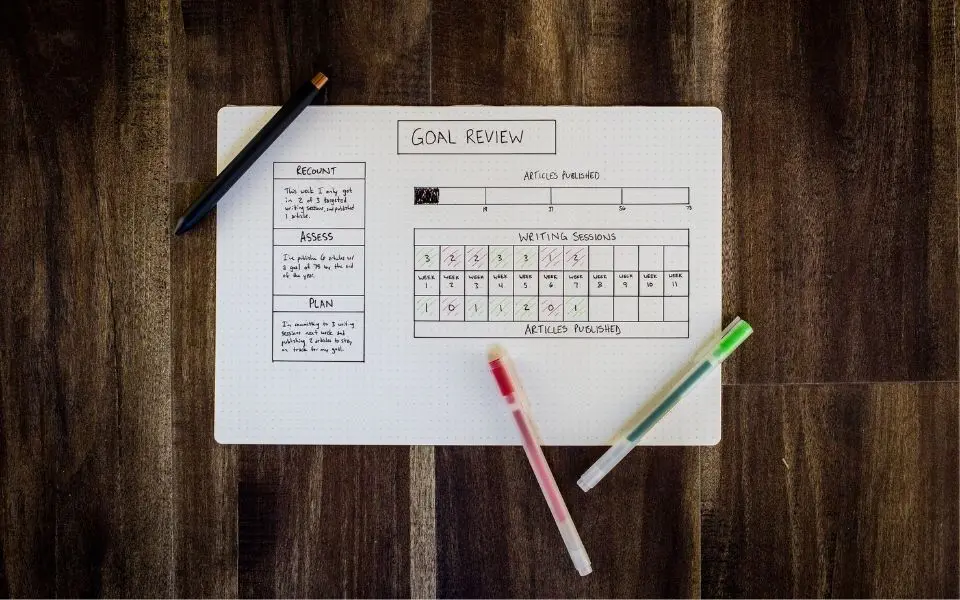
### 12. Head outdoors
When you are having trouble figuring out how to relax, you might find it helpful to spend some time in nature.
You can do this by taking a step outside and breathing in some fresh air while paying attention to your surroundings. If you have more time, you can even go for a walk.
If you don’t have access to nature, a technique you might try is looking at pictures of nature. Scientists have found that merely looking at pictures of nature or greenery for five or more minutes can be just as effective. [Ecopsychology](/blog/ecopsychology) is powerful for stress relief.
Either way, remember that human beings have evolved to be surrounded by nature. Don’t neglect the side of your being that craves being out in the fresh air, near trees, insects, and animals.
### 13. Watch a funny movie
On your journey to learning how to relax, it's important to have some fun. Watching a funny movie can help you get a good relaxation response. You can cuddle your furry friend on the couch while watching something funny and enjoy your time together.
If you really want to set a relaxing mood, add a lavender essential oil to a diffuser and create a relaxing cinema experience. Those stress levels will drop low quite quickly. And you can have some popcorn or dark chocolate to relax too.

### 14. Listen to music
Listening to music can be an effective way to help you relax. If there’s a [positive song](/blog/positive-songs) you particularly like, you can listen to it only when you want to relax. This technique works better if the song is one that you have a sentimental attachment to, such as a song you remember from your childhood.
Some songs are ideal for getting you in a relaxed mood, such as songs with soft vocals. You can save the songs that help you relax in a playlist and play them whenever you are feeling stressed. You can get into this practice a few times a day to ensure that you maintain a calm state of mind.
Alternatively, you can try listening to sounds of nature if there isn’t a particular genre of music that relaxes you.
### 15. Work with a life coach
A certified life coach can help you develop more relaxation techniques. From breathing exercises to helping you solve your health problems, you can get a lot of support from a life coach or therapist. They might help you think about a problem differently so you can actually solve it.
You can ask for a list of ways to relax that would work for a specific situation. So if you feel stressed and your friends can't support you, find someone who can give you the tools you need.

### 16. Get a massage
[Progressive muscle relaxation](/blog/progressive-muscle-relaxation) is key for knowing how to relax. Having a masseuse relax each muscle group will allow you to get rid of neck kinks, back pain, and any other tense body parts. Relaxing muscle groups with a professional can often be done through insurance.
You can have hire a masseuse whenever things at work or home get stressful to help you eliminate body tension. You can ask for a sports massage or a relaxing one depending on what you need it for. They'll have essential oils to create a soothing aroma in your room which will help create a relaxing mood for you.
If it's not in the budget, you can give yourself a hand massage while massaging pulse points.
### 17. Remove yourself from a bad environment
Health conditions can arise from being in a bad environment. From [toxic people](/blog/how-to-deal-with-toxic-people) at work to heavy workloads, sometimes you're just in a negative environment. Changing jobs or cutting people out of your life can allow you to get rid of that stress for good. Music listening and chewing gum are popular ways to relax, but sometimes the problem is much bigger than a Band-Aid solution. If you want to say goodbye to stress, you need to make difficult decisions. Is the life you have, the life that makes you happy? If no, make the choices to fix it.

## Your Time to Relax
Relaxation doesn’t have to be a tedious process. Relaxation should be relaxing! You likely schedule everything else in already: work, school, dates, chores, etc. Schedule in your relaxation time and start making time for yourself. Got any relaxation tips that you find work really well for yourself? Share them with us!
---
# How to Start Over in Life: Getting a Fresh Start in 2025
- URL: https://declutterthemind.com/blog/how-to-start-over
- Description: Last year was quite a year. Let's talk about how to start over and getting a fresh start in 2025. It's time to move on.
- Published: 2025-06-25
These past couple of years haven't been great for most of us. Maybe you need to know how to start over so you can fresh start in 2025. Starting over in life doesn’t involve changing every aspect of who you are, what you do, and when you do it. Sometimes, just making one small change will be enough to spiral a brand new and better 2.0 version of yourself. In this article, we’ll share how to start over in life with 17 easy-to-follow ideas to spark a new you. So, let’s start rebuilding your life back up.
## How to Start Over: 17 Ways to Get A Fresh Start
### 1. Your Personality Isn’t Permanent
In his book, [Personality Isn’t Permanent](https://www.goodreads.com/book/show/44279312-personality-isn-t-permanent), Dr. Benjamin Hardy argues that you can [improve yourself](/blog/improve-yourself) anytime and anyway. Your personality has changed a ton over the years. Think about your personality at the age of three. You don’t run around the house shirtless and in diapers anymore.
As you gain more life experience, interact with different people, battle your way through hardships, fall in love, have kids, or even change jobs, you change so much. New experiences, [overcoming obstacles](/blog/overcoming-obstacles), and forged paths are constantly being explored which causes you to grow.
Science says people [become happier](/blog/how-to-be-happy) as they get older and it’s likely because they finally figure out what matters in life. And so if you’re looking to discover how to start over, just know that you can get a fresh start this very second if you decide to. You don’t need a big [moment of clarity](/blog/moment-of-clarity) or aha moment to get started. The power lies in your next move. Are you ready to take that first step to a new you?
## 2. Start living
As you discover how to start over, the key is to realize you need to start living a fulfilling life. You're not the same person as you once were. This is your time to develop new habits especially [good habits](/blog/good-habits), live happily, and get out of your comfort zone. You needed a clean break from your past life. This is it. To move forward, think of doing all the things that would make you happy. Maybe that's dancing in the kitchen before dinner. Or going for long [mindful walks](/meditation/walking) in the fresh outdoors. Or travelling the world if you're a big dreamer. Whatever it is, make it happen. Reality doesn't need to be mundane or depressing. You can have everything you desire. You just need to level yourself up and build towards it. So come up with a new plan for this next chapter you write. And build towards your long term goal of living life.
### 3. Make One Small Habit Change
Believe it or not, but one small habit change can completely change your life. Just over a year ago, I was the most miserable person you could ever find. Then, one day on my honeymoon, I made a sweeping declaration. For the rest of my life, I was going to do one [good deed](/blog/good-deeds) a day. No matter what. Forever.
How did that one good deed spiral into other habits naturally? Well, after that declaration, I started reading books about kindness, compassion, and the human brain. I started noticing that I wasn’t actually the only miserable person around me. A lot of people were suffering and struggling through life but I was so busy chatting away in my head 24-7 I didn’t notice. Shortly afterwards, I met the most optimistic person I’ve ever met in my entire life. I used to hate optimistic people calling them unrealistic and delusion. But for the first time, I became intrigued by optimism and started reading books about that too.
Within a few months, family members and friends were noticing how much I had changed. People were praising how optimistic and positive I was all the time. And it was shocking. I had done a complete 180 simply by doing an [act of kindness](/blog/acts-of-kindness) daily. I never could’ve planned all the things that would’ve spiraled from that one action. And that’s why you only need to pick one habit to start over because the rest will naturally follow.

### 4. Give Yourself Permission to Change
When deciding to start over, you need to give yourself permission to make that change. That means accepting that the old you isn’t the best you. It also means killing aspects of the person you are right now. In the beginning, your brain will totally ask you, “What are you doing? This isn’t you.” And you’ll need to know how to silence those thoughts. You might feel guilty or find it challenging to let some [bad habits](/blog/how-to-break-a-bad-habit) fall by the wayside. But ultimately, to start over, you’re going to have to make a switch towards a better version of yourself. You need to let go of old habits that just haven’t been working for you. This newer version of yourself is what will make you happier, healthier, and a better person. So don’t listen to thoughts that surface about how you’re betraying yourself. Deep down, you know it’s time for change. And future you will [be grateful](/blog/gratitude-list) for the changes you start making today.
### 5. Live a simple life
The more we have in our life, the more we hate our lives. Having the essentials is important. You need clean water, shelter, and a solid relationship to keep things peaceful. But that relationship doesn't need to be romantic. Friends count too, you know. As you learn how to start over, remember that minimalism keeps things steady. The more stuff you have, the less money you have. Your new life should be about improving everything that was wrong with your old life. You might change your physical space or your own apartment. There's no need to [feel stuck](/blog/feel-stuck) with this fresh start. So carefully think about the essentials, exact steps, and what you really need out of a [happy life](/blog/happy-life). Talk to [someone who is happy](/blog/happy-person) and ask them what helped them get there. The answer is a lot simpler than you think. Get to the point where you don't need to impress an ex or a rival with your new life. You've gotten a clean break from them, it's time to see the world with a bit more hope.

### 6. Change Your Environment
Our habits are often tied to our environment. So, if you’re looking to finally figure out how to start over, you might start with a change in environment. Now, sometimes that’s not possible. If you’re married with kids, you shouldn’t abandon your family by running off to a new environment. You totally can start over in life even while keeping the people you love in your life. Remember, you’re making positive changes. So, how can you change your environment without moving out? You might spend less time with people who add stress to your life. If they’re related to you, maybe minimize the time spent with them slowly so you can regain your footing. You might change your environment, by carving out a new space in your home for yourself. Maybe you create a room that inspires you. My home office has kindness posters all over it. I add sticky notes of personal goals on my computer monitor. I add a Kindle on my nightstand to encourage my reading habit so I see it daily every time I turn on my bedside lamp. Maybe throw in a few plants to bring more life into your environment. It’s subtle but it works.
### 7. Meet New People
If you’re looking for a fresh start, consider [meeting new people](/blog/how-to-meet-new-people). Look for places where you can find people who share the same new goals as you, similar interests, or who embody the values and lifestyle you’re hoping to attain for yourself. There’s literally a Facebook group for every interest you can imagine. So you can [meet people](/blog/how-to-meet-new-people) very easily on social media. You can also join meetup or networking events, join clubs, volunteer at specific charities, or just spend more time talking to strangers. By interacting and mingling with new people, you can practice your new identity with others who know nothing about your past. This identity practice will help you determine if the person you’re becoming is something that others respond well to. It’ll also help you firm up that identity a bit so you can start making the change. After all, once you start acting like a new person, you now become that type of person. So congratulations, you’ve officially taken the first step through your actions.

### 8. Get into a long term relationship
Not everyone will find happiness in a relationship. Some people are happiest being lone wolves. However, that doesn't mean that there isn't a perfect person for you. As you start over in life, being with the right person who will accept you, listen, and also give you space when you need it is key. Find someone with the same values as you, such as being an honest person, or being on the right track in life. Creating a life with someone isn't as difficult as a tough job. The idea of making a life with someone is part of a good plan. Don't let a [toxic ex](/blog/how-to-deal-with-toxic-people) trick you into thinking everyone sucks. When it does happen, you wouldn't want to trade it for the world. If you start out as friends, you'll get to know people deeper.
### 9. Accept What You Can’t Change
So, let’s be clear: your past is unchangeable. If something unpleasant surfaces back up, you either need to own it, apologize for it, and prevent yourself from making that same mistake again. While your past can’t be changed, the great benefit is that you can learn from all your past experience. Often, the biggest cause of bad decisions in our past are those wonky little thoughts streaming through our mind. Learning how to control your thoughts will help prevent you from continually going back to your old self. However, while you can’t change the past, you’ve got full control over your future. So, making the decision to start over and get a fresh start is all within your domain. What’s your next move?
### 10. Apologize to People From Your Past
To fully complete the process of starting over, you’ll eventually need to go back and face your past. I know there may be a few people that you wish to never see or interact with again. But sometimes, to move on, we need to have the uncomfortable conversations we don’t want to have to move forward. Otherwise, those parts of our past can continue to resurface and possibly cause us to go back to our old ways. Now, we’re not saying you need to apologize the second you decide to start over. It would likely be insincere as you’re still in early changes of growth. But there will be a moment, when you’ve grown so far beyond your past that you feel that it’s time to make amends for your [past mistakes](/blog/letting-go) and any hurt you’ve caused others.

### 11. Think About Your New Goals
When we don’t have solid goals driving us, we tend to drift in all sorts of directions never making progress on anything. Aim to have one big goal that drives all your thoughts. For example, if you’re looking to change bad behavior, your big goal might be to make other people happy everyday. And so everyday, that goal drives you. Throughout the day, you look for opportunities to achieve that goal. With the focus of one clear goal driving your day, you’ll slowly notice that all the [negative thoughts](/blog/how-to-stop-negative-thoughts) that brought out the worst in you instantly disappear because now you’re focused on something positive. You might choose to have 3-4 secondary goals but aim to have one big one that captures the biggest focus of your day and that truly motivates you to get your fresh start.
### 12. Jump Over Any Obstacles
You will never be able to remove obstacles. They’re always going to exist in life’s journey. So, instead of doing the impossible and getting rid of them, do the next best thing by jumping over them. If someone tells you that “you’ll never change” nod politely but ultimately ignore that kind of negativity. You won’t gain anything by arguing about it. If people tell you your goals are too ambitious, train harder and stay committed. Don’t ever allow yourself to become distracted by the naysayers or skeptics on your new path of starting over. You can accomplish anything you set your mind to, no matter what anyone says. The crazier your goals or behavior changes, the more skepticism it’ll draw. One day, those closest to you will see how your determination led you down the path of success to a new better, stronger, and kinder you. Your future self will inspire those around you who didn’t think you can start over.

### 13. Consume New Content
The content we consume each day can often seep into our lives. If we read conspiracy theories on the internet, we’re more likely to be paranoid, skeptical, and anxious. Those who spend time watching viral videos about kindness or good deeds are more likely to do [good deeds](/blog/good-deeds). People who watch fitness and diet content are likely to make changes towards their health. Ultimately, if you want to make a big life change, you should consider changing your social algorithms by browsing different hashtags, websites, and groups. The more you obsess about the traits and qualities of the 2.0 version of yourself, the more likely it is that you’ll become that person. So spend some time investing in the content, future you would consume.
### 14. Find A Support Buddy
This might be a mentor, a guide, a friend, a spouse, a counsellor, or a parent. Ultimately, finding someone who supports the change you’re embarking on is the person who will keep you accountable when you lose focus, when it gets tough, or when you feel like quitting. You’re fully capable of starting over on your own, but there is one big perk to having a support buddy. You can schedule a call with them every two weeks to talk about your progress towards your changes. By reporting your progress or challenges on your fresh start journey, you have someone keeping you accountable to help ensure that you commit to this big goal you’ve set for yourself. It’s that extra push that’ll drive long-term success. Be sure to pick someone who will be insanely supportive and uplifting for you, even when you temporarily move one step back. If the person knows how to communicate with you in an encouraging way, you’ll be able to get back on track faster if they’ve been supportive in the past.
### 15. Practice Meditation
One of the best tactics to help you start over is to [practice meditation](/blog/how-to-practice-meditation-daily). Meditation is all about mastering the mind game. Prior to getting a fresh start, our lives likely weren’t where we wanted them to be. Often, there’s hints of depression, anxiety, or other [challenging emotions](/blog/how-to-control-your-emotions) that are difficult to cope with. But the one thing that always destroys us when we’re down are our own thoughts. With a daily [guided meditation](https://declutterthemind.com/meditation) practice, we start to train our minds to become more aware of when thoughts are leading you astray. Meditation helps us become more mindful of our thoughts, feelings, and actions. And when starting over, you’ll want to ensure that your mind is strong enough to keep you at your best.
### 16. Make Someone’s Day
When you really need a fresh start, a simple practice to try is making someone’s day every day. While meditation gets you in the right mindset to [live mindfully](/blog/mindful-living), you need to step it up to the next level by following through with action. Every day, look for opportunities to make people feel happy, special, valued, praised, and loved. If you commit to doing that action every single day for the rest of your life, you’ll be able to minimize negative thoughts and rebuild yourself in countless ways. When life throws curve balls your way, instead of obsessively thinking "[what is wrong with me](/blog/what-is-wrong-with-me)", you’ll be focused on how you can make this moment better for someone else. Believe it or not, the happiest people rarely think of themselves because they’re too busy [helping others](/blog/helping-others). And thus, they’re out there just living. Which is exactly what future you needs to be doing too. Live kindly.
### 17. Make A Vision Board
In your new life, it's time to know how to start over. That's why vision boards are so important. It's hard to live life and not write down your plans. Look at your reality. Then, create a board of what you want that reality to become. Spend a week or even a couple hours to think about your ideal future. Begin by cutting out pictures, quotes, and other ideas of what you want. Think about your values. Post the vision board on a blank space in your wall. Starting over in life isn't hard, you just need some time to seriously think about your new life first.
## Conclusion
You officially learned how to start over with 17 different ways to get your fresh start and new life. A meditation practice will help you think [happy thoughts](/blog/happy-thoughts) and encourage being kind towards others will be the action that leads you to a better life. You’ll want to make sure you have a good support system in place to keep you accountable on your journey. And while you might face some obstacles, there’s nothing you can’t handle. Your personality isn’t permanent and you can alter absolutely any aspect of your life right now to become the best version of yourself. So no matter what you learn about how to start over, know your new life only a few habits away.
---
# How to Stay Positive (When There’s Chaos All Around You)
- URL: https://declutterthemind.com/blog/how-to-stay-positive
- Description: Staying positive during difficult situations doesn't need to be fake. Learn how to stay positive and optimistic during rock bottom.
- Published: 2025-06-25
When things are going wrong, people tell us to be positive. However, staying positive during difficult times isn’t something we can all do. Sometimes, life roughs us up, making it virtually impossible to see the good at the moment. If you’re going through a difficult time, know that it’s okay if you [feel frustrated](/blog/deal-with-frustration), overwhelmed, sad, or helpless. However, looking at the world from an optimistic lens while still acknowledging the difficulty of the situation can help you look for solutions instead of staring at the problem. It can help you escape from your own helplessness and move forward to [overcome obstacles](/blog/overcoming-obstacles). In this article, we’ll share how to stay positive when things aren't going well.
### 1. Meditate to become aware of your thinking
It’s impossible to stay positive if you aren’t aware of your thoughts. When we have [ruminating thoughts](/blog/ruminating-thoughts), we’re often thinking fast about all the bad stuff. If you don’t catch yourself in that state and think, “okay, these thoughts are not serving me or helping me out of this situation,” it’s easy to get stuck in that thought cycle. Sometimes, we love thinking about worst-case scenarios. It makes us feel good. Why? Because it allows us to know what to expect. It gives us our biggest fears so we can mentally prepare for it. However, often, life doesn’t hand you the worst case scenario. And if it does, your brain goes into control by going into a survival mode of fight, flight, or freeze. So when you meditate, you catch your thoughts early on to move on to the next step. You can watch [meditation videos](https://www.youtube.com/c/DeclutterTheMind/videos) to help you become more aware of your thinking.

### 2. Replace negative thoughts with positive ones
After meditating and recognizing your thoughts, you can do some internal work to replace [negative thoughts](/blog/how-to-stop-negative-thoughts) with [happy ones](/blog/happy-thoughts). In therapy, many people with thought disorders can overcome negative thinking by catching their negative thought in action and replacing it with a more positive outlook. For example, instead of thinking, “[I’m not good enough](/blog/why-am-i-not-good-enough) to solve this problem,” you can think, “I have solved difficult problems on my own many times before, and I will get myself out of this too.”
### 3. Continue to be kind
The easiest way to stay positive in difficult situations is to [be kind](/blog/ways-to-be-kinder). When we hit rock bottom, it’s so easy for us to obsess over our situation like no one else has problems. We end up pushing people away by talking about our problem too much. Instead, [challenge yourself](/blog/challenge-yourself) to do an [act of kindness](/blog/acts-of-kindness) every day. When you see how much you’re [helping others](/blog/helping-others), it reminds you of how much [good life](/blog/how-to-live-a-good-life) has to offer. It’s easy to stay positive when you’re contributing to that good. Your [good deeds](/blog/good-deeds) and kindness can have a ripple effect to improve your situation. When you act positively, you’ll get the love and help you need back. You might not get help from the people you expect, but life will ripple out kindness and [inner peace](/blog/inner-peace) back in your direction.

### 4. Express gratitude for the good
Creating a [gratitude list](/blog/gratitude-list) of all the things and people you’re grateful for in your life is a great way to stay positive. It’s easy to find positive things when you look at the glass half full instead of half empty. But, knowing you’re grateful for many things reminds you that you’ve still got a lot of good going on in your life. When we focus on the negative, we can’t see all the good things we have. However, when we focus on the positive, we know who can help us and what skills we can use to support ourselves out of our messy situation. Knowing how to stay positive isn’t always easy, so writing down things you’re grateful for is a good start at switching up your thinking. But, of course, having an [attitude of gratitude](/blog/attitude-of-gratitude) can make a difference in our mental spirit. With so many [benefits of gratitude](/blog/benefits-of-gratitude), it’s clear that gratitude and staying positive in tough times go hand in hand.
### 5. Remember that life is cyclical
Everything in life is temporary. Bad days turn into good days. Good events have disastrous consequences. A bad event teaches you a valuable [life lesson](/blog/life-lessons). Life is an ebb and flow of good and bad flowing in and out of each other. There’s nothing inherently good or inherently bad either. But that can be a good thing too. It means that bad moments are just as temporary as good ones. While hitting rock bottom is never a fun experience, the climb back up makes everything meaningful. You learn [how resilient you are](/blog/resilience-quotes) when faced with tough moments. If you need to know how to stay positive, the reminder that the good will come back to your life is all you need to know. Nothing remains bad forever. Good moments are always a few moments away.

### 6. Look to your support system
The best way to stay positive is to turn to a positive support system. Keep in mind that not just any person can support your situation. Some people can’t relate to your situation, so they don’t realize how tough you’ve got it. Others will gaslight you because your suffering is hard for them to imagine in their happy states. So your support system needs to be carefully thought out. You might [find a therapist](/blog/how-to-find-a-therapist) who’s helped people in your situation. A friend who’s been through a similar event might provide support for your [emotional pain](/blog/emotional-pain) because they understand the hardship well. Positive people might be easy to turn to if they’re grounded in reality enough so that it doesn’t seem like superficial positivity. You can always find a supportive ally to help you through your situation to help you learn how to stay positive in a difficult situation.
### 7. Remind yourself that you’re not a victim, just human
When life hits you hard, it’s important to remember that you’re not a victim; you’re just a human. Being a human means that sometimes you’ll have to [overcome adversity](/blog/overcome-adversity), face bad moments, and go through hell. Instead of singing the song, “How could this happen to me?” reframe your thinking to understand that every single human on this planet faces bad periods. Many people experience traumatic events throughout their lives if they live long enough. Interacting with other humans means that sometimes people will insult you, physically harm you, or do things that work against you. This is how unevolved humans act. However, this isn’t unique to you. Build [empathy vs sympathy](/blog/empathy-vs-sympathy) in knowing that once your rough patch is over, it’s time to help people going through their hardships because you know what the pain is like.

### 8. Take care of yourself
If you need to stay positive when there’s chaos around you, you need to [take care of yourself](/blog/take-care-of-yourself). When people fall into depression, they stop taking care of themselves. Something as simple as showering and washing your hair can help you overcome feeling groggy. Eating less comfort food and more nutrient-dense foods can give you more energy. Exercising or moving your body around throughout the day can fill you up with endorphins that make you feel so good. Stepping outside to get some of that Vitamin D from the sun can also be helpful for your spirit. Some people even do [grounding techniques](/blog/grounding-techniques) like gardening or walking barefoot in the grass to help uplift their spirits. You can do so many little things to [take care of yourself](/blog/take-care-of-yourself) that help you stay positive when things aren’t working out as you planned.
### 9. Zero in on solutions instead of problems
When someone says “be optimistic,” we often think it means being unrealistically happy when things aren’t going well. But that’s not what that means. The difference between optimism and pessimism is how you look at a situation. You can acknowledge that a situation is a bit crummy while still being optimistic. Those who suffer from pessimism are more likely to be helpless in their situation. That means when they face a problem, they’re less likely to think of solutions and let the problem grow bigger. However, when you think optimistically, you focus on finding solutions to the problem instead of obsessing over the problem. The more you think about a problem, the more you get stuck in it because all you see are more of them. But when you switch your brain into thinking of solutions, you start finding ways to get out of your situation that you never noticed before. So when you stay positive, you’re more likely to get out of your situation by focusing on the solutions instead of resorting to helplessness.

### 10. Don’t let other people’s problems become yours
When there’s chaos around you, don’t let other people’s problems become yours. Don’t get confused with what problem you need to deal with and what someone else is facing. Getting caught up in someone else’s [family drama](/blog/family-drama) doesn’t serve you. The easiest way to stay positive is to steer clear of other people’s challenges and difficulties. You can still provide [moral support](/blog/moral-support) without losing sleep. Everyone has their own set of challenges in life. Focus on resolving yours. When you don’t have problems, don’t look problems to solve. Instead, enjoy the moment. You can be a [good friend](/blog/how-to-be-a-good-friend) without taking on other people’s burdens.
### 11. Focus on the present
In the [present moment](/blog/live-in-the-moment), you have control. You can’t change the past, and you can’t predict the future. The only moment you can shape is the one you’re living right now. If you’re currently in a dark pit, ask yourself, “What can I do today to make tomorrow better?” Tomorrow might not be your best day yet because nothing changes that fast. However, using the present moment, you can change your situation, so you can slowly get out of it. Being kind, focusing on the solutions, working on improving your thought process, and seeing a therapist are all things you can do to learn and grow in this moment so your future improves. In the present moment, you are safe. In this realm of safety, you should focus on optimism to help you through. Instead of worrying about the future or getting stuck in the past, stay positive in the present moment.

### 12. Look at the facts instead of the beliefs
When life is crumbling around you, it’s easy to get lost in beliefs. We may believe we are in danger. Or that something terrible will happen. Or many other things. However, if we focus on looking at the facts, we can get ourselves out of our situation. Or at least out of our heads. The facts point to the reality of what’s happening. Remember that our brains are wired to keep us alive. So naturally, any perceived danger or threat will get triggered in our minds, making us fearful of the future. Anxiety and the brain are interconnected. However, we become more grounded in reality by looking at the facts rather than beliefs. We also become more clear-headed, making better decisions for our safety and interests.
### 13. Don’t let other people’s ideas become yours
It’s highly common for someone to make a comment about you that gets stuck in your head for decades. Have you ever done a thought check to determine the source of your most common thoughts? Who do your worst thoughts come from? Did a person you trust, like a parent, teacher, mentor, boss, doctor, or someone in a respected position, tell you something that made you feel bad about yourself? To stay positive, all you need to do is cut out thoughts from other people from your mind. You have the most context for your life to know you’re a [good person](/blog/good-person). So, don’t confuse someone else’s words with what you think about yourself.

## Conclusion
Knowing how to stay positive during tough times is an important part of life. Your positivity doesn’t need to be inauthentic or insincere. Understanding that life is cyclical, looking at the facts of a situation, building out a strong support system, and looking at all the things we’re grateful for, is a good reminder that even on our worst days, life is still filled with many good things. So staying positive can turn a helpless pessimist into their own hero as optimism prevents helplessness. It’s okay to admit that you might be having a crummy time right now, but staying positive is what makes bad days more bearable. You’re strong enough to climb up from rock bottom. So, keep your chin up and remember that this pain is temporary.
---
# How to Stop Being Codependent in Relationships
- URL: https://declutterthemind.com/blog/how-to-stop-being-codependent
- Description: It's time to stop being codependent in your relationships. Here's how you can learn how to build healthier relationships.
- Published: 2025-06-25
When you hear about codependent relationships, you likely think that this doesn't apply to you. However, a surprising number of people are codependent (and aren't willing to admit it either). In some ways, this isn't always a bad thing. After all, we all have some degree of dependence. We're social beings; it's a survival necessity. To determine if your codependency is a problem, though, you'll need to recognize this trait in yourself. In this article, you'll learn what codependency is and how to stop being codependent.
## What Is Codependency?
Codependency describes a relationship where one person has an extreme preoccupation and a dependence emotionally, socially, and physically on another person. Some may not fully understand the meaning of codependence as the definition has changed over time.
Some think that it refers to relying on their partner or any other key person to get them through tough times. However, the initial definition was a person who was involved with someone who had an [addiction](https://www.youtube.com/watch?v=v5OCO_GRC80). Yet, this probably isn't a definition that strikes home with a lot of us, though.
Codependence can apply to the family and partnerships and often exists in the presence of an addiction. However, it can describe anyone who loses focus of their own identity when becoming overly dependent on another person. It's also reasonably common in relationships where one partner is clingy towards another.

## Codependency Causes
You could become codependent for many reasons, but one of the primary causes is an unsupportive environment. Many people find that trauma often from early life, neglect, or a lack of nurturing led to this trait. You may have experienced a lack of support growing up and, as a result, become a codependent person.
Even when you feel as though nothing was seriously wrong in your childhood, more minor things can still affect you. Something that might not bother you today could have been traumatic as a child, and we carry this to our adulthood.
Childhood factors that can lead to codependency include a chaotic household, harsh punishments, feelings of shame, a judgmental environment, and more. When these events happen in our early years, some may end up becoming codependent.
While our upbringing can cause us to grow up to be more codependent, our behavior as an adult is within our control. We can learn to be more independent instead of relying on others around the clock. Most people are capable of meeting their own needs without support in place. In cases of disability, a mental health or medical professional may help provide any additional support needed to help you stop being codependent.
## Understanding Codependent Behavior
Before learning how to stop being codependent, you'll need to recognize these behaviors in yourself. These are a few codependency behaviors that you or others may notice.
### 1. People-pleasing
Codependent people tend to be people-pleasers who try and keep their [inner peace](/blog/inner-peace). You may always be agreeing with others to create a positive environment. You don't want to make someone uncomfortable, so you take steps to avoid any fighting. However, being a people-pleaser minimizes your say in a relationship. You may create an environment that's unhealthy or toxic to you. Learning [how to stop people-pleasing](/blog/how-to-stop-people-pleasing) is usually the first piece of codependency to unwind, because most of the other patterns rest on it. While having [inner peace](/blog/inner-peace) is essential, you also want to ensure that there's enough respect going around in your relationship with others.

### 2. Controlling
Some forms of codependency can be controlling. If you felt like your life was out of control growing up, you may want to take steps to control your relationships as much as you can. However, in a relationship, there are at least two people who deserve an equal say. By trying to control the relationship, you may be doing to others what was done to you. Yet, that can be challenging for those on the other side of the relationship. Aim to be as respectful of the boundaries people set. Recognizing your need for control is a crucial step to stop being codependent.
### 3. Taking on a Lot
You may feel as though you have a responsibility to feel like you're valued and worthy. You may want to take on tasks that make you feel valued even if they're not required. Often, codependent people tend to take on the caregiver role, which can burn them out. Some may sacrifice their well-being to support those around them. Their care may be overbearing to the person receiving it too. Some may feel suffocated by the amount of attention they're getting. And since codependent people take on too much, they decrease their mental and physical well-being in the process.
### 4. Social bullying
Often, those in codependent relationships will bully others. For example, your behavior might be overbearing to another person, yet you'll demand that the acts are reciprocated. A deep-seated fear of abandonment and [relationship anxiety](/blog/how-to-deal-with-relationship-anxiety) can cause you to come on too strong to others. That fear often traces back to [anxious attachment](/blog/anxious-attachment) formed early in life. And while you may have the best intentions in your mind, it can sometimes be seen as bullying. You might unintentionally manipulate others to behave in an unhealthy way in a relationship. If someone draws boundaries, remember that this is their way of maintaining a relationship with you. It's important not to expect someone to behave similarly emotionally.
## Am I Codependent?
If any of the signs here make you uncomfortable, then you may be codependent. Keep in mind that not all of these traits are going to apply to a codependent person. Also, most of us are going to be codependent to a certain extent in our relationships. We all depend on those around us, which isn't necessarily a bad thing. It's human to rely on others and have others rely on us too.
However, people who have a problem in this area are overly dependent. You may have [low self-esteem](/blog/how-to-overcome-low-self-esteem) and feel like you have to prove yourself to those around you constantly. Over time, this codependency can hurt yourself and hurt your relationships. It's never too late to change your ways, though.
If someone close to you has mentioned that you're being codependent, it may be time to reflect on some of your behavior. You can also ask for suggestions on what boundaries your partner would like set to meet their need for space.
## How to Stop Being Codependent
Once you notice these codependency traits in yourself, it's time to stop being codependent by making changes. Your relationships will be stronger and more fulfilled when you become independent. In this section, we'll highlight some practical ways to help you learn how to stop being codependent.
### 1. Identify What Is Codependent
Not everyone is going to have every single behavior of a codependent person. You probably have a specific trait that someone has picked up on. Maybe you feel as though you have to [take responsibility](/blog/take-responsibility). You could also put in a great deal of effort for everyone except for yourself.
Whatever habits you've formed, figure them out or ask someone to be specific with feedback. Look for the codependent behaviors in your relationship. You may have only one or multiple traits. Keep a list of when you notice these behaviors. Determine what emotions or feelings arise when these behaviors take place. This habit will help you realize when you're doing something that you need to stop. It's impossible to stop being codependent if you don't recognize the behavior, so this is an essential part of improving.
If you notice that you become codependent when you feel insecure in your relationship, you may need to look for signs that your partnership is stable. If you feel guilty about something, you may want to talk about that guilt with the individual since it may cause you to be overbearing.
### 2. Value Yourself
This advice may seem cliche, but you must recognize your [self-worth](/blog/feeling-worthless) if you want to stop being codependent. The relationship that you need to focus on improving is primarily the one with yourself. You can read [self-love quotes](/blog/self-love-quotes) to help inspire yourself to treat yourself right. For some, being codependent is caused by their insecurities. It's more challenging to love yourself in today's day and age, especially with the rise of mental illness. If you want to know [how to be happy](/blog/how-to-be-happy), you'll need to focus on investing in yourself first instead of relying on external factors and people.
Take the time to recognize that you're a valuable person. You don't need to be perfect, but you should focus on taking time to think about what makes you happy every day. Focus on improving your self-image before moving forward in your relationships.

### 3. Set Boundaries to Stop Being Codependent
Now that you have a list of codependent behaviors in your relationships, you need to stop being codependent and set boundaries. Realize that these things you've been doing aren't helping you and are detrimental to your relationships with others. Set up limits for yourself and others that don't let you fall into these codependency behaviors.
For example, if you constantly clean up after your partner, talk to your partner about setting up a schedule that would allow your home to be clean without doing all the work yourself. If you find that your behaviors prevent you from accepting help, work on delegating responsibilities to others. Learn how to say no. Mastering delegation and saying no isn't going to happen overnight, but it will [make a difference](/blog/make-a-difference) in the long run, so focus on small changes over time.
### 4. Work Through the Past
Since much of being codependent started in childhood or from past trauma, you'll need to work aiming for your future self. Reflecting on the past is often complicated and painful, but you can't simply ignore it. You can learn [good habits](/blog/good-habits) by overcoming past trauma and moving forward in life. Analyze the past and try to determine which parts of your life may have contributed to your codependency.
Analyzing your past may be difficult or impossible to tackle on your own. You can find a therapist to chat about how your past may play a role in your current codependency behavior. A qualified therapist is a great way to work on addressing the underlying causes of these behaviors. This trained professional can help you work through these problems and build a healthier mindset moving forward.
### 5. Avoid Denial to Stop Being Codependent
The worst thing that you could do at any point in this process is deny that you have a problem. Be honest with yourself. Tell yourself that your traits are real regardless of whether or not you can find the source.
The longer that you wait to acknowledge these behaviors, the harder it will be to change them. Encourage yourself to avoid denying what you're doing and instead deal with it head-on. You'll have the ability to work through dysfunctional relationships and build a healthier [life for yourself](/blog/living-for-yourself) in the future.
It's hard to fix or heal from something you don't believe is happening. So by accepting that you need to stop being codependent, you can improve your relationships and take that first step.
### 6. Find Support
Depending on what caused your codependency, you may need to cut some people out of your life. Instead, it may be better to avoid or limit some relationships. Remove the [toxic people](/blog/how-to-deal-with-toxic-people) from your life and instead find supportive people to surround you. It may start with your therapist's recommendations and be a [good friend](/blog/how-to-be-a-good-friend), parent, or spouse.
You won't stop being codependent overnight, and having healthy support is a great way to continue your healthy journey. When you have this support system in place, please encourage them to note any codependent behaviors. While being reminded of your codependent behavior may be hard to hear, it will help keep you honest while working.

## Focus on the Journey
As you work on how to stop being codependent, you should keep in mind that this process isn't fast or straightforward. It's probably going to take time and most definitely a fair amount of effort. Rome wasn't built in a day, and neither were you. Instead of focusing on your failures or successes, though, work on making minor changes to improve your mental health and get back to a healthy relationship. You'll find that over time, learning how to stop being codependent will strengthen your relationships and improve your well-being.
---
# How to Stop Comparing Yourself to Others (To Discover Your Worth)
- URL: https://declutterthemind.com/blog/how-to-stop-comparing-yourself
- Description: Comparison is the thief of joy. Learn how to stop comparing yourself to others and start living your life on your own terms.
- Published: 2025-06-25
Amanda might be more experienced than you. Chris might be stronger than you. Tina might be smarter than you. And Corey more handsome. But if you think for a second that you can’t hold your own in other ways, you’re only doing yourself a disservice. Not only will we teach you how to stop comparing yourself to others, we’ll also dive into what you should be doing instead.
The most important thing to remember in life is that everyone is facing a battle of some kind. You might not see it in your interactions with them, but it doesn’t mean that it isn’t happening. What the world needs most from you is your [kindness](https://declutterthemind.com/courses/10-day-loving-kindness). So let’s stop comparing yourself.
## Why Comparison is Destructive
Allowing yourself to fall into the comparison game and comparing your world to other people's lives is counter-productive and destructive. That being said, using people as role models and trying to live up to ideals from other people's accomplishments can be helpful. In this article however, we're talking about the comparison trap that leads to negative thoughts, [low self confidence](/blog/how-to-overcome-low-self-esteem), low self worth, and just a massive hit to one's self esteem.
Comparison is the thief of joy. - Unknown
We all can use comparison to be a better person. It takes a lot of energy to look at one's own life and say "I could be doing better" compared to role models. That being said, if you're [beating yourself up](/blog/stop-beating-yourself-up), or comparison comes packed with envy, jealousy, inferiority, this is the wrong kind of comparison.
[Personal growth](/blog/personal-growth) comes from comparing yourself to the person you were yesterday. It's a constant competition against yourself to improve and become a better person. Your past self is the only person that can give you practical ways to improve your life and personal growth.
## How to Stop Comparing Yourself to His or Her Ex

We’ve all done it: comparing yourself to his ex or even new flame. While you’re in the midst of dating people (aka before you find the one) both men and women have an air of desperation to them. I know because I remember it happening to myself very vividly. You think all your failed relationships are a sign that something’s wrong with you. You start getting jealous of exes or new partners wondering if they’re all better and you’re just the butt of the joke. But one day when you do finally find Mr. or Mrs. Right, you’ll understand how all those relationships broke down. You’ll see what makes your right relationship work well.
If you find yourself jealous of other people, you’re only hurting yourself of [building the right relationship with your current partner](/blog/meditation-for-intimacy). To build a great foundation, you need to be [taking care of yourself](/blog/take-care-of-yourself): physically, mentally, spiritually. And you need to have enough [self-love](/blog/self-love-quotes) in you to pass enough of it onto someone else to make the relationship work. When you’re in the right relationship, you won’t compare yourself to others. You’ll be too busy [loving yourself](/blog/how-to-love-yourself), your partner, and everyone around you.
## How to Stop Comparing Yourself to Others Physically
The whole point of going to the gym is to take care of your physical body. Get in shape. But when you first join, you look nothing like those around you. You might feel like a little blobby thing. While the guy or lady next to you has the body you wish to have. And so either you spend the entire time in your head worrying what people think of you. Or you leave and never come back. There’s always going to be someone who’s more in shape than you or maybe you feel is better looking than you. And playing that comparison game is going to drive you mad!
All you need to really focus on is being better than the person you were yesterday. When you look at someone who has the body you want, the best thing to do is ask them for advice. Imagine how much you can learn from someone if you were curious about them rather than intimidated by them. If you asked them, “how often do you workout? What type of workouts do you do? What type of food do you eat? How do you stop cravings? How do you keep yourself motivated?” You can learn a heck of a lot from them.
## How to Stop Comparing Yourself to Others Academically

You’re really going to hate this answer. But the real issue here is… you. By comparing yourself to others academically instead of putting your head down and studying, you’re taking yourself further away from achieving success. Imagine if you spent enough time to [get out of your head](/blog/how-to-get-out-of-your-head) just and channeled that energy into your studies. Re-read a book for a test a second time. Spent an hour on YouTube watching a tutorial on the topic. Hung out with a classmate or two for a couple hours to share ideas and notes to gain other perspectives to draw your own.
Competition can fuel you to make you want to study harder. But it can also deteriorate you, [lower your self-esteem](/blog/how-to-overcome-low-self-esteem), and distract you from what you actually want. Another thing to keep in mind, academics are so short-term. Once you get out in the real world, you forget more than half of what you learned in school. If you’re an average student but you focus on learning as many skills as you can so you can succeed in your career, you can still be successful. Academic success doesn’t guarantee long-term future success. Focus on learning instead of winning… and you’ll win.
## How to Stop Comparing Yourself to Others
### 1. Give Yourself Credit
There are billions of people on this planet. Some will go on to do great things. And maybe that someone will be you. You can’t change the past. And some things will be out of your control (like that DNA you’ve been given). But you have your whole present and future ahead of you. You can [help those in need](/blog/helping-others). You can smile at strangers. You can spend more time with your friends and family. You have the power to change people’s lives for the better. Heck, you have the power to change your life for the better. If you compare yourself to others, you can work at developing those little quirks you think you lack to level yourself up.
### 2. Accept Yourself As You Are
That said, you still want to accept yourself as you are. I went to university for neuroscience. By second year, I had failed a mandatory class that I knew there was no chance of me mastering. I studied my butt off in that class and was nowhere near a passing grade. It was devastating. However, that failure led to my current path. And I’m much happier doing this. Maybe you’ll never be a world-class violinist or as great at physics as Einstein, but you can still contribute to society in a meaningful way. And you’re still an important part of the world. Your actions [make a difference](/blog/make-a-difference) in the world, even if they don’t seem like they do. When you feel inferior, remember acceptance as an important virtue.
### 3. Compliment Others
Our insecurities cause us to do and say stupid things. When comparing yourself to others, you begin to feel smaller. More insecure. More fragile and sad. The best way to prevent yourself getting sucked into a negative vortex is to focus your energies on complimenting others. When you see something admirable in a person, tell them. It’ll help you create an identity as a kind person. And with time people will begin to notice the positive traits about you too.
By [being kind](/blog/ways-to-be-kinder) first, people will likely warm up to you overtime. Eventually, you’ll start hearing positive things about you being echoed to you by colleagues. And it’ll help you understand what your own worth and impact is. So instead of comparing yourself to others, compliment them and focus on being a [good person](/blog/good-person).
### 4. Focus on Self-Improvement
If you find yourself constantly comparing yourself to others, it’s time to focus on [self-improvement](/blog/improve-yourself). You’ll never succeed if your entire mindset or mental health revolves around everyone else’s success. Take some time to [read some books](/blog/best-meditation-books). No, they don’t have to be self-help books. Maybe you read something to learn a new skill. Or you read a book about a topic you know nothing about. You never know when those reads will come in handy.
Self-improvement can also include finding [time to meditate](/blog/best-time-to-meditate), exercise, and [mindful eating](/blog/mindful-eating). Focus on being better than the person you were yesterday. No need to compete with co-workers, classmates, siblings, or anyone else. Their success is out of your control. What you can control is your own success. How far you go. How much you push. What effort you put in. And how long you persevere. Instead of comparing yourself to others, focus on making yourself better than you’ve ever been. Become the person you aspire to be rather than some knock-off of another person.
### 5. Express Gratitude for What You Have
There’s so many things you have that people might envy you. If you have legs that work, there are people out there rolling around in their wheelchairs, taking the longest path in the world to the damn elevator who wished they could get places as fast as you. If you can dance awkwardly, there’s literally someone at that party staring at you jealous of how free you can be around other people. If you have access to clean water, there are people in the world who are using complicated systems to clean their urine so they can stay hydrated. Why on earth are you comparing yourself to others?
Life’s not always easy. But man, you probably have a ton of things going for you that make others compare themselves to you. Try the [Loving Kindness for Gratitude meditation](/meditation/gratitude) to express gratitude to someone who’s helped you or inspired you. And to [be grateful](/blog/gratitude-list) for what you already have. Don’t take those little things for granted. And trust me, you’ve got a lot of things going for you.
[wd_hustle id="11" type="embedded"/]
### 6. Don’t Give In to Fear
You probably compare yourself to others when you’re scared. You’re scared of losing everything you’ve worked hard for, you’re scared of failing, and you’re scared of realizing that you don’t have what it takes. Or that you aren’t special. Someone else’s success isn’t a negative reflection of you. It’s a positive reflection of their talents, hard work, and perseverance. You’ve got all those things too.
You want to be successful? No problem. But you must put the work in to be better. You’ve got to be kinder to others, you’ve got to work longer hours, and you’ve got to build stronger relationships. Read more books. Meditate more often. Don’t slip down because your fears are taking over your brain. You’ve got what it takes– you just have to push a little bit longer.
### 7. Believe in Yourself

It’s time to stop comparing yourself and start believing in yourself. Imagine how big of an impact you could have if you [believe in yourself](/blog/how-to-believe-in-yourself). When you compare yourself to others, what you’re really saying is ‘everyone else is better than me.’ That’s not true. You’re not better or worse than anyone else. [You’re just different](/blog/being-different). And different is good. Different allows for new ideas. It helps others solve problems and it completes the world. You’ve got to stop putting yourself down.
By believing in yourself, you can live life having an amazing impact. You can create a legacy that lasts for generations. You can be the success you wish to be. But if you let those [negative thoughts](/blog/how-to-stop-negative-thoughts) cloud your thinking, you’ll never see the world for what it could be. You’ll be too busy hiding behind your “arch-rivals” success. Focus on being part of a team. Help others win and you’ll win too. Support other people’s successes and you’ll grow on your own. All it takes is for you to know that you’re unstoppable and can achieve anything to make the world a better place. So, you’ve got to at least try.
### 8. Compare Yourself to Yourself
In the real world, it’s not you against the world. Like we said earlier, it’s you against yourself. Rather than trying to be better than your family or your best friend or your coworker, try to be better than yesterday you. Heck, try to be better than two hours ago you. Maybe you’ve been [feeling angry](/blog/why-am-i-so-angry) or jealous of someone and it’s taking more away from you than it gains you. Do you really want to keep living that way? Isn’t it time to get what you deserve.
Take the time to read books about a topic that interests you. Find time each day to meditate and [let things go](/blog/how-to-let-things-go). Put an emphasis on your health by eating nutritious food and exercising each day. Spend time on a hobby to distract you from any distress, mental challenges, or difficulties you’re encountering. By shifting your focus, it’ll help you stop comparing yourself to others. Put the focus on something you can control: your actions, [your thoughts](/blog/you-are-not-your-thoughts), and your words.
## Your turn
Please stop comparing yourself to others. You shine bright in your own way. You don’t have to try to be like or beat everyone else. Focus on being better than you were yesterday. Take small steps to beat yesterday you. Smile more. Help others. Study longer. Work smarter. Strengthen relationships. Be the person you aspire to be instead of the clone of who you think someone else is.
---
# How to Stop Complaining: 7 Ways to Change Your Attitude
- URL: https://declutterthemind.com/blog/how-to-stop-complaining
- Description: Are you grumbling everywhere you go? Lighten up and learn how to stop complaining with these 7 strategies that work.
- Published: 2025-06-25
Think about how you feel when you are with someone who is complaining, after a while, it becomes tiring just to listen to them. Ultimately, it doesn't matter what you're are complaining about. It could be about your relationship, work colleagues, family problems, a recent bill, or even something as mundane as the weather - after some time, you may start to feel your own mood change. Once you're finished complaining, you're left with a host of negative feelings. Knowing how to stop complaining can help avoid this.
Now imagine that happens to your mind when it is you who is the one complaining. Being around this kind of negativity is bad enough. Still, when the source of the complaints, the put-downs, and the pessimistic attitude is you, this takes a **significant** toll on your physical and mental well-being.
At the moment, it might feel good to complain, you feel like you are just blowing off steam rather than causing any harm, and you have never seriously considered before how to stop complaining. However, **every time you complain, you are training your brain to do it again and again, and you can end up in a cycle that you will struggle to break**. You say negative things, your mind hears negative thoughts, and your attitude shifts onto focusing only on negative things, this is a sure-fire way to leave yourself [feeling down](/blog/feeling-down) and bitter regularly, even about things that never would have bothered you before.
## 7 Ways to Stop Complaining
Physically your body also reacts each time you complain; a stress hormone called cortisol is released, this signals to your brain that you need to enter fight-or-flight mode, oxygen, energy and, blood is now directed around your body to any part of you that requires it to have the best chance of survival. This action increases your blood pressure and compromises your immune system, and the more times this happens, the more likely you are to suffer health problems such as strokes and heart disease.
Clearly, it's fundamental to your well-being that you learn how to stop complaining. Therefore, we have offered some advice below on how you can do just that.

### 1. Learn to accept changes
A huge step in learning how to stop complaining is to accept that sometimes life doesn't go the way we want it to, you don't always get the life you have dreamed of or worked hard for, life gives us unexpected bills and problems, and things change even when we don't want them to. The fact of the matter is that you just have to accept this and adapt as best you can whenever something like this happens.
The vast majority of people in the world have to deal with issues and changes in varying degrees year after year, it is literally just part of life. The sooner you make peace with that, the quicker you can adjust your mindset. So, the next time a plan falls through, you don't get the job you deserve, your best friend moves away, or your car breaks down, don't complain about it. Accept it and move on, Find a way to way to see the silver lining in the situation if you can, but in the very least just understand that things like these are going to happen regularly during your life. If people complained every time, well, then the world would be a very negative place indeed.
[Mentally strong people](/blog/mentally-strong-people) are those who are able to accept and either move on or address the issue head on instead of dwelling on it or complaining.
### 2. Think about how you affect others
Remember earlier when we talked about how it makes you feel to hear someone complain, well, you need to always bear in mind how you're making other people feel when you are the one doing the complaining. When you are talking to people such as your friends, family, or colleagues, don't cross the line between having a genuine rant and full-on complaining. You shouldn't leave people feeling drained just from talking to you, and I'm sure that you would be horrified if you knew you had made someone feel this way.
Using verbal and non-verbal cues during conversation is an excellent way to gauge how you are making the other people think, and if you are picking up signals that your communication is actually just you complaining, then immediately stop. If you're not great at reading signs, then just don't start the conversation in the first place. If you cannot be sure, then it is better not to say anything.
[Loving-kindness meditation](/meditation/loving-kindness): Build some empathy through a guided [loving-kindness meditation](/meditation/loving-kindness) practice. Loving-kindness is a way to build empathy and [self-awareness](/blog/self-awareness), which is important when it comes to thinking about how you affect others.
### 3. Remind yourself to be grateful
No matter what life throws are you, I can guarantee that you will always be able to [find things in your life to be grateful for](/blog/gratitude-list). Sure, this may seem more difficult during times of stress, but if you take a few moments, you will always be able to come up with a list. Maybe you are grateful for your family, your pets, your good health, the fact you have enough food to feed yourself. Whatever the reasons are, make a list every time you feel like you need to complain.
Often, we all have lots in our lives to be grateful for, no matter how small, but we get so caught up in the bad that we overlook the positive. Reminding yourself of all the good things you have in your life will help you immensely when it comes to learning how to stop complaining; sometimes, we all need a gentle reminder that the situation is never as bad as it feels.

### 4. Don't associate with negative people
You know the saying misery loves company, well the same can be said for complaining. **Complaining breeds complaining**, and if you are not careful, after a time, the toxic and negative people you associate with rub off on you, and you will find yourself wondering who you have become. Humans have a tendency to follow the crowd or mimic the people we spend the most time with, so it stands to reason that if you spend a lot of time around these kinds of people, it won't be long before you have unknowingly become one of them.
If you find yourself realizing that the people in your social group are continually complaining and encouraging you to do the same thing, then distance yourself. Furthermore, if someone else points out to you that your attitude has changed since you have started spending more time with certain people, then listen to them, often people on the outside can see changes in us much more evident than we can see them in ourselves.
While it's always a good idea to [stop comparing yourself to others](/blog/how-to-stop-comparing-yourself), it's always good to pause, reflect, and see if your complaining habits come from the people around you that are always complaining.
**Don't let negative and toxic people rent space in your head. Raise the rent and kick them out.**
> *Robert Tew*
### 5. Exercise
I'm sure you heard a hundred times that exercise and keeping active is great for your mental health as well as your physical, and it is because it's true. This is a significant step in learning how to stop complaining, and you will see considerable changes through exercise. Activities such as running, boxing, and aerobics are good options for getting rid up built-up energy you may feel during times of stress, release your energy in the gym rather than during conversation.
Yoga is an excellent choice for keeping your mind at ease, mindful exercises that focus on reaching [inner peace](/blog/inner-peace) and calm will go a long way to help adjust how to react to a situation that would have typically caused you to complain immediately.
### 6. Stop being judgmental
Most of the time, when we complain, it is to complain about other people. And we complain about other people because we think that how they are behaving, what they are doing, or what they are saying is wrong. But that doesn't mean it is wrong, it is just wrong in our opinion. If you're quick to judge other people's words and actions, then you are also likely to be someone ready to complain about that person vocally.
After all, it is very satisfying to feel like we are better than said person feel like your complaint is justified. Well, of course, this isn't the case. Being judgmental and forming complaints about other people is a poor quality to have, and it only reflects negatively on you, not on the person you are complaining about. Stop judging, and you will immediately notice that you have less to complain about.

### 7. Lead by example
Quite simply, how can you expect other people to stop complaining if you are not also learning how to stop complaining. Don't be the negative person who is bringing others down or encouraging your peers to do the same. Don't find a problem when there isn't one, don't be snappy and quick to find negatives. Just focus on being the kind of person that you would want to spend time with.
When you start to understand [how to live a good life](/blog/how-to-live-a-good-life), and you start living it, others will follow.
## Stop complaining
Now that you fully understand the effects that complaining has on your mental and physical health, it should be the wake-up call you need to start your road to stopping complaining, seeking self-improvement, and reaping the benefits of changing your mindset. All of the pieces of advice above are small changes you can make that will have meaningful consequences on your life.
---
# How to Stop Negative Thoughts: 12 Ways to Shift Your Perspective
- URL: https://declutterthemind.com/blog/how-to-stop-negative-thoughts
- Description: Struggling with a swarm of pessimistic thinking? Learn how to stop negative thoughts with these 12 ways to change your mindset.
- Published: 2025-06-25
Being positive in a world full of negativity is challenging. One-click on your smartphone or television, and you get bombarded with bad news left and right. You step outside, and pollution hits you on the face. Thus, positivity is almost a rare commodity in this fast-paced world. Positive results can never yield a negative mind, and it's the first step to understanding how to stop negative thoughts.
How to stop negative thoughts? A person's negative feelings are often rooted in things that are out of control. Think about it. What is the first thing that comes into your mind when you wake up in the morning? Do you curse the sun for rising? Or loathe the fact that weekends only pass by and Mondays are always in a hurry? You look around, and all you can see are problems one after the other, from the traffic jam to your boss to the noisy woman in the cafe. More often than not, you get caught up with the mundane of life where positivity throws itself at the back door.
The good news is, despite the negativity around you, a positive mindset is still possible and doable.
## How to Stop Negative Thoughts? Here Are 12 Ways to Shift Your Perspective
### 1. Do an inventory of what's in your mind

[Mindfulness](/blog/what-is-mindfulness)is a critical element in filtering negative thoughts in your mind. You have to do an audit of what goes in and out of your brain. The harsh truth is a negative mind is instantaneous to most that it already became a habit. Like other habits, you aren't conscious of your action or thoughts. It's the muscle memory in action. But, even patterns can be altered. As long as you are aware of what needs to be changed.
Meditation is a healthy [way to practice mindfulness](/blog/ways-to-practice-mindfulness) to help you stop negative thoughts. It helps you become aware of thoughts passing in and out of your mind on their own. This realization that you aren't in control of your thoughts helps establish the fact that [you are not your thoughts](/blog/you-are-not-your-thoughts). To stop negative thoughts, consider trying out this free meditation.
https://www.youtube.com/watch?v=b3FAv7A5m-E
Segregate the negative thoughts from the positive ones. Remember: Trash in, trash out. Negative thinking leads to negative results. And a positive thought yields positive results. Ask yourself if a specific belief is necessary.
### 2. Find your triggers
After making an inventory, you have to find the source of these negative thoughts. If you end up just ignoring them, it can still show up every now and then. Thus, knowing where it came from would allow you to stop the chain.
Ask yourself. When do you start getting those negative thoughts? Does it happen when you see or remember a specific person? Or perhaps when you're tired after a long day's work? Or is it when you're feeling hungry?
Understanding your triggers would help you break the chain and immediately address the trigger to stop negative thoughts. If your negativism is due to hunger pangs, you might want to stash a snack in your bag to keep you from being famished. Cut it off before it gets worse.
### 3. Create a peaceful surrounding

Nature has its way of calming the spirit and healing the soul. Listening to the sound of nature can even lull you to sleep. Thus, a simple walk outside alters your vibe and re-energizes your mood and helps you [be more positive](/blog/how-to-be-more-positive). Unfortunately, not everyone can travel outdoors all the time to experience nature. For that, you can always bring nature inside.
### 4. Declutter
Add some natural features like a miniature fountain, indoor plants such as succulents. Your environment, like we mentioned earlier, has a lot to do with what state your mind gravitates to. You can influence the mind and stop negative thoughts by decluttering your surrounding. Declutter your environment to begin decluttering your mind.
### 5. Include a calming aroma from a diffuser or incense
When you [feel down](/blog/feeling-down), or something's bothering you, take some time to escape to your mini-sanctuary. Feel the essence of nature and let it heal you.
Use scents and smells that bring to mind positive memories, experiences, and thoughts. There may be a scent that reminds you of your childhood, a positive moment in your life, or even of a person. There's even scents that can help relax you such as lavender.
### 6. Choose positive influences

Zig Ziglar once said you are the average of the five people you spend your time with. Lessen your interactions with toxic people who sucks the good in you. These can be whiners, worrisome individuals, demanding, arrogant or high-maintenance people who never cease to wreak havoc in your otherwise peaceful life. Surround yourself with people who believe and support you. These are the people you don't need to impress because they love you for who you are. And that they genuinely care to see you prosper.
You also have the well-meaning individuals who give unsolicited pieces of advice. Before you dive in, listening to what they are saying, ask yourself first. Are these people qualified to provide these bits of advice? Have they achieved the success I am aiming for? If not, say thank you, but don't bother taking their advice. Simply walk away.
Find a group of people who can bring out the best in you. And who believes in you even if you don't. They are your constant reminders of how good of a person you are.
### 7. Energize your morning routine
Mornings set the tone of your day. When you feel sluggish in the morning, you can bring the same disposition all throughout the day. Pump up your [morning routine](/blog/morning-routine) to start the day with a bang. You don't need to wake up as early as 4 AM as other successful people do. Follow what works for you. Planning your day in advance towards a particular goal helps create a laser focus on what needs to be done. Some routines that you should do in the morning:
- [Meditation](https://declutterthemind.com/qr-code)
- Setting your top 3 priorities for the day
- A 20-minute exercise ((At the very least)
- Listening to a podcast or reading a book
### 8. Physically throw your negative thoughts away
As absurd as it may sound, throwing or destroying something can usually alter the mood of any person. It doesn't have to be complicated. You can write down on a piece of paper that's bothering you. After that, you can toss the paper in the trash bin or even burn them own symbolically to show that you're no longer bound by them and stop negative thoughts.
If you are an athlete, you can put your worries on the dartboard or even on the punching bag. Then release all your pent-up emotions hitting the target until you let everything out. Artists could take it a step further by creating sculptures or paintings that interpret their feelings. Then smash or crumble the same in pieces to express their emotions. Then moving on after to lead a positive life.
### 9. Positive affirmations

Affirmations are a great way to appeal to the good side of any individual. The sad truth is, you often, by default, speak ill of yourself every day. Positive affirmations can turn the table around. They are like the essential elements for a plant to grow. Without them, the plant will wither and die.
Create a list of at least three affirmations per day. Recite these affirmations throughout the day when it's tough. If you need some inspiration, here's over 125 [positive quotes](/blog/positive-quotes).
### 10. Digital detox
Every day you are bombarded with tons of information. Often, they could overwhelm you and bring out the worst in you. On your smartphone are posts of families and friends who don't seem bothered by the people around them. Then your social media that showcases each person's highlight, making you feel sorry for yourself. On television is news that can rev up your blood pressure in a short period. All of these combined could render you hopeless and helpless. When it comes to learning how to stop negative thoughts, a [social media detox](/blog/social-media-detox) is a good first step.
- Experts advise detoxifying from the digital world every so often.
- Allocate a gadget-free day.
- Unfollow or unfriend negative influencers.
- Minimize watching the news.
- Instead, do something productive in the real world with real people.
### 11. Have a reason bigger than yourself
When you get caught up in problems or crises, overthinking magnifies your situation. Such action can lead to issues that are not even existent, a product of fears and imagination. [Self-pity](/blog/self-pity) results in loneliness then eventually depression. Change the dynamic and pay it forward. Find something else that'll take your mind away from your anxieties. Help a friend or even a stranger in need. Knowing that someone out there has a more difficult life than you are and helping this person creates a feeling of self-worth and a boost in confidence. Reminding you that you're not the only one with problems. And those solutions are possible. If we only get out of yourself, observe things from the outside, and appreciate life.
### 12. Ask for help

When all else fails, seek help from experts or people whom you trust. No man is an island. And each person needs to bring out their worries and apprehensions into the open. Sometimes, just to simply vent our and, at times, to seek advice. [Seek professional help](/blog/how-to-find-a-therapist) to combat your depression. It's okay not to be okay, and you have to acknowledge and accept it. Acceptance is the first phase of healing.
Having negative thoughts is almost second nature to humans. It has become a defensive mechanism when something happens. Learn how to balance the negative from your positive thoughts. Do not be consumed by pessimism. Otherwise, it'll you up. Use these thoughts to reinforce your strength and muster the courage to make the most out of it.
Life is a bumpy road, whether you like it or not. Don't be like others who stop mid-way because of the detours and obstacles. How to stop negative thoughts? Remember, you are the driver of your life. You have full control of what's going to happen in your life. You're not meant just to exist. For you are meant to thrive.
---
# How to Stop Obsessing Over Someone
- URL: https://declutterthemind.com/blog/how-to-stop-obsessing-over-someone
- Description: Stop thinking about the person who hurt you. Learn how to stop obsessing over someone today so you can finally let go and move on.
- Published: 2025-06-25
Obsessing over someone is common, especially when they hurt you. It’s easy to get caught up in revenge fantasies, hoping this person will get what they “deserve.” But no matter how much you obsess over someone, it doesn’t make the pain go away. You can’t control how other people feel or react to a situation. Trying to get them to feel your matched pain is virtually impossible. Keep in mind that you, too, have hurt people. It’s possible that people are obsessing over you too. Ultimately, this is a sign of toxic thinking. So in this article, we’ll try to help you learn how to stop obsessing over someone, so you can move on and let go for good.
### 1. Focus on yourself instead
Instead of obsessing over someone, focus on yourself. Often, when we’re angry at an ex or someone who caused us so much pain, we stop investing in ourselves. Our minds become all about that other person, which doesn’t serve us at all. So, hit the gym, eat a balanced diet, go to therapy, have fun, and enjoy the [good life](/blog/how-to-live-a-good-life). Life isn’t about pain and suffering. You don’t need to torture yourself for someone else’s or even your own mistake. Allow yourself to heal. Finding a good support system, so you can do the inner work you need to do will be vital. [Stop beating yourself up](/blog/stop-beating-yourself-up); no one’s perfect here. We all mess up now and then. When you focus on making yourself better, you give yourself a chance to [make a difference](/blog/make-a-difference) in the world that has a positive impact. But when you obsess over someone else, you bring more hatefulness and pain into the world. And that makes everything you’re going through harder because you can no longer see the good around you.

### 2. Spend more time with friends
The easiest way to stop obsessing over someone is to spend more time with friends or family. The people you love the most, who love you back, will help remind you of all the good things you have to offer in this life. Finding a [good friend](/blog/how-to-be-a-good-friend) who will love you and support you is all you need to get your mind off another person. Often, it’s when we’re alone at night that our minds start to have existential crises. However, if you spend your days having fun with people you care about, your mind thinks about that as you rest your head at night. So, Instead of cycling the same [negative thoughts](/blog/how-to-stop-negative-thoughts) about a person and making yourself crazy, it’s important to distract yourself with good friends, [good habits](/blog/good-habits), and hobbies.
### 3. Accept what is
No matter how upset we are, there’s nothing we can do to change the past. You can’t make your ex treat you better. If a coworker mistreats you, you can’t change their behavior or attitude towards you. You can replay the last moments a million times in your mind trying to find new patterns or mistakes you’ve made. However, your experience will always only be your perspective and no one else’s. You’ll never know the whole story of what went down. Stop trying to piece everything together. Don’t keep asking, “[What is wrong with me?](/blog/what-is-wrong-with-me)” Instead, focus on this next chapter of your life. You need to [let go of mistakes](/blog/letting-go) and start [letting go of the past](/blog/letting-go-of-the-past) too. Accept that a relationship ended. Accept that someone hurt you. And understand that you too will end relationships and hurt people throughout your life. It’s human nature.

### 4. Allow karma to work itself out without you
Often, when someone hurts us, our minds immediately think of revenge. Some people will have revenge fantasies to destroy another person’s life. But the thing people don’t realize is that your actions will have consequences for you too. Time shows that karma works itself out on its own. You don’t need to be another person’s karma. There’s no need for you to be vengeful towards another person at all. So, if someone cheats on you, one day, something will happen to them that hurts just as much as cheating hurt you. It’s never 1:1. However, the reality is, in life, we all go through good times and bad times. You’re going to hit rock bottom multiple times in your life. And so will the people who hurt you.
### 5. Seek professional help
To stop obsessing over someone, sometimes you need to seek professional help. It’s normal to be upset with someone after they reject you or remove themselves from your life. However, zeroing in on this can cause obsessive behavior. Remember that a single person doesn’t define your value. For example, one person might not like you while another thinks you’re the most extraordinary person alive. Each person values different things. So don’t evaluate your [self-worth](/blog/feeling-worthless) based on someone else’s opinion of you. Obsessing over a person like they’re the only person in the world whose opinion matters is unhealthy. [Find a therapist](/blog/how-to-find-a-therapist) who will remind you what makes you great, help you [build your confidence](/blog/how-to-build-confidence) back up, and teach you how to deal with [ruminating thoughts](/blog/ruminating-thoughts) that make you obsess over someone.

### 6. Avoid repeating their words in your head
Sometimes, we become obsessed with someone because something they once said burrowed into our minds. Unknowingly, we’ll repeat that line to ourselves for decades, completely forgetting the original source of the sentence. We repeat the line to ourselves until it becomes a part of our identity and life story. People hear us describe ourselves based on this one line someone once told us years ago. It’s a disaster. It’s normal for someone’s words to hurt us. But don’t let it burrow into your mind for years to come. Remember that you, too, have said hurtful things to others in the heat of the moment. There’s no need to internalize something hateful about ourselves, even if we think aspects of it are true. A hateful sentence doesn’t need to become your identity. [People change and grow](/blog/growth-mindset-quotes) all the time. Grow from this too.
### 7. Remember your value
What do you imagine when you think about what type of person you want to be? Do you imagine yourself as a small, scheming, vengeful person caught up in bitterness and refusing to find [inner peace](/blog/inner-peace) and happiness in your life? Or do you imagine yourself investing in your [personal growth](/blog/personal-growth), moving on like a champ, and becoming a version of yourself so great that people realize what they’ve missed out on? You determine your value. And you can choose which direction to take your life at any time. Obsessing over someone is such a low-class way to live. Do you really think someone who’s crushing it in life is obsessing over someone? Nope. They’re too busy living their best lives. You deserve the same. So build yourself back up from this setback. You’re destined for greatness. Don’t pretend a minor blow is a catastrophe.

### 8. Meditate
[Guided meditation](https://declutterthemind.com/meditation) can be helpful for you in managing your feelings of obsession. Obsessing over someone takes over your mind. Meditation helps you watch your thoughts to see what kind of thinking you’re doing but on a more conscious level. By becoming aware of the types of obsessive thoughts you’re having, you can work to resolve your issues. Your mind will turn your thoughts into reality. This isn’t some woo-woo thing either. If you spend more time obsessing over another person instead of investing in yourself, what good do you think will happen? Life is all about the experience of what you make of it. You don’t live for other people; you [live for yourself](/blog/living-for-yourself). Treat your mind kindly by letting go of the pain someone caused you. Your thoughts should focus on your betterment instead of [another person’s hatefulness](/blog/i-hate-people). You can watch [meditation videos](https://www.youtube.com/c/DeclutterTheMind/videos) to get you started.
### 9. Forgive them
One of the best ways to stop obsessing over someone is to [forgive them](/blog/how-to-forgive). Now, this doesn’t mean you need to invite them over and hang out with them as if nothing happened. You don’t even need to tell them you forgive them. This can simply be a mental forgiveness check-in you do in your head. You might think to yourself, “I forgive you, [I love you, and now I’ll let go](/blog/let-go-of-someone-you-love).” It’s normal if, months or years down the road, someone says something that reminds you of them or something they said. You might feel a moment of anger or rage, even. You’re still human, after all. However, forgiving yourself is about giving you [peace of mind](/blog/peace-of-mind) so you can move on to the next phase of your life.
### 10. Block them if you have to
There’s something to be said about “out of sight, out of mind.” Sometimes, getting a clean break from someone is what helps you move forward. Blocking someone who hurt you on social media is a great way to close that chapter and relationship so you can move forward. People always tell you not to burn bridges with people. However, you rarely want to repair a relationship with someone who caused damage. You shouldn’t want that anyway. So, rather than being strung along on a thread of hope, obsessing over someone, and watching every aspect of their life without you unfold, sever the relationship. Block, delete, and move on. You don’t need to know if they’re happy or not. There’s no need to get status updates on their life. [Comparing yourself to them](/blog/how-to-stop-comparing-yourself) isn’t helping you in any way. There are no winners or losers in life. You’ll go through bad days, and they will too. Life throws curve balls at everyone when you least expect it.

### 11. Figure out the pain point
If you want to figure out how to stop obsessing over someone, you have to get to the root of the pain. It sounds easy, but often our mind does mental blocks to prevent us from seeing why something hurts us so much. For example, if someone cheated on you, it’s easy to think the pain comes from the action of cheating the person did. However, it goes much deeper than that. For example, if you had trust issues from childhood, the act of cheating might trigger that pain point.
Another example is if you get fired from a job, it might trigger feelings of being rejected or an outcast when you were growing up. But, of course, there’s always an event or emotion that gets magnified by the pain someone causes us. It’s never just a single act alone. So if you want to stop obsessing over someone, get the root cause of the pain. Instead, work with a therapist to solve the original problem before moving on to the recent event.
### 12. Remember that it’s human nature
While it’s not healthy to obsess over someone, it’s human nature to feel this way sometimes. It’s normal to feel angry and hurt about another person’s disregard of us. It’s normal to occasionally become obsessed with another person who caused us [emotional pain](/blog/emotional-pain). However, it’s key to remember that billions of people are on this planet. You’ll meet so many people who will make you laugh, inspire you, and hurt you. There’s always someone better than the person who caused you pain. New opportunities will present themselves when you put yourself out there. So, don’t get too caught up in your obsession. You’ll find someone who loves you for you.

### 13. Invest in hobbies
The final way to stop obsessing over someone is by investing in hobbies. Do activities that help silence your thoughts, keep you busy, and challenge you in some way. You can learn to play an instrument and [challenge yourself](/blog/challenge-yourself) to move up multiple levels. Investing in outdoor activities like white water rafting, mountain biking, skydiving, or other thrill-seeking activities can help spark the adventurer in you. Reading [meditation books](/blog/best-meditation-books) before bed is a great way to [fall asleep faster](/blog/how-to-fall-asleep) while thinking about something positive before dozing off. Taking up an additional part-time job or side hustle can help fill your spare time while helping you earn more income. Fill your time with hobbies so you can stop obsessing over people who hurt you.
## Conclusion
While it’s normal to obsess over someone who has hurt us, ultimately, the obsession is unhealthy and needs to be managed. Therapy, hobbies, positive relationships, and severing a relationship with the [toxic person](/blog/how-to-deal-with-toxic-people) can all be helpful in your healing. [Let go of the past](/blog/letting-go-of-the-past) and the pain. To move to the next chapter, focus on [improving yourself](/blog/improve-yourself) to continue to grow and attract [new friends](/blog/how-to-meet-new-people), lovers, and jobs. Don’t let someone else’s words replay in your mind. You matter and are valuable. Don’t make your life about someone else; [live for yourself](/blog/living-for-yourself) again.
---
# How to Stop Taking Things Personally: 10 Ways That Work
- URL: https://declutterthemind.com/blog/how-to-stop-taking-things-personally
- Description: We've all heard about "developing thick skin" but that doesn't always work. Here's 10 effective ways to stop taking things personally.
- Published: 2025-06-25
People take things personally for a variety of reasons. People take things personally because they are insecure or misinterpret what someone else is saying. It's relatively easy to mistake what another person says, especially when there's a communication breakdown. When you a person takes things personally, they're usually on the defense. This means that they feel their character, abilities, competence, or personal achievements are under attack. Of course, no one enjoy being spoken about in a negative light. However, it's important to remember that everyone has the right to voice their opinions, whether true or untrue. What does this mean for the individual? While you can't control what other people do or say, you can only control how you react to it. This is especially true for what you choose to internalize and that of which you choose to disregard. To internalize something means you are taking it personally. Taking things personally can contribute to negative, self-limiting beliefs. It can also prevent you from pursuing goals you're quite passionate about. Thus, you must know how to stop taking things personally.
## 10 Ways to Stop Taking Things Personally
### 1. Get Busy

An idle mind is the devil's playground. When a person is idle, a slew of thoughts and emotions tend to pour in. These [negative thoughts](/blog/how-to-stop-negative-thoughts) and feelings can often link back to the negative words of others. It's good to spend your time wisely not to get caught up in a cycle of negative thinking. When you get busy, you have no time to care about what other people are saying. Instead, you have other notable highlights of your life and productive things to talk about. To get busy, you want to focus on endeavors that match your personality. What do you like to do? If you like art, then consider taking workshops and perfecting your craft. Volunteerism is also an option for those individuals who [find joy](/blog/how-to-find-joy) in [helping others](/blog/helping-others). The key is to immerse yourself in a hobby you love doing. You'll begin to attract like-minded people where the common interest becomes the topic of conversation.
### 2. Question Your Thinking
If you're taking things personally, question why you're doing so. You could find that you take things personally because you believe what's being said about you. This doesn't mean that what's being said is true. In actuality, it could mean that you were raised or convinced to feel that way about yourself. To recondition this thought process, you must become conscientious. This high level of [self-awareness](/blog/self-awareness) can be established through questioning your thinking. Not only will you examine your thoughts and why you think a certain way, but you should also take notice of when the negative self-talk first started.
Being more mindful is also a great way to become more aware of your thoughts. One of the easiest [ways to practice mindfulness](/blog/ways-to-practice-mindfulness) is with meditation. A simple [guided meditation for overthinking](https://declutterthemind.com/meditation/anxiety) can help train your mind to become more aware of your thinking and notice when you start taking something personally.
### 3. Eliminate Confusion

You can stop taking things personally by eliminating confusion from your life. The confusion comes in many various forms and accompanies many different people. Not everyone wants to see you succeed in life. Or, some people want you to succeed, but not more than them. People like this will give you fake, lackluster compliments. They may also be [passive-aggressive](/blog/passive-aggressive) when speaking to you, not communicating how they feel towards you. They may also use self-deprecating humor, minimize your accomplishments, or continuously compare their progress to yours. While it's not very obvious, there are detriments to keeping such people around. Subconsciously, you may start to believe certain negative things they are saying about you. It's best to talk with these people and let them know how you feel to eliminate these bad habits. If they can't respect your wishes, then you should consider finding a new social group.
### 4. Become More Confident
A top reason why people take things personally has a lot to do with personal insecurities. Insecurities spawn from things such as abuse, bullying, or constantly comparing one's self to someone else. When a person is insecure, they tend to be much more self-conscious and susceptible to others' judgment. As stated, everyone has an opinion. However, a person who has confidence doesn't feel any less valuable or secure while hearing criticism or opinions. To [build confidence](/blog/how-to-build-confidence), and stop taking things personally, incorporate self-love into your lifestyle. When we have a secure bond with ourselves, we don't care about what other people think about who we are. [Self-love](/blog/self-love-quotes) activities include having a spa day, getting your nails done, meditating, journaling, working out, surrounding yourself with positive individuals, and empowering yourself through daily affirmations.
### 5. Understand the Power You Have

There are two common types of criticism: constructive criticism and destructive criticism. When someone says something negative about you, don't take the bait. Sometimes, people say things to see how you'll react. Don't give them a reaction. Instead, continue focusing on improving your life. The best remedy to defeat people like this is to ignore them. A reaction is what feeds them, and it's what they need to feel validated. And, your power is way too important to be used to address negativity. While the first impulse may be to defend yourself, understand that not everyone is deserving of a response. So, don't give them that recognition. As for respectful criticism, take heed. However, never take constructive criticism personally as those providing you with it usually only want to see you become better.
### 6. Stop Being So Concerned About What Others Think of You
It may sound easier said than done for some, but you need to stop taking things personally. Ask yourself, do you care about what other people think of you? If so, why do you care? Most people care about what other people think and say about them to some degree. But we indeed have no authority over what someone else gets to use their freedom of speech and thought for. Unless someone is inciting violence or defaming your name, we can only take the things people feel and say about us with a grain of salt. It doesn't affect who you are as an individual. Remember that other people don't get to define you. You define yourself through how you interact with others and through the things you do in this life.
### 7. Stop Making Assumptions

Assumptions can be made from misspeaking or misinterpreting. Misunderstandings occur every day, whether comprehending what someone says to someone or someone using the wrong words. This communication breakdown can result in individuals jumping to conclusions and making assumptions. A person can take something personally because they misunderstood what another person was saying. In such a case, an innocent compliment can be interpreted as a satirical remark. Try to catch yourself before you start assuming or coming to your conclusions about what a person says or feels towards you.
### 8. Ask for Clarification
To reduce the chances of misunderstanding and assumptions, and stop you from taking something personally, it's always best to ask for clarification. Don't be afraid to ask someone to repeat themselves or to elaborate on their ideas. This is what it means to have a healthy, progressive dialogue. You may learn that you and this person have quite a lot in common. Clarity clears up the confusion. As we know, confusion can make a person believe in a complete falsehood. Such a misconception may include the perception we feel that others have about us. It's always best to ask and receive answers straight from the source.
### 9. Know Thyself

Knowing yourself has a lot to do with your confidence. When you know yourself, you receive a massive boost in confidence. Knowing yourself involves understanding what makes you who you are. You know your limits and your standards which are both necessary components for setting boundaries. As you are firm in who you are, there's nothing anyone can do or say to impact your peace and pride negatively. You can get to know yourself by detaching from all beliefs and sentiments imposed onto you by others. Also, spend quality time with yourself to relearn who you indeed are.
### 10. Be Assertive
Being kind is something we're taught to do from when we're little. However, there are some misunderstandings when it comes to kindness. In the name of kindness, some people shy away from being assertive because they might associate assertiveness with something negative. You can still be kind while being assertive. This is an alternative approach to ignoring what other people say towards you. Instead of ignoring those people, you can assert yourself. To assert means to declare, claim, or stand up for something. In being assertive, you confidently cut through lies and half-truths spoken about you. You are also showing others that you have boundaries and don't approve of their negative speech. Once you assert yourself, you will feel in control over the situation and how you respond to future situations. Instead of bottling in your emotions or internalizing negativity, you can choose to let it out through asserting yourself.
Regardless of what other people say, we are only responsible for how we react and respond. When we can stop taking things personally, we take back our power. Each person has the right to an opinion, just as you have the right to not subscribe to those opinions and beliefs. In knowing yourself, you can understand how to stop taking things personally.
---
# How to Wake Up Early and Naturally
- URL: https://declutterthemind.com/blog/how-to-wake-up
- Description: Learn how to wake up early and naturally every morning instead of struggling to pull those sheets off every day. Easy but effective tips!
- Published: 2025-06-25
Have you ever found yourself standing in awe of your friends or colleagues who are morning people and wondering what strange breed of humanity they are? Puzzled over what their secret to early rising is and wishing you knew how to wake up naturally in the morning? Well, there's hope for you night owls out there. You, too, can learn to welcome the morning sun.
So, if you currently feel as though you struggle to know how to wake up, know you're not alone. From tossing and turning to simply not feeling motivated in the morning, waking up can sometimes be a struggle. Although you can't substitute much for a good night's sleep, there are a few ways that you can get your body ready to go in the morning. Here are some tips that will help you to stop dreading the mornings and have you waking up eager to start the day. If that dread is closer to a racing heart than plain grogginess, it's worth understanding [what causes morning anxiety](/blog/morning-anxiety) before you blame your alarm clock.
### 1. Don't Press Snooze
You should consider forgetting that you have a snooze button available to you. Going back to sleep for another 5 or 10 mins isn't going to make you feel any less tired. You'd need another hour or even 2 hours of sleep to [make a difference](/blog/make-a-difference).
Allowing yourself to fall back to sleep after waking up is referred to as sleep fragmentation. This fragmented sleep isn't a good thing, as it can leave you feeling even more tired and worn out during the day.
But there's yet another reason to get up promptly when you first hear that dreaded beep. You see, when you rise and go to bed at the same time every day, you'll be helping to keep your body's internal clock in sync.
This internal clock makes you feel energized in the morning and tired and sleepy at night. If you keep reaching for that well-loved snooze button, your internal clock will gradually become confused and won't know when to make you feel tired.
That's why it's a good idea to avoid using that snooze button on your alarm clock. You might even try keeping your alarm clock somewhere where you can't automatically reach it. That way, you'd have to get out of bed to turn it off. And considering that's the most challenging part of waking up, you've already made the first big step.
Doing this might seem like a little thing at first, but by making minor changes to your [morning routine](/blog/morning-routine), you will defeat the sleep demon.

### 2. Use Sunlight to Wake Up Naturally
Right after you awaken, open the blinds or curtains. Greet the morning sun. If you're up to it, you could even throw on a robe and slippers and step outside for a few minutes. Having open blinds when you go to bed at night could also help you learn how to wake up naturally.
Natural light gets your brain working and also helps keep your body clock on track. If it's a rainy day outside, then turn on the light. Even a digital light-up alarm clock can help. Plus, it'll be less startling than a loud, noisy alarm as you battle morning brain fog.
Doing this is an excellent measure to take if you suffer from seasonal affective disorder or [depression](/blog/coping-with-depression). You can also try using a sun lamp. The light can elevate your mood and make you feel more wakeful.
### 3. Get Some Music Going
If you feel like you're dragging your feet in the morning, it may be time to work on a wake-up playlist. Having a morning groove going can help you wake up and feel more energized about the day.
Unless you're trying to let the other members of your household sleep, have a playlist that's ready to go. It could be an energized, upbeat playlist or something more mellow. Regardless of what you choose, play it when you get up. You'll find that your body will naturally do this for you with the beats when you don't know how to wake up.
Most wake up playlists includes [positive songs](/blog/positive-songs) you can dance to. So, don't be afraid to start a little morning dance to help energize you. It'll be a great way to help stretch your body so prepare you physically for the day.
Be careful with waking up to the same song every day. You'll eventually resent that song because it makes you do something you're still learning how to do: wake up. So, if you play music to wake you naturally, mix up the playlists or pick a different song each day.

### 4. Try Aromatherapy
Many people are choosing to diffuse essential oils in their homes. Not only can this make your space fresh and clean-smelling, but it may also actually be energizing. You can use a small diffuser in the room with a few drops of your favorite essential oil.
Some of the scents that tend to be more stimulating include mints, citrus oils, clove, and patchouli. You can use them on their own or even create your blend. Keep in mind that some people may be sensitive to essential oils, so make sure they don't bother you or anyone in your household.
Having scents turn on at a specific time can help you wake up to the smell in the morning. You can also use an aromatherapy shower head to help you wake up with a fresh scent when you shower in the morning.
### 5. Stretch to Wake Up Faster
Have you ever woken up in the morning and stretched your whole body out, feeling that this helps you wake up? If so, consider doing this each morning.
Stretching is a great physical activity that helps you get the blood flowing to your muscles, so it's a simple way to wake your body and get you ready to face the day. You don't have to spend much time stretching either.
Some enthusiasts may try some yoga in the morning, but you can do a few simple stretches to get started. Consider adding some stretches to your morning routine, and you can even do them without leaving your bed.
Expand your legs and arms at different angles. Turn your head from side to side. Angle your upper body to make almost a lower case r. Shake your body to get some groove into your newly stretched body. You'll notice that it feels good to get that kind of a stretch. And if you pay close attention, cats and dogs often stretch when they wake up naturally in the morning.
As you stretch, consider trying this [morning meditation](https://www.youtube.com/watch?v=QYf7fQsoN_Q) on YouTube.
https://www.youtube.com/watch?v=40Mm8_Af4KQ
### 6. Get Out of Pajamas
Pajamas are a great [joy in life](/blog/how-to-find-joy), but they're not conducive to waking you up in the morning. If you stay in pajamas throughout the day, then your body is naturally going to remain tired. They're undoubtedly comfortable, but even if you're working from home or don't necessarily need to change, make yourself put on clothing.
You can still wear comfortable clothes or loungewear, but by changing out of your pajamas, you're telling your body that it's no longer time to be in bed.
The act of getting dressed can feel burdensome if you're feeling tired, but doing this signals to your brain that you're ready to wake up and start your day.
### 7. Have a Smart Breakfast
Having breakfast, in general, can help you get ready for the day, but the type of breakfast also matters. You've probably read before to have some protein for breakfast, but do you follow that advice
Proteins are the building blocks of cells, so it just makes sense to start your day off with a protein-rich breakfast. A hardboiled egg or protein shake is a simple but effective way to get some protein in your day.
Instead of turning to a sugary muffin or doughnut that will probably make you more tired, having protein first thing in the morning may help you wake up and keep your energy levels sustained.
Avoid only drinking a cup of coffee for breakfast too. You need nourishing foods to help set you up for the day. They say breakfast is the most important meal of the day, so indulge in a filling and healthy morning meal.

### 8. Keep a Consistent Routine
You've probably noticed that after you go to bed early and wake up at the same time each day, it's easier to get up in the morning. This tactic is why so many sleep experts recommend that you stick with the same waking/sleeping schedule, even on weekends.
Most people don't stick with a strict daily routine all week long. However, if you can stick with a schedule, your body's natural sleep cycle will adjust. Over time, you'll find that you start to wake up at the same time naturally, and it's less of a struggle to get out of bed in the morning. Even if you can't commit to waking or sleeping at the same hour, aim for a similar time most days.
Going to bed early will help you wake up naturally in the morning. Avoid indulging in revenge sleep, which is where people try to stay up late to make up for the lost hours from working all day. It's only going to make waking up harder in the morning.
### 9. Avoid or Limit Alcohol
This piece of advice always seems like it goes against common sense. After all, having a drink in the evening typically makes you tired. However, drinking later in the day can disrupt your sleep cycle and prevent your body from getting REM sleep or deep sleep.
Think about how difficult it is to get up the day after you've had a few too many drinks. Probably one drink in the evening isn't going to prevent you from sleeping, but you should try to limit your alcohol intake and not drink too close to your bedtime.
Knowing how to wake up also means knowing what can affect your sleep cycle. Alcohol may disrupt natural sleeping and waking patterns.
### 10. Prep Your Morning Coffee
Having some caffeine in the morning may seem like a crutch to some, but it's not a bad way to get your body ready to go in the morning.
Make sure that you drink water as well since being dehydrated can make you more tired. A glass of water with lemon upon waking up can rehydrate your body after a long night's sleep.
However, after you've gotten up, make yourself your favorite caffeinated beverage, whether that's coffee or tea. As surely, a caffeinated drink will quickly wake you up.
Some people who struggle to get out of bed find that having an automated coffee maker is a great option. You can choose to wake up to the smell of coffee, which may help you jumpstart your morning and give you some extra motivation to get out of bed.

### 11. Get More Sleep to Wake Up Early
If you're using the steps above and find that you still can't get up in the morning, then the problem may not exist with your sleeping and waking habits.
Thousands of people today find that they don't get enough sleep at night. You can always try to catch up on the weekends, but most people probably need at least 7-8 hours of sleep a night. Women also need more rest than men do, so that this number may be higher for you.
If you're experiencing a stressful time, your body may need more time to process information and recover from exhaustion.
Sleeping more may be easier said than done but consider options to try and increase your sleeping. For example, if you can't go to bed earlier or wake up later, are there times for you to take a nap?
Just 30 minutes can be refreshing and may help your overall sleeping and waking habits. Ancient philosophers used to take a nap every day after eating lunch. If naps leave you groggier than you started, [yoga nidra](/blog/non-sleep-deep-rest) is the awake version and it doesn’t cost you your night’s sleep. Try this on your next [lunch break](/blog/things-to-do-on-your-lunch-break).
### 12. Consider a Sleep Study
For people who struggle with knowing how to wake up well, the problem could be something unexpected. When these solutions haven't worked out for you, it may be time to get professional help.
Once you've tried these wake up methods and still struggle to get out of bed, consider talking to your doctor. A straightforward way to assess your sleeping and waking habits is to participate in a sleep study. This study can help diagnose a sleeping disorder that may be to blame for morning fatigue.
## Conclusion
Now that you have some simple but effective ways to wake up in the morning, what are you waiting for? Use these tips to help you get out of bed and start your day feeling energized and refreshed. You'll probably still have some tired mornings occasionally, but following these tactics can improve your [morning routine](/blog/morning-routine) significantly.
---
# How to Wake Up Early: Become an Early Riser and Reap the Benefits
- URL: https://declutterthemind.com/blog/how-to-wake-up-early
- Description: Struggling to get out of bed in the early morning? Here's 6 tips and strategies to help you figure out how to wake up early.
- Published: 2025-06-25
Everyone knows that going to bed earlier will result in waking up earlier and feeling refreshed. Yes, maintaining your bedtime schedule is important, and the earlier you can get to bed, the more energized you'll feel when you have to make that 5 AM wake up call or start your early [morning routine](/blog/morning-routine). But, it's not only going to bed earlier that's going to help you wake up earlier in the morning. There are other ways you can go about making sure you're getting up earlier in the day and making the most out of it.
So, apart from going to bed earlier, what are some tips on how to wake up early? Let's go over some things you should incorporate into your evening routine and daily lifestyle.
## 6 Tips to Start Waking Up Earlier
From going to bed at a reasonable hour to taking a cold shower first thing in the morning, you've probably heard every adage out there as it pertains to waking up earlier in the day. Here we'll cover a few tips, and help you stay on track with your schedule, so you can get the most out of your days.
### 1. Consider a “Sunrise Alarm Clock”
If you've ever seen [sunrise alarm clocks on Amazon](https://www.amazon.com/sunrise-alarm-clock/s?k=sunrise+alarm+clock), you've probably thought about investing in one. If you haven't, you should! These alarm clocks mimic the sunrise (pretty intuitive name, right?). When your alarm goes off in the morning, they'll gradually become brighter as time passes each minute. At 7 AM (or whatever time you set your alarm for), the sunrise alarm clock will mimic the sunlight/sunrise outside. In turn, it will gradually wake you up.
Why is this more beneficial than an alarm clock on your phone? Some reasons are:
- There's no snooze button
- It's gradual and your body acclimates to the sunrise naturally
- Your body's time clock will begin to naturally adjust to the settings/time
Over time, your body's internal clock will do the work for you. You aren't going to have to rely on the sunrise alarm clock anymore. Plus, it's a nice and slow way to help boost you up in the morning. The first thing you'll see is the sunrise, even if it's dark and rainy outside.

### 2. Create a digital curfew
We can't get off our iPhone, our tablets are always in bed with us, and we have Netflix connected to our bedroom TV. If you want to unwind at night, avoid stimulating devices. By keeping your electronics on 24/7, you're not going to get the rest your body needs. Exposure to the bright lights on your smartphone, laptop, or TV can negatively impact your circadian rhythm.
In turn, this messes with your ability to [fall asleep](/meditation/sleep) at night.
When you create a digital curfew, you limit use and exposure to your devices late in the evening. Try to set a cutoff time of about 1 to 2 hours before bedtime. It might sound difficult, but it can significantly improve your ability to fall asleep at night and sleep restfully. Plus, you won't have to work around the clock trying to scramble to get that last-minute email into the office.
You're off work, so take the time you deserve away from the office. Set a curfew for your electronic devices, and see how much it's going to impact your sleep in a positive light. This will help you wake up earlier and feeling ready to conquer your day. Create a more productive [evening routine](/blog/night-time-routine) to help you get to bed earlier.
### 3. Drink less
Drinking less alcohol is a great way to ensure you're going to get a better night's sleep and also wake up earlier and feeling refreshed.
Excessive alcohol consumption can result in sleep deprivation and fragmentation. Even though you may think alcohol helps you sleep, it doesn't improve your sleep. You might fall asleep after one too many drinks, but you aren't going to sleep well, nor is your body going to get the rest it deserves. Try to cut off alcohol consumption earlier in the day. If you do drink, limit it and the amount you consume in a sitting.
On the other hand, drinking water before bed can help give you enough encouragement to get out of bed in the morning. If you’re struggling to get out of bed early in the morning, wait until you see how motivated you will become with a full bladder.

### 4. Avoid eating dinner too late
When you eat dinner late in the evening, your body can't digest your food properly when you're laying down for 8 hours in bed. Because your body produces acid to help digest foods, you might experience reflux. This is also going to impact your sleep and it’s going to make your night feel a little uncomfortable to say the least.
When you're not sleeping well and when you don't get a full 8 hours of sleep because you weren't feeling too hot, you're not going to want to get out of bed in the morning. Let alone at 5 or 6 AM if this is the time you want to start waking up each day. This is especially true if you eat something full of sodium or fat. It can create a pretty rough morning, almost as if junk food hangovers were a thing.
Try to eat dinner at least 1-hour before bedtime, and if possible, much earlier than that. Your body will have enough time to break down the food and process some of it before you lay down to sleep. Also, this will allow you to sleep easy and rest at night so that you can wake up earlier in the morning without feeling exhausted.
### 5. Cut out caffeine at night and save it for mornings
Remember our digital cutoff? Well, you need to do the same with coffee, caffeinated tea, sodas, and other beverages or foods with caffeine in them.
Caffeine greatly affects your sleep and your body's ability to sleep well. Try to stop drinking at about 4 or 5 PM at the latest. If you need that coffee taste, you can try decaf instead. You're still going to get the great taste, minus the caffeine to cause imbalances in your sleep patterns at night.
As an additional tip for you coffee lovers, get a coffeemaker with a timer and set it to brew at your planned wake up time. When you set your alarm, set your coffeemaker for the same time. This is a great motivator to get you out of bed when you don't want to. Every morning, you’ll know your coffee is going to be cold if you linger in bed too long. Plus, it’s pick me up for those first few mornings when you’re getting used to waking up early.

### 6. Keep it consistent
Create a routine and stick to it, even on the weekends. If you wake up at 6 AM during the week, try to do the same on the weekends. If you need that extra hour on Saturday and Sunday, take it. But, don't go overboard. You don't want to wake up at 6 AM during the week, and 12 or 1 PM on the weekends. You'll throw your body's balance off, and you’ll never become habituated. Your body is going to have a hard time acclimating to these crazy extremes.
The key to figuring out how to wake up early is to get used to it. When you do it enough times, it isn’t so bad. In fact, you’ll eventually start loving your mornings.
Pick a schedule and stick with it. You'll not only find it easier to do more during the day, but you're also going to feel more energized, and you'll enjoy your time with family and friends on the weekends, rather than laying in bed for half the day.
## Benefits of Waking Up Early
Now that we've gone over some tips on how to wake up early, why do you want to wake up early? What's so great about a 5 AM wake up call anyway? Here are some benefits early risers experience and some motivation to help you stick to your new [morning routine](/blog/morning-routine):
- You get more done
- Waking up earlier means you're more productive; you're ahead of the game and you can do things while others are still in bed
- You feel more energized, your body is going to react differently to the things/tasks ahead of you in your day
- Mental fitness is achieved; you're going to experience [mental clarity](https://declutterthemind.com/meditation/focus) and less mental stress, as you aren't scrambling to get things done last minute
- You're going to experience improved sleep quality. Early risers typically experience better sleep, meaning they're more refreshed and energized each day
- Individuals who wake up early tend to accomplish more; since you have more time in your day, you can get more work done
- You'll appreciate more time with your kids, your spouse, your pets, and friends
- You get your own quiet time; yes, when you're up at 5 AM, the rest of the world typically isn't. So, you're going to have some time for yourself to do tasks you usually don't have time for
- Knock your workout out first thing in the morning; you'll feel better, energized, plus you won't be lingering all day and wondering when you're going to have time to workout when you finish the workday
- It gives you extra time to practice a [morning meditation](https://declutterthemind.com/meditation/beginner) before starting the day
- Reduce your commute to the office (most people are still sleeping so you get to beat the traffic)
- You can easily schedule your appointments since most people don't want to go into the doctor so early (or other offices)
No matter what you do for a living, or why you're considering an earlier start to your day, there are numerous benefits to waking up earlier in the morning. These are a few simple tips on [how to wake up](/blog/how-to-wake-up) early, and some of the reasons you might want to set your alarm clock a couple of hours earlier than you've been setting it for.
---
# How to Worry Less: 11 Ways to Get Rid of Mental Anguish
- URL: https://declutterthemind.com/blog/how-to-worry-less
- Description: Learn how to worry less and get out of the routine of living with regular mental anguish. Here's 11 ways to get rid of your mental anguish.
- Published: 2025-06-25
Worries can be paralyzing. They can consume our thoughts, distract us from things we’re trying to do in the day, soil our mood, and feel like it’s sucking our energy. It can leave us wanting nothing more than trying to figure out how to worry less. Left to run, that kind of worry can even [paralyze an ordinary decision](/blog/analysis-paralysis), keeping you stuck weighing options long after the answer is clear.
However, some worries are deserving of our mental energy. But, many start in our heads, manifest there, and never become a reality, or ever live up to our worst expectations.
This is why it’s so important to learn how to worry less and get out of the routine of living with regular mental anguish. The following are 11 different ways to rid yourself of mental anguish and worry less.
## 11 Ways to Worry Less
Whether you’ve been actively working to extinguish your worries, or you’ve never really tried, there will be something in this list for you. The best suggestion to start with is the one your intuition says makes the most sense for your situation and your fears.
### 1. Learn the dichotomy of control
The [ancient Greek and Roman Stoics](https://en.wikipedia.org/wiki/Stoicism) understood well the dichotomy of control. In its simplest sense, the dichotomy of control is knowing that there are things that you can control and things that are beyond your control.
Things you can’t control are things such as other people, what people say or think about you, what will happen to you or your family tomorrow, how long you’ll live, or whether or not your boss will promote you.
What we can control however is our behavior, what we think about, how hard we try, and how we respond and react to things.
Learn to separate what you can control from what you can’t control and you’ll be a lot happier and a lot less worried.
Can you do something about it? Yes? Then do something about it and stop worrying. No? Then stop worrying, you can’t do anything about it. The dichotomy of control can be liberating and simplify your life. It allows you to pour your energy and worries into more productive problems and fears.
### 2. Look for the silver lining

“When life gives you lemons, make lemonade.”
We’ve all heard this adage over and over, but there is wisdom in there. Life happens to everyone. How we respond to it or take learnings lessons from it, can determine how we come out on the other side.
When life gives you a tough situation, you can either sit there and spend your energy worrying about it, or you can look for the silver lining.
How can you benefit from this situation? How can you leverage it? What can you learn from it? Could it be worse?
Treat every problem and fear as an opportunity to grow or learn. This will allow you to take things a little less seriously and tackle every problem you encounter with some [positivity](/blog/how-to-be-more-positive).
### 3. Be realistic
Worrying comes from a place in the mind that is emotional and not rational.
Often times, it can send us down a rabbit hole, of constantly coming up with worse and worse outcomes from the thing we’re worrying about.
It can lead us to exaggerate or over react to what we’re worrying about.
Is it actually as bad as you imagine it? Is it something you might come out on the other side fine? Will this too pass?
Attempt to take a step back from the thing you’re worrying about and try to look at it objectively. If you’re struggling to, talk about your situation or the thing you’re worried about to someone you trust and hear from them how they perceive it. Worse than you do? Better than you do?
When worries enter your mind, be sure to remind yourself to be realistic. Also, don’t make assumptions. When you’re lost in worries, you may have a tendency to make assumptions about the thing you’re worried about. We’ll talk more about assumptions later.
### 4. Get physically active

There’s plenty of [studies that show how physical exercise can help improve your mood](https://www.ncbi.nlm.nih.gov/pmc/articles/PMC3632802/) and help with worrying.
If you find yourself caught in a web of uncertainty and it’s keeping you up at night, try being more physically active every day. Try going out for runs, lift some weights, do some yoga, and learn a martial art.
Take time to clear your mind with some physical activity. It won’t just improve your mood and clear your worries, it can make you physically healthier!
### 5. Vent and express yourself to someone
When you’re caught up in your worries, it can feel pretty lonely. You may even feel vulnerable or embarrassed to open up to someone about it.
But it’s worth it!
It can sometimes feel like getting a weight lifted off of you, or at the very least, make you reevaluate your worries, and maybe even brainstorm a solution in the process.
Talk to someone you trust like a friend or family member about your worries. It can be as simple as venting your concerns to this person, or expressing the thing you’re worried about to them and getting their opinion on it.
If there’s no one you feel like you can talk to, or it’s a private situation, you may want to [seek the help of a professional](/blog/how-to-find-a-therapist). A therapist can help workout your worries with you or just give you an ear while you express yourself. It can become very cathartic for someone who lives with many worries and has to keep them down.
### 6. Write it out

Writing down your thoughts is another cathartic way to express yourself and help yourself worry less. It’s also a private way to organize your thoughts.
If you’re encountering a situation or event that’s making you worry, write about it. Write about what is worrying you, what the worst case scenario is, what is the silver lining, how it could be worse, and if you’re looking at the situation realistically.
It can also be a way to create a plan of action for yourself in terms of how you can fix or remedy the thing you’re worried about. It can make you feel like you’re more in control and help relieve worries.
If you’re not sure what kind of journal to keep, try keeping a [mindfulness journal](/blog/mindfulness-journals). It can help give you a structure to follow with your daily writing as well provide some clarity on what’s actually bugging you.
### 7. Be present
Worries manifest in our heads.
They often have us thinking about something that we think might happen in the future or dwell on something in the past.
[Being present and in the moment](/blog/ways-to-practice-mindfulness), keeps the mind on what matters: the now.
What you’re worrying about isn’t happening now or hasn’t happened yet. That’s where your mind is when you worry, it’s in the future.
Being present will immediately clear the mind since it can’t be there or be in two places at one time. If you want to [feel less anxious](/blog/feeling-anxious-for-no-reason), be in the present more.
Give the thing you’re doing now your full attention, don’t let the mind wander.
### 8. Meditate

Meditation is a way to [practice mindfulness](/blog/ways-to-practice-mindfulness) and being in the present moment. There are [mindfulness practices](https://declutterthemind.com/meditation) you can do every day or even when you’re caught up in worries, that can help bring your attention and your mind back to the present and out of the rabbit hole of thinking and worries.
[arve url="https://www.youtube.com/watch?v=O46HoXqk6cY"]
You don’t need to follow any fancy meditative practice, either. Start with a simple practice where you sit and mindfully place your attention over the breath for 10 minutes. Every time your mind becomes distracted by thoughts, notice it without any judgements, and gently return your attention back to the breath.
### 9. Indulge yourself and do the things that make you happy
Sometimes, you just need to practice some self care. It’s okay to be a little selfish at times and do some indulging.
Life is too short for your worries, problems, and fears. It really is.
Don’t allow the things that are bothering you to forget about that. You’re still a living, sentient being with goals, desires, dreams, and preferences.
Take some time out for yourself regularly. Whether that’s something as extravagant as a monthly spa day or as small as enjoying your first cup of coffee in the morning by the window. Indulge a little. Give yourself some [peace of mind](/blog/peace-of-mind), even for a few minutes.
This isn’t about using your worries and anxiety as an excuse to fall into bad habits. It’s about reminding yourself that there’s still good and pleasure you can enjoy in this life, despite how crazy, chaotic, hectic, and torturous life can get.

### 10. Don’t make assumptions
How do most fears manifest in our brains? Usually they are a conglomeration of different assumptions we make of something we think may happen. We created “educated” guesses. We come up with different theories.
While I don’t want you to underestimate yourself, most people are really bad at predicting the future. I mean really bad. That gap between the dread and the reality is the whole engine of [anticipatory anxiety before an upcoming event](/blog/anticipatory-anxiety). Most things we worry about never happen, and when they do, they’re not as bad as we thought they’d be.
This is because our assumptions of things and people rule over us. They encourage us to make irrational leaps. They make us think we’re mind readers and that we really know what the other side is saying or thinking.
The next time you’re worrying about something, such as an upcoming dentist appointment or what your boss thinks of you, stop and look if you’ve made any assumptions. It’s likely you have. Stick to the facts and look for evidence first. Never let your worries get away from you because of assumptions.
### 11. Don’t take things personally
While this might not apply to most worries, many of the fears and problems in our lives come from us taking things personally. This is especially true when our worries are regarding relationships and dealing with people in our lives.
When you [stop taking things personally](/blog/how-to-stop-taking-things-personally), you’re not at the mercy of what other people may think or say about you, and you’re not as likely to get upset when things happen to you. It’s not always about you.
Taking everything personally is a form of [self-sabotage](/blog/self-sabotaging) that is completely avoidable.
That person didn’t cut you off in traffic because they didn’t like you. They don’t even know you. Likewise, worrying about what other people may think about you or say about you isn’t really about you. It’s about them. It’s their biases, experiences, and perspective that creates their opinions of other people. It’s not an actual reflection of you.
## Take back control over your fears and worries
Ultimately, when it comes to understanding how to worry less, the bottom line is you need to take action. There are psychological concepts and philosophies you can apply, but there’s also a part of it where you need to recognize these worries and work to solve what you can control.
Your fears and problems in life no longer become fears and problems you worry about when you overcome them or solve them. You can’t worry when there’s nothing to worry about.
---
# Addressing Hyper Independence: How to Identify, Understand, and Overcome Trauma-Induced Patterns
- URL: https://declutterthemind.com/blog/hyper-independence
- Description: Explore hyper independence, its trauma-induced causes, and strategies for healing, including meditation and daily mindfulness.
- Published: 2025-06-25
Hyper independence is a term used to describe an excessive reliance on oneself, often to the point of emotional detachment and avoidance of close relationships. While self-sufficiency is generally considered a positive trait, hyper independence can be a symptom of unresolved trauma, ultimately harming an individual's mental health and interpersonal connections. Recognizing and addressing this behavior is crucial to fostering [personal growth](/blog/personal-growth) and cultivating fulfilling relationships.
In this blog post, we will explore the signs of hyper independence, delve into the possible trauma-induced factors that contribute to its development, and discuss strategies for overcoming this self-limiting pattern. Additionally, we will highlight the [role of meditation](/blog/what-is-the-purpose-of-meditation) in the healing process, with a special focus on the benefits of our guided meditation app, Declutter The Mind. By understanding and addressing the roots of hyper independence, individuals can take the first steps toward healing and embracing a more balanced approach to life.
## Identifying Hyper Independence

Understanding the behaviors and signs associated with hyper independence is the first step in acknowledging its presence in your life. Let's examine some common indicators that may point to this pattern:
### Common Signs and Behaviors
**Emotional detachment**: Hyper-independent individuals often struggle with expressing and connecting with their emotions. This detachment can manifest as a difficulty in sharing personal feelings or empathizing with others, leading to a perceived lack of emotional depth.
**Excessive self-reliance**: A hallmark of hyper independence is an intense need to handle every task or challenge on one's own. This refusal to seek or accept help from others, even when it is genuinely needed, can result in burnout, increased stress, and a propensity for taking on too much responsibility.
**Difficulty asking for help**: Hyper-independent individuals may perceive asking for help as a sign of weakness or vulnerability, causing them to avoid seeking assistance or support from others. This often leads to feelings of isolation and increased pressure to handle everything single-handedly.
**Avoidance of close relationships**: The fear of vulnerability and dependence on others can cause those with hyper independence to avoid forming deep, meaningful relationships. They may intentionally maintain emotional distance or engage in [self-sabotaging](/blog/self-sabotaging) behaviors to prevent others from getting too close.
### Factors Contributing to Hyper Independence
Understanding the contributing factors of hyper independence can provide valuable insight into its origins and help create a roadmap for healing. Some potential influences include:
**Childhood experiences**: Early life events, such as neglect, abuse, or inconsistent caregiving, can lead to the development of hyper independence as a [coping mechanism](/blog/coping-mechanisms). Children in these situations may learn to rely solely on themselves, carrying this behavior into adulthood.
**Past traumas**: Experiencing traumatic events, such as the loss of a loved one, assault, or abandonment, can result in the development of hyper independence. These events and trauma responses can create a profound sense of vulnerability, prompting individuals to adopt self-reliant behaviors to protect themselves from further harm.
**Cultural influences**: Societal and cultural values that prioritize self-sufficiency and individualism may contribute to the development of hyper independence. In these contexts, relying on others may be seen as a sign of weakness, reinforcing the desire to be entirely self-reliant.
## Understanding the Roots of Hyper Independence

Gaining a deeper understanding of the underlying causes of hyper independence can help individuals recognize the impact of their past experiences and trauma, paving the way for healing and personal growth.
### The Role of Trauma in Developing Hyper Independence
**Protective mechanisms**: Trauma can lead to the development of hyper independence as a form of self-protection. When faced with threatening situations or overwhelming emotions after a traumatic event, individuals may adopt self-reliant behaviors to shield themselves from further pain or vulnerability.
**Fear of vulnerability**: Hyper independence may arise from a fear of being vulnerable, which can stem from past traumatic experiences. For example, if someone has been hurt or betrayed in the past, they may develop an aversion to relying on others as a means of self-preservation.
### The Impact of Hyper Independence on Mental Health and Relationships
**Isolation**: The excessive self-reliance associated with hyper independence can lead to feelings of isolation, as individuals may struggle to form close connections with others. This can result in loneliness and reduced social support, which can negatively impact mental health.
**Burnout**: Hyper-independent individuals often take on an excessive amount of responsibility, which can lead to stress, exhaustion, and burnout. By refusing to seek help or delegate tasks, they may put their mental and physical well-being at risk.
**Intimacy issues**: Emotional detachment and avoidance of vulnerability can create barriers to forming deep, meaningful relationships. This can result in a pattern of superficial connections, as hyper-independent individuals may struggle to trust others and allow them into their emotional lives.
## Hyper Independence as a Trauma Response
Hyper independence can often develop as a response to traumatic experiences, serving as a [coping mechanism](/blog/coping-mechanisms) for individuals seeking to protect themselves from further pain or vulnerability in a traumatic situation. In this section, we will delve into how trauma can give rise to hyper independence and the impact it has on mental and physical health, particularly in relation to post-traumatic stress disorder (PTSD).
### Understanding Trauma and Hyper Independence
Trauma and the development of hyper independence: Traumatic experiences, such as abuse, neglect, or loss, can profoundly affect an individual's ability to trust and rely on others. As a result, they may develop hyper independence as a way to regain a sense of control and safety in their lives.
The link between PTSD and hyper independence: Individuals with PTSD often experience heightened feelings of vulnerability and fear, which can lead to the development of hyper independence as a coping mechanism. By relying solely on themselves, they may feel more protected from potential threats of extreme physical or emotional harm.
### Impact of Hyper Independence Trauma on Mental and Physical Health
**Mental health consequences**: Hyper independence as a trauma response can have significant mental health consequences, as it often exacerbates feelings of isolation, loneliness, and emotional detachment. Additionally, it can hinder an individual's ability to form deep connections with others, further complicating the healing process from past emotional wounds and traumas.
**Physical health consequences**: The excessive self-reliance associated with hyper independence trauma can lead to burnout and increased stress, taking a toll on an individual's physical and mental health conditions. This can manifest in various ways, including sleep disturbances, fatigue, and weakened immune function.
### Addressing Hyper Independence as a Trauma Response
**Recognizing the connection between trauma and hyper independence**: The first step in addressing hyper independence trauma is to acknowledge the link between past trauma experiences and current behaviors. By understanding the origins of their self-reliant patterns, individuals can begin to work towards healing and developing healthier [coping mechanisms](/blog/coping-mechanisms).
**Seeking professional help**: For those struggling with hyper independence as a result of trauma, seeking the guidance of a mental health professional experienced in trauma therapy can be incredibly beneficial. A therapist can help individuals process their emotional reactions to traumatic experiences and develop more adaptive ways of coping with stress and [emotional pain](/blog/emotional-pain).
**Prioritizing mental and physical health**: To overcome hyper independence trauma symptoms, it is essential to prioritize both mental and physical health. This may involve engaging in self-care practices, such as meditation, exercise, and proper nutrition, as well as seeking support from friends, family, or mental health professionals.
By understanding the connection between childhood trauma and hyper independence and taking proactive steps to address it, individuals can begin to heal from their past experiences and cultivate a more balanced, fulfilling life.
## Strategies for Overcoming Trauma-Induced Hyper Independence

Addressing and overcoming trauma-induced hyper independence requires a multifaceted approach that promotes self-awareness, emotional healing, and the development of healthy relationships. Here are some key strategies to consider:
### Professional help
**Therapy**: Engaging in therapy with a qualified mental health professional can provide a safe and supportive environment to explore the roots of hyper independence. Through therapeutic approaches such as cognitive-behavioral therapy (CBT) or trauma-focused therapy, individuals can gain insight into their patterns and work towards healing.
**Support groups**: Participating in support groups can offer a sense of community and understanding for individuals struggling with hyper independence. Connecting with others who share similar experiences can provide validation, encouragement, and practical advice for overcoming self-reliant patterns.
### Developing Healthy Relationships
**Trust-building**: Fostering trust is a crucial component of overcoming hyper independence. This can involve taking small steps to rely on others, such as sharing personal feelings or seeking support in times of need. Over time, these actions can help to strengthen interpersonal connections and reduce the fear of vulnerability.
**Emotional availability**: Cultivating emotional openness and vulnerability is essential for deepening relationships and reducing hyper independence. Practicing active listening, expressing empathy, and sharing personal experiences can help individuals become more emotionally available to others.
### Self-Care and Self-Compassion
**Mindfulness practices**: Engaging in mindfulness techniques, such as meditation, deep breathing, or journaling, can promote self-awareness and a greater understanding of one's emotions and needs. These practices can also help individuals recognize and manage stress, which can be especially beneficial for those struggling with hyper independence.
**Self-awareness**: Developing self-awareness is crucial in identifying and addressing the thoughts and behaviors that contribute to hyper independence. Reflecting on personal experiences and recognizing patterns of self-reliance can help individuals pinpoint areas for growth and change.
## The Role of Meditation in Healing from Hyper Independence

Meditation can play a significant role in the healing process, offering numerous benefits for those seeking to overcome hyper independence and [begin healing from trauma](/blog/healing-from-trauma). Let's explore how incorporating meditation into your self-care routine can contribute to personal growth and well-being.
### Benefits of Meditation for Hyper Independent People
**Improved self-awareness**: Regular meditation practice can enhance self-awareness, allowing individuals to recognize and understand their thoughts, emotions, and patterns more effectively. This increased insight can be invaluable in addressing the underlying causes of hyper independence.
**Reduced stress and anxiety**: Meditation has been shown to help reduce stress and anxiety, both of which can contribute to hyper independence. By promoting relaxation and mental clarity, meditation can support overly independent individuals in managing the pressures associated with excessive self-reliance.
**Enhanced**,** emotional response and regulation**: Practicing meditation can help individuals develop better emotional regulation, enabling them to respond to their emotions in healthier ways. This can be particularly beneficial for those dealing with emotional detachment and avoidance, which are common characteristics of hyper independence.
### Declutter The Mind: A Guided Meditation App
**Features and benefits**: [Declutter The Mind](https://app.declutterthemind.com) is a guided meditation app designed to help users cultivate mindfulness, reduce stress, and improve their overall well-being. The app offers a wide range of meditation practices, including sessions specifically tailored to addressing mental health issues and related to hyper independence.
**How it can aid in addressing hyper independence**: By incorporating Declutter The Mind into your self-care routine, you can work towards developing greater [self-awareness](/blog/self-awareness), emotional openness, and resilience. The app's guided meditations can support you in addressing the challenges associated with hyper independence, helping you to foster a more balanced and fulfilling life.
**Success stories and testimonials**: Numerous users have reported significant improvements in their mental health, relationships, and overall quality of life after using Declutter The Mind. These testimonials serve as powerful reminders of the potential [benefits of meditation](/blog/benefits-of-meditation) and the app's ability to support individuals on their journey towards healing from hyper independence.
## Conclusion
Recognizing and addressing hyper independence is essential for promoting personal growth, mental health, and the development of healthy relationships. By understanding the signs, trauma-induced causes, and potential treatment strategies, individuals can take meaningful steps towards overcoming this self-limiting pattern. With the help of practices such as meditation and the support of our guided meditation app, Declutter The Mind, you can embark on a transformative journey towards healing and a more balanced approach to life.
---
# I Give Up: 10 Things to Do When You Feel Like Giving Up
- URL: https://declutterthemind.com/blog/i-give-up
- Description: If you've been thinking "I give up" a lot lately, it's time to change that. Here's what to do when you feel like giving up.
- Published: 2025-06-25
You’ve been working so hard, trying to do everything you can to the best of your ability, but somehow here we are thinking to ourselves, I give up. You’re not a quitter; you’re just exhausted from always giving it your all and somehow constantly falling short. Your brain is screaming at you, “I’m not good enough, [I’m not good enough](/blog/why-am-i-not-good-enough).” And you know what, for once, it’d be nice to be able to silence those thoughts just by not doing anything at all. But we both know you’re not going to give up. It’s not in your blood. You’re not a quitter. So, this stranger on this internet will help you figure out your next plan of attack. In this article, we’ll share the top things to do when you feel like it’s time to give up.
### 1. Meditate
When your back’s against the wall, and you’re telling yourself, I give up; it’s time to practice a [guided meditation](https://declutterthemind.com/meditation). You probably don’t meditate much and that’s causing your thoughts to go in a million directions at once. Your anxiety might be building up from the stress of fear or failure. Look, if you want to get back on track, you’ve got to [rewire that brain](/blog/neuroplasticity) of yours. Your brain isn’t doing fine if it’s thinking, “I can’t do this, I give up.” You can’t spend the rest of your life hiding from tough challenges that come your way. That’s not what life’s about. You’re the hero of your story. The main character can’t give up yet.
Enter meditation. Meditation is a breathing exercise that helps you become mindful of your thoughts. Right now, your thoughts are telling you a story that you’re automatically believing. But people who meditate quickly realize that they don’t know the source of their thoughts. People who meditate can watch their thoughts enter their head and slowly leave it too. And you realize that all that [negative thinking](/blog/how-to-stop-negative-thoughts) happening in your head isn’t actually coming from you. Mind-blowing, right? Okay, so let’s practice a quick [guided meditation for hope](https://www.youtube.com/watch?v=yobRPCcwcjI) right now. And if you’d like to practice meditation regularly so you can ease your wandering mind, you can check out the [Declutter The Mind app](https://declutterthemind.com/qr-code) (the meditations are free).
https://www.youtube.com/watch?v=yobRPCcwcjI
### 2. What’s Holding You Back?
After [practicing meditation](/blog/how-to-practice-meditation-daily) a few times, you might notice that thoughts about giving up creeping up. What is it that’s holding you back from moving forward? You might be in [emotional pain](/blog/emotional-pain), experiencing [fear of failure](/blog/fear-of-failure), or some other event. You might be swayed by the [toxic people](/blog/how-to-deal-with-toxic-people) around you telling you that you can’t or shouldn’t do something. Your [inner critic](/blog/inner-critic) might be criticizing you to the point where you feel hopeless. However, we won’t be able to give you an answer on what’s holding you back and where you [feel stuck](/blog/feel-stuck); that’s for you to pinpoint and reverse.
What we can help with is reminding you that all of this was something you once wanted. And it’s possible to achieve and experience something even if it’s hard to deal with on your own. You deserve to have the life you’ve always dreamed of. But that life comes with challenges, hard work, and paying your dues upfront. The story isn’t over yet until you firmly say I give up and stop taking action. But if you’re reading this article about what to do when giving up, then it’s a sign you’re not actually ready to call it quits. You want this roadblock out of your way. So, getting rid of this obstacle or finding a way to jump over it is your next big step.
### 3. Ask For Help
When you feel like giving up, it’s time to ask for help. You might [find a therapist](/blog/how-to-find-a-therapist) who will help you find coping strategies and provide you with a pep talk to help you get back on the right track. You’ll likely do exercises that require you to challenge your thoughts with evidence rather than assumptions or other thoughts. Ultimately, you’ll need to learn how to rewire the brain to challenge negative thoughts, and therapy is helpful for that kind of mental work.
Other people you can ask for help are the friends and family around you. For instance, if you feel like giving up on something, you can ask those around you if they’ve ever given up on something and regretted it? And they’ll likely say yes and tell you why. However, I challenge you to ask them if they ever gave something up and were happy with their decision. Sometimes, giving up on something leads you to a new path that you end up enjoying a lot more. So, by asking for feedback from those around you and their experiences, you can decide about whether you firmly say “I give up” and quit or “I give up” and start a new journey.

### 4. Visualize The Future You Want
When you feel like giving up, it’s time to visualize the future you want. Visualization can be a motivational tool to help you picture life in a whole new light. You can try this [visualization meditation](https://www.youtube.com/watch?v=zvJ8jVru5b0) that you can practice each morning to help you picture your new day and start the day off right. The more you practice visualizing, the better you become at doing it on your own. And eventually, you subconsciously begin taking action to create that world you want for yourself.
https://www.youtube.com/watch?v=zvJ8jVru5b0
Another way to visualize the future you want so you don’t give up is to recite [positive affirmations](/blog/positive-affirmations). Regularly engaging in [positive self talk](/blog/positive-self-talk) can help you reframe the negativity your brain is currently conjuring up. [Motivation affirmations](/blog/motivation-affirmations) can also be helpful if you’re thinking about giving up on a task, project, school, or job. Essentially, how you visualize your life and think is what got you to this point of giving up. Now, if we make some tweaks to that thinking pattern and visualize our success and happiness, we’ll re-spark the motivation so that you can go after what you truly want in life.
### 5. Take A Look At Your Goals
When was the last time you took a look at your life goals? Have you had a chance to write them all down yet? If you haven't, creating a list of things you want to achieve in life can help you determine where your passion and values lie. You might choose to pursue a new opportunity based on where you find most of your goals align with. Your goals and values will change over time. So, if you’re giving up on one thing to pursue something else that excites you out of bed in the morning, then it might be time to revise what your goals are.
However, if you don’t have a Plan B because you still want plan A, it might be time to create new goals to get you back on the path towards your dreams. You’ll need to create milestones to help motivate you during those losses or setbacks. If you didn’t know, every person can achieve any goal they’d like as long as they work hard enough. So, being good enough just requires a bit more work. Maybe you need to train differently, experiment in more ways, or find a better mentor to help you achieve your goals.
### 6. Change Your Approach
When you start to tell yourself, I give up, it’s often because what you’ve done in the past hasn’t worked for you. For example, you might’ve studied really hard for a math test and failed miserably. You might think to yourself, “I’m bad at math.” Final giving up statement. However, maybe you aren’t bad at math. Maybe you just fell behind earlier and need to relearn some stuff you’ve been taught but fell behind in. If you were to learn math from earlier grades, you might be able to pick up the lessons you’re being taught now better. A lot of learning is building on top of other lessons. So you might be naturally good at something, but falling behind due to external factors hides that truth.
Another way to change your approach is to plan ahead. For example, if you have a goal to win an award at a conference, you might notice people plan for the event within a specific time frame. For example, someone might train for that away for a year. However, if you start preparing to win that award three years in advance, you might be more likely to win it. Why? Because you might lose in year one or two and be able to revise your approach based on what you’ve learned from your failure. People who plan for winning in advance tend to win more.

### 7. Accept The Past
You have to [start letting go of the past](/blog/letting-go-of-the-past). The past was once real, but now it’s just in your head. You live in the present moment where the action is happening. So, while it’s human tendency to time travel to the past and future in our minds, that’s not where we have the biggest impact. In the present moment, we have control over our actions. We can forge new pathways in our lives, bringing us closer to happiness, [inner peace](/blog/inner-peace), and [calm the mind](/blog/how-to-calm-mind).
There are many things we can do in the present moment to prevent us from giving up. For example, right now, you can create a plan of action on how to move forward from your loss or setback. Say your soul mate died of cancer. You can’t bring a person back to life, at least not at this moment in scientific history. However, you still have people in your life that you can enjoy spending time with. So it’s time to make those people a bigger priority in your life. Let the loss remind you how finite life is to make sure you [live your life to the fullest](/blog/live-your-life).
### 8. Show Self-Compassion
Now that you’ve taken some time to accept the past, the next step is to show some self-compassion so that you don’t listen to the thought “I give up.” You can try some of these [self compassion exercises](/blog/self-compassion-exercises) to start your journey towards giving yourself some care. Often, when we’re in pain from dealing with a difficult situation, we become meaner and harsher towards ourselves. However, that mean voice in our heads isn’t going to get us towards happiness. It simply blocks us from allowing ourselves to experience life as a human.
Being human means experiencing loss. You’re going to lose people, jobs, contests, money, and a whole lot more in life. Instead of panicking about what we’re losing right now. Focus on what you can still experience. I mean, right now, you’ve still got enough life in you to experience so much in this world. Instead of hanging out in that toxic mind of yours, how about stepping out into nature and watching life happen all around you. Notice how the birds fly without a care in the world or how rabbits casually hop away from danger. You can live carefree too. Learn [how to love yourself](/blog/how-to-love-yourself) again by just living life like every animal on the planet: without thoughts.

### 9. Celebrate the small wins
When you go from feeling the sentiment “I give up,” and transition to “I’m going to try again,” the most significant change is celebrating the small wins. Making a point to celebrate the small successes keeps you motivated in between bigger wins. Big wins don’t come often for most people. So it’s important to have micro wins where you celebrate a new milestone or step forward in the right direction.
For example, if you’re trying to quit smoking cigarettes. A small win would be to smoke one less cigarette a day. And once you get to one, you alternate days where you smoke a cigarette so every other day instead of one a day. And slowly, you begin to stop smoking. For example, if you quit smoking cold turkey and then gave up by smoking one, it’s not completely over. You can wean yourself back to zero. Addictions are hard to quit, so there’ll be times when you say I give up. However, by celebrating the small wins, you can move towards ending the addiction slowly.
### 10. Create A Positive Environment
When you feel like giving up, it’s essential to create an environment of positivity around you. For instance, you’ll need to be around supportive people who believe in you and cheer you on in this next chapter of your life. You’ll also want to have positive posters, art, or decor in your home to help frame positive thinking. You can also find a coach or mentor who helps you rework your journey to get you on the path to success.
Another way to improve your environment is by creating a new routine. For instance, you might start reading positive books before you go to bed. That way, you learn something new, productive, and relax before you sleep. You could also go for long walks, which can help spark new ideas for helping you achieve your goals. Ultimately, you can reshape your life by making a couple of minor tweaks to your daily routine.

## Conclusion
Instead of saying I give up, we encourage you to think I can do this, I will achieve this, and I’m ready for this next phase of my life. It can be tough to deal with blows, loss, and failure. However, there’s no one more capable of accomplishing your goals than you. You’re a brilliant person who will achieve so much in life in these next few months or even years of your life. While change can be hard to deal with, you’ve already experienced so much change. So you’ve got the built-in tools in you, ready to take on this next phase. We wish you well on your journey because we know you won’t give up.
---
# I Hate Myself: 13 Ways to Stop Your Constant Self-Hatred
- URL: https://declutterthemind.com/blog/i-hate-myself
- Description: You don't have to be perfect to love yourself. In this article, we examine how to stop thinking, "I hate myself" with proven tactics.
- Published: 2025-06-25
I hate myself, you think to yourself after making one of the many mistakes you’ve made in your life. You’ve spent years beating yourself up with constant self-hatred, hoping that your hatred will clean you up into the person you want to become. But it doesn’t; it just continues keeping you down. And so you start hating yourself more because you’re not living up to that perfect person you’re trying to be. The bad news is you’re not going to be perfect, no matter how much you try. The good news is that you don’t have to hate yourself for being flawed. In this article, we’re going to share 13 ways to help you stop your constant self-hatred so you can enjoy life as an extraordinarily flawed, imperfect human being.
## Why Do I Hate Myself?
Believe it or not, it’s pretty unlikely that you hate yourself. Most of the time, the thoughts of self-hatred burrowing in our minds don’t come from ourselves at all. Do you know who they come from? Friends, family members, strangers, teachers, doctors, coworkers, bosses, neighbors, and more. People tend to repeat in their minds the negative things people have said to them before.
But that’s not the weird part, sometimes something someone made an off-hand remark about ten years ago is still replaying in our minds. The [inner critic](/blog/inner-critic) held on to that negative thought for so long, you don’t even remember that you aren’t the source of where that thought came from.
Sometimes you think, “I hate myself” because someone you haven’t even spoken to in decades once said something that made you feel insecure. You might’ve eventually realized that this is a [toxic person](/blog/how-to-deal-with-toxic-people) and cut them out of your life. Yet, for some reason, that negativity is circling on repeat in your mind.

## Can I Love Someone If I Hate Myself?
Of course, you can love someone if you hate yourself. It’s harder to love someone if you don’t love yourself, but it’s not impossible. Most people who think, “I hate myself,” are their own worst critics. They experience shame and guilt for past mistakes they made that had catastrophic consequences. And rather than working through these feelings by finding a therapist who can help them cope, they [feel stuck](/blog/feel-stuck) in their self-hatred.
On some level, everyone hates aspects of themselves. However, you can show love and kindness in all of your interactions. Your self-hatred might cause you to love people more than other people because you don’t want anyone else to feel as bad as you do. So instead, you overcompensate. You’ll go out of your way to tell people you love them. You’ll highlight your favorite qualities people have. You might praise people constantly. Starting a family and instilling love, compassion, and security in your children and spouse is something you can still do.
People who think, “I hate myself,” typically don’t practice [self-compassion exercises](/blog/self-compassion-exercises), but that doesn’t mean they can’t be compassionate with others.
## 13 Ways to Stop Your Constant Self-Hatred
### 1. Practice Self-Compassion
When you’re constantly telling yourself, “I hate myself,” it’s time to practice self-compassion. You might try out a [meditation for self-compassion](https://www.youtube.com/watch?v=bEucKd17UBw) or [loving-kindness meditation](/meditation/loving-kindness) which helps you learn how to love and accept those closest to you, strangers, and yourself. Each day, you could write a list of things you love about yourself that you did that day, such as making people laugh. Look around and think about the things you have in life that you’re grateful for; this could include your good health, perfect vision, can afford food, and more. And at the end of the day, when you feel tired or alone, take some time to hug yourself, take a longer shower, use kind words towards yourself, or practice other forms of self-care.
https://www.youtube.com/watch?v=bEucKd17UBw
### 2. Practice Meditation for Self
Practicing meditation is a helpful way to stop your self-hatred. A [guided meditation](https://declutterthemind.com/meditation) teaches you how to watch thoughts flow in and out of your mind without clinging onto them and making them part of your identity. Meditation isn’t about [feeling overwhelmed](/blog/feeling-overwhelmed) and forced to hear all the thoughts; it’s about realizing that you don’t actually control them and that they always float away if you don’t entertain them. A good guided meditation you can practice is a [meditation for self-love](https://www.youtube.com/watch?v=DmsDBC036z8). By practicing this meditation for only ten minutes a day, every day, you can slowly build up your self-love and reverse the I hate myself record replaying in your brain.
https://www.youtube.com/watch?v=DmsDBC036z8
### 3. Look for Fact-Based Evidence
When people are filled with self-hatred, most of their “evidence” comes from feelings. For instance, you might say, “I think people don’t like me” or “I’m a bad person.” However, when you dig deep, you realize there’s no factual evidence to prove this. If you were asked to name one of your friends and family members you talk to the most, you’d probably realize there are people in that group who do like you– or even love you very much. And if someone were to ask you why you think you’re a terrible person, you would explain a mistake you made one time. However, you might have some bias going on because you fail to recognize all the good things you’ve done too. You’re only looking at the bad. So, [challenge yourself](/blog/challenge-yourself) to look for proof that the opposite is true when you feel like you hate yourself.
### 4. Avoid Extreme Thinking
Extreme thinking is commonplace for people struggling with mental illness, trauma, or even self-hatred. An example of extreme thinking is “everyone hates me,” when this is not true. Out of 7 billion people in the world, not everyone hates you. Another example would be “It’s my fault that this negative event happened” this is an example of extreme thinking and bias. There are always other people involved in a situation that triggers a ripple effect. Another powerful word often used in extreme thinking is “should.” For instance, I should’ve known better. However, if you had known better, you would’ve reacted differently, so you didn’t know better. Sometimes, something happens to us, and we reflect on it years later with hindsight bias. However, the “should” thinking holds you back, causing you to [beat yourself up](/blog/stop-beating-yourself-up) for years with self-hatred.

### 5. Try Right Brain Activities
When you find that your [negative thoughts](/blog/how-to-stop-negative-thoughts) are taking over, it simply means your left brain is more active. Your left brain is responsible for language, which is what makes thinking possible. So, instead, try developing your right brain more. Right brain activities include meditation, drawing, playing an instrument, volunteering at an organization, planning or hosting an event with family members or friends, dancing, acting, painting, and so forth. Ultimately, being more social, performing, being mindful, or practicing art are great examples of activating the right brain to limit your “I hate myself” thinking.
### 6. Cut Out Toxic People
[Toxic people](/blog/how-to-deal-with-toxic-people) often cause you to hate yourself more. Toxic people are usually people under extreme stress, trauma, or tough times that end up projecting their pain onto everyone around them. They’re not necessarily bad people; they may even be good when their mental health goes well. However, when they’re in pain, they tend to cause others around them more pain too. So, when you start thinking, “I hate myself,” look at the people around you who might be causing you to feel that way. You might need to [break up](/blog/how-to-deal-with-a-breakup) with someone, such as a partner, friend, or family member, to help you get back on track.

### 7. Journal Your ABCs
Most people journal their thoughts but not their way out. And as a result, journaling becomes a way to spread your negativity in more places. In cognitive-behavioral therapy, there’s a model called ABC invented by Dr. Albert Ellis. Every time a negative thought comes into your head, write down the ABCs.
A: Activating event (What caused you to think this)
B: Belief (What is the thought in your head)
C: Consequence (What do you feel after thinking this thought)
For example,
A: “Today, Amanda got promoted after six months at the company; I’ve never been promoted after four years.”
B: “I’m not good enough to get promoted.” (Also, notice the extreme language here. Beliefs are often black and white thinking).
C: “I feel sad and angry at myself and leadership.”
### 8. Replace Your Negative Thoughts
Negative thoughts constantly arise when you’re filled with self-hatred. People who think “I hate myself” typically aren’t thinking [happy thoughts](/blog/happy-thoughts). Challenge yourself to replace negative thoughts with neutral or positive thoughts that are further grounded in reality. So, if someone tells you, “you’re terrible at math,” you don’t automatically believe that you’re bad at math. Instead, you might realize, “I can get better at math through practice.” Or if someone tells you, “You’re playing the note on the violin wrong.” You don’t automatically think, “I give up. I’m not cut out to be a violinist.” Instead, you respond, “Can you show me what I’ve been doing wrong so I can get better?”
### 9. Find A Therapist
If your self-hatred destroys your mental health due to a negative [inner critic](/blog/inner-critic), it’s time to [find a therapist](/blog/how-to-find-a-therapist). A therapist will go through some of the exercises above with you. Cognitive-behavioral therapy is a common therapy for people struggling to change how they think. The reality is life is neither good nor bad, but our thinking causes us to perceive the world in a specific way. Having a therapist object to some of your thoughts or ask for evidence on specific thoughts is a crucial step in learning how to change your outlook on life. You can also look online for resources or books on cognitive-behavioral therapy and try the exercises on your own for free.

### 10. Do A Good Deed A Day
The thought “I hate myself” is pretty extreme. So, to go to the other extreme of “I love myself,” you’ll need to take extreme actions. One thing you can do to inch closer into [self-love](/blog/self-love-quotes) instead of self-hatred is to do an [act of kindness](/blog/acts-of-kindness) every day. Doing a [good deed](/blog/good-deeds) daily is a great way to change the behavior that causes you so much pain. Your daily good deed could include sending people birthday messages daily, sending cards detailing your favorite thing about that person, helping a friend out with a problem when they come to you for advice, helping your partner around the house with chores, and more. You can even do grand gestures every quarter by hosting a fundraiser or a massive surprise for a random stranger.
### 11. Forgive Yourself
If you regularly hate yourself, it’s time to forgive yourself. A [guided meditation for forgiveness](https://www.youtube.com/watch?v=FAB-3qhFD1k) can help you learn [how to forgive](/blog/how-to-forgive) yourself for the pain you’ve brought into your life. If you [beat yourself up](/blog/stop-beating-yourself-up) for the mistakes you’ve made, the people you’ve hung out with, the pain you’ve caused others, or the trauma you’ve experienced, it’s time to accept that it’s in the past and move into the present. You can’t spend your whole life re-living pain in your thoughts because that’s not living. Shifting your thinking to the present moment can allow you to live with [inner peace](/blog/inner-peace).
### 12. Tell People Your Triggers
The world is filled with people wearing masks. The kinds of masks that hide your true identity. The world would be a better place if people were more honest about what causes them pain. If, instead of projecting our pain onto other people, we told people what our pain was explicitly, people would approach us differently. As a result, we would change how we feel about ourselves and would stop the self-hatred.
Telling someone, “When you tell me I suck at writing, [I feel like giving up](/blog/i-give-up) on it even though I love doing it. The thought of “I’m not good enough” replays on my mind repeatedly, even though I’m trying my best. And eventually I start hating myself because I feel frustrated” will ultimately make the person realize how their words impact you and ultimately open them up. Being direct about your pain can change the nature of your relationship with others who trigger you.

### 13. Avoid the Comparison Game
It’s impossible to think “I hate myself” without comparing ourselves to others. Often, we hate ourselves in comparison to people who we believe are better than us. [Stop comparing yourself to others](/blog/how-to-stop-comparing-yourself). People have different skills, passions, paths that they experience throughout their lives. What’s meant for you will be for you. What’s meant for someone else will be for them. Neither is better or worse than what you experience. Unfortunately, even top performers compare themselves to better performers. It’s a never-ending battle to wanting to feel like the best. And once you become the best, you feel like you can’t maintain it. Ultimately, comparison and the ego climb lead you to [feel worthless](/blog/feeling-worthless). So to stop the self-hatred, don’t compare yourself to others.
## Conclusion
Hating yourself doesn’t uplift you in any way. Ultimately, we believe “I hate myself” because someone once put the thought into your head that you weren’t good enough. To stop the self-hatred, you’ll need to [practice meditation](/blog/how-to-practice-meditation-daily), stop the comparison game, forgive yourself, and maybe even consider therapy. [You are worthy](/blog/you-are-worthy) of love, from those around you but most importantly, from yourself. Check out our latest article on [I Hate People](/blog/i-hate-people).
---
# I Hate People: Why This Happens a Lot and How to Fix It
- URL: https://declutterthemind.com/blog/i-hate-people
- Description: Why do I hate people so much? Well, it's complicated. There's multiple reasons why you might hate someone, but there's a surefire way to stop
- Published: 2025-06-25
All human beings go through the feeling of hating people at some point in their lives. If you are going through this situation, you should look at your physical and mental health to see if these strong negative feelings are happening due to personal matters. You may feel bad about yourself, and are outwardly projecting the feeling of hatred to others. When you get back to [feeling better about yourself](/blog/how-to-feel-better-about-yourself), these negative feelings will disappear. Recognizing that you have this problem is the first step to solving it. The negative feeling of "I hate people" can be overcome with a critical sense and understanding that extreme emotions can sometimes be harmful. In this article, we'll share how.
## Stopping the Feeling of Hate
It can be stated that the feeling of hatred is overcome by working on yourself and improving your mental health. If you hate people, you must recognize that negative emotion and then be highly sympathetic to yourself. Take a moment to analyze your internal problems. You might realize the reasons that lead you to feel hate. Understand that your hatred is only a reflection of what is happening to you, and others have nothing to do with it. Sometimes, chronic stress, social anxiety, or worsening mental illness can make us socially awkward making interpersonal relationships with others hard. In some cases, it's not really people we hate, it's our inability to connect with them meaningfully.

## Identify the hate
The feeling of "I hate people" is easy to identify; the key is that you're open to recognizing it. If you hate people, you probably experience some or all of these feelings.
### 1. Feeling of Repulsion
If you are overcome with hatred, you will likely reject someone as soon as you meet them. Perhaps that person reminds you of someone unpleasant or a negative situation from the past. Remember that the person you have just met has nothing to do with what happened to you. Don't transfer your past traumas onto people you meet. These negative emotions will make connecting with others so much harder. And it can really put a drain on your emotional energy. When [meeting someone new](/blog/how-to-meet-new-people), give them the benefit of the doubt.
### 2. Hatred of a Situation
You see an unpleasant situation where injustice, fights, shouting, discord, etc., is manifested. You begin to feel hatred for all those involved, even if you do not know how to justify the reasons. In most environments, there's an us-vs-them mindset. This can make connecting with others so hard. Ideological differences aren't the only thing in life. Just because you're different in one aspect doesn't mean you're different in all aspects. You might actually have more in common with someone than you think. But if you only zero in on that one aspect, you'll never see it.
### 3. Enviousness of Others
Sometimes hatred is born through the feeling of envy. You see someone who enjoys success, beauty, and good health, which awakens resentment. You hate him because that individual "had good luck," and you don't. Remember that the grass isn't always greener on the other side, it's greener where you water it. Invest in yourself to stop [comparing yourself to others](/blog/how-to-stop-comparing-yourself), and you'll start to lose these negative emotions like envy. You're brilliant in so many ways. You don't need to match your talents one-to-one for every person you meet.
### 4. Vulnerable self
Generally, you feel hatred towards someone who generated feelings of vulnerability in you. If you have suffered some abuse, it's logical to feel contempt for that individual. In that case, you should channel your hatred into something positive. Denounce what has happened to you so that it doesn't happen to others. You might channel your hatred into something that helps people overcome the same thing. You could do [good deeds](/blog/good-deeds) or [acts of kindness](/blog/acts-of-kindness) to help diffuse your hatred, while not becoming anything like the person who caused you harm.
### 5. Value system
Love and hate are two moral values present in the life of any individual. It's because that feeling is part of your value system if you feel hate. Therefore, it is natural for you to hate something you don't like. Remember that recognizing hatred is good and that you need to start channeling it into positive actions that benefit you. In short, you have to direct your hatred, not keep it inside of yourself. You can release it through your physical health, by doing online therapy for your mental health, or by channelling intense feelings into your art, such as painting or writing.

## Understanding Your Hatred
The feeling "I hate people" reflects inner conflicts that you hold deep in your mind and heart. So you have to be empathetic with yourself to understand your hatred and overcome it.
### 1. Recognize the origin
When you hate someone, start thinking about what could be the origin of such a feeling. This will lead you to analyze your values and discover the reasons for your hatred. Study the concepts you learned as a child, and you will find the cause of your hatred towards a specific person there. You will rationalize your hate and stop feeling it.
### 2. Analyze your personal history
The origin of "I hate people" towards another individual may be for cultural and social reasons. Maybe the hate you feel belongs to you, but it has to do with your history and the culture you grew up with. If you feel like you hate something, think about what your parents think about that same thing too. It's possible, your hateful feelings aren't even yours, they're really your parents.
### 3. Powerlessness
You feel that you can't do anything about a circumstance, so you hate the one you believe is to blame for that situation. Channel your hatred into action to turn circumstances in your favor. Sometimes all you need is some emotional support and to experience a few positive emotions to feel confident enough to tackle someone else's hatefulness towards you that causes you to despise the behavior of others.
### 4. Confusion
You react by hating the people involved in a situation that generates confusion. If you cannot control a situation, it's useless to hate the people involved. Instead, work to see each context clearly, focusing on solutions.
### 5. Remember your family life
Perhaps you feel hatred because you grew up in a family where the expression of hostility toward others was commonplace. You dislike someone, and your first reaction is to hate them because that is what you saw in your childhood and adolescence. So work on not repeating that pattern and change to a constructive attitude. Don't pass on your traumas and bad lessons to the next generation and focus on creating healthy relationships instead. Feeling hatred can negatively affect every social interaction and take over negative thoughts for generations. End the cycle.

## Manage your feelings
You have recognized that you hate people and understand the reasons for your feeling. Now you must manage this negative feeling so that it does not destroy you or harm others. For the sake of your mental and physical health, you must manage your feelings.
### 1. Analyze the situations that generate your hatred
Perhaps you have a record of bad experiences with certain types of people, and that is why you hate specific individuals. You add [resentment](/blog/let-go-of-resentment) to your memories, which is projected outwardly as hatred towards others. Avoid falling into this situation, and don't generalize people.
### 2. Talk to the people you hate
You can perceive that person better if you talk to someone you hate. The rapprochement favors understanding and drives away hatred. It may seem difficult to face but remember you will benefit from it. Online therapy can help you find ways to connect with someone you don't get along with, especially if you have social anxiety. So talk to a qualified mental health professional about ways to navigate the relationship with this difficult person.
### 3. See the positive aspect
Your mind focuses on the negative aspects of people and situations, which would lead to hatred. So make an effort and look at the positive side of others to have a more global view of those around you.
### 4. Avoid value judgments
You probably hate a person without knowing them. If you don't have enough information about something or someone, don't make value judgments because you will probably be wrong.
### 5. Prioritize understanding and not intentionality
Perhaps you focus on the intentionality of other people's actions when you should focus on understanding the situation. This will give you a broad view of a given situation.

## Overcoming the Feeling of Hate
Once you have recognized the feeling "I hate people," understood it, and learned how to deal with it, you are in a position to overcome it. Follow the following tips to feel good about yourself and transform your reality for the better.
### 1. Focus on your own life
Although it sounds obvious, if you focus on your well-being, there will be no room for hate. That negative feeling carries too much energy, so it is better to focus on yourself and work on what makes you well.
### 2. Amplify your social life
Try to [meet new people](/blog/how-to-meet-new-people) to enrich your inner self and share diverse life experiences. This will prevent you from being prejudiced and teach you not to generalize others. Being around good people is good for your mental health. In your online therapy sessions, [ask your therapist](/blog/how-to-find-a-therapist) for ways to [connect with people](/blog/how-to-make-a-connection) and boost your social life to change your perception of people.
### 3. Forget offenses
When someone offends you, you should not put yourself on their level. You must defend your position, but you don't have to hate the other person. Don't react with anger; take a deep breath and wait to respond to the other person's reactions. Prioritize your rationality and not your anger.
### 4. Do pleasant activities
The more you engage in pleasurable activities, the less time you will spend hating others. Instead, focus on your favorite hobbies, study something you like, play sports, and read novels of your favorite genre. Keep your mind busy, and there will be no room for hate.
### 5. Psychological therapy
The feeling of hate is highly destructive, so it's worth asking for professional help to be well guided towards your inner recovery. Be honest with your therapist about your mental health and open your mind to genuine recovery. The feeling of "I hate people" is overcome through a solid commitment to yourself to illuminate your dark areas.
## Final thoughts
Hatred of others outwardly reflects an inner chaos that must be faced to be overcome. If you hate people, unresolved internal issues probably manifest as an aversion towards others. Once you start working on your complexes, you understand yourself better, making you feel good. The most incredible thing is that your hatred towards others has nothing to do with others but with the attitude you take towards any given circumstance.
The feeling of "I hate people" is overcome by looking out for your well-being because if you feel good about yourself, you will not be interested in hating anyone. Work on expanding your circle of friends, which will give you a broad view of people and avoid falling into harmful generalizations. Concentrate on your ideas because maybe you are reflecting on concepts that you learned in the past but are not yours. The key to everything is self-knowledge and then overcoming your negative aspects. Remember to be understanding with yourself while overcoming the feeling of hatred. Remember to [show empathy](/blog/how-to-show-empathy) to yourself and others.
---
# I Need a Break: 10 Things to Do to Take a Break
- URL: https://declutterthemind.com/blog/i-need-a-break
- Description: When you start to think to yourself, "I need a break" it's time to simply take a break. Here are a few ideas for that.
- Published: 2025-06-25
Sometimes we need a break from life. So whether you need to take a breather from your job or want to get away from the hustle and bustle of everyday life, these tips will help you get the break you need to relieve stress and improve your mental health. After all, we all need to recharge our batteries now and then. When you feel like you're losing interest in things you enjoy, have bad eating habits, and are experiencing a worsening mental health, it's time to say "I need a break." In this article, we'll share a few of the ways you can practice [self care ideas](/blog/self-care-ideas) to give yourself enough breaks to manage your high stress levels and overcome a hard time.
## When Does Burnout Happen?
When you're [feeling burned out](/blog/burnout-recovery), it's a sign that your body is running low on energy. Your mind and body work overtime to keep up with everything life throw at you. Over time, this extra effort can lead to physical exhaustion, emotional exhaustion, and a [lack of motivation](/blog/how-to-find-motivation).
Burnout doesn't happen overnight. It occurs over time due to too much stress or pressure to succeed. Although it may feel like you're the only one who feels this way, burnout is widespread - especially in high-pressure jobs or professions requiring long hours and lots of travel.

## 10 Things To Do When You Need a Break
### 1. Go off social media
If you're struggling to stay on top of your work or feel like you constantly have to be available for other people, it may be time to consider taking a [social media detox](/blog/social-media-detox). While social media can be a source of connection and support, it can also become an overwhelming distraction. If your loved ones are posting things that trigger you or make you feel bad about yourself, it's important not to let their posts lead you into negative thinking spirals. Getting off social media is a self care practice that helps reduce stress, by eliminating the competition that arises from [comparing yourself to others](/blog/how-to-stop-comparing-yourself). [Taking care of yourself](/blog/take-care-of-yourself) means looking at getting your needs met, without any outside influence.
### 2. Meditate
[Guided meditation](https://declutterthemind.com/meditation) is a practice that can help you de-stress, relax, and [calm the mind](/blog/how-to-calm-mind). In addition to these [benefits of meditation](/blog/benefits-of-meditation), it has been shown to alleviate anxiety, depression, and [insomnia](https://declutterthemind.com/meditation/sleep).
When you realize "I need a break" consider trying a meditation on the [Declutter The Mind app](https://declutterthemind.com/qr-code). This free app allows you to find countless meditations for any situation. Maybe you're feeling anxious, so you try a [guided meditation for anxiety](/meditation/anxiety). Or you're experiencing a bit of chaos in your life, so you're looking for a [guided meditation for relaxation](/meditation/relaxation). You can follow along to the soothing voice on the [Declutter The Mind YouTube channel](https://www.youtube.com/c/DeclutterTheMind/videos) if you prefer watching videos instead of downloading an app.
You can meditate at odd hours or hit pause at any time. You can meditate for as little as five minutes or as long as an hour. A good indicator that you've meditated for a long enough time is to notice if the feelings in your body are more relaxed. You might notice your stomach isn't feeling tense after a twenty minute meditation. That way you can measure the effectiveness of your breaks.
### 3. Hang out with loved ones
When we're [feeling down](/blog/feeling-down), it's easy to become introverted and reclusive. But this is precisely the opposite of what you should do. The people you spend time with can significantly impact your mood and overall well-being.
Spending time with loved ones, who care about you and want nothing but the best for you, can help lift your spirits and give you perspective on the situation at hand. Plus, being around [happy people](/blog/happy-person) will make it less likely that [negative thoughts](/blog/how-to-stop-negative-thoughts) will creep into your mind.
Getting additional support can be hard, but spending time with family is usually an easy thing to do. Having a good support system in your family can help aid your self care and improve your well being, especially when you finally take a break. Plus, it's cheaper than therapy services.
### 4. Spend the weekend in a different environment
You don't have to travel far or spend a lot of money to leave town for a day or two. Going somewhere new in your city can be just as effective. If you usually spend your weekends at home, try going elsewhere for a change of scenery. For example, you could head to a park in another part of town or go downtown instead of uptown this time. Maybe even visit an old friend who lives outside the city and whom you haven't seen in a while.
There are also many ways to [meet new people](/blog/how-to-meet-new-people) who share similar interests as yourself if you find that you have a limited circle. For starters, there are online dating apps like Tinder, community events such as concerts or festivals, and local clubs where members can connect over shared interests.
When you need a break, getting away from a computer and going somewhere for a night to create a unique moment in your life can help you unwind. Plus, if you spend time with people who accept you, it'll be easier to rest and stop [feeling overwhelmed](/blog/feeling-overwhelmed).

### 5. Read a book
Reading is a great way to take a break from life and experience a mental escape. You can read about anything you want, and it's easier than ever to find something you're interested in. If you don't have time to read every day, try reading a few pages before bed to help you unwind in the evening. It will get your mind off what happened during the day and help you relax before returning to reality again.
When selecting books for this purpose, pick the ones that interest you. If any topics or genres really grab your attention, look for books on those topics as opposed to random ones. If you tend to watch tv, choose to read a book instead. It doesn't need to be serious about data or motivation, you can read books about relationships, good stories, or anything fun that helps develop your imagination.
### 6. Declutter your space
If you're feeling overwhelmed by your surroundings, decluttering your home can be a great way to clear your mind and allow yourself some peace and quiet. Start small by focusing on one room at a time.
It's best to start by removing old paper and junk, donating clothes that are no longer in vogue or have worn out through frequent use, organizing items into categories, and finally cleaning up surfaces to make them look neater. A clean space will help you feel less stressed when you come home after a long day at work. Most importantly, it makes you feel more put-together and organized in your mind.
While cleaning and organizing doesn't really seem like something to do when you want to take a break, it can create a more positive atmosphere at home that is conducive to relaxation. Plus, you can listen to music while you clean. A clean space can do wonders when you're dealing with a difficult person or when you show signs that you suffer from poor mental health. It can absolutely help you relax, at least once it's done.

### 7. Spend time on what you love
If you're feeling stressed about life, your mind will be racing with [intrusive thoughts](/blog/how-to-stop-intrusive-thoughts) of what could happen if you don't get your work done. And while it might feel impossible to take a break when you have so much work to do, taking time away from the things that make you feel stressed is what you need to refresh yourself and return renewed.
Whether dancing in your living room or learning something new, spending time on what makes you happy allows you to take a step back from your responsibilities and recharge by doing something you enjoy most. It should never be something you feel guilty doing because that's the very thing that will rejuvenate you.
### 8. Make art
You can make art in any medium you like. If you're unsure where to start, consider drawing, painting, sculpting, or photography. The important thing is that you enjoy it and don't worry about what other people think of your work.
When you need a break from life, use your love for writing as an outlet by creating short stories about your favorite characters from TV shows or movies. It helps you process what's going on in your head when you write these stories down instead of just thinking about them repeatedly without any release.
Whether it's writing a blog post or sketching something out on the back of a napkin at brunch with friends-the important part is making time for yourself each day so that you can feel refreshed when it comes time to climb back into reality later on down the line.

### 9. Physical activity
Exercise is a known mood booster, and there are many different ways you can take advantage of this. For example, you can go for a walk, jog, or run with friends. Even when exercising alone, this releases endorphins and dopamine into your body, which are known as happy hormones. In other words, it recharges you and makes you feel better. Try this [mindful walking](/meditation/walking) exercise.
If the weather isn't cooperating or running isn't your thing, try doing an online workout at home instead. Also, many people find that listening to music helps them focus more on their exercise routine than working out silently. Music also has healing powers that can help lift your spirits when things get tough. Plus, exercise gives you a boost so it becomes mentally easier to do monotonous tasks.
And while you're at it practice [mindful eating](/meditation/mindful-eating) habits, skipping meals to lose weight isn't always the right thing to do. All that matters is that you're having a balanced diet.
### 10. Get rest
Sleep is one of the most vital parts of a healthy lifestyle. It's essential to get enough sleep, and it's also important not to sleep too much. A good sleep schedule will help you feel refreshed in the morning, which means that you'll be able to tackle your day with more energy than if you were under-rested or over-rested. Aim for eight hours a night, and try to go to bed earlier in the night, if possible to help you [wake up naturally](/blog/how-to-wake-up-early).

## Conclusion
When you need to take a break, you don't need to find peer reviewed studies of the best activities to do. All you need to do is think about what helps you relax and unwind. You don't always need the services of a therapist to manage your stress, sometimes you just need to call a time out, especially when you've reached a boiling point. Your health matters. So look out for the sign that tells you "I need a break," so you can actually enhance yourself when [feeling overwhelmed](/blog/feeling-overwhelmed). It's time to rest now, get to it.
---
# "I Want to Die" What to Do When You Feel This Way
- URL: https://declutterthemind.com/blog/i-want-to-die
- Description: Discover practical tips for coping with suicidal thoughts such as "I Want to Die." Get the help you need to overcome these feelings.
- Published: 2025-06-25
According to WHO statistics, suicide is the 4th leading cause of death globally among persons aged 15 to 29. As a result, if the thought of "I want to die" has ever crossed your mind, you aren't alone. But where do such thoughts come from? Before answering that, it's essential to differentiate the different types of suicidal thoughts. This feeling could be considered suicidal ideation, so it's important to understand what's happening and seek help.
## Active vs. Passive Suicidal Thoughts

A suicidal thought generally emanates from being overwhelmed by emotional or other mental health pain. In this regard, you can either have passive suicidal thoughts or active suicidal thoughts. Passive suicidal thoughts are rare. If you think of suicide occasionally but don't plan to take your own line, you can consider such thoughts passive. But on the other hand, active suicidal thoughts are constant. Most importantly, individuals who have such thoughts have a safety plan already in place.
While some suicidal thoughts are more severe than others, all suicidal thoughts, including "I want to die," are scary. Even passive suicidal thoughts are extreme. What's more, passive thoughts can quickly become active. It's easy to make the thoughts worse, yet all humans inherently desire to continue living. So, what should you do if you ever think, "I want to die?" Understanding the source of suicidal feelings is the key to managing the thoughts and preventing the worst.
## Causes of Thinking "I Want to Die"

Research shows that suicidal thoughts result from several factors. The most notable include:
### 1. Feelings of Hopelessness
Many studies show a direct correlation between hope and a person's quality of life, i.e., high levels of hope translate to a better quality of life. Hope can be defined as the expectation for better. For example, a hopeless person has a mind dominated by negative thoughts. Such persons may not see the good in anything, yet there's always something to be happy and hopeful about in your own life if you dare to look around.
### 2. Chronic Fatigue
Suppose you are constantly tired over prolonged periods due to life challenges, i.e., long working hours. In that case, you may start [feeling hopeless](/blog/feeling-hopeless), especially if you don't think you are getting ahead or can't slow down due to the fear of letting others down. Chronic fatigue has been proven to alter memory and thinking. It may be impossible to practice self-care when you [feel overwhelmed](/blog/feeling-overwhelmed) and are constantly at work. The result may be altered thinking which can very well include thoughts like "I want to die."
### 3. Grief and Despair
Thoughts of "I want to die" can also come from the overwhelming emotions of losing a loved one (grief) or desperation and [anguish](/blog/how-to-worry-less) (despair). Grief from losing a loved one is expressed by most people as a mixture of intense emotions that include, but aren't limited to, shock, anger, guilt, and confusion.
The feelings can continue for weeks, months, or years, accompanied by intense reactions like flashbacks, concentration problems, and social withdrawal. Despair can have many sources. For instance, research studies indicate a correlation between a lack of mental health professionals and insurance and increased suicide risks in the U.S.
### 4. Depression and Substance Abuse
There is a link between suicidal thoughts, suicide attempts and depression - a mental disorder characterized by extreme lowering or elevation of a person's mood, i.e., intense [sadness](/meditation/grief) and happiness. Persons suffering from depression can lose interest in things they love and in life.
There are signs there's also a link between substance abuse and suicidal thoughts. For example, research shows that people abusing substances like alcohol and drugs are more likely to become depressed.
We've summarized the leading underlying causes of thinking "I want to die" from a scientific standpoint. While there may be other reasons why you are contemplating suicide or may get suicidal thoughts occasionally or constantly, the above reasons are the most common. Let's now shift our attention to the solution. For example, what should you do if you ever think, "I want to die"?
## What To Do When You Think "I Want To Die"

### 1. Be Easy on Yourself
As discussed above, risk factors like chronic fatigue can arise from overworking yourself, so you don't disappoint others. If your suicidal thoughts emanate from chronic fatigue, you should start being easy on yourself. If grief is your source of thinking, "I want to die," maybe because you felt partly responsible for losing a loved one (because you weren't there for them enough), you must stop blaming yourself.
Many people are compassionate with others and not with themselves. Instead of "[beating yourself up](/blog/stop-beating-yourself-up)," treat yourself as you would treat your family members or your best friend. This may be easier said than done. If you need support and a practical approach, begin by imagining a person you care about with the same problem as yourself, i.e., suicidal thoughts.
Proceed by thinking of what you would tell such a person if they told you they want to kill themselves. So finish by showing yourself the same compassion offer support and kindness, and remember that suffering and imperfection are part of the human experience. Most importantly, you should be kind to yourself as much (if not more) than you are kind to friends and others.
### 2. Give Yourself Time
If you ever get active suicidal thoughts, don't do anything in a rush. Active suicidal thoughts may appear intense; however, the pain will come and go, as evident with persons who have mental conditions like bipolar. Promising yourself or someone (a friend, family or therapist) that you won't harm yourself in the short term may be all you need to make your suicidal thoughts disappear.
Most importantly, you should give yourself time with every suicidal thought you get, i.e., if you feel better, you shouldn't act on suicidal thoughts next time without giving yourself time again to see if the thoughts go away. You can have a "4-day rule" to increase the distance between the moment of having suicidal thoughts and acting on them. Of course, giving yourself time is highly recommendable since suicidal thoughts come and go.
### 3. Rest and Avoid Abusing Alcohol or Taking Drugs
Since chronic fatigue is scientifically capable of altering your thinking and bringing forth mental health issues and thoughts of suicide, it helps to get as much rest as possible. Therefore, you should aim to sleep enough, which will vary with age. According to the CDC, adults aged 18 to 60 should sleep 7 hours or more per night.
You should also avoid drugs and alcohol since they are proven to impair your thinking. For example, while many people take alcohol and other drugs for recreational purposes (for relaxation) or as [coping mechanisms](/blog/coping-mechanisms) (to cope with stress), the effects include but aren't limited to, increased anxiety, stress, and depression.
### 4. Get Active
Research suggests that exercise is an antidepressant. You can get rid of depression (a leading cause of suicide) simply by making exercise a habit. Most importantly, you don't need to overdo anything. Raising your heart rate by walking for 20 minutes daily on weekdays will offer significant emotional and physical benefits. Exercising releases endorphins ("feel-good" hormones), alleviating stress and depression.
Remember to get active outdoors and get some sunlight every day, if possible, since sunlight triggers the release of serotonin, a hormone responsible for lifting your mood.
### 5. Get Professional Help
If you take all the above remedies and still feel suicidal, it's time to [seek professional help](/blog/how-to-find-a-therapist). Furthermore, suicidal thoughts must be taken seriously, even passively. If you occasionally want to die, you can begin by speaking with someone you trust, like a parent, sibling, friend, family member, doctor or counselor.
Suicidal thoughts shouldn't be something you are afraid or ashamed of, considering the prevalence of suicide globally. 700,000+ people take their own lives yearly around the world. Many more attempt suicide. Sharing your thoughts and feelings can save you from being part of these statistics. It can also save your loved ones from immeasurable [emotional pain](/blog/emotional-pain) too, considering suicide devastates those left behind.
You should be open to talking to people you trust. Alternatively, talk to a counselor about your thoughts or plan. Seasoned counselors have dealt with cases like yours and have the professional capacity to help you. For example, you can get a therapist or counselor via national helplines.
There are free, easy, and anonymous ways of getting help. For instance, the U.S. has a suicide prevention website and hotline. You can also use other online resources like [helpguide.org](http://helpguide.org). Simply take the first step/leap of faith and contact someone.
You can get several therapies proven to have patients reduce/eliminate suicidal thoughts. The treatments include but aren't limited to cognitive behavioral therapy, dialectic behavior therapy, and collaborative assessment & management of suicidality. If you seek a mental health professional for help, you could also get medication to treat underlying causes like depression.
There's no shortage of antidepressants in the world that are tested, proven, and approved by renowned bodies like the FDA. Therefore, your psychiatrist can choose the right antidepressants for you and recommend other treatments they deem necessary.
## Summary

If the thought of "I want to die" ever crosses your mind occasionally or repeatedly, just know you aren't alone. The most important cause of action is identifying the cause/s of your suicidal thoughts. Whether it is hopelessness, chronic fatigue, grief, despair, depression, substance abuse, or other reasons, just know you can do something about it. Begin by being easy on yourself, giving yourself time, resting, exercising, and avoiding alcohol and drugs. If this doesn't work, seek professional help or find a [good person](/blog/good-person) you can talk to.
---
# Self Improvement: 25 Ways to Improve Yourself
- URL: https://declutterthemind.com/blog/improve-yourself
- Description: Life would be pretty dull without self improvement. Learn 25 ways to improve yourself in 2022 by checking out our list.
- Published: 2025-06-25
Self improvement is what allows you to reach your fullest potential. Since birth, all we’ve done is change. These changes have allowed us to experience new things in life from different perspectives. To improve yourself, you’ll need to continue educating yourself, trying new things, and making changes to become the version of yourself you're most proud of. In this article, we’ll share 25 ways to improve yourself to make the most of your self improvement.
## 25 Ways to Improve Yourself
### 1. Meditate
Following a [guided meditation](https://declutterthemind.com/meditation) like Declutter The Mind is a great way to master self improvement. Everything starts with that brain of yours. When you [calm the mind](/blog/how-to-calm-mind), you can make the best decisions for yourself. When your brain is filled with [ruminating thoughts](/blog/ruminating-thoughts), it’s more likely that you’ll burn bridges with people, give up before you start, and do other things that don’t serve you. Meditation allows you to challenge the [inner critic](/blog/inner-critic) so that you can have [peace of mind](/blog/peace-of-mind). And with a peaceful mind, you can accomplish anything on this list. You can try this [guided meditation for self-inquiry](https://www.youtube.com/watch?v=FY9LQ65pR1k).
https://www.youtube.com/watch?v=FY9LQ65pR1k
### 2. Practice Kindness
[Challenge yourself](/blog/challenge-yourself) to do a [good deed](/blog/good-deeds) every single day. [Acts of kindness](/blog/acts-of-kindness) can help you improve yourself in so many ways. For example, if you find yourself becoming a [toxic person](/blog/how-to-deal-with-toxic-people), doing kind acts allows you to think about things differently. You’ll spend your days looking for opportunities to help, love, and support people. And doing that kind of good always ripples back in a positive way.
### 3. Feel Gratitude Towards Others
It’s easy to look at what’s wrong with others when we think, “[what is wrong with me?](/blog/what-is-wrong-with-me)” However, feeling grateful for the people in your life can be a transformative experience. When we feel gratitude for the people in our lives, we feel happier. There’s less drama and chaos and more [inner peace](/blog/inner-peace). Expressing gratitude can also allow others to feel self-important, which makes them [feel better about themselves](/blog/how-to-feel-better-about-yourself) when they’re around you. You can try this [gratitude video](https://www.youtube.com/watch?v=ZDo11PBW6wA) for a [guided meditation](/meditation).

### 4. Study Yourself
Self improvement only happens when you know yourself well enough to know what you need to work on. Studying yourself isn’t just about self-reflection but also about getting feedback from others. Become curious about all your bad traits, [good habits](/blog/good-habits), and everything in between. Find out what your strengths are so you can continue building on them. And work on your weaknesses so that you can minimize their negative impact.
### 5. Exercise
Exercise helps you manage your weight, [increase your confidence](/blog/how-to-improve-confidence-with-meditation), improve your mental health, prevent illness, and live a longer life. You can [build confidence](/blog/how-to-build-confidence) just by spending some time going for walks, lifting weights, or joining in a fitness class. For some people, exercise is easily added to their [morning routine](/blog/morning-routine). For others, it’s a mission to motivate yourself to put in the work. If anything, listen to music while you go for a walk to increase the number of steps you take per day. You don’t need to do 100 jumping jacks, nor do you need to lift 500 pounds. Instead, increase your daily movement and add hand weights, so you can build some muscle, as muscle loss is common as you age.
### 6. Eat a Balanced Diet
You can improve yourself by eating a balanced diet. Including vegetables, fruits, meats, and fats is part of a balanced diet. Most diets recommended eliminating one thing for another, such as low carb or vegetarian. However, eating for your body will help nourish you. For instance, some people are allergic to specific vegetables, so eating a balanced diet will be different for them. [Mindful eating](/blog/mindful-eating) is all about eating the foods that nourish you, give you energy, and keep you healthy.
### 7. Focus on your growth
Self improvement is all about building on top of what you’re great at. For example, if you’re a talented musician, you can develop yourself by learning how to write your own songs. Skilled content marketers can flex their skills by learning SEO. A family physician can grow by specializing in a specific area of medicine. There’s always a way to develop. Try to find something that allows you to build on top of something you’re thriving in to maximize your skills.
### 8. Stop Repeating Bad Habits
Let’s face it; we’ve all got bad habits. But learning to do some Jedi mind tricks to stop doing them will benefit our self improvement. Our weaknesses can hold us back from slouching to thinking in worst-case scenarios. We need to eliminate our bad habits, challenge our inner critic, and develop [good habits](/blog/good-habits) to move forward.
### 9. Apologize
Self improvement is also about being a bigger person. In your past, there have been times where you’ve said or done the wrong thing. Own up to it. Apologize to people you’ve hurt, rejected, or done mean things to. Not only does taking ownership of a mistake help you grow, but it also challenges you to do something uncomfortable, which is admitting your mistake.

### 9. Forgive Others
Just as you need to apologize, forgiving those who’ve hurt you is also crucial to self improvement. You can improve yourself by accepting that everyone makes mistakes. Knowing that people say hurtful things in the heat of the moment or only learn how terrible something is in hindsight is a part of growth. We’ve all done things we regret. Forgiving those who’ve wronged us isn’t weakness; it’s strength.
### 10. Take control of what you can
If it’s within your control, change it. If it’s not, [accept what comes](/blog/acceptance). You can improve yourself by taking ownership of the areas within your control. You can control your actions, behaviors, and habits. You can’t control other people. So instead of trying to change the external elements, focus on changing the internal ones: yourself.
### 11. Love yourself
One of the best ways to improve yourself is through self-love. [Loving yourself](/blog/how-to-love-yourself) is all about accepting your flaws as they are, [letting go of the past](/blog/letting-go-of-the-past), and [taking care of yourself](/blog/take-care-of-yourself). So often, we listen to our inner critic, who keeps making us question, “[what is wrong with me](/blog/what-is-wrong-with-me)?” However, we should nurture that inner child who has experienced a lifetime of trauma. Remember at your core that you’re worth loving, [you are good enough](/blog/why-am-i-not-good-enough), and you don’t need to change everything you are in your self improvement journey.
https://www.youtube.com/watch?v=DmsDBC036z8
### 12. Ask more questions
People are more likely to give opinions than to ask questions. We love talking about ourselves and our experiences. However, to get better, we need to ask more questions. Take time to network with people who are smarter than you so you can level yourself up by asking questions. People who ask questions will gain more value than they will from talking about themselves. Not only do others get excited about talking about their experiences, but you’ll also benefit from learning something new.
### 13. Read books daily
Every night before you go to sleep, read a book as you unwind. You can read a chapter or so every night before [falling asleep](/blog/how-to-fall-asleep). Of course, the books you choose to read will play a role in whether you’re improving yourself or not. An educational book will serve you more than a comic book. But don’t be afraid to mix things up. Entertaining books can spark new ideas and creativity in you too. Aim to read books about topics you don’t know much about, so you can learn something outside your skillset. You can even check out these [meditation books](/blog/best-meditation-books).
### 14. Become more aware of your surroundings
Self improvement and [self-awareness](/blog/self-awareness) are intertwined. The more you become aware of the people, moods, and things happening around you, the more likely you can connect the dots between what’s working and what’s not. Feeling repelled by some people can give you an indication of what you can improve upon. Consider asking those people directly for feedback on how you can improve.

### 15. Spend less time on social media
A [social media detox](/blog/social-media-detox) now and then can help you step away from your phone and into the real world. You can’t spend your whole life glued to a screen watching endless reels, despite how hilarious they are. You need to invest in your future by taking action, such as working, contributing to society, or just enjoying life in general. Life is meant to be experienced, not watched.
### 16. Take up a hobby
Hobbies are great for so many reasons. It allows you to learn a new skill that you can develop; it gives you a way to disconnect from your work day, allowing you to enjoy yourself and experience new things. Most hobbies can be fun and play a big role in your life. Whether you’re playing the violin, looking up at the stars, building a side hustle, running, or investing in crypto, you can learn a new skill. Some say you should have three hobbies: one for creativity, another for making money, and the last one to keep you in shape.

### 17. Spend more time in nature
[Ecopsychology](/blog/ecopsychology) teaches us that nature allows us to reap many benefits. For example, the greatest philosophers often believed that walking in nature allowed them to think their best ideas. Many [grounding techniques](/blog/grounding-techniques), such as gardening, will enable us to connect with nature and feel good. Nature also provides vitamin D through the sun, allowing us to get a daily dose of health benefits.
### 18. Take an online course
An online course can help level up your knowledge. Whether you sign up for Udemy, Skillshare, or MasterClass is up to you, but you can find online courses on topics you’re passionate about. If you’re looking to broaden your knowledge in many things, you can take multiple courses. If you’re looking to specialize in a specific topic, you can sign up for various platforms to broaden your knowledge for that one topic. Online courses are all about your self improvement.
### 19. Develop a peak performance routine
What’s your [morning routine](/blog/morning-routine) like? Have you ever thought about crafting a peak performance routine? Consider how you could maximize your mornings, afternoons, and evenings to level yourself up. Include [meditation apps](/blog/best-meditation-apps), exercise, work, and education into your day, so you make the most of each moment.
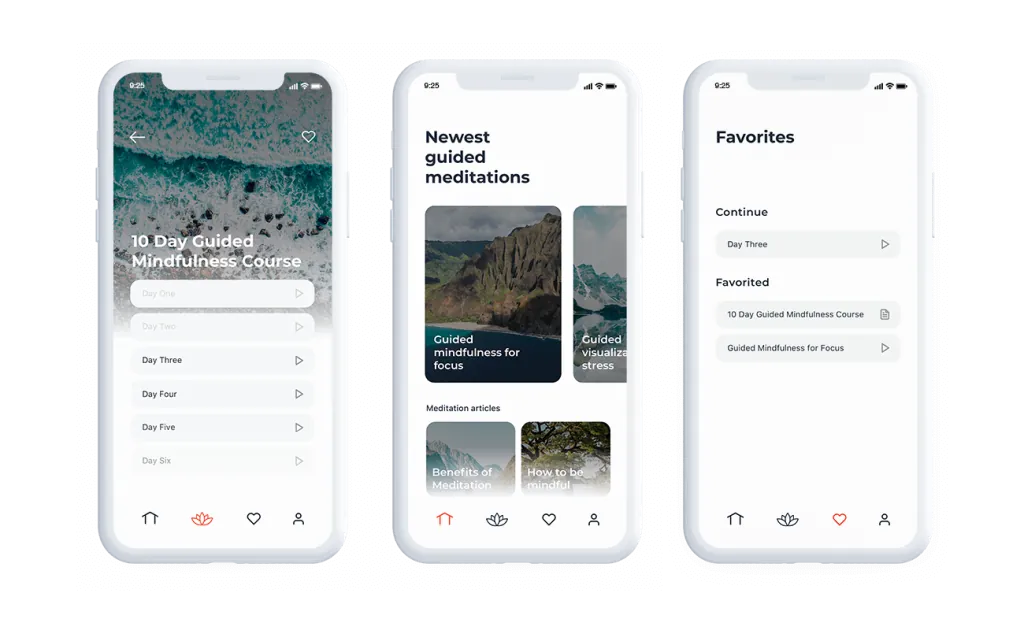
### 20. Face your fears
A [fear of failure](/blog/fear-of-failure) is often the piece that leaves us incomplete. To improve yourself, you will have to [overcome obstacles](/blog/overcoming-obstacles) like fear to get to the level you want to climb. Some of the biggest influencers in the world often talk about how much hate they receive, but they overcome the negative aspects of success to keep building on top of it. Of course, there will always be a dark side to life, no matter how low or high you climb. But self improvement is about climbing higher, so stop standing still; you’re meant to grow.
### 21. Write down your goals
Many people who have written down their life goals for [personal growth](/blog/personal-growth), have eventually noticed that with the passing of time they ended up achieving many of them. Some call this “the secret,” but psychologists call this a “self-fulfilling prophecy.” The things we think about the most end up becoming a reality. So if you write down what you want out of life, you’ll subconsciously start becoming and building towards that. So, think about what you really want and aim big.
### 22. Praise others
If there’s one thing in life, most people won’t be your cheerleader, especially in your inner circle. However, to change that, all you need to do is become their cheerleader first. Praising others is a good start. Look for the good in others and help coach them to level up as you bring yourself to higher ground. It’s easier to climb a ladder when you’re climbing with friends.

### 23. Ask for feedback
People often fear feedback because they’re scared it’ll be negative. It’s true that in the early stages of asking for feedback, you might get more bad stuff than good. But that can be your blessing in disguise. Plus, self improvement is about taking the bad and turning it into good. So, if you get negative feedback, great, now you have something you can work on.
### 24. Get out of debt
To improve yourself, consider improving your financial situation. Most people are debt-ridden. From student loans to mortgages, most of us get loans or pay with credit cards. If this is your current situation, consider paying down debts as much as you can. Then, cut your spending and increase your income streams to pay down debts faster. Finally, being debt-free will allow you to save money and build up your income.
### 25. Remember that this is life
You woke up this morning with an opportunity to learn anything, explore anywhere, and try something new. Even on our bad days, we have this gift of us that we’ve been given. We can explore the world in so many ways: intellectually, emotionally, or physically. While working and paying the bills is part of the process, don’t be afraid to take risks to just live every now and then.

## Conclusion
Self improvement is all about making the amazing you a little bit better. The opportunity to grow in life allows us to feel a sense of fulfillment and excitement as we experience new things in life. After all, life would begin to become dull without improving yourself. So take advantage of all the spectacular things this planet has to offer and [live your life to the fullest](/blog/live-your-life). So, what will you be doing to stretch yourself next?
---
# How to Deal With Your Inner Critic
- URL: https://declutterthemind.com/blog/inner-critic
- Description: Is that little voice in your head keeping you from believing in yourself? Here's 10 ways on how to deal with your inner critic.
- Published: 2025-06-25
If you aren't familiar with what an inner critic is, it's the voice in your head that tells you that you're [not good enoug](/blog/why-am-i-not-good-enough)h, you'll never amount to anything, and other negative beliefs you think are accurate but aren't. While you should never believe everything, your inner critic says, these are representations of your insecurities and fears. Your inner critic will always attack you, so there's no reason you should believe in these lies in your head. In this article, we'll be talking about the ways you can deal with your inner critic.
### 1. Don't dwell on your thoughts

The first and primary rule in dealing with those negative voices in your head is to avoid dwelling on them at all costs. They're not accurate in the first place, so there's no reason to dwell on them further. Doing this may be easier said than done, but you have to do everything to [get out of your head](/blog/how-to-get-out-of-your-head) to avoid believing in your inner critic. It's so easy to think up every negative thought you have. Distractions will be your best friend in this aspect. Go for a run while listening to [positive songs](/blog/positive-songs), write in a journal, or play video games - do whatever it takes to avoid dwelling in your thoughts. Some say that right-brain activities like meditation, painting, arts and crafts, and other creative activities help silence negative thoughts. That's because the right brain is pretty quiet while the left brain controls language. Consider developing your right brain to minimize the loudness of your thoughts.
### 2. Practice self-awareness
[Self-awareness](/blog/self-awareness) is the aspect that will save you from believing in every phrase and statement your inner critic tells you. When the voice gets so loud in your head, self-awareness is how you distinguish what's real and what isn't. If you're accustomed to negative thoughts most of your life, it can be challenging to stop yourself from believing every voice and every thought. By practicing self-awareness, you have better control over your thoughts instead of letting them control you, and achieve i[nner peace](/blog/inner-peace). While the thoughts still come, you have the mental strength to accept them and not believe them. There are several ways you can practice self-awareness, one of which is meditation. You can follow along to guided meditations for self that'll help guide you through a journey of overcoming your inner critic.
### 3. Treat yourself like you would a friend

We don't realize how badly we treat ourselves until we keep doing it, like a reoccurring bad habit. Treat yourself how you would typically treat a friend whenever they're sad or troubled to deal with these negative beliefs. If you wouldn't say harsh things to a sad friend, then all the more you shouldn't say those things to yourself. To avoid getting involved with your inner critic, cheer yourself up like how you would do to your best friend, whether that's going for a walk, pampering yourself, and doing fun activities to get out of your head. Whatever it is, try treating yourself with kindness and compassion instead of being so hard on yourself. [Stop beating yourself up](/blog/stop-beating-yourself-up). Think of all the pep talks you've given your friends over the years. Giving yourself the same kind of talk can do wonders for your mental health.
### 4. Reverse your perspective
Reversing your perspective is one of the most effective ways to avoid believing in everything your mind tells you. When you have a negative thought, try flipping it and see where that takes you. For instance, if your belief is 'what if I don't pass that job interview because I'm not good enough?' try changing it to 'what if I pass that job interview and end up getting everything I wanted?' Sometimes, we're stuck in this spiral of negativity and despair that we fail to realize that there's always an alternative perspective of things. If you aren't careful enough, you'll get sucked into negative thinking that you forget what it feels like to see the positive side of things. Always reserve your perspective and see where that takes you.
### 5. Examine the evidence

If your mind tells you a harsh and critical thought, examine and find the evidence that backs up that thought. More often than not, you won't find evidence to back it up because it isn't accurate. If your inner critic keeps convincing you things like you won't be successful enough, it's because you fear that it's going to be a reality, but as of this moment, this thought is just a fear. If the evidence you see comes from your past, this is no longer accurate because your past experiences aren't a credible form of evidence to back up your negative thoughts. Fear may seem like a simple thing, but it's capable of holding you back in the form of your thoughts. As long as you don't find evidence in the present moment, your belief isn't valid, so it's best to let it go. Finding proof for your negative thoughts will have to involve hard truths. Consider doing this practice with a counselor or a friend as they'll likely see things more objectively and can provide emotional support.
### 6. Use positive affirmations
Words are more powerful than you give them credit for. Positive affirmations, when used right, can give you the confidence and encouragement you need to counter your negative thoughts. If you're dealing with your inner critic, try either saying positive affirmations out loud or writing them down. Positive affirmations are encouraging phrases that can help you remember the truth of who you are and the very best aspects of yourself. They help you [believe in yourself](/blog/how-to-believe-in-yourself) when no one else will. Instead of focusing on your insecurities and fears, affirmations remind you that you're mentally stronger and capable of controlling what you think. Whenever you start to believe the lies in your head, say a positive affirmation out loud and believe in what you're saying. Gratitude is much stronger than negativity, and that's why these affirmations work wonders when you're battling with your mind. This practice is also a familiar exercise people do in counseling. Whenever a negative thought appears in your mind, replace the belief with a positive one. If you do this every time this happens, you'll rewire your brain to do this naturally.
### 7. Consider the impact of your negative thoughts if they became a reality

While nobody wants their negative thoughts to become a reality, consider the alternative scenario of when it does happen. Sometimes, things aren't always as bad as we think, and we make it more prominent in our heads. This practice is called catastrophizing. For instance, getting rejected at a job interview isn't the worst thing, as failure can always be a stepping stone for success. If you fail at that job interview, maybe it was a sign that it wasn't a job meant for you or that there were more qualified people interviewing for that role. Your inner critic thoughts becoming a reality isn't always the worst thing to happen, despite what our minds tell us. So coming to terms with this is how you can effectively let go of these [negative thoughts](/blog/how-to-stop-negative-thoughts) having a hold on you.
### 8. Continue working on yourself
One of the reasons you may still feel insecure is you don't feel like you're growing enough. Accept your flaws and weaknesses for what they are and work on improving your strengths instead. You can't be perfect, but you can always dedicate your time and energy to keep being the best version of yourself every day. Doing this won't diminish your inner critic completely, but it can help you have the mental clarity and confidence to know that you're doing everything you can to be better. When you know that you're trying your best, your mind's inner critic will become background noise that you choose not to validate. Rather than believing in toxic thoughts and giving them power, you know who you are and what you want, which becomes more than enough to deal with your negative thoughts.
### 9. Stop running away from failure

We've established above that your inner critic is harsh towards you because it stems from your insecurities, doubts, and fears. More often than not, it comes from your [fear of failure](/blog/fear-of-failure). Whether that's failing to be successful, failing to close that deal, not getting hired for that job interview, or failing to make a good impression, whatever it is, failure is quite an intense fear that can hinder your growth and progress. You can't fear failure for the rest of your life because it's failure that helps you learn difficult lessons that you can't learn from anywhere but experience. As uncomfortable as failure is, it will help you reach success and all the accomplishments you want to achieve. However, this can't happen if you fear it, especially as your inner critic will encourage you to avoid failure at all costs. Come to terms that you're going to fail and make mistakes along the way and that it's okay.
### 10. Stop making mountains out of molehills
If you aren't familiar with this expression, making mountains out of molehills refers to making something big out of a minor issue. We don't realize it at the time, but it's easy to exaggerate our feelings and thoughts, even when it's unnecessary to react at all. Avoid making a big deal out of something minor, so if it's something that you think you're eventually going to get over from or something a distraction will help, then there's no need to make it a significant issue. If you are unsure if something should be a big deal or not, taking some time to breathe and think it over before reacting. It's easy for our anger, frustration, and other emotions to cloud our judgment, so the best thing you can do for the moment is to step back and reflect.
## Conclusion
In this article, we were able to shed insight into how you can effectively deal with your inner critic. It's not easy to fight off this inner critic in your head, especially when it's easy to dwell in negativity and doubt. However, remembering the best aspects of yourself is your best strategy in fighting your negative thoughts. You are never a reflection of your flaws but rather a reflection of your strengths.
---
# 15 Ways to Achieve Inner Peace
- URL: https://declutterthemind.com/blog/inner-peace
- Description: With all the negativity and struggles in the world, it's difficult to maintain a healthy mind state. Here's 15 ways to achieve inner peace.
- Published: 2025-06-25
Most people live in a hectic world where they work hard and set off to complete life milestones before they die. In the hurry of the way forward, they fail to find the present moment where you'll find peace. When you think about your most peaceful moments, you'll often think about times you were present with friends or family, out in nature, or a mindful observant of the world around you. Finding inner peace isn't a challenge, you can experience it right now, even. In this post, we'll help you achieve inner peace by sharing fifteen ways you can attain
## What Is Inner Peace?
Inner peace is the state of calm you feel within yourself. You can be surrounded by chaos and still feel the calm within your soul. Inner peace is often experienced by those with quiet minds. You can create a quiet mind by living an authentic life that's true to an ego-less you.
## How to Achieve Inner Peace
When it comes to achieving inner peace, the first step is coming with a good attitude. If you're cynical, or even too skeptical, it will block you from reaching this calm state of mind.
### 1. Meditation
To start, we have meditation. We're always thinking about everything, whether it comes in the form of our future, our work tasks, or what we'll be eating for dinner. We're never not thinking about things. This is [why meditation](/blog/why-meditate) is one of the best things we can do for ourselves to achieve some sense of peace in our lives. Meditation gives you a break you need from the noise of your thoughts.
To start your meditation practice, check out our web app [Declutter The Mind](https://app.declutterthemind.com/?p=mainnav). If you're new to meditation, check out these [meditation courses](https://declutterthemind.com/courses). Once you know [how to practice meditation daily](/blog/how-to-practice-meditation-daily), you can begin to find some inner peace.
Consider trying out this [guided meditation for inner peace](https://declutterthemind.com/meditation/relaxation).
### 2. Social Media Detox
One of the causes that disrupt inner peace is social media. Social media causes unhappiness in many because of our tendency to compare our lives with others. It's a competition of the highlights in your life. If you're always on social media seeing highlight reels, this can give you anxiety that you may not be living your best life. As you see your friends and followers posting their travels, their relationship, their successes, you're stuck there comparing your own life to theirs. If you're not careful enough, social media can disrupt your inner peace.
This is where the concept of FOMO or 'Fear of Missing Out' comes from. Social media can cause you to fear not living your best life, and [comparing yourself](/blog/how-to-stop-comparing-yourself) to your friends' stories and posts will disrupt your inner peace. You don't necessarily have to do a complete [social media detox](/blog/social-media-detox). However, every once in awhile, it's best to take a break from your social media platforms. Doing this helps you gain control of your own life and [peace of mind](/blog/peace-of-mind). Social media can be a facade, and you may fail to differentiate what's real and what's not. There's beauty in the world around you, just look up from your phone.
### 3. Practice self-love

In general, the world becomes more peaceful if you love yourself. One of the aspects that disrupt our inner peace is the constant war we have within ourselves. By practicing self-love, you'd be integrating inner peace within your life. You can actively practice this by doing things that make you happy and lift your spirit. If your passion includes writing and reading books, then you can do these activities in your free time.
You can also practice self-love by [taking care of yourself](/blog/take-care-of-yourself) and your body. Working out is one of the most common practices you can do. Not only does it release endorphins in your body, but it also makes you [feel good about yourself](/blog/how-to-feel-better-about-yourself), which leads to inner peace. Doing something you're passionate about is ultimately the best way to gain inner peace. One of the main reasons for inner peace is conflict and lack of passion. If you invest in yourself and [take care of yourself](/blog/take-care-of-yourself) properly, then you have more room for inner peace in your life.
### 4. Be kind
You can find an inner calm, when you’re kind to those around you. Have you tried doing [acts of kindness](/blog/acts-of-kindness) or [good deeds](/blog/good-deeds) for other people lately? You can find peace from doing nice things for people. When you put out good into the world, you get good back into yours. Your well being improves from being kind. If you’re going through a chaotic time, consider doing kind acts on a daily basis. You’ll quickly find that you find inner peace because your mind is so focused on being kind it doesn’t notice the drama anymore. Spend time with people who are less fortunate than you because they’ll likely need your help. You’ll have more peace when you help others as it helps you too.
### 5. Steer clear from negativity

This is the most basic yet can be the hardest thing to do to gain inner peace in your life. Of course, nobody with a [calm mind](/blog/how-to-calm-mind) would want negativity. However, sometimes it's in our nature to dwell on negativity rather than positivity. Choosing to dwell on negativity in your life, whether it's in the form of your thoughts or your habits, will disrupt your peace. Negativity is the fastest way to ruin the inner peace you currently have. It's the easiest thing to dwell on negativity.
For instance, when something happens the opposite of how you expect it to be, the most natural thing would be to live on the negativity of the situation rather than looking for the bright side of things. When we focus on even something as simple as our [negative thoughts](/blog/how-to-stop-negative-thoughts), we're giving that control to our peace. Instead of looking for the flaws and hopelessness of the situation and of things, choosing to [be more positive](/blog/how-to-be-more-positive) is the best way to regain your sense of inner peace back. Learn [how to stop complaining](/blog/how-to-stop-complaining) and steer clear of negativity.
### 6. Live in the present
You can find peace by being in the present moment. Most people live in the past with past events circling their mind non-stop or panicking about what will go wrong in the future. You can do a meditation practice to help you focus on the present instead of a different time frame. Everyday life doesn’t need to be complicated. When things around you are stressful, focus on the present with hyper focus.
### 7. Avoid self-pity
In a way, this is connected to what was mentioned above in negativity. As humans, we have this immense tendency to go in a [self-pity](/blog/self-pity) routine when things aren't going our way. If we didn't get that job or we go through a breakup, we integrate [feelings of worthlessness](/blog/feeling-worthless), guilt, and regret within ourselves, which is why we lose our peace entirely. However, this isn't supposed to be the case. It may be a normal tendency, but it isn't exactly a healthy habit. Self-pitying yourself is one of the fastest ways to not only dwell on your emotions even more, but it gives you feelings of depression and anxiety.
Life is generally hard, and [self-pity](/blog/self-pity) isn't going to change the fact that life is painful sometimes. The only thing self-[pity](/blog/self-pity) does is that it typically makes you feel worse than you initially did and takes the blame for other people. To gain back your peace, take awareness and accountability of the situation rather than [self-pitying](/blog/self-pity) yourself. Rather than telling yourself, "I'm such a [worthless](/blog/feeling-worthless) person," [take responsibility](/blog/take-responsibility) and tell yourself, "I may have messed up, but I can do better next time." By practicing this habit, you're taking back your control, [building more confidence](/blog/how-to-build-confidence), and you're deciding to do something about your life. We fail to realize that our life, including our peace, is in our control, and we can't have peace if we don't do something about our lives first.
### 9. Laugh a lot

You can't expect peace from a place wherein you're taking your life too seriously. Life can be challenging enough, and ultimately, the best thing you can do for yourself is finding the beauty in your life. It's okay to laugh, even at the silliest of things. Laughing has been proven to be the best medicine for struggle, after all. Contact your friends and arrange a meetup. Watch a funny movie on Netflix. Have a wine night with your friends. Basically, just find humor in even the most mundane things. Inner peace is often gained from a place you never expect to, and sometimes, that's from a place of humor and laughter.
### 9. Communicate respectfully
You can find inner peace when you regularly communicate respectfully towards others. When you tend to speak assertively but positively, there’s little room for misinterpretation. Your mental health is worth preserving, so remain calm in heated discussions. Your past mistakes of miscommunication can be improved for future situations. Don’t allow people to walk all over you by being a pushover; you can still stand up for yourself. However, cut out hurtful and offensive language from your life. No one wants the drama caused by saying the wrong thing.
### 10. Distract yourself
I know that it can be unhealthy to use distractions to forget your emotions. However, in some instances, distractions can actually be right for you and help you get your feelings in check. If you're overwhelmed by anxiety or your own thoughts, it's reasonable to run to video games, working out, or Netflix to help you regain a sense of control. Our emotions can control us if we're not careful, and it's not a pretty sight. By using distractions, it can help you think straight and get your mind in order again. You're not using your distractions as an escape for feeling things, but it's an outlet to process your emotions better.
Furthermore, by processing your thoughts and your emotions correctly, this helps you regain your peace. Unlike the contrary, distractions such as [anxiety relief games](/blog/anxiety-relief-games) also help you focus and think straight compared to using your emotions to make individual decisions. As you're [overwhelmed](/blog/feeling-overwhelmed), if you attempt to even do anything while you're high on emotions, it could be disastrous.
### 11. Practice self-care

When you prioritize self-care, you improve your mental health and your well being. You can find inner calm when you do activities, such as spend time with loved ones who uplift you, go in float tanks, speak kindly to yourself, and practice self compassion. Inner tranquility comes when you practice acceptance of who you are. You deserve to enjoy life and have a [peaceful mind](/blog/peace-of-mind). You’re a resilient person, all you need to do is treat yourself better. Manage difficult emotions by practicing meditation, rephrasing negative thoughts into positive ones, and practising self compassion. Finding peace starts with self care.
### 12. Express yourself through art
Finding peace can be a challenge, though you can find inner peace through art. Whether you’re a prolific painter or a smooth saxophone player, you can improve your mental health with art. Art of all kinds improves your well being. In the modern world, people spend so much time mindlessly consuming art, such as music, social media posts, and more.
Instead, mindfully be the creator of art. Pay attention to little details. Get into a [flow state](/blog/flow-state) where you don’t notice time passing by and enjoy the process of being an art creator. Those in a [flow state](/blog/flow-state) often don’t notice their anxieties or pain because they channel it into their art and it transforms into something beautiful.
### 13. Don't pressure yourself

Feeling burned out and drained is a real thing you can feel if there's a lack of balance in your life. As an individual, you're continually striving to gain that work-life balance for yourself, and it's very much possible. However, you can't always perfect it. Some days, you put too much of your energy into your work, and other days, you feel unmotivated and unfulfilled. In attempting to balance everything, you should also take it easy on yourself. Especially if you're a perfectionist and you have a tendency to control things, you may tend to pressure yourself in getting all aspects of your life together, and this is why you probably lost your sense of peace.
If you ultimately want inner peace, you should realize that you're human, and you're just as flawed as everyone else. You don't have to put all ounce of energy in your work if it means being harsh on yourself if you see yourself fail. It also doesn't mean that your worth is somehow less if you choose to take a break from your work. Decide the healthy balance between certain aspects of your life, and [deal with your frustration](/blog/deal-with-frustration) if you don't get it perfect.
### 14. Access nature

You can instantly improve your mental health and find inner peace in nature. In daily life, go for a walk in the woods or by the water to access nature. You’ll improve your overall well being doing activities like gardening, hiking, running, mountain climbing, or even biking. Getting fresh air and letting the sun shine on your face can be a beneficial experience. A [walking meditation](/meditation/walking) can allow you to stay present as you experience the splendid beauty of nature around you. You’ll have positive thoughts and less stress if you focus on watching animals scurry by and simply marvel at how wonderful nature and life can be. Spending time outdoors is always a quick and easy way to achieve inner peace.
### 15. Accept things as they are
Your past mistakes aren’t a reflection of you but of a past you, who didn't know any better. If you need to find inner peace within yourself, forgiveness is a good starting point. In the modern world, people aren’t very forgiving. Many people shame people on social media for having bad days, making mistakes, and being a “bad person.” Yet, they don’t realize in their own actions to shame people, that they themselves are being hurtful and bad. A victim mentality won’t serve you. You’ll need to rise above and accept that people will make mistakes in life– everyone will. You need to be a resilient person who can overcome the chaos in the world around you. All you can control are your own actions, everything else you’ll need to learn to accept.
## Find your inner peace
In conclusion, these are just some ways to help you achieve inner peace. Generally, creating inner peace may be challenging, especially if it doesn't come naturally to you. In a world where everyone is preoccupied with everything, we no longer have time for ourselves. However, inner peace is still possible. If we choose to have awareness and change certain aspects of our unhealthy habits and lifestyle, we have more room for peace in our lives.
---
# How to Stop Internet Addiction When You Work From Home
- URL: https://declutterthemind.com/blog/internet-addiction
- Description: When working from home, you might spend a bit too much time online or on social media. Learn how to combat internet addiction now.
- Published: 2025-06-25
Internet addiction is on the rise. With more people in front of screens than ever before, being glued to your phone, tablet or laptop is the new normal. But is it healthy to be hooked on your digital devices? Or do we need more of a balance in life to help us [live meaningful](/blog/meaningful-life) and happier lives? An internet addiction can interfere with your personal relationships. Especially if you spend more time surfing the web, instead of hanging out with family and friends. But how do you break internet addiction, when you work from home? If your financial livelihood depends on you staying connected, you’ll need to take some extra steps to stop internet addiction. This article will help you break internet addiction in a fun and meaningful way.
## How to Stop Internet Addiction for Good
### 1. Meditate more
Meditation is a great way to stop internet addiction. And fortunately, [Declutter The Mind’s meditation app has an offline mode](https://declutterthemind.com/qr-code) for those trying to break internet addiction. You can listen to all meditations with a paid subscription without having to use your internet. This is great for those who are looking to [disconnect](/blog/how-to-disconnect) for five minutes up to an hour while following along to a soothing voice that’ll help relax you when you need a bit of a break from the internet. You can choose from various meditations, such as [loving kindness meditation](/meditation/loving-kindness) to help you show compassion to yourself and others, an [anxiety meditation](/meditation/anxiety) if you’re feeling a bit stressed, or hundreds of other types of [guided meditation](https://declutterthemind.com/meditation). Listen to an example below:
### 2. Master time management
You can stop internet addiction by focusing on a time management plan. For instance, your phone will tell you how many hours you spend on it per day and which apps you spend most of your time on (though you probably know the answer to that already). You can test yourself to reduce your time on the internet and measure your results to see if you ended up decreasing your time spent on your devices. When you’re on the internet, you can focus on being productive instead of checking your social media or popular websites. Then, when you’ve finished your tasks, you can find non-internet based activities to enrich you to give yourself a break from the net.
### 3. Go on a social media detox
Let’s face it, most of us with an internet addiction really have a social media addiction. We compulsively check our social media profiles constantly to see if we’ve gotten new messages, likes, or more. Those dopamine spikes make us feel so good. If those spikes are what keep pulling you back to the app, [taking a dopamine detox](/blog/dopamine-detox) for a few days will tell you a lot about the habit. But spending that much time on social media leaves you unproductive towards other important things, like spending time with your family, investing in your [personal development](/blog/personal-growth), or [taking care of yourself](/blog/take-care-of-yourself). So, maybe it’s time to do a [social media detox](/blog/social-media-detox) so you can recharge yourself a bit. You’ll likely find you perform better and feel better about yourself when you reduce the time spent on your social media accounts.

### 4. Find non-internet activities
There are various non-internet activities and hobbies you can enrich your life with. For example, you can learn how to play an instrument at a music school where you spend an hour or so with an instructor who guides you to learning the new skill. Alternatively, you can read books, go for a [mindful walk](/meditation/walking), hang out with friends, try out a new restaurant in your neighborhood, or build something. You can also focus on home activities, such as cleaning, gardening, or decorating. If you’re feeling a bit artistic, you might draw, paint, or color. The activities you do without the internet can help you reduce your screen time so you can enjoy life. When planning something to do ask yourself, “How can I enrich my life today by doing something new, [challenging myself](/blog/challenge-yourself), or [living life to the fullest](/blog/live-your-life)?”
### 5. Add site blockers
You can use tools like Freedom.to to block various sites on your devices. You can block social media sites, shopping sites, news sites, forums, and basically anything on the internet too. You can choose which devices have the sites blocked, so if you check Instagram on your phone a lot, you might block it on your phone. Alternatively, you can stop your internet addiction by setting specific hours to be able to check certain websites. For instance, if you want to be productive during the work day or set time for family after hours, you can set the exact times you want to be unable to check those websites.
### 6. Unsubscribe from emails
You can help reduce your internet addiction by taking some time to unsubscribe from emails. For example, if you find you have a shopping addiction, you might unsubscribe from marketing emails from your favorite brands. Maybe you notice you end up impulse buying clothes when you get an email, so unsubscribing will not only help curb your spending but you’ll also end up spending less time in your email inbox with fewer emails coming in. Aiming for an empty email box by deleting unimportant emails for good can help you feel fresh and recharged. No one needs an inbox with 1,000s of emails in it. Start an email cleanse.

### 7. Get outside
If you want to stop your internet addiction, spend some time outdoors. If you spend some time out in nature, you can witness so many wonderful moments. One time, I went for a walk at a nearby park and witnessed a turtle laying eggs. Miracle of life. You can [find joy](/blog/how-to-find-joy) from watching insects, birds, rabbits, and other animals out and about living life on the same planet as you. Go for walks with your spouse or a friend. If the weather is cold, you can do outdoor activities like skiing with friends or thermal spas if you’d prefer the heat.
### 8. Spend time with friends and family
People are meant to be around other people, even introverts. Spending time with people who cheer you on, educate you, and make you laugh is an easy way to stop internet addiction. If the people closest to you aren’t positive to be around, choose to spend time with friends who you genuinely enjoy spending time with. You can also choose activities to do with them that are fun, such as going to comedy shows, concerts, or amusement parks. Choose to lean conversations in a positive direction too. You can talk about things that inspire you, excite you, and help you [make the most of life](/blog/how-to-make-the-most-of-life).

### 9. Seek therapy
You can [find a therapist](/blog/how-to-find-a-therapist) online or via a referral from your doctor to help you manage your internet addiction. For example, some types of addiction are harder to break than others. If you have a gambling addiction, you’ll need to stop that so you don’t continue to risk losing money. If you have a shopping addiction, your bank account suffers too. Without money, our ability to enjoy life becomes more challenging, especially as debts rise. A therapist can help you break the cycle that causes you to be hooked on your online addiction so that you can go back to enjoying things offline. It’s not as simple as blocking websites for some types of addictions, but that can help too.
### 10. Read books
You can read books or ebooks on your Kindle in offline mode to help you learn and grow instead of [doomscrolling](/blog/doomscrolling) on social media. There are millions of books out there in various genres that can uplift you, teach you, or entertain you. Maybe you’re into a futuristic sci-fi disaster book like Project Hail Mary by Andy Weir or something deeply philosophical like Symposium by Plato. You could also read popular chick lit books by Sophie Kinsella, Jennifer Weiner, Emily Griffin, and more. You can [challenge yourself](/blog/challenge-yourself) by buying textbooks to learn a new skill, such as computer science or calculus. Choose the books that’ll actually get you off the internet and get your mind thinking differently or exploring a new path. Let your curiosity inspire you.

### 11. Monitor your screen time
You can use apps or built-in features on your phone, computer, or tablet to monitor your screen time. If you’re a parent of young children, you might install apps on their devices to help ensure they don’t stay up all night on their phone texting and actually get some sleep. You might also block certain websites, especially if they don’t have credit cards as they might use yours to make purchases for games, clothes, subscriptions, or other products they’re interested in. Having access to these apps while still giving your children autonomy and privacy can be helpful in allowing you to ensure screen time is monitored. You can also monitor your own screen time for yourself so that you set a positive example for your family as well.
### 12. Join support groups
Certain types of internet addiction may have support groups. For example, there may be support groups for watching adult content, gambling, shopping, or even social media. When you join these groups you can share your stories and struggles with overcoming your addiction. You can hear people’s stories in what helps them manage their internet addiction and use their examples to jump start your own journey. Alternatively, you can build connections with people in your community. Eventually, you might find yourself hanging out with these people in your spare time allowing you to unplug from the internet. Finding people who are sharing the same experiences with you reminds you that you’re not alone. With billions of people on the internet around the world, there’s someone else out there who struggles to go offline.
### 13. Go to networking events
To stop internet addiction, you can [meet new people](/blog/how-to-meet-new-people) at networking events. Instead of talking to people online you can meet and chat with them in-person. Being social offline will allow you to develop more social skills so that you can feel more confident meeting new people and building relationships. You might find new clients, friends, romantic partners, and more simply through socializing at events instead of hiding behind your computer screen. Being confident enough to strike up a conversation with people when you’re out and about will help prevent you from checking your phone every time you go out.

### 14. Write in a journal
Having a journal that you pour your heart into can be a great way to disconnect from the internet. You can stop your internet addiction by writing down how you feel about your life, relationships, or yourself. Having a locked book or an offline and locked document that you type into to share your innermost thoughts can be a therapeutic exercise. You can use [journal prompts](/blog/journaling-prompts) to guide your thinking or you can just jot down all the wild ideas that flow through your mind. Release them from your head and freely let go of everything. Whether [you’re trapped](/blog/feeling-trapped) in a gambling addiction or shopping addiction, know that the unhappiness that forces you to get your rush from these activities is curable. You can find happiness outside of these things, and sooner or later you’ll have everything you’ve ever wanted because you treated the addiction and solved your problems.
### 15. Change your nightly routine
If you have a hard time [falling asleep](/blog/how-to-fall-asleep) at night, you might need to switch up your [nightly routine](/blog/night-time-routine). Spending time on the internet before bed, such as scrolling through social media, watching adult content, or shopping online can keep us stimulated. As a result, we fall asleep later and instead of [waking up early](/blog/how-to-wake-up-early) we end up feeling groggy. At night, after you wash yourself and brush your teeth, spend some time in bed reading a book. This will help you gently fall to sleep and relax you. As long as you don’t have bright blue light glaring at your face you’ll be able to unwind naturally.

## Conclusion
It’s true that in today’s society most of us can’t live without the internet. We need it for our jobs, to connect with people, and to learn cool new things. However, finding time to disconnect and stop internet addiction can help you experience life on a more positive level. You’ll feel more connected with the people you care about. And you’ll be able to live life the way it was intended. If you’re looking for a [meditation app](/blog/best-meditation-apps) that works offline, [sign up for Declutter The Mind today](https://app.declutterthemind.com/?p=headerbutton).
---
# Interpersonal Skills: Examples for Work, Relationships, and More
- URL: https://declutterthemind.com/blog/interpersonal-skills
- Description: Develop interpersonal skills by learning what the most important ones are for work and everyday or romantic relationships.
- Published: 2025-06-25
We live in a world that keeps getting more and more connected every day. And to succeed in this hyperconnected world, we need to learn about interpersonal skills. Interpersonal skills are the skills that you use to communicate and interact with other people. But these people skills are more valuable than you think. This set of skills allow us to have strong personal relationships. We use them at work, with our friends, at school, at home, and every time we interact with someone. In this article, we'll share why interpersonal skills are important and some common examples of them you'd use in your daily life.
## Why Interpersonal Skills Are Important
### 1. We're social beings
All people are connected. Having good interpersonal skills is crucial for daily life. Even the [loneliest person](/blog/dealing-with-loneliness) in the world had to interact with people at some point. When you go to the grocery store, when you go on a date, when you talk to clients, and even when you go to school, you use interpersonal skills. There is no escaping relationships in some form or another.
### 2. To Communicate Better
When you have strong interpersonal skills, you can communicate more efficiently with the people around you. Having good people skills allows you to stay safe, belong in a community, and meet your needs. When you develop good interpersonal skills, you give yourself a chance to be cared for by the people around you. Since humans are social beings, being accepted by the group is essential. Being a poor communicator can lead to being excluded by others.
### 3. To Grow Professionally
In the job market, interpersonal skills are crucial for people working in customer service, offices, or people-oriented careers, such as medicine or sales. But even people who don't have to deal regularly with people like artists, technical jobs, or freelancers; need to use interpersonal skills to communicate with clients and teams. At work, you can't avoid relationships with others, making interpersonal skills critical in those situations.

## Examples of Interpersonal Skills
If you want to improve your interpersonal skills, you need to know which ones are the most important. Let's example some examples of interpersonal skills.
### 1. Emotional Intelligence
Emotional intelligence is the capacity to understand and [control your emotions](/blog/how-to-control-your-emotions). But understanding other people's emotions is also an aspect of emotional intelligence. This skill is the main pillar of interpersonal skills. We're emotional by nature, so understanding emotions can help you cool off and put yourself in other people's shoes.
You would use the interpersonal skill of emotional intelligence in situations where emotions are heated. For instance, knowing when your spouse is mad is essential to help resolve conflict and maintain a safe and stable relationship. If you can't read facial expressions or emotions, it may cause stress in your romantic relationships.
### 2. Empathy
When you have the necessary emotional intelligence, you can easily place yourself in someone else's shoes. And that's what empathy is about: understanding emotions.
Sometimes you'll need to listen carefully to a friend, a colleague, a customer, or a boss. Some situations will require you to set yourself aside for a minute and focus on what someone else is feeling. Learning [how to be more empathetic](/blog/how-to-be-more-empathetic) can help you look reliable and caring.
For instance, if someone in your family recently died, you would choose to use empathy as they struggle to make sense of a world without a loved one. You might offer a listening ear, mirror their words, and show love as they go through the [stages of grief](/blog/stages-of-grief).

### 3. Caring and Friendliness
Interpersonal skills can help you be more caring and friendly with strangers and people in general. Showing a [positive attitude](/blog/positive-mental-attitude) towards someone can lighten up their mood and help ease tensions.
In the workplace, friendliness is fundamental as the opposite can lead to a [toxic culture](/blog/how-to-deal-with-toxic-people). Celebrating birthdays, promotions, and individual wins is a great way to be friendly towards your coworkers without crossing boundaries.
### 4. Ability to Control Emotions
We've talked about how people skills are critical to interact with others, but it's also helpful to behave better. When you're aware of what you feel, you can treat yourself and others better.
Redirecting and understanding [negative thoughts](/blog/how-to-stop-negative-thoughts)and emotions will make you less volatile. And yes, being volatile won't make you look friendly and approachable.
Controlling your emotions is essential when you're under stress, such as in the workplace. For instance, a doctor exhausted from a long day at work shouldn't be rude when telling his or her last patient of the day about a serious terminal illness, even if they just want to go home.
### 5. Communication
The simple act of sharing information might not seem hard, but in reality, effective communication takes time to master. Speaking, writing, listening, and reading are important skills. But effective communication is about using those skills correctly.
Communication is critical in all relationships: professional, romantic, friendships, or family bonds.
Verbal Communication
For some people, speaking to someone else can be incredibly difficult. But speaking is a fundamental skill in any negotiation or relationship.
Most of the time, how you say something is more important than what you say. So the tone in which you say something does matter. Keep in mind written communication can cause miscommunication as people can't hear your tone or view your body language.
Non-verbal Communication
But there are other ways to communicate with others. Communication is more than just words. Becoming aware of non-verbal communication can help you establish better relationships. Some non-verbal actions include facial gestures, maintaining eye contact, smiling, [body language](https://www.verywellmind.com/understand-body-language-and-facial-expressions-4147228), and posture.
Your non-verbal language has a big influence on how people can perceive your message. Head down? You'll look sad and uninterested. Arms crossed? Defensive. No facial expressions? Unamused.

### 6. Negotiation Skills
When people hear the word negotiation, they think of a salesperson asking them to subscribe to a service or product. But in reality, negotiation is a lot more than that. The interpersonal skill of negotiation is about using complex social skills to find a win-win scenario for everyone in the negotiation.
To negotiate is to listen to a problem and think of a solution that will satisfy everyone.
Negotiation skills are particularly critical during hostage situations, where police negotiate with criminals who have kidnapped individuals.
### 7. Persuasion
Persuading someone is selling them an idea or object and make them like it. Persuasion is part of any negotiation.
Persuasion is a common practice in marketing and sales jobs where the goal is to persuade a potential customer to buy a product.
### 8. Active Listening
Listening is a crucial interpersonal skill. Active listening means paying attention to the message that someone is sending you and advocate to solve it.
If you don't listen, you'll never know what to do next. It's also important to make people feel listened to and mirror their words after they speak.
### 9. Patience
One of the toughest interpersonal skills to develop is patience. But when you practice empathy, active listening, and good communication, you can grasp the concept of patience.
When you're patient, people will see you as a calm individual. [Having patience](/blog/having-patience) can also help you on an internal level. It can do so by giving you the motivation to do something and expecting those results.

### 10. Work Ethic
Being in an office or working environment means adopting a different way of communicating. You can't make silly jokes all the time or be disrespectful. You need to have good interpersonal skills if you want to be professional.
You don't need to be firm and strict all the time. But there's a time and a place for everything, and learning when to be funny and when to be professional is a skill you can work on. Ultimately, while you're at work, you should be working, not wasting time.
### 11. Professionalism
If you want to look professional, you need to dress accordingly. You won't find a lawyer wearing a swimsuit or an experienced dancer wearing a suit with a blazer. If your workplace has a dress code, go with it. Every type of job has some form of workwear. But don't be afraid to speak up if you think the workwear choices are dated.
### 12. Humor
It's only natural for us to laugh and make jokes. After all, people love humor. Humor can change someone's mood and create solid relationships among other people like colleagues and friends.
However, people need to learn how to use humor effectively. Understanding that there are moments to have fun and that there are moments to be serious is important.

### 13. Respect
Respect is about understanding personal space and [setting boundaries](/blog/setting-boundaries) for other people. All you have to do is listen and respect them. To be respectful of people, there will need to be:
No harassing
No inappropriate comments
Zero hurtful jokes
Respecting personal space
No insults
No making fun of someone's beliefs
### 14. Conflict Management
If you've ever worked with people, then you know how complicated things can get. Well, you can be the necessary tool to end an argument and make every party happy. If you know about conflict management, you can help defuse many awkward and tense situations. When two people start arguing around you, help them through it by telling them to say, "When you do [this], I feel [emotion name]." It allows people to see what the problem is more clearly.
### 15. Diplomacy
Speaking with politeness and using formal definitions is sometimes mandatory for a better understanding. Even if you don't like the person you're talking to, diplomacy can help you convince other people to buy your idea.
### 16. Decision-making
A critical aspect of conflict management is decision-making. If you want to defuse a situation, you need to make a choice. Deciding on the right choice is often a complex social problem that requires creativity and empathy skills. If you're unsure which choice to make, listen to your gut.
### 17. Leadership
We are all leaders at some point in our lives. Being a leader is being an inspiration for someone else. You have some influence on them and are capable of motivating them to do something. Isn't that amazing? A leader will need to make firm decisions using consensus and experience. They will be someone people respect and look up to. [Mindful leadership](/blog/mindful-leadership) is key to being a good leader.

### 18. Convincing Skills
Leaders are good at convincing people. They motivate and persuade others to achieve a goal. Please note that there's a difference between motivation and manipulation. When you manipulate, you're using someone for your benefit; when you motivate, you're helping someone achieve a common goal.
### 19. Teamwork
Listen, it's good to do things on your own, but we all need a little help every once in a while. That's why teamwork is a beneficial interpersonal skill. Forming teams, creating networks, and maintaining them is a lot of work. Teamwork is necessary for specific projects, events, or actions.
### 20. Collaboration
The ability to collaborate with other people is essential in a team. Accepting your responsibilities and committing to them is what keeps the team alive. Learning to collaborate with others can help you reach places that were far from reach before.

### 21. Dependability
People need to trust you; that's the truth. If you present yourself as someone dependable that they can rely on, they'll be willing to listen to you. Earning people's trust may involve making sure you do things when you say you will, finishing projects on time, and showing up when they need you.
### 22. Openness to Criticism and Feedback
It's important to be open-minded about criticism and feedback. You can do this by understanding that feedback is the only way to learn something new. Sometimes a process can have flaws, or we might do something wrong. Those are the moments where we need to accept feedback and learn from our mistakes. Is it hard to realize that you might've been wrong about something? Absolutely. But that's a part of learning, and we must accept it.
## How to Develop Interpersonal Skills
Interpersonal skills are one of those things that people think that you're born with. But being realistic, anyone can improve their interpersonal skills at any point in their lives. All you need is [self-awareness](/blog/self-awareness) and commitment to improving them. Here are some ways to develop your interpersonal skills.
Reflect on what interpersonal skills you already have. Then think about the ones that you need to improve.
Learn emotional intelligence.
Practice active listening with friends, strangers, clients, and colleagues.
Be in tune with your feelings.
Take the initiative to speak in public or start a presentation.
Be aware of your body language.
Ask feedback.
Start being friendly with the people in your life.
Talk with people mindfully.
Always think carefully about the words that come out of your mouth.
## Conclusion
Interpersonal skills are just as necessary as hard technical skills. By being mindful of these skills and constantly working to improve them, you're making a tremendous effort. By practicing these skills, you'll get better social relationships in all aspects of your life. Which interpersonal skills are you currently working on?
---
# 11 Best Journaling Prompts for Self-Reflection
- URL: https://declutterthemind.com/blog/journaling-prompts
- Description: Starting a new journal but unsure of what to write in it? Use these 11 journaling prompts to help spark some useful writing.
- Published: 2025-06-25
Journaling is one of the best ways to release your emotions and thoughts. While it may seem unnecessary, given as we live in a digital era, writing in a journal can help you incorporate more peace and control in your life. Journaling isn't just limited to writing what happened in your day, but there are so many variations of things you can write about, which is the exact purpose of having journaling prompts. This way, your journal will be filled with several ideas and thoughts that represent you. In this article, we'll be talking about specific journaling prompts you can choose from.
## 11 Journaling Prompts

These journal prompts work for any type of journal. Whether it's a [mindfulness journal](/blog/mindfulness-journals) or daily journal, make it your own. Take the prompts that make the most sense for you, and change them if necessary. Use them as inspiration.
### 1. Write down a few things you were grateful for
Gratitude is such an important emotion that's far stronger than any negative emotion combined. Writing a few things you're grateful for gives you the right mindset for the day or the week. Journaling is such an underrated but peaceful experience because, for that moment, it's just you and your thoughts. This is one of the journaling prompts that are so important because you focus on contentment and gratitude instead of focusing on everything you lack. Gratitude also encourages you to see the positive side of things rather than the negative side, especially in a world where it's easy to complain rather than be grateful. Write down a few things, such as being glad about being around family or being productive for the day.
### 2. Write down a few memories that made your week
Journals are also about compiling memories and reminiscing those memories when you look back at everything you've written. It's a great idea to write down the memories you're specifically fond of for the week, whether it's having coffee with a friend, being promoted, or going on that beach trip over the weekend. Whatever memories made you smile, write it down and remember how each detail made you smile. Use your journal as an opportunity to [be more positive](/blog/how-to-be-more-positive). We often don't remember how precious memory is until it's already gone, so you can keep the memories close to your heart by writing them down.
### 3. What Challenges Have You Overcome Recently?
One of the great things about journaling is you can make reflections of the simple accomplishments you're proud of. Write down the challenges that you've overcome for the week, even if it's as simple as doing great on a presentation for work or closing a deal at a meeting. These accomplishments make you realize how far you've grown and how you're continuing to grow as the days progress. Writing down your challenges will set your mindset that you accomplished something to be personally proud of, even if it was hard for the moment.
### 4. What Would You Tell Someone About How You Feel?
Journals are about expressing intentions and emotions, so it's great to say what you truly feel. There's no reason to hesitate about your deepest feelings since the only person who's ever going to read everything you write is you. Especially [when you're feeling down](/blog/feeling-down). Ask yourself whether you were given a chance to converse vulnerably with someone. Who would it be, and what would you tell them? You may be secretly in love with someone or a best friend who has hurt your feelings, and they don't know about it. Whatever it is, write everything you would tell them and write as if you're having a conversation with them.
### 5. How Do You Feel When You Push Your Body to Your Best Potential?
Working out and yoga isn't just to get your dream body, but it's also about how you feel when you're physically active and the mental benefits it gives. Reflect on each time you've worked out or if you aren't active, think back on what your body felt. Did you feel proud of yourself after every exercise? Does it feel good when you push your body to its best capacity? Do you feel motivated when you give your body the health and nutrients it needs to perform at its best? It's these questions that determine journaling prompts such as this one.
### 6. How Would You Describe Your Dream Life?
Your dream life is within your grasp, and it is possible to get the life you've always wanted for yourself. When describing your dream life in your journal, don't hesitate to get into the precise details. Describe your dream career, relationship, family, home, finances - basically every aspect that you want to be living. This is an excellent prompt as it keeps you motivated to keep going after your goals until your dream life becomes a reality. There is nothing too absurd about making your dream life into a reality. For instance, if you want to be married by 30, have kids, and a home of your own, put that into detail under this prompt.
### 7. If You Could Tell Your Teenage Self One Thing, What Would It Be?
Our teenage selves aren't the wisest, at least not as smart as we are now. Look back and think of what you could have said to yourself to prevent heartbreaks and devastating events that happened along the way. Would you have told yourself not to rush growing up as much and enjoy youth? Would you have told yourself not to believe everything someone says? Whatever it is that you wish you could tell your teenage self, write it down. Don't be afraid to get real and vulnerable in your journal. This prompt makes you reflect on the significant resentments and guilt that you've felt over the years in your life.
### 8. How Do You Define Unconditional Love?
Many things define love, and it's up to you to write down how you view love to be. This is one of the journaling prompts that help you define powerful emotions like love. Do you think that love is selfless, patient, and kind? Do you think love is supposed to make you [feel overwhelmed](/blog/feeling-overwhelmed) with different kinds of emotions? Do you think love is someone you can't live without? Do you think [unconditional love](/blog/unconditional-love) is the ultimate sacrifice of putting someone else first above yourself? Define unconditional love in your distinct way and write it all down. It's okay to have a different definition of unconditional love, especially as everyone has different experiences and relationship expectations.
### 9. Write about your passions and everything you love doing, and figure out how to earn from that.
This is one of the journaling prompts that acts both as a reflection and strategy. List down the things you consider as your passion, whether it's writing, creating songs, playing an instrument, teaching, traveling, absolutely anything that makes you fall in love with being alive. You don't have to be good at your passion, so list down even those you aren't necessarily good at. Once you've listed down everything, list down the significant ways you can earn from them. For instance, if your passion is photography, you can earn by taking photography classes or selling your photos. This part of your journal lets you reflect and analyze how to make your passion into your career, so you don't have to force yourself to do something you don't like every day.
### 10. What Was the Most Painful Moment in Your Life That Changed You Forever?
Unlike the contrary, journals aren't always about the good and encouraging moments - but also about the moments that broke you. Reflect on your life and think back on that moment that destroyed you so much that it changed you forever. Was it the moment you found out that your parents' marriage wasn't working out? Was it in an emotionally abusive and toxic relationship? Was it losing someone you loved? Write down your pain and release your devastation in this prompt. Go into detail everything that happened, everything you felt, and how exactly it changed you.
### 11. Write down the moments you feel most confident and secure in your self-worth.
Think back on the moments you were insecure and compare this to the moments you feel like you can rule the world and feel absolutely no fear in your body. Is it every time you've finished a challenging workout? Is it the moment you picked a good outfit and dressed fashionably? Is it the time you socialize with people? Is it after a job interview? Is it after your meditation period? Write down the activities that make you [feel good about yourself](/blog/how-to-feel-better-about-yourself) where you don't feel even an ounce of insecurity with your skin. This prompt helps you remember the things you usually do to fight off insecurity and fears. Give yourself [encouraging words](/blog/encouraging-words) to uplift you.
## Start Journaling

In conclusion, I hope this article could shed insight into journaling prompts you can choose from to benefit your journaling life. Having a journal is beneficial for both your emotional and mental health. However, there are times when you're at a loss about what to write about, precisely why journaling prompts can be helpful. By making use of these prompts, you can have a more purposeful journaling life, writing down about a wide array of aspects of your everyday life. Most importantly, it gives you something to reflect on.
---
# Journaling Techniques to Give You Peace of Mind
- URL: https://declutterthemind.com/blog/journaling-techniques
- Description: Learn useful journaling techniques that will help you achieve peace of mind, improve your thinking, and create a helpful habit.
- Published: 2025-06-25
Journaling has the proven power to give you greater peace of mind while helping you develop valuable insights into yourself and your behavior.
Maybe you’ve thought about adopting the practice but never took concrete steps to start. Here’s everything you need to know about embarking on your journaling journey, from choosing the right format to easy-to-master techniques that make the process less mysterious so you can reap the wellness benefits.
## **Why Start Journaling? The Many Benefits**

Everyone is busy these days. Why should you take precious time to journal? Once you begin reaping these perks, you’ll quickly see the value in spending a few mindful minutes putting the amorphous thoughts in your head to paper.
- **Improved emotional well-being: **One recent study examined the effect of a two-week gratitude journaling exercise on toddler parents. Those who completed the protocol demonstrated significantly lower stress levels [and stronger mental well-being](https://link.springer.com/article/10.1007/s44202-023-00099-x) than the control group.
- **Increased [self-awareness](/blog/self-awareness): **Who are you deep inside? How do you really feel about X issue? It’s astonishing how putting your thoughts on paper clarifies them and, through that process, creates a clearer picture of what you value and gives your life meaning.
- **Stress reduction: **The simple act of expressing your feelings on paper helps you process difficult emotions, reducing your overall stress load.
- **Enhanced creativity: **Writing [engages the frontal lobe](https://www.bartleby.com/essay/How-Does-Writing-Affect-The-Human-Brain-03BB499C2D6F3FBD), an advanced region of your brain associated with creativity.
- **Improved problem-solving skills: **Your frontal lobe also controls higher thought patterns, including your problem-solving ability.
- **Goal-setting and accountability: **Putting your goals in writing helps you flesh out a plan to make them a reality and lets you track your progress.
## **How to Start Your Journaling Journey **
It’s easy to start on your journaling journey — all you need is a writing surface and an instrument. However, answering these FAQs can help you personalize your adventure.
### **Should You Use a Paper or Online Journal? **
Some people find handwriting soothing. However, those with arthritis or who simply prefer the convenience of a keyboard can journal in a password-protected document or use an app. Either way, carrying your journal with you is a wise habit, as it’s there when you need it and you can make use of downtime, like commuting on the bus.
### **How Can You Make Journaling a Habit?**
Twenty-eight days isn’t a hard-and-fast habit-forming rule — [people adopt habits at varying](https://www.scientificamerican.com/article/how-long-does-it-really-take-to-form-a-habit/)rates. However, setting aside five to 10 minutes daily, even if you only jot a quick list, eventually makes the behavior routine.
### **What Do You Do When You Don’t Know What to Write? **
Use technology to your advantage. You can find thousands of journal prompts online to jumpstart your creativity.
## **11 Journal Techniques to Improve Your Peace of Mind**
Scores of journaling techniques can give you [peace of mind](/blog/peace-of-mind) and grow your wisdom. You can use one or more in your journal — mix it up depending on what moves you on a given day. Here are 11 of the most popular to jumpstart your insightful journey.
### **1. Gratitude Journaling**
Gratitude journaling is an excellent starting point if peace of mind is your goal. Research in children shows gratitude [plays a key role in happiness from age 5](https://ccaeducate.me/blog/how-to-teach-your-child-gratitude/) forward. By age 11 or 13, grateful kids are more optimistic, and those older than 14 express more satisfaction with their lives.
Think of it this way: It is impossible to ruminate on the bad things in your life while simultaneously writing about the good. Gratitude journaling gently shifts your perspective from the negative to the positive.
### **2. Bullet Journaling**
Bullet journaling is great for those days when your mind is full, but time is short. You might, for example:
- Write lists of what you have to do — with a note on why those tasks matter
- Outline the steps to reach a specific goal
- Take a fun, daydreamy mental break by brainstorming all the places you’d love to visit or the flavors you enjoy
### **3. Travel Journaling **
You don’t have to be a globetrotter to get into travel journaling. Many useful guides to scenic locations came to life not from highly paid visiting authors but from locals with a passion for sharing the magic of their destination with guests from all over the globe. Of course, those who plan to visit all the national parks in the continental U.S. or who regularly hop planes to Mumbai and Dubai can also journal about their journeys.
### **4. Food Journaling **
Is your primary hobby in the kitchen? Food journaling is a glorious way of passing down beloved recipes and the stories behind their creation.
You can also use food journaling to learn about your body and health. For example, writing down how you feel after ingesting certain meals may help you [uncover mild food allergies](https://internalmedicine.wustl.edu/food-allergies-dont-have-to-control-you/) that don’t pose an immediate deadly threat but nevertheless impact your quality of life.
### **5. Dream Journaling **
If you’re fortunate enough to remember your dreams, you can gain considerable insight into your psyche by writing them down. Return to them later to analyze their meaning.
Dream journaling also helps you notice patterns in your sleepytime adventures. For example, frequently dreaming of appearing naked in public can signify a deep-seated insecurity you might want to address through formal therapy.
### **6. Prayer Journaling **
You don’t have to belong to a formal religious institution to get into prayer journaling. This technique might take the form of writing letters to the Divine or even your inner higher self if you take more of an informal spiritual path.
However, those who are members of a formal religion may seek journaling advice from their leadership. You might find journals with scripture-based prompts that help you reflect on your beliefs.
### **7. Reflective Journaling**

Reflective journaling is often what people think of when they consider starting a journal. It’s when you ask yourself a question and dig deep into your answer through writing.
You may have learned this journaling technique in school when your teacher began class with a reflection question you wrote about in a special notebook. Adults can purchase books of prompts or work through the big questions weighing on their minds that they don’t dare discuss with others.
### **8. Confidence Journaling**
Confidence journaling can help you conquer that fear of embarrassment if you feel it holds you back in life. While you can write, “I’m good enough, I’m smart enough, and gosh darn it, people like me,” over and over, this technique works best when you dig a little deeper.
What, specifically, do you do well? What are your talents and gifts? For example, if you have job insecurities because of AI, list everything you can do that a computer or robot cannot.
### **9. Memoir Journaling **
If biting into a madeleine sends you on a Proust-esque trip down memory lane, memoir journaling may be the technique for you. This style is most akin to keeping a diary.
However, you don’t have to stick to a boring recital of that day’s events, beginning with, “first, I ate breakfast.” You can use memoir journaling to recount specific, meaningful events in your life, pulling them out of your brain cells and going over them to search for the lessons or revel in past joys.
### **10. Letter Journaling **
Sometimes, getting things flowing is easier when you imagine writing a letter to a friend. Although fictional, Lionel Shriver’s 2003 novel “We Need to Talk About Kevin” follows such a narrative style.
This technique comes in handy when the urge to rant at someone in your life grows overwhelming, but voicing your feelings could lead to unwanted consequences. Maybe telling off your boss in front of the whole office would get you fired in real life, but you can have fun penning the imaginary dramatic scene in your journal.
### **11. Art Journaling **
Sometimes, the words simply won’t come. However, art picks up where the dictionary leaves off. Art journaling is what it sounds like — using visual representations instead of words to work through your feelings.
For example, your journal can double as a sketch pad. Other people feel more comfortable taking clippings from magazines to create collages. Even doodling will help reinforce the journaling habit — it’s all about putting your pen to paper.
## **Journaling for Peace of Mind **
Journaling has impressive mental health benefits and can give you greater [peace of mind](/blog/peace-of-mind). It provides insight and clarity while easing stress and engaging brain regions involved in creativity and problem-solving. Whether you opt for pen and paper or an app, you have much to gain from this positive habit.
*Cora Gold is a wellness writer and editor of women’s lifestyle magazine, Revivalist, where she covers journaling, self care and [mindful living](/blog/mindful-living). Connect with Cora on *[LinkedIn](https://www.linkedin.com/in/cora-gold/)*, *[Pinterest](https://www.pinterest.com/revivalistmag/)* and *[X](https://twitter.com/revivalist_mag)*.*
---
# 130+ Kindness Quotes That’ll Make You a Nicer Person
- URL: https://declutterthemind.com/blog/kindness-quotes
- Description: Kindness quotes can help you be a kinder, more compassionate person. Here are 130+ kindness quotes that’ll inspire your kindness.
- Published: 2025-06-25
Kindness quotes can lead you down the path of being a kinder, more compassionate person. Sometimes, we forget how big of an impact [acts of kindness](/blog/acts-of-kindness) can have on others. So on days where you wake up a bit grumpier than usual, you might want to bookmark this page to help remind you to get back on track. Here are 130+ kindness quotes that’ll make you a nicer person.
https://www.youtube.com/watch?v=8f4SMoalZa0
### Kindness Quotes
1. “Kindness is the language that the deaf can hear and the blind can see.” – Mark Twain
2. “You can never know the ripple effect you create with one tiny gesture of kindness.” – Elle Sommer
3. "The first type of people, after doing a deed of kindness to another, is quickly to demand the favor in return. The second type of people are not so quick to ask for a return of the favor, but privately think of the other as their debtor. The third type of people are just 'like the vine which has produced grapes and looks for nothing else once it has borne its own fruit.'" – Jonas Salzgeber
4. “In a world where you can be anything, be kind.” – Jennifer Dukes Lee
5. “People will forget what you said, people will forget what you did, but people will never forget how you made them feel.” – Maya Angelou
6. “Unexpected kindness is the most powerful, least costly, and most underrated agent of human change.” – Bob Kerrey
7. “Carry out a random act of kindness, with no expectation of reward, safe in the knowledge that one day someone might do the same for you.” – Princess Diana
8. “To make a difference in someone’s life you don’t have to be brilliant, rich, beautiful, or perfect. You just have to care.” – Mandy Hale
9. “You don’t have to move mountains. Simply fall in love with life. Be a tornado of happiness, gratitude, and acceptance. You will change the world just by being a warm, kind-hearted human being.” – Anita Krizzan
10. “Every act of kindness is a piece of love we leave behind.” – Paul Williams
11. “Sometimes miracles are just good people with kind hearts.” – Unknown
### Quotes About Kindness
1. “The wonderful thing is that it’s so incredibly easy to be kind.” – Ingrid Newkirk
2. “You cannot get through a single day without having an impact on the world around you. What you do makes a difference, and you have to decide what kind of difference you want to make.” – Jane Goodall
3. “No act of kindness, no matter how small, is ever wasted.” – Aesop
4. “We can’t heal the world today, but we can begin with a voice of compassion, a heart of love, an act of kindness.” – Mary Davis
5. “Treat everyone with politeness and kindness, not because they’re nice, but because you are.” – Roy T. Bennett
6. “Kind words can be short and easy to speak but their echoes are truly endless.” – Mother Teresa
7. "Kindness is invincible, but only when it’s sincere, with no hypocrisy or faking. For what can even the most malicious person do if you keep showing kindness and, if given the chance, you gently point out where they went wrong—right as they are trying to harm you?" —Marcus Aurelius
8. “If you can’t think of anything nice to say, you’re not thinking hard enough.” – Robby Novak
9. “Always be a little kinder than necessary.” – James Barry
10. “When I was a boy, and I would see scary things in the news, my mother would say to me, look for the helpers. You will always find people helping.” – Fred Rogers
11. “Spread love everywhere you go. Let no one ever come to you without leaving happier.” – Mother Teresa
### Uplifting Kindness Quotes
1. "In a gentle way, you can shake the world." —Mahatma Gandhi
2. "If you are continually judging and criticizing yourself while trying to be kind to others, you are drawing artificial boundaries and distinctions that only lead to feelings of separation and isolation." – Kristin Neff
3. "The best way to counteract self-criticism, therefore, is to understand it, have compassion for it, and then replace it with a kinder response." – Kristin Neff
4. "Western culture places great emphasis on being kind to our friends, family, and neighbors who are struggling. Not so when it comes to ourselves." – Kristin Neff
5. "Human beings need to have only one act: human kindness. This small act can change a person's life with only compassion. Kindness begins when you speak words from the heart. Kindness consists of love and the act creates a ripple. Constant kindness can change everything. Only kindness allows you to develop compassion of the deepest significance." – Anonymous
6. "Kindness anticipates others’ needs and wishes" – Lawrence G. Lovasik
7. "One of the biggest barriers to a Kinder world is the way we speak about Kindness. When we make something sound easy, we don’t allocate the necessary resources, energy, or time to actually improve at it." – Houston Kraft
8. "How can we so collectively believe in Kindness yet be so collectively bad at it?" –Houston Kraft
9. "Kindness, along with its close companions empathy, compassion, and love, is an aspect of consciousness that cannot be created or destroyed." – Angela C. Santomero
10. "Giving kindness does us as much good as receiving it." – Piero Ferrucci
### Kindness Quotes for Kids
1. “Kindness is free. Sprinkle it everywhere.” – Unknown
2. “Kindness is a gift everyone can afford to give.” – Unknown
3. “Kindness costs nothing but it means everything.” – Unknown
4. “A single act of kindness throws out roots in all directions and the roots spring up and make new trees.” – Amelia Earhart
5. “Be the reason someone believes in the goodness of people.” – Karen Salmansohn
6. “Kind words don't cost much. Yet they accomplish much.” – Blaise Pascal
7. “If you see someone without a smile give them one of yours.” – Dolly Parton
8. “Do all the good you can. By all the means you can. In all the ways you can. In all the places you can. At all the times you can. To all the people you can. As long as ever you can.” – Jon Wesley
9. “[Be kinder to yourself](/blog/self-love-quotes). And then let your kindness flood the world.” – Pema Chodron
10. “You will never change what you tolerate.” – Joel Osteen
### Quotes on Kindness
1. “If speaking kindly to plants makes them grow, imagine what speaking kindly to humans can do.” – Unknown
2. “We rise by lifting others.” – Robert Ingersoll
3. "Joy for human beings lies in proper human work. And proper human work consists in: acts of kindness to other human beings, disdain for the stirrings of the senses, identifying trustworthy impressions, and contemplating the natural order and all that happens in keeping with it." —Marcus Aurelius
4. “You can be a [good person](/blog/good-person), with a kind heart, and still say no.” – Unknown
5. “Kindness in words creates confidence, kindness in thinking creates profoundness, kindness in giving creates love.” – Lao Tzu
6. “Deliberately seek opportunities for kindness, sympathy, and patience.” – Evelyn Underhill
7. “See the light in others, and treat them as if that is all you see.” – Dr. Wayne Dyer
8. “Kindness makes you the most beautiful person in the world no matter what you look like.” – Unknown
9. “Don’t be the reason someone feels insecure. Be the reason someone feels seen, heard, and supported.” – Cleo Wade
10. “Do small things with great love.” – Mother Teresa
11. “Kindness is more than deeds. It is an attitude, an expression, a look, a touch. It is anything that lifts a person up.” – Plato
### Random Acts of Kindness Quotes
1. “If we all do one random act of kindness daily, we might just set the world in the right direction.” – Martin Kornfeld
2. “When words are both true and kind, they can change the world.” – [Buddha](/blog/buddha-quotes)
3. “Imagine what our real neighbourhoods would be like if each of us offered as a matter of course just one kind word to another person.” – Fred Rogers
4. “Among the things you can give and still keep are your word, a smile, and a grateful heart.” – Zig Ziglar
5. “Kindness costs nothing, yet it is a most precious gift.” – Katrina Mayer
6. “How beautiful a day can be when kindness touches it.” – George Elliston
7. “My wish for you is that you continue. Continue to be who you are to astonish a mean world with your [acts of kindness](/blog/acts-of-kindness).” – Maya Angelou
8. “The smallest act of kindness is worth more than the grandest intention.” – Oscar Wilde
9. “Act with kindness but do not expect gratitude.” – Confucius
10. “Kindness is spreading sunshine into people’s lives regardless of the weather.” – Raktivist
### Positive Kindness Quotes
1. "But what we can do is start being kind to ourselves when confronting our limitations, and we can suffer less because of them." – Kristin Neff
2. "When you are kind, you put others in the place of yourself. Self-love becomes unselfishness." – Lawrence G. Lovasik
3. "Deep Kindness requires empathy and perspective-taking. How am I supposed to give you something you truly need if I don’t attempt to understand what you need first? Deep Kindness requires resilience. Do you know how much fortitude it takes to offer Kindness, get rejected, hurt, or laughed at, and return to give Kindness again? Grit is necessary for [unconditional love](/blog/unconditional-love) in the face of [adversity](/blog/overcome-adversity), cruelty, or conditions that would more naturally lend themselves to hate." – Houston Kraft
4. "Fellow human beings: a person's life is worthy of your kindness. Everyday kindness, unexpected kindness, and random kindness is the best way to practice compassion." – Anonymous
5. "Selfless acts are the universal language that give a warm smile and more healing." – Anonymous
6. "I am my number one obstacle to overcome when it comes to practicing Kindness." – Houston Kraft
7. "We are all suffering from a shortage of kindness." – Angela C. Santomero
8. "The more we consciously choose kindness over criticism or animosity, the more we develop the “kindness muscles” that give us the strength to deal with life in an effective, joyful way." – Angela C. Santomero
9. "People often ask me what is the most effective technique for transforming their life. It is a little embarassing that after years and years of research and experimentation, I have to say that the best answer is—just be a little kinder." – Piero Ferrucci
10. "Sometimes the hardest kindness to do is for yourself." – Orly Wahba
### Quotes About Kindness and Compassion
1. “When you have a bad day, a really bad day, try and treat the world better than it treated you.” – Patrick Stump
2. “If you want peace, be calm. If you want love, be loving. If you want kindness, be kind.” – Mary Davis
3. “Love and compassion are necessities, not luxuries. Without them, humanity cannot survive.” – [Dalai Lama](/blog/dalai-lama-quotes)
4. “Nobody can help everybody. But everybody can help somebody.” – Denver Moore
5. “To touch someone with kindness is to change someone forever.” – Mike Dooley
6. “Our days are happier when we give people a piece of our heart than a piece of our mind.” – Unknown
7. “A moment of self compassion can change your entire day. A string of such moments can change the course of your life.” – Christopher Germer
8. “You cannot do kindness too soon, for you never know how soon will be too late.” – Ralph Waldo Emerson
9. “When you say ‘yes’ to others make sure you aren’t saying ‘no’ to yourself.” – Paulo Coelho
10. “Having compassion starts and ends with having compassion for all those unwanted parts of ourselves.” – Pema Chodron
11. "For when pain is at its most severe the very intensity finds means of ending it. Nobody can be in acute pain and feel it for long. Nature in her unlimited kindness to us has so arranged things as to make pain either bearable or brief." – Lucius Annaeus Seneca
### Kindness Rocks Quotes
1. “Life is good. Pass it on.”
2. “Throw kindness around like confetti.”
3. “Every day is a second chance.”
4. “May all your good come back to you.”
5. “The best is yet to come.”
6. “When nothing goes right, go left.”
7. “The world needs you.”
8. “Inhale strength. Exhale fear.”
9. “Never stop looking up.”
10. “You’ve got this.”
### Love and Kindness Quotes
1. “Live simply. Love generously. Care deeply. Speak kindly.” – Unknown
2. “Kindness begins with understanding we all struggle.” – Charles Glassman
3. “Always be kinder than you feel.” – Unknown
4. “Write it on your heart that every day is the best day of the year.” – Ralph Waldo Emerson
5. “The way we talk to children becomes their inner voice.” – Peggy O’Mara
6. “Be the thing you loved most about the people who are gone.” – Unknown
7. “Never say mean things out of anger. Your anger will pass. But your mean words can scar a person for life. So use kind words or be silent.” – Unknown
8. “When a deep injury is done to us, we never heal until we [forgive](/blog/how-to-forgive).” – Nelson Mandela
9. “Be known for your kindness and grace.” – Unknown
10. “One true nationality is mankind.” – H.G. Wells
### Short Kindness Quotes
1. “Life’s way too short to be grumpy.” – Sara L. Clarke
2. “Kindness changes everything.” – Unknown
3. “A negative mind will never give you a positive life.” – Ziad K. Abdelnour
4. “Kind people are my kinda people.” – Unknown
5. “Never look down on anybody unless you’re helping him up.” – Jesse Jackson
6. “More kindness, less judgement.” – Unknown
7. “You’re every nice word I can think of.” – Unknown
8. “Wake up. Be kind. Repeat.” – Unknown
9. “Remember you’re the one who can fill the world with sunshine.” – Walt Disney
10. “Every word matters. Speak kindly.” – Unknown
11. “My religion is kindness.” – Dalai Lama
### Quotes of Kindness
1. “Be the person that makes others feel included.” – Unknown
2. “I feel that there is nothing more truly artistic than to love people.” – Vincent Van Gogh
3. “Be kind whenever possible. It is always possible.” – [Dalai Lama](/blog/dalai-lama-quotes)
4. “Kindness is [loving yourself](/blog/how-to-love-yourself) enough to love those around you.” – Raktivist
5. “Happiness is the new rich. [Inner peace](/blog/inner-peace) is the new success. Health is the new wealth. Kindness is the new cool.” – Syed Balkhi
6. “If the world seems cold to you, kindle fires to warm it.” – Lucy Larcom
7. “If you do good, people will accuse you of selfish ulterior motives. Do good anyway.” – Kent M. Keith
8. "Wherever there is a human being, we have an opportunity for kindness." —Lucius Annaeus Seneca
9. “Be kind, for everyone you meet is facing a harder battle.” – Plato
10. “When you are kind to others, it not only changes you, it changes the world.” – Harold S. Kushner
11. “You can always give something, even if it is just kindness.” – Anne Frank
### Power of Kindness Quotes
1. "Your acts of kindness can have a lasting impact on people and the communities in which they live." – Angela C. Santomero
2. "Kindness is the giving up of domination and vendetta, and the recognition of others’ points of view, their needs, and their history." – Piero Ferrucci
3. "A kind person spreads a little kindness to another human being. The kind gesture allows you to see the true beauty of the soul." – Unknown
4. "Helping others isn’t a chore; it is one of the greatest gifts there is." –Liya Kebede
5. "Kindness starts an inward feeling that allows you to experience perfect virtue without needing to do more. The kindness received is often enough to create more healing. All it takes is that one small act of kindness to give someone their peace." – Anonymous
6. "Sometimes, in order to be kind, we first have to learn to look after ourselves." – Piero Ferrucci
7. "The most beautiful forms of kindness happen in the midst of the everyday rush! Don’t be so quick to hit the close-door button on the elevator. Keep your eyes peeled for someone rushing to make it—one day that could be you!" – Orly Wahba
8. "There are two kinds of people in the world: those who come into a room and say, ‘Here I am!’ and those who come in and say, ‘Ah, there you are!’" –Frederick L. Collins
9. "Walking with a friend in the dark is better than walking alone in the light." –Helen Keller
10. "Remember that the happiest people are not those getting more, but those giving more." –H. Jackson Brown, Jr.
### Quotes Kindness
1. “Kind hearts are the gardens, kind thoughts are the roots, kind words are the flowers, kind deeds are the fruits. Take care of your garden. And keep out the weeds. Fill it with sunshine, kind words, and kind deeds.” – Henry Wadsworth Longfellow
2. “Sometimes when we are generous in small, barely detectable ways it can change someone’s life forever.” – Margaret Cho
3. “Perhaps you will forget the kind words you say today, but the recipient may cherish them over a lifetime.” – Dale Carnegie
4. “Remember there’s no such thing as a small act of kindness. Every act creates a ripple with no logical end.” – Scott Adams
5. “Do more than belong: participate. Do more than care: help. Do more than believe: practice. Do more than be fair: be kind. Do more than forgive: forget. Do more than dream: work.” – William Arthur Ward
6. “Too often we underestimate the power of a touch, a smile, a kind word, a listening ear, an honest compliment, or the smallest act of caring, all of which have the potential to turn a life around.” – Leo Buscaglia
7. “Research has shown that a simple act of kindness directed toward another improves the functioning of the immune system and stimulates the production of serotonin in both the recipient of the kindness and the person extending the kindness. Kindness extended, received or observed beneficially impacts the physical health and feelings of everyone involved.” – Wayne Dyer
8. “Lead the life that will make you kindly and friendly to everyone about you, and you will be surprised what a [happy life](/blog/happy-life) you will lead.” – Charles M. Schwab
9. “Our visit to this planet is short, so we should use our time meaningfully, which we can do by [helping others](/blog/helping-others) wherever possible. And if we cannot help others, at least we should try not to create pain and suffering for them.” – Dalai Lama
10. “In the long run, the power of kindness can redeem beyond the power of force to destroy. There is a vast reservoir of kindness that we can no longer afford do disregard.” – John MacAulay
## Conclusion
The kindness quotes featured in this article will remind you that the pain and suffering of human life can be resolved with human kindness. Only one act of kindness can change your life forever. Though, if you do it daily, it'll change the lives of others too. If you're in pain, spread kindness. You can share these kindness quotes with people, practice random kindness, and accept kindness when it is given to you. The vital key is to love others from your heart. Kindness makes everything better. So what will you be doing to free people of their pain? If you'd like to practice more kindness in your every day life, check out this [kindness ebook](https://www.amazon.com/365-Acts-Kindness-Make-Difference-ebook/dp/B0DGNWHXJQ).
## Frequently Asked Questions
**Do kindness quotes actually make you kinder?**
They can nudge you, but only a little on their own. Reading a line like Aesop's "No act of kindness, no matter how small, is ever wasted" can put kindness back on your mind for a few minutes. What actually changes how you treat people is what you do next: hold a door, send the message, listen a little longer. Use a quote as a cue rather than the whole plan, and let the small actions add up.
**What is the most famous quote about kindness?**
A few show up again and again. Mark Twain's "Kindness is the language that the deaf can hear and the blind can see" is one of the most quoted, and Maya Angelou's line that people never forget how you made them feel is close behind. "In a world where you can be anything, be kind" has become the short version most people recognize now. Pick the one that lands for you rather than the one with the biggest name attached.
**What is a good short kindness quote?**
Short lines are the ones you actually remember in the moment. "In a world where you can be anything, be kind" is about as brief as it gets, and Aesop's "No act of kindness, no matter how small, is ever wasted" is another. Keep one somewhere you will see it, like a phone lock screen or a sticky note by the door, so it nudges you when you have the chance to act on it.
**Why is kindness so powerful?**
Because small gestures carry further than they look. Bob Kerrey called unexpected kindness the most powerful, least costly, and most underrated agent of human change, and that fits how it works: one kind act tends to ripple out to people you never meet. It also helps the person doing it, not only the person receiving it. You do not have to do anything big for it to matter.
**How do you make kindness a daily habit?**
Start smaller than feels impressive. Pick one repeatable action, like a genuine compliment or checking in on someone, and attach it to something you already do each day. It also helps to steady your own baseline first, since it is hard to be patient with others when you are frazzled. A few minutes of a free [loving-kindness meditation](https://declutterthemind.com/meditation/loving-kindness) is one way to practice extending goodwill on purpose, so it comes more naturally when it counts.
---
# How to Let Go of Resentment
- URL: https://declutterthemind.com/blog/let-go-of-resentment
- Description: Don't allow your resentful feelings to become bottled up and overwhelm you. Let go of resentment and clear your mind.
- Published: 2025-06-25
We all feel resentment, and that's completely normal. However, it can also significantly impact your life negatively. If you want to feel better, you may want to learn [how to let go](/blog/letting-go) of resentment. When practiced in moderation and used for good purposes, resentment can be a motivating force in your life. But when allowed to run rampant in your life, it has the capacity for severe damage. In this article, we'll discuss ways to let go of resentment.
## What is Resentment?
Resentment feels like anger, but it's quite different. Anger is about the present: something happened that made you mad at the moment. Resentment is about the past - something that happened that still makes you mad today. Anger is almost always based on some perceived injustice in your current situation. But, on the other hand, resentment is often based on some perceived injustice that happened to you long ago.
It builds when we don't get the recognition we deserve for our kindnesses and efforts in a relationship. We spend our time and energy being generous to others, but often it's at our own expense. If we are not careful, resentment can build up if people aren't giving back in equal measure.
Resentment may be considered irrational because it dwells on wrongs perceived to have been committed by another person rather than its causes. In other words, people who resent another person often find themselves unable to let go of their feelings toward that particular person. This is partially because of running away from your emotions and not dealing with certain triggers.
## 7 Ways to Let Go of Resentment
### 1. Acceptance

Acceptance. It's the first word you'll see if you google "ways to let go of resentment." It's also a major part of understanding the role resentment plays in your life and how to overcome it. To find peace, you must first accept that resentment is a normal part of life and respond in an empowered way.
Many of us are familiar with the importance of acceptance of illness, death, loss, and grief. However, many people are unaware that acceptance can be as important when dealing with more minor issues like jealousy, anger, and even happiness. We tend to think acceptance means approval-but that isn't true. You don't need to approve of someone's actions or behaviors to accept them. Acceptance is simply [accepting what is](/blog/acceptance) happening around you and working from there.
In situations where we feel resentful towards someone else or their behavior, we may think that by resisting our feelings or fighting against them, we will create lasting change for ourselves and others. Though this may work for some people in some circumstances, this approach often only leads us away from positive outcomes because it causes us unnecessary stress and suffering along the way.
### 2. Meditation
Resentment is not a fixed entity, meaning it can be changed, altered, and even eliminated. The good news is that the tools for such a transformation are within your grasp. To let go of resentment, you need to access compassion for yourself and those around you. One of the best ways to do this is through meditation. We offer a [meditation for anger](/meditation/anger) practice within our app [Declutter The Mind](https://declutterthemind.com), for free.
https://www.youtube.com/watch?v=pPO8frOlbx8
Utilizing these practices regularly makes you find that compassionate feelings emerge more naturally in daily life. You'll start to feel more at ease in your skin and more tolerant towards others when anger strikes. You'll know how to manage it instead of letting it take over.
### 3. Self-Awareness
[Self-awareness](/blog/self-awareness) is the ability to understand yourself and your habits. When you're self-aware, you have a better sense of what makes you tick. By understanding your personality, behavior, and feelings, you can learn ways to [improve yourself](/blog/improve-yourself) and better manage the relationships in your life. And finally [let go of someone you love](/blog/let-go-of-someone-you-love) when they aren't good for you.
To improve your [self-awareness](/blog/self-awareness), examine your thoughts and feelings honestly. See whether or not they are consistent with how you want to see yourself or what kind of person you want to be. If not, make a conscious effort to change those behaviors that don't align with how you want others to perceive you.
Being self-aware will help you let go of resentment. It helps cultivate greater emotional intelligence, which includes awareness of other people's emotions and our moods and reactions. This knowledge helps us understand why we feel negative emotions such as anger, guilt, or shame and provides clarity on how we should respond rather than react in certain situations to overcome those negative emotions that trigger resentment over a perceived wrong done by someone else.
### 4. Heal From Old Trauma

If you want to let go of your resentment and bitterness, you must resolve past traumas. You can't move forward with a heavy burden weighing you down, so it's essential to resolve any past traumas as soon as possible.
Sometimes the resentment isn't about old trauma at all. It builds up from a habit of saying yes when you mean no. If that sounds familiar, it's worth learning [how to stop people-pleasing](/blog/how-to-stop-people-pleasing) so you stop quietly racking up a bill of agreements you never wanted to make.
To do this, forgive the ones who hurt you in the past. Maybe they bullied you at school or abused you at home. It doesn't matter who they are or what they did - if they hurt you in the past, forgive them and try to forget about it.
It might not be easy to forgive people for their wrongdoings, but it will help reduce your anger and resentment towards them. Once you've forgiven the people from your past, try to avoid [negative people](/blog/how-to-deal-with-negative-people). If someone makes you angry or upset regularly, try to avoid spending time with that person. The more time you spend around someone who upsets or angers you, the more resentful and bitter you will become towards that person (and everyone else).
### 5. Change Your Perspective
To change your perspective, you need to re-frame your thinking. Why did this situation happen? What can you learn from it? How can you grow from this? How will letting go of resentment benefit you in the long term?
Resentment is all about clinging to an idea or belief, and it's hard to let go. It's important to see the other person's side of things and their motivations for why they did what they did. Maybe your parents never hugged you when you were a kid because they didn't think that was how children should be shown love.
Something might have happened in their childhood, deciding against touching altogether. If you look at the big picture and realize that many factors influenced how someone behaved towards you, it may make it easier for you to understand why something happened and then move on from it.
### 6. Embrace Anger, Don't Let it Control You
There are two important things to understand about anger and resentment. First, it's a natural emotion that we all experience periodically. And second, where there is anger, there is also almost always a tinge of fear.
Anger has an important function: it's a defense mechanism designed to protect us from potentially dangerous situations. And as such, your natural inclination may be to [control your emotions](/blog/how-to-control-your-emotions), such as anger and keep it inside so it doesn't get out of hand.
But not only can you not eliminate the emotion, but trying to do so could make you more resentful. And even worse, not dealing with your anger in a timely way can allow it to fester into resentment - and then you have something gnawing away at you.
### 7. Have Gratitude

Take time to reflect on what you're grateful for. One of the [benefits of gratitude](/blog/benefits-of-gratitude) is that it shifts our perspective from what we don't have to what we do have. An [attitude of gratitude](/blog/attitude-of-gratitude) helps us remember that there's still so much good in our lives despite our challenges.
It's important to be grateful for everything that has happened in your life, the good, the bad, and even the ugly.
Each experience makes you who you are today and has given you strengths, vulnerabilities, and wisdom you might never have gained otherwise. Think about how far you have come in your life rather than how far you have left. Focus on all the amazing things that fill your heart with joy and make your soul happy. Be thankful for people who love you unconditionally, especially when they see qualities in yourself that you don't yet see.
## Takeaway
In conclusion, resentment is a feeling that is not only painful and unfair, but it will hold you back from being able to move forward in life. It's also a destructive force that can affect your physical and mental health. It's a waste of time, energy, and mental space. You can't get back what you lost, and you can't change what happened. You can't undo what was done, but you can learn from it and move forward with your life.
Letting go of bitterness and resentment is important for your well-being, but it can help you live a more positive, [happy life](/blog/happy-life) free from negative emotions and feelings.
---
# How to Let Go of Someone You Love: 7 Ways
- URL: https://declutterthemind.com/blog/let-go-of-someone-you-love
- Description: If you just ended a long relationship, you'll know how difficult it is to let go of someone you love. Here's 7 ways to move on.
- Published: 2025-06-25
We've all been there. People change. Some relationships can start great but don't work well in the end. Sometimes we have to accept that and let go of someone we love. That's easier said than done. And even if you understand that on an intellectual level, it can be incredibly hard to actually do it. So we understand how you feel, and we've got you covered. This article will share seven effective ways to help you let go of someone you love. We know that every relationship is different, and we hope you'll find something that works for you.
## 7 Ways to Let Go of Someone You Love and Move On
### 1. Add new routines and rituals to your life

It's easy to dismiss your self-care when you're feeling sad or overwhelmed. However, self-care is crucial in this phase of your life. Let go of someone you love by focusing on yourself. There are tons of ways to care about yourself, and we're not talking only about getting expensive massages or going to the spa. Self-care looks different for every one of us. It simply means taking a day off and getting enough sleep for some people. For others, it's making a cup of their favorite tea and spending some time in silence, reading, or journaling. Some people try new skincare routines, and so on.
However, it's not enough to do these things once or twice. The easiest way to incorporate self-care into your daily life is to introduce new routines and rituals. You don't need a lot of time for that - even 10 minutes a day can work wonders for you. Instead, start thinking about some morning rituals to start your day. Is it getting your hair and make-up? Or is it preparing a healthy, nourishing breakfast and enjoying your organic cup of coffee first thing in the morning? Anything that will distract you from thinking about your previous relationship.
Don't forget about evening rituals as well. Most people do well during the day because they're busy with things to do, but they start feeling sad at night when they're alone. The worst thing you can do for your mental health is spend time before going to bed scrolling on social media. Instead, you could journal, write [gratitude lists](/blog/gratitude-list), or read a few pages of some book.
### 2. Don't stalk them on social media
It can be tempting to check your ex's social media to see what they are up to. However, both of us know that it's not a good idea. The things you see could upset you, but they'll make you sad. And that's the last thing you need in this period. So you should prioritize your own [peace of mind](/blog/peace-of-mind) and mental health when it comes to letting go of someone you love.
There are two solutions. The first is to block them on social media so that you can't see their new posts even if you try to. However, if you've broken up on good terms and blocking them is not an option, you may consider spending some time away from social networks. [Social media detox](/blog/social-media-detox) is something we all need so badly, and it may be perfect timing to do it!
Also, remind your friends not to send you any updates about your ex. They probably have good intentions, and they don't want to hurt you by doing so. However, it's important to explain to them that it may hurt you and that you don't want to see or hear anything about your ex for a while.
It's also not a bad idea to consider a [social media detox](/blog/social-media-detox). There's plenty of evidence to suggest [social media and depression are linked](/blog/social-media-and-depression). Use this time to disconnect and stay offline for a bit and enjoy the real world.
### 3. Surround yourself with friends and family

Sometimes you just need to stay alone to process all of your emotions. That is a completely legitimate need. However, you shouldn't let that phase last too long, and we encourage you to reach out to your family and friends even if you don't feel like hanging it.
You don't need to go to parties or anything like that. You don't even have to leave your home if you're not ready for it. You could invite your friends over just to talk to them, or even just watch your favorite TV show together, as it'll make you feel much better. Everything is easier when you share it with someone who loves you, and spending time with your loved ones can be very healing.
You need to create your own support system. Don't hesitate to reach out to your friends. If they're not reaching out to you first, it doesn't mean that they don't care about you. Sometimes they may not be calling you, because they don't want to bother and think that you prefer to spend time alone. So it's important to clearly communicate your needs in this period. Your loved ones will understand and be there for you.
### 4. Practice meditation
Meditation allows you to take some productive time out for yourself and practice self-care, it also helps you manage these thoughts and feelings of grief, loss, and pain.
A good practice to start with is a [guided meditation for grief](/meditation/grief). Letting go of someone you love is like losing someone you love. They're difficult feelings to deal with and a meditation practice can be a way to process these feelings healthily.
https://www.youtube.com/watch?v=v-l0Tj0PdfM
### 5. Talk to a professional
As much our friends want to help us and talk things through, sometimes it's just not enough. If you feel like time is passing by, but it's not getting any better, it might be good to [seek out a professional therapist](/blog/how-to-find-a-therapist).
Remember that you don't have to go through all this pain alone. This is one of the most common reasons why people seek therapists. They'll be able to help you walk through all stages - from anger to sadness and grief to finally accepting and moving on. Sometimes even only one session with a therapist can help you change the way you see the world and see things differently. Even if you've never been to a therapist before, we highly suggest that you try it! There are various kinds of therapy, and you should explore all the options or even ask your friends for their recommendations.
### 6. Delete their phone number

After breaking up, one of the most difficult things is a lack of communication. You used to talk to this person all day and share everything with them, and now you might feel lonely. That's completely normal, and it's part of the process. So you may be tempted to reach out to them, even if you know that it's not a good idea.
Sometimes the only way to stop yourself from reaching out is to delete their phone number or even block them on social media. We know this is not an easy decision, but it'll help you move on. Another trick is to reach out to your friend or family member whenever you feel like reaching out to the person you miss. You could even put them on a speed dial, so they're the first person to call when you grab your phone. Because let's face it. Sometimes when you have to let go of someone you love, it's only that you miss them so much, but it's also about habit. It feels like you have to let go of one part of your identity. You're used to sharing your news with them, almost automatically reaching out. It's a habit. If you start looking at it as a habit, it'll be much easier to change it and replace it with another habit. You could even [challenge yourself](/blog/challenge-yourself): "If I go X days without reaching out to them, I will reward myself with something I love." Sometimes you have to trick your mind into doing something.
### 7. Visit new places and try new things

If you spent a lot of time with the person that is no longer around, there are probably many places and activities that remind you of that person. Your favorite restaurant. The coffee shop where you'd go every Saturday. And so on.
It's important to allow yourself to go to new places and try different things. Sometimes this could feel like stepping out of your comfort zone, but that makes it even more important. It doesn't have to be anything big. For example, you can visit a new coffee shop that recently opened. Try some exotic food that you've never tried before.
Or you could start a new hobby! It can be anything, from sports to pottery. Hobbies are a great idea because they allow you to [meet new people](/blog/how-to-meet-new-people) who share the same interests as you. It's one of the best ways to create new friendships as an adult.
The main idea is to open yourself to new experiences and create new memories instead of being stuck with your old ones. It may not be easy to start doing it, but it'll pay off!
## Final word
We're not saying that the journey will be easy, but we hope that this article inspired you to take some actions to make it easier. Don't be mad at yourself if you're [feeling sad](/blog/feeling-sad), angry, or similar. Be patient with yourself, but don't get stuck overthinking. Sometimes all you need is to break a cycle and do something new. But, of course, we know that is easier said than done, and that's why we encourage you to start with small steps. Start with anything that feels comfortable to you today, and remember that it'll be easier with every new day. So be proud of yourself for coming this far!
---
# How to Start Letting Go of Mistakes, Pain, and Suffering
- URL: https://declutterthemind.com/blog/letting-go
- Description: Letting go is one of the hardest things you’ll ever do. Here's 11 ways to help you let go of mistakes, pain, and suffering.
- Published: 2025-06-25
Letting go is one of the hardest things you’ll ever do. We’ve all started relationships hoping that they’ll last. We all live our lives like we have decades of life left in us. But life can be unpredictable. Things change, grow, fall apart, move, and transform all the time. Some things shatter your world and you’re left trying to find a new way to build those broken pieces back up. Letting go is one of the most important things you'll need to do in life. After all, in this world, nothing lasts forever. You need to [accept things](/blog/acceptance) that are out of your control. But we can control how we react to the suffering we’ve been dealt. In this article, we’re going to share 21 ways to let go of mistakes, pain, and suffering.
## How to Start Letting Go of Mistakes, Pain and Suffering
### 1. Give Yourself Time to Grieve
Before it’s time to start letting go, you need to give yourself time to grieve. We’ve all lost loved ones to dreadful diseases or accidents and no one judged you when you cried. They’ve felt that pain before too. And then of course, during the break-up of a long-term relationship, it’s normal to feel sad about the end there too. While [new beginnings](/blog/new-beginnings) are beautiful, endings can sometimes be harder to accept. We don’t always want to say goodbye. And sometimes we’re really not ready to. So take the time you need to go through the [stages of grief](/blog/stages-of-grief). Whether that’s crying, beating up a punching bag, talking it out with a friend or trained professional, it’s important to let it all out. And once you’re finally ready to move on, you can begin letting go.

### 2. Manage Negative Emotions
To give yourself a chance of [letting go of past](/blog/letting-go-of-the-past) mistakes and suffering you'll need to learn how to manage negative emotions. Your thoughts are a key indicator of how you'll feel. If you're thinking about bad things, you'll likely feel bad too. We can't always control what thoughts pop into our head, however, we can [rewire our brains](/blog/neuroplasticity) to [be more positive](/blog/how-to-be-more-positive). When a [negative thought](/blog/how-to-stop-negative-thoughts) pops into your head, manually think the polar opposite thought. With enough practice, you'll be doing it automatically. And you'll experience fewer negative emotions as a result because you'll stop [ruminating thoughts](/blog/ruminating-thoughts) in their tracks.
### 3. Make a Clean Cut
One of the easiest ways to let go of suffering is to make a clean cut of the person causing the suffering. If you’re going through a [breakup](/blog/how-to-deal-with-a-breakup), you might delete the contact off your social media, block their number on your phone, change your phone number, move to a new city, or start a new job. [Change is good](/blog/how-to-embrace-change) for the soul. Some may say you’re running away from your problems. And maybe that’s 10% true. But it’s also a way to end specific problems. You need to make changes to let go effectively. Sometimes letting go means saying goodbye and really meaning it.

### 4. Seek Guidance From a Spiritual Teacher
Having a mentor, therapist, or teacher guide you on your journey of letting go will help you make a separation from your situation and [emotional pain](/blog/emotional-pain). A spiritual practice of some sort, such as [practicing meditation](/blog/how-to-practice-meditation-daily), mindfulness, or kindness will help elevate you on your journey because you're putting out goodness into the world. Having a teacher guide you through this journey will allow you to actually face painful feelings so you can heal from them, instead of shoving them down or running away from it.
### 5. Make a Positive Change
When making a mindful attempt to let go, focus on making positive changes in your life. Embark on that new, exciting chapter. This is your time to evolve. Become a better person than you were yesterday. Maybe you invest on reading communication books to help you communicate your needs better. Or maybe you recognize that you’ve been so obsessed with loving others that you forgot to [love yourself](/blog/how-to-love-yourself) so you start practicing more [self care](/blog/self-care-ideas). When letting go of the pain, focus on letting in some good in your life. You deserve all the happiness in the world and you can take action to make sure you get your fair share of it.
### 6. Alleviate Human Pain
Modern life is filled with detached social messaging and a lack of human connection. In your everyday life, you need to deal with negative feelings and connect with others. Human suffering can be eliminated by [letting go of the past](/blog/letting-go-of-the-past). However, we often cling onto our past as if it's tied to our identity. As if it's a sort of punishment for all past wrong-doings. It can be life changing to realize all you can control is the present. And share in the human experience with all of your life energy with others. The healing process depends on you letting go of your past, so don't dig deeper into worlds you can no longer control. Moving forward is now your only option.

### 7. Don’t Take Things Personally
The most important thing to remember when letting go is [don't take things personally](/blog/how-to-stop-taking-things-personally). If a relationship falls apart, it feels personal because it happens to you. But there’s just so many freaking factors at play. Compatibility, family, wants, needs, goals, values, and of course the other person. Sometimes relationships end, leaving you [feeling sad](/blog/feeling-sad). But the end of a relationship isn’t always about you. Sometimes it’s about the other person. And if someone hurts you, it’s usually because they’re hurt themselves.
When we take things personally that’s when the grudges form, the toxic behaviors come out, and the worst feelings transpire. But when we accept that there are many variables that lead people to an event, we often find there’s many factors that led them to it. Maybe they learned bad behaviors in childhood that were never corrected which led them to hurt you. Or maybe they just had a bad day and you showed up at the wrong time and they took it out on you. The best thing you can do is [be more empathetic](/blog/how-to-be-more-empathetic) to people’s needs and recognize that it’s not always about you. [Love and let go](/blog/let-go-of-someone-you-love).
### 8. Practice Meditation
If you really don’t know how to master the art of letting go, you might want to try meditation. Of course, we’d love it if you used Declutter The Mind’s [guided meditation](https://declutterthemind.com/meditation) if you’ve been thinking about it. But overall, meditation can help give you a [moment of clarity](/blog/moment-of-clarity). You can help [rewire your brain](/blog/neuroplasticity) but taking the time to notice thoughts without dwelling on them. It constantly reminds you to focus your attention back on your breath so your [ruminating thoughts](/blog/ruminating-thoughts) never go on those tangents you hate so much.
Following a guided meditation is great for beginners who are looking to meditate but are weary of [being alone](/blog/fear-of-being-alone) with their thoughts without supervision. I know, the mind is a terrifying place. So with the help of our meditation guide, you can work on creating new pathways in your brain so that you finally let go of those [negative thought](/blog/how-to-stop-negative-thoughts) cycles your brain does for you all the damn time. You’ll finally have a chance at letting go the pain, suffering, and hurt.
Try this meditation for letting go on [YouTube](https://www.youtube.com/watch?v=EdHIR3qvfbk). If you don’t want to use a guide, you can use a [meditation timer](https://declutterthemind.com/features/meditation-timer) instead.

### 9. Focus on Your Human Development
If you're stuck in your suffering, you can't develop as a person. We are at our worst when we're filled with negative emotions bottled up within ourselves. The painful feelings need to be released. Therapy can help you channel your past mistakes into something that uplifts you and the world around you. As a person, you deserve happiness and [peace of mind](/blog/peace-of-mind). There's no point in holding yourself back for years because of human error. Rebuilding yourself up isn't an easy task, but it's a worthwhile one. You've got so much love in yourself, pour it out into the world, and discover what you're capable of achieving.
### 10. Invest In Your Physical Health
Letting go of negative energy can be done through physical activity. Fight or flight tends to kick in when we're [feeling anxious](/blog/feeling-anxious-for-no-reason). So, if you've been struggling with mental health, going for a walk or run can be exactly what your body wants you to do. So don't sit still. Move. Take that deep breath of fresh air when out in nature. Let that strong emotion within you get released through aggressive body movements. Become a physically stronger version of yourself so you can take on major threats, that haunt you, in the future. Get out of your comfort zone and into a higher consciousness by being one with your body. The [mind and body](/blog/mind-and-body) are interconnected. So if you feel negative emotions, release them physically. Cry them out. Shake them out. Do what you've got to do to finally start letting go of all your pain.
### 11. Learn to Accept Yourself
There’s no person on this planet who has ever been meaner to you than you’ve been with yourself. Nope, not even that person who ripped your heart out of your chest during the world’s worst breakup of all time. Not even that mean bully from school. No. The meanest person in your life is you to yourself. Your brain goes off on tangent reminding you of all your flaws. It holds grudges that stress you out. It makes you relive painful memories. It keeps you up at night. It makes you wonder if you’re [good enough](/blog/why-am-i-not-good-enough). I mean, holy hell. How could you do that to yourself?
It’s time to tell that brain of yours how amazing you are. You constantly want to [improve yourself](/blog/improve-yourself). You love educating yourself. You try your best at maintaining a positive mental health. You’ve got hobbies that you totally kick everyone’s butt in. I mean you’re a freaking legend. Why aren’t you repeating those positive things about yourself? Focus on who you are when you’re at your best because that’s who you really are. Let go of the person you love beating down in your head. You’re humanly flawed but you’re not a monster. Let go of the self-hate and embrace the [self-love](/blog/self-love-quotes). Become your own number one fan.
### 12. Move Forward, Not Backwards
Letting go of the past mistakes and moving into the present moment will allow you to skillfully process emotions. There is no [emotional pain](/blog/emotional-pain) when you move forward. It's when we relive the past repeatedly that we [get stuck](/blog/feel-stuck) in it. We'll ruminate on these past events and hold ourselves back. But when you truly let go of all of your suffering, you can gain an [inner peace](/blog/inner-peace) you've never known. World peace can be made in the present moment only. How you live in the present is what will determine your mental state. Time travelling in your mind to the past causes you to miss out on so many good things that the present moment offers. So move into the present and explore the external world. The limiting beliefs you've had all these years can't hold you back any longer.
### 13. Hey, You’re Human
Right now, there are probably billions of people living in the past or fearing the future. They’re all stuck in their own minds. You’re struggling to [let things go](/blog/how-to-let-things-go) and you’d be surprised to find out that there are tons of people in this sinking ship with you. On tough days, remember that you’re human. And being human is being flawed, emotional, and temporary. Life is really damn short when you never know when things will end. So why put ourselves in misery with negative thoughts, regrets, and trying to undo a past that cannot be changed.
Let go of your desire to be perfect. Let go of your desperation to cling on tight. Let go of painful goodbyes. It’s only when we take the time out to accept our humanness where we finally [find joy](/blog/how-to-find-joy). It’s time to forgive yourself for your mistakes. You’re going to make more of them over the years. But for now, all you can do is try your best, learn from past experiences, and enjoy the present with those you love.

### 14. Look Towards Your Belief System
You don't need to be religious to let go of suffering. However, studies show that having a deeper purpose or sense of meaning in life can help you easily practice letting go. Your letting go technique could include a meditation practice, raising a family, your philanthropy, a mission-driven company you work at, or attending religious services. It's totally up to you how you derive meaning in your life. But being rooted in your life mission can help you make good decisions in the present, so you spend less time regretting your life in your future. If you know deep in your heart that you're trying to get better each day, you'll be more at peace with the actions you take moving forward.
### 15. Change What You Can Control
Some things you can’t control. And those are the things you’ll need to begin letting go of. Everything you have and own is rented to you. Your family, your possessions, and your life can all get taken away from you at any given moment. You can’t change that. Instead, focus on what you can control. Right now, you and I are hanging out. I’m sharing some words of wisdom and you’re intently listening. In this present moment you’ve been given, you can do a lot of good.
You can join a random Facebook group and leave [positive messages](/blog/positive-quotes) to people who post content. Or you can sign-up to volunteer for an opportunity in your local neighbourhood. You can choose to be kind and compassionate in everything you do. You can choose what words you speak to [help someone in need](/blog/helping-others). You can do [acts of kindness](/blog/acts-of-kindness) to put your behavior in a more positive path. That is what is in your control. When someone frustrates you, understand that he or she is frustrated, and [show empathy](/blog/how-to-show-empathy). When your child is annoying you, understand that they want your attention, so give it freely. You're in control of what you say and what you do. So [be kind](/blog/ways-to-be-kinder) and live well.
### 16. Take Care of Yourself
[Toxic people](/blog/how-to-deal-with-toxic-people) can cause so much suffering and pain in our lives. On the one hand, people become toxic because they lack the support to deal with their emotional pain. On the other hand, you're likely not a therapist nor medical professional who can help them in their next steps. You have no control over the lives of others. You only have full control over your life. You can decide how to [take care of yourself](/blog/take-care-of-yourself), let go of your past, and build a stronger and better version of yourself. You can't force people to go on the journey with you. Sometimes, you need to cut ties with people who hold you back from becoming a version of yourself you genuinely love.

### 17. Learn from Your Mistakes
Letting go of your mistakes is always a challenge. It’s funny how we’ll [beat ourselves up](/blog/stop-beating-yourself-up) about mistakes we made in childhood even when we’re in our thirties, forties, or fifties. How long are you going to torture yourself? Isn’t it time you’ve forgiven yourself? Stop holding onto the past so tightly, it’s gone. All you can do is move forward. Of course, you don’t want to make the same mistakes again. But reminding yourself of them isn’t going to be what prevents you from making the mistake.
When you make a mistake, all you can do is take the next moment to fix it. Apologize if you need to. Change your habits if you must. Try to be a better person. You’re going to be making more mistakes in life. But if you constantly cling onto past errors, you’ll never really live. Your purpose in life is to [help others](/blog/helping-others). But if you’re recycling your mistakes, you’re too distracted to pursue your life mission. Instead, let go, [forgive yourself](/blog/how-to-forgive) and others too, and aim to be a kinder, more compassionate person.

### 18. Give Yourself Unconditional Love
Love is your natural state. Unfortunately, we're all bound to experience heartbreak, trauma, difficulties, and roadblocks in life, which just makes it harder for us to see the [unconditional love](/blog/unconditional-love) within ourselves. Our pain, suffering, and difficult feelings block us from seeing our true potential. Staying busy prevents us from seeing how much the pain is taking over our lives. But if you give in to your feelings. And channel all your suffering into bettering humankind, making people happy, and eliminating the pain of others, you'll begin to heal too. As you learn [how to love yourself](/blog/how-to-love-yourself) unconditionally, you'll begin to do the same for others. It doesn't take a nationally renowned psychiatrist or a clinical psychologist to see the impact self love has on your ability to let go of your suffering.
### 19. Block Out Your Thoughts
Letting go is hard because our thoughts love to cling onto negativity like a leech on the skin. I bet the reason why you’re not letting go is because your thoughts keep reminding you of your mistake or your pain. Sometimes you just gotta tell that voice in your head to quiet down. And if it’s screaming at you, you can scream at it right back.Just avoid doing that in front of people, they might think you’re losing it.
Imagine yourself physically replacing a negative thought out of your brain and placing in a new [happy thought](/blog/happy-thoughts). Pretend you’re a factory worker. Each day, replacing a negative thought with a new, positive thought. Working hard to rewire the brain. If you take a step each day at changing the negative thoughts into positive ones, you’ll finally start letting go of negativity. And that can be a game-changer.

### 20. Remember That Things Are Understood in Hindsight
Think back to some of the hardest lessons you’ve ever learned in life. At the time, you may have made a mistake and later regretted it when you saw the consequences of it. Unfortunately, humans are absolutely terrible at predicting the future. Seriously, the worst. We’ll never know exactly how things will work out no matter how hard we try to create our own fates. There are too many variables involved.
Too many things are out of our control. And too many coincidences taking place to lead us to this moment right here. Sometimes a [happy marriage](/blog/happy-marriage) falls apart leaving us stunned, betrayed, and hopeless. Only to years later be in a new marriage with someone much more compatible. To let go of pain, remember that a bad moment today may lead to your best future moments. But you won’t know or see that today. It takes time for the future to unveil itself.
### 21. Strive To Do Better
Whenever I hit rock bottom in life, my favorite question to ask is "What can I do today to make tomorrow a little better?" Realistically, tomorrow won't be magically better. It can take months to see the kind of change you want to see. But those little actions do build up and compound on top of one another.
Doing one [acts of kindness](/blog/acts-of-kindness) or [good deed](/blog/good-deeds) every day for the rest of your life can be a simple thing you to do strive to be better. Reading books about how to be more compassionate, inclusive, and accepting of others can also help make you better. Cutting out vices like alcohol, drugs, or junk food can also make you mentally and physically better.
Everyone's better will be different, but you know deep down what changes you need to make to get to a place where your life turns around. You don't have to make changes alone, partner with a clinical psychologist, friend, or family member who will support you on your journey of letting go of your suffering and moving forward through the healing process.
## **Conclusion**
Letting go can allow you to finally release your pain and suffering and rediscover a happier version of yourself. By letting go, you accept what you can’t control and take action on what you can control. You have control over how you react to situations. You have control over your emotions. You also have control over how you treat others. By focusing on being kind, compassionate, and loving, you’re doing the best you can as a human. Help those in need. Love everyone, even strangers. And forgive those who have hurt you for you have and will also hurt people in your life. It’s time to stop reading this article and take your first step in letting go. May you finally have peace.
---
# 6 Ways to Start Letting Go of the Past
- URL: https://declutterthemind.com/blog/letting-go-of-the-past
- Description: If you're stuck thinking about the past, it's time to let go. Here's 6 ways to start letting go of the past when you don't know how.
- Published: 2025-06-25
Pain, past, and present. Believe it or not, they are usually connected - but they don't have to be. You can work on yourself to begin letting go of the past and, make it a [life lesson](/blog/life-lessons) learned, not something weight you carry with you forever.
What do you have to do to live a better, lighter life? It's simple. It would help if you focused on letting go of the past. Yes, it's simple - but that doesn't mean it's easy. Don't worry, though! We'll teach you how to do it.
Before you begin, you need to believe you want to do it. You're not going to achieve anything unless you decide it's time to let go. Ask yourself if you're ready to do it. So, are you? Great! Let's get started!
## Why Is Letting Go of the Past Necessary?

Every single human being on this green Earth lives one day at a time. You have, give or take, 24 hours for every day you get. And you don't get to enjoy the full 24 hours! How you spend your time is one of the most important decisions you can make.
Are you going to spend that time having fun, working on your goals, and sharing with the people you love?
Or, perhaps, you prefer to waste your time by sitting down, [feeling sad](/blog/feeling-sad), and thinking about what happened years ago?
I'm pretty sure you're going to go with door number one. It's nonsense to spend so much time dwelling on things you cannot change anymore. So, why do we insist on doing it?
Because we don't know any better! You have to realize how vital letting go is. That's the key! You need to understand that you need to let go if you want to live in the present.
Otherwise, you'll forever be reminiscing, and all the time you wasted, forever.
## Is Letting Go of the Past Hard to Do?
I'd be lying if I said this is something you can do during your lunch break at work. It's not a 10-minute task you can quickly get over with, so you can start living right. It takes a little more than that!
But that doesn't mean it's impossible. The thing about letting go is that you're going to do it little by little, day by day. Sometimes, you'll have a small relapse. Other days, you'll feel like you have finally succeeded. One day, you'll be done with your past!
The key here is to remember that it will be an on-going process, not an overnight success. I would give you a let-go-of-the-past pill if I could. Unfortunately, this takes work.
On the bright side, if you start doing it today, you'll finish earlier than if you decide to start tomorrow!
## Should You Try to Letting Go or Try to Forget?
A little caveat before you start working on letting go of the past. Letting go of the past and forgetting about the past is not the same thing. One is possible. The other is lying to yourself.
You can pretend you've forgotten about something all you want. The truth is, you can't forget painful or traumatic memories. The past is there - and you need to deal with it.
Letting go isn't about forgetting. It's about allowing the past to take a back seat in your life. Yes, it happened. Yes, it hurt you. No, it no longer has control over your life. That's it.
## Six Ways to Start Letting Go of the Past
### 1. Stop running away from your problems

Running away means something is wrong. Or worse, it means you're not ready to deal with what's wrong. Either way, that method doesn't work - and you need to stop using it right now.
When you escape from your problems, you're letting them dictate your life. An unresolved trauma, for example, will determine what you do in both the past and future. You can't let the past have so much power over you!
Believe me, when I tell you, running away is the worst thing you can't do. The longer you run, the worst it'll get. It's like trying to outrun a snowball. It gets bigger and bigger until you can't run anymore - and then the snowball runs over you.
If you're running, stop. Deal with your problem. You can only get closure if you deal with the issue at hand. The past can't be an open wound.
### 2. Sit down and have a good, honest talk with yourself (and others, if you want)
Try to figure out why it is so hard to let go of the past. Is it an emotional problem? Are you hurt? Do you feel something you don't quite understand yet? There's only one way to figure out what's going on: talking. Talking is more challenging than we think. I'm not referring to small talk or chit-chatting about your favorite movie. I'm talking about having a real discussion—the kind of conversation that makes you feel naked and exposed.
Because of that, you might want to start talking about your issues on your own. Break down what happened to you. Then, try to understand why you're living in the past. When you feel ready, try to talk to your friends and family about it. Different perspectives always help.
Little by little and word by word, you may feel like a weight is even released from your shoulders. You're slowly leaving the past behind.
### 3. Try to shake things up in your life

Figuring out what's wrong isn't going to fix all your issues. That's only the first step! You found out what went wrong. Now, you need to start working on fixing it.
The best way to do this is by shaking things up, big time. You now know what went wrong - so you have to make sure it never happens again.
Were your parents too strict? Did you choose your major under pressure? Do you think you should've paid more attention to your social life? Do you regret the life you have?
No matter the problem, you need to start addressing it now. Yes, it'll probably mean you'll have to make significant changes in your life. Who cares! Shake things up until it all comes out the way you want to.
This is your life, so take the reins.
### 4. Get busy, really busy
You know that life-altering changes are not an overnight success. Working on yourself is more like going to the gym: painful, sweaty, stressful times you have to go through. You'll come out of it lean and mean, though.
Well, you're not exactly coming out lean and mean out of this one, but you'll be happy-go-lucky! Keep in mind that's only going to happen in the end. In the meantime, what can you do?
You can get busy! Get more involved at home, get more hours at work, start a new hobby, maybe go to the gym for real, learn another language, or anything else you'd like to do. Perhaps you can do it all! (Okay, probably not).
The important thing is to keep your head busy with something until you can get everything in order.
Oh, and, by the way, getting busy is also a great way of letting go. You're putting your attention right in the present. That's precisely what you need.
### 5. Don't kick yourself while you're down

If you came all this way, you're interested in letting go of the past. You're probably investing time and effort in doing it. That alone means you're trying to do the right thing. You can pat yourself on the back over that!
Remember when I said doing this wasn't easy? Well, I lied. Or, lied. It's both easy and hard. Mentally letting go works like physically letting go: you have to open your hand; otherwise, you'll be forever stuck with what you don't want.
The only way to mentally open your hand (you know, letting go) is to be more forgiving of yourself. Yes, you failed. Or you came short. Or didn't get what you wanted. Keep in mind it happens to the best of us - and that includes you.
Think of it this way: if what's so hard to let go of happened to a friend instead of you, wouldn't you be more kind to his or her situation? Exactly. So [stop beating yourself up](/blog/stop-beating-yourself-up) so hard.
### 6. If everything else fails, get professional help
Superman is a comic book character. You're not made of steel, and neither am I.
We all need help from time to time. Sometimes, we can depend on our friends and family. And that's great! For more severe issues, there are trained professionals who can assist you. [Find a therapist](/blog/how-to-find-a-therapist) or professional that can help you.
Sure, there's a little bit of stigma when it comes to mental health (even though we're 21 years into the 21st century, come on everybody, get on with times). And you know what? Who cares! I'm pretty sure you'd still go to the doctor if you were injured, stigma or otherwise.
Why not contact these trained professionals who spent years perfecting their craft. And that craft is helping other people get better.
So, if everything else fails, get professional help. You'll get better in no time. They'll help and guide you so you can start fixing your issues. It doesn't get any better than that!
---
# 10 Things to Do When Life Sucks (To Finally Be Happy Again)
- URL: https://declutterthemind.com/blog/life-sucks
- Description: It's not uncommon to reach a point where you think "life sucks." Here's how to reverse that thinking and become happier again.
- Published: 2025-06-25
Life sucks sometimes, doesn’t it? We can go through periods where everything goes well. Only to forget it when everything starts to go wrong again. So we catastrophize and think about how much life sucks all the time because we’re hiding out in a dark hole. No light to be seen. But even though some bad periods seem like they’ll never end, there is hope. There is still the possibility that better days will come. And you’re in the driver’s seat for that. In your life, you can control how much life sucks and how much it rocks. So, let’s work together to help you change this crummy situation to turn it into a life you actually want to be living.
## 10 Things To Do When Life Sucks
### 1. Meditate On It
If you’re the kind of person who reads articles about how life sucks, I imagine you’ve rarely ever meditated before. “Oh no, what kind of article have I stumbled onto? This author will start talking about wizards and goblins soon,” you casually think to yourself. Oh, I know that’s what you think because I thought that too. Back when I was recently diagnosed with PTSD, someone recommended meditation to me. The last thing I wanted to do was sit there with my feelings. Everything in my life sucked, why would I want to sit cross-legged on the floor and do that for twenty minutes each day. That’s the last thing I wanted to do. So I was told to do yoga. And I tried it for the first time. For the entire hour, my mind raced as I had a complete mental collapse and cried on a yoga mat. It took nine years before I tried it again.
Believe it or not, there is a wrong way to meditate. There are also certain situations where you probably shouldn’t meditate. If you’re [struggling with PTSD](/meditation/ptsd), you should probably work with a psychotherapist to do cognitive behavioral therapy first. Traumas are really heavy. But if you’re experiencing depression, generalized anxiety, or an emotional balance, meditation can be helpful. But you probably shouldn’t start alone. That’s where guided meditations come in handy. If your life sucks, it’s important to use meditation to help declutter the mind. It’s about shifting your focus to your breath and giving yourself a break from the hell in your mind rather than obsessing about it. With the [Declutter The Mind app](https://declutterthemind.com/qr-code) (yup, it’s free), you can train yourself to stop living in that mental warzone you’ve been hiding out in.
### 2. Read A Game-Changing Book

When you find your life sucks, it’s time to invest in changing that. It’s likely that you currently don’t know [how to improve](/blog/improve-yourself) your situation; otherwise, you would’ve done it by now. That means it’s time to dig into some books to take your life to the next level. Fortunately, there are millions of books on every topic imaginable, so finding something that’ll help you with your current situation is possible.
If you’re experiencing a bit of a rut, you might read Meditations by Marcus Aurelius. This book is actually Aurelius’ journals, where he dives into all the challenges he’s been through. Throughout the book, you’ll notice that he’s always trying to snap out of it and change his perspective. It’s an enlightening read.
If you find you’re always fighting with your family, friends, or anyone you know for that matter, you might decide to read Nonviolent Communication Marshall Rosenberg. The book delves into how to communicate your needs in a way that you’re understood, so problems get resolved efficiently.
If life sucks because your thoughts are negative, you might choose to read Learned Optimism by Martin Seligman. The book dives into how to be more optimistic, reminding you that pessimistic people tend to take less action to solve their problems due to learned helplessness. You’ll learn [how to block negative thoughts](/blog/how-to-stop-negative-thoughts) successfully to help improve your mindset. So if life sucks, you’ll at least gain a new perspective on how to view it.
### 3. Shake Off The Bad
When life sucks, you must shake out the bad in your life. That might be dancing to the happiest playlist you can find on Spotify. Or you might go for a run to release the stress of everything going wrong lately. If life sucks, the least you can do is some physical exercise to get a hit of those feel-good endorphins flowing through your veins. At least then, you’ll have one thing going right.
But I know that sometimes when life sucks, you just want to sit on the couch, eating ice cream while watching Netflix. But that could be where your problem lies. Sugar crashes don’t make you feel good. They make you feel bad. Studies show that it’s the anticipation of eating junk food that provides dopamine rather than eating junk food itself. But going for a twenty-minute run will give you a runner’s high that lasts a long time. So if you want to transition from thinking life sucks to life rocks, it might be time to switch this tiny habit.
### 4. Love Harder

If you find that life is a bit crappy and all you want to be is happy, you should consider giving love like the heavens above. Bad poetry aside, when we believe life sucks, we typically release more negativity into the world instead of good. You might find yourself picking fights with coworkers or snapping on family members. Maybe all you talk about is how sad your life is to anyone who will listen completely disregarding what’s going on in their lives. Not judging, we’ve all done this before. I’m not the exception to the rule.
If you make a small shift to put out good in the world, by doing one [act of kindness](/blog/acts-of-kindness) a day, your life will eventually change. Your act of kindness can be as small as wishing a friend on Facebook a happy birthday. You can do [good deeds](/blog/good-deeds) towards strangers, coworkers, friends, and family too. You might surprise your coworkers with breakfast goodies one day. Or mail out cards to family members telling them all the reasons you love them. By putting out positive energy into the world, it will come back to you in unexpected ways.
### 5. Write About It
A good practice to do when life sucks is to write about it in a journal. There are a few reasons why this works well. If you write about the pain someone caused you in a journal, they’ll likely never see everything you wrote, which allows you to get everything off your chest without creating more chaos in your world. You might even decide to rip up, burn, or throw out your notes to release the pain within you for good.
An alternative to this is that you can write a memoir about your life, highlighting specific pain points, emotions, and frustrations you had. The only difference is that years from now, you’ll know how you got through this nightmarish life sucks period you’re living through. You can use your story to provide people hope during tough times so that they don’t give up too soon. Now wouldn’t that be a cool legacy for you? Using your [adversity](/blog/overcome-adversity) [to help people](/blog/helping-others) through theirs.
It'll also help you [deal with frustration](/blog/deal-with-frustration) and [calm the mind](/blog/how-to-calm-mind).
### 6. Practice Gratitude

When you notice that life sucks for a few days in a row, take some time to write in a gratitude journal or at least write down a [list of things that you’re grateful for](/blog/gratitude-list). No matter what horrible event life throws our way, there’s always something that we still got going well for us in our lives. Even though it sometimes doesn’t seem like it. You might be distracted with a big problem that you need to solve. But you will solve it because you can handle anything life throws your way.
Sometimes things fall apart to make a path for better things. You might not see it yet, but there might be a new path you’re destined to be on– a better way. But first, you’re stuck here in this life sucks moment. But do take a moment to think about things you’re thankful for. Maybe you’re grateful for someone who’s helping you through this tough time. Or happy about your willingness to solve any problem that comes your way– even when your thoughts or friends tell you it’s a lost cause. Be grateful that you stumbled on this article, not because it’s a good article (I’m not a braggart) but because you wanted to read something about how to solve the problem of a sucky life. That means you’ve still got so much fight left in you. This isn’t the time for quitting; it’s the time for action. You’re going to change this situation from life sucks to life sucked, and I made it better.
### 7. Avoid Comparison
When life sucks, you have to ask yourself, “What are you comparing it to?” Seriously. You have to be comparing it to something. How do you know life sucks if this is the only life you’ve ever lived? How do you know how much better or worse it could be? Maybe the low points are preparing us to appreciate the high points in our life. Or the person you’re comparing your life to may be actually nowhere better off than you are. Maybe they’re envious of you.
We often compare ourselves to other people. And boy, does that skyrocket depression levels. We’ve got a whole set of skills, experiences, and life events that led us down a completely different path. One of the biggest [life lessons](/blog/life-lessons) I’ve ever learned is that sometimes the most challenging moments in our lives prepare us for some of life’s best moments. You learn from mistakes. You grow from trauma. And over time, life gets better because you get better. Today you might need some work. But tomorrow you is going to love itself. Let today’s difficulties bring you closer to becoming the person you want to be. What does You 2.0 look like? And what do you need to do today to become that person? [Stop comparing yourself to other people](/blog/how-to-stop-comparing-yourself).
### 8. Take Baby Steps

Sometimes life sucks because you’re not taking action. Studies show that people who are depressed or who are more pessimistic tend to be helpless. This [learned helplessness](/blog/learned-helplessness) makes them take less action to turn things around. Helplessness can be learned when you try to solve a situation and it doesn’t get better. So instead, you stop trying. However, if you notice that life sucks, you can’t become passive to that. Who wants to live in a world where life sucks? Obviously, not you. And to be honest, nobody else in the world wants that either.
You might not have the energy for a grand leap. And you might not have the patience for the baby steps. But it is those baby steps that’ll help push you forward. Every day ask yourself, “What can I do today to make tomorrow a little bit better?” Maybe today you read a book liked Learned Optimism to learn how to take action. Or you cook a healthy meal so your body has nutrients to make you stronger. Or you dance to get some endorphins flowing in you. Or you create an action plan to solve the burning problem. You can also set up an appointment with a psychotherapist to get some help.
### 9. Step Outside
To transition from life sucks to life rocks, you might want to go outside to experience some sunshine. Vitamin D can play a huge role in your mood. Plus, getting out in nature is something humans are meant to do. There was a time when there weren’t buildings and condos all around. It was just us and the fields. We’d run around hunting for food. Enjoying some good old fashioned outdoor fun. Today, we might be able to get our food delivered to us. But we still have to get outside for our own health.
Today, take some time to go for a walk outdoors. Even if it’s just for twenty minutes. The moment you step outside, take a deep, big breath of fresh air. What does it feel like? What does it smell like? Focus on that. As you walk around, continue to take deep breaths in and out. What do you see when you look up? How many people do you walk by? What shops do you pass by? How many animals do you notice? Be attentive to all the things happening around you. By finding an area of focus, you can help shift your attention from those pestering thoughts to bring you back to the present moment.
### 10. Tell Someone

The most important thing to do when life sucks is to tell someone. Keep in mind that the person you choose to tell is important. It’s important to remember that if you tell a family member or a friend, they’re not trained to offer the support you may need. For instance, your loved ones might be going through their own problems so it’ll be hard to help you when they struggle to help themselves. And also, most people don’t offer the right support. You say, “I feel sad” and your friend will say “cheer up.” And if it were that easy you wouldn’t need to go to them.
Instead, you’ll likely want to [talk to a psychotherapist](/blog/how-to-find-a-therapist), life coach, or some other objective person who knows the right things to say to you and knows how to get you back on the right path. If you’re taking medication continue to do so. However, combine medication with talk therapy to actually solve the problem you need to tackle.
## So, Does Life Suck?
Well, there are days when it does seem that life sucks more than usual. We all go through it. We have happy days, sad days, bad days, amazing days, and same old days. But that’s life. There’s always going to be a change in events, moods, thoughts, and feelings. But there’s good news: bad days are temporary. Nothing lasts forever. Not even the sun. So, while you may be going through a tough time today, just know that better days will come. You might need to put in some extra effort to break through and make a change. Remember though, you’re capable of achieving happiness and creating the life you want.
---
# 20+ Life Tips to Live Happily and Extraordinarily
- URL: https://declutterthemind.com/blog/life-tips
- Description: You don't need to figure out this life thing on your own. Use the wisdom and experience from others with these 24 life tips to be happier.
- Published: 2025-06-25
Life isn’t easy. We spend most of our lives figuring stuff out as we go along. We make bad decisions, trust the wrong people, and hurt people we care about. It often leads to mental chaos in our lives, but fortunately, there are ways to pick yourself back up from upset. While we can’t offer you a roadmap on [how to live your life](/blog/live-your-life), we can share some of the best life tips to help you live a happy, healthy, and [stress-free](/blog/stress-free) life. Using these life tips can help you achieve a sense of [inner peace](/blog/inner-peace) while still allowing you to live a life that’s unique to you. So, let’s give these life tips a whirl.
### 1. Develop Good Habits

The key to success in life is to develop [good habits](/blog/good-habits). You are what you do. If you mindlessly scroll through social media feeds for hours on end, you’ll live a mindless life. If you choose work over life, you’ll likely achieve a lot of professional success. If you prioritize your family, you’ll likely have a lot of social success. If you aim to have a balance of work and play, you’ll likely find life to be quite meaningful. The actions you take every day create the path you end up on. So choose your habits wisely.
### 2. Step Outside Your Comfort Zone
We spend so much time glued to our cell phones that we never take any big risks to become successful people. Sure, everyone makes mistakes. But, have you ever tried to push boundaries to see what's in store for you? Life is meant to be lived, out there in the world, with other people around you. Your success and happiness aren't hiding on your couch under a blanket, where you hideaway from the world. You don't need to start a business, but do plan something for your future that gets you closer to living the reality you want instead of the fantasy you always dream about.
### 3. Do What You Love
One of the life tips you should consider following is do what you love. In everything. If you love going for walks, find thirty minutes to an hour to go on one [mindful walk](/meditation/walking) each day. If you love painting, spend your free time creating art. If you’re obsessed with writing, you might choose to freelance write for a website for a living. Maybe you love moving your body, so you take on a part-time job teaching fitness classes to inspire people to have fun getting in shape. Whether you’re looking to do what you love for pay or pleasure, there’s no such thing as being too happy by focusing on doing activities you love doing. I mean who wants to spend their life doing meaningless work that makes them miserable? Doing something you hate doesn’t make you a martyr. There is another path you can choose.
### 4. Block Negative Thoughts
If you’re looking to live a good life, a life tip to consider is blocking [negative thoughts](/blog/how-to-stop-negative-thoughts). Yeah, I know, way easier said than done. You’re going to be telling your brain to quiet down a million times those first few weeks. But there is a way to reduce negative thoughts. You need to learn how to replace negative thoughts with [happy thoughts](/blog/happy-thoughts). When a toxic thought enters your mind, you’ll need to think of a new positive thought to replace it. Don’t let that Negative Nancy in your head spiral you down the path of no return.
### 5. Practice Daily Meditation
One of the best life tips is to [practice meditation daily](/blog/how-to-practice-meditation-daily). Meditation helps you become more aware of your life. It grounds you in the [present moment](/blog/live-in-the-moment). You know how you’re always yo-yoing between the past and future? Well, that’s why you’re always so depressed and stressed. But in the present moment there’s [peace of mind](/blog/peace-of-mind). It helps you become more mindful of your actions and what’s actually happening around you. And eventually by living in the present world more, you begin to enjoy life. Why? Because you finally stepped outside your head.
### 6. Don't Hold Grudges
These life tips are all about becoming the best version of yourself. It's so easy to hold grudges for a long time and to plot revenge or sabotage someone. But does that actually help you? More importantly, what if someone did that to you every time you did something bad during a bad day? You assume your positive intent but don't consider someone else's. Don't allow yourself to get stuck in thought loops you can't get out of. Take some time out of your morning, to practice a [loving-kindness meditation](/meditation/loving-kindness) to express love for people instead of holding grudges against them.
### 7. Do An Act Of Kindness Daily
If you’re looking to achieve more happiness in your life, a life tip to try out is doing an [act of kindness](/blog/acts-of-kindness) every day. It’s actually really easy to do, and doesn’t take much work. When you go on social media, leave kind comments on people’s posts. When you’re notified of a friend’s birthday, wish them well. The more [good deeds](/blog/good-deeds) you do, the kinder you become over time. The kinder you become the less stress you’ll have to deal with long-term.
### 8. Look Beyond the Daily Grind
Getting money in your bank account is always a relief. But your job isn't your whole world. Even if you have a business that relies on you for its continued growth, your success could interfere with things you actually value and care about. Your happiness isn't found at the bank. Your future could be set with a lot of money, but imagine something bigger than what money can buy. Imagine your growth as a person. Hope for a wonderful family who loves and supports you no matter what. Dream of the rest you'll have from a balanced lifestyle. And work towards good health as you age.
### 9. Be A Minimalist
Life tips don’t get any simpler than this. Being a minimalist can save you from so many headaches. If you live in a small home with not a lot of stuff, that can actually be a good thing. There’s less to clean and [less to worry about](/blog/how-to-worry-less). Things don’t give life meaning. People do. So instead of hoarding junk from the good old days, you might feel relieved to have fewer things than you did before. It feels good to have less stuff.
### 10. Be Curious
The best life moments begin with, “I wonder what it's like to…” In my twenties, I claimed to be a dare-devil. I’d jump out of planes, jump off bridges, and jump over logs with my bike. It challenges you to cross mental barriers you didn't know were possible doing something that puts you at risk. Curiosity isn’t always about finding new things you love, though. It’s about learning who you are and what you’re capable of. If you never try something, you’ll never know what you actually think of it. Now, that’s one of those life tips you’ll need to try for yourself.
### 11. Save Money
Life tips around money will help you to a point. After all, money is key to our well-being, it can afford food and shelter. However, living pay check to pay check isn't really the best feeling. Your financial health matters. So, don't let your money get lost in everyday expenses and save for a rainy day. Whether you build a business, get a freelancing gig, or something else, working a part-time job can help you save money when things are tight. While it can take away some focus from the things you love, doing this temporarily can help you get on track with bills and save for a rainy day. The goal isn't to work multiple jobs for years on end as that would burn you out. Your bank account isn't the only thing that matters. You also need to spend money less often to help you save.
### 12. Stop Trying To Impress People

Life’s too short to impress people. In our world, we’re the most important person. It’s our responsibility to believe in our importance to keep ourselves alive long enough to reproduce and fulfill our life’s purpose, at least that's what evolution is about. But outside of our world, each person also believes they’re the most important person. Evolution designed us that way so that we continue to multiply. You’re never going to convince someone that you’re more important than they are. No matter how hard you try. Instead, focus on [being happy](/blog/how-to-be-happy) and more [stress-free](/blog/stress-free). Live the life you want to live instead of the life others want you to live. Or that you think others want you to live.
### 13. Invest in a Gym Membership
In your daily life, consider working out at a gym. If possible, you could create a home gym with the equipment you need to complete a workout. The only reason you need to workout is to build for your future health. Muscles deteriorate with time, so consider a weightlifting routine as you get older to make yourself strong and see muscle growth. Plus, it'll be easier to feel safe, if you know how to defend yourself in life or death situations. And you'll see a boost in happiness from regular exercise, making this one of those life tips to start today.
### 14. Don’t Compare Yourself To Others
One of the most essential life tips is don’t compare yourself to others. It’ll only make you miserable. Comparison is a dirty game where no one wins, so [stop comparing yourself to others](/blog/how-to-stop-comparing-yourself). The grass isn’t greener on the other side. And it’s not greener under you either. The whole world has enough greenery for everyone. Every person has a set of experiences and skills that lead them down a unique path. Their path isn’t better or worse than yours. It’s just different. You could spend your whole life comparing your life to others only to realize that no one was playing that game with you. What a waste of time and mental energy. Take the time to enjoy the good moments while they’re around. And observe what led to the unpleasant moments so you can grow from the experience.
### 15. Know it's Okay to Make Mistakes
Just move forward in the right direction. Your happiness will come from learning from the bad decisions you've made. No point in wallowing or spiralling into a negativity vortex to prove you care about your wrongdoings. Laugh off your mistakes if it makes sense, apologize to the friend you've hurt, take the advice you always ignore, and [challenge yourself](/blog/challenge-yourself) to do better next time. You don't need to make an example of yourself or turn yourself into a villain. Your past doesn't need to haunt you, so make good decisions in the present, so you can have a better future.
### 16. Avoid Debt
Debt is so ingrained in so many cultures that most people assume that it’s impossible to live debt free in the world. While financial hardships can set us off course, we should work hard to avoid being indebted to others. The easiest way to do this is to avoid buying things you don’t need to impress people. Most people try to one up their friends and family by going bigger. They’ll buy bigger houses, more cars, and expensive things to appear rich. However, appearing rich and being rich aren’t the same thing. So, the life tip to follow here is to avoid debt caused by keeping up appearances.
### 17. Listen Attentively
Show people that you're interested in what they have to say. You can help someone reach their full potential just by hearing their ideas and showing them support. You would hope to have people do that for you too. But the more you do it for others, naturally, they'll be more likely to listen to you. Successful people typically listen more than they speak, so that they know how to [help people](/blog/helping-others) they way they want to be helped. Writing your ideas down can allow you to share your thoughts. But when with others, put the attention on them. Most people feel unheard, listen to their stories.
### 18. Remember People’s Names and Birthdays
One of the keys to success in life is remembering people’s names and birthdays. There’s nothing sweeter than the sound of your name. And when someone remembers your name and birthday it makes you feel special. If you want to live a [happy life](/blog/happy-life), go out of your way to celebrate people’s birthdays. A quick message will make them feel excited on their special day. Do it a day late and the excitement wears off. When you meet someone ask for their name and birthday. Put it on your phone so you don’t forget. Or repeat their name multiple times as you speak with them, so it doesn’t slip your mind.
### 19. Have A Work Life Balance

One of the life tips worth following is making sure you have a healthy work life balance. Most people don’t. Most choose work over life. They say it’s because they’re ambitious. They want to be successful. Or worse– they lie to themselves by saying they love to work. But really, they don’t love to work. They’re hiding from life. They’re hiding from their friends who know who they really are. They’re hiding from their families who love them unconditionally. They’re hiding from the life experiences that force you to grow. Work is a part of life– we can’t escape it. But work doesn’t need to be (and shouldn’t be) your whole life.
### 20. Spend Time With Loved Ones Every Chance You Get
When we lose someone we love, we fall apart. We want them back. We become depressed from the loss. But while we’re all here and alive, we fight or get annoyed by them instead. Fighting with someone is a choice, not a requirement. You don’t have to fight with every person you disagree with. It’s important to be patient with your family members. You can choose kindness in all interactions. You can give people the benefit of the doubt when you feel frustrated with them. It’s possible to choose love over hate. While you’ve still got your friends and family by your side, take advantage of every moment you have with them. Spend as much time with them as possible. Call them often. You never know when it’ll be your last chance.
### 21. Be Grateful
In life, you’ll experience many hardships and setbacks. That’s true. We won’t deny that. But there are so many people out there who’ve helped you throughout your life. There have been teachers who’ve educated you. There have been friends who’ve stood by your side. You’ve been given opportunities and things that others might have wanted but never had the chance to get. Each day write down a few [things you’re grateful for](/blog/gratitude-list) and reap the [benefits of gratitude](/blog/benefits-of-gratitude). Be mindful of all the things you have instead of all the things you don’t have. By being mindful of what you have, you begin to appreciate your life in this moment. That way, when you lose some of the things you have now, you’ll know that you cherished loved ones while you had them in your life.
### 22. Boost Up Your Motivation
Successful folks can motivate themselves at any given moment. But the tricks they use to hype themselves up aren't out of the ordinary. They may plan ahead to simplify tasks, break up their work into manageable chunks, network with others to get a boost, listen to [positive songs](/blog/positive-songs) that excites them, or watch inspirational videos. Motivation will come to you more frequently when you celebrate the little wins. Those small milestones are worth high-fiving over and will help keep your motivation high as long as you stick with what you're working towards.
### 23. Explore The World
One of the greatest life tips is to explore the world. You don’t need to be a millionaire to get out there and explore. Some of the best trips can be had for only a couple hundred dollars. You can go on a road trip and explore new cities and states or you fly overseas to experience a different culture. Exploring the world is about exposure to different types of people and living so you can put together as many different perspectives to understand what life’s all about.
### 24. Live Life Your Way

The final life tip that we want you to focus on is to live life your way. Trust us, if you let them, others will happily dictate who you are, what you do, and what you believe. But not everyone wants the best for you. Besides, it’s no one’s responsibility to want the best for you. Everyone has to live life in their own way. Philosophers often say, “live in accordance with your nature.” That means live life in the way you were born to live it. You’ll learn so much about yourself the longer you live. Be the person you know you’re supposed to be. Don’t let fear put you on a different path. Be you. There’s no one else like you and the world needs the real you to balance stuff out.
## Conclusion
Are these life tips helping you get back on track? Life isn’t very long– especially when you never know how much time you have left. So while you’re here make the most of each moment. Take the time to soak in gratitude for this wild experience. Tell everyone you love how much they mean to you. Put people first. Live a life that’s in accordance with your nature. Put the work laptop down and hang out with that “annoying” family member who won’t stop talking to you. Because it’s these little moments that make life meaningful and worth living after all.
---
# 14 Ways to Live Your Life to the Fullest
- URL: https://declutterthemind.com/blog/live-your-life
- Description: If you're tired of the mundane, unfulfilling routine in life, a few small changes can help. Here's how to live your life to the fullest.
- Published: 2025-06-25
When most people think about how to live life to the fullest, they often think about skydiving, travelling, or doing volunteer work in a third world country. While those activities can enrich your life in new ways, living your life to the fullest is moreso about the little moments in life. After all, life’s big moments don’t come around that often. But the little moments are in the everyday. In this article, we’ll share 14 ways to live your life to the fullest in the little moments you experience every single day.
### 1. Meditate
How can you live your life to the fullest if you don’t set aside time each day to meditate? After all, meditation can provide you with the mental clarity you need to make good decisions, reflect on your actions, and encourage you to practice compassion with others. A simple [ten-minute meditation](https://declutterthemind.com/meditation) each day can help create a sense of [inner peace](/blog/inner-peace) in your life. In moments where you feel unfocused, anxious, angry, or some other [overwhelming feeling](/blog/feeling-overwhelmed), you can set aside a few minutes to practice some [breathing exercises](/meditation/breathing). This meditation practice will help you act appropriately, even if your emotions are overtaking your entire body. And if you want to live life to the fullest, you’ll want to be a master of your emotions and your life. Fortunately, meditation can help with that.
https://www.youtube.com/watch?v=583Np6tOOpM
### 2. Do Good Deeds
Ask anyone who does [good deeds](/blog/good-deeds) each day, and they’ll tell you that doing [acts of kindness](/blog/acts-of-kindness) changed their lives. You can live your life as a grouch, feeling miserable, and never knowing why. Or you can push yourself to plan one good deed each day. It can be as simple as wishing someone a happy birthday or as elaborate as organizing a charity event. By shifting your daily focus to [doing good deeds](/blog/good-deeds), you’ll be living life to the fullest. After all, at the end of your life you’ll be thinking about your legacy. What better way to celebrate your life than by helping make life wonderful for others. But the best part, is that no matter how depressed, anxious, or miserable you are today, you’ll see sharp improvements in your own well-being within six to eight months of doing kind acts for others.
### 3. Learn Something New

Do you read for an hour each evening before going to bed? That might be a good way to create a [good habit](/blog/good-habits) of learning something new. You can also learn new things by doing new things. Are there activities you’ve never done before that you can try learning? Are there people you’ve met that you’ve never hung out with before that you can get to know more about? Ultimately, use each day to learn something new about the world, others, or even yourself.
### 4. Deeply Get to Know People
If you want to live your life to the fullest, you’ll need to invest some time into getting to know others. You’d be shocked if you realized how much people talk about themselves when interacting with others. You’d think that people are curious to get to know details of others. Instead, we often look out for similarities in others to determine if we like them or not. However, you’ll find so much more fulfillment in life if you make your life about serving others and getting to know them deeply. When you get to know people’s deep-seated insecurities or what sparks joy in their life, you can’t help but wonder how you can help ease their pain and help make their day. And in the end, [helping others](/blog/helping-others) is what living life to the fullest is all about.
### 5. Challenge Yourself

You can’t live your life without [challenging yourself](/blog/challenge-yourself) every now and then. Do you have any fears that paralyze you? Maybe it’s time for you to face them. Yup, even the big scary ones that you’d rather run away from. Set a challenge with yourself every day to do something new. Whether that’s facing your fear, pushing yourself to a higher level, increasing the pressure on yourself to handle a bigger obstacle. Maybe for you that’s increasing the weight of your dumbbells at the gym. Or maybe it’s forcing you to apologize to someone you really hurt a few years back. It could also be doing a [30-day meditation challenge](https://declutterthemind.com/courses/30-day-mindfulness-for-beginners). That’s what living life to the fullest is all about.
### 6. Celebrate Failure
When you live your life, do you often hide your failures. Pretend like the losses aren’t there staring you in the face? Yeah, failure can feel embarrassing or uncomfortable to say the least. However, there is a positive way to look at some of the biggest catastrophes of your life. For starters, it got you here. Look at you now reading articles about how to live life to the fullest. The amazing thing about failure or rock bottom is that all you need to do is tilt your head up and you’re already on the right track. Life has a funny way of working out, sometimes it’s the biggest failures and setbacks that bring us closer to the life we’ve always dreamed of.
### 7. Celebrate Wins
If you want to live your life to the fullest, you need to celebrate your wins like a champion. I always got a bag of balloons nearby in case I want to celebrate a special occasion or a win. It feels pretty good seeing a bunch of balloons decorated in your home. It’s like a little celebration. Most people celebrate their wins for too short of a period. You need to acknowledge those wins and make sure you savor the moment. Big promotion at work? Throw yourself a mini party to celebrate. Huge bucket list item crossed off your list? Add a bunch of pictures to a photo album. Won a sports championship? Host a big dinner with the whole team.
### 8. Find Freedom

To live your life to the fullest you’ll need to find and experience freedom. Freedom means a lot of different things depending on the person. For some freedom may involve quitting your job to start your own business. For others freedom can be as powerful as going for a run and being one with nature. Whatever freedom means to you, be sure to experience it throughout your life. Don’t allow yourself to be tied down to what you think life expects of you. You don’t need to have a 9 to 5 job. You don’t need to be married with children. You don’t need to be a doctor, lawyer, or CEO to be successful or happy. Live your life on your terms. Whatever they may be.
### 9. Be Happy Now
Do you allow yourself to [be happy](/blog/how-to-be-happy) each day? The kind of happiness where you wake up in the morning excited for whatever life throws your way. A happiness that doesn’t scare you into hiding it. Do you wear a smile on your face when life is good or do you usually frown to avoid those laugh lines? It’s okay to be a [happy person](/blog/happy-person). You don’t have to run and hide from joyous emotions. The worst case scenario your brain likes to cycle in your head isn’t going to happen because people see you smile. In fact, your happiness can become contagious enough to make others happy too. Imagine yourself having a [great day](/blog/seize-the-day) and throwing around some positivity in all directions. Wow. What a great day that would be. So live your life with a smile on your face and that’ll be a great way to live life to the fullest.
https://www.youtube.com/watch?v=FsurvAaRxRc
### 10. Talk to Friends and Family
Have you ever noticed that the best days are when you’re with other people? All the introverts reading this are thinking to themselves, ‘NO!” But admit it, while being by yourself can be super relaxing every now and then, your best memories aren’t you hanging out alone staring mindlessly at your phone. No, your best memories are hanging out with friends playing video games, dancing in front of a mirror, kicking balls around, or having just some good old fashioned conversation. It feels great to spend time with friends or family. Can you schedule a daily call to check in on random family members or friends each day to keep in touch? It’s important to know [how to be a friend](/blog/how-to-be-a-good-friend). Life is meant to be spent with others, so don’t allow time to drift you apart.
### 11. Change When You Need To
People will always tell you “I hope you stay the same, never change.” However, in life growth is essential. Those who don’t change have a fixed mindset. We can always grow and improve ourselves. Investing in yourself is a great way to live your life. What weaknesses can you improve upon. Which big goal can you align yourself to. What do you hope your future self looks like. These are all important parts of optimizing your life. You and your loved ones will all change over time. You’ll get better with time (well, that’s the hope). Aim to figure out what you would love your future self to look like and strive to become that person. You can become any person you want to, don’t let your current traits or false beliefs set you back.
### 12. Take the Plunge

What have you always wanted to do? Do it. No, seriously do it. Think about it. Here you are, alive. Do you know how many people would kill for this opportunity you have. To breathe, experience, and live. You could live the life of your dreams. Take the big risks that’ll make your life more worthwhile. Tell someone you love them. Ask for that pay raise. Or quit your job. Start your own business. Learn a new skill (no matter how old or untalented you think you are). Publish your memoir. Dance in the kitchen for no good reason. Throw a household house party with your immediate family. Because why not? You can craft your life anyway you want. As long as you don’t hurt or harm people in the process, take the plunge and make your dreams come true.
### 13. Head Outside
Have you ever noticed that when you head out in nature, life always feels wonderful. You go for a run in the sunshine and you feel a sense of [inner peace](/blog/inner-peace) and freedom that keeps you uplifted the whole day. You can walk along a nature trail in the autumn when the leaves change and feel a sense of bliss. Sometimes all you need is to take a big deep breath of fresh air and you feel one with nature. To live life to the fullest, spend time where you belong – in nature.
### 14. Make Someone’s Day

When you awake each morning, ask yourself, “What can I do to make someone’s day today?” Then, throughout the day, you’ll find dozens of opportunities to make someone’s life easier, better, or even wow them. Spend your day looking for windows to praise someone. Maybe someone on your team did a good job on the project, send them a kind message about their efforts. Did someone let you in at the drive thru, surprise them by paying for their order. Trust me, people get really excited about that. Did someone just hit a huge life milestone, surprise them with a gift basket to celebrate their special moment. Every now and then, mail people cards wishing them well, include a few jokes, maybe mention what you love most about them. People love thoughtful gestures. The ultimate way to live life to the fullest is to love every single person we meet – especially the most difficult ones.
## Conclusion
You can live your life in anyway you want. So, why not live life to the fullest every day? You don’t need to do anything extraordinary. Simply seek out new experiences, get fresh air, make someone a [happy person](/blog/happy-person), take the risks you’ve always daydreamed about, [challenge yourself](/blog/challenge-yourself), and just experience as much life as possible. You’ve only got one life to live but you can shape it anyway you desire. Make each moment count and explore the world.
---
# 100+ Maya Angelou Quotes That’ll Make You a Better Person
- URL: https://declutterthemind.com/blog/maya-angelou-quotes
- Description: Maya Angelou was a poet, author, and civil rights activist. Maya Angelou quotes are inspiring and will help you be a better person.
- Published: 2025-06-25
Maya Angelou quotes can help you gain insight into the marvelous woman she was. Her kindness, honesty, and mature insight can help you make better decisions to become a better person. In this article, we’ll share some quotes by Maya Angelou that will inspire you to look at the world more lovingly and with all your heart.
### Maya Angelou Quotes
1. “This is a wonderful day. I’ve never seen this one before.”
2. “If we accept being talked to in any kind of way, then we are telling ourselves we are not quite worth the best.”
3. “People will forget what you said, people will forget what you did, but people will never forget how you made them feel.”
4. “I learned a long time ago the wisest thing I can do is be on my own side.”
5. “Do the best you can until you know better. Then when you know better, do better.”
6. “If you are always trying to be normal, you will never know how amazing you can be.”
7. “The real difficulty is to overcome how you think about yourself.”
8. “I think a hero is any person really intent on making this a better place for all people.”
9. “History, despite its wrenching pain, cannot be unlived, but if faced with courage, need not be lived again.”
10. “Nothing can dim the light that shines from within.”
### Quotes by Maya Angelou
1. “You alone are enough, you have nothing to prove to anybody.”
2. “The things you are passionate about are not random, they are your calling.”
3. “Forgive yourself for not knowing what you didn’t know before you learned it.”
4. “When someone shows you who they are, believe them the first time.”
5. “You should be angry. You must not be bitter. Bitterness is like cancer. It eats upon the host. It doesn’t do anything to the object of its displeasure. So use that anger. You write it. You paint it. You dance it. You march it. You vote it. You do everything about it. You talk it. Never stop talking it.”
6. “Hate, it has caused a lot of problems in this world, but it has not solved one yet.”
7. “It’s one of the greatest gifts you can give yourself, to forgive. Forgive everybody.”
8. “The ache for home is in all of us. The safe place where we can go as we are and not be questioned.”
9. “Open your eyes to the beauty around you, open your mind to the wonders of life, open your heart to those who love you, and always be true to yourself.”
10. “Hope and fear cannot occupy the same space. Invite one to stay.”
### Short Maya Angelou Quotes
1. “When you learn, teach. When you get, give.”
2. “We are only as blind as we want to be.”
3. “All great achievements require time.”
4. “We need much less than we think we need.”
5. “Love is like a virus. It can happen to anybody at any time.”
6. “Still, I rise.”
7. “Nothing will work unless you do.”
8. “There’s no greater agony than bearing an untold story inside you.”
9. “Be present in all things, and thankful for all things.”
10. “Live as though life was created for you.”

### Maya Angelou Quotes About Life
1. “My mission in life is not merely to survive but to thrive: and to do so with some passion, some compassion, some humor and some style.”
2. “I’ve learned that whenever I decide something with an open heart, I usually make the right decision.”
3. “Your legacy is every life you touch.”
4. “We all should know that diversity makes for a rich tapestry and we must understand that all the threads of the tapestry are equal in value no matter what their color.”
5. “You can only become truly accomplished at something you love. Don’t make money your goal. Instead, pursue the things you love doing, and then do them so well that people can’t take their eyes off you.”
6. “We delight in the beauty of the butterfly, but rarely admit the changes it has gone through to achieve that beauty.”
7. “Hoping for the best, prepared for the worst, and unsurprised by anything in between.”
8. “A bird doesn’t sing because it has an answer, it sings because it has a song.”
9. “Try to live your life in a way that you will not regret years of useless virtue and inertia and timidity.”
10. “I do not trust people who don’t love themselves, and yet tell me, ‘I love you.’ There is an African saying which is: be careful when a naked person offers you a shirt.”
11. “I’ve learned that making a living is not the same thing as making a life.”
### Quotes from Maya Angelou
1. “It’s good to remember that in crises, natural crises, human beings forget for a while their ignorances, their biases, their prejudices. For a while, neighbors help neighbors and strangers help strangers.”
2. “Ask for what you want and be prepared to get it.”
3. “Everyday I try to do better. See better. Say better. Talk better. Be better. I do my best. And I blow it 10 times out of 12. I ask forgiveness of anyone whose feelings I may have hurt. I ask forgiveness of God. I forgive myself. And then I start again.”
4. “I know something better is on the road for me.”
5. “Most people don’t grow up. Most people age. They find parking spaces, honor their credit cards, get married, have children, and call that maturity. What that is, is aging.”
6. “The desire to reach for the stars is ambitious. The desire to reach hearts is wise.”
7. “We spend precious hours fearing the inevitable. It would be wise to use that time adoring our families, cherishing our friends, and living our lives.”
8. “When great souls die, after a period peace blooms, slowly and always irregularly, soothing electric vibration. Our senses, restored, never to be the same, whisper to us. They existed. They existed. We can be. Be and be better. For they existed.”
9. “I care and I dare.”
10. “I’ve learned that every day you should reach out and touch someone. People love a warm hug, or just a friendly pat on the back.”
### Maya Angelou Famous Quotes
1. “You can’t use up creativity. The more you use, the more you have.”
2. “Try to be a rainbow in someone else’s cloud.”
3. “Life is not measured by the number of breaths we take, but by the moments that take our breath away.”
4. “Never make someone a priority when all you are to them is an option.”
5. “If you don’t like something, change it. If you can’t change it, change your attitude.”
6. “If you don’t know what you’re here to do then just do some good.”
7. “If I am not good to myself, how can I expect anyone else to be good to me?”
8. “Success is loving life and daring to live it.”
9. “Success is [liking yourself](/blog/self-love-quotes), liking what you do, and liking how you do it.”
10. “Determine to live life with flair and laughter.”

### Maya Angelou Quotes About Love
1. “Love recognizes no barriers. It jumps hurdles, leaps fences, penetrates walls to arrive at its destination full of hope.”
2. “In a flush of love’s light we dare be brave. And suddenly we see that love costs all we are and will ever be. Yet, it is only love which sets us free.”
3. “As you grow older, you will discover that you have two hands, one for helping yourself, the other for [helping others](/blog/helping-others).”
4. “You forgive yourself for every failure because you tried to do the right thing. God knows that, and you know it.”
5. “If we lose love and [self respect](/blog/self-respect) for each other this is how we finally die.”
6. “We need joy as we need air. We need love as we need water. We need each other as we need the earth we share.”
7. “To those who have given up on love, I say, ‘Trust life a little bit.’”
8. “My wish for you is that you continue. Continue to be who and how you are, to astonish a mean world with your [acts of kindness](/blog/acts-of-kindness).”
9. “I know for sure that love saves me and that it is here to save us all.”
10. “There is a very fine line between loving life and being greedy for it.”
11. “This is what I am learning, at 82 years old: the main thing is to be in love with the search for truth.”
### Maya Angelou Quotes About Women
1. “A wise woman wishes to be no one’s enemy; a wise woman refuses to be anyone’s victim.”
2. “Each time a woman stands up for herself, without knowing it possibly, she stands up for all women.”
3. “I am grateful to be a woman. I must have done something great in another life.”
4. “I am a woman phenomenally, phenomenal woman that is your grandmother, that is your mother, that is your sister, that is you and that is me.”
5. “I would like to be known as an intelligent woman, a courageous woman, a loving woman, a woman who teaches by being.”
6. “Women should be tough, tender, laugh as much as possible, and live long lives.”
7. “I love to see a young girl go out and grab the world by the lapels.”
8. “Most plain girls are virtuous because of the scarcity of opportunity to be otherwise.”
9. “A woman in harmony with her spirit is like a river flowing. She goes where she will without pretense and arrives at her destination prepared to be herself and only herself.”
10. “Each of us has that right, that possibility, to invent ourselves daily. If a person does not invent herself, she will be invented. So, to be bodacious enough to invent ourselves is wise.”
### Maya Angelou Quotes About Family
1. “My mother raised me, and then freed me.”
2. “I sustain myself with the love of family.”
3. “My mother is full of joy and life, I am her child, and that is better than being the child of anyone else in the world.”
4. “If you only have one smile in you give it to the people you love. Don’t be surly at home, then go out in the street and start grinning ‘Good morning’ at total strangers.”
5. “To describe my mother would be to write about a hurricane in its perfect power. Or the climbing falling colors of a rainbow.”
6. “The children to whom we read simple stories may or may not show gratitude, but each boon we give strengthens the pillars of the world.”
7. “I was told many years ago by my grandmother who raised me: If somebody puts you on a road and you don’t feel comfortable on it and you look ahead and you don’t like the destination and you look behind and you don’t want to return to that place, step off the road.”
8. “Families are held together by choice. Members are alike and unalike, yet there is comfort in the sameness and excitement in the differences. When we respect and relish both conditions, we can call ourselves family.”
9. “Home is a refuge, not only from the world but a refuge from my worries, my terrible concerns.”
10. “The love of the family, the love of one person can heal. It heals the scars left by a larger society. A massive, powerful society.”

### Maya Angelou Gratitude Quotes
1. “When we find someone who is brave, fun, intelligent, and loving, we have to thank the universe.”
2. “When we give cheerfully and accept gratefully, everyone is blessed.”
3. “Let gratitude be the pillow upon which you kneel to say your nightly prayer. And let faith be the bridge you build to overcome evil and welcome good.”
4. “Life is pure adventure, and the sooner we realize that, the quicker we will be able to treat life as art.”
5. “When you have an [attitude of gratitude](/blog/attitude-of-gratitude) you wake up saying thank you.”
6. “Gratitude turns what we have into enough.”
### Maya Angelou Quotes About Strength
1. “Develop enough courage so that you can stand up for yourself and then stand up for somebody else.”
2. “You may encounter many defeats, but you must not be defeated.”
3. “You may not control all the events that happen to you, but you can decide not to be reduced by them.”
4. “Stand up straight and realize who you are, that you tower over your circumstances.”
5. “In diversity, there is beauty and there is strength.”
6. “You may write me down in history with your bitter, twisted lies, you may tread me in the very dirt, but still, like dust, I’ll rise.”
7. “The quality of strength lined with tenderness is an unbeatable combination.”
8. “Seek patience and passion in equal amounts. Patience alone will not build the temple. Passion alone will destroy its walls.”
9. “I’ve learned that I still have a lot to learn.”
10. “I created myself. I have taught myself so much.”
### Maya Angelou Friendship Quotes
1. “In order to be a friend you have to be a friend.”
2. “I don’t trust anyone who doesn’t laugh.”
3. “We are more alike, my friends, than we are unalike.”
4. “No one can take the place of a friend, no one.”
5. “The most called upon prerequisite of a friend is an accessible ear.”
6. “A friend may be waiting behind a stranger’s face.”
7. “There is an intimate laughter to be found only among friends.”
8. “Whatever you want to do, if you want to be great at it, you have to love it and be able to make sacrifices for it.”
9. “If you find it in your heart to care for somebody else, you will have succeeded.”
10. “Only equals can become friends.”
## Conclusion
In this article, you got to read through 100+ Maya Angelou quotes about life, love, friendship, strength, gratitude, and more. We hope that you’re inspired by her words of wisdom to continue making positive decisions in your life that make your world a better place for yourself and everyone in it. When you need a simple reminder on how to proceed with a decision, browse through these quotes by Maya Angelou to help you gain some clarity on a loving and kind way to act.
**Some of our other quote lists:**
- [100+ Mindfulness Quotes](/blog/mindfulness-quotes)
- [100+ Anxiety Quotes](/blog/anxiety-quotes)
- [120+ Happiness Quotes](/blog/happiness-quotes)
- [100+ Kindness Quotes](/blog/kindness-quotes)
- [125+ Positive Quotes](/blog/positive-quotes)
---
# How to Live a Meaningful Life in 2025
- URL: https://declutterthemind.com/blog/meaningful-life
- Description: You can build a meaningful life in 2025 in numerous ways. In this article, we'll share how you can find meaning in the little moments.
- Published: 2025-06-25
A meaningful life is one which enriches us, provides value, and makes us feel like we matter in this grand world of ours. Life satisfaction is only made possible when we put out good energy into the world and get a bit of that positivity back. It doesn't matter if you're five years old or 85, you can add more meaning to your life at any moment. In this article, we're going to share how to live a meaningful life in 2025 so you can make life meaningful again.
### 1. Practice meditation
You might be wondering how to make life meaningful, a good way to figure it out is to be introspective. It's almost always those moments where we have poor life satisfaction and we hit rock bottom that we come up with epiphanies or solutions that change our lives for the better. A good way to make an epiphany or [moment of clarity](/blog/moment-of-clarity) happen is by practicing meditation. A g[uided meditation](https://declutterthemind.com/meditation) can calm the chaos in your mind, so you can think clearly again and form a solution that will [make a difference](/blog/make-a-difference) in your life.
There are various [types of meditations](/blog/types-of-meditation) so if one style doesn't resonate with you, try another style. For example, if there's a lot of conflict in your life, you might try [loving kindness meditation](/meditation/loving-kindness). If there's a lot of conflict in your mind, a [meditation for anxiety](/meditation/anxiety) might be what you need. When there's too much tension in your body, a [body scan meditation](/meditation/body-scan) can help you locate it. It can help you pin point your discomfort or problem areas, so you can approach a situation from a different perspective. Sometimes, all you need is [less chatter in your head](/blog/how-to-stop-overthinking-at-night) to be your best self for yourself and others.
https://www.youtube.com/watch?v=JdachuM5sYI
### 2. Create uplifting goals
You can create a meaningful life by setting new goals that uplift you. Consider what things you value in life, make a list of them. You might include values like family, [good friends](/blog/how-to-be-a-good-friend), good mental health, [helping others](/blog/helping-others), spending time with like minded individuals, learning and gaining a new hobby, and more. Ultimately, you'll want to create a personal philosophy to live by to find meaning in your life. Using the values you've come up with, set some goals over the next little while. You might include goals like host a family get together four times a year, make 10 new friends, help at least three people every single day, or carve out time to play every Saturday for three hours. By being specific with an exact number of what you hope to accomplish and setting a routine that makes it easier to stick to it, you'll be able to add more meaning to your life by being intentional about it. Knowing what you want is half the battle, actually doing it is what will yield the results you want.
### 3. Spread kindness in every interaction
A meaningful life is filled with a sense of community. Finding meaning is often as simple as making life more meaningful for someone else. Believe it or not, but kindness is hard to come by in this world. People often want something from you when [being kind](/blog/ways-to-be-kinder) to you and it's usually your time or money. But being kind to others ripples out in so many positive ways. And you get a lot more [inner peace](/blog/inner-peace) in your life when you're kind to others. [Challenge yourself](/blog/challenge-yourself) to scan every day for opportunities to be kind to people. Look for opportunities to praise the good work of colleagues. Give a listening ear to someone who's going through a rough time and validate them instead of giving them advice. Instead of stirring the pot or causing drama when someone tells you gossip, help them reframe their pain differently so that they can heal hurt wounds. When one's life is filled with pain and turmoil, kindness can go a long way to make it more meaningful.

### 4. Help people as much as you can
The world is always looking for helpers. You can add more meaning to your life by helping people. It gives you a chance to make a positive impact, can be your life purpose, and makes life worth living. Throughout your life, you'll need the support of people around you. However, when life is good for you, you should actively support and uplift others. You might volunteer at a retirement home and spend time with lonely older adults to help them find joy as they age. When friends or family members are stressed with kids, work, or household tasks, you can offer to help them by recommending some tasks they can delegate to you. It can be highly meaningful to give people a break when you have energy to help others when they need to recharge their batteries. Plus, it's good for relationships to offer support as needed.
### 5. Listen to people's life stories
One of the ways to make life meaningful is by listening to people's life stories. You can connect with others to learn what their life has been like, the challenges they've faced, and how they've [overcome obstacles](/blog/overcoming-obstacles). It can provide a sense of connection to others, build your social network, and help you develop empathy for people. When we realize the challenges people have been facing, we might see them in a more favorable light. Plus, it can help give us more perspective in our own lives to, especially if we take life for granted. People's life stories can also be inspirational. You might see something someone has achieved and be inspired to pursue something you didn't think you could do. It can make you realize what's possible in life when you work hard.

### 6. Reflect on your own mortality
You can have a more meaningful life by reflecting on your own mortality. Life can be really short when you don't know how or when you'll die. It forces you to [live in the moment](/blog/live-in-the-moment) to make your life meaning increase. When you're young you think you're invincible, but as you grow older, you realize that you actually aren't. You can't escape life alive. You're going to lose your life one day. When you realize there's a time limit to your existence, you can prioritize the things that actually matter in life: family, friends, growth, experiences, and so on. Instead of running your health into the ground from stress, you might choose to be more proactive with muscle building and exercise. You might also spend more time playing and being a goofball instead of taking everything so seriously. Life is a balance of good and bad, but when we don't do the things that nourish our soul, we'll have more bad things in life.
### 7. Invest in your dreams
You can build a meaningful life by coming up with new ideas to make your dreams come true. For example, if you dream of retiring early, you might brainstorm ways to pay off your mortgage, save for the future, and build a passive income machine to continue earning money once you no longer need to work. Whatever you envision as the perfect [life for yourself](/blog/living-for-yourself), you can dream up and build towards. Don't discount your life to fit a mold you think you're stuck with. You can break any boundaries set around you. It can take time to build the life you want, but as long as you keep working towards it, you can accomplish anything. No matter of your age, salary, race, ability, gender, and more.
### 8. Continue building relationships
You can build a meaningful life by building relationships throughout your life. Most people make the bulk of their friendships in childhood or as a young adult. However, your life as an adult lasts much longer. Building relationships, maintaining friendships, and connecting with people outside of work will help you live a longer life. A sense of community can strengthen your well being and boost your immunity. Having strong friendships can improve life satisfaction. Even introverted people appreciate good people. Having a few solid friendships that you can connect with any time can make you feel a sense of belonging, improve your well being, and make life meaningful. Most of our life meaning comes from our connection with others.

### 9. Find happiness in moments
You can one's life meaningful by finding happiness in little moments. When your [negative thoughts](/blog/how-to-stop-negative-thoughts) are focused on the past, you become more depressed. When your thoughts are focused on the future, you become more anxious. Most happiness is found staying in the present moment. You can [find joy](/blog/how-to-find-joy) by stepping away from your thoughts. There's a sense of peace that comes from a [calm mind](/blog/how-to-calm-mind) in the present moment. You can find happiness by appreciating all the good things in your life. Expressing gratitude can help you find the happiness that gives you meaning. Life isn't about the big moments, it's about the simple, every day moments. When you live for the every day moments, you learn to develop meaning in life.
### 10. Be optimistic
You can create a meaningful life through an optimistic lens on the world. People tend to view the world from a pessimistic lens, it's what helped us survive and thrive through some real-world dangers for our ancestors. However, the threats of today are far less deadly than the threats of a thousand years ago. In today's world, optimism will serve you better. It'll allow you to enjoy the experience of life instead of catastrophizing or expecting the worst. In social psychology, there are many benefits for optimism when it comes to relationships. People who are more optimistic are more likeable and will be able to build strong relationships. They'll also be able to better manage life challenges and difficulties along the way. You can create a better life experience for yourself if you view the world optimistically.

### 11. Learn from mistakes
There's a lot of meaning in lives filled with mistakes. We look at our mistakes with a sense of regret, but they're actually learning opportunities to improve you in the future. They're meant to make you better with time, so you experience self-growth. Don't be hindered by your past or live a life of regret. Take all the [life lessons](/blog/life-lessons) you've learned along the way and make life meaningful by bringing out a better version of yourself with time. Your life philosophy should be to learn from mistakes and become better. If there weren't hiccups or mistakes along the way, life would be quite uneventful and bland. It would lack meaning in our lives. You can find meaning in those little mistakes.
### 12. Invest in your personal growth
Speaking of [personal growth](/blog/personal-growth), there are many ways you can develop yourself to find meaning in the world. You can read books and create meaning in your own words from it. You can [challenge yourself](/blog/challenge-yourself) to learn new skills. Or [meet new people](/blog/how-to-meet-new-people) with opposing viewpoints from you to dig deep into other perspectives out in the world. You could start a podcast where you interview people to hear their life stories. When you learn the importance of [personal growth](/blog/personal-growth), you'll start to realize the meaning of life and how nature really works.

### 13. Take moments to enjoy life
Life isn't all about work. Sure, our work can enrich our lives with meaning, especially if it's a noble cause. However, take time to carve out adventure, travel, relationships, and other things you value to make the most of the limited time you have. We spend decades of our lives working, but our lives our only about 6-10 decades long. And that's only if you're lucky. So, [take breaks](/blog/i-need-a-break) for yourself. Do the activities you want to pursue. Find time for yourself to do things you enjoy or are passionate about. Don't become stuck in life's motions. Give yourself a chance to experience the beauty of the world and the things that matter.
## Conclusion
For the sake of your well being, you can make a meaningful life in a multitude of ways. Keep in mind that the meaning of life is created by you. You can choose what you value and live a life based on your values to have an enriching experience. Don't settle for a life of less than what you want. Build a future for yourself that you can look forward to. Spend time with those you love. Experience things you've always wanted to try. And build a lasting connection to your community. It's all these things that give our life meaning. When you reflect on your life in old age, you'll feel blessed with the things you've done if you chose to live life on your terms.
---
# Meditation After Exercise: The Benefits of Post-Workout Meditation
- URL: https://declutterthemind.com/blog/meditation-after-exercise
- Description: Should you combine meditation with working out? Here's why meditation after exercise benefits your physical and mental health.
- Published: 2025-06-25
Chances are you've heard at least once the old Latin saying "Mens Sana in Corpore Sano," translated as "a healthy mind in a healthy body." There are good reasons why we are still using this ancient saying. Romans were not far from the truth when claiming that a healthy body has to do with a healthy mind. While exercising is essential for a healthy body, you might be surprised to learn that meditation after exercise can help you optimize your efforts and achieve your fitness goals faster. Combining meditation with regular physical activity can be extremely beneficial and can help you achieve impressive results in a short time.
For several reasons, most of us tend to focus on exercising more than anything when trying to start following a healthier lifestyle. But we forget the importance of cultivating a healthy mind. To help you understand the power of meditation and its effects on your workouts, we've put together an essential guide about the importance of meditation after exercise. If you are interested in the many benefits meditation can bring you and how it can improve your overall health, keep reading it.
## Post-Workout Meditation: Why Should You Meditate After Exercise?

Meditation is an ancient practice that has helped individuals for centuries to reach a clear and calm mental state. Recently, meditation seems to have become a "trend" followed by a considerable number of celebrities and entrepreneurs, who praise its many benefits. But meditation has been practiced for several centuries, especially in the Eastern world, with impressive results.
In the Western world, we are still not well accustomed to meditation, but things seem to be changing. We are all aware of the benefits of exercise and its power to boost your mood, confidence, and prevent health problems your body might suffer from following a sedentary lifestyle. We are only starting to get familiar with the several added [benefits of meditation](/blog/benefits-of-meditation).
Because both exercise and meditation are both extremely beneficial, why not combine them?
Combining meditation with regular physical activity can give you several benefits. If done correctly, they can work hand in hand: meditation will help you maximize your performance during exercise and optimize the outcomes. On the other hand, exercising will help you better meditate and reach a calmer state of mind. So, just like meditation allows you to train your mind, regular physical exercise trains your body.
All in all, meditation and exercise can be a powerful combo. Let's take a look at some of the main reasons why practicing meditation after exercise should be part of your regular exercise and gym routine.
### You'll Get More Stamina
Because meditation focuses on breathing, it allows you to balance your body's needs and maximize your stamina for your next workouts. With more stamina, you'll be able to do more without getting tired as quickly: meditating after exercise will increase your resistance and improve your overall performance. With time, you'll become stronger quicker, which will help you reach your goals faster. Many of the [scientific benefits of meditation](/blog/benefits-of-meditation) should that meditation changes physical aspects of us, not just mental.
### It Will Help You To Build More Muscle Mass

One of the main reasons you should be practicing meditation after exercise is to optimize the muscle-building process.
If you regularly exercise and you are not focused on weight loss, chances are your goal is to build some muscle mass through focused workouts. Meditation can help you become a more focused and disciplined person, leading to better and more intense weight lifting sessions.
But in addition, meditation has been [shown to lower levels of cortisol in the body](https://pubmed.ncbi.nlm.nih.gov/9226731/). Cortisol is a stress hormone, and is often produced by the body after an intense workout. This hormone can sometimes breakdown muscle tissue, a bodybuilders worst nightmare. A regular meditation practice after exercise can help lower the production of this hormone.
### Reduce Cortisol Levels
As we already pointed out, meditation can help reduce levels of cortisol and reduce stress. While this benefits those trying to build muscle, it also helps those looking to improve their physical health through exercise.
There are no doubts about the benefits of exercising. However, don't forget that exercising also contributes to putting some stress on your system. Of course, the kind of stress caused by an intense workout is beneficial, as it sends signals to your brain that your body needs to adapt to the strain by getting faster and better.
What is less beneficial is the production of the hormone cortisol, that spikes whenever your body is stressed. Cortisol is useful at low levels, as it contributes to improving your mood and assisting fat loss. But, as with many other things in life, when in excess, cortisol is counterproductive. Your body interprets high levels of cortisol as a sign that something is wrong. For this reason, with high cortisol, you'll start feeling mentally clouded, you'll suffer from inflammation and, you'll store abdominal fat.
Your body doesn't distinguish different [types of stress](/blog/types-of-stress), such as the one you get when you are stuck in traffic to the one that your body experience during a challenging workout. Meditation can become a powerful ally to counterplay the effects high levels of cortisol can have in your body. Meditating after your workout can play an essential role in your recovery and lower the cortisol concentration in your blood.
### Meditation Will Help Your Body Recover
No matter how intense your workout is, your body needs to recover after exercising. Meditation after exercise plays an essential role in recovery. It can help your body get better faster while reducing the risk of injury, thanks to the lowering of cortisol on your body. Meditation post-workout will also reduce pain and body ache an intense workout might bring you. Meditating will help you feel less pain and lower any stress you might be feeling. In such a way, your body will be able to focus on recovering properly.
Meditation can also help you sleep faster at night and have more restful sleep. Don't underestimate the value of sleep and recovery when it comes to exercise. All that muscle building or fat loss occurs while you're rest and while you're asleep. Use meditation as a tool to help you sleep better.
### Mind-Body Connection
The body and mind connection helps you be more present during your work. With mindfulness, you can be more focused during each rep, ensuring you're maintaining perfect form and getting the most out of your time in the gym. A mindful workout allows you to ensure every workout is in a focused headspace. Especially during intense exercise, the last thing you want is a wandering mind that can risk injury if you're not concentrating on your form and the present moment.
Meditating after a workout can remind you to be more present during your day to day life, and prepare you to be more mindful in the gym. This is why mindfulness meditation is a great practice to try if you're new to meditation.
## What Type Of Meditation Is Good After Exercise?
As you might be aware, there are different [types of meditation](/blog/types-of-meditation) you can practice. Depending on what suits you better, you can do guided meditations, movement-based meditation sessions such as yoga, or sit in silence for a few minutes.
To see [what kind of meditation to start with](/blog/what-kind-of-meditation-start-with), investigate which ones you can easily incorporate into your life. A common type of meditation many people decide to settle into is yoga. Although choosing [yoga versus meditation](/blog/yoga-vs-meditation) can be tricky depending on your goals. After a workout, doing some yoga will help you properly stretch and end your exercise session with an active form of meditation. Otherwise, you can opt for a more passive meditation session, which sounds easy but can be quite challenging. Don't underestimate the challenge of sitting down quietly for some minutes!
No matter the type of meditation you choose to practice, the ultimate goal of any session is to quiet your mind, which will have positive effects on your body.
If you are new to meditation, you can start with a simple routine that you can easily add at the end of your workout session. Here is a basic guideline you can follow.
- Set a 10-minute timer
- Sit in a comfortable position with your legs crossed on the floor and your eyes closed
- Start inhaling deeply through your nose (if it helps, count mentally up to two while inhaling)
- Hold your breath for two more counts
- Slowly exhale through your mouth counting for four counts
- Repeat the exercise for the whole period.
Once you start getting comfortable with this exercise, you can [challenge yourself](/blog/challenge-yourself) by increasing the amount of time you dedicate to your meditation. A common question is "[how long should you meditate for](/blog/how-long-should-you-meditate-for) after working out?". There's no real correct answer except whatever works best for you. We recommend at least 10 minutes, and on average, 20 minutes if possible.
Here's also a simple breathing exercise you can follow. It's only 5 minutes if that's all the time you have.
https://www.youtube.com/watch?v=J-WXMOdfXuE
### What Is The Hype About Timing?
Meditation is beneficial, no matter when you practice. However, depending on when you decide to meditate, you'll get different results. For example, meditating before your workout will help you increase your focus. On the other hand, as you should already know, practicing meditation after exercise will help you improve your future performances and aid in your body's recovery. On top of that, it can also help you reduce pain after an intense workout.
So, timing does matter, as it can define the results you'll get from your session. The [best time to meditate](/blog/best-time-to-meditate) when it comes to exercise is immediately after. Also, remember that to see significant changes, you'll need to follow a routine in which you combine exercise with a post-workout meditation session.
## The Bottom Line
The well-known powers of meditation and exercise can work complementary. Both can be beneficial for you, but while you might have never thought of it, combining the two activities will result in a powerful combo that will help you achieve impressive wellness, fitness, and mental clarity.
As we tried to explain with this essential guide, adding a meditation session after your workout can leave you with several benefits. Contrary to what you might be thinking of, the benefits a good meditation session can bring you are not only limited to your mental state: meditation after exercise can have an impressing impact on your physical wellbeing. In particular, meditation can help speed up your body's recovery and increase muscle building. If done correctly, meditation can help you achieve a level of discipline that will accelerate your fitness goals.
What are you waiting for? Start incorporating meditation in your workout routine: you'll be surprised by the results!
---
# Meditation Across Life Stages: Tailored Practices for All Ages
- URL: https://declutterthemind.com/blog/meditation-life-stages
- Description: Discover how meditation can adapt to support you through childhood, adolescence, adulthood, and elderhood, enhancing wellbeing at every stage.
- Published: 2025-06-25
Imagine a tool so versatile, it adapts effortlessly to the ever-changing landscape of your life, offering solace during tumultuous times and enhancing joy during periods of peace. This tool isn't a one-size-fits-all solution; rather, it molds itself to fit every age, every challenge, and every triumph. I'm talking about meditation—a practice as old as time, yet as fresh and beneficial as the morning dew.
From the energetic chaos of childhood, through the stormy seas of adolescence, into the complex web of adulthood, and finally, into the reflective calm of the elder years, meditation serves as a steadfast companion. Yet, the way we engage with this ancient practice shifts as we journey through life's stages. The restless imagination of a child, the intense emotions of a teenager, the myriad responsibilities of an adult, and the contemplative pace of the elderly—each phase calls for a unique approach to meditation.
Let me share a little story with you. When I first discovered meditation, I was a teenager grappling with the typical cocktail of adolescent angst and confusion. Meditation wasn't just a practice; it felt like a lifeline, pulling me towards a haven of clarity amidst a sea of chaos. As I've journeyed through life, the way I meditate has evolved, but its core essence—a beacon of peace and self-discovery—remains unchanged.
In this post, we'll explore how meditation can be tailored to suit every stage of life, offering tailored advice to ensure that no matter where you find yourself on life's journey, meditation remains a reliable source of comfort and growth. From the playful mindfulness exercises suitable for the youngest among us to the serene contemplative practices that resonate with the wisdom of age, let's delve into the art of adapting meditation to enrich every chapter of our lives.
## The Importance of Tailoring Meditation to Life Stages
As we navigate through life's seasons, our mental, emotional, and physical needs evolve. The challenges we face at eight are vastly different from those we confront at eighty. Similarly, the meditation practices that benefit a child might not hold the same appeal or effectiveness for an adult or elderly person. Recognizing and adapting meditation to these changing needs is crucial for maintaining its relevance and maximizing its benefits throughout our lives.
Why is this adaptation necessary? Because meditation, at its heart, is about connection—connecting with the present moment, with our breath, and with ourselves. For a young child, connection might mean finding calm in a bustling world of play and discovery. For teenagers, it could be about navigating the tumult of emotions that adolescence brings. Adults might seek meditation as a refuge from the pressures of work and relationships, while the elderly might look to it for comfort and clarity in their golden years.
Moreover, our capacity for attention, our interests, and our physical abilities also change with age. A meditation practice that caters to these changes is more likely to be engaging, enjoyable, and ultimately, sustainable. It's about making meditation accessible and resonant for everyone, regardless of where they are in their life's journey.
For instance, while adults might have the patience for a 30-minute seated meditation, young children may find their attention wandering after just a few minutes. By incorporating meditation into play or using short, guided visualizations, children can engage with meditation in a way that suits their developmental stage. Similarly, as we age, we might find certain sitting positions uncomfortable. Adapting our practice to include chair meditation or integrating [mindfulness](/blog/what-is-mindfulness) into gentle yoga can ensure that we continue to reap meditation's benefits without strain.
By tailoring meditation to our current life stage, we do more than just [practice mindfulness](/blog/ways-to-practice-mindfulness); we cultivate a lifelong habit that grows and adapts with us. It becomes a personal journey of discovery and adaptation, reflecting the ever-changing landscape of human life.
In the following sections, we'll explore specific meditation practices and tips tailored for different age groups: children, teenagers, adults, and the elderly. Each stage offers unique opportunities and challenges, and meditation can be a powerful tool in making the most of them. Whether you're a parent looking to introduce meditation to your child, a teenager exploring mindfulness for the first time, an adult seeking balance amidst chaos, or someone in their later years looking for tranquility and connection, there's a meditation practice out there for you. Let's dive into how meditation can be adapted and embraced at every stage of life, ensuring that its benefits continue to enrich our journey from childhood through to our elder years.
## Meditation for Children

In a world where children are increasingly exposed to digital distractions and the pressures of a fast-paced lifestyle, meditation offers a sanctuary of calm and focus. While the concept of meditation might seem complex, children are naturally equipped with the curiosity and imagination to embrace it. The key is to introduce meditation in a fun, engaging manner that captures their attention and nurtures their innate capacity for mindfulness.
### Techniques and Tips
**Simple Breathing Exercises**: [Teach children](/blog/teach-meditation-to-children) to focus on their breath by incorporating playful imagery. For instance, imagine blowing up a balloon to help them understand deep inhalations and exhalations. This can be a fun way to bring awareness to their breath and the present moment.
**Guided Visualizations**: Use stories and [guided imagery](/blog/guided-imagery) suited to young imaginations. Creating a mental adventure, such as a journey through a magical forest or a trip to the moon, can help children engage with meditation more deeply, teaching them to visualize and focus.
**Incorporating Meditation into Play**: Children learn and engage best through play. Introduce mindfulness practices during playtime, such as mindful coloring or building blocks with attention to the sensory experience. This can help integrate mindfulness seamlessly into their daily routine.
### Benefits
Meditation offers numerous benefits for children, helping them navigate the challenges of growing up with greater ease:
- **Improved Focus**: Regular meditation can help enhance a child's attention span, aiding in better concentration on studies and activities.
- **Better Sleep**: Meditation practices, especially before bedtime, can lead to improved sleep patterns, making it easier for children to fall asleep and enjoy restful nights.
- **Emotional Regulation**: Through meditation, children learn to observe their emotions without judgment, helping them understand and manage their feelings more effectively. This skill is invaluable for their emotional development and resilience.
Introducing meditation to children sets the foundation for a lifetime of mindfulness. It equips them with the tools to face life's ups and downs with a [calm mind](/blog/how-to-calm-mind) and a resilient spirit. For parents and educators looking to incorporate meditation into a child's routine, resources like Declutter The Mind offer guided sessions specifically designed for young meditators. By making meditation a regular part of their lives, we gift children with the key to unlocking inner peace and clarity—a gift they'll cherish and benefit from at every stage of their lives.
## Meditation for Teenagers

Navigating the teenage years can feel like sailing through a storm without a compass. With the pressures of academics, social dynamics, and the quest for identity all coming to a head, it's no wonder that many teenagers find themselves overwhelmed. Meditation, often overlooked as a tool for this age group, can be the compass that helps them find their way through these tumultuous waters.
### Challenges Faced by Teenagers
Teenagers today are confronted with a unique set of challenges: the omnipresent digital world with its social media pressures, academic and future career anxieties, and a deep internal struggle to understand who they are and where they fit in the world. These challenges can lead to stress, anxiety, and depression, making it crucial to find healthy [coping mechanisms](/blog/coping-mechanisms).
### Meditation Techniques for Teens
**Mindfulness Meditation**: Mindfulness teaches teens to [live in the moment](/blog/live-in-the-moment), helping to decrease stress and anxiety by focusing on the present rather than worrying about the past or future. Simple mindfulness exercises, such as mindful eating or walking, can be a good start.
**Body Scan Meditation**: This form of meditation encourages teenagers to tune into their bodies, noticing sensations without judgment. It can be particularly beneficial in fostering a positive body image and addressing the discomfort that can come with the physical changes of puberty.
**Guided Meditation Apps**: Apps like Declutter The Mind offer guided meditations tailored to teenagers, addressing topics relevant to their experiences. These can be particularly helpful for beginners, providing a structured path to follow.
### Benefits
The practice of meditation can offer significant benefits for teenagers, helping them navigate their challenges with greater ease:
- **Stress Relief**: Regular meditation helps lower stress levels by reducing the production of stress hormones such as cortisol.
- **Increased Self-Esteem**: As teenagers become more aware and accepting of their thoughts and feelings through meditation, they often experience an increase in self-esteem and self-worth.
- **Better Decision-Making Skills**: Meditation enhances mindfulness, which can lead to better decision-making. With increased awareness of their thoughts and emotions, teenagers are better equipped to make choices that align with their values and long-term well-being.
Meditation doesn't require special equipment or vast amounts of time—qualities that make it perfectly suited for teenagers' busy lives and limited budgets. By integrating meditation into their daily routine, even if just for a few minutes a day, teenagers can unlock a powerful tool for enhancing their mental health and overall well-being.
As a community, we can support our teenagers by encouraging them to explore meditation and providing them with resources to get started. Whether it's through a school program, a community center, or at home, introducing teenagers to meditation is a gift that can profoundly impact their journey through these formative years, setting the stage for a healthier, more mindful adulthood.
## Meditation for Adults

The adult years bring a complex blend of responsibilities, challenges, and transitions. Balancing career demands, relationships, and personal well-being often leaves adults feeling stretched thin and seeking solace. Meditation emerges as a vital tool for adults, offering a haven of clarity and calm in the midst of life's storms.
### Adult Life and Its Complexities
Adulthood is marked by a series of transitions: starting and growing in one's career, forming significant relationships, possibly starting a family, and navigating the ups and downs that these experiences inevitably bring. Each of these phases presents its own set of challenges, from the stress of work to the dynamics of personal relationships. It's easy for adults to find themselves overwhelmed, losing touch with their [inner peace](/blog/inner-peace) amid the external pressures.
### Adapting Meditation for Adults
**Deep Mindfulness Practices**: Adults can benefit greatly from deep mindfulness practices that focus on breathing and present-moment awareness. These practices help in managing stress, anxiety, and the myriad thoughts that cloud the mind.
**Loving-Kindness Meditation**: This type of meditation focuses on cultivating feelings of love, kindness, and compassion towards oneself and others. [Loving-kindness meditation](/meditation/loving-kindness) is particularly beneficial for enhancing empathy in relationships and dealing with interpersonal conflicts.
**Incorporating Meditation into a Busy Schedule**: Finding time for meditation can be a challenge for busy adults. Apps like Declutter The Mind offer guided meditations that can be done in as little as 5 minutes, making it easier to integrate meditation into daily life, even for those with the busiest schedules.
### Benefits
The [benefits of meditation](/blog/benefits-of-meditation) for adults are far-reaching, impacting not just personal well-being but also professional and social aspects of life:
- **Improved Mental Health**: Regular meditation can significantly reduce symptoms of anxiety and depression, leading to a healthier mental state.
- **Enhanced Productivity**: By improving focus and reducing stress, meditation can lead to better performance at work and a more fulfilling professional life.
- **Deeper Personal Connections**: Meditation cultivates a sense of empathy and connection, enhancing relationships with family, friends, and colleagues.
For adults, meditation isn't just a practice; it's a lifeline that helps navigate the complexities of adult life with grace and resilience. It offers a moment of pause in the relentless pace of daily responsibilities, a space to breathe, reflect, and connect with what truly matters.
As we grow older, our priorities and schedules change, but the need for inner peace and mental clarity remains constant. Incorporating meditation into our lives as adults isn't just about finding temporary relief from stress; it's about building a foundation of mindfulness that supports us through all of life's transitions. Whether you're a seasoned practitioner or new to the world of meditation, resources like Declutter The Mind can guide you through meditations suited to your lifestyle, helping you to find balance and peace amidst the chaos of adulthood.
## Meditation for the Elderly

As we enter the later stages of life, meditation can become an invaluable companion, offering a source of solace, reflection, and connection that complements the wisdom of age. The elderly face unique challenges, including health issues, loss, loneliness, and navigating the complexities of retirement and the sense of purpose that shifts with it. Meditation provides a gentle yet profound way to address these challenges, promoting well-being, clarity, and peace in one's golden years.
### Unique Challenges for the Elderly
The elderly navigate a range of experiences that can significantly impact their mental and physical health. Issues such as declining mobility, chronic pain, loss of loved ones, and social isolation can lead to feelings of loneliness, anxiety, and depression. Additionally, the transition into retirement can bring its own set of adjustments, as the structures and routines that have defined much of adult life shift dramatically.
### Meditation Practices for the Elderly
**Gentle Yoga Combined with Meditation**: For those facing physical challenges due to aging, gentle yoga can be an excellent way to maintain mobility and incorporate meditation. Movements can be adapted to all levels of ability, focusing on breath work and mindfulness to enhance physical and mental health.
**Gratitude Meditation**: Focusing on gratitude can be especially powerful for the elderly, helping to shift perspective towards appreciation and positivity. Regular practice can enhance mood, reduce stress, and foster a sense of contentment with life as it is now.
**Community Meditation Groups**: Participating in meditation groups, either in-person or virtually, can offer a sense of community and connection, reducing feelings of isolation. Sharing meditation practices with peers can also provide social support and encouragement.
### Benefits
The practice of meditation offers numerous benefits that can significantly enhance the quality of life for the elderly:
- **Enhanced Mental Clarity**: Meditation can help maintain and improve cognitive function, offering a valuable tool in the fight against age-related mental decline.
- Pain Management: Mindfulness meditation has been shown to reduce the perception of pain, making it a helpful practice for those dealing with chronic pain conditions.
- **Sense of Community**: Engaging in group meditation practices can foster a strong sense of belonging and community, combating the isolation that many elderly individuals face.
For many in their later years, meditation becomes more than a practice; it's a way of [living mindfully](/blog/mindful-living), embracing each moment with grace and gratitude. The elderly have a wealth of experiences to draw upon, and meditation can deepen the connection to this reservoir of wisdom, offering insights and serenity that enrich the twilight years.
Introducing or continuing meditation in later life opens the door to a journey of inner exploration, where the challenges of aging can be met with [equanimity](/blog/equanimity) and the joys of life savored fully. With resources like Declutter The Mind, which offers guided meditations tailored to the needs and challenges of the elderly, embracing meditation has never been more accessible. Whether it's finding peace amidst health challenges, connecting with a community of like-minded individuals, or simply enjoying the tranquility of a mindful moment, meditation offers a pathway to a fulfilling and serene elderhood.
## Making Meditation a Lifelong Practice
The journey of incorporating meditation into our lives is much like weaving a thread through the fabric of our existence, enriching each phase with depth, clarity, and peace. From the playful curiosity of childhood to the reflective wisdom of the elder years, meditation offers a constant source of support and growth. Making meditation a lifelong practice isn’t just about accumulating moments of calm; it’s about developing a profound relationship with ourselves and the world around us, across the seasons of our lives.
### Embracing Change with Mindfulness
One of the most beautiful aspects of meditation is its ability to evolve with us. As we transition from one stage of life to the next, our meditation practice can adapt, reflecting our changing needs, challenges, and insights. This flexibility is what makes meditation not just a practice for a moment but a companion for life.
### Cultivating a Habit
The key to making meditation a lifelong habit lies in its regular practice. Like planting a seed and nurturing it into a thriving plant, meditation requires patience, consistency, and care. Starting with just a few minutes a day can set the foundation, gradually building a practice that becomes as natural and essential as breathing.
### Experimentation and Openness
Each stage of life offers an opportunity to explore different forms of meditation and find what resonates most deeply with our current experiences. Being open to experimentation, whether it’s through guided meditations, mindfulness techniques, or group sessions, enriches our practice and prevents it from becoming stagnant.
### Integration into Daily Life
Integrating meditation into our daily routine ensures that it becomes a seamless part of our lives. This can mean setting aside time for a [morning meditation](/meditation/beginner) to start the day with intention, practicing mindfulness during daily activities, or unwinding with a calming [meditation before bed](/meditation/sleep). The goal is to make meditation so intertwined with our daily life that its absence is felt.
### The Role of Community and Resources
Finally, engaging with a community of fellow meditators can provide motivation, support, and a sense of connection. Resources like [Declutter The Mind](https://declutterthemind.com) not only offer guided meditations for every stage of life but also provide a platform to connect with others on their meditation journey, sharing experiences and learning together.
## Conclusion
Meditation, with its profound simplicity and depth, is a gift we can offer ourselves at any stage of life. It’s a practice that nurtures our innermost being, providing clarity, peace, and resilience through the inevitable changes and challenges of life. By making meditation a lifelong practice, we open ourselves to a journey of continuous growth and discovery, finding in each moment a chance to connect, reflect, and be fully present.
As we move forward, let's remember that it's never too late or too early to begin or deepen our meditation practice. Whether you’re taking your first steps into meditation or seeking to enrich an existing practice, resources like Declutter The Mind are here to guide you through each stage of your journey. In the end, meditation is more than just a practice; it’s a way of living mindfully, embracing each day with openness, compassion, and a sense of wonder.
---
# Going on Your First Meditation Retreat: What to Expect and How They Work
- URL: https://declutterthemind.com/blog/meditation-retreat
- Description: Thinking about going on your first meditation retreat? Here's a guide that will reveal what to expect, what to bring, and find a retreat.
- Published: 2025-06-25
When searching for the appropriate methods of relieving your daily stress and everyday pressure which is accrued by the activities included in a day, then you should try and find your escape in meditation retreat. This discussion explores all the important things you need to understand when going on a meditation retreat. If you are interested in learning how to meditate or deepen your practice a short stay at a meditation retreat provides you with the ideal space and environment to practice meditation. Let's go ahead and look at what you can expect at a meditation retreat.
## What Is a Meditation Retreat?
A meditation retreat normally offers you an opportunity to spend time away from your usual daily activities in a "spiritual or contemplative" environment. Given the pressures of modern-day life and conflicting demands on your time going on a retreat enables you to take a step back from your daily routine and regain a sense of calm and perspective.
Meditation can also be described as a process whereby you are able to still and quieten your mind. The purpose is to completely get rid of any distractions and hence be able to calm down your thoughts effectively. During meditation, you achieve a heightened sense of awareness as you focus your mind on either an external object, e.g. a candle, a sacred image or sound; or on a more internal focus such as your breath or repetition of a mantra or prayer. When your mind wanders then you gently bring your attention back to your focus of attention. When one is in this state, one will surely experience a great sense of [clarity](https://declutterthemind.com/meditation/focus) and calmness which leaves you having a [peaceful state of mind](/blog/peace-of-mind).
Meditation can also be defined as a condition that one gets into where the sense of calmness rules so that one attains the condition of inner sense. It is spelled out as the utmost state of relaxation time and you too can get this sort of wonderful experience. There are professional firms conducting workshops and meditation retreats and also when you are in these sessions, people will be taught about incredible techniques that will enable them to move steadily into spiritual nourishment.

This sort of detachment in the current pressurized lifestyle is highly important to rejuvenate oneself. Individuals can register themselves with these firms online via their website for participating in the retreat. Some people think that these retreats are only meant for people with a good level of experience in meditation. But, the fact is that beginners can also get the right kind of guidance.
The registrants will be taken to a silent location and the sessions are conducted for three days. During the sessions, the participants will be provided with the right kind of opportunity to explore their inner universe and the mysteries that are unknowingly hiding in their minds.
The meditation retreat coaching will be provided by experienced teachers and the participants will also be taught Hatha yoga and other instructions, which will bring about an improvement in their mental wellness. The vital role these retreats play is trying to fulfill one's [inner peace](/blog/inner-peace), joy, love, and happiness in the minds of participants.
People can participate in these retreats irrespective of the community they belong to. This is due to the fact that the idea of cohesion is followed by the organizing stakeholders, and being included in different walks of faith and being able to give people the proper awakening they require. At some point in time, some people begin to search for the purpose of their birth in the universe. When such a thought appears, they will feel more connected to others and this connection can be made stronger by learning the meditation techniques from the right coach.
## Who Goes on Retreats?
Anyone can go on a retreat. Many faiths usually offer their members a retreat as a way to spend time together, often in prayer, to reflect and contemplate the true meaning and value of one's faith. For instance, working mothers and those very busy moms normally will attend different spa retreat as a [way to relax](/blog/how-to-relax) and unwind from their everyday routine. If you feel "something" is missing from your life, then time spent on a retreat may help you find what you are looking for.
## What Happens on a Meditation Retreat?
At a meditation retreat, one will normally carry on with their meditation session by carefully studying the practical and theoretical aspects of meditation. This can be done in workshops and lecture rooms being led by a Meditation Teacher.
Generally speaking, a retreat enables you to [learn more about meditation](https://declutterthemind.com/blog/how-to-meditate). If you are a beginner, a retreat gives you space, time and resources to experience meditation. If you're a practitioner with vast experience, then making the decision to go on retreat will greatly help you go further and deeper into your practice and learn more advanced techniques. If you haven't meditated for a while, a retreat helps to kick-start your practice.
Most meditation retreats are silent and you're often asked not to speak with other participants during the length of the retreat. The exception is when there's a "question and answer" period, where you're able to ask the teacher questions.
Most of the retreat is what you might expect: sitting and meditating. There are times for breaks, walks, listening to talks, and of course eating and sleeping.
### Typical Meditation Retreat Schedule
The first day is usually students arriving to the center, being introduced, and some sort of formal welcome talk by the retreat leader or teacher. That night, there may be tea or a snack before bed in the evening.
Most meditation retreats expect you to [wake up early](/blog/how-to-wake-up-early). Most start times are around 6am. Often, the day may start with a short talk with the day's itinerary and focus. Sometimes there is a light breakfast or tea to start the morning.
From there, you may sit and meditate as a group for around an hour and a half before the first break. After this break, there may be another hour of meditation before lunch.
After lunch, meditation retreat schedules will vary depending on the center. However, often this is a chance to mix things up. Sometimes there's a private meditation session for an hour or so, where everyone meditates alone in their room. Other centers use this as an opportunity to practice [walking meditation](/meditation/walking).
From here there may be dinner served, although many meditation retreats may not offer dinner and instead allow for an evening tea before the final talk of the day as well as a short question and answer period.
This is the common schedule. There may be variations here and there between centers but this is more or less what you can expect on your first meditation retreat.
### Extracurricular activities
There are also meditation retreats that can offer other supplemental treatments and activities such as colon cleanses, massages, yoga, Pilates, chanting, or tai chi. However, we recommend sticking to and trying a simple mindfulness meditation retreat.
## Where Can You Go on a Retreat?

The most important thing you need to know about a retreat is when you need to undertake it. You can travel abroad or attend a retreat in your own country. Traveling abroad enables you to experience life in another culture, but is more costly in terms of travel and expenditure.
Some retreats expect you to take part in the daily running of the center, such as being asked to help prepare meals, wash up, and clean the shower area or garden duty. It all depends on the ethos and types of retreat you choose. Other places will cater to your every need. So, when looking for a retreat make sure you check what is on offer and, expectations.
Depending on your budget, you can go on day retreats, weekends, week-long ones or even longer. Again, within that, you can spend time on a retreat based in an urban environment or if you prefer, a rural countryside setting. I live in a busy inner London borough and love going on retreats away from the noise and bustle of London.
## What Do You Need to Bring?
Most retreats give all the material and resources needed for your stay. However, some meditation centers may expect you to provide your own bed linen, notebooks, and [journals](/blog/mindfulness-journals). Again check in with inquiries when making your reservations.
Other retreats may restrict items and ask you not to bring things such as your smartphone or a journal.
## What Do You Need to Wear?
Comfortable clothing is essential as you will be sitting for long periods of time. Clothing worn will also depend on the country, culture, and faith of the retreat you are visiting. If you follow a particular faith you may be expected to wear attire appropriate to your religion.
As you can see going on a meditation retreat is a wonderful opportunity to learn how to meditate and to deepen your meditation experience. The experience allows you to take time out of your everyday routine to release stress, rest your body, restore your spirits and [calm your mind](/blog/how-to-calm-mind). Once you have decided where you want to go, how long for, and whether you wish to go to a religious/spiritual focus retreat or combine the experience with a holistic well-being holiday, the choice is yours. Have a wonderful time!
## Where Are Retreats Held?
Retreats are often held in purpose-built centers dedicated to creating a peaceful and tranquil environment to encourage you to relax, rest and unwind. Centers tend to be in natural settings with little distractions and interference from "the outside" world, e.g, near the coast, in rural countryside settings or in the mountains. Urban retreats may be in the midst of a busy inner-city yet strive to support a calm and peaceful internal environment.

Depending on the length of the retreat, the facilities will differ. For short retreats, you may stay at a meditation center or even a temple. For longer stays, there may be a specific facility with sleeping quarters, cafeteria, and space to walk outside.
For week (or weeks) long retreats, you may have to travel outside of the city and stay at a place that is both isolated and away from the noise.
## Are There Rules at a Retreat?
Once you are inside a meditation center, you are expected to observe certain codes of behavior that are enforced to maintain the [positive energy](/blog/how-to-be-more-positive) and sacredness of the center. For example, you are encouraged to switch off mobile phones, iPods and other electronic devices during the day. Smoking, drinking alcohol, using stimulants and drugs, excessive sexual behaviors and eating certain foods are not allowed.
## How Long Can You Stay at a Retreat?
Retreats can last from a one day retreat to a weekend or even longer stay. There are no hard and fast rules. It all depends on the length of the program on offer by the retreat center. Some centers allow you to stay and volunteer at the center as part of your meditation experience.
The best part is you can choose the length of the retreat based on what's offered by different centers. However, most meditation retreats expect you to stay the full length as to not disrupt other participants.
## What Else Happens on a Meditation Retreat?
A lot of retreat centers may offer other mind and body activities such as yoga, massages, and healthy living workshops; Food-wise, most retreats prepare fresh healthy foods using organic or vegan and vegetarian dishes. Special diets are catered for. Some retreats expect you to voluntarily give a couple of hours of your day towards the running of the center, such as helping with the cooking, garden duties or administrative details.
## Where Can I Find a Meditation Retreat?
There isn't a directory or website we would recommend right now. Your best bet is to use Google to find a meditation retreat center in or near your area. Your best bet is searching "meditation center in X" or "meditation retreat in X".
Most centers are very welcoming to newcomers and will more than happy to answer any questions you might have.
A meditation retreat is an excellent way to take some time to yourself. Not everyone wants to live a monastic life but a meditation retreat can help unlock some of the benefits of living a monastic life by disconnecting for a few days and practicing meditation.
---
# How to Create a Meditation Room: 10 Ideas for Your Zen Space
- URL: https://declutterthemind.com/blog/meditation-room
- Description: Looking to create a zen and calming meditation room? Here's 10 tips to help you create your own getaway in your very home.
- Published: 2025-06-25
Meditation takes focus and clarity, two states of mind, which are difficult to achieve if you are in a hectic or messy space. Many people choose to create a room specifically meant for meditation. Having your own space that is designated for meditation only can help you to focus and relax far more quickly. Here are some tips to help you make your very own meditation room.
## 10 Tips and Ideas for Your Meditation Room
### 1. Choose a space that is just for meditation
No matter how big or small space is, you should choose one area of your home that is meant only for meditation. Don't allow yourself to bring in any other parts of your life. For example, if you enjoy crafting, don't start using that space as a convenient crafting area. You should be able to only associate that room with meditation. If you don't have a lot of extra space in your house or apartment, consider putting up a curtain or sheet to create a divider. When stepping into this space, you should be able to slip more easily into the meditation mindset. Draw inspiration from [meditation retreats](/blog/meditation-retreat). You don't need a lot of space to meditate, just a dedicated space.
### 2. Pay attention to lighting

Lighting preferences can vary from person to person, so make sure you choose a type of lighting that is comfortable for you. Many people prefer plenty of natural light. If you have windows in your room, you could diffuse the light by placing sheer curtains over the windows.
Others may prefer a dim area lit only by candles or soft string lights. It's usually best to avoid harsh or unnatural types of lighting, such as bright fluorescents. Whatever you like best, make sure to incorporate that kind of light into your meditation room. While this may seem like a small aspect at first, you'll soon find that every little detail can make a huge difference.
### 3. Keep the space clean and uncluttered
Nothing can snap you out of your meditation mood faster than an untidy room. It's impossible to focus on mindfulness when you're stressing about the papers you left lying on the floor or the scattered clothes all over the place. A cluttered space is a distracting space, so you should create a meditation room that is easy to keep clean.
Avoid putting too many things in the space, as well. You might be tempted to put all sorts of pretty crystals, plants, and decorations all over the place. That's fine when done in moderation. However, a space that is too cluttered leaves plenty of room for your mind to wander. Try to keep your room as minimalist as possible to lessen the chance of getting distracted. Keeping your home and meditation room clean is also a simple [way to feel better about yourself](/blog/how-to-feel-better-about-yourself).
### 4. Keep the air fresh and fragrant

A nearby window or some sort of airflow is crucial to keeping your meditation room smelling and feeling fresh. Stale air can make the room feel crowded, and it will probably make it difficult for you to focus on your breath. Fresh air keeps your mind clear and relaxed, and a well-ventilated area will promote a calming meditation experience. If you aren't fortunate enough to have a window in your room, you might want to invest in a quiet fan to keep the air light and fresh. You might also want to consider using some aromatherapy, such as candles, incense, or essential oils, to bring a lovely smell to your meditation room. Not only can [meditation reduce stress](/blog/how-meditation-reduces-stress), but a well ventilated and clean air room can bring a serene vibe as well.
### 5. Remind yourself of nature
While we did discuss avoiding using too much clutter earlier, it's not a bad idea to have a few plants in your space. Plants will help to remind you of nature and will cause you to feel grounded. Some plants are also natural air-purifiers, which can help keep the air clean, fresh, and clear of toxins.
If you do choose to keep plants in your meditation room, it's best to choose plants that you know are easy to care for. Succulents and cacti, such as jade, living stones, and echeveria, are all easy to care for if given direct sunlight, large and shallow pots with drainage holes, and the occasional watering. If you've had bad luck with plants in the past, it might be best to learn how to grow plants in a separate space before introducing them to your meditation room. You don't want your room to have anything that will cause you stress.
If you don't have much of a green thumb, or if your chosen space doesn't have adequate sunlight, you might want to instead decorate with natural hues like green and brown instead, just to bring a sense of nature to the place.
### 6. Decoration
In general, it's best not to introduce too much clutter into your meditation room. However, a few decor elements can help bring your space to life and can significantly help you to achieve the proper headspace for meditation. If you use meditation alongside practicing a religion, consider bringing in statues or religious imagery. Some other things to include might be prayer beads, worry stones, and singing bowls. Healing crystals such as amethyst and quartz can make the space feel more personal and help calm your mind.
In general, avoid too much decor, as it can cause the space to feel cluttered and distracting. When used correctly, however, a few decorative elements can bring your meditation room to the next level.
### 7. Color
Color is an essential aspect of creating a meditation room. We all associate different colors with specific moods, thoughts, and feelings. Some of us have unique connections to particular colors, and some people even have specific colors that they hate. You should choose color palettes that help you to feel grounded and calm. There are no hard and fast rules for selecting a color palette for your room, as it will vary significantly from person to person. However, we do have a few ideas for inspiration.
If nature is especially important to you, you may want to consider incorporating natural and earthy tones into your meditation room. Greens and browns can help you to feel like you are deep in a forest, which can bring a lot of people a great sense of calm.
If your chosen space is tiny, you'll probably choose lighter colors, such as whites or pastels, to make the space feel larger. On the other hand, darker color palettes can elicit feelings of being in the womb, or deep in the ocean, which can also be ideal for some people.
Overall, the colors of your meditation space should create whatever mood you want to feel during meditation. Choose a serene color palette that makes you feel at home, and helps get you into the right headspace.
### 8. Noise

Noise level is another crucial aspect to consider when creating your meditation space. You should choose a room that doesn't get a lot of traffic nearby, both outside of your house and inside. Lots of noise will distract you from your meditation and make it hard to focus on mindfulness and breath.
If you live in an area where you simply can't control the amount of noise you hear, such as in a big city, you might want to consider playing meditation music or white noise. There are plenty of apps you can get, which play sounds such as rainstorms, waterfalls, forests, birdsong, and many other soothing sounds.
### 9. Keep it technology-free
This part is vital! Your meditation space should be a room that is kept entirely technology free, no matter the circumstance. This means absolutely no phones, computers, televisions, or any other technology, except maybe a speaker or radio for playing [meditation music](/blog/meditation-music). Meditation is a way to focus the mind and detach yourself from the hectic aspects of everyday life. There's no way you can get into the right headspace if you are being constantly distracted by text messages, emails, or any other sort of notification from your phone. While there's nothing wrong with enjoying a bit of time scrolling through social media now and again, your meditation room simply is not the space for technology. Make it a strict rule not to bring your phone into your meditation space, and you will thank yourself for it later!
If you need your device to keep track of [how long you should meditate for](/blog/how-long-should-you-meditate-for), make that the exception but use Airplane Mode to keep you away from the distractions of the internet.
### 10. Make it special

Finally, you should make your meditation room a space that is special to you. When you enter your room, it should evoke feelings of peace and calm. Ultimately, your chosen area should be a space that you actively enjoy being in. After all, what's the point of creating a meditation room if you don't even like being there? Incorporating colors, decor, and lighting elements that are all personal to you will help your room feel intimate and sacred. It should be a room that feels specially dedicated to feelings of peace and calmness, a dedicated space for personal alone time. You should be able to come to your meditation room whenever you need to feel at peace.
---
# 8 Great Meditation Teachers You Should Know
- URL: https://declutterthemind.com/blog/meditation-teachers
- Description: Looking for meditation teachers? Whether you're looking for someone in-person or want to learn online, here are the best meditation teachers.
- Published: 2025-06-25
Meditation is one of the most popular types of therapies nowadays. Besides being therapeutic and medicinal, people opt for it as a personal choice because of its various benefits. Plus, doctors and experts all around the world encourage everyone to meditate. It is free, it is beneficial, and it has no side effects! Quite often, the only thing standing between a person and meditation is the lack of proper guidance. This is what meditation teachers are for.
## Types of Classes Taught by Meditation Teachers
Before we move on to the teachers, let's talk about the [types of meditation](/blog/types-of-meditation) classes that you can opt for. Primarily, there are three, and you can choose one that fits your requirements and preferences.
### Online classes
Of course, the digital age has brought ease in this particular field as well. Amid the rising trend of online high school and university classes, you can now opt for online meditation classes. You and your teacher will fix particular timings and a price in which both of you feel comfortable. Then, you will each be online at that specific time to make the class happen.
There are also guided [meditation apps](/blog/best-meditation-apps), such as [Declutter The Mind](https://declutterthemind.com/qr-code), that can offer online guided courses with a meditation teacher. The [best meditation apps](/blog/best-meditation-apps) usually contain guided practices led by respected meditation teachers. You don't need to leave your house to learn to meditate. You can [learn meditation on your own at home](/blog/learn-meditation-on-your-own-at-home).
### One-on-one classes
If you are more comfortable with in-person meditation teachers and classes, you will most likely prefer this form of class. One-on-one classes are a great way to have a private, more in-depth session that is primarily focused on you. The teacher will assess your previous knowledge and awareness on the subject and then continue to teach you accordingly. He or she will fix your mistakes in person and ensure that you can understand everything correctly. This might cost more than online sessions, but it mainly depends on your budget and your teacher's rates. You can negotiate and figure out a package that is feasible for both of you.
### Group sessions
For people who are fond of learning in groups, these sessions will be ideal. Not only are they fun and exciting, but you can also learn more in this way. Watching other people and learning from their mistakes is always a proper educational technique. Apart from this benefit, having people around, who have similar problems as you, is a source of psychological comfort. It makes the person feel as if they are not alone stuck in a challenge. Being able to relate to other people is always reassuring and comforting, and group sessions make that happen.
You can join group sessions either by finding an offering on a website such as [Meetup](https://www.meetup.com/), or by finding a [meditation retreat](/blog/meditation-retreat) in your area.
## Why Do You Need a Meditation Teacher?
A lot of people think that meditation is a mainstream concept. It is a common misconception that these techniques can be learned on your own using the internet and random websites on it, without finding the right teachers. Thus, a lot of people wind up getting frustrated and give up. They cannot do it properly, or they do it completely wrong and miss the whole point of it. This leads to an increasing mistrust in the idea of meditation. The individual not only loses hope in the concept but also generally starts to feel helpless. Such a feeling results in comorbidities such as depression, anxiety, and psychological issues.
A meditation teacher is, thus, necessary. An expert will make sure that you are making no mistakes and getting the maximum benefit from your efforts.
A teacher will also break any meditational myths that circulate the world and lead you in the wrong direction. They will make sure you know the right path and only go that way.
## What Are Good Meditation Teachers Like?
It is rather easy to find meditation teachers. The real job is to find a good one. While it may seem like a daunting task, there are three primary features that you can look for and figure out a teacher's capabilities.
### Quality Over Quantity
A good meditation teacher will not focus on gathering people. Instead, he/she will be more concerned with the quality of the people learning from them and what their progress is. They will be more interested to know your progress and how you feel rather than giving 20 classes a day to make more money. For them, it is more about quality than quantity.
### Selflessness
Instead of raving about his talents, a good meditation teacher appreciates the students' efforts and gives them credit. He focuses on the appreciation and encouragement of his students rather than blaming them for their mistakes. A good teacher is selfless when it comes to taking credits and recognition. He acknowledges the dedication of the students and gives praise to those who taught him.
### Proper Focus on Engagement
All good teachers have a similar trait: they try to engage their students instead of bulking them up with information. To ensure that a student is learning correctly, it is essential to involve him in the process. Direct communication and interactive activities are a great way to do this. If a teacher is including these tactics in his teaching routines, you can most likely trust him with his skills and abilities.
## The Best 8 Meditation Teachers You Should Consider Checking Out
### Elena Brower
https://www.youtube.com/watch?v=jacntMZeUAU
Elena is a popular meditation teacher, a talented author, and a YouTube star. She gives different meditation classes to couples as well as one-on-one classes online. As a 47-year-old self-help author, she is doing a tremendous job educating people about meditation and self-help. A popular book she wrote is *The Art of Attention*, and people love it. If you have ever been interested in yoga, or want to start soon, she will be a perfect choice.
You can check out more details about her work and availability on [her website](Http:/elanabrower.com).
### Angel Kyodo Williams
One of the world's best meditation teachers, Angel is a writer, an ordained Zen priest, and an activist. Some of her well-known books include *Being Black: Zen* and the *Art of Living with Fearlessness and Grace*, and *Radical Dharma: Talking Race, Love, and Liberation*. She has been entitled as the "most vocal and most intriguing African-American Buddhist in America."
The best thing about her is how she talks about compassion. She preaches about it being a useful tool to combat the injustice of the world. She teaches all about mindfulness and meditation when she appears on international platforms and websites.
You can find out more about her and her services on [her website](http://angelkyodowilliams.com).
### Tara Brach
https://www.youtube.com/watch?v=zhiHCU2CpB0
Tara is a psychologist based out of Maryland and one of the most well-known and well-respected teachers of Buddhist meditation in the west. She's also an author and has contributed many great [meditation books](/blog/best-meditation-books) to the world including a favorite of mine, *Radical Acceptance*.
She's also well known for teaching a [type of meditation](/blog/types-of-meditation) known as RAIN. It's an easy to follow way to [practice mindfulness](/blog/ways-to-practice-mindfulness) in moments where you may need some emotional relief.
You can learn more about Tara, watch her talks, and listen to her on [her website](https://www.tarabrach.com/).
### Josh Korda
Josh is one of the meditation teachers at Dharma Punx, and he resides in the Lower Eastside and Greenpoint, Brooklyn. Josh talks about Buddhist meditation merged with punk philosophy. He is recognized as one of the top meditation teachers people can relate to and makes it easier to sit with yourself.
According to him, people who have issues with anxiety and panic attacks can benefit from his meditation approach. Depression, confusion, and frustration are also under the umbrella. His style of meditation creates an essential space in one's mind. This space is required to process the difficulties they are facing in their lives. It is an excellent way to let go of stress and relax your [mind and body](/blog/mind-and-body). The overall concept results in comfort and healing. He can be found on [his website](http://dharmapunxnyc.podbean.com/).
### Jetsun Khandro Rinpoche
Probably one of the most helpful teachers you will ever meet is Khandro Rinpoche. She is polite and generous, but she is also a professional personality who understands her students' needs and requirements. Not just them, she cares for the benefit of those around her as well. A well-loved book of hers is *This Precious Life: Tibetan Buddhist Teachings on the Path to Entitlement*. If you wish to study with an expert who is polite, compassionate, and understands your psychological responses like no other, this is the teacher you want to go to.
To learn more about her experience and what she does, here is a link to [her website](Http://www.khandrorinpoche.org).
### Jack Kornfield
https://www.youtube.com/watch?v=bTz14oOTcjs
Jack is one of the biggest influences and well known meditation teachers in the west when it comes to bringing the teachings and meditations of Theravada Buddhism. He's a trained Buddhist monk, author, meditation teacher, and co-founder of the Insight Meditation Society in Massachusetts. Before that, he was he co-founder of Spirit Rock Meditation Center in California.
He's well-known for his excellent [loving-kindness meditation](/meditation/loving-kindness) practices and meditation practices focused on compassion and self-love.
You can learn more about Jack and his teachings over on [his website](https://jackkornfield.com/).
### Ogyen Drodul Trinley Dorje
He is the head of one of the four primary schools teaching Tibetan Buddhism. Still, he is also well-known for his abilities and expertise in [teaching meditation](/blog/teach-meditation-to-children). His most well-known book is named *The Heart Is Noble: Changing the World from the Inside Out*. If you are looking for someone young but knowledgeable, he will be your best bet. He can relate to your problems, understand them, and help you manage them in the most simple yet effective way.
If you wish to learn more about him, you can go to [his website](Http://kagyuoffice.org/).
### Joseph Goldstein
https://www.youtube.com/watch?v=P8nDUz09WSg
Joseph, along with before mentioned Jack Kornfield, is one of the co-founders of the Insight Meditation Society, where is a resident teacher. Joseph is also well known for his prolific writing and books including *Mindfulness: A Practical Guide to Awakening*, and his podcast, [Insight Hour Podcast](https://beherenownetwork.com/category/joseph-goldstein/).
He's known for beings one of the first Americans to teach [vipassana meditation](/blog/what-is-vipassana-meditation) and Theravada Buddhist concepts. Joseph also has a way of explaining ideas and concepts that just makes it so much easier to understand compared to other meditation teachers.
## Conclusion
Meditation is sometimes not as simple as it may seem. Hence, meditation teachers are essential to get you on the right track and make sure that you are not making any common or ridiculous mistakes. The above-listed meditation teachers are five of the best in the world. They've been widely recognized for their work and experience. Their expertise includes teaching people how to meditate the right way, and they have been doing it for years. Hence, when it comes to meditation, they know what they are doing, and you can put your full faith in them.
---
# How to Recognize Mental Abuse, and Why It's Not Your Fault
- URL: https://declutterthemind.com/blog/mental-abuse
- Description: Learn to recognize mental abuse, understand abusers' tactics, and discover empowering strategies for healing.
- Published: 2025-06-25
Mental abuse, also known as psychological or emotional abuse, is a pattern of harmful and manipulative behavior that seeks to control, demean, or undermine the victim's self-worth. It can occur in various contexts, such as personal relationships, the workplace, or among family members. Although it may not involve physical harm, the effects of mental abuse can be just as damaging and long-lasting as physical abuse.
## Prevalence and Impact of Mental Abuse
Mental abuse is a pervasive issue that affects people from all walks of life. Studies suggest that a significant proportion of individuals have experienced some form of mental abuse in their lifetime. The consequences of this type of abuse can be severe, often leading to depression, anxiety, post-traumatic stress disorder (PTSD), and a diminished sense of self-worth.
## Importance of Recognizing and Addressing Mental Abuse
It is essential to recognize and address mental abuse for the well-being of individuals and society at large. Unaddressed abuse can perpetuate a cycle of domestic violence, and create a toxic environment, hindering the growth and development of those affected. By identifying and addressing mental abuse, individuals can break free from these toxic situations, heal from the damage, and ultimately foster healthier relationships and work environments.
## Recognizing Mental Abuse

In order to effectively address and overcome mental abuse, it is crucial to first recognize its presence in our lives. This section will delve into the various types of mental abuse, as well as the key signs that may indicate its occurrence. By developing a deeper understanding of these indicators, individuals will be better equipped to identify abusive people and situations, take action, and ultimately protect their well-being.
### Types of Mental Abuse
Mental abuse can take many forms, each with its own unique tactics and manifestations. In this section, we will explore the different types of mental abuse, ranging from emotional manipulation to controlling behavior. By familiarizing ourselves with these various forms of psychological abuse, we can become more vigilant in detecting unhealthy patterns in our relationships and empower ourselves to take action against them.
**Emotional manipulation**: This form of abuse involves the deliberate use of emotions to influence the victim's behavior or decisions. The abuser may employ tactics such as guilt-tripping, playing the victim, or exploiting the victim's insecurities.
**Verbal aggression**: Verbal emotional and verbal abuse that includes the use of harmful language to belittle, demean, or humiliate the victim. It can manifest in the form of name-calling, yelling, or persistent criticism.
**Gaslighting**: This psychological manipulation tactic involves the abuser deliberately planting doubt in the victim's mind regarding their perception, memory, or sanity. [Gaslighting](/blog/gaslighting-examples) aims to undermine the victim's confidence in their judgment, making them more susceptible to manipulation.
**Controlling behavior**: Abusers often seek to control their victims by dictating their actions, decisions, or social interactions. Controlling behavior can manifest as excessive monitoring, demanding constant communication, or isolating the victim from friends and family.
### Signs of Mental Abuse
Recognizing the signs of mental abuse is a critical step in identifying and addressing harmful situations. In this section, we will discuss some common indicators that may suggest the presence of mental abuse, such as consistent belittling or isolation from friends and family. By being aware of these first signs of emotional abuse, individuals can better evaluate their relationships and take necessary measures to protect their emotional well-being.
**Consistent belittling or criticism**: An emotionally abusive individual may constantly criticize or belittle the victim, targeting their self-esteem and self-worth.
**Isolation from friends and family**: Abusers often attempt to isolate their victims from their support system, making it difficult for them to seek help or gain perspective on the situation.
**Feeling of walking on eggshells**: Victims of mental abuse may constantly feel anxious or fearful of their abuser's reaction, as they struggle to avoid conflict or displeasing the abuser.
**Self-blame and low self-esteem**: A victim of mental abuse may internalize the abuser or abusive partner's criticism, leading to a sense of self-blame and [low self-esteem](/blog/how-to-overcome-low-self-esteem). They may believe that they deserve the abuse or that they are somehow responsible for the abuser's actions.
## Understanding the Abuser's Tactics

To effectively counteract mental abuse, it is essential to understand the tactics employed by abusers in intimate relationships in order to maintain control and manipulate their victims. In this section, we will delve into the power dynamics in abusive relationships, as well as the strategies abusers use to assert their dominance. By comprehending these tactics, victims can gain valuable insight into their situations and take informed steps toward breaking free from the cycle of abuse.
### Power Dynamics in Abusive Relationships
In mentally abusive relationships, the abuser often seeks to establish and maintain power and control over the victim. This power dynamic can manifest in various ways, such as financial control, mental and emotional abuse, manipulation, or threats of physical harm. By understanding the power dynamics at play, victims can better recognize the tactics employed by their abusers and take steps to regain their autonomy.
### Abuser's Tactics to Maintain Control
**Shifting blame**: Abusers may attempt to deflect responsibility for their actions by shifting the blame onto the victim. They may accuse the victim of causing the abuse, being overly sensitive, or misinterpreting the situation.
**Denial and minimization**: To maintain control, abusers may deny the abuse or minimize its impact. They might downplay their actions as jokes or claim that the victim is overreacting.
**Intimidation and threats**: Abusers can use intimidation and threats to maintain control over their victims. These threats may be explicit or implicit, such as threatening harm to the victim, themselves, or others, or using menacing gestures or looks.
### Cycle of Abuse
Mental abuse often follows a cyclical pattern, with periods of tension-building, abusive incidents, and reconciliation or "honeymoon" phases. This cycle can create a sense of confusion and dependency for the victim, making it difficult for them to leave the abusive situation. Recognizing the cycle of abuse can help mentally abused victims understand the dynamics of their situation and seek the necessary support to break free.
## Why It's Not Your Fault

### Role of Societal Norms and Expectations
Societal norms and expectations can play a significant role in shaping how individuals perceive and respond to mental abuse. Cultural attitudes, gender stereotypes, and social expectations can contribute to the normalization of abusive behaviors, making it difficult for victims to recognize and address the abuse. Understanding these societal influences can help victims realize that the abuse they've experienced is not their fault, but rather a result of broader systemic issues.
### Effects of Manipulation on the Victim's Perception
The manipulative tactics employed by abusers can distort the victim's perception of reality, leading them to doubt their feelings and experiences. Gaslighting, for instance, and psychological aggression can cause the victim to question their sanity and judgment. Recognizing these tactics and their effects can help victims understand that their confusion and self-blame are products of the abuse, rather than inherent personal shortcomings.
### Importance of Self-Compassion and Understanding
Developing self-compassion and understanding is a crucial step in the healing process for victims of mental abuse. Recognizing that the abuse is not their fault allows victims to forgive themselves and begin the journey toward healing and self-discovery. Cultivating self-compassion can help counteract the negative beliefs instilled by the abuser and foster a sense of empowerment and self-worth.
### Educating Oneself About Mental Abuse
Gaining knowledge about mental abuse, its dynamics, and its effects can help victims recognize that they are not to blame for the abusive person or behavior. By understanding the patterns and tactics of abusers, individuals can better contextualize their experiences and disentangle themselves from feelings of guilt or responsibility.
### Acknowledging Personal Strengths and Achievements
Focusing on personal strengths and accomplishments can help victims counter the negative self-perceptions instilled by their abusers. Celebrating successes, no matter how small, can contribute to a more positive and balanced self-image, reinforcing the belief that the abuse is not a reflection of the victim's worth or capabilities.
### Seeking External Validation
While self-validation is essential, seeking external validation from trusted friends, family members, or professionals can also help reinforce the understanding that the abuse is not the victim's fault. Sharing experiences and receiving objective feedback can provide valuable perspective and support in challenging self-blame.
### Recognizing the Limitations of Personal Control
Accepting that individuals cannot control the actions or feelings of others is an important step in releasing self-blame. Recognizing this limitation can help victims understand that when emotionally abused, they are not responsible for the abuser's behavior or for preventing the abuse.
### Emphasizing Personal Agency and Autonomy
Focusing on personal agency and autonomy can empower victims to recognize that they have the power to make choices, set boundaries, and take steps to protect themselves from abuse. By emphasizing their own capacity for self-determination, individuals can better understand that the responsibility for the abuse lies with the abuser, not with themselves.
## Breaking the Cycle of Mental Abuse and Healing
Breaking free from the cycle of mental abuse and embarking on the path to healing requires a combination of self-awareness, support, and proactive self-care. In this section, we will discuss various strategies and practices that can help victims break the cycle of abuse, heal from the trauma, and foster healthier relationships in their lives. By adopting these approaches, individuals can reclaim their power and move forward on their journey toward emotional well-being.
### Seeking Support From Friends, Family, and Professionals
Breaking free from mental abuse often requires external support. Victims should reach out to friends, family, or professionals such as [therapists](/blog/how-to-find-a-therapist) or counselors, who can provide guidance, validation, and encouragement throughout the healing process.
### Establishing Boundaries and Practicing Self-Care
Establishing and maintaining healthy boundaries is essential for victims to regain their autonomy and protect their emotional well-being. [Practicing self-care](/blog/self-care-ideas), such as engaging in hobbies, exercising, and maintaining a balanced diet, can also help promote physical and mental health during the healing process.
### Addressing and Challenging Negative Self-Beliefs
One of the key steps in healing from mental abuse is to address and challenge the negative self-beliefs instilled by the abuser. Victims can benefit from working with a therapist or counselor to identify and reframe these beliefs, fostering a more positive and accurate self-image.
### Fostering Healthy Relationships
Victims of mental abuse should strive to foster healthy relationships in their personal and professional lives. This may involve seeking out supportive, empathetic, and respectful individuals who can help create a nurturing and uplifting environment.
### Practice meditation
Meditation can be a valuable tool in the healing process, as it promotes mindfulness, [self-awareness](/blog/self-awareness), and emotional regulation. Practicing meditation can help victims of mental abuse develop a stronger sense of [inner peace](/blog/inner-peace) and resilience, enabling them to better cope with the effects of the abuse and regain control over their lives.
### Developing Assertiveness and Communication Skills
Victims of mental abuse can benefit from learning and practicing assertive communication techniques. By expressing their needs, feelings, and boundaries clearly and confidently, individuals can regain control over their interactions and resist manipulation.
### Engaging in Therapy or Support Groups
Participating in therapy or joining support groups can provide victims with a safe space to share their experiences, gain validation, and learn from the experiences of others. This collaborative environment can contribute to [personal growth](/blog/personal-growth) and healing.
### Building Resilience and Emotional Intelligence
Developing resilience and emotional intelligence can help victims better cope with the challenges they face in the aftermath of mental abuse. Cultivating these skills enables individuals to better understand and manage their emotions, as well as navigate complex social situations with greater ease.
### Prioritizing Self-Discovery and Personal Growth
Focusing on self-discovery and personal growth can help victims redefine their identity and sense of self-worth, independent of the abuser's influence. Engaging in new activities, exploring personal interests, and setting achievable goals can contribute to a renewed sense of purpose and self-confidence.
### Creating a Safety Plan
For victims in situations where leaving the most abusive relationship or environment is challenging or dangerous, developing a safety plan can be a crucial step in breaking free from the cycle of abuse. A safety plan should outline the steps to take, resources to access, and individuals to contact in the event of an emergency or escalating abuse.
## Conclusion
### The Importance of Recognizing and Addressing Mental Abuse
Recognizing and addressing mental abuse is crucial for the well-being of individuals and society as a whole. By identifying and confronting abusive behavior, victims can break free from toxic situations, heal from the damage, and foster healthier relationships in the future.
### Empowering Victims to Break Free and Heal
Education and support are essential for empowering victims of mental abuse to break free and heal from their experiences. By providing resources, understanding, and encouragement, we can create a more supportive and compassionate environment for those affected by mental abuse.
### Encouraging a Supportive and Understanding Environment for Victims
Promoting a culture of empathy, understanding, and support is vital in helping victims of mental abuse navigate their healing journey. By fostering a more compassionate and informed society, we can work together to combat the prevalence of mental abuse and support those affected in their path to recovery.
---
# Mind and Body: How to Connect Them in 2025
- URL: https://declutterthemind.com/blog/mind-and-body
- Description: A mind and body interconnect in many ways. In this article, you'll learn all about the mind-body connection to help you master both.
- Published: 2025-06-25
You might not realize this yet, but there's something called the mind and body connection or mind-body connection. Your mind is the most powerful tool you have. Every thought, feeling, and belief can actively affect your physical health and body. That is why when your heart breaks or when you're depressed, you physically feel it. The [emotional pain](/blog/emotional-pain) affects the rest of your body as if you're physically ill. Your mind and body interconnect with one another, and what your mind feels, your body feels as well. In this article, we'll be talking about everything you needed to know about the mind-body connection, such as why it's important and [how to improve](/blog/improve-yourself) your mind and body connection.
## What Is The Mind-Body Connection?
The mind-body connection is the intertwining of both your body and mind. When your mind thinks something, your body may experience a physical response. For example, you might catch yourself crying after thinking a sad thought. Or you might have a physical gut feeling to subconscious thought.
The mind and body intertwine due to our evolutionary past. So while you might dislike the physical response from [overthinking](https://declutterthemind.com/meditation/anxiety), it's the reason you're alive today. The mind and body connection is why you and your ancestors survived up to this point in life. So, instead of fighting it, let's look at why it's important and improve the relationship between the mind and body.

## Why A Mind and Body Connection Is Important
### 1. Mind and Body Connection Encourages Attentiveness
It encourages you to pay attention to your emotions and thoughts. The mind-body connection is all about how the mind and body connect. You can use this connection to your advantage to pay better attention to what you're thinking and feeling. Your physical body can notice when you aren't doing well emotionally. The mind-body connection allows you to pay better attention inwardly, and it can help you gain a better understanding of your thoughts and emotions before or during they happen. You can be aware of your thoughts and emotions before [feeling overwhelmed](/blog/feeling-overwhelmed) by them through signs that your body or physical health provides.
By taking some time to [be mindful](https://www.youtube.com/watch?v=hfDoJ-227Yo) of your thoughts, you can prevent a physical response. You'll become more aware of when and why [negative thoughts](/blog/how-to-stop-negative-thoughts) begin to surface and prevent their escalation by giving yourself a chance to stop the rumination of thoughts. When you stop ruminating, you'll notice you also stop catastrophizing challenges or roadblocks. And so, you end up dealing with your emotions better which allows fewer physical responses.
### 2. Begin a Healthy Expression of Emotions
Since your body does a remarkable job of letting you know how you feel mentally, a mind and body connection encourages you to release your emotions in the healthiest way possible. When you're aware of the mind-body connection, you can find activities that affect both your mind and body in the process, such as relaxation techniques or exercise. You'll feel the impact of your feelings and thoughts through what your body feels, and you can choose ways to [calm your mind](/blog/how-to-calm-mind) and body alternatively, especially if you're prone to anxiety, depression, and stress.
There are many creative ways to connect your mind and body in a healthy way, such as painting, dance, gardening, swimming, tai chi, and even sleep. Whether you're expressing yourself through a stunning garden or a lovely dream, you'll be able to deal with life's challenges well by trying some mind and body exercises.

### 3. It Improves Your Well-being
When you're able to deal with difficult emotions well because of the mind-body connection, your overall well-being improves drastically. Since you can pay better attention to your needs, you reduce the chances of acquiring unhealthy habits such as drinking, especially when you're not feeling well. Instead, consider developing some [good habits](/blog/good-habits). The mind-body connection can help you maintain an overall healthy and balanced lifestyle by learning how to deal with your emotional and mental stability and incorporate healthier habits that affect your mind and body. By learning neuroplasticity or even learning how to control your mind, you'll notice your physical state will be much better. You might observe you're less likely to be ill or experience better sleep due to [taking care of yourself](/blog/take-care-of-yourself).
## 5 Ways to Improve the Mind-Body Connection
### 1. Meditation
There's a reason [why meditation](/blog/why-meditate) practice is one of the most commonly known mind and body exercises today. Meditation isn't just a simple breathing exercise; it's much more than that. Meditation can be highly effective in helping your mind and body together. Meditation goes beyond deep breathing; it's a way to work on your [self-awareness](/blog/self-awareness) of your thoughts, beliefs, and emotions. It can help you accept your thoughts without judgment or criticism and eventually let go of them when you're ready. With your mind-body connection, meditation helps to reduce the fight or flight response during periods of high stress. It can not only help you deal with difficult emotions and thoughts, but it helps you have the mental strength and awareness to determine if something is wrong and when it's time to panic.
You can [download Declutter The Mind's meditation app](https://declutterthemind.com/qr-code) to follow along to [guided meditations for body scans](/meditation/body-scan), anxiety, loving-kindness, and so much more. A guided meditation will help you focus on your breathing while noticing something new with each practice. You'll find meditations for as short as five minutes or as long as an hour within the app. You can download the app on either iOS or Android devices.

### 2. Yoga and Stretching
There's a direct correlation between physical activity and mental health, and the mind-body connection is the core reason behind that. When you stretch your body and do yoga, this can remove cortisol from your body, which is the stress hormone. Those who regularly practice yoga are more likely to see cortisol levels drop. The less stressed and anxious you are, the better your mental and emotional health will be.
In return, you're able to be resilient in dealing with difficult situations and emotions, and even before you feel something negative, you have the awareness to know something isn't right. Whether it's yoga or stretching, both are effective ways to reconnect with both your mind and body. When we're stressed, we often feel the tension in our muscles and joints. By stretching, you can ease any frustrations and stress you're dealing with in your life. Plus, by focusing on the stretching instead of the wandering thoughts of the mind, you're able to [live more mindfully](/blog/mindful-living) during the exercise.
### 3. Hydrate and Don't Skip Meals
Suppose you've been paying attention to your mind-body connection. In that case, you feel more prone to negative emotions like anxiety and stress when you're not taking proper care of your body, such as being sleep-deprived or dehydrated. You can improve your mind-body connection by rejuvenating your body with everything it needs to feel healthy and strong, and this is how you maintain your mental health in the process.
You can't expect to deal with your emotions efficiently or maintain a positive mood when you refuse to [take care of yourself](/blog/take-care-of-yourself) properly. When you take good care of your mind, you also take good care of your body since this is the entire premise of the mind-body connection. You need to remember to feed yourself well and always drink water to improve the connection between your body and your mind so that in circumstances that you need to use that connection the most, you have the awareness to do so. Eating based on nutrition through [mindful eating](/blog/mindful-eating) can help fuel your body enough to ease the mind.
### 4. Engage With Your Five Senses
Your five senses connect to your mental functions, so you improve your mind-body connection by engaging with them. When you smell something good, your five senses are why endorphins and dopamine enter your brain, which are both hormones responsible for [feeling good about yourself](/blog/how-to-feel-better-about-yourself). Don't hesitate to engage with your senses to feel connected with your body because each one of your senses is just as important when it comes to your mind-body connection. It's the primary reason why aromatherapy and eating chocolate makes you feel good and happy about yourself - because of that connection with your brain
Take a short moment to notice your senses and [meditate](/blog/how-to-meditate) on them. What do you see? What do you smell? Is there a taste in your mouth? Do you hear any sounds? Touch something; how does it feel?
### 5. Exercise and Move Your Body
When you exercise and move your body, you reap the same benefits of a mind-body connection, like yoga. It doesn't matter what type of exercise you're doing, as the only thing that matters is that you're moving just enough to provide both mental and physical benefits to your body. Exercise can benefit your mental health because when you sweat, you're also helping your mind feel more energized and alert. Exercise is the one activity that benefits both your mental health and physical body in the process because of how interconnected they are with one another.
For instance, take a runner. Most people run outdoors in the fresh air, maybe in the woods or by a lake. Being outdoors in nature, using your body for movement, and clearing your mind by observing your surroundings, you master the mind and body.

## How The Mind And Body Connect
### 1. Emotional Cortex
Your emotional cortex is the one area responsible for dealing with emotions, and this is what's activated when dealing with a particularly stressful situation. The pre-frontal cortex helps you decide and think about what to do. The hippocampus deals with memories and emotions. Finally, the amygdala is responsible for the fight-or-flight response that's naturally wired in our brains. When you put these three brain parts together, you have a better understanding of how the mind works. During emotional states, different parts of the brain light up to respond to thoughts, emotions, and threats.
### 2. Flight, Fight, and Freeze Response
The fight, flight, and freeze response is the perfect representation of how both your brain and body are connected. This response helps you react appropriately to dangerous and challenging situations, such as running away or fighting back when you're under attack. During certain traumatic events, some people may even freeze as a response. In this case, you might experience an out-of-body experience that prevents you from running away or attacking. It's most common in cases of sexual assault
When your body discovers an external threat, even without evidence of being in danger, your brain turns on the fight-or-flight response and releases cortisol in your body, which is the hormone that deals with stress. This hormone sends a signal to your lungs and heart, making you breathe faster and encouraging your muscles to tighten. It gives you an adrenaline boost to help you escape or fight your way to safety. It's also why your blood sugar can rise and can even lead to a full-blown [panic attack](/blog/how-to-stop-panic-attack) when you're under the impression there's something to fear. This response is why when you may feel stressed. There's a higher tendency to get sick and feel like something is wrong with your body. The sensation of the fight, flight, and freeze response affects you physically while your mind might be screaming out "danger."

### 3. Emotions and Physical Symptoms
Every physical symptom you feel when you get injured physically is also something you'll tend to feel mentally and emotionally. For instance, when you hurt your knee, you also feel this pain emotionally through sadness or anger. On the other side of the spectrum, mental health challenges are something you also feel physically, which is why a panic attack is something you feel in your chest, stomach, or even all over your body. Even if anxiety comes from the mind, it affects the rest of your body
## Conclusion
The mind and body interconnect through all the highs and lows and stresses of life. Without it, there's no way to react to your emotions and thoughts adequately, and you wouldn't be able to distinguish when it's time to panic and when it's time to relax. The mind-body connection is the entire reason why when you take proper good care of your mental health and brain health; you do the same for your body and physical health. Using the tips above, aim to unite the mind and body in a healthy way to train your body to manage challenging emotions better.
---
# 11 Mindfulness Books to Read and Learn From in 2025
- URL: https://declutterthemind.com/blog/mindfulness-books
- Description: Want to practice mindfulness more in your everyday life? Discover 11 mindfulness books that'll show you what mindful living is about.
- Published: 2025-06-25
With so many people glued to screens every day, we’re all becoming a bit more disconnected from each other, comparing our lives to others just a bit more, and feeling like we’re coming up short. Turning towards mindfulness, we can all become a bit more aware of how our words affect others, how our decisions alter our life paths, and how to build bridges with people who cross our paths. In this article, we’re going to examine various mindfulness books that you should read, practice exercises from, and develop the habit of mindfulness from.
In the event that you want to pair your mindfulness reading session with a [mindfulness meditation](https://declutterthemind.com/meditation/beginner) practice, you can check out the [Declutter The Mind app](https://app.declutterthemind.com/?p=headerbutton) for free. No login required.
### 1. How to Be Human by Nicole Martins Ferreira
If you're looking for a book about how to live more mindfully, you might want to check out [How to Be Human](https://www.amazon.com/How-Be-Human-Reflections-Anecdotes-ebook/dp/B0F1L1HRJT). This book does a deep live on all of the things that makes us human from the emotions we feel, to how to regain our inner child, how to find peace in nature even on a bad day, and more. The short read is filled with all sorts of insights about life and better understanding what it means to experience life as a human. You'll be reminded of the importance of feeling deeply and allowing yourself to feel positive emotions again. If you want to feel more gratitude, peace, and gain a new perspective on life, this is the book you should check out.
### 2. The Little Book of Mindfulness by Patrizia Collard
If you’re looking for a book on mindfulness that’s jam-packed with five to ten minute exercises you can practice every single day, then you’ll want to check out Collard’s book. You’ll have practices for so many little moments throughout your day, from [mindful eating](/meditation/mindful-eating) to daily gratitude practices. You’ll feel motivated to learn how to better handle conflicts at home, how to show compassion to the people around you, and how to live more mindfully. And with each exercise, you’ll be one step closer to [rewiring your brain](/blog/neuroplasticity) to become more mindful overall.
### 3. Learned Optimism by Martin E.P. Seligman
The more time people spend in their heads and on their phones, the more likely they are to have negative thoughts. We often compare ourselves to others and get stuck in pessimistic thinking. But Seligman challenges the fact that we’re born optimistic and pessimistic by arguing that you can learn how to become optimistic. This mindfulness book will give you a deep dive into understanding how [negative self-talk](/blog/negative-self-talk) occurs and how to transform it into [positive self-talk](/blog/positive-self-talk). You’ll also learn that there’s way more upside to optimism than pessimism. While pessimism used to be a required survival skill, in today’s society, it holds most of us back instead of propelling us forward. You’ll discover so many benefits to becoming more optimistic while building out the actionable skills you’ll need to learn to become a more positive thinker.
### 4. Introducing Mindfulness: A Practical Guide by Tessa Watt
In Tessa Watt’s mindfulness book readers will find exercises they can follow along to and easily implement to help them with [mindful living](/blog/mindful-living). The goal of the book is to help people live in the present moment every single day and let go of the [negative thoughts](/blog/how-to-stop-negative-thoughts) that people get stuck in. The book is jam-packed with examples to help new practitioners understand how they can stop time traveling between the past and the future to stay in the [present moment](/blog/live-in-the-moment). Readers will also find that by implementing mindfulness through the exercises in the book, they’ll be able to reduce anxiety and gain a better grasp on [managing their emotions](/blog/how-to-control-your-emotions).
### 5. Nonviolent Communication: A Language of Life Marshall B. Rosenberg
This book about mindfulness is all about mindful communication. In everyday interactions, people get into conflicts with coworkers, their spouse, friends, and more. This book shares principles about looking at situations without judgment, identifying your feelings, meeting people’s needs, and more. You’ll also learn how to ask for help with tasks instead of making demands or telling people what you want them to do to improve your chances of having your needs met. Readers will also learn how to develop better empathy towards others so they can have more meaningful conversations. Ultimately, if you find yourself having conflicts with others regularly, this is a good book on having mindful conversations to resolve conflicts peacefully and fairly for everyone involved.
### 6. Buddha’s Brain by Rick Hanson, Ph.D.
The Buddha’s Brain is an insightful book about mindfulness and neuroscience. Our brain’s often have a negativity bias, which has helped us survive throughout history but isn’t as practical for us today. You’ll learn how to balance your positive and negative emotions through mindfulness and meditation while also learning to become more resilient. This book will also teach you how to gain more positive emotions through actions, such as gratitude, compassion, and love. With the neuroscience aspect of this book, you’ll learn how neuroplastic your brain is, proving that achieving this positive shift in thinking is in fact possible and can be done. Weaved within the chapters are exercises, meditations, and practices for mindfulness. Mindfulness is also one of the Four Pillars of Well-Being that are taught in this book.
### 7. Wherever You Go There You Are by Jon Kabat-Zinn
Mindfulness books are more than just a guide to mindfulness meditation and being present. That’s why Jon Kabat-Zinn also explores [how to let go of the past](/blog/letting-go-of-the-past) and stop fearing the future. It’s hard to stay present when we’re stuck in another time period. You’ll also learn how to become more aware of things non-judgmentally. Readers will find that this book helps them [reduce stress](/blog/how-meditation-reduces-stress) while improving their well being to experience a more profound [inner peace](/blog/inner-peace). But reading it isn’t enough. You’ll need to dive in to practice the meditation techniques taught in the book to incorporate more mindful awareness into your everyday life to really reap the benefits of the messages taught in this book.
### 8. The Miracle of Mindfulness by Thich Nhat Hanh
The Zen Buddhist monk Thich Nhat Hanh is a brilliant person to learn mindfulness from. Living as a Buddhist monk, he incorporates mindfulness in all his daily activities and offers his practical insights to readers to help them experience the same type of benefits. Mindfulness isn’t just about living in the present but it’s also about being hyper aware of every action you take and every experience you have. You’ll learn how to be more mindful when breathing, walking, eating, or doing any other common task. Those little every day moments are perfect opportunities to really deepen your awareness and connection to the moment you’re living right now. With Thich Nhat Hanh’s teachings, you’ll be able to use mindfulness in your everyday life to increase a greater sense of peace and understanding.
### 9. The Power of Now by Eckhart Tolle
Eckhart Tolle shares his journey with his own spiritual awakening to help others on their journey towards mindfulness and present living in this mindfulness book The Power of Now. In his book, he emphasizes that the present moment is the only time that truly exists. So spending your time feeling burdened by your past or anxious about your future is really what stops you from experiencing happiness and fulfillment in the here and now. It’s true that your [emotional pain](/blog/emotional-pain) or negative thinking can take over your mind and shift you away from the present. But it’s equally true that you can cultivate more awareness and [practice mindfulness](/blog/ways-to-practice-mindfulness) through your habits and actions. Eckhart Tolle will challenge you to become the observer of your thoughts without judgment to truly connect with a deeper level of consciousness.
### 10. 10% Happier by Dan Harris
If you’re looking for mindfulness books to read as a meditation skeptic, then consider 10% Happier by Dan Harris who was hesitant about trying meditation for the first time but found that it had an enormous positive impact in his life. This memoir slash self-help book highlights Harris’ journey from being a stress-ridden news anchor to finding and enjoying the [benefits of meditation](/blog/benefits-of-meditation). So, if you’re thinking meditation is too woo-woo for you, you might end up finding this mindfulness book somewhat relatable and still come out of it wanting to give it a chance. You’ll learn about the common misconceptions of meditation and learn how to use meditation as a [coping mechanism](/blog/coping-mechanisms) for lowering stress and becoming 10% happier (hopefully more though!) By the end of this read, you’ll find yourself more open minded to the world of meditation.
### 11. The Things You Can Only See When You Slow Down by Haemin Sunim
Mindfulness books like Haemin Sunim’s The Things You Can Only See When You Slow Down encourages readers to find [peace of mind](/blog/peace-of-mind) and happiness regardless of their busy lives and schedules. Each chapter focuses on topics ranging from love to [self care](/blog/self-care-ideas). It blends life topics with mindfulness to help you slow down and become more mindful and present in your thoughts and actions. You’ll be able to do some simple yet life-changing exercises and have opportunities to reflect. By the end of this mindfulness book, you’ll be able to let go of things that hold you back and feel more gratitude in your everyday life.
### 12. The Art of Noticing by Rob Walker
In this mindfulness book, you’ll notice how distracted you’ve become from [doomscrolling](/blog/doomscrolling) through social media and recognize that it’s time to be more aware of what’s going on in real life around you. You’ll learn how to better slow down to notice the little things that happen in your day. Finding time to connect with others will become a must as you read this book about mindfulness. Plus, you’ll become better at managing your time. Instead of trying to multitask, such as folding clothes while watching television, you’ll focus on doing one activity at a time to give it your full, undivided attention.
## Conclusion
Reading mindfulness books can be a great way to learn a little bit more about how to be more mindful. If you’ve been thinking about becoming a more [mindful person](/blog/mindful-people) to embodying more mindfulness into the rush of everyday life to become more present and [slow down](/blog/ways-to-slow-down), you can always start a meditation practice. Declutter The Mind is [meditation app](/blog/best-meditation-apps) with hundreds of meditations to choose from for any mood. [Sign-up to start meditating today](https://app.declutterthemind.com/?p=headerbutton).
---
# Mindfulness Journals: How to Use Writing to Live More Mindfully
- URL: https://declutterthemind.com/blog/mindfulness-journals
- Description: Mindfulness journals can be a great way to channel your emotions, thoughts, and feelings into something tangible like a song, poem, etc.
- Published: 2025-06-25
A mindfulness journal is necessary for anyone serious about improving their overall mental health. The act of routinely journaling one’s experiences and expressing thoughts, emotions, and significant events can have a positive effect on mental health and self discovery. Mindfulness exercises like journalling helps someone become more aware of themselves and their surroundings in life. Putting aside 10 minutes a day to focus on expressing one’s thoughts is a useful life habit. The key here is to communicate in writing creatively and releasing unwanted feelings so that you can have more attention to details in your life. In this article, you'll learn all about mindfulness journalling and how to use mindfulness journals.
## What Is a Mindfulness Journal?

A mindfulness journal is more than just a notepad and a pen. The act of mindfulness journaling is as therapeutic as a meditation session. To have a useful meditation session, you must understand every aspect of [meditation](https://declutterthemind.com/meditation/beginner) for the session to have some impact. The same is with the mindfulness journal. To be effective, you [practice mindfulness](/blog/ways-to-practice-mindfulness) journaling daily using journal prompts or a mentor to guide your thinking patterns.
Let’s start with the journal itself. There are different kinds of mindfulness journals out there. First, Let’s start with the journal itself. There are digital journals like Evernote on your iPad. There are plain journals from Amazon. Some applications keep your journals, and there are more expensive hard copy journals with an interesting design. However, there’s is no specific journal that you should buy. Buying expensive journals is not necessary. However, it’s believed that purchasing certain materials does help.
### Try to avoid digital journals if possible
Digital types of journals don’t create a mindfulness experience as much as physical writing. Putting your pen down to paper enforces retention much more than typing on a computer. Also, when you’re sitting down and writing by hand, it limits distraction. Trying to be mindful on a device (that usually encourages distraction) can be a bad idea for some people.
For a more optimal experience, you should consider buying a mindfulness journal with writing prompts if you're a beginner or a blank journal if you want more freedom to express yourself.
Either way, you should have a physical journal that is stylish and a pen or pencil, maybe even one in a unique color. Some people even choose to write their thoughts down in crayon, to capture a childish essence for their creativity and let the inner child out. Every stroke from your hands onto the paper will help relieve unwanted thoughts and stress, giving you the optimal experience that you desire.
You can work out your frustrations and feelings and express yourself conveniently in a journal. Physically writing and working out your thoughts is recommended after you read the writing prompts.
### Get creative with your journal
Other mindfulness journal methods include writing with a typewriter or with a keyboard. The difficult act of writing in a journal adds a special effect to journaling. This creates a feeling of “working out the thoughts” and creates a mindfulness-awareness atmosphere.
Mindfulness journals create a quiet atmosphere of concentration free from noise so that the person can gain a therapeutic experience writing with labor.
Remember that the purpose of the mindfulness journal is to get your thoughts on paper. Be as creative as you want and write down why you feel the way you do. Or share your thoughts about topics in a poetic format, song, or any other creative method. Write at the time that you have the clearest mind, whether that's morning or evening. Self-expression isn't bound by any time of day, just when you feel like you need to get something off your chest.
## How to Use a Mindfulness Journal

A mindfulness journal is a digital or physical journal with specific writing prompts that help guide you to write. The mindfulness journal should be physical in nature. If the journal is digital, you may want to print it out so that you can write on paper.
When you open a mindfulness journal with writing prompts, head to the day of the week, that is your current day of the week. The paper will guide you on what to write about. Answer each writing prompt the best you can. Take as much or as little time as you need to compile your thoughts. Don't feel pressured into rushing through your mindfulness journaling practice. It's not a race.
For journals without writing prompts, try to date the page that you use when you begin the journal. Keep track of your progress. Keep in a state of full awareness as you write. Don’t write without a purpose. Be honest and reflect momentarily on what you wrote.
What you write is up to you. There’s no right or wrong way to use your mindfulness journal. Make it your own. Set your own rules and guidelines.
Write about your day, life, problems, ideas, or anything you feel would express yourself in this moment. Jot down your experiences or things you noticed in today’s meditation practice. Describe a conflict you had with someone to work through it. Describe the most mindful or aware experience you had today.
When you write in the journal will likely influence what you write. If you’re writing in the morning, you might write about your intentions for the day ahead. If you write in the evening, you might talk about your experience or goals for the next day. Again, make it work for you.
Finally, try to set a cadence to take time out to read and reflect previous journal entries. Often we spend so much time filling our mindfulness journals that will never take any time to reflect on what’s already been written. Every quarter (or every month) take a few minutes to read previous entries. It’ll give you insight into patterns and common things you write about and notice. Use this data to adjust, improve, and become mindful of your mindfulness.
## Mindfulness Journal Writing Prompts

Mindfulness journals are very helpful in bringing to attention what matters in life. The mindfulness journal usually has different pages for every day of the week. For every day of the week, the mindfulness journal will ask questions that elicit a response. The goal of the question is to move you to more of a mindful state.
Let’s take a look at some questions that a mindfulness journal will have. For one day, questions and writing prompts could be:
- Today, what kind of feelings would you like to permit?
- Write down in a gratitude journal: what are you [grateful](/meditation/gratitude) for?
- What do you desire to let go on this day?
- Did you notice something about your body?
- Write down the sensations you feel in your body. Show [compassion](/meditation/loving-kindness) and do this without any judgment.
- Recall a moment when you felt most alive today.
The typical questions and writing prompts above are necessary to elicit self-awareness. A mindfulness journal with writing prompts, like listed above, will help you understand yourself. The questions help extract mindfulness types of responses that support your move closer toward a [self-awareness](/blog/self-awareness) state at the heart of mindfulness.
Prompts are not necessary, though. You can choose to have a more free-flowing style of writing in which you write about changes every day. You can also choose to have prompts some days and none on others. The most important thing is that you make the journal your own. Do what works for you and you find easiest to stick to. If you’re trying to follow a journaling format that doesn’t make sense for you, you’ll have a harder time sticking to it.
Other than using writing prompts or the format, try to write in your journal daily. Either first thing in the morning (you can write about the day before) or in the evenings before bed. In the evening is likely the best time to write in a mindfulness journal as it allows you to reflect on the day you just had and decompress.
## Get into the present moment
The best mindfulness journals will allow you to live in the present moment. You might share what you're feeling, thinking, or experiencing right now. With our minds constantly time travelling to the past and fast-forwarding into the future, it's rare that we sit with the feelings and emotions happening to us in the present moment.
Life satisfaction often comes in the present moment. When we [live in the moment](/blog/live-in-the-moment), we're able to find a sense of [inner peace](/blog/inner-peace) and quiet that allows us to enjoy life. It's usually [negative thoughts](/blog/how-to-stop-negative-thoughts) that cause us to overemphasize the past or build anxiety for the future. Try not to [get stuck](/blog/feel-stuck) on moments outside the present when writing in your journal. A mindfulness journey will often entail some time traveling in the beginning, but with more practice you'll be able to center yourself in the present moment.
## Things to Add in Your Mindfulness Journal
On the first page of your mindfulness journal, be sure to include some [positive affirmations](/blog/positive-affirmations). Recite these positive affirmations daily to help you start cycling in more [happy thoughts](/blog/happy-thoughts) to [stop rumination](/blog/ruminating-thoughts).
You might also include some inspirational quotes that inspire you. Don't just include random quotes. Think about the types of quotes that make you think a different way, challenge you, or simply excite you whenever you [feel lost](/blog/feeling-lost) or sad.
You can also add your own separate page to include [positive habits](/blog/good-habits) you have. This could be helpful on difficult days, where you start [beating yourself up](/blog/stop-beating-yourself-up) or wondering "[what is wrong with me?](/blog/what-is-wrong-with-me)"
You might also add some writing space for weekly themes. You might [challenge yourself](/blog/challenge-yourself) to come up with themes to discuss each week to channel your creativity or release any painful moments.
Some people also include their meals in their mindfulness journal. Mindful eating is an important practice in mindfulness, especially since we eat three times a day. You can follow along to a [mindful eating](/meditation/mindful-eating) exercise on the Declutter The Mind app to help you practice eating mindfully while writing in your mindfulness journal. You can also watch this [YouTube video](https://www.youtube.com/watch?v=qh26nYk0Ygw) about it.
You don't need a creative mindfulness guide, most mindfulness journals will include prompts. However, you really can channel your writing in any way. If you love writing songs, your journal can include choruses, one-liners, verses, or music notes. If you just need a place to vent in private, you might write your emotions out. Write at your own pace and express yourself in your own way. No one is judging how you do a bit of self reflection.
The blank pages of even the best mindfulness journals allow you the space and room you need to process detailed information, get some self care, or even express yourself when you feel bored. So whether, it's having daily affirmations, writing inspiring quotes, or having themed entries, you can use your daily practices of journaling in any way.
## Start writing
Now it’s your turn to pick up a notebook and pen and set a reminder to write every day in your mindfulness journal. Journalling can be a stress reducing habit that changes your life. So whether you do it once in a blue moon or seven days a week, work at it at your own pace. You don't need to search for the best mindfulness journals to get started. Any notebook will do. But the key is to give yourself the freedom to express yourself in the way that feels right for you.
---
# 9 Mindfulness Podcasts That Can Improve Your Life
- URL: https://declutterthemind.com/blog/mindfulness-podcasts
- Description: Looking for a new listen during your morning commute? Here's 9 mindfulness podcasts that will give the knowledge to improve your life.
- Published: 2025-06-25
Mindfulness is becoming popular as people all over the world realize the benefits of mindfulness instruction, even through mediums such as mindfulness podcasts. New studies are showing that there are amazing positive health-related effects. These positive health-related effects are both mental and physical. Mindfulness techniques have [helped people sleep better](/meditation/sleep), lower blood pressure, heart disease, [relieve stress](/blog/deal-with-stress), and chronic pain. These same techniques have helped patients improve their depression, reduced substance abuse, [relieve anxiety disorders](/blog/how-to-get-rid-of-anxiety), and even [eating disorders](https://declutterthemind.com/meditation/cravings).
There are many benefits to becoming an expert on mindfulness that you should gather every resource you can. [Books](/blog/best-meditation-books), websites, and even periodicals should be reviewed to get the latest on the subject. You should consider subscribing to mindfulness podcasts.
Mindfulness podcasts are just as good as books, websites, and even periodicals. The best thing about these podcasts is they are convenient to use and do not require reading. You go to the mindfulness podcasts hyperlink or location and begin listening to your favorite podcaster. Without much effort at all, you can get the latest on mindfulness from the comfort of your home or even while driving your car. There is nothing that can get in between you and your ability to learn more.
Mindfulness podcasts are growing, with more content uploaded every day. There are many mindfulness podcasts out there, but there are few podcasts that have gotten the attention of listeners. We break down for you the most popular mindfulness podcasts out there that are ready to provide you with the best mental health education out there.
Here are some of the most popular mindfulness podcasts out there based on iTunes ratings.
## Invisibilia

4.6 out of 5 Stars
16k Ratings
[Learn more about podcast](https://www.npr.org/podcasts/510307/invisibilia)
Invisibilia stands for "all the [invisible](/blog/feeling-invisible) things" in Latin. This new addition to NPR provides its listeners with an understanding of invisible forces of life that have an impact on human behavior. The hosts are Lulu Miller and Alex Spiegel. The podcasts use storytelling narratives with scientific research provided. Out of all of the mindfulness podcasts out there this one is the most popular.
## Ted Radio Hour

4.4 out of 5 Stars
14.3k Ratings
[Learn more about podcast](https://www.npr.org/programs/ted-radio-hour/)
The Ted Radio Hour was inspired by the heavily viewed video speaker series TED talks. This podcast encourages listeners to create and think in unconventional ways. Hosted by Guy Raz, the podcast is aimed at helping listeners to take account of the past and find better new ways to address problems for the future.
## Strangers

4.7 out of 5 Stars
5.3k Ratings
[Learn more about podcast](https://www.storycentral.org/strangers/)
Strangers is a podcast that you can expect to provide useful guidance every week. This podcast offers advice on interpersonal relationships, including stories on how people meet, and how to connect with them through communication, the feeling of losing them, and the strength of kindness. The host is Lea Thau. Thau might help you question what kind of person you are by the end of the podcast.
## Bulletproof Radio
4.7 out of 5 Stars
5.0k Ratings
[Learn more about podcast](https://podcasts.apple.com/ca/podcast/bulletproof-radio/id451295014)
Hosted by a technology entrepreneur Dave Asprey, this podcast is a real mindfulness podcast aimed at making you mentally and emotionally at your best. Asprey desires to help you streamline your life and eliminate the excess. He knows that by doing this, you will become a better person mentally, physically, and emotionally. Also, he will give you his best knowledge during the podcast by providing you with expertise from professionals such as nutritionists, [meditation experts](/blog/meditation-teachers), biochemists, and doctors. He believes that this knowledge will lead to a "bulletproof" state of mind.
## On Being

4.6 out of 5 Stars
5.3k Ratings
[Learn more about podcast](https://onbeing.org/)
This podcast won a Peabody Award for great information and conversation. This mindfulness podcast, hosted by Krista Tippett, aims at the very core of our existence. The very essence of our existence includes why we are here, what is human, and how we should live our lives. The examination of age-old questions that even Socrates tried to answer is explored in a sophisticated manner. The concepts learned are applied to our fast-paced tech life that we live.
This podcast is truly unique because there are informative guests. New episodes are uploaded every Thursday.
## 10% Happier
4.7 out of 5 Stars
4.5k Ratings
[Learn more about podcast](https://www.tenpercent.com/podcast)
This podcast is popular for its religion and background neutralness. People from all backgrounds and religions believe that this podcast allows them to practice mindfulness without feeling uneasy.
10% Happier is hosted by Dan Harris, a "New York Times bestselling author. Harris might be the host, but he does share the mic with guests that add a lot of great information to the podcast. These guests include bestselling authors, popular meditation teachers, business leaders, and mindfulness contributors.
This podcast emphasizes consciousness awareness that the host, along with others is the key to knowing oneself. This podcast is excellent for those who are fans of [self-awareness](/blog/self-awareness) as a core mindfulness goal. There are new episodes every Wednesday.
## Tara Brach Podcast

4.8 out of 5 Stars
3.5k Ratings
[Learn more about podcast](https://www.tarabrach.com/talks-audio-video/)
Tara Brach is the host of this popular mindfulness podcast. Brach is a mindfulness [meditation expert](/blog/meditation-teachers) who concentrates on spiritual enlightenment and emotional recovery. She does mix eastern practices along with the western style of psychology to teach her listeners. She also actively promotes Buddhist practices.
This podcast places emphasis on having full attention to life, along with being active with the world around. Tara actively uploads to her podcast on Thursdays and Fridays of every week.
## Stuff To Blow Your Mind

4.8 out of 5 Stars
3.6k Ratings.
[Learn more about podcast](https://www.stufftoblowyourmind.com/podcasts)
Hosts Robert and Julie answer interesting questions on the show that people want to know the answer but are based on opinion. Questions such as, "Can happiness be bought with money?" is a typical question that is talked about on the show. The show's premise is to resolve matters of mindfulness interest conversationally. This podcast is excellent for those who have a curiosity to learn more about life that is not an exact science.
## Meditation Oasis

4.5 out of 5 Stars
2k Ratings
[Learn more about podcast](https://www.meditationoasis.com/podcast)
Very few mindfulness podcasts are true to their name. This podcast is a meditation oasis. Hosted by Mary and Richard Maddux, the podcast focuses on helping listeners with guided meditation along with instructions on how to meditate too. Meditation is known as a way to produce a sense of mindfulness. This show continues to help their listeners by assisting them to find themselves.
## Start listening
There are plenty of podcasts and ways to learn more about and [practice mindfulness](/blog/ways-to-practice-mindfulness) in your day to day life. Now, it's simply a matter of choosing one and getting started!
Do you have a favorite mindfulness podcast? Let us know in the comments below!
---
# How to Find a Moment of Clarity or an Epiphany
- URL: https://declutterthemind.com/blog/moment-of-clarity
- Description: In this article, we'll explore what a moment of clarity is and how to find a moment of clarity or an epiphany during tough times.
- Published: 2025-06-25
We often hear people saying that they've had a moment of clarity without any clue as to what it means. To define it further, a moment of clarity is when you have an epiphany, spiritual awakening, or a realization that will change your life further. Depending on the person, it can be a spontaneous moment, or it can result from self-reflection actions that happen in your life. A moment of clarity often occurs during or after painful situations such as near-death experiences, trauma, or feeling a loss. When you experience these realizations, you can't ignore them because they hold the answer you're looking for. In this article, we'll be discussing everything we need to know about a moment of clarity.
## What Is a Moment of Clarity?
A moment of clarity is that one epiphany or realization that you know your life is about to change forever. It may come in the form of a light bulb idea where something significant crosses your mind that you can't just ignore.
For instance, people with a near-death experience often have the realization to change their lives and appreciate the present moment better. It's very often that they change their behavior and personality altogether because of those moments of clarity they have before the experience. When you experience that, it gives you a fresh perspective on life.
Whether it's a brand new hope or a sense of courage, a moment of clarity gives you precisely what you need to turn your life around. We don't realize how much we take for granted in life until an epiphany hits us, and we learn we've been living our lives the wrong way. Your epiphany can encourage you to make drastic changes in your life for the better and live a life you're proud of.

## When Does a Moment of Clarity Happen?
A moment of clarity happens suddenly. It occurs in a moment you never saw coming or in a moment you never thought was possible. You hear stories about having an epiphany with a near-death experience or when someone loses a loved one. While these are both terrible and disastrous experiences, these are both opportunities to realize something to turn your life around.
You can never prepare yourself for the moment when you do experience an epiphany, as it's not something you plan. However, when it does come into your life, all you can do is move forward with your newfound realization and try your best to apply it in your life.
## How to Find a Moment of Clarity
### 1. Get away from your comfort zone
You can't find a moment of clarity without [living your life to the fullest](/blog/live-your-life). Living your life to the fullest means being open to all kinds of possibilities, adventures, and moments, which you can't do if you're stuck in familiarity and comfort. You need to let yourself explore different experiences, even when you're afraid they can potentially cause pain and devastation
If you happen to hear someone else's epiphany, you'll know it doesn't usually come from joy and happiness but pain and loss. Experiencing a change in your life is always frightening because of the uncertainty and unpredictability that comes with it. It's necessary to experience a powerful realization that can powerfully change your life. You won't realize new things when you're living an ordinary and routine life, but you have moments of clarity when you're in an unfamiliar, new, and strange environment.
No matter how ordinary you try to be, things in life will happen to you that are outside your control. Even if you try your best to stay in your comfort zone, you might be a trauma victim, unpredictable events can occur, and you can still experience grief.
### 2. Follow your gut or intuition
Having a moment of clarity is all about transforming your life for the better, and one way to do that is to follow your intuition. It's essential to learn to listen to your gut instincts because it's how you know right from wrong.
It's easy to go down the wrong path because your gut and heart often want different things, making you feel torn about which direction to follow. However, when we follow our hearts, it can lead to a beautiful life, but there will always be something lacking. If you follow your intuition, you'll be moved into an area you genuinely want or need for your betterment. Your gut might tell you to break up with someone while your heart tells you to stay. In the end, leaving may lead you to a new life partner who treats you better.
You can't have an epiphany if you always go with what your mind and heart tell you to because most often than not, it's your gut that tells you what's the right path. Believe it or not, there are nerve cells in the gut communicating with the brain, so your gut feeling does sense things you subconsciously notice.
### 3. Meditate for a moment of clarity
Meditation is a calming breathing exercise that you really shouldn't be taking for granted. You're more likely to experience an epiphany when you incorporate meditation into your daily routine. Meditation helps you develop a sense of [self-awareness](/blog/self-awareness) and reflection.
With meditation, you're entirely aware of your thoughts, emotions, and behavioral pattern, which means you're also aware of whether you need something to change in your life.
It's entirely possible that during one of your meditation practices, a thought enters your mind with the realization that there's something about your life that needs to change and adjust for the better. Maybe you've been having the wrong set of values, or perhaps you've been too fearful in your life, and meditation allowed you to see that.
You can try various meditations via the [Declutter The Mind app](https://declutterthemind.com/qr-code) or [YouTube channel](https://www.youtube.com/c/DeclutterTheMind/videos). A good meditation video to check out for a moment of clarity is the [guided meditation for clarity](https://declutterthemind.com/meditation/focus) on the Declutter The Mind YouTube channel.
https://www.youtube.com/watch?v=gdcUcCbnoko
You can help clear your mind in 10 or 20 minutes each day to help you realize your epiphany. It likely won't come the first time you try. However, meditation allows you to observe your thoughts passing through instead of being led to action by them. So you'll gain control over how you act despite your thinking pattern.
### 4. Stay away from distractions
We're surrounded by a world full of distractions wherever we go. From the moment you wake up to the moment you go to bed, distractions are the first and last thing you see through the presence of your phone and social media. You can't have a moment of clarity when you distract yourself with something that will prevent you from reflecting and analyzing your life, such as social media (consider a [social media detox](/blog/social-media-detox)), show marathons, or video games.
Even for just a little while, you need to stay away from the distractions in your life. The goal is to focus on the present moment. Your distractions can entertain you and encourage you to have fun, but they will block you from your focus and much-needed [self-awareness](/blog/self-awareness) in developing your moment of clarity. Distractions make you mindless, but present-living makes you mindful.

### 5. Interact with different people
In connection with going out of your comfort zone, you need to meet people of different cultures, ethnicities, backgrounds, and personalities if you want to have a moment of clarity or an epiphany.
You can't have a moment of clarity that changes your life if you're always around the same group of people, no matter how much you love them.
If you're an introvert, this may be harder for you to do because your energy levels get drained by being around certain types of people. However, interacting with different people allows you to have different perspectives on life, and doing so can trigger a moment of clarity from you.
An interesting experiment to try is to spend time with people who annoy you, frustrate you, or make you mad. You may gain a new perspective. For instance, behind all those annoyances or anger, you may realize that the person you're interacting with is actually in a lot of [emotional pain](/blog/emotional-pain). Your moment of clarity may open you up to [practice compassion](/blog/self-compassion-exercises) with this person, which may completely alter your relationship with them.
### 6. Do something you've never done before
You can't expect to turn your life around when you're stuck in your same old ways. Instead, you need to do something you've never tried doing before and have all kinds of adventures.
Life can surprise you in so many unimaginable ways, and by expanding your horizons, you'll likely realize something you can't ignore. A moment of clarity isn't created from mundane and ordinary moments, but they happen in moments you never see coming. As a result, people often have powerful realizations or spiritual awakenings when they're about to die or when something unexpected happens in their life, such as a traumatic event.
You see, people suddenly have faith when they've never believed in anything before, when they experience a miracle or when they feel unimaginable grief or loss in their life.

### 7. Find your sense of belief or faith
Epiphanies are called spiritual awakenings for a reason, and it's because faith is so powerful that it can change your life and turn it around. If you want to experience a moment of clarity in your life, you need to find a belief system that you hold close to your heart.
Letting yourself believe in something and opening up the possibility of something you never thought possible. You can't experience epiphanies with a closed mind or heart, so it's crucial to have even the slightest bit of faith.
### 8. Don't run away from your emotions
Your emotions and thoughts will always be a scary place to be, particularly in moments of extreme stress, grief, or pain. However, you must not run from your emotions if you genuinely want to experience a moment of clarity that will change your life.
Your emotions are responsible for helping your life to become better, and as overwhelming as they are, you can't shut them off. Distractions will have the opposite effect when you're trying to awaken yourself, as distractions will shut your feelings off and repress them completely. You need to be open to feeling your emotions to change your life.
Running away from your problems is a trauma response. Dealing with difficulties headfirst can be painful. However, whether you go through the route of therapy or some other professional type of help, you'll be able to make the changes you need to get yourself to a point where you can look back on the suffering you went through and move forward from it.

### 9. Do a good deed a day
When you're in a lot of pain or your suffering is out of control, consider doing an [act of kindness](/blog/acts-of-kindness) a day. Doing a [good deed](/blog/good-deeds) every day can help you take your focus off your suffering and alter your train of thought. Instead of reliving your trauma or horrible experience, you'll be thinking, how can I [cheer someone up](/blog/how-to-cheer-someone-up) today, or how can I make someone else's life better.
It can be as small as wishing someone a happy birthday before telling you it's their birthday or complimenting a friend, family member, or coworker out of the blue. So there's no cost needed to be kind to someone.
After about eight months of doing a good deed a day, you'll notice you've changed your relationship with the pain because you've developed a new purpose. You'll also likely see that you're suffering less because you're not repeating the same [negative thoughts](/blog/how-to-stop-negative-thoughts) every day. And when you realize this, you'll have your moment of clarity.
### 10. Go for long, solo walks for a moment of clarity
Whether you love going for runs or long walks, stepping out into nature alone is a great way to have a moment of clarity. Many ancient philosophers would spend their time thinking while on long walks. It's almost like how all your good ideas come in the shower.
When you have a moment to yourself, that's when your brain starts to compile the patterns together. You'll notice new ideas emerge, realize different perspectives, and forge forward with your epiphany.

## Conclusion
In this article, we shed insight into everything you needed to know on having a moment of clarity. It's incredibly normal to have these moments where you can't just look back and live your life the way you used to. These enlightening epiphanies exist to help you live your best possible life. You need to broaden your mind and learn to practice self-reflection if you want to experience moments of clarity that encourage you to turn your life around.
---
# 21 Ways to Show Moral Support to People in Need
- URL: https://declutterthemind.com/blog/moral-support
- Description: Need to help a friend through a rough time? Here are 21 ways to show moral support. Find out why emotional support is important too.
- Published: 2025-06-25
Moral support is a key part of helping people in their times of need. Without emotional support, the human aspect of us fails to feel supported, heard, and loved. In this article, we’ll share what moral support is, why you should show moral support, and 21 ways to show it to people in need.
## What Is Moral Support?
Moral support or emotional support is a non-physical way to show people affection and love when they’re going through a difficult time. Taking care of someone’s mind when they’re feeling stressed is often the goal of providing moral support.
## Why Should You Show Moral Support?
### 1. It helps people
You should show moral support because it helps people when they’re struggling. When people are having a difficult time, they often need more help than when they’re doing well. Sometimes, people [feel stuck](/blog/feel-stuck) in their minds and are unable to break the thought cycle. Showing and providing moral support allows them to feel heard while helping them feel better about themselves and their situation.
### 2. It’s important to be kind
Being kind is [essential in life](/blog/what-are-the-most-important-things-in-life). When we’re kind to others, we often feel better about ourselves. The meaner we are towards others, the worse we feel inside. When we offer emotional support to people, it allows us to be kind, feel good about ourselves, and [make a difference](/blog/make-a-difference).
### 3. We’re interconnected
All people are interconnected. We rely on each other to help us through the good and bad. When we offer moral support to others, eventually, someone will provide emotional support to us when we need it. If we fail to provide moral support to others, people may be less likely to offer it to us when we need it most.

## How to Show Moral Support to People In Need in 2023
### 1. Ask questions
Providing emotional support to others can be as simple as asking questions. Whenever someone shares something with you, ask them more about it. People usually share things that hurt them or make them happy. And they won’t open up to you unless they want to talk about it. So dig deep, show your moral support by asking how they did it, how it affected them, what they think about it, and if there’s anything you can do to help them further.
### 2. Compliment them
Have you ever noticed that getting praise or compliments is rare? Well, you’re not alone. A little trick to get more praise is to give more praise. And it’s also a pretty effective way to show moral support. So, if you’re looking to [cheer someone up](/blog/how-to-cheer-someone-up), consider telling them what you appreciate about them. Give specific details about what you think this person is capable of achieving. Say I love you randomly when they’re [feeling sad](/blog/feeling-sad). Randomly message them compliments out of the blue to [make people happy](/blog/how-to-be-happy).
### 3. Say nice things behind their back
Most people say negative things about us behind closed doors. However, if you want to show moral support, consider saying nice things about everyone behind their back. If people consistently hear rumors about your secret compliments, they’ll turn to you when they need to feel uplifted. And it’s easier to give moral support if people trust you to have a [positive mental attitude](/blog/positive-mental-attitude) when they’re going through a tough time.

### 4. Hype them up
Have you ever thought about becoming a motivational speaker? Well, you don’t need a stage to do it; all you need is your voice. Give emotional support by giving pep talks or having heart-to-hearts with people when they’re having a tough time. If someone’s going through a [break-up](/blog/how-to-deal-with-a-breakup), tell them how proud you are of them for handling the situation well. Let them know that you’ll support them whether they jump back in or take a break. List off the qualities or attributes they have that’ll make them a great life partner for someone. And remind them to stand up for themselves in future relationships to build an even stronger foundation.
### 5. Help them complete a task
Sometimes, people need moral support when they’re burnt out. If someone you love is overwhelmed with their to-do list, consider showing your emotional support by helping them with some of their tasks. If you notice a parent is stressed at work, show up for them by cleaning their house while they pick up a shift on the weekend. And then surprise them with dinner. If a coworker just came back from medical leave, you can offer to help them with some of their projects until they feel ready to take on their workload on their own.
### 6. Get people to sign a card
People often sign birthday cards, work anniversary cards, or even wedding cards. But have you ever signed an “I believe in you card.” If you know someone you love or work with is going through a difficult transition or working hard for a new opportunity, have family or coworkers write them a card of support. Getting people to support someone going through a tough time by writing a heartfelt message will help give people confidence to take the next step.
### 7. Show up
A meaningful way to show moral support is by showing up. Sometimes, people only need you to be with them to provide emotional support, love them, and help them through a tough time. If you know someone has an important exam they’ve been studying for, you might offer to meet them for lunch or dinner after it’s over. Or, if someone has a soccer tournament that matters to them, showing up at the game can be a huge sign of emotional support. Be there for people when they ask for help or when they want you to be there for them.
### 8. Schedule weekly calls
Whenever you find out that someone is struggling with mental health, parenthood, divorce, school, or work, add a reminder on your phone to set up a weekly call with that person until things get better. Scheduling weekly calls to check in on people is a great way to show moral support. Sometimes, people need to vent, and if you’re consistently lending a listening ear, you’re doing well to show moral support.

### 9. Listen to them
You can show moral support by listening to someone. Listening can be very challenging, mainly when the individual brings up the same complaint in every conversation for years. Unless you work as a therapist, you can’t help them rework their thoughts. However, if something seems off, you can help them challenge their [negative thoughts](/blog/how-to-stop-negative-thoughts) while still supporting them in nature. Help them feel heard in the conversation so that they feel relieved after your chat rather than [feeling lost](/blog/feeling-lost) in their thoughts after it.
### 10. Send them a gift
A great way to show moral support is by giving a gift. Giving gifts is one of the love languages to show people you care about them. For example, if someone you know has been having [panic attacks](/blog/how-to-stop-panic-attack) while planning their wedding, you could give them a gift of a roll-on relaxing scent that they can spread on their wrist and sniff when they [feel anxious](/blog/feeling-anxious-for-no-reason). On their wedding day, when they feel anxious before the ceremony you can recommend that they roll it on and inhale it to calm their senses as scents can have a calming effect.
### 11. Tell them, “I love you”
When it comes to family and friends, we know they love us. Yet, it can sometimes be rare to hear it from certain people. The next time someone reaches out to you about something they’re struggling with, say the words, “I love you.” Sometimes, people need to hear it to feel a bit better. Don’t be afraid to vocalize your love for your loved ones because you never know when it’ll be too late to tell them.

### 12. Validate their feelings
You can show a great deal of moral support by validating someone’s feelings. When someone expresses their sadness or frustration over a breakup, you can tell them that it’s completely normal to experience those feelings after a loss like that. Sometimes, people need to hear that their experience is normal. Instead, people are often told they’re overreacting or to get over it. However, it’s not always easy to [let things go](/blog/how-to-let-things-go).
### 13. Check-in
Create a list of all the family members and friends you haven’t spoken to in a while that you’d like to get in touch with. Then, set a day to start making phone calls, house visits, or video chats with each person on the list to ask them how they’re doing, if there’s anything they need help with, and give them a few compliments or praise. Doing regular check-ins ensures that you’re able to provide moral support, even to people you might not be in touch with as often. It also allows you to create stronger relationships with people.
### 14. Express your gratitude
One way to show your moral support to someone is by expressing how grateful you are to have them in your life. Being vocal about what amazes you about this person will help them [feel appreciated](/blog/feeling-unappreciated) and supported. You can give so much emotional support simply by texting them a [gratitude list](/blog/gratitude-list) of all the things you love about them or handwriting it all in a card that you mail to them. Never be silent about sharing your gratitude with other people. Everyone appreciates hearing it.
### 15. Help them de-stress
You can show moral support by helping someone de-stress. If someone seems more anxious than usual, you can help ease their pain by showing [empathy vs sympathy](/blog/empathy-vs-sympathy). You can help make the environment more fun so they can calm down a bit. And you can support them so that they can tackle their project, homework, or task without [feeling overwhelmed](/blog/feeling-overwhelmed) by it. Something as simple as preparing a meal for them can save them time to focus on their priorities.

### 16. Fulfill their needs
Ask someone what their needs are when you want to provide emotional support. Gently coax it out of them. It’s hard to help someone when they don’t vocalize what their needs are. You might need to ask some additional questions to get the bottom line truth out of them. Once you know their fundamental needs, you can provide your moral support to ensure that they get their needs from you and anyone else necessary.
### 17. Share things that inspire you
When someone needs moral support, consider sharing things that inspire you. You might make a list of inspirational videos or songs that uplift you when you need a boost. You could also write a letter of support similar to the one you received when you needed it. You could curate a collection of inspirational things and compile it for this person so that they can regain the confidence to tackle everything they’re facing. Here’s a [video on motivation](https://www.youtube.com/watch?v=hGpgDfeDl8Q) that might help them.
https://www.youtube.com/watch?v=hGpgDfeDl8Q
### 18. Keep it light
People who need moral support are often people who might be going through a tough time. Avoid being combative when you [feel frustrated](/blog/deal-with-frustration) about pushback from them. Some people add walls that are hard to break through. Keep your focus on making the environment light while also reading the tone of the situation. A person struggling as a single parent shortly after the death of a spouse doesn’t want to laugh. However, a person who is going through a tough time at work might need that chuckle.
### 19. Do a kind activity together
[Acts of kindness](/blog/acts-of-kindness) are proven to make people feel better about themselves. Consider offering moral support by asking your friend or loved one to join you in doing some [good deeds](/blog/good-deeds). Sometimes, when you’re going through a tough time, the only thing that helps is seeing your impact in making others happy. And when you realize you’re helping people who might be struggling themselves, you realize you’re not alone in your suffering.
### 20. Keep your promises
Keeping your promises is an excellent way to show moral support. If you promise to be there for someone in a situation, being there for them is a necessity. You can also offer emotional support by keeping your wedding vows and promising to be there for your spouse through the good times and bad. And in daily situations, keeping your promise to return a phone call when a friend had a bad day is important even if you’re exhausted.

### 21. Pamper them
The final way to show moral support is to pamper someone. Often, when people are struggling, they stop [taking care of themselves](/blog/take-care-of-yourself). Booking an appointment to go to a spa, get a massage, get their makeup done, or get a haircut are all ways people might need to be pampered. We often let ourselves go when we’re in a rut. So, offer encouragement to those who need emotional support right now.
## Conclusion
If you were wondering how to show moral support at the beginning of this article, you now have a list of 21 ways to show moral support to choose from. Whether it’s doing [acts of generosity](/blog/acts-of-generosity), complimenting them, [helping others](/blog/helping-others) de-stress, or any other helpful task, you can provide emotional support to those who need it. Thank you for being such a kind person for your friend; they’re lucky to have you in their lives.
---
# 10 Motivation Affirmations to Get You Motivated Every Day
- URL: https://declutterthemind.com/blog/motivation-affirmations
- Description: Need a little boost in your mornings or life? Try these scientifically backed motivation affirmations to get you motivated to take action.
- Published: 2025-06-25
You may not be able to cast magic spells on yourself, but you can use words to improve your mindset and motivate yourself to action. Certain words and phrases can change reality when you say them. You can change and shift both yourself and your reality by saying (and, at the same time, reminding yourself of) specific phrases that will help you deal with the past, present, and future. Of course, you're not going to cast a fireball using these spells - but you're going to get fired up enough to achieve anything you want. I'm talking about motivation affirmations. When you understand how they work, you'll always have a little magic trick to pull.
## Why Do Motivation Affirmations Work?
These short phrases work in two ways: first, they will be a reminder of who you are, what you need to do, and how to do it; second, it's a way to get inspired to go out there and do what you must to succeed.
Believe it or not, [several scientific studies](https://www.ncbi.nlm.nih.gov/pmc/articles/PMC4814782/) explain how (and why) motivation affirmations work. This is not a wishy-washy waste of time; it's a science-backed method to get you motivated!
There's no need to lose yourself in the details. You'll soon realize how powerful these phrases are once you start using them daily and try them for yourself.
## When Should I Use Motivation Affirmations?
You should try them out throughout the day and figure out the best time to use them. Certain people prefer to say them first thing in the morning as part of their [morning routine](/blog/morning-routine).
Others prefer to write them down and put them in their bathroom mirror, on their computer, a [mindfulness journal](/blog/mindfulness-journals), or any other places where a reminder is useful.
You may need a little dose of motivation throughout the day. Keep them in the back of your mind, with one in the chamber, ready to go. When you need a little pick-me-up, fire your affirmation out and get your head back in the game.
## When Should I Avoid Using Them?
Remember when we talked about scientific data? Well, it not only showed how and why affirmations work, but they also showed us when they don't work.
You should avoid using motivation affirmations when you're down. If you're too depressed, you need a little me-time, not motivation. Studies show that when you're sad, the more you use affirmations, the worse you'll feel.
That shouldn't stop you from using them, though! You need to be smart about doing so. Think of affirmations as the wind that helps you get farther away. If you don't feel like moving, that wind is only going to bother you.
## How Long Will It Take for Motivation Affirmations to Work?
Using affirmations could be an overnight success. Or, more likely than not, they will need a little time to work.
Keep in mind we're not offering you a silver bullet. It's more of a protein powder kind of thing. It helps (and it helps a lot) - but you still need to get your diet right and hit the gym to get results.
On their own, they do nothing! If you use them alongside hard work, and practicing [mindful living](/blog/mindful-living), and you won't believe how many benefits you'll enjoy.
## Ten Motivation Affirmations You Should Try (and Why They Work)

### 1. I can become whoever I want and whatever I want.
This is the motivation affirmation first you should try. It's pretty much the go-to affirmation for everyone. It helps you [believe in yourself when no one else will](/blog/how-to-believe-in-yourself).
Do you want to improve? Do you want to become better? Do you want a change in your life? Repeat this to yourself as a reminder that you can become who you want to be. When things get hard, this phrase will help you keep pushing.
You may wonder who you want to be - but you'll never question if you can be that person. You'll know you can be.
### 2. With every day that goes by, I get closer to my goals.
Life can get a little overwhelming. You start doing one thing and, soon enough, you're surrounded by hundreds of tasks you have to do. And it feels like it'll never be over.
With that in mind, you can understand how hard it can get to put things in perspective. It's like going to a big race, and every house looks the same. You'll feel like you're not moving at all!
Well, that's not the case. I'm sure you're progressing. Repeat this affirmation to remind you of that. If you find this one effective, you may want to explore other [positive affirmations](/blog/positive-affirmations) similar to this one.
### 3. I train my body, I teach my mind, and I commend my spirit. I'm ready.
Similar to the one before, this motivation affirmation is a reminder that you're getting things done.
It's not the same, though. The one before helps you understand you're moving towards your goal. This one is to remind you that you're ready for whatever challenge may come.
You should always be training, learning, and improving. That's the key to unlock any door you want to open. Sometimes, the constant preparation can feel like a little too much. This affirmation is here to remind you why you're doing what you do.
### 4. I get stronger and healthier each and every day.
Ever heard of "what doesn't kill you makes you stronger"? Well, this is something like that - but better.
Every day that goes by, you get closer to your goals. Every day that goes by, you are more prepared than before. Every day that goes by, you get better and better. You need to remember that!
Repeating this once per day will help you welcome life and everything it has to throw at you. You survived yesterday, and you're stronger than before; tomorrow is nothing to be afraid of.

### 5. I'm working to remove doubt and fear from my life.
You probably know fear is the mind-killer. And also, how doubt can stop you from achieving your goals. Well, this should be both a reminder and a wake-up call about those two nasty things.
Don't get confused, though! This isn't a call to become reckless. Fear and doubt are expected - and you will experience them from time to time. You need to understand how to remove them when the time is right so you can act.
Simply put, fear and doubt should help you gain a little perspective. They should never stop you from doing what you want. When that happens, work to remove them from your life!
### 6. My future drives me. My past won't stop me.
You probably know that you have to [let go of the past](/blog/letting-go-of-the-past) to move forward. Once you understand that, you can remind yourself with this motivation affirmation, that no matter what happens, you'll keep working.
Right now (and every day after this one), you're building your future. A little mistake in the past shouldn't stop you from doing so.
The future you're going to have (and want to have) is the one thing that keeps you going. You're not running away from your past; you're chasing your goals. This helps you [stop negative thoughts](/blog/how-to-stop-negative-thoughts) and push you forward.
### 7. I won't be pushed around by my problems; I'll push forward to achieve my dreams.
This one is similar to the one before, but instead of being afraid of past mistakes, you need to overcome the present's problems.
There will be plenty of roadblocks you'll have to face throughout life.
Anyone who says otherwise is lying. That's no problem, though! You can keep moving forward, no matter what.
Your problems do not define you or your actions. You will do what you have to do because you're chasing your dreams, not reacting to the small issues of today.
When things get overwhelming, this is the perfect affirmation to say. Repeat it until you put things in perspective.
### 8. I went through hard times before and came out on top. Next time won't be different.
This is one of the best affirmations there are because it works both ways.
It's a reminder of the many things you did in the past and motivation to deal with whatever may come in the future. It's perfect for (almost) every occasion!
When you're about to deal with a big challenge, look in the mirror and repeat this motivation affirmation. Honestly believe what you say. Remember the times where things were hard, and you came out on top. That's who you are!
### 9. My actions, goals, and life have meaning. What I do is meaningful.
It'll never hurt to remember how necessary your actions are - and how important you are.
Every once in a while, you're going to need to remind yourself of that. And this affirmation is perfect for doing so.
This one is my favorite to write down and place somewhere. Put it in place you know you'll look at least once per day. It'll do wonders in your life.
### 10. I am grateful.
The most critical motivation affirmation on this list.
This isn't supposed to get you ready for a challenge or to remind you how strong you are or that you'll be prepared to face any challenge.
This one is different. It's simple, it's useful, and it gets the job done. Whether you achieved everything you wanted or you're on the road to get it all, you should remember to be grateful.
Do you understand why? If you're grateful, that means there's a reason to be thankful for. That's powerful stuff because, sometimes, your life can be your very own motivation affirmation.
---
# My Life Is Falling Apart. Here’s How to Fix It.
- URL: https://declutterthemind.com/blog/my-life-is-falling-apart
- Description: Feel like your life is falling apart? Here are 11 ways you can start to work to put it back together and start feeling like yourself again.
- Published: 2025-06-25
Reaching rock bottom can be one of the most devasting experiences that happen to you. In periods where you're surrounded by darkness with little hope or light at the end of the tunnel, you might not know how to recover from the chaos. If you've recently experienced job loss, death of someone you love, [fear of going crazy](/blog/fear-of-going-crazy), or a major tragic or traumatic event in your life, you're not alone. Whenever your life is falling apart, there is a proven way to fix and repair your situation so you can find the [inner peace](/blog/inner-peace), love, and joy you deserve to experience again.
### 1. Invest in learning

When your life is falling apart, it's time to be a patient student again. There are all sorts of [life lessons](/blog/life-lessons) that we face throughout our lives that are meant to teach us and prepare us for future life events. If you've just been through a difficult life event, it's time to learn from the situation. That doesn't mean you did something wrong or that you deserved to experience tragedy. Sometimes, the best lesson is to learn how to go with the flow of life. That might mean learning how to find happiness in the chaos with your world crumbling around you. Watching your life unfold during unpleasant moments can be jarring, but that doesn't mean there isn't something beautiful coming out of this experience. Whether you learn how to go with the flow, how to dance in the storm, or how to love more deeply, you'll find there is a learning opportunity in your experience that will teach you how to better operate in the world. Don't shrink yourself when life goes haywire. You're strong enough to shine in the sun.
### 2. Get Professional Help

Most of the time, when my life is falling apart, I try to be my own heroine and solve problems myself. But sometimes you're too close to the problem to see the solution. Having a good sounding board, therapist, or wise friend can help you find your way through this rough patch. If you need to [find a therapist](/blog/how-to-find-a-therapist), family or marriage counselor, or some other mental health professional to get the help you need, do it. And do the work in between sessions. It all pays off, I promise. There's no shame in getting mental health care when you need it. It's better to learn the coping mechanisms and tools you need so you can heal instead of spilling your trauma into all your interactions and making your life more difficult. The world isn't this nasty place. There are so many helpers out there who will want to support you in your recovery. If you don't find that sense of support in your friend group or family, a therapist might be just what you're looking for.
### 3. Take Care of Your Mental Health
Your mental health is a key ingredient in your success when life is falling apart. Most of the problems in our life are caused by our [negative thoughts](/blog/how-to-stop-negative-thoughts). They sometimes lead you down rabbit holes causing you to catastrophize and make your situation a lot worse. They can also distract you to the point where you don’t end up [taking care of yourself](/blog/take-care-of-yourself), you simply get worse. And those negative thoughts might be what brought you to rock bottom in the first place. If you suspect your mental health issues stem from something more serious such as bipolar disorder or substance abuse, it's important to find your support system. Treating a serious mental illness can require professional help.
### 4. Let Go of Things You Can’t Control

When life is falling apart, the one thing you want more than anything is the one thing you can’t have: control. You want to make the pain stop. You want to go back to where you were a year ago or ten years ago. You want to freeze time so you can take that second to just cry, scream, or just breathe. But time doesn’t stand still. We can’t bring back people we’ve lost. We can’t force people to stay with us who are desperate to leave. Sometimes it’s even hard to get the screaming voices in your head to quiet down so you can think more clearly. It can be hard to realize this right now, but the chaos your feeling is temporary. Life does get better with time, new habits, and a new environment.
If you find yourself longing for the past, it's important to remember that beautiful moments will still happen in your future but you can't cling on to something that doesn't exist anymore. You can't hide in your thoughts to hold onto the past. You can only move forward. You’ve still got life in you and this moment of suffering will lead you to your journey towards happiness and joy. The world needs you to live in the present in the realm that you can control. Your past mistakes won't haunt you if you choose to learn from them.
### 5. Do What You Don’t Want to Do
When your life is falling apart, there’s often things you don’t really want to do. Maybe you’re refusing to give in to the reality of a situation or maybe you’re so depressed you’ve stopped taking care of yourself. But the truth is, to get yourself out of this unpleasant situation you’re going through you’re going to have to do those little things you don’t want to do. Like get out of bed in the morning, putting on clothes, taking a shower, making a healthy meal, listening to someone’s nagging requests and fulfilling it, and all that other jazz. Those little things may seem small, but they’re really important steps in building your life back together. It may be hard to do those things, but they’re necessary. Life has a tendency to scream your path to you. It sounds like nagging or repeated feedback. Those are the things you need to do to find happiness in your life. When you do those things people keep pushing you to, you will find the greatest joy in life. When you avoid the nags and pleads of the people around you, it rains chaos and it feels lie your life is falling apart.
### 6. Take Care of Your Physical Health

When life is falling apart, it’s important to take care of your physical health. That means, cooking healthy meals instead of ordering takeout. That means going for a long walk or run outside to breathe in that fresh air. It also means taking the stairs instead of the elevator or escalator. You could also go to the gym to workout. You can also follow along to online fitness videos and workout at home if you prefer working out at home. By taking care of your physical health, you prevent other potential problems which can cause issues down the road. It's also a good practice to keep your body strong. Another reason why it’s good to take care of your physical health when your life is falling apart is because you can get feel good endorphins flowing through you during exercise. You might not feel it on day one but after consistent daily effort, you’ll start to [feel happier](/blog/how-to-be-happy).
### 7. Meditate
When my life is falling apart, I can feel [scared to be alone](/blog/fear-of-being-alone) with my thoughts. The mind is a scary place at times. If you're scared to meditate, the best meditation to avoid being alone with your thoughts is a [guided loving kindness meditations](/meditation/loving-kindness) which helps walk you through how to express compassion to yourself, people you care people about, someone you don’t get along with, and a neutral person like someone you walk by on the street.
[Loving kindness meditations](/meditation/loving-kindness) aren’t about sitting and deep breathing. It helps give you positive things to think about instead of reflecting on negative thoughts. It’s a really great meditation to practice when your life is falling apart and you’re trying to find a way to bring positivity back into your life. By expressing compassion to others (and yourself), you slowly rebuild yourself back up. And since meditation helps rewire the brain, it helps make you a mentally stronger person over time.
### 8. Pay Attention to Everyone’s Needs
Most of the time when your life falls apart, it’s because you didn’t notice people’s needs. Fights, breakups, and relationships falling apart are often caused by miscommunication. And even though we’re social beings, we aren’t all the best communicators. And that miscommunication often leads to tension, pain, and frustration. Books on non-violent communication teach you how to listen to others needs and request that your needs be met as well in a way that is not only understood and heard but in a way that doesn’t cause retaliation. In most situations, it's not about winning or losing an argument but ensuring both parties get what they really want.
### 9. Create A Gratitude List

In a recent article, we shared a mega [gratitude list](/blog/gratitude-list) of over + ideas of things you might be grateful for. What makes you feel grateful will be personal to you. However, looking at all of the things that are going well in your life right now can help you anchor yourself into positive thinking. If finding something to be grateful about is too hard, remind yourself that good things will come your way again. You can even make a gratitude list of all the things you're looking forward to appreciating again once this is all over. You might make a list of all of the people who are helping you through this time in your life. You can also create a gratitude list of all the things you've been grateful for in the past and look for things you still have in your life right now.
### 10. Live in the Present
There are three time periods: the past, the present, and the future. But most people have never experienced the present. They’re replaying memories from the past wishing and hoping they could go back. They’re panicking about the future worrying about what’ll happen to them and wondering if they’ll be okay. But you know what moment you’re safe in? This one taking place right now. Right now, all you’re doing is reading an article about what to do when your life is falling apart. What I love about sharing this moment with you is that you recognized that things aren’t going well and you took action by reading this post. You’ve got so much strength in you to do that. You want to take action, you’re a doer. And doers improve their situation and the world. But that’s literally you're operating your life right now. Extraordinary.
You might be crying while reading this or scared or sad. That’s okay. Things falling apart isn’t really what people want in life. But some of the best moments (in the future) come from things falling apart in the present. A wise person once said, okay it was Ted Mosby from How I Met Your Mother, he said “Sometimes things fall apart to make way for better things.” And today we don’t know what those better things will be. But that’s an exciting adventure coming your way. So don’t beat yourself up right now, build yourself up instead.
### 11. Practice Self Care

When the world around you feels like it's caving in and you feel your life falling apart, it's time for self care. Self care doesn't need to be expensive or complicated. Taking a day out for yourself, a day off work, or a weekend alone, where you're indulging a little and spending a little time by yourself is healthy. Certain things like a long hot bath, cooking your favorite food, and catching up on a tv show that makes you feel good, are all simple things you can do to alleviate stress, depression, and just take a break overall from the seriousness of life. [Take care of yourself](/blog/take-care-of-yourself) first. Of course, if you have the money and time, you can spend it on your mental health and self care. But it's not required. Far too many people believe improving their mental health with self care means a long vacation overseas or a day at the spa. It can be as simple as going for a walk in nature or listening to your favorite song.
## Conclusion
When my life is falling apart, these are some of the things I do to pull them back together. Things may not be going well for you right now and I know this moment feels painful. You just want to zoom into the future to find out if you’ll be okay. And you know what… you will be. Bad moments always pass. So when you finally get that good moment, be sure to appreciate it. Feel it. Love it. Take a snapshot picture in your head. Soon, you’ll be in a better situation. But in the meantime, it’s important that you invest in your healing. May you have the strength to pick up the pieces and rebuild yourself back up. If you'd like to try meditating a bit, you can [sign up for Declutter The Mind](https://app.declutterthemind.com/?p=mainnav).
---
# How to Stop Negative Self-Talk
- URL: https://declutterthemind.com/blog/negative-self-talk
- Description: Learn how to stop negative self-talk with meditation, cognitive restructuring, and goal-setting. Transform and improve mental well-being.
- Published: 2025-06-25
Negative self-talk is the internal dialogue we have with ourselves that is often critical, self-depreciating, and discouraging. It can take various forms, such as doubting our abilities, exaggerating our failures, or diminishing our accomplishments.
Negative self-talk can have a profound impact on our mental health and well-being. It can lead to increased stress, anxiety, and depression, and can hinder our ability to perform at our best in various aspects of life, including work, relationships, and [personal growth](/blog/personal-growth). Over time, negative self-talk can become a self-fulfilling prophecy, causing us to believe in our perceived inadequacies and limitations, ultimately holding us back from reaching our full potential.
Recognizing and overcoming negative self-talk is crucial for personal growth and overall mental health. By learning to challenge and reframe our self-defeating thoughts, we can foster a more positive mindset and improve our self-esteem. This not only promotes a healthier mental state, but also enables us to navigate through life's challenges with resilience and confidence. In this blog post, we will explore various strategies to help stop negative self-talk and empower you to live a more fulfilling, self-compassionate life.
## Identify the Sources of Negative Self-Talk

Before we can effectively combat negative self-talk, it is essential to identify its sources and understand what fuels it. By gaining insight into the roots of [your inner critic](/blog/inner-critic), you can begin to address these underlying causes and take steps towards cultivating a more positive mindset. In this section, we will discuss the common external and internal sources of negative self-talk and suggest ways to identify and understand your triggers.
### Recognize external influences
Environment: Our surroundings can play a significant role in shaping our thoughts and behaviors. If you find yourself in a toxic or negative environment, it can seep into your internal dialogue and fuel negative self-talk. Be mindful of your surroundings and consider making changes if needed, whether that means decluttering your space or seeking out more uplifting environments.
People around you: The people we surround ourselves with can also influence our self-talk. Negative or critical individuals may contribute to the development of self-doubt and negative beliefs about ourselves. It is essential to surround yourself with positive, supportive individuals who lift you up and encourage you to [believe in yourself](/blog/how-to-believe-in-yourself).
### Understand internal triggers
Past experiences: Our past experiences, particularly traumatic or challenging ones, can shape our self-talk. Reflect on any past events or experiences that may be contributing to your negative self-talk and consider seeking professional help to work through unresolved issues.
Fear and anxiety: Fear and anxiety can be significant drivers of negative self-talk. When we are anxious or afraid, our thoughts often become more negative and irrational. Identifying the fears and anxieties that contribute to your negative self-talk can help you address and overcome them.
### Keep a self-talk journal
Maintaining a self-talk journal can be an effective way to identify patterns and sources of negative self-talk. Take some time each day to jot down the negative thoughts that arise and any situations or triggers that may have contributed to them. Over time, you will be better equipped to recognize and challenge these thoughts as they arise, ultimately leading to a more positive internal dialogue.
## 5 Ways to Stop Negative Self-Talk

### 1. Reframe Your Thoughts: Changing the Narrative of Your Inner Dialogue
Breaking the cycle of negative self-talk requires not only identifying its sources but also learning to reframe your thoughts and create a more positive internal dialogue. In this section, we will explore various techniques and practices that can help you challenge and transform your thought patterns, ultimately empowering you to embrace a more optimistic and self-compassionate mindset.
#### Cognitive restructuring techniques
Cognitive restructuring is a therapeutic technique that involves identifying and challenging negative thoughts and beliefs, then replacing them with more balanced and positive alternatives. By systematically examining your thought patterns and questioning their validity, you can reframe your inner dialogue and reduce the impact of negative self-talk. Some cognitive restructuring techniques include:
Identify cognitive distortions: Recognize the common thought distortions, such as all-or-nothing thinking, overgeneralization, or catastrophizing, that contribute to your negative self-talk.
Challenge your thoughts: Ask yourself if your negative thoughts are based on facts or assumptions, and consider alternative explanations or viewpoints.
Generate alternative thoughts: Replace your negative thoughts with more positive, balanced, and realistic alternatives.
#### Replace negative thoughts with positive affirmations
Positive affirmations are statements that reflect self-acceptance, encouragement, and self-compassion. By consciously repeating positive affirmations, you can counteract negative self-talk and foster a more optimistic mindset. Create a list of affirmations that resonate with you and repeat them daily, either aloud or in your mind. Some examples of positive affirmations include:
"I am deserving of love and kindness."
"I am capable of achieving my goals."
"I am strong and resilient."
#### Practice gratitude
Gratitude can be a powerful antidote to negative self-talk. By focusing on the positive aspects of your life and expressing appreciation for what you have, you can shift your perspective and reduce the influence of negative thoughts. Incorporate a daily gratitude practice into your routine, such as writing down three things you are grateful to [seize the day](/blog/seize-the-day) and express your gratitude to others. Over time, this practice can significantly improve your mental well-being and reduce the prevalence of negative self-talk.
### 2. Meditation to Combat Negative Self-Talk

Learning to quiet the mind and nurture a more positive inner dialogue is essential for overcoming negative self-talk. Meditation, a time-honored practice that promotes self-awareness and mental clarity, can be an invaluable ally in this journey. In this section, we will discuss the [benefits of meditation](/blog/benefits-of-meditation) in combating negative self-talk and introduce you to Declutter The Mind, a guided meditation app designed to help you cultivate mindfulness and improve your mental well-being, one breath at a time.
#### The benefits of meditation
Meditation has long been recognized as a powerful tool for reducing stress, anxiety, and depression, all of which can contribute to negative self-talk. Through consistent meditation practice, you can develop a greater sense of [self-awareness](/blog/self-awareness) and learn to observe your thoughts without judgment, making it easier to recognize and challenge negative thought patterns.
#### Declutter The Mind: A guided meditation app
[Declutter The Mind](https://app.declutterthemind.com) is a guided meditation app designed to help you cultivate mindfulness and improve your mental well-being. The app offers a wide range of meditation sessions tailored to various needs and goals, including reducing negative self-talk, enhancing self-compassion, and improving focus. With easy-to-follow guidance and courses teaching [how to meditate](/blog/how-to-meditate), Declutter The Mind is a valuable resource for both beginners and experienced practitioners alike.
#### How to incorporate meditation into your daily routine
Incorporating meditation into your daily routine is essential for experiencing its full benefits. With Declutter The Mind, you can establish a consistent meditation practice by setting aside as little as 10-15 minutes per day. Consider the following tips to make meditation a regular part of your life:
**Choose a consistent time**: Whether it's first thing in the morning, during your lunch break, or before bed, find a time that works best for you and commit to meditating at that time every day.
**Create a dedicated space**: Set up a quiet, comfortable space in your home where you can meditate without distractions.
**Start with guided meditations**: Use the Declutter The Mind app to access guided meditation sessions that are specifically designed to help you combat negative self-talk and develop a more positive mindset.
**Track your progress**: The app allows you to track your meditation streaks and progress, helping you stay motivated and accountable in your practice.
By integrating meditation into your daily routine and utilizing the resources offered by Declutter The Mind, you can effectively combat negative self-talk and foster a more balanced, self-compassionate inner dialogue, and [positive self talk](/blog/positive-self-talk).
### 3. Develop a Support System: Cultivating Positive Self-Talk Through Connection and Encouragement
Achieving lasting change and cultivating positive self-talk requires not only addressing your internal dialogue but also building a strong support system to help you navigate the challenges along the way. In this section, we will explore various ways to create a network of encouragement and positivity, from seeking professional help to surrounding yourself with uplifting individuals and joining support groups. By nurturing these connections, you can foster an environment that promotes [positive self-talk](/blog/positive-self-talk) and bolsters your journey towards a healthier, more self-compassionate mindset.
#### Seek professional help if needed
If your negative self-talk is persistent and severely impacting your mental health, it may be helpful to seek the guidance of a mental health professional, such as a therapist or counselor. They can provide you with tailored strategies and techniques to address the underlying causes of your negative self-talk and support you in your journey towards a more positive mindset.
#### Surround yourself with positive people
The people we surround ourselves with can significantly influence our thoughts and behaviors. By cultivating relationships with positive, uplifting individuals, you can create an environment that fosters self-compassion and encouragement. Seek out friends, family members, or colleagues who inspire and support you, and be mindful of the impact that negative or critical individuals may have on your self-talk.
#### Join support groups or online forums
Connecting with others who are experiencing similar struggles can be an invaluable source of support and encouragement. Consider joining a local support group or participating in online forums where you can share your experiences, learn from others, and build a network of understanding and positivity. This sense of connection and camaraderie can help you feel less isolated and empower you to overcome your negative self-talk.
### 4. Practice Self-Compassion: Overcoming Negative Thinking and Embracing Kindness Towards Yourself
#### The importance of self-compassion
Self-compassion is the practice of treating yourself with the same kindness, understanding, and empathy that you would extend to a close friend or loved one. By embracing self-compassion, you can counteract negative thinking and learn to be more forgiving and supportive of yourself, even in the face of setbacks and challenges.
#### How to cultivate self-compassion
To overcome negative thinking and cultivate self-compassion, consider incorporating the following practices into your daily routine:
**Mindfulness**: Be present and non-judgmental in your experiences, acknowledging your thoughts and feelings without being critical or harsh.
**Common humanity**: Recognize that everyone makes mistakes and experiences challenges, and that you are not alone in your struggles.
**Self-kindness**: Treat yourself with kindness and understanding, offering yourself support and encouragement rather than criticism.
#### The benefits of being kind to yourself
Practicing self-compassion has numerous benefits that can help you combat negative thinking and improve your overall mental well-being. Some of these benefits include:
**Reduced stress and anxiety**: By treating yourself with kindness and understanding, you can alleviate the pressure and stress that often come with negative thinking.
**Increased resilience**: Self-compassion can help you bounce back more quickly from setbacks and challenges, making it easier to maintain a positive outlook even in difficult situations.
**Improved self-esteem**: As you learn to [be kinder](/blog/ways-to-be-kinder) and more understanding towards yourself, your self-esteem will naturally improve, further reducing the impact of negative thinking on your mental health.
By incorporating self-compassion into your daily life, you can effectively counteract negative thinking and foster a healthier, more supportive relationship with yourself.
### Set Realistic Goals and Expectations: Breaking Free from Negative Self-Talk and Perfectionism

#### How perfectionism contributes to negative self-talk
Perfectionism, the belief that we must be flawless or achieve exceptionally high standards in everything we do, can be a significant contributor to negative self-talk. When we set unrealistically high expectations for ourselves, we are more likely to feel disappointed and critical when we inevitably fall short of those expectations, leading to a cycle of constant negative self-talk.
#### The importance of setting achievable goals
To break free from the cycle of negative self-talk, it's essential to set realistic and achievable goals for yourself. By establishing attainable objectives, you can maintain a more balanced perspective on your progress and accomplishments, reducing the impact of negative self-talk on your mental well-being. Consider the following strategies when setting your goals:
- Break down larger goals into smaller, manageable steps
- Focus on progress rather than perfection
- Be flexible and willing to adjust your goals as needed
#### Celebrate your successes, big or small
Acknowledging and celebrating your successes, regardless of their size, can help you cultivate a more positive mindset and combat negative self-talk. By recognizing your achievements and giving yourself credit for your efforts, you can reinforce the belief that you are capable and deserving of success. Some ways to celebrate your successes include:
- Reflecting on your accomplishments in a journal
- Sharing your achievements with friends or family
- Rewarding yourself with a small treat or self-care activity
By setting realistic goals and expectations, and celebrating your successes along the way, you can effectively reduce constant negative self-talk and foster a more self-compassionate and optimistic outlook on your life.
## Putting It All Together: Techniques to Challenge Negative Self-Talk, Practice Positive Self-Talk, and Overcome Persistent Negative Thought Patterns
### Identify and challenge negative self-talk phrases
One of the first steps in addressing negative self-talk is to become aware of the specific negative self-talk phrases that you often use. By identifying these phrases, you can begin to stop negative self-talk and replace them with more positive, empowering alternatives. Some common negative self-talk phrases include:
"I'm not good enough."
"I always mess up."
"I'll never succeed."
### Develop a toolkit of strategies to challenge negative self-talk
Now that you've identified your negative self-talk phrases, it's essential to develop a toolkit of strategies to help you challenge and overcome negative self-talk. These strategies can include:
- Cognitive restructuring techniques
- Replacing negative thoughts with positive affirmations
- Practicing mindfulness and meditation
- Seeking support from a mental health professional, positive friends and family, or support groups
### Consistently practice positive self-talk
To effectively overcome negative self-talk, it's crucial to consistently practice positive self-talk, even when it may feel challenging or uncomfortable. The more you practice, the more natural it will become, eventually leading to a significant shift in your mindset and thought patterns. Some tips to help you practice positive self-talk include:
- Make a habit of repeating positive affirmations daily
- Surround yourself with uplifting and positive influences
- Regularly reflect on your progress and celebrate your achievements
By implementing these techniques and practices, you can effectively challenge negative self-talk, cultivate a more positive mindset, and improve your overall mental well-being.
---
# Nervous Breakdown in 2025: Signs and Coping Strategies
- URL: https://declutterthemind.com/blog/nervous-breakdown
- Description: Suffering a nervous breakdown can be devastating. Here are the signs to recognize as well as tips to help you cope and manage it.
- Published: 2025-06-25
It's completely normal to have a nervous breakdown as we tend to have moments of high stress from time to time. On the contrary, having a nervous breakdown isn't always medical-related, but mental or emotional fatigue can trigger it. When you're having this kind of mental collapse, it hinders your ability to function in daily activities, which means you can't perform at your full potential– not even for basic tasks. Several factors can cause a breakdown, such as difficult situations or intense stress. In this article, we'll be sharing everything you need to know about nervous breakdowns, from what it is to signs and coping strategies.
## What Is a Nervous Breakdown?
A nervous breakdown no longer defines as a medical term but as a period of mental fatigue or stress. This exhaustion and stress happen when you're unable to cope with either mental or emotional stress in your life. Your brain and body suddenly don't know how to respond. As a result, this gets in the way of how you function in your daily activities. When difficult situations happen, and you don't know how to respond to these situations, this usually is when a nervous breakdown occurs. To put it simply, you feel too overwhelmed with the number of emotions you're feeling at a given period, and you're unable to perform at your best potential because of this extreme stress.
## Signs Of A Nervous Breakdown

### Anxiety or Panic Attack
Breakdowns and panic attacks are often confused with one another, but getting a panic attack or feelings of anxiety indicates that you could be close to having a nervous breakdown. You might even have other symptoms, such as shaky hands, palpitations, cold sweat, and trembling, that you can see in your behavior. The reason behind this is since you're unable to process your emotions one step at a time, especially when you have anxiety. You can try a guided [meditation for anxiety](/meditation/anxiety) to help you learn [how to stop panic attacks](/blog/how-to-stop-panic-attack).
### Extreme Mood Swings
Having extreme mood swings is one of the signs of a nervous breakdown. One minute you're feeling okay, and then the next, you feel an overwhelming wave of emotions. You can't pinpoint why you feel the way you do, and you can't help having intense mood swings, no matter how hard you try to control them. Mood swings tend to happen when our minds are too loud and out of control. Being mindful of our negative thoughts can help minimize mood swings. Some people may need to be prescribed antipsychotics to help manage their mood, mainly if this lasts an extended period.
### Flashbacks of Trauma
Another sign of a nervous breakdown is having flashbacks of trauma. When you're about to have a nervous breakdown, you get flashbacks of traumatic experiences in your past, and your mind will replay this repeatedly. These flashbacks can also suggest PTSD or Post-Traumatic Stress Disorder. You can try a guided [meditation for PTSD](/meditation/ptsd) in between therapy sessions with a trauma counselor or social worker. Trauma can be tricky to deal with on your own, so learning the tools and skills to cope with it from a mental health professional will result in better care.
### Insomnia
Whether it's because of a difficult situation or the inability to cope with your emotions, insomnia is one of the indicators that you're about to have a nervous breakdown. Insomnia often arises from restlessness because of the overwhelming emotions you feel within the day. Sleep deprivation can take a significant toll on a person's mental wellbeing. Aiming for 8-10 hours of sleep a night can improve someone's ability to manage difficult situations. It's far easier to be triggered by challenges when you have difficulty [falling asleep](/blog/how-to-fall-asleep), staying asleep, or waking up from nightmares throughout the night. If possible, try [relaxing activities before bed](/blog/relaxing-activities-before-bed) to help you wind down early in the evening so you can [fall asleep](/blog/how-to-fall-asleep) a bit earlier to get a whole night's rest.
## 7 Ways to Cope with a Nervous Breakdown
### 1. Physical activity

Habits and lifestyle play a significant role in coping with nervous breakdowns, especially when you incorporate [good habits](/blog/good-habits) like exercise. Even if exercise directly affects your body, this goes even for your emotional and mental health. Exercise releases endorphins and dopamine to your brain, which are both hormones that make you feel good and happy about yourself. When you feel confident, there's a lesser chance of having a nervous breakdown, even when the odds are against you. Exercise helps you have the mental clarity and resilience needed to deal with even the most difficult situations and cope with extreme stress. People who experience trauma will be able to minimize their symptoms by exercising an hour or two every day. If you feel unsafe being in public, you can follow along to workout videos at home to reap the benefits exercise provides.
### 2. Talk to someone you trust
Whether before or during a nervous breakdown, the best thing you can do is talk to someone you trust about how you feel. You could start by venting your frustrations to a mental health professional as they'll validate and reassure you to feel supported and heard. A psychotherapist is someone who won't judge you for having a mental breakdown, especially as it happens to even the best of us. By talking about your feelings and thoughts, the burden off your chest will feel lighter, and it can potentially help you become more capable of functioning normally again. Whether it's a friend, family member, or even a significant other, what matters is you chat to someone you trust completely, even with your vulnerable feelings. During intense moments of nervous breakdowns, seek a professional who can provide better support for you than someone without mental health expertise. Remember, you can always fire a therapist who doesn't support you in the way you need them to. Not all professionals provide support in the way you'll need it. So don't be afraid to try out a few professionals until you find one who communicates in a way you understand.
### 3. Practice meditation

Meditation is one of the most underrated ways to cope with nervous breakdowns. Why? Well, it's a breathing exercise inclined towards helping you deal with negative thoughts and emotions. Meditation can help you gain control of everything you feel instead of letting your emotions control you. More importantly, it can help you incorporate calm and [inner peace](/blog/inner-peace), given that a breakdown will rob you of any relaxing feelings. If you're having trouble coping with your loud brain, even a [short meditation](/meditation/beginner) helps you have the [self-awareness](/blog/self-awareness) to deal with your thoughts and emotions, even when what you're feeling is all over the place.
Some people are hesitant to try meditation because they think it's woo-woo or afraid of facing the negative thoughts in their heads. In this case, consider trying a guided meditation via an app like [Declutter The Mind](https://declutterthemind.com/qr-code). A good meditation to try for people suffering from severe anxiety is a [loving-kindness meditation](/meditation/loving-kindness) which guides you to think loving thoughts towards other people instead of allowing your thoughts to surface through your mind casually. The calming voice of our guides will help relax you in cases of high stress. You'll find meditations for as short as five minutes to as long as an hour to help you experience inner calm during your nervous breakdown.
### 4. Avoid drinking caffeine or alcohol
Both caffeine and alcohol are counterproductive when dealing with nervous breakdowns, and it's best to avoid both these beverages as much as possible. Especially if you tend to [feel anxious](/blog/feeling-anxious-for-no-reason) or suffer from overthinking, caffeine is the last beverage you should be consuming. Not only can caffeine potentially trigger a breakdown, but it can also prevent your capability of processing emotions and thoughts in a rational manner. Caffeine increases your heart rate, as does anxiety, making you physically feel worse since the heart rate is much higher. As for alcohol, even if it can potentially lift your mood and suppress your overwhelming thoughts, alcohol is never a solution for your breakdown. It would help if you were sober enough to deal with whatever it is you're going through, and alcohol will do the opposite of helping your sobriety. Consuming both [caffeine and anxiety](/blog/caffeine-and-anxiety) will also trigger more stress in your body rather than prevent it.
In the short term of a stressful period, you may notice that a lack of alcohol or caffeine makes you feel worse due to withdrawal. While it can be tough to cope with the chaos of trauma or severe stress, you'll be more likely to heal faster by cutting caffeine and alcohol out cold turkey. Often, people quit cold turkey by making a pact with themselves to give it up for a specified period. Usually, after the period is over, you'll notice your alcohol or caffeine craving minimized, so you don't end up relapsing.
### 5. Rest

Breakdowns can often occur as an indicator that you're pushing your mind and body more than usual, which is a sign that rest is needed. Learn to listen to your body. You'd be surprised at how sleep can do more good for your mental and emotional health, and for some circumstances, rest can help you effectively cope with nervous breakdowns. Even when you're overwhelmed with negative emotions, there's always time to choose rest. Things like burnout and overworking can lead to several types of nervous breakdowns, which is why you really shouldn't ignore listening to what your body needs.
When you're well-rested, your brain is better able to make decisions that reduce the suffering you're feeling. However, when you don't take breaks to rest, you'll notice your thoughts get a little bit louder.
### 6. Be kind to yourself
Even though it's likely the last thing you do when having a mental breakdown, choose to be kind and compassionate to yourself. You're not helping yourself by being harsh towards yourself but instead, choose to understand that in this given moment, this is what you need. As cliche as it sounds, remind yourself that nervous breakdowns are temporary. There's always an end to the pain and suffering. [Staying positive](/blog/how-to-stay-positive) and treating yourself is the best thing you can do to deal with this mental collapse. By being harsh to yourself, you're making your mental health much worse, dwelling in all the negative emotions you're already feeling. Just like you would learn [how to cheer someone up](/blog/how-to-cheer-someone-up) and speak to them compassionately, you should do the same for yourself. Treat yourself like a struggling friend who needs comfort and offer kind words of encouragement that you need. You deserve the kindness you show others.
### 7. Minimize checking your phone

We're not going to tell you to stop using your phone since we know that it helps in many ways. If you're having a nervous breakdown, you might want to stay clear of social media. If you're already [feeling overwhelmed](/blog/feeling-overwhelmed) with [negative thoughts](/blog/how-to-stop-negative-thoughts), then there's no reason why you should be using your phone because, more often than not, you'll feel worse about yourself when you should be feeling better. Instead, consider a [social media detox](/blog/social-media-detox). Spend more time living presently in the world instead of scrolling endlessly through feeds, posting something you'll later regret, or spreading your [frustration](/blog/deal-with-frustration) to others. Consider spending some time outdoors in the sunlight. Get a breath of fresh air and enjoy a relaxing moment alone or with a spouse or friend. Communicating your needs in person will help ensure you're correctly understood instead of having misinterpreted text.
## Conclusion
Today, you learned everything you need to know about dealing with a nervous breakdown. When it comes down to it, having mental breakdowns isn't something you should worry about as it's temporary. Instead, focus on [taking care of yourself](/blog/take-care-of-yourself) by trying some [self care ideas](/blog/self-care-ideas). A nervous breakdown is often a way for your body and mind to tell you what you need, such as taking a break from overworking. Remember that when one occurs, always be kind and compassionate to yourself and go easy on yourself. Even when you [feel overwhelmed](/blog/feeling-overwhelmed) with several emotions, it will eventually pass if you give yourself enough time and rest. Take a deep breath, try a [guided meditation](https://declutterthemind.com/meditation), or go for a nice long walk to help you calm down. You're going to be okay.
---
# 13 Ways to Embrace New Beginnings in 2025
- URL: https://declutterthemind.com/blog/new-beginnings
- Description: Embark on the next chapter of your life. Here are 13 ways you can embrace new beginnings in 2025 and onward.
- Published: 2025-06-25
As a new year is about to start, it's time to reflect on our past and make way for new things and new beginnings. No matter what challenges you've come across in the past, there are ways to forge ahead to a brighter future. In our lives we'll [face adversity](/blog/overcome-adversity) multiple times. But by making tweaks to our situation, we can improve our situation in the next chapter of our life. At the end of our lives, we'll measure our life in growth, love, and years. We'll look at hardships as moments that moved us into a better position and changed us for the better. In this article, we're going to share 13 ways to embrace new beginnings in 2025 to change your life in marvelously.
### 1. Let go of the past
Before we start a new chapter in life, we need to close the door to the previous one. You can't embark on a new beginning, if you're stuck in a thought loop about revenge or getting justice. Until you can actually mentally strengthen yourself to move forward, you won't benefit from what new beginnings can bring you. If you've had a horrible past and get stuck in it, you will never know how good your life can become. You need to realize that what's done is done and can't be changed. You can't go back in time and undo mistakes or trauma. All you can do is learn from it, the chaos that's been caused, and make better decisions moving forward. If you're looking to build a brighter future for yourself, all you can take from your past are the [life lessons](/blog/life-lessons). Don't keep bringing the past into your future.

### 2. Know change can be good
When all we've seen in our lives is trauma, hardship, and challenges, it's hard to imagine a world where change could lead to something good. Those with childhood trauma often imagine their adulthood as more difficult, especially if they carry that trauma into their future. An important thing to note is that bad events can lead to good events. Sometimes, all those difficulties taught you something valuable so you can make better decisions in your future. It's normal to experience a fear of change. But it's crucial to remember that change can be a good thing. Sometimes, you deserve something so magical that coming up with your ideal scenario isn't good enough. Let the story unfold and see what surprises and goodness life has in store for you in these new beginnings.
### 3. Create new goals
As you embark on new beginnings, the best way to keep yourself on track is to create new goals. Having a process in place with well-defined ideas of what you hope to accomplish will make you more likely to achieve them. Knowing what you actually want in life is an important step to getting it. Plus, it guides you on your journey, when you set timelines to keep you accountable. So, make a list of the goals you hope to achieve for your new beginnings. You might include goals regarding your happiness, financial situation, health, and other things that help ensure you're happy and in control of the next chapter in your life.
### 4. Surround yourself with good people
Having a strong sense of community will help you in your new beginnings. The people in your life will make or break you. If you're around [toxic people](/blog/how-to-deal-with-toxic-people) who fail to help you, you'll never grow or succeed. However, if you're around people who lift you up, cheer you on, and want to see you thrive, you'll take more action to keep getting better with time. They say you're most like the five people you spend most of your time with. So surround yourself with [happy people](/blog/happy-person), successful people, and supportive people if you hope to achieve great things in life. Cut out the people from your life who bring you down. Your job isn't to make people better. Your job is to make you better. And by [improving yourself](/blog/improve-yourself), you'll attract higher quality people into your life.
### 5. Practice meditation
Your mental health and wellbeing will play a huge role in your new beginnings. When we have poor mental health, we often get stuck in our [negative thoughts](/blog/how-to-stop-negative-thoughts). We'll replay the same bad thoughts repeatedly, looking for an exit in our minds that we can't find. It makes us hate our lives more and makes us more difficult to get along with. When this happens to you, [find a therapist](/blog/how-to-find-a-therapist) who will help you. And, and this is a big and. Do an [act of kindness](/blog/acts-of-kindness) multiple times a day. Look to do something nice for people in every interaction. Praise people, lift them up. And as you're doing therapy, and [acts of kindness](/blog/acts-of-kindness), try [guided meditation](https://declutterthemind.com/meditation). It'll help you clear your mind, so you can bring out the best version of yourself. The [best meditation app](/blog/best-meditation-apps) to [calm the mind](/blog/how-to-calm-mind) is [Declutter The Mind](https://app.declutterthemind.com/?p=headerbutton). You'll find countless meditations you can try to help you bring out the next 2.0 version of yourself that you can be proud of.
### 6. Build new habits
Forming [good habits](/blog/good-habits) and eliminating [bad habits](/blog/how-to-break-a-bad-habit) can be a good practice for new beginnings. It's all about coming in with the new and shedding the old. What happened in the past shouldn't be repeated, so the habits that led to those events should be replaced with new habits. For example, if you got into a relationship with a toxic partner, you might make build the habit of creating a list of values you want in your next relationship. Then, you go on dates to find someone with those values. In moments of insecurity, you'll need to build the habit of saying no to something that doesn't feel right to prevent repeating history. You'll reject people who showcase red flags early on, instead of questioning it. And you might listen to your friends, family, and that good old gut instinct when something seems off.
### 7. Tackle new opportunities
As you embark on new beginnings, it's time to look towards new opportunities too. For example, if you realize you're working a job in a negative environment, you might start applying to jobs with higher employee morale. You might start looking at Glassdoor reviews of companies online before applying. You might interview hiring managers about the company culture. And you might say yes to something new. New opportunities can be found all around. And they aren't all tied to your career. You might look at opportunities to travel, to date someone new, to make a new friend, run an experiment, to start a family, to improve your home situation, learn a new skill, or to start a business.

### 8. Create a vision board
A fun activity to try at home when working towards new beginnings is to create a vision board. We're talking magazine cutouts, bristol board, and glue. Like an arts and crafts session about what you want to accomplish in this next year of life. You don't need a monumentous day like your birthday or new years to create a vision board either. Any day you feel like a new chapter is starting works. You can find countless vision board books on Amazon with pictures and quotes for fitness, home, money, fashion, and travel to help simplify your search of what to include. Then, once you've completed your vision board, hang it somewhere you'll see it a lot. This could be a home office, bedroom, or study. Then, whenever something is achieved from your vision board, feel an [attitude of gratitude](/blog/attitude-of-gratitude) while standing in front of it.
### 9. Lean on gratitude
Speaking of gratitude, new beginnings should have an emphasis on being grateful. Come up with a list of things you're grateful for, your very own [gratitude list](/blog/gratitude-list). When you focus on gratitude instead of what you lack, your mind feels better. You won't feel like you got the short end of the stick, you won't be disgruntled, no more complaining about how [life sucks](/blog/life-sucks). Instead, you'll see all of the good things you have that keep coming your way. And you'll continue to attract more good things because of your attitude. An optimistic view of the world helps us in numerous ways that a pessimistic view can't. Plus, when we experience gratitude, we're just so much happier. Make it your personal mission to express gratitude in life and to look on at the world with an optimistic lens.

### 10. Take a break
In some cases, new beginnings might require a quick break or pause before moving forward. It's important to know when the past isn't over yet or we're still not fully healed from past hardships. You'll take many breaks in life. You'll take breaks from school, relationships, jobs, and more. Breaks are important part of life where we unplug momentarily. Not recharge. Sometimes, you need to turn yourself off to give yourself a break. Recharging those batteries is daily upkeep. Taking time away from work to relax on a beach and not check a single email or Slack message is life-changing. And you deserve to do that. Taking a break after a series of short relationships to re-evaluate your strategy and [improve yourself](/blog/improve-yourself), can help you find the right person faster (without going on a single date). So, hit the pause button in life when you need to. It's normal and healthy to do this. And it could be just what makes your new beginning more spectacular.
### 11. Refresh your wardrobe or office
New beginnings aren't complete without a change of scenery. You can refresh your wardrobe to improve how you present yourself to the world. Many online stores offer styling services, so you can have a professional stylist help you pick out outfits. For example, Nordstrom has stylists to help you pick work outfits or date night outfits. Whatever the wardrobe refresh calls for. You could also make changes to your home office with new decor, wallpaper, paint, or lighting. Wherever you feel like you need to make a change, add something new to your environment to bring back your spunk and edge. This new beginning is calling for you to bring your best self forward, so create an environment where you'll thrive.

### 12. Find a new coach or mentor
As you embark on new beginnings, partnering with a coach or mentor can help ensure you start over on the right track. There are many coaches you can hire: mind coach (therapist), business coach, health coach, money coach, and so on. Hire the type of mentor that aligns with what you hope to accomplish. You might find that more than one coach are needed to help you jump start things, especially if it's a big life change you're going through. But having someone speak to you, motivate you, and then you actually go out and do the work is key. Most people will hype you up, but as soon as they're gone, so is the motivation. Find someone who will be there to hold you accountable. Doing daily text messages asking you what your progress is. Checking in on you when you're not pushing hard or are slipping through the cracks. It's about finding the ultimate ally rather than just listening to a motivational speech.
### 13. Celebrate your progress
New beginnings are all about new wins. As you go onto your next life chapter, it's important to track your progress, see how far you've come, and make tweaks. Mistakes, disappointment, and failure will still happen in your new chapter. However, how you learn, grow, and pivot despite these challenges is what will ultimately play a role in your success. Life isn't without struggle, even when we do everything right. It's unpredictable and there are many moving parts. But celebrate the highs as they come. And learn quick from the lows. Be a champion in your success. Many awards get given out at tournaments. Maybe spend some time giving yourself awards and praise for your accomplishments too. Pat yourself on the back for how far you've come. Not everyone does it. But you did.

## Conclusion
New beginnings are just that beginnings. But the road in life is long, filled with turns, and roadblocks along the way. Prepare yourself for success by strengthening your mind, body, and willpower. Continue learning from mistakes as they happening and making changes as needed. [Meditate](/blog/how-to-meditate) with the [Declutter The Mind app](https://declutterthemind.com/qr-code) to strengthen your mind. Shop til you drop on a new outfit or to revamp your environment. Cut out the wrong people and bring in the good folks who aren't afraid to cheer you on when you're crushing it. You will succeed in life when you have a clear vision from goal setting and pursue your new path relentlessly. Forge ahead.
---
# How to Overcome Adversity in 2025
- URL: https://declutterthemind.com/blog/overcome-adversity
- Description: Make 2025 your good year. In this article, we share how to overcome adversity to help you become more resilient for years to come.
- Published: 2025-06-25
You can't [be happy](/blog/how-to-be-happy) all the time, as there will be some unpleasant moments in your life which you may not have any control over. No person will be happy every single moment of their life, no one. It's important to know that as you should not have unrealistic expectations, don't think life will be all sunshine and rainbows. Plus, when it comes to overcoming adversity, you must experience unhappy moments.
How can you differentiate between being happy and sad if you can't experience either? Don't feel bad if you experience adversity; it's part of our life. Most people tend to exaggerate certain aspects of their life, which causes them to be unhappy. It is essential to understand and rectify a situation when needed. Let's talk about things you can do when it comes to overcoming adversity.
## Internal & External Factors
The main reason why many people are unhappy is that their internal and external factors are not in check. People who need to overcome adversity might feel like they have no control over these factors, but they do. If an individual can recognize these factors as a solvable issue, they can replace them and live a happier life.
You will learn how to replace and form new [good habits](/blog/good-habits), but you must recognize and process these factors. If the elements we talk about are a part of your life, then make sure to acknowledge them as solvable issues and pursue better habits.
### Internal Factors
Negative Self Talk: The most common issue for people facing adversity. It would be best if you strive for [positive self-talk](/blog/positive-self-talk). The [positive self-talk](/blog/positive-self-talk) will significantly impact how you feel, as your mind is mighty. Negative self-talk is usually inherited from the people and things you visit daily. Optimistic people are more likely to be resilient enough to overcome adversity.
If you think certain aspects or people make you think and feel negative, you must find new people or hobbies. If you have a family member who makes you think negatively, then create some distance. You must help yourself first before you can help others.
Brain Food: Just like health-conscious people eat healthy foods to keep a healthy body, you must feed your brain nutritional content. It would be best if you made a continuous effort to watch and read things that make your brain work the right way.
Something that would be considered brain food makes you feel fulfilled makes you grow as a person, makes you motivated, and puts you in a positive mindset. If the social media account or Netflix show doesn't meet the criteria, you must find something new.

Overthinking: We all do it sometimes, but if you find yourself overthinking often, you must make a conscious effort to [stop overthinking](/blog/how-to-stop-overthinking-at-night). When you overthink, you create scenarios that don't exist but make you feel anxious or sad.
In most cases, we overthink things we have no control over, so it's doing is no right to spend time thinking. If you ever start to overthink, remember it will not yield to anything, and you are wasting your time.
### External Factors to Overcoming Adversity
Friends: On average, we see our friends once a week, which makes them a substantial part of our life. If you feel leaving negative or not worthy after hanging out with your friend, you must [find new friends](/blog/how-to-meet-new-people).
It doesn't matter how long you have been friends with them; they are not helping you be the happiest person. It's much better to have one friend who provides you with positive energy than to have a couple of friends who hang out with you and make you feel negative.
Diet & Exercise: You might have heard the saying, you are what you eat? If you have or haven't, then let me tell you that it's true. If you eat low-quality foods, then you will not feel the best. Make sure to start eating healthier by consuming foods that nourish your body. Consider practicing a [mindful eating meditation](/meditation/mindful-eating).

Alongside your healthy diet, you must exercise to keep your body in shape. Diet and exercise will help you stay healthy, and if you have a healthy body, you will function at your optimal level. This doesn't mean you become a health freak and be regimented; make sure to eat and exercise regularly.
Sleep: You must get at least 8-9 hours of sleep per night, as this is when your brain and body recover. Make sure to cut out any TV or Smartphone an hour before you sleep and sleep in the dark. Anyone can get the proper amount of sleep unless you work 20 hours a day. Prioritize your sleep, just like you prioritize your diet and exercise.
Your Living Space: The bedroom is where most people spend most of their time, so it needs to be clean and pretty. If your room is not up to your standards, then you will not feel the best. Remember, if you look good, you feel good; the same goes for your room. If your room looks excellent and organized, then you will feel fabulous and organized.
It would help if you considered spending some money and decorating your space the way you want, regardless of you not owning the place. Even if you live with your parents, make your room look good by investing in your bed, cabinet, posters, and lamps.
Sit down & Analyze: Think about how you react to life and what you might be doing that's making you unhappy. Remember, the first step to happiness is to recognize the issue or issues before solving them. Take some time now, think who your friends are, how they make you feel, how is your eating and exercising habits, and are you feeding your brain the right food?
## How To Change Your Habits To Overcome Adversity?
Now you know the internal and external factors which might be holding you back when overcoming adversity. Let's talk about the key factors that can help you change those factors and make better habits.
### Make conscious effort daily
You must take the first step towards overcoming adversity. It can be as little or as big of action as you would like. For example, if your friend makes you feel negative, say no to meeting up with them or only watching and reading things that positively affect you.
We recommend you start slow and get comfortable with the new habit before implementing other positive changes. It would be best if you got comfortable with one positive habit before moving to another because you will have a higher likelihood of continuing those habits.
### Be Selfish to Overcome Adversity
You must be selfish when overcoming adversity, as it is a hard time for you. Make sure to think about yourself before indulging in any activities. Ask yourself this question, is it going to help me overcome my adversity or not? If the answer is no, then don't take part in that activity.
If you are overcoming adversity, then it's very likely that you will try and please other people. But make sure not to be selfless, as it will only make matters worse. Be selfish and do whatever you have to do to be happier. Overcoming adversity should be your number one priority.
### Do What You Love
When overcoming adversity, one of the best things you can do is do the things you love. If you always wanted to learn how to draw, join drawing classes, or if you always wanted to do sky diving, then do sky diving. This is your time to treat yourself and also to find yourself.
When you start doing things you love, you will find out what your passion is. In most cases, when you find your passion in life, you will find something to work on and eventually overcome adversity. Try and indulge in as many [relaxing activities](/blog/relaxing-activities-before-bed) as possible, especially those that take your mind off negative things, as this could be a way of therapy.
### Talk To Someone
If you feel like talking to someone will help you overcome adversity, then, by all means, talk to someone. Make sure to speak to someone who you can trust and is there for you. If you don't have anyone to talk to, you can always [hire a therapist](https://www.betterhelp.com/) who can help you overcome adversity.
Sometimes, talking to a professional can be an excellent option, especially if you have difficulty overcoming adversity. You don't need to [find a therapist](/blog/how-to-find-a-therapist), but if you feel like nothing is working for you, there is nothing wrong with talking to a therapist who can help you overcome your problems.
## Final Verdict
Overcoming adversity can be difficult based on how much it affects you. But if you work on overcoming adversity and making a conscious effort daily, you should overcome your adversity in no time. The key to overcoming adversity would be to become a happier person, and the way to do that is to follow better daily habits. Once your mind is in the right state, then overcoming adversity will be very easy. Make sure to take your time and focus on eliminating things that don't help you.
---
# Overcoming Perfectionism: Strategies for a Healthier Outlook on Life and Work
- URL: https://declutterthemind.com/blog/overcoming-perfectionism
- Description: Explore strategies to overcome perfectionism, including embracing imperfection, practicing self-compassion, and celebrating progress.
- Published: 2025-06-25
In the quiet hours of the morning, with the sun barely peeking over the horizon, I found myself staring at a blank document on my computer screen. My mind was racing with ideas, yet not a single word made its way onto the page. I was trapped in the pursuit of crafting the perfect opening sentence, a struggle all too familiar to me and, perhaps, to you as well. This is the clasp of perfectionism, a force both motivating and maddening, driving us toward excellence but often leaving us in a state of paralysis. It's a narrative I've lived through countless times, each moment teaching me a bit more about the fine line between striving for greatness and being ensnared by perfection.
Perfectionism, at its core, is the relentless pursuit of flawlessness, accompanied by self-criticism and concerns regarding others' evaluations. It's a trait many of us wear as a badge of honor, believing it to be synonymous with diligence and high standards. However, this quest for perfection can sometimes cast a long shadow, obscuring the joys of the process and the beauty of progress.
Recognizing the importance of "overcoming perfectionism" is crucial, not just for our mental well-being, but also for fostering a healthier outlook on life and work. It's about finding balance, allowing ourselves to embrace imperfection, and learning to appreciate the journey as much as the destination. In this blog post, I aim to share insights into the pitfalls of perfectionism and offer practical strategies for navigating this delicate balance. Through personal anecdotes and lessons learned, let's explore together how we can transform our approach to life and work, making room for creativity, productivity, and, most importantly, [peace of mind](/blog/peace-of-mind).
## Understanding Perfectionism
At its heart, perfectionism is more than just a drive to achieve excellence. It's a deep-seated belief that anything short of perfection is unacceptable. But where does this relentless pursuit stem from? For many of us, it's rooted in our early experiences with success and failure, often intertwined with societal expectations, family pressures, and personal insecurities. This quest for flawlessness, while initially motivating, can quickly become a double-edged sword, cutting into our satisfaction and well-being.
### The Psychology Behind Perfectionism
Psychologists often differentiate between adaptive and maladaptive perfectionism. Adaptive perfectionism drives us towards achieving our goals without compromising our mental health. In contrast, maladaptive perfectionism involves setting standards that are impossibly high, leading to self-criticism and [fear of failure](/blog/fear-of-failure). It's important to understand this distinction because it helps us recognize when our pursuit of excellence is supporting our growth and when it's hindering it.
### Healthy Ambition vs. Detrimental Perfectionism
While ambition propels us forward, providing motivation and a sense of direction, detrimental perfectionism does the opposite. It's like running on a treadmill set just a bit too fast, no matter how hard we run, we never quite reach the button to slow it down. The key difference lies in flexibility; ambition allows for setbacks and sees them as part of the process, whereas perfectionism struggles to accept anything less than the ideal outcome.
### The Impact on Mental Health, Productivity, and Creativity

The consequences of unchecked perfectionism are far-reaching. It can lead to chronic stress, anxiety, and depression, as the perfectionist is perpetually dissatisfied with their achievements, or lack thereof. This constant state of discontent can erode our mental health, leaving us feeling inadequate and overwhelmed.
In the realm of productivity, perfectionism is paradoxical. One might assume that striving for perfection leads to higher productivity levels, but the opposite is often true. The fear of making mistakes can cause procrastination, with tasks being postponed in the quest to do them "perfectly" later. This not only slows progress but can also stifle creativity, as the fear of criticism (both from oneself and others) limits risk-taking and experimentation—key components of creative thinking.
Recognizing the traits and impacts of perfectionism is the first step towards cultivating a healthier outlook on life and work. By understanding that perfectionism is not an all-or-nothing trait, we can begin to navigate towards a more balanced and fulfilling approach to our ambitions and daily tasks. In the following sections, we'll explore practical strategies for overcoming perfectionism, embracing imperfection, and rediscovering the joy in our personal and professional journeys.
## The Pitfalls of Perfectionism
Diving deeper into the shadowy depths of perfectionism, it becomes clear that its impact is pervasive, touching every aspect of our lives and work. My journey through the tangled vines of perfectionism has revealed to me, time and again, how it manifests in both subtle and overt ways, often masquerading as dedication or high standards. Let’s explore some of these manifestations and understand the consequences that can unfold if left unchecked.
### Manifestations of Perfectionism in Everyday Life and Work
Perfectionism can sneak into our lives in various forms. At work, it might be the relentless pursuit of a project that never seems "finished" or the hesitation to delegate tasks for fear they won't be done to our exacting standards. In our personal lives, it could appear as an intense preoccupation with fitness or diet, an endless quest for the perfect social media post, or even the refusal to start a hobby because we're not "good enough" at it. Each of these instances, though seemingly disparate, is bound by a common thread: the belief that anything less than perfect is unworthy.
For me, perfectionism often showed up in my writing. I'd spend hours tweaking sentences, convinced that every word had to be just right before I could consider my work complete. This not only hampered my productivity but also sapped the joy from an activity I deeply love.
### Consequences of Unchecked Perfectionism
The toll that perfectionism can take is multifaceted, affecting our mental, emotional, and physical well-being:
- **Stress and Burnout**: The constant pressure to perform at an unrealistic standard can lead to chronic stress, a precursor to [burnout](/blog/burnout-recovery). This state of emotional, physical, and mental exhaustion reduces productivity and leaves us [feeling defeated](/blog/feeling-defeated) and drained.
- **Procrastination**: Ironically, the fear of not achieving perfection can lead to procrastination. The overwhelming pressure to deliver a flawless outcome makes starting tasks daunting, leading to avoidance behaviors.
- **Relationship Strain**: Perfectionism can strain relationships, both personally and professionally. The insistence on high standards may lead to unrealistic expectations of others, causing tension and conflict.
- **Diminished Creativity**: The fear of making mistakes stifles creativity. When we're too focused on producing something perfect, we're less likely to take risks or try new approaches, limiting our creative potential.
Recognizing these pitfalls is crucial in taking the first steps toward overcoming perfectionism. The strategies discussed in the next section aim to provide a roadmap out of the perfectionism trap, towards a healthier and more fulfilling approach to life and work. By embracing imperfection, setting realistic goals, practicing self-compassion, limiting comparison, and celebrating progress over perfection, we can begin to dismantle the hold that perfectionism has on us. These strategies are not just about lowering our standards but about redefining what success looks like for us as individuals, free from the shackles of perfectionism.
## Strategies for Overcoming Perfectionism
Overcoming perfectionism isn’t about settling for mediocrity; it’s about embracing a more compassionate and realistic approach to our ambitions and daily tasks. By incorporating the following strategies into our lives, we can start to shift away from the perfectionism paradigm and towards a healthier, more balanced mindset.
### 1. Embrace Imperfection
The first step is to accept that imperfection is not only natural but also a valuable part of the human experience. It's where we find growth, learning, and authenticity. One effective way to embrace imperfection is through mindfulness and meditation. A particular technique I’ve found helpful is the "[Acceptance Meditation](https://app.declutterthemind.com/?meditation=1667674051367x977316005896519700)" from Declutter The Mind. This practice encourages us to observe our thoughts and feelings without judgment, acknowledging that imperfection is a part of life and not something to be feared.
### 2. Set Realistic Goals
Setting achievable, realistic goals can significantly reduce the pressure that feeds into perfectionism. It's about understanding and accepting our limitations and working within them to achieve our objectives. A mindful goal-setting exercise involves reflecting on what is genuinely important to us and setting goals that align with our values, rather than external expectations. This approach helps us stay focused on what truly matters, making our goals more meaningful and attainable.
### 3. Practice Self-Compassion
Self-compassion is a powerful antidote to perfectionism. It involves treating ourselves with the same kindness and understanding that we would offer a [good friend](/blog/how-to-be-a-good-friend). The "[Loving-Kindness Meditation](/meditation/loving-kindness)" available on [Declutter The Mind](https://app.declutterthemind.com) is an excellent tool for fostering self-compassion. This practice encourages us to send wishes of love, happiness, and well-being to ourselves and others, helping to soften the self-critical voice that drives perfectionism.
### 4. Limit Comparison
In today’s digital age, it’s easy to fall into the comparison trap, especially on social media, where everyone’s life seems picture-perfect. Limiting exposure to these platforms and focusing on our journey is crucial. Practicing mindfulness can help us become more aware of when we’re [comparing ourselves](/blog/how-to-stop-comparing-yourself) to others and redirect our focus towards our progress and achievements. Remember, the only person you need to be better than is the person you were yesterday.
### 5. Celebrate Progress Over Perfection
Finally, learning to celebrate progress, no matter how small, is vital in overcoming perfectionism. Recognizing and celebrating each step forward reinforces the idea that success is a journey, not a destination. It’s about appreciating the effort and growth along the way, rather than fixating on the flawless completion of a task. Personally, keeping a gratitude journal has been instrumental in this process. Each day, I jot down small victories and moments of progress, which helps shift my focus from what’s lacking to the abundance of achievements, however minor they may seem.
### Incorporating Mindfulness and Meditation into Daily Routine

Integrating mindfulness and meditation into our daily routine can significantly impact our ability to overcome perfectionism. These practices ground us in the present moment, helping us to break free from the cycle of overthinking and self-criticism that feeds perfectionism. Starting with just a few minutes a day can make a difference, and apps like Declutter The Mind offer guided meditations specifically designed to combat perfectionism and foster a healthier mindset.
Embracing these strategies requires patience and practice. Overcoming perfectionism is not about making a one-time change but about gradually shifting our mindset and behaviors over time. By embracing imperfection, setting realistic goals, practicing self-compassion, limiting comparison, and celebrating progress, we can cultivate a healthier outlook on life and work, one that values growth and well-being over the unattainable ideal of perfection.
## Conclusion
As we journey through the process of overcoming perfectionism, it's essential to remember that this transformation doesn't happen overnight. It's a gradual shift, a series of small steps taken each day towards a healthier, more balanced perspective on life and work. My own path has been filled with moments of insight and setbacks, each teaching me valuable lessons about the importance of embracing imperfection and the freedom it brings.
Overcoming perfectionism is not about lowering our standards or diminishing our aspirations. Instead, it's about redefining our relationship with success and failure, understanding that both are integral parts of the journey. It's about allowing ourselves to be human, to make mistakes, and to learn from them. This shift in perspective can liberate us from the self-imposed chains of perfectionism, opening the door to a world of creativity, productivity, and well-being.
The strategies discussed in this post—embracing imperfection, setting realistic goals, practicing self-compassion, limiting comparison, and celebrating progress—are not just tools for overcoming perfectionism; they are principles for a fulfilling life. By integrating mindfulness and meditation into our daily routines, we can further support this shift towards a more compassionate and accepting self-view.
As we move forward, let us carry the lessons learned from our struggles with perfectionism, using them as a beacon to guide our way. Let's encourage each other to embrace the beautifully imperfect journey of life, celebrating each step, no matter how small. Remember, the goal is not to achieve perfection but to find peace and satisfaction in our progress, understanding that it is in the process that we truly grow.
### Call to Action
I invite you to join me in this ongoing journey of self-discovery and growth. Share your experiences with perfectionism in the comments below. What strategies have worked for you? How has your perspective on success and failure evolved? Together, let's create a supportive community where we can share, learn, and grow.
For those looking to explore meditation and mindfulness further, I highly recommend checking out Declutter The Mind. Their guided meditations are specifically designed to help combat perfectionism and foster a healthier mindset, offering a practical tool to support your journey towards overcoming perfectionism.
In closing, let's remember that perfection is not the goal; it's the willingness to be imperfect and the courage to be vulnerable that truly defines our strength and beauty. Here's to embracing the imperfect, celebrating the progress, and [finding joy](/blog/how-to-find-joy) in the journey.
---
# 15+ Signs of Passive-Aggressive Behavior to Watch Out For
- URL: https://declutterthemind.com/blog/passive-aggressive
- Description: Learn what causes passive-aggressive behavior and what the tell tale signs of a passive-aggressive person is so you can be safe.
- Published: 2025-06-25
Passive-aggressive is a sequence of expressing your negative emotions indirectly instead of transparently addressing them. Spotting aggressive individuals can be easy compared to passive-aggressive people because they don't want to be criticized, insulted, or belittled. In addition, aggressive people won't hide their negative feelings or emotions. If you're surrounding yourself with spouses, siblings, parents, or coworkers who make you feel uncomfortable, anxious, or sad, then you may be around passive-aggressive people. In this article, we'll examine the causes of passive-aggressive behavior and the signs to watch out for to keep yourself safe.
## Causes of Passive-Aggressive Behavior
Many of the causes of passive-aggressive behavior are rooted in mental illness. That doesn't mean that the people are bad; they might not have the tools available to learn [how to improve](/blog/improve-yourself) their passive-aggressive actions. There are numerous causes of passive-aggressive behavior, such as:
- Depression
- Attention-deficit disorder
- Hyperactivity disorder
- Drug addictions, such as cocaine
- Alcohol abuse
- Bipolar disorder
- Stress and anxiety disorder
- Conduct disorder, upbringing

Other causes include situational characteristics and schizotypal personality disorder. Indirect attacks are more irritating when compared to direct ones. Therefore, passive-aggressive behavior is harmful because it makes people feel resentful and manipulated. In the next section, we'll discuss some of the signs of passive-aggressive behavior to watch out for.
## Signs of Passive-Aggressive Behavior
### 1. Sullen Behavior
Spending time with passive-aggressive people is uncomfortable because they are often sour, depressive, sulky, gloomy, grumpy, and moody. In addition, if you're afraid of expressing your anger because you don't want to belittle people, you're struggling with passive-aggressive behavior. Most passive-aggressive people won't console or comfort you, even if you're going through a difficult situation.
If you rarely smile and stay serious when other people enjoy and laugh at certain events, conditions, or phrases, you're exhibiting passive-aggressive behavior. To change this behavior, you can let your guard down a little bit and enjoy the company of others. Give yourself permission to have fun with other people even when you feel a bit uncomfortable in their presence.
### 2. Inability to Keep Promises
Sometimes you may say yes out of guilt but act passive-aggressively. For instance, if someone wants you to accompany him or her on vacation and you say yes and fail to end up going. Most passive-aggressive people will convince themselves that the situation isn't worth it for them. In addition, some passive-aggressive people will avail themselves late to please you. Aggressive individuals will clarify the situation openly because they care about their self-worth.
Don't overcommit to things that you genuinely don't want to do to stop this passive-aggressive behavior. Remember that showing up is an essential part of friendship and relationships, in general. So if you say you'll be there for someone, be there for them even if you don't feel like it. Or, at minimum, avoid making the plan at all.

### 3. Practicing the Silent Treatment
If you fight or demean someone, you'll be guilty of the silent treatment. The silent treatment is also known as stonewalling. Based on science, a passive-aggressive person sees silent treatment as a powerful weapon. Silent treatment denies your relationship needs and basic human socially acceptable behavior.
Some studies show that silent treatment impacts child development, alienates friends, and ends romantic relationships. When a passive-aggressive person experiences silent treatment from friends, family, or colleagues, the effect is devastating. For instance, the silent treatment can lead to ignoring your wants or presence among other individuals.
One way to end the passive-aggressive behavior of stonewalling, particularly if you live with the person, is to do the following. First, you put on the person's favorite movie. Then, make some popcorn or a light snack that you place near enough to reach but not directly in your lap. When the person enters the room, they'll shortly afterward join you to watch the movie. Make a comment on the film. And focus the conversation on the movie only. After the movie is over, you can re-start the discussion that led to the silent treatment. Passive-aggressive people typically need some time to cool off when they're upset.
### 4. Passive-aggressive People Are Defiant
As previously stated, passive-aggressive individuals are resentful because they won't admit their failures or mistakes. In the long run, a passive-aggressive person will secretly belittle and undermine you. According to research, most individuals with passive-aggressive behaviors are too prone to various acts of insubordination, such as sloppy execution, meanness, back-handed compliments, and criticism.
Often, passive-aggressive people want to feel valued and appreciated. However, people rarely express appreciation in general. And as a result, what happens is a sense of bitterness towards people. For instance, if a passive-aggressive person is constantly helping someone, but the person speaks poorly of them, they might end up exhibiting more passive-aggressive behavior.
### 5. You're a People Pleaser
According to research, not all people-pleasers are passive-aggressive, but most people pleasers are passive aggressors. If you're trying hard to please [toxic people](/blog/how-to-deal-with-toxic-people), then you're dealing with passive-aggressive behavior. A passive-aggressive person will try to avoid a situation without annoying or hurting someone. Facing the fear of losing friends or colleagues because they feel offended will maintain your [low self-esteem](/blog/how-to-overcome-low-self-esteem).
It's crucial to start [setting boundaries](/blog/setting-boundaries) for yourself, and to work on [the people-pleasing habit](/blog/how-to-stop-people-pleasing) sitting underneath the resentment. The goal isn't to make everyone happy. You can still be kind towards people while [respecting yourself](/blog/self-respect). It's okay to tell people the truth, such as "I need some space to recharge my batteries tonight."

### 6. You're Withholding or Manipulating Information
A passive-aggressive individual will toy with a person they're in a relationship with, being manipulative or withholding essential information. Once you achieve your objectives, you'll offer the withheld information to make the other person feel guilty. In addition, a passive aggressor will try to manipulate you to hide some critical information. This covert form of manipulation will create deep-rooted animosity. In most relationships, passive-aggressive behavior causes problems because a passive aggressor undermines the other partner, thus diminishing trust.
Honesty is an integral part of any relationship. Keeping secrets or manipulating the truth adds more drama to your life. The reality is you want to experience more [inner peace](/blog/inner-peace). Sometimes, you need to cut yourself off from people who don't make you happy instead of creating stories to keep the peace.
### 7. Passive-aggressive People Make Excuses
A passive aggressor will make numerous excuses to avoid you. Based on research, making excuses is a covert way of inviting challenges. Therefore, a passive-aggressive person will use excuses, such as a grieving process or a sick family member, to cover for inadequate application at work. A passive aggressor seeks ways to convince the other person that they have a tight schedule to avoid their company. Note that a passive aggressor won't socialize with other [toxic people](/blog/how-to-deal-with-toxic-people).
Keep in mind that most people make excuses today because they're overworked, busy with family life, or lack energy as they need to recharge. It's important not to assume that every person who makes excuses is a passive-aggressive individual. Try to make hanging out with you sound enjoyable to others, so they get excited about it.
### 8. You're Using Technology to Minimize or Avoid Communication
The key objective of a passive-aggressive person is to avoid confrontation. Face-to-face communication gives the other person an advantage because a passive aggressor won't address the situation. Improved technology has increased ways of communicating without face-to-face contact.
A passive aggressor will opt for social media and smartphones to maintain a considerable distance. A passive-aggressive person will use abusive language due to a lack of ownership and quasi-anonymity. In addition, a passive aggressor will ignore your messages, especially if you're talking about negative things.
### 9. Withholding Intimacy as Punishment
In romantic relationships, a passive aggressor will withhold intimacy to punish the other partner. Withholding intimacy gives a passive aggressor power to control the situation. Based on research, withholding intimacy as punishment is a form of emotional blackmail.
For instance, a passive-aggressive person will make the other partner a hostage until there is transparency. Therefore, the other partner will admit their problems and comply with the other partner's demands. Withholding intimacy or love is a great manipulative tool that can cause numerous relationship problems, particularly in the long run. In addition, a passive-aggressive individual will accept the situation if there's change.
If you're unhappy in a romantic relationship, rather than withholding intimacy, consider leaving the relationship. Overpowering another person isn't love.
### 10. You Downplay Requests and Personal Statements
Based on studies, most passive-aggressive people are ashamed, afraid, and unwilling to express their emotions or feelings. Therefore, if passive-aggressive people get enough courage to confront you, they'll use an approach that makes the situation less significant. At a point, the habit of downplaying requests and personal statements is a way of pleasing other people or reducing the impact of the situation.
By being upfront about how you feel, you can get the support you need. For instance, explaining to someone how something triggers you can get him or her to stop doing that specific behavior. However, if they don't know that their behavior is bothering you, they'll keep hurting you without realizing it.
### 11. Loneliness as Passive-Aggressive Behavior
A passive-aggressive person doesn't like to receive feedback, particularly criticism. Although let's be real, no one does. A passive-aggressive person will avoid face-to-face confrontation. They can't show their feelings; therefore, being lonely will improve [peace of mind](/blog/peace-of-mind). Most passive aggressors will isolate themselves to clear harsh feedback. In addition, if you prefer working unsupervised because you're anxious, there are high chances that you're a passive-aggressive person. Being lonely is associated with numerous mental health problems, such as depression, addiction, inadequate sleep, anxiety, and emotional distress. Keep in mind that this behavior tends to happen when you work in a toxic culture.

### 12. Being Fluent in Sarcasm
Passive-aggressive people will use humor to mask their emotions and feelings. Being fluent in sarcasm is a way that passive aggressors use to deflect criticism. According to research, a passive-aggressive person will play the victim of a misunderstanding. Using sarcasm to diffuse your hostility and humbling yourself when the other person takes the situation seriously, you're dealing with passive-aggressive behavior. Sarcasm can destroy healthy relationships within a short span, as it is a toxic behavior.
### 13. You Don't Get Satisfied, Even After Coming to a Resolution
People exhibiting passive-aggressive behavior won't express their feelings; therefore, there are high chances that the resolution doesn't satisfy you. Passive-aggressive individuals will pretend to be satisfied, even if they aren't. For instance, if a couple resolves an underlying problem in the relationship, a passive aggressor will be unwilling to admit it and stay unhappy. It's essential to seek help early because passive-aggressive behavior will lead to mental agony and stress. You can only [calm the mind](/blog/how-to-calm-mind) if both parties have resolved an issue together.
### 14. You Ask Leading Questions
A passive-aggressive person will ask leading questions to help you understand their feelings indirectly. Passive aggressors won't address their feelings on a direct approach; therefore, it's your duty to read their minds. Mind-reading is considered a pattern of problematic thinking since no one can do it.
Asking leading questions is a common approach that lawyers use to incriminate other people. Being unable to request what you want from someone directly is a subtle sign of passive-aggressive behavior. Sometimes, a passive-aggressive person will opt for this strategy to lower the chances of offending others.
### 15. Avoiding Clear and Direct Communication
Communication between two or more people is essential because it helps them understand each other. A passive-aggressive person avoids clear and direct communication to minimize the risk of disagreements, conflicts, and arguments. Avoiding [clear communication](https://www.helpguide.org/articles/relationships-communication/effective-communication.htm) is what makes a passive aggressor prefer isolation rather than socialization.
In addition, a passive-aggressive individual will remain silent, even if an answer or response is required. A passive aggressor will procrastinate communication until the other person reads their mind. It's, therefore, essential to [find a therapist](/blog/how-to-find-a-therapist) to help prevent ruining healthy relationships, particularly during the long term. You can also try this [loving-kindness meditation](/meditation/loving-kindness), which can help you better showcase your love for others when communication is hard.
https://www.youtube.com/watch?v=yCt6AYI3kHU
### 16. Self-Victimization as Passive-Aggressive Behavior
Most passive-aggressive people like to play the victim in many situations. Passive-aggressive behavior makes you feel frustrated and angry at the people in your orbit. A passive aggressor will play the victim, especially if the other person can't read your mind. Blaming yourself will lower your self-esteem, thus minimizing your productivity. Passive-aggressive behavior makes you feel hurt because people don't understand you at all.
## Conclusion
There are several ways to deal with passive-aggressive behavior, such as [believe in yourself](/blog/how-to-believe-in-yourself), determine your behavior, improve your communication skills, be assertive, accept criticism, and be open to confrontations. It's important to notice the signs of passive-aggressive behavior to protect yourself from harm or stop yourself from damaging your own life.
---
# 15 Ways to Achieve Personal Growth in 2025
- URL: https://declutterthemind.com/blog/personal-growth
- Description: Want to achieve personal growth in 2025? Discover fifteen ways to improve your personal development & become your best self.
- Published: 2025-06-25
Make 2025 the year you achieve personal growth. These past few years have been trying, but they haven’t gotten you down. Hardships, challenges, and education all help strengthen you to create the new you for the [new year](https://www.youtube.com/watch?v=1JhD0Zc7D_o). If you’re looking to create a version of yourself that’s better than all the rest, then it’s time to take action towards having a [growth mindset](/blog/growth-mindset-quotes) so you can achieve the personal growth in 2025 that gets you where you want to go. In this article, we’ll share the fifteen most proven ways to experience personal development and self improvement in your life.
### 1. Practice meditation
You can experience spiritual growth through a meditation practice. It helps you reframe your situation because you now become aware of your [negative thoughts](/blog/how-to-stop-negative-thoughts). A positive person is typically someone who meditates. They're able to transform their thinking into [happy thoughts](/blog/happy-thoughts). With a positive mindset, you're able to completely shift your experiences, behaviors, and outlook. By following a [guided meditation](https://declutterthemind.com/meditation), you can develop a [self awareness](/blog/self-awareness) that allows you to understand, which aspects of a situation you want to change and keep. Meditation can also help with self growth because it [rewires our brain](/blog/neuroplasticity). Everything in life boils down to our thoughts and how we frame a situation. If you're able to say, "this thought isn't serving me" you can take a different action than the automatic thought that arose in your head. Those who practice a daily meditation end up with an [inner peace](/blog/inner-peace) that allows them to manage stress, overcome bad habits, and move forward with self development.
https://www.youtube.com/watch?v=ausxoXBrmWs
### 2. Know your strengths
You can always develop new skills, but knowing your strengths can play a big role in your personal growth. While self improvement is always important, having a core set of skills that you're strong in allows you to succeed. Some say you should strengthen your weaknesses, but you can't be great at everything. So why not double down on what you're exceptional at? You don't always need to leave your comfort zone, sometimes you can just add on top of what you're already great at. New skills that complement your strengths can help take you to the next level of your personal development. However, the universal strategy that top performers use on average is to double down on their strengths to become masters of their craft. So, if you have weaknesses, no problem. Stick to what you're good at until you become the best at it.
### 3. Never stop learning
To grow personally, it all comes down to what you consume. If you're struggling with mental health, consider investing in books about how the brain works. Learn everything you can about what triggers the brain, why thoughts happen, and how to improve your brain. By becoming a master of the brain, you solve the problem of bad mental health naturally. If you're looking to advance in your career, attend conferences, read books about your craft, network with successful people in your industry, and become a sponge for learning a new trade and many techniques. You'll be able to have increased productivity and achieve professional goals if you know what the experts know. If the weakest point in your life are your relationships, become obsessed with learning how to be a [good person](/blog/good-person), [help others](/blog/helping-others), do [acts of kindness](/blog/acts-of-kindness) and [good deeds](/blog/good-deeds) for loved ones, and listen to people when they give feedback. If your spouse asks for more help around the house, finish up your task, and them help them around the house. It's that simple.

### 4. Track your progress
Your personal growth can't happen if you aren't tracking your progress. Otherwise, how else will you know about your self growth? The best strategy is to collect data, record videos, or take before and after photos of your progress. If you've recently started playing an instrument, record a video of yourself playing it while you're still in level one. Then, as you progress to other levels, record another video of yourself. Compare the two videos to see if you've grown. People who start side hustles and build websites, can monitor their performance by reviewing Google Analytics data, analyzing their profits, and comparing the growth of their social media accounts to determine their success. At work, you can compare yourself to co-workers in the same craft as you to see how you all grow. To reach your full potential, you'll need to track your progress, set ambitious goals, and watch how long it takes to achieve them. Having proof of the before and after will allow you to see how much you've grown.
### 5. Create a morning routine
A [morning routine](/blog/morning-routine) can help with your personal development. Most people blindly go through the day hoping for the best. However, if you commit to a schedule that allows you to focus, improve yourself, and set the tone for the day you'll experience personal growth. After all, it's our daily habits that make us grow. You can have spiritual growth simply by [waking up early](/blog/how-to-wake-up-early) in the morning, meditating, exercising, and [taking care of yourself](/blog/take-care-of-yourself) first thing in the morning. This 'me time' can completely transform you, so that you do experience personal growth.

### 6. Invest in yourself
Personal growth comes down to how and what you invest in yourself. Do you exercise daily? Do you maintain positive relationships? Have you made sure you're eating a balanced diet? Are you mindful of the content you consume? When was the last time you pampered yourself and practiced [self care](/blog/self-care-ideas)? Have you done activities that bring you [inner peace](/blog/inner-peace) and greater happiness? What type of knowledge are you storing into your brain? Have you taken the first step towards the path you desire in life? Are you enjoying the journey to success? There are so many ways you can invest in yourself to reach your full potential and experience personal growth.
### 7. Minimize social media
A [social media detox](/blog/social-media-detox) could be just what helps you experience personal growth in 2025. You can't live your life glued to your phone. There's a whole world outside your social media accounts. It's so easy to get stuck in endless loops of watching non-stop videos of dogs, dancers, and celebrities. However, it's hard to experience success when you're busy watching other people's success develop instead. For your own development, you'll need to build on top of your knowledge, learn a new process or two, live a life that's worth living. All the information on social media is intended to keep you stuck on an app. But if you want your life to matter, you need to live. Your journey to personal growth will come when you forge your own path instead of mindlessly watching someone else's.

### 8. Put out kindness
You'll discover happiness, a good environment, and an epic lifestyle the second you start putting out endless kindness into the universe. Setting goals like doing a good deed every single day for the rest of your life will really help shape the tone of your attitude. People with positive attitudes possess the secret to a [happy life](/blog/happy-life). Your personal growth will transform if all you do is put out goodness. People who get involved in petty revenge, backstabbing, and climbing over people, don't get too far in their lives. Your behavior throughout your journey will give you the emotional tools to succeed in life. If you feel positive, help others, and focus on your constant improvement, your personal growth is guaranteed. Achieving success is easy when you have friends who will help you. And it's easy to have friends when you're constantly [being kind](/blog/ways-to-be-kinder).
### 9. Live in the now
Your personal growth all depends on what you do now. So, you can't put out your hard work tomorrow. Or [beat yourself up](/blog/stop-beating-yourself-up) for your action's yesterday. All you can control is your behavior right now. The course you take will have to be executed in the [present moment](/blog/live-in-the-moment). When you [live your life](/blog/live-your-life) in the now, you'll have access to the tools, feelings, and coaching you need to set you up for success. It's essential to work hard now, instead of later. Right now, you have all the resources you need to be successful. If you discover challenges, you'll be able to get them out of the way earlier. If you need tips or coaching, you can contact someone right now. Your personal growth starts today, right now, in this moment. So, take action and get started.

### 10. Challenge yourself
You can [challenge yourself](/blog/challenge-yourself) in so many ways. You can lose weight if your physical needs aren't quite where they used to be. You can train yourself to focus for longer, so you can get in [the flow state](/blog/flow-state) to get the most work done possible for your personal growth. Taking the lead on a new project or side hustle can allow you to develop leadership skills or build new, stronger, and better habits. If you're aware of where you can experience personal growth, you can challenge yourself in those areas. Challenge yourself to build on top of your emotional needs, so you can solve problems better. Do something that allows you to have spiritual growth. The challenges you set up for yourself will only make you tougher and better with time.
### 11. Know what to say yes and no to
Throughout your path to success, you'll need to know what to say yes and no to. Every decision you make will lead you in a new direction. The process of choosing to say yes or no should depend on what would make you [feel happier](/blog/how-to-be-happy), challenge you, or allow you to explore a new area. If something doesn't feel like a strong yes, then don't do it. You can't take on every opportunity. In general, people are more likely to regret something they said no to than something they said yes to. However, you shouldn't feel guilty for saying no to something that doesn't feel right for you. Your emotional reaction to the opportunity will say a lot about what you think about it. Explore new areas, but don't be afraid to turn opportunities down, if you aren't passionate about it.

### 12. Build out your support system
The person you become during your personal growth will largely depend on the people you spend the most time with. If you spend time with a positive person who cheers you on, you'll likely succeed because you have a strong, supportive system. However, if people are discouraging you from pursuing the path of personal growth that you're passionate about developing, the process will be much harder for you. Developing yourself is much easier when people are rooting for your success.
### 13. Prioritize your health
People don't realize they've neglected their health until it's too late. It's not just about maintaining a specific weight. It's about having the nutrients and vitamins to strengthen you when you're sick. Going for a daily run will help you control anxiety and maintain a healthy body. However, the first thing we lose as we age are our muscles, so doing some weight training can help you become a stronger person and prevent muscle loss. Developing your muscles, eating a balanced diet, taking care of your physical health, and following the latest fitness tips can all help you prioritize your health. Being healthy is an important part of your personal growth. It's hard to do anything when feeling sick. So prioritize your physical health.

### 14. Make serious changes
Developing yourself is all about making serious changes. The process of creating [good habits](/blog/good-habits) and cutting bad ones isn't easy. However, for the sake of your development and personal growth, the changes you make need to be big or at least constant. Your personal growth will depend on good, consistent activities that shape you into a better version of yourself. If you want professional success, your activities might include increasing followers, building assets, doing repetitive work that scales, and more. If you strive to improve your physical development, following the tips of a fitness trainer will be helpful, such as eating clean daily and exercising at least an hour a day. You need to show up ready to work on it daily.
### 15. Celebrate your wins
There's no point in having personal growth if you don't plan on celebrating your wins. Achieving personal growth is such a huge milestone in your development. The techniques you learned along the way, the challenges you've overcome, the books you're reading, the fall of your old ways, the intellectual changes you've made all help shape the person you've become. You've read the popular authors. You've worked hard. The person you've become is the person you dreamed of becoming. Be proud of what you accomplish as you grow, get better, and improve. So, celebrate your personal growth journey throughout the stages because you have come so far.

## Conclusion
Your personal growth will evolve so much as you make serious changes, minimize social media, meditate, keep learning, and doing other things that make you better with time. As you grow, you need to track your performance, celebrate your wins, and relish in your personal growth. So, what's the first step you'll be taking in your personal development?
---
# How to Have a Philosophy of Life
- URL: https://declutterthemind.com/blog/philosophy-of-life
- Description: In this article, we'll explore how to have a philosophy of life by examining different types of philosophy to help you on your journey.
- Published: 2025-06-25
It isn't until a crisis or catastrophe hits in our lives that we're pushed towards a new paradigm or philosophy of life. These pivotal moments can challenge us to look at our lives with greater depth to spark a change for the better. This philosophy of life we consciously choose as adults can potentially help us navigate the vessel of life to happier coasts. In other words, it can be our compass when we lose ourselves in our history, trauma, or thoughts. In this article, we'll explore different philosophies of life to help you spark yours. Let's dive in.
## A philosophy of life isn't something on your list; it is the list itself
To begin with, let's give up our first scoop: a philosophy of life is not something else to add to your to-do list, but how you approach the list itself. What you're choosing in a philosophy of life are the lenses through which you look at the world. Hence, once you adopt your new pair of glasses, this philosophy of life will translate into reality for you.
For example, let's say that you [feel stuck](/blog/feel-stuck) in your present situation and want to make a change to feel better. This change you're willing to make will be within the realm of your current way of seeing the world. Thus, it will not be another way of seeing things but a mere shift in your direction.
On the other hand, our choice of philosophy to live life by is far greater than just adjusting our coordinates. The philosophy of life we choose will mediate between our brain and our senses, and hence, we will see the world and react to it in a completely different manner.
To say it differently, the world will remain the same, but you'll change the way you see it. We can't change the world, but we can control the lens through which we look at the world. A problematic experience can either be something that breaks you down or builds you up. Two people who experience the same event will react differently. So the option of forging a new path to a similar experience is always possible.

## You already have a philosophy of life
You already see the world through a pair of specific lenses (or a philosophy of life). Indeed, this way of perceiving the world usually comes from our surroundings, maybe our family and friends, who were there before we were born.
An excellent example of this is Catholicism on the Western side of the world and Buddhism on the Eastern side. Although these are religious beliefs, they usually perceive what is morally right and wrong. Moreover, if you're a Buddhist, there are no rights or wrongs, life is just what it is, and we shall practice [equanimity](/blog/equanimity) not to get angry at it. The world is something we should accept as it is. For instance, you can't have peace without war, and that balance is essential, even if the negative aspect is highly unpleasant.
Usually, this initial system of beliefs isn't one we choose for ourselves but one our parents and family chose for us. As we grow up, we can decide to stick with it or change it for another philosophy of life that's more suitable for our current needs.
## The goal of a philosophy of life is to live a better life
Choosing a philosophy of life is all about [living a better life](/blog/how-to-live-a-good-life). By "better life," we don't mean this feeling of elation of conquering a goal, but a better path towards the goal. In other words, changing the lenses you've used all your life to see the world is not necessarily to change your goals but to choose a better path to achieve them. This route should be better than your current situation and what you want from life right now.
For example, you could have been raised a Christian by parents who lived with the Bible in their hands. But maybe, during your teenage years, you might start to discover your own body and that of others. This might take you to think that pleasure is not sinful but enjoyable. Or it could also happen that you become more aware of your sexual orientation, which goes against the beliefs you grew up in. You might even start doubting the very definition of the word sin.
Ultimately, you learn from experience that the philosophy of life your parents have might be completely different than the one you'd like to explore. Everyone's philosophy of life can be unique to their ideologies, interests, beliefs, passions, and attitudes. As you go through life, they can evolve and change, taking you in new directions making life's journey more worthwhile.
Whichever is the case, these points of fracture with our belief system create unhappiness, discomfort, and a sense of "being lost." They can derive into anything from apathy and depression to rage.
Thus, the goal of choosing a different philosophy for your life is to live a better life. Your philosophy of life encourages you to accept who you are fully. Instead of stumbling in the darkness, put on some new glasses that won't distort your desire so much. We all look at the world through different lenses; make sure you put on a pair of glasses you like.

## A System of Beliefs
Now that we have touched on this sensitive topic of what's wrong and right, it's time to get to the bone: the system of beliefs. A philosophical ideology is a system of beliefs. Thus, these philosophies of life form the system that will dictate our actions and, in a way, build our reality; they are the backbone of the world.
Now, these systems have names. For example, you might have heard about feminism, stoicism, hedonism, existentialism, liberalism, nihilism, and many others. Indeed, there are more philosophical movements than we can name in a single post.
But what is interesting about this variety is to go deeper and try to find three things:
1. Ethics = What should I do? (right actions vs. wrong ones)
2. Esthetics = What is a beautiful life?
3. Metaphysics = What's out there? (and how did we get here?)
These are the three pillars of all philosophies of life. Once you understand them, you're ready to go over the differences between them and make an informed decision to guide your life.
### Ethics
Do you know what the difference between morals and ethics is? Well, it is the same difference found between the terms beauty and esthetics. The first one is subjective and personal, and the second one is collective. In this sense, we build our morals, but ethics are built as a community.
Furthermore, the ethics we choose to live life will tell us what is right and what is wrong (or if those terms exist). Therefore, this system of beliefs will also dictate our morals because ethics will determine our definition of "doing the right thing." We'll base our moral system on our communities definition of ethics. So while your moral system might make up your philosophy of life, it'll be heavily influenced by your community at large.
Going back to our example of Catholicism, you might label your desires as sinful and seek help in God or the Church. That would be doing "the right thing" (moral and ethics working together).
On the other hand, if you were, for example, a hedonist, pleasure will play a central role in your life, and hence, the more you desire, the better. In this case, "the right thing" ethically (consensus) will be drastically different from "the right thing" morally (personal beliefs).
Searching for ethics in a belief system is as easy as understanding what they propose is right and wrong. If that resonates with you, then that's the correct path. As you've seen above, hedonists have a hard time resonating with Christianity's beliefs. So, your philosophy of life might conflict with other belief systems, religious ideologies, or community ethics.

### Metaphysics
Every choice for a philosophy of life will bring along a definition of the world, why we are here, and where we are going. For example, if you've ever held a conversation with a nihilist, you'll fully understand concepts like entropy and chaos. This philosophy explains the world from the basis of no supreme power to abide by. Like how hedonists put pleasure in the center of their beliefs, free will is at the core for nihilists. Doing things to attain free will is the philosophy of life of nihilists.
We mean that understanding why we are here, where we are going, and how we got here will tell you if that philosophy is the one you want to live your life by. If living in continuous entropy, coming and going from and to chaos, and the cult of free will resonate with you, then nihilism might be the right philosophy of life for you.

### Esthetics
Finally, the third category that will help you find the right philosophy for your life is esthetics. By this, we strongly emphasize the difference between personal and collective. In other words, it's not your definition of beauty but the collective consensus of what a beautiful life could be.
The best tool to look at in this category is art. Indeed, art has existed for millenniums and is a capacity only found in humans. We are the only animal capable of abstract reasoning, and it's a needed quality for art to exist.
The esthetics proposed by a system of beliefs or philosophy of life will determine the good and evil in art or the beautiful and hideous. For example, if a hedonist was to create a work of art, this piece will be something to feel good, a pleasure-inducing piece. This is because pleasure is their main goal. Thus, other hedonists will judge the esthetics by how good or bad they feel about it.
On the other hand, if you talk to your nihilist friend, he or she will tell you there is no esthetic value in art. Moreover, they will tell you that whoever says their work is ugly is trying to impose a term from another symbolic universe on them. If you want a great example of nihilist art, you can check the [Dadaist movement](https://en.wikipedia.org/wiki/Dada).
We mean by this comparison of looking at the esthetic value of artistic expressions given by a system of beliefs, you can understand if they are appropriate for you. Choosing nihilism, hedonism, or something else entirely will narrow down your search and help you choose the right philosophy of life for you.
## Conclusion
We've all been there, a moment of crisis in which we don't know what is right and what is wrong anymore. When that pivotal moment comes, you can take it as a catastrophe you want to get out of or an opportunity to change your path in life and be happier. Although no philosophy of life is completely perfect for any of us, they can help answer questions. Indeed, they are a human creation that can be a torch in times of darkness. So, choosing this road to the unknown will define what's out there and also who you are. Thus, it is crucial to use the tools above to make some thorough research and an informed decision. The future is in your hands; choose wisely and live life to its fullest. The philosophy of life you choose will make a world of difference.
---
# Positive Mental Attitude: 5 Tips to Create a Positive Mindset
- URL: https://declutterthemind.com/blog/positive-mental-attitude
- Description: Creating a positive mental attitude starts with these 5 tips that will help you live a more happy and tranquil life.
- Published: 2025-06-25
Maintaining a positive mental attitude is not exactly the easiest or simplest thing in the world.
Life can sometimes be challenging, and the worse the situation you find yourself in, the more complicated it is to fill your thoughts with positivity. With all this, whatever your problem is right now, you should always keep a positive and healthy mental attitude. Believe me, you will find something positive to see in life, even in the situation you live right now.
I know that it's easier said than done; that's why in this article, I will show you how to achieve it, and I am also going to give you 5 valuable tips to be optimistic even in your worst moments.
## Creating a Positive Mental Attitude Towards Life

Being positive is something that can be created and cultivated. Still, to do so, you must realize that it is your choice to be positive or not and that if your answer is "I want to [be more positive](/blog/how-to-be-more-positive)," then you will already be breaking down the walls that are holding you back from moving forward.
Once you understand the determining factor that you must cultivate your positivity, start doing just that.
If you don't know where to start, encourage even more the positive concept you need to create about yourself and the people closest to you.
You can change your mind. It's all about not giving up and working on it always, whether reading magazines, observing other people, or even taking therapy.
Do whatever it takes (and good) so you can begin to better understand [how to be positive](/blog/how-to-be-more-positive), and when you are in that process, you will see that everything will start to come naturally.
Being positive is something that happens, that after a lot of effort and practice, will come up and stay as if it was your second skin.
## How Do I Create a Positive Mental Attitude?
### 1. Don't carry everything
You are not the most indestructible person in the world, and although sometimes we want to carry everything and try not to externalize it, you don't think about how much it is being internalized.
I'm a person who sometimes likes to think that I can handle it all, that I don't need to express how I really feel all the time, and just have a smile even when I don't think that way.
I know that being happy, smiling, and all the synonyms have to do with being optimistic, but when everything goes wrong, and you feel like you can't handle anything, just let it out and say it.
Holding back your emotions and pretending to be something you don't feel or aren't is not the solution to keep the negativity away.
Why do you think that crying, even when it is more of a sign of sadness, is so relaxing and liberating when you are going through a bad time?
I didn't use to be a person who shed tears often, but when I started to do so, not for everything but the significant things, I began to feel much better emotionally.
Don't be afraid to express your frustration or anguish that you may feel on many occasions. You are a human being with the right to handle every one of them. [You're going to be okay](/blog/youre-going-to-be-okay).
So instead of putting it away, let it out and don't carry all the weight as if it were nothing.
### 2. Sleep and don't think so much

Waking up from a good night's sleep may be just what you need to start your day off on the right foot.
I know it's hard to get your mind off all the problems and bad things that are happening to you, but just as it's hard to hold onto them, thinking about it so much won't help you in any way either. To achieve a positive mental attitude, we need to let these things go. Let go of [negative thoughts](/blog/how-to-stop-negative-thoughts).
When you have time to rest your mind from all the lethargy and negative thoughts that are inevitably created when everything goes wrong, your problems may seem more insignificant than the day before.
A good 8 hours of sleep will help you relax and think more calmly and positively the next day.
There are days when you need to say "enough" and give your thoughts a rest.
You must be thinking, "it's easier said than done" because sleeping when you have so many worries for many results in having to take painkillers or sleeping pills that give you at least a few hours of sleep.
Don't run for medication or sleeping pills, and go to a more natural solution.
https://www.youtube.com/watch?v=4tZUu_yZizQ
Having a cup of tea, doing some [yoga or meditation](/blog/yoga-vs-meditation), relaxing a bit before going to sleep, and starting the task of resting a couple of hours will help you get it done.
### 3. Live in the moment
Don't lock yourself into the past and what will happen in the future.
Commonly, we are thinking most of the time about the past and future instead of our present, and when everything goes wrong, it is even more complicated to focus on the now.
However, if you do not manage to leave behind at least 50% of your thoughts regarding these two times, you will not manage to be more positive.
When you have problems and don't focus on your present, you will always be thinking the worst of what could happen or what has already happened. That's why when you try to live in the now, it becomes so difficult just to want to smile. A positive mental attitude starts with [getting out of our head](/blog/how-to-get-out-of-your-head).
There is a moment for everything. If it has already happened, there is nothing you can do about it, and if it is going to happen, it will happen anyway.
You may not be a believer in fate, and even if you are not, no one knows what will happen in the next minute or 10 years.
Don't be so hard on yourself and try to divert your thoughts from the past and future.
The past that haunts you and the future keeps you from enjoying the minutes of the day you are living.
There is always a time to solve the problems you have and find a solution to them. It is all about the present and what you do in it.
### 4. Face your problems

The greatest fear of all people is to think about the future, to have to face their problems, and look for a solution.
Maybe not so much the point of looking for a solution, but to find one, you must always face up to it and analyze and see it from the perspective necessary to do so.
https://www.youtube.com/watch?v=FsurvAaRxRc
But if you are already practicing to be more positive and have a positive mental attitude, facing the problem will not look as intimidating as it did before.
Sometimes the mountain looks enormous, but that doesn't mean you can't climb it. Climbing it will also help you become more [mentally strong](/blog/mentally-strong-people) and face future challenges.
If you need help in facing your problems, you can always talk to someone you trust, who can help cushion some of the anxiety you start to feel in the moment.
You don't need to be completely alone when it's time to show your face.
Sharing your problems and only talking about them can help you take a significant weight off your shoulders when you have to face them, so on top of that, don't forget that you are not alone, and you can look for support.
### 5. Think that everything will get better
What is wrong now will not necessarily be wrong forever.
Don't close yourself off to the idea that because you're going through a bad time, that you're not having the best of luck lately and feel like you're drowning; there's no way things will get better.
You have the tool for success or failure, so the one who decides if something will improve or not is you.
So get yourself together, believe that everything will be better maybe not within an hour or tomorrow, but in the future, that you won't be stuck with a bad patch for the rest of your life.
Difficult situations are just that, difficult. So the word impossible should not enter your vocabulary.
It is not easy to think about how something will get better when it looks so bad, but when you manage to bring a ray of light into that "bad," others will come along.
No matter how negative or closed off I am, I always try to focus at least on this one thought, believing that it will not be the same all the time, and someday I will get over it.
If you need some inspiration, here's a list of [positive quotes](/blog/positive-quotes) we compiled.
## How to Maintain a Positive Mental Attitude

To keep a positive mental attitude, you must [believe in yourself](/blog/how-to-believe-in-yourself), have confidence in yourself and your abilities, and know that the only one who sets limits for himself is you, and, especially, you must keep your mind away from all negative thoughts.
Some activities and actions make you feel freer with yourself, that the world smiles at you, and everything will be fine. But other things only cause your self-esteem to drop and your negativity to skyrocket. Remember this: anything that makes you tired and stressed is an enemy both physically and mentally.
So, to start believing in yourself and overcome the limits you set for yourself, start by taking care of your health in a general way. The more you take away stress, the more you will encourage positive thinking.
Adopt habits that are beneficial to you and help you acquire a positive mental attitude. Eating healthy, exercising, yoga, meditating, or only going out for air; activities alone or with your partner and actions that help you clear your mind and give space to the positive thoughts you need.
Remember that once you acquire a positive mental attitude, then the challenge will be to maintain it.
---
# What Is Positive Self Talk: Benefits and Techniques
- URL: https://declutterthemind.com/blog/positive-self-talk
- Description: Need to pick yourself up real quick? Try the art of positive self talk. In this article we'll cover the benefits and how to practice it.
- Published: 2025-06-25
Consciously or unconsciously, everyone mumbles or talks to himself. Things that are said can sometimes be negative or positive. If you use negative words more than positive ones, you should start reducing this habit because your [inner critic](/blog/inner-critic) can affect your mental state. Thoughts are the source of emotions and moods. That's why what you say to yourself can either destroy or uplift you. The words you say affect how you feel about yourself and how to respond to events in life. If you want to live a calmer and more peaceful life, you should have more positive self talk than [negative self talk](/blog/negative-self-talk). This article will share the best tips for transforming that negative voice in your head into positive self talk.
## What is Positive Self Talk?

Positive self talk is a dialogue with oneself using positive sentences. Even though you can physically hear it in the ear, positive self talk can affect your thoughts, feelings, and behavior.
Each of us has an inner voice that we always hear. Self talk has a significant role in mental strength because humans are prone to remembering and saying negative things to themselves. If what we say to ourselves is negative, that can be more dangerous than the bad things we experience.
Have you ever noticed yourself crying or feeling angry after negative thoughts are surfacing in your mind? Have you also been aware that nothing wrong is happening at that moment other than a running wild mind?
Positive self talk helps you to be more focused on seeing the good side of yourself. A simple form of [loving yourself](/blog/how-to-love-yourself) can start from appreciating and motivating yourself. You can realize this self-love by beginning to say positive words to yourself and replacing negative sentences such as "[why am I not good enough](/blog/why-am-i-not-good-enough)". Examples of positive self talk include "I will," "I am strong," "I will work hard and never give up," and other positive words.
## Benefits of Positive Self talk

Positive self talk is proven to have a significant role in one's performance and daily life. Below we list some of the benefits you can obtain from positive self talk.
### 1. Increases self-confidence
Approaching life with positive thinking is excellent for[building confidence](/blog/how-to-build-confidence). People with high self-esteem have a better chance of achieving their goals. Studies show that optimistic people are more likely to be promoted, win elections, and even live longer. Also, they're better able to recover quickly from difficult life experiences.
Positive self talk can help you feel confident. Self-confidence certainly influences the success of your career and life. Success happens because you believe in things that you want to achieve. Your thinking can become a self-fulfilling prophecy. You'll subconsciously take actions based on your thinking, which leads to the result you get. Try to recite a few [positive affirmations](/blog/positive-affirmations) in front of the mirror when you start your day to raise your spirits and confidence.
### 2. Fostering an Optimistic Attitude Toward the Future
Next, in addition to self-confidence, positive self talk can foster an upbeat attitude towards your future. By having an optimistic outlook, you will be more eager to achieve your goals and dreams for the future. It gives a sense of purpose in your life. Martin Seligman reminds people in his book Learned Optimism that anyone can learn to become more optimistic even if they have previously tended to be more pessimistic. The benefits of optimism far outweigh those of pessimism. Ultimately, pessimism is what helped our ancestors survive, but their world and the one we live in today are drastically different. In today's world, optimism will serve you better. And with positive self talk, you can slowly transform to become more optimistic by [rewiring the brain](/blog/neuroplasticity).
### 3. Build mental strength
Various studies have shown that people who do positive self talk tend to be mentally stronger. This means that they are more likely to avoid anxiety, stress, and depression. Also, [mentally strong people](/blog/mentally-strong-people) can think clearly in the face of difficulties or challenges they are experiencing. This makes them not easily collapsed when they get a trial.
### 4. Exploring Self Potential
Have you ever been afraid to try something new because you weren't considered talented enough? Or rejecting a new position at work for [fear of failure](/blog/fear-of-failure)? Positive self talk will encourage and support you to unlock your potential and help you rise when you experience failure.
Instead of saying, "I'm not talented enough," try changing your perspective to, "Maybe this is my chance to learn and develop." Positive self talk is one of the best [self compassion exercises](/blog/self-compassion-exercises) to try to explore your own potential.
### 5. Help you see the positive side of events
Positive self talk doesn't mean lying to yourself. This method is done so that someone is accustomed to seeing all events in a positive light.
For example, when a bad event happened because of your mistake, doing positive self talk will help you see the event's positive side. In the future, you can learn from your mistakes and do better instead of stopping by and regretting what happened.
### 6. Improve your quality of life
If you get used to positive self talk, then the quality of your life will improve. Increasing quality of life is usually indicated by positive behavior, like having high self-esteem and being able to respect yourself more.
A positive person's character also tends to be optimistic, has hope, and strives to achieve these expectations. People who have a quality life will also feel peace wherever they are. With this increased quality of life, it will be easier for you to achieve what you want. Life goals also become easier to achieve.
### 7. Maintain overall physical health
Apart from maintaining mental health and improving the quality of life, positive self talk also positively impacts your physical health. This habit makes the body fitter and prevents you from getting cardiovascular disease. Also, the body's immune system can be more robust by frequently doing positive self talk. If you're looking for [self care ideas](/blog/self-care-ideas), this is one of the simplest to practice.
### 8. Have positive perspectives
Negative aspects of life are inevitable. However, by regularly implementing positive self talk, you will have a positive perspective on life. You can help you be wiser in dealing with problems and can determine steps to overcome them.
## How to Practice Positive Self Talk

The inner dialogue in the form of positive self talk must be practiced in everyday life. To make it happen, here are several ways you can use:
### 1. Put off all forms of negativity
Thoughts are a precursor to feelings. When you repeat them many times, they form a belief mindset and be embedded in your personality. When you think negatively about yourself, that thought will control you.
Start paying attention to your thoughts from time to time. Analyze your thoughts that form attitudes towards your life events and choose only good ones and focus your attention on them. It will be easier for you to train yourself to think positively by stripping off all negative forms.
### 2. Associate yourself with positive people
It is true that when you hang out with a perfume seller, you will smell good too. Likewise, when accustomed to hanging out with positive people accustomed to thinking optimistically, positive self talk can get even greater validation. So, [creating boundaries](/blog/setting-boundaries) with people who have negative attitudes will help you have happier days.
### 3. Be grateful
According to a study, expressions of gratitude play an essential role in improving the welfare of life. Because with gratitude, a person can ignore negative feelings or thoughts and continue to respect themselves. Therefore, from now on, try to find things you can be grateful for every day. These things will remind you of how important you are. Thus, change brain function in a positive direction.
### 4. Replace negative thoughts with positive ones
When you become aware of a negative thought, give it a positive effect. For example, if your self talk tells you, I will never get a promotion or be late for work again. Remove such [negative thoughts](/blog/how-to-stop-negative-thoughts). Then, you can rethink it into a more positive message.
To help you focus on how you can avoid this behavior again, here are some things you can do to replace your negative thoughts with positive ones.
- Describe yourself and situations using more gentle words. For example, instead of thinking, "I don't want to be late," replace that thought with "I don't like being late."
- Remove restrictions in self talk: "I can't win this case" or "I can't sell to this customer."
Note that self-limiting statements are not good. They not only increase your stress in a given situation but paralyze the will to seek a solution to the problem.
Also, you can replace your negative thoughts with questions. This will put you in the right frame of mind to find solutions to the problem. For example, ask yourself: what can I do to get this client? Or how can I win in this case? Such questions give more rights and opportunities.
### 5. Find the things that make you happy when you fail
When things don't go the way you expect, always try to find positive things that you can feel. For example, as a writer, we often experience rejection of works. Look at this as a way to motivate yourself to improve the quality of your writing. Turn every challenge into an opportunity. That way, you will have better confidence in facing other challenges in life.
### 6. Always do positive affirmations
The way to strengthen positive self talk in your mind is to give positive affirmations. Sometimes, this can be triggered by looking at inspiring words or images. Just put this positive affirmation source in a frequently visited place such as your room, desk, or notebook on your cellphone. That way, you will be helped in forming a positive mindset daily.
## Conclusion
Positive self talk can have a good effect on mental and physical health and improve your life quality. However, keep in mind, this habit needs to be practiced and must be done consistently. It does not just happen. If you find it challenging to apply this and are still overwhelmed by negative thoughts, don't be shy to ask psychologists and psychiatrists for help. That way, you can get the proper treatment to overcome it.
---
# 30 Positive Songs to Make You More Optimistic on Bad Days
- URL: https://declutterthemind.com/blog/positive-songs
- Description: Looking for some positive songs to lift up your spirits and brighten your day? Here's 30 songs that'll make you more optimistic.
- Published: 2025-06-25
Positive songs can transform a bad day. From transitioning those toxic [negative thoughts](/blog/how-to-stop-negative-thoughts) cycling through your head to giving you an extra pep to your step, songs about positivity can uplift you to the next level. If you’re looking for some happy songs that make you feel good, this article is loaded with them. So, let’s get this feel-good dance party started. All aboard the happy train!
### 1. Can’t Stop The Feeling – Justin Timberlake
If you’re looking to put some sunshine in your pocket, this positive song sung by Justin Timberlake can help you feel good. One of the best things about this song is how often JT mentions the word dance in this song. And we all know what happens when we start dancing– yup, those happy hormones called endorphins start flowing through the veins. So, if you’re looking to improve your mental state, you’re going to have to “just dance, dance, dance, come on.”
https://www.youtube.com/watch?v=ru0K8uYEZWw
### 2. On Top Of The World – Imagine Dragons
Positivity songs like this one by Imagine Dragons put things into perspective. The lyrics, “Waiting on this a while now, paying my dues to the dirt” basically sum up how much work we need to put in sometimes to get to the point where we feel on top of the world. Sometimes life strikes and knocks you down, and it takes time to build yourself back up to the top of the world. However, this song reminds you that building yourself up and paying your dues will eventually pay off.
https://www.youtube.com/watch?v=w5tWYmIOWGk
### 3. I Wanna Dance with Somebody - Whitney Houston
Whitney Houston's I Wanna Dance With Somebody is one of the best inspirational songs about relationships. It's one of those upbeat songs that you can't help but start dancing to. The song is about how you're doing alright but that tinge of loneliness inspires you to want to find someone you can dance through life with. While there's a hint of loneliness in this song, overall the message isn't about finding just about anybody to embark on a relationship with. It's about [finding that special someone](/blog/how-to-find-love) you can hit the dance floor with and really have a good life with.
https://www.youtube.com/watch?v=eH3giaIzONA
### 4. I Gotta Feeling – Black Eyed Peas
If you’re looking to learn how to think on the bright side, positive songs like Black Eyed Peas I Gotta Feeling will show you how it’s done. They’re not 100% sure that tonight’s gonna be a good night but they've got a good feeling that it's gonna be good. Having a feeling that something will be good and positive will help you inch closer to have a good day– or night. Half the battle is how you view the world. An optimistic person will look for the good in a situation before, during, and after it happens. So, if you’re looking for optimistic songs, this will get you on the right track to do it, do it, do it. And by do it we mean positive thinking!
https://www.youtube.com/watch?v=uSD4vsh1zDA
### 5. I Love Me – Demi Lovato
I Love Me by Demi Lovato reminds you to call yourself out when you’re not [loving yourself](/blog/how-to-love-yourself). She reminds you that you should be okay with loving yourself. You don’t need to love other people more than yourself. You deserve just as much love as the person you give it to. The line, “haters that live on the internet, live in my head, should be paying rent” reminds you that it’s so important to shift your thoughts [to be more positive](/blog/how-to-be-more-positive) because negative, hateful thoughts don’t belong in your head for free.
https://www.youtube.com/watch?v=vImvzQCb0o8
### 6. Dancing Queen - Abba
Abba's Dancing Queen is one of the most iconic pop songs you'll ever hear. This is one of those feel good songs that give you a pick me up instantly. Happy songs like this are about embracing your true energetic self. After all, you are the dancing queen. You're not the wallflower passively watching life happen around you. You're on the dance floor capturing the attention of everyone and [living life to the fullest](/blog/live-your-life). Embrace your inner dance diva and enjoy this catchy tune.
https://www.youtube.com/watch?v=xFrGuyw1V8s
### 7. Daisies – Katy Perry
Positive songs like Daisies are about being proud of who you are [no matter how different you are](/blog/being-different) compared to those around you. It’s a song about a person who’s been called out for dreaming too big and being unique yet still accomplishing everything they set out to do. It also serves as a reminder not to give up on your hopes and dreams just because others don’t believe in you. This is a happy song about self-empowerment. As Katy Perry sings, “I’ll never let them change me” which is a perfect reminder in staying true to yourself.
https://www.youtube.com/watch?v=NutHKRKBgR0
### 8. Something’s Got A Hold On Me – Etta James
You’ve probably heard this song covered on Avicii’s Levels or Flo Rida’s Good Feeling. However, the original masterpiece of this positive song was sung by none other than the legendary Etta James. She sings about how “everything about me seems to have changed, step by step, I got a brand new walk, I even sound sweeter when I talk.” It’s a beautiful reminder of how something as powerful as love can bring out the best in us. And while love is not always easy to get, it’s in your power to give it to others to give others that ‘good feeling.’
https://www.youtube.com/watch?v=OueyaMoUUt4
### 9. All Star - Smash Mouth
One of the most inspirational songs you can listen to is the classic All Star by Smash Mouth. As one of the most uplifting songs, you'll be amped up because you'll be repeating a [positive mantra](/blog/what-is-mantra-meditation) that you're an all star and it's time to get your game on. This song isn't for underachievers or slackers. It's about hyping yourself up before an event or task. If you need to remind yourself your top tier, this is the song that'll do that for you.
https://www.youtube.com/watch?v=L_jWHffIx5E
### 10. Good Time – Carly Rae Jepsen, Owl City
If you’re looking for positive songs to bop to, you’ll find some catchy lyrics in this Carly Rae Jepsen and Owl City tune. The song sings about waking up on the right side of the bed and going through a day of dropping their phone in the pool, waking up late, and sleeping in your clothes but not caring. Even when things go wrong, you can still enjoy your day. And so if you’re having one of those days, you might want to add this optimistic song to your playlist.
https://www.youtube.com/watch?v=H7HmzwI67ec
### 11. Bejeweled - Taylor Swift
Taylor Swift wrote the song Bejeweled first when writing for her album midnights. She wanted to go back to writing pop music but needed to hype herself up. She wrote it to inspire people that they're bejeweled and can stand out in a room. No matter what you do in life, you can still make the whole place shimmer. It's also about not settling for less and aiming high, penthouse high. So, if you're looking for a song that's filled with good vibes and [positive messages](/blog/positive-quotes) take a quick listen to this hit song by Ms. Swift.
https://www.youtube.com/watch?v=b7QlX3yR2xs
### 12. How Far I’ll Go – Alessia Cara
The Moana theme song sung by Alessia Cara is one of the most positive songs you can listen to. It’s about being true to your calling in life. Society encourages us to fit into roles. Yet, this happy song is about breaking from those roles and leading your own path and being who you were born to be. It’s about living a life of adventure instead of monotony. After all, if we’re here on Earth for a number of years, why not explore?
https://www.youtube.com/watch?v=cPAbx5kgCJo
### 13. Flowers - Miley Cyrus
One of the most viral songs of 2023, Flowers by Miley Cyrus is about not being dependant on anyone else. While going through a break-up can be tough, knowing that you've still got yourself and can practice self-love is a great way to embrace the single life. If you want flowers, you can still buy them for yourself with money you've earned. You can love yourself more than anyone else on the planet, so [take care of yourself](/blog/take-care-of-yourself)! And if you wanna go out dancing, just do it. You don't need a man to invite you out for a night. There's no limits on how you can treat yourself. So, remember a single life can still be a good life.
https://www.youtube.com/watch?v=G7KNmW9a75Y
### 14. This Is Me – Greatest Showman
One of the positive songs to listen to comes from the musical movie The Greatest Showman. The song touches on the normalcy of wanting to hide yourself and being ashamed of who you are. Fortunately, it’s a song about triumphing over those feelings to become proud of who you are. It’s about not apologizing for who you are, celebrating your uniqueness, and pushing through adversity from any bullying or hate you face in life.
https://www.youtube.com/watch?v=CjxugyZCfuw
### 15. Unwritten - Natasha Bedingfield
If you were watching The Hills in 2006, you've probably got Natasha Bedingfield's song Unwritten memorized in your brain. The song is about how you can write and rewrite your own destiny. What lies ahead is still unwritten. It's about taking the time to live life to the fullest, feeling the rain on your skin, embracing what lies ahead, and living life on your own terms.
https://www.youtube.com/watch?v=b7k0a5hYnSI
### 16. Good As Hell – Lizzo
There’s so much confidence injected in Lizzo’s track Good As Hell. Lizzo sings about dusting your shoulders off, encouraging you to try, and knowing when to walk out the door. But the ultimate line in this anthem is “boss up and change your life, you can have it all, no sacrifice.” Truth is, your whole life is up to you. Do you have enough [self-worth](/blog/feeling-worthless) to treat yourself the way you deserve to be treated? If so, listen to this optimistic song first and then take action to live life on your terms.
https://www.youtube.com/watch?v=SmbmeOgWsqE
### 17. Win Anyway - Walk The Moon
Win Anyway by Walk The Moon is the ultimate underdog song. Throughout your life you'll have haters and skeptics who don't cheer you on and want to see you fail miserably. But if you work hard and don't quit you can win anyway. The lyrics, "They don't want us to win, but we're gonna do it anyway" remind you that you've got to control your mindset and dominate in life despite any negativity people throw your way.
https://www.youtube.com/watch?v=gPKG0c7qFnw
### 18. So Am I – Ava Max
Positive songs like Ava Max’s So Am I is basically about how universal it is to feel like an outsider, allowing negativity to soak up your brain, and [being different](/blog/being-different) from everyone else. The song brings people together by reminding them that they’re not the only one to feel this way. It’s the ultimate song for people who’ve ever felt misunderstood. Luckily, you aren’t the first or last person to feel that way. So on days that feel like an uphill battle, play this happy track.
https://www.youtube.com/watch?v=SxGLPVvNjvY
### 19. Higher Love – Whitney Houston and Kygo
Sometimes in life things ‘look so bad everywhere.’ But ultimately, Whitney Houston’s song reminds you to look for a higher love that must exist otherwise ‘life is wasted time.’ The Kygo remix to this classic optimistic song brings an upbeat energy to the track that can make you dance in your seat as you work or bop along to as you deal with difficult days. Whitney Houston sings about facing your fears. Use that as the starting point for creating your dream life.
https://www.youtube.com/watch?v=JR49dyo-y0E
### 20. I Feel Human – Vicetone
This happy song is all about how you control your happiness. Vicetone sings about being ‘blind to the sun by my thunder, and now my vision is all in color.’ Essentially, it’s about how your own actions are what makes you blind to the bright side of the world. And when you shift your focus you can regain that happiness. Your change in attitude can create a new you. But fortunately, the bad and the good we experience in life is what makes us human. This upbeat positive anthem is all about what it’s like to feel human.
https://www.youtube.com/watch?v=dVaiICOa9bQ
### 21. Better Day – Young Bombs and Aloe Blacc
Positive songs such as Better Day is about acknowledging your imperfections but still knowing that today’s a great day to love. Sometimes our worst traits can make us hateful. However, we can still choose to love others. The captivating lyrics of this happy song include, “I know we ain’t no angels, I know we ain’t no gods, but heaven shining down on us, ain’t no better day to love.” This might be the perfect song to play in moments where you catch yourself choosing to hate instead of love. Ultimately, you can decide to be a loving person at any moment.
https://www.youtube.com/watch?v=yLCCVH__6IM
### 22. Fight Song - Rachel Platten
If you're looking for feel good music, the happiest song you can find to put you in a better mood is Fight Song by Rachel Platten. The song details that you can make an explosion in life and have huge success no matter what. It's about pushing through the chaos in your mind and owning your power. And even if no one else believes in you, you've still got enough fight in yourself to push yourself through.
https://www.youtube.com/watch?v=xo1VInw-SKc
### 23. Lovely Day - Bill Withers
Lovely Day is a happy relationship song. It's about knowing you've got a good support system and no matter what life throws your way it's going to be a lovely day with the love of your life by your side. Sometimes, your day starts off on the wrong foot, but if you've got someone special in your life it's about [feeling grateful](/blog/gratitude-list) for them and knowing you're going to be okay. No matter what [obstacles you need to overcome](/blog/overcoming-obstacles) in life, no matter how impossible, you can still have a lovely day.
https://www.youtube.com/watch?v=bEeaS6fuUoA
### 24. Alive – Klingande
The optimistic song Alive by Klingande is all about fighting and overcoming the fear that makes you hide. The song is all about showing the world that you’re alive. Knowing that some of the best days are still ahead of you. You’ve been given this wonderful moment to be alive, why not let the world know that you’re among the living. If you’ve always wanted to make your mark on the world, this song is the confidence anthem all about giving you a boost in self-esteem.
https://www.youtube.com/watch?v=3lRH19fX_KQ
### 25. Know Your Worth – Khalid and Disclosure
Positive songs like Know Your Worth are about overcoming bad periods and knowing that ‘somethin’ better’s waiting at your door.’ The optimistic song’s lyrics remind you to ‘keep your head up.’ It reminds you to know your worth and finding someone who will treat you well. You need to ‘find someone who will loves you at your worst.’
https://www.youtube.com/watch?v=M-j159LFwGw
### 26. Walking On Sunshine – Katrina & The Waves
One of the happiest songs in the world is Walking On Sunshine. The upbeat song is about the happiness you feel when you’re loved. But if you’re single and upset about it, it’s important to remember that love doesn’t only come from romantic relationships. And you can find happiness from being loved by friends and family. This positive bop is fun to sing and dance to. The best happy lyrics? “Walking on sunshine, I feel alive, I feel the love.”
https://www.youtube.com/watch?v=iPUmE-tne5U
### 27. Don’t Stop Believin’ – Journey
One of the most positive songs you’ll find on this list is Journey’s big hit Don’t Stop Believing which is all about life. “Paying anything to roll the dice just one more time” reminds you that most people at the end of their life wish they had more time. So take advantage of every second you have while alive. The song reminds you to never stop believing and holding on to good feelings and the wonder that life brings you. Plus, it’s really fun to sing along to when you’re [feeling sad](/blog/feeling-sad).
https://www.youtube.com/watch?v=1k8craCGpgs
### 28. Love My Life - Robbie Williams
If you're looking for the best song to sing with multiple [positive affirmations](/blog/positive-affirmations), consider Love My Life by Robbie Williams. This song will put a lot of self belief into your mind. Repeating words like "I love my life, I am powerful, I am beautiful, I am free, I love my life, I am wonderful, I am magical, I am me" can instantly transform your mood. If you need help rewiring the negative thoughts in your head and turning them into [happy thoughts](/blog/happy-thoughts), this song can do the trick.
https://www.youtube.com/watch?v=j4ggyO-OFXU
### 29. Titanium – David Guetta and Sia
The most optimistic song you’ll find is none other than Titanium. The song is about being shot down but getting back up. The powerful lyrics. ‘You shoot me down, but I won’t fall” are about standing back up against adversity. You’re so much stronger than you realize. And this song helps you regain the strength you need to push through in tough times.
https://www.youtube.com/watch?v=JRfuAukYTKg
### 30. Celebration – Kool and the Gang
If you’re having a good day and just want to celebrate, there’s few positive songs as upbeat as Celebration. The song encourages you to ‘celebrate and have a good time.’ It’s the ultimate happy anthem for celebrating special events, such as weddings, birthdays, graduations, and other happy moments in your life. If you’re going through a happy event, play this happy jam and sing along to the lyrics.
https://www.youtube.com/watch?v=3GwjfUFyY6M
### 31. Stronger (What Doesn't Kill You) - Kelly Clarkson
Kelly Clarkson has got a ton of positive songs you can bop along to. But one of her biggest hits is Stronger. Positive songs like this one is about remembering that as long as you're alive, you can still become stronger. It's the ultimate self hype song, knowing that you won't break no matter how difficult of a challenge life throws your way. It's a great song to listen to after a break-up, traumatic event, or life challenge. You can be alone without [feeling lonely](/blog/dealing-with-loneliness). You can face adversity without crumbling.
https://www.youtube.com/watch?v=Xn676-fLq7I
## Conclusion
Whether you’re looking for happy songs, optimistic songs, or positive songs to make your day, we hope that these upbeat anthems help brighten your day. When things are pretty rough in life, you can slowly transform your grumpy and upset mood, but changing the type of music you listen to. Read the song lyrics, memorize some happy words, and sing along to help make you a more optimistic person. If you need something zen to relax you, you can listen to some [meditation music](/blog/meditation-music). If you’re trying to learn [how to be happy](/blog/how-to-be-happy) you might want to check out one of our latest articles or follow along to our [positive thinking meditation](/meditation/happiness).
https://www.youtube.com/watch?v=4Aqy454PSBg
---
# 100+ PTSD Quotes to Help Survivors Cope With Trauma
- URL: https://declutterthemind.com/blog/ptsd-quotes
- Description: PTSD quotes can be some of the most honest representations about what it’s like to have post traumatic stress. Here's 100+ to help you cope.
- Published: 2025-06-25
PTSD quotes can be some of the most honest representations about what it’s like to have post traumatic stress. Some of these quotes about PTSD will be relatable or help you cope with the trauma. As you suffer from PTSD it’s important to remember that you’re not alone. Let these PTSD quotes remind you that the pain is real and you will heal.
### PTSD Quotes
1. “Trauma is hell on earth. Trauma resolved is a gift from the gods.” ― Peter A. Levine
2. “After a traumatic experience, the human system of self-preservation seems to go onto permanent alert, as if the danger might return at any moment.” ― Judith Lewis Herman
3. “There is no timestamp on trauma. There isn't a formula that you can insert yourself into to get from horror to healed. Be patient. Take up space. Let your journey be the balm.” – Dawn Serra
4. “You have to understand that PTSD has to be an event that you experience, a very traumatic event. And actually, there is evidence that brain chemistry changes during this event in certain individuals where it's imprinted indelibly forever and there's an emotion associated with this which triggers the condition.” – Dale Archer
5. "Bad things do happen how I respond to them defines my character and the quality of my life. I can choose to sit in perpetual [sadness](/meditation/grief), immobilized by the gravity of my loss, or I can choose to rise from the pain and treasure the most precious gift I have - life itself." – Walter Anderson
6. “Most of us have unhealthy thoughts and emotions that have either developed as a result of trauma or hardships in their childhood, or the way they were raised.” – Steven Seagal
7. “A lot of people who have experienced trauma at the hands of people they've trusted [take responsibility](/blog/take-responsibility), and that is what's toxic.” – Hannah Gadsby
8. “One of the things that pains me is we have so tragically underestimated the trauma, the hardship we create in this country when we treat people unfairly, when we incarcerate them unfairly, when we condemn them unfairly.” – Brian Stevenson
9. “PTSD occurs following a trauma that was so awful that in retrospect you don't understand how you survived. What that causes is an extreme feeling of vulnerability that you get past but that doesn't go away.” – Paul Goulston
10. “What we change inwardly will change outer reality.” – Plutarch
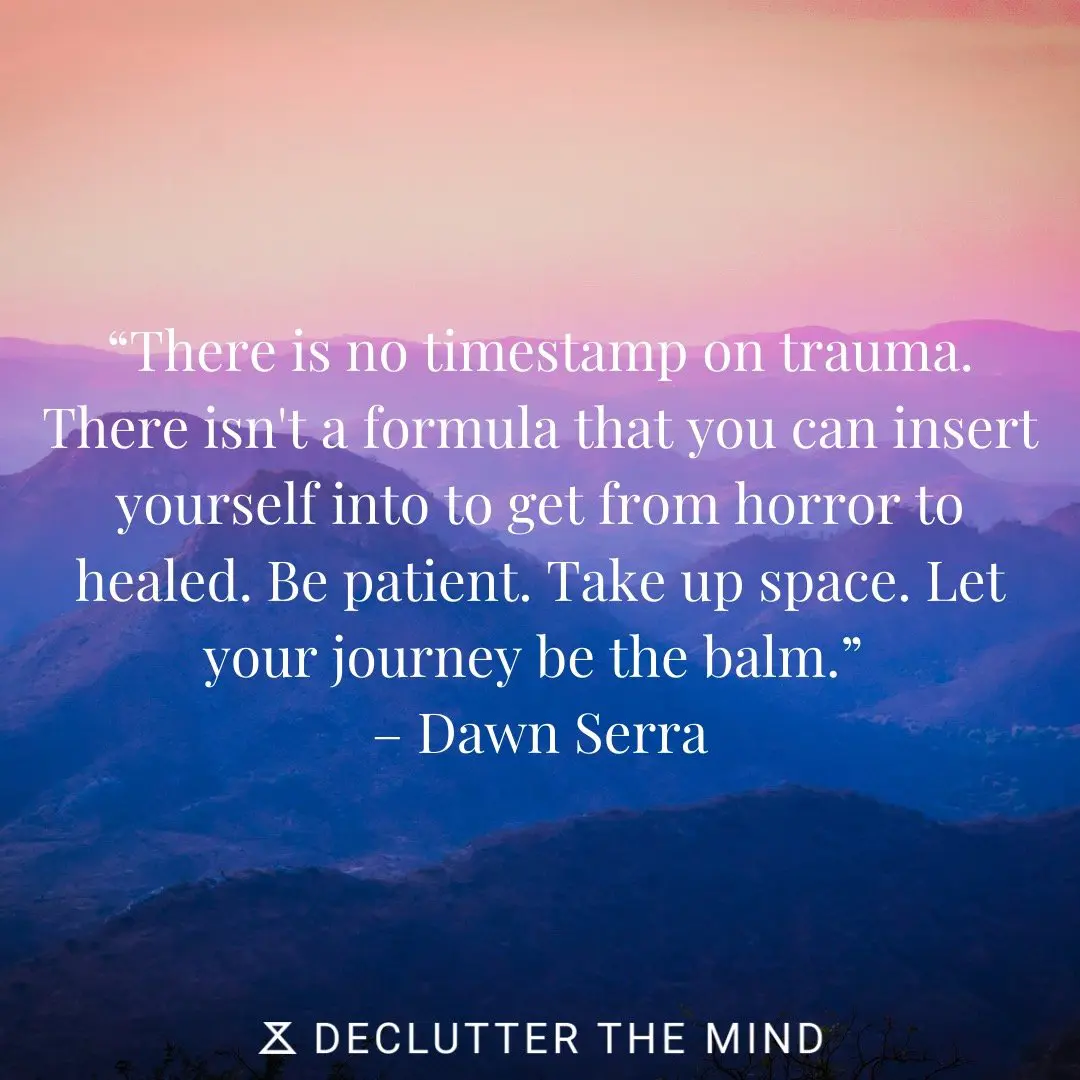
### Quotes About PTSD
1. Unlike simple stress, trauma changes your view of your life and yourself. It shatters your most basic assumptions about yourself and your world — “Life is good,” “I’m safe,” “People are kind,” “I can trust others,” “The future is likely to be good” — and replaces them with feelings like “The world is dangerous,” “I can’t win,” “I can’t trust other people,” or “There’s no hope.”― Mark Goulston MD
2. “Delusional pain hurts just as much as pain from actual trauma. So what if it's all in your head?” – Tracy Morgan
3. “When you're going through these difficult times of chaos and trauma, the most important thing is to keep those who are closest to you together.” – Michael Imperioli
4. “Even in times of trauma, we try to maintain a sense of normality until we no longer can. That, my friends, is called surviving. Not healing. We never become whole again ... we are survivors. If you are here today... you are a survivor. But those of us who have made it thru hell and are still standing? We bare a different name: warriors.” – Lori Goodwin
5. “There are people who come home from war and want to talk about the pain, but no one wants to listen; there are others who want to keep silent and repress the memories, and all their family and friends want is to talk about it. I call this the war veteran reintegration paradox.” ― M.B. Dallocchio
6. “It is only in sorrow bad weather masters us; in joy we face the storm and defy it.” – Amelia Barr
7. “I did not ask for the things I’ve been through. And I certainly didn’t ask my mind to paint and repaint the pictures back in flashback form.” – Michelle Groth
8. “[Healing from trauma](/blog/healing-from-trauma) can also mean strength and joy. The goal of healing is not a papering-over of changes in an effort to preserve or present things as normal. It is to acknowledge and wear your new life – warts, wisdom, and all – with courage.” – Catherine Woodiwiss

If you're currently suffering from PTSD, try our [guided meditation for PTSD](/meditation/ptsd).
### Quotes on PTSD
1. “To close your eyes will not ease another’s pain.” – Chinese Proverb
2. “When you love a girl that has lived trauma, when she realizes that you are choosing to love her, and not hurt her, she will love you back with the same kind of tenacity that it took to walk through fire.” – Tracy Malone
3. “Post traumatic stress injury isn’t a disease. It’s a wound to the soul that never heals.” – Tom Glenn
4. “I survived because the fire that burned inside of me burned brighter than the fire around me.” – Unknown
5. “I wish my head could forget what my eyes have seen.” – Dave Parnell
6. “You wake up every morning to fight the same demons that left you so tired the night before, and that, my love, is bravery.” – Unknown
7. “I’m destroying myself so others can’t,” she said, “and it’s the worst kind of control but it’s the only form I know.” – S.Z.
8. “You are stronger than you think. You have gotten through every bad day in your life, and you are undefeated.” – Unknown
9. “After a traumatic experience, the human system of self preservation seems to go onto permanent alert, as if the danger might return at any moment.” – Judith Lewis Herman
10. “Hold yourself back, or heal yourself back together. You decide.” ― Brittany Burgunder
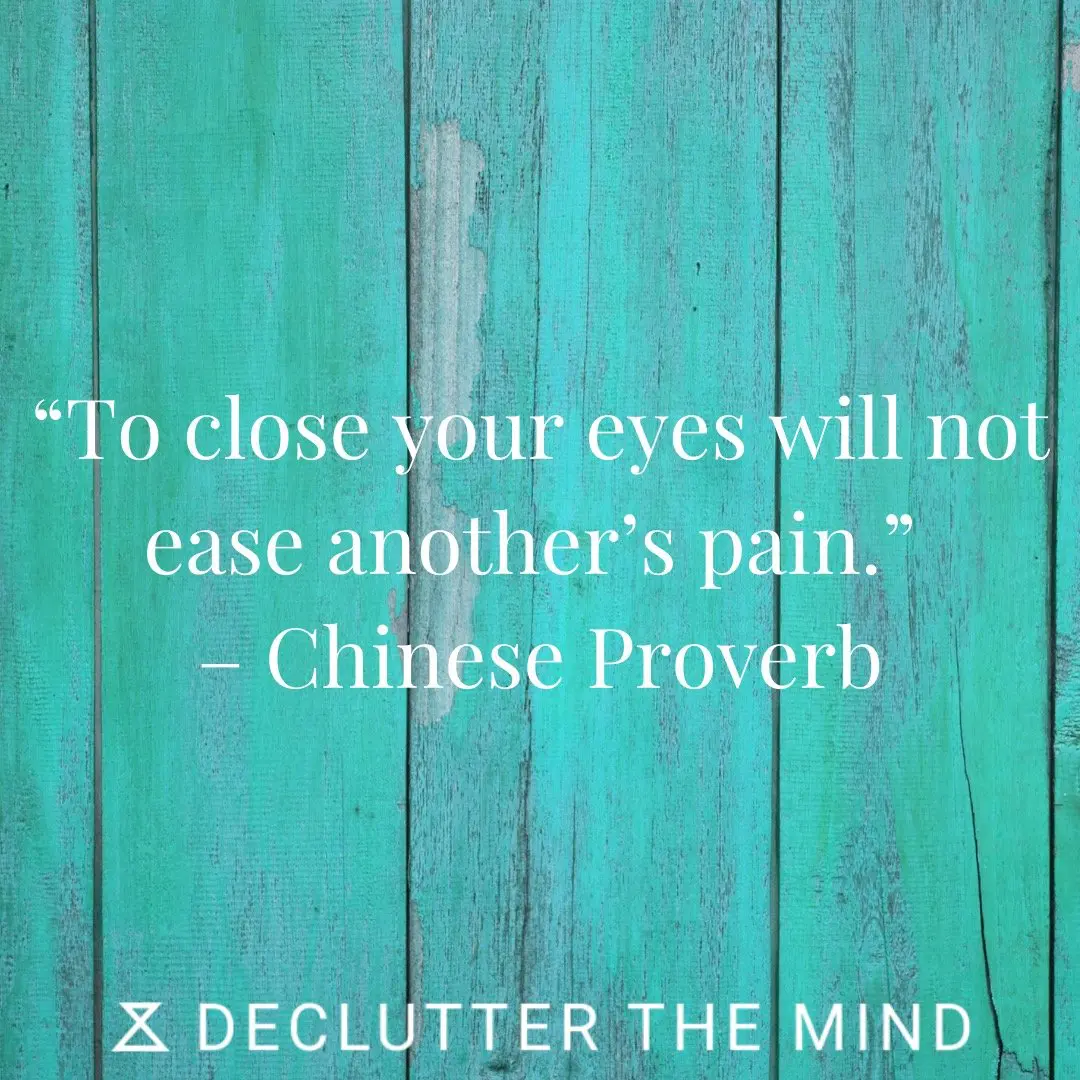
### Positive PTSD Quotes
1. “Instead of saying ‘I’m damaged, I’m broken, I have trust issues.” I say “I’m healing, I’m rediscovering myself, I’m starting over.” – Horacio Jones
2. “The ones who are crazy enough to think they can change the world, are the ones that do.” – Steve Jobs
3. “Every day begins with an act of courage and hope: getting out of bed.” – Mason Cooley
4. “Delusional pain hurts just as much as pain from actual trauma. So what if it's all in your head?” – Octavia E. Butler
5. “Always remember, if you have been diagnosed with PTSD, it is not a sign of weakness; rather, it is proof of your strength, because you have survived!” – Michel Templet
6. “Trauma creates change you don’t choose. Healing is about creating change you do choose.” –Michelle Rosenthal
7. “Here is the test to find whether your mission on Earth is finished: if you’re alive, it isn’t.” – Richard Bach
8. “Courage is resistance to fear, the mastery is fear – not the absence of fear.” – Mark Twain
9. “You never know how strong you are, until being strong is the only choice you have.” – Bob Marley
10. “One day you will tell your story of how you overcame what you went through and it will be someone else’s survival guide.” – Unknown
### Loving Someone with PTSD Quotes
1. “People are not [addicted to alcohol or drugs](https://www.youtube.com/watch?v=v5OCO_GRC80), they are addicted to escaping reality.” – Unknown
2. “People start to heal the moment they feel heard.” – Cheryl Richardson
3. “Punishing someone for PTSD is like punishing someone for cancer. The answer is love and protection.” – Unknown
4. “You don’t have to save me, you just have to hold my hand while I save myself.” – Unknown
5. “The mind replays what the heart can’t delete.” – Unknown
### Combat PTSD Quotes
1. “When angry, count to four; when very angry, swear.” — Mark Twain
2. “War becomes a part of you. It is a feeling just as much as an experience. If you can’t feel it, you weren’t paying attention. And if you weren’t paying attention, you are probably dead anyway.” – Clint Van Winkle
3. “Am I awake or dreaming? It doesn’t matter anymore. When I close my eyes I dream of death and war. When I open my eyes I see death and war.” – Michael Anthony
4. “The brave men and women who serve their country and as a result, live constantly with the war inside them, exist in a world of chaos. But the turmoil they experience isn’t who they are; the PTSD invades their minds and bodies.” ― Robert Koger
5. “The shrinks call it Post Traumatic Stress Disorder. I call it hell. The demons are waiting in each corner, ready to drag me back to the battlefield.” – James Coyne
6. “People generally don’t suffer high rates of PTSD after natural disasters. Instead, people suffer from PTSD after moral atrocities. Soldiers who’ve endured the depraved world of combat experience their own symptoms. Trauma is an expulsive cataclysm of the soul.” – David Brooks
7. “The brave men and women who serve their country and as a result live constantly with the war inside of them, exist in a world of chaos. But the turmoil they experience isn’t who they are; the PTSD invades their minds and bodies.” – Robert Koger
8. “When you ask a veteran when they were last “over there,” know that in many cases, the real answer is “every night.” – Unknown
9. “The victims of PTSD often feel morally tainted by their experiences, unable to recover confidence in their own goodness, trapped in a sort of spiritual solitary confinement, looking back at the rest of the world from beyond the barrier of what happened. They find themselves unable to communicate their condition to those who remained at home, resenting civilians for their blind innocence.” – David Brooks
10. “I feel no emotional connection to these outwardly human gestures. I am not there, because I never left Afghanistan.” ― Jake Wood

### PTSD Awareness Quotes
1. “It isn’t about what’s wrong with you, it’s about what happened to you.” – Unknown
2. “You cannot heal a lifetime of pain overnight, be patient with yourself, it takes as long as it takes to rebuild yourself.” – Unknown
3. “Both tolerance and respect are empty virtues until we actually understand whatever it is we are supposed to be tolerating or respecting.” – Stephen R. Prothero
4. “I’m not lazy. I’m just exhausted from fighting my way through every single day.” – Mimi Love
5. “Some people survive and talk about it. Some people survive and go silent. Some people survive and create.” – Nikita Gill
6. “Wounds won’t heal the way you want them to, they heal the way they need to.” – Dele Olanubi
7. “Healing happens when you’re triggered and you’re able to move through the pain, the pattern, the story and walk your way to a different ending.” – Vienna Pharaon
8. “I’m not weak, I was trusting. I’m not giving up, I’m healing. I’m not [incapable of love](/blog/how-to-find-love), I’m giving. I’m not alone, I see you all here. I’m fighting this.” – Rene Smith
9. “Trauma is perhaps the most avoided, ignored, belittled, denied, misunderstood, and untreated cause of human suffering.” – Peter Levine
10. “I am not what happened to me, I am what I choose to become.” – C.G. Jung
### PTSD Triggers Quotes
1. “Triggers are like little psychic explosions that crash through avoidance and bring the dissociated, avoided trauma suddenly, unexpectedly, back into consciousness.” ― Carolyn Spring
2. “You have to understand that PTSD has to be an event that you experience, a very traumatic event. And actually, there is evidence that brain chemistry changes during this event in certain individuals where it's imprinted indelibly forever and there's an emotion associated with this which triggers the condition.” – Dale Archer
3. “I believe our emotional traumas create triggers. Those triggers are actually a form of PTSD.” – Suzanne Wagner
4. “Just when you think you’re in a good place, one small trigger sends you spiralling down again.” – Unknown
5. “Triggers can happen when you least expect them. When you think all the emotional wounds are healed something can happen that reminds you there is still a scar.” – Alexandra Eva May
6. “If someone else’s reaction seems out of proportion to the situation, it usually means that something else was triggered.” – Dr. Lauren Fogel
7. “The body remembers. Stuffed until an event, a sound, a sight, a touch, a word, or a person awakens them” – Unknown
8. “If storing memories is like putting away groceries, a traumatic event is stored by shoving a bunch of stuff in a cabinet and then any time it gets opened all the stuff falls on your head.” – Unknown
9. “If the wounds on her heart and the bruises on her soul were translated on her skin, you wouldn’t recognize her at all.” – Verona Q
10. “A trigger is the connection between the conscious mind and a buried painful memory.” – Unknown
### Living With PTSD Quotes
1. “Alone with thoughts of what should have long been forgotten, I let myself be carried away into the silent screams of delirium.” ― Amanda Steele
2. “Instead of being ashamed of what you’ve been through, be proud of what you have overcome.” – Dr. Phil
3. “[PTSD nightmares](/blog/ptsd-nightmares) aren't always exact replays of the event. Sometimes they replay the emotions you felt during the event, such as fear, helplessness, and sadness.” – Alice Cariv
4. “Simple little things like a song or smell can be a trigger.” – Selina Bonser
5. “When the alarm bell of the emotional brain keeps signaling that you are in danger, no amount of insight will silence it.” – Bessel van der Kolk, MD
6. “The best way out is always through.” – Robert Frost
7. "I did not ask for the things that I've been through, and I certainly did not ask my mind to paint and repaint the pictures in flashback form." – Michelle Groth
8. “It isn’t in my past. It’s in my everyday.” – Helen Wilson
9. “Over time, as most people fail the survivor’s exacting test of trustworthiness, she tends to withdraw from relationships. The isolation of the survivor, thus persists even after she is free.” – Judith Lewis Herman
10. “Simple little things like a song or smell can be trigger.” –Selina Bonser
### PTSD Recovery Quotes
1. “Recovery is a process. It takes time. It takes patience. It takes everything you’ve got.” – Unknown
2. “I won’t let pain, turn my heart into something ugly. I will show you that surviving can be beautiful.” – Christy Ann Martine
3. “Recovery doesn’t mean the damage never existed. It simply means it no longer controls you.” – Unknown
4. “Healing is not an overnight process. It is a daily cleansing of pain, it is a daily healing of your life.” – Leon Brown
5. “Dont ask the question ‘why the addiction’ but ‘why the pain?’” – Dr. Gabor Mate
6. “You survived the abuse. Now, you’ll survive the recovery.” – Unknown
7. “Talking openly about your mental illness is not seeking attention, it’s seeking help.” – Anonymous
8. “Recovering from PTSD is being fragile and strong at the same time. It’s beautiful medley of constantly being broken down and pieced together. I am painting almost done to completion, beautiful but not quite complete.” – Kate J. Tate
9. “Recovery is about progression, not perfection.” – Unknown
10. “One of the hardest things was learning I was worth recovery.” – Demi Lovato
### Complex PTSD Quotes
1. “People are afraid to heal because their entire identity is centered around the trauma they’ve experienced. They have no idea who they are outside of trauma and that unknown is terrifying.” – Ebonee Davis
2. “It’s not the person refusing to [let go of the past](/blog/letting-go), but the past refusing to let go of the person.” – Sonawane Raj
3. “PTSD is the constant battle of reminding my body and mind that the past, present, and future are not one in the same, and despite what I’m feeling I am safe and in control of my body.” – Shantae Griffin
4. “When all you know is fight or flight, red flags and butterflies all feel the same.” – Cindy Cherie
5. “I have a gaping, painful hole in my soul… where good, loving parents and a normal, safe childhood, should have been.” – Lilly Hope Lucario
6. “There is nothing in this world that can trouble you as much as your own thoughts.” – Unknown
7. “You can’t patch a wounded soul with a bandaid.” – Michael Connelly
8. “I am left with basically nothing. Too [trapped](/blog/feeling-trapped) in a war to be at peace, too damaged to be at war.” – Daniel Somers
9. “When you notice someone does something toxic the first time, don't wait for the second time before you address it or cut them off.” – Shahida Arabi
10. “I have met many, many severely distressed people whose daily lives are filled with the agony of both remembered and unremembered trauma, who try so hard to heal and yet who are constantly being pushed down both by their symptoms and the oppressive circumstances of post traumatic life around them.” – Carolyn Spring
### Trauma Quotes
1. “The drama and the trauma of the relationship you have when you're 16 can mirror the one you have when you're 26. Life repeats itself.” – Taylor Swift
2. “Trauma is a fact of life. It does not, however, have to be a life sentence.” – Peter A. Levine
3. “Repeated trauma requires you to create a system of defenses that protects you. And these protections were so important. They saved your life. They protected your real self.” – Gretchen L. Schmelzer, PhD.
4. “A great loss brings up an emotional storm that opens up a hidden reservoir of childhood pain” ― Pete Walker
5. “Some people's lives seem to flow in a narrative; mine had many stops and starts. That's what trauma does. It interrupts the plot. You can't process it because it doesn't fit with what came before or what comes afterwards.” – Jessica Stern
6. “There are wounds that never show on the body that are deeper and more hurtful than anything that bleeds.” ― Laurell K. Hamilton
7. “When you can tell your story and it doesn’t make you cry, you know you have healed.” – Karen Salmansohn
8. “There are all kinds of addicts, I guess. We all have pain. And we all look for ways to make the pain go away.” ― Sherman Alexie
9. “Just like there's always time for pain, there's always time for healing.” ― Jennifer Brown
10. “Grief is messy. It's traumatic. Devastating. Confusing. Exhausting. Grief is a natural process of our human experience. May you find comfort in these unexpected places along your journey.” ― Dana Arcuri
## Conclusion
These PTSD quotes tell a very real story of how life with PTSD can be. It can be hard to face the truth when you’re experiencing fight or flight. But the important thing to remember is you are not alone. Many people have survived trauma and come out stronger in the end. Use these quotes about PTSD to help you heal your pain and come out stronger.
---
# 15 Relatable Songs About PTSD That’ll Help You Overcome It
- URL: https://declutterthemind.com/blog/ptsd-songs
- Description: PTSD is one of the most difficult challenges a person can experience. Music is a way to help cope. Here's 15 PTSD songs to help.
- Published: 2025-06-25
PTSD is one of the most difficult mental health challenges a person can experience. And as someone who battled it 11 months after a sexual trauma, I know how big of a role music played in helping me through the difficult time. I want to warn you that some of these songs may trigger you (some triggered me too). You don’t have to listen to any of these songs if you don’t want to. I tried adding a few [positive songs](/blog/positive-songs) to help you heal as well and I’ll make a note on those songs about [PTSD](/meditation/ptsd) if you’d rather focus on a more positive playlist.
PTSD songs can help you feel like you’re not the only person struggling. Some of these lyrics may pin point the exact emotions you’re feeling. Some of the music might describe the emotions you’re feeling. Here are 15 songs about PTSD that’ll help you overcome it.
https://www.youtube.com/watch?v=hKS1SG_PZD0
### #1. Safe and Sound - Taylor Swift
This song came out the year I was raped and even though it was from the Hunger Games soundtrack it haunted me as I listened to it on my way to my “safe place.” I played this song on repeat a lot. The lyrics “you and I will be safe and sound” accurately describe what you want to feel when you’re struggling with PTSD: a sense of safety. I found the lyrics “when all your shadows almost killed your light, I remember you said don’t leave me here alone” accurately described the fear of living alone while struggling with PTSD. The music for this song is haunting so trigger warning if you don’t really like dark music. This song isn’t a typical Taylor Swift song. But if you’re currently suffering from PTSD for the first time, you might find this song about PTSD accurately taps into what emotions you’re feeling.
### #2. Runaway - Kanye West
This album was a gift my rapist gave to me before the assault. This song basically sounds like a song about an abusive relationship from the perspective of the attacker. It’s still hard to listen to, sometimes I can’t even listen to it in its entirety. The lyrics “I-I-I-I did it, all right, all right, I admit it. Now pick your best move you could leave or live with it” are particularly triggering for rape victims. And even though it’s hard to listen to, I found I was able to gain closure and let go. The traumatizer will never apologize to you even if they say they will. This PTSD song is the next best thing for getting an apology and closure about a trauma so you can heal and move on.
### #3. Discombobulate - Hans Zimmer
This song has no lyrics but the music accurately depicts what PTSD feels like. The song is particularly triggering. It’s intense, creepy, and dark. If you’re constantly waking up from nightmares you probably don’t want to listen to this song about PTSD. I don’t know why but I always picture creepy clowns when I hear this. This is a good song to listen to when you’ve already battled PTSD and you’re a bit stable and you want to trigger yourself to gain strength in yourself.
### #4. Survivor - Destiny’s Child
This PTSD song is ideal for people looking to gain confidence in their decision to leave an abusive relationship. It’s basically the ultimate power song for victims to recognize that they’re strong and they made the right decision. The lyrics “Thought I would self-destruct, but I’m still here” are really powerful lyrics for people battling suicidal thoughts as they struggle with PTSD. This is a [positive song](/blog/positive-songs) with minimal triggers you can add to a positive playlist to help you heal with your PTSD. Ultimately, the message focuses on the fact that you’re not a victim, you’re a survivor and that message can help you gain more strength in yourself.
https://www.youtube.com/watch?v=Wmc8bQoL-J0

### #5. You Gotta Be -Des’ree
Another positive song about PTSD is You Gotta Be. The lyrics “you gotta be tough, you gotta be stronger, you gotta be cool, you gotta be calm, you gotta stay together” might be the hardest thing to do as you battle your demons, but the lyrics act as a positive mantra that you can repeat to yourself as you heal. This might be a good PTSD song to listen to as you approach the end of the PTSD challenges. Maybe you’re having fewer nightmares or you find you’re leaving your house again. This can be a powerful mantra song to listen to.
### #6. Jesus Take the Wheel - Carrie Underwood
Some people experience PTSD after traumatic car accidents. This song can help you recover from your trauma by putting your faith in a religious figure instead. While not everyone believes in the same faith, you can interpret the lyrics as putting your faith in the universe, your own spirtual leaders, or just letting life run its course. The lyrics “I’m letting go, so give me one more chance” can be powerful for people who are ready to let go of their trauma and go back to facing their fears and living the life they want to so that they can be saved from “the road I’m on.”
https://www.youtube.com/watch?v=lydBPm2KRaU
### #7. Zombie - The Cranberries
A song about PTSD for people in the military is the song Zombie by the Cranberries. It can be triggering as it talks about war. The lyrics “in your head, they are fighting, with their tanks, and their bombs, and their bombs, and their guns, in your head, in your head, they are crying.” Fighting in a war and killing civilians can be particularly difficult with images running through your head. The lyrics may play while you experience flashbacks. If you’re struggling with flashbacks, this song may make you feel worse. But it may also feel relatable. If you listen to this song, try to listen to it with a therapist in the room or with a friend as it can be difficult to listen to alone.

### #8. A Little Bit Stronger - Sara Evans
A PTSD song about recovery is this Sara Evans song. The lyrics “But I brushed my teeth anyway, Got dressed through the mess and put a smile on my face I got a little bit stronger” are perfect for celebrating the little wins as you recover from PTSD. Even a little bit of [self care](/blog/self-care-ideas) can help you recover from PTSD. Getting a little bit stronger is all you have to do. Always aim to do one tiny thing that makes you a little bit better each day. You’ll still have challenges to face tomorrow but those baby steps make a world of difference when overcoming PTSD.
### #9. Not Ready to Make Nice - Dixie Chicks
This song about PTSD is unlike any other ptsd song on this list. It’s the ultimate song for people experiencing anger as they battle PTSD. The song’s lyrics “I’m not ready to make nice, I’m not ready to back down, I’m still mad as hell and I don’t have time to go round and round and round” are ideal for people who been in abusive relationships. Maybe this is the song you listen to before going to trial against an ex or an attacker. It encourages forgiveness but shows that you don’t have to back down just because you’ve forgiven someone.
https://www.youtube.com/watch?v=pojL_35QlSI
### #10. Brave - Sara Bareilles
After a rape, doctors and social workers often tell you horror stories so you don’t report the crime to police. I wished this song was out after my trauma. The song is about being brave enough to tell your story. This is a perfect song for people struggling with PTSD who act brave by seeking professional help. Or a victim of a trauma who decides to press charges against their attacker and speak up about the issue. The lyrics “Sometimes a shadow wins but I wonder what would happen if you say what you wanna say and let the words fall out honestly I wanna see you be brave.” Sara Bareilles almost acts like your friend in the song encouraging you to be brave and stand up for yourself. So if you feel like no one is on your side and you’re scared of being brave, this song about PTSD can help encourage you to finally speak up.
### #11. Praying - Kesha
This song about trauma is Kesha’s song about rape after she experienced it herself. This song is about the aftermath of a rape when a person has begun to heal. The lyrics “No more monsters, I can breathe again” are especially relatable to those who’ve suffered trauma. Another set of powerful lyrics are “you brought the flames and you put me through hell, I had to learn how to fight for myself” are quite telling. An attacker doesn’t realize the damage they do with their behavior. PTSD really does feel like hell. And to overcome it, you need to learn how to fight. And to stand up against someone who did that kind of damage, you need to master standing up for yourself.
### #12. Whataya Want From Me - P!nk
This song about PTSD has versions by both Adam Lambert and P!nk. You can hear Adam Lambert’s version as well if you like. The lyrics are probably some of the most relatable lyrics on this list. “Just don’t give up, I’m working it out, please don’t give in, I won’t let you down, It messed me up, Need a second to breathe, just keep coming around, whataya want from me?” This basically sums up the main conversation a person with PTSD has with those close to them. When battling PTSD you’re literally struggling to keep yourself around you just need time to ‘breathe’ and heal. This is a song about begging for patience from those you love. The Pink version changes the lyrics to ‘he messed me up’ which changes the lyrics to make it more about an abusive relationship.

### #13. Keep Breathing - Ingrid Michaelson
Keep Breathing is a great example of a PTSD song for a war veteran. The lyrics “[people are dying](/blog/songs-about-death), I close my blinds” talks about how difficult it is to watch people die but you’re forced to pretend like it doesn’t affect you. The most powerful part of the song though is when the lyrics “All we can do is keep breathing” is repeated in the song. Even I’ve cried to this song while going through especially difficult PTSD moments. It’s a great song that reminds you that all you can do is stay alive and focus on the little things like breathing as you go through the “storm.”
### 14. Silence – Marshello feat. Khalid
Silence is a powerful PTSD song for those who’ve suffered in an abusive relationship. The lyrics “I found peace in your violence, can’t tell me there’s no point in trying, I’m at one and I’ve been quiet for too long” are especially powerful. It’s also a positive message that you may one day find peace after being in an abusive relationship. And when that day comes you’ll finally be strong enough to speak up instead of being quiet. This song is very relatable to people who tried to be loving but always felt like a “burden.”
### 15. Til It Happens To You – Lady Gaga
This PTSD song is about being a rape survivor. The lyrics are about how people always tell you you’ll be fine but in the moment you’re struggling. But the challenge is that the people telling you to be strong have never been through what you’ve been through. Lady Gaga shares powerful lyrics, “'Til you're standing in my shoes, I don't wanna hear nothing from you, from you, from you, 'cause you don't know.”
https://www.youtube.com/watch?v=ZmWBrN7QV6Y
## Conclusion
Songs about PTSD can help alleviate some of the frustrations we experience during the aftermath of a trauma. These relatable songs can help remind you that you aren’t alone in your struggles. If some songs prove to be too difficult to listen to, feel free to follow along to one of our guided meditations to help lower your stress levels. You might also want to seek professional help if your PTSD symptoms prove too much to bear. May you find peace from your trauma soon.
---
# PTSD Treatment: How to Treat PTSD in 2025
- URL: https://declutterthemind.com/blog/ptsd-treatment
- Description: In this article, we share the PTSD treatment options available to help you cope with trauma effectively so you can heal in 2025.
- Published: 2025-06-25
Trauma recovery is often a slow and challenging process that calls for a lot of work from the survivor and those administering PTSD treatment. It's worth [noting](/blog/mental-noting)that there are diverse treatment options for post-traumatic stress disorder (PTSD). What works for one survivor might not work for another. Various factors, such as the severity of the trauma and the survivor's responses to the trauma, can result in varying levels of effectiveness in PTSD treatment. In this article, we'll elaborate on what PTSD is and what the various PTSD treatments are.
## What is PTSD?
PTSD is an anxiety disorder that arises in survivors of trauma.
The human body contains various hormones. They control when we sleep, when we wake up, when we eat, when we fight, run, or even feel excited.
PTSD results from the body producing hormones from the pituitary glands, adrenal glands, and hypothalamus. A combination of these hormones results in the body's response to a traumatic event. The base reactions are fight, flight, and freeze.
The production of the fight or flight hormones in response to a traumatic event often results in increased heart rate, breathing, and muscle tensing. You might go into a state of panic, resulting in a narrowed vision and temporal loss of short-term memory. In cases of sexual assault, many survivors report the freeze response where they may feel paralyzed or have an out-of-body experience that prevents them from fighting or flighting.
PTSD is an after-effect of trauma, a situation where the above-stated responses continue long after a traumatic event. The symptoms typically last weeks, months, and years depending on an individual and the level of PTSD treatment they receive. Symptoms can come in the form of [PTSD nightmares](/blog/ptsd-nightmares) or [panic attacks](/blog/how-to-stop-panic-attack). Your mind either recreates the traumatic event, or the environment around you mimics the traumatic scene.
You might experience triggers, such as smells, objects, and more that remind you of the experience you had. For instance, a person might associate cold weather with their trauma if it occurred in the winter. They may begin to feel seasonal PTSD when the temperature starts to freeze.
PTSD can is diagnosed if these symptoms persist for more extended periods. Study shows that PTSD is quite common, and [20](https://www.therecoveryvillage.com/mental-health/ptsd/related/ptsd-statistics/) percent of trauma survivors develop symptoms after a traumatic effect.

## Four PTSD Treatment Options
Much research has been conducted into PTSD, resulting in several treatment options for the anxiety disorder. Some of these treatment options include:
1.Psychotherapy
2.Medication
3.Neurotherapy
4.Other coping tools for home use
All these PTSD treatment options have been under study for years now, and they have proved effective in treating PTSD.
## Most Effective PTSD Treatment Plans
Therapy is an effective method of treating PTSD. A licensed psychotherapist or trauma social worker will be able to provide you with therapy-based support for your PTSD treatment. In therapy, you will:
1. Learn the coping skills for dealing with PTSD
2. Improve and minimize the symptoms of PTSD
3. Restore your confidence and [overcome low self-esteem](/blog/how-to-overcome-low-self-esteem)
There are two main types of PTSD therapy treatment options, namely, psychotherapy and neurological therapy. Under each treatment type, there are various therapy techniques therapists use to treat PTSD.

### Psychotherapy PTSD Treatment
Psychotherapy entails psychological methods such as talking or continued interaction with the traumatic event, intending to alter behavior and response to the traumatic events. It helps shed light on the events of the traumatic scene, enabling the victim to tackle them, thus overcoming them.
Psychotherapy is an effective method of treating PTSD. It allows you to talk about or confront your trauma, which will enable you to process the events better. This PTSD treatment is exposure aimed at helping you understand what causes panic attacks or nightmares. And by getting to the root cause of the trauma, you can confront it and handle it better.
Several psychotherapy methods, such as cognitive processing therapy, prolonged exposure therapy, and group therapy sessions, are effective too.
### Cognitive Processing Therapy (CPT)
CPT is a 12-session therapy process that entails working with your psychotherapist to process the traumatic event. You can either engage in writing or talking sessions, enabling you to go through the entire traumatic experience. The process allows you to gain a better and healthier insight into the root cause of the trauma.
Cognitive processing therapy is centralized on the notion that your mind didn't fully process the chronology of events during the traumatic event. The incomplete processing results in cloud understanding, which might result in trauma.
The belief is that after the events, you tried to process the events to understand what affected you. In processing, it's common for most people to come to some conclusions that might not be healthy.
And the effect of these unhealthy [negative thought](/blog/how-to-stop-negative-thoughts) patterns is negative behavioral patterns. For example, you might conclude that the trauma was a result of trusting people. By processing the events, you might then determine that it's wrong to trust people.
CPT aims at helping you understand the chronology of events and disentangle the mumbled-up process to help you know what affected you. It allows you to deconstruct the unhealthy conclusions and healthily reconstruct them.
Often, when we try to process something on our own, we'll repeat the same thought pattern in our mind over again, unable to find the way out. Having a professional as a sounding board can help break up the cyclical thoughts you're contemplating. Thinking about trauma non-stop looking for new patterns or signs isn't the way out of it.

### Prolonged Exposure Therapy
Prolonged exposure therapy is similar to CPT in that it centers around the idea of changing unhealthy coping habits resulting from trauma. It helps untangle the events of the traumatic event to increase understanding.
To help alter the after-trauma thinking pattern, a prolonged exposure therapist commences by giving you some education on PTSD and its symptoms. The therapist then teaches you some healthy calming and [coping mechanisms](/blog/coping-mechanisms) to help you [heal from trauma](/blog/healing-from-trauma).
After successfully learning some [coping mechanisms](/blog/coping-mechanisms), the therapist then formulates a hierarchical list of your fears, beginning with the least scary one up to the scariest ones. Then your therapist will start helping you confront your fears in that order. In this mode of therapy, you can't advance to another higher fear in the list unless you convince your therapist that you can handle the current anxiety adequately.
The process continues for months, which you learn to cope with your traumatic memories better. The end game of this type of PTSD treatment therapy teaches you that the traumatic memories aren't dangerous, and avoidance isn't the best way to deal with them.
Having someone to talk about your anxieties with can help you realize that your mind may be magnifying fears. Often, people catastrophize in a high state of stress. PTSD is very stressful, so naturally, we catastrophize more. The PTSD treatment that walks you through your anxieties reminds you of how unlikely your worst fears will happen, will eventually [calm the mind](/blog/how-to-calm-mind) with time.
### Neurological Treatment Therapy
PTSD has many side effects, and a lot of these effects are neurological. Therefore, neurological PTSD treatment therapy focuses on the nervous system and brain, intending to reduce the symptoms of PTSD and restore normal brain function and response.
The most common methods of neurological PTSD treatment therapy include:
### Eye Movement Desensitization and Processing
This type of neurological therapy, also known as EMDR, is a method that entails repetitive eye movements aimed at interrupting and reorganizing the trauma-related memories you harbor.
EMDR usually begins with talking with your therapist to point out your traumatic memories. The therapist then sieves down to find the most traumatizing memory or fear.
With the exact trigger in mind, the therapist gets you talking about the traumatic memory while directing you through a row of vertical eye movements. As you continue to speak and process the traumatic event, the neurological eye movement allows you to reframe it to a more positive memory. Research by the National Institute of Health (NIH) concluded that EMDR helps significantly reduce the effects of PTSD.
Overall, it is a cost-effective method with few side effects, highly recommended by WHO as one of the most effective PTSD treatment methods.
### Emotional (Tapping) Freedom Technique
Emotional tapping is a clinical therapy technique resembling acupressure that entails the use of massage treatment. The massage treatment applies physical pressure to specific body parts intending to reduce muscle tension.
Tapping mainly focuses on certain parts of the body such as the head, face, hands, or collarbone while simultaneously reframing the memories of the trauma. Typically, this type of PTSD treatment is used together with other therapy techniques such as exposure therapy.
Emotional tapping reduces the adverse side effects of trauma, such as depression and anxiety among victims. It's also known to reduce the stress levels in your body, making it a very effective treatment method for PTSD.

## Conclusion
Post-traumatic Stress Disorder or PTSD is an after-effect of witnessing traumatic events, and it's known to create adverse side effects among victims. It's essential for people living with PTSD to seek professional help to better cope with trauma.
The various PTSD treatment options available include medication or therapy to help reduce the effects of PTSD. The most prominent methods of treatment for PTSD include psychotherapy and neurological therapy. Both unravel the events of the traumatic event, then help reorganize them more positively. It helps curb the negative side effects of PTSD.
It is advisable for people showing signs of PTSD to seek professional help to treat PTSD. PTSD treatment is necessary to improve your life quality and equip you with the tools needed to deal with trauma better. It's also worth mentioning that you have a choice to choose the best PTSD treatment method for you, but you should decide after talking to a professional who will suggest the right treatment option for you. Between your PTSD treatment appointments, you can try this [guided meditation for PTSD](/meditation/ptsd).
---
# 13 Reasons to Live When You Feel Like Giving Up on Life
- URL: https://declutterthemind.com/blog/reasons-to-live
- Description: Life gets difficult and thoughts can begin to overwhelm us. Here's 13 reasons to live when you feel like giving up.
- Published: 2025-06-25
There are months where we feel like we’re trapped in a dark pit. No light at the end of the tunnel. Every day is the worst day of your life. Your whole world just collapses in on itself. We might’ve spent years trying to hold ourselves together, being strong for an entire army of people. But some days are so tough, that we can no longer be strong enough just for ourselves. Most people begin contemplating suicide when they feel hopeless. So, in this article, we’re going to share reasons to live to help give you a bit more hope in your tough situation and remind you that we really need you to hold on during this unsettling time.
### 1. Your Life Purpose
The happiest people are driven exclusively by their life purpose. But most people aren’t happy. Some think that you discover your life’s purpose by trying a million things. Or you think you’ll find your soulmate by going on a million, skim the surface dates. And so if you don’t know your life’s purpose, I’ve got good news for you. Today, is the day you’ll discover it. Most people realize their life’s purpose when they experience the worst hardship.
You want to know the easiest way to dig yourself out of your tough spot? Do an [act of kindness](/blog/acts-of-kindness) every day for the rest of your life. If you do that, I promise you, you will enjoy living again in a matter of months. You’ll find fulfillment and joy in ways you’d never expect. Even if you’ve been diagnosed with a terminal illness, you’ll find that simple purpose will help you live a little bit longer. How do I know? Well, that’s what I started doing a year ago when I hit rock bottom, and today I’m the happiest person I’ve ever been. When you wake up in the morning, ask yourself, “How can I make someone’s day today?”
### 2. Emotions are temporary

While moods can last a while, emotions are fleeting. Right now, you’re probably feeling overwhelmed with everything you’re dealing with. Maybe you’ve got a million negative emotions pent up inside of yourself. And it’s slowing destroying everything in you. Sometimes, you just need to let those emotions out. Talk to a friend or family member about how bad your mental health is. Maybe set up a [live chat with a trained counsellor](https://suicidepreventionlifeline.org/talk-to-someone-now/) to help you clear your head.
When your mind is spiralling out of control, this isn’t the time to make a decision. This is the time to get help. Don’t make a permanent decision over a temporary problem or emotion. If you give yourself an opportunity to get through this, you will. Remembering that hardships, illnesses, emotions, and bad years are temporary is one of the reasons to live another day more.
### 3. There’s always a light at the end of the tunnel
Another reason to live is that there’s always a light at the end of the tunnel – even if you can’t see it. There are periods in life where you’ll [feel trapped](/blog/feeling-trapped) in a dirt pit. But as someone who’s climbed out of them, I can tell you that there’s always a light at the end of the tunnel. Sometimes, life throws some pretty difficult obstacles our way. Sometimes the whole purpose of an obstacle is to destroy everything you are today to create the best version of yourself for tomorrow. And yeah, it can be tough to watch everything you are collapse.
But one day, you’ll look back at your current situation, hug yourself and think “wow, that was a painful and tough experience. I never realized how much good would come out of that moment but it was brutal to go through.” You’ll likely feel a huge sense of compassion for that former self because you can vividly remember the suffering that went into that experience. But you’ll be able to use that experience to help others.
### 4. Focus on improving your mental state

When you’re looking for reasons to live because you can’t find hope in your own life and current situation, concentrate some energy on improving your mental state. No epic biography tells the story of a person who experienced hardship and then called it quits. Instead, the stories that make the history books are those of people who struggled so much, didn’t think they had it in them to thrive, but persevered anyways.
What no one ever tells a suicidal person is that sometimes your brain sucks. Sometimes, an unhealthy brain tells you that you’re worthless. A broken brain might surface toxic thoughts telling you that giving up is the best option. Maybe your brain is catastrophizing a situation. It probably started out pretty small, and your brain just kept escalating it until you started seeing a problem magnified 100x with everything that’s going wrong right now.
How do I know? Well, this happened to me last year. I saw a psychiatrist who doubled my medication and within two days my brain went silent. And I was able to start building myself back up again. And yes, there was still a lot of chaos that I had to deal with over the following six months but at least I wasn’t at war with myself anymore.
### 5. Look at how much of the world there’s left to explore
Even if you were in your 90’s and lived a life filled with love, excitement, and drive, there’s still so much to explore, see, and love in the world. During periods of pain, sometimes we develop an apathy to life. As if we’ve seen or done it all, leaving us feeling empty. In those periods, it’s important to remember that sometimes that left brain of ours is putting some toxic thoughts into our heads. Maybe it’s time to explore some right brain activities like meditation, compassion, kindness, and empathy. The one thing that keeps me hanging on is that there’s always a new person who’s day I could brighten. There’s always another opportunity to make someone laugh. There’s never not a moment where you could make someone smile. And even if every other aspect of your life were the same dull events for years on end, giving your love and kindness to others would make each day feel new and fresh. And the craziest part of this is that by focusing on others, your brain stops beating you up so damn hard, and you begin to heal.
### 6. Help someone who’s suffering

One of the best reasons to live is that you can take all your experience with suffering and help those who are currently struggling or have mental health issues of their own. If you went through a toxic relationship, were bullied badly, watched a loved one die, survived a terminal illness, or any other huge life challenge, you can help so many people. There might be moments when you think to yourself, “I’m not strong enough to do that.” You’d be surprised at how healing it is to help someone going through what you’ve gone through. By putting on a brave face to give hope to someone else, you end up hearing your own words that’ll help you climb out of your own dark pit.
### 7. Your legacy
One of the most common reasons to stay alive is to have a positive and lasting legacy. This is particularly relevant for suicide attempt survivors and those struggling with suicidal thoughts due to a mental health condition. Right now, you might be thinking to yourself, "My legacy is tarnished; there's no way I can rebuild this." So, let's talk a bit about people with bad reputations who've overcome that and managed to bring joy back into their lives.
First, there's Robert Downey Jr., a suicide attempt survivor who was cancelled by Hollywood before it was cool to do that. He had a severe drug addiction and behavioral problems. Eventually, someone saw that he had changed and gave him the opportunity of a lifetime. The guy became a superhero (literally): Iron Man. His resilience and transformation inspire many to stay alive and fight for their own well-being.
Taylor Swift also went through a period of a bad reputation, which could have triggered suicidal thoughts. She decided to step out of the spotlight and focus on her creative outlet: writing a new album. She eventually came back into the spotlight in full force. The snake emojis trolls would leave in her social media comments were used throughout her entire marketing campaign. Her story is a testament to the power of taking time for oneself and addressing mental health conditions.
The point is: instead of letting your legacy be about the story of how you gave up on life, take some time out to invest in yourself, to heal, and to come back stronger. Embrace the opportunity to stay alive and tell the story of how when life knocked you down, you trained, learned to jump back up, and found reasons to live and ways to bring joy back into your life.
### 8. Your pet

When you're thinking about finding new reasons to live, especially when grappling with mental illness or facing the challenges of teen suicide, your pet might be a good bet. Many people who feel suicidal often feel lonely. Some have lost significant others and spend too much time in their heads, succumbing to the weight of personal expectations. Believe it or not, those who own pets often find that their pets become their reason for living, helping to mitigate the impact of these struggles.
Pets, in their own way, contribute to disease control by providing companionship, emotional support, and a sense of responsibility. Dog owners often receive so much love from their pets, which can be a powerful antidote to the isolation that mental illness and suicidal thoughts can bring. Their dog is constantly excited to see them, offering a constant reminder that life brings joy and affection. They encourage you to go for a walk every day so you can get some fresh air and maybe some sunshine too, both of which are beneficial for your mental health.
Owning a pet gives you something to care about and love. Plus, a pet can really help you step out of your own negativity vortex in your mind.
### 9. All circumstances change
Bad moments in life are temporary. I know, I know, the pain is at an all time high and this suffering has been lasting for quite a few months now. You can’t take it and you’re reaching your boiling point. Sometimes you’ve got to make a few adjustments in your life to make the chaos and the pain a bit gentler. Instead of scrolling those sad Instagram posts, look up [acts of kindness](/blog/acts-of-kindness) on Instagram. Find social media content about good things happening in the world. Start reading positive books about compassion, kindness, creativity.
Right now, it’s hard for you to see that there’ll be an end to your pain naturally. That’s because your thoughts or your left brain is screaming so loud trying to keep you down. To shut down your thoughts, you need to develop your right brain a bit more. As you develop your right brain by going out of your way to be compassionate, kind, and creative, in a few months you’ll notice you’ve silenced almost all of your toxic thoughts. And you’d be surprised to realize that you really did overcome a bad situation. And all you had to do was some right [brain exercises](/blog/brain-exercises) to fix your mental health.
### 10. You assign the meaning to your life
Many times when people are looking for reasons to live, it’s because they feel like life has no meaning. The thing that they fail to see is that you have the power to assign the meaning. You don’t need to believe in a greater power to have meaning in life. You don’t even have to believe that this world is real to have meaning in life.
Instead of looking for meaning, focus on just enjoying the opportunity. Look, you’re alive. What are the freaking odds. Even if this was all a simulation, how cool would it be to explore new places, try different foods, push your body to greater heights, love someone with all the compassion in your heart, or the joy from seeing someone’s face light up from something you said or did that was out of no expectations kindness. The meaning of life is just to be lived. Have you really given yourself a chance to do that yet?
### 11. We’re all part of one big community

Every single person in society plays a role. We’re all interconnected with each other in millions of ways. When you lose one member of your community, those thoughts, ideas, experiences, and love that they shared go away with it. When someone we love dies, a part of that was tied to them dies with them. So, if you’re looking for reasons to live, staying alive as long as you can to keep the world whole is a pretty selfless reason. We need you.
We need to hear about that funny joke you read last night that you'll share with your friends. We need that pep talk that you’ll be giving as soon as you overcome this, because one day we’ll be going through what you’re facing right now. We need your perspective on this problem that we’re trying to solve at work that we just can’t figure out. We need your love, kindness, hope, and compassion because even though you sometimes make mistakes, you’ve got so much love in you to share with the world. Please don’t rob us of that.
### 12. To Experience Love
In an episode of Modern Love, you learn the story of an elderly woman who fell in love again after her husband died. The love she experienced with her new partner as a senior was different from her husband but still a beautiful experience. When we lose a spouse or life partner, we begin to feel hopeless as if love will never be the same again. And it won’t be, that's true. But you can have the opportunity to experience different types of love with new partners throughout your life.
Love should be one the reasons to live that motivates you to hang on a bit longer. We all [find love](/blog/how-to-find-love) multiple times in our lives. Sometimes romantic, other times companionship. Love is the best reason to hang on. Even if you feel like you’re not getting enough of it right now, there is always someone out there excited to meet someone exactly like you.
### 13. To Discover Who You’ll Become

Studies show that the expression “you’ll never change” or “don’t ever change” are physically impossible. Think about it. Do you have the same personality as when you were a baby? How about when you were five? 16? 25? 37? Nope? Didn’t think so. We’re constantly changing throughout our whole lives. Every experience we live through shapes us in a new way.
But here’s the best part: you’re the author of your life story and you get to decide how to write your story. You can use this moment of pain and suffering to level you up to greater heights, accomplish things you never knew possible, and experience a life better than your dreams could’ve ever imagined. And even if you were in your 60s or 100s, you can still accomplish any big life goal you have for yourself. As long as you’re alive, you can do anything. Imagine looking back at this moment years from now and instead of feeling sorry for this person, you felt grateful for the person you were because you took a bad moment and created a new opportunity for yourself. Imagine how proud you’ll be of yourself for making the best of a bad situation.
## Conclusion
Beyond these 13 reasons to live, there are many more that can keep you alive longer. You’re a miracle. Everything in this world is a miracle. While suffering, a bad year, and tragic loss can be unbearable to deal with, these are the moments that define who will we become. Many people can take their tragic stories to become living legends. And you deserve a place with the greatest people in history. You can shape your story to have more happy moments in it. Your life may be very different right now than it was before which is causing you so much discomfort. But you have the power to build yourself back up to become the best version of yourself as humanly possible.
---
# 28 Relationship Goals That’ll Strengthen Couples Love for Each Other
- URL: https://declutterthemind.com/blog/relationship-goals
- Description: List of Relationship goals that every couple should set out to have to create a healthy and happy relationship with one another.
- Published: 2025-06-25
Relationship goals can help you [set boundaries](/blog/setting-boundaries), a stronger support system, and a loving relationship with your significant other. All relationships are made differently with various personal goals. We decided to create a list of relationship goals that help create a stable relationship and get to the root of what matters most for lifelong happiness. After all, not all couples will want to follow traditional paths but still want to be in it for the long-term.
## What Does Relationship Goals Mean?
Relationship goals means that a couple has set a high standard of a highly functioning relationship. For example, you might see an elderly couple holding hands on a walk and look at someone and say “relationship goals.” In this case, it would mean that still being affectionate with your partner in old age would be the goal you strive for.
### 1. Communicate Your Needs Well
One of the relationship goals that’s highly important is being able to communicate well. When you disagree, do either of you blow up in anger? Have you ever screamed “you’re not listening to me” only to be told “I am listening!” Most people think communication is merely the act of talking and listening. Believe me, it’s not. Communication is hard. Virtual communication like texting is way harder. When you can’t read tone, body language, or hear exactly how something was said, words on your phone can lead to an argument. If you find yourself having a lot of communication problems, consider reading communication books like [Nonviolent Communication](https://www.amazon.com/Nonviolent-Communication-Language-Life-Changing-Relationships/dp/189200528X) by Marshall B. Rosenberg. You’ll learn how to better communicate your needs so you can finally be heard.

### 2. Continue Being Yourself
In the early stages of a committed relationship, you need to have a solid understanding of who you are and continue to evolve as yourself in the years to come. Relationship goals are so important, but if you blend into another person, losing yourself in that relationship will only be devastating. Spend time alone occasionally. Develop your own interests and hobbies. But most importantly, you'll also want to respect your partner's own interests too. If they spend hours playing video games or going golfing with friend, use that time to do something you enjoy doing. While you can occasionally enjoy their hobby with them, don't feel obligated to doing the exact same things they do. You're still your own person, so develop your interests and do them.
### 3. Respect One Another
Respect is the number one most important value every relationship should have. If you don’t respect each other, the relationship won’t last. Respect comes from communicating your needs well. On a first date, you might lay down what values you look for in a relationship or what your relationship needs are. From there, your partner should provide you with those things if they agreed to them in the first place. Maybe the values you laid out are honesty, a need for affection, being supportive, or any other big value. When you’re out, be present with one another and practice [mindful dating](/blog/mindful-dating). If respect isn’t in your top three relationship goals, things will fizzle out. By having respect for one another, you can both feel safe and comfortable in your relationship with complete trust.

### 4. Do Little Things for Each Other
One of the relationship goals that [make a difference](/blog/make-a-difference) is doing little things for each other. When your partner comes home or walks in the room, what do you usually say? For example, in a loving relationship, a couple might sing an entrance song every time they walk in as an inside joke. Or you might exclaim, "baby, your home!" in an excited tone. It's these little moments that create an emotional and physical connection. You might also help wash dishes if he or she cooks. A daily foot rub, cuddle session, or relaxing sauna time might also be part of your daily routine as a couple. Aim to have little moments where you can celebrate your partner or make them [feel appreciated](/blog/feeling-unappreciated). Thank you's and doing wellness check-ins make a huge difference too when done regularly.
### 5. Be There In Sickness and In Health
It’s easy to be there for someone when they’re happy, healthy, and thriving. But life throws curve balls at any moment. Sometimes, life hits us particularly hard with multiple curve balls at once. This could collapse a person’s mental health. You might see your happy, healthy, and thriving partner turn into a miserable, sick, and failing person. Can you see past this rough patch and be there for them when they’re not at their best? Will you support them as they go through chemotherapy, depression, addiction, or any other big health challenge? Do you know how to communicate positively with your partner as they face their personal demons to help them [overcome challenges](/blog/overcoming-obstacles) on their own. Are you strong enough to pull your significant other out of a dark pit? To master relationship goals, you need to be there for someone throughout life’s entire journey: both the good and the bad. It’s not always easy. Sometimes it’s painful, messy, and toxic. But if you can get through a rough patch, you can get through anything.

### 6. Get to Know Them Well
While we all live incredibly busy lives, you want to make sure you know your partner really well. There are countless books where you can ask questions to your partner to know them really well. Don't get caught up in the honeymoon phase. Relationship goals are all about building for the long-term. And some people aren't the right fit for you. If you plan to be in a serious relationship with someone, spend a lot of time asking them questions. However, do it formally. You might be ask them if you can play a question game together where you read a bunch of questions from a get to know you book so you can better understand how each person thinks and what they value. Having your partner communicate these things will make your own relationship more functional. By sharing your own feelings, you'll learn if this is the [right person](/blog/how-to-find-love) to be spending time with.
### 7. Always Make Time for Each Other
A healthy relationship involves carving out time for one another. With full-time jobs, side hustles, personal goals, family and friend hangouts, and more taking up so much time, sometimes it’s hard to find time to spend with a significant other. You’re totally allowed to have time for yourself. It’s actually encouraged. But if you’d rather work more than 50 hours a week, maybe setting couple goals isn’t right for you. New couples might only see one another on weekends so that they can have dedicated time for themselves and for their relationship. As the relationship develops, a bit more time will need to be invested in the relationship. Remember, just because you live together doesn’t mean that you’re making time for each other. Do you hang out together? Have you been on any dates recently? Are you aware of what’s been going on in his or her life outside of what you see? The time you spend together doesn’t all have to be busy, either. Even a few quiet minutes of [meditation for couples](/blog/meditation-for-couples) counts as making time for each other, and it tends to leave you both a little calmer and warmer.

### 8. Build An Asset Together
While not all couples dream of this, there's something to be said about power couples. Being a power couple if one the relationship goals ambitious people strive for. To make this happen, you'll need to build an asset together. You might start a website, an online store, or any type of business. Having something that you build together gives you a shared hobby that you can both have an impact on. For couples without kids, this could give you the same fulfillment you would get from raising kids. It can be difficult at times and there will be many happy moments. Ultimately, if you have a partner you can work well with, building an asset together will be an enjoyable experience. So, add this to your relationship goals list.
### 9. Set Out Me Time Too
So, we just talked about how making time for each other is an important relationship goal. But let’s talk a bit about your ‘me’ time. You 100% need time for yourself while in a relationship. What are *your* hobbies? When was the last time you hung out with your friends without your partner? Do you ever set a couple of hours alone to do your own thing? Not only does doing your own thing help prevent you two from becoming a codependent couple which is definitely not relationship goals, but it also helps you grow, invest in your [personal growth](/blog/personal-growth), and stay true to yourself. Most people lose their identity in a relationship, but you can still be your own person while committed or even married to someone else.

### 10. Don't Tell People Your Problems
The problems in all relationships start the second you start telling parents or friends the problems in your relationship. The second another person's perception of your partner changes, the relationship is over. Overall, don't tell people your problems unless you're in a dangerous relationship with an abusive partner. Then, by all means, get as much help as possible. But if there are small arguments over not washing dishes or doing household responsibilities, keep it to yourself. So many marriages fall apart because of mother in laws and best friends who are "looking out for you." Unfortunately, they're really not. You might [self-sabotage](/blog/self-sabotaging) an otherwise normal and healthy relationship just by getting a second opinion. Make sure you're both on the same page about this. Make this one of your relationship goals: solving problems together without third-party interference.
### 11. Cuddle Each Other Daily
Affection is a component to master when it comes to love goals. In a healthy relationship, physical touch in the form of affection can help strengthen your relationship. This can be everything from a quick kiss on the forehead, a back massage as they play video games, touching your leg as they drive, holding hands, or cuddling for twenty minutes in the morning as you wake up. Often, it takes some time to feel comfortable enough with your partner to feel safe enough to feel affection. Many people who’ve been in traumatic relationships may need a bit more time than usual to feel comfortable receiving affection. So work at the pace that feels safe and comfortable for both of you.

### 12. Go On A Road Trip Each Year
While an all inclusive trip to Bali would totally be amazing for your relationship, not everyone can afford a big, across the world trip. Especially, if you’ve got kids. Instead, aim for a weekend or week-long road trip each year. If you don’t feel like driving, try a bus tour. The long drives can lead to so many good conversations, fun car seat dancing, and some surprise pit stops to cool destinations. Visiting other states or provinces can be a great way to explore your own country. And if you aren’t travelling too far, the cost will likely be way more affordable than that epic vacation anyway. There’s this level of relationship building that you get from doing a road trip with someone that flying on a plane can’t compete with. You can play car games, ask get-to-know-you questions, sing along to your favorite tunes, and explore your beautiful country.
### 13. Understand Their Love Language
Relationship goals vary for each partnership. The first thing to learn in the early stages is what your partner's love language is. The five love languages are: quality time, words of affirmation, receiving gifts, acts of service, and physical touch. Your partner likely has one that's bigger than the rest. However, for a stable and healthy relationship don't be afraid to do all five. You can spend quality time together over dinner. You might praise your partner for something they did well. Buying a coffee and breakfast every now and then could be a simple gift you give. Taking out the trash could be one of the things you do weekly that is an act of service. And cuddling, foot rubs, or sex could be how you show a physical connection.

### 14. Split All Your Costs
From your first date onwards, consider splitting all your costs evenly. Maybe except any pre-existing debt you had prior to the relationship. However, any meals, coffees, rent, bills, or anything else you two share should be split between the two of you. It’s impossible to be in a respectful relationship if one person is footing all the expenses while the other person reaps the perks. From date one to well beyond marriage, you need to work out a system where you both split your costs and expenses fairly. It’s very rare to see a relationship last where there’s only one person paying for all the expenses because eventually the other person becomes a burden.
### 15. Host A Weekly Date Night
Your own relationship goals should include having a weekly date night. That doesn't mean going out on a date every time, it can happen at home too. Something as simple as watching a movie together with popcorn on the couch can be considered an at-home date in healthy relationships. If you prefer going out, you might do activities, such as playing golf together, heading to a cinema, going to a coffee shop to spend time away from the kids, or going to a restaurant together. You know what dates work best for you, so try to schedule some fun activities for yourselves.

### 16. Grow Together
The ultimate goal of all relationship goals is to grow together. From the beginning of your relationship to your ten-year marriage anniversary, you are going to change so much. You’re actually going to be a completely different person. You’ll have different goals, interests, hobbies, and even personality. The secret to having a relationship that stands the test of time is to change together. It’s subtle. Maybe you pick up the habit of [reading books](/blog/best-meditation-books) and ask your partner to come to bed and read next to you before you go to sleep. Or maybe you notice that your partner plays guitar a lot, and you decide to play your favorite instrument: the violin. You might both work on a side hustle together but own different parts of it. You might still read different books, or invest in different hobbies, but there’s a bit of this mirroring that happens when couples grow together. And remember, if your personality changes for the better, particularly in communication and love, that only strengthens your relationship.
### 17. Be Kind to One Another
Have you ever thought to yourself, “What can I do today to make my partner have the best day ever?” By thinking about your partner’s happiness regularly you can create a more loving relationship with them. Focus on being kind in as many interactions as possible. If you know your partner likes working on a side hustle for long stretches of time, leave them alone for a few hours and catch up with them at a specific time that the two of you set. Maybe you schedule a hangout after he or she focuses on their side hustle in the morning and afternoon one Saturday. Take turns doing chores around the house (and do it without getting asked). Do little things for your partner’s family. Maybe that means decorating your entire house for his or her mom’s birthday and hosting a family party at your place. Maybe that means sending holiday cards to their friends and family so no one on their side is left out.

### 18. Limit Passion
While you might think lots of passion leads to creating a “relationship goals” relationship. It doesn’t. Passion kills relationships. Why? Because it always starts out strong in the beginning and fizzles out with time. Or worse – you see the flip side of it. By that we mean, a passionate lover is also a passionate hater. So you’ll see huge blowouts when you aren’t getting along. If you notice your relationship started with very little passion to start with, congratulations you’re in a stable relationship. Passion often leads to infatuation instead of love. And most people notice this as they date more people. We romanticize passion in movies but in reality it’s the exact opposite of what we want. That doesn’t mean there won’t be romantic moments in your relationship or moments of loving passion. It just means passion isn’t what sparked the relationship in the first place.
### 19. Decide How You Progress
The big relationship goals to set in a relationship is the progress you’ll make throughout your relationship. This means figuring out if a [happy marriage](/blog/happy-marriage), kids, and a white picket fence around your house is what you want. Some couples have no interest in getting married or having children, and that’s cool as long as you know deep down you know you aren’t compromising your own goals to stay with someone longer. If neither of you want to get married and have children, great. If both of you want to get married and have kids, awesome. Ultimately, you need to decide together what your future will entail. What are the two of you working towards? What does progress in your relationship look like? Is progress something that even measures your relationship in the first place? You also need to determine if your timelines are off. Maybe you’re hoping to get engaged in a year and your partner wants to get engaged in three years. Make sure you’re on the same page by doing little check-ins throughout your relationship.

### 20. Do Things for Each Other's Families
Relationship goals aren't just about the two of you. When you get together with someone, their family is part of the package deal. Ask yourself, "what can I do to get his or her family more involved in our lives?" You might plan birthday parties for the mother-in-law, host huge family dinners once a month, or park picnics in the summer for family get togethers. You might also call or do text check-ins on family members to make sure everyone is doing well.
### 21. Plan a getaway
A list of relationship goals wouldn't be complete without some fun in the mix. Planning a getaway for the two of you can be a fun way to reconnect your physical intimacy, sex life, and open communication. You don't go to bed angry when you're having fun. You can learn how your partner feels about you just by letting your guard down and having some breathing space from the rest of the world. Moving forward, planning an annual getaway can be one of those relationship goals that you do to share your love with your partner, discuss things, and to ultimately stay intimate. So play hooky from work, and travel to an exotic destination for some fun.

### 22. Determine Where You’ll Settle Down
One of the relationship goals involves figuring out where to settle down. Have you always dreamed of living in the city or the country? Do you plan on living near your parents as they grow older? Are you saving up to buy a house or a condo? Ultimately, coming up with a plan of where you’ll live and by when can be an important topic of discussion as you build your futures together. Sometimes, life will make that decision for you. For example, if one of your parents suddenly dies, you might decide to move to live closer to them for some time. You might even buy a bigger home so they can move in with you. If you’re not in that stage of your relationship yet, remember that these are all things to consider. If you decide to get married, these are important topics to talk about with your partner, especially as your parents grow older.
### 23. Be their personal cheerleader
To make your bond stronger than imaginable, be your partner's personal cheerleader. When times are tough, support them, believe in them, and love them. A good relationship where you're constantly cheering your partner on doesn't have many arguments, it's just common sense. Being a cheerleader is all about giving pep talks on bad days, high-fiving them when they accomplish a big personal or professional milestone, and supporting them when they decide to embark in different paths. If you're looking to create relationship goals, this should be one of the top things on your list for an emotional one.

### 24. Try new things together
When you first start dating, everything is new. However, after years of being together, newness starts to fade. And some confuse that with a spark fading. "Relationship goal" couples bring in newness into their relationships constantly. You might inject a new hobby into your life, which changes the dynamic of your coupling for the better. Trying out new restaurants, watching new movies, experimenting with new hobbies, or [improving yourself](/blog/improve-yourself)can all be new things you do that impact the relationship. Keep things fresh by pushing boundaries that you're both comfortable with.
### 25. Work Out Together
As your relationship progresses, your health often gets neglected. This is especially true for take out couples or couples with young, climbing the furniture toddlers. Finding the time to invest in your physical health will help strengthen your relationship. A healthy body weight will increase your fertility, attractiveness, and arousal to your partner. Science says that doing a heart racing activity with someone you find attractive increases your bond with them. And there’s no one more attractive than the person you’re with. Lucky you! Plus, if you invest in your physical health you’ll prevent a whole slew of illnesses, which will keep the relationship easy for a long time.

### 26. Have Consistent Sex
So, we can’t talk about relationship goals without mentioning sex at least once. Whether you like it or not, sex is an important part of a relationship. It’s the ultimate unification. And while sexual trauma can cause you or your partner to take a while to warm up to one another, eventually, if the relationship is to last you’re bound to do it. A lack of sex can ultimately lead to the breakdown of a relationship. That’s because when couples aren’t connecting anymore, intimacy tends to go with it. So, even if you’re currently married, it’s important to find time to maintain a regular sex routine. Experts suggest having sex every other day. But as long as you’re doing it at least once a week, you’ll be in the normal range.
### 27. Document Your Relationship
A fun relationship goal to set is to document your relationship. You might save [positive messages](/blog/positive-quotes), movie ticket stubs, pictures from special events, or other sentimental things that remind you of how happy you are in your relationship. Then, when you go through a rough patch and need a reminder of why to hold on, you can review a box of your relationship memories to remember that you've had way more good times than bad times together. One partner or even both should do this to have a walk through memory lane on anniversaries too.

### 28. Visit a Therapist
Most people assume people only visit therapists when things are going in the wrong direction. It doesn't have to be like that. You can have a united front in couples therapy. It helps to be open and honest with a third-party like a therapist helping you through. And it's always good to have professional help to look at a tough situation from a new angle. Steer clear of bashing each other at therapy. It's a good idea to see a therapist now and then to talk about how to approach certain chapters. For example, if you're starting a family together, seeing a therapist before the baby is born can help you two learn how to navigate the next chapter peacefully. You can [find a therapist](/blog/how-to-find-a-therapist) in many different ways, if you're looking for one.
## Final Thoughts
Relationship goals can help strengthen your bond with your partner. You might decide to explore some of the couple goals in this article, or even come up with a few of your own. As long as you’re both respectful and kind to each other, communicate effectively, know what page you’re on, and continue to grow together, you’ll be well on your way to becoming what others call relationship goals.
---
# 17 Resilience Quotes to Help You Overcome Any Obstacle
- URL: https://declutterthemind.com/blog/resilience-quotes
- Description: Life can get challenging sometimes but we still need to push forward. Here's 17 inspiring resilience quotes that will motivate you.
- Published: 2025-06-25
The vast majority of people have gone through some circumstances in our lives that have been hard and in which we had to have resilience. Resilience is that act of resistance in the face of adverse life situations, but which also allows us to develop the ability to get up and emerge stronger from our problems. This concept has been receiving a lot of interest in recent years as a psychological tool to face the challenging circumstances the world lives in today. For that reason, we decided to compile a series of resilience quotes from famous and notable people who have known how to overcome their problems and learn from them, thanks to our human psyche's capacity.
These resilience quotes will surely motivate you to overcome the obstacles that may arise in your life and teach you how to [be mentally strong](/blog/mentally-strong-people) every day.
## 10 Fundamental Concepts of Resilience
Use this list as a guide to better understanding the fundamentals of the quotes below.
- **Introspection**: It's the ability to know yourself and understand your relationship with the outside world.
- **Motivation**: It consists of knowing how to give meaning to your life by creating your existential projects.
- **Emotional intelligence**: It consists of intelligently facing and managing your negative emotions.
- **Emotional autonomy**: Knowing how to set emotional boundaries between yourself and your problems without isolating or ignoring them.
- **Self-confidence**: Self-esteem, initiative, and responsibility to achieve personal independence.
- **Ability to relate**: The ability to balance one's need for affection with the attitude of [helping others](/blog/helping-others).
- **Optimism**: It's the ability to solve problems creatively.
- **Sense of humor**: It's the ability to disempower problems through a change in attitude.
- **Commitment**: The ability to commit to values and help others.
- **Morality and ethics**: Maintaining coherence and unity between what you say and what you do, based on solid principles.
## 17 Resilience Quotes

### Accept problems with courage
"The strongest oak of the forest is not the one that is protected from the storm and hidden from the sun. It's the one that stands in the open where it is compelled to struggle for its existence against the winds and rains and the scorching sun."
> Napoleon Hill, self-help author
In this quote, Napoleon Hill explains with a metaphor how the strongest people in society are; those who accept that life can be very hard but still go out and "embrace" problems because they're part of life.
"The last of human freedoms is one's ability to choose one's attitude in a given set of circumstances."
> Viktor Frankl, psychiatrist, and author
This phrase by Victor Frankl explains that regardless of the problems that may arise, you always have the option to choose your attitude towards them, choose to [feel defeated](/blog/feeling-defeated), or decide to feel stronger than your problems.
### Accept your emotions and move on

"When I dare to be powerful, to use my strength in the service of my vision, then it becomes less and less important whether I am afraid."
> Audre Lorde, writer, and civil rights activist
This motivational phrase reflects the attitude of surrender that people can have when they have a purpose that guides them in life, to the point of ignoring their fears.
"Courage is resistance to fear, mastery of fear, not absence of fear."
> Mark Twain, writer, humorist, and entrepreneur
In a short and precise sentence, Mark Twain defines brave people as those who, even though they're afraid, can overcome that fear, dominate it and do what they know they must do.
### Have constancy and perseverance
"Our greatest glory is not in never falling, but in rising every time we fall."
> Confucius, ancient Chinese philosopher
The Great Master Confucius expresses with total clarity what should be the attitude of any person who aspires to achieve success (glory); try repeating this resilience quote repeatedly and never give up.
### Love for Oneself
"Do the things that interest you and do them with all your heart. Don't be concerned about whether people are watching you or criticizing you. The chances are that they aren't paying any attention to you. It's your attention to yourself that is so stultifying. But you have to disregard yourself as completely as possible. If you fail the first time then you'll just have to try harder the second time. After all, there's no real reason why you should fail. Just stop thinking about yourself."
> Eleanor Roosevelt, politician, diplomat, and activist
This quote from Elanor Roosevelt is about the fundamentals of emotional autonomy and self-confidence. What stops you from reaching your goals is that you give too much importance to your environment without paying enough attention to your ability to achieve success.
### Commit to a cause or project

"This is no time for ease and comfort. It is time to dare and endure."
> Winston Churchill, politician, army officer, and writer
The British Prime Minister had to face extraordinarily harsh circumstances during the Second World War. In this sentence, Churchill calls on the nation to commit to the cause of freedom and survival and to prepare for anything. It's also a call to England's morale.
"If you can't fly then run, if you can't run then walk, if you can't walk then crawl, but whatever you do, you have to keep moving forward."
> Martin Luther King Jr., civil rights activist
A phrase loaded with great motivation but that simultaneously indicates what it means to be committed to a common cause. No matter what obstacle you've in front of you, any effort produces results, no matter how small it may seem. One of the most powerful resilience quotes you can find.
### Strength and Hope
"When we long for life without difficulties, remind us that oaks grow strong in contrary winds and diamonds are made under pressure."
> Peter Marshall, game show host, TV and radio personality, singer, and actor
This resilience quote from Peter Marshall reminds us that it's in the most challenging moments in life when people have the opportunity to improve and bring out the best things in themselves.
"When you have exhausted all possibilities, remember this: you haven't."
> Thomas A. Edison, inventor, and businessman
A powerful phrase that tells you directly that no matter how difficult a calamity may seem, you can always find a solution as long as you keep looking for it.
### Humor and Self-Knowledge
"Women are like teabags. We don't know our true strength until we are in hot water!"
> Eleanor Roosevelt, politician, diplomat, and activist
With a bit of humor - which also reaffirms the sentence's content - Eleanor Roosevelt takes it for granted that all women have great inner potential that often only manifests itself under challenging circumstances.
"The significant problems we face cannot be solved at the same level of thinking we were at when we created them."
> Albert Einstein, theoretical physicist
In this tremendous introspective phrase, the great Einstein implies that a good part of our problems only exists in our minds and that a change in the way you see and face issues is the key to solving them.
### Adapt according to circumstances

"You must be shapeless, formless, like water. When you pour water in a cup, it becomes the cup. When you pour water in a bottle, it becomes the bottle. When you pour water in a teapot, it becomes the teapot. Water can drip and it can crash. Become like water my friend. "
> Bruce Lee, martial artist, and actor
This famous quote from Bruce Lee represents the whole foundation of his life and his martial philosophy and indicates a truth as clear as water: change is something inherent in nature, and you've to adapt and flow with it to survive and move on. One of the most practical resilience quotes for your day-to-day.
"I knew there was a way out. I knew there was another kind of life because I had read about it. I knew there were other places, and there was another way of being."
> Oprah Winfrey, talk show host, actress, producer, and philanthropist
Oprah Winfrey talks about the importance of maintaining a [positive mental attitude](/blog/positive-mental-attitude) and an open mind to other possibilities to change. If you feel that you aren't making progress on a specific problem, change your approach and find an alternative solution.
### The Importance of Relationships
"Nourishing relationships is the single most universally agreed-upon feature of the good life."
> Daniel Goleman, writer
Although many people believe that happiness is in money and fame, Daniel Goleman reminds us where true happiness lies; how would you feel if you had all the money in the world but were utterly alone?
"We are only as strong as we are united, as weak as we are divided."
> J.K. Rowling, writer
The author of the Harry Potter novels also reminds us that maintaining solid interpersonal relationships lies in our strength as the social beings we are; a family, a community, or even a well-united and organized country will always be stronger under any circumstance.
### The mind is the beginning and the end of everything
"It is our attitude toward events, not events themselves, which we can control. Nothing is by its own nature calamitous - even death is terrible only if we fear it."
> Epictetus, ancient philosopher, teacher of Roman Stoicism
We'll close this list of resilience quotes with a thought from one notable exponent of Stoic thinking, which has a lot to do with resilience. You can't prevent things from happening, although to some extent, you can avoid them. No situation in life is good or bad, it's just a situation.
It's your attitude to life that will make it good or bad for you. Change your perspective and change your life.
---
# How to Stop Ruminating Thoughts That Bring You Down
- URL: https://declutterthemind.com/blog/ruminating-thoughts
- Description: Rumination is the process of repeatedly thinking the same thing. Learn how to stop ruminating thoughts so you can calm the mind for good.
- Published: 2025-06-25
Ruminating thoughts can be disastrous to your mental and physical well-being. How we think can affect our mood and stress levels. If our mood is low, we might turn to bad habits instead of [good habits](/blog/good-habits). Negative thoughts don’t serve us any useful purpose. So in this article, we’ll share what is ruminating, what causes it, and how to stop ruminating thoughts.
## What Is Ruminating?
Ruminating is the name used to describe repeatedly thinking the same thoughts over again. Ruminating thoughts are nearly [always negative](/blog/why-am-i-so-negative) thoughts that we repeat in our minds.
It can be detrimental to your mental health because negative thinking can lower your mood, self-esteem, and your impact on the world.
### What’s the Difference Between Ruminating and Racing Thoughts?
The difference between ruminating thoughts and racing thoughts is that racing thoughts are often ruminating thoughts that speed through your mind. For example, if you’re having a [panic attack](/blog/how-to-stop-panic-attack) you might notice the speed of your thoughts increasing.

## What Causes Ruminating Thoughts?
### 1. Trying to Solve a Problem
We often give in to rumination when we’re trying to solve a problem. If something in our life doesn’t get closure, we’ll work hard in our minds to try to find new patterns and solutions so we can get the closure we need. For instance, if someone we love died suddenly, we may have ruminating thoughts to work through the [stages of grief](/blog/stages-of-grief) and trauma of the loss.
### 2. Life stresses
Everyday life stresses include problems at work, challenges in relationships, and obstacles such as dealing with bullying. If you and your significant other got into an argument, you might begin to have some ruminating thoughts. You might think about solutions to work towards fixing your relationship. You might also have some all-or-nothing thinking. This can be destructive to your relationship. Getting an outside opinion to let you know you’re taking your thoughts too far is helpful. However, consider talking to a professional instead of a loved one or friend.
### 3. Trauma
Traumas can shake up your world pretty drastically. As you process the information of the trauma, you may develop ruminating thoughts. However, often the ruminating thoughts come because you’re trying to make sense of something you only have partial insight into. For example, if you were assaulted, you’ll never know why the assaulter chose to hurt you. So you don’t get to close the loop. A therapist is helpful when dealing with ruminating thoughts from trauma as they can help you get closure without needing to make sense of what happened.
### 4. Mental Health Disorder
Various mental health disorders include symptoms of rumination. For example, you might be more likely to ruminate if you suffer from an anxiety disorder, such as PTSD or OCD, eating disorders, bipolar disorder, or even depression. Seeing a psychiatrist can help as you may be prescribed medication that keeps symptoms at bay. Sometimes, something as simple as increasing your medication dosage can minimize the amount of rumination happening in your mind.

### Illnesses Ruminating Thoughts Are Associated With
- Post-Traumatic Stress Disorder (PTSD)
- Depression
- Anxiety disorders
- Bipolar disorder
- Obsessive-Compulsive Disorder (OCD)
- Eating disorders
- Personality Disorders
### Examples of Ruminating Thoughts
Ruminating thoughts get repeated often. Here are a few examples of ruminating thoughts:
- “I can never do anything right.”
- “Everyone’s out to get me.”
- “Why do people dislike me so much?”
“I’m [not good enough](/blog/why-am-i-not-good-enough).”
“I’m always the outsider.”
- “Bad things keep happening to me no matter how hard I try to be good.”
- “I’m in danger.”
- “Did I lock the door?”
- “I’m going to fail.”
- “[Is something wrong with me?](/blog/what-is-wrong-with-me)”
- “I think I’m sick with something.”
## How to Stop Ruminating Thoughts
### 1. Practice meditation
A [guided meditation](https://declutterthemind.com/meditation) is a healthy and cost-effective way to stop ruminating thoughts. You can find [meditation videos](https://www.youtube.com/channel/UC2ZvMgbK5X8j-nCY5CR06xw) for free on YouTube or pay a monthly subscription for an app and [download Declutter The Mind](https://declutterthemind.com/qr-code). The benefit of meditation is that it allows you to watch the thoughts enter your mind. You’ll shortly notice that the thoughts enter your mind without your control. Becoming aware of the flow of thoughts into your mind allows you to control ruminating thoughts better. If you don’t realize that the thoughts enter your mind without your control, you’ll likely succumb to them. As a result, you go down a rabbit hole of [negative thoughts](/blog/how-to-stop-negative-thoughts). Mindfully noticing these thoughts and their movement empower you to spend a moment to watch them leave instead of entertaining them. For rumination specifically, [a four-step method called RAIN](/blog/rain-meditation) helps because it points your attention at the body sensation rather than the looping story feeding it.
https://www.youtube.com/watch?v=b3FAv7A5m-E
### 2. Do a social media detox
A [social media detox](/blog/social-media-detox) can help you stop ruminating thoughts because it’ll prevent you from [comparing yourself to others](/blog/how-to-stop-comparing-yourself). It’s easy to see ex-partners happily move on with someone else and go down a rabbit hole of [self-pity](/blog/self-pity). Seeing the highlight reel of other people’s lives typically makes us feel worse about ourselves. Minimizing our time on social media will allow us to live enriching lives without seeing video after video of people who are living “better” lives than us. The reality is most of the content on social media is digitally altered. Seeing negative comments from strangers about ourselves can also make us feel low. Consider having a private profile if you’re struggling with ruminating thoughts or [body dysmorphia](/blog/body-dysmorphia).
### 3. Disrupt your thoughts
You can stop ruminating thoughts by disrupting them. When a thought starts going off on a tangent, say, “stop.” Believe it or not, that works pretty well because you were the person in control of saying stop instead of allowing yourself to continue on with the negativity vortex of thinking. You can also disrupt your thoughts by changing your activity. Doing activities that put you in a [flow state](/blog/flow-state) can disrupt your thinking. When we get in the zone of an activity we’re in, we get lost in the activity instead of our heads. Things like working on a challenging but doable project, writing, playing sports or an instrument, or anything that requires some focus can help disrupt your thoughts.

### 4. Work your body
Exercise can help stop ruminating thoughts. It’s true that sometimes you can think while exercising. One little trick that works wonders if this happens is to say out loud or in your head what you see and what you’re doing. For example, if you’re doing jump rope, think to yourself, “jump” and jump. Do this for every jump you do. If you’re running outdoors, name all the things you see, such as cars, people, trees, and so on. This will allow you to do [mindful walking](/meditation/walking), which is great because it keeps you safer if you’re aware of all your surroundings.
### 5. Change environments
A good practice when you’re having challenges with ruminating thoughts is to change your environment. It’s not always possible to move permanently. However, you can make changes that allow you to get a break from your environment. You might switch teams if you’re struggling with toxicity on your current team at work. Going away every weekend to minimize being at home where you’re struggling can also help stop ruminating thoughts. You could also ask to stay at a relative’s home temporarily until the situation improves. And if those aren’t possible, taking a vacation for two to three weeks can help you put your thoughts back together until you’re ready to approach the situation with a fresh mind.
### 6. Replace your thoughts
In cognitive-behavioral therapy, therapists will ask you to replace your current thoughts with new thoughts. For example, if your ruminating thought is “I’m in danger,” you can replace it with “I’m doing the following things to keep myself safe…” If your ruminating thought is “I’m not good enough,” you might replace it with “I need to stop putting other people’s ideas in my head. I’m good enough for multiple reasons, such as…” Replacing your thoughts with new thoughts is a way to reframe a situation more positively. The more you practice this exercise, the more likely that your ruminating thoughts will be [happy thoughts](/blog/happy-thoughts).

### 7. Hire a therapist
Therapists specialize in helping people with thought disorders. After all, most of our problems are caused by our thinking. If you’re struggling with ruminating thoughts, it may be time to [find a therapist](/blog/how-to-find-a-therapist) who will help you reframe your thinking to be more productive. Without a trained therapist, you might find yourself getting stuck in ruminating thoughts instead of stopping them as they come to the surface. With cognitive-behavioral therapy, you can learn many strategies to help you cope with ruminating thoughts so that they have a smaller negative impact on your life.
### 8. Improve your well-being
Ruminating thoughts often take over our minds when we’re not doing well. If you’re struggling to keep your thoughts under control, consider making healthy changes to your mental and physical well-being. You could take a few days off from work to [calm the mind](/blog/how-to-calm-mind). Going to bed earlier so you can sleep better can also help ensure that you’re giving your mind a break. Eating a nutritious and balanced diet can ensure you have the vitamins nourishing your body and mind too. And meditating and exercising can also help improve your well-being as well.

### 9. Work on your self-esteem
Many people who struggle with [low self-esteem](/blog/how-to-overcome-low-self-esteem) also deal with ruminating thoughts. Typically, when we feel insecure about ourselves, we’ll go down a rabbit hole of negative thoughts that describe how we think about ourselves. You can improve your self-esteem by accepting or making changes to your flaws, [live in the moment](/blog/live-in-the-moment) instead of in your mind, [be kinder](/blog/ways-to-be-kinder) to yourself, [stop comparing yourself](/blog/how-to-stop-comparing-yourself) to others, increase [positive self-talk](/blog/positive-self-talk), and spend more time around positive people who uplift you instead of tear you down. By doing some or all of these things, you can reduce your ruminating thoughts drastically.
### 10. Journal your thoughts
When your thoughts are ruminating, you’ve got to get them out of your head and onto paper. Writing your ruminating thoughts in a journal will allow you to see your train of thought, challenge your thoughts, and question their validity. When we have ruminating thoughts, it’s easy to get lost in them. However, when we write down the thoughts as they happen, we can start to poke holes in them or share them with a therapist who will help you challenge those thoughts. Showing someone your thought journal will help you get the opposite feedback that your mind tells you so that you can stop ruminating thoughts for good.

### 11. Let go of your thoughts
Letting go of your thoughts can help you stop ruminating thoughts. Consider watching the thought enter your mind without entertaining it. Watch it float away instead of thinking about the thoughts. You can let go of thoughts by detaching yourself from the thought. You can also practice [self-care](/blog/self-care-ideas) when thoughts start to ruminate, so you protect yourself. Thinking of a positive sentence that you’ll tell yourself every time ruminating thoughts begin to happen in your mind can be helpful too. You can tell yourself, “I do not identify with these thoughts in my mind. They merely come to me, and I will watch them leave my mind as well.”
### 12. Accept your thoughts aren’t real
Your thoughts are not real, even though they can feel real. No one is telling you these thoughts. There is no truth to ruminating thoughts either. Just because thinking is happening doesn’t mean you need to identify or agree with it. Don’t fall victim to the thinking that lives in your mind. You can ignore, reject, and challenge any thought that enters your mind. And if it doesn’t help you in any way, you probably should.

## Conclusion
Ruminating thoughts can be an unpleasant experience. But it’s crucial to remember that you're not the one coming up with the thoughts, you’re merely the observer of them. Using a combination of meditation, thought disruption, therapy, and other suggestions from this article, you can stop ruminating thoughts for good. Challenge your negative thinking by inserting some positive thoughts in their place and you’ll be well on your way to having a clear mind.
---
# 10 Ways to Seize the Day (Carpe Diem)
- URL: https://declutterthemind.com/blog/seize-the-day
- Description: Carpe diem! Don't life a passive life. Here's 10 different ways to seize the day and start living life actively and on your own terms.
- Published: 2025-06-25
Those who seize the day make the most of all opportunities that present themselves. They make each moment count. If you want to live a life worth living, it’s important to take advantage of all the opportunities that you can do something new, help others, and enjoy life with those you love. As we all know, life’s short. You never know how much time you have on this planet. For some, you might have decades left to explore and play while for others time is running out. But you’ll never know how much time your hourglass holds. So if you want to seize the day, there’s no better day than today. So, let’s not waste anymore time and just get right into how to seize the day.
## What Does Carpe Diem Mean?
Carpe diem means seize the day.
## What Does Seize The Day Mean?
Seize the day means making the most of your life in this exact moment. Don’t let yourself wander to the past in your thoughts nor should you be distracted by the future. Instead, focus on what you can accomplish in the present moment to make the most of it.
## Who Said Seize The Day?
Horace said seize the day, or in actuality, he said “carpe diem” in his poem Odes.
## How to Seize the Day
### 1. Do something new

When most people tell you that you need to carpe diem, they typically mean that you should step outside your comfort zone. You know, do something new. Take that risk and do something you’ve always blabbed on about but never had enough courage to do. They say that a boat is safest at the dock, but as you all know that’s not what boats are built for. Same with people. You can hide out in your living room hiding out behind your computer where it’s safe and comfortable. But that’s not what living life is all about. You need to get outside. Breathe in that fresh air. Dance in the rain. Scrape your knees in the dirt. [Feel better about yourself](/blog/how-to-feel-better-about-yourself).
Don’t pretend like you don’t have a bucket list. Literally, everyone has one. And I know you do too. So what’s on yours? And when are you finally get started on number one? You added it first, you know you want to do it. Why are you not seizing the day and jumping on that already? Do I know it’s scary? Uh, yeah! But imagine how crazy of a story it’ll be.
Before I went skydiving for the first time, I almost had an accident in my pants. But I didn’t. And I fell out of that plane as it turned. Couldn’t breathe because my mouth was open and air was suffocating me as I fell in the free fall. Then, I looked out at the world below me and it was beautiful. And in the end we safely landed, which is how I had the chance to tell this story. Carpe diem.
### 2. Live in the present
If you really want to seize the day, you have to live in the present moment. I know, I know, you love thinking about your ex who rejected you. It hurt so bad. He was your one true love. So you need to make yourself feel horrible every day by playing back the same old memories. You already had a chance at living in the past. There were so many amazing moments. And there were some pretty awful ones too. But right now, you’re totally missing out on creating new amazing moments because you’re time travelling to periods that no longer exist. You can’t keep running back to the past. And you can’t keep hiding away from the future. All you’ve got to seize the day is the moment happening right now.
Should you really be reading an article about seizing the day or should you go out there and seize the day? Get out of this little bubble you’ve made for yourself. Take a deep breath in and feel this moment. What would make this moment great? Got it? Now go do it! If you need some inspiration, quickly find some [ways to practice mindfulness](/blog/ways-to-practice-mindfulness). Let’s take a short 15 seconds to breathe so you can have a fresh brain that allows you seize the day in the right mindset.
https://www.youtube.com/watch?v=kaUzT_l6A5g
### 3. Practice meditation

It’s hard to know how to seize the day when your brain is all cluttered. We’ve already established the past recycling that goes on in your mind. But there’s also a bunch of rumination that happens in there when things don’t go your way. People spend way too much time in their heads. How can you ever carpe diem if you aren’t practicing [mindful living](/blog/mindful-living)?
Meditation helps you become more self-aware of everything going on in and around you. Meditation is simply the practice of mindfulness before the real-world event takes place. You know, those moments where you need to be in the moment. You can follow along to [guided meditations](https://declutterthemind.com/meditation) or focus on your [breathing](/meditation/breathing). Sometimes you choose not to seize the day because you’re listening to pessimistic thoughts instead of optimistic ones. Wouldn’t it be nice to recognize the difference between the two so you can actually live the life you want? If you’re interested in that, you can check out the [Declutter The Mind app](https://declutterthemind.com/) – oh yeah, and it’s free. You can check out our free meditation on [present living](https://www.youtube.com/watch?v=hfDoJ-227Yo) on YouTube.
### 4. Face your fears
Admit it– you’ve spent your whole life living as a chicken. You’ve feared the unknown, rejection, and getting hurt. And obviously, you’ve feared the worst case scenario in every situation. And how far did that get you? Here you are Googling about 10 ways to seize the day because you know you haven’t been practicing that carpe diem. Let’s be clear: facing your fears doesn’t mean that something bad is going to happen. Most likely it means nothing good or bad will happen. It’ll be a neutral event. And you’ll realize that there was no reason to dread it in the first place.
If you set out to face your fear of heights by climbing a big staircase, the worst thing that’ll realistically happen is simply some back pain. Why? Because you’ll probably be hunched over that railing holding onto it for dear life. How do I know? Because that’s what I did when I went bungee jumping and made the mistake of looking down before I got to the top.
### 5. Build Yourself Up
You can be anyone you want to be. That doesn’t mean becoming a clone of someone else. Instead, it means taking the best traits of the people you admire the most and rebuilding yourself up with those new qualities. As you learn how to seize the day, you need to bring the best version of yourself to the table everyday.
Are there skills you need to develop? Are there books that will help guide you towards your 2.0 version of your new self? Do you need to [meet new people](/blog/how-to-meet-new-people) to learn things you never thought were possible? Maybe it’s time to invest in a mentor or partner with a friend as the two of you develop a new hobby together so you have someone else keeping you accountable with these new changes you’re embarking on. Your current self is a work in progress but the person you can become will be extraordinary. And that person will seize the day effortlessly.
### 6. Help others in need
You’ll never really seize the day until you do something for others. Life is best experienced when you share moments with others. We’re all going to have moments when we feel like our world is falling apart. The downside is that it sucks. The upside is that you’ll never run out of opportunities to help other people. If someone is going through a tough time, offer a listening ear. If a friend lost a parent, order a food basket with treats to their house as they’ll likely have many guests visiting so it gives them one less thing to worry about. Or when you hear about a volunteer organization running low on help, jump in and become a volunteer. You’ll develop so much empathy, life experience, [build confidence](/blog/how-to-build-confidence), and compassion by [helping others](/blog/helping-others) in need. So seize the day by being a great friend when people need one.
### 7. Play a little

One of the biggest regrets people have on their deathbeds is that they wish they didn’t work as much. Life is less about work and more about play. Sure, you need enough money to live so work will always be a part of your life. However, it shouldn’t be the main focus of it. Are there activities you can do with family members? Or places you can go discover? Are there conversations you want to have with friends? Make life about the little moments because in the end you’ll find that those are the big moments you live for.
Inject play into your day. Whether you unwind with some video games with friends. Or redesign your garden to create a tropical getaway in the yard making it the ultimate oasis. Think of the activities that make you happiest. Then, try to incorporate those into your life in simple ways. Seizing the day is all about [making the most of life](/blog/how-to-make-the-most-of-life).
### 8. Get out in nature
As we’ve already mentioned, you can’t seize the day while locked up inside your home your whole life. The best way to make the most of this crazy world we live in is to step outside in nature. It's an easy [way to be stress free](/blog/stress-free).
When was the last time you stood by a lake, river, or any body of water (aside from your bathtub, of course) and took a deep breath of that fresh air? When was the last time you watched the waves crash into rocks? Have you ever sat on a bench and just watched dogs chase squirrels in a park?
These events may sound simple… in nature… but they’re what make life so special. It’s these little moments that make you appreciate all of the beauty in the world. So, step outside. Enjoy the sunshine shining its vibrant light on the world. And just observe life happening all around you.
### 9. Choose Love
When was the last time you thought about someone else’s happiness? It’s impossible to seize the day when we live in a me, me, me world. Moving forward, take the time each day to spread love to others: your household family, your friends, and even strangers. How can you make someone’s day? Invest in listening to the needs of other people, even if they don’t know how to communicate those needs effectively. Be the biggest cheerleader everyone knows. Celebrate the wins of other people. Make people feel special, valued, and loved by you. Don’t let a moment go by where you don’t tell people what you appreciate about them and how important they are to you.
We often fear letting people know we care because we have an irrational fear that if the words come out something tragic will happen. If we tell people how we feel about them, we fear rejection and even death. But that isn’t usually what happens. You should definitely let people know how much you appreciate people as you have them in your life. That’s how you’ll seize the day while everyone is still around.
### 10. Let go of negativity
The best way to seize the day is by making a simple attitude shift. It’s impossible to make each day count when we’re holding [anger](/blog/how-to-manage-anger), [frustration](/blog/deal-with-frustration), or sadness in our chest. It’s true that these negative moments help us appreciate positive moments more. But there’s so many things that are wonderful in life that we should cherish. If you really want your life to be about the philosophy of carpe diem, you need to let go of the hurt and pain you carry with you. You need to let go of the loved ones you’ve lost by accepting the nature of the world.
Focus on all the positive things in your life that you’re grateful for to shift your attitude to a more optimistic setting. Forgive people who’ve hurt, betrayed, or defeated you when you were at your worst. Understand that humans don’t always make the best decisions and sometimes do the wrong thing. Exhale all the hate and hurt buried inside you. Inhale all the love and compassion into you.
### 11. Be grateful

There’s no better way to seize the day than to practice gratitude every moment you can. Let’s play a quick game, what are five things you’re grateful for. Go! Nice, that’s your starting point. And after you read this article, I want you to compile your own [gratitude list](/blog/gratitude-list) with twenty items. Every day, I want you to find new things you’re grateful for to start reaping the [benefits of gratitude](/blog/benefits-of-gratitude). Maybe you’re grateful for the food you have in your cupboards. Or you express gratitude for the friends who’ve stayed by your side through tough times. Maybe you feel immensely grateful for the family who’ve supported you through thick and thin. You might also feel grateful for the ability to read and understand this due to all the teachers you’ve had over the years to educate you.
Plus, your eyes seem to be in good working order. And if you’re using a device that reads this article to you, you’ve got ears that work.
There’s so many things in our lives that we fail to appreciate because we’re so used to having them. But there are so many people all over the world who lack the things you have. Yet, still, they feel grateful for what they do have. So take some time today to express gratitude for all the good things in your life that way you’ll really seize the day.
### 12. Dream big
The best way to seize the day is to dream big. In this world, all the possibilities are endless. You can achieve anything you set out to. You can learn any skill you’re interested in. Or experience anything your mind can help you imagine. You can create things that’ll enhance your life. You can start a career in any field with a little bit of dedication and patience. Or fall in love, get married, and start a family of your own. You can travel to any destination in the world. Ultimately, your life is up to your own design. The person you become and the life you create is all up to you.
When it comes to seizing the day, you’re the inventor of your world. The author of your own biography. You can craft your life story thoughtfully to create a spectacular [life for yourself](/blog/living-for-yourself). There will be obstacles. But remember, in all storybooks, the protagonist always faces a challenge that they need to overcome. It’s what makes the story so captivating. But ultimately, you’ve got full control of your reactions. So, tell me, what story will you create for yourself to truly seize the day? That’s what carpe diem is all about.
## So, you’ve decided to seize the day
You now have a starting point to help you go out there and seize the day. When practicing carpe diem, it’s important to make the most of each moment. Take the time to meditate to help you see your path clearly. Dream big to create your own story that’s personal to you. Express gratitude for all the wonderful things that have happened to your life. Help others in good and bad days because life is all about working together as one. Step out of your comfort zone and out in nature to experience life as it’s meant to be lived. Love with the entirety of your heart. Your story begins, under your control, from here on out. So, tell me, how will you seize the day?
---
# What Is Self-Awareness (And How to Cultivate It)
- URL: https://declutterthemind.com/blog/self-awareness
- Description: Are you self-aware? In this article, you'll learn how to cultivate self-awareness to help you live presently through meditation and more.
- Published: 2025-06-25
Self-awareness is a journey that involves different aspects of life, including feelings, behaviors, and thoughts. It centers around introspection. This psychological state will force you to focus on yourself as an individual with a personality. That's why you'll find that some people are confident, always humble, and full of wisdom while remaining true to their beliefs. In this article, we'll share how to cultivate self-awareness so you can practice [mindful living](/blog/mindful-living).
## What Is Self-Awareness?
Self-awareness is the experience of discovering consciousness and your identity. As you begin to practice meditation, you might learn that [you are not your thoughts](/blog/you-are-not-your-thoughts). So, what exactly are you?
Your body and thoughts tie down your ego to affirm that what you are is based on your mind and body. Yet, there's an essence to you that you can't search anywhere within your body that exists. It's you in the present moment, where you're conscious and living but not living in a past or future state. The past and future tie you to this physical realm. And somehow, the real you is most active in the present moment.
## How to Cultivate Self-Awareness
### 1. Keep checking within yourself
Self-awareness is a continuous process that involves constant changes. Our feelings and perspectives in life are constantly changing due to growth. Those with a [growth mindset](/blog/growth-mindset-quotes) may be more likely to experience change more frequently. So, make it your goal to often pause and think about where you are and build toward where you're going.
In all these cases, make sure that you write down how you feel. For example, "what is making me feel angry?", "I am happy because…" Don't focus on asking yourself why questions, such as "why am I feeling hungry?" but try and find the root cause of the problem.
"Why" isn't a practical question for self-awareness since it shows that you focus on the results and not the underlying causes of troubles that affect your feelings and thoughts. Instead, by answering "what," you can make rational decisions to evaluate strengths and weaknesses. You can then come to the correct conclusion about yourself.
You might notice that the root of your suffering lies in your thoughts. And to separate yourself from your thoughts, you'll need to live in this present moment and [stop overthinking](/blog/how-to-stop-overthinking-at-night) your frustrations or fears.

### 2. Practice Mindfulness for Self-Awareness
Mindfulness and self-awareness go hand-in-hand. For you to be aware of yourself, you need to be mindful of who you are. You must be ready to sit down with yourself and observe your thoughts and feelings without judgment. You are not your thoughts. Your thoughts will surface in your mind entirely on their own with no control from your side. You can be aware of your thinking without acting on it
The primary purpose of mindfulness is to be present in your life at all times. Living in the present is hard to do. Most people spend their lives reliving the past and fearing the future. The average person rarely lives in the present moment. Even if you feel frustrated or down at different points in life, you're still familiar with who you are at your core and able to manage your [negative thoughts](/blog/how-to-stop-negative-thoughts) without living in a time-based period. You need to focus on this very moment right now to find yourself.
You'll go through many things in life, but [practicing mindfulness](/blog/ways-to-practice-mindfulness) provides a perfect way to cope with different emotions and acknowledge happiness, sadness, anger, and frustration. Overall, you will be more acquainted with yourself, something that you need to become more self-aware.
You can try a [guided meditation for self](https://www.youtube.com/watch?v=FY9LQ65pR1k) to help you discover this present moment and experience self-awareness. Using Declutter The Mind's [meditation app](/blog/best-meditation-apps), you'll find dozens of [guided meditations](https://declutterthemind.com/meditation) ranging between 5-60 minutes that will help you master present living to help you discover your self-awareness.
### 3. Keep a Journal
If you want to be a [mindful person](/blog/mindful-people), you need to keep a journal to process and record your feelings. Your goal should be to journal at least once a day and consider your feelings and activities throughout the day.
Ask yourself what made you behave or act in a certain way and if it was good. Think about the triggers in your life, how they affect you, and how you can handle or avoid them. Reflecting is good for your mind and body as you'll be taking time to record your daily experiences and gain a closer look at them.
You can invest in a [mindfulness journal](/blog/mindfulness-journals) to help you practice [mindful living](/blog/mindful-living). As you observe journal notes about the same thoughts, [frustrations](/blog/deal-with-frustration), and emotions surfacing, you might begin to realize how big your ego is. In this context, the ego doesn't refer to being big-headed but more so the ego-self. The ego-self is a made-up person who you think you should be instead of who you actually are. If you strip away your body and mind, what's the real you like? That should be what you aim to find when answering [journaling prompts](/blog/journaling-prompts) each day.
### 4. Complete A Self-Awareness Test
How much do you understand yourself? To be sure and get the precise values, you can always do an individual self-awareness test. There are many tests that you can do online for free.
These self-awareness tests come in the form of multiple choices. In the end, you will get a score and interpretation of how well you know and understand yourself. Besides that, the test results will show you areas that you need to improve on.
To supplement your understanding of yourself, you can also do a basic personality test. You might find different results that may contradict how you typically view yourself. This way, you stand the best chance of getting a comprehensive view of yourself.
Take note of your strengths and try to find ways on how you can improve them. Besides that, take a look at your weaknesses and try to correct them.
As you do these types of assessments, remember you're not someone else's definition. For instance, if you do a personality test, don't believe everything you read, even if it sounds like something you want to be. You're more complex than one of the 16 personality types you're assigned. Also, as you learn, grow, and change, you'll notice that your personality changes over time. Self-awareness will allow you to see the growth you experience. Don't get caught up in a title. You're not that basic.
### 5. Be More Of A Listener
The most common mistake that a lot of us make is that we always want to be heard. We want to win arguments, state why we think our thoughts or statements are correct. But we should never forget that we don't know everything.
How can we better understand ourselves if we don't take the time to listen and accept feedback from others? The journey of self-awareness requires introspection. You can only achieve this if you are more of a listener than a talker.
Make it a habit to listen to those who are always around you. Evaluate statements about what close friends and family say about you without judgment. Of course, there are those people who will constantly try to talk down to you or shame you for no reason. During such instances, stand your ground and defend yourself. And try to understand that most people are projecting their fears and insecurities. Comments directed to you are usually not typically about you.
But for the sake of learning, listen to those individuals with whom you have wholesome relationships. Doing this will give you a true sense of how other people perceive your character, giving you a better understanding of who you are. Don't forget that different individuals have various perspectives about you, so be ready to take all that in.

### 6. Spend Time with Yourself
You're responsible for your wellbeing and success, and that's why you should invest in yourself. It's easy to reflect on other things in life while always letting yourself loose without even thinking that introspection and self-awareness start when you first spend time with yourself.
Yes, your kids always need you, the house needs to be clean, you need to update your career profile, etc., but when do you spend time with you? Why are you investing so much time in things around you while forgetting to invest time in yourself?
Just give yourself space from other people and things and focus on self-reflection. Sometimes it's good to avoid distractions because your [mind and body](/blog/mind-and-body) need you to be healthy enough to focus on the daily distractions that life brings forth.
There are many solo activities that you can do, for instance, walking in the morning, taking a corner seat at a restaurant and watch the world go by, reading your favorite book, and sometimes even just sleeping for a few extra hours. Make it a habit to spend time with yourself at least once a week.
### 7. Take a 3rd-Person Point of View of Self-Awareness
After listening to what others have to say about you, have you ever put yourself in their position? For instance, when someone has made mean remarks about you, you likely feel hurt. But have you tried taking the perspective of a 3rd-party?
The benefits of self-awareness don't only serve you but also other people in your life. It's all about knowing your emotions and behaviors and how you can effectively manage them in different scenarios.
You're going to get triggered by a lot of things in life. If you're not self-aware, you might end up losing meaningful relationships, including jobs. That's why you should always try to take a different person's perspective and analyze situations differently.
If you do so, you'll find yourself getting angry less often and walking away from situations that are likely to interfere with your [inner peace](/blog/inner-peace). Besides that, you will avoid being over-critical of yourself, which tends to be the most destructive trait people have. Our negative thoughts can prevent us from having a sense of self-awareness.

### 8. Treat Yourself
You belong to yourself first. You'll get to know yourself better than anyone else in your life. You'll go through periods of hard times and good times, which will help you become more acquainted with who you are. Everything you go through in life will help you develop self-awareness if you're open to digging deep to learn more.
Life can be pretty challenging when troubles boil up and shift the shape of who you essentially are. Sometimes you might ask yourself, "do I truly deserve everything I have and experience?" or "what did I do to experience all of this"?
Regardless of the phase in your life you're in; your goal should always be to come back to yourself. That's why you should always plan how you can treat yourself well for your mental and physical wellbeing.
Take yourself out and eat those meals that you've always craved. Watch how your spirit melts when you're in a different comfort zone and get to understand your feelings. Don't subject yourself to a [morning routine](/blog/morning-routine) without a dash of surprises.
Life is too short, and that's why now and then, you should plan to visit new places or people. And if you are too tired to do anything, well, you can sit or sleep the whole day and do nothing at all. Taking time to try some [self care ideas](/blog/self-care-ideas) can help rejuvenate you. Self-awareness typically comes in periods of calm.
## Conclusion
The journey towards self-awareness will last a lifetime. It would be best if you kept learning as you navigate the ever-changing journey of evolution towards recognizing yourself. Understand your physical wellbeing as well as mental health to know yourself at your best and worst. Besides that, educate yourself about different psychological practices that can help you grow into a confident and kind individual. Make it your goal to introspect and stay in touch with your internal wellbeing constantly.
---
# 150+ Self Care Ideas to Rejuvenate You
- URL: https://declutterthemind.com/blog/self-care-ideas
- Description: Self care can rejuvenate you but with a busy life, it can be hard to find time. Here are 150 ideas to quickly rejuvenate yourself.
- Published: 2025-06-25
Self care can rejuvenate you. But with busy schedules, an imbalanced work-life balance, and everyday challenges, it can sometimes be hard to execute the self care ideas we need to live a happy, healthy, and [meaningful life](/blog/meaningful-life). Self care doesn’t need to be complicated nor does it need to be expensive. But it does need to be practiced. You deserve to have someone watch over your wellbeing and what better person than it being you. With self care, you can bring out the best in yourself and those around you. In today’s article, we’re going to discuss what is self care, why it’s important, how to practice self care, and we’ll end it with a list of 150+ self care ideas.
## What is Self Care?
Self care is the act of focusing on you improving yourself. It’s about giving yourself what you needs to be healthy, strong, positive, and an asset to society.
Most people focus on taking care of others at the expense of themselves. However, as the flight attendant always says on the plane, “always put your own oxygen mask on first before [helping others](/blog/helping-others).” By taking care of yourself, you can help more people. Sometimes even being happy is enough to brighten another person’s day. Never underestimate how powerful your happiness can be in another person’s life.
Those who regularly take care of their wellbeing can be a great asset to those around them. The people who need to practice self care the most are new or expecting parents, those with disabilities, and people who are suffering. However, self care does benefit everyone. And we could all use a bit more of it.
Practicing self care regularly can help prevent future or long-term issues. By practicing some of the self care ideas listed later in this article, you can help improve your wellbeing and [mental health](/blog/how-to-worry-less). It’s better to [take care of yourself](/blog/take-care-of-yourself) when you’re well so you suffer less when you’re not well.
## Why Is Self Care Important
### 1. Easier to Care for Others

The number one reason why most people fail to practice self care is because they focus too much on caring for others. Maybe you’re a parent to a young child who needs your full attention. Or maybe you’re caring for your elderly parents who can no longer care for themselves. Maybe you’re a boss to a large team and are juggling several responsibilities. Or maybe you’re the type of person who wants everyone to be happy but you do it at the expense of others. There’s so many ways you can care for people. But it’s much easier to care for others by setting the example of caring for yourself.
By practicing self care, you lead by example and show others that they’re also responsible to care for themselves. In the event that you need to care for someone who is unable to care for themselves such as a child, person with a disability, or an elderly parent, it might be a good idea to get some extra support. Maybe you work with a support worker who helps manage the day to day care. Or you ask for help from a significant other, friend, or parent. Sometimes all you need is a weekend to practice self care (especially if you’re stressed). But if you practice simple self care ideas regularly it’ll be easier to fit into your schedule and help those around you.
### 2. Prevent Burnout
Those who don’t practice self care tend to burnout quickly. By investing in your own self care, you always ensure that you’re taking action to improve your mental and physical wellbeing. Even ten minutes of [daily meditation](https://declutterthemind.com/features/daily-meditation) can help you find [inner peace](/blog/inner-peace) during difficult moments. When you don’t practice self care, you’ll often push yourself beyond your limits. You might overwork yourself at work and at home. You might say yes to too many obligations. But when you practice self care what you’re telling other people is that you need time to invest in your own wellbeing. So instead of overreacting to [stress or anxiety](https://declutterthemind.com/meditation/anxiety), you have a built in system where you take regular care of yourself to prevent crashing and burning.
### 3. Boost Confidence

Self care can also boost your confidence. It can do this when you fuel your body with nourishing foods, exercising regularly to ensure you’re in great shape, or improving your mental health so you’re more upbeat. When you practice self care you subconsciously tell yourself “I matter.” [Taking care of yourself](/blog/take-care-of-yourself) puts an emphasis on your importance in the world. The more you practice self care the more confident you become because you recognize and value yourself.
### 4. Set Boundaries
When you practice self care you set clear boundaries. Most parents focus on [taking care of their kids](/blog/mindfulness-activities-for-kids) at the expense of themselves. This isn’t a healthy example to set for your children. And this isn’t a long-term strategy for your own well-being either. By practicing self care you set boundaries. You establish “me time.” You can show those around you that it’s important to [take care of yourself](/blog/take-care-of-yourself). And funny enough, when you talk to others about your self care practice, over time you’ll hear stories from others and their own self care ideas. By setting boundaries you can inspire others to follow suit and take care of themselves.
### 5. Build Healthy Relationships

Those who practice regular self care can build more meaningful relationships. A relationship can break down if one person takes regular care of themselves and the other doesn’t. When you practice self care, you show that you still value yourself. Many people talk about how once you get into a relationship someone lets go. It’s usually the result of what happens when you stop valuing yourself. An equal partnership is one where both people contribute to their responsibilities, their relationship, and also themselves. By trying some of the self care ideas in this article, you show your partner that you still respect yourself and that they should too.
### 6. Fight Illness
Self care is important because it can help fight illness: both physical and mental. Those who suffer from mental illnesses, might practice self care to reduce symptoms which can eventually spiral into physical symptoms if left untreated. You’ll gain a stronger immune system with regular self care. For example, [meditation](/blog/types-of-meditation) can help manage anxiety. Anxiety untreated can spiral to have physical symptoms. Self care can also prevent negative physical symptoms. For example, exercise and eating healthy can help prevent a lot of health issues such as heart disease, diabetes, etc.
### 7. Improves Mental Health

Self care can play a massive role in mental health. Most psychotherapists will often recommend some sort of self care treatment. If you can’t afford to go to therapy to get help with your mental health, practicing self care can be a cost-effective alternative. For example, you can practice meditation which is often recommended by psychotherapists. You can also find time to exercise which is another important self care idea that doctors recommend. You can create yourself a relaxing kit which is made up of all the things that help relax you so if you find yourself getting stressed out, you can go straight to your kit to provide yourself self care.
#1. Clear Your Mind with Meditation
#2. Read an Inspiring Book
#3. Relax in the Sauna
#4. Go for an Evening Walk
#5. Eat with your Family
#6. Cut Out People Who Stress You Out
#7. Get Your Beauty Sleep
#8. [Stop Negative Thoughts](/blog/how-to-stop-negative-thoughts)
#9. Pause Before Making Assumptions
#10. Find Time to Workout
#11. Drink Water All Day Long
#12. Quit Bad Habits
#13. Focus on Creating Things
#14. Take Up a New Hobby
#15. Master the Art of Cooking
#16. Buy [Lavender](https://www.medicalnewstoday.com/articles/265922.php) for Your Evening Shower
#17. Avoid Negative Content
#18. [Spend Less Time on Social Media](/blog/social-media-detox)
#19. Climb Stairs
#20. Invite a Friend Over for Tea
#21.Watch an Inspiring YouTube Video
#22. Be Silly
#23. Treat Yourself to a Spa Day
#24. Mail Out Gratitude Cards to Your Friends
#25. [Take a Deep Breath In](/meditation/breathing)
#26. Clean Something
#27. Dance In Your Living Room
#28. Light a Candle
#29. Say No
#30. Ask for Help When You Need It
#31. Invest In Your Self Development
#32. Have a Fun Day
#33. Go To The Movies
#34. Let Go of Control
#35. Have a Philosophical Talk With a Friend
#36. Find Your Life’s Purpose
#37. Get Rid Of Your Junk
#38. Go On a Date With Your Partner
#39. Be Positive At Work
#40. Go to the Dentist
#41. Go to the Doctor
#42. Automate Your Life
#43. Hire Help (cleaner, babysitter)
#44. Decorate Your Home
#45.Plant a Garden
#46. Visit a Psychotherapist
#47. Have a Ladies or Guys Night
#48. Go on a Weekend Getaway
#49. Do a Random Good Deed
#50. Take Care of Your Physical Appearance
#51.Shower Every Day (blow day your hair)
#53. Brush Your Teeth
#54. Wax Your Body
#55. Make an Upbeat Spotify Playlist
#56. Try Diamond Painting
#57. Learn a New Skill
#58. Accept Yourself
#59. Do Something Kind for a Friend
#60. Spend Quality Time with People
#61. Give Loved Ones Hugs
#62. [Keep a Journal](/blog/mindfulness-journals)
#63. Take Your Medication
#64. Let the Anger Out (In a Healthy Way)
#65. Create an Accomplishments Folder
#66. Say No to Booze
#67. Recite a Positive Affirmation Each Morning
#68. Play with Your Pet
#69. Look at Failures As Experiments
#70. Get Some Sunshine
#71. Give Yourself a Pep Talk
#72. Get Outside of Your Head
#73. Splash in a Pool
#74. Go to a Comedy Show
#75. Blast Your Music
#76. List All the Things You’re Grateful for
#77. Watch the Sunset
#78. Listen to Outdoor Sounds
#79. Go to the Lake and Take a Deep Breath of Fresh Air
#80. Let Go of the Idea of Perfection
#81. Appreciate the Fact That You Have a Job
#82. Eat Your Veggies
#83. Complain Less
#84. Gossip Less
#85. Give Without Expectations of Receiving
#86. Express Love to Everyone In Your Circle
#87. Say I’m Sorry
#88. Forgive Everyone
#89. Experience As Much of Life As Possible
#90. Don’t Hide Behind Your Phone
#91. Celebrate That You’re Currently Alive
#92. Don’t Feel Guilty for Having a Slice of Cake
#93. Change What You Hate About Your Life
#94. Give That Body A Good Ol’ Stretch
#95. Compliment People Every Chance You Get
#96. Imagine Yourself Happy
#97. Go to Bed Early
#98. Call a friend to catch up
#99. Ask for What You Want
#100. Do More of What Makes You Happy
#101. [Feel Your Feelings](/blog/feel-your-feelings)
#102. Clean Negative Social Accounts
#103. Manage Your Finances
#104. Don’t Catastrophize
#105. Be Present
#106. Look at Old Photographs
#107. Network with People
#108. Go on a Solo Trip
#109. Get Off the Internet
#110. Accept that You Don’t Always Have the Full Story
#111. Take a Fighting Class
#112. Get a Massage
#113. Write Something
#114. Go for a Hike
#115. Spend the Night in a Hotel
#116. Shop til You Drop
#117. Buy New Undergarments
#118. Order Take Out
#119. Watch Your Favorite Movie
#120. Watch Your Favorite TV Show
#121. Read Your Favorite Book
#123. Sing Karaoke
#124. Listen to a Motivational Playlist on Spotify
#125. Dress Up
#126. Use an Adult Coloring Book
#127. Use an Essential Oil Diffuser
#128. Google Your Solution
#129. Read [Positive Quotes](/blog/positive-quotes)
#130. Read the Eight Fold Path
#131. Look at Funny Pet Videos
#132. Get a Manicure or Pedicure
#133. Invest in a Comfy Robe
#134. Cuddle a Loved One
#135. Act Like a Kid Again
#136. Find a Mentor
#137. Spend Time With Your Parents
#138. Take a Bubble Bath
#139. Play Meditation Sounds
#140. Take the Scenic Route Home
#141. Gaze at the Stars
#142. Take a Mental Health Day
#143. Invite Friends Over
#144. Do Yoga
#145. Write Christmas Cards
#146. Go for a Drive
#147. Go to a local attraction
#148. Remember that suffering is temporary
#149. Go on a Retreat (silence)
#150. Look for a Role Model
#151. Help Someone In Need
---
# 10+ Simple Self Compassion Exercises to Try
- URL: https://declutterthemind.com/blog/self-compassion-exercises
- Description: Have you been hard on yourself lately? Here's over 10 self compassion exercises to try and start loving yourself in a healthy way.
- Published: 2025-06-25
Self compassion exercises can help you show yourself more love. Let’s face it, we could all be a little bit nicer to ourselves. It’s important to practice self compassion mindfulness so we catch ourselves when we’re being a huge jerk to ourselves. We wouldn’t let someone else treat us badly, so what gives us the right to do it to ourselves? In this article, we’ll discuss some simple self compassion examples of exercises for you to try out yourself.
### 1. 10 Minute Loving Kindness Meditation
One of the simplest self compassion exercises can be done in as little as ten minutes. Using a [meditation app](/blog/best-meditation-apps) like Declutter The Mind, you can follow along to a ten-minute [loving kindness meditation](/meditation/loving-kindness). In this meditation, you’ll be walked through the steps to [show compassion](/blog/acts-of-kindness) to yourself, a loved one, a stranger, and a difficult person. This might sound like a difficult meditation to try your first time. It can be hard to show yourself compassion if you’re not used to it. But don’t worry, you’ll be guided through the experience to ease some of the tension. With a regular practice of a [loving kindness meditation](/meditation/loving-kindness), you’ll find you’ll become more compassionate to yourself and to the people who’ve hurt you. You’ll become more understanding of yourself and others because you’ll develop more empathy through this self compassion exercise. For the full breakdown of how the practice works and how to sequence it, here’s our [guide to loving-kindness meditation](/blog/loving-kindness-meditation).
https://www.youtube.com/watch?v=DmsDBC036z8
### 2. Practice Gratitude

Practicing gratitude is one of the best self compassion exercises to ensure a strong mental health. Each day, write in a journal a few things you’re grateful for. This will help you start your day thinking about the abundance you have in your life. Often, when we look at our life from a lens of what we lack, we fail to ever experience joy. Our focus is on what’s wrong instead of what’s right. If you’re grateful for the things you have, you’ll experience happiness effortlessly. Every single one of us, even the richest and most successful people can find something wrong with their life. Joy comes from spending your life appreciating all you have. So, in this moment, right now, what are you grateful for?
### 3. Block Negative Thoughts
Self compassion exercises need to start in the mind. It’s the one place we all hide in when we’re scared and when things go wrong. But of course, the mind isn’t actually a safe place. It’s the place that calls out all dangers. It’s the place where we judge ourselves harshly. It can be the cause of [self sabotaging](/blog/self-sabotaging). The untrained mind can be one of the most toxic places you can ever visit. And so it’s important to train your brain to block out negative thoughts. When a negative thought enters your mind, you need to think to yourself, “Nope, next thought.” Otherwise, you’ll spend your whole life regretting the mistakes you made in the past that you’ll never be able to undo. So block out the negative thoughts if you’re looking to practice a few self compassion exercises.
### 4. Take Mental Breaks

One of the self compassion exercises you’ll need to try is taking mental breaks. You know when your energy is feeling depleted. Maybe you’ve been having heavy conversations with a friend or family member. You’re trying to be supportive, but their constant negativity drains you. It’s okay to step away from the conversation to replenish your energy. [You're going to be okay](/blog/youre-going-to-be-okay) if you take a quick break for yourself. Maybe you find reading a positive book helps you recharge. Or you have a fun social chat with another friend catching up about the good old days. Ultimately, whatever you need to do to take a mental break, do it. It could be as simple as asking for a personal day on a random Friday. But whatever you do to recharge will make a world of difference for your personal wellbeing.
### 5. Say No
Compassionate people often say yes to everything. A coworker needs a lift to work, you wake up earlier to help them. Or a friend needs to chat about their struggles, you’re at their beck and call to be supportive. Maybe you’re the head of the household, which basically means you’re the slave picking up after everyone. It’s okay to take a few moments to direct your compassion to others to yourself. Say no every now and then. Saying no doesn’t mean being rude about it. It simply means that you let people know that you can’t do something. You can tell your coworker who needs a lift that you’ve been struggling with sleep lately and that it’s been hard getting out of bed in the morning. You can tell your friend that you’re trying to be supportive but the negativity is a lot for you to take on. Each day you should have some time for yourself where everyone but you hears no.
### 6. Be Compassionate Towards Others

Some people aren’t compassionate with themselves because they’ve never been compassionate before. One of the best self compassion exercises is to be compassionate with others. To do this, you might choose to lend a listening and supportive ear to a friend. And remember, that you’ll need to take some time to disconnect emotionally to care for yourself after. You can do [acts of kindness](/blog/acts-of-kindness) for others. Each day take some time to do something nice for someone else. You might wish someone a happy birthday. Or you might congratulate someone on one of their accomplishments. By treating others well, you’ll start to learn how to direct some of that compassion inwardly. The nice things you do for others will end up giving you positive energy. You’ll also have way less drama to deal with.
### 7. Take Care of Your Physical Health
Self compassion exercises can be physical too! Exercise can be a great way to show yourself how much you care about your wellbeing. Whether you’re dancing to shake out all that negative energy or lifting weights to strengthen your body, by taking care of your body you’re showing yourself compassion. Our body is the home we spend our whole lives living in. Over the years, we’ll see our body change. It’s essential that we protect and care for our bodies so we can live long and healthy lives. It’s so common that when we feel stressed, we take it out on our bodies. We’ll over or undereat or over or under exercise. But we need to treat our homes well because it’s the only body we’ve ever been given.
### 8. Treat Yourself As a Friend

One of the self compassion exercises to try out is to treat yourself as a friend. Not gonna lie, sometimes when I write blog posts for other people, I’m secretly writing them to my future self knowing that I’ll need to read my own advice one day to help me through. There are likely times when you’ve shown a friend who’s struggling compassion. But it’s likely a level of compassion that you don’t show yourself. Why do we treat others like gold and ourselves like garbage? Why do we have such little self-worth? How can we stop those pesky voices in our head telling us that we’re not important and that we don’t matter? Do something kind for yourself today. Maybe that’s a [ten minute meditation](https://declutterthemind.com/tools/meditation-timer), unwinding with a relaxing, positive book, or slowly working through negative thoughts to turn them into positive thoughts instead.
### 9. Write it Out and Burn It
There’s so much hate we hold inside ourselves. Sometimes we carry guilt from mistakes we’ve made twenty years ago as if we were still that person. But no, you’re not that person anymore. Sometimes, we carry trauma for decades of our lives letting is slowly undo all of the goodness in us. And there’s always those things that we secretly scream about when no one is around to see it. There’s so much emotion trying to escape us. Well, you know what, you’ve got to let that stuff out. Sharing all your pain with another person won’t solve it. But you can write it all out on a piece of paper, and burn it with a candle in your home. That way you free the hate buried inside of you for good. This is the kind of self compassion exercise you’ll need to try if something has been bugging you for months or even years of your life.
### 10. Focus On What You Want

If you’ve stumbled on this article, you’re likely unhappy with your life right now and need a few self compassion exercises. Maybe things are okay but you don’t feel that they’re great. Instead of focusing on this moment, visualize the person you hope to become. Imagine how great life can be. What modifications do you need to make in your life to become the person you want to be or to live the life you want to live. This isn’t about wanting what you can’t have though or being envious with what you lack. Instead, this is about creating the 2.0 version of yourself that you need to become. This self compassion exercise is about focusing on the life you have control over: your own. If each person on the planet focused on improving themselves instead of trying to improve other people, we would make so much progress. You can’t control the actions of another person, but you can control your own. Take steps to become the person you want to be. It mostly starts with a positive mindset and a little bit of education. Can you do a kind act for another person and for yourself each day for the rest of your life? Something like that can really compound to help you live a happier life.
### 11. Acknowledge the Suffering
A self compassion exercise needs to start with the acknowledgement of suffering. How often do we go around pretending that everything is fine when we’re dying on the inside? How many times have we been screaming for help in our minds only to tell others that we’re doing fine? Think of all the times you’ve bitten your tongue to avoid putting your stress on another person. That’s some heavy stuff you’re dealing with. Can you take a moment to admit that to yourself? Can you take a moment to look at how much you’re handling right now? Can you honestly see how crazy it is for you or others to expect you to be doing well when you’ve got so much of life’s horse crap on your plate? Now, show yourself some compassion. If you want those steps in a set order, [a structured practice called RAIN meditation](/blog/rain-meditation) ends on this same kind of self-directed care. You know why you acted weird. You know why you took out your frustrations on someone else. You’ve got the full context for your life that no one else has. Give yourself a quick hug and remind yourself that you’re doing the best you can with the knowledge you’ve got.
### 12. Seek Help

One of the self compassion exercises when things start to get bad is to ask for help. You might have already done this only to get rejected. Maybe someone thinks it’s all in your head or you're wrong. Maybe deep down you know what happened but you don’t have the right support system. In these cases, you need to keep asking for help until you find a person who believes you. You can’t get help if you don’t have the right support system. And sometimes building the right support system is the hardest part. But you can’t give up. You can’t spend your life hanging out with people who fail to give you the support you need when you need it most.
### 13. Minimize Negative Self-Talk
Practicing a self compassion exercise starts in your head. How you view the world, your problems, and yourself can play the biggest role in your mental health. Your brain can throw all sorts of wacky and weird thoughts in your head. But you can counter those thoughts at any time. When a negative thought enters your mind, what steps are you taking to say ‘nope, I disagree, I’m actually [fill in the blank]. If you’re not doing that at all, that’s where you should focus your energy right now. If you can counter or minimize negative self-talk by as little as ten percent, imagine how much you can eliminate a year or two from now. It’s about a bit of progress each day to help you build up to being a better and happier you.
## Conclusion
The self compassion exercises on this list are simply a starting point for you to show more compassion to yourself. If you find you haven’t been compassionate with yourself, you might find yourself doing multiple exercises for self compassion from this list to help strengthen yourself. You deserve to be loved, celebrated, appreciated, and respected. But before someone else shows that to you, you need to show it to yourself. By being compassionate to yourself you set the tone for how others will treat you. So tell me, which of these self compassion exercises will you be trying first? Comment below!
---
# 150+ Self Love Quotes to Increase Your Self Esteem
- URL: https://declutterthemind.com/blog/self-love-quotes
- Description: Need a little pick me up when you're feeling down on yourself? Here's over 150+ self love quotes to get you in the right state of mind.
- Published: 2025-06-25
- Updated: 2026-07-30
There’s nothing better than reading self love quotes to help inspire you to love yourself a bit harder today. Sometimes, we get so busy loving our families, friends, and even strangers that we forget to give ourselves the attention we need. In this article, you’ll find over 100 self love quotes to help you love yourself more. Feel free to check out our [self love meditation](https://declutterthemind.com/meditation/loving-kindness) below. You can also check out these [Daily Affirmations for Women](https://www.amazon.com/365-Daily-Affirmations-Women-Positive-ebook/dp/B0D9DNC3T9) to help you look at yourself and life more positively.
## 150 Self Love Quotes to Help You Love Yourself
### Self Love Quotes
1. “Love yourself first, and everything else falls in line. You really have to love yourself to get anything done in this world.” – Lucille Ball
2. “Talk to yourself like someone you love.” – Brene Brown
3. “To fall in love with yourself is the first secret to happiness.” – Robert Morely
4. “Love yourself. Be clear on how you want to be treated. Know your worth. Always.” – Maryam Hasnaa
5. “How you love yourself is how you teach others to love you.” – Rupi Kaur
6. “Fashion is my way to express how much I love myself.” – Laura Brunereau
7. “If you are always trying to be normal, you will never know how amazing you can be.” – Dr. Maya Angelou
8. “If you have the ability to love, love yourself first.” – Charles Bukowski
9. “Seek to be whole, not perfect.” – Oprah
10. “True self-care is not bath salts and chocolate cake, it’s making the choice to build a life you don’t need to escape from.” – Brianna Wiest
11. "The right [mental attitude](/blog/positive-mental-attitude) will guide you towards feeling a sense of love that you deserve to experience." – Anonymous
**Read: **[Find love with the right person](/blog/how-to-find-love)
### Self Love Quotes About Me
1. “When you say ‘yes’ to others make sure you are not saying ‘no’ to yourself.” – Paulo Coelho
2. “You alone are enough, you have nothing to prove to anybody.” – Dr. Maya Angelou
3. “I am somebody. I am me. I like being me. And I need nobody to make me somebody.” – Louis L’Amour
4. “The more you praise and celebrate your life, the more there is in life to celebrate.” – Oprah Winfrey
5. “Do things that make you feel good: mind, body, and soul.” – Robyn Conley Downs
6. “The world has slowed so you can rediscover yourself.” – Unknown
7. “I am who I am. Not who you think I am. Not who you want me to be. I am me.” – Brigitte Nicole
8. “I wish I could make everyone understand how important this statement is: go where you are wanted.” – S. McNutt
9. “Everyone one of us needs to show how much we care for each other and, in the process, care for ourselves.” – Diana, Princess of Wales
10. “Today you are you! That is truer than true! There is no one alive who is you-er than you! Shout loud ‘I am lucky to be what I am.’” – Dr. Seuss
11. "The real difficulty in self love is combating the [inner critic](/blog/inner-critic) who goes against our own wishes by challenging our own beliefs. You know you're worthy of love, but the critic keeps reminding you of the past pain that you can't let go of." – Anonymous
### Woman Self Love Quotes
1. “The best way to gain self-confidence is to do what you are afraid to do.” – Swati Sharma
2. “Make happiness your priority and be gentle with yourself in the process.” – Bronnie Ware
3. “If people are doubting how far you can go, go so far that you can’t hear them anymore.” – Michele Ruiz
4. “She will rise. With a spine of steel and a roar like thunder, she will rise.” – Nicole Lyons
5. “Love yourself enough to set boundaries. Your time and energy are precious. You get to choose how you use it. You teach people how to treat you by deciding what you will and won’t accept.” – Anna Taylor
6. “You are not your mistakes. They are what you did. Not who you are.” – Lisa Lieberman-Wang
7. “Accepting yourself only as long as you look a certain way isn’t self love, it’s self destruction.” – Laci Green
8. “Bring the sun over my heart, I want to bloom.” – Alexandra Vasiliu
9. “I’m doing it for me.” – Unknown
10. “Life tried to crush her, but only succeeded in creating a diamond.” – John Mark Green
11. "Unconditional self love is all the really matters in life. It's where real life begins." – Anonymous
### Happiness Self Love Quotes
1. "The self-love needed for self-care [is] missing. Academicians use terms like self-esteem, self-worth, self-support, self-care, but rarely self-love. That is left to the spiritual community. People don’t realize that taking care of their own needs; eating, drinking, brushing their teeth, showering, wearing clean clothes, going to work are all acts of self-love." – Angela C. Santomero
2. "Self-love is necessary for a functional and successful life" – Angela C. Santomero
3. "The salvation of man is through love and in love. I understood how a man who has nothing left in this world still may know bliss, be it only for a brief moment, in the contemplation of his beloved." Viktor E. Frankl
4. "To love is to be vulnerable." – Brene Brown
5. "Self-kindness is self-empathy. And even when I talk to myself like someone I love and it feels weird, it works." – Brene Brown
6. "Not having to pretend simplifies our life. On the other hand, pretending day after day to be someone you are not, requires enormous effort." – Piero Ferrucci
7. "I’m constantly amazed by how easily we love ourselves above all others, yet we put more stock in the opinions of others than in our own estimation of self. . . . How much credence we give to the opinions our peers have of us and how little to our very own!" – Marcus Aurelius
8. "Hatred is never ended by hatred but by love" – Buddha
9. "We have the need to be accepted and to be loved by others, but we cannot accept and love ourselves. The more self-love we have, the less we will experience self-abuse. Self-abuse comes from self-rejection, and self-rejection comes from having an image of what it means to be perfect and never measuring up to that ideal." – Don Miguel Ruiz
10. "Tell yourself how wonderful you are, how great you are. Tell yourself how much you love yourself." – Don Miguel Ruiz
11. "In the entire universe, you play such a huge role. The self esteem and love you have for yourself is the only gift you need to give. It isn't a selfish act to love yourself hard. Only you can love yourself to the fullest because you understand why every aspect of your life has happened. A self love deficit isn't what will bring you joy. The wrong mental attitude can be devastating in the world. If you have true self esteem and high self love you can share that love with the world around you. To love oneself is to love the world and a person learns that only when they show themselves the kindness they deserve." – Anonymous
12. "Healthy self love means being gentle with the soul within you. To love oneself is the purest, bravest thing. Anybody in the entire world can experience self love. Just do the simple acts of love for yourself, and then your authentic self begins." – Anonymous
### Best Self Love Quotes
1. “You carry so much love in your heart. Give some to yourself.” – R.Z.
2. “Love yourself so much that when someone treats you wrong, you recognize it.” – Rena Rose
3. “She remembered who she was and the game changed.” – Lalah Deliah
4. “I love the person I’ve become because I fought to become her.” – Kaci Diane
5. “When your world moves too fast and you lose yourself in the chaos, introduce yourself to each color of the sunset. Reacquaint yourself with the earth beneath your feet. Thank the air that surrounds you with every breath you take. Find yourself in the appreciation of life.” – Christy Ann Martine
6. “Breathe darling, this is just a chapter. It’s not your whole story.” – S.C. Laurie
7. “If you don’t know what you’re here to do, then just do some good.” – Dr. Maya Angelou
8. “It’s not my responsibility to be beautiful. I’m not alive for that purpose. My existence is not about how desirable you find me.” – Warsan Shire
9. “Either they like you or they don’t. Never try to convince somebody of your worth. If a person doesn’t appreciate you, they don’t deserve you. Respect yourself and be with people who truly value ‘you.’” – Brigitte Nicole
10. “The people who trigger us to feel negative emotion are messengers. They are messengers for the unhealed parts of our being.” – Teal Swan
11. "The entire universe deserve your love. You also deserve to experience it back." – Anonymous
### Self Love Quotes Tumblr
1. “To do: stop being so hard on myself.” – Unknown
2. “Know your worth. Don’t ask for it. State it once and never accept anything less.” – Unknown
3. “We are all born so beautiful the greatest tragedy is being convinced we are not.” – Unknown
4. “Shout out to all the people who haven’t felt okay recently, but are getting up every day and refusing to quit. Stay strong.” – Unknown
5. “Be kind to the person you are now.” – iambrilliyant
6. “Sometimes you will need people to support you and they won’t be available, not because they don’t care but because they’re the main character of their own life, not just the supporting character in yours.” – kesiawrites
7. “Don’t go back to less just because you’re too impatient to wait for better.” – Unknown
8. “Don’t let the bad days make you think you have a bad life.” – Unknown
9. “Give yourself the love you’re willing to give to others.” – Mahin Ismail
10. “There are no prerequisites to worthiness. You are born worthy.” – Unknown
11. "Nothing else falls into line when you're cold to your own person. Everything else falls into line when you open your heart to yourself and stay true to your own person." – Anonymous
### Quotes About Self Love
1. “Be the love you never received.” – Rune Lazuli
2. “I learned a long time ago the wisest thing I can do is be on my own side.” – Dr. Maya Angelou
3. “I know what I bring to the table… so trust me when I say I’m not afraid to eat alone.” – Unknown
4. “Be loud about the things that are important to you.” – Karen Walrond
5. “Almost everything will work again if you unplug it for a few minutes, including you.” – Anne Lamott
6. “As I began to love myself I found that [anguish](/blog/how-to-worry-less)and emotional suffering are only warning signs that I was living against my own truth. Today, I know this is ‘authenticity.’” – Charlie Chaplin
7. “Start healing your heart and you will look beautiful.” – Alexandra Vasiliu
8. “[Love yourself more](/blog/how-to-love-yourself), you’ll never regret it.” – Ann Marie Molina
9. “Never allow someone to be your priority while allowing yourself to be their option.” – Mark Twain
10. “Don’t compare your life to others, there’s no comparison between the sun and the moon, they both shine when it’s their time.” – Unknown
### Quotes on Self Love
1. “Comparison is an act of violence against the self.” – Iyanla Vanzant
2. “Flowers need time to bloom. So do you.” – Unknown
3. “Loving yourself isn’t vanity; it’s sanity.” – Katrina Mayer
4. “You ain’t gotta like me. I like me.” – Kanye West
5. “Other people’s opinion of you, whether it’s good or bad, should not be grounds in which you base your self worth. Your value is inherent within you. What matters the most is whether you know you are worthy.” – Ash Alves
6. “Nobody can make you feel inferior without your consent.” – Eleanor Roosevelt
7. “Too many people overvalue what they are not and undervalue what they are.” – Malcolm S. Forbes
8. “Self confidence is a super power. Once you start to [believe in yourself](/blog/how-to-believe-in-yourself), magic starts happening.” – Unknown
9. “If you are heartbroken, still leave your heart open, so pain can find an exit.” – Alexandra Vasiliu
10. “Flowers grow back even after the harshest winters, you will too.” – Jennae Cecilia
11. "All the filth in your mind that tells you that you aren't worthy or good enough is the reason why you're not experiencing self love in a healthy sense." – Anonymous
### Self Love Status
1. “I am unapologetically myself.” – Unknown
2. “Find out who you are and do it on purpose.” – Dolly Parton
3. “It is only when you have mastered the art of [loving yourself](/blog/how-to-love-yourself) that you can truly love others. It is only when you have opened your own heart that you can touch the heart of others.” – Robin Sharma
4. “Owning our story and loving ourselves through that process is the bravest thing that we’ll ever do.” – Brene Brown
5. “You have been criticizing yourself for years, and it hasn’t worked. Try approving of yourself and see what happens.” – Louise L. Hay
6. “Beauty begins the moment you decided to be yourself.” – Coco Chanel
7. “In order to love who you are, you cannot hate the experiences that shaped you.” – Andrea Dykstra
8. “You have to choose yourself, even when others refuse to.” – R. H. Sin
9. “If you’re searching for that one person that will change your life, take a look in the mirror.” – Roman Price
10. “Be healthy and [take care of yourself](/blog/take-care-of-yourself), but be happy with the beautiful things that make you, you.” – Beyonce
### Quotes for Self Love
1. "Compassion for yourself is fundamental, since if you don’t care how you feel and want to do something about it, it’s hard to make an effort to become happier and more resilient. Compassion is both soft and muscular. For example, studies show that when people feel compassion, motor planning areas in the brain begin preparing for action." – Rick Hanson
2. "The Golden Rule is a two-way street: we should do unto ourselves as we do unto others." – Rick Hanson
3. "You get the benefits of both giving and receiving compassion when you offer it to yourself." – Rick Hanson
4. "Well-being comes from meeting our needs, not denying them." – Rick Hanson
5. "You should love others in the same measure as you love yourself—as if your neighbor were your very self." – Lawrence G. Lovasick
6. "Compassion for self and others may very well be the answer to healing our hurt, hate-filled world." – Laura Jack
7. "Compassion for others begins with kindness to ourselves." – Pema Chodron
8. "If you wish to be loved, love." – Seneca
9. "Unless we love and treat ourselves well, we are ill-equipped to do the same for others." – Angela C. Santomero
10. "We can truly love one another once we love who we are." –Angela C. Santomero
11. "To accept oneself completely is to know the truest kind of self-love." – Anonymous
12. "When you love yourself, there's no such thing as [low self esteem](/blog/how-to-overcome-low-self-esteem). Establish true self esteem to experience the best kind of love with yourself." – Anonymous
### Bible Quotes on Self Love
1. “Let all that you do be done in love.” – 1 Corinthians 16:14
2. “I loved you at your darkest.” – Romans 5:8
3. “For though I fall, I will rise again.” – Micah 7:8
4. “Words kill, words give life; they’re either poison or fruit, you choose.” – Proverbs 18:21
5. “Though war break out against me, even then I will be confident.” – Psalm 27:3
6. “Perhaps this is the moment for which you have been created.” – Esther 4:14
7. “But as for you, be strong, and do not give up, for your work will be rewarded.” – 2 Chronicles 15:7
8. “Be strong and courageous. Do not be afraid; do not be discouraged.” – Joshua 1:9
9. “For no one has ever hated his own flesh, but nourishes and cherishes it.” – Ephesians 5:29
10. “You are of more value than many sparrows.” – Luke 12:7

### Self Love Quotes for Instagram
1. “You yourself, as much as anybody in the entire universe deserve your love and affection.” – Buddha
2. “You were born to be real, not to be perfect.” – Unknown
3. “Your soul will never be fully nourished by anyone’s love but your own.” – Dominee
4. “When you recover or discover something that nourishes your soul and brings joy, care enough about yourself to make room for it in your life.” – Jean Shinoda Bolen
5. “The most powerful relationship you will ever have, is the relationship with yourself.” – Steve Maraboli
6. “The only person I need to compare myself to is my yesterday self.” – Allison Sue
7. “Self care is how you take your power back.” – Lalah Delia
8. “Never bend your head. Hold it high. Look the world straight in the eye.” – Helen Keller
9. “A positive attitude can really make dreams come true – it did for me.” – David Bailey
10. “Be vulnerable. Let yourself be deeply seen, love with your whole heart, practice gratitude and joy… be able to say ‘I am thankful to feel this vulnerable because it means I am alive,’ and believe ‘I am enough.’ You are worthy of love and belonging.” – Brene Brown
11. “Don’t move the way fear makes you move. Move the way love makes you move. Move the way joy makes you move.” – Osho
### Inspirational Quotes on Self Love
1. “You are what you believe yourself to be.” – Paulo Coelho
2. “As I began to love myself I freed myself of anything that is no good for my health – food, people, things, situations, and everything that drewn me down and away from myself.” – Charlie Chaplin
3. “Don’t allow yourself to think that toxic love is the best love you can ever have.” – Khalilah Velez
4. “Never make someone a priority when all you are to them is an option.” – Maya Angelou
5. “Love is about becoming the right person. Don’t look for the person you want to spend the rest of your life with, become the person you want to spend the rest of your life with.” – Neil Strauss
6. “The worst outcome in this world is not having self esteem. If you don’t love yourself, who will?” – Naval Ravikant
7. “Be gentle with yourself, learn to love yourself, to forgive yourself, for only as we have the right attitude toward ourselves can we have the right attitude toward others.” – Wilfred Peterson
8. “Choose, everyday, to forgive yourself. You are human, flawed, and most of all worthy of love.” – Alison Malee
9. “Learn to love yourself enough to be happy in your own company, not needing to use anyone as an escape.” – Samantha Camargo
10. “And I said to my body, ‘I want to be your friend.’ It took a long breath. And replied, ‘I have been waiting my whole life for this.” – Nayyirah Waheed
### Short Self Love Quotes
1. “Keep taking time for yourself until you’re you again.” – Lalah Delia
2. “Loving ourselves works miracles in our lives.” – Louise L. Hay
3. “The expert in anything was once a beginner.” – Helen Hayes
4. “Until you get comfortable being alone, you’ll never know if you’re choosing someone out of love or loneliness.” – Mandy Hales
5. “Replace the word ‘spend’ with ‘invest’ in your vocabulary and notice how it impacts your everyday decisions.” – Randy Thio
6. “When I loved myself enough, I began leaving whatever wasn’t healthy.” – Kim McMillen
7. “Life is too short to spend another day at war with yourself.” – Rita Ghatourey
8. “You’re always one decision away from a totally different life.” – Unknown
9. “Be silly. Be fun. Be different. Be crazy. Be you, because life is too short to be anything but happy.” – Unknown
10. “You can’t go back and change the beginning, but you can start where you are and change the ending.” – C.S. Lewis
### Kristin Neff Quotes on Self Love
1. "Loving ourselves points us to capacities of resilience, compassion, and understanding within that are simply part of being alive."
2. "Self-compassion provides the same benefits as high self-esteem without its drawbacks."
3. "Love, connection, and acceptance are your birthright. To claim them you need only look within yourself."
4. "Happiness is found when we go with the flow of life, not when we rail against it, and self-compassion can help us navigate these turbulent rapids with a wise, accepting heart."
5. "Western culture places great emphasis on being kind to our friends, family, and neighbors who are struggling. Not so when it comes to ourselves."
6. "But self-kindness involves more than merely stopping self-judgment. It involves actively comforting ourselves, responding just as we would to a dear friend in need."
7. "I am both the comforter and the one in need of comfort."
8. "Who is the only person in your life who is available 24/7 to provide you with care and kindness? You."
9. "To give ourselves compassion, we first have to recognize that we are suffering."
10. "The beauty of self-compassion is that instead of replacing negative feelings with positive ones, new positive emotions are generated by embracing the negative ones."
### Being Myself Quotes
1. “Confidence isn’t thinking you are better than anyone else; it’s realizing that you have no reason to compare yourself to anyone else.” –Maryam Hasnaa
2. “Just be yourself. Let people see the real, imperfect, flawed, quirky, weird, beautiful, and magical person that you are.” – Unknown
3. “When I’m by myself, I can be myself, which is what I want to be. Not just a part of someone else.” – Jean Culligan
4. “You have to be odd to be number one.” – Dr. Seuss
5. “I will never apologize for being me, but I will apologize for the times that I am not.” – Michael Carini
6. “Some people don’t understand the importance of [solitude](/blog/why-do-i-like-being-alone). I don’t always want to be stimulated. I don’t always want noise. In fact, when I find my alone time, that’s when I find myself. Alone time helps me put myself first. It helps me reset life.” – S. McNutt
7. “It took me a long time to love myself, years actually. With that being said, you either like me or you don’t. I have no time to try and convince anyone to value all that I am.” – Daniel Franzese
8. “I always wonder why birds choose to stay in the same place when they can fly anywhere on the earth. Then I ask myself the same question.” – Harun Yahya
9. “I will never apologize for being me, but I will apologize for the times that I am not.” – Michael Carini
10. “When I’m by myself, I can be myself, which is what I want to be. Not just part of someone else.” – Jean Culligan
### Quotes on Self Respect and Love
1. “Self love, self respect, self worth… there is a reason they all start with ‘self’. You can’t find them in anyone else.”– Dr. Anne Brown
2. “I will not be another flower, picked for my beauty and left to die. I will be wild, difficult to find, and impossible to forget.” – Erin Van Vuren
3. “The respect you show to others (or lack thereof) is an immediate reflection on your [self respect](/blog/self-respect).” – Alex Elle
4. “You are good enough. You do deserve good things. You are smart enough. You are worthy of love and respect.” – Lorri Faye
5. “It is the highest form of self respect to admit our errors and mistakes and make amends for them. To make a mistake is only an error in judgment, but to adhere to it when it is discovered shows infirmity of character.” – Dale Turner
6. “Know your worth. You must find the courage to leave the table if respect is no longer being served.” – Tene Edwards
7. “Their opinions are not your oxygen.” – Curtis Tyrone Jones
8. “All relationships are a reflection of your relationship with yourself.” – Deepak Chopra
9. “I’ve learned that if someone threatens my [peace of mind](/blog/peace-of-mind), self-respect, or self-worth… I must walk away. I owe it to myself… I owe it to my future.” – Steve Maraboli
10. “Respect is one of the greatest expressions of love.” – Miguel Angel Ruiz
### Self Love Attitude Quotes About Myself
1. “People have to pretend you’re a bad person so they don’t feel guilty about the things they did to you.” – Unknown
2. “This is my life… my story… my book. I will no longer let anyone else write it; nor will I apologize for the edits I make.” – Steve Maraboli
3. “I don’t fit into any stereotypes and I like myself that way.” – C. Joybell
4. “I am, indeed, a king because I know how to rule myself.” – Pietro Aretino
5. “I am thankful for all of those who said no to me. It’s because of them I’m doing it myself.” – Albert Einstein
6. “I can’t control your behavior, nor do I want that burden… but I will not apologize for refusing to be disrespected, to be lied to, or to be mistreated, I have standards, step up or step out.” – Steve Maraboli
7. “Rock bottom became the solid foundation on which I rebuilt my life.” – J.K. Rowling
8. “No one can rescue me. I know because I’ve already tried to get them to do it. It doesn’t work. This is all on me.” – Michelle D’Avella
9. “I must be myself. I cannot break myself any longer for you, or you. If you can love me for what I am, we shall be the happier. If you cannot, I will still seek to deserve that you should.” – Ralph Waldo Emerson
10. “Doubt me, hate me, you’re the inspiration I need.” – Anonymous
### Other Quote List Articles
- [100+ Mindfulness Quotes](/blog/mindfulness-quotes)
- [100+ Anxiety Quotes](/blog/anxiety-quotes)
- [125+ Positive Quotes](/blog/positive-quotes)
- [130+ Kindness Quotes](/blog/kindness-quotes)
## Conclusion
Self love quotes can help recharge you when you’ve been showing yourself a little less love than usual. We all have moments where we question if we’re loving ourselves enough, repressing ourselves too much, and we spend way too much time trying to make ourselves conform to be liked. But we hope that these self love quotes remind you that you’re perfect the way you are. All you need to do is be yourself.
## Turn self-love into a daily practice
Quotes can lift you for a few minutes. A short practice helps you actually feel them. The Kristin Neff lines above are about self-compassion, and you can build that the same way you build any other habit. Try a free [loving-kindness meditation](https://declutterthemind.com/meditation/loving-kindness) from Declutter The Mind. A voice guides you through treating yourself the way you would treat a good friend, free to start with no ads and no trial, on iOS and Android.
## Frequently Asked Questions
**Do self-love quotes actually help your self-esteem?**
On their own, not much. A quote can lift your mood for a few minutes, which is real but short. Self-esteem grows from what you repeatedly do and how you talk to yourself, so a quote helps most when you use it as a cue for a small action: rereading it in a hard moment, writing it down, or pairing it with a short self-compassion practice. Treat the quote as the reminder, not the fix.
**What is a good short self-love quote?**
One of the most quoted is Lucille Ball's "Love yourself first, and everything else falls in line." Brene Brown's "Talk to yourself like someone you love" is another that sticks because it turns into a clear instruction. Pick the line that actually lands for you rather than the most famous one.
**What is the difference between self-love and self-care?**
Self-care is the things you do, like rest, boundaries, or a walk. Self-love is the attitude underneath it, how you treat and speak to yourself. You can go through the motions of self-care while still being hard on yourself, which is why the quotes here focus on the attitude. When that shifts, the care tends to follow.
**How do I use self-love quotes in daily life?**
Pick one line that resonates and keep it somewhere you will see it, like a phone lock screen or a sticky note. When you catch yourself in harsh self-talk, read it and answer the way a good friend would. Quotes set the intention; a short daily practice, like a free [loving-kindness meditation](https://declutterthemind.com/meditation/loving-kindness), is where the change actually settles in.
**Is it selfish to focus on loving yourself?**
No. Loving yourself is not the same as thinking you are better than anyone else. It means giving yourself the same basic respect you give the people you care about. In practice it usually makes you steadier and more patient with others, not less, because you are not running on empty.
---
# Self Pity: 8 Ways to Let Go of Feeling Self Pity
- URL: https://declutterthemind.com/blog/self-pity
- Description: Get out of the trap of self pity with this article that will cover why it's harmful and 8 effective and easy ways to let go of it.
- Published: 2025-06-25
We’ve all been dealt a lousy hand, subjected to injustice and cruelty, or had to suffer the consequences of being born a certain way. And we’re not wrong to reflect on our victimhood. It’s perfectly reasonable and healthy to be acutely aware of how our thriving faces resistance. Thinking about our obstacles is necessary to overcome them, but here lies the trap that’s all too easy to get stuck in. We get caught in self-pity when we get bogged down by these obstacles, and we make a choice – mostly subconsciously – not to try to overcome them. To instead, focus on how we are a powerless victim that the universe conspires against us.
## **What is Self Pity and How Does it Come About?**
Branding ourselves as a victim is a defense mechanism. It permits us to feel entitled and righteous. Telling ourselves this story of our victimization, the loop in our thoughts we are all too familiar with, supplies us with endless excuses not to take personal responsibility for our actions or consequences. This leads to laziness, unhelpfulness, and stagnation.
This endless supply of excuses is, naturally, a benefit on the surface of it. “Why bother when I am just a loser? The deck is stacked against me, so what’s the point in trying? Everybody should be nice to me. I don’t owe anybody anything.” It feels good and relieving to tell ourselves these stories.
But the reality is that self-pity is far more harmful than it is helpful. Here’s how:
## **How Does Self Pity Harm Us?**
Here's how to recognize warning signs you're about to start your own pity party.

### **1. Self Limiting**
In making these kinds of statements, it should be evident that our self-pity will prevent us from attempting to achieve our goals in life. We will become pretty comfortable – comfortably uncomfortable – listening to the voices that tell us we’re [not good enough](/blog/why-am-i-not-good-enough) even to try. So we languish in laziness instead of taking risks and putting in the effort. If we pity ourselves compulsively, we will aim low and never dare to dream.
Make sure to also watch out for those thoughts that paint us as a noble warrior, braving the winds of a universe hell-bent on getting us down. Our self-pity can manifest as righteousness in this way, making it easy for us to rest on our laurels and believe that that’s good enough. We feel special and unique in our suffering, and we attempt to gratify ourselves with this narrative in place of real achievement and effort. Again, this is a lie we are telling ourselves to prevent us from the possibility of experiencing further feelings of failure. Our motivation withers away as a result.
### **2. Selfishness**
It can make us less concerned with the struggles of others going on around us. It’s a tricky form of selfishness – one we might not recognize at first. After all, we are the victim, not the perpetrator! But in identifying ourselves as the victim, we will likely become less sensitive to others’ needs or value them as less important than our own. All people face injustice, and there’s no actual saying who’s inner battle deserves the most attention. If we are always the victim, we don’t afford others the space to have their own experience of hardship. Meanwhile, our self-pity can breed jealousy and resentment of the good things we think other people have that we don’t.
### **3. Anger and Bitterness**
It often pairs with anger and bitterness towards others, and even those who don’t deserve it. You won’t often find someone who is pitying and feeling sorry for themselves at present moment without also blaming others and feeling anger towards them. It doesn’t feel good to go around in life feeling angry at the world, for the victims of our wrath nor us and our [inner peace](/blog/inner-peace).
In doing this, we will spread our self-pity to others. Victimhood is contagious – when we are inattentive to others’ needs, we are simply perpetuating the cycle. Not only will we feel like the universe is cold and people suck, but now others will too.
### **4. Damages relationships**
Needless to say, this will damage our relationships. People find it draining to be around excessively self-pitying and bitter friends. Caught in the trap of self-pity, we will find it hard to celebrate our friends’ wins, using their successes as just more proof that we don’t have it as good as them. Worse still, we may be pleased with their losses.
### **5. Harms our physical health**
It’s harmful to our emotional state influences our physical health. One study from the 90s suggests that people who thought they were “hopeless” had a 20% increase in their blood vessels’ hardening – about the same as smoking a 20-pack of cigarettes a day! Equally, the anger that often rides alongside our self-pity can significantly increase our heart disease and stroke risk. Chronic self-pitying can lead to anxiety, depression which can again impact our physical health and negatively affect us.
So, knowing the dangers of self-pity, how can we let it go?
## **How We Can Move Forward From Self Pity:**

### **1. Use mantras**
A mantra a day keeps the doctor away. It doesn’t surprise me that science suggests this unhelpful emotional state hardens our blood vessels; in wallowing and, self-victimization our hearts harden to the world. We close ourselves off from seeing the good so that we can maintain our comfortable shell of excuses and blame. A central part of the antidote is self-compassion.
Self-compassion is a far more skillful way of relating to our woes. Don’t misunderstand: the world is often unjust. People can and will get us down. Retreating to lick our wounds is healthy and necessary. But in doing so, choose to send yourself some love instead of painting the world as cruel and yourself as inadequate. This is the absolute healing balm.
Using mantras like “[I am worthy](/blog/you-are-worthy), I am valuable, and I deserve love” is far more productive in the face of obstacles. The science agrees. [Mantra meditation](/blog/what-is-mantra-meditation) empowers us and relaxes our bodies, softening our hearts and our blood-vessels too. Mindfully focusing on our positive feelings when we repeat these mantras is vital.
When we first have genuine compassion and understanding for ourselves, we can also have compassion for others, further boosting us towards fulfillment and happiness.
### **2. Find the good**
Look for the good in your life; practice gratitude with our [gratitude list](/blog/gratitude-list). Writing down a few things every day that we feel grateful for can help to flip our worldview and loosen our victim narratives’ grasp. Change the broken record that keeps reminding you that you aren’t good enough or that nothing good ever comes to you. Take the time to be clear that, of course, there are beautiful things in your life, even if it’s just the one friend that remembers to text you or the park near your house with the lovely trees. Remember that self-pity is a choice, and gratitude is too. You can do this any time you have a spare moment. You need not even make lists, but make sure to create habits and focus on the things you enjoy about your life, the good hands you were dealt, and you may find that the scales weren’t so imbalanced after all.
### **3. Mindfulness**
[Practice mindfulness](/blog/ways-to-practice-mindfulness). No doubt you’ve already heard this, and perhaps you’ve already tried. It’s a brutal practice to maintain, but we have long since concluded in the world of psychology and science that if you keep it up, mindfulness will change your life.
Remember that self-pity got a hold on us because it feels good – at first. The excuses provide us with a sense of relief and how we perceive reality: It’s not our fault – it’s the world, it’s other people – that’s why we never succeed. This is all going on in the subconscious. But if we can slow down and [calm the mind](/blog/how-to-calm-mind) enough to objectively shine the spotlight of our attention on our thoughts and feelings, we can see that we are just telling ourselves a story to help us feel better and stop us from risking failure. If we can see this clearly, we can start telling ourselves more helpful stories that can cut the cycle short.
### **4. Stop comparing yourself**
[Stop comparing yourself to others](/blog/how-to-stop-comparing-yourself). As compelling as our thoughts may be unless we are [mentally strong](/blog/mentally-strong-people) people who have had very long, in-depth conversations with people, we primarily imagine their experience of life. Our self-pitying ego will attempt to convince us that we have it worse-off than others, desperate to perpetuate the victim narrative. Reminding yourself that this is just a self-destructive pattern as often as you find yourself reveling in bitterness at your fantasies about how easeful their lives are should be sufficient to break the spell.
Practice these four antidotes and be attentive to the warning signs for when you feel sorry might be in the grip of self-pity. If you can do this, you will find yourself feeling more robust, healthier, and more active. You will be more courageous, more helpful to others, and find it much easier to see the beauty of the world and people around you that you were hiding from yourself. It’s a daily grind, but it’s more than worth it.
### 5. Practice gratitude
One powerful way to shift your mindset from self-pity is to focus on the things you are grateful for. Cultivating an [attitude of gratitude](/blog/attitude-of-gratitude) can help you see the positives in your life and counteract feelings of self-pity. Start by keeping a gratitude journal, where you can list at least three things you are thankful for each day. This practice not only shifts your perspective but also helps you to appreciate the abundance you have, rather than dwelling on what you lack. As you consistently practice gratitude, you'll find that your self-pity dissipates, allowing you to focus on creating a more fulfilling life. The feelings mentally strong people recognize come from being more grateful in their day to day lives.
### 6. Focus on your strengths
Indulging in your own self-pity party can often stem from a sense of inadequacy or [feeling overwhelmed](/blog/feeling-overwhelmed) by our perceived shortcomings. To counter this, focus on your strengths and the unique qualities that make you who you are. Take the time to identify your core strengths and make a list of the things you excel at. Recognize that everyone has their own unique set of talents, and celebrating your own abilities can help you build self-confidence and overcome a self-pity party. Mentally strong people refuse to focus on their weaknesses.
As you become more aware of your strengths, look for ways to utilize them in your daily life. Seek opportunities that allow you to showcase your talents and build on your existing skills. Emphasizing your strengths can not only help you feel more empowered but also enables you to develop a more positive self-image. By concentrating on what you're good at, you'll be less inclined to wallow in self-pity and more motivated to pursue your goals and aspirations. In the long run, focusing on your strengths will help you lead a more fulfilling and authentic life.
### 7. Set realistic goals
One of the factors that contribute to self-pity is the feeling of being stuck or not making progress in life. To combat this, it's essential to set realistic and achievable goals for yourself. Life's inevitable hardships will get in the way. Begin by assessing your current situation and identifying areas where you'd like to see improvement or growth. Break down these larger aspirations into smaller, manageable steps that can be accomplished over time. By setting realistic goals, you give yourself a roadmap to success and a sense of direction, which can help alleviate feelings of self-pity.
As you work towards your goals, remember to be patient with yourself and to celebrate your achievements along the way. Recognizing your progress and giving yourself credit for your accomplishments can help to build your self-esteem and encourage you to keep moving forward. Additionally, be prepared to adjust your goals as needed, as life circumstances may change or new opportunities may arise. By being flexible and adaptable in your goal-setting, you'll be better equipped to overcome self-pity and focus on creating a meaningful and fulfilling life.
### 8. Seek support from friends and family
Self-pity can be a lonely and isolating experience, making it crucial to reach out to those who care about you for support and encouragement. Connecting with friends and family can help you feel less alone in your struggles and provide you with valuable insight and advice. Don't be afraid to share your feelings and thoughts with those you trust, as opening up about your self-pity can help you gain new perspectives and foster deeper connections with your loved ones.
In addition to seeking support from your personal network, consider joining support groups or engaging in community events where you can connect with others who share similar experiences or challenges. Building a strong social network not only helps to alleviate feelings of self-pity but also provides you with a sense of belonging and camaraderie. Surrounding yourself with a supportive community can empower you to overcome self-pity and encourage you to strive for personal growth and happiness. Remember, you don't have to face your struggles alone; seeking support from others can be a vital step in moving forward from self-pity.
## Conclusion
In conclusion, moving forward from when you feel self-pity requires a conscious effort to shift your mindset and adopt healthier habits. By incorporating strategies such as using mantras, finding the good, practicing mindfulness, and ceasing comparison, you can begin to overcome feelings of self-pity. Additionally, focusing on gratitude, emphasizing your strengths, using [good habits](/blog/good-habits), setting realistic goals, and seeking support from friends, family, and community members can further help you break free from the grip of self-pity.
As you implement these strategies, remember that change takes time and perseverance. Be patient with yourself as you embark on this journey of [personal growth](/blog/personal-growth) and self-discovery. As you continue to challenge negative thoughts and cultivate a more positive outlook your entire life, you'll find yourself moving away from self-pity and embracing a life filled with greater happiness, fulfillment, and self-confidence.
---
# Self Respect: 15 Ways to Respect Yourself in 2025
- URL: https://declutterthemind.com/blog/self-respect
- Description: It's important to respect yourself. Learn 15 ways to practice self respect and why it's so hard to for us to do sometimes.
- Published: 2025-06-25
You need to treat yourself with self-respect. You set the tone with how others will interact with you. When you respect yourself, others will respect you too. However, you might not know how to respect yourself if you’ve never been treated with respect before. Fortunately, we’re going to share what self-respect is, why it’s so hard to do, and 15 ways to respect yourself in 2025.
## What Is Self-Respect?
Self-respect is an admiration for yourself in terms of what you’re capable of, who you are, and what you can achieve.
## Why Should You Respect Yourself?
You should respect yourself because you’re a human being. All living beings are worthy of respect. Don’t let the ideas of others, failed relationships, or abusive people in your life prevent you from thinking that you’re worthy of respect. In your life, you’re the most important person you need to take care of. Before [loving yourself](/blog/how-to-love-yourself), you need to respect yourself. There’s no such thing as [self-love](/blog/self-love-quotes) without self-respect.

## Why Is It Hard to Respect Yourself?
It’s hard to respect yourself because we lack role models, believe we aren’t worthy of respect, and don’t always know what respect looks like.
Seeing examples of self-respect in our parents, friends, bosses, or coworkers can give us clues in how we can treat ourselves with self-respect or ask for it from others.
If we believe we aren’t worthy of respect, it’s hard to act the way a person with self-respect would. Those with a history of trauma, neglect, or strange upbringings might be more likely to feel an unworthiness of respect. Everyone deserves to be treated with respect, and you do too.
If you’ve been in an unhealthy relationship for a long time or have had [toxic people](/blog/how-to-deal-with-toxic-people) in your life in the past, you might not know what a healthy relationship with respect looks like. As you read through this article, look for signs of respect as hints. And work to build respect into your relationship if you think it’s salvageable. If you don’t, it’s time to cut ties with this person.
## How to Respect Yourself
### 1. Set boundaries
You can respect yourself by [setting boundaries](/blog/setting-boundaries) around yourself. For example, if a friend wants to go out to dinner with you on Friday, however, you’re exhausted from the workweek, you can tell them no and set a different date. However, if the friend tries to convince you to hang out after you say no, that’s when your self-respect needs to come in. You once again need to tell them no, and you can explain why. Having an alternative date in mind can show that you still value this person and enjoy their company, but the activity and day don’t work for you. Don’t fall into the trap of [letting someone](/blog/let-go-of-someone-you-love) convince you to do something you don’t feel like doing.

### 2. Relax your mind
You can show self-respect by relaxing your mind by following a [guided meditation](https://declutterthemind.com/meditation). Why do we torture ourselves with our thinking? Your negative thoughts shouldn’t be making you feel bad about yourself or putting you down. Aim to practice meditation to help you manage your thinking and recognize [you are not your thoughts](/blog/you-are-not-your-thoughts). You can [download the Declutter The Mind app](https://declutterthemind.com/qr-code) on your phone or tablet and choose from countless meditations for different situations. Or you can watch [meditation videos](https://www.youtube.com/c/DeclutterTheMind/videos) on YouTube. You can try out a meditation like this [loving-kindness meditation](/meditation/loving-kindness).
https://www.youtube.com/watch?v=yCt6AYI3kHU
### 3. Avoid putting yourself down
If you’re constantly putting yourself down with mean-spirited remarks or self-deprecation, you’re not practicing self-respect. You don’t need to put yourself down to make someone else feel better. You’re a person who deserves to be treated with respect and kindness. So, saying, “[I’m not good enough](/blog/why-am-i-not-good-enough)” or “[what is wrong with me?](/blog/what-is-wrong-with-me)” doesn’t uplift you in any way. People can always get better with time and practice. So, have a [growth mindset](/blog/growth-mindset-quotes) and believe you’re capable of everything because you are.
### 4. Say no
Saying no is a hard thing to do, and it’s hard to listen to, too. Often, when we say no to someone’s plans, they try to convince us otherwise. They show a lack of respect with their attempts at persuasion. However, if you give in and say yes when you don’t want to do a particular activity, you’re not respecting yourself. Saying no is also about setting boundaries. If yes is your automatic answer, the real work is learning to [stop people-pleasing](/blog/how-to-stop-people-pleasing) rather than rehearsing better excuses. You don’t have to spend time with friends constantly and do the things they like. You can also spend time doing the things you want to do, with the people you like. So, if you’re not feeling up for something, say no. And be firm about it too.

### 5. Manage your emotions
You can’t respect yourself if your emotions aren’t well-managed. If you react to every emotion you feel, you’re likely going to overwhelm yourself. [Controlling your emotions](/blog/how-to-control-your-emotions) is all about [taking care of yourself](/blog/take-care-of-yourself). Treat yourself with kindness. Be patient with yourself. You can’t practice self-respect if you’re mistreating yourself. Emotions are fleeting; they constantly come and go. However, with a meditation practice, you can learn to watch your emotions rise and fall without giving into them. When you give in to your emotions, you lose self-control and, as a result, become disrespectful to yourself and possibly others.
### 6. Learn to stand up for yourself
Quick [life lesson](/blog/life-lessons): Don’t let people push you around. You’re entitled to be treated with respect. However, if you don’t respect yourself publicly, people will assume they don’t need to respect you either. However, if you show self-respect, people will know that you won’t tolerate disrespect. If someone tries bullying you rather than getting into an argument, quietly build a network of people around you who will stand with you. At least as you’re still learning to show self-respect. If people stand with you when you’re being criticized, it’ll be easier for you to know how to act and what to say when people put you down. Standing up for yourself isn’t easy to do, but it’s worthwhile in the end.
### 7. Do the right thing
When you have self-respect, you always try to do the right thing. That doesn’t mean you’re perfect or even a perfectionist. It means that you aim to have [good habits](/blog/good-habits) and values to be a trustworthy person. You tell people the truth when something isn’t right. You might even make moral choices that are hard– especially those with harsh consequences. Doing the right thing means you have a consistent and reliable character. People earn respect by consistently behaving positively. To have self-respect, you’ll need to be a morally good person who strives to make good decisions.
### 8. Find someone you look up to
You might truly care about respecting yourself, but maybe you don’t know how to embody it. Look for people in your life that you admire, such as leaders. If you don’t know them personally, consider reading articles about them if they’re highly successful. Watch their interviews on YouTube. Look for patterns of people being true to themselves, standing up for themselves, calling people out for interrupting them, and being honest. These are all traits of people who have self-respect. The more you look for role models you can model yourself after, the better you’ll understand which of your behaviors should align to gain more self-respect and respect from others.

### 9. Be yourself
It’s easy to be yourself when you fit in. However, it’s much more challenging to be yourself when your personality isn’t “socially accepted.” However, being yourself is a vital part of self-respect. You’re going to have interests, hobbies, successes, and personality traits that will offend or bother people. You’ve known for a long time who you are, so don’t shy away from it. Allow yourself to be yourself at your best. There’s only one you, and if the world doesn’t get to experience the real you, it’s a loss for everyone who’s looking for exactly everything you are.
### 10. Choose honesty
Being honest with yourself and with others is a crucial component of self-respect. Liars aren’t trustworthy and are often not respected either. So, if you’re going to show self-respect you’ll need to be honest all the time. That’s no easy feat. Sometimes, it’s hard to tell people the truth, particularly if we don’t want to start a fight or create chaos. Yet, sometimes you have to have those hard conversations, even if they temporarily cause pain. You can’t spend your whole life sugar-coating things and never saying what needs to be said. To respect yourself, you’ll need to lay out the messy truth with heart and compassion.
### 11. Beat your own drum
A person with self-respect beats their own drum. You should live your life on your terms. Don’t follow someone’s path just because that’s what people expect you to do. Everyone’s path is different. Your path will align with different people throughout your life, and somewhere along the way, your paths will diverge again. This is a normal experience. And while it can be uncomfortable to lose friendships or relationships along the way, sometimes that’s exactly what’s involved in beating your own drum. When things fall apart, there’s room for you to grow in a higher or new direction. Celebrate the realness you offer the world; beat your own drum and respect yourself.

### 12. Date people who respect you
Before embarking on a relationship with someone, tell them that you value respect in your relationships. Don’t be afraid to lose someone you barely know by not being upfront about this. Directly tell them that without respect, you won’t stick around. And you aren’t afraid to walk away from something disrespectful. Setting the tone early on shows the other person that you have self-respect and require respect from them too. Making this known will make your journey of respecting yourself much easier because the line has been drawn, with expectations laid out.
### 13. You can change any time
If you don’t like something about yourself, change it. You control how you present yourself, who you are and who you become, and how you’ll evolve throughout your life. You can change aspects of yourself at any time, providing that it’ll help bring you to the next version of yourself. Respecting yourself also means [letting go](/blog/letting-go-of-the-past) of traits and habits that don’t serve you. You’re the master of your life; if something about you brings you down instead of uplifting you, it’s time to cut ties with that aspect of yourself. But only if you don’t like it. Don’t change yourself to accommodate other people.
### 14. Shut down your inner critic
Your thoughts have a mind of their own. You don’t need to identify with them. When you go through a bad period or have a disappointing setback again, it’s easy for your thoughts to rip you to shreds. That’s your [inner critic](/blog/inner-critic). Your inner critic isn’t you. It’s merely thoughts that surface themselves. Sometimes, those thoughts motivate you into action, and other times they deflate you. To respect yourself, recognize that your inner critic isn’t you thinking those things but thoughts that randomly surface up. So, ignore them, and you’ll be on your way to being a person with self-respect.
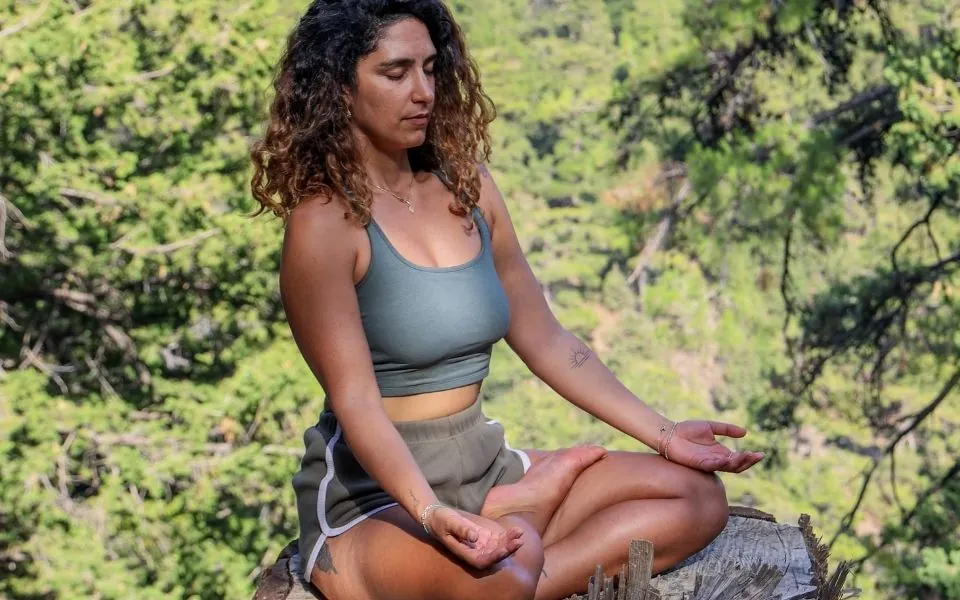
### 15. Practice self-care
Self-respect and self-care go together. When you [take care of yourself](/blog/take-care-of-yourself), you show that you respect yourself. Setting out time to get pampered, massages, [finding a therapist](/blog/how-to-find-a-therapist) to chat out problems, reading books to educate yourself, and so many other things all add up as acts of kindness towards yourself. Investing in your own care shows that you love and respect yourself. So, treat yourself to something special today– something just for you. And relish in the fact that you’re alive in this experience. Life’s too short not to do things just for you. Make the most of being alive.
## Conclusion
Are you [feeling confident](/blog/how-to-build-confidence) in your ability to show yourself some self-respect? You can do it. You’re such an amazing person, and we’re all so lucky to have you in this world with us. Clear out the junk in your mind that holds you back with a bit of meditation. Pamper yourself with some self-care to show others you respect yourself. Stand up for yourself when people put you down or try to add self-limiting beliefs in your mind. When you respect yourself, others follow suit to respect you too. So, lead by example and show others what self-respect is all about.
---
# Self Sabotaging: What Is It and How to Stop It
- URL: https://declutterthemind.com/blog/self-sabotaging
- Description: Self sabotage is the main reason one doesn't reach their goals. Understanding what it is and how to stop it can change your life.
- Published: 2025-06-25
- Updated: 2026-09-11
A majority of people set goals daily. Many of us even set goals for a whole year or years ahead. Anyone can create a goal really, but to achieve it is another story. If you've been observant of the patterns, you'll probably see some people begin with the intention and not follow through with the actions for whatever reason. For example, someone's New Year resolution may be to be vegan this new year. However, 3 months into the year, they find themselves back eating meats. Relapses are often common in any significant changes we try to implement. It begins with our thoughts essentially which can stem from a variety of things like childhood, environment, parenting styles, etc. These influences ingrain in us how we see ourselves and our place in the world. This also encompasses how we value ourselves and view our capabilities. One could describe any actions that get in the way of us achieving our goals as self sabotaging.
Self sabotage is the main perpetrator in one not reaching their goals or attaining their heart's true desires. It could be as simple as that subconscious thought telling you that you can't do it. Or, it could very well be the unconscious patterns you still practice that prove to be counterproductive to what you actually want. For instance, if you want to ask someone on a date, you might not approach them due to residual fears from the past like fears of rejection or failure. This can trigger false-core beliefs, making us freeze and sabotage ourselves from even taking a chance. Thus, we deprive ourselves of some potentially amazing opportunities. It's important to know how you might be sabotaging yourself so that you can learn to take greater leaps of faith and step out of your comfort zone.
## What Is Self Sabotaging?
Self-sabotage has to do with a person's behaviors that prevent them from achieving long-standing goals. There might be no valid reason as to why they can't achieve a goal, however someone who self sabotages might create excuses. This destructive behavior destroys progress and undermines a person's ability to succeed. This can directly impact your confidence and [self-esteem](/blog/how-to-love-yourself) in a negative way. People who sabotage themselves often come up with false reasons as to why something isn't possible or is more difficult than it actually is. Thus, this limits their motivation, rendering them stagnant in terms of their progress with a goal. Once they realize that they haven't achieved a goal, they internalize it as confirmation to those false beliefs they initially had. It's a vicious cycle of an unhealthy self-fulfilling prophecy. This pattern reinforces a decrease in one's self-esteem. They prove themselves right that they weren't capable when in fact they were capable had they not self sabotaged. Self-sabotage shows up in a person's life in a multitude of ways. The following are some of the more common ways a person self sabotages:

### Procrastination
Procrastination is one of the more popular forms of self sabotage. It is when someone finds other things to do instead of the objective they said they would do. In cases of procrastination, there is a level of avoidance that keeps someone from finishing a task at a certain deadline. For instance, if a student has to study for a test tomorrow, but choose to watch television instead, that is procrastination. If you procrastinate, you might have intentions to finish the task.
However, you'll also notice yourself finding excuses for that task to be done later. Or, you might underestimate the amount of time the task will take or overestimate your ability to get it done in time. Procrastination can essentially lead to disappointment as the task or objective often never gets completed or is completed in a rush, leaving mistakes to be corrected. If this is the pattern you keep landing in, it can help to pair the inner work with a tool that keeps you on task. Here are the [apps we found most useful for procrastination](/blog/best-apps-for-procrastination).
### Negative self-talk
Negative self-talk occurs when you have inner dialogue that isn't encouraging or motivating you to strive towards a goal. The average human has around 60,000 to 70,000 thoughts on a daily basis. Many of these thoughts are recurring and tend to do with stresses like bills to pay, household responsibilities, etc. Some of these repetitive thoughts are actually that part of your mind that criticizes you harshly. We are many times our own worst critics because we can set the highest expectations for ourselves than anyone else. And, if we fail to meet those expectations, it is us that feel the brunt of that "failure". We then internalize it as fuel to keep us from achieving certain goals. We use those "failed" experiences as proof of what we can not do instead of ammunition to fuel our hunger. So, the negative self-talk ensues. Those dealing with body-image issues can attest to having negative self-talk as well. It's as if every effort to feel good about one's body is met with opposition and negative reasoning as to why a person might not be good enough, not look attractive enough, not be smart enough, not be qualified enough for a position, etc.
Although we very much need our rational mind for our human existence, [our conscious mind tends to go into overdrive](https://declutterthemind.com/meditation/anxiety), making us overly critical of ourselves. This could also be because we are afraid to leave a bad impression or fear facing failure. So, some people feel it's best to not try at all. Instead of motivating themselves to finish a task, they talk themselves out of it.
### Self-Medicating Using Alcohol and Drugs
Sabotage can be done through the use of self-medicating with substances. It could also lead to [addictions](https://declutterthemind.com/meditation/cravings). Some people believe that using substances like drugs and alcohol improve their performance. Perhaps they feel more social when they drink alcohol. So, they find themselves using alcohol as a means to initiate or participate in their social interactions. This self sabotage can also evolve into emotional codependency as a person uses these substances as a crutch or [coping mechanism](/blog/coping-mechanisms) to deal with untapped emotions. This can greatly backfire on a person and further send them into a spiraling regression.

### Poor prioritization
A person may self sabotage by prioritizing a low-list item on their list of objectives. This means that they execute the least important goal first.
The important items get left for last and oftentimes never get done or are completed poorly due to a lack of energy at the end of the day. For instance, if you know that you have a deadline for a project, you might self sabotage by doing your household chores first or running errands. By the time you return home, you have less time to complete your project. So, you might rush or postpone the deadline for a later date.
### Being arrogant
Nothing is wrong with having pride. However, having too much pride can make a person become arrogant. Sometimes people mistake the two or aren't aware at their attempted to be confident coming across as arrogance. A person can be arrogant as a [coping mechanism](/blog/coping-mechanisms) with inner discomfort or lack of confidence. Arrogance can act as a sort of mask, giving the illusion of false strength whilst the person is steal dealing with their inner turmoil. This can sabotage a person by making them appear to not need help from anyone else, as they probably give off the impression that they have things all figured out. Being arrogant can keep us from building deeper interpersonal relationships and receiving help from people when we most need it.

### Maintaining Toxic Relationships
Staying in an unhealthy relationship is another form of self sabotage. Many of us do this at some point in our lives because we hold onto feeling comfortable. We might think that the person we are with is the best we can get even if we know we deserve better. A toxic partner can be someone who is emotionally codependent. So, they cling onto you, getting offended when you take time to work on your own personal achievements. Or, they can act as an enabler to some of the unhealthy [habits](/blog/good-habits) you might have. These habits can include substance abuse, overindulgence, overeating, under-eating, etc. Essentially, your relationship to them is more of a hindrance or debilitation than an asset to your personal development. Keeping such connections sabotages you from making important decisions and much needed life changes.
## How to Stop Self Sabotaging
### Stop setting outrageous expectations
Setting unrealistic expectations of yourself or others sets them up to fail and leaves you to suffer. As much as we want or hope for a desired result, there is always the possibility that things won't go the way we prefer it to go. We sabotage ourselves sometimes because we set these expectations and how know how to respond when they are not reciprocated. So, it is best to make sure you are setting reasonable expectations and discuss what is expected with others to see if the demands are doable.

### Do the hardest thing first
Get the hardest or most time consuming thing on your list done first. It might seem easier to knock the smaller items off the list first. However, there's no guarantees for how your day might transpire. There might be something that comes up that will require the rest of your attention for that day. So, you want to make sure you have that project completed beforehand.
### Regain emotional independence
As stated, emotional codependency is one form of self sabotage. Not all perpetrators are aware that they are emotionally codependent on others. Usually, emotionally codependent people rely too much on others for their own validation and vindication. They rely on external sources for their own sense of wholeness and without that external source or person, they have difficulty functioning. People can regain their emotional independence by healing any traumatic wounds posed by past relationships or childhood experiences. Perhaps you may need to take a break from relationships altogether and build your strength back from its foundation.

### Don't wear a mask
No one can read your mind. So, it is best to put the act away. When we wear a mask or purport ourselves to be much more happier, stable or confident that we really are, we set ourselves up for failure. People will only treat you based on the impressions you leave. If you give off the impression that you don't need help, it is likely that no one will help you. Thus, you may find that you begin to [pity yourself](/blog/self-pity) that no one cares. However, perhaps they do care but don't see that what's hidden behind your mask is a very vulnerable person.
### Rid yourself of the victim mentality
You can stop self sabotaging by [thinking more positively](/blog/how-to-be-more-positive). Once we think more positive thoughts, we no longer provide fuel for bad, self-limiting behavior. You don't have to be a bystander to what hurdles life throws your way. You can choose to be the victor in your own story and use those obstacles to propel you forward.
## What Causes Self Sabotaging Behavior?
### Childhood trauma
Much of self sabotaging behavior comes from childhood trauma and experiences we had growing up. It directly impacts our self-esteem and self-image. Adults who've experienced bullying may self sabotage in fear of facing those same judgments. For instance, some children who show an upstanding academic performance can also be subjected to bullying and words like "nerd" or "teacher's pet". Thus, you might find them less likely to vocalize themselves when it comes to their education in fear of facing that same backlash. Sabotaging behaviors can even come from our parents whether it is their intention or not. Let's say you had an overprotective parents that sheltered you a lot, you might still harbor subconscious fears about going out and being social. Thus, this anxiety and reasoning can directly influence how much you initiate social interaction or participate in it. This can self sabotage yourself from meeting really great friends, romantic relationships, and even business partners.

### Approach avoidance
With approach avoidance, you'll find yourself faced with an amazing opportunity but also the reality that it will require some kind of sacrifice. With approach avoidance, as the name implies, you are moving towards something and away from something. The end goal requires some negative aspects as well as has positive aspects which renders you to be a bit more reluctant to progressively move forward. For example, a person wants to eat at their favorite fast food restaurant, but they also want to avoid gaining weight. They know weight gain will subsequently follow through if they choose to eat fast food. However, they really want to avoid that. The tension created by a desire, magnitude, valence and psychological distance all contribute to self sabotaging behavior.
### Fear of Rejection or Fear of Acceptance
Fear of rejection and fear of acceptance are more popular causes of this behavior. A person may dumb themselves down or pretend to be something they are not in fear of acceptance or rejection. For instance, an actor might not try out for the lead movie role because they fear being rejected. So, they self sabotage by trying out as an extra or for a role that they didn't really care for. In cases where a person fears acceptance, they might act like someone they are not in fear of the stipulation attached to being accepted. Children in academia also displays this quite well. For example, a child may pretend to be a class clown when they are actually an honor roll student to evade the acceptance of their teachers and faculty. They might do this to avoid the response they will get from the other students.
A person can stop self sabotaging by realizing that they are the only ones to stand in their way. Every external factor that appears to be an obstacle is only an object that you can then define. Why not define these "obstacles" as stepping stones instead and see how far you will get once you end the self-fulfilling prophecy of self sabotaging behaviors.
---
# How Does Shallow Breathing Affect Our Entire Bodies?
- URL: https://declutterthemind.com/blog/shallow-breathing
- Description: Should you do shallow breathing or take deep breaths instead? Discover the way shallow breathing affects your body so you can breathe better.
- Published: 2025-06-25
We breathe constantly throughout our days with minimal attention. However, there's a big difference between shallow breathing and deep breathing that can help you during times of distress. Often, in moments of anxiety, we breathe from our chest. Chest breathing is typically shallow breathing. However, when our bodies are tense with anxiety, we often take a deep breath from our stomachs. And slowly but surely we see our rapid breathing slow down. In this article, we'll explore the downsides to shallow breathing to help remind you to take deep breaths when you can to help you improve your breathing pattern.
## What Is Shallow Breathing?
Shallow breathing is often characterized by fast breathing that results in insufficient oxygen intake. It's a form of breathing that doesn't usually involve the diaphragm, with the breathing being too rapid to provide adequate time for the air to enter the lungs deeper. Shallow breathing tricks the body into thinking you are constantly stressed. The term "chest breathing" refers to the fact that one breathes with their chest rather than allowing air to go through the lungs to the air sacs. This renders the lungs incapable of extracting oxygen from the air. As a result, you can feel out of breath due to excessive carbon dioxide depletion, which reduces the body's breathing power and oxygen absorption.
Chest breathing has been linked to various psychiatric problems, including anxiety disorders, [panic attacks](/blog/how-to-stop-panic-attack), and stress disorders. Many individuals have this condition because of a complete lack of understanding and knowledge. However, unlike newborns, who naturally know how to breathe, most humans have lost the capacity to breathe properly due to layers of unhealthy habits that we continue to engage in through our everyday activities. Your life can seem [stress-free](/blog/stress-free), but consistently maintaining shallow breathing may have long-term health consequences. Chronic depression and other stress-related conditions are likely to persist if this type of breathing becomes a routine for you.

## How Does Shallow Breathing Affect the Body?
Shallow breathing affects the body by causing it to receive inadequate air supply, especially the oxygen that reaches your lungs. Suppose this becomes a routine, and oxygen consumption decreases, which may lead to a wide range of serious problems. Unfortunately, most people are unaware of how chest breathing can damage their bodies.
## What Are the Signs of Shortness of Breath?
When anyone experiences chest breathing, they can experience a variety of symptoms. These signs combine to make one feel like they can't catch their breath. So, if you've been doing more rapid breathing than usual, these may be a few of the signs that your shallow breathing is causing you to become short of breath.
- Quicker breathing (hyperventilation)
- Tightness in the chest
- A lack of oxygen or a sense of suffocation
- Muscle pain
- Having the sensation of a lump in your throat
- Palpitations of the abdomen (feels like a more robust, faster heartbeat)
- Feeling sick, dizzy, or unsteady
- Nausea
- Stomach pain agitation
- Irritability, or apprehension

## What Causes Shallow Breathing?
An underlying condition or problem causes shortness of breath. Several factors may contribute to shallow breathing throughout the day. Some triggers may be beyond your grasp, while you may manage others with a few simple changes in your routines. For example, let's look at specific causes that can cause shortness of breath.
### 1. Respiratory Chronic Disease
Specific chronic respiratory problems are at the top of the causes of shallow breathing. Asthma, a disorder that is characterized by chronic inflammation of the lungs, is a frequent cause of chest breathing. The breathing symptoms can intensify at night after a day of exercise, regardless of the time spent exercising. Mouth breathing can also help to relieve asthma symptoms, especially if the air is dry and cold. When allergens or pollutants are present in the air, one can experience shortness of breath.
### 2. Stress and Suffering
Stress and pain will also have a significant impact on how you breathe. For example, pain induces all your muscles to tighten, affecting your breathing habits. But on the other hand, stress can make you feel like you're not breathing. When one feels like they aren't breathing, they prefer to take shorter and shorter breaths. Finally, one becomes exhausted, which stimulates chest breathing, further stresses the body, and the vicious circle continues.
### 3. Infections
Infections caused by germs in your body can make breathing difficult. Infections that damage the lungs, such as pneumonia, may affect anybody, particularly those with weakened immune systems. When time progresses, one's breaths get more rapid and shorter. When infections worsen, the lungs may get filled up with fluid, making it difficult to take deep breaths. Antibiotics can sometimes help with the issue, but in some cases, the infections can be lethal. Lung infections can often cause shallow breathing, specifically.
### 4. Choking
When you choke, the airway gets closed, which can be either partially or fully. When this happens, people try to take shorter and shorter breaths, which causes their breathing to become tense and shallow due to the blockage.
### 5. Anxiety attack
Anxiety symptoms can trigger the tightening of the muscles that aid in breathing. Most of the time, these attacks are synonymous with mental illness, and most people are unaware of the damaging impact they may have on our bodies. These attacks result from panic or anxiety, causing faster than normal breathing or shallow breathing. One feels as though they are not breathing well and panics, causing their breathing to become rapid shallow breathing.
### 6. Anaemia a form of blood disorder.
This is a pulmonary embolism, simply a blood clot in the lungs. This happens when the body cannot have enough iron, and it can cause shortness of breath, chest pains, frequent rapid coughing, and erratic heartbeats.
### 7. Heart disorder
Several diseases impair the heart and its ability to pump blood into the lungs, resulting in shortness of breath. These disorders mainly include heart valve diseases and a variety of others. Those with heart disorders are more likely to have shallow breathing.
### 8. Chronic Obstructive Pulmonary Disease (COPD)
A pulmonary disease-COPD is one of the triggers of shallow breathing. It entails inflammation of the airways (chronic bronchitis) and deterioration and injury to the lungs' air sacs (chronic emphysema). Regardless of age, the disorder can affect both men and women.
All these things are typical triggers of shallow breathing, and you can imagine how they would affect you if you faced them all at once. This is why you should concentrate on taking longer breaths to avoid the health risks associated with shallow breathing.

## How to Use Deep Breathing to Counteract Shallow Breathing
Training the body to breathe deeper, either automatically or by multiple deep breathing techniques, will help improve breathing consistency. Deep breathing allows people to effectively reduce their heart rate while improving blood pressure, lowering anxiety and stress levels, reducing muscle tension, and having other healthier outcomes.
Deep breathing allows one to breathe in oxygen, filling the lungs and expelling toxic carbon dioxide. Deeper breaths are vital because carbon dioxide is poisonous and should not be allowed to accumulate in our bodies.
### Improved Diaphragm Ability
When one breathes appropriately, one can make proper use of their diaphragm. However, the right breathing aids in the maintenance of a safe and strong diaphragm. Unlike shallow breathing, which induce more minor diaphragm oscillations, deep breathing corrects all of these, making the diaphragm even stronger.
Deep breathing is a powerful mind and body relaxer, and when one tunes their bodies to it, you can assure them of a [stress-free](/blog/stress-free) lifestyle.
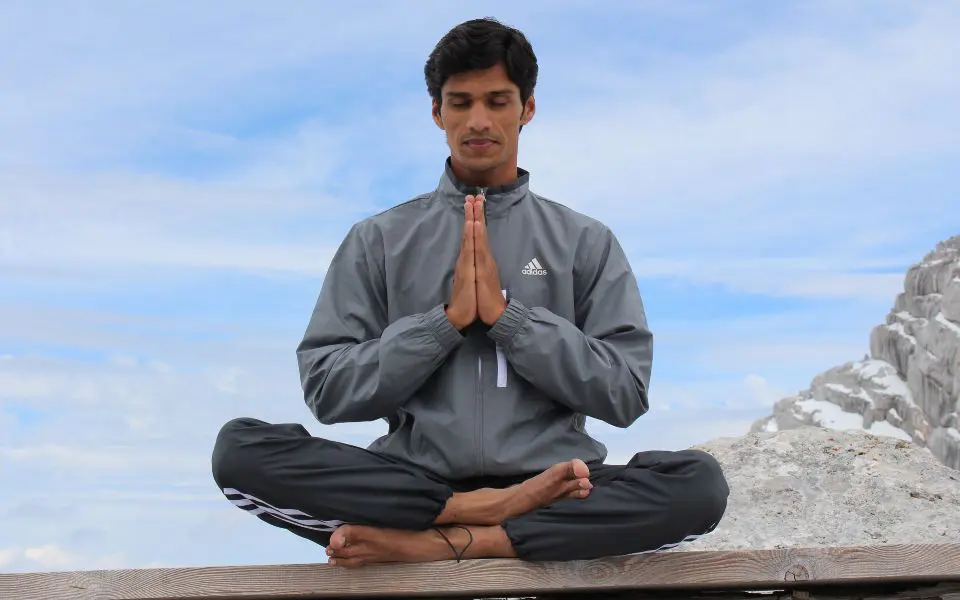
## What Is the Mechanism of Deep Breathing?
Deep breathing will only be effective if you listen to your mind and body. Try to be aware of how stress and anxiety affect your day-to-day life. For example, if you practice deep breathing exercises but still experience extremely heightened stress levels, it might be time to see a medical practitioner or a mental health specialist.
If you are having one of the frequent causes of shallow breathing, you can check with your healthcare provider immediately to stop jeopardizing your life.
## How to Take More Deep Breaths
Deep breathing is something we tend to do a lot more during moments of exercise. Take for instance a runner. As you run outdoors, you need more oxygen than usual to maintain your workout. You might start huffing and puffing more than usual. But often, during these intensive active moments, we take deeper breaths, fueling our bodies with more oxygen while releasing carbon dioxide.
As we become more sedentary from working at home or in an office, taking time out for deep breathing will be essential. You could practice a [guided meditation](https://declutterthemind.com/meditation) using the [Declutter The Mind app](https://declutterthemind.com/qr-code) where you'll find countless meditations, such as [body-scan meditation](/meditation/body-scan), [meditation for anxiety](/meditation/anxiety), or even a [loving-kindness meditation](/meditation/loving-kindness). No matter which meditation you try, you'll be encouraged to take a deep breath from your stomach instead of your chest. When you practice breathing from your stomach daily, you'll begin doing it more often when you sleep or as you go about your day.
Alternatively, you can work on being more mindful. Ever noticed that you always breathe deeply when you think about breathing? I bet you've taken a few deep breaths while reading this article because you've suddenly become more aware of your need for oxygen, so you're giving your respiratory system just what it needs.
https://www.youtube.com/watch?v=xIWauKS6OIQ
## Conclusion
Shallow breathing will eventually harm the body's general health and wellness. You should use as much deep breathing as much as possible to get the body and mind out of the heightened stress and anxiety levels. As a result, one's ability to calm down increases, and the likelihood of chest breathing decreases.
---
# 17 Simple Living Tips That'll Simplify Your Life
- URL: https://declutterthemind.com/blog/simple-living
- Description: Life is hectic and complicated. Learn 17 different simple living tips you can follow to help you life a simple life in 2023
- Published: 2025-06-25
It's so common to compare ourselves with others, especially due to the popularity of social media. Comparison can cause us to constantly want to live large for the sake of appearances instead of living a simpler life for ourselves. You can still have financial independence and great success in many other ways, a simple lifestyle doesn't mean a lack of ambition. It's about recognizing that what you have is enough instead of craving or desiring more. In this article, we're going to share tips to make life easier with simple living, so you can spend time living a life you want.
## 17 Simple Living Tips That'll Change Your Life
### 1. Don’t go overboard
Before you begin making changes in your life, realize that small steps forward are what get you across the finish line. If you decide to make one big jump ahead, you might get hurt or stumble along the way.
What does this mean? Don’t make extreme changes in your life you’ll regret – and don’t try to do all simple living tips in a week. Ease your way into a simpler life.
You should also know the key to a simple lifestyle is not quitting society and going to live in a cabin in the woods. You should have every tool modern life makes available at your disposal – but don’t use it unless it’s necessary.
Let’s take credit cards, for example. You don’t need to cut them out to live a simple life. You have to avoid using them unless it’s necessary. If you decide to cut them, you might face a time when you need them – and that’s when you turn your simple living ways into an unnecessarily-complicated life.
These are just some of the [habits of a happy person](/blog/happy-person), as well. You may have our own habits or things you want to implement that you may find helps you lead a simple life.
### 2. Make a list of what matters
Simple living starts with a simple life. You need to know what matters in your personal life, to know what needs to be kept and what needs to be axed. You'll find your life has less stress when you remove things that don't serve you. You can make a to do list of all the things you want to include in your life. You might keep some essentials from the modern world, like laptops to help you work remotely. But you might declutter your home to make life simple. Plus with less to clean, it'll be easier to take care of your mental health through [self care ideas](/blog/self-care-ideas).
A minimalist mindset can be a life changer. In a single task, decide your priorities and needs. Making room for the things you want has never been easier. It's time to enjoy the simple pleasures.
### 3. Clean house
Now that you know to not go overboard, it’s time to make the first of many changes. The very first thing you need to do is clean your house. Remove anything you deem unnecessary from it.
Get rid of anything that might be more trouble than it is worth.
You need to think about anything that you haven’t used in three to six months. Poor-fitting clothes, unused gym equipment, TV, videogames, your broken car. You can and should sell most of it – anything else, you can donate. Try not to throw anything to the trash; instead recycle, reuse, or give to someone else.
You might even change your house if that’s what you need to do. Moving to a smaller house can (and will) make your life simpler. Before you do, though, make sure that’s what you truly want.
Remember, simple living isn’t about removing yourself from modern life, but making the changes to live simply in a modern environment.
### 4. Invest in your personal development
It's much easier to start living a simple life when we have the knowledge and resources to make it happen. For instance, if you wanted to grow your own garden instead of grocery shopping, knowing how to create one, maintain soil health, and which plants are best to grow in which season can help you start simple living.
If you want a quieter life, you might also start learning how to better communicate with others, draw boundaries, or stand up for yourself.
Investing in your personal development for a simpler life is also about learning finance and how to buy the material possessions you need instead of want so you can grow your earnings. There's life changing magic that results from taking time to invest in your education. So spend time reading blogs or watching podcasts to learn about the topics that'll help you pursue simple living.
### 5. Cut the cord
If you thought wasting time on social media was crazy, wait until you hear about TV. On average, it’s close to 4 hours per day.
Add both up, and you are wasting close to one-quarter of your day on nothing – that’s why you can’t lead a simpler life, you are spending hours on end on something unproductive.
Cutting the cord (canceling your TV subscription) will free you from mindless time-wasting. It will allow you to do what you genuinely want to do – that’s simple living right there, one easy decision away from you.
You will also stop throwing money away every month. You might not realize it, but a cable subscription makes a dent on your monthly income. The more money you spend, the less chance you have to embark on a simple living journey.
### 6. Create a morning routine
As you embark on a simple life, you'll want to create an automatic [morning routine](/blog/morning-routine) that helps give you structure for your new simple living way of life. Your morning routine should include things that allow you to live simply, such as making your own food, taking non-priority tasks off your to do list, having an offline life by eating breakfast with the kids, hearing real life anecdotes from your family instead of [doomscrolling](/blog/doomscrolling) someone else's life.
Basically, during your morning routine, you want to step away from modern technology or anything that causes more stress than you need at the start of your day. Create [morning habits](/blog/morning-routine) that excite you about life, eat healthy, and allow you to keep living simply.
### 7. Go on a social media detox
Did you know most people spend 2 hours on social media every day? That’s 60 hours – or close to 3 days – every month. It’s insane. And it’s also an addiction.
Your phone plays a massive role in complicating your life. It’s also a necessary tool – you can’t disconnect yourself from the world. You can make yourself less available to it instead.
Start by [deleting social media](/blog/social-media-detox). Use your phone to organize social meetings, but don’t socialize through it. You should make a phone call if one-on-one meetings are not possible, but you shouldn’t replace human contact with it.
Studies show anxiety skyrocketed because of smartphones. Removing yourself from social media will drastically simplify your life. So save time and save money from not endlessly scrolling through social media, seeing trending products, and [comparing yourself to others](/blog/how-to-stop-comparing-yourself).
### 8. Eat slowly
[Mindful eating](/meditation/mindful-eating) is the practice of carefully chewing each bite of food and savouring your meal. Fast food isn't just made quickly, it's also quickly gulfed down. Make a conscious effort to eat meals that nourish you and that you actually spend the time to taste. Chewing your food slowly can drastically enhance your eating experience. Instead of impulse adding another bite of food in your mouth, make a conscious effort to eat slowly.
Living simply is also about caring about what you eat. Eating locally sourced foods can be a great way to live simply. Going to a farmer's market can be a great habit to get into for eating local foods.
### 9. Adopt a chess mindset
Start viewing your life as a chess match. Make moves thinking three or four steps ahead.
You might think this complicates your life unnecessarily and the complete opposite of simple living – but you can make your life simpler by planning ahead.
If you decide to act based on impulse, you might end up trapped in a poorly-decision-made cage. Dig yourself into a hole you cannot climb out of – it happens. You should think about how far you should dig before you start, and that’s how you can always climb out of it.
Let’s look that [social media detox](/blog/social-media-detox) example. You delete all social media, only to realize you need it for work-related reasons. If you start thinking a couple of moves ahead, you’ll see that you shouldn’t delete all social media but only your personal profiles.
Crisis averted before it began.
If you start planning ahead, you’ll prevent a lot of crises. And that’s the right way to live a simple life. One of the most common [life tips](/blog/life-tips) is to plan and prepare. Think ahead, write down what you want to accomplish, and the [good habit](/blog/good-habits) you want to adopt.
### 10. Reduce physical possessions
Having a minimal wardrobe, cutting down physical possessions, and re-evaluate the future expenses you make. You can have a good life without indulging in credit card debt to buy things. More stuff often means more organizing and more cleaning.
Mainstream culture makes it seem like you can only enjoy life if you have the mansion, fancy sports car, and loads of cash. You can still have a vision board, goals in life, and find a way of living a simple life. Some billionaires like Warren Buffet live in the same house they bought before they made it. So, even some successful people are out there doing the simple living lifestyle for their own life. A simple life doesn't mean you're poor, have less money, or can't afford to live large, it simply means you value and prioritize other things like quality time, quiet time, less stuff, and time spent with others.
### 11. Cure your credit addiction
Do you think most people live paycheck to paycheck? Well, not really. They live neck-deep in debt. It’s an unfortunate reality in America, and often, it isn’t entirely people’s fault. But for the fault that is under their control, taking control of their money habits can help them [find peace of mind](/blog/peace-of-mind). Living in debt will keep you chained to a job that you hate, stressed out beyond belief. That does not sound like simple living. Constantly worrying about money doesn’t allow you to [live a good life](/blog/how-to-live-a-good-life).
Then again, you shouldn’t see this as a black-and-white thing. You should aim to pay all your debts – but you shouldn’t throw your credit card away. Remember not to go overboard. You should use credit for things you need and can afford in the long run – always plan ahead.
This isn’t a call to never use credit, but only to do so when necessary. You probably can’t buy a house with cash, you’ll need a mortgage for that. You also need good credit to get a mortgage. So, having a credit card necessarily bad.
### 12. Remove yourself from useless discussions
Do you remember the last time a heated discussion lead to a good thing? Or do they always end up complicating your life one way or the other?
It doesn’t matter who you were arguing with, whether it was family or friends. And it doesn’t matter what it was about either – religion, politics, you name it.
You need to stop going on a Quixote-like charge against problems that aren’t yours to begin with. Let’s take politics, for example. Unless it’s a local thing (add a stop sign here, help the district school there), don’t get involved – unless you want to overly complicate your life. It’s one of the easiest ways to achieve [inner peace.](/blog/inner-peace)
You can apply this almost anywhere. Remove yourself from useless discussions at work, it’ll only pile on you later on. Religious arguments at the family reunion? That’s not simple living either.
### 14. Take on less
Simple living is also about making life easier. One way to do this is to take on less. Living a simple life isn't about signing up for every activity, attending plans multiple times a week, overworking, or managing a full calendar of kids activities. You'll feel lighter when you start saying no to things to prioritize yourself. You don't need to add stress to your life.
Do the things you'd like to do. Hang out with the family at home talking during dinner. A simple living guide is all about the word no. Saying no to things that don't better you, that drain you, that make our lives feel uncomfortable.
### 15. Shape your mind and body together
Sometimes, you won’t be able to live simply. Modern life will catch up one way or the other – but don’t worry. You have different tools at your disposal to help you cope with that problem.
First, train your mind. Let it become quiet. You can try [guided meditation](https://declutterthemind.com/meditation) or mindfulness exercises to achieve this. There are other ways to do so, though. You can paint, play an instrument, anything that brings your mind into a halt and away from modern life issues.
Second, train your body via [mindful walking](/meditation/walking). You need to stay in shape. Otherwise, health problems will drag you away from simple living into a living hell – and that’s no good. Going to the gym is always a great option. You can also go for a walk, swim, or anything that keeps your heart rate up.
A healthy [mind and body](/blog/mind-and-body) will protect your sanity when life doesn’t want to remain simple.
### 16. Keep it simple
You could add countless things to this list, but that would be overly-complicating things.
This list could also be simpler – way simpler. Just a one-item list. And this is that one item: just keep it simple.
Life is filled with distractions and issues that will complicate your life. If you address them quickly and don’t let them pile up on you, there’s nothing to worry about. When life starts to complicate, take two steps back, and plan three steps ahead.
### 17. Delete all emails after they're resolved
Going to inbox zero can be a blessing. Stop consuming so many marketing emails in your life. It's so easy to watch your inbox fill up with emails telling you to buy one thing or another. You can keep important emails in a folder in your inbox. Unsubscribing from promotional emails or removing a promotional inbox altogether can be helpful for reducing the emails you get that you don't need.
Your email inbox becomes like a tv. You need less tv, but also less email. Current events can be looked up. When you need something, you can search for it. Emails from family or friends can be a way to connect with others. And work emails should be sent sparingly.
## Keep on simple living
How do you keep your life simple? Begin living simply by trying out some or all of the things on this list. Whether you develop a morning or evening routine with limited activities is up to you. You can keep cell phones, but don't become all consumed by them. Simple living is all about cutting out the things you don't need so you can live your own lives with a sense of appreciation, magic, and beauty. The world isn't inside your phone, it's in your living room where the children play. It's in the bedroom with your spouse. It's at a family dinner where everyone's laughing at a joke your parent just made. Simple living is about giving yourself your life back. So, go on and practice simple [living for yourself](/blog/living-for-yourself) and see what the magic brings you.
How will you be practicing simple living in 2023?
---
# Small Gestures That Strengthen Your Relationships With Others
- URL: https://declutterthemind.com/blog/small-gestures
- Description: Here are 20 small gestures you can do for the people in your life from family to friends to coworkers to make them feel special.
- Published: 2025-06-25
People are at their best when they go out of their way to do the little things for others. Whether it’s mowing your neighbors lawn when doing yours or buying a cup of coffee for the person behind you at the drive thru. We often think that it’s the grandiose gestures that people go crazy for. But those small gestures we do on a daily basis can be transformative in our way of relating to others, improving our happiness, and [making a difference](/blog/make-a-difference) in the world. In this article, we’re going to share some of the small gestures you can do to strengthen your relationships with others.
### 1. Do something without being asked
We can all name a person in our lives who constantly nags us about something. It might be a spouse nagging about washing dishes, a parent about helping around the house, or a boss about showing up to work on time. If you find someone in your life is always begging and pleading with you to do something, just go ahead and do it without being asked. If there are dishes in the sink, you don’t need to be told that they need to be washed, it’s obvious they’re dirty. You can prevent other people’s stress just by taking initiative on tasks that people constantly ask you about. This is a small gesture that can really lower people’s stress levels.
### 2. Buy a token of something they’ll appreciate
Some of the best gifts are unprompted and simple. It could be buying a puppy to do list for your organized, dog lover girlfriend or tickets for a hockey game at your local ice rink for your sports loving husband. Gifts is a popular love language. However, many people mistakenly think it’s about buying someone’s affection, like oops I messed up, I’m sorry here’s a gift. But that’s not how most people use that love language. Gifts as a love language is more like “hey, I was thinking of you a few weeks ago, and bought this for you and it just came in.” It’s about thinking about someone when they’re not around. It’s about being thoughtful.

### 3. Go for a walk with them
The best small gesture you can show someone is giving them your time and going for a [mindful walk](/meditation/walking). The best conversations you’ll ever have with people are during walks in nature or in a park with someone you love. But you can do this with anyone you want to feel more connected to. You might go for a walk with a co-worker you’ve been having some difficulties connecting with or a friend you haven’t seen in a while. Not everything needs to be a dinner out or a costly activity together. Bonding can be as simple as the two of you immersed in good conversation in the splendor of nature.
### 4. Try to make them laugh
You never know when someone is experiencing hardship in their life. Being the type of person who tries to keep the energy in the room upbeat, lighthearted, and positive can be the small gesture people need more of in their life. When you keep things positive, you’ll attract more positivity your way too. Plus, you can rest assured that you’re making a positive impact in people’s lives just by being yourself. You don’t have to bust out a comedy routine of cheesy jokes, but trying to help frame people’s thinking to [be more positive](/blog/how-to-be-more-positive) can help boost people’s moods too. And if you know how to look at the world from a comedian’s lens, you’ll get people bursting with laughter.

### 5. Cook something special for them
A homemade meal is always appreciated by those we love. Ordering takeout all the time can make us feel groggy, bloated, and fatigued. So, when you whip up the recipe your mom made you when you were a kid or bake the dessert that your grandmother taught you before she died, you can pass on some delicious meals or treats for those you care about. Cooking their favorite dish can go a long way too. Picking a day where they’re too tired to cook but want to eat something good can be a great way to do a small gesture for someone, made with love.
### 6. Hold the door for them
If you’d like to do a small gesture for someone you don’t know, holding open the door for them can be a kind thing to do. Often, people are in such a rush to get in line at the coffee shop or run into an office building that they don’t hold the door open for them for the person behind them and so it shuts in their face. Because we weren’t paying attention, we don’t realize it startled the person. Being mindful of your surroundings and offering this small gesture when out and about can be a simple thing to do that shows kindness.

### 7. Give them a massage
A small gesture you can show your spouse or significant other is giving them a massage. It’s a simple way to show affection for someone without wanting anything in return. Massaging your spouse’s feet can make them feel good and help them relax after a stressful or busy day. Touch is a love language for many people. While it might not be one for everyone, you’ll know your partner well enough to know if doing this will be received positively or not.
### 8. Surprise them with flowers
Often, flowers are given at funerals which can make the smell unpleasant when someone associates it with the death of a loved one. Giving flowers at happy moments can help transform this negative experience. Surprising your partner with flowers to cheer them up for no reason at all can be a small gesture they appreciate. You don’t need to go to an expensive flower shop all the time, even picking up flowers from the grocery store while you run errands can be a nice small gesture.

### 9. DM them a funny video
A small gesture you can do is send funny, cute, or thoughtful social media videos via DM to them. It lets them know that you enjoyed something and they’ll likely enjoy it too. This is more of a modern day small gesture people do to their friends and loved ones to let them know they care. It’s about sharing things that uplift you that they’ll enjoy as well. Don’t send [passive aggressive](/blog/passive-aggressive) videos or educational things they’ll find condescending. Send videos with a positive attitude or message that’ll make them happy.
### 10. Write an appreciation card
If you have the mailing address for your friends and relatives, writing an appreciation card to them can be a kind gesture. For example, you might write in a blank card or a thinking of you card where you write down all the things you appreciate about this person. Highlight what makes them an amazing person and what you value most about them. The goal should be to give this person a warm fuzzy feeling about them.

### 11. Host a get-together with friends
A small gesture you can do is host a get-together with friends and invite the people you get along with the most. Try not to exclude anyone from the friend group so people don’t get upset. Remember these are small gestures to be kind to people so don’t leave anyone out. You can also host a get-together with family. Invite people to your home, maybe host a BBQ, and get people to see each other, take pictures, and share laughs. The goal should be to create lasting memories with people you love. Most people don’t want to host parties but when you take initiative, people usually do come out.
### 12. Text them a daily compliment
A small gesture you can do for someone you care about is to text them a daily compliment. If every morning before going to work, you text your spouse a compliment meant to make them feel good about themselves, you’ll create a more positive relationship. Throughout your time in person together, you’ll also want to vocalize compliments and praise to them when they do something kind or helpful. Being vocal with praise keeps the atmosphere light in your relationship.

### 13. Plan a weekend getaway with them
Whether it’s a friend or significant other, planning a weekend getaway can be a small gesture to show someone you care, want to give them a chance to unwind, and to bond with them. A weekend getaway doesn’t need to be expensive. It could be spent in the closest city near you where you plan a few activities, such as a walk along a lake or dinner at a popular restaurant or concert for your favorite singer or band. Alternatively, it could be a spa weekend. Just something you all do together to connect and relax.
### 14. Create a scrapbook about them
A small gesture you can do for your sibling, parents, or someone you’re really close to is create a scrapbook about them. You could create a book of all your memories together with pictures of the both of you while you were younger. The more photos you have with this person the easier it’ll be to create a scrapbook with them so someone you’ve known for a long time would be the ideal person to do this small gesture for. Find pictures, write notes about the memories, have other people write kind messages that you include in the book, and more to give people excitement when they sort through it.

### 15. Make a list of 100 reasons why you love them
Everyone has someone in their life they can write 100 reasons why they love them. Whoever your person or people are, take the time to make a video or a list of 100 reasons why you love them. To help you come up with ideas, think back to memories with them where this person helped you or took initiative to do something kind. Reflect on all the amazing things they’ve done throughout your relationship with them to reflect on why you love them.
### 16. Help them achieve a goal
One of the small gestures you can do for someone is help them achieve a goal. Everyone you know has one goal they’re working towards. Come up with ideas on how you can help them accomplish their goal. For example, if they’re looking for a new job, you might send them listings they’re qualified for. Or if they’re trying to lose weight, you might become their workout buddy. Or if they want to start a business, you might tell everyone you know about it.

### 17. Talk about life under the stars
A small gesture you can do to make someone feel loved is to talk about life under the stars. While this can sound like a romantic thing to do, it doesn’t have to be. This can be something you do with your best friend on a camping trip or with your parents on a dark summer night. Talking about life, your purpose in the world, how to make [life more meaningful](/blog/meaningful-life) or enriching can be a philosophical way to connect with someone. Doing this will help bring you closer to someone else due to the mysticism of the unknown of what’s out there.
### 18. Celebrate each other’s accomplishments
A small gesture you can do for a coworker is celebrate their accomplishments. When someone on your team achieves something amazing, publicly praise them and call it out. Create a culture at your workplace where everyone’s accomplishments get praise. By doing this, you’ll ripple out more positivity and work towards eliminating toxicity from your workplace.

### 19. Surprise them with treats
Another small gesture you can do for coworkers is bring treats to the office. You might bring cupcakes, donuts, or coffee from your local popular coffee shop. You might even ask your boss to expense a team pizza to celebrate a team win or just all the hard work you’ve been doing.
### 20. Remember their birthday
Small gestures can be as simple as saying two words: happy birthday. You have no idea how sad people get when no one remembers or acknowledges their birthday. Not everyone likes big gestures like surprise parties or balloons at their desk. However, wishing someone a happy birthday and giving them a card or a small gift or sharing a birthday cake with them can be a kind thing to do to let them know that you value them.

## Conclusion
These are some of the many small gestures you can do to strengthen your relationships with others. They’re gestures you can do to better bond with someone, connect with them, make them feel special, and let them know that they’re valued. What other kind gestures do you think we should add to this list? Let us know!
---
# Are Social Media and Depression Linked? Here's What We Know.
- URL: https://declutterthemind.com/blog/social-media-and-depression
- Description: Are social media and depression linked? In this article, we'll explore the connection and let you know all the details so you can decide.
- Published: 2025-06-25
Being a fully functioning person in the twenty-first century involves using one or more social media platforms. And with more than half of the world's population (around 3.9 billion people) using social media, there's no doubt that it has a tremendous impact on our societies. But depression also affects a large number of people, over 264 million people. So, are social media and depression linked? Let's take a closer look.
## Benefits of Social Media
Social media is incredibly beneficial for individuals and businesses; we all know that. Here's a quick list of some of the positive aspects of social media.
### 1. It connects us when we're physically far away
You can connect with any friends and family globally via social media, and it's not just chat-based anymore. You can start a video chat with loved ones to check in on them to see how they're doing and catch up with ease.
### 2. Brands get to interact better with their customers
With globalization, small businesses can compete with big-box retailers, allowing them to reach a global audience. You can easily support a mom-and-pop shop from anywhere in the world, giving small businesses a chance to thrive. You can even contact any company on their social media account to get a faster customer service response.
### 3. You have real-time information
With a quick social search, you can find live reactions to your favorite shows and events. You can also learn critical news information from famous deaths to historical moments in history. Social media allows you to get the latest information quickly.
### 4. It's good for networking
Using social media, you can find and connect with nearly every person with an account. You can network with like-minded individuals or join social groups based on your favorite hobbies and interests. It's easy to [meet new people](/blog/how-to-meet-new-people), find [good friends](/blog/how-to-be-a-good-friend), and even meet your future spouse.
Even though social media has many benefits, does our hyperconnected world have consequences on our mental health? Well, it does. It turns out that the link between social media and depression is not a myth but a reality we need to address. Not everything on the internet is good, and in some cases, it might cause more harm than good. By the end of this article, you might begin to consider a [social media detox](/blog/social-media-detox) to help you overcome the link between social media and depression.

## Why Do We Even Use Social Media in the First Place
As innocent as it may seem, scrolling through your favorite social app is very addictive. A study from Harvard University found that social media activates the same parts of the brain that light up when taking addictive substances.
Founders of social media sites design their platforms to be addictive. The likes, the notifications, the comments, and the tweets are an easy dopamine boost on the brain. That's why we come back, even when it can be damaging to us, because our brain loves instant gratification. If that loop sounds familiar, it's worth understanding [how a dopamine detox works](/blog/dopamine-detox) before you try to white-knuckle your way off the apps.
## How Can Social Media Harm Us?
Ok, so now we know that social media is as addictive as drugs, but how can that lead to depression? Well, it's complex. But several studies have tried to determine if there is any connection between social media and depression.
There's a [2018 study](https://www.sciencedaily.com/releases/2018/11/181108164316.htm) that establishes a correlation between the excessive use of social media and depression. Here, someone determined that spending too much time on these platforms leads to more significant depression, irritability, social envy, and loneliness. And cutting time from these apps has the opposite effect: happier lives and fewer negative emotions.
Depressed individuals with social media addiction tend to feel less energy and spend less time in the real world. These platforms distract them from real-life experiences and provide them enough dopamine to keep them engaged. What isn't clear is if these individuals are depressed because they spend too much time on their phones or the other way around. Still, there is a link between social media and depression. Depressed individuals may benefit from cutting time from their phones.
Ultimately, depression is a thought disorder. Many people who experience depression are living in the past instead of the present. When it comes to social media, most people begin mindlessly scrolling through their posts. Don't underestimate the power of encouraging people to live in the present moment. The present moment is free of the pain of the past and the anxiety of the future.

### 1. The Rise of FOMO
The fear of missing out (FOMO) plays a significant role in why we can't help checking our Instagram feed. We fear missing out on news, events, jokes, or activities that happen online, so we keep coming back to stay informed.
But FOMO can cause depression and feelings of isolation. A friend posting pictures at a party without us can make us feel rejected and lonely.
Another common thing is checking out an ex-partner's profile page. Seeing them with someone else can trigger FOMO and make you nostalgic for the relationship.
Ultimately though, most people don't realize that people look at your posts the same way. Someone might see a picture of you [being happy](/blog/how-to-be-happy) and feel sad that you're happy without them. So, it's not something that only happens to you but to everyone who uses social media.
### 2. Social comparison
With social media, now it's easier than ever to know what our friends and family members are doing. Paradoxically, this can increase our [feelings of loneliness](/blog/dealing-with-loneliness) and social comparison.
Keeping up with our network of friends, family, and coworkers makes us compare our lives with theirs. Seeing a friend's vacation or the fancy house of a celebrity can make us feel like we're not achieving as much in the world. We may even have a feeling that we're falling behind.
Even posting something on social media that doesn't get a ton of likes, shares, or followers can trigger negative emotions. We may fear that we're not well valued.
Instagram surprised us by removing likes from other people's publications to reduce envy and social comparison. It might be a small step, but it's a step in the right direction to help combat the link between social media and depression.

### 3. Doomscrolling
[Doomscrolling](/blog/doomscrolling) is the act of actively scrolling through sad and depressing news. Yeah, that's a thing. It happens because our brain loves hearing tragic events, even when we know it makes us sad. Why? Because our ancestors survived thanks to their ability to recognize possible threats around them. Staying informed and fearing for the worst is what kept us alive for centuries.
But we're no longer living in caves, and the excessive use of social media can make us engage in doomscrolling, which means having feelings of anxiety, uncertainty, depression, and isolation.
Social media and depression link up when doomscrolling becomes a habit of the typical social media user.
### 4. Cyberbulling and Teens
Bullying is no longer something you hear about in school. It has moved to the digital space. And according to one study, around 59% of teens claim to have suffered cyberbullying. Teens are exposed more than ever to these harmful interactions that can present themselves in different ways, such as hurtful comments, group exclusions, and sexual harassment.
Teens are especially vulnerable to these interactions. And if we add the fact that they're constantly comparing their lives with others, we can get depressed teens who feel excluded and have [low self-esteem](/blog/how-to-overcome-low-self-esteem).
Keep in mind, though, that every age group is vulnerable to cyberbullying these days. Those in public roles, such as entrepreneurs, politicians, activists, etc., can be subjected to cyberbullying for their beliefs and values.
## Signs Social Media Affects Mental Health
If you want to know if you have social media addiction or if it's affecting your mood, we'll help you out. Here are some of the signs that social media is affecting you negatively:
### 1. You feel worse about your body
A study found that some people, especially women, felt worse about how their bodies looked right after watching profiles with women that meet traditional beauty standards. [Body dysmorphia](/blog/body-dysmorphia) may be experienced by those active on social media.
There's a constant pressure to check your notifications and receive positive feedback
Between 5 to 10% of Americans are addicted to social media and have a constant desire to check how many likes they can get. One study found that 37% of teens feel pressure to get likes. It often becomes a competition for who can get the most likes. However, this isn't a healthy link between social media and depression, even if you get tons of engagement on your posts.

### 2. You feel drained and overwhelmed
The internet can sometimes look like a warzone. Internet arguments, sad news, and people with extreme opinions go viral all the time. Many people feel anxious and drained after checking their phones. And even 45% of teens [feel overwhelmed](/blog/feeling-overwhelmed) by online drama.
### 3. You feel social envy
If you're turning off your screen with a bitter taste in your mouth after seeing what your friends are doing, maybe it's time to back off from there. Social media and envy are linked. However, when most people post something on social media, they typically don't do it to get back at you.
### 4. It blocks your sleep patterns
[One study](https://www.bbc.com/news/health-50140111) discovered a link between poor sleep and social media. And we also know that not sleeping enough will affect your concentration levels, alertness, and overall mood. Aside from that, artificial light (like the one from our phone screen) can affect your natural sleep cycle, so it's best to quit the screens at least thirty minutes before bed. That way, you can go to sleep and [wake up naturally](/blog/how-to-wake-up) in the morning.
## How to Use Social Media Correctly
There are safe ways in which you can use social media without dealing with adverse effects like depression. Some researchers believe that as long as you don't engage emotionally on social media, you'll do great. Here are some other suggestions you could try.
### 1. Establish a limit on your social media usage
For some people (due to work or school), it's impossible to quit social media. But while you don't need to eradicate every account, you can at least limit your time on them.
Set a counter or install an app that controls your time spent online, and you'll do better. The average adult in the U.S. spends around 2-4 hours every day on their phone. However, 30 minutes should be enough for you to check your notifications and social media.
One way to stop using social media is to do something else. Read a book, call a friend, watch a movie, focus on your hobby or do anything that prevents you from grabbing your phone. Real-life will give you richer and more meaningful experiences.
### 2. Keep a positive mindset
Sometimes you can't help to do [doomscrolling](/blog/doomscrolling). When you find yourself doing it, try to remember that negative news will set your alarms and drag your attention, but this shouldn't disturb your [inner peace](/blog/inner-peace).
Try to remember that the happiest news won't become as viral or won't reach the headlines of most newspapers. Also, remember that there are happy news sites that you can visit to find positive stories online.
### 3. Take advantage of social media
Everything's not dark and dangerous; social media can be a rewarding place when you use it right.
Users who engage in their friend's post, leave comments, and have one-on-one chats with their friends report feeling better than those who only scroll without interacting.
## Conclusion
Just like everything, social media has both good and bad effects on us. Its goal is to keep us hooked at the expense of our time. We're just one tap away from beautiful models, fancy homes, rude comments, sad events, and other things that link social media and depression.
But it doesn't have to be that way. Knowing about its harmful effects can help us tackle the issue. Consider a [social media detox](/blog/social-media-detox) and spend more time on the outside world. If you engage more with your friends and family through social media, you'll be reducing your risk of developing [anxiety and depression](https://www.youtube.com/watch?v=6wl4j4gd2WI). There's always help available to quit addictions and treat symptoms of depression.
---
# 21 Songs About Addiction, Substance Abuse, and Recovery
- URL: https://declutterthemind.com/blog/songs-about-addiction
- Description: Relate to songs about addiction and substance abuse. You can also hear some great songs about drug recovery. Listen to songs in this post.
- Published: 2025-06-25
Addiction can be hard to break out of. Millions of people have struggled with addiction and substance abuse over their lives. Many people have used music to relate to their pain to help them recover from their addiction. In this article, we’re going to share songs about addiction, substance abuse, and recovery that you can listen to as you work to overcome your suffering.
If you’re suffering from addiction or know someone who is, you can follow along to this [guided meditation for addiction and cravings](https://www.youtube.com/watch?v=v5OCO_GRC80).
https://www.youtube.com/watch?v=UAnxajjd-Nk
### 1. Semi-Charmed Life by Third Eye Blind
This song about addiction is about being addicted to crystal meth. Third Eye Blind sings, “I was taking sips of it through my nose...doing crystal meth will lift you up until you break.” It’s a realistic reminder that the [highs you experience from addiction](https://southernliveoakwellness.com/science-of-addiction/) are temporary. Eventually, reality sets in and you’re low again and possibly even worse off. There’s a longing to go back to this moment of happiness. It’s almost as if the drug can artificially get you there when you can’t get there on your own. However, you can [find happiness](/blog/how-to-be-happy) without drugs, you will find “something else to get you through this life.”
https://www.youtube.com/watch?v=beINamVRGy4
### 2. The A Team by Ed Sheeran
This addiction song is one where Ed Sheeran sings, “white lips, pale face, breathing in the snowflakes, burnt lungs, sour taste,” which describes the look of a person who struggles with substance abuse. The line, “go mad for a couple grams” is about how addiction can bring out the anxiety and stress over making sure you have enough drugs. It could also be interpreted as being mad about not getting the amount of drugs you asked for. At the end of the day, all you really want is “hoping for a [better life](/blog/how-to-live-a-good-life).”
https://www.youtube.com/watch?v=UAWcs5H-qgQ
### 3. Cleaning Out My Closet by Eminem
In this song about addiction Eminem cleans out his closet by sharing some of his personal struggles in his life. However, the person suffering from substance abuse in this song isn’t Eminem himself but his mother. In one verse he raps, “just try to witness your mom poppin’ prescription pills in the kitchen” His experience with his mom’s addiction had a negative imprint on his life. He shares that he spent his “whole life believing [he] was sick when [he] wasn’t.”
https://www.youtube.com/watch?v=RQ9_TKayu9s
### 4. Can’t Feel My Face by The Weeknd
This song about substance abuse is all about how The Weeknd knows that doing drugs will “be the death of [him], but at least we’ll both be numb.” His experience with drugs is positive because it brings out the “best of [him].” The drugs help him with anxiety and [loneliness](/blog/dealing-with-loneliness). While he loves doing drugs he still has a strong understanding that the “worst is yet to come.” There’s a sense that The Weeknd understands the risks of taking drugs but seems to dismiss them for his need on how they help him.
https://www.youtube.com/watch?v=KEI4qSrkPAs
### 5. Rehab by Amy Winehouse
Songs about addiction don’t always have a positive ending. In her hit single “Rehab” Amy Winehouse sings about how she refused to go to rehab for her addiction. She didn’t want to spend 70 days in a rehab facility to get clean. She wanted to continue drinking alcohol because she was scared she would “lose [her] baby.” Unfortunately, while this song made Amy Winehouse a famous singer, the story eventually led to her demise when she died of alcohol poisoning on July 23, 2011. The lesson this teaches is that rehab for alcohol addiction is the best option.
https://www.youtube.com/watch?v=KUmZp8pR1uc
### 6. Sober by Pink
Sober is a song about addiction where Pink wonders how she can feel as good as she does when she’s high when she’s sober. Drugs felt like her safe place as there’s “no pain inside, you’re my protection.” The song highlights how you can lose yourself in your addiction. Fortunately, Pink eventually overcame her drug addiction. Losing her friend to heroin overdose when she was a teenager was an eye-opening moment for her. It’s common to go through the [stages of grief](/blog/stages-of-grief) after losing a loved one to addiction. Pink shows that overcoming a drug addiction is possible.
https://www.youtube.com/watch?v=nJ3ZM8FDBlg
### 7. Fallen by Sarah McLachlan
Fallen by Sarah McLachlan can be a relatable song for someone recovering from addiction. It’s all about having to live in the aftermath of your mistakes. And how people tell you “I told you so” when you just want to be supported and heard. “It’s the bitter taste of losing everything” feels relatable when you’ve made past mistakes that seem to haunt you. You’re afraid of moving forward because your past has played such a big role in your life. The powerful line “they turn their heads embarrassed, pretend that they don’t see, but it’s one missed step, one slip before you know it” is all about how people shame those with addiction instead of supporting them.
https://www.youtube.com/watch?v=5xyGOeG8vdo
### 8. Breaking the Habit by Linkin Park
Breaking The Habit is all about the mental agony of addiction. The singer wants to break the habit tonight because they don’t know why they’re always “instigating” and “saying what [they] don’t mean.” They’re [always angry](https://www.youtube.com/watch?v=fgkqLWg2B9o) dealing with their “wounds” from their memories. The song about addiction is all about the emotional turmoil that they go through as it paints a vivid description of addiction and self-harm.
https://www.youtube.com/watch?v=v2H4l9RpkwM
### 9. Dancing With The Devil by Demi Lovato
This song about substance abuse starts off with “It’s just a little wine, I’ll be fine” which is how addiction always starts. Demi pleads, “I’ve been good, don’t I deserve it? I think I earned it, feels like it's worth it” trying to show that alcohol is a reward for good behavior for her. Unfortunately, the dark chorus talks about how she danced with the devil and nearly ended up dying. Demi Lovato had three strokes and a heart attack in 2018 following an overdose of opiods, heroin, and fentanyl.
https://www.youtube.com/watch?v=EAg69LaLlS0
### 10. This Is Me Trying by Taylor Swift
This Is Me Trying is a song about addiction recovery. It’s about how you emotionally drop after giving up drugs and alcohol. The powerful and uplifting song is about how despite all their struggles and hopelessness, they’re still trying. “They told me all my cages were mental, so I got wasted like my potential,” is about how people use alcohol to deal with their problems. But in the end, “pouring out my heart to a stranger. But I didn’t pour the whiskey” shows that they eventually figured out how to resist the temptation because “at least [they’re] trying.”
https://www.youtube.com/watch?v=9bdLTPNrlEg
### 11. Circle The Drain by Katy Perry
Circle The Drain is about Katy Perry’s experience dating an addict. She thought she could be the person who changes him but when she realizes she can’t she refuses to be the person to “watch [him] go down.” Ultimately, the person does drugs all the time, even when there’s “nothing to celebrate.” She wants the person to be her lover and partner instead of acting like his mother. She recognizes that no matter how much she wants to save him she can’t because that’s in his control only.
https://www.youtube.com/watch?v=2FmbSFNO3W8
### 12. Because I Got High by Afroman
This song about addiction is all about the consequences of being high. The person could’ve done all sorts of things but chose to get high instead. As the song goes on the things he could’ve done get more severe with deeper consequences. This highlights how addiction always gets worse with time. Eventually, he loses his kids and wife because of the severity of the consequences that came all because he was high. Ultimately, getting high caused his life to get worse but he still couldn’t stop getting high.
https://www.youtube.com/watch?v=WeYsTmIzjkw
### 13. I Took A Pill In Ibiza by Mike Posner
Mike Posner shares his experience with drugs in this song about substance abuse called I Took A Pill In Ibiza. He only did drugs to prove to “Avicii [he] was cool” but he felt so much worse after he had sobered up. This song about addiction is sad in nature because the person ends up regretting being high because of the uncertainty that life brings. Mike Posner feels lonelier and tends to be “stuck on that stage singing, all I know are sad songs.” He sings about how he blew his one shot for success and can’t maintain a relationship, which makes his life harder.
https://www.youtube.com/watch?v=foE1mO2yM04
### 14. Hurt by Nine Inch Nails
This song about addiction is about how drugs can make life feel unreal. We hurt ourselves to remind ourselves of what’s real and in this case it’s the pain you feel. While you try to kill the pain, it’s impossible because you still have your [negative thoughts](/blog/how-to-stop-negative-thoughts) and memories replaying in your mind. It’s about how with drugs you lose everyone in your life eventually. But this song about addiction ends on a positive note, “If I could start again...I would keep myself, I would find a way.”
https://www.youtube.com/watch?v=OvoTktdpIiI
### 15. Chandelier by Sia
Songs about alcohol addiction like Sia’s Chandelier are all about the turmoil you feel that causes you to drink more. She’s “holding on for dear life” which causes her to keep chugging drinks. She’s gonna “feel [her] tears as they dry” which means that she might be feeling depressed. “Keep my glass full til morning light” is a lyric that describes that you can’t stop drinking because you’re not ready to face your problems. When the night is over and “sun is up, [Sia’s] a mess” because reality and real living comes back. There’s a feeling of “shame” which drives you back to drinking.
https://www.youtube.com/watch?v=2vjPBrBU-TM
### 16. Recover by Natasha Bedingfield
This song about recovery called Recover by Natasha Bedingfield is all about “how the worst is behind” and eventually you will recover from “all those fires we’ve been walking through.” She sings about how you shouldn’t be afraid of the past or what mistakes you’ve made. You should be proud of what you’ve done to move forward towards recovery when she sings, “Look what we’ve done, how far we’ve come.”
https://www.youtube.com/watch?v=TbCVcPst6J4
### 17. It Ain’t Me - Kygo and Selena Gomez
This song about addiction is about alcohol addiction from the perspective of the addict’s loved ones. When an addict is out all night and doesn’t come home, it can be difficult for the loved ones who realize that they deserve to be treated better. Selena Gomez asserts that it won’t be her to help you through “the darkside of the morning” or “drive you home when you’re drunk and all alone.”
https://www.youtube.com/watch?v=D5drYkLiLI8
### 18. Wise Up by Aimee Mann
This song about addiction is from the movie Magnolia which covers the topic of addiction in it. The lyrics remind you that “it’s not going to stop until you wise up” and that using alcohol as a cure to your problems isn’t going to work. You might not be able to “stand” everything you’re facing but alcohol isn’t the [coping mechanism](/blog/coping-mechanisms) to use. In the end, Aimee Mann sings “it’s not going to stop, so just give up” which could be interpreted in many ways. Giving up alcohol is a positive way to frame the last line in the song.
https://www.youtube.com/watch?v=V0ATe3pfDrU
### 19. Walk the Line by Johnny Cash
Walking the line is an expression for addicts because they can’t walk straight lines when drunk. This song about addiction can be interpreted in a myriad of ways. Johnny Cash has a history of alcohol addiction and it could be interpreted as him walking the line because he finally [found the love of his life](/blog/how-to-find-love). “Because you’re mine, I walk the line” proves that he’s staying within boundaries in his marriage.
https://www.youtube.com/watch?v=J-6fW66IUY4
### 20. Sober by Kelly Clarkson
This song about recovery is all about how “three months and I’m still sober.” It’s a [positive song](/blog/positive-songs) about how you’re trying to recover from your addiction. You’ve been “pick[ing] all [your] weeds, but kept the flowers” so you’re making positive changes in your life. You’ve been removing the bad things while keeping the good. It’s all about the things you’ve accomplished in the past three months while sober like “still standing here,” “breathing,” and “I still am.”
https://www.youtube.com/watch?v=_jNWHOf5gpA
### 21. Nighttrain by Guns N’ Roses
Finally, this song about addiction is called Nighttrain by Guns N’ Roses. The lyrics “I’m on the nighttrain, bottoms up, I’m on the nighttrain, fill my cup, I’m on the nighttrain, ready to crash and burn, I never learn” highlights the negative consequences of getting drunk. Drinking alcohol every night leads to bad things happening but you still keep making the same mistake repeatedly.
https://www.youtube.com/watch?v=_pysQBZPOUc
## Conclusion
These songs about addiction, substance abuse, and recovery can play a huge role if you or someone you love suffers from addiction. They can help you relate to the pain of addiction and ultimately work towards recovering from it too. If you’re suffering from addiction, find a therapist or counsellor who can help you minimize your suffering and recommend someone to help you recover from your addiction. The pain you feel today doesn’t need to last a lifetime. You deserve to be happy and free from all pain. Take that first step towards recovery.
---
# 25 Calming Songs About Anxiety That’ll Decrease Panic
- URL: https://declutterthemind.com/blog/songs-about-anxiety
- Description: Songs about anxiety can help us cope and calm us. Here's 25 amazing anxiety songs that'll help calm you right now.
- Published: 2025-06-25
Songs about anxiety can actually help you decrease your emotional state of panic. By listening to calming music that’ll relax you with powerful lyrics that’ll help you cope with extreme stress you can find [peace of mind](/blog/peace-of-mind). In this article, we’ll share 25 anxiety songs to help you decrease panic attacks. Many of these songs have helped me with my own anxiety and I hope by sharing them with you, you’ll find comfort in these songs about anxiety as well.
## 25 Songs About Anxiety for 2023
### 1. Waving Through A Window – Ben Platt
Songs about anxiety, such as Waving Through A Window from the successful musical Dear Evan Hansen is about coping with [social anxiety](/blog/social-anxiety). The relatable song shares the vulnerability that comes with stepping in front of the sun and getting burned. It’s about how we often feel unnoticed or we intentionally lock ourselves up away from the world to be unseen. On days where you struggle with social anxiety, this anxiety song can be pretty fun to sing along to like all musicals let’s be honest. While this song won’t encourage you to face your fears or [seize the day](/blog/seize-the-day), we hope that you put yourself out there because if you’re falling in a forest and nobody is around, you can and do still make a sound.
https://www.youtube.com/watch?v=kfnMvo87fQU
### 2. About Damn Time - Lizzo
Lizzo's song About Damn Time is about mental illnesses. She asks about 'how you're healing' from your anxiety symptoms. But this isn't the song about losing hope. While there are hints of negative emotions and negative feelings about being "so down and under pressure," she believes she's better than her emotions. So, if you have severe anxiety, you're not alone. This beautiful song is all about how you can go from [feeling overwhelmed](/blog/feeling-overwhelmed) to triumphant. The line "I got a feelin' I'm gon' be alright" is all about overcoming your mental health despite feeling it. The mind playing tricks on us that make us feel bad about ourselves is common. But you can fight it.
https://www.youtube.com/watch?v=IXXxciRUMzE
### 3. Brave – Sara Bareilles
Sara Bareilles smash anxiety song Brave is all about facing your fears. It’s about how you might be someone’s backlash, an outcast, or be on the receiving end of some hurtful words, but you’re still amazing. So you have anxiety, that’s hard enough to deal with on it’s own. But you still have a voice to stand up for yourself, to call out your [inner critic](/blog/inner-critic), and to say how you feel. It’s about allowing your vulnerability to shine through. Tell people how you really feel on tough days, you’d be surprised at how much people can relate or at least empathize with feeling anxious.
https://www.youtube.com/watch?v=QUQsqBqxoR4
### 4. Ok Not To Be Ok – Demi Lovato
Songs about anxiety like Demi Lovato’s Ok Not To Be Ok can help you accept that every day might not be sunshine, rainbows, and unicorns but it can still be okay. Dealing with the stresses of life or anxiety can be a lot to handle. Sometimes, you need to accept that your emotions are running high or you’re on edge and you need to give yourself a moment to sit with these feelings as you pick yourself back up again. There are times when you feel ashamed, lose [focus](/meditation/focus), [feel lost](/blog/feeling-lost), or that you’ll never have your big moment. So, tell your loved ones to remind you on tough days that it’s ok not to be ok but to also remember that this feeling of setback, anxiety, or frustration will pass. Tough times are always temporary. You can and will eventually be [stress free](/blog/stress-free).
https://www.youtube.com/watch?v=wAPlzt2L7wE
### 5. Hypnotized - Purple Disco Machine, Sophie and the Giants
This song talks about mental health in a very real way. Those with anxiety disorders will likely relate to it a lot as it's one of the best songs in terms of lyrics. For instance, "Suffocated and lonely in the crowd, I'm surrounded by all the screens of their life, screaming in a space to draw them out." The song is about the anxiety of fame. And with more people publicly sharing their lives online, mental illness from going viral in a bad way is very real. You could develop physical symptoms from it too. But if you look at your life ahead, you'll find this song brings self confidence to fight your inner demons as she's "coming home." Home is your place of refuge. And while some might view this as running away from your problems, it's also ok to know that some things aren't as good as they seem.
https://www.youtube.com/watch?v=UbYQErtM9Zk
### 6. Anxiety – Julia Michaels, Selena Gomez
The most relatable songs about anxiety come from those who experienced it first hand like Julia Michaels and Selena Gomez. This is another song about social anxiety as Michaels sings about how her friends want to take her to the movies but her depression and anxiety prevent her from sharing that experience with them. She shares about the struggle of [negative thoughts](/blog/how-to-stop-negative-thoughts) going into overdrive. The real value of this song is that the lyrics remind you that anxiety is something that others experience as well, so you’ll never be alone in your struggle on tough days. And there are [anxiety coping strategies](/blog/high-functioning-anxiety) to help you overcome it.
https://www.youtube.com/watch?v=Q33DvcjXA7M
### 7. In My Blood – Shawn Mendes
This is one of my favorite songs about anxiety that I love listening to during moments of panic. The lyrics in this anxiety song are quite powerful as Shawn Mendes uses imagery to describe what anxious people tend to do. It’s also a really positive anxiety song. Despite walls caving in, it’s just not in his blood to give up. During moments of high stress, we need to remember that we’re strong enough to [overcome obstacles](/blog/overcoming-obstacles) and emotional distress. This pick-me-up is definitely one to put on repeat when you have high levels of anxiety.
https://www.youtube.com/watch?v=36tggrpRoTI
### 8. Bad Life - Sigrid, Bring Me The Horizon
When you experience anxiety, it's common to start [feeling trapped](/blog/feeling-trapped). So you fake happy. This song is about giving listeners the real anxiety experience though. The lyrics "Everyone's damaged, a little depressed, every now and then we get that feeling in our chests." However, your anxiety issues are not permanent. Sigrid reminds you that it's "a bad day, not a bad life." So, if you're thinking about self harm, remember that every bad thing you're experiencing is temporary and you will thrive as long as you [don't give up](/blog/i-give-up). You have your whole life ahead of you.
https://www.youtube.com/watch?v=o4552tadeuM
### 9. Ride – Lana Del Rey
Lana Del Rey’s Ride is a song about [relationship anxiety](/blog/how-to-deal-with-relationship-anxiety). Often, when we’re single, we feel a sense of loneliness that heightens our anxiety. Our thoughts make us feel worse and can ultimately destroy us. She sings about having a war in her mind but she focuses on riding through it. There’s a sense of desperation of wanting someone who loves her to stay by her side but in the end she’s left “high and dry.” It can be a relatable anxiety song for people who date regularly and feel an anxiety about never [finding love](/blog/how-to-find-love) with the right person.
https://www.youtube.com/watch?v=Py_-3di1yx0
### 10. Only Love – Katy Perry
Songs about anxiety like Katy Perry’s Only Love is about making the most of each moment while you’re here. It highlights that most of our time is wasted and how much energy we spend by [taking things personally](/blog/how-to-stop-taking-things-personally). Her solution is to apologize her mom for never calling her back, let her dad know how much she loves him in a heartfelt letter, and focusing on spreading only love. The lyrics “Like, Oh My God, the time I’ve wasted lost in my head” are likely the most relatable anxiety lyrics Perry could come up with. But by focusing on love, you can cure your anxiety for good. This upbeat anxiety song provides the solution of love for panic and distress.
https://www.youtube.com/watch?v=8uhczwQx9kw
### 11. Little Talks – Of Monsters and Men
Songs about anxiety don’t get more relatable than Little Talks. This song is essentially a story of a woman who feels anxiety and has someone helping her through it. She talks about the anxiety of creaking stairs which is common in people who have nighttime anxiety. The song tries to help you focus on the positive moments like when you were young. The powerful lyrics, “Your mind is playing tricks on you my dear” is a sentiment that many people with anxiety can relate to even though sometimes those tricks feel extremely real. If you’re looking for uplifting songs about anxiety, add this to your playlist.
https://www.youtube.com/watch?v=ghb6eDopW8I
### 12. Under Pressure - Queen
From Green Day to Paul McCartney to Twenty One Pilots to Linkin Park, rock bands have been singing about anxiety disorders since the age of time. So, if you want a fun song to sing when your mental health is going poorly, turn on some Under Pressure by Queen. This power song is fun to sing-cry to. The finale of the song is all about the solution to managing your mental illness. All you need to do is "give love" but that tends to be the hardest thing to do. It's one of the best songs to listen to when you're having a panic attack, stressed about exams, or need to let out some emotions.
https://www.youtube.com/watch?v=a01QQZyl-_I
### 13. Disturbia – Rihanna
Rihanna’s Disturbia is a song about anxiety on a more extreme level. This “disease of the mind” makes you feel like you’re going insane. She talks about how it acts like a thief robbing you of everything and making it all you consume. But the lyrics remind you to “put on your break lights” and take a look at the world around you. So whether you're struggling with social anxiety or any type of thought disorder, this song can be fun to sing to.
https://www.youtube.com/watch?v=E1mU6h4Xdxc
### 14. Demons – Imagine Dragons
Demons is an enlightening song about anxiety that talks about how sometimes things don’t go as planned and life just doesn’t go our way. And no matter how much we want to shelter people from this pain and suffering it’s ultimately inevitable. It’s something we simply have to face in life. The lyrics “when you feel my heat, look into my eyes, it’s where my demons hide” reminds you that every person who hurts you or suffers around you is also facing their own demons that they struggle with. It can be a hard to get close to someone who has so much darkness inside themselves but ultimately people who are suffering don’t want to hurt others.
https://www.youtube.com/watch?v=mWRsgZuwf_8
### 15. Keep Breathing – Ingrid Michaelson
The emotional anxiety song Keep Breathing by Ingrid Michaelson gives you the opportunity to build up the tension and then release during the song’s climax. The focus of the lyrics are on an emphasis to keep breathing. Michaelson highlights that even though people are dying and a storn is coming it’s normal to want to stay in bed during tough times. Sometimes rather than trying to change the world, “all we can do is keep breathing.” The song is produced to allow you to feel your emotions at a heightened state so if you find yourself crying to this song, that’s a totally normal experience with songs about anxiety – especially this one.
https://www.youtube.com/watch?v=Svfd999aej8
### 16. Exhale - Sabrina Carpenter
Those of a young age, will likely relate to Sabrina Carpenter's Exhale for managing their anxiety. She's a Disney star like Demi Lovato. If you're struggling with growing pains or having your high hopes shut down, this song will calm your racing heart. The song asks for permission to "exhale for a minute" and to "breathe." It's about not letting people discredit your accomplishments. This song is perfect for those teen years and early twenties era when you're still learning how to handle your mental illness.
https://www.youtube.com/watch?v=3gqu8ZTEM1k
### 17. Breathin – Ariana Grande
Even Ariana Grande faces anxiety. In her anxiety song Breathin’ she sings, “I look up and the whole room’s spinning, you take my cares away, I can so overcomplicate, people tell me to medicate.” She tells the story of how she suffers from panic attacks due to her habit of complicating things. Her situation gets so severe that some think medication is her only cure. But in her chorus, she reminds people that all she needs to do is “Just keep breathin’, and breathin’ and breathin’ and breathin’.” And if you take Ariana Grande’s advice, you’ll likely learn [how to stop panic attacks](/blog/how-to-stop-panic-attack) naturally.
https://www.youtube.com/watch?v=1BYr1br2Ee4
### 18. Human by Christina Perri
Christina Perri’s Human is an anxiety song that reminds you that you can still do anything while you’re dealing with anxiety but you’re still only human. And you’ll still “bleed when you fall down” and “crash and break down.” It’s okay to admit to yourself and others that you’re still human and will experience pain and suffering sometimes. And that while you might be “faking smiles” or acting like a “good machine” allow yourself to experience the vulnerability of being human which entails going through challenging moments and pain.
https://www.youtube.com/watch?v=r5yaoMjaAmE
### 19. Unwell – Matchbox 20
Most songs about anxiety don’t highlight how others perceive the sufferer as well as Matchbox 20’s Unwell does. It tells the story of how the singer is headed for a breakdown and knows that you’re seeing a different side than you’re used to. The lyrics, “I’m not crazy, I’m just a little impaired, I know right now you don’t care, but soon enough you’re going to think of me, and how I used to be” tells the story of how anxiety changes people’s lives. While you might find yourself defending yourself to people telling them that you’re not crazy, this song will remind you that you’re not the only person who has spoken those words to someone and you can find [inner peace](/blog/inner-peace) with these lyrics.
https://www.youtube.com/watch?v=WziA88-n02k
### 20. Complicated - Avril Lavigne
Before Avril Lavigne's life became complicated with Lyme Disease, it was complicated by anxiety. This is one of the top songs that launched Avril's long-spanning career, in fact it was her first song. If you have [intrusive thoughts](/blog/how-to-stop-intrusive-thoughts), this can be a fun jam to sing along to to get your feelings off your chest. The lyrics "chill out, what ya yelling for? Lay back, it's all been done before" can be about tense relationships that make us feel anxious. Depression can arise from complicated relationships. And [toxic people](/blog/how-to-deal-with-toxic-people) can make us feel like a basket case.
https://www.youtube.com/watch?v=5NPBIwQyPWE
### 21. Falling – Haim
The anxiety song Falling is about persevering despite feeling like you’re falling and stumbling in a downward spiral. The powerful lyrics, “Don’t stop, no, I’ll never give up, and I’ll never look back, just hold you’re head up, and if it gets rough it’s time to get rough” symbolizes that you need to stay strong and fight through battles you face in life. If the situation gets rough, then you should do that too. It’ll help you overcome the challenges you face. And throughout the song, you’re reminded that you’re falling throughout it all. Yet, there’s this sparkle of hope throughout the song that helps remind you to hang on a bit longer.
https://www.youtube.com/watch?v=AIjVpRAXK18
### 22. I Can't Breathe - Bea Miller
For those struggling with a sleepless night every now and then from [past mistakes](/blog/letting-go) or failed relationships, you might find [peace of mind](/blog/peace-of-mind) with Bea Miller's song. This song is about wanting to go back in time so you can 'escape from this prison' in your head. Other mental illnesses can be just as difficult, but there's something about anxiety disorders that makes life so tough. The feeling of not being able to breathe is common for anxiety sufferers, which is what this anxiety song is all about.
https://www.youtube.com/watch?v=3xBOYHL9XiM
### 23. Epiphany - Taylor Swift
This is a song about anxiety from trauma. It's one of the hardest Taylor Swift songs to listen to if you've worked in the military or in health care. The feelings of "some things you just can't speak about" are relatable for people who bottle their emotions. Your real friends might not even understand how difficult something can be to process. The hope is that all you want is a "single glimpse of relief to make sense of what you've seen." This song is what music is all about, channeling your depression with your words.
https://www.youtube.com/watch?v=DUnDkI7l9LQ
### 24. Help – The Beatles
If you’re looking for songs about anxiety that’ll basically give you a script of how to ask for help, you can always turn to The Beatles classic Help. In the song, the lyrics, “Help me if you can, I’m [feeling down](/blog/feeling-down), and I do appreciate you being ‘round” are a pretty clear cut way to ask someone for help. You can use this song to muster up the courage to ask for support from a loved one as you face your battles by letting them know you need their help and you appreciate their support too.
https://www.youtube.com/watch?v=2Q_ZzBGPdqE
### 25. I’m Not A Robot – Marina
Most songs about anxiety don’t call you out, but Marina sure does in I’m Not A Robot. The lyrics remind you that people know when you’re trying to act tough but it’s okay to be vulnerable and say “you’ve got a weak spot.” By telling people you have emotions you’re working through, you give them an opportunity to help you with your pain. So let people know you’re not a robot and maybe you can finally find a way to treat your anxiety for good.
https://www.youtube.com/watch?v=S_oMD6-6q5Y
## **Conclusion**
These songs about anxiety remind you to persevere when it gets tough. If you liked one a lot, feel free to add it to one of your music playlists and play it on repeat for hours. It’ll help you calm down. You might also want to look up the lyrics to these anxiety songs because often songs are best heard after reading the lyrics and realizing how relatable these songs about anxiety actually are. May your anxiety decrease after listening to these calming songs.
---
# 21 Songs About Being Alone That Are Relatable and a Relief
- URL: https://declutterthemind.com/blog/songs-about-being-alone
- Description: Check out these songs about being alone, songs about loneliness, and other lyrics to sing along to when feeling lonely.
- Published: 2025-06-25
Songs about being alone can uplift us to a higher mood or let us cry when we need to let it all out. From breakup songs to being an outsider, these songs about loneliness cover it all. So, if you’re looking to build up your confidence and dance with yourself, you can do that. And if you want to cry while eating a tub of ice cream, this is a safe space. So, if you’re looking for songs to listen to when you’re alone, check out this curated list.
Before we dive into our favorite songs about being alone, check out this [guided meditation for loneliness](https://www.youtube.com/watch?v=Zxnn4PzWCJ0) to help you ease your pain.
## 21 Songs About Being Alone
### 1. Scared to Be Lonely by Martin Garrix, Dua Lipa
This song about being alone is all about the fear of loneliness. It highlights how people will often stay together to avoid feeling lonely, even though the relationship is unhealthy. The lyrics “picking fights and slamming doors, magnifying all our flaws” touches on the toxicity of a relationship whereas the chorus drives the point home with “Is the only reason you’re holding me tonight ‘cause we’re scared to be lonely.” The finale of the song touches on how eventually you’ll both [find the person you’re meant to be with](/blog/how-to-find-love) but you need to [let go](/blog/how-to-let-things-go) of the relationship for that to happen.
https://www.youtube.com/watch?v=e2vBLd5Egnk
### 2. All By Myself by Celine Dion
All By Myself is a song about loneliness. It’s about how we need to be with someone as we get older, even though we didn’t when we were younger. And how friendships become more distant with age. Celine Dion sings, “Don’t wanna be all by myself anymore” because loneliness is an unpleasant feeling. Loneliness can make you “[feel so insecure](/blog/how-to-overcome-low-self-esteem).” Celine Dion belts out the chorus to showcase the pain loneliness causes her. It’s almost like she’s screaming in pain towards the end of the song about being alone.
https://www.youtube.com/watch?v=NGrLb6W5YOM
### 3. Fear of Being Alone by Lennon Stella
The Fear of Being Alone is all about how people hang onto relationships longer than they should to prevent experiencing the [fear of being alone](/blog/fear-of-being-alone). Lennon Stella reminds you that it’s not love holding the two of them together. However, having “lifeless kisses” is less than ideal for the relationship. This song about being alone reminds you that you’re just wasting time by staying with someone you’re not in love with.
https://www.youtube.com/watch?v=rlgMM3E4lRA
### 4. Lonely by Akon
Lonely by Akon is a song about being alone, the negative side of loneliness. He sings, “Lonely, I’m Mr. Lonely, I have nobody to call my own” which is something relatable that you may experience when you’re single or alone. Waking up alone after a relationship can be a disappointing feeling. There’s a sense of closeness we feel when we [wake up](/blog/how-to-wake-up-early) next to the person we love. However, breaking someone’s heart who treated us well can cause us to feel alone. But sometimes, it’s the right decision.
https://www.youtube.com/watch?v=6EEW-9NDM5k
### 5. Lonely by Britney Spears
If you’re looking for a confidence boost song about being alone, look no further than Miss. Britney Spears. She sings, “Ain’t no way I’ll be lonely, I don’t want to let you back in” and “better off alone and I won’t look back” showcasing that she’s a [strong person](/blog/mentally-strong-people) who’s okay with being alone. This song about being alone sends a positive message that you can be alone without feeling lonely. It also reminds you that it’s better to be alone than to be in an unhealthy relationship with someone.
### 6. Waving Through The Window - Ben Platt
This song about being alone is all about how stepping into the spotlight can leave you feeling burned. It’s about the experience of being an outsider. The song highlights how when you first put yourself out there you’re optimistic that this time will be different and you finally feel a sense of belonging but ultimately you end up rejected “and no one tells you where you went wrong.” The song highlights the [fear and anxiety](https://www.youtube.com/watch?v=O3p_YwaAwTA) around if you’ll ever have an impact in the world if you’re always waving through a window when Ben Platt sings, “Will I ever make a sound?”
https://www.youtube.com/watch?v=kfnMvo87fQU
### 7. Single Ladies - Beyonce
Songs about being alone aren’t always about solo empowerment, but this Beyonce song sure is. Single ladies is all about “doing your own little thing” after a breakup. And knowing that if he really liked you, he would’ve put in the effort to marry you. So, clearly, this isn’t the person you’re meant to be with. This song about being alone is all about knowing your worth and letting your ex learn the hard way what it’s like to miss you.
https://www.youtube.com/watch?v=4m1EFMoRFvY
### 8. Dancing On My Own - Robyn
This song about loneliness is all about watching someone you love in love with someone else. The song is about how we often stalk our exes and keep tabs on their new relationship. The lyrics, “I’m in a corner watching you kiss her” showcase an obsession with an ex. It’s about the aftermath of a breakup. You might be in a club, getting drunk, dancing alone and wishing you could be with the person you messed up a relationship with.
https://www.youtube.com/watch?v=CcNo07Xp8aQ
### 9. The Outside - Taylor Swift
Taylor Swift’s song about being alone The Outside is all about how you’re always looking on the outside looking in. In the chorus Taylor Swift sings, “How can I ever be better? Nobody’s ever let me in.” People on the outside are never able to learn from their mistakes so that they can finally be let in.
https://www.youtube.com/watch?v=IAeicVet6SU
### 10. I Wanna Dance With Somebody - Whitney Houston
Whitney Houston’s smash hit song about loneliness is all about how late at night you feel lonely but all you wanna do is be wrapped up in someone’s arms dancing with them. While getting into a relationship is easy, staying in a relationship long-term can prove to be a challenge. Sometimes, all you really need is “a man who’ll take a chance” on you and build a long-term relationship with you.
https://www.youtube.com/watch?v=eH3giaIzONA
### 11. Boulevard of Broken Dreams by Green Day
This song about loneliness talks about walking a “lonely road” from the first line. However, being alone is almost like being home to them because that’s how often they’re alone. The song highlights that there’s never anyone around him except his shadow who always walks by his side. He dreams of a day where someone will find him and join him on his walks so he won’t be alone. However, there’s a sense of confidence as he is willing to continue walking alone until someone joins him. There’s no sense of despair, when the moment comes the person will be allowed to walk beside him.
https://www.youtube.com/watch?v=Soa3gO7tL-c
### 12. Solo by Demi Lovato
The loneliness song Solo is about the process of going through a breakup. After a breakup, you wish “you weren’t one of [their] exes” particularly when you read their messages. There’s another “dancing on my own” sort of message that is a common thread among many of the songs about being alone on this list. However, despite dancing with men, Demi sings that she isn’t turned on by them. She wants to be with someone romantically and wants to cry but she prefers just having a good time.
https://www.youtube.com/watch?v=8JnfIa84TnU
### 13. I Don’t Need A Man by The Pussycat Dolls
The song about being alone I Don’t Need A Man is all about confidence. It’s about how you aren’t willing to give everything up for a guy who tries too hard. It’s about knowing your worthy, being independent, and just enjoying being single. The chorus is particularly powerful as the women sing “I don’t need a man to make me feel good, I get off doing my thing.” It’s all about how you don’t need someone to complete you. You can do so much when you’re single. When you find the right man, it’ll just be icing on the cake.
https://www.youtube.com/watch?v=qBsEF7Qx09o
### 14. Love Myself by Hailee Steinfield
[Love Myself](/blog/how-to-love-yourself) is an honest song about being alone. There’s a sense of honesty that breakups are hard but a sense of empowerment that you “don’t need anybody else.” As long as you love yourself you don’t need someone who will fill a void because [self-love](/blog/self-love-quotes) comes before real love. The line, “I’m gonna put my body first, and love me so hard ‘til it hurts” is all about prioritizing yourself after a [breakup](/blog/how-to-deal-with-a-breakup) instead of running back to someone who didn’t truly love you.
https://www.youtube.com/watch?v=bMpFmHSgC4Q
### 15. Ridin’ Solo by Jason Derulo
Sometimes breakups can be the best thing that happen. This song about being alone is all about the relief you feel after being in a relationship where you’re always arguing and lack freedom. Ridin’ Solo is all about “feeling good tonight,” doing your own thing and being an independent person again. Sometimes, after a rough relationship being single is a positive experience and that’s what this song is all about. [Being happy](/blog/how-to-be-happy) on your own can be a great experience after a rocky relationship.
https://www.youtube.com/watch?v=8ESdn0MuJWQ
### 16. Show Me The Meaning of Being Lonely by The Backstreet Boys
On the converse, this song about being alone is about the hardship of being alone. Sometimes, it’s hard to be apart from the person you love. You might feel incomplete after a relationship ends. Time seems to move more slowly when you feel lonely. There’s an element of a relationship being one-sided in this case. For example, the lyrics “You’re asking me to feel the things you never show” highlights that the other person doesn’t show the affection in the relationship and the person feels hurt by it.
https://www.youtube.com/watch?v=aBt8fN7mJNg
### 17. Dancing With Myself by Billy Idol
This upbeat song about being alone is all about how “in the crowded lonely night” when you’ve got “nothing to lose and nothing to prove” you can always dance with yourself. This catchy song about loneliness reminds you that you can still enjoy things on your own while single. Dancing with yourself can be a fun experience. It’s better than being with someone with “empty eyes” and isn’t in love with you.
https://www.youtube.com/watch?v=FG1NrQYXjLU
### 18. Alone by Heart
Alone is a classic song about being alone. In the beginning of the song you’re reminded of how painful it can be when you’re alone in the dark without your partner by your side. You might be wondering where they are because you miss them so much. There is hope in the song about loneliness. Before this moment came, you were always able to get through the loneliness. While not being with the person you care about is always difficult, you can handle being alone.
https://www.youtube.com/watch?v=1Cw1ng75KP0
### 19. Eleanor Rigby by The Beatles
Eleanor Rigby is a song for “all the lonely people.” It can be hard to know where all the lonely people belong. The song highlights stories of people who overwork and end up feeling lonely. The song about being alone also shares a story of someone who died and no one came to the funeral. It’s one of the best songs about loneliness from that period.
https://www.youtube.com/watch?v=HuS5NuXRb5Y
### 20. Alive by Sia
This song about being alone starts off with a person who grew up alone. As a child, they played on their own without others. And through this experience, they’ve gone on to “survive.” The song highlights that you can overcome any challenges that head your way. At the end of the day, “[I’m still breathing](/meditation/breathing), I’m alive” is the mantra you should consider repeating to yourself.
https://www.youtube.com/watch?v=t2NgsJrrAyM
### 21. Since U Been Gone by Kelly Clarkson
This powerful song about being alone is all about how sometimes we pretend we’re happy in a relationship when we’re really miserable. However, once the relationship ends you can “breathe for the first time,” “move on,” and “get what [you] want.” When another person doesn’t put the effort into the relationship to want to be with you too, you’re better off on your own. If you need to rock out after a breakup, this song about loneliness will pump you up.
https://www.youtube.com/watch?v=R7UrFYvl5TE
## Conclusion
These 21 songs about being alone highlighted the highs and lows of loneliness. Sometimes, we’re better off dancing alone while other times we want to sob into a pillow until our pain ends. No matter where you are on the spectrum, [you’re going to be okay](/blog/youre-going-to-be-okay). Use these songs about loneliness to motivate you and excite you about the next step in your journey.
---
# 33 Meaningful Songs About Death, Loss, and Grief
- URL: https://declutterthemind.com/blog/songs-about-death
- Description: These songs about death will help you transform your pain or at least find some comfort in it. These relatable death songs about grief heal.
- Published: 2025-06-25
Songs about death can help you cope with the challenges of losing a friend, spouse, or loved one. In life, nothing is permanent. And that reality can scare us and unsettle us at times. But even in loss, we can [find love](/blog/how-to-find-love), inspiration, and hope. After all, everyone on this planet has experienced loss at some point in their life. So use these sad songs to help you cope with your painful loss, let your tears all out, and build yourself back up. In this article, we’ll share some of the most touching songs about death to help you on your grief journey.
## 33 Songs About Death, Loss, and Grief
### 1. Marjorie – Taylor Swift
In this touching song about death, Taylor Swift sings about her grandmother Marjorie who’s words are still replayed in her mind. She feels her grandmother is still with her through the legacy of the little lessons she told Ms. Swift growing up. She sings, “you’re alive, you’re alive, in my head,” which reminds you that even though you lose someone physically doesn’t mean that you need to let them go from your memories. You can reflect on all the things your loved one loved doing, write down all the expressions you’ve heard them say and keep them alive through your stories, thoughts, and memories.
https://www.youtube.com/watch?v=hP6QpMeSG6s
### 2. Funeral - Band of Horses
Songs about death like Funeral have been used in countless television shows and movies, sometimes even as foreshadowing. For example, in How I Met Your Mother, this song plays when showing Ted at the train station about to meet his wife, who spoiler alert: dies in the finale and basically ruined fans love of the show because of its bait and switch. However, the lyrics, "At every occasion, I'll be ready for the funeral" is about keeping your mind open that this person is going to die. It's a good practice in mindfulness, so you cherish every moment you have with this person which is what makes this such a haunting and beautiful song.
https://www.youtube.com/watch?v=cMFWFhTFohk
### 3. If I Die Young – The Band Perry
Most people assume that they’ll die before their children. Unfortunately, that’s not always the case. For parents who’ve lost a child or young children who’ve lost a friend, they can listen to this death song by The Band Perry about dying young. The lyrics “the sharp knife of a short life, oh well, I’ve had just enough time” remind you that even though someone dies young doesn’t mean that they haven’t had an impact on the world while they were here. This song about death is a tear-jerker but one that can also help you find [inner peace](/blog/inner-peace).
https://www.youtube.com/watch?v=7NJqUN9TClM
### 4. Dancing With Your Ghost - Sasha Alex Sloan
Dancing With Your Ghost is about losing someone when they die young and suddenly but you don't get a chance to say goodbye. You don't always get a warning that someone is sick and on their death bed. Moving on after losing someone suddenly is so hard. You might begin to wonder, "How do I love again?" The answer is that it takes time. It takes time to process loss and to grieve. And opening your heart means accepting people as they are, which you already know how to do. So, in the meantime, "Every night [you'll be] dancing with [their] ghost."
https://www.youtube.com/watch?v=Qzc_aX8c8g4
### 5. Slipped Away – Avril Lavigne
The Avril Lavigne death song is about her grandfather, who passed away. The song is about how sometimes you don’t get a chance to say goodbye to someone you love. It’s about not getting the closure you need but how you still miss the person so much. This death song is about how complicated it can be to lose someone and not be able to bring them back to you. The end is permanent, making it harder to let go. The lyrics, “I’ve had my wake up, won’t you wake up? I keep asking why,” are all about how sharp the realization of death is, but you still want to live in denial of it happening. This song by Avril Lavigne expresses the true agony that grief causes.
https://www.youtube.com/watch?v=sh-MYtENchs
### 6. Ghost - Justin Bieber
This song reminds you that life is short and tomorrow isn't guaranteed for anybody. In the song's lyrics, Bieber sings, "If I can't be close to you, I'll settle for the ghost of you, I miss you more than life." Sometimes, you can't have the person you love most there by your side. This is one of the best songs about death because it paints the picture of how limited time is and how we lose it every second. It's about cherishing the moments we have together as we have them. This is an encouraging song reminding you to take every moment you have and feel it, embrace it, and cherish it.
https://www.youtube.com/watch?v=Fp8msa5uYsc
### 7. I Would Die For You – Jann Arden
This song about death talks about Jann Arden’s willingness to die for the person she loves the most. If you’re currently losing someone you love to illness and wish you could trade places with them, this death song may help you cope with grief. The lyrics, “Don’t you know I could not survive without you in my life,” painstakingly highlight how hard it is to lose someone like a life partner or spouse. Most people can’t and refuse to even picture a life where their partner isn’t around. There’s a desperation to die for them because then you won’t have to be the one to suffer the aftermath of the loss. It's a good reflection on your own death too.
https://www.youtube.com/watch?v=oeSgYR-zaxQ
### 8. Fix You – Coldplay
This death song by Coldplay has powerful lyrics that’ll get the tears streaming down your face. The lyrics “And the tears come streaming down your face, when you lose something you can’t replace” highlight how hard it is to lose someone. When you’re grieving a loss, you can’t help but cry a waterfall of tears (Coldplay has a song for that too). The song’s highlight is the guitar solo towards the end of the song, where you’ll likely cry hysterically when dealing with death, loss, or grief. However, the lyrics end on a positive note reminding you that someone will be there to fix you by helping you see the “lights that guide you home.”
https://www.youtube.com/watch?v=k4V3Mo61fJM
### 9. It's Quiet Uptown - Hamilton Musical
In the musical Hamilton, Phillip, the son of Alexander Hamilton and his wife dies. This song is about the aftermath of losing him. If you're a parent who's lost a child, this song might be hard to listen to. "You hold your child as tight as you can, and push away the unimaginable" is all about doing whatever it takes to protect your child from danger. But sometimes, you're forced to "live with the unimaginable." To help them cope with the death of their son, they think of moving somewhere uptown to start life anew.
https://www.youtube.com/watch?v=vjEoOeXId1k
### 10. Move Along – The All American Rejects
Move Along, a song about death, was written to share an [anti-suicide](/blog/reasons-to-live) message. The powerful death lyrics include “hands are shaking cold, these hands are meant to hold, speak to me,” which describes how cold a body becomes when a person dies. It shows how lifeless the body becomes after death. However, the song also shares a message of hope, “When all you’ve got to keep is strong, move along, move along, like I know you do.” It’s about moving forward after loss. The song will keep your spirit alive and well as you cope with death.
https://www.youtube.com/watch?v=XleOkGsYgO8
### 11. Not About Angels - Birdy
This song about death was used in the movie The Fault in Our Stars, which is a film about cancer. If you've recently lost someone to cancer or are in the midst of watching someone you love battle it, this song can be hard to listen to. However, you can pay tribute to that person with this song about how angels come, go, and make us feel special. So, if you find yourself thinking, the good die young, remember that sometimes they were really meant to be your guardian angel.
https://www.youtube.com/watch?v=kxVUee4WsoA
### 12. Death Bed – Powfu and beabadoobee
Songs about death aren’t always as literal as the song Death Bed, which is about a young man on his deathbed, reflecting on the things he’ll miss out on in life while still [feeling grateful](/blog/benefits-of-gratitude) for what he’s had. It’s about reminiscing on all the happy moments you’ve had with your loved ones at the end of your life and being fortunate enough to have some special memories. The lyrics, “I hope I go to heaven, so I see you once again,” are a touching sentiment that there is still hope for an afterlife with our loved ones, even once we’ve left the physical world.
https://www.youtube.com/watch?v=jJPMnTXl63E
### 13. Supermarket Flowers – Ed Sheeran
Ed Sheeran’s Supermarket Flower is a song about losing your mom. The lyrics “when I fell down, you’d be there holding me up, spread your wings as you go” are about how supportive your mom has been for you, but even with tears in your eyes each time you blink, you’ve got to let her go for her next chapter. It can be hard to think about anything else when a parent dies, and that grief is described beautifully in this song about death by Sheeran.
https://www.youtube.com/watch?v=bIB8EWqCPrQ
### 14. Places We Won't Walk - Bruno Major
This song about death is about all the beautiful things in life that someone will miss out on once they die. All you have left is a loving memory of the person. But in the meantime, you'll go on living life and experience all the places you won't walk around with your significant other. The song is also about aging and how even kids will one day have grey hair. It's about the passing of time and all of life's wonderful experiences along the way.
https://www.youtube.com/watch?v=HwgzNYCSivk
### 15. Candle In The Wind – Elton John
According to one of the songwriters, this iconic song about death is all about how so many people die young when they’re famous. While originally written about Marilyn Monroe, the songwriter said it could’ve also been about Sylvia Plath or Kurt Cobain. The lyrics were rewritten when Princess Diana died as well. The lyrics “these empty days without your smile” highlight the struggle of losing someone because we’ll never forget the best of them, like their smile or laugh, making it something we’ll never have again.
https://www.youtube.com/watch?v=NoOhnrjdYOc
### 16. Just A Dream – Carrie Underwood
The death song Just A Dream by Carrie Underwood is about losing your military boyfriend or girlfriend. The lyrics, “baby, why’d you leave me, why’d you have to go, I was counting on forever, now I’ll never know, I can’t even breathe,” describe the desperation and emotions you experience when someone dies unexpectedly. The denial [stage of grief](/blog/stages-of-grief) is highlighted throughout the song as the person desperately wants to believe that the death of her boyfriend is just a dream and not the reality that she has to face now.
https://www.youtube.com/watch?v=jLntFKtR66g
### 17. I’ll Be Missing You – Sean Combs, Faith Evans
This song about death is all about how you’ll miss someone after they’ve died. The lyrics, “Seems like yesterday we used to rock the show,” talk about how not too long ago, you and the deceased used to live life together and make the most of the moment. The chorus reminds you that it doesn’t matter what you’re doing; you’ll always miss the person who has died. This death song is about losing someone extraordinary in your life.
https://www.youtube.com/watch?v=NKMtZm2YuBE
### 18. Dancing in the Sky - Dani and Lizzy
This beautiful song is about losing someone who was in a lot of pain. This could be [emotional pain](/blog/emotional-pain) or physical pain. The song details a series of questions about what heaven is like, if their pain is gone, if there's music, or if they're more alive. But despite the singers knowing that the person is now in a better place, life on earth without them feels a bit emptier.
https://www.youtube.com/watch?v=UR4T0av0o40
### 19. Wake Me Up When September Ends – Green Day
Green Day’s Wake Me Up When September Ends is about how Billie Joe Armstrong lost his dad to cancer when he was only ten years old in September 1982. The lyrics are about how you want to sleep through the anniversary of the death of a parent or loved one because it’s so hard to deal with. The lyrics, “here comes the rain again, falling from the stars,” are about the volume of tears that pour from your eyes. The symbolism of falling from the stars is how his late father is now in heaven or out in the universe after he died.
https://www.youtube.com/watch?v=NU9JoFKlaZ0
### 20. A Sky Full of Stars - Coldplay
This beautiful song is about how someone lights up the night by being a star in the sky. The lyrics, "Cause in a sky full of stars, I think I saw you" mean that you're looking up in the grand old sky at night and seeing your loved one up there in heaven. The lyrics, "[I want to die](/blog/i-want-to-die) in your arms" could be for someone who is terminally ill and wanting to die with someone they love.
https://www.youtube.com/watch?v=VPRjCeoBqrI
### 21. Welcome To The Black Parade – My Chemical Romance
The rock opera Welcome To The Black Parade by My Chemical Romance is about a cancer patient’s experience dying and their experience in the afterlife. The lyrics, “your memory will carry on,” are about how people will always remember you after you die, so you never truly die. The lyrics provide a ton of heart with powerful words like “do or die, you’ll never make me because the world will never take my heart” is about having the courage to fight when battling cancer or any terminal illness. While you might accept that you’ll die, your heart still loves.
https://www.youtube.com/watch?v=RRKJiM9Njr8
### 22. One Sweet Day – Mariah Carey and Boys II Men
This song about death is about Mariah Carey’s friend [David Cole](https://en.wikipedia.org/wiki/David_Cole_(record_producer)) of C&C Music Factory, who died of spinal meningitis. The lyrics reflect how sometimes people die suddenly, and you don’t have a chance to tell them everything you wanted to. The song is hopeful by highlighting that the person is now in heaven with other friends who’ve died before them. The lyrics “Assumed you’d always be there, I, I, took your presence for granted” touches on how we often fail to take advantage of spending time with people while they’re alive and don’t realize that we can lose someone at any time.
https://www.youtube.com/watch?v=UXxRyNvTPr8
### 23. Gone Too Soon - Daughtry
Gone Too Soon is a song about death that talks about the birthdays missed when someone dies. And how instead of laughing and celebrating together, they're just crying. The person who died was likely a young child, newborn, or fetus, as the song details how you never knew what they could've grown up to be. Losing someone you barely knew because they were so young is so hard for parents but that child will be remembered forever by their parents regardless.
https://www.youtube.com/watch?v=YvpoYxwI08M
### 24. Who Knew – Pink
This death song is about losing a friend to an overdose. Pink found one of her friends dead of a drug overdose when she was only 14 years old. This song reflects on her drug past and how this person showed her how to use drugs but ultimately died from it. Pink sings about how they all thought they were cool but ended up being fools. The lyrics, “I’ll keep you locked in my head until we meet again,” are about remembering his life but also remembering that it was drugs that took his life so she doesn’t make the same mistakes with the hope that one day they’ll reconnect in the afterlife.
https://www.youtube.com/watch?v=NJWIbIe0N90
### 25. Ashes – Celine Dion
Songs about death, like Ashes by Celine Dion, are about how you can pray for someone to be okay and still lose them. And all the begging you do with the universe just doesn’t work out when someone you love dies. Celine Dion then asks, “Can beauty come out of ashes” as her whole world and all her dreams have gone up in flames. She even asks if her tears can be used to put out the fire because she’s in [emotional pain](/blog/emotional-pain) dealing with the tragic loss of her husband.
https://www.youtube.com/watch?v=CX11yw6YL1w
### 26. Take on Me (Acoustic) – A-Ha
While you’ve probably danced around to this 80s hit at some point in your life, the acoustic version of this song takes on a whole new meaning and is quite haunting. The 2017 acoustic version of Take On Me includes deep lyrics like “you’re shying away, I’ll be coming for you anyway,” which could be symbolized as death coming from you when you’re dying. The lyrics “I’ll be gone in a day or two” can be challenging to hear in someone’s final few days before they die of a terminal illness like cancer.
https://www.youtube.com/watch?v=-xKM3mGt2pE
### 27. Heaven Was Needing a Hero - Jo Dee Messina
This song is about visiting someone at a cemetary and reflecting on how they would've held them tighter if they knew the person was dying so soon. The song is about how heaven needed a hero just like them and that's why they were taken so soon from this world. The last memory this person had with this person was so positive, so it's obvious that the person who died, died suddenly.
https://www.youtube.com/watch?v=gqHOv1uppkg
### 28. See You Again – Wiz Khalifa and Charlie Puth
This song about death is about the famous actor Paul Walker who died tragically in a car accident shortly after filming Furious 7, a racing movie. The lyrics, “it’s been a long day without you, my friend, and I’ll tell you all about it when I see you again,” talk about how hard the day someone dies is and how long that day feels. The song highlights how much you go through with people in life and how much progress you make and how you can only talk about it when you’re in the afterlife with them.
https://www.youtube.com/watch?v=RgKAFK5djSk
### 29. Knocking on Heaven’s Door – Bob Dylan
This death song is part of the soundtrack for the movie Pat Garrett and Billy The Kid which Bob Dylan made a cameo appearance in. The lyrics are specific to a death scene in the film. The lyrics, “feels like I’m knocking on heaven’s door,” are about how someone feels like they’re about to die. This song about death was also played by Guns N’ Roses in a tribute to Freddie Mercury when he had died of AIDs.
https://www.youtube.com/watch?v=rm9coqlk8fY
### 30. You Are Not Alone - Michael Jackson
This death song is about not being able to say goodbye to someone who leaves this world too soon. But upon reflection, you realize you are not alone, that you'll always be by their side, even if apart, that person will always be held closely in your heart. After someone dies, you sometimes hallucinate visions or sounds of them. This song talks about hearing the persons cries even though they're not around anymore.
https://www.youtube.com/watch?v=pAyKJAtDNCw
### 31. Let It Be – The Beatles
This song about death is all about acceptance. The words let it be are repeated throughout the song to remind you to [stop fighting](/blog/how-to-stop-arguing) against loss, difficult moments, and obstacles and to [accept things as they are](/blog/acceptance). The answer to all of our problems and pain is to let it be. This death song centers around [mindfulness](/blog/what-is-mindfulness) and allows things to occur as they happen. And even when something positive happens, you should also let it be.
https://www.youtube.com/watch?v=QDYfEBY9NM4
### 32. Brendan's Death Song - Red Hot Chili Peppers
Songs about death like Brendan's Death Song by the Red Hot Chili Peppers is about knowing that you're going to die soon. The song is about Brendan Mullen who founded The Masque, an LA punk rock club. He died on the first day of rehearsals for RHCP's latest album at the time. They wanted the song to be a celebration of his life rather than a "bummer."
https://www.youtube.com/watch?v=X6YbVCyXs98
### 33. Tears in Heaven - Eric Clapton
Songs about death like Tears in Heaven by Eric Clapton is about losing someone you love who went to heaven and needing to move on in life because heaven isn't where you belong.
https://www.youtube.com/watch?v=JxPj3GAYYZ0
## Conclusion
The songs about death highlighted stories about losing friends, family, partners, and children. While we can’t bring a deceased loved one back to life, we can spread their legacy. These death songs can help you let your emotions out through waterfall-worthy crying and eventually acceptance. If you’re looking for some coping tools for your grief, you can check out this [guided meditation for grief](/meditation/grief)**. **
---
# 31 Songs About Depression You Can Cry To
- URL: https://declutterthemind.com/blog/songs-about-depression
- Description: Here's 31 songs about depression that will allow you to sink into your feelings of sadness and just allow yourself to cry.
- Published: 2025-06-25
Songs about depression can help you feel like you’re not alone as you battle the toxic thoughts in your head. The depression songs on this list can sometimes be filled with tons of misery and other times re-spark the hope within you to keep moving forward. If you’re looking for depressing songs to cry to you’ve come to the right place. So, let’s dive into our favorite depressing lyrics.
### 1. Hurt – Johnny Cash
Arguably, one of the most moving covers of a song of all time, Johnny Cash’s Hurt reflects on depression on a deep level. The starting lyrics, “I hurt myself today, to see if I still feel, I focus on the pain, the only thing that’s real” accurately describes what depression feels like. It also highlights what our mind focuses on: pain. The song may also be relatable for those suffering from grief depression. The lyrics talk about how he loses everyone in the end. This can be a relatable song about depression for those who have lost loved ones to illness or suddenly. But the depression lyrics could also reflect on a breakup. Ultimately, the listener can decide on how they interpret these emotional lyrics. Alternatively, you can listen to the Nine Inch Nails version of this song, which is the original production and a bit spookier to listen to.
https://www.youtube.com/watch?v=8AHCfZTRGiI
### 2. Unsteady – X Ambassadors
Songs about depression are often about a big life change. Unsteady is a song about a parent’s rocky relationship and its impact on the family. We often think of home being a safe haven, but for some people that’s just not a reality. Sometimes, the reason why we’re so depressed is because our home environment isn’t stable, causing us to feel unsteady. There’s a desperation of wanting your parents to work it out in this song with lyrics, “If you love me, don’t let go.” But sometimes, it’s the separation which will ultimately bring peace and happiness into our lives again.
https://www.youtube.com/watch?v=V0lw3qylVfY
### 3. Summertime Sadness - Lana Del Rey
Summertime Sadness is one of the Lana Del Rey's most famous songs. This dark song captures what it feeling depressed feels like. It's also a sharp reminder that depression isn't a seasonal thing. You can actually experience depression year round, including the summer months. The upbeat music will have you singing, "I got that summertime, summertime sadness" but try not to make that your mantra. As what you repeat will become your reality. But if you're just [having a bad day](/blog/bad-day) or going through a challenge, sad songs like this one won't drastically impact mental illness nor will it spiral you deeper into a depression. It's definitely not a haunting song, but it's still relatable if you have clinical depression.
https://www.youtube.com/watch?v=TdrL3QxjyVw
### 4. Never Let Me Go – Florence and the Machine
Depression songs like Never Let Me Go can be quite powerful. The emotions throughout the song take you on a rollercoaster of negative emotions. The lyrics, “And it’s over, And I’m going under, But I’m not giving up, I’m just giving in” is about accepting the ending of a heartbreaking relationship. Even though you’ve finally given yourself permission to accept that a relationship has ended doesn’t make it emotionally easy. This power ballad may get you to shed a few hard tears if you’ve recently been through the end of a relationship.
https://www.youtube.com/watch?v=zMBTvuUlm98
### 5. Breathe Me – Sia
Breathe Me is a song about coping with depression. Often, when we’re struggling through life, all we really want is a friend. There’s an almost desperation of wanting anyone in the world to be by our side as we struggle with horrible emotions and wandering toxic thoughts. The lyrics “I think I might break, lost myself again, and I feel unsafe” can also describe the emotional state of trauma. Sometimes a traumatic event can lead to depression as you become stuck in your story. While listening to Sia’s words, you might find a bit of comfort knowing that you aren’t alone in your journey.
https://www.youtube.com/watch?v=PwB56IYDfWs
### 6. Bouvelard of Broken Dreams - Green Day
All the songs in this list are about [feeling sad](/blog/feeling-sad) or depressed. But this song is also about loneliness and walking a "lonely road." Often, when we're going through a difficult period, your "shadow is the only thing that walks beside [you]." When listening to this song, try to think of ways you can connect with other people to feel less alone. When you retreat inward and push others away, it discourages you from reaching a solution with suicidal thoughts, mental illness, or overall feeling depressed. In very dark moments, you can find comfort with other people who uplift you and will support you in your life's journey.
https://www.youtube.com/watch?v=Soa3gO7tL-c
### 7. How to Save A Life – The Fray
Not all songs about depression talk about the perspective of the friend of the person battling their demons. The powerful song is about trying to be there for your friend who’s feeling suicidal. Most of us aren’t trained therapists who know how to treat people who are dealing with depression or suicidal thoughts. This depression song talks about the challenge of breaking through with a person who’s suffering. The lyrics, “And pray to God he hears you” shares a desperation of trying to get through to someone whose thoughts are spiralling downward.
https://www.youtube.com/watch?v=cjVQ36NhbMk
### 8. Dark Thoughts - Skyler Grey
Dark Thoughts by Skyler Grey can be interpreted positively. Unlike most sad songs, you actually get a solution in the lyrics if you listen closely. "These dark thoughts, gonna put 'em in a box" reminds you that sometimes it's best to stop resurfacing negative thoughts and actually put them away. You can replace negative thoughts with positive ones. You don't need to look at and overanalyze every bad thought you have. Sometimes, it's best to notice them and watch them float away.
https://www.youtube.com/watch?v=OOFFXY6IkF4
### 9. Lose You To Love Me – Selena Gomez
Sometimes we experience depression during a breakup. Fortunately, Selena Gomez sings about the hurt she feels after a breakup in a positive way. The lyrics, “You replaced us, like it was easy, made me think I deserved it, in the thick of healing.” The emotions behind being replaced by someone else and then being treated like that’s how you deserve to be treated can be overwhelming. But Gomez repeatedly sings in the chorus, “I needed to lose you to love me.” Thus, turning a song about depression into one about taking the hurt, sadness, and pain you feel and looking at it through a hopeful lens. Sometimes things fall apart so you can rebuild yourself to the point where you [love yourself again](/blog/how-to-love-yourself).
https://www.youtube.com/watch?v=zlJDTxahav0
### 10. Skyscraper – Demi Lovato
It’s possible that Selena Gomez took some notes from Demi Lovato as this song about depression is all about rising up like a skyscraper even if you “take everything I have” and “break everything I am.” The first line of the song is “skies are crying” and we all know how it sometimes feels like the universe is just as miserable as we are when we’re depressed. It always seems to be raining when we’re having a horrible day. These powerful depression lyrics will strengthen your hope as you build yourself back up. You’re a skyscraper, don’t forget it.
https://www.youtube.com/watch?v=r_8ydghbGSg
### 11. Mad World – Gary Jules, Michael Andrews
Mad World is one of the most depressing songs you can listen to. It’s ultimately about how lifeless we become working the 9 to 5. We race to work but we never really make progress. We have these little moments as children celebrating our birthdays. However, aside from those happy childhood memories, it seems like we’re all going nowhere. People run in circles and miss out on the experience and wonder of life. It also talks about how the education system fails us. We’re taught from a young age to be workers, instead of humans.
https://www.youtube.com/watch?v=4N3N1MlvVc4
### 12. Adam's Song - Blink 182
Adam's Song by Blink 182 is about suicidal thoughts. If you're feeling suicidal, call a suicide hotline, tell a friend or family member, and seek professional medical help. The lyrics talk through the emotions of feeling suicidal and all the things that'll be lost when life ends. It's important to remember that mental health can be improved with time, patience, and effort. So don't make any drastic decisions based on how the lyrics of a song feel relatable. Adam's Song is just a song. You can cry to it, shout to it, go for a run while listening to it. Sometimes, all the lyrics do is remind you why you should hang on just a bit longer, let the story continue to unfold. Rock bottom means you get to build a deeper foundation so you can grow bigger than ever before.
https://www.youtube.com/watch?v=2MRdtXWcgIw
### 13. The Night We Met – Lord Huron
Lord Huron’s The Night We Met is a song about depression that focuses on the element of reliving the past. Often, when we’re battling depression, we think back to happier memories. The lyrics “take me back to the night we met” focuses on the moment where you were happiest before you lost the love of your life. The line, “I had all and then most of you, some and now none of you” talks about how the slipping away of a relationship is done slowly. But there’s this desperation to go back to the beginning when things were at its best.
https://www.youtube.com/watch?v=wGF7PswOENQ
### 14. Fix You – Coldplay
It’s physically impossible to not cry to Coldplay’s Fix You when you’re going through depression. The line “tears stream down your face when you lose something you cannot replace” following the guitar solo can lead to a huge release of emotions. This song about depression tends to be positive as it’s about someone trying to fix you – or your hurt really.
https://www.youtube.com/watch?v=k4V3Mo61fJM
### 15. All We Are – One Republic
One Republic’s song about depression contains stunning lyrics like “We won’t break, we won’t die, it’s just a moment of change.” These words could uplift you when you’re battling your demons. Focus on the fact that life might be changing and the suffering is temporary. The song is about a couple who don’t fit into each other’s lives. “I walked a minute in your shoes, they never would’ve fit.” This depression song has a level of honesty that sometimes you need to hear to finally heal from your pain.
https://www.youtube.com/watch?v=FmO1SBaWjWI
### 16. Little Talks - Of Monsters and Men
Little Talk is a [song about anxiety](/blog/songs-about-anxiety) but people who suffer from depression could probably still relate to it. The lyrics, "Some days I don't know if I am wrong or right, your mind is playing tricks on you my dear" can be relatable during depression. We tend to catastrophize and spiral when depressed. It's important to know when our minds aren't working straight. The conversation in the song is what makes this one of the best songs about depression because it's like having a conversation with our thoughts. It's a good song for understanding how the thought process works and how to replace negative thinking with positive thinking after a painful breakup, a bad day, or a traumatic event.
https://www.youtube.com/watch?v=ghb6eDopW8I
### 17. Someone You Loved – Lewis Capaldi
This depression song starts off with “I’m going under and this time I fear there’s no one to save me” which describes how depression feels quite accurately. There’s often a sense of hopelessness in depression. The line “I guess I kinda liked the way you numbed all the pain” talks about how sometimes we use people as a crutch instead of facing our pain directly. And while that may be comforting temporarily, ultimately we have no choice but to face our demons on our own.
https://www.youtube.com/watch?v=zABLecsR5UE
### 18. Chandelier – Sia
Sia truly captures a depressive state in her depressing song Chandelier. The line “I push it down” highlights how we often try to repress our negative emotions and thoughts and yet they always come bubbling back up. The line “But I’m holding on for dear life, won’t look down won’t open my eyes, keep my glass full until morning light” often describes that people experiencing difficult emotions like depression often self medicate with alcohol to numb the pain they’re experiencing. But it doesn’t treat the issue and often prevents recovery from it. But you can still belt out Sia’s words when you’re [feeling down](/blog/feeling-down).
https://www.youtube.com/watch?v=2vjPBrBU-TM
### 19. Just A Dream – Carrie Underwood
Carrie Underwood’s Just A Dream is a song about depression that focuses on the sadness of losing a loved one in the military service. This song can be difficult to listen to for military spouses who lose their partners before their time. It vividly describes the emotional state of panic and a blur of the funeral as your brain just can’t process everything that’s happening so fast. There’s a lot of heart and sadness felt in this song, especially for those who are grieving a loss.
https://www.youtube.com/watch?v=jLntFKtR66g
### 20. Let It All Go – Birdy
Birdy and Rhode’s Let It All Go is a depressing song about a breakup. The song can feel relatable even if you aren’t going through a breakup right now too though. The line “I’ve been sleepless at night, cause I don’t know how I feel, I’ve been waiting on you, just to say something real” can describe the emotional state of feeling like our whole world has lost meaning. Often, when we experience depression, we can’t sleep, we lose meaning, and we feel a bit numb. This song touches on the fact that sometimes we break hard, but we’re strong enough to let it all go. And by that we mean the pain.
https://www.youtube.com/watch?v=6u0DGIh3wLA
### 21. Arcade - Duncan Laurence
A simple song about a troubled relationship is Arcade. Remaining depressed shouldn't be your end goal. When your mind plays tricks on you don't start thinking about all your insecurities. The song is about knowing no matter what you do, you lose. That's how you know you're with the wrong person. You can keep trying to hold everything together but it's not enough. Don't carry on when you know how it'll end. If you have [mental anguish](/blog/how-to-worry-less), trouble sleeping, a deep depression, or self harm ideation it's time to get out of the relationship. Millions of people are happy in their relationships, you can find someone compatible with you. It takes time to find and even more time to build, but a deep foundation can allow you to build a long-lasting and loving relationship.
https://www.youtube.com/watch?v=51u5fnyrGj4
### 22. Already Gone – Kelly Clarkson
Kelly Clarkson’s Already Gone is a depressing song about a breakup which can be interpreted in other ways too. The line “we were never meant to say goodbye” talks about how hard it is to lose someone in our life and how sometimes our mind can’t let go of them. The line “you couldn’t have loved me better” reflects on how they see so much value from the love shown throughout the relationship. And even though this relationship ends, it ends on a positive note.
https://www.youtube.com/watch?v=f0T3WAbU6tg
### 23. Whataya Want From Me – P!nk
P!nk is a powerhouse when it comes to writing songs about depression. With blunt lyrics she sings, “Just don’t give up, I’m working it out, please don’t give in, I won’t let you down, it messed me up, need a second to breathe, just keep coming around” talks about how important we need a good support system when facing depression. Sometimes you just need to let your partner know that you’re trying your best and working through some stuff but you still need them to stay by your side as you sort through your mental health challenges.
https://www.youtube.com/watch?v=zmib5vj-YkA
### 24. Numb – Linkin Park
Numb is probably the most descriptive song about depression. The line “I’m tired of being what you want me to be” talks about how hard it is to live up to other people’s expectations of us. We often feel depressed when we lose control of our own lives. If a parent, spouse, or friend is expecting us to be someone we’re not that can add a huge burden on our lives as we aren’t being true to who we are and what we want out of life.
https://www.youtube.com/watch?v=kXYiU_JCYtU
### 25. Welcome to the Black Parade – My Chemical Romance
One of the most [positive songs](/blog/positive-songs) about depression is Welcome to the Black Parade by My Chemical Romance. The line “Will you defeat them? Your demons, and all the non believers the plans that they have made” asks you an encouraging question trying to support you by putting in your head that you can defeat your demons and nonbelievers. But the best part of the depression song is “[Do or die](/blog/songs-about-death), you’ll never make me, because the world will never take heart.” And that’s exactly the kind of attitude you’ll need to beat depression once and for all.
https://www.youtube.com/watch?v=RRKJiM9Njr8
### 26. Way Less Sad - AJR
This upbeat song is about being sad but overcoming the depression a little bit. You're way less sad but still with a tinge of sad. It's a song for being okay. You might not be happy yet but you're nowhere near as sad as you were before. This song saved on your phone can help you heal. It's about setting a low enough bar that you can climb over it. And increase the bar as you become happier. You don't have to work miracles and be LA sunny every day. It's about inching towards being a little less sad. Rather than being [trapped](/blog/feeling-trapped) in a dark night, it's almost a sunrise in your life. You're on the healing side of the jouney rather than the full-on grieving chapter.
https://www.youtube.com/watch?v=VlVhUbGa2pg
### 27. Let You Down – NF
NF’s Let You Down talks about the challenge of dealing with depression. The lyrics “All these voices in my head get loud, I wish that I could shut them out, I’m sorry that I let you down” talks about how people often struggle with the negative thoughts that cycle through their minds that lead them to experience depression in the first place. The hardest part of depression is the thoughts we have that always make us feel worse, but don’t worry, you haven’t let anyone down and you will get through this.
https://www.youtube.com/watch?v=fbHbTBP_u7U
### 28. Move Along – The All American Rejects
Move Along is a song about depression’s darkest side: suicide. The song was written to help people who are feeling suicidal. This was a song that I had on repeat the day my cousin died and it helped me cope with his loss. Even though he die of suicide. The line “When all you’ve got to keep is strong, move along, move along, like I know you do” inspires you to keep going forward even when hardships and unpleasant moments take place.
https://www.youtube.com/watch?v=XleOkGsYgO8
### 29. By The Grace of God – Katy Perry
Songs about depression don’t always highlight suicidal feelings the way Katy Perry does in By The Grace Of God. The lyrics are about how she was struggling with burnout and depression and ultimately needed a long vacation. Often, like Perry, we cry on the bathroom floor as we struggle with our demons. In this song she sings about how believing in a higher power helped her pick herself back up and slowly rebuild herself by putting one foot in front of another. The lyrics, “Looked in the mirror, and decided to stay, wasn’t going to let love take me out that way” can help people regain hope when [feeling hopeless](/blog/feeling-hopeless) in their situation. Sometimes, all you need to do is give yourself a pep talk to talk you out of doing the unthinkable.
https://www.youtube.com/watch?v=HfIZ7WXvDxo
### 30. Never, Ever - All Saints
If you have broken dreams of a failed relationship, Never, Ever by All Saints can be one of the best songs about depression. The lead singer tells the story about she wants to improve and learn from what went wrong in the relationship. And that's a healthy way to approach depression, failure, and sadness overall. However, you won't have closure in all of your relationships. Sometimes, you have to find your own [peace of mind](/blog/peace-of-mind) on your own without the help of your ex. No one can take you out of the black hole, except you.
https://www.youtube.com/watch?v=nPXqkjpXZ_k
### 31. Champagne Problems – Taylor Swift
Champagne problems talks about the challenge of a failed engagement. The song tells the story of a couple who weren’t on the same page. One person was ready to propose while the other person wanted to leave the relationship. Sometimes, we plan ahead for our future imagining us with a specific person and it all falls apart. We become embarrassed and saddened by this loss. But the hope of the song is that this person who gets rejected eventually does [find love](/blog/how-to-find-love) again but with someone new.
https://www.youtube.com/watch?v=wMpqCRF7TKg
### 32. Boulevard of Broken Dreams - Green Day
Boulevard of Broken Dreams is a beautiful song sung by Billie Joe Armstrong. You can practice self care while listening to this song which has tinges of hope embedded. You might walk alone right now but eventually someone out there will find you. Walking alone means you're still out there visible in the world seen by others. It's not about hiding or [making yourself invisible](/blog/feeling-invisible). It's about putting yourself out there until someone finds you. And that's a great way to approach life when feeling alone in the world.
https://www.youtube.com/watch?v=Soa3gO7tL-c
## Conclusion
Now that you’ve gotten some of the tears out of your system, it’s time to move to the next stage, rebuilding yourself back up. Rock bottom just means it's building time. Like being a kid at Legoland, you can build yourself back up in any way you wish. Build a deep and wide enough foundation so you can grow as big as you dream. You can and will overcome your depression with time. In the meantime, here are some [positive songs](/blog/positive-songs) to listen to. You can also follow along to a [guided meditation for depression](https://declutterthemind.com/meditation/grief) to help you learn to better manage your wandering thoughts. Feel free to read some [depression quotes](/blog/depression-quotes) to feel better. Check out our latest article on [meditation music](/blog/meditation-music).
---
# Five Stages of Grief Experienced During Loss
- URL: https://declutterthemind.com/blog/stages-of-grief
- Description: There are five stages of grief that people experience after loss, trauma, and grief. Learn how to progress through these grief stages quick.
- Published: 2025-06-25
Grief is one of the darkest emotions you can feel in your life, as there's nothing else that compares to losing a loved one, either physically or emotionally. When you lose someone you love, that kind of darkness sticks with you for the rest of your lifetime. It's one of the hardest emotions to heal from, and some people never go back to who they were before that experience of loss and mourning. There are five stages of grief: denial, anger, bargaining, depression, and acceptance. Each one is difficult to handle, but it's all part of moving forward. In this article, we'll be discussing the five stages of grief and how to overcome each stage.
## Five Stages of Grief And How to Overcome Them
### 1. Denial
When you first hit with the realization that they're gone forever, and there's no going back, you often deny this reality. Denial is the first of the five stages of grief that you'll likely face when grieving the loss of a person. It's only normal that you'll want to deny everything you're feeling, especially when the loss is overwhelming you too much. With an emotion as intense as grief, anyone would want to escape this kind of insufferable pain.
Denial is the first stage, as it's much easier to deny what's happening than it is to face the reality of a life without them. It softens the blow, and you deny that the grief isn't bothering you or that you're completely fine without them - even if you're falling apart or on the verge of doing so. Instead of sitting with your feelings of grief, you deflect and use distractions to numb your emotions out. It's not exactly healthy, but it's something that every person who's grieving has done.

#### How to overcome denial
1. Sit with your feelings
There's no going around it, but you need to accept your feelings and deal with them to manage your denial. While this is a normal stage of grief, it can lead to several [self-sabotaging](/blog/self-sabotaging) habits to distract from the reality from which you're trying to run away. At some point, you need to sit with your feelings and become [self-aware](/blog/self-awareness) to cope with the feeling of loss. [Sitting with difficult emotions](/blog/how-to-sit-with-difficult-emotions) is a skill you can practice, not something you either can or can't do.
A simple practice to help you sit with your feelings is to practice a [guided meditation for grief](/meditation/grief). You can [download the Declutter The Mind meditation app](https://declutterthemind.com/qr-code) to practice your meditation for ten minutes each day. The meditation isn't going to make the pain more intense, but it also won't make it vanish. Instead, you'll permit yourself to feel what you feel– free of all judgment.
You can try a [grief video](https://www.youtube.com/watch?v=v-l0Tj0PdfM) below to help you practice sitting with your pain. Remember, by denying the pain now; you'll only make the grief stronger later. You're supposed to be in pain, you just lost someone you loved deeply.
https://www.youtube.com/watch?v=v-l0Tj0PdfM
2. Practice self-awareness tactics
Habits like journaling and [practicing meditation](/blog/how-to-practice-meditation-daily) can help you experience self-awareness and face your feelings the right way. While denial can be beneficial in handling your grief, all you're doing is suppressing them until one day, all the grief you shut down will explode because you can't take it anymore. That's why repressed emotions are the worst of all, and that's also why denial can be a dangerous stage of grief if you don't know how to cope with it. You don't need to talk to people about your grief right away, but you can at least practice some [self-awareness](/blog/self-awareness) tactics and be face your grief with yourself first. Admit that you're grieving and that the loss hit you harder than expected - that's an adequate first step to take.
3. Do things that force to face the reality
One of the hardest things to do when someone dies is going to their visitation. If you watched someone die a slow death, such as cancer, it could be a cold wake-up call to feel cold skin suddenly. Sometimes the mortician's makeup doesn't make the person look like themselves, so you want to deny it even more. However, giving yourself these wake-up calls that the person you've lost isn't here anymore is what will help you out of this stage and onto the next one.
### Anger
We've talked about how bad repressed emotions are, and one emotion that will overwhelm you when you face your new reality is anger. After you've experienced the denial stage of grief, you're forced to now come to terms that they're gone and are never coming back. Suddenly, you begin to fill up with so much anger and rage. It's so important to learn [how](/blog/how-to-manage-anger)to manage anger.
You feel like the world is unfair, and you start questioning everything you've ever known. You question your beliefs about the world and yourself as maybe none of them are worth believing in anymore. You're so angry that the one person you love was taken from you in an instant. No matter the cause of their death, grief is grief, and it'll always be the kind of pain that destroys you and fills you up with so much anger.
In this stage of grief, you become fixed on the realization that life is unfair and the world is ugly, so there's no point in doing anything anymore. These are the thoughts of someone who is [feeling stuck](/blog/feel-stuck) in this particular stage of grief. This grief stage is also one of the most intense stages you can be stuck in, which is why it's essential to know how to manage it.
#### How to overcome anger
1. Engage in physical activity
You might think this is a bit unusual, but your [mind and body](/blog/mind-and-body) are deeply connected. When you're feeling consumed by anger because of your grief, the only way out is to move your body and distract your thoughts, even just for a second. Whether it's exercise, sports, or even running, physical activity can help reduce the level of anger you feel because of your loss. It might not change the situation or the facts, but it's a healthier distraction than drinking or smoking. People do the most dangerous things when they're angry, which is why it's essential to develop [good habits](/blog/good-habits), such as exercise to [let it flow](/blog/flow-state) out of you.
2. Realize you can't control everything
One of the things that make you so angry is how you couldn't get the outcome you wanted. Maybe you had a vision for how life was going to unfold, and life ruined your plans. You tried everything, and still, they were taken away from you in an instant. The death of a loved one is one of the instances that's entirely out of your control. The earlier you realize this, the better you'll be able to manage this stage of grief. Holding on to the realization that you can't control everything can reduce your feelings of anger.
3. Cry it out
Sometimes, anger is just what we feel when we've been bottling up tears for a long time. We assume it's because of feeling rage at a drunk driver who killed our loved one or doctor who didn't do enough to save them. We might think that we don't feel like crying. However, when something ends up triggering the actual emotion we feel, suddenly, the waterfalls come streaming down our faces. You can check out a [guided meditation for anger](/meditation/anger) or try this anger video to help you sit with your angry feelings during this stage of grief.
https://www.youtube.com/watch?v=fgkqLWg2B9o
### Bargaining
Bargaining is one of the stages of grief that gives you a false sense of control. Grief makes you the most vulnerable version of yourself, and bargaining involves an if-then scenario. If only you brought them to the hospital sooner, maybe they wouldn't have died. Or, if you paid closer attention, then you would've recognized the signs of a serious illness. These are all thoughts of someone in the bargaining stage.
Even before they pass away, you bargain to a higher power thinking you can exchange your actions for saving their life. It's a reflection of helplessness in wanting more time with them. More often than not, this is also the stage where you blame yourself for why they passed away. After you've passed anger, it gradually turns to self-blame without realizing it.
#### How to overcome bargaining
1. Accept the reality
If you want to manage this stage of grief, you need to realize that no amount of bargaining can bring them back or save them. This fact also means you should stop blaming yourself for a situation you have no control over. Every single person you love will eventually die. No matter how much you love them or care for them, you can't exchange their life with a big [good deed](/blog/good-deeds) - life doesn't work that way. The only way to cope with bargaining is to realize there's nothing you could've done to save them, so stop blaming yourself.
2. Remind yourself you aren't in control
The hardest part of grief is not controlling when and for long the people we love stay in our lives. There are no exceptions. You can't ask the universe, "why me?" when your spouse or child dies because the fact is it's not just happening to you. It's happening to every single person multiple times in their lives. That's a tough pill to swallow. There's no such thing as order when it comes to death. You might die before or after your kids. You might get pregnant multiple times and miscarry every single one. You could lose your whole family in a car accident in a single day. Life is entirely random and out of your control.
### Depression
Compared to the other stages of grief, this is more of the quiet phase. Depression feels numb and void of emotion, compared to anger and bargaining. Getting stuck [emotionally numb](/blog/emotional-numbness) is one of the most common places grief stalls. It's the stage of grief where you feel void of meaning, hope, fulfillment, and purpose. It's the stage of grief people get stuck in for the longest, but it's also the last stage before you get to acceptance.
#### How to overcome depression
Overcoming depression probably feels like the last thing you want to do, but it's the most helpful in this scenario. Depression might not be as powerful as anger, but it's strong enough to make you lose hope and purpose for living your life. Even if it's the stage that comes before acceptance, it's possible to [feel stuck](/blog/feel-stuck) in this stage for a prolonged period without ever making it to acceptance.
Often, we feel guilt for not saving or doing enough to keep our loved ones close, so we punish ourselves in this stage of grief. We falsely believe that if we're depressed, it's because we deserve to be sad for losing someone. Death is not a good nor bad experience. It's the experience we all have to journey to; it's simply a part of the natural cycle of life. Many who have had near-death experiences have recalled that dying was a positive experience filled with [inner peace](/blog/inner-peace). You don't need to punish yourself with depression to prove that you loved someone.
https://www.youtube.com/watch?v=Zd-P69AAQOI
### Acceptance
Acceptance isn't exactly a happy or optimistic stage. It doesn't mean you healed from your grief, but it does mean you've accepted your grief for what it is. You're no longer trying to escape your new reality, but instead, you're trying to move forward with your grief and loss. You'll still feel pain, but you won't make it to be something that it isn't. Once you've reached this stage of grief, you can practice a guided meditation for acceptance or try this acceptance video to help you accept this stage of grief.
https://www.youtube.com/watch?v=_LTMv7NMMnQ
#### Ways to manage acceptance
The only way to manage acceptance is to move forward. Since you're no longer trying to deny your reality or aren't [feeling overwhelmed](/blog/feeling-overwhelmed) by anger or depression, you can attempt to move forward even with the loss and grief you feel. You can continue to heal from your grief but in a healthier and more self-aware manner. You manage acceptance by learning to adjust to a life without loved ones. You'll still miss them every day, but it won't be as all-consuming as before.
## Conclusion
This article shed insight into everything you needed to know on the stages of grief. It's not easy to deal with grief, but it's necessary to go through all five stages of grief before you ultimately move forward. Grief is the most powerful emotion you can feel, and you can only heal from it once you've accepted it for what it is. With the help of meditation, you can practice experiencing and [letting go](/blog/letting-go) of your emotions. If you're looking for gentle support along the way, these [apps for coping with grief and loss](/blog/best-apps-for-grief-and-loss) can help.
---
# How to Stop Beating Yourself Up: 10 Ways to Stop Your Inner Critic
- URL: https://declutterthemind.com/blog/stop-beating-yourself-up
- Description: We are often our own worst critic. Still, it's important to have a healthy and strong self-image. Here's how to stop beating yourself up.
- Published: 2025-06-25
Have you found yourself lying in bed in a cold, dark room, thinking how messed up your life is? Or have you felt a deep sense of regret for missed opportunities? Or perhaps those times when you feel remorse for failing an exam or an interview? That's the truth in life. At one point in time, we all go through to that point where we question our abilities or skills and wonder if we'd amount to anything. Despite all your accomplishments, you are down to this one failure or mistake in your life. The important thing is that you learn how to stop beating yourself up.
Life is full of surprises, of twists and turns lurking in every corner. For this reason, goal setting is essential to keep you from being lost in the jungle of what is called life. In a world where competition beats the best from everyone, you become obsessed with your goals to beat the odds. And end up beating yourself up.
## The Enemy Within

How to stop beating yourself up? First, you have to find the source. How you perceive yourself and the world comes from deep-seated emotions, you've nurtured from childhood. It's the nagging or criticism from your family and friends that made you set a standard for yourself.
When your parents ask you to accomplish specific goals so they can be proud of you. As Carl Jung puts it, "Nothing has a stronger influence psychologically on their environment and especially on their children than the unlived life of the parent." Unconsciously, you try to beat yourself up to feel belonged and loved.
Growing up, you cling to this [inner critic](/blog/inner-critic) and acquired beliefs which resulted in low self-worth. Devaluing yourself to the minimum thinking, you'll never be good enough. But that's what it is. Their **beliefs**, not **facts**. A reality that people often forget. And beliefs can be transformed to allow your best self to move forward and start [overcoming low self esteem](/blog/how-to-overcome-low-self-esteem).
## How to Stop Beating Yourself Up?
"Your worst enemy is yourself," an adage you often hear but disregard. Until you face yourself in the mirror, you get to meet your most considerable support or, worst, your fiercest rival. Every human being on the planet has positive and negative attributes. Through harnessing your best self, you can genuinely be happy for where you are and be proud of your journey. Here are nine ways on how to stop beating yourself up:
### Positive self-talk

Have you wondered why it's hard to say good things about yourself or even accept compliments from other people? It's because you don't even say those kind words to yourself. As petty as it may sound but learning to admire yourself will help you boost your confidence.
Some simple things you could do:
- List at least 10 of your positive attributes or strengths.
- Recite morning affirmations to energize your day.
- Ask others to list the good things they see in you.
- Send a postcard to yourself with your dream destination as if you've been there and how remarkable the journey was.
### Pay yourself first
Often, you can be kind to others but yourself. While there's nothing wrong with [being generous](/blog/acts-of-generosity) or helpful to others, not doing the same to yourself could quickly exhaust or drain you. To the point, there's no more to give. Treat others like how you want to treat yourself. If you encourage and support others in their dreams, do the same with yourself.
### Stop comparing

The advent of social media harboring dissatisfaction and hatred from the vast majority. People lean into their web profiles to highlight their achievements. And then you get caught up [comparing](/blog/how-to-stop-comparing-yourself) your dull life with their "exciting" journey. Feeling sorry for yourself. When you start to feel that urge to dislike or curse their journey, you can do either of these things: [Turn off social media](/blog/social-media-detox) or appreciate your achievements because one day, you too will get there. To [stop comparing yourself with others](/blog/how-to-stop-comparing-yourself), instead compare yourself to who you were yesterday.
Remember that everyone is venturing into their journey. Don't compare yourself with them because you're not walking on the same path. To stop beating yourself up, water your soil for your plant to grow. Don't worry about the grass being greener on the other side.
### Look at mistakes as stepping stones
You grew up in a surrounding, especially with the education system, that failure is not an option. However, the "real life" is not a walk in the park. To achieve your goals or dreams, you have to experience a lot of setbacks and disappointments. Don't beat yourself up. Because these are all part of growing up and mistakes remind you that there's room for improvement. Turn those mistakes into opportunities that will grow you to be a better person.
### Exercise self-compassion

Change the question you throw to yourself. Instead of asking, "[am I good enough](/blog/why-am-i-not-good-enough)," switch it to "is this good for me." Instead of "[I hate myself](/blog/i-hate-myself)," switch it to "I'm okay with myself." You often fall into the shadow of your parents or boss' standards, continually striving to seek approval until you lose your own identity.
Remember this: **you are enough**. The people who matter the most in your life will accept you for who you are. No one's perfect in this world. Seek for progress, not perfection, because you'll never get there.
Apologize to yourself when things don't turn outright. And equally critical, [learn to forgive](/blog/how-to-forgive) yourself when mistakes happen. You are human, after all.
### Let loose
When was the last time you did something for the first time? When was the last time you did something that made you happy? If you want to know how to stop beating yourself up, you have to start living the life you wanted. Step out of your comfort zone and wiggle out the things that are stressing you out. Do something out of the ordinary. Do something fun. Create a bucket list and try to accomplish at least one per month.
Don't let past mistakes and pain hold you back from breaking out of your shell. [Start letting go of mistakes](/blog/letting-go) and start living on your own terms.
### Nurture yourself
On your way to your goal, don't only focus on the obstacles but learn to acknowledge the small wins in between. Reward yourself for those victories, as pocket-sized as they may seem. For these are trinkets of triumphs that'll boost your energy up.
Practice [self-care](/blog/self-care-ideas) to give you enough stamina to breeze through difficult times. Indulge in a luxurious warm bath. Watch your favorite movie or series. Gratify your cravings. Because you deserve to be pampered. You earned it after all the hard work you put in.
### Spend time with nature and watch the stars in the sky
Nature has a unique way of calming the spirit and re-energizing the mind and body. More importantly, it shows you the beauty and wonder of life. Watching meteor showers or observing another entity in the vast sky gives you a different perspective. The truth is you are just a speck in this vast universe. However, as minuscule, as you are, you're equally important like the birds in the sky, trees in the forest, and the stars shining in heaven.
### Surround yourself with positive reinforcements
You can't expect a positive result from a negative mind. Detoxify yourself from people and things that don't serve you right. If you find yourself dragging your feet every day to work or school, ask yourself **why **you are doing them in the first place. It doesn't help you stop beating yourself up when your environment isn't even giving you a chance.
Evaluate your surroundings, especially the people you work with. Perhaps a sudden change of environment like redecorating your workspace with elements that energize you can make a swift change. Observe the people you are with most of the time. Do they excite you or drain you? Try to detach or spend as little time as you can to those who give you negative vibes. Spend more time with individuals who help you fill your love tank. Friends and family members could easily give you an instant boost even when you don't feel like it. As Zig Ziglar said, you are the average of the five persons you spend most of your time with. Choose wisely.
### Have an attitude of gratitude
An [attitude of gratitude](/blog/attitude-of-gratitude) is the simplest thing in the world that's often taken for granted. Everywhere all you can see is bad news that puts additional weight on your shoulders. Then you beat yourself up, not wanting to be part of the increasing number of disappointments and failures in the world. Blinded with the fame and money the world has to offer.
How do you stop beating yourself up? Learn to appreciate where you are and how far you have come. Practice looking for three things every day that you're thankful for. It doesn't have to be huge, it can be as trivial as not being late to your next appointment despite the traffic jam. Or the sumptuous breakfast your mom or partner prepared for you. Instilling this attitude in your daily routine will shift your mind to have an eye for delight rather than criticism. Allowing you to expect nothing and appreciate everything.
Befriending your worst enemy, yourself, is the greatest feat that you can take on. Understand that this does not happen overnight and requires a conscious effort to make it work. But nothing is more fulfilling than bringing out the best version of yourself into the universe. You can do more things if you learn to accept and [love yourself](/blog/how-to-love-yourself) even more without beating yourself up.
---
# How to Stop Being Emotionally Reactive: 13 Techniques That Work
- URL: https://declutterthemind.com/blog/stop-being-emotionally-reactive
- Description: 12 ways to stop being emotionally reactive and take back control of how you respond to your emotions and difficult situations in life.
- Published: 2025-06-25
When we are emotionally reactive, we tend to be more stressed. We feel angry or often hurt because we react impulsively. Putting it another way, we overreact. Our perception of the existing situation confronting us becomes altered. This makes us prone to making the wrong decisions. So how can we stop being emotionally reactive?
## 13 Ways to Stop Being Emotionally Reactive
The following are sincere advice that may just be the antidotes for simmering down emotional reactiveness for your [peace of mind](/blog/peace-of-mind):
### Meditate Often

[Meditation](/blog/how-to-meditate) can help us live more mindful and examined lives. When you meditate, you're practicing noticing thoughts and feelings without getting caught up in them and telling yourself a story about these emotions.
When we're emotionally reactive, it's often done compulsively or unconsciously. Meditation helps us be more self-aware and more conscious of our emotions before we react to them. If you feel like you have no [control over your emotions](/blog/how-to-control-your-emotions), or that you can't help but react, meditation is a great solution.
### Surround Yourself with Positive Thinkers
If it's possible, surround yourself with people who are constructive in the way they think and feel. Whom you associate with has a powerful impact on how you perceive things. When a problem arises, and the folks you mingle with all give varying suggestions that result in cheerful ones, you are blessed. And you will statistically be less prone to stress.
When the wrong people give you advice that produces more enemies and animosity, run away from them!
### Make Decisions After You've Thought Them Through
One sign of being emotionally reactive is making rash decisions on the spot. Reacting without thinking is what generally gets us in the most trouble and causes the most [emotional pain.](/blog/emotional-pain) It's also what makes it harder to stop being emotionally reactive.
Get in the habit of thinking before you act. It sounds simple but it's not easy. When you sense intense emotions bubbling up, use that as a reminder to stop, take a breath, and think. You'll notice the physical response comes quick: clenched fists, sweat, heat on the face, etc. These are are signs that should remind you to turn inward first, think about the situation, and then react or respond. These few seconds of introversion can offer the clarity you need to respond more productively and positively.
### Don't Make Assumptions
You might be extremely sensitive. You perceive rudeness from somebody or from a specific group, and you emotionally react by being rude to them, too. You feel your value is being underestimated, so you also find ways to undermine the source. You sense manipulation, offense, or some sort of accusation, and you do the knee-jerk reaction of reacting to these parties in an offensive manner, too.
Tit for tat. A vicious cycle of negativity resulted because you were emotionally reactive. You never did your research to validate your perception of things. Instead, have the decency to give everyone who gives you negative vibes a decent chance to be heard and observed.
You will be shocked if, in the end, the other person also thought you were the one initiating the negative vibes yourself.
### Don't Let a Bad Past Experience Induce Emotional Reactivity

A previous negative experience may form a prejudice in your mind, even one you may not be fully aware of having. Remind yourself that whenever you are reacting to something in the present, you may be making an assumption because of an experience in the past. Disconnecting our previous experiences from our present ones helps us stop being emotionally reactive.
We allow past experiences with people, places, and things to inform how we react to similar people, places, and things in the future. While this is a useful heuristic on the savannah as a caveman, it isn't as helpful as a human being in 21st century.
### Be More Inclined Towards Positive Emotions
Paul Eckman, a well-known psychologist in 1972 had this suggestion that there are 6 basic emotions that are applicable to all human cultures - surprise, happiness, disgust, fear, sadness, and anger.
In 1999, he expanded his universal emotion list to excitement, shame, pride, satisfaction, amusement, shame, embarrassment and contempt. If you noticed, there are both positive and negative emotions here. Wherever possible, be more inclined towards the positive ones to protect your own emotional health because stressors could be significant sources of physiological diseases.
But there are also positive emotions in the list when used in an overreactive way, which could be reasons for poor health or conflicts with other people.
For example, when you are overly excited to eat your favorite food and overeat, this can cause indigestion or long-term health problems. Or when you amuse yourself unethically because another person with a disability walks funnily, you will be shown contempt.
### The Emotions Will Come, But Move Towards Positivity
Robert Plutchik, another ardent observer of emotions, introduced an emotion classification system in the 1980s called Wheel of Emotions. Emotions are blended together with the same way colors are mixed on an artist's palette. This concept is very similar to the useful [Wellness Wheel](/blog/wellness-wheel).
There is happiness and [sadness](/meditation/grief); trust and disgust; anger and fear. Let happiness conquer sadness. Look beyond your initial perception of a person who makes you feel anger, disgust, or fear. In the final analysis, trust might overcome all these emotions when you see a positive character in someone you haven't noticed before.
### Try Calming Activities

Lower your level of emotional reactivity by involving yourself in a relaxing massage or give yourself a complete spa treat.
Go on vacation to a peaceful place. Up in the cool mountains, down on the exciting beach, and the serenity of the woods are recommended locations to recharge and ease your burned nerves and upended emotions.
If going to the gym relaxes you, then be a member of one. Research shows that toxins are filtered out of your body and loads of emotional stress by sweating. If sweating is your thing, you can also go on a run or participate in a team sport.
Meanwhile, yoga and Tai Chi all have avid practitioners worldwide because of their emotion calming benefits. Tai Chi is ironically a Chinese martial art that is practiced for self-defense purposes. But it has health benefits, just like yoga. They both improve movement, your muscles and enhance your flexibility. As a result, your moods and emotions also benefit.
### Be Punctual
You have an appointment for a job interview at 10 am. You estimate that your relaxed driving time towards that location is about an hour, as long as the traffic is expectedly moderate.
So logically, you need to be out of your apartment by 9 am or even earlier. But because of a previous bad habit of procrastination, you're out only around 9:10 am.
You are under time pressure. You swerve through traffic, speedier than usual (but under the speed limit). You almost bumped that elderly lady while she was crossing the street. And you nearly collided with another car during an intersection crossing.
You're highly emotionally reactive here because you're pressured for time. If you've been faithful to the time you need to leave the house, you would have a pleasant cruise towards your job interview. Being punctual allows you to relax into situations instead of always feeling pressed for time.
### Sleep Well
Your emotions and your ability to have enough sleep have an intimate relationship. Sleep deprivation makes you more emotionally aroused easily and more sensitive to stressful stimuli and scenarios (in a negative way).
Research has shown that enough sleep (6 to 8 hours) is essential to better cope with emotional reactivity in everyday situations. So when you need to stop working or whatever you're doing because it's bedtime, stop. The benefits far outweigh the cons.
If you need some help getting to sleep at night, try one of the [best sleep apps](/blog/best-sleep-apps) available or a [guided meditation for sleep](/meditation/sleep).
### Consume Food and Supplements That Calm You

The regular consumption of supplements and food that calms your nerves and will help stop being emotionally reactive, a problem for you, is a great habit.
Research has proven that dietary supplements that help lower your emotional anxieties include vitamin D, saffron, magnesium, chamomile, omega 3, vitamin C, L-theanine, CBD, curcumin, and multivitamins. But be well informed from professionals of the proper dosage of these supplements because too much of anything can produce undesired side effects.
Calming foods should be naturally rich in magnesium. Spinach, Swiss chard, and other leafy greens are examples. Other sources of magnesium are nuts, legumes, seeds, and whole grains.
Zinc is also a natural emotion pacifier. It's an essential component found in cashews, oysters, beef, liver, and egg yolks. But everything in moderation, as usual.
You should also consider what to avoid consuming. For example, there are links between [caffeine and anxiety](/blog/caffeine-and-anxiety) that may make you consider avoiding that cup of joe in the mornings.
### Research Extensively
Learn all you can about what can help you stop being emotionally reactive. There has never been a time in history when all knowledge is at the tip of your fingers and with the availability of internet.
Specifically, when you anticipate being part of a stressful situation, narrow down your research to that particular niche. Like if you're about to meet the parents of your fiancee. Research what should be your most appropriate behavior so that less tension will ensue.
### Laugh Often
Laughter and cheerfulness should be part and parcel of every effort to stop being emotionally reactive. Finding something funny in every situation calms your nerves and makes you prepare with excitement, rather than fear or disgust, for the next chapter.
A good old laughing spell pulverizes all emotionally reactive tendencies.
---
# 9 Ways to Take Responsibility for Your Life
- URL: https://declutterthemind.com/blog/take-responsibility
- Description: It's time to take responsibility for your life. These nine ways might be exactly where you need to start to gain back control.
- Published: 2025-06-25
Life doesn't have to be something that happens to us but something we shape and control. With the influx of events that are entirely out of our control, there are many circumstances with which we do have a say in. When experiencing hardships, one may be inclined to feel discouraged and helpless. However, it's important to remember that you can take control of your life by taking responsibility. Although we can not control everything in life that happens to us and the ones we care for, we can maintain how we respond.
A lack of responsibility for your life may show up in the following ways: pessimistic thinking, a victimized mentality, frequent arguments, indecision, stagnancy, and codependency. When we become responsible for our lives, we notice more things going in our favor. If you want to create a better quality of life, filled with peace and joy, then you should be mindful of how you approach the way you live your life.
Do you come it with a fiery passion? Or, do you view your reality with a lackluster lens? Whatever changes you seek to experience, you must first take responsibility for your life and never put your life fully in the hands of another person. When we do this, we give other people the power and permission to steer our lives in whichever direction, usually at the expense of our progression. To start taking responsibility for your life, you should implement the following habits.
### 1. Take Responsibility to Prioritize Yourself
To take control of your life, you first have to feel worthy of a [good life](/blog/how-to-live-a-good-life) to make better decisions. Some people avoid taking responsibility for their lives because they have self-limiting beliefs. Thus, they may feel as though they don't deserve better. Remember that it's okay to be selfish sometimes. You can't give love and support to others if you aren't providing it for yourself. Prioritize yourself by practicing [self-care](/blog/self-care-ideas) and [self-love](/blog/self-love-quotes) activities. In [loving yourself](/blog/how-to-love-yourself), you [improve your confidence](/blog/how-to-build-confidence) and understand that you have the final say in how you want your life to go. Self-love and self-care activities include: a [five minute meditation](https://www.youtube.com/watch?v=WUASVHlfXeI), gardening, journaling, taking a hot bath, pampering yourself, and repeating positive daily affirmations.

### 2. Stop Playing the Blame Game
Although convenient, it's a massive form of [self-sabotage](/blog/self-sabotaging) when we play the blame game. It's usually relatively easy to point the finger and cast judgment towards others instead of looking at our actions. When we are hyper-focused on other people's mistakes, we often miss learning many important [life lessons](/blog/life-lessons). People play the blame game for many reasons. You may be defensive when the light is shined on your wrongdoings. This can lead to you avoiding accountability which typically worsens the problem.
### 3. Make Time for Self Reflection
To take responsibility for your thoughts and actions, you need to become aware. Self-reflection allows you to develop more [self-awareness](/blog/self-awareness). When you are mindful of your feelings, thoughts, and actions, you understand the patterns and logic behind the things that you do. With this information in mind, you can take stock of negative habits and replace them with [good habits](/blog/good-habits) instead. To self-reflect, you should write your feelings and thoughts down in a [mindfulness journal](/blog/mindfulness-journals). As time passes, you can reread your journal entries and gain deeper insight into how you felt at the time, taking note of any patterns you may notice.

### 4. Take Accountability
Being responsible entails taking accountability. Some people love receiving praise but find difficulty in accepting responsibility when things don't quite pan out. When you avoid taking blame or admitting that you were wrong, you don't grow. Pride is a primary reason why some people have trouble taking accountability. However, this is usually to their detriment, leaving them to continue repeating the same mistakes over and over again. When we accept responsibility, we understand our part in a given situation. Much of how we are treated is dependent on how we treat ourselves. Hence, it's vital to be honest with yourself when you've done something wrong instead of avoiding transparency and making excuses. Of course, you do not want to engage in [self-pity](/blog/self-pity) or feelings of guilt. However, in being accountable, you can a more proactive approach by correcting poor behavior and making better decisions.
### 5. Don't Internalize Judgment
Everyone has an opinion on something. However, you shouldn't internalize other people's judgments towards you. We are all unique in our way, having our perspectives on success and happiness. Though many of our loved ones have good intentions, it's not rare for them to project their wishes onto us. For example, some parents may want their child to select a specific major, occupation, or even partner. You can't live your life to appease someone else. You are responsible for living your own life.
Instead of internalizing judgments and opinions, make an extra effort to get to know yourself better. What do happiness and success look like to you? What are your standards when looking for a romantic partner? When we live true to ourselves, we live happier and more fulfilled lives. So, this will require you to be completely honest with yourself. You may even need to take some time away from people who constantly impose their views on you as this can create internal conflict, rendering decision-making a considerable challenge.
### 6. Practice Compassion Towards Yourself
Taking responsibility can be difficult because you understand that you control the direction you want your life to go. Upon coming to this realization, one can be a bit hard on themselves. Many of us are indeed our worst critics. When we judge ourselves harshly, we throw off our inner equilibrium. We feel ungrounded, unsupported, unsustainable, and very discouraged. As this persists, an individual can [feel hopeless](/blog/feeling-hopeless) and even depressed—practice [self-compassion](/blog/self-compassion-exercises). Instead reinforce [positive self-talk](/blog/positive-self-talk), find humor in the situation. Don't feel guilt and resentment, feel gratitude for learning the lesson. Instead of feeling as though you've wasted your time, find the wisdom in all that you've discovered about yourself. A mere shift in perspective is a potent action to take when you take responsibility for your life.

### 7. Be Mindful of Excuses
A common trait of irresponsible people is that they make or find an array of excuses. An irresponsible person who wants to eat healthier may say that they can't because they don't have time. However, if they are to be responsible, accountable, and honest, they would be able to sit down and figure out a way to make time. We can find many reasons not to make life changes. However, to allow these reasons to influence you not to make any change is when that reason becomes an excuse. And, at that moment, you've just given your power away. We all have the same 24 hours each day. How we choose to spend it is what we are all responsible for. And, this will show in the quality of life we have. So, stop making excuses for yourself.
### 8. Take Responsibility to Remove Toxic People
When it comes to making excuses, you may have others doing this for you. These people may want to spare you from your harsh judgment. However, this can be enabling you to continue unhealthy habits and toxic behavior. People who genuinely care for you and love you will hold you accountable because they want to see you achieve your dreams. Whereas, some individuals may want to keep you from reaching your goals as to keep you codependent on them. In such cases, these are not true friends.
To take responsibility for your life, you must also take responsibility for the people you keep in your life. People who frequently complain, self-loathe, self-deprecate, and speak down on your progress aren't beneficial for your growth. They can stunt your progress. Make sure to keep healthy and supportive relationships. Also, you should seek to establish emotional independence to make better decisions from an objective stance and attract authentic people into your life.

### 9. Eradicate Negative Self-Talk
To take responsibility, eradicate negative self-talk. Negative self-talk can come from childhood trauma inflicted by abuse within the household or bullying at school. These negative, self-limiting beliefs we have of ourselves usually originate from the projections and judgments other people throw at us. When we are younger, we tend to internalize these words, and they become ingrained in our minds. It takes time to un-condition such negative ideas about Self. However, it's possible by doing activities aimed at self-love and self-care.
We come into this world with a very clean slate. As we grow, we begin to take on our personality. Much of this has to do with the environment we are socialized in. However, you do not have to be a product of your environment. You can take responsibility for your life and reclaim your full potential by utilizing the approaches mentioned above.
---
# How to Start a Conversation: 7 Ways to Talk to Strangers
- URL: https://declutterthemind.com/blog/talk-to-strangers
- Description: Learn how to start a conversation and talk to strangers with these 7 strategies to keep in mind and keep you confident.
- Published: 2025-06-25
Meeting a stranger's gaze and taking the plunge to initiate a conversation can be one of life's most subtly daunting challenges. Our heartbeats might quicken, palms might sweat, and a barrage of thoughts like "What will they think of me?" or "What if I say something awkward?" flood our minds. But what if we viewed these interactions as doors to fresh perspectives, invigorating ideas, or even blossoming friendships? Talking to strangers has the potential to enrich our lives in unexpected ways. Moreover, incorporating mindfulness and meditation into our routine can arm us to make small talk with strangers with a newfound confidence and a deepened sense of self-awareness, making these once-intimidating encounters feel both meaningful and effortless. Dive in with us as we explore seven transformative ways to confidently approach and engage in enriching conversations with those we've yet to know.
## 1. Begin with Genuine Compliments

Nothing disarms a person quite like sincere appreciation. Starting a conversation with a genuine compliment is a surefire way to pique someone's interest and establish an immediate connection. The trick, however, is in the genuineness of the compliment.
The practice of mindfulness can be a useful tool here. When we are mindful, we observe the world around us without judgment and with full attention. This keen observation can help us spot sincere aspects of a person to appreciate — be it their choice of book, a unique piece of jewelry, or even the calm manner in which they handle a hectic situation. Understanding [how to be yourself](/blog/how-to-be-yourself) here can help.
However, a word of caution: it's essential to ensure the compliment feels natural and not forced. Saying something for the sake of starting a conversation can come off as insincere. By using our mindfulness skills, we can train ourselves to observe and appreciate the genuine beauty and uniqueness in those around us, providing a natural starting point for deeper engagement.
For instance, instead of the commonplace "I like your shoes," which might seem like just a line, a more observant compliment like, "The design on your notebook looks fascinating, is there a story behind it?" showcases genuine interest and curiosity, opening up avenues for a deeper conversation. Talk to strangers with the genuine interest you'd give someone you know.
In essence, using genuine compliments as conversation starters not only boosts the other person's confidence but also lays the foundation for an authentic interaction, creating a win-win for both parties involved.
## 2. Find Common Ground
As diverse as we all are, there's often a surprising amount of shared experience or mutual interest to be found if we just look for it. Finding common ground is like becoming new friends or discovering a mutual friend at a party; it instantly bridges the gap between unfamiliarity and camaraderie.
The key to this is paying attention — to your environment, to the context, body language and to any shared experiences you might intuitively pick up on. Maybe you're both waiting for the same delayed flight, maybe you've chosen similar food at a café, or perhaps you're both sporting merchandise from the same sports team or event.
Mindful observation enhances this technique. By being truly present in the moment, you can pick up cues that may otherwise go unnoticed when you talk to a stranger. For instance, spotting someone reading a book by an author you love or hearing someone hum a tune you recognize can serve as perfect conversation starters. A simple, "Oh, I love that author too! Have you read their other works?" or "Isn't that song from the latest album of [artist name]? I've had it on repeat!" can lead to a flowing conversation.
Furthermore, when you talk to strangers and approach a conversation from a place of shared experience or interest, it levels the playing field. Instead of feeling like two random people or strangers together, you become two people sharing a slice of life. This commonality becomes a gateway to further topics of discussion and fosters an environment of mutual understanding and interest.
## 3. Ask Open-ended Questions
The art of conversation often lies not in speaking, but in drawing out dialogue from others. One of the most effective ways to do this is by asking open-ended questions. These are questions that can't be answered with a simple 'yes' or 'no' but invite the other person to share, talk, elaborate, and express their thoughts.
While it might be tempting to ask direct questions like, "Did you enjoy the movie?" or "Do you come here often?", such questions might result in curt replies. Instead, opt for inquiries like, "What did you think about the movie's storyline?" or "What's your favorite thing about coming to this place?" These questions encourage a detailed response and provide an opportunity for you to understand the other person's perspective.
Mindfulness plays an integral role here as well. By being genuinely curious and present, you can gauge the other person's interests and demeanor, allowing you to tailor your questions accordingly. Moreover, being mindful ensures that you're not just asking questions for the sake of it but are genuinely interested in hearing the responses and understanding the other person's point of view.
It's also crucial to be adaptive. As you talk to a stranger, if you sense hesitation or discomfort in the other person's responses, steer the conversation in a direction they seem more at ease with. On the other hand, if they light up discussing a particular topic, delve deeper into it, showing enthusiasm and intrigue.
In essence, open-ended questions are your golden ticket into the world of the person you're speaking to. They offer insights, build rapport, and often lead to more profound, engaging conversations that leave a lasting impression on both parties.
## 4. Be Present in the Moment

In an age dominated by technology, notifications, and constant distractions, giving someone your undivided attention can be both rare and refreshing. When talking with a stranger, one of the most meaningful things you can offer is your genuine presence.
Being truly present means more than just physical proximity. It's about immersing yourself wholly in the conversation, listening actively, and demonstrating that you value the interaction. It's the difference between glancing at your watch or phone mid-conversation and maintaining steady eye contact, showing that you're truly invested in understanding the other person's perspective.
Mindfulness is the cornerstone of being present. By practicing mindfulness, you train your mind to focus on the current moment, shutting out external distractions and internal chatter. This heightened awareness and concentration can be felt by the person you're speaking to, making them feel acknowledged and appreciated.
Moreover, when you're fully present, you're better equipped to pick up on subtle cues — a change in tone, a hesitating glance, or an enthusiastic gesture. These cues can guide the direction of the conversation, allowing you to delve deeper into topics of interest your conversation partner or steer away from potentially sensitive subjects.
Remember, while words hold power, the energy and attentiveness with which you listen can leave an even more profound impact. In conversations, especially with strangers, being genuinely present can transform a fleeting online chat into a memorable interaction, building trust and laying the foundation for a meaningful connection.
## 5. Practice Active Listening
Active listening goes beyond merely hearing words; it's about understanding, interpreting, and valuing the message being conveyed. It's a skill that signifies respect, empathy, and genuine interest in what the other person is sharing.
Here's how you can be an active listener as you talk to strangers:
**Nod and Show Acknowledgment**: [Small gestures](/blog/small-gestures) like nodding or simple affirmations like "I understand" or "That makes sense" show the speaker that you're fully engaged.
**Reflect and Clarify**: If a point is not clear, it's beneficial to reflect back what you've heard by saying something like, "So what you're saying is..." This not only ensures that you've understood correctly but also demonstrates to the other person that you're intently listening.
**Avoid Interrupting**: Let the speaker finish their thoughts before you respond. Jumping in prematurely can disrupt the flow of conversation and might make the speaker feel undervalued.
**Provide Feedback**: Share your insights or similar experiences, showing that you're actively engaging with the content of the conversation.
Mindfulness intertwines seamlessly with active listening. By being in the moment and fully attuned to the conversation, you naturally eliminate the internal and external noise that might distract from truly understanding the speaker. Mindful listening allows you to pick up on non-verbal cues, emotional undertones, and even what remains unsaid, making the conversation more nuanced and profound.
By practicing active, mindful listening, you not only enrich your conversations but also foster an environment of trust and mutual respect. In turn, this encourages more open and honest dialogue, enabling both parties to connect on a deeper, more authentic level.
## 6. Use Meditation to Build Confidence and Self-awareness
You can use meditation to [build confidence](/blog/how-to-build-confidence). While most of our focus when conversing with complete strangers often lies in understanding the other person, self-awareness is an equally crucial element. Knowing yourself, your triggers, your comfort zones, and having control over your anxieties can make a world of difference when plunging into unfamiliar conversational waters.
Meditation, a practice often associated with [inner peace](/blog/inner-peace) and clarity, can be a potent tool in cultivating this [self-awareness](/blog/self-awareness) and confidence. Here’s how:
**Understanding Your Inner Dialogue**: Meditation allows us to sit with our thoughts, understand them, and even challenge negative self-beliefs. By consistently engaging in meditation, you can develop a clearer understanding of your internal narrative, ensuring it doesn't hinder you during conversations.
**Managing Anxiety**: For many, the thought of approaching strangers can be anxiety-inducing. Meditation can be a sanctuary, grounding you and offering a space to release and manage these anxieties. Techniques like focused breathing or visualizations can help calm the nervous system, preparing you for more confident interactions.
**Enhancing Presence**: Regular meditation hones your ability to stay in the moment. With a mind less cluttered by distractions or wandering thoughts, you can be more genuinely present in conversations.
**Building Empathy**: Certain meditation practices, like [loving-kindness meditation](/meditation/loving-kindness), emphasize compassion, understanding, and empathy. These qualities can enhance your interactions, making them more heartfelt and genuine.
Incorporating meditation into your daily routine doesn’t just make you better equipped to even talk to strangers online; it allows you to do so with an open heart and a clear mind. By fostering self-awareness, reducing anxiety, and cultivating a genuine interest in others, meditation can transform your conversational experiences from mere exchanges of words into profound, impactful connections.
## 7. Share Personal Stories (but don’t dominate)

Personal anecdotes have a unique charm. They allow us to humanize ourselves, making conversations more relatable and genuine. Sharing a little bit about yourself can pave the way for the other person to open up, fostering mutual trust and understanding.
However, there's a delicate balance to maintain:
**Be Genuine, Not Exaggerated**: Share real life experiences, emotions, and lessons. Authenticity has a resonance that exaggerated tales can never match.
**Relate to the Context**: Aim to share stories that are relevant to the conversation's theme or context. If someone's talking about travel, for instance, narrate a memorable travel anecdote of your own.
**Keep it Brief**: While it's beneficial to share, avoid lengthy monologues. Your goal should be to enhance the conversation, not monopolize it, especially when you talk to strangers.
**Gauge Interest**: Be observant. If the listener seems disengaged or restless, it might be a cue to wrap up your story or steer the conversation in a different direction.
**Encourage Reciprocity**: After sharing, you can use phrases like, "Has anything similar ever happened to you?" or "I'd love to hear your thoughts on this." This invites the other person to share, keeping the conversation balanced.
Mindfulness plays a crucial role here. By being attuned to the present moment and the person you're conversing with, you can better judge when to share, when to wrap up, and when to listen. Mindful sharing ensures that personal anecdotes enhance the conversation's depth without overshadowing the other person's contributions.
In conclusion, personal stories can be powerful tools in conversation. They shed light on who we are, what we've experienced, and how we view the world. But like any tool, they need to be used judiciously, ensuring that conversations remain a two-way street, filled with mutual respect, interest, and understanding.
## Conclusion
Conversations with strangers, though sometimes daunting, can be pathways to some of the most enriching experiences of our lives. Every individual carries with them a tapestry of stories, perspectives, and insights, waiting to be shared and discovered. By harnessing techniques such as genuine compliments, finding common ground, asking open-ended questions, being present, practicing active listening, incorporating meditation, and sharing personal stories, we can transform the way we approach these encounters.
But perhaps the most important takeaway is this: every profound conversation begins with genuine curiosity and respect. When we approach interactions meet strangers with an open heart and a mindful presence, we're not just talking; we're building bridges of understanding, fostering connections, and enriching our worldview.
In a world that often feels divided and isolated, taking the time to truly converse and connect with those around us is more than just a skill; it's a gift we give to ourselves and to others. So the next time you find yourself beside a stranger, take a deep breath, tap into your newfound conversational tools, and dive into the boundless ocean of human connection waiting to be explored.
---
# Things to Do on Your Lunch Break: 14 Productive Ways to Make Better Use of Your Time
- URL: https://declutterthemind.com/blog/things-to-do-on-your-lunch-break
- Description: Make better use of your gaps of free time during the day. Here's 14 productive things to do on your lunch break that will yield benefits.
- Published: 2025-06-25
You have probably heard the notion that time is precious. That would mean that we should think carefully about how we will spend every minute, second, and hour that make up the day. Do you do that? There's plenty of opportunities for you to squeeze out more productive time in the little gaps you find throughout the day. One place we can get more done is during a lunch break. Instead of spending it frivolously, it's an opportunity to squeeze more productive time and value out of our day, especially when we're inundated with full-time jobs and responsibilities.
## Productive Things to Do on Your Lunch Break
The ideal things to do on your lunch break should be things that are easy to do, despite where you are, and can be done while still getting a bite in, to energize you for the rest of your work day.
### 1. Get some fresh air

Many people use their lunch break by eating and working at the desk. It would be much more efficient to use the time you have for a lunch break in another room, a walk in the open fresh air, or if you can, get some exercise outside and return to work.
Why is it important? Because it's called a break for a reason! You should get away from where you work to relax. Don't hesitate, get away from the place where you work, because even when you're not working, it reminds you of the obligations that await you after the lunch break.
Try taking a [mindful walk](/meditation/walking) in nature. Go outside, look at the sky, listen to the sound of nature, breathe the air. You will see that it will mean a lot to you and you will be more productive later.
https://www.youtube.com/watch?v=KO69v1OiWzc
### 2. Enjoy some music
Whatever job you do, you need to unburden your thoughts because a break, in this case, is not just a break from what you are doing but also a break from stress and [negative thoughts](/blog/how-to-stop-negative-thoughts). Therefore, turn off thoughts. Play some music that you enjoy, feed yourself and your soul at the same time. Music usually has a calming effect, so you won't go wrong. You can also set yourself the task of finding a new song every day to add to your playlist.
### 3. Write down your thoughts

You can also take advantage of the lunch break by writing down some of your negative or any thoughts on paper using a [mindfulness journal](/blog/mindfulness-journals). That way, you will get rid of all the dissatisfaction from yourself, and your job will not be so hard later. It will also be interesting for you to read later how you felt, which is also work on yourself.
In addition to the most straightforward writing down of thoughts, you can also write a diary. Whatever you decide, putting your thoughts to paper is a healthy and productive use of your time.
### 4. Embrace literature
In addition to the above, if you're a book lover, bring a book that you like, and dedicate yourself to read at least 10 pages. You can also play an audiobook and listen to something that teaches you something while you eat. If your lunch breaks are too short, try shorter forms of literature like poetry.
### 5. Admire artwork
If you have time, visit a museum or gallery located in your area. In addition to educating you, art can open your mind and inspire you to be more creative the rest of the day. Of course, you don't need to leave the office, there are plenty of places online that you can admire art including [Google's Art and Culture portal](https://artsandculture.google.com/).
### 6. Plan for success

Your lunch break is a great time to put the energy from your meal into productively planning the rest of your day, week, or life. Use this time to set goals, plan what you will do and accomplish when you get home, work on your side project or business, set your grocery list, plan chores, or balance your budget.
Use this time to make your future self's life easier. Benjamin Franklin once said "If you fail to plan, you are planning to fail!"
### 7. Be a researcher
We live in a time when all kinds of information and entertainment are available to us online. Find a blog you like, explore topics that interest you while eating, and stay informed.
Instead of allowing the internet to be a useless time suck or waste, use it as a tool to [better yourself](/blog/improve-yourself), become more informed, and learn something new. Even if you promise to watch a short educational video on YouTube before going down an entertaining (but mindless) rabbit hole, you'll be better off than most people who consume information online.
### 8. Love and feel loved
Love and feel loved! Use this break to talk to colleagues and see how they're doing in their personal lives, check-in on family and loved ones with a phone call, or text a friend and ask how they're doing.
Use your lunch break as a time to connect with people, let them know you care, and develop your relationships at work and in your personal life.
### 9. Learn a new language

You can learn a new language by practicing and studying for just a few minutes a day. Install a language learning app, and have fun! When you see progress, you can't wait for each subsequent lunch break and continuing with the language you love.
If you decide to use a lunch break this way, when you reach a certain level of knowledge, new opportunities will open up for you and new answers to the question of what to do during a lunch break. Namely, later on, during the break, you will be able to listen to music in the language you have learned, watch short movies, series (also in a foreign language), and you will also be able to write down your plans in a foreign language. Try it, you will feel more useful than ever!
### 10. Get to know your colleagues better
If you have a work team, share some of the exciting ideas with your colleagues. Play some thrilling games because a little relaxation will come in handy for everyone. You will also get to know them better, creating an environment where people trust, respect and care about one another.
### 11. Bring greenery into your life
Go to the nearest flower shop and buy a plant that will beautify the space in which you work. The little things sometimes mean a lot and refresh the rooms that become monotonous and gray. Add some greenery to your workspace! This could become a routine you do every week, and the small plants and flowers will infuse positive energy both - in the room and in you. It will also be interesting for you to explore the floral world, and each lunch break will be a new adventure. Later, when you have enough plants, your occupation during the breaks will become watering them. Interesting, isn't it?
### 12. Take photos of nature

Take some interesting photos of nature from a nearby park, and later you can frame them and place them at your workplace. This will surely change your daily routine, and a lunch break will be a challenge.
### 13. Meditate
https://www.youtube.com/watch?v=WUASVHlfXeI
Focus on yourself and your [peace of mind](/blog/peace-of-mind). Use this time to practice meditation. A simple regular mindfulness practice during your lunch break can go a long way in improving your mental health, clarity, and [peace of mind](/blog/peace-of-mind).
If you're having trouble finding some privacy, try meditating in your parked car, in a bathroom stall, or even with your eyes open at your desk. You don't need to close your eyes to [practice mindfulness](/blog/ways-to-practice-mindfulness) and yield the [scientific benefits of meditation](/blog/benefits-of-meditation).
### 14. Smile and make others happy
Help someone - An excellent way to refresh yourself is to do a [good deed](/blog/good-deeds). Help someone without expecting anything in return. Your fresh perspective can do a lot for someone, and people remember that. Someone's smile will give you even more energy for later work endeavors. You can provide a small gift to a colleague. You can also look for gifts that suit their personality during the lunch break, it will be exciting for you.
If you've previously had trouble finding things you can do during your lunch break, hopefully, that's no longer the case. These are just some of the ways you can spend your lunch break. Whichever option you choose, you will feel a significant change, and you will be happy, and just imagine if you use all these tips in combination - a lunch break would be your favorite part of the day!
---
# 26 Low-Key Things to Do When You’re Bored
- URL: https://declutterthemind.com/blog/things-to-do-when-bored
- Description: Looking for low-key things to do when you're bored? In this article, we share fifteen super chill things to cure your boredom.
- Published: 2025-06-25
Being bored can be a bit of a drag. No one wants to waste an entire afternoon [doomscrolling](/blog/doomscrolling) through TikTok or Instagram but sometimes we don't feel like going on a daring adventure either. Finding activities you can do with ease that don't take up too much of your energy and that can help you recharge, enjoy life, and get out of a mini-rut doesn't need to be challenging. In this article, we're going to share several things to do when bored so you can enjoy life when you have a bit of a break.
## 26 Low-Key Things to Do When Bored
### 1. Meditate
If you’re already sitting around doing nothing but breathing, you might as well do it mindfully. If you’re bored, you can spend ten minutes following along to a [guided meditation for motivation](https://www.youtube.com/watch?v=hGpgDfeDl8Q). Maybe right now, you feel kinda blah from your boredom. Instead, by practicing a quick meditation for motivation, you can reset your brain so you can actually do something instead of nothing. Your [inner critic](/blog/inner-critic) is playing a huge role in your boredom right now. Without your thoughts telling you that you’re bored, would you know the difference?
So, if you’re looking for a low-key thing to do when you’re bored, consider taking a quick ten-minute look at your [negative thoughts](/blog/how-to-stop-negative-thoughts). Maybe take some time to reframe them into [happy thoughts](/blog/happy-thoughts). By focusing on meditation first, before moving on to another activity, you can [calm the mind](/blog/how-to-calm-mind) so you can actually enjoy a fun activity. In the meantime, try this [meditation for happiness](/meditation/happiness) to get you in the right mindset.
### 2. Go to the gym
If you're looking to stop being bored, you can go to the gym to workout. Whether you lift weights, join a cycling class, go grapple with people in a jiu jitsu gym, or do a cardio fitness class, you can find enjoyment in working out with others. If you're looking for things to do when bored, joining or going to a gym can be something to do other than just sitting at home alone, bored out of your mind. It gives you a chance to interact with people, [improve yourself](/blog/improve-yourself), and boost your mood.
### 3. Plan a future vacation
You can prevent future boredom by having something to look forward to. Planning your next vacation can be a great way to give you something low key to do when bored. It can give you a boost of excitement, something to save towards, and can be a great way to relax. You might start looking at different destinations then plan out where you'll stay, activities you'll do when there, clothes or items you'll need for the trip, and anything else you might need to help you enjoy the vacation. Planning and budgeting for your next trip can give you something to do for several hours and it's pretty fulfilling when you book it because now you'll get to have an enjoyable break. So, if you're looking for low key things to do when bored, consider planning a really cool vacation.
### 4. Play Brain Games
When you’re looking for something low-key yet engaging to pass the time, **playing brain games** can be a perfect choice. Games like [online Sudoku](https://sudoku.com.au/) challenge your mind and help improve concentration and problem-solving skills while providing a fun way to beat boredom.
### 5. Clean
One of the low-key things to do when you’re bored is to clean. While cleaning is never at the top of fun things to do when you’re bored, you can add elements that make this activity pretty enjoyable and chill. Listening to music while cleaning your house allows you to bop along and have a good time. Plus, have you ever heard of an upset family member after cleaning the entire house? It’s unheard of. Everyone you live with will [be so grateful](/blog/benefits-of-gratitude) to you for helping around during your boredom. Cleaning dishes, dusting shelves, doing laundry, or washing windows are all low-key things to do when bored. As long as you’ve got some music or a podcast playing, you won’t find yourself bored. Plus, it’s a good way to get moving instead of hanging out on the couch for the whole day.
### 6. Play an instrument
One of the benefits of playing an instrument is getting into a [flow state](/blog/flow-state). When you play music, it’s easy to get lost in it. So, instead of thinking, “I’m bored,” you’ll simply be enjoying yourself. If you’re learning an instrument or a new song, it’ll give you a bit of mental stimulation because you’ll need to focus more, which is optimal for getting into a [flow state](/blog/flow-state). Plus, music is fun to listen to as you play, making it a low-key thing to do when you’re bored. If you don’t own an instrument, you can play a video game such as Guitar Hero, which also helps you get the same effect. And if you don’t have that either, you can download music software and create your own music online. You can play [positive songs](/blog/positive-songs) to boost your mood too.

### 7. Build a side hustle
If you have too much free time on your hands, you might start looking for ways to build up more passive income for yourself. That way, you can earn more so you can invest money for your future or cure your boredom with a better life that you can afford for yourself. You can start freelancing, posting on social media as an expert or influencer, or build a company that you invest in and grow. There are multiple ways to boost the income you earn for yourself. Think of building a side hustle that works with your natural talents and that'll allow you to [live a happy life](/blog/happy-life).
### 8. Read a book
Reading is one of the most low-key things to do when you’re bored. It doesn’t take much effort to sit and read something. If you have a Kindle, you can download a new book to read. Pick something you’re actually interested in reading so that you can enjoy yourself. There’s no point in choosing something that’ll bore you. Find a biography for a person you admire, read about a historical moment in time, or choose a mystery book. If you’re not in the mood to read a book, you can read the newspaper in different accents to amuse yourself while staying up to date with the latest news about your local community. You can also read articles online on [popular blogs](https://declutterthemind.com/blog) like this one. Learning something new can help you enjoy your time when feeling bored.
### 9. Cook a new recipe
Often, when we're bored, we eat. Well, might as well put those cooking skills to the test. After all, when was the last time you experimented with a recipe. You can head to your local grocery store to pick up some items after finding a cool recipe online. Then, you can spend some time baking or cooking for your family. You can prepare a delicious, unforgettable meal that'll be enjoyed by all. Might as well treat yourself if you're looking for things to do when bored.
### 10. Marathon a new show
If you’re looking for low-key things to do when you’re bored, try watching a new show on a different subscription service. There are countless streaming services that have their own original content. Watching a new show or movie can inspire you to take action. For example, if musicals bring you to life after watching them, you might do some writing or singing after it’s done to create your own. If a romantic comedy inspires you, you might end up planning a small getaway with your partner to show your romantic side. Ultimately, whatever you end up watching should encourage you to get up and be active in something positive. So, maybe skip those crime shows.

### 11. Go shopping
When was the last time you felt beautiful or handsome in an outfit? Consider heading to a store that has styling services. You can book a styling session at various clothing stores. Then, head to the store to work with a stylist to help you pick an outfit you'll love that you feel good in. Some stylists will tell you what colors you look best in so you can pick clothing that accentuates your natural beauty. Shopping for new clothes can help you boost your confidence.
### 12. Decorate your house
Sometimes, when you need things to do when you’re done, it’s because your environment has been a bit negative. You can’t always move to a new place when you want to. However, you can make changes to your environment by decorating your house. Then, around the holidays, you can theme your home for Valentine’s Day, Halloween, and of course, Christmas. You can even decorate your house for special occasions like birthday parties. If no upcoming holidays are on the horizon, consider decorating your home with new wall art, rugs, or flowers, to add some life to your home and re-energize yourself.
### 13. Write a book
Most people dream of writing a memoir or book someday. If you're feeling bored, consider starting that first chapter of a novel or your life story. You can plan out the chapters or outline of your story or just put pen to paper and write. See what flows out of you. Let inspiration strike at a moment of your life when everything stands still. Your story is still unwritten, so what will the main character of your story do next.
### 14. Call a friend
If you're looking for low-key things to do when bored, consider calling a friend or family member to strike a conversation with them. Find out what they're up to, how they're doing, and learn what's new in their life. You could plan out a time to get together and hang out. Invite them over for dinner or lunch. Hosting the call over a video chat could be a great way to get some face time with them. And if they're family, maybe you can spend some time planning a family get together. Life is all about being with people you love.
### 15. Make a Spotify playlist
Adding [positive songs](/blog/positive-songs) to a playlist can add energy to your day when you’re feeling bored. If you feel bored because you’re depressed, you might listen to [songs about depression](/blog/songs-about-depression). Ultimately, the playlist you listen to should help you get the emotions out. If you’re depressed, crying it all out might be worthwhile so you can cleanse the negativity out of yourself. However, listening to upbeat songs can help you zap that energy back into your body if you need an energy boost. You can make a playlist and allow your friends to add songs. And when you’re feeling up to it, you can all have a get-together where those songs are the background music you listen to.

### 16. Play video games
You can play many [anxiety relief games](/blog/anxiety-relief-games) that help you deal with negative emotions, like boredom. Video games can help you improve your manual dexterity, increase your brain’s gray matter, improve your social skills, and teach you how to solve problems better. So, if you feel like playing video games is just causing you to be inactive, that’s not true. Finding the right game to play can be tough when you’re an active gamer, so consider trying a new game or inviting friends to play with you. If you’re looking for something more active, you could try fitness video games. If you don’t have a system, you can search for games on YouTube and follow other gamers' full gameplay.
### 17. Send people heartfelt messages
When was the last time you told someone how much you care about them? You can create quick videos to randomly let your friends and family know what you love about them. First, write down a list of reasons why you love them or why you [appreciate them](/blog/feeling-unappreciated). Then, record yourself in a video letting them know. Do it for people who you know appreciate you too, so they feel happy about it.
If you want to step this up a notch, invite your family and friends under the guise of a birthday party for yourself or some sort of self-celebration. While everyone is there, get everyone’s attention and start reading a speech you’ve written for every person you invited. People won’t ever suspect that you’d do this for them, but everyone will feel valued and loved.

### 18. Work on a personal development plan
When you need things to do when you're bored, consider making a plan to invest in yourself. A personal development plan is all about making yourself better for yourself. Whether it's building new habits, learning new skills, educating yourself on topics that inspire you, working out, budgeting, or anything of that sort. Think about the type of person you hope to evolve into in the future. Then reverse engineer that into a plan to help you build yourself up to that person you aspire to be. Striving to get better with time is something that requires thought and effort. So, if you have nothing better to do, you can work on that.
### 19. Go for a walk
One of the things to do when you’re bored is to go for a walk. You can forge a new path and go on a new journey. Explore a new path you’ve never been on before. If you’ve heard about specific trails, you can journey towards them and hike on a new trail. Invite a friend if you’d like someone to talk to while on this hike. However, if you’d like to enjoy some solo time, you can go for a walk listening to music and just enjoy nature. While most people would prefer to go for walks in the summer when it’s warm, a winter walk can wake up some life into you when you’re cold.
You can follow along to a [mindful walking meditation](/meditation/walking) by using [Declutter The Mind](https://app.declutterthemind.com/?p=headerbutton). The app includes meditations for walking, eating, and many other activities. So if you’d like to enjoy the experience of being out in nature while following along to a guide, the app will allow you to meditate in nature.
### 20. Plan a party
When your young, birthday parties are all too common. However, as you get older people start to settle in with their household families and spend less time with friends and extended family members. Planning or hosting a party to bring everyone together can be a great way to spend time with people you care about. You don't need to plan much other than letting people know a good date and investing in food. You can host a potluck or invite people to go to a restaurant on a set date. Either way, planning a party could be a good way to bring everyone together.
### 21. Write a song
If you have some spare time and are searching for things to do when you’re bored, consider writing. You can write a song, a poem, a book about your life. Anything really. As long as you write from the heart, it will come out beautifully. Or funny. Whatever the goal of your writing is.
You can write [songs about anxiety](/blog/songs-about-anxiety), [songs about death](/blog/songs-about-death), or [songs about being alone](/blog/songs-about-being-alone). Let your emotions flow out of you and keep it real.
You can also write in a journal, such as a gratitude journal, [mindfulness journal](/blog/mindfulness-journals), or just about your daily life. Following [journaling prompts](/blog/journaling-prompts), you’ll be able to write from experiences you didn’t think of automatically.

### 22. Learn a new dance
While some people go on a [social media detox](/blog/social-media-detox), others learn a new dance that they can post on TikTok. You can take online dance lessons, follow along to popular dances on TikTok, and watch YouTube videos of dancers. Not only will dancing allow you to be active in your boredom, but it’ll also allow you to learn something new.
### 23. Organize your closet
For those looking for things to do when you’re bored that is similar to cleaning, cleaning out your closet could be a good addition. Not only does having an organized closet remind you of how much stuff you own, clearing some of that stuff out can allow you to make some extra money or [help others](/blog/helping-others) in need.
Donating clothing that doesn’t fit or that you have no interest in keeping allows you to do a [good deed](/blog/good-deeds) for someone else. That [act of kindness](/blog/acts-of-kindness) always ripples back in a positive way. Plus, by having less stuff in your closet, you can actually find clothing you’ve been looking for.
You can organize your closet by what you wear the most to the least, so that your favorite belongings get worn the most. You can also organize your closet seasonally so that your warm and cool clothes are at the forefront, depending on the season.

### 24. Start a new project
You can start a new project if you’re aiming for things to do when you’re bored. You can start a band, a book club, home renovation, and so much more.
Find people with similar interests that you can spend some time with around a hobby you all love. Whether you start a solo project or a group one is up to you. However, by finding something you can stick with to prevent boredom throughout the year, you’ll likely never experience boredom again.
If it challenges you and makes you grow, you’ll likely continue to find interest in it.
### 25. Play a board game
As long as you have some family members at home with you, you can probably bust out a board game and play an entertaining board game. Make some popcorn or grab some snacks and host a family game night with those you love most. If you don't have access to family (hence the boredom), you can try playing a board game virtually with others or play a solo online board game alone. So, if you're looking to find things to do when bored board games will entertain you for hours.
### 26. Learn a new skill
From meditation to skiing, there’s a long list of hobbies you can start and learn more about. You can search through a list of hobbies to see which one peaks your interest. Then, look for clubs locally that you can join for that hobby. Or find an online app you can use for that hobby.
You can take online courses, sign up for apps, and learn all about something new. Whether you’re reading a blog post about it or building something from scratch, there’s infinite things you can do by learning new skills.
Some people say that you should learn a skill that relaxes you, another one that makes you money, and third one that is fun for you. How you make it work is up to you. Just enjoy the process of learning something new to [improve yourself](/blog/improve-yourself).

## Conclusion
Here you have it, 25 low-key things to do when you’re bored. Being bored can be a great opportunity to dive into something new. Whether you [learn meditation](/blog/learn-meditation-on-your-own-at-home), clean your whole house, write a song, or learn a new skill is up to you. There are infinite low-key things to do when you’re bored that can be enjoyable, fun, and [enlightening](https://www.youtube.com/watch?v=QelYnrrOtUo). So, what are you going to do next?
---
# Toxic Positivity: What Is It? Why Is It Bad? And Examples
- URL: https://declutterthemind.com/blog/toxic-positivity
- Description: Learn the negative effects of toxic positivity and why you should be mindful of toxic positivity during difficult situations, such as trauma.
- Published: 2025-06-25
We've all heard the term toxic positivity before, though most people aren't sure what it means. While optimism and positivity are helpful in certain situations, it can be harmful to force someone to feel happy when they aren't. This toxic positivity happens when you don't allow yourself or someone else to experience their negative feelings. Instead, you promote and encourage them to be positively invalidating their feelings. It's the opposite of validating feelings and sitting with your difficult emotions. In this article, we'll be discussing everything you need to know about toxic positivity and why it's so harmful.
## What Is Toxic Positivity?
Toxic positivity is being overly obsessed with positivity even when things are going horribly. While it can be healthy to be positive, it's not something you should be all the time. There should be more balance between positivity and negativity during specific situations.
You can't expect people to [be happy](/blog/how-to-be-happy)and positive all the time, particularly in situations of stress, trauma, or loss. When dealing with something complex like grief or loss, you shouldn't be asked to repress your feelings just to put a positive front. Most people have good intentions because they don't know the right thing to say or do, to help you as you struggle with negative emotions and difficult life events. However, it is frustrating for the person suffering because their feelings aren't acknowledged, and they aren't being supported.
What makes this toxic positivity is the more you force your difficult emotions out of the way and replace them with false positivity, you're not doing yourself any favor in processing what you feel. Toxic positivity promotes that you're not allowed to show your negative emotions and that if you do, it makes you become less of a person. The reality is life is all about feelings and experiences. Sometimes they're wonderful, but sometimes they truly suck.

## What Makes Toxic Positivity Harmful?
### 1. It's shameful
There's something so shameful about repressing your emotions and pretending to have everything together when in reality, you're [falling apart](/blog/my-life-is-falling-apart). It leads to repressed emotions when you actively promote toxic positivity, which is a very unhelpful way of processing your emotions. It makes you believe that your own emotions aren't valid. You end up feeling shameful for even feeling them. Positivity might be healthy, but not to the point where it encourages you to numb your difficult emotions out.
Validating a person's emotions and feelings at the moment of trauma, loss, or challenging event can help them through their feelings in a healthy way. People will often go through the [stages of grief](/blog/stages-of-grief), even during traumatic situations. By going through all the steps as they should, you allow them to eventually figure out [how to accept](/blog/acceptance) and move forward from their pain. So instead of sharing your toxic positivity, first acknowledge how challenging it must be for them.
### 2. It makes you less human
The aspect that makes us human is experiencing both good and bad emotions. When you force yourself to feel pure positivity and optimism, you're depriving yourself of the ability to feel human. Pain and other challenging emotions, such as grief and loss, are all part of the human experience. While happiness and joy are both good experiences, it's not the entire human experience.
Avoid asking people to be positive because it makes you uncomfortable or frustrated seeing other people in pain. Be there for people where they are at in their emotional journey, instead of expecting people to be where you're at in yours. You can speak positively to someone without expecting them to be positive.
### 3. It encourages sabotaging behavior
The more you repress your emotions, the more you'll resort to unhealthy habits like drinking - all because you didn't sit with your emotions. Toxic positivity is basically saying you shouldn't feel whatever negative thing you do, but you should always be happy. Even when your world is practically falling apart, it says that you should always look at the bright side. There's nothing healthy about this, and more often than not, the more you force your emotions to be numb, the more your emotions will overwhelm you when you can't shut them out anymore.
Under extremely tense situations like trauma, acting like everything is fine usually causes a situation to magnify 10x. For instance, a person who doesn't get the support they need immediately following trauma is more likely to develop [post-traumatic stress disorder](/meditation/ptsd) (PTSD) than someone who gets the support they need early on. Encouraging toxic positivity after a traumatic event might be the reason why people need to go on disability to heal from PTSD.
### 4. It prevents growth
You can't grow and become better if you're always repressing your emotions and forcing happiness out of you. While happiness is such a good feeling, you can't force yourself to feel it all the time. It just doesn't work that way. When you shut yourself off from the complicated feelings, you're also shutting off the possibility of learning from them.
When someone is in a lot of pain, it usually leads to a make-or-break moment for them. Most people need to hit rock bottom to help themselves. By allowing people to go through their journey of pain and suffering, they create the life they want for themselves in the aftermath of the pain. It could lead to an artistic outlet, making their way to [find a therapist](/blog/how-to-find-a-therapist) to help them, or reading a book that gives them meaning. Let people explore their pain in their way.

## Examples of Toxic Positivity
### 1. "You'll get over it"
"You'll get over it" is one popular example of toxic positivity being portrayed. When you constantly tell people to get over it, even if what they're going through is particularly difficult. Even if their situation isn't something you understand, you should never tell someone to get over it. Not only are you lacking invalidating their feelings, but you're diminishing their struggle and pain. Remember that every person's experiences and pain tolerance are different. Just because you don't understand what they're going through, doesn't mean you should invalidate their pain through the promotion of toxic positivity.
The reality is not everyone will heal from difficult events. A parent will never get over the loss of a child to cancer. A rape victim will never get over their trauma and may forever change how they view the world. A firefighter will never get over the people he or she couldn't save from a burning building. In so many situations, toxic positivity isn't helpful and isn't something to get over.
### 2. "Don't be so negative!"
When dealing with something difficult, the last thing we want to hear is to not be so negative. You can't rush the process of moving on with your difficult emotions, which makes toxic positivity so [sabotaging](/blog/self-sabotaging). The alternative isn't wallowing either. It's learning [how to sit with difficult emotions](/blog/how-to-sit-with-difficult-emotions) without trying to hurry them out the door. Even if you want yourself or others to remain positive, that's not how reality works. You're going to feel complex emotions, and that's okay. It's all part of what life is all about. Being negative during a bad situation is a very normal reaction.
### 3. "Always look at the bright side"
We've said this at least once in our lives - to always focus on the bright side of things. However, not only can this come off as condescending, but you're making them refuse to sit with their emotions. The thing is, you need to sit with even your most intolerable emotions if you want to move forward and become happier. You can't just force happiness in one sitting, as that's not how it works. Most importantly, sometimes, there is no bright side. Especially with situations like grief and loss, there's not a bright side to look at, so saying this is toxic positivity.
### 4. "Failure isn't an option"
We've all had this line said to us at least one point in our lives, mostly by our parents or family. However, failure is hugely normal, and in most cases, it can even encourage your path to success. If you always pressure yourself to be perfect, you're also [self-sabotaging](/blog/self-sabotaging) your own progress and success. Any perfectionist will tell you that you can only learn from your experiences and become better at overcoming mistakes and failing. Failure is an option, and it's okay, as long as you rise back up and learn from that experience. The most successful people all failed multiple times, even at the thing they're known for, such as the lightbulb's invention or the release of Harry Potter books. Failure can inch you closer to success, so go ahead and fail.

### 5. "Think happy thoughts"
"Think [happy thoughts](/blog/happy-thoughts)" can undoubtedly be helpful in situations of a [panic attack](/blog/how-to-stop-panic-attack) or anxiety. Still, if it's all you ever say to someone when they're dealing with a difficult situation, then that's toxic positivity. You need to learn to encourage sitting with your darkest thoughts. That doesn't necessarily mean that you have to dwell on them or even believe your thoughts, but only in sitting with your thoughts can you actually learn something from them.
Practicing a [guided meditation](https://declutterthemind.com/meditation) can help you learn how to sit with tough emotions. You'll find meditations for every emotion: positive and negative, to help you get on track on the [Declutter The Mind app](https://declutterthemind.com/qr-code), which is free. You can also follow along to [meditation videos](https://www.youtube.com/c/DeclutterTheMind/videos) to help you [control your emotions](/blog/how-to-control-your-emotions) when they get too chaotic.
## 4 Ways to Cope With Toxic Positivity
### 1. Validate your feelings
Whether it's for yourself or towards others, you need to learn to validate emotions. That doesn't mean that the way you respond based on your emotions is valid, but it simply means that all your feelings are worthy of acknowledgment. Whether it's grief, loss, anger, resentment, anxiety, or even depression, you're allowed to feel all these things. It might be difficult, but these negative emotions are what make you human. Accept your feelings for what they are, and [let it go](/blog/how-to-let-things-go) only then can you move forward.
### 2. Avoid repressing your feelings
Instead of constantly running away from your emotions and repressing them, do your best to face emotions head-on. You don't automatically need to understand your emotions, but you need to stop using distractions to shut your feelings off or numb them. You can't repress your feelings your entire life, and doing so will result in more damage than good. The more you repress your feelings, the more likely you'll burst when the time comes that you can't handle your emotions.
### 3. Talk to someone
There's nothing wrong with talking to someone about your feelings so you can process them better. This is one of the healthiest options you can choose from in dealing with your emotions rather than choosing to numb yourself out or to force happiness when you're not yet ready. Whether it's talking to a friend or a counselor, it's essential to talk to someone to help you process your emotions better. It's also a pretty good feeling after talking to someone about what you're going through, even if they're just there to listen to you.

### 4. Don't force happiness
Whether it's you that's feeling particularly down or others, don't force happiness. You can't rush the process as you need to sit through your darkest emotions to get past a tough obstacle. Pain isn't something you can rush, but it's something you need to be patient about. Toxic positivity happens because we want ourselves or others to feel good right away, but this never works out for the best. Forcing happiness when you're not ready is detrimental to your mental health because you refuse to validate your emotions and learn from them.
## Conclusion
This article highlighted everything you needed to know about toxic positivity and why it's incredibly harmful to you and others. This isn't something you should be promoting to yourself or other people. Let the dark emotions come and learn what you can from them, but don't rush happiness. Even if sitting with your pain and suffering is so uncomfortable, it's all part of the process. Otherwise, if you skip through the stages and go straight to happiness and joy, your difficult feelings are still there lurking, and you won't be able to move forward, which is what you're after, afterall.
---
# How to Find Unconditional Love in 2025
- URL: https://declutterthemind.com/blog/unconditional-love
- Description: We spend our lives looking for an unconditional love. But will you be able to find it? This article shares how to find unconditional love.
- Published: 2025-06-25
Unconditional love isn't just some Hollywood fairytale you hear about in the movies. It goes beyond just a simple romantic love into a love that knows no boundaries. A conditional love puts a cap on the love you receive. But that can be kind of toxic, depending on what the boundaries are. A selfless act is what unconditional love is about. With no strings attached, you can experience a love no matter what. There's no unrealistic expectations because you know that no matter how much love you give another person, you'll always get it back. But finding a romantic partner isn't an easy task. In this article, we'll explore all you need to know about unconditional love, [building a healthy relationship](/blog/healthy-relationship), and finding a love with no strings attached.
## What Is Unconditional Love?
Unconditional love is what we consider true love. It could be defined as that everlasting feeling of love and is projected toward the person we love. This feeling is presented unconditionally, though our actions and the [acceptance of](/blog/acceptance) this other person. This love goes beyond the person's presence, defects, qualities, and any mistake they may make.
In short, unconditional love is a permanent and transparent feeling that is professed towards a person who is special to us.
We could then say that this type of love knows no limitations or conditions towards the loved one. However, it still has a fine print. Unconditional love can become very painful when the loved one crosses the limits of respect by violating your trust, [toxic behaviors](/blog/how-to-deal-with-toxic-people), or causing you harm.
First, it is necessary to know how to recognize it so that we do not become victims of such a strong and deep feeling. Instead, we can enjoy the fullness of love without conditions.

## How Does Unconditional Love Work?
Unconditional love has specific characteristics that differentiate it in an evident way from other types of feelings that we can harbor in our hearts towards another person. Different signs can be presented that can indicate that this type of love is present in our lives; whether we feel it or they feel it towards us, it's a love that is worth living every second. Learn to understand how it works by observing the following characteristics:
### 1. It's a realistic and rational love
Far from being a love that idolizes a loved one and puts them on a higher level, it's quite the opposite. Being a rational love allows us to understand the loved one better. And being a realistic love takes that level of understanding one step further. By loving unconditionally, we can [show empathy](/blog/how-to-show-empathy) towards that person, always wishing to put ourselves in their shoes so that their well-being is extended as long as possible. Most romantic relationships start with excitement, but when you meet your true love you'll have [inner peace](/blog/inner-peace). Excitement and anxiety are your body's way of telling you this love isn't for you. If you don't notice those signs early on, you'll begin to realize you have a conditional love in this partnership.
### 2. It's a love that is lived with maturity
Talking about a realistic and rational love, automatically makes it a mature love. A love that is based on communication and understanding. Where reciprocity is key, together with emotional intelligence that gives us the ability to solve problems and difficulties assertively, this type of love, allows us to know our mistakes and look for ways to improve them maturely, without looking for culprits. Being able to take ownership for your faults is what makes an unconditional love healthy. But don't take the blame for something you didn't do.
### 3. It is a love based on friendship
Friendship is an indispensable ingredient to genuinely having an unconditional love. It gives us an excellent opportunity for that love to be mutual. When we talk about friendship, we're talking directly about a relationship of trust. This means that this type of love becomes mutual and lasting when based on trust. If a romantic love starts off as a friendship, you can build a proper foundation with no strings attached. Romantic relationships founded in friendships are more likely to last and experience unconditional love because it happened organically instead of trying to force it. You can learn [how to be a good friend](/blog/how-to-be-a-good-friend) in one of our latest articles.
### 4. It is committed
Love without conditions is based on commitment. This translates into great stability for the relationship. Commitment is a primary ingredient that every relationship must have for it to work and last. This, together with trust and empathy, create the perfect recipe for building a life together. Unconditional love lasts a lifetime provided that both people provide it to each other. If it's one-sided, it'll only be a conditional love. A selfless act will need to come from both of you to commit to each other for the rest of your lives. And lives can be long, challenging, and have periods where one person suffers from mental health. But with unconditional love, you go into it knowing that.
### 5. It is a love based on freedom
Freedom can be vital in defining if we 're really in front of unconditional love because it allows us to show how much trust and respect we can feel for the loved one. It translates into loving the person as they are, letting them flow with their personality, without conditioning them or forcing them to give in and become what we want them to be. It's to love without ties, without possessiveness, and to allow the loved one to live in fullness. You can't control someone else's actions or behaviors, all you can control are your own. No matter what, unconditional love is about accepting a person as they are. Conditional love will often mean that there's something about them that you want to change.

## Why Is Unconditional Love Ideal for Us?
After understanding how unconditional love works, it can be deduced that this love can only be built on a foundation of freedom, trust, and respect to commit to the relationship and turn it into something lasting. This makes it the perfect love for our lives because it will allow us to experience love without conditions and with enough commitment so that it can last for decades.
You should note that unconditional love is ideal for us; it must be healthy, not love full of fears, jealousy, and rules. This can be triggered by what is believed to be the loved one and ceases to be healthy to become an obsession. Therefore, we must know [how to find love](/blog/how-to-find-love) and then give love unconditionally.

## How to Love Unconditionally
Acceptance is another key to creating the conditions for unconditional love to exist. Once we accept the loved one, we begin to experience attitudes, desires, and actions beyond love. Unconditional love can transcend beyond sentimentality; it is categorized as "true love" and makes relationships based on assertive communication, constant dialogue, trust, empathy, and respect.
## How to Find Unconditional Love
There is no recipe or magic formula we can follow to the letter to obtain this type of love. But it is possible to work on it once we begin to experience feelings for that special person. Here are some tips for finding unconditional love.
### 1. Look in the right place
Find a person with whom you can enjoy everyday activities and who may have similar interests to yours. For example, you can [meet new people](/blog/how-to-meet-new-people) by joining groups or clubs that have activities you enjoy. Alternatively, there's a study by Gunter Sachs where he used data to find out which zodiac signs people were statistically most likely to marry. Despite a few exceptions, most people were most likely to marry their own zodiac sign. People tend to like and build lasting relationships with people like themselves. It's easy to offer unconditional love to someone you automatically understand.
### 2. Project maturity
Remember that one of the essential ingredients of unconditional love is maturity. This will help you find a stable, kind, and secure person who responds with the same maturity you project. It will also help you be objective when observing toxic or harmful behaviors to your emotional stability. For the sake of your mental health, being with someone who has the same emotional or logical maturity as you will be key to being understood. If you and your partner are both more logical and are less emotionally inclined, it'll be easier for you to communicate with each other compared to dating who is more emotionally mature while you're more logical.
### 3. Self-love first
It's well said that if we are not able to love ourselves, we will hardly be able to love others. We must have well-fostered self-love and a high level of self-confidence, which allows us to set appropriate limits. Love can be unconditional, but that does not mean that we have to lose objectivity, we cannot leave ourselves aside. Knowing [how to love yourself](/blog/how-to-love-yourself) is key to building a lasting, unconditional love with the right person. No matter what you need to have enough [self respect](/blog/self-respect) to leave a relationship in which your own needs are not met. Sacrificing your mental health and well being isn't unconditional love, it's unhealthy and toxic. Try out this [meditation for self-love](https://declutterthemind.com/meditation/loving-kindness) to practice compassion towards yourself.

### 4. Keep a balance between feelings and logic
Perhaps unconditional love comes across as a very strong feeling. However, don't forget that realism will allow you to cultivate a healthy relationship. When you maintain a balance between your heart and your brain, you can find a [good person](/blog/good-person) who values what you feel and you will be able to maintain a lasting relationship without compromising your essence and who you are.
### 5. Set boundaries
In any relationship, [setting boundaries](/blog/setting-boundaries) is important. Loving unconditionally does not mean that you should put aside your life, your responsibilities, and your commitments. Unconditional love should not transgress them; it is necessary to recognize that boundaries are what can define commitment in a relationship. For your own well being, be clear about the boundaries you set early on in your relationship. Remember, that in all relationships respecting one another is important for unconditional positive regard. Creating [relationship goals](/blog/relationship-goals) can also be helpful to ensure that your needs are met, you have healthy boundaries, and you can still offer a selfless love.
### 6. Communicate effectively
Unconditional love is based on good communication and assertive dialogues. A relationship without conditions is based on being able to have the freedom to express ourselves without fear of judgment. Therefore, it's a safe place where mutual support and reciprocity should be found. This can only happen if trust is involved; there is a reason why they say that love and trust go hand in hand.
## Conclusion
As we have already mentioned, finding unconditional love does not depend on a magic formula or a series of steps to follow to cultivate it. Sometimes it can come into our lives in a subtle, surprising, and spontaneous way. The actual detail is to know how to identify it and not fall into euphoria full of feelings.
Unconditional love is also based on rationality, on the capacity we have to accept and put ourselves in the other person's place. It is also based on objectivity, in that we can detect unhealthy behaviors or attitudes and get out of them. After all, unconditional love is about cultivating a healthy feeling based on communication, trust, and respect, to build a relationship full of commitment that lasts over time.
---
# 15 Ways to Slow Down and Notice Life
- URL: https://declutterthemind.com/blog/ways-to-slow-down
- Description: Learn how to slow down and enjoy every second of life. In this article, you'll find 15 ways to slow down time and make each moment count.
- Published: 2025-06-25
Life starts out slow but as you age time starts to speeds up. It’s easy to lose many beautiful moments due to our lack of awareness of our surroundings. All it takes is a blink of an eye for years to flash past us. If you don’t take a few minutes to appreciate everything around you now and then, you might find you miss out on the best moments of your life. In this article, we’re going to share how to slow down and enjoy life while living on this beautiful planet. So, let’s slow down together.
### 1. Life is about the journey
Life starts out pretty slow when we’re kids. We find time drags on and on, especially when we're in school. Yet, as we get older, time speeds up. Really fast. To slow down, you need to realize life is about the journey, not the destination. So, while you’re here make the most of the moment. We spend so much time chasing goals, but for what reason? These bucket list accomplishments don't necessarily serve you or your experience. When you achieve a goal, you don't think "Ahh, I've finally made it." You immediately create a new bigger goal. And let's face it, some of our goals are based on serving our ego rather than making us feel fulfilled with our lives. You work hard in the office and miss out on creating beautiful moments with your family and friends. You say it's a sacrifice for your eventual success. But realize a life journey where you neglect the core people you care about will leave you feeling lonely at the top. And so you'll continue chasing, never realizing that sharing beautiful moments with the people around you was what the entire experience was about. The climb uphill is always about the memories you make along the way, it's not the scenic view at the top. There are mountains everywhere, so many peaks to experience. Enjoy the experience of the climb rather than obsessing about the outcome. Don't skip important birthdays or anniversaries for a career goal. Slow down to notice the journey you're on.
### 2. Spend 10 minutes meditating
You can slow down by [meditating for ten minutes](https://declutterthemind.com/tools/meditation-timer) each day. Of course, you can meditate for even longer if you choose. But taking at least ten minutes each day to focus on your breath is a great way to slow down. It’s easy to get [stressed at work](/blog/how-to-deal-with-stress-at-work) or while doing errands at home. But when you spend time practicing a [guided meditation](https://declutterthemind.com/meditation) you slow your thoughts and [live in the present moment](/blog/live-in-the-moment). When you’re in the moment, you’ll enjoy the quality of your time much more. Being present allows you to notice all the beautiful moments around you. There was probably a moment in your life where you rolled your eyes at your parents expressing love to each other. But as you become more mindful and slow down in life, you start to see more love everywhere you go. You might try to make loving moments more magical for people. Meditating regularly helps you [calm your mind](/blog/how-to-calm-mind) so you can actually notice the good happening in your world instead of [feeling stuck](/blog/feel-stuck) in the negativity.
### 3. Pause before speaking
To slow down, take a moment to pause before speaking. Our words can slip out of our mouths at lightning speed when we’re upset or experience [emotional pain](/blog/emotional-pain). But once those words are out, you won’t be able to catch them and hide them. They’re out in the open. And the response you get back might be worse than you can imagine. When you meditate regularly, it becomes easier to stay calm when things get heated. You can get better at carefully selecting the words you communicate. Working on regulating your mind will help you naturally catch yourself before you say something negative. Pausing doesn't just help prevent you from saying the wrong thing, it prevents you from speaking thoughts that might be untrue. After all, our thoughts can blow things out of proportion or fill in the gaps as to what happened without us having the full context. When you slow down, you might find yourself asking more questions to gather more information instead of assuming the worst.
### 4. Plan relaxing activities
A fun way to slow down is to plan relaxing activities. Instead of going on a vacation filled with non-stop sightseeing, you might choose a two week Caribbean vacation where you rest by the beach, swim in the pool, and enjoy a few good meals. If a vacation isn’t in the cards for you for budgetary reasons, you can find activities at home that relax you. Maybe you play some online chess. Or you ask your partner for a massage. When you relax, you’ll naturally slow down. When activities excite you, time flies. So, to slow things down, choose activities that slow time down for you, such as reading a book, enjoying a bubble bath, or any other relaxing activity.

### 5. Enjoy the little things
You can slow down by enjoying the little things life offers. Stop and smell the roses so to speak. It’s about noticing how happy your children are when they’re playing. Or seeing that your husband always kisses you on the forehead when you sleep in the morning. It’s about cherishing all those little moments that you [find joy](/blog/how-to-find-joy). When you notice those little things your world gets brighter. And you won’t be desperate to hold onto all of the good moments because you felt all of their goodness as it happened. And you start realizing how easy it is to create those little moments for other people. You might make heart hands when you see people expressing love around you. You could serenade a couple in love when you see them happily in love. Flashing your biggest smile as you pass strangers in public places becomes a regular habit for you. Everywhere you go you radiate happiness and love and suddenly all you see is little moments happening all around you as you create them for everyone you meet.
### 6. Go for walks
There’s two types of people who go for walks: the slow walkers and the power walkers. You don’t need to be a slow walker to slow down in life, though. If you are a power walker, however, you’ll need to have things capture your attention while walking so you don’t miss out on all of the beauty around you. Did you notice the little bird waddling on his feet? Or that turtle that just lay eggs in front of you? Or that family of geese walking towards the water? There’s so much beauty and magic in nature. Don’t be so rushed to get back home that you miss out on the beauty of life during your [mindful walk](/meditation/walking) to help you slow down in life.

### 7. Try tai chi or yoga
To slow down, you can try some calming exercises like tai chi or yoga. In both these exercises, you’ll need to mindfully move your body. For those of you who live fast-paced lifestyles, doing these exercises may seem unnatural to you at first due to how slow you’ll be moving. However, by doing the hour and half tai chi exercises, you’ll have the chance to truly know how to slow things down. If you do yoga, consider hot yoga which adds a bit more heat to the mix making time feel even slower for you. When you exert your body for a class, time can feel like it never ends, especially if you keep checking the clock due to exhaustion. So, exercising can really help you slow down as it can make you feel exerted.
### 8. Cook your meals
Instead of ordering fast food, take the time to cook your meals. Your patience will be tested, especially if you’re hungry and want your meal to be finished quickly. Time can slow down when cooking and carefully putting all your ingredients in. When it comes to eating your food, you’ll want to [practice mindful eating](/blog/mindful-eating) instead of gobbling your food up quickly. Consider chewing each bite thirty times. Savoring every bite carefully. Many eat too fast, missing out on enjoying the experience of eating. However, for good digestion chewing your food thoroughly is best for your health. And it’s a good way to slow down.

### 9. Listen to calming music
When you need to slow down, the music you listen to can help slow time down for you. You can listen to [calming music](/blog/songs-about-anxiety), classical music, or even [meditation music](/blog/meditation-music) to help slow things down for you. The songs you listen to don’t need to be sad, they can be beautiful songs with strings that help you feel more alive. Getting lost in the music will allow you to feel the melody in your heart awakening your soul. Picking songs that uplift you, such as [positive songs](/blog/positive-songs) can help you have a more positive perspective on your day. The songs you listen to don’t need to be slow for you to slow down. They just need to shift your focus to the [present moment](/blog/live-in-the-moment).
### 10. Practice active listening
Time speeds up when we’re [overthinking](https://declutterthemind.com/meditation/anxiety) in our heads. Often, in conversations with others we miss out on what people are saying because our brains are coming up with what to interject with. Instead, practice active listening. Take in what people are saying, how they’re feeling, and what they really mean. Truly try to understand their point of view. Feel their emotions. Deeply. Then, once they’ve finished speaking, carefully think about what to respond with. You’ll be better able to connect with someone when you actively listen to them. And when you listen carefully, you’ll find that you’ll slow down[your thought](/blog/you-are-not-your-thoughts) process.
### 11. Journal your thoughts
To slow down, consider writing in a journal. You can use [journal prompts](/blog/journaling-prompts) to guide your thought process or simply fill empty lined pages with all your wild thoughts and ideas. Journaling is your opportunity to reflect on your thoughts and how you feel about them. You can think through life’s [hardships](/blog/hardships) and obstacles and those wonderful moments you have. Maybe one day, you’ll turn your journal entries into a memoir. Or maybe you’ll look back on hardships you’ve faced with a sense of pride that you managed yourself as well as you could’ve with what you knew back then. Taking the time to reflect allows you to slow down to ensure you make great decisions in the future that you can be proud of.
### 12. Remove events from your calendar
Being busy prevents you from slowing down and enjoying life. When you’re always on the go, everything blurs together. You have kids’ birthday parties to attend, family events, sporting events, and all those other activities that drastically fill up your calendar fast. When you de-prioritize the non-essential events like an after hours work social, you open yourself up to preventing the blurring of life. Having gaps in your day can be a great way to slow down, be mindful, and actually enjoy the company of the people closest to you. So, go to your Google Calendar and eliminate some of the events that distract your focus and reduce your happiness. Spend time with the people you want, doing the activities you enjoy.
### 13. Have a do nothing day
Not every day needs to be productive. Having a do nothing day once a month or when you can swing it, can be a great way to slow down and enjoy life. You don’t always have to do a million errands, cross items off your to-do list, or hustle hard. Prioritizing rest and relaxation can be a healthy and necessary thing to do. Maybe you sleep-in that day, or spend the day on the couch watching movies with your family. You could do things that allow you to rest and relax without having to worry about anything. Recharging your batteries before they run out of charge is necessary. People need rest. And most of us are overworked, running on empty all the time. So, when you want to slow down, pick a day where you’ll do nothing but rest and recover.
### 14. Be in the moment with your family
One of the ways to slow down is to be in the moment with your family. There are so many opportunities to cherish your loved ones. Calling family members to see how they’re doing on a regular basis will allow you to have so many good memories and conversations while people are still alive. Playing with your kids when they’re young and demanding your attention is crucial because before you know it they want to play with their friends instead. Hosting family events to get everyone together will also be a great way to spend time with people and cherish them. Time slows down when you [feel grateful](/blog/benefits-of-gratitude) for the people in your life.

### 15. Write handwritten letters
If you want things to slow down, you can write handwritten letters to people. Typing out kind messages on social media is a fast way to [connect with people](/blog/how-to-make-a-connection) to tell them why you appreciate them. Writing pen to paper takes more time and requires more mindful effort to do. You can write holiday cards, Easter cards, birthday cards, thinking of you cards, and more to make people feel special and [feel appreciated](/blog/feeling-unappreciated). Plus, they’ll have a physical item that they can hold onto: a card. Writing by hand is a great way to slow down and take a moment to reflect on why you appreciate loved ones.
## Conclusion
Now you have a better understanding of how to slow down and notice life. The goal when it comes to slowing down should be to become more mindful and appreciative of all the things you have. It’s easy to get lost in the hustle and bustle of life, rushing to the next event or activity of the day. But when you choose to slow down, you can allow for more good moments with the people you truly care about. If you want to slow down more, you can [sign up for Declutter The Mind’s meditation app](https://app.declutterthemind.com/?p=mainnav) or try some [meditation courses](https://app.declutterthemind.com/?p=mainnav) to help you live more presently.
---
# The Wellness Wheel: Your Guide to a Better, Balanced Life
- URL: https://declutterthemind.com/blog/wellness-wheel
- Description: The Wellness Wheel is a tool that can help guide you to living a much more balanced and better life. Learn what areas in life to focus on.
- Published: 2025-06-25
"Are you well?" We've all been asked this question, or have asked others at some point. Usually, it's an inquiry as to whether we are currently suffering from any illness or ailment, as wellness is generally assumed to be the opposite of illness. But this is far from being the truth. One way to explain this further is by taking a look at the Wellness Wheel. This allows us to examine different areas of our lives and, by making adjustments and changes, we can improve our overall health in so many ways. We become happier and healthier, which can help us to lead more fulfilling and enjoyable lives.
## What is the Wellness Wheel?
In 1976 [Dr. Bill Hettler](http://www.hettler.com/Home/autohett.htm) co-founded the [National Wellness Institute](https://www.nationalwellness.org/). It was based on the principle that humans could live better, healthier lives if they paid attention to balance and awareness in various areas of their lives. This led to Dr. Hettler creating a model known as the 'Six Dimensions of Wellness' - the first example of a wellness wheel. This simple wellness model was more hexagonal than wheel-shaped, with the six separate sections each containing a different aspect of life. The diagram helps to visualize the fact that all these aspects are joined in some way, each of them having an effect on our lives, with us at the center. All these aspects contribute to better mental health, a healthy lifestyle, and personal satisfaction.
More recently, other wheels have been devised, containing as few as four sections and up to as many as thirty-six! More often than not, though, these wellness wheels will have seven main sections, each one relating to a major area of our lives. At the center of this wheel is you - the individual - with all these facets radiating around you. To achieve true 'wellness', each of these aspects need to be carefully balanced.
Think of the wheel on a bicycle; if you attached a weight to the edge, the whole thing is out of balance. Try to ride it and you'd soon discover the effects. After wobbling about for a bit, you would most likely be thrown off. Just as when one area of your life is neglected, it can become a burden, weighing you down and throwing you off balance. If left unchecked, it could bring all kinds of problems, whether physical, mental, emotional or spiritual.
The Wellness Wheel we will look at and share contains seven dimensions of wellness. It’s an updated iteration that is more relevant to our current period. We believe this version is the most complete without being overly complicated. Finding fulfillment with and optimizing for each section will lead to a more balanced life, good health, and help reduce stress. This well rounded version of the wellness wheel includes physical wellness, spiritual wellness, intellectual wellness, environmental wellness, financial wellness, social wellness, and emotional wellness.
## How Does the Wellness Wheel Work?
The theory is simple; balance the different areas of your life, and you'll start to find that your life will improve. It's a bit more than that, though. It isn't merely about not getting ill, it is about making the most of your life. It's about living life to its fullest and maintaining continuous, positive activity to keep us healthy and happy. It's about optimal health in each section and not over optimizing one section at the expense of another.
It is a fact that the place where you find yourself today is a result of the decisions you have made so far in life. Yes, it's a sad fact that some of these decisions will have been forced on you. There may well be some negativity involved - that is simply a fact of life. But where do you want to be in the future? What decisions can you make now that will improve your health and well being? This is how the wellness wheel can help.
The wheel encourages you to reflect on your life and your decisions, relating to the categories in each of the separate segments. You then set goals for yourself, each designed to bring about a balance. Remember; all of these different aspects are a part of you, part of your life. They may seem disconnected, but they all begin and end with you. And your happiness depends on them being balanced.
Let's take a look at the seven areas of the wheel to give an idea of how you can begin to balance your life:
### Emotional wellness

It goes without saying that we are all different. Some people are just more emotional than others. But emotional health is vital to us all, whatever our natural disposition. Each of us reacts differently to certain situations, such as stress. And stress comes to us in many different ways and forms; too much work, not enough sleep and rest, disagreements - the list goes on. To balance our emotional well being we must seek ways of reducing stress, firstly by [ensuring we get enough sleep](/meditation/sleep).
A more structured day, with a timetable to help us achieve our goals, might be of use. Learning relaxation and stress management techniques, by [downloading an app](https://declutterthemind.com/meditation/anxiety), if necessary, can be an excellent way of promoting emotional wellness. Try not to be too self-critical, and learn to be confident in your abilities. If some of these seem too difficult, then never be afraid to [seek help and advice through therapy](/blog/how-to-find-a-therapist) and counseling.
### Intellectual wellness

The human brain is a marvelous thing. It soaks up knowledge like a sponge, and whenever we learn something new it makes connections between neurons, strengthening itself, even replacing other 'bridges' lost over time. When we neglect it, on the other hand, the opposite can happen. To maintain intellectual wellness, try to keep the learning process going. It's all about maintaining a [growth mindset](/blog/growth-mindset-quotes).
Attend lectures and seminars (that interest you!), learn new practical skills or even another language. Join intellectually stimulating groups, especially those connected to social or political matters, and always try to see things from other perspectives to foster a more critical awareness. Even reading blog posts like this one about the Wellness Wheel is a way to cultivate intellectual wellness.
### Financial wellness
This one probably rings true for many people and can be a tough one, to begin with. But it is vitally important to keep this area balanced, just as much as the other areas. It is a good idea to create a budget - and to stick to it! Always try to live within your means and make plans for the future. Don't be tempted to spend now, and regret it later. That will lead to financial instability and set the wheel off balance.
Goal setting for your finances, career, budget, and savings are a good place to start here. When we have clear goals around our finances, it can help enable that other seven dimensions of the wellness wheel. When this section is lacking, it can be hard to fulfill the others. It's not about making money everything, it's about getting to a place where money isn't dragging us down mentally.
### Physical wellness

This section of the wellness wheel is extremely important and is one of the most neglected aspects. Diet plays a major role in our physical health, including what - or how much - we drink in terms of alcohol or sweet, sugary soda or other unhealthy habits. Our bodies need nutrition, not garbage. Our diets should be balanced, which doesn't necessarily exclude 'treats', but just means we should be sensible about what we put into our bodies. Sleep is just as important, as is exercise. And by using preventative medicine wisely we can avoid future problems as much as possible.
https://www.youtube.com/watch?v=KO69v1OiWzc
Get medical care when you need it, get enough physical activity every week, and keep to a balanced nutritional diet on most days. It's simple on the surface but of course difficult in practice.
### Social wellness
Probably not high on everyone's list of priorities, but having a good network of friends for support and friendship can play a huge role in keeping us on the road to overall wellness. [Loneliness](/blog/dealing-with-loneliness) and isolation can bring with it a whole host of problems, including depression. Sharing a burden with a close friend can [reduce the stress](/blog/stress-free) of that situation, and may even lead to a solution. Meeting people from different backgrounds, seeing alternative perspectives, and learning about diverse cultures can provide a wealth of knowledge and understanding, helping you grow as a human being. It helps, also, to build trust as well as teaching you how to communicate more effectively.
Healthy relationships with friends and family, as well as meaningful relationships with loved ones, gives us a richer life and experience. Spend time with the people that matter to you most, and don't be afraid to [meet new people](/blog/how-to-meet-new-people) and talk to people who may have different ideas than you. Community is important here as well. Whether it's school, a club, or organization you can feel a part of, it can bring us more meaning.
### Spiritual wellness

Though some may find this area on the wellness wheel problematic, it really doesn't need to be. To be spiritual doesn't mean you have to belong to any kind of religious body or accept dogma - though neither is it a problem if you choose to do so. Being spiritual simply means to accept that there is more to life than merely physical things. [Learn to be mindful](https://declutterthemind.com/blog/how-to-meditate), to be curious about the world around you and to consider the ethics and values that shape your actions and life. Set aside time for more personal reflection, and engage in [meditation](https://declutterthemind.com/qr-code) or yoga. If you want to take it to another level, consider trying a [meditation retreat](/blog/meditation-retreat).
https://www.youtube.com/watch?v=I7h2H16nvYQ
Spiritual wellness and spirituality means finding meaning in your life. Self reflection and self exploration can help you find what helps you [live a more meaningful existence](/blog/meaningful-life). Whether it's [helping others](/blog/helping-others), working on a project that serves humanity, or living for your children can be some ideas.
### Environmental wellness
A timely and appropriate one for our current situation, with so much negative news about the plight of our planet. Though at times it seems impossible that we alone can do anything to help. What we can do is start with our immediate environment. Get rid of clutter, tidy up your room, your workspace. Always make the effort to reduce waste or choose consumer goods that have a low impact on the environment.
Even better - offer to volunteer with a group that is helping the wider environment in some way. It's not all about the planet, though. The actual environment you immerse yourself in every day really matters. Make it as happy, as clean, as safe and as positive as you can. That way, you are also contributing to the well being of others as well as yourself.
## Your turn
So, that's the Wellness Wheel - or at least one version of it. You may wish to make your own or to seek out others more suited to you. They will all have the same, common goal; to bring you to a place of wellness.
But please do consider trying it out. Set your goals, make those changes in diet or lifestyle, and re-balance these aspects of your life. By doing so you could improve your life dramatically, becoming healthier and happier than ever before. And that's something we could all wish for.
---
# What Are the Most Important Things in Life? The 9 Things That Really Matter
- URL: https://declutterthemind.com/blog/what-are-the-most-important-things-in-life
- Description: Discover what are the most important things in life, including love, gratitude, presence, inner peace, and purpose.
- Published: 2025-06-25
In our fast-paced world, it is easy to lose sight of what the important thing that truly matters. We often find ourselves entangled in the web of materialism and superficial achievements, forgetting the intrinsic values that give life its true essence. It is my hope that this exploration will serve as a gentle reminder to reconnect with the core of our being, enabling us to walk the path of harmony and enlightenment.
May this post be a source of inspiration, allowing you to embrace these principles and incorporate them into your daily life, for the benefit of all sentient beings. As we cultivate these qualities, we are not only nurturing our own well-being but also contributing to the greater good of our world.
## 1. Love and Compassion

As we delve into the realm of human values and what truly matters in life, it becomes increasingly clear that love and compassion play a central role. These forces not only shape our relationships with others but also profoundly impact our own well-being.
### The Importance of Love and Compassion for Oneself and Others
Love and compassion are essential components of a meaningful and fulfilling life. By fostering these qualities, we can create an environment where empathy and understanding flourish, transcending the illusion of separateness that often defines our human experience. The cultivation of love and compassion enables us to form deeper connections with ourselves and others, leading to a greater sense of belonging and a more profound appreciation for the beauty of life.
### Practical Ways to Cultivate Love and Compassion
Cultivating love and compassion requires both intention and practice. Here are some practical ways to nurture these qualities within ourselves:
**Mindfulness**: Becoming more aware of our thoughts and emotions allows us to recognize when we are acting out of fear or anger, providing us with the opportunity to consciously choose love and compassion instead.
**Loving-kindness meditation (Metta)**: This [form of meditation](/blog/types-of-meditation) involves focusing on cultivating feelings of love and compassion for oneself, loved ones, acquaintances, and even individuals we may find challenging.
**Active listening**: Engaging in deep, empathetic listening allows us to better understand the experiences and emotions of others, fostering a greater sense of compassion.
**Acts of kindness**: Engaging in small, regular acts of kindness towards ourselves and others can help to strengthen our capacity for love and compassion.
**Reflect on shared humanity**: Reminding ourselves of our shared humanity and the interconnectedness of all beings can help us to feel more compassionate and loving towards others.
### The Role of Love and Compassion in Happiness and Inner Peace
Ultimately, love and compassion are integral to our overall well-being and happiness. Research has shown that individuals who exhibit higher levels of love and compassion tend to experience greater life satisfaction, better mental and physical health, and stronger social connections. By cultivating these qualities, we not only enhance our own lives but also contribute to a more compassionate and harmonious world. It is through this deep understanding of interconnectedness and the practice of love and compassion that we can find [inner peace](/blog/inner-peace) and genuine happiness.
## 2. Gratitude

As we continue to explore the fundamental aspects of a [meaningful life](/blog/meaningful-life), the practice of gratitude emerges as a powerful tool in our pursuit of happiness and contentment. By cultivating an [attitude of gratitude](/blog/attitude-of-gratitude), we can develop a more profound appreciation for the beauty and richness of our lives, and improve our mental health overall. Gratitude is both one of the most important things in life but also allows us to better understand what are the most important things in life.
### The Power of Gratitude in Daily Life
Gratitude, at its core, involves the conscious recognition and appreciation of the positive aspects of our lives. By focusing on the things we are grateful for, we shift our perspective from one of lack or discontent to one of abundance and satisfaction. This simple act can have a transformative effect on our mental and emotional well-being, leading to increased happiness, good health, reduced stress, and a greater sense of fulfillment.
### How to Practice Gratitude Regularly
Incorporating gratitude into our daily lives can be achieved through a variety of practices. Here are some suggestions to help cultivate an [attitude of gratitude](/blog/attitude-of-gratitude):
**Keep a gratitude journal**: Dedicate a few minutes each day to write down the things you are grateful for, focusing on specific events, friends or experiences.
**Practice mindfulness**: Bring your attention to the present moment and appreciate the beauty and richness of your current experience, regardless of its nature.
**Express gratitude to others**: Take the time to thank and acknowledge the people in your life for their kindness, support, and love.
**Use gratitude prompts**: Utilize prompts, such as photographs or objects, to remind you of the things you are grateful for and the people who have positively impacted your life.
**Reflect on challenges**: Recognize the growth and learning that has emerged from difficult experiences, and appreciate the resilience and strength you have developed as a result.
### The Benefits of Gratitude for Mental and Emotional Well-Being
Of the [benefits of gratitude](/blog/benefits-of-gratitude), the practice of gratitude has been consistently linked to improved mental and emotional well-being. Studies have shown that individuals who regularly practice gratitude experience greater happiness, reduced symptoms of depression and anxiety, improved sleep quality, and increased resilience in the face of adversity. By embracing an attitude of gratitude, we can not only enhance our own lives but also foster a more positive and compassionate world for all.
## 3. Living in the Present Moment

In our exploration of the most important aspects of a [meaningful life](/blog/meaningful-life), the concept of living in the present moment emerges as a key component. By embracing the here and now, we can develop a deeper understanding of our experiences and cultivate a sense of inner peace and contentment.
### The Importance of Living in the Present Moment
Our minds have a tendency to wander between past and future, often causing us to miss the richness of our present experience. By focusing on the present moment, we can gain a more accurate perspective on our lives and develop a greater appreciation for the beauty and complexity of our experiences. Living in the present also allows us to respond more effectively to the challenges we face, as we are better able to recognize and address our thoughts and emotions as they arise.
### Meditation as a Tool to Achieve Mindfulness and Presence
Meditation is a powerful practice that can help us cultivate mindfulness and presence in our daily lives. By engaging in regular meditation, we can train our minds to become more focused and aware, allowing us to better navigate the fluctuations of our thoughts and emotions. As we develop our ability to remain present, we begin to experience a greater sense of inner peace, clarity, and well-being.
### Tips for Incorporating Meditation Into Daily Life
Incorporating meditation into our daily routines can be a highly effective way to develop mindfulness and presence. Here are some suggestions for integrating meditation into your life:
**Set aside dedicated time**: Establish a regular meditation practice by setting aside a specific time each day to engage in mindfulness exercises.
**Start with short sessions**: Begin with [short meditation](/meditation/beginner) sessions, gradually increasing the duration as you become more comfortable with the practice.
**Experiment with different techniques**: Explore various meditation techniques, such as focused attention, body scanning, or loving-kindness meditation, to find the approach that resonates best with you.
**Utilize guided meditations**: Make use of guided meditation recordings or apps such as [Declutter The Mind](https://declutterthemind.com) to support your practice, particularly during the initial stages of your meditation journey.
**Be patient and consistent**: Cultivating mindfulness and presence takes time and consistent effort. Be patient with yourself and maintain a regular practice to experience the full [benefits of meditation](/blog/benefits-of-meditation).
By embracing the present moment and engaging in mindfulness practices such as meditation, we can foster a greater sense of inner peace, happiness, and well-being, allowing us to lead more meaningful and fulfilling lives.
## 4. Inner Peace and Balance

As we delve further into the essential elements of a meaningful life, the cultivation of inner peace and balance becomes increasingly significant. By developing a sense of equanimity and harmony within ourselves, we can more effectively navigate the complexities of our lives and foster a deeper connection with our true nature.
### The Connection Between Inner Peace and External Harmony
Our internal state often reflects and influences our external circumstances. By cultivating inner peace and balance, we create an environment in which we can respond more effectively to life's challenges and maintain healthier relationships with those around us. As we achieve this inner equilibrium, we also become more capable of contributing positively to the world, promoting a greater sense of harmony and interconnectedness.
### Ways to Cultivate Inner Peace and Balance
Achieving inner peace and balance requires intentional effort and practice. Here are some strategies to help foster this sense of [equanimity](/blog/equanimity):
**Develop [self-awareness](/blog/self-awareness)**: Engage in regular self-reflection and mindfulness practices to gain a deeper understanding of your thoughts, emotions, and reactions.
**Establish boundaries**: Set healthy boundaries in your personal and professional relationships to maintain a sense of balance and well-being.
**Practice self-compassion**: Treat yourself with kindness and understanding, acknowledging that you, like everyone else, are imperfect and deserving of compassion. There are plenty of [self-compassion exercises](/blog/self-compassion-exercises) to try.
**Cultivate resilience**: Embrace challenges as opportunities for growth and learning, recognizing that adversity can often lead to personal development and increased resilience.
**Seek balance in daily life**: Strive to maintain a balanced lifestyle, incorporating physical exercise, adequate rest, and activities that bring joy and relaxation.
### The Benefits of a Balanced Life
Cultivating inner peace and balance can have a profound impact on our overall well-being and quality of life. As we achieve a greater sense of equilibrium, we often experience reduced stress, improved mental and emotional health, increased clarity, and enhanced decision-making abilities. By fostering [inner peace](/blog/inner-peace) and balance, we not only enhance our own lives but also contribute to a more harmonious and interconnected world.
## 5. Forgiveness

As we continue to explore what are the most important things in life, the power of forgiveness emerges as an essential component. By embracing the practice of forgiveness, we can release ourselves from the burden of resentment and anger, paving the way for personal growth and healing.
### The Importance of Forgiveness for Healing and Growth
Forgiveness involves letting go of negative emotions and judgments associated with past experiences, allowing us to move forward with a greater sense of freedom and inner peace. This process not only benefits our emotional well-being but also promotes personal growth, as we gain valuable insights and develop a deeper understanding of ourselves and others.
### Steps to Practice Forgiveness Towards Oneself and Others
Practicing forgiveness can be challenging, but it is possible with intention, focus and effort. Here are some steps to help you embark on the journey of forgiveness and learn [how to forgive when you've been hurt](/blog/how-to-forgive):
**Acknowledge the hurt**: Recognize and validate the pain and emotions associated with the experience, giving yourself permission to feel and process them.
**Develop empathy**: Try to understand the perspective of the person who caused the hurt, considering their circumstances and motivations.
**Accept responsibility**: If applicable, [take responsibility](/blog/take-responsibility) for your own actions and acknowledge any role you may have played in the situation.
**Let go of expectations**: Release any expectations of apology or restitution from the other party, as these expectations can prolong feelings of resentment.
**Practice self-compassion**: Remember that forgiveness is a process, and it may take time to fully release the burden of negative emotions. Be patient with yourself and maintain a compassionate and positive attitude throughout.
### The Role of Forgiveness in Personal Transformation
Forgiveness can be a catalyst for personal transformation, as it allows us to [let go of the past](/blog/letting-go-of-the-past) and create space for growth and healing. By embracing forgiveness, we develop a greater capacity for empathy, compassion, and understanding, ultimately leading to more fulfilling and meaningful relationships with ourselves and others. In cultivating forgiveness, we contribute to a more compassionate and interconnected world, where healing and growth are possible for all.
## 6. The Pursuit of Truth and Wisdom

As we delve deeper into the most important things in life, the pursuit of truth and wisdom emerges as a vital component. Engaging in the quest for knowledge and understanding allows us to better navigate the complexities of our world and fosters personal growth and self-awareness.
### The Value of Seeking Truth and Wisdom
In our pursuit of truth and wisdom, we cultivate a greater understanding of ourselves, others, and the world around us. This process helps us to develop critical thinking skills, challenge our assumptions, and embrace a more nuanced and informed perspective. By engaging in the search for truth, we become more open-minded, adaptable, and capable of making well-informed decisions.
### Strategies for Fostering Truth and Wisdom in Our Lives
To nurture the pursuit of truth and wisdom, we can engage in various practices and activities. Here are some suggestions to help you foster this quest in your life:
**Embrace curiosity**: Approach life with an open and inquisitive mind, seeking to learn from every experience and encounter.
**Engage in continuous learning**: Dedicate time and effort to ongoing education, whether through formal studies, self-directed learning, or engaging with new ideas and perspectives.
**Cultivate intellectual humility**: Recognize the limits of your own knowledge and be open to changing your beliefs when presented with new information.
**Engage in thoughtful conversations**: Seek out opportunities to engage in deep, meaningful discussions with others, exploring diverse viewpoints and challenging your own beliefs.
**Reflect on your experiences**: Take time to regularly contemplate your experiences and the [life lessons](/blog/life-lessons) they offer, fostering a greater sense of self-awareness and understanding.
### The Role of Truth and Wisdom in Personal Growth and Fulfillment
By embracing the pursuit of truth and wisdom, we pave the way for personal growth, fulfillment, and a deeper understanding of our place in the world. This quest enables us to develop a more meaningful and purposeful existence, as we continually expand our awareness and engage with the world in a more thoughtful and compassionate manner. In seeking truth and wisdom, we not only enrich our own lives but also contribute to the collective understanding and progress of humanity.
## 7. Cultivating Purpose and Meaning

As we continue our exploration of what are the most important things in life, the importance of cultivating purpose and meaning becomes increasingly apparent. By finding and embracing our unique purpose, we can experience a more fulfilling and satisfying life, driven by a sense of direction and intention.
### The Significance of Purpose and Meaning in Our Lives
Purpose and meaning give our lives a sense of direction and motivation, enabling us to navigate the inevitable challenges and setbacks we face. By aligning our actions with our purpose, we can find a deeper sense of satisfaction and fulfillment in our daily lives, fostering a greater sense of well-being and happiness.
### Strategies for Discovering and Embracing Your Unique Purpose
Finding and embracing our unique purpose can be a challenging and ongoing process. Here are some suggestions to help you embark on this journey:
**Reflect on your values and passions**: Consider what truly matters to you and what activities or causes evoke a sense of passion and motivation.
**Explore your strengths and talents**: Identify your natural abilities and skills, and consider how you can use them to contribute to the world in a meaningful way.
**Set meaningful goals**: Develop and pursue goals that align with your values and passions, giving your life a sense of direction and intention.
**Engage in self-discovery**: Engage in introspection and self-reflection to better understand your desires, motivations, and aspirations.
**Seek support and guidance**: Connect with mentors, role models, and [good friends](/blog/how-to-be-a-good-friend) or like-minded individuals who can offer insight and encouragement as you explore your purpose.
### The Impact of Purpose and Meaning on Overall Well-Being
Cultivating purpose and meaning has been shown to have a positive impact on our overall well-being and happiness. Individuals who experience a strong sense of purpose tend to have greater life satisfaction, improved mental and emotional health, and increased resilience in the face of [adversity](/blog/overcome-adversity). By embracing our unique purpose and striving to live a life aligned with our values and passions, we not only enhance our own lives but also contribute to a more purposeful and meaningful world.
## 8. Developing Emotional Intelligence

In our ongoing exploration of the fundamental elements of a fulfilled life, developing emotional intelligence emerges as a critical component. Emotional intelligence refers to our ability to recognize, understand, and manage our own emotions, as well as the emotions of others. Cultivating this skillset can lead to more fulfilling relationships, increased self-awareness, and overall well-being.
### The Role of Emotional Intelligence in Personal Growth and Well-Being
Emotional intelligence plays a vital role in our [personal growth](/blog/personal-growth) and well-being, as it allows us to navigate our emotional landscape more effectively and develop healthier relationships. By fostering emotional intelligence, we can experience increased empathy, improved communication skills, and a greater sense of self-awareness, leading to a more fulfilling and satisfying life.
### Strategies for Cultivating Emotional Intelligence
Developing emotional intelligence requires ongoing practice and self-reflection. Here are some suggestions to help you nurture this skillset in your life:
**Practice mindfulness**: Engage in mindfulness exercises to become more aware of your thoughts and emotions, allowing you to respond more effectively to emotional experiences.
**Develop self-awareness**: Regularly reflect on your emotions, thoughts, and reactions to better understand your emotional triggers and patterns.
**Cultivate empathy**: Strive to understand and share the feelings of others, fostering a greater sense of connection and compassion.
**Improve communication skills**: Enhance your ability to express your emotions and needs clearly and effectively, while also actively listening to the emotions and needs of others.
**Manage stress and regulate emotions**: Develop healthy coping strategies to manage stress and regulate your emotions, such as deep breathing exercises, journaling, or engaging in physical activity.
### The Benefits of Emotional Intelligence for Personal and Interpersonal Relationships
By cultivating emotional intelligence, we can experience a range of benefits that enhance our personal and interpersonal relationships. Individuals with higher emotional intelligence tend to have more satisfying relationships, improved mental health, and greater success in both personal and professional domains. By investing in the development of emotional intelligence, we not only enrich our own lives but also contribute to a more compassionate and interconnected world.
## 9. Nurturing Connection and Compassion

As we reach the final element of a meaningful life, the importance of nurturing connection and compassion becomes clear. Our relationships with others and our ability to feel and express compassion are at the heart of our well-being and overall life satisfaction. Fostering connection and compassion can lead to a more fulfilling existence and contribute to a more harmonious world.
### The Significance of Connection and Compassion in Our Lives
Our connections with others and our capacity for compassion are essential for our emotional and psychological well-being. Meaningful relationships and the ability to empathize with others can enrich our lives, enhance our sense of belonging, and help us navigate the challenges we face.
### Strategies for Cultivating Connection and Compassion
Developing connection and compassion involves intentional effort and practice. Here are some suggestions to help you foster these qualities in your life:
**Practice active listening**: Engage in conversations with others by truly listening to their perspectives and feelings, making an effort to understand their experiences.
**Cultivate empathy**: Strive to put yourself in others' shoes, imagining their experiences and emotions to foster a deeper sense of connection and understanding.
**Engage in [acts of kindness](/blog/acts-of-kindness)**: Perform acts of kindness, both large and small, to strengthen your connections with others and promote a sense of compassion.
**Be present and authentic**: Be fully present and genuine in your interactions with others, creating a space for meaningful connections to flourish.
**Seek opportunities for shared experiences**: Engage in activities and experiences that bring people together, fostering a sense of camaraderie and connection.
### The Impact of Connection and Compassion on Overall Well-Being
Nurturing connection and compassion has been shown to have a profound impact on our overall well-being and happiness. People who prioritize relationships and compassion tend to experience greater life satisfaction, improved mental and emotional health, and increased resilience in the face of adversity. By cultivating connection and compassion, we not only enhance our own lives but also contribute to a more connected and compassionate world.
## Conclusion: Embracing the Journey of a Meaningful Life
As we reflect upon what are the most important things in life, it becomes clear that the journey towards personal growth and fulfillment is an ongoing and dynamic process. By embracing the pursuit of truth and wisdom, fostering inner peace and balance, cultivating emotional intelligence, nurturing connection and compassion, and developing a sense of purpose and meaning to enjoy life, we can create a more enriching and satisfying existence.
While the path towards a meaningful and [happy life](/blog/happy-life), may be filled with challenges and setbacks, the rewards of personal growth and self-discovery are profound. Each of the components discussed in this article offers unique insights and opportunities for growth, ultimately contributing to our overall well-being and happiness.
By engaging in this journey with intention and dedication, we not only enhance our own lives but also contribute to a more compassionate, interconnected, and purpose-driven world. It is through our collective efforts to cultivate these essential elements that we can truly create a meaningful and fulfilling life for ourselves and those around us.
---
# What Is Wrong With Me: 17 Ways to Get Back on Track
- URL: https://declutterthemind.com/blog/what-is-wrong-with-me
- Description: "What is wrong with me?" If you find you're asking yourself that question out loud or in your head, read this and get back on track.
- Published: 2025-06-25
What is wrong with me? That’s a question we tend to ask ourselves when we make bad decisions after struggling with mental illness, a challenging life event, or experiencing a [feeling of impending doom](/blog/feeling-of-impending-doom). Sometimes, we [feel stuck](/blog/feel-stuck) in our heads and beat ourselves up for actually acting entirely normal. If we sleep too much, we assume it’s depression, but sometimes we just need more sleep, or it’s darker for extended periods, so our brain is tricked into sleeping longer. We get rejected by someone we really like, and our mindset is off for weeks. Yet, that pesky brain of yours keeps asking you the same question, ‘what is wrong with me?’ when the answer is simply this: nothing is wrong with you; this is all part of being human. When you feel this way, it can feel like life just isn't going your way no matter how hard you try to [be happier](/blog/how-to-be-happy). It may feel like these thoughts can lead to mental health problems. But before going down a path of judgment and sadness, here are ways to help treat and get yourself in a healthier mental state.
## **What Is Wrong With Me: 17 Ways to Get Back On Track **
### **1. Nobody’s Perfect**
When you ask yourself what is wrong with me, remember that no one’s perfect. That’s actually what makes life wonderful. We always have room for improvement, something to strive for. A future self we can mold ourselves into. Rather than [beating yourself up](/blog/stop-beating-yourself-up) for going through a rough patch or a setback or making mistakes, permit yourself to be a flawed person. Not even people who try really hard to do the right thing do the right thing all the time. Sometimes, even our best intentions set us up for failure. If it were easy to do the right thing all the time, there are variables that can shift the tide. There’s a blessing in disguise for your imperfections. They help shape your future self. Maybe a terrible decision you made forces you to reevaluate yourself, make adjustments, and work on a 2.0 version of yourself. If you never made mistakes, you'd never realize how incredible you could really become. Failure is the path to success.

### **2. Thoughts Can Be Wrong**
“What is wrong with me?” you ask yourself. Well, let’s take a look at those thoughts in your head. How’s it going up there? Is it the negativity vortex spiraling you into a breakdown? Or are you picturing a beautiful meadow on a sunny day with flowers newly bloomed? If you’re searching the internet for the term "what is wrong with me," I would guess that your thoughts might be leading you astray.
[You are not your thoughts](/blog/you-are-not-your-thoughts). Thoughts come up into your brain even when you’re not thinking about them. Sometimes, they’re toxic. And if you act on those [negative thoughts](/blog/how-to-stop-negative-thoughts), you end up doing bad things. The goal is to separate your thoughts from your actions. Sometimes, if you have a thought disorder like depression, bipolar disorder, schizophrenia, or anxiety, you might need medication to stabilize your brain.
If you don’t have a history of mental illness and are going through a rough time, practice saying STOP whenever a [ruminating thought](/blog/ruminating-thoughts) starts going down a rabbit hole. Believe it or not, after a few times of catching a toxic thought, eventually, your thought will stop when you tell it to, and you can focus on something more productive.
You can also try [guided meditation](https://declutterthemind.com/meditation) exercises to help you think more clearly.
### 3. Write in A Journal
When something is wrong in your life, write it in a [mindfulness journal](/blog/mindfulness-journals). Maybe add a lock to your journal or some password protection, so no one reads it– for privacy's sake. Doing some free writing or following [journaling prompts](/blog/journaling-prompts) to let all your thoughts come out is a good way to have a [moment of clarity](/blog/moment-of-clarity). When we give our brain time to see recurring patterns and become aware of them, our brain will also develop solutions. So take some time to think about what you can do by journaling your struggles using various [journaling techniques](/blog/journaling-techniques). You could also journal your solutions, so you think more about solving the "What is wrong with me" problem than trying to [beat yourself up](/blog/stop-beating-yourself-up) for it. Alternatively, you could also have a [growth mindset](/blog/growth-mindset-quotes) and achieve [personal growth](/blog/personal-growth) by writing [things you're grateful for](/blog/gratitude-list), to help you think more positively instead of being critical.

### **4. Set A New Goal**
When you begin wondering, “what is wrong with me?” it’s time to set a new goal. Studies show that when criminals in jail set a positive goal, such as getting accepted into a university or learning a new skill, they become so obsessed with their new purpose that they stop engaging in criminal activity for good. Thus, no matter what mistakes you make in life, you can always create a new path for yourself if you commit to a goal or purpose that puts your future self in a different direction. If you’re struggling with addiction, identifying as your future self can help you achieve your goal of eliminating your vices. If you’re unhappy in life, setting a goal to make someone else smile every day can help change your state after a few weeks of doing it. It’s best to have one singular purpose-driven goal leading you to the next level to help you [live your best life](/blog/how-to-live-a-good-life). It's not several new habits that create change. One good habit will ripple out all the good you need to get your life on track. The goal that drives you can be simple, such as learning a new hobby, doing an act of kindness, to meet someone new, or connect more with loved ones.
### **5. Change One Thing About Yourself**
When you ask what is wrong with me, it’s time to admit that something has to change. Most people make these elaborate plans to change everything about themselves and then fall short. Even if you only change one aspect of yourself, other parts of your life will naturally change alongside it. Think about the one behavior that needs the biggest change. Maybe you cheated in a relationship and realized you need to [be kinder](/blog/ways-to-be-kinder) to people. So you decide to make a more deliberate effort to do [acts of kindness](/blog/acts-of-kindness) to everyone you meet and date. Or maybe you realize that when your mental health isn’t going well, you destroy the lives of those around you. So, you decide to make your priority on improving your mental health by seeing a psychotherapist to release [negative](/blog/why-am-i-so-negative) emotions.

### **6. Meditate**
When you say “what is wrong with me” several days in a row, it might be time to consider meditation. Meditation has a bad reputation, with many people thinking it’s a bit woo woo. But really, meditation is all about improving your mind. It’s about [controlling your emotions](/blog/how-to-control-your-emotions) and mind instead of mindlessly doing what your thoughts tell you to do. A [daily meditation practice](/blog/how-to-practice-meditation-daily) will help you better manage the emotional challenges you’ll face when things aren’t going well. It’s about being more proactive instead of reactive. And often, when we’re wondering what is wrong with us, it’s because we didn’t build up our mental strength. But there’s no better moment than right now to get started. If you'd like to start meditating, you can use the [Declutter The Mind web app](https://app.declutterthemind.com/), where you'll find countless meditations for different emotions and life events.
Meditation can sound like something "woo-woo" for a skeptic. But there's a lot of science that backs up how taking some time for mental relaxation and learning [how to clear your mind](/blog/how-to-calm-mind) with mindfulness can help mitigate these thoughts when nothing seems to be working. It's a simple and healthy way to manage these thoughts.
### 7. Schedule Self Care Time
Any treatment regimen for mental health always boils down to one thing: [self-care](/blog/self-care-ideas). When things are inherently wrong, you need to [take care of yourself](/blog/take-care-of-yourself). Your [self-esteem](/blog/how-to-overcome-low-self-esteem) will thank you. You can smell some candles or essential oils to relax you. To get a small break, you can turn off your brain and wash something mindless. You could live life by going for [mindful walks](/meditation/walking) in nature with a friend or spouse to talk about life in general. Music and dance can be a fun way to unwind when you're wondering, 'what is wrong with me.' Of course, not everyone will have the same coping skills as you, so find out what self-care means to you.
### **8. Tackle One Thing At A Time When You Feel Overwhelmed**
Bad things usually happen all at once. They don’t typically space themselves out evenly. And so when the storm comes, we often ask what is wrong with me instead of realizing the snowball effect that can happen at times. Instead of crawling into bed, hiding away from the world, and avoiding the mountain of problems that you need to deal with, focus on solving just one thing at a time. For example, if you’ve lost your job, are struggling with mental health issues, and are facing divorce at the same time, focus on tackling one of those problems first. Maybe you focus all your energy on finding a new job. Once you’ve landed that role, you invest your time to improve your mental health. Then, once you’re in a good place emotionally, you’re ready to face the turmoil of divorce. Trying to solve multiple big problems at once will only overwhelm you and cause you to avoid everything. Instead, pick one problem. If you can’t decide, flip a coin. And if you don't like what the coin decides for you, you get clarity for what you're ready to take on.
### **9. Go to Bed Earlier**
People who constantly question what is wrong with me usually spend too much time in bed or stay up late in a state of panic. So instead of making even more mistakes, sometimes you need to go to bed at a reasonable time. As the day goes on, your brain gets so much worse at making decisions; it’s called decision fatigue. Going to bed at 9 p.m. each night, allows you to sleep when your brain is tired. Plus, people who go to bed early tend to [wake up early](/blog/how-to-wake-up-early). So you won’t overstay your time in bed since you’ll feel well-rested. By waking up earlier in the morning, you’ll have more time to focus on [self-improvement](/blog/improve-yourself), your mental health, and your life’s purpose. Another thing to note is that people who don't sleep well tend to catastrophize more. Just watch how parents of newborns are feeling. It's often caused from a lack of sleep. Don't downplay the importance of it, most of your mental health boils down to sleep and diet, so treat your body with care.

### 10. Exercise to Feel Better
When there's something wrong, do something that your body feels like doing. For instance, in moments of anxiety, fight or flight kicks in. How about you try training jiu jitsu or going for a neighborhood run to relieve your stress. Exercise pumps you up with feel-good endorphins, so it's helpful. Plus, it counteracts the other things we do that make us feel guilty, like stress eating, saying hurtful words, or start thinking about all the things that make us bad. So, instead of punishing yourself or other people with your pain, exercise allows you to work that problem in your head while moving around until the following mental health professional therapy appointment. If you struggle with depression, stress, or anxiety, you can deal with your feelings by doing what nature wants you to do: move. The couch potato is never happy. So get some fresh air, go for a walk, and take control of your life.
### **11. Read Positive Books **
People who read positive books every day don’t ask what is wrong with me. That’s because they become aware of their flaws and mistakes as they happen and change their behavior. Instead, focus on which behaviors and weaknesses you’d like to improve upon. Then, buy books on those topics. For example, if you notice you are constantly arguing with others, you might decide to purchase books on communication. If people describe you as cold, you might choose to invest in books about empathy or [meditation books](/blog/best-meditation-books). If you tend to be critical of others, you might check out books on how to love people. The important thing to remember is not being discouraged by your flaws or weaknesses. Instead, be excited and grateful that you can change and mold yourself in any way. The person you are today is meant to evolve into someone extraordinary, someone you feel so geniunely happy to be. While you might be asking what is wrong with me today, a few years from now you’ll be grateful at what that question led you to become. And as long as you’re better than the person you were yesterday, you're on the right track.

### **12. Seek Professional Help or a Therapist**
Often, people wonder what is wrong with me when they experience [brain fog](/blog/brain-fog). This often occurs when someone is extremely exhausted, [burnt out](/blog/burnout-recovery), or unhealthy. When your brain seems to no longer work well or fails to make good decisions, it’s time to recognize that maybe you need some extra help. [Seeking professional help](/blog/how-to-find-a-therapist) from a mental health professional can help you get yourself back on track. Unfortunately, no one performs at their peak all the time. Sometimes, you need to make changes in your life to get a reset in your environment or situation to help rejuvenate you. If you to solve your own problems and fail, it's only because you’re too close to the problem to see the solution. Sometimes you need someone to hear your experience and see the patterns you miss. Having an objective sounding board can also help prevent you from catastrophizing or digging yourself deeper into a hole. Consider professional help as a second opinion to help bring you closer to what you want in your life. When you start describing to them what is wrong with yourself, they’ll be able to remind you of what’s right.
### 13. Spend Time with Your Best Friend
Your friends are not a replacement for therapy. But spending time with them can often make you feel pretty good. When you [feel overwhelmed](/blog/feeling-overwhelmed) or your anxiety rises, it's helpful to talk to the right friend. Not all friends give good advice; some are better at relieving stress than giving you the right answer. Nearly everyone struggles with mental health in some form, so be careful about who you choose as a sounding board. Be picky about who you go to; some people don't know the right things to say during times of hardship. But that doesn't mean you can't find someone to help you find the spark in you again during those days when something is wrong. Make talking to your favorite friend part of your daily life.

### **14. Deal With Emotional Pain**
Have you ever asked what is wrong with me and noticed the creep up of physical pain. Maybe your back has been hurting lately. Or your knees hurt every time you climb stairs. While it may be hard to believe, the cause of physical pain is often emotional pain. When we bottle up emotions for a long time without giving them a way out, our body starts to collapse. The way you feel on the inside, can tense up muscles in your body making you develop new injuries or ailments. It’s so important to have a healthy channel to release pent-up [emotional pain](/blog/emotional-pain) to prevent causing internal harm from stress.
### 15. Add Kindness to Your To Do List
Moving forward, those with a traumatic past who struggle with their own thoughts could benefit from doing an act of kindness every day. Mindfully, doing a [good deed](/blog/good-deeds) every day without fail is one of the most transformative things you can do if you struggle with what feels like a "broken brain." You won't wonder, "what is wrong with me?" when you're busy [helping others](/blog/helping-others), being kind, and trying your best every day, you'll just be a [good person](/blog/good-person). Not all kind acts will be well received, but keep trying as you learn through it. It's easier to manage your stress and feelings if you're constantly putting good energy into the world. First, you start by doing something nice for someone once a day. However, as you get better, you start naturally do it multiple times a day for different people. And that's the change for the better that you get with doing something for a person. This is one of those treatment options that work better than anything else that people don't talk about. You can read books like [365 Acts of Kindness to Make a Difference](https://www.amazon.com/365-Acts-Kindness-Make-Difference-ebook/dp/B0DGNWHXJQ) by Nicole Martins Ferreira to create a daily kindness habit.

### **16. Learn to Better Communicate**
We often ask what is wrong with me when our relationships aren’t going well. Whether it's professional or romantic, it's important to learn how to communicate our needs with others. Too often, we communicate in anger or [frustration](/blog/deal-with-frustration) when things aren’t going well. But let’s face it, no one responds well to negative emotions or reactions. That typically escalates the problem. And so one person leaves the situation feeling hurt, and the other often leaves feeling unheard. Both people end up not having their needs met. And that can lead to a lot of resentment over time. You can read books like [Nonviolent Communication](https://www.amazon.com/Nonviolent-Communication-Language-Life-Changing-Relationships/dp/189200528X) by Marshall Rosenberg to learn how to communicate your needs effectively.
### **17. Remember You Don’t Know The Full Story**
When you’re asking what is wrong with me, remember that you don’t have the full context. Sometimes, we blame ourselves for things that aren’t exactly our fault. Sometimes people blame others for their problems and it makes you question everything about yourself. You’ll blindly believe what they say because you’re used to people telling you you’re bad, flawed, or imperfect. So it’s okay to let life play out a bit sometimes. You’d be surprised to learn that sometimes a mistake you’ve been giving yourself a hard time for was really a mistake by someone else. You only view life from your lens. Sometimes that lens is tainted by trauma, anxiety, or stress. Other times, you fail to see how other people played a toxic role in your life that led you to chaos. The important thing to remember is that you can change and [improve yourself](/blog/improve-yourself) in any way.

## **Conclusion**
So, the big question: what is wrong with me? The world is made up of flawed human beings. Sometimes, they try their best and still fall short. Other times, difficult moments lead them down the wrong path. But eventually, if we ask what is wrong with me, we recognize in ourselves an opportunity to get better. And if you’re asking a difficult question, you’re finally ready to do something different to help create a better, smarter, and stronger version of yourself. So, the good news is that you didn’t need this article to get on the right track because you’re already on it. People often don't realize that the beginning of finding solutions are asking questions. We won't really know the answers until we start asking questions. If you're asking yourself what is wrong with me, you might enjoy the [Declutter The Mind web app](https://app.declutterthemind.com/?p=mainnav).
---
# What to Do When Someone Hurts You: How to Overcome Hurt
- URL: https://declutterthemind.com/blog/what-to-do-when-someone-hurts-you
- Description: Discover what to do when someone hurts you, fostering personal growth, resilience, and emotional well-being.
- Published: 2025-06-25
In our journey through life, we are bound to encounter an array of experiences that challenge us, sharpen our character, and forge our resilience. Among these experiences, the pain inflicted upon us by others—whether intentionally or inadvertently—can leave indelible marks on our psyche. It is a testament to the complexity of human relationships and the inevitability of suffering in our shared existence. The question, then, is not whether we will face such trials, but how we can effectively respond to them when they arise.
As we navigate the labyrinth of emotions that emerge in the wake of being hurt, it is crucial to develop strategies that not only promote healing but also foster personal growth. This begins with an unflinching acknowledgment of our emotions and an understanding of the context in which they emerge. By cultivating resilience, empathy, and self-compassion, we can transform our pain into a catalyst for positive change, allowing us to emerge stronger and more self-aware than before.
In the following exploration, we will delve into the intricacies of processing and responding to the hurt caused by others, with a particular focus on the powerful role that guided meditation can play in this endeavor. Through this journey, we will also introduce Declutter The Mind, a guided meditation app designed to empower individuals to foster emotional well-being and achieve greater clarity in the midst of life's challenges.
## Identifying and Accepting the Hurt

A crucial first step in addressing the pain inflicted by others is to recognize and accept the emotions that arise in response to such events. Our emotions, often complex and multifaceted, can serve as invaluable guides as we navigate the murky waters of interpersonal conflict. By observing these emotions with curiosity and non-judgment, we gain insight into our own inner landscape and create the foundation for genuine healing.
### Recognizing the Pain Inflicted by Others
When we experience hurt, it is essential to acknowledge the source of our pain and the impact it has had on us. This process of recognition can be challenging, as it requires us to confront our vulnerability and, at times, the stark reality of others' actions. However, by facing these emotions head-on, we can begin to disentangle the threads of our experience and develop a clearer understanding of the situation.
### The Importance of Acknowledging Emotions Without Judgment
As we identify the emotions that arise in response to being hurt, it is vital to avoid falling into the trap of self-judgment. It is all too easy to become ensnared in a cycle of self-blame, dismissing our emotions as irrational or undeserved. Instead, we must approach our emotions with an attitude of acceptance, embracing the full spectrum of our emotional experience as a natural and valid aspect of our human condition.
### The Role of Mindfulness in Observing and Accepting Our Emotional Reactions
[Mindfulness](/blog/what-is-mindfulness), the practice of non-judgmental awareness, can serve as a powerful tool in our quest to identify and accept the emotions that accompany our experiences of hurt. By cultivating a mindful stance, we can observe our emotions as they arise, noticing their ebb and flow without becoming entangled in their narrative. In doing so, we create the space necessary for genuine introspection and healing, allowing us to disengage from harmful thought patterns and move forward with greater clarity and [self-awareness](/blog/self-awareness).
## Assessing the Situation

Once we have recognized and accepted the emotions that accompany our hurt, the next step is to objectively assess the situation at hand. This involves evaluating the context in which the hurtful event took place, as well as the intentions and motivations of the person involved. By gaining a deeper understanding of these factors, we can make informed decisions about how best to respond and move forward.
### Differentiating Between Intentional and Unintentional Harm
Not all acts of harm are created equal; it is essential to discern whether the person who hurt us acted with malicious intent or if the pain they caused was unintentional. This distinction can be crucial in determining the appropriate course of action and in understanding the degree of personal responsibility that should be assigned to the other party. By considering the intentions of those who have hurt us, we can approach the situation with a balanced perspective and avoid falling prey to unproductive emotions such as resentment and bitterness.
### Evaluating the Context and Relationship With the Person Involved
The context in which the hurtful event occurred, as well as our relationship with the person involved, can provide valuable insight into how best to address the situation. Factors such as the duration and nature of our relationship, previous patterns of behavior, and the overall dynamics at play can help us determine whether the issue is an isolated incident or part of a larger pattern. By taking these elements into account, we can develop a nuanced understanding of the situation and make more informed decisions about how to proceed.
### Deciding Whether Communication or Confrontation Is Necessary
Armed with a clearer understanding of the context and intentions behind the hurtful event, we can decide whether communication or confrontation is necessary. In some cases, open and honest dialogue may be the most effective way to address the issue, fostering mutual understanding and growth. In other instances, a more assertive approach may be warranted, particularly if there is a history of harmful behavior or if the person involved has displayed a consistent lack of empathy or remorse. Ultimately, the decision to communicate or confront must be guided by our own needs and well-being, as well as a genuine desire for resolution and healing.
## Developing Compassion and Empathy

As we strive to navigate the complex terrain of hurtful experiences, it is essential to cultivate a sense of compassion and empathy, both for ourselves and the person who has caused us pain. This empathic approach, which acknowledges the intricate interplay of mental health, personal history, and circumstance, can help us to avoid exacerbating the situation and promote an environment conducive to healing and growth.
### Cultivating Empathy for the Person Who Hurt Us
When confronted with hurtful words or actions, our instinctual response may be to retaliate or withdraw. However, it is crucial to recognize that the person who has caused us pain is likely grappling with their own emotional turmoil and challenges. By fostering empathy for their struggles, we can begin to see the situation from a broader perspective, acknowledging that their actions may be more a reflection of their own mental health and personal history than a deliberate attempt to cause harm. This empathic understanding can help us avoid making the situation worse and, instead, foster an atmosphere of compassion and healing.
### Understanding the Root Causes of Their Behavior
To fully develop empathy for the person who has hurt us, it is important to delve deeper into the factors that may have contributed to their behavior. By examining the root causes of their actions, we gain insight into the complex web of emotions, beliefs, and experiences that may have driven them to cause us pain. This understanding can help us to separate their hurtful words or actions from their intrinsic worth as a human being, allowing us to approach the situation with greater wisdom and compassion.
### Embracing the Shared Human Experience of Suffering
As we cultivate empathy for the person who has hurt us, it is vital to acknowledge the universal nature of suffering. Hurt feelings, disappointment, and emotional pain are inevitable aspects of the human experience, and we are all bound by our shared vulnerability in the face of these challenges. By recognizing this common thread, we can develop a sense of solidarity and understanding that transcends the boundaries of our individual experiences, fostering self-love and compassion for ourselves and others.
In embracing the interconnectedness of our suffering, we create the space for true healing and growth, allowing us to transcend the pain of our hurtful encounters and emerge stronger, more empathetic, and more attuned to the complexity of our shared human experience.
## Turning to Guided Meditation

As we grapple with the complexities of hurt feelings and seek to build a better life in the wake of emotional pain, we may find ourselves searching for tools to navigate the turbulent waters of our own thoughts. Guided meditation, a practice that harnesses the power of mindfulness and self-awareness, can offer a valuable lifeline in these challenging moments. By turning our attention inward, we can learn to recognize and transform the thought patterns that may be exacerbating our pain, ultimately fostering a sense of confidence and well-being.
### The Power of Meditation in Managing Emotional Pain
Meditation has long been celebrated for its ability to cultivate mental clarity, emotional stability, and a profound sense of [inner peace](/blog/inner-peace). As we confront the hurt caused by others, these qualities become especially invaluable, providing us with the tools to disengage from the thoughts and emotions that may be making us feel worse. Through regular meditation practice, we can learn to observe our thoughts and feelings without judgment, allowing us to better understand the root causes of our [emotional pain](/blog/emotional-pain) and develop strategies for managing it effectively.
### Practicing Forgiveness and Self-Compassion Through Meditation
In the context of hurt feelings and emotional pain, meditation can serve as a powerful vehicle for cultivating forgiveness and self-compassion. By turning our focus inward and connecting with our innermost selves, we can begin to unravel the tangled web of emotions that surrounds our hurtful experiences, ultimately discovering a place of profound self-acceptance and love. Through this practice, we can [learn to forgive](/blog/how-to-forgive) both ourselves and the person who has hurt us, fostering a sense of empathy and understanding that transcends the confines of our own pain.
### Introducing Declutter The Mind as a Guided Meditation App
To aid in this journey of self-discovery and healing, [Declutter The Mind](https://app.declutterthemind.com) offers a comprehensive guided [meditation app](/blog/best-meditation-apps) designed to empower individuals to achieve greater emotional well-being and mental clarity. With its diverse range of meditation practices, expert guidance, and accessible format, Declutter The Mind provides users with the tools they need to feel confident in their ability to manage their emotional pain and foster a sense of lasting [inner peace](/blog/inner-peace).
By incorporating guided meditation into our daily lives, we can transform our relationship with our hurt feelings and create a foundation for a more compassionate, empathetic, and confident approach to life.
## Setting Boundaries and Protecting Ourselves

While cultivating empathy and compassion for [those who have caused us pain](/blog/why-is-everyone-so-mean-to-me) is an essential aspect of the healing process, it is equally important to establish healthy boundaries and protect our own well-being. Whether we feel hurt by a close friend, family member, or acquaintance, learning to set limits and prioritize our emotional health can empower us to navigate the complexities of interpersonal relationships with greater resilience and self-assurance.
### Recognizing Our Emotional and Physical Boundaries
In order to maintain a balanced and healthy approach to relationships, it is crucial to develop a clear understanding of our emotional and physical boundaries. These boundaries, which vary from person to person, serve as essential markers of our personal comfort zones and help us to maintain a sense of autonomy and self-respect in our interactions with others. By recognizing and honoring our own boundaries, we can ensure that we prioritize our well-being, even in the face of the pain caused by people who hurt us.
### Establishing Healthy Limits in Relationships
Once we have identified our personal boundaries, the next step is to effectively communicate and enforce these limits in our relationships. This may involve expressing our needs and expectations openly, or it may require us to make difficult decisions about the nature and extent of our interactions with those who have hurt us. Regardless of the specific approach, establishing healthy limits serves as a vital means of safeguarding our emotional health and promoting an environment in which we can [stay positive](/blog/how-to-stay-positive) and thrive.
### The Importance of Self-Care and Emotional Well-Being
As we navigate the challenges of hurt feelings and strained relationships, it is essential to prioritize self-care and invest in our own emotional well-being. This may involve seeking support from loved ones, engaging in activities that bring us joy and fulfillment, or developing practices that help us to cultivate inner resilience and strength. By prioritizing self-care, we can create a strong foundation from which to confront the pain caused by others, ultimately empowering us to [stay positive](/blog/how-to-stay-positive) and maintain a sense of balance and harmony in our lives.
In establishing boundaries and prioritizing self-care, we can protect ourselves from the potentially harmful effects of hurtful relationships and create a space in which we can heal, grow, and thrive.
## Seeking Support and Community

In the face of hurtful situations and the emotional turmoil they can generate, it is essential to recognize the value of seeking support and connecting with others who share similar experiences. Whether we feel angry, sad, or overwhelmed by the actions of people who hurt us, engaging with a community of understanding individuals can provide a sense of solace, camaraderie, and healing.
### The Value of Connecting With Others Who Have Experienced Similar Pain
When we are confronted with painful experiences, it can be easy to feel isolated and as if we are the only ones grappling with such emotions. However, connecting with others who have faced similar hurtful situations can offer a much-needed sense of perspective and solidarity. By sharing our experiences, we can gain insight into our own emotions, learn from the wisdom of others, and feel less alone in our struggle.
### Building a Support System to Help Us Heal and Grow
Developing a strong support system is an integral part of the healing process. This network of friends, family members, and professionals can provide a safe space for us to express our emotions, seek guidance, and find reassurance when we feel bad or overwhelmed by hurtful experiences. By cultivating a support system, we can ensure that we have the resources and encouragement we need to move through difficult times with resilience and grace.
### Learning From the Wisdom of Others
As we connect with others who have faced similar challenges, we can glean valuable insights and lessons from their experiences. This wisdom, borne from the crucible of pain and growth, can serve as a powerful guide as we navigate our own healing journey. By learning from the experiences of others, we can develop a deeper understanding of our emotions, our reactions, and the most effective strategies for moving forward in the wake of hurtful situations.
In seeking support and community, we can bolster our resilience, foster a sense of connection, and cultivate the inner resources necessary to confront the challenges posed by hurtful experiences, ultimately empowering us to emerge stronger, wiser, and more compassionate than before.
## Conclusion
In conclusion, when confronted with the painful emotions and complexities that arise when people hurt us or we're put in a hurtful situation, it is crucial to recognize that these hurtful situations can serve as potent catalysts for [personal growth](/blog/personal-growth) and self-discovery. By approaching the challenges posed by someone hurting our feelings with curiosity, compassion, and openness, we can transform our pain into valuable lessons and experiences that ultimately empower us to feel good about ourselves and the progress we have made. As we learn to navigate the emotional landscape of hurt with wisdom, resilience, and grace, we can rise above the pain and embrace a life of greater understanding, fulfillment, and well-being.
---
# Why Am I Always Tired? 10 Reasons You Feel So Tired All the Time
- URL: https://declutterthemind.com/blog/why-am-i-always-tired
- Description: "Why am I always tired?" is a question you may ask yourself more than you'd like. Here's 10 reasons and solutions you're so tired.
- Published: 2025-06-25
In this rapid-paced, hyper-connected age, one of the most common refrains heard around the world is, "Why am I always tired?" It's a puzzling question. Our ancestors, without the modern conveniences we enjoy, arguably had more physically demanding lives. Yet today, in an era of technological comforts designed to simplify tasks and save time, many of us feel perpetually drained. It's not just about physical fatigue; our minds and emotions are also ensnared in this web of exhaustion. This raises an essential query: Is our weariness solely a consequence of our external environment, or does the state of our internal landscape—our thoughts, emotions, and perceptions—play a pivotal role? Let's dive into the intricate world of fatigue and explore how meditation might provide us with the clarity and rejuvenation we so desperately seek.
## **The Multi-faceted Nature of Fatigue**

### **1. Physical Fatigue**
In our modern environment, convenience reigns supreme. Elevators replace stairs, cars eliminate the need for lengthy walks, and countless other innovations reduce our daily physical exertions. This sedentary lifestyle, although comfortable, may come at a cost to our vitality. The human body, designed for movement and engagement, can paradoxically feel more tired the less it's used.
The *importance of movement and exercise* cannot be understated. Regular physical activity boosts blood circulation, aids in the detoxification process, and stimulates the production of natural energy-promoting hormones. A lack of such stimulation often results in lethargy and an overall sense of malaise.
Moreover, our *diet and nutrition* choices profoundly influence our energy levels. While it's tempting to reach for a sugary snack for that quick energy surge, it's often followed by an inevitable crash. The types of foods we consume, the regularity of our meals, and our hydration status all play intricate roles in the dynamic of our physical energy.
### **2. Mental Fatigue**
The digital age, for all its benefits, has inundated us with a relentless flood of information. Every ping from our devices beckons for our attention, creating a constant state of mental division. This perpetual *information overload* challenges the brain's capacity, making it harder for it to recuperate fully or [wake up early and naturally](/blog/how-to-wake-up).
The illusion of *multitasking* — where we believe we are efficiently juggling various tasks simultaneously — often exacerbates the problem. In reality, the constant task-switching strains our cognitive resources, leaving us mentally depleted. Learning to practice [monotasking](/blog/monotasking) instead spares those resources.
### **3. Emotional Fatigue**
In a world that often values stoicism, our emotions, when unexpressed or unprocessed, have a way of accumulating like layers of dust. The toll of *chronic stress*, be it from work, relationships, or financial pressures, can feel like a relentless weight on one's shoulders, leading to emotional exhaustion.
The concept of *emotional labor* further complicates the landscape of our inner feelings. This refers to the energy expended in managing and suppressing emotions, often done to adhere to social or occupational expectations. Over time, this labor can lead to a significant depletion of our emotional reserves, making the question "Why am I always tired?" resonate on a deeply emotional plane.
Furthermore, unresolved emotions, from past traumas or conflicts, can continually siphon energy. Their subtle yet persistent drain often goes unnoticed, silently contributing to our fatigue.
With this understanding of the diverse facets of fatigue, it becomes evident that the solutions too need to be multi-dimensional. Addressing physical tiredness alone, without considering mental or emotional exhaustion, is akin to patching a leak while the dam is about to burst.
## **The Mind-Body Connection**

### **How the Mind Influences the Body**
Our beliefs, perceptions, and mental narratives shape our physical reality to a significant extent. For instance, chronic anxiety or overthinking not only leads to *feeling tired* mentally but can manifest in the body, making one feel physically drained as well.
Conditions such as *chronic fatigue syndrome* provide a glimpse into how deeply intertwined the mind and body are. While the precise causes of this condition remain a topic of research, there's an undeniable psychosomatic component. Individuals with this syndrome often experience extreme tiredness that doesn't improve with rest, showcasing the profound impact of mental and emotional states on our physical well-being.
*Sleep apnea* is another condition where the [mind-body connection](/blog/mind-and-body) is evident. This sleep disorder causes brief interruptions in breathing during sleep, leading to a lower quality of rest. While it's fundamentally a physical issue, its implications ripple into one's mental state. Persistent daytime sleepiness, difficulty concentrating, and mood disturbances often accompany sleep apnea, highlighting how a physical ailment can cascade into mental fatigue. Sleep loss hits sustained attention harder than any other cognitive skill, which is worth knowing if you've been wondering [why your attention span is so short](/blog/short-attention-span) lately.
### **How the Body Influences the Mind**
Conversely, our physical state has direct repercussions on our mental well-being. Consider how you feel after a restless night, where you struggle to *fall asleep*. The subsequent day is marked by a [foggy mind](/blog/brain-fog), reduced alertness, and a subdued mood.
For many grappling with the question of "Why am I always tired?", the answer may lie in their sleep quality. Disorders like sleep apnea, or even habits like inconsistent sleep schedules, can make one perpetually tired. Addressing such physical issues is paramount, as they serve as the foundation upon which our mental state is built.
Furthermore, when someone experiences unexplained fatigue, it's crucial to undergo *blood tests*. These can reveal underlying conditions like anemia, thyroid issues, or other metabolic disorders that can directly affect one's energy levels and, by extension, their cognitive function and emotional stability.
The dance between the mind and body is intricate and delicate. While *chronic fatigue* may originate from a mental source in one person, another might find its roots in a purely physical ailment. Recognizing this interplay and addressing both facets holistically is crucial in genuinely understanding and overcoming the enigma of persistent tiredness.
## **Meditation as a Path to Understanding and Alleviating Fatigue**

### **Self-Awareness Through Meditation**
One of the primary benefits of meditation is the heightened sense of [self-awareness](/blog/self-awareness) it cultivates. By diving deep into our internal landscapes, we can identify the root causes of our exhaustion. For many, the revelation might be tied to poor sleep habits, such as late-night screen exposure, irregular sleep timings, or a non-conducive sleeping environment. Meditation offers us a lens to introspect, recognize these habits, and work towards rectifying them.
### **Physical Benefits of Meditation**
Contrary to popular belief, the [benefits of meditation](/blog/benefits-of-meditation) aren't confined to the mind. Physically, consistent meditation practices have been shown to positively influence the sleep cycle. When our internal clock is harmonized, the quality of sleep improves, reducing instances of extreme fatigue during the day.
Moreover, with a clearer mind, individuals often gravitate towards making healthier choices, like maintaining a balanced diet. Such dietary choices further provide the necessary nutrients to the body, optimizing energy production and helping to lessen fatigue.
### **Mental and Emotional Benefits of Meditation**
While physical exhaustion can be crippling, mental and emotional fatigue can be equally, if not more, debilitating. Meditation offers a sanctuary—a space where one can process pent-up emotions, confront unresolved issues, and cultivate resilience against mental and emotional stressors. Over time, as one becomes more adept at navigating their inner world, the burden of emotional fatigue starts to lift.
Moreover, meditation instills a [sense of clarity](/blog/moment-of-clarity). This clear-headedness allows for better decision-making, reduced overthinking, and a sharper focus, which collectively contribute to reducing mental fatigue. That link matters, because [the drain of constant decision-making](/blog/decision-fatigue) is a real part of why the days feel so tiring.
Meditation, thus, serves as a holistic tool. It addresses the multifaceted nature of fatigue, spanning from poor sleep habits to emotional burdens, offering a comprehensive approach to understanding and alleviating the age-old question: "Why am I always tired?"
### Incorporating Daily Meditation Practices
Using tools like the [Declutter The Mind app](https://declutterthemind.com) can provide a structured path to cultivate a consistent meditation practice. Whether it's setting aside ten minutes in the morning or creating a winding-down ritual in the evening, find a routine that resonates with you. Consistency is key; even brief daily sessions can be transformative over time.
Meditation, by helping you anchor into the present moment, can often break the cyclical patterns of fatigue-inducing thoughts and emotions. Over time, as your practice deepens, you'll find that the clarity and peace cultivated during your sessions begin to permeate your daily life.
## Reasons and Solutions to Always Feeling Tired

### 1. Reason: Constant Digital Overstimulation
Our brains are not designed to handle the constant barrage of information, notifications, and digital stimuli. This [relentless overstimulation](/blog/overstimulation) can lead to mental burnout, contributing to feelings of fatigue. Feeling tired can come from a poor sleep thanks to constant overstimulation.
**Solution: Scheduled Digital Detox**
Designate specific times during the day or week where all digital devices are turned off or set to "Do Not Disturb". Taking regular breaks from screens and reducing exposure, especially before bedtime, can aid in cognitive restoration. One overlooked cause of daytime tiredness is [bedtime procrastination](/blog/revenge-bedtime-procrastination), staying up later than you meant to night after night. A [social media detox](/blog/social-media-detox) is a great place to start.
### 2. Reason: Poor Sleep Quality
Even if we spend the recommended 7-9 hours in bed, poor sleep quality can leave us feeling unrested and drained. Getting enough sleep could be the simple solution.
**Solution: Sleep Hygiene Practices**
Ensure a consistent sleep schedule, keep the sleeping environment dark and cool, and avoid caffeine or heavy meals before bedtime. Using tools like white noise machines or wearing earplugs can also improve sleep quality.
### 3. Reason: Stress and Anxiety
Chronic stress and anxiety put the body in a constant "fight or flight" mode, consuming immense amounts of energy and leaving us feeling exhausted. It can make you have serious difficulty sleeping at night, because of underlying causes such as stress and anxiety.
**Solution: Regular Physical Activity and Cognitive Behavioral Therapy (CBT)**
Engaging in regular physical activity, like walking or aerobics, can act as a natural stress-reliever by releasing endorphins. For those struggling with chronic anxiety, Cognitive Behavioral Therapy can provide tools and strategies to manage and reduce anxiety symptoms effectively.
### 4. Reason: Physical Inactivity
A sedentary lifestyle can lead to decreased muscle tone and efficiency, making even minor activities feel exhausting. Weight gain can cause obstructive sleep apnea, or simply contributes to many sleep disorders.
**Solution: Incorporate Daily Physical Activities**
Aim for at least 30 minutes of moderate exercise daily. This can be as simple as brisk walking, cycling, or engaging in recreational sports. Introducing standing desks or taking short breaks every hour to stretch can also mitigate the effects of prolonged sitting. Many people see their sleep apnea cured or sleep problems disappear when they lose weight. High blood pressure can also contribute to chronic fatigue. Take care of your physical symptoms and you'll see sleep quality improve.
### 5. Reason: Unresolved Emotional Trauma
Past traumas or emotional experiences can continuously drain our emotional energy if they remain unaddressed, contributing to feelings of chronic fatigue.
**Solution: Professional Counseling and Therapy**
Seeking professional help from therapists or counselors can provide a structured and supportive environment to process and heal from past emotional traumas. Techniques like Eye Movement Desensitization and Reprocessing (EMDR) have been found effective for trauma-related issues.
### 6. Reason: Nutritional Deficiencies
Lack of essential nutrients, vitamins, or minerals in one's diet can result in feeling perpetually tired, as these play pivotal roles in energy production and overall bodily functions.
**Solution: Balanced Diet and Nutritional Supplements**
Regularly consume a diet rich in whole foods, fruits, vegetables, lean proteins, and whole grains. Consulting with a nutritionist or doctor can help identify specific deficiencies. If necessary, introduce appropriate supplements, like iron, vitamin B12, or vitamin D, under professional guidance.
### 7. Reason: Dehydration
Even mild dehydration can lead to feelings of fatigue, reduced concentration, and mood swings. Lifestyle factors such as alcohol intake can also cause dehydration and weaken one's immune system.
**Solution: Regular Fluid Intake**
Ensure you're drinking sufficient water throughout the day. The recommended intake varies, but generally, around 8-10 glasses of water daily is advisable. Incorporate hydrating foods like watermelon, cucumbers, and oranges in your diet.
### 8. Reason: Overloaded Schedule
A constant barrage of tasks, appointments, and responsibilities with little to no downtime can lead to burnout and fatigue.
**Solution: Time Management and Prioritization**
Streamline your tasks by prioritizing based on importance and urgency. Learn to say 'no' when needed and schedule regular breaks or personal time. Using tools like the Pomodoro Technique can aid in managing tasks without [feeling overwhelmed](/blog/feeling-overwhelmed).
### 9. Reason: Underlying Medical Conditions
Certain medical conditions, such as hypothyroidism, anemia, or chronic infections, can be silent culprits behind persistent fatigue.
**Solution: Regular Health Check-ups and Appropriate Treatment**
Regular medical check-ups can detect potential underlying issues. If diagnosed with a specific condition, follow prescribed treatments and interventions promptly.
### 10. Reason: Excessive Caffeine Intake
While caffeine can provide a temporary energy boost, over-reliance or excessive consumption can lead to energy crashes and disturbed sleep. Feeling tired in the early afternoon is a warning sign that you're crashing from your caffeine consumption.
**Solution: Monitor and Limit Caffeine Intake**
Track your caffeine consumption and aim to keep it within recommended limits (typically around 400mg per day for adults). Try to avoid caffeine in the latter half of the day to ensure it doesn't disrupt your sleep. [Caffeine and anxiety](/blog/caffeine-and-anxiety) are also linked, so it may be a double-whammy affecting your sleep.
## Conclusion

Constantly feeling tired is more than just an inconvenience; it can be an intricate web of lifestyle choices, sleep disorders, and even underlying health conditions. When the answers to "Why do I feel tired?" seem elusive, it might be time to delve deeper into understanding the root causes.
In some cases, the solution might be as straightforward as adjusting one's daily habits. For others, the reasons might be more complex, possibly pointing towards a sleep disorder or an underlying health condition. It's crucial to remember that fatigue, especially when chronic, is the body's way of signaling that something might be amiss.
If the common remedies or lifestyle adjustments fail to alleviate the weariness, it would be wise to seek medical guidance. A simple blood test, for instance, can provide insights into potential deficiencies or health conditions that might be contributing to the fatigue.
In conclusion, while it's normal to feel tired occasionally, perpetual fatigue is not a state one should resign to. With proactive measures, informed choices, and when necessary, professional intervention, one can rediscover the vigor and vitality that may currently feel out of reach.
---
# Why Am I So Negative? How to Turn Off Negativity
- URL: https://declutterthemind.com/blog/why-am-i-so-negative
- Description: "Why am I so negative?" Have you caught yourself thinking this? Then maybe it's time to turn off the negativity and live!
- Published: 2025-06-25
Being negative is something you learn. If yes, possibly there was some event in your life that marked you, and from then on, you began to feel negative for a particular context or thought. And I say possibly since to know that would require "researching" a few more things. Anyway, if you don't find a clear answer to the question "why am I so negative," maybe this article can help you understand some aspects.
Are you always negative?
Are you negative right now?
Or do you feel negative in a specific context?
Let's not be dramatic.
Everyone feels negative sometimes, especially when we think about the future of things at a time when "everything around me is going wrong.
It is normal to feel despair and the horrible feeling that "there is nothing I can do to change this, no matter how much I want to."
Precisely when we are imperfect, sad, and see everything as negative, we get the happy feeling that others are doing well. They get everything they want, their lives are almost perfect: work, love, time to travel, take cool pictures on social networks.
## What About Me, Then? Why Am I So Negative?

Well, look, I'm sure you weren't always negative. Throughout your life, you've had some pleasant, happy moments.
What's more, precisely if you are reading this now, it's because you are aware that you are surrounded by negative thoughts, and if that's the case, it's because you didn't have them one day, right?
In this way, even if you don't like me telling you that you are more negative now than usual, it doesn't mean that things will go wrong for you in the future.
## So… How Can I Understand My Way of Thinking?
As I told you before, sometimes it's normal to see everything black. Consider if it's always like that if you've been thinking and behaving passively about life for a long time (i.e., months), or if you're going through a rough patch and nothing turns out the way you want it to.
I'm telling you this because, in every situation, you will have to behave differently. For example:
### I've always been negative; ever since I was little
In this case, maybe you have already [turned to a professional or a psychologist](/blog/how-to-find-a-therapist). But if you haven't, and you've been a negative person all your life, you should still go and see a mental health professional.
You may have a behavior closely linked to your personality that could improve your quality of life and those around you.
### I have been a negative person for a long time, maybe more than 6 months
If it is your case, it was possibly due to some traumatic event that has triggered that repertoire of negative thoughts and sensations you are projecting to the future, the world in general, and your capacities as a person.
Of course, we are not always aware of this. Sometimes we begin to be sad, we are like this for a few months, and we have not reflected on the possible cause. I invite you to do so: the path can still be painful, but with help (preferably), or without it, it can make you better.
### Lately, I think I'm turning into a negative person
Stop, stop, stop! In this society where everything goes fast, advertising floods us with messages of sexism, consumerism, and excessive [happiness](/blog/happiness-quotes); we continually punish ourselves by telling ourselves that we should be happy, active, and shiny.
We can hardly ever be sad or allow ourselves to stay at home without going out with friends. What's wrong? Am I a freak? Well, no, I'm just sad. A day like this happens to everyone.
When we are sad, we see that the rest are happy, and we get sadder. What's more, we ask ourselves, why am I sad? And because we can't change in a matter of minutes, we feel worse.
## Why Sadness Hooks

As a rule, [negative thoughts](/blog/how-to-stop-negative-thoughts) are automatic thoughts that appear at certain times, contexts, or stimuli that trigger those behavior patterns.
Behavioral psychology (to give you an idea) tries to find and analyze the variables that make that happen, at what time, and under what circumstances.
When we think negatively, just before making a decision or expected event where we believe it will finally go wrong, if it does go wrong, we will be reinforcing that previous way of thinking. We will be saying to ourselves, "See? I knew it. I knew it would go wrong.
All of our thoughts and energy were focused on the negative that could happen, and since it did go wrong in the end, well, we say to ourselves, "I was right, so, negative thinking is okay, because, in the end, that's what I thought was going to happen. This phenomenon is also known as the Pygmalion effect or self-fulfilling prophecy.
### How Do I Stop Being Negative?
"I'm not negative. I'm realistic". This is the most characteristic phrase of a person who cultivates a negative thought and who, moreover, believes himself to possess universal reason. It is clear that in life, not everything is joy and smiles, but it is also clear that not everything is frustration and [sadness](/meditation/grief).
As the ying-yang symbolizes, life is a constant balance between negative and positive. Letting yourself be carried away by only one of these weights will only make you live a single aspect of your life, not enjoying it in all its grandeur.
Many times, [negative people](/blog/how-to-deal-with-negative-people) believe that they are superior to positive people because they consider the latter more naive, innocent, and weak. Negative people believe to possess the absolute truth of reality and to live without bandages or deceptions. But this is false. They are covered with the blindfold of negativity, a blindfold that allows them to see the positive part of life and leads them to a gray, sad, and unfriendly path.
To stop cultivating negative thoughts, it is essential to start believing in the possibilities you have and let yourself explore other aspects of yourself and life. Negativity keeps us from moving forward, from blocking ourselves and getting stuck in our safe and controlled environment.
## 3 Tips to Stop Being Negative
To help you better know how you can stop being negative, here is a collection of tips that can help you overcome this feeling.
### Detect the negativity
The first piece of advice is to be aware of what is going on in our minds. Thoughts continuously come up in our minds, and they link to each other without any kind of control. Therefore, we might suddenly realize that our minds are going places we were not aware of.
This happens with negative thoughts. They appear in our heads when we don't feel totally in control. Therefore, the natural doubts that we all have in our minds begin to arise. But it is crucial to be attentive to what is happening in our thoughts, be aware of what is going on inside us to detect that negativity and change its course.
With their meditation, Buddhists try to control the mind to understand in depth what happens in it. This way, they can change their thoughts to positive and more fruitful ones. You can do the same by realizing what is going on in your head, and, as soon as you see that you are being negative, change your inner discourse. When you start [mindful living](/blog/mindful-living), you can more quickly and easily become aware of negative thoughts.
### Stay away from negative environments and people
We are social beings, and, as such, what surrounds us dramatically influences our essence and individuality. This will always depend on each person and their personality, but, in general, everyone is influenced by the environment in which they move and the people they surround themselves with. Therefore, if you want to stop being negative you have to value the circles in which you live and if you detect that something or someone negatively influences you, try to move away from that focus, no matter how hard it is.
They can often be lifelong friends or even couples with whom a toxic relationship has been established. Breaking it off is the first step to start living in a more positive and relaxed way.
### Practice kindness and appreciation
For starters, stop asking yourself, "why am I so negative?". Typically, negative people have a negative conception of themselves and other people and, therefore, go around the world with a somewhat "aggressive", "angry", negative attitude. If you want to stop living like this, the best thing is to cultivate a kinder attitude towards others, smiling more, controlling your temper, not jumping to conclusions, and always having a "thank you" and a "please" on your lips.
Although it may seem silly, it isn't, at all: leaving behind bad manners and bad relationships will help you start from another way of connection and, besides, you will see that many people in the world will give you back your smile and right words.
Try a [loving-kindness](/meditation/loving-kindness)practice if you're not sure where to start. We also have a [gratitude list](/blog/gratitude-list) to help you come up with little and larger [things to be grateful for](/blog/gratitude-list).
Being happy depends on you and on the way you approach your look. You decide if you want it to be gray or full of color. Which do you choose?
---
# Embracing Solitude: Why Do I Like Being Alone?
- URL: https://declutterthemind.com/blog/why-do-i-like-being-alone
- Description: Do you keep asking yourself why do I like being alone? Fortunately, there's tons of good that comes from your alone time.
- Published: 2025-06-25
Why do I like being alone? It’s a question that many who prefer solitude have asked themselves at one point or another. Sometimes, you may even wonder if your preference for a Friday night at home, snuggled up with a [meditation book](/blog/best-meditation-books) or your favorite film, rather than being out with your friends is a flaw. We’re here to tell you that that’s not the case - far from it! In fact, your tendency towards time alone could be doing you more good than you know.
## Why Do I Like Being Alone?
Humans are vastly different from one another. Some people love to give public speeches, others belt out their favorite [positive songs](/blog/positive-songs) at karaoke nights, and some people can’t wait to just get home - alone.
This isn’t out of the ordinary, with the amount of time Americans spend in solitude on the rise across demographics, reaching a total of [48 hours a week](https://scrippsnews.com/stories/why-are-americans-spending-more-time-alone/) in the latest research. You may have seen the viral chart that’s spreading across social media, too, which shows how the amount of time we spend alone drastically increases with age. From the ages of 20 to 80, the average number of hours in our own company doubles as solitude becomes more of a priority.
But, this still doesn’t answer the question of *why do I like being alone*?
Solitude has long been a part of human nature, as has social interaction. As a species, we intrinsically have a need for both, because they each bring us benefits that can improve health, well-being, and more.
To understand your preference for quiet time on a deeper level, let’s take a look at some of the advantages it brings.
## Recharge Your Battery
Particularly for the more introverted souls, time alone is a must. Socializing can drain your energy, leaving you feeling both emotionally and physically exhausted. These past few years made solitude the norm and social skills were put on the back-burner, leading to an [increase in social fatigue](https://www.salon.com/2021/04/11/socializing-difficulties-post-pandemic/).
This feeling of tiredness after seeing friends or family often leads to a retreat into your own space. Curling up with a hot mug of tea and some peace and quiet is the perfect way to recharge your battery, bringing energy levels back to normal.
Nobody, extrovert or introvert, can spend all their time chatting and socializing without a drop in energy. Being alone, therefore, is a must for everyone to prevent feelings of social burnout.

## Calm Your Mind
Many people who ask, “why do I like being alone?” tend to have a tad more chaos in their minds. This could mean you [experience anxiety](/blog/how-to-calm-anxiety) or depression, or that you simply have a lot of thoughts to process. In simple terms, there’s a lot going on in your head!
When you’re around others, you can’t [process your emotions](/blog/how-to-control-your-emotions) and thoughts. They’re pushed back in terms of priority while other things, like making conversation and listening to friends, are moved to the forefront. But, at some point, you’ll still need that time to think and declutter your mind.
Solitude gives you that space. When you go for a walk or lay on the couch with nothing but peace and quiet to keep you company, you can dwell on the thoughts that pop into your head and organize some of the noise up there. If you often feel mentally clearer and more capable after a period of solitude, this could be why.
For people who enjoy being alone because it helps to calm their racing mind, we highly recommend looking into meditation. [Guided meditation](https://declutterthemind.com/meditation) can maximize the benefits of solitude, bringing peace and clarity to your life and making room for those moments of true calm. You can explore the [Declutter The Mind meditation library for free](https://app.declutterthemind.com/?p=headerbutton) and without logging in.
## Relieve Stress
One of the major reasons why time on your own is beneficial is that it’s a massive stress-buster. When you actively seek out time alone, it’s not uncommon to feel calmer and less irritable, with stress levels declining as you relax into the peace.
This is largely because the pressures of social interaction disappear. When no one’s around, you don’t have to worry about keeping up the conversation or how you’re presenting yourself. You can just do you, which is a big relief to many! If social interactions are even a mild cause of stress for you, this could be the answer to why do I like being alone?
## Take Time For Health and Well-being
When out with friends, it’s easy to skip meals or pick up a quick burger to keep you going. When you’re home, though, you have time to focus on your health and well-being.
Nutrition is incredibly important for your mind, with your [gut health directly linked to your mental health](https://luxuryrehabs.com/blog/nutrition-in-rehab/). Spending time at home gives you the opportunity to focus on what you eat, ensuring you have the hours in the day to prepare nutritious food. If you struggle with mental illness or simply need a [happy boost](/blog/happy-thoughts), this could make the difference between a good day and a bad day.
The same goes for exercise, too. Plenty of free time to spend by yourself gives you the opportunity to go for a jog or practice yoga. Exercising solo is a fantastic way to clear your mind, too, [reducing stress](/blog/how-meditation-reduces-stress) and easing anxiety.
In simple terms, solitude makes room for self-care. In today’s fast-paced world, that chance to look after yourself can’t be overlooked. So, why do I like being alone? Perhaps simply because your want to take care of *you*.

## You Don’t Have to Worry About Other People
For some, the question of why do I like being alone is also about why I prefer to do tasks by myself. Some people enjoy working out together or taking on group projects at work. You, though, would choose to do these things by yourself 10/10 times. Why?
A key factor here is that you don’t have to worry about the people around you. Conflicting opinions and [bad habits](/blog/how-to-break-a-bad-habit) and moods don't have to affect your day, allowing you to get on with the task at hand happily. You also don’t have to concern yourself with making small talk or trying to keep up with somebody else. You can complete tasks at your own pace, in the way that you like.
Particularly for introverts, who find dealing with others difficult at times, this is a much easier option. You’re less likely to experience stress and fatigue, calming your thoughts and giving you the room you need to enjoy the task.
## You Meet Your Emotional Needs
When you’re alone, you’re the only person you need to think about. In terms of personal emotional needs, this is essential.
If you’re [feeling down](/blog/feeling-down), you’re the person you’ll rely on to bring yourself back up. There’s no one else there to lean on for validation or love; you have to get these things from within you. Solitude greatly improves emotional strength and resiliency, ensuring that you don’t need anyone else to feel complete.
You’re given the time to identify your emotional needs and work on fulfilling them. As the saying goes, you can’t love anyone else if you don’t love yourself first! Spend more time alone and learn to love you.

## But Why Do I Like Being Alone?
The benefits of being alone should help create a clearer image of why you like solitude, but they’re not the be-all and end-all.
Aside from the good that comes out of time alone, there are also people who simply don’t need as much stimulation as others. Sensitive introverts can become overwhelmed by external stimuli, including noise and movement. Sometimes, the outside world can simply be too much, and you need to retreat into your own space for some well-earned relief.
There’s also a biological reason that introverts enjoy solitude. It has to do with dopamine levels, which fluctuate based on a variety of factors and create the “effort:reward” ratio we all experience. Making a hot meal after a day’s work is tiring, so our bodies release dopamine during the activity to encourage us to do it and take care of ourselves.
It’s the exact same with socializing. Being around others gives you a hit of dopamine to combat social fatigue, making the energy you expend worth it. For introverts, there just isn’t as much dopamine released from socializing as there is for extroverts. This leads to higher levels of tiredness, irritability, and a desire to go home after less time interacting with others.
## Extroverts Find Humans More Interesting
If you’re still not sure that these reasons quite answer the question of why do I like being alone? you may relate more to the idea that other people simply don’t do it for you. This isn’t a sign that you hate everyone, but that you’re an introvert.
Studies have found that extroverts find humans [more interesting](https://www.ncbi.nlm.nih.gov/pmc/articles/PMC3129862/) than introverts. They place more importance on those around them, whilst people who value time alone may place more importance on their collection of books or art projects. You love your friends and family the same amount, of course, but you’re just not as excited by the prospect of other people.

## The Effects of Not Spending Time Alone
For individuals who don’t crave solitude, spending too much time alone can lead to mental health problems and loneliness. But, the same adverse effects are true for people who need time alone and don’t get enough of it.
To understand more about why do I like being alone? It’s important to consider how you feel if you don’t spend time alone. You might see a sharp increase in stress levels and irritability, with over-stimulation frying your circuits.
It’s frequent, too, that people who don’t feel they get enough “me time” see increased levels of [depression and dissatisfaction](https://www.psychologytoday.com/gb/blog/living-single/202103/not-getting-enough-time-alone-can-be-problem). This could be due to becoming overwhelmed with social fatigue, not prioritizing health and wellbeing, or not having enough time to do tasks that bring meaning to your life.
So, if ever someone tells you that too much time alone can cause mental health problems, be sure to tell them that the same is true the other way around! If being quiet helps you feel happier, embrace it.
## How to Make the Most of Your Time Alone
The benefits of solitude are clear, and if you value your time away from friends and family, it’s probably because it does you a lot of good. Your mental health, particularly, is vastly improved with peace and quiet. But, it can be hard to find time to be alone, especially when you lead a busy lifestyle. It’s vital, therefore, that you make the most of your space when you find it.
Start by staying away from social media. Though there are many beneficial apps that can improve your time alone, Instagram and Twitter aren’t among them! Logging onto your social media during downtime is simply going to increase your stimulation and not give you the time to declutter your mind that you’re looking for.
Instead, use your phone to enhance your peace. Download a [meditation app](/blog/best-meditation-apps), like [Declutter The Mind](https://app.declutterthemind.com/?p=headerbutton), for example, to maximize calm in your time of solitude.
Other great activities to do to maximize the benefits being alone include:
- Journaling
- Reading
- Solo-exercise
- Arts and crafts
- Cooking
- Listening to [songs about being alone](/blog/songs-about-being-alone)
## Final Words
We live in a world where social connections are often valued too highly. If you’re an introvert that enjoys time away from the hustle and bustle of socializing, don’t be scared to embrace it! As you can see from this article, you’re on to a good thing.
---
# 13 Reasons Why You Are Worthy
- URL: https://declutterthemind.com/blog/you-are-worthy
- Description: Questioning your self worth? In this article, we share 13 reasons why you are worthy so you continue being your awesome self.
- Published: 2025-06-25
You are worthy. You might not always feel like you are, though. People may even actively make you feel the opposite of worthy. But that doesn't change things nonetheless. What a gift to be alive in the world today. A one-in-a-trillion chance to experience the world as we know it. It can be hard to see the gift we've been given, especially on days we feel small or unworthy. It's time to rethink and re-examine your life. To see what you're really made of. To see what you're really worth. In this article, we're going to share 13 reasons why you are worthy. And darling, this is just the starting point, not the full picture.
### 1. You're One of A Kind
You are worthy because you're one-of-a-kind. You might have similar qualities to some people, and you may even look identical to others, but still, no one alive today is quite like you. You have skills, talents, personality traits, and characteristics that make you, you. There are people alive today who are looking for people just like you. They might need your help with a goal of theirs, they might be put on a better path because of you, or they might be a soulmate looking to build a life with you. No matter how much you doubt your importance, you're needed in the world today because of your uniqueness. Even those qualities you despise in yourself might play a positive role in your life one day. Sometimes, you need to let the life story unfold first.
### 2. You've Accomplished So Much
You are worthy because of how much you've accomplished in that short life of yours. Look at you. Crushing goals. Achieving big things. Now, all you gotta do is celebrate those wins. Relish in them. Accomplishments in life aren't just finishing school, getting good grades, or landing your dream job. You accomplish good things every time you help someone on their life journey. Every time you say something kind, even when you feel like a grump. Every time you've [helped others](/blog/helping-others). Don't only look at your "big" accomplishments. Look at the ones you think are insignificant too. Because sometimes, in a course of a lifetime, those small accomplishments result in bigger changes for the better. Just because you don't see how your ripple expands out doesn't mean it doesn't.
### 3. You've Overcome Tough Challenges
You are worthy of so much, especially since you've [overcome obstacles](/blog/overcoming-obstacles) and life challenges. How can you question your self worth when you've continously proven yourself as able to meet challenges head first. You handle life's difficulties with grace and composure, which isn't something everyone can do. And you've had it rough. Your life path hasn't been easy and direct. There have been many loops, twists, and turns that you've gone through. It's not even a matter of coming out on top, but a matter of getting through it at all. You haven't given up, no matter how challenging or tough your road has been. And that's what makes you worthy.

### 4. You Learn From Your Mistakes
There's an episode of Star Trek called Tapestry, where Captain Picard can go back in time and change his biggest mistake. In the end, he learns that those mistakes he made are what made him improve over time and helped him succeed in life. Even our deepest regrets in life shape us. They prevent us from making the same mistake again. And they help bring out the latest version installation of our personalities. Sure, we have to live with the consequences of our mistakes. But we also have an opportunity to learn right from wrong and good from bad. You become better with time, if you look at your wrongdoings as [life lessons](/blog/life-lessons). You are worthy, no matter how many mistakes you make, as long as you stop yourself from going down the dark path.
### 5. You Have So Much Love In You to Share
Open your heart to others and you'll open your heart to yourself. Your worthiness comes from that big ol' heart of yours. Sure, we need to learn to love ourselves to love others. But it is possible to learn how to love others before learning [how to love yourself](/blog/how-to-love-yourself). We tend to be overly critical of ourselves and more open-minded with others. As you see your heart grow exponentially from giving love to the world, you'll start to see a new side of yourself that you didn't know was possible. The outpouring of love to other people, makes you see how loving, generous, and thoughtful you really are. You are worthy of receiving love back too. But sometimes, you need to show people how to love before they're able to understand how to express it in a way that you feel it too.

### 6. You Can Make The World A Better Place
We're all tasked with an opportunity to leave the world a better place than it was when we first arrived. Of course, this isn't an easy task. And you might spend a lifetime trying to figure out how this is done. Or where your talents fit in, in the grand scheme of things. But you are worthy because you will figure out how to leave the world a better place than it was when you arrived. It'll take you [bettering yourself](/blog/improve-yourself) as a person, [challenging yourself](/blog/challenge-yourself), and growing as a person to figure it out throughout your life, but you will come up with a solution. You'll have an enormous impact even if you don't become famous. It's not fame that causes positive change in the world. There are everyday heroes [living simple](/blog/simple-living) lives but who have an extraordinary impact. Focus on making people's lives better instead of putting your kindness on display.
### 7. You Can Accomplish Anything You Set Your Mind To
The world is ever-evolving and changing. The jobs available today weren't even known about when you were a child. It's okay to realize that your goals change with time. That just means you reflect on what's needed in the world. You are worthy as long as you realize you can achieve great things on your own. You don't need the validation from others to justify that you're on the right path. In your life, you're the Captain steering the course of your journey. No matter how many obstacles or walls you need to jump over, you can and will accomplish everything you set your mind to. Don't [give up](/blog/i-give-up). Don't let the haters make you doubt yourself. Just keep your eyes focused on the prize. Learn as much context as you can to become an expert in your field. And [challenge yourself](/blog/challenge-yourself) to get better with time and as you accomplish more things.

### 8. You Can Make Your Own Decisions
You are worthy because you can forge your own path with the decisions you make. You can decide which people to keep in your life. Cut out the [toxic people](/blog/how-to-deal-with-toxic-people) who don't have your best interest at heart. Keep those allies and supporters who cheer you on. You can decide which profession you want to embark on to [make a difference](/blog/make-a-difference) in the world. Small decisions like deciding what you eat, how you [take care of yourself](/blog/take-care-of-yourself), and what activities you do for fun can also be transformative experiences. You steer and forge your own path. The decisions you make will guide you throughout your journey. But remember, you can still make bad decisions. So look ahead before making the call. You can't avoid all consequences, but some decisions can drastically alter your life.
### 9. You March to the Beat to Your Own Drum
The worthiest people stand out against the norm. You are worthy because you don't conform to societal pressures. You move against the grain. You don't always have to be different from everyone. But knowing when to stand against cultural norms is key to making progress in society. Martin Luther King Jr marched to the beat of his own drum to create less division amongst races. He risked his life to break barriers, create equal opportunity, and make change. Rosa Parks sat at the front of the bus, which was unheard of at the time, to stop segregation on public transportation. Patty Jenkins was the first woman to direct a full-length super hero movie that broke records, the movie was Wonder Woman. Beating to your own drum doesn't need to be a heroic endeavour, you can live life on your own terms anyway you'd like.

### 10. You're So Kind
You are worthy because of your kindness. The only downside to your kindness is that you rarely show it to yourself. Instead of only pouring out kindness towards others, it's okay to treat yourself with respect and say "no" when necessary. You determine how worthy you are but valuing yourself as important as anyone else. Look at others as equals rather than trying to be better than them or seeing yourself as inferior. Every time you're kind to another person do something kind for yourself as well. Your children, spouse, friends, and family will know how to treat you well when you show them that you treat yourself well too.
### 11. Setbacks Always Push You Forward
It's easy to question your worth when you have setbacks in life. But you are worthy regardless of how many setbacks you have. After all, some of the greatest setbacks lead to good things. You need to let the story unfold. A job layoff can become the greatest break your mental health ever needed. It could also lead to a newer, higher paying job. A lottery win can lead to [family drama](/blog/family-drama) and broken relationships. Good things lead to bad things which lead to good things and so the cycle continues on. When you're in that momentary rut, it's important to try your best to resolve the situation to end up better off than before. But know that ruts can sometimes last longer than we'd like. Realizing ruts and setbacks are temporary can be transformative. Let things unfold as they need to. You will make it through no matter what. Don't give in and don't give up. You are worthy.
### 12. Life Would Drastically Change Without You
You are worthy because you have an enormous impact on the world for just existing. They say that the flap of a butterfly's wings can cause a tornado. The butterfly effect is the theory that no action is without a change for others. Just by existing, you constantly shape and mold history. A comment you write praising someone on social media can change their mood. Supporting a local business can help them employ staff and help people pay their bills. Every action you take can play a role in a stranger's life. Without you speaking, helping, shopping, interacting, and living life the whole world would be completely different for everybody on the planet. You are worthy for your constantly effect on change in the grand scheme of things.

### 13. Because Against All Odds, You're Here
You are worthy because you're here against all odds. There were so many possibilities for who your ancestors and parents could've dated and had children with. Plus, once your parents hooked up, there were so many moments that could've led to the birth of another person who is completely different from you. Against all odds, you were born. Since the beginning of our species, every couple since the dawn of time conceived successfully to create you. So many things could've gone wrong in that time. But all the stars aligned, just for you in this moment. It's an honor to be sharing this life experience with you. You are worthy and destined to be here.
## Conclusion
You are worthy of all good things. You are worthy to be alive in this moment right now. It's normal to question things from time to time. Or to believe someone's hateful words when we're experiencing our own insecurities in that moment. But regardless of what anyone says or does, you are worthy of love, kindness, and respect. Your life matters. Your opinion matters. Your beliefs matter. We hope you can change your perception to see your value and worth. But even on those dark days, when you hit rock bottom, just know that life wouldn't be the same without you and you've still made a positive impression on so many people's lives. In the grand scheme of things, you are worthy in this life.
---
# You’re Going to Be Okay and Here’s Proof
- URL: https://declutterthemind.com/blog/youre-going-to-be-okay
- Description: Hey! You're going to be okay! It's normal to feel frustrated or like your life isn't going anywhere. Here's why you'll be fine.
- Published: 2025-06-25
- Updated: 2026-07-24
You’re going to be okay. I know you might find it hard to believe but you're destined to be better off from all of this. You might be asking yourself, “Am I going to be okay?” questioning whether or not you’ve got what it takes to get through [this crazy mess](/blog/fear-of-going-crazy). Sometimes, life tornadoes you off course, or so you think. You can’t predict the future, which might be the cause of your anxiety. And while it’s true, you don’t know how the next few moments of your life will unfold, the reality is the world has always been cyclical. You can't predict the future, but history often repeats itself so you can still find patterns. So if you want proof that you’re going to be okay, let’s get right into that.
## Am I Going To Be Okay? Yes, You Are. Here’s Why.
### 1. Everything Is Temporary

In life, everything you experience is temporary. And so while that means you might lose some good or even the best things, you’ll also lose bad and the worst things. During times of loss, it can be hard to imagine the world without loved ones in it. But we came into this world knowing that it wouldn’t last. All we can do while we’re here is make the most of each moment to [seize the day](/blog/seize-the-day). So, when it feels like your [life is falling apart](/blog/my-life-is-falling-apart), remember that bad days eventually turn into good days again. The best isn’t behind you. You can create an abundance of magical life moments by being grateful the people around you, even strangers. The person you are today is also temporary. Someimes, hardships push you to bring out a new version of you. And when you evolve, a whole slew of amazing life moments will start coming your way. You'll carry yourself with love in your soul and that will bring so much joy in your life. So, yeah, you’re going to be okay. Have fun watching life unfold, the good moments will always surprise you.
### 2. Half The Battle Is Your Attitude
If you find yourself panicking and asking, “Am I going to be okay?” you should know that it all comes down to your attitude. You have two options at how you can look at the world: optimistic or pessimistic. Both have their purposes in different scenarios. An optimistic person’s attitude typically makes them take action to create solutions. A pessimistic person’s attitude typically makes them helpless so they don’t take action. If you’ve got a long battle ahead of you, you need to switch to an optimistic attitude to help ensure that you handle your situation well – to ensure you’re going to be okay. Of course, pessimism can be good thing, such as when you need to be realistic. So, it’s important to know that you’re going to be okay, but probably not tomorrow. It might not be until six months from now. You’ll need to be patient with yourself as you heal and recover but still hold out for hope of a better day. If it gives you a bit of more hope, optimistic people tend to thrive in the long-term and achieve greater success and of course, better health.
### 3. It’s All About How You React

There’s an old expression that life is 10% what happens to you and 90% how you react to it. It’s true, all of your power lies in your reaction. Say you’ve been going through a tough time and you keep getting in trouble at work. And you know your boss is on the verge of firing you. You’re raging mad, frustrated, sad, and anxious. You have more than enough going on in your life, the last thing you need is for your boss to be so misunderstanding and unsupportive. But in that situation, more than ever, you need to take action to make yourself better. To make your boss’ life easier. To make your coworkers' lives easier. Do the work so you can heal instead of digging a bigger hole for yourself. Start small. You can read books that help you solve a specific problem you struggle with. Then, you can meditate for five to twenty minutes a day using the [Declutter The Mind app](https://app.declutterthemind.com/?p=mainnav)(which includes all meditations for free). You begin to get better with time at recognizing when the negative emotions arise so you stop blowing up at the people around you for little annoyances. You start to improve your mental health again. You might read a bunch of [meditation books](/blog/best-meditation-books) to help you better understand how your mind works. So, you can get better at managing it and how you react to the daily events that happen.
### 4. You’re Looking for Solutions
It’s a clear sign that you’re going to be okay when you’re looking for solutions. It means you still have fight in you. And you know you’ve got fight in you. Everyone knows how strong you are. You’ve always known you can handle everything life throws your way. And I know today it might not seem like it, but you’re on the right track– even if things aren't going according to your plan. There’s always multiple solutions for every problem you face. If you’re suffering a medical issue, it’s important to focus on your mindset and being optimistic. It's easier to recover from serious illness, trauma, or other hardships when you have a positive attitude. You can try cognitive behavioral therapy if you're trying to overcome trauma. It’s a slow process but it’s effective long-term. If you’re feeling depressed, you might seek counselling and read books about how to improve your thinking since it’s often our thoughts that spiral us deeper into depression.
### 5. You’re Trying Your Best

It might not always seem like it, but everyone is always trying their best. You’re going to be okay because you're doing the best you can, too. We know how hard you’re trying to juggle multiple things at once. You’re trying to stay sane in front of everyone else but deep down you might be feeling scared. You can only do so much right now anyways. It’s all about taking those baby steps. Do just enough to get you through the day and night. To make tomorrow a tiny bit easier. But realistically, tomorrow might not be your best day. And that’s okay. You already knew tomorrow would be tough too. For now, just do the best you can with what you’ve got. It might seem like you don’t have a lot right now. You might’ve lost something that you wish you still had. But you’ve still got you. That fighter you. The resilient you. The I will make it you.
### 6. You Have Access To Help
Have you ever thought of how many people you’ve helped? You’ve always been so kind and generous towards others. If you find people are trying to do the same for you right now, maybe it’s a good time to let them. If you find your support system is small right now because others are struggling alongside you, it may be a good idea to get some help from a professional. Maybe you [find a therapist](/blog/how-to-find-a-therapist) to help improve your mental state. Maybe you turn to a doctor or health professional to work on your physical health. You could also turn to service professionals from cleaners to babysitters to help take off some of the stress off your plate. Never forget that there’s always someone you can turn to for help when you feel like you can't [take care of yourself](/blog/take-care-of-yourself). Don’t worry, you’re going to be okay. There's so many people out there who love helping people in need.
### 7. This Could Be How You Grow

You know you’re going to be okay because this might be the moment that helps you transform into a higher version of yourself. This could be the origin of your very own hero story. You were once a person who hit rock bottom thinking there was no way out. Slowly but surely, you picked yourself up, dusted yourself up, and rebuilt your life. With some help from new people, you learned new life skills, and became the person you were destined to be. One day, you’ll use this story to inspire others and to tell them, “you’re going to be okay” and mean it. That’s because you’ll have survived this story. In the future, it won’t be me giving you a pep talk, it’ll be you giving this pep talk to someone else. And today, you’re thinking “I’m not there yet.” I know. Years ago I wasn’t there either. But today I am. And one day you will be too. This is simply a part of your journey that you’re destined to go through. You will come out on top.
### 8. You Put Out Good In The World
You aren’t an evil person. You do so much more good than bad. I mean, sure, you’re not perfect. But I know how much you beat yourself up for that. I mean, some nights you’re at war with yourself. You keep cycling back those mistakes you made, full of regret. No one in this universe has mastered the art of human perfection. We’re all flawed in one way or another. We constantly struggle to get it right. Even on your worst days, deep down you’re trying to do more good than bad. And if you really think that you’re on the right path. What better day than today to get corrected onto the right course again. You can do [acts of kindness](/blog/acts-of-kindness) or [acts of generosity](/blog/acts-of-generosity) to help those in need– or those you’ve hurt. You can choose to change your whole life around at any given moment. It’s important to stay mentally healthy so that doing good is easier for you. Sometimes when we experience hardship, we unintentionally take it out on people. Choose to spend time with [good people](/blog/good-person) so that you don’t go down a path that isn’t really who you really are.
### 9. You Have A Support System

You’re going to be okay because there are so many people who love you and want you to be okay. Sometimes people show that they care by nagging, pestering, or even annoying you. So you bark back instead of asking for that hug you actually need. There isn’t a single person on this planet who isn’t loved by somebody. Heck, even strangers can show deep compassion for people they’ve just met. Just think of all the nurses and doctors who’ve cared for you over the years. On dark days, when you feel alone, just remember that there’s someone out there who wants you to be okay and feel better. Don’t crave love from people who haven't learned how to give it. And don’t expect love to be given in the way you want it to be received. Everyone loves differently. Let the people who love you care for you in the way they know best. You’re going to be okay if you let people take care of you.
### 10. You Don’t Believe In Giving Up
You keep wondering, “Am I going to be okay?” As you read through this article, there’s a part of me that can tell that you wanted to read this one because you still feel like you have a fighting chance. That’s what people love about you. You just don’t quit. You keep fighting, holding on, and thriving. You might be looking all around for the light at the end of the tunnel, scared in the dark, but you know that the light is out there, you just need to keep moving forward. You aren’t moving in the wrong direction, trust yourself. You’ve already survived so much. You know you can handle this, too. This isn’t the time to give up. This is the time to [take care of yourself](/blog/take-care-of-yourself), so you can finally get everything you want in life.
## Conclusion
So, the good news is that you’re going to be okay. No matter what life has in store for you. Your journey can still lead you to a beautiful path. And that decision is all up to you. It’s about holding onto all that fight you still have left to give. You’re going to need to remember that tomorrow isn’t going to be the best day of your life. It’ll still be a tough day. But with an optimistic attitude, a meditation practice, love from those who are on your side, and maybe some professional help, you can get through this rocky time in your life. So, chin up dear, you’re going to be okay. If you'd like to try meditating a bit, you can try the [Declutter The Mind meditation app](https://app.declutterthemind.com/?p=mainnav).
## Frequently Asked Questions
**Am I going to be okay?**
In most cases yes, though probably not by tomorrow. Feelings and situations are temporary, and the fact that you are asking the question usually means you are still looking for a way through, which is a good sign in itself. Okay rarely arrives all at once. It tends to come back in small steps as you take action, lean on the people who care about you, and give yourself time to recover.
**Why do I keep asking myself if I'll be okay?**
Usually because you cannot see how things turn out, and uncertainty is one of the most common triggers for anxiety. The worry is your mind trying to prepare for a future it cannot predict. Naming that can take some of the edge off. You are not failing, you are reacting normally to a hard and unclear moment.
**What can I do right now when I feel like I'm not okay?**
Start smaller than feels natural. Do just enough to get through today, then make tomorrow slightly easier. A few minutes of slow breathing or a short [guided meditation for anxiety](/meditation/anxiety) can settle your body, and writing down one next step gives your mind something concrete to hold. If you can, tell one person how you are really doing so you are not carrying it alone.
**How long until things feel okay again?**
There is no fixed timeline, and it is often longer than you would like. It might not be tomorrow or next week, and for some things it is closer to several months. Patience with yourself matters here. Recovery is rarely a straight line, so a bad day in the middle does not mean you are back at the start.
**When should I reach out for professional help?**
If low mood, anxiety, or hopelessness sticks around for weeks, gets in the way of daily life, or your support system feels thin right now, that is a good time to [talk to a doctor or therapist](/blog/how-to-find-a-therapist). Approaches like cognitive behavioural therapy are slow but effective over time. Asking for help is not a sign you are weak, it is one of the clearest signs that you are looking for solutions. And if you ever feel unsafe or are thinking about harming yourself, treat it as urgent and contact your local emergency services or a crisis line right away.
---
# Easy Steps to Creating a Peaceful Meditation Altar at Home
- URL: https://declutterthemind.com/blog/meditation-altar
- Description: Looking to create a meditation altar for your home? In this post, you'll discover unique ideas and steps to follow on how to create a peaceful meditation altar.
- Published: 2025-04-06
Creating a meditation altar at home is a powerful way to deepen your practice and bring a sense of peace into your daily routine. A dedicated space for mindfulness helps you stay consistent, encourages relaxation, and serves as a visual reminder to pause and reconnect with yourself. Whether you’re looking for meditation altar ideas to personalize your space or wondering how to set up a meditation altar that aligns with your spiritual or personal goals, there are plenty of ways to get started.
## **Understanding Meditation Altars**
Meditation is an ancient practice often associated with Buddhism, but its roots [trace back to prehistoric India](https://link.springer.com/article/10.1007/s10879-025-09663-z#), where it was first developed as a spiritual discipline. A meditation altar is more than just a decorative setup — it’s a sacred space that encourages mindfulness, focus and [inner peace](/blog/inner-peace). In various spiritual practices, an altar is a physical reminder of your intention.
Whether you turn to [meditation for relaxation](/meditation/relaxation), spiritual growth or stress relief, having a dedicated space reinforces your practice. It doesn’t have to be elaborate, either. What matters most is it reflects your personal connection to meditation and the energy you want to bring into your practice.
The beauty of a meditation altar is its flexibility. Some people fill theirs with candles, incense or statues of deities. Others prefer a simple setup with just a cushion and one meaningful object. The key is choosing elements that inspire and ground you. Over time, just sitting near your altar can signal to your [mind and body](/blog/mind-and-body) that it’s time to [slow down](/blog/ways-to-slow-down), breathe and center yourself.
## **How to Set Up a Meditation Altar**
Setting up a meditation altar is a personal and meaningful process that helps create a sacred space for mindfulness. Whether you have a small corner or an entire room, your altar should reflect your intentions and bring a sense of peace.
### **Choosing the Right Space**
Find a quiet, uncluttered space in your home where you can meditate without distractions like noise or excessive light. It could be a corner of a room, a windowsill or even a small table. The goal is to create a peaceful environment that invites relaxation and focus.
### **Select Meaningful Items**
Your altar should reflect what brings you a sense of inner peace and connection. Common items include candles, crystals, incense, plants or a small statue. You can also add personal objects like a photo or written affirmation to make the space uniquely yours.
### **Keep It Simple and Intentional**
Your altar doesn’t need to be over the top to be effective. Start with just a few meaningful pieces and arrange them with intention. Too many can feel overwhelming, so focus on what truly resonates with you.
### **Create a Comfortable Setup**
If you plan to sit in front of your altar, make sure the space is comfortable. Use a cushion, yoga mat or chair to support your posture. The more inviting your space is, the easier it’ll be to return to regularly.
### **Set the Mood**
Lighting plays a big role in creating a calming atmosphere. Soft lighting, candles or fairy lights can enhance the peaceful energy of your altar. You might also incorporate soothing sounds like a small water fountain or gentle background music to deepen your meditation experience.
### **Make It a Daily Practice**
Your meditation altar is meant to support your practice, so use it consistently. Even if you only sit for a few minutes a day, returning to this sacred space helps reinforce mindfulness and inner peace. Experts recommend meditating for [between five to 20 minutes](https://www.cnbc.com/2023/05/20/world-meditation-day-the-ideal-length-to-meditate-from-an-expert.html), but you can see results in even less time. Over time, it’ll become a sanctuary where you can reset and reconnect with yourself.
## **Meditation Altar Ideas**
There are endless ways to personalize your meditation altar to make it a space of peace and inspiration. Whether you prefer a minimalist setup or a richly decorated altar, choosing meaningful elements will enhance your practice. Here are some meditation altar ideas to help you create a special area.
### **Nature-Inspired Altar**
Bring the outdoors in by incorporating natural elements like plants, flowers, or stones. A small bowl of water or a seashell can add a calming, grounding presence. This type of altar is perfect if you feel connected to nature and want to bring that energy into your meditation space.
### **Minimalist Altar**
If you prefer simplicity, keep your altar uncluttered with just a single candle, a cushion, and a meaningful object like a crystal or a handwritten intention. A minimalist setup helps eliminate distractions, allowing you to focus on your practice. This is one of the easiest meditation altar ideas and works for those who appreciate a clean and serene space.
### **Spiritual Altar**
For those who follow a specific spiritual or religious path, incorporating sacred symbols, statues or scriptures can make your altar feel deeply personal. You might include a Buddha statue, a cross or prayer beads — whatever aligns with your beliefs and enhances your meditation.
### **Sensory Altar**
Engage your senses with elements like incense, essential oils or a small sound bowl. Soft fabrics, textured stones and calming colors can make the space more inviting. If you’re drawn to aromatherapy or sound healing, creating a multi-sensory experience is one of the best meditation altar ideas.
### **Seasonal Altar**
Change your altar with the seasons to keep it feeling fresh and inspiring. In spring, you might add fresh flowers, while fall could bring warm-toned candles and dried leaves. This allows your altar to evolve with the natural cycles, keeping your practice aligned with the world around you.
## **Cultivating a Meditation Practice**
Creating a meditation altar is just the first step. To experience the benefits of meditation, you need to build a consistent practice. Whether you’re new to the concept or looking to deepen your routine, developing [good habits](/blog/good-habits) can help you stay committed and make meditation a meaningful part of your daily life.
### **Start Small and Stay Consistent**
You don’t need to meditate for an hour to see results. Begin with just five minutes a day and gradually increase the time as you grow more comfortable. The key is consistency — setting aside even a few moments each day can [make a big difference](/blog/make-a-difference).
### **Establish a Routine**
Pick a specific time for meditation, such as first thing in the morning or before bed. Linking meditation to an existing habit like making tea or brushing your teeth can help reinforce it as a natural part of your day.
### **Use Your Altar as a Visual Cue**
Your meditation altar serves as a reminder of your commitment to mindfulness. Whenever you see it, let it prompt you to take a few deep breaths, even if you don’t have time for a full session. This small habit can help integrate mindfulness into your daily life.
### **Explore Different Meditation Techniques**
If sitting in silence feels challenging, try [guided meditations](https://declutterthemind.com/meditation), mantra repetition or breathwork. Experimenting with different techniques can help you find what resonates best with you and keeps your practice engaging.
### **Incorporate Mindfulness Beyond Meditation**
Meditation isn’t just about the time spent at your altar — it’s about carrying that awareness into the rest of your day. Practice [mindful breathing](/meditation/breathing) while commuting, eating or even during conversations. The more you integrate mindfulness into everyday life, the more natural it becomes.
### **Be Patient With Yourself**
Some days, your mind will be restless, and that’s OK. Meditation is a practice, not a performance. Approach it with patience and [self-compassion](/blog/self-compassion-exercises), knowing that every session — no matter how short or imperfect — strengthens your ability to be present.
## **The Benefits of Meditation and Having a Meditation Altar**
Meditation offers countless benefits for the [mind and body](/blog/mind-and-body), and a dedicated meditation altar enhances these by creating a space that encourages consistency and deepens your practice. When you cultivate a peaceful environment, it becomes easier to [calm the mind](/blog/how-to-calm-mind) and fully immerse yourself in meditation.
### **Enhances Focus and Mental Clarity**
Meditation [improves concentration](https://trafalgarresidence.com/vip/benefits-of-meditation/), memory and stress. Sitting at your altar every day signals to your brain that it’s time to slow down and focus, helping to strengthen your ability to stay present in meditation and daily life.
Some people notice the benefits in as little as three to five minutes, while others may take slightly longer, but don’t be discouraged. The more you practice, the easier it becomes to tune out distractions and sharpen your awareness.
### **Supports Emotional Well-Being**
Spending time in a sacred space fosters self-reflection and emotional balance. Whether you use your altar for journaling, setting intentions or silent meditation, it provides a safe space for processing emotions and cultivating [inner peace](/blog/inner-peace).
For instance, writing down one thing you’re grateful for and placing it on your altar can be a daily reminder of positivity and emotional resilience. Even a few minutes at it might help shift your mood and bring a sense of calm to difficult days.
### **Encourages Spiritual Growth**
For those with a spiritual practice, a meditation altar could deepen your connection to your beliefs. Whether you include sacred symbols, affirmations or personal relics, having a dedicated space may enhance your sense of purpose and connection. Even if you don’t follow a specific spiritual path, your altar can serve as a reminder of your personal growth and inner journey.
### **Reduces Stress and Anxiety**
Regular meditation [helps lower stress levels](https://www.nccih.nih.gov/health/meditation-and-mindfulness-effectiveness-and-safety) and reduces symptoms of anxiety and depression. A meditation altar reinforces this calming practice by providing a sanctuary where you can unwind, breathe deeply and let go of daily worries. Over time, your mind begins to associate this space with relaxation, making it easier to shift into a meditative state.
### **Creates a Consistent Meditation Habit**
One of the biggest challenges in meditation is staying consistent. A dedicated altar makes it easier to establish a routine by serving as a visual cue that reminds you to return to your practice each day. Over time, just sitting in this space can help your mind transition into a state of calm and focus.
### **Fosters a Sense of Sanctuary**
Life can be chaotic, but having a meditation altar provides a retreat from the outside world. No matter how busy your day is, stepping into this space allows you to pause, recharge and reconnect with yourself. Even a small, thoughtfully arranged corner of your home can become a powerful space for healing and [self-care](/blog/self-care-ideas).
## **Maintaining Your Meditation Altar**
Your meditation altar is a sacred space in your [meditation room](/blog/meditation-room), and keeping it clean ensures it remains inviting and inspiring. Just like your meditation practice, it should evolve with your needs. Regular upkeep helps maintain its energy, making it a space you want to return to daily.
### **Keep It Clean and Clutter-Free**
A messy or dusty altar can disrupt its peaceful energy. Wipe down surfaces regularly, remove any dust or debris, and keep the area clutter-free. A clean altar allows you to focus on your practice without distractions. Set a reminder to clean your altar once a week, treating it as an intentional act of mindfulness rather than a chore.
### **Refresh Items With Intention**
Over time, the objects on your altar may lose their significance or feel stagnant. Rotate or replace them to keep the area aligned with your current intentions and energy. You might swap out crystals, update [positive affirmation](/blog/positive-affirmations) cards or introduce seasonal elements. Meaningful objects or symbols can reinforce your current goals.
### **Reignite the Atmosphere**
If your altar starts to feel less inspiring, rekindle its energy with small rituals. Lighting incense, ringing a bell or using essential oils can make the space feel new again. Even spending a few extra minutes in quiet reflection can help restore its sacredness. Try incorporating a short cleansing ritual, such as waving a piece of palo santo or sage over your altar to reset its energy.
### **Honor the Space With Mindfulness**
Your altar is a sacred part of your meditation practice. Approach it with respect by being mindful of how you interact with it. Taking a moment to express gratitude when you sit at your altar can help strengthen your connection to it.
## **Create a Sacred Space for Inner Peace**
A meditation altar is a space that nurtures your well-being and supports your journey toward mindfulness. By exploring different meditation altar ideas and learning how to set up a meditation altar in a way that feels right for you, you can create a sanctuary that encourages regular practice and deepens your connection to yourself. To start meditating, you can [sign up for Declutter The Mind today](https://app.declutterthemind.com/?p=mainnav) and choose from hundreds of meditations.
---
# The STOP Technique: A Mindfulness Skill to Help You Find Calm
- URL: https://declutterthemind.com/blog/stop-technique
- Description: Forget everything you think you know about mindfulness. The STOP technique isn’t about zen gardens or deep silence—it’s your portable pause button for real-life chaos. Here’s how this four-step reset can shift your entire day in under a minute.
- Published: 2025-03-23
In the rush of daily life, it’s easy to get swept away by stress, overwhelm, or strong emotions. From a heated moment during a work meeting to an unexpected setback, our automatic reactions often take over before we have a chance to pause and reflect. Mindfulness offers us an opportunity to break this cycle, and one of the simplest tools to practice it is the STOP technique.
The STOP technique, which stands for Stop, Take a Breath, Observe, and Proceed, is a mindfulness exercise that can be completed in just a few moments. It’s not about adding something extra to your to-do list; rather, it’s a way to create space for intentionality and awareness, especially when you need it most. Rooted in Mindfulness-Based Stress Reduction (MBSR), this method has been widely recognized for its ability to reduce stress and improve emotional regulation.
What makes STOP so powerful is its adaptability. Whether you’re navigating a difficult conversation, feeling overwhelmed by a long to-do list, or caught in a loop of racing thoughts, this technique serves as a mental reset button. Not only does it help you respond with clarity and intention, but it also has a grounding effect, promoting relaxation and emotional balance.
Throughout this post, we’ll dive deeper into what the STOP technique is, how it works, and how you can seamlessly integrate it into your daily life. By understanding and practicing this tool, you’ll be better equipped to navigate challenges with mindfulness and ease—a small but impactful step toward cultivating mental clarity and peace.

What is the STOP Technique?
The STOP technique is a mindfulness tool designed to help you pause and reset during moments of stress or overwhelm. It’s a simple, four-step process that encourages intentionality and awareness, giving you the mental clarity to respond thoughtfully instead of reacting automatically.
The acronym S.T.O.P stands for:
- **S: Stop** – Pause what you’re doing or thinking.
- **T: Take a Breath** – Focus on your breathing to center yourself.
- **O: Observe** – Notice your thoughts, emotions, and physical sensations.
- **P: Proceed** – Choose your next steps mindfully.
What makes the STOP technique so effective is its accessibility. You don’t need a quiet room, a long period of time, or prior mindfulness experience to use it. In fact, you can complete all four steps in as little as a minute, making it an ideal tool to integrate into your daily routine.
This technique has its roots in Mindfulness-Based Stress Reduction (MBSR), a widely researched program known for its positive impact on stress, emotional regulation, and overall well-being. By interrupting automatic reactions and introducing a mindful pause, STOP creates an opportunity for greater self-awareness and intentionality.
The beauty of STOP lies in its flexibility. You can use it in high-stress situations, like calming yourself before a difficult conversation, or during quieter moments, like reflecting on your day. It’s particularly helpful when navigating emotionally charged scenarios, such as managing feelings of disappointment. In those moments, mindfulness can serve as a buffer, helping you approach challenges with greater resilience. Learn more about this connection in our post on [dealing with disappointment](/blog/dealing-with-disappointment).
By understanding the framework and purpose of the STOP technique, you’re already taking the first step toward building a practice of mindfulness that supports your mental and emotional well-being. Next, let’s explore when to use this technique and how to apply it in your everyday life.
## When to Use the STOP Technique
One of the greatest strengths of the STOP technique is its versatility. Whether you’re in the middle of a stressful situation or simply need a moment to collect yourself, STOP can be your go-to mindfulness tool. Its simplicity allows it to fit seamlessly into everyday life, making it an invaluable resource for grounding yourself in the present moment.
Here are some common situations where the STOP technique can be particularly helpful:
- **During moments of stress or anxiety**: When your thoughts are racing, or your emotions feel overwhelming, STOP can help you pause and regain a sense of control.
- **Before making important decisions**: Taking a mindful moment before acting can prevent impulsive choices and allow for more thoughtful decision-making.
- **In the midst of difficult conversations**: If emotions are running high, STOP gives you the space to pause, breathe, and respond with clarity instead of reacting automatically.
- **When feeling overwhelmed**: Whether you’re tackling a long to-do list or managing competing priorities, STOP provides a quick mental reset to help you refocus.
- **As a proactive mindfulness practice**: Even in low-stress moments, using the STOP technique regularly can strengthen your ability to stay present and grounded.
Imagine you’re working late and struggling to disconnect from the demands of the day. In moments like these, STOP can be a simple way to pause, take a deep breath, and regain balance. For more strategies on finding peace during hectic times, check out our guide on [how to disconnect](/blog/how-to-disconnect).
By practicing STOP in a variety of situations, you’ll develop a stronger awareness of your thoughts and emotions. Over time, this awareness becomes a powerful tool for navigating challenges with grace and composure. Whether you’re dealing with a sudden emotional trigger or looking to enhance your everyday mindfulness, STOP is an effective and accessible method to keep in your mental health toolki

## A Step-by-Step Guide to STOP Mindfulness Technique
The STOP technique is designed to be quick and effective, making it easy to use in almost any situation. Here’s a step-by-step guide to practicing STOP, with tips to ensure you get the most out of each step.
### Step 1: Stop
**Action:** Pause whatever you’re doing or thinking.
**Purpose:** This initial step interrupts automatic reactions and habitual patterns, giving you a moment to reset.
- **How to do it:** Inhale slowly through your nose, feeling the breath fill your lungs. Then exhale gently through your mouth, noticing the release of tension.
- Even a single mindful breath can help you feel calmer and more grounded.
This step is your anchor to the present moment. When life feels chaotic, returning to your breath can be a powerful way to regain control.
### Step 2: Take a Breath
**Action:** Focus on your breathing, taking a slow, deliberate breath.
**Purpose:** Breathing mindfully centers you in the present moment and engages the parasympathetic nervous system, which helps reduce stress and promote relaxation.
- **How to do it:** Inhale slowly through your nose, feeling the breath fill your lungs. Then exhale gently through your mouth, noticing the release of tension.
- Even a single mindful breath can help you feel calmer and more grounded.
This step is your anchor to the present moment. When life feels chaotic, returning to your breath can be a powerful way to regain control.
### Step 3: Observe
**Action:** Notice your thoughts, emotions, and physical sensations without judgment.
**Purpose:** Observation builds self-awareness and helps you identify triggers or patterns in your reactions.
- **What to observe:**
- **Bodily sensations:** Are your muscles tense? Is your breathing shallow?
- **Emotional state:** Are you feeling anxious, frustrated, or calm?
- **Mental state:** Are your thoughts racing or critical?
- **External environment:** What sights, sounds, or smells are present?
Practicing non-judgmental awareness may take time, but it’s a key part of mindfulness. By observing without reacting, you give yourself the opportunity to understand your experiences more clearly.
### Step 4: Proceed
**Action:** Resume your activity or choose a new course of action based on your observations.
**Purpose:** This final step empowers you to act with intention and mindfulness, rather than reacting impulsively.
- Use what you’ve noticed in the previous steps to guide your next actions.
- Consider whether you need to adjust your approach, take a break, or continue with a clearer mindset.
For example, if you’re in the middle of a heated conversation, you might decide to pause and revisit the discussion later with a calmer perspective. The ability to proceed mindfully can lead to better decisions and more positive outcomes.
By following these four steps, the STOP technique transforms moments of stress into opportunities for mindfulness. It’s a simple yet profound way to navigate challenges with clarity and intention. To further develop your ability to stay present and mindful, explore our[life tips](/blog/life-tips) for fostering mental clarity and peace.
Next, we’ll look at practical ways to incorporate the STOP technique into your daily life. With a little practice, this powerful tool can become a regular part of your mindfulness routine.
## Tips for Incorporating STOP into Daily Life
Integrating the STOP technique into your daily life can feel effortless with a bit of practice and intention. While it’s simple to learn, making it a habit requires consistency and creativity. Here are some practical tips to help you get started:
### 1. Start Small
Begin by practicing STOP in low-stress situations. For instance, use it during a quiet moment in the morning or while waiting for your coffee to brew. Familiarizing yourself with the steps in calm settings builds the foundation for using it effectively when stress arises.
### 2. Use Visual or Digital Reminders
Place sticky notes with the acronym “STOP” in areas you frequent, such as your workspace or bathroom mirror. Alternatively, set reminders on your phone to pause and practice mindfulness at regular intervals. These prompts can serve as gentle nudges to ground yourself throughout the day.
### 3. Associate STOP with Daily Activities
Pair the technique with existing habits to make it second nature. For example, try practicing STOP before starting a new task, during a lunch break, or after a stressful meeting. By associating it with routine activities, it becomes easier to remember and apply.
### 4. Customize the Practice
Tailor the steps to fit your unique needs. You might focus on just one or two steps in the beginning, such as pausing and breathing, before building up to the full process. The key is to adapt STOP in ways that feel natural and supportive to you.
### 5. Practice Consistently
Regular use of the STOP technique, even when you’re not feeling stressed, reinforces the habit. Over time, it becomes a go-to tool for managing your thoughts and emotions, enhancing your overall mindfulness.
### 6. Make It a Mindfulness Habit
The more often you practice STOP, the easier it will be to use it in moments of stress. Similar to learning how to disconnect from digital distractions, practicing mindfulness regularly can improve your ability to respond thoughtfully to life’s challenges. For more ideas, explore our guide on [how to disconnect](/blog/how-to-disconnect).
By incorporating these tips, you’ll not only make the STOP technique a part of your routine but also develop a greater sense of self-awareness and presence. Like any skill, it becomes more effective with practice, transforming even small moments into opportunities for mindfulness.
Next, we’ll explore the research behind STOP and its proven impact on emotional well-being. Understanding the science can deepen your appreciation for this powerful mindfulness tool.
## Research Behind STOP
The effectiveness of the STOP technique is backed by research that highlights the power of brief mindfulness practices. Studies have shown that even short interventions can lead to significant improvements in emotional regulation, stress reduction, and overall well-being.
### 1. Mindfulness Reduces Stress and Anxiety
Mindfulness practices like STOP engage the parasympathetic nervous system, which helps the body shift from a fight-or-flight response to a state of relaxation. Research has demonstrated that mindful breathing, a key component of STOP, can lower stress levels and promote calmness. For individuals dealing with chronic stress or anxiety, incorporating this technique can provide a quick and accessible way to reset.
### 2. Enhancing Emotional Regulation
Observing your thoughts and emotions without judgment, as taught in the STOP technique, is central to mindfulness-based practices. Studies suggest that this non-judgmental awareness helps people better understand and manage their emotional responses, leading to healthier interactions and decision-making.
### 3. Quick Interventions, Big Results
Research highlights that even brief mindfulness sessions—such as an 11-minute exercise—can have measurable impacts. For example, one study found that a single mindfulness session significantly reduced stress-related behaviors like excessive alcohol consumption compared to a control group. This underscores how even a few moments of mindfulness, like those offered by STOP, can be transformative.
### 4. Cultivating Resilience Over Time
When practiced consistently, mindfulness techniques like STOP can enhance overall resilience. Regular use trains the mind to respond to challenges with greater clarity and composure, rather than falling into automatic and often unhelpful reactions. This can be especially beneficial for navigating emotionally charged scenarios or identifying unhealthy patterns in relationships. For example, recognizing manipulative behaviors can be easier when practicing mindfulness; check out our post on [gaslighting examples](/blog/gaslighting-examples) for more insights.
### 5. A Proven Tool for Well-Being
The STOP technique is part of a broader category of mindfulness-based interventions that have been studied extensively. These interventions consistently show benefits for mental health, including reduced symptoms of anxiety, depression, and stress. By creating a mindful pause, STOP allows individuals to take back control of their reactions and improve their overall sense of well-being.
Understanding the research behind STOP reinforces its value as a mindfulness tool. With just a few minutes of practice, you can experience tangible benefits for your mental and emotional health. In the next section, we’ll explore practical tools and resources to help you incorporate STOP into your daily routine and deepen your mindfulness practice.

## Common Challenges and How to Overcome Them
While the STOP technique is simple in concept, it’s natural to encounter challenges when putting it into practice. Here are some common obstacles and practical solutions to help you stay consistent and make the most of this mindfulness tool.
### 1. Forgetting to Use the Technique
One of the most common challenges is remembering to practice STOP, especially in stressful moments when you need it most.
**Solution:**
- Set reminders on your phone or place sticky notes with the acronym “STOP” in visible areas like your workspace or home.
- Associate the practice with specific activities, such as pausing before meals or after completing a task, to build it into your routine.
### 2. Struggling with Non-Judgmental Observation
Observing thoughts and emotions without judgment can be difficult, particularly if you’re used to reacting quickly or self-criticizing.
**Solution:**
- Remind yourself that mindfulness isn’t about perfection—it’s about noticing.
- Practice self-compassion and allow yourself to experience thoughts and emotions as they are, without needing to change or suppress them.
### 3. Feeling It Takes Too Long
Even though the STOP technique is designed to be quick, some people may feel they don’t have the time to practice it in the middle of a busy day.
**Solution:**
- Remember that even a brief pause can be effective. A single mindful breath can make a significant difference.
- Gradually increase the time you spend on each step as you become more comfortable with the practice.
### 4. Overcoming Resistance
In moments of high stress, you might feel resistant to pausing or unsure if STOP will help.
**Solution:**
- Trust the process and commit to trying it, even if it feels unfamiliar at first. Over time, the benefits will become more apparent, and the resistance will lessen.
- Think of STOP as a tool to help you regain control and clarity, rather than an additional task to complete.
By addressing these challenges, you’ll be better equipped to integrate STOP into your life consistently. Remember, it’s okay to start small and build your practice gradually. Overcoming these initial hurdles is part of the journey toward greater mindfulness.
## Tools and Resources to Support STOP Practice
To make the STOP technique an effortless part of your life, it’s helpful to have tools and resources that support your mindfulness journey. Here are some recommendations to get you started:
### 1. Guided Audio
Using guided audio instructions can help you stay focused while practicing STOP. These recordings walk you through each step, making the process easier to follow. Consider using apps like Declutter The Mind, which offer a range of mindfulness exercises tailored to different needs.
### 2. Visual Reminders
Create or download visual aids that illustrate the STOP acronym. Place them in frequently used spaces, such as your desk, kitchen, or car. These visual cues act as gentle reminders to practice mindfulness throughout the day.
### 3. Mindfulness Apps
Many mindfulness apps include versions of the STOP technique or similar quick interventions. Apps like [Declutter The Mind](https://app.declutterthemind.com) offer guided meditations and mindfulness exercises designed to help you build a consistent practice.
### 4. Mindfulness Courses
For a deeper understanding of mindfulness and how to integrate it into your life, consider enrolling in a Mindfulness-Based Stress Reduction (MBSR) course. These programs provide comprehensive training in mindfulness techniques, including STOP.
### 5. Practice Resources
If you’re looking to explore mindfulness more broadly, our post on recognizing emotional warning signs, like a [nervous breakdown](/blog/nervous-breakdown), provides additional context on how mindfulness can support emotional well-being.
By using these tools and resources, you can make the STOP technique a practical and effective part of your daily routine. These supports ensure that mindfulness becomes a habit, not just something you turn to in moments of stress. In the final section, we’ll tie it all together, encouraging you to take the next steps in your mindfulness journey.
## Conclusion
The STOP technique is a powerful yet simple mindfulness tool that can help you navigate life’s challenges with greater clarity and intention. Whether you’re facing a moment of stress, managing strong emotions, or simply looking for a way to stay grounded, STOP offers a practical method to pause, reflect, and proceed mindfully.
By taking just a minute to Stop, Take a Breath, Observe, and Proceed, you can break free from automatic reactions and approach each situation with a sense of calm and control. Over time, this small practice can lead to significant improvements in emotional regulation, stress reduction, and overall well-being.
Incorporating STOP into your daily life doesn’t require a dramatic shift—just small, consistent efforts. Use the tips and resources shared in this post to make it a regular habit, and don’t hesitate to adapt it to suit your personal needs. Remember, even brief moments of mindfulness can create meaningful change.
With time and practice, you’ll find that tools like STOP not only help you manage stress but also empower you to live a more intentional and present life.
So why not start now? Take a moment, try the STOP technique, and see how it transforms the way you approach your day.
---
# Sunday Scaries: How to Deal With the Fear of Going to Work
- URL: https://declutterthemind.com/blog/sunday-scaries
- Description: The Sunday scaries cut your short weekend even shorter. Learn how to deal with the fear of going to work for good.
- Published: 2025-03-23
The dread of the upcoming work week can cause chaos on Sunday night. The Sunday scaries are a real phenomenon to describe the fear of going to work the next day. With Sunday being the last day of freedom on your weekend it’s common to have [panic attacks](/blog/how-to-stop-panic-attack) and anxiety about going back to work on Monday. However, if you notice you’re having the Sunday scaries multiple weeks in a row, it’s time to make a big change. In this article, we’ll share what the Sunday scaries are, why we experience them, and how to deal with the fear of going to work.
## What Are Sunday Scaries?
Sunday scaries are the feeling of anxiety you feel on Sunday before the workweek begins. It typically begins on Sunday afternoon and carries onto the evening. It's most commonly experienced by people who work in toxic environments or are led by toxic managers. It could also be from the stress of working with toxic co-workers. If you're experiencing Sunday Scaries, it's safe to say that there are some unpleasant people you work with during the work week.
## Why Do We Experience the Sunday Scaries?
People often experience Sunday anxiety because they're dreading the upcoming work week. Whether it's having to work with difficult coworkers or a toxic manager, stressful work projects, a recent negative performance review, or any other stressful work situation. The Sunday scaries typically occur when people don't want to deal with [work stress](/blog/how-to-deal-with-stress-at-work) because it's leaving them [feeling overwhelmed](/blog/feeling-overwhelmed). The weekends are typically two days allotted to your freedom from work. They often feel short-lived. The lack of freedom caused by needing to [wake up early](/blog/how-to-wake-up-early), have your days planned for you, and working with people you didn't choose can cause a lot of anxiety on Sundays.
Plus, it can be challenging to work through recessions, high inflation, and other external factors that put more pressure on team members to perform. And when you throw in regular company-wide layoffs, there's a certain unsteadiness that appears that makes work-life more challenging. Remember, if something was abusive all the time, you'd just quit and call it a day. However, if something is sometimes positive and sometimes negative, there's a level of unsteadiness that makes the stress even more chaotic. You never know what your day will bring you which causes more discomfort and stress.
## How to Deal with the Sunday Scaries
### 1. Practice Meditation
If you're feeling anxious Sunday night about the week ahead of you, consider following along to a [guided meditation for anxiety](/meditation/anxiety). You could also try a quick [ten-minute meditation](https://www.youtube.com/watch?v=Knyp824QSnA) on Monday morning each week as you try to put yourself in a positive mood. Adding meditation to your to do list every Sunday evening will help you [fall asleep faster](/blog/how-to-fall-asleep) instead of staying up late worrying about Monday morning. And if the worry is still there when you open your eyes, [Monday morning anxiety](/blog/morning-anxiety) has its own set of fixes. However, it'll also help you [live in the moment](/blog/live-in-the-moment) where it's still the weekend.
Meditation is a great way to deal with Sunday night anxiety because it helps you [calm the mind](/blog/how-to-calm-mind). Your thoughts might be going a million miles a minute stressing about the workweek ahead, but when you practice meditation you can learn how to deal with [negative thoughts](/blog/how-to-stop-negative-thoughts). Plus, if you're overthinking about [work stress](/blog/how-to-deal-with-stress-at-work), meditation can calm you down so you can think logically and make a better decision, such as switching teams, finding a new job, or taking a leave of absence.
### 2. Apply to another job
Sunday evenings shouldn't be stressful. Experiencing the Sunday blues can be a good indicator you're at the wrong company for yourself. While most people think applying to another job is a last resort, it shouldn't be. [Know your worth](/blog/feeling-worthless). It's crucial for you to realize that feeling anxiety from Sunday morning until Sunday night isn't normal.
[Anticipatory anxiety](/blog/anticipatory-anxiety) about the workweek isn't a good sign. So, take some time to create your resume and apply to jobs. You can update your LinkedIn profile and open your settings for recruiters to reach out to you about new job postings. No one should feel stressed about something they need to spend 40 hours on every week. When interviewing ask about company culture, get to know your future boss and their leadership style, and make sure the next place you work at is just a great place to work.
### 3. Build a personal brand
If you don't think it's a good time to quit your job just yet, at least set yourself up in a better position. People who build personal brands on social media (think niche influencers) tend to get more opportunities sent their way than anyone else. If you've worked in a specific industry for a long time, share industry tips on your personal social media account or on LinkedIn. People will start to turn to you for expert advice, and naturally, you'll start to get more job opportunities sent to you, instead of you trying to hunt for them yourself. That way, when someone comes along with the right offer, you're ready for to say goodbye to those Sunday scaries.
### 4. Build your income streams
Sometimes, when we experience Sunday scaries it's a sign that we might soon lose our job. You might be afraid of getting fired or laid off. The moment you start to experience Sunday night anxiety, start building out your income streams. You might choose to start a side hustle for evenings and weekends. You could start a business or start freelancing. Investing in stocks, properties, or other assets could be a good idea too. Use your spare time to create your exit plan from the company. That way, in the event that you do lose your job, you'll be prepared and financially in a good position to take some time to recover from a toxic environment. Having financial stability is crucial when you're unsure of your position at work.

### 5. Switch teams at work
If you feel a sense of worry or dread at work, it may be a good idea to switch teams, particularly if you have a difficult boss. Schedule a coffee with leaders of other teams to decide if that's your path forward from the [feeling of impending doom](/blog/feeling-of-impending-doom). A strategy people often do that helps them successfully transition to other teams is to help other teams with tasks. By helping another team, they can see what team dynamics are like with you and clearly see the quality of your work.
Finding another leader who will take you on doesn't need to be challenging. Focus on building strong relationships with people in the company to help you network internally. Give people a chance to make their own impression of you before your current boss speaks up. You can get a head start on networking with people immediately. There's no need to worry if you work for a large corporation, simply apply to internal roles. It's hard to let go of a well-connected and well-liked person in a company.
### 6. Have a heartfelt conversation with your team
Sunday scaries set a negative vibe from the people experiencing anxiety on Sunday nights. [Feeling anxious](/blog/feeling-anxious-for-no-reason) all week can make relationships with team members strained. So, if you're dreading work, it's time to speak up. Start with the people on your team that you get along with the most. Tell them about how you feel anxious about working instead of looking forward to it. Be honest about the challenges you feel. Speak from your heart instead of your worried mind. Be transparent about your concerns about the job. Since they work in the company with you, ask for advice on how to approach a situation or to better communicate with an individual.
If your company has a [therapist](/blog/how-to-find-a-therapist) or performance coach, you can ask for advice on how to improve communications with your boss. And eventually, when you feel up for it, have the heartfelt conversation with your boss. Discuss how to better support them in their role and add more value for them.

### 7. Realize most of your team feels it too
What you'll likely find after having a heartfelt conversation with your team members is that people will tell you you're not alone. You might hear someone respond that the culture is toxic or that the company feels like a [stressful high school](/blog/how-to-deal-with-stress-at-school). The upside to this is that you realize you're not the problem, you're just sucked into it. The downside to this is that the company you work for isn't that great. So you need to decide if this is a path you want to stay on. Don't let self doubt creep in. Find a friend on your team who you can be a cheerleader for and who will cheer you on right back. Give yourself something to look forward to by going out of your way to be kind, helpful, and a team player.
You can't change a company culture, but you can change a team one. Celebrate birthdays, life milestones, and other fun events any day of the week so you can always look forward to good times. It's hard to experience anxiety when you're trying your best to make people happy. Praise your team mates, high five people online or in the hall, remind people why they're awesome, and just make people feel good. If you do that, Monday won't seem so bad. You'll look forward to just getting work done and helping people have a good, [stress-free](/blog/stress-free) time.
### 8. Go for a run
Whether it's a mindful [walking meditation](/meditation/walking) or a heart-racing run, the Sunday scaries can be relieved through running. When people experience anxiety, running is proven to be a healthy and effective solution. Centuries ago when our ancestors felt anxiety, it meant that they were in physical danger. So fight or flight would kick in, and they would run. So, if you feel anxious Sunday afternoons (or even during the workweek), add running to your Sunday routine.
It doesn't need to be a marathon for it to be effective. Even running for twenty minutes can help you get the stress out of your system and feel better. When you know that running can help solve your anxiety, the week ahead becomes manageable because you now have an active tool you can rely on: your body. So add running to your to do list and try it for twenty minutes a day. Soon enough, you'll be able to reap the benefits that have a positive impact on your mind and body.

### 9. Take care of yourself
You need to [take care of yourself](/blog/take-care-of-yourself). Get eight hours of sleep Sunday night, so go to bed earlier than usual. Cut out alcohol or caffeine if you find that make you feel sluggish or worse. People often cope through addictions, such as binge eating, drinking, or smoking. Remember that none of these things helps your brain function at its best. They're more likely to add to your stress. Take some time to read books or articles about how the brain functions best and learn to optimize your brain so you can be more resilient through these work challenges. If you're mentally sharp, you'll be better at making decisions that serve your best interests instead of crippling you.
### 10. Plan fun activities on Sunday
Instead of worrying and dreading the upcoming work week, schedule fun activities on Sunday instead of chores. Try a yoga class, meet up with a friend, check off the bucket list for your life, relax in a spa, indulge in a treat, go out for lunch or dinner with the spouse, or rest a little bit. If you have an active day on Sunday, you'll be able to sleep easier at night. With good sleep, Mondays won't be as much of a drag because you'll actually be able to pull yourself out of bed for once.
Your friends and family will play a huge role in your weekend happiness. Don't think about your job on Sunday night. Don't let the Sunday scaries rob you of your weekend. If possible, do all your chores like grocery shopping and cleaning on Friday night so you can spend Saturdays and Sundays enjoying yourself.
### 11. Practice self-compassion
A clinical psychologist would tell you that practicing self-compassion is important for overcoming the Sunday scaries. You can try a [self-compassion meditation](https://www.youtube.com/watch?v=bEucKd17UBw) daily until you feel like you've got the hang of it. Go for a walk, eat a nutritious meal, or do something nice for yourself to [show yourself compassion](/blog/self-compassion-exercises). Your [inner critic](/blog/inner-critic) is likely the reason you're not practicing compassion towards yourself. It's telling you that [you're not good enough](/blog/why-am-i-not-good-enough) and so you [beat yourself up](/blog/stop-beating-yourself-up) thinking [what is wrong with me](/blog/what-is-wrong-with-me).
A little trick to help you silence negative thoughts about yourself is to do daily [acts of kindness](/blog/acts-of-kindness) for strangers. Everyday, look for opportunities to be kind to people. Make that your mission. It's impossible to think the problem is you when you're actively trying to put good out in the world. You can [make a difference](/blog/make-a-difference) in so many lives just by doing [good deeds](/blog/good-deeds). It's easy to be kind to yourself when you realize how kind you are with others.
### 12. Try to move your meetings to Tuesdays
If possible, schedule all your work meetings on Tuesdays instead of scattered throughout the week or on Mondays. If you can lump all your work meetings in one day, you can limit the contact you have with toxic team members and just chill doing the work. That way, Monday morning will be easier because you won't have to talk to anyone. You'll be able to just do your work. It helps ease you into the work week a bit. The weekend won't involve dreading Monday because you can just quietly work on tasks with as little interaction with others as possible. Use Monday to catch up on work, come up with new ideas, get rid of anxiety head on. Talk to people on Tuesday and it'll allow you to [relax more](/meditation/relaxation) on the weekend.
### 13. Take a leave of absence
A leave of absence is an extended leave from your work that may be covered depending on what your insurance policy is but with reduced pay. During a leave of absence, you'll be able to take a break from work to focus on yourself. You can use this leave to apply to jobs so you can leave the company or to give yourself some space mentally from the stress of a difficult team or project. The Sunday scaries could return if you end up going back to the exact same situation as before. So use your leave of absence to build yourself up and come up with solutions that'll help you in the long run.
### 14. Try deep breathing exercises
When we feel anxious, we tend to do [shallow breathing](/blog/shallow-breathing). You can quickly reset your anxiety levels by doing deeper breathing exercises. Take some time to breathe in and out to the bottom of your lungs. So fill up your lungs fully and release fully. Anxiety will lessen after doing these multiple times. Plus, it won't look weird if you start doing breathing exercises during a stressful moment at work. So, you can fit this into your work day before having a difficult meeting or after one.
### 15. Listen to uplifting music
When you need to relax on Sunday night, listen to [positive songs](/blog/positive-songs). This isn't the time to play [songs about depression](/blog/songs-about-depression) even if you feel sad. However, if you're feeling anxious, you could listen to [songs about anxiety](/blog/songs-about-anxiety) too. Try not to make yourself feel lower with the type of music you listen to. You don't want to trigger yourself before the work week starts. The goal should be to relax you and prepare you for the upcoming week. You deserve to have an enjoyable weekend if your work week stresses you out, so aim to listen to things that make you feel good.
### 16. Go to the office more
Typically, when we feel anxious about work, we avoid work more often. However, we typically like people we interact with in person more than those we work with remotely. Think about how close you are to people you've enjoyed spending time with. People like familiar things. If you work remotely most of the week and avoid in person interaction, it's only natural for an us-vs-them mentality to arise in conflict at work. However, if you engage with coworkers in person and humanize one another, naturally things start to ease up. Resist your temptation to avoid and minimize interaction.
## Conclusion
The past decade so many people have been experiencing the Sunday scaries and it continues to rise. Saturday shouldn't be the only day of the week that you enjoy. The office doesn't need to be a scary place. It can be a place where you learn, grow, and make money to support your passions and lifestyle. Using a combination of the tactics above you can manage the stress that the work week brings. Treat yourself to something fun this weekend. Or treat yourself by applying to a new job. Either way, your happiness is still in your control. So, what's your next move?
---
# 200+ Acts of Kindness to Show Compassion, Kindness, and Love
- URL: https://declutterthemind.com/blog/acts-of-kindness
- Description: How can you show compassion and kindness? Here's over 150 ideas of acts of kindness you can do today to light up someone's day.
- Published: 2025-01-16
We all live in a world caught up in momentum. We go through each day interacting with other people and getting work done without putting much thought into being kind. Acts of kindness are a way for us to be deliberate with our kindness.
## What are Acts of Kindness?
An act of kindness is a [good deed](/blog/good-deeds) a person can do to [show compassion](/meditation/loving-kindness) and love to another person. The gesture is done out of the goodness of a person’s heart, with zero expectation of reciprocation.
Acts of kindness can be done towards someone you know like a family member or friend or even to a complete stranger. A [good person](/blog/good-person) might do an act of kindness towards another person to make someone feel happy, appreciated, or valued.
There’s also an element of [paying it forward](/blog/paying-it-forward). Sometimes people do acts of kindness to lead by example so that others will follow suit and be kind to others. When you do something kind to another person, often people will tell someone else about it or take action and do something kind for someone else. Thus, spreading a positive message about being kind-hearted.
## When is Random Acts of Kindness Day?
Random Acts of Kindness Day is February 17th. However, people should make an effort to practice kindness year round.
## Why Acts of Kindness Are Important
### 1. Makes everyone happy

It’s easier to experience a bad or a neutral day than a happy one. But acts of kindness can turn an ordinary day into an extraordinary one. Life is filled with hardships as it is. But doing a simple kind act can make someone smile. Depending on how big or small your act is you could really help push someone’s life in a positive direction.
### 2. Lowers stress levels

Anger, sadness, and anxiety can really weigh us down. When you’re hateful, you hurt yourself more than you hurt others. And to be honest, hateful acts can hurt others a lot too. But when you practice acts of kindness, your energy changes which becomes less harmful to you. Most of your problems are caused by you even if it was simply your reaction to a problem. By putting more positive energy into the world, you get more positive energy back. Thus, acts of kindness can lower stress levels and help you [deal with stress](/blog/deal-with-stress).
### 3. Makes people feel appreciated

There’s so many people out there who feel underappreciated. Overworked moms, people with disabilities, homeless people. Some marginalized groups of people fail to be treated with respect and dignity. While others might get taken advantage of. Acts of kindness are a thoughtful way to show people that they’re appreciated, valued, and treated like human beings.
### 4. People tend to focus on the negative
Name one thing that went poorly today. Now name one thing that went positively today. You probably were able to come up with the negative thing quickly but struggled to think of the positive thing. That’s because people are wired to find threats and dangers. Damn that reptilian brain of ours. It takes about five positive interactions to counteract one negative interaction. So we’ve got to do good over and over and over again to push that negativity aside.
### 5. It doesn’t harm anyone
Acts of kindness don’t hurt people. They enrich people’s lives. They make people feel all gooey on the inside. It makes people feel cared for. It’s so easy for a bad mood to spew out hateful words or to unintentionally hurt someone with our actions. But acts of kindness are all good. So spread them around. Try to encourage others to do the same.
### 6. Most people are suffering

People don’t always talk about the reality of the world. But truth is, most people in the world are suffering. Some people don’t have clean water, others live on the streets, others are in broken relationships, struggling with [anxiety](https://declutterthemind.com/meditation/anxiety), grieving the death of a loved one. You name it. Everyone has a whole wave of challenges they go through. That’s why acts of kindness are so important. Because for a brief moment, it lets people know that things are going to be okay.
1. Hold the elevator door open for someone
2. Leave kind messages on social media posts
3. Write an appreciation card to your coworkers and friends
4. Send your friend photos of themselves on their wedding day
5. Pick up garbage you see on the floor
6. Help with chores around the house
7. Check in on a new mom or dad every couple of weeks so they don’t feel lonely
8. Make sure someone dying of cancer dies with dignity
9. Smile at strangers
10. Buy a coffee for the person behind you
11. Convince your work to collect and donate pop can tabs to charity
12. Bring muffins and coffees to work one morning
13. Write a kind birthday message to someone on their birthday
14. Send a thank you note to your former teacher
15. Do the thing someone always nags you about
16. Send a Christmas card to kids in the hospital
17. Leave extra change in a vending machine
18. Listen with care to someone’s struggles
19. Compliment a friend
20. Buy a food gift basket for the family who recently lost someone
21. Forgive someone who hurt you
22. Give a generous tip to those working in the service industry
23. Call a friend to see how they’re doing
24. Send positive vibes to your enemy
25. Leave books in a mailbox library
26. Throw someone you care about a surprise birthday party
27. Volunteer at a nonprofit
28. Leave a positive review for a local business
29. Donate blood
30. Cheer on marathoners at the sidelines
31. Visit an elderly relative at an old age home
32. Gossip less
33. Make people laugh
34. Speak positively
35. Love people with your whole heart
36. Donate your old clothes
37. Buy lunch for a homeless person
38. Send someone thinking of you flowers
39. Tell someone who once helped you that you’re doing well now
40. Hold the door open for someone
41. Mow your neighbors law or shovel their driveway
42. Show up on time
43. Allow a car to pass in front of you
44. Bring flowers to a nursing home
45. Create an 100 Reasons Why I Love You video for someone you care about
46. Share compliments you hear from other people
47. Check in on those who’ve lost parents on Mother’s and Father’s Day
48. Write a long heartfelt message in a birthday or Christmas card
49. Share photos of a deceased family member that you have
50. Offer your seat to a person in need on the bus
51. Post on social media about the random acts of kindness you’ve received from strangers
52. Donate money to your favorite charity
53. Send a message to your coworkers boss to tell them a kind thing they did
54. Buy canned goods for a local food bank
55. Invite someone over for dinner
56. Spend time with loved ones
57. Mentor or tutor someone who needs help
58. Send a care package to a struggling friend
59. Put a coin in an expired meter
60. Teach someone something new
61. Offer to drive the neighbors kids to school along with yours
62. Return something you borrowed
63. Apologize when you mess up
64. Offer to babysit for a new parent
65. Don’t hold grudges
66. Cook someone’s favorite meal
67. Be someone’s personal cheerleader
68. Encourage a coworker to go after a promotion
69. Offer to take care of a friend’s pet when they’re on vacation
70. Help someone with a project
71. Be honest to everyone
72. Give coupons that can be redeemed for your services for free such pep talk, massage, chores, etc.
73. Always carry a second umbrella on rainy days to give to someone in need
74. Dedicate a song to someone on the radio
75. Throw a family party so people can make great memories together
76. Let someone go ahead of you in line
77. Write a funny or happy song about someone
78. Draw someone a picture of themselves
79. Leave [positive messages](/blog/positive-quotes) in your children’s lunch bags
80. Remind people what they’ve got going for them when they can’t see it
81. Give someone a high five
82. Recommend a colleague on LinkedIn
83. Leave a thank you note for the postal worker
84. Help an unemployed person get a job
85. Play with your pet for an extended period
86. Share the vegetables you’ve grown in your garden
87. Tell someone “I love you”
88. Remove hateful graffiti in your neighborhood
89. Offer to fix something that broke
90. Start your day by praising people you see
91. After a wedding donate your flowers to a local nursing home
92. Send a kind letter to people in need on [More Love Letters](http://www.moreloveletters.com/the-letter-requests)
93. Rescue an animal that’s in danger
94. Put your phone away when you’re with someone
95. Surprise someone with a bucket list activity
96. Send birthday flowers to someone with no children
97. Include someone in a conversation
98. Stand up against someone being bullied
99. Print out the book your friend wrote
100. Help pay for a student’s education
101. Buy someone in need groceries
102. Grab someone by the shirt if they cross the street without paying attention
103. Have a small pack of tissues in case you find someone crying
104. Surprise someone who can’t afford Christmas presents with gifts
105. Donate three month’s rent to someone who just lost a parent
106. Stay on the phone until the early morning with someone who has PTSD
107. Help someone with anxiety feel safe
108. Be there for someone struggling with depression and suicidal thoughts
109. Bring a special snack for a person with severe dietary restrictions
110. Tell your kids bedtime stories
111. Make breakfast in bed for your family
112. Offer to take pictures of tourists struggling to take a selfie
113. Leave a comment on a blog post you enjoyed
114. Introduce two people who should meet each other
115. Set two compatible friends up on a date
116. Thank the janitor
117. Invite a new coworker to lunch
118. Chat up the lonely or shy person in a room
119. Buy something from your friend’s new business
120. Write positive messages in chalk on the side walk
121. Be patient with a difficult person
122. Use reusable bags
123. Bake cookies for your friends and family
124. Donate toys to a children’s hospital
125. Donate feminine hygiene to a homeless woman with the [Period Purse](https://www.theperiodpurse.com/donate-items.html)
126. Help a domestic abuse survivor feel safe
127. Put a bird feeder in the yard
128. Leave positive comments on a YouTube channel that regularly gets a lot of hate
129. Grab a bunch of friends to do a photo day
130. Believe in someone who doesn’t believe in themselves
131. Hide positive bookmarks in random library books
132. Plant a tree
133. Donate bone marrow
134. Be kind to yourself
135. Thank your garbage man
136. Send someone a photo of themselves
137. Gift a picture of someone with a deceased family member on the anniversary of their death
138. Speak highly of others when they’re being gossiped about
139. Encourage someone to go after their dreams
140. Give someone the benefit of the doubt
141. Foster a child
142. Adopt a pet
143. Donate your hair to charity
144. Check in on someone a few months after they’ve been divorced
145. Create a scrapbook about your relationship with a loved one
146. Buy someone dinner
147. Leave a letter in your favorite book at the library
148. Leave a book on a bus seat and around town
149. Ask for the recipe of a delicious meal someone made
150. Leave random kindness letters around town
151. Give $5 coffee cards to homeless people around the holidays
152. Buy lemonade from a kid’s lemonade stand
153. Donate to a local charity
154. Give small gift cards to random people for helping you, doing something kind, or who are just awesome
155. Do volunteer activities as a family to spread goodness at scale
156. Give candy at Halloween
157. Give stickers to your child to pass out to all of his or her classmates
158. Get to know someone
159. Donate positive reading material to doctor’s office
160. Message the wife or husband of a newly married friend telling them how lucky they are to have that person in their life and share a heartfelt story of something nice they did for you
161. Drop off a gift basket for firefighters or police station with goodies
162. Turn off the water when it’s not being used
163. Create kindness jars for your coworkers
164. Hand deliver a get well card to a friend in the hospital
165. Do a household chore without being asked
166. Do a virtual video chat with a friend who recently moved to another country
167. Buy school supplies for a teacher
168. Run a marathon for a charity
169. Create a homemade gift for someone
170. Give someone who recently moved a tour of the city
171. Watch someone else’s favorite show with them
172. [Stop complaining](/blog/how-to-stop-complaining)
173. Pay for someone’s bus fare
174. Leave some spare change on a wishing fountain
175. Volunteer your time at a local animal shelter
176. Leave a local business a positive online review, and seek to upvote or thumb up another positive review online.
177. Offer a bottle of water to your mail carrier or leave them a nice note in your mailbox
178. Create care packages for friends and family members who work long hours, are struggling in life, or are in school
179. Register yourself onto a bone marrow registry and potentially save someone's life
180. Bring food and water to a local fire station
181. Give back with community service
182. Take the neighbor's dog for a walk or offer to babysit
183. Leave sticky notes with sweet messages around the house to your spouse or kids
184. Put random acts of kindness ideas into a jar and pull out a new one every day to try
185. Donate or give an old cell phone to someone who may need one
186. Clean up dog poop around the area you live or in parks around your home
187. Pick up plastic bags left around grocery stores or littered around parks and dispose them
188. Create a free library for your local community such as a "take a book, leave a book" program
189. Give your seat to someone random on a crowded bus
190. Leave a positive comment on a blog post or YouTube video
191. Make or bring someone in need a warm meal
192. Leave a surprise note or encouraging note for a fellow colleague struggling at work
193. Bring someone a hot chocolate or coffee on a cold day
194. Clear out your food pantry and donate non-perishable food to a local shelter
195. Check in on an elderly neighbor and offer to fix things around their house or buy them groceries
196. Write letters of appreciation to companies whose services or products you've been enjoying
197. Offer to clean at a local homeless shelter
198. Have an extra umbrella available for colleagues at work or strangers on a rainy day
199. Be generous and give an extra tip to someone working in the service sector
200. Sign up to be an organ donor
201. Let a car merge ahead of you in a drive-thru or on a highway
202. Offer to carry a stranger's grocery bags to their car
203. Call or message an old friend you haven't heard from in a while and check in on how they're doing
To find even more acts of kindness you can check out this [kindness ebook](https://www.amazon.com/365-Acts-Kindness-Make-Difference-ebook/dp/B0DGNWHXJQ).
## Conclusion
Practice acts of kindness each day and you will dramatically change your life. You’ll remove the hurt and pain you feel on bad days. These kind acts don’t need to be expensive. Even simple gestures can make a difference. Focus on being kind to others to help take the focus off of your own pain and suffering. You won’t believe how helping other people can improve your own daily struggles.
**Which of these acts of kindness will you be trying today? How often do you practice acts of kindness?**
---
# 7 Best Ambient Sounds Websites
- URL: https://declutterthemind.com/blog/ambient-sounds
- Description: An extensive list of ambient sounds websites for you to use to relax, meditate, or fall asleep to. These ambient sound sites are worth it.
- Published: 2025-01-16
Ambient sounds can help relax you when you're feeling anxious or just trying to sleep at night. The idea of listening to sounds might seem absurd if you're trying to sleep. After all, wouldn't most people want silence? But believe it or not, ambient sounds actually can soothe you into a slumber. While it's true that certain types of sounds can be distracting, especially sounds that are unpredictable and loud, ambient sounds have the opposite effect. And there are tons of sites where you can find sounds that are perfect for your needs. If you want something more structured than background noise, [a sound bath meditation](/blog/sound-bath-meditation) uses resonant instruments to guide you into the same kind of calm.
## Benefits of Listening to Ambient Sounds
There has been a lot of scientific research on the benefits of ambient sounds, and the results have shown that they can do wonders for focusing your mind in all sorts of situations. They work by stopping your mind from wandering.
When you're focused on your work or trying to go to sleep in silence, this allows your mind to wander and get distracted. But if you have ambient noise in the background, your brain has to multitask between what you're trying to focus on and the ambient sounds, so it can't wander off. And because the sounds aren't too distracting, this allows you to focus on what you're trying to do: sleep, relax, or focus.
If you're having trouble concentrating when you're studying or working, listening to ambient sounds can:
### 1. Improve your concentration
Listening to ambient sounds while trying to concentrate is easy because the level of distraction from the noise is moderate, which helps [increase your concentration](https://declutterthemind.com/meditation/focus) levels. It also encourages abstract thinking while you're focusing on or learning a new task.
### 2. Reduce stress levels
Research shows that patients whose windows face parks recover faster than those whose windows face brick walls. The study went on to show that ambient sounds that reflect nature could help [reduce stress](/blog/how-meditation-reduces-stress) levels as it helps people recover from sympathetic activation when a stressful event occurs.
### 3. Improve your work's quality and quantity
Whether you're studying for a written exam or working on a creative task, listening to ambient sounds can help you produce more work in terms of output and improve the quality of the work you create. At least that's what [Sage Journals Psychology of Music](https://journals.sagepub.com/doi/abs/10.1177/0305735605050650) says. So, if you're trying to write many essays or blog posts or solve creative problems, you might want to put that ambient music on in the background.
### 4. Increase your creativity
According to [Smithsonian Magazine](https://www.smithsonianmag.com/smart-news/ambient-noise-spurs-creativity-144332595/), listening to ambient sounds can help increase your creativity levels. Provided that the noise is modest, you'll be able to activate the same part of the brain that helps spark creative thinking.
### 5. Improve many areas of life
Listening to ambient sounds can also boost your mood, reduce your stress levels, and improve your job satisfaction. If you have trouble getting to sleep, ambient sounds can be a great tool to help you settle your mind and drift off. These ambient sounds help focus your mind away from distracting or [negative thoughts](/blog/how-to-stop-negative-thoughts) so that your body will let you drift off to sleep, relax, or focus.
## 7 Best Types of Ambient Sounds
The sounds you choose as your favorite will depend on your needs and personal preference. For falling asleep, many people choose nature sounds, such as thunderstorms, waves, or wind. Synthetic sounds like white or pink noise also work well for helping you to drift off. People tend to prefer more active and dynamic soundscapes, such as the sounds of a busy cafe, for productivity and focus.
While the exact sounds can vary wildly, they do share some important features. For ambient sounds to work for keeping you focused or relaxed, they can't be too unpredictable, and the noise level shouldn't shift too dramatically. The perfect ambient sound would be something that your brain can zone out from while you focus or go to sleep. What you don't want is a sound that's so exciting or stressful that your brain focuses on it.

## 7 Best Ambient Sound Sites
You don't need to worry about finding ambient sounds to listen to. Plenty of creators have put together ambient noise players that you can use with an extensive range of sounds. Let's take a look at some of the best ambient sound sites!
### 1. [myNoise.net](https://mynoise.net/)
myNoise has a comprehensive collection of ambient noises. There is every sound under the sun on this site. You'll find ambient sound categories like natural noises, industrial spaces, vocal, acoustic, and fantasy.
The sounds are also entirely customizable. When you click on a sound, you have a series of sliders that you can use to lower or raise the volume on each aspect of the sound. So, for instance, with the Distant Thunder sound, you can adjust the sound level of the thunder, rumble, and rain (as well as combinations of each).
You can use myNoise through your web browser, or you can download the app for Android, Apple. You can even use it on Alexa. If you're a Spotify user, you can listen to myNoise albums, and you can even tune into their Spotify stream. You can add a timer for the sounds to automatically shut off after a certain length of time, animate the slider display, and you can even set a meditation bell to play every minute.

### 2. [Noises Online](https://noises.online/)
So this ambient sound player is made by the same people as myNoise, but it is a much more paired-down version. myNoise can be relatively complicated to use just because of how customizable and comprehensive it is, so if you're looking for a more straightforward interface and user experience, Noises Online could be a better choice.
On the landing page, the main feature is two rows of icons. All you have to do is click these icons, and it will start playing your ambient sounds. There are natural water, rain, and wind sounds. You'll also find a crackling fire, a coffee house, cocktail voices, animals such as birds and frogs, wind chimes, [meditation music](/blog/meditation-music), and synthetic noises.
You can click on multiple icons and add various sounds together. And even adjust the volume of each so that it sounds just right. You can also alter the tone and the liveliness. If you find a perfect mix, you can save it to use again.
Just like myNoise, Noises Online is completely free to use.

### 3. [A Soft Murmur](https://asoftmurmur.com/)
Taking the simple interface a step further, A Soft Murmur is seriously minimalist. And that can be perfect if you're trying to relax. There are ten sounds to choose from: rain, thunder, waves, wind, fire, birds, crickets, coffee shop, singing bowl, and white noise.
Similar to Noises Online, you can mix sounds and save that mix. You can even share it with your friends. You can also set a timer for the ambient sounds to shut off after a certain period. Another nice feature is the "meander" button. When you press this, it will adjust the volume of each active sound up and down at random.
You can use A Soft Murmur for free, but you can also choose to pay to upgrade if you want more ambient sounds. You will then also automatically get any new sounds that are released.

### 4. [Noisli](https://www.noisli.com/)
Noisli is an excellent option if you want to listen to ambient sounds while you write. You have the opportunity to mix and match a variety of sounds, just like with many of the other sound players. Or you can listen to specially curated playlists for specific situations. You can customize the sounds and save them to your favorites. And you can set a timer for the sounds to stop playing after a certain length of time.
What sets Noisli apart from the pack, however, is its built-in text editor. It's entirely minimal and distraction-free. It supports Markdown syntax, which is a straightforward way to add formatting to your work, and it has a word counter so you can keep track of what you've written. And that's it. If you ever struggle to write without getting distracted, then using the Noisli text editor along with its sounds could be a game-changer for you.
You can use Noisli for free, but you can get extra features if you pay to upgrade. These include shuffling the sounds, using oscillation, unlimited listening, saving more favorites, and access to more playlists.
### 5. [Defonic](https://defonic.com/)
Defonic is simply beautiful. If you're a visual person and art can help you get into the right mindset, then Defonic is a great choice. Its background is this gorgeous animated, dynamic artwork of a city, sea, and boat scene that changes depending on if you select daytime or nighttime.
Other than that, Defonic is a minimalistic sound player. There are a few rows of icons that you can click to play the sounds. Like many of the other players, you can mix the sounds together. There are various ambient sounds, including waves, rowing, fire, purring, nighttime, jungle (birds start flying in the background when you click this one), fan, coffee shop, trains, bells, and more.
Their selling point is that they're immersive, and when you listen to the sounds with the background gently bobbing around, you start to feel like you're there (especially with the sounds that it reacts to). And being immersed in such a peaceful and relaxing environment is the perfect environment for going to sleep.
You can use Defonic for free, but you do get extra features if you upgrade. Upgrading includes more sound options, sound collections, ASMR sounds, and access to Vibes (a sound creator for PC).

### 6. [Spotify](https://defonic.com/)
If you're looking for a collection of ambient sounds, you might turn to your Spotify app. Many people who create ambient sounds upload their content to Spotify. If you're looking for a specific type of sound, you'll surely find songs, playlists, and even creators who specialize in that sound.
For example, if you're looking for coffee shop ambient sounds, you can find tracks that you put on repeat or playlists of coffee shop sounds that you play all day long. You'll likely find any sound you're looking for, whether rainfall, whale noises, or nature sounds.
You'll need to pay for a subscription to remove ads from the platform, but if the ads don't bother you, you can listen using a free version of their account.

### 7. [YouTube](https://youtube.com)
If you're looking for a vast collection of background noises, you'll find thousands of ambient sounds on YouTube. Whether you want to listen to static or something serene like a fireplace, you'll be able to find every ambient sound on YouTube too. If you're using your ambient sounds for meditation but want to try something new, you can check out the [Declutter The Mind YouTube](https://www.youtube.com/channel/UC2ZvMgbK5X8j-nCY5CR06xw) channel, which teaches you how to meditate in silence. You know, if you're up for the challenge. The [focus meditation](/blog/focused-meditation) is excellent for students who typically use background sounds to help them study.
If you're looking for some ambient sounds to try right now, consider watching this rainfall YouTube video below:
https://www.youtube.com/watch?v=IJJ-pdXCPLw
The benefit of YouTube's ambient sounds is that you can look for videos that last for over three hours so you can have them in the background as you study, work, or focus on a crucial task.
YouTube monetizes via ads, so you'll likely hear ads pop up during certain times. You can pay for YouTube Red to remove ads from your listening experience.
## The Bottom Line
Ambient sounds don't work for everyone in every situation, but when they do, they can have a significant impact on your productivity with your work and study, as well as on helping you to relax and to drift off to sleep. And with this many free ambient sound players to choose from, you're bound to be able to find a soundscape that works for you. So, take some time to explore different background sounds to help you focus or study. And feel free to check out some ambient sounds right now.
https://www.youtube.com/watch?v=O5nW3TxMxgw
---
# How to Take an Awe Walk and Why You Should Try It
- URL: https://declutterthemind.com/blog/awe-walk
- Description: Enhance your well-being with awe walks: gentle strolls in inspiring environments. Learn how to incorporate this routine, improve your health, and find ideal locations.
- Published: 2025-01-16
Spending more time in nature does more than change your [daily routine](/blog/morning-routine). It can also improve your comprehensive well-being. Taking an awe walk every now and then could be exactly what you need to start enjoying those benefits. Check out everything you should know about this inspirational gentle exercise routine to determine how to add it to your schedule.
## **What Is an Awe Walk?**
An awe walk is any easy-pace walk in an inspiring environment. The movement began in 2020 when a study found that walking while admiring what’s around you — also known as feeling a sense of awe at the world — [enhances positive emotions](https://psycnet.apa.org/record/2020-69974-001?doi=1) that prolong your lifespan. Your mental health improves while your body benefits from the extra exercise.
## **Benefits of Outdoor Walking for Exercise **
People sometimes think walking isn’t as helpful for your body as more intense workout routines. If you take an awe walk at least a few times each week, you’ll enjoy these benefits:
- Your [risk of cardiovascular disease will decrease](https://newsroom.heart.org/news/physical-activities-like-a-daily-20-minute-walk-may-help-reduce-disparities-in-heart-health) because your heart will get stronger.
- You’ll [manage your blood pressure more easily](https://www.ncbi.nlm.nih.gov/pmc/articles/PMC10455876/) because walking regulates low blood pressure naturally.
- Your mental health will improve because walking outdoors [reduces stress and anxiety](https://link.springer.com/article/10.1007/s12144-023-05112-z) while boosting your sense of optimism.
If you think you would benefit from these positive effects of walking in an inspirational outdoor setting, it’s time to get moving. Anyone can walk more during the week by choosing their preferred locations and shifting their schedule around.
## **How to Do an Awe Walk**

Awe walks prioritize getting active in a beautiful location. These are some of the best ways to add this type of exercise to your weekly schedule.
### **1. Save Time in Your Day**
Consider when you have free time during your day. When would a quick 30-minute walk fit most naturally into your schedule? You can also pick a time based on when you have the most energy. If you work alongside your body’s circadian rhythm, you’ll feel more excited to maintain your new routine.
### **2. Pick a Location You Love**
Destinations are the foundations of awe walks. You won’t enjoy your time as much if you’re walking through an area full of trash, foul odors or overcrowded walkways.
If you live near a park, visit its trails for a quick getaway. Anyone who lives close to a beach could enjoy an awe walk on the sand while the sun [decreases your depression](https://flygv.com/blog/why-you-should-visit-the-beach-this-summer) with its extra vitamin D. Reflect on where you feel the most relaxed to create a list of potential places for easygoing strolls.
### **3. Start With Mindfulness**
When you finally arrive at your favorite outdoor location, stand still for a moment. Notice what’s happening around you. If you’re at the beach, you might take your shoes off and wiggle your toes in the sand. Notice how the tiny granules feel against your skin compared to the salty touch of the wind on your face.
What do you hear? Are there birds calling across your path or people chatting nearby? Maybe you can hear leaves rustling and water lapping against a lakeshore. Allow yourself to take these sounds in for a few minutes to feel more present for your walk.
### **4. Minimize Distractions**
Distractions happen even in the most serene environments. Your thoughts might start focusing on what you need to do when you get back home or whatever’s happening at work. If pinpointing the sounds, smells and textures around you doesn’t help, wear headphones.
You could try listening to white noise during your walk. Research shows that it [improves a person’s attention skills](https://www.nature.com/articles/s41598-017-13383-3) by changing their brain’s level of arousal. An app or website that plays white noise during your stroll could block distractions so you can focus on your awe walk.
If you need help guiding your thoughts, try meditating for the duration of your walk. All you have to do is [repeat a meaningful phrase](https://revivalist.com/meditations-to-relieve-stress/) or time your slow breaths. As long as your mind focuses on that singular task, distractions will be less of a [challenge](/blog/challenge-yourself). If you want a structured version of this, [walking meditation](/blog/walking-meditation) gives you a specific anchor to return to instead of a general intention to stay present.
### **5. Regulate Your Breathing**
Deep breathing is more powerful than you might think. When researchers studied people taking slow, deep breaths in stressful situations, they found that it [reduced stress](https://www.ncbi.nlm.nih.gov/pmc/articles/PMC9877284/) and blood pressure.
Guide your breathing by counting to four with each inhale. Hold for another four seconds and release for four seconds. You can also adjust the time with how much oxygen you need based on your walking pace.
You may also enjoy following a meditative breathing podcast or listening to a guided video during your stroll. Once you get the hang of the routine that works best for you, you can do it yourself anywhere you want to relax.
### **6. Journal About Your Experience**
You might have an incredible awe walk one day and return to your responsibilities with less anxiety. However, it’s easy to forget the lessons or epiphanies you had after you get back to your busy schedule. Journaling is a great way to remember your walking experiences.
Use your phone to quickly note whatever you experienced on your most recent walk before going home. If you want to expand on your thoughts later, you can always open that note to resume your journaling. Your logs could help you watch your self-growth over time or even note if certain locations felt more relaxing than others.
## **Potential Places to Walk**

Remember, there are so many great places to enjoy an awe walk. Reflect on where you live and what’s around you. Do you have a car to drive to new spots, want to carpool with a friend or need walking destinations close to public transportation?
Check out these potential walking destinations as you figure out where you best connect with nature:
- Your neighborhood
- A local hiking trail
- A nearby beach
- A lake close to your home
Invite friends or loved ones to new places if you’re exploring potential awe-walk locations. You’ll have more fun adventuring through your local area with your favorite people. They may even get inspired by your new exercise goal and start awe walks too.
## **Enjoy Your New Gentle Exercise Routine**
Awe walks are easy ways to exercise more, improve your physical health and boost your mental health. Use this guide to start your new weekly routine and get more in touch with the environment as you work on reducing your stress.
---
# I Don’t Fit In: 15 Benefits of Being Different in 2025
- URL: https://declutterthemind.com/blog/being-different
- Description: Okay, so you don't fit in. No problem, let's take a look at fifteen ways being different is the best thing that could ever happen to you.
- Published: 2025-01-16
As a child, you instantly recognized you didn’t fit in. Making friends was tough and you often hung out alone, even though you didn’t want to be. As you grew older, you began to realize that you stand out like the glowing full moon at the darkest hour, but deep down you wish you blended it so you could simply be accepted by others for once in your life. Being different is hard. But that doesn’t mean that there isn’t an upside to standing out. While it’s always wonderful to have a group of supportive friends and allies, having a distinct personality makes you special, wonderful, and dare I say memorable. In this article, we’re going to share the benefits of being different so you begin to own who you really are.
## 15 Benefits of Being Different When You Don’t Fit In
### 1. You can build a legacy
The most remarkable people in history are different. They did something extraordinary that no one else ever did. From standing up to human rights or celebrating their inner weirdness, the people you never forget have something that makes them distinct. If your whole life is spent in the mundane, doing what everyone else is doing, no one will remember you. However, if you’re constantly doing something different you’ll stand out. Whether you’re posting unique videos on social media or you’ve got a unique look that separates you from the crowd, you can build a legacy for yourself from being different. To become famous, many people often try to make themselves different to help them become well-known. You don’t need to put in as much thought or effort to do that, because you’ve got what everyone else has: a unique edge.

### 2. You can offer a unique perspective
Sometimes, people stand out because of their race, ethnicity, sexual orientation, ability, or some other factor. It’s especially hard when what makes you different isn’t the norm or socially acceptable. However, no matter what makes you unique, you could offer a unique perspective that can be shared to others. A vegan can share their perspective on animal rights. Someone who struggles with mental health can offer empathy when another struggles with a hard time. A person who grew up in a rougher environment can share their story of [overcoming obstacles](/blog/overcoming-obstacles). Being different simply means you know something that can help other people learn. Use your experiences to educate, help, and lift people.
### 3. People will still love you
Being different can make it harder to find “our people.” You may have a tougher time [making friends](/blog/how-to-be-a-good-friend), getting along with coworkers, or saying the right thing at the right time. While this is likely the hardest part of being different, it’s not a dead end. People who stand out may be more likely to polarize people, but there are just as many lovers and supporters as there are [haters](/blog/i-hate-people). You just need to find your people. Those who stand out might get along well with people who have similar interests, birthdays, careers, or lifestyles. Once you figure out what the group you belong to is, you’ll start looking for people who have that thing in common. You’ll find comfort knowing that you’re not alone, while feeling accepted by your group. You can fit in, you just haven’t found your group yet.

### 4. You stand out from the crowd
In a world of sameness, being different means you genuinely stand out. At times, being a wallflower seems to be more comfortable, or what we secretly crave. But when you realize you’re born to stand out, you realize you could lean into it. Standing out in a crowd allows you to achieve more in life. How can you land your dream job? By standing out from other applicants. What does it take to become famous? A unique angle. How can you go viral? By making something different. If you’ve got this extraordinary one-of-a-kind brain and personality that makes you think, look, and act differently, it’s time to lean into that. You never know where you’ll end up just for being different.
### 5. You’re honest and authentic
One of the benefits of being different is that you’re being true to yourself. When people don’t accept their uniqueness, they become inauthentic or dishonest about who they are. They may even hide their true identity and self. However, coming to terms with the fact that you’re a unique person allows you to become an honest and authentic person. And to be frank, that may be why there’s some resistance from other people. If you find yourself getting haters, it may be simply because they despise that you’re able to be your true self while they still feel the need to hide that aspect of themselves.
People who hide their true selves usually hate people who showcase their true selves because it’s a version of themselves they wish to be but aren’t ready to be yet. But stay true to your authentic self and help [give people confidence](/blog/how-to-build-confidence) as they come more out of their shells.

### 6. You know the boundaries
People who believe “I don’t fit in” don’t know how far the boundaries of their personality go. They often try to stay in their lane, to blend in, and do as other people do. They don’t know how far their personality can go. For example, if you’re looking to test yourself or how far you can go, you might push yourself to do activities you wouldn’t normally do. You might start taking riskier actions. A person might go skydiving despite telling themselves that they have a fear of heights. The person could complete the activity and say to themselves, “you know, I genuinely hated that activity.” But at least now they know that it’s not for them. Pushing boundaries helps you find out what you like and don’t. It’s totally okay to realize you have to [set boundaries](/blog/setting-boundaries) for yourself if something doesn’t jive with you.
### 7. You’re brave
In a world filled with judgmental people, quick to tear people apart with a single comment, being different automatically means you’re brave. While we, too, would love to live in a world where being brave and being different didn’t go hand in hand, the reality is today they do. Standing out, putting yourself out there, and being judged for being a bit quirky isn’t an easy feat. However, your bravery gives people the belief that they could do the same thing. So don’t back down. For every person who writes a mean comment or criticizes you, there’s a person who looks at you and thinks, “I’m going to be myself today.”

### 8. You can speak multiple languages
While this one isn’t a guarantee for everyone, often people who think “I don’t fit in” can speak multiple languages. When we think of “normal” people we often think of people who look, talk, and act like us. If you live in South Korea, people who speak and look Korean are “normal.” Those who live in the United States, think people who speak English are “normal.” However, we’ve got a planet with a population of almost eight billion people. So, if you’re different you likely speak multiple languages. You might speak the language from your homeland while being in a country where that language isn’t the norm. Some people who are different have traveled a lot growing up so they can speak sometimes as many as five languages.
### 9. You’re not one dimensional
In the sea of sameness, people often expect people to fit in a box. If you have this one characteristic, then you also have these other fifteen too. Unfortunately, it’s hard to break away from bias and stereotypes. However, being different means you’re not one dimensional. You could be a Trekkie, working as a marketer, who plays violin, and loves dancing to Indian and Spanish music. You don’t need to check all the boxes of what a “normal” person does or likes just because you like one thing. Like anything you want. If your personality is a mishmash of different things, it simply means that you gave yourself permission to try more things to better understand yourself.

### 10. You can stand up for yourself
Instead of telling yourself, “I don’t fit in. [What is wrong with me?](/blog/what-is-wrong-with-me)” it’s time to realize that you’re standing up for yourself every time you celebrate being different. Showcasing your uniqueness means you value who you are and aren’t going to hide it anymore. Celebrate the fact that you’re alive and were given the opportunity to be your own person. Being yourself is a simple way to stand up for yourself every day without having to do anything extra. Don’t let people dim your shine, [you’re not worthless](/blog/feeling-worthless), you’re a gem.
### 11. You live life on your own terms
Being different means you live life on your own terms. Of course, you still love and support other people when needed. But you beat your own drum. You don’t need to pretend to fit in to feel [inner peace](/blog/inner-peace). Life is all about showcasing your uniqueness with the world. People deserve to know you. You bring an element into the world that people haven’t seen or experienced before. Let people hear your words, stories, and ideas. You could take people to the next level with your uniqueness. Don’t bow down to make life easier for other people but much harder for yourself. Keep being yourself, beating your own drum, and living on your terms. You know the value you bring to the table. Don’t change unless it’s a decision you’re making for your own self-growth.

### 12. You can be a huge success
One of the benefits of being different is that you can become a huge success. Bringing something unique to the table is what helps people and businesses thrive. Having a distinct unique element to yourself means that you stand out. And those who stand out become successful. If you’re super talented at something or have a unique look, there’s a way you could promote yourself to be successful. No matter what it is that makes you different, you can use it to catapult yourself to high levels of success. You could become a best-selling author, a famous influencer, or a supermodel for having distinct features. So embrace your uniqueness and use them to your competitive advantage.
### 13. You can provide empathy
Being different usually means you had a harder time in life. Standing out from the norm can make school, work, and life in general much harder. However, there’s a benefit that comes out of that hardship and it’s [empathy](/blog/how-to-be-more-empathetic). You likely can provide better support for those struggling with [emotional pain](/blog/emotional-pain). You’ve been there, at rock bottom, and learned how to climb yourself out of it. Those stories and experiences have shaped you so that you could help others down the road. Use your triumphs and hardships to help pull people out of their dark periods. Lift up the people who’ve been put down.

### 14. You’re interesting
You’re automatically an interesting person just for being different. If you don’t fit in, it’s because you have a unique angle to yourself that makes you stand out. Having conversations with you is always an unexpected experience because people never know what will come out of your mouth. It can be an enlightening experience to learn from you, hear your experiences, and grow from your stories. So speak up and speak out so that others can learn from your wild ideas.
### 15. You can handle stress
There’s nothing more stressful than a social situation when you’re different. [Social anxiety](/blog/social-anxiety) can be particularly tough. When you don’t conform to societal roles, people will often try to make you more like them. This can add a whole lot of stress for you. You wonder why people can’t accept you for who you are. However, as life goes on, you become better at managing the stress of social situations without having to reduce who you are. While you might still experience stress (we all do) you’re better at handling it because you have so much experience at dealing with the rockiness of social settings. Use this experience to help people going through stressful situations.

## Conclusion
If you’ve spent your whole life thinking “I don’t fit in” rejoice knowing that there are many benefits of being different that allow you to become better at providing empathy, help you succeed, and give you a whole range of wonderful aspects such as making you braver, stronger, and more honest than the norm. Okay, so you stand out a little bit, great. The world needs you to showcase that authenticity so people can come out of their shells too. In a world of billions of people, you’re a one-of-a-kind, and that’s the best thing that could ever happen. Can’t wait to hear your story.
---
# How to Beat Body Dysmorphia With Self-Healing and Treatment
- URL: https://declutterthemind.com/blog/body-dysmorphia
- Description: Body dysmorphia shapes how you view your body. In this article, you'll learn how to beat body dysmorphic disorder in a healthy way.
- Published: 2025-01-16
Body dysmorphia or body dysmorphic disorder is a mental health condition wherein a person starts perceiving one or more flaws in their physical appearance. Often, this involves developing intrusive thoughts, anxieties, or fears about one or more aspects of their looks or body parts they believe must be fixed.
The condition may make the sufferer witness severe negative impacts on their day-to-day lives, as most of the time, they keep trying to alter the flaws they find in their appearance. What comes to the rescue is some thoughtful and helpful measures that help you cope with the condition leading you to beat body dysmorphia. In this article, you'll learn how you can treat body dysmorphia through different self-help techniques and professional help if needed.
## How to Beat Body Dysmorphia
### 1. Identify Your Problems and Concerns
It might seem a bit intimidating to think about body dysmorphia. However, experts recommend that just identifying your problems and concerns yourself is a good start, to begin with. If you find yourself struggling, the key is to acknowledge that something might be wrong. Once you accept that you're struggling, you give yourself a chance to advance towards the treatment and self-healing solutions to help you overcome body dysmorphia. When you are concerned about the problem, whether about yourself or a loved one, the best thing you can do is connect with a counselor or therapist who specializes in the treatment of body dysmorphia
Like all mental health challenges, it's often harder to solve our problems since our problems usually begin with thinking. It's helpful to have a professional or a trusted friend be our sounding board with our thoughts. The goal is to have someone object to your thinking with a new thought pattern to help you model better thinking habits so you can view your body in a whole new light.

### 2. Spend Time with Loved Ones
Body dysmorphia brings out feelings of insecurity about one's physical appearance, which often leads to choosing [self-isolation](/blog/dealing-with-loneliness). However, loneliness only makes things worse as it negatively affects your mental health. It also increases the risk of showing impulsive behaviors that can be harmful. Lean on your friends and family for seeking support instead of hiding your emotions.
Don't feel comfortable seeking immediate professional assistance or aren't sure about the gravity of the situation? Consider talking to a loved one is always going to help. Know that some family members aren't always as well trained as a professional at providing emotional care, though. You may notice that you open your heart to a loved one only to observe that they don't say the right thing to you. Look at them empathetically in this case. Not everyone knows how to meet another person's emotional needs. However, that doesn't mean they love or support you any less
### 3. Monitor Your Habits
Begin by asking yourself if you can avoid certain habits consuming a significant share of your time. For example, you can decide to go to the gym once a day instead of twice; you can ask yourself whether you can spend less time getting ready and head out quicker than before. You can also ask similar questions about yourself from someone else who understands you better. Whenever you speak your heart out, always be honest and open with your expressions and discussion. Make sure to be non-judgmental about your concerns and never blame yourself when making a statement. Keep your habits in check by showing yourself some concern over your actions. You can still live a healthy life, but it's all about balance. Eating a balanced diet and daily exercise will help you achieve your body image goals without obsessing over them.

### 4. Consult a Nutritionist About Body Dysmorphia
You don't need much evidence to state that your diet and eating habits affect your physical health and mental well-being. Those suffering from body dysmorphia are quite likely to develop eating disorders, which can cause many health problems. Eating things that nourish you helps in preventing the adverse effects of body dysmorphic disorder.
To determine the food items that work best for your body, it's a great idea to consult a nutritionist. An expert professional will help you craft a healthy meal plan that suits your specific needs and tastes. However, remember that this step is to help you prevent any drastic alterations in your diet. Stick with a meal plan that gives you the energy and nutrients you need. Doing this, you can assure you're on the right path. The goal isn't to achieve a specific weight but to live a healthy lifestyle that works well.
### 5. Indulge in Physical Exercise
Doing physical exercise as a part of your [morning routine](/blog/morning-routine) works on your body and shape while also improving your mental health. The fact that exercise promotes the release of endorphins in your brain reduces pain and brings out feelings of pleasure. Additionally, it improves your cardiovascular health while also keeping you in shape. It may be a gradual process, but you would surely be delighted in just a matter of few days when it comes to observing positive changes in your mental state.
Consider trying a form of exercise that you feel comfortable with. It can range from cardiovascular activities like running, walking, cycling, yoga, or aerobic dancing. When you do exercises you love, you'll be more likely to commit to a schedule. The goal isn't to overdo exercise to achieve your goals. The goal is to stick with a daily routine for 30-60 minutes a day that you enjoy. Notice how good it feels to move the body, especially if you spend most of your day at a desk.

### 6. Maintain a Daily Journal About Body Dysmorphia
Writing your thoughts down and maintaining a daily journal is a fantastic way to express yourself and your in-depth emotions without acting on them. It's not wise to act on your feelings of distress or anxiety. That's why maintaining a daily journal works wonders in helping you to release all that stress. You won't be engaging in any risky behavior. The fact that journaling allows you to become aware of your thought patterns will help you notice when your thinking leans negatively.
You can choose to write in a [mindfulness journal](/blog/mindfulness-journals) to help you practice [mindful living](/blog/mindful-living), or you can write in a gratitude journal to help you learn how to be grateful for the body you have. Body dysmorphia might result in you not practicing [mindful eating](/blog/mindful-eating) or body appreciation. [Journal prompts](/blog/journaling-prompts) might help guide your process of sharing your thoughts to help lead you on track with positive thinking.
### 7. Use Meditation to Beat Body Dysmorphia
Meditation is a healthy way to combat body dysmorphia. The idea is to focus on the present moment instead of swaying between the past and the future. As you follow a [guided body scan meditation](/meditation/body-scan), you'll notice and identify the sensations you feel throughout your body. You might notice thoughts surfacing (that's normal). Instead of reacting to a thought or following it along, place awareness as the thought arises and disappears. You'll want to close your eyes and focus on your breathing. The goal isn't to empty your mind but to realize that [you are not your thoughts](/blog/you-are-not-your-thoughts). Spend a few minutes breathing in and out while focusing on mindful breathing.
The next step is to make yourself more aware of the rest of your body and feel things without being judgmental. Tell yourself to let go of [negative thoughts](/blog/how-to-stop-negative-thoughts) and relax whenever you start dwelling on certain feelings. Do this for a few minutes, gradually increasing the time you spend on meditation as you grow more and more comfortable with the whole process. The chief goal is to disconnect from the thoughts that make you create a negative body image. Your thoughts cause you to perceive your body negatively; you can change your thoughts to view them differently. Consider repeating [positive affirmations](/blog/positive-affirmations) after your [guided meditation](https://declutterthemind.com/meditation). You can find [body scan meditations](https://www.youtube.com/watch?v=pyy3dHW4cSw) and more when you [download the Declutter The Mind app](https://declutterthemind.com/qr-code).

### 8. Reduce Negative Predictions
Having body dysmorphia may cause you to default to specific pessimistic predictions about how a situation or particular event will go. You may even start imagining the worst: that the crowd will laugh at you or that you'll end up sitting alone as nobody would like to associate themselves with you because of the flaws you see in yourself. However, the reality is typically not that distressing or destructive. Most people won't mock you for your body. And if they do, you might notice other people jumping in to stand with you.
The solution is to try [noting](/blog/mental-noting)down all those fears in your journal every time you catch yourself flowing with anxiety. Identifying your worst fears will make it easier to come up with a better and realistic outcome. Ditch thinking that everyone is privately talking about you, instead contemplate, "maybe today I will chat with someone new, and we'll engage in a friendly or interesting conversation. I might even make a new friend." However, make sure you don't start going to extreme thoughts in a positive direction too. Otherwise, you may end up disappointing yourself if things don't turn out as great as you hope. Instead of thinking that everyone at the party will tell you that you're looking beautiful, consider making positive yet small expectations.
Building up expectations in your head is the direct result of thinking. And that thinking is what causes you to experience negative emotions about your [mind and body](/blog/mind-and-body).
### 9. Try Cognitive Behavioral Therapy
Cognitive Behavioral Therapy is the only psychological treatment for body dysmorphic disorder. The focus of CBT therapy is to alter the thoughts and behavioral patterns of the patient that arise due to the underlying condition. A therapist will identify situations that make you anxious, further developing healthier and better coping strategies.
The therapy helps you step outside yourself and look at your body through a more forgiving and appreciating perspective. Gradually, the expert guides you through more complex and challenging situations to rewire how you respond to such triggers. You'll start identifying avoidance behaviors and compulsive actions.
Often, people with body dysmorphia suffer from underlying traumas that stem from childhood, bullying, or sexual assault, which can cause people to view their bodies differently. Treating those traumas with CBT therapy can be a great and healthy way to help you move forward to having a positive relationship with your body again. Don't be afraid of seeking professional help by [finding a therapist](/blog/how-to-find-a-therapist). Having someone help you cope with challenging events is what brings you closer to healing. And the healing process can be an enriching experience.
### 10. Medication
The Food and Drug Administration hasn't explicitly approved any medications for treating body dysmorphia, but certain medicines may benefit patients. Serotonin reuptake inhibitors are pretty effective for helping people struggling with body dysmorphic disorder when it comes to improving their overall quality of life by alleviating symptoms of depression and anxiety. According to medical experts, therapy combined with a few medications works amazingly well for fighting body dysmorphia.
Some common medications that help treat the condition include fluvoxamine (Luvox), escitalopram (Lexapro), fluoxetine (Prozac), sertraline (Zoloft), clomipramine (Anafranil), and paroxetine (Paxil). It may take a few weeks or even several months to witness a visible improvement in your symptoms, but the medicines can be helpful. Psychiatrists and physicians associate body dysmorphia with certain chemical irregularities in the brain, so they usually prescribe antidepressants first to see if they can help you cope with body dysmorphic disorder.
## Conclusion
Although there's no magical fix to a medical condition like body dysmorphic disorder, steps like meditating, journaling, exercising, mindful eating, medication, and even CBT therapy, when needed, can together help you beat body dysmorphia. Anyone can head towards living a wholesome and healthy life while being proud of their unique body shape and size. Your body encases the wonderful you inside of it, so don't let negative thoughts or [toxic people](/blog/how-to-deal-with-toxic-people) get in the way of celebrating your uniqueness.
---
# 13 Best Brain Exercises to Make Your Brain Sharper
- URL: https://declutterthemind.com/blog/brain-exercises
- Description: You'll find the best brain exercises to keep your brain sharp. You'll learn how to activate different parts of your brain.
- Published: 2025-01-16
As you age, your brain will start to decline. Fortunately, practicing some brain exercises every day can help delay that decline from happening. There are many ways you can keep your mind sharp and healthy, such as learning a new language or practicing [guided meditation](https://declutterthemind.com/meditation). The following list of brain exercises can help improve your mental performance with little effort or strain, so you can confidently practice this form of [self-care](/blog/self-care-ideas) today.
### 1. Learn a new language
Learning a new language can help stimulate your brain since you're learning new words and phrases. When you learn something new, the brain synapses fire differently from learning something familiar. By learning a new language, your brain will pay more attention and make new connections between synapses in your brain. You'll also increase the gray and white matter in your brain, as that's what learning a new language helps develop. Plus, it increases the connectivity of your brain as well.
The easiest way to start learning a new language is to try speaking to someone who speaks the language you are trying to learn. When asking them questions about their language and culture, your brain will begin to make new connections between the new language and you.
Also, by visiting a country for two to three weeks, you'll slowly pick up a few words that you'll be able to communicate just by making an effort with locals or comparing an English menu to an international language menu. After a while, you'll be communicating new words in a new language.
You can also use apps or language dictionaries, which are a great way to start learning the basics of a new language and a fun way to practice your new skills.

### 2. Read more books
Reading books can help improve your memory and creativity, making it a great brain exercise. Reading helps the brain form new memories, which can help make you a better learner in any subject you choose or help out with your writing process.
Also, when you're reading, many people associate the act of learning from the book itself. By getting into the habit of reading more, you're putting yourself in a [growth mindset](/blog/growth-mindset-quotes) to learning and [challenging yourself](/blog/challenge-yourself).
Reading before bed can also have many benefits. It can help you unwind and [fall asleep](/blog/how-to-fall-asleep) faster, escape into other worlds, make you feel good, and even form a [nighttime routine](/blog/night-time-routine). The brain needs as much rest as possible, and reading can help you do that each night.
Reading helps activate the parietal lobe, which is responsible for turning letters into words and making sense of those words. Reading can also enhance your writing skills. It also helps develop the occipital lobe, which processes visual information.
### 3. Take up a musical instrument
By taking up a musical instrument like the violin or piano, you can help your brain better pay attention and think creatively. It's well known that musicians have superiority in many areas of their mental functions, including memory, attention span, and creativity.
Just like when you're talking to someone who speaks a different language, you can also involve the instrument in your daily life by playing it in public places, learning songs, and listening to music that you like. With musical instruments, there's no limit to the amount of theory you can teach yourself, and the muscle memory you'll improve from a new type of instrument will stimulate your brain in ways that will heighten your mental capacity.
Playing an instrument is one of the brain exercises you can do to develop your occipital lobe. However, playing an instrument is like a full-body exercise as it activates the whole brain when you're playing it. Playing an instrument also promotes [neuroplasticity](/blog/neuroplasticity) which means that the brain can change. And it helps delay the brain's aging by allowing it to age in a healthy way.

### 4. Start jigsaw puzzles
A jigsaw puzzle is a great brain exercise game to play if you want to help give your brain exercise. You can create your own puzzle online and work to solve it once it delivers to your home. There are many puzzles you can purchase that have 1,000 to 10,000 pieces to challenge your brain.
The act of finishing the puzzle will be rewarding as it gives you a sense of accomplishment. It will help your brain get some needed exercise as well. Working on and finishing puzzles is a great way to engage your brain and reduce the stress that accompanies many other activities in life.
This brain exercise of finishing puzzles helps connect brain cells, enhances short-term memory, and increases your brain's speed.
### 5. Exercise
When you go to the gym, you're making it possible for your brain to engage in two things: using its muscles, the same ones it uses when you move around in everyday life, and also using its thought processes. Don't work your body out too much for your brain because this can leave you feeling exhausted and stressed out.
Instead, make sure that you do some light exercise that doesn't leave you feeling burnt out. By exercising your body, it will help to stimulate your brain and to get it ready to engage in other activities. Some of the best physical exercises for improving brain function include swimming, dancing, and rollerblading.
This brain exercise of physical exercise has numerous benefits, such as reducing inflammation, decreasing insulin resistance, and stimulating brain chemicals for healthy brain cells. Exercise also helps boost memory, improve mood, and reduce overall stress, making this brain exercise worthwhile.

### 6. Practice yoga
All types of yoga have wide-ranging benefits on the brain. The best part about yoga is that it's an entirely natural way to help the brain. Don't worry about hurting your neck, spine, or any other body part trying to learn yoga, as you can modify the stretches in any way and for anyone, even someone with joint problems.
When you perform a yoga routine, it helps the brain open up new pathways and stimulate your mind and body in ways that you never imagined possible. It's an easy way to get your brain moving and help it feel better all day, even if you do a simple yoga routine.
Yoga is an excellent brain exercise because it activates mental energy, promotes creativity, affects acupuncture points that play a role in the brain's gray matter, and more.
### 7. Start cooking complicated recipes
If you feel that your brain is losing some of its power, you might consider picking up a recipe or two that requires more detailed measurements and more complicated steps.
Taking the time to learn a new recipe can be beneficial because it will help improve your memory over time and allow you to expand your food vocabulary. Cooking is one of those activities that enable us to relax in many ways, especially by using fresh ingredients and making something new.
Did you know that some scientists believe that the brain grew in size when humans first started cooking meat centuries ago instead of eating it raw? So, don't be afraid to explore new ideas in the kitchen; it might just be what pushes humanity forward.

### 8. Meditation as a Brain Exercise
Practicing a guided meditation is a great way to improve brain function as well. It's something that has been used for thousands of years to help people relax and become more present.
If you'd like to start meditating, you can use an [app like Declutter The Mind](https://declutterthemind.com/qr-code) to help you get started. Even just shutting your eyes and breathing deeply for 5 minutes a day can help open up your mind. [Shallow breathing](/blog/shallow-breathing) has negative effects so focus on deep breaths. You'll notice your ability to be relaxed will improve, as well as an overall improvement in your memory. Meditation has other benefits, too, including helping with pain, creativity, and stress relief.
If you've never tried meditation before, you can check out these [meditation videos](https://www.youtube.com/c/DeclutterTheMind/videos) or follow along to some [meditation courses](https://declutterthemind.com/courses) to help you get started on this brain exercise.
How does this brain exercise benefit the brain? Well, meditation makes the pre-frontal cortex thicker. You'll also reap benefits, such as better concentration, decision-making, and mindfulness.
If you feel as though your brain has lost some of its focus, then you might want to consider trying the [practice of mindfulness](/blog/ways-to-practice-mindfulness). Mindfulness is a great way to help [reduce stress](/blog/how-meditation-reduces-stress) and improve your attention and reaction time.
Mindfulness means being present in every moment without getting lost in thinking about the past or future. It's a technique that can help to improve attention and concentration.
https://www.youtube.com/watch?v=vBO8QEjANjs
### 9. Study something new
Learning something new is a great way to enhance your brain exercises. If you've been in the same job for years or the same type of work, you might want to consider picking up something new that will give your brain a boost. For example, taking an online course, enrolling in a few university or college classes, or changing job fields, can be a great way to learn something new. You can learn a lot by pushing yourself in new directions throughout your career to help you become more well-rounded in areas of interest.
You can also consider taking a class at night school or even reading books on subjects that interest you. It's important to remember that the more you expand your mind and learn new things, the easier it will be for your brain to perform better daily.
How does this brain exercise affect the brain? Well, learning something new causes the brain's neurons to form new connections while making existing pathways stronger or weaker.
### 10. Take up chess
Chess is an ancient game that dates back hundreds of years. Thousands of people worldwide enjoy the strategy involved in the game, and it's one of those activities that can help your brain perform better over time.
Many people enjoy playing chess online or at their local chess clubs. It can help improve brain function because it requires strategic thinking, planning, and critical thinking. These brain benefits make it a great game to play with friends or yourself to help your mind stay sharp.

### 11. Practice concentration brain exercises
If you find that your ability to concentrate starts to slip, you can practice more brain exercises that will help improve your focus. There are many ways to [practice concentration](https://declutterthemind.com/meditation/focus), and it's important to find ones that work for you.
One thing that many people do is use their favorite coffee mug for a concentration activity. The reason behind this is its shape. It has a concave bottom that makes it easier for your mind to imagine the contours of the mug. Doing this helps improve concentration and focus as well as attention and attention span. After starting simple, you can try to focus on more advanced shapes and concepts in your mind to improve your attention span.
https://www.youtube.com/watch?v=uC5aUeH7sgQ
### 12. Turn off distractions
Most people find that they get too distracted when they are trying to focus on something. If you find that you're letting your mind wander away from your focus, then try turning off some of the distractions around you, such as turning off the TV or your computer before working.
## Final Thoughts on Brain Exercises
As you can see, there are many ways to improve concentration and attention abilities via brain exercises. The key is to find something that works for you and keep doing it until it clicks. We have covered a lot of information about improving your attention span and memory through brain exercises. These brain exercises won't work instantly, but they are very effective for anyone. So try out these methods and see what works best for you.
As you start to notice improvements in your mental sharpness, you can modify these brain exercises to suit your needs better. Also, as you become more adept at these brain training methods, you may want to switch gears and start exploring more profound meditative techniques.
---
# 100+ Inspiring Buddha Quotes on Life, Meditation, and Compassion
- URL: https://declutterthemind.com/blog/buddha-quotes
- Description: Want to live a more mindful and compassionate life? Here's over 100 buddha quotes to inspire you to live with more compassion.
- Published: 2025-01-16
- Updated: 2026-07-30
Reading Buddha quotes can help remind you what life is all about. Buddha regularly shared wisdom regarding the mind and how something as simple as thoughts can control your whole life. If you practice meditation, you might find these Buddha quotes particularly helpful during periods when your mind wanders to help you regain control of the wandering mind. These Buddha quotes also touch on compassion, love, anger, and change which are all important in[living a good life](/blog/how-to-live-a-good-life).
### Buddha Quotes
1. “Quiet the mind and the soul will speak.”
2. “What you think, you become. What you feel, you attract. What you imagine, you create.”
3. “Happiness will never come to those who fail to appreciate what they already have.”
4. “You don’t have a Soul. You are a soul. You have a body.”
5. “If you want to fly, give up everything that weighs you down.”
6. “All suffering is caused by ignorance. People inflict pain on others in the selfish pursuit of their own happiness or satisfaction.”
7. “Before you speak, let your words pass through three gates: Is it true? Is it necessary? Is it kind?”
8. “Pain is inevitable. Suffering is optional.”
9. “There are only two mistakes one can make along the road to truth; not going all the way, and not starting.”
10. “Purity or impurity depends on oneself, no one can purify another.”
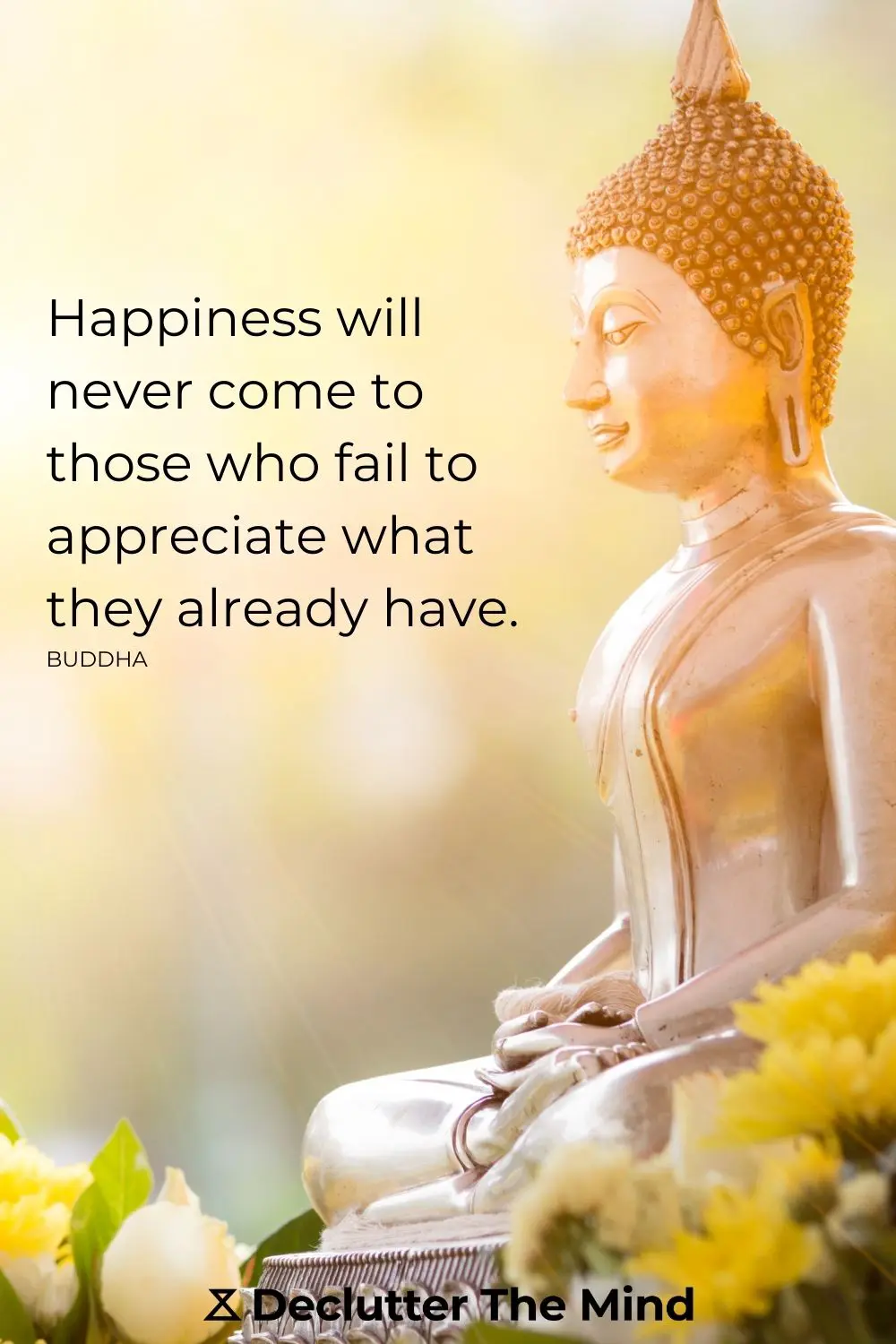
### Buddha Quotes on Life
1. “Every morning we are born again. What we do today is what matters most.”
2. “In the end, only three things matters: how much you loved, how gently you lived, and how gracefully you let go of things not meant for you.”
3. “Don’t rush anything. When the time is right it’ll happen.”
4. “To understand everything is to forgive everything.”
5. “When it hurts, observe. Life is trying to teach you something.”
6. “Change is never painful. Only resistance to change is painful.”
7. “One moment can change a day, one day can change a life, and one life can change the world.”
8. “The root of all suffering is attachment.”
9. “The trouble is, you think you have time.”
10. “Your mind is a powerful thing. When you start to filter it with positive thoughts your life will start to change.”
### Gautama Buddha Quotes
1. “If you truly [loved yourself](/blog/self-love-quotes), you could never hurt another.”
2. “Be where you are; otherwise you will miss your life.”
3. “All that we are is the result of what we have thought.”
4. “Three things cannot be long hidden: the sun, the moon, and the truth.”
5. “Happiness does not depend on what you have or who you are. It solely relies on what you think.”
6. “Suffering is not holding you, you are holding suffering.”
7. “Health is the greatest gift, contentment the greatest wealth, faithfulness the best relationship.”
8. “Virtue is persecuted more by the wicked than it is loved by the good.”
9. “Believe nothing, no matter where you read it, or who said it, no matter if I have said it, unless it agrees with your own reason and your own common sense.”
10. “I never see what has been done; I only see what remains to be done.”
### Quotes From Buddha
1. “If you knew what I know about the power of giving, you would not let a single meal pass without sharing it in some way.”
2. “No one saves us but ourselves. No one can and no one may. We ourselves must walk the path.”
3. “When you realize how perfect everything is you will tilt your head back and laugh at the sky.”
4. “Give, even if you only have a little.”
5. “You only lose what you cling to.”
6. “Thousands of candles can be lighted from a single candle, and the life of the candle will not be shortened. Happiness never decreases by being shared.”
7. “I never see what has been done; I only see what remains to be done.”
8. “I will not look at another’s bowl intent on finding a fault: a training to be observed.”
9. “Whatever words we utter should be chosen with care for people will hear them and be influenced by them for good or ill.”
10. “What is evil? Killing is evil, lying is evil, slandering is evil, abuse is evil, gossip is evil, envy is evil, hatred is evil, to cling to false doctrine is evil; all these things are evil. And what is the root of evil? Desire is the root of evil, illusion is the root of evil.”

### Real Buddha Quotes
1. “Do not dwell in the past, do not dream of the future, concentrate the mind on the present moment.”
2. “It is a man’s own mind, not his enemy or foe, that lures him to evil ways.”
3. “What is evil? Killing is evil, lying is evil, slandering is evil, abuse is evil, gossip is evil, envy is evil, hatred is evil, to cling to false doctrine is evil; all these things are evil. And what is the root of evil? Desire is the root of evil, illusion is the root of evil.”
4. “All that we are is the result of what we have thought: it is founded on our thoughts and made up of our thoughts. If a man speak or act with an evil thought, suffering follows him as the wheel follows the hoof of the beast that draws the wagon…. If a man speak or act with a good thought, happiness follows him like a shadow that never leaves him.”
5. “It is better to conquer yourself than to win a thousand battles. Then the victory is yours. It cannot be taken from you.”
6. “Believe nothing, no matter where you read it, or who said it, no matter if I have said it, unless it agrees with your own reason and your own common sense.”
7. “Those who have failed to work toward the truth have missed the purpose of living.”
8. “Long is the night to him who is awake; long is a mile to him who is tired; long is life to the foolish who do not know the true law.”
9. “Ardently do today what must be done. Who knows? Tomorrow, death comes.”
### Buddha Quotes Meditation
1. “Meditate… do not delay, lest you later regret it.”
2. “One should strive to understand what underlies sufferings and diseases – and aim for health and well-being while gaining in the path.”
3. “Delight in meditation and solitude. Compose yourself, be happy. You are a seeker.”
4. “If a man’s thoughts are muddy, If he is reckless and full of deceit, How can he wear the yellow robe? Whoever is master of his own nature, Bright, clear and true, He may indeed wear the yellow robe.”
5. “Like a fine flower, beautiful to look at but without scent, fine words are fruitless in a man who does not act in accordance with them.”
6. “Meditate. Live purely. Be quiet. Do your work with mastery. Like the moon, come out from behind the clouds! Shine”
7. “What you think, you become. What you feel, you attract. What you imagine, you create.”
8. “For soon the body is discarded, Then what does it feel? A useless log of wood, it lies on the ground, Then what does it know? Your worst enemy cannot harm you As much as your own thoughts, unguarded. But once mastered, No one can help you as much, Not even your father or your mother.”
9. “If you are quiet enough, you will hear the [flow of the universe](/blog/flow-state). You will feel its rhythm. Go with this flow. Happiness lies ahead. Meditation is key.”
10. “Though one should live a hundred years without wisdom and control, yet better, indeed, is a single day’s life of one who is wise and meditative.”
11. “Meditation brings wisdom; lack of meditation leaves ignorance. Know well what leads you forward and what hold you back, and choose the path that leads to wisdom.”
12. “If you meditate earnestly, pure in mind and kind in deeds, leading a disciplined life in harmony with the dharma, you will grow in glory. If you meditate earnestly, through spiritual disciplines you can make an island for yourself that no flood can overwhelm.”
### Buddha Quotes on Karma
1. “If you light a lamp for someone else it will also brighten your path.”
2. “Neither fire, nor wind, birth, nor death, can erase our [good deeds](/blog/good-deeds).”
3. “Happiness comes when your work and words are of benefit to yourself and others.”
4. “Work out your own salvation. Do not depend on others.”
5. “If we fail to look after others when they need help, who will look after us?”
6. “One who acts on truth is happy in this world and beyond.”
7. “Remembering a wrong is like carrying a burden on the mind.”
### Buddha Inspirational Quotes
1. “There is no fear for one whose mind is not filled with desires.”
2. “Irrigators channel waters; fletchers straighten arrows; carpenters bend wood; the wise master themselves.”
3. “Stop, stop. Do not speak. The ultimate truth is not even to think.”
4. “Endurance is one of the most difficult disciplines, but it is to the one who endures that the final victory comes.”
5. “Avoid evil deeds as a man who loves life avoids poison.”

### Buddha Quotes on Love
1. “If anything is worth doing, do it with all your heart.”
2. “You are far from the end of your journey. The way is not in the sky. The way is in the heart. See how you love.”
3. “Hatred does not cease by hatred, but only by love; this is the eternal rule.”
4. “You can search throughout the entire universe for someone who is more deserving of your love and affection than you are yourself, and that person is not to be found anywhere. You yourself, as much as anybody in the entire universe deserves your love and affection.”
5. “There has to be evil so that good can prove its purity above it.”
6. “True love is born from understanding.”
7. “Just as a mother would protect her only child with her life, even so let one cultivate a boundless love towards all beings.”
8. “Ambition is like love, impatient both of delays and rivals.”

### Buddha Quotes on Change
1. “Just as a snake sheds its skin, we must shed our past over and over again.”
2. “Everything that has a beginning has an ending. Make your peace with that and all will be well.”
3. “The secret of health for both mind and body is not to mourn for the past, nor to worry about the future, but to live the present moment wisely and earnestly.”
4. “To conquer oneself is a greater task than conquering others.”
5. “If we could see the miracle of a single flower clearly, our whole life would change.”
6. “To live a pure unselfish life, one must count nothing as one’s own in the midst of abundance.”
### Buddha Quotes on Compassion
1. “If your compassion does not include yourself, it is incomplete.”
2. “Have compassion for all beings, rich and poor alike; each has their suffering. Some suffer too much, others too little.”
3. “Teach this triple truth to all: A generous heart, kind speech, and a life of service and compassion are the things which renew humanity.”
4. “Imagine that every person in the world is enlightened but you. They are all your teachers, each doing just the right things to help you learn perfect patience, perfect wisdom, perfect compassion.”
5. “As rain falls equally on the just and the unjust, do not burden your heart with judgement but rain your kindness equally on all.”
6. “In separateness lies the world’s greatest misery; in compassion lies the world’s true strength.”
7. “For the good of the many, for the happiness of the many, out of compassion for the world.”
8. “People with opinions just go around bothering each other.”
9. “Whatever living beings there may be feeble or strong, long, stout, or of medium size, short, small, large, those seen or those unseen, those dwelling far or near, those who are born as well as those yet to be born may all beings have happy minds.”
### Buddha Quotes on Anger
1. “The tongue like a sharp knife kills without drawing blood.”
2. “Holding onto anger is like drinking poison and expecting the other person to die.”
3. “You will not be punished for your anger. You will be punished by your anger.”
4. “Conquer anger with non-anger. Conquer badness with goodness. Conquer meanness with [generosity](/blog/acts-of-generosity).”
5. “Your worst enemy cannot harm you as much as your own unguarded thoughts.”
6. “Holding on to anger is like grasping a hot coal with the intent of throwing it at someone else; you are the one who gets burned.”
7. “Anger will never disappear so long as thoughts of resentment are cherished in the mind. Anger will disappear as soon as thoughts of resentment are forgotten.”
8. “Chaos is inherent in all compounded things. Strive on with diligence.”
9. “It is a man’s own mind, not his enemy or foe, that lures him to evil ways.”
10. “Silence the angry man with love. Silence the ill-natured man with kindness. Silence the miser with generosity. Silence the liar with truth.”
### Inner Peace Quotes Buddha
1. “At the end of the day, I’m at peace because my intentions are good and my heart is pure.”
2. “It’s better to travel well than to arrive.”
3. “A man is not called wise because he talks and talks again; but if he is peaceful, loving, and fearless then he is in truth called wise.”
4. “Peace comes from within. Do not seek it without.”
5. “Those who are free of resentful thoughts surely find peace.”
6. “Do not overrate what you have received, nor envy others. He who envies others does not obtain [peace of mind](/blog/peace-of-mind).”
7. “Better than a thousand hollow words, is one word that brings peace.”
8. “However many holy words you read, however many you speak, what good will they do you If you do not act upon them?”
9. “To support mother and father, to cherish wife and children, and to be engaged in peaceful occupation — this is the greatest blessing.”
10. “Friendship is the only cure for hatred, the only guarantee of peace.”
Read our article on [inner peace](/blog/inner-peace).
## Conclusion
These Buddha quotes offered great insight into being more compassionate, controlling your anger, managing your thoughts, and being a more loving person. Whenever you find yourself feeling like yourself living an autopilot life, you can turn to these quotes or a [guided meditation](https://declutterthemind.com/meditation) practice to help you become more aware of the impact your thoughts have on the [life lessons](/blog/life-lessons) you learn along the way.
**Related reading:** turn that same compassion inward with our [self love quotes](/blog/self-love-quotes).
## Make mindfulness a daily habit
Buddha's teachings keep pointing back to one thing: training the mind. Quotes are a fine start, but a few minutes of daily practice is where the change actually happens. If these lines resonated, try a free [meditation for beginners](https://declutterthemind.com/meditation/beginner) from Declutter The Mind. It is a plain, secular on-ramp to mindfulness, free to start with no ads, on iOS and Android.
## Frequently Asked Questions
**Are these quotes actually from the Buddha?**
Some are, many are not. The Buddha left no writings, and his teachings were memorized and written down generations later in texts like the Pali Canon and the Dhammapada. Lines from those sources are well attributed. A lot of quotes that circulate online are later paraphrases pinned to his name, so treat the wording as inspiration rather than an exact transcript.
**What is the most well-known Buddha quote?**
A widely shared one is, "Holding onto anger is like drinking poison and expecting the other person to die," though that exact phrasing is a modern paraphrase. The clearest authentic source is the Dhammapada, which opens with the idea that the mind comes first and shapes everything you experience.
**What are Buddha quotes mostly about?**
A few themes repeat: the mind and how thoughts create suffering, impermanence, compassion and loving-kindness, letting go of anger, and finding peace from within rather than from your circumstances. Most of the lines on this page sort into those buckets, which is why they pair well with a simple mindfulness practice.
**How do I use Buddha quotes in daily life?**
Pick one line that lands and keep it somewhere you will see it. Then do the part the quote points at. A line about calming anger is more useful after a few slow breaths than read on its own. Quotes set the intention; a short daily [meditation](https://declutterthemind.com/meditation) practice is where the change actually happens.
**Did the Buddha write any of this down himself?**
No. The Buddha taught out loud and his followers memorized the teachings. They were passed on by mouth for around four centuries before being committed to writing in the Pali Canon. That is why you see slightly different wordings of the same idea, and why the spirit of a quote matters more than a perfect transcript.
---
# How to Deal With Compassion Fatigue When You’re Emotionally Drained
- URL: https://declutterthemind.com/blog/compassion-fatigue
- Description: Learn how to deal with compassion fatigue in 13 different ways so that you can heal yourself while caring for those who are suffering.
- Published: 2025-01-16
Compassion fatigue occurs when we have to stay compassionate for long periods of time for people who are struggling. It is most commonly experienced by caregivers, such as nurses and therapists who are required to put on a happy face when they’re being emotionally drained all day long. In this article, we’ll share how to deal with compassion fatigue in 13 different ways so you can be kind to yourself too.
## How to Deal With Compassion Fatigue
### 1. Note changes in your mood
The first step for dealing with compassion fatigue is to notice changes in your mood. It’s very common to suddenly feel irritable when working stressful jobs, such as nursing, therapy, or any other type of caregiver role. If you find yourself beginning to feel tense, take a moment alone to do some deep breathing exercises and collect yourself.
If you begin to notice irritability, anger, or any other negative emotion arise frequently, it’s possible that you’re suffering from compassion fatigue. Knowing that you have it is the first sign to be able to treat it. And if you find yourself with compassion fatigue, remember that it’s because you’re a good and caring person, who needs to be cared for too. People don’t develop compassion fatigue if they’re never kind, caring, or supportive of other people.
After determining that you’re suffering from this type of fatigue, tell someone. You could tell your boss, a coworker, a therapist, or your spouse. People who are going through the process with you may be able to suggest some tools and coping strategies that have worked well for them. If you don’t get a compassionate response from them, ask someone for support. Not everyone provides emotional support in the same way.

### 2. Prioritize yourself
Now that you know you have compassion fatigue, it’s time to [take care of yourself](/blog/take-care-of-yourself). You could plan a quick vacation (could be locally if you find that you’re needed nearby). Or you could try self care ideas. Ultimately, you need to show up for yourself. That means, leaving your work at work or separating your role as a caregiver to your parents and your home life.
Self care can come in many forms. It could be everything from joining a forum to share your frustrations on your caregiver burnout to booking a massage to relieve the tension in your body from taking care of people all day.
### 3. Take breaks from caregiving
When caregiving is your full-time job it can be hard to take breaks in between patients. However, you should still take them to decompress when they happen. Use the time to watch funny videos, try a [guided meditation for burnout](https://www.youtube.com/watch?v=RYK2wORc8b4), or chat with a friend.
If the person you’re caring for is a family member, take turns to provide care with other family members. A sibling, spouse, or close relative can swap turns to take care of the loved one.
Compassion fatigue often arises when you need to put on a happy face when someone is not in a happy place. If a loved one is battling cancer or Alzheimers’ it can be hard to watch them deteriorate. It’s normal to feel conflicted, too. If you have adult children who can provide support so you can take a break every now and then, let them take the reins.
Taking the time to eat, shower, and sleep is crucial to ensure that you recharge your batteries so you can continue to be the loving and kind person you naturally are.

### 4. Find a caregiver support group
There are caregiver support groups for a wide range of illnesses, so you can get the support you need to deal with compassion fatigue. For example, if your spouse got into a car accident and suffered a traumatic brain injury, there may be noticeable changes in their personality from before and after the accident.
Connecting with people who went through or are going through the same thing will help you know what to expect and look for as the people you care for suffer (or get better) too. Many people turn to forums when people are diagnosed with terminal illnesses to learn what the process is like and what to expect. Knowing what’s coming around the corner can help you accept the process, recharge your caregiving batteries, and combat compassion fatigue.
It’s always difficult to watch someone you love in pain or depressed. So, connecting with others in the same situation will allow you all to vent your frustrations and know you’re not alone.
### 5. Speak with a therapist
You can [find a therapist](/blog/how-to-find-a-therapist) if you’re struggling with compassion fatigue. Even therapists connect with other therapists when they’re struggling with being compassionate.
Consider scheduling appointments with a therapist on an ongoing basis. You’ve got a tough job. Caring for another person when they’re not doing well isn’t easy. It can be hard to watch someone get worse with time. It can also be hard to be positive and cheerful when everyone around you is in physical or emotional pain.
Most workplaces offer therapy in their insurance plans, so take advantage of any therapy sessions you can as you provide care for others and experience compassion fatigue. You can even ask your therapist how they cope with compassion fatigue in their role.

### 6. Find a fun hobby
Disconnecting from your role as a caregiver and doing something for yourself is crucial for overcoming compassion fatigue. What things do you enjoy doing? Can you marathon your favorite show with a bucket of popcorn in hand? Maybe taking the time to enjoy a relaxing dinner at your favorite restaurant can help you unwind and enjoy a night out.
Taking the time to do something for you that doesn’t require you to be supportive of someone else can be a highly relaxing experience. For example, learning a solo sport, instrument, or taking a boxing class can be a fun way to release your emotions in a healthy way. A punching bag will allow you to release the pent up stress in your body. Learning a new skill will allow you to shut off your thoughts and experience a flow state.
### 7. Take care of your physical health
Speaking of boxing, there are so many physical activities you can do to release endorphins to overcome compassion fatigue. If you do a lot of physical activity during the work day, such as a nurse at a nursing home, you might feel less enthusiastic about doing more physical activity.
However, if you find yourself sitting or standing most of the day, running, dancing, martial arts, or weight lifting could all be fulfilling physical activities that help you get your frustrations out, without taking your frustrations out on anybody.
When your body is in fight or flight mode due to the day’s stresses, it’s scientifically proven that exercise helps combat the feeling in a normal and healthy way. Avoid letting those emotions build up inside you. You don’t need to subscribe to any fitness subscription services, you can find a ton of really fun workout videos on YouTube for free that you can do in the comfort of your home.

### 8. Set Boundaries
[Setting boundaries](/blog/setting-boundaries) is key for dealing with compassion fatigue. Unfortunately, depending on your job, you might not be able to set boundaries with everyone. For example, if a patient is telling you a story about an uncomfortable trauma you’ve experienced, as their therapist, you can’t set the boundary to tell them to stop telling you this story.
However, if you’re in a professional setting, you can ask your boss for help with managing your boundaries for when you’re feeling caregiver burnout or compassion fatigue.
If a friend is constantly telling you the same negative story repeatedly, you can set boundaries by telling them which topics are off limits when the two of you are together. You could also spend less time with certain people, if they’re proving to drain your compassion quickly. It’s always hard being around negative people. So, take some time to draw borders around yourself.
### 9. Manage your thoughts
When dealing with compassion fatigue, it’s important to [control your emotions](/blog/how-to-control-your-emotions). You can only do this by managing your thoughts. Your thoughts can easily go off on tangents , if you let them wander long enough. [Guided meditation](https://declutterthemind.com/meditation) can help you watch your thoughts float in and out of your mind, so you can realize their nature.
However, once you realize how thoughts work, you need to understand that [you are not your thoughts](/blog/you-are-not-your-thoughts). So, stop wondering, “[what is wrong with me?](/blog/what-is-wrong-with-me)” just because you’re experiencing compassion fatigue. It’s normal to feel this way. Your thoughts are telling you what to feel. However, you need to regain control over them because they’re not real.
[You’re going to be okay](/blog/youre-going-to-be-okay). As long as you [meditate](/blog/how-to-meditate) and learn how to manage intrusive thoughts, you’ll be able to combat your compassion fatigue. Try out this meditation for intrusive thoughts below.
https://www.youtube.com/watch?v=b3FAv7A5m-E
### 10. Rotate care with a professional
It’s not easy to provide care for a loved one, 100% of the time. If possible, consider rotating care with a professional. You can have a nurse or therapist come to your home to chat with your loved one when you find it too difficult to deal with.
If you’re in a hospital setting, you can tell the nurse on staff you’re heading home to shower, eat, and practice self-care. They’ll understand the situation quite well.
If you’re a medical professional who’s caring for a specific patient, you may or may not be able to rotate care with certain patients. For example, a therapist might not be able to give a patient’s files to another therapist's files unless they’re retiring. However, a nurse at a hospital may be able to rotate taking care of a specific patient who is particularly draining to be around.
Having someone help you alongside you will not only give you the support you need, but will also have a similar experience of dealing with someone who is suffering, so you may find a [good friend](/blog/how-to-be-a-good-friend) who will help you learn how to deal with compassion fatigue and caring for a loved one as they suffer.
### 11. Journal your feelings
If you’re experiencing compassion fatigue, consider writing about it in your journal. For example, this could play a huge role in your healing and understanding of life. For example, most people experience compassion fatigue when someone they love or care for is suffering immensely.
If someone close to you is severely depressed but you don’t realize that, if they were to die suddenly, you might start to see the patterns in your journal that made it clear how bad their suffering was. That doesn’t mean you blame yourself for not doing enough because of their actions. However, you might realize that experiencing compassion fatigue gets stronger the more severe someone else’s mental state is. You might learn the signs earlier so that next time you’re able to resolve it easier.
### 12. Schedule mental health hours
All people providing care or love to people who are struggling should schedule mental health hours each day. That doesn’t always mean seeing a therapist. However, doing something at least one hour a day that is for your brain.
You might find [relaxing activities](/blog/relaxing-activities-before-bed) that silence the thoughts. Maybe reading makes your mind wander, so instead you and your partner play a board game together. Or you watch a hilarious new comedy on a streaming service. You could try meditation, yoga, exercise, or anything that helps you turn off that [inner critic](/blog/inner-critic) and brings you to your [inner peace](/blog/inner-peace).
### 13. Pamper yourself
Compassion fatigue is hard. So pamper yourself. Not just self-care ideas but anything that makes you feel good. If you’re being drained by someone else, think about what brings you back to a happy state. Do something for yourself that makes you feel beautiful, relaxed, and happy again.
Maybe that’s doing on a date night with your friends. You might head to the salon to get a new manicure for your nails. Cutting your hair seems to be a new you sort of change people make. Anything that helps you feel refreshed and rejuvenated is a great choice at helping you deal with compassion fatigue. It’s all about remembering who you are: a great, kind, and loving person who deserves to have great, kind, and loving things come back to them.
## Conclusion
Compassion fatigue can be a huge drain on us emotionally. However, it’s important to remember that all it means is that we have a huge heart. We love people so much that it can be hard for us when we don’t receive that love back. It’s hard for people who are struggling and in pain to show us love. However, that doesn’t mean that they won’t be capable of giving it back to you or someone else one day. One day, they’ll remember how kind and compassionate you were in their time of need and will be grateful for your love and kindness. Let the story unfold.
---
# How to Live With Complex PTSD
- URL: https://declutterthemind.com/blog/complex-ptsd
- Description: Many survivors of war, sexual assault, etc experience complex PTSD after a trauma. In this article, you'll learn how to live with it.
- Published: 2025-01-16
Many survivors of abuse, sexual assault, accidents, and army veterans have Complex PTSD. This trauma disorder affects an individual's thoughts, emotions, relationships with others, and general quality of life. You can learn to cope with PTSD if you receive the proper treatment, but it does require a lot of time, attention, and effort to work through reversing these effects. It's possible to live a normal life after a trauma though you may have triggers pop up throughout your life, causing difficult emotions and pain. In this article, we'll go in-depth on how to live with Complex PTSD and treat it to be more manageable in your everyday life.
## What Is Complex PTSD?
Complex PTSD is created from prolonged periods of having to deal with intense traumatic experiences and an inability to make sense of them. The form of PTSD that most people are familiar with is an anxiety disorder that stems from one isolated event like a car crash or natural disaster. Still, Complex PTSD is more associated with an entire period of traumatic time taking place in one's life.
In the United States Military, many soldiers suffer from this disorder as they enter combat for the first time. It usually begins after the soldier has served in the war for between two to three tours. Soldiers' high stress levels can manifest a range of problems, including substance abuse, anxiety disorder, [depression](/blog/coping-with-depression), and compulsive behaviors.

There are several treatment options available that can assist you in living with Complex PTSD. While you may not find a single treatment option that works well for you, many people have found that an integrated approach can help with the symptoms of PTSD
It will be essential to connect with mental health professionals who are skilled in dealing with specialized trauma and PTSD. This mental health professional could be a therapist, social worker, trauma counselor, military psychologist, psychiatrist, or professional counselor. It is always best to see a professional who understands the symptoms of PTSD to receive the best treatment. It's also a good idea to seek help from someone specializing in the type of trauma you lived through. For instance, there are sexual assault trauma counselors who understand the patterns, behaviors, and challenges a rape survivor goes through. Thus, they're able to provide you with specialized therapy in dealing with that trauma.
While hiring a mental health professional is highly encouraged to help you cope with your Complex PTSD, remember that it's okay to fire a counselor who doesn't support you in the way you need support. Not all trauma counselors are equal. If you [find a therapist](/blog/how-to-find-a-therapist) who makes you feel more panicked, don't be afraid to look for another professional. To get the help you need, you sometimes need to find someone who helps create a safe environment so that you can be honest about your experience. That way, you'll be able to heal from your traumatizing experience.
Some people find that a combination of medication and therapy can help to treat Complex PTSD. If you feel as though you need to find an effective treatment option, it would be good to speak with your doctor about your available options. Unfortunately, there are no medications that treat PTSD directly. However, you might be able to treat symptoms, such as anxiety or depression.
Many people with PTSD want to stop [PTSD nightmares](/blog/ptsd-nightmares) from occurring. Some doctors recommend a heart medication, which suppresses your nightmares. From personal experience, that medication doesn't work very long. For me, it lasted about two weeks where I had a dreamless sleep. Then, one night I had my worst nightmare and stopped taking the medication because I was too scared. The reality of trauma is you can't suppress it to make it go away. Sometimes, you need to go through the hellish nightmare of Complex-PTSD head-on so you can restabilize yourself. The most effective way to overcome the trauma is to go through the trauma. There are no miracle pills that will make your brain process the pain with ease.
Additionally, finding a support system from your friends and family is essential for living day to day with Complex PTSD. It can be difficult for people experiencing Complex PTSD because it can feel as though you are by yourself in a situation since others can't relate to your experience. Reaching out to others and finding support from people that have gone through the same type of trauma can help you better cope.
## Common Signs And Symptoms of Complex PTSD
The following are the most common signs and symptoms of Complex PTSD. While not everyone who lives with a traumatic experience will experience all of these symptoms, many people deal with them.
### 1. Flashbacks
When a survivor is having a flashback, they may feel like they have traveled back in time to that traumatic event. They may feel the same emotions, fears, anger, or pain from that moment.
### 2. Negative Self-image
In many cases, people with Complex PTSD develop a negative self-image due to [low self-esteem](/blog/how-to-overcome-low-self-esteem). They may relate to themselves as being weak or ineffective. They may blame themselves for the traumatic event that took place. Many people have heard of fight or flight as a typical response. However, in cases of trauma, many people experience the freeze response. In the moment of trauma, they experience an out-of-body experience of paralysis. Many regret not being able to fight back or save a friend due to their freeze response. It's important not to blame yourself for what happened or how you responded
### 3. Nightmares
Those who have Complex PTSD experience trouble sleeping through the night, constantly waking up from nightmares. Many times, the traumatic event is re-lived in the form of a nightmare. Most nightmares won't be about the trauma but the emotions around it. Often, your dreams will be about a loss of control as that's how your waking life feels. A trauma social worker once said to me, "Nightmares are the brain's way of processing information." Every time I woke up from a nightmare, I would repeat that sentence and go back to sleep. This sentence eventually caused nightmares to lose their power over me.

### 4. Intense Emotions
The trauma survivor may have intense emotions that are directly related to the traumatic event that took place. They may feel depressed or severe bouts of rage. Additionally, they may feel out of control when it comes to their emotions on any given day. Those with Complex PTSD are often in a state of hypervigilance or survival mode. It's challenging to think straight and behave well when your brain is screaming danger. It's normal to find it hard to cope with emotions. Running is a great way to release your intense emotions physically.
### 5. Unhealthy Relationships
The survivors' relationships with others will often be strained during this period. They may be unresponsive or on edge with close friends and family members. They may feel as though they need to withdraw from social relationships to keep themselves safe. Fortunately, even someone who survives a sexual assault will eventually have a normal and healthy relationship. So, remember that the fears you project in your current relationship are temporary. However, you might also find that you eventually cut out the people who help you in your life during this time, as it may end up being a painful reminder of what you went through. This emotional disconnect is common. If your trauma was caused by another person, aim to break the pattern to avoid [toxic people](/blog/how-to-deal-with-toxic-people) in the future, particularly for domestic violence, sexual abuse, or child abuse.
### 6. Work-Related Problems
Many people who struggle with Complex PTSD have intense work-related problems. They may become very disconnected and unproductive in their work lives. Often, this stems from the fact that they struggle with having a sense of control, which is common for trauma survivors to face. Your personality drastically changes when coping with trauma; some end up fired for behavioral reasons. At least this happened to me. So, [don't beat yourself up](/blog/stop-beating-yourself-up) if this happens to you. Take the time to cope with your mental health and heal. Trauma is more complicated than many mental health issues, don't be afraid to admit you need help.
### 7. Substance Abuse
Many people who live with Complex PTSD struggle with substance abuse as they try to self-medicate their way through it. They may find that alcohol or drug use helps them to escape from their pain. In the immediacy of it, drinking away your problems works well. But eventually, you realize not even alcohol is enough to make the pain go away. Many people will quit cold turkey. For example, a sweeping declaration of giving up sex and alcohol for a year is common for sexual assault survivors. A bit of a warning, once you stop numbing, trauma symptoms start to magnify. The flat, far-away stretch before that point is [feeling emotionally numb](/blog/emotional-numbness), and it's protection, not a character flaw. The pain will be horrible. Yet, this is good news. It means you're finally facing the trauma and going through it. It's a tough battle, but this is how you'll heal. So, when you quit alcohol and drugs to face your trauma, know that we're proud of you.

### 8. Panic Attacks
Many people who live with Complex PTSD struggle to know [how to stop a panic attack](/blog/how-to-stop-panic-attack). They may have unexpected and intense panic attacks that seem out of the blue. They may feel as though they have no idea what has triggered these attacks, but that doesn't make them less real.
### 9. Lack Of Emotional Regulation
Many people who live with Complex PTSD struggle with a lack of emotional regulation. They may get angry over small things, and they may have intense emotions and urges that are difficult for them to control. You may notice that anger transforms into rage or that you scream louder than you did before. Sudden mood swings are particularly common. You will find it difficult to [control your emotions](/blog/how-to-control-your-emotions) because of the severity of your inability to process the intensity of the trauma. Eventually, things do stabilize, so remember that all of this is temporary.
### 10. Negative Thought Patterns
Additionally, some people who live with Complex PTSD struggle with [negative thought](/blog/how-to-stop-negative-thoughts)patterns. They may find that they are constantly thinking about the traumatic event that took place, and it dominates their thoughts day in and day out. This process is called ruminating. Ruminating can be particularly destructive to your mental health. Your brain will spin the same draining thoughts repeatedly, which will cause you to react in extreme ways. A tactic to help with this is to do right-brain activities, such as painting, meditating along with [YouTube](https://www.youtube.com/watch?v=hKS1SG_PZD0) videos, gardening, making music, and more.
## Understanding Complex PTSD
Often, the person living with Complex PTSD starts off lacking support and treatment as if they have no problems that need solving. This happens because they can't make sense of their situation, and therefore don't understand what is causing their actions. You might go to the hospital thinking you have a brain tumor because you don't know why you're suddenly living in hypervigilance. You might not connect that trauma has caused your suffering.
When a person realizes they have Complex PTSD, it is almost impossible to make sense of the situation. They may live with the symptoms for years, and the fear of not understanding what has caused their behavior shift can be overwhelming.
Treating Complex PTSD is usually tough to do on your own. It requires a lot more effort than trying to treat an anxiety disorder or depression.
## Risk Factors For Complex PTSD
The following risk factors can help you to understand why someone may live with Complex PTSD.
### 1. Traumatic Events in Your Life
If you have endured any traumatic events in your life, you may develop Complex PTSD due to these experiences. Trauma survivors often struggle with difficult emotions, whether the incident triggers them or not.
### 2. Childhood Abuse
Another particular risk factor for Complex PTSD is childhood abuse. If you were abused as a child, grew up with an alcoholic parent, or had an unloving home life as a child, then you will notice that you have a greater risk of developing the disorder.
### 3. Mental Illness
If you have been diagnosed with any form of mental illness, and your symptoms don't go away after a trauma, then you could be living with Complex PTSD. Having a diagnosis of mental illness before a PTSD diagnosis can magnify the trauma symptoms.

## How Is Complex PTSD Diagnosed?
Complex PTSD is diagnosed by a mental health professional who will assess any symptoms you may have. It's also crucial for the doctor or therapist to understand your symptoms in detail.
Your treatment plan will depend on several factors, not just the diagnostic criteria.
Reflecting on the Diagnosis: You may be diagnosed with Complex PTSD if your doctor or therapist notes the following:
1. The symptoms cause a lot of stress in your life, mainly when they are triggered.
2. Your symptoms cause you to avoid situations that might trigger them or cause flashbacks. You'll also find it difficult to sleep and feel tired most of the time. You may have nightmares or intrusive thoughts that stay with you all day long. You may feel numb or confused.
3. You're not able to manage your symptoms without the help of another person.
4. You might have difficulty accepting that your symptoms affect your life and functioning.
## Final Thoughts
Complex PTSD is a controversial diagnosis in the mental health community. However, by acknowledging the diagnosis, asking for support, and making modifications in your life, you'll be able to treat your symptoms and heal from your pain. The intensity of PTSD weakens over time though you'll still have triggers and challenging periods now and then. You are not the problem; what happened to you is. Avoid blaming yourself for what happened to you; it was never your fault. Consider trying this [guided meditation for PTSD](/meditation/ptsd) or listening to [songs about PTSD](/blog/ptsd-songs) to help you cope.
---
# 10 Ways to Deal With Frustration
- URL: https://declutterthemind.com/blog/deal-with-frustration
- Description: Frustration is one of the most crippling feelings. Here's how to break out of it with 10 ways to deal with frustration.
- Published: 2025-01-16
Today, most of the world is being asked to stay home and avoid going out. The [self-isolation](/blog/dealing-with-loneliness) is enough to make people go stir crazy. And for some, being stuck at home with the family can be a frustrating experience. In life, things don’t always go according to plan. Sometimes, things go wrong. Other times, people frustrate or annoy us. And when you’re forced to deal with all of these feelings while isolated from the world around you, the challenge of frustration grows. In this article, we’ll break down 10 ways to deal with frustration during this difficult time.
## What Is Frustration?
Frustration is a feeling people experience when they are upset or annoyed. It’s a normal reaction when dealing with situations outside of your control.
## Causes of Frustration
### 1. Poor communication
One of the causes of frustration stems from poor communication. Often, we fail to communicate in a way that other people understand. Have you ever found yourself saying, “You’re not listening to me?” That’s an example of poor communication. In this instance, the other person will typically say that they are listening to you. That’s because they’re listening but they don’t understand what you want because you haven’t articulated the need in a way that the listener understands.
You need to be more explicit when describing your needs to another person. For example, “When you say x, I feel y. What I need right now is q to resolve this issue.” But that’s not even the most important part of communication, listening is the most important part actually. And most people underperform at communicating their thoughts, so you’ll need to try to pick up the subtext and explicitly call it out to determine if you understand the subtext of what someone else is saying. No wonder it’s so hard to deal with frustration, communication is a lot more than just speaking words.
### 2. Different experiences
If you’re trying to understand the causes of frustration, just take a look at the different sets of experiences we all go through. We all see the world through our own unique lens. From the way we were raised to the economic hardship our families face to traumatic experiences, we’ve all experienced life in a different way than those around us. It’s what helps make our experiences so unique. And it’s what makes us unique. Two people can go through a similar event and perceive the event in completely different ways. For example, say you grew up in a family where everyone smokes, you might find that you too became a smoker or maybe you were so repulsed by it that you decided to never smoke. You can’t blame someone else for making you become a certain way because there are countless cases of people reacting in completely different ways. There’s so much that shapes who we become. And that can lead to frustration because you never see the full picture of what makes someone who they are.
### 3. Lack of Progress

The last cause of frustration comes from a lack of progress. Humans are ambitious. We want to grow, change, and evolve. We pursue relationships so we can go down the path of getting married and having children because we see that as progress, and of course, it’s how we were evolved to keep our species alive. When a relationship falls apart, often we fall apart.
Progress is [how we feel better about ourselves](/blog/how-to-feel-better-about-yourself), instead of feeling like our [life is falling apart](/blog/my-life-is-falling-apart).
### 1. Meditate
The first step to dealing with frustration is to notice that you’re feeling. Believe it or not, but it’s not always easy to notice frustration arising. Sometimes, we blow up at loved ones not realizing that we were pent up with frustration. Fortunately, there is a way to get better at noticing frustration: meditation. With meditation, you simply become more attuned to feelings and sensations in your body. That way, when you notice that frustration is coming up for you, you can take action to lower it instead of taking it out on those you care about. One of the [benefits of meditation](/blog/benefits-of-meditation) is that it helps you become more self-aware in the present moment. If you find that you regularly have fits of rage or if you’ve gotten in trouble at work over anger issues, you may find that meditation is helpful to prevent the buildup of frustration within you.
Right now, most people are in [self-isolation](/blog/dealing-with-loneliness) at home. And on the one hand, you’re spending time with the people you love the most. How wonderful! But on the other hand, you’re stuck with the people who can annoy or frustrate you better than anyone else. Uh oh. Usually, we can get by with a little frustration or annoyance from loved ones. But when you’re stuck at home for weeks on end things can unravel pretty quickly. That’s why it’s so important to practice meditation for at least ten minutes a day. You can check out the Declutter The Mind meditation app on the [App Store](https://apps.apple.com/us/app/declutter-the-mind/id1465713447?ls=1) or in [Google Play](https://play.google.com/store/apps/details?id=com.MindDeclutter&utm_source=landing&utm_medium=link&utm_campaign=site). You can also find some of our [guided meditations](https://declutterthemind.com/meditation) on our website.
### 2. Get some fresh air

While some parks, stores, and public places may be closed in specific cities around the world, in most countries, no one is stopping you from getting some fresh air. Whether you spend some time in your backyard or on your balcony, getting some of that fresh air can do your body good. If you own a pet, you might enjoy taking some time to walk it a few more times a day than usual to get some of that warm sunshine glowing upon you. While outdoors, be sure to mindfully breathe. Being out in nature is one of the best places you can ever be. While you shouldn’t be hitting up your local beach, going for a casual stroll by the water or in a forest can be a relaxing activity. But remember to practice social distancing at this time. You never know who may be contagious.
### 3. Exercise
Exercise is one of the healthiest ways to deal with frustration. Instead of carrying all that pent up energy inside of you, you can release it through your physical movements. During your most frustrated moments, go for a run. If you’re feel really angry, you can gently punch the air as you move forward. You’ll notice that it actually feels good. Even those who don’t like running will find relief in a run when it comes to their frustration. You can also do other cardio such as dance if you want to transition from a mood of frustration to one of happiness. And if you’ve really built up a ton of pent up frustration, maybe you’ll find some solace in weight lifting. You can grunt every time you lift your weight up. And in all of these cases, you’re improving your physical health and dealing with frustration in a way that makes you stronger.
### 4. Practice nonviolent communication

Raise your hand if you’ve ever said something you shouldn’t have when frustrated. Okay, don’t worry, me too. When we’re frustrated, we sometimes use our words to hurt people we care about to get back at them for causing the frustration. However, verbally attacking someone doesn’t solve the problem, it only magnifies it. There’s an actionable book by Marshall Rosenberg called [Nonviolent Communication: A Language of Life](https://www.amazon.com/Nonviolent-Communication-Language-Life-Changing-Relationships-ebook/dp/B014OISVU4/) that breaks down how to communicate your needs to other people. A cause of frustration may stem from not having our needs met. However, if we fail to know how to communicate those needs to others, we end up having to deal with frustration for years. If you can invest some time to reading, this book may help push you in the right direction.
### 5. Focus on positive visualization
Now we don’t want to be woo-woo about positive visualization. Imagining yourself as a billionaire on a beach with zero cares in the world can be a wild dream but deep down you know it’s not possible. Most billionaires have more stress, not less. Kidding aside, positive visualization can help calm your frustrations. You can use Declutter The Mind’s [Visualization for Anxiety meditation](/meditation/anxiety) on the app to help you visualize a ball of light flowing through you to help you ease the tension in your body. The aim of the visualization is to shift your focus on something else to help you deal with frustration.
### 6. Change the tone of your thoughts
Positive thinking alone won’t cure your frustration. However, it can help you transition [your thought](/blog/you-are-not-your-thoughts) process to a new path. Have you ever found yourself thinking a negative thought and going down a rabbit hole. And somehow this one thought magnifies into something so big you can’t control it? How frustrating! Now you can recite every positive mantra in the world but that’s not going to help you.
When a negative thought enters your mind, think of a piece of evidence that counters it. For example, you might think to yourself, “I forgot to buy eggs at the grocery store, I’m so forgetful.” However, telling yourself that you’re a forgetful person is a permanent way to describe yourself for making a tiny mistake. Instead, think to yourself, “I forgot to buy eggs because I didn’t include it on the grocery list due to being busier than usual today. I can pick some up tomorrow.” That way, you include a reason for not buying eggs and you also include a solution proving that the problem is fixable.
### 7. Look for solutions, not problems

When we deal with frustration, we often put all of our focus on the problem instead of the solution. When you find that a problem is growing bigger, create a list of all the solutions. That way, you remind yourself that the problem is fixable. Frustration is fixable too.
However, frustration goes away when we block the negativity in our thoughts so that they don’t take something that makes us feel bad and turn it into something that makes us raging mad, upset, or hurt. For instance, say you feel frustrated being stuck at home. Right now, you might not be allowed to leave your house so that won’t work as a solution. However, what can you do to turn your home into a place you want to be? Maybe you can sign-up for an online fitness class to release the tension. Or you can play an online game to help entertain you. Or you can write ‘thinking of you’ cards to friends and family to help make other people happy when they get a surprise in their mailbox.
### 8. This too shall pass
Experiencing frustration is part of being human. However, here’s some good news for you: frustration passes. When you find that burning ball is in your chest, taking a deep breath, and remembering that this isn’t a permanent state can help you deal with frustration. Obstacles and challenges don’t last forever. They can be a huge pain in the butt as you deal with the problem. However, nothing is permanent. Eventually, as time passes, you’ll notice your frustrations do. Avoid making permanent decisions to solve temporary problems. In this present moment, you’re in full control of how you feel and react to your frustration. Choose your next step wisely.
### 9. Distract yourself
There are two types of frustrated people in the world: those who ruminate on their thoughts and those who take action. Those who ruminate on their thoughts tend to make a small problem an impossible one. And those who take action usually by distracting themselves eventually move on. If you find that something is frustrating you, it’s important to distract yourself with a different task. Maybe you play [anxiety relief games](/blog/anxiety-relief-games), exercise, or watch a show. Avoid calling a friend to talk about your problem because that may cause the rumination to escalate. You don’t need someone to agree with your frustrations, you need someone who will help you let go of your frustrations. Not every problem deserves a battle. And that doesn’t just include a battle with other people, but also a battle in your mind.
### 10. Add a journal entry about it

Sometimes when you’re dealing with frustration, you want to get a million things off of your chest. But the problem is, once the words come out, they stay out. It can add tension to relationships and make bad situations worse. Now, you probably don’t want to write your negative thoughts about people or situations on paper. Paper can be found and accidentally read by others. The best strategy is to type it all out and immediately deleting it without sending it. If you think sharing your thoughts needs to be heard to help you come to a solution, give yourself a few hours to cool down. And when you do write something out be sure to include actions that you and others can take to help resolve your frustrations.
You can also keep a [mindfulness journal](/blog/mindfulness-journals) where you can keep tabs on your daily emotions and ensure you're seeing progress.
## Dealing With Frustration Summary
Frustration is a temporary emotion. Using some of the strategies above you can take actions to deal with frustration. Keep in mind that you will experience this feeling again in a new context down the road. Using meditation, you can become more aware of the feelings before they fully surface. It can help you manage your frustration on a long-term basis so that frustrations impact on your mood or even your day becomes minimal. Releasing your frustration through exercise can also be beneficial to help you cope with it. Whether you decide to write your frustrations out, focus on solutions, distract yourself, or try any of the other ideas on this list, you’ll be well on your way to managing your frustrations in a safe and healthy manner. May you be at peace.
---
# Thanatophobia: What Is Death Anxiety and How to Overcome It
- URL: https://declutterthemind.com/blog/death-anxiety
- Description: Experiencing death anxiety after a terminal illness diagnosis or near-death experience? In this article, we help give you the coping tools.
- Published: 2025-01-16
Most of us probably don't like to talk about death. Although we all know that death is inevitable, there can be a great deal of fear and anxiety surrounding this topic. Even hearing the word may make us feel uncomfortable. You may even want to try and avoid thinking about death. However, trying to avoid the topic of death can affect your mental and physical health. In this article, we'll take a look at what thanatophobia is all about and how to cope with death anxiety if you're experiencing it right now.
## What Is Thanatophobia?
Thanatophobia is the fear of death. We may experience it after a near-death experience or when diagnosed with a terminal illness like cancer. Death anxiety is a phrase used to describe the feeling that people experience when they become aware of death. What's interesting is that death anxiety may be a significant feature in any number of anxiety-related disorders.
Even though we all know that we're all going to die one day, death anxiety still scares us. We want to be alive as long as possible to enjoy everything we have in this world. And to be close to our family and friends for as long as we can. We want to take a deep breath in while standing outside on an autumn day. Dreaming of vacations, paid off mortgages, and retired life where we don't slave away at work anymore are all things we want to experience. Unfortunately, we aren't all so lucky. And it sucks.
Death anxiety is normal. Having a fear of the unknown is certainly a legitimate concern. After all, we don't really know what's on the other side. Do we have flashbacks of a lifetime? Will we be dragged through the fires of hell for our mistakes? Does heaven exist? Is everything all black like in space? Is death a unique experience in and of itself?
However, it becomes a problem when death anxiety starts to interfere with how you [live your life](/blog/live-your-life). For people who can't find the proper [coping mechanisms](/blog/coping-mechanisms), that can cause [emotional pain](/blog/emotional-pain) and stress. You're going to need a loving support system and tools in place to help you cope with the reality of your mortality.

## How Does Death Anxiety Display?
While this is a serious concern, death anxiety is not a distinct disorder but often appears as part of other disorders. How exactly do you know if you're experiencing this problem? Let's examine some of the common ways where it can show up.
### 1. Separation Anxiety Disorder
Separation anxiety disorder is a disorder that children may have. It involves having a fear of losing people who are important to them from an accident or death. Children with this disorder may be afraid of being alone or not knowing where the parent is at any time. They may not always articulate what they're scared of, but it's relatively common. Adults can also experience separation anxiety when they have a history of [breakups](/blog/how-to-deal-with-a-breakup), loss of family members or friends, or a trauma that involves separation, such as divorce.
### 2. Compulsive Disorders
People who have compulsive behaviors may not realize that they're displaying death anxiety, but ultimately, this is a fear. For example, compulsive checkers often will have to check that they've turned off the stove, locked the door, and done other activities that will keep their home safe. This behavior is to prevent harm or death. Many people with post-traumatic stress disorder often display signs of compulsion for safety, especially if their trauma was a near-death experience, sexual assault, or other traumatic experience.
Compulsive behaviors can be more specific to certain medical conditions or just general wellness. A person who has to wash their hands multiple times shows a fear of developing a life-threatening disease. These individuals may also see their doctor regularly and request body scans or medical tests to identify severe illnesses, even without having any significant symptoms. What's driving this behavior is a fear of death and dying.
### 3. Specific Phobias
Many phobias are related to a fear of a specific item, animal, or condition. For example, a person with a family history of heart disease may constantly think they have a heart attack. Other phobias could be a fear of heights, spiders, snakes, or other animals. These are all legitimate since they could cause harm. However, their fears are excessive and ultimately grounded in an association with death.
### 4. Post-Traumatic Stress Disorder (PTSD)
Following a traumatic event, people often experience death anxiety, though sometimes only subconsciously. Some folks temporarily experience death following a trauma, which scares them. A person is likely to have recurring [PTSD nightmares](/blog/ptsd-nightmares) after a traumatic event. They become obsessed with safety and staying alive as a result. It's as if a bubble bursts, and now their mortality becomes a possibility rather than something they previously ignored. Death anxiety is likely the main fear in PTSD.

## What Causes Death Anxiety?
Since this is not a distinct disorder, it may be challenging to understand the cause of death anxiety. Phobias are often triggered by a specific event in the past, even if it's not remembered. If a person experienced a traumatic event related to their being at risk of dying or having a loved one die, they might be reliving this anxiety.
Individual health can also be a risk for developing death anxiety. For example, a person who has a significant illness will likely be thinking about the end of life and may be [feeling anxious](/blog/feeling-anxious-for-no-reason). Older adults tend to have higher levels of anxiety, which is understandable. Women are also more likely to experience death anxiety, although it's not well-understood why they would. However, women may fear death more due to media stories about the lack of safety women experience, heightened anxiety levels overall, or a difference in brain chemistry compared to men.
## How to Treat Death Anxiety
There are many ways to manage death anxiety, especially if they give you [panic attacks.](/blog/how-to-stop-panic-attack) Social support networks are often an excellent way to help prevent or [reduce anxiety](/blog/how-to-get-rid-of-anxiety). Some people may also find that their religious beliefs are a helpful tool. People who have good [self-esteem](/blog/how-to-overcome-low-self-esteem), good health, and believe that their lives are fulfilling are less likely to struggle with this concern.
If you find that your anxiety in this area keeps you from living a healthy life, then it may be best to seek out treatment. While your doctor can recommend a personalized solution, there are a few options available. Depending on the symptoms and severity, it may be best to use one or multiple of these treatments. Ultimately, if your fear of anxiety is due to a terminal illness, it may be a good idea to [find a therapist](/blog/how-to-find-a-therapist).
### 1. Cognitive Behavioral Therapy
Cognitive-behavioral therapy is a type of therapy that works by altering a person's behavior patterns. In short, it helps people to form new ways of thinking. A doctor, social worker, or psychotherapist are licensed professionals working with individuals to help them restructure their thoughts. Psychiatric illnesses like anxiety and depression are often called thought disorders. These practical solutions work by overcoming feelings of anxiety. They may also help individuals develop coping strategies that allow them to be calm and not afraid when talking or thinking about death.
### 2. Psychotherapy
This type of therapy is talk therapy. It involves talking through anxieties and fears with a psychotherapist or a psychologist. A professional in this field will explore the cause of that fear and then develop coping strategies to deal with the anxieties that a person faces. Depending on your symptoms, just talking about how you feel may help you feel more in control. Many people see a therapist regularly for this reason. Sometimes, all you need is a sounding board to prevent you from experiencing [ruminating thoughts](/blog/ruminating-thoughts) that spiral your death anxiety out of control. A psychotherapist will perform thought exercises to help you look at the likelihood of your worst fear happening right now. They may also share some practices to deal with your impending death if the possibility of death is near.
### 3. Exposure Therapy
This type of therapy is also carried out by a licensed professional. It focuses on helping a person to face their fears instead of burying or avoiding their concerns. By not hiding what they feel, they're encouraged to expose themselves to their death anxiety. A therapist will work with individuals by gradually telling them to experience the fear in a safe environment. Over time, the anxiety response will reduce itself, and the person will be able to confront the thoughts without [feeling overwhelmed](/blog/feeling-overwhelmed) with fear.

### 4. Medication
If you're diagnosed with a specific mental condition such as PTSD or generalized anxiety disorder, your doctor may recommend an anti-anxiety medication. Medication could include an anti-depressant or a beta-blocker. When people use medications simultaneously as psychotherapy, they tend to be most effective at eliminating their death anxiety. Medication may provide benefits by relieving feelings in the short term. However, long-term use of some of these medications may not be ideal. Always talk to your doctor about long-term management strategies for the best results.
### 5. Meditation
[Guided meditation](https://declutterthemind.com/meditation) can help you deal with your death anxiety. Meditation is a healthy, non-invasive way to deal with your thoughts when you're alone with them with no support. If your [negative thoughts](/blog/how-to-stop-negative-thoughts) keep taking over your mind and you don't want to make yourself sick faster, it's good to practice a calming meditation. Guided meditation allows you to have prompts that help prevent you from getting overwhelmed by thinking while trying to [calm the mind](/blog/how-to-calm-mind). Check out this YouTube video:
https://www.youtube.com/watch?v=6wl4j4gd2WI
## What Is the Research About Death Anxiety?
Unfortunately, research on the effects of treatment for death anxiety are somewhat limited. However, there have been some findings from related areas, primarily when the treatment is for individuals with chronic diseases. One review from 2018 looked at the effect of various therapies on individuals who had advanced cancer. The review's findings suggested that interventions focused on helping people find meaning in their life were the most effective at treatment for death anxiety.
For example, doing [acts of kindness](/blog/acts-of-kindness) every day for the remainder of your life can be a fun, easy way to add meaning to your life while battling a terminal illness. You can mail cards to friends and family explaining why you love them. Wish all your friends on Facebook a happy birthday every time the notification comes up. You can spend quality time with loved ones on a short nature walk.
Another meta-analysis was done in people who did not have severe diseases. They found that cognitive-behavioral therapy was one of the most effective treatments. Group desensitization was also found to reduce death fears compared to other types of treatments. However, these studies were pretty limited as they had a broad range of individuals with various mental health conditions.
Both of the reviews found that research in this area is still very much in the early stages. There was also a lack of research with samples from people who had mental health diagnoses, making it hard to know which treatment would pair best with each person. This problem led the researchers in both studies to conclude that there was very little you could say about the effectiveness of one particular intervention when it comes to death anxiety.
## Conclusion
While additional research and studies are needed, most people will experience death anxiety at some point in their life. Our awareness that we're all going to die is a central part of existence. Evidence suggests that fears are often displayed with mental health conditions but that anyone can and likely will have some anxiety. Many of the standard treatment approaches may not work for those who struggle with this disorder. It may take time to find a successful therapy, leading many people to be frustrated in the process. While we can't prevent or stop death from happening to us, we can participate in meaningful activities that enrich our lives while we're alive. And a life well-lived will help us overcome our death anxiety.
---
# Don’t Take Life Too Seriously: 13 Reasons to Cherish Being Alive
- URL: https://declutterthemind.com/blog/dont-take-life-too-seriously
- Description: Don't take life too seriously. Learn 13 reasons why you should cherish being alive while you're here. Let's have some fun!
- Published: 2025-01-16
You grew up watching your parents work hard, sacrificing everything they had just to keep a roof over your head. And as you started getting older, you began to do much of the same. You got your first job as a teenager, studied hard, and tried to live a successful life. But then you began to realize that life became all work and no play. You began feeling more depressed and mental health issues like anxiety and burnout came on the rise. In this article, we’re going to remind you: don’t take life too seriously. Let’s dive into all the reasons why life shouldn’t be so hard.
## Don’t Take Life Too Seriously: 13 Reasons
### 1. It’s a once in a lifetime opportunity
Do you realize how lucky you are to be alive right now. Sure there’s eight billion people alive right now. But have you ever considered how many trillions of people died before being born. Or how rare it is that out of all the life partners your parents could’ve ended up with, they ended up with each other and made you. How can you take life so seriously when it’s the rarest opportunity you’ve ever been given. You spend so much time worrying about the future, bills, and work that you miss out on all the experiences that make you smile. Take this as your sign from the universe to let loose and [have some fun](/blog/how-to-have-fun) today. Do something that makes you happy. Eat your favorite meal. Dance in the kitchen. Spend time with your closest friends and family. Don’t take life too seriously, just take some time to enjoy it.

### 2. Old age isn’t guaranteed
I’ll take a break when I have kids. When I retire I’ll finally get a chance to relax. One day when I’m older I’ll finally [be happy](/blog/how-to-be-happy). Sound familiar? While I love the optimism of believing you’ll live until 101, the reality is most of us don’t make it that far. Freak accidents, terminal illnesses, and undetected heart defects can pluck us out of this world instantaneously without a second thought. Not only could you suddenly die when you least expect it, so can the people you love the most. There’s no order in life where the oldest person dies next. Sometimes the youngest person dies next. Other times, the healthiest person dies unexpectedly. Don’t take life too seriously. Cherish these moments while you have them. Don't spend your life [hating people](/blog/i-hate-people) because life's too short when you don't know when you'll die.
### 3. Work to live, not live to work
Not too long ago, we all lived through the hustle era where motivational speakers were telling everyone to work harder than everyone else and sleep less. And then work went remote and everyone became burnt out from overwork. We all learned the hard way that while work can distract us from our tough times, the reality is work isn’t that much fun. You weren’t born to work. You were born to live. While you might not be able to escape life without working a little bit, it doesn’t need to be an all-consuming part of your life. Having interests and hobbies outside of your job helps you continue [living your life to the fullest](/blog/live-your-life). If you could find a four-day work week role or create your own job, you’ll have more flexibility to enjoy life more.
### 4. You can do almost anything
It’s so easy to take life too seriously, our goals sometimes get the best of us. But remember, you can do almost anything in life (as long as it’s legal). You could even do things people don’t know about yet, such as creating a new invention. Doing the “impossible” is also a possibility. People [break boundaries](/blog/setting-boundaries) and push themselves all the time. Once one person does it, everyone else realizes they can too. You could jump out of a plane (and survive it) and you could climb the highest mountains (and survive that too). This planet isn’t perfect, far from it, but it still allows you to do a limitless number of things. Use your time to explore new countries, try new foods, and [challenge yourself](/blog/challenge-yourself) to greater heights.
### 5. Everyone hits rock bottom
People usually tell others “don’t take life too seriously” when they hit rock bottom. While at rock bottom it’s easy to think that you’ll never recover. You may falsely believe that this is how the rest of your life will be from now on. But that’s not the case. People are resilient, especially you. Without bad days, epic fails, and big disasters in life, things would get boring. We’d get complacent. It’s hard to be happy every day if you never experience sadness or [grief](/meditation/grief). However, when life knocks us down, we bring out our inner fighter. We build ourselves back up. And we come out stronger than ever. When the sunshine finally comes out after the storm, we smile. Because we know that pain is temporary and that we can [overcome adversity](/blog/overcome-adversity).

### 6. Work shouldn’t be the thing you dread
In the spirit of not taking things too seriously, try not to hate Mondays so much. Monday mornings are not what’s wrong with the world. What’s wrong with the world is that you choose to work more than anything else. The thing you should dread most in life is not making time for your friends and family. You don’t have that much time with everyone. Life will pluck some of those people too quickly, not giving you a chance to say goodbye. I want to challenge you to do something. I want you to throw a party in a few weeks. Invite several friends and family members over. You could make it a potluck or order food for everyone to eat. Make sure there’s a delicious cake. And I want you to write down on a card or a beautiful sheet of paper all the reasons you value a specific person in your life. Then do this for every person invited to your party on their own card. At the party, read it aloud to every single person present and hand each person their card. Use your time to share your [gratitude](/blog/attitude-of-gratitude) for those you love most.
### 7. You can only control so much
You’re not in the driver’s seat. I know you want to be. But you’re not. You can control what you say and how you react. And that’s about it. People have minds of their own. Plus, everyone’s making several mistakes per day. So you never know when you or someone you love is on the receiving end of that mistake. You can only control yourself. And even that has limits. Learn to [let things go](/blog/how-to-let-things-go) and develop an [acceptance for what is](/blog/acceptance). Life shouldn’t be taken too seriously. Take ownership of that which is within your control, test the limits of what you can do, and enjoy living.

### 8. Your mood can change just like that
Without [guided meditation](https://declutterthemind.com/meditation) regulating our emotions, it’s common for moods to rapidly change at a slight trigger. The lack of self-control when it comes to our emotions often arises from [ruminating thoughts](/blog/ruminating-thoughts) taking us on tangents without any sounding board. But a rapidly changing mood showcases that you have some control over that too. If you train yourself to [become more mindful](/blog/mindful-living), you’ll be able to experience happiness. Many people get lost in their thoughts, but by switching out [negative thoughts](/blog/how-to-stop-negative-thoughts) with [happy thoughts](/blog/happy-thoughts) you can become better at developing [positive thoughts](/blog/positive-quotes). When people say don’t take life too seriously, the person they’re saying it to is typically pessimistic. Optimism can be trained and taught. Your outlook on life isn’t fixed, you can learn how to become more optimistic.
### 9. Being laid back is more fun
Have you ever been around someone who takes life too seriously? On a scale of 1-10 how fun are they? Usually zero, right? People who are uptight or claim to be a “perfectionist” typically suck the fun out of life. You can’t schedule fun or hyper-organize every detail of your life. Life’s going to happen to you either way. No amount of rigidness will give you the outcome you want. There are billions of other players in the game of life who are in it with you. You don’t need to become passive to life. But having some flexibility in your life will allow you to enjoy it more. Allow for setbacks, obstacles, and mishaps. The adventure starts when you steer off the path a bit.

### 10. You’re going to die one day
Don’t take life too seriously because you’re not going to survive it. Appreciate every moment you have as it comes. Celebrate new relationships, moments, adventures, and milestones. But don’t define yourself by any of those things. Everything changes with time: including you. Don’t wait until retirement to live life, you might not be alive by then. All you have is this [present moment](/blog/live-in-the-moment) where you’re alive to do things. So, tell your family and friends you love them, right now. Go for a [mindful walk](/meditation/walking) in nature. Feel the sun, rain, wind, or snow on your skin. Dance like you’re in a cheesy dance competition. Celebrate your life today because tomorrow might not be there for you.
### 11. You’re never going to be perfect
When someone says don’t take life too seriously it’s usually to a perfectionist. While striving to be better is an admirable trait, that’s not exactly what perfectionism strives for. The [joy in life](/blog/how-to-find-joy) comes from imperfection. Unexpected jokes, [meeting new people](/blog/how-to-meet-new-people) who are your polar opposite, failure that inches you closer to success, life is filled with surprises. If life were perfect, you wouldn’t enjoy it. How can you derive meaning from something that’s always wonderful. The beauty of life is that there’s a balance of the extraordinary with the downright awful. In Japan, broken ceramics are fixed with gold. Your imperfections are what make you special. So don’t strive for the perfect moment when all the stars align. Find the excitement in the little moments, setbacks, and mistakes that make you realize you were on the right track all along.

### 12. The little moments are bigger than the bigs ones
Life is filled with big moments and little moments. The big moments are never as good as we want them to be even though we overplan for them. From getting dumped on your birthday to rainy wedding days, the big moments are often underwhelming. But the little moments happen every day. When your spouse walks in the door after being out for a few hours, how do you welcome him or her? Is it an enthusiastic “YAY! YOU’RE HOME” or is it a disgruntled “finally.” When you’re cleaning your home, is it a dance cleaning session with the latest dance songs or a frustrated “Can you please help me clean up right now? I’m exhausted.” It’s the little moments in life that make all the difference. Don’t take life too seriously, enjoy yourself and those closest to you.
### 13. Eventually, everything just becomes a story
Don’t take life too seriously because sooner or later everything you’ve [lived simply](/blog/simple-living) becomes a second-hand story told and nothing more. All the small arguments you had, the project you failed, the paranoid thoughts you had fearing the future, don’t get remembered. Eventually, all people remember are the kind actions you did for them, the memories of the two of you together, and funny stories. Your legacy lives on through people’s memory of you. As those people die, the stories become even fuzzier. Don’t obsess on all your failures and fears. No one will remember any of that. Instead, spend your life doing [acts of kindness](/blog/acts-of-kindness) and [good deeds](/blog/good-deeds) to help people. That’s the kind of legacy that is remembered for years to come long after you’ve left the earth.

## Conclusion
Don’t take life too seriously. Enjoy the little moments. Celebrate with loved ones when you’re all together. As much as you can. Be enthusiastic when someone you love walks in the door. Dance as much as possible, all the time, and make it cheesy. Let go of everything outside your control. Remember that the climb from rock bottom is more fun than your time at the top. Take a few moments to do something kind for someone, anyone, a stranger, a friend, a family member. And reflect on the fact that you’re alive. This is your shot to do and be anything you’ve always wanted. But do it with a smile because this opportunity isn’t given to everyone.
---
# Doomscrolling: What It Is and How to Stop It
- URL: https://declutterthemind.com/blog/doomscrolling
- Description: What are your phone habits like? Do you find yourself caught up in the bad news of the day? You might be doomscrolling. Here's how to stop...
- Published: 2025-01-16
Scrolling through social media is no longer just about watching your friend's family vacation or posting photos of your fantastic dinner. More and more people go to social media to get their daily news, but most predominantly, bad news. While it's okay to stay informed about world events, obsessing over them has a new term: "Doomscrolling."
Doomscrolling (or Doomsurfing) is defined as the act of scrolling through social media to find out about the latest catastrophe. This act only leaves people feeling depressed and anxious. But since they want to know more, they keep doing it in a toxic loop.
There are plenty of reasons explaining why this happens and how it can be bad for mental health. Let's first understand where this term comes from and why people decided it was time to give it a name:
## What Is Doomscrolling?
The Merriam-Webster Dictionary already has a definition of this phenomenon. "Doomsurfing and Doomscrolling are new terms referring to the tendency to continue to surf or scroll to bad news, even though that news is saddening, dishearting or depressing."
It comes from combining the word doom and the word scrolling or surfing, which refers to the digital arena. This doesn't necessarily mean fake news, although fake news only helps make this phenomenon worse.
As soon as the word became public, people started feeling related to it (and who can blame them?) Just a quick look at Twitter will tell you how many people know what this is and how it has affected them. But why did it become such a hit in 2020?
## How Did Doomscrolling Become Relevant in 2020?

While it's not necessarily something new, it undoubtedly became prevalent in 2020.
2020 was definitively a year with a lot of bad news. We had COVID-19, massive deaths, unemployment, protests, and climate change, to name a few. So, it's not difficult to find bad news when you have a full range of catastrophes to choose from.
And with everyone under quarantine, people spent more time doing what people do when boredom kicks-in: using social media. The average time spent on social media increased even among children, around 50% more than usual.
So, when you have a year filled with world uncertainty and mix it with millions of people staying at home, you get doomscrolling.
## Why Doomscrolling Happens

Short answer: Our brain loves bad news, even if it makes us feel bad in the long run.
We tend to respond faster and remember better negative events. According to a study, the amygdala (which controls the fight or flight response) has two-thirds of its neurons dedicated to processing negative emotions.
Loretta Breuning, a former professor of management at California State University, East Bay, and author of [Habits of a Happy Brain](https://www.goodreads.com/book/show/26618156-habits-of-a-happy-brain) explains why the brain tends to follow troubling information. She says, "In a state of nature, our survival depends on finding rewards and avoiding harm, but avoiding harm takes priority."
To understand this, we need to consider our primitive past.
In the wild, fear meant survival. Hearing a weird noise in the dark and thinking it's a hungry lion instead of a clumsy squirrel might have saved more than just a few of our ancestors. And knowing more about hungry lions means knowing how to defend yourself and continue to exist.
Our brain loves hearing about negative stories because this used to guarantee us another day to live.
The media knows this all too well. Thanks to the digital era, the news is becoming more visual and sensationalist to catch people's attention. That competition for your eyes is a big part of [what happens to your attention span](/blog/short-attention-span) over years of scrolling.
Our brains are predisposed to negative events. That's why it's so hard to take a break and search for positive news.
We are prone to want to know more about disasters and how we watch news shows that.
## Doomscrolling Effects
Like you would expect, staying in tune with the latest disasters has adverse psychological effects. Many of these effects are already present with social media use, but doomsurfing makes it worse.
A lot of research shows how social media can leave people feeling envy (which leads to anxiety) and depression. But a [2019 study suggests that social media can positively affect mental health](https://journals.sagepub.com/doi/full/10.1177/1090198119863768) when there's no emotional connection. But of course, doomscrolling is all about emotional connection.
Some of the news are so impressive that they leave many people feeling shocked and drained. And since this constantly happens throughout the day, it leaves people feeling terrible about the state of the world.
Some of the effects of doomscrolling are:
- Anxiety
- Stress
- Sleeping Problems
- Aggressive Behavior
- Feelings of Isolation
- Depression
So, as you can see, the effects are very severe. But don't worry, there are solutions to this practice that are easy and quick to do.
## What to Do to Stop Doomscrolling
The first step is to acknowledge the issue and tackle it.
[Thea Gallagher](https://www.med.upenn.edu/ctsa/TheaGallagherPsy.D.html), PsyD, clinic director at the Center for the Treatment and Study of Anxiety at the University of Pennsylvania's Perlman School of Medicine, shed light on this issue in a conversation with health. She says that "Most people don't realize they're even doing this."
Gallagher continues to explain, "People have a question, they want an answer, and assume getting it will make them feel better. Many think that it will be helpful, but they end up feeling worse afterward."
Like with most bad habits, it's essential to recognize and accept these habits to overcome them.
How do these habits look? Well, if you wake up every day to check how many people are getting infected with COVID-19, that's called doomscrolling—having a desire to stay up twenty minutes before going to bed to check the state of the country? Bad news, that's another way of doing doomsurfing.
You don't need to know every little detail about every world catastrophe.
One way to know if you're doomscrolling is by asking yourself the following question: "Does this information makes me feel empowered for having this useful knowledge, or am I feeling stressed and hopeless?" If you're getting sad and drained, you know that you're dealing with doomscrolling.
Once you recognize this, it's essential to understand and accept your feelings afterward. Once you know your behavior and your feelings, you can take the necessary steps to overcome this.
## Tips to Reduce Doomscrolling:

Thankfully, there isn't just one way to stop this.
There are many things you can do right now to prevent doomsurfing from taking control of our lives. Some of them are:
**Limit your social media time**: The most critical step is to [reduce your time on social media](/blog/social-media-detox). Some apps can help you prevent social media usage. Anywhere from 15 to 30 minutes a day that you designate only to watch the news, it's more than enough.
**Engaging in meaningful conversations**: A [study from 2016](https://www.ncbi.nlm.nih.gov/pmc/articles/PMC5143470/), shows that being a passive social media user can lead to having more feelings of stress, depression, and envy. But those who actively engage with other people seem to have a more positive experience.
**Having real-life conversations with people around you**: Human interaction will always be beneficial to your mental health. Talking to your family members or close friends is necessary to feel better, mostly when you talk about the things that are troubling you. If you go outside to talk to people, remember to follow the WHO recommendations to avoid spreading COVID-19.
**Meditation**: Yes, another article recommending you to [do meditation](/blog/how-to-meditate). Meditating just for a few minutes can help you reduce your stress levels and make you feel less anxious.
**Train yourself to see the positive side of things**: At first, it might feel weird to do this. But just taking a moment to think of positive things can help you remember the good in the world. Before you go to bed, try to think of three things that you feel grateful for. It can be as little as watching a great movie or having a laugh with your mother.
## Bottom Line
None of us can ignore the state of the world. And it's okay to find yourself scrolling Twitter to find out what's been happening around you. After all, we are literally wired to want to know stuff like that.
But with so much information and sensationalist news all over the place, you might be suffering the effects of doomscrolling. And like we've seen in this article, those effects are nothing but negative.
You should reduce your social media usage in general.
Take this time to do exercise, meditate, do artistic activities, and appreciate life as a whole.
If there's something that 2020 has taught us, it's that life is precious and vulnerable at the same time. Instead of focusing on what is going wrong, take some time to consider what we can do now to prevent this in the future.
From this moment, start appreciating everything in your life, and if you need to take your phone away to do that, it might be best to do so.
---
# Ecopsychology: 11 Benefits of Nature to Reap
- URL: https://declutterthemind.com/blog/ecopsychology
- Description: Learn all about ecopsychology and the key benefits of nature that help improve your wellbeing and mental health in 2022.
- Published: 2025-01-16
The benefits of nature cannot be underestimated. Life is full of difficulties, which can cause your mental health to suffer. Stepping out into nature is one of the best things you can do for your mental health. Ecopsychology can have a significant effect on your mental wellbeing. Whether you are struggling with your mental health or you just want to [practice more self-care](/blog/self-care-ideas), in this article we will discuss how nature impacts our well-being.
## What is Ecopsychology?
Ecopsychology is a word that describes the psychological relationship between humans and nature. Humans have lived close to nature throughout history, and we have become well-adapted to the natural environment. As such, we have been exposed to the benefits of nature since the very beginning.
However, with the introduction of industrialization, we have been putting up barriers between ourselves and the natural world. This has been a necessity in many aspects - for example, building flood defenses or clearing land for farming. However, this has separated us from the natural world and negatively impacted mental health and well-being.
Ecopsychology reminds us that we have a psychological connection with nature and that spending time with nature is highly therapeutic. As a result, ecopsychology is often prescribed as part of a [holistic treatment approach](https://luxuryrehabs.com/approach/holistic/) for various mental health conditions.

## The Health Benefits of Nature for Wellbeing
The health benefits of nature for mental wellbeing are numerous. Below we share some of the most significant benefits of nature that may be experienced by spending more time outside in rural, beautiful spaces. We hope they encourage you to take time to step outside and immerse yourself in the natural world.
### 1. A Healthy Nervous System
When a person is healthy, their nervous system remains very relaxed. However, most of us spend our days stressed out or in a ‘fight or flight’ state of mind. Whether it’s due to feelings of anxiety or stress, or whether you feel like you have to juggle too many responsibilities at once and you’re [feeling overwhelmed](/blog/feeling-overwhelmed), the nervous system can be negatively affected.
Nature therapy and ecopsychology help shift your mindset from stressed out and anxious to more reflective and relaxed. Ecopsychology is hugely beneficial to your nervous system. Just the act of taking a [mindful walk](/meditation/walking) through the forest or fields and taking in the benefits of nature uses all your senses and helps you enjoy the whole experience of soaking up nature. It’s a beautiful way to [slow down your mind and relax](/blog/how-to-relax).
https://www.youtube.com/watch?v=KO69v1OiWzc
### 2. Able to Cope Better with Pain
It sounds unbelievable, but spending time in nature can soothe your body, helping you cope with pain more effectively. This is because, as humans, we are genetically programmed to find nature engrossing. We love staring at trees, being amazed by mountains, and hypnotized by rivers and streams. Often, natural scenes are so absorbing they cause you to forget about any pain you were experiencing. If there is a better benefit of nature, we can’t think of it!
[One study](https://www.takingcharge.csh.umn.edu/explore-healing-practices/healing-environment/what-happening-healthcare-settings-today) reported that “clinics are realizing that a healing environment can contribute greatly to the wellbeing of patients coming in for procedures or to manage a chronic disease.” Many hospitals and doctors surgeries are introducing plants into their waiting and patient treatment rooms to help patients feel more comfortable and more relaxed.
### 3. Reduces the Stress Hormone
Ecopsychology can also help reduce stress. You may not need to be told that we are typically very stressed a lot of the time. Our bodies are often running on high levels of adrenaline so that they can get through the day. Whether it’s having to manage a team at work, feeling nervous about a big presentation, or struggling with relationship difficulties at home, the stress hormone is very easily triggered. It can cause numerous physical and psychological reactions.
The benefit of nature is that spending time outdoors [decreases cortisol](https://www.sciencedaily.com/releases/2019/04/190404074915.htm#:~:text=The%20data%20revealed%20that%20just,dropped%20at%20their%20greatest%20rate.) (the stress hormone) in the body. And the best part is that you can see a reduction in your stress levels after just 20 minutes! Now, that’s pretty impressive.

### 4. Improved Mood
Perhaps one of the most exciting aspects of ecopsychology is its impact on general mood and wellbeing. Nature has an overwhelmingly positive effect on mood and wellbeing. It is restorative and can transform you from a stressed-out, depressed to a [happy person](/blog/happy-person).
According to psychologist, [Lisa Nisbet](https://www.apa.org/monitor/2020/04/nurtured-nature), “there is mounting evidence, from dozens and dozens of researchers, that nature has benefits for both physical and psychological human wellbeing [...] you can boost your mood just by walking in nature [...] the sense of connection you have with the natural world seems to contribute to happiness even when you are not physically immersed in nature.”
### 5. Cognitive Benefits
One of the many problems of the modern world we live in is there are constantly things vying for our attention. From our smartphone devices and laptops to applications such as Netflix and Amazon Prime. As a result, our brains always feel busy. One of the primary benefits of nature is cognitive.
Nature is one of the best cures to [calm the mind](/blog/how-to-calm-mind). As we have already mentioned, nature helps soothe and relax. But it can also help promote better cognitive development. [One study](https://doi.org/10.1177/0963721419854100) discovered that green spaces near schools encouraged improved cognitive development in children and adults living in more rural spaces showed better attentional functioning than those living in far more urban environments.
One explanation for this was presented by [the International Journal of Wellbeing](https://internationaljournalofwellbeing.org/ijow/index.php/ijow/article/view/449) and suggested that, historically, humans have evolved in natural settings - having to rely on their environments for food, shelter, and survival. As such, we have a genetic predisposition and a drive to connect with nature as often as we can.

### 6. Better Processing of Grief
We all process grief differently, though many of us go through the [stages of grief](/blog/stages-of-grief). However, many of us seek solace in nature when grieving because of the landscape's natural ability to heal. Beautiful landscapes capture our attention, leave us in awe, and help us feel more connected to the world. This can be particularly comforting when you are grieving.
According to [Cruse Bereavement Support](https://www.cruse.org.uk/understanding-grief/managing-grief/walking-nature-for-grief/), “Being in nature helps you to feel connected to the present when you’re spending a lot of time thinking about the past. Distracting sounds like rustling leaves or water trickling can help to focus your mind on what’s happening around you.”
The healing power of nature for those experiencing difficult periods of grief is one of the many reasons there are such things as memorial forests and park benches dedicated to the deceased. They provide calming, quiet, and healing spaces for grief to be processed in a healthy way.
### 7. Improved Concentration
One of the benefits of nature is that it can [improve your concentration](https://declutterthemind.com/meditation/focus). Spending time outdoors is a great way to take a break halfway through a busy workday, take time away from your screens, and recalibrate so you can return to class more alert than before.
Spending time outdoors gives your brain (and your eyes, for that matter) a well-needed rest! It provides the opportunity to unwind from the stresses of the day and just soak in your surroundings; the sun shining through the trees, the birds hopping over the grass, the sound of the wind rustling through the shrubs.
In today’s busy, modern world, we don’t give ourselves enough time to stop and take in what’s around us. Spending time in nature lets you do this and allows you to return to your desk with a refreshed mind and improved concentration.

### 8. Promotes Weight Loss
Ecopsychology can also help promote weight loss. If you have ever tried to lose weight before, you know the struggle of strict dieting, frantically Googling weight loss tips. Unfortunately, many of us want to lose weight, but the thought of exercising regularly just isn’t that appealing.
Nature helps turn this attitude around. The benefit of nature is that it’s all around us. From parks and nature reserves to forests and seasides, there are plenty of beautiful places to explore. And the more time you spend in nature, whether it’s going for a walk, run, or a gentle stroll, the healthier you will get.
We all enjoy spending time in nature, and that’s why ecopsychology is often recommended to people trying to lose weight. After all, if you promote a healthy outdoor lifestyle, you are more likely to be increasingly active and, therefore, lose weight. What’s more, nature is just lovely to spend time in, so it’s the kind of weight loss solution that is enjoyable to experience!
### 9. Slowed Aging Process
Okay, so the truth is that spending time in nature won’t stop you from going gray or getting wrinkles. But studies have found that people over the age of 70 who spend more time outdoors tend to have fewer aches and pains to complain about.
[Companions for Seniors](https://companionsforseniors.com/2019/03/healing-power-nature-seniors/) explains it all beautifully: “If you’ve ever felt your troubles wash away after dipping your toes in a river, or been able to take a deep, relaxing breath while gazing out at the treetops, then you know that nature can be rejuvenating, reinvigorating, and refreshing. There are very real health benefits to going out and enjoying all of the wonders that the natural world has to offer - and that’s particularly true for seniors!”
Older adults who spend time in nature will stay fitter for longer, enjoy long-lasting memories, stay physically active, have reduced aches and pains, and [feel happier](/blog/how-to-be-happy). Nature is wonderfully healing - as we mentioned above, it certainly benefits us more and more as we get older.

### 10. Connectedness with Others
Another benefit of spending time in nature is connecting us with others. When we spend time in nature, we feel happier, and we learn how to reflect in a healthy way and empathize with others more.
[A study](https://www.ncbi.nlm.nih.gov/pmc/articles/PMC4256702/) was carried out in Barcelona to back up this claim, and it discovered that, of a group of schoolchildren, those who lived near or in green spaces and beaches tended to get along better with their classmates than those who lived in more built-up areas. What’s more, the children living in more rural areas were more likely to [show empathy](/blog/how-to-show-empathy) for others.
This is fascinating and is a great encouragement because it shows just how powerful spending time in nature can be. Spending time in nature isn’t just beneficial for us as individuals, but it can have a positive and lasting impact on the lives of those around us.
### 11. Relieves Feelings of Loneliness and Isolation
Ecopsychology has helped reduce feelings of loneliness and isolation in recent years. With more people isolating at home, working remotely, and staying in, it’s become more evident that nature helps us reduce isolation.
During the past couple of years, many people left the confinement of their homes to seek the wide-open spaces provided by nature. For some, it was an opportunity to meet with friends and family (socially distanced, of course), and for others, it was simply for a change of scenery. However, we all sought out nature during these last couple of years to help relieve our feelings of isolation.
Whether working from home, isolating due to sickness, or being unable to meet with elderly relatives and vulnerable family members, the early 2020’s has been a difficult time of separation for many of us. This caused significant feelings of isolation and saw many cases of declining mental health.
Nature has provided us a place to belong, a place to feel connected with the world around us, a place to rest and relax after a hard day, a place to heal and grieve, a place to unwind and refresh, and a place to strengthen our mental wellbeing.

## Conclusion
As you can see, ecopsychology is extremely beneficial to your mental health and wellbeing. Whether it’s feeling more connected with others, improving your concentration, reducing stress, or improving your overall mood and wellbeing, nature therapy can greatly benefit everyone. People are meant to spend time outdoors in nature with friends and family. So, if you’re looking for a quick way to boost your mental health, consider the benefits of ecopsychology and spend time outdoors.
---
# Emotional Pain: How to Deal With It
- URL: https://declutterthemind.com/blog/emotional-pain
- Description: Is emotional pain dragging you down? In this article, you'll learn how it affects you and how to deal with emotional pain.
- Published: 2025-01-16
Every person has dealt with distressing emotional pain at some point in their life. Emotional pain means that these are problems that deal with difficult emotions such as grief, loss, devastation, or heartbreak. While you have the power to control your emotions, the severity of these feelings can sometimes cause them to control you. When you're dealing with emotional pain, it can disrupt your daily life if you're not careful enough, given how overwhelming it feels. In this article, we'll highlight what emotional pain is, how it affects the body, and how to deal with it.
## What Is Emotional Pain?
Emotional pain is the suffering you experience when dealing with difficult feelings. Experiencing grief or loss emotionally is considered emotional pain.
You may feel broken or unable to function like you usually do because your heart feels too heavy.
Mental and emotional pain is also often interconnected because your thoughts can often trigger an emotion out of you. For instance, when you feel anxious, it affects how you handle emotions and may prevent you from going about your typical routine due to fear. Emotional pain is a type of pain that is difficult to cope with and may negatively impact your life.
Even positive emotions may negatively lead you astray. You may feel happy but feel a bit of guilt if you're euphoric with the wrong person, after the loss of a loved one, or another experience. You can experience emotional pain for any emotion – even if it's a seemingly positive one.

## How Does Emotional Pain Affect You?
It's easy to assume that emotional pain only affects your heart and emotions, but that's not entirely the case. Emotional pain can affect your entire body, including your brain and other body functions. It's important to remember that the [mind and body](/blog/mind-and-body) are interconnected.
Your thoughts cause emotions that result in actions. If you're thinking of sad thoughts, you might find yourself crying and experiencing sadness. From there, you might get tissue paper to blow your nose, order a tub of ice cream, or fail to practice the common [self-care ideas](/blog/self-care-ideas). Your actions might be positive, neutral, or negative. However, with emotional pain, the likelihood of self-neglect or poor judgment-making skills is more commonplace.
When your heart is broken, you can barely get up, and it aches all over your body. This type of emotional pain, if not managed effectively, can lead to physical symptoms such as nausea, dizziness, muscle pain, and a whole lot more.
When you're dealing with emotional pain, you also have a higher tendency to be irrational and impulsive. You can make rash decisions out of the pain you're feeling, and it can have power over your life.
## How to Deal With Emotional Pain
### 1. Stop shutting off your emotions
It's a human tendency to want to shut off your emotions and numb yourself from feeling the pain, but you need to stop doing this. Shutting down works in the short term, which is a big part of [why emotional numbness happens](/blog/emotional-numbness) in the first place. The more you repress your feelings, the more they will feel out of control. Bottling up emotions often leads to the explosive release of them. And that explosive release can damage relationships, make minor problems more complicated, and create more emotional pain in your life.
It would help if you let yourself feel your emotions no matter how badly it hurts. Shutting off your emotions might feel good initially, but it won't do you any good with managing your pain. You can only cope with emotional pain by feeling your pain gradually and learning to sit with those feelings through [guided meditation](https://declutterthemind.com/meditation) or yoga. If that instruction sounds vague, here's what it looks like in practice to [sit with difficult emotions](/blog/how-to-sit-with-difficult-emotions) instead of numbing them.
You can't manage pain by distracting yourself and pretending it isn't there. You'll likely have [self-sabotaging](/blog/self-sabotaging) habits so that you won't feel a thing if you shut your emotions off. However, you should also know that shutting off the pain will also be shutting off the possibility of happiness in your life. And isn't that exactly what you need right now?

### 2. Move your body to curb emotional pain
There are two types of distractions you should be aware of, self-sabotaging distractions and healthy distractions. If you need a distraction to manage your emotional pain, it should be through healthy distractions such as physical activity. There's no better way to deal with your emotions than by moving your body and giving yourself the endorphins and dopamine you need to make yourself feel good. Plus, these happy hormones genuinely do make you feel better after you've completed your workout.
You'll be surprised at how much you can make yourself feel better and manage your pain by moving your body in any way possible. It doesn't have to be anything intense since something as simple as yoga or running can reduce the emotional pain you feel. Physical activity is the best way to [get out of your head](/blog/how-to-get-out-of-your-head) and avoid dwelling in whatever emotion that's currently destroying you and making you [feel stuck](/blog/feel-stuck).
### 3. Don't play the victim
No matter who's at fault, even if you were the one that was hurt and betrayed in your story, you shouldn't play the victim if you think you are one. Telling yourself, you're a victim makes you inferior to other people. It makes you feel and act smaller. If someone badly hurts you, you need to realize that you're not a victim, but you're a survivor.
You can always change the narrative of the story you experience in your life. They may have hurt you, but they only have power over your emotional pain if you choose to give it to them. After all, you [control your emotions](/blog/how-to-control-your-emotions) with your thoughts. If you change your thoughts towards something more positive, your emotions will change alongside them.
No matter what happens to you in life, you're not a victim. After you declare yourself a survivor or accept that sometimes things outside your control will happen to you, you'll be on your way to managing your emotional pain.

### 4. Find something to spend your energy on
Instead of dwelling on your grief, loss, or negative experience, you can choose to do something productive to help you heal from your life challenges and obstacles. For example, after a trauma, many people manage their PTSD by running out the rage their body consumes them with or punching a heavy bag to release the extreme tension building up within them. While not everyone likes to exercise, this is an effective way to coping with extreme emotional pain in a healthy way.
If your emotional pain is much less severe, you can choose to find a new hobby, focus on your career, or do something you've always enjoyed doing. Even when it's hard to get up and away from lying in bed with your emotions, you owe it to yourself to distract your mind with something more positive.
For example, if you've lost a spouse or life partner to illness, you might choose to do a [good deed](/blog/good-deeds) every day in their memory. By doing an [act of kindness](/blog/acts-of-kindness) every day, you'll regularly start thinking about positive things that will help you heal emotionally while still doing something to remember them in their shining moments. You might volunteer for a charity they believed in or activity they loved, so you always keep their memory close to you.
While sometimes emotional pain makes it hard to get out of bed or do anything at all, remember that doing those little things every day is something worth celebrating.
Not everyone can face the day after dealing with a difficult situation. So if you can, reward yourself by doing something you love. And if you can't, look for little moments you can do in bed, like sending someone a positive message from your phone in bed. When you help other people, even when you're struggling yourself, it slowly builds you back up because you see your hope shine through the darkness.
### 5. Stop re-telling your story
Talking to a mental health professional has many benefits to help you cope with a difficult situation. However, when people don't [find a therapis](/blog/how-to-find-a-therapist)t, they'll often tell the same story to every person they meet. Not only does that make you relive the pain of what happened to you repeatedly, but it also mentally exhausts your friends, family, and those around you by dragging them into your unresolved emotional pain. A mental health professional will teach you how to look at your situation differently and help you find new coping strategies for dealing with your suffering.
Instead of getting stuck in your grief, loss, or mental agony, it's time to get practical about dealing with your emotional pain. Your emotions will always be valid, but sometimes we make ourselves feel that badly because of guilt. And until we address it, we'll always mistreat ourselves and punish ourselves for something that happened beyond our control.

### 6. Start journaling your emotions
One of the benefits of journaling is having a way to let all your emotions out without the fear of judgment or criticism. Starting a journal can help you reflect, analyze, and change your emotions to get unstuck from your emotional pain.
Having a journal with you can be a platform where you express your feelings and [negative thoughts](/blog/how-to-stop-negative-thoughts) unapologetically without being conscious of your emotions.
You can also choose to start a [gratitude list](/blog/gratitude-list) or have [journaling prompts](/blog/journaling-prompts) to help you productively process your emotions and thoughts. By shifting the focus from emotional pain to gratitude, you look at your life event from a positive perspective which helps you heal.
### 7. Let yourself cry to deal with emotional pain
There's no reason why you shouldn't let yourself cry and break down. No matter what anyone else says or what your mind tells you, there's no weakness found in crying. Allowing yourself to cry helps your body release the toxins through your tears. And if you pay close attention, you'll notice you often feel slightly happier after a big, hard cry. That's because you've released the toxins from your body. Whereas when you don't cry, the toxins stay within you, keeping you more depressed.
Don't fear another person's reaction to your tears. Crying is a normal response to sadness, frustration, anger, and mixed emotions. By allowing yourself to cry, you productively respond to your feelings. If you feel like crying, it's best just to let it all out.

### 8. Give yourself time to heal
Just like physical pain, you need to let yourself heal from emotional pain. It's just as terrible and difficult to deal with as having physical symptoms, which means you need to practice self-care to feel better.
However, distracting yourself from your pain will only do more harm than good. When your emotions pile up until you can't handle them anymore, you project your feelings to someone else. Don't pressure yourself to feel better immediately, especially when you've been through so much.
Significant life changes take time to get used to. It might also change how you view the world. For example, a war veteran might always view the world from the lens of safety – am I safe? So, while you can still do things to release the negativity from within yourself, understanding that some challenges require more work is an important step in your journey.
### 9. Talk to someone about your emotional pain
When your pain becomes too unbearable to handle, and you don't think you can survive it, talking to someone is a way to deal with emotional pain. Talking to someone doesn't just mean opening up to a loved one but also talking to a counselor or therapist. Find someone who can boost your [moral support](/blog/moral-support) as you deal with your emotional pain.
A mental health professional will help you incorporate healthy coping and defense mechanisms in managing your pain. Nobody should have to be dealing with emotional pain alone. If you think talking to a professional would help, then you shouldn't hesitate to do so. If you find yourself getting carried away by negative thoughts, speak to a professional immediately.

### 10. Meditate on your emotional pain
Lastly, the most effective way to deal with emotional pain is to practice guided meditation. Whether you [download the Declutter The Mind app](https://declutterthemind.com/qr-code) or watch the [Declutter The Mind YouTube channel](https://www.youtube.com/c/DeclutterTheMind/videos?view=0&sort=p&flow=grid), you'll find meditations to help you cope with grief, trauma, breakups, or even simply emotions. With dozens of meditations on various emotional topics, you'll find a meditation to suit your needs and budget. While meditation can't replace therapy, you can do it in conjunction with therapy to help you in between sessions to reflect on your situation with gratitude, [inner peace](/blog/inner-peace), or hope.
https://www.youtube.com/watch?v=5DdhH0Udz5I
## Conclusion
This article was able to shed insight into everything you needed to know on dealing with emotional pain. It's not always easy to manage challenging situations, especially when you're [feeling overwhelmed](/blog/feeling-overwhelmed) with emotions. However, it's important to learn how to pick yourself back up and move forward no matter how much your life has changed from this event. Your life may be different now, but it's important to accept this next chapter and let go of the past.
---
# How to Deal With Family Drama (For One Last Time)
- URL: https://declutterthemind.com/blog/family-drama
- Description: Dealing with family drama is never fun. However, there are proven ways to resolve family conflict for good. Click to read more about this.
- Published: 2025-01-16
Whether it’s the holiday season, someone’s birthday, or a wedding, sometimes we’d rather skip out on the event rather than have to figure out how to deal with family drama. Most people are annoyed by family members fighting over money when someone dies instead of grieving. You might also be sick of people asking the same annoying questions about when you’ll have a baby, especially when you’ve suffered miscarriages. Dealing with difficult family members is never easy. However, if you’re looking to skip out on those awkward conversations or stay out of someone else’s argument, we’re going to share some proven tactics on how to deal with family drama.
### 1. Meditate before the event
Before you walk out the door for your family gathering, follow along to a guided meditation. A few meditations that might be helpful are a [loving-kindness for difficult people meditation](https://www.youtube.com/watch?v=I5vcWGL4Z5E), a [guided meditation for anger and frustration](https://www.youtube.com/watch?v=muDQm3S7mEI), or even a [guided meditation for anxiety and panic attacks](https://www.youtube.com/watch?v=uLFN3cJ9Nyw). All these meditations can be found on YouTube. However, if you’d prefer, you could [download the Declutter The Mind app](https://declutterthemind.com/qr-code), which boasts an extensive collection of meditations that you can follow along to in as short as five minutes or as long as an hour. By meditating before the event, you can slow your breathing down, which will help you feel less stressed and approach the event with a sense of [inner peace](/blog/inner-peace).
https://www.youtube.com/watch?v=KWWcicFmzec
### 2. Breathe before speaking
Before having a difficult conversation or showing up to a family event, a helpful tactic is to take a [deep breath](/meditation/breathing). For example, You might ring the doorbell to someone’s house and take a moment to breathe deep. Or if someone who brings a lot of tension walks into the room, you could take a breath. Doing this helps ease the tension in your body while keeping you calm. Avoid letting people see you take a deep breath as it might come across as [passive-aggressive](/blog/passive-aggressive). You can do this in the bathroom if you need a moment to yourself before conversing with someone. Keep in mind that sometimes people don’t want to deal with family drama either. So, if you breathe and start the conversation on a positive note, it can reverse a situation in many cases.
### 3. Be firm about your decision
If you have decided not to get involved in someone else’s drama, be firm about your decision. If people choose to gossip about it with you encouraging you to take a side, you can respectfully tell them no. Telling someone that you don’t want to get involved in the situation can make your life easier. Let both people know that you love them and hope to resolve the situation together. Don’t act as a mediator because then you become involved in the situation. Someone will always assume you took somebody’s side if you get involved.

### 4. Be direct in describing your feelings
Describing your feelings bluntly can help people understand your pain and stop the family drama. For example, if someone is always asking you why you aren’t pregnant yet when you’re trying, you can tell them that the question makes you feel uncomfortable. You might describe the pain of suffering a miscarriage. As a result, people begin to feel awkward hearing the story, and they’ll stop asking about it. If a parent is fighting with a sibling over money due to a grandparent’s death, you might tell your parents that this argument is causing you [grief](/blog/stages-of-grief) as you want the family to get along. If a parent is constantly commenting on your weight, tell them that you understand their concern and that they could join you in a walk and talk around the neighborhood after dinner.
### 5. Discuss your needs before the event
When thinking about how to deal with family drama, consider discussing your needs before the event. For example, if you’re about to have a holiday dinner with the family, let [difficult family members](/blog/how-to-deal-with-a-narcissist) know what unacceptable behavior is in advance. Let them know they’ll be asked to leave if that behavior occurs. Informing family members that you want a peaceful, drama-free event isn’t a lot to ask. Telling family members which topics are off-limits or inappropriate can help reduce the chances of them bringing it up. Remind them of your needs for [peace of mind](/blog/peace-of-mind). Let them know that you want to enjoy spending time with them instead of worrying about their behavior.

### 6. Speak slowly and avoid yelling
When tensions arise, you’re sure to find someone speaking rapidly or loudly. Typically, we expect people to react explosively when we tell them something to provoke them intentionally. If you notice someone is trying to get a rise out of you, don’t entertain them. Instead, do the exact opposite of what they expect. Speak very slowly. Think about each word you use when you communicate with them. Don’t raise your voice in any circumstance. Showing explosive anger or emotion gives them power, which is exactly what they want.
Communicating matter-of-factly helps you retain control of the situation. Unfortunately, keeping your cool might make them mad, and you can’t control how they’ll react. However, you can control yourself and how you handle the situation. It’s better to be the bigger person, knowing you handled the situation with grace instead of stooping down to their level.
### 7. Avoid alcohol
The more you drink, the less control you have. Keep this little [life lesson](/blog/life-lessons) in mind as you attend family gatherings. While it’s easy to drink to numb the pain of a hurtful exchange of words, family drama can get out of control with alcohol. Bad decisions are typically made under the influence. Whether you’re the one making a mistake or you’re on the receiving end of it, avoid family members who have drunk more than a couple of glasses of alcohol at events. And if it’s within your control, avoid drinking altogether as it can prevent a lot of family drama around you.

### 8. Ask questions instead of giving answers
When dealing with family drama, consider asking more questions instead of giving answers. Often, when we overshare how we feel, it’s used against us, making us feel more frustrated or angry. Instead, ask questions to help understand the other person’s perspective. Don’t use what they say against them either. Just hear them out. You can’t resolve family drama if you don’t actually hear what the real problem is. And most of the time, people shelter or hide the actual problem because they don’t realize it themselves. Try to find out the root of what’s causing the pain. It’s usually not as superficial as money. It often goes back much longer and deeper than the current situation. Maybe there was an ongoing secret feud for years, and it reached a boiling point. The more you can uncover, the easier it’ll be to solve the [emotional pain](/blog/emotional-pain).
### 9. Change your perspective
Changing your perspective doesn’t mean changing your mind about a situation. Instead, it means understanding that not everyone has communication skills or coping skills to help them deal with pain. Sometimes, we’re more evolved than other people at communicating our needs. If other people aren’t, we think they’re the problem. However, sometimes, people genuinely don’t have any skills for expressing how they feel, nor do they know how to deal with the pain of family drama. Maybe, they feel like crying or screaming all the time. It’s possible that [negative thoughts](/blog/how-to-stop-negative-thoughts) race through their mind all day. Perhaps medication would help minimize [ruminating thoughts](/blog/ruminating-thoughts), but they don’t want to seem weak or crazy.
Look at family drama from the perspective that people are simply struggling. Everyone struggles differently, and not all people know how or when to ask for help. When you look at [toxic people](/blog/how-to-deal-with-toxic-people) as people who are in pain, it’s much easier to come to a resolution. It might be hard to break through that shell after this has been going on for years. But it’s easier when you approach with [empathy vs sympathy](/blog/empathy-vs-sympathy). So, be kind to them and meet their needs of love and compassion.

### 10. Set boundaries
[Setting boundaries](/blog/setting-boundaries) allows you to keep yourself safe and sane when family drama is all around you. Remember the power of saying no. You can tell someone you don’t want to engage with them or talk about something, mainly if it’s an inappropriate setting.
You can also set boundaries around who you want in your life. If someone in your family causes you pain, you can choose to cut contact with certain family members. Even though some people may judge you depending on which family members you cut out, sometimes it’s best for your mental health to keep a distance from people you’re supposed to love greatly.
### 11. Accept imperfection
As you and your family deal with family drama, remember to accept imperfection. Not everyone knows how to deal with their pain. Also, you might end up regretting something you said in the heat of the moment because you’re in pain too. Dealing with sensitive topics and difficult people is no easy feat. So permit yourself to learn how to have these difficult conversations through practice. Maybe things won’t go as well as you hoped, but with time you’ll be able to get better at standing up for yourself and resolving conflict.
### 12. Speak from your point of view only
When dealing with family drama, avoid speaking on behalf of other people. You wouldn’t appreciate people doing that for you, so don’t do it for others. Often, when we speak for others, things get taken out of context. Let people speak for themselves. Speak from your perspective only. By sharing your point of view on the situation, you can rest assured that you won’t be stepping on other people’s toes, nor will you be bringing other people into the situation. When you tell people your side of the story, they gain the context to build empathy with you. Ultimately, you can reach a solution when you speak for yourself and from the heart.

### 13. Tell the truth
As you learn how to deal with family drama, always remember to tell the truth. There’s no benefit to you or anyone else to lie or sugarcoat what the problem is. If you don’t realize why you’re feeling so pent up about something, don’t make something up that sounds nice. Get to the root of the problem. Be open about how you think and why you feel a specific way. It’s so important for you to have your needs of safety and love met. But no one will be willing to give them to you if you’re screaming at them and don’t tell them what’s really wrong.
It’s often hard to discuss our pain as it’s rooted in trauma. Having an open conversation with family members who have caused our trauma is never easy. However, if you want to bury the hatchet and move forward, sometimes you need to have those painful conversations. A special occasion like a wedding or Christmas isn’t the best time to have this conversation. However, if you have family drama, consider meeting with that family member to discuss your issues prior to any big family gatherings calmly.
## Conclusion
As you figure out how to deal with family drama, you’ll quickly realize it’s not always easy. However, it’s much easier to be met halfway, when you approach the situation with empathy, love, and honesty. Not everyone has the coping or communication skills to understand your point of view. Know that many difficult people are simply people in unmanageable pain. While the decision is never easy, there may come the point in time where you decide that you don’t want a specific person in your life anymore. Ultimately, you need to decide what boundaries you set. You need to have [self-respect](/blog/self-respect). Knowing that you tried your best to deal with family drama is all you can do. May you have peace in your future relationships with family members.
---
# Fear of Being Alone: How to Identify, Manage and Overcome It
- URL: https://declutterthemind.com/blog/fear-of-being-alone
- Description: If you live in constant fear of being alone here's several ways to deal with it, overcome it, and better understand it.
- Published: 2025-01-16
The fear of being alone is the excessive and disproportionate rejection of staying alone in discomfort and intensity. This psychological phenomenon is incredibly common even among people who have many friends, harmonious family life, and permanent contact with other individuals. This fear manifests itself through negative thoughts about a hypothetical future, characterized by isolation and a lack of emotional connection with people who are important to the individual. The person who fears being alone becomes obsessed with the thought that he/she will suffer from helplessness, lack of love, lack of companionship, and lack of understanding from others.
The fear of staying alone can be managed and overcome. The key is to identify it and then work on oneself to conquer that fear.
## Signs That Reveal the Fear of Being Alone

The following signs reveal a fear of being alone. The sooner you realize that you suffer from this fear, the better you will be able to combat them.
### 1. Need for Human Contact
Those who fear staying alone attend many social events to [meet new people](/blog/how-to-meet-new-people) with whom to bond in the future. You don't want to [feel invisible](/blog/feeling-invisible) in the world.
### 2. Pragmatic Perspective on Relationships
Those who suffer from this fear have a pragmatic view of interpersonal relationships. They want to establish an affective bond with any person. They do not care if they feel a genuine interest in the other person. Instead, they seek effective stability in the future with any individual.
### 3. Search for external approval
Those who suffer from fear of being alone seek acceptance and approval from others. They think that if they are alone, others will negatively think of them. This causes them not to express themselves as they are.
### 4. They do not value family relationships
Those afraid of being alone do not value family relationships as they should. They believe that family members are only close to them because of blood ties and not by choice. This idea is wrong because family love goes beyond blood ties and manifests itself genuinely.
### 5. Avoid being alone
Those who fear remaining alone avoid this situation as much as possible. If they must remain alone in a place for some extraneous circumstance, they will desperately seek the company of someone. This reveals a great fear of facing oneself and seeing aspects of one's identity that one does not like. It also denotes a lack of self-esteem that is deepened by being alone.
## Causes That Generate the Fear of Being Alone

The fear of staying alone has several causes worth knowing to understand this problem and then overcome it.
### 1. Lack of Self-Confidence
Those who do not trust themselves believe they are not at the same level as others. Therefore, they feel inferior to others and believe that they will be left aside.
### 2. Shyness
Those who are shy fear staying alone forever because they believe they cannot establish new interpersonal relationships and have [relationship anxiety](/blog/how-to-deal-with-relationship-anxiety). They feel an extreme fear of rejection by others and therefore prefer not to expose themselves to this situation. Shy individuals believe they have limitations in relating to others, so they fear being alone in the future.
### 3. Physical Illnesses and Mental Illnesses
Those who have gone through physical illnesses or really serious mental illnesses are afraid of being alone because they do not want to be a burden to others. They believe that they will be abandoned in the future and thus they will be totally unprotected.
### 4. Idealization of Interpersonal Relationships
Some people fear being alone because they have over-idealized interpersonal relationships. They have a high standard of what a friendship, love relationship, or family bond should be like. Failing to reach that ideal, they fear being alone forever.
### 5. Social Differences in Their Environment
Some older adults fear being alone because they feel misunderstood by the new generations who have other values. They feel that they will be displaced and thus remain alone. The same happens with people who have emigrated to other countries. They belong to another culture and think that they will be excluded from the society in which they live.
## How to Handle This Fear
The fear of remaining alone can be managed through several valuable ideas that will make you understand this situation and change your behavior for the better.
### 1. Mental flexibility
Incredible as it may seem, you can manage your fear of remaining alone if you make your thoughts more flexible. Your beliefs about being alone may have been wrong. What you must do is identify them and consciously critique them. Come to new conclusions and replace those beliefs with concepts that make you feel good. Finally, generate alternative ideas that are functional to a harmonious life.
### 2. Identify fears
Face the fears that being alone generates in you. Observe them carefully without judging them. Then organize an action plan to reconcile yourself with these fears. Finally, you must downplay them, and you will see that you will project a reality where being alone will be a beautiful opportunity to be with yourself.
### 3. Let go of a past of abandonment
Perhaps you suffered family abandonment in your childhood or adolescence. First, you must know that this situation has nothing to do with you. The abandoning individual is the one who has deep deficiencies, not you. Forgive that individual. You were never to blame for that circumstance.
### 4. Identify images
Keep in mind the images that you relate to being alone. This will help you to rationalize your fear of staying alone. Thanks to that, you will understand your fear clearly, and you will be able to overcome it.
### 5. Eliminate the need
The most important thing to understand is that you do not need others to be well. Cultivate self-love, and you will feel good naturally. The quality of your interpersonal relationships will improve greatly. You will love to be alone with yourself and then with others even more. You can [overcome adversity](/blog/overcome-adversity) when you realize courage isn't getting rid of fear, it's facing it.
## How to Definitively Overcome This Fear

The fear of being alone can be overcome definitively through certain strategies to improve your quality of life. Remember that first, you must be well with yourself and then with others.
### 1. Gratifying activities
Start now to perform activities in solitude that are pleasurable. For example: go for a walk on a sunny morning, read a book by your favorite author, have a delicious coffee in an elegant café, go shopping, etc.
### 2. Prioritize yourself
First of all, you must prioritize yourself. This is achieved through self-knowledge, self-worth, self-confidence, and self-esteem. You will feel happy to be yourself, and this will be projected externally in your interpersonal relationships.
### 3. Identify your desires
Your life should be governed by your own desires and not by the fact of being accompanied or not. Keep in mind that the achievement of goals is carried out individually. That is why you must prioritize what you want in life. Keep your mind occupied with your goals, and the fear of being alone will inevitably disappear.
### 4. Learn new knowledge
Life presents you with daily challenges, and acquiring knowledge will help you overcome them. Focusing on learning new things will eliminate your fear of being alone. Learning requires mental energy. Invest your time in cultivating yourself personally. Rest assured that your fear of being alone will be just a bad memory once you learn [how to deal with loneliness](/blog/dealing-with-loneliness).
### 5. Enjoy your passions
When alone, take advantage of that valuable time to enjoy your passions. Any option is valid: cooking, knitting, dancing, reading Tarot cards. Everything serves to enjoy your time alone yourself. That well-being will be reflected in all areas of your life.
## Final thoughts
The fear of staying alone is basically the fear of being alone with oneself because negative thoughts about one's own identity arise. This fear erroneously makes one believe that one is not worth enough and needs others to feel good. This is completely false. One must first accept oneself and healthily value oneself. This positive attitude externally projects healthy interpersonal relationships, which are kept from emotional dependence on others. It is also very useful to maintain a critical attitude towards one's own thoughts and externally imposed values. There is a widespread belief that one must be accompanied to be happy, which is not true. Happiness is born in oneself and then manifests itself externally.
The fear of being alone actually expresses a fear of abandonment, helplessness, and lack of protection in the future. The individual imagines catastrophic scenarios caused by being alone. This situation manifests an irrational fear since the individual feels tremendous anxiety about something that has not yet happened. The key is identifying that irrationality and using critical thinking to act wisely. The key is to enjoy oneself in the present tense, pushing away non-existent future fears. If you are afraid of being alone, cultivate self-love to prioritize yourself in life. You must know that you can lead a full life thanks to your own merits, without depending on the company of others. Dare to be yourself, and you will feel a wonderful inner liberation. If you feel good alone, all areas of your life will be illuminated.
---
# Feeling Invisible: How to Be Seen and Heard
- URL: https://declutterthemind.com/blog/feeling-invisible
- Description: Life can be so challenging when we're feeling invisible and only want to be heard. Here's how to change that for good.
- Published: 2025-01-16
No one likes to be invisible to others. Although going unnoticed can sometimes be great, it's one thing to go unnoticed when you choose to and quite another to appear invisible to others when you're trying to stand out. There's nothing worse than being somewhere and feeling like no one notices you. Feeling invisible can be quite an unpleasant experience, especially when you have something important to say. It's not as simple as not getting enough attention; it's more like being completely disregarded. The problem with feeling invisible is that it leaves us out of meaningful conversations that we really should be part of. In this article, we'll examine what it's like to be feeling invisible and share tactics on how to be seen and heard.
## I forgot you were here
"I forgot you were here" can be a phrase that burns in your mind when you hear it. The claim of being forgotten about being doesn't make a person suddenly change, be loud, and make their presence known.
People who feel invisible have good reasons for feeling this way. Perhaps this makes you feel like you must pull out armor again to protect yourself from negative feelings. Just because you don't want to be the center of attention doesn't mean that a bit of attention can't be nice for you. It is nice to feel that your presence is felt and that people like having you around. It's not nice to think that people wouldn't care if you weren't there.

## Why Do We Feel Invisible?
Many different factors can cause you to feel invisible. However, the most important of all has to do with a lack of social skills. Social skills are tools we use to relate successfully with others. This requires the right combination of verbal communication (what we say to others) and non-verbal communication (how we communicate it to others through our gestures, tone of speech, or physical distance).
Most often, these skills are developed throughout our childhood, giving rise to adults with adequate social skills who know how to capture the attention of others and share their feelings, opinions, and desires. However, sometimes this learning does not take place for different reasons. This may be due to some personality traits (e.g., being too introverted), traumatic social events (e.g., bullying), scarcity of socially skilled role models, social rejection, or even childhood emotional neglect.
Another primary reason that can cause a person to feel invisible is the repercussions that fear of rejection can have on their behavior. The desire for approval and social desirability are typical for everyone. However, when we suffer from too high a dose of one or the other, it can lead us to employ behaviors that either make others think well of us or make us so unnoticed that others do not even bother to evaluate us. It's mainly in the latter case that we adopt behaviors that can make us tiptoe through life without making too much noise.
However, this comes at a cost. In the short term, the invisible person is spared the criticism of those who don't notice them, the medium and long-term consequences devastate their emotional well-being. These include [low self-esteem](/blog/how-to-overcome-low-self-esteem), lack of self-confidence, and negative emotions such as frustration, loneliness, emptiness, and sadness, which will remain in their daily lives and significantly interfere with their daily lives.
Alternatively, your upbringing can have a huge impact in feeling invisible as well. If your parents compared you to your siblings or cousins, you'll likely notice one of you got more attention than the other. If you were the "golden" child, it's possible that your parents paid less attention to you. They often had to spend their time disciplining the "bad" child. However, remember that the "bad" child doesn't get off the mental health hook. They, too, sought an emotional connection and it wasn't what they really needed.

## How to Be Seen and Heard When Feeling Invisible
When we fail to speak up and actually be listened to, the world will gradually swallow us up in oblivion, relegating us to the background, where we'll end up frayed until we disappear. And we can't allow this; sooner or later, we'll let others speak for us to end up living a life that is not ours. For the sake of your mental health, don't let someone else dictate your life journey.
### 1. Self-esteem
Having low self-esteem is a common experience when feeling invisible. When we feel overlooked, our confidence shatters.
But just because someone doesn't see how wonderful you are or doesn't notice you doesn't mean that you don't matter.
Remember that everyone will connect with different people. While one person might cause you to feel invisible, that doesn't mean you're invisible to the world. You'll still find the people who think you're amazing, sometimes, they're just not in your school or workplace. But they're still out there. And when you meet them you'll feel so much better about yourself because you'll stand out in the best way possible.

### 2. Acceptance
[Accepting yourself](/blog/acceptance) is hard, but it's necessary. We all have things about ourselves that we're not proud about. Whether or not we change those things or accept them, they're important because those things are part of us.
Accepting this will make you feel invisible less often because you'll realize the answer to [what is wrong with me](/blog/what-is-wrong-with-me) is nothing. People love you for who you are, don't let the people around you make you feel like you don't matter and you won't feel invisible. You have to step out of your comfort zone to find your magic and stop being afraid. Accept yourself, and everything will change for the better.
If you ever get quiet in a new place, it's normal, don't force yourself to do things you don't want to do. However, if you want to stand out, you have to [get out of your own way](/blog/get-out-of-your-own-way) to discover how capable you are in every way. You'll realize how others want to spend their time with you because you're a fantastic person. In this way, and almost without realizing it, you will begin to enjoy your surroundings, the people in your life, and yourself more.
### 3. Assertiveness
Assertiveness is a communication strategy through which people express their ideas and feelings, while defending their rights. It doesn't use aggressiveness, nor does it opt for passivity. On the contrary, we have to be aware of knowing how to explain things consciously and clearly, in a direct way, and by expressing our feelings.
When you feel invisible, you need to stand up for yourself assertively. You may feel uncomfortable doing this, as assertiveness is typically associated with [narcissistic people](/blog/how-to-deal-with-a-narcissist). However, in every social circle, when you want to be heard, you'll learn [how to build confidence](/blog/how-to-build-confidence) when you speak up, even if it feels strange in a sense at first.

### **4. Emotional safety**
When you feel invisible, it can feel out of your control. But it's not. To stop feeling invisible, you'll need to have your personal needs met. But not all places, situations, or people can help you meet your needs. You need to create a safe space.
Find a small group of people or one other person you can connect with to discuss your feelings and emotions. You don't want to trauma dump on them as that is a form of mental illness, and friends aren't therapists. However, you can speak up about some of the things you want to share, such as your feelings of invisibility, your goals or ideas, or any other important matter.
Getting practice in with smaller groups will help build your confidence and body language as you start speaking up in bigger groups. But a safe space is always an important starting point.
### 5. Work with a therapist
[Finding a therapist](/blog/how-to-find-a-therapist) that you feel comfortable with is so important for your mental health. It can also be the missing piece to help you feel visible. Discussing your feelings of invisibility to a therapist can help you learn if you struggle with social interactions, past trauma, or just need to speak up more in a conversation.
Having someone pay a little attention to what your needs in relationships are can open doors for you. Maybe your family or children have created this reality that make you feel invisible. But people feel invisible for multiple reasons. And a therapist can talk it out with you to help you determine where these feelings are stemming from, so you can [move forward](/blog/how-to-let-things-go).

### 6. Strengthen relationships
Some people will make you feel invisible. Fortunately, it won't be everyone. Building relationships isn't easy, but it's possible. You can start by strengthening your relationships with family members, children, and eventually your friends.
Strike up a conversation one on one. The reality is some people are better communicating one on one than within in a group. Once you realize which situation you're a better communicator in, you might spend more time talking in situations that are more within your control.
If you're an introvert, you'll probably talk to people one on one. Extroverts may feel more comfortable talking in different environments. Recognize your strengths and build relationships in a way that feels more natural to you.
If you find your voice is louder in a one on one environment, than build multiple relationships with people that way to reduce the invisibility. You'll find support when you spend time listening to others' stories and voices too.
## You can stop feeling invisible with practice
It's true that when you have been acting passively for a long time, it's difficult to spread your wings and move in the world of assertiveness. However, the motivation and determination to improve our situation should be enough to achieve it daily, minute by minute. Every word is essential, every act shapes our life, and we all deserve to be happy. Leave aside your invisibility. Don't keep your feelings to yourself, don't be silent about what you think or believe. Defend your rights and your ideas. Only you have the key to stop being invisible. Check out our latest article on [feeling anxious for no reason](/blog/feeling-anxious-for-no-reason).
---
# What Is Gaslighting? Examples and How to Respond
- URL: https://declutterthemind.com/blog/gaslighting-examples
- Description: Gaslighting is a terrible thing to be put through by a friend, partner, or family member. Here's gaslighting examples and how to respond.
- Published: 2025-01-16
Gaslighting is the worst kind of manipulative behavior you're going to deal with in your life. If you aren't familiar with what gaslighting is, it's when someone manipulates you into getting what they want. They twist the truth, and they do everything they have to so that you provide them with their needs. It happens not just in relationships, but this applies to friendships and even in the workplace. When you're gaslit, it can be hard to get out of this, especially when you care about them. In this article, we'll be talking about gaslighting examples you need to know and how you can respond.
## What Is Gaslighting?

What makes gaslighting one of the worst things you can deal with is that it's a form of manipulation and abuse done to you directly and that alone is enough to cause a specific trauma in your life. Gaslighting is when someone intentionally hurts you by twisting your version of the truth into their own, resulting in invalidating your feelings. Most importantly, gaslighting makes you question your sanity and everything you once believed in. It's the single most [self-sabotaging](/blog/self-sabotaging) thing you're ever going to experience, and that alone says so much about how painful and destructive gaslighting is, especially to your mental health. The worst part of this is when the person behind it isn't aware of the trauma they're causing to the one being gaslit. Whether intentional or unintentional, the aftermath of gaslighting is a trauma that's hard to recover from.
## Examples of Gaslighting

### 1. Countering
This example of gaslighting is when someone refused to acknowledge a specific memory or event that has happened. They make you question that it ever happened in the first place, and they act as if they have no recollection that it took place. They make you doubt your memory capabilities, and this alone makes you question if that event really did take place or if it was just all in your mind. This is one of the worst examples of gaslighting because most often than not, it did happen, but the person gaslighting you is making you believe that none of it was real, questioning your sanity entirely. When you confront them, they likely answer with the fact that your memory serves you incorrectly.
### 2. Withholding
This is one of the gaslighting examples where they refuse to engage in an actual conversation with you, and they pretend to have no idea what you're talking about. They'll say that they don't understand what you're talking about or that you're insane for talking the way you do. This often happens when you try to confront them of their gaslighting behavior or when they feel like they're the victim for hurting you, so they make it seem like they have no idea what you're talking about. From the name itself, they're withdrawing themselves from engaging in a conversation with you.
### 3. Trivializing
Out of all the gaslighting examples in this list, this one is the worst because it's pervasive in gaslighting, and it's one where manipulation is most present. Trivializing occurs when they disregard and invalidate your feelings in any way whatsoever, causing you to think that your emotions aren't valid in any way. They tell you hurtful words such as you're too dramatic or that you're overreacting, and this is what encourages you to believe that maybe everything is your fault and things happened the way they did because of your doing. Gaslighting occurs when they think your emotions don't matter and that you're making too big of a deal out of things. After you go through gaslighting examples such as trivializing, the tendency is either you become afraid to open up your emotions, or you start believing that everything bad that happens is entirely your fault alone.
### 4. Denial
This is similar to the first point in this list, which is countering, but denial actively ignores events and feelings. When you try to confront them about their gaslighting behaviors, they will deny this every chance they get, such as forgetting it ever happened or even accuse you that you're making things up. This doesn't feel good for the person being gaslit because, in a way, this is a combination of both trivializing and countering where they don't acknowledge your feelings and your memory at the same time.
### 5. Diverting
Similar to the other gaslighting examples in this list, diverting is when they deny your emotions or what you're trying to say, except they involve another point of view. For instance, they might say that you got that idea through your friends, or it was a crazy idea you had because of the movies you watch. They try their best to divert your attention from the reality at hand by saying that you were influenced to think or feel that way. Unfortunately, you end up believing them - that maybe your emotions were never real in the first place.
### 6. Stereotyping
This is one of the most destructive gaslighting examples. The other person will judge or stereotype you according to your gender, sexuality, beliefs, culture, or anything else they see appropriate. For instance, if you're opening up about your feelings, they could say that you tend to be more emotional since you're a woman, which makes your emotions not valid. Stereotyping is similar to trivializing, except their reason is based on who you are as a person. If they see any flaws worthy of using against you, they won't hesitate to do so to turn things in their favor.
## How to Respond to Gaslighting

### 1. Have space from the other person
When someone is actively gaslighting you, this may not always be recognizable immediately when you're always around them. One minute you feel good around them, and the next, they manipulate you through gaslighting. It's one of the most draining and toxic behaviors that can ever be done to you. When you have space from the other person, it helps you reflect and analyze the situation's reality without being manipulated into their version of the truth. Sometimes, space is all you need so you can think of a logical reaction to being gaslit.
### 2. Collect evidence
This is especially true for gaslighting examples like denial and countering, where they refuse to acknowledge and accept that certain events took place. This means that you need more evidence to support that it's not just all in your head, but that event took place. Collecting evidence is helpful, especially when you're trying to confront them or you're trying to seek help from someone else that you're gaslit.
### 3. Set boundaries
Most often than not, gaslighting happens because of the lack of boundaries you set in certain relationships and friendships. You can't be manipulated if you know exactly what you tolerate and what you don't, which is why the people being gaslit are often those who don't know how to set boundaries and stick to them. Given that boundaries are difficult to stick to when it's your loved ones we're talking about, but it's often necessary if you intend on keeping your sanity.
### 4. Confront them
This is one of the most complex parts of being gaslit because you should expect they'll do everything to manipulate things in their favor. When you confront them, make sure you have the confidence to do so and stand your ground, even when they make you feel insane, insecure, and doubtful of your version of the truth. Trust in your instincts, [believe in yourself](/blog/how-to-believe-in-yourself), and confront them with how their behavior and actions are affecting you negatively. Don't try to comfort them when they play the victim, and don't try to lessen your version of the truth for their sake. It's painful enough that you were gaslit, so the best thing you can do is confront them about it.
### 5. Walk away
The hardest part of being gaslit is that if they're not going to change their behavior, which is the common tendency, you need to walk away from that friendship or relationship. Being gaslit is highly detrimental to your mental health, so to keep your sanity, walk away from them as early as you can before they destroy you further. One of the common factors of toxic relationships and friendships is gaslighting being present, and even if you want to, you can't save that friendship or relationship on your own. If they're not willing to change and are not going to treat you the way you deserve, it's better to walk away entirely.
In conclusion, I hope this article could shed insight into everything you needed to know on gaslighting examples and dealing with them. This form of manipulation and abuse leaves a trauma in your life, making it all the more difficult to deal with. This is why it's significant to protect your sanity by confronting them and walking away as early as you can to reduce the impact of being gaslit by the other person. No matter how much you care about them, it's not worth staying for.
---
# How to Get Out of Your Own Way
- URL: https://declutterthemind.com/blog/get-out-of-your-own-way
- Description: Finding yourself always in your own way? Here's 15 proven things you can do to start to get out of your own way and living life.
- Published: 2025-01-16
The world has many people who will stand in your way if you let them. Sometimes, you're even the person in the way. You don't have to block yourself, though. You can be the reason all of your dreams come true. Get out of your own way, so you aren't [self-sabotaging](/blog/self-sabotaging) yourself. You can't complain that you didn't get what you wanted when you weren't willing to put forth the effort. Taking a risk may be necessary to get results. It's time to break the cycle of holding yourself back and, instead, be accountable.
## 15 Tips to Get Out of Your Own Way
### 1. Clean Slate

Part of how to get out of your own way is to start with a clean slate. [Stop beating yourself up](/blog/stop-beating-yourself-up) for your previous mistakes. Forget the times you set a goal but failed to achieve it. This time, focus on what you can do differently to change the outcome. Consider creating a SMART goal: a goal that is specific, measurable, achievable, realistic, and timely. By doing this, you'll set yourself up for future success. And from this clean slate, you'll be able to reposition yourself for that next level. With a little bit of focus, you'll know how to get out of your own way because you'll be too busy taking action that'll lead you to greater heights.
What do you want to accomplish in your career, personal life, hobbies, or in life?
Keep your eye on the prize to keep you motivated. Consider asking yourself why you choose a particular goal. What is the result you want? Are your intentions pure, or is there ego involved? How will your life change and improve once you reach that goal? Focus on the why. Doing this will prevent you from giving up on those big dreams you deserve to achieve. Having the right plan in place is one way to help you get out of your own way.
### 2. Break Habits That Hold You Back
Our [inner critic](/blog/inner-critic) can cause us to start bad habits. And those bad habits can make block us from what we want. You're going to have to be brutally honest with yourself and figure out the root cause. Getting those barriers out of your own way allows you to have a chance of achieving success. For example, if you often procrastinate, focus on starting projects earlier and committing to assigned deadlines. Don't slip back into your old ways as you've already tried that and know it doesn't work in your favor. By breaking bad habits and developing [good habits](/blog/good-habits), you get out of your own way because you're no longer self-sabotaging your chance.
### 3. Identify Your Strengths

When was the last time you sat down and made up a list of what makes you remarkable? Make a list of your strengths and keep it where you can see them. Place it on your computer monitor, the mirror, or in your Notes folder on your phone. If you don't constantly remind yourself of what you're capable of, your negative thoughts will have enough power to take you down. You're worth so much more than you realize. By knowing what you excel at, you can optimize yourself to master those great traits. It's about bringing out the best in yourself. If you bring the best version of yourself to the world each day, you'll have a significant impact on your life. You'll feel a sense of fulfillment and accomplishment that enriches you.
### 4. Acknowledge Your Weaknesses
We all have weak areas, don't let them hold you back. Identify them and decide how to get out of your own way despite their existence. For example, if your skills are lacking in a particular area, outsource or delegate the work to someone else better suited to that type of work. If your weaknesses are more of a character flaw than a skillset weakness, consider reading books, taking courses, or practicing other self-development actions to rework your weaknesses into strengths. For example, if you're bad at communicating, that's not something to ignore but something to improve. By not investing in mastering this skill, you'll be standing in the way of your success.
### 5. Don't Be Afraid of Other People's Success
Learning how to get out of your own way includes overcoming a fear of comparison. It's easy to compare yourself to others around you and feel like you don't measure up. What you don't see is how many times they failed before they reached that success. You don't see the hard work, the time, or the lessons learned along the way. Success eventually happens to everyone. So, when it's someone else's turn, high-five them, praise them, and celebrate their wins. You will also have your moment in the sun. It's so hard to find true allies in life, so be that person to others when you can, and [stop comparing yourself to others](/blog/how-to-stop-comparing-yourself).
### 6. Find Allies

It's important not to put too much emphasis on how others view your goals, your successes, and your decisions. If you want to include people in the process of goal sharing, you can share it with friends and family. Sometimes, you'll run into a situation where half support your path and others question it. They may not share that vision. And you can't get mad at that because they're not you. Not everyone will have the same life experiences, education, or passions as you. You might worry about letting people down or hearing that dread 'I told you so.' The only opinion that matters is your own. That same fear of a wrong call is what makes a lot of us [freeze up when it's time to choose](/blog/analysis-paralysis), stalling on a decision so no one can blame us for it. If you feel a burning desire to achieve something, you need to get out of your own way, find allies, and go out and do it.
### 7. Avoid Perfectionism
If you have a concept of perfection, you will always be disappointed in yourself. Perfection isn't attainable. Not one person on this planet is close to perfect. All you can do is try your best. But even then, there are so many variables you can never predict. If you can honestly tell yourself that you're trying your best, let that be enough. You can change your plans along the way, but there's nothing wrong with it not being exactly as you planned initially. People who strive for perfection often fail to launch, start, or take any action. And at the end of the day, it's the failure to start that prevents you from getting out of your own way.
### 8. Think Positive Thoughts
Get out of your own way by replacing [negative thoughts](/blog/how-to-stop-negative-thoughts) with positive ones. Negativity can spread through the mind fast and affect your performance. Any time you have a negative idea, say the polar opposite belief in your mind. Do this every time it happens. You'll retrain your brain to think more optimistically. Often when we think negatively, our brain creates pathways to make negative thinking more common. Fortunately, a positive thinking practice can make happier thoughts more common too.
If you're [dealing with frustration](/blog/deal-with-frustration), negative thoughts can become hard to ignore. [Feeling overwhelmed](/blog/feeling-overwhelmed) with negativity can be a telling sign you [need a break](/blog/i-need-a-break) from the project at hand. Talk a walk, put it aside for a day, or talk it over with someone to get their input. If you aren't getting enough rest, focus on sleeping well and then get back to it. When you have a clear head, it is easier to [stay positive](/blog/how-to-stay-positive). Practicing meditation is a great way to clear your mind of negativity.
### 9. Develop A Plan of Action And Execute It

Once you have identified your goal, how are you going to accomplish it? When will it be completed? Develop a detailed plan of action and execute it. Assign deadlines and timeframes to specific tasks. Otherwise, the days turn into weeks and months. A year has gone by before you know it, and you aren't any closer to your goal. With a great plan in place, that won't be the outcome.
### 10. Focus on Milestones Towards the Ultimate Goal
Big goals can seem particularly hard to achieve. The amount of time involved shouldn't deter you. Create milestones along the way. Break down that ultimate goal into manageable pieces. As you see the progress you make, it will help you stay focused on the ultimate goal. The milestones allow you to high-five yourself and see the bigger picture. By celebrating your small wins along the way, the motivation and excitement of success will help you get out of your own way and relish in a happy moment.
### 11. Allocate Your Resources
Trying to tackle too much at once is going to hold you back. You can't give 100% when you are feeling drained. You can't dive into a project when you are already spread too thin. Focus on what is essential and delegate the rest. Allocate your resources to help you get everything you set for yourself done. You may have to hire people to help you with ongoing or one-time pieces for your project.
Take advantage of free resources online and in your community too. Use them to help you achieve your desired outcome in less time. By working smarter, you can apply your time well and manage your tasks on the table. Don't overlook mentors relating to the topic at hand. They may be people you know, those you used to work with, or even a book you read from an expert on the subject.
### 12. Stop Making Excuses

You can't make excuses for yourself and get out of your own way at the same time. Stop with the excuses and make some changes. If you don't have time to work on what you want to, change your schedule. We all get the same 24 hours per day to work with; Spend your time wisely. Focus on what matters to you and let the rest go. When you have a goal in mind, don't let anything stop you along the way. If you have a job and a family, it can be harder to use your time exactly how you want to.
Carve out some time to work on the specific goal you have created. It may take you longer to achieve it due to your other responsibilities. Keep moving forward, even if you must do so at a slower pace. It will all be worth it in the end.
### 13. Get Creative
On your path to get out of your own way, you'll need to take chances and try something new. If you can't achieve a goal with your current plan, change it up. Get creative and do something different and see if you get a better outcome. Look for information online from others who have done what you're trying to achieve. They will share stories and provide feedback so you can try some of the concepts others tried that work.
### 14. Overcome Challenges Along The Way
Even with a solid plan of action, there will be challenges that get in your way. Don't let them hold you back or discourage you. Instead, think of the best way to overcome any challenge you face and keep moving forward. If you can't eliminate the challenge, how can you go around it or over the top of it? Never give up and feel your goal is at a dead-end. You may have to create a new road to keep it going.
### 15. Establish Rewards

Give yourself credit for your efforts, even if the outcome is disappointing at times. Get out of your own way and see how far you can go. Establish rewards for what you accomplished, how you spent your time, and the milestones you have reached toward a goal. Those rewards should be motivating for you. They can be simple, but they should be something you are eager to earn.
## Conclusion
The journey of figuring out how to get out of your own way is all about taking the steps with a bit of [self-confidence](/blog/how-to-build-confidence). You do deserve all the success and happiness you want for your life. Ignore the inner critic who fills you with self-doubt and focus on creating a plan to help you create the life you want. Standing in your own way only hurts you, no one else. With a little bit of self-love, you can accomplish anything you set for yourself. Now, get out there and take that first step.
---
# 52 Good Deeds to Do Every Week in 2025
- URL: https://declutterthemind.com/blog/good-deeds
- Description: Doing something selfless for other people can boost your mood and support folks around you. Here's 52 good deeds to do every week in 2025.
- Published: 2025-01-16
So, for a moment, let’s remember how bad these past few years have been for most people. People cried. People got sick. People died. Businesses collapsed. And so naturally, anxiety, depression, and mental illness increased. And yet, with all this chaos, people still went out to do good deeds. You don’t always need a lot of money to make someone else very happy. In this article, we’re going to share our list of good deeds that you can do for other people with no budget at all. With your help, we can spread kindness throughout the world with our actions to make 2025 a better year for all of us.
## What Is A Good Deed?

A good deed is an action you take for the betterment of another person or society as a whole. However, good deeds need to be perceived as good even if the intent is positive. Otherwise, they may not be considered good deeds.
## Can Good Deeds Be Seen Negatively?
When I moved into my new home, I decided to surprise my new neighbors with cupcakes. I knew that my new neighbor was a huge fan of baseball, so I ordered special baseball cupcakes for one and a beautiful floral bouquet of cupcakes for the other neighbor. A funny thing happened after that, though. One neighbor was upset I didn’t bake them but bought them. And the other neighbor was disappointed that she didn’t get anything for me in return. She felt like she was now indebted to me, which was in no way my intention, nor did the idea ever cross my mind.
Thus, good deeds need to be seen as good by the recipient. Otherwise, they don’t count. So you might need to do some trial and error while trying your best to make the world a better place.
## A Good Deed Dies When It’s Spoken About
While sharing a good deed online can help spark kindness in others. Bragging about your good deeds takes away the essence of the action. Good deeds should be done out of love in your heart, rather than winning likes or views on Instagram or TikTok.
When doing a good deed, aim to do them secretly or at least privately if you can. For example, if you know someone in your family who struggles with depression, you might send them flowers to [cheer them up](/blog/how-to-cheer-someone-up). You can still sign that it’s from your family. However, if down the road you begin to struggle, and they don’t send you flowers back, this isn’t the time to brag about how you once did a good deed for them and now expect the same treatment back.
The best way to perform good deeds is to think to yourself, “How can I make someone happy today?” Their happiness is your reward for your good deed. After all, knowing that you made a positive impact on someone’s day can make you feel pretty good. Beyond that, there shouldn’t be an expectation of what you’ll get from doing good deeds.
## 52 Good Deed Ideas List
### 1. Wish Someone A Happy Birthday

A birthday is everyone’s most important day. It’s the one day in the year that’s all about them. Instead of ignoring a former acquaintance’s birthday, go out of your way to wish every Facebook friend a happy birthday on their special day this year. That’s a good deed that will make people feel special on their special day.
### 2. Congratulate Someone’s New Accomplishment
Often, we think, “oh, poor me” when someone has a significant accomplishment in life. You’ll get your turn, too, you know. But in the meantime, if you see someone having a big moment, help them celebrate. Use this week’s good deed to make them feel high about their new win. Whether it’s a life milestone or a career one, be sure to be vocal with your praise.
### 3. Check-In On A Friend With Mental Illness
One good deed you can do this week is check in on a friend with mental illness. The worse their mental health gets, the more hostile they become. The more aggressive they become, the more people tend to distance themselves from them. When people are struggling, they need all the support they can get. So, check-in, listen without giving advice, and be there for them.
### 4. Send A Surprise Thank You Card In The Mail
The next good deed idea to try is to send mail to a friend or family member without telling them. You can write a heartfelt letter as to why you love them, what you admire about them, or how you’ve grown because of them. If it’s near Valentine’s day, you can write a ‘reasons why I love you’ card. If no occasion is near, just writing a card thanking them for being in your life is enough. This good deed beats bills.
### 5. Invite a Lonely Friend Over For Coffee

Self-isolation can cause people to feel quite lonely. If you know a neighbor or a friend who is isolated, invite them over for a coffee. Feeling lonely can cause them to talk more than the average person. So, aim to be a good listener, asking questions to help them feel heard.
### 6. Volunteer Your Services
Everyone has a unique talent. What’s yours? Maybe you’re a savvy marketer or a social butterfly who can excite a crowd; either way, it’s time to put your skills to good use by doing the good deed of volunteering. Helping people is the number one cause of happiness. By finding time [to help people](/blog/helping-others) this week, you’ll notice an elevated mood. So, this good deed idea comes with an additional benefit.
### 7. Cook Your Family’s Favorite Meal
So, we all know that kids and sometimes our partners can be picky eaters. This week indulge in it a bit. Cook your family their favorite meal this week. If your kids only eat chicken nuggets, head out to buy their favorite dipping sauce so they can eat their favorite treat in the best way imaginable.
### 8. Leave An I Love You Note for Family Members
Families rarely spend time together, even when stuck under the same roof. People often sit in front of their laptops or phones, fixated on their technology. Instead, they should be with those closest to them. To break people out of it, write a handwritten note telling each household member why you love them. Slip the note under their bedroom or office door to help make them feel special. If someone heads out the door to work or school, you can slip the message in a lunch bag.
### 9. Share Your Experience With Others Online
There are countless forums where people share how they’re struggling. Instead of sharing what’s going wrong in life, be the person who shares their experience of how they overcame a big challenge in life. Doing this can help give people hope. By letting people know that there is a way out of their struggles, they’ll learn the tools and skills to get themselves out of the chaos. Share your [life lessons](/blog/life-lessons) with the world so people can heal.
### 10. Spend Time With Friends and Family

People are in either two extreme groups this year. They’ve either seen too much of their family or not enough of them. Either way, finding time to spend with friends and family is a great way to keep your social life active. After all, those with the happiest relationships live the longest. So, you too benefit from this good deed.
### 11. Buy a homeless person a warm meal
Often, there are homeless people outside of coffee shops or convenience stores. Take the time to buy some warm food for a homeless person the next time you drop by one. Ask them if they’d like anything to ensure you order them precisely what they’d like. Sometimes, they have pets that could also use some milk or water.
### 12. Donate used books to a library
So many people hoard books on bookshelves that they never get around to reading or read once and never reopen again. Libraries live on donations. Donating your books can be a great way to help libraries save money on book costs. They might also sell your books to help fundraise for computers, printers, and property costs. Libraries are one of the only genuinely free places people can visit, so this good deed truly supports people of all walks of life.
### 13. Avoid gossiping for an entire week
One of the good deeds you can do to [be kind](/blog/ways-to-be-kinder) is to avoid gossip to others and about others. If you struggle to keep secrets to yourself, consider telling them to a pet when no one is around. Have them listen to the gossip because at least they won’t spread the hatefulness to others. Gossip can be subtle sometimes, but all cases put people down instead of uplifting them.
### 14. Write a positive review for your favorite small businesses
Small businesses have suffered a lot in the past year. If you’re considering a good deed you can do for free, write a positive review about the companies you’ve been to and loved. Is there a restaurant you’ve always visit? Write a lengthy review of what your favorite meal is, why you’ve loved the experience, and add a five-star rating.
### 15. Let someone go ahead of you in line

Lineups have increased in waiting times the past year. If you’ve got some spare time in your day, consider letting someone ahead of you in line to help them have a more efficient day. You never know how busy other people’s schedules are. This simple act of [loving-kindness](/meditation/loving-kindness) can help other people feel appreciated and valued.
### 16. Donate gently worn clothing to charity
Some people donate gently worn clothes for every new item they buy. Others donate unwanted clothing that they’ve outgrown or haven’t worn in a long time. If you’re looking to help a cause, your used clothing donations might be used to help fundraise for a charity or are donated to someone in need. You might personally know a new parent who is struggling financially and donate your children’s clothing to them to help support them.
### 17. Shovel a neighbors driveway for free
You might have an elderly neighbor or two who find it challenging to shovel snow. Consider asking your children to join you in a good deed to help them. Every time there’s a bit of snowfall, join together to help shovel your neighbor’s driveway and sidewalk.
### 18. Compliment someone so much that they smile
So many people think that being honest means criticizing someone. But you can also be open to someone by praising them. When was the last time you compliment-bombed someone? That means an endless string of compliments back to back to uplift someone. Have you ever complimented someone so much that they laughed or smiled? Try it. It’s a game-changing good deed to try.
### 19. Join a friend who’s considering a new good habit

Another good deed idea to try is joining in with a friend who’s starting a new [good habit](/blog/good-habits). Maybe their doctor told them to try keto to help with fertility, or they’ve started walking every day to get more steps in. The most successful habit adopters are those who have someone joining in with them. So be their biggest ally by taking part in their newly formed habit with them. They’ll surely appreciate it.
## A Few More Good Deeds to Try
20. Listen to someone who’s had a bad day without giving advice
21. Clean up your local park or lakeshore
22. Help someone find a job
23. Support a friend’s business
24. Buy a coffee for the person behind you
25. Get to know a coworker
26. Mow a neighbor’s lawn
27. Care for an animal
28. Help with chores without being asked
29. Call your parents daily
30. Surprise someone with cake
31. Leave a positive comment in a Facebook group
32. Talk to a coworker you usually don’t chat with
33. Tell someone who’s helped you how grateful you are for them
34. Forgive someone who hurt you
35. Be extra kind to someone who triggers you
36. Reward someone for doing an [act of kindness](/blog/acts-of-kindness)
37. Plant a tree
38. Chat up a homeless person
39. Leave a note in your favorite book at the library
40. Surprise someone you love with a gift
41. Video chat with a family member in a nursing home
42. Check in on a new mom
43. Donate blood
44. Change a negative trait you have to become a better person
45. Call up lonely family members
46. Make environmentally conscious choices
47. Hold the door open for someone
48. Help a friend with their errands
49. Spend phoneless time with friends and family
50. Donate children’s toys and clothes to expectant parents
51. Don’t complain for a whole week
52. Help a family member or friend enjoy a relaxing day
If you're looking to do good deeds on a daily basis, you might want to check out this ebook on [365 Acts of Kindness](https://www.amazon.com/365-Acts-Kindness-Make-Difference-ebook). Alternatively, you can check out this ebook on [365 Acts of Kindness for Your Spouse](https://www.amazon.com/Daily-Acts-Kindness-Your-Spouse-ebook/dp/B0CXN2GTNN).
---
# 25 Good Habits for a Meaningful and Balanced Life
- URL: https://declutterthemind.com/blog/good-habits
- Description: Take time to invest in your personal development and can become a better version of yourself. Here's 25 good habits for a meaningful life.
- Published: 2025-01-16
Developing good habits can help you transform your life for the better. Bad habits can lead you away from your own goals or worse – your happiness. However, by fostering good habits, you can inch closer to success, happiness, and the life you want. By taking the time to invest in your personal development, you can become a better version of yourself. Here are fifteen good habits for a meaningful and [happy life](/blog/happy-life).
## What Are Good Habits?
Good habits are a positive behavior that you continually practice. Some examples of good habits include: exercising, eating healthy, practicing meditation, and more.
## How to Form Good Habits
### 1. Try a habit tracking app
Using a habit tracking app like [Greatness](https://kilohealth.go2cloud.org/aff_c?offer_id=71&aff_id=3976) can be a great way to help yourself stay on track.
Greatness can help you build healthy habits and daily routines that are actually manageable. Unlike generic habit trackers, it offers personalized habit programs, educational courses, and mental health coaching – so you can improve any area of your life, from health to work to relationships.
The app was developed with Samual Salzer, one of the top minds in behavior change. It advocates taking small steps, instead of changing your whole life overnight. That way, you can form habits that fit seamlessly into your everyday life.
Armed with the right tools like Greatness, you can make the process of building healthy habits much more effortless and enjoyable. It’s like having a personal cheerleader that celebrates your wins and holds you accountable when you stumble.
### 2. Start Small
To develop good habits, you’ll need to start small. By starting small, you’ll need to pick one and only one thing first. Most people give themselves a multi-page list of things to change only to fail. Having one thing to focus out will naturally ripple out to other changes as well. For instance, over a year ago I committed to doing one [good deed](/blog/good-deeds) a day, everyday, for the rest of my life. From there, I started reading books about kindness which developed a reading habit. Then, I started eating healthy because I wasn’t as stressed so stress eating was cured. Then, I developed the habit of exercising. Yet, none of those other habits formed were planned, they happened naturally from committing to one and only one good habit.
### 3. Remove Obstacles
Some habits are hard to commit to. You might live in an environment that won’t support the habit you’re forming. Or maybe the one habit you’re choosing is tough to maintain for a long time. For instance, say you’re committing to a doctor recommended diet. The best way to remove obstacles in this case would be to pay for a meal delivery of the diet food already cooked. That way, you won’t feel overwhelmed by cooking at the end of an [exhausting day](/blog/how-to-disconnect). Preparing it will be faster than ordering take out from a fast food restaurant. For instance, you can subscribe to a keto meal delivery service that delivers all your meals in advance.
### 4. Create Balance
Without balance, it can be hard to maintain good habits for the long haul. One simple way to create balance is to have one rest day scheduled in regularly. So, if you exercise six days a week, have a rest day on a Monday. Or if you’re sticking to a diet, break it for one meal each month. The goal is to maintain the habit for years so giving yourself a few breaks on set days will help you stick to your goal of developing good habits.
### 1. Practice Daily Meditation
Your first step in your journey to developing good habits takes place in the mind. Your mind is like a control center for your life. It controls your moods, your actions, and how you [live your life](/blog/live-your-life). If your mind is chaotic, you’ll live a chaotic life. If your mind is racing with [negative thoughts](/blog/how-to-stop-negative-thoughts), you’ll always see the worst in everything. But with meditation, you take back control of your mind. You might notice a negative thought arising but instead of internalizing it, instead you’ll watch it come and pass. That’s the impact meditation can have. It gives you back your clarity, your focus, and your positivity. You can check out our free [guided meditations](https://declutterthemind.com/meditation) on our website or download our free [meditation app](/blog/best-meditation-apps) on your phone to start this good habit today.
### 2. Spend Some Time Outdoors
There’s one vitamin that many people in colder climates are always low in but it’s essential to good health. That’s Vitamin D. And you get it naturally from the sun. While going for a walk on a cold day may be less than ideal, spending time outdoors is crucial for good health. It’s not just the sun. The fresh air you breath in and the ground your feet touch can help boost your mood and health. On warmer days, be sure to spend some time gardening or going for jogs around your neighbourhood. Developing this good habit can help you live a long life.

### 3. Read Thoughtful Books
Good habits come from good knowledge. It’s hard to improve yourself if you don’t know what that looks like, how to attain it, or if it’s even possible. By reading books each night, you can learn new perspectives, new ideas, new skills, and so much more. Education is the secret to success. But you don’t need to go to school to become educated. All you need to do is read books each night. We compiled a list of some great [meditation books](/blog/best-meditation-books) you can start out with if you’d like.
There’s a book available on literally every topic you want to improve on. Want to improve your communication skills so you can build more positive relationships? You might want to check out Non-Violent Communication by Marshall Rosenberg. Maybe you want to take back more control of your life so you focus on learning how to negotiate better. In that case, Never Split the Difference by Chris Voss might be worthwhile to check out. If you’re looking for a self-help book to help you become a leader, you might want to read How to Win Friends and Influence People by Dale Carnegie. You can build good habits by reading books that teach you how to improve your weaknesses.
### 4. Develop A Healthy Sleep Routine
One of the good habits you’ll need to develop is a proper [night time routine](/blog/night-time-routine). Going to bed at the same time each night (including weekends) is a great way to help develop a pattern that’ll help you get your rest. Aim to go to bed at 9 or 10 in the evening to [wake up naturally in the morning](/blog/how-to-wake-up) instead of being startled awake by your alarm. Many stoic philosophers also believed in getting an afternoon nap in, each day after lunch to help them stay sharp. If you notice you feel a bit drowsy after eating, consider adding a quick half hour nap during your lunch hour to improve your focus in the afternoon.
### 5. Express Gratitude
One of the good habits you can build to increase your happiness is expressing gratitude each day. Compile a [gratitude list](/blog/gratitude-list) each morning to reflect on what you have and to reap the [benefits of gratitude](/blog/benefits-of-gratitude). It’s never been easier to lose sight of all the wonderful things we have in our life. All you need to do is head to Instagram and look at your friends vacation pictures, slim figures, loving couples photos, and picture perfect life. Maybe you’ll want to try a [social media detox](/blog/social-media-detox) for a while.
There’s no need to be envious of what others have. There are countless people in the world who have less than you who still [find love](/blog/how-to-find-love) and happiness in their lives. It’s okay to be temporarily frustrated, sad, or angry when things don’t go according to our plan. But it’s important to remember that this moment is fleeting and you still don’t see the whole story. Sometimes bad moments lead to good moments and this can be true of even the darkest periods in our lives.
Even on our darkest days, we must do our best to see the good we still have in our lives. Write it down. Develop the good habit of listing all the things you’re grateful for each day. This will give you hope on tough days.
### 6. Pick Up A Hobby
Some say people should invest in three hobbies: one that keeps you fit, one that makes you money, and one to boost your creativity. Overall, this is pretty sound advice for anyone looking to develop good habits. There’s a healthy balance between those three things. Maybe you start running each day with a group, then freelancing on the side, and you practice [guided meditation for focus](/meditation/focus).
Each activity helps improve a different focus in your life. The hobbies don’t need to invest in too much time either. You can practice meditations in 10 or 20-minute sessions. Running for just half an hour each day can give you a runner’s high without eating up time. While a side hustle can eat up time. Yet, you can also choose one that allows you to automate processes to save you more time. These three good habits allow you to have balance in your mind, body, and finances.

### 7. Smile
You’d be surprised at what kind of impact something as simple as a smile on your face can have on someone. If you regularly walk around with a smile on your face and a [positive mental attitude](/blog/positive-mental-attitude), you can bring happiness and joy into other people’s lives. People will also be less combative with you. You’ll find friendlier faces in your daily interactions. And it all starts with a smile.
Smiling is contagious as well. So, if you’re walking down the street and smile at a stranger, that person will very likely smile back at you. What you don’t see is that maybe that person was having a bad day and yet your smile shifted their focus – even if just for a moment.
Smiling is also good for you. It helps strengthen your immune system.It helps reduce your stress levels. Smiling helps you boost your own mood (and others moods too). Smiling releases feel good endorphins. And it helps you [stay positive](/blog/how-to-be-more-positive). It’s actually really hard to be negative when you’ve got that big ol’ smile on your face.
Smiling is one of those good habits you’ll want to develop to live a happier life and to make the lives of those around you happier as well.
### 8. Try Right Brain Activities
When thoughts get louder than usual, it’s usually due to an overactive left brain. So, to have some [mental peace](/blog/inner-peace) and stability you’ll want to strengthen your right brain. Thus, right brain activities are good habits to develop. The right brain is known as the creative brain so any creative activity will help calm the chatterbox in your head. Some examples of right brain activities include: meditation, painting, drawing, coloring, gardening, cooking, family hangouts, graphic design, matching games, fashion design, scrapbooking, or even just making things. Keep in mind that writing also activates the left brain due its use of language so you’ll want to minimize the amount you do. Those with more active right brains tend to [calm the mind](/blog/how-to-calm-mind) more than active left brain people.
### 9. Speak Kindly
We’ve all had those dreadful moments where we’re frustrated or mad and we say something that we live to regret. So many of the world’s problems are caused by communication errors. While we’re all imperfect, for the most part, most people are good. But sometimes our emotions get the best of us and we say things we shouldn’t.
One of the good habits you should consider developing is speaking kindly – even during tough conversations. Aim to be empathic with people who may be disgruntled, mad, or frustrated. Sometimes people take out their frustrations on you. But it’s important to remember that you have full control over your reaction of every event that happens to you.
And with that power knowing how much control you have, it’s a must to do your part in the world of spreading kindness. You can’t take back hurtful words and it’s extremely difficult to undo the damage toxic words can have on someone.

### 10. Exercise
On any good habits list, exercise always finds a way to creep its way in. With busy workdays and family life keeping us so busy, we tend to put our physical and mental health on the backburner. But the lack of exercise can cause serious health issues for you down the road.
The hardest part about starting an exercise regimen is taking that first step. You come home from a long day at work, the very last thing you want to do is change your clothes and workout. But fortunately, with online fitness classes, at least you won’t need to leave your home.
A trick that works wonders at motivating you to workout is to make a YouTube playlist of workout videos with the songs you love most. That way, when a song gets played out all you need to do is swap it in with a new song. There’s so many workout videos to all the top songs on YouTube that you can easily follow along to.
By developing good habits like exercise, you’ll feel more energy throughout your day which will make you happier. Those endorphins sure know how to make you feel good. Plus, you’ll be taking part in living a healthy life. Doctor recommended.
### 11. Recite Positive Affirmations
Good habits like reciting [positive affirmations](/blog/positive-affirmations) can help you maintain a positive attitude. Studies show that optimistic people live longer, are more social, and achieve greater careers. While pessimism may be a genetic trait, it is possible to rewire the brain to become more optimistic. You can do this by reciting positive affirmations, doing right brain activities, practicing meditation, and doing other calming activities. Objecting to negative or toxic thoughts by replacing them with [positive thoughts](/blog/positive-quotes) is a healthy way to help challenge thoughts that don’t uplift you. Every time a negative thought enters your mind, think of the polar opposite thought to help train your brain to think positively. For instance, “I can’t lose weight” becomes “If I keep eating healthy and exercising, I will lose weight.”
### 12. Eat a Balanced Diet
The busier we get the easier it is to just open up that Uber Eats app and order take out. But that quickly becomes a slippery slope. It starts off with just one order but before you know it, you’re ordering take out several times a week. And the chef is definitely not putting in the ingredients that make up a healthy meal.
Eating a balanced diet is one of those good habits you’ll want to do. And with so many different diets and meal plans to choose from, it seems like there’s a lot of confusion about what a balanced diet even is. We’re all made differently. We all share different values. And that’s totally okay.
But there are little things you can do such as reducing the amount of sugar you eat or stocking up on veggies. Focus on filling your body with all the nutrients you need to help you determine what a balanced diet means for you. With [mindful eating](/blog/mindful-eating), you'll make better food choices.

### 13. Spend Time with Friends
One of the most neglected good habits is spending time with friends. As we grow older, family life takes over and friends get replaced. But the happiest people are those who’ve maintained their friendships into old age. Your friends are the people who likely knew you before you fell in love or started a family. They’re important people too!
Find time to spend with your friends. Simple things such as celebrating birthdays, mailing random thinking of you cards in the mail, or going out to a quick coffee can really help you strengthen your friendships. Believe it or not, you’ll immediately remember how much fun it is to hang out with your friends. All the silly inside jokes you have, all the wild memories you’ve shared together, and that feeling of being accepted and loved by someone who isn’t blood. It feels pretty good.
According to [Psychology Today](https://www.psychologytoday.com/us/blog/open-gently/201706/age-well-you-need-friends), maintaining and having friendships helps people as they age. This becomes extremely critical after the age of 65. Likely because that’s when your kids are busy with their own kids. So aim to have life-long friendships with those you care about. Don’t lose touch. Learn [how to be a good friend](/blog/how-to-be-a-good-friend).
### 14. Practice Mindful Living
[Mindful living](/blog/mindful-living) is all about being present in the world. After all, if good habits don’t involve real world living, what’s the point? When was the last time you looked up while going out for a walk? Have you ever looked up from your phone to talk (phone-free) with your family? Do you pay attention to labels when buying food to ensure you’re nourishing your body with vitamins, minerals, and nutrients galore? You’ve eaten your favorite meal dozens of times. But have you ever eaten it slowly, focusing on the chew to really taste it, instead of gulfing it down? On this good habits list, you’re not just going to want to try these things but do it with attentiveness and focus. If possible, get into a [flow state](/blog/flow-state). That’s what living is really all about.
### 15. Volunteer
Volunteering is one of those good habits that help you build a meaningful and happy life. Most of us think that the most important person in our lives is ourselves. And that’s true. And self-care is so important. But outside of our lives, there’s a world of people who need love, support, and care.
There are people who can’t afford to put food on the table. There are people who are struggling with the loss of a loved one. Others may be battling demons they can’t control. And by volunteering, you not only get to help those people and make a difference in their lives. No. You also become grateful for the things you have.
Volunteering helps you further develop your compassion towards others. It’ll help you practice patience and understanding. And by hearing people’s stories, helping people in need, and doing good work, you [become more empathetic](/blog/how-to-be-more-empathetic). And that empathy will help you build more meaningful relationships and appreciate your life a bit more.

### 16. Spend Time with the Elderly
Loneliness is the most common emotion felt by the elderly. As they grow older, so do their children who become busy raising children of their own. However, the beauty of spending time with the elderly is that they have so much life experience and so many stories to share. You can learn so much from them simply by spending a day with them. A good habit is spending time with the elderly so you can live life as you should. You might be able to learn from mistakes that someone made in their lifetime so you can correct wrongs early in your life. There's also wisdom to help you gain an appreciation for what you have in your life now. You can gain a lot of perspective from spending time with the elderly.
### 17. Eat Dinner with the Family
One of the good habits to develop for a meaningful and happy life is to eat dinner with the family each night. As Netflix and other streaming services become more popular, families are more likely to eat separately while watching their favorite shows online. But ensuring your family spends quality time together every day at dinner allows you keep your relationships strong. It also ensures that you always know how your family members are doing. You can talk about your days, your challenges, things that make you happy, and share kind words with each other. By eating dinner together every night, you commit to keeping your family bond strong.
### 18. Practice Good Hygiene
One of the good habits we can’t avoid talking about is practicing good hygiene along with a [self care](/blog/self-care-ideas) routine. Showering each evening or morning is not only good for others, it’s also good for you. Water therapy can help people overcome bad moods. Brushing your teeth can help you improve your oral hygiene. Using deodorant prior to working out or starting your workday can help leave you smelling fresh. Good hygiene is always appreciated by others. But it can also prevent illness, improve self-esteem, reduce pain, and it helps improve social relationships.

### 19. Watch Something Funny
Injecting humor and laughter into your days is one of those good habits that’ll ensure your happiness for years to come. You don’t necessarily need to watch something funny, maybe you hang out with a funny friend, or you follow a funny social media account so you get your daily boost of happiness. If you constantly expose yourself to stressful or negative content, you’ll likely always be negative as well. But if you focus on watching funny content or chatting with hilarious friends or following funny accounts, you’ll live a more playful life.
### 20. Build Passive Income
There’s no such thing as job security. Job loss is possible at any time. Some companies even have annual layoffs in the beginning of the year. Unless you have an in-demand job and work at a popular company, the risk for joblessness is possible. Automation has been replacing people. Take a look inside grocery stores and fast food restaurants and you’ll find machines to take your order instead of people.
To have some sort of sense of a safety net, every person should have some sort of side hustle. That can be investing in stocks, freelancing, building a business, or anything that helps you generate income consistently. That additional income will help you pay down the bills faster but also help you stay afloat if you were to suddenly be laid off due to unexpected circumstances. Unless, you’re an entrepreneur or self-employed, you should consider building a passive income stream. Having financial security is one of the good habits to develop today.
### 21. Simplify Your To Do List
Having a simple to do list is one of the good habits you should have. There are two types of people in the world: people who have to do lists that are longer than they can possibly finish and people who do not have to do lists. But there is a happy medium that can serve you well. Being organized and having a to do list can help you feel a sense of purpose and a sense of accomplishment when you finally cross something out. But you need to be realistic about what you want to accomplish and how long it takes to complete. Keeping a daily to do list of only five tasks will help you realistically accomplish more. You’ll feel happier knowing that you regularly accomplish what you set out to without feeling overburdened or behind like those with epically long lists.
### 22. Journal
Good habits like journaling allow you to express yourself. Journalling can take many forms. For some, they might be diary entries into your day to day life to reflect on at a later point (maybe for that memoir you’ll write someday). For others, it could be a creative outlet to design and plan your life, help you achieve your goals, or hold you accountable for an important practice, such as a gratitude journal, bullet journal, or [mindfulness journal](/blog/mindfulness-journals). Journals don’t need to focus on novel length stories, you can use drawings, calendars, stickers, or bullet points to share your wild thoughts and ideas. Journaling can inspire you to self-reflect, achieve, and share all in one place.

### 23. Analyze Your Week Each Sunday
One of the best good habits to have is to regularly monitor your performance and behavior each week. You can keep a journal or answer the same set of questions. By picking a set day of the week such as Sunday to do this, you ensure that you consistently do this good habit. To live a meaningful life, you need to regularly check-in with yourself.
Which good deeds did you do this week? Were you always kind to others? Are you moving towards or away from your goals? Did you spend enough time fostering relationships with those you care about? Did you fall off the wagon for any of your goals? How can you improve? By asking yourself questions like this each week, you hold yourself accountable. You can literally answer the same set of questions each week so that you stay committed to what you’re setting out to accomplish.
### 24. Have a monthly date night
Long-term and married couples should consider having a monthly date night. In the early days of a relationship, couples spend an abundance of time together. They head out to restaurants, go to the movies, and go for long walks or drives. But as relationships get longer, the act of dating goes to the wayside and sometimes couples slowly fall apart. Kids, busy work schedules, and tight budgets can make dating hard for long-time couples.
Consider adding a monthly date night to your calendar to help devote some time to one another. If you’re looking to live up to the happily ever after you promised one another in your wedding vows, this good habit will help strengthen your relationship. Find time to talk about how life’s going over a cup of coffee, go for a walk by the water, and leave the kids at grandma’s for a couple of hours. It doesn’t need to be expensive to be worthwhile. You just need to be present and together. Consider setting some [relationship goals](/blog/relationship-goals) to ensure yours stands the test of time.
### 25. Do a Daily Act of Kindness
To live a purposeful life, doing a daily [act of kindness](/blog/acts-of-kindness) is one of those good habits that are a true game-changer. Most people don’t think about doing kind things each day. But it’s those little things that really [make a difference](/blog/make-a-difference). You can do something simple such as send a Facebook friend a birthday message. It’s someone’s birthday every day so that can be one of your acts of kindness. You can also write appreciation cards for coworkers, friends, or family members where you list what you really appreciate about the person. During the holiday season you can mail out cards to family, friends, and strangers on the internet. By getting in the habit of being kind, you live the kind of life you’d be proud of living.
## Conclusion
You might want to add other good habits on your list of what you want to develop in yourself. That’s cool. These are just some of the good habits you could potentially consider. There are so many others that can be just as valuable and meaningful in your life. It’s not just about coming up with a list of good habits but really going out of your way to take action on them. And really make them a part of your life.
**Which good habits do you practice each day? Let us know in the comments!**
---
# Gratitude List: 200+ Things to Be Grateful For
- URL: https://declutterthemind.com/blog/gratitude-list
- Description: What are you grateful for? If you need some inspiration, we've put together a list of over 200 things to show gratitude for.
- Published: 2025-01-16
When life gets tough, it’s easy to forget what we have that’s going right. Relationships end, mental health issues rise, or sometimes you lose perspective, but with a [gratitude](/meditation/gratitude) list you have that a-ha moment over and over again to remember that maybe things are bad but they’re not as bad as they could be. We’ve all faced dark hours, where we rapidly lose hope, but with a daily gratitude [journal](/blog/mindfulness-journals) or even a list on a scribbled piece of paper, we can regain our happiness. In this article, we’re going to dive into the gratitude list benefits, what to put in your gratitude journal, and our ultimate gratitude list to give you some ideas to get started.
## What is a Gratitude List?
A gratitude list is a compilation of things that you feel grateful for. It’s important to create one each day to remember to look at the positive side of things.
A gratitude list helps people with anxiety, depression, or any struggle in life remember to never lose hope. Things don’t always go as planned in life but even on your darkest days, there’s always something to be grateful for.
## Gratitude List Benefits
Why bother with a gratitude list? A gratitude list gives you material to work from with a regular gratitude practice. As you might guess, of the [benefits of gratitude](/blog/benefits-of-gratitude), gratitude helps improve mental health and life satisfaction. But here's what a gratitude life offers your life and the benefits it provides.
### 1. It gives you perspective
Life’s tough. Let’s not sugar coat it. Some moments will completely drain your energy leaving you feeling like you’ve got nothing. But do you really have nothing? Be honest. You know that’s not the case. Your heart can have the biggest hole in it, your anxiety could eat you up inside, but you’ve still got so many great things in your life. The gratitude list doesn’t allow your mind to get completely clouded by a negative event. It helps you remember that you don’t only have challenges in your life, you also have many things to be grateful for.
### 2. It orients you

By creating a gratitude list, you’ll regularly see what type of things you’re grateful for. People always dream about money or success but when they actually write down the things they’re grateful for money and success rarely come up. By practicing gratitude, you might realize you value different things than you realized. It can help you understand that maybe you actually want a secondary thing than what you think you want. For example, maybe you think you want money but gratitude makes you realize what you really want is a break from all work and no play. And by realizing what you actually want through practicing gratitude you realize the solution might be easier than expected.
### 3. It gives you hope
When your mental health starts to deteriorate, you start to lose hope. The benefit of a gratitude list is that it can help bring hope back. Maybe you feel like you aren’t safe but you realize you’ve got working arms and legs. So instead you sign-up for a self-defense class. Or maybe someone you love died and the hole in your heart gets bigger each day without them. But you remember that you still have a ton of friends and family that you love just as much who will stand by you. If you hit rock bottom, a gratitude list might help you realize you have what you need to climb back out.
### 4. It reduces stress

Our minds are powerful. Feed is negativity and sadness and that’s all you’ll ever think about. Think about gratitude and positivity and you’ll feel much happier. Creating a gratitude list helps you focus on the upside to life. We’ll all face challenges and roadblocks but by thinking about things that are still going well for us it helps reduce stress. The stress might not completely go away as some challenges are greater than others. But it’s important to help lower your heart rate, take a few deep breaths and express what you’re grateful for.
### 5. Your Gentle Reminder
Creating a gratitude list is a gentle reminder of the things you’ve got going for you. It’s important to not only express gratitude but take advantage of what you have. If you’ve got legs, go for a run. If you’ve got lips, flash that big smile or blow that sweet kiss. If you have a loving family, spend more time with them. If you have amazing friends, schedule time to chat with them. Don’t let whatever is going wrong in your life deter you from experiencing the joys of what you still have.
## When to Use a Gratitude List
### Part of Morning Gratitude Routine
If you already have an established morning routine, you can have a morning gratitude list that you reflect on, pull ideas from, and look through. This way, reminding yourself of things to be grateful for is easier than forcing yourself when you're not in the mood. It will help invoke more positive emotions in the morning, and get you on to a good start to your day.
### When Going Through a Tough Time in Life
Gratitude is most useful when you're going through a tough time in your life such as when you lose someone or you're going through a change. Feeling grateful is easy when you have a number of things you can reflect on from a gratitude list. It will give you perspective, remind you of the things you may forget about, and allow you to move to a positive mindset.
When going through a tough time in life, gratitude is most useful when you’re facing challenges such as losing someone dear to you, experiencing a major life change, or struggling to keep up with school responsibilities. For example, if you’re overwhelmed by exams or working under strict deadlines to complete your essays, it can be helpful to pause and reflect on all the things you’ve accomplished so far. Maybe you managed to ace a test you’d been worried about, or you received positive feedback on a paper you poured your heart into—those small wins can shift your perspective from feeling helpless to hopeful. In fact, stumbling upon an [essay market review](https://essayservices.review/reviews/essaymarket-net-review) can also remind you of the variety of resources and support out there. By adding these triumphs to your gratitude list, you’ll build evidence of your resilience and progress. Over time, reading through your gratitude list will not only remind you of moments you might have overlooked, but it will also help you regain a positive mindset, even during the toughest transitions.
### When Writing in a Gratitude Journal
Sometimes we draw a blank when we're reflecting and writing in a gratitude journal. A gratitude list gives you a large number of things to remind yourself to practice gratitude for and express gratitude towards. Even if you've been reflecting in a journal up until this point, it doesn't hurt to start a new gratitude journal and use your gratitude list to [get a fresh start](/blog/how-to-start-over) to your writing routine. You can even create multiple gratitude lists based on the time of day, the season of the year, or when you're feeling a certain way.
## What to Put in Your Gratitude Journal

Whether you need to create a gratitude list template or trying to figure out what to put in your gratitude journal, here are a few things to keep in mind:
### 1. Things You’re Grateful For
Compile a list of things you’re grateful for. Try to think of between 5-10 things each day. Maybe you change the ideas each day or you just quietly sit and express gratitude for the things you still have going well for you. You can steal some gratitude list ideas below or come up with some of your own to make it more personal for you.
### 2. People You’re Grateful For
Express gratitude for a few of the people you’re grateful for. Think of someone who’s had a positive impact in your life, someone who pushes or challenges you, a stranger who showed kindness, yourself, and the world. Send positive vibes to everyone out there who may be suffering or struggling. But also express gratitude for people who are doing well.
### 3. Highlight Of Your Day
If you write in your gratitude journal in the evening, think of the highlight of your day. What was the best moment in your day today? By doing this each day, you’ll create a collection of positive memories to look back on. A year from now, you can browse through all your daily highlights and recognize patterns of good days to create more of them. You’ll realize that creating a gratitude list helped you gain and hold onto happy moments longer.
### 4. Daily Mantra
If you write your gratitude journal in the morning, you might add a daily mantra to repeat throughout the day to help you [live mindfully](/blog/mindful-living). Focus on one thing you want to improve all day. For example, if you find you’re always [angry](/meditation/anger) at work. Your daily mantra might be “May I be peaceful and positive to those around me today.” And when you find yourself at work getting angry, you’ll repeat that mantra and focus on changing your behavior to change the outcome of your interactions.
1. Family who loves you
2. Friends you relate to
3. Significant other who reminds you you’re not alone
4. Eyes that allow you to see the world’s beauty
5. Ears that allow you to listen to music
6. Nose that allows you to smell
7. Arms that allow you to hold a newborn baby
8. Legs that give you the freedom to move
9. Mouth that lets you taste delicious food
10. Ability to talk
11. Friendly neighbors who smile at you
12. Morning coffee for jolting you awake
13. Libraries with endless books allowing you to learn
14. Music that helps you feel
15. Mother nature’s beauty
16. Your lungs which are working hard as you read this
17. Today because you’ve been given it
18. Art that mesmerizes you
19. The comfort of your own home
20. Access to food
21. Having a steady pay check
22. Paying bills on time
23. Weekends that give you more time to spend on life
24. The internet which helps you find what you’re looking for
25. Clean water to drink from
26. Toilets (as some countries don’t have them)
27. A relaxing massage
28. A hot shower
29. A healthy body
30. Your unique personality
31. Your kind heart
32. Your strength to keep going when things get tough
33. Your favorite happy memories
34. Belly laughs
35. Watching the sunset in the evening
36. Pets that bring you all the joy
37. Kind hearted strangers that show you love
38. Doctors who’ve healed you
39. An apology from someone whose hurt you
40. Forgiveness from someone you hurt
41. Birthdays because it’s a day that’s all about you
42. The first snowfall in the winter
43. Christmas Eve dinner
44. Getting another chance to a fresh start on New Years Day
45. A sunny day in the outdoors
46. Dancing in the rain
47. Romantic proposals
48. Your happiest moment
49. Watching waves crash into boulders
50. Getting mail from a friend
51. Sleeping in your bed
52. Staying up all night talking to an amazing person
53. Wishing on a shooting star
54. Going to an event you’ve been waiting for for months
55. Being on vacation
56. Finishing a big project
57. Dancing at a wedding
58. Family reunions
59. A good night’s sleep
60. A quiet moment of solitude
61. The ability to [meditate](https://declutterthemind.com/blog/how-to-meditate)
62. Having a functioning brain
63. Being self-aware
64. Finding something you’ve lost
65. Learning to let go
66. All that knowledge stored up in your brain
67. Your growth throughout your life
68. Your willingness to help others
69. A lived-in home
70. Your ability to make good decisions
71. The fact that you’re still hopeful that things will get better
72. The recognition you received on a project
73. Silly coworkers who make the day more fun
74. The fire burning inside you
75. Clean laundry
76. The smell of lavender
77. Your freedom
78. Having things money can’t buy
79. Eating your favorite food
80. Connecting with others on social media
81. Your favorite season
82. Your sports team’s winning a game
83. The reason you go into work each morning
84. Someone holding the door for you
85. A friend calling to check-in
86. Compliments from strangers
87. Surprise gifts
88. The ability to improve your life
89. Your quirky talents
90. Feeling safe
91. Activities that turn your brain off
92. Being able to read this
93. Long weekends
94. Comfortable shoes
95. Starlit skies
96. Rainbows after the storm
97. Thank you notes
98. Comfy robes
99. New adventures
100. The world has never been more prosperous
101. People have been more accepting of diversity than ever
102. No physical pain
103. Kind strangers
104. A walk in the forest
105. Learning something new
106. Autumn leaves
107. First warm day after a cold winter
108. Watching the first snowfall
109. Positive comments on posts
110. Having that one friend who likes all your social media posts
111. Sleeping in
112. Quenching hunger
113. Finding money in your pocket
114. Finding a toilet when you really need to go
115. Getting the last parking spot
116. A driver letting you pass in front of them
117. People who donate blood
118. Having healthy family and friends
119. Watching the success of a friend
120. Making the final payment on your student loans
121. Working from home
122. Singing karaoke with friends
123. Eating cookie batter from the bowl
124. Staying in on a Friday night
125. Pursuing your favorite hobby
126. The feeling you get when you help someone
127. Getting goosebumps
128. A first kiss
129. The feeling you get when you’ve finally found the one
130. Taking medication that actually works
131. Finding the answer to your problem
132. Getting a good grade on a test
133. Buying an outfit that makes you feel confident
134. Having electricity
135. Sitting after being on your feet all day
136. Lunch breaks
137. The day you quit something that’s bad for you and didn’t look back
138. Amusement parks
139. Having a creative outlet
140. People who support you
141. Receiving Christmas cards
142. When your work orders food for everyone
143. Seeing a puppy on the street
144. The person who mentored you
145. Relaxing in a hot tub in the winter
146. The feeling of discovering of an amazing new show
147. Getting help when you need it
148. The freedom to speak your mind
149. Positive people
150. Watching holiday movies on the couch
151. Autocorrect (even if it’s only there to make you laugh with the wrong word)
152. Learning a new perspective
153. The smell of a new book
154. Looking at old photos
155. Finding old video footage of someone you miss
156. Endorphins flowing through you after a workout
157. The moment you find out you’re pregnant after failed attempts
158. Someone finally telling you the truth
159. The fun of planning a vacation or a wedding
160. Finding equanimity
161. A clean house
162. Quality time with grandparents
163. Scented candles
164. Holiday decorations
165. The smell of fresh cut grass
166. Facing your fears
167. Nostalgia
168. Working memories
169. People who don’t give up
170. Clean air
171. Days when you look good
172. Finishing something ahead of schedule
173. Being on a winning team
174. Getting positive feedback
175. Getting a raise at work
176. Doing meaningful work
177. Feeling inspired
178. A relaxing playlist
179. The fact that you were born
180. Thanksgiving meals
181. Street lights
182. Failed relationships which brought you closer to better ones
183. Local coffee shop and the people that serve your coffee
184. A family member that takes care of or cares for you
185. A fancy meal
186. Getting through a tough time
187. A good belly laugh
188. Simple date night with a spouse or loved one
189. A deep conversation you recently had
190. A bank account
191. All the beauty you notice in the simplest things
192. Feeling a positive emotion
193. Noticing positive changes in life
194. A morning routine
195. Gaining perspective and experience from negative events
196. A good and helpful blog post
197. Amazing people you've encountered over the course of your life
198. The ability to write things and express yourself
199. Enjoying a refreshing glass of water when feeling thirsty
200. Saving money on a good deal
201. Having the mental faculties to be grateful
---
# 50 Gratitude Quotes to Help You Feel Thankful
- URL: https://declutterthemind.com/blog/gratitude-quotes
- Description: These gratitude quotes will inspire you to feel thankful for all you have and to express gratitude to those in your life.
- Published: 2025-01-16
Expressing gratitude can be a bit uncomfortable. However, on the receiving end, people crave it. Knowing that someone feels grateful for you is a great feeling. It’s important to appreciate others and let them know it with a simple thank you now and then. In this article, we’re going to share 50 gratitude quotes to help you express your thankfulness to others. So, let’s dive into some inspiring quotes about gratitude.
## What Is Gratitude?
Gratitude is a positive feeling one experiences after receiving something, such as support, love, or even a gift. When one experiences gratitude, he or she should let the other person know to let their efforts be recognized. People need to feel appreciated and expressing gratitude helps people meet their needs. There are many [benefits of gratitude](/blog/benefits-of-gratitude) for yourself and others.
## 50 Gratitude Quotes to Help You Appreciate and Thank People
### Gratitude Quotes
1. “The most powerful weapon against your daily battles is finding the courage to be grateful anyway.” – Unknown
2. “When we focus on our gratitude, the tide of disappointment goes out, and the tide of love rushes in.” – Kristin Armstrong
3. “Gratitude will shift you to a higher frequency, and you will attract much better things.” – Rhonda Byrne
4. “I don’t have to chase extraordinary moments to find [happiness](https://www.youtube.com/watch?v=FsurvAaRxRc) – it’s right in front of me if I’m paying attention and practicing gratitude.” – Brene Brown
5. “When gratitude becomes an essential foundation in our lives, miracles start to appear everywhere.” – Emmanuel Dagher
6. “My socks may not match, but my feet are always warm.” – Maureen Mccullough
7. “Some people grumble that roses have thorns; I am grateful that thorns have roses.” – Alphonse Karr
8. “Gratitude is the direct way out of comparison.” – Robyn Conley Downs
9. “Learn to be thankful for what you already have while you pursue all you want.” – Jim Rohn
10. “If the only prayer you said in your whole life was, ‘thank you,’ that would suffice.” – Meister Eckhart

### Quotes About Gratitude
1. “The simple things are also the most extraordinary things, and only the wise can see them.” – Paulo Coelho
2. “Whatever you appreciate and give thanks for will increase in your life.” – Sanaya Roman
3. “What separates privilege from entitlement is gratitude.” – Brene Brown
4. “It’s not happiness that brings us gratitude. It’s gratitude that brings us happiness.” – Anonymous
5. “Gratitude can turn a meal into a feast, a house into a home, a stranger into a friend.” – Melody Beattie
6. “Happiness cannot be travelled to, owned, earned, worn, or consumed. Happiness is the spiritual experience of living every minute with love, grace, and gratitude.” – Denis Waitley
7. “The miracle of gratitude is that it shifts your perception to such an extent that it changes the world you see.” – Dr. Robert Holden
8. “Be grateful for what you have and [stop complaining](/blog/how-to-stop-complaining) – it bores everybody else, does you no good, and doesn’t solve any problems.” – Zig Ziglar
9. “When you are grateful, fear disappears and abundance appears.” – Tony Robbins
10. “Gratitude is an antidote to negative emotions, a neutralizer of envy, hostility, worry, and irritation. It is savoring, it is not taking things for granted, it is present-oriented.” – Sonja Lyubomirsky
### Short Gratitude Quotes
1. “Take a step back today. Look at all those beautiful things you have.” – Unknown
2. “Don’t be afraid of what hasn’t happened yet, learn to love what is.” – Claire Wineland
3. “There is no joy without gratitude.” – Brene Brown
4. “Expect nothing. Appreciate everything.” – Unknown
5. “The struggle ends when gratitude begins.” – Nicole Donald Walsh
6. “Abundance is about being rich, with or without money.” – Suze Orman
7. “Gratitude is the healthiest of all human emotions.” – Unknown
8. “Remember that what you have now was once among the things you hoped for.” – Epicurus
9. “How lucky am I to have something that makes saying goodbye hard.” – Winnie The Pooh
10. “The deepest craving of human nature is the need to be appreciated.” – William James
### Best Gratitude Quotes
1. “There are only two [ways to live your life](/blog/live-your-life). One as though everything is a miracle. The other is as though nothing is.” – Albert Einstein
2. “We must find time to stop and thank people who make a difference in our lives.” – John F. Kennedy
3. “Gratitude is one of the strongest and most transformative states of being it shifts your perspective from lack to abundance and allows you to focus on the good in your life, which in turn pulls more goodness into your reality.” – Jen Sincero
4. “The more you praise and celebrate your life, the more there is in life to celebrate.” – Oprah Winfrey
5. “Gratitude is a quality similar to electricity: It must be produced and discharged and used up in order to exist at all.” – William Faulkner
6. “Go where your effort is appreciated. Don’t let your actions go unnoticed by individuals who are never satisfied.” – Billy Chapata
7. “You could’ve had anyone in the world, but you chose me. Thank you.” – Anthony T. Minces
8. “Trade your expectation for appreciation and the world changes instantly.” – Tony Robbins
9. “What a precious privilege it is to be alive – to breathe, to think, to enjoy, to love.” – Marcus Aurelius
10. “If all you did was look for things to appreciate you would live a joyous, spectacular life.” – Abraham Hicks
### Quotes On Gratitude
1. “Gratitude is the single most important ingredient to living a successful and fulfilled life.” – Jack Canfield
2. “Gratitude is a powerful catalyst for happiness, it’s the spark that lights a fire of joy in your soul.” – Amy Collette
3. “The sun will never return the same way. FInd one small thing to love today.” – Angie Weiland–Crosby
4. “Thankfulness is the beginning of gratitude. Gratitude is the completion of thankfulness. Thankfulness may consist merely of words. Gratitude is shown in acts.” – Henri Frederic Amiel
5. “Gratitude makes sense of our past, brings peace for today, and creates a vision for tomorrow.” – Melody Beattie
6. “Don’t forget a person’s greatest emotional need is to feel appreciated.” – H. Jackson Brown
7. “When you see something beautiful and nobody noticed, do not be sad. For the sun every morning is a beautiful spectacle and yet most of the audience still sleeps.” – John Lennon
8. “If a fellow isn’t thankful for what he’s got, he isn’t likely to be thankful for what he’s going to get.” – Frank A. Clark
9. “Feeling gratitude and not expressing it is like wrapping a present and not giving it.” – William Arthur Ward
10. “Gratitude is the wine for the soul. Go on. Get drunk.” – Rumi
## Conclusion
These gratitude quotes hopefully inspired you to reach out to someone who’s been there for you and let them know how grateful you are for them. Now that you’ve read through these gratitude quotes be sure to let people know how thankful you are to have them in your life. So, use these next steps to share your gratitude with others. You can also leave a comment below to let us know who you’re grateful for. Don't forget to check out our [gratitude list](/blog/gratitude-list) to help you recognize things you're grateful for.
---
# 30 Growth Mindset Quotes to Change Your Life
- URL: https://declutterthemind.com/blog/growth-mindset-quotes
- Description: Do you have a growth mindset or a fixed mindset? Check out these growth mindset quotes to help you see the difference.
- Published: 2025-01-16
To keep on growing in life you have to keep on learning from things that happen around you. Many people are of the opinion that learning stops after you complete your education. But it is not so! These growth mindset quotes can help convince you otherwise.
You are learning and growing every moment. While reading this post itself, there's a lot of learning that is happening. Learning is only effective when you start implementing the wisdom and knowledge you get, in your lives. Growth mindset quotes are a great way to improve and become successful in life.
## What Is Growth Mindset?
[Carol Dweck](https://en.wikipedia.org/wiki/Carol_Dweck), a professor at Stanford University coined the theory of growth mindset. This theory categorizes human learning and intelligence patterns into two categories - fixed mindset and growth mindset.
Fixed mindset is when individuals consider that their abilities and talents are constrained to a fixed set. On the other hand, when individuals believe that they can improve their abilities, intelligence and talents through their efforts, it is termed as growth mindset.
Theologians and teachers from ancient times have expounded on the inherent ability of the mind to grow and become smarter. But it was Prof. Dweck who first developed a structured theory on the characteristics of growth mindsets. Sometimes, embracing a growth mindset means recognizing when you need support or guidance. If you’re tackling a challenging assignment or concept, you might wonder, "Can someone [do my paper for me](https://writepaperfor.me/)?" It’s okay to seek help as part of your growth journey, especially when it allows you to learn and grow more effectively.
## Do You Have a Growth Mindset?
You must have heard someone sharing their experience and inspiring you to make an effort to enhance your abilities. If you feel the urge of doing it by making efforts, then you certainly possess a growth mindset.
One of the quickest ways to learn is through growth mindset quotes. Successful and wise people have spoken words that has inspired millions around the globe. We have created a list of life changing growth mindset quotes for you.
## Growth Mindset Quotes and Their Meaning
**Live as if you were to die tomorrow; learn as if you were to live forever.**
> **Mahatma Gandhi**
Mahatma Gandhi has given several growth mindset quotes. This famous quote by him talks about the need to always do everything with a 100% zeal. Live each and every day to the fullest and learn as if there is no end to your life. The former will keep you efficient and the latter will help you to keep growing.
**Most of the important things in the world have been accomplished by people who have kept on trying when there seemed no hope at all.**
> **Dale Carnegie**
Most startup founders were refused funding by Venture Capitalists in the late 20th century. They cited their ideas as incomprehensive and non profiteering. But the founders had an urge to keep on going and their success is now open for everyone to see. This is the story of big companies like Facebook, Google and Paypal. These companies are a source of bread and butter for many.
**Nothing is IMPOSSIBLE. THE WORD ITSELF SAYS I'M POSSIBLE!**
> **Audrey Hepburn**
The first step to achieve something is to believe that you can achieve it! There can be several who will say that you are not going to make it. But believing in yourself will make it possible. The quote by Audrey very clearly gives this message.

**Success is not an accident, success is a choice. **
> **Stephen Curry**
It is you who decides to be successful in life. Success is not a matter of luck or fortune. If you make a choice to do something big and put in the right efforts, success will be yours to claim. [Believe in yourself](/blog/how-to-believe-in-yourself) and keep moving ahead.
**It is hard to fail but it is worse never to have tried to succeed.**
> **Theodore Roosevelt**
The thought of failure sets a fear in the heart to even try. The chance to succeed can be there, only if you give it a try shot. You need to put the thought of failure at the back and just make an effort to achieve what you want to.

**Work hard now. Don't wait. If you work hard enough, you'll be given what you deserve.**
> **Shaquille O'Neal**
You don't have to wait for your dream job/college to arrive and then start working efficiently. This is one of the growth mindset quotes that helps to develop a zealous attitude towards work. Your hard work now will certainly pay off in the future.
**No problem can withstand the assault of sustained thinking.**
> **Voltaire**
Thinking is one of the most amazing faculties of human intelligence. Many times we are caught up in problems. This short growth mindset quote says that you can find a solution to any problem by continuous thinking. You just need to put in an effort and the problem will be a thing of the past.
**There's no such thing as failure, only results.**
> **Tony Robbins**
Tony says that failure is just a perception. You work on something and the end product is just a result. By not categorizing it as a failure, you are [staying positive](/blog/how-to-stay-positive). This helps one to keep on sailing through in life.
**It's not that I'm so smart. It's just that I stay with problems longer.**
> **Albert Einstein**
A major contributor to many modern theories of physics, Einstein revolutionized the way we perceive the world. This quote, among many of his growth mindset quotes, talks about the need to keep on looking for the solution. Persistence and sustained efforts can help one achieve it.

**Twenty years from now you will be more disappointed by the things that you didn't do than by the ones you did do. So sail away from the safe harbour. Explore, Dream, Discover.**
> **Mark Twain**
One of the greatest humorists in America's history, Mark Twain summed up the motto of life in these few words. He talks about breaking your comfort and embarking on a journey to adventure out to try new possibilities. When a person is going to die, he will only remember not doing the things he wanted to.
**Success is the ability to go from one failure to another with no loss of enthusiasm.**
> **Winston Churchill**
When you start seeing failure as just another event and not an end, then you never die out of enthusiasm. Knowing that the road ahead is difficult and laid with bumps, you are fully prepared to face them and drive through.
**Look for the good in every situation, seek the valuable **[life lesson](/blog/life-lessons)** in every setback, look for the solution to every problem. Think and talk continually about your goals.**
> **Brian Tracy**
When you start learning from events that happen around you, you start growing in life. Brian Tracy's quote emphasizes on the need for having an eye to look for optimism in setbacks as well. Learn from them and keep thinking and talking about your ambitions.
**Always do what you are afraid of doing.**
> **Ralph Waldo Emerson**
You have to break your boundaries and embrace the things that you have fear about. Having an aversion towards things is not going to help you grow in life. Walk to your fear and conquer it with courage.
**A truly **[strong person](/blog/mentally-strong-people)** does not need the approval of others any more than a lion needs the approval of sheep.**
> **Vernon Howard**
You are aware about your own strengths and qualities. You do not need anyone to give a stamp on them. Just like how a lion does not need anyone's validation, you will become strong by believing in yourself.
**Challenges are what make life interesting. Overcoming them is what makes life meaningful.**
> **Joshua J. Marine**
Another marvellous quote, among the growth mindset quotes, Joshua J. Marine categorically states that challenges are a necessary part of life. It makes you start thinking and working on their solutions. They add meaning and flavour to one's life.
**Believe you can....and you are halfway there!**
> **Theodore Roosevelt**
One of the past presidents of the United States, Theodore Roosevelt is known to inspire people through his words. Through this quote he says that by just believing the fact that you can accomplish something, you have already completed 50% of the task. The rest will be easy as you have already developed the determination to walk ahead.

**The people who are crazy enough to think they can change the world are the ones who do.**
> **Steve Jobs**
Steve Jobs, who contributed immensely in shaping the Apple Inc. of today, has delivered some wonderful growth mindset quotes. In this one he says that it is only people who are crazy, can actually change the world. Your unique idea will actually sound crazy to people but it is capable of changing the world.

**Take up one idea, make that one idea your life - Think of it, dream of it, life on that idea.**
> **Swami Vivekananda**
A Hindu monk from India, he is known for his speech on World's Religions in Chicago. In this quote he delivers a clear message to take up one idea and put your everything into it. You should breathe, think and live the idea. This is what will bring success to you.
**If you find a path with no obstacles, it probably doesn't lead anywhere.**
> **Frank A. Clark**
Walking an easy path certainly does not promise growth opportunities. Challenges and obstacles bring out your true abilities and helps you to grow in life. This inspires to set high goals and work towards achieving it.
**The problem is not the problem. The problem is your attitude about the problem.**
> **Captain Jack Sparrow**
This quotes makes one think about bringing a shift in the attitude to deal with a problem. Having a proactive and problem solving attitude will be really effective in finding a solution.
**If you quit once it becomes a habit. Don't Quit.**
> **Michael Jordan**
There is always a first time for everything that we do. The same is true for quitting as well. Michael Jordan says that making quitting a habit is something that you should be totally averse of.
**If people knew how hard I had to work to gain my mastery, it would not seem so wonderful at all.**
> **Michelangelo**
Michelangelo wonderfully says that to become successful, there is a lot of hard work that goes in This quote talks about the reality of life and prepares you to face all the challenges with an optimistic mindset.

**I am not afraid of storms for I am learning to sail my ship.**
> **Louisa May Alcott**
Makes one realize that we should always be prepared to face challenges in life. The diversity in life makes obstacles and challenges an inherent part of our lives. Do not be afraid, be ready to deal with absolutely anything that comes on your path.

**Many of life's failures are people who did not realise how close they were to success when they gave up.**
> **Thomas Edison**
It emphasizes the need to develop a never give up attitude. Many people work really hard but end up giving at the last moment. Be persistent and work till the finish line, for it is never far away.
**Someone's sitting in the shade today because someone planted a tree long time ago.**
> **Warren Buffett**
This growth mindset quote emphasizes that the benefits of your efforts will not only be limited to you, but to a larger mass of people. If a car is on the road, there is a person behind it who made that possible. In the same way your vision should be aligned with the consequences it can have for the society as a whole.

**The only thing that overcomes hard luck is hard work.**
> **Harry Golden**
Luck is not something which is constant. You have the ability to change your luck by working hard and zealously to overcome it. That's the only way you can deal with hard luck.

**Dreams don't work unless you do.**
> **John C. Maxwell**
You might have noble and ambitious dreams in life. But they are of no value if you do not start working on them. This quote by John C. Maxwell, makes one start thinking about the need to plan and work towards realizing your dreams.
**It does not matter how slowly you go so long as you do not stop.**
> **Confucius**
A Chinese scholar, Confucius says in this quote that there should be no hurry to reach your goal. But you should never stop once you begin and complete your work.

**Test scores and measures of achievement tell you where a student is, but they don't tell you where a student could end up.**
> **Carol Dweck**
The exponent of growth mindset theory herself gives a much needed advice. Carol Dweck says that grades only tell about the performance of the students, it does not throw light on how better one can get. This makes one realize that grades are just a part of life. You can work on improving it.
**The measure of success is not whether you have a tough problem to deal with, but whether it's the same problem you had last year.**
> **John Foster Dulles**
Success is not about the money earned but more about the growth in life. It is in the ability to quickly dealing with your problems. You should learn to find a concrete solution and solve the problem at once, This will let you move on in life.
## Your turn
Now that you have the inspiration from these great thinkers and leaders, you can be a little more motivated when you're trying to maintain a growth mindset in life.
Do you have a favorite growth mindset quote? Share it below in the comments.
---
# How to Be a Good Friend: 16 Ways to Be a Friend
- URL: https://declutterthemind.com/blog/how-to-be-a-good-friend
- Description: Knowing how to be a good friend not only enriches the life of the people around you but your own. Here are 16 ways to be a good friend.
- Published: 2025-01-16
How to be a good friend, that’s the quest of the day. In this crazy world, so many of us are tied to our phones and glued to our laptops leaving people feeling lonelier than ever before. Now, more than ever, we need to know how to be a good friend to those in our lives and those we have yet to meet. Knowing how to be a good friend can help make people feel happier, loved, and supported through life’s crazy rollercoaster of ups and downs. So, let’s dig into the 16 ways to be a true friend to someone.
## How To Be a Good Friend: 16 Ways To Be a Great Friend
### 1. Be Encouraging
If you want to be a good friend, you need to be encouraging. When someone wants to try something new or pursue their passion, it’s important to be supportive. Oftentimes, we'll share our own experiences instead of allowing someone to own their life. Ultimately, you don’t want to be the person making decisions for someone else’s life (even if you were a parent or respected elder to that person). Deep down people know what decision they need to make but experience fear instead of making it. Realizing that is what can help make you a good friend. Instead of giving advice or suggestions to their ideas, ask them questions that’ll help them inch closer to what they actually want to do.
If someone wants to try ballet in their 20s, this isn’t the time to let them know that it may be too late to be a ballerina. Instead, let them have fun and take a class. Sometimes people have wanted to do something for so long, only to be discouraged by everyone they know. To be a good friend, it’s important to let them know that you support the decisions they make in their life– even if they’re a bit unconventional. Even if a simple “[you’re going to be okay](/blog/youre-going-to-be-okay)” is good way to show support.
### 2. Respect Boundaries
Respect plays such a huge role in being good friends with someone. Respecting another person's boundaries helps people acknowledge their feelings, know what a dangerous situation might be, and ultimately keep themselves safe. If your friends don't respect your boundaries, how will you react when a dangerous person disrespects them? A lasting friendship needs to ensure that boundaries are always respected to ensure that their friend always feels respected. When you feel bad about someone violating your boundaries, you might think this behavior is deserved or normal. And it's not. True friendships will always know the limits of what makes a good friend to that specific individual.
### 3. Be a Good Listener

Listening is one of the most important skills to develop if you want to master how to be a good friend. However, it’s not as easy as just hearing the words they say. You’ll also need to pay attention to tone, body language, and secret messages that you can only read between the lines.
A great practice for developing your listening skills is to mirror the conversation. For example, if someone tells you “I feel hurt by the breakup” you simply say “It seems that you feel sad” and they’ll elaborate on their feelings or the situation. Most of the time people say things like “cheer up” “or you’ll find someone else” which usually results in people not feeling heard. It also doesn’t allow a person to fully express their frustrations as “cheer up” or “you’ll feel better soon” almost ends the conversation.
Allow people to communicate their frustrations such as “[why am I not good enough?](/blog/why-am-i-not-good-enough)” and simply let them get it off their chest. They don’t want you to give them advice. Just listen intently and let them share their life with you. Make them feel heard.
### 4. Spend Time Talking
When you hang out with more than one friend, it can be hard to include everyone in the conversation. However, true friends will ensure that the conversation doesn't skew to two people in a group of three. Close friends will always ensure that everyone is enjoying the conversation and actively involved and sharing their thoughts.
New friends might need some time to warm up to others in your circle. So, ensure they feel welcome when you invite them along with others. Introduce them to your other good friends and ensure everyone is enjoying spending quality time together, being a good listener, but feeling like real friends should.
### 5. Be Honest
While learning how to be a friend, it’s important to be honest and tell the truth. Sometimes, you’ll make mistakes and say or do the wrong thing. It’s human to be imperfect. So if you do something wrong, just own it. Tell the person that you dropped the ball. They’ve likely made mistakes too so they’ll likely understand.
There may be times when someone comes to you asking for an honest opinion, be honest then too. However, it’s important to keep in mind how a person may react to the honesty. Try to couch the honesty so it’s easier to hear. People will value your honesty if you do it gently. Are you able to talk about a positive example of something they did recently? You might want to give honest feedback of something they did wrong by reminding them to focus on doing more of the things they do right. People are inspired to grow when they hear positive feedback instead of negative. So if you want a situation to get better, focus on the good more than the bad. You want people to feel good so that they want to grow better and stronger rather than crumble with your feedback.
### 6. Don’t Interfere

If your goal is to really know how to be a friend, it’s important not to interfere in their lives. We often share advice that we have no place sharing. Don’t worry, you’re not the only one guilty of this, we all do. But ultimately, the person going through the problem or crisis has way more context than you do. They know how things are really going down. So instead of sharing your two cents, focus on being supportive. Remember, this is their life, not yours. People likely won’t regret the mistakes they made if they were the ones to call the shots. But if they take your advice and regret it, it could make problems worse.
Now, let’s move into an example of times when people interfere. This is probably most common in relationships. I’ve heard of so many examples of mother-in-laws trying to break couples up because they don’t like a person’s significant other. And so the couple gets divorced or breaks up. But ultimately, it wasn’t the couple's decision, it was just a meddler. Instead, someone was constantly sharing negative news or oversharing information to spark this. In the event that someone confides in you about a negative aspect of a person they’re dating, try to step back. Tell them that you appreciate that they’re so open with you. However, mention your concern of seeing their partner in a negative light. Tell them that you really admire both of them but that you don’t want to step into their private relationship as that could hurt him or her in the long run. But remember to also tell them that you’ll support them in any decision they make because that's what good friends do.
### 7. Give Them the Best Gifts
Now while a shopping spree is always a good time. The gifts you give a great friend don't always need to be physical. Sure, a bouquet of flowers on their birthday doesn't hurt. But we're talking about giving the gift of love to the great friend in your life.
There will be many chaotic moments in the life of your best friend, or any trustworthy friend you have. From post-partum depression to breakups to death of a loved one, it's important to be there for people in their time of need. Knowing how to give the gift of love when they feel low is so important. Sending them daily compliments to uplift them, showing up for them when they need you there, and being a good listener are all important things to do for that great friend in your life. Life isn't always sunshine in rainbows, but as long as you carry an umbrella you can help your friends weather the storm.
### 8. Praise People
There’s so much negativity in the world. If you want to be a friend, focus on being the positive light in their lives. Every time you have an opportunity to praise someone do it. If someone has been sharing videos on Facebook of them playing with their children, tell them that they’re such a good parent. Or if a [good person](/blog/good-person) is handling a break-up well by practicing self-care, tell them that you admire how well they tackle life’s challenges. If you notice someone always has an upbeat attitude, tell them that you love how optimistic they are and that you’d love to learn how to emulate that more. If a coworker did a good job on a project, tell their boss the good news or share the praise publicly in a meeting or a Slack message. Look for the good in people. That's how good friends treat each others.
### 9. Be There In Tough Times

In tough times, most “friends” disappear. Some say that they’re just giving you space. However, who really wants that much space in tough times. There are key moments where people need friends more than ever. For example, a new mom might feel lonelier than usual as she’s busy raising her young child. While they might not be able to go to your birthday party because of a shift of priorities, it still makes them feel special to be invited. It’s important to do regular check-ins with new parents, trauma survivors, depressed friends, recently divorced folks, and people who’ve recently lost loved ones.
The immediacy of a big life event often results in many visitors. For example, if someone loses a loved one, that’s when everyone visits to wish their condolences. However, in the six month mark and beyond, that’s when the reality often sits in. They may be feeling lonelier than usual. If your goal is to learn how to be a good friend, you’ll want to be there for people during that period too. In tough times, people may nag or complain more. And trust me, I know it’s draining and difficult to hear. But you really need to open your heart to bear through it. Help them through this difficulty. Be there for them through thick and thin. They’ll need you now more than ever. Be as kind and loving to your best friend and any close friend who's struggling.
### 10. Do a Fun Activity Together
Good friends try to make life more fun for each other. How a friend feels around you is so important. It's not just about sharing secrets or offering emotional support. It's also about creating experiences together. You can take a cooking class together, join a book club, attend a dance class together, or do anything that the two of you deem fun.
Getting together in person to enjoy life together will help you both live longer, weather any hard time that does come your way, help you build the bond and relationship you share, and just make the overall friendship more fun and valuable. Strong friendships require in-person hang out time. You can be a better friend by showing up when invited and making an effort to connect.
### 11. Celebrate Special Days
If you really want to be a good friend, be there for your friend on their special days. Special days are rare but super important to be at. So, if it’s your friend’s first born child’s first birthday, you want to be there. Birthdays, 100%. Weddings, 100%. Phone call after a big date? You know it! And any big milestone in their life. Sometimes people say that they’re not big on birthdays that it’s just another day. And those are usually the people who’ve been burned on their birthdays. So remember it, and try to make it a special day for them.
On special days, try to give special gifts. For example, for a wedding, you might give a cash gift and a sign with their last name on it to hang on the wall. For a birthday, you might order a custom card for them with their favorite obsession. Try to combine the occasion with a thoughtful gift that no one would think to buy. Make the day as special as possible for them.
### 12. Be Loyal
Making friends takes a lot of work. Building the trust and loyalty in a relationship can take years. Being loyal involves showing up for them in their time of need. It also means speaking highly of them behind their back. You'll need to root for them and be happy for any success they achieve in life. Being a friend means being loyal for years to come. Good friends support one another for life.
### 13. Do Regular Check-ins

For those of you who want to master how to be a good friend, you’ll need to do regular check-ins. Once a week, or more depending on how close you are to this friend, do a quick phone call, text, or video chat to catch up. Make sure that you know everything that’s going on in their life. If your friend is a new parent, ask for status updates on what their baby is up to. Or if they started dating, get insight into how that’s going for them. If work has been keeping them busy, monitor how their stress levels have been. All in all, you want to stay in touch as frequently as possible (you know, without annoying them too much).
### 14. Let Them Know They Matter
Imagine if your friend told you that you matter, especially during a rocky life chapter. Wouldn't it feel good? When you show you're genuinely interested in someone's life story, you let them know they matter. You could be blunt and directly tell them how much you value being good friends with them. But there are also so many quieter ways of showing someone that you care about what being a friend means. Your closest friends will know they matter to you every time you call or text but there are so many ways to let someone know that you care.
### 15. Surprise Them
There are so many [acts of kindness](/blog/acts-of-kindness) you can do to help make someone feel special. For example, someone I know recently shipped a cheesecake to the household of various family members to let them know they were thinking of them. Another thing you can do is mail out ‘thinking of you’ cards to friends at random points in the year. The card could list your top 10 reasons why you think they’re awesome. It’ll be a great way to [cheer someone up](/blog/how-to-cheer-someone-up) on a regular day. Plus, who doesn’t love getting mail when it’s usually all junk anyway?
Another way to surprise them is by sharing any old photos you have with them. People tend to get nostalgic at looking at old photos. You may have old photos on your phone or that you’ve recently uploaded from a photo album. If you have photos with friend’s parents who’ve recently passed, it may make them cherish the memory of their loved ones as well.
### 16. Let Their Guard Down

One of the challenges some people have is that they always feel on guard. This is particularly common with people who suffer from anxiety or have trust issues. To be a good friend, you’ll want to help people let their guard down so they can just relax and have a good time with you. That means, don’t make situations tense or stressful. Make their lives as easy as possible.
Don’t be the person that brings your drama into their lives. Be as light as possible. Allow them to find happiness in your time together. Bring fun, a positive energy, and a shoulder that people can cry on into the friendship. Let people lean on you in hard times. And be there to celebrate the good times. Let your friendship be something they can turn to anytime. Be the confidant for strangers and treat everyone like they're a best friend. Show interest in people's stories and allow the experience of being great friends with someone unfold.
## How To Be A Good Friend
As you learned how to be a good friend, you likely saw some patterns. Ultimately, the most important aspect of being a good friend is to be there. Be there to celebrate big milestones, support them when they’re down, make them feel special, and lend a listening ear. The more positivity you can bring into the friendship, the better you’ll be at being a good friend.
---
# How to Be Happy: 16 Scientific Ways to Be Happier
- URL: https://declutterthemind.com/blog/how-to-be-happy
- Description: Learn how to be happy with these 16 tips backed by science that will help you live a happier and more positive life.
- Published: 2025-01-16
“How can I be happy?” That’s the age old question people keep asking. If you’re currently feeling unhappy it might be time to take action to find happiness. And while this article will dive into how to be happy, it’s important to remember that it’s okay to not be happy all the time. Some life challenges can leave us [feeling sad](/blog/feeling-sad), frustrated, or burnt out. Some of my happiest moments have actually come from really painful ones. Like breaking up with the wrong person bringing you closer to the right one. Or losing a loved one and being more grateful for the people in your life. Sadness and pain can make you appreciate how privileged you are when you become happy. But in the meantime, let’s try turning that frown upside down. Here’s what you can do to be happy.
## 16 Ways to Be Happier
### 1. Get Fresh Air

Ah, nature. Want to know how to be happy? All you need to do is step outside and take a deep breath in. In the colder months, we barricade ourselves indoors. And in our depressive, dark moments, we hide under blankets where no one can find us. The world can seem like a scary place sometimes. But being outdoors is so damn good for the soul. My favorite thing to do? Walk along a body of water or in a forest doing mindful breathing. If you’re going through a tough time, it’s okay to cry during your walk. I’ve done that too. But taking that big step outside can do a whole lot of good for your mental health. Heck, when you’re out in nature, you get a [boost of dopamine](https://www.researchgate.net/publication/270448533_Examining_Group_Walks_in_Nature_and_Multiple_Aspects_of_Well-Being_A_Large-Scale_Study) and endorphins to make you feel good.
### 2. Dance
Those who want to be happier can find happiness simply by shaking their tush. In fact, studies found that those who did Zumba experienced [elevated moods](https://neuro.hms.harvard.edu/harvard-mahoney-neuroscience-institute/brain-newsletter/and-brain-series/dancing-and-brain). And dance also keeps your brain healthy by lowering your risk of dementia. Having a healthy brain can make you feel happy. If you decide to dance in a gym, party, or other social gathering, you also benefit from the happiness you get from being with others. But don’t worry, if you’re worried about your awkward dancing skills, you can get your dopamine boost even if you’re dancing in your kitchen or following along to a YouTube video playlist at home. So dance like nobody’s watching if you’re looking to learn how to be happy.
### 3. Exercise

We all know that even a little bit of exercise each day can make us happier. But according to a study done at [Yale and Oxford](https://www.thelancet.com/journals/lanpsy/article/PIIS2215-0366(18)30227-X/fulltext#seccestitle10), exercise can make you happier than even money. They found that people who exercise feel bad for only 35 days each year. However, people who don’t exercise feel bad for 53 days each year on average. The study also found that sports where there’s socialization involved boosted happiness at a higher rate as well. When it comes to money, they found that how much you exercise matters more for happiness than how much you earn. If it’s cold outside, you might not feel like playing an outdoor sport. But don’t forget there are plenty of online workout routines that you can plug into your TV through Chromecast or Apple TV.
### 4. Create a Gratitude List
A study at [Harvard](https://www.health.harvard.edu/healthbeat/giving-thanks-can-make-you-happier) found that expressing gratitude is associated with greater happiness as it emphasizes more positive feelings, experiences, relationships and better health. You can create a gratitude list of all the things and people you’re grateful for. But we actually recommend taking it one step further but expressing it directly to the people if possible. Because by expressing gratitude not only are you going to experience happiness for yourself, you’ll also brighten someone else’s day. Some people may feel awkward or insecure about expressing gratitude to others. If that’s you send a kind note to the person on social media or write a card to let them know. When you send your annual Christmas cards, include reasons why you’re grateful for that person to make them feel special. And that’s how you’ll get a boost of happiness for yourself too!
### 5. Articulate Your Needs

In the book “[Nonviolent Communication: A Language of Life](https://www.goodreads.com/book/show/71730.Nonviolent_Communication?ac=1&from_search=true)” Marshall B Rosenberg, Ph.D discusses how the cause of our unhappiness is unmet needs. The problem lies in people’s ability to articulate what those needs are. Often times, we fail to clarify our exact needs. Someone might say “I want you to listen to me.” And the other person immediately replies “I am listening to you!” And the person doesn’t feel heard while the other person feels defensive. But the problem is, your need of being heard isn’t specific enough. What are the exact feelings you’re experiencing? What action do you actually want people to take? The book details exactly how to articulate your needs so that you can feel happier by teaching true empathy. And so both parties feel like they’ve gotten what they’ve wanted. It’s a great read for people who keep having the same fights over and over.
### 6. Do Acts of Kindness
In your quest of mastering how to be happy, you might find that being kind to others is the way to go. A study at [Oxford University](http://www.ox.ac.uk/news/2016-10-05-being-kind-others-does-make-you-slightly-happier) found that being kind does in fact make you slightly happier. It’s believed that humans help others because we’re social animals. We evolved that way. So maybe our acts of kindness are also beneficial for evolutionary reasons as well. While a kind act doesn’t cause a big boost in happiness (despite what some reports claim) it can still be beneficial to do. For example, your kind act towards another may help you build a stronger relationship with them. So be kind if happiness is on your mind.
### 7. Change your mindset

For a long time it was believed that your brain isn’t changeable. The person you are is the person you’re stuck to be. Fortunately, neuroplasticity proves that that couldn’t be further than the truth. Of course, you can rewire your brain! It’s not necessarily easy but it’s still possible. Do you find yourself constantly thinking the same negative thoughts over and over again? Are you replaying the words someone told you in your mind for weeks? If so, it might be time to replace those negative thoughts with positive thoughts. According to [Psychiatry Research](https://www.sciencedirect.com/journal/psychiatry-research-neuroimaging), even something as simple as a [daily meditation practice](/blog/how-to-practice-meditation-daily) could rewire your brain.
### 8. Compliment Yourself
As you focus on being happy, a simple way to do that is to compliment yourself or receive a compliment from another person. You can receive a compliment by asking for positive feedback. Or you can compliment others regularly so they feel comfortable complimenting you as well. But if that’s not possible, you can always compliment yourself instead of [beating yourself up](/blog/stop-beating-yourself-up) the next time something doesn’t go as planned. A study at the [National Institute for Physiological Science in Japan](https://journals.plos.org/plosone/article?id=10.1371/journal.pone.0048174) found that receiving a compliment is a social reward in the same way money is. They found people who received a compliment were also more likely to perform better on a task. What’s interesting is that praise can also improve your memory. Now doesn’t that make you feel happier?
### 9. Compare yourself to who you were yesterday

According to a study at the [University of California](https://www.ncbi.nlm.nih.gov/pubmed/9418274), unhappy people’s confidence grows when they receive positive feedback. However, the increase becomes minimal when their peers receive better feedback. When we compare ourselves to others we become unhappier. Instead of shifting the focus on comparing ourselves to others, we should move towards comparing ourselves to ourselves. Are you better than you were a year ago? Have you grown or improved this year? Have you gotten closer to achieving a goal you wanted? By comparing yourself to a previous version of yourself you’re less likely to get caught up in the unhappiness caused by comparing yourself to your social group.
### 10. Read books
According to the [University of Liverpool](http://manuscritdepot.com/documentspdf/Galaxy-Quick-Reads-Report-FINAL%20.pdf), in a study of 4,164 adults found that those who read regularly were less likely to be stressed and depressed. They often had more confidence and were able to proactively solve problems with greater ease. Readers also had a greater sense of community as well spending more time with friends. So if you’re trying to decide whether to marathon a Netflix series or a read a few [meditation books](/blog/best-meditation-books), reading will likely pay off more in the long run. And so if you’re figuring out how to be happy, spend some time reading.
### 11. Hang Out with Friends

In prison, isolation is a form of torture. We’re social beings. Humans need to be around other people to be happy. And what better people to hang out with than friends you’ve chosen. According to [Harvard Medicine](https://hms.harvard.edu/magazine/science-emotion/contagion-happiness), happiness is actually contagious. When a friend in a group is happy, you’re likely to benefit from it as well. They found that the effect can last as long as an entire year. And you’re expected to experience a boost of about 15%. That’s a pretty decent amount of happy.
### 12. Try Hydrotherapy
The Romans used to require its citizens to go to bathhouses each week. Even slaves were required to have weekly spa treatment. To the Romans, water was believed to be a cure to many ailments. So it’s no surprise that showers or baths could make you happier. You might find that after a long, hot shower you feel a bit less anxious. Swimmers experience an improved sense of well-being when the swim in the winter according to the [US National Library of Medicine National Institutes of Health](https://www.ncbi.nlm.nih.gov/pmc/articles/PMC4049052/). Being in and around water can be really beneficial for your mental and physical health and that’s how to be happy with water.
### 13. Play with a Pet

According to the Journal of [Personality and Social Psychology](https://psycnet.apa.org/record/2011-13783-001), found that people with pets experience improved lives. Those who suffer from heart attacks are more likely to survive it if they’re a pet owner. So not only do you get a boost in your life, having a pet can be a lifesaver too. People with pets also benefit from higher levels of self-esteem, according to the [American Psychological Association](https://psycnet.apa.org/record/2011-13783-001). Why’s that? Well, pets tend to offer as much support as a family member. And that’s probably why if you’re a pet owner you do consider your dog or cat to be family. With an improvement in your health, an increase in self esteem, and greater support, it’s easier to be happy when you own a pet.
### 14. Delay gratification
In the infamous [Stanford](https://www.apa.org/helpcenter/willpower-gratification.pdf) study, children were placed in a room where they were given one marshmallow on a plate. The researcher gave them two options either eat the one now or wait 15 minutes to receive two. The children who delayed gratification and waited for the two experienced better grades in standardized tests, benefited from a better immune system, and had fewer behavioral problems. So, delaying gratificiation can make you happier. Because even if you don’t get what you want right now. You’ll get something even better in the long-term.
### 15. Try Meditation

Genetics can play a role in whether or not you’re happy. And while you can’t control the genes you were born with, you are able to rewire your brain thanks to neuroplasticity. The easiest way to rewire the brain? Meditation! A daily practice of meditation can [reduce the size of your amygdala](https://www.mindbodygreen.com/0-29583/the-science-behind-why-meditation-makes-you-so-much-happier.html) which is the part of the brain that makes you more fearful and anxious. And for the most part, when you start your meditation practice you may you feel anxious but as you end it you’re feeling much calmer. And that calmness can result in you being happier.
### 16. Indulge a little
While the goal should be to seek long-term happiness, sometimes a little burst of happiness allows us to pull through and last another day. What are your hobbies? The things you can do that bring you the most joy? If it's laying on the couch watching Neflix, or having that bowl of ice cream, indulge a little. The worst thing we can do is indulge and then beat ourselves up afterward. This defeats the purpose. Why do the things that make you feel happy if you're just going to block that happiness with feelings of guilt and shame?
Give yourself permission to just enjoy life today. To enjoy the thing or things that make you smile. We don't want to overindulge or make our life a life of indulgences, but if it gives you a boost of energy when you need it most, let go of any guilt or shame and do it.
## Conclusion
Happiness isn’t a permanent state. But you can take action to do things that make you feel happier. From meditation to pet ownership to doing acts of kindness, you can begin to rewire your brain so that you begin to experience more joy in your life. If this article helped you find out how to be happy, leave a comment below to let us know which item on this list you’ll be trying.
### Want to Learn More?
- [150+ Self Care Ideas to Rejuvenate You](/blog/self-care-ideas)
- [Gratitude List: 175+ Things to Be Grateful For](/blog/gratitude-list)
- [150+ Acts of Kindness to Show Compassion, Love, and Kindness to Others](/blog/acts-of-kindness)
---
# How to Believe in Yourself When No One Else Will
- URL: https://declutterthemind.com/blog/how-to-believe-in-yourself
- Description: Confidence can carry you through the hardest periods in your life. Here's how to believe in yourself when no one else will.
- Published: 2025-01-16
There’s seven billion people on the planet. And yet, there’s only one you. Original, quirky, one-of-a-kind human you. We spend so much of our lives trying to prove ourselves. Wanting to be the best. To stand out from the crowd. To prove that we matter. But with millions of people trying to do the same thing, it’s no wonder why our insecurities present themselves. In life, you’ll always find at least one person who will support you when it’s you against the world. But finding that voice among the crowd can be hard to notice. In this article, we’ll share with you how to believe in yourself when no one else will. After all, if you won’t be your biggest cheerleader, who else will?
### 1. Remember That You’re Changeable
You know that advice that guidance counselors, psychotherapists, and your parents gave you your whole life, “just be yourself,” can we just be honest for a moment to admit that that motto kind of sucks. I mean, who the heck are we really? Do we even know? The first eighteen years of our lives we’re raised by our parents so who we are is carefully molded by them in your upbringing. Then, we start to date people and our personalities get blended with the personalities of those we have crushes on or fall madly in love with. Our personalities are so tied to bonds with other people that it’s hard to know what aspects of our personalities are truly our own. Maybe if we locked ourselves up away from others we’d get clues about what we love and what we hate. But being social is a part of the identity of being human (even if you’re the most introverted person on the planet). The most important thing to remember when it comes to believing in yourself is that who you are is changeable. Maintain a [growth mindset](/blog/growth-mindset-quotes). Aspects of your personality you don’t like can be augmented. Flaws you see in yourself can be destroyed. Thoughts that put you down can also be silenced. So as you learn how to believe in yourself, remember that life is constantly about evolving and exploring who your *self* actually is (and if a self even exists at all).
### 2. Use Negative People to Motivate You
There’s two types of people in the world: those who collapse at the hand of their haters and those who thrive despite them. As we just mentioned, you can be part of either group: it’s your choice. You could choose or change your mind on this any time too. All it takes is one moment to decide how to channel negativity directed at you into something that builds you up. Having a chip on your shoulder can be a great motivator for your success. Who doesn’t want to prove somebody wrong? It’s in our nature to feel this way. It’s definitely challenging when it’s those closest to you telling you that you can’t or shouldn’t pursue your passion or follow a path that you want to take. But if you’re not the lead character in your story, who will be? And who would you become if they were to lead you astray or slip out of your life? Don’t let the negative voices around you dictate your story. Sometimes you need to remove yourself from situations and people to take a moment to reflect on what course of action you want to take. If you believe in yourself, the words of skepticism or disbelief shouldn’t have an impact at all. Instead, it should make things a lot clearer for you.
### 3. Remember That Failure Is Growth

We spend our lives climbing mountains, always aiming for the next peak. And every now and then we tumble downwards to an area we don’t recognize, lost and scared. Failure, mistakes, regrets, and bad experiences suck in the moment. But they’re often the most defining moments in our lives. Even the most catastrophic, I-hate-every-second-of-my-life moments build our character. They help us recognize when we’ve gone in the wrong direction. They push us to become the people we really are and constantly resist being because it may be so unlike who we are now. As you believe in yourself, it’s important to remember that any roadblock and challenge you face will never be understood in the moment because you’re too busy living it. However, as time passes and your story unfolds, you begin to see how that experience became a turning point in your life. Unfortunately, life is best understood in hindsight. Failure can shape you into becoming the person you’re meant to be. Don’t run away from it. Don’t avoid it. Don’t lock yourself up in your home afraid to venture out in the world. There’s beauty in the crumbling up of a life you once knew and had. But the person you become facing towards the future is much more breathtaking.
### 4. It’s Okay to Learn
To believe in yourself, you need to acknowledge that life is about learning. You can learn to believe in yourself. You might decide to read some books about [building your confidence](/blog/how-to-build-confidence) or how to think more optimistically. Often, when we think negatively, we catastrophize. “Oh no, if I take this first step something horrible will happen and I’ll be seriously hurt.” And with thoughts like this it’s natural that we rarely progress forward but instead stand still. But the brain is changeable. And you can change your brain to make yourself believe in yourself. You can change your brain to push you further in a direction that your whole body is resisting. After all, believing in yourself will force you to grow. And growth is a very uncomfortable feeling which is why most people avoid it. But you can learn [how to be okay](/blog/youre-going-to-be-okay) with that too.
### 5. Visualize Success
Visualizing success plays a huge role in your quest to know how to believe in yourself. If you constantly imagine yourself achieving success, your brain starts to slowly take action to push you into that direction to help you become the person you’ve visualized. Taking the time to visualize what your future life will look like, and have more [happy thoughts](/blog/happy-thoughts), will help motivate you to take action as well. It’s easier to believe in yourself if your brain is helping you move in that direction. As you subconsciously make little changes in your life that bring you closer to your goal, you begin to realize that you can accomplish what you want out of life. The feeling of not believing in yourself will slowly go away because you’ve slowly taken these baby steps that helped move you towards your goal. At the end of the day, believing in yourself is simply a change in thought process. If you start visualizing yourself as a successful person naturally the thought process changes enough that believing in yourself becomes second nature.
### 6. It’s All On You

Your whole life is up to you. Of course, there are other people in the world who can provoke you, harass you, discourage you, or hate on you to compel you to move in another direction. But at the same time, you can out-alpha them and walk your own path regardless of what actions they take or words they speak. At any moment, you can decide to believe in yourself. You can say to yourself, “I don’t need anyone to believe in me because I am in control of my life and I believe in myself enough to make the changes that I want and need to make to create the life I want for myself.” You’re the boss of your life. If you want to become a famous singer and everyone tells you you have a lousy voice, you can hire or work with a vocal coach to train your voice. Just as you might need practice to help you achieve your goals, all it takes is a little practice to believe in yourself.
### 7. Make Progress
The easiest way to convince yourself to believe in yourself is to make progress. Often we don’t believe in ourselves because we don’t have enough experience in something. How can you believe you’ll be a billionaire one day when you haven’t even made $100,000? Most people would call you delusional. But if you start finding ways to learn how to make money online you can slowly start building out your experience to earn more money. It begins with your first dollar online. Eventually, you’ll start to make more and learn more advanced ways to make higher amounts. But ultimately, you need to take a first step towards a goal and work at it until you grow. As you start to make progress, your confidence in yourself will grow too. And so naturally, you’ll begin to believe in yourself. The self-talk in your head will [be more positive](/blog/how-to-be-more-positive) and encouraging when it comes to your special skill. And one day you’ll achieve your goal because you took those first few steps and chipped away at them until you believed in yourself enough to succeed.
### 8. Replace Negative Thoughts
Many times in meditation you’ll be encouraged to observe your thoughts instead of interrupting them. It’s important to be mindful of the thoughts that float around in your mind when you’re still and aware. However, if your brain is constantly cycling the same [negative thoughts](/blog/how-to-stop-negative-thoughts) you aren’t really being mindful of your thoughts. Instead, you’re allowing your brain to take the easy path and dig deeper pathways to allow these negative thoughts to keep cycling through your brain until you have a mental breakdown. Instead, at some point, the observation of thoughts needs to become the rewiring of them. While you won’t be able to have control over all your thoughts, you can totally chime in any time and say “this thought is unproductive, share something more positive” and then throw in a new positive thought to replace the negative thought. This process takes months and months of practice. But with time, you’ll recognize yourself getting mentally stronger. And so when you realize you have more power over your thoughts than your free mind, then it’ll be easy to believe in yourself because you know that you can train your brain to do that too.
### 9. Write Down Your Goals

Writing down your goals is similar to visualization. However, the process is less about using your imagination but putting things down in writing. I’ve done this tactic a few times over the years and have found that I tend to accomplish things that I write down so it might work for you too. If you pull out a piece of paper, write down the things you’d like to accomplish. Set a date for them in the future (ideally a realistic date a bit further out like six months or a two years). You’ll find that with time, your brain will start taking action on getting you to do those things without realizing it. You might find the paper a few years from now while unpacking a box and realize that you actually accomplished most if not all that you originally set out to do and completely forgot that was the plan. Your brain is powerful. When you tell yourself you want something, it’ll make it happen. Your brain can create your whole world. So if you want to believe in yourself, take some time to write down the aspects of yourself you want to improve to make that a reality.
### 10. Find New Sources of Inspiration
To believe in yourself, you’ll need to change the type of information you consume. If you don’t believe in yourself, you might surround yourself with negative people, consume negative shows, or read negative information online. Naturally, that won’t bring the best of you forward. So you’ll need to do a major change-up to lead you to a newer, stronger, and confident you.-You can begin by watching positive and optimistic shows. You can start by reading books about self-compassion, kindness, optimism, and neuroscience so you can better understand your brain. These new sources of inspiration can help rewire your brain to be more positive and confident in your abilities.
### 11. Shut Down Your Fears
One essential step in the process of knowing how to believe in yourself involves shutting down your fears. When you don’t believe in yourself, sometimes you do but fear is paralyzing you from moving forward or taking action. You need to acknowledge that there’s a whole lot of variables in life that you can’t control. But your emotions, actions, and responses are in your control. To believe in yourself, you need to realize that battling your fears head-on can result in you believing in yourself and your dreams. You could lead the life you’ve always wanted simply by letting go of your fears.
### 12. Practice Optimism

The most optimistic people believe in themselves (and others too). Optimistic people see the best in a bad situation. They see how the rainy days allow beautiful flowers to grow. They know that a bad day or moment eventually leads you down a path of understanding a much bigger picture. There are many books like [Learned Optimism](https://www.goodreads.com/book/show/26123.Learned_Optimism) that teach you how to believe in yourself by educating you on optimism. By looking at the world with a more hopeful view you can transform your life. Optimistic people are more likely to win elections, be well-liked by others, and achieve greater success in life. Being born a pessimistic person doesn’t doom you because optimism can be learned.
## Conclusion
Believing in yourself sets you up for living a life that’s on your terms. If you’ve always dreamed of accomplishing big things in life, you’ll need to believe in yourself with all your might. The world is filled with doubters and haters but their words can be used to motivate you into action. Don’t allow the world to sway you in directions you aren’t happy with. Ultimately, to achieve success in life the only person who needs to believe in you is yourself. As long as you can control that, you’re capable of absolutely anything.
---
# How to Deal With a Narcissist When You've Had Enough
- URL: https://declutterthemind.com/blog/how-to-deal-with-a-narcissist
- Description: Narcissists can be hard to deal with. If you're reaching a breaking point, this is how to deal with a narcissist once and for all.
- Published: 2025-01-16
It can be hard to deal with a narcissist, particularly if they only ever think about themselves. They might manipulate a situation to get what they want. Unfortunately, narcissists often don't realize how self-centered they are because of past trauma, a lack of social skills, or desperation to have their needs met. Whether in the workplace or personal relationships, narcissists can be hard to be around, making emotional situations hard to untangle. In this article, we'll be talking about ways on how to deal with a narcissist.
## How to Deal With A Narcissist
### 1. See them for who they are, not who you want them to be
We often do this thing where we see the narcissists in our lives for their potential instead of seeing them for exactly who they are. No matter how much you want them to change, it's not [your responsibility](/blog/take-responsibility) to make the change for them.
If you're in a relationship or friendship with a narcissist in your life, it's even more challenging to see them for who they are because you care for them deeply. However, without therapy or good tools, they struggle to know how to change, so the best thing you can do for your sanity and mental health is to hold on to that truth. Often, they don't intend to make it personal, but it's just who they are in this moment, and it's tough to change a narcissist.

### 2. Set boundaries
[Setting boundaries](/blog/setting-boundaries) is critical when dealing with a narcissist in your life. Without limits in place, they can easily push you around into doing what they want. A narcissist can also manipulate you with every aspect of your life. Boundaries can shift your relationship with a narcissist to become more balanced and fair for you. If you're not careful enough, their narcissism can ruin your mental health.
No matter how difficult it must seem, it would help if you were firm in your boundaries with any narcissist. For example, speaking up when necessary or setting adequate space when you feel their negativity drains you. Whatever it is, you need to be strong and wise enough to set boundaries that will help you maintain your mental health.
For instance, you might set boundaries on how often you see them, how much time you spend together, how to talk to you, and ways to show you respect.
### 3. Acknowledge when they're manipulating you
Narcissists can sometimes be manipulative. By acknowledging the circumstances they're trying to make you follow, do what they want you to do, and have control over your behavior and decisions, you can have the awareness to stand against them.
Just because someone is manipulating you doesn't mean you have to go through with it if that's not what you want to do. There's absolutely nothing you can do to change their manipulative nature because that's part of who they are. The only thing you can do is to acknowledge it when they're doing it, and if needed, that's then you step back from the situation or have space from the narcissist doing it to you.
When you recognize that a narcissist is trying to manipulate you, it's important to draw a clear divide. If you've recently started dating someone like this, it may be best to leave the relationship. [Find a therapist](/blog/how-to-find-a-therapist) who can help you leave the relationship safely to keep you out of harm's way.
If you're dealing with a narcissist in your family, you might add some physical distance between you and that person. You might decide to talk to them less, move further away from them, or remove them from your social media account if you find they're trying to manipulate you.

### 4. Expect to be gaslighted
Gaslighting is a form of emotional abuse and manipulation that's experienced by individuals who've dealt with toxic and narcissistic people in their lives. Gaslighting is when the narcissist creates confusion to make you think that you've lost your mind when it's really them manipulating you to believe that. As a result, the victim feels like everything is their fault and can't get out of the toxic cycle because the narcissist they're dealing with is tricking them.
To deal with the narcissist in your life, you need to expect and know the [signs for gaslighting](/blog/gaslighting-examples) when it's being done to you. Narcissists are the master of gaslighting, so you need to avoid blaming yourself when they always make it out to be your fault. Narcissists don't care about anyone else other than themselves so be wary when you're starting to question your sanity or blaming yourself too much.
### 5. Don't expect apologies
It's not your fault, no matter how much the narcissist in your life reminds you otherwise. They're not likely to apologize because, as narcissists, it's not part of their personality. Even without an apology, you must realize that it's not your fault. However, it's also important not to expect an apology.
If a narcissist asks you to dinner to apologize to you, it's almost always not going to end up being an apology. You may end up hurt if you think a narcissist will apologize to you if they promise to. Keep your distance and set boundaries. They're incapable of saying sorry, and you need to have the strength not to take it so personally.
Otherwise, you'll lose your sanity to a narcissist every time because you're always blaming yourself in the process. Expect that they will project their negativity and toxicity to those around them, yourself included, and in that projection, they'll want you to take the blame. You're not to blame, and you don't need to say sorry for something you didn't do.

### 6. Determine which type of narcissist you're dealing with
There are two different types of narcissists - the arrogant narcissist, the most common type, and the vulnerable narcissist. The latter is far more dangerous between both of these as they appeal to your sensitive and vulnerable side.
They'll make it seem like they care deeply about you and your needs, and they'll use that against you when manipulating things in their favor. Even if arrogant narcissists are [toxic people](/blog/how-to-deal-with-toxic-people) just the same, it's apparent that they only have it out for themselves. In contrast, you never see this coming from a vulnerable and sensitive narcissist.
It's easier to deal with an arrogant narcissist since you're better prepared for their selfishness and arrogance, whereas the vulnerable narcissist will appeal to you through your emotions and insecurities. He or she may criticize you often and make you feel small, causing you to develop [low self-esteem](/blog/how-to-overcome-low-self-esteem).
### 7. Surround yourself with positive people
There are situations when you're stuck dealing with a narcissistic person. You might not be able to escape them no matter how hard you try, such as if they're your supervisor at work, family member, spouse, or friend.
In these situations, the best thing you can do is to surround yourself with positive and encouraging people to counter the toxicity after being with the narcissist. There's no easy way of dealing with someone who only thinks about themselves.
Being around someone obsessed with themselves only impacts you negatively. By surrounding yourself with [happy people](/blog/happy-person), even for just a short while, you forget what it's like to be overwhelmed with negativity and arrogance. Positive people will lift your spirit and remind you who you are, outside of your connection or relationship with a narcissist.
A positive person might recommend [self care ideas](/blog/self-care-ideas), [acts of kindness](/blog/acts-of-kindness) you can do for the people you love, and help you find a therapist to give you the support you need to deal with a narcissist.

### 8. Cut him or her out of your life
If the narcissist in your life is someone you can live without, it's worth cutting them off for the sake of your overall sanity and mental health. It's not worth having someone in your life whose main priority is themselves and who doesn't think about how their behavior and decisions can affect others.
If you're in an intimate and close relationship with a narcissist, such as dating them or being friends with them, cutting them out is especially important. There's a specific type of trauma caused by narcissists if they're someone you get too attached to. Let's be clear, you're better off without them. You need to be strong enough to cut them off if this is something you can control. Otherwise, you'll always be under their control, and that's not a [good life](/blog/how-to-live-a-good-life) to live. That's not what you deserve.
When cutting a narcissist out of your life, do it early. Unfortunately, sometimes people are sexually assaulted, physically abused, or emotionally scarred by dealing with a narcissist, even for a short period.
### 9. Don't give them validation
In answering the question on how to deal with a narcissist, they seek validation above anything else. The more you give them the assurance they need, the more you're stroking their ego and toxic behavior.
Validation doesn't just refer to compliments and flowery words, but this also means not letting them see that you're affected by them. If their narcissism getting on your nerves, they'll likely do a better job at annoying you. By provoking a reaction out of you, they continue to hold power over you.
Don't give them the validation they're seeking but instead, act like they don't affect you at all and keep going through with the rest of your day. The more you show your annoyance, the more likely they'll show their narcissism more.

### 10. Maintain your optimism
Your optimism can save you so much when you deal with a narcissist. If you want to cope with a narcissist without letting them affect your sanity and mental health entirely, you must hold on to your optimism in whatever means possible.
Don't let them destroy your positive outlook on life. Just because the world revolves around them in their eyes doesn't mean you should let yourself be controlled by them.
Find time to do things that make you happy. Go for long walks, read your favorite book or watch your favorite movie. Find your independence despite your relationship with this person. When you and the narcissist are apart, do the things that help you maintain your happiness. Treat yourself the way you wish others would treat you.
### 11. Find a support group
If the narcissist in your life is in close and regular contact with you, such as a spouse, boss, or family member, you need to find a support system to help you deal with a narcissist.
You can't deal with narcissistic people on your own, and that's not a reflection of you. Ultimately, narcisstic people have unresolved traumas that cause them to hurt other people. Unless, your day job is a licensed therapist, you're probably not qualified to help that person. So, don't let their words and behavior get to you.
A support group will be there to lift you in moments you feel their narcissism overwhelming you to the point that you can no longer bear it. A narcissistic person will emotionally and mentally drain your energy, but a support group will provide you the encouragement you need in dealing with this.
You might find a therapist who can help you build the tools to leave the relationship, job, or cut the person out of your life. In therapy, you'll also learn coping skills at managing difficult people and helping yourself through this challenging relationship.
## Conclusion
This article shed insight into everything you needed to know on how to deal with a narcissist. Narcissists are difficult people to communicate with. Unfortunately, you may encounter at least one narcissist at one point in your life, as it's not an uncommon personality trait. You need to prepare yourself emotionally and physically to protect yourself against manipulation, gaslighting, and toxicity. By setting boundaries and being aware that you're dealing with a narcissist, you're on the right track to keeping yourself safe.
---
# How to Deal With Negative People
- URL: https://declutterthemind.com/blog/how-to-deal-with-negative-people
- Description: Are there people in your life who always try to bring you down? Here's how to deal with negative people and bring them up.
- Published: 2025-01-16
Your world is all sunshine and rainbows, no clouds in the sky. And then comes barging in a cloud storm of a person into your life. You try and try to talk some sense into this Negative Nancy, but there’s almost no use. No matter what you say or do, this negative person is set in their ways. And over time, you find yourself getting more frustrated and irritable. Why? Well, negative people are lifesuckers and they’re sucking the life right out of you. So, if you’re an optimistic person looking to learn how to deal with negative people, you’ll want to read on to learn the best strategies to help turn a negative person into a positive one.
### 1. Listen to Them

The easiest way to deal with negative people is to listen to them. You probably don’t want to do that. No one does. But let’s be honest, we don’t even want to listen to the happiest people. How often are we only listening to the thoughts in our head when someone speaks? You know that people can tell when you’re not listening to a word they say, right? Imagine how frustrating it must be to have a problem in life and not see a way out. Negative people usually become annoyingly pessimistic when they’ve been left to deal with their own negative cycling thoughts for far too long. All they really need is for someone to hear them out, connect to their emotions, and get at what’s really bothering them.
### 2. Praise Them
Dealing with negative people at work? I can guarantee you that if you really dug into what was bothering them you’d find out that it’s a lack of recognition. If their home life is stellar but their work life is miserable, yup, you can probably count on praise doing the trick. You won’t believe how difficult it is for some bosses to dish out a nice compliment to all their employees regularly. There’s always someone on the team fishing for compliments because they’re starving for it. If you work in a toxic environment, be the person who just compliments everyone. Every day publicly praise one of your coworkers for doing an awesome job. I kid you not, within a matter of weeks, you’ll start seeing other team members following your lead and doing the same thing. And you’ll slowly transform an environment where negative people drown into an environment where they feel acknowledged and valued.
### 3. Do Acts of Kindness With Them
Doing [acts of kindness](/blog/acts-of-kindness) with others is an effective way on how to deal with negative people. Some people suffer from anxiety, depression, PTSD, or other really challenging mental health issues. They’re not negative people because they want to be, their disability can be so challenging that it overtakes them. As a person who suffers from mental health issues, I can honestly say doing an act of kindness every single day has been the biggest driver of outlook change. It took me about eight months of doing it every single day to realize that I was suddenly happy again. So, if you find someone who’s negative, ask them to help you with some random acts of kindness. Maybe you work together on Christmas cards for kids in a hospital, or you paint kindness rocks, or you start a food drive together for your local food bank. Tell them how much you need their help on this task to help give their life a deeper meaning.
### 4. Don’t React

So, let’s talk about the wrong way of dealing with negative people. Have you ever exploded in a fit of rage with a negative person? You did? Oops. Yeah, you probably shouldn’t do that. If the negative person lives in your home? No door slammings. No marching upstairs. No screaming matches about their toxicity. If you react to their [negativity](/blog/why-am-i-so-negative), you’ll get sucked into the negativity vortex and become exactly what you’re trying to solve. Instead of reacting, respond calmly. Smile as much as you can. Mirror their words back to them. Stay true to your positive self in all your interactions with them.
### 5. Make Their Day
Have you ever thought to yourself, today I’m gonna make the negative person in my life the happiest person alive? No? Well, try it. I have someone in my life who lost her husband a couple of years ago and she’s been miserable ever since. A few weeks ago, it was her birthday. I decorated my entire house for her (it was literally balloon and streamer galore), ordered food from her favorite restaurant, ordered flowers in her favorite color, and her son ordered her favorite cheesecake. And we hosted a small birthday party at my house. I saw her smile for the first time and it was completely worth it. I planned the night for weeks. All because I just wanted to see if it would be possible to make a negative person really happy for a day. You bet it is.
### 6. Take Breaks Away From Them
There are cases when someone, maybe a friend or family member is going through a breakup, and every conversation has a negative lean. You know deep down the situation is temporary. They don’t realize that yet. And you find your soul getting sucked by this negative person. Sometimes the best way to deal with a negative person requires you to take breaks from them. This doesn’t mean ghosting them for weeks on end. However, sometimes you need to know when to end a conversation so you can go recharge your batteries. Ultimately, you’re not the life force for this person and you need to look out for your own wellbeing too. So be kind enough to step forward when they need you, but loving enough to yourself to step back when you need to. You might consider trying a [loving kindness meditation](/meditation/loving-kindness).
### 7. Ask Them About Positive Events
A strategic way to deal with negative people is to ask them about positive events. Everyone has some happy memories in their life, ask them to think back to some of them. You can ask them about the first time they held their child, the funniest thing that ever happened to them, the best present they ever received, their most relaxing vacation, who their best friend was growing up, and other questions that’ll help you find out what makes them happy. You’ll start to recognize patterns in their happiest moments and it’ll be easier to nudge them into recreating some of those positive events to turn their life around. If all their happy memories are with a person who has passed, try to dig even earlier in their life before they met that person.
### 8. Convince Them To Volunteer

Sometimes negative people become that way because they feel lonely. People who have lost spouses or significant others often become more negative because their loneliness makes them feel hopeless. These people are faced with a challenge to rediscover who they are, which can be a scary feeling if your identity has been tied to another person for a decade or longer. Give them a bit of a starting point by encouraging them to volunteer. Many volunteers experience life satisfaction because they know they’re contributing positively to society. It’s also a great way to stay social (especially for retirees who no longer work). You can have them apply to volunteer roles on a local job board site or reach out to an organization they’re passionate about directly.
### 9. Reframe Their Negativity
When learning how to deal with negative people, you’ll need to find ways to reframe their negativity. When someone makes a negative statement about their situation, you should first acknowledge what they say by mirroring it and then state something positive about it. Help them find the silver lining in their own challenges. It’s important to note that if someone is going through a recent loss or trauma, which is causing their negativity, give them a period of mourning to deal with it first before trying to reframe their negativity. However, if you notice them cycling [negative thoughts](/blog/how-to-stop-negative-thoughts), you’ll want to help them by breaking it up for them.
### 10. Show Your Optimism and Positivity
Sometimes negative people hate optimistic and positive people. Crazy, I know. It’s because it’s so polar opposite from their worldview that [happy people](/blog/happy-person) seem fake or unrealistic. However, every now and then a bit of optimism and positivity is the saving grace that negative people need in their life. So, when dealing with negative people, be sure to let your optimism and positivity shine bright. Be mindful of how you communicate. Make every statement you say an uplifting one. If someone’s in a dark place, they might need you as their light at the end of the tunnel to know that there will be a day when things get better and their whole life changes.
### 11. Look At The Skills You’re Developing
When dealing with negative people, you might feel like “ugh, my energy is being drained.” And you’ll act like their negative energy is affecting you more than it’s affecting them (and it’s not let’s be real about that for a moment). If you really are as optimistic and positive as you think you are, then take some time to look at the skills you develop when dealing with negative people. For example, you might learn to be more patient with healing processes people go through. Or you might learn how to communicate more empathically. You might also discover that you have a bad habit of gossiping about someone else’s negative energy which might be a habit you want to break. Another skill you might learn is [how to be kind](/blog/ways-to-be-kinder) when someone isn’t kind to you. You might learn to become better at [not taking things personally](/blog/how-to-stop-taking-things-personally). And the most fascinating thing you learn when dealing with negative people is you get an opportunity to see the world through a different perspective during situations you might not be dealing with ever in your lifetime.
### 12. Help De-Stress Their Life

In your next interaction with a negative person, ask them how you can help de-stress their life. For example, if they’re a new parent, you might come over to help them cook and clean. Or if they’ve lost a loved one, you might help keep them company when they feel lonely. If a negative person is going through a trauma and suffering from PTSD, you might look for ways to make their home environment feel a bit safer. And you might try a [guided meditation for PTSD](/meditation/ptsd). If a coworker has a difficult boss, go to their boss and praise the good work that your coworker is doing to help them see the good in their direct report. Whatever challenge they’re facing, there is a way to de-stress their life and help offload some of the tension. You have the magic of being a positive person, use your power for the good of others.
### 13. Accept Them As They Are
When it comes to the survival of the fittest, historically negative people outlived and survived longer than positive people. I know weird, right? Well, if you’re the type of person who’s always on red alert for danger, you’ll be able to keep yourself safe from all threats. It’s also scientifically proven (book: Learned Optimism) that negative people recall events in a more realistic way than optimistic people. While it’s far more beneficial to be optimistic these days, those are a couple of advantages negative people have going for them. It’s important to remember that in life you need balance. We can’t force all negative people to change their outlook, so if nothing on this list works, maybe practice accepting them as they are.
## Conclusion
Dealing with negative people doesn’t need to be difficult. Sometimes all they need is a listening ear, a compassionate heart, and a good friend who will love and support them through one of their rough patches. In life, you’ll have to learn how to deal with negative people, difficult people, mean people and so much more. In all interactions with everyone you come across, focus on being true to your positive self, and be as kind as humanly possible. You never know when you’ll be exactly what someone needs in their life.
---
# How to Find a Therapist When You Don't Know Where to Start
- URL: https://declutterthemind.com/blog/how-to-find-a-therapist
- Description: Getting mental health help shouldn't be hard. Here's how to find a therapist in-person or online, when you don't know where to start.
- Published: 2025-01-16
Finding a therapist can be hard depending on what you are going through and why and how fast you need to see one. The challenge is that when we realize we need a therapist, it’s when we’re at our lowest. It can be hard to take action and the time to find one, especially if we're struggling to get out of bed. If you’re at this point, you’ve likely reached a point where self-treatment is no longer sufficient to deal with your condition. You may have tried different techniques such as [guided meditation](https://declutterthemind.com/meditation) to [deal with stress](/blog/deal-with-stress), or tried to unwind at night to [get rid of anxiety](/blog/how-to-get-rid-of-anxiety). There are also different types of therapists, depending on your needs or condition that you need help with. In this post, we’re going to offer a general template and series of steps in the hopes that it will make it easier for you to find a therapist and get help.
## 10 Ways to Find a Therapist in 2023
### 1. Do your research
To start out, do your own research on the side. Pull out your phone, laptop, or jump onto your tablet and start Googling.
This is one of the fastest ways to find a therapist. Read their reviews, but don’t just stop there. Looking for a therapist is not only hard to do because they’re hard to get a hold of, but you don’t want to waste your time either.
More than likely, you will be able to see if they’re a good fit for you based on the kind of things that they deal with. Are you depressed? If so, then I would suggest looking for someone who only deals with depression. Are you trying to deal with the death of a loved one? Do your research to see if the therapist specializes in grief counseling.
Going to a professional who understands what you’re going through is not only very important, but it could make your experience a hundred times better. The more information that you will be able to find, the easier it will be for you to make your decision.
Create a shortlist of the therapists you find. Pick from the top five on your list and go through each one of those, and if it does not work out with one, you already have four more on the list!
Doing your due diligence and research ahead of time ensures you’re informed and comfortable before going to your first session. It also helps start the treatment process. Many people find the process of finding a therapist cathartic because it feels like they are beginning to solve their problem.

### 2. Try meditation in between appointments
Finding a mental health professional is no easy feat. However, once you find one, there will be gaps between appointments. Your health insurance might have a limit on how many times you can see a therapist or a set budget you can use. Typically, when we need to find a therapist, the issue is challenging, such as substance abuse, mental health issues, or other stressors.
Fortunately, if your insurance company doesn't have a big budget for psychotherapy, you can [practice meditation](/blog/how-to-practice-meditation-daily) in between appointments. You can [download the Declutter The Mind app](https://declutterthemind.com/qr-code) or check out [meditation videos](https://www.youtube.com/c/DeclutterTheMind/videos) on YouTube to see if it's a good fit for you. It doesn't replace counseling, but it does help as a buffer in between appointments to [calm the mind](/blog/how-to-calm-mind). You can find a [meditation for anxiety](/meditation/anxiety), depression, or any other mental health issues.
https://www.youtube.com/watch?v=LRp88qcTpg8
### 3. Call them
This is one that you probably don’t hear a lot because it can be hard to get someone on the phone if you are not a patient of theirs. Here is how you get one of the professionals onto the phone.
First, [take a deep breath](/meditation/breathing) and do something that allows you to [stay calm under pressure](/blog/how-to-stay-calm-under-pressure). Call the number that you find online, and when someone answers, it is probably going to be one of the therapist’s assistants and say:
“Hello, my name is Amber. I am calling because I am looking for a new therapist and I was wondering if there was anyway that you could let me talk to the therapist because I have a couple of questions and I know that the only person who can answer them is him/her.”
When you get transferred over to the therapist or if you’re lucky enough to get a hold of her/him directly, this is what you say then:
“Hello, my name is Amber. I am calling because I am going through this issue (and name the issue). I was wondering if you could tell me the amount of experience you have dealing with this issue. Is there anything that you could tell me about the treatment plan that you would offer me? What is your success rate for turning people who are dealing with what I have around? How long is the treatment plan going to be? Do you suggest that someone in my position be on medications? Is there anything else that you can tell me that would be beneficial to me seeing you for my problems? Can you refer me to someone if you feel like you’re not the right person to help?”
The reason you want to call and ask these questions is so you can be writing down the answers and making a profile for each therapist, this is going to help you narrow your options down to the therapist that’s the best fit for you and your needs.
It will also make you [feel better about yourself](/blog/how-to-feel-better-about-yourself), giving you [peace of mind](/blog/peace-of-mind) in terms of what is going to happen when you go in on your first visit, what kind of treatment plan they’re going to put you through, and how they’re going to deal with your situation. Some may even offer some immediate relief or advice depending on the severity of your situation. In some cases they’ll offer [anxiety exercises](/blog/anxiety-exercises) you can follow or give you simple tips so you can [learn how to meditate on your own at home](/blog/learn-meditation-on-your-own-at-home).
Remember that this person is someone who you may potentially share a lot of personal problems and things with. You’ll want to ensure you get a good gut feeling about the person, along with them being qualified to properly address your issues and help you.
### 4. Get a doctor referral
Finding the right therapist doesn't have to be a do-it-yourself search. You could ask your family doctor for a referral to a great therapist. A doctor might also connect you with a psychiatrist if medical treatment, such as requiring a prescription is involved. Doctors typically have access to a database of psychologists they work with.
So, if you feel your expertise of finding a good psychologist is outside of your element, a quick doctor's visit can help set you on the right path. You could also ask your doctor for mental health services, if you're looking for specialty care. You might have to pay for your doctor visit but at least you'll find a highly referred psychologist.

### 5. Ask friends and family members
I know that sometimes this can be a very personal situation and maybe, you don’t want to talk to your friends or your family about why you are going or what you’re going through, and that is perfectly fine. That’s probably why you’re trying to find a therapist.
However, let’s say that you have a friend or family member who was really down before, and now they seem to be doing a lot better. Talk to them and see how they dealt with it.
Did they see a therapist, and if so, who was it? What did they treat them for? How long did they have to go through treatment? Are they still currently seeing this therapist?
Sometimes loved ones give the best advice, this includes other things that you are going through as well, so you never know, one of them might have a recommendation. It can also help if you’re [dealing with loneliness](/blog/dealing-with-loneliness), especially if part of the reason you’re seeking a therapist is for that reason.
You can also ask your network to try to find a therapist for you. If you’re comfortable sharing your issue with someone and you’re struggling to find the time and energy to find a therapist yourself, ask someone you know to help you.
Let them do the research for you or find a recommendation for you. You don’t need to go through this recovery journey alone.
If you’re finding that the search for a therapist is creating anxiety or affecting your mental health, find your most trusted person and give them this project. It’s important to let them know why you need them to do this for you. Be honest and open here.
### 6. Ask your workplace for recommendations
Many big companies have mental health services available to their employees. For example, you can ask your work's human resources department if there is an employee assistance program available to you. The benefit to this is that employers who have this will typically pay for the cost of mental health care. You could get the support of licensed clinical social workers or other mental health professionals for free. This is often a service available on top of your health insurance. So, if you're on a tight budget, you can try some of the free services available for mental health care through your workplace.

### 7. Go to an online match maker
Online you can find sites where you can type in what it is that you are going through in terms of your symptoms, and the site will be able to match you with a therapist who is right for you based on your needs directly.
This way, there are no questions, no searching, no hassle. Just type in the information, and then it will send you on your way. Sometimes they will send you to online therapists, and occasionally they will send you to someone in your area. This depends on why you need to be seen, where you live and what your insurance covers.
Some sites even allow you to chat with someone online before being matched up or after being matched.
If you have health insurance, one shortcut is to start with a platform that matches you inside your network. Rula is a behavioral health service that works with most major insurers, including Aetna, Anthem, Cigna, Kaiser, UnitedHealthcare, and many Blue Cross Blue Shield plans, and offers therapy and psychiatry through a nationwide network of more than 22,000 licensed providers.
When you sign up, Rula verifies your coverage and matches you to providers based on preferences you submit, things like gender, age range, identity or ethnicity, religion, and language spoken, alongside availability. That collapses two of the hardest parts of the search, checking benefits and finding a provider who fits, into one step, so the time you spend goes toward the first session instead of the paperwork before it.
Again, ensure you do your due diligence. Find external reviews from people that have used the sites to get matched up with a therapist. See if the site also offers user reviews for the therapists on the site.
Here are some sites that you can start to begin your journey:
- [BetterHelp](https://www.betterhelp.com/)
- [PsychologyToday](https://www.psychologytoday.com/us/therapists)
- [Talkspace](https://www.talkspace.com/)
- [TherapyRoute.com](https://www.therapyroute.com/)
Whether you’re going to call them, email them, use an online therapist, or you’re going to the one that your neighbors best friend refers you to, one thing is for sure: Do yourself a favor and make sure that you do your research on whoever it is that you decided that you’re going to go with.
### 8. Look up therapist specialties
No two therapists are the same. When browsing for a potential therapist, look at their specialties. For example, someone might help with family, such as divorce whereas another might help with PTSD for people who've experienced trauma. Narrowing down the therapist will help you get specialty care.
A good therapist will have their professional associations listed and a professional license.
### 9. Contact an organization
Finding support for mental health goes beyond just finding a therapist. For instance, there are non-profit organizations that specialize in different life events. For example, if you've lost a family member to cancer or sudden death, you can reach out to a local bereavement center for mental health support.
There are also organizations that specialize in trauma, such as sexual assault or military mental health providers. Each mental illness might have an organization or group therapy sessions available for locals at a more affordable rate than your standard therapy session.
You can find potential therapists by using online search tools, searching for your life challenge and "online therapy" or "local therapists."

### 10. Try one out
Once you've done your research, it's time to start testing licensed therapists out. If you're struggling with something serious, it's important you get the treatment from a clinical psychologist that actually helps. Therapy isn't just about talking about your problems. There are therapy programs available that help minimize your suffering. You can book an appointment online with two to three therapists to find one you click with.
Licensed professional counselors might have different communication styles, even if they have access to the same therapy. For instance, you might prefer someone who's more empathetic or someone blunt, but those are wildly different from one another. It's better to test out different psychologists than to switch therapists after a bad experience. Treat your mental illness seriously by being picky about who treats you.
Finding a therapist is hard enough; don’t make it a tougher situation by having to go through a hundred different ones. Have you had success finding a therapist? Let us know!
---
# How to Go With the Flow When You Don’t Have Other Options
- URL: https://declutterthemind.com/blog/how-to-go-with-the-flow
- Description: Learn how to go with the flow when you run into obstacles, challenges, and traumas that cause you pain. This article goes deep.
- Published: 2025-01-16
We spend our lives being taught to go after what we want at all costs. Bust down doors, beg and plead, and work hard to get everything you want in life. But the truth is, sometimes doing those things moves you further away from actually creating the life you want for yourself. So, what’s the alternative? Well, sometimes, you just gotta go with the flow. In this article, we’re going to share how to go with the flow when the options you want aren’t available, at least right now.
### 1. Let go of control
A true Stoic understands that you can’t control everything. Accepting your lot in life can be a hard feat for most people though. When we experience trauma or hardship, we more often than not want to fight against what it’s done to our lives, as it destroys us to our core. We stay unhappy and miserable post these difficult circumstances, stuck in a moment in time, unable to move forward. However, when this happens, we unfortunately don't realize that we’re destroying more of our happiness across a longer duration. Letting go of pain isn’t easy and we’re not trying to downplay it here. Learning to let go of what you can’t control is a [life lesson](/blog/life-lessons) that will pay off with time. Building yourself anew and stronger will allow you to move past any hardship you’ve faced, instead of ruminating on the same moment for the rest of your life.

### 2. Take baby steps
We often want what we want at the exact moment we want it. However, most things in life take time. Meeting the man or woman of your dreams will come to you when you learn how to show love and kindness to the wrong people. Sometimes, you just need a bit more practice before coming across that one person you’ll live happily ever after with. Same with promotions at work. You’ve got to learn how to manage people before you get promoted into a role where that happens. Sometimes, the things you want will only come to you once you’ve taken the initiative to do those things automatically first. Then, once you’ve mastered it, those opportunities you’re looking for start to open up to you. So, if you can’t control something, go with the flow by taking those first few steps in the right direction.
### 3. Understand you’re not the only decision maker
Those who resist going with the flow fail to realize that you’re not the only decision maker out there. Throughout your life, you’ll have to allow other people to have a say in what you do and when. From whether or not you get promoted to the timeline of when you say I do, there are constantly other people around you who will have a say in how things flow in your life. You can’t force people to do what you want as there’s often other stakeholders and considerations before deciding on something. You need to learn how to be flexible with how things work in life. Just as people will add resistance in your life, there’ll be times you tell people to hold their horses too. Understanding this balance is crucial.
### 4. Meditate
The [meditation app Declutter The Mind](https://app.declutterthemind.com/?p=headerbutton) allows you to take some time to meditate each day with new meditations every day. When you practice meditation, you learn to regain control over your mind instead of getting lost in endless thoughts about things that don’t serve you happiness and [inner peace](/blog/inner-peace). When you’re struggling to go with the flow, meditating can help you manage your thoughts instead of obsessing and ruminating over them. You can find balance in life with a [daily meditation practice](/blog/how-to-practice-meditation-daily). If you want to avoid having [negative thoughts](/blog/how-to-stop-negative-thoughts), meditation will help change your relationship with them. After all, if you’re unhappy with how things are going, it’s probably because you’re overthinking too much. And [overthinking a decision into a standstill](/blog/analysis-paralysis) is that same habit aimed at a single choice, where you weigh it so long you never actually pick.

### 5. Watch Forrest Gump
When you find it hard to go with the flow or are resisting the lot you’ve been dealt, it’s movie time. Watch Forrest Gump, which is a movie comparing Forrest Gump (someone who goes with the flow) against people who don’t. In the movie, there are two characters who go through trauma and resist what’s happened to them. One goes down a path of drugs, the other person becomes miserable to be around. However, the movie isn’t dismal. Even those who experienced traumatic events in the film eventually find their happily ever after by coming to terms with what’s happened to them. The movie showcases their journey from being stuck in their trauma to learning [how to accept](/blog/acceptance) it. If you find yourself struggling to go with the flow, this movie will inspire you to realize that sometimes going with the flow brings you so many great things in life.
### 6. Don’t be stuck in a story
We all have a story we tell ourselves about how things actually are. However, it’s important to realize that the parts of your story don’t automatically guarantee a specific outcome. As the author of your life, you can change the ending in a myriad of ways. You can give yourself a happily ever after ending or a sad ending. You can be the victim of your circumstances or you can use your suffering to pivot in a whole new direction. Understand that you’re not stuck in a story, you can change the direction you take your life in at any given moment for better or worse.
### 7. Avoid setting timelines
One of the best practices you’ll want to follow as you learn how to go with the flow is to avoid setting timelines on things. They say when goal setting having a timeline to follow can ensure you actually achieve a goal. And if the goal is something within your control and no other people are involved, then by all means set a timeline. Where things get tricky is when you create a timeline and other people are involved. You can’t align yourself to other people’s schedules. When there’s other stakeholders, you need to understand that timelines won’t always work out as planned. And when you don’t meet your goal by your timeline, you might do something irrational that actually moves that timeline even further away from you. Having flexibility in your timeline will help you inch closer to what you want, though it may seem counterintuitive.
### 8. Show yourself kindness
We all go through messy and complicated things multiple times in our lives. You can [beat yourself up](/blog/stop-beating-yourself-up) for all the bad decisions you and other people have made or you can accept that part of being human is being flawed. It’s so important for your sanity to show yourself kindness, even when you make a disastrous mistake that hurts you for years to come. If you had known better you wouldn’t have done that but you only learn things by making the mistake in the first place. Don’t spend a lifetime beating up your younger self for the pain you’ve caused. Learn the lesson, show yourself empathy, and move forward. Be kind to your mind.

### 9. Remember you’re not limited to one path
We often think of our path as a straight line, but no one ever is. And if it were just a straight line forward, most of us would find life to be a bore. Those curves and turns lead you to your destination. And in life, you can choose from many forks in the road. You have the freedom of choice at every turn. You can choose romantic partners, career paths, how you spend your money, how much you love or hate people, and more. Every decision you make can lead you down a whole new path with different options available to you.
### 10. Enjoy the journey even if there’s roadblocks along the way
One of the challenges of going with the flow is that sometimes we have no choice but to flow in a different direction due to unexpected roadblocks. When you’re shut out of certain options, it’s important to plan ahead so that you can jump over roadblocks, climb your way over them, or lean in another direction altogether. Roadblocks don’t mean you’ll never get what you want. It just means that the option you want isn’t available to you in the way you planned. Some people will have roadblocks that others get an easy path for. No two people walk the same path in life. But those roadblocks doesn’t mean that your life isn’t worthwhile, you can find meaning in so many other ways.

### 11. Learn to walk into open doors
How many times have you asked someone to let you into their world and been shut out? The longer you’ve lived, the odds are that the higher the number of times this has happened to you. As you learn how to go with the flow, the key is to walk through the open doors instead of trying to break down the locked doors. Those doors aren’t for you. The open doors into people’s lives can be enriching and meaningful. The open doors can teach you valuable lessons about love and kindness. Learn to see the value in what options are available to you in relationships.
### 12. Don’t compare yourself to others
No two people will have the same life path, no matter how similar they are. People’s life experiences vary drastically as do their personalities and talents. Don’t compare yourself to others because it’ll only make you unhappy or grow your ego. Ultimately, when you see someone accomplishing something that you haven’t, you’re not considering all the unseen work they’ve done in the background. Don’t look at someone’s highlight reel when you’ve never taken the first step. The two of you aren’t comparable. And by having the grass is always greener on the other side syndrome, you never work towards watering your own grass. If you want something in life, put yourself in a position to inch closer to it rather than daydreaming about it.
### 13. Recognize that the path you want could be bad for you
Sometimes, learning how to go with the flow is a blessing in disguise. You never know how bad the path you wanted could turn out. Maybe a job promotion would’ve led to a layoff in six months or a romantic relationship would’ve ended in divorce if you stayed together. Be willing to go with the flow because sometimes those things you want so badly for yourself aren’t what’s best for you in your life. There can be a hint of magic in the air guiding you closer to something you actually want. Sometimes, those hard life moments set you up for a better path in the future. A little rough messiness becomes a defining moment that forces you to choose a better road for yourself.
### 14. Sometimes the more scenic route is longer
One of the blessings of going with the flow is that sometimes you experience a more eventful life. The path forward as you march on towards your goals might take longer than someone else’s and that’s okay. The scenic route often is a longer road. Think of yourself driving on the highway to your destination, getting stuck in traffic, and honking the whole way through. You reach your destination faster but you’ve spent your whole time agitated. Whereas when you drive on country roads to your destination you’re in awe of all the views, how sunny the skies are, the cows in the fields, and you just breeze along. Life can be like that too sometimes. Enjoy the journey.

### 15. It’s okay to grieve and seek support
While we shared many of the benefits that going with the flow offers, we understand that some life events can knock you down to rock bottom. It’s okay if you need time to grieve a loss, failure, or trauma. You can [find a therapist](/blog/how-to-find-a-therapist) who will help you on your journey. You don’t need to figure out how to go with the flow the very second something unexpected happens. Not everyone learns it that fast anyways. If you need time to [feel the anguish](/blog/how-to-worry-less) or pain of a setback, grieve as you need. Just know that when you’re ready to move on, that option is available to you, no matter how stuck you think you are.
## Conclusion
Learning to go with the flow is a very valuable skill to master in life. It can take years of everything going wrong to learn how to do it. But once it’s learned, you’ll realize how some opportunities in life just fall in your lap when you’re not fighting so hard. Sometimes, we push ourselves away from our goals by being too stuck on a path. But when we surrender to the flow of life, we finally get the life we’ve always dreamed of for ourselves.
---
# How to Have a Good Day (No Matter What You Face)
- URL: https://declutterthemind.com/blog/how-to-have-a-good-day
- Description: No matter what obstacles or stress you face, you can get through it and learn how to have a good day. Here's how in a few easy steps.
- Published: 2025-01-16
Having a good day doesn’t need to seem like an impossible task. Even if you have moments where things don’t go your way, or as planned, it’s still possible to have a day you end up enjoying. The secret to happiness can be found in your thoughts. The way you frame your thinking can set you up to have a good day or bad day, it’s all a matter of perspective. Even if life is currently putting you through a [series of obstacles](/blog/overcoming-obstacles) and uphill battles, understanding that these challenges are temporary can help you see the light on a dark day. In this article, we’re going to share all the ways you can have a good day. So, let’s make today a great one together!
### 1. Practice meditation
A [guided meditation](https://declutterthemind.com/meditation) can be a great way to experience the kind of [peace of mind](/blog/peace-of-mind) that results in a good day. You can follow along to Declutter The Mind’s [meditation library](https://app.declutterthemind.com/?p=headerbutton) for free and without needing to sign up for an account. You can listen to a [loving kindness meditation](/meditation/loving-kindness), which will encourage you to reflect on the love you feel for yourself and the people closest to you. Or you can listen to a [meditation for anxiety](https://app.declutterthemind.com/?nav=playlist&playlist=1667865444525x443508992172860540) when you have a stressful moment at work so you can ease your suffering instead of spiraling it. You might listen to a positive thinking meditation to help you frame your thoughts to ensure that your good day stays on track. No matter which meditation you listen to, it’ll help you stay grounded, encourage [present living](/blog/live-in-the-moment), and [boost your mindfulness](/blog/ways-to-practice-mindfulness) as well.
### 2. Write in a gratitude journal
You don’t need a formal [gratitude journal](/blog/mindfulness-journals), even writing down 10 [things you’re grateful for](/blog/gratitude-list) on a scrap piece of paper will do the trick. But putting your mental energy on things that are going well in your life that you appreciate will be so positive in ensuring you have a good day. The difference between a good day and bad day is where you put your mental focus. If you’re constantly thinking “wow, I have way more good things in my life than I realized” you’ll start to feel an abundance of goodness allowing you to improve your day. Gratitude doesn’t mean that bad things don’t happen or that you should shove them down and pretend they're invisible. It’s more about realizing that no matter how rainy the day, there’s always a beautiful rainbow nearby.
### 3. Do a daily good deed
If you spend your day scanning it to find opportunities to spread kindness, uplift others, or help those who need your support, you won’t have [intrusive thoughts](/blog/how-to-stop-intrusive-thoughts) that put a damper on your day. How you frame your thinking will ultimately set apart the good day from the bad day. The easiest way to have a good day is to spend your day looking for ways to be kind to everyone who’s path you cross. You can give people kind compliments, you can show patience to difficult people, or lend a listening ear. Putting the focus of your mind on how you can support and uplift people will help you rewire your brain into more optimistic thinking naturally. It starts with looking for an opportunity to do one [act of kindness](/blog/acts-of-kindness) and eventually spirals into looking for opportunities all day long. It’s hard not to have a good day when you’ve mastered positive thinking.
### 4. Socialize with positive people
Cutting out [toxic people](/blog/how-to-deal-with-toxic-people) will allow you to have a good day. When people suck the energy out of you or drain your mood, you’ll be more irritable towards others. When you become irritable to others, you spread negativity and so you end up even more negative than you originally started out. Those bad jobs with horrible bosses end up spiraling your life in a negative vortex. So, if you want to have a good day, surround yourself with positive people. Hang out with friendly people who believe in you, [cheer you up](/blog/how-to-cheer-someone-up), and make you [feel good about yourself](/blog/how-to-feel-better-about-yourself). And spread that positive energy around by being that person as well. You’ll attract more [good people](/blog/good-person) into your life.
### 5. Spend time in nature
Think about a time when you’ve spent most of your time locked in your house without leaving it. It was probably fun at first but with time you probably began to [feel trapped](/blog/feeling-trapped). Like those long winters where we’re deprived of sunshine. Spending time in nature doesn’t need to be an event. Going for a twenty minute walk in your nearby forest or walkway can be a great way to get a boost of Vitamin D, move your body, and be amused by animals in the wild. Like have you ever watched a bird waddle around on its feet? It can be pretty entertaining to experience a [mindful walk](/meditation/walking) like that. There’s so much beauty in the world around you when you step outside the comfort of your couch to see it. You can have a good day just walking along a nearby path and witnessing the beauty of nature.

### 6. Be playful
To have a good day, try being playful with how you spend your day. Do you belt out the words to your favorite song when it pops up on your playlist? When was the last time you danced to the whirring of your coffee machine? When you were a kid, you played with lego building and imagining a whole new world. You performed dance routines and skits for your parents and family members. Life really can be that fun as an adult. Indulge in your youthfulness regardless of your age. Make those silly faces. Put on a live entertaining show starring yourself. You can still create fun in your life to have a good day no matter what.
### 7. Spend time with a friend or loved one
The older we get the more time we spend with our spouse and the less time we spend with our friends. Everyone’s lives get so busy with work, family responsibilities, and a fully-packed calendar of kid events. You can spend time planning to host a party where all your mutual friends or family members are invited so everyone can get together. Life is about spending time with the people you care about. Making time for the people you love most will enrich your life. Don’t keep failing to show up for people. If someone invites you out, make time for them if you value your relationship or friendship.

### 8. Consume positive content
A [social media detox](/blog/social-media-detox) can help ensure you don’t get sucked down rabbit holes of toxicity or fluff content. However, you do have some control over the algorithm. If you search for positive content or educational content about things you enjoy, you’ll get more of that content online. Aside from social media, you can read books about philosophy, hobbies, or things that inspire you. You can read journals about science or how the brain works to improve your mindset or learn about how to become the best version of yourself. If your goal is to have a good day, watching positive movies, shows, and reading good books can help you experience that.
### 9. Spoil yourself
It’s 8 am and you’re an hour away from starting your work shift; what can you do to treat yourself before heading to the office? Maybe buy your favorite breakfast snack, dance in the kitchen for a mini-hype up session, cuddle your dog for 59 minutes, or something else that you deeply enjoy. Spoiling yourself doesn’t always have to involve money spent on something like manicures or video games or random Amazon packages. Spoiling yourself can be a way for you to indulge in an activity that sparks joy into your life. Treating yourself can involve doing something that makes you feel good about yourself. But hey buying yourself a day at the spa doesn’t hurt either? Well, maybe just your credit card.

### 10. Practice self care
You’ll find dozens of [self care ideas](/blog/self-care-ideas) you can try to have a good day. From a green tea bubble bath that emulates a day at the spa or taking an hour to have some quiet time to read a good book. Self care can even extend to [taking care of yourself](/blog/take-care-of-yourself), such as stepping away from the screen, practicing [mindful eating](/meditation/mindful-eating), or going for a run. It can also involve doing the things you love most so you nourish your soul like writing a life story, cooking your favorite recipe, or painting a scenic picture.
### 11. Reflect on happy moments
People have good days not only when they do something for themselves but when they reflect on all the happy moments in their life. What were some of the fun and exciting moments you’ve experienced? Reflect on what was special about that moment. Did you get outside of your comfort zone? Or did you do something you’re so passionate about and don’t do enough? The things that made us really happy in the past (note that I didn’t say people) are signs that it’s part of who we are and we need to do more of those activities. [Find joy](/blog/how-to-find-joy) in the activities you’ve always loved doing, regardless of how old you were or how good you are. You don’t need to be an A-player to do something you enjoy. Just let go of judgment and relive the things that once made you happy.

### 12. Do something out of the ordinary
The difference between a good day and an average day is not knowing what to expect. For example, on an average day, you know you’ll wake up, eat, work for a few hours, take a lunch break, work for a few more hours, and so on. But on a good day, having something unexpected or eventful happen is what gets you out of bed early and excited to experience the day ahead. Being able to treat yourself in simple ways by doing something unexpected or different everyday is what will help you have a good day. What can you do today that’s different from usual but true to who you are as a person? Reflect on how to add these micro-moments into your daily life to experience the good day you deserve.
### 13. Challenge yourself
Have you ever climbed uphill and started huffing and puffing from the workout? [Challenging yourself](/blog/challenge-yourself) can be good for you too. It can be a ton of work and effort while doing it but in the end you’re [bettering yourself](/blog/improve-yourself). Taking the time out to learn new skills, try new things, and step outside of your comfort zone are all integral parts of becoming the best version of yourself. To have a good day, you’ll need to push yourself beyond your limits to do things to live a fulfilling life. The easy path isn’t as eventful as the one that tests you. So, amp up the challenge factor a bit to experience the goodness of life.
## Conclusion
Doing some or all of these activities at some point or another will help you experience a good day. Reframing how you think, challenging yourself, meditating, and reflecting on what makes you happy can all be important when designing what a good day looks like for you. You don’t need to win the lottery, get promoted at work, or meet the love of your life to have a good day. You can find happiness and peace in the little moments of life, in your everyday routine. So, shift your perspective to find the beauty in the world that’s all around you. And realize, a good day is possible any day you want (and no matter how chaotic a bad day seems).
---
# How to Make a Connection With Anyone You Meet
- URL: https://declutterthemind.com/blog/how-to-make-a-connection
- Description: You can learn how to make a connection with anyone you meet, no matter how unique or weird you think you are. Here's how.
- Published: 2025-01-16
With more people glued to their phones than ever before, it’s hard to make a real, in-person connection with someone we meet. Finding time to connect people is integral for our well-being. After all, we’re social creatures. Humans have always belonged to one tribe or another. So, making a connection with others isn’t just great for our mental health, it’s also part of our history, and more importantly our nature. In this article, we’re going to share how to make a connection with anyone you meet.
### 1. Smile
A from-the-heart smile in a moment of true happiness can help you make a connection with someone. When you [meet a new person](/blog/how-to-meet-new-people), whether at the gym, coffee shop, or just out and about, seeing their smile can help make their heart soar. And no, it doesn’t need to be a romantic moment. But a smile seen and felt by another person can fill people up with happiness. When we make others happy and feel happy ourselves, it spirals to spread more love into the world. People can often feel the emotions of others. So, when you smile at them, they can tell if you’re genuinely happy or faking it. In a moment where you’re genuinely happy and smile at another person, you can seriously make someone’s day. So, if you’re looking to make a connection with someone, smile from the heart.

### 2. Find common interests
When you’re trying to build a connection with someone, the goal should be to find common interests you share. Two people can be wildly different from each other, but there’s always something you can find in common. Whether it’s a shared love of Indian food or the same favorite philosophy book, there’s a glue stringing you two together. The fun and excitement about meeting new people is that you get to chat it out to figure out what this mystery thread tying you two together is. Ask questions to better get to know someone. You can find free ‘get to know you’ questions online if coming up with questions isn’t your forte.
### 3. Give genuine praise
It’s true that we tend to better remember the negative comments we hear more. But man, oh man, can a genuine compliment at the right time make someone’s day. Think about something you admire in a person, such as the way they communicate, how kind they are, or how they always treat people with respect. Giving specific compliments about someone’s character or who they are as a person will make them feel glee. It’s easy to comment on someone’s outfit at an event, but those comments don’t dig deep enough for meaningful connections. Give them the compliment that accurately reflects who they are as a person, and they’ll be more likely to appreciate it.

### 4. Listen intently to what they say
We often think about what we’re going to say next as a person speaks, completely ignoring what the other person is saying at the moment. The secret to making a connection is to listen to what the other person is saying and allow them to talk more. When people feel they have an opportunity to speak and feel heard, they’re more likely to feel like they bonded with another person. Give people the opportunity to speak their mind without judgment so they can get stuff off their chest and feel valued. We all long for the opportunity to have someone listen to us without giving us feedback, so do that for others.
### 5. Be there for them
When things are going great, it’s easy to be around someone. But when things start to sour, we tend to avoid people. We say it’s to give them space, but the truth is it’s usually because it makes us feel uncomfortable. When someone loses a job, experiences a [death in the family](/blog/death-anxiety), or even becomes a new parent, we tend to avoid them more. However, these are those life moments that people need more support than usual. Being there for people in these difficult moments, and doing check-ins three or even six months later is crucial to ensure people are doing well and feel supported. People do recognize when you check in on them six months after a difficult event, so you will make a connection with them if you use this time to offer support and love.

### 6. Be yourself around them
When someone says “be yourself” you often think “Oh gosh no, I’m way too weird for that.” You think this polished up version of yourself is what people want from you. But it’s not. It's you with your guard down and an open heart that attracts the right kind of people into your life. It’s the easiest way to make a connection with anyone you meet because they’ll be seeing all those little things you two have in common because they actually see the real you. People, even weird ones, have more in common with each other than you might think. Deep down, we’re all weirdos looking for a connection.
### 7. Don’t expect anything from them
You can’t force a connection with anyone. The secret is to not expect anything from anyone you’re trying to connect with. Wanting something from someone whether it’s money, respect, love, or whatever else people want from a relationship creates an imbalance. You’ll come off as desperate which will create more distance between you and the person. A connection with someone needs to be organic and natural. When you don’t want anything from someone you’re connecting with, you can simply enjoy each other’s company. This could lead to friendship, business partnerships, or even a romantic relationship. But you can’t aim for those things in the beginning unless it makes sense, such as meeting someone on a dating site or a networking event.

### 8. Dig beyond the surface
There are so many questions you can ask someone that help you dig beyond the surface. A common question I’d ask people I worked with instead of how’s your day would be how’s your mental health lately. Believe it or not, people would answer the question honestly when asked with genuine concern. People would vocalize being burnt out or worried about something in their personal life. Most people bottle up all of their emotions since they think no one will believe them or even listen. When you ask questions that dig beyond the surface level, it’s easier to make a connection with someone because you’re aiming for the root of the problem.
### 9. Be friendly
When you go out to your local coffee shop or hairdresser, notice how people treat them. Do you notice that one person calls a barista by their first name because they’re a regular? Or that someone dives into chit chat with the hairdresser. People who genuinely chat up and get to know people at coffee shops and hair salons tend to be friendlier than most. So when you see this behavior start embodying it more in your daily life to better connect with people. Remember the name of someone who you cross paths with regularly to make them feel special.

### 10. Make eye contact
If your goal is to make a connection with someone, make eye contact with them. If it feels awkward to you, look at their lips or smile when they talk. Thinking about making eye contact usually feels more awkward than looking at the person naturally. So, try not to overthink it. The goal is to look like you’re genuinely paying attention to them when they speak. So, it’s about not looking around the room or in a different area than where the current speaker is. You just want to make a solid connection through your gaze and focus.
### 11. Initiate contact
Have you ever stopped contacting someone to see how long it’d take for them to initiate contact with you? Try it at your own risk. You might feel bummed out to discover that people you genuinely cared about don’t really care all that much about you in return. People say they’re busy, but those who actually care will initiate contact with you, set a time and place for plans with you, and actually try to connect with you. When you initiate contact with people it shows them that you genuinely care about them. So, the right people who care back will feel appreciated. If you’re dating someone new, sending that first text can make them feel giddy and excited that you’re genuinely showing interest in them.

### 12. Pay attention to their body language
To know if you’re actually making a connection with someone look at their body language. Signs include: leaning in closer to you, pointing their feet in your direction, smiling, laughing, mirroring, eye contact, and more. If the person is leaning backwards or seems overwhelmed, it’s a sign that you two aren’t connecting well or they feel tension around you. A person’s body language when they’re interested in you will feel like they’re physically trying to get closer to you or copying your own mannerism. This may include poking fun at something you said by repeating it back to you, or doing the same hand gestures like picking up their drink at the same time as you.
### 13. Be thoughtful
If your goal is to figure out how to make a connection with anyone you meet, try being thoughtful. Mailing out cards around the holidays can be a friendly gesture to show someone you care about them. You can also surprise them with flowers when someone in their family dies. Alternatively, you might help them with a task when they’re feeling under the weather. You could give them a genuine compliment, bake something for them, or help them with a task they need support on. To be thoughtful, ask yourself, “What can I do for someone to show them I care without them feeling like they need to return or reciprocate the favor?”

### 14. Put down your phone
Have you ever tried to talk to someone but they kept looking down at their phone instead of you? How did that make you feel? Probably not too good. People are so connected to their devices that they struggle to make meaningful connections with people all the time. Whether it’s listening to music with headphones in, [doomscrolling](/blog/doomscrolling) through social media, or texting friends a clickbait article. People want to feel connected to others. But it all starts with putting down your phone and communicating with the person in front of you. Don’t keep your phone nearby or on the table. Put it away when spending time with someone to give them your undivided attention.
### 15. Be helpful
To make a connection with people, help them when they’re in need and let them help you when you’re in need. Make it a two-way street balance of mutual support for each other. People don’t want to feel like a burden all the time when they need more support than you do. So, give them small opportunities to help you back so they can feel like the helper or hero at times. Go to people for advice when you need it and give people advice when they ask for it. Making a connection isn’t about being a one-sided relationship where you pour everything into it. When a relationship becomes balanced, that’s when the truest connections are formed.

## Conclusion
No matter how weird or awkward you think you are, there are always ways to make a connection with someone while being true to yourself. The easiest way to build a connection with someone is to listen to them, cheer them on, find common ground with them, and communicate with your body language that you’re interested in what they have to say. If you’re looking to get in the right mindset before a big date or job interview or any other event for connection making, check out the [Declutter The Mind meditation app](https://app.declutterthemind.com/?p=headerbutton) to keep your mind at ease. You’ve got this.
---
# How to Manage Anger: 9 Tips to Gain Control When You Get Angry
- URL: https://declutterthemind.com/blog/how-to-manage-anger
- Description: Don't become a person that loses control everytime they get angry. Learn how to manage anger and take back control of your life.
- Published: 2025-01-16
Ever felt how the fire creeps from your stomach when someone cuts you off in traffic? Do you have that one coworker you know is going to make you furious the moment he opens his mouth? Scientists and doctors agree anger is a natural response to certain things - but letting it go too far can result in serious issues for you and those who are around you. That’s why it’s important to learn how to manage anger.
It’s best to understand what anger is, how to differentiate it from wrath, what are the anger warning signs, and how to deal with it before and after it happens. That way, you’ll be able to express discomfort without burning entire bridges in the process.
## Defining Anger: Between Healthy Expressions and All-Out Wrath
Simply put, anger is an emotional response - an emotional state triggered by something internal or external. In small doses, anger is completely healthy and even necessary - [bottling up your emotions](/blog/how-to-control-your-emotions) may seem healthy at first but it is a detrimental strategy in the long-term.
The problem with anger lies in letting it roam free, doing whatever it wants to ourselves and those who are close to us. Cursing a little bit (and promptly calming down) because the vending machine won’t take your money is okay; trying to go three MMA rounds with the vending machine because it doesn’t have your favorite brand of chocolate is not okay.
Having big angry outbursts or continuous anger bouts is not only terrible for your personality, but it can also affect your health. Plus, what type of life would you rather lead? A tranquil life where you are in charge of your emotions or a life where you’re reacting to everything impulsively and you’re always enraged? Learn how to manage anger to [manage a better life](/blog/how-to-live-a-good-life).

## What Is Wrong With Anger?
Anger issues can lead to health risks and social problems. Usually, both happen at the same time. The angrier you are, the bigger the issue you will have because of it. It's also not a great state of mind to constantly be in. If you find yourself asking "[why am I so angry all the time?](/blog/why-am-i-so-angry)", this article is for you.
If you’re unable to control your anger around people, you’re bound to have social-related problems: you might say something you don’t want to say to your family or friends, you may lash out at your boss or co-workers, jeopardizing your job, or you might make brash decisions when you are driving, putting yourself and other people at risk.
If you let your anger control you, it’s bound to put you in danger. It can also lead to a lot of health issues, such as:
- High blood pressure
- Indigestion
- Headaches
- Insomnia
- Anxiety
Anger can also develop into further problems down the road, like depression, substance abuse, or [passive-aggressive](/blog/passive-aggressive) behavior. Past a certain point, anger can take hold of you and it can change your personality. Because of that, it’s always better to practice anger management or let go of angry feelings the moment it presents itself, and not let it take over.
Think of anger as you giving power to other people, things, or events. Imagine people, things, or events having so much control over you that they change or affect your mood. Allowing yourself to get angry when someone else insults you, is giving them power over you. Take the power back and be the king of queen of your emotions.
Man conquers the world by conquering himself.
Zeno
When you’re able to manage your emotions, especially the more passionate emotions such as anger, everything else unlocks for you in life. The world is yours.
## Keeping the Fire at Bay: Anger Prevention
The best form of anger management is to avoid it altogether. If you can’t help but get angry about something, it’s best to not deal with that thing, unless you absolutely have to. When you find yourself in all-out anger bouts after your favorite team loses the championship once more, it’s time to walk away from sports for a little while. Finally, if your significant other drives you crazy past the point of healthy anger, or you're [feeling trapped](/blog/feeling-trapped), you might want to take a little time off from the relationship.
You should also be able to ask yourself if you are the problem, instead of the situation you are dealing with: if you are constantly getting worked up at everything, the issue may be internal and not external - something you’ll have to work out no matter what. It takes a lot of maturity to come to this realization and see that the common denominator in these bouts of anger is you. When you’re trying to understand how to manage anger, it needs to start with you, not the things that make you angry.
## Signs You Need to Look Out for When Anger Is Taking Over
Several telltale signs can warn you when your anger is about to come to town. It’s in your best interest to pay attention to these signs and act accordingly. Otherwise, you might suffer another anger-related episode. If you begin to feel any of these symptoms, it’s best to realize what’s going on and analyze the situation. The worst thing you can do is ignore them altogether - if you know what to expect and ignore it, you’ll get twice as angry because you didn’t care.
If any of these physical warning signs begin to show, you might be about to feel angry:
- Multiple muscles start to get tense
- Your heartbeat increases quickly
- You start to breathe faster
- You begin to clench your fists
- Your bite down on your jaw
## Meditation for Anger
Before we finally dive into the 9 practical tips to help you manage your anger, we first wanted to introduce and talk about [meditation for anger](/meditation/anger). If you've never meditated before, it may be worth trying before going into any of the below tips, or using it as a supplement for the below tips.
Meditation is a way to help you change your relationship to your emotions, in particular strong emotions such as anger. You might not be able to make anger go away, but you can change how you respond or react whenever that emotion arises. It will help improve your mental health and even support healing mental health problems you may have, which play into anger problems.
Mindfulness is what is taught and learned through a regular meditation practice. It's nothing mystical or spiritual. It's a practical exercise of watching your thoughts and emotions as they enter your consciousness, without judging them or following them with more thinking. It will give you the quiet time you need to start feeling calmer and reduce stress levels.
https://www.youtube.com/watch?v=fgkqLWg2B9o
## 9 Tips to Manage Your Anger
If you didn’t pay attention to the anger warning-signs or things happened all too quickly for you to do something about it, don’t worry. It’s not all lost yet. There are a couple of anger management strategies and methods you can follow to [calm yourself down](/blog/how-to-stay-calm-under-pressure), or at least, work on your issues later on as not to repeat the same scenario over and over again.
### 1. Concentrate on your breathing

Take deep, conscious breaths, and breathe deeply. While you are doing so, [pay attention to your breathing pattern](/meditation/breathing). Feel how the air fills up your lungs and stomach when you inhale, and how the air travels from your lungs through your mouth to the outside world when you exhale. Repeat the process as many times as necessary. The first couple of breaths are going to be shallow and quick - you need to keep going in order to breath deeper and eventually calm down.
When you don't know how to manage your anger, focusing on the breath and deep breathing is a good place to go. Before reacting and responding, go to the breath. Stay here for a few seconds. See what happens to the anger as you stick with the breath.
### 2. Start counting
It doesn’t matter if it’s from 1 to 10 or 1 to 1000 - you have to count your way into a more relaxed mental state. Some people need to count to three for them to calm down and begin to control anger they feel. Other people might be dealing with bigger issues and need to keep going until they get back to normal. Just as if you were taking deep breaths, count slowly and with no intention of finishing anytime soon. If you try to rush your way through the count, you’re going to get worked up - and that’s not what you want.
### 3. Laugh at the problem

If the problem is not as serious, try to laugh at it. Sometimes the best way to let feelings subside, when it comes to knowing how to manage anger, is laughter. Let’s say you spilled coffee on your shirt, there’s no reason to get worked out about it. Have a laugh and move on - you can clean it after. Try to be positive and you may avoid anger altogether.
Laughter, humor, and self-deprecating humor are the easiest (and even the more enjoyable) ways to diffuse and disarm your anger. Most things are not worth getting so worked up over, and most things that happen to us are so absurd or random that one can’t help but find the humor in it.
### 4. Take a step back
If things are a little bit serious and you feel justified anger about to turn into complete and utter wrath, take a step back immediately. It doesn’t matter what it is, remove yourself from the situation - angry solutions never fix anything. Go for a brisk walk or a drive, clear out your head. The solution is waiting for you when you calm down, if you decide to stay angry you’re only going to harvest more problems later on.
A [clear head](/blog/how-to-calm-mind) is where you’re able to apply your best thinking to come up with a solution to your problems. Anger only clouds your judgment and leaves you making poorer choices.
### 5. Exercise

Sometimes you’ll need to physically get rid of your anger. Anger will energize you enough to do a killer workout at the gym or to push yourself more than usual when you go practice the sport you love. The moment you step into the gym or wherever you train, is the very same moment you stop thinking about whatever that’s making you angry. If you keep your anger-baggage with you, you’re going to have a sloppy workout, not an intense one. By the time you’re finished, your problems are going to seem small in comparison - or you’ll be too tired to care.
Find a physical outlet for your anger. For some it’s going for a walk or run, for others it’s hitting a heavy bag or lifting some weights. Getting physical is how many people manage their anger.
### 6. Find a way to channel your anger
Art is often thought of as a way to express your emotions. Anger, whether good or bad, is an emotion. You can try to draw, paint, sing or dance your problems away. Playing drums is a great mixture of this and exercise. Just as if you were working out, whatever is causing you pain and anger should leave the room when you’re doing art. You’re only there to express what you feel, not to submerge yourself into what got you upset.
### 7. Keep an anger diary
If you decided to write it down as a way to channel your anger into something useful, that’s great! If you don’t know how to do any of the things above, you can always write something down - like your own story. [Keep a journal](/blog/mindfulness-journals) where you talk to yourself about what caused your anger, how did you react to it, what did you do to fix it, and how can you evolve as a person from the incident. You have to be completely honest with yourself - that way, you’ll be able to read it later on and see how better or worse you’re doing, and what can you do to improve.
### 8. Therapy

If nothing is working for you, it’s best to [seek professional help](/blog/how-to-find-a-therapist). Anger is a serious issue for some people, and it might be affecting you more than you think. An anger management program is an effective option when everything else seems to not help. Doing therapy or taking anger-management counseling might be the difference between constant wrath and healthy living, so it could be in your best interest to consider this option.
### 9. Express anger productively and positively
Clearly, when angry feelings surface, there are times when these feelings are justified. When you're learning how to manage anger, not every option has to appear as though you're bottling up angry thoughts and angry feelings. Expressing anger can be done in a positive and productive way, especially at something that's unfair, unjust, or just plain wrong.
Some of the most important change in human history has come when people got angry about something and expressed their anger in a productive way. This can be something as small as finding the courage to make your complaint known to calling out something that's unfair or unjust. Express your anger in a way so that it's received and heard. Anger is something people respond to quickly. But if it's taken the wrong way, it's hard to be heard.
Don't resort to physical violence, respond aggressively, or start lashing out at frustrating situations. Instead, express anger in productive ways. Avoid sarcasm, offer a different perspective, stay calm, and put together an argument that makes sense. Use your anger as a fuel to fire you to do the right thing, not cause more destruction or damage.
## Start managing your anger
Remember, it's best to recognize when anger is working as a normal emotional response and when it is a problem that might be detrimental for you. Everyone feels angry from time to time, and it's not something to worry about. When your anger is intense and has long-lasting consequences, that's when you have to start to think about how to deal with it.
---
# How to Overcome Addiction: 6 Tips for Recovery
- URL: https://declutterthemind.com/blog/how-to-overcome-addiction
- Description: Addiction can be so difficult to deal with. Learn six tips to help you master how to overcome addiction in 2024.
- Published: 2025-01-16
Overcoming addiction is a challenging journey that’s more than worth taking. If you’re wondering how to overcome addiction, you’re in the right place.
First, let me reassure you that while trying a drug might be a choice, addiction isn’t. It’s a chronic disease, whether well-meaning family and friends believe it or not. Just like you can’t tell a diabetic to just stop having unregulated blood sugar, you can’t tell an addict to just stop taking substances.
When you have an addiction, your brain develops a compulsive need for its vice and could cause deadly consequences without it. Most addicts don’t desperately drug seek for fun. They’re body and mind are in crisis. Hearing that might make you think that recovery sounds horrible and no one should do it–but don’t click away. When you take the right steps, you can overcome your addiction in a safe and effective way.
## Understanding Your Addiction
The more you understand what’s happening in your body, the more steps you can take to manage it. When you first use a substance, it causes your brain to [shoot out feel-good hormones](https://nida.nih.gov/publications/drugs-brains-behavior-science-addiction/drugs-brain). Those hormones generally disguise the damaging effects of using. The more you use a substance, the more your brain relies on it to get you through the day. The worse your addiction gets, the higher doses you need to seek out to avoid withdrawal.
When it goes without the drug it's relied on, your brain [will start to short-circuit](https://americanaddictioncenters.org/withdrawal-timelines-treatments/dangers), which can cause extreme emotional reactions, seizures and even [death](/blog/death-anxiety). That’s why it's so important to go through the process in a skilled treated facility that can manage your symptoms.
If it seems like you easily became addicted to a substance, [you’re not alone](/blog/fear-of-being-alone). Some members of the population are more susceptible to dependence than others. It’s not a sign of weakness. Like any disease, there are risk factors that can increase your chance of addiction.

### Biology
Your genes determine how tall you’ll get, your hair and skin colors, how creative or analytical you are and how easily your body can manage certain conditions. Some people are at a higher risk for obesity, others have genes that increase their cancer risk. Research shows that [genes account for half](https://learn.genetics.utah.edu/content/addiction/genes#:~:text=While%20finding%20the%20precise%20genetic,60%20percent%20of%20their%20risk.&text=Each%20person%20has%20a%20mix%20of%20gene%20variations%20that%20influence%20addiction.) of your drug and alcohol addiction risk. That risk comes from various factors, including the following.
- **Sex: **People assigned male at birth [are more likely to develop](https://nida.nih.gov/publications/research-reports/substance-use-in-women/sex-gender-differences-in-substance-use) an illicit drug addiction.
- **Ethnicity: **White people are more likely to develop an addiction, [making up around 70%](https://www.samhsa.gov/data/sites/default/files/reports/rpt35326/2021NSDUHSUChartbook102221B.pdf) of illegal drug users over 12.
- **Age: **The [majority of first-time drug users](https://jamanetwork.com/journals/jamapediatrics/fullarticle/2761302?utm_campaign=articlePDF&utm_medium=articlePDFlink&utm_source=articlePDF&utm_content=jamapediatrics.2020.0721) are older teens and young adults. While this is partly environmental, the lack of a fully-developed frontal lobe also plays a part.
None of these things alone are the reason you do or don’t develop an addiction. However, they can help you understand why you may have one.
There is a genetic component to self-regulation, which plays a role in your addiction susceptibility. Some minds are wired to control impulses better than others. According to scientists at Rutgers University, this wiring is at the core of many addictions.
A more pinpointed genetic reason for addiction comes down to one pesky gene. Everyone has the sci-fi sounding DRD2 gene. It’s responsible for regulating the amount of dopamine in your system. Some people have the A1 allele or version or the gene. Scientists[found that it is more common](https://learn.genetics.utah.edu/content/addiction/genes#:~:text=The%20A1%20form%20(allele)%20of,than%20normal%E2%80%94especially%20under%20stress.%5C) in people who have addictions to opioids, alcohol and cocaine.
### Environment
People who are around others with addictions are more likely to start using themselves. Peer pressure is just as real for adults as it is for kids. When you’re in an environment with people who use substances, the more likely it is you'll want to take a hit with them. For some, one exposure to a substance is all it takes for an addiction to kick in.
The home you grew up in also matters. If you lived with adults [who modeled drug and alcohol use](https://www.mayoclinic.org/diseases-conditions/drug-addiction/symptoms-causes/syc-20365112), you might see addiction as a normal part of life. If the people in your life were impulsive or took a lot of risks, they might not have taught you how to think through your decisions or set physical and moral boundaries.
There [is a strong correlation](https://www.addictioncenter.com/addiction/low-income-americans/) between socioeconomic status and addiction. A vast majority of substance use disorders are low-income or unemployed. Addictions can stem from the stress of [an unstable financial situation](https://www.recoveryunplugged.com/financial-stress-and-substance-abuse/). It becomes a form of dangerous self-medication in order to break their minds out of a fight, flight or freeze scenario and take action.
However, being on drugs is counterintuitive to getting and keeping a job. Many employers require screenings before hiring a new employee. If a substance doesn’t show up then, the side-effects of addiction can cause poor work performance, leading the person back to financial instability.

## Mental Health and Addiction
[Mental trauma](/blog/healing-from-trauma) also makes you more susceptible to addiction. If you experienced physical, emotion or sexual abuse, you’re more likely to turn to substances as a [coping mechanism](/blog/coping-mechanisms). Addiction [is a comorbidity](https://www.ncbi.nlm.nih.gov/books/NBK571451/) with many mental health conditions, including [post traumatic stress disorder (PTSD)](/blog/ptsd-treatment), bipolar disorder (BPD) and major depressive disorder (MDD).
Stress by itself can trigger an addiction. It doesn’t have to be from a traumatic experience. [Work stress](/blog/how-to-deal-with-stress-at-work) or a packed schedule. The mental strain can make it easy to turn to a substance that can help you relax or focus. However, what may seem like a good idea for a temporary solution could turn into a lifetime problem.
An overlooked addiction trigger is [loneliness](/blog/dealing-with-loneliness), whether you’re a child or an adult. A person who [lacks social support from family](https://rehabsuk.com/blog/mental-health-awareness-week-loneliness-and-addiction/), friends and mentors could try to fill the void with a substance. Essentially, drugs or alcohol become their [toxic friend](/blog/how-to-deal-with-toxic-people).
## Breaking Free From Stigma
Many people unfortunately hesitate to seek treatment before it's too late. There are now [more than 100,000 deaths](https://nida.nih.gov/research-topics/trends-statistics/overdose-death-rates) from overdoses in the United States each year. You don’t want to end up another tick in that statistic. Often, it's a stigma that prevents people from getting the help they need but you can break free from it.
It can be hard to deal with the unfair judgment of family, friends, colleagues [or even medical professionals](https://nida.nih.gov/about-nida/noras-blog/2021/08/punishing-drug-use-heightens-stigma-addiction). The good news is that people in recovery often find a little embarrassment or a few lost relationships more than worth saving their life.
Instead of focusing on what might happen, consider what will happen if you succeed. You’ll no longer feel dependent on a substance, you’ll regain control of your health and your actions. You’ll have a good chance at a long, thriving life.
## 6 Steps to Overcoming Addiction
There’s no genie that can grant your wish to be sober. Here are six steps to take for a safe and successful recovery.
1. Practice Meditation
A [guided meditation](https://declutterthemind.com/meditation) practice can help you manage your thoughts during recovery. You’ll practice noticing them float away instead of ruminating on them. You can use the [Declutter The Mind app](https://app.declutterthemind.com/?p=headerbutton) to practice meditating for better mental health and to [control your emotions](/blog/how-to-control-your-emotions). You can try a meditation for cravings and addiction below to help you manage your thoughts during recovery. There are even more meditations within the app.
https://www.youtube.com/watch?v=v5OCO_GRC80
1. Get Professional Help
The first step in conquering your addiction is to [find a therapist](/blog/how-to-find-a-therapist) who knows the science behind safely getting you off of the substance. Rehabilitation programs aren’t always portrayed well in fiction but there are many out there that can give you the physical, mental, emotional and spiritual guidance you need for success. The right team [can provide a holistic approach](https://medrina.com/med-student-guide-to-pmr/what-does-a-physiatrist-do/) to your case to provide individualized care for your [mind and body](/blog/mind-and-body).
There [are several treatment options](https://drugfree.org/article/types-of-addiction-treatment/) for you to choose from.
#### Inpatient
If you’re in an emergent situation, inpatient treatment can be a life-saving experience. They’re often run by hospitals or other medical facilities. They can help you safely detox and start you on the road to recovery. It’s an intense experience but is often the best step in severe cases.
#### Residential (Rehab)
This is the type of place John Mulaney talks about going to in his latest special. You don’t have to have an intervention to stay in a residential treatment center. You can skip the crying and speeches by choosing to seek help before them. Rehab is essentially a hotel for people to get sober. You could be there a month or a year and are given many forms of treatment to give you the best chance at avoiding relapse.
There’s often a team of professionals dedicated to helping you and others get well. You’ll get mental health treatment from trained psychiatrists and therapists, attend group and individual therapies, engage in [self-care](/blog/self-care-ideas), identify your triggers and develop coping mechanisms. There are often different phases you’ll pass through on your way to life in recovery.
#### Partial Hospitalization Program (PHP)
You can get treatment from a medical facility while still going home every night. Essentially, recovery becomes your job in a PHP program. You’ll attend four to eight hours of treatment every day in the hospital but get to go home at night to spend time with family.
Some people prefer this to residential treatment since they can stay with loved ones. However, others find outside triggers too intense to be around.
#### Intensive Outpatient Program (IOP)
This is a slightly more flexible option for achieving recovery. IOP programs have you attend treatment sessions at a clinic for around 10-20 hours each week. You continue to live at home and can often hold a job or attend classes. It’s a great step for people who feel relatively stable and want to continue working towards their career and spending time with family.
#### Outpatient
An outpatient treatment program is a low-intensity form of therapy great for people who are at the beginning of their addictions. It’s an early intervention that can keep you from going down the dangerous paths that require greater intervention.
Patients attend nine or less hours at a facility while living at home and going to work, school and other events. They often offer weekend or evening services, so you can still do what you need to during the day.
You can talk with your doctor or counselor about which treatment program is right for you.
1. Join a Peer-Based Recovery Group
There is no cure for addiction. Your mind can recover but your brain will remember the addiction and can easily return to that state through exposure. Attending a recovery support group can introduce you to people who know what you’re going through and made it to the other side.
Think of them as secret clubs. Some are religious but not all. Choose which one suits your addiction and style. It’s alright to try different ones and see where you best fit. You’ll [continue to learn](https://www.recoveryanswers.org/resource/peer-based-recovery-support/) and practice coping with your triggers, support one another through finding and maintaining a new normal and can make lifelong friends who understand you.
Peer based groups include Alcoholics Anonymous (AA), Narcotics Anonymous (NA), SMART Recovery, LifeRing, Secular Organizations for Sobriety, Women for Sobriety and Celebrate Recovery.
1. Avoid Your Triggers
There are going to be some situations that send your brain into wanting relapse. Avoiding these situations is key to long-term success. It’s best to avoid the people who still are on the substance, you dealers, any public places where you used to use and putting yourself in unnecessary stressful situations.
Some people are able to return to the same town and home they had before entering treatment. Others prefer a completely fresh start in a new location. It often depends on your connections to sober family, friends and colleagues at home or in a different place. Whatever helps you continue in your recovery is right for you.
1. Build Your Village
Speaking with family and friends, you need a support system. While personal accountability is essential in recovery, avoiding relapse is a hard road to take alone. Finding the people who support your journey can help you find new joy and guide you through times where your triggers are almost too much to take.
Consider yourself the village leader and your support system, the people who will keep your land thriving. No trespassers allowed! Your peer-based group can be one house, supportive family members can have another and your sober friends can have another. You don’t have to cut off people you love who want to enter recovery as well. Place them on the opposite end of your village. You can support them on their journey but your recovery has to come first.
1. Adopt Healthy Habits
When you have an addiction, using it is often the first thing on your mind. It’s easy to neglect the things you need to stay physically and mentally healthy. Now that you’re in recovery, you can develop [good habits](/blog/good-habits) to help you feel good inside and out.
Try to eat healthy meals, whole grains, fruits and vegetables. [Mindful eating](/meditation/mindful-eating) will give your body [the nourishment it needs](https://www.niddk.nih.gov/health-information/diet-nutrition/changing-habits-better-health#:~:text=Make%20your%20new%20healthy%20habit,t%20have%20time%20to%20cook.) to fuel you as your body adjusts to life without the substance. Drink hydrating beverages like water or juice. Talk with your doctor about which foods are best for your individual dietary needs.
Now’s an excellent time to come up with a self-care routine. Indulge in a bubble bath, go for walks in the fresh air, start a new book series or pick up a new hobby. You can replace the time you used to use with things that cater to your mind and body.
You can’t avoid all stress. It’s part of life but you can find new ways to cope with it. Your exercise of choice, [learning to meditate](https://declutterthemind.com/blog/how-to-meditate), journaling and other practices can help you calm your body and release [negative thoughts](/blog/how-to-stop-negative-thoughts).
https://www.youtube.com/watch?v=qh26nYk0Ygw
1. Listen to music
While music will not cure you of your addiction, it can be therapeutic to listen to while recovering. If you don’t know anyone else suffering from addiction, it can help you listen to relatable voices about the struggle of dealing with it and triumph of overcoming it. You can check out our blog post on [songs about addiction](/blog/songs-about-addiction).
1. Celebrate Your Recovery
Beating addiction is no joke. You’re [rewiring your brain](/blog/neuroplasticity) and facing your illness head-on. Achieving that is worthy of celebration. Never forget to celebrate your sobriety, whether it's been a day or a decade. Tell people about your journey so they can offer support and congratulations.
There’s a reason why programs give out chips or other tokens. It’s [positive reinforcement for your brain](https://medium.com/@maritzaywcorkewtr2767/the-importance-of-aa-coins-422b0d6df656) that you did the right thing which can make your triggers a little less daunting.
## Overcoming Addiction
You can overcome your addiction with the right resources and support. Don’t let a substance cut your life short. If you need help getting started, you can contact the national helpline at 1-800-662-HELP. You can also download the Declutter The Mind meditation app to help you cope with your thoughts during recovery.
--
Beth is the mental health editor at [Body+Mind](https://bodymind.com/). She has 5+ years of experience writing about behavioral health, specifically mindfulness-based cognitive therapy. Beth also writes about the power of human design to reveal our potential. You can find her on Twitter @bodymindmag. Subscribe to Body+Mind for more posts by Beth Rush.
---
# How to Overcome Guilt: 13 Ways to Stop Feeling Guilty
- URL: https://declutterthemind.com/blog/how-to-overcome-guilt
- Description: Pain and suffering from the past can come in feelings of guilt. Here's how to overcome guilt and let go feeling guilty about mistakes.
- Published: 2025-01-16
Guilt is a strong feeling of distress regarding your words, actions, feelings, and thoughts. Research shows numerous signs of guilt: insomnia, sadness, anxiety, low self-esteem, emotional numbness, self-sabotage, recurring obsessive thoughts, anhedonia, and feeling disconnected from your purpose. People are prone to mistakes. Therefore, it's important to learn how to overcome guilt. According to scientific research, guilt can cause plenty of physical and emotional turmoil. Criticism and self-judgment are two aspects that trigger the recurring memories of what happened. In some instances, you might fear that your trusted friends or colleagues will find out the truth. Guilt can help you acknowledge your wrongful actions, thus improving your behavior. However, guilt can either promote positive growth or hold you back. If you're having difficulty acknowledging your mistakes, regular journaling and mindfulness meditation can make a huge difference. Below are tips on how to overcome guilt.
## 13 Ways to Let Go of Guilt
### 1. Learn from the Past

It's impossible to amend all situations, and some mistakes can ruin your relationship. For example, a combination of guilt and sadness over something or someone you've lost might feel impossible to escape, but that isn't the case. To escape a sad past, you need to accept the situation. Ruminating and looking back won't fix your past mistakes unless you're ready to accept and move on with life. Below are some items that'll help you learn and avoid a similar mistake in the future:
- What inspired you to commit the mistake? Identify triggers that prompted your feelings and actions.
- What do your actions tell you and other people about yourself?
- Given a chance, what would you do differently?
### 2. Apologize and Make Amends
Apologizing for your wrongful deeds can help you repair your emotional damage. A sincere apology conveys regret and remorse to the individual you've hurt. This shows that you're planning to avoid a similar mistake in the future. You may fail to receive forgiveness at some point because some apologies don't build broken trust. A sincere apology will help you overcome the situation because you've expressed your feelings correctly. In addition, apologizing to someone you've hurt shows that you're accountable for your mistakes. To make a sincere and effective apology, you'll need to:
- Ask for forgiveness
- Show remorse
- Acknowledge your role
- Avoid making excuses
Making amends shows that you're ready to change. For instance, if you cannot support your friends or spend quality time with your loved ones, you should demonstrate the desire to change. In addition, if you're unable to apologize directly, you can commit and write a letter. Ensure that you commit to self-kindness when making amends.
### 3. Identify the Source of Guilt
To overcome guilt, you should explore its source. Sometimes, feeling guilty can be normal, especially if you're aware of the wrongful deed. On the other hand, you can be guilty of something that you didn't have anything, or much, to do with. It's important to be responsible and accountable for your mistakes. Blaming yourself for things that you can't control can deteriorate your life. Therefore, you should analyze and evaluate the situation to develop the root cause of the problem. Note that sometimes you can feel guilty about something you can't be faulted for. For instance, you might feel guilty about breaking up with your loved one. Other causes of guilt include the following:
- Physical or mental health concerns
- Surviving disaster or trauma
- Conflict between personal choices and values that you've made
In some cases, you can feel guilty because you concentrate more on yourself than others.
### 4. Replace Negative Self-Talk With Self-Compassion

As previously mentioned, everybody commits mistakes. Therefore, a mistake doesn't make an individual a bad person. Some studies show that guilt can provoke self-criticism. Criticizing yourself won't change or improve your current feeling. Self-punishment plays a significant role in deteriorating your emotional well-being. Instead of criticizing yourself, reflect on what you'd say to a friend in a similar situation. Mostly, you'll try to point out positive things as much as possible. For instance, you can remind your friends or colleagues about their strengths. This shows that you need the same kindness when you commit a mistake. Remind yourself about your worth. This will play a major role in boosting your confidence when dealing with a difficult situation.
You can practice self-compassion with some meditation. [Declutter The Mind](https://declutterthemind.com) is a free guided meditation help with practices on how to overcome guilt as well as practicing self-compassion.
### 5. Practice Gratitude
At some point in life, you may need help, especially when you're coping with health concerns, challenges, and emotional distress. If your colleagues or friends need emotional support, you'd be ready to show up and support them. This shows that you're committed to helping them overcome guilt. In the same case, you should ask for help if need be. There's nothing wrong with asking for help. In addition, cultivate gratitude through the following ways:
- Acknowledge all gained opportunities
- Thank your loved ones for physical, mental, and emotional support
- Always ask for help
- Make your appreciation clear
### 6. Forgive Yourself
Self-forgiveness is a crucial aspect of self-compassion. Forgiving yourself shows that you acknowledge your mistakes, you're ready to start [letting go](/blog/letting-go), and are ready to change your ways. Focus on your future without letting a past situation define you. Accepting you're imperfect is a great way of showing yourself kindness and love. Self-forgiveness incorporates various aspects:
- Make amends for harm caused
- Become more responsible
- Practice self-trust and acceptance
- Express regret and remorse
Forgiving yourself will help you see things from a positive perspective.
### 7. Talk With a Professional Therapist
Overcoming persistent or severe guilt requires time, effort, and commitment. Some individuals aren't productive when going through the guilt of trauma, intrusive thoughts, or depression. It's not easy to open up to someone if you fear judgment. In the long term, guilt can stress your daily life or affect your relationship. Also, persistent guilt can cause severe mental health conditions and substance use. Therefore, you should consider trying to [find a professional therapist](/blog/how-to-find-a-therapist) to help you overcome severe guilt. A reliable therapist should be trustworthy, affordable, reputable, and experienced. A reputable therapist will give you tips and strategies for coping with guilt. Finally, the therapist will use an approach that'll help you overcome the feeling of guilt within a short period.
### 8. Talk to Trustworthy Friends or Family Members

It's not easy to discuss a mistake that you regret. This is the main reason why most people have difficulties discussing guilt, which is understandable. Isolating yourself night prevents you from being judged. Based on research, isolation and loneliness can reduce your chances of overcoming guilt. There are some friends and family members who can help you manage guilt. These friends will help you with emotional support. Ensure that you share your problem with someone who can keep a secret rather than someone who'll gossip about you. A trustworthy individual will offer compassion and kindness. Sharing your mistakes with the right people will help you relieve tension. Most people have gone through the same challenge; they'll help you overcome guilt.
### 9. Establish Boundaries
Sometimes, guilt can come as a result of unclear boundaries. For instance, you might feel guilty because you're unable to satisfy someone's else needs. Therefore, you should establish healthy boundaries which suit your tastes and preferences. Making your expectations clear is essential because it helps you identify behaviors that you'll tolerate. These boundaries help you prevent guilt, especially when dealing with others.
### 10. Acknowledge that Guilt Exists
There are times when guilt can remain hidden underneath symptoms, such as sleeplessness and anxiety. It's hard to determine this type of guilt, especially short-term. Determining whether guilt is the main cause of these emotional health issues can help you deal with the problem.
### 11. Address Mental Health Challenges
If past trauma and mental health conditions play a significant role in your guilt, consult a reliable mental health expert. A mental health professional will offer you the best strategies to help you overcome guilt. Ensure that you invest in a professional and trustworthy mental health specialist.
### 12. Grow Your Self-Esteem

It's scientifically proven that guilt comes with shame, which can lower your self-esteem. [Overcoming low self-esteem](/blog/how-to-overcome-low-self-esteem) can help you overcome guilt and shame. Therefore, you should [learn to forgive](/blog/how-to-forgive) yourself, irrespective of the situation or mistake. Looking down on yourself can reduce your confidence. Therefore, you won't have the ability to overcome past mistakes. Self-compassion and self-esteem go hand-in-hand. If you want to improve your self-worth, show yourself kindness and compassion.
### 13. Do Something Good
[Good deeds](/blog/good-deeds) can help you manage the feeling of guilt. Numerous things can help you stop feeling guilty: volunteering and helping out in the community. In addition, do something that makes you happy. Small gains can boost your confidence, thus helping you deal with your mistakes.
## Conclusion
Overcoming guilt plays a vital role in improving your emotional and physical well-being. It's important to note that you can't change the past event. Therefore, it's high time you learn from your mistakes and move on.
---
# How to Show Empathy: Become Better at Understanding the Feelings of Another
- URL: https://declutterthemind.com/blog/how-to-show-empathy
- Description: We're human beings who show and live on emotion. Here's how to show empathy to other fellow humans in their time of need.
- Published: 2025-01-16
Empathy is a state of emotionally understanding the feelings and views of a person who has been hurt. Express empathy by putting yourself in their shoes and assuming the situation they are experiencing as your own. People can feel intense pain due to losing a loved one, being struck by a tragedy, having an underlying medical condition, or any other saddening incidence. They need to hear comforting, soothing, and supportive words other than words that will manipulate them. As an emphatic person, be very careful with your choice of words. This article will address ways to show empathy in long-term and short-term tips.
## Types of Empathy

Empathy matters because it enables people to connect hence creating a healing situation from a dreadful experience that was encountered. When one is shown empathy, they feel energized positively. Various situations can make one feel low, and drained. If we continuously interact and keep them involved, they will be able to regain their energy levels after some time. Isolations, loss of trust, tragedy, strained relationships, feeling of unwanted can result in an individual if we fail to show them empathy. So, empathy is a powerful tool that we can practice for an individual who is depressed and undergoing a whack situation.
Empathy is different from sympathy, and some people confuse the two. Empathy is an inborn gift or talent within us. An empathetic person tries to put themself into another person's shoes. They feel what they feel and view what they view. Empathy is classified into various types; let us discuss one after the other so that you can identify their differences.
### Emotional empathy
This is a situation where you feel something simply because someone else has the same feeling. A good example is a sad movie or video. When a villain does something awful to a good-hearted person, we might feel emotional and even shed tears on their behalf. This is what is referred to as emotional empathy.
### Cognitive empathy
This type of empathy involves more thinking as opposed to feelings. For example, you position yourself in someone's shoe. An example to illustrate this is by talking to a friend about a situation bothering you lately. When you feel that the friend has understood you, cognitive empathy is termed.
### Compassionate empathy
This is a type of empathy that involves action. By looking at the person and noticing that they are in a needy situation, you will be moved to give them the need they want, if it's money or other helpful gifts that can suit their situation. For example, a tragedy can result in people losing their belongings and homes. As an emphatic person practice your values by inviting them over to your home and sharing the little food or clothing you have. This [act of kindness](/blog/acts-of-kindness) can surely melt their hearts. If a family member is suffering from long-term illness and they don't have money for treatment, you can show empathy by supporting their medical bills, and they will feel appreciated and loved.
## Harmful Words to Avoid When Showing Empathy
During a tragic incident, many people say awful words. They think that these words are comforting, but they aren't. Some common sayings we hear are: "it was God's plan, God needed an angel in heaven, you are not alone experiencing this, stop crying, thank God at least you have other children, did you think he or she would forever, hear my story, you will get another baby or spouse." this word can seem light, but deep down they can hurt a person and increase their sorrows. They sound offensive and rude, so avoid such sayings if you want to show empathy. Don't try to manipulate them into feeling better by altering these phrases. You can be silent if you don't know how to control your tongues. Your presence can reassure them that you care about them and love them as well.
## Recommendable Words to Say
Choose your words carefully. The use of encouraging and comforting words can be so thrilling. Tell your friend who's in pain: "I'm am sorry, it feels sad to see you in this state, look on the bright side, this too shall pass." think of many more soothing sayings and express them to inspire and brighten up their moods.
## Short-Term Tips to Show Empathy

You might have visited your friend, family member, or any other person experiencing intense pain from losing a loved one, struck by tragedy, or received the sad message of a dangerous illness. What will you do to empathy in such scenarios?
### Practice experimental empathy
Words alone are not enough. Allow your actions to accompany them. This is shown by paying much attention to someone when they express their miserable situations. Don't fiddle with your phone, don't look aside, and don't occupy your mind by maybe thinking of what you will have for dinner. Instead, listen carefully by gazing deeply into their eyes. It will make them feel appreciated and loved. Tap gently on their shoulders as well. Some people can choose to hold their hands or cross their arms across their shoulders. Give them a gentle and reassuring hug. If possible, cry with them, let your tears flow and this will indicate a personal interest in the person.
### Be encouraging
When someone is in the toughest and darkest most of their lives, they need a friend who can hold their hands, encourage them and [support them](/blog/moral-support) tirelessly. Your presence can brighten their day, give out those long gentle hugs, tell them that all will be well, and acknowledge your love for them. Choose words that show you admire and have a love for them. Such words include;' you are brave, you make me proud, you matter a lot, you are talented, and many more [encouraging words](/blog/encouraging-words) you can think of.
### Share your feelings and emotions with them
Sometimes you may have nothing to say, but let your feelings connect with the feelings of a person who is feeling miserable. Empathy is like an inborn talent so let it flow. You don't have to force yourself if you feel like you cannot copy their emotions. You can stay calm and pray for them to feel better.
## Long-Term Tips for Showing Empathy

Your family member or friend has been through dark moments in life. Here are some simple tips you can practice if you feel that it has been a while without reaching out. Various ways can be practiced to show real empathy for them so that they can at least have a cheerful mood.
### Send your loved one's emails, postcards, and texts
This act of sending text messages, postcards, and emails can make them feel loved and remembered. Write an encouraging and comforting note. You can choose to quote a verse from the Bible or Quran if they are spiritually-minded people. It will enable them to meditate, feel God's love and concern hence keeping their faith and trust firmly in God. A special note of one paragraph is enough.
### Send gifts and presents to them
Small gifts can brighten up their mood and put a smile on their faces. A gift can be informed of flowers, cards, a novel, snacks, and drinks. Wrap them well and send them to them at their favorable destination. Write an encouraging poem or song and send it to them. It sounds silly, but it's a powerful gig to apply if you are concerned about seeing an imaginary smile on a dreadful person. We have a list of [meditation gifts](/blog/meditation-gifts) if you need some ideas.
### Visit them once in a while
A busy schedule can hamper you from visiting them. Plan yourself to have one day to visit them and spend the entire day with them. Listen to them, comfort them and encourage them in any positive way possible. Help them prepare a meal, shop for them, wash clothes, and tidy up their house and compound. Listen to a piece of soothing and sizzling music together. Your company can work like magic for them. It will leave them smiling and meditating about the lovely moments you spent together, easing up their awful situation.
## Conclusion
Empathy is a state of emotionally understanding the feelings and views of a person who has been hurt. Express empathy by putting yourself in their shoes and assuming the situation they are experiencing as your own. Types of empathy analyzed in this article are cognitive empathy, emotional and compassion. Different situations can help us to know where to apply which type of empathy. Some simple tips for using when showing empathy are: giving a listening ear, showing physical affecting but hugging, holding hands, and tapping the shoulder of the affected person. Send them gifts, cards, and emails with encouraging messages in them. Plan to visit them if you have not done so after a long while. We all want to show empathy and be shown empathy because we live in a stressful world with dull problems, I hope this article helps you practice the virtue of empathy.
---
# How to Stop Arguing in Less Than Five Minutes
- URL: https://declutterthemind.com/blog/how-to-stop-arguing
- Description: If you're finding yourself in heated arguments more often than not, here's how to stop arguing in less than five minutes.
- Published: 2025-01-16
Constant arguing can cause stress, frustration, and anger leaving you in a mental state that makes the argument hard to resolve. Let’s face it, no one likes the negative emotions that result from arguing. Yet, often we still pursue an argument. Why? Because releasing the bottled emotions outside of yourself feels good in the short-term. But in the long-term, your less likely to experience happiness. Believe it or not, but there are healthy ways to communicate your needs to help you stop arguing for good so you can have peaceful relationships with your spouse, coworkers, family members, or friends. In this article, we’ll share some of our best practices on how to stop arguing.
### 1. Match the Intensity and Slowly Change It
If you’re having a fight with someone in-person, it’s important that you mirror them. In psychology, when people mirror other people it shows that they’re connecting. So if you make the same hand gestures or match the same tone of voice, you’ll be subconsciously bonding with the other person. However, to stop the argument, you need to eventually lower the intensity. You need to make sure that you’re both perfectly mirrored from voice to body language before you transition. And slowly lower the intensity of the voice and body language to a more calmer state. As the emotional intensity lowers, you can stop arguing and start talking it out. This actually works well for other intensive states as well. For example, if you’re in a relationship with someone who has [panic attacks](/blog/how-to-stop-panic-attack) often, you should hug that person making the same labored breathing they’re having and slowly lower the state to help calm them down. If you find your arguments are often with people with anxiety disorders, this can be a helpful technique to lower their stress levels. So, if you want to know how to stop arguing, you should consider this mirroring practice and slowly transition the other person into a calmer state.
### 2. Listen Carefully, Look for Subtext
Most people start out very direct in their communication style. They might specifically tell you what they want or need from you. However, when their needs are continuously unmet, they’ll start communicating less directly. Eventually, you’ll need to learn to read the subtext in everything they say. When someone explodes in a rage of anger, what are they actually upset about? Often, it’s not the words they’re actually saying. Sometimes, they don’t feel safe, appreciated, or loved. Other times, a person is burnt out and needs a break. Sometimes, they’re trying to escape a situation and they’re being critical because they’re trying to create an emotional break. If you show compassion and [kindness](/blog/acts-of-kindness)by mirroring their words, as time goes on you’ll start to get to the root of where the problem lies so you can learn how to stop arguing for good.
### 3. Don’t Stonewall

Stonewalling is the only impossible way to stop arguing but it never leads the the resolution of the problem. It only makes the other person fume in a fit of rage. If one person completely disconnects from the arguing by sitting silently ignoring the other person, it can completely create a wall or barrier between the two of you.
I once had to deal with stonewalling in my marriage. I spent about six hours trying to break through slowly and in bits throughout the day. However, I eventually landed on something that resulted in my husband to connect with me emotionally so we can restart the communication. When he was sitting on the couch working on his computer, I sat next to him. Then, I put on his favorite movie and made popcorn for myself. Eventually, he reached for the popcorn and started watching with me. I made a couple of comments about the movie and he laughed. After the movie, we were able to discuss our needs in a productive way. I discussed my need for safety and he discussed his need for allowing me to trust him that he would keep me safe. And his words made me more mindful of how I was making him feel so that I wouldn’t make the same mistake again. And that’s how you stop arguing after facing a stonewalling roadblock.
### 4. Change the Format
Most arguments online are text-based. And if it’s hard to stop an argument in person, you can imagine how hard it is to stop arguing online when you can’t see body language or hear a person’s tone. You also can’t see their emotional state. Maybe the person is depressed or stressed with personal issues. And so they come to the internet. In some cases, you might not be arguing with someone on Twitter. Instead, you might be arguing with a coworker via a text-based communication like Slack. In this case, you’ll need to remember that your coworker is also human and likely battling stress. If possible, try to change the format from a text-based response to a video response. When you see facial expressions or you communicate visually how you’re feeling based on someone else’s words, it’s easier to stop arguing because you finally see the person behind the screen.
### 5. Don’t Boss People Around
One of the easiest ways to stop arguing is to avoid nagging or bossing people around. When someone is told what to do it often results in a inferior-superior relationship. And with a relationship like that of course there’ll be arguments. People want to be treated as equals. No one wants to be treated the same way they were when they were five, especially in adulthood. People have a way of coming around without you pressuring them. If you kindly ask someone to help with chores when they have a chance, more often than not they’ll help out. However, when you demand it or expect it in that exact moment, they often will feel resistant to the idea. Sometimes people are in the middle of a game or an activity, and simply want to finish before setting out to do their responsibilities. If you need help around the home, encourage them to listen to their music or a podcast while doing it so they can blend the chore with an activity they like.
### 6. Communicate Your Needs by Being Specific

As we mentioned in the stonewalling section, a lot of arguments start by failing to address specific needs. How often do we scream, “you’re not listening to me” only to hear “I am listening to you.” Well, obviously if the person responds that back you aren’t doing a good enough job describing the need you’re aiming to have. People struggle to read subtext. If you feel vulnerable, you can combat a lot of arguments by showing and communicating your vulnerability. “When you say x, [I feel underappreciated](/blog/feeling-unappreciated). I work hard to do y for you, all I want to know is that you value the little things I do for you.” or “When I clean up after you I feel like I’m your mother instead of your wife, I want to feel like we’re equals in this marriage.” Being specific about your needs can help the other person understand your perspective and thus allow you to stop arguing all the time.
### 7. Meet in the Middle
In order to master how to stop arguing, you’ll need to meet in the middle. Often, we want people to do things on our terms and in our way. However, doing that won’t allow you to resolve the argument. There is always a way for two people to meet in the middle and be happy about the solution. Is there a way to give you both a 50-50 split on the solution? How much do you need to move forward to give the other person their fair share in a situation? Is it possible that you’re both being unreasonable and stubborn? If so, inch one step forward in their direction and you’ll likely see them do the same.
### 8. Acknowledge the Other Person’s Perspective
Often arguments occur when we think about ourselves and fail to consider the other person’s perspective. One way to empathize with another person to try to understand their situation is to bring back their humanity? Can you picture the person struggling with depression or anxiety? Is it possible to imagine them getting yelled at work? Do you see the pain they feel bottled inside themselves, trapped, desperate to be released? Every single person on this planet struggles with something. From the poorest person to the richest person. From the healthiest person to the unhealthiest person. We all have our battles to face. Sometimes you need to realize that you aren’t the only person who’s unhappy in the situation. And by realizing that you might show more kindness and compassion to the other person in the argument who’s just as unhappy as you are. And by bringing kindness and empathy into the relationship, the level of humanity you bring moving forward will help to figure out how to stop arguing.
### 9. Apologize

Say “I’m sorry.” Tell them why you’re sorry. Share the pain you’ve been going through and why you’ve been feeling that way. Let them know that you know actions speak louder than words. Start taking positive actions to resolve the hurt. By taking the step forward to apologize, you inch closer to the solution that’ll lead you to stop arguing. They’re just two words but they make a world of difference. Most people will avoid saying those two words because of ego. And others will feel like they’re the only ones to ever say it. But by apologizing you move into a direction that allows you to have [inner peace](/blog/inner-peace). And isn’t that way you want to stop arguing in the first place?
Hopefully, by extending an olive branch, the person you're arguing with knows [how to forgive](/blog/how-to-forgive) in a healthy and productive way. Even if they don't, it's the gesture on your end that counts.
### 10. Don’t Threaten to Leave
In arguments with couples, sometimes things get so heated that people threaten to leave. However, threatening to leave isn’t a healthy sign in a relationship. If you threaten to leave, the best course of action is to leave for good. A lot of times couples do on and off relationships. Those relationships never have the happily ever after you think they will. Why? Because once it’s clear that exiting the relationship is a possibility, someone will exit at the smallest adversity. If things get really heated, you can acknowledge that you’d like to go for a walk to calm down so you can resolve the problem with a clearer head. But if you value the relationship and the person, you shouldn’t threaten to leave the relationship.
### 11. Avoid Ruminating Your Thoughts
Studies show that women do this far more often than men. When a woman is faced with a problem she ruminates on it and often makes it worse. However, a man will distract himself by playing video games or listening to a podcast. If you’re having a long-term argument with someone that lasts a few weeks, avoid thinking about what they could’ve meant by what they said. Don’t try to solve the problem in your head. There’s two sides to this argument and rather than guessing what someone could’ve meant, you need to find out exactly what they meant. If finding out the truth isn’t possible, then you need to acknowledge that you might not get closure on the problem and be okay with that.
### 12. Keep the Fight Between the Two of You

An argument often entails just two people. If you and your spouse have a heated argument, do not under any circumstances call your friends or parents or coworkers to tell them about it. It’s completely disrespectful to bring other people into your argument. By bringing other people into the problem, you’re essentially creating a team of people who will agree with you. These people on your team will create a deeper wedge in your relationship. And you might end up getting divorced or experience a failed relationship because an outsider got involved. Also, once a problem resolves itself, it’s next to impossible for your family and friends to look at your spouse the same way again. Never, ever, ever, ever bring someone else into your problem. If you need a mediator, work with a neutral family counselor.
## Conclusion
In this article, you learned how to stop arguing in five minutes. You learned how toxic it can be to bring others into your arguments, how important it is to have arguments in person instead of online or via text, and how to communicate your needs so that you’re heard. Some arguments may last only a couple of minutes while others may seem to last forever, however, all arguments are easily solved when you practice compassion, kindness, and empathy. By looking at the person you argue with as a human being with feelings, challenges, and bad days, you’ll be better able to understand their perspective to hopefully come to a resolution you both agree with.
---
# How to Stop Intrusive Thoughts: 8 Effective Ways
- URL: https://declutterthemind.com/blog/how-to-stop-intrusive-thoughts
- Description: Learn how to stop intrusive thoughts with these 8 proven techniques that will help you clear your mind of them.
- Published: 2025-01-16
Having intrusive thoughts is one of the worst experiences you can have. It's the same as overthinking, where you can't stop or control your thoughts, even if you wanted to. It's not the act of having intrusive thoughts that make it deadly, but it's dwelling on them and believing in them. So when you believe even the unwanted thoughts in your head, whether they're valid or invalid, that's when your life takes a turn for the worst. Your thoughts shape your life, after all. In this article, we'll be discussing everything you need to know about how to stop intrusive thoughts.
## What Are Intrusive Thoughts?
Like our emotions, our thoughts are just as challenging to control. Some may even find it an impossible task to control their thoughts because of how hard it is. Intrusive thoughts are the ideas that pop into your head without warning. They're repetitive, and no matter how many assurances you get from someone else or even if you've dealt with it already, they still come back. This is what makes intrusive thoughts so toxic and draining. It's a cycle of never-ending thoughts filled with fear, insecurity, and other negative emotions you may be harboring. Intrusive thoughts may be in the form of a past event that keeps repeating itself, thoughts filled with doubt and fear, insecurities, or self-destructive thoughts. If you're prone to believing in these thoughts, your thoughts will negatively impact your life.
## What Makes Intrusive Thoughts Harmful?
Your thoughts will always run your life as your mind is the most powerful part of you. Every behavior, action, and decision is based on your thoughts and ideas. So if you tend to believe your intrusive thoughts, everything about your life will be affected. The thing is, everyone has intrusive thoughts. Our thoughts are particularly challenging to control or change. However, the best way to deal with your unwanted thoughts is to respond accordingly. You don't have to believe in every thought you have, but you can filter which of your thoughts are rational and irrational.
## How Do You Know If Your Thoughts Are Intrusive?
If you have repetitive thoughts that are disturbing and something you want to push out of your mind, they're intrusive thoughts. Remember that intrusive thoughts are often negative, so it's easy to tell when you have the wrong ones. Especially if these are the thoughts you're constantly overthinking or come from your insecurities and fears, these are the thoughts you need to overcome. Intrusive thoughts will hinder you from living your best life, whether you realize this or not.
## How to Stop Intrusive Thoughts

It's essential to know how to manage or stop your intrusive thoughts altogether if you want to control the cycle of having the same thoughts over and over in your head. Here are some of the ways you can counter this harmful habit.
### 1. Face your problems
Your intrusive thoughts keep coming back because you refuse to deal with the problem at hand. Maybe it's a trauma you experienced in the past or bad childhood. Both these examples are difficult situations to be stuck in, and even if they're in the past, it's easy to feel still traumatized by those events. If you want to get rid of your overthinking thoughts that keep repeating themselves, you must face the root of your problems. Granted that this is easier said than done, but you need to face your problems. Tackle your trauma or whatever problem you haven't faced yet, and even if it feels uncomfortable and scary, it's necessary. Otherwise, you'll keep repressing your thoughts, leading to intrusive thoughts you have difficulty controlling.
### 2. Separate rational from irrational thoughts
Your ability to separate your rational from irrational thoughts is everything when stopping intrusive thoughts. Your rational thoughts refer to your thoughts that are factual and valid. These are thoughts based on actual evidence and facts, whereas irrational thoughts come from fear, insecurity, and doubt. It would be best if you learned to separate both of these to better manage your intrusive thoughts. When you know that a particular thought is irrational, it's much easier to know how to react. For instance, if [your thought](/blog/you-are-not-your-thoughts) keeps reminding you that [you're worthless](/blog/feeling-worthless) and know this is an irrational thought, you can learn not to believe in it and just let it pass.
### 3. Incorporate more gratitude into your life
Gratitude is the one aspect that people lack when they dwell on their intrusive thoughts. It's easy to focus on everything you lack without appreciating what you have. This then will lead to complaining about what you don't have, instead of being joyful that you have everything you need. Sometimes, changing your thoughts requires more gratitude, When it comes to countering all negative emotions, whether anger, grief, resentment, insecurity, or fear, gratitude is a far stronger emotion than all of these combined. When you live a optimistic life with a [positive mental attitude](/blog/positive-mental-attitude), this also changes how you think about certain things and situations.
### 4. Change your mindset
Your mindset is highly connected to your ability to manage or control your thoughts. Without the proper mindset, you will lead a negative life. If you think that your negative traits will only define you or that you'll never amount to anything, that's exactly what will happen. You have to change your mindset about everything if you really want to stop having intrusive thoughts. This goes for all your life experiences, trauma, problems, and every situation you face. Your ability to handle your [negative thoughts](/blog/how-to-stop-negative-thoughts) all comes down to your mindset so having a negative mindset will result in a negative life.
### 5. Incorporate healthy habits
If your intrusive thoughts are your ability to manage stress, it's vital that you choose healthy habits. Whether that's exercise or diet, your habits can help you cope with your difficult emotions better. In fact, some people exercise not for the physical benefits but because it helps them get out of their intrusive thoughts and think more rationally. This goes for any habit you can think of incorporating into your life that may help with your thoughts. You may also choose to include [meditation](/blog/how-to-meditate-before-bed), as it's one of the recommended breathing techniques that will help you be aware and control your thoughts better. Especially when you find controlling your thoughts impossible, this is where healthy habits can be proven useful.
### 6. Create an anxiety journal
Creating an anxiety journal can be helpful in the sense that you have an outlet for all your thoughts while helping stop intrusive thoughts. You can write all your irrational and rational thoughts down without filtering which ones are valid. This is honestly the best way to let go of your thoughts, especially those that keep repeating. The minute you write them down, if that thought recurs again, you'll remember having this thought already. This is also a great chance to reflect on the pattern behind your irrational thoughts. If you notice that they come from your trauma, for instance, then you know what to expect with each thought you have.
### 7. Let your thoughts pass
In the same way that emotions are temporary, the same also goes for your thoughts. So even if it seems never-ending and unbearable, you need to realize that it will eventually pass. If you don't dwell on your thoughts, it ultimately shouldn't matter. It's much harder than it sounds, but don't give power to your intrusive thoughts, Realize that most of these thoughts aren't valid and are coming from a place of fear and anxiety. You need to just let them pass and eventually, they'll go away. However, obsessing and dwelling on those will encourage those thoughts to come again and again. The more you let yourself be unbothered with the thoughts, the better.
### 8. Talk to a counselor
If all the above doesn't work, you can always talk to a counselor. There's nothing wrong with seeking the help of a professional, especially when it comes to managing your thoughts. Knowing how to stop intrusive thoughts can be the most challenging thing you ever have to do, so getting the help you need could eliminate these thoughts once and for all. Most importantly, a counselor will give you advisable [coping mechanisms](/blog/coping-mechanisms) in dealing with your difficult thoughts.
## Takeaway
In conclusion, this is everything you need to know about how to stop intrusive thoughts. While intrusive thoughts are normal, this doesn't make them easy to deal with. Your thoughts affect your emotions and, eventually, your entire life, So if you're the individual who dwells on their intrusive thoughts, this can hinder you from living your life. This may result in the wrong set of choices and actions on your behalf, all because of the wrong thoughts and ideas. So the tips mentioned above can help you turn around your life for the better and incorporate more gratitude instead.
---
# How to Overcome Imposter Syndrome in 2025
- URL: https://declutterthemind.com/blog/imposter-syndrome
- Description: Do you feel inadequate or suffer from feelings of low self-esteem despite your success and talent? You may suffer from imposter syndrome.
- Published: 2025-01-16
If you feel inadequate and continuously doubt yourself, you are not alone. Many individuals experience the phenomenon known as imposter syndrome, where they fear of being exposed as a fake or fraud. Psychologists initially identified the term impostor syndrome in the late 70s based on individuals disregarding, ignoring, or minimizing their capabilities. In this article, we're going to examine what imposter syndrome is, identify the symptoms of it, how to overcome impostor syndrome, and more. So let's dive in.
## What is Impostor Syndrome?
Impostor syndrome is the fear and belief of being found out as a fake or phony in your craft or career. A professional who has recently learned a new skillset, despite a long career behind them, might feel people see through their ability.
People who work with ultra-talented people, such as Olympians, executives, or celebrities, might feel their skillset doesn't match up to theirs, which is where the feeling of being an imposter creeps in. High achieving women are more likely to experience this than men, though everybody will experience imposter syndrome at one time or another.

## Symptoms of Imposter Syndrome
Imposter syndrome is characterized by severe self-doubt and inadequacy that may leave individuals fearing that they will eventually be exposed as fakes. Although not officially classified as a mental disorder, this state of mind can have adverse effects on people’s work and careers if allowed to persist. It affects a wide range of people, regardless of their accomplishments. Many successful entrepreneurs and celebrities have shared their experiences on public platforms.
Dynamics within the family from an early age and societal stereotypes later on in life have been cited as contributing factors to the phenomenon. Even with remarkable educational and professional achievements, many women contend that they are not really smart, and anyone who thinks they are has been tricked.
In regards to the link between men and the syndrome, research shows that it happens at lower intensity and regularity levels. However, ongoing studies reveal that men who work under the pressure of society’s demands may experience it more due to the expectations placed on them.
Several symptoms look out for, including [low self-esteem](/blog/how-to-overcome-low-self-esteem), dissatisfaction, anxiety, and doubting your accomplishments. It is not unusual for people who experience the syndrome to say how fake they feel doing a specific job or not deserving of a position.
- Setting extreme goals and feeling disappointed when you don’t deliver
- Self-doubt
- [Self-sabotage](/blog/self-sabotaging)
- Overachieving
- Fearing that you will not meet expectations
- Criticizing your performance
- Crediting external factors for your success
- Being unable to evaluate your skills and competence
- [Fear of failure](/blog/fear-of-failure)
## Reasons Why You Might Have Imposter Syndrome
Various factors can lead to the development of the imposter phenomenon. For instance, you may have been brought up in a family that prioritized success or exposed to extreme levels of criticism and praise as you grew up. It is also common for people to feel like they are incapable or do not belong in a particular place when [taking on a new responsibility](/blog/take-responsibility), such as a promotion.
Internalizing the idea that you must achieve for you to be accepted can lead to a vicious cycle that stems from childhood memories or personality traits such as anxiety.
## Diagnosing Imposter Syndrome
Although imposter syndrome can motivate some people to achieve more in their lives, this is usually outweighed by ongoing [frustration](/blog/deal-with-frustration). You may work much harder than you need to or plan excessively to ensure that nobody discovers you’re a phony.
This leads to an endless cycle of thinking that you achieve certain things because you were lucky or in the right place at the right time. The challenging aspect of this situation is that performing well does not change how you feel. Even when you excel during a presentation or successfully host an event, you keep questioning your [self worth](/blog/feeling-worthless). The more you attain, the more you feel like a con.
If you suspect that you have the syndrome, consider asking yourself several questions based on the following:
- Minimizing your expertise, including within areas where you are actually more competent than others
- Feeling like you will eventually be found out as a fraud
- Being extremely sensitive to all forms of criticism
- Attributing your accomplishments to factors such as luck
- Stressing over minor errors when you work
When your thoughts are dominated by feelings of being an imposter or fraud, it is essential to identify practical ways to overcome them. The self-sabotage, self-doubt, and negativity that usually characterize the syndrome can adversely affect different aspects of your life.
## How to Overcome Imposter syndrome
Overcoming imposter syndrome involves facing the beliefs that are deeply entrenched within you. This may be challenging, primarily if you have never acknowledged them. Consider whether you value yourself and why you feel the need to be perfect for gaining acceptance from other people.
While this syndrome can motivate you to do more, it can also be harmful, resulting in [burnout](/blog/burnout-recovery), anxiety, and general discontent. When any possible benefits are outweighed by the risks, there are some methods you can use to effectively move past feelings of not being good enough.
### 1. Change your mindset
You have to stop thinking like an imposter if you want to stop feeling fraudulent. This consists of changing the way you perceive fear, failure, and ability. If you encounter an opportunity that you think is out of your reach, rather than telling yourself you have no idea what is going on, take it as a chance to learn. You can try this [meditation for insecurities](https://www.youtube.com/watch?v=o7tb2uWxxgg) or the confidence meditation below to change your mindset.
https://www.youtube.com/watch?v=ohaTSIjsKr4
### 2. Recognize the causes
Think about why you actually feel inadequate. The imposter syndrome phenomenon is often described in a personal context without considering how experiences during childhood or at the workplace can affect a person’s beliefs. You need to figure out [how you feel about yourself](/blog/how-to-feel-better-about-yourself) and your skills to determine whether they are rooted in inner principles or other sources.
Focus on thoughts that inspire, guide, and preserve you instead of those that hold you back and discourage you. It can be easier to know your value and [become more confident](/blog/how-to-improve-confidence-with-meditation) when recognizing the role that other people’s outlook plays in your life.
### 3. Understand that you are not unusual
People usually think that lack of confidence is the only proof they need to establish their imposter status. However, struggling to convince yourself that [you are worthy](/blog/you-are-worthy) of a specific job or accomplishment is not abnormal. It is natural for many individuals to feel unsure but instead of thinking you do not belong somewhere, accept that you face a new challenge that requires hard work. Thinking "[Why am I not good enough](/blog/why-am-i-not-good-enough)" or "[What is wrong with me?](/blog/what-is-wrong-with-me)" is a normal experience but that doesn't mean you should obsess over it.

### 4. Avoid comparisons
With each precious moment you waste on comparing yourself to someone else, you will probably find a reason to diminish anything you have achieved and fuel thoughts of not belonging or being inadequate. [Stop comparing yourself to others](/blog/how-to-stop-comparing-yourself). During interactions, it is a good idea to pay attention to what people are saying and learn from them rather than focus on whether they are better than you.
### 5. Talk about your feelings
Therapy is among the recommended approaches to overcoming the symptoms. It is useful for finding out where the beliefs you have about yourself come from. Share your [negative thoughts](/blog/how-to-stop-negative-thoughts) with other people regarding how you feel. Unreasonable anxieties usually become worse when they are disguised and not discussed.

### 6. Use social media sparingly
Excessive use of social media can lead to feelings of low self-esteem and imposter syndrome. Attempting to create perceptions of who you are that do not match your reality can make you feel faker than you already do. Social media is an excellent tool for communication, networking, and gathering information. However, using it to portray yourself unrealistically or exaggeratedly can work against you. Try a [social media detox ](/blog/social-media-detox)if you feel like your social media use and consumption is harming you.
### 7. Take your time
Instead of doing everything correctly, take a step back, and do things at your pace. Reward yourself along the way and appreciate every moment you take an active step towards your goals. For instance, contributing an idea for a project means that you are getting involved in the process.

### 8. Admit you have Impostor Syndrome
It's easy to have impostor feelings. However, for the sake of your mental health, consider admitting that you have imposter syndrome. The Journal of Behavioral Science found that high achieving women are likely to still have imposter syndrome. So, take a look at all your accomplishments to realize that this is just the impostor phenomenon and nothing more. Knowing your own abilities is an imposter part of realizing that you're not an impostor. You don't need to be a natural genius to have enough talent and skill to do a job.
And to be frank, early family dynamics rather than your actual skills play a bigger role in causing someone to imposter syndrome. So, if you have imposter feelings, consider whether your parents ever told you that you were bad, not good enough, or wrong a lot.
### 9. Partner with a mentor
If you feel like a fraud, consider partnering with a mentor. A person believes what other people tell them more than themselves. So it's crucial that you hear about your own merits from other people. Young adults can look for industry experts or mentorship programs that help them develop their skillset. Graduate students can look towards professors as role models. Employees can look up to a boss that they admire. The only way to beat the impostor cycle is to find a mentor who believes in you so you can fuel feelings that are positive about yourself.

### 10. Thank people for praise
Those who have imposter syndrome need to thank people when they receive praise. You can even say, "Wow, thank you for that positive feedback. I've been experiencing imposter syndrome lately and this helps my mental health so much." The impostor phenomenon is killed with constantly praise. So the more you hear it, the more you start to believe it. Constructive criticism still has its place in bringing you to higher levels of performance. So, don't be discouraged by it. If imposter feelings arise from constructive criticism, it's likely that you're not used to hearing negativity or possibly that you're hearing too much of it.
However, you should accept the balance of praise and constructive feedback. It's the balance of the two that make you great at what you do. Remember, the more you praise the more you'll get praise. If people constantly see you lifting up those around you, it'll be harder for them to treat you differently. Of course, there will always be people intimidated by other people's success or friendliness. But it's better to be kind in feedback, especially in social interactions.
### 11. You don't have to be the best to be great
The good news is that your self worth is higher than your imposter syndrome is allowing you to feel. If you always focused on academic achievement and struggle with achieving the same thing in your career it can be hard. But remember you don't have to be the best to be great. Having self confidence will allow you to [overcome adversity](/blog/overcome-adversity) and [overcome defeat](/blog/feeling-defeated) in a professional environment.
Strive to be the best you can be in all that you do, you're still wonderful whether you come in first place or dead last. The goal should be to show up and try your best. There are always going to be people who did it better than you or younger than you. Instead, focus on being the best you can be. Developing imposter syndrome when you're trying really hard makes no sense. If you're putting the effort in, you're nowhere close to an imposter. Your imposter feelings aren't real. You don't need to be a champion to be world class in your industry.

### 12. Create an Accomplishments Folder
Imposter feelings and imposter syndrome are hard to experience when you know what you've accomplished. People won't always tell you you're amazing, even if you are. Some may be intimidated or threatened by you. So, instead screenshot your accomplishments and place them in a folder called "Accomplishments Folder." These could be screenshots of kind messages you've received from fans, coworkers, friends, or family members. You could also include media clippings, data metrics, or other figures that show your accomplishments.
Every month take a look at what you've accomplished so you can rest assured that you're doing a great job. High achievers who did this will be able to overcome the small mistake they've made that leaves them [feeling stuck](/blog/feel-stuck). In a work context, this could also help with feelings of feeling like a fraud, because when it's time for a performance review, you could show data on what you've accomplished. Overcome your fear of failure when you have accomplishments built up for years on end of your high notes.
### 13. Challenge your inner critic
Your perceived fraudulence is merely a state of mind caused by your [inner critic](/blog/inner-critic). The voice in your head is the reason why you have imposter syndrome. It might've been put in there by a parent, childhood bully, or former coworker, but now you let the thought run through your mind as if it was your own idea.
You can overcome imposter syndrome by challenging your inner critic by replacing [ruminating thoughts](/blog/ruminating-thoughts) with [happy thoughts](/blog/happy-thoughts). Another tactic is to ask someone for feedback about your competence in your craft. You could also take a look at your accomplishments folder to see all the things you've done in your career that got you to this point.

### 14. Learning more is rewarding
If you have imposter syndrome, remember that learning can still be rewarding. If you feel you aren't there yet, no worries, you can still learn a lot. You should never stop learning. Keep making adjustments, taking courses, and trying new things so you can continue to get better for years to come.
If you feel you have "personal incompetence" all it takes is reading a book, talking to an expert, or learning from practice to get to master level. Your feelings can change and things perfectly go your way if you dedicate yourself to never stop learning. You'll overcome your fear if you acknowledge that learning is part of the game. And that fear will transform into confidence and "good luck" which makes you succeed in the end.
### 15. You played a starring role in your success
Don't let feelings of being an ethnic minority, gender differences, or mental disorders make you feel like you're not successful. Gender bias and perceived discrimination can make it harder to break out of minority groups. While systemic racism, gender stereotypes, and all types of discrimination are very real, if you think like a victim, you'll never be a champion. Many people have setbacks in life that hold them back mentally. It's the ability to think, "No, I'm going to succeed, no matter what" that gets you to the next level. Imposter syndrome is a thought or a feeling. It's not based on any real fact.
You are the reason you're successful today. Look to the people who made it, who've walked a similar path to you. If they're approachable (or not famous), you can reach out to them and ask them how they did it? What books did they read? What courses did they take? How did they break glass ceilings and push forward to achieve the success you're working towards? You can make it and you will succeed in your own way.

## Conclusion
Imposter syndrome is discussed among people ranging from politicians to Hollywood celebrities. It refers to the psychological experience of feeling successful because of luck and not due to your qualifications or talent. Anyone can be affected by it, whether you are a business executive, actor, student, man, or woman.
Many people deal with doubt throughout their lives. The key is to prevent self-doubt from taking over your existence. Believe that you deserve your achievements. Equipping yourself with the tools you need to combat negative thinking and sabotaging influences is an essential step towards a fulfilling and [happy life](/blog/happy-life).
---
# Jobs for People With Anxiety: 8 Careers That Are Low Stress
- URL: https://declutterthemind.com/blog/jobs-for-people-with-anxiety
- Description: Struggling with anxiety can make earning a living that much more challenging. Here's 8 jobs for people with anxiety that are low stress.
- Published: 2025-01-16
Far too often, people who struggle with anxiety disorders such as [social anxiety](/blog/social-anxiety) or generalized anxiety are fobbed off or not taken seriously when expressing how they're feeling. However, if you suffer from anxiety, you will know first-hand that while people may not take you or the issue seriously, it is a severe problem, one that can affect every aspect of your life. One vital part of your life that anxiety significantly affects is your job. Maintaining a job, or even finding a job in the first place, can be made all the more difficult if you are struggling with anxiety, and you'll find that no matter what you do, you never quite feel comfortable, calm, or able to do your job. That's why finding jobs for people with anxiety is so important.
## 8 Jobs for People with Anxiety
There are various jobs for people with anxiety out there, so if you're here in the hopes of finding a few ideas for yourself or perhaps someone you know, then read on because we might be able to help you.
### 1. Mail Person

Being a mail person is one of the top jobs for people with anxiety as it manages to tick a few boxes that can help you enjoy your work and not dread every second you're there. Firstly, of course, this is a job where you get to work alone. This is especially helpful if your anxiety is increased when working in social or busy settings. You can walk the streets all by yourself, never having to worry about what people are thinking about you, if anyone is talking about you, or if one of your colleagues is going to pay you a surprise visit at any moment. Next, this is a job where you can listen to music, podcasts, and audiobooks for your whole shift. All of which can help make you feel relaxed. You can drift away into your happy place with your favorite songs, get lost in a crime drama podcast, or listen to some helpful books. Finally, you'll be doing a lot of exercise every day. Exercise is excellent for helping you keep calm when you have anxiety, and the constant walking the streets around a slew of pretty neighborhoods will go a long way to keeping you relaxed and release the tension in your body.
### 2. Massage Therapist
Working in a vocation that helps other people relax will rub off on you and help control your tension and anxiety as well. The great thing about being a massage therapist is that it's a low-stress job. You are working in an environment specifically designed to be [ambient](/blog/ambient-sounds)and calm at all times, and your clients are not going to want to be hyperactive towards you. Every day you can listen to soothing music, burn scented candles, and enjoy giving the massage as much as the client enjoys receiving it. Everyone who comes has the goal of being perfectly still and silent for the duration and then leaving in a relaxed state - such a simple, structured, and tranquil job is ideal for anyone dealing with any anxiety disorders.
### 3. Transcriber

Being a transcription worker might not be the most glamorous job for people with anxiety, and for many people, the repetitive nature would be too challenging for them. However, for someone with a predisposition for anxiety, it could be a dream come true. Transcribers generally work by listening to audios and writing down what is said. Perhaps it could be a therapy session, legal conversations, medical notes, and so on. The job is relatively simple and only requires a good ear and a good rate of words per minute when typing. This job type can quickly be done from home and is common with freelancers who set their schedules and rates. Working from home is mostly always the preferred option for those with anxiety, so being able to work from home and set your own hours could be just what you're looking for. Additionally, the job's repetitive aspect can be quite soothing for any perfectionist tendencies you may have.
### 4. Animal Trainer/Walker
Animals are used all over the work to comfort people who are dealing with traumatic situations, stressful environments, or have trouble keeping panic attacks at bay. Dogs are mostly used for this type of work, but other types of animals are needed too. Well, someone needs to train these animals, so why can't it be you? Working with animals can significantly impact lowering a person's stress levels, anxiety levels, and even blood pressure; that's how calming being around animals can be. It's one of the best jobs for people with anxiety.
Usually, you won't need any special or extra qualifications to get into animal training, so don't be put off if you don't have a particular degree. Alternatively, if you aren't able to get into animal training, being a pet walker pays well and gives you plenty of time out in the fresh air by yourself along with that much needed daily exercise. Working with animals rather than [negative people](/blog/how-to-deal-with-negative-people) could be precisely what you need.
### 5. Librarian

Do you dream of reading books all day in your little quiet library in your town? Okay, maybe not all day because you will still have work to do, but imagine yourself at work each day reading books, helping people find books, organizing books, and endlessly learning. Can you see yourself there? Not all jobs you see on television are like that in reality. However, working each day in a calm, peaceful, and full-filling atmosphere is really what you'll get to do when it comes to being a librarian. Quite often, people struggling with anxiety read a lot to help escape negative feelings or prevent [negative thoughts](/blog/how-to-stop-negative-thoughts), so what better place for you to be every day. If you aren't qualified to become a librarian, as you may need a certain level of education, working in a bookstore or even opening your bookstore is a great alternative.
### 6. Cleaner
While some people might think they are above this type of work, cleaning can be extremely therapeutic for a certain kind of person. With cleaning jobs for people with anxiety, like maid or janitorial work, cleaning itself can be rewarding and full fulfilling to the one doing the task. Cleaning can be refreshing for your mind, and as you clean the area around you, your mind can feel cleansed at the same time. There are clear goals with cleaning, a structured routine, and often you'll get to spend most of the time by yourself. Please don't listen to those you look down on cleaning as it's an essential job that can provide you with a lot of satisfaction and mental clarity.
### 7. Driver

Be it a cab driver, Uber driver, or any other similar type of company, driving is a great option. As a cab driver, for example, you get to set your own schedule (does waking up early trigger your anxiety? this isn't a problem when you work when you want), you rarely have to talk to anyone seeing as the vast majority of people who are using a cab are not interested in making small talk with the driver, and you get to drive around your area every day exploring new places and finding hidden gems where you live that you might otherwise never have known about.
### 8. Landscaper
It's no secret that being around nature is healing and calming for many people, so why not try and be outside in nature every day? Being a landscaper will allow you to be outside regularly, and you'll get the see the most beautiful flowers and learn about the best parts of nature. You'll get to care for plants, trees, lawns, as well as growing new shrubs, flowers, and a host of other things. Being outside will help you connect to the outside world. It'll make you feel relaxed as well as stopping any feelings of loneliness. Working in a garden center or nursery is also a good option if you can work indoors sometimes, and you'll still have the chance to learn about and care for various aspects of nature.
## Get Working
Generally, jobs where you can work from home, may be best suited to you, so going down the freelance route could be a good starting place no matter what industry you're interested in. Of course, this might not always be possible, but jobs where you can work alone, are ideal solutions for you. It doesn't always feel easy trying to balance work and anxiety. Still, as you can see from the article above, jobs for people with anxiety do exist, so don't give up your search for that job, yet that will not make you worry about Monday every minute of the weekend.
---
# What Is Learned Helplessness and Why Does It Happen?
- URL: https://declutterthemind.com/blog/learned-helplessness
- Description: Learned helplessness can feel like something ingrained in our character but we can overcome it. Here's what it is and how to manage it.
- Published: 2025-01-16
When a person is repeatedly facing stressful situations, they learn helplessness. They think that they won't be able to control or change their present position, so they become complacent without feeling interested in available opportunities. In short, they lose motivation.
Because they feel like their experiences won't change even though they tried making things work. In fact, according to a study, this state multiplies depression and stress. It has a connection with post-traumatic stress disorder.
## What Happens in Learned Helplessness?
Aside from feeling unmotivated, frustration and [self-pity](/blog/self-pity) happen on learned helplessness too. Adults that suffered from the realities and cruelties of life experienced this feeling. However, younger people can learn this too, and it even originates in childhood.
When a child often cries, but no one goes to his side, this child will develop these feelings. Unfortunately, there is a high chance that they will carry this feeling until they become adults. These are some symptoms that a is developing learned helplessness:
## Signs of Someone with Learned Helplessness

### 1. Frustration
Isn't it frustrating to go in circles trying everything you can and find yourself again where you've started? This is even worse if your ending is worse than your starting point.
On the other hand, this could have been a realistic scenario in life if the one who suffers doesn't have heavy luggage to carry. So one could move on and apply their learnings to future challenges. It will be a vital foundation of learned helplessness if this happens consecutively. When someone doesn't know how to [deal with frustration](/blog/deal-with-frustration), it can also make learned helplessness worse.
### 2. Giving Up Easily
Giving up would be the easiest solution when people are always frustrated, whether in school, in family, or in career. It takes much courage to fight. But it doesn't take anything to give up.
However, people suffering from learned helplessness don't know that the moment they give up, they become addicted to it. Giving up is like a drug that takes away courage and robs a bright future. Unfortunately, these people give up quickly because they don't have any source of motivation. The people around them probably don't give any attention to them. They don't have any source of will other than themselves, who've been disappointing them too.
### 3. Lack of Effort
How can they show excitement and excellence in what they do if nobody is helping them? A person that's already used to the feeling that nobody cares won't put in an effort or try their best because they're already doubtful of the result.
### 4. Lacks motivation and tends to procrastinate
Someone suffering from this dilemma might lose their sense to continue doing what they usually do. For example, if they already have a job, they might procrastinate because of their frustration. If they have difficulty learning new things, they'll choose to give up rather than persist and understand them. So it's a cycle without stopping unless the person decides to break it or learns [how to find motivation](/blog/how-to-find-motivation).
### 5. Failure to Ask for Guidance
Whenever these people experience uneasiness, they may abandon looking for help because their sentiments appear inescapable and untreatable no matter how much they try.
Let's use the example of a worker once again. If he's new to the job, he might find it challenging to ask for assistance from others. And this is because he's been neglected for a long time. He's not only afraid, but in the back of his mind, he has an assumption of what will happen.
On the other hand, people encountering emotional issues, like discouragement, might reject treatment or advice that might help them overcome learned helplessness.
## What's an Example of Learned Helplessness?

Apart from the mentioned examples, let me ask you to observe trapped mice.
If you cage a mouse, you will observe that the mice struggle. Then, he'll roam the cage and sniff everywhere. Then, he'll try to assess his situation. But as he wanders in circles, he will give up and stay in one corner. This is because he believes that he did everything he could.
And because the mice know that the result of discovering his escape will be unsuccessful, he won't try anything at all. This is what happens to humans too.
## What's the Theory Behind Learned Helplessness?
Some researchers conducted studies on dogs to have a clear basis for this state and exposed the dogs to electric shock. The first variable of their experiment involves dogs which can control the shocks. The results state that these dogs developed depression and anxiety.
The second variable used dogs that could control electric shocks. They were provided with a lever that, when pulled, the surprises would eventually stop. They didn't stop their experiment here. Instead, they found out that the dogs in the first variable do not avoid shocks anymore. In short, they have already become helpless.
What's more shocking is the findings of the researcher, Prof. Maier, when he conducted neuroscientific research. He claims the dogs don't have learned helplessness. Instead, they're unsuccessful in learning how to control. Sadly, this is how the view of learned helplessness would be in humans if not cured right away.
## Why Do People Feel Learned Helplessness?
People learn this in two ways. The first would be going through a tough time and experiencing the symptoms stated. People in this situation are unable to resolve issues. This isn't because they are incapable but because they've been so disappointed by their circumstances that they lose the will to fix problems.
At first, they panic because they want to get something done. But eventually, they leave the situation. So let's take a smoker's point of view. They can't stop smoking because they've accepted that they won't be able to quit. They might have tried quitting sometime in the past, but they fail to realize that vices are hard to let go of.
They've to learn and battle their urges every day. However, they fail because they failed in the past, and they've accepted history will repeat itself.
Take a look at someone who wants to lose weight. Losing weight means giving up their love for food which is hard, especially if they're capable of buying delicious food. They procrastinate until they get fatter and fatter.
The other way some acquire learned helplessness would be getting the same trait from others. This case will only happen if the person is always with someone who has this problem.
Just imagine hearing the following words everyday:
"It won't happen anyway, so why bother?"
"Just give up, life is short anyway"
"We can't do those things, we lack the talent"
Now I know we are different when it comes to our beliefs, but some people can learn the problematic behavior of others, especially if they can relate. If two friends failed an examination, and the other one has learned helplessness in the long run, the other might have just developed learned helplessness. However, this wouldn't be the case if it is the positive one who'll be able to comfort and encourage his friend. This is where the importance of social and building relationships gets in.
## How to Overcome Learned Helplessness?

The aftereffects of learned helplessness can affect a person's mental health negatively. As mentioned, how they handle their social life and relationships will be affected too.
It can be a medium that would cause severe depression and unworthiness. For example, if a person has a pessimistic view of life, he would be a candidate for learned helplessness. This could only be changed by changing lifestyle and some other treatment. If you think you are suffering from this issue, consider finding a doctor or mental health professional who can help you change your perspective and feelings.
Cognitive behavioral treatment or CBT helps people improve their mental and emotional health by changing how they feel and think. Undergoing this therapy would have the opportunity to receive encouragement and analyze where part of their lives the learned helplessness took roots.
They would also develop and teach ways to lessen their feeling of helplessness. And in doing this, they would be able to determine their negative thoughts and behaviors and replace them with positive ones.
Developing such behavior can address trauma and help them set new goals for themselves. Perhaps, they had the time to be helpless because they won't do anything new but just self-pity all day.
If you are also this person, try to move and participate in active outdoor events to clear your mind. For example, some studies state that exercising prevents learned helplessness in animals.
Although there is still no research proving this to be effective on humans, being physically active prevents stress and [calms the mind](/blog/how-to-calm-mind). Furthermore, it would help if you also paired it with a proper diet and practiced a newfound hobby so that you would be more preoccupied with useful things than wasting by feeling helpless. Then, with time and consistent behavioral checks, you would wake up motivated and full of energy to try again.
---
# 15 Heart-Warming Life Lessons You Should Learn Today
- URL: https://declutterthemind.com/blog/life-lessons
- Description: Life can be a wonderful experience. Learn the life lessons that'll warm your heart and prevent you from making the most of each moment.
- Published: 2025-01-16
Life lessons learned early allow you to make the most of your life by not repeating the big mistakes people repeatedly make throughout their life. Of course, learning life lessons the hard way helps us not forget. Yet, it also causes too much stress. We’ve decided to share some of the most powerful life lessons you should learn today so that you can enjoy the best life.
## What Are Life Lessons?
Life lessons are the things we learn through experience throughout our lives. Unfortunately, life lessons are those events that typically we learn too late in life, making us unable to go back and fix the situation.
### 1. Life is a marathon, not a sprint
One of the life lessons to learn is that you don’t have to set out to do everything today. It’s okay if you find your passion late in life or if achieving a goal takes a couple of years longer than expected. While it’s true that life is short, the little moments that make life worth living are in those daily interactions. It’s usually not those larger than life goals that make life worthwhile. Take things one day at a time. You will accomplish everything you set out to. But success and [happiness](/blog/happiness-quotes) can be found throughout the entirety of our lively journeys. You don’t need to complete everything on your bucket list before you hit 30.

### 2. Be kind to people
The best life lesson to learn early in life is to be kind. If you’re ever going through a challenging time, [challenge yourself](/blog/challenge-yourself) to do an [act of kindness](/blog/acts-of-kindness) every day until you start feeling better. It’ll be so effective that you’ll never stop doing it. Often, we say, “I’m a nice person; why does this keep happening to me?” Only to realize that we haven’t been that nice after all until we start making a conscious effort of it.
Aim to surprise people with compliments or gifts. Check in with your friends regularly. Host get-togethers with loved ones on days other than your birthday. Write kind messages to people going through a hard time. Mail people letters telling them all the [things you appreciate about them](/blog/feeling-unappreciated). There are so many little things you can do that show people kindness and love. The more you do these things, the less drama you end up having in life.
### 3. Money doesn’t bring happiness unless it’s spent on others
While more money doesn’t always bring about more problems, it doesn’t bring much happiness either. A transformative life lesson is that when you’re generous with your money, you end up feeling better about yourself. Giving money to charities, [helping someone in need](/blog/helping-others), or doing an epic [good deed](/blog/good-deeds) are all things you’ll talk about. Spending money on others makes us feel good about ourselves.
### 4. The little things usually are the big things
For so much of our lives, we wait for big moments to happen. The moment we graduate, when we get engaged and then married, or when we finally become a parent. And while all those moments are worth a huge celebration, there are so many little moments in between that we can cherish. Waking up to the same person every day can bring us so much joy. Dressing up and going out for dinner with friends can get us roaring with laughter. Having a friend drop everything to be with you when you have a horrible day and feeling heard and supported by them is such an uplifting experience. Watching your toddler giggle with laughter when playing with them can warm your heart. Growing old with your family and friends and reflecting on how much you lived in life is what life is all about.

### 5. You can achieve anything
There’s no limit to what you can achieve. Anyone can become famous, successful, respected, or admired. There’s no such thing as impossible. In this life lesson, really take a look at the world around you. The secret to becoming successful is to put out content daily for years on end. You can create viral videos, grow a website, sell products, or share your thoughts. Posting on social media or online for years on end is a surefire way to get noticed by the people around you. So whether you strive to become a world-class singer or a successful entrepreneur, the fact that you too can achieve success is truer today than it was thirty to forty years ago.
### 6. It will eventually happen
It’s a weird conundrum. We can’t see the future, so all our unanswered questions make us panic. Will I ever [find love](/blog/how-to-find-love)? Or have children? Am I eventually going to succeed? We cut off the people we once loved when they break our hearts because the pain of the unknown makes us feel vulnerable. And then one day, you finally find your soulmate and get married. And the aha moment strikes. That’s why that previous relationship failed, and we accept the past. While I don’t have a magic ball to tell you your future, I assure you this; it’s highly likely that the things you worry about not having will eventually be things you have. So, take that breakup, setback, and fear with a grain of salt. If you want something bad enough, you just gotta keep taking the initiative.
### 7. Prioritize your health
This is probably one of the most powerful life lessons on this list– put your health first. Use your lunch breaks to eat a healthy meal, and then go for a quick walk. Invite friends over to exercise with you in your basement. When you want to spend time with people, suggest going for a walk around the neighborhood. Keep your stress levels low by following [guided meditations](https://declutterthemind.com/meditation), doing breathing exercises, and seeing a therapist. Take breaks to stand up and move around if you have a desk job. Taking less than 4,200 steps a day is considered sedentary; use a pedometer, fitness watch, or app to track the number of steps you take per day to ensure good activity.

### 8. Let the story unfold
Sometimes, horrible events have good outcomes, and occasionally positive events end disastrously. Life is an [ebb and flow](/blog/flow-state) of good and bad cycling in and out of each other. Just want you to think the worst has happened; you have a happy ending. And sometimes your big moment arrives, and it feels like a letdown. Don’t react to each event so intensely. Watch the experience of life occur before your eyes. You can still play a leading role in trying to shape things that are within your control. Yet, don’t take things too personally. Sometimes the painful events that shaped us could’ve happened to anyone and weren’t really about us in the first place. Before making a judgment about a situation, wait and see this life lesson play out.
### 9. Focus on compounding
You’ve likely heard that millionaires and billionaires make money off compound interest. However, compounding isn’t just a concept for money, but for everything. If you treat people with kindness in every interaction, the good that comes from that will compound. If you’re a social media influencer who posts amazing viral content multiple times a day, the results will compound, and you’ll grow a massive audience. Eating junk food without exercising compounds to create weight gain. The sooner you realize this life lesson of compounding, the sooner you’ll make changes in your life to ensure the actions you take compound to the results you want.

### 10. You didn’t know better
This life lesson is for all the people who keep replaying a past mistake in their minds. You’re looking at your past actions and behaviors from today's lens. Today, you know better. However, back then, you didn’t. If you had known how much chaos a past mistake would bring, I assure you, you wouldn’t have done it. While you can still own the mistake to learn from it, you shouldn’t continue [beating yourself up](/blog/stop-beating-yourself-up) for it. No one is perfect. Someone else has made the same mistake as you. Don’t allow it to turn into a [habit](/blog/good-habits), but don’t destroy your wellbeing from the pain it caused you either.
### 11. Prioritize respect in relationships
A psychotherapist who regularly meets with sexual assault survivors once told me, “respect should be the number one item on your list of values in a partner.” If someone disrespects you once, it’s a red flag to cut ties with that person, regardless of whether it’s an old friend or a current partner. When going on first dates, be clear that respect is at the top of the list. Be honest and direct about it. You can say something such as, “I value respect in relationships. If you disrespect me once, I’m turning around, walking away, and never looking back. As I value respect, not only will you have to be respectful of me, however, I will also be respectful towards you. For however long we end up dating, I would appreciate a calm, loving, and respectful relationship. If that’s something you’re interested in, let’s continue getting to know each other.”
### 12. Call loved ones daily
You never know when your last conversation with someone will be. Life passes quickly, and sometimes we lose loved ones suddenly. However, it’s hard to regret a relationship with a parent, friend, or loved one if you constantly make time for them. Calling your friends and family to do quick check-ins and tell them you love them is always worthwhile. It’s one of those little moments that really add up. One day when your loved ones die, you’ll know that you made an effort to strengthen those relationships. And you’ll have so many wonderful memories that you can reflect on.
### 13. Beat to your own drum
Life would be so much easier if we could just fit in. However, some of us eccentric types will never be able to do that. Phew! Life would be so dull if we all operated the exact same way, thought the same way, and had the same hobbies and interests. Your uniqueness might make you different from everyone else, but remember this life lesson: beat to your own drum. You’ll enjoy life more with a sense of authenticity. You’ll also create a lasting and memorable impact. Walking straight lines in formation to blend in with society is just not what life is about. So, break the mold with your wild personality and be the person you are every day with a sense of honesty.
### 14. Meditation brings inner peace
With so many woo-woo meditators out there, some people are put off by meditation altogether. However, the goal of guided meditation is to walk you through your mind to bring you [inner peace](/blog/inner-peace). The mind can be filled with [negative thoughts](/blog/how-to-stop-negative-thoughts), which overwhelm us. While meditation doesn’t make the thoughts louder or quieter, it changes your relationship to those thoughts. You’ll notice how thoughts surface in and out of your mind beyond your control. Ultimately, you learn [you are not your thoughts](/blog/you-are-not-your-thoughts). And so it’s easier to detach from thoughts when you realize it’s not you who’s thinking them. They’re simply just popping up on their own. You can download the [Declutter The Mind app](https://declutterthemind.com/qr-code) or watch [meditation videos](https://www.youtube.com/c/DeclutterTheMind/videos) on YouTube to help [calm the mind](/blog/how-to-calm-mind).
https://www.youtube.com/watch?v=Xx6gj6RLRdg
### 15. Stop replaying someone’s words
The last life lesson to leave you with today is regarding some of the words and thoughts that replay in your mind. Those who [find a therapist](/blog/how-to-find-a-therapist) to help them with thought management might learn this life lesson a bit more quickly. Often, when we tell ourselves that we messed up, are bad, or are not qualified to do something, we aren’t the original thinkers of that thought. You could spend years of your life blaming yourself for something simply because someone else blamed you, even if it wasn’t your fault. Parents tell us we’re bad as children, and we think we’re bad as adults, even though we’ve changed so much over the years. It’s crucial to stop and ask where these thoughts and statements came from instead of repeating harmful and untrue statements about ourselves for years to come.
## Conclusion
There are so many life lessons you can learn from beyond this list. Spend some time at a retirement home volunteering and asking people about their favorite moments and hardest moments in life. Simply spend more time chatting with others to learn new perspectives and ideas that you can use to help build up the lessons you learn along the way. You can use these life lessons as a starting point, and share your own with others to help prevent people from making the same mistakes.
---
# 25 Ways to Make a Difference in the World in 2025
- URL: https://declutterthemind.com/blog/make-a-difference
- Description: Want to start having an impact on people? Here's 25 ways to make a difference in the world and start spreading positivity and good will.
- Published: 2025-01-16
Anyone can make a difference in the world. You can have an enormous impact in the lives of the closest to you or even those miles away. While some might think that you need to go big in order to make a difference, the enlightening reality is that even [small gestures](/blog/small-gestures) can really change someone’s life drastically. In this article, we’re going to share how to make a difference in the world in simple yet powerful ways. So, let’s work together to make the world a better place for everyone involved.
### 1. Meditate
So many people care so much about helping other people. That’s amazing! But there is a slight problem. Sometimes, we want to change the world before we’ve changed ourselves. If we’re not mentally at our best, we won’t share the best version of ourselves with the world. The result? We might unintentionally cause more harm than good without ever realizing the catastrophic impact. [Guided meditation](https://declutterthemind.com/meditation) helps you [calm your mind](/blog/how-to-calm-mind), find [inner peace](/blog/inner-peace), and make you mindful of your behavior in all interactions. The most important first step of having an impact is making sure you’re in the right mindset. So, if you’re volunteering for a cause but a jerk to someone who hurt you, you’re not performing at your best. A meditation practice will help you kill your ego, your hatefulness, and undo the pain of past traumas. You’ll become better at seeing the hurt in someone’s eyes when someone is rude to you allowing you to be compassionate with those who need it most.
### 2. Start providing scholarships
You can change a child's life by paying for scholarships or bursaries for their education. Not everyone can afford an education, but an education is valuable and can change lives. You don't need a lot of money to help out with this. Offering one $250 scholarship or bursary can help someone pay for textbooks to lighten their financial burden. This donation for someone's education can ripple out in multiple ways depending on the field they pursue. You never know how your donation will help someone out and ripple out to [help others](/blog/helping-others).
### 3. Praise others in daily interactions
Have you ever worked in a toxic environment? You’re surrounded by bullies and people who’d rather be anywhere else. So many people in the world suffer from [work stress](/blog/how-to-deal-with-stress-at-work). If you’re set on making a difference, starting with your workplace is a great way to have a positive impact on others. In meetings, you can support other people’s ideas by being vocal about good ideas from anyone (even people you aren’t necessarily close to). When a coworker does something positive, let their boss know the incredible work you see them doing. Focus on being a source of positivity for people by calling out the best in people. You can do this outside of work too. When your kids come home from school showing off a cool project they’re proud of, instead of rushing to give them feedback to improve, let them know how wonderful it is. People often give negative feedback to improve instead of high fiving people. So to make a difference be the person who’s lavish with praise instead of looking to improve an idea. The world has enough advice givers and too few high-praisers.
### 4. Champion a mission
If you want to make a difference, champion a mission you're proud to stand behind. How can you make life meaningful for others, help people on their journey, or gift something that'll spark the growth someone needs. For instance, if you're a mental health counsellor, recommending brain scans for your patients might help them realize their personality is fine but they have a biological issue with their brain. Being angry all the time isn't a personality trait, it's usually an issue with temporal lobes. Repeating the same story ad nauseam, is typically a sign of OCD or being stuck in a thought loop. There are these little missions you can champion to help people actually solve their problems instead of [beating themselves up](/blog/stop-beating-yourself-up) all the time. Think outside of the box on what your mission could be, because you have have an impact in more than 100 ways.
### 5. Speak positively about yourself and others
When people aren’t doing well, they tend to speak negatively about themselves and others around them. When people are happy, they tend to speak poorly less often. So when you’re speaking in your mind or to others, mindfully speak positively. Rather than allowing someone (including yourself) to put themselves down, immediately say the reverse to them. If someone says “I’m messing up with everything I’m doing,” you can say “You’re doing the best you can with the information you’ve got and sometimes things are a bit more complicated than we initially thought.” In every interaction you have with yourself or another, use positive language to help people going through hard times heal. But still, you’ll want to be considerate of the needs of someone struggling. Often, there’s a practice of mirroring that helps people struggling feel heard. So, while you’ll want to incorporate some mirroring practices, you’ll also want to flip their perspective a bit so that they can learn to rewire their brains.
### 6. Spread kindness
Most people think about kindness occasionally. I challenge you to practice kindness daily. Every day, look for opportunities to be kind to someone else. If you pass a homeless person on your way to your morning coffee, buy them a cup too with a simple breakfast. If you notice your kids keep pestering you for attention, put your phone down and give it to them. If you notice someone crying on a bus on your morning commute, hand them a tissue. If you’re on the lookout for [acts of kindness](/blog/acts-of-kindness) you can do, you’ll be more likely to find many throughout your day each day. Even something as simple as logging into Facebook each day to wish every person a happy birthday can go a long way to make people feel special.

### 7. Volunteer at your local charity
If your goal is to make a difference in the world, consider volunteering. There are many local and international organisations in your community that can help people on scale. If you have a special skill, such as social work, marketing, fundraising, or even just free time on your hands, you can help a considerable number of people. You can help your local charity by working on promoting their cause, reaching out to businesses for donations, or running fundraising events, you can help the charity make enough money to help people in need. You don’t need to invest all your spare time, there are many charities that only require 2-5 hours per week of help, which you can fit into your week.
### 8. Spread awareness and then some
There are so many things people don't know about that they should care about. For instance, instead of spreading awareness about cancer, spread awareness about cancer prevention and which medical examinations people should do to check for cancer. You might create events around healthy eating or lifestyles. For instance, maybe you host a walkathon to raise funds for cancer research where you encourage this healthy lifestyle for others. Raising awareness isn't enough, you should also be helping people to adopt the habits that'll help eliminate the problem in the first place.
### 9. Donate to an important cause

Did you know malaria is a treatable illness that kills hundreds of thousands of Africans each year? Yet, most people never hear about these types of charities because they spend most of each dollar raised on helping people and practically none on marketing. Many people donate to causes that do research but never actually solve the problem because they have good marketing appeal. So, instead of donating to the most hyped up charities, do your due diligence to [see which charities](https://www.givewell.org/) you’ve never heard about before that actually donate most of their money to helping people directly. If the charity has millions of followers on social media, it’s unlikely that their charity rating is high since much of the money they raise goes into marketing.
### 10. Invest in and share knowledge
Education is so crucial to making a difference. Investing in your own education to understand other people's perspectives, to build empathy for others, and to be able to have a positive impact is key. You can also help educate others based on what you learn, so that more people can improve their situation. For instance, if you notice someone has violent tendencies, you might recommend a brain scan of their temporal lobes. Or if someone you know keeps living pay check to pay check, you might help them budget, work on increasing their income, and helping them figure out how to set themselves up for success financially, so they could save for their future and have cash in the bank when they need it.
### 11. Start a business
Entrepreneurs help solve burning problems with their businesses. If you’ve recently noticed a problem and came up with a solution for it, you can help thousands or even millions of people by introducing it into the world. But that’s not the only way that starting a business helps people. You can also hire people to help eliminate poverty or joblessness in your community. Businesses tend to earn sizable profits that you can donate to charities and causes that help even more people. Businesses also help local economies through paid taxes, supported organizations, employment rates, and by paying people who will spend money on other local businesses.
### 12. Become an organ and blood donor
You can make a difference for dozens of people by being an organ and blood donor. Blood donations can be done every 56 days or so provided that your blood is healthy (high in iron, etc.). And organ donation happens when you die in a hospital. If you die anywhere else typically your organs can't be donated. So, it's very difficult to find organ donors, whose organs are in good condition, and who die where they can be salvaged. You can help people get a second chance at life through your donation and that can make all the difference.
### 13. Share your thoughts with the world
With the internet, every single person with a WIFI connection can now use their voice in a public forum. If you’re setting out to make a difference, why not use your voice for good? So many people turn to social media to share their outrage with things that aren’t going well. Maybe you can use for voice to make people feel good, loved, valued, appreciated, heard, or supported. If you notice a kind action someone did, share that with the world. Positive news and voices are so rare in society. The more good news you share with others, the more you can help people see what’s right with the world when the media is desperately trying to showcase all the chaos of it all.
### 14. Improve yourself
If you want to make a difference in the world, there's only one person you can change: yourself. Making changes to become a better version of yourself will allow you to help more people, achieve life changing things, and make the world a better place. The only person on the planet within your control is yourself. You can only inspire people to take action once you've started a new path, but even still you can't change others. Improving yourself will allow you to look at the world differently, better understand what's possible, and allow you to step into your power to make a difference that's positive and effective.
### 15. Make someone happy every day

Every morning when you wake up, tell yourself “I’m going to make someone happy today.” You can do this a number of ways. You can surprise the person behind you at the drive thru with a paid for meal. You can surprise a friend with a dozen balloons on his or her birthday. You can praise someone publicly on your instant messaging service at work. You can randomly message someone to tell them how much you appreciate them. Or you can send an article that helps solve someone’s burning problem in the best way possible. You can go for a run in your neighborhood in a dinosaur suit to make your neighbors laugh. Sharing a hilarious video to a friend to make them belly laugh can also be a great way to [cheer someone up](/blog/how-to-cheer-someone-up). You can make a difference in someone’s life just by going out of your way to make them smile, laugh, or simply feel appreciated in life. It doesn’t take a lot to [be a good friend](/blog/how-to-be-a-good-friend).
### 16. Spend time with your family
Most people look outward to help people in the world without helping their immediate circle. But the ripple effect of helping those closest to you can have a powerful impact. For instance, if you spend phoneless time each day to hang out with your family, you can help show your kids what a healthy relationship looks like. If you play board games with your family every Saturday night, you show your family how much you appreciate spending time with them. Making sure your family eats meals together is a healthy way to hang out. Even if you’re all watching the same television show together. Every day when your kids finish school and your husband or wife finishes work, ask them what they did at work that day? Get to know what’s bothering them or what made them really happy. Enjoy the little moments with them. [Doomscrolling](/blog/doomscrolling) social media is nowhere near as fulfilling or rewarding as hanging out with the people closest to you. And while family time might not result in a huge legacy, it can still ripple out to so much good in the world.
### 17. Lift people up
Most people give "constructive" criticism to others. The reason why they do this is because they feel superior to them and so giving feedback "helps" the other person. Most people fall apart if they get too much negative feedback. It doesn't ever benefit people, it only allows you to vent or get something off your chest. Instead, look for ways to share praise and lift others. Give out those high fives when someone is crushing it. Be generous with praise. Support people on projects they need help on. Be the person who just lifts people up so they succeed and make a difference. You might not always score the big goal, but the assist can help people win.
### 18. Show appreciation to everyone
Telling everyone you know why you appreciate them and why they matter is an easy way to make a difference. You can speak one kind word and change someone's life. It doesn't matter if it's your students, volunteers, coworkers, friends, or family, spend some time every day letting people know you appreciate them, value them, believe in them, and more. Give people hope that they're unstoppable and can achieve big things in life. Because it's true they can. Sometimes all you need to do is believe in someone and they'll achieve success because of the confidence you instilled in them. The outcomes are out of your control, but you can still plant good seeds in their minds just by appreciating and believing in others.
### 19. Give people the benefit of the doubt
It’s so easy to cut someone out of our lives. All we need to do is hit block or delete on a social network and they’re gone. But ultimately, most of our problems with others boil down to miscommunication and being in the wrong mindset. On social media, everything gets misinterpreted. No one can see our body language, hear our tone, or even see the tears in our eyes as we pour out our frustrations. And that can result in some messy and unnecessary arguments. Compassion is so important in our world but there’s so little of it. Before you get outraged by a post a friend or random on social media made, consider giving them the benefit of the doubt. Maybe they mean well but they suck at communicating. Or maybe their mental health isn’t at peak performance right now. Use your voice to check in on them to see how they’re doing instead of picking fights.
### 20. Listen deeply

You can make a difference in so many lives just by listening. While hearing the words people communicate is easy, listening is a bit more challenging. Active listening will require that you read between the lines of what someone says. If you’re not naturally good at picking up these subtle cues, it’s okay to directly ask people questions to know for sure. Many people struggle in life. To best support someone, make sure you understand what the actual problem is so you can help them meet their needs. That doesn’t mean solving the problem for them. For example, your husband is burnt out at work, you can help ensure that homelife is [stress free](/blog/stress-free). That might mean giving him a few hours to unwind away from you and the kids in the evening as he relaxes after a stressful day. It might also mean that you ensure homelife is extra positive. Maybe you get the kids to write dad a card about how they love them to make him feel special. And while you won’t directly interfere with their problem, you’ll make the person’s life a bit better.
### 21. Be there for others
To make a difference, sometimes all you need to do is be there. With recent job losses, divorces, first babies, or mental stress, there are millions of people who desperately need a friend. And you might realize that the suffering is in your inner circle. While you might not be able to solve their every problem, sometimes just showing up is enough. If you know someone recently lost their job, you can help send them listings or look over their resume and cover letter for applications. New moms often talk about how isolating being a new parent is so be sure to send cards in their mail, send them messages, or surprise them with diapers every now and then. Taking the time to do some video chats with those closest to you is a good way to keep tabs on people’s life states to ensure you’re offering support to those who need it most. If someone’s mental health is worse than you can handle, bring in a professional while still showing up for daily or weekly chats.
### 22. Ask people how they're doing
It doesn't matter whether they're students, youth, volunteers, seniors, or your spouse, asking someone how they're doing and not letting them get away with a "good" or "ok" is crucial for making a difference. Create a safe space for people to be honest when answering how they're doing. By being the person who can support them because you actually know how they feel you can make a difference in someone's life. If someone's going through a hard time, you might send them a daily compliment via text to help give them one good thing to look forward to every day.
### 23. Take away someone’s stress
Nobody wants stress in their life but so many of us are filled to the brim with high stress levels. If you see someone with stress, be the person to remove obstacles for them. That’ll make a difference in their life! You can remove stress by replacing it with a fun solution, providing positivity, or melting their worries away with a surprise. Being a good listener is also a good way at combating someone’s stress. Often, when people are stressed, they’ll cycle the same thoughts over and over again. This becomes wildly apparent when you realize they keep bringing up the same story repeatedly. In this case, you’ll need to call this out so that they can catch their thoughts better to prevent spiraling. If they need some help with problem solving, be there ready to offer any help they might need.
### 24. Connect with the elderly
You can make a difference in the lives of the elderly with your words, compassion, and quality time spent with them. Contact a local retirement home for volunteer opportunities for you to interact with the elderly. Often, people placed in retirement homes are left there to die. Their children are unable to care for them and rarely visit them. This can cause them much grief as they're growing older and left alone, mostly neglected. The nurses are overworked with countless other staff members unable to give people the attention they need. Giving them your word that you'll show up for them when you say you will matters.
### 25. Notice when people are in pain

Finally, the last way to make a difference on this list is to become aware when people are in pain– even if they don’t directly state it. The people you’ll need to help to make a difference are those who are struggling. The easiest way to have an impact on others is to be an expert at spotting suffering in others. You’ll need to be well aware of noticing when someone’s thought process isn’t healthy to help shift their perspective to prevent a mental collapse. You’ll also need to be able to call bs on people who pretend they’re doing fine when they’re really not. By recognizing suffering in others, you’ll be able to make a difference by stepping in and being their bright light in darkness.
## Conclusion
In 2025, you can make a difference in the world in so many ways. Using some of the ideas in the list, you can have an impact on your family, community, or around the world. But first, it all starts with you. By bringing out the best in yourself first, you can then bring the best in your inner circle and then globally. Make sure you’re treating everyone closest to you with so much love and kindness because that level of positivity can ripple out too. There are millions of people who would love to have your support and kindness in their tough times so be on the lookout for opportunities to help people in need.
---
# Meditation for Intimacy: Simple Techniques to Increase Intimacy in Your Relationship
- URL: https://declutterthemind.com/blog/meditation-for-intimacy
- Description: A meditation for intimacy can teach you how to better connect with others in your relationships while respecting boundaries.
- Published: 2025-01-16
Remember that particularly exciting date? You know - the one where both of your eyes sparkled with possibility, where time stood still, and the space between you felt almost electric? Wasn't it magical? Doesn't just the memory of that time stir up those butterflies in your belly again?
And now, after just a few years together, that magic has inevitably lost its sparkle. It's mellowed down into a dull, familiar feeling of comfort.
But does it have to? A meditation practice for intimacy can help with this.
You may think that this magic only flowers at the start of a new romance. And that once you get to know someone really well, the passion automatically fades.
But that's not the case! From the perspective of meditation, it is not your relationship that has changed, but your mind. What's happened is that over time, your mind has created habitual patterns of perception and behavior in regard to your partner.
Which simply means that your relationship has gone on autopilot.
## Meditation for Intimacy
Meditation practice is all about disengaging your faulty autopilot and taking back control of your life. If you'd rather build that skill side by side than solo, [meditation for couples](/blog/meditation-for-couples) covers practices you can do together.
There's nothing fantastical about this. [Mindfulness practice](https://declutterthemind.com/meditation/beginner) slowly develops your capacity to appreciate each moment as if it's completely new. So instead of reacting to your mind's assumptions about your partner, you actually begin to perceive things directly - without a filter.
You may not realize it, but your regular meditation practice with the app is already building your capacity for deep intimacy. With just a little effort put into directing that capacity with the tips below, you'll soon be able to not only rekindle that magic - but intensify it to an even deeper level.
## **1. Use the power of Mindful Touch**

On a promising first date, every small touch feels utterly thrilling. The accidental brushing of hands while you walk - that playful push when you tease each other - even just feeling the warmth of your date's body next to you.
Part of this excitement is to do with the vulnerability you feel: "I just touched her hand! What if she doesn't like it?" - "He just touched my hand! Was that intentional?"
The other part is the extreme sensitivity of your sense of touch. With a long-term partner, the fact that your knees touched goes unnoticed - but on a new date, it feels like a significant event.
Practice **Mindful Touch** in the following way:
**Step 1.**
- Close your eyes and let your mind absorb into your hands. Really get into the details of your sensations in the hands.
- Do they feel warm or cold?
- Are they resting on something? Can you feel the pressure on your skin where they rest?
- Can you sense the space around and in between each finger?
- Can you distinguish the feeling of softness of your flesh with the hardness of your fingernails or even your bones?
- Can you feel your pulse in your hands?
You will notice that after a short while your hands will feel like they're subtly buzzing - they may even feel like they're much bigger than when you started. This is a good sign. You can now move on to the next step of this meditation practice for intimacy.
**Step 2.**
- Keeping your mindful awareness in both of your hands, bring the palms close together but without touching them.
- Feel into the space between your palms. You might detect a feeling of warmth or a buzzing sensation - this is just your nerve endings getting sensitized by your focused attention.
- Feel into the space between the fingertips of your hands. Feel the sensations as you gently focus your attention there.
- Slowly bring your fingers closer together and touch them. It may feel quite intense if you've spent a while on this step.
**Step 3.**
- You will notice that the sensitivity in your hands and fingers is greatly enhanced.
- Keeping this sensitivity dialed up, bring your fingertips up to your face and begin to explore the physical sensation of touching your face.
- You can now freely explore. What do your lips feel like? Your nose? Make sure to feel both from the perspective of your fingers and your face at the same time.
- Explore different qualities of touch - try touching very lightly, like a feather - try pressing a little more firmly.
Take at least 10 to 15 minutes the first few times you try Mindful Touching. Afterwards, you'll notice that this increased sensitivity becomes available to you when you wish. That's when you can try it with your partner. Just reach out and touch their hand mindfully and you might find that even just with this tip, your intimacy skyrockets.
## **2. Become mindful of the Space Between.**

This tip builds on the previous one - but is actually the exact opposite in this meditation practice for intimacy.
On your first date, whether you were aware of it or not, the space between you was also of great significance. That moment when your date leans in when you start to tell them something interesting. Or when they take a step away from you, and you feel this almost magnetic pull to get closer again...
You've already practiced part of this when you held your palms a small distance apart from one another. But we need to refine it a little.
Our habitual tendency is to focus on 'things' and ignore the space between the 'things'. We need to explore this tendency and add a bit of flexibility to our mind.
**Step 1.**
- Sit comfortably and pick an object in front of you. It can be anything - a wall, a piece of furniture, even your digital device.
- Send your awareness towards this object, but just stop short of reaching all the way there. Just pause and keep your attention on the space between.
- Take around 10 minutes to practice this a few times.
**Step 2.**
- Now try it with your partner. Whatever they may be doing nearby, just send your awareness out towards them, but again stop short of actually landing your awareness *on* them.
- Next time you have an opportunity for an intimate moment, just try this exercise again. By paying attention to the space between you, your mind is kept from jumping into autopilot mode, and you'll notice a considerable increase in your level of intimacy.
- Lean in for a kiss while your attention is on the space between. And watch as the tension builds and creates an electric atmosphere for you both.
These exercises seem quite simple, but as you progress in your meditation training using the [Declutter The Mind App](https://app.declutterthemind.com), you'll find it's often the simplest things that create the most significant transformations in our life.
When you practice meditation for intimacy and combine **Mindful Touch** and **Mindfulness on the Space Between**, you’ll find that magical sense of timeless connection yet again. And your partner will notice the difference without even knowing what you’re doing.
---
# 17 Meditation Gifts That’ll Help People Live Presently and Mindfully
- URL: https://declutterthemind.com/blog/meditation-gifts
- Description: Looking to buy something for someone in your life that's a meditator? Here's 17 meditation gifts ideas to help them live mindfully.
- Published: 2025-01-16
Meditation gift ideas don’t have to be hard to come by. If you’re trying to find the perfect meditation present for a friend, family member, or coworker for any special occasion, you’ll likely find something on this list that you can give to them. We’ve included gifts of various price ranges so you can find the best meditation gifts within your budget. So if you’re looking to find a special present for a meditator, you’ll want to keep reading this list for 17 meditation gifts that’ll help people live presently and mindfully.
### 1. Declutter The Mind App

The best meditation gift you can give to a friend or loved one is the Declutter The Mind meditation app. You can pay for their subscription to the app so that they can practice a guided meditation every day in the comfort of their home, on their commute, at a park, or anywhere with their phone can join them. This meditation app is available on both Google Play and the App Store so a subscription is possible no matter what device they’re on. The meditation app includes [guided meditations](https://declutterthemind.com/meditation) for anxiety, stress, mindfulness, anger, sleep, focus, cravings, and much more. This meditation gift also includes meditation courses both for beginners and advanced meditators that you can follow along to to help you commit to practicing meditation regularly for maximum [meditation benefits](/blog/benefits-of-meditation).
### 2. ["Be Mindful" Reminder Coin](https://shop.declutterthemind.com/products/mindfulness-Coin)
So many of us are in our heads all day on autopilot. It can be hard to remind ourselves to find little moments of mindfulness, wherever we are.
The [Be Mindful mindfulness reminder coin](https://shop.declutterthemind.com/products/mindfulness-coin) serves as a physical reminder for you or your friend or loved one in your life to practice mindfulness and be more present throughout the day. It’s a symbol of dedication to a practice and to yourself or themselves to live a more examined life. You can use this coin during various guided meditations including this guided object meditation.
https://www.youtube.com/watch?v=FLBdj-4GXxw
They can keep it in their pocket and receive a physical reminder whenever they reach in. They can leave it on their work desk as a symbol to find more time to be mindful while they work. It's a memento to live out of autopilot and more in the world and present moment.
### 3. [The Art of Noticing](https://www.amazon.com/Art-Noticing-Creativity-Inspiration-Discover/dp/0525521240)by Rob Walker
The Art of Noticing is a great meditation gift for avid readers who love practicing meditation. The book details various practices that you can do in everyday life to practice being more mindful of your environment. If you have a friend who’s looking to advance their meditation practice by [living mindfully](/blog/mindful-living) in the world, this book will detail what things to look up for. For example, there’s a recommended practice of [mindful eating](/blog/mindful-eating) which encourages you to thoroughly chew your food and taste what you eat with no distractions. There’s another activity in the book that encourages you to look up while you walk. In this case, you’ll need to stop walking to look up to the sky and observe your surroundings. This practice can help you become observant of something new in your regular walks simply by changing your gaze. Ultimately, the book has all sorts of activities like that that you can practice by living presently.
### 4. [Lavender Candle ](Https://www.lavenderpondfarm.com/products/soy-Candle)

The scent of lavender has a calming effect that can help relax the most tense people. Some people who meditate do so to help alleviate feelings of stress and anxiety. If you’re looking for a meditation gift for an anxious person, a lavender candle can be a great gift. If you’d like you can take this a step further by giving them a lavender [self-care](/blog/self-care-ideas) package with lavender shampoo, conditioner, body wash, and more. You can tell them that the lavender shower essentials can be used for a shower meditation. And the candle can be used for a seated practice. Just make sure to remind them not to leave the candle unattended. We wouldn’t want their calming meditation gift to start a fire.
### 5. [A Year of Mindfulness Journal](https://www.amazon.com/Year-Mindfulness-52-Week-Cultivate-Presence/dp/1641527498) by Jennifer Raye
One of the meditation gifts you can buy for a mediator is a [mindfulness journal](/blog/mindfulness-journals) that will help encourage them to live more mindfully. In the journal, your friend will find activities for them to try to help them practice [mindful living](/blog/mindful-living). You’ll find activities such as one where you’re encouraged to monitor your first few thoughts in the morning to determine if they’re active or slow. The book contains 52 weeks worth of activities and one for each day of the week. So this could be a great holiday gift for meditators as it could coincide with a New Year’s resolution to live more mindfully.
### 6. Meditation Cushions by [Halfmoon](https://shophalfmoon.com/collections/meditation-Cushions)

A meditation present that you can give a loved one is a meditation cushion. Often in meditation it is encouraged to be in a seated and upright position to ensure that you stay alert during your practice. The meditation cushions from Halfmoon come in various styles, heights, and colors to suit the style of any meditator. The raised cushions are perfect for sitting more comfortably. The lower cushions are perfect for sitting cross-legged. You can also purchase meditation cushion sets if you’re unsure of which style your loved one or friend would prefer. You can also find other meditation gift ideas on this website, such as blankets, singing bowls, clothing, and more.
### 7. Tea by [Tease Tea](https://teasetea.com/)
If you’re looking for an affordable meditation gift, you might consider purchasing a tea set from Tease Tea. You’ll be able to find flavors, such as Calming Chamomile, Focusify, Golden Slumbers, and many more. Ultimately, if you know why someone meditates: to relax, to sleep, or to focus, you’ll be able to find a tea that matches those needs as well. Many people who meditate also enjoy drinking tea. By drinking the tea mindfully, you can experience the flavors as they swirl through your mouth. Plus, after water, tea is the most popular drink in the world so the likelihood that someone will enjoy it is pretty high. Tease Tea also has gift sets for self-care, building a tea bar, and an iced tea brewer.
### 8. [Buddha Board](https://www.amazon.com/s?k=buddha+board)
Buddha Boards are some of the most popular meditation gifts to give someone. Meditation isn’t just about sitting cross-legged on the floor mindfully. That’s just the practice. There are activities you can do that require you to focus presently which can also put you in a [meditative state](/blog/what-does-meditation-feel-like). For example, painting is a meditation activity that can help you practice mindful living. Buddha boards are essentially painting easels that allow you to create art. They’re often used with water brushes. Some use them in meditation classrooms to give people an activity to do as they practice meditation in an engaging way.
### 9. [Wood Chimes](https://www.amazon.com/s?k=meditation+chimes&ref=nb_sb_noss_1) for Sound Meditation
Depending on what type of meditation your friend practices, wood chimes might be an appropriate meditation present to gift to them. They’re often used in sound meditation. They’re sometimes called meditation chimes if you’re looking to search for it online. Oftentimes, an instructor uses the meditation chimes to create sounds as his or her students mindfully listen to it. If your friend has expressed interest in leading a meditation class, this may be a good gift for them to gain some practice creating a meditative state through sounds. However, this meditation gift for teachers will be more likely used to help others rather than to help themselves.
### 10. [The Book of Joy](https://www.amazon.com/Book-Joy-Lasting-Happiness-Changing/dp/0399185046) by the Dalai Lama and Desmond Tutu
When you experience a meditative state, many times people refer to it as a state of joy. The book of joy shares the lessons from the Dalai Lama and Desmond Tutu to create a more joyful world through their shared wisdom from experiencing a joyful life. Some meditators practice to help themselves [find joy](/blog/how-to-find-joy) in their daily life and this book can help them uncover what it takes to experience this wonderful feeling themselves. This book is highly rated with mostly five star reviews making this an enjoyable read and a fantastic meditation gift.
### 11. [Meditation Figurines](https://www.amazon.ca/s?k=meditation+figurines)
A wonderful meditation gift for him or her is meditation figurines. You can choose the style based on who your friend is. For example, if you have a friend that is Buddhist and practices meditation because of their religious ideology, you might choose to purchase a meditation figurine of Buddha. If your friend does not practice a religion but loves meditating, you might choose a non-denominational meditation figurine. If your friend is more playful, you might buy a fun meditation figurine such as a [Rafiki](https://www.amazon.ca/Disney-Traditions-Figurine-r%C3%A9sine-Rafiki/dp/B078SQHZY1/) one. Ultimately, you’ll need to choose the figurine that best matches their personality, their home, and that’s aligned with how they view meditation.
### 12. [Positive Affirmation Art](https://www.amazon.com/HPNIUB-Watercolor-Inspirational-Hang-Motivational-Painting%EF%BC%8CBelieve/dp/B07R9J9G6W/)
If you’re looking for a meditation gift for the home, you might choose to buy some art. While this art isn’t stereotypical for the average meditator, it may be a good splurge nonetheless. With this art, you’ll be able to share some positive affirmations that they can run through their mind. For example, be kind is a good practice for any meditator. In theory, we understand the importance of being kind. However, when it comes to practice, difficult moments make it harder for us to act that way sometimes. However, the signage can act as a reminder to be kind and may encourage your friend to do [acts of kindness](/blog/acts-of-kindness). The collection also includes messages such as “Dream Big” and “Believe in Yourself” which can be encouraging to hear when you’re struggling to find that inner confidence. This can be an excellent meditation gift for someone who needs some positive reinforcement.
### 13. [Positive Thoughts Art](https://www.amazon.com/Barnyard-Designs-Positive-Primitive-Farmhouse/dp/B078C7DBMT)
If you’re looking for other artwork as a meditation gift for friends this [positive thoughts](/blog/positive-quotes)piece might be a contender. It features the quote, “One small positive thought in the morning can change your whole day.” Meditation is all about noticing your thoughts. By noticing them, a meditator may be able to recognize if their thoughts lean negative or positive. If their thoughts lean negative, having a reminder to focus or think positive thoughts can help create a more positive life. The reminder to add positive thoughts to your day can help change how you perceive that day. If you have a friend who tends to think negatively, this may be a good meditation present to gift to them.
### 14. [3-Minute Devotions for Men](https://www.amazon.com/3-Minute-Devotions-Men-Encouraging-Readings/dp/1683222504) by Barbour Staff
Looking for meditation gifts for him? This book contains 180 encouraging readings that only take 3-minutes that cater to men. If you’re looking for a meditation gift for men, this book can be a good start. These 3-minute devotions give you passages to read that you can meditate or reflect on. There are more than enough to last several months to help a man get started on his meditation journey before he takes on meditation on his own. The book does have a religious lean on it so if the man you’re purchasing this book for isn’t religious or doesn’t believe in God then this wouldn’t be the right book for him.
### 15. [Breathe, Mama, Breathe](https://www.amazon.com/Breathe-Mama-5-Minute-Mindfulness-Busy/dp/1615193561) by Shonda Moralis
Want to find the best meditation gifts for her? This [meditation book](/blog/best-meditation-books) is about mindfulness for busy moms. The book contains over 60 mindfulness break ideas such as a breakfast without your phone or newspaper. Moms can be pretty busy so finding time to be mindful or meditate can be hard. Fortunately, this book discusses several ways to incorporate some breathing in the little moments of your day. Some of the activities include bonding and being mindful with your children. So it’s best to make sure that the woman you give this meditation present to has children.
### 16. Meditation [Clothes for Women](https://www.amazon.com/JOOP-Bohemian-Tapered-Elephant-Travel/dp/B076KZPYWT)
Not all meditation gifts for her involve reading or being mindful. Sometimes, something as simple as clothing can enhance their meditative experience. For example, these harem pants may be quite comfortable to meditate in if you’re sitting on a cushion. She won’t be wondering if these pants are too revealing from behind. She won’t be worried how she is being perceived in them. They’re comfortable and loose which makes them perfect for keeping your meditation practice focused, you know, instead of focusing on how your clothing fits or how its perceived.
### 17. Meditation [Clothes for Men](https://www.amazon.com/COOFANDY-Fashion-Cotton-Hippie-Shirts/dp/B07CYJDG56)
And since we believe in balance, we figure we’ll throw in some more meditation gifts for him. You can also buy meditation clothing for men. This style of shirt has been quite popular due to its casual style. It’s loose fitting so it’ll fit comfortable for men of various sizes. It comes in 20 different colors so you’ll have many options for choosing a color that he loves best. And since it’s loose fitting, you’ll likely not notice how your clothing fits during your practice.
## Conclusion
Whether you’re looking for meditation gifts for him or meditation gifts for her, you’ll find various different items to give to a friend or family member during their birthday, Christmas, an anniversary, or any other special occasion. We hope we made your shopping experience for finding the best meditation gifts a little bit easier.
---
# Meditation Music: 10 Types of Meditation Music to Listen To
- URL: https://declutterthemind.com/blog/meditation-music
- Description: Looking to listen to meditation music in the background as you meditate. Learn and listen to some of the popular meditation music types.
- Published: 2025-01-16
Meditation is an exercise that relaxes and concentrates the mind allowing the practitioner to gain a clearer perspective of what he or she is experiencing. Meditation is becoming an increasingly popular practice due to the great benefits it provides. Meditation music enhances and potentiates this mental exercise, making the practice more enjoyable. In this article, we'll take a look at the ten different types of meditation music and the benefits you can get from each style.
## 10 Types of Meditation Music
### 1. Classical music
Classical music has the virtue of transmitting emotions to the listener. This meditation music directly benefits the mind by relaxing it, [combats stress](/blog/types-of-stress), enhances intelligence, develops creativity, and favors learning. Classical music transmits high energetic vibrations, which lifts the mood of the listener. Composers of classical music have the goal of creating uplifting melodies, and they do so quite effortlessly. Listening to classical music while meditating allows the individual to reach the maximum effectiveness of his or her practice. This point is extremely beneficial, as the practitioner has the ultimate goal of achieving [peace of mind](/blog/peace-of-mind) while meditating. Classical music facilitates the meditation process, making the practice pleasurable.
Popular classical meditation music includes songs like Clair De Lune, Nocturne Op. 9 No. 2, Gymnopedie No. 1, and many more. You can find classical meditation playlists on YouTube or Spotify to listen to during your meditation practice or create your playlist with classical meditation music that you admire or find yourself relaxing to.
https://www.youtube.com/watch?v=69ArQ3V65PI
### 2. Nature sounds
Recordings containing nature sounds such as rain, thunder, wind, waterfalls, birds, bee buzzes, blazing fire, and so on are ideal for meditation. These sounds remind us of our bond with nature, making us feel in harmony with the outside world. This type of meditation music eliminates stress, making the practitioner fully predisposed to this mental exercise. Listening to nature sounds releases endorphins, which are the hormones of psychological well-being. For this reason, this type of music combats depression, anxiety, and [panic attacks](/blog/how-to-stop-panic-attack), among other mental health disabilities. Listening to nature sounds not only [benefits meditation](/blog/benefits-of-meditation), but the practitioner feels good throughout the day.
You might thoroughly enjoy meditating to this relaxing rainy window and soft thunder video on YouTube. The video plays for ten hours, so you can listen to it during a meditation session or all day at work as background noise or studying sounds to ease your nerves before a big exam. With this ten-hour video, you can meditate for as short or as long you need to for this meditation music.
https://www.youtube.com/watch?v=IJJ-pdXCPLw&list=PLIw7E3llngHAQxOqnF5bkuSwDw_hKiVS5&index=2
### 3. Gregorian Chants
Gregorian chant is an evolution of Roman chant and belongs to the liturgy of the Catholic Church. Gregorian chant was created to inspire reverence, awe, and [gratitude](/meditation/gratitude), both for those who sing and those who listen to these wondrous songs. The melody of the Gregorian chant is incredibly conducive to the practice of meditation. This music genre combats [negative thoughts](/blog/how-to-stop-negative-thoughts), strengthening positive emotions, and generates immediate psychological well-being. This music eliminates negative aspects of the mind, such as anger, sadness, and excessive worry. This facilitates meditation since this practice needs to empty the mind of all negativity to obtain a clear perspective of reality.
You can find [Gregorian Chants playlists](https://open.spotify.com/album/3fZzU3dmEEDPZvZ5pwT3le?si=2tZ79tp3QIKKpBxEQGbYPg&dl_branch=1) for your meditation practice on Spotify and YouTube. Play a meditation music playlist in a Gregorian chant style to [calm the mind](/blog/how-to-calm-mind) during stressful periods.
### 4. Ambient music
[Ambient sounds](/blog/ambient-sounds) are a genre of music that prioritizes tone and atmosphere over traditional musical structure. This type of music is simply perfect for meditation, as it enhances mental concentration to the maximum. The practitioner frees himself from all the distractions that bother him. He can focus his mind on his inner world to find the existential answers he is looking for. The ambient music is aesthetically beautiful, which is an excellent stimulus for meditation practice. This type of meditation music is especially effective for those who find it difficult to concentrate when approaching the practice of meditation. Ambient music helps to master this mental exercise in a short time.
You can use playlists like [Relaxing Ambient Music](https://open.spotify.com/playlist/1mYfs6xoSvu7j41CVfIFZX?si=45578f1916bc4006) on Spotify or check out Quiet Quest Study Music's YouTube channel for ambient tracks.
### 5. World music
World music is a musical genre that encompasses all the traditional genres of various ethnic groups and cultures of the world in a single category. This type of meditation music allows you to enjoy the sound of little-known instruments. Thanks to world music, we can discover the sounds emitted by Tibetan singing bowls, wind chimes, kalimba, ukulele, bamboo flute, among others. This music is highly beneficial when meditating and trying to calm the mind and body. These sounds have a positive impact on the individual, improving his or her mood considerably. The meditation practitioner discovers new sounds, which generates new neural connections. It benefits meditation, as this practice requires powerful mental energy.
You can listen to playlists on Spotify, such as Sound Healing | Bowls, Sound Bath, Tibetan Singing Bowls, and Tibetan Bowls. On YouTube, you can search for singing bowls, bamboo flutes, and other sounds that would help you relax.
https://www.youtube.com/watch?v=fGuiJHHSFTs
### 6. Zen music
Zen music or meditative music is explicitly a musical genre that seeks to integrate both brain hemispheres, left and right, harmoniously. When both hemispheres integrate, the individual experiences [inner peace](/blog/inner-peace), serenity, and spiritual awakening. This type of music strengthens concentration, creativity, and optimism towards life. Zen music was conceived to make meditation an enriching practice for the spirit. This type of meditation music benefits the daily life of the practitioner beyond meditation. The individual gains self-confidence, sleeps well, and improves interpersonal relationships. For the meditative practice to evolve daily, listening to different zen music melodies becomes convenient, as this is more stimulating for the brain.
You can find plenty of [zen music playlists on Spotify](https://open.spotify.com/playlist/3Vcfkl0no6IGalYO0fpzhB?si=9199fc5cb1804036) and YouTube. You'll even find live zen music playlists so you can join in and listen for hours at a time to help you relax during work or for your [15-minute meditation practice](https://declutterthemind.com/tools/meditation-timer).
### 7. Binaural tones
Binaural sounds generate when you hear two tones in each ear at two slightly different frequencies. The brain creates a third sound, a product of the difference in frequencies, the binaural sound. This type of meditation music makes the meditation practitioner quickly reach deep relaxation. Binaural sounds work so that the mind is at peace, and meditation is effective. Binaural sounds remove anxiety and tribulations from the mind. The practitioner can explore his inner world and connects with his or her higher self. In this way, meditation evolves day by day, reaching more complex goals.
You can find playlists, such as Binaural Beats, Binaural Sounds, and Binaural Nature Sounds on Spotify. You can also search for similar keywords on YouTube to find binaural sounds or tones that help ease you into a meditative state.
### 8. Isochronic tones
Isochronic tones are sounds that are repeated at a specific time interval. An isochronous tone is formed by a sound and a silence of equal duration. This meditation music is a powerful tool to relieve stress and thus facilitate the meditation practice. Listening to isochronic tones while meditating helps to achieve a deep inner peace. This happens because the mind is emptied of negative thoughts that prevent the individual from connecting with his/her inner perfection. The benefits of isochronic tones positively influence the individual's physical health, alleviating all kinds of pain.
### 9. Solfeggio Frequencies
Solfeggio frequencies are ancient musical frequencies that were part of Gregorian chants. These melodies were conceived to heal and bless both those who sang or listened to this music. The Solfeggio frequencies have the power to impact mind, spirit, and matter positively. These melodies produce peace of mind, relaxation, and serenity, fundamental elements in the practice of meditation. In addition, the Solfeggio frequencies help the healing of physical and mental illnesses, such as depression and anxiety. This music genre achieves that the individual reaches the goals that are proposed through his or her daily practice. There are twelve frequencies, which help different aspects, such as helping people [overcome guilt](/blog/how-to-overcome-guilt) or fear.
### 10. Chill out
Chill-out music is a meditation music genre that encompasses various styles of electronic music designed to relax the mind. This type of meditation music is created with electronic sounds, soft rhythms, and experimental touches that calm the mind. The chill-out music predisposes the individual to a deep peace so that later he or she begins to meditate. While meditating, the practitioner controls his or her breathing, empties his or her mind of intrusive thoughts, and connects with his true inner self. This type of meditation music is ideal for those who find it difficult to start meditating because they [feel overwhelmed](/blog/feeling-overwhelmed) by daily life obligations. Chill-out music eliminates stress immediately, allowing the individual to breathe deeply and begin to explore his spirituality.
## When to Use Music Meditation
There are meditation practitioners who like to listen to music while meditating and others who don't. Both options are valid since each practitioner can choose what seems best to him or her for his or her daily meditation. Suppose you prefer listening to a guided meditation without music. In that case, you can download the free [Declutter The Mind app](https://declutterthemind.com/qr-code), where you'll find countless music-less meditations you can follow along to.
Some experts claim that listening to music while meditating is not convenient, while others strongly recommend it. However, various studies affirm that meditation music can be good if you're starting out, though some find it distracting to their mind. Many find music difficult to relax when first learning [how to meditate](/blog/how-to-meditate). The meditation music can help beginners to feel calm when beginning this practice. This music is placed before starting the practice and at a low volume.
As you become more comfortable with meditation, you can [challenge yourself](/blog/challenge-yourself) by listening to meditations without music. You can even try a [meditation course](https://declutterthemind.com/courses), which will guide you through a meditation practice without music for up to 30 days to help you form a consistent meditation practice and reap the [scientific benefits of meditation](/blog/benefits-of-meditation).

## Benefits of Meditation Music
Meditation music enhances the practice of this mental exercise. Here are its main benefits.
### 1. Deeper meditation is achieved
Practitioners have found that combining music with meditation creates a perfect atmosphere to eliminate stress. As long as you don't fall asleep to the music, and ensure that you don't allow your mind to wander, some meditation music can be beneficial to your practice. You can even listen to a [guided meditation](https://declutterthemind.com/meditation) while playing meditation music on Alexa.
### 2. Strengthens mental concentration
The meditative process requires excellent concentration. The right music for this practice focuses the mind correctly, preventing the individual from wandering. Since there are ten types of meditation music, you'll need to find the music that best connects with your brain.
### 3. Improves physical health
The union of meditation with music benefits the physical health of the practitioner. The body rests well, physical pain eases, and muscles relax. This benefit is also the case in music-less meditation.
### 4. Great motivation
Meditating with music is an excellent resource for those who don't dare to start this practice because they think it's boring. The beauty of the melodies makes this practice extremely pleasant.
### 5. Increased gratitude
The combination of meditation with music produces a lovely inner peace. This state of mind allows the individual to feel grateful for everything around him. Gratitude leads to the full realization of the individual.
## Conclusion
Those who meditate should do so in the way they feel best, whether with meditation music or without it. Meditation music allows the individual to achieve a deep relaxation. In this way, the practitioner manages to dominate his mind, improving notably his quality of life. Meditation music comes in many different styles. The key is for the practitioner to choose the type of meditative music that makes them feel best. This type of music helps the individual engage with daily meditative practice. Meditation is a pleasurable activity that motivates the practitioner to continue evolving. Music is a powerful tool for the individual to meditate more and better as time goes on.
---
# How to Get Mentally Strong: 17 Traits of Mentally Strong People
- URL: https://declutterthemind.com/blog/mentally-strong-people
- Description: Mentally strong people can handle anything life throws their way. Here's 17 traits you can learn from and adopt in your life.
- Published: 2025-01-16
Mentally strong people can handle anything life throws their way. It’s not because they’ve been born with superpowers that the rest of us lack. They simply take a set of actions that helps get them in the right mindset. To get mentally strong, you need a bit of self-control, gratitude, meditation, and a few of the right habits. In this article, we’ll share how to get mentally strong by highlighting a few of the traits of mentally strong people. So, let’s dive in.
### #1. They Don’t Let Their Thoughts Run Wild
A mentally strong person knows how to control their thoughts. Instead of letting them run wild, they observe their thoughts and watch them pass. They understand that their thoughts are not who they are. Instead, it’s the actions they take that form who they are. Mentally strong people will call out their thoughts on certain behaviors. For example, if their thoughts act like it’s doomsday, they’ll say “thoughts, you’re catastrophizing again, please stop.” By naming the activity their thoughts are doing, they gain more control. Thus, they get mentally stronger.
### #2. They Don’t Try to Control Everything
Mentally strong people don’t try to control everything. They’re fully aware that sometimes life happens and there’s no way around it. Loved ones die unexpectedly. Sometimes, we get laid off from work. Other times, illnesses take over our good health. All we can do is live in the present moment. Cherish loved ones while we’re here. Take action to take care of our health while we have it. And control the things that are within control. And really take ownership of those things. To get mentally strong, you need to let go of things you can’t control and really take action of the things you can control.

### #3. They Speak Positively to Themselves
To get mentally strong, you’ll need to speak positively to yourself. Say goodbye to [beating yourself up](/blog/stop-beating-yourself-up) for every little mistake. You can’t ever blurt out “I suck at this” or “I can’t do this.” Because you don’t suck and you can do anything, even if it requires just a bit of extra patience. Speaking positively to yourself sometimes does require you to be patient with yourself. Sometimes you will experience challenges. And that’s when [positive self-talk](/blog/positive-self-talk) becomes so important. If you’re brain is always critical and speaking negatively to itself, how can you overcome that. Don’t be your own worst enemy. Become your number one cheerleader instead.
### #4. They’re Grateful for All They Have
Mentally strong people regularly [practice gratitude](/blog/gratitude-list). Some keep [journals](/blog/mindfulness-journals) where they write down all the things they’re grateful for. Others create lists of all the things they have in their life so they constantly remember all the good things they have. Some may express gratitude when they communicate with others. They might tell a friend that they’re grateful to have that person in their life.
### #5. They Meditate
Those who want to get mentally strong will be able to with some simple meditation. Practicing for as little as 10 or 20 minutes each day can help give you a sense of [clarity](https://declutterthemind.com/meditation/focus) that’ll allow you to approach decisions and conversations much easier. It can help rewire your brain too. Scientists have found that those who practice meditation regularly have different brains than those who don’t. These brain changes can be very positive for your mental health. It can help lower your stress levels, reduce brain diseases, and much more. You can find some of the [benefits of meditation](/blog/benefits-of-meditation) here.
### #6. They Live in the Present
Those who are mentally strong [live in the present](/blog/ways-to-practice-mindfulness). You’ll be tempted to recycle past experiences in your brain or fear for the future. But those who are mentally strong focus on staying in the present. When their thoughts drift to either the past or future, they notice them but watch them pass. [Living in the present](/blog/live-in-the-moment) allows you to focus on the experiences happening right now. Not only is that great for becoming mentally strong, it’s also a great way to live life. Don’t live your life in your head. Get out of it and experience the world you’re living in right now.
### #7. Look for the Good
Mentally strong people look for the good in all situations. In difficult times they might ask, “what can I do today to make tomorrow a little bit better?” They take baby steps. But they also look for baby highlights too. Maybe today was the worst day of your life. Maybe you lost someone you loved more than anything. Did any good happen today? Maybe it’s as simple as seeing your whole family come together to grieve with you. Maybe someone tried to say the right words to comfort you. It’s important to look for the good in bad situations. When you look at the world with a glass half empty, you become weak instead of strong.
### #8. Rewire Your Brain
Mentally strong people try to rewire their brains. There are a few ways to change your brain. The process is called neuroplasticity. You can do this by meditating, playing an instrument, exercising, reading, listening to music, sleeping, and more. Let’s be honest, this isn’t an easy thing to do. It’s actually really hard. If you’ve ever found it hard to break a habit, remember that the brain too gets a bit set in its way. If you recycle negative thoughts each day, it’s hard to tell the brain, “no, stop, I want to hear something positive.”

### #9. They Laugh at Themselves
Sometimes things go epically wrong. But the one thing mentally strong people do differently is laugh at themselves instead of beating themselves down. It’s human to make mistakes. It’s human to get rejected. It’s human to be imperfect. And by letting go of all the pain and [finding joy](/blog/how-to-find-joy) in being perfectly flawed, mentally strong people rise above. To get mentally strong, laughter can be helpful at building you back up when things don’t go your way.
### #10. They Practice Self Care
Mentally strong people practice [self care](/blog/self-care-ideas) daily. It’s the little things they do each day that add up to build them into some of the strongest people ever. It can be as simple as eating healthy meals each day or dancing their negativity away. Even simple habits like showering with eucalyptus or using lavender scented soaps can help reduce those daily stresses. You’d be surprised to realize that mentally strong people tend to do several small self care practices each day that are easy to fit into their routine so that they stick with it long-term. Because let’s face it, if you don’t practice self-care, there’s literally no one on this planet who will do it for you. It’s all up to you to show yourself that kind of love.

### #11. They Set Goals
To get mentally strong, you’ll need to set goals for yourself. Often times, it’s the people who don’t set goals they want to accomplish who fall apart. You need to have a purpose each day. If you know who you want to be, what you want to accomplish, and the impact you want to have in the world, you’ll make sacrifices no one else would make. It's determination, persistence, and motivation that helps shape you into a mentally strong person. Goals help you become laser-focused. When you know what you want out of life, you don’t crumble when a small obstacles comes in your way. You simply jump.
### #12. They Sleep
Mentally strong people ensure that they sleep their eight hours each night. They’re fully aware that in order to be in the best state of mind, their mind needs nightly rest. They don’t push themselves to go into overdrive. They don’t pull all-nighters to catch up on work or finish a project. Mentally strong people know that in order to perform at their best they need sleep. They know that to stay in control of their emotions, they need sleep. They know that in order to tackle life’s challenges, sleep is important. So, if you want to put yourself in the best mindset as possible, sleep isn’t for the weak. It’s for the strong.
**Having trouble falling asleep at night?** Try one of our [free guided meditation practices for sleep](/meditation/sleep). It will help you create the right conditions for sleep but relaxing your body and unwinding your mind of thoughts.
### #13. They Exercise
Mentally strong people exercise daily. The physical exertion helps them release all the tension or stress from their body in a healthy way. Instead of bottling up all the tension, it all gets released through a run, dance, or other cardio or strength training exercises. Mentally strong people become mentally strong because they’re releasing their frustrations in a healthy manner. When people bottle up their stress, eventually you explode and let it all out at once. But if you regularly release any tension from your body, you’ll be better equipped at talking out your frustrations in a healthy manner. And thus getting the solution you actually want.

### #14. They Eat Clean
To get mentally strong, you’ll need to nourish your body with healthy food. Of course, you can indulge your sweet tooth every now and then. But mentally strong people also nourish their body with fruits, vegetables, and healthy meals. They eat clean because they know that getting their nutrients and vitamins comes from eating healthy meals. And those nutrients keep them healthy both mentally and physically. When you’re low in nutrients or vitamins, you might feel groggier or more frustrated and not realize why.
### #15. They Rarely Use Social Media
Mentally strong people rarely use social media. Instead of playing the comparison game on Instagram or experiencing grass is greener syndrome on social media, they limit their social media use. Maybe they only follow accounts that improve their wellbeing or make them happy. Or they practice a [social media detox](/blog/social-media-detox) a few times a year to rejuvenate their mental health. To get mentally strong, you don’t want to get sucked into the negativity vortex of politics, clickbait, and comparison which is what most social media is all about. But if you can’t quit your social media addiction, remember to choose to follow accounts that uplift you. They do exist if you dig deep enough.

### #16. They Read Books
Mentally strong people read books. Instead of spending hours marathoning brain numbing shows on Netflix, they educate or entertain themselves by reading delightful books. If you’re interested in meditation, you can check out our list of [meditation books](/blog/best-meditation-books) to start off with. And while you can learn a lot from non-fiction books, it’s totally healthy to indulge in fiction books as well. It can help you improve your creativity by imagining worlds in your head as you read along. The real magic in reading comes from gaining a new perspective. You can learn a lot from other people. And you can [improve yourself](/blog/improve-yourself) by learning how to better communicate, how to strengthen your mind, or become a better person. The more you learn from others, the better you become. So open your mind, and open a great book.
### #17. They Expect Things to Change
Mentally strong people are open to change. They know they can’t resist it. They know it’ll come whether they want it to or not. Change is inevitable. Things will fall apart and then back together in new ways. When things change, look at it as a new adventure and opportunity. The more you resist it, the unhappier you will be. But if you look at events, even painful ones, as new experiences you’ll be on the right track of becoming a mentally strong person.
## Conclusion
Mentally strong people don’t try to control their worlds. They laugh at themselves, set goals, take care of their health, express gratitude, and do so many other positive activities. They’re not lucky people who only experience good. Instead, they see good in bad situations. While they experience challenges like everyone else, they put themselves in the best state as possible by taking care of themselves and letting go of what they can’t control.
---
# 25 Best Morning Routine Habits to Start the Day Right
- URL: https://declutterthemind.com/blog/morning-routine
- Description: Build the morning routine that jump starts your day positively. Discover morning routine habits that improve your life ten-fold.
- Published: 2025-01-16
Have you been sleeping later at night and struggling to [wake up early](/blog/how-to-wake-up-early) in the morning? Naturally, it can be hard to create a morning routine when our mornings are all about rushing. Being in this space can create [frustration](/blog/deal-with-frustration) and make you [feel overwhelmed](/blog/feeling-overwhelmed). As these feelings surface in the morning they can stay with you and continue throughout your day. If you're already [waking up with morning anxiety](/blog/morning-anxiety) before the alarm goes off, that's worth handling alongside the routine itself. To avoid morning chaos, it is important to have the perfect morning routine that will set you and your day up for success. So, whether you're a morning person or not, we'll help you find ways to make your mornings more enjoyable. Now, let’s start the day in a mindful way!
### **1. Rise with your alarm **
When you press snooze on your alarm clock over and over again, your body is going in and out of sleep, causing a disruptive sleep. This is not [relaxing for your body](/meditation/relaxation) and mind and may cause you to feel even more groggy than when your alarm went off the first time. Your alarm is set for a reason. Allow the sound of your alarm to be the sound of a new, exciting day. As you hear this sound, rise out of bed with little delay. Rise and shine!

### **2. Technology can wait**
When you wake up and go straight to your text messages, emails and [social media](/blog/social-media-detox) you move right into a busy [headspace](https://www.youtube.com/watch?v=0ma3Iqgmhwg) and will be feeding your ego. Device usage shouldn’t be part of your morning routine. This may influence how you feel in a negative way. Instead, give yourself time to be present and prepare for the day in a positive way. Take time for you. Everything else can wait. Create space to [calm the mind](/blog/how-to-calm-mind) and start to your day by steering clear of technology.
### **3. Hydrate with a refreshing glass of water**
After a [restful sleep](/meditation/sleep), charge up with a big glass of water. Water will fuel your brain, cleanse your body and nourish your soul. Water is important for hydration and is something you should drink plenty of throughout the day. Lemon water is a popular choice if you need some flavour for your first drink of the day.

### **4. Meditate to elevate **
Allow your mind to be present so it can rise into a space of awareness and self-control you can do this when you [meditate](/blog/how-to-meditate) at home. [Take 5-10 minutes in the morning to breathe](https://declutterthemind.com/meditation/beginner) and center into the day. Your breath is the one thing that will always be in the present moment. The present moment is calm, beautiful and full of love. Arrive here when you wake up and connect with the endless amount of [joy](https://www.youtube.com/watch?v=F375mS8ch_A) and [abundance](https://www.youtube.com/watch?v=TegYSHZbafQ) that is here, right now.
https://www.youtube.com/watch?v=QYf7fQsoN_Q
### 5. Eat keto if mornings are hard
As people age, developing a morning routine becomes harder. Often, the foods we eat affect our sleep. People who eat high carb diets without exercise are more likely to sleep in and struggle to get out of bed in the morning. However, people who eat low-carb diets like keto are more likely to wake up earlier naturally and fall asleep faster at night too. So if you're a notorious toss and turn night owl, changing your diet can supercharge your morning routine by allowing you to fall asleep faster as you get a good night's sleep. This diet also helps your mental health as well, helping people with psychosis and epilepsy. Having a good breakfast is key for your energy levels, especially if you do creative work. Your health starts with breakfast, so eat the diet that works best for you.
### **6. Spread gratitude**
Think of 3 things that you are grateful for and write them down on a [gratitude list](/blog/gratitude-list). This could be the sun that rises in the morning, your home, clean drinking water. There are so many things to be grateful for in your life and at this moment. Acknowledge them and take note of them as part of your morning routine. Connecting with gratitude will instantly put you in a space of love. Focusing on gratitude will raise your vibration and elevate your mood.

### 7. Take a cold shower
Taking a cold shower is part of a good morning routine. You might wash yourself the night before. However, if you jump in the shower for five minutes in the morning to feel the coldness on your skin, you'll likely wake up pretty fast as it shocks you awake. It also helps increase circulation, boost weight loss, gives your hair an added glow, and helps reduce any muscle soreness in case you workout, as part of your morning routine. So take a few minutes to jump in a cold shower to reap many benefits after hitting snooze as it helps get the blood flowing.
### 8. Look at your vision board
The most motivating thing you could ever create is a vision board. It sounds like something you'd create in school but helps people understand what they want out of life to give them their focus and motivation on tough days. Most people buy a poster board and some magazines. You can also get [this book](https://www.amazon.ca/2022-Vision-Board-Clip-Book/dp/B09KN9YSGP/) which specializes in pictures for vision boards for ideas. And then buy a couple of magazines in the area you want to focus on: mental health, self care, fitness, success, etc. After creating it, place it in your home office where you can see it regularly. Make it part of your daily routine to look at it. When something good happens, take some moments to look at it and say "thank you" as part of [boosting happiness](/blog/how-to-be-happy) and gratitude for the good in your life. Add this to your to do list, so you can [stay motivated](/blog/how-to-find-motivation) every day. Morning habits are hard to know when you don't know what you want out of your day, so take some time to think about it.

### 9. Record a video or take a selfie
One of the tasks you can do if you have enough time in the morning, is to record a daily video or take a selfie. Your selfie can help you have a picture of yourself everyday, so you can see how you change over the years. Particularly, if you're exercising everyday, you can see your weight loss results change day to day. By going to bed earlier, you can wake up early enough to drink coffee and record a video about your daily life. You can share what helps boost happiness in your life, how you manage your [self care](/blog/self-care-ideas), what is stressing you out, and how you hope to have a productive day.
### **10. The Power of Intentions **
Set an intention for the day ahead. Use this intention to help you focus on what you desire and to create direction in your life. Allow the intention that you set to guide you throughout the day. Claim your intention, give it purpose, put it into the Universe and allow it to come back to you.

### 11. Read a book
You can start the day on the right foot by easing into it by reading a book. You might dedicate thirty minutes to an hour to read an enlightening, positive, educational, or [meditation book](/blog/best-meditation-books) that makes you [think differently](/blog/being-different). While some people fall asleep reading books, some people would prefer to ease into their mornings after a quality sleep by doing something a bit more low key. You can drink coffee or a full glass of water while reading. Avoid negative news if you choose to read the newspaper and stick with the crossword puzzle in it instead. Ultimately, for book lovers this could be considered part of the perfect morning routine.
### 12. Watch an inspiring video
Instead of watching the morning news, try watching an inspiring video on Youtube. You can search for things like "motivational speeches," "morning motivation," "[motivation affirmations](/blog/motivation-affirmations)," or simply "motivation" to find a series of videos, ted talks, or just speeches to lift you up in the morning. Instead of dreading the day, the video will help you change your train of thought so that you can have a good rest of the day. It's also a bit of self care as it helps improve your thinking so you have a [growth mindset](/blog/growth-mindset-quotes). You can also watch videos of [positive affirmations](/blog/positive-affirmations) to repeat to yourself to [rewire your brain](/blog/neuroplasticity)'s thinking pattern. Instead of having a jump start into work, spend time consuming the content that makes you think and act better, like a 2.0 version update of yourself.
https://www.youtube.com/watch?v=iuCJ6JVnrt0
### **13. Move and groove**
Moving your body will give you energy for the day, so it's definitely part of a healthy morning routine. This could be going to the gym and exercising, [going for a walk](/meditation/walking) or putting one of your favourite songs on and dancing around your home. Allow your body to move and feel free. [Taking care of yourself](/blog/take-care-of-yourself) and your body will shift you into a happy, healthy mindset and you will feel vibrant from the inside out.
### 14. Play Wordle or any other brain game
Many people play crossword puzzles to get their brains going. Nowadays, people have been playing Wordle, a fun word game where you have six tries to guess a five-letter word. It helps get the brain started in the morning by thinking a bit. You could also play Sudoku, a number game. Or you could play a crossword puzzle. Some people play video games in the morning, which also has many benefits for strategic thinking. [Studies](https://onlinelibrary.wiley.com/doi/abs/10.1002/gps.5085) have found that older adults who do puzzles like Sudoku or crossword puzzles were able to prevent the decline of their cognitive functions. So if you're looking for a healthy morning routine, this could be added to your to do list.

### 15. Do a good deed
A great morning routine starts positively. While you might recite some positive affirmations, a step beyond that would be to do an [act of kindness](/blog/acts-of-kindness). Doing a [good deed](/blog/good-deeds) a day will change your life. Every day, look for opportunities to be supportive, [be kind](/blog/ways-to-be-kinder), and [help others](/blog/helping-others). This will rewire your brain drastically. You might start the day by wishing your Facebook friends a happy birthday on their special day. Buying a coffee for the person behind you could also be an added way to boost someone else's day. A few extra moments a day spent on thinking about someone else's happiness will only add to your own. Don't expect anything in return. The good coming back to you will come in the form of [feeling good about yourself](/blog/how-to-feel-better-about-yourself) for trying to be the best version of yourself instead of [beating yourself up](/blog/stop-beating-yourself-up) in your head all the time.
### 16. Learn something new
During your morning routine, do something new to [reinvent yourself](/blog/how-to-reinvent-yourself). You can try new recipes for a healthy breakfast. You can watch videos to learn a new skill set. Or read books on a topic you know nothing about. Taking an online course or school program can help you build your knowledge. Ultimately, there's so many ways to learn. You might even pursue a new hobby, like learning how to golf, sew clothing, dance in a specific style, or discover new trails in your neighbourhood. The things you learn don't have to be educational, they can be practical or fun too. Give your brain an opportunity to make new connections.

### **17. Hang out with family**
Spending time with a family member is a good way to start your morning routine. You might hang out with the kids and your spouse. Or you might visit a parents or loved one in a retirement home before you head off to work. Every morning find some time to be with a family member and create moments you'll cherish. A quick and easy thing to do is to ask everyone what they're most excited about for their day and if they're worried about anything. You can give them a pep talk that they'll remember the whole day.
### 18. Write in your dream journal
As soon as you wake up, write in your dream journal. You might write two or three pages about what your dream was and how you felt about it upon waking. This one task can help you discover recurring patterns to help you diagnose fears, symptoms, and other things. If you're currently going through a stressful time, you can [find a therapist](/blog/how-to-find-a-therapist) to talk about your dreams with, using specific examples in a realiable journal you write in upon waking from your sleep. You might not love waking up from a [nightmare](/blog/ptsd-nightmares), but writing it down helps you get the help you need to get better sleep. A few moments spent each morning writing morning pages in your dream journal can help you in the day ahead, because you know you'll solve the problem.

### **19. Prioritize you**
You know your schedule for the day, where you need to be in the morning and what time. Give yourself ample time in the morning for your morning routine. [You are worthy](/blog/you-are-worthy) of this time. You deserve it. Your soul will forever [be grateful](/blog/benefits-of-gratitude) that you took time for you. As you settle into a morning routine that works best for you, it is important to create a routine that you enjoy. Know that at times things will come up and you may have to shift your routine around. This is ok. Be kind to yourself. Be open to change. There are 24 hours in the day.
### 20. Do your makeup and/or hair
Starting the day by making yourself look your best can help you [build confidence](/blog/how-to-build-confidence). Some people exercise in front of mirror after putting on their makeup to feel more motivated as they often look at themselves while exercising. I mean, if you look good, you'll workout longer because you can't stop staring at how good you look, right? In all seriousness, looking our best makes us feel better as we interact with others. Those daily showers, fresh, non-oily hair are all about making us feel good, so that we're more productive, less self-conscious, and ready to start the day.

### 21. Give yourself a pep talk
Write morning pages of inspiration to inspire you on difficult mornings. You have enough time to recite some affirmations or hype yourself up in the morning. You can do this while getting ready to help manage with [work stress](/blog/how-to-deal-with-stress-at-work). Every morning remind yourself all the great things you have in your life. Tell yourself who you're working for today. Pat yourself on the back for getting out of bed and being alive still. This is your opportunity to make the most of your life. You've gotten out of bed, you did your exercise, and you've managed your stress. This morning is one of opportunity. The hardest part is over. Keep your positive mindset with you as [obstacles](/blog/overcoming-obstacles) come your way. This needs to be part of your routine.
### 22. Work on your side hustle
Not everyone has time to work on side hustles in the evening or weekends, particularly if you have a family. So those early mornings before your kids are awake (if they're not the 5 am type) can really help you build something on the side. Working on your side hustle when you have some peace and quiet, and a moment to yourself, are great so that you can eventually spend time with your family. Eventually, you can trade your 9 to 5, for a work from home job that helps pay the bills and allows you the flexibility to stay at home with your kids and watch them grow up.

### 23. Make your bed
Before you make your healthy breakfast and embark on the rest of the day, make your bed. There are books about the importance of bed making. Making your bed improves your sleep quality, it helps you start your day on the right foot, it reduces your stress, all while making you more productive and keeping your home tidy. Tidy home, tidy mind.
### 24. Water your plants
Instead of hitting snooze, having something to get out of bed for can be helpful. If you have living plants, you can water them. [Studies](https://www.apartmenttherapy.com/women-surrounded-by-plants-live-longer-study-says-242007) show that people who water their plants in older age are more likely to live longer and be in better health compared to a control group who had other people water their plants for them. Live plants also helped increase productivity, clean the air, and lower blood pressure. Adding this to your morning routine can help you wake up on a positive note, doing a simple [stress-free](/blog/stress-free) activity.

### 25. Listen to the perfect wakeup playlist
After turning off your alarm clock, drinking water, and feeling like you had some good rest, consider playing the "perfect wakeup playlist." Studies show that there actually is an ideal playlist for helping you jump start the day. You can play the songs during your exercise routine, or listen to it while doing a task or two if you don't have enough time. You can come up with ideas will listening to the songs about how you'd like your day to unfold. To listen to the playlist, check out [playlist](https://open.spotify.com/playlist/5sIQiYeBWBkPPSQ6Q18u9Q?si=bffac09ad3a641ad).
## **Conclusion**
The moment you wake up you have a choice. A choice about the thoughts that you think. The choice about the actions you will take. A choice about how you are going to move through the day. You are in control of your life. Never forget that – YOU are in control of your life. Today, choose to [be present](/blog/live-in-the-moment). Choose to live each day with purpose, choose to do what lights you up, and choose to wake up and make this the best day ever.
---
# Overcoming Obstacles: Strategies, Tips, and Advice for 2025
- URL: https://declutterthemind.com/blog/overcoming-obstacles
- Description: Overcoming obstacles isn't impossible. Let us help you remove barriers so you can succeed, be happy, and win at life. Read more now.
- Published: 2025-01-16
Overcoming obstacles can be a wild and challenging experience. We don’t see what’s causing our block, and sometimes we need more context. Unfortunately, we all lack a fortune teller ball that peaks into our future and tells us how we did it. However, if you want what’s on the other side, then you’ll need to put all your time, energy, and resources into figuring out how to overcome obstacles that pop up along the way. In this article, we’ll share the 13 ways to overcome obstacles that could work well for your situation.
## 13 Ways to Overcome Obstacles in 2025
### 1. Create a plan
One of the ways to overcome obstacles is to create a plan. When you sit down and think about a plan of action (and yes, you could get help on this if you need it), you think ahead to the possible solutions. If you were to imagine your future, the person and life you desire to have, what steps do you need to take to get there? What behaviors would you need to change? Who would you include in your inner circle? Who would you ask for mentorship help from? What alternative paths will help you reach your end goal?
Sometimes we can’t overcome obstacles because we’re not yet the person who can handle that obstacle. Instead, [challenge yourself](/blog/challenge-yourself) to change the only thing you can in this situation: yourself. Becoming a higher-level version of yourself will allow you to overcome obstacles you never thought you could. Acting like a leader or role model paving the way can let you handle such difficult situations with grace and confidence.

### 2. Learn from mistakes
When inventors create something new, we often look at the result with astonishment.
“How did they do it?” we quietly think to ourselves. However, they did it by fine-tuning and making revisions along the way. To overcome obstacles, you need to make multiple attempts in different ways until you find your way through. Learning from what didn’t work is a valuable lesson that helps you get to the point where you know what works.
If you don’t know how you made a mistake or why something didn’t work, ask for feedback from others. When you ask others for insights into why you failed, or something didn’t work out, it helps bring you closer to understanding what will work out. Feedback is the greatest gift for someone who wants to overcome obstacles. It educates you on what didn’t work the last time.
### 3. Meditate on it
Practicing a [guided meditation](https://declutterthemind.com/meditation) is a great way to gain perspective after clearing your mind a bit. When you meditate, you’ll notice thoughts floating in and around your mind. Instead of attaching to those thoughts, notice them passing by. As you do this, you’ll [calm the mind](/blog/how-to-calm-mind) so that you have [peace of mind](/blog/peace-of-mind). This helps you overcome obstacles in two ways. The first is by allowing you to get rid of the junk in your mind that makes you [feel sad](/blog/feeling-sad) or makes you question whether or not you should [give up](/blog/i-give-up). The second way is that sometimes your best ideas come after clearing your mind a bit. In the heat of the moment of defeat, we often [beat ourselves up](/blog/stop-beating-yourself-up) and discourage ourselves from thinking of solutions as we obsess with problems and mistakes. You can try a [meditation video](https://www.youtube.com/c/DeclutterTheMind/videos) like the one below.
https://www.youtube.com/watch?v=hGpgDfeDl8Q
### 4. Letting Go of Fears
When obstacles come our way, we often first think, “[what is wrong with me?](/blog/what-is-wrong-with-me)” because we question our ability to overcome obstacles like the one we’re facing. If you need to have a five-minute [self-pity](/blog/self-pity) party before you amp yourself up, do it now and get it out of the way. To meet this obstacle head-on, you’re going to need to let go of all the doubts and fears running through your mind. You’re going to have to transform those thoughts into encouraging, supportive, and kind ones instead.
[Let go of the past](/blog/letting-go-of-the-past) and the person who failed to overcome that obstacle the first time. You’ve already learned something from that failure. Now, it’s time to elevate yourself so you can overcome obstacles like this easily the second, third, or even fourth time around. Sometimes, it takes many attempts. But keep trying; we know this is what you need and want. So, put in the work physically, mentally, and emotionally.
### 5. Asking for Help
Businesses don’t make billions of dollars with only one person at the helm. Succeeding in life always requires a large group of people to help you get there. You need to find your cheerleaders, mentors, and support system. Winning is typically a team effort, even in solo sports. There are always coaches, trainers, and assistants who support the person who ends up succeeding in the end. Find the people who will help you achieve what you set out to do.

### 6. Hype yourself up
The difference between the people who succeed and the people who don’t comes down to the thoughts played in their mind. If your [happy thoughts](/blog/happy-thoughts) tell you that you can do this, you’ll train harder and longer. If your [negative thoughts](/blog/how-to-stop-negative-thoughts) tell you that [life sucks](/blog/life-sucks), you won’t try as hard because you’ll be devastated if you try and fail. Instead, if you don’t try at all and you end up failing, you don’t need to blame yourself because no effort was put in. It’s a mental trick people do that hurts them in the end.
So, instead, be your hype fan. Look at your beautiful face in the mirror and tell yourself, “I’m the best. I’m going to overcome this obstacle and many others. I’m going to come up with several ideas on things I can do to work on overcoming this obstacle so I can jump this hurdle and the next twenty.”
### 7. Breaking It Down
Overcoming obstacles becomes more manageable when breaking the solution into parts. If you want to overcome rejection from a company you applied to, you might choose to work at another company to build up experience to try again later. Or you might ask for freelance opportunities from that company so that they can build trust with you to eventually hire you. Breaking the goal down into chunks or different pathways can allow you to get closer to overcoming obstacles like the one you have ahead of you. There’s always a way to jump over an obstacle, but you’ve got to change your perspective on it.

### 8. Take a step back
There are times when we can’t overcome obstacles, and eventually, we realize it’s because it’s not what we want. So often, we live life for other people. People typically want us to do the things they want from us rather than letting us do what we want. When was the last time you asked yourself, ”Is overcoming obstacles like this what I want out of life or what someone else wants out of my life?” You might realize that maybe you’re hitting a roadblock because the mental block in your head is telling you that this isn’t your passion or path. Reflect on what overcoming obstacles like this mean to you. Do you want to push forward or turn to a new direction? No matter what the decision is, let it be your decision to make.
### 9. Never give up
Now, if you decide that this path is the one you want, you must never give up on it. You’re so talented and intelligent. Don’t let obstacles get in the way of that. People will do backflips, jump, climb, or walk the long way around the barrier to get through, but eventually, they make it, and you will too. There are millions of ways to reach your goals in life. Don’t let the [inner critic](/blog/inner-critic) stop you from achieving your dreams. Being given the opportunity to live is a huge feat. Now, make the most of your life by doing everything you can to overcome obstacles to get what you want out of life. As long as you don’t stop you, it doesn’t matter who stands in your way. All that matters is that you still keep trying and persist.

### 10. Find out the truth
Often, when we’re presented with an obstacle, we don’t have the whole story. Sometimes, people will tell you one thing, while behind your back, the story they tell is entirely different. The general rule of thumb is that if you tend to be brutally honest with people, they will usually dish it back to you. So, be honest and persistent about finding out why these obstacles are in front of you. Have people spill the truth to you no matter how painful it is to hear. Practice, patience, hard work, and effort will make overcoming obstacles easier. But you can’t move forward until you know the real cause of the block. So force it out of people so you can make hard changes and push forward.
### 11. Improve your skills
When overcoming obstacles, consider reading books, taking courses, chatting with people who’ve overcome the same barriers, and learning as much as you can about what you need to do to improve your skills. The more you obsess with learning how to overcome obstacles, the easier it’ll be to overcome them. Whatever skills you need to know to allow you to push through to the next stage, learn them from as many sources as you can. Ultimately, the more context you have from books, people, courses, friends, family, or anyone you know who’s been through it, the likelier it’ll be for it to click so you get the lightbulb moment.

### 12. Pivoting in a New Direction
The line towards overcoming obstacles is never straight. There’s a lot of loops and hoops to go through. You’ll always need to learn as much as you can to get through to the next level. However, if you decide that maybe this goal isn’t for you, it might be time to pivot somewhere else entirely. Believe it or not, as long as you stay true to your values, you can achieve so much happiness no matter what you do next.
If you realize you aren’t happy with what’s beyond the obstacles, it might be time to consider a new path altogether. So, sit down, think about where you see yourself in five, ten, and twenty years, and work towards that direction. Achieving goals is never easy, but you need to want it bad to move forward. It’s okay to admit that sometimes, this isn’t what you want. You can still be successful and happy on a different path.
### 13. Practice makes perfect
After learning all you can about what it’ll take to overcome this obstacle, you’ll need to put it into practice. Start acting like the person you want to be or the type of person who could handle the obstacle you’re facing. For example, if your obstacle is a lack of money, you might start behaving like a person who has money. You might begin to budget, invest the little money you have, act like a person in a senior leadership role, or improve your physical appearance to present a wiser and richer image of yourself. By living the values of a person who has overcome obstacles you’ll face, you’ll inch closer to jumping over the challenges you face.

## Conclusion
Overcoming obstacles is always possible. As long as you know this is what you truly want for yourself, you can achieve anything by learning, getting mentorship, building a support system, and trying other pathways to the other side. If this isn’t what you want for yourself, it’s okay too. Focus on what would make you happy and successful in another way. It’s never too late, no matter your age. Don’t allow limiting beliefs to get in the way of your thinking. You’re unstoppable, so don’t stop pushing through to overcome obstacles that stand in the way along the course of your life. We believe in you, and you should believe in yourself too.
---
# 13 Ideas to Start Paying It Forward in 2025
- URL: https://declutterthemind.com/blog/paying-it-forward
- Description: Good deeds and acts of kindness that make a difference are hard to come by. Here are 13 ideas to start paying it forward in 2025.
- Published: 2025-01-16
The Pay It Forward movement is an international initative to spread kindness and compassion to others in our daily interactions as much as we can. [Acts of kindness](/blog/acts-of-kindness) and [good deeds](/blog/good-deeds) ripple out. And they often make people feel good, while [making a difference](/blog/make-a-difference) in the world. If we spent more time lifting each other up instead of tearing people down, the world could become a better place for everyone in it. There's a positive chain reaction to kindness. And rather than having a Pay It Forward day, consider paying it forward every single day for the rest of your life. In this article, we're going to share 13 ideas to start paying it forward.
## 13 Ideas to Start Paying It Forward
### 1. Practice active listening when someone is speaking
One way to pay it forward is to practice active listening when someone is either speaking to you or pouring their heart out to you. We have a tendency to offer solutions when people only want to feel heard. So, before your mind starts wandering thinking of what you can do to help or say to [cheer someone up](/blog/how-to-cheer-someone-up), just listen. Hear their words as they are. Let them finish their thought before thinking of what to say. Imagine how hard it must be to want comfort in our lives, but only getting practical solutions. People more often than not know what they need to do. But need the mental support before making the call. Spread kindness by listening intently to the words people say and [show empathy](/blog/how-to-show-empathy) when they finish speaking.

### 2. Praise your coworkers when they do a good job
Work relationships can make or break your mental health. Fast-paced environments can be filled with competition and toxicity, which makes working with people challenging and sometimes unbearable. If you want to pay it forward, [challenge yourself](/blog/challenge-yourself) to be vocal with praise when your coworkers do a good job. Call out high praise when someone shares an accomplishment in a meeting. Leave comments on Slack when someone shares a win. Tell your boss the good work your colleagues are doing behind their backs. Most people resort to gossip, name calling, and other bad behaviors. However, if you regularly sing high praises of everyone around you (even those difficult people), you'll slowly change the team dynamic in the company.
### 3. Buy a homeless person a meal
Heading to a coffee shop? It's a good place to start paying it forward. You can buy a gift card and tell people to spend and pass it on to the person after them. Also, homeless people often sit outside coffee shops. Before you head inside to make your order, ask if they'd like anything. If they say no, don't press them. If they say yes, ask them if they'd like a coffee, meal, or even milk for their pet cat. Poverty can strike anyone at anytime. So helping people with a simple gesture of helping pay for their coffee or meal is a simple way to [help others](/blog/helping-others) without causing any feelings of shame.
### 4. Donate money to a food bank
Food poverty is rising as the cost of goods rise. However, when most people donate to food banks, they donate the food items they don't like or that are nearly expired. Most people donate the junk from their cupboards instead of the foods people enjoy consuming. You can raise awareness for a food bank by donating money to your local one and asking people to match your donation. You might put a call out in the newspaper for your donation to encourage others to donate money to the food bank as well. You don't need a pay it forward day or special occasion to get started. You can start doing this any time.
### 5. Help someone with a project
Pay it forward activities can also include helping someone with a project. For example, if a second-time mom is about to give birth with twins, you might help her decorate the nursery. Or, if a friend wants to raise awareness for an organization, you might help them fundraise or join their team to help them. A local business hosting a charity drive might need volunteers for a day to help load items into trucks, wrap holiday gifts, or write hand-written cards for receivers. If you look at your community Facebook group or newspaper, you'll likely see call-outs for help with projects, tasks, and charity events. You don't always need to trade your time for money, sometimes just trading your time can help other people a lot.
### 6. Donate blood
When you're healthy and strong, you can pay it forward by donating blood to your local blood bank a few times each year. Alternatively, when you register your health card or driver's license, you can also enroll to be an organ donor in case of accidental death. When you think about it, it's actually hard to find organ donors. A person has to be in the hospital at the time of death. They need to be healthy enough that their organs are in good condition. And they need to be a match for someone who currently needs it. So few people ever register to donate blood and organs. It could be fear that holds people back. But this is a great way to pay it forward after you've died. Donating blood can also be beneficial for you too. [Studies](https://www.cuimc.columbia.edu/news/surprising-benefits-donating-blood#:~:text=A%20healthier%20heart%20and%20vascular,risk%20factors%2C%E2%80%9D%20says%20DeSimone.) show that regular blood donation lowers your risk of heart attack.

### 7. Write appreciation cards for everyone you know
Investing in a stash of thank you cards is always worth it. When you're feeling a need to pay it forward, write appreciation cards for everyone you know: family, friends, neighbours, coworkers, and other people you interact with. Write several reasons why you love them and value you them. Let them know [why you appreciate them](/blog/feeling-unappreciated). One day, you may miss out on an opportunity to let them know how you feel about them. So, write those cards to express your appreciation and gratitude for people in your life. You may help them see themselves more positively. And they'll feel better about themselves, too.
### 8. Babysit for an exhausted parent
It's common for new parents or parents with multiple young children to [feel overwhelmed](/blog/feeling-overwhelmed) or exhausted in their caregiving. Sometimes, they just [need a break](/blog/i-need-a-break). But finding someone they can trust, with free time, and who gets along with their kids can be a tough task. You can pay it forward by offering to let their kids stay with you for a few hours or an overnight sleepover with your kids, so that parents could get a night to themselves. This good deed could go a long way, particularly if you notice their parents are [burnt out](/blog/burnout-recovery), having difficulties in other parts of their lives, or are caring for sick parents.

### 9. Leave positive reviews for purchases you liked
A little kindness can go a long way. It's so easy to write a scathing review of a business when we're mad. However, if we focused on writing positive reviews on businesses and products we liked, instead of what we hated, we can help more businesses thrive. After all, running a business isn't easy. And not all businesses are profitable. We assume they are because we gave them our service. But most businesses are actually small. Spread kindness by leaving detailed reviews with pictures, videos, and other details to help other people understand what they can expect from their purchase and this business. Pay it forward when you enjoyed eating a meal at a restaurant or shopping at an online store.
### 10. Leave a positive reference for a coworker on LinkedIn
In the spirit of positive reviews, you can also leave a positive reference for your coworkers on LinkedIn. On your one year anniversary at a company, you can spend time to write kind, thoughtful, and praise-worthy references for your coworkers on LinkedIn. That way, when someone looks for their next role, they have a list of recommendations from colleagues on their profile already. You could help colleagues who may be at risk of layoffs, terminations, or restructuring. When layoffs at your company happen, spend time to write kind job references for employees who were laid off to help them land their next gig. You could also engage with their posts by liking and commenting on it to help them gain more visibility.

### 11. Forgive someone who made a mistake
You could also pay it forward by [forgiving someone](/blog/how-to-forgive) who hurt you, made a mistake, or did something they shouldn't have. In our lives, people have forgiven us for our wrongdoings. People give us the benefit of the doubt all the time. We accidentally sleep in during our friend's event, or a last minute emergency comes up and we have to cancel on someone. There have been plenty of times where even with our best intentions, we messed up. Give people the benefit of the doubt too. Know that even bad decisions can be learned from. And understand that it's not [your responsibility](/blog/take-responsibility) to evoke karma for people. So, instead, forgive people. You don't need to let people walk all over you or disrespect you. However, understanding that everyone messes up and has flaws is key to acceptance.
### 12. Volunteer at a retirement home
As people grow older, they have fewer friends and family members alive. Their children, if they had any, are likely busy with their children and their own families. If you can afford to spare some of your time volunteering, consider volunteering at a retirement home. You'll need to pass a background check for security reasons. However, once you do, you can spend time with people and offer your time to people who may [feel lonely](/blog/dealing-with-loneliness). Your acts of services could help someone enjoy the last few years of their life. You might even realize how to treat others based on how others treat the elderly. You might learn to accept nature and how it changes in all the seasons of our life. Gaining insight into the future could also help you become more aware of how you treat your body and mind as you grow older. So, visit or volunteer at a retirement home to pay it forward, and contribute your time to gain some knowledge and perspective.

### 13. Wish your Facebook friends a happy birthday
So many people make a big deal of their birthday but in the end, end up disappointed because hardly anyone noticed or cared about it. Every single day, check the Events tab on Facebook to see who's celebrating a birthday. Send birthday wishes to every single person without expecting anything in return. If possible, go big when celebrating friend's birthdays to make them feel special. It's about celebrating the moments of people's lives while they're still here.
## Conclusion
You can do countless pay it forward activities on Pay it Forward day or every day of the year. Your good deed will ripple out when you pay forward the kindness that's been shown to you over your lifetime. And if you haven't seen much kindness, it'll start bouncing back towards you as you start the kindness chain reaction. Paying it forward is just the starting point of creating global change for the better. A simple kind act or two done daily can spark a trend for kindness to make the world a better place.
---
# 130 Positive Affirmations You Can Repeat for Happiness, Love, and Wealth
- URL: https://declutterthemind.com/blog/positive-affirmations
- Description: Looking to start your day off on the right foot? Here's over 130 positive affirmations to help create happiness, wealth, love, and positivity.
- Published: 2025-01-16
Did you know that you have the potential to be anything, achieve anything, and have the life you've always wanted? If you have not yet fully decided to fight for your dreams and have the life you have always dreamed of because you have been giving more importance to other things, let me show you how to achieve it. After all, if you really don't decide to make your dreams come true and have a wonderful life, it won't happen. This is essentially what a positive affirmation is. It's a commitment to yourself to achieve something great. In this article, we're going to share 130 positive affirmations you can repeat to yourself for a better life.
## Positive Affirmations: The Tool to Get the Life You've Always Wanted
The key is to learn to control and use our thoughts appropriately daily. It is essential to concentrate and try to think only about positive things.
So being who you've always wanted to be and having the life you've always wanted is possible!
The secret to changing your life is all about changing your thoughts.
The secret is to focus and channel all your thoughts into positive things and keep away from [negative thoughts](/blog/how-to-stop-negative-thoughts). Our thoughts are what defines our life. Therefore, if you think about negative things, unfortunately, that will come into your life.
However, an excellent way to stop having negative thoughts is to only focus on positive affirmations.
## What Are Positive Affirmations?
Positive affirmations are all those things that we say to ourselves mentally or even out loud to give us encouragement and strength to achieve anything we set our minds to. In other words, they are [positive thoughts](/blog/positive-quotes) that can help you attract everything you want into your life.
An affirmation is a statement that we make. We give them power and energy, which is the first step towards change. When we say an affirmation, we send a message to our subconscious. Thus, we begin to train our minds to be in a positive tone that will attract good things to our lives.
## Why Do Positive Affirmations Work?
When we make affirmations, we verbalize, believe, and have faith in what we are affirming, and if we also do it frequently, it will have a positive impact on our thoughts.
When we make a positive affirmation, it is natural that we visualize it immediately, and this helps us to be in one with the universe to receive all that we desire. That's the more "woo-woo" explanation. The reality is that there's a lot to our subconsciousness and how we can program ourselves. Just like people can be programmed negatively, we can use this same idea to program ourselves to not only believe we can achieve something, but motivate us as well.
The science shows this as well. There are studies showing the effects of affirmations on the brain including [reinforcing future orientation within people](https://www.ncbi.nlm.nih.gov/pmc/articles/PMC4814782/).
## How to Use Positive Affirmations
It's straightforward; you just have to focus on something very simple that you have done all your life, think. Think about things that make you feel happy, [feel gratitude](/blog/gratitude-list) for everything you have, and think of something positive when you come across a negative thought, change the situation immediately. As I mentioned earlier, by thinking and visualizing something consistently, we attract that. If someone belittles you, tells you that you cannot achieve something, don't let that lousy vibration affect you, and always believe in yourself.
Also, positive affirmations can be used in any aspect of your life to have a positive change. This can range from improving aspects of your personality like having more confidence in yourself, being more outgoing, enhancing your skills in any area you want, getting the job you want, having your own business, and having a good partner.
You can follow along to an ebook like [Daily Affirmations for Women](https://www.amazon.com/365-Daily-Affirmations-Women-Positive-ebook/dp/B0D9DNC3T9/) to make reciting positive affirmations a part of your daily routine. These affirmations will help you get into the right mindset first thing each day.
## When to Use Positive Affirmations
From the moment you wake up, you can start making affirmations. Add positive affirmations to your [morning routine](/blog/morning-routine). While you are eating breakfast, on your way to work/school, basically any time is an excellent opportunity to make positive affirmations. But, the most crucial time to use them is when you have a negative thought. Immediately, at that time, focus your thoughts on something positive.
## 130 Positive Affirmations to Inspire You
To help you, I will share with you this list of affirmations that have helped me in many aspects of my life and can be used in different situations. These affirmations will help you focus your thoughts on positive things in various aspects of your life, such as health, [building confidence](/blog/how-to-build-confidence), money, among others.
One recommendation that has been very helpful to me is to focus each week on a single aspect of your life that you want to change or improve.
Concentrate your thoughts on the aspect you want and focus only on that during the whole week, and soon you will start to see the difference.
### Health Affirmations
1. I feel grateful for this new day of life.
2. I'm getting stronger physically and mentally.
3. My body feels better every day.
4. I am free of illness.
5. My body today is healthier, and with more energy, I feel incredible.
6. I am energized.
7. I feel great about myself.
8. My mind and body are stronger and healthier than ever.
9. My physical condition is great, I am healthy and going to be happy.
10. I'm happy with my body and the good energies I have.

### Positive Affirmations for Confidence
1. I have full confidence in my abilities.
2. I am educated, talented, and hard working.
3. I can say no when I want to.
4. There's nothing I can't do.
5. I won't accept any negativity in my life.
6. I believe in myself and others will see the best version of me.
7. I love myself, I love everything about myself, and I accept everything about myself.
8. I am beautiful, funny, and delightful.
9. My confidence is high, I can face any social situation.
10. I know my worth and know how to showcase it to others.
### Positive Affirmations for Women
1. I am more than my physical appearance.
2. I am loved, happy, and safe.
3. My self worth isn't tied to my ability to bear children.
4. I am overflowing with good ideas and great execution.
5. I'm doing a great job with the information and experience I have.
6. I will let go of anything that puts me down.
7. [I am worthy](/blog/you-are-worthy) of respect and love.
8. I am a successful leader.
9. Anything you can do, I can do too.
10. I can shatter all glass ceilings.

### Positive Affirmations for Money
1. Money comes to me easily.
2. I always have money and easily cover my accounts.
3. I'm ready to have a life of abundance.
4. I'm happy to produce wealth and prosperity.
5. I am overflowing with money and it keeps coming towards me.
6. I'm happy for the money that comes into my life daily.
7. I'm grateful that my financial position helps me live the life I desire.
8. I deserve to live a life of wealth and prosperity.
9. I have the most fantastic job in the world.
10. I'm thankful that I have a thriving business.

### Positive Affirmations for Kids
1. I am a kind person.
2. I help people in need.
3. I am strong.
4. I am a fast learner.
5. I can solve my problems.
6. I am fun, caring, and smart.
7. I am happy and healthy.
8. I learn something new every day.
9. I am a sponge of information.
10. I am brave enough to answer questions in class.

### Positive Affirmations for Anxiety
1. My thoughts have the power to improve my life.
2. I am safe in this world.
3. My mind can attract all the good things I want to be a part of my life.
4. I am able to transform anxious thoughts into productive thoughts.
5. I love and accept myself, and I have full faith that I can do anything.
6. I am able to protect myself.
7. Every day I shape my future, a positive future, by positively using my thoughts.
8. I face my fears daily.
9. Thanks to my attitude and way of thinking I have a wonderful, happy, and blessed life.
10. I'm happy and relieved because no problem will affect my life.
### Positive Daily Affirmations
1. I am grateful to experience another day of life.
2. There's nothing stopping me from living the life of my dreams.
3. I am radiating love from within my soul.
4. I am open to receiving kindness and love from strangers, friends, and family.
5. I will have a great day at work/school today.
6. Positive energy is flowing in my direction today.
7. Every decision I make will better me.
8. I am an inspiring person to be around.
9. Kind people love surrounding me.
10. I love waking up each morning.

### Positive Affirmations for Love
1. I'm a good, loving, and pleasant person.
2. There's enough love within me for everyone in the world.
3. I'm grateful for all the love I receive every day.
4. My love is worth having.
5. Because I accept and love myself as I am, I can receive love and respect.
6. I'm happy for all the incredible and wonderful people that are part of my life.
7. People are excited to show me love.
8. I have space in my life to receive and give love.
9. Giving love comes naturally to me.
10. I feel lucky to have a partner who loves me, supports me, and respects me.

### Positive Affirmations for Success
1. I am a successful person, no matter what I face today.
2. The hard work I put in today will pay ten-fold.
3. I am climbing up the ladder of success every day.
4. Glass ceilings are breakable.
5. I am worthy of being promoted.
6. I am succeeding in all aspects of my life.
7. I love learning new skills.
8. I am building the right habits for long-term success.
9. I have a unique combination of talents and skills that makes me stand out.
10. I am focused and driven.

### Positive Affirmations for Men
1. I am worthy of love, kindness, and respect.
2. I know how to manage my emotions.
3. I am strong, powerful, and a good person.
4. I am respectful and empathetic.
5. I am a visionary.
6. I am a good friend to anyone who needs friendship.
7. I can provide good support to all.
8. I am not afraid to seek help when faced with challenges.
9. I confront my insecurities with compassion.
10. I am a good listener.

### Positive Work Affirmations
1. I am confident I will have a great day at work today.
2. I will inspire my team members with overflowing kindness.
3. I am a leader.
4. I am productive.
5. I feel happy and grateful to have a good job.
6. My job helps me live a great life.
7. I am more than just a job title.
8. I am the best performer on my team.
9. I can run my own business.
10. I lead with kindness and empathy.
### Motivational Positive Affirmations
1. I am motivated morning to night.
2. I am an unstoppable force to be reckoned with.
3. I am the ultimate hype person.
4. I am the best sales person.
5. I am inspired to execute my ideas.
6. Motivation flows through my veins.
7. My knowledge is setting me up for success.
8. When I rest, I don't do mindless activities.
9. I have ever flowing motivation.
10. There's no such thing as impossible.

### Positive Affirmations for Mental Health
1. I have a great support system.
2. I am taking good care of myself.
3. I invest in my well-being.
4. Resting recharges my batteries and I rest daily.
5. Seeking help when I need it is a sign that I value my well-being.
6. I show kindness to everyone, including myself.
7. My medication is helping me live at my best.
8. I go all in when it comes to self care.
9. Good days keep coming to me.
10. I am more than my setbacks, challenges, and fears.
## Conclusion
Repeating positive affirmations to yourself daily will help you start each day on the right foot. It's not about tricking yourself or pretending like mistakes or bad days aren't real, it's about opening yourself up to the idea that the quality of thoughts really can improve your life. Shifting your perspective from a negative thought to a positive one can transform your life for the better. Sometimes, all you need is to look at your life from a different angle to realize you really are amazing and can achieve your dreams.
---
# 125+ Positive Quotes to Turn Your Bad Day Around
- URL: https://declutterthemind.com/blog/positive-quotes
- Description: Positive quotes can help turn that frown upside down. If you’re looking for an instant pick-me-up you can find it throughout this article
- Published: 2025-01-16
Positive quotes can help turn that frown upside down. Whether you’re looking for an instant pick-me-up or a quote about positivity that you can hang on your wall, you can find uplifting inspiration throughout this post. From overcoming storms to creating your own sunshine, you’ll learn just what you need to tell yourself every morning to help keep that beautiful smile on your face. So, let’s dig right into it.
## What Is Positivity?
Positivity is the practice of being optimistic. The positivity meaning is that you’re a glass-half-full kind of person. Positivity is all about looking on the bright side in most, if not all, cases.
## 130+ Positive Quotes To Turn Your Bad Day Around
Looking to [be more positive](/blog/how-to-be-more-positive)? Here's over 130 inspiring quotes that will put you in a better headspace.
### Positive Quotes About Life
1. “Not all storms come to disrupt your life; some come to clear your path.” – Anonymous
2. “Don’t worry if people don’t like you. Most people are struggling to like themselves.” – Author Unknown
3. “The most reliable way to predict the future is to create it.” – Abraham Lincoln
4. “If you see someone without a smile, give them one of yours.” – Dolly Parton
5. “We can’t always choose the music life plays for us, but we can choose how we dance with it.” – Unknown
6. “What she tackles, she conquers.” – Richard Gilmore, Gilmore Girls
7. “A ship is always safe by the shore, but that is not what it’s built for.” – John A. Shedd
8. “She remembered who she was, and the game was changed.” – Lalah Delilah
9. “Storms make trees take deeper roots.” – Dolly Parton
10. “Sometimes, you have to let go of the picture of what you thought about life and learn to [find joy](/blog/how-to-find-joy) in the story you are actually living.” – Rachel Marie Martin
### Positive Quotes For The Day
1. “Life is 10% what happens to you and 90% of how you react to it.” – Charles R. Swindoll
2. “The sun is a daily reminder that we too can rise again from the darkness, that we too can shine our own light.” – S. Ajna
3. “[Confidence](/blog/how-to-build-confidence) comes not from always being right but from not fearing being wrong.” – Peter T. McIntyre
4. “Life is too short to spend another day at war with yourself.” – Ritu Ghatourey
5. “Successful people keep moving. They make mistakes, but they don’t quit.” – Conrad Hilton
6. “Every day, no matter what I face, I can smile and love others.” – Laura Pexton
7. “One day or day one. It’s your choice.” – Unknown
8. “To be a star, you must shine your own light.” – Napoleon Hill
9. “One of the most courageous things you’ll ever make is to finally let go of what is hurting your heart and soul.” – Brigette Nicole
10. “You must tell yourself, ‘No matter how hard it is, or how hard it gets, I’m going to make it.” – Les Brown

### Short Positive Quotes
1. Your mindset is where it all begins
2. Today’s a wonderful day to be happy
3. Aim for progress instead of climbing for perfection
4. You can handle all of today’s challenges
5. Throw kindness around like confetti
6. Be your own sunshine
7. Love the person you’ve become
8. Love more, think less
9. Be grateful of all you have
10. Grow through what you go through
### Positive Quotes for Work
1. “If it doesn’t challenge you, it won’t change you.” – Fred DeVito
2. “It’s the will, not the skill.” – Jim Tunney
3. “Attitude is a little thing that makes a big difference.” – Winston Churchill
4. “Even the darkest nights will end, and the sun will rise.” – Victor Hugo
5. “If you get tired, learn to rest, not to quit.” – Banksy
6. “Wherever life plants you, bloom with grace.” – French Proverb
7. “You are powerful, brilliant, and brave.” – Unknown
8. “We cannot become what we want by remaining what we are.” – Max Depree
9. “Every accomplishment starts with the decision to try.” – John F. Kennedy
10. “Either you run the day or the day runs you.” – Jim Rohn

### Stay Positive Quotes
1. “Stay positive. The only difference between a good day and a bad day is your attitude.” – Dennis S. Brown
2. “Your body hears everything your mind says. Stay positive.” – Author Unknown
3. “Optimism is a happiness magnet. If you stay positive, good things and good people will be drawn to you.” – Mary Lou Retton
4. It’s better to be annoyingly positive than destructively negative
5. “Be kind to unkind people. They need it most.” – [Buddha](/blog/buddha-quotes)
6. “You get in life what you have the courage to ask for.” – Oprah Winfrey
7. “When things get tough, you get tougher.” – Chrissie Wellington
8. “Shine like the whole universe is yours.” – Rumi
9. “Decide what you want. Believe you can have it. Believe you deserve it and believe it’s possible for you.” – Jack Canfield
10. “[Staying positive](/blog/how-to-stay-positive) doesn’t mean you have to be happy all the time. It means that even on hard days, you know that there are better days coming.” – Anonymous
### Simple Positive Quotes
1. Create your own sunshine
2. “Just keep swimming.” – Dory, Finding Nemo
3. “Let it hurt, then let it go.” – R. H. Sin
4. “Whatever makes your soul happy, do that.” – Unknown
5. “Life is tough, my darling, but so are you.” – Stephanie Bennett Henry
6. “Today, I will not stress over the things I can’t control.” – Unknown
7. “Spread love everywhere you go. Let no one ever come to you without leaving happier.” – Mother Teresa
8. “Metanoia - the journey of changing one’s mind, heart, self, or way of life.” – Unknown
9. “The world needs who you were made to be.” – Joanna Gaines
10. “Take the risk or lose the chance.” – Unknown
### Positive Love Quotes
1. “Talk to yourself like someone you love.” – Brene Brown
2. “A woman can’t change a man because she loves him. A man changes himself because he loves her.” – Steve Harvey
3. “A soulmate isn’t someone who completes you. No, a soulmate is someone who inspires you to complete yourself.” – Bianca Sparacino
4. “[Loving yourself](/blog/how-to-love-yourself) isn’t vanity; it’s sanity.” – Katrina Mayer
5. “You owe yourself the love you so freely give to other people.” – Alexandra Elle
6. “[Love yourself](/blog/self-love-quotes) first, and everything else falls in line. You really have to love yourself to get anything done in this world.” – Lucille Ball
7. “I wish I could show you when you are lonely or in darkness, the astonishing light of your own being.” – Hafiz
8. “It’s so empowering to say ‘this isn’t serving me’ and walk away in peace.” – Unknown
9. “In order to love who you are, you cannot hate the experiences that shaped you.” – Andrea Dykstra
10. “When I loved myself enough, I began leaving whatever wasn’t healthy. This meant people, jobs, my own beliefs, and habits– anything that kept me small. My judgment called it disloyal. Now I see it as self-loving.” – Kim McMillen

### Positive Quotes for 2020
1. “So please ask yourself: What would I do if I weren’t afraid? And then go do it.” – Sheryl Sandberg
2. “The more you praise and celebrate your life, the more there is in life to celebrate.” – Oprah Winfrey
3. “When you do something beautiful, and nobody noticed, do not be sad for the sun every morning is a beautiful spectacle, yet most of the audience still sleeps.” – John Lennon
4. “Stay strong; things will get better. It might be stormy now, but it can’t rain forever.” – Unknown
5. “Bad things can teach us how to look at good things in a whole new light.” – Karen Salmansohn
6. “Worrying won’t stop bad stuff from happening. It just keeps you from enjoying the good.” – Nita Williams Brooks
7. “You have to fight through some bad days to earn the best days of your life.” – Unknown
8. “Hardships often prepare ordinary people for an extraordinary destiny.” – C.S. Lewis
9. “Do not pray for an easy life; pray for the strength to endure a difficult one.” – Bruce Lee
10. “You may have to fight a battle more than once to win it.” – Margaret Thatcher
### Positive Proverbs
1. “Better light a candle, than curse the darkness.” – Chinese Proverb
2. “Anyone can find the dirt in someone. Be the one to find the gold.” – Proverbs 11:27
3. “Change how you see and see how you change.” – Zen Proverb
4. “Obstacles do not block the path; they are the path.” – Zen Proverb
5. “Fear makes the wolf bigger than he is.” – German Proverb
6. “A good laugh and a long sleep are the two best cures for anything.” – Irish Proverb
7. “If you can’t have the best of everything, make the best of everything you have.” – Amish Proverb
8. “Sticks in a bundle are unbreakable.” – African Proverb
9. “It is the same life, whether we spend it laughing or crying.” – Japanese Proverb
10. “If you wish to move mountains tomorrow, you must start by lifting stones today.” – African Proverb
### Funny Positive Quotes
1. “Never be afraid to try something new. Remember, amateurs built the ark. Professionals built the Titanic.” – Unknown
2. “Life is short. Smile while you still have teeth.” – Mallory Hopkins
3. “Laughing is like a windshield wiper, it doesn’t stop the rain but allows us to keep going.” – Unknown
4. “Fiiiiine, I won’t give up. But I will cuss the entire time.” – Unknown
5. “My entire life can be summed up in one sentence, ‘Well that didn’t go as planned.’” – Darynda Jones
6. “Tact is the ability to tell someone to go to hell in such a way that they look forward to the trip.” – Winston Churchill
7. “More people would learn from their mistakes if they weren’t so busy denying them.” – Harold J. Smith
8. “I made a huge list for today. I just can’t figure out who’s going to do it.” – Unknown
9. “Even if you fall on your face, you’re still moving forward.” – Victor Kiam
10. “[Don’t carry your mistakes around with you](/blog/letting-go). Instead, place them under your feet and use them as stepping stones to rise above them.” – Ryan Ferreras
### Positive Quotes for Kids
1. “If you can dream it, you can do it.” – Walt Disney
2. “When life throws you a rainy day– play in the puddles.” – Pooh Bear
3. “Keep looking up… that’s the secret of life.” – Charlie Brown
4. “Kindness is a gift everyone can afford to give.” – Unknown
5. “Whether you think you can or think you can’t, you’re right.” – Henry Ford
6. “Never hold your head down, never say you can’t, never limit yourself, and never stop believing.” – Unknown
7. “It does not matter how slowly you go so long as you do not stop.” – Confucius
8. “Why fit in when you were born to stand out?” – Dr. Seuss
9. “By being yourself, you put something wonderful in the world that was not there before.” – Edwin Elliot
10. “You’re only given a little spark of madness. You mustn’t lose it.” – Robin Williams
### Positive Quotes for Men
1. “Go with the choice that scares you the most, because that’s the one that is going to help you grow.” – Caroline Myss
2. “The man on top of the mountain didn’t fall there.” – Vince Lombardi
3. “You will never reach your destination if you stop and throw stones at every dog that barks.”
4. “It takes nothing to join the crowd. It takes everything to stand alone.” – Hans F. Hansen
5. “A wise man was asked ‘what is anger?’ he gave a beautiful answer ‘it is a punishment we give to ourselves, for somebody else’s mistake.”
6. “What’s the point of being alive if you don’t at least try to do something remarkable?” – John Green
7. “The more you feed your mind with positive thoughts, the more you can attract great things into your life.” – Roy T. Bennett
8. “Keep your eyes on the stars and your feet on the ground.” – Theodore Roosevelt
9. “The first and best victory is to conquer self.” – Plato
10. “We are born in one day. We die in one day. We can change in one day. And we can fall in love in one day. Anything can happen in just one day.” – Gayle Forman
### Positive Quotes for Women
1. “You’ve been criticizing yourself for years, and it hasn’t worked. Try approving of yourself and see what happens.” – Louise Hay
2. “Do not ever let anyone make you feel like you don’t matter.” – Michelle Obama
3. “You’re a fighter. Look at everything you’ve overcome. Don’t give up now.” – Olivia Benson
4. “Sometimes, the bravest and most important thing you can do is just show up.” – Brene Brown
5. “I can’t think of a better representation of beauty than someone who is unafraid to be herself.” – Emma Stone
6. “Growth is uncomfortable because you’ve never been here before – you’ve never been this version of you. So give yourself a little grace, a breath through it.” – Kristin Lohr
7. “Do not anticipate trouble or worry about what may never happen. Keep in the sunlight.” – Benjamin Franklin
8. “Don’t you dare shrink yourself for someone else’s comfort. Do not become small for people who refuse to grow.” – Steve Maraboli
9. “When you learn how much you’re worth, you’ll stop giving people discounts.” – Helen Keller
10. “My mission in life is not merely to survive but to thrive; and to do so with some passion, some compassion, some humor, and some style.” – Maya Angelou
## Conclusion
Positive quotes can help turn your day around to help you find that bit of joy again. If you’re struggling through some hardship, it’s important to remember that you can choose positivity. Don’t let your mind run wild and lead you astray. With a bit of positive thinking from reading positive quotes, you can find [inner peace](/blog/inner-peace) and a sense of calm in a chaotic world.
## Build a more positive mindset
A positive quote is a nudge. A daily practice is what shifts your default. If these lines landed, try a free [gratitude meditation](https://declutterthemind.com/meditation/gratitude) from Declutter The Mind. It guides you through noticing the good that is already there, free to start with no ads, on iOS and Android.
## Frequently Asked Questions
**Do positive quotes actually work?**
They can, in a small way. Reading an upbeat line can shift your mood for a few minutes, which is real but brief. The lasting change comes from what you do repeatedly, not the words themselves. Use a quote as a cue: reread it on a rough day, or let it point you toward one thing that usually helps, like a short walk or a few slow breaths. The line is the reminder, and the habit is what changes how you feel.
**What is a good short positive quote?**
Short lines are easy to remember, which is what makes them useful. "One day or day one. It's your choice" is about as brief as it gets, and Dolly Parton's "Storms make trees take deeper roots" is another. Pick one that actually lands for you and keep it somewhere you will see it, like a phone lock screen, so it nudges you in the moment you need it.
**How do you stay positive on a bad day?**
Start by not forcing it. Pretending everything is fine tends to backfire, so naming that the day is hard is a better first step. Then do one small thing that reliably helps, whether that is stepping outside, messaging a friend, or taking a few quiet minutes to reset. A line like "Life is 10% what happens to you and 90% of how you react to it" is a reminder that you still get to choose the next move, even when you could not choose what happened.
**What is the difference between positivity and toxic positivity?**
Positivity is looking for what is workable in a situation while staying honest about it. Toxic positivity is using cheerful lines to shut down real feelings, yours or someone else's, before they have been heard. The quotes here are meant as encouragement, not a way to skip past a hard emotion. Feel what you feel first, then let a line point you toward a small step forward.
**How do you turn a positive quote into a habit?**
A quote sets the intention, and a short daily practice is where it settles in. Keep one line where you will see it and pair it with a small, repeatable action. Many people use a few minutes of meditation to build a steadier baseline, so a good mood is not riding on a single sentence. A free [gratitude meditation](https://declutterthemind.com/meditation/gratitude) is one way to start, guiding you to notice the good that is already there.
---
# How to Deal With Road Rage: Unleash Your Inner Zen Driver on the Road
- URL: https://declutterthemind.com/blog/road-rage
- Description: Road rage while driving can put the lives of you, your family, and others on the road in danger. In this article, you'll learn how to deal.
- Published: 2025-01-16
Driving through today’s city streets, busy intersections, and ultra-fast highways require patience. It’s easy to lose your temper and experience road rage when another driver does something that could endanger the traffic safety or lives of other road users. The question now is how to deal with it? How can you control that seething temper when another motorist is getting on your nerves? How do you recognize the symptoms of road rage and resolve them quickly? Below are ten tips for you on how to deal with road rage so you can drive safely.
## **What is Road Rage?**
Road rage is when you lose your temper while driving. Almost everyone has experienced some form of road rage while driving. While most people can bounce back from their anger quickly, it can prove deadly in some situations.
## **How to Deal With Road Rage**
### **1. Have a good night’s sleep**
One of the most common reasons that tempers soar on the road is poor quality or lack of sleep. Your mind needs to be at its best whenever you are on the road. It must integrate the visual and auditory signals that come from the eyes and ears.
But how do you expect the brain to integrate and process these bits of information well when it didn’t get enough rest, especially when you consider all the [benefits of sleep](/blog/benefits-of-sleep)? Therefore, it’s better to give up any aggressive driving plan during the day if you didn’t sleep well at night.
If that activity you need to do is something you can’t skip, it’s best to have someone drive you to your destination. If you have an important meeting the next day, you should go to bed much earlier than usual.
When we don’t sleep well, we’ll likely experience more impatience caused by the limbic system. When you don’t sleep well, the limbic system forces you to be in fight or flight when you’re sleep-deprived so that you can best protect yourself. People’s emotions are usually not well managed when in a state of fight or flight, making violence and road rage more common when you’re feeling sleepy.

### **2. Exit before**
Sometimes a good night’s sleep isn’t enough. The traffic situation in the city can go from smooth to jam-packed in only a short time. You may find yourself caught in a situation where you’re cursing the traffic. Most people don’t enjoy being stuck in traffic when they have somewhere they need to be or if they’re exhausted from a long day at work.
Tempers flare every time traffic stalls. When you’re driving first thing in the morning or after work, it tends to be peak times when others are on the road. If you’re already familiar with the traffic situation in your area, avoid leaving your home during rush hour. You’ll have to go much earlier to help you avoid road rage. The earlier you leave for work and from work, the less likely you’ll get stuck in traffic, allowing you to drive calmly and minimize the risk of road rage.
If the roads start to get busy at 7 a.m., maybe you should be on the road by 6 a.m. It may seem too early, but at least you won’t be the kind of time pressure that causes road rage. Also, you may have free time to do other things.
### **3. Listen to softer music**
Studies show that the more intense the music you’re listening to, your heartbeat will beat stronger. So, it’s not surprising that many of aggressive drivers or those involved in road rage incidents have their radios or music players tuned to the max.
When you listen to music that beats your chest and hits the bass, you stimulate your heart to pump faster and louder. The brain recognizes this and sends out a flood of chemicals that can make you feel so alive.
Unfortunately, these also make you more aggressive and vulnerable to aggression and temper. So, turn down the bass and listen to some good instrumental, classical, or love songs. Better yet, why not listen to something fun or mellow so you can drive calmly?
The world’s most relaxing song is [Weightless by Marconi Union](https://www.youtube.com/watch?v=qYnA9wWFHLI). Give that song a try the next time you go for a drive. You’ll likely notice that your emotions won’t be in high gear, allowing you to drive peacefully to your next destination. You can also listen to [positive songs](/blog/positive-songs) to help keep you upbeat.

### **4. Take a deep breath to calm road rage**
There will always be times when you feel like losing your temper. You can feel it in your hands as they squeeze the steering wheel. Your heart starts to race. Your senses become more intense. You know you are about to explode when your thoughts go into overdrive. But before you do, pause.
Count from 1 to 5 as you breathe in through your nose. It is best to do it very slowly until you can feel your lungs fill with air. Now hold it for a couple of seconds. Purse your lips as if to whistle. Exhale for a count of 6 to 10. Your exhale should be longer than your inhale to maximize the benefits of breathing deeply.
Doing this will send oxygen to your brain, allowing you to think much more clearly about what happened. Deep breathing also gives you enough time to [calm the mind](/blog/how-to-calm-mind) to avoid an outburst. It’s an effective way of calming the [mind and body](/blog/mind-and-body) quickly when you experience a trigger while driving.
### **5. Pullover calmly to avoid road rage**
Sometimes it makes perfect sense to stop when you feel the onset of road rage coming on. Pulling over gives you time to reflect on what just happened. When you pull up to the side of the highway or road, you’re giving yourself plenty of time to take a deep breath, look around, and think of something more pleasant.
The key here is to flood your brain with more [happy thoughts](/blog/happy-thoughts). These positive thoughts will override any negative emotions you may have about the incident. What you don’t want to do is catastrophize what just happened. So avoid ruminating on your frustrations. You shouldn’t start driving again until your mind is calm so you can be a safe driver for yourself and those sharing the road with you.
Always remember that the frustrations on the road are only temporary and that you have the power to maintain control of your emotions. However, be sure to stop safely. You don’t want other motorists to become frustrated with your aggressive driving behaviors, making them develop road rage too.
Signal your intention to stop. Move from one lane to another as soon as the driver of the vehicle behind you gives you the go-ahead signal. This maneuver alone is usually enough to control your anger.

### **6. Pretend you have a loved one in your car**
Most of us drive to work alone in our car. There’s no one to tell us that we’re over the speed limit or that it’s okay to let go of the driver who got in front of us. No one’s there to tell you that your life and safety are more important than proving someone wrong.
We’re more vulnerable to road rage when driving alone. And although it’s not possible to bring your loved ones with you every time you go for a drive, you can somehow pretend that they’re there with you. Or at least remember that they need you to come home alive.
This [growth mindset](/blog/growth-mindset-quotes) allows motorists to think about the safety and well-being of their passengers, their loved ones. When a driver experiences road rage, they endanger the safety of those in their car and possibly others on the same roadways too.
Any motorist who loves his family doesn’t want to lose them. Therefore, it’s better to pretend that you have a precious family member accompanying you, even when you don’t. The safety of those on the road is more important than any overwhelming emotions you feel.
### **7. Make your trip as comfortable as possible**
Environmental factors can contribute to the heat of the moment. A malfunctioning air conditioning system can double the stress you have. Uncomfortable seats and musky smells can also cause the brain to work with these “sensations” in ways that aren’t normal.
All of this can translate into higher levels of anxiety or stress. And you know what they say: the more stressed you feel, the faster you’ll reach your boiling point. As such, it’s worth making sure that your trip is as comfortable as possible.
Fix your air conditioner or reupholster your seat. Have window tint installed in any way that protects it from heat and sunlight. Put on a lavender-scented car air freshener to help relieve stress on the road. By creating a relaxing environment in your car, you’ll be more likely to enjoy the trip to your destination.

### **8. Think about the possible consequences if you lose control**
Parking on the side of the road gives you time to think about the potential effects if you lose your temper. Think about the “what ifs.” What if you chased the other motorist and he or she had a gun? What if you let your anger out and imagine yourself in a traffic collision? Ultimately, when you’re sharing the road with others, you’re always unsure of the emotional state they’re in. Why escalate your road rage by getting into an argument with someone that could prove dangerous? A petty dispute when two people are raging mad doesn’t get resolved quickly. It’s also risky and a waste of time.
What if you have your baby and your partner as passengers? What will happen to them? If you crash into the other drivers' car and someone is seriously injured, could you end up in jail? What if an innocent bystander gets hurt too?
There’s a multitude of possible consequences when we let our anger take over. Take a deep breath. You can count from 1 to 10 while doing deep breathing exercises. Stopping allows us time to think about these potential consequences. Don’t make a hasty decision in the heat of the moment.
### **9. Pretend you’re in a public place like a restaurant**
People are more understanding and more forgiving when in restaurants or any other public space, if you haven’t noticed. When someone cuts you off in line, you’ll likely gently tell them or ignore it as a simple case of courtesy. You will rarely see people confront the individual standing in line or get up in arms about something like that. Why? Well, there are usually so many bystanders around that prevent you from making a scene.
Inside the car, you’re alone. No one can see your actions. This lack of bystanders can embolden other angry drivers, into believing that they can curse the other driver however they want. So, don’t waste your time exploding in a fit of road rage. Instead, try thinking of yourself in a crowded restaurant with your eyes focused on what you need to do. Sometimes you need to [let things go](/blog/how-to-let-things-go).

### **10. Realize that people can sometimes be difficult**
It’s a bit more challenging not to stoop to the level of difficult people. The point is, you’re a wiser driver than the one who got in your way or nearly dodged it. By taking revenge on them, you’re also lowering your standards as a good driver. Try to be the bigger person when someone is experiencing road rage.
Letting go of the culprit may not suit you at first. But in the end, you will feel much better about yourself and how well you handled your anger. You also might’ve prevented some serious harm to yourself and your family. Some people lack the emotional skills you do or don’t care about how their aggressive behavior affects others. Aim to look at the bigger picture for the safety of yourself and everyone else on the road.
## **Conclusion**
Lives can change every time there’s a range of unmanaged emotions on the streets, lanes and highways of the city. Dealing with road rage more constructively can help you avoid becoming another road rage statistic. If you find yourself in an altercation with another driver, simmer down and remove yourself from the situation. There’s no point in jeopardizing your safety when it comes to arguing with a stranger.
---
# Sensory Deprivation Tanks: What They Are and the Health Benefits
- URL: https://declutterthemind.com/blog/sensory-deprivation-tanks
- Description: Thinking about using a sensory deprivation tank? We'll go through the basics and help you get an understanding of what, how, and benefits.
- Published: 2025-01-16
Sensory deprivation tanks, what are they? If this is your starting point, you're in the right place. Sensory deprivation tanks are often referred to or known as isolation tanks as well. But what is it used for? How is it beneficial for healing, calming, and other purposes? Is a deprivation tank safe for you to submerge yourself into? What are the other benefits of sensory deprivation tanks?
We'll detail the answer to those questions, and go through the basics of sensory deprivation tanks below, to help you get a better understanding of the what, why, and hows, behind these systems.
## What is a Sensory Deprivation Tank?
Let's start at the beginning. What is a sensory deprivation tank? A sensory deprivation tank is often referred to as an isolation or floating tank. It's utilized for REST Therapy:
- Restricted
- Environmental
- Stimulation
- Therapy
Basically, the sensory deprivation tank is a dark, isolated, and soundproof tank. It is filled with one foot of saltwater (or less). The name "floating" tank comes from the simple fact that salt is known to make you float (i.e., you're floating in an isolated, soundproof tank). There is enough Epsom salt in these tanks to create high buoyancy levels, which is why such little water is needed to create a stable state for floating in the tank.
[John C. Lilly](https://en.wikipedia.org/wiki/John_C._Lilly), an American physician, and neuroscientist designed the first sensory deprivation tank. The purpose of his creation was to study the consciousness of origins (humans), by cutting off external noise and stimuli. This is the reason why the tank is dark and soundproof. It was intended to discover how people react, and how their bodies are capable of recovery, in a specific, isolated, dark, quiet space.
The creation and use of commercial sensory deprivation tanks made their way to the forefront of medicine and therapeutic use in the 1970s. Today, you can go virtually anywhere in the world and find floating pools (which are filled with saltwater) or spas which offer the use of these tanks for their healing purposes. These spas are highly popular and regularly frequented by people seeking out the healing benefits of salt, for the mind, body, and spirit.
[Scientific evidence](https://insights.ovid.com/crossref?an=00005053-200910000-00011) has contributed to the growth in the popularity of these tanks for medicinal and healing purposes. Studies indicate that people who spend time in sensory deprivation tanks can experience multiple benefits including:
- Muscle relaxation
- Soreness relief
- Tension relief
- Improved sleep
- Pain relief/decrease in pain
- Relief from anxiety
Although the results are going to vary from user to user, there are many benefits which sensory deprivation tanks can deliver, if they are properly utilized, if the individual is in the right state (under proper conditions, soundproof and dark conditions), and if they are in the right mindset. The healing and cleansing benefits of salt alone provide sufficient evidence to support finding that sensory deprivation tanks can aid those suffering from injuries, tension, or anxiety, in minimizing these feelings or pain, under the right conditions.
## What do Sensory Deprivation Tanks do?

If you're looking to [get away from social media](/blog/social-media-detox), news, and the internet, sensory deprivation tanks are just about as far away as you can go. As the name implies, you're alone, in a tank, with darkness, your own thoughts (and some saltwater). This can lead to
- A [sense of calming](/blog/how-to-calm-mind)
- By removing yourself from distraction and clutter around you, you learn how to move to a stable state and clear-mindedness
- Provides revitalizing energy to the body
- Salt is known for its healing capabilities, it helps with wound healing, reduces inflammation, and can help reduce irritation
- A body which is tired, or is experiencing different levels of pain/discomfort, can significantly benefit from sitting in a salt bath
- Increase focus
- Being in an empty tank, alone, with nothing but your thoughts, forces you to eliminate your mind of clutter and negativity
- Sensory deprivation tanks can help revitalize your mind, reduce clutter, and eliminate fog from daily stress/routines
- Provides therapeutic benefits
- Salt is frequently used by trainers, professional athletes, amateur athletes, and in physical therapy sessions
- It helps reduce pain, swelling, irritation, redness, bruising, and other bodily discomforts
- Provides healing benefits of magnesium
- In such high concentrations of salt, the body readily absorbs the magnesium which is present
- Magnesium heals, exfoliates, and improves circulation
Okay, so you're in a state of deprivation, quiet, and calm. You relieve your mind of the clutter that you see and hear every day. And, you're floating in a small pool of water. Sensory deprivation tanks work wonders on your psyche as well.
### Treating Neurological Disorders
Sensory deprivation tanks are highly beneficial in treating neurological disorders as well. Flotation treatment and therapy afford patients a sense of calming relief. They don't experience other environments. The calm, dark, tranquil setting, provides a serene setting, to help patients who suffer from
1. PTSD
2. Mental disorders
3. Anxiety
During treatment, the sensory deprivation tanks are set at a slightly cooler temperature than the body's natural temperature (set at about 95 degrees F). The soundproof, lightproof, and temperature-controlled treatment has significant healing benefits for those who utilize it. Sensory deprivation tanks put you in a state of relaxation. They take you away from the wired, internet-driven world you live in for one hour at a time. When people are disconnected from the world around them, it brings a sense of healing and relief, which other forms of treatment can produce. It has a biological effect on the brain, signaling it to "calm down and relax."
This form of treatment is beneficial for mind, body, and spirit. The simple fact that it takes you away from a world full of noise and distraction, and places you in an environment of peace, calm, and tranquility, allows you to breath, step away, and clear your mental frame of mind.
When properly utilized, in the right setting/environment, sensory deprivation tanks have many benefits, for virtually anyone who is looking to remove their body of toxins, eliminate the noise, and improve their general sense of wellness, well-being, and mindfulness.
## How do Sensory Deprivation Tanks work?

Now that you know some of the primary benefits and reasons to step into sensory deprivation tanks, how do they work? Well, it varies from spa to spa or treatment centers you choose to visit. Furthermore, if the sensory deprivation tanks are in a controlled environment, such as a physical therapist or doctor's office, there are obviously rules in place. People are watching over to ensure patients are safe and in a stable state.
For the most part, the tanks are going to operate similarly, regardless of where you go in for treatment. Sensory deprivation tanks/spas work.
1. Patients (visitors) show up at the facility/treatment center/spa a few minutes before their designated scheduled time
2. Arriving early allows time for preparation
3. They'll go over the basic rules, what to expect in the tank
4. Visitors/patients are informed of what to do if they become anxious, short of breath, or feel like they need to get out of the tank
5. You'll remove all clothing and jewelry before entering the tank
6. The primary reason is that the high concentration of salt can damage metals/jewelry
7. Some spas will require it, others will leave it up to the visitor, and warn them of dangers of keeping jewelry on
8. Before entering the tank, you're going to shower to rid the body of toxins and to enter in the cleanest state possible
### What to Expect When You're in the Sensory Deprivation Tank

Once you're ready, you'll enter the sensory deprivation tank. The doctor, therapist (spa director), will close the lid or door so that you're in complete darkness and silence in the tank. You're instructed to lie on your back. The high sodium concentration in the water will naturally result in your body rising to the top. High buoyancy levels help the body float naturally. However, clearing your mind, and eliminating external thoughts while in the tank, will also help increase these levels naturally, to make your body feel "lighter" than it may be.
Some spas or floating centers will play music for the first 5 to 10 minutes while you're in the sensory deprivation tanks. This is done to [help individuals relax](/meditation/relaxation), especially if it is their first time, and they're nervous. Some locations (especially doctors or therapists) will give patients a choice to have music/no music during their float session. The entire session typically lasts for one hour. Individuals remain in the closed tank, in complete darkness, and in a quiet setting.
Similarly to the first 5 to 10 minutes, in some spas or float centers, they might turn the music back on during the last 5 minutes of the float session. This helps patients wake up if they've fallen asleep, and alerts them the session is coming to an end. Once the hour is complete, the sensory deprivation tanks are opened, you step out, dry off, and shower to remove the high salt concentrations off your back/body, and hair.
Every float center, spa, doctor's office, physical therapist, or treatment center has its own rules. So, this basic outline might differ a bit in order or execution. However, most treatments are one hour in duration and typically follow this (or a very similar) pattern during treatment.
## The Benefits of Sensory Deprivation
Here's a short 5-minute video that quickly goes through the benefits of sensory deprivation as well as how those benefits relate to using a float tank.
https://www.youtube.com/watch?v=8gfZ4v03qYg
## How do I use a Sensory Deprivation Tank?

Okay, so how do you use a sensory deprivation tank? Well, that really depends on the benefits you seek to obtain. Although the benefits of floating will last beyond 24 hours, it's possible to utilize the healing power of sensory deprivation tanks safely daily. How you choose to use the floating session will differ from practitioner to practitioner. It can also vary from patient/visitor to patient/visitor.
Some of the most common ways in which to use a sensory deprivation tank are as follows.
### Healing
You will heal your body in sensory deprivation tanks. Wound healing, minimizing the size/appearance of bruises, open sores, and other injuries, are likely to be healed with magnesium's power. In these float tanks, the concentration of salt is so high, that this benefit is greatly magnified for the one-hour session that you are laying in the tank.
### Relaxation
Relax and unwind. We're in a world where we're always moving and on the go. It's hard to step back and relax. In the sensory deprivation tank, you have no other choice. You're encapsulated in a soundproof, lightproof, temperature-controlled pod. Nothing comes in, and nothing goes out. You're left alone with your thoughts. Meaning, it's a great way to unwind and relax the body and mind and provide it with a well-deserved break.
### Meditation
Many people have a hard time meditating in an outside environment, even if it's quiet or dark. You can [easily meditate](https://declutterthemind.com/courses) in sensory deprivation tanks, as there's absolutely nothing coming in. First, you're in the tank by yourself, and you know that nobody is coming in or leaving. You have one-hour with your mind and the quiet. It's the perfect environment to meditate in and practice your favorite [type of meditation](/blog/types-of-meditation).
If you're not sure what kind of practice to do in an isolation tank, try a simple [mindfulness practice](https://declutterthemind.com/meditation/beginner). Close your eyes and focus on your breath. Notice the thoughts and feelings that come and go through the mind while maintaining an open awareness on the breath. Every so often, your mind may wander. When it does, bring it back to the breath.
You'll notice while meditating in a deprivation tank, your thoughts and feelings will be vastly different (and even more intense) than when you meditate regularly. The deprivation of all other senses can enhance the thoughts and feelings that come and go through your mind. Notice it without judgement and then bring your attention back to the breath.
### Skin/body (Exfoliate)
Although it might not be the primary reason you're seeking the floating treatment, your skin and hair will thank you for the salt bath you're giving. There's no need to exfoliate with a scrub or product after the shower. The high concentration of salt in the sensory deprivation tank does the exfoliating for you. It will cleanse the body and skin and naturally enhance the brilliance.
### Pain relief
We've highlighted how salt is used by athletes, physical therapists, and doctors alike. It has healing powers that medication, ointments, and rubs don't. Magnesium controls blood pressure and blood level contraction. It also helps provide oxygen to areas that are lacking. Magnesium is also used by athletes to help increase energy and endurance levels. As you can see, the benefits are plentiful.
### Improved sleep
The calming effects are going to linger with you, well beyond the one-hour that you're in the sensory deprivation tanks. You'll [experience improved sleep](https://declutterthemind.com/meditation/sleep), a calming sensation, and extreme levels of relaxation. All of this will help you fall and stay asleep at night. This form of treatment is excellent for those who suffer from insomnia or other sleep disorders. Floats can naturally calm the body, mind, and spirit through the therapeutic benefits.
There are many benefits you'll realize from the healing power of salt. Now, imagine emerging yourself into a bath, inside sensory deprivation tanks for one hour, in a quiet, controlled setting. You can easily see the benefits this will pose on overall health, wellness, and well-being. If you've ever wondered what sensory deprivation tanks were, why to use them, or how they'd benefit your life, these are a few answers.
## Where to find a Sensory Deprivation Tank?
[Searching Google](https://www.google.com/search?q=sensory+deprivation+tank+near+me&oq=sensory+deprivation+tank+near+me) for "sensory deprivation tank near me" will yield many results, and that's usually the best place to start. Looking through their reviews on Google, Yelp, as well as their Facebook page, will be your best bet.
Don't be afraid to email or call the spa or location with questions ahead of time. Especially if it's your first time using a tank. Remember that as more and more start to learn about sensory deprivation tanks, businesses come to expect questions and are usually very accommodating and welcoming to newcomers.
## Your turn
Sensory deprivation tanks are a health trend that looks to continue to become more popular as more mainstream science and research begins to understand the benefits. Plus, we can't discount the anecdotal benefits and effects reported by longtime users.
Do you have experience with these tanks that you'd like to share? Do you have a question about using them? Leave a comment below.
---
# Setting Boundaries: How to Set Boundaries Around Yourself
- URL: https://declutterthemind.com/blog/setting-boundaries
- Description: Want to know how to set boundaries? In this article, we'll explore how you can start setting boundaries to protect you physically and mentally
- Published: 2025-01-16
Setting boundaries is an essential step in helping you maintain your mental health and gain the safety, space, and respect you need. It's also known as personal rules or limitations that you should create. When you set boundaries, you'll guide other people on how to behave towards you. By drawing the line, you can protect yourself from being taken advantage of by others and ensure others meet your needs. You'll avoid harming your self-esteem if you start setting boundaries. In this article, we'll highlight why you should be setting boundaries and how to set boundaries for other people to ensure others respect your space, body, and you.
## What Should You Be Setting Boundaries For?
You should set boundaries for your personal space, sexuality, emotions, thoughts, possessions, time, energy, religion, culture, and ethics. It will allow you to take charge of your life so that other people know where to stop. By doing so, you can ensure to have healthier relationships with people you can trust. You can get rid of being emotionally drained and the feeling of being invaded by setting boundaries for your personal space, etc.

## Guidelines for Setting Boundaries
When setting boundaries, you have to follow a set of personal guidelines to be successful. It depends on your beliefs and upbringing, so you need to know where to draw the line. Be realistic and determine what your rules will be when it comes to your boundaries. Other people should still be able to reach out to you while being comfortable within your limits.
Before you get started, it's essential to determine your needs and rights. It'll help you to set a healthy boundary if you think about it carefully. Not only can you keep your personal space safe, but it will also give you [peace of mind](/blog/peace-of-mind). Depending on your orientation, you can shape your boundaries from them.
### 1. Know Your Basic Rights
It would help if you learned what your basic rights are before setting boundaries. That way, you don't have to feel bad about your firm decisions. Identify and believe in your rights. If you believe in them, there's no need to convince other people to do the same. It will help you be serious about knowing your true limits and where your limits lie.
Your Basic Rights:
Say no without the guilt feeling
You can say no to anything you don't like nor want to do. No one can pressure you into saying yes to something you don't want to do. You have the freedom to vocalize your no at any time.
Be treated with respect
All human beings deserve respect– no exceptions. So that includes you too. You should not only give respect to every person you come across, but you should be treated with it as well.
Your needs have the same importance as others
Sometimes your needs and someone else's needs don't align. In this case, it's best to part ways and have your needs met by another person or by yourself.
Accept your mistakes and failures
No one on the planet is perfect. No one. Don't expect perfection from yourself and don't expect it from others. Everyone will mess up now and then.
Don't have to meet unrealistic expectations
Remember, you're not required to meet someone else's expectations, ever.

### 2. Follow Your Instinct
When you don't have any idea if you're following the boundaries that you have set, follow your gut instinct. It'll always tell you if you're doing things right. Be aware of your instincts because it'll warn you when something isn't as it should be.
Your instinct will alert you when someone violated your boundaries. It can make you feel instantly angry or scared, which will inform you that it's time to draw the line. Your body will also react with your instinct, like clenching your fist, tightening the jaw, or even increase heart rate.
### 3. Consider Your Values
Setting boundaries includes considering your values. It's one of the reasons why you want to put limitations to protect yourself from others. Your values play a big role in determining your limits. It's best to vocalize when you feel challenged or threatened. That will be the basis of your boundaries.
Once you determine what makes you tick, you'll know where to draw the boundaries. It's one of the basic things that you need to consider. That way, you don't have to wait until someone crosses the line. You can already leave or stop before it happens.
## How to Set Boundaries Around You
### 1. You Need to be Firm
Be firm when setting boundaries. Being firm will help you to avoid considering something that will end up bad for you. Drawing boundaries means that you have to decide when you should stop. If you don't, you'll end up feeling uncomfortable, violated, or upset.
When you have to say no, make sure to be firm about it every time– no exceptions. That way, you can avoid leading someone to believe that it's alright sometimes. Don't feel guilty about it because you can't always say yes to everyone or everything, every time. It's not good for your well-being, and you don't want to feel exhausted, hurt, or provoked all the time.
For example, stating that someone needs to ask you for permission before having sex every time they want to have sex with you would be an example of setting a firm boundary for consent.

### 2. Become Assertive
If you want to be firm but kind, you can try to set boundaries by being assertive. Other people can be aggressive, and it's best to give them a non-negotiable tone. Unfortunately, assertive women tend to be seen as more aggressive than assertive men due to bias. But don't let people's perceptions affect the seriousness of your boundaries, even if the other person overreacts to them. Make the boundaries clear in a serious tone, and they can't take advantage of you or push you to your limits.
Use the "I" statement to show your confidence while setting boundaries. You can try this [guided meditation for confidence](https://www.youtube.com/watch?v=ohaTSIjsKr4) if you're looking to build up your assertiveness. By doing so, you can tell them how you feel whenever they invade your privacy. You don't have to worry about offending someone while setting boundaries.
For example, you might tell your spouse, "As soon as I get home from a long day at work, I need an hour to myself to recharge my batteries from socializing with coworkers all day. After my batteries are fully charged, we can eat dinner together and spend quality time together."
### 3. Say No When Needed
Avoid saying yes to everything and learn how to say no. If that yes feels automatic, the deeper fix is learning [how to stop people-pleasing](/blog/how-to-stop-people-pleasing) so the no feels possible in the first place. It'll help you avoid compromising yourself when you need to do other things. There are situations when you have to say no. You don't have to explain further, and there's no need to feel guilty about it.
If a friend from work asks you to cover for them, you can go ahead and say no if you can't do it. There's nothing wrong with saying no if you're uncomfortable with the situation. You don't have to do what others should be doing themselves all the time.
For example, if your boss asks you to work on a Saturday but you need the weekend to relax, you can tell your boss that you have plans for the weekend that you need to need to do. In this case, your commitment to yourself to relax after a long week stays in place.
### 4. Make Your Space Safe
If you're serious about setting boundaries, you need to make your space safe. Start with your personal belongings such as your journal, smartphone, computer, and others. Create a password for your devices or get a safety lock for other things that you own.
Creating a safe space for your personal belongings will teach other people to respect your privacy. It's also your right to keep your messages private and devices secure. You can communicate your boundaries with your partner and make them understand your limits.
For example, you don't have to share passwords with anyone you date or are married to. You need to continue being trustworthy and not disrespect them behind a password-locked screen, though. However, you're allowed to have private conversations with friends or family.

### 5. Get Help from a Professional
There are people with special needs when it comes to setting boundaries. It can be tricky when it has something to do with mental illness or past trauma. If you're having a hard time drawing your boundaries and communicating with others, it's best to seek help from a professional.
It may seem simple to other people, but there's nothing wrong with asking for assistance if you feel unsupported. If you are suffering from trauma, depression, mental illness, or anxiety, it can be challenging to set boundaries alone.
Learning how to ask others to meet your needs is a crucial step to help you when you're struggling with a difficult situation and need some extra support. [Find a therapist](/blog/how-to-find-a-therapist) who supports you, and find someone else if they don't.
## Benefits of Setting Boundaries
### 1. Improves Self-Esteem and Relationships
Boundaries will improve your self-esteem because you know your limits. It can also make your relationships better. You can be more open to your loved ones and grow closer together. It'll teach others to respect your space and avoid crossing the line.
Setting boundaries will prevent your relationships from becoming unsafe for both you and your partner. By setting limits, you'll be able to prioritize [self-care](/blog/self-care-ideas) and reach your life goals. It'll help your relationship with others grow and prevent it from being toxic over time.

### 2. It Can Be Flexible
Avoid setting boundaries that are too rigid to follow. You don't have to be overly sensitive with other people to [live a good life](/blog/how-to-live-a-good-life). Don't draw the line where nobody can get through to you. Boundaries can be flexible to make adjustments over time as there's more trust in your relationships.
You can still have fun with boundaries in place. Learn how to set your limits so you can enjoy yourself and have others enjoy your presence as well.
### 3. Conserve Emotional Energy
Conserve your emotional energy to avoid feeling drained all the time. By setting boundaries, you can minimize wasting emotional energy. If you don't feel like doing something for a friend, you don't have to do it.
You'll waste your emotional energy if you keep on doing something that you don't want to. It can cause stress which can affect your relationship with your friend. Setting boundaries will help them understand your limits.
For example, if you're married with children and a friend asks for help with a move, you might suggest hiring movers as you have other responsibilities while still connecting them to a resource for support.
### 4. Safe Space to Grow
Being vulnerable is not always a bad thing. It'll allow other people to know you better. By setting boundaries, you may appear vulnerable to someone who doesn't know you well. But if the person cares about you, they'll make sure to avoid crossing the line.
Boundaries can provide you more meaningful relationships with other people. It will eventually provide you with a safe space to grow. If you allow yourself to be vulnerable, it's a sign that you're improving and growing well.
### 5. Helps You to Be More Independent
Setting boundaries will help you to learn more about yourself. As you know more about what makes you uncomfortable or irritated, you will know what kind of person you are. It'll make you feel confident about yourself and become more independent.
You don't have to depend on what other people say about you. Whatever they tell you about yourself, your [self-esteem](/blog/how-to-overcome-low-self-esteem) will no longer be affected. Knowing yourself and your limitations will help you to become more independent. It'll also make you safer.

## Conclusion
Setting boundaries will help you to feel more in control of your life. It may seem simple, but not everyone is confident in drawing their boundaries. Some may feel guilty about it, but by being firm about it, you can successfully manage it. If you want to have total control of your life and emotions, setting boundaries will help you to be a [happy person](/blog/happy-person).
---
# How to Take a Social Media Detox and Improve Your Mental Health
- URL: https://declutterthemind.com/blog/social-media-detox
- Description: Why and how to take a social media detox. Gain back your attention and mental sanity with a break from social media.
- Published: 2025-01-16
How often do you reach for the phone first thing in the morning and check your Twitter notifications? How often when you’re on vacation are you more concerned about taking the perfect Instagram picture than enjoying yourself? How often are you locked in an internet argument on Facebook? A social media detox gives us a bit of clarity into this.
The amount of mental energy we give our phones, specifically social media, could be put to much better use.
Social media, in its inception, was harmless fun. Now, it has evolved to be part of our daily lives. It’s how we consume most of our information, and it influences everything from elections to public discourse.
But social media is not real life. As much influence, or seeming influence, it has, it’s a curated and selective sample of what’s actually going on in the world.
Many people are beginning to discover this. There has been a recent trend of people consciously reducing their social media use. Some have even gone full cold turkey and deleted their social media accounts.
However, you don’t need to go cold turkey to experience the benefits of avoiding social media. A social media detox may just be enough for you if you’re experiencing the anxiety and stress that comes with social media use.
## What Is a Social Media Detox?
A social media detox is a conscious elimination of social media use and consumption for a set period of time. Generally, most social media detoxes are 30 days, but some people do 7 days or even a year-long social media detox.
Ideally, you’re completely eliminating social media use and consumption. This means deleting and removing all social media apps from your phone, and in some cases where it’s possible, temporarily disabling your social media accounts.
## Social Media Detox vs. Social Media Break
A social media detox is different than a social media break. A break from social media accounts is a promise to yourself to stay off of sites like Facebook, Twitter, TikTok, and Instagram for a set period of time. A social media detox is a complete disconnect from social media platforms and may even include a drastic measure such as giving away the passwords to your accounts to a trusted friend or completely deleting your accounts.
## Why Take a Social Media Detox
If you’re here or you’ve been thinking about taking some time off of social media, you should probably do it, and that should be reason enough. You're reading this because you're noticing your social media usage is through the roof social media networks are affecting your self esteem and overall well being.
If you feel like social media has taken over your life, if it preoccupies your mind, or if you find yourself constantly and habitually reaching for your phone, these might be signs that it’s time for a break.

### Clear your mind
A social media detox gives you a chance to clear your mind.
We’re sucked into this online world of pretty filters on models and influencers, a friend’s curated version of their life in photos and captions, and news headlines designed to spark an emotional reaction.
This is all a recipe for a disaster when it comes to our mental health. It’s unnecessary clutter, it’s informational junk food, and ultimately most of it is useless to you besides disturbing your tranquility.
Imagine how much better use of your time and mental energy could go into the things you actually care about, or changes you can actually affect on the world. Taking a break from social media gives you a chance to take a step back and really evaluate what’s most important in your life and what is a much better use of your time and mental space.
### Take back control of your digital habits
It also gives you back control of your phone and your digital habits. Social media apps and websites are designed to get you addicted to the feedback loops, notifications, likes, and instant gratification it gives you.
Every time you pull down the screen and refresh, hoping for a new notification or Like, you’re pulling down that slot machine arm hoping there’s something new to stimulate you. And when there’s a new Like, Favorite, or Comment, you get a little bit of a [dopamine hit](/blog/dopamine-detox).
This is intentional.
These apps and websites have been optimized and iterated on for years by behavior scientists and psychologists hired by these tech companies to keep you engaged with their application.
Why? So you keep coming back and stay on their platform longer. The longer you stay on their platform, and the more you keep coming back, the more ads they can serve you. The more ads they can serve you, the more money they can make from you.

This creates an incentive for these tech companies to optimize their platforms against the spirit of their original intention or mission. It isn’t really about connecting you with people, it’s about keeping you and your brain addicted.
It gets to the point where you’re no longer really in control of your digital habits. It becomes compulsive. You check your feed first thing in the morning, you check it every time you get a notification, and you’re glued to your screen even when you’re trying to spend quality time with real people.
Finally, the last reason to take a social media detox is simply the benefits of taking a break from social media.
## Benefits of a Social Media Detox
So, are there any real benefits to taking a social media detox? What can one expect?
### More Free Time
When you start a social media detox, you may find yourself a little bored. That compulsion to open Twitter or Instagram whenever your phone is in your hand will need to be replaced with something. The amount of time you spend on your phone will have to be used for something else.
Hopefully, something much more productive.
If social media was your way to stay informed on issues you care about, instead of consuming information, why not spend this time taking action and doing something?
If social media was your way to stay in touch with friends, write them a letter or spend more time in person with people you care about.

### Less anxiety
Inevitably, what will happen after a week or so is with more and more mental clutter out of the way, you'll no longer fall prey to the worry of the day that makes the headlines, feeds or Trends on social media. Plenty of studies [link social media and depression](/blog/social-media-and-depression).
With enough time, you'll find yourself [being more positive](/blog/how-to-be-more-positive) since social media tends to jade us and make us more cynical.
You’ll also find yourself comparing yourself less to other people. You’ll no longer feel like you’ll have to keep up with the Jones, so to speak.
This will help [lower your anxiety](/blog/how-to-get-rid-of-anxiety) significantly. There's a lot of evidence that suggests most of today's anxiety comes from social media use and consumption.
### Better mornings
Most people check their phones first thing in the morning, and some of those people immediately open up a social media app upon waking. They see that alert and notification and they need to investigate it.
This [sets the tone for the rest of the morning](/blog/morning-routine), and sometimes even the rest of the day.
Intentionally staying away from social media forces you to use your time either in the mornings, or during your commute to work, or while your morning coffee, in a different way.
Rather then spending time reading a feed, read a book. Instead of taking some photos for Instagram, take a quick morning walk. Rather than seeing what so-and-so Tweeted, notice what thoughts enter your mind with a [morning meditation](https://declutterthemind.com/meditation/beginner).
### More mindfulness
One thing I’ve found when I’ve had to force myself off of social media for a while, was just how mindful I became of my device usage.
It actually started to bother me.
I caught myself several times, reaching for my phone, scrolling over to an app that I deleted. Then I found myself compulsively typing [Twitter.com](http://Twitter.com) into my address bar before stopping myself.
I became much more mindful during this period and I was no longer a zombie scrolling through feeds and moving from one social media app to another without putting much thought into it.
Finally, I began to realize just how much mental real estate and time this stuff actually took from me and my life. It was pretty eye-opening. Then I began to think about how many of my friends and family are caught up in this as well.
It helped me [practice mindfulness](/blog/ways-to-practice-mindfulness) more in my daily activities and routine. It forced me to be present and actually sit with the boredom and cravings I had.
## How to Take a Social Media Detox
Here’s the step-by-step process to take your first social media detox. On the surface, it may seem simple, but we’re going to walk through it anyway to ensure you’re set up for success with it. This guide will also help you get through your first week so that time spent is spent productively and go on without social media cold turkey.
### Tell people
The first step to taking a social media detox is to tell people.
Tell people you interact the most that you’ll be offline for a while. This will do a few things.
First, it will keep you accountable. If you’re back within a few days Tweeting or posting photos, the people you told will hopefully call you out on it. This will help you stick with the detox.
Secondly, it will let people know you haven’t disappeared if you wind up sticking with it. Most people won’t really care, and some may not even notice you're more inactive on the social media sites they're on (don’t take it personally!)
### Delete the apps and block the websites

The next step is to delete the social media apps from your mobile devices, especially your phone. **This step is required**. I can almost guarantee you that you will not succeed if you keep the apps on your phone during the detox, or you try to rationalize to yourself that you’ll only check them once a week.
For this to work, you’ll need to disconnect completely. If that seems too hard (or even impossible), try a shorter detox.
You may also want to install an app or tool on your computer that can block out social media websites for you. A few suggestions we like are [Freedom](https://freedom.to/) and [Cold Turkey](https://getcoldturkey.com/). You may even want to block social media apps on your mobile devices.
This isn’t required, but it’s beneficial, especially if you check social media on your computer or laptop.
If you’re struggling despite deleting apps, have a trusted family member or friend change the passwords to your accounts, and only give them to you after your detox is over. This is the extreme case, but I thought it’s worth putting it out there for those that need it.
### Plan what you will do during your detox
The last step is to plan what you will do during your detox and actually fill your spare time with the things you plan to do.
You may wind up surprised at how much time you’ll find during the day that you otherwise would have occupied with your social media habit.
If possible, try to replace your social media habit with something that doesn’t involve technology. I suggest this because using your phone or laptop to replace a digital habit isn’t really productive.
Some suggestions that I found useful:
- Reading
- Spending time with friends and family
- Learning something new (language, hobby, skill)
- Working on a side project or business
- Exercising, gym, yoga
- Travel during your detox
Also, some of the [best times to meditate](/blog/best-time-to-meditate) and practice mindfulness are when you're bored or have downtime. Go on a [meditation retreat](/blog/meditation-retreat) as part of your detox if you're feeling bold.

But if you need to replace your digital habit with a more productive digital habit, here are a few suggestions:
- Download Kindle on your phone and read books during downtime/boredom instead of looking at social media
- Listen to podcasts or audiobooks
- Write
- Take an online course
## How to Deal With FOMO
One of the most prominent objections to taking a social media detox is “how will I know what’s going on?”.
Often, there’s this sense of FOMO or “Fear of Missing Out.” For some, social media is how they consume most of their news and stay informed. For others, it’s how they keep in touch with friends they aren’t able to see everyday in real life.
If you feel like you will be out of the loop when it comes to current events and the news, don’t. If something is important enough, you’ll hear about it from a friend, family member, or colleague. Also, most information you consume is not actually informing you. It’s distracting you. All the noise is a lot less useful than you might think.
Even if you follow inspirational people on social media, turn to books, documentaries, and podcasts for a while to learn from interesting people.
Finally, when it comes to staying in touch with people, we could all put a little more effort into it.
During my social media detox, I pen-palled over email with long-distance friends.
I also picked up the phone and called people every weekend, even just to see how they were doing for 10 minutes. Yes, it confused people at first, but eventually, after I did it every week, it deepened my connection to them.
Finally, I simply tried to spend more time in person with people. Yes, everyone is busy nowadays, but I still made an effort. It was great for my mental health and my connections with people.
## "What If I Use Social Media for My Business or Professional Life?"
Another common concern before starting any kind of social media detox is that people use social media platforms for their professional lives. A good tip here is to keep your work and professional life separate if possible. Create a social media account just for your business or professional persona. Detox from your personal one and ensure you're only using your business account for business. Stay connected with important clients and partners but avoid the Twitter and Facebook drama.
## Your turn
The first step to a successful social media detox is merely trying it. Even if you’re hesitant or unsure if you can do it, try it for a weekend. See how you feel after 2 or 3 consecutive days of being off of social media.
Like how you feel? Try a week and slowly progress to a full month.
Many people find that after their social media detoxes, they never want to come back. It’s often the first step to not only a much calmer and simpler life, but to disconnecting from social media for good.
What do you think? Have you tried a detox from social media before? What happened? Let us know in the comments.
---
# How to Stop Feeling Regret and Move On
- URL: https://declutterthemind.com/blog/stop-feeling-regret
- Description: Regret is paralyzing and painful. It's not easy, but here's how to stop feeling regret, move on, and begin to forgive yourself.
- Published: 2025-01-16
We all know that feeling. That nagging sensation in the pit of your stomach that tells you that you should have said or done something different. The regret lingers long after an event has passed, constantly whispering, "what if?" This can be a callous feeling, but it's important to remember that you can move on from it. In this blog post, we will discuss how to stop feeling regret and move on from the past.
## Understand That Regret Is a Natural Emotion
Regret is a natural emotion. It is not something that you should try to suppress or ignore. Instead, it is something that you should accept and acknowledge. After all, regret is simply a sign that you have made a mistake. And, as long as you are willing to learn from your mistakes, there is nothing wrong with making them.
By understanding that regret is a natural emotion, you can start to let go of it. And, when you do, you will find that it is much easier to move on with your life.
## Acknowledge the Things You Regret but Don’t Dwell On Them
Acknowledging the things you regret is the first step to moving on from them. It is important to realize that everyone makes mistakes and that dwelling on them will only make you feel worse. Instead, focus on what you can learn from your mistakes and how you can prevent them in the future.
This doesn't mean that you should forget about your mistakes completely. However, it is important to remember what caused you to make them to avoid making the same mistakes in the future. Unfortunately, dwelling on your past mistakes will only hold you back from moving forward.
## Forgive Yourself for Your Mistakes

Accepting responsibility for your actions is an important part of the forgiveness process to stop feeling regret. Once you have taken ownership of your role in the situation, you can begin to work on making things right. If your mistake has caused harm to another person, reach out and apologize.
If possible, make amends for the pain you've caused. Even if you can't undo the damage, [taking responsibility](/blog/take-responsibility) shows that you're willing to change and grow from your mistakes. It's about accepting what happened, [start letting go of mistakes](/blog/letting-go), and choosing to move forward positively.
## Learn From Your Regrets and Use Them to Make Better Decisions in the Future
One of the best things you can do after making a mistake is to learn from it. Acknowledge what you did wrong and make a plan to avoid doing it again in the future. If you dwell on your regret, it will only hold you back from moving forward. Instead, use it as motivation to make better decisions in the future.
Regrets are a part of life, but they don't have to define you. Instead, use your mistakes as opportunities to learn and grow. With time, you'll be able to look back on them with wisdom and understanding. And if you're still struggling to let go of regret, remember that everyone makes mistakes. You're not alone in this, and it's never too late to make a change for the better.
## Let Go of the Past and Focus on the Present and Future
The first step is acknowledging that you cannot change what has already happened. Once you accept this, and [learn how to embrace change](/blog/how-to-embrace-change), it will be easier for you to move on. Instead of dwelling on the past, focus on the present and future.
Think about what you can do now to make your situation better. For example, what steps can you take to prevent similar problems from occurring in the future? Taking action will help you feel empowered and motivated rather than regretful and stuck.
Finally, don't compare your current self to your past self. You are not the same person you were before, and that's a good thing. You have grown and learned from your experiences, so be proud of how far you've come. Everyone makes mistakes - it's part of being human.
## 4 Ways to Overcome Feeling Regret

### Distract Yourself
One way to stop feeling regret is to distract yourself. When you start feeling sorry for yourself, find something else to focus on. Give yourself a break and learn [how to get your mind off something](/blog/how-to-get-your-mind-off-something). Call a friend, watch a movie, or read a book. Anything that will take your mind off your current situation can help manage regret.
Taking time to focus on something else can help you see your situation in a new light. Maybe you'll realize that it's not as bad as you thought. Or, maybe you'll come up with a plan to fix the problem. Either way, distracting yourself can be a helpful way to stop feeling regret.
Take some time for yourself, and soon enough, you'll be able to look back on this experience with humor and grace.
### Create a New Set of Goals
Creating new goals is a great way to stop feeling regret and move on. It gives you something to focus on and work towards, which can help take your mind off the past. Plus, accomplishing new goals can give you a sense of accomplishment and pride, helping you to feel good about yourself again.
So, what kind of goals should you set? Well, that depends on what you want to achieve in life. If you're unsure where to start, sit down and brainstorm a few ideas. Once you have some goals in mind, start working towards them one step. And don't forget to celebrate each accomplishment along the way!
Setting new goals will help you forget about your regret and move on. These goals can be anything you want to achieve in life or something that will help take your mind off the past. Whatever you choose, make sure to work towards them one step at a time. Celebrate each accomplishment along the way! Moving on is possible with some effort and time. So don't give up! You can do it.
### Consider Counseling
Counseling can provide you with an outlet to express the emotions you're currently experiencing and stop feeling regret. It can also give you tools and perspectives to help you work through your regret. For example, if you're struggling to come to terms with regrets on your own, counseling could be a helpful step for you.
There are different types of counseling available, so it's important to find one that feels right for you. You may want to consider:
- Individual counseling: This is a one-on-one meeting between you and a counselor. You'll have the opportunity to discuss your thoughts and feelings in a confidential setting.
- Group counseling: This type of counseling involves meeting with a group of people facing similar challenges. Group counseling can provide support and allow you to share your experiences with others.
- Family counseling: Family counseling can help improve communication and relationships within your family. This type of counseling can be beneficial if your family struggles to support you through your regret.
If you're interested in counseling, you can talk to your doctor or research online to find a reputable counselor in your area. Once you've found someone, schedule an appointment and see how it goes.
Counseling can be a great way to work through the emotions you're experiencing. It can also help you constructively develop tools and perspectives to deal with regret.
### Try Grief Journaling
Regret is a common emotion we all feel at some point. For example, regret can be paralyzing whether it's over a relationship, a decision, or something we said. If you're struggling to move on from your regrets, grief journaling may be worth trying.
Grief journaling is a form of therapeutic writing that can help you process your emotions and thoughts surrounding your regrets. It can be helpful to write about the following topics:
- What specifically are you feeling regretful about?
- What happened leading up to the event or situation you regret?
- How did you feel at the moment?
- How do you feel now?
- What would you have done differently if given a chance?
- [What lessons](/blog/life-lessons) have you learned from it?
Grief journaling can be a cathartic experience and help you see your regrets in a new light. It may even help you to forgive yourself and move on. If you're not sure where to start, many resources and prompts are available online. So give it a try and see how it goes.
## Conclusion
Learning how to stop feeling regret and move on is a skill that will serve you well in life. You will make mistakes, but by understanding the science of regret, you can minimize these choices' negative impact on your psyche. With practice, you will be able to let go of past regrets and focus on creating a brighter future.
These steps may not be easy, but they are worth taking if you want to achieve a life free of regret. So put on your armor, face your fears, and get started on the road to recovery today. You got this.
---
# 25 Ways to Take Care of Yourself in 2025
- URL: https://declutterthemind.com/blog/take-care-of-yourself
- Description: You can take care of yourself. Enrich your life, become a happier person, and live with more energy with these 25 effective ways.
- Published: 2025-01-16
It’s been a tough few months. Now more than ever, you need to take care of yourself. Investing in your well-being is essential to ensure you’re [mentally strong](/blog/mentally-strong-people), happy, and at your best. Not only do you want to practice self-care physically, but you’ll also want to take care of yourself emotionally too. The little things you do each day can drastically [improve yourself](/blog/improve-yourself) to help you feel happier while investing in your self-care.
## **How to Take Care Of Yourself**
### **1. Practice Meditation **
One of the best ways to take care of yourself is by practicing meditation. Meditation helps declutter the mind so you can work to [get rid of anxiety](/blog/how-to-get-rid-of-anxiety), depression, and any thought disorder. So, if you find your thoughts are constantly putting you down or spiraling you into a state of panic, meditation can help. Why? Well, the left side of the brain is responsible for language and thinking. Since it has fewer connections to other parts of the brain, it tends to communicate with thoughts. The right side of the brain, also known as the creative side, tends to be quieter and better connected to other parts of the brain. Interestingly, meditation helps strengthen the right side of the brain, which naturally helps silence those loud, annoying, and mean thoughts in your head. When you [practice meditation](/blog/how-to-practice-meditation-daily), you develop the right side of the brain, bringing a sense of mental stability. You can find hundreds of meditations on the [Declutter The Mind app](https://declutterthemind.com/qr-code).
### **2. Shower daily**
The easiest way to tell if someone in your life is struggling is to look at their hair. If a man looks like he doesn’t take care of his beard, likely, he might not be doing well. If a woman’s hair is oily and messy, she might be experiencing some challenges. Showering every day is an essential part of taking care of yourself. The Romans believed in the importance of hydrotherapy, which is just a fancy way of saying that water has healing effects. Think about yourself in your most depressed state. Then, think back to how jumping in the shower for 20 minutes helped you feel a tiny bit better than you were feeling before. Being in water each day is a healthy practice for self-care.
### **3. Invest in your emotional health**
Taking care of yourself isn't just about dealing with your physical health, your mental health matters too. Reading books about how the brain works can help you understand why you sometimes react to things the way you do. Eventually, by better understanding how your brain functions, you'll be better able to tackle your emotional health. You'll [develop more empathy](/blog/how-to-show-empathy) with yourself, invest in a self care routine, and practice more emotional self care. Your mental health condition can be taken care of by [calming the mind](/blog/how-to-calm-mind), reduce stress, and getting adequate sleep. So, don't feel guilty taking care of your emotional health. By overcoming [negative thoughts](/blog/how-to-stop-negative-thoughts) and replacing them with [happy thoughts](/blog/happy-thoughts), you'll solve many of your problems. Your emotional well being relies on it.
### **4. Step into nature**
When things aren’t going well, we tend to hide in our homes. Maybe behind a locked door. Or three. But being in the outdoors is a natural way to take care of yourself. Did you know walking barefoot on the grass in your backyard is called [grounding](/blog/grounding-techniques)? The practice of having your feet touching the ground helps you have a night of better sleep, improved blood flow, and even lowers inflammation. But that’s not the only benefit we get from the great outdoors. Vitamin D is one of the essential vitamins you need, and you can get your daily dose of it just from being out with the sun. It helps fight illnesses like the flu, depression, and heart disease. And it can even help aid weight loss. If you want to find a simple way to take care of yourself, consider gardening outdoors or even going for a stroll in nature.

### **5. Exercise multiple times a week**
With busy schedules, it can be hard to find time to exercise every day. But if you find yourself sitting in front of a computer most of the day, you’ll need to find ways to incorporate exercise into the day. It could be as simple as taking your dog for a [walk](/meditation/walking). You can also run up and down the stairs as you do chores at home. Cleaning your home can be a great way to incorporate some movement into your day. Plus, these days, many fitness programs or even fitness YouTube videos have workouts for as little as 10 minutes that are easy to squeeze in. By doing the types of exercises you enjoy, you’ll be more likely to commit to a schedule.
### **6. Improve your self esteem**
Having [low self esteem](/blog/how-to-overcome-low-self-esteem) typically means you aren't taking care of yourself. Low self esteem often arises from a poor body image, bad relationships, and even a weak immune system. You can live a longer life if you focus on being happy with who you are. The happiest people live the longest and it helps promote health. You'll lower your blood pressure too. Invest in your self care. Think about all the things you want to improve about yourself. Determine which is the highest priority and then work on that first. Maybe you need to leave a bad relationship or get in better shape. Whatever will help you overcome your low self esteem will help your deal with your mental and emotional health.
### **7. Read each night**
By reading uplifting books at the end of the day, you’ll likely [fall asleep fast](/blog/how-to-fall-asleep), go to bed thinking positively, and avoid late-night texting. When your thoughts are wild, reading might be more challenging to do. You might notice your mind wandering. That’s why as soon as you start getting better or when you feel like your mind is under control, it’s so critical to begin the habit of reading. When you read books about how the brain works, optimism, self-help, or motivation types of books, you’ll notice that you start to strengthen your mind. Knowing how to master positive traits like optimism, positive thinking, and that sort, you’ll learn how to manage your mental health even when things aren’t going well in your life. That’s the best way to take care of yourself because you’ll know what you need to do.

### **8. Invest in leisure activities**
While being a A-level go-getter is great for the [resume](https://huntr.co/product/ai-resume-builder), it ultimately affects our physical activity and self care routine. There's no need to spend your lunch break working. You need breaks to recharge your batteries. For the sake of your overall health, get enough sleep, work on your stress management, and do some physical activity. In your day to day life, you might exercise and dance the stress out of your system. You could also read positive books before going to sleep. Listening to [positive songs](/blog/positive-songs) can also help you improve your mental and emotional health. Invest in that yoga class to increase your energy levels, boost your self esteem and prevent disease. If you feel like snacking, have some more fruits so you're constantly nourishing and fueling your body. Taking time to meditate and sit quietly, can also be a fulfilling way to take care of yourself. And don't forget to find green spaces, like a backyard where you can breathe fresh air and enjoy sunny weather. But if you need to lounge, a funny movie can also help at reducing stress.
### **9. Go out of your way to be positive around people**
Have you ever noticed life always has more drama in it when you gossip about people, are ruder to people, or when you’re in a more aggressive state? Same. When life isn’t going well for you, go out of your way to be positive around people. [Be more positive](/blog/how-to-be-more-positive) than usual– even if everything in you wants to scream at the top of your lungs. Before you know it, you’ll notice your environment change. Behind everyone’s backs, praise people. Be the person who compliments people to their faces and behind their backs. When posting on social media, post things that uplift other people or make people happy. Randomly message friends and family to let them know why you appreciate them. When you put out true genuine positivity in the world, it comes back to you. Often, people complain about their hostile environments, not realizing how they’re contributing to them. By making others happy, you learn [how to be happy](/blog/how-to-be-happy) yourself.
### **10. Take regular naps**
Napping is a healthy way to take care of yourself. You know that afternoon crash you have where you pour yourself a second cup of coffee? That might be a good time to take a 20-minute nap. You can tell your coworkers you’re taking a wellness break to allow yourself a short break. Permit yourself to do what your body needs to do. If you’re constantly feeling exhausted, finding time throughout the day to get extra sleep can do you some good. Many stoics used to nap in the middle of the day to recharge their batteries. Who says you need to be nonstop all day long?

### **11. Visit a licensed psychologist**
Spending time with a therapist once a month is a good way to take care of yourself. Investing in your well being, particularly your brain can make the difference between happiness and depression. Most people think you only see a therapist when things aren't going well. The reality is you should [find a therapist](/blog/how-to-find-a-therapist) even when things are going well so you can level up your mental health, self care practices, and thought patterns so that you don't go back to rock bottom like you have in the past. Your self care journey takes dedication. Having a therapist that you see regularly reminds you to prioritize it. Stress management becomes possible when you have someone helping you through the good and bad.
### **12. Go to bed early every day**
Switching your bedtime to start a little earlier will help make those morning wake-ups a bit more bearable. By having a proper [bedtime routine](/blog/night-time-routine), falling asleep earlier won’t be too challenging. After your workday, exercise, eat, shower, do a quick 10-minute [guided meditation for sleep](/meditation/sleep), and then spend an hour or two reading. Doing this will help you establish a healthy nighttime routine that’ll allow you to fall asleep at night. Reading in bed enables you to fall asleep naturally. If you have a backlit Kindle, you’ll be able to read without the harmful effects of an LED iPad. Then, by going to bed a bit earlier, you’ll [wake up naturally](/blog/how-to-wake-up-early) in the morning, allowing you to [start your day right](/blog/morning-routine).
### **13. Do a simple act of kindness**
A few minutes spent per day doing [acts of kindness](/blog/acts-of-kindness) and [good deeds](/blog/good-deeds) can be exactly what your brain needs. If every day you're looking for opportunities to [be kinder](/blog/ways-to-be-kinder), [help others](/blog/helping-others), and [make a difference](/blog/make-a-difference) in the world, how can drama enter your life? All you're putting out there is love, support, and high fives. If you spread them out to everyone equally, you'll get a lot of positivity back. The best way to take care of yourself is to just be a [good person](/blog/good-person). You don't have to be perfect. But if you can spend more time praising others instead of gossiping about them, you'll feel better about yourself and life in general. So, use your alone time to write kind messages on social media. This is a must on any self care plan.
### **14. Eat plenty of healthy foods**
The easiest way to take care of yourself is to start with your diet. The foods you eat can affect your mood, energy, and well-being. Drinking kombucha can help improve your gut health which affects your mental health. Eating veggies can help you get the nutrients your body needs to stay healthy and strong. Limiting sugar can also help minimize obesity, diabetes, possibly cancer, and a whole range of other health issues. Though having sugar-free chocolate now and then is okay. If you have any diet restrictions due to surgeries, ethics, or allergies, aim to find ways to eat a healthy diet that minimizes your risk. For instance, if you’re allergic to gluten, you might try the keto diet, which has many health benefits. Ultimately, what you put into your body will affect you. Eating well will help you take care of yourself.

### **15. Set healthy boundaries**
[Setting boundaries](/blog/setting-boundaries) is all about protecting yourself. You might set boundaries for emotional or physical reasons. Sometimes, people can drain our energy reserves. So saying no to an event can be a way for us to save our energy levels for our spouse, children, or close friends. Also, sometimes we set boundaries because we don't have time to practice our self care routine. Spending time to take care of yourself is crucial to improve your well being. You can strengthen your immune system by nourishing your body at home, instead of going out to dinner at a fast food restaurant with friends. Ultimately, you know what boundaries are needed to help you [manage your stress](/blog/types-of-stress) and emotional needs, so make the changes you need.
### **16. Spend some time alone**
If you’re suffering from depression, this isn’t the best advice for you. Often, when we’re depressed, we isolate ourselves when we need people more than ever. However, if you find yourself burnt out, usually it’s because you’re in a caregiver role: such as taking care of your kids or your parents. It might also be due to [work stress](/blog/how-to-deal-with-stress-at-work)– especially if you’re working from home while taking care of others. So, in this case, sometimes it’s good to take a day off from your responsibilities and hang out alone. You might lock the bathroom door while blasting music so you can’t hear your kids while you relax in the tub. It can also be going for a drive for an hour where you belt out your favorite songs. You can go for a long stroll by a lake or in a forest to have some [peace of mind](/blog/peace-of-mind).
### **17. Cuddle your pet**
A cuddle a day keeps the cortisol levels at bay. Cuddling a pet could help minimize your stress naturally. If you own a dog, you’ll likely notice how optimistic and energetic they usually are, which can help you get out of a rut. Plus, you can gossip or complain to your dog, and no one will ever have to know. Of course, if you’re married or have kids, cuddling them can also make you feel pretty good too. But for those of you who live on your own, owning a pet can be an enriching experience that helps you take care of yourself.
### **18. Minimize time on social media**
Social media is fire. And not the cool kid’s version of fire. The hell version. With giant flames. If you post something that gets misinterpreted, everyone will know about it. If you make a mistake in the public eye, everyone will criticize you. There’s way more hate than love on social. [Stop arguing](/blog/how-to-stop-arguing) with strangers on the internet. It always makes you feel bad. The only time you should use social media is to spread positivity. You know, like wishing a friend a happy birthday or using Messenger to check in on a friend. But other than that, you should avoid social media. Consider going on a [social media detox](/blog/social-media-detox) to allow yourself time to heal. People who practice self-care by taking care of themselves don’t obsess with likes. Instead, focus on spreading good, not increasing your follower count.
### **19. Practice mindfulness training**
Emotional self care is being in the [present moment](/blog/live-in-the-moment). Instead of swaying between the past and future in our minds, we need to focus on the here and now. In this moment, we have full control of our lives. We can invest in our well being. We can do self care practices. We can live thoughtfully. Things like manage stress levels becomes possible when we remove thinking from our heads. You can try a [mindfulness meditation](https://declutterthemind.com/meditation/beginner) in your daily life during your me time using the Declutter The Mind app. Adding mindfulness to your to do list can allow you to take care of yourself moment by moment. Discover [mindfulness videos](https://www.youtube.com/c/DeclutterTheMind/search?query=mindfulness).
https://www.youtube.com/watch?v=MKDvoxMIQQE
### **20. Practice gratitude**
One of the ultimate ways to take care of yourself is to practice gratitude each day. Every morning when you wake up, list three things to be grateful for in your life. This [gratitude list](/blog/gratitude-list) can help you start your days on a positive note. By expressing this appreciation for the people in your life, the joys of being alive, and other celebratory life wins, we ground ourselves in reality. Often, when we think pessimistically, we fail to see all the support we have in life. There are so many kind people in the world looking for someone to [cheer up](/blog/how-to-cheer-someone-up).
### **21. Tidy up**
When we’re sitting still, our minds wander, causing us to feel less than pleasant. An easy way to take care of yourself while being mighty productive is to tidy up. A clean desk can help you have a clean mind. Spending an hour listening to music from your Airpods while washing dishes, sweeping the floor, or organizing papers can be an enjoyable experience now and then. After tidying up, you can breathe your sigh of relief. You’ll likely notice how distracted you were focusing on chores. By doing chores, your problems melted away from your mind for a bit of time, giving your brain a well-deserved break.
### **22. Drink water hourly**
When it comes to your health, drinking water regularly throughout your day is a sure bet to taking care of yourself. So throw away that diet soda or the dehydrating third cup of coffee. For your self-care, you’re going to need to guzzle down some of that free H2O. It would help if you considered drinking about eight cups of water a day. On the bright side, staying that hydrated will have you going to the bathroom regularly. That’s especially important if you work at a desk all day with limited movement. Heading to the kitchen to fill up water and the bathroom to release it is an excellent way to add some extra steps.

### **23. Hang with friends**
Take care of yourself by spending more time with friends. So, instead of passing on that birthday party, invest in a thoughtful gift and help celebrate a friend’s special day. Take time out to go for walks with friends who live nearby. Or create an invite for a dinner party with a few of your closest friends. Finding time to spend together will help tighten your bond. Be supportive of their life milestones and career wins. Ultimately, those who spend time with friends tend to be happiest (and even live longer). So, pick up the phone and find a way to spend some time together. You can also [meet new people](/blog/how-to-meet-new-people).
### **24. Joke with the family**
While you might live in the same household as your family. It’s possible that you hardly see or spend time with family. With most people glued to their laptops and phones, sometimes a good conversation is hard to come by. Find time to play a family board game once a week. Playing games together as a family can get you all talking, joking, and hanging out together. Having dinner together is also a great way to get some laughs and good times as a family. The more you spend time with family, the more you take care of yourself because those are the people who love you more than anything. Give love, and you’ll always get it back.
### **25. Do nothing**
One of the most effective ways to take care of yourself is to do absolutely nothing. If you find you’re burning out from work or home stress, sometimes turning on the tv and turning off the brain helps you recharge your batteries. You don’t always have to practice self-care to take care of yourself. Sometimes, taking a good old-fashioned break is what you need to do. And you can usually tell by your energy levels. If you’re feeling particularly drained, you can permit yourself to stop what you’re doing. It’s okay to relax [when you need a break](/blog/i-need-a-break). Don’t give yourself such a hard time. You’re human, not a superhero who needs to work overtime.
## **Conclusion**
In this article, you’ve learned 25 different ways to take care of yourself. Now that you know what you’ve got to do, it’s time to get out there and do it. That might include taking a quick break to meditate each day to ensure you’re always practicing self-care. Or exercising, eating healthy, putting out some positivity into the world to help your body and mind stay strong and healthy. And remember, if you need to take a break and do nothing, do it guilt-free. Ultimately, no matter how cool it would be, you’re still not a robot. Invest in your mental and physical health to take care of yourself, so you can live a long and [happy life](/blog/happy-life).
---
# How to Teach Meditation to Children: 3 Simple Practices to Try
- URL: https://declutterthemind.com/blog/teach-meditation-to-children
- Description: Looking to start a meditation practice with your child? Here's 3 simple practices to use to teach meditation to children.
- Published: 2025-01-16
There are plenty of benefits to teaching children how to meditate. They'll learn balance, find their [inner peace](/blog/inner-peace), build self-confidence, self-control, respect their classmates and friends, develop empathy, and focus better during classes. Some schools have begun to teach meditation to children for the benefits it offers. If you're wondering how to teach meditation to children, we gathered useful information that can help you to initiate your kid in yoga in a fun and relaxing way.
## When You Can Start Meditation With Children
You can start a meditation program for your child from the age of 3 years old. For preschool children, it's best to start a few minutes a day. For grade school children, you can practice 3-10 minutes twice a day, and for teens, you can meditate for 5-45 minutes per day, depending on their focus and interest.
You have to start with easy exercises that will make the learning process easy and fun; we'll discuss more different [types of meditation](/blog/types-of-meditation) that are suitable for every age category, later in this article.
It's essential to be patient during this teaching process of meditation and find the right way to keep your child still. Experts state that, with the right approach, you can successfully make your energetic child stay quiet and practice meditation correctly. With continued practice and exercise, your child will learn to be more mindful and be connected with their feelings and thoughts. Let's see how to teach meditation to children and find out exciting methods that you can apply.
## How to Teach Meditation to Children
Here's 3 simple practices you can try and implement. Feel free to adjust each practice as you see fit. Make them work for you, be creative, and remember to have fun! If you need something simpler, consider starting with a [mindfulness activity for kids](/blog/mindfulness-activities-for-kids).
### 1. Teach your child how to focus on their breath

When you're learning how to teach meditation to children, the most critical initial step is to teach your child to focus on slowing down the breath. Breath is essential in meditation, and by showing your child the tools of a deep breath, you will allow him or her to create space in their mind for calm.
To start, you can teach him or her deep breathing during your regular bedtime routine to help him or her relax before sleep. You can follow these steps for this [breathing exercise](/meditation/breathing) that will show you how to teach meditation to children:
- Take a deep breath through the nose, and on the exhale, say aloud "three."
- Take another deep breath through the nose, and when you exhale, say "two."
- With the final breath, say "one" and repeat the exercise.
Perform this exercise together and relax after the three breaths then repeat it if you desire. It's necessary to pay attention to your child and don't force him or her to do it if they don't feel comfortable. Be patient and help them learn [the benefits of meditation](/blog/benefits-of-meditation). Start slowly and, in time, try to repeat this exercise up to four more times. This exercise is best for younger kids, starting with the age of 3 years old.
If it helps, use their favorite toy or cartoon hero to guide this breathing exercise. You can put on a funny voice or even a costume if it helps get your child excited about the process. Be creative!
Another great exercise that you can try with kids age 5 or more, to help them focus on their breath, is called "the elevator":
- The practice asks for you and your child to imagine an elevator going down three floors.
- First, imagine the elevator is inside your body.
- The top floor is from your head to your chest. The next level is from your chest to your stomach. The last floor from your stomach to your seat.
- For the first breath, you will imagine the elevator going down from the head, and during the exhale process will get to your chest. When it reaches your chest, say "three."
- Pause for an inhale.
- Repeat the process for the next exhale, and imagine the elevator going down to the next floor until it reaches your stomach. Say, "two."
- Pause for inhaling.
- Then exhale while imagining the elevator going down to the last floor, where it will reach your seat area. Say "one."
- Relax.
To make the practice more enjoyable and exciting for your child, you can make fun elevator sound effects as you both imagine the elevator going down or up. Add details to the elevator. Ask your child what the elevator looks like. What it sounds like. What it feels like.
### 2. Use imagination in the meditation exercises

The key to making your child engaged in meditation is to teach him how to have fun with it. Children love stories and visualizations, so you must include those in the meditation exercise for good results. Experts think that this is one of the best approaches when you're first learning how to teach meditation to children.
You can read him or her a favorite story before the meditation exercise and then add the main character in practice. You can even choose a children's book on the topic, such as [The Peaceful Piggy Meditation](https://www.goodreads.com/book/show/369997.Peaceful_Piggy_Meditation), and read it to them at night. Afterward, sit up and pretend you are meditating like the little piggies from the story.
You can also imagine some fun elements they love. For example, you can try the balloon exercise:
- Ask your child to imagine a giant balloon in his or her favorite color.
- Afterward, ask them to imagine they take a deep inhale through the nose, filling their tummy with air as if trying to blow up the balloon.
- When the balloon is fully inflated with air, they will hold their breath at the top, and then you can pop up the balloon by putting your finger to their tummy, and he or she can fall as he exhales.
- This is an entertaining exercise that kids will love practicing. You can apply it for kids ages 3-5 years old.
For kids age 5 or more, you can include real-life persons in the meditation practice. Let's take an example of how to teach meditation to children:
- Find a person that they look up at as a leader. It can be his or her grandma, best friend, or their big brother. You can let them choose the person he or she wants to imagine. Let's use the best friend as an example.
- Ask him or her to imagine that their breaths and minds are best friends, too.
- His or her mind will be them, the follower, and their breath will be the leader as their best friend.
- Sit down together and close your eyes.
- Bring all the attention to the breath and slow it down.
- Take deep inhales and slow exhales.
- The mind must follow the breath.
- Now have them picture themself as the breath, following their best friend, the mind.
- Count the breaths at the end of every exhale. The mind will want to jump ahead and count before the end of the exhale, but don't let it. Remain focused on being the follower.
- Count to ten slowly at the end of each exhale, allowing the mind to follow the breath.
This is a terrific exercise that will teach self-control and [focus](/meditation/focus) on the breath. It is an excellent example of how to teach meditation to children.
### 3. Incorporate nature elements in the meditation exercises

Another great type of meditation to try is to use nature in meditation exercises to make them easier to understand and practice. Let's see an example:
- You can compare their feelings with the weather forecast.
- Sit both comfortable in a quiet place.
- Close the eyes and ask them to think about how they feel.
- You can ask several helpful questions, such as: How is the weather inside you? You feel relaxed like a sunny day? Or you feel like it's raining? What do you observe?
After your child tells you how they feel, advise them to accept their feelings and not try to change them. Explain to them that later their internal weather forecast will be OK, but for the moment, they must accept this state. Emotions change frequently, and negative thoughts will go away.
This exercise will help them understand their current mood, accept it, and trust that it will get better.
You can also train his or her attention by including natural elements, making it more engaging. Let's see another example of how to teach meditation to children:
- You can ask them, on the morning route to kindergarten or school, to notice and remember five things from nature. It can be a tree, an impressive flower, or a bird in the sky.
- Tell them to remember the distinctive characteristics of these things, such as the color, form, stripes.
- Ask them questions about the elements they chose and details about them.
- This exercise will help them to discover how to experiment with reality without interference and pay more attention to their environment.
- Attention is an integral part of meditation. Most people, even children, can get caught up in their thinking and feelings. This practice asks them to simply pay more attention during their usual routines.
## Be patient with the learning meditation process
It's challenging for a parent to keep their child still during meditation, but with patience, and finding the right methods for your child, you will manage to engage them in this activity.
If you're interested in how to teach meditation to children, you'll find many [kinds of meditation to start with](/blog/what-kind-of-meditation-start-with), but you should test and see which ones work best for your child and teaching style. You can check the methods we presented you above and craft them according to your kid's favorite things, story characters, and interests.
It's essential not to set a definite goal when you start meditation with your child. Enjoy the process, observe them, and try to make it as fun as it can be, helping him or her to enjoy the process. This is also something that benefits you and your relationship with your child. It's where you can begin to learn a lot about them and further strengthen your bond with them.
It's also important to pay attention to him or her and find ways to attract your child to meditation. For example, if they seem to be restless and have difficulties sitting down, you can choose their favorite cushion and let them stand on it. This choice will make the environment friendly and encourage them to stay comfortably.
Meditation brings several benefits both for the child and the parent. See these exercises as valuable experiences for both of you and enjoy this time spent together. Perform the meditation exercises together and, as you teach him, follow the instructions and try to relax as well. Make it a daily habit, an opportunity for both of you to unwind and relax after a long day. It can be challenging at first, but with exercise and practice, both of you will learn to calm down and control the mind and breathe, enjoying pleasant moments together.
---
# Ways to Be Kinder: 7 Warm Ways to Be Kind
- URL: https://declutterthemind.com/blog/ways-to-be-kinder
- Description: Looking for ways to be kinder to others and yourself? Here's 7 effective ways to be kind and start living a happier life.
- Published: 2025-01-16
Kindness seems to be lacking in people more and more with each passing year. Now, it may be the case that people are becoming more apathetic toward each other, or perhaps we're just exposed to unkindness more easily nowadays via social media platforms and the 24/7 news cycles. Either way, there's no doubt that most of us could do a little more or make more of an effort to be kind daily, and find more ways to be kinder. Being kind can have a ripple effect that can literally change someone's day, and who wouldn't want to know that they were the reason that someone's day got better in some way?
However, being kinder can occasionally be easier said than done as we perhaps subconsciously judge people based on their opinions, neglect to think about another person's feelings, or have a tendency to put ourselves or our needs first. But all is not lost as there are plenty of ways to be kinder that everyone can do more or less every day, and if everyone put these ways into practice as much as possible, well the world could be a much greater place. So, if you're looking for ways to be kinder, you've certainly come to the right place - check out the article below to learn what things you can do.
## 7 Ways to Be Kinder
### 1. Think before you speak

You know that old saying, "if you don't have anything nice to say, then don't say anything," well, that's not just a tired, irrelevant cliché. It's as accurate today as it always has been and is one of the easiest ways to be kinder every day. In fact, since speaking takes more effort than not speaking, you literally have to put energy into saying something unkind, so there's no excuse to do it. Your words can have a far more significant effect than you realize; an off the cuff comment about someone's appearance could stay with them for years, or a jokey remark about a person's achievement or a topic they are interested in could stop them from enjoying that thing in the future. Words hurt, and by saying the wrong thing, you could ruin someone's passion, knock their confidence, or affect their self-esteem. Always think before you speak, and never forget that if you don't have anything nice to say, then don't say anything.
### 2. Be less judgmental
This one can be tricky because, for most people, they rarely realize they are doing it. We mostly do subconsciously judge other people, but this subtle judgment can lead us to treat people unfairly or unkindly. Make an extra effort to not let petty judgments get in the way of how you view someone, how you treat them or how you speak to them. It's not always easy, especially if you have particular judgments drummed into you as a kid by your parents, but do everything you can to let go of those negatives feelings. People having a different opinion to you, voting a different way, caring about issues you find boring, liking people you don't like, eating food you don't enjoy, believing in things you don't believe in, and so on; these are all areas which we can easily judge someone when they don't deserve it.
### 3. Do little acts

Every day, you will see people everywhere who need a little extra help in some way, offering a way to be kinder. Perhaps an elderly person needs help crossing the road, maybe your neighbor has forgotten to put their bins out, and the garbage truck is coming, maybe someone is sitting on the street corner in desperate need of a meal, or even someone in front of you has dropped something out of their bag, and they haven't noticed. There a hundred different scenarios that could be going on at any given moment, and you can go out of your way to help out these people for all of them. Most of the time, these little [acts of kindness](/blog/acts-of-kindness) cost you little more than a couple of minutes, but you can impact each person you help. If you're not sure if someone needs help, there's no harm in asking them - it's better to ask and find out what you can do to help rather than leave them alone.
### 4. Don't react to unkind people
When someone is rude, instinctively you want to be rude back, you want to defend yourself, or you want to make them feel how they're making you feel. Well, don't. As hard as it is in the moment, if someone is being rude to you, don't give it back, don't stoop down to that level, and don't add more hate into the situation. It's important to learn [how to deal with negative people](/blog/how-to-deal-with-negative-people). In this kind of scenario, the person you are dealing with may just be an awful person who enjoys being rude or causing problems. However, most of the time, the person is actually usually good. They're just having a terrible day. This is where giving people the benefit of the doubt can help keep a situation calm and keep you in the mindset of being kind. When someone misbehaves, stop and think; maybe they've just lost their job, perhaps a loved one has just died, or they're dealing with a lot of stress at home. Whatever is happening to them, showing a little patience and kindness can help them when they need it the most.
### 5. Be kind to yourself
Being kind can often start with yourself. If you're not kind to yourself, how can you be kind to other people? Finding ways to be kinder isn't just about other people. Those [negative thoughts](/blog/how-to-stop-negative-thoughts) and opinions you have about yourself can fester into anger and [worthlessness](/blog/feeling-worthless). These kinds of strong negative emotions can make you lash out at other people or make you speak to them how you talk to yourself. Be kind to yourself, be gentle, be patient, and understand, which will translate to you being able to express the same kind of emotions to other people. Find yourself continually being unkind to yourself. There may be a more significant issue at hand that you need to deal with - don't be afraid to reach out to a trusted friend or even a professional to help you learn to be good to yourself. It's so vital that you are.
### 6. Don't be around unkind people

Like being kind to yourself, you need to also make sure the people in your life are kind themselves. If you spend time with people, whether they are friends or family, these traits can rub off on you, pick up bad habits, or start to see unkindness as normal, and thus you copy what you see and hear without even knowing it. Once these types of cycles or habits form, they can be hard to break, and the longer it goes on, the worse it gets. Not only will you be influenced, but this could become even more serious if you start to influence other people, or even have children and treat them poorly because of the people you associate with; only be around kind people, learn [good habits](/blog/good-habits) from good people, and always ensure that the people in your life are kind to you also, you deserve it - don't feel bad about cutting people out of your life that are not kind to you or other people.
### 7. Vocalize your feelings
How well does it feel when someone tells you they appreciate you, or they love you, maybe they compliment you, or say they are proud of you. These types of vocal affirmations we get from people can brighten up your whole day, perhaps even your entire week, so make sure you are doing the same in return to people. Tell your friends how much you love and appreciate them, the same with family members if it's applicable, thank the people you work with if they help you, compliment a colleague's outfit or work project, and so on. Hearing words of gratitude, appreciation, love, or something similar gives everyone an instant buzz, and since words are free, why stop at only the people you know? Compliment the person at the cash register when you do your shopping, thank your mail carrier when they deliver your post, tell the bus driver that you appreciate the work they do. These are all examples of where saying a few words to strangers in your life can help improve their whole day and is one of the easiest ways to be kinder.
## Be kind
Kindness is free (in most cases anyway). Knowing that you could be having such a positive effect on someone's day is excellent motivation for ensuring that you are being kinder and more aware of other people. With so many ways to be kinder at such little cost to yourself, stop making excuses and start taking action. Unfortunately, the world lacks kindness in so many ways, but you have the power to change yourself and how you personally deal with and treat people; this is the best you can do, and the world will be a better place because of it.
---
# 12 Wellness Apps to Create a Stronger, Healthier, and Happier You
- URL: https://declutterthemind.com/blog/wellness-apps
- Description: Your phone can be a source of improving your overall wellbeing and mental health. Here's 12 wellness apps that create a happier you.
- Published: 2025-01-16
Wellness apps help you focus on taking the time to [take care of yourself](/blog/take-care-of-yourself). Whether they offer you a moment of reflection or an energizing boost, you’ll find that these apps for wellness will help improve your mental and physical health. They’ll work to help you maintain a [calm mind](/blog/how-to-calm-mind), a strong body, and a better understanding of the patterns in your wellbeing. If you’re looking to start [good habits](/blog/good-habits) regarding your mental and physical wellbeing, consider downloading some or all of the wellness apps on this list.
### 1. Declutter The Mind

When investing in wellness apps, you’ll likely want to start with the mind. And what better way to declutter the mind than with meditation. The meditations on [Declutter The Mind](https://declutterthemind.com/) don’t feature gimmicks because it’s all about ensuring you’re in the right mindset to combat any challenges life throws your way. There are many [benefits of meditation](/blog/benefits-of-meditation), such as reducing stress, relieving depression, improving focus, experiencing happier emotions, and many more. Wellness apps like Declutter The Mind include [guided meditations](https://declutterthemind.com/meditation) for as short as five minutes or as long as an hour to ensure that you can fit it into your schedule no matter how chaotic your day may be. You’ll find guided meditations for any emotional or physical state you’re in, such as anxiety, mindfulness, sleep, focus, and many more. You can also follow along to a [30-day meditation course](https://declutterthemind.com/courses) to learn [how to meditate](/blog/how-to-meditate). You can also learn a ton of valuable meditation and mental health tips from their popular blog. You can find this wellness app on both the [App Store](https://apps.apple.com/us/app/declutter-the-mind/id1465713447?ls=1) or [Google Play](https://play.google.com/store/apps/details?id=com.MindDeclutter&utm_source=landing&utm_medium=link&utm_campaign=site).
### 2. Obé Fitness
[Obé Fitness](https://www.obefitness.com/) is a fitness app that specializes in virtual workouts. Many people who are interested in wellness might not have the luxury of time that they need. For instance, parents and remote workers may spend most of their time at home instead of heading out to the gym. Fortunately, with wellness apps like Obé, you can complete your online workout at home. The benefit of this app is that classes fit around your schedule. You can find exercises between five and 60 minutes in length. So, if you’ve only got fifteen minutes in between meetings, you can take a full-on, ten-minute dance workout with time to spare. The fantastic thing about this wellness app is that it also includes live classes if you don’t like watching pre-recorded videos. And they’ll call on your name mid-class to help keep you motivated throughout your workout. This app for wellness includes classes, such as dance, power, cardio boxing, bounce, barre, pilates, yoga, HIIT, sculpt, and more. There are many benefits to doing [meditation after exercise](/blog/meditation-after-exercise) so pair this app with a [meditation app](/blog/best-meditation-apps) for maximum results.
### 3. Period Tracker by GP International LLC
Women might benefit from some specialized wellness apps due to their ongoing monthly cycle. Tracking plays such an essential role in your wellness to ensure that you stay healthy. Fortunately, this wellness app, [Period Tracker](https://play.google.com/store/apps/details?id=com.period.tracker.lite&hl=en_CA), helps track your monthly flow to determine if you have a regular cycle. This app will be handy when planning to get pregnant as it can inform you when you are ovulating to increase your chances of getting pregnant. This app does more than monitor your cycle, though. You can check off your symptoms concerning your period as well. If you experience symptoms, such as bloating, constipation, spotting, headaches, and more, you’ll be able to monitor them within the app. If you experience irregular symptoms for a few months, it’ll all be monitored in the app so that you can report issues to your doctor or gynecologist for further treatment. You can also select an icon to note dates that you are sexually active to help you determine when you conceived if you’re planning to get pregnant.
### 4. My Fitness Pal

Wellness apps like [My Fitness Pal](https://www.myfitnesspal.com/) help you monitor your food consumption and fitness activity every day. You can include how many calories you’re eating daily with a specific calorie calculator that includes all sorts of popular meals, including from restaurants. Then, you can pair that information with your fitness activity to help you understand why you’re losing, maintaining, or gaining weight. Your fitness activity will also let you know how many calories you’ve burned during the workout, so you’ll have data on your side for both your nutrition and fitness. My Fitness Pal also includes various other fitness apps, such as MapMyRun, Polar Flow, Garmin Connect, and more. You’ll find everything from step counters to wearables to help you stay informed about your wellness goals.
### 5. Momentum Habit Tracker
Momentum’s [Habit Tracker](https://momentum.cc/) is one of the best wellness apps for tracking your habits. It helps you create a perfect daily routine to help ensure that you’re meditating, waking up early, journaling, exercising, and more throughout your day. You can plan your whole day using this wellness app to help ensure that you stay laser-focused on your priorities. The app integrates with your iCloud, so any meetings or appointments you have in your calendar will sync automatically. While this wellness app is currently only available on the App Store, it works on all Apple devices, from Apple Watches to iPads to iPhones. If you’re looking to become more productive in your everyday activities or want to experience more balance in your life, using a habit tracker app like Momentum’s might be a great starting point.
### 6. All Trails
Specially designed to let you find the best biking, running, and hiking trails wherever you are, All Trails is a must-have for the adventure-lovers. The wellness app features more than 100,000 GPS and topo trails with great photos. You can also look out for trails by experience levels and fitness levels - or simply find routes that are wheelchair-friendly, dog-friendly, or kid-friendly. All Trails helps you make sure that you don't ever get lost by turning your smartphone into a great GPS tracker. It's easy to get driving instructions to the head of the trail, save trails to your bucket list or favorites, check statistics after the run or hike, and share your route on your social media. The free version contains ads and doesn't track you in areas with no signal. The Pro version comes for $30 and features offline maps, location tracking, real-time map overlays containing data on air quality, weather, and pollen count, as well as a Lifeline feature to assign some emergency contacts.
### 7. Streaks
One of the most impressive yet free wellness apps, Streaks, helps you bid farewell to all those bad habits and practice the good ones. The idea behind the same is to create tasks in your to-do list of the app. For example, if you want to spend 15 minutes meditating or want to jog in the morning, make a new task in the list. The app allows you to track up to 12 responsibilities per day, featuring over 600 different task icons and 76 color themes to personalize the tasks. The chief goal is to build a streak of consecutive days with your choice of tasks. While it works on Android and iOS both, Streaks can link to the Apple Health app, thereby knowing when you've completed a task automatically, and you can also set reminders. It makes it so easy to view statistics like your best streak at a particular moment.
### 8. Noom

Next up on this list of wellness apps, Noom runs on the psychology of food and human behavior towards it. Instead of cutting out meals, the app works on changing behaviors and going for an intense fitness regime. Skilled trainers, expert nutritionists, and behavioral psychologists recommend the schedules. You have got personal health coaching, articles, and quizzes, while also tracking your weight, exercise, blood pressure, and blood sugar levels. The free version lets you feed your goals and weight, based on which the app prepares a plan for you based on your caloric intake. You can manually record your exercise and food intake while the app tracks your steps and can also work with Google Fit and Fitbit. The premium version offers a support group and a rich course in preventing diabetes, healthy weight loss, and avoiding hypertension.
### 9. Wakeout
We all know that exercise is crucial for the body and mind alike, yet finding the time to indulge in a workout session seems challenging at times. Wakeout is a fitness app that comes to the rescue if you are a fitness enthusiast but often short on time. The app features short bursts of exercises that work wonders for staying motivated and fit. There are more than 270 workouts and over 1,000 exercises to choose from. Each physical activity caters to your energy levels. Right from easy-to-do couch exercises to the ones that you can perform in a chair, Wakeout has got you covered. You can even exercise on your daily morning route to work. While you can get the app for free, full access calls for signing up for $5 per month or $48 annually - quite reasonable for fitness-oriented wellness apps.
### 10. Fabulous
This wellness app tags itself as your personal happiness trainer and coach - and one can't agree more. Fabulous employs a holistic approach to making its users happier and healthier at the same time. Whether you want to increase your energy levels, get a better night of sleep, or reduce your anxiety levels - Fabulous has you covered. You can create a motivating morning ritual, join the integrated fitness programs, get advice from a one-on-one coach, and teach healthy habits. There's a Sleep Better Challenge that combines various tasks to complete to ensure sound sleep, such as taking a nice shower or preparing chamomile tea. The different regularly updated sessions of the app are crafted in collaboration with experts and researchers, wherein great sessions like the Mind Bus help you get rid of stressful thoughts. It comes for a monthly fee of $10 and an annual subscription of $96, working as an all-in-one wellness app.
### 11. Shine
Centered around helping you rest and heal through difficulties, Shine is a self-care app designed for females. It has thoughtful motivational messages delivered through audio and text while also offering a community to let you connect with other members. The focus elements include anxiety, stress, burnout, creativity, acceptance, productivity, professional frustrations, forgiveness, and more. Shine features a daily mood tracker, a [gratitude list](/blog/gratitude-list), and more. The app's audio files are crisp, short, and well organized. If you're experiencing anxiety, you can get your hands on a soothing meditation in just a few seconds. On the other hand, it also lets you start multi-day challenges that can boost your mood. For an annual subscription of about $54, you can access the podcasts and audio challenges while also saving your favorite texts and clips to listen offline. You can also pay monthly and cancel whenever you want.
### 12. Yoga Studio

Whether you are a complete beginner or an expert, Yoga Studio is perfect for just about anyone who wants to practice yoga. The app has 180 HD video classes ranging from 5 minutes to an hour while also letting you create your own classes pose by pose by accessing 20 different pose blocks. The user can search for classes based on intensity level, ability, duration, or focus and download them for offline use. It features collections such as 10-minute yoga, yoga for mental health, and yoga for runners. Yoga Studio also includes [relaxing activities](/blog/relaxing-activities-before-bed), while also letting you choose between a spectrum of background sounds and music. You can go for a full teacher narration for the classes, or hear only pose names or chimes. You get a free 7-day trial, further choosing between 9 different subscriptions.
## Conclusion
Wellness apps like Declutter The Mind and the many others featured on this list, help you practice [self care ideas](/blog/self-care-ideas) like meditation, exercise, and [mindful eating](/meditation/mindful-eating) to get you in the right mindset and physical shape. Use apps like Declutter The Mind to help you invest in your wellness and prevent burnout, anxiety, or worsening health.
---
# Why Am I Not Good Enough? Well, Maybe You Are
- URL: https://declutterthemind.com/blog/why-am-i-not-good-enough
- Description: Is your mind stuck in the looping thought of "why am I not good enough?" Here's 17 reasons you are good enough to silence that belief
- Published: 2025-01-16
“Why am I not good enough?” you cry to yourself after a moment of defeat. Maybe you’ve had your heart broken, failed a test, or were rejected from something you really wanted. It’s so easy to second guess that you are good enough when all the signs seem to be telling you the opposite. But despite currently feeling like it’s you against the world, it’s important to remember that you are an essential part of this world. You play a role no one else can play. Every life event, good and bad, is shifting the whole world. And while it’d be amazing to experience sunshine and rainbows every day, it’s the rain and storms that shape us into becoming who we’re destined to be. So, let’s transition the conversation from why am I not good enough to 17 reasons why you are good enough.
## Why Am I Not Good Enough?
There are a few causes that make us think to ourselves, “why am I not good enough?” Let’s talk about that first.
### 1. Our Thoughts

The most significant cause of wondering, ‘why am I not good enough?’ stems from our thinking. Our minds can be so cruel. How dare they make us feel so bad about ourselves to question our entire self worth. There are two key thinking styles: optimistic and pessimistic. Both types of people might occasionally ask the question, ‘why am I not good enough?’ However, the reality is this line of thinking is more associated with pessimism. Pessimism can lead to depression, which is considered a thought disorder. The problem is that many people don’t take a negative thought and dispute it with something more realistic. Instead, they take the negative thought and magnify it, analyze it, and look at the worst-case scenario. It can get to the point where it feels like their [life is falling apart](/blog/my-life-is-falling-apart). Looking at the worst-case scenario is called catastrophizing. To stop questioning yourself, you must dispute your thoughts as they arise. Think of several alternative pieces of evidence that show you that you are good enough.
### 2. Rejection
Rejection comes in many forms. You can be rejected from a school you applied to, a date, or joining a team. And yup, rejection sucks. However, there are so many variables that cause rejection to take place. So, instead of thinking, ‘why am I not good enough,’ consider all the reasons why the rejection had to happen. Maybe the school you applied to had a cap on how many students they could accept, or there was one class that you didn’t take, which was critical to the acceptance. Maybe the date who rejected you was trying to prevent you from long-term pain because he or she saw that you two were incompatible but thought you were a cool person regardless. Maybe the team you applied for was looking for a skill you hadn’t yet developed. If you had asked them for feedback, they might give you some pointers so you can join the team next year.
### 3. Hurtful Words
Another reason that causes us to ask, 'why am I not good enough' comes from the hurtful words we hear from others. Sometimes, parents say the wrong thing. They’re human, after all. And sometimes teachers tell you that you’re just not good at math instead of helping you get better. The people we see, work with, or learn from can sometimes say the wrong thing. And that wrong thing, especially if we’re pessimistic, get cycled into our heads to the point where it’s on repeat all day long. However, it doesn’t mean it’s true. And just because someone says something doesn't mean you need to believe it and internalize it. Why don't you ever believe someone's high praises of you? A-ha. Gotcha there.
## **17 Reasons Why You Are Good Enough**
### 1. You Decide How Good You Are

If you find yourself always wondering, ‘why am I not good enough?’ it’s important to remember that it’s you who decides how good you can be. You’re in full control of what you’re good at, how good you want to be, and what aspects of yourself you wish to improve about yourself. If someone dislikes something about you that you love about yourself, you don’t need to change. You simply need to find someone who also likes those aspects of yourself. If you flunked a test and now feel ashamed or disappointed, you can change your studying habits (a fixable problem) so that you perform better next time. You need to stop filling your mind with doubt. Otherwise, the feeling of “I’m not good enough” becomes a self-fulfilling prophecy. But today, and right now, you can decide to become good enough if you can even prove that you lack something in the first place.
### 2. You’re Rare
How could you ever think, “why am I not good enough?’ when you being here and alive right now makes you one of the rarest events to ever happen in the world. At one point, humans didn’t even exist in this world. And yet somehow despite all the miscarriages, wide-spread illnesses, wars, and asteroids that could’ve killed your ancestors, the universe conspired to ensure that everything you are, survived. You’re a miracle. There are billions of people who didn’t make it through, but you did. You’ve got a unique set of some of the strongest genes, a bunch of quirky traits, and the craziest opportunity to be alive. If there weren’t a purpose or a need for you to survive all of the world catastrophes, you wouldn’t have. So, when you start second-guessing yourself, focus on how you can make the most of each moment while you’re here. You don’t need to know [how to reinvent yourself](/blog/how-to-reinvent-yourself), you’re already special.
### 3. Your Self Worth Is Higher Than You Realize
Stop asking yourself "Why am I not good enough" and realize your self worth is high. Your ex doesn't determine your self worth. Your toxic boss doesn't determine your self worth. No outside person decides whether you're valuable or not. Your self worth is determined to be valuable just for being alive in today's world. Whether you like to admit it or not, you've lived so many years of your life playing a role in people's lives. While you like to criticize yourself a lot, you've actually done a lot of good things for other people. You've played an essential role in yesterday's and today's world. And you'll continue to have an impact in the future. So stop thinking toxic thoughts like "why am I not good enough" and realize you're worth everything.
### 4. You Are Good Enough: When You’re Outside Your Head

You are good enough. Don’t let those voices in your head tell you otherwise. I know they’re loud. They’re probably screaming at you right now so you can’t even focus. But [you are not your thoughts](/blog/you-are-not-your-thoughts). Your thoughts have a mind of their own. So, it might be a good idea to personify them. Think of the meanest person in history. Got it? Now every time your thoughts tell you something mean or spiral you out of control say ‘Stop that Devil’ replacing devil with the name of the person. By reminding yourself that your thoughts have a mind of their own and that you’re your own person, you realize that you are good enough, regardless of what your thoughts or anyone around you say. Live in the external world instead of the one lodged up in your brain. It’s a quick and easy [way to feel better about yourself.](/blog/how-to-feel-better-about-yourself)
### 5. You Are Good Enough: Until You Stop Growing
The only time you stop being good enough is when you stop growing. Sorry to break this for all the older adults, but you’re not done growing yet either. Nice try. The fantastic thing about being a human is that you can learn– and that means learning from your mistakes too. You can spend a lifetime fine tweaking yourself to allow the real you to shine through. Sometimes, we’re afraid of letting our authentic selves out. I don’t blame you. If you’re thinking, “why am I not good enough?” you’re probably really scared that people will judge you if you showed them who you really are. Rejection is scary. But part of being human is growth. You need to slowly peel away your layers, though some may be damaged, to take part in life’s journey. The world needs the real you to keep growing, so you become the person you’re meant to be.
### 6. You Have So Many Positive Traits
When you're wondering "Why am I not good enough" consider talking to a qualified mental health professional. You may need some informed professional advice because it's painfully obvious that you are good enough. Your self esteem should be high considering how many positive traits you've got going for you. You're so focused on all the tiny, little things that suck about you (that let's be honest, you know you're working on anyways). These unhealthy relationships you've had in the past are getting you to ignore all your good qualities. You're not an adult child. You're a respectable adult who has a lot going for yourself. Stop seeking validation from others because your self worth doesn't from from without, it comes from within.
### 7. Look How Far You’ve Come
Have you ever stopped to think about how far you’ve come in life? You literally went from a tiny baby who depended on others to be fed, taken care of, changed, and dressed to a self-sufficient person. You don’t need to rely on anyone. You’ve got everything you need to [take care of yourself](/blog/take-care-of-yourself), mentally and physically. The internet is filled with information in case you need some help filling in specific gaps. You’ve spent years of your life learning new skills, meeting different people, and pushing unexplored boundaries. And the crazy thing is that’s not even close to over yet. You’re going to keep doing some amazing things. You’ve been good enough to get to this point, and you’ll be even better to reach your next few milestones.
### 8. Your Positive Thoughts Are True
With some professional help, you can turn [negative thoughts](/blog/how-to-stop-negative-thoughts) into [happy thoughts](/blog/happy-thoughts). Your inner voice matters. Instead of thinking, "Why am I not good enough?" consider thinking of all the ways you're more than good enough. Then, make a big deal out of it. We rarely hype ourselves up. Yes, you can earn more money. Of course, you're a cool person. Yup, all of your friends and family love you. No doubt, you'll one day you'll look back on past relationships and understand why the one you're in is so much better. Affirmative, one day the hurt won't bother you any more. The more you replace [ruminating thoughts](/blog/ruminating-thoughts) with [positive self talk](/blog/positive-self-talk), the faster you'll stop asking yourself questions like "Why am I not good enough?"
### 9. You Might Be On A Different Path

Sometimes, when we begin to ask ourselves, “why am I not good enough?” we fail to see the full picture. Your story is still unfolding. The future is still unknown. Yup, that can be scary if you think about it, so don’t. Focus on the present. But with every rejection, failure, setback, and wrong turn, we move towards our destiny. We can look at it as a glass half full or half empty opportunity. You’d be surprised at how many people rejected and hurt me when I was younger. It was a boatload number of people. But the story didn't end there. I eventually fell in love and got married; and we're happy. And when you look back in hindsight, you begin to see that things did work out for the best. Yup, even some of the most horrible moments that you thought you’d never recover from. You eventually will recover from it. If obstacles present themselves, jump over them or take a new path. You never know where you’ll end up.
### 10. You Just Need To Spend Time Giving Yourself Unconditional Love
[Unconditional love](/blog/unconditional-love) means you [stop comparing yourself to others](/blog/how-to-stop-comparing-yourself). It means you stop thinking about all the things that will go wrong. You'll feel good about yourself when you shower yourself with love, and [stop beating yourself up](/blog/stop-beating-yourself-up) so much. Moving forward, consider doing things for yourself out of love. Do [acts of kindness](/blog/acts-of-kindness) for yourself and strangers. Bring light and good energy into your life by seeking immediate help when things [fall apart](/blog/my-life-is-falling-apart). Build a support system, find a [good friend](/blog/how-to-be-a-good-friend), and look into all of your feelings. Remember that negative thoughts, are just thoughts, not much more. You don't need to believe everything you think– especially the bad stuff. The best version of yourself will come from [self love](https://declutterthemind.com/meditation/loving-kindness).
### 11. You Have Skills No One Else Has
Each person in this world has an important role to play. We all contribute to the world in different ways. You’ve got a whole set of skills that someone else needs. Maybe you’re a talented artist who designs things people display to brighten their homes. Or perhaps you’re a great listener, so you help people by offering your support. You might be great at problem-solving, always offering the best solution to complex issues. Even if there were a thing or two that you aren’t the best at, there are countless other things you do better than anyone else. Don’t be afraid to do the thing that makes you shine, even if it seems a bit unconventional.
### 12. You're on the Right Track
Stop second guessing yourself all the time. You don't need to wander backwards in life because something didn't work out as planned. Forge forward on the new path. [Set boundaries](/blog/setting-boundaries) that block you from going backwards. And stay away from [toxic people](/blog/how-to-deal-with-toxic-people). You need to feel good about yourself again. But it's important to know, that things are going according to plan. Yup, even those messy breakups, that job you lost, or the endless pain you're suffering right now. Chaos can be good for you, just not in the way you expect. You don't deserve bad things. You deserve the good things that are coming, this messiness right now will just help you understand why certain things didn't work out. Feeling good in the future is only possible if you know how much bad things suck from past experiences. Your next relationship, your future reality, and your future job will all get you closer to things you want out of life. But you've got to learn to say no to the wrong things.
### 13. Some People Depend On You
The whole world is interconnected. We all rely on each other for something. People rely on farmers for food. Others rely on family for love. In times of need, we turn to friends for support. And if you’ve lived long enough to experience self-doubt, you’ve already had moments where you’ve helped, supported, and loved other people. You may have even helped a friend [deal with loneliness](/blog/dealing-with-loneliness). You are good enough to love, help, and listen. Throughout your life, you’ll experience moments where people will need you more than ever. Be there in those moments. Sometimes, you’ll be asked for a supportive hand, in tough times, give it everything you’ve got. You’re a critical part of the world. If you weren’t around, billions of events would change as a result. That’s how many little moments you have an impact on.
### 14. Don't Confuse Other's Red Flags As Your Own
When we're not feeling good about ourselves, we often take other people's errors as our own. For example, your coworker is going through a tough time and takes her bad day out on you. She says, "You don't deserve to be here. It looks like you're not good at your job. I don't even know how you landed a role at this company. It's like all you do all day is talk and gossip, you don't get any work done." Often times, when a confrontation like this is happening, someone else is being told they're not good enough when they're trying their best. The pain from feeling like you're not good enough is so much for them that they take it out on you. Don't internalize their pain. It's their problem to deal with, not yours.
### 15. You’re Trying Your Best

On days where you can’t erase ‘why am I not good enough?’ from your memory, always remember that you’re trying your best. We spend our whole lives learning. And some [life lessons](/blog/life-lessons) are learned a bit late, but they’re learned nonetheless. It’s important to note that it’s impossible to have the full picture. We only see fragments of situations. Usually, we only see moments that happen directly to us. We fail to see what led someone down a particular path. We don’t know what caused someone to make a specific decision. We’re missing so much information at all times. It’s not possible to always know someone’s intentions. You are good enough. And you’re doing the best you can with the information you’ve got. Don’t forget it.
### 16. You Didn’t Give Up
Life’s going to throw you some curveballs. You’re going to get sucker-punched. Other times, you’ll get knocked down to your knees. But it’s important to remember that with every knock out, you jump back up and try again. You might fail, mess up, and get rejected. But ultimately, you know that if you’re not good enough today, you’ll definitely be good enough tomorrow. Every day, you take on the day head-on and give it your best. You know that even though you constantly question if you’re good enough, that giving up isn’t in your nature. There’s always a solution to a problem. And even if you’re not quite sure of what your next move is yet, you know that you’re smart enough to figure it out.
### 17. Don't Let People Treat You Like You're Not Good
"Why am I not good enough?" is a thought that surfaces around people who belittle us or make us feel inferior. It's important to remind yourself that you'll feel like you're good enough around people who lift you up, believe in you, and genuinely want you to succeed. You might not hear it often, but you are good enough, no matter what another person thinks. You deserve so much love and success in your life. Sometimes, you're just hanging around the wrong people. And because you feel insecure or have [low self esteem](/blog/how-to-overcome-low-self-esteem), you hang onto those people, even when you should really cut them loose. So don't spend time with people who act like you're not good enough, they're not the right people for you.
## Conclusion
It’s time to permanently delete that intrusive ‘why am I not good enough?’ thought from your head. It’s time to say ‘yes, I am good enough.’ If you need to put some effort into getting better, great. Not being good enough is just a temporary state. You have full control over changing it. You want to get an A on that next test, you’re going to study harder and in new ways. You’re afraid of asking out your crush for fear of rejection, just remember that every rejection and failed relationship helps you better understand what makes an amazing relationship. Now, say this out loud, “I am good enough.” Yes, you are good enough. May you remember that for life and start [loving yourself](/blog/how-to-love-yourself) today**.**
---
# Why Am I So Angry All the Time? Here's the Real Reason Why.
- URL: https://declutterthemind.com/blog/why-am-i-so-angry
- Description: If you've been feeling raging mad lately, you might be asking, "Why am I so angry?" In this article, we'll take a look at why.
- Published: 2025-01-16
Why am I so angry? You may ask yourself this question when you notice yourself snapping at other people or just generally feeling annoyed. Even a toddler can suddenly become angry if they experience a trigger, such as a problem with a sibling. There are often valid reasons for your anger, and this article will discuss the common causes of anger in people of all ages.
## Why Am I So Angry? A Few Key Reasons.
### 1. Anger is a Normal Emotion
From a young age, girls are taught that expressing anger is unladylike. In most societies, though, anger is frowned upon to an extent for everyone. We're social beings. So, we're all expected to get along and never express negative emotions or feelings. But that's not really possible.
Anger is a normal human emotion. Everyone can feel angry if they sense that they're wronged or are dissatisfied with the outcome of a situation. While anger may be a common emotion, all expressions of anger are not productive or healthy.
For example, if someone cuts you off in traffic, you might experience [road rage](/blog/road-rage). It's not healthy nor legal to drive after someone who has cut you off to hit their vehicle. You can be angry but not vengeful. That is, you can be angry but not act in a manner that is unhealthy, dangerous, or destructive.
You can train yourself to [control your emotions](/blog/how-to-control-your-emotions) through a [guided meditation for anger](/meditation/anger). You can find [YouTube videos for anger](https://www.youtube.com/watch?v=fgkqLWg2B9o) to help you [calm the mind](/blog/how-to-calm-mind) so your anger doesn't hurt you. After all, it doesn't matter how angry you are at another person; they'll never feel the pain of anger, only you will.

### 2. Feeling Unappreciated
Sometimes the causes of anger may be subtle like [feeling unappreciated](/blog/feeling-unappreciated). In these situations, the question, "Why am I so angry?" may not immediately have an obvious answer. You may need to do a little soul searching or a thorough analysis of your situation.
If you work as a janitor in an establishment where you feel your efforts aren't appreciated, you may become angry even though you do excellent work. You may also feel dissatisfied with your hourly or salary pay. Similarly, if you're a single parent whose children don't seem to understand or appreciate the sacrifices that you've made, you may also feel a little bit angry all the time.
Your anger may be made worse by people who invalidate your emotions. For example, if you talk to another parent about how you feel, they may tell you to stop talking about it. After all, they may say, that's how children are. You may need someone to talk through your feelings thoroughly with you in that situation so your anger doesn't fester.
Often, a lack of appreciation can spiral due to the rumination of your thoughts. What you need to do when you don't feel appreciated is express your needs for appreciation. Some people aren't well equipped to have conversations about their needs. However, you can show them or describe what appreciation would feel like for you. For instance, you can say, "I feel appreciated when people tell me that I've done a great job on that project I completed, especially when I tell someone I worked hard on it."
### 3. Injustice
Injustice in all of its forms can trigger feelings of anger, but you probably won't ask, "Why am I so angry?" because you'll know why. If you notice that someone didn't hire a perfectly qualified telephone operator for the job because she is blind, you may feel angry about the prejudice with which she was treated. Other cases of discrimination may also make you angry. You may know an older friend who is excellent at their job but was not promoted just because of their age.
You can experience anger over injustice even if you're not directly involved in a situation. For example, if you hear on the news that a person was wrongly accused and convicted of a crime, you may feel a sense of injustice. That situation of unfairness may push you to take positive action, such as lobbying for changes to the way evidence is gathered or used in cases.
It can be hard to cope with feelings of anger when you see or experience injustice. Sometimes, no matter how hard you try to fight for what's right, you don't end up getting the result you think you deserve. In cases of injustice, it's best to fight allies who will stand up with you, so you have a support system to help you fight for the change you deserve.

### 4. An Upsetting Event
Small events that trigger anger can make you ask, "why am I so angry?" Since these may seem insignificant on the surface, you may brush them off as nothing and not even notice the effect that they are having on the way you feel. You may need to look back over your day to realize that such things did affect how you think and the way you see others, a business place, or even yourself.
For example, you may walk into a pharmacy, purchase a personal item, such as condoms, and a security officer at a busy exit may want you to take the condoms out of the bag so that they can look at it right there in front of others. That may trigger anger because it's an invasion of privacy and an embarrassing situation.
Similarly, health protocols in your neighborhood may require that no more than ten people can enter a store at a particular time. Despite that, you notice a large group of people forcing their way in behind you, creating a crowd that could potentially spread harmful viruses. You may not be meeting your need for health safety, which may lead you to feel anger.
When you experience an upsetting event, it's important to remember that sometimes people make mistakes or are unaware of how their actions affect you. While that doesn't take away from the harm they've done, it's important not to allow your thinking to catastrophize your thinking to spiral your mental harm. Take a few deep breaths with the exhale taking longer than the inhale to [stop negative thoughts](/blog/how-to-stop-negative-thoughts).
### 5. Traumatic Memories
A single event can throw you off for hours or a day. Usually, people manage to get over their anger within a relatively short time. Sometimes, depending on the level of insult that they feel, they may never do business in a particular place again. It may be hard for them to forgive even after months pass.
When an event has been particularly traumatic, you may carry your anger with you like a shield against other incidents of a similar nature. You may not even be aware that you are doing so. In this type of situation, you may ask, "Why am I so angry?" after someone else initiates a conversation about your feelings. It's particularly common during fight or flight when people react angrily to an event after experiencing trauma.
They may observe that you're constantly in a negative mindset or your personality has changed for the worse. On close examination, you may find that a traumatic event has made you angry. A traumatic event could be a robbery, a car accident, assault, or military experience.
You may even see or experience something regularly that keeps the anger fresh in your mind and heart. It may help to talk to a trusted friend, therapist, or doctor. If you're looking to [find a therapist](/blog/how-to-find-a-therapist), choose one specializing in trauma as it's a bit harder to deal with than typical stressful situations. You may need to experience [PTSD treatment](/blog/ptsd-treatment) to help you cope. You could also meditate or take some other action that allows you to acknowledge how you feel and start to work on feeling better.
The [mind and body](/blog/mind-and-body) interconnect, so any anger you feel in your mind expresses itself in physical ways. You might feel knots in your stomach or a racing heart. Having a counselor or a strong support system will be helpful as you cope with anger from traumatic experiences.

### 6. Disappointment
Disappointment can lead to anger. If you've worked hard all of your life to ensure that your children can go to university and your children tell you that they have other plans for their lives, you may feel disappointed. You may also feel angry because you sacrificed to invest in their college fund when you could've saved that money another way. Although it's disappointing, it's important to remember that people have the right to make their own choices, even if it's not what you want.
Even something simple, like a friend canceling lunch plans, can make you feel disappointed and angry. If it's happened before, you may even start to wonder if they value spending time with you as much as you appreciate spending time with them.
Your anger in situations like these may lead you into a whirlwind of emotions and irrational thoughts. After all, while you did your part by preparing for your children's college education, they have their own choices to make in life. Your friend may want to spend time with you, but they may be under pressure and cannot take a break away from work.
Ultimately, instead of asking, "why am I so angry?" during disappointing events, ask yourself, "how can I be more supportive?" In these cases, the simple change of thought will lead you to experience [happy thoughts](/blog/happy-thoughts) and change the outcome to prevent an argument.
### 7. Grief
An experience of grief can make you ask, "Why am I so angry?". It's so common that many people who have lost something they value understand that they will feel angry. This type of anger is experienced during divorce, as people mourn the loss of their dreams and everything they invested in a relationship.
You may also experience grief if you've been working hard for a promotion and someone else keeps on getting the job every time. Other factors may also be at play which can cause the level of your anger to increase. Your anger may be justified, but you will have to take positive action to prevent it from damaging you or others.
Pretending that you don't feel angry will not help. When the business you've worked hard to build collapses because of unexpected changes in market conditions, you'll be angry. Denial will only shove the anger into a place where it quietly causes damage to your health.

### 8. Problems Caused by Other People
Other people may do things that cause problems in your own life. It hurts when they do so deliberately, and it's also upsetting when they act frivolously and are not aware of the damage they have caused.
For example, someone may decide that having a few beers won't impair their ability to drive. However, their slow reaction time may cause them to hit someone. They may experience regret, but there are cases where individuals obsess over their struggles with alcohol that they're not fully aware of just how much damage they're causing to innocent people.
Those who love them may become angry as they watch what's happening to their life. They may also be mad since the alcoholic is slowly destroying their family. The family of a person they have injured on the road may be angry for decades. The pain isn't easy to get over.
### 9. Relationship Difficulties
Relationships aren't as easy as we probably would all want them to be. It doesn't matter if the relationship is with a significant other, a mortgage broker, a child, or a coworker. Suppose there's a difference in thought; it can lead to conflict and a wide array of feelings, including anger.
Some of the anger may be due to feelings of being misunderstood. At other times, individuals may feel angry because they can't get their way. For example, you may feel angry because your banker doesn't want to give you money to expand your small business. The banker may feel mad because they've already given you a lot of credit, and you haven't made any payments on your loans in months. And you may be mad for not getting the additional support you need.

## Conclusion
In every situation where you ask yourself, "why am I so angry?" it's essential to acknowledge that you can control your thoughts and actions. Dwelling too much on an insult can distract you or inadvertently harm someone else. [Take care of yourself](/blog/take-care-of-yourself): emotionally and physically.
---
# You Are Important: 12 Reasons Why You Matter
- URL: https://declutterthemind.com/blog/you-are-important
- Description: You are important. Discover all the brilliant ways you have an impact in the world and why we think you matter so much.
- Published: 2025-01-16
You are important. Has anyone made you feel the opposite of that lately? Have you ever struggled with your role in this life? There are a billion ways you can have an impact in this world, and while you might not have figured it out yet, you’re going to accomplish so much good in this life. You are important, no matter what anyone else says. As long as you continue being your wonderful self, you’re playing a massive role in life. We’re so excited to see what you can do. However, if you’re having a bad day and are unsure why you are important, we’re here to help you solve that problem. So let’s dive into 12 reasons why you matter.
### 1. There’s no one like you
You are important because you have many traits that make you unique. From the way you look to the way you talk, people need you just the way you are. All those hobbies you’re passionate about give people a reason to like you even more. It gives them a way to connect with you and you with them. Remembering your uniqueness is a [life lesson](/blog/life-lessons) you need to hold onto. It should be your [reason to live](/blog/reasons-to-live).
People often think that they stand out when they just want to fit in. However, if you don’t stand out, how will people discover how wonderful you are? Sometimes, people dislike unique people because it reminds others that they’re not living the true versions of themselves either. People are afraid to be authentic because it makes them feel vulnerable. So, they take it out on you when the problem is really with them.

### 2. You have a purpose to complete
You can [make a difference](/blog/make-a-difference) in the world by living out your purpose. Now, that sounds like a big task. So, no, you don’t need to worry about figuring out your purpose. You’ll figure it out on your own as time goes by. For example, I found my purpose while in the Vatican. I was having the worst time of my life during what was supposed to be the happiest time of my life. And I decided to make a pact there: do a [good deed](/blog/good-deeds) a day for the rest of my life. And that became my purpose.
Your purpose might end up being much bigger than that, but it doesn’t have to be huge to be impactful. Something as simple as doing [acts of kindness](/blog/acts-of-kindness) daily can alter and change the world tenfold. Any positive deed you do for the world ripples out across many things. So, spread kindness, excitement, or passion as much as you can, and you will change the world.
### 3. You play a huge role in society
Every action you take affects society as a whole. A ripple effect always happens. You have no control over the outcome of how things will turn out. A positive action could have a negative consequence, and a negative action could have a positive consequence. Life is an ebb and flow of good and bad. However, if you have [good habits](/blog/good-habits) and intentions, your outcome will likely be positive.
Your role in society can be as simple as being a [happy person](/blog/happy-person) towards others, volunteering at a charity, starting a business, or working at a company that plays a role in the community. People often think they need to do life-changing things to play a role in society, but they don’t. Sometimes, small actions can lead to big changes.

### 4. You’re alive
You are important because you’re one of the rare few fortunate enough to be alive. How amazing is it that you’ve been given this rare experience to experience living. You get to be alive right now. Life has given you the chance to experience sight, sound, touch, taste, hearing. Even though some days can be challenging, you can choose to make the most of each moment and [live life to the fullest](/blog/live-your-life) while you’re here.
According to Mel Robbins, the odds of being born is one in 400 trillion. That’s some pretty lucky lottery odds considering you’re alive right now. Trillions of people weren’t fortunate enough to experience this, but you are. Sure, there’s pain and suffering in the mix. But without that, you’d never grow, learn, or experience joy. Trillions of people can’t make a name for themselves in history, but you can, and that’s why you are important.
### 5. You’re destined for greatness
You're one of a kind, so only you can leave the impact you make. You're destined to do amazing things in this life. Your positive contribution can be of great importance to other people. In this life journey, you need to make the most of the little things and do some big things. What you do in this life really does matter. The only way you can achieve greatness is by doing the hard work now.
It can be scary to put yourself out there, especially in a world where haters are everywhere. Don't let your life experiences from past pain prevent you from living out your destiny. People's lives count on your life's work. The knowledge you possess, the [good person](/blog/good-person) you are, and the friends you'll make along the way will play a vital role in how big of an impact you have on someone else's life.

### 6. You give people love
Only you can give people love the way you do. You can set [relationship goals](/blog/relationship-goals) that make you a loving person towards others. You are important because you matter to so many other people. Your journey towards being a caring person and [finding love](/blog/how-to-find-love) will allow you to make many friends and build a strong family. People won't forget how much love you shared with them.
Something as simple as a smile can make a difference. Your ideas on love could bring so much hope into the lives of people today. The life story of your hardships, doubt, and challenging circumstances are relatable, but [overcoming obstacles](/blog/overcoming-obstacles) to become the most loving person alive will bring hope. You can remind people of their kindness and goodness when they do wrong. As long as you continue to love in this world, you'll be of great importance.
### 7. You can make things right
Your importance in the world will come down to certain things that point you in the right direction. There are so many bad things in the world, making people doubt themselves or destroy their lives. You can create a new universe for others, and it all comes down to what you contribute. Remember, your influence doesn't need to be iconic. You're influential, even if all you do is smile at someone. Help point people in the right direction as much as you can. You'll need to lead by example first, though.

### 8. You get stuff done
Knowledge is never enough. Life is all about action. You are important, and your ability to get things done is what counts. Hear me out; you're going to need to contribute a lot more. I know you're busy with your parents, family, and everyone around you. However, people need to benefit from your actions, so you'll need to continue sharing your resources, adding value, and improving the quality of life of others.
You can still have a lot of fun while doing the hard work. But somebody needs to do it, so why not you? You're on this planet for a reason. Take this as a sign that people need your voice and actions to make the change they're unable to do for themselves.
### 9. You can handle anything
You might've already heard from a loved one, that you can handle anything. You're aware of your skills and talents. However, most importantly, you're the type of person who can overcome challenges and persevere through it all. At the right time, you always know how to pull yourself out of sticky situations. Your presence is most needed on this planet because you inspire people to never [give up](/blog/i-give-up). Be a friend to yourself and decide how you'll push through your following few challenges. Remind yourself that you're unstoppable. Imagine yourself years from now, looking back, knowing that you didn't quit or fail; you faced everything head on.

### 10. You help people
When was the last time you've written down a list of people you helped? I imagine you've never thought of such an idea. As a result, you don't even realize how many people appreciate you, love you, or value you as a person.
Your words might've been the reason why someone took an action that improved their situation. A kind act you did might've improved someone's mental health. A post you made on social media might've made everybody who saw it laugh. The feelings you shared with another person might have given them perspective. An article you wrote could be the reason why someone stood up for themselves or took action. The resources you shared with a friend in need could affect their situation for the better. A child might look up to you because of how you treated them when they were sad. Maybe you even offered someone [moral support](/blog/moral-support).
Ultimately, there are numerous times and actions you've taken in your life where you were [helping others](/blog/helping-others). Your words offer plenty. Your heart opens people up. That's why you are important.
### 11. You inspire others
You affect change in others. You have the power to improve someone's mental health just by being yourself. You can create a social media account of kind activities people can do to help themselves through difficult times. You can also write an article online that inspires people to [overcome adversity](/blog/overcome-adversity) and setbacks, even if the road ahead of them isn't straightforward.
No one else can inspire people quite like you do. Your life experiences have shaped you and taught you [empathy for others](/blog/how-to-be-more-empathetic). Focus on building your influence with those you have access to first, such as friends, family, and coworkers. If you're interested in building a legacy for yourself, all you need to do is love people in the way they want to be loved. By doing this, you'll be unstoppable.

### 12. You brighten people’s days
Many people struggle with mental health. No one else could [brighten their day](/blog/happy-thoughts) as much as you can. If you're feeling more pessimistic than usual, you might not see that trait in yourself. However, if you practice making other people happy, you too will [be happy](/blog/how-to-be-happy). Happiness comes from serving others. So many people get excited to receive texts from you. They love hearing that you thought of them. People look forward to spending time with you or getting a phone call from you. Sometimes, all you need to do is show up for people, and you literally made their day.
### Conclusion
You are important. Do you see that now? Can you recognize how much you matter in the world? Your role in society is so important for shaping how future generations live their lives out. You can choose to play as big or small a role as you’d like. But even if you decide to live passively, you can’t escape your influence or impact on the world. You play a critical role in the world, even if you don’t feel like you do. From the things you say, to the actions you take, you matter. So, what’s your next action going to be? Only you can decide.
---
# You Are Not Your Thoughts: What That Means and Why It's True
- URL: https://declutterthemind.com/blog/you-are-not-your-thoughts
- Description: You may have heard the saying "you are not your thoughts." But what does it mean and is it true? Here's why it's true.
- Published: 2025-01-16
"You are your thoughts." We have all heard of this saying at least once in our lifetime. Sadly, some of us have even believed it and let it majorly affect us and our mental health. If you are one of these people, stop right there, and read this post. The truth is that you are not your thoughts.
The following information will not only stop you from troubling yourself constantly but also help you solve the problems you're having while managing your thoughts. And even if you think you don't need any help with that, believe me, you do.
## "You are your thoughts"

### Who Said It?
Sigmund Freud, a well-known Austrian neurologist famous for his clinical methods, developed the idea that human behavior was relevant to the unconscious mind.
The logic behind this concept was more profound than you think it is. He stated that being conscious means being aware of your surroundings and internal environment. It means that you know what is going on inside your head. On the other hand, the subconscious mind refers to the processes in your brain that you are unaware of. Freud suggested that we push back our unwanted thoughts and painful memories into the unconscious part of our mind to avoid dealing with them.
He concluded that the repressed thoughts and memories made their way out through physical actions and behaviors, confirming that you are your thoughts.
### What Does It Mean?
To be more elaborate, the theory implies that your physical actions are a representation of your mind and vice versa. It means that the thoughts that cross your mind predict your actions and paint an accurate picture of the kind of person you are.
It also means that the thoughts you have send off a relevant vibe and attract the same kind of energy. It implies that you are a signal, a beacon of the exact energy that goes through your mind.
### How True Is It?
While the theory is backed up by logical reasons, which make it very believable, it is not as true as you think it is. Psychologists, psychiatrists, and other neurological experts have denied their agreement with this concept. According to them, you are not your thoughts. Your thoughts are merely objects of the mind. Just like sounds, perceptions, feelings, and ideas. Through their perspective, thoughts are nothing but passing clouds, and there is nothing you should take personally about them. Let them pass so you don't [feel anxious](/blog/feeling-anxious-for-no-reason). That is all you should do.
## "You are not your thoughts"

### Why You Are Not Your Thoughts
To prove the incorrectness of the statement, the following are some of the major reasons that experts around the world have given in their defense. These are scientifically proven opinions and logically backed up facts that show that you are not your thoughts.
#### You don't always act on your thoughts
We, as human beings, have hundreds and thousands of thoughts every day. But do we act on all of them? No. Consider yourself sitting in a restaurant, looking at the food on other people's tables. You are hungry, and you are tempted to eat that food. But do you? (Hopefully) No, you don't.
Stacey Kuhl, a psychotherapist, defends this argument by stating that she has many bizarre thoughts all day long. According to her, people overthink their thoughts. As mentioned earlier, they are just clouds floating by. Let them pass and move on from them.
Internal imbalances can be a cause.
Diseases such as depression, cancer, other chronic conditions, and traumatic incidents of brain injury and concussions can lead to odd and unusual thoughts. These are a sudden occurrence and have not been there forever. They are a pathological response to your underlying ongoing illness. Hence, they are not a part of your actual personality. They do not define who you are. They are merely the body's response to stress and sickness.
#### They change with age and environment
An 8-year old going to school will not have the same thoughts that a 31-year old in an office will. This means that your mind keep changing according to your physical and mental development. This also means that you are more likely to change these thoughts over time, though your subconscious remains similar. Your old, repressed thoughts and traumatic memories are still there. And yet, you are evolving. If you were your thoughts, this would not be possible. You would remain the same kind of person that you were in your childhood and have the same type of thoughts over and over again.
### So, What Are Your Thoughts Then?

According to its literal definition, thought is merely an idea or opinion created by your mind. It is sudden and spontaneous and has no particular origin whatsoever. It is safe to say that thoughts are just your mind making up random scenarios in your head, right? Hence, these are not real. Your thoughts are not real. They are just an idea that your mind presented to you most probably due to an external stimulus.
Your thoughts are just as real as you make them. The more attention you give to a thought, the more elaborate it becomes. The bigger you make it, the more it will affect you.
For example, if you randomly have a thought about eating ice cream, it will last only a second, and then pass by. However, if you stop and grab that thought, ponder hard on it and overthink it, you will crave ice cream. Understand?
### What Is the Importance of Realizing It?
Knowing and understanding that you are not what your thoughts are vital to living a peaceful, [stress-free](/blog/stress-free) life. [Overthinking](https://declutterthemind.com/meditation/anxiety) your own thoughts can and has led to worsening mental conditions become so bad that they show up as physical symptoms. Increasing agony and frustration can lead to potentially irreversible damage as well. The sooner you realize that your thoughts are not a big deal, you will stop taking them so seriously and move on. Thus, the rest of your day, and hopefully your life, will be much more comfortable and happy. It's normal to have constant and persistent thoughts, [you're going to be okay](/blog/youre-going-to-be-okay)!
Furthermore, acknowledging that you are not your thoughts creates a wall between the stimuli you give and the response you give in return. It will make it easier for you to manage your negative thoughts and flashbacks the next time they occur. You will be able to handle them appropriately and avoid any adverse effects on you and your mental health.
Such is also the case with people who have suicidal thoughts. These people need to understand that such thoughts and ideas come from an underlying problem and not from their actual minds. Acknowledging this will help them look for appropriate help rather than implementing their thoughts.
## How Should You Deal With Your Thoughts?

Yes, thoughts are manageable. You can control them. Besides, you are the boss.
The easiest way to manage your thoughts and deal with them appropriately is to understand where they are coming from. Here, self-education and self-reflection play a considerable role. It can help you learn [how to calm the mind](/blog/how-to-calm-mind).
Do your research and try your best to understand the human mind. Figure out how it works and why your thoughts are occurring as they are. Whether you had a severe fight with a colleague or shifted to a new place in a different town, environments and events can significantly impact your thought processes. They also affect your conscious and subconscious mind.
Similarly, if you have a known disease or condition, learn more about it. The chances are that your unusual thoughts come from either the disease itself or as a side effect of the medications you are taking.
Knowing the origin of your thoughts will help you realize the actual problem and figure out how to manage it.
### Identify your thoughts and accept them
If you think your subconscious mind is sending you signals, use your conscious mind to be aware of these thoughts and identify them correctly. Accept them. This does not mean that you believe your thoughts and let them have their effect on you. Instead, it means that you consciously realize that you are having these thoughts and acknowledge them as they are without trying to change them. This approach is the best out of all and has the most long-lasting effect if done correctly.
### Exercises
Various psychological exercises are implemented as part of behavioral therapy. One of these is a 3-minute exercise to [control your emotions](/blog/how-to-control-your-emotions) and thoughts. It involves sitting back and visualizing your thoughts as clouds over your head. All you have to do is let them pass over you. There is no reason to push them away or try to grab them. Simply see them float and move on from cloud to cloud.
[Mindfulness meditation](https://declutterthemind.com/meditation/beginner) is also a very helpful practice that can help you learn [how to get out of your head](/blog/how-to-get-out-of-your-head).
## Your turn
Even though Sigmund Freud made a believable statement backed up by logic, over the past years, the concept has been denied by experts worldwide. Thus, people who consider it to be true should stop damaging their physical and mental health because of this misconception. The information, tips, and tricks will hopefully help you do just that.